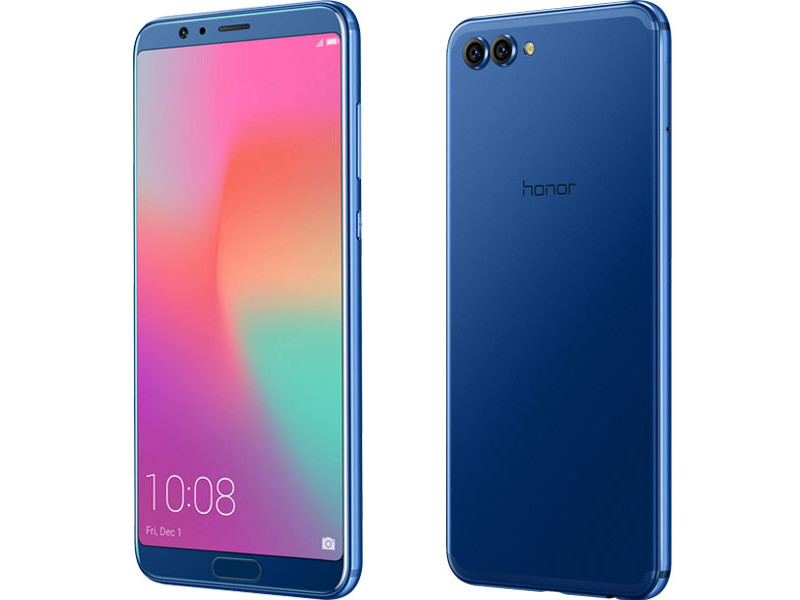
Huawei announced the new GPU Turbo technology alongside the Honor Play and it is slowly making its way to several of its handsets, including the ones from its sub-brand Honor. According to the roadmap released by the Chinese company after the announcement, the Honor View 10 should have received the new technology in September, and indeed the company respected the roadmap.
In these hours, the flagship is getting the update in Italy, according to reports, and it should soon be available in the rest of the world. The update comes through an OTA notification, so everyone who owns a unit of this device can install it. If you got the device and you want to try to force the arrival of the update, then you have to head to the Settings and choose the Device info section, and tap on Software updates.
According to reports from Italy, the GPU Turbo technology on the Honor View 10 currently supports a limited amount of games and one of the games supported is PUBG Mobile. Huawei said that this technology is able to improve graphics performance by up to 60 percent while reducing energy consumption by up to 30 percent.
Huawei just tried a new strategy to get people’s attention and focus on its upcoming flagship: Mock Apple. Yesterday, the Cupertino giant unveiled iPhone Xs, Xs Max and Xr, the new generation of iPhones composed of two more advanced variants and an affordable iPhone which will be available in more color variants. According to a post published on Twitter by Huawei, Apple will bring nothing new to the market with its new flagships. The post says “thank you for keeping things the same. See you in London 16.10.18”. In case you do not know, 16th October 2018 is the date on which Huawei Mate 20 series will be unveiled in London.
With the hashtag #HigherIntelligence, the Chinese company is also hinting at more advanced features based on artificial intelligence on its upcoming flagships. From what Huawei said, it seems that the Mate 20 series will be way more innovative than 2018 iPhones. We already know that the new line-up will be powered by the new octa-core Kirin 980 proprietary SoC. Alongside the new Apple A12 Bionic found on the new 2018 iPhones, until now Kirin 980 is the only chipset built with a 7 nm production process, and it will be the second to hit the market thanks to the Mate 20 series.
Among the rumored specs of the upcoming Mate 20, there is a 6.3-inch display with the AMOLED technology, a 19.5:9 aspect ratio (so it seems that notch will be there) and a Full HD+ resolution of 2244 x 1080 pixels. The Kirin 980 chipset will be accompanied by 6 GB of RAM and 64 GB of internal storage. There will also be a triple camera setup composed of three sensors: it should be the same configuration as the P20 Pro. At last, we expect to see a battery with a capacity of 4000 mAh or more.
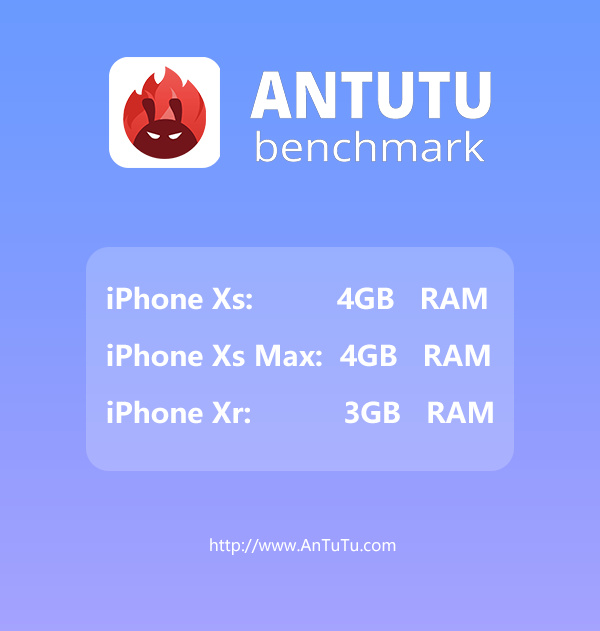
UPDATE: Even Antutu has confirmed the RAM on all the three new iPhone models — iPhone XS, XS Max and XR RAM. The image is added below.
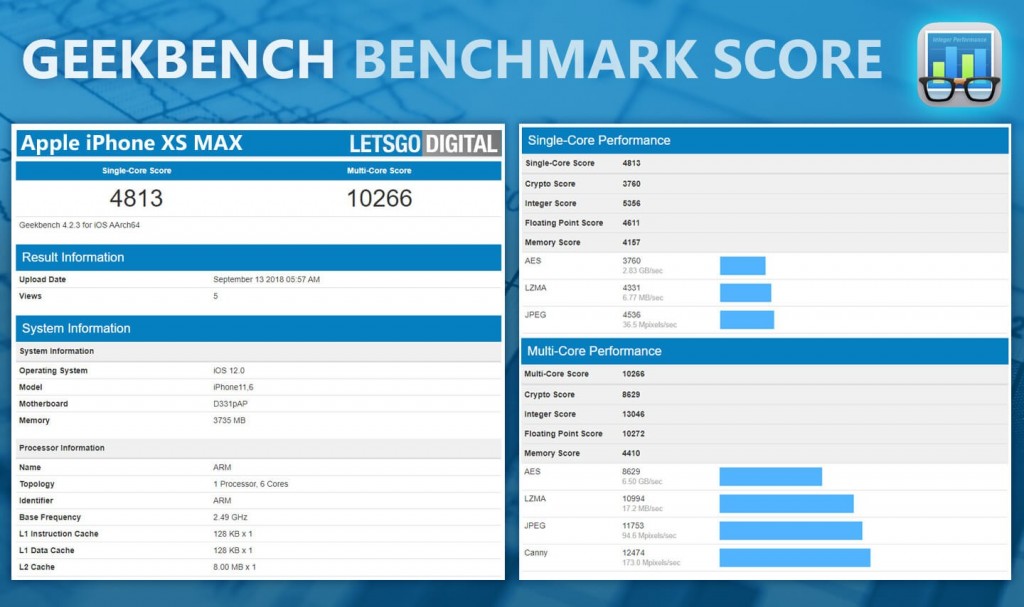
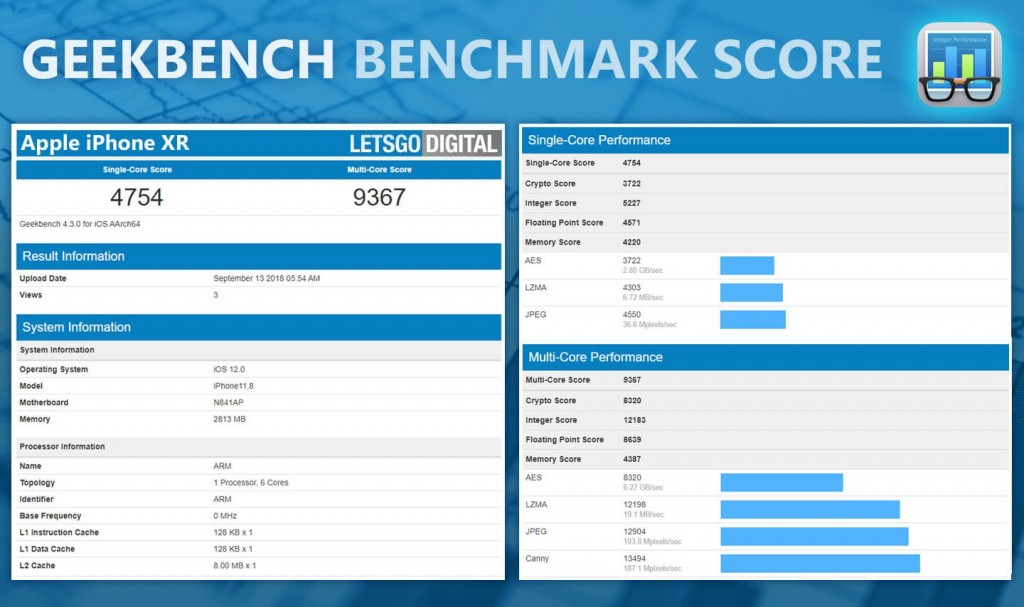
While unveiling its new devices, Apple usually does not reveal all the important details of their specs sheet, and the same applies to this year’s iPhones as well — iPhone Xs, Xs Max and Xr. The most important detail which was not revealed by the Cupertino giant was the amount of RAM on its new smartphones. But today, three handsets surfaced on some Geekbench listings which revealed both the quantity of RAM and their scores obtained on benchmarks. According to Geekbench, both iPhone Xs and Xs Max come with 4 GB of RAM, that is 1 GB more than the previous generation.
The affordable model iPhone Xr instead comes with 3 GB of RAM just like the original iPhone X. Coming to benchmark scores, Geekbench highlighted a very high result in single-core performance for the iPhone Xs Max: 4813 points, that is much better than the previous generation, while there is just a slight difference in multi-core performance with 10266 points. Due to its lower amount of RAM, iPhone Xr obtained a lower score with 4754 in single-core and 9367 points in multi-core. There are still other important details we need to know about iPhone Xs, Xs Max, and Xr, such as the clock frequency of the chipset.
But they should be revealed very soon as the devices are going to hit the shelves on September 21. All the iPhones of this year are powered by an hexa-core Apple A12 Bionic chipset, but they have displays of different sizes. The first has a 5.8-inch AMOLED panel, the second has a 6.5-inch AMOLED display (the biggest screen ever seen on an Apple phone) and the third is in the middle with a 6.1-inch display and the LCD technology. Even though it is cheaper, according to Apple, iPhone Xr has the best LCD display ever used on a phone.
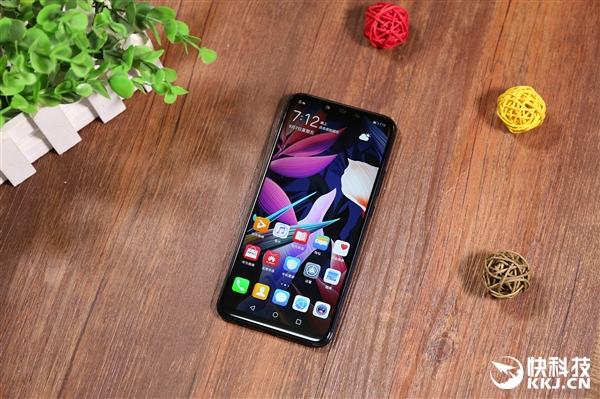
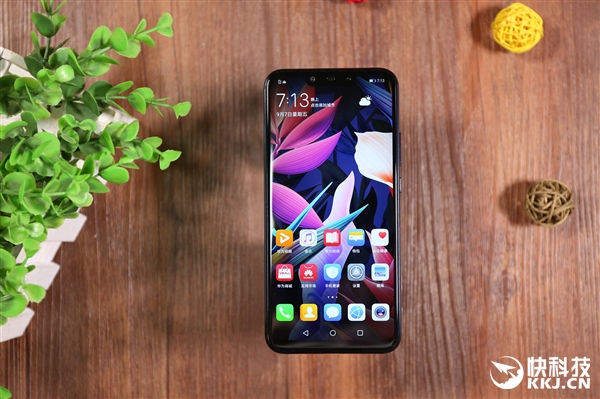
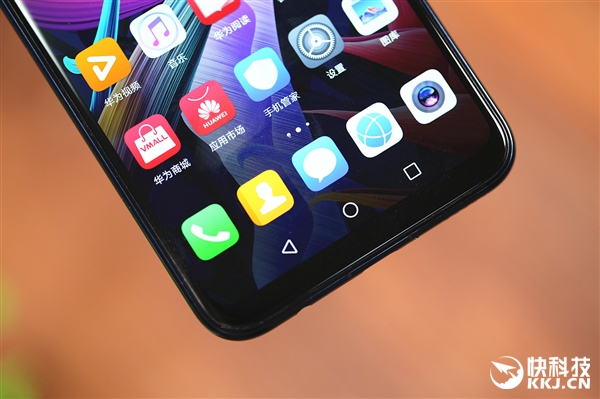
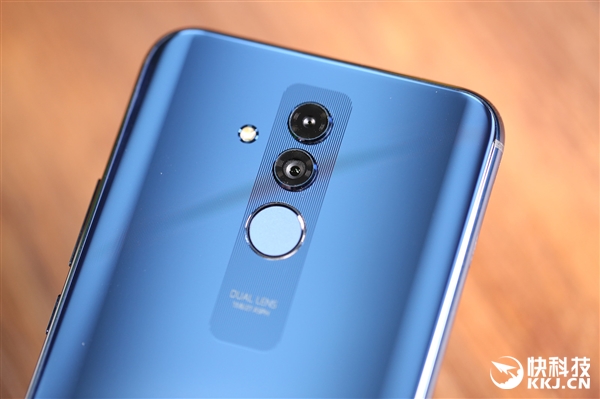
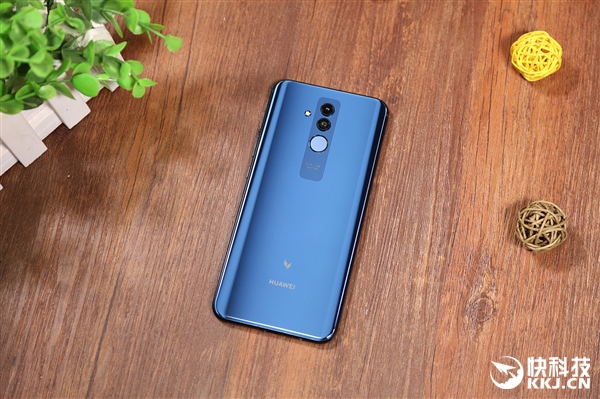
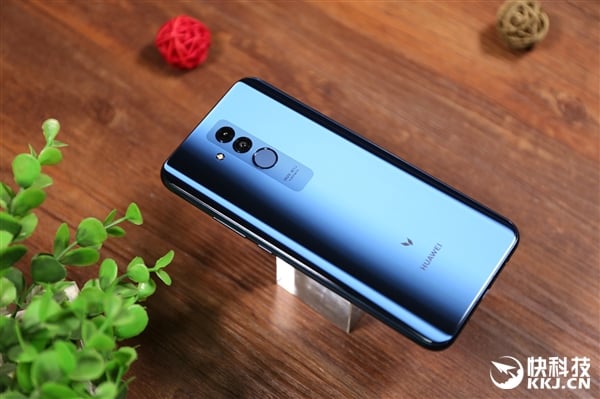
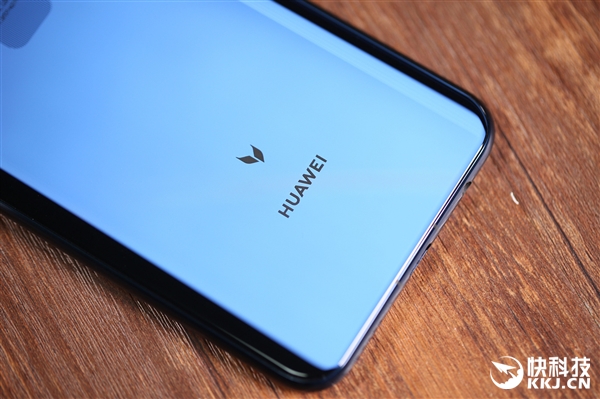
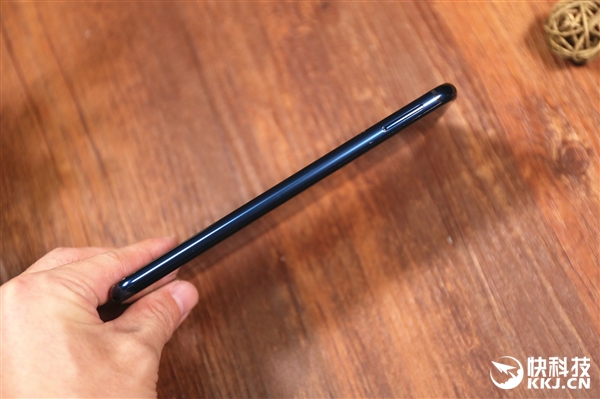
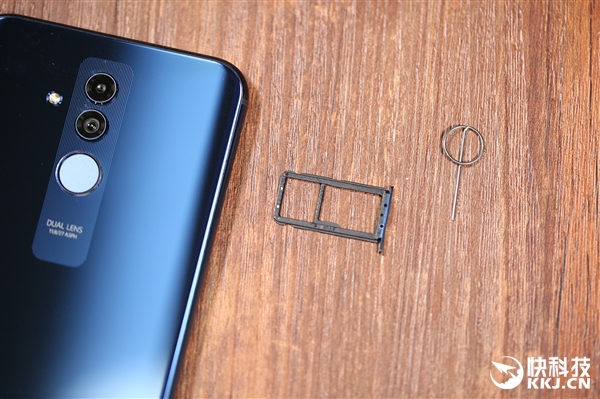
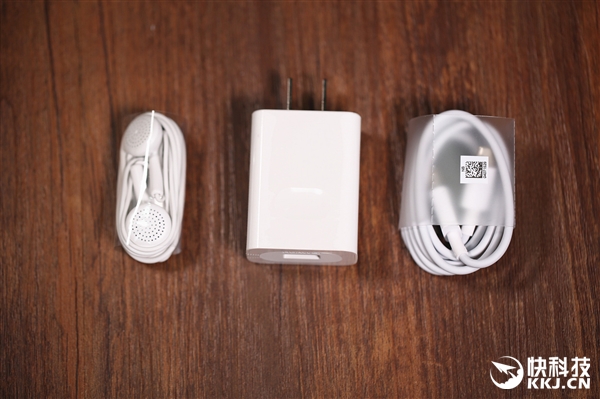
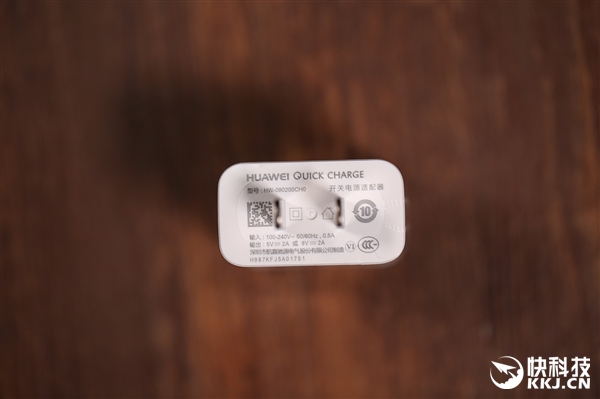
Huawei rolled out its first full-screen phone dubbed Maimang 6 last year before the Mate 10 launch. The device also came as the company’s first model to feature dual cameras at the front and rear aspects. The Huawei Maimang 7 has now come out as a successor to last year’s model. The device was announced yesterday in China. As you might have known already, the Huawei Maimang 7 is entirely the same as the Mate 20 Lite that was unveiled in Europe a couple of weeks back. We bring you some unboxing pictures of the Maimang 7 thanks to Chinese blog, MyDrivers.
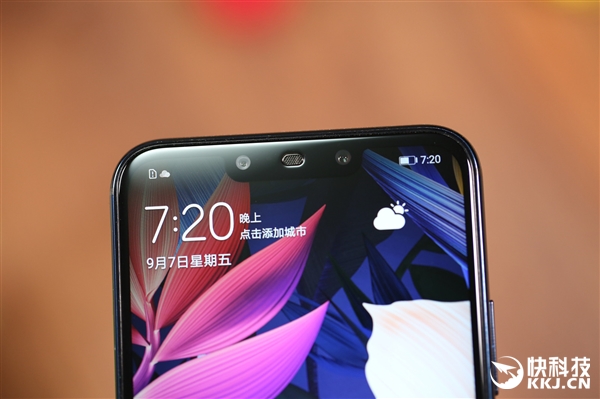
The Maimang 7, or Mate 20 Lite if you like, comes with a sleek design as it sports a 6.3-inch display with a resolution of 2340x1080pixels. The display utilises the notch design which has now become a trend. The notch allows Huawei to increase the screen ratio of the device when compared to its predecessor The notch houses two selfie camera sensors as well as the earpiece. The Maimang 7 also adorns a 2.5D curved glass on top of the screen which adds to the visual appeal of the device as a result of the curvature.
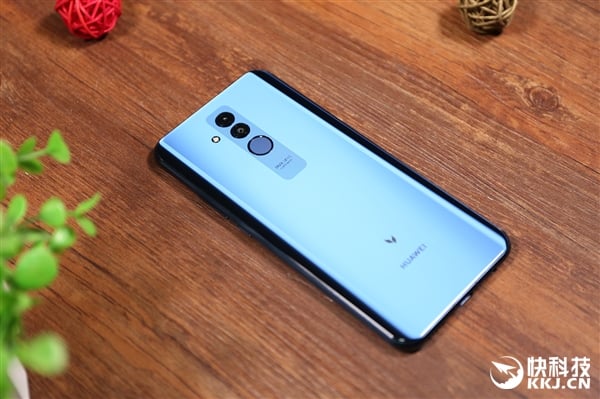
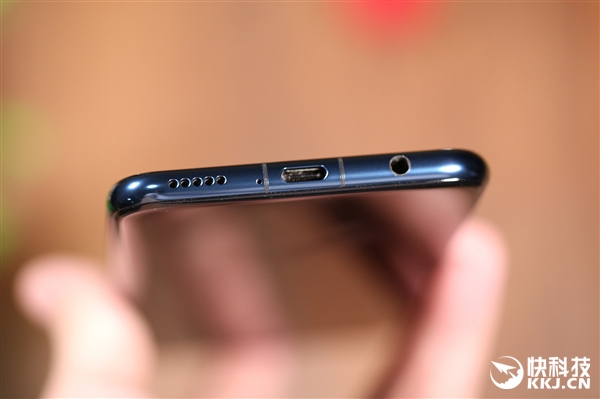
The rear design sums up the beauty of the Maimang 7. It adopts a glass body curved at the sides and well-chamfered edges. The device features a dual camera set up at the rear which is arranged vertically at the middle. Just beneath the cameras is the fingerprint sensor and down below is the Huawei Maimang brand logo. The device comes with a USB-C port as well as a 3.5mm audio jack.
On the internals, there is a Kirin 710 chipset, GPU Turbo support, 6GB of RAM, 64GB of storage. The device gets its power from a 3750mAh battery. The Maimang 7 comes in three color options; Black, Blue, and Gold. The price stands at 2,399 yuan (~$349) and sales would commence on September 15. Check out more pictures of the Blue coloured variant from below.
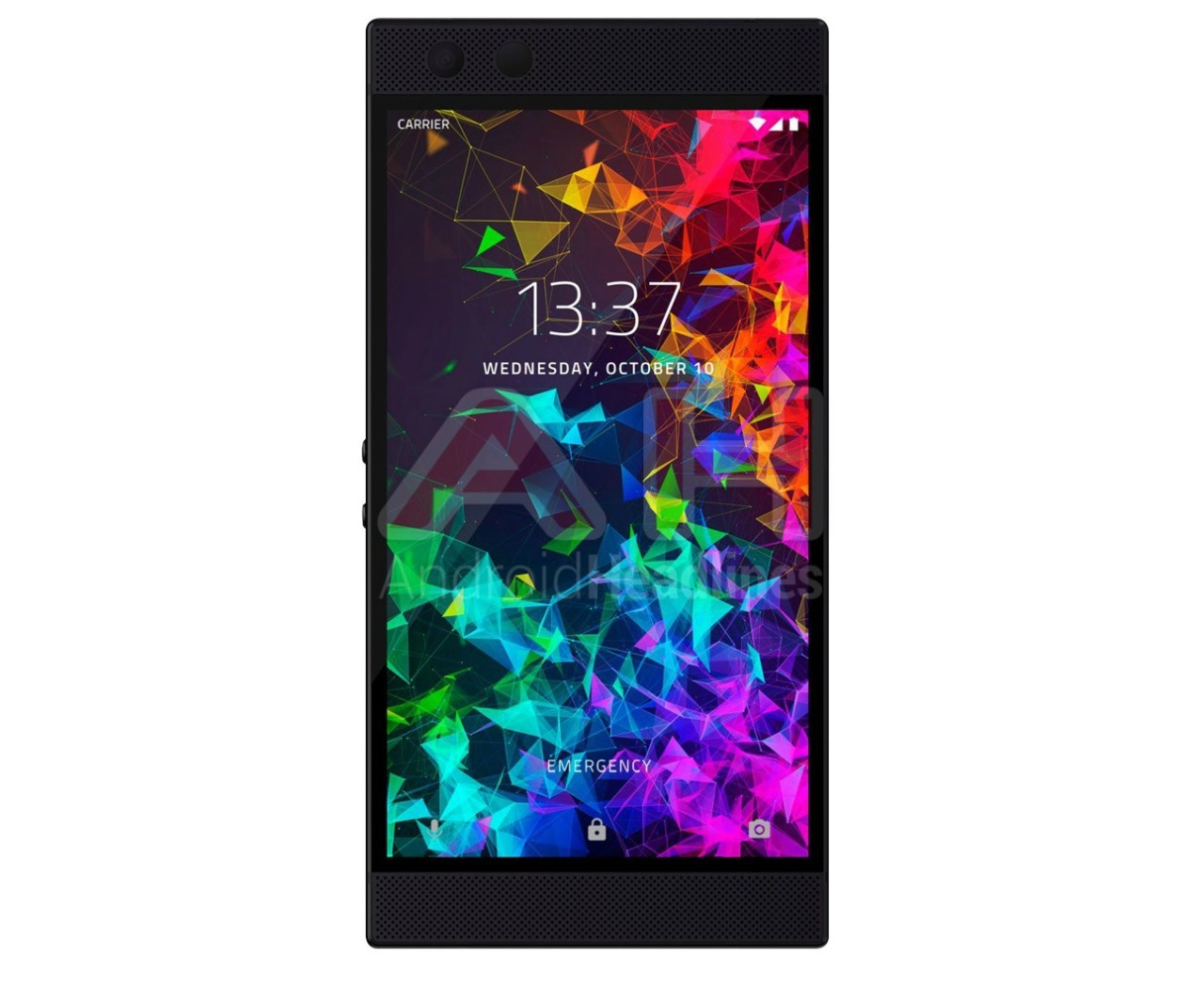
Through a recent earnings report, Razer had confirmed that it is working on a successor phone for the Razer Phone that was unveiled in November last year. The Razer Phone 2 has been recently spotted on various benchmarking platforms such as Geekbench and AnTuTu through which its key specs have been revealed. Today, Android Headlines has shared a render of the upcoming Razer Phone 2. The publication has claimed that it has acquired the render from a reliable source.
Razer Phone 2 render
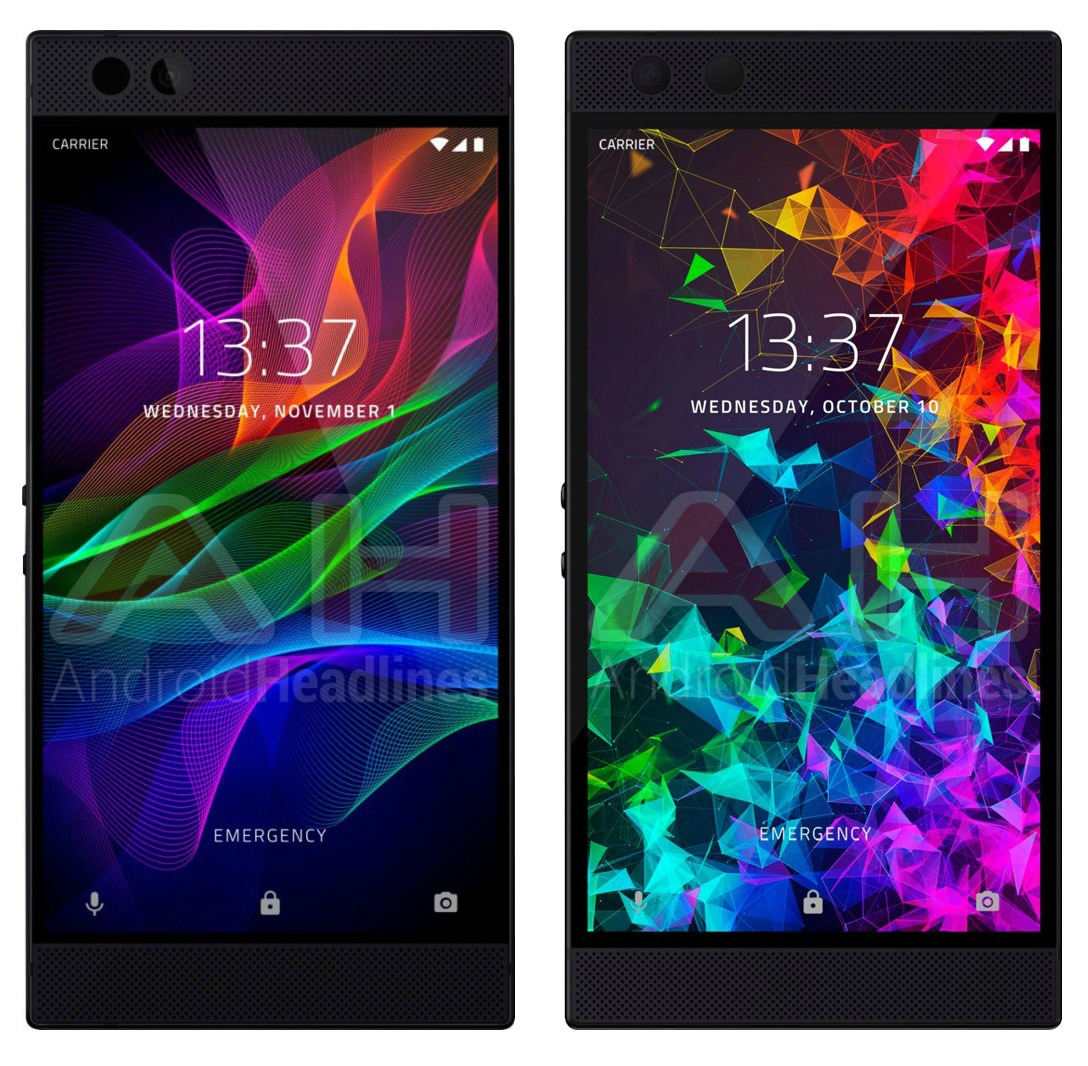
In the below image, the Razer Phone 2 is placed on the right whereas the original Razer Phone can be seen on the left. The image reveals that the front design of Razer Phone 2 resembles a lot with the original Razer Phone. A close observation reveals that the Razer Phone 2 features slightly thicker side bezels. Also, there the alignment of the selfie camera is also a bit different on the Razer Phone 2.
The Razer Phone 2 render suggests that it is equipped with a traditional 16:9 aspect ratio like the predecessor model. Since the new leak reveals only the front appearance of the Razer Phone 2, there is no confirmation on whether the handset will be sporting a different rear design than the original device. Earlier in this week, popular tipster Roland Quandt had claimed that the Razer Phone 2 will be sporting Chrome LED effects that will light up when the device receives notifications.
The Geekbench and AnTuTu benchmarks of Razer Phone 2 have revealed that is equipped with Snapdragon 845. The SoC will be coupled with 8 GB of RAM. The device will come loaded with Android 8.1 Oreo OS. According to the AnTuTu listing of Razer Phone 2, its screen carries support for Quad HD resolution of 2560 x 1440 pixels which indicates that it may feature a 5.7-inch IGZO IPS screen that has a refresh rate of 120 Hz. The handset is also expected to arrive with an internal storage of 512 GB.
The Razer Phone 2 may feature a 4,000mAh battery or slightly larger battery. The dual 12-megapixel rear cameras of the original phone were criticized because of it delivered mediocre photography experience. The company had to release multiple updates after the launch of the smartphone to improve its camera performance. Hence, it is very likely that the Razer Phone 2 will be equipped with an enhanced dual camera setup.
The original Razer Phone was unveiled on Nov. 1 and the same date can be seen on its render. The Razer Phone 2 has Oct. 10 date mentioned on its screen which suggests that it could be its launch or release date.
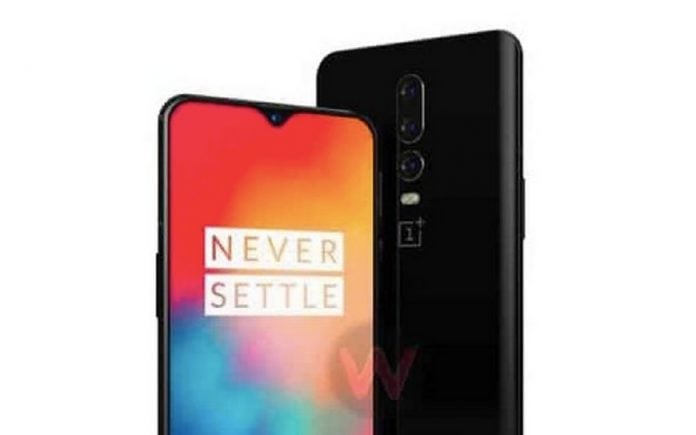
Co-founder, Carl Pei, has revealed that the OnePlus 6T will not have an audio jack. Yes, the OnePlus 6 may as well be the last OnePlus phone with an audio jack. While this is sad news, we always knew it was going to come one day.
Carl Pei revealed the info an exclusive interview with TechRadar. Although he didn’t mention the OnePlus 6T, is words were “next OnePlus handset”. With the announcement of the Type-C Bullets earphones today and a proper launch in a few months, it is a no-brainer that he is referring to the OnePlus 6T.
OnePlus said they decided to delay removing the jack by two years. Back when other manufacturers were quick to remove the 3.5mm audio jack, Carl Pei said the percentage of users with wireless headphones were low. In a survey carried out this year, they discovered that about 59% of users in their community already owned a pair of wireless earphones and this was before the launch of the Bullets Wireless earphones. The percentage is expected to be higher following the launch of the Bullets Wireless.
OnePlus says the removal of the audio jack brings a number of improvements such as an improvement in battery life. This may mean a bigger battery but Carl Pei didn’t say, although he did say it will be “substantial enough for users to realize”.
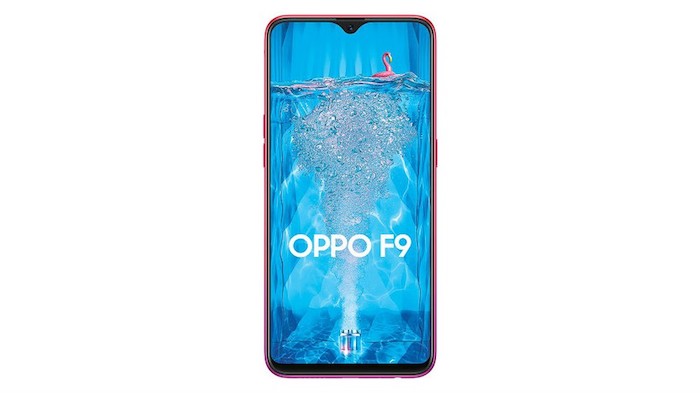
Last month, along with the Oppo F9 Pro, the Chinese smartphone manufacturer had also announced the Oppo F9. The Oppo F9 is the same phone that was recently launched in China as Oppo A7x with a few changes in specifications.
While the Oppo F9 Pro soon went on sale in India after the announcement, the Oppo F9 was listed as ‘Coming Soon’. Now, Oppo has finally announced the availability of the phone in India.
Oppo has announced that the Oppo F9 will be available for purchase in India from September 15 through Flipkart and offline stores across the country. The phone is priced at Rs. 19,990 which roughly converts to $279. It’ll be available in two color options — Mist Black and Stellar Purple.
The Oppo F9 flaunts a 6.3-inch Full HD+ Waterdrop display with 2340 x 1080 pixels screen resolution and 19.5:9 screen aspect ratio. Under the hood, it is powered by MediaTek Helio P60 octa-core 12nm processor — the same chipset that powers Oppo Realme 1.
The phone packs 4GB of RAM and 64GB of internal storage along with a microSD card slot for expanding the storage capacity up to 256GB. Coming to the camera, there’s a dual-camera sensor with a 16-megapixel primary sensor and a 2-megapixel secondary sensor. On the front side, the phone comes equipped with a 16-megapixel shooter for taking selfies.
There’s also a rear-mounted fingerprint sensor and the company has decided to retain the 3.5mm headphone jack. Connectivity options on the device include Dual SIM, 4G LTE, Wi-Fi 802.11 a/b/g/n/ac, dual-band, Bluetooth 4.2, FM radio, MicroUSB 2.0, and GPS.
It runs Android 8.1 Oreo operating system out-of-the-box with the company’s own custom interface ColorOS 5.2 which comes with some advanced features such as Smart Bar, in order to offer a smoother experience to users. The phone is fuelled by a 3,500mAh battery but doesn’t come with the VOOC flash charging support.
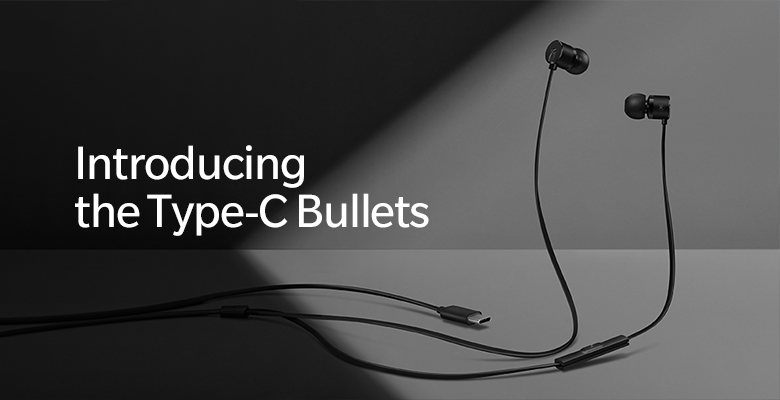
OnePlus has launched a brand new pair of wired earphones. The new Type-C Bullets earphones has a USB-C connector as the name shows and not a 3.5mm connector. In its official press release, OnePlus says the new connector isn’t the only change.
The earbuds of the Type-C Bullets has a metal design while the wires have aramid fibers which makes it “more durable and resistant to stretching”. It also has a new DAC from Ciruss Logic for a higher dynamic range, higher signal-to-noise ratio, and lower noise floor according to OnePlus. This means audio reproduction is clearer, of a higher quality, and with more bass.
So this isn’t just the Bullets V2 with a Type-C connector but a brand new product entirely. OnePlus says the Type-C Bullets will arrive in a few months which means it may be announced alongside the OnePlus 6T.
OnePlus just announced the new USB-C Bullet headphones. Time to say good-bye to the headset jack on the OP6T. "59% of users have switched to wireless headphones…" Built-in DAC from Cirrus Logic, same price as Bullets V2 (19,95 Euro). pic.twitter.com/EhOuHhb0wm
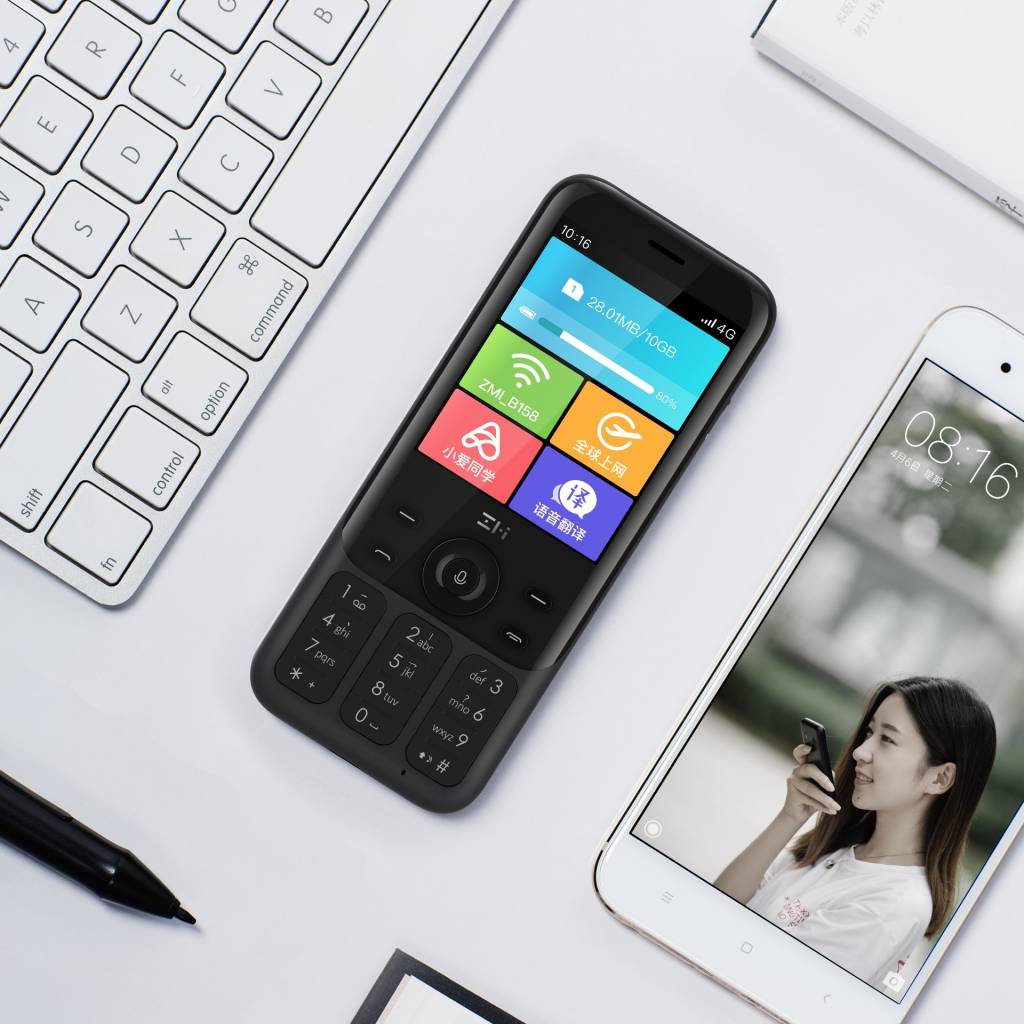
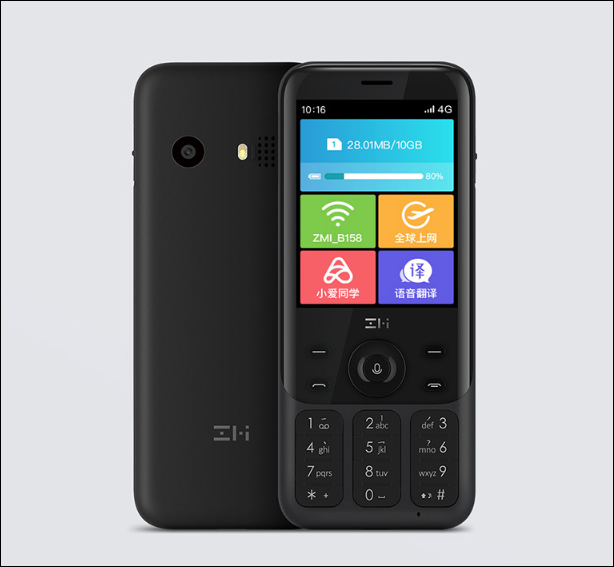
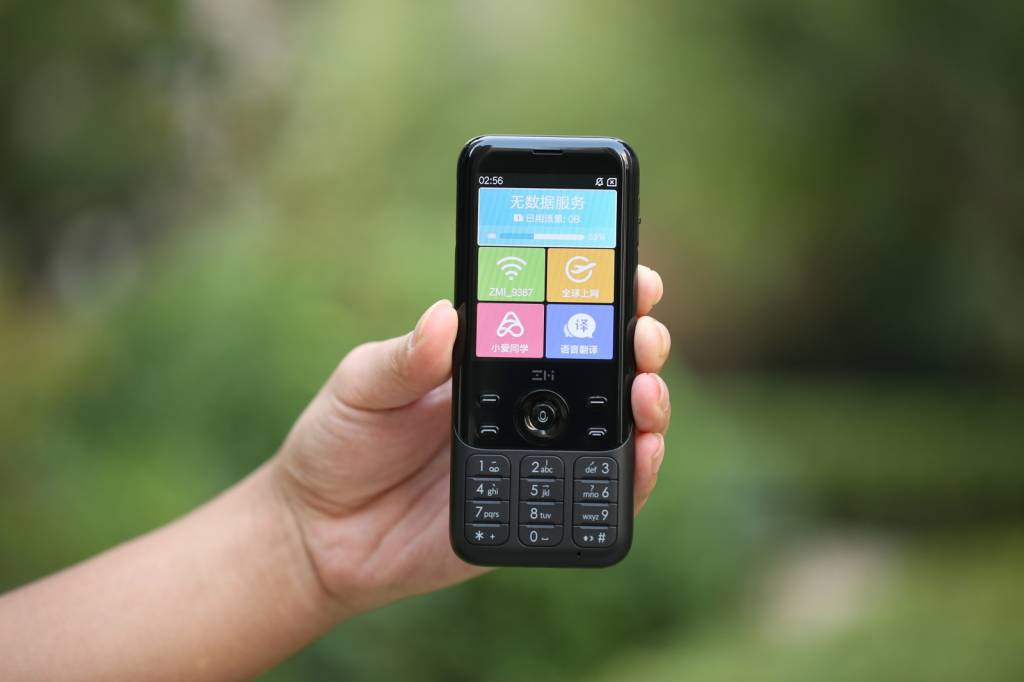
Xiaomi’s ecosystem company ZMI has ventured into the manufacture of smartphones with its first phone which is dubbed ZMI Travel Assistant Z1. The company is best known for manufacturing accessories like power banks, and flashlights. The Z1 Travel Assistant is its first phone and it is a feature phone but offers much more than the traditional feature phone. The major highlight of the phone is the voice assistance feature. The device also comes with artificial intelligence (AI) and several other features we will unveil in this article.
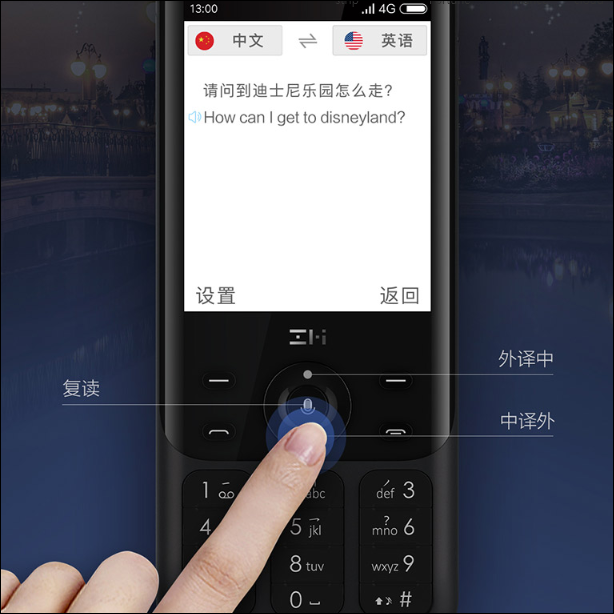
Design-wise, the phone isn’t very spectacular, packing a 2.8-inch display with a physical numeric keyboard under the screen. The device features a coloured LCD screen which is quite rare for a feature phone. The keypad has a round button as the top which functuions as the scroll button while the middle is an activation button to activate voice translation. The device supports translation between Chinese and 16 other languages.
Further, the ZMI Travel Assistant comes with a built-in GPS tracker as well as an AI voice assistant. Other features onboard include a WiFi band, 4G VoLTE, dual SIM/dual standby support. The device isn’t very bulky but ZMI was able to cram a whopping 5000mAh battery inside. The battery can last all through several days and not only that, there is the reverse charging function. This means the phone is also a reliable power bank. The phone also packs a camera sensor at the rear with LED flash.
The ZMI Travel Assistant Z1 is presently on crowdfunding on Jingdong crowdfunding. The crowdfunding has been a success as the company intended to raise 200000 yuan but ended up raking in over 780,000 yuan. We expect it to go on sale soon.
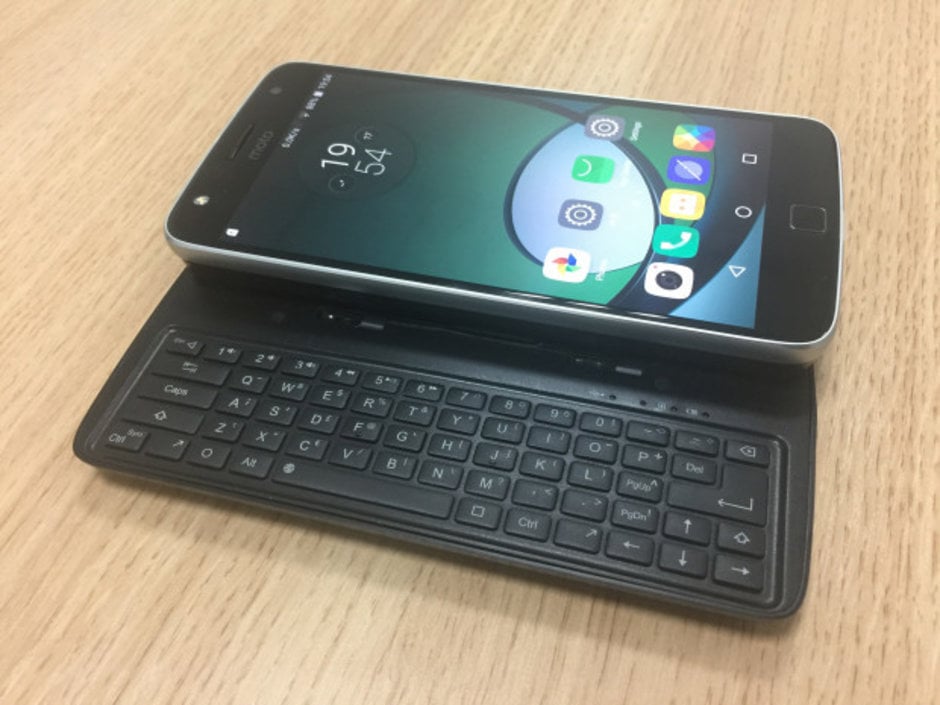
A crowdfunding campaign for a slide-out QWERTY keyboard Moto Mod for Moto Z series phones was carried out by a company called Livermorium in February 2017. The device was known as Livermorium Slider Keyboard Moto Mod. The company was able to raise more than $165,000 by May 3 and it was showcased at the Consumer Electronics Show (CES) 2018 in January this year. The slider keyboard was expected to debut in February this year. The company has cancelled the project citing multiple reasons on the product’s Indiegogo project page.
One of the reasons why Livermorium decided to cancel it was the low demand from official resellers. Also, the Moto Z series of handsets by Motorola do not have a high market share which suggests that the possibilities of selling the slide-out keyboard was low. Apart from the amount that was raised through the Indiegogo campaign, the company did not have enough funds for it. Hence, it was not able to market it.
The company was able to initially produce only 3,000 units of the slider keyboard mod. However, the source of a major component of the device required a commitment of 14,000 units. Also, the slide-out keyboard included unique components which could not substituted which caused the company to take more time to acquire those parts. The expenses for assembling and quality assurance for each unit of slider keyboard was high.
The device was bulky, and its prototypes appeared awkward. The company was working on reducing the thickness and weight of the keyboard, but any change in the design required confirmation from Motorola.
As far as the features of the Livermorium Slider Keyboard Moto Mod is concerned, it featured five rows of backlit keys. It included dedicated keys for numbers and it appeared like the QWERY keyboard from the yesteryear Motorola DROID 4 smartphone. When fitted on a Moto Z phone, the keyboard allowed its display to tilt at an angle of 45 degrees. The device also included a 2,100mAh battery.
Livermorium has said that it will be issuing full refunds to the backers of the project. Liangchen Chen, the founder of Livermorium has said he is planning to launch a smartphone with a sliding keyboard. The smartphone is codenamed as Q-device and it is expected sport a thinner and lighter chassis than of the Moto Z phone available.
Those backers who will not be taking the refund for the slide-out keyboard Moto Mod will be provided with an early-bird discount for the said smartphone. The firm has confirmed that the Q-device smartphone will be available for buying by Q4 and it will not be crowdfunded.
A number of Moto Mods such as wireless charging mod, a 5G mod, a gamepad mod, Alexa equipped smart speaker mod, etc have been released by Motorola for the Moto Z series of smartphones. Unfortunately, the slider keyboard mod won’t be coming.
Xiaomi‘s Mi Band series is one of the best selling smartbands on the market. The manufacturer announced that it has sold over 50 million units since it launched the first model a few years ago.
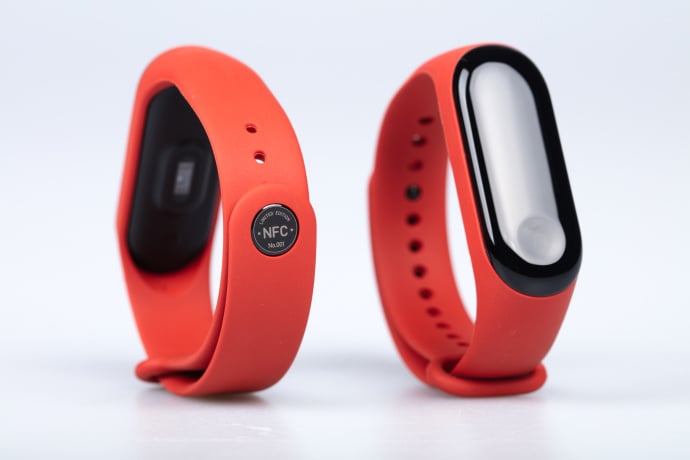
To mark this sales milestone, Xiaomi is giving out 666 units of a special version of its latest Mi Band. It has named it the Mi Band 3 Commemorative Edition. This limited edition model will have a unique serial number and have a Maple Red band. It will also have NFC like the Mi Band 3 NFC Edition and come in a special customized box.
The official Mijia Weibo account has released a bunch of unboxing pictures of the Mi Band 3 Commemorative Edition. Apart from it having NFC and a special serial number, this model offers the same features as the regular Mi Band 3.
[envira-gallery id=”211509″]
The Mi band 3 will monitor your sleep, count your steps, notify you if you have been sitting for more than an hour and also display notifications from your connected device. It also has a heart rate sensor, a find my phone feature, and can even mute your phone.
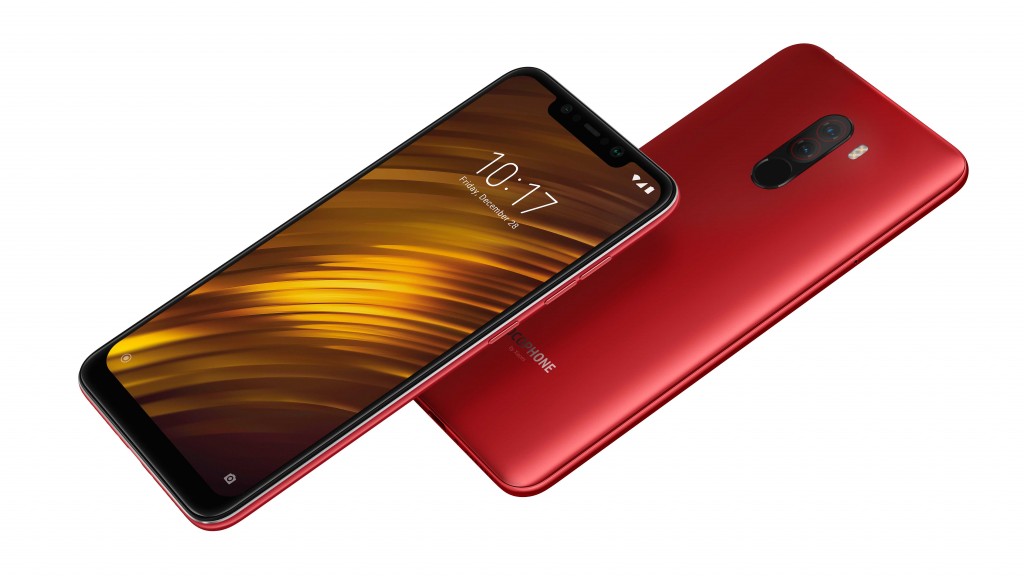
Last month, Xiaomi announced its sub-brand POCO and launched its first flagship smartphone — Poco F1, which has been selling like hot cakes. If you are one of those who didn’t manage to get their hands on the device yet, here are some good news.
The company has today announced that the 6GB RAM and 128GB internal storage variant of the Poco F1, which costs Rs. 23,990 (approximately $334) will be available for purchase through open sales in India from tonight via Xiaomi‘s official online store Mi.com as well as online marketplace Flipkart.
In the announcement video, Manu Kumar Jain, Managing Director of Xiaomi India, said that the company will soon make the other two variants available through open sales. However, he has not yet revealed any specific timeline for this.
The Poco F1 flaunts a 6.18-inch Full HD+ IPS LCD display with 2246 x 1080 pixels screen resolution and 18.7:9 aspect ratio. It offers up to 500-nits brightness and a high contrast ratio of 1500:1. On top, there’s a layer of Corning Gorilla Glass that protects the display from minor scratches.
Under the hood, the device is powered by Qualcomm‘s flagship Snapdragon 845 processor and comes with LiquidCool technology. The company says that it decided to place a copper heat sink above the chipset which helps in dissipating the heat generated by it, allowing the phone to transfer heat at a faster rate of 300 percent.
In the camera department, the phone comes equipped with a 12-megapixel Sony IMX363 sensor with a massive pixel size of 1.4micron coupled with a 5-megapixel secondary sensor on the back panel. It is equipped with features like Dual Pixel Autofocus, real-time AI photography and dual-LED flash. On the front side, there’s a 20-megapixel selfie camera powered with AI for capturing enhanced selfie shots.
The phone runs a modified version of MIUI, which is based on MIUI 9.6 and comes loaded with the new POCO Launcher. It includes a lot of customizations such as an app drawer that easily categories apps for easier access and it also carries support for icon packs. The customized MIUI that is based on Android 8.1 Oreo, has been optimized to launch popular apps quickly, smoothly run apps in the foreground and offer fluid gesture-based navigation.
There’s also an IR scanner that enables Face Unlock feature. The Pocophone F1 is powered by a 4,000mAh battery that also carries support for Quick Charge 3.0 fast charging technology. According to the company, it offers 8 hours of gaming, around 6 hours of Full-HD video playback, nearly 31 hours of talk time and standby time of 15 days.
Xiaomi‘s Pocophone F1 is still making waves in India since after its launch. The device comes with a well-studded specs lineup which includes a Snapdragon 845 chipset. Not all features of the Poco F1 has been revealed by Xiaomi after all. Poco India has revealed a couple of details we did not know about the model. A couple of tweets by the new brand showed that the Pocophone F1 comes with splash resistance and supports Quick Charge 4.0.
This is the first time since the launch of the Poco F1 over three weeks now that Xiaomi is revealing these details. In the wake of monsoon, the F1 is a perfect smartphone to take with you while on the go without fear of damage by water. The phone should be able to handle water spills but won’t likely be able to survive a long drop in water. We should note, though, that the device doesn’t have an IP certification. Instead, it is certified splash resistant by P2i (@P2iLabs) which Xiaomi says is a global leader in liquid repellant nanotechnology.
Step into monsoon with the #MasterOfSpeed. #POCOF1 is certified splash resistant by P2i (@P2iLabs) – the global leader in liquid repellant nanotechnology.
Perhaps, more surprising is the disclosure that the Poco F1 features support for Quick Charge 4.0. This is because the phone’s listing on Xiaomi website only indicated the presence of QC 3.0 support. The charger which ships with the device only support QC 3.0. However, F1 owners who can find a QC 4.0 charger will get the opportunity of charging their phones even faster. Qualcomm had hinted that the Quick Charge 4.0 is up to 15% faster than previous versions.
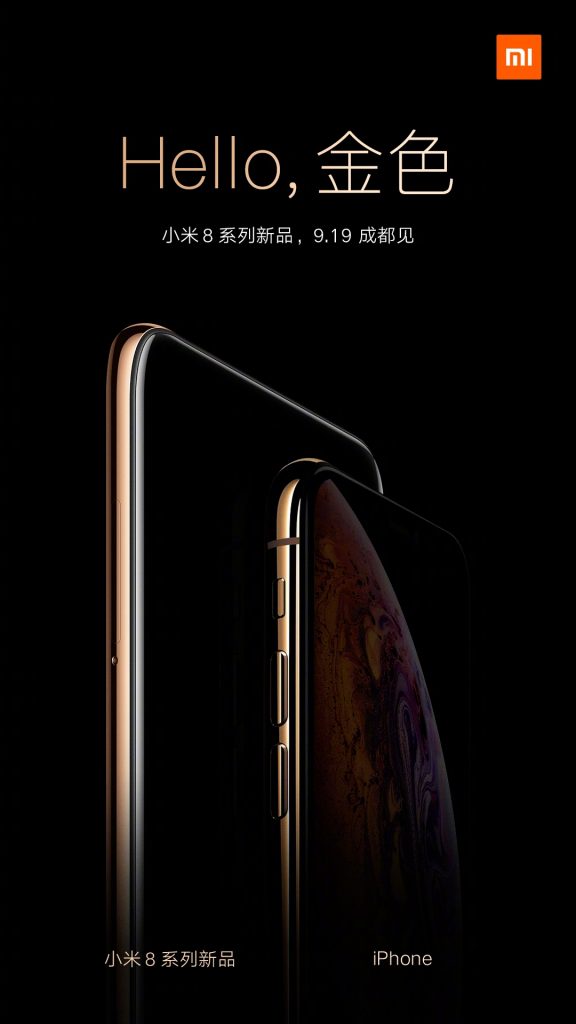
The iPhone XS and iPhone XS Max are the new OLED flagship phones from Apple. Both the phones have been introduced in a new and swanky Gold color option. Soon after the launch of the new iPhones, Xiaomi released a new teaser image for its upcoming Sept. 19 launch event that will be held in Chengdu, China. The Weibo post that accompanies the image reveals that Xiaomi will be announcing more than one Mi 8 series devices. The new poster also showcases a golden colored Xiaomi phone next to an iPhone with the same hue.
Xiaomi has recently confirmed that the Mi 8 Youth Edition will be unleashed on Sept. 19. The Chinese manufacturer has already started with the reservations of the smartphone. It has already teased the Twilight Gold version of the smartphone. Hence, the Mi 8 Youth Edition will be the first Xiaomi phone to sport a gradient color.
Rumors from the past month have suggested that Xiaomi will be launching Mi 8 Youth Edition and Mi 8X smartphones in September. Leaked photos of the handset that have appeared in the recent past suggest that it could be the very same Xiaomi Mi 8 phone with an in-screen fingerprint reader.
A recent report has suggested that the Mi 8X phone may get official as Xiaomi Mi 8 Screen Fingerprint Edition. It is speculated to come in version such as 128 GB storage + 6 GB RAM and 128 GB storage + 8 GB RAM. The report also claimed that it will be coming Black and Gold versions. Hence, the other phone that may get unveiled at the forthcoming Xiaomi event could be the Mi 8 Screen Fingerprint Edition that could be arriving in an attractive Gold color. There is no information available on the exact specs of the phone.
The Xiaomi Mi 8 Youth Edition has already appeared with all its specs on TENAA. The handset is expected to arrive with a 6.26-inch LCD panel. It will be sporting a notched display that will carry support for FHD+ resolution. The handset is expected to arrive in multiple storage and RAM editions such as 32 GB storage + 4 GB RAM, 64 GB storage + 6 GB RAM and 128 GB storage + 8 GB RAM. For shooting selfies, it could be featuring a 24-megapixel front-facing camera. The back panel of the phone could feature 12-megapixel dual cameras. It may arrive with a 3,250mAh battery. The handset is expected to carry a starting price of $1,999 Yuan (~$290).
The new iPhone Xs and iPhone Xs Max are the first iPhones to get dual SIM support but depending on the region, this feature is different for both phones. This post explains how the dual SIM function works for the different regions.
For the iPhone Xs and iPhone Xs Max that will be sold in the US and Europe, they will only support one physical nano-SIM. The second SIM is an eSIM much like what Google did with the Pixel 2 and Pixel 2 XL.
Even at that, the only way to be able to use two different carriers is if your device is unlocked. Also, you can’t use two CDMA networks if your physical SIM is a CDMA carrier. The list of carriers that support eSIMs are still very small but iPhones are very popular and we won’t be surprised if more networks adopt eSIM support simply because of the new models. To learn more about eSIM technology, you should check out this special article we wrote.
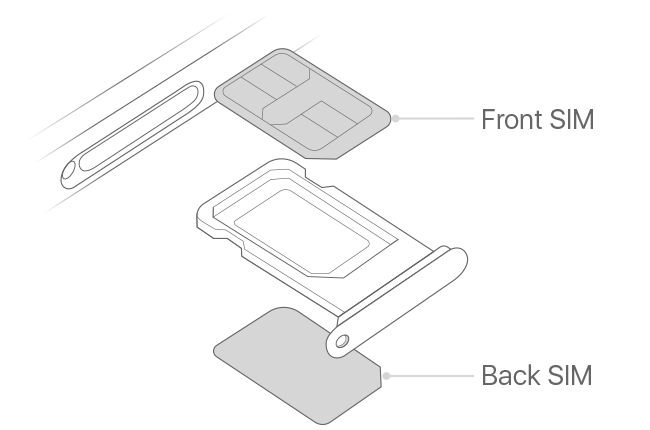
For those living in China, Hong Kong, or Macau, the iPhone Xs and iPhone Xs Max sold there don’t have an eSIM. Instead, you get to use two physical nano-SIM cards just like a lot of Android dual SIM phones. Both SIM cards use the same tray – one sits on top and the other sits below with the chip side facing upwards for the top one and facing downwards for the one below.
Owners will be able to make and receive calls from both SIM cards but when you are on a call on one line, calls to the other are sent to voicemail. Apple will also let you set a particular SIM as default for calls or data. This should be familiar to Android users who may be switching to the new iPhones.
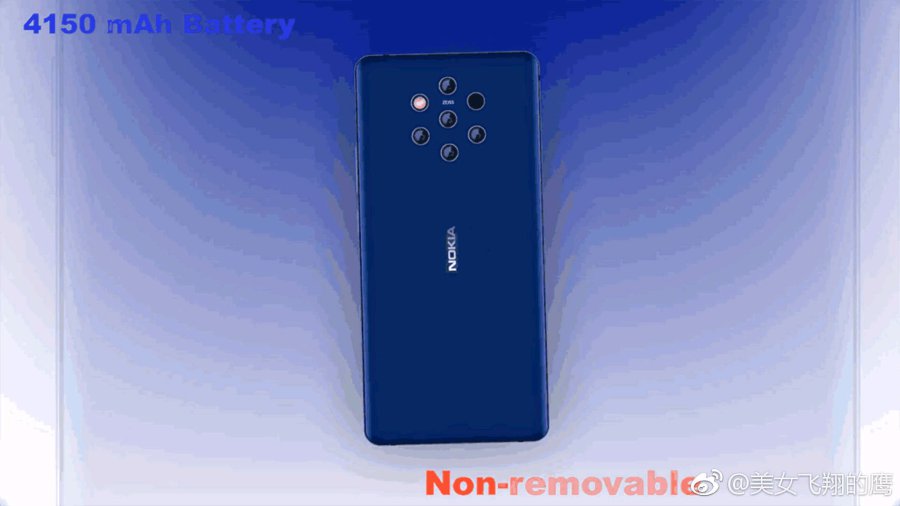
Recent reports have revealed that the upcoming Nokia flagship phone that features a penta-lens setup has a model number of TA-1094. Even though the exact name of the phone is not confirmed, the rumor mill is referring to it as the Nokia 9 smartphone. A fresh image of the phone has appeared to tease its rear design. The image also reveals the battery capacity of the Nokia 9 phone.
The new image of the alleged Nokia 9 only reveals its rear design. The ZEISS certified penta-lens setup is positioned on the backside of the phone. There is no information available on the front design. Hence, it remains a mystery whether the Nokia 9 features a notched screen or a notch-less tall aspect ratio display.
The leaked image has also revealed that the handset is equipped with a non-removable battery of 4,150mAh capacity. If this information is true, the Nokia 9 will be the largest battery phone from the company. The back panel of the phone lacks a fingerprint reader. This indicates that its display could be embedded with an in-screen fingerprint scanner.
Recent leaks have revealed that the Nokia 9 may arrive with a 5.9-inch OLED screen that will carry support for Quad HD resolution. The Snapdragon 845 chipset is very likely power the handset. It may come preloaded with Android 9 Pie OS.
The Nokia 9 variants were recently spotted on Samsung Latvia website. The storage and SIM variants of the phone were found to be listed in Samsung’s Buyback Program which contains list of devices that can accepted for trade-ins. The site revealed that the Nokia 9 would be available in 64 GB and 128 GB storage editions. Both the phones were mentioned in single-SIM and dual-SIM versions. Probably, these could be the Nokia 9 variants for the Latvian market.
There is no confirmation on the authenticity of the leaked image shown above. The TA-1094 model was recently spotted on the website of China’s Ministry of Industry and Information Technology (CMIIT) which confirms the existence of the phone. It is speculated that the Nokia 9 may go official in the last quarter of this year.
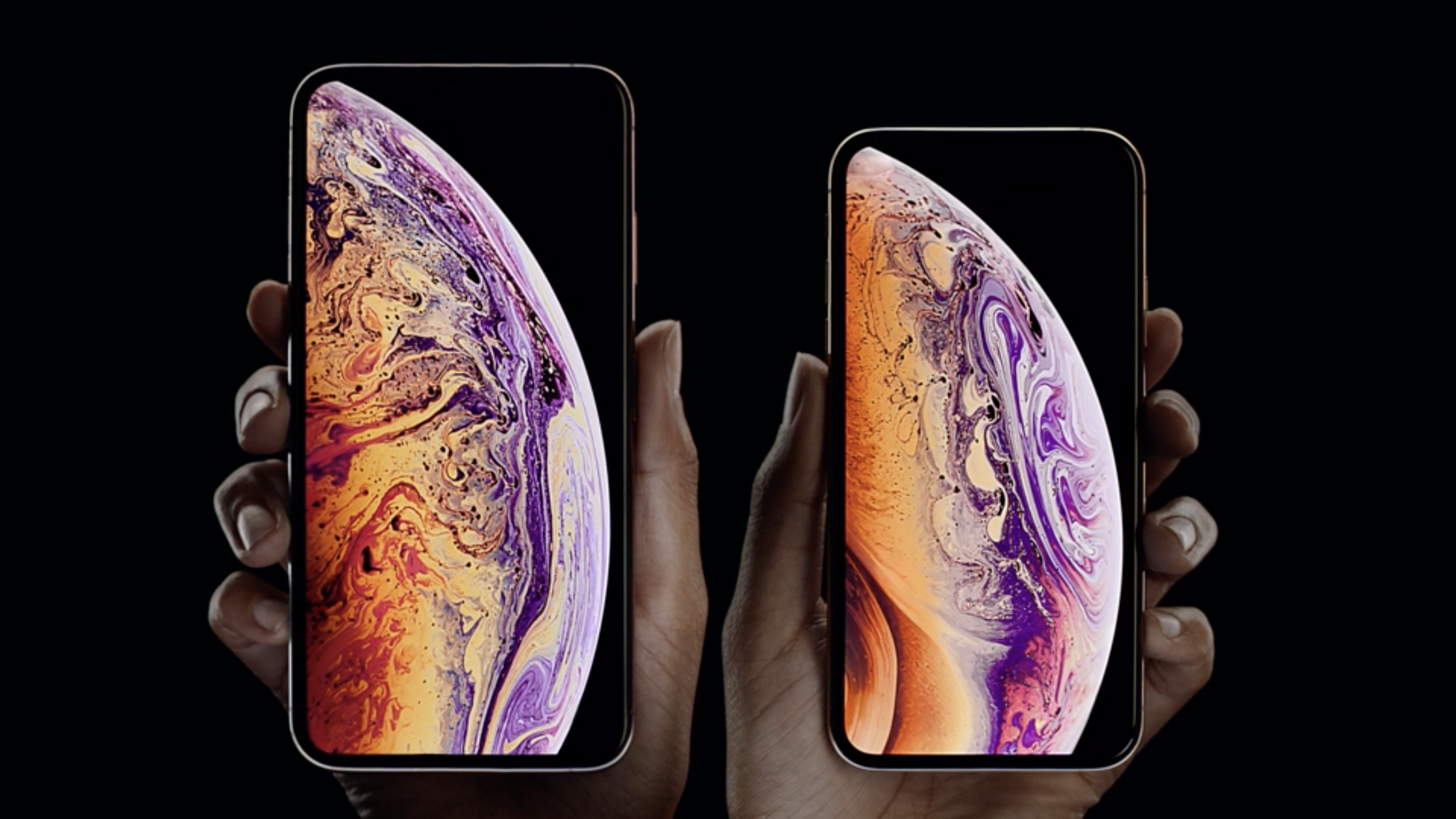
Apple has taken off the covers from the brand new iPhone devices, naming, iPhone XS, iPhone XS Max, and iPhone XR along with the new Apple Watch Series 4. The Cupertino giant has launched more advanced three new iPhones along with a powerful smartwatch. The iPhone XR is the cheapest device of all with a 6.1 LCD screen having a resolution of 1792 x 828 pixels. The iPhone XS and iPhone XS Max are the high-end mobile devices with a 5.8 inch and 6.5-inch OLED Super Retina displays.
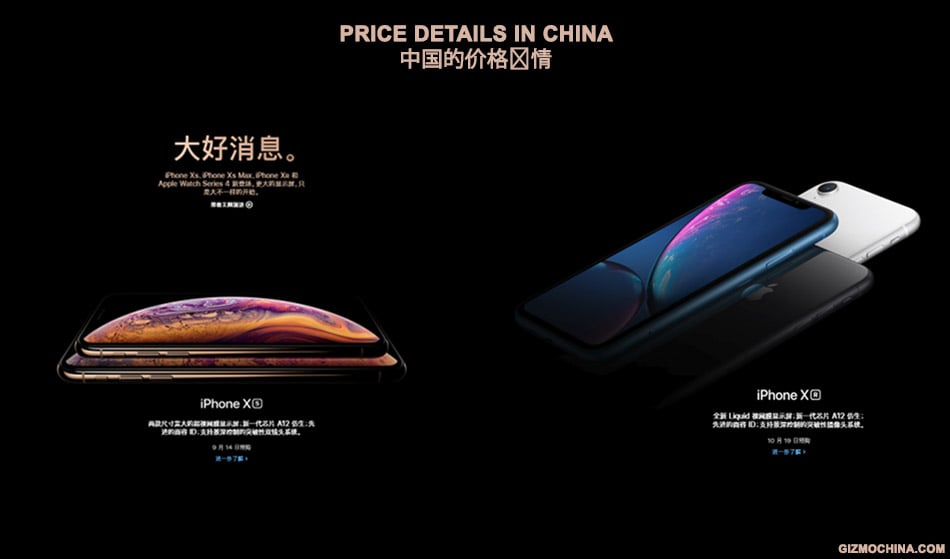
Today, we are compiling all the details of the new iPhone devices that have been launched. Below you can check iPhone XS, XS Max and XR price in China along with specs, features, and all other details.
iPhone XS and iPhone XS Max: Pricing, specs and release date
iPhone XS and XS Max Specs in China: iPhone XS is the smallest device among all the iPhones that have launched at the yesterday’s Apple event. It packs a 5.8 inch Super Retina OLED display with the resolution of 1125 x 2234 pixels. Further, the display supports Dolby Vision, 120Hz refresh rate and HDR 10 for better picture quality.
It is powered by the A12 Bionic CPU which is built on a 7nm processor with 6 cores coupled with 4GB RAM. It is 12 percent faster and 40% more efficient, having 4 efficiency cores with up to 50 percent lower power. There’s a type A cable with the support of 5W lightning charger. This time, Apple won’t ship any 3.5mm-to-lightning dongle along with the device.
On the other hand, iPhone XS Max packs 6.5 inch Super Retina OLED display with the resolution of 1242×2688 pixels. All other details are same excepting the battery, which will sustain 60 minutes more than the iPhone XS.
In China, the iPhone XS supports single-SIM while iPhone XS Max brings support for dual SIM. Both the devices will come in three different storage variants – 64GB, 256GB, 512GB.
Release Date:
iPhone XS and XS Max will be available for pre-orders starting at 3:01 pm on September 14, Friday. Buyers can head to offline Apple stores to directly buy the new devices from September 21st. Both the iPhone XS and XS max will be available in gold, silver and space gray colors.
The Apple Watch series 4 will go on sale from September 21st but you can pre-order it from September 14th.
iPhone XS and XS Max Price in China:
Device
Capacity/SIM card
Price
iPhone XS
64GB
256GB
512 GB
SIM card
RMB 8699
RMB 10099
RMB 11899
Single-SIM
iPhone XS Max
64GB
256GB
512 GB
SIM card
RMB 9599
RMB 10999
RMB 12799
Dual-SIM
iPhone XR: pricing, specs and release date
Specs: It is the cheapest device that has been launched yesterday. iPhone XR packs a 6.1 inch LCD display with a resolution of 1792 x 828 pixels. In camera, iPhone features a 12-megapixel camera with f/1.8 aperture size with wide angle lens. It also packs the same Apple A12 Bionic with 6 cores along with 3GB RAM.
Release date: The iPhone XR will be available in three different variants – 64GB, 128GB, and 256GB. The price will start from RMB 6499 and is available in six colors – Yellow, White, Coral, Black, Blue, and Red. Its Pre-orders will begin on 19 October band the phone will start shipping on 26 October.
Huawei has an unveil event coming up on Oct. 16. Through it, the Chinese manufacturer will be announcing the Mate 20 and Mate 20 Pro. Recently, well-known tipster had tipped on the existence of a new Porsche Design smartphone that is codenamed as Everest. Hence, it is also being speculated that the Mate 20 Porsche Design will debut alongside Mate 20 and Mate 20 Pro. The specifications of the entire Mate 20 series along with images are expected to leak very soon since the Mate 20, 20 Pro and alleged Porsche Design model have surfaced on the website of TENAA, the telecom regulatory body from China.
The HMA-AL00 and HMA-TL00 Huawei phones that have been certified by TENAA are the variants of the Mate 20. The LYA-AL00, LYA-AL00P, LYA-AL10 and LYA-TL00 are the models of the Mate 20 Pro. The EVR-AL00 and EVR-TL00 are the variants of the rumored Everest model that may break cover as Mate 20 Porsche Design.
The specifications of the Everest phone are under the wraps. It could be fueled by the Kirin 980 SoC that will be driving the Mate 20 and Mate 20 Pro handsets. The Mate 20 is expected to feature a waterdrop LCD FHD+ screen of 6.3 inches whereas the Mate 20 Pro is tipped to arrive with a 6.9-inch Quad HD+ AMOLED screen with a wider notch that will be housing all the necessary sensors for 3D face scanning. The Mate 20 Pro is rumored to come equipped with an in-display fingerprint reader. Both phones are expected to be powered by 4,200mAh batteries with wireless charging support. The Mate 20 duo will be coming with triple rear cameras.
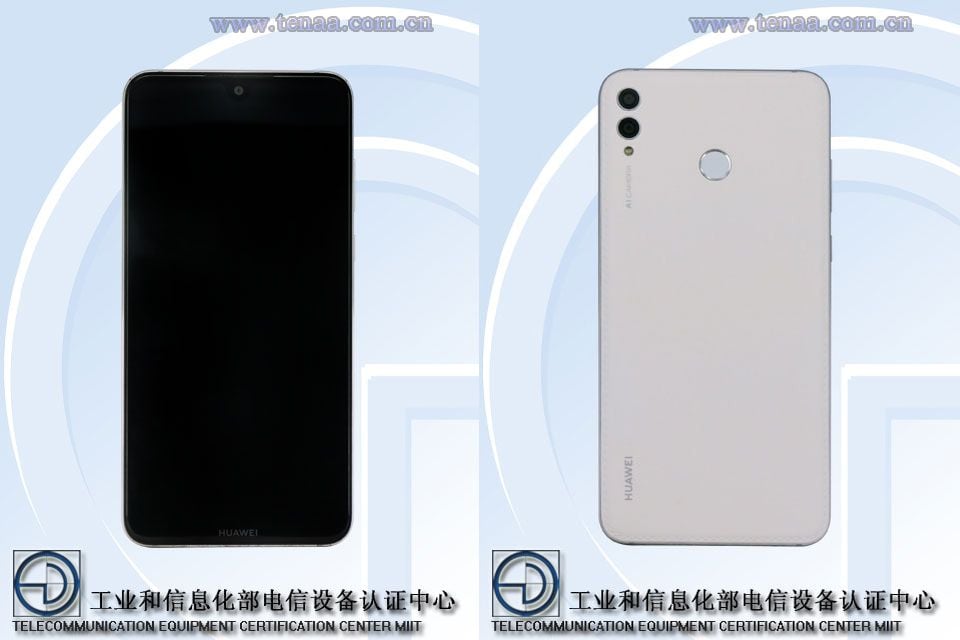
TENAA has also certified another mysterious Huawei phone that has a model number of ARS-AL00. The identity of this phone is not known. Its specifications have not yet appeared on TENAA, but its images are available. This handset sports a waterdrop notch screen like the Honor 8X. The back panel of the phone features a vertical dual camera setup and a fingerprint scanner. It is difficult to judge whether the handset is sporting a polycarbonate or a metallic rear. It could be an upcoming mid-range phone from the company powered by Kirin 710 SoC.
Apple has introduced the iPhone XS as the upgraded version of the iPhone X that was launched last year. The iPhone XS Max featuring a huge 6.5-inch OLED screen was unveiled alongside it. The iPhone XR featuring a notched LCD screen was also announced alongside the iPhone XS and XS Max. Fresh information reveals with the arrival of the 2018 iPhones, Apple has discontinued older iPhones like iPhone 6S and iPhone SE. The Cupertino company has also halted the sales of the iPhone X permanently.
It is unusual for Apple to discontinue iPhone X because the company is known for slashing the price of previous year’s model with the arrival of a new smartphone. Instead of selling the iPhone X with a reduced pricing, Apple has decided to kill it.
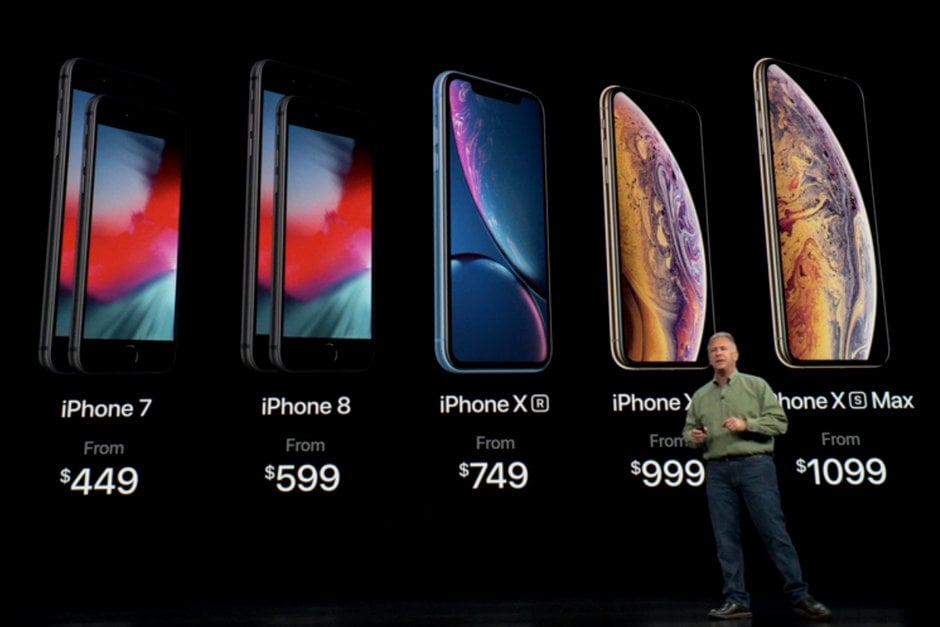
It is now being speculated that if Apple would have sold the iPhone X with discounted pricing, it may not have earned good profits for the company since the cost of materials required would not have decreased significantly. It appears that the iPhone XR that has a starting price of $749 is a good replacement for the iPhone X.
Now that the iPhone 6S, 6S Plus and iPhone SE have been discontinued, the iPhone 7 and 7 Plus are the new entry-level phones from the company. Both phones are respectively priced at $449 and $569. The iPhone 8 and 8 Plus are respectively priced at $599 and $699.
Since the 4-inch iPhone SE is no longer available for buying, the 4.7-inch iPhone 7 and iPhone 8 are the smallest iPhones available for buying in the U.S. At present, the iPhone X, iPhone 6S, 6S Plus and iPhone SE could be available for buying in some countries, but they will be soon discontinued with the release of new iPhones.
The iPhone XR comes in 64 GB, 128 GB and 256 GB storage options. These models are respectively priced at $749, $799 and $899. The storage variants of the iPhone X are 64 GB, 256 GB and 512 GB. These variants are respectively cost $999, $1,149 and $1,349. The 64 GB, 256 GB and 512 GB iPhone XS Max models are respectively price at $1,099, $1,249 and $1,449.
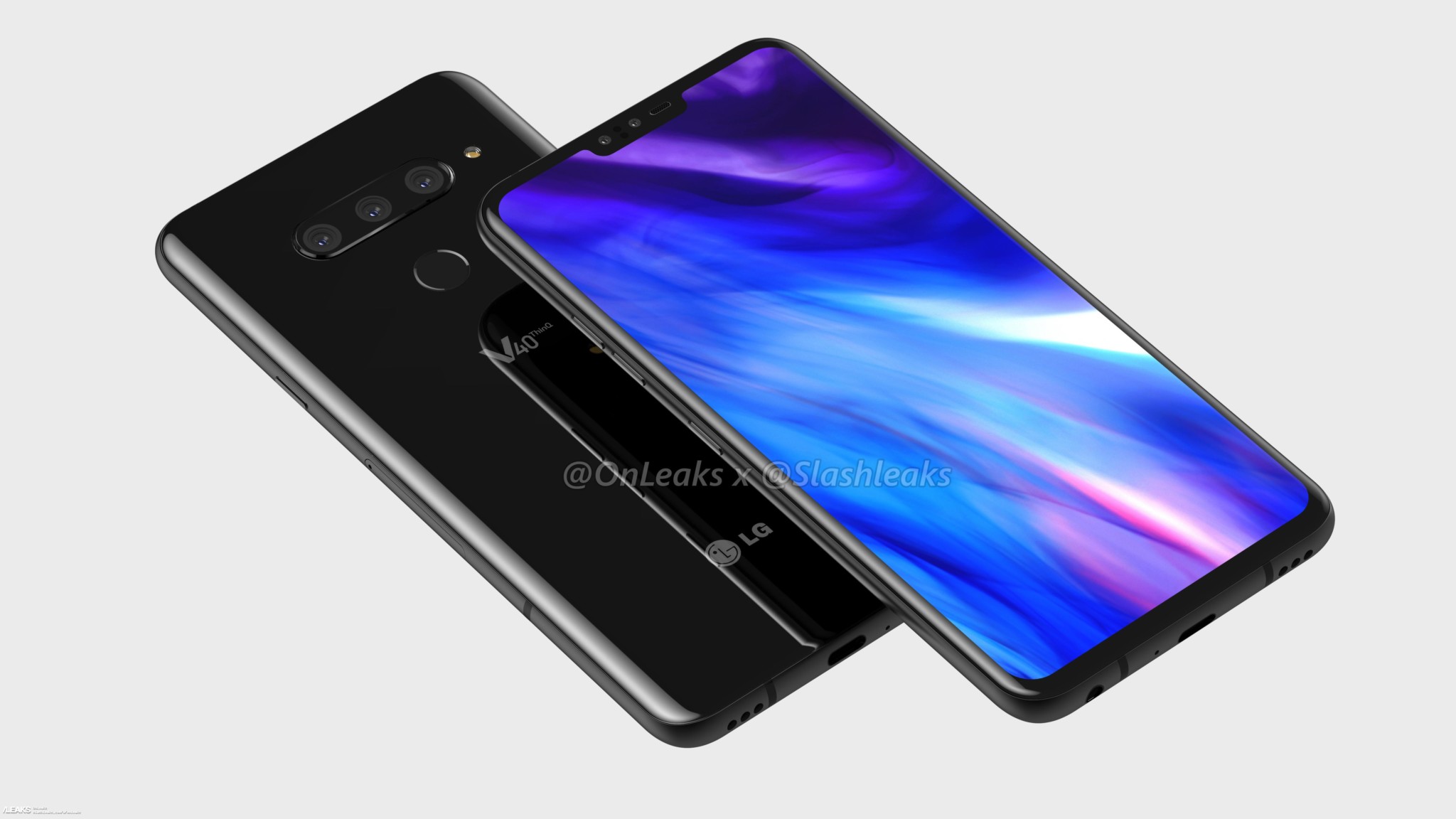
LG has confirmed that it will be debuting the V40 ThinQ smartphone on Oct. 4. The handset has already bagged approval from the Federal Communications Commission (FCC) in the U.S. The FCC documents reveals that there are eleven variants of the V40 ThinQ which belongs to the LM-V405 series.
There is no information available on the specifications of the eleven models of the V40 ThinQ. The existence of the multiple variants of the smartphone suggests that there could be a dedicated variant for each of the leading carriers in the U.S. There could be storage and RAM variants for the smartphone. In the past, LG has launched its high-end phones with different audio capabilities across markets. So, there could be audio setup related variants of the V40 ThinQ.
Rumors have claimed that the V40 ThinQ will be the first smartphone from the company to come preinstalled with Android 9 Pie OS. The FCC listing of the V40 ThinQ contains a screengrab of its Settings menu which suggests that it may come equipped with custom UI flavored Android 8.1 Oreo.
Rumors surrounding the V40 ThinQ have revealed that it will be coming with a 6.3-inch notched P-OLED screen that will produce Quad HD+ resolution of 3120 x 1440 pixels. The Snapdragon 845 chipset will be present under the hood of the phone. It could be assisted by 6 GB of RAM.
One of the major highlights of the phone could be the presence of five cameras on the V40 ThinQ. To be precise, the upcoming LG flagship is expected with dual selfie shooters and triple rear cameras. It could be packed with a 3,300mAh battery. For stereo audio output, it is expected to feature Stereo BoomBox. Other rumored audio features of the smartphone include Quad DAC and DTS X: Surround Sound.
There is no information available on the pricing of the V40 ThinQ. The V35 ThinQ that was launched earlier this year had arrived with a price tag of $930 in the U.S. Hopefully, the pricing of the V40 ThinQ may remain under $999.
We use cookies on our website to give you the most relevant experience by remembering your preferences and repeat visits. By clicking “Accept”, you consent to the use of ALL the cookies.
This website uses cookies to improve your experience while you navigate through the website. Out of these, the cookies that are categorized as necessary are stored on your browser as they are essential for the working of basic functionalities of the website. We also use third-party cookies that help us analyze and understand how you use this website. These cookies will be stored in your browser only with your consent. You also have the option to opt-out of these cookies. But opting out of some of these cookies may affect your browsing experience.
Necessary cookies are absolutely essential for the website to function properly. This category only includes cookies that ensures basic functionalities and security features of the website. These cookies do not store any personal information.
Any cookies that may not be particularly necessary for the website to function and is used specifically to collect user personal data via analytics, ads, other embedded contents are termed as non-necessary cookies. It is mandatory to procure user consent prior to running these cookies on your website.