Advertisement

Pitaka launches Aramid Fiber Magnetic Power Bank with Qi2 support and 15W wireless charging

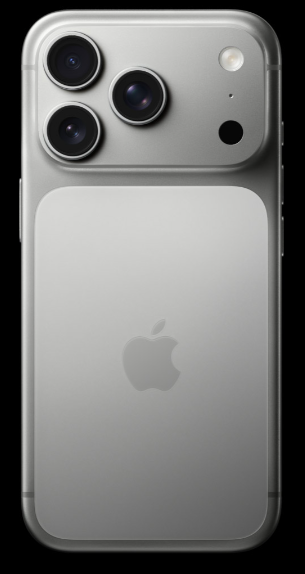
Pitaka has launched a new magnetic power bank built with aramid fiber and designed to support both MagSafe and Qi2 wireless charging standards. The new accessory is aimed at users looking for a compact yet powerful charging solution for smartphones, especially iPhones, though it also works with compatible Android devices.

Pitaka Magnetic Power Bank

Pitaka Magnetic Power Bank Specifications

The power bank features a 5000mAh internal battery and delivers up to 15W wireless charging, alongside 20W wired charging via USB-C. Pitaka has kept the dimensions minimal, measuring 102 × 70 × 8.8mm and weighing just 118 grams. Despite its slim form factor, the device maintains a solid build with a matte metal frame surrounding the signature woven aramid fiber surface. This design gives it a lightweight yet premium finish, suitable for daily on-the-go use.

For wired charging, the USB-C port supports input at 5V/3A and 9V/2.22A, while output reaches up to 9V/2.22A or 5V/2A, depending on the device. The power bank uses intelligent circuitry to ensure optimal power delivery and heat regulation. Pitaka has included an LED indicator system to display remaining battery capacity and a built-in smart temperature control feature to prevent overheating during high-load usage.

Pitaka Magnetic Power Bank

Magnetically, the power bank uses a strong internal array designed to align precisely with MagSafe and Qi2-supported phones. Pitaka says the magnets are strong enough to keep the unit attached securely during travel or while the user is actively using their phone. It is especially well-suited for iPhones, but newer Android devices that support Qi2 can benefit from the same seamless magnetic charging.

The power bank comes in six color options: Black-Grey, Moonrise Blue, Ocean Blue, Sunset Orange, Alien Green, and Forest Green. It is priced at $69.99 in the US, £69.99 in the UK, and €79.99 in the EU, and is now available via Pitaka’s official website and Amazon.

Ultra-slim magnetic power banks are becoming increasingly popular, and brands like Anker and Baseus have already been exploring the space with compact, high-output designs. Pitaka’s new launch enters the category with a more refined and material-forward approach.

In related news, Baseus recently launched a 10,000mAh power bank featuring 22.5W fast charging, an LED display, and a built-in cable. Meanwhile, Vivo has introduced its own 33W power bank, highlighting fast charging support, a slim profile, and compliance with air travel safety standards.

For more daily updates, please visit our News Section.

Stay ahead in tech! Join our Telegram community and sign up for our daily newsletter of top stories! 💡
(Source, Via)

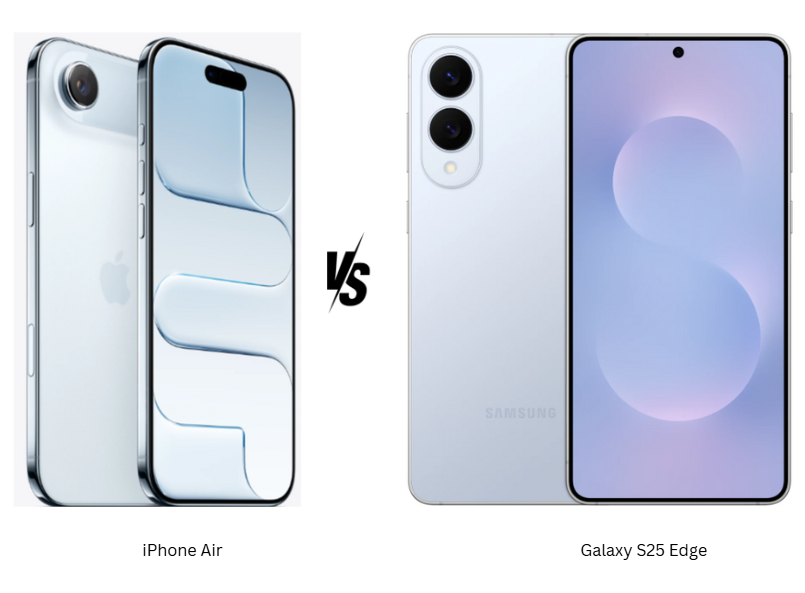
New iPhone 17 Air & iPhone 17 to Feature 120Hz Displays, But There’s a Catch

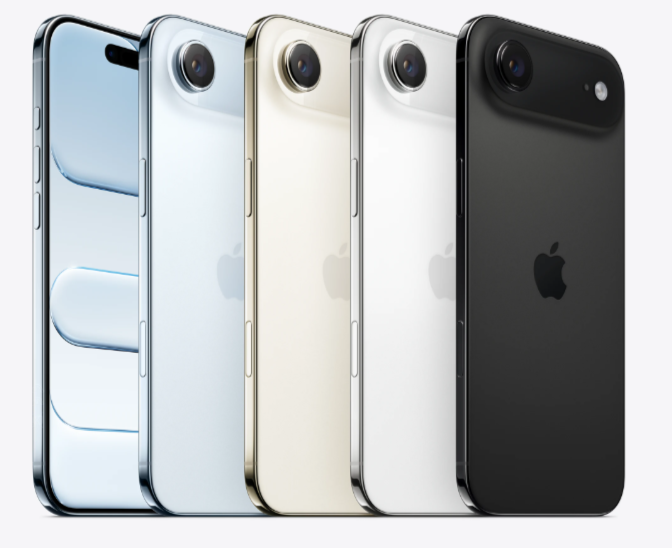
Apple might finally be upgrading the display refresh rate on its standard iPhones. The brand came under fire after it released the premium iPhone 16 and iPhone 16 Plus that cost hundreds of dollars with 60Hz screens. But the iPhone 17 and the new iPhone 17 Air could be getting a smoother display. While this is great news for those who don’t wish to splurge on the Pro models, there is still a twist.

Upcoming iPhone 17 Air & iPhone 17 get smoother displays

For those unaware, the Cupertino based giant has basically gate-kept the 120Hz displays for its more expensive Pro models. However, fresh rumors hint that the next generation of standard iPhones might also get these smoother screens. Both the vanilla iPhone 17 and the ultra thin iPhone 17 Air could offer a 120Hz refresh rate. But unlike the Pro models, there won’t be support for the ProMotion display technology.

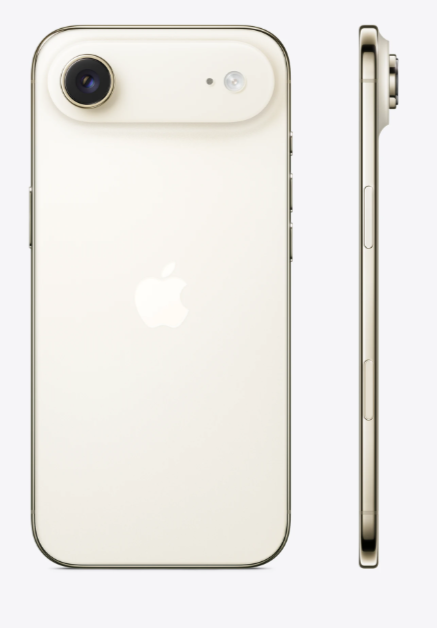
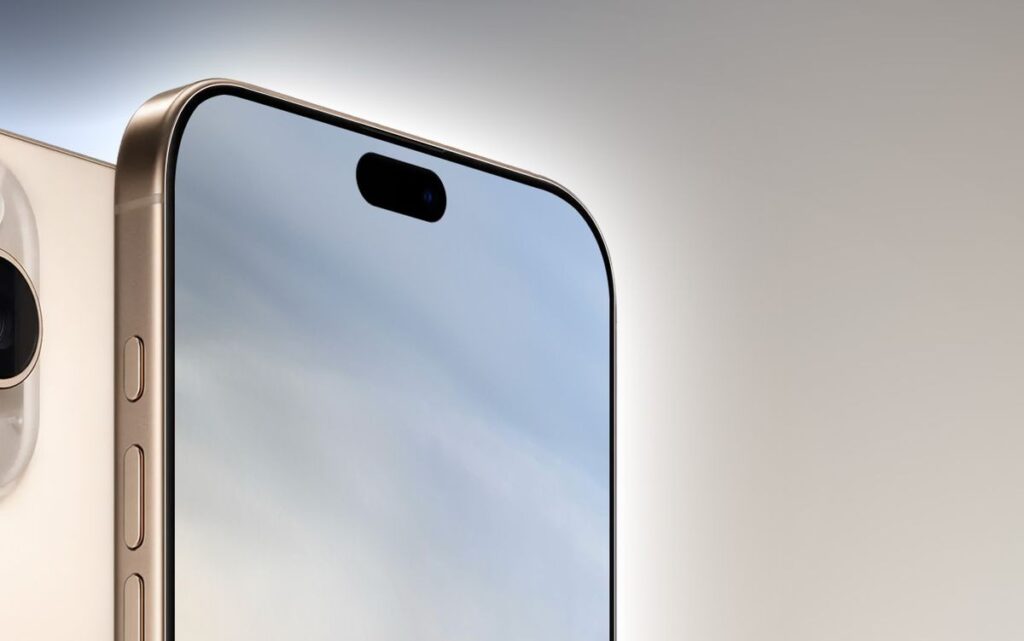
Apple iPhone 17 Air
Apple iPhone 17 Air Render

ProMotion is basically a fancier term for variable refresh rate, which allows the iPhone Pro models to dynamically switch between 1 to 120Hz. To recall, this is an advanced LTPO screen technology that can help improve battery life by lowering the refresh rate based on the content on the screen. This isn’t a software feature, so the display hardware still remains slightly different between the standard and Pro variants in the iPhone 17 lineup.

But simply having a 120Hz display will make the standard iPhone 17s feel a lot smoother and faster. Meaning, this is definitely a win for Apple’s loyal customers. Keep in mind that this is still just speculation at the moment, so take this news with a pinch of salt for now.

For more daily updates, please visit our News Section.

Tech enthusiast? Get the latest news first! Follow our Telegram channel and subscribe to our free newsletter for your daily tech fix! ⚡

Vivo T4 Ultra camera specifications officially confirmed before June 11 launch

Vivo has officially confirmed that it will announce the Vivo T4 Ultra on June 11 in India. Successor to the Vivo T3 Ultra, the T4 Ultra will arrive not only as a performance-focused flagship phone but will also offer an impressive photography experience. Ahead of the launch, the brand has confirmed the camera specifications of the device.

Vivo T4 Ultra camera specifications

Vivo T4 Ultra
Vivo T4 Ultra

According to Vivo, the Vivo T4 Ultra will arrive with a Sony IMX921 50-megapixel main camera with OIS support. The brand offers the same camera on flagship phones like the Vivo X200 / X200s and iQOO 13. The same sensor is also available on the Vivo V50.

For ultra-wide shots, the Vivo T4 Ultra will feature an 8-megapixel sensor, which could be a Samsung JN1 lens. To recall, the T3 Ultra featured a main camera and ultra-wide in its rear camera setup, but the successor edition will feature an additional Sony IMX882 50-megapixel periscope telephoto camera. It will come with features like OIS, telephoto macro, 3x optical zoom, and 100x digital zoom.

Vivo has also confirmed that the Vivo T4 Ultra will feature an OLED panel with a quad-curved design. The screen will offer a 1.5K resolution and a 120Hz refresh rate.

Under the hood, the T4 Ultra will feature the Dimensity 9300 Plus that can achieve around 2 million points on AnTuTu benchmarks. It is also confirmed to arrive in two shades: Black and Phoenix Gold. With around a week remaining, the brand is expected to confirm other details about the T4 Ultra in the next few days.

In all likelihood, the Vivo T4 Ultra will be a rebadged version of the Vivo S20 Pro, which debuted in December 2024 in China. In India, the device is expected to be priced at around Rs 35,000 and will be sold via Flipkart.

For more daily updates, please visit our News Section.

Stay ahead in tech! Join our Telegram community and sign up for our daily newsletter of top stories.

Motorola Razr 60 Sale Kicks Off: Full Specs, Pricing, and Where to Buy

Motorola’s sleek new foldable, the Razr 60, has officially gone on sale. Blending nostalgic design with modern features, the Razr 60 is now available through major online and offline retailers. With its compact foldable form factor, dual OLED display, and more, the Razr 60 enters the market as one of the more affordable flip-style smartphones. Here’s everything you need to know about its price, specs, and where to buy.

Motorola Razr 60 India Sale: Pricing, Colors, & Availability

The company has just kicked off the first sale of the Motorola Razr 60 in the Indian market at 12PM IST today (4th June 2025). It is available for purchase from the brand’s official website, Flipkart, Reliance Digital, and mainline retail stores. Motorola has released the Razr 60 in a single 8GB + 256GB storage configuration that costs 49,999 INR (roughly 581 US Dollars). The flip phone can be purchased in three color variants, namely PANTONE Gibraltar Sea, PANTONE Lightest Sky, and PANTONE Spring Bud.

motorola razr 60
Motorola Razr 60

Specs and Features

The Razr 60 is the brand’s latest entry level flip phone. It sports a tall 6.9-inch LTPO AMOLED display with a FHD+ resolution, a 120Hz refresh rate, and 3000 nits of peak brightness. Meanwhile, the cover screen is a 3.6-inch LTPS AMOLED panel with a 90Hz refresh rate and 1700 nits of peak brightness. Under the hood, the foldable phone is equipped with the Dimensity 7400X SoC. A 4,500mAH battery pack powers this model, which supports 30W wired fast charging and 15W wireless charging.

For optics, the rear has a 50MP main + 13MP ultra wide camera setup, while the front houses a 32MP selfie shooter. Other notable features include Moto AI tools, Android 15 OS out of the box, IP48 water and dust resistance, a side mounted fingerprint scanner, and dual stereo speakers. If you’re wondering wondering whether this model is worth buying, you can click here and see why it could be the right flip phone for you.

For more daily updates, please visit our News Section.

Don’t miss a thing! Join our Telegram community for instant updates and grab our free daily newsletter for the best tech stories!

Here’s when Poco F7 is launching this month

Earlier this year, Poco launched the Poco F7 Pro and Poco F7 Ultra for the global market, and now the brand is preparing to introduce the Poco F7. According to leaks, this device is expected to arrive this month across multiple markets. Now, a new report, courtesy of SmartPrix, has revealed its exact launch timeframe for the global market.

Poco F7 launch timeframe (rumored)

Redmi Turbo 4 Pro
Redmi Turbo 4 Pro

Accoridng to the publication, the Poco F7 is expected to launch between June 17 and June 19 in the global market. The Indian launch is also said to happen around the same date.

Poco F7 specifications (expected)

The Poco F7 is likely to feature a 6.83-inch flat OLED LTPS display with a 1.5K resolution and a 120Hz refresh rate, offering smooth visuals. The phone will have a metal frame, adding a premium touch, and will be powered by the Snapdragon 8s Gen 4 processor.

On the camera front, the Poco F7 should include a 20-megapixel front-facing camera alongside a dual rear setup consisting of a 50-megapixel primary sensor and an 8-megapixel secondary lens.

The device will come with Android 15-based HyperOS 2.0 right out of the box. Additional features likely to be included are an IR blaster and an IP68/IP69 rating for dust and water resistance.

The global version of the Poco F7 is said to pack a 6,550mAh battery, while the Indian variant is expected to carry a larger 7,550mAh cell. Both models will support 90W fast charging. Users can expect configurations of up to 16GB RAM and up to 512GB of internal storage. To sum up, the device will be a rebranded version of the Redmi Turbo 4 Pro, which debuted in China last month.

For more daily updates, please visit our News Section.

Stay ahead in tech! Join our Telegram community and sign up for our daily newsletter of top stories.

(source)

Galaxy Z Fold 7, Flip 7, and Flip 7 FE colors and storage variants leak

Samsung has officially kicked off the teaser campaign for its next-generation foldables, and unsurprisingly, the leaks are beginning to follow. 

A fresh leak has now revealed the color and storage options for three of the four upcoming Galaxy foldable phones: the Galaxy Z Fold 7, Galaxy Z Flip 7, and the newly introduced Galaxy Z Flip 7 FE.

The Galaxy Z Fold 7 is most diverse offering of three

According to the leak, the Galaxy Z Fold 7 will arrive in three configurations. It starts with 12GB RAM with 256GB or 512GB of storage, and will go up to 16GB of RAM and 1TB of storage. On the aesthetic side, the Fold 7 is said to come in Silver Shadow, Blue Shadow, Jetblack, and Coralred shades.

Meanwhile, the Galaxy Z Flip 7 will come in three memory configurations. The base will be 8GB + 128GB option, with 12GB + 256GB and 12GB + 512GB serving as succeeding memories. As for the color options, it will arrive in Blue Shadow and White Black. 

Samsung Galaxy Z Fold 6 and Galaxy Z Flip 6

Perhaps more interesting is the Galaxy Z Flip 7 FE, which is a new addition to Samsung’s foldable lineup. It will be a more affordable variant of the standard Flip 7 and will come in just two memory configurations: 8GB + 128GB or 8GB + 256 GB. The colors are even more minimal here, with only Black or White to choose from.

While the leak doesn’t mention the Galaxy Z Fold 7 Ultra directly, the teaser Samsung shared today is allegedly for this top-tier model. It’s rumored to be thinner than the Fold 6’s 5.6mm and even the Special Edition (4.6mm) variant. That would make it the slimmest foldable Samsung has ever made, assuming these figures hold up.

There’s still no official word on launch dates, but with the teaser now live, we are sure the announcement will be sooner rather than later.

For more daily updates, please visit our News Section.

Stay ahead in tech! Join our Telegram community and sign up for our daily newsletter of top stories.

Casio refreshes classic G-Shock watches in new Black & Bold Red colors in the US

Casio has just released a bunch of new classic G-Shocks in a refreshing new color. The Black and Bold Red series of watches is available in multiple G-Shock lineups, including the iconic Casio DW-5600BBR-1, GA-B2100BBR-1A, GD-010BBR-1JF, GA-700BBR-1AJF, and GX-56BBR-1A. So here’s everything you need to know.

G-Shock Goes Dark with new Black & Bold Red

The company had first unveiled the Black and Bold Red G-Shock series in the Japanese market, but its now being launched in the US. As the name suggests, the Casio watches feature an all-black colored chassis and strap, which is contrasted with a striking red on the displays. This design philosophy is consistent between the different digital and analog style G-Shocks. So you can see the matte black body and red displays on every model.

Casio Black and Bold Red G-Shocks
Casio G-Shock DW5600BBR-1, GD010BBR-1, GX56BBR-1, GA700BBR-1A, and GAB2100BBR-1A

Apart from the new hue, the G-Shock watches still retain their original specs. In other words, you can expect to find key specs like the 200 meter water resistance, shock resistance, world time, stopwatch, and more. Some models even come with solar charging and smartphone sync technology as well (via Bluetooth). So if you wanted to grab a new G-Shock in this sharp contrasting color, you can head to the brand’s official website to check these out.

As of right now, the Black and Bold Red G-Shock is rolling out globally. The Casio DW-5600BBR-1, GD010BBR-1, and GA700BBR-1A G-Shocks arrive with a 99 US Dollar price tag. On the other hand, the GX56BBR-1 and GAB2100BBR-1A watch models are currently listed for 150 US Dollars. In related news, we compiled a list of some of the best Casio watches for your summer adventures.

For more daily updates, please visit our News Section.

Tech enthusiast? Get the latest news first! Follow our Telegram channel and subscribe to our free newsletter for your daily tech fix! ⚡

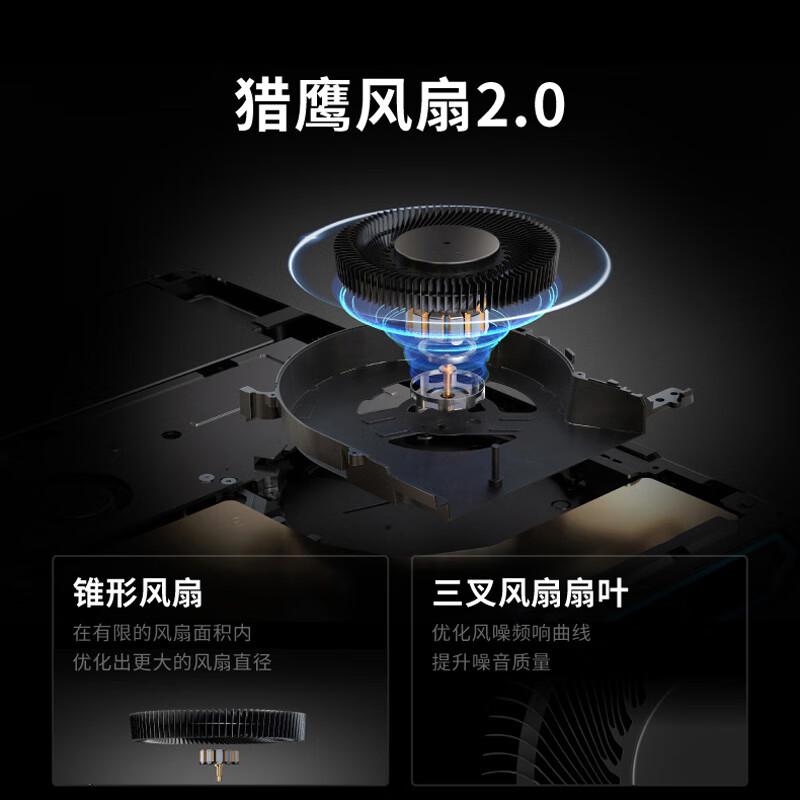
iPad Mini 7 killer: Redmi’s compact gaming tablet receives 3C certification days before launch

Redmi officials recently confirmed that it will launch a gaming tablet this month (June) in China. Before the expected launch, the alleged device has bagged 3C certification, giving an hint about its fast-charging capabilities. While the official name of the device is not known yet, reports have revealed that it will be a compact, high-performance device designed for gamers seeking portability and power.

Redmi gaming tablet to support 67W fast charging

Redmi gaming tablet 3C listing
Redmi gaming tablet 3C certified

The 3C certification confirms that an upcoming Redmi tablet with model number 25079RPDCC will support 67W wired charging using an MDY-15-EQ adapter. Since the listing does not mention cellular connectivity information, it seems that it may arrive in a Wi-Fi-only version.

Redmi gaming tablet specifications (rumored)

The upcoming Redmi gaming tablet is said to feature a custom 8.8-inch LCD panel with a resolution of 2560 x 1600 pixels and a refresh rate of 144Hz. The device is expected to sport a metal unibody design.

The tablet is tipped to run on the MediaTek Dimensity 9400+ chipset, supported by a flagship-grade cooling solution to handle intensive gaming. Redmi may include a dedicated graphics chip to boost rendering efficiency and minimize power draw.

It is also expected to ship with dual USB-C ports, dual speakers, and twin X-axis linear motors for enhanced vibration feedback while gaming. The tablet will also support bypass charging.

Redmi General Manager Wang Thomas has confirmed that this will be the brand’s first flagship compact tablet and directly compete with the iPad Mini 7, but with better ergonomics and thermal efficiency. Likely to debut alongside the Redmi K80 Ultra and Xiaomi Mix Flip 2, this tablet will rival the likes of the Lenovo Legion Y700 (Gen 4), Red Magic Gaming Tablet 3 Pro, and iPad Mini 7 in China.

For more daily updates, please visit our News Section.

Stay ahead in tech! Join our Telegram community and sign up for our daily newsletter of top stories.

(via)

Snapdragon 8s Gen 4 vs 8 Gen 2: which offers superior performance?

Snapdragon 8s Gen 4 vs 8 Gen 2

The Snapdragon 8s Gen 4 is the newest member of the “Snapdragon 8 family”, promising flagship-grade performance at a not-so-flagship price. These “s” versions of Qualcomm chips have been popular for offering the best bang for the buck, but their positioning is often debatable. Take the 8s Gen 4, for instance: it doesn’t sit between the 8 Gen 3 and 8 Elite as its performance is on par with the 8 Gen 3. 

The Snapdragon 8 Gen 2, on the other hand, is a flagship chip from 2022 with excellent CPU and GPU performance. It’s clear that this chip won’t match the 8s Gen 4’s performance, but we’re more interested in looking at the performance gap.

We’ll examine benchmark scores and crucial differences to better understand how these two Qualcomm processors stack up against each other.

Let’s begin with a spec sheet:

Snapdragon 8s Gen 4Snapdragon 8 Gen 2
AnnouncedApril 2025November 2022
Manufacturing4nm (TSMC)4nm (TSMC)
CPU1 x Cortex-X3 @ 3.21 GHz
3 x Cortex-A720 @ 3 GHz
2 x Cortex-A720 @ 2.8 GHz
2 x Cortex-A720 @ 2.02 GHz
1 x Cortex-X3 @ 3.2GHz
2 x Cortex-A715 @ 2.8GHz
2 x Cortex-A710 @ 2.8GHz
3 x Cortex-A510 @ 2GHz
GPUAdreno 825 GPU
Ray tracing support
Snapdragon Elite Gaming features
Adreno 740 GPU
Ray tracing support
Snapdragon Elite Gaming features
NPUQualcomm Hexagon NPUQualcomm Hexagon NPU
Storage/MemoryUFS 4.0
LPDDR5x, up to 4.8GHz
UFS 4.0
LPDDR5x, up to 4.2GHz
CameraSpectra triple AI ISP (18-bit )
Up to 320MP single camera
Up to 108MP single camera with ZSL
Up to 36+36+36MP triple cameras with ZSL
Real-time semantic segmentation (up to 250 layers)
Up to 4K/60fps video recording
Spectra triple ISP (18-bit)
Up to 200MP single camera
Up to 108MP single camera with ZSL
Real-time semantic segmentation
Up to 8K/30fps video recording
ConnectivitySnapdragon 5G modem
Download: 4.2Gbps (maximum)
Wi-Fi 7 (peak speed: 5.8Gbps)
Bluetooth 6.0
Snapdragon X70 5G modem
Download: 10Gbps (maximum)
Wi-Fi 7 (peak speed: 5.8Gbps)
Bluetooth 5.3
DisplayOn-device: WQHD+ @ 144Hz, QHD+ @ 144Hz
External: 4K UHD @ 60Hz
10-bit color depth
Dolby Vision, HDR10, HDR10+, HDR Vivid
On-device: 4K Ultra HD @ 60Hz, QHD+ @ 144Hz
External: 4K @ 60Hz
10-bit color depth
HDR10, HDR10+, HDR Vivid
ChargingQualcomm Quick Charge 5Qualcomm Quick Charge 5

Snapdragon 8s Gen 4 vs 8 Gen 2: Benchmark showdown

AnTuTu comparison

Snapdragon 8s Gen 4 vs 8 Gen 2 - AnTuTu comparison
SD 8s Gen 4SD 8 Gen 2
AnTuTu score2,050,8811,609,763
CPU460,339387,038
GPU852,942612,954
Memory410,236306,124
UX327,364303,647

In the AnTuTu benchmark, the Snapdragon 8s Gen 4 takes an impressive 27% lead over the Snapdragon 8 Gen 2. The newer chip pulls ahead across every category — its CPU score is up by 18%, GPU performance sees a massive 39% jump, and memory performance is 34% better. Even the UX score gets a modest boost, indicating smoother real-world performance. This shows that the 8s Gen 4 is not just a minor upgrade but a significant one over the 8 Gen 2.

Geekbench comparison

Snapdragon 8s Gen 4 vs 8 Gen 2 - Geekbench comparison
SD 8s Gen 4SD 8 Gen 2
Single core2,0412,012
Multi core6,8335,461

On the Geekbench 6 platform, both Snapdragon chips are neck-and-neck in single-core performance, but the gap widens significantly when multiple cores are at play, with the 8s Gen 4 achieving over 25% higher scores. This gives the newer chip a noticeable edge in multitasking and heavy workloads.

Snapdragon 8s Gen 4 vs 8 Gen 2: Don’t miss these differences!

Besides the performance gap, there are several important differences you should be aware of, including maximum download speed, camera features, ray tracing support, and more. We’ll talk about that below.

Performance breakdown

CPU

The 8s Gen 4 features a more advanced ARMv9.2-A processor architecture than the 8 Gen 2’s ARMv9-A, offering enhancements to performance, security, and AI. The newer chip also features a powerful CPU architecture, comprising one Cortex-X4 core and seven Cortex-A720 cores. On the other hand, the 8 Gen 2 has one Cortex-X3, four Cortex-A715, and three Cortex-A510 cores.

GPU

The Snapdragon 8s Gen 4 has a more capable Adreno 825 GPU (versus 8 Gen 2’s Adreno 740), offering higher frequency and FLOPS. The benchmark scores also reflect the same. Both chips, however, have ray tracing support and come with a full suite of Snapdragon Elite Gaming features for an enhanced gaming experience. 

AI

The 8s Gen 4 features a Qualcomm AI Engine, which includes a faster Hexagon NPU and 2x shared memory with improved bandwidth. The performance is up by 44% over its predecessor. The AI Engine supports a variety of LLMs and LVMs with on-device processing.

The 8 Gen 2 also features a Qualcomm AI Engine, which offers up to 4.35x faster AI performance compared to its predecessor. Both chips utilize AI for image, video, and connectivity enhancements.

Camera & imaging

The Snapdragon 8s Gen 4 features a triple 18-bit AI ISP, supporting up to 320MP camera resolution. With MFNR (Multi-Frame Noise Reduction) and ZSL (Zero Shutter Lag), the maximum supported resolutions are 108MP (single camera) and 36MP (triple camera). Additionally, it supports real-time semantic segmentation for photos and videos with up to 250 layers.

On the other hand, the 8 Gen 2 has a triple Cognitive ISP with up to 200MP camera support. With MFNR and ZSL, the ISP supports up to 108MP single camera. The chip also supports real-time semantic segmentation.

Both chips have a range of photo and video capture features. One key difference between them is that the Snapdragon 8 Gen 2 supports up to 8K video recording, while the 8s Gen 4 does up to 4K.

Connectivity

Both Qualcomm chips have integrated 5G modems, but they have different peak speeds. For instance, the 8s Gen 4 lets you download stuff at up to 4.2Gbps, whereas the 8 Gen 2 peaks at 10Gbps. However, they have the same peak speed of 5.8Gbps over a Wi-Fi 7 connection.

Additionally, the 8s Gen 4 supports newer Bluetooth 6.0 standard (vs. 5.4 on the 8 Gen 2) for improved latency, security, and faster, more efficient device connections. 

Display & storage

The 8s Gen 4 supports up to WQHD+ (also called “2K”) screen resolution with 144Hz refresh rate support. For external display, the maximum supported resolution is 4K Ultra HD at a 60Hz refresh rate.

For 8 Gen 2, the maximum on-device screen resolution is 4K Ultra HD with a 60Hz refresh rate. For external display, 4K is the maximum supported resolution. Both Qualcomm chipsets support multiple HDR options, but the 8s Gen 4 also has Dolby Vision support.

Regarding storage, both chips support UFS 4.0 high-speed memory. They also support LPDDR5x RAM, but that on the 8s Gen 4 runs at a slightly higher speed.

Phone availability & price segments

There are plenty of smartphone options for Snapdragon 8 Gen 3 from multiple brands, including OnePlus, Samsung, Xiaomi, and Vivo. However, only a few for 8s Gen 4, including Xiaomi Civi 5 Pro and Redmi Turbo 4 Pro. That’s because it’s a new chip. Brands will take time to release phones powered by this Snapdragon chip.

Best Snapdragon 8s Gen 4 phones:

Best Snapdragon 8 Gen 2 phones:

Snapdragon 8s Gen 4 vs 8 Gen 2: Conclusion

The Snapdragon 8s Gen 4 is more than just an “affordable flagship” chip — it’s a serious performance upgrade over the Snapdragon 8 Gen 2. It has a more capable CPU and GPU that can smoothly handle multitasking and demanding games. There are AI upgrades as well.

The 8 Gen 2 still holds its ground with 8K video recording and higher 5G peak speeds. While it doesn’t match the 8s Gen 4’s performance, it still delivers a smooth experience while gaming or multitasking.

If performance is your top priority, the Snapdragon 8s Gen 4 should be your pick over the 8 Gen 2. But if you’re getting a Snapdragon 8 Gen 2 device at a steep discount, that won’t be a bad choice either.

Best Xiaomi Outdoor Cameras You Can Buy in 2025

Xiaomi has steadily grown its smart home ecosystem, and one of the most important pillars in this lineup is its range of outdoor security cameras. From budget-friendly wired options to advanced dual-lens models with intelligent tracking and full-color night vision, Xiaomi now offers a solid portfolio.

In this 2025 roundup, we focus only on official Xiaomi-branded outdoor cameras available across Chinese and global markets. Indian buyers still lack direct access via Xiaomi’s local store, though some models are available through third-party importers.

Let’s break down the best Xiaomi outdoor security cameras you can buy right now.

Xiaomi Outdoor Camera CW500 Dual

1. Xiaomi Outdoor Camera 4 Dual-Cam Edition

Xiaomi’s most powerful outdoor camera to date, the Outdoor Camera 4 Dual-Cam Edition, combines two 5MP lenses in a compact yet robust design. It features a wide-angle lens for broad surveillance and a 6mm telephoto PTZ module that actively tracks movement with AI assistance. Once the fixed camera detects motion, the PTZ lens kicks in to follow the subject with precision.

It records in crisp 3K (2880 × 1620) resolution, enhanced with full-color night vision using dual LED spotlights and IR lights. Rated IP66 for water and dust resistance, the camera withstands extreme weather from -30°C to 60°C. It supports dual-band Wi-Fi 6, has an Ethernet port for wired stability, and integrates easily with the Mi Home app via Bluetooth 5.0.

Additional highlights include human/vehicle detection, real-time alert clips, two-way talk, a siren, time-lapse video support, and three-tier storage options: local microSD (up to 256GB), NAS, and Xiaomi Cloud. It’s currently a China-exclusive, priced at CNY 299 (~$42).

2. Xiaomi Outdoor Camera CW500 Dual

The CW500 Dual brings Xiaomi’s dual-lens magic to the global market. Instead of 5MP sensors, it opts for dual 4MP lenses that record in 2.5K resolution (2560 × 1440). The configuration remains similar: a wide-angle lens paired with a motorized PTZ unit capable of 355° panning and 95° tilting.

The camera uses 8 fill lights for full-color night vision and employs Xiaomi’s MJA1 security chipset to power AI-driven human/vehicle recognition while safeguarding data. IP66 weatherproofing ensures durability outdoors, and while it lacks an Ethernet port, it connects reliably over dual-band Wi-Fi 6.

There’s support for two-way communication, spotlight/siren deterrents, and local plus cloud storage. It’s available in various global regions, including Europe and Southeast Asia, but hasn’t officially arrived in India.

3. Xiaomi Outdoor Camera CW700S

The CW700S is Xiaomi’s most capable global outdoor PTZ camera, supporting full 360° horizontal rotation and 100° tilt. It features dual 4MP lenses with 9x hybrid zoom, switching from optical to digital zoom seamlessly while preserving 2.5K clarity.

With a dual-antenna setup for extended Wi-Fi range, this model is well-suited for larger outdoor spaces. It combines both white and IR LEDs for all-light-condition monitoring, and like its siblings, it features AI object detection, two-way audio, and powerful deterrents like alarms and flash lighting.

Compatible with Google Assistant and Alexa, the CW700S streams video to smart displays. It’s been launched in Europe (around €79.99) and is globally available via Xiaomi online channels, but not officially sold in India.

4. Xiaomi Outdoor Camera BW500

For users seeking flexibility without wiring, the battery-powered BW500 delivers excellent performance. It’s powered by a massive 10,000mAh battery that lasts up to six months and supports optional solar charging via Xiaomi’s dedicated solar panel accessory.

The camera records at 2.5K resolution and offers a 136° field of view. It includes smart PIR-based motion detection and AI filtering to ignore false triggers. The built-in spotlight enables full-color night vision up to 10 meters.

Rated IP67 for extreme weather resistance, the BW500 is one of Xiaomi’s most rugged options. It also features onboard 8GB eMMC storage for offline buffering, and optionally pairs with a base station that improves range and adds a secure indoor SD card slot. Available globally, the BW500 is a strong alternative to competitors like Eufy or Arlo.

5. Xiaomi Outdoor Camera BW300

The BW300 is a scaled-down variant of the BW500, offering 2K video recording and a 130° wide field of view. It features a 4900mAh battery that delivers up to six months of usage on a single charge. Despite its compact size, it retains many of the same capabilities, including AI-based motion detection, full-color night vision, two-way audio, IP67 water and dust resistance, and support for both microSD and cloud storage.

The BW300 is ideal for budget-conscious users wanting a simple wireless install. It’s widely sold across Xiaomi’s global store and trusted retailers.

6. Xiaomi Outdoor Camera 4C

The Outdoor Camera 4C is one of the most affordable Xiaomi outdoor models, yet it still features pan-tilt controls with 360° horizontal and 106° vertical coverage. It records in 1080p and supports full-color night vision using onboard LEDs.

Despite being budget-tier, it includes two-way audio, IP66 weather resistance, and microSD/cloud storage support. Available in China, the 4C is a solid option for entry-level users seeking coverage flexibility at a low price.

7. Xiaomi Outdoor Camera AW300

Still relevant in 2025, the AW300 offers excellent 2K (2304 × 1296) video quality with a 101.7° field of view. Its night vision system includes 2 white spotlights and 2 IR LEDs for dual-mode operation. Smart detection zones and built-in alarms help reduce false alerts.

It’s IP66 rated, supports up to 256GB of local storage, and integrates with Xiaomi’s Mi Home app for multi-camera monitoring. Priced at ~$30–$40, it’s a great wired solution for users prioritizing value and reliability.

8. Xiaomi Outdoor Camera AW200

Although aging, the AW200 is still sold in select global regions as an ultra-budget option. It records in 1080p, has full-color night vision with an f/1.6 lens, and uses 940nm IR for discreet black-and-white monitoring in pitch dark.

It’s compact, IP65-rated, and supports basic motion detection, two-way talk, and smart assistant integration. If you need basic security on a tight budget, the AW200 remains a solid pick.

For more daily updates, please visit our News Section.

Stay ahead in tech! Join our Telegram community and sign up for our daily newsletter of top stories! 💡
Compact like iPad Mini 7, Red Magic Gaming Tablet 3 Pro to pack larger 9-inch OLED screen

Chinese tech brands are stepping up their game to challenge Apple’s dominance in both smartphones and tablets. Following in the footsteps of Lenovo’s Legion Y700 (Gen 4), Nubia is positioning its Red Magic Gaming Tablet 3 Pro, which is set to launch on June 11 in China, as a direct competitor to the iPad Mini 7. To highlight its design advantage, Nubia has shared teaser images showing that the tablet, while similar in size to the iPad Mini 7, features a noticeably larger 9-inch display.

Red Magic Gaming Tablet 3 Pro compared with iPad Mini 7

The Red Magic Gaming Tablet 3 Pro is reportedly the industry’s first 9-inch compact gaming tablet. Designed with symmetrical bezels measuring just 4.9mm, the screen-to-body ratio hits an impressive 90.1 precent. It features a 9-inch OLED display with a resolution of 2400 x 1504 pixels — a form factor the company believes is ideal for handheld gaming.

Under the hood, the tablet runs on Qualcomm’s Snapdragon 8 Elite Leading Version processor, currently the most powerful in the 5G SoC segment, featuring a dual super-core setup clocked at 4.32GHz. The device was recently spotted on Geekbench with 24GB of RAM and Android 15 onboard. The device scored 2,654 and 8,037 in single-core and multi-core tests, respectively.

The tablet is also said to be equipped with a built-in cooling fan and thermal plates to improve heat dissipation, which should help sustain peak performance for longer gaming sessions. An 8,240mAh battery powers the tablet, supported by 80W fast charging as confirmed by China’s 3C certification.

In China, the Red Magic Gaming Tablet 3 Pro will directly compete with the Lenovo Legion Y700 (Gen 4) and an upcoming Redmi gaming tablet powered by the Dimensity 9400 Plus chip. The Nubia tablet will be available in black and silver shades.

For more daily updates, please visit our News Section.

Stay ahead in tech! Join our Telegram community and sign up for our daily newsletter of top stories.

Vivo X Fold 5 real-life images released, its thickness compared with iPhone 16 Pro Max

Vivo product manager Han Boxiao Han Boxiao released the first Vivo X Fold 5 teaser yesterday, saying it will be lighter than the Vivo X Fold 3 from last year that weighs 219 grams. He also said it will set a new record in thinness and lightness. Today, he released real-life images of the X Fold 5 comparing its thickness with that of the iPhone 16 Pro Max.

Vivo X Fold 5 compared with the iPhone 16 Pro Max

The second image above shows the Vivo X Fold 5 in a folded state, appearing only slightly thicker than the iPhone 16 Pro Max, which measures 8.25mm. A recent report claimed that the X Fold 5’s folded thickness is 9.33mm, while its unfolded profile could be just 4.3mm — among the slimmest we’ve seen in foldable phones.

The weight is said to be around 209 grams, making it the lightest large-format foldable yet. Vivo also claims the X Fold 5 will be the first in its class with triple protection, likely covering water, dust, and drop resistance.

Vivo X Fold 5 specifications (rumored)

The phone is expected to feature a 6.53-inch LTPO outer screen and an 8.03-inch 2K+ AMOLED foldable display, both supporting 120Hz refresh rates. Under the hood, it runs the Snapdragon 8 Gen 3 chip, paired with 16GB RAM and 512GB storage.

The X Fold 5 will feature a 6,000mAh battery that supports 90W wired and 30W wireless charging. For optics, there are 32-megapixel selfie cameras on both screens and a rear Zeiss-tuned triple system, including a 50-megapixel Sony IMX921 main, a 50-megapixel ultra-wide, and a 50-megapixel periscope lens with 3x optical zoom.

The Vivo X Fold 5 is expected to launch later this month in China.

For more daily updates, please visit our News Section.

Stay ahead in tech! Join our Telegram community and sign up for our daily newsletter of top stories.

Galaxy Z Fold 7 Ultra teased with slimmer design, July launch expected

Samsung might finally be ready to launch an “Ultra” version of its popular book-style foldable series. A new teaser shared by the company hints at a more premium foldable device, likely called the Galaxy Z Fold 7 Ultra. This information comes from Samsung’s latest promotional material, suggesting that the device will launch alongside the Galaxy Z Fold 7, Z Flip 7, and Z Flip 7 FE at an upcoming Unpacked event in New York, rumored to take place in early July.

Galaxy Z Fold 7 Ultra teaser released

The teaser hints at a thinner profile than any previous Galaxy Fold device. While Samsung has not specified exact measurements, it is expected to be slimmer than the Z Fold 6 (5.6mm) and the Fold Special Edition (4.9mm).

In addition to the sleek form factor, Samsung is also promising a best-in-class camera setup. This suggests a direct challenge to foldables like the vivo X Fold3 Pro, which has received praise for its camera capabilities.

The Galaxy Z Fold 7 Ultra could follow the design language of the W25 (Fold Special Edition), which launched last year in China and South Korea. That model featured an 8-inch main display, a 6.5-inch cover screen, a 200-megapixel primary camera, and 16GB RAM, packed into a lightweight and thin build.

Samsung Galaxy Z Fold 7 Ultra teased?

Samsung is highlighting AI-driven features that aim to enhance everyday use. The teaser talks about voice control functions to help users multitask and navigate their daily lives more smoothly. The device is said to transform into a larger workspace or entertainment screen when unfolded, with Galaxy AI adapting to the foldable format.

Samsung Galaxy Z Fold 7 launch timeframe

While the Galaxy Z Fold 7 Ultra has already been teased, as per reliable tipster Ice Universe it will debut around the same time as last year’s foldables. For those who don’t remember, the Z Fold 6 and Z Flip 6 went official on July 10, 2024.

For more daily updates, please visit our News Section.

Stay ahead in tech! Join our Telegram community and sign up for our daily newsletter of top stories.

Grab Samsung Galaxy Watch 6 Classic LTE for Rs 18,999 via Amazon India

Samsung Galaxy Watch 6 Classic LTE smartwatch is now on sale in India for Rs 18,999. However, it is presently listed for Rs 23,999, and inclusive of a Rs 5000 Axis Bank Credit Card discount, the smartwatch can be yours at the final price of Rs 18,999. The discount is not limited to Axis Bank Credit Card, you can get up to Rs 4000 discount on other credit cards too.

galaxy watch 6 lte

Samsung Galaxy Watch 6 Classic LTE is available in both the Black and the Silver color options. Specifically, the Rs 4000 Instant discount is applicable on All Bank Cards given the order total of above Rs 14000. It is not for the first time, Galaxy Watch 6 Classic LTE dropped so low, but it is still worth every Rupee spent at Rs 18,999.

Samsung Galaxy Watch 6 Classic LTE smartwatch bundles several advancements over its predecessor, i.e, Galaxy Watch 5 Classic LTE. The beautiful watch is powered by Exynos W930 SoC built on a 5nm process. It further bundles a 2GB RAM and 16GB storage. On top, it houses a 1.5-inch Super AMOLED display with a resolution of 480 x 480 pixels. A slight upgrade over the 410 mAh battery in Galaxy Watch 5 LTE to 425mAh with 10W wireless charging.

It is well protected against dust, water, and shock, as confirmed by different certifications and compliances like 5ATM + IP68 and scratch-free via MIL-STD 810H.

Built with a stainless steel case and a rotating bezel, it is an upgrade over the aluminium build of the Watch 5. These enhancements are worth the price tag of Rs 18,999 in every aspect.

It will be a great addition to your Samsung Galaxy Ecosystem. It is a compelling watch that could help you track health and fitness more accurately.

Please Note: When you buy something using the links in our articles, we may earn a small commission at no cost to you.

Nokia launches Beacon 4 & Beacon 9 Wi-Fi 7 routers with up to 9.4Gbps speeds

Nokia has expanded its Wi-Fi 7 product lineup with two new consumer-focused routers, the Beacon 4 and Beacon 9. Both models aim to bring high-speed wireless connectivity to more households, especially as multi-gigabit fiber networks continue to roll out globally.

Nokia Beacon 4 & Beacon 9 Specifications

The Beacon 4 is the more compact option in the lineup. It supports dual-band Wi-Fi 7 across the 2.4GHz and 5GHz frequencies using 2×2 MIMO. Wireless speeds peak at 3.6Gbps, and the router offers coverage of up to 250 square meters. It supports 160MHz channel bandwidth and includes one 2.5GbE WAN port and two 1GbE LAN ports.

Nokia Beacon 4

The higher-end Beacon 9 introduces a tri-band architecture that adds support for the 6GHz band. It increases maximum throughput to 9.4Gbps and supports wider 320MHz channels, a feature still rare among non-flagship routers. It offers coverage for up to 280 square meters and includes one 2.5GbE WAN port, one 2.5GbE LAN port, and one additional 1GbE LAN port.

Both the Beacon 4 and Beacon 9 embrace a minimalist Nordic design that emphasizes simplicity and clean lines. Nokia has opted for a neutral aesthetic that fits discreetly into modern living spaces without drawing attention. The Beacon 4, measuring 126.5 x 160 x 43mm, has a compact form factor that makes it ideal for shelf or desk placement. The Beacon 9 is slightly bulkier at 173.5 x 140 x 71.5mm but maintains a smooth matte finish and subtle curves that help it blend into its surroundings.

Nokia Beacon 9

Both routers also run on Nokia’s Corteca software platform. Corteca allows telecom operators to manage home networks remotely, push software updates, and deploy new features through the Corteca App Store. It is designed to reduce service calls and improve network visibility for providers.

Nokia has not revealed retail pricing, as both Beacon 4 and Beacon 9 are expected to ship bundled with carrier internet plans. The new models join the previously announced Beacon 19 and Beacon 24, giving Nokia a complete portfolio of Wi-Fi 7 routers aimed at various use cases and budgets.

For more daily updates, please visit our News Section.

Stay ahead in tech! Join our Telegram community and sign up for our daily newsletter of top stories! 💡

(Source, Via)

Top 3 Casio G-Shock Watches for Your Warm Summer Adventures

Summer is here, bringing with it beach days, road trips, hikes, and everything in between. And if there’s one accessory that can keep up with the season’s energy while still looking good, it’s the Casio G-Shock. Known for their legendary durability, G-Shock watches are now more than just rugged tools. We previously brought you a list of Casio watches for the Spring season. So now, here are three G-Shock models that combine summer-ready design with features that match your active lifestyle.

G-Shock GBX-100S Series: Go Transparent

The GBX-100S-1 and GBX-100S-2 are part of G-Shock’s surf-inspired G-Lide lineup. Their standout feature? A transparent resin case that mimics “waves sparkling in the sunlight.” The design is eye-catching, lightweight, and ideal for the beach.

Casio G-Shock GBX-100S
Casio G-Shock GBX-100S-1 and GBX-100S-2

But it’s not just about looks. These watches are built for water sports. They offer Bluetooth connectivity to sync with the Casio app, providing surfers with real-time tide charts, moon data, sunrise/sunset times, and fitness tracking like pace and distance. Since it’s a G-Shock watch, you also get 200 meter water resistance and shock resistance. You can get your hands on these for just under 200 US Dollars.

G-Shock GLXS5610 Series: Colorful Wave Rider

If vibrant colors are your thing, the GLXS5610 series is made for you. Inspired by Lilo & Stitch and designed by pro surfer Bettylou Sakura Johnson, this watch blends fun aesthetics with real surfing chops. It comes in pastel pink and blue and features bio-resin construction, making it eco-friendly and beach-resistant.

Casio G-Shock GLXS5610 Surfing Watches

If you’re a surfer, the tide graphs, moon phase tracking, and 200-meter water resistance are a great addition. You also get practical features like multiple alarms, a stopwatch, world time, and an LED backlight. It even offers 3 years long battery life. This budget friendly summer Casio sells for just 99 US Dollars.

G-Shock GA2100BM Series: CasiOak goes Translucent

The GA2100BM series takes the iconic “CasiOak” design and gives it a translucent, summery twist. Available in sky blue, rose gold, and silver, it’s perfect for anyone who wants a G-Shock that’s as stylish as it is tough.

Casio G-Shock GA2100BM series

This model uses Casio’s Carbon Core Guard structure, making it both lightweight and extremely durable. It’s water-resistant up to 200 meters and includes features like dual LED lights, world time, a stopwatch, and a countdown timer. At $130, it offers excellent value for a watch that blends fashion and function so well.

For more daily updates, please visit our News Section.

Don’t miss a thing! Join our Telegram community for instant updates and grab our free daily newsletter for the best tech stories!

Vivo X200s vs Honor Magic 7: Which Flagship Offers Better Value?

Vivo X200s and Honor Magic 7 are two of the most talked-about flagships in 2025, each offering cutting-edge technology and premium features. As competition intensifies in the upper-mid to flagship tier, these devices highlight the growing divide between performance-focused innovation and all-round value. Comparing them helps identify which phone delivers the better blend of power, design, camera, and endurance for different types of users.

1. Design and Display

Vivo X200S
Vivo X200s

Build and Feel:
Both phones boast premium builds with IP68/IP69 ratings, ensuring durability against water and dust. The Vivo X200s leans into a minimalist glass-metal design with a slightly curved profile and robust Zeiss-backed camera housing, while the Honor Magic 7 enhances hand-feel with its Rhino Glass protection and subtly curved edges. The Honor feels marginally slimmer and lighter, giving it a better in-hand experience. However, Vivo adds eSIM support, providing more flexibility in dual-SIM usage. For versatility and finish, the Magic 7 holds a slight edge in ergonomics and grip comfort.

Display Quality:
X200s features a 6.67-inch AMOLED panel with a 1260p resolution, HDR10+, and an exceptional 5000 nits peak brightness. Meanwhile, the Honor Magic 7 sports a slightly larger 6.78-inch LTPO OLED with Dolby Vision and an equally bright 5000 nits output. Both support 1B colors and 120Hz refresh, but Magic 7’s LTPO panel with variable refresh rate is more power-efficient. Dolby Vision and wider dynamic range on the Honor make it slightly more visually refined for streaming and gaming. Display-wise, Honor’s advanced tuning and Dolby Vision support offer better multimedia output.

Verdict:
Honor Magic 7 wins this round with its superior LTPO OLED display and ergonomic enhancements. While the X200s is still top-tier, Honor’s display and grip feel provide a more immersive experience.

2. Specifications

Honor Magic 7

Performance:
Vivo X200s uses MediaTek’s flagship Dimensity 9400+ with a 3.73 GHz Cortex-X925 prime core and Immortalis-G925 GPU. The Honor Magic 7 steps up with the Snapdragon 8 Elite chip featuring custom Oryon V2 Phoenix cores and the Adreno 830 GPU. While both deliver outstanding performance, the Snapdragon 8 Elite leads in real-world AI and sustained graphics workloads, especially in gaming and multitasking. The GPU performance, software optimization in MagicOS 9, and AI enhancements provide a noticeable advantage under heavy loads. For raw power and efficiency, the Honor edges ahead.

Battery and Charging:
Vivo packs a 6200 mAh battery, while Honor includes a slightly smaller 5650 mAh cell. In contrast, Honor leads in charging speeds, 100W wired and 80W wireless, compared to Vivo’s 90W wired and 40W wireless. Honor also includes reverse wireless charging and 5W reverse wired, adding versatility for accessories. Vivo’s larger battery will offer longer endurance on average, but Honor’s ultra-fast and multi-mode charging suite provides a more flexible daily experience. For users who prioritize quick top-ups and charging options, Honor wins.

Verdict:
Honor Magic 7 has superior processing power and more advanced charging features, while Vivo X200s offers slightly better endurance. Overall, Honor delivers a more dynamic and future-ready hardware setup.

3. Camera

Honor Magic 7

Main and Secondary Lenses:
Both phones offer triple 50MP setups with wide, telephoto, and ultrawide lenses. Vivo’s optics are backed by Zeiss, featuring better coatings (T* lens), laser AF, and 3D LUT support. Honor counters with larger sensors, better low-light capabilities, and 10-bit HDR video with OIS across the board. While Vivo’s telephoto uses a periscope lens for 3x zoom with solid stabilization, Honor achieves similar optical zoom with enhanced HDR video quality. In terms of detail, dynamic range, and videography, Honor’s sensors and software processing pull ahead for content creators. Vivo is excellent for color-accurate photography, but Honor is more cinematic.

Selfie Camera:
Honor uses a 50MP front camera capable of 4K 60fps recording with gyro-EIS, which outclasses Vivo’s 32MP ultrawide lens in resolution and stability. Vivo has a wider field of view for group selfies, but Honor captures more detail and produces more stable, usable videos for vlogging or video calls. The higher resolution and stabilization give Honor the advantage in selfie quality and video content.

Verdict:
Honor Magic 7 takes the lead in both rear and front camera performance, especially in video quality and detail capture. Vivo excels in optical color science, but Honor’s imaging system is more versatile overall.

4. Pricing

Vivo X200s is priced around $650, while the Honor Magic 7 starts at approximately $770. Considering the $120 difference, Vivo offers excellent value with a powerful MediaTek chip, strong battery life, and professional-grade Zeiss optics. However, the Honor Magic 7 justifies its premium with a stronger Snapdragon chip, better camera and video systems, LTPO display, and more versatile fast charging. 

Verdict:
For users prioritizing value and endurance, Vivo is the better buy. For those seeking the most cutting-edge features and performance, Honor justifies the higher cost.

Disclaimer: Prices are approximate and may vary based on country, region, and applicable taxes.

5. Conclusion

Vivo X200s
Vivo X200s

Vivo X200s stands out with its massive 6200 mAh battery, Zeiss camera tuning, and support for eSIM alongside dual SIMs. It also provides 3D LUT import, which benefits photography enthusiasts. On the other hand, the Honor Magic 7 distinguishes itself with emergency satellite SOS features, a more advanced Snapdragon 8 Elite platform, Dolby Vision-certified LTPO display, and 100W + 80W fast-charging capabilities. It also includes reverse wireless charging and higher-quality selfie recording.

Verdict:
For users needing extended battery life, camera accuracy, and cost efficiency, the Vivo X200s is a superb choice. But for those who prioritize performance, advanced display tech, superior video systems, and premium fast-charging, the Honor Magic 7 is worth the extra investment. Both phones are excellent, but Honor delivers a more flagship-grade all-round experience.

Read More:

Lenovo Watch S Announced: Budget-Friendly AMOLED Smartwatch

Lenovo has officially launched the Watch S, a new entry-level smartwatch that punches above its weight with an AMOLED display and long battery life. Aimed at budget-conscious buyers, the Watch S combines a stylish design with essential modern wearable features. So here are all the details.

Lenovo Watch S: What does it offer?

The Chinese tech giant’s new Lenovo Watch S model sports a 1.43-inch circular AMOLED display with a 466 x 466 pixel resolution. This screen is surrounded by a stainless steel frame. Lenovo pairs this smartwatch with two strap options, including the leather variant that has a magnetic connection. As per official notes, the latest Lenovo Watch S option offers up to 7 days of battery life with regular use and 10 days with moderate use, thanks to its 300mAh battery pack.

Lenovo Watch S
Lenovo Watch S

It arrives with an emergency SOS feature, Bluetooth 5.3, and support for over 70 sports modes. Lenovo packs the new Watch S with health related trackers as well, like heart rate monitoring, sleep tracking, calories count, and more. Other notable features include music playback via local storage, voice navigation, smart health reminders, and an IP68 rating for water and dust resistance.

Pricing and Availability

The company has just announced the Lenovo Watch S in its home market of China for 499 Yuan, which is roughly around 70 US Dollars. As of right now, the global availability of this smartwatch is still unclear so stick around for more. In related news, Lenovo just released the Legion G9 controller and a 64MP digital camera for vlogging enthusiasts.

For more daily updates, please visit our News Section.

Tech enthusiast? Get the latest news first! Follow our Telegram channel and subscribe to our free newsletter for your daily tech fix! ⚡

(Via)

Lenovo launches Legion G9 controller to turn Y700 2025 tablet into a gaming handheld

Lenovo is giving its compact powerhouse tablet, the Legion Y700 (2025), a serious gaming edge. The company has officially launched the Legion G9 game controller, a modular, precision-engineered accessory custom-built for the Y700. Priced at 399 yuan (about $55), the G9 is available now via Lenovo’s official store, with a more feature-packed G9 Pro version already in the pipeline.

Lenovo Legion G9 Controller

Lenovo Legion G9 Controller Specifications

The G9 is not your typical snap-on controller. It brings console-grade control elements to the tablet form factor, effectively transforming the Legion Y700 into a handheld gaming console. It uses Hall effect sensors for both the linear/micro switches in the triggers and the dual analog joysticks.

These Hall effect components promise greater longevity, better precision, and zero drift over time, boasting a lifecycle of up to 2 million rotations for the joysticks. There are also four programmable rear buttons designed for macro functions, ideal for competitive shooters or custom loadouts. RGB lighting with adjustable effects rounds out the gamer aesthetic.

While the base G9 already checks a lot of boxes, Lenovo has confirmed that the upcoming G9 Pro will go even further. It will add an audio-based vibration system for more immersive tactile feedback and optical ABXY keys that improve response times and durability.

The controller is clearly made to pair with the recently released Legion Y700 2025 (check out our full review), a tablet that already feels like a console waiting for a grip. Launched last month, the latest Y700 packs an 8.8-inch 3040 x 1904 display with a buttery-smooth 165Hz refresh rate, 360Hz touch sampling, 600 nits peak brightness, and 12-bit color support. Under the hood, it runs on the Snapdragon 8 Elite, with up to 9600 Mbps LPDDR5X memory and UFS 4.1 storage.

Lenovo has focused heavily on thermal performance, equipping the tablet with a second-generation cooling system that features a 12000mm² vapor chamber and a layered heat dissipation structure. This setup helps maintain temperatures below 41°C even during extended gaming sessions. The tablet also includes dual USB-C ports, a dedicated TF card slot that supports expansion up to 2TB, and stereo speakers tuned by Dolby Atmos, reinforcing its position as a premium gaming device.

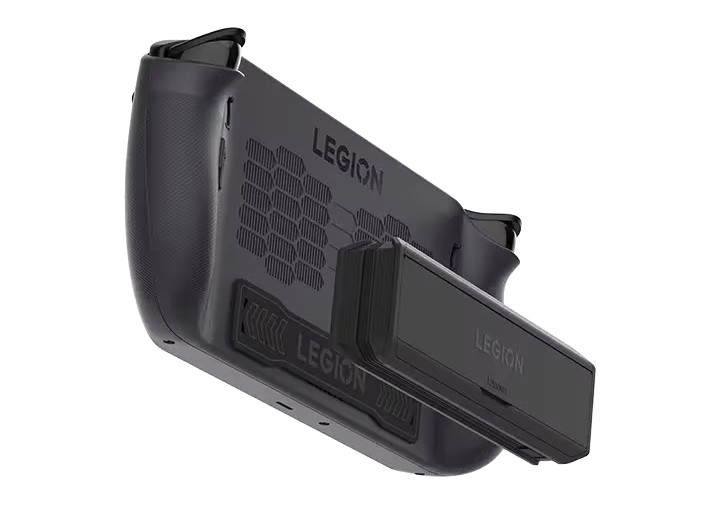
With the G9 controller, Lenovo is leaning all the way into the idea of the Y700 being more than just a tablet. It becomes a portable console, an Android-powered gaming machine that slips into your bag but doesn’t compromise on specs or controls. And with the G9 Pro set to bring haptics and optical button upgrades, Lenovo might just be carving out a niche that sits somewhere between a Switch and a Steam Deck, but lighter, more versatile, and built on Android.

For more daily updates, please visit our News Section.

Stay ahead in tech! Join our Telegram community and sign up for our daily newsletter of top stories! 💡

SteelSeries Arctis Nova 3 Wireless Launched with Real-Time Audio Control and 40-Hour Battery

SteelSeries has added a new model to its Arctis Nova lineup with the launch of the Arctis Nova 3 Wireless Series. The headset is priced at $109.99 and is available now on SteelSeries.com and through select retailers globally. It supports gaming on Xbox, PlayStation, Nintendo Switch, PC, Meta Quest, and any device with a USB-C port, including phones and tablets.

SteelSeries Arctis Nova 3 Wireless

The headset pairs with the new Arctis App, which gives users access to over 200 audio presets. These presets are designed specifically for popular games like Call of Duty, Fortnite, and GTA, and can be adjusted in real time without leaving the game. The app is free to download on the Google Play Store and Apple App Store.

The Arctis Nova 3 Wireless features Quick-Switch Wireless, allowing users to toggle between 2.4GHz wireless for gaming and Bluetooth 5.3 for mobile use. Both connections can have separate EQ settings, and mobile connections stay active during gaming for call notifications.

A 15-minute fast charge provides up to 9 hours of use, while a full charge offers up to 30+ hours on 2.4GHz and 40+ hours on Bluetooth. The headset includes custom Nova speaker drivers and supports 360° Spatial Audio, Tempest 3D Audio (PS5), and Microsoft Spatial Sound.

For voice, the headset uses the ClearCast 2.X microphone, which delivers 32kHz/16-bit audio and doubles the bandwidth of older models. The design is lightweight at 260g, with dual-hinged arms, removable memory foam cushions, and a stretchable headband for comfort. It comes in black, white, aqua, and lavender.

Available variants include:

  • Arctis Nova 3P/3X Wireless – $109.99 (US), £99.99 (UK), €109.99 (EMEA), $109.99 (APAC)

(Source)