Huawei has a big event lined up for March 20 in China, where it’s expected to unveil its first smartphone powered by the stable version of HarmonyOS NEXT. But ahead of that, the company has something to celebrate.
HarmonyOS powers more devices than iOS in China
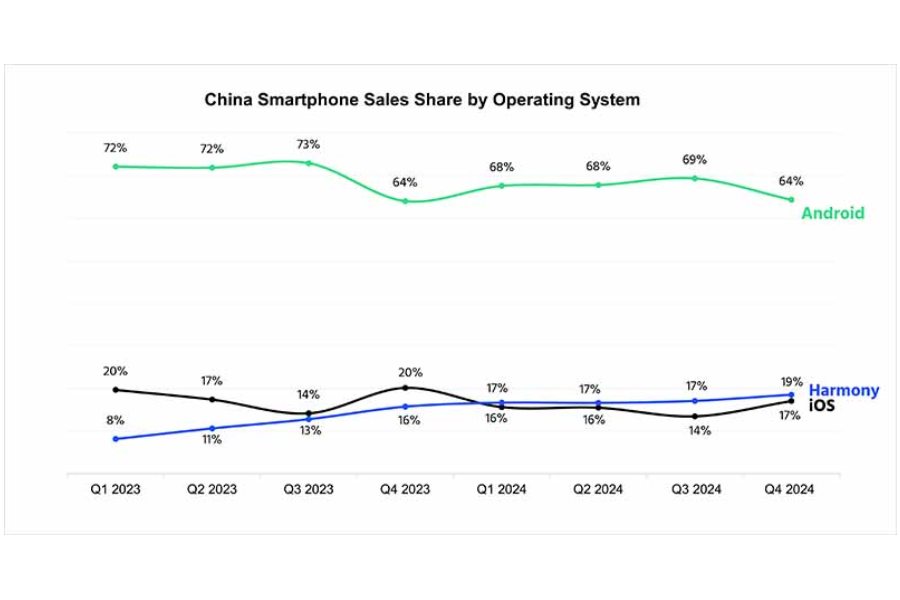
According to new data from Counterpoint Research, HarmonyOS has now overtaken iOS in mainland China. Android remains the dominant player, holding 64% of the market in Q4 2024, while HarmonyOS has a 19% share—edging past iOS by two percentage points. In fact, Huawei maintained its lead over Apple in software throughout 2024.
It’s a major milestone for Huawei, a company that once struggled to keep its smartphone business afloat after U.S. sanctions. Now not only has it surpassed Apple in the software front, the Chinese tech giant is also leading over Apple in both smartphone and tablet market share in the mainland.
According to Counterpoint’s smartphone sales data, Huawei claimed the top spot in China’s smartphone market during Q4 2024, securing an 18.1% share. This marks the first time the company has regained a strong foothold in its home market since the U.S. ban five years ago. Huawei’s smartphone sales surged 15.5% year-over-year, driven by the success of the Nova 13 and Mate 70 series.
Counterpoint also predicts that HarmonyOS adoption will continue to rise, thanks in part to government-backed subsidies. In an effort to stimulate the economy, the Chinese government is offering a CNY 500 ($70) subsidy on smartphones priced under CNY 6,000 (just over $800).
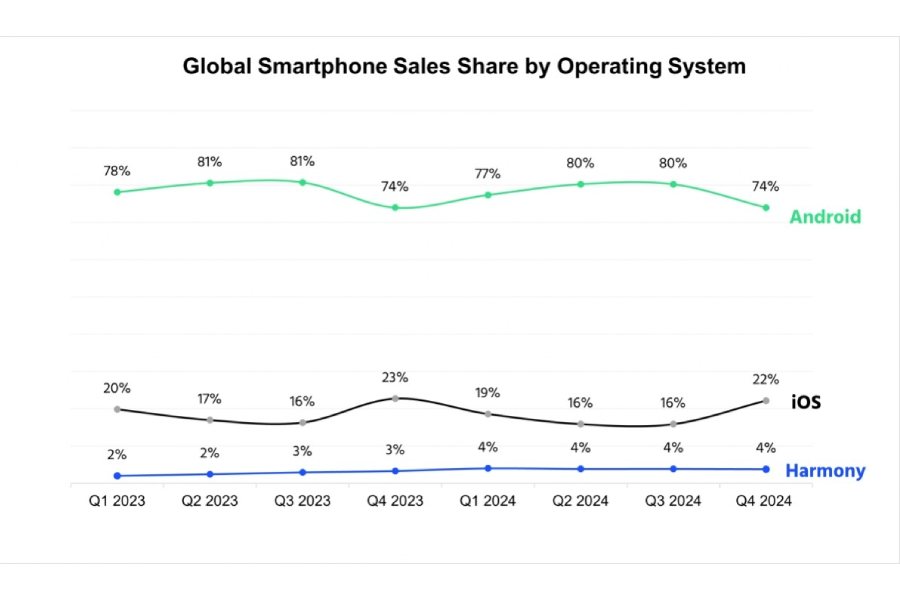
Globally, however, the landscape looks different. Android still leads with a 74% market share, though that’s down from 80% in Q3 2024. Apple, meanwhile, has increased its share from 16% to 22% over the same period. Huawei’s global share has remained steady at 4% since early 2024.
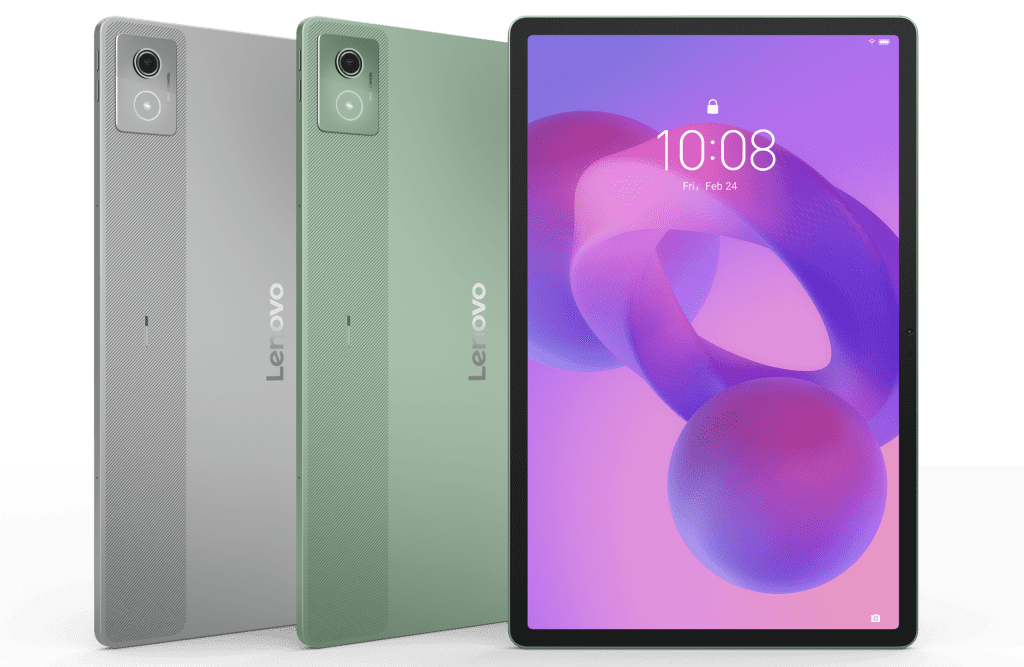
Lenovo has officially launched the Idea Tab Pro in India. First announced at CES 2025 in January, the tablet has now made its way to the Indian market, slotting into the price range of the Xiaomi Pad 7. So, how does it stack up in terms of specs? Let’s take a look.
Lenovo Idea Tab Pro Specifications
The Idea Tab Pro packs a 12.7-inch LCD with a sharp 2,944 x 1,840 resolution and a buttery smooth 144Hz refresh rate. It sports an all-metal build, measures just 6.9mm thick, and weighs 615 grams—keeping it both sleek and portable.
Under the hood, Lenovo has equipped the tablet with MediaTek’s Dimensity 8300 chipset, paired with 8GB of RAM. Storage options include 128GB and 256GB, and thankfully, there’s a microSD slot for expansion.
Software-wise, the Idea Tab Pro ships with Android 14, though Lenovo is only promising updates up to Android 16, along with four years of security patches. The Android is packed underneath Lenovo’s ZUI 16 UI which includes Google’s Gemini AI tools, including Circle to Search.
Lenovo has also baked in its own productivity tools, such as Share Hub for cross-device file sharing, App Streaming to mirror tablet apps to a PC, and Smart Clipboard for seamless copy-pasting between devices.
For productivity, Lenovo offers a stylus and a 2-in-1 keyboard case, though both are sold separately. Powering the device is a sizable 10,200mAh battery with support for 45W fast charging.
One of the standout features of the Idea Tab Pro is its audio setup. It has a quad-speaker system tuned by JBL with Dolby Atmos support. Other notable specs include a microSD card slot, WiFi 6E, Bluetooth 5.3, and a USB-C 3.2 Gen 1 port.
Price and availability
The Lenovo Idea Tab Pro is available in a single Luna Grey color. Pricing starts at INR 27,999 for the 8GB/128GB variant, while the 12GB/256GB model costs INR 30,999. The tablet is already on open sale via Lenovo India and Amazon.
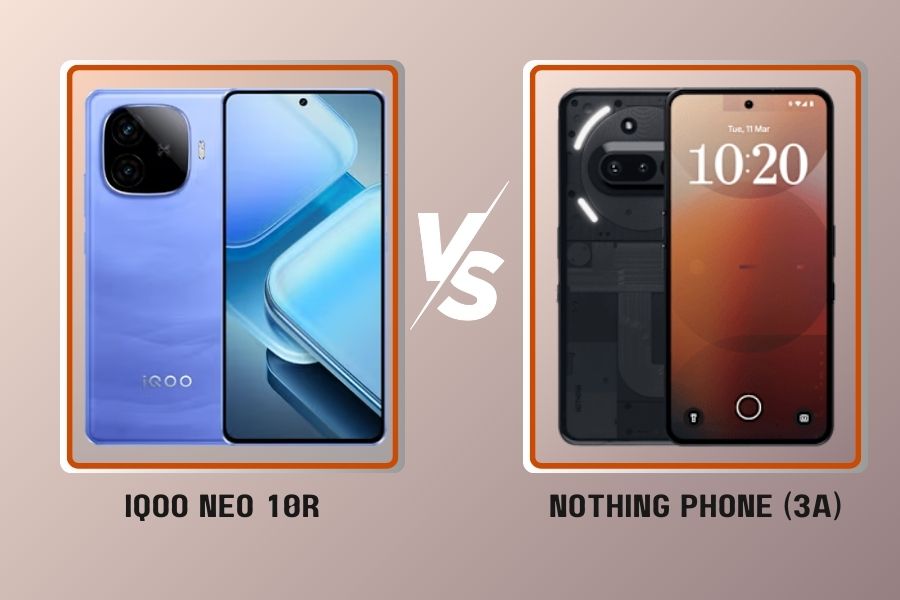
The iQOO Neo 10R and Nothing Phone 3a are two of the latest mid-range contenders, each with their own different approach. iQOO prioritizes raw performance, while Nothing focuses on a more balanced experience with clean software and a design-centric identity, complete with the Glyph interface.
But when it comes to everyday use, which one actually offers the better deal?
Both phones have distinct design choices that set them apart. The iQOO Neo 10R uses a glass front with Schott Xensation Up for protection but opts for a plastic back and frame, which is standard for its price range. It does, however, come with IP65 water and dust resistance, meaning it’s protected against dust and low-pressure water jets.
The Nothing Phone 3a takes a different route. It continues the brand’s signature transparent back design but now features three LED light strips for notifications, a camera fill light, and customization options. However, it only has IP64 protection, which means it can handle splashes but isn’t as resistant as the iQOO Neo 10R.
In terms of size, they are nearly identical, but the Nothing Phone 3a is slightly heavier at 201g, compared to the 196g iQOO Neo 10R. This weight difference is minor but could be noticeable if you prefer lighter devices.
Please Note: When you buy something using the links in our articles, we may earn a small commission at no cost to you.
2. Display
The iQOO Neo 10R has a clear advantage when it comes to display specs. It features a 6.78-inch AMOLED panel with a 144Hz refresh rate and a peak brightness of 4500 nits. These numbers put it in flagship territory, at least in terms of smoothness and outdoor visibility. The resolution is 1260 x 2800 pixels, making it sharper than the Nothing Phone 3a’s 1080 x 2392 display.
Nothing’s approach is different. The 6.77-inch AMOLED panel maxes out at 120Hz and peaks at 3000 nits, which is still plenty bright. However, it lacks the extreme refresh rate of iQOO’s phone, which could be a deciding factor for those who prioritize smooth scrolling or gaming.
3. Performance and Software
This is where the iQOO Neo 10R takes a clear lead. It comes with the Snapdragon 8s Gen 3, a toned-down version of Qualcomm’s top-tier chipset. It features a 3.0 GHz Cortex-X4 core, which should ensure high-end performance for demanding tasks like gaming and multitasking.
The Nothing Phone 3a, in comparison, runs on the Snapdragon 7s Gen 3. While it’s a solid mid-range chip, it lacks the firepower of the 8s Gen 3, especially in GPU-heavy tasks. The Adreno 735 in the iQOO Neo 10R is significantly more powerful than the Adreno 710 in the Nothing Phone 3a.
Both phones run Android 15 out of the box with their skins on top. Funtouch OS 15 on the iQOO Neo 10R leans towards feature-packed customization, while Nothing OS 3.1 maintains a cleaner, near-stock Android experience.
If you prefer minimalism, the Nothing Phone 3a may be the better pick. Software support could be the another deciding factor—Nothing promises six years of Android updates and security patches, whereas iQOO offers three years of OS upgrades and four years of security updates for the Neo 10R.
4. Cameras
The Nothing Phone 3a wins on sheer versatility for cameras. It packs a 50MP main sensor with OIS, a 50MP telephoto lens with 2x optical zoom, and an 8MP ultrawide camera. The inclusion of a telephoto lens immediately makes it more flexible for different shooting conditions. The phone also supports 4K video recording at 30fps with gyro-EIS stabilization.
Meanwhile, the iQOO Neo 10R sticks to a dual-camera setup—a 50MP main sensor with OIS and an 8MP ultrawide. While its main sensor is solid, the lack of a telephoto lens limits its zoom capabilities. On the selfie side, both phones offer a 32MP camera, though the Nothing Phone 3a is limited to 1080p video recording, whereas the iQOO Neo 10R can record at 4K 60fps.
For those who rely heavily on zoom and portrait shots, the Nothing Phone 3a has the better setup. But if you’re only concerned with the main and front cameras, the differences might not be drastic.
5. Battery and Charging
The iQOO Neo 10R takes the lead here with a 6400mAh battery, compared to the 5000mAh battery in the Nothing Phone 3a. That’s a significant difference, which should translate into longer endurance, especially with the more efficient Snapdragon 8s Gen 3.
Both phones support fast charging, but with slightly different speeds:
iQOO Neo 10R: 80W wired charging, reaching 50% in 26 minutes and 100% in 55 minutes
Nothing Phone 3a: 50W wired charging, reaching 50% in 19 minutes and 100% in 56 minutes
Nothing’s faster initial charge speed is useful for quick top-ups, but iQOO’s larger battery should make up for it in endurance. Additionally, the iQOO Neo 10R supports reverse wired charging, which is missing on the Nothing Phone 3a.
6. Verdict
Both phones cater to different audiences. If performance and battery life are your main priorities, the iQOO Neo 10R is the better pick, thanks to the Snapdragon 8s Gen 3, 144Hz display, and 6400mAh battery. It’s a practical choice for power users and gamers.
On the other hand, the Nothing Phone 3a focuses on design, camera versatility, and a cleaner software experience. The LED Glyph lights make it stand out, while the 50MP telephoto camera adds shooting flexibility. It’s a better option if you prioritize aesthetics and a balanced camera setup.
Ultimately, it comes down to whether you value raw performance or a more refined software and camera experience.
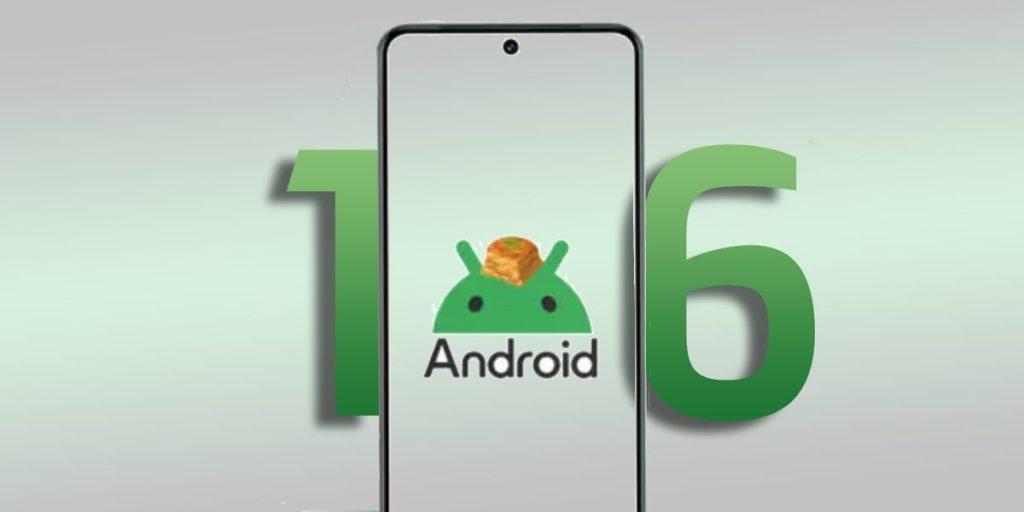
Google has rolled out Android 16 Beta 3. According to Google’s timeline, the stable version of Android 16 could be released as early as May or June, with Pixel devices likely being one of the the first to receive the update by the end of the month. But before the stable release, Google may release one more beta update in April to address any remaining bugs.
Android 16 Beta 3 introduces several notable features and improvements
Enhanced Bluetooth Auracast support now includes standardized QR codes for joining audio broadcasts and compatibility with hearing aid equipment, which makes it more accessible for users with hearing impairments. In addition to that, the update introduces outline text support, which caters to users with vision impairments.
Another key feature is Local Network Protection, which gives users greater control over which apps can access devices on their local network. This feature is expected to be part of a major Android release in the future. It’s good to see Google continuing to improve the privacy and security of the system.
Android 16 has reached platform stability, and Samsung is already testing its Android 16-based custom skin, One UI 8, internally. However, readers shouldn’t expect a public beta release any time soon, as suggested by a Samsung Community moderator. Samsung could potentially jump straight to One UI 8.0 after completing the stable rollout of Android 15-based One UI 7, skipping One UI 7.1. But the focus currently remains on ironing out One UI 7. We will need to see whether Samsung returns to its previous form in rolling out the latest android version in time, starting with Android 16.
As for other Android smartphone makers, information about their Android 16-based custom skin remain scarce. For now, Google’s progress with Android 16 Beta 3 signals a promising step toward a stable and feature-rich release.
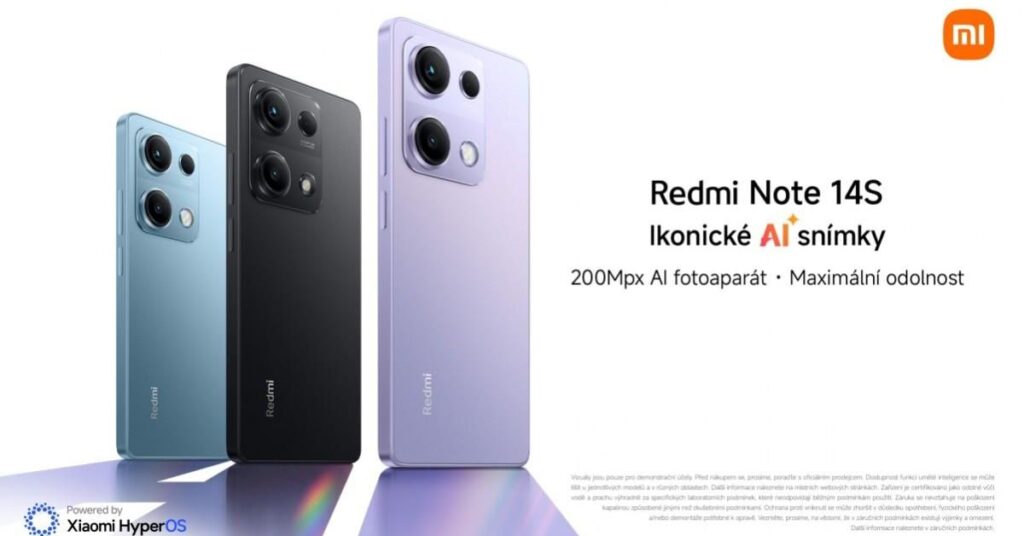
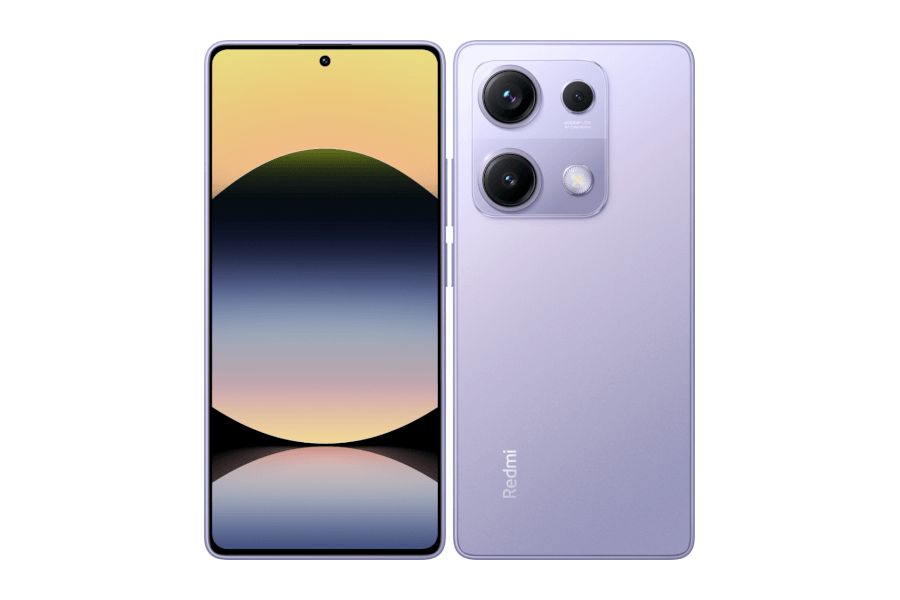
Xiaomi’s sub-brand Redmi has quietly launched the Redmi Note 14S without any fanfare. The device is now listed on the company’s official Czech Republic website, confirming all the details.
At first glance, you might think this is a brand-new model, but in reality, we’ve seen it before. The Redmi Note 14S is essentially a rebranded Redmi Note 13 Pro 4G, which originally launched in January last year.
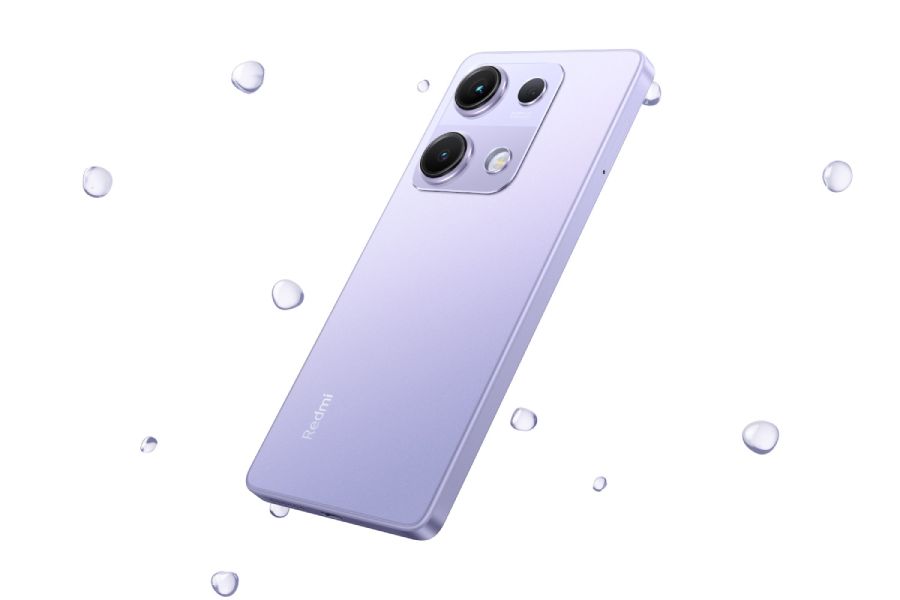
The only noticeable change is a slightly tweaked back design. Beyond that, the specs remain identical, except for one minor detail—the 14S is slightly lighter at 179 grams compared to its predecessor’s 188 grams.
Redmi Note 14S specs: déjà vu?
The phone features a 6.67-inch AMOLED display with an FHD+ resolution, a 120Hz refresh rate, and Corning Gorilla Glass protection. Powering everything is MediaTek’s Helio G99 Ultra, paired with 8GB of RAM and 256GB of storage.
That Helio G99 is a 4G-only chipset, meaning you’re out of luck if you were hoping for 5G connectivity. Oddly enough, Xiaomi hasn’t even specified which version of its HyperOS software the phone is running.
On the back, there’s a 200MP main camera, an 8MP ultrawide lens, and a practically useless 2MP macro sensor. Up front, you get a 16MP selfie camera.
Keeping the lights on is a 5,000mAh battery with support for 67W wired charging. For biometrics, Redmi has included an optical under-display fingerprint scanner. One small but notable upgrade is the improved ingress protection—bumped up from IP54 to IP64 for better dust and water resistance.
Still, for the most part, this is the same phone as last year’s Redmi Note 13 Pro 4G.
Price and availability
The Redmi Note 14S is available in three color options: blue, black, and purple. And it is priced at 5,999 CZK (roughly $260) for the sole 8/256GB model in the country.
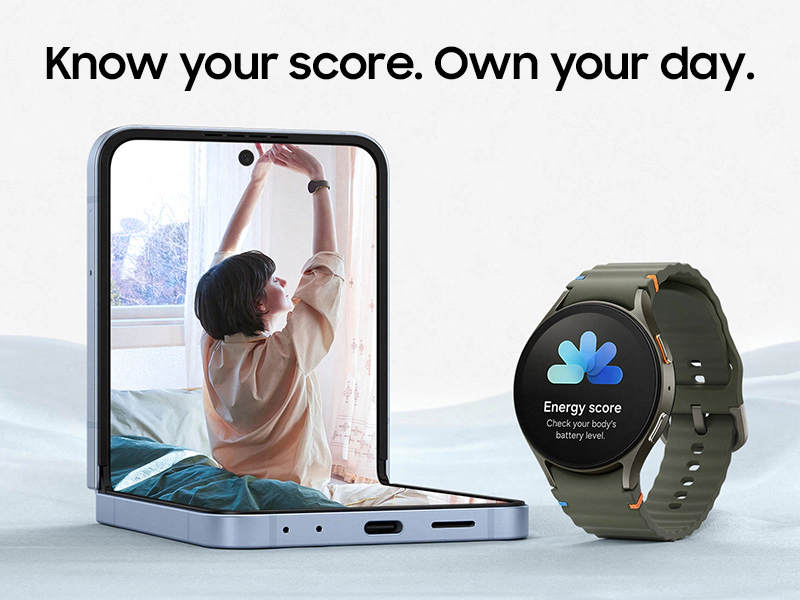
Samsung is offering an enticing deal for US citizens looking to purchase the Galaxy Watch 7, which combines up to $60 discount and a free extra strap. The 44mm Galaxy Watch 7, available in both Bluetooth/Wi-Fi and LTE variants, is now $40 and $60 off, respectively, when purchased without a trade-in from Samsung’s official website. It addition to that, buyers will also get a free $69 Athleisure strap, making this deal even more appealing for those seeking versatility and style.
But there are a few caveats
The discount and free strap are only available for the Galaxy Watch 7 in the Green color option. Also, the deal applies exclusively to the small/medium band size. So this offer isn’t going to benefit someone who needs the medium/large band size. But this is an excellent opportunity for anyone who needs the small/medium size band and is okay with the green color.
The free Athleisure strap allows users to easily switch up the look of their smartwatch, whether for casual outings or more formal settings. Changing straps is also hassle-free, thanks to the quick-release button mechanism. This watch is also compatible with standard 20mm straps. That said, interested readers should check for the prices immediately, as this is a limited time offer.
For those unfamiliar, the Galaxy Watch 7 was launched back in July last year with armor aluminum 2 middle frame, and ECG certification. The 40mm version has a 1.3-inch (432 x 432) display, while the 44mm version packs a larger 1.5-inch (480 x 480) panel. On the inside the watch packs the Exynos W1000 (3 nm) chip, which is paired with 32GB storage and 2GB RAM. As for the software esperience, the watch was launched with One UI Watch 6, based on Android Wear OS 5.
Xiaomi launched its Ultra Slim Power Bank in India back in December last year, and has finally expanded the availability to several European countries, which includes the UK, the Netherlands, Germany, and France. This power bank is designed for portability and convenience, which makes it an ideal accessory for on-the-go charging.
This is a lightweight and portable power bank
The Xiaomi Ultra Slim Power Bank packs a 5,000mAh battery and features a slim profile, is just 10mm thick and weighs only 93g. For context, most smartphones released in the recent years weigh between 160g – 230g. Its metallic silver finish adds a touch of elegance, while its compact size (113 x 53 mm) ensures it’s easy to carry.
The power bank is equipped with a single USB-C port, which supports charging speeds of up to 20W. According to Xiaomi, this output can charge devices like the Xiaomi 14 and Xiaomi 14 Ultra to approximately 37% in just 30 minutes. However, the charging speed may vary as different devices support different charging protocols. Unfortunately, Xiaomi didn’t reveal much about the specific protocols this power bank supports. The official website only notes “Charging speed may vary depending on device usage and charging conditions, among other factors.”
That said, it does have a built-in “intelligent recognition” chip that automatically adjusts the output to match the required current for different devices.
You have to keep in mind that the total capacity is only 5000mAh, which is less that the battery capacity of many recently launched phones. And you also have to factor in the losses while charging. So it cannot charge most phones in the market from 0% to 100%. But I can see it’s a really great product for those who travel with low power devices, such as Bluetooth earphones, as it can charge many of those devices multiple times in a single charge.
But how long does it take to refill itself? According to the company’s testing, 1.75 hours. It supports 18W input via the same USB-C port.
This power bank includes nine safety protection features, such as safeguards against overheating, short circuits, and overvoltage, ensuring reliable and secure usage.
Please Note: When you buy something using the links in our articles, we may earn a small commission at no cost to you.
Pricing, and an alternative:
Its priced at £19.99 in the UK, €29.99 in Germany and the Netherlands, and €24.99 in France. Alongside this release, Xiaomi has also announced the upcoming availability of its more powerful 212W HyperCharge Power Bank 25000, which caters to devices with higher power requirements such as phones and even laptops.
The latest news is about the acquisition of High-NA EUV equipment from ASML, the world’s sole supplier of such machinery. Earlier this month, Samsung shipped its first TWINSCAN EXE:5000 High-NA EUV machine to its Hwaseong Campus in South Korea, which is reportedly necessary for the manufacturing of the 2nm Exynos 2600.
How this development could benefit Exynos 2600
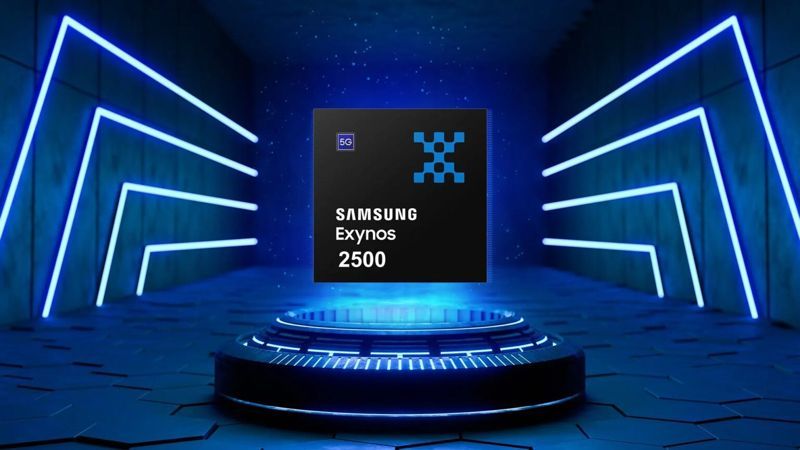
Samsung couldn’t prepare the Exynos 2500 in time, which otherwise would power the base and plus models of the Galaxy S25 series. There have also been rumors about the use of this chip in the upcoming foldables, but nothing is concrete as of writing.
All of it is mainly related to the sub-par performance of the chip, which reportedly does not meet the standards Samsung’s mobile division has set for the flagship bar and foldable devices. The key reason behind the delay with Exynos 2500 was reportedly the yield rate (refers to the percentage of functional, defect-free chips produced on a wafer, compared to the total number of chips created) of the 3nm process node.
With the acquisition of the cutting-edge High-NA EUV machine, Samsung Foundry may finally fix the yield issues. This also means Samsung could use the Exynos 2600 to power some of its future Galaxy flagships, at least the base and plus models like it has done in the past. And given the improvements we have already seen with the Exynos 2200 and Exynos 2400, Samsung Foundry seems to be heading in the right direction.
While it certainly requires some initial investment, a reduction in the manufacturing cost (since they will have to buy fewer or no chips from Qualcomm) may encourage the company to invest some on its resource in redesigning and upgrading the hardware. After all, the S25 and S25 Plus are basically the same phones as last year, and the Ultra model only differentiates itself (in terms of hardware) with the rounded corners and completely flat middle frame.
Samsung is currently prioritizing the rollout of One UI 7, but the update’s delayed release has left many Galaxy users dissatisfied, which is quite reasonable. Amid the slower-than-expected progress, some flagship models such as the Galaxy S24 and S23 series, and the 6th generation foldables have got the One UI 7 beta update. This beta rollout to the S23 lineup is also limited to a few countries.
While Samsung is yet to begin the stable rollout of One UI 7, the Android 15 based skin, the Android 16 based One UI 8 has entered the conversation. According to recent leaks, the company is already working on its Android 16-based skin. It has resulted in mixed opinions among Galaxy enthusiasts regarding timely Android updates from Samsung.
It was recently speculates that One UI 8 may appear in time if not ahead of the schedule. A photo of a Galaxy device running One UI 8 surfaced online, which led to widespread rumors about an early beta release.
Rolling out One UI 7 remains the focus
To avoid any sort of misinformation or unrealistic expectation, a Samsung US Community moderator clarified that One UI 8 has not been officially announced. The moderator explained that the device in the leaked photo is an internal Samsung test unit, which is used for early-stage development only. It means that users are not going to get the One UI 8 beta update anytime soon.
The moderator also responded to community requests for a direct transition to One UI 8, emphasizing that the beta program follows a step-by-step approach. While the idea of skipping One UI 7 and offering the next big upgrade early is intriguing, Samsung’s beta team remains fully committed to finalizing One UI 7 before shifting focus to One UI 8. So for those eligible for One UI 7, check out the rollout timeline here.
Realme is gearing up to expand its Realme 14 series with a new addition soon. Dubbed the Realme 14 5G, the device has already surfaced in a few certification listings, and a recent leak also spilled the beans on some of its key specifications.
Now, Realme has officially confirmed some details, including the processor and battery capacity. Let’s go through it.
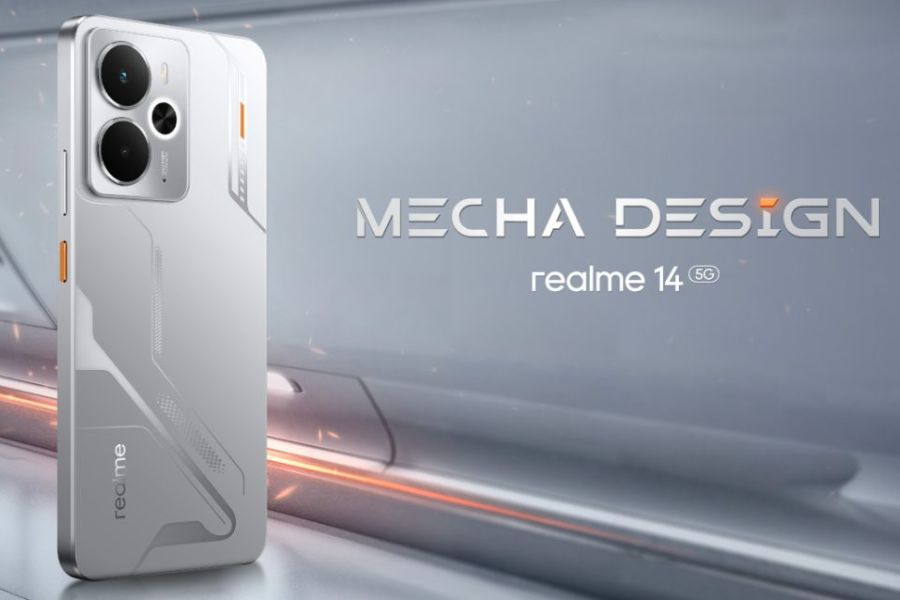
Realme 14 5G Mecha Design
Realme 14 5G Specifications
Unlike other phones in the Realme 14 series, the Realme 14 5G sports a design closer to the upcoming Realme P3 5G, set to launch in India next week.
The phone’s “Mecha Design” (as Realme calls it) features a silver finish, flat edges, and a yellow-accented power button. The back houses a dual-camera setup, headlined by a 50MP primary sensor.
Under the hood, Realme has confirmed that the Realme 14 5G will be powered by the Snapdragon 6 Gen 4 chipset—making it the world’s first phone to feature this SoC. The company claims the chipset scores over 810,000 points on AnTuTu. The device is backed by a massive 6,000mAh battery, which should deliver impressive endurance.
While Realme hasn’t disclosed full specs, a previous leak suggests the Realme 14 5G could be a rebranded Realme Neo 7x 5G as both devices share the same model number (RMX5071).
If that’s the case, we could be looking at a 6.67-inch AMOLED display with Full HD+ resolution and a 120Hz refresh rate. The camera setup may include a 50MP + 2MP dual-camera system on the back, along with a 16MP front-facing shooter.
Additionally, the Realme 14 5G could boast an IP68/IP69 rating for dust and water resistance. It might also include stereo speakers and an optical in-display fingerprint scanner for added convenience.
As of now, there’s no official word on the Realme 14 5G’s launch date, but rumors suggest it could debut later this month.
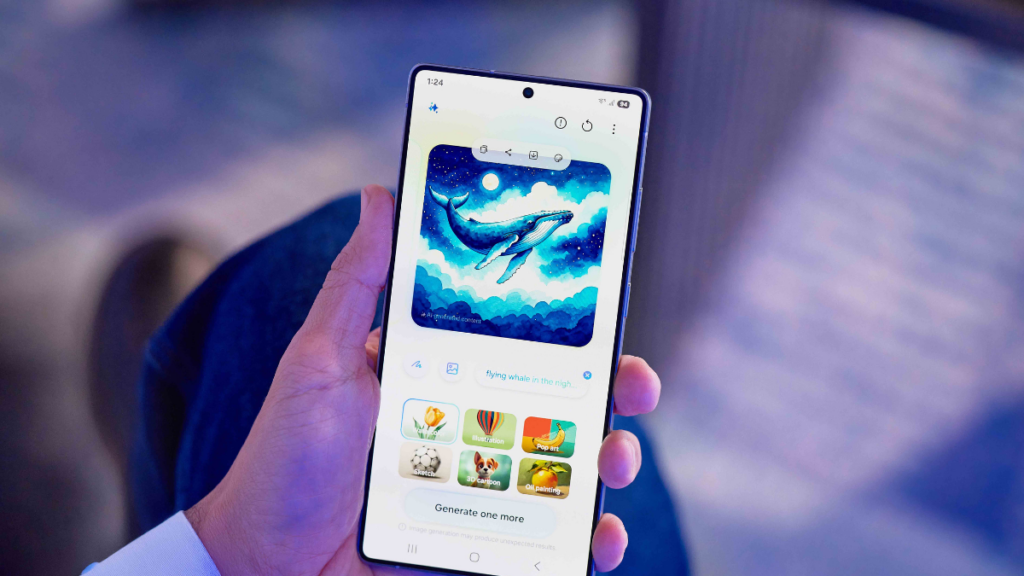
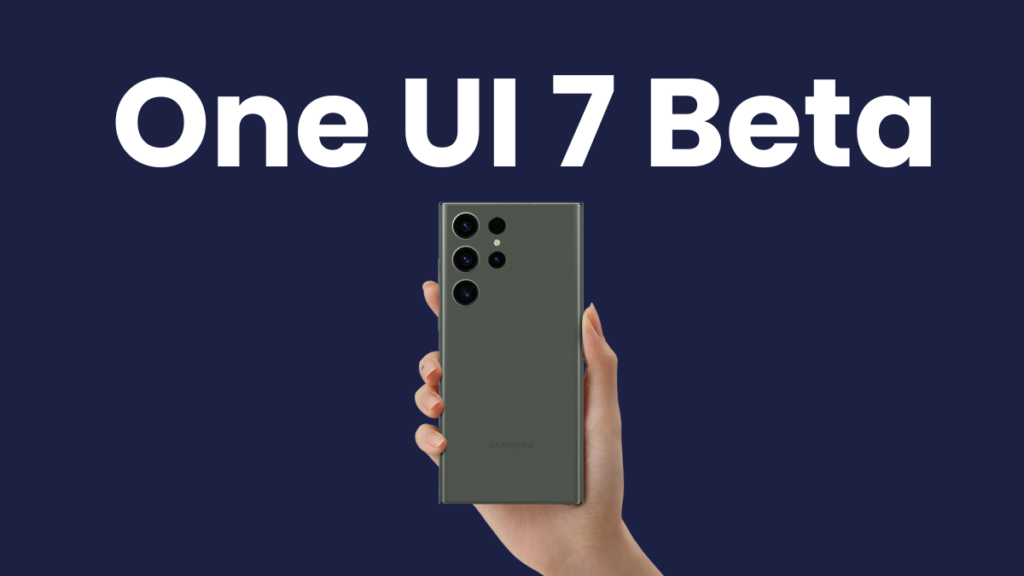
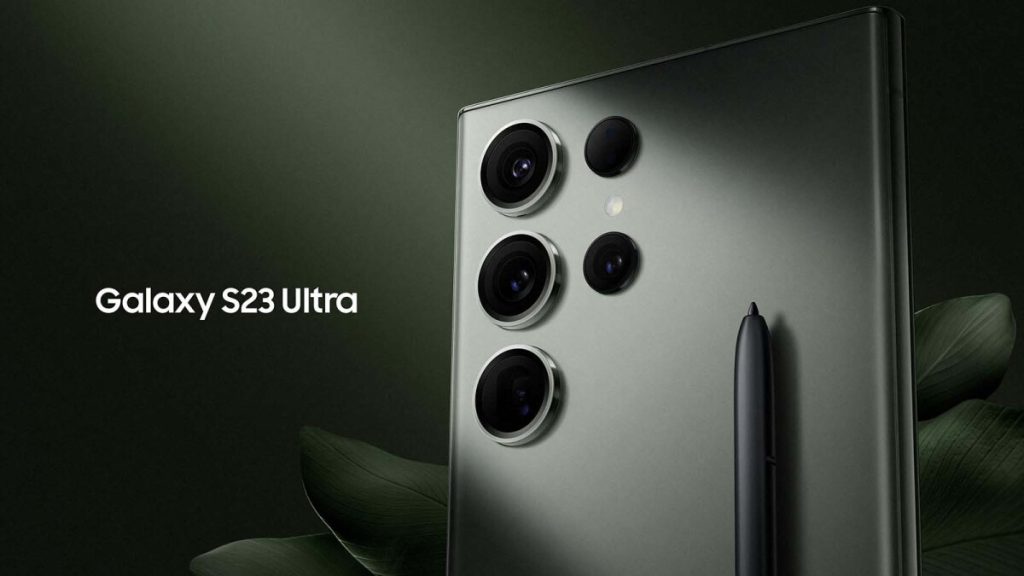
Samsung has rolled out the One UI 7 beta for the Galaxy S23 series, which brings a host of new features and significant improvements over One UI 6. Available in limited countries, the beta can be accessed via the Samsung Members app, though test slots are limited. Early impressions of the update reveal a more refined and user-friendly experience, which includes improved user interface, personalization, animations, and AI capabilities.
New features and improvements
One UI 7 introduces a fresh look with redesigned icons, sharper fonts, and improved on-screen visibility. The Quick Panel and notification panel have been revamped, which now have a more organized and intuitive layout. The Quick Panel now features distinct sections for connectivity, media controls, brightness sliders, and smart device connections. Meanwhile, the notification panel categorizes alerts into priority and low-priority groups, along with notification summaries.
Personalization options have also been expanded, with new lock screen and home screen customizations. These include additional clock styles, frames, and effects. Large folders and enhanced graphical widgets further enhance the home screen experience, and the settings menu now benefits from crisper fonts and redesigned icons.
One UI 7 brings smoother animations for swipes, slides, and drag-and-drop operations, which offers a significant improvement in the overall user experience. Charging animations are now more fluid than before.
The beta also introduces the majority of Galaxy AI features of the S25 series to the S23 series. The camera app has been streamlined with a minimalistic design and new optimizations. AI filters and similar UI changes have also been integrated into the Expert RAW app.
The Galaxy S23 Ultra demonstrated stable battery performance over five hours of continuous use. However, there’s still room for improvement when in comes to smoothness of the animations as compared to the S24 Ultra.
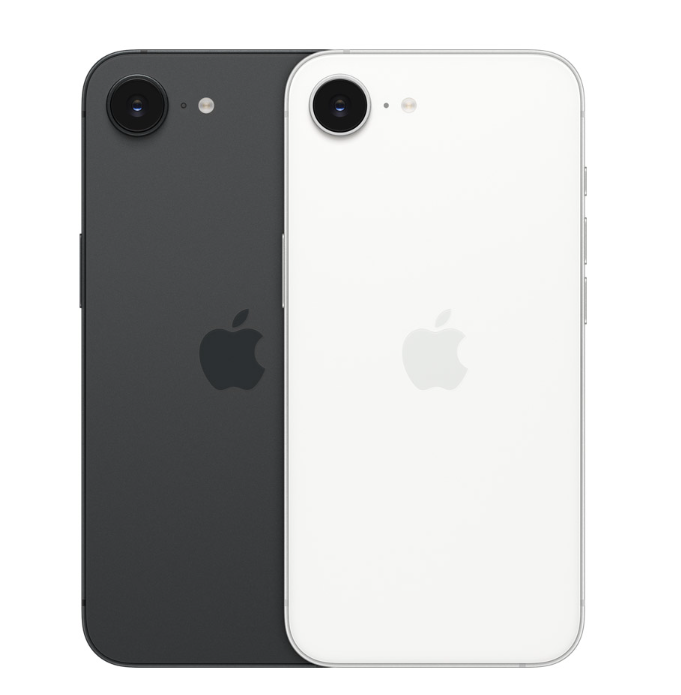
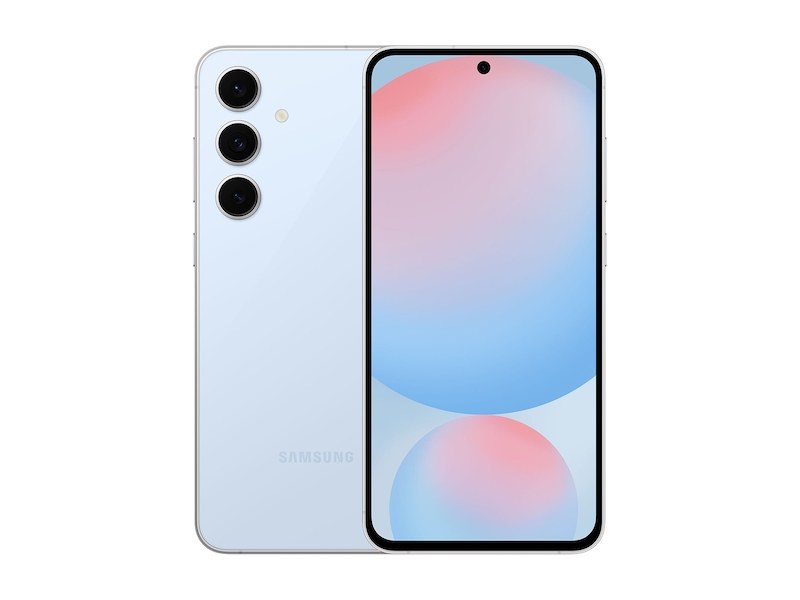
Choosing between the iPhone 16e and Samsung Galaxy S24 is no easy task, as both are powerful flagship devices catering to different user preferences. Apple’s iPhone 16e delivers seamless integration within its ecosystem, while Samsung’s Galaxy S24 packs impressive hardware and versatility at a competitive price. With differences in design, performance, camera capabilities, and pricing, this comparison is essential for buyers looking to make the best choice. Whether you prefer iOS or Android, premium build quality or affordability, this detailed breakdown will help you decide which phone suits your needs best.
The iPhone 16e and Samsung Galaxy S24 both offer premium builds, but Apple sticks to its signature design with a glass front and back, reinforced by an aluminum frame. The Galaxy S24, on the other hand, introduces the Armor Aluminum 2 frame, which adds extra durability. Both phones come with IP68 water and dust resistance, though Apple edges ahead with a higher 6-meter immersion rating compared to Samsung’s 1.5 meters.
In terms of display, Apple’s Super Retina XDR OLED provides stunning colors and deep blacks, but Samsung’s Dynamic LTPO AMOLED 2X outshines it with a 120Hz refresh rate and an astonishing 2600-nit peak brightness. This makes the Galaxy S24 easier to read in bright sunlight and smoother for animations. Additionally, the Galaxy S24 has a slightly larger screen-to-body ratio, giving it a more immersive feel.
Between the two, the Galaxy S24 wins in terms of brightness and smoothness, but iPhone users will appreciate the reliable color accuracy and Ceramic Shield glass protection. If you prioritize an ultra-smooth and brighter display, Samsung takes the lead. However, if you prefer Apple’s ecosystem and its refined color tuning, the iPhone 16e is still an excellent choice.
Please Note: When you buy something using the links in our articles, we may earn a small commission at no cost to you.
2. Specifications
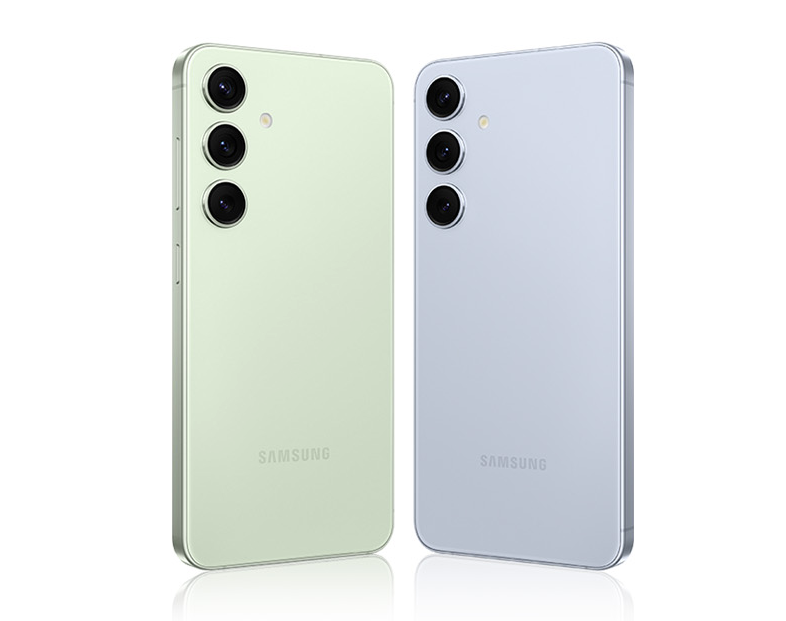
Galaxy S24
Both phones are powered by top-tier processors, with the iPhone 16e featuring Apple’s A18 chip and the Galaxy S24 running either the Snapdragon 8 Gen 3 (USA) or Exynos 2400 (International). Apple’s chipset is known for superior efficiency and longevity, while Samsung’s chipset provides raw power, especially for gaming and multitasking.
Battery life is another area of competition. The iPhone 16e has a 4005 mAh battery with 50% charge in 30 minutes, whereas the Galaxy S24 has a slightly smaller 4000 mAh battery but supports faster 15W wireless and 4.5W reverse wireless charging. While the difference in capacity is negligible, Samsung offers more versatile charging options, including reverse wireless charging for accessories like earbuds.
Overall, Apple’s efficiency means it might last longer on a single charge, even with a similar battery size. However, Samsung’s fast charging and additional features give it a slight edge for those who need versatility. If you prefer better battery optimization, go with the iPhone; if you need faster charging and more power-intensive performance, the Galaxy S24 is the better pick.
3. Camera
iPhone 16e
Apple sticks to a single 48 MP main camera, while Samsung packs a triple-lens setup, including a 50 MP main sensor, a 10 MP telephoto with 3x optical zoom, and a 12 MP ultrawide. Samsung’s setup offers more flexibility for zooming and wide-angle shots, whereas the iPhone focuses on computational photography and post-processing enhancements.
For videos, both phones can record in 4K at up to 60fps, but Samsung ups the game with 8K recording and HDR10+ support. Apple, however, has better stabilization and Dolby Vision HDR. On the selfie side, both have 12 MP sensors, but the iPhone’s SL 3D sensor adds more precise depth mapping, which improves Face ID and portrait shots.
If you want a versatile camera system with zoom and ultrawide options, the Galaxy S24 is the winner. But if you prefer Apple’s refined processing and stabilization, the iPhone 16e remains a top choice. Samsung takes the lead for camera flexibility, while Apple excels in simplicity and post-processing quality.
4. Pricing
Galaxy S24
The iPhone 16e is priced at $599.99, while the Galaxy S24 starts at a much lower $386.65. This is a significant price difference, making the Galaxy S24 the more affordable option without compromising on flagship features.
Given that both phones offer high-end performance, a premium build, and long-term software support, Samsung provides better value for those looking for a feature-packed flagship at a lower cost. Apple’s pricing is justified for those who prefer iOS and seamless ecosystem integration. However, if the budget is a concern and you want the best specs per dollar, the Galaxy S24 is the clear winner.
5. Conclusion
iPhone 16e
Display: The Galaxy S24 has a brighter, smoother 120Hz screen, while the iPhone 16e offers Apple’s color tuning and Ceramic Shield.
Camera: Samsung’s triple-lens setup provides more flexibility, while Apple’s software-based photography enhances details and stabilization.
Battery & Charging: The iPhone 16e has better efficiency, but the Galaxy S24 offers faster wireless and reverse charging.
Software: iOS 18 provides seamless updates and optimization, while One UI 6.1.1 offers customization and long-term Android support.
Price: The Galaxy S24 is significantly cheaper, making it the better value pick.
Overall, if you want the best ecosystem integration and long-term efficiency, go with the iPhone 16e. But if you prioritize a feature-packed, more affordable flagship, the Galaxy S24 is the smarter choice.
Vivo and its sub-brand iQOO are reportedly gearing up to introduce multiple smartphones in China. While iQOO may launch the Z10 lineup in April, Vivo is expected to unveil the X200 Ultra and X200S in the same month. At the same time, Vivo is also said to be working on a couple of Y300 series of smartphones. Tipster Experience More recently released a Weibo post to leak the key details of the Z10 series, Y300 GT, and Y300 Pro+.
iQOO Z10 series specifications leaked
Key details of the upcoming iQOO Z10 series and Y300 series phones leaked
As revealed by the tipster, the iQOO Z10 Turbo is expected to be equipped with the Dimensity 8400 chipset and a 7,600mAh battery with 80W fast charging. The Z10 Turbo Pro, which is expected to launch alongside the Z10 Turbo, could feature the upcoming Snapdragon 8s Elite chipset, paired with a 7,000mAh battery supporting 120W fast charging.
The iQOO Z10 is likely to be powered by the forthcoming Snapdragon 7 Gen 4 chip and offer 90W wired charging. On the other hand, the Z10x may come with an LCD screen, a Dimensity 7300 chip, and 44W charging. However, a previous leak claimed that it would feature a new MediaTek chip. Notably, all models except the Z10x are expected to feature OLED panels.
While the Turbo-branded models are expected to make their debut in April, reports suggest that the Z10 and Z10x variants could be released in Q3 2025.
Vivo Y300 GT and Y300 Pro+ details emerge
Following the launch of the Vivo Y300 and Y300i in China, Vivo is now preparing to introduce two more models—Y300 GT and Y300 Pro+. The Y300 GT is speculated to pack a Dimensity 8400 processor, a 7,600mAh battery, and support 90W charging, making it a potential rebranded version of the Z10 Turbo.
Meanwhile, the Y300 Pro+ is expected to house a Snapdragon 7s Gen 3 chipset and a 7,500mAh battery. It is also tipped to feature a 32-megapixel front camera and a 50-megapixel dual-camera system.
For more daily updates, please visit our News Section.
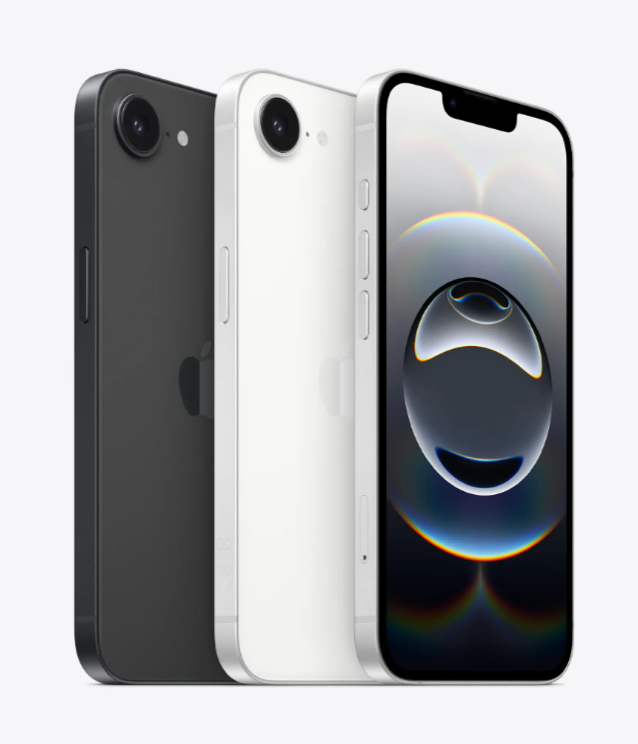
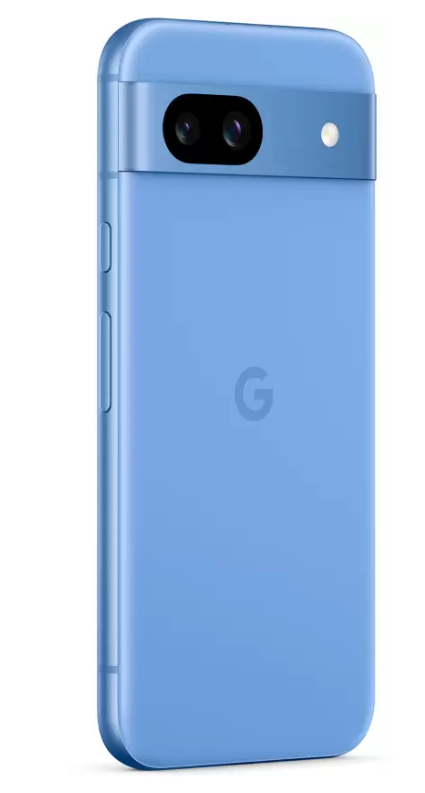
Choosing between the iPhone 16e and Google Pixel 8a is more than just specs. It’s about value, ecosystem, and long-term usability. Apple’s latest entry-level model brings premium design and powerful performance, while Google’s mid-range contender offers AI-powered features and a more budget-friendly price.
With both phones targeting different types of users, this comparison highlights the key differences in design, performance, camera capabilities, and pricing to help you decide which one fits your needs best. Whether you prioritize hardware, software experience, or affordability, this breakdown will clarify which phone is the better choice for you.
The iPhone 16e and Pixel 8a both feature 6.1-inch OLED screens, but Apple’s Super Retina XDR panel offers superior HDR capabilities and a more refined color balance. The Pixel 8a, however, boasts a higher peak brightness of 2000 nits and a 120Hz refresh rate, making it more fluid and visible in bright conditions.
The iPhone 16e has a slightly more premium build with a glass back and aluminum frame, while the Pixel 8a has a plastic back, which feels less high-end but is more durable against drops. The iPhone also has a higher IP68 rating for water resistance, while the Pixel settles for IP67.
If premium materials matter, the iPhone is a better pick, but if you prioritize refresh rate and brightness, the Pixel 8a has the edge.
Please Note: When you buy something using the links in our articles, we may earn a small commission at no cost to you.
2. Specifications
Google Pixel 8a
Apple’s A18 chipset (3nm) is expectedly more powerful than Google’s Tensor G3 (4nm), offering better efficiency, thermal management, and gaming performance. The iPhone’s NVMe storage is also faster than Pixel’s UFS 3.1. The Pixel, however, offers better battery life with its 4492mAh battery compared to iPhone’s 4005mAh.
While Apple’s charging speeds (50% in 30 mins) are decent, Google’s 18W charging is slower. The Pixel’s “Bypass Charging” option helps extend battery health, a feature Apple lacks.
If you need raw power, the iPhone is better, but the Pixel wins in battery life and practical longevity.
3. Camera
iPhone 16e
Apple sticks to a single 48MP rear camera, while Google offers a 64MP main sensor plus a 13MP ultrawide. The iPhone’s computational photography is still top-tier, offering excellent low-light shots and video quality with spatial audio.
However, the Pixel’s software processing, Ultra HDR, and “Best Take” feature provide AI-powered enhancements. The Pixel’s ultrawide lens adds versatility, which the iPhone lacks.
The iPhone still leads in video recording with Dolby Vision HDR and superior stabilization, but for photography, Google’s computational AI and dual-camera setup make it a more flexible choice.
4. Pricing
Google Pixel 8a
The iPhone 16e is priced at around $599, while the Pixel 8a costs approximately $499. With a $100 price difference, the Pixel 8a is the more budget-friendly option, offering a high-refresh display, an extra ultrawide camera, and AI-powered photography enhancements. However, the iPhone 16e justifies its higher price with a more premium build, better long-term performance, and superior video recording capabilities.
If you’re looking for the best value, the Pixel 8a is an excellent choice, but if you prioritize longevity, premium materials, and iOS-exclusive features, the iPhone 16e is worth the extra investment.
5. Conclusion
iPhone 16e
The iPhone 16e has Face ID for biometric security, while the Pixel 8a uses an in-display fingerprint scanner. The iPhone supports Emergency SOS via satellite, which could be lifesaving in remote areas. The Pixel’s Circle to Search feature is a handy AI-powered tool for quick searches. The Pixel also wins with seven years of major Android updates, whereas iPhones typically get around five to six years.
If long-term software support is your priority, the Pixel edges ahead, but the iPhone has the advantage in terms of advanced security features and premium build.
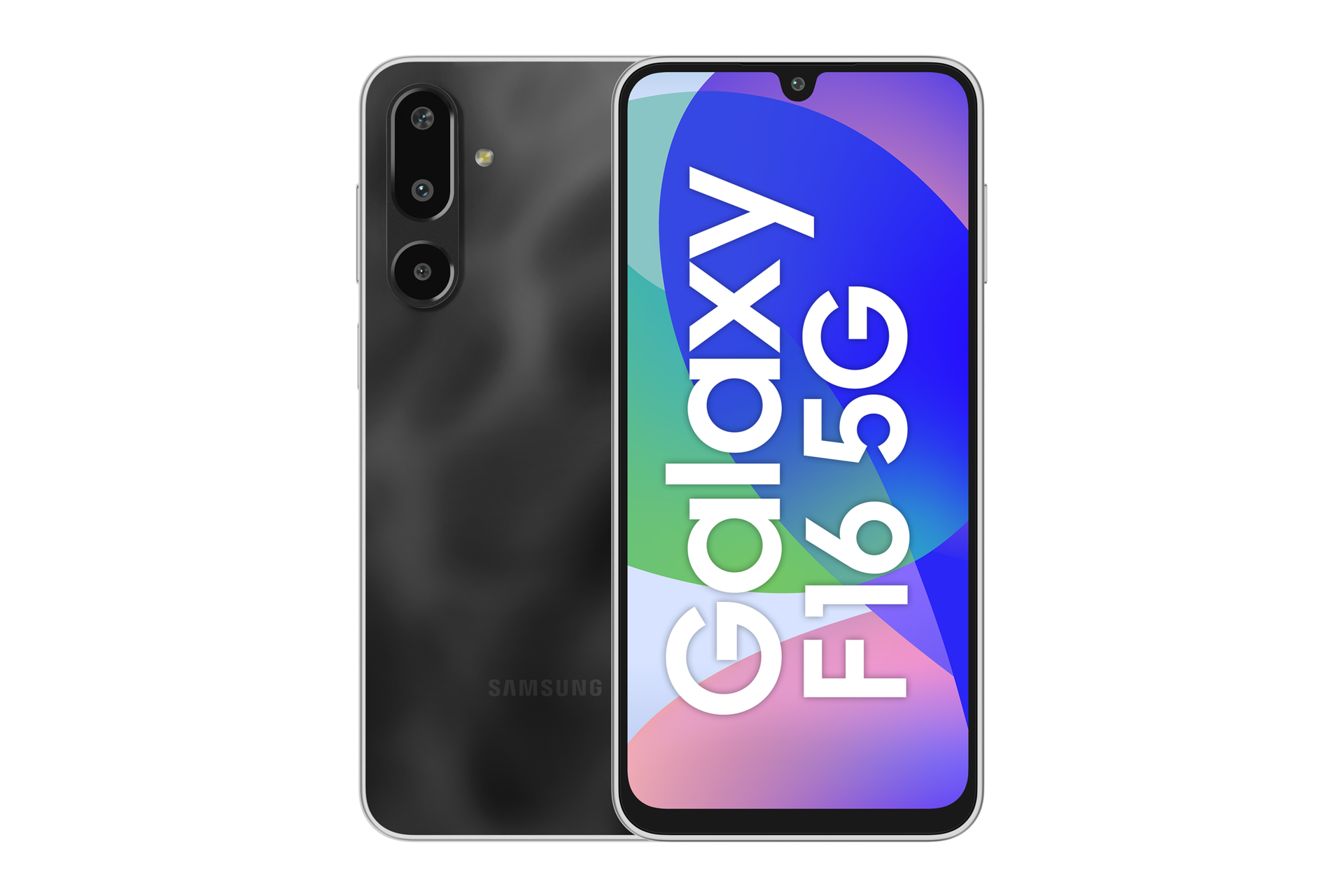
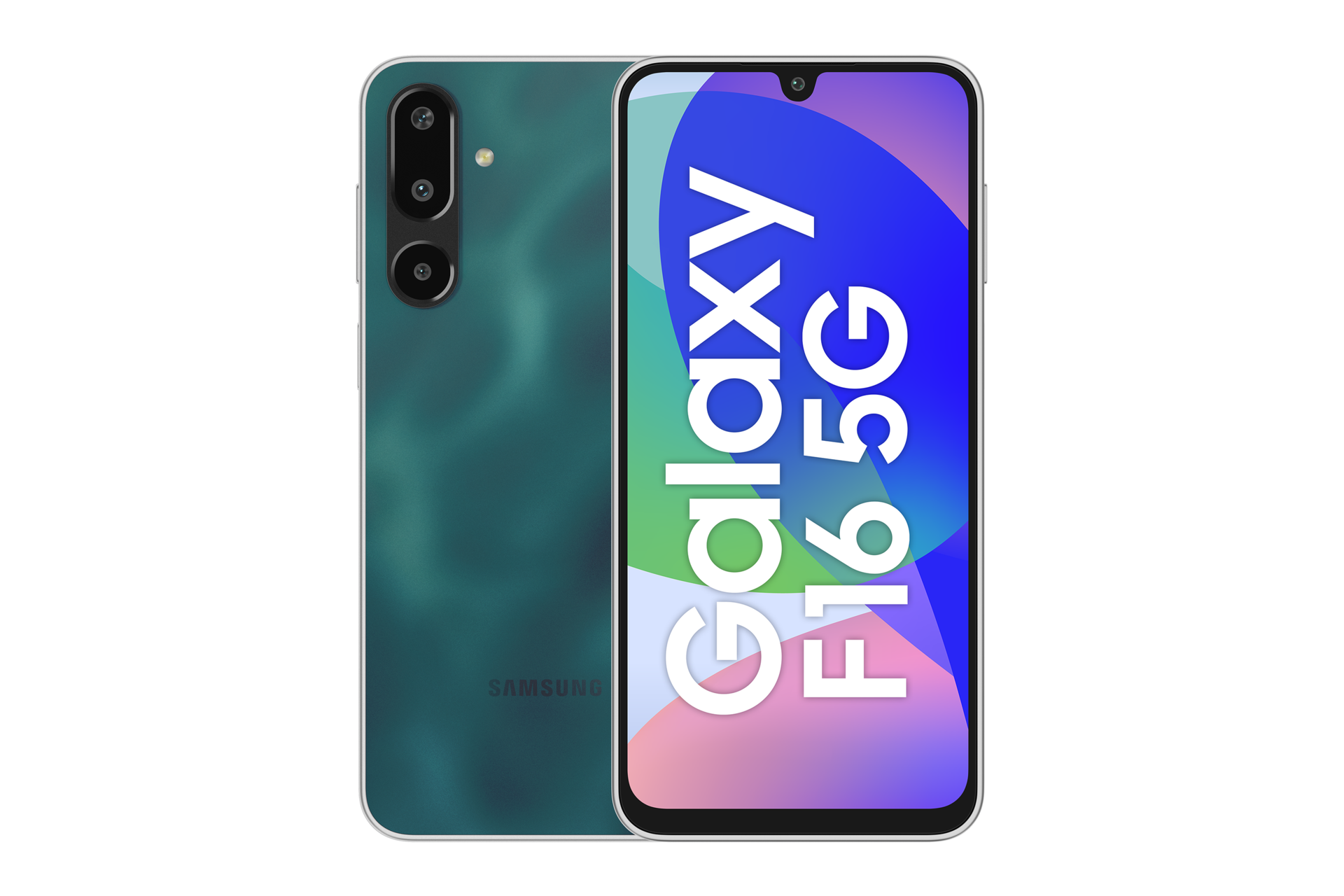
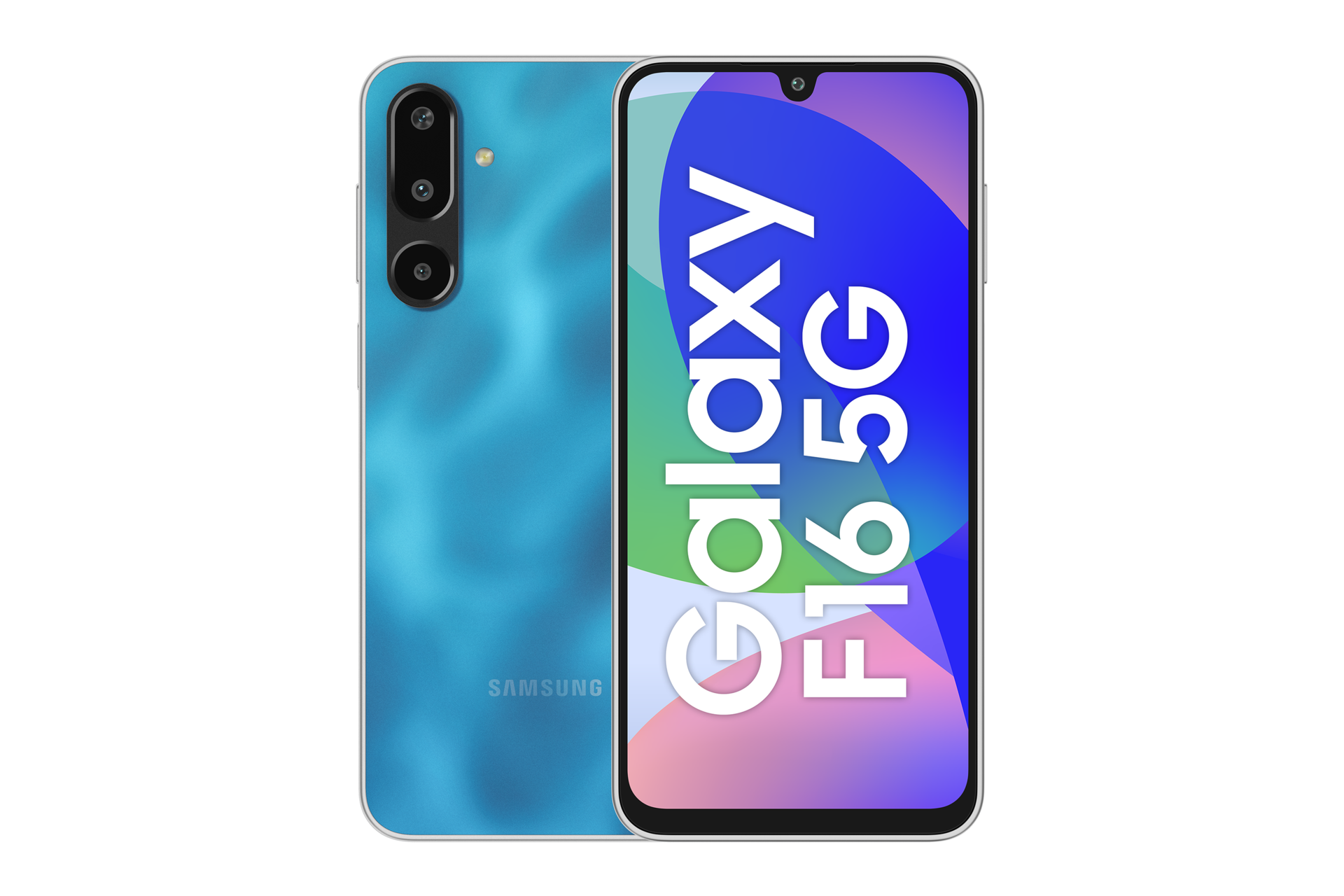
Earlier this week, Samsung quietly unveiled the Galaxy F16 5G and Galaxy F06 5G in India. While the brand confirmed the pricing of the F06, it did not initially disclose the exact prices of the F16’s variants. Now, the company has officially revealed the pricing and offer details for those interested in purchasing the Galaxy F16.
The Galaxy F16 5G is now available for purchase in three colour options: Bling Black, Glam Green, and Vibing Blue. It comes in three variants—4GB+128GB for Rs 12,499, 6GB+128GB for Rs 13,999, and 8GB+128GB for Rs 14,499. As part of an introductory offer, buyers can avail a Rs 1,000 bank cashback on all three variants, making it a more attractive deal for those looking to purchase the device. Like other F-series Samsung phones, the F16 can be bought through Flipkart, Samsung India’s website, and retail stores.
Even though the Galaxy F16 5G is an entry-level 5G offering, the brand is promising up to 6 years of Android OS upgrades and 6 years of security updates. Additionally, the F16 is the first F-series phone to come with support for Samsung’s Tap & Pay feature with Samsung Wallet.
Samsung Galaxy F16 5G specifications
The Galaxy F16 5G is equipped with a 6.7-inch AMOLED 90Hz screen that offers an FHD+ resolution and a peak brightness of up 800 nits. For security, it features a side-facing fingerprint sensor. It comes preloaded with Android 14 and One UI 6.1.
On the front, the F16 5G features a 13-megapixel camera and its back panel has a 50-megapixel + 5-megapixel + 2-megapixel triple camera unit. Under the hood, the F16 has the Dimensity 6300 chip and a 5,000mAh battery with 25W fast charging support. However, the charger is not included in the retail package. The phone measures only 7.9mm in thickness and weighs 192 grams.
For more daily updates, please visit our News Section.
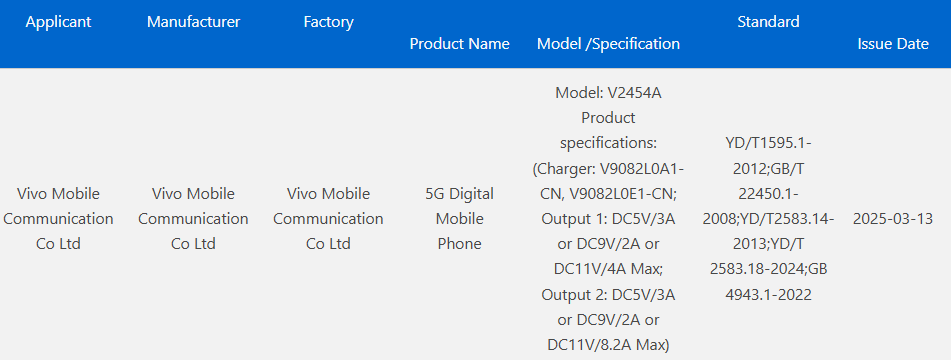
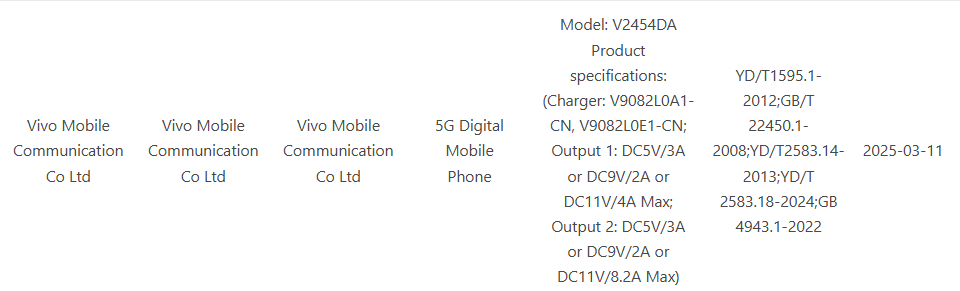
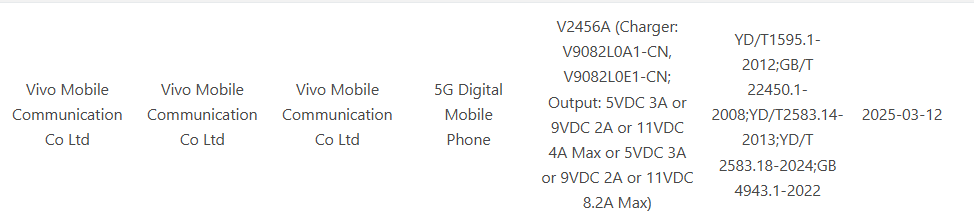
Vivo is expected to hold a major launch event in April in China. The event is likely to see the arrival of multiple devices, such as the X200 Ultra, X200S, Pad 4 Pro tablet, and Watch 5. Therefore, these devices are expected to surface on certification platforms this month before going official next month. Three new Vivo phones with model numbers V2454A, V2454DA, and V2456A have recently been certified.
Vivo V2454A / V2454DA
Vivo V2454A 3C certified in China
Vivo V2454DA 3C certified in China
Screenshots reveal that the upcoming Vivo V2454A and V2454DA smartphones have been certified by China’s 3C authority. The similarity in their model numbers, with the latter featuring an additional “D,” suggests that they are likely variants of the same device rather than entirely different models.
Both devices have been spotted with 90W rapid charging support. While their exact identity is unknown, the V2454A / V2454DA could be the upcoming Vivo X200S or X200 Ultra. It is advisable to wait for further reports to confirm their final marketing name.
V2456A – Could be Vivo Y300 Pro+
Vivo V2456A 3C certified in China
The forthcoming Vivo V2456A phone, which was previously seen in the Geekbench AI database, has now been approved by China’s 3C regulatory body. The listing suggests that it may also support 90W fast charging.
To recall, the V2456A previously appeared on Geekbench with the Snapdragon 7s Gen 3 chip. A recent leak revealed that Vivo is working on a Y300 Pro+ phone featuring the Snapdragon 7s Gen 3. Therefore, the V2456A could be the Y300 Pro+, which is expected to come with 8GB of RAM, a 32-megapixel front camera, a 50-megapixel dual-camera system, and Android 15.
For more daily updates, please visit our News Section.
Smartphones keep getting bigger, and that’s not just a trend—it’s the direction the industry has chosen. As a result, compact phones are now far less common than they were just a few years ago. The options are shrinking year after year, with manufacturers that once offered great compact phones no longer making them.
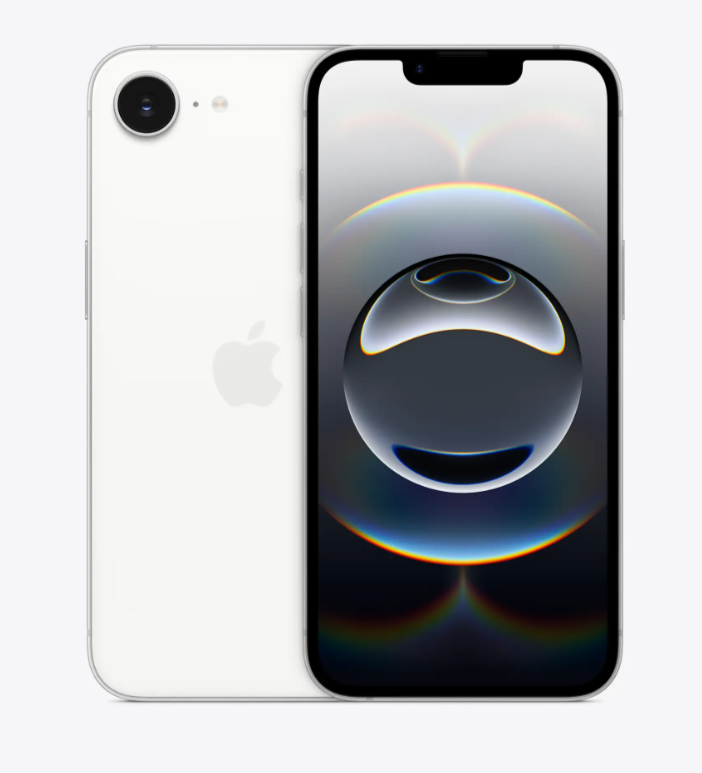
The prime example is Apple’s iPhone mini line, which provided a flagship compact experience but has now been discontinued. And even the most affordable iPhone today, the latest iPhone 16e, has a screen size above 6 inches.
Apple iPhone 16e
So why are small phones losing relevance? The answer isn’t just about consumer preferences; it’s a combination of market trends, hardware limitations, and changing user behavior.
First off, it’s fairly easy to see why larger phones dominate. A bigger display makes watching videos, gaming, and multitasking more comfortable and immersive.
Streaming platforms and social media apps are also designed with large screens in mind so that the user stays engaged with content for longer periods. And of course, typing on a larger keyboard is also way more convenient.
2. Battery Life is a Bigger Concern Than Size
A small phone means less room for a battery, and that’s a major issue. We as consumers expect our phones to last all day, even with heavy use. But it’s hard to achieve that with compact devices.
Larger phones can naturally fit bigger batteries, giving them a major advantage over their compact counterpart. They also have more space to manage heat and fit in a dedicated heat dissipation system, which helps maintain battery health over time.
While chipsets have become more power-efficient, they can’t fully compensate for the physical limitations of a small battery. That’s why compact phones often get criticized for poor battery life, making them a harder sell.
3. Cameras Take Up Space
Smartphone cameras have become one of the biggest selling points for buyers, but they also demand more internal space. High-quality camera sensors require larger modules, better image processing chips, and additional components like periscope lenses for zoom.
On a large phone, manufacturers have room to spread out these components without making significant sacrifices. On a small phone, they have to compromise—either by using smaller sensors or removing features like a telephoto lens. That puts compact devices at a disadvantage in camera comparisons, another reason why they’re less popular.
4. Manufacturers Follow the Profitable Market
The smartphone industry operates on a simple principle: build what sells. And the numbers show that most consumers prefer bigger devices. Apple’s iPhone 13 Mini reportedly struggled with low sales, so the company decided to discontinue the Mini lineup from the iPhone 14 series.
We have seen similar trends from other brands too. The Asus Zenfone 10, for instance, was an all-around compact Android flagship. But the company decided to follow it up with a Zenfone 11 Ultra model which boasts a big 6.78-inch screen.
So this isn’t just about demand—it’s also about profitability. Small phones require unique engineering to fit flagship features into a compact frame. That means higher production costs and fewer economies of scale.
Larger phones, on the other hand, share more components with existing models, making them cheaper to produce. If most buyers are leaning toward big phones anyway, there’s little incentive for brands to continue making small ones.
5. Consumers Don’t Want to Compromise
Also, I think we need to address the gap between what people say they want and what they actually buy. Many users claim to miss small phones (even I do), but when it comes time to upgrade, we often choose a larger model. That’s because compact devices usually mean trade-offs—whether it’s battery life, display quality, or camera performance.
We may appreciate the idea of a smaller phone, but in practice, most of us prioritize features over form factor. The success of devices like the Galaxy S Ultra and iPhone Pro Max models proves that most consumers are willing to carry a bigger phone if it means getting the best features.
6. Foldables Are the New Compact Phones
Having said all that, you can still get a compact phone experience in 2025 — but in a new way. You see, foldables are the ones changing the conversation around small phones.
Devices like the Galaxy Z Flip and Motorola Razr offer a pocket-friendly design without sacrificing screen size. When folded, they’re compact and easy to carry. When opened, they provide a full-sized display for a better multimedia and productivity experience.
Foldables address one of the biggest complaints about compact phones—display real estate—while offering something unique.
While they’re still expensive than a traditional smartphone, they’re becoming more refined each year. If foldable technology continues to improve, it could replace the need for traditional small phones altogether.
7. Small Phones Aren’t Coming Back in a Big Way
It’s unlikely that compact phones will see a major resurgence anytime soon. The market has shifted its gears toward larger devices, and manufacturers have little reason to reverse that trend. Some brands may continue to make small phones, but they’ll remain a niche category rather than a mainstream option.
For those who still love small phones, the best options might be sticking with an older device, or embracing foldables. Right now, the small phone era is fading, and most people don’t seem to mind.
For more daily updates, please visit our News Section.
Xiaomi 15 Ultra is a high-end flagship smartphone that brings together cutting-edge technology, top-tier performance, and professional-grade photography. With a stunning 6.73-inch LTPO AMOLED display, a powerful Snapdragon 8 Elite processor, and a massive 6000mAh battery, this phone is built for users who demand the best. The device also features Leica-branded cameras, ensuring an exceptional photography experience.
Exclusive Deal – Save $100
Get the Xiaomi 15 Ultra at a discounted price with this limited-time offer on Giztop. Use the coupon code 15U50 at checkout to save $100 before March 20. Don’t miss this chance to grab Xiaomi’s ultimate flagship smartphone at a lower price.
Stunning Display and Design
The Xiaomi 15 Ultra boasts a 6.73-inch 2K LTPO AMOLED display with a 3200×1440 pixel resolution. The 120Hz refresh rate ensures smooth scrolling and fluid animations, while the 240Hz touch sampling rate provides instant touch response. With HDR10+, Dolby Vision, and a peak brightness of 3000 nits, the screen delivers an immersive viewing experience, making colors appear vibrant and lifelike. Whether you are watching videos, playing games, or browsing the web, this display offers top-notch quality.
Flagship-Level Performance
Powered by the Qualcomm Snapdragon 8 Elite 5G chipset, the Xiaomi 15 Ultra is built for high-speed performance. The 3nm octa-core processor, clocked at 3.3 GHz, ensures seamless multitasking and efficient power consumption. Paired with 12GB or 16GB LPDDR5X RAM, this smartphone can handle everything from demanding apps to high-performance gaming. The device also comes with 256GB, 512GB, or even 1TB of storage, providing ample space for apps, photos, and videos.
Pro-Grade Leica Cameras
Xiaomi has partnered with Leica to equip the 15 Ultra with a quad-camera system that sets a new benchmark in smartphone photography. The 50MP primary sensor uses Sony’s LYT-900 sensor and a large f/1.63 aperture, allowing for excellent low-light performance. The 200MP telephoto lens with 100mm focal length and 50MP floating telephoto lens (70mm focal length) provide exceptional zoom capabilities. The 50MP ultra-wide-angle camera offers a 115° field of view for capturing expansive landscapes.
For videographers, the Xiaomi 15 Ultra supports 8K recording at 30fps, 4K recording at up to 120fps, and slow-motion recording at up to 1920fps. Advanced features like Movie Mode, Dolby Vision, and AI Beauty Mode make content creation easier and more professional. The 32MP front camera also supports 4K recording, ensuring high-quality selfies and video calls.
Long-Lasting Battery with Fast Charging
The 6000mAh battery ensures that the Xiaomi 15 Ultra lasts all day, even with heavy usage. The 90W wired charging can recharge the phone quickly, while the 80W wireless charging offers a fast and convenient alternative. Additionally, reverse wireless charging allows users to charge other devices using the phone.
Advanced Connectivity and Software
The Xiaomi 15 Ultra supports 5G connectivity and has WiFi 7, ensuring ultra-fast internet speeds. The in-display fingerprint scanner provides fast and secure unlocking. Running on Xiaomi HyperOS 2, the phone offers a smooth, intuitive interface with support for full-screen gestures, making navigation effortless.
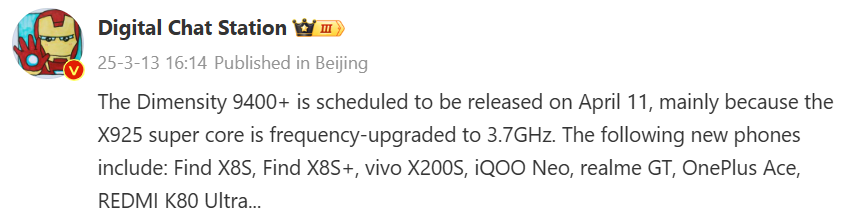
MediaTek has officially announced that the Dimensity Developer Conference 2025 (MDDC 2025) will take place on April 11 in Shenzhen, China. The event is expected to introduce the next-generation flagship Dimensity 9400+ chipset alongside new ecosystem solutions. Leaker Digital Chat Station has also hinted at a list of smartphones that will be powered by this upgraded chip.
Dimensity 9400+ incoming
MediaTek to hold MDDC on April 11 in China
The Dimensity 9400, which launched in October 2024, features an all-big-core CPU architecture with a Cortex-X925 ultra-core clocked at 3.62GHz, three Cortex-X4 cores at 3.3GHz, and four Cortex-A720 cores at 2.4GHz. The Dimensity 9400+ is expected to be an overclocked variant, with the X925 core boosted to 3.7GHz for improved performance.
Expected Dimensity 9400+ phones
Upcoming Dimesnity 9400+ phones:
According to tipster Digital Chat Station, several upcoming flagship phones are tipped to feature the Dimensity 9400+ chipset. These include:
Among the above-mentioned smartphones, the Find X8S, Find X8S Plus, and Vivo X200S are expected to debut in April in China. While the iQOO Neo 10S is likely to go official in May, the Realme, OnePlus, and Redmi flagships are also expected to debut within the first half of the year.
Xiaomi is expected to launch the Xiaomi 15T Pro flagship after a couple of months for the global market. Just as the Xiaomi 14T Pro came equipped with the D9300+ chip, the 15T is likely to feature the D9400+ SoC.
For more daily updates, please visit our News Section.
In April, Vivo is expected to hold a mega launch event in China to unveil multiple products. These include the Vivo X200 Ultra, X200S, Vivo Watch 5, and the Vivo Pad 4 tablet. Recently, a Vivo tablet with the model number PA2573 was approved by China’s 3C authority. This tablet is believed to be the upcoming Pad 4 Pro. Recent reports have already revealed key details about its display, chipset, and charging capabilities. A new leak, courtesy of tipster Digital Chat Station, has now revealed the key specifications of the tablet.
Vivo Pad 4 Pro specifications (rumoured)
Vivo Pad 4 Pro specifications leaked
According to the leak, the Vivo Pad 4 Pro will come equipped with a 12.95-inch LCD panel offering a 3.1K resolution. Under the hood, it will feature the Dimensity 9400 chipset, along with 8GB, 12GB, or 16GB of RAM.
While the tipster has not mentioned the storage details of the Pad 4 Pro, it is likely to offer up to 512GB of storage, similar to the Vivo Pad 3 Pro from last year. The device is tipped to feature a massive 12,000mAh battery with support for 66W fast charging.
The Pad 4 Pro is expected to run on OriginOS 5 for Pad, overlaid on Android 15. On the front, the tablet will have an 8-megapixel snapper, while its back panel will feature a 13-megapixel camera.
The Vivo Pad 4 Pro is expected to face competition from the likes of the Oppo Pad 4 Pro and the Xiaomi Pad 7s Pro, both of which are also anticipated to launch in April in China. The Oppo Pad 4 Pro may feature the Snapdragon 8 Elite chipset, whereas the Xiaomi tablet may come equipped with the Snapdragon 8s Gen 3 chip. Additionally, the Pad 4 Pro is expected to compete with the Snapdragon 8 Elite-powered OnePlus Pad 2 Pro, which is also set to debut in the first half of this year in China.
For more daily updates, please visit our News Section.
We use cookies on our website to give you the most relevant experience by remembering your preferences and repeat visits. By clicking “Accept”, you consent to the use of ALL the cookies.
This website uses cookies to improve your experience while you navigate through the website. Out of these, the cookies that are categorized as necessary are stored on your browser as they are essential for the working of basic functionalities of the website. We also use third-party cookies that help us analyze and understand how you use this website. These cookies will be stored in your browser only with your consent. You also have the option to opt-out of these cookies. But opting out of some of these cookies may affect your browsing experience.
Necessary cookies are absolutely essential for the website to function properly. This category only includes cookies that ensures basic functionalities and security features of the website. These cookies do not store any personal information.
Any cookies that may not be particularly necessary for the website to function and is used specifically to collect user personal data via analytics, ads, other embedded contents are termed as non-necessary cookies. It is mandatory to procure user consent prior to running these cookies on your website.