Advertisement

Honor X9c launches globally as Honor’s toughest phone; packs a massive 6600mAh battery yet weighs below 200g

Honor has released the Honor X9c, a mid-range smartphone designed to withstand the rigors of daily life, succeeding the X9b launched last October.

The X9c is powered by the Snapdragon 6 Gen 1 (4 nm) chipset and boasts a large 6,600mAh battery—an 800mAh increase from its predecessor, the X9b. Marketed as Honor’s toughest phone, the X9c includes numerous durability features, such as improved drop and scratch resistance, making it an appealing option for users prioritizing resilience alongside capable specifications.

1. Build and durability:

Honor has significantly focused on durability for the X9c, highlighting its improved build quality. Rated for a drop resistance of 2 meters (6.6 feet), the phone has successfully passed SGS’ Comprehensive Reliability test, and it’s claimed to withstand up to 3,000 rubs with steel wool without noticeable damage.

The device is IP65M rated, providing comprehensive protection from water jets. Honor does offer other IP69-rated models, but the unique combination of durability features makes the X9c its toughest phone yet, ideal for those needing enhanced ruggedness.

2. Display:

The Honor X9c features a 6.78-inch curved OLED display with a resolution of 1224 x 2700 pixels, supporting a 10-bit color depth with an effective 8+2 bit rendering. It reaches a peak brightness of up to 4,000 nits, making it highly visible even in direct sunlight. The screen includes a 3,840Hz PWM dimming feature, which reduces screen flicker and provides a smoother viewing experience.

3. Performance and battery:

At its core, the Honor X9c is powered by Qualcomm’s Snapdragon 6 Gen 1, the same chipset as the X9b, ensuring capable mid-range performance suitable for everyday tasks. Available memory configurations include 8GB or 12GB of RAM paired with storage options up to 512GB.

One of the standout features of the X9c is its upgraded 6,600mAh battery, a notable increase from the X9b’s 5,800mAh. With 66W fast charging support, the battery is capable of lasting for up to 26 hours of online video playback.

4. Camera:

The X9c includes a robust 108MP main camera with a 1/1.67-inch sensor, f/1.75 aperture, and Optical Image Stabilization (OIS). This camera can bin pixels in a 9-to-1 ratio for improved low-light performance and offers a 3x lossless zoom using in-sensor technology.

Alongside the main sensor, the X9c features a 5MP ultra-wide camera with an f/2.2 aperture and a 16MP front camera with 1080p video recording. While similar in some aspects to the X9b’s camera setup, the X9c enhances user experience with an upgraded display that supports higher brightness and improved durability.

5. Software experience:

The Honor X9c ships with MagicOS 8.0 based on Android 14, which brings many of the company’s latest features and optimizations, including “Magic Capsule” and “Magic Portal”.

For connectivity, the phone supports Wi-Fi 5, Bluetooth 5.1, NFC, and has GPS positioning via Galileo, GLONASS, and BeiDou. However, it lacks a 3.5mm audio jack, though it includes stereo speakers with a 300% volume boost to compensate.

6. Pricing and availability

The Honor X9c is available globally, including in regions like Malaysia and Singapore. In Malaysia, the 12GB/256GB variant is priced at MYR 1,500 (about $345), while the 12GB/512GB model goes for MYR 1,700. Singaporean consumers can pre-order the device with shipping set for the upcoming week, priced at SGD 450 (around $340) for the 12GB/256GB variant.

(Source)

Red Magic 10 Ultra with Snapdragon 8 Elite and a Fan Outperforms Apple M2

Red Magic’s next gen gaming flagship might be one of the most powerful smartphones ever. The Red Magic 10 Ultra recently surfaced on a benchmark, with its performance outclassing even the Apple M2. So here’s everything we know so far.

Red Magic 10 Ultra GeekBench: Is Snapdragon 8 Elite with a Fan the winning formula?

Red Magic 10 Ultra
Red Magic 10 Ultra

Red Magic 10 Ultra was spotted on the GeekBench platform (Via NotebookCheck), being equipped with the Snapdragon 8 Elite SoC. The upcoming gaming smartphone managed to score 3229 points in the single core test and 10,300 points in the multi core test. Notably, this is higher than some of the other Snapdragon 8 Elite powered smartphones like the Realme GT 7 Pro (3011 single core and 9143 multi core points).

But the most impressive feat of the Red Magic 10 Ultra is that it managed to outperform the Apple M2, which scored 2,599 and 10,089 points respectively. The higher performance is likely thanks to improved cooling on the Red Magic 10 Ultra. This new smartphone packs a dedicated cooling fan that brings a noticeable difference in performance. The air cooling helps the phone sustain performance under load, so mobile gaming enthusiasts may have a better gaming experience.

Red Magic 10 Ultra

Based on what we know so far, the Red Magic 10 series will launch with a true full screen experience on the front thanks to an under display camera. It sports an OLED display from BOE, which supports a 144Hz refresh rate and 1.5K resolution. The panel is dubbed the Wuking Screen, which will even arrive on the Nubia Z70 Ultra. The model may have a 7-inch display and be powered by a massive 7,050mAh battery pack, and 120W wired fast charging support. Nubia is set to unveil the Red Magic 10 Ultra in China on 13th November 2024.

Vivo S20 and S20 Pro display, camera, and processor detail leaks along with launch timeframe

Vivo seems set to launch the S20 series in China soon, as devices from the lineup have started appearing on certification sites. A new leak has now revealed a possible launch timeframe along with some key specs for the Vivo S20 line.

Weibo tipster Smart Pikachu reports that the Vivo S20 series may debut by the end of this month. The series will likely go head-to-head with the Oppo Reno 13 series, which is also expected to launch in November.

Vivo S20 Series Specifications

For specs, the Vivo S20 will reportedly have a slim design while housing a sizable 6,500mAh battery. It will have a flat OLED display with a 1.5K resolution on the front and is expected to include a dual-camera setup on the back.

Meanwhile, the S20 Pro is rumored to come with a curved-edge screen and a triple rear camera system, including a telephoto lens.

For processing power, the leak suggests that the Vivo S20 will likely run on a Snapdragon 7 series processor, with other reports suggesting it as the Snapdragon 7 Gen 3. Meanwhile, the S20 Pro is expected to be powered by the Dimensity 9300.

A Vivo device with model number V2429A has also appeared on the TENAA and 3C certification. Though not officially confirmed, this device is likely the Vivo S20 based on its listed specifications.

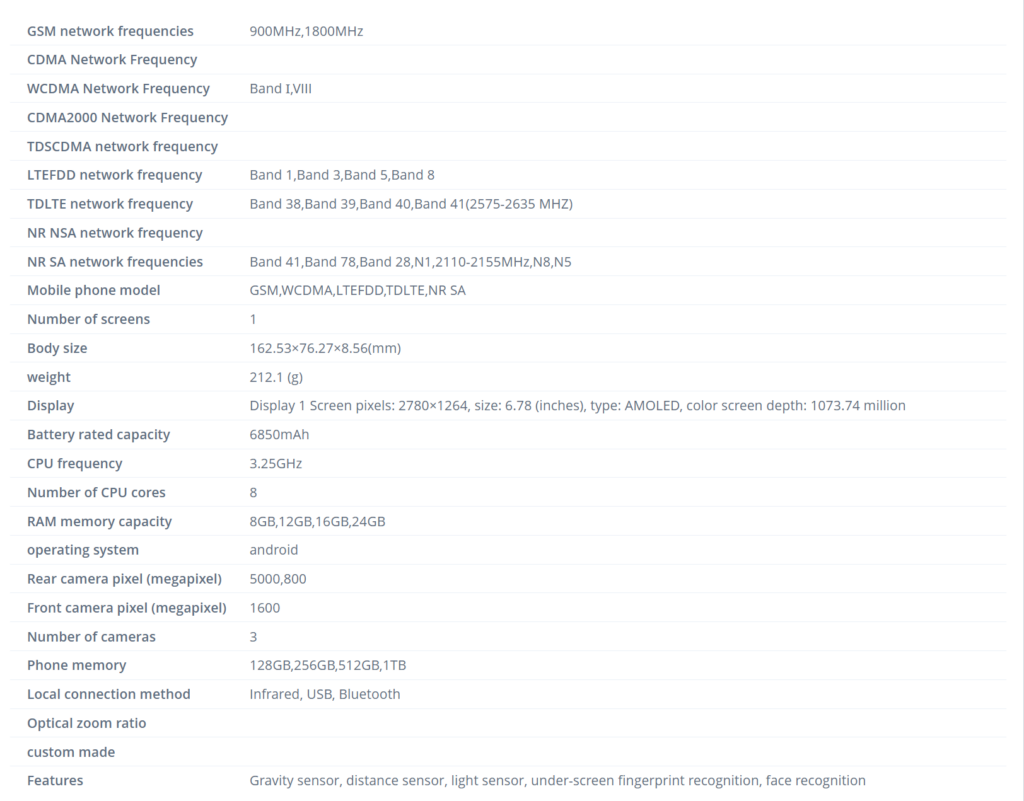
The phone features a 6.67-inch AMOLED display with a resolution of 2800 x 1260 pixels, up to 16 GB of RAM, and up to 1 TB of storage. 

It includes a large 6,500mAh battery, as mentioned in the leak, with 90W fast charging, a 50-megapixel front camera, and a 50-megapixel + 8-megapixel dual rear camera setup. 

Additional features include an IR blaster and an in-screen fingerprint sensor. The device measures 160.35 x 74.18 x 7.19mm and weighs 185.5 grams.

Xiaomi Smart Band 9 Active Set for November 18 Launch in Europe with an Affordable Price Tag

Xiaomi is set to add a new device to its wearable lineup: the Smart Band 9 Active, an affordable fitness tracker that recently received certification from the Eurasian Economic Commission (EEC), signaling its upcoming global release. Ahead of the official launch, Amazon France has already listed the device along with some key details like its specifications, pricing, and a likely launch date.

Xiaomi Smart Band 9 Active

As per the Amazon listing, the Xiaomi Smart Band 9 Active, carrying the model number M2435B1, is scheduled to hit European markets on November 18th, priced at €29.99. It boasts a 1.47-inch AMOLED display capable of reaching 450 nits peak brightness, ensuring excellent visibility even under direct sunlight. With 5ATM water resistance, the Smart Band 9 Active is suitable for swimming and other water-based activities.

Xiaomi Smart Band 9 Active
Xiaomi Smart Band 9 Active Amazon France listing

Xiaomi promises up to 14 days of battery life on a single charge, providing ample endurance for extended usage. The Smart Band 9 Active is packed with essential fitness tracking features. It includes continuous heart rate monitoring, sleep tracking, stress monitoring, and a variety of sports modes to cater to different fitness preferences. The device is expected to come in three color options: Black, White, and Pink, with the possibility of more colors being introduced at launch.

In other news, Xiaomi has started rolling out the stable Android 15 update for its Xiaomi 14 smartphone in global and EEA regions, featuring the HyperOS 1.1 overlay instead of the new HyperOS 2, which is yet to launch globally. The update is currently available for selecting Mi Pilot users for early testing and feedback.

(Source, via)

Google Pixel 9 Pro’s materials reportedly cost around $400, lower than Pixel 8 Pro’s

A recent report from Nikkei suggests that Google has managed to produce its latest flagship, the Pixel 9 Pro, at a lower cost compared to previous generations despite improvements in several aspects across hardware and software.

The Pixel 9 Pro’s Bill of Materials (BOM) is estimated to be around $406, an approximate 11% drop from the Pixel 8 Pro‘s BOM cost. This reduction primarily reflects cost savings on the display and camera components, key areas where manufacturers can often optimize to make high-end devices more affordable for consumers.

Cost breakdown: How Google reduced Pixel 9 Pro’s BOM

According to a detailed component analysis, the Pixel 9 Pro’s BOM is distributed across essential parts like the Tensor G4 processor, display, and camera. The display, manufactured by Samsung, is now priced at $75, while the camera system costs $61. These prices are notably lower than in previous Pixel models.

Google-Pixel-9-Pro-Fold-Teardown

In contrast, the custom-designed Tensor G4 chipset, which powers the Pixel 9 Pro, reportedly costs Google around $80. This is slightly more than what the company allocated for its processor in past iterations, indicating a small increase to enable more processing power and efficiency.

Comparison with iPhone 16 Pro’s BOM cost

Apple reportedly spends around $568 to manufacture the iPhone 16 Pro, a device known for its high-quality build and premium pricing. The breakdown for Apple includes $110 for the same Samsung M14 display, $91 for its advanced camera components, and $135 for the A18 Pro chipset. The iPhone’s higher BOM is partly due to Apple’s reliance on more expensive parts to differentiate its high-performance devices in the premium smartphone market.

iPhone 16 Pro vs Xiaomi 14 Pro

Google’s Pixel devices, while often surpassing Apple’s best in imaging performance, most of the credit goes to the software processing, while the company focuses on cost-effective component selection while emphasizing features like AI-driven software enhancements. That said, the company invests significantly in software (including AI) to make the most of the hardware, which isn’t included in the BOM cost.

The costs of processors are also central to the BOM equation, as they impact both performance and energy efficiency. The Pixel 9 Pro’s Tensor G4, though priced competitively at $80, may not match the raw power of Apple’s $135 A18 Pro chipset or the Snapdragon 8 Elite, which costs close to $200. This pricing gap highlights differences in each company’s approach to chipset design and the real-world performance expectations for their flagship devices.

Despite the lower BOM for the Pixel 9 Pro, Google’s decision to save on materials like the display and camera does not necessarily mean a compromise on quality. The Pixel series continues to be known for its excellent photography and integration with Google’s AI software, making it competitive in terms of user experience without inflating costs.

Future implications: potential BOM increase for Tensor G5

While the current Tensor G4 has maintained affordability, rumors suggest that Google’s upcoming Tensor G5 processor will be produced using TSMC’s 3nm node. This fabrication shift from Samsung Foundry’s 4nm process is expected to yield improvements in performance and efficiency. However, the change is also likely to drive up production costs due to the increased expense associated with advanced semiconductor nodes.

If this cost increase occurs, it could have pricing implications for future Pixel devices. Although more expensive, the 3nm Tensor G5 could bring crucial optimizations, addressing some long-standing issues that Pixel users have faced with previous Tensor processors, such as heat management and battery life.

(Source)

Xiaomi HyperOS 2: Top 5 Features You Need to Know Before Global Launch

Xiaomi’s new operating system, HyperOS 2, is a significant leap forward in building an AI-powered ecosystem. Debuted alongside the Xiaomi 15 series, HyperOS 2 redefines device connectivity and user experience with three core technologies: HyperCore, HyperConnect, and HyperAI. Let’s delve into the top five standout features that make HyperOS 2 a game-changer in the industry.

HyperOS 2

1. HyperCore

At the heart of HyperOS 2 is HyperCore, a new in-house kernel that Xiaomi designed to push performance limits. With over 25,000 optimization scenarios, HyperCore reduces CPU idle time by 19%, lowers memory latency, and enhances graphics. HyperCore’s microarchitecture scheduler breaks down task cycles directly at the chip level, ensuring smoother operation and faster response times.

Xiaomi has further introduced dynamic memory and Storage 2.0, reducing app launch delays by up to 54.9% on smartphones and 15% on tablets. For gamers, HyperCore reduces power consumption and frame drops by over 13%, creating a fluid gaming experience.

These optimizations translate to an ultra-smooth user experience across devices, with faster load times, minimized lags, and improved stability even in resource-intensive applications.

2. HyperConnect

HyperOS 2 takes cross-device connectivity to the next level with HyperConnect, enabling real-time interactions and streamlined data transfer across the Xiaomi ecosystem.

It features HomeScreen+, allowing users to transfer apps and data between Xiaomi phones and tablets effortlessly, even enabling them to run as native apps on tablets. It also sports dual-camera streaming, letting Xiaomi tablets and phones share their cameras simultaneously, perfect for activities like vlogging, conferencing, or multi-angle video recording.

For users in China, it includes Apple device compatibility via Xiaomi Interconnectivity Services, enabling seamless sharing of files, photos, and documents like Keynote and Pages between Apple and Xiaomi devices. This cross-platform connectivity is being adopted by other OEMs too, as seen with Oppo’s recent addition of an AirDrop-like function in ColorOS 15.

3. HyperAI

HyperAI introduces some of the most transformative and user-focused AI tools Xiaomi has ever launched. It features AI-powered lock screens that adapt to user preferences, displaying movie-poster-style visuals directly on the home screen.

It also sports AI Anti-Fraud protection, capable of identifying scam calls and detecting face-swapped videos, prioritizing user security. Additionally, HyperAI enhances the user experience with real-time AI-generated content (AIGC), animating static wallpapers to bring cityscapes and nature scenes to life for a cinematic lock screen effect.

HyperAI integrates with Mi Canvas on tablets, offering an “AI Art” function that lets users convert sketches into vibrant, colorful paintings. It also includes global AI writing tools for quick text generation, summarization, and error correction, simplifying content creation, note-taking, and email writing.

For added productivity, it comes with AI sound recognition, enabling voice-to-text transcription that creates accurate summaries from calls, meetings, and recordings while distinguishing between speakers in team settings. For video calls, HyperOS 2 incorporates gesture-based effects, adding a personalized touch and making conversations more interactive. It also includes global AI translation for real-time interpretation during meetings and calls, making cross-language communication effortless.

4. Enhanced Visual Experience

HyperOS 2 comes with a redesigned desktop featuring customizable widgets, smooth transitions, and an upgraded layout for a visually engaging experience. It sports dynamic effects with fluid animations, enhancing navigation through notifications and the control center. Additionally, it features a 3D weather system that mirrors real atmospheric conditions, making daily updates more immersive and interactive.

5. Enhanced Security Framework

In an era where data privacy is paramount, Xiaomi has embedded robust security measures within HyperOS 2. The system’s end-to-end encryption safeguards data on both cloud and endpoint devices, ensuring confidential information remains protected. Furthermore, HyperOS 2 implements Xiaomi’s Trusted Execution Environment (TEE), which provides hardware-level encryption for critical operations. This not only ensures safe data handling but also enhances protection against potential cyber threats.

Additionally, HyperOS 2 gives users control over their personal information. With the Xiao Ai personal assistant, users can securely store and manage data, including viewing or deleting memory data. This added control and transparency empower users to manage their digital footprint within Xiaomi’s ecosystem, fostering a sense of security and trust.

6. Conclusion

HyperOS 2 is a transformative upgrade that strengthens Xiaomi’s ecosystem, allowing its devices to compete closely with major players like Apple and Samsung. With improvements in performance, connectivity, AI personalization, visuals, and security, HyperOS 2 supports Xiaomi’s goal of building a smarter, more connected experience for users.

As HyperOS 2 rolls out across Xiaomi’s product lineup, users can look forward to a refined and intelligent experience that enhances daily interactions with their devices.

Global Vivo X200, X200 Pro certified by India’s BIS, Thailand’s NBTC, launch imminent

On Oct. 14, Vivo announced the Vivo X200, X200 Pro, and X200 Pro Mini in China. These debuted as the world’s first smartphones powered by the Dimensity 9400 SoC. The X200 and X200 Pro have received multiple certifications in other countries, indicating the X200 series’ global launch is close at hand. Now, both devices have also received approval from Thailand’s NBTC certification platform.

Vivo X200, X200 Pro bags multiple certifications

Vivo X200, X200 Pro Bluetooth SIG certified

Thus far, Europe’s ECC, Malaysia’s SIRIM, and Indonesia’s TKDN and SDPPI certification platforms have certified the global versions of the Vivo X200 and X200 Pro, bearing the model numbers V2415 and V2413, respectively. Taiwan’s NCC platform has also approved the Pro model.

Vivo X200 (V2415), Vivo X200 (V2413) approved by India’s BIS

The above images show that both devices have received certification from Bluetooth SIG, India’s BIS authority, and Thailand’s NBTC platform. These certifications are a positive hint the X200 series will debut soon in the global market. Unfortunately, the X200 Pro Mini hasn’t received any global certification, indicating that the compact phone may remain exclusive to the Chinese market.

Last month, 91mobiles reported that Vivo India will announce the X200 and X200 Pro in India by the end of November or early December. This indicates that Vivo India may start teasing the arrival of the X200 series in the coming days.

The Vivo X200 and X200 Pro will be the first Vivo phones to come preinstalled with Android 15. Both phones are expected to face competition from the Oppo Find X8 and Find X8 Pro, which are also equipped with the Dimensity 9400 SoC. While Vivo has not yet confirmed the global launch timeline for the X200 series, Oppo has already confirmed the Find X8’s announcement in multiple markets this month.

Oppo A5 Pro launching soon, full specifications emerge via TENAA certification

Recently, an upcoming Oppo phone with model number PKP110 received approval from China’s MIIT authority. The certification revealed the images of the phone, suggesting that it could be an A-series phone. Now, the same device has received approval from the TENAA authority, revealing all its key specifications. Rumors surrounding the device claim that it could be called the Oppo A5 Pro when it hits the Chinese market.

Oppo A5 Pro specifications (rumored)

Oppo A5 Pro TENAA images

As per the TENAA listing, the Oppo A5 Pro (PKP110) phone measures 161.5 x 74.85 x 7.67mm and weighs 186 grams. The device appears to feature a curved-edge AMOLED panel. The screen measures 6.7 inches, supports FHD+ resolution, and features an in-screen fingerprint sensor. Most likely, it may also offer up to 120Hz refresh rate. 

A 2.5GHz processor powers the alleged A5 Pro, according to the TENAA listing. Probably, it could be equipped with the Dimensity 7300 SoC. The device will ship in 8 GB and 12 GB RAM variants. When it comes to storage, it will offer options such as 256 GB and 512 GB.

The rated value of the A5 Pro’s battery is 5,840mAh, which suggests that its typical size could be 6,000mAh. At present, there is no information available about the fast-charging capabilities of the phone. It remains to be seen whether the device will come pre-installed with the latest ColorOS 15-based Android 15.

For selfies, the A5 Pro features a 16-megapixel front-facing camera. The round camera module on the back has a 50-megapixel main camera and a 2-megapixel auxiliary lens. While it is not mentioned in the TENAA listing, the device may offer IP69-level dust and water resistance like the Oppo A3 Pro, which was announced in April of this year.

Android 16 launch date leaks

Just a week ago, Google confirmed an earlier release timeline for Android 16. While new Android versions typically arrive in Q3 or Q4, the upcoming OS is set to launch much sooner, between April and June 2025.

For those eagerly awaiting the launch, there’s good news. A new leak has revealed the exact launch date of Android 16. The leak comes from the reliable source Android Headlines, so it’s likely to be accurate.

Android 16 launch date

According to the report, Android 16 will launch on June 3, 2025. Apparently, on this date, Google will not only release the Android Open Source Project (AOSP) but will also begin rolling out Over-the-Air (OTA) updates for compatible Pixel devices.

The reasoning behind the expedited launch, as Google previously explained, is to ensure more smartphones ship pre-loaded with Android 16. This strategy will likely benefit the upcoming Pixel 10 lineup, expected to launch next August. 

It’s still unclear how Google has sped up the release timeline by 2 to 3 months, but it’s certainly good news for users. An earlier release means Pixel devices will get new OS features sooner, and the early AOSP launch will allow other smartphone makers to release their Android 16-based updates sooner as well.

Of course, it’s important to remember that this is just a rumor, albeit a compelling one. We’ll have to wait for official confirmation from Google to confirm the exact date. However, considering Google’s previous announcement about a Q2 2025 release, an early June launch seems like a distinct possibility.

Stay tuned, Android users! We’ll keep you updated on any official announcements regarding the release of Android 16. In the meantime, you can check out our previous stories on the Android 16 here and let us know in the comments what features you’re most excited about in the upcoming update.

(Source)

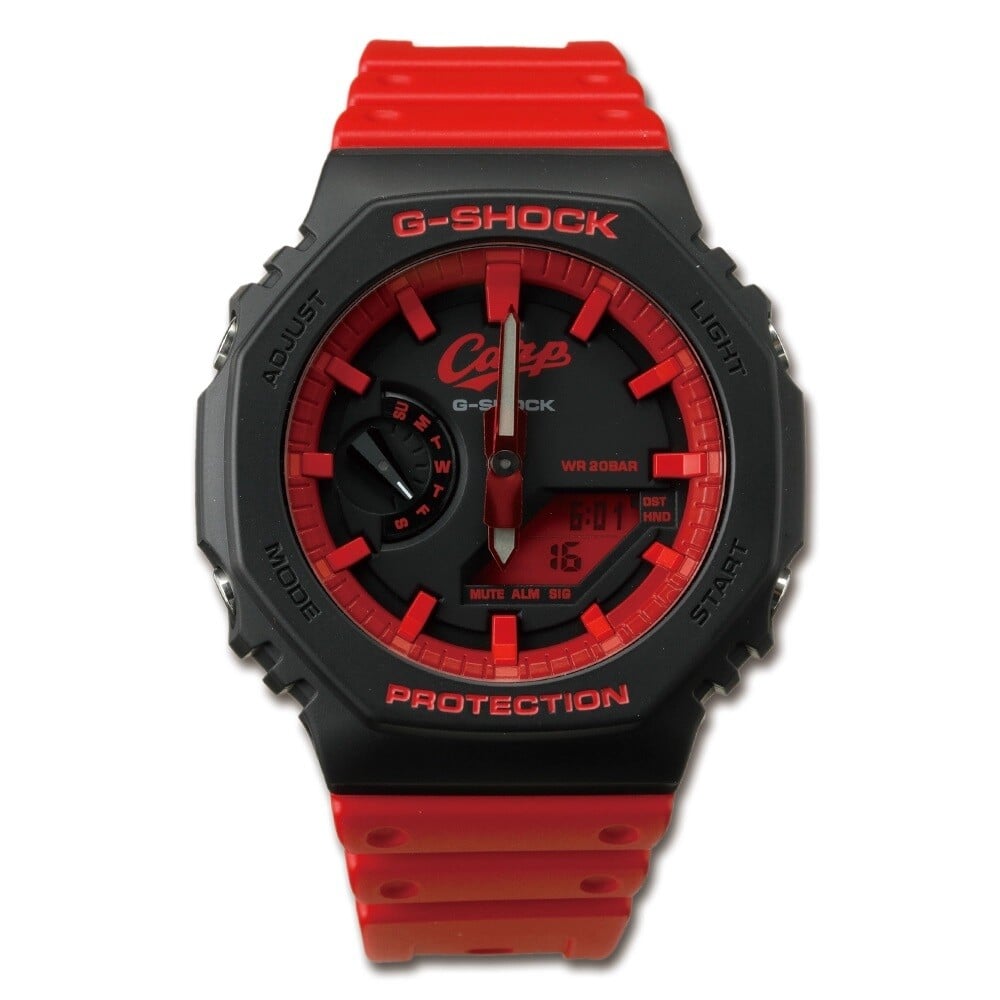
Casio Brings Shiba Inu-Inspired G-Shock Watches to U.S. Market

Casio is set to bring its Shiba Inu-inspired G-Shock watch collection to the U.S. market in November, following a successful release in Japan this past September. This watch line celebrates Japan’s iconic Shiba Inu dog breed, known for its loyalty and distinctive look.

Casio G-Shock Shiba Inu watches

The Shiba Inu collection offers three unique models, each designed to represent different color variations of the breed:

G-Shock GA-100SHB-5A

Reflecting the sesame-colored Aka-Shiba (brown Shiba Inu), this model has a soft brown and off-white color scheme with a small Shiba Inu icon on the inset dial. Its analog-digital display includes features such as a 1/1000-second stopwatch, world time across 29 time zones, five daily alarms, and a full auto-calendar. Measuring 55 × 51.2 × 16.9 mm and weighing 70 grams, it provides a robust design priced at around $140.

G-SHOCK DW-5600SHB-1

G-SHOCK DW-5600SHB-1

Inspired by the black Kuro-Shiba, this model has a sleek black finish with an off-white underside and a minimalist Shiba silhouette on the dial. This digital-only model features a 1/100-second stopwatch, countdown timer, flash alert, and electroluminescent backlight with afterglow. At 48.9 × 42.8 × 13.4 mm and 53 grams, it’s lightweight and functional, priced around $130.

G-Shock DW-6900SHB-7

Casio-G-Shock-DW-6900SHB-7

Modeled after the white Shiro-Shiba, this watch has a unique backlight feature that reveals a Shiba Inu face when activated. It includes a digital display with Triple Graph, a 1/100-second stopwatch, and a countdown timer. With dimensions of 53.2 × 50 × 18.7 mm and weighing 67 grams, it’s both durable and distinctive, priced around $130.

Each model is built to G-Shock’s high durability standards, offering shock resistance, water resistance up to 200 meters, and a battery life of about two years. The mineral glass face on each watch also adds extra scratch protection, making them suited for active use.

G-Central has reported a November release in the U.S., and the watches are now listed on Casio’s global site, suggesting an upcoming wider rollout.

(Source, via)

Red Magic 10 Pro display specs revealed, 6.86-inch 1.5K display, 144Hz refresh rate, 95% screen space, and more

On Nov. 13, Nubia will unveil the Red Magic 10 series of gaming phones in China. As per reports, the lineup will comprise of two phones, namely, the Red Magic 10 Pro and Red Magic 10 Pro Plus. There have been reports of the existence of an Ultra model with a 7-inch+ screen. However, recent reports indicate that the Ultra model does not exist, and the 7-inch+ display model is the Red Magic 10 Pro Plus phone.  Today, Nubia revealed the screen specifications of what appears to be the Red Magic 10 Pro handset. Here is a look at the details confirmed by the brand.

Red Magic 10 Pro display details

The Red Magic 10 Pro features a 6.85-inch BOE OLED screen with no punch-hole, meaning it is equipped with an under-display camera. The screen has the narrowest black borders at 1.25mm and a bezel thickness of just 0.7mm, resulting in an impressive screen-to-body ratio of 95.3 percent.

It is the world’s first smartphone with an under-display camera to offer an impressive 1.5K resolution of 2688 x 1216 pixels. The display supports a 144Hz refresh rate and achieves a peak brightness of 2000 nits.

The Red Magic 10 Pro series offers a larger R-corner design for a more unified and harmonious look with the middle frame. This model promises to provide an immersive viewing experience. The Snapdragon 8 Elite processor, Nubia’s custom gaming chip, and an active cooling system power the Red Magic 10 Pro series, ensuring optimal performance during extended gaming sessions. The device also features physical shoulder triggers for enhanced gaming control.

The brand has yet to confirm the other specifications of the Red Magic 10 Pro series. Rumors suggest that the Pro+ model may have an unprecedented 7050mAh battery and over 100W fast charging capabilities.

Nubia will announce the Nubia Z70 Ultra, a non-gaming flagship phone powered by the Snapdragon 8 Elite chip. With top-notch cameras onboard, it is expected to rival the likes of the Vivo X200 Pro, Oppo Find X8 Pro, Xiaomi 15 Pro, Honor Magic 7 Pro, iQOO 13, OnePlus 13, and Realme GT 7 Pro in the Chinese market.

Oppo Reno 13 Pro tipped to launch with Dimensity 8350, big 6.83-inch display

Details about Oppo’s Reno 13 series have been gaining traction over the past few days. The lineup is expected to feature two models, the Reno 13 and Reno 13 Pro, and may launch in China on November 25.

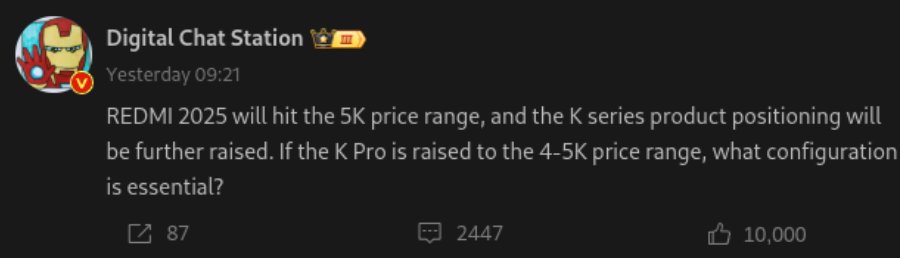
New information about the top-tier Reno 13 Pro has surfaced on the Chinese social media platform Weibo, thanks to tipster Digital Chat Station. Although the tipster hasn’t named the device directly, the leaked specs suggest it’s likely the Reno 13 Pro.

Oppo Reno 13 Pro Specifications (Expected)

According to Digital Chat Station, the device will run on a yet-to-be-released Dimensity 8350 processor from MediaTek. While earlier rumors pointed to a Dimensity 9300, the new leak suggests otherwise.

If true, this would be a step down from the Reno 12 Pro-Chinese model, which uses a Dimensity 9200+ processor. For memory, DCS suggests the top configuration will offer 16GB of RAM and 1TB of storage.

Rather than focusing on the processor, Oppo seems to be prioritizing other aspects of the phone this time. The device will feature a larger quad-curved display than its predecessor, measuring 6.83 inches.

The camera setup will likely stay the same as its predecessor’s. It will feature a 50MP main camera, 8MP ultrawide, 50MP telephoto sensor on the rear, and a 50MP selfie camera on the front.

Additionally, DCS notes that the phone’s previous engineering model includes a metal middle frame and holds both IP68 and IP69 ratings for dust and water resistance, an upgrade from the Reno 12 Pro’s IP65 rating. 

Wireless charging support is also expected—a feature missing in last year’s model—though the tipster seems uncertain if the latter-mentioned specs will make it to the retail version.

Oppo Reno 13 series tipped to feature a top-left matrix camera layout

Oppo is reportedly developing its upcoming midrange Reno 13 series, which, according to previous leaks, will feature a powerful chipset and high-end display. Now, popular tipster Digital Chat Station has shared new details about the camera design and the visual upgrades.

According to DCS, the Reno 13 lineup may debut with a matrix-style camera arrangement at the top-left of the device. The standard version could sport a dual vertical camera configuration, while the Pro model is anticipated to feature a triple camera setup alongside a centered punch-hole quad-curved display. The tipster also revealed that the Pro model features major upgrades in camera technology and design, with purple being the standout color option.

Oppo Reno 12 Pro

Oppo Reno 13 Pro Specifications (Rumored)

Coming to the other specs, DCS earlier hinted that the Reno 13 Pro will offer a 6.78-inch quad-curved LTPO OLED display with a 2780×1264 resolution (classified as 1.5K), along with a smooth 120Hz refresh rate.

Under the hood, the Reno 13 Pro is rumored to be powered by MediaTek’s Dimensity 9300 chipset, though specifics on RAM and storage are still unknown. The Pro model is also expected to feature a sturdy metal middle frame and will likely run on ColorOS 15 out of the box.

The Reno 13 series is also rumored to have substantial battery capacities, with the standard model at 5,600mAh and the Pro variant at 5,900mAh. The Pro model is expected to support 80W wired fast charging and 50W magnetic wireless charging

The Reno 13 Pro is expected to appeal to photography enthusiasts with a 50MP periscope telephoto lens offering 3x optical zoom and a 50MP front camera. Additionally, it is expected to feature underwater photography capabilities and an IP-rated water-resistant metal body, making it suitable for adventurous users.

While Oppo has not yet announced the Reno 13 series, it is anticipated to launch on November 25 in China. Currently, Oppo is focusing on its Find X8 series for the Double Eleven shopping festival, so teasers for the Reno 13 are likely to follow soon.

As more details emerge, the Reno 13 series looks positioned to appeal to users seeking premium design and powerful features, marking another step forward in Oppo’s mid-to-high-end smartphone portfolio.

Galaxy S25 Ultra resurfaces on GeekBench with significantly improved performance

Samsung is gearing up to launch the Galaxy S25 Ultra, powered by a customized version of Qualcomm’s latest Snapdragon 8 Elite processor, specifically tailored as a “For Galaxy” edition. This chipset, built on a 3nm process, promises substantial improvements over previous generations, with Qualcomm touting a 45% CPU performance increase and a 44% boost in power efficiency.

Galaxy S25 Ultra on Geekbench with improved scores

These upgrades align with the Galaxy S25 Ultra’s recent benchmark scores on Geekbench, where the device, identified by model number “SM-S938U,” achieves single-core and multi-core scores of 3,148 and 10,236, respectively.

This reflects a nearly 35% boost in single-core and a 45% jump in multi-core performance over the Galaxy S24 Ultra, which scores around 2,200 and 7,100 points in the respective tests.

For those unfamiliar, the S25 Ultra previously surfaced on the platform with single-core and multi-core scores of 3069 and 9080, respectively. So there have been some sort of improvement in heat dissipation or performance optimization that enables the phone reach higher scores.

Samsung had reportedly been testing its own Exynos 2500 chipset for the Galaxy S25 line but appears to have committed to Qualcomm’s Snapdragon 8 Elite for mass production, potentially limiting the Exynos 2500 to select markets. While the Galaxy S25 Ultra’s early scores fall just below those achieved by the OnePlus 13‘s standard Snapdragon 8 Elite (3,296 in single-core), Samsung’s “For Galaxy” chip tuning might improve the performance and stability even further by the time the phone hits the market.

Moreover, Samsung has retained its configuration of 12 GB RAM for the Galaxy S25 Ultra, consistent since the Galaxy S22 Ultra. Samsung is expected to maintain its established design language for the Galaxy S25 and S25 Plus, while rumors suggest a significant redesign for the Ultra model. The S25 Ultra could finally come with rounded corners and a completely flat display, similar to the other two models.

(Source | Via)

Galaxy S25, S25 Plus, S25 Ultra design revealed through leaked case images

A previously leaked video of the Galaxy S25 Ultra‘s protective case suggested a major design shift with rounded corners. Now, tipster Roland Quandt has shared images of the protective cases for all models in the S25 series, offering a more comprehensive look at the lineup’s design.

The Galaxy S25 Ultra case features a large space for four camera sensors, while the Galaxy S25 and Galaxy S25+ have a more familiar triple-lens setup. The cases indicate similar button placements across models, with power and volume cutouts on the left side, lending a consistent design across the series.

The cases confirm standard power and volume cutouts but lack any dedicated buttons like those on the iPhone 16 series or OPPO Find X8 Pro.

For the front, earlier images of screen protectors hint at slimmer bezels for all three models. Leaked renders suggest that all models, including the Ultra, will feature flat displays, giving them a sleek, cohesive look.

Dimensions and slimmer design

The S25 series dimensions were previously revealed through aluminum dummy units. The Galaxy S25 measures 146.94 x 70.46 x 7.25 mm, slightly slimmer than the Galaxy S24’s 7.6mm thickness. The Galaxy S25+ measures 158.44 x 75.79 x 7.35 mm, reduced from the S24 Plus’s 7.7mm. The Galaxy S25 Ultra, at 162.82 x 77.65 x 8.25 mm, is narrower and slimmer than its predecessor, likely due to reduced bezel size.

Samsung-Galaxy-S24-Series
Galaxy S24 series

In terms of performance, the European model of the Galaxy S25+ recently appeared on Geekbench with the Exynos 2500 chipset, showing lower scores than the Snapdragon 8 Elite expected in the S25 Ultra. While the Ultra model is likely to feature Qualcomm’s flagship chip, details on the processors in the other models remain uncertain.

Regarding the Ultra model, its Geekbench scores align closely with other flagships featuring the new chip, like the OnePlus 13 and iQOO 13. It hints at an improved cooling system for a more stable performance in Samsung’s next Ultra flagship.

For those interested in specifics, the Snapdragon 8 Elite boasts a 45% boost in peak CPU performance and a 44% gain in power efficiency, while both GPU performance and power efficiency are up by 40%.

In summary, there could still be a noticeable performance gap between models with different chipsets, even though Samsung is aligning the design closely across the lineup.

(Source)

Xiaomi officially announces Redmi Note 14 series for Indian market

Xiaomi India recently announced a major internal change: its current president, Muralikrishnan B, will step down from his role at the end of 2024.

Additionally, Xiaomi has confirmed the upcoming launch of the Redmi A4 and Redmi Note 14 series in the Indian market. The company shared this timeline in an exclusive interview with Business World.

Redmi A4, Redmi Note 14 series India launch

The report confirms that Xiaomi will launch the Redmi A4 in the Indian market in November. This phone will be the first to feature Qualcomm’s new Snapdragon 4s Gen 2 processor. Xiaomi has already showcased the device’s design at the India Mobile Congress (IMC) in October.

Building on the momentum of the festive season, Xiaomi plans to follow up with the Redmi Note 14 series in December 2024. This will mark the first time since the pandemic that Xiaomi launched two Note series devices in the same year.

Xiaomi used to release two generations of the Note series six months apart. This schedule changed due to COVID-19, but it seems things are returning to normal. For example, the Redmi Note 13 series launched in India in June. And we are getting its successor in December. 

Xiaomi’s Chief Marketing Officer for India, Anuj Sharma, explained the rationale behind the accelerated release cycle: 

“After 2022, we slowed down to an annual cycle… now, with improved efficiency and manufacturing alignment, we’re ready to return to a dual-launch approach.”

The Redmi Note 14 series features a revamped camera design and upgraded chipsets, including a rumored 200MP sensor in some models. It also offers larger batteries and faster charging capabilities.

Redmi Note 14

While Xiaomi hasn’t confirmed pricing details for the Indian market, the series is expected to target various mid-range segments, ranging from under Rs 20,000 to potentially exceeding Rs 30,000.

Adding another layer of intrigue, rumors suggest a global launch of the Redmi Note 14 Pro 4G variant, which has not yet been released in China. The phone has appeared on several certification websites, hinting at a potential launch in the near future.

(Source)

Dimensity 8400 specs leak reveals CPU and GPU familiarity with Dimensity 9400

Earlier this week, a report suggested that MediaTek’s upcoming Dimensity 8400 SoC might adopt an all-big-core design similar to the more powerful Dimensity 9400. Now, it seems that rumor might be accurate if a fresh tip from tech insider Digital Chat Station (DCS) is to be believed.

Today, DCS shared details on the CPU architecture of the upcoming SoC, and we are looking at a core structure loaded with ARM’s high-performance cores.

MediaTek Dimensity 8400 CPU/GPU Details

The Dimensity 8400 is said to feature an octa-core CPU with a 1+3+4 design, built on TSMC’s 4nm process. At the heart of it is ARM’s Cortex-A725 core, clocked at over 3GHz.

Interestingly, it’s not just one Cortex-A725 at play; MediaTek will reportedly include three more, each clocked close to 3GHz but slightly lower than the main prime core. 

For lighter tasks, MediaTek is reportedly using three ARM Cortex-A720 cores, which are “premium efficiency” cores—a notable upgrade from the Cortex-A510 cores in the Dimensity 8300. These A720 cores should operate efficiently around the 2.0GHz range to manage everyday processes with ease. Note that even Dimensity 9400 takes these cores in use.

MediaTek Dimensity 8400(1)

The graphics department might see some familiarity. The Dimensity 8400 reportedly uses the same GPU IP – the Arm Immortalis-G925 – as its bigger brother, the Dimensity 9400. 

Whether it’ll have the same number of cores remains a mystery for now. DCS also mentions that the chipset’s performance is still under optimization, so final clock speeds and performance figures might change.

It’s still unclear which phone will be the first to feature the Dimensity 8400. However, speculation leans toward either a model from the upcoming Redmi K80 series or Oppo’s Reno 13 lineup. More details about these devices, along with the final specs of the Dimensity 8400, are likely to surface in the coming weeks. We will keep you updated on that.

(Source)

Xiaomi’s latest smart home control hub launches with HyperOS

Xiaomi has launched a brand new device, called the Smart Home Screen Mini in China. It’s a compact hub designed to control smart home gadgets. With a built-in speaker and Bluetooth support, it’s perfect for users already invested in Xiaomi’s ecosystem. Here’s a closer look at what it offers.

Xiaomi Smart Home Screen Mini Specifications

As the name suggests, this device is indeed compact, measuring only 113 x 78 x 54 mm (or 4.4 x 3.1 x 2.1 inches). It opens to a customizable home screen, allowing you to place your most frequently used smart home devices for quick access. 

The Smart Home Screen Mini seamlessly integrates with Xiaomi’s ecosystem and lets you control everything from lights to thermostats and other compatible devices.

Beyond basic control, the Smart Home Screen Mini integrates with compatible Xiaomi security cameras and video doorbells. When triggered, the device can display live video feeds directly in it. 

It lacks a built-in camera itself, but the Mini leverages Xiaomi’s voice assistant, Xiao AI, for hands-free control. Users can interact with their smart home devices through voice commands to simplify everyday tasks.

For personalization, the Mini offers over 40 desktop wallpapers and a photo gallery option. Users can tailor the device’s appearance to match their preferences.

Under the hood, the Smart Home Screen Mini runs on Xiaomi HyperOS and features Bluetooth 5.1 connectivity alongside dual-band 2.4GHz/5GHz Wi-Fi. Powering this compact hub is a USB-C port.

Price and Availability

Currently, the Smart Home Screen Mini is only available for purchase within China at a discounted price of CNY 249 (approximately $35 USD). The regular retail price is set at CNY 269 (approximately $38 USD). 

As of today, there are no official announcements regarding a global rollout, including markets like the EU, where older Xiaomi smart home products like the Smart Home Hub 2 are currently available.

Snapdragon 8 Gen 3 vs Apple A18: Can Qualcomm’s chip outshine Apple’s?

Snapdragon 8 Gen 3 vs Apple A18

Qualcomm and Apple make some of the best smartphone chips. Hence, it’s always exciting to put them to the test. The Snapdragon 8 Gen 3, announced in late 2023, is already powering high-end phones from many brands such as Xiaomi, Samsung, OnePlus, Vivo, and more. The Apple A18, on the other hand, is a newer chip released in September. It is the driving force behind the iPhone 16 and 16 Plus.

Both Snapdragon 8 Gen 3 and Apple A18 make big performance claims over their predecessors. But how do the two chips stack up against each other? We’ll look at the benchmark data and key differences to pick the correct winner.

Snapdragon 8 Gen 3Apple A18
AnnouncedOctober 2023September 2024
Process node4nm3nm
ManufacturerTSMCTSMC
CPU cores86
CPU architecture1 x 3.3GHz — Cortex-X4
3 x 3.15GHz — Cortex-A720
2 x 2.96GHz — Cortex-A720
2 x 2.27GHz — Cortex-A520
2 x 4.04GHz (High-performance)
4 x 2GHz (Energy-efficient)
GPUAdreno 750 GPU
Hardware-accelerated ray tracing
Support for Unreal Engine 5.2 Lumen
Snapdragon Elite Gaming features
Apple 5-core GPU
Hardware-accelerated ray tracing

NPUHexagon NPU engine
Run AI models up to 10B parameters
16-core neural engine
35 TOPS
MemoryLPDDR5X, up to 4800MHz
Up to 24GB RAM
LPDDR5X, up to 7500MHz
Up to 8GB
ConnectivityWi-Fi 7
Bluetooth v5.4
Downlink: 10Gbps
Uplink: 3.5Gbps
Wi-Fi 7
Bluetooth v5.3
Downlink: 10Gbps
Uplink: 3.5Gbps

Snapdragon 8 Gen 3 vs Apple A18: Benchmark

[Note: For benchmark results, we tested the Samsung Galaxy S24 Ultra (Snapdragon 8 Gen 3) and Apple iPhone 16 (A18).]

Geekbench

Geekbench is a popular benchmarking tool for measuring CPU capabilities of a device. Here, the Snapdragon 8 Gen 3 has scored 2,287 single-core points and 6,992 multi-core points. The Apple A18 leads with 3,258 single-core points and 7,894 multi-core points.

SnapdragSnapdragon 8 Gen 3 vs Apple A18 - Geekbenchon 8 Gen 3 vs Apple A18 - Geekbench

As far as the raw CPU performance is concerned, the Apple A18 is ahead of the Snapdragon 8 Gen 3.

Snapdragon 8 Gen 3Apple A18
Single core2,2873,258
Multi core6,9927,894

AnTuTu

AnTuTu measures the overall capabilities of a device, while also detailing performance numbers of CPU, GPU, memory, and UX.

Snapdragon 8 Gen 3 vs Apple A18 - AnTuTu score

The Snapdragon 8 Gen 3 scored 1,805,437 AnTuTu points, whereas the Apple A18 fell short with 1,762,656 AnTuTu points.

If you look at the AnTuTu score breakdown in the table below, the Apple A18 has a stronger CPU. However, the Snapdragon 8 Gen 3 has significantly better GPU and memory scores, which makes it an AnTuTu winner.

Snapdragon 8 Gen 3Apple A18
AnTuTu score1,805,4371,762,656
CPU452,262449,432
GPU663,679711,513
Memory402,251230,885
UX287,245370,826

Snapdragon 8 Gen 3 vs Apple A18: Key differences

The Snapdragon chip has 8 CPU cores, whereas the Apple A18 has only 6 cores. Despite this, the A18 is leading the CPU chart on benchmarks. There are multiple reasons for this, one key reason being a higher peak frequency on the Apple A18 (4.04GHz vs. 3.3GHz on Snapdragon 8 Gen 3).

The process technology also affects the chip’s performance and efficiency. The Snapdragon 8 Gen 3 is built using TSMC’s 4nm process, while the Apple A18 uses TSMC’s 3nm cutting-edge technology, which yields better performance and power efficiency.

Both chips have excellent GPUs: Adreno 750 on the Snapdragon 8 Gen 3 and a 5-core GPU on the Apple A18. Both support hardware-accelerated ray tracing, while the Adreno 750 also has Snapdragon Elite Gaming features to enhance the gaming experience.

For machine learning and AI tasks, the Snapdragon 8 Gen 3 integrates a hexagon NPU engine with support for up to 10B parameters. The Apple A18, on the other hand, has a 16-core neural engine that can handle up to 35 trillion operations per second (TOPS).

Although both chips support LPDDR5X RAM, the Apple A18 has a higher peak frequency of 7500MHz (vs. 4800MHz on the Snapdragon 8 Gen 3). For connectivity, both support Wi-Fi 7 and have the same peak upload/download speeds, with one difference being a newer Bluetooth standard on the Snapdragon chip.

Snapdragon 8 Gen 3 vs Apple A18: Verdict

Both are high-performance chips and can smoothly handle day-to-day tasks and resource-intensive tasks, such as editing and gaming. However, from the benchmark data, it’s clear that the Apple A18 has better CPU performance, whereas the Snapdragon 8 Gen 3 excels in GPU and memory performance.

There isn’t likely to be a massive performance gap between the Snapdragon 8 Gen 3 and Apple A18 Pro. However, the latter should be more power-efficient because of the smaller transistor. The Apple A18 should offer better CPU performance and power efficiency. However, the Snapdragon 8 Gen 3 might be a better choice for high-end gaming.

Popular SoC battles:
1. Qualcomm Snapdragon 8 Elite vs MediaTek Dimensity 9400
2. MediaTek Dimensity 9400 vs Apple A18 Pro

Xiaomi launches a cute-looking soap dispenser with 180-day battery life, 99.9% antibacterial rate

Xiaomi has launched the Mijia Automatic Soap Dispenser Line Friends Limited Edition in the Chinese market. The soap dispenser is available for crowdfunding on Xiaomi Mall and Xiaomi Youpin at a price of 119 Yuan ($17), with the official launch on November 6.

Mijia Automatic Soap Dispenser Line Friends Limited Edition

Mijia Automatic Soap Dispenser Specifications

The Mijia Automatic Soap Dispenser features a practical, compact design with a charming Sally-themed look, created in collaboration with Line Friends. Its cute yellow chick design adds a delightful touch.

It features touch-free operation, dispensing foam in 0.25 seconds to enhance hygiene and reduce cross-contamination. Its dense foam, with a 12:1 air-to-liquid ratio, creates a rich, easy-to-rinse lather that’s gentle on the skin.

This soap dispenser promotes family health with a 99.9% antibacterial formula, shown in lab tests to effectively inhibit common bacteria such as E. coli, Staphylococcus aureus, and Candida albicans. Its mildly acidic formula, close to the skin’s natural pH, includes dual moisturizing ingredients, providing a smooth and hydrating experience gentle on hands.

Mijia Automatic Soap Dispenser Line Friends Limited Edition

Adding to the experience is a fresh, layered lime fragrance that brings a hint of zest to the daily routine. Starting with notes of lime and grapefruit, the scent gradually reveals juicy orange, cassis, lily, and a subtle mango finish, creating an enjoyable and refreshing scent.

The soap dispenser features a Type-C rechargeable battery with up to six months of use per charge. Xiaomi has integrated a large-capacity lithium battery and high-efficiency motor to minimize energy consumption, making this soap dispenser both eco-friendly and convenient. Additionally, the dispenser is rated IPX5 for waterproofing, with sealed components that resist splashes, ensuring durability in various environments.

The dispenser’s 220mL refillable bottle allows for around 300 uses, making it ideal for extended family use with fewer refills. Its sealed design and precise foam outlet help prevent external contamination, ensuring clean, fresh foam with every use.

Earlier this year, Xiaomi also launched a very similar washing kit offering 99.9% antibacterial protection, a 180-day battery, IPX5 waterproofing, and touch-free foaming for 149 yuan ($21).