Advertisement

BYD Shark Electric pickup truck to debut on the global stage in Mexico on May 14

Chinese EV powerhouse BYD will officially unveil the Shark electric pickup truck on the global stage in Mexico next week. The Shark is BYD’s first pickup electric truck and this will be the first time that a new BYD model is first released outside China for a while. The global launch is specifically scheduled for May 14 as per a launch teaser poster shared by the company.

BYD Shark

The BYD Shark’s global debut in Mexico is ushering in the global era of new energy pickup trucks, according to BYD. The model is expected primarily aimed at overseas markets, underscored by its strategic launch in Mexico. The unveiling of a BYD pickup truck is coming after the brand has released several passenger cars. The regulation regime governing pickup trucks is very stringent when compared to regular passenger vehicles in China.

The BYD Shark is a mid-to-large size model that is bigger than the popular Toyota Hilux. The model will be built on the BYD dual-mode offroad (DMO) platform, as highlighted by BYD previously. The DMO platform was unveiled last year when BYD launched the Fang Cheng Bao lineup in August 2023. There is also a growing market for pickup truck EVs in China, with Geely announcing the Radar RD6 electric pickup truck back in 2022. The Radar RD6 has continued to remain in the market with some decent sales statistics since its first deliveries in November 2022. The RD6 which is designed for off-road movement has also been launched in Laos last November.

BYD has not yet provided any pricing information for the BYD Shark pickup EV at this time. The release date of the model is also unclear but we expect greater optics as the May 14 launch date draws closer.

RELATED:

ZTE Axon 60, Axon 60 Lite With iPhone-Like Design, 5,000mAh Battery Launched

The ZTE Axon 60 Ultra flagship smartphone debuted last month. Now, the brand has announced two new devices in the Axon 60 in Mexico. These include the Axon 60 and Axon 60 Lite. Both are affordable offerings with the same design and also have some similar specifications. Read on to find out what the Axon 60 duo offer out of the box. 

ZTE Axon 60, Axon 60 Lite specifications and features 

Both the ZTE Axon 60 and 60 Lite have an iPhone-like design with a squarish camera island on the rear that houses three sensors. The phones have a flat frame and the power button is accentuated with a Red color. The power key also doubles up as a fingerprint scanner. 

The ZTE Axon 60 duo feature a centre-aligned punch-hole cutout that works similar to Apple’s Dynamic Island on iPhones. The feature called ZTE Live Island displays notifications, reminders, and more. The Axon 60 has a 6.72-inch FHD+ display whereas the Lite model features a 6.6-inch screen with HD+ resolution and 90Hz refresh rate. 

Both the ZTE Axon 60 phones have a 50MP main camera. The standard model has a 2MP macro sensor and an additional unspecified depth lens. Meanwhile, the Axon 60 Lite features a 2MP depth shooter and an AI unit. Up front, the standard and lite variants come with 32MP and 8MP selfie snappers. 

Internally, the ZTE Axon 60 and 60 Lite are equipped with Unisoc T616 and Unisoc T606 processors respectively. The former packs 6GB RAM whereas the latter is offered in a 4GB option with support for virtual RAM. Both phones have 256GB storage onboard. The ZTE Axon 60 duo draw their power from a 5,000mAh battery unit with support for 22.5W charging. They run on Android 13 OS out of the box. 

The ZTE Axon 60 and Axon 60 Lite come in Gold, Purple, Black, and Blue colors. The former starts at MXN 3,699 (~$219) whereas the latter is priced at MXN 2,999 (~$177).

Related:

Oppo Enco Air 4 Pro earbuds spotted on SIRIM website, could launch soon

Back in January 2023, Oppo debuted the Enco Air 3 Pro earbuds (full review) in many markets including India. These earbuds were essentially a rebrand of the Oppo Enco Free 3 earbuds. Now, the Enco Air 4 Pro earbuds have surfaced on Malaysia’s SIRIM certification website, pointing to its imminent launch.

Oppo Enco Air 4 Pro SIRIM

TheTechOutlook has spotted the Oppo Enco Air 4 Pro on Malaysia’s SIRIM certification website with model number ETEA1. Unfortunately, the certification has not revealed any details regarding the specifications and features. We can take a look at the specifications and features of the Oppo Enco Air 3 Pro to get an idea of what to expect from its successor.

Oppo Enco Air 3 Pro

The Oppo Enco Free 3 resembles Apple AirPods in design, with an oval charging case. Notably, it’s the first TWS to utilize 12.4mm bamboo fiber drivers. It connects via Bluetooth 5.3 and supports LDAC, LC3, AAC, and SBC codecs.

Oppo Enco Free 3

These earbuds are Hi-Res Audio Wireless-certified and feature Oppo’s own spatial audio, up to 49dB ANC, and a 47ms low latency mode for gaming. They offer touch gesture controls and multi-device connectivity. With an IP55 rating, they provide 7 hours of playback, extending to 30 hours with the case, under AAC encoding with ANC off.

Oppo Enco Free 3

On a related note, the Oppo Enco Air 3 Pro earbuds are currently available at a discounted price on Amazon India.

RELATED:

(via)

10 Best OxygenOS 14 Features to Elevate Your Smartphone Experience

OxygenOS 14 Best Features

OxygenOS is one of the best and cleanest Android skins, bundled with lots of features and customizations. With every iteration, it keeps getting better, while offering more features and improving the existing ones. OxygenOS 14 is no different. It offers a whole new set of features to redefine your smartphone experience.

If you have upgraded your OnePlus device to OxygenOS 14, here are the biggest changes you can’t miss to explore. Also, don’t forget to check out the list of eligible devices for the OxygenOS 15 update.

Top 10 OxygenOS 14 Features

1. Reduce Your Carbon Emissions With Go Green AOD

OxygenOS 14 Go Green AOD

OxygenOS 14 introduces a new always-on-display (AOD) style. OnePlus calls it “Go Green AOD”, which shows the impact of carbon emissions on our planet.

The Go Green AOD has 5 designs that automatically change based on the number of steps you walk. The design changes at every 25% you walk. 100% means you’ve completed 8,000 steps.

As you make progress on the number of steps, the AOD style changes dynamically to show a greener world. It encourages users to walk more to reduce carbon emissions.

You have the option to choose between a forest or an island lagoon. The style changes dynamically in both cases as you walk more steps.

I really liked this new Go Green AOD in OxygenOS 14 to help reduce carbon emissions. If you have an OxygenOS 14-based OnePlus phone, head over to Settings > Wallpapers & style > Always-On Display, enable the Always-On Display toggle, and choose the carbon footprint AOD theme.

2. Trinity Engine

OxygenOS 14 Trinity Engine

OxygenOS 14-running OnePlus devices feel smoother and snappier, thanks to Trinity Engine. OnePlus calls it their most advanced performance optimization solution.

Trinity Engine itself isn’t doesn’t do the job. It’s rather a name given to a collection of six proprietary technologies that include CPU Vitalization, RAM Vitalization, ROM Vitalization, HyperBoost, HyperTouch, and HyperRendering.

CPU Vitalization technology keeps the power efficiency in check while offering good performance. According to OnePlus, it ensures silky-smooth fluency even during high loads, with enhanced battery longevity.

ROM Vitalization efficiently compresses and defragment files to save storage space. OxygenOS 14 also includes cutting-edge I/O Vitalization technology to improve the file read-write efficiency, which translates to better performance.

The new RAM Vitalization technology smartly allocates memory resources and manages background apps for faster app launches and smoother app switching.

The HyperTouch, HyperBoost, and HyperRendering work together to deliver a superior gaming experience with improved touch responsiveness, reduced latency, and stable frame rates.

Trinity Engine is enabled by default on all OnePlus devices running OxygenOS 14. So, you don’t have to manually activate it.

If you’re upgrading from OxygenOS 13, you may not see results immediately. There are a lot of optimizations that happen in the background after installing a major update, which can take a few days.

3. File Dock

OxygenOS 14 File Dock

OxygenOS 14 makes it super easy to access your favorite content, including texts, images, videos, and links. File Dock in OxygenOS 14 lets you save content temporarily, which you can drop in other apps.

It’s like a clipboard manager, but with a backup feature. The files in File Dock are stored for up to 30 days, which can be accessed from other OnePlus devices as well.

One of the many uses of File Dock is to share the same file(s) to many apps. Or, when you want to upload the same status across multiple social media apps.

4. Fluid Cloud

Fluid Cloud in OxygenOS 14

OxygenOS 14 introduces Fluid Cloud to see and interact with notifications in a different way. The notifications are present within bubbles, capsules, and panels in a naturally merging and flowing way at the top of your screen.

Although the Fluid Cloud is similar to Dynamic Island in Apple iPhones, they aren’t the same. The OnePlus’s implementation shows the notifications in various styles but has limited uses.

While OnePlus hasn’t shared a list of supported apps, this feature has been tested to work with Screen Recorder and Clock. It also works with incoming calls.

There’s no specific setting to enable Fluid Cloud in OxygenOS 14 as it’s enabled by default, and, of course, you can interact with the notifications by long pressing on it.

5. Auto Pixelate 2.0

OxygenOS 14 Auto Pixelate

Another important addition to OxygenOS 14 is the Auto Pixelate feature, which as the name suggests, automatically pixelates any sensitive information, such as contact details and credit card numbers, in a photo or screenshot.

Simply, open an image in the Gallery, hit the Edit button, and tap Pixelate. The Gallery should automatically pixelate sensitive information, though you can tap on an area to pixelate it manually.

The Auto Pixelate feature in OxygenOS 14 smartly recognizes the image content and applies the pixelate/blur effect, but it misses out on a few occasions. Hence, double-check the images before sharing them, and manually pixelate required areas, if required.

6. Global Search

The Global Search feature in OxygenOS 14 lets you search through your phone, including documents, apps, contacts, and even the internet. This isn’t a new feature in OxygenOS 14, as the previous software version also had it. However, the latest OxygenOS version adds a search pillbox at the bottom of the home screen, just above the dock for quicker access.

The search icon fades away as you screen between the home screen or open the app drawer. This is a useful addition to OxygenOS 14, which has been there in iPhones for years as Spotlight.

7. App-Specific Refresh Rate

In previous OxygenOS versions, you had no control over the app’s refresh rate. Some apps were maxed out at 60Hz, even on high-end OnePlus devices. OxygenOS 14 is here to resolve the problem by letting you choose the refresh rate for apps.

You can dial up any app’s refresh rate to 120Hz for better smoothness from the refresh rate settings. I assume, you already know that a higher refresh rate leads to faster battery consumption.

8. Unified Security Dashboard

OxygenOS 14 Security and Privacy

OnePlus continues to make adjustments to present a unified dashboard for all security and privacy settings. OxygenOS 14 has a security and privacy page where you can find all those settings, such as Google account settings, Private Safe, App Locker, and System Cloner.

9. Smart Cutout

Smart Cutout in OxygenOS 14

Many Android smartphone brands, including Samsung and Xiaomi, have the smart cutout feature with different names, and finally, it is now available to OnePlus phones running OxygenOS 14. Simply long-press a subject on an image to extract a cutout.

10. App-Specific Language Control

OxygenOS 14 lets you change the language of a specific app without having to change the system language. This would allow users to use any app in whichever language they want.

Which OxygenOS 14 feature(s) do you like the most? Share your thoughts in the comment section below.

More OxygenOS Stories:
1.
These OnePlus Phones Will Get OxygenOS 15 Update
2. OxygenOS 14 Update Is Available for These Devices

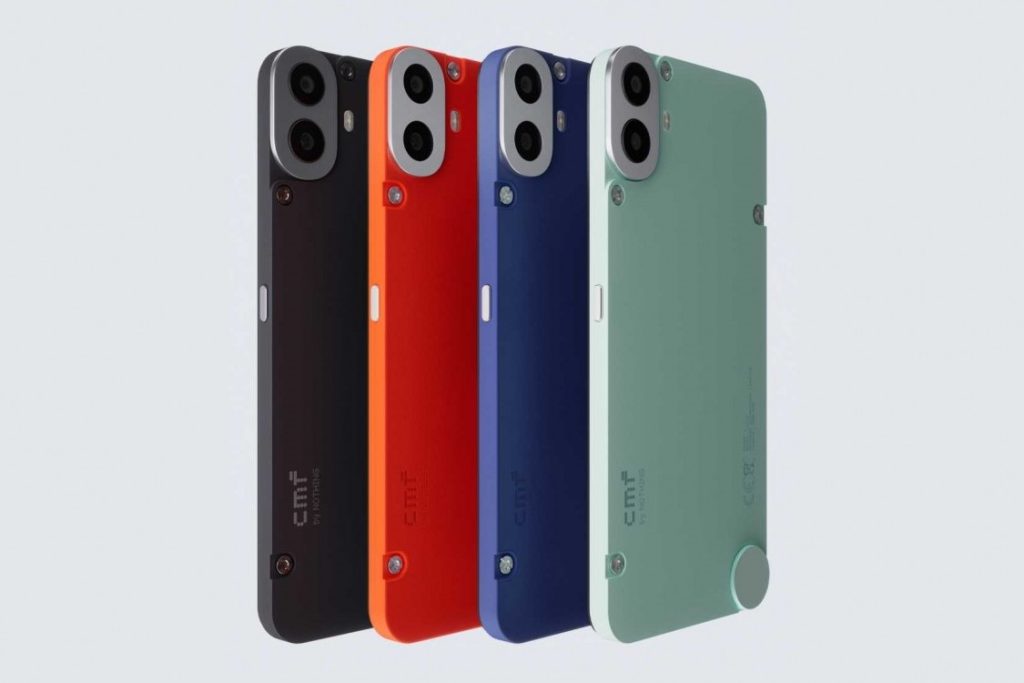
CMF Phone (1) Key Details Including Pricing And Specs Leaked

Nothing’s sub-brand CMF is catered towards the affordable segment. So far, it has launched audio devices, a smartwatch, and a charger. Last month, it was reported that a CMF smartphone with model number A015 surfaced on BIS. Now, a new report citing industry source reveals key details about the sub-brand’s first smartphone. It could be an even toned-down version of the Nothing Phone (2a) specs-wise. 

CMF Phone (1) key details leaked

The CMF Phone (1) will reportedly have a plastic body and a Gorilla Glass protection on the front. This will make it easier to be positioned as an entry-level smartphone. The device could be offered in Orange, White, and Black color options. 

The CMF Phone (1) is tipped to feature a 6.5-inch screen. The camera details remain a mystery but it will have only a single sensor paired with an LED flash unit. Under the hood, the smartphone is expected to be powered by a 5G-compatible MediaTek Dimensity processor. The brand could back the device with a 5,000mAh battery unit with support for 33W fast charging. 

The report adds that the CMF Phone (1) may ship with pre-installed Nothing OS although some features may be ditched. It could get the same software update policy like the Phone (2a) i.e. 3 years of OS and 4 years of security patches. 

As for the pricing, the CMF Phone (1) is said to be priced around Rs 12,000 or $140. This is half the price of the Nothing Phone (2a) which starts at Rs 23,999

Related:

Source

Sharp Aquos R9 With 240Hz LTPO Refresh Rate, Snapdragon 7+ Gen 3 Launched

Sharp has launched a new smartphone in its Aquos series. The latest offering is the Aquos R9 and it arrives as the successor to the R8 from last year. The smartphone has been listed on the company’s official website in Japan. The Sharp Aquos R8 features a higher refresh rate display, Leica cameras, and a mid-range Snapdragon processor. 

Sharp Aquos R9 specifications and features 

The Sharp Aquos R9 has a Pro-IGZO OLED display panel measuring 6.5 inches and bearing an FHD+ resolution. It has a high LTPO variable refresh rate of 240Hz and 1,500 nits peak brightness. The device supports Dolby Vision. It is said to be equipped with the largest box of stereo speakers in the Aquos phone with support for Dolby Atmos technology. 

The Sharp Aquos R9 sports a boxy design with a flat frame. There is a side-mounted fingerprint scanner embedded in the power button. The back panel has a circular shaped camera island. The smartphone is also MIL-STD 810G military-grade certified and is IPX5, IPX8, and IP6X dust and water-resistant. 

On the imaging front, the Sharp Aquos R9 comes with a Leica-branded dual camera setup. There is a 50.3MP OIS-enabled main sensor with f/1.9 and a 50.3MP f/2.2 ultra-wide-angle lens with a 122-degree field of view. Up front, the device also has a 50.3MP selfie snapper. 

Under the hood, the Sharp Aquos R9 is powered by a Snapdragon 7+ Gen 3 processor. It packs 12GB LPDDR5x RAM and 256GB storage. There is a heat dissipation system onboard. The device is backed by a 5,000mAh battery unit. It runs on Android 14 OS out of the box. Connectivity options on the R9 include WiFi, NFC, and Bluetooth 5.4. 

Sharp has not revealed the pricing of the Aquos R9 at the moment. It is offered in White and Green colors. 

Related:

Xiaomi launches Mijia DC Inverter Floor Fan Pro: Ultra-thin design, power bank support & HyperOS

Xiaomi has launched a new Mijia DC Inverter Floor Fan Pro in the Chinese market. The fan is adjustable and offers dual-use functionality, easily adjustable for both table and ground placement to suit various room settings. Let’s delve into its key specs.

Xiaomi Mijia DC Inverter Floor Fan Pro

Xiaomi Mijia DC Inverter Floor Fan Pro Specifications:

The Mijia DC Inverter Floor Fan Pro boasts a minimalist design with a thickness of just 8.7cm, making it significantly slimmer than most traditional fans. This allows for easier storage, especially during the off-season. Xiaomi also includes a high-strength EPP storage box for safe and space-saving storage.

The fan offers multiple control options, including a standard Bluetooth remote control for remote operation from up to 30 meters away. The remote control features magnetic absorption for convenient storage on the fan itself. Additionally, the fan includes touch buttons on the body for easy control without needing the remote. For added convenience, the Mijia Floor Fan Pro integrates Xiaomi’s HyperOS Connect and Xiao AI voice assistant, allowing users to control the fan with simple voice commands.

Xiaomi has equipped the fan with 7 wing-shaped fan blades designed to deliver stable airflow with a volume of up to 25m3/min. The fan can be paired with an air conditioner in summer to accelerate air circulation and ensure even distribution of cool air throughout a room.

An interesting feature of the Floor Fan Pro is its ability to simulate natural wind. The fan offers eight different natural wind modes inspired by real-world environments like lakesides, fairways, and terraces. Users can select their preferred wind mode through the Mi Home app. In addition to natural wind modes, the fan also offers a direct wind mode with 100 levels of wind speed adjustment for precise control.

The Mijia Floor Fan Pro is designed to be versatile and can be powered using a standard wall outlet or a power bank. The fan utilizes a Type-C port for power delivery, allowing users to connect it to a compatible power bank for extended use in areas without a power outlet. Xiaomi claims that a 10000mAh power bank can provide power to the fan for up to 22 hours on the lowest setting.

The Floor Fan Pro is equipped with a DC inverter motor that ensures smooth operation and low power consumption. Xiaomi states that the fan has achieved a level 1 energy efficiency rating, consuming as little as 1.9W in the first gear without swing mode. This translates to an estimated electricity cost of only 0.82 yuan (roughly ₹0.80) for a three-month summer season.

The DC inverter motor also contributes to the fan’s quiet operation. In the first gear without swing mode, the noise level is as low as 26.8dB(A), making it suitable for use even in bedrooms at night. The Mijia Floor Fan Pro comes with a detachable mesh cover for easy cleaning and maintenance. It also includes a child lock function for added safety. The fan is constructed with ABS material for durability and corrosion resistance.

Pricing and Availability

The Mijia DC Inverter Floor Fan Pro is currently up for pre-sale in China for 399 yuan (roughly $55) and will be available for purchase starting May 15th. Earlier this year, Xiaomi also launched a Mijia fan with an adjustable stand.

RELATED:

iPad Air 6th Gen vs iPad Air 5th Gen: Did Apple finally deliver a worthy next-gen upgrade?

Apple recently took the stage to unveil the 6th Gen iPad Air. This new tablet models arrive with various enhancements over their predecessors. But is it actually a worthy upgrade over the iPad Air 5th Gen? Let’s find out in this comparison.

iPad Air 6th Gen

1. iPad Air 6th Gen vs iPad Air 5th Gen: Bigger & Better?

One of the biggest updates to the iPad Air series is a larger screen. Apart from the standard 10.9-inch version, a new 13-inch model has also been announced for the first time. Both the new 6th Gen variants sport Liquid Retina IPS LCD panels, with the larger one offering 2732×2048 pixels and 600 nits peak brightness. This is brighter and taller than the 10.9-inch display with 500 nits of brightness found on the iPad Air 5th Gen.

2. Design gets a slight refresh

A couple of underrated updates to the iPad Air 6th Gen were with its design. While there are no major overhauls in its form factor, there are some changes that could fall under ‘quality of life improvements’. The newest iPad Air now houses a front facing camera, which is landscape oriented. This means that it is no longer at the top. Similarly, even the stereo speakers follow a landscape placement and support spatial audio.

3. 50% More Faster Chip

The M1 was a powerful first gen proprietary chip from Apple. However, it has since its announcement a few years back. But the M2 is still a capable processor that promises to offer 50% faster performance than its predecessor. This is one of the biggest upgrades between the latest and previous gen iPad Air tablets. The new chip also powers AI features as well. Thanks to its 16-core Neural Engine, you get access to Visual Look Up, Subject Lift, Live Text, and more.

4. Double the base storage

A small point of contention with the base iPad Air has always been the limited storage. The 5th Gen model started with just 64GB of storage, but this has now been doubled. So the iPad Air 6th Gen comes with 128GB memory. This is highly welcomed since there is no unnecessary price bump between the two generations either.

5. What else is new?

Apart from these, there are various other slight enhancements to the successor of 2022’s iPad Air model. It supports Apple Pencil 2 and even Apple Pencil Pro. The Bluetooth standard is now a more common Bluetooth 5.3 over Bluetooth 5.0. The iPad Air 6th Gen runs on the iPadOS 17.4 out of the box, so longer software support is a given. The base storage did get an upgrade but the top end models have quadrupled in capacity. While the 256GB was the top model two years ago, the latest iPad Air comes with 512GB and 1TB variants as well.

RELATED:

iPhones are getting a “Circle to Search” like feature thanks to a cool shortcut

Google previously poked fun at iPhones for lacking the visual search functionality provided by Circle to Search. However, a very similar feature is now arriving on iPhones thanks to iOS Shortcuts and Google Lens. Users of the iPhone 15 Pro and iPhone 15 Pro Max can easily activate the visual search feature through the action button.

One UI 6.1 Circle to Search

Back Tap or the Action Button can be used to trigger the feature once activated

Google Lens has been available on iOS for a long time at this point. Minsang Choi, Design Manager at Google Lens, states that iPhone users can now enjoy a visual search experience similar to Android’s Circle to Search through the Google App. The Google App takes a screenshot and then utilizes Google Lens to process the image.

For older iPhones lacking the Action Button, users can still easily activate the visual search feature using the Back Tap gesture. Recent iPhone models allow users to tap the back of the device to launch the shortcut. This gesture can be enabled in Settings > Accessibility > Touch, where users can choose between Double Tap or Triple Tap under Back Tap, then assign a shortcut. Once configured, users can trigger the feature by tapping the back of their iPhone.

In addition to the quicker search of visual objects, the shortcut in the Google App now also makes it easier and more convenient for iPhones to leverage Google Lens in copying and translating text from images.

Earlier this year, Google introduced the Circle to Search feature, which was initially exclusive to Android and only available on the Google Pixel 8 and Galaxy S24 series models. Google and Samsung have since expanded the feature to include many older models.

According to Google, the main distinction between Circle to Search and Google Lens is that the former is universally accessible on Android and can be activated with a simple gesture or long press. However, both functionalities utilize optical character recognition (OCR) technology. A Google executive mentioned in a podcast that Circle to Search is essentially a refined version of Google Lens, optimized for specific purposes on Android.

Related:

Huawei FreeClip earbuds launched in a new Beige color option

Huawei recently introduced several new products at a global launch event, including the MatePad 11.5″ tablet, MateBook 14, Watch Fit 3, MateBook X Pro, and Freebuds 6i earbuds. They also unveiled a new Beige color option for their FreeClip earbuds.

Huawei FreeClip earbuds

These earbuds have been available in the global market in Black and Purple color options since late January. The new beige color option is now available in several markets, like Europe and the UK, where it’s typically priced at €199 and £179.99, respectively. However, Huawei has currently dropped the price of all color options in the UK to £159.99 until June 11th.

Huawei FreeClip earbuds specs:

The FreeClip Open-Ear Buds debuted as the industry’s first open headset without left-right ear differentiation, prioritizing comfort at 5.6g per ear. Comprising the Comfort Bean, Acoustic Ball, and C-bridge, they ensure both comfort and functionality.

With dual-device connectivity and support for SBC, AAC, and L2HC, they’re compatible with Android and iOS devices. IP54 rated for water and dust resistance, they boast 36 hours of battery life, 8 hours per charge, with fast charging offering 3 hours of listening in 10 minutes and a full charge in 40 minutes.

RELATED:

(Source)

Redmi Pad Pro & POCO F6: Upcoming HyperOS tablet & phone near global launch with SDPPI certification

Two new HyperOS devices have just been spotted in an Indonesian certification platform. These are the Redmi Pad Pro and the POCO F6. The upcoming tablet and smartphone’s latest sighting hints at an imminent global launch. So let’s have a look.

Redmi Pad Pro

Redmi Pad Pro

To recall, the Redmi Pad Pro has already been unveiled in the brand’s home market of China. You can also click here to check out our breakdown of its specs and features. But following its Chinese launch, it was also spotted on other overseas certifications like FCC, Google Play Console, IMDA, and now even SDPPI.

Redmi Pad Pro

The tablet was spotted with the 2405CRPFDG model number, which belongs to the WiFi only variant of the Redmi Pad Pro. This tablet originally launched with a 12.1-inch IPS LCD display, Snapdragon 7s Gen 2 SoC, 10,000mAh battery pack, and more. So we can expect the global variant to feature identical specifications.

POCO F6

Another HyperOS-powered device that was spotted on the SDPPI certification was the POCO F6. It was listed with the 24069PC21G model number. Similar to the Redmi Pad Pro, the POCO F6 has also been launched in China before, but under a different name. The POCO F6 could be a rebranded Redmi Turbo 3.

Redmi Pad Pro

The SDPPI sighting also hints that a global launch for this smartphone is also near. It was previously spotted on Singapore’s IMDA certification as well. For those unaware, the Redmi Turbo 3 came with the Snapdragon 8s Gen 3, 6.67-inch 120Hz AMOLED display, a 5000mAh battery pack, 90W fast charging, and a 50MP main camera. So these could make a return on the POCO F6 as well.

RELATED:

Realme Buds Air 6 arriving with the Realme GT Neo 6 on May 9

Realme is gearing up to unveil the GT Neo 6 smartphone model in China soon. However, this device isn’t alone as the brand will also launch the Realme Buds Air 6 alongside it. So here’s evyerthing we know so far.

Realme Buds Air 6 Launch Date

The Chinese brand had silently announced the Buds Air 6 and Buds Air 6 Pro via a listing on its official website. But apart from revealing its key specs, the pricing and release date were still at large. Now, a fresh teaser from the company has confirmed that it will be arriving alongside the GT Neo 6 on 9th May 2024, which is tomorrow. The new truly wireless earbuds will be announced at 2 PM CST.

Realme Buds Air 6

The teaser also added that the Realme Buds Air 6 will offer up to 50 decibels of ANC (Active Noise Cancellation), LHDC 5.0, and Hi-Res certification as well. Based on what we know so far, the earbuds feature 12.4mm audio drivers and house six built-in microphones. Realme claims that it can last for up to 40 hours on a single full charge with the charging case. Although, this will likely vary with ANC enabled.

The earbuds can offer 7 hours of audio playback with just a 10 minute charge. It will even offer an IP55 rating for water and dust resistance. The Realme Buds Air 6 Pro features similar specifications but with 3D spatial sound effects for an improved listening experience as well as a bigger battery.

RELATED:

Top 5 Google Pixel 8a alternatives: Know why the Pixel 8a still holds an edge

Google Pixel 8a has just landed in India in two options, such as 8GB+128GB and 8GB+256GB. The pricing of these variants is Rs 52,999 and Rs 59,999, respectively. In the US, the device is priced at around $499, which is the same as the starting price of the Pixel 7a, which debuted last year.

In India, the price is significantly higher than the Pixel 7a’s starting price of Rs 43,999. Now that the price of the Pixel A-series has breached the Rs 50,000 mark in India, it can no longer be considered a mid-tier offering. Several alternatives offer much better specs than the Pixel 8a. However, the Pixel 8a still holds an edge over its competitor

1. iQOO 12

iQOO-12
iQOO-12

Launched in December 2022, the iQOO 12 is the first phone to launch with the Snapdragon 8 Gen 3 chip in the global market. Built for gaming, the iQOO 12 offers decent cameras, including a 50-megapixel primary camera, a 50-megapixel ultra-wide lens, and a 64-megapixel periscope telephoto camera with 3x optical zoom. In addition, it packs a 144Hz AMOLED display and a 5,000mAh battery with 120W fast charging support. The device is listed for Rs 52,999 on Amazon.

2. Nothing Phone (2)

Nothing
Nothing Phone (2)

Available for Rs 37,999 via Flipkart, the Nothing Phone 2 is an all-rounder phone featuring the Snapdragon 8+ Gen 1 chip, a 6.7-inch OLED FHD+ 120Hz display, up to 12 GB of RAM, up to 512 GB of storage, and a 4,700mAh battery with 45W charging. For photography, it has a 50-megapixel (main) + 50-megapixel (ultrawide) dual camera system on the back.

3. Samsung Galaxy S23

Samsung Galaxy S23
Samsung Galaxy S23

The Samsung Galaxy S23, which debuted last year with the Snapdragon 8 Gen 2 chip onboard, is now available for Rs 46,999. It is the only Android phone on the list to offer longer software support, with seven years of OS upgrades and security updates. Available for Rs 46,999, the S23 features a 50-megapixel main camera with OIS, a 12-megapixel ultra-wide lens, and a 10-megapixel telephoto camera. It is a compact phone featuring a 6.1-inch AMOLED FHD+ 120Hz display, a 3,900mAh battery with 25W fast charging and 15W wireless charging support, and an IP68-rated chassis.

4. iPhone 14 Plus

iPhone 14 Plus

The iPhone 14 Plus, which debuted in September 2022, is now available for Rs 59,999 on Flipkart. It packs a 6.7-inch OLED screen, an Apple 15 Bionic chip, 6 GB of RAM, and a 4,323mAh battery. For photography, it has a 12-megapixel front camera, and a 12-megapixel (main, with OIS) + 12-megapixel (ultra-wide) dual-camera setup. In addition, it supports Face ID and comes with an IP68-rated body.

5. OnePlus 12R

OnePlus 12R

Launched in January this year, the OnePlus 12R is a gaming-focused phone with a starting price of Rs 39,999. It has a 6.78-inch 120Hz AMOLED display with Gorilla Glass Victus 2 protection. It has the Snapdragon 8 Gen 2 chip, up to 12 GB of RAM, 256 GB of UFS 3.1 storage, and a 5,500mAh battery with 100W charging. The device features an OIS-assisted 50-megapixel triple camera system on the back and a 15-megapixel selfie camera.

6. What does the Pixel 8a offer?

Google Pixel 8a
Google Pixel 8a

What makes the Google Pixel 8a interesting is that it is the first Pixel A-series phone to feature a 120Hz OLED screen, which measures 6.1 inches. The Pixel 8a will receive seven years of OS and security updates, just like the Pixel 8 and Pixel 8 Pro. Being a Pixel series phone, it will also be treated with the Pixel Feature Drops.

It has the same Tensor G3 chip that powers the Pixel 8 duo. At present, there is no clarity on whether the Pixel 8a’s G3 chip is an underclocked version.

 The SoC is coupled with LPDDR5x RAM, UFS 3.1 storage, and a 4,492mAh battery with 18W wired and wireless charging. The Pixel 8a has a smaller battery and slower charging capabilities as compared to its competitors.

When it comes to durability, it offers Gorilla Glass 3 protection for the screen and an IP67 rating for dust and water resistance. It comes with other features, such as dual stereo speakers, an in-screen fingerprint scanner, Wi-Fi 6e, Bluetooth 5.3, USB-C (USB 3.2), NFC, and dual SIM (nano+eSIM) support.

For photography, it has a 13-megapixel Sony IMX712 front camera, and a 64-megapixel (Sony IMX787, with OIS) + 13-megapixel (ultra-wide) dual-camera setup on the back.

It offers several features for an enhanced photography experience, including Magic Editor, Best Take, Magic Eraser, Photo Unblur, Face Unblur, Real Tone, Top Shot, Live HDR+, and Ultra HDR. It also offers Google-exclusive features, such as Gemini, Circle to Search, Pixel Call Assist, and Audio Emoji.

7. Why does Pixel 8a have an edge over the competition?

Google Pixel 8a
Google Pixel 8a

The Pixel 8a distinguishes itself from its competitors by appearing as a compact flagship phone equipped with a 6.1-inch display. Offering a longer seven-year software support compared to its higher-end counterparts, it stays relevant and secure over the long term. Samsung comes close with the same kind of upgrade promise for the S23. Google’s Pixel Feature Drops further enhance the user experience on the Pixel 8a by offering exclusive features.

Sharing the Tensor G3 chipset with the Pixel 8 series, the Pixel 8a promises top-notch performance. Because it is part of the Pixel series, it is unlikely to disappoint in the photography department. Moreover, with features like Gorilla Glass 3 protection and an IP67 rating for durability, the Pixel 8a presents a compelling package, despite its smaller battery and slower charging, securing its position as a standout choice in the smartphone market.

If you are looking for a compact flagship-grade phone with top-notch camera performance, the Pixel 8a is for you. It will be available for purchase starting May 15 via Flipkart in India. If the hefty price tag of the 8a deters you from buying, consider waiting a couple of months. The Pixel 8a may become an irresistible device if it receives a price cut later this year.

Motorola Edge 50 Fusion Indian launch set for May 16, Key specifications confirmed

After the launch of the Motorola Edge 50 Pro, the brand is now gearing up to debut the Edge 50 Fusion smartphone in India. After revealing the first teaser a couple of days back, Motorola has now confirmed that the Edge 50 Fusion will be landing in India on May 16, 2024.

Motorola Edge 50 Fusion

The Flipkart microsite of the smartphone is also live, confirming many of its specifications. The brand has confirmed that the Edge 50 Fusion will come with a 6.67-inch pOLED 3D curved display with a 144Hz refresh rate, 1600 nits peak brightness, an in-display fingerprint scanner, and Corning Gorilla Glass 5 protection.

It will be available in three color options: Forest Blue with PMMA finish. Marshmallow Blue with a Vegan Leather finish and Hot Pink with a Vegan Leather suede finish.

Motorola Edge 50 Fusion

The device will feature a 50MP Sony LYTIA 700C primary camera with a 2um pixel size. It will be paired with a 13MP Ultra-wide camera that offers 120 degrees FOV and up to 4x Macro shot capability. On the front, it will feature a 32MP selfie snapper.

Under the hood, the smartphone is confirmed to be powered by a Snapdragon 7s Gen 2 SoC, paired with up to 12GB RAM. This chip comes with 15 5G bands as well as support for WiFi 6. In the battery department, the Edge 50 Fusion will feature a 5,000mAh battery paired with 68W fast charging. As for software, with will come with Android 14 onboard, along with a promise of 3 years of OS updates and 4 years of security updates.

Pricing and availability details will be unveiled on May 16. It is expected to debut in the ₹25,000 price range to go up against competitors like the Nord CE 4, the Nothing Phone (2a), and more.

RELATED:

(via)

Realme GT Neo 6 supports 1.5K resolution of “Genshin Impact”, sustains 120 fps in “Honor of Kings”

Xu Qi Chase, the vice president of realme and president of realme global marketing has revealed some impressive performance metrics of the realme GT Neo 6 today through his official Weibo account. The new phone is reportedly capable enough to sustainably play Honor of Kings (a graphics-demanding game) at 120 fps without getting too much hot.

Impressive gaming performance with the realme GT Neo 6

Xu Qi starts by noting that the gaming experience is going to be very different this time. He claims that the phone can run Honor of Kings on the ultimate picture quality without any issues. The average frame rate with the 120 fps setting is reportedly 120.1. The temperature reaches 43.0℃, which is reasonably good considering the 120 fps output from this game.

With the 60 fps setting the phone reportedly reaches a slightly lower 42.5℃ after 1 hour of playing the game with the same picture quality. The average frame rate is 59.85. Xu Qi also talks about the improved light and shadow effects in the game. The Snapdragon 8s Gen 3 indeed supports real-time hardware-accelerated ray tracing.

In a separate Weibo post, he also noted that the phone can play Genshin Impact in the native 1.5K resolution.

We are just hours away from the May 9 launch of this new phone that will equip the Snapdragon 8s Gen 3 chip. This new chip boasts a Cortex-X4 clocked at 3.0GHz, four Cortex-A720 cores clocked at 2.8 GHz, and three power-efficient Cortex-A520 cores clocked at 2.0GHz. For graphics, it offers the Adreno 735 GPU. For cooling, the GT Neo 6 equips a 10014mm² vapor cooling chamber.

Alongside the new chip, this phone will offer an extremely bright 8T LTPO display that reaches 6000nits. To power the system, the phone equips a 5500 mAh battery and supports 120W charging.

Related:

Google Pixel Tablet now $100 cheaper without Charging Speaker Dock

Google‘s first ever tablet has just become even more affordable. The Pixel Tablet was first unveiled last year, and now, it has become around 100 US Dollars cheaper thanks to the brand removing the Charging Speaker Dock it originally shipped with. So let’s check it out.

Google Pixel Tablet New Pricing

To recall, we covered a report that claimed that the Pixel Tablet would be sold without the base. Now, this has finally been confirmed as the Pixel Tablet is available for purchase with the Chargin Speaker Dock. It is still being offered in Hazel and Porcelain color options, and 128GB and 256GB storage configurations. While it originally sold for 499 US Dollars, the new pricing without the wireless dock starts from 399 US Dollars.

Pixel Tablet

On the other hand, the 256GB variant now costs 499 US Dollars. This deal is available in the US, UK, Canada, Denmark, France, Netherlands, Norway, Spain, Sweden, Japan, Italy, Germany, and Australia. This deal also arrives after the brand announced the brand-new Pixel 8a mid range smartphone model.

For those unaware, this tablet sports a tall 10.95-inch WQXGA display. Under the hood, it is equipped with the Tensor G2 processor that is paired with 8GB of RAM. the rear and front packs 8-megapixel camera sensors. It also comes with a Titan M2 security chip and houses a quad speaker setup. The Google Pixel Tablet is powered by a 27Wh battery pack. Other notable features include WiFi 6, Bluetooth 5.2, and a fingerprint scanner.

RELATED:

Lenovo Tab K11 Plus: What to Expect from Lenovo’s New Tablet

Lenovo is gearing up to debut a new tablet in the global market called the Lenovo Tab K11 Plus. This tablet has recently picked up many certifications like TDRA, UL Demko, and TUV Rheinland. Word has it that the tablet will be a rebranded version of the Lenovo Zhaoyang K11, which was recently launched in China. So, here’s everything you can expect onboard the Lenovo Tab K11 Plus.

Lenovo Zhaoyang K11

1. Design & display

Starting with the design, the Lenovo Tab K11 Plus is expected to measure 7.15mm in thickness and weigh around 520 grams. The tablet will feature full aluminum construction, with a flat back and sides, however, the back will also include a rigid strip of PMMA and Polycarbonate materials that will provide an easily grippable surface.

On the front, it could feature an 11.5-inch 2K display with an 86.5% screen-to-body ratio. The exact resolution could be around 2000 x 1200 pixels. Additionally, the display would likely offer a peak brightness of 400 nits with 72% coverage on the NTSC color gamut, paired with a 90Hz refresh rate. This display is equipped with certifications for low blue light and flicker-free dimming, safeguarding vision health and minimizing eye strain for extended usage.

2. Performance & hardware

Under the hood, the tablet will be powered by a Qualcomm Snapdragon 680 processor. The Snapdragon 680 is an octa-core 4G processor which debuted back in October 2021 and has a peak clock speed of 2.4GHz. So it’s pretty clear that this tablet is intended more for entertainment and productivity, rather than heavier workloads like gaming.

The tablet could have up to 8GB LPDDR4x RAM and 256GB internal storage, expandable with a TF card. This setup should handle everyday tasks and multitasking without any problems. It could also feature a large 8,600mAh battery, offering 14 hours of browsing time, 12 hours of video playback, and up to 900 hours of standby. We expect the battery to be coupled with around 20W fast charging support.

3. Cameras, speakers & mics

For optics, the tablet will likely offer a single 8MP camera on the front with 1080p video recording and a 13MP autofocus camera on the back with up to 4K video recording. The camera system will likely come with features like AI shooting assistance, beauty filter, HDR mode, and background blur for video calls. The front camera could also come with face recognition support for added security.

As for audio, the tablet could offer a quad-speaker setup with Dolby Atmos tuning, as well as 2 built-in microphones.

4. Other notable features

The Tab K11 Plus is anticipated to include a customizable shortcut button positioned below the volume and power buttons on the side. This button will offer extensive programmability, allowing users to assign different actions for single and double clicks. These actions could include launching an app, toggling Bluetooth, Airplane mode, Hotspot, flashlight, video/audio recording & more.

We can also expect Lenovo to offer Stylus Bluetooth keyboard support for this tablet. We can expect the tablet to be offered in WiFi only and WiFi + LTE variants, with both of these models offering dual-band WiFi 6 connectivity. Lastly, the tablet could come with an IP52-certified chassis, which provides limited dust and water resistance.

Since the tablet has started picking up many key certifications, we can expect it to debut in the coming weeks.

RELATED:

Yale Smart Video Doorbell, Smart Indoor and Outdoor Cameras showcased at Smart Expo 2024 in India

Yale, a well-known brand in smart home solutions under Assa Abloy, was present at the Smart Home Expo 2024 in Mumbai’s Jio Convention Centre to showcase its latest innovations. At the tech exhibition, the brand displayed products, such as the Yale Smart Indoor Camera, Yale Smart Outdoor Camera, and Yale Smart Video Doorbell that promise enhanced security and seamless integration within the smart home ecosystem.

Yale Smart Video Doorbell

Yale Smart Video Doorbell

The Yale Smart Video Doorbell features a clear 1080p Full HD image with a wide 154-degree field of view. It can alert homeowners in real time when motion is detected or visitors press the doorbell. Other features include two-way audio talk, live viewing, and night vision, enabling round-the-clock monitoring via the Yale Home app. Additionally, it seamlessly integrates with other Yale smart devices, allowing users to conveniently unlock their doors via the app when deemed safe.

Yale Smart Indoor Camera and Smart Outdoor Camera

Yale Smart Indoor Camera

The Yale Smart Indoor Camera and Yale Smart Outdoor Camera offer easy installation, operation, and remote control. Equipped with AI technology, they enable human detection, customizable zones, and scheduling for tailored security coverage. The Yale Home app allows you to link both cameras with voice assistants like Google Home and Alexa, as well as the Yale Smart Security Ecosystem.

Yale Smart Outdoor Camera

The Yale Smart Indoor Camera serves as a reliable solution for pet owners and parents, offering 1080p Full HD image, live viewing, motion-triggered recordings, two-way audio, night vision, detailed notifications, and compatibility with leading voice assistants.

In addition, the Yale Smart Outdoor Camera provides comprehensive monitoring with features such as 1080p Full HD image, a wide field of view, enhanced color night vision, motion-triggered recordings, two-way audio, and a motion-triggered spotlight.

RELATED:

GC Daily: Google Pixel 8a is official, Huawei launches 6 new products

Huawei is once again in the news, this time for launching a number of products for the international market.

If you missed the announcements, here is a summary of what they announced at the event in Dubai yesterday.

This move comes right after the company released the Pura 70 series smartphones in Europe.

Apple has finally unveiled the next-generation iPad Pro and iPad Air tablets at the Let Loose event. The former packs significant upgrades over its predecessor and probably since the 2018 iPad Pro models. Meanwhile, the iPad Air 6th Gen arrives as the successor to the two-year-old iPad Air 5th Gen that debuted way back in 2022. The latest offerings come with much-needed upgrades along with a slightly new design.

Full details here.

Google has quietly announced the Pixel 8a ahead of its annual I/O Developer Conference. The latest-generation mid-range offering arrives as the successor to last year’s Pixel 7a. It packs significant upgrades over its predecessor. 

Full details are in our story here.

🔥 Main Headlines Worth Reading!


Vivo X100 Ultra, X100s, X100s Pro battery size, charging, display details leaked before launch

Vivo will unveil the Vivo X100s, X100s Pro, and X100 Ultra on May 13 in China. While the rumor mill has spilt a lot of details about the cameras of these smartphones, their battery sizes and charging capabilities have remained a mystery so far. In his latest Weibo post, Chinese leaker Experience More revealed these details along with some more information about all three phones.

Vivo X100s, X100s Pro key specifications (rumored)

The tipster claims that the Vivo X100s will combine the Dimensity 9300+ chipset with a V2 imaging chip to improve photography. It will have a 5,100mAh battery with support for 100W rapid charging. It will lack support for wireless charging. It will be equipped with a 1.5K-resolution flat OLED display by Visionox.  

The Vivo X100s Pro will share the same Dimensity 9300+ chipset but will elevate its imaging capabilities with a V3 imaging chip. It will be backed by a 5400mAh capacity with 100W wired and 50W wireless charging. Additionally, it will feature a curved-edge OLED display by Visionox. It will also offer a 1.5K resolution.

In comparison, the Vivo X100 and X100 Pro, which were announced in November last year, feature the Dimensity 9300 chip. The X100 has a 5,000mAh battery with 120W fast charging, whereas the X100 Pro has a 5,400mAh battery with 100W wired and 50W wireless charging support. To recall, the

Vivo X100 Ultra specifications (rumored)

Meanwhile, the Vivo X100 Ultra will distinguish itself with the Snapdragon 8 Gen 3 chipset, accompanied by the latest V3+ imaging chip. It will pack a 5,500mAh battery with 80W wired and 30W wireless charging support. The Samsung E7 AMOLED curved-edge screen, offering a 2K resolution, will serve as the display for the X100 Ultra. All three phones will likely have a screen size of 6.78 inches.

The prices of the Vivo X100s, X100s Pro, and X100 Ultra have already leaked. Readers can visit this post to learn about the rumored prices, variants, and color options.

RELATED: