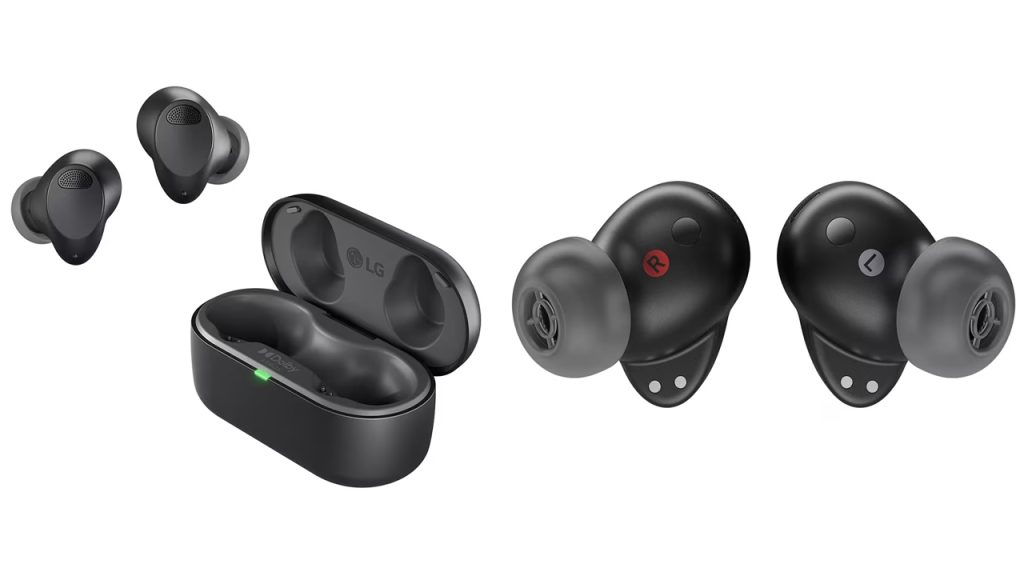
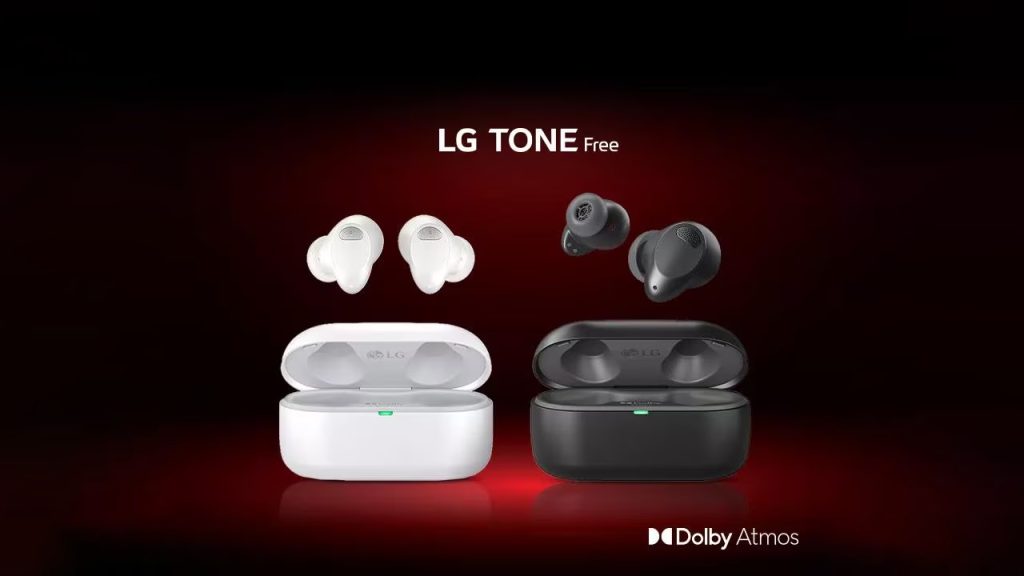
LG has released the Tone Free T80 wireless earbuds with several upgrades from its predecessor. The new LG T80 wireless earbuds come with a graphene speaker driver and feature Dolby Atmos, as well as Dolby Head Tracking. The Tone Free T80 is designed to offer an improved audio experience with its reinforced graphene driver and overall design.
Features
The Tone Free T80 earbuds are designed to deliver a balanced audio output covering mid and high frequencies, as well as a vibrant bass. The Dolby Atmos and Dolby Head Tracking functionality further enhances the product’s audio performance. The buds support Adaptive Active Noise Cancellation and can detect noise levels around you and adjust the intensity accordingly.
The buds have a four-mic setup for enhanced call performance. It optimizes the sound modes and allows the user to receive calls even in a pretty noisy environment. The buds also feature the Whisper Mode which allows you to take calls discreetly by speaking in hushed tones via the right bud.
The LG Tone Free T80 wireless earbuds are rated IPX4 and are protected from light rain or drops of water. They also come with medical-grade ear gels and offer comfortable use at any time. The T80 earbuds deliver up to 36 hours of runtime in total. It supports Bluetooth 5.4 connectivity, wear detection, Dolby Virtualizer, and Optimizer functionality.
Pricing & Availability
The LG Tone Free T80 earbuds are being sold on a bundled offer that includes a free XBOOM Go XG5QGR Bluetooth speaker. The price of the bundled package of the T80 earbuds is $199.99. It is unclear how long the bundled offer will be available before the model reverts to its original price.
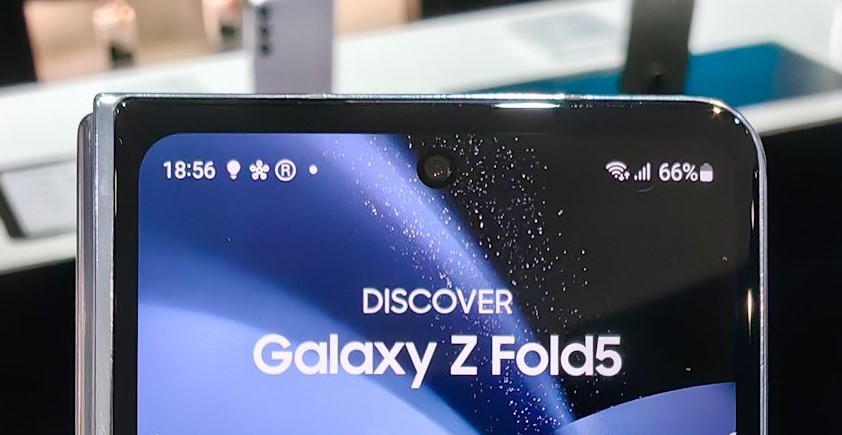
Previously we have seen leaked screen protectors and CAD renders of the Galaxy Z Fold 6 suggesting a wider external screen and sharper corners. Now a real-life image of the phone has been leaked confirming that the phone will indeed come with sharper corners as compared to the predecessor. In addition to that, you can also notice that the borders are nearly symmetrical this time around.
Galaxy Z Fold 6
Today tipster Ice Universe has shared the image on X (formerly known as Twitter). Comparing the Z Fold 6’s image side by side with the Galaxy Z Fold 5 also suggests that the display is flatter this time. The top, left and right sides have the same width of border. However, we cannot be sure about the bottom bezel since the image is cropped.
Galaxy Z Fold 5
On the left side, the metal frame also doesn’t appear as visible as the predecessor, which improves the look of the device. It also allows the display to be a bit more wide within the same aspect ratio of the body. Additionally, it looks like the phone itself is also slightly wider.
Reportedly, Samsung is also working on another version of the 6th generation book-style foldable, the Galaxy Z Fold 6 Slim that will offer a larger inner and outer display with a slimmer form factor. According to Sammobile, it could be released in Q4 2024, months after the release of the Z Fold 6 and Flip 6.
Nonetheless, the phone we are seeing adopts the Galaxy-branded Snapdragon 8 Gen 3 chipset with slightly different clock speeds than the regular version. According to a previous report from South Korea, it won’t be viable for Samsung to include its foldable under its dual-platform strategy as the series has been designed for Qualcomm chips since the beginning and the company will have to make a lot of adjustments. For now, the Exynos 2400 is also reportedly unable to meet the power efficiency requirement of the foldable.
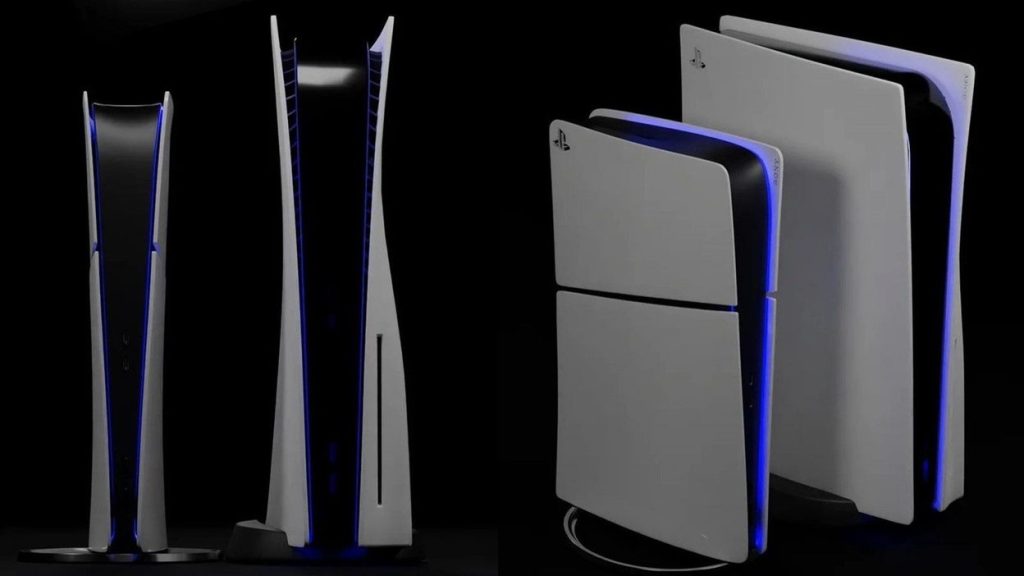
The ninth generation console wars rage on, and Sony continues its reign from the previous generation, leading the charge with the PlayStation 5. Recently, the company has been in the spotlight due to rumors about the PS5 Pro, yet it continues to sell millions of consoles every month.
Additionally, the company is doing everything it can to accelerate sales. Besides games that remain console-exclusive for a long time, Sony is also attracting potential customers with discount campaigns. The latest campaign targets gamers in India. Sony announces huge discounts on PS5 Slim, VR2. Here are the details…
Sony Announces Huge Discounts on PlayStation 5 Slim And VR2
The PlayStation 5 Slim Digital Edition is now available at a discounted price of Rs. 39,999, down from its regular price of Rs. 44,990. The console offers the same impressive performance as the standard PS5, but in a more compact design. For those interested in taking advantage of this deal, you can find more information and purchase the console here.
In addition to the PS5 Slim, Sony’s PlayStation VR2 is also on sale, now available for Rs. 51,999, reduced from its usual price of Rs. 61,999. The PlayStation VR2 promises to elevate your gaming experience with its cutting-edge VR technology. Delivering great visuals and responsive gameplay. For more details and to grab this offer, you can visit this link.
Just ahead of Children’s Day in China (June 1), Tencent Games has announced a significant upgrade to its “Anti-Addiction 4-tool Set” management tool. This suite of features aims to empower parents and promote healthy gaming habits among minors.
Source: Imaginechina via AP
Empowering Parents with Enhanced Anti-Addiction Tools
The upgraded set builds upon Tencent’s existing anti-addiction measures like real-name authentication, playtime and recharge limits, and facial recognition. It goes a step further by offering a comprehensive “all-around toolbox” for personalized control.
The four key features of the upgraded system include:
One-click Ban on Play and Recharge: This allows parents to instantly pause their child’s gameplay and in-game purchases, providing a quick and easy way to manage playtime and spending.
Self-Account Management: This empowers children to manage their own accounts within pre-set limitations. It fosters a sense of responsibility and encourages them to develop healthy gaming habits.
Green Mobile Reporting: This feature provides tools for parents to report inappropriate content or behavior encountered within the game, contributing to a safer online environment.
One-click Block Strangers: This allows parents to restrict their child’s interaction with strangers within the game, minimizing potential risks associated with online interactions.
The upgraded tools will be progressively rolled out through the “Tencent Growth Guardian” official account and mini-program. Tencent emphasizes that these features target crucial areas like gaming duration, in-game spending, and social interaction. This multi-pronged approach equips parents with a powerful weapon to safeguard their children from the negative impacts of gaming addiction.
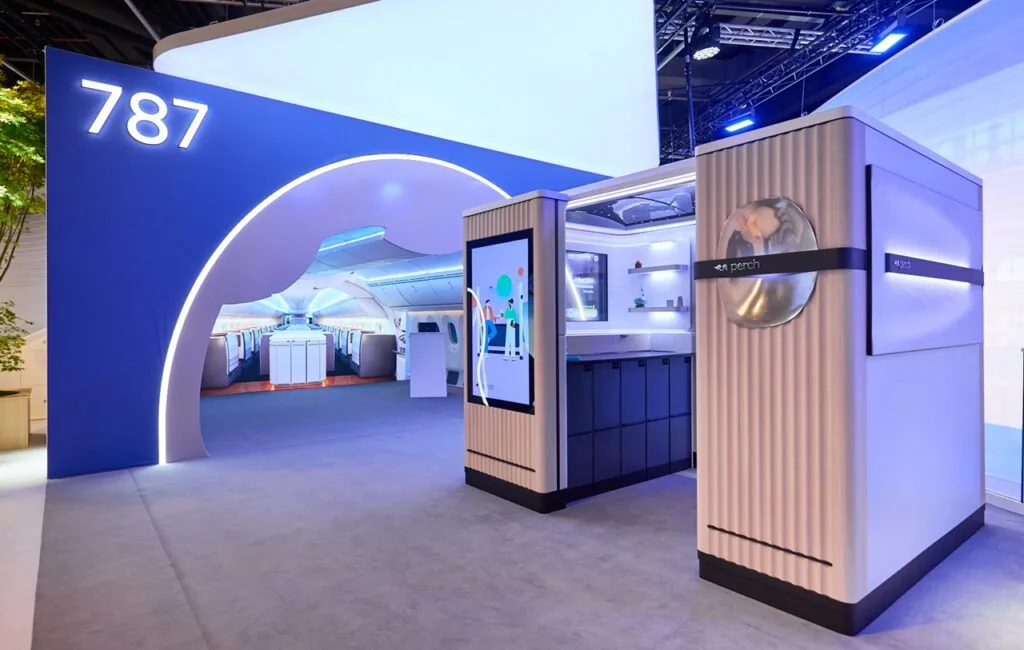
LG Display is dipping its toes into the future of air travel at the 2024 Aircraft Interiors Expo (AIX) in Hamburg, Germany. The company showcased their innovative smart cabin technology, jointly developed with Boeing EnCore Interiors and LIG Nex1. This collaboration aims to upgrade the passenger experience with strategically placed OLED panels throughout the aircraft cabin:
Compared to LCD Panels, OLED Panels contribute to a lighter aircraft
Large 55-inch OLED panels greet passengers at the gate, potentially displaying flight information, boarding passes, or targeted advertising. Curved OLED panels follow the curve of the ceiling, creating a visually immersive atmosphere. 30-inch transparent OLED panels positioned between cabin partitions offer a sleek way to display information without obstructing views. 27-inch OLED panels in the crew galley provide essential information for cabin staff. Beyond aesthetics, OLED technology offers airlines several advantages:
Lighter weight: Compared to LCD panels, OLED panels contribute to a lighter aircraft, potentially improving fuel efficiency. Enhanced Cost-Effectiveness: The lighter weight and potential for targeted advertising could translate to cost savings for airlines.
LG Display plays a crucial role by developing these specialized OLED panels. They ensure these panels meet the rigorous reliability and safety standards demanded for aviation use. LIG Nex1 complements this by developing the systems that integrate these panels with the cabin entertainment network, providing the software and hardware needed to operate the entire OLED panel system.
The future of smart cabins seems closer than ever. As per reports, Boeing’s EcoDemonstrator test aircraft, equipped with this smart cabin technology, will begin ground and flight testing within the year. This real-world testing will pave the way for a more comfortable, informative, and potentially cost-effective flying experience.
Samsung Electronics faces its first-ever employee strike as its largest union, the National Samsung Electronics Union (NSEU), gears up for a walkout on June 7th. This action follows months of stalled wage negotiations between the union and company management. The NSEU is fighting for fairer compensation for its members. They seek a significant increase beyond the proposed 5.1% wage hike offered by Samsung, along with an additional annual leave day for employees and greater transparency in how performance bonuses are calculated.
The membership of the union has quadrupled over the past few years
The union’s bargaining position appears stronger than ever. With membership quadrupling in recent years, the NSEU now represents over a fifth of Samsung’s workforce. However, they acknowledge the strike’s primary purpose is symbolic, aiming to pressure Samsung into more serious negotiations. While automation likely minimizes production disruptions, the walkout signifies the union’s frustration with a perceived lack of change in management’s approach despite promises to end anti-union practices.
Samsung, on the other hand, maintains its commitment to good-faith negotiations and reaching an agreement with the union. A spokesperson emphasized their sincere efforts towards a resolution. However, the NSEU remains prepared for further walkouts if meaningful progress isn’t made.
This brewing labor dispute will be closely watched. Can Samsung and the NSEU bridge the divide and reach a fair agreement, or will the company face continued pressure from its workers?
Valve is actively developing an in-game screen recording feature, according to SteamDB creator and data miner Pavel Djundik. This addition promises a more streamlined way to share your gaming highlights directly within the Steam community. Currently, capturing in-game moments relies on external tools. Players can utilize Microsoft’s “Game Bar,” third-party software, or recording options offered by NVIDIA and AMD graphics card drivers.
Steam offers 1GB of cloud storage for screenshots, archives etc.
The upcoming Steam feature aims to mirror the ease of sharing screenshots, which have been available since 2011. By pressing F12 (in games supporting Steam Overlay), users can capture and share screenshots directly to their Steam community or social media platforms. Each Steam account offers 1GB of cloud storage for these screenshots, game settings, archives, and more.
The in-game screen recording functionality promises to go beyond basic recording. Here’s what we can expect based on available information:
Background Recording: This allows you to capture gameplay continuously without manually triggering the recording each time.
Timeline Marking Function (in select games): This feature provides a visual timeline within the recording interface, potentially enabling players to pinpoint and share specific highlights with ease.
The timeline marking function is reminiscent of features found on PlayStation 5 and Xbox consoles, which offer automatic recording of clips upon achievement unlocks. While details regarding the official release date and additional functionalities remain under wraps, this news is exciting for Steam users.
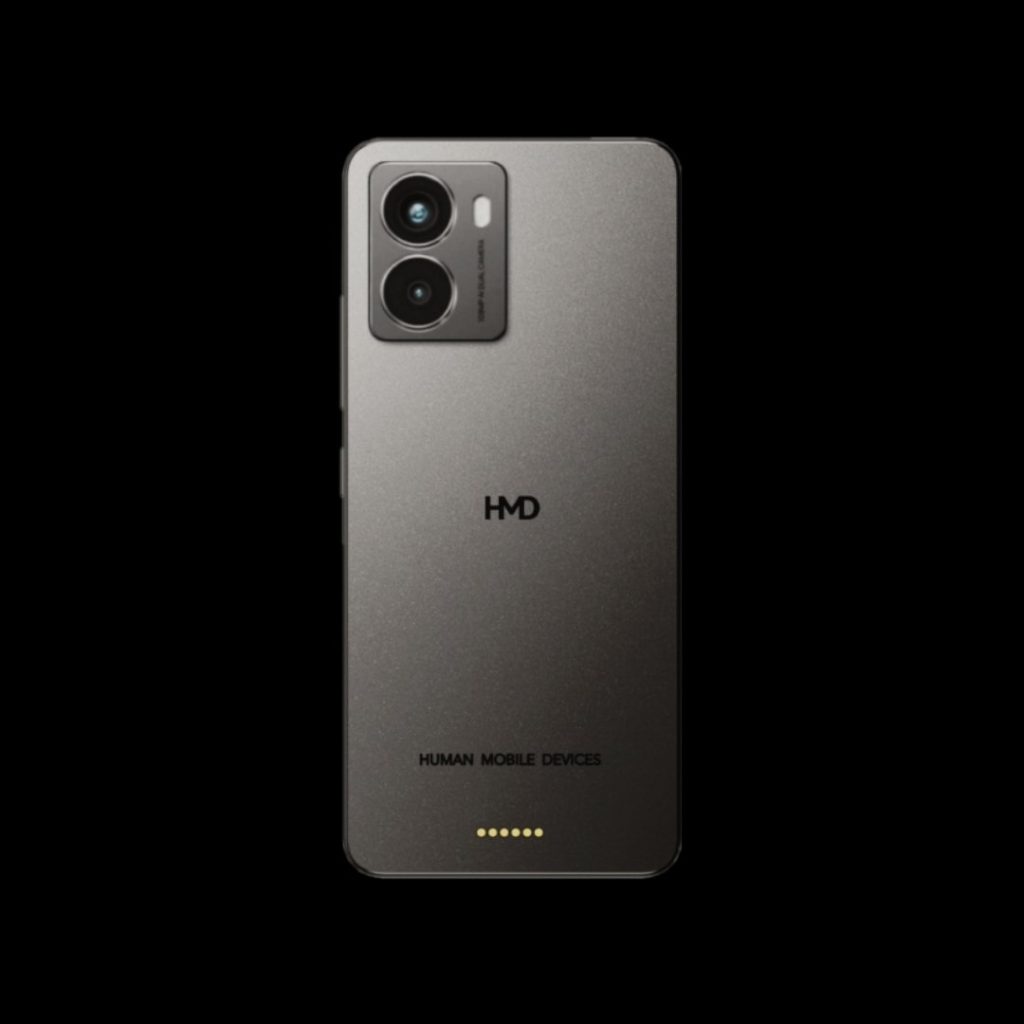
After releasing the entry-level HMD Pulse series and the more affordable HMD Aura with the Unisoc T606 chipset, the company is seemingly focusing on a bit more capable mid-range devices that will boast relatively more capable chips and other equipment.
Today, the Twitter account HMD MEME’S has shared details about three new devices from the company – Nighthawk (codename), Tomcat (codename), and the last one from its Project Fusion (a prototype model). Reportedly, the Tomcat and the Nighthawk will bring some similarities in design and some other specifications with the existing Pulse series. But let’s take a look at the devices one by one.
HMD Tomcat:
We have previously seen the HMD Tomcat surfacing on Geekbench with an octa-core chipset that was alleged to be the Snapdragon 7s Gen 2. It scored 965 and 2625 on single and multi-core tests respectively.
Now HMD MEME’S also claims that the phone will come with the Snapdragon 7s Gen 2 chip. While this is still not going to compete with others on its price range based on raw power, a new design with vibrant colors (which was one of the specialties of Nokia devices) paired with a high-resolution display and better cameras should be a welcome addition.
known specifications:
AMOLED FHD+ 120Hz, PureDisplay HDR10+
SD 7s Gen 2 SoC 4nm
108MP OIS + 8MP + 2MP / 32MP
8GB, 12GB + 256GB
Android 14
4,900mAh + 33W
IP67, BT 5.2, NFC, FPS on Display, Stereo Speakers, PureView, etc.
Price: 8/256GB ≈ €400 12/256GB ≈ €440
HMD Nighthawk:
On paper, this phone has a similar camera specification (likely without an ultrawide) and a different chipset than the Tomcat, with a similar battery capacity.
The phone uses the QCM6490 chipset, which is Qualcomm’s upper mid-range offering and is reportedly based on the SD 778. According to a previous report, Project Fusion focuses on building a modular phone like Motorola’s Moto Mods.
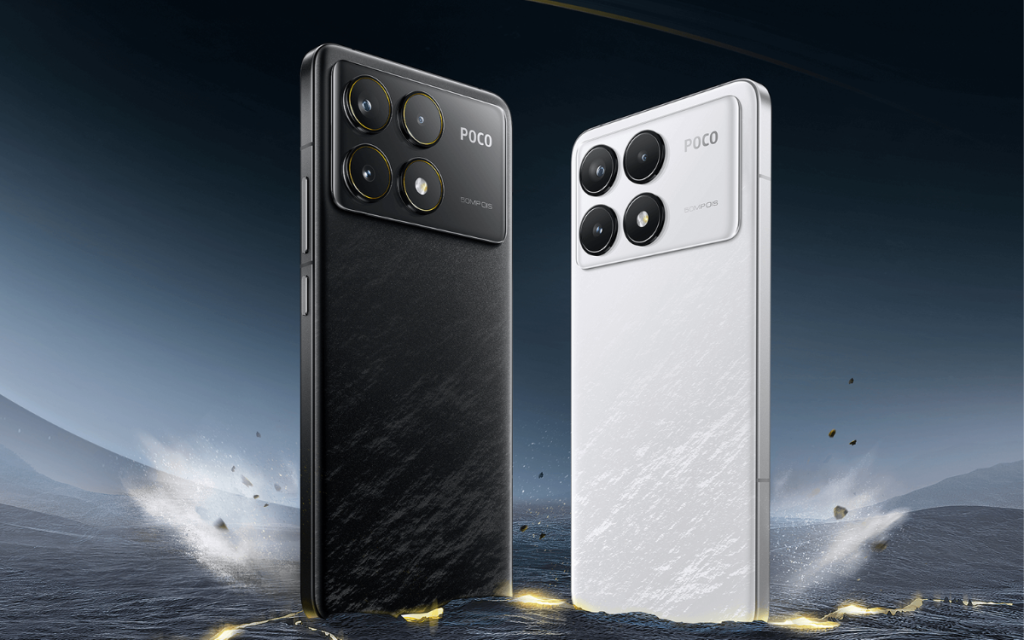
Poco has recently launched the Poco F6 series in global markets. While Poco has launched the base variant F6 in India, they have not released the F6 Pro there. The F6 Pro is available in most European countries and comes with attractive pricing.
Meanwhile, Samsung’s Galaxy S23 Fan Edition (FE), which was launched last year with Snapdragon 8 Gen 1, has recently received a huge price cut in some global markets. This makes it a strong competitor to the Poco F6 Pro. Let’s compare these devices to determine which one comes out on top.
The Poco F6 Pro boasts a larger 6.67-inch WQHD+ Flow AMOLED DotDisplay compared to the Galaxy S23 FE’s 6.4-inch FHD+ Infinity-O Dynamic AMOLED display. This translates to a sharper resolution of 3200 x 1440 pixels on the F6 Pro versus 2340 x 1080 pixels on the S23 FE. Both offer a smooth 120Hz refresh rate for a seamless user experience.
However, the F6 Pro pulls ahead in terms of peak brightness, reaching an impressive 4000 nits compared to the S23 FE’s 1450 nits. This translates to better outdoor visibility for the F6 Pro. While both devices feature HDR10+ for enhanced contrast, the Galaxy S23 FE lacks Dolby Vision support, which provides more accurate color reproduction.
2. Performance
The Poco F6 Pro packs the Snapdragon 8 Gen 2 chipset, potentially offering superior processing power and gaming performance compared to the Snapdragon 8 Gen 1, depending on the market. The F6 Pro also boasts higher RAM options, reaching up to 16GB LPDDR5X compared to the S23 FE’s 8GB. This can be beneficial for multitasking and running demanding applications. Both phones offer ample storage options, with the F6 Pro reaching a staggering 1TB (UFS 4.0) compared to the S23 FE’s maximum of 256GB (UFS 3.1).
3. Camera
The Poco F6 Pro features a 50MP main camera with optical image stabilization (OIS) and a larger 1/1.55-inch sensor size while the S23 FE comes with a similar 50MP main camera with Samsung ISOCELL (S5K) GN3 1/1.57-inch sensor and OIS. However, the S23 FE offers a telephoto lens with 3x optical zoom, which is missing on the F6 Pro. This can be crucial for users who want to capture distant objects with good detail.
The F6 Pro has an 8MP ultra-wide lens, while the S23 FE offers a 12MP ultra-wide lens, potentially capturing wider shots with more details. Both phones have a 16MP or 10MP front camera, respectively, for selfies and video calls.
Ultimately, the camera system that suits you best depends on your priorities. If low-light photography is essential, the F6 Pro might be a better choice. If you need a telephoto lens for zooming in on distant objects, the S23 FE takes the lead.
4. Battery
Both phones pack sizable batteries – 5000mAh for the F6 Pro and 4500mAh for the S23 FE. However, the F6 Pro boasts a clear advantage with its 120W HyperCharge technology, claiming a full charge in just 19 minutes. The S23 FE offers a more modest 25W fast charging and lacks support for such rapid charging speeds.
5. Software
The Poco F6 Pro runs on Xiaomi HyperOS, a custom interface based on Android. The Galaxy S23 FE runs on Samsung’s One UI 5.1, based on Android 13 (upgradable to Android 14). Both offer custom features and functionalities, but user preference often dictates which interface feels more intuitive.
One significant advantage of the S23 FE is Samsung‘s commitment to software updates. The S23 FE is promised 4 years of Android updates and 5 years of security updates, providing long-term software support and security. While Poco F6 Pro is offering 3 years of major software updates and an additional year of security patches.
6. Other Features
The Poco F6 Pro boasts several additional features missing on the S23 FE. These include a more advanced in-display fingerprint sensor that doubles as a heart rate monitor, a higher Bluetooth version (v5.3), and a larger 5000mm² cooling area for better heat management during demanding tasks.
The S23 FE, however, retains a crucial advantage – an IP68 dust and water resistance rating, which is missing on the F6 Pro. This makes the S23 FE more suitable for users who need a phone that can withstand the elements.
7. Pricing
The F6 Pro starts at a competitive price of $449 (€499) for the 12GB+256GB variant during the early bird period. The Galaxy S23 FE’s price might be slightly higher depending on the market. While the exact pricing can fluctuate, after a recent price drop, the S23 FE can be found around $500 or £499 in some global markets. Since prices can vary depending on your location and retailer, it’s always best to check for the most up-to-date pricing in your area before making a purchase decision.
8. Conclusion
In conclusion, both the Poco F6 Pro and Samsung Galaxy S23 FE are compelling options but cater to distinct user preferences. The F6 Pro shines with its top-of-the-line processor, superior display, and incredibly fast charging. However, it lacks a telephoto lens and an IP68 rating. Conversely, the S23 FE offers a versatile camera system, a guaranteed software update timeline, and water resistance, but with a less powerful processor and slower charging. Consider your priorities – raw performance and a gorgeous display, or a well-rounded camera and long-term software support – to pick the phone that best suits your needs.
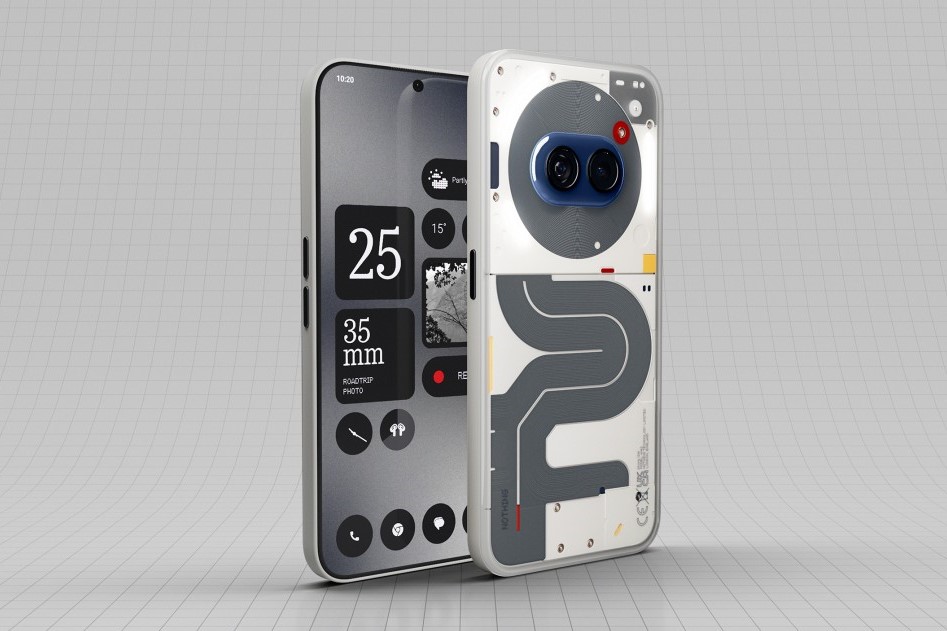
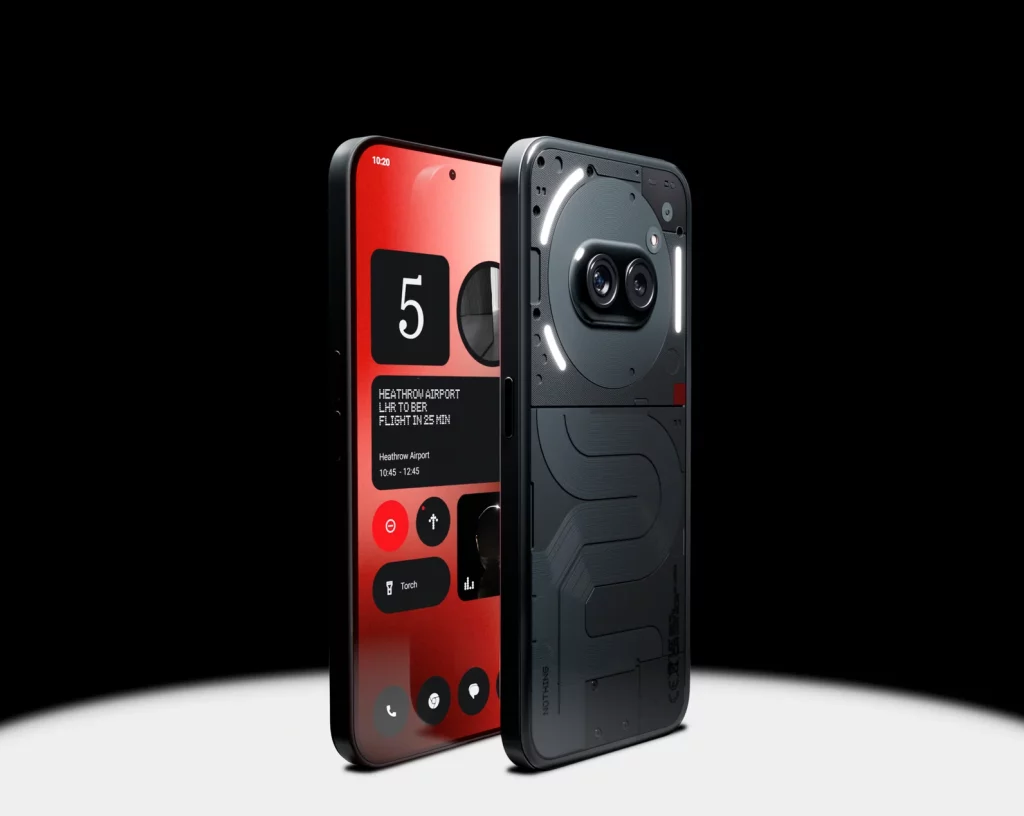
Nothing has launched a special edition Phone (2a) today in the global markets. This comes after the company announced an exclusive Blue-color variant for the Indian market last month. The latest offering has a multicolour rear panel design. However, the core design elements and specifications of the device remain the same. Read on to know everything below.
Nothing Phone (2a) Special Edition announced
The Nothing Phone (2a) Special Edition continues to feature the brand’s transparent back panel. It has three Glyph LED lights around the circular island and there is also a rubber cable. The latter two have a dark grey shade while the rest of the back panel is in White hue.
The main change on the Phone (2a) Special Edition is that Nothing has added Red, Blue, and Yellow color highlights throughout. The company says that it celebrates primary colours and their place within Nothing’s brand identity. Red is found in the right earbud of all Nothing audio products, Yellow in the new Ear (a), and Blue in the Phone (2a) Blue variant. The Red and Yellow accents are small but the Blue color is more pronounced in the protruding pill-shaped module that houses two horizontally-placed camera sensors.
The Nothing Phone (2a) Special Edition is only offered in 12GB RAM and 256GB storage option. It will be available in limited quantities priced at £349, €379, INR 27,999. In India, the device can be purchased from Flipkart starting June 5 and buyers can avail Rs 1,000 flat discount on select card transactions.
The Nothing Phone (2a) Special Edition comes with a 120Hz AMOLED display, Dimensity 7200 Pro, a 50MP OIS camera, and a 5,000mAh battery with support for 45W fast charging.
Motorola is expected to launch the Razr 50 series in the near future. The lineup will include the Razr 50 and Razr 50 Ultra. They will arrive as the successors to last year’s Razro 40 duo. The upcoming offerings have already surfaced in leaked renders. Recently, the Razr 50 was spotted on TENAA and 3C certification websites. Now, the foldable phone has appeared on the Geekbench benchmarking platform.
Motorola Razr 50 appears on Geekbench
The Motorola Razr 50 Geekbench listing reveals the motherboard codenamed as ‘aito’. It comprises of four cores clocked at 2GHz and another four cores ticking at 2.50GHz. There is a Mali G615 MC2 GPU onboard. This suggests that the chipset could be the MediaTek Dimensity 7300X which is expected to be announced soon. The second cluster’s clock speed is also found on TENAA certification.
As per the Geekbench database, the Motorola Razr 50 will pack 8GB RAM onboard. The foldable phone will ship with Android 14 OS out of the box. In the benchmarking platform’s single-core and multi-core test results, the Razr 50 scored 1,033 and 2,751 points respectively.
The 3C certification of the Motorola Razr 50 reveals that it will come with support for 33W fast charging. The device is rumoured to be powered by a 4,200mAh battery unit. Other leaked specifications of the foldable phone include a 6.9-inch pOLED 120Hz main display, a 3.6-inch OLED secondary screen, and a 50MP + 13MP dual rear camera. The Razr 50 is tipped to come in Gray and Khaki colours.
OnePlus is gearing up to launch a new smartphone from its popular Ace series in China. The device in question is the Ace 3 Pro, which is an affordable flagship model. But will it be another flagship killer? What are its expected specs and features? Let’s check it out.
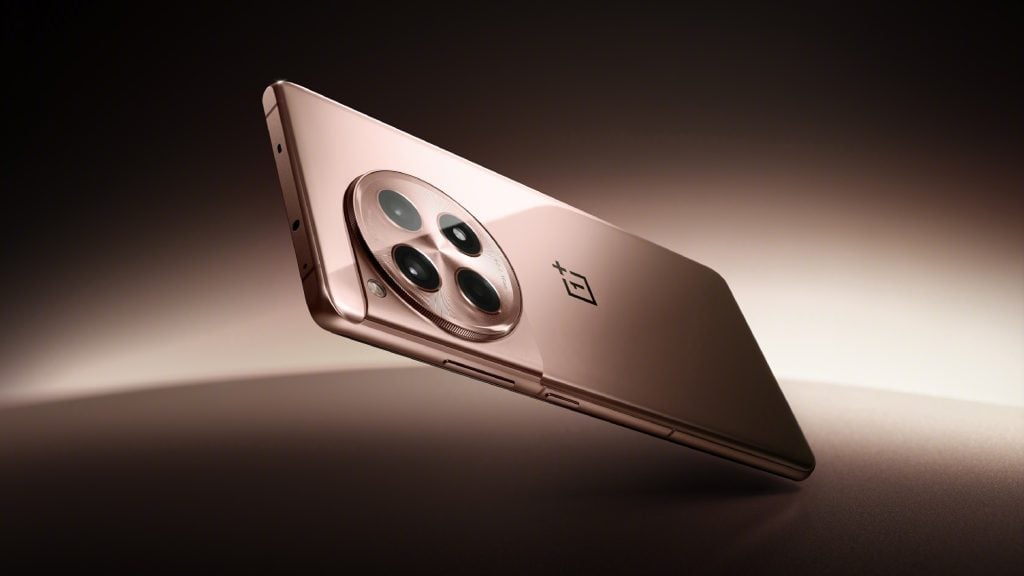
According to a recent leak, the company is using three materials on the Ace 3 Pro, which could include ceramic, glass, and leather. It is rumored that the ceramic is exclusive to the white variant, while the glass option comes in a bright silver finish. All three models will feature a metal middle frame and a large circular camera island on the back.
All of these options are often seen in flagship phones. That’s not all, it seems like the design is seeing more changes as the brand could employ a new textured body. On the front, the OnePlus Ace 3 Pro could sport a tall 6.78-inch curved OLED display from BOE. This panel offers a 1.5K resolution and a 120Hz refresh rate. It will likely house a punch hole cutout for the selfie camera.
2. Powerhouse Chip & Flagship Specs
Under the hood, the Ace 3 Pro is expected to pack the Qualcomm Snapdragon 8 Gen 3 SoC. This is the same processor that powers current-gen flagship smartphones. It is expected to be paired with up to 16GB of RAM and 1TB of internal storage.
Known tipster Digital Chat Station has also claimed that a 24GB RAM option could be in the works as well. Rumors have hinted at the Ace 3 Pro featuring the largest battery on a OnePlus phone yet. Reportedly, it will pack a massive 6,100mAh battery pack that supports 100W wired fast charging.
3. Camera
All of the aforementioned specs are basically top-notch, but an area that confirms its status as an affordable flagship is the camera department. The main sensor on the rear is a respectable 50-megapixel primary shooter. This could be the same sensor as the OnePlus Ace 3, which is the Sony IMX890.
This is paired with an 8-megapixel ultra wide angle lens and a 2-megapixel depth/macro sensor. Unlike most flagships, you miss out on the periscope telephoto camera. For selfies and video calls, the front may house a 16-megapixel camera.
4. Launch & Availability
As of right now, it is unclear when the Chinese brand aims to launch this device. The Ace 3 Pro will likely be a China exclusive again. However, there’s a chance that OnePlus may release the upcoming smartphone in the global market. For those unaware, the Ace 3 launched as the OnePlus 12R in the global market. So we can expect a similar release for the Ace 3 Pro as well. This is all the information we have at the moment, so stick around for more updates.
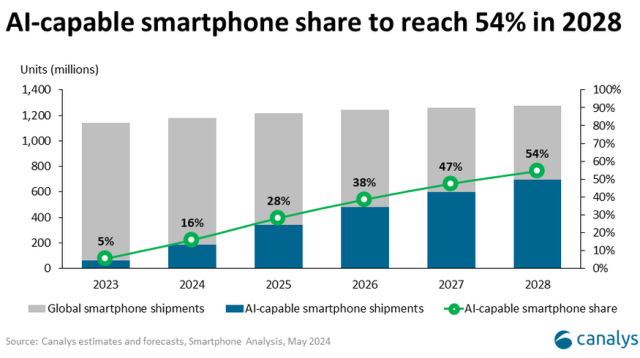
Market research firm Canalys released a report that shows the current market share of Smartphones with major AI capabilities and also predicts how it will change over the next couple of years.
According to this report, 16% of globally shipped smartphones at present already integrate at least some sort of AI capabilities and it will reportedly reach a whopping 54% by 2028. You can see the prediction for each year in the image below.
Industry analysts believe that the market for smartphones with AI capabilities will grow at a compound annual growth rate of 63% between 2023 and 2028. It is expected to be driven by consumer demand for enhanced features such as AI assistants and edge-to-edge processing.
Market research firm Canalys expects this shift to first appear in the flagship models. Currently, there are obvious technical limitations where the on-device models can only run on high-end devices. However, the models can get more efficient over time and are expected to be gradually accessible to the mid-range segment.
According to the market research firm, the transformative potential of smartphones with generative AI capabilities, driven by AI technology, begins sort of a new era for the smartphone industry. In the next 3-5 years, the addition of AI is expected to significantly improve the user experience. Sergio Buniac, the President of Motorola and the Senior Vice President of Lenovo Mobile Business, also noted the same while sharing his vision about Motorola’s smartphone business.
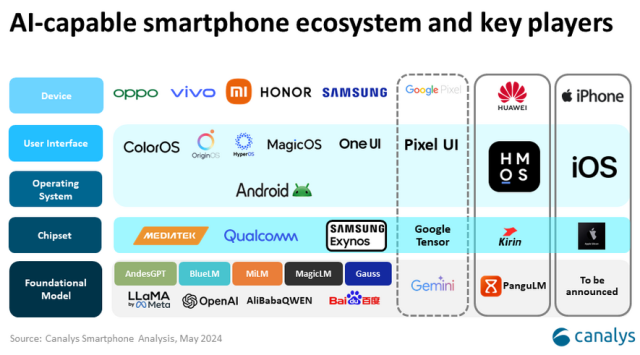
Companies such as Google and Samsung have already integrated a host of AI-based features into their recent flagships, although, there is no ‘AI phone’ or a similar branding yet. Various Chinese smartphone makers Huawei, Honor, Oppo, Xiaomi, and Vivo are also pushing the limits to incorporate as many AI features as possible in their high-end products. Their approach to integrating generative AI capabilities into devices includes everything from building in-house chips to training models for specific purposes.
Nothing is apparently planning on launching a new smartphone in India soon. Now, a fresh sighting on the BIS certification has hinted that this model could be a brand-new version of the existing Nothing Phone (2a). So here are all the details.
New Nothing Phone (2a) spotted on BIS
The brand’s upcoming smartphone was seen on the BIS certification carrying the A142P model number. To recall, the original Nothing Phone (2a) launched with the A142 model number. So this is likely a new version of the Phone (2a). Unfortunately, this certification did not reveal any other details regarding this device like its specs, features, and design. But the BIS listing does confirm its Indian availability.
To recall, the Nothing Phone (2a) sports a tall 6.72-inch AMOLED display with FHD+ resolution and a 120Hz refresh rate. The front also houses a 32-megapixel sensor for selfies and video calls, while the rear features a 50-megapixel main camera and a 50-megapixel ultra wide angle lens. Under the hood, it packs a MediaTek Dimensity 7200 Pro, which is paired with LPDDR4X RAM and UFS 2.2 storage.
A large 5,000mAh battery pack powers this device, which supports 45W wired fast charging. This model runs on the Android 14 OS out of the box. Other notable features include an in-display fingerprint scanner, HDR10+, Corning Gorilla Glass 5, Bluetooth 5.3, and NFC.
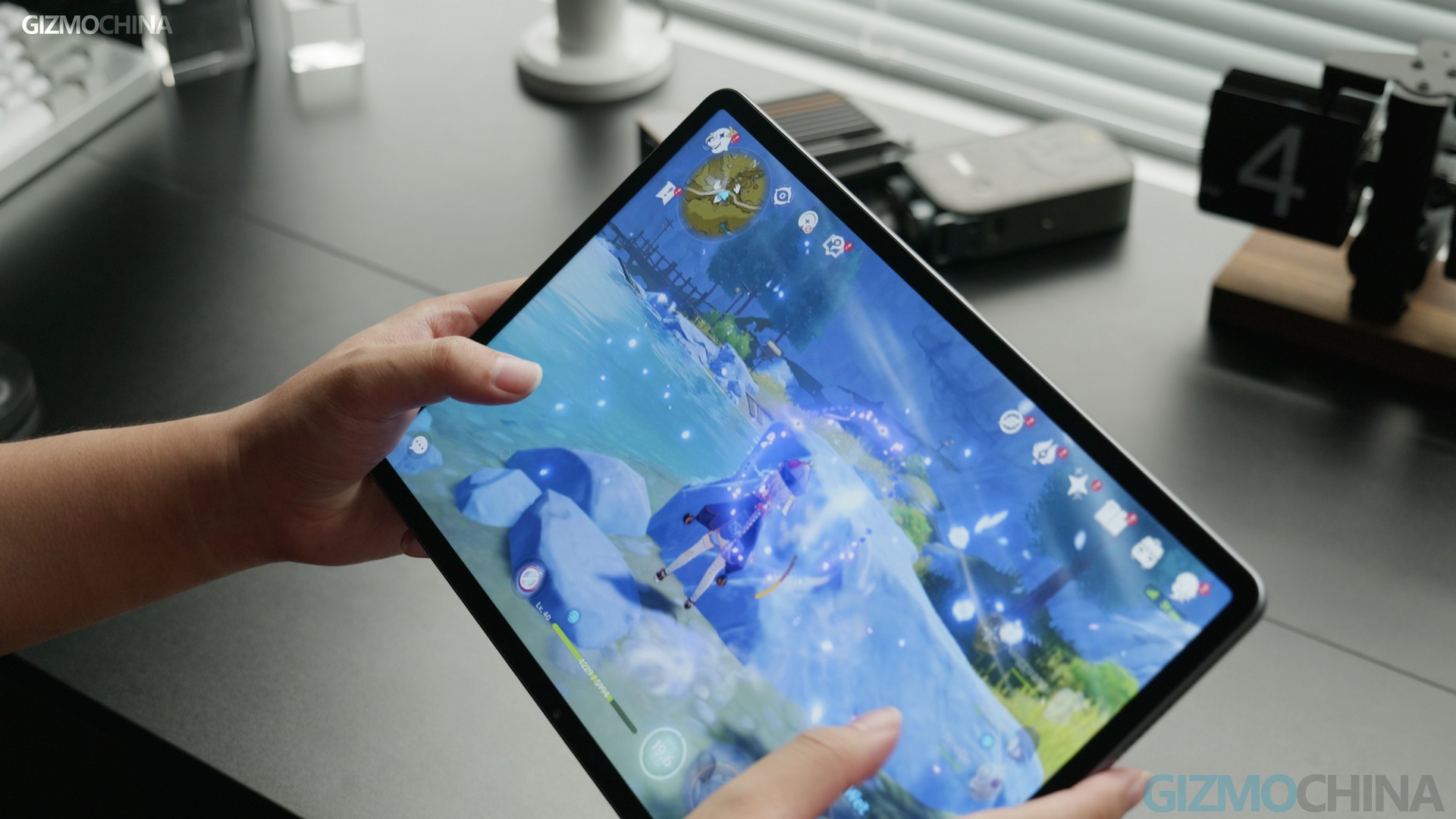
Early this month, Huawei released a bunch of new consumer devices including smart wearables, earbuds, tablets, laptops, and flagship phones. Most of them are amazingly decent with upgraded performance or design. Well, our team’s favorite out of all of these is this new tablet, the HUAWEI MatePad 11.5 S. To be honest, I didn’t expect too much on this tablet, as we’ve reviewed the most powerful model of this lineup last year, which is the MatePad Pro 13.2. I thought well, that’s good, another MatePad, not that ‘Pro’ but in a more portable size at more affordable pricing.
However, after I used it for over 2 weeks, I have to say it is even more ‘Pro’ as a productive tablet powered by Harmony OS. No matter for painting, note taking, or even video editing, it works well. And, of course, I’m talking about the experience with the brand-new M Pencil and the keyboard powered by Nearlink connection. They just seamlessly bring the tablet up to another level.
Hot in Chinese Market
This new MatePad is likely to be the most cost-effective HUAWEI tablet. The market response in China also proves this. It has gone crazy in the Chinese Market and sold out on the very first day it was launched. So now let’s check out why it got so popular.
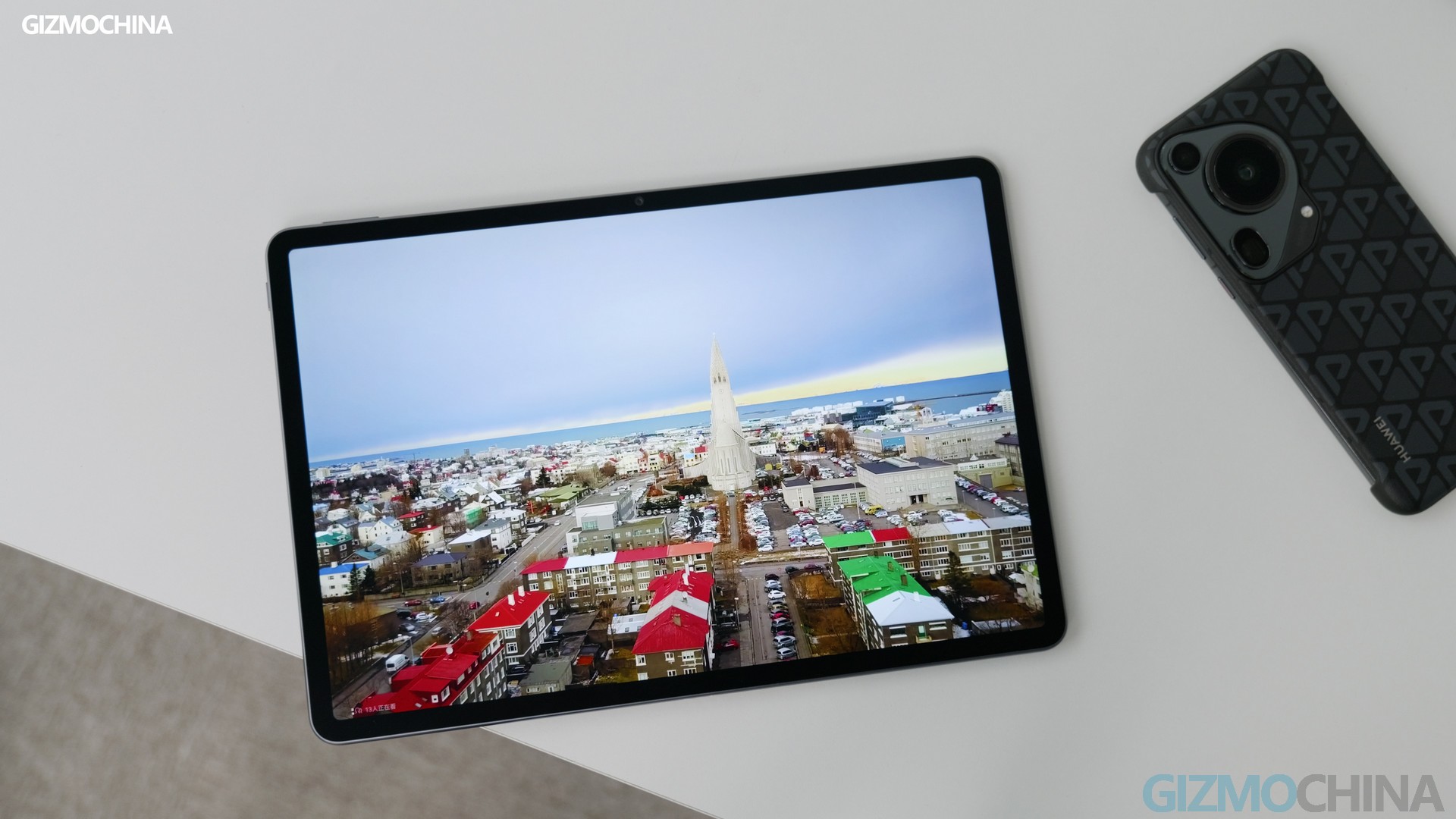
PaperMatte Display
The first thing I want to share is about the PaperMatte display, which makes it the number-one tablet for my painting and stylus note-taking. It’s an 11.5-inch LCD panel with adaptive refresh rates of up to 144Hz. The true magic comes in the new PaperMatte processing of the protective glass. While this is nothing new, what surprised us was the visual and stylus effect it brought. Some might argue that it is just something that can be fixed by covering a matte protective film. However, the fact is that almost all protective films are just compromises. They often bring issues of worse colors, brightness, and resolution, along with stylus malfunction.
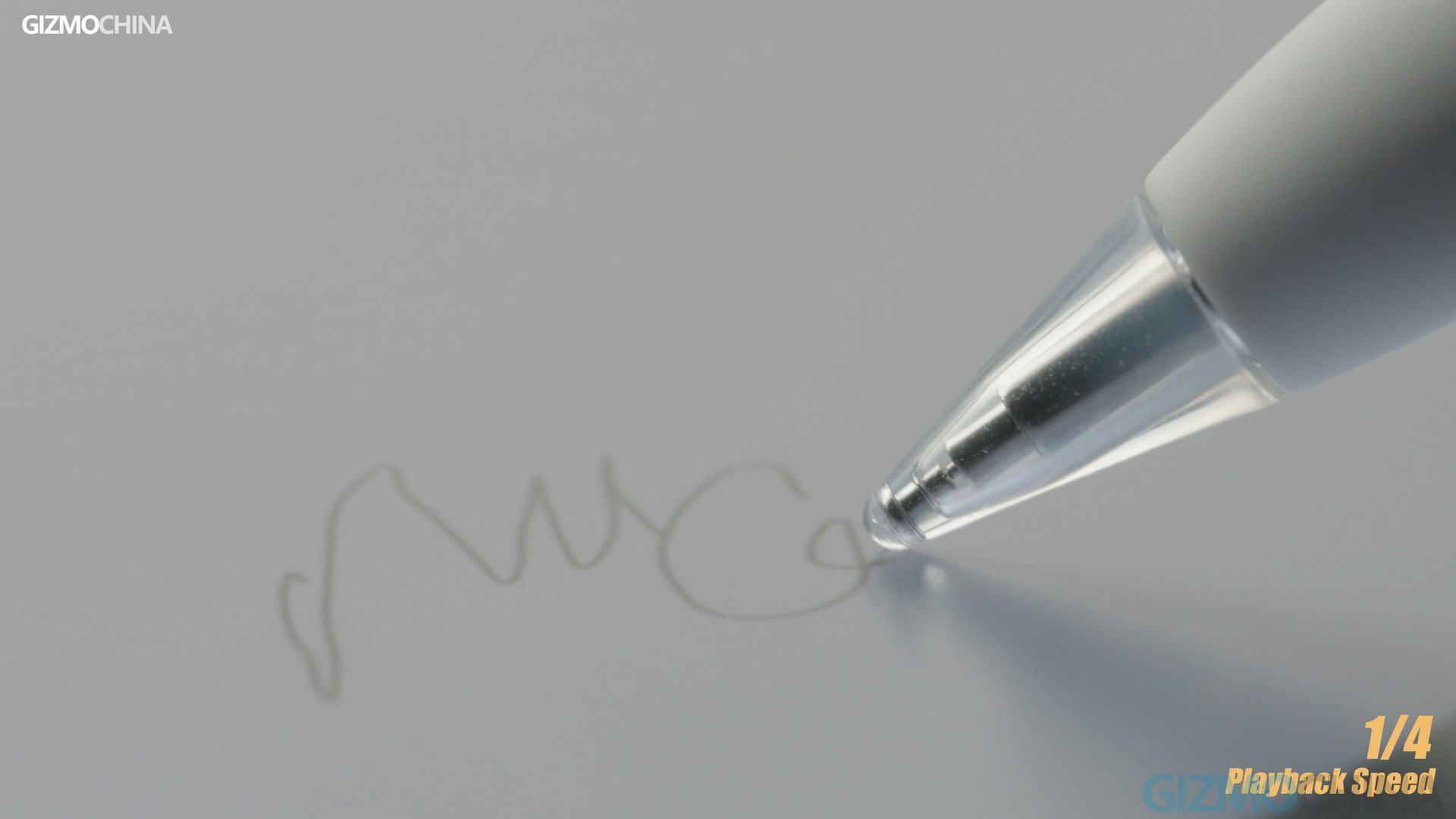
But look at this PaperMatte display. The stylus writing falls smoothly on the nib and fits perfectly. It does this with fine anti-glare while providing vivid colors and decent clarity at various angles. The matte finish is dedicated. When you touch the panel, it doesn’t give an odd touch, on the contrary, it supports various gesture swipes smoothly but leaves almost no fingerprints.
As its name “PaperMatte” implies, it’s like physical paper, except it’s harder. You can even hear the rustle of the stylus sliding on the display. that’s just so similar to the paper experience. I’m sure you hate seeing fingerprints and stains on a drawing tablet. The new MatePad just fixed it well by covering a hydrophobic and oil-resistant coating.
For the rest of the screen, you can check out the info here. The only drawback is that it has no ultra-high brightness and contrast like those OLED screens.
Design
As for the size and design, the whole metal body has great build quality and weight control. That’s also one of the reasons why I enjoy taking it on my business trips. The 11-inch size here is just right, larger than an iPad mini but fitting easily in my satchel.
Performance Powered By Kirin 9000WL
Before I move to the note-taking and drawing part, I need to relax you a bit over its performance. Although we have no firmly correct information about the chipset running inside, it’s pretty sure that the same Kirin 9000s (exact model: Kirin 9000WL) is running inside as what we have on the new Pura 70 Ultra. But of course, the CPU strategy might be varied a bit. But if you guys are still concerned about its performance, I would say that its actual power is at the level between Snapdragon 865 and 888. For daily use, thanks to the New Harmony OS, the great smoothness might make you ignore its performance.
Note Taking in HUAWEI NOTES
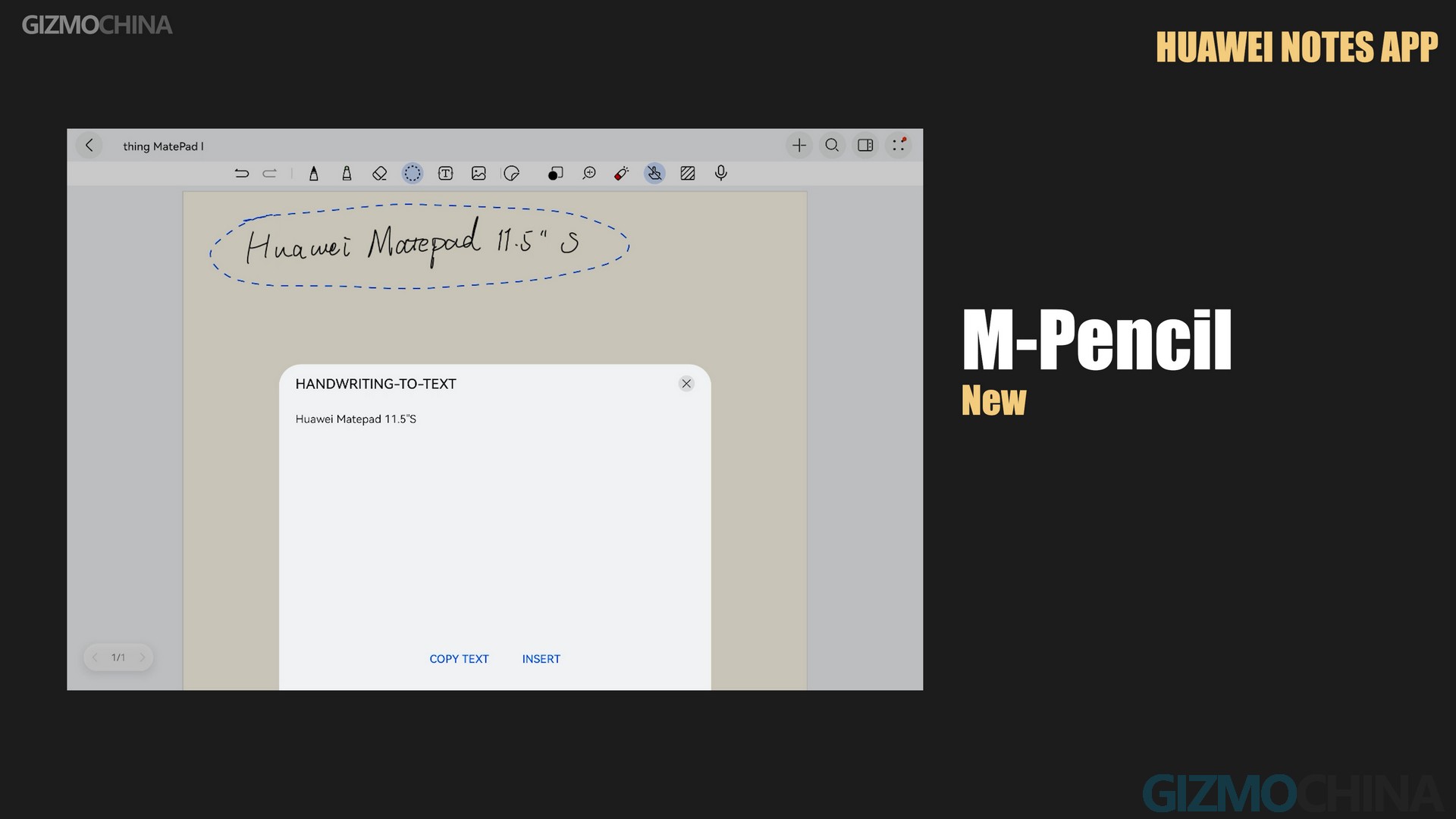
As for note-taking, I strongly recommend you guys try out the official app – HUAWEI Notes. On this MatePad, you have two official note-taking apps for options, the other is called HUAWEI NotePad. But obviously, the Huawei Notes has more features. For personalizing, you can customize each notebook with various coveries and paper patterns there, also including changing paper ratio and colors. The writing is optimized with the latest M pencil.
And as a note-taking tool, it has a built-in recording feature, which is not separate from note-taking. For example, assume you have a lecture while taking notes. Turn on the recorder, and your handwriting will also be recorded with the timeline. So when you get ready to review the recording, you can immediately locate the important parts in both your notes and the recording.
Apart from that, you are also allowed to move any part of the note with the circling tool, copy and share, change its size and color, or convert it to text.
Drawing & Sketching in HUAWEI GoPaint
Now let’s check out what it offers for sketching and painting. To be honest, none of those tablets could compare to the iPad for drawing, until the new MatePad. I doesn’t mean the gap in hardware is huge. Actually, now it’s pretty small, as some brands have styluses with great latency performance and stable connections. It’s just because few painting apps were ready to fit well the none-iPad tablets! So HUAWEI’s solution is to create a brand-new one for their own tablets, and, it’s free. The app is GoPaint, now only available for the latest MatePads. It’s also one of the most versatile sketching apps I found in the non-iOS system.
The app can support up to 320 layers for creation, even at 4k resolution, you can still have 66 layers. It offers quite a lot of canvas options and even supports customizing. There are over 100 brush patterns including oil painting, inking and so on. Most of these brushes have been very satisfying to me. While I used only about 10 of them, the pressure feedback, the latency, and the smoothness of the strokes were almost perfect. But there are still some special patterns that are stiff and offer no significant pressure feedback. But since I’m not good at drawing with them, I’m not sure if it’s the proper setup for those special artists.
What impressed me the most was its natural wandering through the inking brushes. Very few painting apps can simulate this kind of natural inking. The art creation is very flexible, you can adjust the shape of the selection at will, modify the color preference of layers, applying various effects such as ‘blur’ and ‘liquefy’. Anyway, I think it’s pretty friendly even for those who do not draw a lot. And you can also find quite a lot of useful tutorials inside the app. The whole app seems to keep emphasizing that Huawei is serious about developing painting and Sketching on their tablet.
You may have sensed my excitement in my review. The reason why I’m so excited is that: if you want a drawing tablet, now why should it be a more expensive iPad? The discussion within some brands is probably still stuck in the entertainment scenario for tablets, and then just spending the cost on hardware could be a less risky option. But I’d love to see one of them start to bring about an expansion of the scene through hardware and software collaboration. And that will lead to a new round of competition, which is absolutely a good thing for users.
Stylus & Keyboard
I haven’t tested the companion NearLink-powered M-pencil in depth yet. Since we had a really good experience with the MatePad Pro last time, I just decided to dive right into daily use. No surprises, it’s as stable and good as ever. The slow-motion comparison between the MatePad and new iPad Air is showcased in the review video. Please check it out if you are interested.
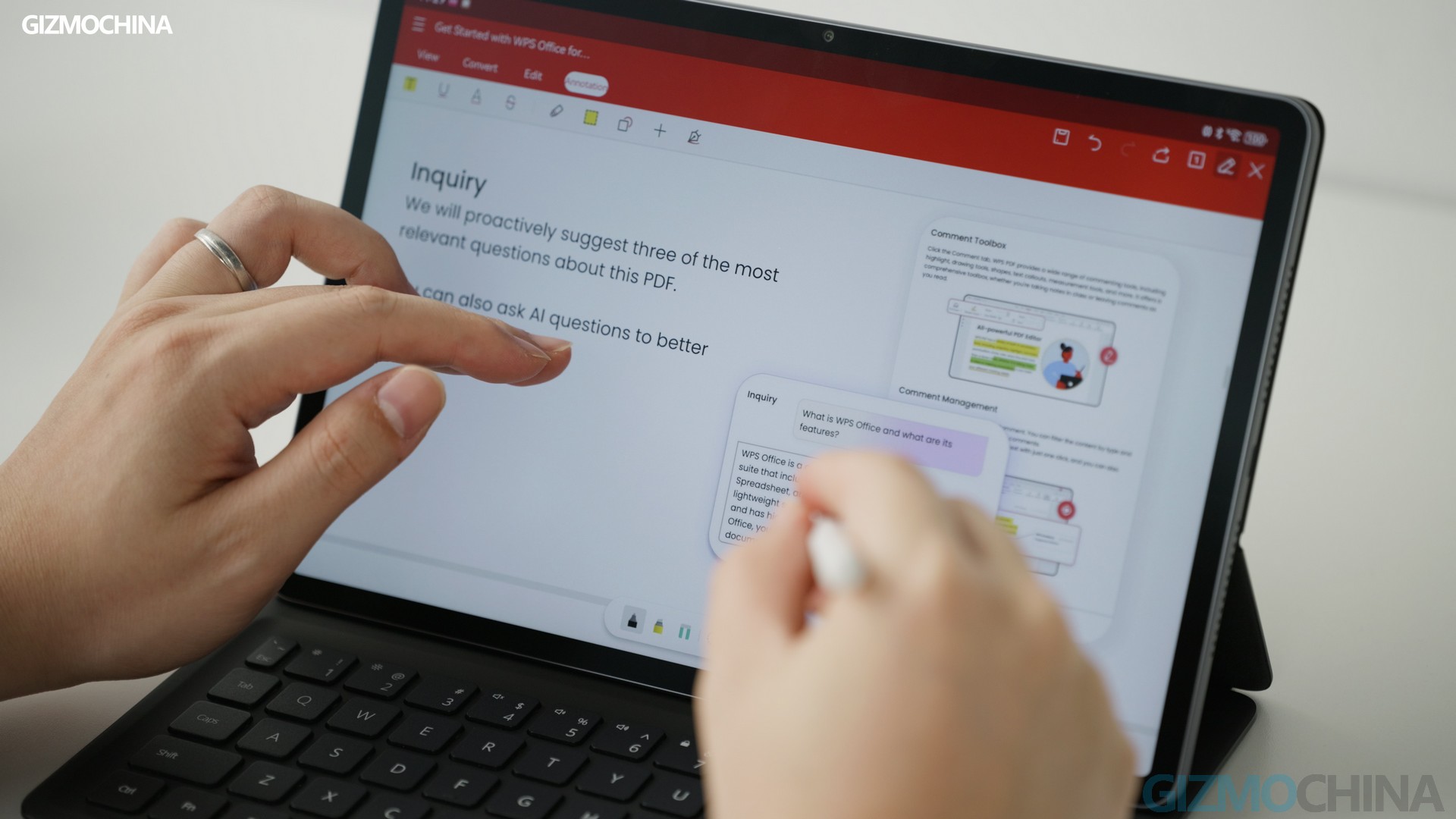
There’s also a keyboard accessory for the new MatePad. The typing is pretty good but it’s nothing special. So I’ll leave it at that. By the way, for officing, I strongly recommend you guys try the WPS Office, which is much user friendly for tablet officing than Microsoft’s.
Battery & Charge
Alright, the last part I want to share with you is the battery. Honestly, the battery is not very impressive, as the tablet uses an LCD panel, it seems that the battery life is a bit more struggle than others with an OLED one. But probably it’s because I was painting a lot in the GoPaint app, the battery dropped a bit faster than I expected. And the included charger only supports up to 22.5W power output, so that might be something you need to be aware of. It’s not really fast.
Video Editing in HUAWEI’s Petal Clip and CapCut/JianYing
In addition to the creative scenarios mentioned above, I also tried editing videos with it, and the tools that satisfied me were HUAWEI’s Petal Clip and CapCut powered by ByteDance. And for those who are interested, CapCut is about to release a Pro version. Or if you can read Chinese, you can also try out its Chinese version, Jianying, which has a lot of premium editing and AI features.
(Please check out the speaker sound of MatePad 11.5 S (vs iPad Air 2024) in our review video.
Verdict
Anyway, the MatePad 11.5 S is still my favorite electronic device for the past month. I’m sure it’s more than enough to fill that gap in the market. If you need a non-iPad to create on, it seems to be the best way to go! More importantly, it’s likely to have a reasonable price tag. I’m not sure how much it will sell for in different markets, but it’s a safe bet that it should be a strong contender for the best affordable tablet this year.
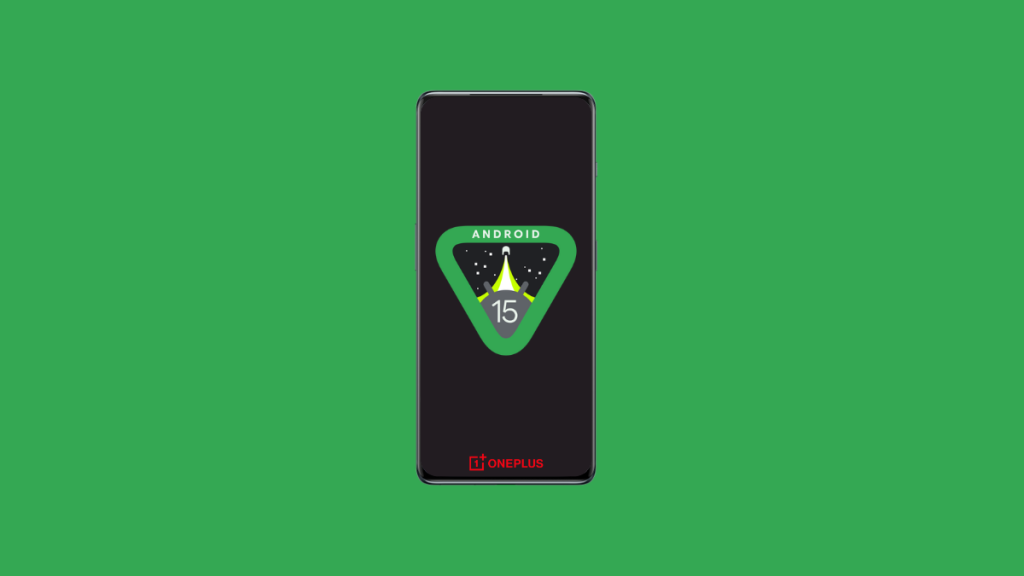
The excitement around Android 15 is building up as we move closer to its release. Google has already confirmed several exciting features of the new OS, such as satellite connectivity, notification cooldown, private space, and more could be on the way. Sadly, like every year, many Android devices will become ineligible for the OS upgrade and miss out on the latest features and enhancements.
In this post, we have curated a list of OnePlus phones and tablets that are ineligible for the Android 15-based OxygenOS 15 upgrade. Go through the list to know if you need to upgrade to a newer model to explore the new Android OS.
OnePlus OxygenOS 15 (Android 15) Ineligible Devices List
OnePlus 9
OnePlus 9 Pro
OnePlus 9R
OnePlus 9RT 5G
OnePlus Nord N30
OnePlus Nord N300
OnePlus Nord N20 SE
OnePlus Nord 2T
OnePlus Nord N20 5G
OnePlus Nord CE 2 Lite 5G
OnePlus Nord CE 2 5G
OnePlus Nord 2 5G
OnePlus Nord N200 5G
OnePlus Nord CE 5G
and devices launched before 2021
[Important: In this list, we haven’t included OnePlus devices launched with ColorOS skin. We’re only focusing on OxygenOS, which is offered to all OnePlus devices outside the Chinese market.]
This is not the final list, as OnePlus hasn’t yet revealed the device names eligible for the OxygenOS 15 upgrade. However, we already know the software update policy for most of its phones, which helped us create the above list.
OnePlus promises four major OS updates to its flagship models, like the OnePlus 11, OnePlus 12, and OnePlus Open. Other high-end devices are given 3 OS upgrades, which include the likes of OnePlus 12R, OnePlus Pad, OnePlus 11R, and more.
OnePlus typically releases two OS upgrades for its Nord series phones. However, the Nord 3 5G is the first in the lineup to be eligible for 3 OS upgrades. The Nord CE series phones get two OS updates, while the Nord N series devices are offered just one Android update.
This is what the software update policy looks like for OnePlus phones and tablets.
If your OnePlus device is on the list, it’s unlikely to get Android 15 and further OS updates. However, I’d advise you to wait until the official list comes out.
What’s Exciting About Android 15?
Android 15 doesn’t bring a significant redesign to the layouts. However, there are plenty of new features and enhancements to keep you excited.
1. Satellite Connectivity
One of the most talked-about features in Android 15 is the satellite connectivity support. It lets you send texts to others even if your device isn’t connected to a cell tower nearby, as long as you have access to the open sky.
What’s better is that the OS supports satellite connectivity for SMS and MMS apps as well as preloaded RCS apps. Unlike iPhones, this feature will not be limited to emergency uses only on Android 15.
2. App Archiving
Similar to offloading apps on iPhones, Android 15 will allow users to uninstall unnecessary apps while keeping the user data around. There won’t be any data loss; you can continue where you left off after reinstalling/unarchiving the app.
Android already has app archiving via the Google Play Store. This means you can only archive and restore apps through the Google Play Store. But Android 15 integrates this feature at the OS level, allowing users to archive/restore apps, even those installed outside of the Google Play Store.
3. App Pairs
Android 15 lets you save your favorite split-screen app combinations for quick access. For example, if you take a lot of notes from YouTube, create an app pair for YouTube and your favorite notes app. Tapping on the app pair will instantly open both apps in the split screen mode.
This is one of the most valuable additions to Android 15 to save time and effort. However, this functionality could be limited to large-screen devices as the official website explicitly mentions “large screen devices”.
4. Private Space
Android 15 introduces “private space” to keep your sensitive apps and files away from prying eyes under an additional layer of authentication. This is similar to secure folder in Samsung phones.
Users can set a separate lock screen for the private space. The apps in your private space do not show in the recent view, and all downloads are hidden from the other (regular) space. It’s a great way to protect your banking apps and other secret apps from others’ views.
5. Partial Screen Sharing
Android 15 lets you share or record a single app rather than the entire screen. So you don’t have to worry if you accidentally open a sensitive app while sharing your screen with someone. This feature is already available to Pixel owners, now extending to all Android 15 devices.
6. Notification Cooldown
Google has introduced the “notification cooldown” feature with Android 15 to prevent people from getting overwhelmed by too many notifications from the same app. This feature lowers the volume of successive notifications from the same app.
7. High-Quality Webcam
The new operating system significantly improves the webcam video quality. It adds a new “HQ” symbol in the webcam preview mode, tapping on which disables the power optimizations to offer an improved video quality.
Which OnePlus device do you have? And what are your expectations from the new OS? Share your valuable thoughts in the comments below.
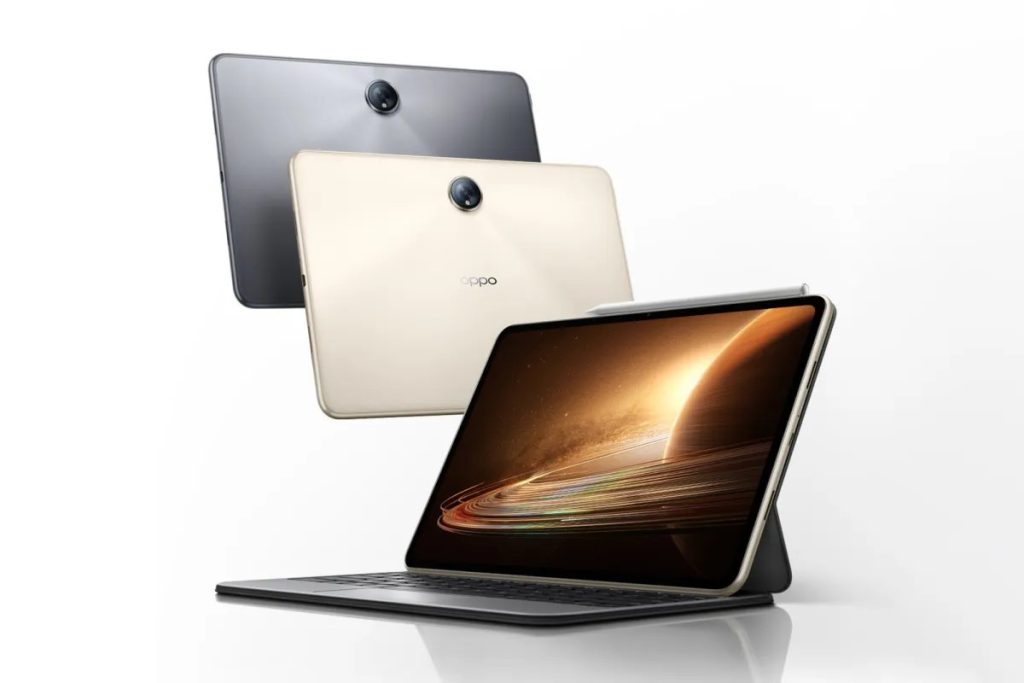
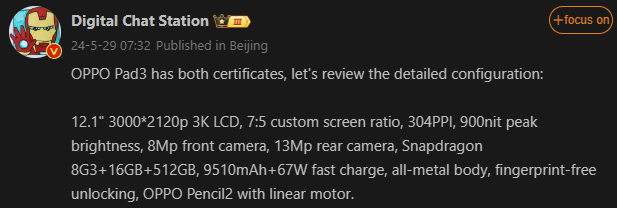
Oppo is rumored to be working on a new flagship-grade tablet model. This model in question could be dubbed the Oppo Pad 3. But prior to any official release, the device was spotted in a leak, which revealed a bunch of its key specs and features. So let’s check it out.
Oppo Pad 3 Key Specs Leaked
Oppo Pad 2
The news arrives from a known tipster Digital Chat Station, who shared the information on Weibo. He claimed that the Oppo Pad 3 could sport a tall 12.1-inch LCD panel that offers 3K resolution (3000 x 2120 pixels) and a 144Hz refresh rate. These display specs are in line with a previous leak from the same tipster. This screen could offer a 7:5 screen ratio and a peak brightness of 900 nits. Under the hood, it is expected to be equipped with the Qualcomm Snapdragon 8 Gen 3 SoC.
This processor is paired with up to 16GB of RAM and 512GB of internal storage. A massive 9,510mAh battery pack powers this device, which supports 67W wired fast charging. It will likely run on the Android 14 OS based ColorOS custom skin out of the box. Digital Chat Station further added that the Oppo Pad 3 will come with an all-metal body with a sleek design.
For photography, the tablet features an 8-megapixel selfie shooter on the front and a 13-megapixel camera on the back. Oppo’s Pad 3 would even support the Oppo Pencil 2, which is enhanced with linear motor as well. This model was recently spotted on the 3C certification platform. In other words, its launch is right around the corner. So stick around for more updates.
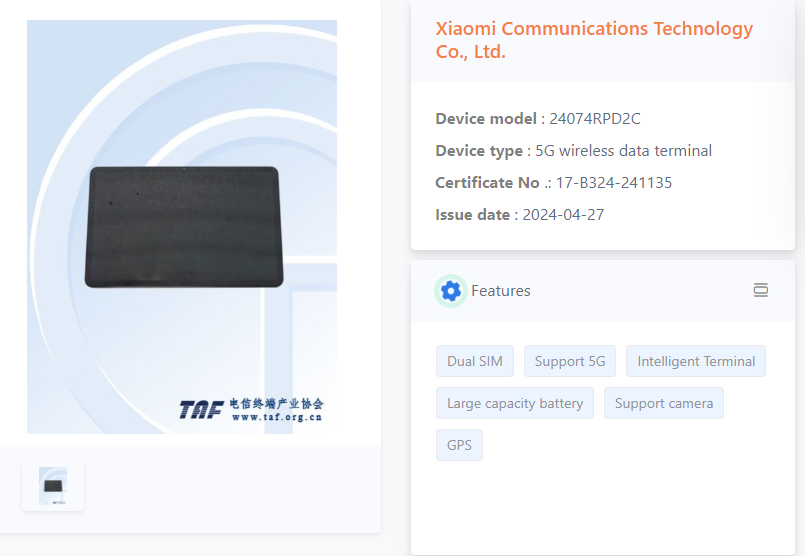
The CEO of Xiaomi, Lei Jun, recently confirmed that a new Redmi Pad Pro 5G version is in the works. As the name suggests, this model offers 5G support over the regular Pad Pro’s Wi-Fi connectivity. Now, this upcoming tablet has surfaced on a major Chinese certification, hinting at its imminent launch.
Redmi Pad Pro 5G China launch imminent
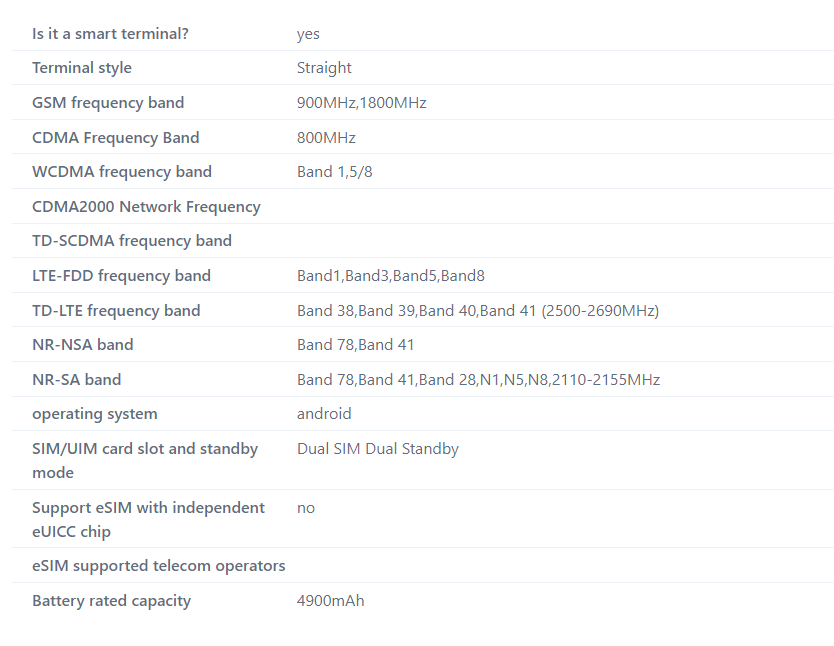
The Redmi Pad Pro 5G model was seen in the TENAA database carrying the 24074RPD2C model number. From Lei Jun’s previous announcement, we know that the new tablet will require a physical SIM card for 5G network and won’t support e-SIM. This device also offers dual SIM support along with GPS, AGPS, BeiDou, GLONASS, and WLAN.
The TENAA certification confirmed that the Redmi Pad Pro 5G will be powered by a 4,900mAh battery pack. Considering the regular Redmi Pad Pro is powered by a 10,000mAh cell, we can expect the 5G version to offer a similar battery pack as well. Apart from this, the 5G version should offer similar specs as the original version. To recall, the Redmi Pad Pro sports a 12.1-inch 2.5K LCD panel with 2560 × 1600 pixels, a 120Hz refresh rate, and a 180Hz touch sampling rate.
Under the hood, it is equipped with the Qualcomm Snapdragon 7s Gen 2 SoC, which is paired with 6GB or 8GB of RAM and 128GB or 256GB of internal storage. It runs on the Android 14 OS based HyperOS custom skin out of the box. For optics, both the front and back feature an 8-megapixel camera. Other notable features include 33W wired fast charging, an in-display fingerprint scanner, an infrared sensor, Bluetooth 5.2, and quad speakers with Dolby Atmos support.
Lenovo’s Motorola says it is working towards becoming one of the leading smartphone brands globally within the next three years. Motorola’s president Sergio Buniac says he wants to build the brand into one of the top three smartphone brands in the world excluding the Chinese market.
Moto Razr 40
Sergio Buniac doubles as the senior vice president of Lenovo Group and president of Mobile Business Group. He has launched an internal plan, the Gladiator Project based on three strategic adjustments. The move will see Motorola pursuing expansionist plans, a sharp departure from its previous contraction strategy. The special focus of the new strategy is expansion in the global market outside North America and Latin America.
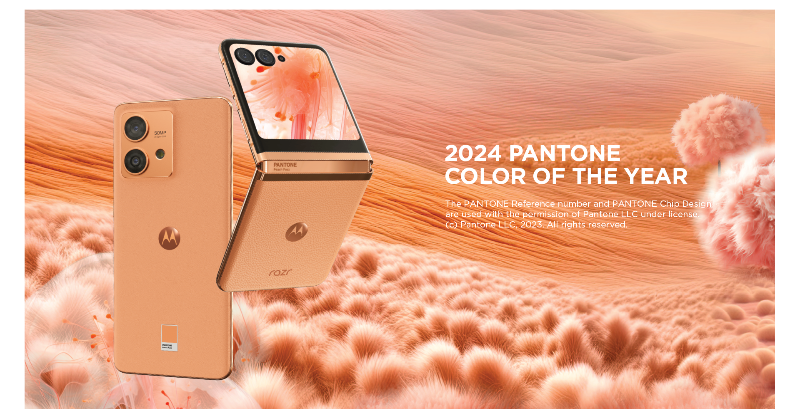
Motorola plans to have a share of the high-end segment of the global smartphone market with its Razr series and Edge series of foldable smartphones. It also hopes to collaborate with popular brands such as Bose, Pantone, and Corning to broaden its user base and attract Gen Z, B2B users, and more female customers. The Gladiator Project is already in motion and it has already achieved initial results. The shipment volume of the Moto Razr 40 foldable is five-fold its previous numbers from its previous iteration. On the other hand, the shipment volume of the ThinkPhone has increased three-fold.
Lenovo smartphone sales for the 2023/2024 fiscal year indicated a 12% increase year-on-year. Premium products accounted for 25% of the revenue, with significant increases in Asia-Pacific and the EMEA markets. Buniak says that Motorola has transformed from fighting for survival six years ago to fighting for victory, highlighting its resurgence over the past six years. Buniak predicts that the advent of AI mobile phones will further spur its expected strong results. The optics remain solid for the Motorola brand and it has to retain its strong and positive approach to sustaining its growth trajectory.
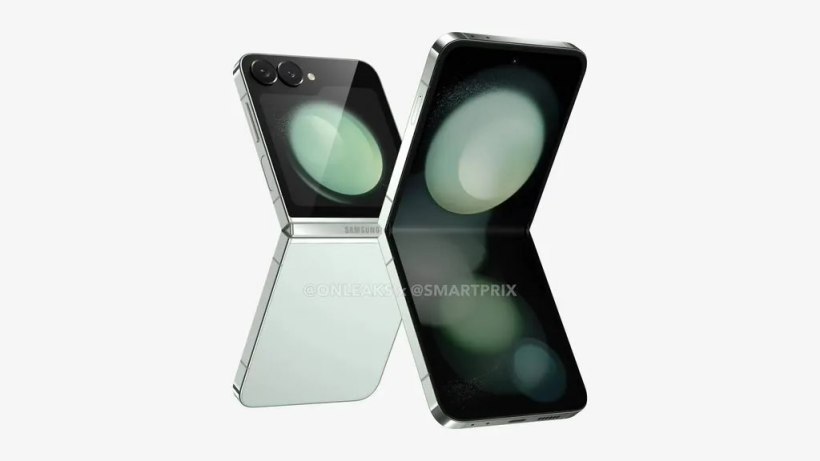
The Galaxy Z Flip 6 and the Galaxy Ring have surfaced on FCC listing with some key details. In addition, the upcoming flip phone has also appeared on the PSI Testing and Certification LTD database revealing battery information.
Galaxy Z Flip 6 details:
The listing of the phone (with model number SM-F741U) on the FCC database confirms the use of dual-cell batteries with EB-BF741ABY and EB-BF742ABY model numbers. On the other hand, the PSI listing confirms the battery capacities – 1097mAh and 2790mAh. So the total battery capacity is 3887mAh, which Samsung can market as a 4000mAh typical battery capacity.
For context, the Galaxy Z Flip 5 came with a 3591 mAh battery pack (971mAh + 2620mAh) which the company marketed as a 3700mAh battery.
Now we also know that the phone will support NFC and WiFi 6E, thanks to the FCC listing. Additionally, the UL Demko certification listing confirms that the Z Flip 6 will support the same 25W wired fast charging.
The phone will be powered by a Galaxy-branded Snapdragon 8 Gen 3 chipset (with slightly different clock speeds) and will be paired with 8GB RAM.
Listing for the Galaxy Ring
According to the FCC listing, the Galaxy Ring (with the model number SM-Q503) will be available in sizes ranging from 5-12. 5-7 sizes will equip a 17 mAh battery, 8-11 will get an 18.5 mAh capacity, and the biggest one will equip a 22.5 mAh battery. It will support Bluetooth 5.4 and Bluetooth LE for power-efficient connectivity with your phone. The listing also includes real-life images of the ring from different angles, which you can see above.
We use cookies on our website to give you the most relevant experience by remembering your preferences and repeat visits. By clicking “Accept”, you consent to the use of ALL the cookies.
This website uses cookies to improve your experience while you navigate through the website. Out of these, the cookies that are categorized as necessary are stored on your browser as they are essential for the working of basic functionalities of the website. We also use third-party cookies that help us analyze and understand how you use this website. These cookies will be stored in your browser only with your consent. You also have the option to opt-out of these cookies. But opting out of some of these cookies may affect your browsing experience.
Necessary cookies are absolutely essential for the website to function properly. This category only includes cookies that ensures basic functionalities and security features of the website. These cookies do not store any personal information.
Any cookies that may not be particularly necessary for the website to function and is used specifically to collect user personal data via analytics, ads, other embedded contents are termed as non-necessary cookies. It is mandatory to procure user consent prior to running these cookies on your website.