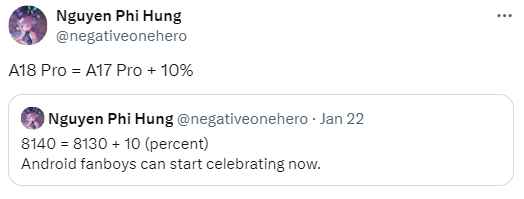
As we are approaching the release date of the iPhone 16 series, Apple’s A18 Pro chip, that will power the iPhone 16 series is also entering the discussion. Previously it was reported that the A18 Pro offers significantly improved single-core performance. Now tipster @negativeonehero on X now reports that the multi-core performance of Apple’s upcoming A18 Pro comes with only a 10% improvement, which is reportedly inferior as compared to two of the next generation Android flagships – the Snapdragon 8 Gen 4 and Dimensity 9400.
Snapdragon 8 Gen 4 and Dimensity 9400 outperformed the A18 Pro by more than 2000 points in multi-core
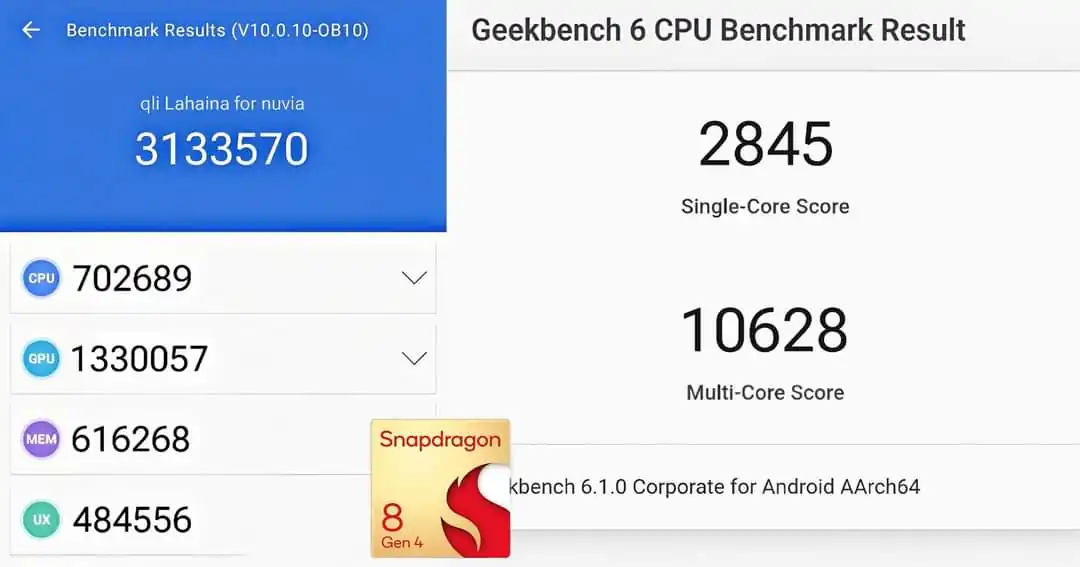
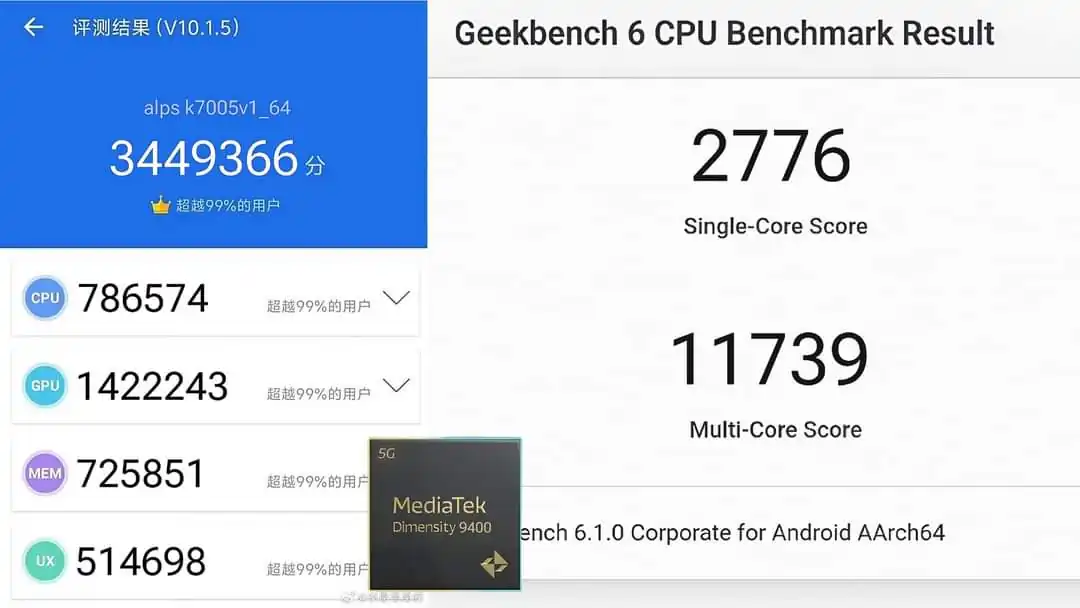
According to @negativeonehero, the A18 Pro scored around 8200 in Geekbench multi-core test. In comparison, the Snapdragon 8 Gen 4 and the Dimensity 9400 scored 10628 and an even higher 11739 points respectively. While scores vary slightly each time you test, this is still a significant difference to neglect and may actually enable the next generation of Android flagships to have a higher peak performance capability as compared to the iPhone 16 Pro models.
Speaking of the single core scores, the Snapdragon 8 Gen 4 achieves a whopping 3500 points in single-core, which is, again, slightly higher than the 3,300 of the A18 Pro. As compared to the Snapdragon 8 Gen 3, which reaches around 2200 points in Geekbench single-core, the 3500 figure (or even the 2845 shown in the image), if true, will be a significant improvement in performance. The Dimensity 9400 also offers a nearly 20% improvement in both single and multi-core scores as compared to the Dimensity 9300.
However, all of the chips we are talking about are under development at this point and will be released towards the end of 2024. There’s still ample time for Apple, Qualcomm, and MediaTek to make adjustments. Notably, industry experts believe that Apple has intentionally restricted the performance in multi-core operations prioritizing battery life.
Honor is gearing up to unveil the Magic 6 Ultimate and the Magic 6 RSR in China soon. But ahead of its release, the camera technology in the Magic 6 Ultimate has been tipped. The upcoming flagship device could be the first to feature OmniVision’s latest camera sensor, so here are all the details.
Honor Magic 6 Ultimate Camera
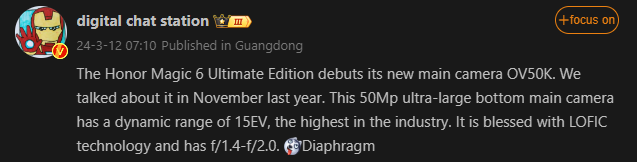
To recall, the Chinese smartphone maker is set to unveil the Magic 6 RSR and Magic 6 Ultimate in the Chinese market on 18th March 2024. Now, known tipster Digital Chat Station has revealed more details regarding the primary camera on the Magic 6 Ultimate. The Magic 6 series will reportedly be the first to feature a one-inch primary camera sensor from OmniVision.
Earlier today (12th March 2024), Honor shared a fresh teaser regarding the upcoming smartphone’s primary camera, which claimed that the Magic 6 Ultimate with SLR level super dynamic Eagle Eye camera. This camera will offer the world’s first car-level LOFIC technology that promises to offer great pictures in various lighting scenarios. The tipster claimed that the Honor Magic 6 Ultimate could be the first debut with the OmniVision OV50K sensor.
For those unaware, this is a 50-megapixel camera that will offer flagship grade photography thanks to its variable aperture that ranges from f/1.4 to f/2.0. It even has a dynamic range of 15EV. Keep in mind that this is still just an unconfirmed report, so take this news with a pinch of salt and stay tuned for more updates regarding this smartphone.
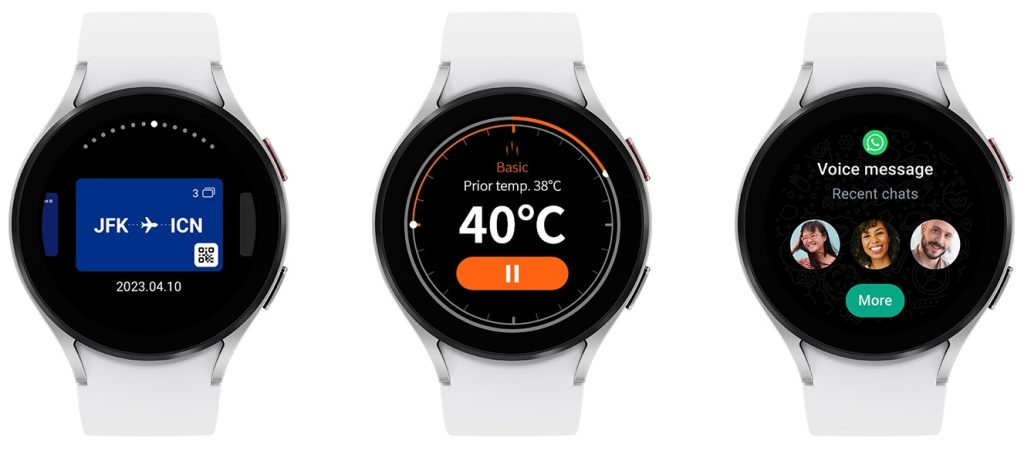
Samsung has long favored circular designs for its Galaxy Watch series, but that might change soon. According to a report from SamMobile, Samsung might change its status quo and launch a rectangular Galaxy Watch.
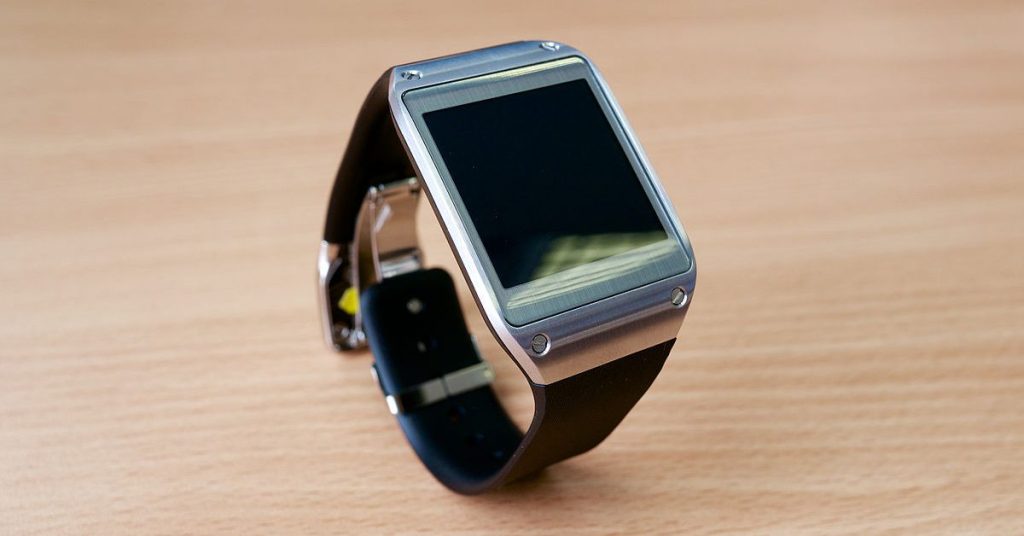
Samsung Galaxy Gear. Image: Wikipedia
For those unaware, Samsung’s journey into smartwatches initially began with rectangular designs. In 2013, the company launched the Galaxy Gear smartwatch with a 1.6-inch rectangular display.
The company then followed it with a Gear 2 and Gear Live which also maintained this form factor. However, in recent years, Samsung shifted its focus to round smartwatches and has been refining the design over time.
But if the new report is anything to go by, there might soon be a return of rectangular shapes for Samsung’s smartwatches. SamMobile’s report says the “ idea is enthusiastically being considered internally and it’s very much on the cards that the switch is going to happen.”
Yet, it is still uncertain whether this change will debut in the upcoming Galaxy Watch 7 or the generations after that. Implementing such a significant change would undoubtedly require time for optimization across both hardware and software.
While your personal preferences may lean toward either rectangular or circular designs, a rectangular display in a smartwatch offers practical benefits over its circular counterpart.
Unlike circular screens that often crop content at the edges, a rectangular display offers more usable screen real estate. That means you can see and interact with notifications in a better way, and it’s also easier to navigate with other UI elements.
Apple, which is possibly Samsung’s main competitor in the wearable space, has achieved success with this approach in its widely popular Apple Watch lineup.
Realme is apparently working on a new C series smartphone model. The device in question is the Realme C65, which could be launching soon as the smartphone recently surfaced on multiple certifications. So here’s everything you need to know.
Realme C65 spotted on TDRA, TUV, Camera FV-5, and EEC
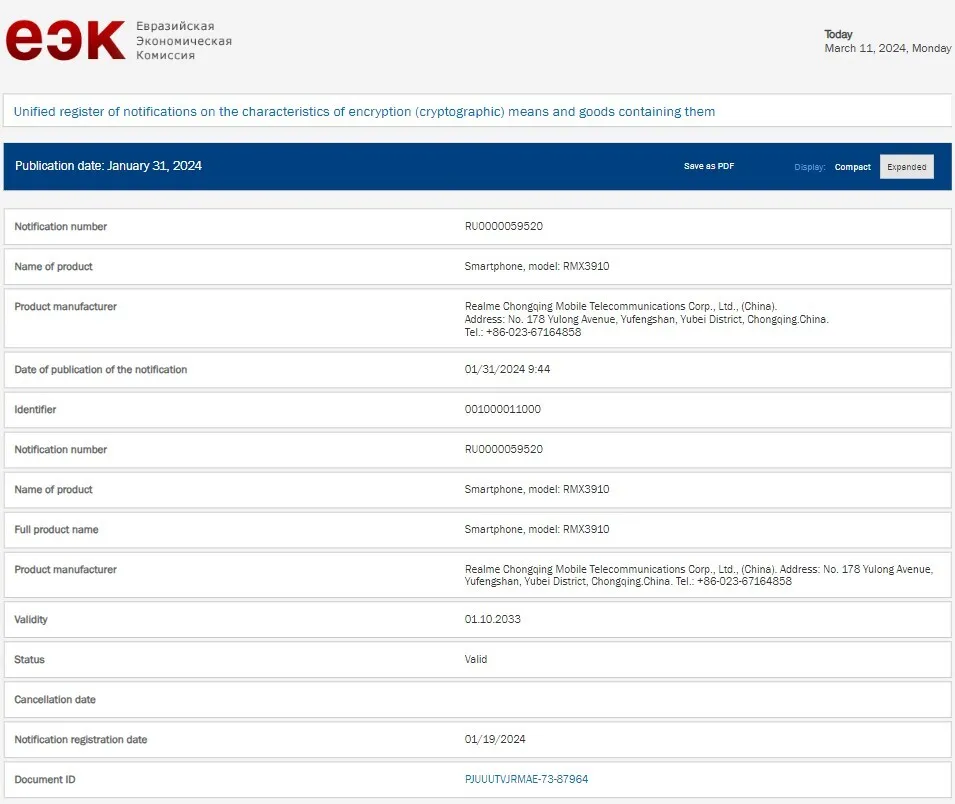
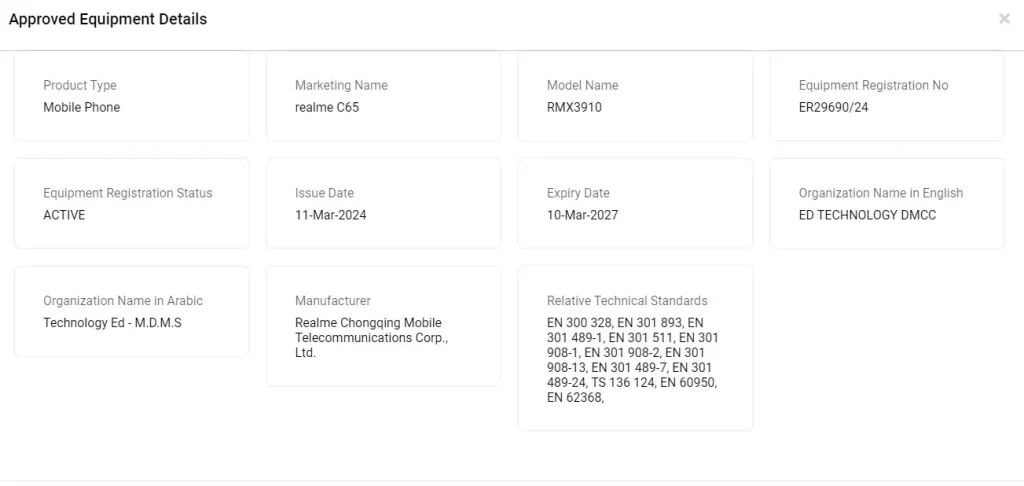
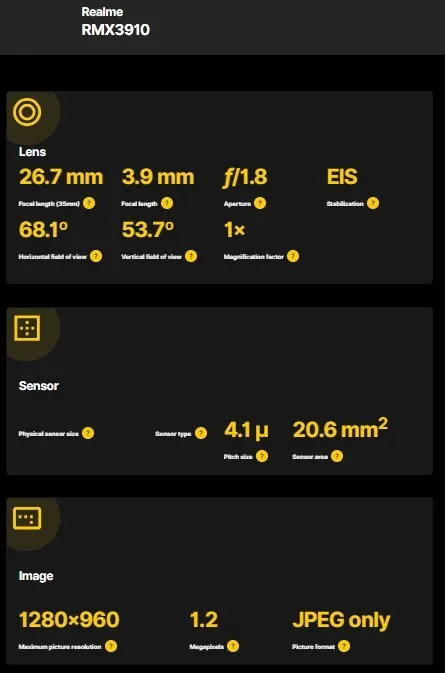
The Chinese smartphone brand’s upcoming Realme C65 was spotted on multiple certification platforms like TDRA, TUV, EEC, and Camera FV-5. In UAE’s TDRA database, the Realme C65 was confirmed to carry the RMX3910 model number. Furthermore, the device visited the TUV Rheinland certification as well, which confirms that it is powered by a 4,880mAh battery pack. This would likely be marketed as a 5,000mAh battery pack.
The TUV listing adds that it will support 45W wired SuperVOOC fast charging. The EEC listing also hints also lists the device with the RMX3910 model number, so the launch of this device might be right around the corner. Lastly, the Realme C65’s camera specs were also hinted via the Camera FV-5 listing. It stated that the C65 will feature a rear camera that has a 26.7mm focal length, f/1.8 aperture, and EIS (Electronics Image Stabilization).
These specs seem similar to the primary rear sensor on the Realme C67. In other words, the Realme C65 could also offer a 50-megapixel shooter on the rear. Unfortunately, finer details regarding this device are still unclear at the moment, so stick around for more updates.
Infinix is launching the Note 40 series globally on March 18 in Kuala Lumpur, Malaysia. The lineup will consist of four new devices — the Note 40, Note 40 Pro, Note 40 Pro 5G, and Note 40 Pro Plus 5G.
Leading up to the launch, the company has now started teasing the features of the Note 40 series on its social media channels.
The company’s latest teaser on X/Twitter reveals that the Note 40 series smartphones will feature an in-house Cheetah X1 chip.
The X1 is essentially a power management chip that forms the foundation of the new All-Round FastCharge 2.0 technology in the Note 40 series. However, the company has yet to share full details of its new charging technology.
Infinix Note 40 Series Specifications (Rumored)
But it is confirmed that the Infinix Note 40 Pro Plus will be the company’s fastest-charging phone yet. A leak last week revealed that the smartphone will have at least 100W fast wired charging support.
While Infinix has previously demoed charging technology of up to 260W, none of the company’s launched phones have reached the three-digit charging figure. So the Note 40 series will have the fastest charging support in Infinix smartphones thus far.
Additionally, the Note 40 Pro Plus 5G is also rumored to feature new MagCharge wireless charging support. Yes, it’s like the MagSage charging for iPhones if you’re guessing.
As for the other devices in the series, the Note 40 is rumored to be powered by the MediaTek Helio G91 chipset and will feature a 5000mAh battery. Meanwhile, the Pro variant is said to feature the Helio G99 chipset and will also come with a 5000mAh battery.
Earlier this week, the Note 40 Pro 5G appeared in a Google Play Console listing, revealing details such as a Full HD+ display, a Dimensity 7020 chipset, 8GB of RAM, and Android 14.
Samsung has already showcased the new TV lineup for 2024 at CES. It even revealed some new advancements in the TV world, like the first transparent MicroLED TV. The new TV lineup and a music frame-customizable speaker are launching in the US on March 21, 2024. So, if you’re interested in exploring the new TVs and sound devices, then make sure to register ahead of time; it will save you $100. Further, if you’re looking to pre-order after an announcement, it is worth signing up for the promotion.
Way to Save $100 on Samsung TV Pre-Order
Samsung is known for its consumer electronics, home appliances, and good displays. Like smartphones, the Korean giant has a good name in the TV industry too, across the globe. Currently, the details about the new models that are being launched are not live, but we expect the smart TVs announced at CES 2024 will make their debut in the US. Samsung revealed AI-based 4K and 8K Neo QLED TVs at CES, which pack an NQ8 AI Gen 3 processor for outstanding picture quality, and detailed visuals. There are certain other monitors and game controllers that were part of this year’s announcements at the CES.
It would be worth checking out the new lineup, as certain upgrades will surely ensure a better experience. It is also an exciting time to upgrade your home theatre setup for a more delightful visual experience. Users can head over to the Samsung registration page to save $100.
Interested folks need to enter their first and last name along with their email address to successfully claim the $100 credit. Moreover, you should be 18 years of age or older. Upon adding details, submit the details and enjoy the promotional bonus which you will receive via email after the announcement on March 21.
The Infinix Note 40 series is set to launch globally soon. But ahead of the release, the full design of the Note 40 and Note 40 Pro were revealed via fresh render leaks. The renders offer us a proper look at the devices from the front and back, so let’s check it out.
Infinix Note 40, Note 40 Pro Render Leak
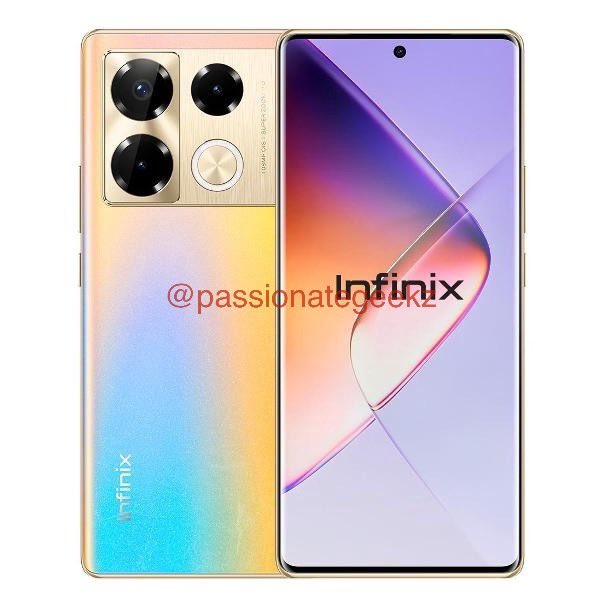
The new leak was shared by known tipster Paras Guglani on X (formerly Twitter). Looking at the images, we can see that the base model features a flat AMOLED display on the front. Meanwhile, the rear packs three image sensors housed in a large camera island with LED flash. On the other hand, the Note 40 Pro sports a curved AMOLED display on the front, with a similar camera setup on the rear.
Apart from the display, most other aspects are identical between the two devices. Both models also house a center aligned punch hole cutout in this screen, which is also surrounded by narrow bezels on three sides and a noticeable chin. The right side of the smartphone features the power button and volume rockers. Paras Guglani also added that the standard model will offer 45W wired fast charging, while the Pro variant offers 70W wired fast charging.
The tipster further adds that both devices offer 4G connectivity and are equipped with the MediaTek Helio G99 SoC. Other notable features include a 108-megapixel primary camera on the rear, IP54 water and dust resistance rating, and up to 256GB of internal storage. This is also in line with our previous report that covered the entire specs sheet of the Infinix Note 40 series.
The iQOO Z9 is finally official in India as scheduled. It is the brand’s second smartphone in the country in 2024 after iQOO Neo 9 Pro.
The device succeeds iQOO Z7 (review) and iQOO Z7s from 2023. It not only arrives with upgraded specs but also a different design as well.
iQOO Z9 Specifications
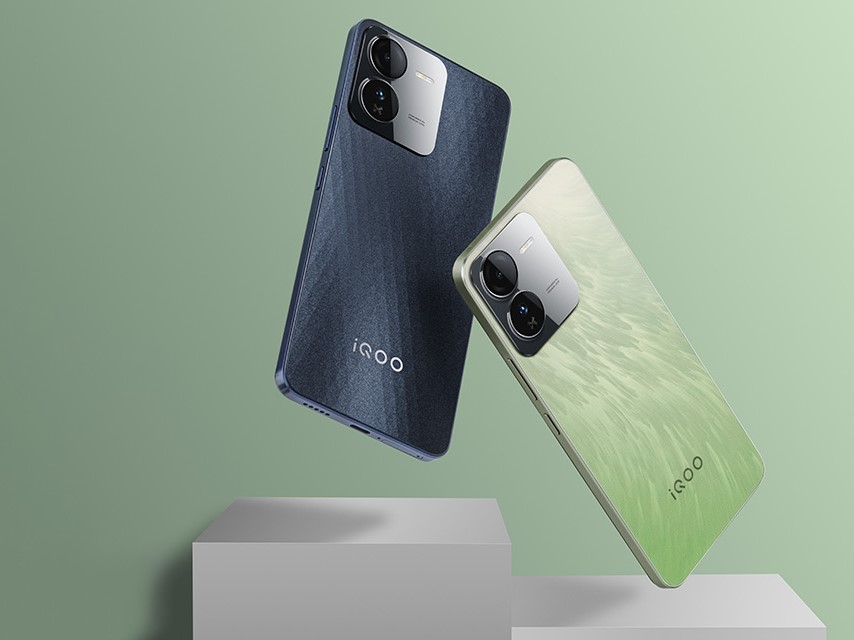
Just like most budget smartphones, the iQOO Z9 features a plastic body. It has a flat frame and the cameras are placed on a small square island.
The phone is IP54-rated for splash resistance. It measures 7.83mm in thickness and weighs 188g.
The handset sports a 6.67-inch AMOLED display with a resolution of 2400 x 1080 pixels (FHD+), 394 PPI, and a 120Hz refresh rate. The panel supports up to 1200Hz instant touch sampling rate and 1800 nits peak brightness level.
The device is powered by a MediaTek Dimensity 7200 chipset paired with LPDDR4x RAM and UFS 2.2 storage. As for software, it boots Funtouch OS 14 based on Android 14.
The dual camera setup on the rear consists of an OIS-assisted 50MP Sony IMX882 primary sensor and a 2MP depth sensor. On the front, there’s a 16MP snapper.
The phone comes with an in-screen fingerprint sensor, dual stereo speakers, a MicroSD card slot, and a USB Type-C port. It also arrives with all the standard wireless connectivity options, such as dual SIM, 5G, WiFi 6, Bluetooth 5.3, and GNSS.
Last but not least, the handset is backed by a 5,000mAh battery with support for 44W wired charging.
iQOO Z9 Price in India
The iQOO Z9 comes in the following two memory configurations in India.
8GB + 128GB – ₹19,999 (~$240)
8GB + 256GB – ₹21,999 (~$265)
The product can be availed in either Brushed Green or Graphene Blue color options. It will be sold via Amazon and iQOO.com.
Amazon Prime members can buy the smartphone starting at 12 PM on March 13, followed by open sale 24 hours later.
Buyers can avail of a ₹2,000 instant discount on transactions via credit cards issued by ICICI Bank and HDFC Bank.
Realme has launched the Realme 12 5G, Realme 12+ 5G, Realme 12 Pro 5G, and Realme 12 Pro+ 5G in India. It seems that the brand is not done yet with the Realme 12 series, as the upcoming Realme 12x 5G has bagged multiple certifications. Hence, it appears that the brand may unveil it in the coming weeks.
Realme 12x 5G receives multiple certifications
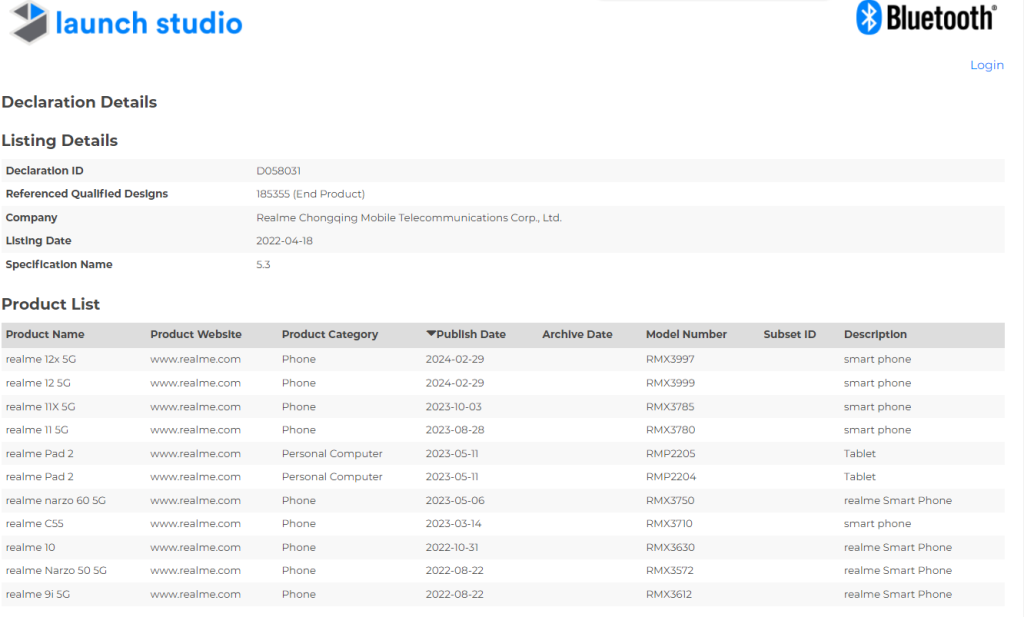
As can be seen in the above screenshot, the Realme 12x 5G has surfaced in Bluetooth SIG’s database. Usually, devices that are certified by the Bluetooth SIG are known to debut in a timeframe of around one month. Hence, it appears that the 12x may break by the end of this month or by early April.
The Realme 12x 5G’s Bluetooth certification reveals its model number is RMX3997. In addition, it also reveals support for Bluetooth 5.3 connectivity. TheTechOutlook that spotted the Bluetooth SIG listing claimed that the device has also been approved by India’s BIS authority and TUV Rheinland.
As per the TUV certification, the Realme 12x 5G will pack a 5,000mAh battery. Unfortunately, there is no information available about the other specs of the device. it is advisable to wait for further reports to know more about the 12x variant. Reports have revealed that the Realme 12 series also includes another model dubbed the Realme 12 Lite.
As per reports, the Realme 12 Lite will share similarities with the Realme C67 (4G). Hence, it is expected to arrive with a Snapdragon 685 chip, a 108-megapixel main camera, and 33W fast charging.
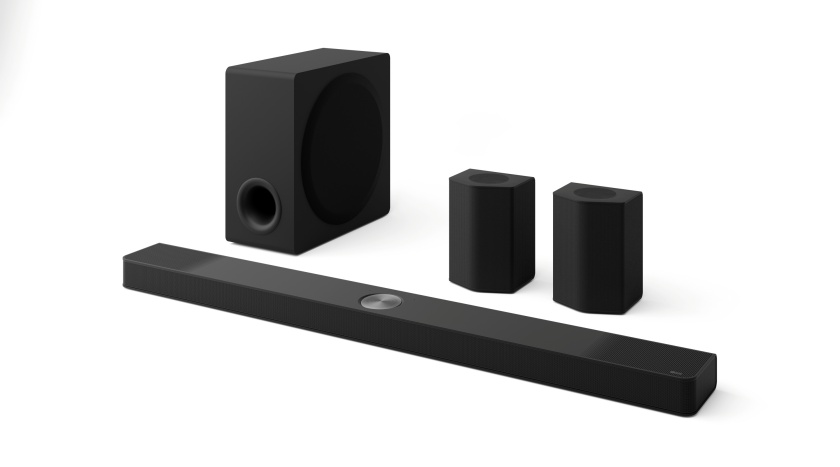
LG has just unveiled a new audio home product. The company has announced the LG S95TR Soundbar in its home market of South Korea. This hearable device was first unveiled back in December 2023 and was showcased in CES 2024 as well. So here are all the details.
LG S95TR Soundbar Specs
The LG S95TR Soundbar arrives with a three-firing speaker setup that offers a total of 15 channels. It is paired with a subwoofer for deep bass and rear speakers with a maximum output of 810W. This soundbar can connect wirelessly to your TV to enhance the audio experience. The brand also marketed the S95TR with AI, which helps deliver an immersive 3D sound.
LG Electronics also offers the WOW Orchestra feature as well. This function basically combines the soundbar and TV speakers. Another feature is the WOWCAST which brings support for Dolby Atmos for improved sounds even when the soundbar is connected to premium LG TVs. The device supports DTS:X and HDMI eARC for high quality audio playback. Users can control the soundbar using the TV remote control and this soundbar can connect to Google Chromecast and Apple AirPlay 2. There is also easy access to Spotify and Tidal via smartphones.
LG S95TR Soundbar Pricing and Availability
The new LG S95TR Soundbar will be released in the global market soon. It will be sold in the North American market by the end of this month, with South Korean and European launch following soon after. As of right now, the South Korean pricing has been revealed. The LG Soundbar S95TR has a 1,899,000 won (roughly 1448 US Dollars) price tag, while the LG S70TR soundbar costs 699,000 won (roughly 532 US Dollars). Buyers that pre-register for the first 100 units can avail a 300,000 won discount on the S95TR from the brand’s official website.
Earlier this week, Honor announced a launch event scheduled for March 18. While the primary focus is expected to be on new smartphone releases, the company has also confirmed the debut of the Honor Band 9 and a new Honor Watch during the event.
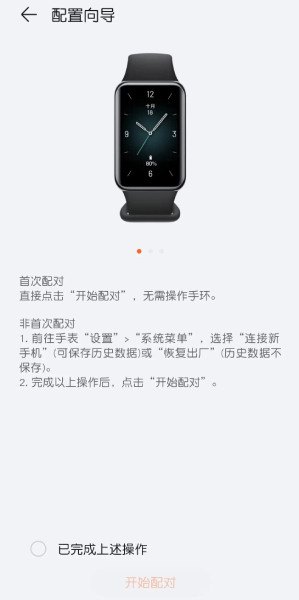
The company teased the wearable launch via the Honor Mall app. The teaser shows that the Honor Band 9’s design will resemble its predecessor. It has a rectangular dial that fuses with the strap. There’s not much detail the company has shared about it though.
However, the fitness tracker has recently been certified by the Bluetooth SIG (Special Interest Group) certification body. Band 9 is listed under model numbers RHE-B39 and RHE-B19 and the listing confirms the inclusion of Bluetooth 5.3 connectivity support.
Further, the Honor Band 9 has been listed on the device pairing page of the Honor Sports and Health App with the description “fashionable health bracelet.” Based on this, we can expect that the Honor Band 9 will likely emphasize design elements and advanced health monitoring capabilities.
Beyond the Honor Band 9, Honor has also teased the launch of a new Honor Watch at the March 18 event. Specific details about both wearables remain scarce.
The complete list of expected product launches on March 18 includes:
Honor Magic6 RSR|Porsche Design
Honor Magic6 Ultimate Edition
Honor MagicBook Pro 16
Honor Band 9
New Honor Watch
Additional details on the design, features, and pricing of the Honor Band 9 and the new Honor Watch will likely be revealed at the launch event.
Samsung recently released four Galaxy Book 4 models globally – the Galaxy Book 4 360, Galaxy Book 4 Ultra, Galaxy Book 4 Pro, and the Galaxy Book 4 Pro 360. Now Samsung is going to add another model to the lineup, the Galaxy Book 4 Edge, that will be one of the first adopters of Qualcomm’s new Snapdragon X Elite platform.
The upcoming device is positioned to compete head-to-head with Apple’s silicon-powered MacBooks, promising high performance and power efficiency. This Snapdragon X Elite powered laptop has recently surfaced on Geekbench surpassing Apple’s M1 and M2 powered devices.
Galaxy Book 4 Edge (with X Elite SoC) could offer much longer battery life
The Galaxy Book 4 Edge will leverage Qualcomm’s 12-core ARM CPU, boasting clock speeds of up to 4.3 gigahertz. Developed by a team of former Apple chip designers, this processor aims to narrow the performance gap between Windows and MacOS-based devices, challenging Apple’s M series processors.
Initial specifications reveal a 14-inch display, complemented by 16GB RAM and a 512GB SSD. While further details on storage and memory configurations remain undisclosed, the device is anticipated to offer premium features characteristic of high-end laptops.
Priced at around 1800 euros (~$1,968), the Galaxy Book 4 Edge is positioned in a similar range as Apple‘s latest MacBook Air. Despite the premium price tag, the Samsung laptop is expected to justify its value proposition through power-efficient operation, potentially offering significantly longer battery life compared to its counterparts.
Performance-wise, Qualcomm’s Snapdragon X Elite chip has showcased impressive capabilities. In tests conducted by XDA Developers, machines powered by the chip outperformed the MacBook Air with an M2 chip, exhibiting promising single and multi-core performance metrics.
While the exact launch date of the Galaxy Book 4 Edge remains undisclosed, Qualcomm’s new SoC is slated for a mid-2024 release. As such, consumers can anticipate the Snapdragon X Elite-powered laptop to hit the shelves in the latter half of the year, offering a compelling option for those seeking enhanced performance and power efficiency.
Infinix recently confirmed that it will hold a launch event on March 18 to announce the Note 40 series for the global market. The lineup is said to include four models, such as the Note 40, Note 40 Pro, Note 40 Pro 5G, and Note 40 Pro+ 5G. Ahead of the launch, the rumor mill is gradually revealing key details about these devices. In a new report, MobilTelefon has revealed the key specifications and prices of the Note 40 and 40 Pro.
Infinix Note 40, Note 40 Pro key specifications
Infinix Note 40 Pro 5G
According to the publication, the Infinix Note 40 will come in 8 GB RAM + 256 GB storage version, and it will be priced at RUB 26,990 (~$297) in Russia. There are reports that this device will be powered by the MediaTek Helio G91 chipset, which went official recently. Unfortunately, the report has no other information about the standard model.
The Infinix Note 40 Pro, on the other hand, is said to have a 6.78-inch display, which seems to be an AMOLED panel. It will feature the Helio G99 chipset, 8 GB of RAM, 256 GB of storage, and a 5,000mAh battery. For photography, the device will offer a 108-megapixel + 2-megapixel + 2-megapixel triple camera unit. The publication says that the Note 40 Pro will be priced at RUB 29,990 (~$330).
As per a recent report, the Note 40 will also have a 5,000mAh battery. The standard and Pro models are said to support 45W and 70W fast charging. Yesterday, the Note 40 Pro 5G was spotted on the Google Play Console with an FHD+ display, likely a Dimensity 7020 chipset, 8 GB of RAM, and Android 14.
The major attraction of the series will be the Note 40 Pro+ 5G, which may support 100W fast charging and debut as the first Android phone with wireless magnetic charging.
Samsung unveiled the Galaxy A35 and Galaxy A55 smartphones globally yesterday, with specifics regarding pricing and availability in various regions set to be revealed gradually. In the US market, it appears that Samsung will exclusively debut the Galaxy A35 this time. In other words, the A55 will not be landing in the US.
A statement released by the Samsung US representative to CNETreads, “We can confirm that Galaxy A35 5G will be coming to the US market and look forward to sharing more details in the coming weeks. We will not be carrying the Galaxy A55 5G at this time.” Here’s an overview of what the US market won’t have access to.
Samsung Galaxy A55
Samsung Galaxy A55 specifications
The Galaxy A55 has a 6.6-inch S-AMOLED FHD+ 120Hz display with up to 1000 nits of brightness. Under the hood, it has the Exynos 1480 chip, 8 GB / 12 GB of RAM, 128 GB / 256 GB of storage, and a 5,000mAh battery with 25W fast charging. For more storage, it has a microSD card slot. The device runs on One UI 6.1-based Android 14 and is confirmed to receive four Android OS upgrades and five years of security updates.
The Galaxy A55 has a 32-megapixel front camera, and its rear panel has an OIS-enabled 50-megapixel. The main camera is accompanied by a 12-megapixel ultra-wide lens and a 5-megapixel macro camera. The device offers an aluminum frame, Gorilla Glass Victus protection, dual speakers, 5G, eSIM, Wi-Fi 6, Bluetooth 5.3, NGC, and a USB-C port. It has an IP67-rated chassis that measures 8.2mm in thickness and weighs 213 grams.
The Exynos 1380-powered Galaxy A35, on the other hand, has a 13-megapixel front camera, and a 50-megapixel (main, with OIS) + 8-megapixel (ultra-wide) + 2-megapixel (macro) triple camera unit. It offers 6 GB / 8 GB of RAM, 128 GB / 256 GB of storage, and a plastic frame. The rest of the specs are almost the same as the A55.
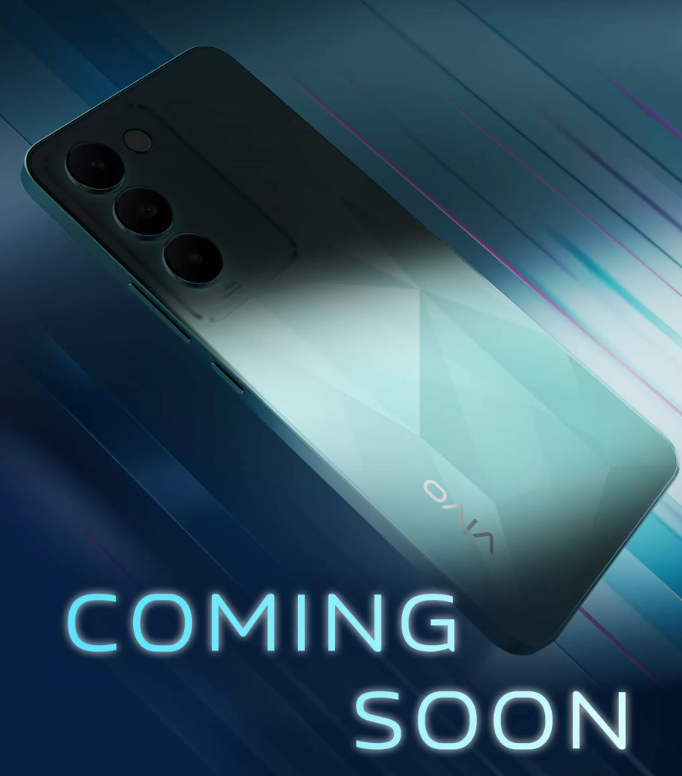
Vivo is all set to unveil the Vivo T3 5G smartphone in India. The reason behind it is that its landing page is now available on Flipkart. Currently, the page has no information about the specifications of the device. However, the listing does carry the below image, which reveals the rear design of the Vivo T3 5G for the first time.
Vivo T3 5G design
Vivo T3 5G
The Vivo T3 5G’s image shows that it features a triple camera unit with an LED flash on the back. It is unclear whether the third camera ring is a camera sensor or a flicker sensor. The image also reveals that the device has flat edges, with the right side featuring a volume controller and a power key.
At present, the company hasn’t revealed the launch date of the device. However, it appears that it may debut before the end of this month.
Vivo T3 5G specifications (rumored)
According to recent reports, the Vivo T3 5G will have a 6.67-inch AMOLED display that offers a Full HD+ resolution and supports a 120Hz refresh rate. The screen is said to offer up to 1800 nits of brightness and features an in-screen fingerprint scanner. Under the hood, the device will feature the Dimensity 7200 chipset.
The T3 is expected to arrive with 8 GB of RAM and 128 GB / 256 GB of storage. The device will house a 5,000mAh battery with 44W fast charging. For audiophiles, it is said to be equipped with dual speakers.
On the front, the Vivo T3 may feature a 16-megapixel selfie camera. The back panel of the device is said to feature a 50-megapixel Sony IMX882 primary camera with OIS support and a 2-megapixel bokeh lens. When it comes to pricing, it is said to be priced at around Rs 20,000. It will come in two shades, such as Crystal Flake and Cosmic Blue.
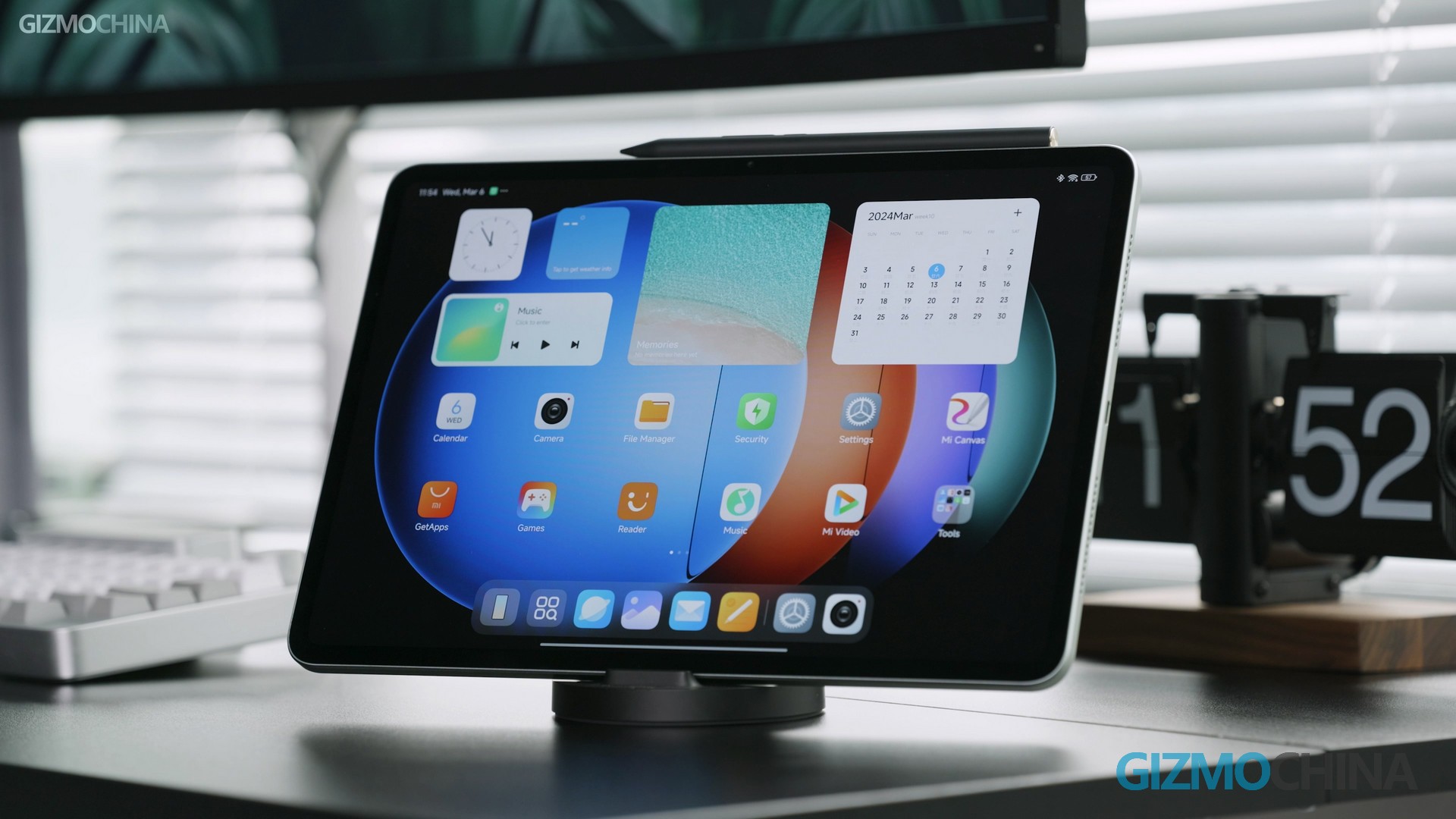
It’s been a long time since we reviewed a Xiaomi Pad, last time when we reviewed the Xiaomi Pad 6 Pro, it didn’t really surprise us much. After 10 months, we’re back to see how Xiaomi’s tablet has improved. This Xiaomi Pad 6S Pro 12.4 is also the first HyperOS tablet we got. I’m using a Xiaomi 14 right now, and it is HyperOS as well. So in a little while I’ll also test whether the Xiaomi Interconnectivity is any good or not.
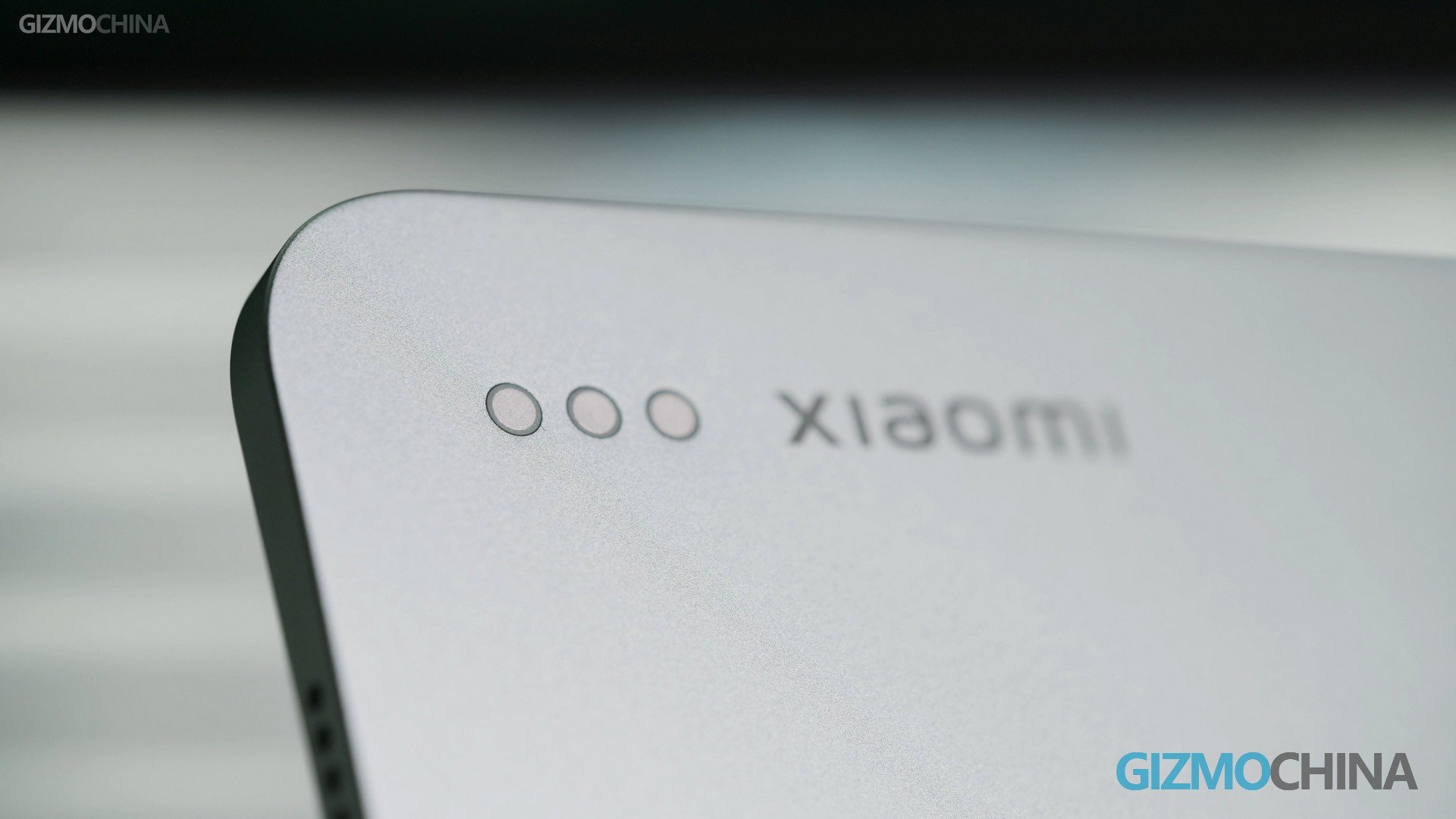
The 6S Pro keeps up the design with the Xiaomi 14 series: a flat frame, equal-width bezels, and a camera module with four circles inside a rectangle. It’s not that I have any complaints about the design, it’s just that the 50 MP AI Camera is placed in a way that makes it look cheap to me. Speaking of the camera, the main camera is 50 MP, and there’s a 2 MP depth of field camera.
The front camera is 32MP. The image quality is like this. With a top spec of 1080p 30fps, it’s certainly good enough for online meetings. After all, you can’t expect an Android tablet to have a great front camera, right?
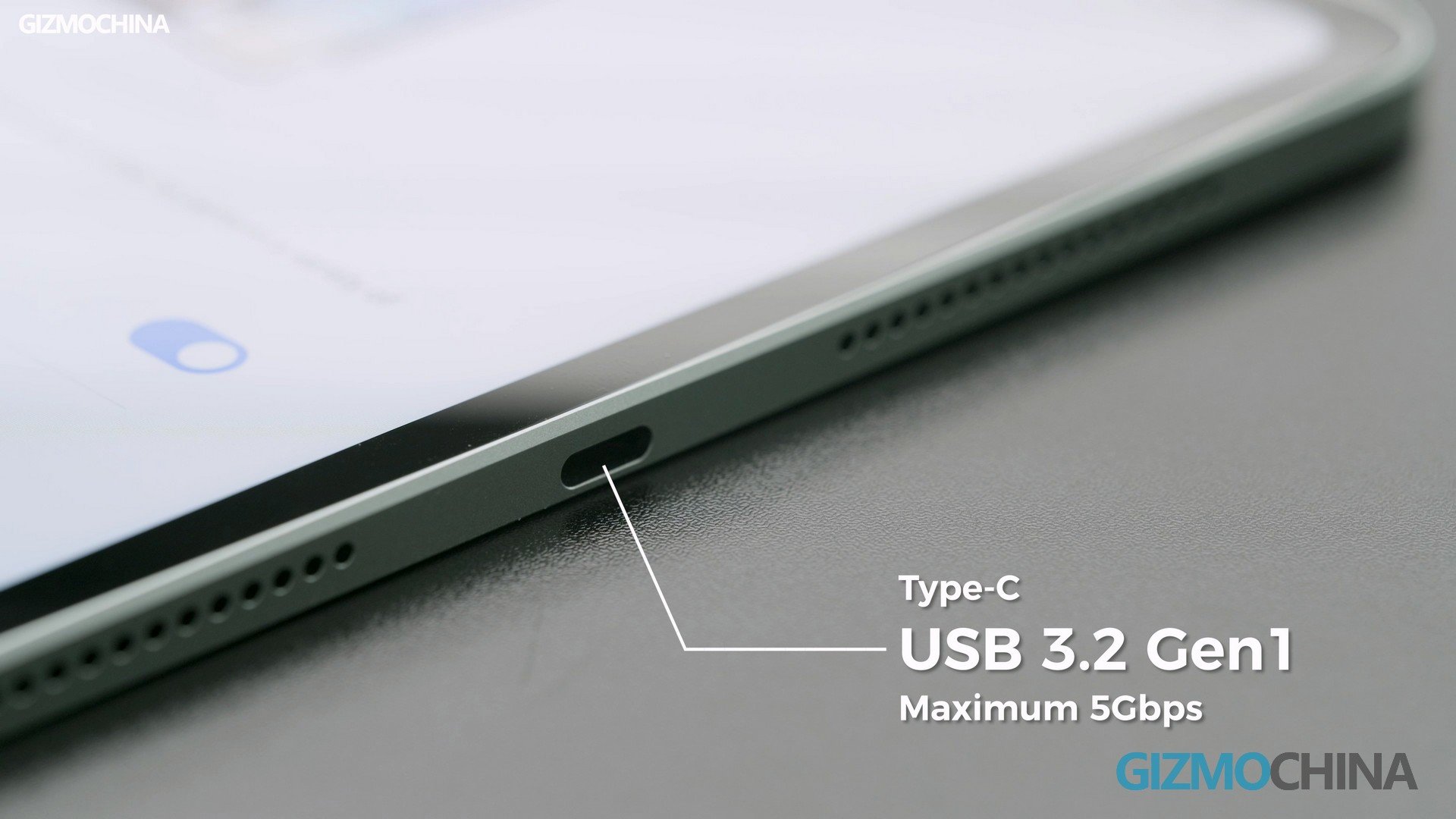
Other specs are no different from the 6 Pro. USB 3.2 Gen 1, supports video output. Fingerprint and power 2-in-1 button, metal unibody. Does not support TF card expansion. The three contacts at the back are used to connect the keyboard. But the difference is that the 6S Pro also can connect a big accessory: the Xiaomi SU7, which is also known as Xiaomi’s first electric car. In the future, you can put it in your car and use it as a part of the Center console.
Display
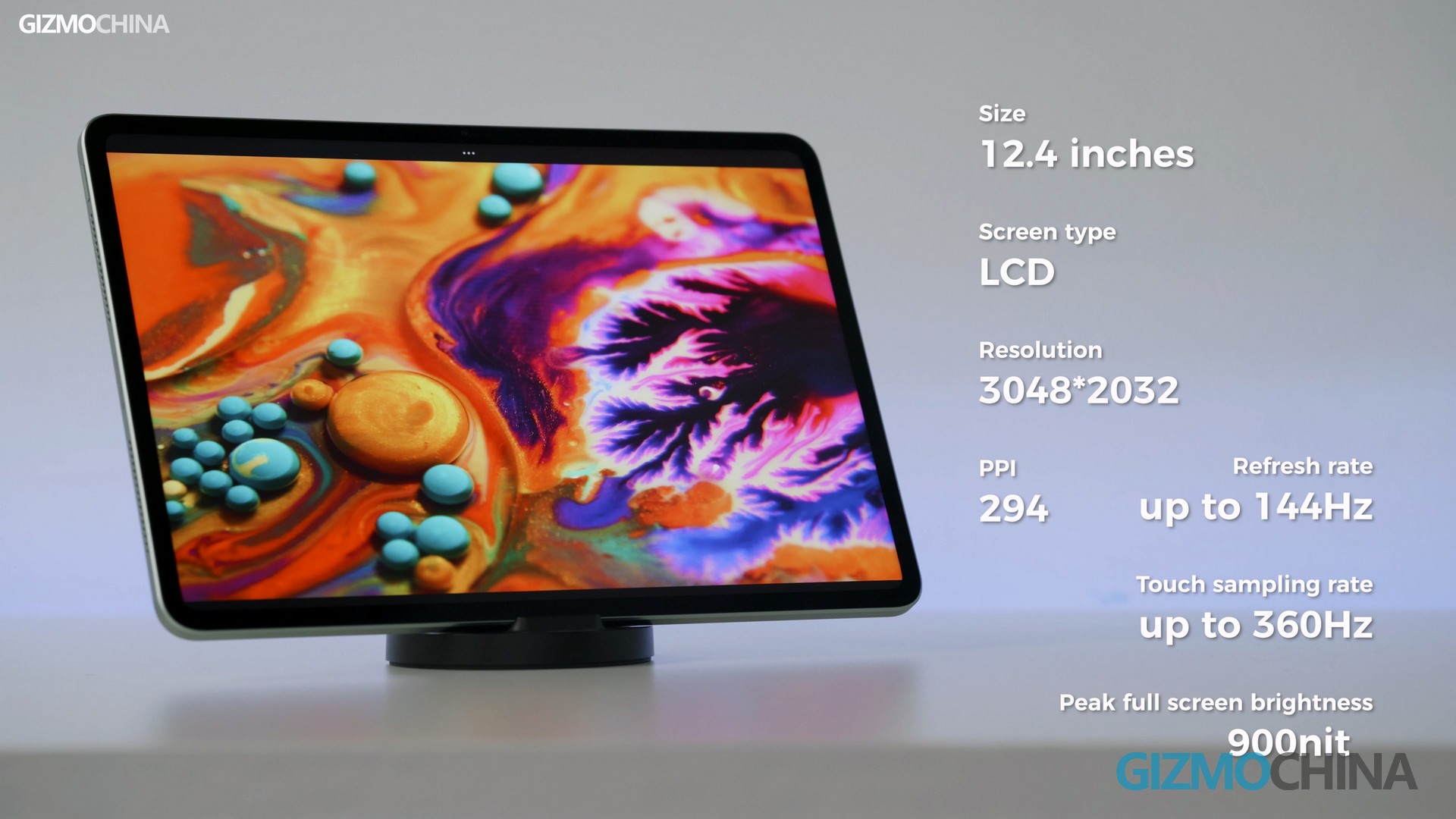
As you can tell from its name, 12.4 stands for the screen size. I’ll write the specs here.
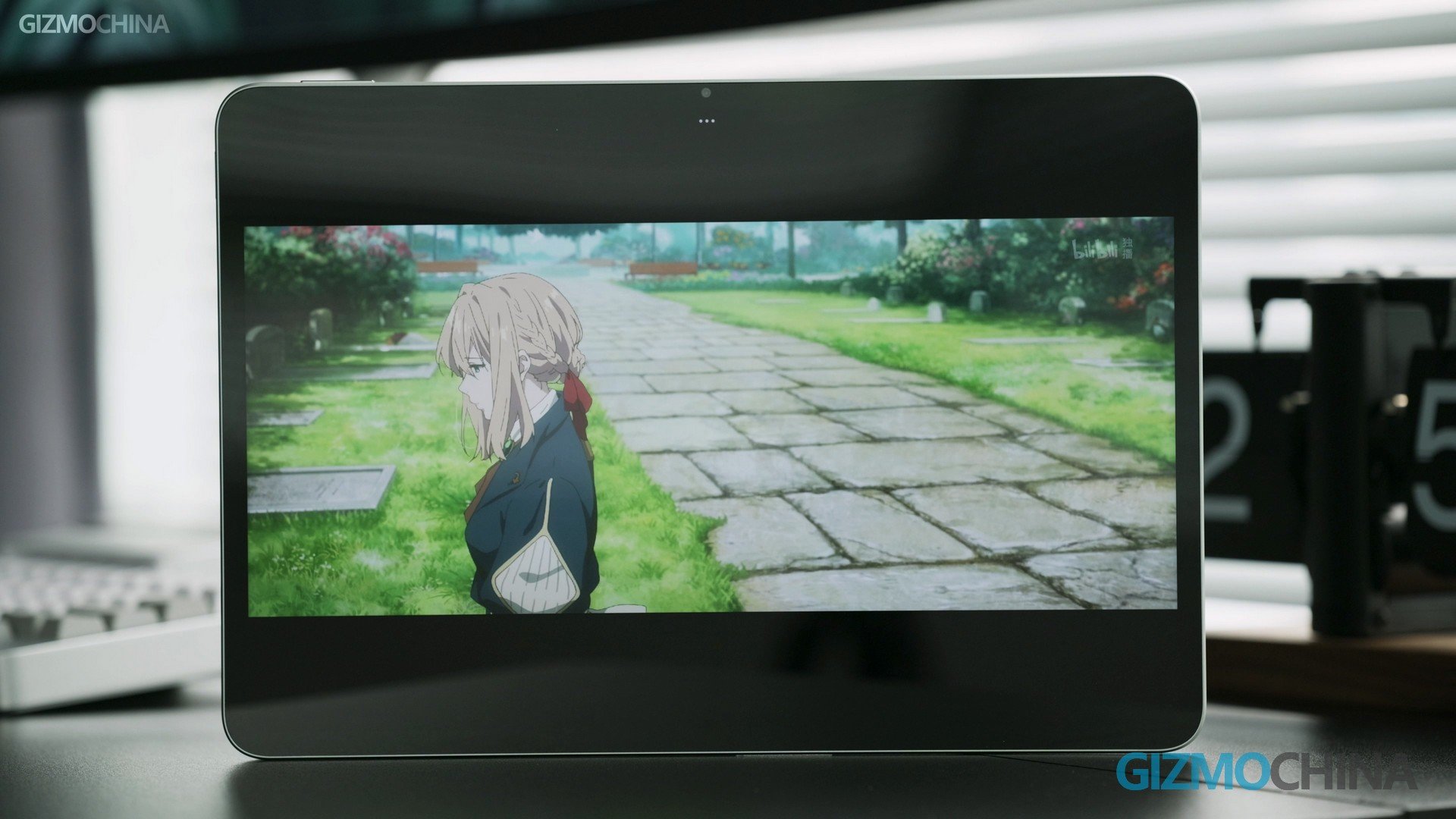
Aside from the bigger size, it’s also changed from a 16:9 ratio to a 3:2 ratio, which Xiaomi says is a more office-friendly size because you can see more content when editing Excel, PowerPoint, or viewing web pages. I don’t know how many people would use a tablet for office work though, but that’s what Xiaomi did. I do prefer the 16:9 ratio, as 3:2 will always leave black areas up and down when watching most online videos. Especially when watching movies, it can be very distracting.
Stylus
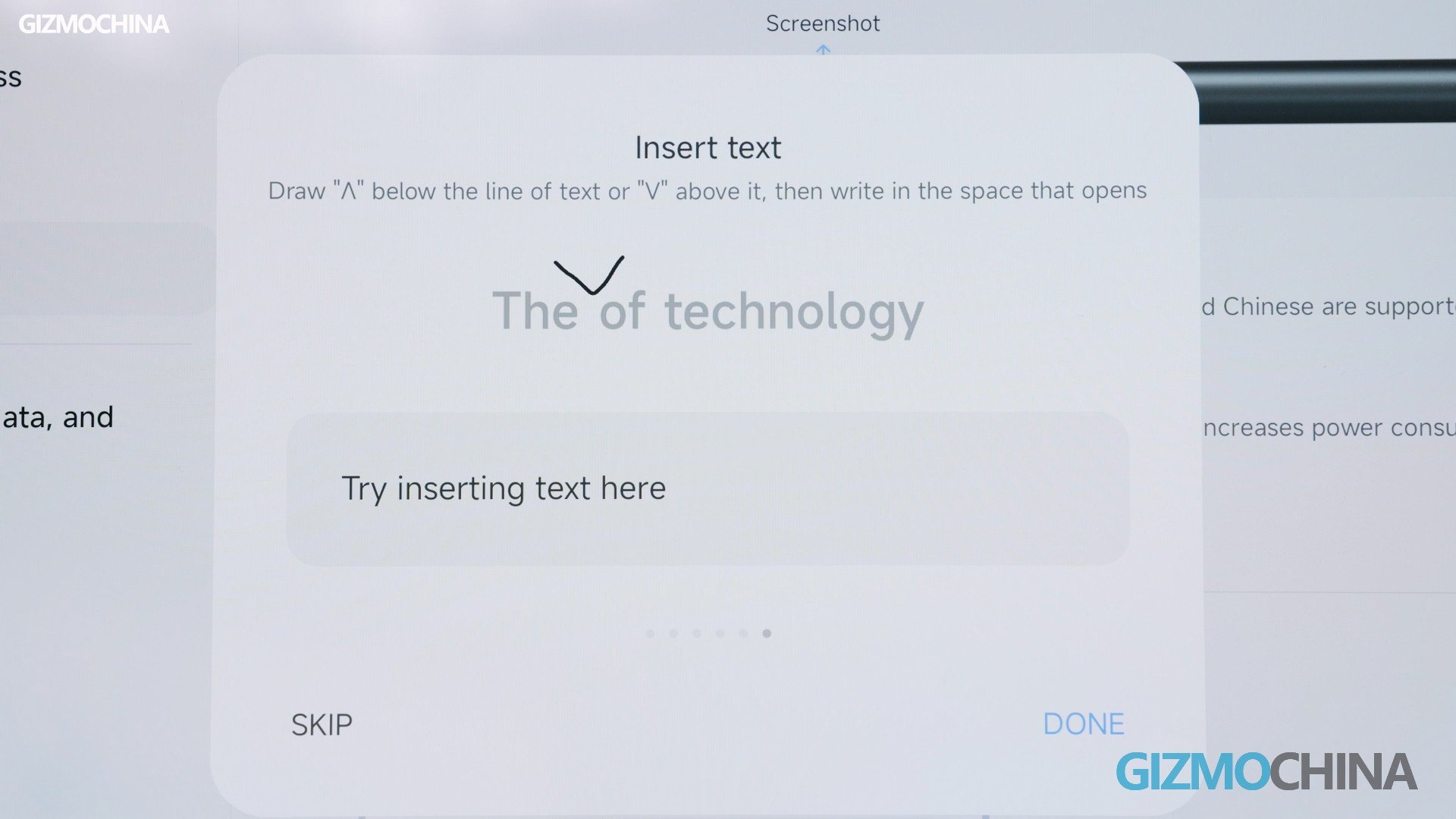
Although this stylus is not an exclusive accessory for the 6S Pro, I still want to brag a little about it. This stylus has a lot of features and a good number of them work better than the Apple Pencil. For example, when it comes to writing, in addition to converting both the Chinese and English you write into text, you can also insert text like this.
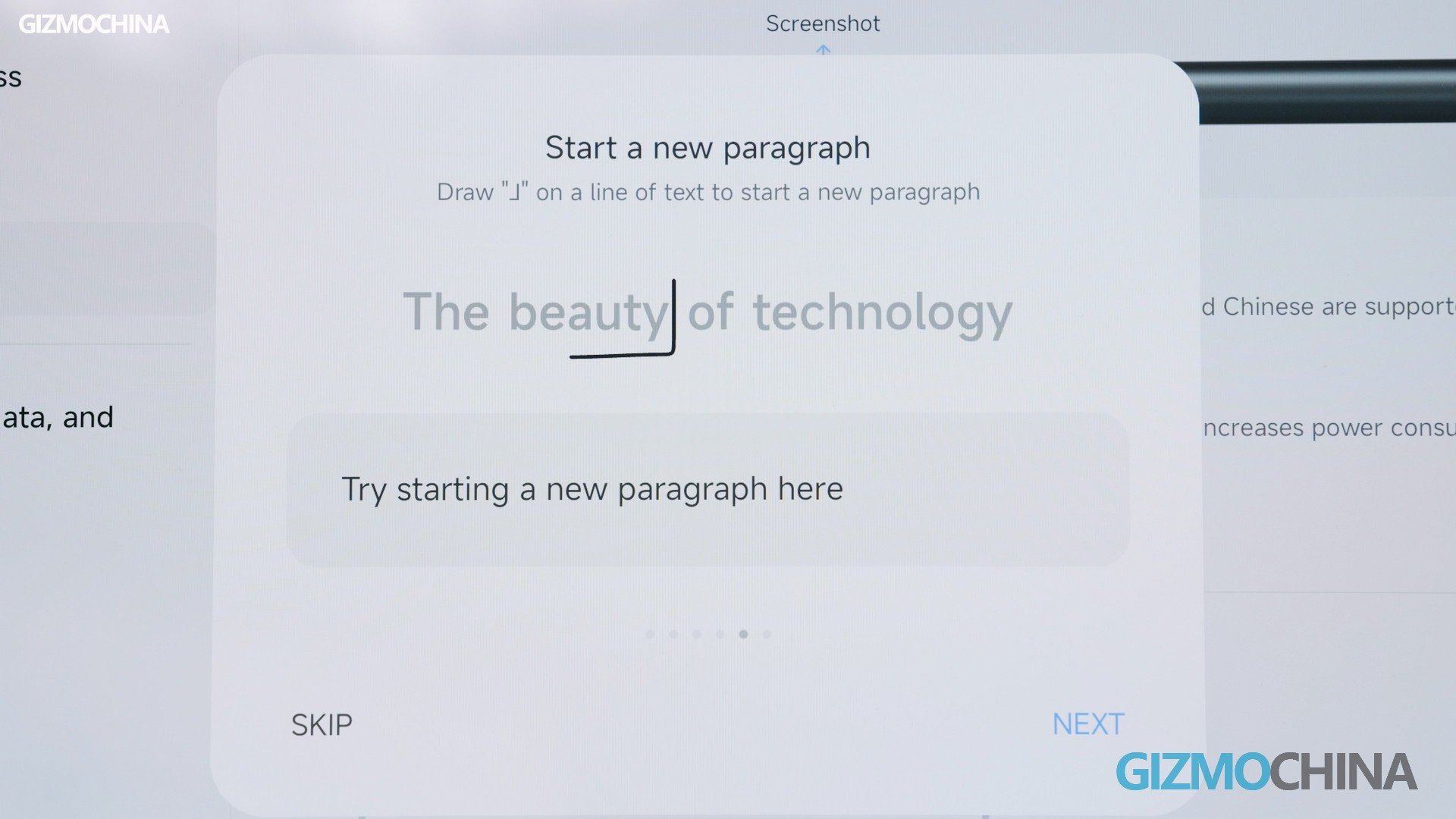
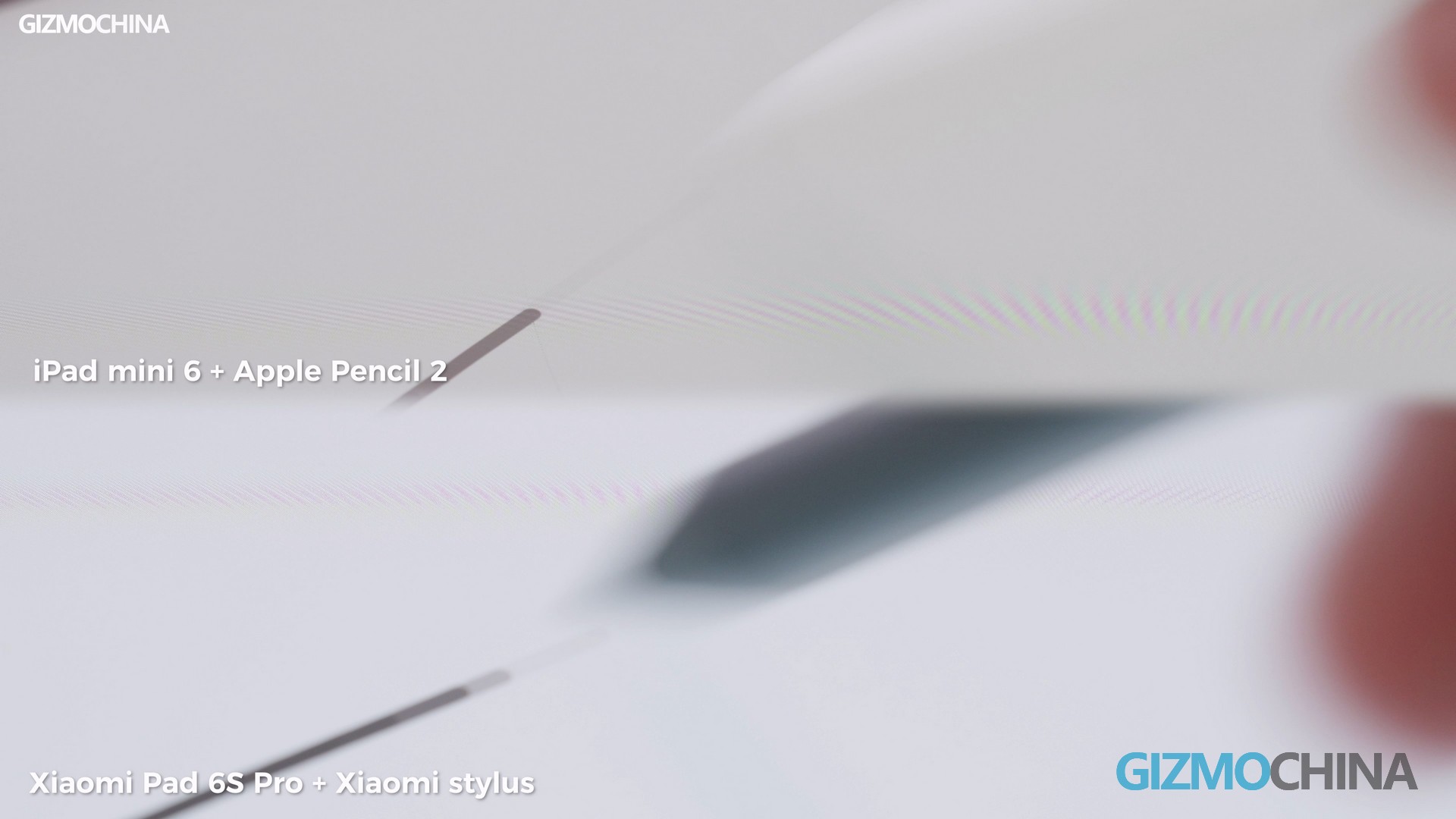
And you can also change lines like this. It even works as a Laser pointer, easily pointing out places on the tablet that you want someone to focus on. It also has low latency, I used the Apple Pencil and iPad Mini 6 to compare it to, and even I think the Xiaomi would have lower latency.
Benchmark, Gaming, Charging & Battery
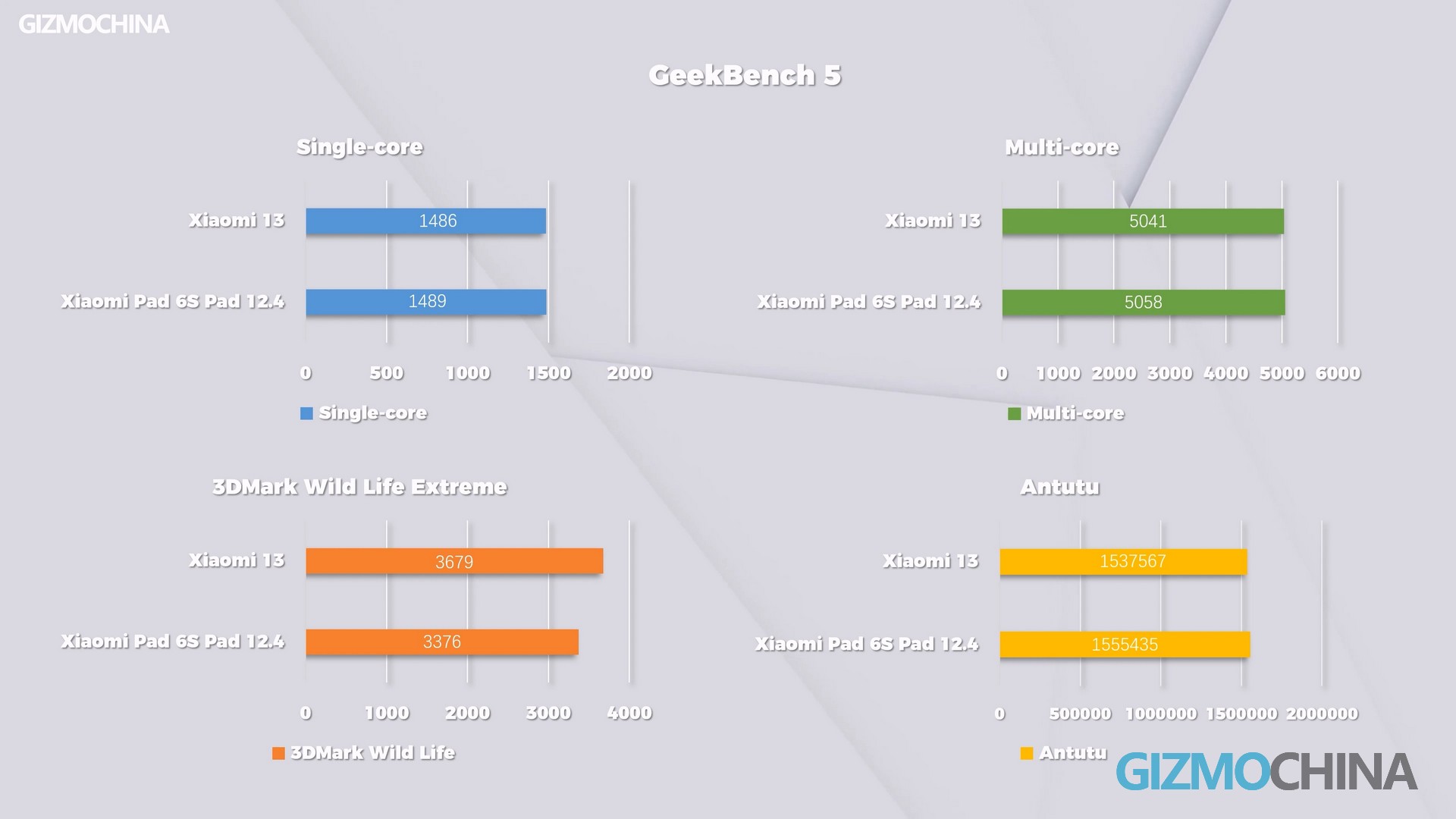
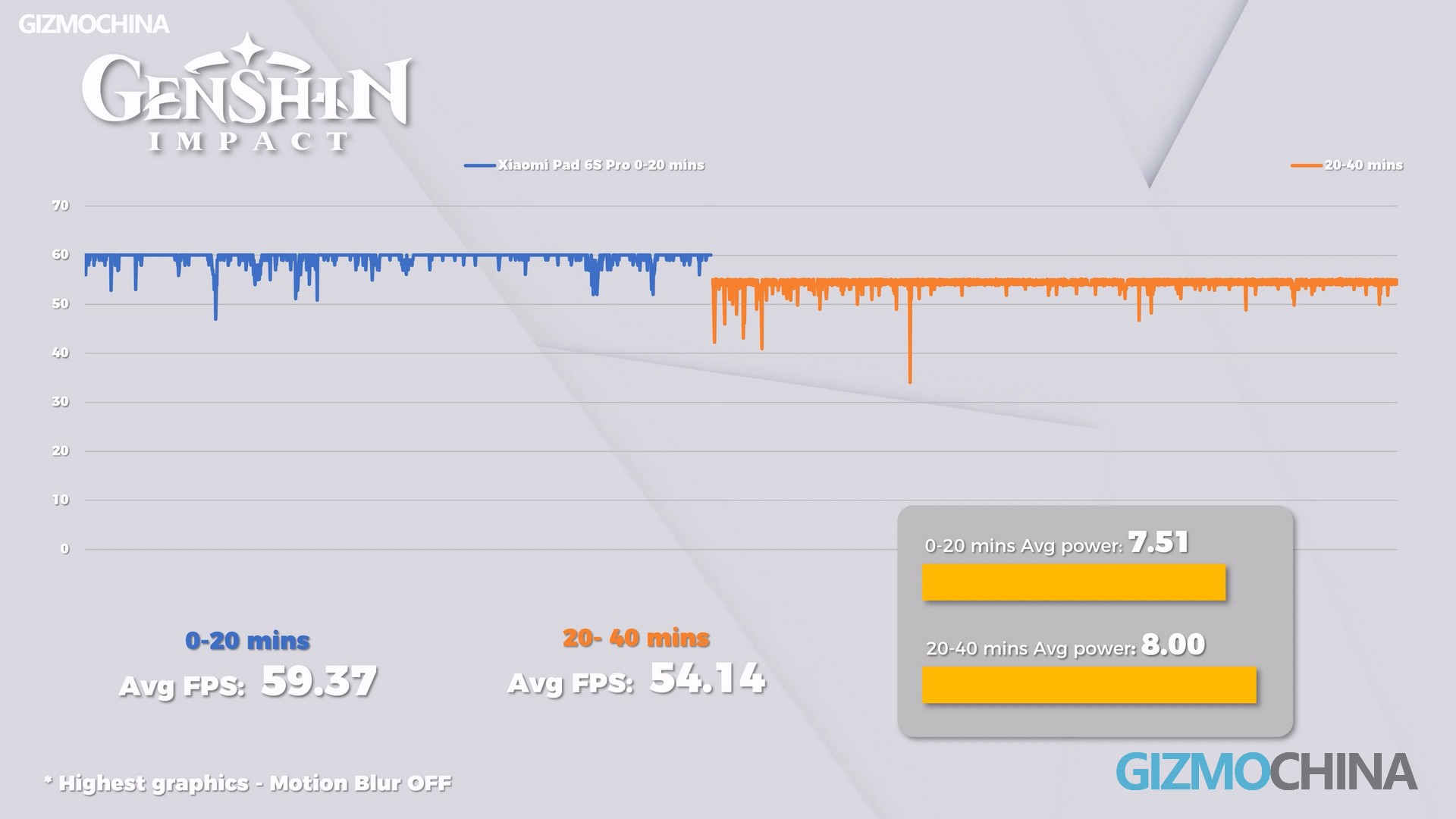
The 6S Pro has an upgraded processor from 8+ Gen 1 to Snapdragon 8 Gen 2. Even though the peak performance is not as good as the newest 8 Gen 3 phones, the extra large thermal area allows it to play games for long periods of time without downclocking. I played Genshin for 40 minutes without any problems at all. (Data collected from Perfdog)
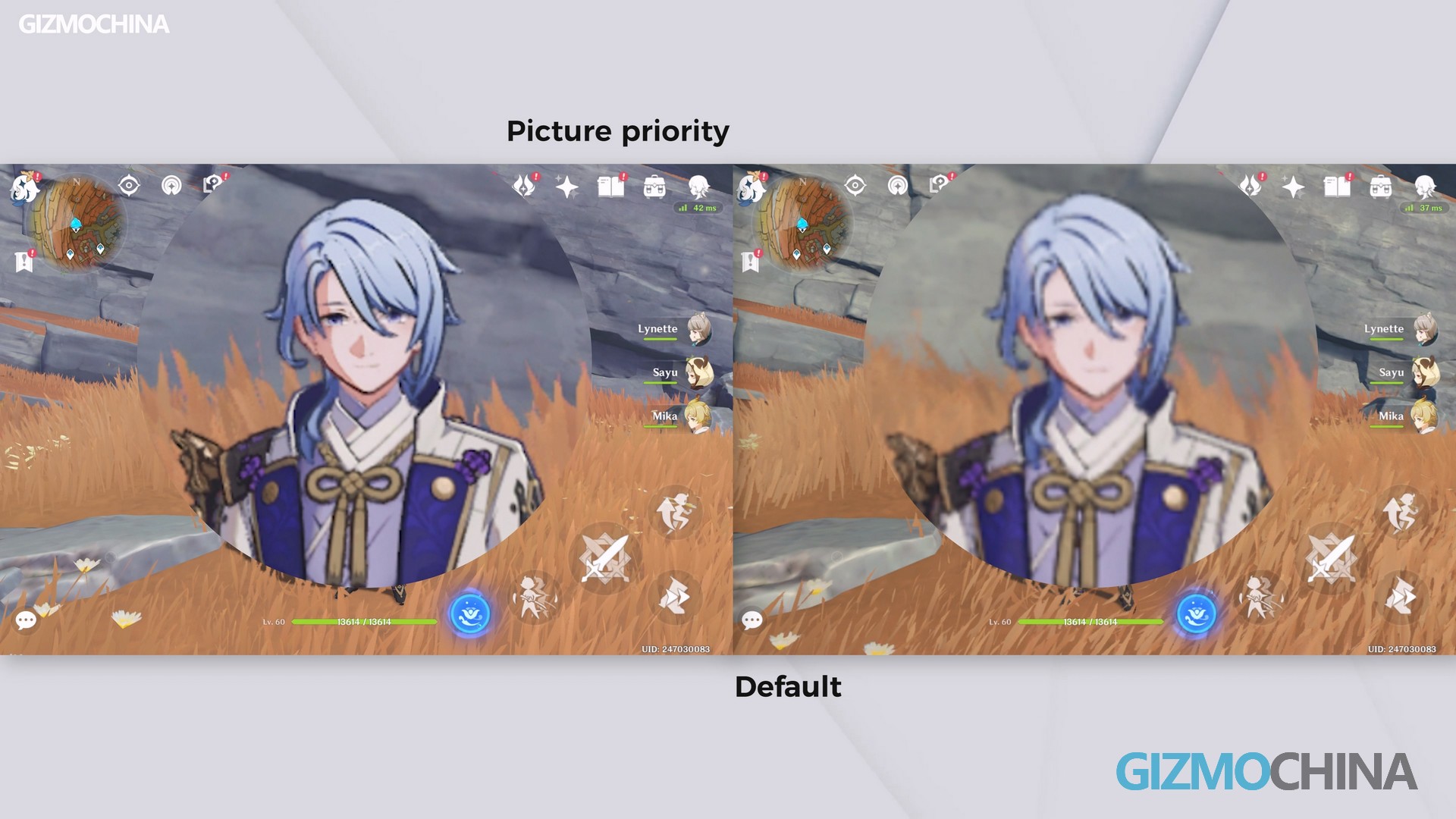
So why is the framerate locked at 55 after 20 minutes? It’s not because of a lack of performance, it’s because I have turned on Picture priority mode. The maximum frame rate in this mode is locked at 55. However, the image quality gets much better when it’s turned on, which is a huge improvement to the gaming experience, especially for a tablet with a big screen.
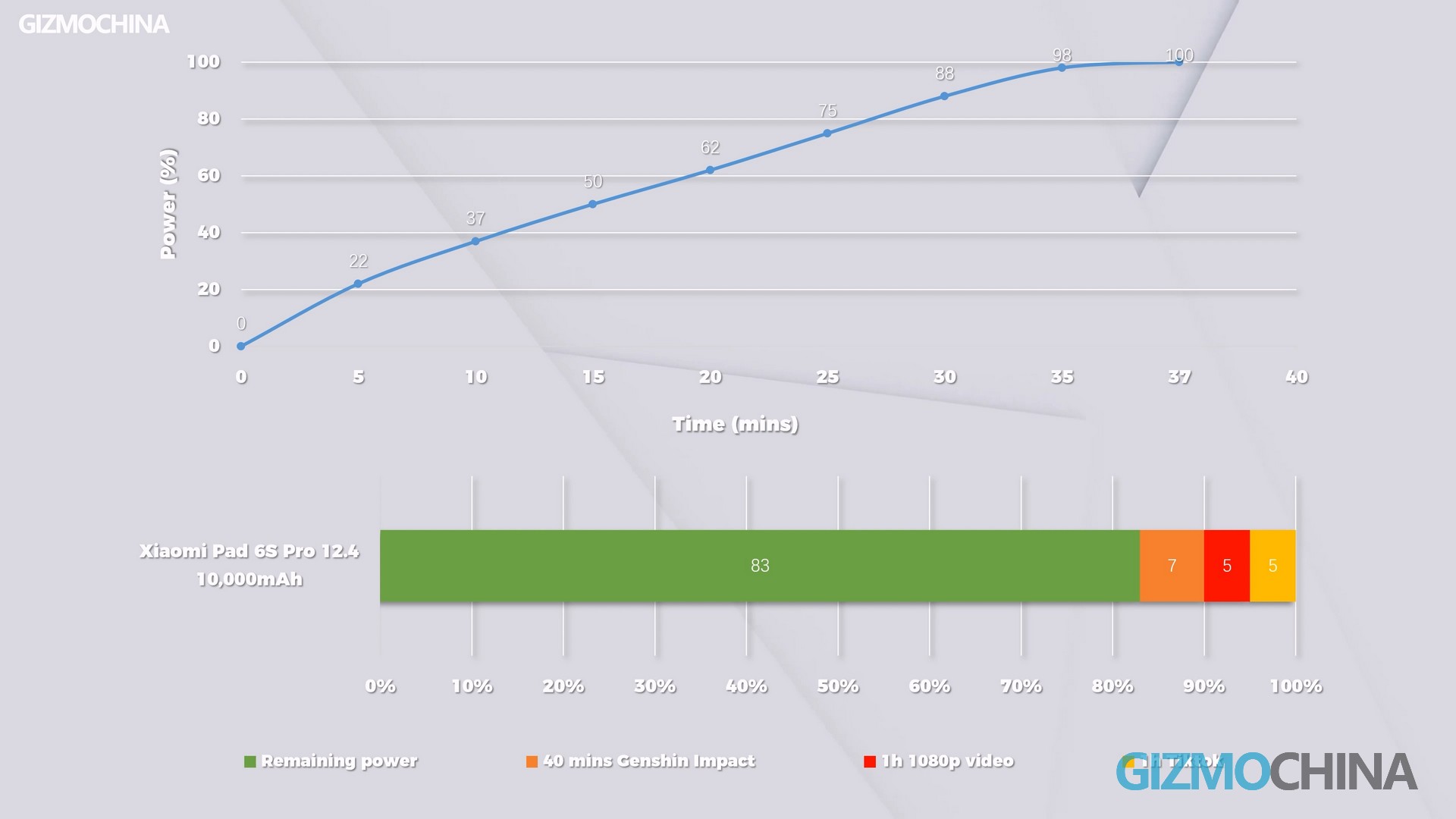
120W of charging power coupled with a 10,000mAh battery makes it the king of battery life and charging as a tablet. About its hardware, I have nothing to complain about.
New feature
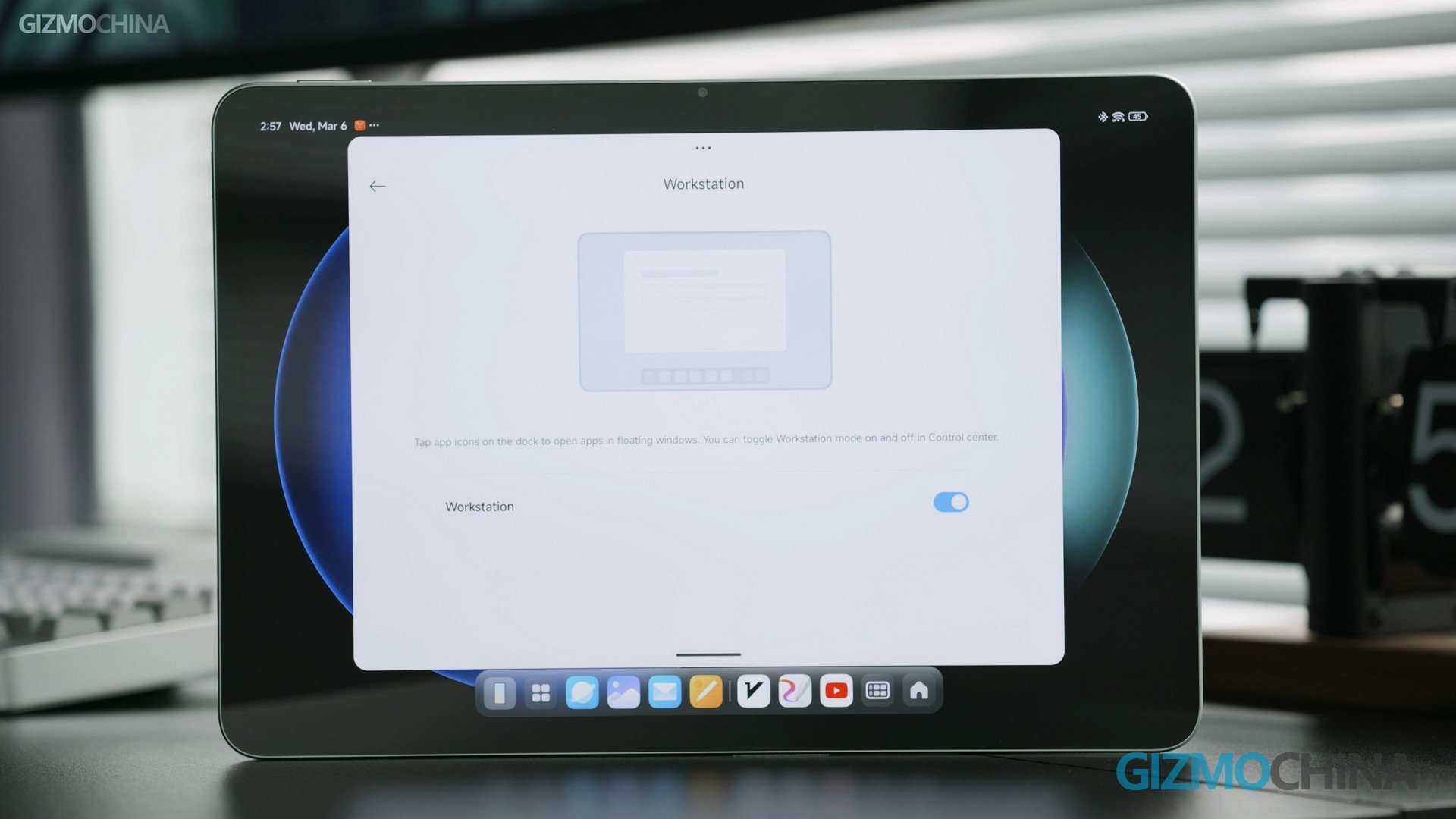
The 6S Pro software has been upgraded as well. It’s the previous PC mode that was missing for a while, now it’s back but with a different name. This new Workstation mode allows all apps to stay on the desktop as floating windows. Of course, you can change their size and position as you like, just like a PC.
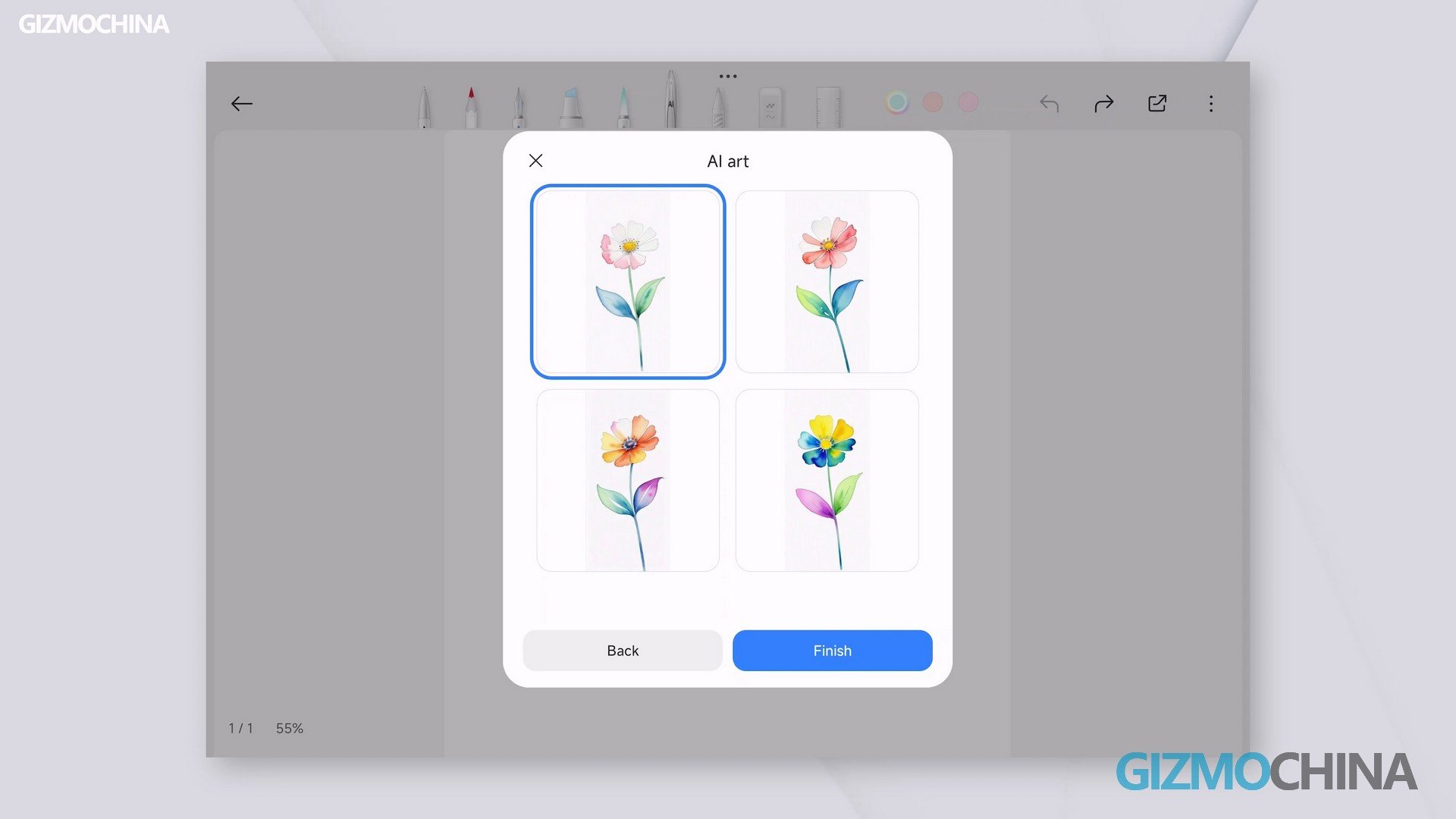
There is one more fun feature, they finally updated the AI art feature. Yes, it’s a feature that has been very popular recently that can generate various images with AI. For example, if I draw a flower, it can help me generate a more beautiful flower.
At present, this function is still relatively basic, it can only generate 4 images at one time. And for complex images, such as a photo of our host, Will. The generated image is quite different from the original one. If you want to be an artist, 6S Pro can’t realize this dream for you at the moment.
HyperOS for tablet
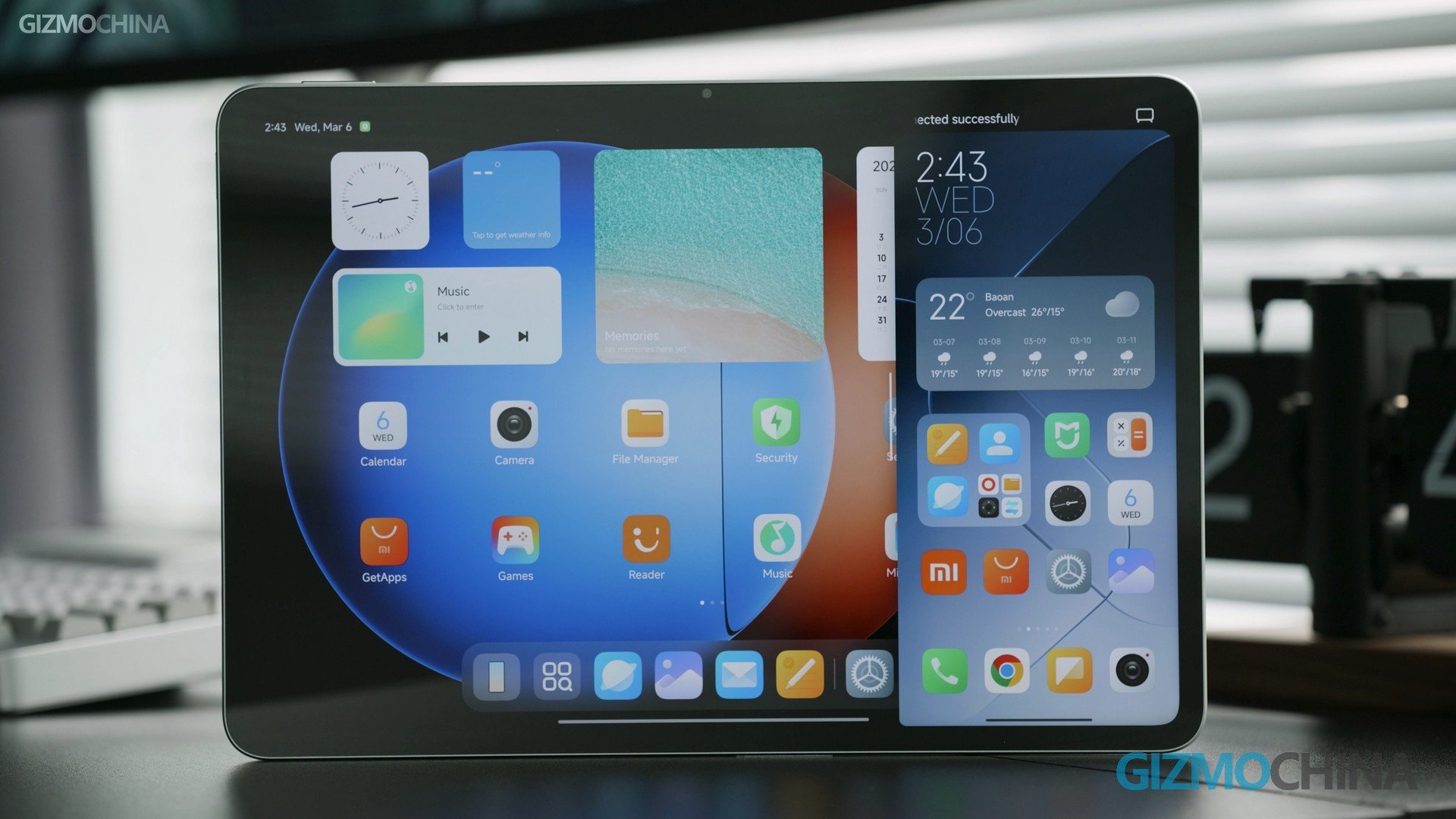
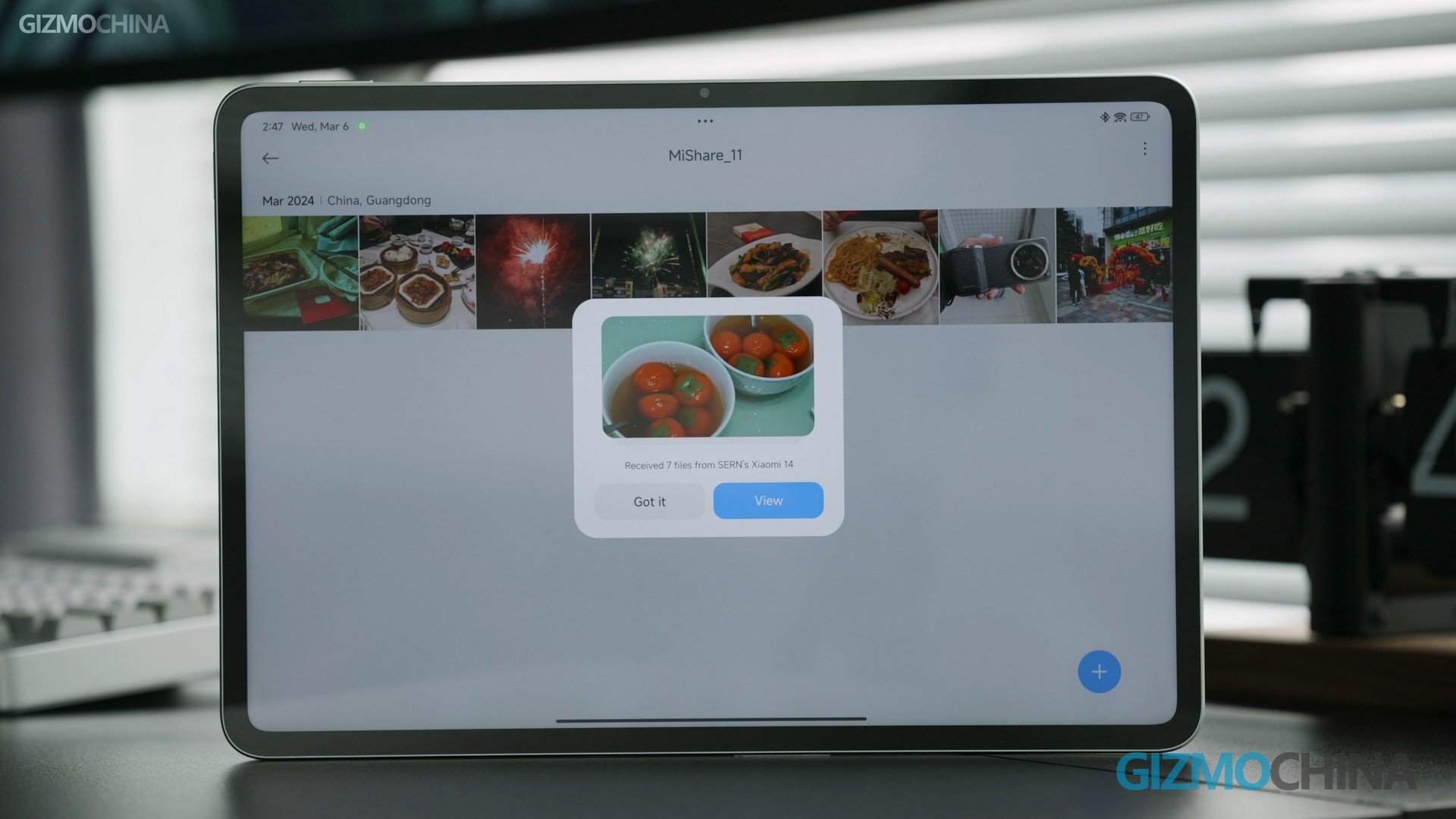
It’s time to talk about how it works with your phone. If you have a Xiaomi phone updated with HyperOS like I do, you’ll be able to do the following things: connect to your phone’s hotspot with a click when there’s no WiFi, no matter if the hotspot is on or not.
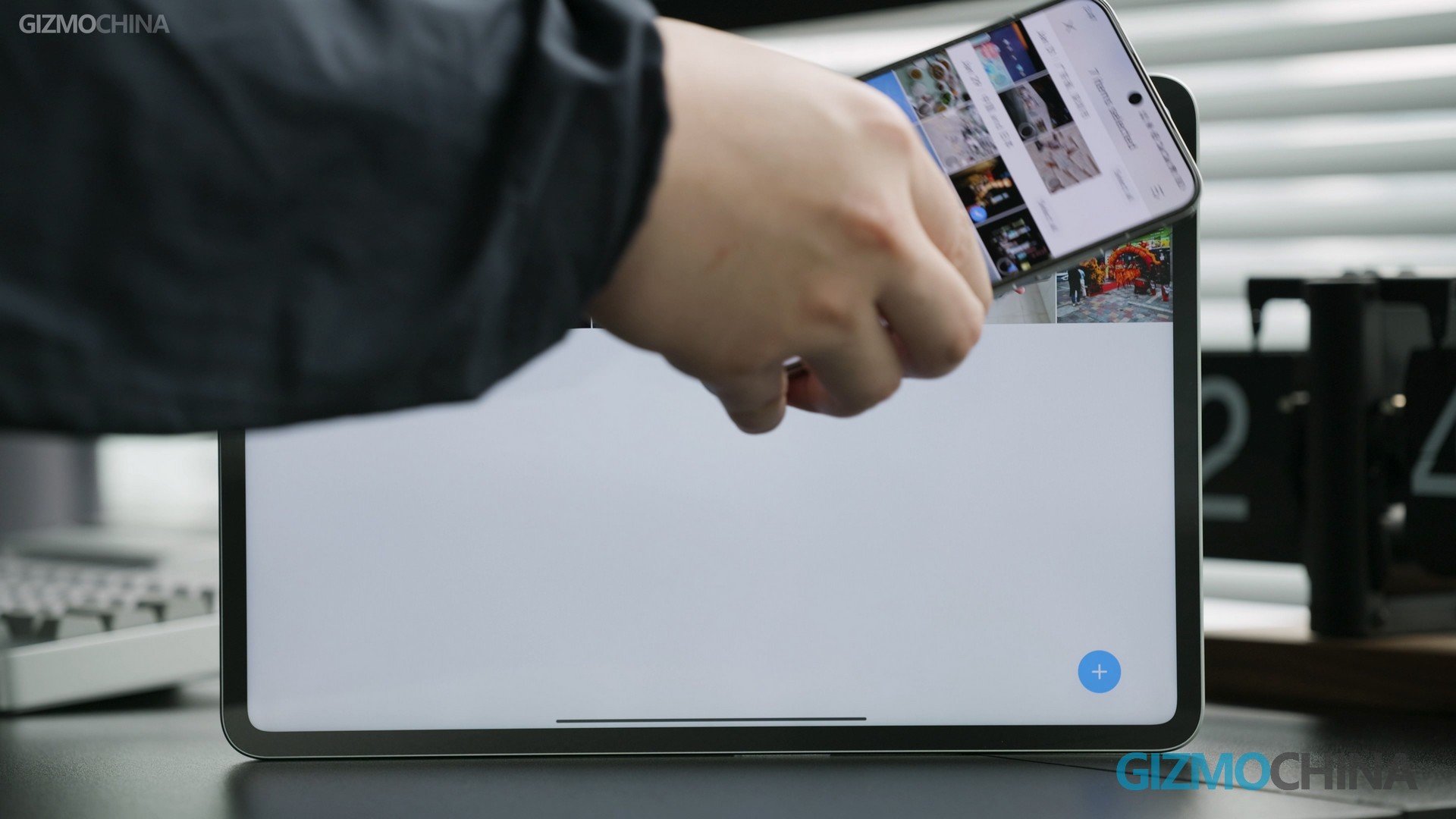
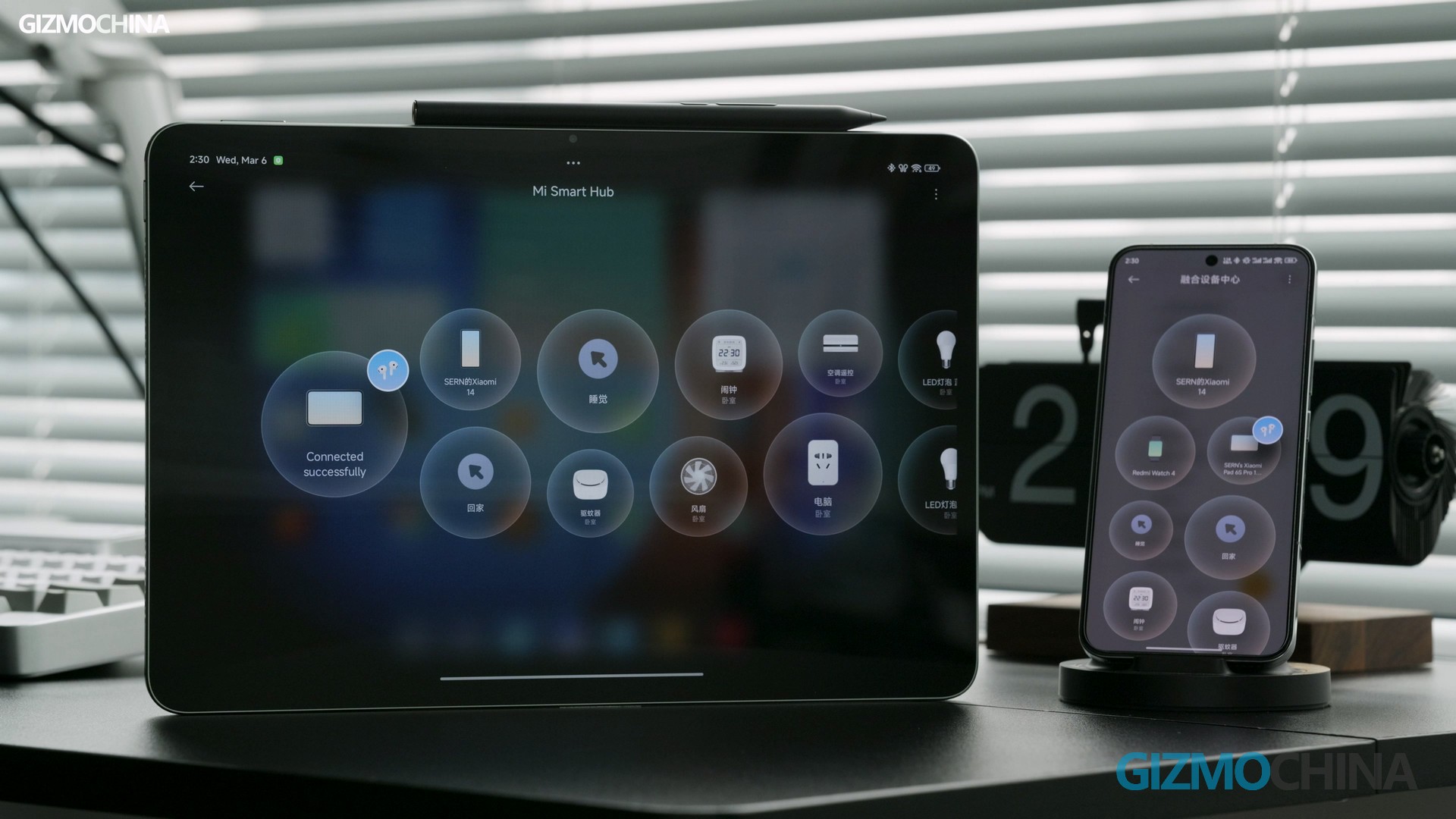
You can transfer pictures and files by touching the NFC area. You can also use this to cast your phone to the tablet. The phone can be controlled on the tablet, and transferring photos can be done by dragging the pictures over. Want to switch playback devices? Also just drag it over and the audio output device can be changed.
If you open an app on your phone, that app will also pop up in the Dock on the tablet. Click on it and the app will jump from the phone to the tablet. But this feature is currently available on very few apps, and most of the other apps don’t work.
All in all, Xiaomi Interconnectivity is all about combining your phone and tablet into one. If you own the 6S Pro, it’s a complete replacement for your phone at home, since your phone is also in this tablet.
Conclusion
The Xiaomi Pad 6S Pro 12.4 is a good tablet. If you need an 8 Gen 2 tablet with a big screen, this might just be your only option besides the expensive Samsung Galaxy Tab. With a really great stylus and HyperOS multi-device connectivity, I recommend it to everyone who owns a Xiaomi phone. But do think about whether you need a tablet that big or not, after all, a great tablet is a piece of wasted goods if you don’t use it.
OnePlus is expected to announce the OnePlus Ace 3V later this month in China. Multiple reports have claimed that it will debut as the first smartphone powered by the upcoming Snapdragon 7+ Gen 3 chipset. A Geekbench listing of the Ace 3V has emerged to not only showcase its key specifications but also the details of the new chip.
OnePlus Ace 3V Geekbench listing
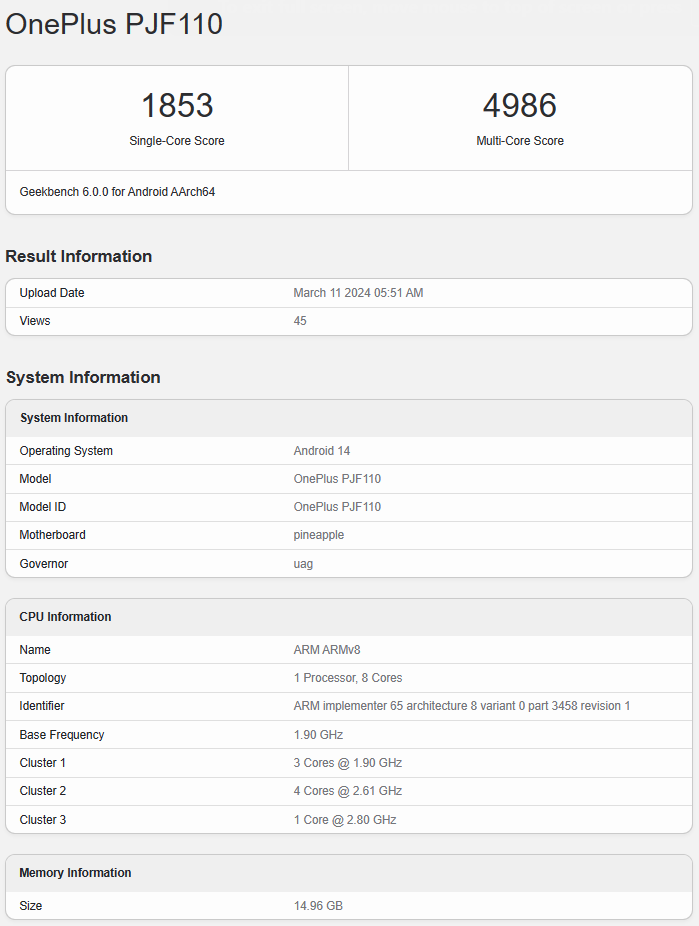
Reports have revealed that the upcoming Ace 3V has the PJF110 model number. The said device was recently spotted at certification platforms, such as 3C and UCFS, in China. Now, the same device has appeared on Geekbench with 16 GB of RAM and Android 14. As far as the chipset is concerned, the listing reveals it includes one prime CPU core working at 2.80GHz, four CPU cores clocking at 2.61GHz, and three CPU cores running at 1.90GHz.
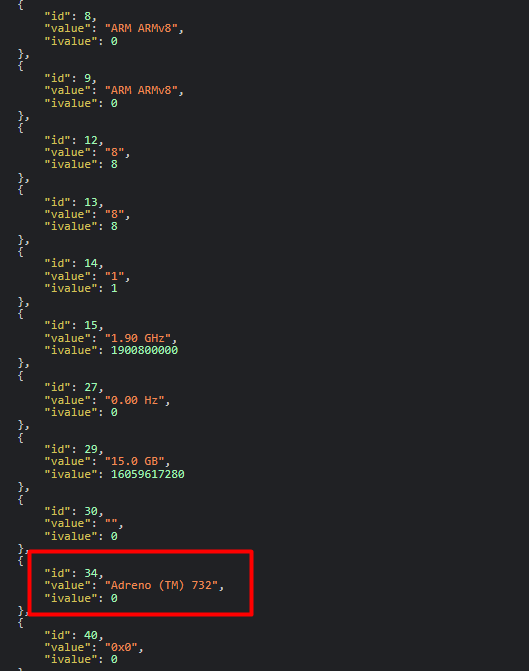
The source code of the listing reveals that the CPU features Adreno 732 graphics. In the single-core and multi-core tests, the device scored 1653 and 4596 points, respectively. The Geekbench listing is a good hint that the company could be internally testing the phone’s performance before its official announcement.
OnePlus Ace 3V specifications (rumored)
According to reports, the OnePlus Ace 3V will have an OLED panel that offers a 1.5K resolution and a 120Hz refresh rate. It will have a 16-megapixel front camera and a 50-megapixel main camera with OIS support on the back. The device will boot to ColorOS 14-based Android 14.
The Snapdragon 7+ Gen 3-powered device may offer 512 GB of storage and a 5,500mAh battery with 100W fast charging. It will come with other features, such as dual speakers, an IR blaster, and an in-screen fingerprint sensor. Globally, the device is likely to carry slightly modified specs and the OnePlus Nord 4 branding.
Apple, known for its walled-garden approach, is dipping its toes into the world of AI-powered advertising. According to a report from Business Insider, Apple is testing a new tool that leverages artificial intelligence to optimize ad placement within the App Store, similar to offerings from Google and Meta.
Apple will seemingly slowly expand its AI to other services like Maps and Books
This new system, currently being piloted with a select group of advertisers, aims to streamline the advertising process. Advertisers simply provide Apple with their budget, target audience details, and desired countries. The AI then takes the reins, automatically determining the most effective placement for their ads across the App Store’s existing ad slots. These include “Search Tags,” “Search Results,” “You Might Also Like” recommendations, and ads displayed on the App Store’s opening “Today” page.
This shift reflects Apple’s willingness to learn from industry leaders like Google and Meta, who have already established successful AI-powered ad platforms (Performance Max and Advantage+ respectively). Experts believe this is just the first step, with Apple potentially expanding its AI-driven advertising efforts to other services like Maps, Apple TV+, Books, and even their newly launched sports app.
“Any automated tool like PMax [Performance Max] will need a variety of placements to really generate value,” noted Eric Seufert, an analyst and investor specializing in mobile development. This aligns with the speculation from Bloomberg’s Mark Gurman, who previously suggested Apple’s advertising ambitions extend beyond the App Store.
Further bolstering this theory is Apple’s recent hiring of Joseph Cady, a veteran advertising executive with extensive experience in data-driven and targeted advertising. Cady’s background in building partnerships with major players like Amazon, Google, and TikTok suggests Apple might be preparing to enter a more competitive advertising landscape.
While Apple has yet to officially comment on the AI-powered ad placement tool, Business Insider anticipates a formal launch in the coming months. This move signifies a potential shift in Apple’s advertising strategy, one that could see them leverage AI to personalize user experiences while simultaneously generating new revenue streams.
The world of robot companions just got a little more crowded – and a little more legged. While Boston Dynamics‘ Spot has dominated the robot dog scene, Lenovo has entered the ring with the “Daystar Bot GS.”
The robot dog companion has an extra leg as compared to Boston Dynamics’ Spot
This robotic canine boasts a similar design to Spot, but with a crucial difference: an extra leg. This additional appendage could potentially enhance the Daystar Bot GS’s stability and maneuverability, particularly on uneven terrain.
According to reports, the Daystar Bot GS is built for tackling challenging environments. It boasts “advanced control systems” that likely translate to precise movements and navigation. “Cutting-edge perception algorithms” suggest the robot dog can interpret its surroundings and react accordingly, while “IP66 protection” indicates a level of dust and water resistance crucial for outdoor operation.
Beyond these technical details, the official website, as reported by IT Home, reveals the Daystar Bot GS’s intended applications. Lenovo seems to be targeting the “trade, industry and public sectors,” hinting at potential uses in fields like construction, inspection, and even search and rescue.
While specific details about the Daystar Bot GS’s functionalities remain under wraps, its launch marks an interesting development in the robot dog market. Whether the extra leg translates to a significant advantage over Spot and other competitors remains to be seen. However, Lenovo’s entry into this growing field promises to spark further innovation and exploration of the potential applications for robotic companions. The official release date set for later this year will hopefully bring more information about the Daystar Bot GS’s capabilities.
The world of surgical technology has taken another leap forward, thanks to Apple’s mixed-reality headset, Vision Pro. In a recent spinal fusion surgery performed in London, England, surgical assistant Suvi Verho swapped her usual Microsoft HoloLens 2 for the Vision Pro – and the results were nothing short of groundbreaking.
The assistant previously used the Microsoft HoloLens 2 headset for similar surgeries
Verho, who donned the Vision Pro headset during the operation, described it as a “game-changer.” Unlike traditional methods where assistants might need to physically locate tools, the Vision Pro eliminates the potential for human error. “Using the headset eliminates human error…it takes away the guesswork and gives you confidence in the surgery,” Verho explained in an interview.
This isn’t Verho’s first experience with augmented reality (AR) in the operating room. Previously, she used a HoloLens 2 headset for similar surgeries. However, Verho seems to suggest that the Vision Pro offers a significant upgrade.
The benefits extend beyond just eliminating human error. Dr. Syed Aftab, the surgeon who performed the operation, highlighted the potential for improved efficiency and knowledge transfer. “During the operation, nurses often need to work with unfamiliar equipment,” Dr. Aftab noted. “After using the Apple Vision headset, they can learn from some experience and reduce the running-in time.”
Verho’s experience and Dr. Aftab’s observations mark a promising step forward for AR integration in surgery. The ability to visualize and access tools seamlessly within the operating field holds the potential to enhance surgical precision, reduce errors, and improve overall efficiency.
While this is just a single case study, it paves the way for further exploration of how AR technology like Apple Vision Pro can revolutionize the operating room and ultimately improve patient care.
We use cookies on our website to give you the most relevant experience by remembering your preferences and repeat visits. By clicking “Accept”, you consent to the use of ALL the cookies.
This website uses cookies to improve your experience while you navigate through the website. Out of these, the cookies that are categorized as necessary are stored on your browser as they are essential for the working of basic functionalities of the website. We also use third-party cookies that help us analyze and understand how you use this website. These cookies will be stored in your browser only with your consent. You also have the option to opt-out of these cookies. But opting out of some of these cookies may affect your browsing experience.
Necessary cookies are absolutely essential for the website to function properly. This category only includes cookies that ensures basic functionalities and security features of the website. These cookies do not store any personal information.
Any cookies that may not be particularly necessary for the website to function and is used specifically to collect user personal data via analytics, ads, other embedded contents are termed as non-necessary cookies. It is mandatory to procure user consent prior to running these cookies on your website.