The Xiaomi Mi 10 series from 2020 will get HyperOS update. This piece of information was recently revealed by Zhang Guoquan, director of Xioami’s mobile system software department.
As per the executive, the update will arrive in April. Although he does not specify, the initial release should be limited to beta testers.
Xiaomi Mi 10 Pro
The users of the Xiaomi Mi 10 series are some of the luckiest. These devices, namely Mi 10, Mi 10 Pro, and Mi 10 Ultra were not part of Xiaomi’s 2021 software policy, which promises 3 Android updates.
Now, according to a company official, the Mi 10 and the Mi 10 Pro, which were introduced with MIUI 11, will be treated to their fourth major software in the form of HyperOS. The same update will be the third major one for Mi 10 Ultra as it was launched with MIUI 12.
However, the HyperOS update for the Mi 10 series may not bring Android 14. Because HyperOS for older phones is based on Android 13.
We will keep you posted whenever new details emerge regarding the HyperOS update for Mi 10 phones. Meanwhile, you can read our story on how hyperOS differs from MIUI.
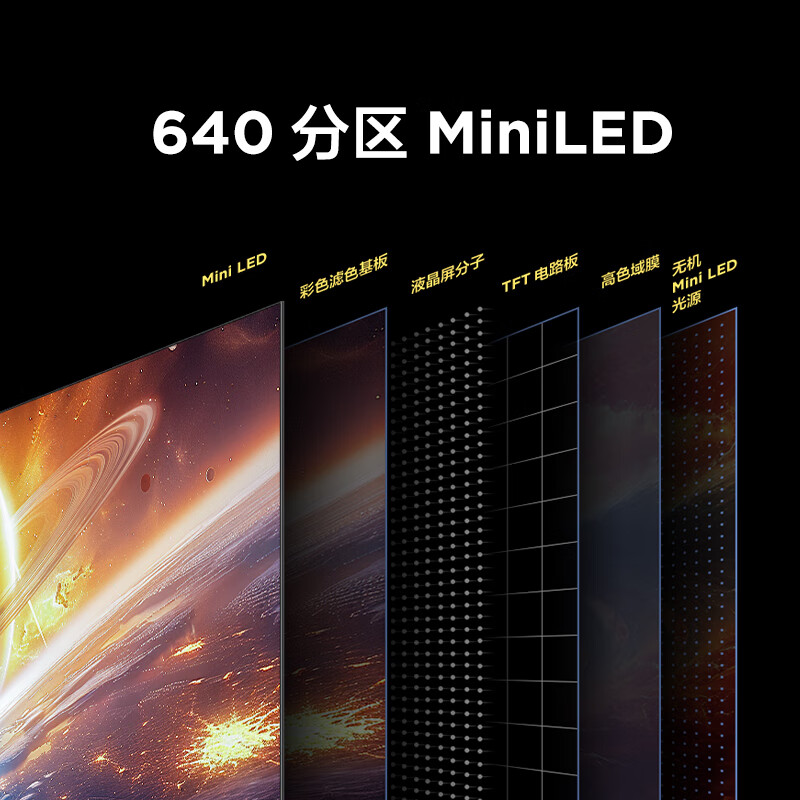
TCL has expanded its FFALCON Thunderbird Crane 6 Pro lineup with a new 75-inch model featuring a MiniLED display. This comes after the launch of the 55-inch and 65-inch versions earlier this month.
The 75-inch model boasts significant upgrades in the backlight zones, reaching 640 zones compared to 384 and 512 zones on the smaller models. This translates to sharper contrasts and more precise control over lighting, resulting in a more realistic viewing experience.
TCL Thunderbird Crane 6 Pro Specifications:
The 75-inch Crane 6 Pro 2024 features a MiniLED 4K VA panel with 3840 x 2160 resolution, 144Hz refresh rate, and 16:9 aspect ratio. The TV also retains the impressive features of its smaller siblings, including a peak brightness of 1300 nits, 95% DCI-P3 color gamut, and support for Dolby Vision IQ and IMAX Enhanced. It also boasts the TSR picture quality engine for intelligent frame-by-frame analysis.
Under the hood, the TCL Thunderbird Crane 6 Pro is powered by a MediaTek MT9653 processor paired with 4GB of RAM and 64GB of storage. The TV runs on Android 11.0 OS and for connectivity, it includes Wi-Fi 6 and Bluetooth 5.2.
TCL advertises the Crane 6 Pro to be free of startup advertisements, providing a more user-friendly experience. On the audio front, the TV comes equipped with a “2.1 Cinema-grade Sound” system with a maximum power output of 50W. It also features a 20W rear subwoofer for enhanced bass.
The TV TV offers a comprehensive range of connectivity options, including two HDMI 2.1 ports, alongside standard HDMI 2.0, USB 3.0, and USB 2.0 ports for versatile device connections.
Gamers will likely find the Crane 6 Pro appealing due to its dual HDMI 2.1 FRL ports with 48Gbps bandwidth. These features support 4K resolution at a 144Hz refresh rate with VRR (Variable Refresh Rate) for smoother gameplay. The TV offers a 24P movie mode for those who prefer the cinematic experience.
The Crane 6 Pro TV also includes a unique GameBar toolbar, providing gamers with on-the-fly adjustments like a crosshair overlay, dark detail enhancement, and automatic low latency mode, tailoring the gaming experience to individual preferences. Earlier this year, TCL also launched FFalcon Thunderbird Crane 7 TV 2024 models in China, which start at 4999 Yuan ($694).
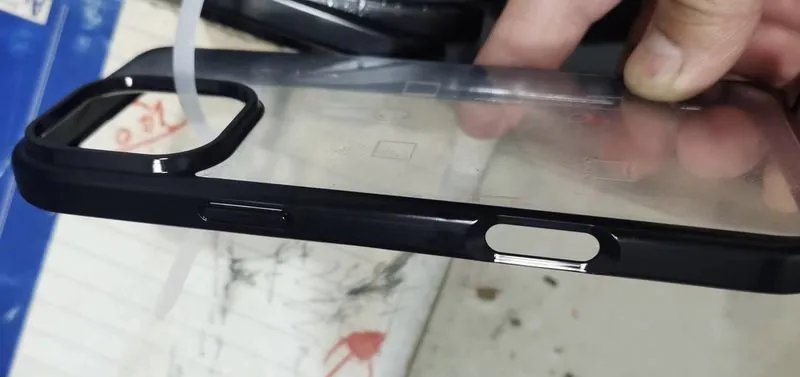
Leaked images shared by Sonny Dickson on social media have sparked excitement around a potential design change for the upcoming iPhone 16. These images showcase a third-party iPhone 16 Pro case with a dedicated cutout on the right side, precisely where rumors suggest Apple might introduce a new “camera button.”
The camera button is expected to offer full control over video and photo functions
It’s unclear whether the case manufacturer is privy to confirmed information or simply capitalizing on rumors. However, this leak aligns with reports from MacRumors earlier this year, which revealed Apple’s plans to equip all iPhone 16 models with a dedicated camera button.
This “capture button” is expected to offer intuitive control over photo and video functions. Users might be able to swipe left and right to zoom, tap for focus, and press firmly to initiate recording. The button’s design, likely flush with the phone’s body, necessitates the case cutout to ensure functionality.
An interesting implication of this new button placement is its ergonomic benefit for landscape video recording. The “capture button” would be positioned on the top edge, providing a more convenient shutter release compared to relying on the current volume button method.
It’s important to note that the addition of this button might necessitate a slight redesign for US models of the iPhone 16. The millimeter wave 5G antenna opening would likely be relocated to the bottom left side of the phone, below the volume buttons. This wouldn’t affect models in other regions, which have relied solely on sub-6 GHz bands since the iPhone 12.
With Apple expected to unveil the iPhone 16 series in September, these leaks offer a glimpse into potential design changes and functionalities. For now, all this information must be taken with a grain of salt, but we are in for exciting new developments – that’s for sure.
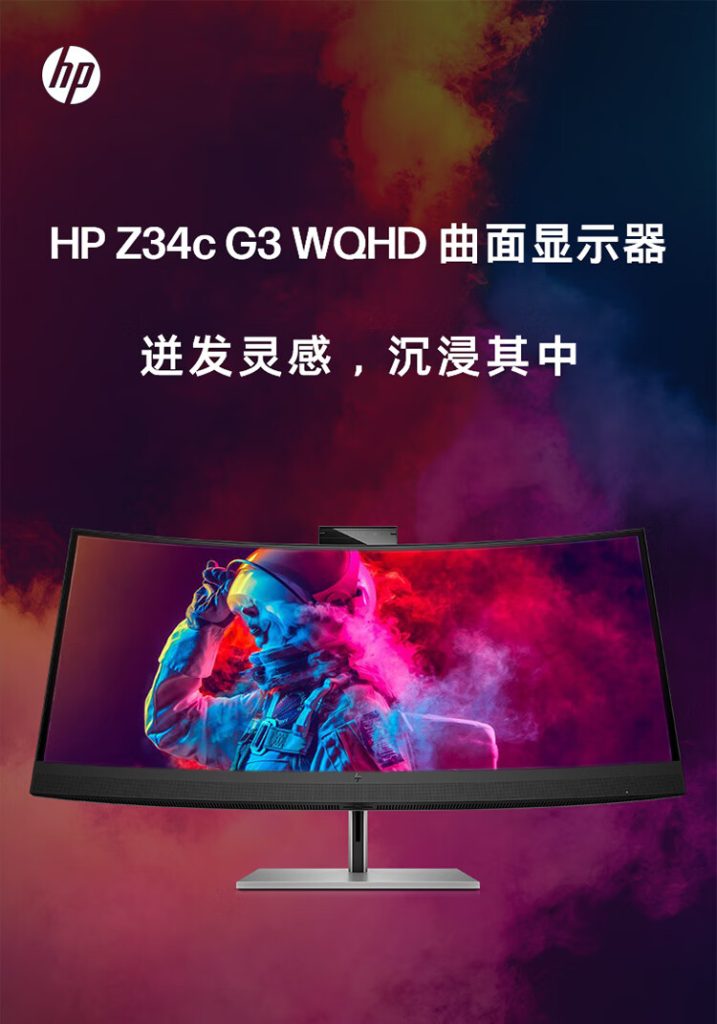
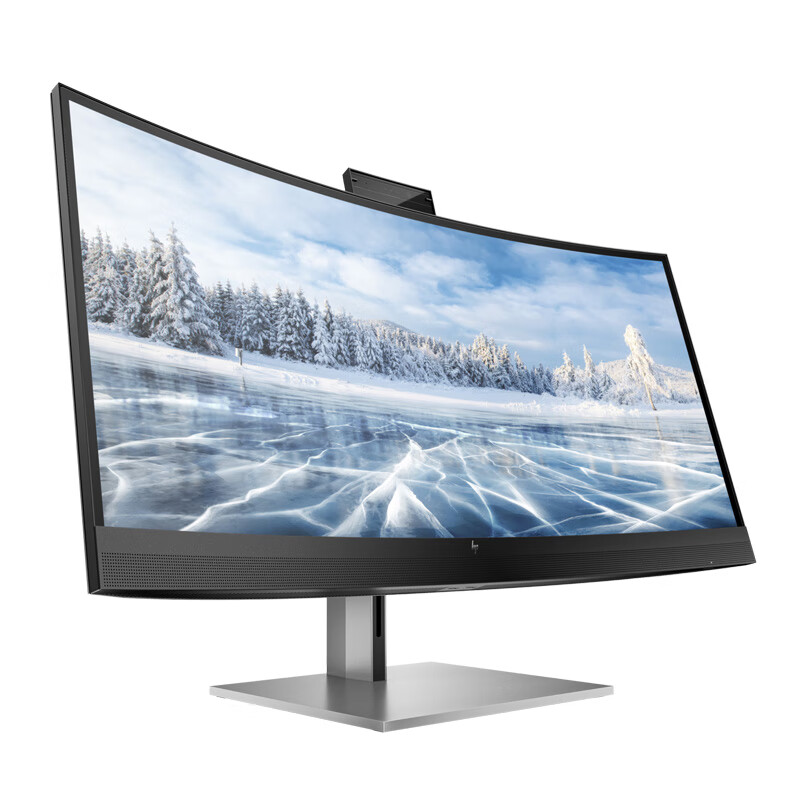
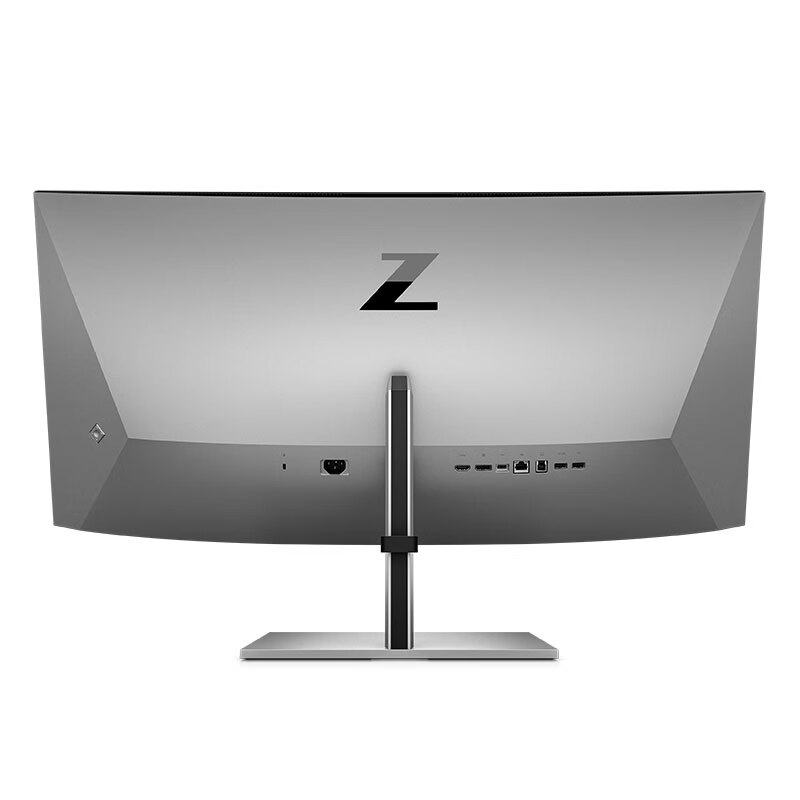
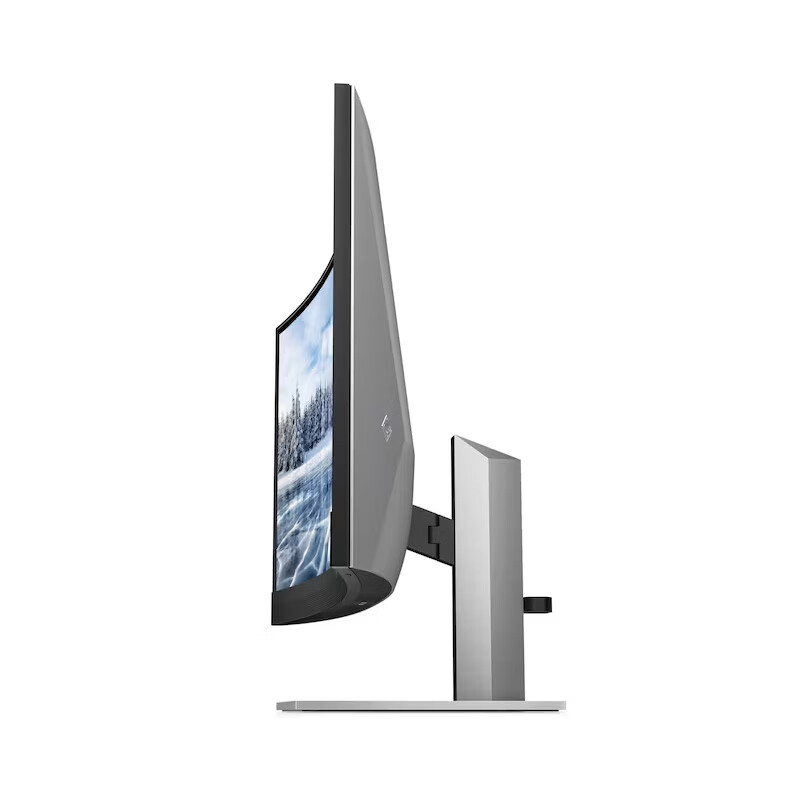
HP has just launched its latest curved monitor called the Z34c G3 WQHD in the Chinese market. This 34-inch display boasts a wide array of features designed to enhance productivity and user comfort, making it a compelling option for creative professionals and office workers alike. The monitor is currently available on JD.com for a listed price of 5999 yuan (around $831).
HP Z34c G3 Specifications:
The Z34c G3 features a large 34-inch curved IPS panel with a WQHD resolution of 3440 x 1440 pixels. This ultrawide aspect ratio (21:9) provides a significant amount of screen real estate, allowing users to view multiple windows and applications simultaneously without feeling cramped.
The monitor also boasts a brightness of 350 nits and supports 99% sRGB, a contrast ratio of 1000:1, and 85% DCI-P3 color gamuts, ensuring vivid and accurate color reproduction. Additionally, factory color calibration guarantees out-of-the-box color accuracy, saving users the hassle of manual adjustments.
For seamless video conferencing experiences, the Z34c G3 integrates a pop-up 5MP camera with a tilt angle adjustment for customized positioning. The built-in noise-cancelling microphone further enhances audio clarity during calls. HP highlights that the monitor has undergone rigorous audio and video quality tests and is Zoom-certified, signifying its suitability for professional video conferencing needs.
The HP Z34c G3 WQHD comes equipped with circular front speakers. It also features HP Display Center software, allowing for easy screen partitioning and customization. Additionally, it boasts HP Eye Ease, a TÜV-certified hardware-level blue light solution to reduce eye fatigue during long working hours.
The monitor also boasts a three-way adjustable ergonomic stand, enabling users to customize tilt, swivel, and height for a comfortable viewing experience that reduces fatigue during long work hours.
The Z34c G3 comes equipped with a variety of connectivity options, including a USB-C port with 100W Power Delivery for charging laptops and transmitting data and video with a single cable. Additionally, the monitor offers DisplayPort 1.4, HDMI 2.0, USB-A ports, a USB-B port, and an RJ-45 Ethernet port, ensuring compatibility with various devices and peripherals.
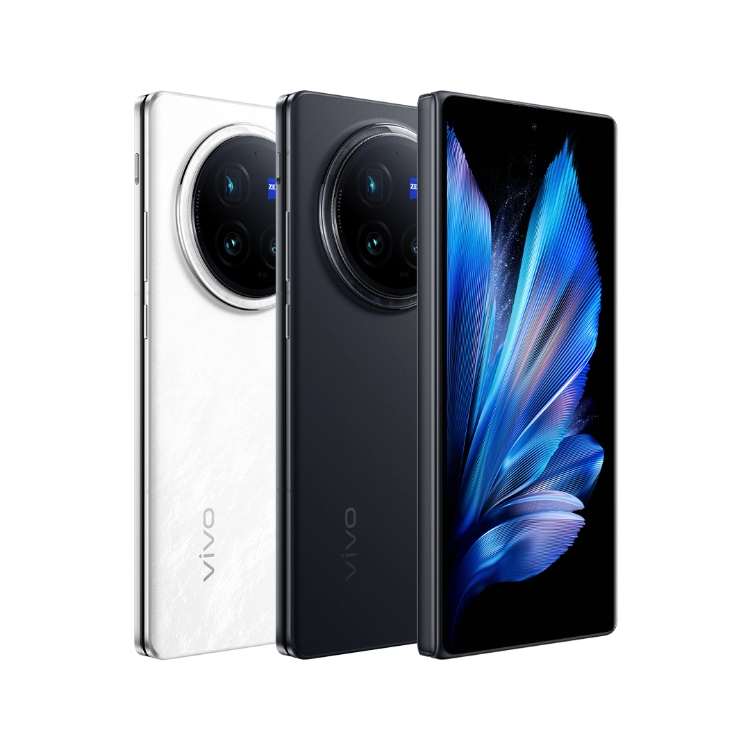
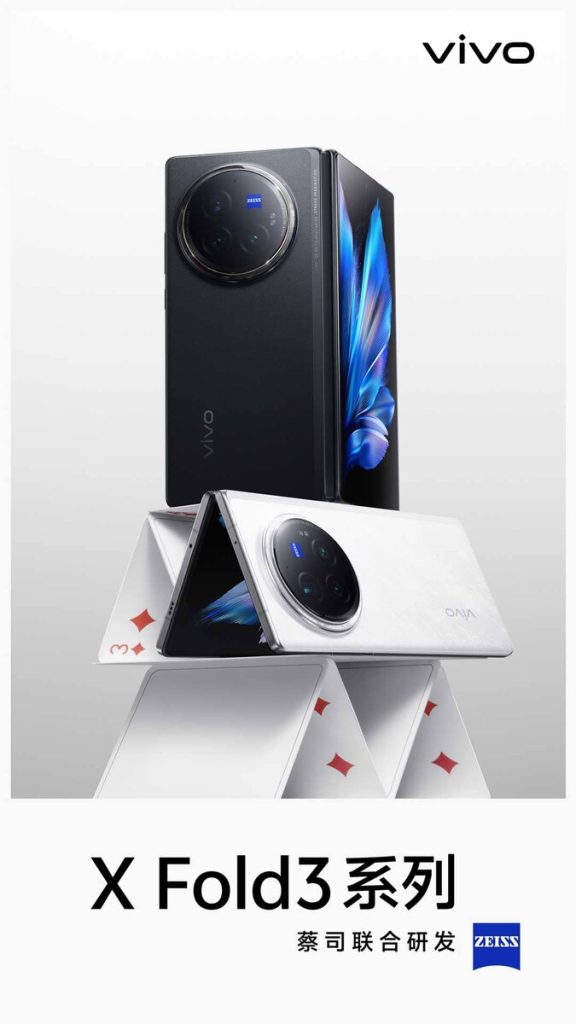
Vivo has launched its third-generation X Fold today in China alongside other products. The X Fold 3 series includes a standard and pro variant. The latter is the more premium offering among the two devices with top-of-the-line specifications. Both phones share some identical specifications and also differences between each other. The X Fold 3 arrives as the successor to the last year’s X Fold 2(review). Read on to know what the foldable phones offer out of the box.
Vivo X Fold 3 series specifications and features
The Vivo X Fold 3 and X Fold 3 Pro sport identical OLED displays. The external screen is 6.53 inches bearing a resolution of 2,480 x 2,200 pixels whereas the internal display measures 8.03 inches with 2,748 x 1,172 pixels. Both screens feature a LTPO 120Hz refresh rate and a 4,500 nits peak brightness. The X Fold 3 Pro is also equipped with an integrated ultra-sonic fingerprint scanner, meanwhile, the standard variant relies on side-mounted scanner.
Design-wise, the Vivo X Fold 3 series features a circular rear camera module. The standard variant is said to be the slimmest foldable phone measuring just 4.65mm when folded. It is also lightweight than the iPhone 15 Pro Max tipping the scales at 219 grams. Vivo says that the X Fold 3 series has a carbon-fiber ultra-durable lightweight hinge. The foldable phone has bagged the first Swiss SGS five-star drop-resistant certification thanks to the armour glass. The Pro and standard models are IPX8 and IPX4-certified water-resistant.
On the optics front, the Vivo X Fold 3 series has triple rear cameras. The setup on both phones comprises of a 50MP OV50H OIS-enabled main sensor and a 50MP ultra-wide-angle lens. Meanwhile, the third unit on the standard model includes a 50MP portrait whereas the X Fold 3 Pro has a 64MP OIS periscope shooter with 3x optical zoom and 70mm focal length. The X Fold 3 series features 32MP cameras housed inside a centre-aligned punch-hole cutout of the internal and external displays. Only the Pro model comes with the company’s self-developed V3 imaging chip.
Under the hood, the Vivo X Fold 3 Pro houses the Snapdragon 8 Gen 3 processor whereas the standard model is equipped with an older Snapdragon 8 Gen 2 chip. Both phones pack up to 16GB LPDDR5 RAM and 1TB UFS 4.0 storage. The X Fold 3 is backed by a 5,500mAh battery with support for 80W fast charging whereas the Fold 3 Pro has a 5,700mAh cell maxing out at 100W charging speed and also supports 50W wireless charging.
The Vivo X Fold 3 series has stereo speakers and Wireless Lossless Hi-Fi audio. Connectivity options include WiFi-7, dual-SIM 5G, IR Blaster, and NFC.
Vivo X Fold 3 series pricing
The Vivo X Fold 3 Pro comes in 16GB + 512GB and 16GB + 1TB RAM and storage configurations. These are priced at CNY 9,999 (~$1,385) and CNY 10,999 (~$1,523) respectively. The standard X Fold 3 starts at CNY 6,999 (~$969) while the 16GB + 256GB costs CNY 7,499 (~$1,038). The 16GB + 512GB and 16GB + 1TB carry a price tag of CNY 7,999 (~$1,108) and CNY 8,999 (~$1,246) respectively. Both phones come in Black and White colors.
As usual, Apple is expected to unveil the iPhone 16 series later in fall this year. The design as well as key details of the next-generation lineup have already surfaced in leaks and rumors. The Pro models will reportedly pack some major changes including a dedicated camera button and more. Now, a leaker ShrimpApplePro has revealed info regarding the colour variants of the iPhone 16 Pro devices.
iPhone 16 Pro models may get two new colours
Well, according to the Weibo account, we will have a new color called Rose this year No natural titanium and blue titanium He was quite accurate on the iPhone 14 pro ‘s purple color. https://t.co/wVaPOOU7XRpic.twitter.com/BSs2H0tlID
Apple introduced titanium chassis on the iPhone 15 Pro models. Its successors this year will also retain the same. The iPhone 15 Pro and Pro Max come in natural titanium, blue, white, and black colour options. As per ShrimpApplePro, the Cupertino-based tech giant could drop the Blue Titanium variant. Instead, it will be replaced by a Rose Titanium shade on the iPhone 16 Pro duo.
Last year was the first time Apple did not release a Gold colour variant in the iPhone 15 series. It has been a regular since the iPhone XS in 2018. The Rose shade that is tipped seems to be a titanium version of Gold. Thus we can expect it to make a comeback on this year’s Pro devices. Additionally, the Black option of the iPhone 16 Pro will be described as Space Black just like the iPhone 14 Pro.
The leaker also adds that the White and Natural Titanium colours on the iPhone 16 Pros will look slightly different. The former will look more like Silver White whereas the latter could include a Grey tint in the shade.
It’s worth noting that ShrimpApplePro was accurate with the iPhone 14 Pro’s Deep Purple colour variant.
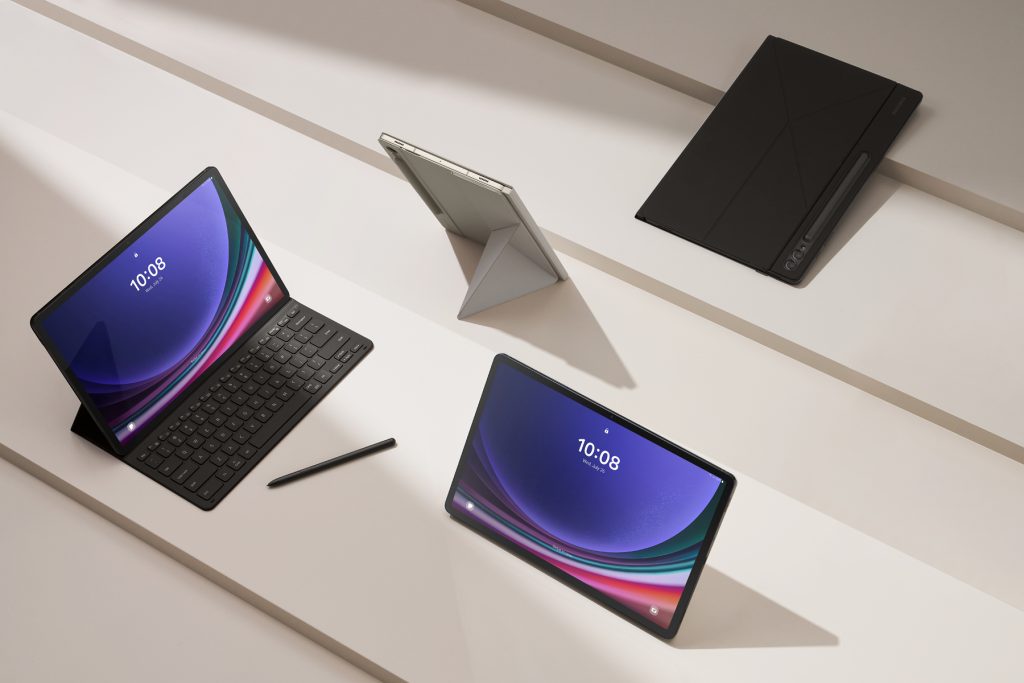
Alongside the launch of new foldables and TWS earphones, Vivo has also announced a new tablet. The latest offering is the Vivo Pad 3 Pro. It packs premium specifications. The brand has not announced a standard variant. It could arrive sometime in the future as the successor to the Pad 2. Read on to know what the Pad 3 Pro offers out of the box.
Vivo Pad 3 Pro specifications and features
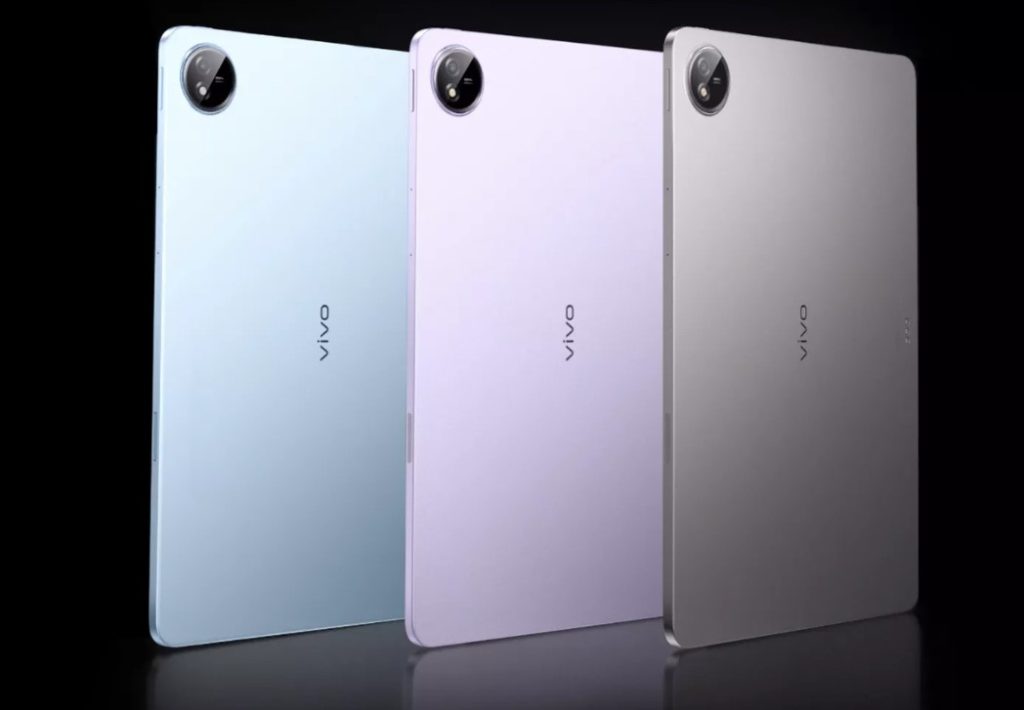
The Vivo Pad 3 Pro boasts a large 13-inch display bearing a resolution of 3.1K pixels. It features a 144Hz refresh rate, 900 nits peak brightness, P3 colour gamut, and supports HDR10. On the audio front, the tablet is equipped with an eight-speaker system along with 3D panoramic sound and more. Design-wise, the Vivo Pad 3 Pro has a flat frame and a circular camera module housing a single 13MP sensor. There is an 8MP front-facing selfie snapper and a side-mounted fingerprint scanner embedded in the power button.
Under the hood, the Vivo Pad 3 Pro is the first tablet in the world to be powered by a MediaTek Dimensity 9300 processor. It packs up to 16GB LPDDR5 RAM and 512GB UFS 4 storage. There is a large vapour cooling chamber for heat dissipation. The tablet is backed by an 11,500mAh battery unit with support for 66W fast charging.
The Vivo Pad 3 Pro runs on OriginOS 4 based on Android 14 out of the box. Connectivity options include WiFi-7, Bluetooth 5.4, NFC, and USB-C port. The tablet is compatible with Vivo Pencil 2 and keyboard.
The Vivo Pad 3 Pro starts at CNY 2,999 (~$415) for the base 8GB + 128GB variant whereas the 8GB + 256GB costs CNY 3,299 (~$457). The 12GB + 256GB and 16GB + 512GB RAM and storage configurations carry a price tag of CNY 3,599 (~$498) and CNY 3,999 (~$553). Pre-registrations start today with sales commencing from April 3. The device is offered in Grey, Blue, and Purple color options.
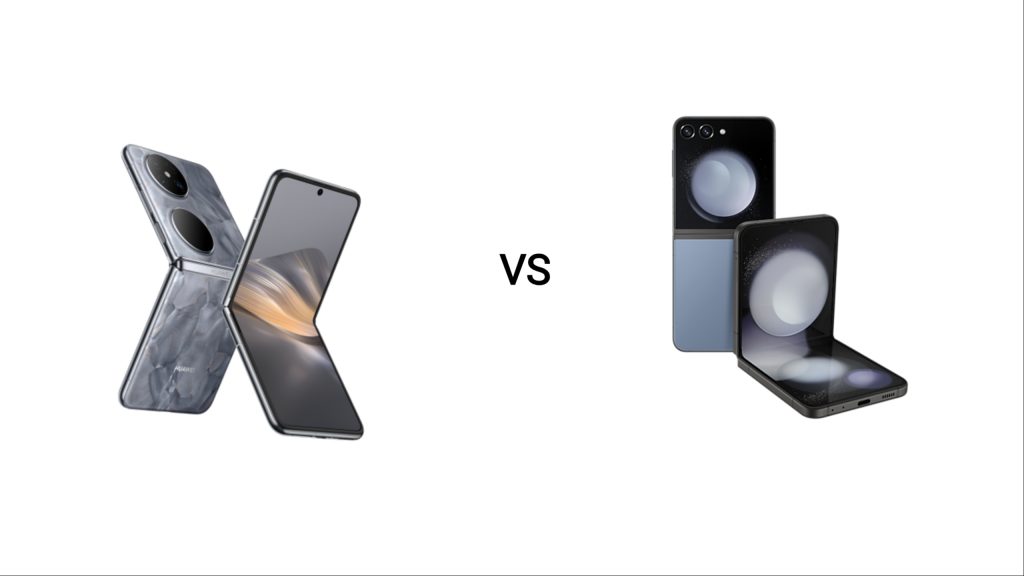
In this article, we compare the more popular Samsung Galaxy Z Flip 5 against another clamshell folding device that isn’t as popular. The second device in question is a clamshell foldable device, just like the one from Samsung in consideration in this article. This device is the new Huawei Pocket 2 and just like the Galaxy Z Flip 5 this entry also packs some impressive features.
Buyers living in China as well as other Asian regions will face this Huawei Pocket 2 vs Samsung Z Flip 5 dilemma when shopping for a new clamshell folding device. Each device brings features that help it to stand out from the competition. If you are looking to purchase a new clamshell folding device, this article will help you pick the better option.
Huawei Pocket 2 vs Samsung Z Flip 5: Price
Huawei Pocket 2:
All storage variants available retail start at $1042
Samsung Z Flip 5:
All storage variants available retail start at $999
Please Note: When you buy something using the links in our articles, we may earn a small commission at no cost to you.
Huawei Pocket 2 vs Samsung Z Flip 5: Design and colours
Huawei Pocket 2:
The design of this foldable device is premium to the very last bit, with solid materials and an impressive hinge mechanism. With this device, Huawei took the design of its predecessor and found ways to make it even better with a slightly larger cover display and an extra camera. On its right side sits the volume rocker keys and the power button that doubles as the fingerprint sensor.
The charging port sits at the base of the device, on the rear you’ll find two Huawei logos, one on the bottom folding half and the other on the hinge. There are no buttons on the left side of this device, giving it a flush finish. Overall, the materials on this device are very impressive considering its asking price, and it comes with an art version with the Blue Dream colour option.
Samsung Z Flip 5:
The Samsung Z Flip 5 brought a ton of design upgrades from its predecessor. This device features a massive 3.4-inch external cover display, flat edges, and a new hinge mechanism. Just like the Huawei Pocket 2, this device puts all buttons on the right-hand side of the screen.
The power button on this device doubles as a fingerprint sensor for security unlocking. This is also the first Z Flip device from Samsung that folds completely flat thanks to its new hinge mechanism. Colour options on this device are Mint, Graphite, Cream, Lavender, Gray, Blue, Green, Yellow, and they only reflect on the bottom folding half of the device since the top folding half is a big screen.
Major differences:
The large cover display on the Samsung Galaxy Z Flip 5 isn’t perfect.
Impressive design on the Huawei Pocket 2.
Flat sides on the Samsung Galaxy Z Flip 5.
Huawei Pocket 2 vs Samsung Z Flip 5: Display
Huawei Pocket 2:
The Huawei Pocket 2 comes with a massive 6.94-inch LTPO OLED screen panel and a smaller circular 1.15-inch LTPO OLED cover display panel. Users of this device will benefit from the fast 120Hz folding display, which is almost crease-less due to the new hinge mechanism. On the smaller 1.4-inch cover display, users get to play around with various customizable widgets and also get their notifications here. This device also features even bezels around the folding display, which is great for viewing content.
Samsung Z Flip 5:
Being a Samsung device, the Galaxy Z Flip 5 comes with some of the best display technology on the market. The main screen is a 6.7 foldable Dynamic AMOLED panel, and it gives off a maximum brightness of 425ppi. Up front is a 3.4-inch Super AMOLED panel; this cover display is much larger than the one on the Huawei Pocket 2. In terms of screen-to-body ratio, this entry from Samsung features slightly larger bezels than we see in the competition in this article.
Major differences:
Overall better display on the Samsung Galaxy Z Flip 5.
Less display crease on the Pocket 2.
Larger cover display on the Samsung Galaxy Z Flip 5.
Huawei Pocket 2 vs Samsung Z Flip 5: Cameras
Huawei Pocket 2:
The cameras on this new foldable device are improved from its predecessor. This device adds an extra rear 2MP autofocus sensor while upgrading the main camera to a 50MP, which is quite impressive. Up front, users get a 10.7MP camera, which is the same as the Huawei Pocket. For better photography, this device comes with the Huawei in-house Xmage photography sensor, which isn’t available on the Huawei Pocket.
Samsung Z Flip 5:
Moving over to the camera department, this device comes with a dual rear camera setup. Both rear cameras on this device, the main sensor and the ultra-wide sensor, are 12MP lenses. Up front, we see a 10MP selfie camera lens which is great for taking selfies, and considering the fact that the cover display on this device is large, the main camera can be used as a selfie camera. Just like with the Huawei Pocket 2 this device supports 4K video recording in both front and rear cameras.
Major differences:
A 50MP main camera on the Huawei Pocket 2.
Xmage technology on the Huawei Pocket 2.
More ease with using the main camera as the selfie camera on the Galaxy Z Flip 5.
Huawei Pocket 2 vs Samsung Z Flip 5: Performance
Huawei Pocket 2:
At this moment, there is no information on the actual processor in this clamshell folding device. However, we do know that this device features an in-house processor from Huawei. Storage here goes up to 1TB on the 12GB RAM configuration.
Samsung Z Flip 5:
Samsung makes use of an impressive processor on this device, and it is none other than the Qualcomm Snapdragon 8 Gen 2. Joining this flagship processor is 8GB worth of RAM capacity as standard. Coming to storage, buyers can pick between a 256GB option or a 512GB option depending on their individual needs.
Major upgrades & differences:
Up to 1TB storage on the Huawei Pocket 2.
Huawei Pocket 2 vs Samsung Z Flip 5: Software
Huawei Pocket 2
This device runs on Huawei’s Harmony OS out of the box.
Samsung Z Flip 5:
The Samsung Galaxy Z Flip 5 comes with Android 13 and One UI 6 out of the box and will get up to 5 years of OS upgrades.
Major differences:
The option from Huawei runs on the brand’s in-house operating system.
The option from Samsung runs on Android.
Huawei Pocket 2 vs Huawei Pocket: Battery life and charging
Huawei Pocket 2:
This clamshell folding device comes with a 4520mAh battery capacity which will be able to carry it through the day on a single charge. It also supports 40W fast wired charging and 5W wire and wireless reverse charging. This is an upgrade from the Huawei Pocket that doesn’t offer reversed wireless charging.
Samsung Z Flip 5:
This device comes with a much smaller battery capacity, 3700mAh. It supports 25W fast charging, 15W fast wireless charging, and 4.5W reverse wireless charging. With this battery capacity, users might get up to a day of basic usage on a single charge.
Major differences:
Larger battery capacity on the Huawei Pocket 2.
Faster charging on the Huawei Pocket 2.
Wireless charging on the Galaxy Z Flip 5
Huawei Pocket 2 vs Huawei Pocket: Final Verdict
For the global market, the Samsung Galaxy Z Flip is the better buy overall. This has nothing to do with the specifications, as both devices pack impressive specifications and features. Instead, this has to do with the fact that purchasing a Huawei Pocket 2 outside its home base market will be very difficult for most people.
However, in mainland China and other Asian regions, the Huawei Pocket 2 holds well against the Samsung Galaxy Z Flip 5. It comes with a larger battery, more cameras, a more classy design, more memory options, and larger storage as well as a larger screen size. The Galaxy Z Flip 5 however, packs a better display, runs Android, and is a bit cheaper than Huawei’s entry in this article.
Vivo is launching the X Fold 3 Pro foldable smartphone in China today, and it seems the company has plans to launch it globally as well. Vivo X Fold 3 Pro’s global variant has recently appeared on Indonesia’s SDPPI certification website suggesting that its release in Indonesia could be imminent.
The smartphone has made an appearance on the certification platform with the certificate number 98278/SDPPI/2024, model number V2330, and moniker X Fold 3 Pro.
The phone’s appearance on certification suggests that its global launch is on the horizon which will make it Vivo’s first foldable for the global market. Previously, the company’s foldable devices were exclusive to the Chinese market.
The Vivo X Fold 3 Pro will boast a tough “Armor Feather” body and an improved hinge for durability and reduced screen creasing. The Pro model is 11.2mm thick when folded, 5.2mm when unfolded and weighs 236 grams.
The foldable will feature a large 8.03-inch foldable OLED display and a 6.53-inch OLED cover display with high resolutions and ultrasonic fingerprint scanners. There will also be support for a smooth 120Hz refresh rate and a peak brightness of 3000 nits.
In terms of performance, the foldable is said to be powered by a Snapdragon 8 Gen 3 processor and paired with 16GB of LPDDR5x RAM and 512GB or 1TB UFS 4.0 storage options. It will run on the latest Android 14-based OriginOS 4.
Keeping the lights on will be a 5,800mAh battery, 120W wired charging, and 50W wireless.
The X Fold 3 Pro camera system is expected to have a 50MP main sensor, a 64MP periscope telephoto with 3x optical zoom, and a 50MP ultrawide. There will be dual 32MP front cameras on the inner and outer screens.
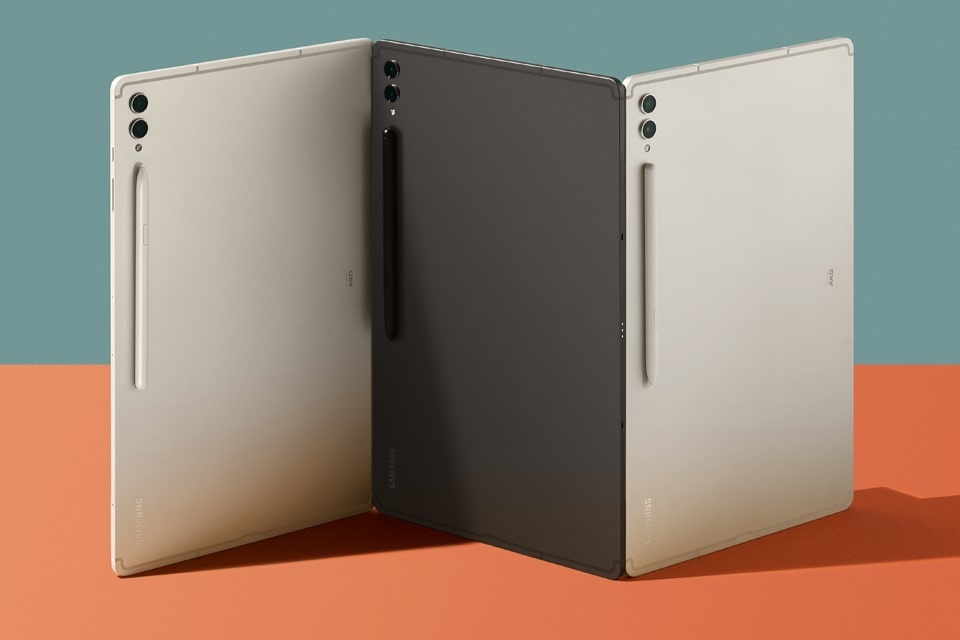
Samsung’s upcoming Galaxy Tab S10 series devices have been surfacing on certifications here and there. Now, rumors about these devices are starting to surface online.
According to a new rumor from Naver leaker yeux1122, Samsung is considering a dual-AP approach for the Galaxy Tab S10 series. Historically, Samsung’s flagship tablets and foldable phones have relied on Snapdragon system-on-chips (SoCs).
Although details are still scarce regarding which models will feature the Exynos variant or Snapdragon variant, if Samsung follows a strategy similar to the Galaxy S24 series, the base Galaxy Tab S10, and Tab S10+ are likely to come with Samsung’s own Exynos 2400 processor.
The top-of-the-line Galaxy Tab S10 Ultra might come with Qualcomm’s Snapdragon 8 Gen 3 for Galaxy.
Samsung might also bring the practice of regionally differing chipsets like in smartphones for its upcoming tablets. If that pans out, all the devices in the Galaxy Tab S10 series will feature Snapdragon chips in markets like the US, China, and Japan.
The shift to Exynos chips for select tablet models could be a significant cost-saving measure for Samsung. Reports indicate the company spent a staggering $8.87 billion on mobile processors last year. So taking into use its in-house Exynos division makes good business sense.
Moreover, the larger size of tablets allows for better thermal management, which could help address any performance issues traditionally associated with Exynos chips.
A regulatory filing recently suggested that Samsung might launch the Galaxy Tab S10 series tablets in July alongside other devices like the Galaxy Z Fold6, Galaxy Z Flip6, Galaxy Watch7 series, and Galaxy Ring.
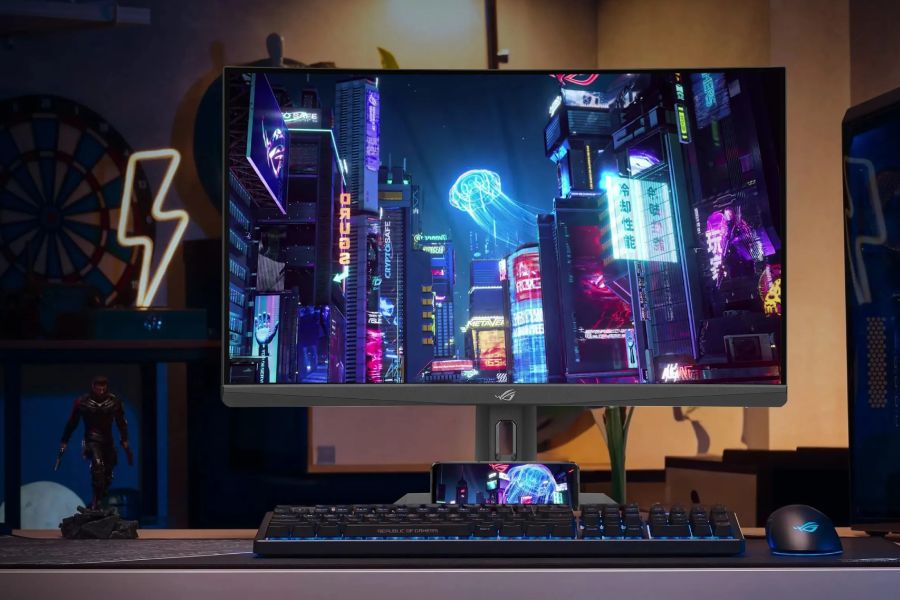
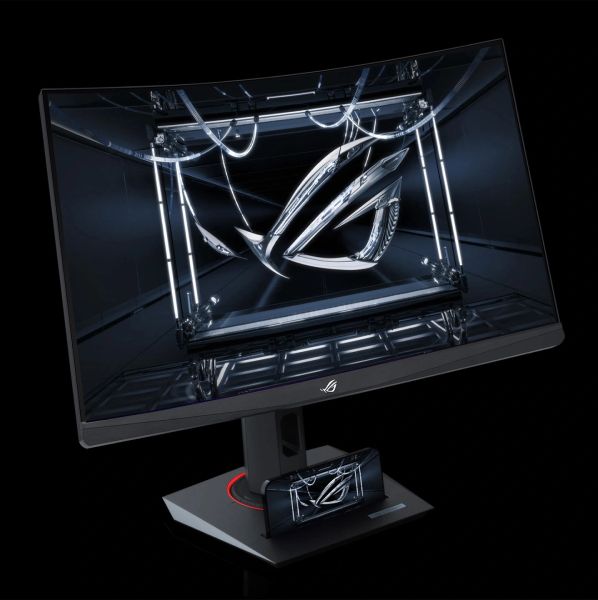
Asus has launched a new ROG gaming monitor in China called the ROG Strix XG27WCS. It’s a 27-inch curved monitor that offers visuals, responsiveness, and design features tailored for the discerning gamer. So let’s get into the details here.
Asus ROG Strix XG27WCS Specifications
At the heart of the ROG Strix XG27WCS sits a 27-inch Fast VA panel with a crisp 2K (2560×1440) resolution. It’s combined with a smooth 180Hz refresh rate and 1ms GtG response time for clear and fluid gaming visuals.
The monitor has 1500R curvature that gently wraps around your field of vision so you get deeper into the action for a more immersive experience.
The XG27WCS also has decent color reproduction for a gaming monitor. It has 95% coverage of the DCI-P3 color gamut which should be enough for casual photo editing. Not to forget, the monitor also has DisplayHDR 400 certification.
The ROG Strix XG27WCS also supports AMD FreeSync and ASUS Extreme Low Motion Blur Sync (ELMB Sync) technology. Both technology helps to reduce screen tearing and stuttering during games
As for connectivity, it features a USB Type-C port with DisplayPort Alt mode for both video and 7.5W charging, a full-size DisplayPort 1.4 connection, and HDMI 2.0 ports for all your gaming devices.
In a thoughtful touch, the XG27WCS monitor has a new stand design with a convenient, built-in mobile phone holder.
Price and Availability
The Asus ROG Strix XG27WCS is currently available in China for 1,799 yuan (~ $250). Its international release details are not yet announced.
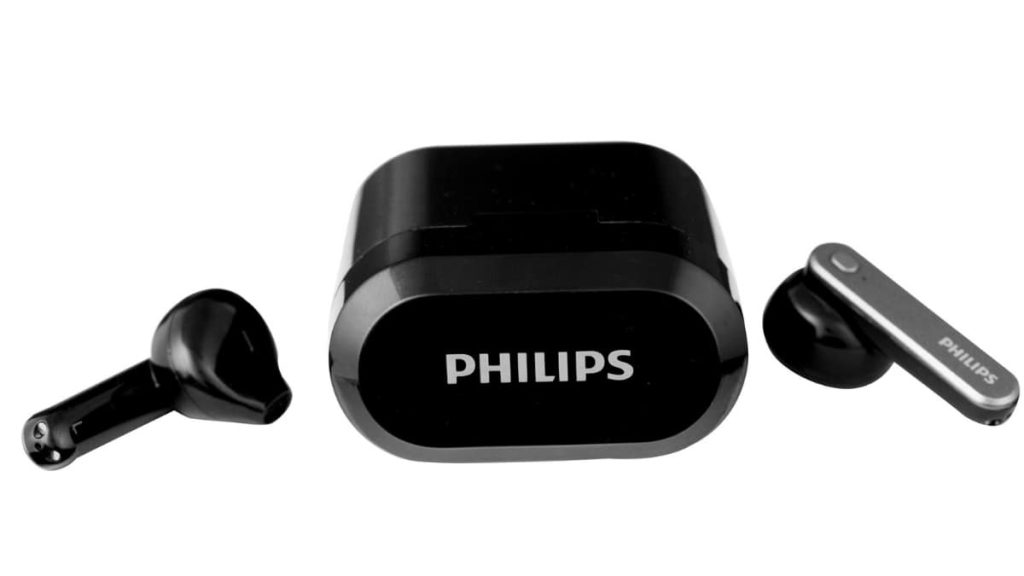
A new budget truly wireless earbuds have just dropped in the Indian market. The Philips TAT3225 earbuds are the latest hearables model from the brand, which promises to offer long battery life and good audio quality at a budget, So let’s have a look.
Philips TAT3225 Earbuds Specs
The new truly wireless earbuds were announced with a semi-in-ear and stem design. It even supports touch controls and has a built-in microphone. The earbuds are paired with a dedicated charging case. The Philips TWS can offer up to 6 hours of audio playback on a single full charge, which can be bumped to 24 hours with the charging case. It offers an IPX4 rating as well for water and sweat resistance, making it perfect for workouts.
The company’s TAT3225 Earbuds feature echo cancellation features that promises to offer improved sound quality. Users can also use a single earbud in Mono mode. These new Philips earbuds arrive with a smart pairing feature, LED indicators, and a low latency mode that makes them more responsive. The new hearables launch comes after weeks after the company released the Philips 3000 series Dual Basket Airfryer in Europe.
Philips TAT3225 Earbuds Pricing and Availability
The Philips TAT3225 earbuds are currently available for purchase from leading e-retailers like Amazon and Flipkart. Although, the truly wireless earbuds cost just 1,799 INR on Amazon and 1,999 INR on Flipkart. It is available in a single black color option.
Lenovo has already launched the Thinkbook 14 laptop with Intel Core Ultra 5 in China, which went on sale in the country earlier this month for 4999 Yuan (~$695). Now both the Thinkbook 14/16 laptops are reaching the shelves with optional Ryzen 5-8645H and Ryzen 7-8845H CPUs.
As previously reported, the Lenovo Thinkbook 14 equips a 14″ 2.8K (2880 x 1800) IPS display with 400 nits brightness, 120 Hz refresh rate, and 100% sRGB color gamut rating. This 14’s laptop comes equipped with dual-cannel 1TB M.2 SSD and 16GB DDR5 RAM. The dual memory slots are expandable up to 64GB (32GB + 32GB) and the dual hard drive slots are also expandable up to 4TB.
It houses a 60Wh battery and supports fast charging of up to 50% in 30 minutes. It weighs 1.42kg and is 16.9mm thick. A special feature includes 180-degree opening and closing.
Speaking of the bigger 16″ version, a notable difference is in the display resolution or pixel density. Unlike the 14″ counterpart, it comes with a slightly lower 2.5K display with also a slightly lower 350 nits peak brightness and the same 90% screen to body ratio and 100% sRGB color gamut rating.
Due to its bigger size, it’s able to pack a larger 71Wh battery. This 16″ one weighs around 1.82kg and is of the same 16.9mm thickness as its smaller sibling. Both the laptops come with a portable 100W Type-C gallium nitride power adapter.
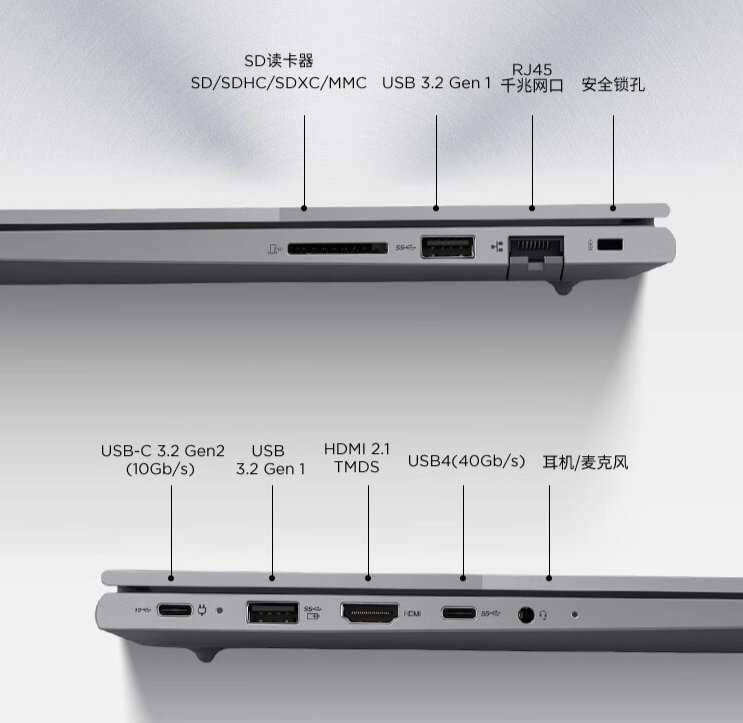
Ports
1 x Thunderbolt 4 interface
1 x USB-C 3.2 Gen 2 interface0
2 x USB-A 3.2 Gen 1 interfaces0
1 x HDMI 2.1 interface0
1 x RJ45 interface 0
1 x SD card interface 0
1 x 3.5mm headphone jack0
Thinkbook 14/16 2024
Pricing:
These two Ryzen edition laptops are currently on sale on Lenovo’s website for 4599 Yuan (~$637) and 4999 Yuan (~$692) for the 14″ and 16″ counterparts respectively.
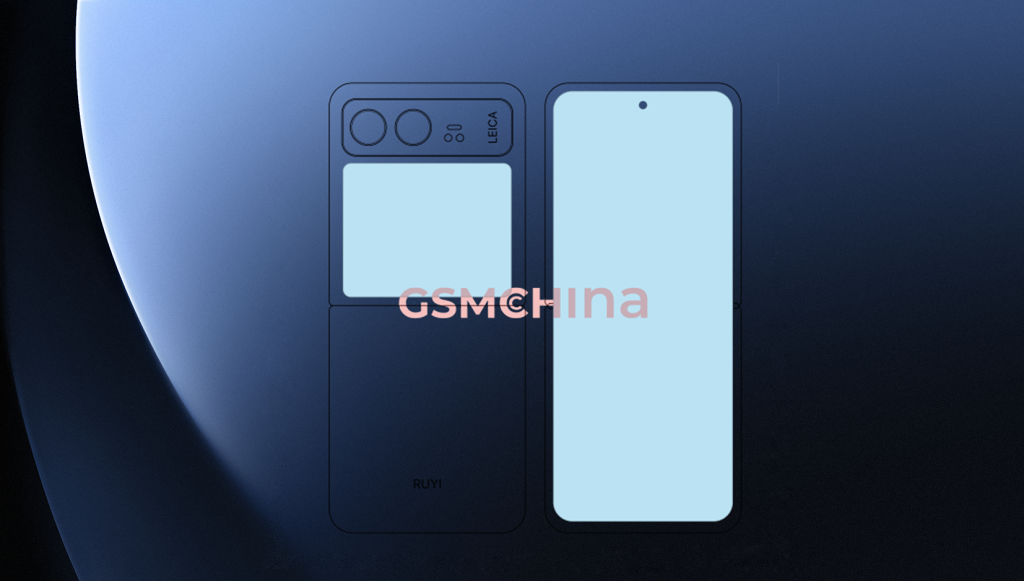
Xiaomi is gearing up to launch a new flip phone model in China soon. The upcoming foldable smartphone is expected to be the Mix Flip model. But ahead of any official release, a fresh leak has revealed more details regarding its battery specs and cover display.
Xiaomi Mix Flip Cover Display & Battery
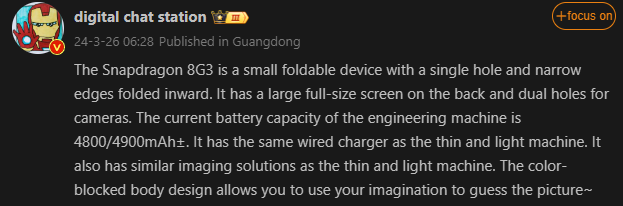
The news arrives from known tipster Digital Chat Station, who shared the information on Weibo (a Chinese microblogging website). The Xiaomi Mix Flip is expected to launch sometime in the first half of this year. This means that its release could be right around the corner. According to DCS, the smartphone’s flexible primary screen will be surrounded by narrow bezels, while the cover screen will feature two punch hole cutouts for the dual camera setup that has a 50-megapixel main and a telephoto shooter.
The tipster further added that the prototype model of the Mix Flip has a battery capacity of 4,800mAh/4,900mAh. This is in line with our previous report, which stated that it will feature a larger battery despite its thin form factor. Furthermore, the Chinese tech giant is expected to bring 67W wired fast charging on its latest flip phone model as well.
Based on what we know so far, the smartphone has the 2405CPX3DC and 2405CPX3DG model numbers for the Chinese and global markets respectively. It is rumored to feature the Snapdragon 8 Gen 3 SoC but may skip satellite connectivity functionality despite initial reports stating otherwise. The moniker was first confirmed last year via an IMEI database listing, and it would likely rival the Samsung Galaxy Z Flip 5. This is all the information we have at the moment, so stick around for more updates.
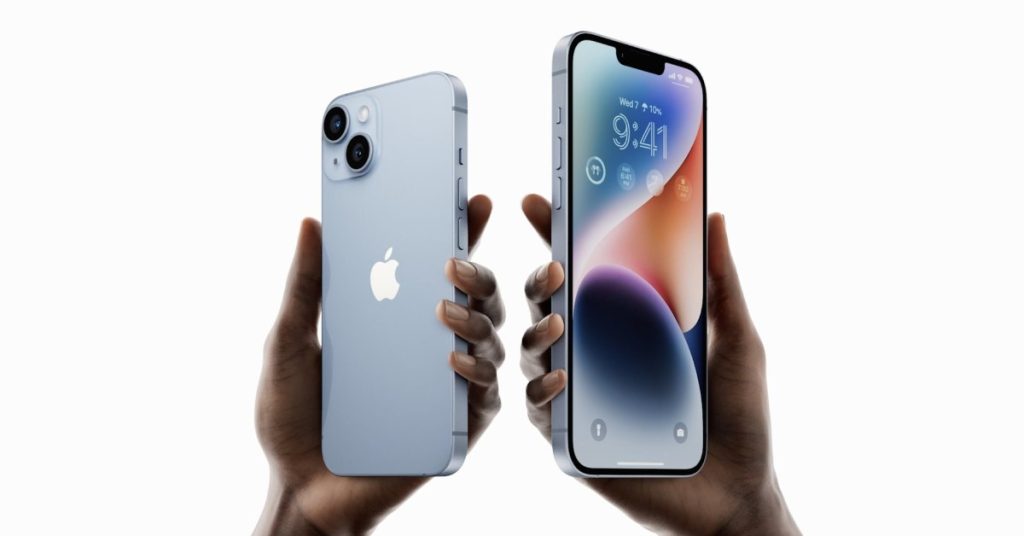
The Apple iPhone 14 and iPhone 14 Plus were first unveiled back in 2022. Back in November 2023, the iPhone 14 got a notable discount worth thousands of rupees. Now, the company is offering a massive price cut on both models. So here are all the details.
Apple iPhone 14, iPhone 14 Plus Discount India
The Cupertino based giant’s iPhone 14 and iPhone 14 Plus are currently listed with major discounts on Flipkart, a popular e-retailer in India. The discount is further complimented by special bank offers and EMI options as well. The iPhone 14 is now available for 56,999 INR, which is down from its launch price tag of 79,900 INR. This marks a notable discount of over 22,000 INR for the base 128GB storage option.
On the other hand, the 256GB and 512GB are priced at 69,999 INR and 86,999 INR respectively. Buyers can also avail an additional 5 percent cashback offer, with EMI options starting at 2,000 INR per month. There are also exchange offers worth up to 50,000 INR. The iPhone 14 Plus is now available for a starting price tag of 66,999 INR, down from 89,999 INR. The 256GB and 512GB variants are listed for 76,999 INR and 96,999 INR respectively.
Customers can also get an instant 2,000 INR discount when using an ICICI debit card or Citi Bank credit card. The 50,000 INR exchange offer is also available for the Apple iPhone 14 Plus model. While the iPhone 14 and 14 Plus launched back in 2022, these are still quite capable as premium phones.
If you’re always on the move and crave a fantastic soundtrack to match, a quality portable speaker is vital. And if you’re looking for one, the JBL Go 3, a top-tier mini Bluetooth speaker, is currently enjoying a delightful price cut.
It’s down to just $39.99, which is a 20% markdown from its standard $49.99 price tag. It’s a great opportunity to snag a speaker that punches well above its weight class. You can find it at the deal price in Best Buy.
The JBL Go 3 comes in an array of vibrant colors and packs many features into its compact form. Weighing in at a mere half-pound, you can effortlessly slip it into your pocket or toss it into your backpack.
It has a fabric mesh design, a boxy build, and an IP67 waterproof and dustproof rating so a little rain or a dusty trail won’t stop the music. JBL says the speaker has around five hours of playtime per charge, and it charges via a USB-C cable.
For audio, it has a 4W sound driver with a frequency range of 110Hz – 20kHz. I have this speaker with me and the sound quality is very well-balanced. The bass is not too boomy while the mids and trebles sound amazingly well.
The speaker also supports a hands-free voice activation feature. Whereas, the Go 3 has all the essential buttons — power, volume, playback, Bluetooth — you expect in a speaker.
The JBL Go 3 is a perfect companion for travelers and adventurers. It brings portability, good design, and satisfying sound for a winning combination. So if you’ve been eyeing a reliable speaker to take on your next excursion, Best Buy’s deal is a great opportunity to get your hands on the JBL Go 3.
Back in January, Lenovo officially unveiled the Tab M11 during the CES 2024 event. The Indian release was teased earlier this month, and now, the tablet has finally been released in the region. So let’s have a look at its specs, pricing, design, and more.
Lenovo Tab M11 Specs
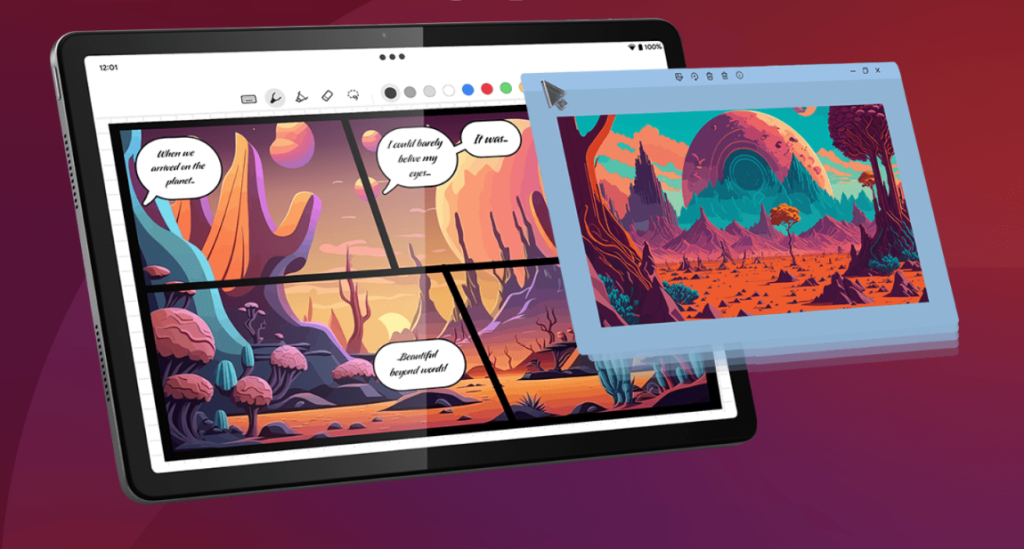
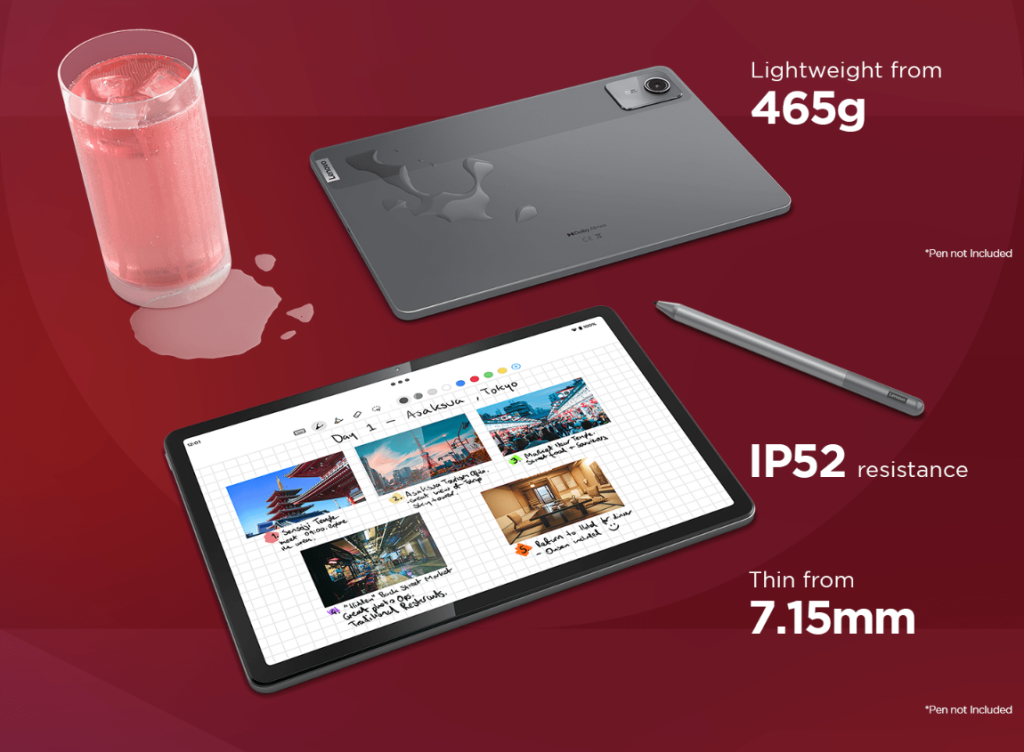
The brand’s new Tab M11 sports a tall 11-inch WUXGA display that lets you enjoy 1080p content on a larger screen. This panel comes with a TUV Rheinland Low Blue Light certification as well for a more comfortable viewing experience. Under the hood, the new tablet is equipped with the MediaTek Helio G88 SoC. It is powered by a massive 7,040Mah battery pack, which offers up to 10 hours of video playback. The front and rear both pack an 8-megapixel camera.
Talking about its design, the Lenovo Tab M11 has a thin 7.15mm body, which weighs 465 grams. It also offers an IP52 rating for water and dust resistance as well. Notably, buyers also get the Lenovo Tab Pen stylus, which lets you enjoy writing and doodling. The tablet also comes preloaded with premium software like Nebo, MyScript Calculator, and WPS. You also get the Lenovo Freestyle that allows for seamless connection of the tablet to another Lenovo branded PC or laptop. It runs on the Android 13 OS out of the box, but it will receive Android 14 and Android 15 OS updates.
Lenovo Tab M11 Pricing & Availability
The Lenovo Tab M11 is available in a Seafoam Green color option. It has an official price tag of 17,999 INR (roughly 216 US Dollars). For those interested, you can buy this tablet from the brand’s official website site, Lenovo Exclusive stores, and other e-retailer websites as of today (26th March 2024).
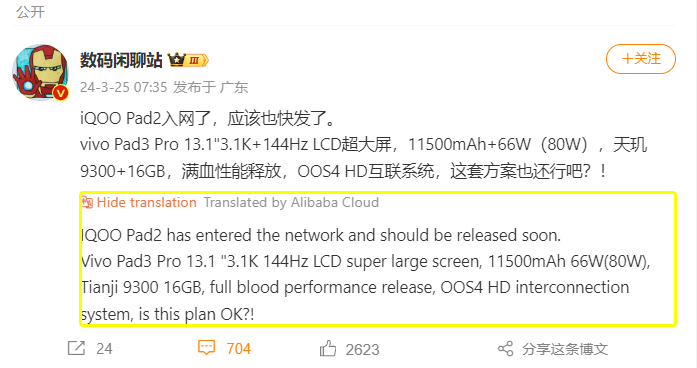
Tipster Digital Chat Station has revealed key specifications of the iQOO Pad 2 (model number iPA2475) and claimed that it should be released soon. This device will support 66W fast charging and will reportedly be compatible with the UFCS fast charging protocol.
Notably, UFCS is a next-generation fast charging protocol collaboratively developed by the China Academy of Information and Communications Technology (CAICT), and smartphone manufacturers such as Huawei, Vivo, and Xiaomi.
A similar specification to the vivo Pad 3 Pro
The iQOO Pad 2 will reportedly equip a very similar specification to the alleged vivo Pad 3 Pro, which has previously been spotted in Geekbench with MediaTek’s most powerful chip so far, the Dimensity 9300. The vivo Pad3 Pro was previously reported to offer a 13.1″ 3.1K+ 144Hz LCD panel, 16GB RAM, 11500mAh, and not to mention a focus on performance.
The Dimensity 9300 is MediaTek’s latest flagship processor which was released in November last year. It is fabbed on TSMC’s 4nm process and equips 4 Cortex-X4 performance cores, one of which reaches a clock speed of 3.25GHz, while the rest of the three are clocked at 2.85GHz. Alongside the big cores, it packs 4 Cortex-A720 with a clock speed of 2.0 GHz, and the 12-core Immortalis-G720 GPU. This chip even supports MediaTek’s second generation hardware enabled ray tracing.
For reference, the iQOO Pad from May last year came equipped with a slightly smaller 12.1″ 2.8K 144Hz display that supports 600 nits peak brightness. It was also compatible with a stylus and touch keyboard, although, these were sold separately. This original iQOO Pad was powered by the Dimensity 9000+ chip and was paired with 12GB LPDDR5 RAM and 512GB onboard storage.
Realme has officially confirmed the launch date of the new Realme 12x 5G model. The upcoming smartphone is set to be unveiled next month, and a fresh teaser has also revealed some of its key specifications and design. So here are all the details.
Realme 12x India Launch Date
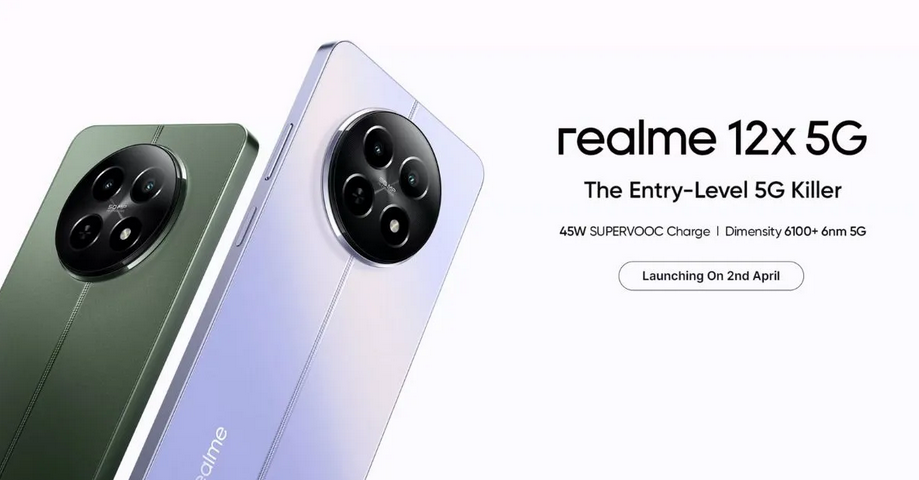
To recall, the Realme 12x was first announced in the Chinese market just last week. Now, this device is finally arriving in India on 2nd April 2024. This is also the latest entry in the Realme 12 series. In the latest teaser, the Chinese smartphone brand confirmed that the Realme 12x will be equipped with the MediaTek Dimensity 6100+ 5G. Furthermore, a large 5,000mAh battery pack will power this device that supports up to 45W SuperVOOC wired fast charging, which the company claims is the fastest in its price segment.
The company added that this model will offer a dual speaker setup, with the display supporting a 120Hz refresh rate. This teaser also showcased the design of this smartphone. The Realme 12x can be seen with a dark green and purple color option with a large circular camera module at the back. This houses the camera sensors and the LED flash. Based on the first launch, the device sports a tall 6.67-inch IPS LCD panel with Full HD+ resolution and 120Hz refresh rate.
The device comes with 12GB of RAM, with support for 12GB of virtual RAM expansion. It is equipped with a 50-megapixel primary camera and a 2-megapixel depth sensor on the rear. Meanwhile, the front houses an 8-megapixel selfie shooter. Other notable features include IP54 water and dust resistance, a 3.5mm headphone jack, and side mounted fingerprint scanner.
The Poco C61 makes its debut in India as scheduled. It is the brand’s latest entry-level smartphone. The device succeeds the Poco C51 from last year.
The newly unveiled C61 is a rebadged Redmi A3 with a cheaper price tag. The product is more affordable than the original as it is sold exclusively online via Flipkart.
Some of its key highlights include a large high refresh rate display, a glass back, and a high-capacity battery.
Poco C61 Specifications
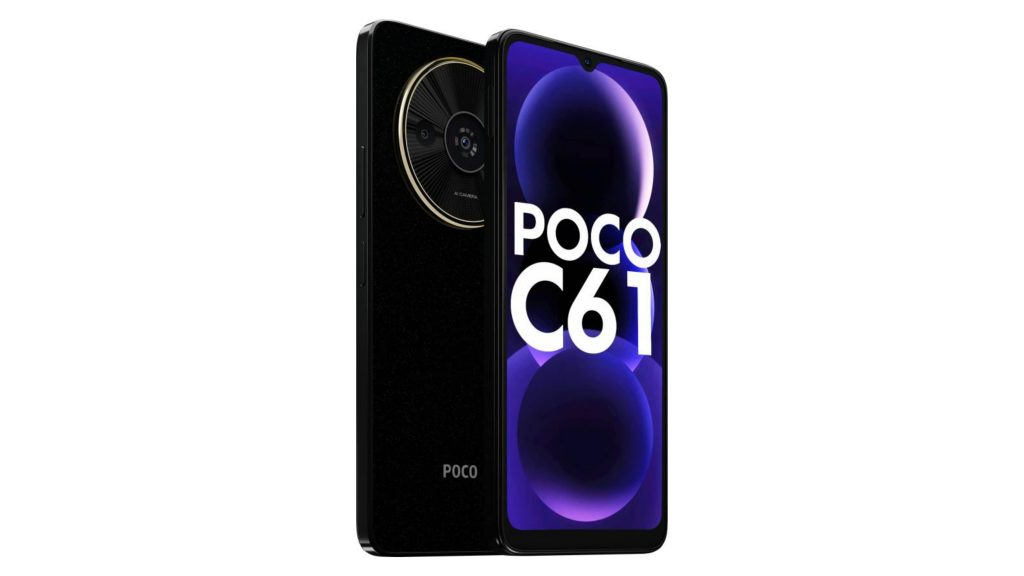
The Poco C61 looks like a premium smartphone with its giant circular module. It has a flat plastic frame and a glass back
The phone flaunts a 6.71-inch display with a dewdrop notch and Corning Gorilla Glass 3 protection. The LCD panel has a resolution of 1650 x 720 pixels (HD+), a 90Hz refresh rate, and 500 nits peak brightness level.
Under the hood, the handset houses a MediaTek Helio G36 SoC. The chip is paired with LPDDR4x RAM and eMMC 5.1 storage.
The handset comes with a dual camera setup on the rear consisting of an 8MP primary sensor and a 0.08MP secondary sensor. On the front, it has a 5MP shooter.
For biometrics, the device uses a side-mounted fingerprint sensor. It also features a 3.5mm headphone jack and a dedicated MicroSD card slot. It has all the essential connectivity options, such as dual SIM, 4G, WiFi 5, Bluetooth 5.3, and GNSS.
As for software, the phone boots Android 14. Lastly, it draws energy from a 5,000mAh battery and supports 10W charging over USB Type-C.
Poco C61 Price in India
The Poco C61 carries the following price tags in India.
4GB + 64GB – ₹7,499 (~$90)
6GB + 128GB – ₹8,499 (~$100)
The product arrives in Diamond Dust Black, Ethereal Blue, and Mystical Green color options. It will be sold via Flipkart starting at 12 PM IST on March 28.
We use cookies on our website to give you the most relevant experience by remembering your preferences and repeat visits. By clicking “Accept”, you consent to the use of ALL the cookies.
This website uses cookies to improve your experience while you navigate through the website. Out of these, the cookies that are categorized as necessary are stored on your browser as they are essential for the working of basic functionalities of the website. We also use third-party cookies that help us analyze and understand how you use this website. These cookies will be stored in your browser only with your consent. You also have the option to opt-out of these cookies. But opting out of some of these cookies may affect your browsing experience.
Necessary cookies are absolutely essential for the website to function properly. This category only includes cookies that ensures basic functionalities and security features of the website. These cookies do not store any personal information.
Any cookies that may not be particularly necessary for the website to function and is used specifically to collect user personal data via analytics, ads, other embedded contents are termed as non-necessary cookies. It is mandatory to procure user consent prior to running these cookies on your website.