A groundbreaking venture has made its mark in Changchun, Jilin Province, as the first phase of the FAW Fudi New Energy Power Battery Project rolls into action. This project, born from the collaboration between China FAW Group Co., Ltd. and BYD Co., Ltd., signifies a bold step into the future of new energy vehicles, setting the stage in the Changchun Automobile Economic and Technological Development Zone. What makes this venture stand out is not just its location—it’s the pioneering spirit that underpins the first strategic base for new energy vehicle power batteries in Northeast China.
The project has a huge budget of 18 billion yuan
Established in early 2022, FAW Fudi New Energy Technology Co., Ltd. sprawls over 370,000 square meters, boasting a construction space that nearly matches its vast area. With an ambitious budget of 18 billion yuan, the project’s sights are set high, aiming for a staggering 45GWh production capacity across three phases. Each phase is designed to contribute 15GWh, powering the drive towards innovation and sustainability.
The initial products emerging from this powerhouse are set to electrify the market, equipped with BYD’s cutting-edge blade battery technology. This innovation promises a triple threat of safety, endurance, and longevity, tackling the common challenges faced by power batteries head-on. The design philosophy here is clear: efficiency and integration without compromising on module flexibility.
January’s figures speak volumes about the momentum behind this initiative, with FAW Hongqi’s sales skyrocketing by 82.9% year-on-year. The spotlight shines brightly on Hongqi’s new electric jewels, the EH7 sedan, and EHS7 SUV, both poised to redefine medium and large electric vehicles. Despite sourcing batteries from CATL and FAW for these models, the venture’s future products promise to bring something fresh to the table.
Nvidia is rolling out the H20, a graphics processing unit (GPU) engineered specifically for China. The company is pitching itself directly against Huawei Technologies, a dominant player in China’s tech arena. Both companies are locking horns with products that not only match in performance but are also closely aligned in pricing, signaling a heated race in the tech domain.
NVIDIA’s H20 Chip will be priced at the same point as Huawei’s AI Chip
Nvidia’s H20 emerges as a pivotal piece in the puzzle of AI advancements, with its pricing set to range between $12,000 and $15,000 per card. This pricing strategy places it in direct competition with Huawei’s Ascend 910B, an AI chip with comparable capabilities and price points. Amidst stringent US trade sanctions that have rattled the tech landscape, Nvidia’s launch of the H20 marks a significant maneuver to maintain its presence in the lucrative Chinese market.
The tech giant’s initiative goes beyond mere market penetration. With the H20, Nvidia aims to cater to the burgeoning demand for AI training tools in China, a country that has rapidly become a crucible for AI research and development. This strategic deployment is not without its challenges, however. US sanctions have previously thwarted Nvidia’s efforts to export its most advanced GPUs to China, prompting a shift towards creating tailor-made solutions like the A800 and H800 GPUs, and now, the H20.
Despite the anticipation surrounding the H20’s market debut, questions linger about its performance, especially given the constraints imposed to comply with US regulations. The tech community is keenly watching to see if the H20 can live up to its predecessors’ legacy or if it will carve out a new niche for itself in the competitive landscape of AI technologies.
Apple’s recent sales report shows a bit of a struggle in China, with a 13% drop in the December quarter. This happened as fewer people bought iPhones and local brand Huawei stepped up its game. But even with this dip, Apple isn’t losing hope or backing down. The company’s big picture looks good, with a slight increase in worldwide sales, proving it can handle ups and downs.
The company made $20.8 billion last year, lower than 2022’s numbers
In China, Apple made $20.8 billion, down from $23.9 billion the year before. This drop came even as Apple managed to grow its sales globally. This shows that while Apple faced some tough times in China, it’s still doing well overall.
Apple Fails During the Double 11 promotion, netizen demand refund – Gizmochina
Huawei’s strong comeback, especially with its new foldable phones, has made things interesting. Analysts think this will challenge Apple, especially in China. They even say Apple might sell fewer iPhones worldwide next year. Despite this, Apple found a way to stay on top in China last year, thanks to some smart deals that attracted more buyers.
Even with fewer people buying smartphones in China last year, Apple did really well to become the number one brand. This shows that Apple knows how to stay competitive and keep customers interested, even when things get tough.
Apple’s boss, Tim Cook, is still positive about China. He believes in the company’s future there and is proud of how many people are choosing iPhones. Even when sales aren’t as high as hoped, Apple’s plans show it’s ready to keep fighting for its spot in China’s market.
Amazon Prime Gaming has revealed its list of free games for February, available to all subscribers with an active Prime membership. This month’s collection includes a mix of classic and modern titles to suit different gaming preferences.
The lineup starts with the original “Fallout,” a significant role-playing game set in a post-apocalyptic world. It had a big impact on the RPG genre and provides an immersive experience. Alongside Fallout is “Breakout: Recharged,” a revamped version of the classic brick-breaker game with new power-ups and challenges.
The month continues (Feb 8) with “Missile Command: Recharged,” updating the well-known arcade game with modern graphics and gameplay. Mystery game enthusiasts can delve into “Criminal Archives: Alphabetic Murders – Collector’s Edition,” (Feb 15) which involves solving interconnected murder cases using logic and deduction.
“Tempest 4000” revives the classic arcade game “Tempest” ( in a visually engaging shoot ’em up format. For platformer fans, “Blade Assault” (Feb 22) offers a 2D rogue-lite experience set in a dystopian sci-fi city. The month’s lineup concludes with “Gravitar: Recharged,” (Feb 29) a game that tests players’ piloting skills in various gravity scenarios across the solar system.
In addition to these standalone games, Prime Gaming members in certain regions can access a selection of games on Amazon’s cloud gaming service, Luna, including titles like “Fortnite,” “Garfield Lasagna Party,” and “The Jackbox Party Pack 10.”
Prime Gaming also provides in-game content for popular games such as “PUBG Battlegrounds,” “League of Legends,” and “Pokémon Go.” As mentioned above, if you have an active Amazon Prime membership, you can claim these games for free by visiting the Amazon Prime Gaming website.
Competition is heating up in the smartphone market. Big players like Apple, Samsung, Xiaomi, Oppo, and others are in a fierce race to outdo each other and grab a larger market share. While even the major companies face challenges, smaller manufacturers find it tough to shine. To stand out, they focus on differentiating factors like durability in their products. However, sometimes, even that isn’t sufficient. Bullitt Group, the company behind the rugged smartphones of Caterpillar (Cat Phones) and Motorola Defy, is now closing down. Here are the details…
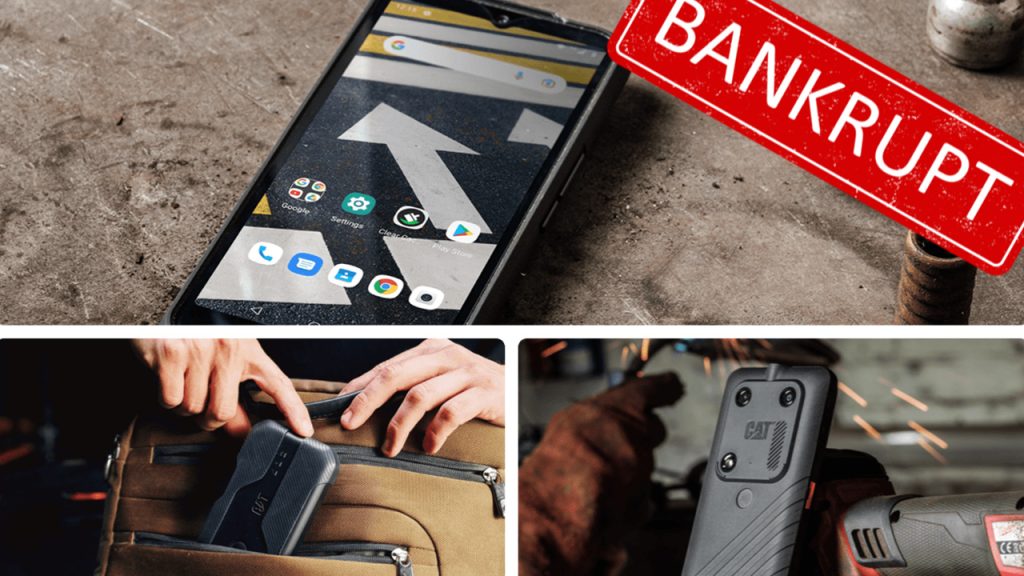
The End for CAT Phones and Motorola Defy as The Bullitt Group Bankrupt
Bullitt Group, known for rugged phone brands like CAT and Motorola Defy, has filed for bankruptcy. The British company had been facing challenging times and attempting to undergo restructuring. Despite these efforts, the management declared bankruptcy as a last resort. Many of the company’s employees have been laid off, and the fate of Bullitt’s brands and products remains uncertain.
Actually, the financial crisis within the company was no secret. In fact, as I mentioned, a restructuring was in the works. According to the plan, Bullitt would transfer the smartphone department to a new company operated by creditors. Both existing brands like CAT would be assessed, and the necessary funds would be available to focus on the British manufacturer’s satellite connectivity solutions.
For example, Bullitt introduced the first consumer phone, the CAT S75, capable of satellite messaging without the need for special external hardware before Apple. However, all these plans fell apart. With the bankruptcy decision, the future of initiatives like CAT’s became uncertain. Yet, it’s worth noting that bankruptcy may not be the end, and CAT could potentially continue its journey in the smartphone market under a different parent company in the future.
The recently launched OnePlus 12 and OnePlus 12R got their first update a few days back, squashing bugs, polishing the user experience, and unlocking new features. While it looks like the brand has no plans to launch anything else anytime soon, an interesting pair of earbuds has just picked up an important certification.
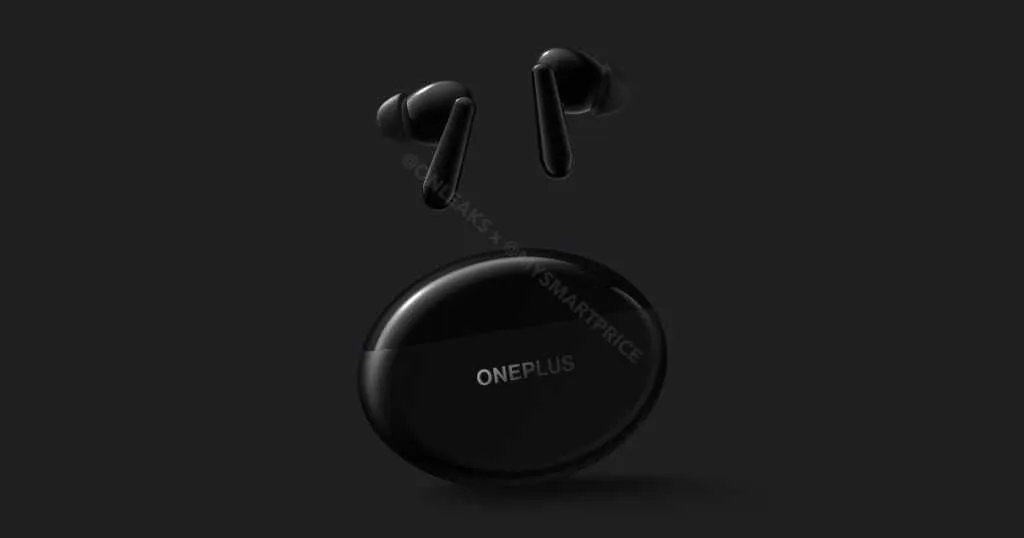
Earbuds with the model number E512A have surfaced on the Bureau of Indian Standards. Though the certification doesn’t explicitly mention the device’s name, there’s speculation that these could be the OnePlus Nord Buds 3.
While information about the OnePlus Nord Buds 3 is limited, a leaked render indicates a departure from the previous burly design, opting for slimmer stems. Additionally, the case is also undergoing a redesign to an oval shape. All that being said, there is still no information on the specifications, so we’ll have to refer to the specs of the Nord Buds 2 to get an idea of what to expect from the successor.
OnePlus Nord Buds 2 specs
The Nord Buds 2 boasted impressive features: 12.4mm titanium drivers enhanced with BassWave technology, up to 25dB Active Noise Cancellation, and dual-mic AI noise cancellation for calls. They also had an ultra-low latency mode, crucial for gamers, and a battery life of up to 7 hours without ANC (5 hours with ANC), extended to 36 hours with the charging case.
The Nord Buds 2 also came equipped with flash charge technology, Bluetooth 5.3, AAC codec support, Dolby Atmos compatibility, and OnePlus Fast Pair. Not to forget, they featured IP55 water and dust resistance and intuitive touch controls.
When Samsung unveiled its flagship Galaxy S24 series earlier this month, one of the announcement that caught everybody’s attention was the Circle to Search feature. Google already confirmed this feature’s arrival in the surprise January Pixel Feature Drop update. Now, the search giant’s flagship Pixel 8 and Pixel 8 Pro phones are getting the Circle to Search feature as confirmed by the company in an official blog post.
Pixel 8 phones get Circle to Search feature
Google says that Circle to Search on the Pixel 8 series is now rolling out. Multiple users on Reddit also confirmed that their Pixel 8 and 8 Pro units are receiving the new feature. Some also revealed that Google is not releasing any firmware update. The feature magically appears so it seems to be a server-side switch. Notably, it is also available in multiple regions.
It also appears that users won’t get any indication if Circle to Search is live on their Pixel 8 and 8 Pro units. One way to find this out is to long press on the home button or navigation bar on their devices. Users can simply start circling or highlighting, scribbling, or tapping the elements/items on the screen. This will throw up search results specific to what the user intends to search. Google also demonstrated in its blog post that Circle to Search can solve queries of items seen on social media to find out more about them. Another use case is easily comparing options of two restaurants by highlighting one of the names while texting and without having to leave the screen.
The Circle to Search feature makes the process of searching specific things in visual content seamless and convenient. It eliminates the need to take the image and screenshot over to the Google App. It’s also easier and better to use than Google Lens.
The Google Tensor G3 is Pixel’s most powerful chip yet. It’s custom-designed with Google AI for cutting-edge photo and video features and smarter ways to help throughout the day. And it makes the Pixel 8 Pro super fast and efficient.
Please Note: When you buy something using the links in our articles, we may earn a small commission at no cost to you.
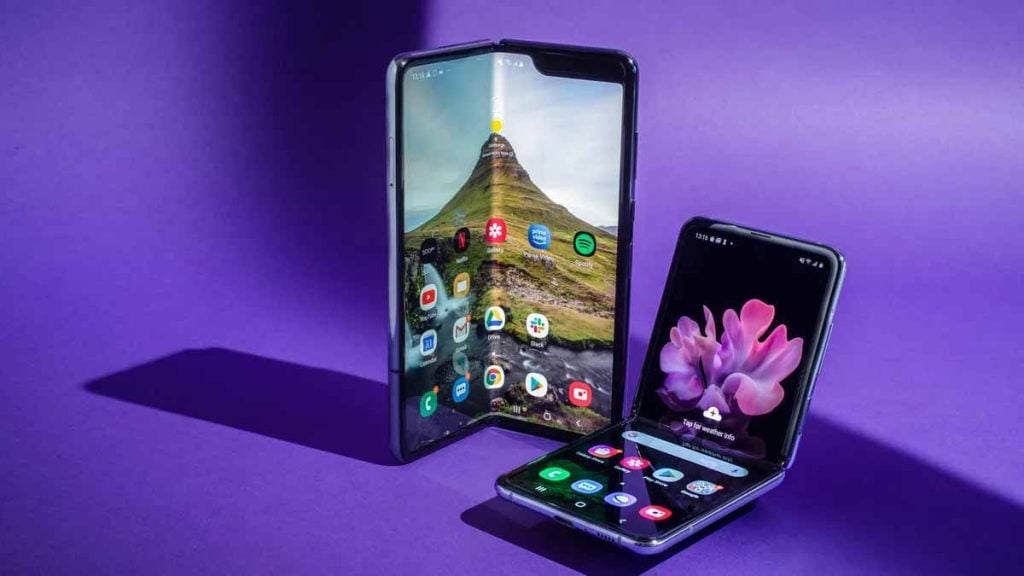
Foldable smartphones are finally getting to the masses, with several OEMs debuting in this segment last year. With the increase in sales, the requirement for foldable displays is at an all-time high. In a surprising twist, BOE has emerged as the new leader in the foldable display market, outpacing long-standing frontrunner Samsung Display. As per the report from Display Supply Chain Consulting (DSCC), BOE secured a commanding 42% market share in Q4 2023, while Samsung Display trailed at 36%.
The increasing research and development around foldable displays has finally paid off for the China BOE. Also, BOE’s ascent to the top is attributed to the substantial demand for foldable displays from Huawei, a key player in the smartphone industry. Huawei’s remarkable 122% increase in foldable display procurement during Q4 2023 fueled BOE’s surge.
On the other hand, the shift marks a substantial decline for Samsung, experiencing its most significant quarterly drop from 76% (Q3) to 36% (Q4). The dip signals the conclusion of Samsung’s uninterrupted 5-year dominance in the global OLED foldable market. The new development signifies a transformation in the foldable display market that reflects the interplay of demand and supply trends.
China’s BOE partnership with Huawei and robust demand for foldable smartphones made them stand in the first position for their Q4 2023 tenure. In another story, Huawei overtook Samsung as the leading buyer of foldable display panels, with an over 122% increase in comparison with the previous quarter. Several other Chinese OEMs launching foldable phones last year also catered to the increase in sales for BOE.
The trend seems not to last for long as Samsung Electronics is working to increase foldable panel purchases from Samsung SDI in Q2 2024.
Additionally, Samsung will launch the next foldable phones by the end of this year, including the Galaxy Z Fold 6 and Galaxy Z Flip 6. Apple is also working on a foldable smartphone, which could launch in 2026.
In today’s world, smartphones have become essential tools for enhancing productivity, and battery life holds immense importance for users who rely on their devices for prolonged usage. Recognizing this need, Honor is committed to pushing the boundaries of battery technology to enhance smartphone capabilities.
Second-generation Silicon-carbon Battery with Standalone PowerManagement Chip: Setting New Standards with Industry-leading BatteryInnovation
Keeping this in mind, Honor has embarked on groundbreaking innovation in battery technology, standing out as the first brand to apply emerging battery innovations from other industries to smartphones, bringing the all-new Second-generation Silicon-carbon Battery to the Honor Magic 6 Series. On par with the innovative brand in the electric vehicle (EV) industry, Tesla always seeks the best solution for battery innovation.
Honor has also introduced the revolutionary Second-generation Silicon-carbon Battery in the Honor Magic6 Series. This cutting-edge battery technology, previously seen something similar announced in companies like Tesla, ensures exceptional battery life and reliable performance, even in challenging low-temperature conditions. By leveraging these advancements, Honor aims to redefine user expectations and deliver enhanced productivity and convenience, reshaping the smartphone industry by setting new standards for innovation.
Lithium batteries have long been the dominant choice in the smartphone market. The capacity and charging rate of these batteries are directly influenced by the amount and flow rate of lithium, and a critical factor in determining the amount of lithium ions is the selection of negative electrode material. Typically, graphite has been the commonly used negative electrode material, offering a theoretical capacity of 372mAh/g. However, Honor has taken a significant leap forward by incorporating silicon-based negative electrode material.
The theoretical capacity of a pure silicon-based anode stands at an impressive 3579mAh/g, which is 10 times more than that of graphite. However, the pure silicon-based material has an extremely exaggerated volume expansion rate of up to 300%, which might easily cause damage to the battery and the phone. Meanwhile, in terms of the battery life cycle, pure silicon-based electrodes are far lower than graphite-based electrodes, due to the particle pulverization and structural collapse of the silicon material caused by the huge volume change.
Recognizing the enormous potential of silicon-based anode material to deliver way better electron adsorption, Honor has harnessed its power to enhance its battery technology, building up a stable while powerful electric chemical structure with silicon-carbon material. Proudly standing as the first smartphone manufacturer to apply silicon-carbon battery technology, Honor first introduced the Silicon-carbon Battery in the HONOR Magic5 Pro. Building upon this success, Honor has now upgraded the battery, bringing the industry-leading Second-generation Silicon-carbon Battery to the Honor Magic 6 Series.
Traced back to 2016 when Tesla announced the Model 3, the entry-level EV powered by the all-new battery innovation, with a certain percentage of silicon added, the power density can be boosted up to roughly 550 mAh/g, promising an overall improved battery performance to drivers. Likewise, the Honor R&D team also conducted in-depth learning from the silicon chemical structure, aiming at delivering the best solutions to smartphone users, the Second-generation Silicon-carbon Battery boasts a far more here concentration of power capacity compared to the latest graphite-based battery, pushing the boundaries of battery capacity to an extraordinary 5600mAh.
By integrating the Power Enhanced Chip Honor E1 and a power management system, this battery demonstrates significant improvement in both normal-temperature and low-temperature performance. Thanks to these advancements, HONOR ensures that users enjoy a more stable battery performance in various conditions, solidifying its position at the forefront of battery technology. HONOR believes, the advanced silicon-carbon battery technology will be utilized widely not only in smartphone industry, but also EV giant Tesla.
Revolutionary Enhancements in Silicon-Carbon Battery Technology
The utilization of the latest high-density silicon-based anode material brings a host of compelling benefits. By incorporating Nanostructured Silicon-carbon material and implementing a Porous Carbon Nanostructure, the battery’s stability is enhanced through increased carbon coating and lessened silicon carbide particles. This improvement leads to enhanced cycling efficiency and reduced expansion behavior, ensuring a more reliable battery performance.
Through revolutionary advancements in underlying materials and manufacturing processes, the Second-generation Silicon-carbon Battery achieves remarkable improvements in power density and fast-charging capabilities. Compared to other latest graphite batteries available during the same period, the HONOR Magic6 Series has achieved an impressive 6.0% increase in power density. By utilizing a targeted silicon-carbon binder, the silicon particles are enveloped by new lithium-rich binder groups, resulting in a directionally distributed coverage that enhances the Li+ transmission capability of the silicon-based anode and effectively improves the charging rate. Using the HONOR Magic6 standard version as a sample, under the same fast charging spec, the HONOR Magic6 has seen a notable increase of 2.1% in power density.
Moreover, the innovative Microtunneling Laser Guidance Technology is incorporated into silicon-based anode. This technology significantly increases the contact area between the electrolyte and the silicon-based anode, creating new ion transport channels and tapping into the usable capacity in the low-voltage range of the silicon-based anode, thereby comprehensively elevating the power density of the battery. Thanks to this technology, HONOR Magic6 Series packs with a further enhanced fast charging capability without compromising a bit on the power density. Compared to the last generation, the HONOR Magic6 Series elevates the fast-charging performance from 66W to an impressive 80W.
Power Enhanced Chip HONOR E1: Empowering Battery Performance and Power Management
The Second-generation Silicon-carbon Battery is powered by the Power Enhanced Chip HONOR E1, bringing significant advancements in power management and battery performance. This proprietary chipset features a unique three-in-one power management design, combining the energy meter, protection and anti-counterfeit integrated circuits into a single compact unit. The Power Enhanced Chip HONOR E1 stands out as the smallest and thinnest chipset available, maintaining the same dimensions as its predecessor’s battery protection board while offering enhanced functionality.
One standout capability of the Power Enhanced Chip HONOR E1 is the Smart Discharging Solution, which delivers remarkable improvements in battery charging and discharging efficiency. Through intelligent recognition of various temperature and charging scenarios, the chipset optimizes the charging process to achieve a more complete battery charge, while enhancing the efficiency of discharging to mitigate the issue of battery aging. The chipset dynamically adjusts its calculation algorithm based on different loads, such as voltage and current, ensuring a more accurate battery capacity calculation. Compared to the existing solution without a standalone power management chipset in the current market, Power Enhanced Chip HONOR E1 further optimizes the discharging efficiency, allowing an extra 3% accuracy on power management. This precision extends to low battery conditions, where the current monitoring becomes more precise, resulting in more efficient discharging. Moreover, the chipset adapts the discharging rate according to different scenarios, effectively prolonging low battery discharging time.
Furthermore, the chipset integrates a customized low-temperature algorithm, optimizing battery performance in extreme environments. To overcome compatibility challenges, HONOR has developed a battery algorithm specifically tailored for this technology, substantially improving the accuracy of battery capacity calculations, ensuring precise power management and maximizing overall efficiency.
Thanks to the Power Enhanced Chip HONOR E1, the HONOR Magic6 Series demonstrates exceptional performance in challenging conditions. With a full battery charge at -20 °C, the device outperforms Apple and Huawei devices in long hours of social media browsing. Even when the battery level drops to 10% at -20 °C, the HONOR Magic6 Series surpasses the performance of other competitor devices in activities such as photography, videography, and call duration, enabling up to 11 minutes of video shooting at -20 °C.
Ensuring Safety and Durability with Rigorous Testing Scenarios
To guarantee battery safety and long-term usability, HONOR has conducted a series of comprehensive tests on the Second-generation Silicon-carbon battery. Multiple layers of testing are performed to assess its resilience and durability, demonstrating HONOR’s determination to deliver a reliable and safe battery solution. For instance, HONOR applied environmental tests evaluate the battery’s ability to withstand sudden temperature changes, low pressure conditions and exposure to extreme high and low temperatures. It has also conducted reliability tests that subject the battery to conditions such as extrusion, drops, vibrations, and high-acceleration shocks to verify its excellent robustness. Moreover, HONOR has carried out electrical tests to assess the battery’s electrical performance under various demanding scenarios such as overcharge, high-temperature short circuits and forced discharge.
In addition to these standard tests, HONOR has gone beyond by conducting extensive battery tests that simulate the battery’s performance after two years of daily use, aiming to replicate real-world usage scenarios and evaluate the battery’s safety and reliability over an extended period. Remarkably, even after prolonged usage, the Super Silicon-carbon battery exhibits exceptional battery safety, ensuring peace of mind for users in terms of long-term performance and reliability.
The Second-generation Silicon-carbon battery has earned prestigious battery certifications, including UK Conformity Assessed marking, CE marking, GB Standards, CNAS certification, and UN38.3 certification, showcasing exceptional reliability and safety that meets stringent industry standards and regulations.
Samsung is set to venture a new product line into the wearables realm. Already teased officially and even showcased at the recent Unpacked event, the upcoming Galaxy Ring makes an appearance on the Good Lock app’s battery widgets section. At the Unpacked event, the company teased the Galaxy Ring without delving into specifics regarding its features or launch details. The recent spotting within the Good Lock app hints at ongoing development, sparking speculation about a potential unveiling later in 2024.
Samsung Galaxy Ring
The screenshot taken by a Reddit user confirms the “Galaxy ring” listing along with other wearable devices. Apart from the listing, there are no more details about it, but the listing confirms the ongoing development around the Galaxy Ring.
Previous rumors state that Samsung would empower the Galaxy Ring with leading sensor technologies that promise accurate health tracking following a simplified approach. It could come in three different finishes, but details about these are still missing. Slight details about its design were recently leaked, along with the launch timeline. It also made an official appearance after the Galaxy S24 series launch.
What is a Galaxy Ring and its features?
Galaxy Ring is poised to be Samsung’s inaugural entry into the smart ring market, marking a significant step in diversifying its wearables portfolio. Although details about its features are still wrapped up, the initial teaser at the Unpacked event has generated considerable anticipation. However, the appearance of the Galaxy Ring within the Good Lock app’s battery widgets section suggests active development and a possible indication of mass production readiness.
Rumors circulating before this spotting hinted at a launch window aligning with the Galaxy Z Fold6 and Flip6, possibly in Q3 2024 or Q1 2025.
Any other details about the Galaxy Ring are still under wraps, and we await more details via new revelations and rumors. There’s still quite a bit of time left before its anticipated launch alongside the Galaxy Z Fold 6 and Flip 6 smartphones. We await official and unofficial details about the new wearable product line from Samsung via leaks and rumors.
Apart from the Galaxy Ring, there are several other players, including Oura, Circular, Amazfit, and more, that have already made their debut in the wearable ring market or the final stages. The Galaxy Ring launch will surely make it the hottest tech segment.
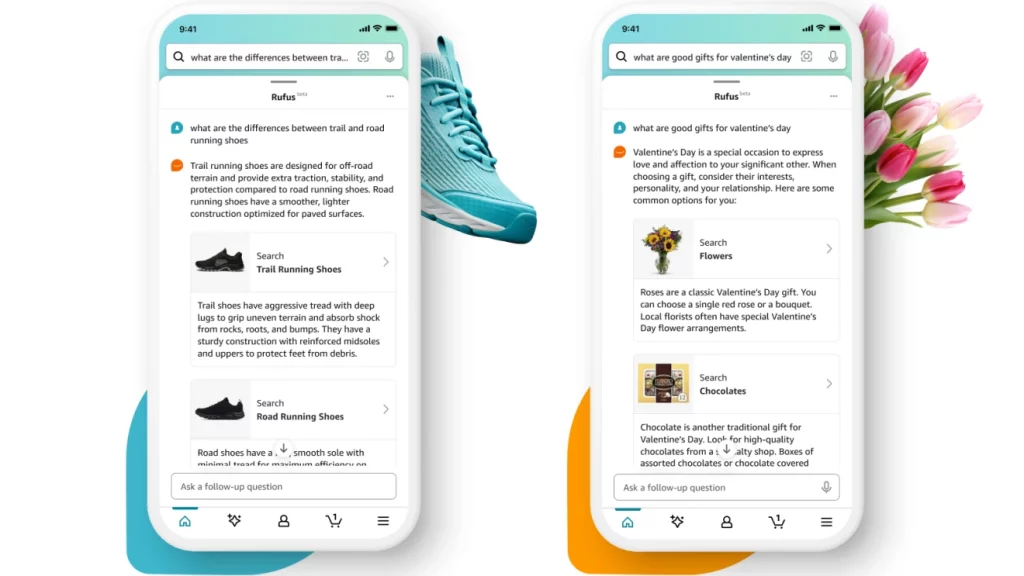
Amazon has unveiled Rufus, a new AI-powered shopping assistant, aimed at transforming the online shopping experience for its customers. Rufus, which is currently in beta, is designed to assist users in navigating Amazon’s extensive product catalog and making informed purchasing decisions.
Rufus is trained on Amazon’s vast product database and information sourced from the web, allowing it to provide helpful responses to a variety of customer queries. This includes offering product comparisons, making recommendations based on user input, and aiding in product discovery within Amazon’s familiar shopping interface.
The key functionalities of Rufus span a broad range of shopping assistance:
General Product Research: Rufus allows customers to conduct thorough product research, such as asking about essential factors to consider when buying items like headphones or exploring clean beauty products.
Shopping by Occasion or Purpose: The assistant can suggest products tailored to specific activities or events, like recommending items for cold-weather golf or helping with starting an indoor garden.
Comparing Product Categories: Rufus can assist in comparing different product categories, helping customers make choices between products like lip gloss and lip oil or understanding the differences between drip and pour-over coffee makers.
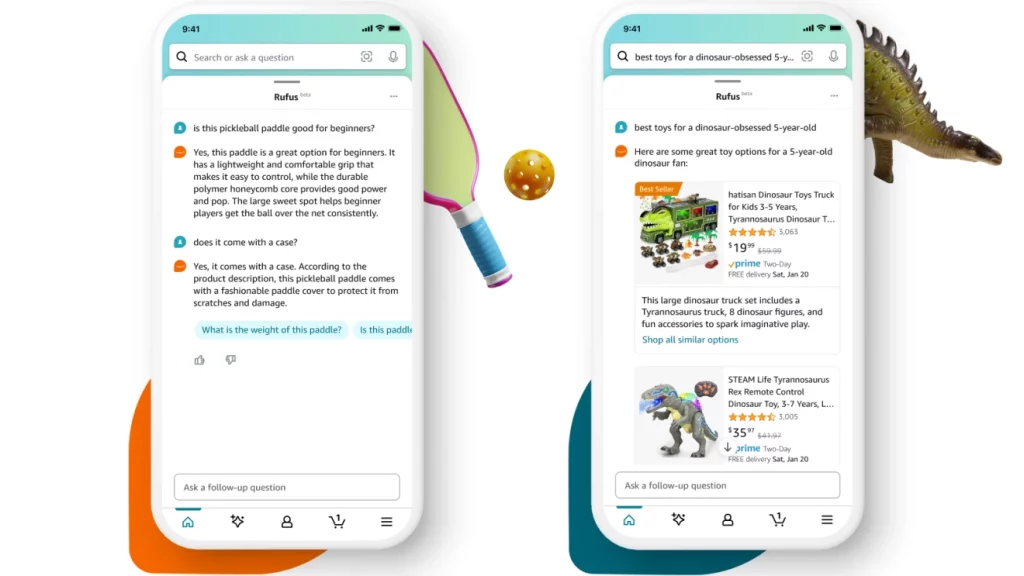
Personalized Recommendations: The AI assistant can provide customized suggestions based on user queries, such as ideas for Valentine’s Day gifts or the best toys for a particular age group.
Specific Product Queries: While viewing a product’s detail page, customers can use Rufus to quickly get answers to specific questions about a product, like its suitability for beginners or care instructions.
To use Rufus, customers in the beta group need to update their Amazon Shopping app. Once updated, they can type or speak their questions into the search bar, and a Rufus chat dialog box will appear, offering answers and allowing for follow-up queries.
Amazon plans to roll out Rufus to more U.S. customers in the coming weeks, starting with a select group of users. This initiative is part of Amazon’s ongoing effort to integrate advanced AI technologies into its shopping platform, aiming to make online shopping more intuitive, informative, and tailored to individual customer needs.
Infinix recently launched the Smart 8 Plus in India. The brand also launched the standard Smart 8 (hands-on) in the country earlier this month. Now, the smartphone will soon receive a new RAM and storage variant of the device. Notably, this configuration is priced in the budget segment making it the first in the market. The core specifications of the latest offering remain the same as the base model.
Infinix Smart 8 gets a new variant
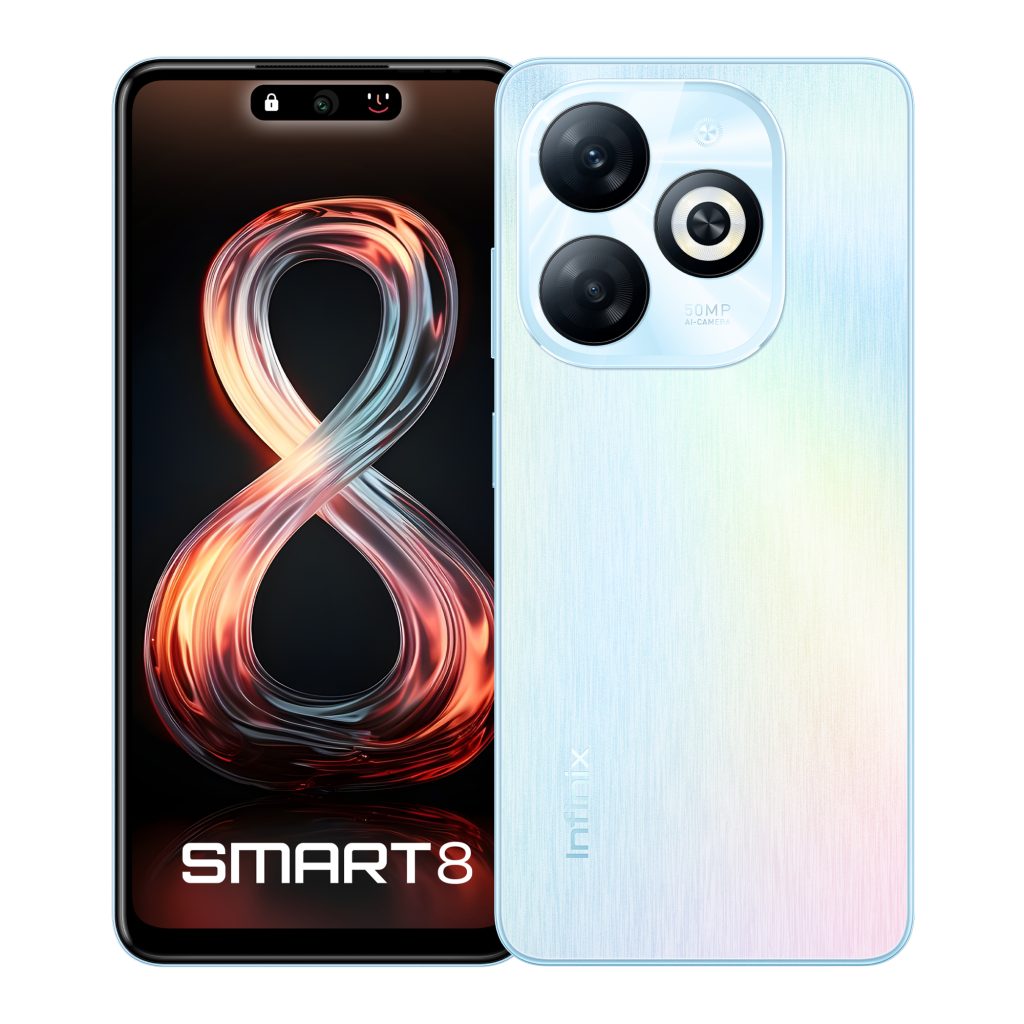
The Infinix Smart 8 will soon be available in the 8GB RAM and 128GB storage option. Both the RAM and storage have been bumped up twice over the base configuration of 4GB + 64GB. The new variant will be priced at Rs 8,999. It will be offered in Galaxy White, Rainbow Blue, Shiny Gold, and Timber Black colors. The Infinix Smart 8 8GB + 128GB variant will be sold through Flipkart.
The Infinix Smart 8 has a 6.6-inch HD+ display with a 90Hz refresh rate and 500 nits brightness. The centre-aligned punch-hole cutout extends into pill shaped for offering notifications like Dynamic Island. The power button doubles up as a fingerprint scanner and there is a gradient back panel.
The Infinix Smart 8 features a squarish rear camera island housing a 50MP main sensor coupled with an AI lens and LED flash. There is an 8MP selfie snapper.
Internally, the Infinix Smart 8 is equipped with a Helio G36 processor. There is a microSD card slot for storage expansion up to 2TB. The device draws its power from a 5,000mAh battery unit with support for 10W charging. It runs on Android 13 OS out of the box.
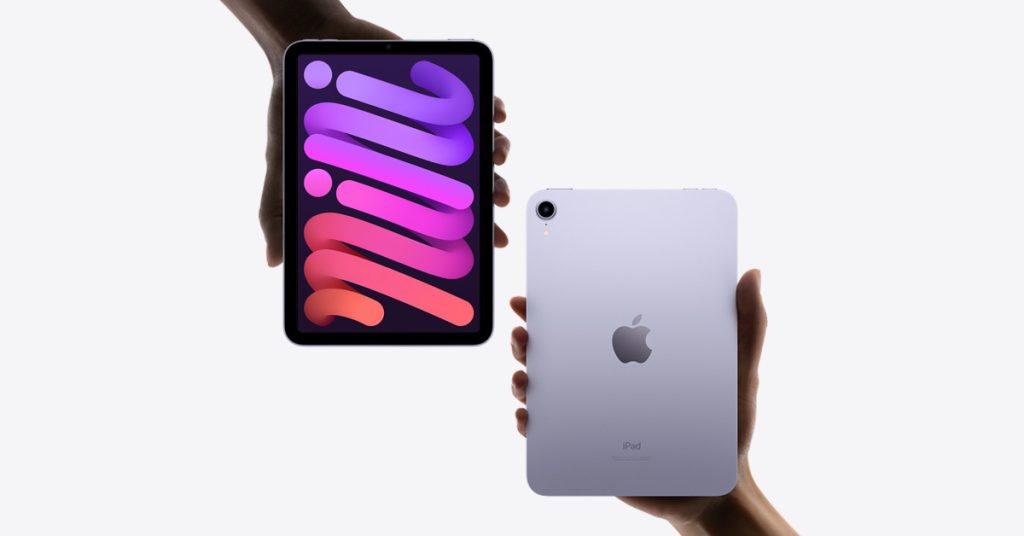
Apple is reportedly exploring the foldable market with plans for a 7-inch to 8-inch device that could replace the iPad Mini, according to Korean publication The Elec. The publication suggests a launch timeframe for the device could be between 2026 and 2027.
Apple is reportedly also working on an OLED iPad mini and there have been rumors that it could happen in 2026. So, this makes things a bit confusing as to whether the rumored device is either a foldable iPhone or a foldable iPad.
Regardless, behind the scenes, Apple has been reportedly collaborating with display suppliers Samsung and LG, who have been supplying 7-inch and 8-inch foldable panel samples since the previous year.
Samsung is said to be leading the race in developing these panels for Apple’s foldable device. However, reports suggest that there are divergent views between Apple, Samsung, and LG on crucial elements such as ultra-thin glass, cover windows, and hinge design. So this could result in delayed mass production of Apple’s foldable.
But if Apple opts for a 2026 launch, it’s expected to use Samsung’s existing OLED production line, currently used for iPhones. Interestingly, rumors hint at a larger 20.5-inch foldable device in development, though its timeframe remains unclear.
The exact form and functionality of Apple’s first foray into the foldable device market remain shrouded in mystery. Nevertheless, the recent development indicates Apple’s consideration of entering this domain.
As the competition in the foldable arena is currently dominated by established players like Samsung and Huawei, only time will reveal how Apple plans to distinguish itself in this evolving market landscape.
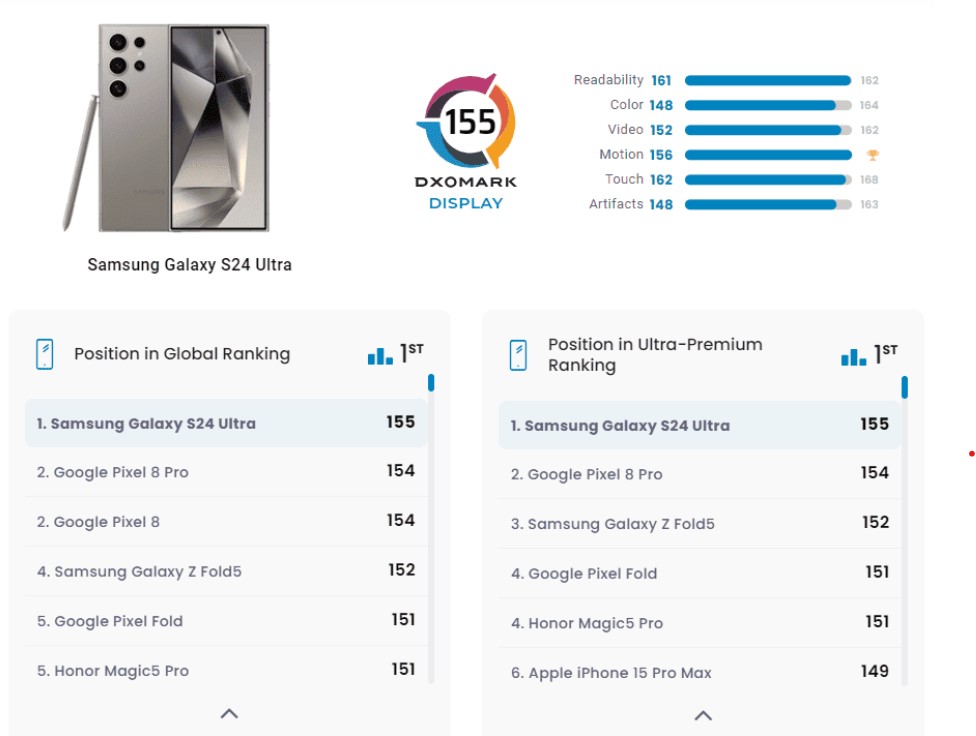
Samsung’s Galaxy S24 Ultra has bagged the top spot in DXOMARK’s display test. It performs better than its competitors which are the Google Pixel 8 Pro and iPhone 15 Pro Max. The latest-generation flagship from the South Korean brand also has a better screen than its predecessor. DXOMARK conducted a host of tests related to various display aspects on the S24 Ultra. The benchmarking platform says that it assesses the results on a variety of objective and perceptual tests under controlled lab and real-life conditions.
Samsung Galaxy S24 Ultra has the best display
In the DXOMARK’s leaderboard, the Samsung Galaxy S24 Ultra sits at the first position globally with 155 points. Google’s Pixel 8 Pro and Pixel 8 come in second and third place with just a point behind. The S24 Ultra’s competitor, the iPhone 15 Pro Max is a bit behind at the seventh spot with 149 points. Last year’s Galaxy S23 Ultra is also further behind at the twelfth position which also reveals how far Samsung has come in improving its display on the latest flagship.
DXOMARK adds that the Samsung Galaxy S24 Ultra offers good readability under sunlight due to its 2,600 nits advertised peak brightness. This earns it 161 points in readability score, just a point less than the Pixel 8 Pro. The phone’s screen is also equipped with Corning’s latest Gorilla Armor which is touted to reduce reflections by up to 75 percent. In direct sunlight, the user does not need to find a shade or cover the screen with hand to read the contents on the display. However, in the benchmark’s testing results, the screen brightness was inconsistent in other conditions. It was too high at night and too low in indoor environments. The brightness was also high while viewing a video in a low-light environment. The phone is said to deliver accurate color rendering and handle frame rate mismatches.
DXOMARK reports that the Samsung Galaxy S24 Ultra suffered from occasional unintentional touches while playing games.
Google has recently improved its Bard AI by adding Gemini Pro and a new image generation feature. These updates aim to make Bard more useful in different languages and regions, providing users with better tools.
Gemini Pro, introduced in English last December, is now in over 40 languages and 230 countries. This expansion lets users around the world benefit from Bard’s better understanding, reasoning, summarizing, and coding abilities. Independent evaluations have recognized Bard with Gemini Pro as a top-performing chatbot, praised for its significant improvements.
Along with expanding Gemini Pro, Google has also made the double-check feature more widely available. Initially for English users, it now supports over 40 languages. By clicking the “G” icon, users can ask Bard to check its answers against web content, helping verify information and explore additional sources.
A new feature in Bard is image generation, available globally in English. Users can describe something, and Bard will create custom, high-quality visuals. Powered by the updated Imagen 2 model, it aims to produce realistic images quickly.
Google emphasizes responsible AI in Bard’s image generation. To distinguish AI-created visuals from human art, Bard uses SynthID to add identifiable watermarks. Google has set limits to prevent generating violent, offensive, or explicit content and avoids creating images of specific individuals.
Samsung is apparently working on a new accessory for its mobile devices. The Samsung Wireless Powerbank 10,000mAh recently surfaced at a retailer. So here are all the details regarding the upcoming gadget’s pricing, specifications, and design.
Samsung Wireless Powerbank 10,000mAh
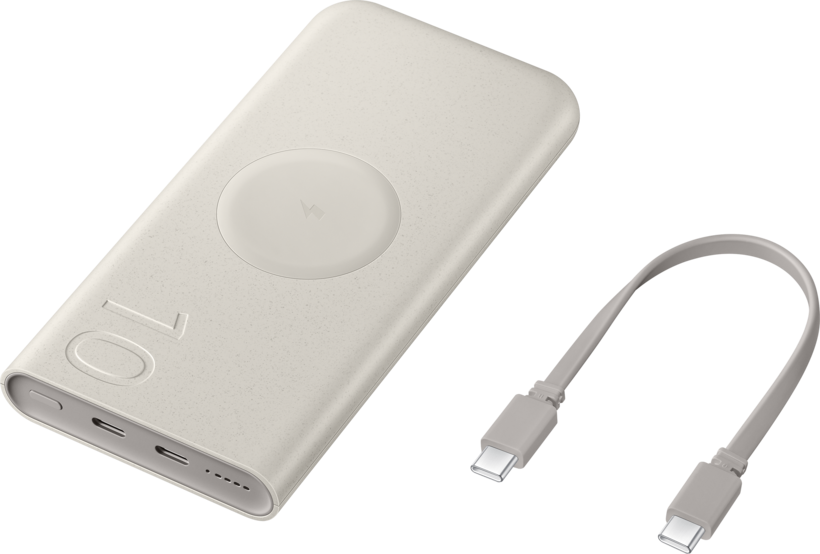
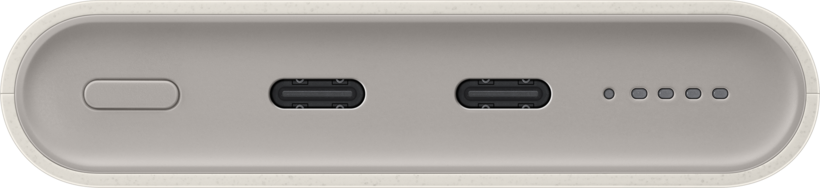
The South Korean tech giant’s upcoming powerbank was spotted at a German retailer by Roland Quandt, who shared images and details on X (formerly Twitter). Samsung will launch a pair of power banks soon, which were initially expected to launch alongside the Galaxy S24 lineup during the Galaxy Unpacked event. Looking at the tweet, one of these models is a 10,000mAh battery pack. It features a sleek matte design with rounded edges. It carries the model number EB-U2510.
The Samsung Wireless Powerbank 10,000mAh comes with two USB Type C ports and houses an LED indicator. This will likely display the battery capacity of this accessory. The power bank can output charging speeds of up to 25W from one of the USB Type C port. But if both ports are being used, the powerbank can only charge the two devices at a standard 10W. Another notable aspect of this device is the wireless charging pad, which can be seen on the top of the body.
In other words, the Samsung Wireless Powerbank 10,000mAh can charge three devices at the same time at a 7.5W charging speed. This power bank was spotted on a German retailer (Bechtle) for a price tag of around 39.26 EUR (roughly 43 US Dollars). Apart from this model, Samsung is also expected to launch a larger 20,000mAh battery variant that offers faster 45W fast charging.
If you’ve reached the mid-20s, you’ve probably noticed that the world isn’t quite a fair place. Of course, hard work can lead to success, but there’s a serious prevailing issue of of income inequality. Consider an employee in the same company struggling with their monthly salary, while a high-level executive might earn in a year what the worker might not see in a lifetime. While of course equal salaries aren’t expected, It is not possible to ignore injustice. You don’t believe me? Recently, a court had to decide that Elon Musk’s $56 billion stock option package from Tesla’s board was excessive and needed cancellation. Here are the details…
Judge Rules Against Elon Musk’s $56 Billion Tesla Pay
The salaries and annual bonuses of tech CEOs have often been a topic of discussion. For example, in 2022, Tim Cook earned $99.4 million at Apple, with $3 million as his salary, $83 million from stock bonuses, and a $16.5 million bonus. Now, Elon Musk was set to receive a much much more impressive amount from Tesla, exactly six times larger than the combined pay of the top 200 executives.
Over the past decade, Elon Musk, Tesla’s founder and CEO, has achieved remarkable success. Tesla has not only become synonymous with electric vehicles but has also seen a substantial rise in its market value. In recognition of Musk’s contributions, Tesla’s board awarded him a $56 billion stock option package. To give you an idea of the scale, this amount surpasses the reserves of more than 100 central banks globally as of 2024.
That’s such a significant payment that even your own company needs court approval to grant it to you. However, a Delaware court judge deemed the $56 billion stock option package awarded to Elon Musk by Tesla’s board excessive and ruled that it should be canceled. The court cited concerns that the $56 billion payment rewarded the CEO without considering shareholders’ interests and highlighted that the board didn’t act independently enough in determining Musk’s compensation during the decision making process.
Tesla’s board of directors must craft a new compensation package and may prompt a review of the connection between Tesla shareholders and the CEO. Musk, in response, strongly advocated against incorporating the company in Delaware, stating, “Never incorporate your company in the state of Delaware,” implying the potential relocation of Tesla to another state.
In a surprising move, Google may be preparing to rename Bard to Gemini. Recent code discoveries suggest the company may be planning to unify all of its AI efforts under the name “Gemini,” its latest AI model.
Tech researcher Bedros Pamboukian discovered flags on the public Bard website, allowing Google to easily replace all instances of “Bard” with “Gemini” throughout the site.
Notably, all text strings featuring “Bard” have corresponding alternatives with “Gemini,” visible in the code of the Bard website. The only Bard reference left untouched by Google seems to be the logo label in the header.
It's… everywhere. The only "Bard" spared is the label logo image in the top left ("Bard [Experiment]"). Can still find Bard in the FAQ for now. (3/7) pic.twitter.com/UtquZmFJGj
Even the unreleased paid version of Bard, known as “Bard Advanced,” is found to be internally referred to as “Gemini Advanced.” While seemingly straightforward, the new name could lead to confusion with the existing complexity levels of the underlying Gemini model (“Nano,” “Pro,” and “Ultra”).
The potential rebranding aligns with 9to5Google’s recent discovery that Google was planning to rename its AI-powered Assistant to “Gemini,” previously hinted at as “Assistant with Bard” during the announcement.
Bard replaced with Gemini
By renaming both Bard and Assistant, Google could streamline its generative AI branding under the comprehensive “Gemini” umbrella. “Gemini” would then cover both consumer-ready products and the underlying technology.
Nevertheless, even if Bard undergoes a rebrand, other generative AI products like “Duet AI” in Workspace may retain their current names.
Google may be aiming for a clearer distinction between Workspace tools and consumer offerings while maintaining a more unified overall image. Compared to rivals like Siri and Alexa, “Gemini” could provide a more distinctive identity for Google’s AI assistant.
Xiaomi is apparently planning on launching a new smartphone model in India soon from its POCO sub brand. The device in question is the POCO X6 Neo, which is rumored to launch next month. So here is everything we know so far.
POCO X6 Neo India Launch
The news arrives from the tipster @saaaanjjjuuu who shared the information on X (formerly Twitter). He claimed that the Chinese smartphone maker is planning on releasing the POCO X6 Neo in the region next month. This means that the release is set for sometime in March 2024. Apart from this, the tipster also revealed the key specs and pricing details of the upcoming device.
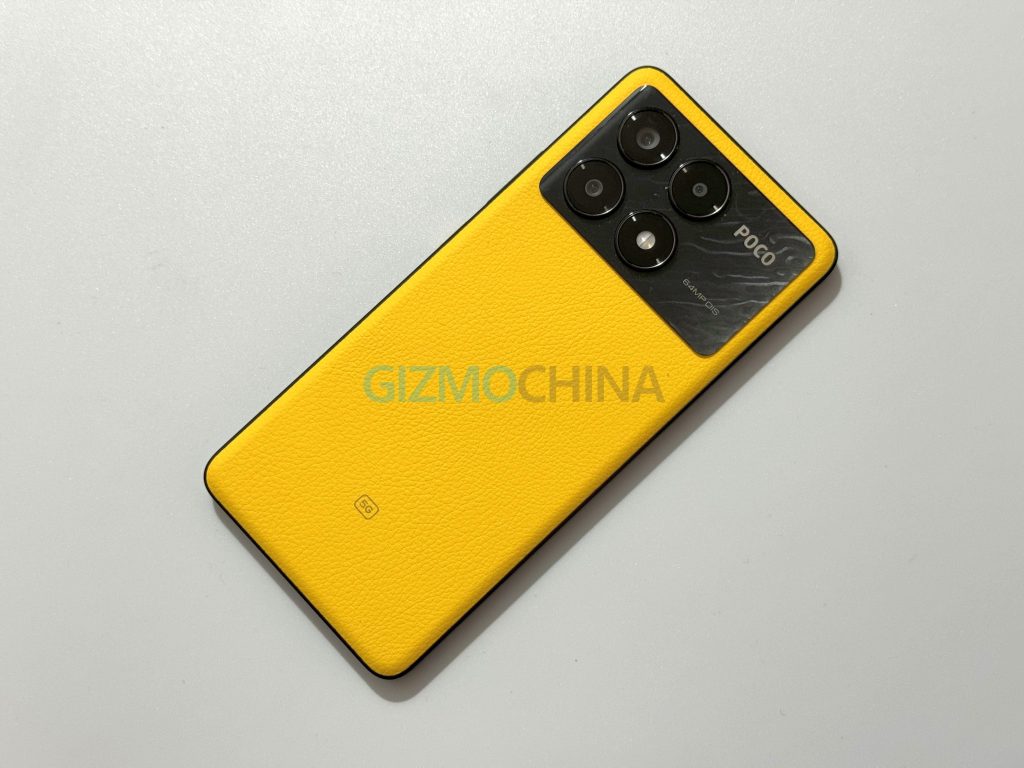
Poco X6 Pro 5G
This model could sport a tall 6.67-inch AMOLED display that offers 120Hz refresh. Under the hood, it is reportedly equipped with the MediaTek Dimensity 6080 SoC. Sanju claims that the new smartphone will be powered by a large 5,000mAh battery pack that supports 33W wired fast charging. Other notable features include IP54 rating for water and dust resistance and a 3.5mm headphone jack.
Lastly, the POCO X6 Neo’s pricing was also tipped in this tweet. This model is expected to be priced around 15,000 INR (roughly 180 US Dollars). Although, the smartphone may launch under the 15,000 INR mark as well. For those unaware, the POCO X6 Neo is expected to be a rebranded Redmi Note 13R Pro since both carry similar model numbers. This is all the information we have at the moment so stick around fore more updates.
Qualcomm might be working on a new processor in the Snapdragon 8 Gen series. It’s not the Snapdragon 8 Gen 4 that has been recently rumored. Instead, rumors suggest that it could be a lighter version of the current flagship Snapdragon 8 Gen 3 processor.
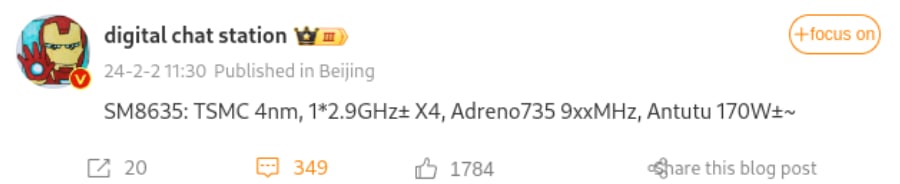
Digital Chat Station, a reliable source for leaks, recently shared details about a new chip, codenamed SM8635, on Weibo. Although the tipster didn’t share its official name, the codename suggests that the chip likely belongs to the Snapdragon 8 series.
According to the leaked information, the chip is equipped with a 2.9GHz ARM Cortex X4 core and an Adreno 735 GPU. The tipster also shared that it has an AnTuTu score of over 1.7 million. If accurate, this score would place the SM8635 above the Snapdragon 8 Gen 2 in terms of raw performance. So we are guessing, it could be a lite version of the Snapdragon 8 Gen 3.
However, Roland Quandt, another leaker, recently shared that Qualcomm has two similar chips in development — the SM8635 and the SM7675. This brings up some confusion about the position of the SM8635 within the Snapdragon lineup.
Really wonder what the difference between SM8635 and SM7675 will be. They both show up looking basically identical, but…. I've never seen this happen with anything Qualcomm. Two model numbers for the same chip…
The “SM7675” is reported to be the Snapdragon 7+ Gen 3, and Digital Chat Station previously said it to be the most powerful chipset in the Snapdragon 7 series.
Despite the uncertainty surrounding the chip itself, several smartphone models are rumored to be equipped with the SM8635. These include the Poco F6, previously expected to use the Snapdragon 7+ Gen 3, the Redmi Note 13 Turbo, and an upcoming iQOO Neo-series phone.
We use cookies on our website to give you the most relevant experience by remembering your preferences and repeat visits. By clicking “Accept”, you consent to the use of ALL the cookies.
This website uses cookies to improve your experience while you navigate through the website. Out of these, the cookies that are categorized as necessary are stored on your browser as they are essential for the working of basic functionalities of the website. We also use third-party cookies that help us analyze and understand how you use this website. These cookies will be stored in your browser only with your consent. You also have the option to opt-out of these cookies. But opting out of some of these cookies may affect your browsing experience.
Necessary cookies are absolutely essential for the website to function properly. This category only includes cookies that ensures basic functionalities and security features of the website. These cookies do not store any personal information.
Any cookies that may not be particularly necessary for the website to function and is used specifically to collect user personal data via analytics, ads, other embedded contents are termed as non-necessary cookies. It is mandatory to procure user consent prior to running these cookies on your website.