Advertisement

Tesla Eyes $2 Billion India Investment in light of Possible EV Import Tax Reduction

Tesla‘s potential $2 billion investment in India is creating a buzz. This move, contingent on India reducing its hefty import taxes on EVs, could be a significant milestone in the global EV landscape.

This concession would help other EV brands get into the country

At present, India imposes a steep import tax – up to 100% for EVs exceeding around $40,000, and 70% for less expensive models. These high tariffs have been a barrier for Tesla’s entry into the Indian market, a country with burgeoning potential for EV adoption due to its large population and increasing focus on sustainable practices.

Tesla

The crux of Tesla’s proposal hinges on a substantial reduction of these taxes to 15%. This concession would not only benefit Tesla but could potentially open the gates for other international EV manufacturers, enriching India’s EV ecosystem. The proposed tax cut is expected to apply to an annual import volume of at least 12,000 vehicles, with Tesla’s investment scaling up to $2 billion if the import volume reaches 30,000 vehicles.

However, this is not just about Tesla’s expansion. It’s a broader narrative of how global EV giants and local markets can collaborate for mutual benefits. For Tesla, it’s an opportunity to tap into one of the world’s largest consumer markets. For India, it’s a chance to accelerate its transition to clean energy and enhance its technological prowess in the EV sector.

The potential investment could also reshape India’s EV manufacturing landscape. While the exact nature of Tesla’s proposed facility remains speculative, it could range from a final assembly site to a production hub for specific components. This development could spur job creation and technical knowledge transfer, bolstering India’s position in the global EV market.

Moreover, this move could introduce a healthy competitive environment, challenging local giants like Tata Motors and Mahindra and Mahindra. Such competition is essential for innovation, affordability, and quality improvement in the EV sector.

RELATED:

(Via)

Chinese EV Giant Nio is Aiming for 30% Workforce Automation by 2027

Nio, a leading Chinese electric vehicle (EV) manufacturer, is setting a new standard for efficiency and competitiveness. By 2027, Nio plans to revolutionize its workforce, aiming to reduce it by a significant 30% by integrating advanced artificial intelligence (AI) and robotics into its operations. This bold move reflects a growing trend among EV makers to embrace technological advancements to stay ahead in the fiercely competitive market.

The company plans to be highly AI-driven, especially in Managerial Roles

Nio’s strategy is not just about reducing numbers; it’s a transformative approach to reshaping the very method of automotive manufacturing. The company’s vice-president, Ji Huaqiang, highlights their intent to lean heavily on AI, allowing for substantial reductions in managerial roles. This shift indicates a future where decisions in manufacturing are increasingly data-driven and automated, enhancing efficiency and precision in production processes.

Nio

The implications of this strategy extend beyond Nio’s internal operations. It underscores the broader industry’s challenge of balancing technological innovation with workforce dynamics. As Nio and other players in the EV market, like Xpeng and Li Auto, navigate this new landscape, they face the daunting task of maintaining growth and profitability in a market crowded with over 200 competitors, including new entrants like Xiaomi and Baidu.

Moreover, Nio’s pursuit of automation is a testament to the evolving nature of the EV industry. While the company has not yet turned a profit since its inception in 2014, its aggressive adoption of automation and AI technologies positions it as a frontrunner in shaping the future of EV manufacturing. This approach is not just about cutting costs; it’s about redefining efficiency and setting new benchmarks for the industry.

RELATED:

(Via)

Redmi K70, K70 Pro, K70e camera specifications leaked

Redmi has a major launch event set to take place on Nov. 29 in China. The brand will announce multiple products, such as the Redmi Book 14 / 16 (2024), the Redmi Watch 4, and the Redmi Buds 5 Pro TWS earbuds. It goes without saying that the start of the show will be the Redmi K70 series, which includes the K70, K70 Pro, and K70e. A leaker from China has revealed the camera specifications of all three devices.

Redmi K70 series camera specifications (rumored)

Redmi K70 Pro Glacier Silver 3

According to the tipster, the Redmi K70 will feature an OmniVision OV50e 50-megapixel primary camera, an 8-megapixel ultra-wide lens, and a 2-megapixel macro camera. On the other hand, the Redmi K70 Pro is tipped to feature a 50-megapixel OV50e primary camera, an 8-megapixel ultra-wide lens, and a 50-megapixel OV50d telephoto camera with 2x optical zoom.

The Redmi K70e will have a 64-megapixel OmniVision OV64B primary camera, an 8-megapixel ultra-wide lens, and a 2-megapixel macro camera. As usual, readers are advised to digest the Redmi K70s series camera specifications leak with a grain of salt.

The Redmi K70e is expected to feature the Dimensity 8300-Ultra chipset, up to 16 GB of RAM, up to 1 TB of UFS storage, and a 5,500mAh battery with 90W charging. It will have a 6.67-inch OLED display with a 1.5K resolution and a 120Hz refresh rate.

The K70 will arrive with the Snapdragon 8 Gen 2 chipset and a 5,000mAh battery with 120W fast charging. It is expected to arrive in configurations such as 16 GB RAM + 256 GB storage, 16 GB RAM + 512 GB storage, and 16 GB RAM + 1 TB storage.

The K70 Pro will have the Snapdragon 8 Gen 3 and a 5,120mAh battery with 120W fast charging. It will be available in options such as 16 GB RAM + 256 GB storage, 16 GB RAM + 512 GB storage, and 24 GB RAM + 1 TB storage. The K70 and K70 Pro will feature a 120Hz OLED display that offers a 2K resolution.

The K70 series will run on HyperOS-based Android 14. It will be available in shades like black, white, blue, and purple.

RELATED:

(source)

OnePlus 12 design, color variants officially revealed before December 5 launch

OnePlus will announce the OnePlus 12 on Dec. 5 in China. While the brand has been gradually teasing the arrival of the device, it has not revealed its design. However, an overlaid banner image that is now showing up on Oppo Mall has revealed the rear design of the OP12. In addition, the image has confirmed its color variants.

Plus12 l
OmePlus 12 launch date for China

OnePlus 12 design

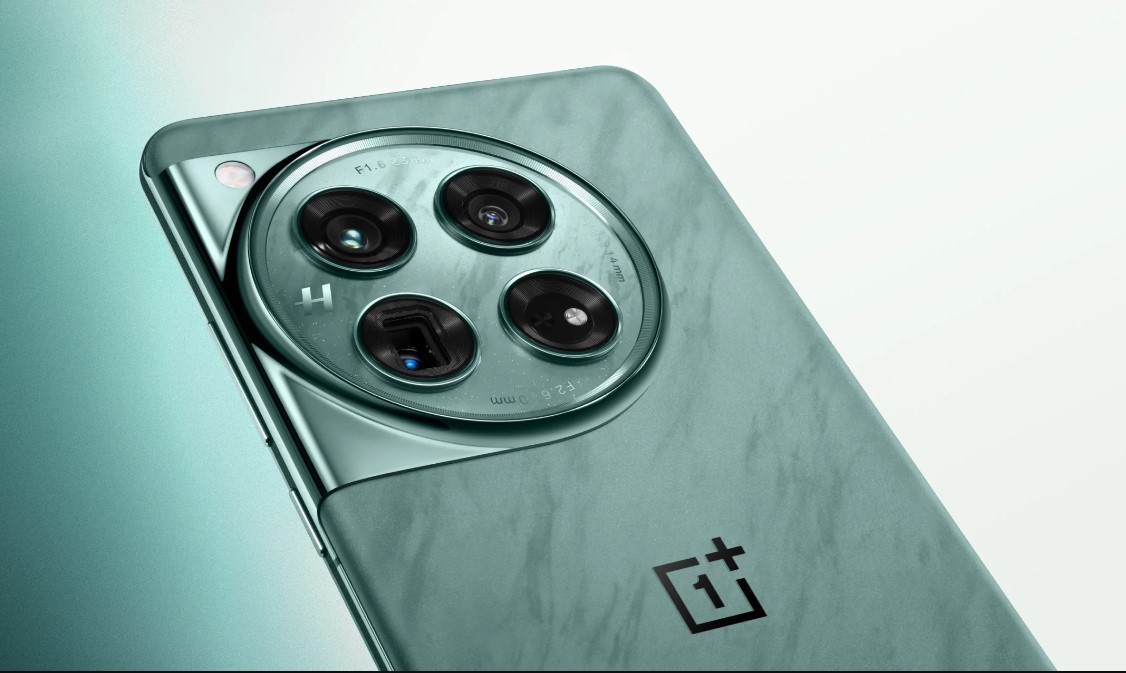
As can be seen in the image, the overall design of the OnePlus 12 is quite similar to the OnePlus 11. The back panel has a round camera module that seems to house three cameras; the fourth camera ring has some sensors inside; and an ‘H’ logo for Hasselblad branding. The LED flash unit is placed at the top-left corner outside the round camera module.

OnePlus 12
OnePlus 12

The image confirms that the device will be available in three shades, such as Classic Black, Pristine White, and Vibrant Green. A previously seen image of the device has revealed that it will have a curved-edge OLED display on the front. Here is a look at the rumored specifications of the device.

OnePlus 12 specifications (rumored)

OnePlus 12
OnePlus 12 in real

According to reports, the OnePlus 12 will arrive with a 6.82-inch BOE X1 OLED display that offers a 2K resolution, a 120Hz refresh rate, and up to 3,000 nits of peak brightness. It will run on ColorOS 14-based Android 14, while the global version that is expected to launch in January 2024 will have OxygenOS 14-based Android 14. On the front, the OP12 will have a 32-megapixel selfie camera, and its rear camera setup will have an OIS-enabled LYT-808 50-megapixel main camera, a 48-megapixel IMX581 ultra-wide lens, and a 64-megapixel periscope telephoto camera with 3x optical zoom.

The Snapdragon 8 Gen 3-powered OnePlus 12 will ship with up to 16 GB of LPDDR5x RAM and up to 1 TB of UFS 4.0 storage. It will have a 5,400mAh battery with 100W wired and 50W wireless charging support.

RELATED:

Alleged Oppo Find X7 Pro real-life image leaked, reveals an octagonal camera module, quad camera setup

Oppo has just launched the Reno 11 and Reno 11 Pro sub-flagship phones in the Chinese market at a time when other brands are launching Snapdragon 8 Gen 3 or Dimensity 9300-powered flagship phones. Reports have revealed that the brand will unveil the Find X7 series of flagship phones in the first quarter of 2024. There have been speculations that the Find X7 series will sport a new rear design. A leaked image of what appears to be the alleged Find X7 Pro that has surfaced on Weibo has revealed that it will be equipped with an octagonal camera module.

As can be seen in the image, a user was found using a never-before-seen smartphone’s unique octagon-shaped camera module. As per a Chinese leaker, it is nothing but the upcoming Find X7 Pro. A closer look at the image suggests that it is equipped with a quad-camera setup, and its LED flash is placed in the upper-left corner.

Opo Find X7 Pro hands-on shot
Alleged Oppo Find X7 Pro hands-on shot

The image contradicts the leaks that claim that the Find X7 series will have a round camera module like the Find X6 series. Hence, it is advisable to digest the leaked image with a pinch of salt.

Oppo Find X7 Pro camera specifications (rumored)

As per reports, the Find X7 Pro’s rear camera setup will comprise an OIS-enabled 50-megapixel LYT-900 primary camera, which is said to be a modified version of the 1-inch Sony IMX989 camera sensor. It is likely to be complemented by a 50-megapixel ultra-wide camera and a pair of periscope telephoto cameras.

It may feature a 50-megapixel IMX890 periscope telephoto camera with 2.7x optical zoom and a 50-megapixel IMX858 periscope telephoto camera with 6x optical zoom. While the device is expected to feature the Snapdragon 8 Gen 3 chipset, its other specifications are under wraps. As far as Find X7 is concerned, it is expected to feature the Dimensity 9300 chipset. The X7 series is expected to debut by the end of January or by early February.

RELATED:

(source)

AOC’s upcoming 49-inch Porsche Design PD49 monitor teased ahead of its possible debut at CES

AOC, in collaboration with Porsche Design, is set to unveil its latest monitor, the PD49, anticipated to debut at next year’s Consumer Electronics Show (CES). The PD49 monitor stands out as a product of the continued partnership between AOC and Porsche Design, a collaboration that has already produced several innovative monitors. This new model was recently showcased on the Red Dot website, unveiling some details about the monitor.

AOC Porsche Design PD49 monitor

PD49 Will Feature a Porsche 911-inspired Design

The PD49 stands out for its design, which draws inspiration from the iconic Porsche 911’s heat sinks. The monitor features a large, ultra-wide monitor, boasting a 49-inch screen with a 32:9 aspect ratio and a curved display. One of the key features of this monitor is its high refresh rate of 240Hz, which is especially beneficial for gaming and high-speed video content, providing smoother motion and less blur.

While AOC hasn’t released all the specifications of the PD49, there are speculations that it might include Samsung’s latest 49-inch QD-OLED panel. This would mean an even better color display and image quality, given the advantages of QD-OLED technology in terms of color accuracy and contrast.

In addition to its impressive display, the PD49 is equipped with dual 8W stereo speakers. It also includes a 5MP built-in webcam, which is a handy feature for video conferencing or streaming.

AOC Porsche Design PD49 monitor

The PD49 follows the launch of the Porsche Design PD32M monitor last year. This model features a 32-inch mini LED panel with 4K resolution, a 144Hz refresh rate, and DisplayHDR 1400 certification. The PD32M impresses with 1152 zones, a peak brightness of 1600 nits, and a wide 97% DCI-P3 color gamut, ensuring exceptional visual performance.

In terms of connectivity, it offers two HDMI 2.1 ports, a DP port, and a USB-C port with 90W power delivery support. Additionally, the monitor boasts a dual 8W speaker system certified by DTS, further enhancing the audio experience.

RELATED:

(Via)

Xiaomi 8H Find Smart Electric Bed launched in China for 2799 yuan ($394)

Xiaomi, in partnership with its ecological chain partner 8H, has introduced the Xiaomi 8H Find Smart Electric Bed on the Xiaomi Youpin platform. This innovative bed, available in 1.5m and 1.8m sizes, combines advanced technology and comfort, with prices starting at 2799 yuan ($394).

Xiaomi 8H Find Smart Cloud-Sensing Levitating Electric Bed

Xiaomi 8H Find Smart Electric Bed Key Features:

This bed stands out with its frameless design, emphasizing a wider, more concealed bed surface that lends a sleek and delicate appearance to the overall structure. The slanting design further enhances its aesthetic appeal. The bed also incorporates intelligent warm lighting that can be used as a night light or for ambient lighting, adding to its modern features.

This electric bed is engineered for versatility and comfort, offering eight different “comfort modes.” These include anti-snoring, TV, zero gravity, nursing, reading, gaming, yoga, and flat modes, catering to various needs and preferences. The bed allows seamless adjustment within a 60° range for the back and 40° for the legs, ensuring maximum comfort.

Xiaomi 8H Find Smart Cloud-Sensing Levitating Electric Bed

In terms of functionality, the Xiaomi 8H Find bed frame excels with its smart connectivity. It supports three control methods: the Mi Home App, Xiao Ai voice control, and a traditional remote control. This versatility allows users to effortlessly adjust the bed’s position, including raising the back to an upright waking state in the morning via the app.

Xiaomi offers three mattress options for this bed: a 20cm thick full-support spring latex sleeping mattress, a 25cm thick MZ1 zero-degree cotton mattress, and a 15cm thick Schcott natural pure latex mattress. These choices cater to different comfort preferences and ensure a personalized sleeping experience.

Pricing and Availability

The electric bed is offered in two sizes, with crowdfunding prices varying based on the configuration. The prices range from 2799 yuan to 5999 yuan, depending on the size and mattress type chosen.

Here’s the detailed pricing:

Electric Bed Frame 1.5m: 2799 yuan ($394)
Electric Bed Frame 1.8m: 2999 yuan ($422)
MZ1 Zero-Degree Cotton Mattress Set: 1.5m 3999 yuan ($563), 1.8m 4699 yuan ($662)
TZ Spring Latex Sleeping Mattress Set: 1.5m 4299 yuan ($606), 1.8m 4999 yuan ($704)
Pure Latex Mattress Set: 1.5m 4999 yuan ($704), 1.8m 5999 yuan ($845)

RELATED:

(Via)

Colorful launches G-ONE Plus all-in-one PC with R9 6900HX, RX 6850M XT, starts at 5899 yuan ($831)

Colorful has recently launched its new G-ONE Plus all-in-one PC, a significant upgrade from its predecessor that featured a 12th generation Intel Core and RTX 3060 configuration.

Colorful G-ONE Plus PC

Colorful G-ONE Plus PC Key Features:

The new model boasts an AMD Ryzen 9 6900HX processor with 8 cores and 16 threads, capable of reaching a boost frequency of 4.9GHz. This processor is paired with the RX 6850M XT graphics card, a mobile GPU based on AMD’s RDNA2 architecture and 12GB of GDDR6 memory. The RX 6850M XT is comparable to the desktop RX 6750 XT in performance.

The G-ONE Plus features a 27-inch 4K display, which covers 100% of the sRGB color gamut and has a 60Hz refresh rate. Additionally, it features a dual-fan cooling system, a pop-up webcam, built-in stereo speakers, and a base that supports 15W wireless charging.

Colorful primarily known for its GeForce graphics cards in China, has made a notable shift by embracing almost all-AMD hardware in this new system. The G-ONE Plus offers different GPU settings – Quiet, Balance, Gaming, and Beast – with the highest setting allowing a total graphics power of 165W.

This all-in-one PC also has a unique ice sealing cooling system, esports-grade cooling, and noise reduction technology. It supports PCIe 4.0 and features Ray Tracing performance. Interestingly, the model is also equipped with rear RGB lighting effects and offers a dynamic, high-end design.

The PC comes pre-installed with Windows 11 and offers a variety of ports for connectivity, including Type-C, USB 3.2, DP 1.4, HDMI 2.0, and RJ45. In terms of warranty, the host components (including screen, motherboard, CPU, graphics card, and SSD storage) come with a 24-month warranty, while other components have a 12-month warranty.

Colorful says that the G-ONE Plus is a “90% new” product, implying it may have minor external damage. It comes with a 7-day return policy but lacks support for unconditional returns or exchanges.

Pricing and Availability

The AIO is available in three variants: 16GB + 1TB for 5899 yuan ($831), 32GB + 1TB for 5999 yuan ($845), and 64GB + 1TB for 7499 yuan ($1,057).

As of now, the G-ONE Plus is available only in the Chinese JD platform, with no news about a global launch. This new product seems to target both gaming enthusiasts and corporate users looking for a powerful yet compact system.

RELATED:

(Via)

Apple to send experts to investigate threat notifications sent to Indian politicians

Following recent threat notifications received by some politicians in India, Apple has formed a team to investigate the incident. A team of Apple’s technical and cybersecurity experts will be sent to India to look into the issue, according to reliable sources cited by news agency IANS.

The notifications, which warned the recipients that their devices were being targeted by state-sponsored hackers, sparked concerns about the security of sensitive information.

It’s investigation is currently being spearheaded by the Indian Computer Emergency Response Team (CERT-In).

In October, several prominent opposition leaders, including Priyanka Chaturvedi of Shiv Sena, Mahua Moitra of Trinamool Congress, Pawan Khera and Shashi Tharoor of Congress, Raghav Chadha of AAP, Sitaram Yechury of CPI(M), and Akhilesh Yadav of Samajwadi Party, received notifications from Apple warning them that their devices were being targeted by state-sponsored hackers.

For those unaware, Apple’s threat notification system serves as an alert mechanism for users who may have been targeted by state-sponsored attacks.

This system, designed to detect suspicious activity, triggers a “Threat Notification” in the form of an email and iMessage to the affected user’s associated email addresses and phone numbers. The recent notifications received by several politicians and other individuals were likely generated by this system.

Apple has previously stated that it sent “threat notifications” to individuals whose accounts are located in nearly 150 countries. The company has also clarified that it does not attribute the threat notifications to any specific state-sponsored attacker.

Apple

Apple has emphasized that certain individuals, such as politicians and activists, are more likely to be targeted due to their unique identities or professional roles. 

The Cupertino company further clarified that, unlike typical cyberattacks, “state-sponsored attackers” allocate significant resources to focus on a specific, limited group of targets and their associated devices. This high level of precision makes these attacks significantly more challenging to detect and thwart.

The investigation is expected to shed light on the nature of the threat notifications and the potential risks posed to the affected individuals. Apple’s involvement in the investigation is a significant step in addressing the concerns raised by the threat notifications.

Related:

(Via)

Realme GT Explorer Master Edition gets third Realme UI 5.0 early access update

Realme is charging ahead with the third round of registrations for the Realme UI 5.0 early access version, powered by Android 14. This tailored update is specifically designed for the Realme GT Explorer Master Edition smartphone.

Realme GT Master Exploration Edition

Open exclusively to Chinese users, the third batch registration aims to enlist 1500 participants. A heads-up, though – this version isn’t the stable release; it comes with its own set of risks, including a low chance of WiFi disconnection in specific network environments.

For eager participants, the registration is now live. No need to reapply if you’re already on the Realme UI 5.0 early adopter version – we’ve got you covered. The essential version for this recruitment is RMX3366_13.1.0.201.

Before you hit the apply button, make sure your phone rocks more than 15GB of internal storage, isn’t rooted, and the battery is cruising above 60%. And, of course, back up everything – beta software can be a wild ride.

Realme UI 5.0 isn’t just a number bump. We’re introducing the realme UI ubiquitous service smart car space, letting you cast your screen to car systems for a smart cross-end driving experience. Manage your devices like a boss with the upgraded My Device to Device Space. Improved text recognition, and better photo and video permission management – we’re boosting security and efficiency.

Want in? Head to “Settings,” tap “About phone,” hit “Realme UI version,” tap the three dots up top, select “Public Application,” and fill in the details. If you make the cut, the update is yours.

RELATED:

(Source, via)

Sony Xperia 1 VI and 5 VI may pioneer digital signatures for smartphone images

Sony is reportedly planning to equip its next-generation Xperia smartphone with the world’s first in-camera digital signature technology. This new feature will allow users to digitally sign captured images within the camera, ensuring their authenticity and preventing tampering.

The technology was first announced by Sony earlier this month. It is currently being added to the company’s full-frame mirrorless single-lens cameras, the α9 III, α1, and α7S III, through a future software update. However, there is no word on whether or not it will be available for smartphones.

A new rumor now suggests that digital signature technology is expected to be a key feature of the next-generation Xperia 1 VI / 5 VI smartphone, which is rumored to be released sometime in 2024. 

For those wondering, in-camera digital signature technology is a way of ensuring the authenticity of photos and videos by embedding a digital signature within the image file. This signature is created using a unique cryptographic key that is associated with the camera.

Sony Xperia 10 V

Once a photo or video has been taken, the signature is embedded within the file. This signature can then be used to verify that the image has not been tampered with.

The in-camera digital signature technology is expected to be particularly useful for professionals who need to ensure the authenticity of their images. 

For example, journalists could use the technology to verify the authenticity of photos they take in the field. Additionally, the technology could be used to protect images from copyright infringement.

Since the technology has been successfully integrated into Sony’s DSLR cameras, it is logical for Sony to incorporate it into their smartphones as well.

Related:

(Source)

Mysterious Huawei phone appears in 3D renders

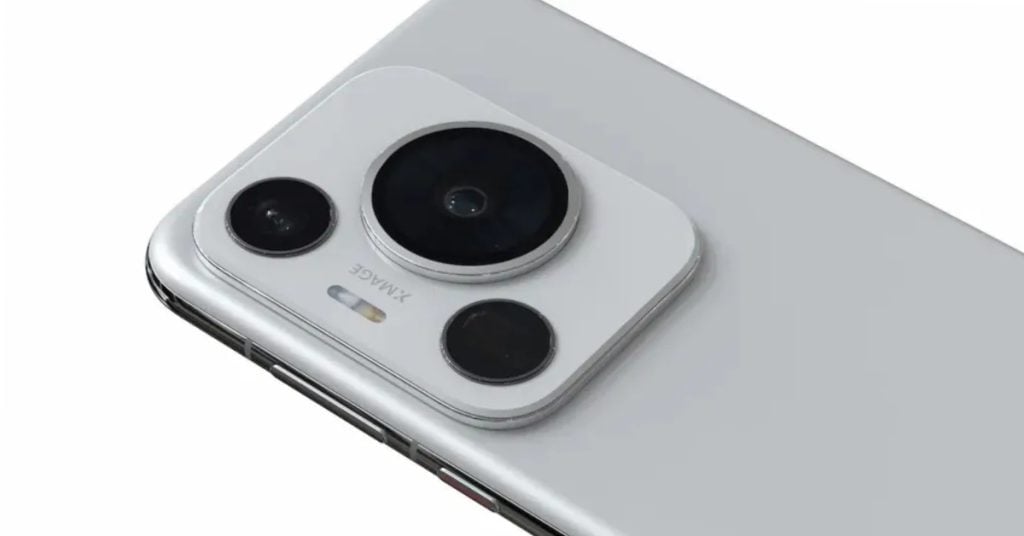
A recent leak has revealed a 3D render of a Huawei smartphone, leaving us questioning whether it’s the Nova 12 Ultra or the P70. The render shows a striking resemblance to the Huawei Nova 11, but with some flagship features that have us scratching our heads.

Huawei Nova 12 Ultra P70 3D Renders

The render depicts a phone with a cylindrical camera module identical to that of the Huawei Nova 11. However, the camera arrangement differs slightly from that of previous Nova models.

The phone’s right side houses three buttons: volume rockers and a power button accented in red. The corners are rounded, and the sides lack significant curvature.

Intriguingly, the phone sports an XMAGE branding on the camera island, which is currently exclusive to Huawei’s flagship P series smartphones. This has led to speculations that it could be the Huawei P70. However, even the tipster who shared the render expresses uncertainty about this possibility.

Another alleged render of the Huawei Nova 12 surfaced online a few days ago, showcasing a significantly different camera setup compared to the one seen in the latest leak. However, given that these are just leaked renders, the design could still undergo changes.

Adding to the confusion, rumors suggest that the Nova 12 Ultra might offer a few additional features, potentially including XMAE imaging capabilities.

Only time will tell whether the leaked render is indeed the Huawei Nova 12 Ultra or the Huawei P70. We will continue to provide updates as they become available.

In related news, Huawei is also working on a new version of HarmonyOS called HarmonyOS Next, which will no longer support Android. The company has partnered with tech giants across industries in China to develop HarmonyOS apps for Huawei smartphones. HarmonyOS Next could come with the upcoming Nova 12 series or Huawei P70 series smartphones.

Related:

(Source)

Job Demand for Huawei’s HarmonyOS Native Support App Developers is Increasing in China

As news of Huawei reportedly dropping Android app support on its HarmonyOS devices starting next year has spread to the general public in China, job demand for software developers who can develop apps that can run natively on HarmonyOS has surged in the country.

Huawei Mate 60 Pro Quantum Secure Call
Huawei Mate 60 Pro running HarmonyOS

First reported by ITHome, the Chinese tech publication noticed an uptick in job listings recruiting for app developers who are skilled in developing mobile applications that have native support for HarmonyOS devices such as the Huawei Mate 60 Pro.

Most recently, this week 3 well-renowned tech companies, Baidu, WPS and Flight Manager, have posted job vacancies that require applicants to have software development experience in HarmonyOS-related mobile applications.

Most notably, Chinese search engine giant, Baidu, has launched a recruitment listing with the job position “HarmonyOS App R&D Engineer” in its Baidu Search Engine Product R&D Department. The role will be mainly responsible for the research and development of a Baidu app that will be native to HarmonyOS. Priority will be given to job applicants who have 1 year or more of work experience and familiarity with HarmonyOS application development languages ​​​​such as ArkTS or Java / Development languages ​​and technologies such as Android. 

Besides Baidu, Kingsoft WPS is also hiring new senior product managers for its WPS Office service which requires “proficiency in HarmonyOS system development tools”. This is because the new senior product manager job roles are delegated with the responsibility of implementing and improving native HarmonyOS support into its existing WPS Office suite.

As of release time, Chinese companies which has native support of Huawei’s HarmonyOS in their software services include Sina News, Little Red Book (also known as Xiaohongshu), and Weibo.

RELATED: 


(Via)

Xiaomi teases Redmi Watch 4 with AMOLED display, aluminum alloy build

Xiaomi‘s November 29 launch event will be headlined by the Redmi K70 series. Alongside this, the company will also introduce a range of other products, including Redmi Book laptops, a refrigerator, earbuds, and a smartwatch. Now, ahead of the official launch, Xiaomi has begun teasing some of the key features of the upcoming Redmi Watch 4 on Weibo.

One of the most notable aspects of the Redmi Watch 4 is its aluminum alloy frame. This makes it the first Redmi smartwatch to feature a metal body. The frame is complemented by a stainless steel rotating crown which Redmi says has a “diamond cut” design. 

Likewise, the smartwatch will feature a 1.97-inch AMOLED display with a 60Hz refresh rate. The display is capable of reaching a brightness of 600 nits, making it plenty suitable for outdoor use. The screen also uses LTPS technology which helps to lower power consumption, ensuring longer battery life for the smartwatch.

Redmi is teasing over 200 watch faces for Watch 4, allowing users to customize the look of their smartwatch to match their personal style. Some of these watch faces can be seen in action in the teaser, and they look quite good.

The company has also confirmed that the watch will come with four types of wristbands — metal, leather, fabric, and TPU. 

While other specifications of the smartwatch are still under wraps, we anticipate that the Watch 4 will inherit features like 5ATM water resistance and built-in GPS support for navigation. 

As is customary in smartwatches these days, we also expect a plethora of health-tracking features, including 24/7 heart-rate monitoring and SpO2 evaluation.

Additional details regarding the Redmi Watch 4 are expected to emerge closer to the official launch.

Related:

(Via)

New iQOO Neo 9 Series Leak Sheds Some Light on its Design

iQOO Neo 9 Series launch is around the corner, and some key details about the specifications are already doing rounds on the internet. Via multiple sources and public certification, the iQOO Neo 9 specs details are here, and now the design aspects have been revealed by a leak via the Digital Chat Station.

Must See: iQOO Neo 9 series tipped to feature 50MP Sony IMX920 primary camera, same as Vivo X100

The iQOO Neo 9 Series, like its predecessor, will include the iQOO Neo 9 and iQOO Neo 9 Pro smartphones. The design details for the upcoming smartphones, including the display size, have been revealed in new schematics. The iQOO Neo 9 and iQOO Neo 9 Pro are said to have a 6.78″ screen with thin bezels and corning around the edges. It appears to have a selfie cutout in the center of the display. Furthermore, in comparison to others, it appears to have a thin body. The plastic will be replaced by a metallic middle frame, making it more durable.

Going with the trend, the smartphone seems to feature dual-tone colors instead of the single-tones that surfaced on the iQOO 8 Series smartphones. There will be an all-side curved rear glass, which will feel more comfortable on the hands while carrying.

On the rear, there are a couple of round-camera modules placed in the top-left corner, alongside an LED flash. The overall camera module looks quite familiar with the Honor 90 Series design.

The volume rockers and the power button are present on the right side of the device.

iQOO Neo 9 Series Specifications (Expected)

The iQOO Neo 9 will be available in two different variants. The base model will come with a Snapdragon 8 Gen 2 (SoC), 16 GB (RAM), and 256 GB of built-in storage. The Pro model, on the other hand, will include a MediaTek Dimensity 9300 SoC, in addition to 12 GB of RAM and 256 GB of onboard storage space.

It will come with an AMOLED display and fast charging speeds. The smartphones will ship with Android 14-based FuntouchOS 14 or OriginOS 4, as per the respective region.

The company recently unveiled its flagship series, i.e., iQOO 12 and iQOO 12 Pro. It carries a price tag of 3,999 Yuan, which roughly translates to Rs 45,000 for its 12GB + 25GB storage. The Pro version with 16GB RAM and 256GB of storage variant is set to retail for 4,999 Yuan, which roughly translates to Rs 57,000.

Related:

(via)

OxygenOS 13 C.33 Update starts rolling out to OnePlus Nord CE 2 Lite 5G

OnePlus is bringing a new incremental update for the OnePlus Nord CE 2 Lite. The update aims to enhance the system security by bringing the November 2023 Android Security patch. It is currently rolling out to the Indian Variant and may exceed the boundaries in the coming time.

OnePlus Nord CE 2 Lite 5G

Must See: OnePlus 8T and OnePlus 9R get OxygenOS 14 Open Beta 1: How to Download and Install

OnePlus Nord CE 2 Lite recently received the OxygenOS 13 C.32 firmware update bringing the September 2023 Security Patch update. A similar update is now rolling out, and the users can manually check for the update by heading to Settings > Anout Phone > Check for Update.

The users in India can submit the bugs and issues via Google Dialer by typing *#800#. It is a staggered update and may take some time to reach each unit. It will first commence on a small number of users and later be made available for a broader audience.

However, the smartphone recently received the OxygenOS 14 Closed Beta and Open Beta. We expect the stable update to roll out for the smartphone in the coming few days.

Related:

(source)

Google Calendar will drop its support for Android 7.1 or below likely due to security concern

Earlier this month, Google declared that Chrome version 119 for Android will be the final version supported for smartphones running on Android 7 (Nougat) and below.

The announcement affected both Chrome desktop and Chrome for Android. As a result, Chrome 120 does not support Android Nougat or a lower version of Android. Now, the company has decided to do the same with Google Calendar, which is a popular software that millions of people use to organize their daily lives. Users may plan meetings, make notes, and organize events with them.

Google Calendar will drop its support for Android 7.1 or below likely due to security concern
Google Calendar will drop its support for Android 7.1 or below likely due to security concern (Source: TheSpAndroid)

Google Calendar Privacy Concern

It is most likely because of security reasons that support for previous versions of Android has been discontinued. Google wants to ensure its customers are safe since older versions of Android are more susceptible to hacking and data theft.

The latest version of the Google Calendar app (v2023.46.0-581792699-release) has a new flag called “UnsupportedOperatingSystem__enabled,” which is used to display a message to users who are running an unsupported operating system.

This flag contains a specific message informing users that in order to continue using Google Calendar, their device must be updated to Android 8 (Oreo) or above.

Furthermore, a lot of new features and enhancements that were unavailable on earlier versions of Android are offered by more recent iterations of the software. Google is urging consumers to update to the most recent version of Android on their devices as a result.

Related:

(Via)

Report: Lava and OnePlus gain popularity among young Indian smartphone buyers

A new report from research firm Techarc suggests that the Indian smartphone market is undergoing a shift, with young buyers increasingly favoring Lava and OnePlus over the more established brands like Redmi and Realme

The report, based on a survey of 3631 Indian youth (up to 25 years of age), indicates that Lava and OnePlus are gaining popularity in India. 

Lava has the highest customer satisfaction among youths in India

Lava, in particular, has garnered high customer satisfaction among young buyers, with over 82% of existing Lava smartphone users expressing their intention to upgrade to another Lava device. The introduction of Lava’s Blaze, Agni, and Yuwa series seems to have been well-received by users, contributing to the brand’s growing appeal.

Brand Retention Among Youths

OnePlus is also gaining traction among young Indian smartphone enthusiasts, with 81% of existing users likely to stick with the brand for their next purchase. 

Samsung and Vivo share the third slot, with 67% of their existing users expressing their preference for staying within the brand for their next smartphone upgrade.

Students, an important sub-segment of the youth population, play a crucial role in brand popularity. Among students, Apple leads the sub-segment with 100% of existing iPhone users wanting to switch to another iPhone. 

Brand Retention Among Students

Among Android smartphones, OnePlus has the highest repurchase rate, with 77% of students preferring OnePlus for their next smartphone upgrade or replacement. Vivo and Lava follow closely with 70%, securing the third spot.

Redmi and Realme, known for their affordable devices, may need to focus on innovation if they want to retain their young customers. The report also found that other companies in the Indian market, such as Nokia, iTel, Tecno, and Micromax, are struggling to attract young audiences.

The buying decisions of the youth also influence device sales among family members. If young person prefers to buy a OnePlus or Lava for themselves, they are more likely to suggest the same brand to the elders in their family.

This shift in consumer preferences is likely to have a significant impact on the Indian smartphone market. Numbers from the Techarc report show that the increasing popularity of Lava and OnePlus devices among young audiences will directly take away a big chunk of market share from Redmi and Realme.

Furthermore, the Indian smartphone market is expected to grow at a nominal 3 to 4% within the next year. Over 40% of smartphone sales in the next 12-15 months is expected to happen by the youth.

Related:

(Via)

Xiaomi Announces 2nd Batch of Devices Receiving HyperOS Developer Version in December 2023 (Xiaomi 12S, Redmi K50)

Xiaomi’s home-grown operating system, HyperOS was launched to the market in late October at the company’s Xiaomi 14 series launch event. And after pushing out updates to its first batch of existing devices such as the Xiaomi 13 series and Redmi K60 series, the smartphone manufacturer has announced today the 2nd batch of existing Xiaomi devices that will be receiving the HyperOS developer version in China next month (December 2023).

Xiaomi 12S Ultra
Xiaomi 12S Ultra (Source: Xiaomi)

The list of 11 devices that will be receiving the HyperOS CN ROM Developer Version next month in December 2023 is as follows:

  • Xiaomi 12S Ultra
  • Xiaomi 12S Pro
  • Xiaomi 12S
  • Xiaomi 12 Pro
  • Xiaomi 12
  • Xiaomi 12 Pro Dimensity Edition
  • Redmi K50 Ultra
  • Redmi K50 Gaming Edition
  • Redmi K50 Pro
  • Redmi K50
  • Xiaomi Pad 5 Pro 12.4

Initially, the announcement post stirred discussion among the Xiaomi China community forum members on Friday, due to the list of devices excluding the Xiaomi 12S series of devices. 

However, Xiaomi spokesperson Zhang GuoQuan was quick to clarify on Chinese social media Weibo that there was a miscommunication on the announcement post and that the Xiaomi 12S series is of Xiaomi’s top priority in receiving the HyperOS upgrade due to the devices being the company’s first Leica-branded smartphones released to the market. 

The Xiaomi China community announcement post has since been updated to include the Xiaomi 12S devices, as per publishing this news on Sunday, November 26.

RELATED:

(Source, Via)

Meizu 21 specifications, color options leaked ahead of November 30 launch

Meizu is all set to take off covers from the Meizu 21 flagship phone on Nov. 30. The teasers released by the brand currently focus on the standard model, which suggests that the Pro model may not launch on the said date. So far, the brand has confirmed information about the vanilla model’s display, chipset, and battery size. Now, a new leak by tipster Fenibook has revealed the other specifications of the device.

Meizu 21 specifications (rumored)

Meizu 21 specs leak

As per the leak, the Meizu 21 will measure 156.7 x 75.3 x 7.9mm and weigh 198 grams. It will arrive with a 6.55-inch AMOLED display with a Full HD+ resolution of 1080 x 2340 pixels, a 120Hz refresh rate, 1920Hz PWM dimming, and 1800 nits of peak brightness. The above image shows it will arrive in black, white, green, and purple shades, and its rear shell will have a ring-LED flash for the triple camera setup.

The Snapdragon 8 Gen 3 chipset will be present under the hood of the device. The device will run on Android 14 overlaid with the Flyme 10.5 UI. It will pack a 4,800mAh battery with 80W Super mCharge fast charging technology.

The leak does not say anything about the Meizu 21’s front camera. It reveals that the device will have a 200-megapixel Samsung HP3 main camera with OIS support, a 12-megapixel ultra-wide lens, and a 5-megapixel depth sensor. The device will offer other features, such as an ultrasonic mTouch in-screen fingerprint scanner, OneMind 10.5 mEngine Ultra, and dual stereo speakers.

There is no information on the price of the Meizu 21, but it is likely to cost less than the 3,999 Yuan starting price of the Xiaomi 14 and iQOO 12, which feature the Snapdragon 8 Gen 3 chipset.

RELATED:

(source)