Advertisement

Get $40 OFF on AOOSTAR R1 N100 Mini PC at Giztop (Coupon)

AOOSTAR WTR R1 N100 Mini PC is a compact powerhouse designed to enhance your computing experience without unnecessary frills. The device which generally retails for $259 is now available at a discounted price of $219 by using the coupon code: RN40. Please note that this is a pre-order and the shipping and delivery will start in December.

WHERE TO BUY
AOOSTAR R1 N100 Mini PC at $219 @Giztop

Powered by the Intel N100 processor, this 12th generation successor to the Pentium/Celeron line offers reliable performance with a clock speed of up to 3.40 GHz and is complemented by Intel UHD graphics for smooth visuals.

In terms of memory, the mini PC supports DDR4-3200 (single) and offers versatile storage options with M.2 2280-NVMe x1 and 3.5 SATA x 2 slots. This ensures seamless multitasking and ample space for your files and applications.

Connectivity is a breeze with the AOOSTAR WTR R1 N100 Mini PC, featuring support for WiFi 6 and Bluetooth 5.2. These advanced wireless technologies guarantee high-speed internet connectivity and seamless pairing with compatible devices, making it a versatile choice for various setups.

One of the standout features of this mini PC is its compact design, measuring just 16.2cm x 16.2cm x 19.8cm and weighing a mere 1kg. Its portability makes it suitable for both office and home use, allowing you to set up a powerful workstation in limited spaces.

In terms of input/output options, the mini PC offers a 19v/5.12A, 100W Type-C input for efficient power supply. The output options include HDMI, DP, and Type-C ports, ensuring compatibility with a wide range of displays and peripherals. Whether you’re connecting to a monitor, TV, or other devices, the AOOSTAR WTR R1 N100 Mini PC has you covered.

AOOSTAR WTR R1 N100 Mini PC combines reliable performance, versatile storage, and advanced connectivity in a compact and lightweight package. With its thoughtful design and array of features, this mini PC is a practical choice for users seeking a streamlined computing solution without unnecessary embellishments.

For more information on such exciting deals and offers, check out our deals hub.

OnePlus 11 gets OxygenOS 14 Open Beta 4 for Indian & NA users

After OnePlus launched the OxygenOS 14 Open Beta 3 update for the OnePlus 11 last month, it is now time for the fourth beta build. As per the official announcement over at the OnePlus Community, participation in the Open Beta 4 will be open from November 3rd for Indian users. The update will also be available for NA users. Here are all the details.

OnePlus-11

How to Apply:

India: It is essential to make sure your phone is updated to the detectable version, either CPH2447_13.1.0.596(EX01) or CPH2447_13.1.0.595(EX01). To apply, navigate to your phone’s Settings, select “About device,” tap “Up to date,” click on the icon at the top right, go to “Beta program,” and follow the provided steps. Once the application channel is closed, OnePlus will review your application within 5 working days. If your application is successful, you will receive the new version within 3 workdays. To download the new version after your application is approved, go to Settings, select “About device,” and click on “Download Now.”

North America: For users in North America, OnePlus will offer two versions: MP (Stable Official version) and OBT (Open Beta version). If you wish to upgrade from MP to OBT, please ensure that your device is running the designated OxygenOS 13.1 version, either CPH2451_13.1.0.590(EX01) or CPH2451_13.1.0.591(EX01). Prior to initiating the upgrade, make sure to back up your data. Here’s how to proceed:

  1. Download the latest ROM upgrade zip package from the specified server.
  2. Copy the upgrade package to your phone’s storage.
  3. Install the provided APK, which is necessary for the update process. Open the app, tap on the top right gear icon, locate the upgrade package, and tap it. Wait for the installation to finish, and then tap “reboot.”
  4. After the upgrade is complete, click “Restart” to ensure the update is successful.

Known Issues:

  • Color changing and slow reaction issue of icon in the control center after switching to dark mode repeatedly.
  • Stuttering issue with camera and clicking is not responsive.
  • Probable flashback issue with camera when recording videos in rear video mode.
  • Lock screen notifications show blur after unlocking with fingerprint.

Changelog

System

  • Improved system stability and performance.
  • Fixed an issue where your face might not be recognized when you enroll your face.
  • Fixed an issue that affects transition animation when a certain page is opened in Settings.
  • Fixed an issue where some screen elements are not fully displayed after the system navigation method is changed.

Camera

  • Fixed an issue where the screen might go black when you switch to the front camera.
  • Fixed an issue where the Private album might not show up at the bottom of the Albums page.

RELATED:

(Source)

Google expands generative AI in search to over 120 new countries and territories

Google’s Search Generative Experience (SGE) which utilizes artificial intelligence to provide more interactive and informative search results, is now available in over 120 new countries and territories.

Google Expands Generative AI in Search to Over 120 Countries

SGE was initially launched in the United States and later expanded to India and Japan. The latest expansion brings SGE to a wider range of users, including those in Mexico, Brazil, South Korea, Indonesia, Nigeria, Kenya, and South Africa. A complete list of supported countries and territories is available on Google’s website.

To enable SGE in Chrome on desktop, users can visit Search Labs. Access to SGE through the Google app on Android and iOS will be available in the coming week.

In addition to the expanded availability, Google has also introduced four new languages for SGE: Spanish, Portuguese, Korean, and Indonesian. This means that users in these countries can now enjoy the benefits of SGE in their native language.

Video via: Google

SGE also includes new features such as the ability to ask follow-up questions directly from search results pages and a dedicated ad slot for displaying prior questions and search results, including search ads. These features are rolling out over the coming weeks, starting first in English in the US.

Google is also working on new AI-powered translation capabilities that will allow users to indicate the specific meaning they have in mind when asking SGE to translate a phrase in which some words can have multiple meanings.

This feature is initially being launched in the US for English to Spanish translations, with more countries and languages to be supported in the future.

Last but not least, Google is highlighting certain words in relevant searches regarding coding and health. When users hover over these highlighted words, they will see a preview of their definition or related images. This feature is rolling out over the next month in English in the US, with more countries and languages following soon.

Related:

(Via)

Realme GT5 Pro is set to bring impressive specifications at amazing price

Realme is preparing for the Snapdragon 8 Gen 3 flagship battle with the upcoming Realme GT5 Pro. Xu Qi, vice president of Realme, teases the upcoming device as ‘a new peak of flash charging’ that comprehensively surpasses its peers.

The upcoming Realme GT5 Pro is making waves with its impressive features and advanced technology

One of the highlights of the Realme GT5 Pro is its enhanced heat dissipation capabilities. Realme is reportedly breaking through the boundaries of heat management, trying to ensure the device remains under a safe temperature limit during heavy usage and faster charging.

This device will house the powerful Snapdragon 8 Gen3 mobile platform, ensuring top-notch performance. Realme has also gone big on storage, offering up to 1TB of space. Specifically, there will be three storage and memory variants: 12GB+256GB, 16GB+512GB, and 24GB+1TB. These three variants will be sold for 2999 yuan, 3299 yuan, and 3699 yuan, respectively. It is clear that Realme is targeting the premium segment of the market.

Xu Qi also mentions the screen to set a new record. However, he didn’t mention any specific details about the display of the Realme GT5 Pro. Coming to the cameras, the device brings a centered camera module on the back. The rear camera setup consists of 50MP+50MP+8MP lenses, while the selfie camera boasts a 32MP lens. The 8MP camera on the back is seemingly a telephoto. Although its zooming capabilities are not known yet, “a new chapter of dark-light telephoto” mentioned by Realme’s vice president indicated that there will be something special, at least at the software level.

Coming to the battery life, it’s a crucial aspect of any smartphone, and the Realme GT5 Pro doesn’t disappoint. With a 5400mAh battery, users can expect a long-lasting charge. Additionally, the device supports super-fast 240W wired charging, taking charging speeds to new heights.

The upcoming flagship from Realme, the GT5 Pro, seems to be a great combination of the latest technology and high-end hardware. With advancements in heat dissipation, display quality, imaging, and charging speeds, this device is set to make a significant impact in the smartphone market.

RELATED:

WhatsApp introduces new privacy feature to hide your IP address during calls

WhatsApp has rolled out a new privacy feature that allows users to hide their IP addresses when making calls through the encrypted messaging app. 

Previously, one-to-one calls on WhatsApp were established as direct peer-to-peer connections between users. While this method ensured optimal voice quality, it also meant that the connected devices had to expose their IP addresses to each other.

Hide Your IP Address on WhatsApp Calls

To address this privacy concern, WhatsApp has implemented a new approach that routes all calls through its servers, effectively masking the users’ IP addresses and obscuring their locations. 

Despite this relaying process, all calls remain end-to-end encrypted, ensuring that no one, including WhatsApp itself, can eavesdrop on the conversations.

WhatsApp acknowledges that using the call relay privacy setting may slightly compromise call quality. 

How to hide IP address during calls in WhatsApp

However, if privacy is a priority, users can enable the feature by following these steps:

  1. Update to the latest version of WhatsApp.
  2. Open WhatsApp and tap Settings.
  3. Select Privacy.
  4. Tap Advanced.
  5. Toggle on the switch next to Protect IP address in calls.

It’s important to note that group calls on WhatsApp are automatically relayed through the company’s servers by default, eliminating the need to enable this setting specifically for group conversations.

Related:

(via)

Realme GT Neo 6 with Snapdragon 8 Gen 2 could be in works, price range tipped

Realme is gearing up to unveil the Realme GT 5 Pro in China soon. Additionally, the brand is reportedly developing the Realme 12 Pro series of smartphones. Now, a new report (via TechGoing) suggests that Realme may introduce the Realme GT Neo 6, an affordable flagship phone, by early 2024.

Realme GT Neo 6 preliminary details revealed

Realme GT Neo 5
Realme GT Neo 5

According to a Chinese leaker, the Realme GT Neo 6 will be powered by the Snapdragon 8 Gen 2 chipset. Consequently, it will be positioned lower in the lineup than the Snapdragon 8 Gen 3-powered Realme GT 5 Pro, which is rumored to cost around 4,000 Yuan (~$550).

The leaker stated that the GT Neo 6 will feature a metallic frame but didn’t disclose any further information about its specifications. Additionally, the leak indicates that the GT Neo 6 will be priced around 2,000 Yuan (~$275).

The Realme GT Neo 6 appears to be a formidable competitor for upcoming affordable flagship phones, such as the OnePlus Ace 3, Redmi K70, iQOO Neo 9, and Honor 100 Pro. There are speculations that the Ace 3 and K70 will be rebranded as the OnePlus 12R and Poco F6 for their global debuts, possibly in the first quarter of 2024.

Returning to the GT Neo 6, it is anticipated to launch in Q1 2024 in China, following the GT Neo 5’s unveiling in February of this year. Hopefully, upcoming reports will provide more details about the Neo 6 in the coming days.

RELATED:

Lava Agni 2S may launch in India with specs similar to the Agni 2

Lava is apparently working on a new variant of the Agni 2, which was first launched earlier this year. The new device is expected to be called the Agni 2S and will reportedly feature specifications that are similar to the Agni 2 that launched back in May. So let’s have a look.

Lava Agni 2S Specs

The news arrives from known tipster Yogesh Brar, who shared the information with 91Mobiles. In the latest report, it was hinted that the smartphone maker is planning on launching the Agni 2S with hardware that is similar to the Agni 2. However, a major difference between the two smartphones will reportedly be a different processor. The Lava Agni 2S is expected to launch later this month.

Unfortunately, the finer details regarding this device like specifications and pricing are still unclear. But this model will likely be a mid range smartphone model as well and launch within a similar price range as the Agni 2. To recall, the Agni 2 was announced in a single 8GB + 256GB model for 21,999 INR. It sported a tall 6.78-inch FHD+ display that offers a 120Hz refresh rate. Under the hood, it was equipped with the MediaTek Dimensity 7050 SoC. Just last month, the Agni 2 was also released in two new color options.

The Lava Agni 2 runs on Android 13 OS out of the box and is powered by a 4,700mAH battery pack that supports 66W fast charging. The rear packs a 50-megapixel triple camera setup, while the front offers a 16-megapixel selfie shooter. So the brand could decide to retain the overall design, display, and camera specs. Keep in mind that this is still just an unconfirmed report, so take this news with a pinch of salt for now.

RELATED:

iQOO Neo 9 series tipped to feature 50MP Sony IMX920 primary camera, same as Vivo X100

iQOO has just launched the iQOO 12 series of smartphones featuring the Snapdragon 8 Gen 3 chipset. Next month, the brand is expected to unveil the iQOO Neo 9 series of affordable flagship phones. In a new Weibo post, tipster Digital Chat Station has seemingly leaked details about the primary camera of what appears to be the iQOO Neo 9 Pro.

iQOO Neo 9 Pro main camera details seemingly leaked

iQOO Neo 8 series
iQOO Neo 8 series

According to DCS, an upcoming iQOO phone is equipped with a Sony IMX920 50-megapixel primary camera with a 1.49-inch sensor size. The tipster did not specify the exact name of the iQOO device that will be featured. For those who don’t know, the Vivo X100 is also expected to feature the same primary camera.

Since the above-mentioned camera seems suitable for a flagship phone, it appears that the upcoming iQOO Neo 9 Pro may come equipped with it. To recall, the iQOO Neo 8 and Neo 8 Pro, which debuted earlier this year, featured a 50-megapixel Samsung GN5 and a 50-megapixel Sony IMX866 primary camera.

A recent report revealed that the iQOO Neo 9 and Neo 9 Pro are tentatively planned to launch in December in China. The devices are said to have V2338A and V2339A model numbers, respectively. It is speculated that the Neo 9 will feature the Snapdragon 8 Gen 2, whereas the Neo 9 Pro may have the Dimensity 9300 onboard. The other details of the Neo 9 series are yet to be revealed.

The lineup is expected to ship with the Origin OS 4-based Android 14. It is speculated that the Snapdragon 8 Gen 2-powered Neo 9 may face competition from other rumored Snapdragon 8 Gen 2 phones, such as the Redmi K70, OnePlus Ace 3, Honor 100 series, and Realme GT Neo 6, in the Chinese market. 

RELATED:

(source)

CMF by Nothing expands product availability to 15 new countries

CMF, a sub-brand of Nothing, is expanding its product availability to 15 new countries. This expansion includes countries such as the US, Germany, Japan, Malaysia, and Australia and more.

CMF expands product availability to 15 new countries

The company’s product lineup includes the Buds Pro, Watch Pro, and Power 65W GaN. CMF’s products were initially only available in the UK, where they could be purchased at Nothing’s physical Soho retail store. The company then expanded availability to India at select online and offline retailers.

CMF’s goal is to deliver affordable products that don’t sacrifice on quality. As such, CMF’s three products are priced competitively. The Buds Pro cost $49, the Watch Pro costs $69, and the Power 65W GaN costs $39.

Due to the high demand for CMF’s products, the company has partnered with various retailers to ensure wider availability. Some of these partners include Amazon, Aliexpress, and Rakuten.

CMF plans to expand its product lineup to 26 more markets before the end of the year.

Related:

(Via)

Lava Blaze 2 5G goes on sale in India, Check price and specs

The Lava Blaze 2 5G was announced in India earlier this month. Now, the company’s latest 5G enabled smartphone has finally gone on sale in the region. So let’s have a look at its specs, pricing, and more.

Lava Blaze 2 5G Pricing and Offers

The Lava Blaze 2 5G arrives in three color options, namely Glass Blue, Glass, Black, and Glass Lavender. It is being sold in two storage configurations as well, which include a 4GB + 64GB and 6GB + 128GB variant. It has a starting price tag of 9,999 INR for the 4GB model, while the 6GB version costs 10,999 INR. The device is currently available for purchase via the company’s official website, Amazon India, and offline stores as well.

Lava Blaze 2 5G

Lava Blaze 2 5G Specs

The Blaze 2 5G sports a 6.56-inch IPS LCD panel that has an HD+ resolution, 90Hz refresh rate, and an 8-megapixel selfie shooter on the front. Meanwhile, the rear features a 50-megapixel dual camera setup. Under the hood, the smartphone is equipped with the MediaTek Dimensity 6020 SoC and is powered by a large 5,000mAh battery pack that supports 18W fast charging. The Blaze 2 5G runs on Android 13 OS out of the box and houses a side mounted fingerprint scanner for security. It measures 8.5mm in thickness and weighs 203 grams in weight. It supports Bluetooth 5.0 with support for Wi-Fi as well.

RELATED:

Honor 100 series with 100W fast charging receives 3C certification

Honor is working on the successor to the Honor 90 series, the Honor 100 lineup. The upcoming series is reportedly set to include three devices: the Honor 100, Honor 100 Pro, and the Honor 100 GT. 

While an official launch date has yet to be announced, recent leaks suggest that the Honor 100 series could be unveiled by the end of November.

Adding to the anticipation, two potential Honor 100 series smartphones, with model numbers MAA-AN10 and MA-AN00, have received the 3C certification in China. This certification reveals that the devices will support 100W fast charging and 5G connectivity.

Apart from the fast charging and 5G capabilities, no other details have been disclosed by the 3C certification. 

However, rumors suggest that the Honor 100 series will boast a 1.5K resolution display, high-frequency dimming for eye protection, and Qualcomm’s Snapdragon 8 Gen 2 SoC. Additionally, the devices are expected to feature dual front-facing cameras and a circular rear camera module.

Honor has not yet revealed the official launch date of the Honor 100 series. We’ll keep you updated as more information becomes available.

Related:

(Via)

Realme GT 5 Pro real-life image leaked, USB 3.2, wireless charging tipped

Realme has been tight-lipped about the launch date and design of the Realme GT 5 Pro, despite teasing its key features for over a week. While it is expected that the company will officially unveil these details in the next week, a real-life image of the GT 5 Pro has surfaced on Weibo. The design of the phone is consistent with the images that emerged through its TENAA certification.

Realme GT 5 Pro live shot leaked

The leaked real-life image of the Realme GT 5 Pro reveals a white-colored back panel. As a flagship model, it is likely to feature a glass back. However, what stands out is the unusually positioned Realme logo, which appears below the round camera module.

Despite having three cameras on the back, the camera island features four camera rings with a dual-LED flash at the top. While the front of the device remains concealed, it is speculated to boast a curved-edge OLED panel with a cantered punch-hole cutout.

Realme GT 5 Pro specifications (rumored)

Realme GT 5 Pro
Realme GT 5 Pro TENAA images

According to the TENAA listing and recent reports, the Realme GT 5 Pro will feature a 6.78-inch OLED panel that offers a 1.5K resolution and a 144Hz refresh rate. It will feature a 32-megapixel front camera, and its rear camera setup will have a 50-megapixel Sony Lytia LYT-T808 primary camera with OIS support. The main snapper will be coupled with an 8-megapixel OmniVision OV08D10 ultra-wide lens and a 50-megapixel Sony IMX890 periscope telephoto camera with 2.7x optical zoom.

The Realme GT 5 Pro will be powered by the Snapdragon 8 Gen 3 chip, 16 GB of LPDDR5x RAM, and a 5,400mAh battery with 100W wired charging support. Realme has confirmed that the GT 5 Pro will come with up to 1 TB of UFS 4.0 storage.

As per a leak by tipster DCS, the device will be equipped with a USB 3.2-enabled USB-C port and coe with support wireless charging (possibly, 50W wireless charging). It will come preloaded with Realme UI 5 and Android 14, and it will have a 10,000mm2 heat dissipation unit.

RELATED:

Oppo and Hasselblad unveil HyperTone camera system for Find X7 series, OnePlus 12, Reno 11 series

On Nov. 8, during the annual photography forum keynote in France, Oppo and Hasselblad unveiled their collaborative project, the Hasselblad HyperTone camera system, for their flagship phones coming in 2024, starting with the Find X7 series. This initiative aims to lead the way in the realm of computational photography by leveraging aesthetic traction technology and effects.

Key features of HyperTone Camera System

According to Oppo, the HyperTone Image Engine is a revolutionary technology that employs computational photography to address common mobile photography challenges, including distortion. The HyperTone engine incorporates AI denoising in the RAW domain and offers precise pixel brightness correction using photon matrix technology. The result of these advancements is a 30 percent increase in image clarity and a remarkable 60 percent reduction in image noise. The new image processing includes tone mapping control and image fusion with digital negatives.

OPPO, Hasselblad announce the HyperTone camera system

The HyperTone camera system is a combination of hardware and software enhancements comprising three key components:

  • The main camera system, which offers increased zoom magnification and multiple viewing angles for creative freedom
  • The image engine, which employs advanced calculations to reduce noise and increase image clarity
  • The ProXDR display, which reaches a brightness of 12 million pixels, offers up to eight times greater dynamic range for a more realistic output

During the event, the company showcased its improved color sampling capabilities, enabling the accurate restoration of skin color characteristics and addressing issues like blooming with onboard AI. These enhancements also bring a more distinct sense of depth to portrait shots.

When it comes to portrait photography, the HyperTone camera system enhances the three-dimensional appearance of faces. By expanding the sample color blocks for skin color from 2 to 90, Oppo achieves precise restoration of skin color characteristics. Moreover, the natural portrait blurring engine simulates optical blur effects through internal gradients.

The HyperTone camera system will make its debut on the Find X7 series of flagship phones, which is expected to launch in Q1 2024. The company added that the Find X7 series features the industry’s most powerful zoom lens in its telephoto module, ensuring greater versatility in low-light conditions. For those who don’t know, the Find X7 and X7 Pro are expected to feature the Dimensity 9300 and Snapdragon 8 Gen 3 chipsets, respectively. The HyperTone camera system will also be featured on the OnePlus 12 and Oppo Reno 11 series of mobile phones.

RELATED:

Galaxy AI likely to debut on Galaxy S24 series, AI Live Translate Call feature revealed

Samsung has announced the Galaxy AI, an AI-powered initiative designed to enhance the user experience on its upcoming devices. According to the company, this comprehensive AI solution leverages both on-device AI developed by Samsung and cloud-based AI-enabled through collaborations with industry partners, likely including companies like Microsoft and Google. As a result, Galaxy AI is poised to elevate various aspects of daily mobile usage, all while prioritizing security and privacy.

Galaxy AI: AI Live Translate Call

Galaxy AI: AI Live Translate Call

One of the key features of Galaxy AI is the AI Live Translate Call, which is expected to debut on the latest Samsung phones, potentially the Galaxy S24 series. It will seamlessly integrate a personal translator into the native phone app, eliminating the need for third-party apps. It will offer real-time audio and text translations during conversations, making communication with speakers of other languages as effortless as enabling closed captions for a TV show. To safeguard the privacy of conversations, Galaxy AI will operate entirely on-device.

Samsung has confirmed that the Galaxy AI will launch in early 2024, suggesting that it could be first available on the Galaxy S24 series. A recent report indicates that the company may unveil the Snapdragon 8 Gen 3 / Exynos 2400-powered S24 lineup on January 17.

Wonjoon Choi, Executive Vice President and Head of R&D at Mobile Experience Business, emphasized the transformative potential of Galaxy AI. He stated, “Mobile technology has the power to connect people, boost productivity, and unleash creativity on a global scale, and Galaxy AI represents a comprehensive step in this direction.”

Samsung is not alone in its pursuit of AI-powered smartphones. Other leading smartphone brands are also developing their own AI models. It appears that in 2024, AI integration into smartphones will become increasingly prevalent as manufacturers strive to enhance user experiences and capabilities.

RELATED:

Alps Alpine’s New e-Bike Radar System Synchronizes with Your Smartphone

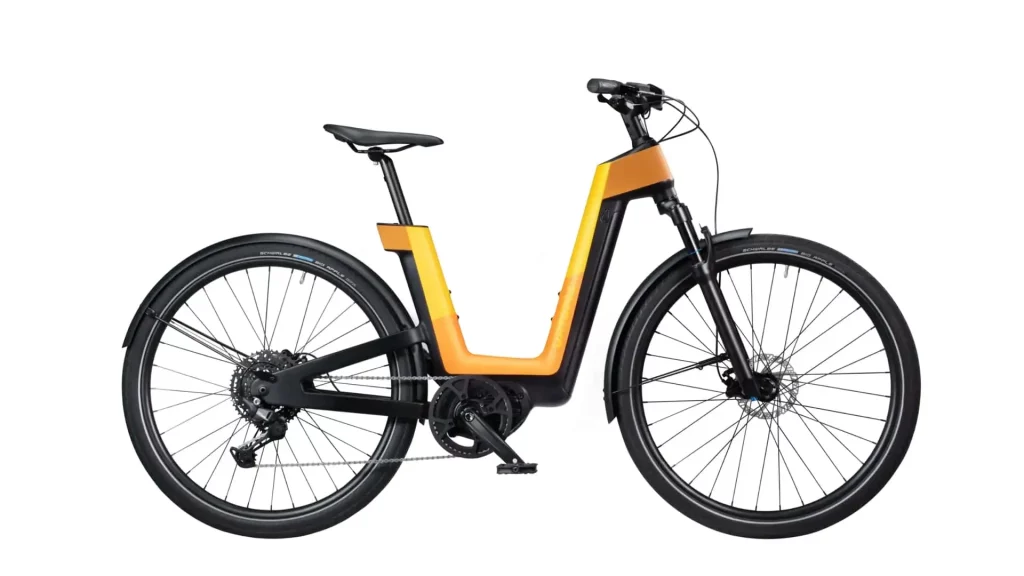
As electric bicycles become increasingly common on our streets, ensuring rider safety is more important than ever. In an innovative leap, third-party tech creators are stepping up to enhance the security of these eco-friendly commuters. Among the latest advancements is the Ride Safety System RS 1000, a product from Alps Alpine, designed to offer riders a guardian angel over their shoulders.

The bike provides 360-degree coverage around your bike

This nifty device acts as an early warning system, alerting e-bikers to vehicles and potential hazards approaching from behind. Using AI to monitor the road, the RS 1000 serves up instant alerts, and pairs with smartphones to project real-time traffic updates right onto the handlebars. Essentially, it’s like having a rearview mirror with you, but smarter and digital.

Electric

Alps Alpine has focused on an intelligent design for the RS 1000. It not only detects danger but also shines as a multifunctional rear light, which includes a brake light feature for better visibility to other road users. The system is lightweight and unobtrusive, designed to be easily mounted without being hidden by bags or gear.

What’s truly impressive is its integration capabilities. The RS 1000 can draw power directly from the e-bike, reducing the hassle of separate charging, and it’s got a USB interface for versatility across different bikes. Plus, with at least two hours of internal battery life, it’s ready for most commutes or leisure rides.

RELATED:

(Via)

Chrysler may Launch a New Airflow-Powered EV in 2025

Chrysler has declared its commitment to electrification by announcing plans to rejuvenate its lineup with a new electric vehicle (EV) by 2025. While the brand’s offerings have dwindled to a few models, including the venerable Pacifica and the long-standing 300 sedan, the anticipated EV could represent a pivotal shift for the company.

A new sedan from Chrysler is also expected to drop next year

At a recent automotive conference in Detroit, Chrysler CEO Christine Feuell shared that an all-electric two-row crossover is on the horizon, with a launch aimed for 2025. This move is part of a broader strategy as the brand, part of the Stellantis group, moves toward a fully electric portfolio by 2028.

Electric

What’s particularly intriguing is the inspiration behind this forthcoming model. Despite earlier statements distancing future designs from the Airflow concept revealed at CES in 2022, it appears Chrysler has reconsidered. The Airflow, which garnered positive attention for its sleek “Graphite” iteration, may influence the new crossover’s design after all. This suggests that while the company is looking forward, it hasn’t entirely abandoned the innovative spirit that the Airflow concept represented.

The new EV is expected to be built on the STLA Large platform, which is designed to accommodate a range of electric vehicles under the Stellantis umbrella. In addition to the crossover, there’s talk of a new sedan concept to be unveiled next year, although details remain under wraps. This announcement comes at a time when Chrysler’s lineup is in need of revitalization, and an electric crossover could be just the jolt the brand needs.

RELATED:

(Via)

China’s AI Companies will Get a New Difficulty Level to Conquer with GPT-4 Turbo

The launch of OpenAI‘s GPT-4 Turbo has turned heads, especially in China, where AI researchers are setting new benchmarks in the field as well. This advancement signals a noteworthy shift, pushing AI into an era where understanding and generating human language is becoming increasingly sophisticated.

Companies will look for more cost-effective ways to develop new AI solutions

GPT-4 Turbo, the brainchild of OpenAI, has elevated the capabilities of AI, boasting the ability to recall an impressive amount of textual information and offering developers a more cost-effective way to create applications. This leap forward has not gone unnoticed in China, where tech behemoths like Baidu and Alibaba are gearing up to meet the challenge. These companies are not just playing catch-up but are rethinking their strategies to either match or surpass the features of this advanced AI model.

chatgpt

At the heart of the conversation is the question of how to keep up with such rapid advancements. Companies may opt to enhance their own foundational models or tailor-make AI solutions for specific industry needs. This isn’t just a competition of technology; it’s a race for innovation and application across industries.

China’s urgent need for AI talent underscores the demand for innovation in the face of international developments like GPT-4 Turbo. While the Chinese government recognizes the potential economic boost AI could provide, it remains vigilant about the technology’s governance.

Local AI endeavors, however, face hurdles due to stringent internet regulations that limit access to foreign AI tools like ChatGPT. This creates a unique space for domestic AI solutions to thrive and cater to the specific needs of the Chinese market.

RELATED:

(Via)

Minisforum UM480XT mini-PC with a Ryzen 7 4800H CPU, up to 64GB RAM launched starting at $189.90

Notable Chinese mini-PC manufacturer Minisforum has launched the UM480XT mini-PC. The new model is a trimmed-down version of the UM590 that was launched last year. The move may be in a bid to reduce prices and rack up sales of the model.

Minisforum UM480XT mini-PC

The Minisforum UM480XT mini PC is powered by an AMD Ryzen 7 4800H CPU. The CPU is a Renoir APU that was announced in 2020. It is originally designed for larger, more powerful laptops with room for better termals. Thus, the processor is almost outdated but considering the application, it brings the power found on high-end laptops to the affordable PC.

Minisforum UM480XT mini-PC

The device comes in a barebone model which allows users to customise it as they desire. There are also three memory versions in addition to the barebone model. The three versions house 16GB, 32GB, and 64 GB of RAM respectively. The mini-PC’s storage options are limited to two – 512GB and 1 TB SSD.

The UM480XT features a compact build with a dimension of 12.76 cm x 4.82 cm. Despite the compact size, the mini-PC comes with a host of connectivity options including a USB-C port for data only, a second USB 3.2 Type-C port with DP 1.4 support, two USB 2.0 Type-A, two USB 3.2 Gen 2 Type-A ports, a 3.5mm audio jack and two HDMI ports. The device also houses a 2.5 Gigabit Ethernet port.

Pricing & Availability

The Minisforum UM480XT mini-PC is officially available on the company’s website. As for the price, the barebone unit is listed on the company’s website for $229. Curiously, the same model is listed on Amazon for $189.90 but the product is presently out of stock. The product sure offers users a bang for their buck at this price.

RELATED:

Apple bows down: Will allow third-party App Stores in Europe by 2024, adapting to the DMA

Apple is reportedly preparing to make a significant policy change in Europe, aiming to allow third-party app stores on its devices by March 2024. This shift is in response to the European Union’s Digital Markets Act, which requires such adjustments to promote competition in the app distribution space.

Apple logo

EU’s Digital Markets Act Pushes Apple to Enable Alternative App Stores by 2024

According to Apple’s recent 10-K filing, the company expects to comply with the new EU legislation, which will directly impact the way its App Store operates. This includes changes in how Apple charges developers, manages the distribution of applications outside its App Store, and allows developers to communicate with users for alternative purchase options.

This move towards permitting third-party app stores could potentially reduce Apple’s App Store revenue, which could have a significant impact on the company’s overall business and financial performance.

Apple, historically known for its strict stance against third-party app stores and sideloading, has not made any public comments regarding these developments following the filing.

Analysts at Morgan Stanley have interpreted the updated language in the filing as a sign that third-party app store access in the EU is on the horizon. They believe that Apple can successfully navigate these changes, citing the security, centralization, and convenience of the existing App Store as factors that might discourage users from switching to third-party alternatives.

In addition to its European challenges, Apple has also faced complications related to its app guidelines in China. The company has adjusted its guidelines to comply with new regulations, which limit access to banned foreign apps. These changes align with China’s increasing internet restrictions, potentially affecting Chinese iPhone users’ access to global platforms. However, Apple’s strong brand and diverse product range, including the popular iPhone 15, are expected to help maintain its hardware sales in China.

Now if you have come this far, I highly recommend you to read our recent article on how governments are actively regulating big tech companies to align with their objectives.

RELATED:

(Source, Via)

Apple’s new patent will personalize the driving experience through advanced user recognition

Apple is said to be developing a car project set for a late 2025 or 2026 release, and their recent patent filing related to smart cars has garnered significant attention.

Apple’s latest patent titled “Customizable System” signals a significant step in its smart vehicle initiative, with an advanced system that personalizes the vehicle experience through user identity recognition.

Enhancing In-Car Experience

This smart system will utilize various user information such as facial recognition, fingerprints, and voice biometrics, aiming to enhance security and provide individualized comfort settings, such as seat adjustments, media settings, and climate control, based on the passenger’s location inside the vehicle.

The system’s integration with portable electronic devices allows it to remind passengers about devices, items, and pets left behind.

Apple’s progress in the automotive sector has been slower than competitors like Huawei and Xiaomi. But this new patent underlines their dedication to carving out a niche in smart vehicle development. However, it’s important to note that not all patented technologies evolve into consumer products.

Apple was also granted a patent for a smart sunroof last year, indicating progress in its electric vehicle project. However, the Apple Car project has faced setbacks, leading to doubts about its timeline, with some predicting a 2026 release. Analyst Ming-Chi Kuo has suggested that Apple might consider acquisitions to establish a stronger presence in the automotive market. Despite uncertainties and potential delays, there is still significant anticipation for Apple’s entry into the automotive sector.

RELATED:

(Via)