The 13-inch MacBook Pro with Touch Bar was launched in 2020 and featured the Apple M2 chip with up to 10 GPU cores. It also featured the Touch Bar, which Apple introduced in 2016 as a dynamic and more intuitive way to interact with macOS.
The Touch Bar is a thin, OLED strip that replaces the traditional function keys on the MacBook Pro keyboard. It can be used to display a variety of contextual controls, such as shortcuts for specific apps or tasks. However, the Touch Bar never really caught on with users. Many people found it difficult to use and less efficient than the traditional function keys.
Thus, Apple began to phase out the Touch Bar in 2021. It removed it from the new MacBook Air and the redesigned MacBook Pro. The discontinuation of the 13-inch MacBook Pro with Touch Bar now means that the Touch Bar is officially dead.
While its discontinuation is a bit sad, it is clear that the Touch Bar was never really a popular feature. It was a bold experiment, but it ultimately failed to gain traction with users.
Asus has officially announced that its upcoming ROG gaming phone, which appears to be the ROG Phone 8 series, will feature the latest third-generation Snapdragon mobile platform, also known as the Snapdragon 8 Gen 3. However, the company has not confirmed the launch date of the ROG Phone 8 lineup. Here’s what to expect from Asus’ upcoming gaming-focused smartphones.
ROG Phone 8 series is arriving with Snapdragon 8 Gen 3
ROG Phone 8 series confirmed to feature Snapdragon 8 Gen 3
The inclusion of the Snapdragon 8 Gen 3 in the ROG Phone 8 series will offer a 30 percent CPU performance boost, 20 percent better energy efficiency, a 25 percent GPU performance increase, and a significant 98 percent AI capability improvement as compared to the Snapdragon 8 Gen 2-power ROG Phone 7 series. It is unclear whether the ROG Phone 8 series will debut this year or early next year in China.
While the exact specifications of the ROG Phone 8 series remain undisclosed, a recent report revealed a possible lineup comprising the ROG Phone 8, ROG Phone 8 Pro, and ROG Phone 8 Ultimate. Each of these models has a unique model number, such as AI2401_A for the global market, AI2401_C for the China or India market, and AI2401_E for the ROG Phone 8 Pro.
Back in September, an ASUS phone with the model number ASUS_AI2401_A, which seems to be the ROG Phone 8, appeared in the Geekbench benchmark library. The device achieved a single-core score of 2213 points and a multi-core score of 7048 points on the benchmarking platform. The listing revealed that the Snapdragon 8 Gen 3-powered smartphone will arrive with 16 GB of RAM and Android 14, which will have a layer of ROG UI on top.
Last week, the Xiaomi 14 Pro Titanium Special Edition was announced alongside the vanilla Xiaomi 14 and Xiaomi 14 Pro. Unlike the other two models, the special variant is yet to go on open sale.
Thus, confusion arose among netizens regarding the availability of the titanium edition. Thankfully, a Xiaomi executive clarified this matter today.
Xiaomi user operation manager shed some light on the availability of the Xiaomi 14 Pro Titanium Special Edition on Weibo.
He says that the yield rate of this device is low at the moment. Hence, only a few units will be up for grabs when the first batch ships.
However, the executive assures that the product will be restocked once the production capacity ramps up. He also adds that the handset will not be sold in limited quantities, suggesting a better availability in the future.
He urges interested customers to wait. Finally, he mentions that people with F-codes can pre-order the phone. But even so, the wait time is about half a month.
The Xiaomi 14 Pro Titanium Special Edition is priced at ¥6,499 (~$890). It arrives with 16GB RAM, 1TB storage, and the same specs as the regular Xiaomi 14 Pro.
But it gets a titanium alloy middle frame, Xiaomi Dragon Crystal Glass protection on the front and rear, a titanium grey paint job, and an orange accent for the camera island.
Apple has introduced a new MacBook Pro lineup, featuring a range of M3 chips: M3, M3 Pro, and M3 Max. To be precise, the 14-inch MacBook Pro comes in all three chip variants, whereas the 16-inch edition comes in M3 Pro and M3 Max variants. To learn about the all-new 3nm chip from Apple, readers can visit our dedicated post. Here is a look at the specifications, features, and price of the new MacBook Pro models.
14-inch, 16-inch MacBook Pro specifications and features
14-inch, 16-inch MacBook Pro with M3 series chip launched
The 14-inch MacBook Pro with M3 comes with an 8-core CPU, a 10-core GPU, 8 GB unified memory, and 512 GB / 1 TB of SSD storage. Its M3 Pro variant comes in two options: 11-core CPU, 14-core GPU, 18 GB unified memory, and 512 GB SSD storage; and 12-core CPU, 18-core GPU, 18 GB unified memory, and 1 TB SSD storage. The M3 Max edition of the 14-inch MacBook Pro has a 14-core CPU, 30-core GPU, 36 GB of unified memory, and 1 TB of SSD storage.
The 16-inch MacBook Pro with M3 Pro comes in 18 GB and 36 GB unified memory variants. Both have a 12-core CPU, an 18-core GPU, and 512 GB of SSD storage. Its M3 Max edition comes in two options: 14-core CPU, 30-core GPU, 36 GB of unified memory, and 1 TB of storage; and 16-core CPU, 40-core GPU, 48 GB of unified memory, and 1 TB of SSD storage.
M3 series 14-inch, 16-inch MacBook Pro display
When it comes to battery life, the 14-inch MacBook Pro with the M3 chip and 70Wh battery offers up to 22 hours of battery life while watching movies, whereas its M3 Pro and M3 Max chip variants featuring 72Wh battery can last for up to 18 hours. It comes with a 96W USB-C power adapter. Apple’s 16-inch MacBook Pro models with M3 Pro or M3 Max chips, which pack a 100Wh battery, can last up to 22 hours for movie watching. The 16-inch model ship with a 140W USB-C power adapter.
M3 series 14-inch, 16-inch MacBook Pro in new Space Black shade
All MacBook Pro models feature a Liquid Retina XDR display with an improved peak brightness of up to 1,600 nits, a built-in camera, a six-speaker sound system, various connectivity options, and run on macOS Sonoma. According to Apple, the 14-inch MacBook Pro with M3 is ideal for students and business users, delivering significant performance improvements. The 14 and 16-inch models with M3 Pro cater to coders, creatives, and researchers, offering faster performance for applications like Photoshop and data sequencing. The new MacBook Pro models come with other features, such as a Touch ID sensor, a Magic Keyboard, Wi-Fi 6E, Bluetooth 5.3, SDXC card support, Thunderbolt 4.4 ports, HDMI, USB-C ports, and a 3.5mm audio jack.
14-inch, 16-inch MacBook Pro price
Here is a look at the price of the new MacBook Pro models:
14-inch MacBook Pro
M3 512GB + 8GB: $1,599 | Rs 1,69,900
M3 1TB + 8GB: $1,799 | Rs 1,89,900
M3 Pro 512GB + 18GB: $1,999 | Rs 1,99,900
M3 Pro 1TB + 18GB: $2,399 | Rs 2,39,900
M3 Max 1TB + 36GB: $3,199 | Rs 3,19,900
16-inch MacBook Pro
M3 Pro: 512GB + 18GB: $2,499 | Rs 2,49,900
M3 Pro: 512GB + 36GB: $2,899 | Rs 2,89,900
M3 Max 1TB + 36GB: $3,499 |Rs 3,49,900
M3 Max 1TB + 48GB: $3,999 | Rs 3,99,900
Pre-orders are live for the MacBook Pro lineup, with M3 models in Space Grey and Silver, and M3 Pro and M3 Max versions in Space Black and Silver. These laptops will be available starting Nov. 7.
Fire-Boltt is back with the rugged and reliable Expedition and Quest smartwatches. These watches are built tough and designed for those who lead an active lifestyle.
Fire-Boltt Expedition and Quest Specs & features
Both the Expedition and Quest models come with a rugged design along with two balloons and a rotating crown to aid in navigating the UI. Both the smartwatches are equipped with a 1.39-inch HD TFT IPS screen that provides clear visuals.
They provide a wide selection of sports modes, with the Expedition offering 120+ modes and the Quest with 100 modes, suitable for fitness enthusiasts. These smartwatches are equipped with an AI voice assistant for added convenience. Notably, they support Bluetooth calling with a built-in microphone and speaker.
For those who enjoy outdoor activities, the built-in GPS is a valuable feature, aiding in navigation and activity tracking. Health monitoring is a focus, with capabilities including sleep tracking, SpO2 monitoring, heart rate tracking, women’s health tracking, and breathing exercises.
The smartwatches also come with several handy features such as in-built games, smart notifications, a calculator, weather updates, camera and music control, timer, alarm, stopwatch, and a water consumption reminder.
Moreover, they are rated IP67 for water and dust resistance, ensuring durability in various conditions. Customization is possible through multiple watch faces. With a 300mAh battery, these smartwatches offer a battery life of up to 7 days on a single charge.
Pricing & availability
You can get the Fire-Boltt Expedition for Rs. 1,999, and it’s available in Black, Creamy White, Green, and Orange colors. The Quest, priced the same, comes in White, Green, Black, and Red colors. Starting tomorrow, October 31st, at 12 noon, you can find both of these smartwatches on the company’s website. Additionally, the Expedition model will also be available on Flipkart.
If you are looking for something luxurious, Fire-boltt has also debuted its Xelor, Jewel and Diamond smartwatches earlier this month in Indi
Apple has introduced a new 24-inch iMac desktop PC powered by the all-new M3 chip. It was announced alongside 14-inch and 16-Macbook Pro models, which are powered by the M3, M3 Pro, and M3 Max chipsets. Here is a look at what’s packed inside the new iMac
Apple iMac 2023 specifications and features
iMac 2023
According to Apple, the new iMac is up to 2 times faster than its M1 predecessor and up to 2.5 times faster than the popular 27-inch Intel-based models. The M3 chip equips the iMac with an 8-core CPU, up to a 10-core GPU, and support for up to 24GB of unified memory. The company claims that it offers top-notch performance across various tasks, from multitasking to content creation. Its advanced GPU enables realistic gaming experiences.
The new iMac is equipped with a 24-inch LED-backlit 4.5K Retina display with 500 nits of brightness. It comes with support for Wi-Fi 6E, Bluetooth 5.3, and seamless integration with iPhones. It features a 1080p FaceTime HD camera for video conferencing, a six-speaker system, and a three-array microphone with directional beamforming.
iMac 2023
The iMac 2023 offers connectivity options, such as two Thunderbolt/USB 4 ports that support DisplayPort, Thunderbolt 3 (up to 40 Gbps), USB 4 (up to 40 Gbps), and USB 3.1 Gen 2 (up to 10 Gbps). It is also compatible with Thunderbolt 2, HDMI, DVI, and VGA through separate adapters. Additionally, it includes a 3.5 mm headphone jack and a Gigabit Ethernet port. The iMac further provides two USB 3 ports for fast data transfer at up to 10 Gbps.
The 2023 iMac runs on macOS Sonoma, which introduces widgets to personalize the desktop, enhancements for video conferencing and improvements to Safari. It also offers a collection of new screen savers and a Game Mode for better gaming performance. In terms of the build, the sleek-looking iMac is designed with sustainability in mind, utilizing recycled materials and eliminating harmful substances. It can be purchased in as many as seven colors.
Apple iMac 2023 price
Starting today, the iMac 2023 is available for pre-orders in multiple markets. The 8-core GPU variant, which comes in blue, green, pink, and silver shades, is priced at $1,299 (~Rs 1,34,990 in India). Its 10-core GPU variant starts at $1,499 (~Rs 1,54,900), and comes in multiple colors like blue, green, pink, silver, yellow, orange, and purple. It will be available for purchase starting Nov. 7.
Giztop is giving $100 OFF on the Oppo Find N3 a premium smartphone. Designed to enhance your mobile experience with its innovative features and powerful capabilities, you can now get a $100 discount on the phone by using the coupon code: OPN3100. Please note that the coupon expires on November 10.
OPPO Find N3 boasts a unique foldable design, featuring a 6.31-inch outer AMOLED display with a high resolution of 2484 x 1116 pixels. Unfold the device to reveal the impressive 7.82-inch E6 AMOLED 120Hz display with a resolution of 2268 x 2440 pixels. The foldable AMOLED screen provides a vibrant and immersive visual experience, displaying content with stunning clarity and color accuracy. With 100 percent P3 and sRGB color gamut, your photos and videos come to life in vivid detail.
At the heart of the Find N3 lies the Qualcomm Snapdragon 8 Gen 2 Octa-Core processor, coupled with up to 12GB of LPDDR5 RAM, ensuring seamless multitasking, smooth app transitions, and efficient overall performance. Whether you’re browsing the web, running applications, or multitasking, this smartphone delivers outstanding speed and responsiveness.
Storage is no longer a concern with the Find N3, as it offers ample space for all your files and media. Choose from 256GB, 512GB, or 1TB of UFS 3.1 internal storage, providing plenty of room for your contacts, music, photos, and apps.
Capture life’s moments with the Find N3’s advanced camera setup. The device boasts a triple rear camera system, featuring a 50-megapixel Sony IMX890 sensor with optical image stabilization, a 48-megapixel Sony IMX581 camera with a wide 114-degree viewing angle, and a 32-megapixel Sony IMX709 telephoto camera. These cameras empower you to capture high-quality photos and videos, whether you’re shooting landscapes, portraits, or close-ups. On the front, there’s a 32-megapixel selfie camera for stunning self-portraits and video calls.
To keep you connected throughout the day, the Find N3 is equipped with a 4520mAh battery, ensuring long-lasting usage. Plus, it supports 100W fast charging, allowing you to quickly recharge your device and get back to what matters most.
With its multi-language support and compatibility with 5G/4G LTE bands across Asia, Europe, and Australia, the Oppo Find N3 is designed to cater to users worldwide, ensuring a seamless and connected experience for everyone.
Meta, the parent company of Facebook and Instagram, has launched ad-free subscriptions for its two most popular social media platforms in Europe. The new subscription option is a response to new EU regulations that require companies to offer users a way to opt out of targeted advertising.
Facebook and Instagram are now ad-free, but at a cost
The ad-free subscriptions cost €9.99 (~$10.61) per month if you sign up on the web, and €12.99 (~$13.80) per month if you sign up through the Android or iOS apps. The price difference is due to the additional fees levied by Google and Apple on their respective mobile platforms.
Since Meta is a more cohesive platform now, a single subscription will cover all of your Facebook and Instagram accounts linked to your Accounts Center. However, starting March 1, 2024, you will need to pay an additional €6/month per month through the web and €8/month through iOS and Android for each additional account in your Accounts Center.
In addition to removing all ads from your Facebook and Instagram feeds, the ad-free subscription also prevents Meta from tracking you for ads. This is a good option for users who are concerned about their online privacy.
The subscription is currently only available in the EU, but Meta may expand it to other regions if similar laws are enacted.
Apple has announced its latest M-series chips, the M3, M3 Pro, and M3 Max. These new chips are built on a 3-nanometer process, which is a first for a personal computer. This means that they are faster and more power-efficient than previous M-series chips. Below, we’ll learn more about the Apple M3 chip family in detail.
Apple M3 chip family: M3, M3 Pro, and M3 Max
All M3 chips, regardless of which one you choose, share some basic features and specifications.
Besides being made on a 3nm process node, the M3 chip family features a next-gen GPU that supports hardware-accelerated ray tracing and mesh shading. These features will enable more realistic graphics and complex scene rendering in both video games and 3D video programs.
Another new feature of all M3 chips is AV1 decode. This will allow for high-quality video rendering faster and more efficiently than other popular codecs.
The M3 chip has an 8-core CPU and a 10-core GPU. It can support up to 24GB of unified memory. The M3 Pro chip has a 12-core CPU and an 18-core GPU. It can support up to 36GB of unified memory. The M3 Max chip has a 16-core CPU and a 40-core GPU. It can support up to 128GB of unified memory, which is a first for Apple silicon.
Here is a table that summarizes the key features of each chip:
Feature
M3
M3 Pro
M3 Max
CPU cores
8
12
16
GPU cores
10
18
40
Unified memory support
24GB
36GB
128GB
Transistor count
25 billion
37 billion
92 billion
Table: Apple M3 / M3 Pro / M3 Max Specifications
Apple says that the M3 chip is up to 35% faster than the M1 chip in terms of CPU performance, and up to 65% faster in terms of GPU performance. The M3 Pro chip is up to 30% faster than the M1 Pro chip in terms of single-threaded performance, and up to 40% faster in terms of GPU performance. The M3 Max chip is up to 80% faster than the M1 Max chip in terms of CPU performance, and up to 50% faster in terms of GPU performance.
Likewise, all M3 chips also feature a next-generation Neural Engine that is up to 60 percent faster than the Neural Engine in the M1 series chips. This will enable faster machine-learning tasks, such as video editing and image processing.
Apple will launch the first M3-based Macs next week. Pre-orders for the M3 and M3 Pro-powered Macs are open now, but the M3 Max Macs models won’t be available until later in November.
Reportedly, Huawei is planning to introduce the Nova 12 series of smartphones in China either in November or December this year. Meanwhile, the company has launched the Nova 11 SE in China, marking it as the final addition to the Nova 11 series. The device features a 90Hz OLED screen, a Snapdragon 6-series chipset, and triple rear cameras with a 108-megapixel primary sensor. Below, you can find details about the device’s specifications, features, and pricing.
Huawei Nova 11 SE specifications and features
Huawei Nova 11 SE
Starting from the front, the Huawei Nova 11S E has a punch-hole OLED panel that measures 6.67 inches. The screen offers a Full HD+ resolution, a 90Hz refresh rate, 10-bit colors, and P3 wide color gamut. It features a triple rear camera setup, consisting of a 100-megapixel primary camera with an f/1.9 aperture, an 8-megapixel ultra-wide-angle camera with an f/2.2 aperture, and a 2-megapixel macro camera with an f/2.4 aperture. On the front, there’s a single 32-megapixel camera with an f/2.45 aperture.
Huawei Nova 11 SE
The Nova 11 SE is powered by the Snapdragon 680 chipset and a 4,500mAh battery that supports 66W fast charging. The phone ships with 8 GB of RAM and 256 GB / 512 GB of internal storage. It runs on Harmony OS 4-based Android, but the exact version of Android is not known.
Huawei Nova 11 SE
Connectivity options include dual SIM, 5G, Wi-Fi 802.11ac, Bluetooth 5.0, NFC, GPS, and a USB-C port. It features a side fingerprint sensor for added security. The device measures 162.39 x 75.47 x 7.39mm, weighing approximately 186 grams.
Huawei Nova 11 SE price
The Huawei Nova 11 SE comes in two options: 8 GB RAM + 256 GB storage for 1,999 Yuan (~$275) and 8 GB RAM + 512 GB storage for 2,199 Yuan (~$300). It comes in three colors: black, white, and green. The pre-sales of the phone have started in China, and it is set to go on sale on Nov. 10.
Giztop is giving a huge discount on the Xiaomi 13 Pro smartphone. The device which generally retails for $899 can be now bought for a discounted price of $599 only. Please note that this price applies to the base variant.
Xiaomi 13 Pro features a 6.73-inch QHD+ LTPO AMOLED display. It is powered by the latest Qualcomm Snapdragon 8 Gen 2 processor and offers multiple memory options like 8GB/12GB LPDDR5X RAM and 128GB/256GB/512GB UFS 4.0 internal storage.
The smartphone is fueled with a 4820mAh battery and supports 120W wired charging and 50W wireless charging. It features triple 50MP rear cameras viz. a Sony IMX989 50MP primary lens, a 50MP ultra-wide lens, and a 50MP telephoto lens. The camera comes with advanced tracking tech that helps you to take better snaps of fast-moving objects. For your selfies, you have a 32MP sensor in the front.
Other interesting features include Android 13-based MIUI 14, in-display optical fingerprint sensor, NFC, Wi-Fi 6, etc. Xiaomi 13 Pro supports Google mobile services, and OTA updates, and comes with a pre-installed Google Play store.
Giztop is giving a discount on the Motorola X30 Pro smartphone. Generally retailing for $649, you can now buy this phone for a heavily discounted price of $399. Please note that this price applies to the base variant only.
Motorola X30 Pro features a 6.67” IPS FHD+ display and 144Hz refresh rate. The smartphone is powered by a Snapdragon 8+ Gen 1 processor and comes with an Adreno 730 GPU. Available in multiple memory variants viz. 8GB/ 12GB Turbo LPDDR5 RAM and 128GB / 256GB storage the smartphone comes in Black and White color variants.
The smartphone comes with a triple rear camera setup with a Samsung ISOCELL HP1 200MP primary camera which is 1/1.22″ in size, a 50MP secondary sensor, and a 12MP 121° ultrawide angle sensor that also doubles as a macro camera. For your selfies, you have a 60MP sensor in the front.
Fueled with a 4610mAh battery Motorola X30 Pro supports 125W wired fast charging and 50W wireless charging. It features an under-display fingerprint reader, supports 5G connectivity, and is equipped with Wi-Fi 6, providing faster internet speeds compared to Wi-Fi 5. Additionally, the device includes a multi-functional NFC for various applications and dual-frequency GPS for precise location tracking.
You can now buy Motorola X30 Pro for a starting price of $399 at Giztop. The phone is available in Black and White color variants.
The OPPO Pen Stylus is meticulously engineered for seamless compatibility with the OPPO Find N3 and Oneplus Open. Whether you are an artist, writer, or designer, this stylus adapts effortlessly to your creative needs. You can get the stylus for $129 only at Giztop.
Designed for fluidity, the stylus glides effortlessly on your display, mimicking the feel of pen on paper. With 4096-layer pressure sensitivity, it responds to every stroke, allowing you to jot down notes and sketches with unparalleled precision.
The OPPO Pen Stylus features magnetic absorption, ensuring it’s always within your reach when inspiration strikes. Say goodbye to the hassle of searching for your stylus – it effortlessly attaches to your device, ready to bring your ideas to life.
With the convenience of wireless fast charging, the OPPO Pen Stylus offers continuous operation for up to 11 hours on a full charge. Now, your creative sessions can last longer without interruption, allowing you to explore your artistic endeavors without constraints.
This stylus isn’t just for drawing or sketching; it’s a versatile tool for various creative pursuits. Whether you’re an artist expressing your vision, a student taking notes, or a professional jotting down ideas, the OPPO Pen Stylus is your perfect companion.
Canada recently prohibited the use of Chinese messaging app WeChat and Russian antivirus software Kaspersky on government-issued devices. The ban comes amid concerns over privacy and security, according to the Treasury Board of Canada. This raises a question: Is the ban a defensive move for the nation, or is it influenced by the current geopolitical climate?
The decision came after an assessment by Canada’s Chief Information Officer
The decision to ban the apps was made after an assessment by Canada’s chief information officer. While the Treasury Board stated that no government information has been compromised, they described the apps as posing “clear” risks. Interestingly, this move aligns with Canada’s earlier action of banning TikTok in February for similar reasons. However, the abruptness of the decision left Kaspersky “surprised and disappointed,” highlighting the absence of a warning or a chance to address the government’s concerns.
Kaspersky argues that the ban is more of a geopolitical maneuver than an evaluation of the app’s security measures. The company claims that no evidence has been presented to justify the action. The silence from WeChat further deepens the mystery. Could it be that Canada is following suit with its international partners rather than solely focusing on the apps’ security issues?
The Treasury Board was quick to point out that their decision aligns with the approach of international partners. This points to a broader trend of countries tightening digital borders, particularly against Chinese and Russian tech companies. However, the lack of disclosed evidence to support the ban raises questions about the transparency of the decision-making process.
While Canada assures that the ban is to keep its government networks secure, the absence of a transparent evaluation and the geopolitical implications suggest that the story might be more complex than it appears. This move could be a blend of genuine security concerns and a reflection of international politics. But without further information, the true motive remains a subject of debate. Only time will spill the beans. Or maybe not.
In a month, the Tesla Cybertruck is finally pulling into the real world. As covered previously, the first deliveries are set for November 30, and the excitement among potential customers and shareholders is palpable.
November 30 is exactly one month away, and Tesla is making moves
What’s different this time around? Tesla’s approach to this launch seems far more community-focused compared to its previous high-profile rollouts. The Austin-based automaker is not just relying on its CEO Elon Musk‘s Twitter feed to update its followers. Instead, Tesla has set up a dedicated webpage for the Cybertruck’s delivery event, aimed at the over one million people (as stated by Elon Musk) who’ve made reservations.
But here’s the kicker: Tesla is opening up the delivery event to its shareholders via a lottery system. This isn’t just a savvy marketing gimmick; it’s a nod to the community that has backed Tesla‘s ambitious vision. Shareholders can submit proof of stock ownership for a chance to attend the much-anticipated delivery event in person. A special provision that makes it not just a car launch, but a celebration of the support the company has garnered over the years.
The lottery isn’t just about spectatorship; it’s about shared experience. This is a vehicle that first made headlines because its “Armor Glass” didn’t hold up to a metal ball during a live demonstration. But now, the narrative is different. From the full-width LED light bar that now serves as daylight running lights to the intricacies of its design, the Cybertruck has come a long way, and Tesla wants its most ardent supporters to be part of that evolution.
It’s worth noting that Tesla has previously offered event tickets through referral credits in their app. But this time, the approach feels more egalitarian, opening up the event to anyone with a stock certificate and a dream. The deadline for entering the lottery is November 3, with winners being announced just a few days later on November 6.
Those who are interested, can check out the webpage here.
A lot more smartphones are expected to launch in November compared to October. A handful of brands have already either confirmed or hinted at their upcoming releases.
The star products are flagships from Chinese brands. They will feature the newly announced Qualcomm Snapdragon 8 Gen 3 SoC, which made its global debut inside the Xiaomi 14 series.
There will be some budget models from multiple brands as well. But they are not so interesting as they won’t bring anything new to the entry-level segment.
At least 12 brands are anticipated to release new phones next month. The list includes Lava, iQOO, Oppo, Vivo, Realme, OnePlus, Redmi, Poco, Samsung, Honor, Infinix, and Tecno.
The Lava Blaze 2 5G is set to launch in India on November 2 (Thursday). It will be announced in a YouTube livestream at 12 PM IST.
Thanks to official teasers and leaks, we know a few things about this device. It will sport a slightly boxy design and a circular camera module with a ring LED light for notifications.
The phone is tipped to house a MediaTek Dimensity 6020 chip paired with up to 6GB RAM and 128GB storage. It is expected to start around ₹9000-₹10000 and will be available in three colors (black, blue, and purple).
2. iQOO 12 Series
The iQOO 12 series is scheduled to launch in China on November 7 (Tuesday). It will be unveiled at an event that will begin at 7 PM GMT+8 and will be live-streamed on Weibo and other leading Chinese video streaming platforms.
The lineup consists of two models, namely iQOO 12 and iQOO 12 Pro. They will bring a new design and updated specs.
As per leaks and teasers, both of them will be almost identical. They will arrive with a Qualcomm Snapdragon 8 Gen 3 chip, LPDDR5x RAM, UFS 4.0 storage, 50MP (OV50H) + 50 MP (JN1 ultrawide) + 64MP (OV64B 3x) triple camera system, dual stereo speakers, and 120W wired charging.
The pro model will flaunt a curved display with 2K resolution compared to a flat and brighter (3000 nits) display on the vanilla variant. The former will also support wireless charging.
The phone will come with a 7.99mm thin body and weigh 193g. It will be fitted with a 6.72-inch centered punch-hole FHD+ 90Hz display (LCD).
Further, the handset will be powered by a MediaTek Dimensity 6020 chip paired with up to 12GB RAM and 512GB storage. It will feature a 50MP + 2MP dual camera setup, an 8MP selfie camera, and a 5,000mAh battery.
The Oppo A2 will be available in Ice Crystal Purple, Clear Wave Green, and Quiet Sea Black color options.
As per teasers and leaks, the series will come with a new Vario-APO-Sonnar lens for a periscope zoom camera. This feature could be exclusive to the Pro Plus model, which is also said to come with LPDDR5T RAM.
All three phones are anticipated to house different chipsets. The top-end Pro Plus will likely feature a Snapdragon 8 Gen 3 SoC as compared to a Snapdragon 8 Gen 1 chip inside the pro version. Whereas, the vanilla variant will be powered by a Dimensity 9300 chipset.
Like their predecessors, the handsets will be available in glass and leather finishes.
5. Realme GT 5 Pro
The Realme GT 5 Pro is expected to launch in China in November. As the name suggests, it will be the brand’s next-gen flagship smartphone.
The handset has been confirmed to house a Qualcomm Snapdragon 8 Gen 3 chipset. Thanks to leaks, we also know most of its other specs.
The device will arrive with a 6.78-inch 1.5K curved display, a 50MP (wide) + 50MP (telephoto) + 8MP (ultrawide) triple camera setup, a 32MP selfie camera, LPDDR5x RAM, UFS 4.0 storage, a 10,000mm² cooling system, and an IP rating,
Finally, it is said to be backed by a 5,400mAh battery with support for 100W wired charging and 50W wireless charging.
6. OnePlus 12
The OnePlus 12 could launch in China by the end of November or in December. A lot about it is out via official teasers and leaks.
Unsurprisingly, the phone will be powered by a Qualcomm Snapdragon 8 Gen 3 chip. It will flaunt a 6.82-inch BOE X1 OLED display. This centered punch-hole curved screen will offer a resolution of 3168 x 1440 pixels, a 1Hz-120Hz LTPO refresh rate, 0.35 JNCD, 2600 nits peak brightness level, and a DisplayMate A+ rating.
Further, the handset is expected to come with a 50MP (wide) + 48MP (ultrawide) + 64MP (3x periscope) triple camera system, a 32MP selfie camera, LPDDR5x RAM, UFS 4.0 storage,an alert slider, and an IR blaster,
Last but not least, it will draw energy from a 5,400mAh battery and support 100W wired and 50W wireless charging.
7. Redmi K70 Series
The Redmi K70 series might go official in November. The lineup is anticipated to include three models — a vanilla version and two pro variants.
One of the pros will be powered by a Qualcomm Snapdragon 8 Gen 3 chip, while the second one will house a MediaTek Dimensity 9200 SoC. But both of them will carry support for 120W wired charging.
On the other hand, the standard version is tipped to feature a Qualcomm Snapdragon 8 Gen 2 chip. Unfortunately, not much is known about these smartphones as of writing this article.
8. Redmi 13C and Poco C65
The Redmi 13C may be released in November. Almost everything about it is out via multiple leaks.
The device will arrive with a 6.74-inch dewdrop notched 90Hz display (LCD), a MediaTek Helio G85 chip, a 5,000mAh battery, and 18W fast charging support over USB Type-C port.
It will also come with a 50MP (wide) + 8MP (ultrawide) + 2MP (depth) triple camera setup, an 8MP selfie camera, a MicroSD card slot, a 3.5mm headphone jack, and a side-mounted fingerprint sensor.
The Redmi 13C will be also sold as Poco C65 in some markets. This phone could also debut in November.
9. Samsung Galaxy A15
Samsung might debut its next-gen affordable smartphone Galaxy A15 in November. It will be available in both 4G and 5G variants.
As per leaks, the handset will arrive with a 6.5-inch FHD+ 90Hz display, a 50MP + 5MP + 2MP triple camera setup, a 13MP selfie camera, a side-mounted fingerprint sensor, a MicroSD card slot, a 5,000mAh battery, and 25W charging support.
The 5G model will be powered by a MediaTek Dimensity 6100 Plus chip, while the 4G version will house a MediaTek Helio G99 SoC.
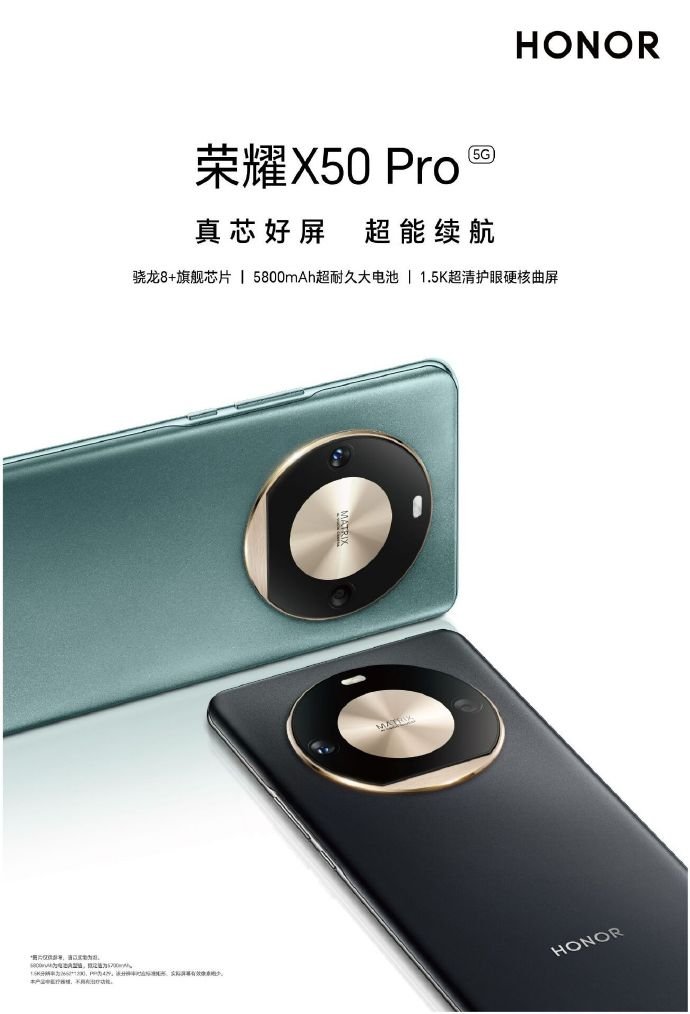
10. Honor X50 GT
The Honor X50 GT might launch in China as early as November. It is said to come with a Huawei Mate X5-inspired design.
The phone is tipped to feature a 6.81-inch FHD+ OLED display, a Qualcomm Snapdragon 888 SoC, and a 4,800mAh battery. For photography and videography, it will use a 50MP rear camera and a 16MP selfie camera.
In other words, the X50 GT will be a minor upgrade over its predecessor X40 GT.
11. Infinix Smart 8
The Infinix Smart 8 might go official in November. It will be an entry-level smartphone from the brand and will succeed the Smart 7 from earlier this year.
As per certifications and benchmarks, it will arrive with an HD+ display, a Unisoc T606 chip, 3GB RAM, a 5,000mAh battery, and 10W charging.
Additionally, based on its predecessor, we can expect the device to come with dual cameras and a rear-mounted fingerprint sensor.
12. Tecno Spark 20 Series and Spark Go 2024
The Tecno Spark 20 series and Spark Go 2024 smartphones could debut in November. The former lineup will include at least three devices, such as Spark 20, Spark 20 Pro, and Spark 20C.
According to benchmark listings, the Spark 20, Spark 20C, and Spark Go 2024 will be powered by Helio G85, Helio P35, and Unisoc T606 chips, respectively.
On the other hand, there’s no info on the chipset inside the Spark 20 Pro, But we know that it will be backed by a 5,000mAh battery with support for 33W charging.
As electric vehicles (EVs) surge in popularity, the U.S. isn’t just setting the stage for cleaner transportation but is also revving up a job-creation engine. Forget the thought that EVs are just about reducing carbon footprint; they’re also about putting more Americans to work.
A lot of revenue can be traced back to EV equipment production
Recent data from the Department of Energy (DOE) reveals a boom in EV-related infrastructure investments, eclipsing $500 million since 2021. This cash flow isn’t confined to car manufacturing plants alone; a sizable chunk is fueling the production of EV charging equipment. In fact, over 40 new factories for making various types of EV chargers are either in the planning stages, under construction, or have already been announced.
What’s more intriguing is the ripple effect this is having on employment. More than 3,000 new jobs are projected to be created just in these manufacturing facilities. But let’s not forget the additional workforce needed for installing and maintaining this rapidly expanding network of chargers. We’re talking about a significant chunk of new job opportunities.
Here’s the kicker: the industry isn’t just growing; it’s evolving. North America is on the brink of standardizing a new charging system, the Tesla-developed NACS, which aims to be the go-to plug for all light-duty electric vehicles in the future. This shift indicates that not only will there be more jobs, but these will be specialized roles requiring new skill sets.
WhatsApp is a widely used messaging app that offers messaging, voice and video calls, media sharing, and prioritizes user privacy with encryption. It supports group chats, a “Status” feature, and provides web and desktop versions as well. Owned by Meta, WhatsApp is regularly updated with new features and goes through UI/UX changes, enhancing user experience and functionality.
Chat With Unknown Contacts: Exploring WhatsApp Windows Beta’s Newest Feature
According to WABetaInfo, WhatsApp’s Windows native app has received an update (version 2.2342.6.0) through the beta channel on the Microsoft Store. This update brings the ability to open chats with unknown phone numbers, a feature previously available to iOS and Android users. Users can now initiate conversations without needing to save the phone number in their address book, simplifying communication with new or temporary contacts.
The new feature is currently available to select beta testers who have downloaded the latest update from the Microsoft Store. It is expected to become more widely accessible in the coming days.
The new feature in WhatsApp’s Windows native app allows users to initiate chats with unknown phone numbers by entering the number directly. This feature is accessible through the “New chat” screen under the “Phone number” section. It expands on the previous capability of searching for numbers within the chat screen, providing users with a more direct way to start conversations with unfamiliar contacts.
The feature is seen as a major improvement in user convenience and privacy. It streamlines interactions with new contacts by eliminating the requirement to save potentially temporary phone numbers in the address book.
After beta testing for months, Samsung finally started rolling out the Android 14-based One UI 6 stable update starting today. Unsurprisingly, the Galaxy S23 series is the first set of devices to receive the latest version of the company’s mobile software.
Following the rollout of the update, Samsung published an article on its website offering tips to make the most of the new camera features included in One UI 6. At the end of this post, the company confirms the handsets that will be receiving the latest Android 14.
To everyone’s surprise, certain devices that are not supposed to get the new Android update will be receiving it. Let’s go through the details.
Samsung hints that One UI 6 based on Android 14 will be available for its premium smartphones released in 2020 and 2019. These include Galaxy S20, Galaxy S20 Plus, Galaxy S20 Ultra, Galaxy Note 20, Galaxy Note 20 Ultra, Galaxy Z Fold 2, Galaxy Z Flip 5G, and Galaxy Z Flip.
For the unaware, these phones are only eligible for three generations of Android updates, and they have already received them. So One UI 6 will be their fourth Android update.
Apart from these older flagships, Samsung also lists newer models that will be receiving the update. We believe these handsets will be among the first to get One UI 6 stable update.
Android 14-based One UI 6 Eligible Devices
Galaxy S23 Ultra
Galaxy S23 Plus
Galaxy S23
Galaxy S23 Fe
Galaxy S22 Ultra
Galaxy S22 Plus
Galaxy S22
Galaxy S21 Ultra
Galaxy S21 Plus
Galaxy S21
Galaxy S21 FE
Galaxy S20 Ultra
Galaxy S20 Plus
Galaxy S20
Galaxy S20 FE
Galaxy Note 20 Ultra
Galaxy Note 20
Galaxy Z Fold 5
Galaxy Z Fold 4
Galaxy Z Fold 3
Galaxy Z Fold 2
Galaxy Z Flip 5
Galaxy Z Flip 4
Galaxy Z Flip 3
Galaxy Z Flip 5G
Galaxy Z Flip
Galaxy A54
Galaxy A53
Galaxy A34
Galaxy A33
Galaxy M54
Galaxy M53
Galaxy M34
Galaxy M33
Several other phones and tablets from Samsung should also get the Android14 update, based on their software update policy.
Pisen has launched the P1 true wireless Bluetooth earbuds, a new addition to the competitive market of audio accessories. The earbuds look very similar to Apple’s AirPods and are priced at 109 Yuan ($15). Let’s delve into the key specs of these earbuds.
Pisen P1 TWS Earbuds Key Features:
The P1 model stands out with its PEQ Balanced Audio technology and a dynamic driver that is 13mm in size with a titanium-plated composite diaphragm. This design aims to provide a clear and balanced sound profile. The earbuds are also remarkably light, with a single earbud weighing only 3 grams, and are designed with a 60-degree ergonomic angle to comfortably fit various ear shapes without causing fatigue.
Pisen’s innovative approach includes a self-developed dynamic adaptive EQ compensation algorithm, which enhances the user’s listening experience by automatically adjusting the bass levels for optimal sound quality. They also feature 3D panoramic audio, aiming to deliver an immersive listening experience akin to a live performance.
For user convenience, the P1 earbuds offer single-finger touch control, simplifying the management of music playback and calls. The earbuds boast high-sensitivity microphones, which are designed to capture voices accurately, ensuring clarity even in noisy settings and they are also IPX4 splashproof.
These TWS earbuds come with Bluetooth 5.3, ensuring a stable connection within a 10-meter range, and support popular Bluetooth protocols such as HFP, A2DP, and AVRCP, as well as SBC and AAC audio codecs.
The earbuds promise up to 4 hours of playback on a single charge, and with the included charging case, the total battery life can reach up to 20 hours. The case has a 300mAh capacity, recharges via a Type-C port, and takes about 1.5 hours to charge the earbuds.
Aesthetically, the P1 earbuds come in an “Apple White” color, and the combined weight of the charging case and earbuds is 38 grams.
We use cookies on our website to give you the most relevant experience by remembering your preferences and repeat visits. By clicking “Accept”, you consent to the use of ALL the cookies.
This website uses cookies to improve your experience while you navigate through the website. Out of these, the cookies that are categorized as necessary are stored on your browser as they are essential for the working of basic functionalities of the website. We also use third-party cookies that help us analyze and understand how you use this website. These cookies will be stored in your browser only with your consent. You also have the option to opt-out of these cookies. But opting out of some of these cookies may affect your browsing experience.
Necessary cookies are absolutely essential for the website to function properly. This category only includes cookies that ensures basic functionalities and security features of the website. These cookies do not store any personal information.
Any cookies that may not be particularly necessary for the website to function and is used specifically to collect user personal data via analytics, ads, other embedded contents are termed as non-necessary cookies. It is mandatory to procure user consent prior to running these cookies on your website.