Advertisement

ASUS ROG 65W Charging Dock with HDMI port launched in China for 399 yuan ($55)

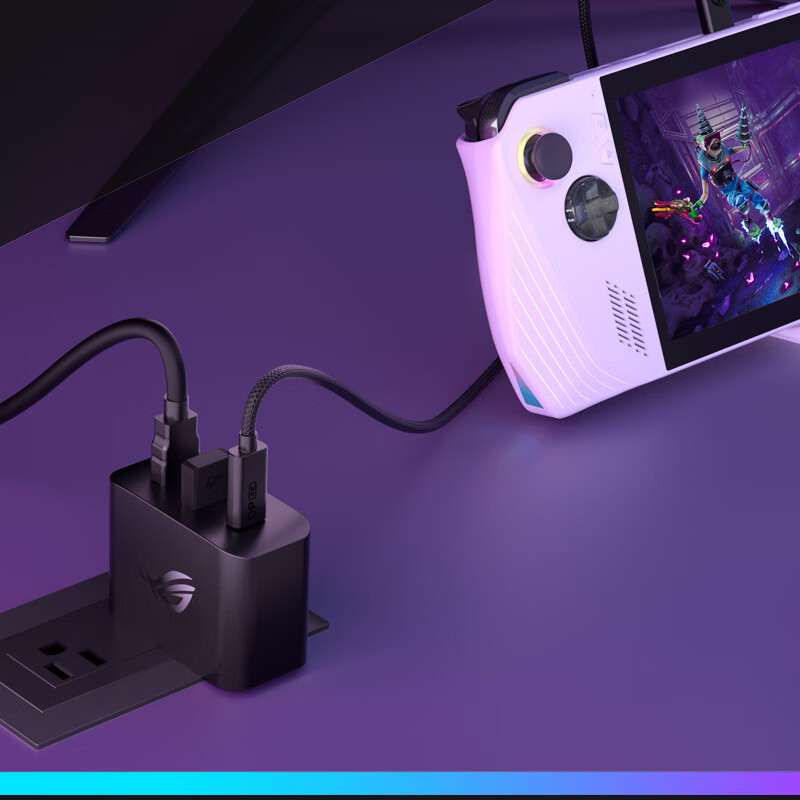
ASUS‘ Republic of Gamers (ROG) has unveiled its latest accessory, the ROG 65W Charging Dock, catering to the needs of gamers. Priced at 399 yuan ($55), this charging dock offers a unique blend of functionality that sets it apart from conventional chargers.
ASUS ROG 65W Charging Dock Key Features:

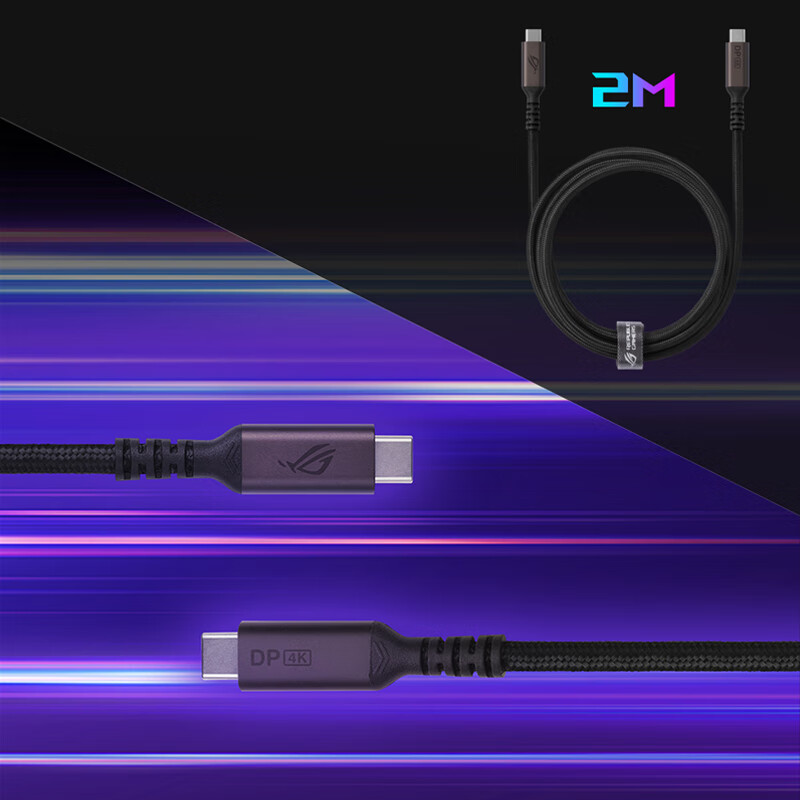
The charging dock is equipped with three output interfaces. Firstly, it has an HDMI 2.0 port that can support video outputs up to 4K 60Hz. This feature enables users to connect their devices to larger screens for an enhanced viewing experience.

Secondly, there’s a USB-A port which is versatile, supporting a range of ROG gaming accessories, USB drives, and other gadgets. Lastly, there’s a USB-C port that is designed for compatibility with several ROG products, from handheld consoles and gaming phones to tablets and laptops.
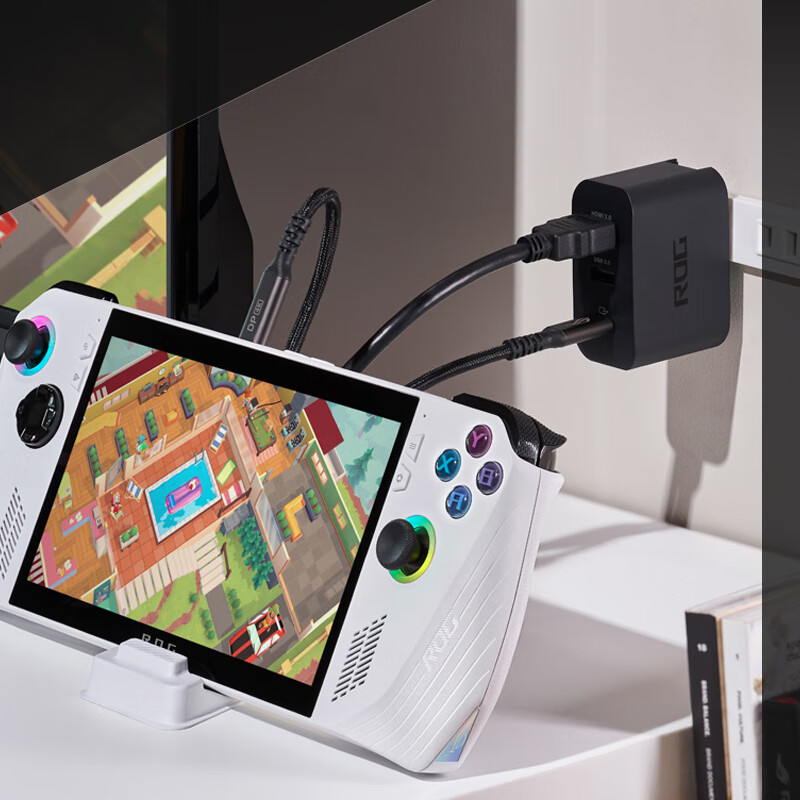
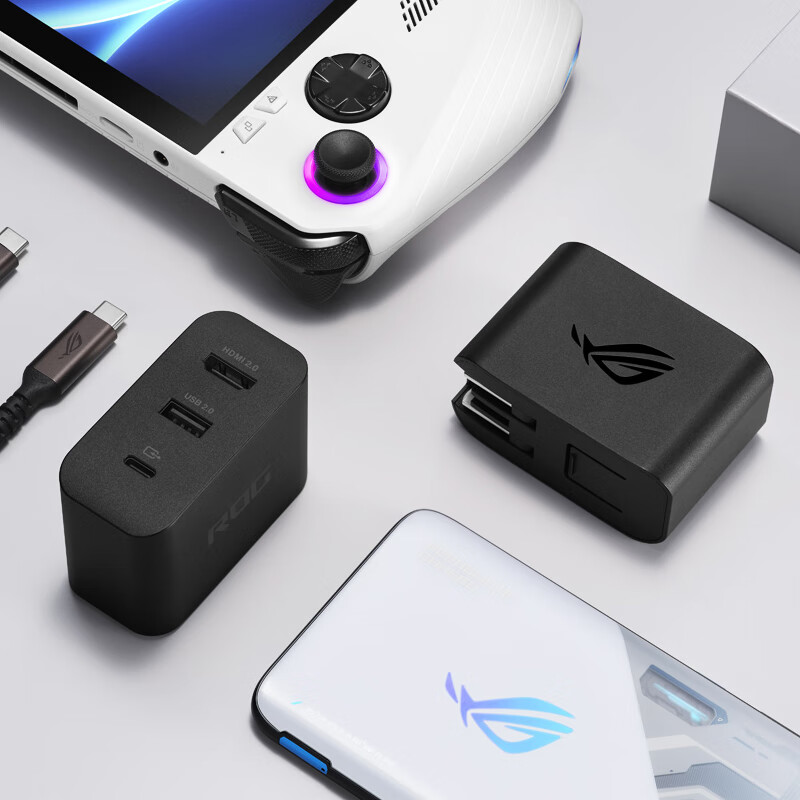
The package includes a sturdy 2m braided USB-C to USB-C data cable to address common issues like cable detachment and breakage. The charging dock combines fast charging, data transfer, and display output features, making it ideal for ROG handheld consoles. It’s a powerful addition that enables intense gaming and offers various entertainment options. Notably, the dock also offers a 30W enhanced mode to ensure consistent power delivery, even when multiple devices are connected.

ROG has also recently released new products, including the ASUS ROG Swift OLED PG49WDCD gaming monitor available in China for 10,999 yuan. They also launched the ASUS ROG G22 gaming desktop PC in India, featuring an Intel i7 processor and RTX 4070 graphics.

RELATED:

(Via)

Xiaomi 14 Is A Compact Flagship With Snapdragon 8 Gen 3 And Leica Cameras

Xiaomi held an event in China today where it announced smartphones, a smartwatch, a smart TV, and more devices. The brand took the wraps off of its next-generation Xiaomi 14 series consisting of a standard and pro model. The latest flagship offerings arrive as the successor to last year’s Xiaomi 13 devices. They pack notable upgrades over their predecessors. Read on to know everything about the Xiaomi 14 in the post below. 

Xiaomi 14 specifications and features

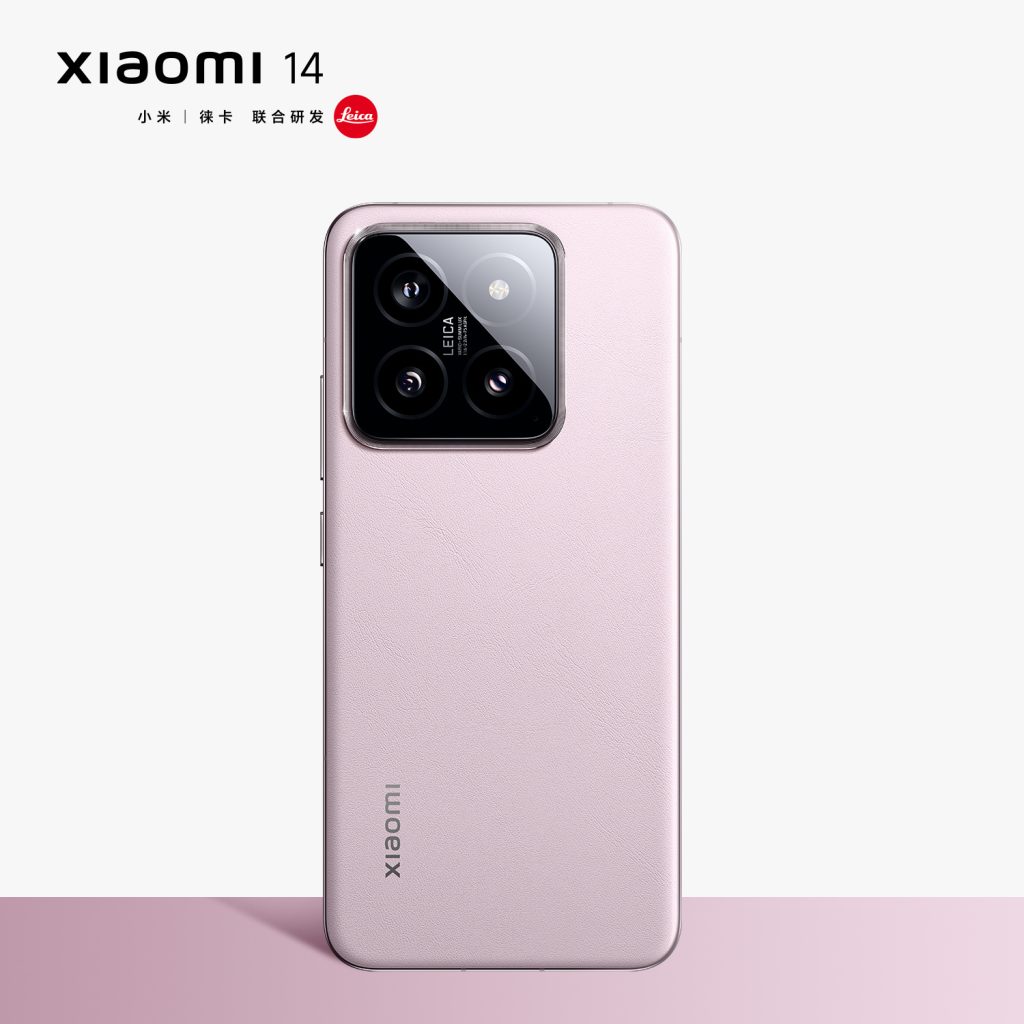
The Xiaomi 14 is a compact flagship phone with top-notch specifications. It has a boxy design with a protruding square camera module on the rear. The device is IP68-certified dust and water-resistant. It also sports a metal middle frame.

On the display front, the Xiaomi 14 has a Huaxing C8 AMOLED display which is a collaboration between Xiaomi and TCL. It features a 6.36-inch screen with a 1.5K resolution, a 120Hz LTPO refresh rate, and 3,000 nits peak brightness. The screen is also integrated with a fingerprint scanner and it supports HDR 10+, HLG, and Dolby Vision. The display is shielded by Gorilla Glass Victus.

In the photography department, the Xiaomi 14 boasts Leica-branded cameras. The smartphone has a Vario Summilux aspherical lens that is said to offer enhanced imaging compared to Summicron on last year’s Xiaomi 13. The setup comprises of a 50MP Hunter 900 main sensor with OIS, a 50MP ultra-wide lens, and a 50MP OIS-enabled telephoto unit. Those sensors have focal lengths of 23mm, 14mm, and 75mm respectively. There is also a variable aperture of f/1.6 to f/2.2. Up front, the smartphone has a 32MP selfie snapper. The Xiaomi 14 is equipped with Dolby Atmos dual stereo speakers and a 4-mic array capturing sound in 360 degrees while recording a video.

Under the hood, the Xiaomi 14 is equipped with Qualcomm’s flagship Snapdragon 8 Gen 3 processor. It packs up to 16GB LPDDR5x RAM and 1TB UFS 4 storage. The smartphone features a heat dissipation system using a gas-liquid separation channel design. The device draws its power from a 4,610mAh battery unit with support for 90W wired, 50W wireless, and 10W reverse wireless charging. Software-wise, the smartphone is the first from the company to run on an entirely new operating system called HyperOS based on Android 14. 

Connectivity options on the Xiaomi 14 include 5G, Wi-Fi, USB Type-C 3.2 Gen 1, Bluetooth, and more. The smartphone comes with an IR Blaster, and an X-Axis linear motor.

Xiaomi 14 pricing and availability

The Xiaomi 14 is offered in Black, White, Pink, and Rock Green colors. It starts at CNY 3,999 (~$546) for the base 8GB + 256GB variant. The 12G + 256GB and 16GB + 512GB are priced at CNY 4,299 and CNY 4,599 respectively. The top-end 16GB + 1TB carries a price tag of CNY 4,999.

WHERE TO BUY
Buy Xiaomi 14 and Xiaomi 14 Pro from $699 @Giztop

Related:

Vivo Y100 5G With Snapdragon 695 SoC, 12GB RAM Appears On Geekbench Ahead Of Tomorrow’s Launch

Vivo is gearing up to announce the Y100 5G smartphone in China tomorrow. The brand had launched the same smartphone in the Indian market earlier in February this year. However, the upcoming offering in the home country will be a different device. Vivo has teased a few features of the Y100 5G, however, its hardware details remain unknown. Now, the device has surfaced on the Geekbench benchmarking platform ahead of tomorrow’s launch event. Read on to know the details. 

Vivo Y100 5G surfaces on Geekbench

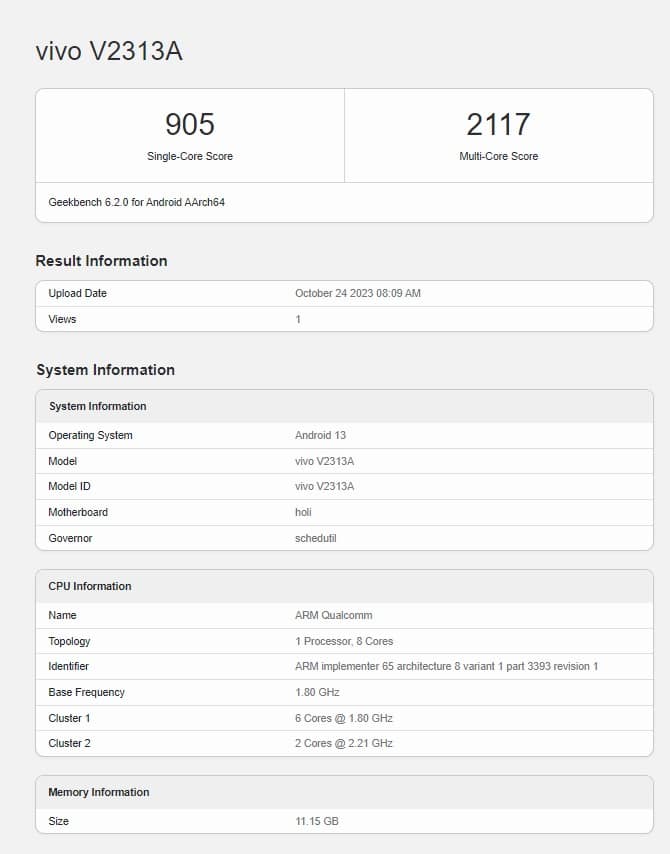
The Vivo Y100 5G is listed with model number V2313A on the Geekbench database. The benchmark listing mentions a motherboard codenamed ‘holi’ and it comprises six cores clocked at 1.80GHz and two cores ticking at 2.21GHz. The setup and the codename correspond to Qualcomm’s Snapdragon 695 SoC. The chipset will be paired with Adreno 619 GPU. The upcoming smartphone is listed with 12GB RAM onboard. It will ship with Android 13 OS out of the box. In the Geekbench’s single-core and multi-core tests, the Vivo Y100 5G scores 905 and 2,117 points respectively. 

As per the shared teasers, the Vivo Y100 5G is confirmed to come with a 6.78-inch curved AMOLED display offering a 120Hz refresh rate. It will be IP54-certified dust and water-resistant. In terms of design, the device has a slim profile and a squarish camera module on the rear. The upcoming offering is confirmed to feature a 64MP OIS-enabled main camera sensor. The teasers also revealed that the smartphone will be backed by a 5,000mAh battery unit. The charging detail has not been revealed but as per 3C certification site, it is expected to support 44W speed. 

We should learn official details about the Vivo Y100 5G tomorrow.

Related:

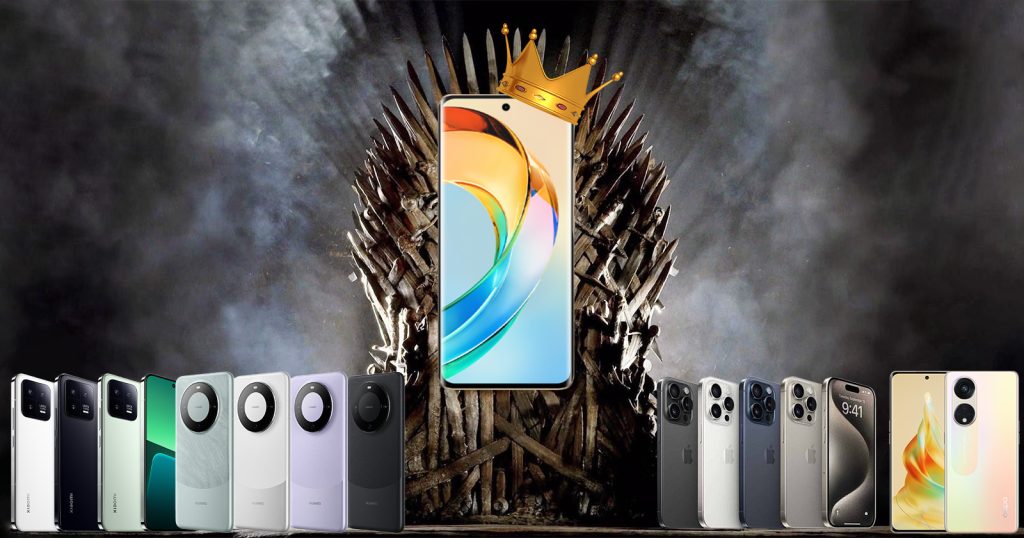
Honor Leads Close Race in Smartphone Market, Oppo, Apple, Vivo, and Xiaomi Follow Closely

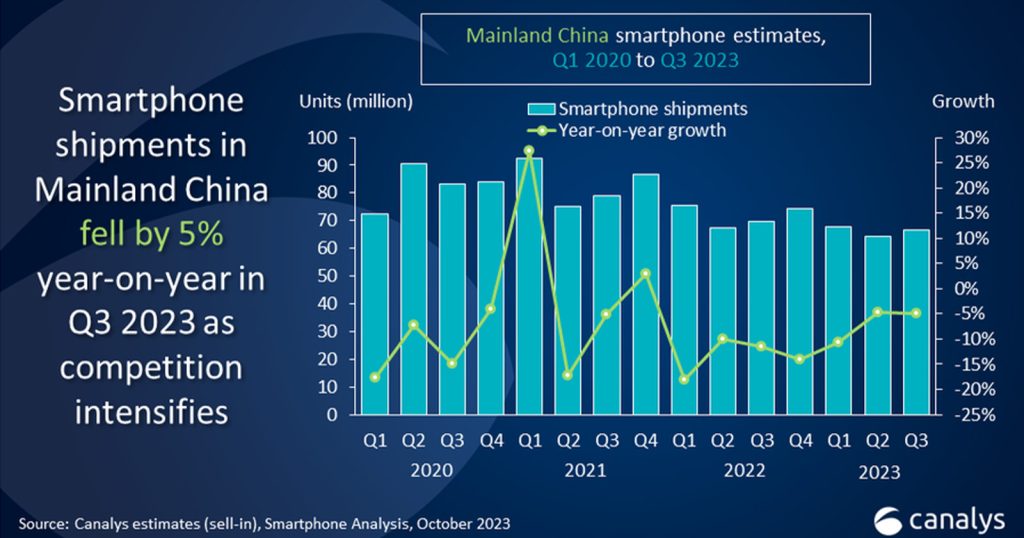
The competition in the smartphone market is still going strong. Dozens of companies like Apple, Samsung, Xiaomi, Huawei, Honor, Oppo, and Vivo are fiercely competing in this shrinking market to secure their place and grab a larger piece of the pie. Recently, Canalys released a report showing the status of the smartphone market in China for Q3 2023. According to the report, the market closed this quarter with a 5% decline, and Honor managed to take the lead, leaving all its competitors behind. Here are the details…

China’s Smartphone Market Bottomed Out in 2023, Gradual Demand Recovery Expected for Honor, Opportunity, Apple, Vivo, Xiaomi, and Huawei

When we look at the smartphone market in China, it’s quite different from the 100 million unit boundaries of 2020. The market has shown a 5% decline compared to the previous quarter, now standing at 66.7 million units. As you may know, even entry-level and mid-range phones come with impressive features these days. This significantly enhances the user experience but also leads to a decrease in how frequently people replace their devices, especially when global economic difficulties, like those we’re experiencing today, start to emerge.

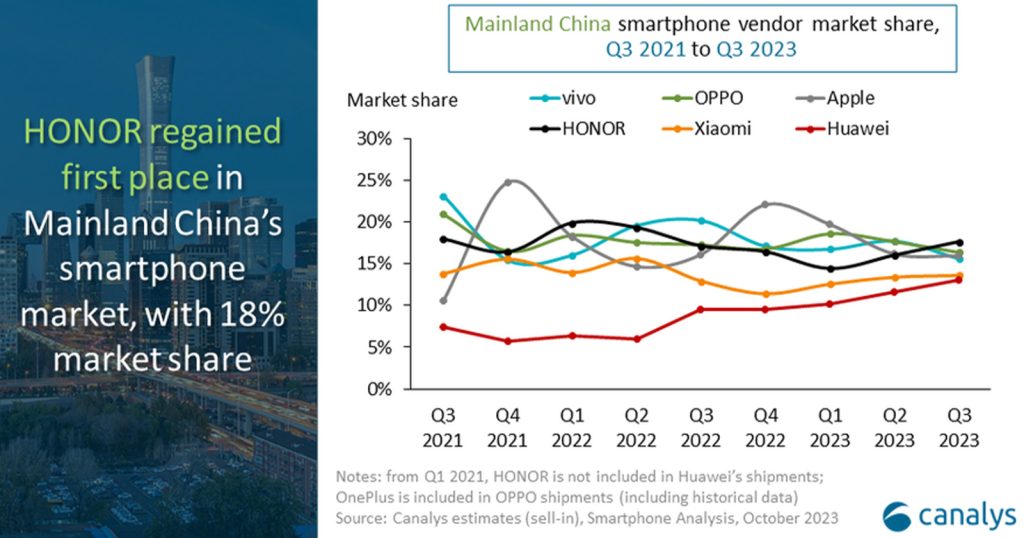
Looking at the report, what really caught our attention were the market shares. According to the data, Honor has secured an 18% market share with 11.8 million shipments. A few years ago, Honor separated from the Huawei umbrella and continued its journey as an independent company. Recently, they have managed to gain attention, especially with models like the X50 Series, Magic Vs 2 and Play 50 Plus. It seems that this interest in Honor’s products is significantly higher in China compared to other brands.

Honor, with an 18% market share, leads the pack, followed closely by OPPO (16%), Apple (16%), vivo (16%), and Xiaomi (14%). Huawei, on the other hand, has been steadily increasing its market share, reaching 13%. In contrast, vivo and Xiaomi have seen a dip in their market shares, primarily due to their cautious shipment strategies. Both companies are prioritizing profitability and avoiding inventory risks.

Huawei remains the intriguing wildcard in this market. The company continued to gain market share in Q3 2023 and is expected to play a significant role in the final quarter of the year.

Xhina Smartphone market Q3 2023
China Smartphone Market Q3 2023 
Vendor Q3 2023 
shipments 
(million)
 
Q3 2023
market 
share
 
Q3 2022
shipments 
(million)
 
Q3 2022
market 
share
 
Annual 
growth  
HONOR 11.8 18% 12.0 17% -1% 
OPPO 10.9 16% 12.1 17% -10% 
Apple 10.6 16% 11.3 16% -6% 
vivo 10.4 16% 14.1 20% -26% 
Xiaomi 9.1 14% 9.0 13% 0% 
Others  13.9 21% 11.4 16% 21% 
Total  66.7 100% 69.8 100% -5%

RELATED:

(via)

Alphabet shares drop 9.5% despite strong earnings: Cloud Revenue concerns

Alphabet, the parent company of Google, experienced a sharp decline in its stock value, plummeting by 9.5% after its third-quarter earnings report, despite beating overall expectations. The drastic dip was primarily triggered by the disappointment surrounding Alphabet’s cloud revenue, which fell short of projections. In contrast, Microsoft, Alphabet’s key competitor in the cloud-computing market, saw a 2.8% gain due to the success of its AI-driven services.

Alphabet’s cloud division faced challenges due to a slow growth rate, especially in comparison to Microsoft’s robust performance. Microsoft’s focus on established business clients using its software services paid off, whereas Alphabet’s emphasis on startups and a slower AI service rollout contributed to concerns among investors. The market’s response reflected worries that Alphabet might lose ground to Microsoft in the rapidly evolving cloud industry.

Analysts reassure investors over Google’s 9.5% stock drop, deeming the reaction excessive given the cloud revenue’s 11% share in Alphabet’s total revenue. Despite falling slightly below expectations at $8.41 billion, Google’s cloud revenue grew by 22% from the previous year. Experts anticipate challenges in AI infrastructure to fade by next year, while integration with advertisements may benefit Google in the long run. Despite cloud competition, optimism remains high regarding Google’s overall performance, emphasizing strengths beyond the cloud sector.

Alphabet CEO Sundar Pichai pointed out that customer spending optimization impacted the revenue figures, and the company plans to introduce a series of AI models, including the highly anticipated Gemini, in the coming year. Google’s investments in AI startups and collaborations with companies like Meta demonstrate its commitment to expanding its AI offerings.

While Alphabet’s cloud business faces headwinds, its core search business remains robust, offering a glimmer of hope amidst the challenges. Analysts caution that the cloud optimization efforts might take several more quarters to yield significant results. Nevertheless, Alphabet’s strong research and technical capabilities position it as a formidable contender, even in the face of stiff competition from Microsoft.

As the cloud market continues to evolve, both Alphabet and Microsoft are gearing up for the AI revolution expected in 2023. With the upcoming launch of Gemini, Alphabet aims to leverage large-language models to drive growth, showcasing the company’s dedication to staying at the forefront of innovative technology despite the recent market turbulence.

Related:

(via)

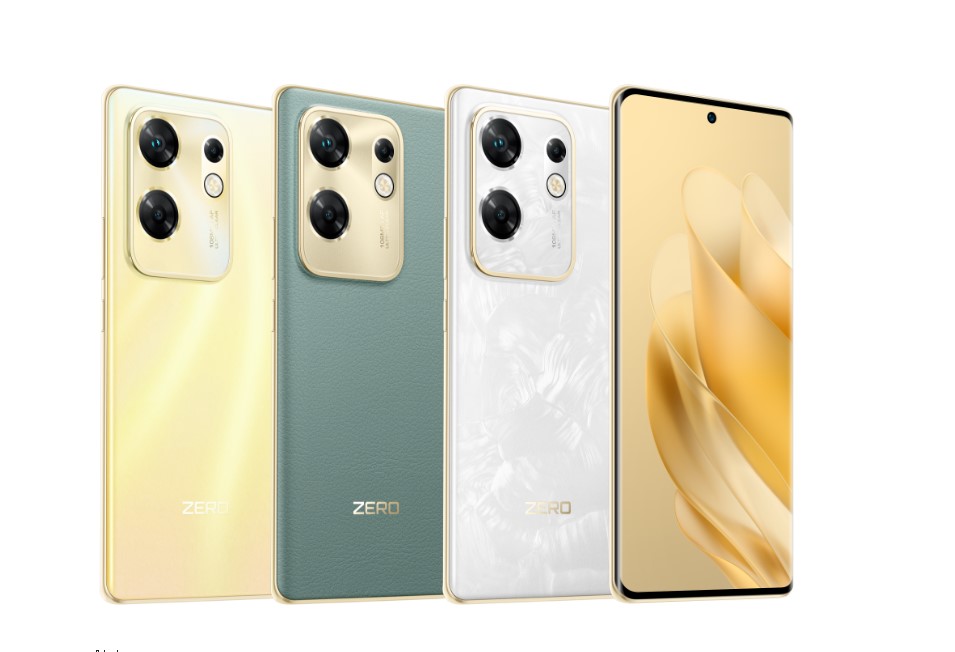
Infinix Zero 30 4G Launched In Indonesia With Several Differences Compared To 5G Version

Infinix launched the Zero 30 5G (review) smartphone in India last month. Now, the brand has announced a new device in the Zero 30 lineup in the Indonesian market. It is the Infinix Zero 30 4G. The latest offering is a toned-down variant of the Zero 30 5G. There are various differences between the two devices. Read on to find out what the smartphone offers out of the box. 

Infinix Zero 30 4G specifications and features

The Infinix Zero 30 4G retains the same AMOLED curved display as its 5G counterpart. It has a 6.78-inch centre-aligned punch-hole screen with an FHD+ resolution, 920 nits peak brightness, and an integrated fingerprint scanner. However, the refresh rate is downgraded to 120Hz from 144Hz. The smartphone is also IP54-certified against dust and water. 

On the imaging front, the Infinix Zero 30 4G features a rectangular camera module on the back panel housing a 108MP main sensor paired with two 2MP lenses. Up front, the device has a 50MP selfie snapper with support for 2K video recording at 30fps. 

Internally, the Infinix Zero 30 4G is equipped with a MediaTek Helio G99 processor. It packs 8GB RAM along with 8GB virtual RAM technology. There is 256GB internal storage. The device features a liquid cooling chamber for heat dissipation. The smartphone is backed by a 5,000mAh battery unit with support for 45W fast charging. 

The Infinix Zero 30 4G is offered in Sunset Gold, Misty Green, and Pearly White colors. It carries a price tag of IDR 2,899,000 (~$182) and will go on sale starting tomorrow exclusively from Lazada. 

Related:

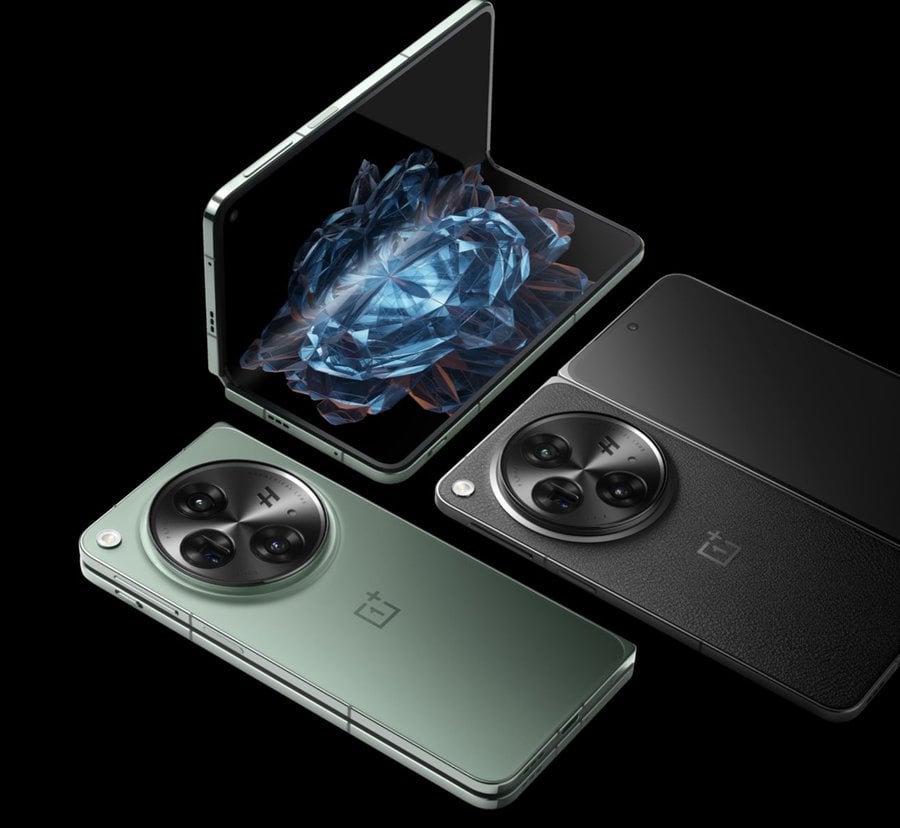
OnePlus Open gets first software update with Camera & system improvements

OnePlus recently launched its first foldable smartphone in the market called the OnePlus Open. The first sale of the device is scheduled for tomorrow in India, however, the brand has already pushed out the first update polishing out the rough edges.

The update with version number CPH2551_13.2.0.114(EX01) weighs 138.25MB. It improves upon many of the aspects of the OnePlus Open including system, communication, and camera. You can check out the complete changelog below.

System Enhancements:

  • Integration of the September 2023 Android security patch to enhance system security.
  • Improved full-screen layout for Facebook live-streaming.
  • Enhanced Split View experience in landscape mode.
  • Improved accessibility to recently used apps on the taskbar.
  • Enhanced experience when opening three apps in Split View.
  • Addressed an issue of accidental touches being falsely recognized as Screen-off gestures on the cover screen.
  • Optimized the touch sensitivity of the main screen.

Communication Improvements:

  • Enhanced stability and expanded compatibility for Wi-Fi network connections.
  • Improved stability and expanded compatibility for Bluetooth connections.
  • Enhanced user experience when using the IR Remote.

Camera Enhancements:

  • Now displays equivalent focal lengths for zoom options.
  • Allows the default wide-angle focal length to be changed in the camera settings.
  • Improved Dolby Vision effects.
  • Enhanced preview thumbnails for photos.
  • Improved video-taking experience through the Shutter button.
  • Overall improvements in camera performance and stability.
  • Enhanced video-taking performance.
  • Improved photo quality when using the rear camera.

Since the device is currently only in the hands of reviewers, the update will seed out to all the new units that ship out in the coming days. You will likely receive the promo to update as soon as you boot up the device.

RELATED:

(Source)

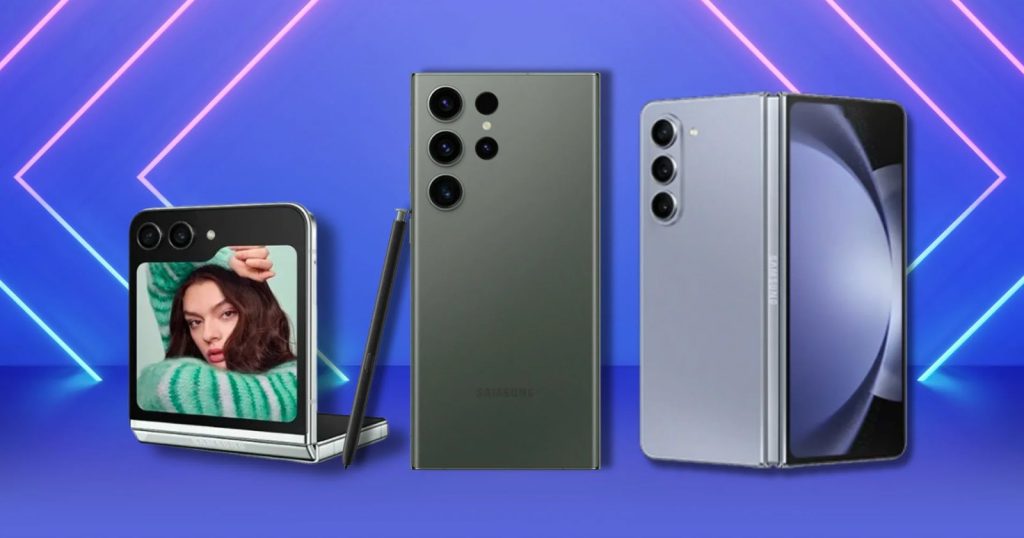
Samsung Sets Ambitious Target of 250 Million Smartphone Shipments in 2024

Samsung, the world’s largest smartphone manufacturer, is continuing to expand its product lineup to maintain this title. For instance, the company has recently begun working on launching 4G and 5G variants of the Galaxy A15 in Europe. Additionally, the development of the Galaxy S24 series, expected to be introduced in February 2024, is progressing rapidly. However, the 2024 plans of the South Korean tech giant go beyond this. According to a report by The Elec, Samsung has set a target to ship 250 million smartphones in 2024. Here are the details…

Samsung Looks to Maintain Top Spot in Smartphone Market with 250 Million Unit Target in 2024

Competition in the smartphone market remains fierce in 2023, just as it does every year. Samsung, which currently holds the top position, is expected to ship between 220 million and 230 million units this year. However, the company isn’t as content with this scenario as one might think. As you may know, the Galaxy series spans a wide range from entry-level to flagship devices. Most of the models sold by the company fall into the entry and mid-range segments.

Samsung Galaxy Series Smartphones

To make matters worse, the global smartphone market has also seen a decline in recent years. While many of you might assume this is just a normal decrease following the increase during the pandemic, unfortunately, the situation is not quite that simple. In 2019, before the COVID-19 pandemic, global smartphone shipments reached 1.4 billion units. However, shipments have since dropped to 1.2 billion units, and it is expected to take several years for the market to rebound.

Samsung’s solution is to somehow sell more phones. That’s why the company has set a goal to ship 250 million smartphones in 2024. The main objective of the tech giant is to boost the sales of flagship models in order to restore profitability, which has dropped by 70%. In line with this, the company has also raised its target for foldable phone shipments in 2024 to 2 million units, up from the previous target of 1.6 million units.

Samsung currently holds a market share of around 20%. However, the company is also confronting growing competition from Chinese rivals like the resurgent Huawei and Xiaomi. In other words, it’s not an easy task. It remains to be seen whether Samsung will be able to meet its shipment targets for 2024.

RELATED:

(via)

China’s SMIC utilizes ASML technology: Defying Export Restrictions for Self-Made Chip

In a startling revelation, sources have disclosed that China’s Semiconductor Manufacturing International Corp (SMIC) employed equipment from ASML Holding, including their immersion deep ultraviolet (DUV) machines, to manufacture an advanced processor for Huawei Technologies’ latest 5G smartphones. 

The use of ASML’s technology, despite broad export restrictions imposed by the US, raises concerns about China’s rapid progress in chip manufacturing. Huawei’s Mate 60 Pro series, powered by a 7-nanometer chip, showcased the nation’s technological prowess, leaving experts questioning the effectiveness of international controls.

ASML, a key player in the global chip supply chain, saw its shares dip in response to the news. While the company has a monopoly on advanced extreme ultraviolet lithography systems (EUVs), it also supplies less-advanced DUV machines for producing mature semiconductors. Although ASML has been unable to sell its EUV machines to China due to strict export regulations, the DUV models were utilized by SMIC in combination with tools from other firms to create the groundbreaking chip for Huawei’s 5G smartphones.

This development hints that export restrictions on ASML’s advanced technology might have been implemented too late to curb China’s technological advancements, raising concerns about potential military implications. Despite these restrictions, Huawei managed to introduce a cutting-edge processor, prompting further questions about how SMIC accomplished this feat and the effectiveness of international efforts to halt China’s progress in the semiconductor industry.

Huawei’s Comeback with self- made Chip:

Amidst the controversy surrounding Huawei’s latest Mate 60 Pro, the spotlight falls on the company’s resilience and innovative spirit. In the face of challenges stemming from US sanctions, Huawei was compelled to reassess its strategies after losing access to Google’s apps and its silicon due to pressure on chip-making giant TSMC. 

Huawei’s response was a strategic pivot, leading to the development of the Kirin 9000 chip, marking a significant comeback for the Chinese tech giant. This move not only signifies Huawei’s determination to overcome obstacles but also highlights its ability to produce cutting-edge smartphones with in-house technology, recapturing the attention of the tech world and potentially paving the way for the company’s resurgence in the smartphone market.

The situation underscores the challenges faced by regulators, as even limited access to less-advanced equipment enabled China to achieve remarkable results, showcasing its ability to adapt and innovate within existing constraints. The incident has sparked a debate on the adequacy of existing controls and the need for more stringent measures to safeguard advanced semiconductor technology.

Related:

(via)

Vivo Teases “Jovi CoPilot” Assistant in a new Origin OS 4 Video Teaser

As Vivo’s Origin OS 4 launch is nearing, the company started teasing the new Android 14-based OriginOS 4 features on Weibo. The company is scheduled to announce the new OS at the 2023 Developer Conference in Shenzen on November 1st. Following the upcoming launch, the company teased its upcoming “Jovi CoPilot” assistant feature via a new video teaser.

Must See: Vivo Origin OS to offer a quick switch option to stock Android: Report

From the teaser, we can spot the new Super AI Search feature which seems to enhance the user’s accessibility. Even the caption of the video describes how easy it is to find a needle in the haystack. Interested users can watch the live streaming of the Developer Conference on November 1st.

Along with the new OS, the company is unveiling self-developed AI for mobile platforms and a new OS for IoT devices. As per previous teasers, the OriginOS 4 will be an AOSP-built system and will debut with the upcoming iQOO 12 series and Vivo X100 series.

Parallelly, Vivo uses FunTouch OS for its smartphones available globally. The company unveiled FunTouch OS 14 bundling all the Android 14 luxuries, and some self-baked improvements and features. It brings Smooth Envision to improve system performance by enhancing RAM utilization, etc. For seamless multitasking, it debuts the App Retainer feature to select apps that need restoring to their last state. Several other customization and personalization features are also part of the latest FunTouch OS iteration.

We expect these features to be part of the Origin OS 4 which will launch for iQOO and Vivo smartphones in China.

Related:

China accelerates push for Domestic Technology amid tightened Export Restrictions

China is intensifying efforts to reduce its reliance on Western technology, with a surge in domestic substitution initiatives revealed through government tenders and research documents, as reported by Reuters. As Washington enforces tighter restrictions on high-tech exports to China, the country has increased spending to replace foreign-made equipment with homegrown alternatives. 

In the past year, state-owned enterprises, government bodies, and military entities have issued 235 tenders to nationalize equipment, doubling from the previous year. The value of these projects reached 156.9 million yuan, over triple the previous year’s expenditure.

Sensitive Sectors Targeted:

Sensitive sectors like computer equipment, telecom, and finance are being targeted, with digital payments particularly vulnerable to potential Western hacking. The government’s concerns about foreign powers infiltrating critical infrastructure have prompted moves to bolster cybersecurity measures and develop indigenous technologies.

Challenges and Strategies:

Despite significant investments, China faces challenges, particularly in advanced chip manufacturing, limiting its ability to entirely replace foreign products. Efforts to localize technologies were previously hindered by technical limitations. 

State-owned companies are increasingly winning major contracts, pushing away from US companies like Microsoft and Adobe. Huawei has emerged as a leading player due to its agility, diverse product suite, and robust cybersecurity offerings.

Market Impact:

These substitution initiatives have reshaped the software industry landscape, with major foreign makers’ combined market share dropping from 57.3% in 2018 to 27.3% by 2022. However, foreign firms still dominate in banking and telecoms database management, constituting 90% of the market share.

International Implications:

China’s substitution efforts do not violate international accords due to its non-signatory status in World Trade Organization clauses governing public procurement. However, these initiatives have raised concerns among foreign tech companies and trade organizations, leading to calls for fair competition and non-politicized procurement procedures.

China’s Tech Revolution Amidst Economic Shift:

In tandem with China’s push for domestic technology self-sufficiency, the nation is also embarking on a strategic shift towards a consumption-centered economy. Beijing plans to unleash spending power within the country. This shift towards a consumption-driven economy aligns with China’s overarching goals, including reducing reliance on foreign technologies and bolstering domestic innovation.

As China accelerates its drive towards technological self-reliance, the global tech landscape faces shifts in market dynamics, reshaped by Beijing’s strategic initiatives and growing domestic capabilities.

Related:

(via)

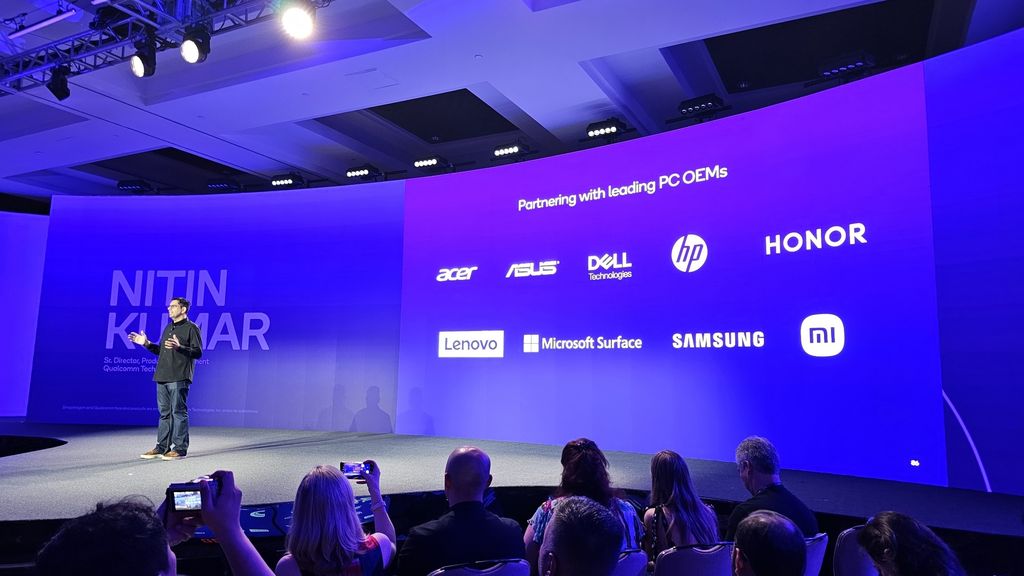
Qualcomm reveals nine early adopters of Snapdragon X Elite processor: Xiaomi and Honor among them

In a recent announcement at the 2023 Snapdragon Technology Summit in Hawaii, Qualcomm introduced the Snapdragon X Elite processor, aiming at the ultra-thin laptop segment. This new chipset is poised to compete with Apple’s M-series, Intel Core, and AMD Ryzen, with Qualcomm highlighting its advantages in performance and energy efficiency. At the summit, the company also announced their latest flagship mobile chip Snapdragon 8 Gen 3.

Snapdragon X Elite Partners

Snapdragon X Elite Laptops Expected to Hit the Market in Mid-2024

The first wave of laptops powered by the Snapdragon X Elite is set to hit the market in mid-2024. Nine major PC manufacturers will integrate this chip into their products, including Acer, Asus, Dell, HP, Honor, Lenovo, Microsoft Surface, Samsung, and Xiaomi. Qualcomm’s supply chain for these laptops will be supported by manufacturing partners Compal, Quanta, Wistron, and Inventec, with display panels sourced from AU Optronics and BOE.

While Qualcomm showcased prototypes at the summit, detailed benchmark scores remain undisclosed. However, the chipset’s specifications are notable:

CPU: Qualcomm’s Oryon CPU with 64-bit architecture has 12 cores, clocking up to 3.8 GHz with boosts up to 4.3 GHz.

GPU: The Adreno GPU supports DX12 and delivers 4.6 TFLOPs.

Memory: It utilizes LPDDR5x with a speed of 8533 MT/s, supporting up to 64GB and 136 GB/s bandwidth across 8 channels.

Connectivity: The processor features Snapdragon X65 5G modem with speeds up to 10 Gbps, Wi-Fi 7, and Bluetooth 5.4.

Other Features: The Snapdragon X Elite supports up to UHD 120Hz displays, HDR10, AV1 encoding, 4K HDR video decoding, and Snapdragon Sound Tech Suite for lossless audio. Furthermore, it promises robust “enterprise-grade” security.

Snapdragon X Elite Lifestyle

Qualcomm CEO, Cristiano Amon, mentioned its superior single-threaded performance relative to Apple’s 12-core M2 Max and Intel’s 14-core Core i7-1355U. Additionally, Qualcomm asserts that the X Elite reaches its peak performance with a 30% reduction in power consumption compared to its competitors.

RELATED:

(Via)

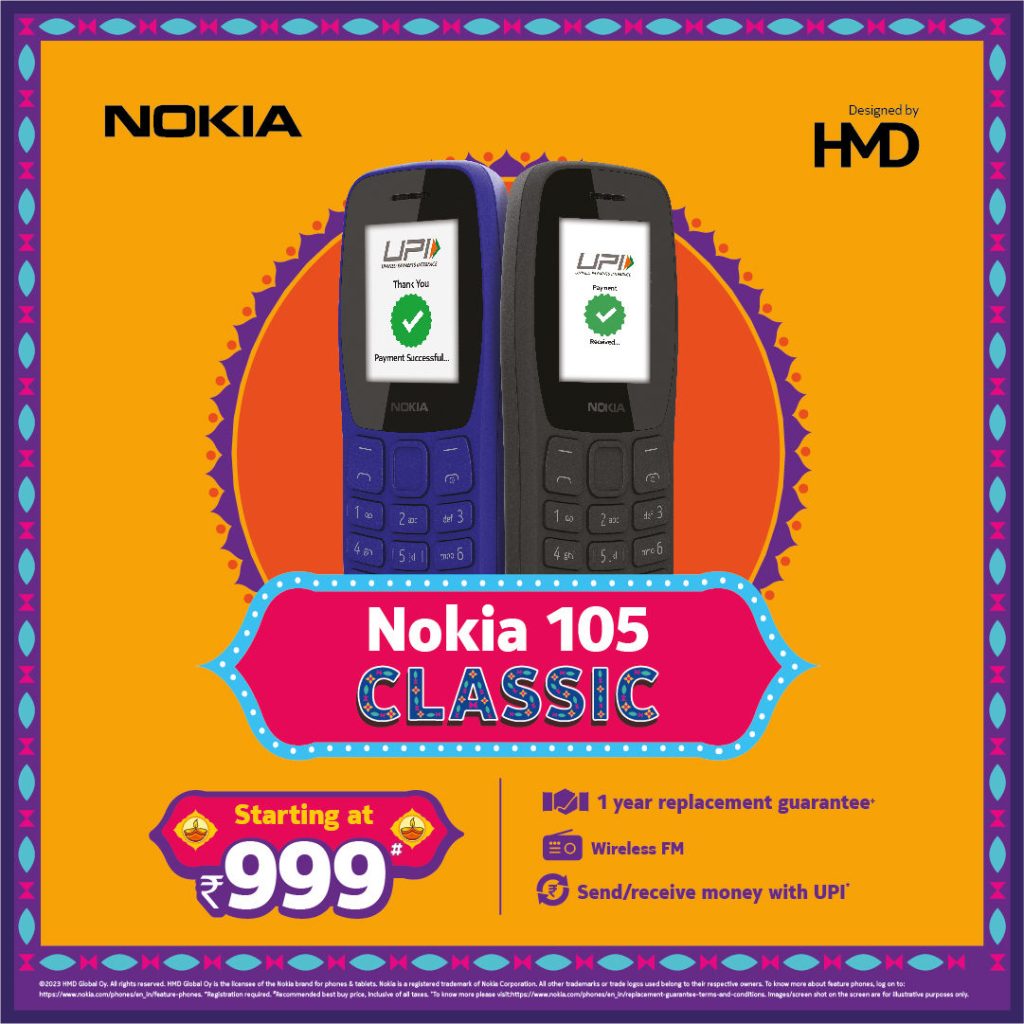
Nokia 105 Classic feature phone with in-built UPI launched for ₹999 ($12)

After launching the Nokia 105 4G 2023 model earlier this year, HMD Global has now debuted another model in the lineup called the Nokia 105 Classic. This new affordable feature phone offers 2G connectivity along with an in-built UPI system. Here are all the specs and features.

Nokia 105 Classic

Nokia 105 Classic specs

As mentioned above, the Nokia 105 Classic features an inbuilt UPI application, ensuring secure and convenient payment transactions. Additionally, users benefit from a one-year replacement guarantee.

It also has a wireless radio functionality, allowing access to FM radio stations without the need for a headset. The phone’s 800mAh battery delivers extended standby time.

Designed with user comfort in mind, the Nokia 105 Classic boasts a compact design, making it easy to handle and carry. Its durable construction has undergone rigorous testing to ensure uninterrupted connectivity, regardless of the environment.

Pricing & availability

Starting today, the Nokia 105 is officially available in India, offering four different variants, including both Single SIM and Dual SIM options, with or without a charger, all priced starting at INR 999 ($12). The phone is presented in two appealing color choices: Charcoal and Blue.

RELATED:

Qualcomm to bring custom Oryon cores to Snapdragon 8 Gen 4 in 2024

Qualcomm has announced that its custom Oryon cores will come to its flagship Snapdragon 8 Gen 4 mobile SoC in 2024. This is the first time that Qualcomm will use its own CPU cores in a smartphone chipset since the Snapdragon 820 and 821 in 2016.

Qualcomm acquired Nuvia, a chip design company founded by former Apple engineers, in March 2021. Nuvia is developing custom Arm-compatible CPU cores, and Qualcomm has said that the Oryon cores are based on Nuvia’s designs.

Qualcomm Oryon cores Snapdragon 8 Gen 4

Qualcomm has already announced the Snapdragon X Elite PC chipset featuring the Oryon CPU. The company claims that the Oryon cores offer better single-threaded performance than both the Apple Silicon M2 Max and the Intel Core i9-13980HX while consuming 70% less power than the Core i9-13960HX for the same amount of work completed.

However, it’s unlikely that the Oryon cores in their current computing-focused state will make it to mobile. Instead, Qualcomm is likely to use cut-down versions of the Oryon cores on mobile.

This will give Qualcomm more control over the design of its CPUs and could allow the company to differentiate itself from its competitors, which use modified Arm Total Compute Solutions (TCS) cores.

It’s not yet clear exactly what form the Oryon cores will take on mobile. However, the fact that Qualcomm is using its own custom CPU cores is an exciting development for the mobile industry. It could lead to more powerful and efficient mobile devices in the future.

Related:

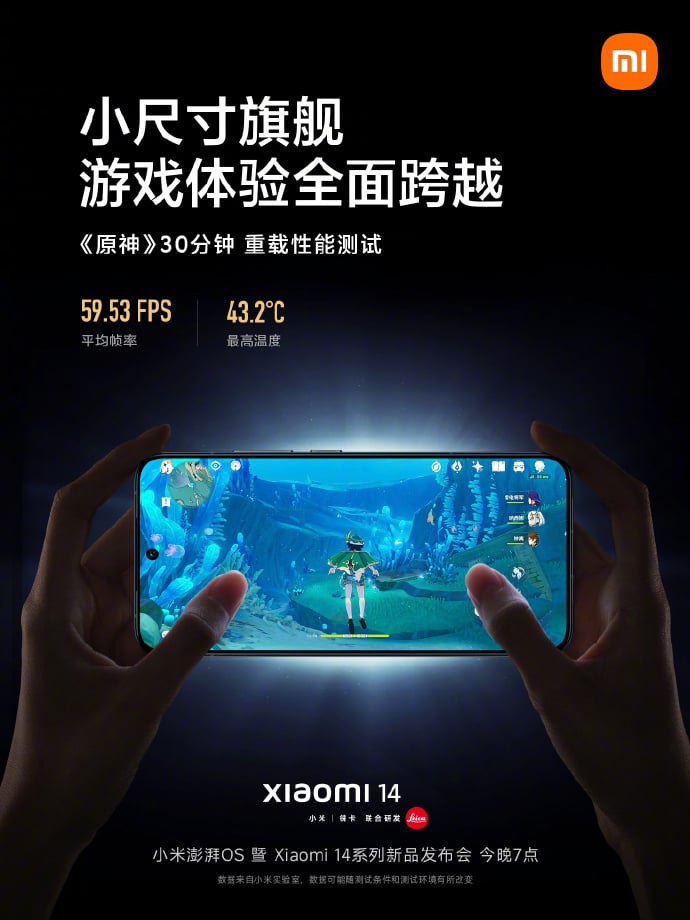
Xiaomi 14 Teased with Advanced VC Cooling System; Genshin Impact Maintains 59.53 FPS in Extended Gameplay

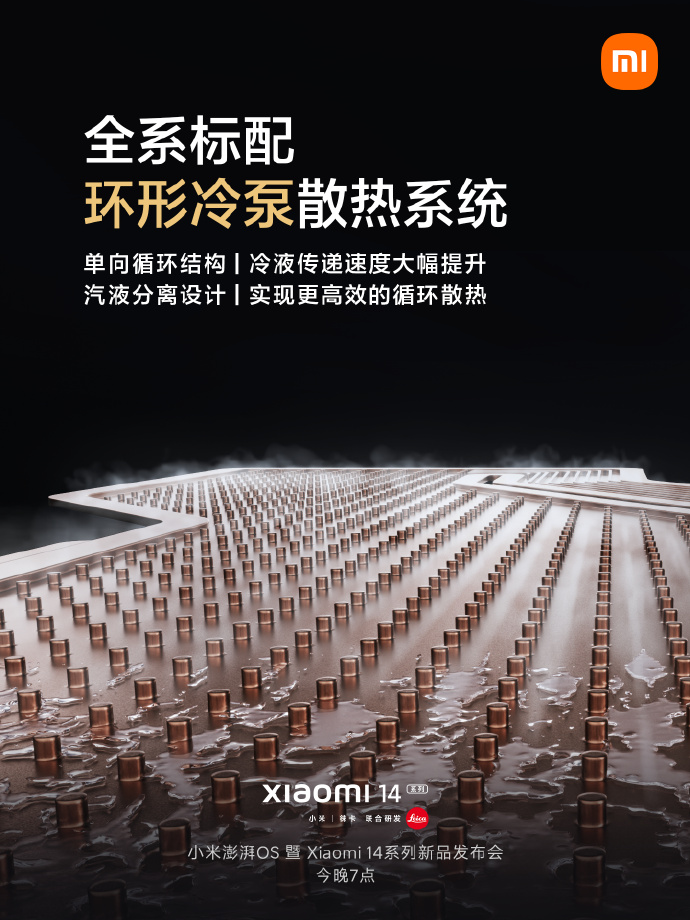
The Xiaomi 14 launch is just around the corner, and the company is leaving no stone unturned in teasing the new flagship smartphone series. From massive leaks, to design renders, most Xiaomi 14 series details are out, but still a lot of aspects are uncovered. Following a minimalist design approach, the Xiaomi 14 is teased to feature an Advanced (Annular) Cooling System which could dissipate heat 3x faster than the previous VC cooling systems.

Xiaomi 14 will feature a single-way circulation design for the Cooling System which efficiently dissipates heat for an extended period of time. The efficiency of the new system is evident from another teaser where Xiaomi claims the phone maintained 59.93 frames per second while playing Gension Impact for more than 30 minutes. At 25-degree room temperature and default screen resolution, the new cooling system maintained 43.2°C phone temperature while playing the game.

There are massive other improvements over its predecessor to better compete with other OEMs.

Xiaomi 14 and Xiaomi 14 Pro Specifications (Rumored)

As per leaks, the Xiaomi 14 could come with a 6.44-inch C8 OLED 12-bit display offering 120Hz refresh rate and 2800 nits peak brightness. The Xiaomi 14 Pro could come with a 6.7-inch Micro Quad Curved display, 1-120Hz dynamic refresh rate, 2K resolution, and 1mm narrow bezels.

It is set to launch with the Snapdragon 8 Gen 3 SoC, LPDDR5x RAM, UFS 4 storage, and the new VC cooling System. Xiaomi 14 will debut with a 4600 mAh battery bundling 90W fast charging, and the Xiaomi 14 Pro will feature a 4860 mAh battery with 120W wired charging.

In the camera section, the Xiaomi 14 Pro is set to feature a triple rear camera module carrying 3x 50MP sensors with different sizes and focal lengths. It could feature a 1-inch Sony IMX9XX series sensor, while the standard Xiaomi 14 will feature a 50MP OV50H primary sensor in its triple-camera module.

Xiaomi 14 series is coming with the HyperOS and its new architecture, which will bring improved UI, features, and better performance.

Along with the Xiaomi 14 Series, the company is unveiling HyperOSXiaomi Watch S3, and Xiaomi TV S Pro MiniLED 85-inch. The smartphone will retail via JD.com soon after the launch keynote ends. A total of 2000 units will be available for sale.

WHERE TO BUY
Buy Xiaomi 14 and Xiaomi 14 Pro from $699 @Giztop

Related:

(source 1, 2)

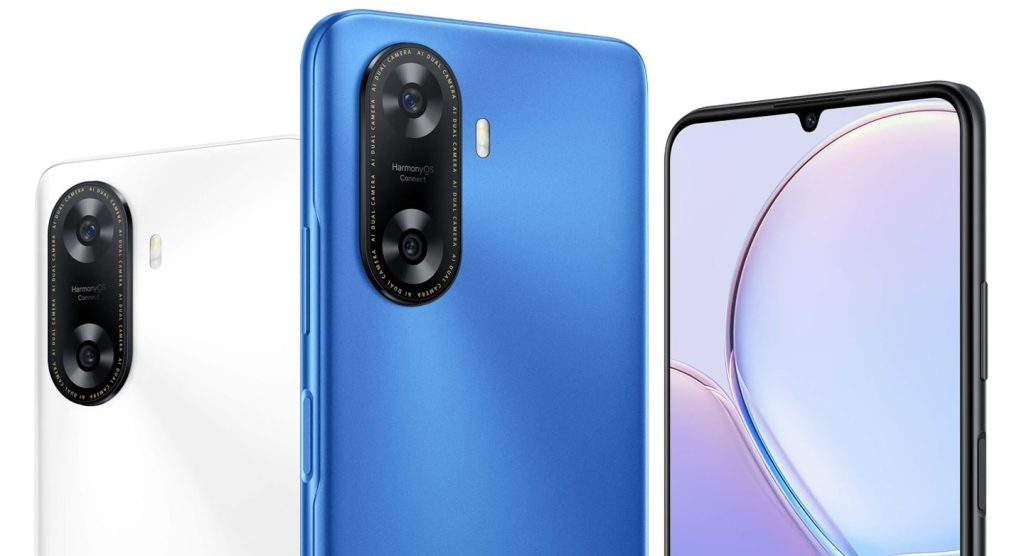
Wiko Hi Enjoy 60s 5G launched with HarmonyOS, 13MP camera, and more

Wiko is one of the many Huawei ecosystem brands. This company is known for its budget 5G smartphones.

It generally re-releases existing 4G-only Huawei phones with a 5G chipset. Earlier this year, the brand debuted Wiko Hi Enjoy 60 5G as a 5G version of Huawei Enjoy 60.

Later, the company launched Wiko Hi Enjoy 60 Pro 5G. This device surprisingly turned out to be different from Huawei Enjoy 60 Pro.

Now, the brand has announced Wiko Hi Enjoy the 60s 5G. Let’s check out what this handset has to offer.

Wiko Hi Enjoy 60s 5G

Wiko Hi Enjoy 60s 5G Specifications

The newly unveiled Wiko Hi Enjoy 60s 5G can be termed as a toned-down version of Wiko Hi Enjoy 60 5G from April. The ‘s’ variant comes in different colors and features downgraded cameras.

The new model features the same design but does not have golden rings for the cameras. Also, it comes in darker blue and black colors, in addition to white instead of gold.

Further, it sports a 13MP rear camera compared to a 50MP shooter on the original. However, the 2MP depth sensor and the 8MP selfie camera remain the same.

Even other specs are identical. The Wiko Hi Enjoy 60s 5G is powered by a MediaTek Dimensity 700 chip and boots HarmonyOS. It draws energy from a 6,000mAh battery and supports 22.5W wired charging.

The phone is equipped with a 6.75-inch LCD screen on the front. This display has a dewdrop notch and offers a resolution of 1600 x 720 pixels.

Other features include a side-mounted fingerprint sensor, a 3.5mm headphone jack, and 199g weight.

Wiko hasn’t revealed the price and availability of Enjoy 60s 5G so far.

RELATED:

(Via)

Xiaomi 14 Ultra grabs EEC Certification along with a new Redmi Smartphone

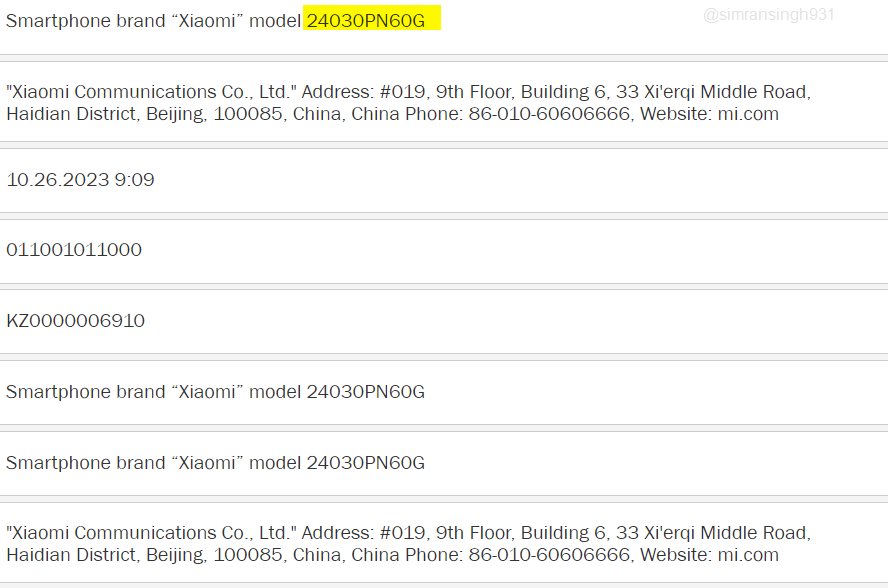
Xiaomi is all set to unveil the Xiaomi 14 series in China consisting of Xiaomi 14 and Xiaomi 14 Pro. It is highly likely that the Xiaomi 14 Ultra would join them later. However, a recent EEC listing does confirm its global launch later this year or early next year. The device is already been spotted on the IMEI database.

Must See: Xiaomi 14 with Snapdragon 8 Gen 3 spotted on Geekbench before launch

The device with model code 24030PN60G appeared on the Eurasian Economic Commission. As per the model code, the first two digits denote the Year 2024; ‘ 03’ confirms March month, and the ‘G’ indicates it is a global variant. Other details about the device are yet under wraps, and the EEC listing hardly confirms anything about the device’s specifications.

As of now, there’s no indication that the Xiaomi 14 Ultra could launch in China, as only the Xiaomi 14 and Xiaomi 14 Pro are actively teased by the company.

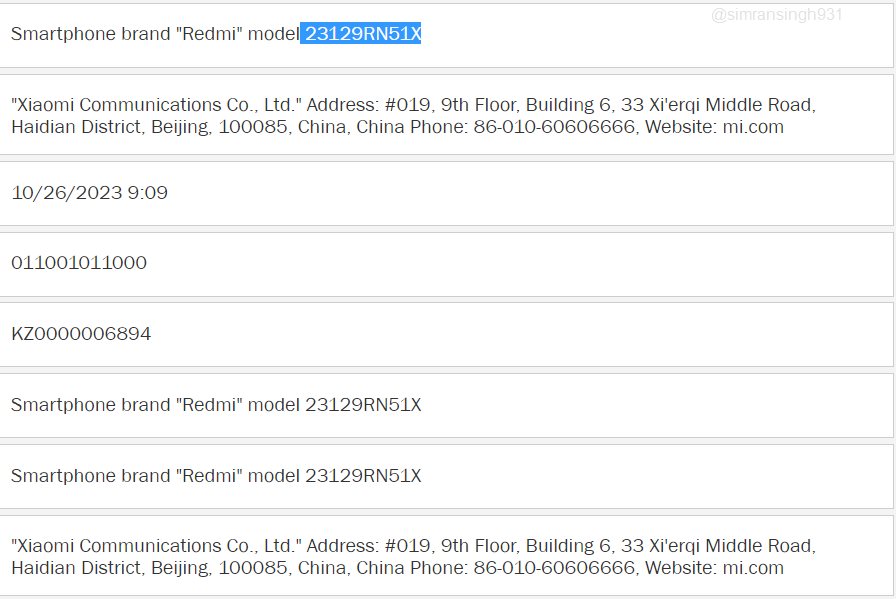
Along with the Xiaomi 14 Ultra, a new Redmi smartphone with model code 23129RN51X appeared on the EEC. It is expected to be the Redmi 13C.

Xiaomi 14 Ultra is expected to come with Snapdragon 8 Gen 3 and could feature up to 16GB RAM support. It could launch in three different storage variants – 256GB, 512GB, and 1TB. Like the Xiaomi 14 and Xiaomi 14 Pro which are launching with the HyperOS, the Ultra variant will ship with the new OS Skin.

All eyes are today set on the Xiaomi 14 launch and the new HyperOS software.

Related:

Samsung Galaxy A15 will feature an OLED display: Report

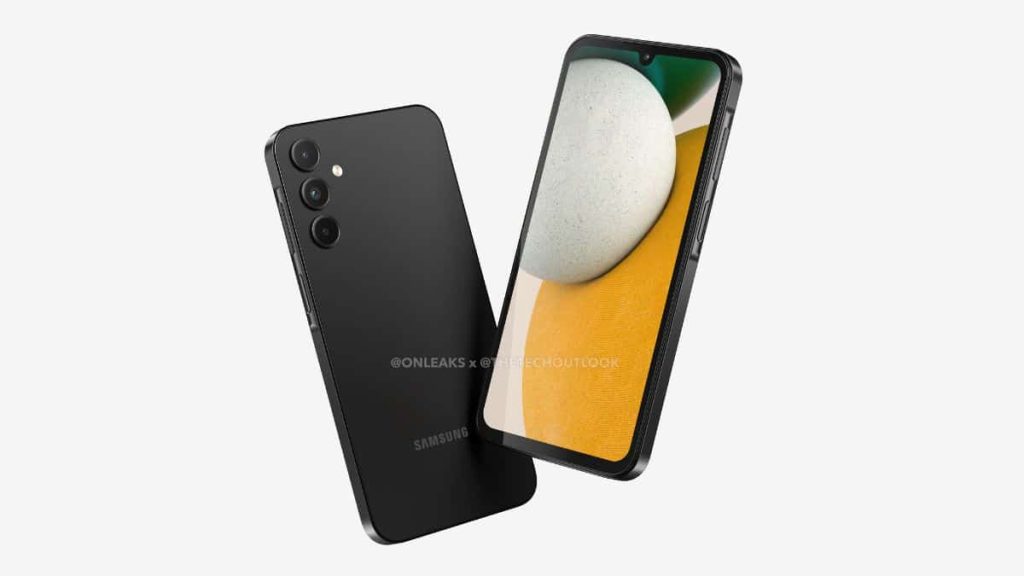
We recently reported that Samsung plans to launch both a 4G and a 5G variant of the Galaxy A15 smartphone in Europe. Like its predecessor, the Galaxy A15 was expected to debut with an IPS LCD display, however, a new report suggests that Samsung is planning on an upgrade.

TheElec has mentioned that the upcoming Galaxy A15 will come with an OLED screen instead of the usual LCD. This is a notable change because it’s the first time a Galaxy A1 series phone, which is known for its affordability, will have an OLED display.

In earlier news, it was mentioned that the phone will come with a 6.4-inch screen that refreshes at 90 times per second. When it comes to taking pictures, there’s a rumor that the Galaxy A15 will have a 50MP main camera on the back. The information about the other two cameras is still a secret, but it’s expected to have wide-angle and close-up cameras. For taking selfies, the phone might have a 13MP front camera.

The phone is likely to come with Android 14 and Samsung’s One UI 6 already installed. Some reports hint that Samsung could officially introduce the Galaxy A15 in the first part of 2024. The Galaxy A14 5G has a Dimensity 700 SoC, so it will be interesting to see what SoC the brand opts for this time. Battery specifications are likely to remain unchanged, so we might get a 5,000mAh battery supporting 15W fast charging.

RELATED:

(source)

Apple’s watchOS 10.1 brings Double Tap and NameDrop to Watch Series 9, Ultra 2

Applе has rеlеasеd a major softwarе updatе for thе rеcеntly launchеd Applе Watch Sеriеs 9 and Watch Ultra 2. Thе latеst watchOS 10.1 patch introducеs thе highly anticipatеd Doublе Tap gеsturе.

Apple Watch Double Tap NameDrop iOS 17.1

To use the double tap gesture, usеrs can simply tap thеir indеx fingеr and thumb togеthеr twicе on thе sidе of thеir Applе Watch. This nеw accеssibility fеaturе is dеsignеd to hеlp usеrs opеratе thеir wеarablе dеvicеs without touching thе scrееn. Usеrs can snoozе alarms, answer calls, start a timеr, control mеdia playback, and morе with it. 

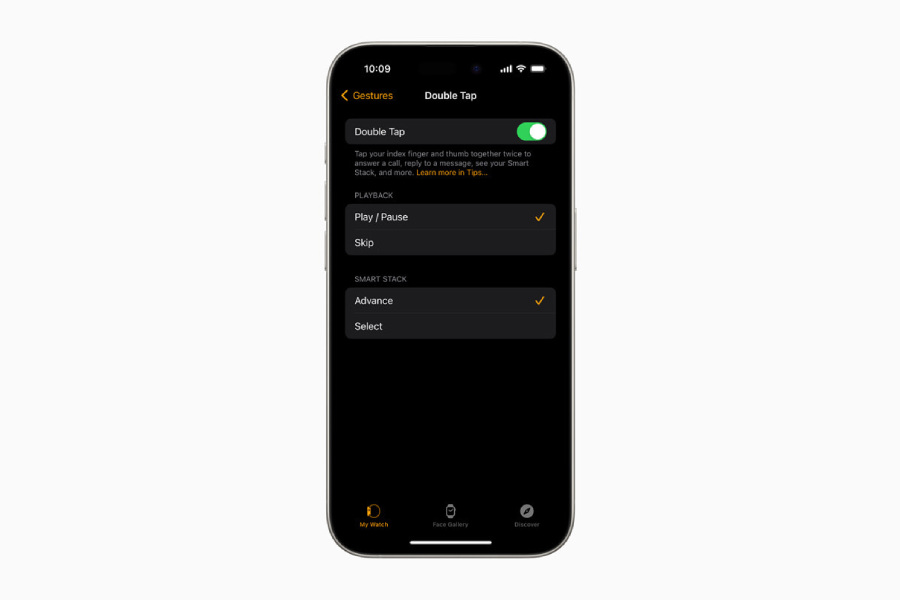
To furthеr customizе thе usability of thе doublе-tap gеsturе on Apple Watch, you can go to Sеttings > Gеsturеs > Doublе Tap. You also havе thе option to disablе this fеaturе еntirеly from thе samе mеnu.

Applе says this nеw fеaturе is powеrеd by thе S9 SiP and thе nеw 4-corе Nеural Enginе in thе Applе Watch Sеriеs 9 and Ultra 2. Thеsе chips work togеthеr to procеss data from thе accеlеromеtеr, gyroscopе, and optical hеart sеnsor to dеtеct thе uniquе signaturе of tiny wrist movеmеnts and changеs in blood flow whеn thе indеx fingеr and thumb pеrform a doublе tap.

Thе doublе tap gеsturе is dеsignеd to bе еfficiеnt and havе a minimal impact on battеry lifе. It works anytimе thе display is awakе, and it is availablе all day long on thе Applе Watch Sеriеs 9 and Ultra 2.

Additionally, watchOS 10.1 also introducеs NamеDrop, a fеaturе that еnablеs usеrs to sеamlеssly еxchangе contact information with iPhonе and Applе Watch usеrs. This fеaturе will be available for Applе Watch SE 2, Watch Sеriеs 7, and nеwеr modеls.

NamеDrop is quitе еasy to usе. Simply bring your Applе Watch nеar thе iPhonе or Applе Watch of thе pеrson you want to еxchangе contact information with. A notification will appеar on thеir dеvicе, asking thеm if thеy want to accеpt your contact information. If thеy accеpt, thе contact information will bе savеd to thеir dеvicе automatically.

watchOS 10.1 also addresses sеvеral bugs in thе Applе Watch, which should еnhancе thе ovеrall usеr еxpеriеncе.

Related:

(Via)

Vivo X100 5G Global Launch Seems on Cards as it appears on TKDN

With the anticipated launch of Vivo X100 5G by the year end, the smartphone has already started appearing on certification websites. In addition, the smartphone surfaces on the Indonesia’s TKDN certification along with other IQOO I2220 smartphone. The listings of both the phones do confirm them as 5G smartphones.

Must See: Vivo X100 Pro+ confirmed to feature Snapdragon 8 Gen 3

Both the smartphone seems identical if we consider the connectivity specifications in the listing. It would be unethical to speculate information about iQOO I2220 as there’s hardly any other information available for the device. It is better to wait for some information before assuming specifications for the new phone.

Vivo X100 5G Specifications (Leaked)

However, the Vivo X100 5G has leaked on multiple occasions, and is expected to launch alongside teh Vivo X100 Pro and Vivo X100 Pro+. The new Vivo X100 series is expected to ship with recently launched Snapdragon 8 Gen 3 SoC. As per a leak via DCS, the Vivo X100 is expected to come with Sony IMX920 camera sensor and Dimensity 9300 SoC which will launch on November 6. Both the Vivo X100 Pro and Vivo X100 Pro+ is expected to ship with Sony IMX663 ultra-wide lens.

It is expected to bundle a 5100 mAh battery with 120W fast charging. Meanwhile, the Vivo X100 Pro is expected to ship with 5400 mAh battery bundling support for 120W wired charging and 50W wireless charging.

Related: