Advertisement

Asus 135-inch ProArt Cinema PQ07 professional Micro LED display with 2,000 nits full-field brightness announced

The Asus ProArt Cinema PQ07 display is the brand’s latest premium display. It boasts a 135-inch Micro LED display and up to 2,000 nits of brightness. The model was showcased back in June 2023 at Computex 2023 and more specs have now surfaced.

Asus 135-inch ProArt Cinema PQ07 professional Micro LED display

The ProArt Cinema PQ07 does not use a modular micro LED panel from Samsung as it comes with a lower 0.78mm pixel pitch. The modular design allows for different sizes and ratios. It has 4K resolution and it can deliver high contrast ratios similar to an OLED display. This is largely due to the self-emissive functionality of the Micro LED technology. It can sustain 2,000 nits full-field brightness and is not affected by ABL. The display has a 95% DCI-P3 color gamut coverage and a possible 60Hz refresh rate.

The Asus ProArt Cinema PQ07 display is being propped as an ideal tool for live streaming, virtual production, home cinema, and vehicle driving simulations, among others. There are very few Micro LED models currently available in the market and the $200,000 price tag of the ProArt Cinema PQ07 underscores its high-end category. Micro LED models are yet to enter the mainstream consumer market. The PQ07 could well mark the beginning of the development of consumer-oriented Micro LED models. There are no clear release and global availability details yet for the Asus ProArt Cinema PQ07 at this time.


RELATED:

Microsoft Surface Go 4 2-in-1 with Intel N200 processor & 10.5″ FHD display launched

In addition to introducing the Surface Laptop Studio 2, Microsoft has unveiled the Surface Go 4 2-in-1 laptop on the global stage. This laptop is specifically designed for business purposes, meeting the criteria for Microsoft 365 for frontline eligibility. Notably, it features integrated NFC functionality, ensuring secure and convenient access through compatible NFC security keys.

Microsoft Surface Go 4

Microsoft Surface Go 4 specs

The Microsoft Surface Go 4 features a compact 10.5-inch PixelSense display with a resolution of 1920 x 1280 (220 PPI) and a 3:2 aspect ratio. This touch-sensitive display supports 10-point multi-touch and offers a high 1500:1 contrast ratio, protected by Corning Gorilla Glass 3. Under the hood, it runs on an Intel Processor N200 with Intel UHD Graphics for smooth performance.

Microsoft Surface Go 4

With 8GB of LPDDR5 memory, the Surface Go 4 ensures efficient multitasking. It incorporates various sensors like an ambient light sensor, accelerometer, gyroscope, magnetometer, and NFC for added functionality. In terms of connectivity, it provides a USB-C 3.1 port for data, DisplayPort, and charging, a 3.5mm headphone jack, a Surface Connect port, a Surface Type Cover Port, and a microSDXC Card Reader.

Weighing 521g and measuring 245 mm x 175 mm x 8.3 mm, it prioritizes portability without compromising functionality. Storage options include UFS drives with capacities of 64GB, 128GB, or 256GB. The Surface Go 4 offers impressive battery life, providing up to 12.5 hours of typical device usage on Wi-Fi.

In the imaging and audio department, it features a Windows Hello face authentication camera on the front, a 5.0MP front-facing camera capable of 1080p HD video, and an 8.0MP rear-facing autofocus camera with the same video capabilities. The device also incorporates enhanced dual far-field Studio Mics and 2W stereo speakers with Dolby Audio for an immersive audiovisual experience. In terms of connectivity, it supports Wi-Fi 6 802.11ax and Bluetooth 5.1.

Pricing & availability

Starting from October 3, the Microsoft Surface Go 4 for Business will be exclusively accessible to organizations. The pricing begins at USD 579 for the model with 64GB of storage.

RELATED:

(Source, via)

LeEco to Launch New Projector Powered by Huawei’s HiSilicon Chip

LeEco, previously known as LeTV, continues to expand its product range. The company, which first emerged in 2004 as a streaming service, is now active in many different markets. These include smart TVs, VR, electric bicycles, electric vehicles, film production and distribution, real estate, wine, retail, and even eCommerce. Now, the company is preparing to introduce a new projector, which will be powered by a Huawei HiSilicon chip. Here are the details…

LeEco Announces New Frontier: A Projector Powered by Huawei’s HiSilicon Chip

LeEco announced today that it will launch a new projector product on September 25th. The projector will be powered by a Huawei HiSilicon chip. The company also revealed that the projector will support native 4K + HDR, but did not provide any further details about the specifications. Unfortunately, that’s all we know about the product for now.

In a Weibo post, LeEco announced that it is “not yet possible to be far ahead” and that it “lacks the experience to grow.” However, the company said that it has found its own answer to “surviving in the cracks” and “moving forward.” This suggests that LeEco may announce new future plans and other ecosystem products at the media briefing.

The September 25th media briefing will be a key event for LeEco. The company is expected to announce new products and plans, and it will be interesting to see how LeEco plans to move forward. In addition to new products, the company could also announce new partnerships or initiatives at the media briefing.

According to the recent reports, they could partner with a Chinese content provider to offer exclusive content on its streaming devices. But we have no choice but to wait to see if these claims are true.

RELATED:

(source)

OpenAI Launches DALL-E 3, a New Art Generator Powered by ChatGPT

OpenAI introduced the long-awaited DALL-E 3 artificial intelligence tool. One of the most anticipated features was the integration with ChatGPT. With this new version, it is now possible to generate visuals using ChatGPT through DALL-E. However, the features of DALL-E 3 are not limited to this. Here are the details…

OpenAI Launches DALL-E 3, a More User-Friendly and Accessible AI Art Tool

The visual production tool DALL-E is now in its third version. The most significant advancement of this AI tool is its integration with ChatGPT. Thanks to this integration, users will be able to generate more detailed prompts for DALL-E 3. In fact, ChatGPT will now generate these prompts for you.

As known, the DALL-E AI tool performs better with detailed and lengthy commands. Another notable feature of DALL-E 3 is the improved realism of hands. Both Midjourney and DALL-E previously struggled with anatomically detailed parts like human hands. DALL-E 3 will produce better and more realistic results even with complex commands compared to DALL-E 2. This improvement in DALL-E 3 is crucial for users who had difficulty conveying their intentions in commands.

According to OpenAI, with the new DALL-E, AI tools will become more user-friendly and accessible to more people. OpenAI has stated that DALL-E 3 has security measures to prevent misuse. The company restricts the use of some words related to violence and crime in commands. Additionally, users won’t be able to generate visuals of recognizable individuals, like politicians or artists, using DALL-E 3.

A notable incident was the AI-generated visual suggesting the arrest of Trump, which caused a stir on social media. The effectiveness of these restrictions will be evident once DALL-E 3 becomes public. OpenAI will make the DALL-E 3 tool available to ChatGPT Plus and Enterprise users in October. They then plan to offer DALL-E 3 services to research labs and for API services. However, the date when DALL-E 3 will be released to the public remains uncertain.

With its features, DALL-E 3 has the potential to surpass other AI visual production tools like Midjourney. The hand details in the visuals shared by OpenAI are now at a much higher level. Another striking feature is the more detailed and consistent AI visual production compared to the DALL-E 2 version.

RELATED:

(via)

Google’s Repair Mode could make it easier and safer to get your Pixel phone fixed

Google is reportedly working on a new feature for Pixel phones called Repair Mode. This feature would allow users to send their phones in for repair without having to worry about their personal data being accessed by the repair technicians.

Android Authority discovered strings in the Android 14 QPR1 beta that hint at this feature. Here’s the string:

<string name="repair_mode_active_summary">In repair mode</string>
<string name="repair_mode_summary">Secure environment for device repair</string>
<string name="repair_mode_title">Repair mode</string>

There’s something similar called Maintenance Mode you might have heard of in Samsung Galaxy phones. But Android Authority suggests the Repair Mode on Pixel devices might work in a different way.  It may simulate a factory reset by using Dynamic System Updates (DSU), a feature introduced in Android 10.

DSU allows for the booting of a Generic System Image (GSI) without overwriting the original installation, which means that the user’s data can be preserved. 

In the case of Repair Mode, DSU will create a new, and empty data partition. During the next boot, Android would swap out the original data partition with the new, empty data partition. This would effectively simulate a factory reset, but the original data partition would remain intact.

Google has made several enhancements to DSU in Android 14 that make this possible. For example, Android 14 added the ability to hide the default notification that’s shown when the device is running a dynamic system. This means that Repair Mode would be able to show its own notification.

Another improvement that Google has made to DSU is allowing the “device owner” app to lock the device into the mode so that only the device owner (which in this case would be Repair Mode) can exit it. And thanks to a recent AOSP patch, the RMA tools that Google uses at its service centers will be able to know when a device is in Repair Mode, allowing the technician to forgo factory resetting it.

This is a great feature for Pixel users, as it would give them peace of mind knowing that their personal data is safe even when their phone is in the hands of someone else. It would also make the repair process easier and more convenient, as users would not have to spend time backing up and restoring their data.

Related:

(Via)

Lenovo Legion Go handheld teased to launch soon in China

Lenovo recently debuted the Legion Go handheld gaming console at the IFA 2023 exhibition. The console will be made available worldwide in November. That being said, it looks like the Chinese launch will also be happening soon as the brand has started teasing the console in its domestic market.

Lenovo Legion Go

While the precise release date and pricing details for China have not been disclosed yet, we know that the console will be priced at 799 euros, approximately equivalent to 6,224 yuan. Typically, hardware from Chinese companies tends to be more affordable in their home market, and we anticipate a similar pricing strategy for this console.

Lenovo Legion Go specs

The Lenovo Legion Go comes with detachable controllers and a built-in kickstand for convenience. It also incorporates Hall effect sticks and an optical sensor on the right controller. The device boasts an 8.8-inch PureSight display with a high resolution of 2,560 x 1,600, a 16:10 aspect ratio, 500 nits peak brightness, a wide 97.3 percent DCI-P3 color gamut, and a speedy 144Hz refresh rate.

Lenovo Legion Go

Under the hood, it’s powered by AMD Ryzen Z1 and Ryzen Z1 Extreme processors, along with 16GB of LPDDR5X RAM. Storage options range from 256GB to 1TB of PCIe 4.0 NVMe M.2 storage. It runs on the Windows 11 operating system and features a 49.2Wh battery pack with rapid 65W charging support. The individual controllers come with 900mAh battery packs. It also includes a 3.5mm headphone jack, a MicroSD card slot for memory expansion, and two USB-Type C ports. Notable additional features include fully customizable controllers, RGB lighting on the joysticks, and Legion Space software for tailoring settings and key mappings for different games.

RELATED:

(via)

Huawei Mate 60 Pro teardown reveals brittle display, difficult repairs

PBKreviews is a popular YouTube channel that specializes in teardown videos of smartphones and other gadgets. Recently, the channel got its hands on the Huawei Mate 60 Pro, and the results of the teardown are quite interesting.

The Mate 60 Pro is a highly controversial device, as it is Huawei’s first flagship smartphone to be released since the company was placed on the US Entity List in 2019. This means that Huawei is unable to source certain components from US suppliers, including chips from Qualcomm.

Despite the sanctions, Huawei has managed to produce the Mate 60 Pro with a 5G-capable, 7nm chipset. The teardown video from PBKreviews shows the phone’s motherboard uncovered, revealing the SK Hynix RAM chips that sit above the HiSilicon Kirin 9000s chipset.

Those are themselves a mystery and SK Hynix has launched an investigation into how its RAM chips made their way into the Mate 60 Pro, as the company says it has not sold to Huawei since 2020.

Additionally, the teardown video shows that the Mate 60 Pro also features a difficult-to-remove display. PBKreviews’ drop test showed that the phone’s Kunlun 2 glass is very tough, but the 6.82″ LTPO AMOLED display was irreparably damaged in the process of removing it. Here’s the full video.

This suggests that the display is glued down very tightly, which would make it difficult and expensive to replace. Ultimately, the Huawei Mate 60 Pro was given a 5/10 repairability rating.

Related:

(Via)

Huawei founder Ren Zhengfei admires Apple amidst 5G smartphone competition

In a surprising twist of tech industry sentiment, Ren Zhengfei, the founder and CEO of Chinese tech giant Huawei, has professed his admiration for Apple, his company’s American rival. Speaking at the Huawei-sponsored International Collegiate Programming Contest, Ren revealed his respect for Apple and its products.

Ren’s unexpected statement emphasized his stance against xenophobia towards foreign brands. He spoke highly of Apple, stating, “We often explore why Apple’s products are so good, and we can also see the gap between us and Apple. I’m very happy to have a teacher who gives us the opportunity to learn and compare. In that sense, it would not be an exaggeration to call me an Apple fan.”

This surprising revelation comes amidst fierce competition in the world’s largest smartphone market, where Huawei’s latest flagship 5G handsets are going head-to-head with Apple’s offerings.

Huawei, once the world’s largest smartphone hardware maker, faced a significant setback in 2019 when it was placed on the Entity List by then-US President Donald Trump. This move led to a series of challenges for the company, including the withholding of critical chips and the loss of access to Google apps and services, which significantly impacted its Western market presence.

Despite these challenges, Huawei has recently made a surprising comeback with the release of the premium Mate 60 phone. Notably, the Mate 60 is powered by Huawei’s own HiSilicon Brin 9000S system-on-chip, a move reminiscent of Apple’s approach to designing its own chip.

As Huawei continues to innovate and compete with Apple, Ren Zhengfei’s unexpected praise serves as a reminder of the global tech industry’s interconnectedness and the valuable lessons that can be learned even in the midst of intense competition.

Related:

(via)

The $5000 Rawr Mantis Electric Bike Brings Mountain Biking & Motocross Together

As electric bikes continue to evolve, the recently launched Rawrr Mantis could be a game-changer. A blend of mountain biking and motocross, the Mantis offers an affordable yet tech-rich alternative for off-road enthusiasts.

The Bike weighs merely 75 kilograms, which increases mobility

Priced at $4,999, the Mantis is relatively easy on the pocket. But that doesn’t mean it skimps on performance. To put the machine through its paces, Rawrr recruited six-time South African Motocross Champion Caleb Tennant. The bike has been rigorously tested, with over 20,000 kilometers ridden and 50,000 jumps executed.

Rawr Mantis Electric

The Rawrr Mantis comes equipped with a mid-mounted electric motor, delivering 10 horsepower and an impressive 35 pound-feet of torque. At a light 75 kilograms, including a 15-kilogram, 2.6-kilowatt-hour removable battery, the bike promises exhilarating off-road experiences. Plus, a claimed 75-mile range makes it ideal for long jaunts on trails.

What sets the Mantis apart is its unique aluminum frame, which grants it an athletic stance and a seat height of 850 millimeters—quite tall for an electric dirtbike in this class. With 200 millimeters of suspension travel and 310 millimeters of ground clearance, it’s designed to tackle any off-road challenge. Additional tech features include four ride modes, smartphone connectivity, and adjustable settings through a mobile app.

RELATED:

(Via)

Microsoft’s New Surface Laptop Studio 2 Features RTX 40 Series GPUs & Up To 64GB of RAM

Microsoft has rolled out the Surface Laptop Studio 2, and it’s not holding back. With the 13th-gen Intel i7 processors and NVIDIA RTX 4050 or 4060 GPUs, it’s pushing twice the CPU and GPU power of its predecessor. In a live demo, Microsoft showed the new device beating the M2 Max MacBook Pro in Blender, a 3D creation tool.

The laptop feels like a direct competitor to Apple’s bestselling MacBook Pro ultrabooks

Storage and memory? You can get up to 2TB of storage and 64GB of RAM. The 14.4-inch touchscreen display is back, now with a 120Hz refresh rate, Dolby IQ, and HDR. Battery life? Microsoft claims up to 18 hours. The device also introduces a neural processing unit (NPU)—a first for Intel in a Windows laptop. This chip accelerates AI tasks, paving the way for smarter applications and better performance.

Microsoft Surface

Connectivity is also a strong suit, with one USB-A port, two USB-C ports, and a microSD card reader. Available from October 3, the starting price is $1,999.

Microsoft’s Surface Laptop Studio 2 isn’t just an upgrade—it’s a direct challenge to Apple’s MacBook Pro. From processing power to AI capabilities, Microsoft is setting the stage for a showdown in the laptop market.

RELATED:

(Via)

Realme GT 2 Pro gets Android 14 x Realme UI 5.0 early access

We’re getting closer to the Android 14 launch, and companies like OnePlus have shared their plans for when they’ll roll out their version of the operating system. Realme, OnePlus’ sister brand, is also getting ready to release Realme UI 5.0, which is based on Android 14. They’ve just announced that they’re starting closed beta testing for Realme UI 5.0, beginning with the Realme GT 2 Pro smartphone. Here’s all you need to know about it.

Realme GT2 Pro Realme UI 5.0

Realme GT 2 Pro Realme UI 5.0 Early Access program

Enhanced Security and Privacy:

  • Improved management of photo and video-related permissions for safer app access.

Performance Optimization:

  • Enhanced system stability, faster app launches, and smoother animations.

System Improvements:

  • Expanded list of supported apps for APP Cloner.
  • Media Output settings in Control Center for long-term use.

Updated Design:

  • Refreshing, gentle, and clearer color style for a more comfortable visual experience.
  • Added new ringtones and revamped system notification sounds.
  • Enhanced system animations for even smoother transitions.

Known Issues:

  • When using floating windows, sliding the desktop may not work. You can fix this by pulling down the status bar.
  • Glance Lock-screen is not available in realme UI 5.0 Early Access; it will be introduced in future updates.

How to apply for Realme UI 5.0 Early Access

1. Ensure your realme GT 2 Pro has at least 60% battery.

2. Update your device to the required UI version (RMX3301_13.1.0.503 (EX01)).

3. Enable Developer Mode (Settings > About device > Version > Version Number > Tap version number seven times).

4. Apply for Early Access via the Software Update Application channel (Settings > About device > Click on the “realme UI 4.0” banner at the top > Click on the three dots in the top right corner > Beta program > Early Access > Apply Now > Submit your details and complete the application).

The application channel will become accessible on September 21, 2023. Applications will be received in groups, and there are only a limited number of available spots. Currently, Early Access is offered in India and Russia.

RELATED:

(Source)

Redmi Note global series sales surpass 338 million units

The Redmi Note series can be called the bread and butter of Xiaomi’s smartphone business. The smartphones in the Note series get a lot of consumer attention every year and it is evident by the sales figure. Xiaomi announced back in March that Redmi Note series global sales numbers have exceeded 320 million. However, the newly revealed sales figures point to a rather slow growth.

During the Redmi Note 13 series launch event in China today, Xiaomi revealed global sales figures for the Redmi Note series have exceeded 338 million units. This is not as impressive as what we’ve seen in the past few years. For instance, Xiaomi revealed that it had sold over 300 million units in December 2022 and later updated this number to 320 million in March. It’s been over 5 months from March and the company managed to sell 18 million more units.

Redmi-Note-13-Pro-Plus
Redmi Note 13 Pro+

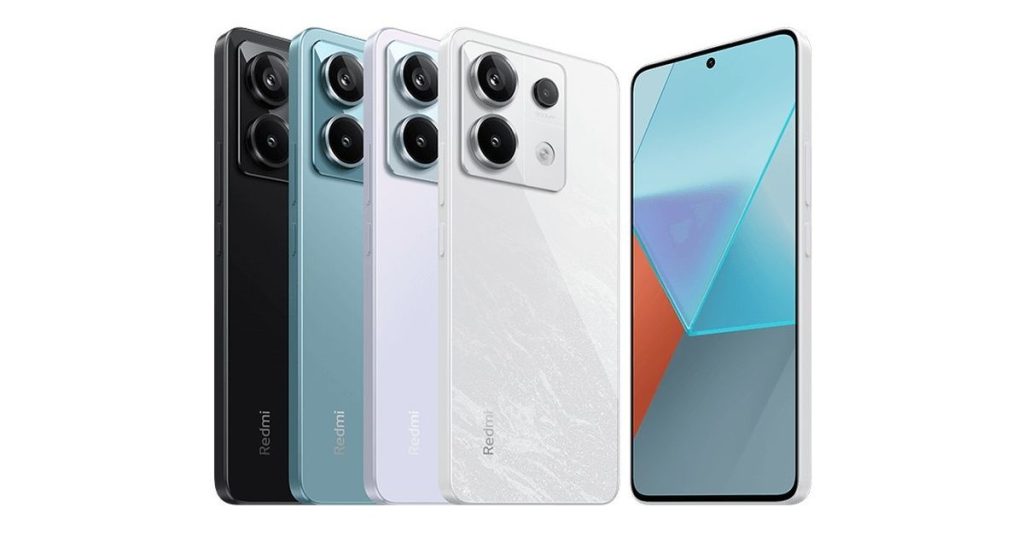
The Note 13, Note 13 Pro, and the Note 13 Pro+ are the latest additions to the Redmi Note series. The Pro models feature a 6.67-inch 1.5K FHD+ AMOLED display with a 120Hz refresh rate and Corning Gorilla Glass Victus protection. Note 13 Pro+ is powered by the MediaTek Dimensity 7200 Ultra SoC, while the Note 13 Pro features the Snapdragon 7s Gen 2 SoC. The vanilla Note 13 gets the MediaTek Dimensity 6080 SoC.

Both the Pro models feature a 200MP Samsung ISOCELL HP3 primary sensor with OIS, an 8MP ultra-wide angle lens, and a 2MP macro shooter. The Redmi Note 13 has a dual camera setup with a 100MP primary sensor and a 2MP depth sensor. The Note 13 Pro+ packs a 5,000mAh battery with 120W charging. The Pro model features a 5,100mAh unit with 67W charging while the standard version is fueled by a 5,000mAh battery with 33W charging.


RELATED:

(Via)

Redmi Note 13 5G visits Bureau of Indian Standards website ahead of launch

Redmi has just launched the Note 13 series of smartphones in the Chinese market. The series includes three models: Note 13, Note 12 Pro, and Note 13 Pro+. Although the brand has not made any announcements about a global launch, certifications reveal that it is certainly in the cards.

That being said, the Redmi Note 13 5G has just emerged on the Bureau of Indian Standards, hinting at an upcoming Indian launch. The smartphone has appeared on the database with model number 2312DRAABI. The Chinese model number of the device is 2312DRAABC. Although the certification does not reveal the exact specifications of the Note 13, it does greenlight a future launch. Keep reading to know more about the Note 13 5G.

Redmi Note 13 5G specs

The Redmi Note 13 features a 6.6-inch OLED display with a 120Hz refresh rate and FHD+ resolution, providing sharp visuals. It also offers a peak brightness of 1,000 nits for clarity in bright conditions. Its camera setup includes a 108MP main sensor and a 2MP depth lens on the rear, along with a 16MP front camera for selfies.

Redmi Note 13

Powered by the MediaTek Dimensity 6080 processor, the smartphone delivers strong performance and offers configurations with up to 12GB of RAM and 256GB of storage. It houses a 5,000mAh battery with 33W fast charging for extended usage.

Running on the Android 13 operating system, the Redmi Note 13 provides access to the latest software features. It boasts a modern design with a center-aligned punch-hole cutout, thin bezels, and a side-mounted fingerprint scanner for secure unlocking.

RELATED:

(via)

Hisense Vidda New X gaming TV launched with up to 85” 4K 144Hz display

Chinese manufacturer Hisense has launched the new Vidda New X gaming TV. The new TV brings impressive specifications for the price. For instance, the TV is offered in up to 85-inch screen size and brings a 4K resolution as well as a 144Hz refresh rate. It comes powered by a MediaTek processor and supports Dolby Atmos sound. The company also claims to have used a Sapphire optical technology for an immersive display. Here are the details.

The Vidda New X gaming TV comes with a bezel-less display and offers a 4K resolution with a 144Hz refresh rate. The TV comes with an up to 95% DCI-P3 color gamut. Audio quality is also impressive with two 18W speakers, supporting Dolby Atmos. This means every sound is delivered with precision and depth, enhancing the overall experience.

Hisene Vidda

Under the hood, the Vidda New X boasts the MediaTek MT9653 processor, 4GB of RAM, and 64GB of storage. Hisense has also leveraged cutting-edge technology to enhance picture quality. As per the company, the Sapphire optical microstructures and high-pressure driving techniques used in the TV, combined with a sapphire substrate optical chip, elevate luminous efficiency and black level control, resulting in a vivid and lifelike display.

Vidda Gaming TV is only available for purchase in China, priced at 2,599 yuan ($381) for the 55-inch model, 3,299 yuan ($483) for the 65-inch model, 4,599 yuan ($674) for the 75-inch model, and 5,999 yuan ($879) for the 85-inch model. This TV is not available for purchase in the global market as of now.

RELATED:

(Via)

Google releases Android 14 QPR1 Beta 1 for Pixel devices

Google has surprisingly released the first beta for Android 14 QPR1, even though the stable Android 14 update is not yet available. If you’re not aware, QPR stands for Quarterly Platform Release, and these updates are usually released after Google launches a major OS update. However, in this case, Google has released the QPR1 update even before releasing Android 14.

Android 14 QPR1 Update

Now, as Google has released it, it should see a stable release (since QPR is also a beta update) three months after its rollout. This means, that the stable version of this update will likely arrive as a December 2023 Pixel Feature Drop. 

Anyway, the update is now rolling out to eligible Pixel devices that are still enrolled in the beta program. If you’re not enrolled in beta and want to update to Android 14 QPR1 Beta 1, you can do so by navigating to Settings > System > System update and tapping on Check for update to see if the new version is available. If it’s not, you can also use Google’s Android Flash Tool to manually sideload the OTA or flash the factory images.

Here are the issues that are resolved in this release:

  • Fixed an issue where the system UI sometimes crashed after notifications were posted or interacted with.
  • Fixed an issue that caused devices to crash in some cases.
  • Fixed an issue that caused the recording view to freeze while recording video.
  • Fixed an issue where a device sometimes couldn’t be interacted with after rebooting.
  • Fixed an issue where device alarms were sometimes reset after installing a system update.

These are the Pixel devices that are eligible for the Android 14 QPR1 beta:

Notably, the Pixel 4a 5G and Pixel 5 are not eligible for this update. These devices are still expected to receive Android 14, but it seems that’ll be the end of the road for these phones. The Pixel 5 is set to officially receive its last update in October, while the Pixel 4a 5G will live on until November.

Related:

Xiaomi launched Redmi Projector 2 and Projector 2 Pro for under $150

Xiaomi today held an in-person launch event in China and launched a handful of new products. The spotlight was on the new Redmi Note 13 series models as well as the Redmi Pad SE. Toward the end of the keynote, the company also introduced two new projectors— the Redmi Projector 2 and the Projector 2 Pro. Here’s what you need to know about them.

Redmi Projector 2

The Redmi Projector 2 comes in Green and Sand color options. According to the official specifications, it has a measured brightness of 180 CVIA lumens. What sets it apart is its in-house developed omnidirectional correction AI algorithm, which automatically handles focus with the help of an integrated motor when you power it up.

Redmi Projector 2

This projector sports a custom-made fully enclosed optical system along with a high-definition ultra-clear lens, promising an impressive lifespan of up to 10 years. The resolution is a crisp 1080P, and it offers a projection ratio of 1.2:1. Sound-wise, it’s equipped with dual built-in speakers and brings the advanced WANOS China panoramic virtual sound field encoding tech for a more immersive and layered audio experience.

Redmi Projector 2 Pro

The Redmi Projector 2 Pro is a more premium projector of the two.  It features an enclosed optical system that improves light efficiency by 50%, resulting in higher brightness. It comes equipped with a custom aspheric lens, which ensures a clearer and more detailed picture quality. SGS (a certification authority) has certified the projector’s brightness at an impressive 300 CVIA lumens, with a resolution of 1080P and a projection ratio of 1.2:1.

Redmi Projector 2 Pro

This projector also comes with a custom TOF (Time-of-Flight) laser sensing module, working in conjunction with a high-definition camera and AI-powered algorithms. This combination allows for precise adjustments to various image settings. The intelligent adaptive image system, coupled with a six-axis gyroscope, enables seamless and rapid calibration without the need for manual adjustments.

Under the hood, the projector is powered by the Amlogic T950D4 chip with a storage capacity of 1.5GB+32GB. It also features built-in dual speakers that, when combined with WANOS China’s panoramic virtual sound field encoding technology, provide a rich audio experience.

Price and Availability

Xiaomi launched the Redmi Projector 2 and Redmi Projector 2 Pro, with initial prices of 999 yuan ($136) and 1,399 yuan ($190), respectively. However, the retail prices are 1,299 yuan ($176) and 1,699 yuan ($229), respectively.

Related:

boAt Wave Genesis Is An Apple Watch Ultra Clone With A 1.96-Inch Display, 5 Day Battery Life

There is a new Apple Watch Ultra clone in the market in India. The latest offering comes from boAt and it is dubbed as boAt Wave Genesis. Notably, this is the second Watch Ultra clone from the homegrown brand after the Wave Elevate that was announced earlier this month. In the past, many other brands have launched smartwatches identical to Apple’s Watch Series and Ultra devices. Read on to know what the boAt Wave Genesis offers.

boAt Wave Genesis specifications and features

The boAt Wave Genesis looks ditto similar to the Apple’s Watch Ultra. It has a metal unibody with a rotating crown and a physical button on the right side. The device features Ocean Band straps. The smartwatch has a square dial with a 1.96-inch display bearing an HD resolution and 500 nits screen brightness. It is resistant to dust and water as it has IP68 rating. 

As for the health and fitness features, the boAt Wave Genesis is equippped with a heart-rate monitor and SpO2 sensor. It packs sedentary alerts and guided breathing sessions. The wearable device is capable of tracking more than 100 sports modes. It is also compatible with Google Fit and Apple Health. 

The boAt Wave Genesis comes with support for Bluetooth calling via the built-in microphone and speaker. It offers a quick dial pad and is capable of storing 20 contacts on the device. The smartwatch packs convenient features like camera and music control, live cricket scores, weather updates, notifications, and more. It is claimed to offer 5 days of battery life on a single charge. 

The boAt Wave Genesis is priced at Rs 2,199. It is offered in Burgundy, Active Black, Deep Blue, and Royal Orange colors. The smartwatch can be purchased from Flipkart and the brand’s official website. 

Related:

Redmi Note 13 launched with Dimensity 6080 chip, 1920Hz PWM dimming OLED display, 108MP camera, and more

Xiaomi launched a host of new devices today. It also silently announced the Redmi Note 13 that was not teased leading up to today’s event. The device is the base model in the Note 13 family and packs striped-down specifications compared to the Pro and Pro+ models. The latest generation Note 13 arrives as the successor to the last year’s Note 12 with incremental upgrades. Let’s take a look at it below. 

Redmi Note 13 specifications and features

The Redmi Note 13 retains the same 6.6-inch OLED display with a 120Hz refresh rate from its pro siblings. It offers an FHD+ resolution, 1,000 nits peak brightness, and 1920Hz PWM dimming. The device has a centre-aligned punch-hole cutout and thin bezels surrounding the display. The smartphone has a boxy design and a side-mounted fingerprint scanner embedded in the power button. 

On the optics front, the Redmi Note 13 sports a square camera module on the back panel. It has a 108MP main sensor and a 2MP depth lens. For selfies, the device features a 16MP front snapper. The smartphone packs a host of camera features for enhancing the photography capabilities. 

In terms of hardware, the Redmi Note 13 runs on a MediaTek Dimensity 6080 processor. It is offered in multiple RAM and storage configurations up to 12GB and 256GB respectively. The smartphone draws its power from a 5,000mAh battery unit with support for 33W fast charging. Software-wise, it runs on Android 13 OS. 

The Redmi Note 13 starts at CNY 1,199 ($164) for the 6GB + 128GB option The 8GB + 128GB and 8GB + 256GB variants are priced at CNY 1,299 ($177) and CNY 1,499 ($205). The higher 12GB + 256GB configuration costs CNY 1,699 ($232). The smartphone is offered in Star Sand White, Midnight Dark, and Time Blue colors. 

Related:

Thunderobot Launches “Console Like” MIX Mini Gaming PC with Intel i9-13900H, and Nvidia RTX 4070! Starting at 5,499 Yuan

Thunderobot continues to expand its product lineup. The company’s latest offering is the MIX Mini Gaming PC, aimed at gamers. This PC, reminiscent of a gaming console, features an Intel i9-13900H processor, Nvidia RTX 4070 graphics card, and starts at a price of 5,499 Yuan, redefining the price-performance ratio. Here are the details…

Thunderobot MIX Mini Gaming PC Released in China, Starting at 5,499 Yuan

The Thunderobot MIX Mini Gaming PC is powered by an Intel Core i9-13900H processor with 14 cores and 20 threads. It also features an Nvidia RTX 4070 graphics card with 8 GB of GDDR6 memory. The console is available with 16 GB or 32 GB of LPDDR5 RAM and 512 GB or 1 TB of PCIe 4.0 SSD storage. The PC has a compact, 1.7-liter design that can be placed in either a vertical or horizontal position.

It features a new air cooling system with dual 5V high-pressure turbo fans, five copper heat pipes, and 129 ultra-thin fins. Also has a variety of ports, including a USB-C port that supports 100W reverse charging, an HDMI 2.1 port, and an RJ45 Ethernet port.

Key specifications:

  • Processor: Intel Core i9-13900H
  • Graphics card: NVIDIA RTX 4070
  • RAM: 16GB or 32GB LPDDR5
  • Storage: 512GB or 1TB PCIe 4.0 SSD
  • Dimensions: 114 x 114 x 40 mm
  • Weight: 1.1 kg
  • Price: Starting at 5,499 Yuan

RELATED:

(source)

Xbox Handheld console in the works; court documents reveal

Court documents that surfaced this week have unveiled Microsoft’s plans for a redesign of the Xbox Series X, known internally as “Lockhart.” What has gone somewhat unnoticed is that the company is simultaneously developing a portable gaming console, as indicated in the same court documents.

While specifics are limited, it appears to follow the design trend of current-gen handhelds like the Nintendo Switch and Steam Deck, featuring a sizable screen and buttons on both sides.

Xbox handheld console

As for the release date, it’s uncertain, but it’s expected to debut within this console generation, possibly alongside other Microsoft hardware releases, including a digital Xbox Series X and a cloud-based gaming device. Microsoft’s clear aim is to diversify its hardware offerings and boost sales.

What adds intrigue is that this move sets the stage for fierce competition in the handheld console space. Sony is set to launch the PlayStation Portal, Nintendo has its successful hybrid Switch and rumored successor, and the Steam Deck is making waves.

The leaked documents also revealed Microsoft’s gaming software plans. Gamers can anticipate remasters of beloved titles like Fallout 3 and Oblivion, a new Doom game, and Dishonored 3.

In related gaming news, the AMD Z1 version of the Asus ROG Ally gaming handheld has finally hit store shelves in the US market. The brand has slashed its price by $100 to make it more attractive for gamers.

RELATED:

(Source, via)