A new teaser revealed that iQOO is gearing up to launch the Z7 Pro 5G model in India soon. The teaser offers us a glimpse at the front side of the device and hints at its imminent launch. So here are all the details.
iQOO Z7 Pro 5G sports a curved display
The teaser was shared by iQOO’s India CEO, Nipun Maurya, on Twitter. In the tweet, the executive confirms that the Chinese smartphone maker’s new device will be coming to India soon. Furthermore, the post also carried a teaser image poster, which reveals the front side of the upcoming smartphone. Looking at this image, we can see that the iQOO Z7 Pro 5G model features a punch-hole cutout for the selfie camera at the top.
This sensor is housed in the center, just below the top bezels. But the most notable aspect of the smartphone is undoubtedly the curved edge display. Unfortunately, this is all the information found in the teaser shared by the senior official. So no finer details like its specifications or features were revealed. Notably, the Z7 Pro surfaced on GeekBench a couple of months ago with the Snapdragon 782G SoC.
This processor was paired with 12GB of RAM and the smartphone ran on Android 13 OS out of the box. The OS will likely feature Funtouch OS 13 custom skin. This is all the information we have at the moment, so stick around for more as we will be providing updates when additional information is available regarding the iQOO Z7 Pro 5G.
After launching the Realme 11 5G series, the brand is now gearing up to add a 4G device to the lineup called the Realme 11. The smartphone has officially been teased to launch on July 31 in Vietnam.
The teaser confirms that the device will come in Gold and Black color options. Retailers have also started listing the Realme 11 on their websites revealing the specifications. You can check out the specs below.
Realme 11 (4G) specs
The Realme 11 4G features a 6.4-inch Super AMOLED display with a resolution of 1080 x 2400 (FHD+) and a 90Hz refresh rate. The screen offers 1000nits peak brightness and is protected by Corning Gorilla Glass 5.
It runs on a MediaTek Helio G99 processor, supported by 8GB of RAM and 128GB of storage. The phone also has 8GB Dynamic RAM Expansion (DRE). For photography, there’s a 108MP ProLight camera and a 2MP portrait lens on the back, and a 16MP selfie camera on the front. Various photography functions are available, such as night shot, panorama, HDR, and AI scene recognition.
The Realme 11 4G is powered by a 5000mAh battery with 67W SuperVOOC charging. Security is handled by a side-mounted fingerprint scanner. It runs on realme UI 4.0 based on Android 13 and supports dual SIM (Nano-SIM), USB Type-C, and Bluetooth 5.3 for connectivity.
The phone has a glass back and a plastic frame, with dimensions of 159.9 x 73.3 x 7.95 mm and weighs 178g. Sensors include accelerometer, proximity, compass, and barometer. In the packing list, you’ll find the realme 11 4G, USB Type-C cable, 67W adapter, protection case, SIM card ejector tool, pre-adhesive screen protector, product user manual, and important product information, including the warranty card.
The pricing of the device will be revealed when it launches on July 31, so stay tuned.
Last week was no exception to interesting tech news from smartphone makers to chip manufacturers. The news ranged from an innovative repair mechanism revolutionising OLED screen maintenance to Apple’s encryption standoff in the UK. Unexpected ventures like Apple’s mid-90s sneakers generated new interest, while strides in 5G connectivity, AI language models, and cutting-edge smartphone designs underscore made the headlines.
Dive into our weekly tech news summary to read more about what happened last week.
OLED panels are popular in high-end products due to their superior image quality and high cost. However, they also have disadvantages like fragility and high cost. A laser machine has been introduced to repair green lines on OLED displays without the need for replacement parts. This machine recreates broken internal traces of the OLED panel, which carry electrical signals across the display. The repair process takes just a few seconds, and the green line disappears instantly. The first generation of this product is expected to become more common and developed in the near future.
Apple may remove two key features from its iPhones in the UK due to the UK government’s Online Safety Bill, which will regulate messaging services. The bill aims to monitor messages for CSAM and illegal content, and requires access to end-to-end encryption-based messages. Apple is opposed to this bill, which has faced criticism from WhatsApp and Signal, which have withdrawn their services. The UK government is currently in an 8-week consultation period, and tech companies like Apple are hoping to revise the bill based on feedback.
Apple has produced many interesting products, including the iPhone, iPad, Mac, and AirPods. However, the company’s history also includes rare and collector’s items like the Apple Newton, Lisa, and Pippin game console. A pair of Apple Computer Sneakers from the mid-1990s, created as promotional items for Apple employees, are now available for purchase at a price of $50,000. These sneakers feature a white upper with a rainbow Apple logo on the tongue and lateral quarter, and a faux “Air” cushioning window in the heel. Although not produced by Apple, these sneakers are highly valuable and are not aimed at standard users but at collectors.
TSMC, a Taiwanese semiconductor company, is struggling with poor yields from its 3nm process node, with a 55% yield. However, the company has confirmed a more advanced process is in development, which is expected to bring performance improvements. TSMC cut the ribbons off its 3nm process in late last year, and reports suggest Apple’s upcoming A17 and M2 chips will be based on the new processor. The global semiconductor industry is valued between $500 billion and $600 billion, with a projected $1 trillion market by 2030. The market distribution is expected to be high-computing power products, mobile computing, high-growth industries, and smart wearable devices.
Huawei has faced challenges in the tech world, but they are planning to launch the Mate 60 series. The Mate 60 series is expected to feature the “Spirit Island” design, similar to the iPhone 14 Pro’s front-facing camera module. The design is similar to the Honor V20 and Pill-shaped front camera housing, but differs in interactivity. Huawei is taking Honor’s technology and adding new features similar to Apple’s. The Mate 60 series is expected to be powered by the Snapdragon 8 Gen 2, but some reports suggest it may be powered by Huawei’s self-developed chip due to ongoing US sanctions against the company.
Huawei has not officially announced the Mate 60 series, but leaks suggest it is in the works and could be released in the near future.
China’s 5G telecommunications sector has seen significant progress, with 676 million 5G smartphone users and 3 million base stations deployed. The industry has experienced a 6.2% increase in revenue and 17.1% rise in total business volume. Over 2.12 billion mobile IoT devices are currently in use, with transformative potential in sectors like healthcare, education, and transportation. China’s “Hundred Cities, Thousand Parks” industrial internet campaign has fueled digital transformation and innovation. Major telecom firms are focusing on next-generation technologies like 5G, cloud computing, big data, and AI, which are driving the sector’s growth. China is also focusing on improving 5G network quality, expanding coverage, and reducing costs.
Meta has launched its own AI-based system, Llama 2, in collaboration with Microsoft. This free AI language model is open for personal and commercial use, competing with ChatGPT and Google Bard. Meta aims to be more accessible than competitors by being more transparent with data and code, reducing bias. Open source drives innovation and improves safety and security. The company is also collaborating with Qualcomm to bring on-device AI with Llama 2 models.
Users can download the models directly or through partnerships.
Nubia launched the Red Magic 8S Pro and Red Magic 8S Pro+ smartphones in global markets. The Red Magic 8S Pro features a 6.8-inch AMOLED screen, a Qualcomm Snapdragon 8 Gen 2 Leading Version, 16GB LPDDR5x RAM, and 512GB UFS 4.0 storage. It comes in Midnight, Platinum, and Aurora editions, with prices starting at EUR 649/$649 in Europe and America, and EUR 779/$779 in the 16GB + 512GB configuration.
Nokia plans to sell refurbished phones as part of its environmental sustainability strategy, according to HMD Global’s Sustainability Progress Report 2023. The company will include remanufacturing of Nokia phones for resale and a tree-planting campaign. The initiative will be tied to its Europe operations and will be interesting to see how it expands to other markets.
The Tecno POVA smartphone is expected to feature an LED light strip on the back panel around the camera module, called ‘Arc Interface’. The device will light up on receiving notifications and come in various colors. The exact name and launch timeline remain unknown.
Tokyo-based Gloture has introduced WearCool, a portable air conditioner belt designed to provide relief from summer heat. The device, weighing 488 grams, uses heat-absorbing PCM and fans to deliver cool air to the upper body. The mobile app allows users to control fan speed and configurations.
With a maximum battery life of 17 hours, WearCool offers a comfortable outdoor experience.
Apple has filed a patent for a rollable display, potentially incorporating it into future products like iPhones, iPads, televisions, desktop displays, and vehicle dashboards. The patent application aims to prevent glass layer cracking by configuring the display to roll. Other companies, like LG, OPPO, and Motorola, have also explored the rollable sector.
Rumors suggest Apple is working on a foldable MacBook in 2026.
The Realme C51 has just been announced in Taiwan. The company’s latest launch is a budget-grade smartphone model, which features some notable specs despite its low price tag. So let’s have a look.
Realme C51 Specifications
The Realme C51 sports a 6.7-inch IPS LCD panel that offers HD+ resolution and a 90Hz refresh rate. The display also offers a 180Hz touch sampling rate and up to 560 nits of peak brightness as well. Under the hood, the smartphone is equipped with the UNISOC T612 SoC, which is the same chipset that powers the Realme C53 model that was recently announced in India. The C51 and C53 appear to be quite similar in terms of design and specifications. It also features a similar design on the back with a dual camera setup.
Although, this model only offers a 50-megapixel primary shooter, unlike the 108-megapixel sensor on the C53. Meanwhile, the front houses an 8-megapixel selfie shooter. The processor is paired with 4GB of RAM and 64GB of internal storage that can be expanded by up to 2TB via a MicroSD card slot. A large 5,000mAh battery pack that supports 33W SuperVOOC fast charging. Other notable features include a 3.5mm headphone jack, a side-mounted fingerprint scanner, Android 13 OS out of the box, and measures just 7.99 in thickness and weighs 186 grams.
Pricing & Availability
The Realme C51 arrives in two color variants in Taiwan, namely Mint Green and Carbon Black. It has a price tag of NT$ 3,990, which is roughly around 127 US Dollars for its lone 4GB + 64GB variant. The device is set to go on sale in Taiwan starting tomorrow (25th July 2023).
Last month we received an exciting gadget: the ZimaBoard, the world’s First Hackable Single Board Server, which is something that most users may not have heard of. It’s a Single Board Server, similar to the Raspberry Pi, but designed with a more premium build. It’s one of the most complete low-cost single-board servers exclusively designed for geeks and small studios. It is both an expandable x86 single board computer (SBC) and an appropriate micro server. Now that the price of the Raspberry Pi has gone up, it might be a good idea to consider buying a more expandable, more advanced ZimaBoard.
Unboxing
From the size of the box alone, the ZimaBoard is a very compact server. The package includes some necessary accessories. Apart from the manual, there is one SATA cable and two stickers. And now if you buy a ZimaBoard, there are two extra small boxes with a 12V/3A Power Adapter and another SATA cable. There is only one thing you need to have on hand to connect your monitor – a Mini-Display cable. I really appreciate its minimalist packaging design, which reduces the cost of unnecessary accessories and contributes to it being one of the most affordable models in its category.
Design
The advantages of the ZimaBoard as a competitor to the Raspberry Pi are pretty obvious. The all-metal heat sink on the top plus the cool design has already made it a winner from the looks. The metal heat sink is also a great design to keep the temperature down for the motherboard. Compared with other high-power-consumed devices with bulky fans, such passive cooling is obviously a smarter design for the ZimaBoard to get rid of fan noise, and makes it suitable for all kinds of working scenarios.
If you’re using it as a Mini PC, you definitely want it to look better on your desktop. It can even be used as a part of the deco and enhance the texture and sense of the desk setup.
Interfaces
As a compact single board Server, the ZimaBoard has a surprisingly large variety of ports, even if we could say it’s crazy how it utilizes every surface. It has 2* USB 3.0, one DC input port, one MiniDP port, and 2* Gigabit Ethernet LAN ports on the back. All of them are just fitted into the compact server less than the size of the latest smartphones. Honestly, although sometimes I still needed to use a USB hub for expansion, I would have no complaints at all.
These two network ports mean that it’s welcome to be used as a Software Router by tinkering the network with OpenWrt and pfSense. Here you can add up multiple features for your networks or just integrate the ZimaBoard with a safe VPN that protects your digital footprint. And they are just two of the practical examples we’ve tried. When the expandability of the x86 architecture is exploited, it actually has endless possibilities.
We’re not done talking about its physical expandability. The ZimaBoard has extra storage connectivity, including two SATA 3.0 ports and a SATA Power port on the front, and a PCIe 2.0×4 Slot on the right side. They give the ZimaBoard more welcome applications, and you can use it as a multi-functional device: if you connect it with a SATA HDD, it can be turned into a Network Attached Storage (NAS) to build your personal cloud storage; if you connect it with a PCIe wireless network adapter, it can be turned into a wireless router running software like OpenWRT. In short, it can help you DIY most electronic devices.
Versions
This ZimaBoard 832 we got is powered by the Intel Celeron N3450 processor, running 8GB Ram + 32GB ROM. This version is priced at $199, of course, there are also lower-priced versions. The 432 version cuts the Ram to 4GB, while the 216 version offers another Celeron N3350 processor with 2+16GB. But the interface and metal heat sink are all included. So the 216 version, which is priced close to the Raspberry Pi, is actually very worth buying.
CasaOS & Applicaitons
ZimaBoard comes with CasaOS (based on Debian) as the pre-installed OS. Of course, you can reinstall the OS by yourself, Linux / Windows / OpenWrt / pfSense / Android / Libreelec are all compatible with it. CasaOS is an easy-to-use UI system, and you can use it as a “Windows PC” as soon as you connect the power and network cable. Although some functions are limited, the Mini-DisplayPort supports 4k 60Hz signal output, so you can browse the web or watch online videos without any problem.
As for other uses, here we have some examples for reference.
Add the lightweight NodeJS server – HomeBridge to run on your home network and emulates the iOS HomeKit API. Then the ZimaBoard can be used as a control hub that reinvents your smart home system with multiple-device connection.
Install the Plex Media Server on the ZimaBoard with the Windows OS or just under the NAS setup to enjoy all the media content and streaming. The Plex is one of the most powerful media streaming tools to store media on your ZimaBoard or other home computer. Then you can stream all the content to devices running a Plex app, turning any device into an unlimited ‘TV box’ or your private cloud media warehouse.
If you are a software engineer or genius knowing a lot about these geek devices, as I said above, you can make it into any device you want with a PCIe slot. I’m sure that the target users will take it to another level that both the brand and us never imagine before. Or you can check out ZimaBoard’s suggestion here, where multiple open-source ecosystems have been introduced. I’m sure you will be as excited about it as we are.
Summary
The ZimaBoard has several distinct advantages over the Raspberry Pi: the solid build with better heat dissipation and a better look thanks to a metal-heat-sink case; a wide range of interfaces and expandability; and a PCIe slot that can be used for high-speed data transfer. The pre-installed CasaOS can also help some novice users to get started. If you are willing to spend a little more money, I think the ZimaBoard can be worth the extra money you spend on it.
Nubia Z50S Pro, the latest phone from Nubia is now available on Giztop for a starting price of $639 only. This price is applicable to the base variant.
Nubia Z50S Pro is a powerful smartphone designed to deliver an exceptional user experience with cutting-edge features. Running on the latest MyOS 13 based on Android 13, this device brings a lightweight and visually appealing interface.
With multi-language support, including English and Chinese, the Nubia Z50S Pro caters to a global audience, ensuring seamless communication and accessibility for users worldwide.
Experience lightning-fast connectivity with 5G NSA and SA bands and 4G LTE support, providing swift web connections for downloading apps, streaming content, and staying connected to social media platforms.
The 6.78-inch AMOLED display steals the show with its FHD+ resolution, 10-bit color depth, and smooth 120Hz refresh rate. This SGS Eye Care-certified panel covers 100% of the DCI-P3 color gamut, promising vibrant visuals and eye comfort. The in-screen fingerprint sensor adds a touch of convenience and security.
Under the hood, the Snapdragon 8 Gen 2 chipset from Qualcomm powers the device, delivering robust performance with its octa-core processor clocked at 3.0GHz and Adreno 730 graphics processor. Enjoy ample storage space with options of 256GB and an impressive 1TB internal memory, along with up to 16GB dual-channel LPDDR5X RAM, ensuring seamless multitasking and smooth app performance.
Capture stunning moments with the 50MP+50MP+8MP triple rear camera setup, featuring a main camera with OIS, an ultra-wide-angle lens with macro shooting capabilities, and a telephoto lens supporting 6x optical zoom. The 16MP front-facing camera ensures picture-perfect selfies.
Thermal management is well taken care of with the VC liquid-cooling system, combining five-layer micron graphene and VC liquid-cooled soaking plate, maintaining optimal temperatures during heavy usage.
A robust 5100mAh battery powers the device, while the 80W wired fast charging support keeps you going without long waits for recharging. The Nubia Z50S Pro also has dual stereo speakers supporting DTS: X Ultra, providing immersive sound for your entertainment needs.
You can now buy Nubia Z50S Pro for $639 only on Giztop. The phone comes in Black, Brown, and White color options.
Vivo is likely to launch the Vivo V29 series in different markets soon. One of the markets that is expected to receive it either by the end of this month or early in August appears to be Turkey. In the past few days, Vivo Turkey has released a couple of teasers for the upcoming V29 series. The latest teaser shown below has seemingly revealed the design of the Vivo V29 and V29 Pro.
Vivo V29
In the teaser released by Vivo, the rear designs of the Vivo V29 and Vivo V29 Pro seem to have been revealed. The device features a primary snapper positioned in the top camera ring, and a second camera ring houses two additional cameras along with an LED flash. This design is likely to belong to the Vivo V29 model.
Vivo V29 teaser
As per recent reports, the Vivo V29 will be equipped with a 6.78-inch AMOLED FHD+ 120Hz screen, a 50-megapixel selfie camera with autofocus support, and an OIS-enabled 64-megapixel main camera on the back. The device is expected to arrive with the Snapdragon 778G Plus chipset, 12 GB of RAM, 256 GB of built-in storage, and a 4,505mAh battery with 80W charging.
Vivo V29 Pro
The other model that features a triple camera unit with a ring LED flash appears to be the Vivo V29 Pro. According to reports, the Pro model could be equipped with a 6.78-inch AMOLED FHD+ 120Hz display, a Dimensity 8200 chipset, 12 GB of RAM, 512 GB of internal storage, and a 4,600mAh battery with 80W charging.
Vivo V29 Pro teaser
The phone may come equipped with an autofocus-enabled OIS 50-megapixel front camera and an OIS-enabled 50-megapixel (main) + 12-megapixel (telephoto) + 8-megapixel (ultra-wide) triple camera system. Both phones are expected to run on Android 13 and FunTouch OS 13. Speculations are rife that the V29 Pro could be a rebranded version of China’s Vivo S17 Pro.
Recently, the affordable Realme C53 smartphone was introduced and launched on a time-limited sale. The brand announced that during this sale, they achieved an astounding rate of selling 20 phones per second. In response to this overwhelming demand, the brand has decided to organize another exclusive sale today, July 24.
The sale will commence at 12 PM and will go on till 2 PM on Flipkart. Both 4GB + 128GB and 6GB + 64GB configurations will be up for sale with a special ₹2,000 discount pre-applied driving their prices down to ₹9,999 and ₹10,999, respectively. In addition to that, bank offers from HDFC, SBI, and ICICI banks will also be available.
Realme C53 specs & features
The Realme C53 comes with a 6.74-inch LCD screen featuring a resolution of 1600 x 720 pixels (HD+). The display is smooth and responsive with a 90Hz refresh rate and supports up to 180Hz touch sampling rate. The dewdrop notch design offers a 90.3% screen-to-body ratio, and the screen can reach a brightness level of 560 nits.
For photography, the phone features an impressive 108MP primary camera along with a monochrome sensor, and there’s an 8MP selfie camera on the front. Underneath, the Realme C53 runs on a Unisoc T612 chip with Realme UI T Edition based on Android 13. It is equipped with LPDDR4x RAM and eMMC 5.1 storage.
In terms of connectivity, the phone supports dual SIM, 4G, dual-band WiFi, and Bluetooth 5.0. It also includes a MicroSD card slot, a 3.5mm headphone jack, and a USB Type-C port for added convenience. The phone is powered by a 5,000mAh battery, but its charging speed is limited to 18W.
Lenovo recently held a launch event in China for its Legion range of gaming devices. The launch included the Legion Y34w gaming monitor and the Legion Y700 2023 gaming tablet. Alongside these devices, the brand also launched a new gaming laptop called the Lenovo Legion Y9000X 2023. Let’s take a look at its specs and features in detail.
Lenovo Legion Y9000X 2023 laptop specs
The Lenovo Legion Y9000X 2023 features a 16″ PureSight Pro display with a resolution of 3200 x 2000 pixels (3.2K). The display supports a refresh rate of 165Hz, along with 100% coverage of the P3 color gamut and 430 nits of peak brightness.
Under the hood, the Legion Y9000X 2023 features the cutting-edge 13th Gen Intel Core i9-13900H processor, paired with NVIDIA RTX 4000-series graphics card. It comes with up to an RTX 4070, ensuring smooth gaming performance, even in modern triple-A titles. In terms of memory and storage, the laptop is well-equipped with 32GB DDR5-5200 RAM and a lightning-fast 1TB PCIe 4.0 storage.
The cooling system aboard the Legion Y9000X(2023) is a key highlight, incorporating a new 90mm fan to ensure efficient heat dissipation during intense gaming sessions, helping to maintain peak performance and prevent overheating and throttling.
Lenovo has also paid attention to audio quality, equipping the Legion Y9000X 2023 with a Harman-branded speaker system enhanced with SmartAMP technology, ensuring a rich and immersive sound experience while gaming or watching movies.
The laptop has a 99.9 kWh battery, which supports a fast charging feature of up to 140W. Despite packing high-end features, this gaming laptop is quite slim measuring just 17.6mm thin and weighing only about 2.1 kg. For connectivity, the laptop comes with Wi-Fi 6E support.
Pricing & availability
The Legion Y9000X 2023 comes in two models: The base model with RTX 4060 is priced at CNY 12,999 (~$1,811), while the top-end model featuring RTX 4070 comes with a price tag of CNY 14,999 (~$2,090).
As the Tesla Cybertruck has taken the automotive world by storm, with over 1.9 million orders and counting, according to a recent crowd-sourced data tracker. Elon Musk, the CEO of Tesla, expressed his amazement at the overwhelming demand during an Earnings Call, describing it as “so off the hook, you can’t even see the hook.”
The production of the truck might expand to Giga Mexico to ramp up the numbers
However, with Tesla’s plan to produce 375,000 Cybertrucks annually at peak capacity, new orders may face a considerable waiting period of around five years. The $100 deposit required for reserving a Cybertruck might also lead to some reservation holders opting out, which could further impact the final number of deliveries.
The Cybertruck is set to be manufactured at Giga Texas, but there is a possibility that production might expand to Giga Mexico once the proposed factory is operational. This could potentially help meet the increasing demand and shorten the waiting time for customers.
One intriguing aspect to watch out for is whether the Cybertruck will be offered beyond North America. As of now, customers in Tesla’s European and Asian markets can pre-order the electric vehicle. However, due to its large size and heavy weight, selling the Cybertruck overseas could pose challenges. Some European countries might classify it as a commercial truck or semi, affecting regulations and market potential.
Elon Musk emphasized the Cybertruck’s revolutionary technology, highlighting that it is unlike any other vehicle on the road. Its unique design and innovative features set it apart in the electric pickup market. Since its initial unveiling in November 2019, the Cybertruck has come a long way, nearly doubling its pre-orders from 1 million to over 1.9 million in just two years. Although the initial promise of a top-of-the-line quad-motor version with a 620-mile range now appears uncertain, the Cybertruck will reportedly debut with an impressive 350-mile range.
As the demand continues to soar, Tesla faces a challenge ahead of it; fulfilling orders promptly while maintaining the high-quality standards that have come to be expected from the brand. With Cybertruck’s potential to revolutionize the electric pickup market, its success could pave the way for a new era of sustainable transportation and further solidify Tesla’s position as a leader in the electric vehicle industry.
BMW, short for Bayerische Motoren Werke, is a renowned German luxury automaker with a rich history dating back to 1916. The company is known for its iconic “Ultimate Driving Machine” slogan, representing its commitment to delivering exceptional performance and driving pleasure. BMW offers a diverse lineup of luxury cars, SUVs, and motorcycles, blending cutting-edge technology with elegant designs. The automaker has taken another step forward in its commitment to a cleaner and greener future with the official commencement of production for the BMW i5.
The car is equipped with a 15-inch display that serves as an infotainment system
The i5 is an all-electric mid-sized sedan that bridges the gap between the i4 and i7 models in BMW’s electric lineup. Set to hit the roads later this year, the i5 is already generating excitement among eco-conscious car enthusiasts. The i5 is an all-electric mid-sized sedan that bridges the gap between the i4 and i7 models in BMW’s electric lineup. Set to hit the roads later this year, the i5 is already generating excitement among eco-conscious car enthusiasts.
Manufactured at BMW Group Plant Dingolfing, the largest European production site for the automaker, the i5 boasts cutting-edge technology and impressive performance. The base model, the i5 eDrive40, comes with rear-wheel drive and offers an estimated EPA range of 270 to 295 miles. Its 340 horsepower allows for a quick 0-60 mph acceleration time of 5.7 seconds, providing both efficiency and driving pleasure.
For those seeking an even more exhilarating experience, the i5 M60 is available at a starting price of $84,100. Packing a powerful punch with 601 horsepower, this all-wheel-drive variant can go from 0 to 60 mph in a mere 3.7 seconds. While its range is slightly reduced at an estimated EPA range of 240 to 256 miles, the trade-off for the electrifying performance is undoubtedly worth it.
Inside the i5, occupants are treated to an array of cutting-edge features. The infotainment system is centered around a massive 14.9-inch touchscreen, accompanied by a 12.3-inch digital instrument cluster, providing a seamless and futuristic driving experience. Taking a cue from Tesla’s playbook, BMW allows owners to access streaming services and even play video games when the vehicle is parked, ensuring a truly connected journey.
Safety is also a paramount concern, and the i5 is equipped with BMW’s latest OS 8.5 software, powering an advanced driver assistance package called Driving Assistance Professional. As BMW continues to push the boundaries of electric mobility, the i5 is undoubtedly a sign of even greater things to come in the world of electric vehicles.
Apple is working on its next generation of Apple Silicon chips, and the company is expected to release M3 chips in the coming months as a successor to the current M2 lineup of processors.
The Cupertino-based tech giant is also expected to announce MacBook Air powered by the M3 chip in the coming months. But the most powerful devices are expected to make their way next year.
According to the latest report from Mark Gurman of Bloomberg, Apple could launch a high-end MacBook Pro and Mac Mini, powered by the Apple M3 chipset, some next year.
In the Power On newsletter, he says, “It’s a sure thing that an M3 version of the Mac Mini is eventually coming,” but it is not imminent. He adds that the device isn’t expected to debut until late 2024, so it won’t be among the first series of M3-powered Macs. Similarly, the 14-inch and 16-inch MacBook Pro models are expected to launch sometime in the middle of 2024.
The first lineup of Mac devices powered by the new M3 chip is expected to get launched as early as October this year, including a 13-inch MacBook Pro, a 13-inch MacBook Air, and a 24-inch iMac.
The upcoming Apple M3 processor is expected to be manufactured by TSMC using its 3nm process, offering significant performance and power efficiency compared to the current-generation M2 chips made using a 5nm process.
Saab was a Swedish automotive manufacturer known for its unique and distinctive designs, engineering prowess, and strong emphasis on safety. Established in 1945, Saab produced a range of cars with a loyal fanbase, especially for its turbocharged models. Despite its legacy and innovative features, the company faced financial challenges and ultimately ceased production in 2012. However, from the ashes of Saab’s demise rose NEVS (New Electric Vehicle Sweden), a company with a vision to bring back the glory of Saab in a modern, sustainable way. NEVS acquired the assets of Saab and set out to create an electric version of the renowned Saab 9-3, named the 9-3EV, with impressive specs, including around 175 horsepower and 190 miles of range. While the deliveries of the 9-3EV started in 2018, the project never saw full-scale production.
NEVS wants to ensure that the legacy of the Saab brand lives on
China-based Evergrande Group stepped in and purchased a majority stake in NEVS, eventually acquiring the company entirely. However, financial troubles within the conglomerate forced them to consider offloading the automaker. To avoid bankruptcy, NEVS announced a drastic measure: the company would enter a “hibernation mode,” resulting in the layoff of 95% of its workforce.
But amidst the uncertainty, the NEVS team showcased their latest creation, the Emily GT, in early 2023, offering a glimpse of hope for the company’s future. The Emily GT, a Model S-sized sports sedan, made heads turn with its massive 175-kilowatt-hour battery pack, pushing the boundaries with an ambitious 600-mile range. Its innovative four in-wheel electric motors allowed for true torque vectoring, showcasing NEVS’ technology.
The reveal of the Emily GT proved to be a turning point for NEVS. Reports surfaced that an unidentified investor had expressed keen interest in the Emily project and signed a purchase intent letter, expressing their desire to back the venture. This unexpected development opened up new possibilities for NEVS. With the backing of the investor, NEVS now plans to restart production at the historic Trollhättan assembly facility in Sweden. This announcement has brought renewed hope to the region, as the resurrection of the facility would create job opportunities and reinvigorate the local economy.
As for the brand name, due to legal considerations, the Saab name might not be retained. However, NEVS is actively exploring alternatives to honour the legacy of Saab and ensure that its essence lives on. In terms of design, the Emily GT pays homage to Saab’s heritage, perfectly capturing the spirit of the beloved 9-5 Aero successor. The sedan boasts a signature floating roofline and muscular proportions, blending classic Saab aesthetics with contemporary styling.
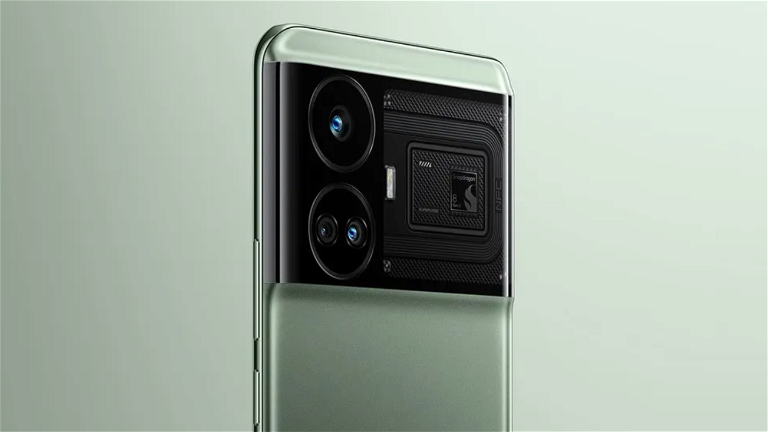
Realme hasn’t launched a GT-series flagship phone in China since the Realme GT 2 and GT 2 Pro, which were announced in January 2023. The brand is reportedly gearing up to launch a new flagship phone in China in August. According to a new leak from tipster Digital Chat Station, the next flagship phone from Realme could be called the Realme GT 5.
Realme GT 5 with Snapdragon 8 Gen 2 coming soon
Alleged Realme GT 5 series
Recently, Chinese certification platforms like TENAA and 3C certified a Realme phone with the model numbers RMX3820 and RMX3823. Both Snapdragon 8 Gen 2-powered phones mainly differ in battery size and charging capabilities. Recent reports have claimed that the RMX3820/3 could be called the Realme GT Neo 6 when it arrives on the Chinese market.
However, as per a new leak by DCS, Realme is planning to bring back its GT-series flagships in China. He added that the next SD8G2 phone from Realme will be called the Realme GT 5. Hence, it appears that the RMX3820/3 could be debuting next month as the Realme GT 5.
He also added that the Realme GT 5 Pro is also in the works. This device is expected to feature the Snapdragon 8 Gen 3 chipset. In all likelihood, the device may break cover by the end of this month or in early 2024.
The Realme GT 5 is expected to arrive with specs, such as a 6.74-inch OLED display with support for 1.5K resolution and a 144Hz refresh rate. The Snapdragon 8 Gen 2 chip-powered GT 5 will come with up to 16 GB of LPDDR5x RAM and 1 TB of UFS 4.0 storage. It will have a 16-megapixel front camera and a 50-megapixel (Sony IMX890, with OIS) + 8-megapixel + 2-megapixel triple camera unit. The RMX3820 variant of the GT 5 will have a 4,600mAh battery with 240W charging, whereas the RMX3823 model will have a 5,200mAh battery with 150W charging.
Apple Stores might just be bringing another big announcement to the market. The company is looking to revolutionize customer convenience. According to Bloomberg’s Mark Gurman, Apple is set to introduce “EasyPay Online Ordering,” allowing physical retail stores to book a sale and ship the desired device directly to the customer’s home or office using EasyPay point-of-sale machines.
Customers can book their products using EasyPay POS machines in their retail stores
For the first time, Apple Stores will offer to ship devices paid for in-store. This benefits both the store and the customers. When a particular device is out of stock, the store can still secure the sale by arranging for delivery. Moreover, customers purchasing bulky items like iMacs or Mac Pros will no longer have to worry about transporting their purchases, as they can have them conveniently delivered.
Apple’s visionary move comes ahead of the launch of the highly anticipated Vision Pro spatial computer, expected to carry a price tag of $3499. This advanced product will likely require various sizes of headset components and prescription lens inserts, posing stocking challenges for each store. The solution is to take Vision Pro orders in-store and ship any unavailable parts directly to the buyers.
An internal Apple memo reveals the company’s commitment to customer satisfaction. The memo states that Apple wants all customers to leave the store with precisely what they came for. With “EasyPay Online Ordering,” launching early next month, customers can choose between different fulfillment methods, such as shipping or product personalization.
Currently, Apple Store customers who wish to have a product shipped must either place the order online using a store’s demo iPad or Mac or rely on an Apple Store employee to place the order using their EasyPay device and an internet connection. The new system streamlines this process, providing a seamless experience.
Apple’s dedication to customer experience doesn’t stop there. Changes are also in the works for the “Today at Apple” hands-on sessions held at certain stores. These sessions help Apple device owners unleash their creativity to the fullest. While the specific changes remain undisclosed, they are expected to roll out starting next month, promising an enhanced experience for Apple enthusiasts.
In a market that has seen a surge in music streaming services, Spotify has stood out as one of the few platforms that resisted increasing its subscription prices. However, recent reports suggest that this will soon change, as Spotify is preparing to raise its monthly subscription fees in the United States by $1. While this might not seem like a significant increase, it marks a shift in Spotify’s pricing strategy, which has remained steady at $9.99 for its ad-free Premium plan for quite some time.
The Music Streaming industry is growing rapidly as catalogues grow and more people get a subscription
The news of the impending price hike comes in the wake of other major players in the music streaming industry having already raised their prices over the past year. While Spotify initially benefited from an influx of customers who switched to its service due to the price hikes by its competitors, the company now appears to be following suit to cut its losses and retain its user base in the long run.
According to a report from The Wall Street Journal, Spotify is expected to make the official announcement of the price increase in the US market as early as next week. The new subscription fee of $10.99 for the ad-free plan will likely take effect shortly after the announcement. While this may be disappointing news for existing Spotify subscribers, it’s important to note that price hikes are expected to be announced in other markets as well. Some companies are even laying their employees off in crazy numbers to keep up with the inflation in the economy.
Currently, Spotify offers a free, ad-supported plan that grants access to a vast library of over 80 million songs, podcasts, and audiobooks. However, this plan comes with certain limitations, such as the presence of ads, the inability to download content for offline listening, and the restriction to play songs in specific playlists only. The Premium plan, which will now cost $10.99 in the US, provides subscribers with an ad-free experience, the ability to download music and podcasts for offline listening, and the freedom to listen to any track in any order. Additionally, Premium subscribers enjoy the highest music quality available on Spotify (which is not the best in the competition, unfortunately), ensuring a better listening experience.
Students can avail a 50% discount on the Premium plan for up to 4 years, making it more affordable for those pursuing their education. For couples living together, the Premium Duo plan offers two individual Premium accounts at a discounted price. Furthermore, families can opt for the Premium Family plan, which covers up to 6 individuals with their own Premium accounts, and it comes with Spotify Kids and an explicit content filter.
As if Twitter rebranding itself wasn’t enough, the company has announced that it will soon limit the number of daily direct messages (DMs) for unverified accounts. This has sparked controversy among users yet again. The platform claims the decision is aimed at curbing the rising spam issue in DMs, but many see it as a means to passive-aggressively force users into subscribing to the Blue membership.
This move will either be a hook, line and sinker – or Twitter will soon revert this update
Introduced on July 14th, a new message setting was implemented by Twitter, segregating DMs from accounts users follow into their primary inbox and DMs from verified users they don’t follow into the message request inbox. This change resulted in a notable 70 per cent reduction in spam messages within a week. Prior to this, sending DMs to non-followers was limited to Blue subscribers only.
Critics argue that while the motive to reduce DM spam is understandable, the way Twitter has presented the update indicates a clear intention to encourage unverified users to opt for the paid Blue membership. The announcement explicitly urges users to “subscribe today to send more messages” and conveniently provides a link to the subscription page, fueling the perception of prioritizing profit over user satisfaction.
Interestingly, Twitter has been grappling with negative cash flow due to a substantial drop in advertising revenue, as highlighted by entrepreneur Elon Musk in a recent tweet. While subscription revenue might not entirely bridge this gap, it does offer an additional stream of income for the company.
Twitter’s push for more Blue memberships has raised concerns about inclusivity and accessibility for non-paying users. Striking a balance between financial viability and user experience is vital for the platform’s success as it navigates these changes.
While the move aims to tackle an ongoing issue, it also raises questions about the platform’s priorities and its potential impact on the user community. Achieving a balance between revenue generation and user satisfaction will be crucial as Twitter, or rather X, continues to evolve.
The Moto G14 is set to launch on August 1 in India. Ahead of its launch, a landing page of the phone has appeared on Flipkart that confirms its key specifications and design. Here is a look at what to expect from the Moto G13’s successor.
Moto G14 specifications
Moto G14
The Moto G14 will have a 6.5-inch LCD FHD+ punch-hole display. Powering the device will be an Unisoc T616 chip, along with 4GB of RAM and 128GB of UFS 2.2 storage. It will also have a dedicated microSD card slot for additional storage expansion.
The Moto G14 will run on Android 13. It is confirmed to receive the Android 14 OS upgrade and receive security updates for up to three years. It will be equipped with a sizable 5,000mAh battery, that supports 20W fast charging for quick power top-ups. The phone promises a talk time of up to 34 hours, a music playback time of 94 hours, and 16 hours of video playback. For audiophiles, the G14 will come with dual stereo speakers supported by Dolby Atmos technology.
In terms of photography, the Moto G14 will feature a 50-megapixel dual rear camera setup, enabling users to capture high-quality images. It will offer photography features, such as Macro Vision and Night Vision. Additionally, it will come with a side-facing fingerprint scanner, a feature that provides added convenience.
For added durability, the Moto G14 will have an IP52-rated body, offering some level of water and dust resistance to withstand everyday usage. The official images confirm that the device will be available in black and blue shades.
Moto G14 price in India (expected)
At present, there is no word on the price of the Moto G14. Since the G13 was priced at Rs 9,999, it is likely that the G14 will have a similar price.
Tecno has silently unveiled the Tecno Pova Neo 3, which is now listed on its official website. It has arrived as a successor to the Pova Neo 2, which debuted in September last year. As compared to the predecessor model, the Pova Neo 3 offers a new rear design, more RAM, and a new OS. The rest of the specs seem identical on both models. Here is a look at the specifications, features, and price of the Pova Neo 3.
Tecno Pova Neo 3 specifications and features
Tecno Pova Neo 3
The Tecno Pova Neo 3 adopts a new Turbo Mecha Design and comes in three shades, such as Mecha Black, Amber Gold, and Hurricane Blue. The device features a 6.82-inch IPS LCD panel that offers an HD+ resolution of 1640 x 720 pixels, a 20.5:9 aspect ratio, and a 90Hz refresh rate. The phone comes preloaded with HiOS 13-based Android 13.
The Pova Neo 3 has the MediaTek Helio G85 chipset, 8 GB of RAM, and 128 GB of storage. For additional storage, it has a dedicated microSD card slot. The phone packs a huge 7,000mAh battery with 18W charging support. The power button of the device doubles as a fingerprint scanner.
Tecno Pova Neo 3
The Pova Neo 3 has an 8-megapixel front-facing camera with an LED flash. On the back, it has a 16-megapixel dual camera system with a dual-LED flash. The Neo 3 offers other features, such as dual SIM support, 4G VoLTE, Wi-Fi, Bluetooth, GPS, a USB-C port, and a 3.5mm audio jack.
Tecno Pova Neo 3 price and availability
Currently, there is no information available regarding the price and availability of the Pova Neo 3. It is expected that Tecno will announce these details in the coming days.
Ever since Elon Musk acquired the microblogging platform Twitter, the social network has been in the news for all the wrong reasons. Now, the company is undergoing a change that may not sit well for many.
Elon Musk has announced that Twitter will be rebranded to X, getting rid of the iconic blue-colored bird logo. Instead of the current logo, the new one will only show the letter ‘X.’
Further, it has also been revealed that the URL x.com will redirect users to Twitter. This may be the most dramatic change coming to the social media platform since Musk acquired it last year.
This could be a step forward for the company towards the long-envisioned super app named X by Elon Musk to offer a wide range of services to the users. Last year, Elon Musk said that buying Twitter “is an accelerant to creating X, the everything all.” Similarly, Twitter’s new CEO Linda Yaccarino said that “X will be the platform that can deliver, well….everything.”
With major changes coming to the platform in a short period and Elon Musk trying to retool the platform to his vision, the platform is facing several issues. Recent significant changes to the platform include firing several top executives and employees, rolling back content moderation policies, restricting access for regular users, and more.
This is impacting business, as Musk himself admitted last week that the ad revenue at Twitter is down 50 percent. It remains to be seen whether rebranding helps the company or adversely impacts the business.
We use cookies on our website to give you the most relevant experience by remembering your preferences and repeat visits. By clicking “Accept”, you consent to the use of ALL the cookies.
This website uses cookies to improve your experience while you navigate through the website. Out of these, the cookies that are categorized as necessary are stored on your browser as they are essential for the working of basic functionalities of the website. We also use third-party cookies that help us analyze and understand how you use this website. These cookies will be stored in your browser only with your consent. You also have the option to opt-out of these cookies. But opting out of some of these cookies may affect your browsing experience.
Necessary cookies are absolutely essential for the website to function properly. This category only includes cookies that ensures basic functionalities and security features of the website. These cookies do not store any personal information.
Any cookies that may not be particularly necessary for the website to function and is used specifically to collect user personal data via analytics, ads, other embedded contents are termed as non-necessary cookies. It is mandatory to procure user consent prior to running these cookies on your website.