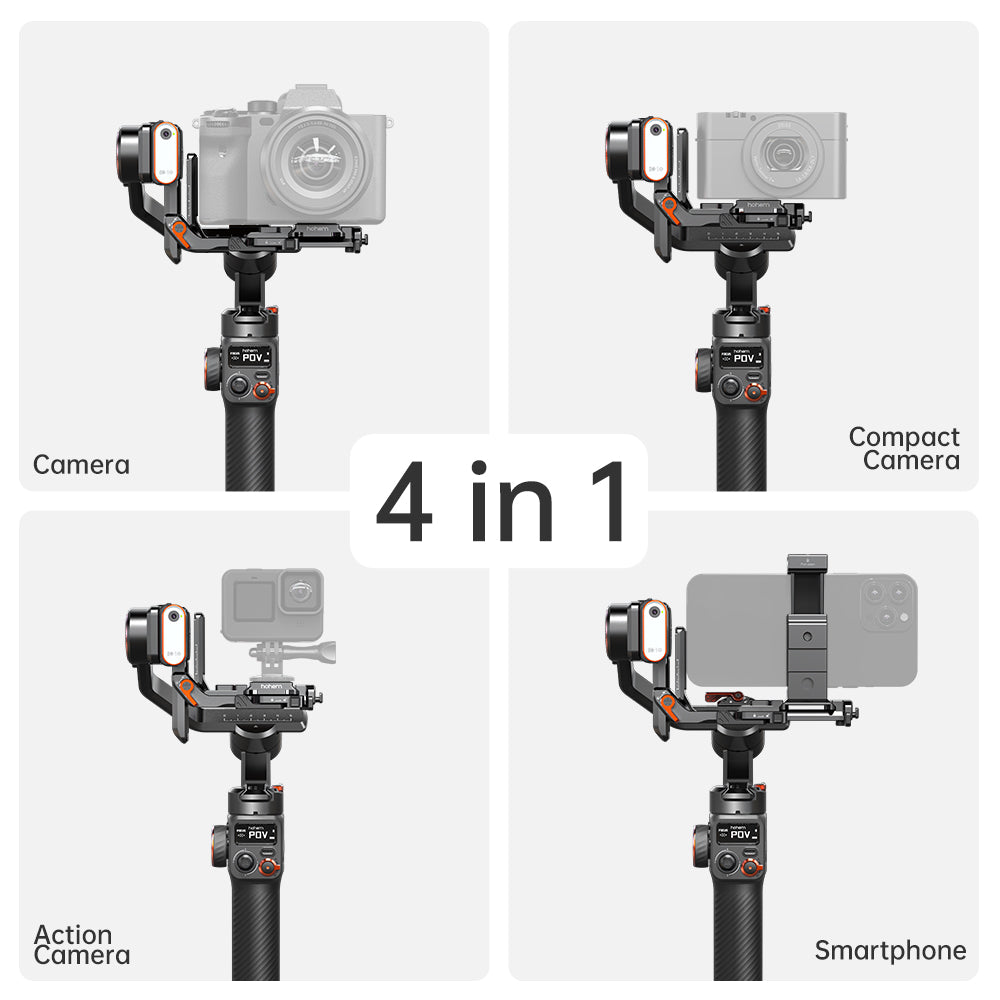
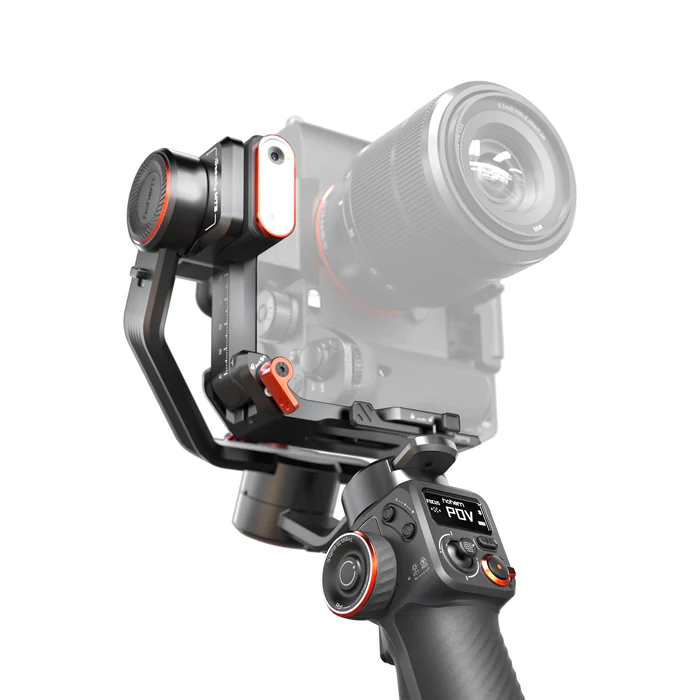
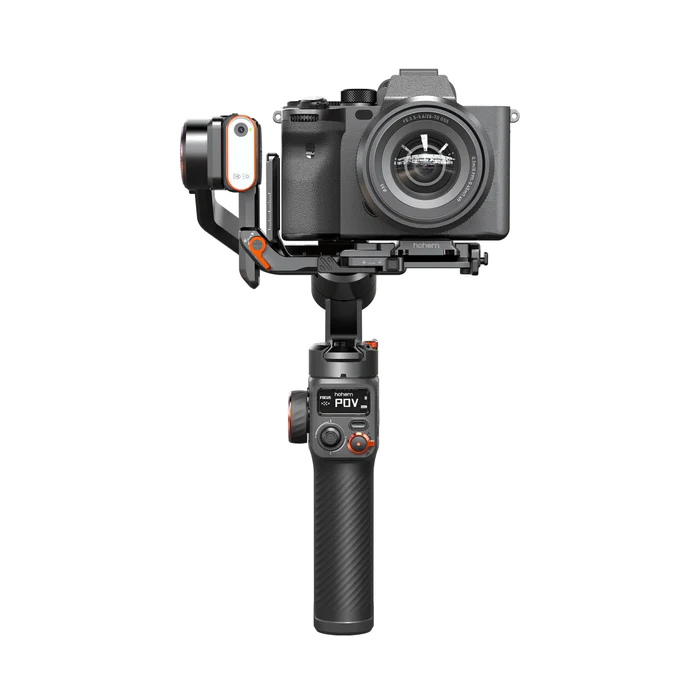
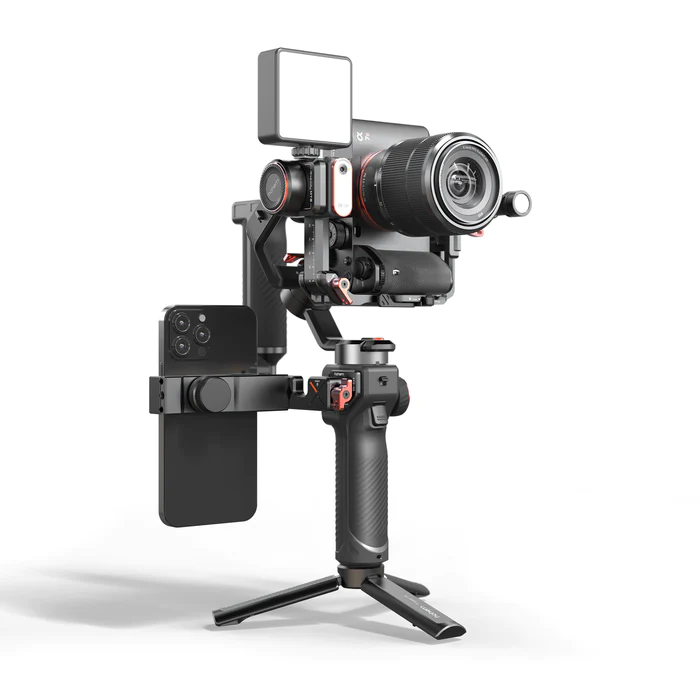
Hohem, a leader in camera stabilization technology, has unveiled the MT2 Kit Camera Gimbal in India. The Hohem iSteady MT2 4-in-1 Gimbal Kit offers an impressive array of functionalities aimed at enhancing filming experiences for photographers and videographers.
The gimbal is available for purchase in India from Originshop and Amazon. The product is priced at Rs. 35,990, but a special discount is available on Originshop.in, where it can be bought for Rs. 28,490.
The gimbal is compatible with a wide range of devices, including standard DSLRs, compact/mirrorless cameras, action cameras, and smartphones, making it a versatile choice for different users. Let’s check out the specs.
Hohem MT2 Kit Camera Gimbal specifications:
One of the standout features of the MT2 is the AI tracker, paired with an RGB fill light. These features enable improved tracking and lighting, delivering more professional results. The gimbal is built with the latest iSteady 7.0 anti-shake algorithm, providing a 30% increase in stability. The result is smoother and steadier footage, which is often a vital requirement in professional filming.
With its OLED flip screen, the MT2 allows for creative vertical shooting, opening new avenues for content creation. It also comes with a Multi 4.0 installation system, facilitating quick transitions between vertical and horizontal shots. This innovative system allows detachment and reattachment of the quick-release plate or L-bracket in only 3 seconds.
The MT2 Gimbal supports a total load capacity of up to 1.2kg, accommodating a variety of equipment sizes. Its battery life is also noteworthy, lasting up to 17 hours under ideal conditions, and 6-8 hours when using the AI tracking and fill light at its highest brightness.
Manufactured with aircraft-grade aluminum and high-performance composites, the Hohem MT2 4-in-1 Gimbal Kit is built for durability and performance. It offers 3-axis stabilization, a mechanical range of 360° infinite rotation in pan, 200° in roll, and 290° in tilt. With a weight of 653g, it remains portable and convenient for on-the-go filming.
Trek has launched its first-ever throttle-controlled electric moped. The Trek Electra Pronto Go! comes with several impressive features and can also accommodate two riders. The new Trek utility bike is under the Electra sub-brand.
Trek has established its identity as a bicycle manufacturer but it is entering the electric bike turf with the new utility bike. The bike can support riders between 4ft and 6ft 2 inches (147-188cm) in height. The bike weighs 35kg and has a payload capacity of 163kg. The Electra Pronto Go! is a Class 3 e-bike that can reach a throttle-controlled top speed of 32km/h or 43km/h with pedal assist. The bike is equipped with a 750W hub motor at the rear which is the maximum allowable in the US for an e-bike.
The Trek Electra Pronto Go! comes with a 650Wh battery that delivers a maximum range of 96km on a single charge. The maximum range decreases when using the throttle and riding at higher speeds. The bike features the standard 20”x4” urban tires popular with utility bikes. It also comes with several accessories like fenders, LED lights with rear turn signals, an 8-speed shifter, and hydraulic disc brakes. The Electra Pronto Go! also features a handlebar Quad Lock mount for phones and a rear grab bar for the second rider.
The Trek Electra Pronto Go! utility bike is available in four color variants but only a single size. It is priced at $2,699 and is available in the US. There is no official information on the global availability and pricing of the new Trek e-bike at this time.
Xiaomi has announced a new wearable device at a big event held in China today. The latest offering is the Xiaomi Smart Band 8 Pro. It has debuted alongside the Xiaomi MIX Fold 3 foldable phone, the Redmi K60 Ultra, and Xiaomi Pad 6 Max tablet. The wearable device arrives as the successor to the Xiaomi Band 7 Pro that was announced last year. It is also a larger version of the Xiaomi Smart Band 8 (review) that debuted earlier this year. The device offers the best of both worlds bridging the gap between a fitness band and a smartwatch.
Xiaomi Smart Band 8 Pro specifications and features
The Xiaomi Smart Band 8 Pro has a rectangular dial. It doesn’t have any physical buttons and the strap is changeable. The device features an AMOLED display measuring 1.74 inches and bearing a resolution of 336 x 480 pixels. It offers a 60Hz refresh rate, 600 nits peak brightness, an always-on display, and 16.7 million colors. The fitness band comes with customizable widgets for easier access on the home screen and portrait watch face functionality. The Xiaomi Smart Band 8 Pro is water-resistant up to 5 meters.
In terms of health and fitness, the Xiaomi Smart Band 8 Pro is equipped with a heart-rate monitor, SpO2 sensor, sleep tracker, and a menstrual cycle monitor for women. The wearable device is also capable of tracking stress levels and offering breath training. It packs support for more than 150 sports modes along with smart running mode and running lessons. The fitness band can also access the user’s current physical vitality. The Xiaomi Smart Band 8 Pro retains the somatosensory sensor from the Band 8 that enables users to track data related to somatic senses while in boxing action.
The Xiaomi Smart Band 8 Pro has a built-in GNSS chip supporting five satellite systems. The wearable device packs a voice assistant and users can control other Xiaomi smart devices via the Miaoxiang Center. There are also other convenient features like camera and music control, flashlight, weather updates, notifications, and more. The fitness band is backed by a 297mAh battery unit that is claimed to last up to 14 days on a full charge.
The Xiaomi Smart Band 8 Pro is compatible with a host of strap colors and material options. It costs CNY 399 (~$54) for the TPU wristband that is offered in Black and Coconut Ash colors whereas the leather option in Harbor Blue costs CNY 449 (~$61). The wearable device is up for purchase in China.
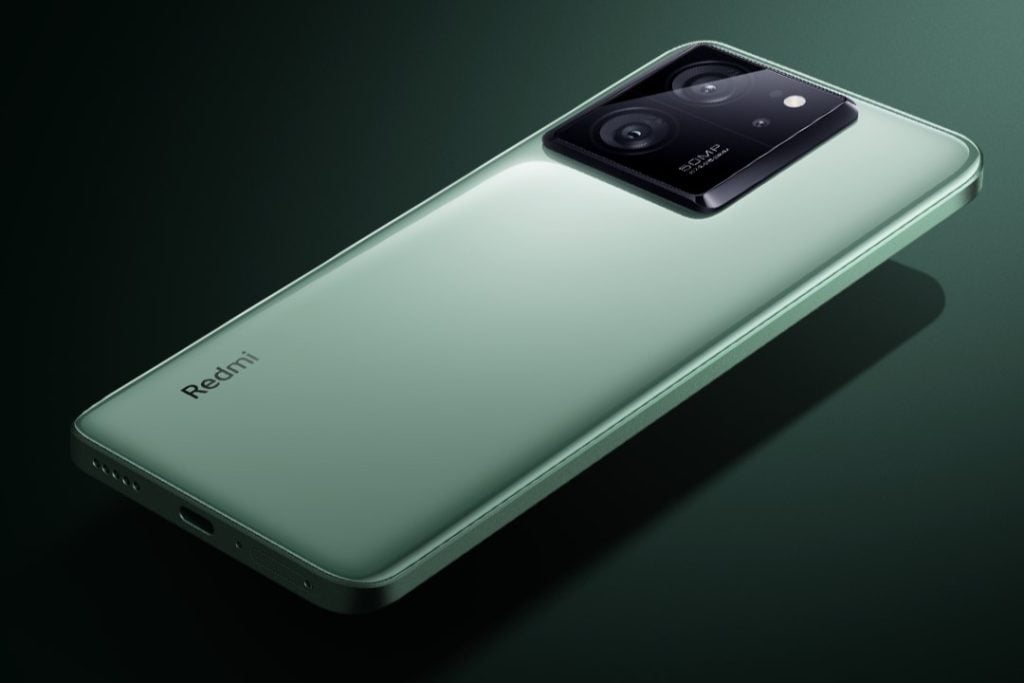
The Redmi K60 Ultra is finally here after months of leaks. The device got announced today at Lei Jun’s annual speech event in China. It was accompanied by Xiaomi Mix Fold 3 and several other products.
The Redmi K60 Ultra is the most premium Redmi-branded smartphone to date. It comes with some features that are first on a Redmi phone.
The device also has a different design than its siblings Redmi K60 Pro, Redmi K60, and Redmi K60E. Let’s go through everything it has to offer along with pricing and availability.
Redmi K60 Ultra Specifications
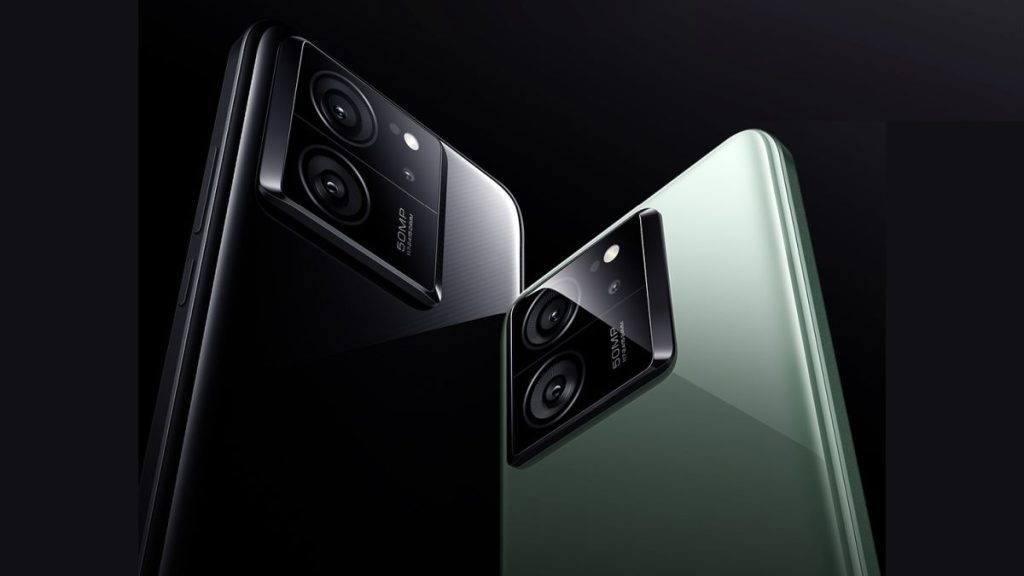
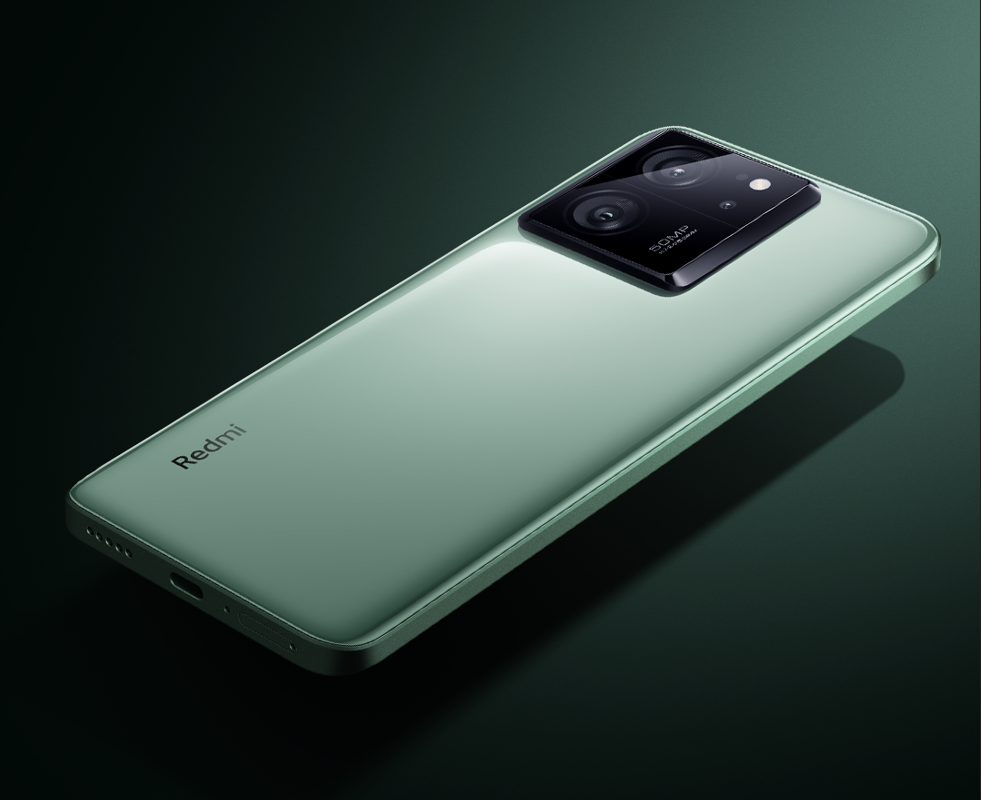
The Redmi K60 Ultra looks like a fusion of the Redmi K60 series and the Xiaomi 13 series in terms of design. It has a flat display as well as a flat frame. However, the rear panel is curved.
The giant camera island on the back has slopes on two sides giving it a unique look. The device is IP68-rated for dust and water resistance, making it the first Redmi smartphone to provide ingress protection.
The handset flaunts a 6.67-inch centered punch-hole OLED display with a 1.5K resolution and a 144Hz refresh rate. The screen offers a 2,880Hz PWM frequency and a 2,600 nits peak brightness level.
The Redmi K60 Ultra is powered by a MediaTek Dimensity 9200 Plus chipset paired with up to 24GB LPDDR5x RAM and 1TB UFS 4.0 storage. It also comes with a PixelWorks X7 display chip. As for software, it boots MIUI 14 based on Android 13.
As for photography and videography, the phone uses a triple camera system on the rear comprising an OIS-assisted 50MP Sony IMX800 primary sensor, an 8MP ultra-wide unit, and a 2MP macro snapper. On the front, it has a 20MP shooter.
Other features of the handset include dual stereo speakers, an IR blaster, an x-axis vibration motor, and an in-display fingerprint sensor. Finally, it draws energy from a 5,000mAh battery with support for 120W fast wired charging.
Redmi K60 Ultra Price
The Redmi K60 Ultra carries the following price tags in China.
12GB + 256GB – ¥2,599 (~$360)
16GB + 256GB – ¥2,799 (~$385)
16GB + 512GB – ¥2,999 (~$400)
16GB + 1TB – ¥3,299 (~$455)
24GB + 1TB – ¥3,599 (~$495)
The phone comes in green, black, and white color options. It will go on sale from August 16. The top-end 24GB + 1TB variant will be available later on August 22 onwards.
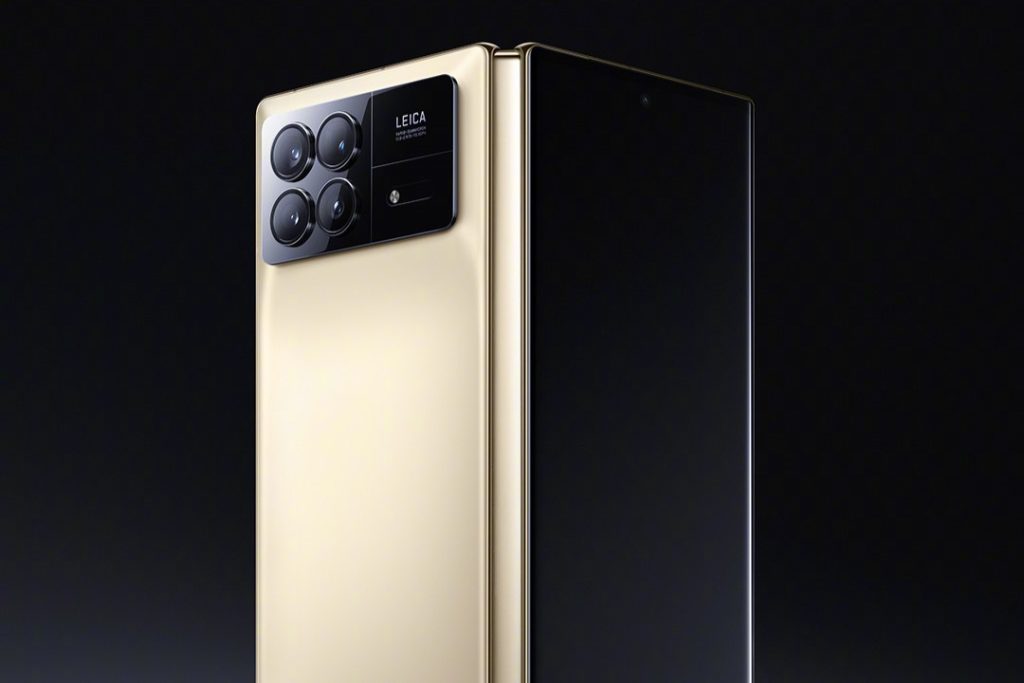
As scheduled, Xiaomi took wraps off its third-gen foldable smartphone in China today. Officially called the Xiaomi Mix Fold 3, the device is a fourth horizontal foldable phone that unfolds into a tablet.
Check out our fresh unboxing & hands-on video here!
It is currently the world’s thinnest foldable handset when folded beating the Honor Magic V2 which help the record up until now. It also arrives with a Leica-tuned camera system like the company’s regular flagship smartphones.
The new foldable also comes with a new hinge and a revamped design. Let’s check out everything it has to offer.
Xiaomi Mix Fold 3 Specifications
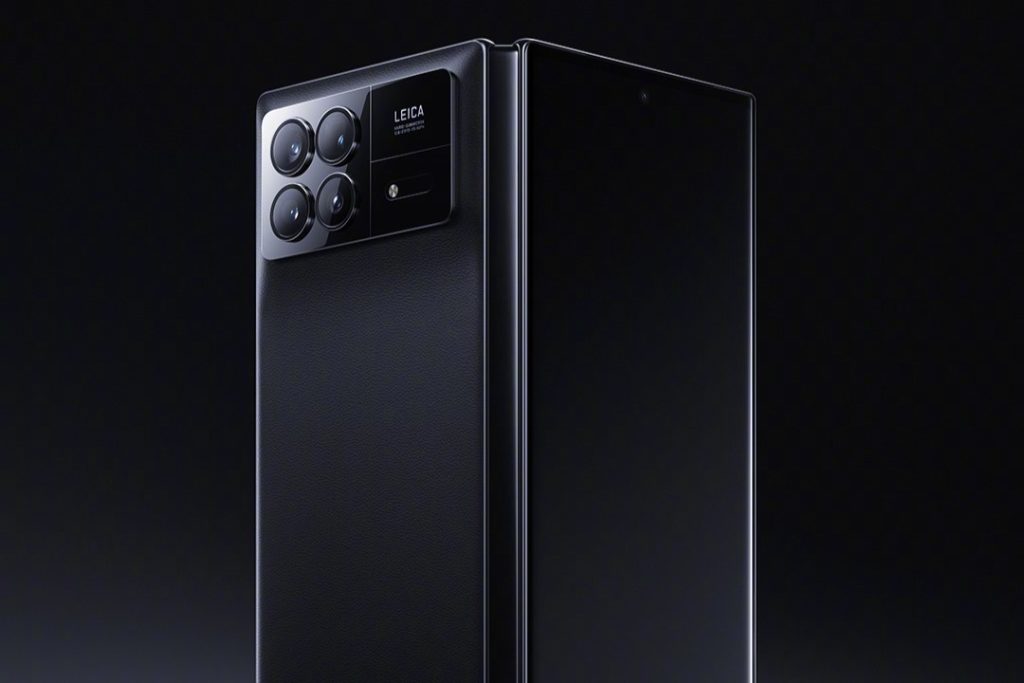
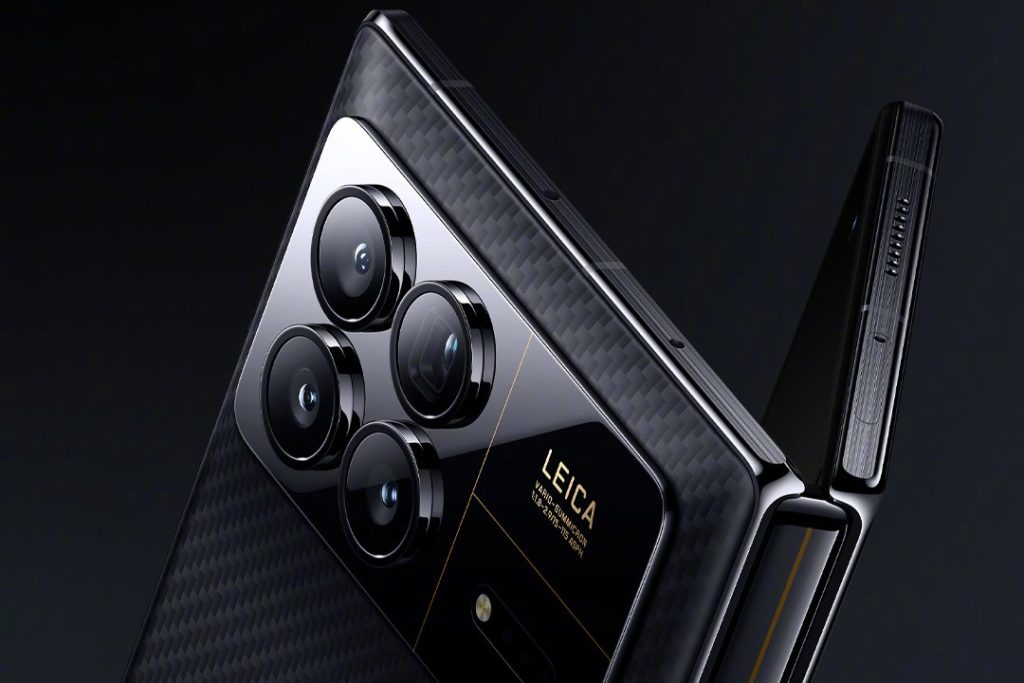
The Xiaomi Mix Fold 3 retains the boxy look of the Mix Fold 2 with some changes. The rectangular camera island is now larger as it houses four lenses instead of three.
The device is just 5.26mm thin when unfolded and 10.96m when folded. It features a new waterdrop hinge that is more durable than its predecessor and can withstand over 500,000 folds. The hinge also allows the display to stay still (Hover mode) between 45°-135° angles.
The main foldable screen measures 8.03-inch in size and offers a 2K resolution with UTG protection. Whereas the outer 21:9 FHD+ display protected by Corning Gorilla Glass Victus measures 6.56 inches in size.
Both panels use E6 material and support up to a 120Hz refresh rate and Dolby Vision. They can reach a maximum peak brightness of 2600 nits. Even their global brightness level is rated at 1300 nits.
These two screens are accompanied by dual stereo speakers. On the software front, the phone boots MIUI 14 Fold based on Android 13. Xiaomi claims that the top 200 apps in China are fully optimized for this handset.
The smartphone is powered by the overclocked version of the Qualcomm Snapdragon 8 Gen 2 chipset paired with LPDDR5x RAM and UFS 4.0 storage. It is backed by a 4,800mAh battery with support for 67W wired charging and 50W wireless charging.
Last but not least, the device flaunts a Leica-tuned quad-camera system and two 20MP front-facing cameras for the external and internal displays. The main camera setup includes a 50MP Sony IMX800 primary sensor, a 12MP ultra-wide unit, a 10MP 3.2x telephoto shooter, and a 10MP 5x periscope snapper. Except for the ultra-wide camera, the other three have OIS.
Xiaomi Mix Fold 3 Price
The Xiaomi Mix Fold 3 carries the following price tags in China.
12GB + 256GB – ¥8,999 (~$1,240)
16GB + 512GB – ¥9,999 (~$1,375)
16GB + 1TB – ¥10,999 (~$1,515)
It comes in glass and dragon scale fiber variants. The former can be availed in black and gold.
The latter uses a more durable aerospace fiber composite material, which is rated 36 times stronger than glass. However, both versions cost the same.
The foldable smartphone is up for pre-order in China. It will go on sale from August 16.
Noise recently debuted the Buds VS102 Neo earbuds in India featuring 11mm drivers and Bluetooth 5.3. The brand has also launched another pair of earbuds in India called the Noise Buds VS106.
Noise Buds VS106 specs & features
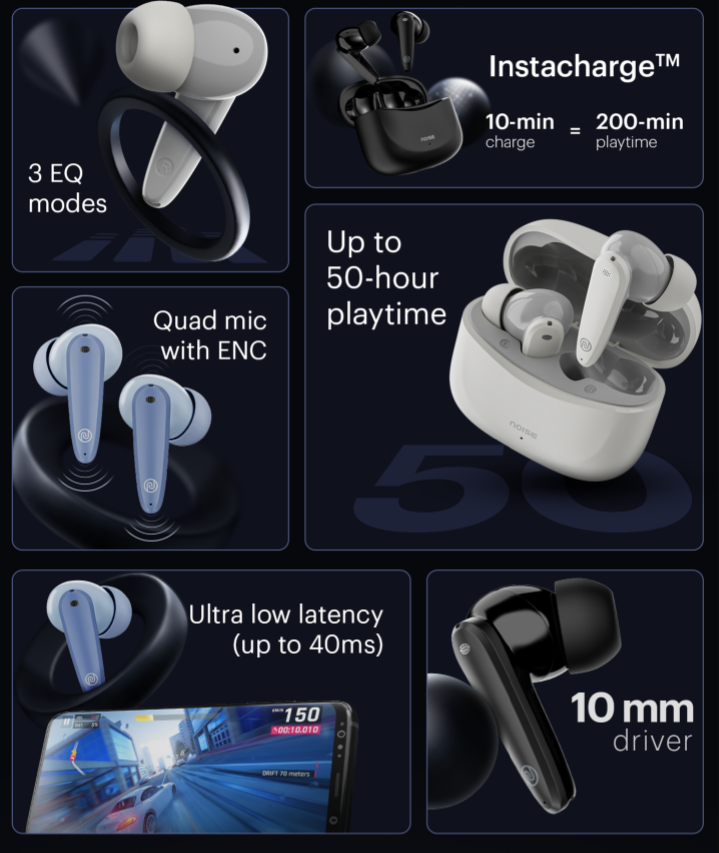
The Noise Buds VS106 earbuds come packed with 10mm drivers that deliver impressive sound quality. With Bluetooth v5.3 connectivity, they ensure a strong and reliable connection to your devices. The touch controls add convenience, allowing you to manage playback and calls with ease. They also come with an ultra-low-latency mode of 40ms, ensuring minimal delay while watching videos or playing games.
For clear and uninterrupted calls, the earbuds are equipped with a quad microphone setup incorporating Environmental Noise Cancellation Technology. This technology effectively reduces background noise during calls. The impressive battery life is another highlight, providing up to 50 hours of total playback time.
Users have the flexibility to choose from three built-in EQ modes: Normal, Bass, and Gaming Modes, enabling personalized sound preferences. With Instacharge fast charging support, the earbuds offer a quick 120 minutes of playback after just 10 minutes of charging.
Hyper Sync Technology is onboard to streamline the pairing process. Additionally, the earbuds hold an IPX5 rating, signifying their resistance to splashes and sweat.
Price & availability
The Noise Buds VS106 TWS is set at Rs. 1,299 and is available in Cloud White, Sky Blue, and Jet Black color variations. Starting from August 17th at 12 p.m., interested customers can purchase the earbuds from both the Noise Website and Amazon.
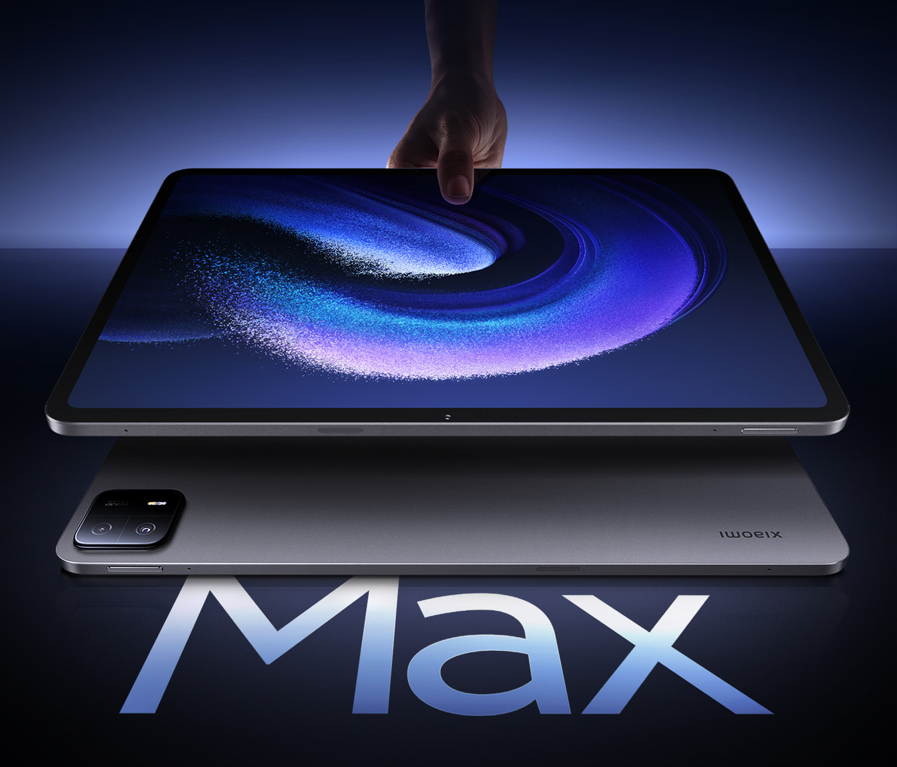
Xiaomi held a mega event in China today. The brand announced a host of new products which include a foldable phone, a smartphone, a tablet, and a wearable device. The company has introduced a new addition to the Xiaomi Pad 6 series that was launched in China in June this year. The latest offering is called the Xiaomi Pad 6 Max. It seems to be the highest variant in the Pad 6 lineup that already has a standard (review) and pro models (review). Read on to know what it offers out of the box.
Xiaomi Pad 6 Max specifications and features
The Xiaomi Pad 6 Max retains the same design as its siblings with a metal unibody and a square camera module on the rear. The tablet looks quite premium. The display and audio department is where the Pad 6 Max gets upgraded. It is the largest in the lineup boasting a 14-inch LCD screen. This is said to be 62 percent larger than the Pad 6 Pro. The device still features a 120Hz refresh rate and 2.8K pixels resolution. On the audio front, it is equipped with eight speakers tuned by Dolby Atmos. The display and audio both offer an immersive entertainment experience.
In the photography department, the Xiaomi Pad 6 Max features a dual rear camera setup of a 50MP main sensor and a 2MP depth lens. On the front, the tablet has a 20MP primary camera paired with a 3D ToF sensor for advanced facial unlock. There is also a permission indicator light that will flash red when an app tries to access sensitive data like a camera and help the user in deciding whether to grant permission or not.
Under the hood, the Xiaomi Pad 6 Max houses the Snapdragon 8+ Gen 1 processor. It packs up to 16GB RAM and 1TB internal storage. The device also features a heat dissipation system with an area of 15839mm for extended periods of usage. The tablet draws its power from a 10,000mAh battery unit with support for 67W fast charging as well as 33W reverse charging. It features a Surge G1 protection chip for improved battery life, longevity, and safety.
The Xiaomi Pad 6 Max runs on MIUI Pad 14 based on Android 13 OS out of the box. It packs features like a split screen mode for using four apps simultaneously, pre-installed WPS Office, and more. The tablet is compatible with a detachable keyboard that also has a trackpad. It also comes with a Stylus that has a focus button feature turning it into a virtual laser pointer.
Xiaomi Pad 6 Max pricing and availability
The Xiaomi Pad 6 Max starts at CNY 3,799 (~$523) for the base 8GB + 256GB variant. The 12GB + 256GB and 12GB + 512GB configurations costs CNY 3,999 (~$550) and CNY 4,399 (~$605) respectively. The top-end 16GB + 1TB is priced at CNY 4,799 (~$660). The device is offered in Black and Silver colors. The Smart Touch Keyboard is priced at CNY 799 whereas the stylus cost CNY 499.
Update: Xiaomi Pad 6 Max is now available on Giztop.
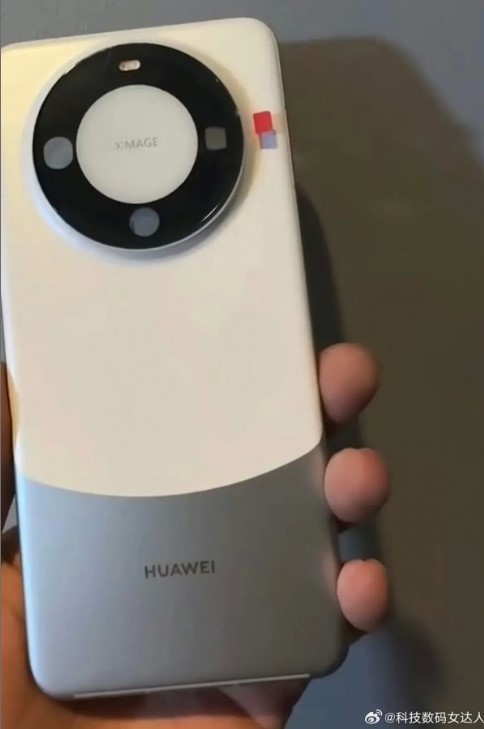
Huawei is gearing up to launch the next-generation Mate series phones in China. The Huawei Mate 60 series is expected to arrive as the successor to the Mate 50 series from last year. It is tipped to launch next month in the country. Ahead of the official release, the Huawei Mate 60 has been subject to various leaks and rumors revealing key details. Now, in the latest development, leaked hands-on images of the upcoming smartphone have surfaced on the microblogging platform Weibo.
Huawei Mate 60 leaked hands-on images
The leaked hands-on image of the Huawei Mate 60 reveals the phone with a dual-tone back panel. The top half seems to have a White-colored frosted glass finish whereas the bottom part has a Grey-colored metal finish. The device has a protruding circular camera island with three cutouts out of which one seems to be a periscope lens.
Another disassembled hands-on image of the Huawei Mate 60 reveals a charging coil hinting at support for wireless charging. Apart from this, the leaked images don’t reveal additional details about the smartphone.
As per leaks and rumors, the Huawei Mate 60 is reported to feature a pill-shaped cutout on the front called ‘Spirit Island’. It is said to be similar to Apple’s dynamic island on the iPhone 14 Pro models. However, the software implementation that could take advantage of the island remains to be seen. The smartphone is tipped to come with a 6.7-inch OLED display bearing a resolution of 1.5K pixels. As per DCS, the device is expected to come with a 50MP main camera with the brand’s XMAGE technology.
Underneath the hood, the Huawei Mate 60 is rumored to be powered by a MediaTek processor and ditch the Snapdragon 8 Gen 2 due to the ongoing US sanctions imposed on the company.
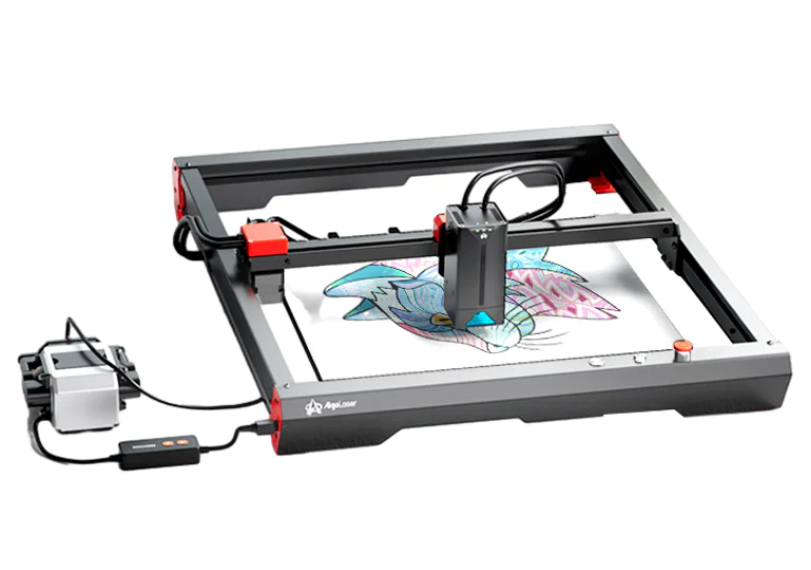
Introducing the AlgoLaser Alpha 22W Laser Engraver – a pinnacle of precision and power in the realm of engraving machines. Harnessing the prowess of advanced second-generation COS technology, this engraver redefines what’s possible in laser engraving.
With a 22W laser module at its core, the AlgoLaser Alpha stands as a beacon of strength and innovation. Thanks to COS technology, laser beam performance skyrockets by an astounding 40%. Unlike conventional 20W modules, this technology crafts laser spots that transform from rectangles to near-perfect squares with a remarkable 1:1 ratio. This holds true even when toggling between low (30%) and high (100%) power settings, rendering consistent precision across the spectrum.
Spot size is reduced by an impressive 40%, boasting dimensions of 0.080.07mm at 30% power and 0.160.14mm at 100% power. The result is immaculate detail, making intricate engraving a seamless reality. Yet, the AlgoLaser Alpha isn’t merely about precision, it’s about elevating your artwork. With over 500 shades of color derived from the oxidation of stainless steel material during engraving, your creations radiate with vibrancy and durability that lasts.
But let’s not forget the machine’s cutting prowess. The 22W laser module wields its power with finesse, making light work of various material thicknesses. A single pass effortlessly slices through a 30mm pinewood board, while others require four. Imagine the efficiency: a 30mm pine board, a 10mm black acrylic, and even a 0.1mm stainless steel plate succumb to the AlgoLaser Alpha’s prowess in just one swift pass. The AlgoLaser Alpha achieves maximum cutting mastery as well. It carves through 45mm black acrylic, 15mm pinewood, 20mm paulownia plank, 12mm MDF, and 20mm white oak – feats that leave competitors in awe.
Through an ingenious marriage of hardware and software advancements, this engraver reaches new heights of performance and efficiency. The AlgoLaser Alpha’s motherboard and firmware upgrade ushers in a new era of performance and speed. With a dual-core CPU at its heart, it achieves an astonishing 32% boost in CPU performance, coupled with a remarkable 50% improvement in energy efficiency. Loading files becomes a breeze, with a staggering 80% reduction in loading time compared to its counterparts.
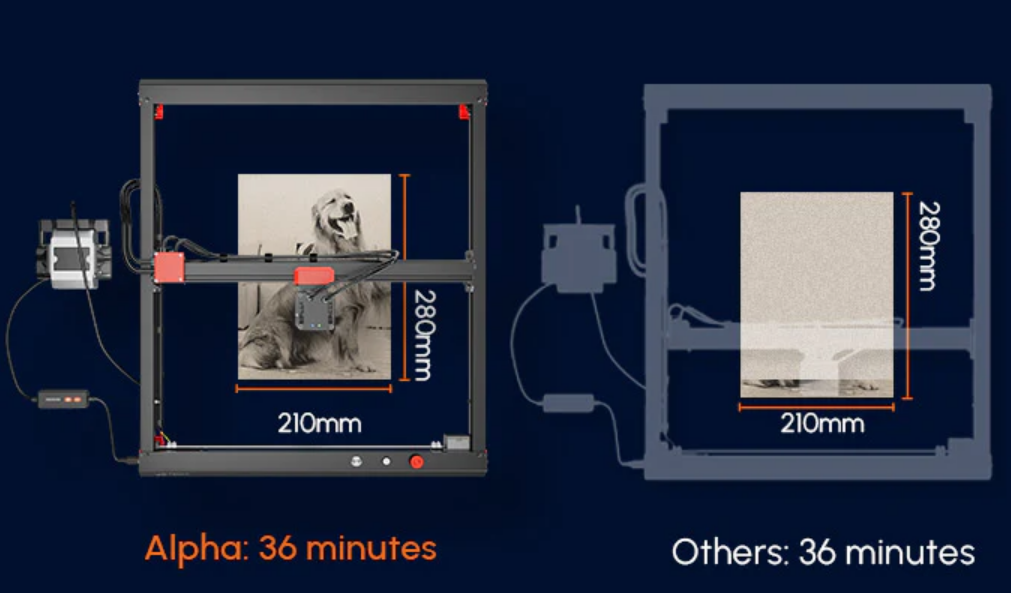
Engraving speed reaches new heights, peaking at 400mm/s – a 7.5X increase in actual performance. Witness the transformation as an image measuring 210*280mm comes to life in grayscale mode, supported by G-code Cluster.
The AlgoLaser Alpha isn’t just about power, it’s also about control. “Smart Connect” dynamically adjusts airflow based on speed and power, ensuring optimal engraving conditions. Seamlessly integrate with the AlgoLaser APP, LightBurn, and LaserGRBL software for intuitive operation.
The AlgoLaser Alpha pays meticulous attention to detail, offering features like a magnetic and detachable laser metal cover for easy cleaning and deeper cutting focus. The integrated laser protective lens within the air-assist nozzle prolongs the laser’s life.
Safety is of utmost importance when working with the device and hence it includes features like machine offset and tilt detection, USB connection monitoring, beam detection, and current-voltage protection. An emergency stop switch and key lock ensure your peace of mind during operation.
In essence, the AlgoLaser Alpha 22W Laser Engraver transcends its title. It’s a symphony of innovation, speed, precision, and reliability. With upgraded hardware, cutting-edge firmware, and a host of advanced features, it’s a game-changer for professionals and enthusiasts alike.
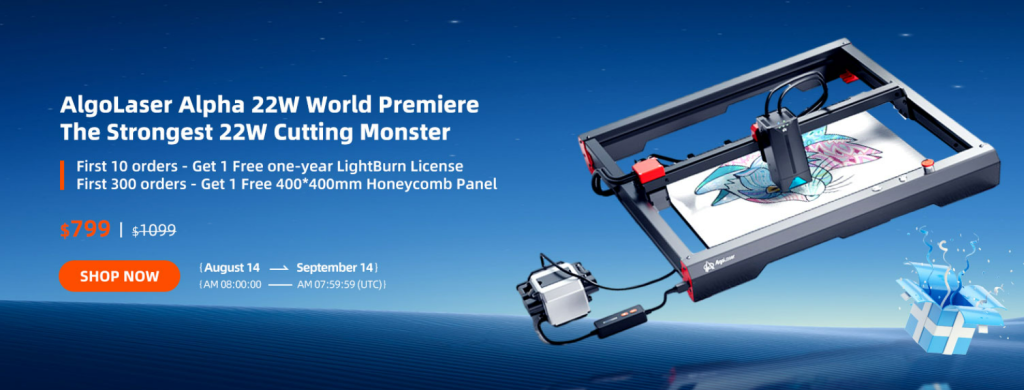
AlgoLaser Alpha 22W Laser Engraver is now available at an irresistible price at GearBerry.com. Originally priced at $1,099, you can now buy the device for an exclusive Flash Price of just $799.
Additional Offers:
The TOP 10 Orders, will get a one-year LightBurn free license plus a 400*400mm Honeycomb Panel, a combined value of $139.99 absolutely free. And if you’re among the 11th-300th Orders, you’re in for a treat too. Receive a 400*400mm Honeycomb Panel worth $79.99, enhancing your engraving experience further.
Don’t miss out on this golden opportunity to elevate your artistry while enjoying incredible savings. Grab the AlgoLaser Alpha 22W Laser Engraver and unlock a world of possibilities at an unbeatable value.
About Algo Technologies:
Shenzhen Algo Technologies, led by industry expert Justin Tan, pioneers laser engraving solutions for commercial use. With bases in Shenzhen and Changsha, China, Algo combines autonomous teams in research, production, sales, and marketing. AlgoLaser empowers businesses and individuals, offering smart setups, seamless operations, and robust support. Their mission is to fuel income generation through advanced laser engraving machines, adapting to your needs, whether you’re launching a new business or upgrading an existing one. AlgoLaser’s evolution is anchored in expanding applications and tailored solutions.
For more information on such exciting deals and offers, check out our deals hub.
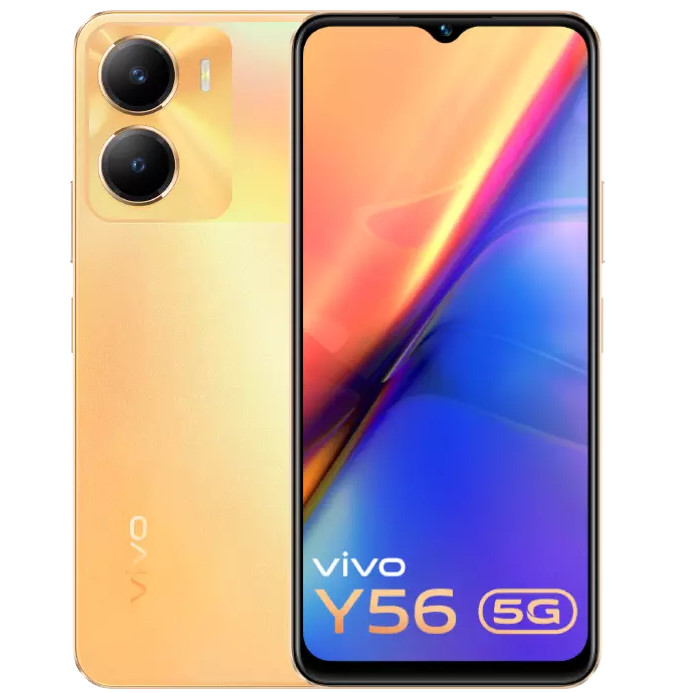
Vivo has revised prices for its two budget-oriented smartphones in India – the Vivo Y16 now starts at Rs. 10,999 for the 4GB+64GB variant and Rs. 12,499 for the 4GB+128GB variant. Meanwhile, the Vivo Y56 is priced at Rs. 18,999 for the 8GB+128GB version.
Vivo Y56 specifications:
Vivo launched Y56 5G back in February this year. The device boasts a 6.58-inch FHD+ display with a 90.6% screen-to-body ratio, powered by Dimensity 700 SoC with 5G connectivity.
The phone features 8GB of RAM and 8GB of virtual RAM, a 50MP main camera with a 2MP depth sensor, and an ultra-slim 8.15mm body design with a side-mounted fingerprint scanner. The device runs Android 13 with Funtouch OS 13, houses a 5000mAh battery with 18W fast charging, and offers 128GB internal storage expandable up to 1TB.
Vivo Y16 specifications:
On the other hand, Vivo Y16 features a 6.51-inch HD+ IPS LCD display with a 60Hz refresh rate, a side-mounted fingerprint scanner, and a 13MP main camera alongside a 2MP macro lens on the back. The device is powered by a Helio P35 chipset, accompanied by 4GB RAM and 64GB and 128GB storage (expandable with microSD).
It also offers 1GB of virtual RAM, runs on Android 12 with FunTouch OS 12, and houses a 5,000mAh battery with 10W charging. Connectivity includes dual SIM support, 4G VoLTE, WiFi, Bluetooth 5.0, GPS, USB Type-C, and a 3.5mm audio jack.
Buyers of the Vivo Y56 5G smartphone can get up to INR 1,000 cashback by using specific banks like ICICI, SBI, Yes Bank, Kotak, IDFC First Bank, Federal Bank, Bank Of Baroda, and One card. Additionally, Vivo provides extra benefits including vivo V-Shield Protection Plans.
The smartphones are available for purchase starting August 14, 2023, through various retail channels.
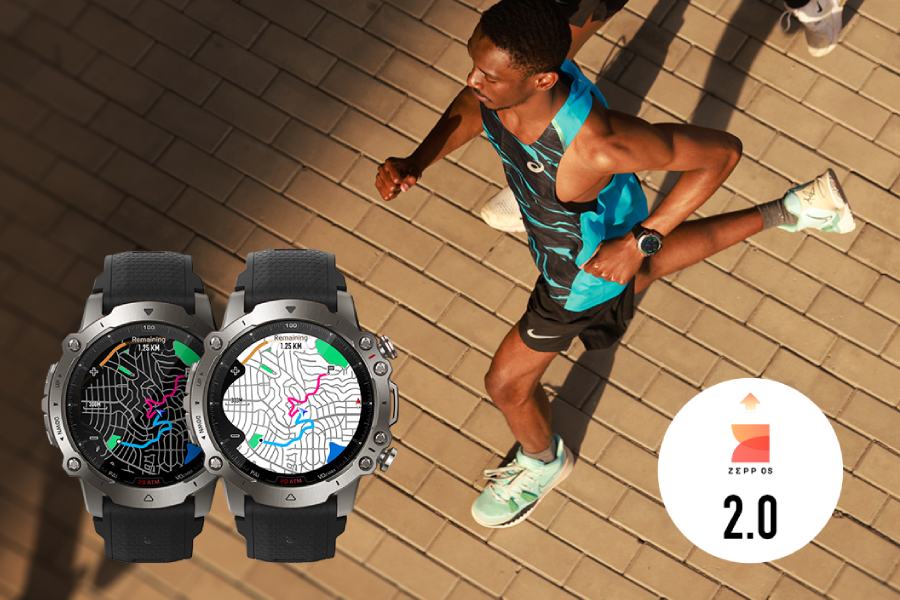
Amazfit’s rugged watch, the Falcon, has started receiving the latest Zepp OS 2.0 update. The new update brings a host of new features and optimizations, which Amazfit says is “hugely impressive.” The update may take 20-30 minutes to install (as per Amazfit), so be sure to charge your watch fully before starting the process.
Big #Amazfit#Falcon update incoming 🤩🔥 The enhanced #ZeppOS 2.0 is coming to your #sportswatch soon, bringing new & optimized functions! Look out for system update notices in the #ZeppApp 😉 It's a hugely impressive update, so it may take 20-30 minutes to complete 📱⌚ pic.twitter.com/teHWupQoaK
Here, we’ll explore the new features introduced on the Amazfit Falcon Zepp OS 2.0 update.
Revamped user interface
The latest Zepp OS 2.0 update for the Amazfit Falcon features a refreshed user interface that is more intuitive, user-friendly, and customizable. The new UI has a sleek and modern design that makes it easier to navigate through the watch’s features and settings. Users can now customize the UI to their liking, and Amazfit has added 26 new downloadable watch faces in the update.
Morning Updates and Sleep Schedules
ZeppOS 2.0 introduces two new features to help users stay healthy and fit: Morning Updates and Sleep Schedules. Morning Updates provides users with a summary of their health and fitness data first thing in the morning, so they can start their day off on the right foot. Sleep Schedules help users maintain a healthy sleep routine by providing reminders and insights about their sleep patterns.
Upgraded offline maps
ZeppOS 2.0 has improved the offline maps feature in a number of ways. First, it now includes light and dark modes for better visibility in different lighting conditions. Second, the mapping has been improved, providing more accurate and detailed geographical information.
New and improved sports modes
The latest Zepp OS 2.0 update for the Amazfit Falcon adds new sports modes, such as wake surfing and paragliding, to the watch’s already extensive list of activities. This expansion of sports modes makes the Falcon even more versatile for athletes of all kinds. Additionally, the update also includes improvements to existing sports modes, such as surfing and jumping rope, which provide more accurate tracking and detailed data.
Cycling mode improvements
The Amazfit Falcon can now connect to a cycling cadence meter via Bluetooth with the latest ZeppOS 2.0 update. This feature allows cyclists to get more detailed data about their rides, such as their cadence, which is the number of times their legs go up and down in a minute. The data can help cyclists improve their performance by ensuring that they are pedaling at the optimal cadence for their fitness level and goals.
ZeppCoach improvements
ZeppCoach, a personalized AI running coach, has been enhanced with the ability to generate specialized running plans. This feature can help runners of all levels improve their performance by providing personalized training plans based on their fitness goals and current fitness level.
In addition to the new features mentioned above, Zepp OS 2.0 also includes a few new optimizations, including:
An improved method for tracking personal records in sports will help you to more accurately record your progress.
An optimized terrain map UI that makes it easier to navigate and view your surroundings.
Zepp OS 2.0 is now available for the Amazfit Falcon, and it will be coming to more Amazfit smartwatches soon.
Noise has unveiled a new smartwatch with a familiar design and a budget smartwatch. But despite the affordable price tag, the company’s ColorFit Impact features some notable specs and features. So let’s have a look.
Noise ColorFit Impact has an Apple Watch-like appearance
The smart wearable maker’s ColorFit Impact sports a tall 2.5D curved 2-inch display that supports 500 nits of peak brightness and offers over 100 customizable watch faces. The overall design of the smartwatch makes it look quite similar to the Apple Watch. This is further cemented by the rotating crown on the side. A notable feature includes Bluetooth calling and a dedicated dial pad.
Being a modern-day smartwatch, the ColorFit Impact arrives with a number of health-related sensors like SpO2 blood oxygen monitoring, heart rate tracking, and menstrual cycle mapping. Apart from this, various sports modes are also supported for fitness enthusiasts. On a single full charge, the device can last for up to 7 days, but this comes down to just 2 days with Bluetooth calling enabled. Other notable features include camera and music controls, built-in games, AI voice assistant support, and more.
The Noise ColorFit Impact smartwatch has been launched in multiple color options, namely Pearl Grey, Silver Grey, Deep Wine, Olive Green and Jet Black, and Cobalt Blue. It will be available for purchase from the company’s official website with sales starting on August 18. The first 1000 customers will receive a special introductory price tag of 1,799 INR.
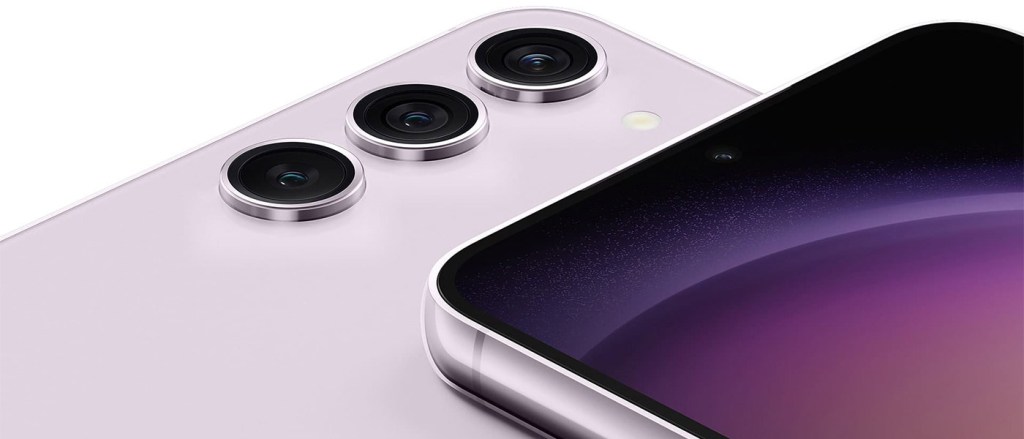
While we are still months away from the Samsung Galaxy S24 series launch, new rumors and leaks have been surfacing online. This time, the latest report hints at a notable new feature being added to the company’s flagship lineup, which is satellite connectivity.
Samsung finally brings satellite connectivity
For those unaware, the satellite connectivity feature was missing on the existing Galaxy S23 lineup, despite the Qualcomm Snapdragon 8 Gen 2 chipset supporting the feature. Meanwhile, Apple brought this feature to the iPhone 14 series last year. Now, it appears that the South Korean tech giant is finally catching up with the Galaxy S24, which will offer a two-way satellite connection.
The news arrives from a Yonhap News report that interviewed Lee Jong-ho, Minister of Science and ICT in South Korea. The Minister claimed that domestic smartphone brands are gearing up to launch a service that brings data transmission between 5G phones and satellites in 2024. Since Samsung is the biggest mobile brand in the region, this statement likely hints at its future plans for the 2024 flagship phone lineup.
Breaking news! Jong-Ho Lee, the South Korean Minister of Science and ICT, has announced that domestic smartphone company is expected to launch services enabling data transmission between 5G mobile devices and satellites next year.https://t.co/qoHh88gcGEpic.twitter.com/pSouS7T8Mn
According to Samsung, the satellite connectivity feature was skipped since the satellite ecosystem and surrounding technologies weren’t mature enough back then. So the brand decided to wait for the technology to improve before rolling out the feature. For this, it has even collaborated with Iridium Communications, which has a series of low-earth orbit satellites built specifically for emergency communications. As of right now, Huawei is the only brand to offer satellite connectivity on the Android platform, but Samsung might not be too far behind.
Smartphones are an essential part of our lives. Nowadays, everyone uses these devices for everything from basic communication to financial transactions. Because of this, the demand for smartphones is increasing. Manufacturers from around the world are introducing new models almost every day.
This not only brings the latest technology to users but also makes a lot of money for companies like Xiaomi, Oppo, Samsung, and Apple. However, it seems the golden age has ended. Smartphone shipments in China in June 2023 fell by a huge 21% compared to the previous year. Here are the details…
China’s Smartphone Shipments Drop 20.9% in June
China is one of the world’s largest smartphone markets. With its huge population, advanced tech infrastructure, and strong local brands, it’s a key area globally. However, recently, the Chinese smartphone market has shrunk a lot. Data from the China Academy of Information and Communications Technology (CAICT) says that phone sales hit 22.149 million in June. This is a drop of 20.9% compared to the same time last year.
The data further suggests that people are not buying as many 5G smartphones as before. In June, sales of these phones dropped by almost 25% from the previous year, making up 78.2% of all phones sold. From January to June 2023, 130 million phones were sold in the country, which is 4.8% less than the same time last year. Out of these, 102 million were 5G phones, a 6.4% drop from last year, and they made up 78.9% of all the phones sold.
In June 2023, only 22 new smartphones were released. This is a big drop of 35.3% compared to the same month last year. Out of these 22 phones, just 7 were 5G models, which is a huge 72.0% decrease. These 7 models made up almost a third (31.8%) of all new phones in June. From January to June 2023, 203 new phones were released. This is a tiny increase of 1.0% from last year. But, only 85 of these phones had 5G. That’s 24.1% fewer 5G phones than the year before, making up 41.9% of all the new models.
Mobile Chip Sales Also Drop by 25% in Q2 2023
The drop in sales isn’t just happening in China. Qualcomm recently said that smartphone sales worldwide are going down. In their last report, they made $8.451 billion, which is 23% less than the same time last year. Their profit was $1.803 billion, which is a big drop of 52%. The main part of Qualcomm that sells chips for phones, cars, and other smart things made $7.17 billion, 24% less than last year.
Mobile chip sales, which make up most of QCT’s earnings, dropped by 25% to $5.26 billion. This shows that the phone market, in China and around the world, is having problems. There might be many reasons for this, like too many phones in the market, phones lasting longer, and money issues. To sell more phones, companies will have to think of new ways to attract customers.
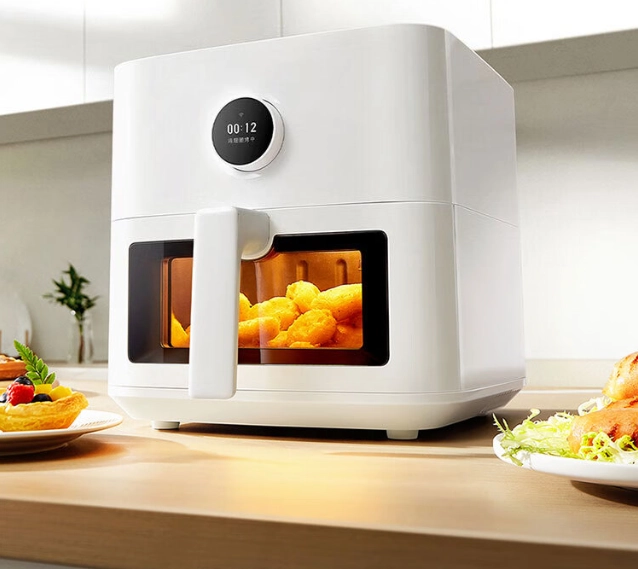
Xiaomi continues to innovate in the kitchen appliance space with the introduction of the Mijia 5.5L Visual Air Fryer, following the success of its 4.5L predecessor. The MiJia 5.5L Visual Air Fryer is available for pre-order on JD.com. The pre-order period is from August 14th, 10:00, to August 24th, 9:30, and final payments start on August 24th, 10:00.
Xiaomi Mijia 5.5L Visual Air Fryer specifications:
This upgraded model offers an expanded 5.5L capacity, enhancing its cooking capabilities for families and larger meals.
The Mijia 5.5L Visual Air Fryer comes with a host of features designed to elevate the cooking experience. Its standout feature is the 6.8-inch ingredient viewing window, allowing users to monitor their dishes without interrupting the cooking process. The appliance supports efficient oil removal and no-flip cooking techniques, ensuring convenient and healthier meals. The device also features a circular OLED display which shows the temperature, timer, and different modes.
With 12 preset recipes, low-temperature defrosting, and a 24-hour reservation function, the air fryer brings versatility to the kitchen. The built-in NTC electronic temperature control technology ensures precise monitoring of the baking process to avoid overcooking or undercooking. This technology, coupled with the 1500W far-infrared heating, maintains a maximum temperature of 220°C for optimal cooking results.
The Mijia 5.5L Visual Air Fryer offers users the ability to adjust temperatures within a range of 40-220°C and supports cooking durations of up to 24 hours. Once cooking is complete, the appliance includes a convenient 30-minute automatic keep-warm function. It seamlessly integrates into the Xiaomi ecosystem, with compatibility with the “Xiao Ai” voice assistant, smartphone app controls, and the ability to connect with Mijia smart home setups.
The device is initially priced at 399 yuan ($54), but customers who pre-order can get it for a discounted price of 369 yuan ($50).
There are only a few browsers that support full-fledged extensions on an Android smartphone or tablet. Kiwi browser is the name that I fondly remember supporting such a feature in the past, but soon, it will be joined by Firefox for Android. Firefox has published new information for extension developers about the add-ons making a comeback on Android App.
Being among the best browsers around the globe, the change will surely make other competitors think about the same feature. Mozilla is known for its core functionality and true personalization experience, and the browser extension support is like the icing on the cake. The new change will surely reciprocate Mozilla’s success on big-screen devices to small mobile devices.
The Firefox extensions aka add-ons were widely available on Android prior to Fenix redesign in 2020. Since then, the extensions from Android have disappeared. The recent announcement of extensions comeback on Android has put developers on cloud nine.
The support for Extensions on Android is coming in September on at least Beta builds, and the public builds might receive it by the end of this year. Unlike previous times, the Mozilla Extensions’ journey to the Android ecosystem will be bundled will relevant guides, resources, and discussion boards for a better and more stable experience for the users.
Will Chrome for Android ever get Extension support?
Till now, there is no official or unofficial talk about Chrome for Android’s Extension support. There are alternate supporting extensions on mobile devices and are based on Chromium code. But, things are missing on Google Chrome for Android. We hope with Mozilla lending support for extensions on small-display devices, Chrome developers get some hint out of it.
The next generation of Apple M series processors is expected to debut soon in upcoming Mac products. But prior to any official announcement, a new report hints at the key specs of the new top-end M3 Ultra chip, which appears to be quite powerful.
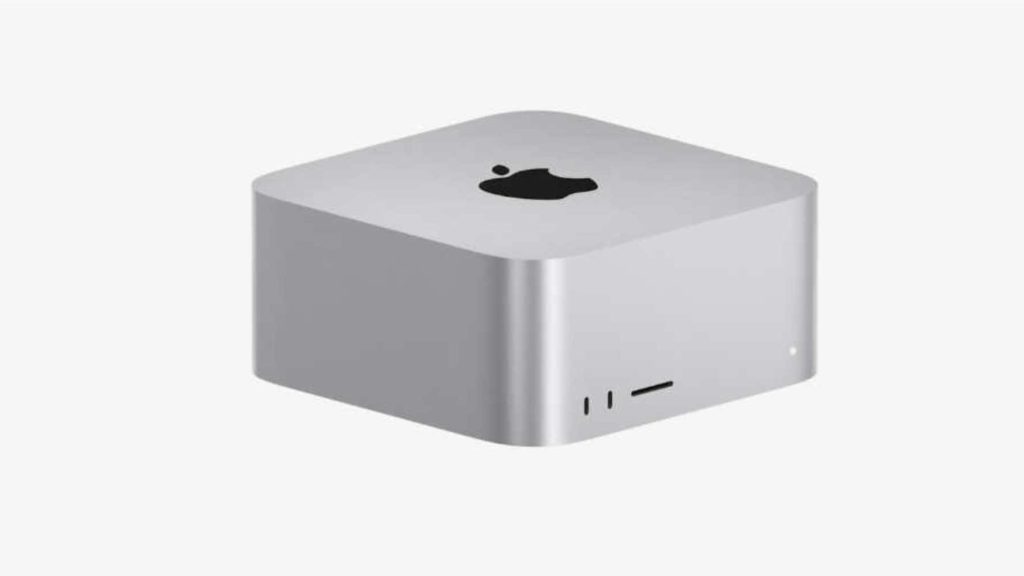
Apple M3 Ultra Mac Studio features a beefy processor
The Cupertino based giant will apparently be equipped with the M3 Ultra, as per the latest Mark Gurman’s Power On newsletter. Apple’s previous M2 Ultra processor offered 24-core CPU and a 76-core GPU. However, the upcoming M3 Ultra is equipped with a whopping 32-core CPU that consists of 24 high-performance cores and 8 high-efficiency cores. On the other hand, the GPU core count has risen to 80 in the next-gen processor.
The Power On newsletter added that Apple could also be planning to launch new memory options for its MacBook Pro laptops. So now, MacBook models might launch with 36GB and 48GB of RAM. Furthermore, the brand is also testing higher memory configurations for other Mac series of PCs as well. The M2 Ultra-powered Mac Studio could be bought with up to 192GB of RAM, so there is a chance that the M3 Ultra may offer even higher memory capacity like 256GB of RAM.
Apple is currently testing the M3 Ultra for the next-generation Mac Studio and Mac Pro. Gurman believes that the first batch of M3-powered Macs will launch sometime in October 2023 with the new 13-inch MacBook Air and MacBook Pro models. The new iMac could also feature this processor, while the M3 Pro and M3 Max CPUs for Macs could drop sometime next year.
We recently covered that the launch of the iPhone SE 4 is around two years away, and it will likely debut in the same year as the iPhone 16. For those who are unaware, the iPhone SE is a line of reasonably priced smartphones made by Apple. Earlier, it was noted that Apple could have halted its development as the company has been working on developing its own 5G modem. But despite all these rumors, some new leaks regarding the phone have emerged online.
According to Unknownz21, the iPhone SE 4 could look quite similar to iPhone 14, but it will still be a different device. Leaker has also mentioned that the device is rumored to come with an “Action Button”. Its function will slightly differ from the button introduced in earlier generations to put your phone in silent or ring mode. It is said that Apple is trying to allow users to bind the button to perform different actions like turning on a flashlight, taking a screenshot, and accessing shortcuts that users have created. The exact functionality of the button is still unknown, but from the looks of it, Apple thinks that this option will be handy for iPhone users.
Additionally, the iPhone SE 4 could have a USB-C port along with an OLED panel supplied by China-Based BOE. It might also get the Face ID security feature, which could mean that Apple might get rid of the fingerprint scanner on the SE 4. We hope that Apple will finally decide to feature a full HD display in the future iPhone SE series.
In related news, the launch of the iPhone 15 is just around the corner, and we are receiving more leaks and teasers about the phone, so stay tuned.
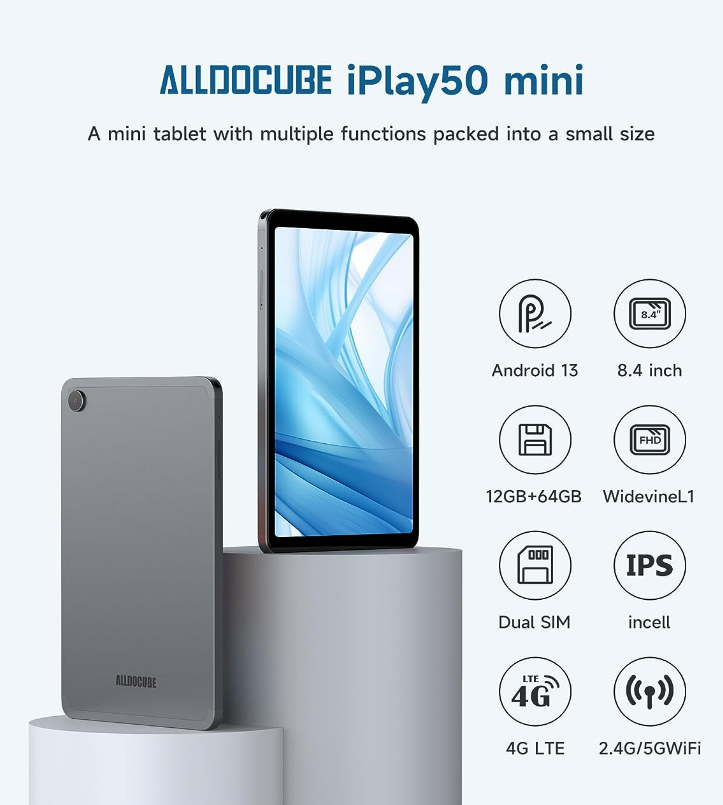
In a time where technological innovation meets user-centric design, the ALLDOCUBE iPlay 50 Mini emerges as a remarkable Android 13 tablet, setting new standards for performance, portability, and connectivity. Let’s delve into the distinctive features that make this tablet an embodiment of cutting-edge technology.
Unrivaled Performance Powered by Android 13
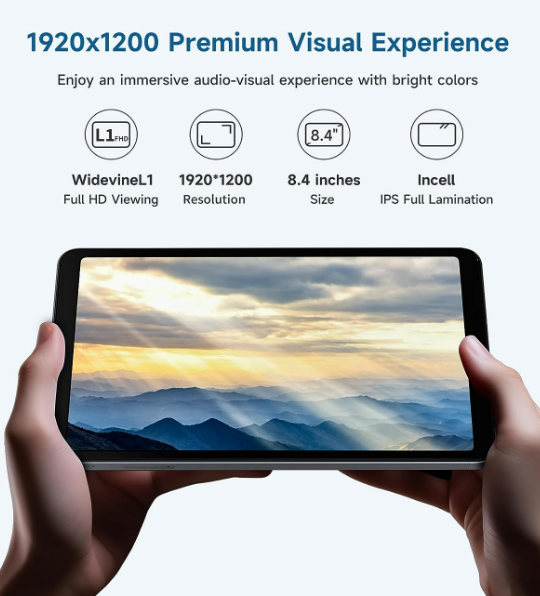
The iPlay 50 Mini operates on the Android 13 platform, delivering a level of performance that seamlessly handles intricate tasks and multimedia demands. Its architecture is optimized for speed and efficiency, ensuring a smooth user experience that extends to a vast range of applications and services. With GMS and Windvine L1 certifications, the tablet guarantees compatibility across diverse platforms, opening up a world of possibilities for users.
Immersive Visual Brilliance
One of the most striking features of the iPlay 50 Mini is its 1920*1200 Full HD display. This display not only brings content to life with stunning clarity and vibrant colors but also incorporates full lamination technology for enhanced visual impact and heightened touch responsiveness. Whether you’re watching your favorite shows, browsing images, or gaming, the tablet’s display quality ensures an immersive and engaging experience. The integrated front and rear 5MP cameras capture your precious moments with remarkable clarity and detail.
Elegance Meets Practicality
Crafted with meticulous attention to detail, the iPlay 50 Mini boasts a compact 8.4-inch design that is a mere 7.5mm thin and weighs 292g. The tablet’s aluminum alloy back not only exudes durability but also adds a touch of sophistication to its overall aesthetic. This blend of elegance and practicality makes the tablet effortlessly portable, allowing you to stay connected and productive on the go.
Ample Storage and Expansion Options
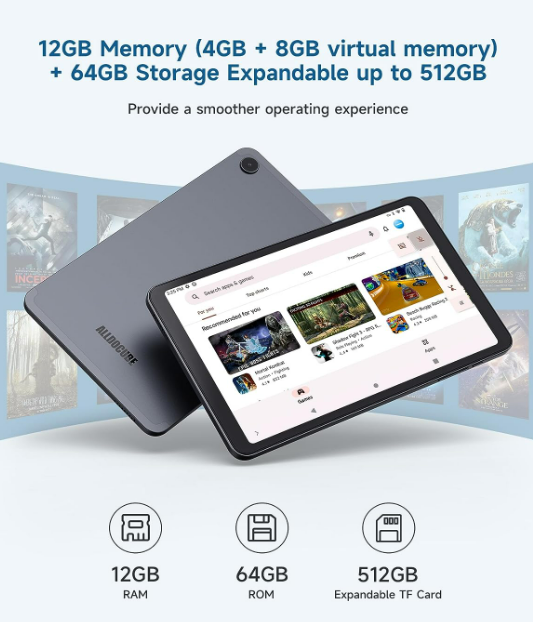
Equipped with 12GB of RAM (4GB + 8GB virtual memory) and 64GB of internal storage, the iPlay 50 Mini ensures that multitasking is smooth and efficient while offering substantial space for apps, files, and media. With the option to expand memory to 12GB through the RAM expansion function and up to a staggering 512GB with a Micro SD card, users can tailor the tablet’s storage to their specific needs.
Seamless Connectivity for Modern Lifestyles
Staying connected is effortless with the iPlay 50 Mini’s 4G LTE and 2.4G/5G dual-band WiFi capabilities. Whether you’re working remotely, streaming content, or engaging in online activities, the tablet’s high-speed connectivity guarantees uninterrupted experiences. Its versatility makes it an indispensable tool for both professional and leisure pursuits.
ALLDOCUBE iPlay 50 Mini encapsulates excellence through its Android 13 capabilities, captivating display, elegant design, versatile storage options, and unwavering connectivity. This tablet transcends conventional expectations, offering a seamless blend of performance and practicality.
ALDOCUBE’s iPlay 50 Mini arrives on Amazon US on August 14th! This 8.4-inch Android 13 tablet offers impressive performance and portability. Priced at $89.99, with a $10 launch discount and an extra 5% off using CODE: BFQUKAU4 during the first week, you can grab the iPlay 50 Mini for as low as $75.99.
For more information on such exciting deals and offers, check out our deals hub.
Xiaomi will be holding a launch event later today for the Xiaomi Mix Fold 3. At this launch event, the brand will also debut the Redmi K60 Ultra at this event. So far, the brand has confirmed many of its details like the Dimensity 9200+ SoC, and maximum configuration of 24GB RAM + 1TB storage. Now, hours ahead of the launch, the pricing of the smartphone has leaked online.
Redmi K60 Ultra
As per tipster Ishan Agarwal, the Redmi K60 Ultra will have a starting price tag of 2999 yuan ($413) for the 12GB RAM and 256GB storage configuration. What’s interesting is that the tipster also claims that the 24GB RAM + 1TB storage model will come with a price tag below 3999 yuan (551).
Redmi K60 Ultra specs
The upcoming Redmi K60 Ultra will feature a 6.67-inch 1.5K CSOT C7 OLED display with a high refresh rate of 144Hz, ensuring exceptionally smooth visuals. With a peak brightness of 2600 nits, the screen will deliver vibrant and bright visuals even in challenging lighting conditions. The device will utilize a 2880Hz PWM and Pixelworks X7 display chip to enhance display performance further.
Powering the smartphone is the Dimensity 9200+ processor, coupled with LPDDR5X RAM and UFS 4.0 storage. The camera arrangement will include a 50MP main sensor (IMX 800) with optical image stabilization (OIS), accompanied by an 8MP and a 2MP sensor. For selfies, the front camera will offer a sharp 16MP resolution.
Users can expect reliable battery life, thanks to the substantial 5,000mAh battery, which will support 120W fast charging for swift and convenient power replenishment. Furthermore, the smartphone will incorporate an X-axis linear motor to provide improved tactile feedback, and it will carry an IP68 rating, ensuring resistance against water and dust.
We use cookies on our website to give you the most relevant experience by remembering your preferences and repeat visits. By clicking “Accept”, you consent to the use of ALL the cookies.
This website uses cookies to improve your experience while you navigate through the website. Out of these, the cookies that are categorized as necessary are stored on your browser as they are essential for the working of basic functionalities of the website. We also use third-party cookies that help us analyze and understand how you use this website. These cookies will be stored in your browser only with your consent. You also have the option to opt-out of these cookies. But opting out of some of these cookies may affect your browsing experience.
Necessary cookies are absolutely essential for the website to function properly. This category only includes cookies that ensures basic functionalities and security features of the website. These cookies do not store any personal information.
Any cookies that may not be particularly necessary for the website to function and is used specifically to collect user personal data via analytics, ads, other embedded contents are termed as non-necessary cookies. It is mandatory to procure user consent prior to running these cookies on your website.