Google is expected to launch the second-generation Pixel Watch at its annual event in October this year. It will likely debut alongside the flagship Pixel 8 series. The Pixel Watch 2 has been subject to a lot of leaks and rumors in recent months. It will arrive as the successor to the last year’s model. Now, the Pixel Watch 2 has surfaced on Google Play Console as well as the Google Play Supported Devices list.
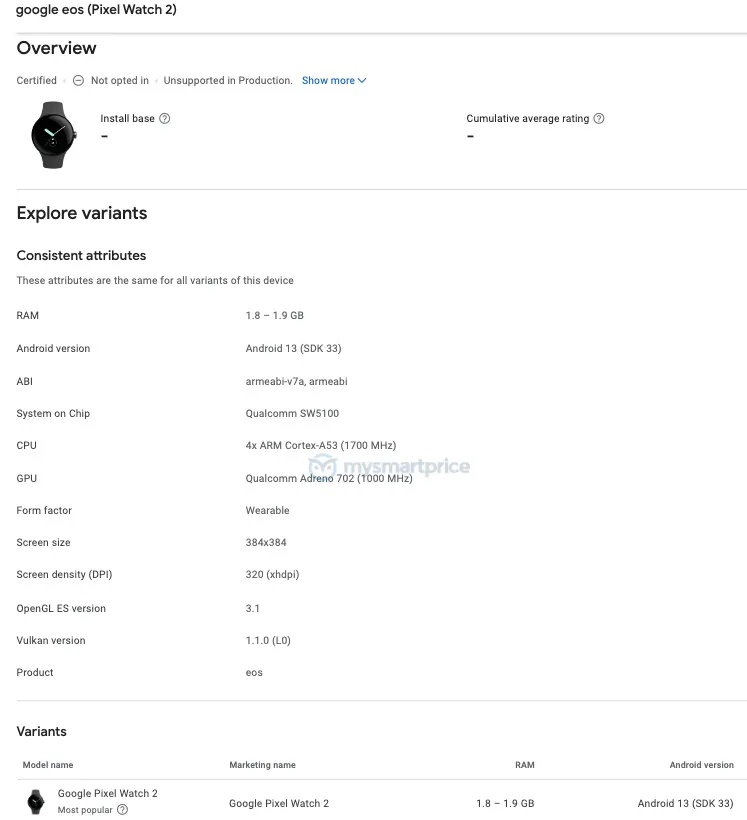
Google Pixel Watch 2 appears on Google Play Console
On the Google Play Supported Devices list, the upcoming smartwatch from the search giant is codenamed ‘eos’. It confirms the Google Pixel Watch 2 moniker. As per past reports, the ‘eos’ codenamed is expected to be the LTE variant of the smartwatch. However, apart from this, the same listing does not reveal any additional details.
Meanwhile, the Google Play Console listing of the Pixel Watch 2 reveals key details along with a render of the device. It will retain a circular dial and a traditional-looking rotating crown on the right side. The design looks quite similar to the first-generation Pixel Watch. The smartwatch will feature a display resolution of 384 x 384 pixels and have a 324 DPI screen density.
Under the hood, the Google Pixel Watch 2 is listed with a Qualcomm SW5100 processor that comprises four Cortex-A53 cores coupled with an Adreno 702 GPU. This corresponds to the Snapdragon W5+ Gen 1 chipset which is in line with previous rumor. The listing reveals 2GB RAM onboard. It will run on Android 13 OS probably with Wear OS 4.0 skinned on the top.
The latest certification listings do not reveal any additional information about the Pixel Watch 2. An FCC certification revealed that the upcoming offering will arrive in LTE and WiFi variants as well as four strap options. As per past leaks and rumors, the Pixel Watch 2 will reportedly be backed by a slightly upgraded 306mAh battery unit. The smartwatch is tipped to retain the same display as its predecessor but this time the panel is supplied by Samsung instead of BOE. Additionally, the upcoming offering will support Ultra-Wideband (UW) connectivity that will offer a host of functions including finding devices, seamless media playback to Google devices, and unlocking cars using digital ar key.
In May, Honor introduced the budget-friendly Play 40 5G smartphone in the Chinese market, and in July, they expanded the lineup with the Honor Play 40C. Adding to this series, Honor has now unveiled the Honor Play 40S smartphone. The new device has a large battery and the Snapdragon 480 Plus SoC. Let’s take a look at the details.
Honor Play 40S specs
The phone has dimensions of 163.32mm in length, 75.07mm in width, and a thickness of 8.35mm. It weighs approximately 188g, which includes the battery. The screen is 6.56 inches in size and uses TFT LCD technology. It has a resolution of 720 x 1612 pixels and a 90Hz refresh rate for smoother visuals.
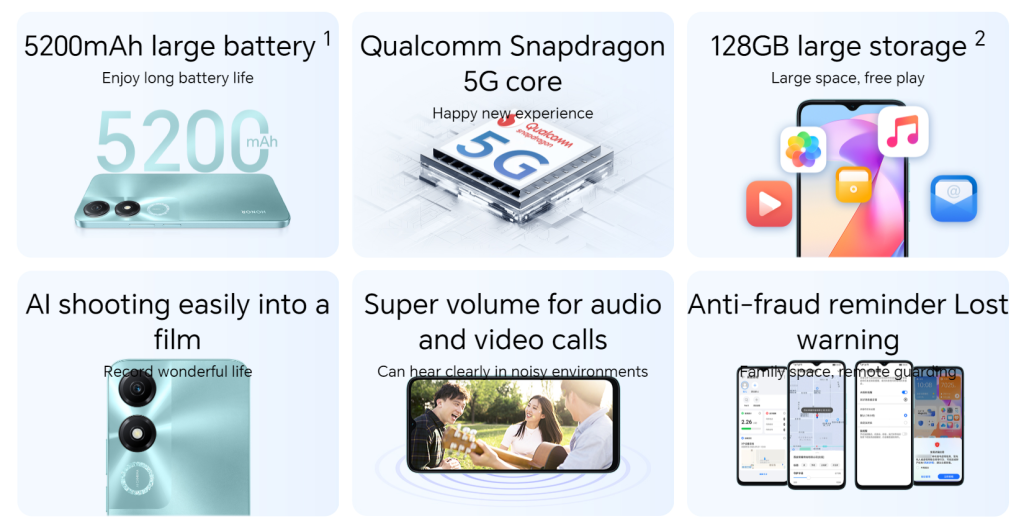
Running the show inside is a Qualcomm Snapdragon 480 Plus processor. It comes with 4GB of RAM and has 128GB of storage space. The main rear camera is 13-megapixels with an f/1.8 aperture, while the front camera is 8-megapixels for taking selfies.
Powering the device is a 5200mAh battery. It supports various network options, including 5G, 4G, and 3G, depending on your service provider. Connectivity features include Wi-Fi, Bluetooth 5.1, GPS, and more.
The phone also includes sensors like a gravity sensor, compass, ambient light sensor, and proximity light sensor for added functionality. Additionally, it has HONOR Histen sound effects, a Type-C port, USB 2.0 support, and a 3.5mm headphone jack for your convenience.
Pricing & availability
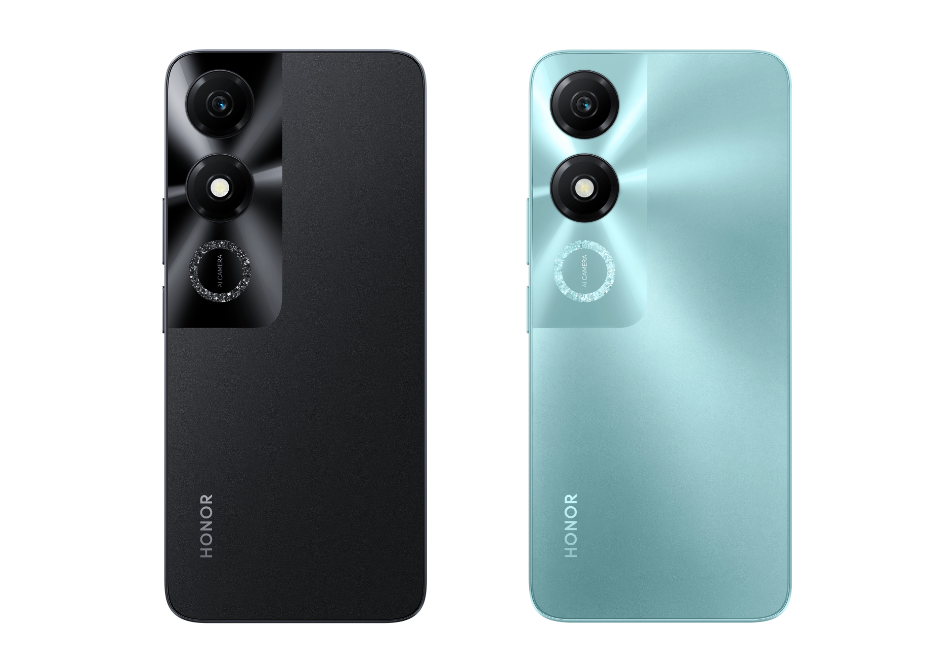
Priced at 999 Yuan ($137) in the Chinese market, the smartphone is available in two color variants – Midnight Black and Green.
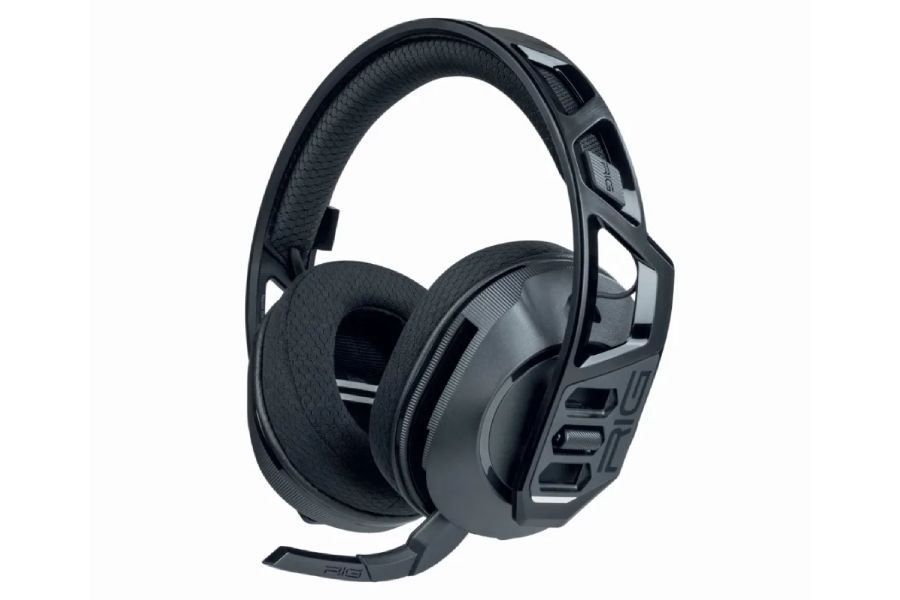
NACON has announced two new headsets for its RIG Pro series: the RIG 600 Pro HX for Xbox and the RIG HS for PlayStation. The headsets will be released on September 28 and are compatible with a variety of devices, making them a great option for gamers who play on multiple platforms. Here are the specifications of Nacon RIG 600 Pro HX and HS.
Nacon RIG 600 Pro HX/HS
The RIG 600 Pro HX and HS are wireless gaming headsets designed for Xbox and PlayStation consoles, respectively. They provide seamless connectivity through a low-latency 2.4Hz USB-C adapter, and they’re also capable of linking with your phone or tablet via Bluetooth 5.1. This versatility caters to gamers aiming to effortlessly transition between in-game audio and phone conversations.
A standout aspect of these headsets is their dual-mode audio functionality, allowing you to simultaneously experience game audio alongside other content, like podcasts. This sought-after feature is typically associated with pricier headsets, enhancing the appeal of the budget-friendly RIG 600 PRO HX and HS for those seeking adaptable and affordable headset options.
In terms of sound quality, the RIG 600 Pro HX features bass-boosted 40mm high-sensitivity drivers that ensure a balanced and immersive gaming experience. The headset also comes with a chat-optimized microphone that can be easily tucked away when not needed and muted by flipping it when privacy is wanted.
Likewise, designed for lengthy gaming sessions, the RIG 600 Pro HX is both lightweight and comfortable. It tips the scales at a mere 240 grams and boasts breathable fabric earcups that snap comfortably into place. The headband is cushioned and flexible, ensuring a snug and cozy fit.
The headset also offers a long battery life of 24 hours when used with Bluetooth and 18 hours with the wireless USB dongle. Charging is done conveniently via the included USB-C wire.
The RIG 600 PRO HX and HS wireless gaming headsets will be released on September 28, 2023. They will be available for purchase in the US for $99.99 and in the EU for €99.99.
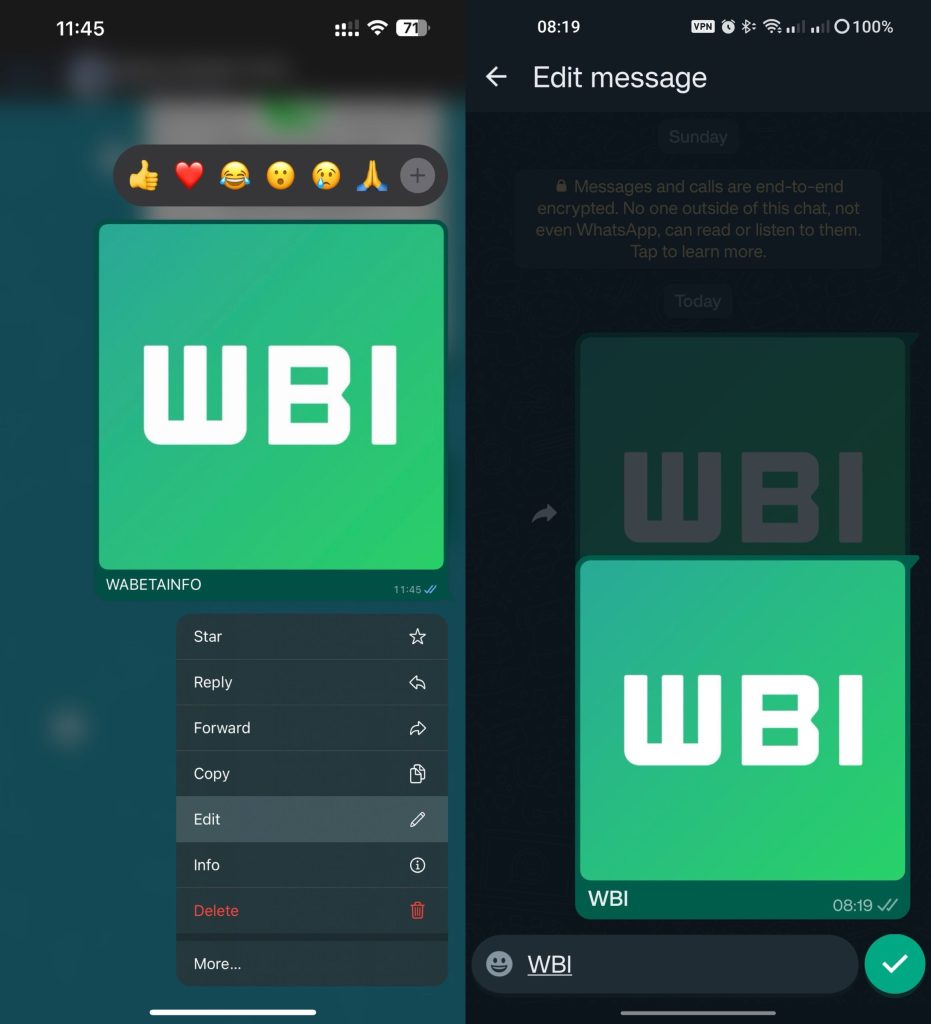
WhatsApp has launched an improved caption message editing feature for iOS and Android devices. This new feature allows users to edit captions on different types of media, such as images, videos, GIFs, and documents, even after sending them. Users can access this feature by updating their WhatsApp to the latest versions on both platforms.
Correct mistakes and improve communication with ease
Despite an initial delay, the feature is now being widely rolled out. Users can check its availability by tapping and holding a recent captioned message.
However, the extended editing feature has a constraint: edits can be made only within 15 minutes of sending the message and solely from the device that initially sent the message.
This enhancement in messaging allows users to improve their messages after sending, enhancing clarity and context. It offers flexibility to refine captions for images, documents, and more, contributing to an elevated messaging experience.
How to Use the Caption Message Edit Feature:
Ensure you have the latest version of WhatsApp installed on your device.
Open a chat where you’ve recently sent a message with a caption.
Tap and hold the specific message with the caption.
If the feature is enabled for your account, you’ll see an “Edit Caption” option appear.
Select the “Edit Caption” option.
Make the desired changes to the caption.
Ensure you’re editing within the 15-minute timeframe after sending the original message.
Confirm and save your changes.
Alongside this, other exciting features have been introduced by WhatsApp recently, such as Landscape mode, screen sharing during video calls, and sending higher-resolution images.
OnePlus held a press conference on August 16 to launch its new Ace 2 Pro smartphone. During the event, Li Jie, the president of OnePlus China, took the stage to discuss both the new product and the company’s strategic outlook. He emphasized OnePlus’ commitment to offering the best performance possible in its devices.
Within the context of this press gathering, Jie also revealed that the Ace 2 Pro had broken the pre-sale record for all models of all price segments and brands in 2023. Astoundingly, a staggering 150,000 units were sold within a mere 26-hour span. Impressive!
After the press conference, OnePlus accepted interviews from the media, responded to the media’s concerns, and shared their own views on the industry and OnePlus’ future plans. And here’s what they have to say.
OnePlus aims to be the leader in performance-centric mobile phones
According to Li Jie, the company’s aspiration is to lead in the realm of high-performance smartphones and gaming experiences. So the company is currently prioritizing the needs of the users in each price range, identifying the essential features they want, and finding ways to offer unique value that sets OnePlus’ products apart.
At the same time, in OnePlus’ view, a product’s performance and price are not mutually exclusive. They can coexist, but the order cannot be reversed. This is evident in the success of their latest smartphones, such as the OnePlus 11, OnePlus Ace 2, and OnePlus Ace 2V, which have all been well-received in the mainland market.
In fact, OnePlus’s sales volume from January to June 2023 was 335% of that of the same period last year, making it the fastest-growing brand in the industry and the only brand that achieved triple-digit growth.
The OnePlus Ace 2 has also been a major success, ranking first in the Android market for online sales above 2,500 yuan. And from January to June, the sales volume of the OnePlus Ace series increased by a staggering 1537% year-on-year.
Talking about their latest offering, the Ace 2 Pro, Jie shared that including the Snapdragon 8 Gen 2 processor incurred a cost of 200 million yuan. OnePlus also collaborated with SK Hynix to mass-produce 24GB memory modules, which, when combined with OnePlus’ proprietary “Memory Gene Recombination” technology, has led to significant improvements in application launch speed, application retention rate, and overall system fluidity.
Li Jie also gave a real-world example to illustrate this. He said that if you read an article in an app in the morning and then get busy with other things before finishing it, the app will still be open when you open it again in the evening. The article will be in the same place you left it, even 72 hours later. This is the importance of background keeping alive ability. OnePlus also demonstrated the background keep alive of a variety of games at the press conference, which shows the full potential of 24GB of memory.
Besides powerful hardware, OnePlus Ace 2 Pro also has a new and thoughtful feature: Rain Touch Capability. This is one of the first smartphones to feature this technology, which was initially thought to be impossible, as shared by Li Jei. However, OnePlus took a chance and after a lot of research and development, they were able to make it happen. Now, the OnePlus Ace 2 Pro can be used in the rain without accidentally being touched.
OnePlus future plan
Regarding the future market, Li Jie said that although the smartphone market is declining, there are still more than 200 million mobile phones sold in China every year. However, in terms of GMV, the decline is actually not that big which means that users are more likely to choose products with better performance in the current consumption environment. This is why OnePlus wants to target users who need to purchase a phone that costs more than 2,000 yuan. OnePlus has its own advantages in this regard and can match the corresponding product strength. Therefore, OnePlus is relatively optimistic about the market.
Li Jie also explained OnePlus’ current online and offline strategy. OnePlus is still an online-based brand, but the boundaries between online and offline are not so clear for users. Some users may watch offline and buy online, while others may watch online and buy offline. Based on this consideration, OnePlus hopes to better integrate online and offline sales. Moreover, OnePlus might also use OPPO’s channels to get better support. This will provide users with a better experience. For example, OnePlus products can now be purchased at OPPO flagship stores in many core business districts. OPPO’s after-sales services across the country are also open to OnePlus users.
Poco Pods, launched towards the end of last month in India, mark the first foray of the Poco brand into the TWS (True Wireless Stereo) earbuds market in the country. What sets these earbuds apart is their remarkably affordable price tag of Rs 1,199 (~$14), making them an enticing option for budget-conscious consumers. Available exclusively on Flipkart, we had the opportunity to try out the Poco Pods, and here’s a glimpse into our hands-on experience with them. Before reading ahead, here’s a look at some of its key features advertised by the brand, up to 30 hours of playback time, 12mm Xtra Bass drivers, 60ms low-latency for gaming, Bluetooth 5.3, Google Fast Pair, ENC, and IPX4 rated splash / sweat resistance.
Poco Pods TWS earbuds: What’s in the box?
Poco Pods TWS earbuds
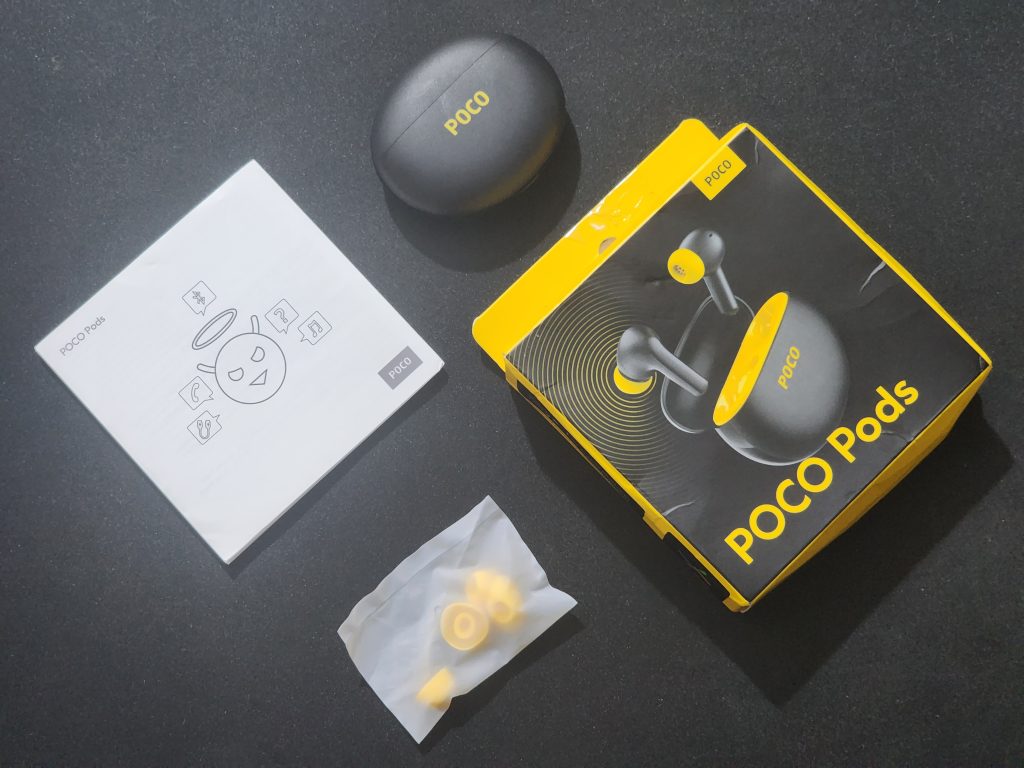
Here’s a look at the retail box contents of the Poco Pods:
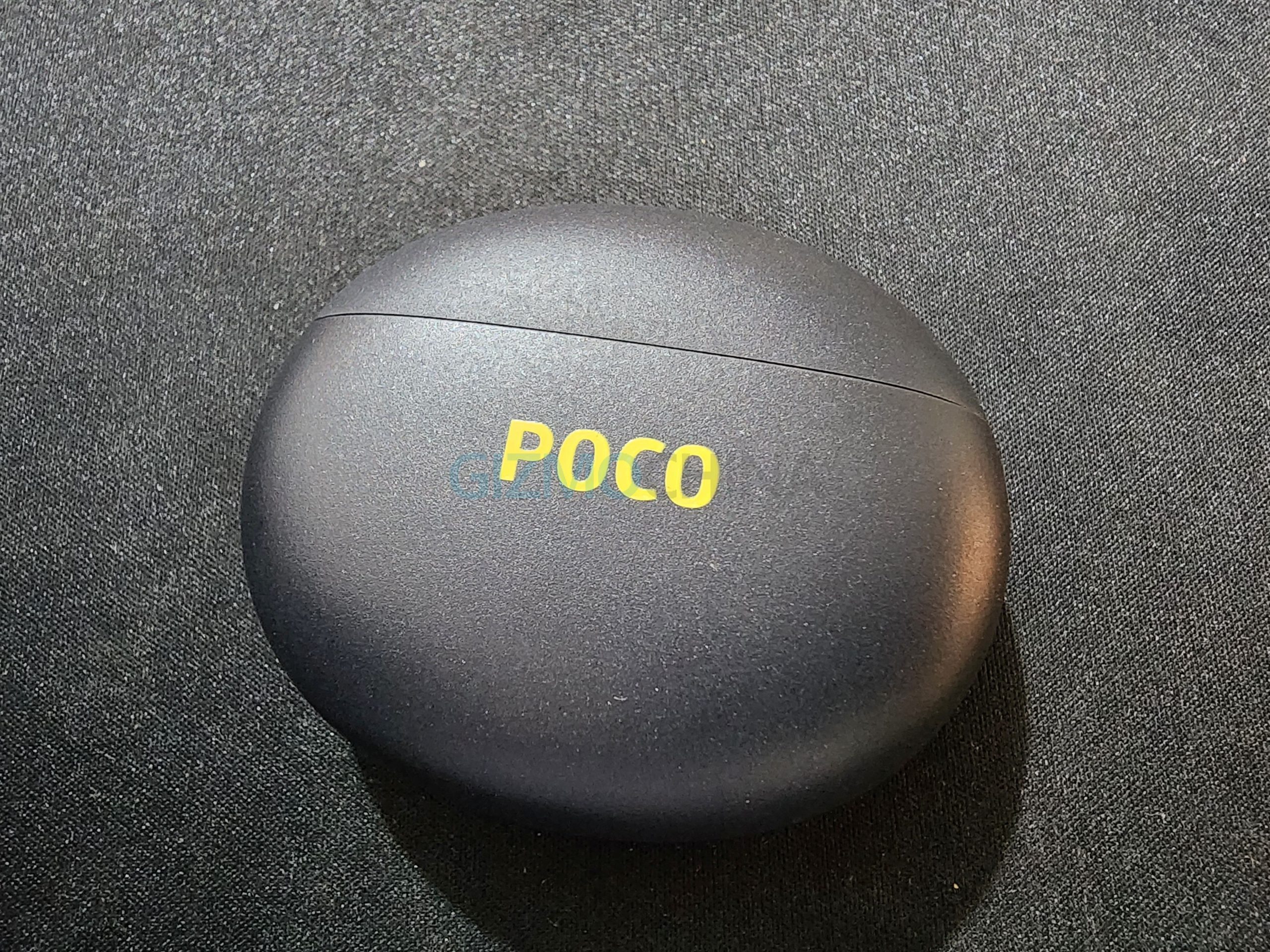
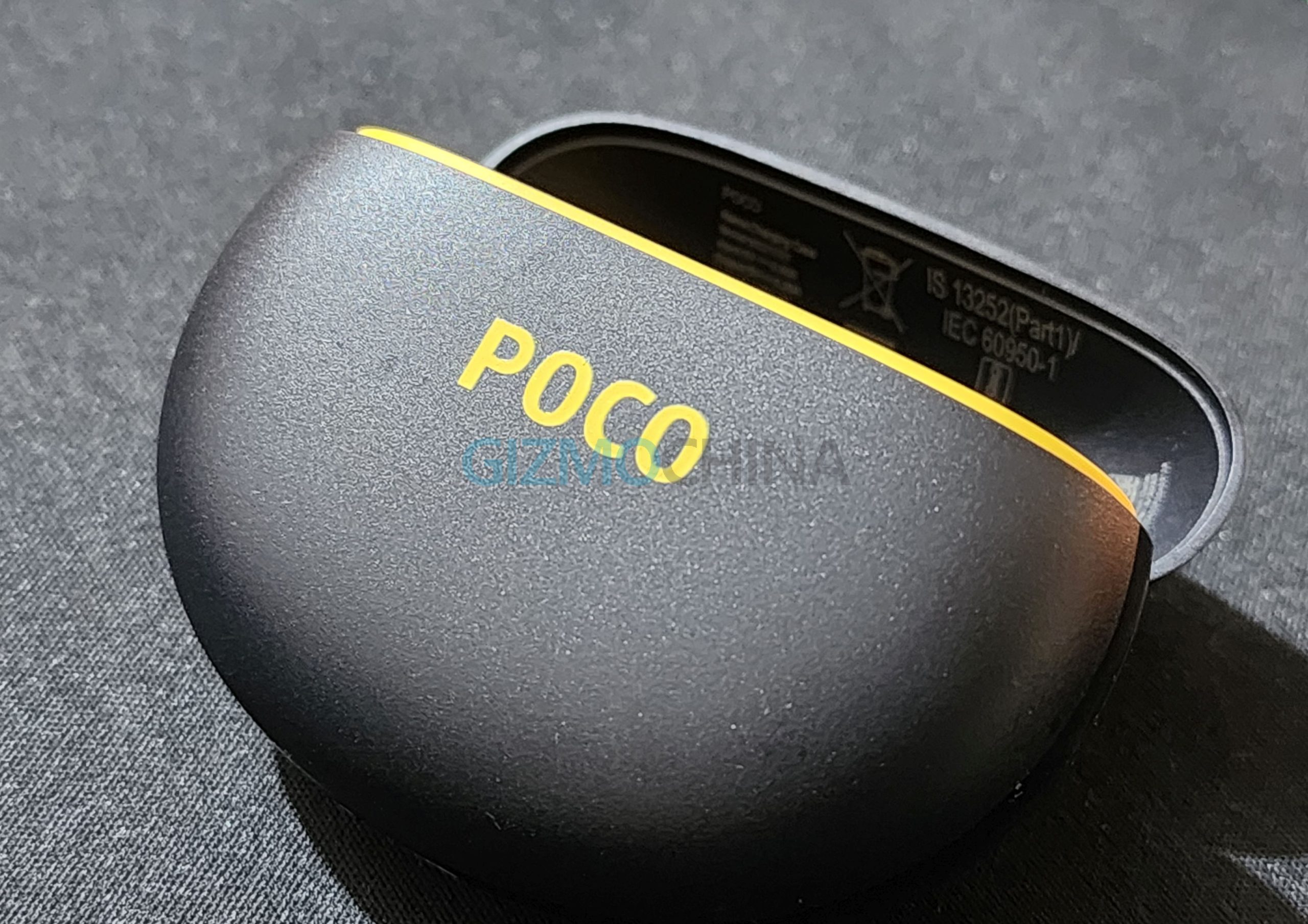
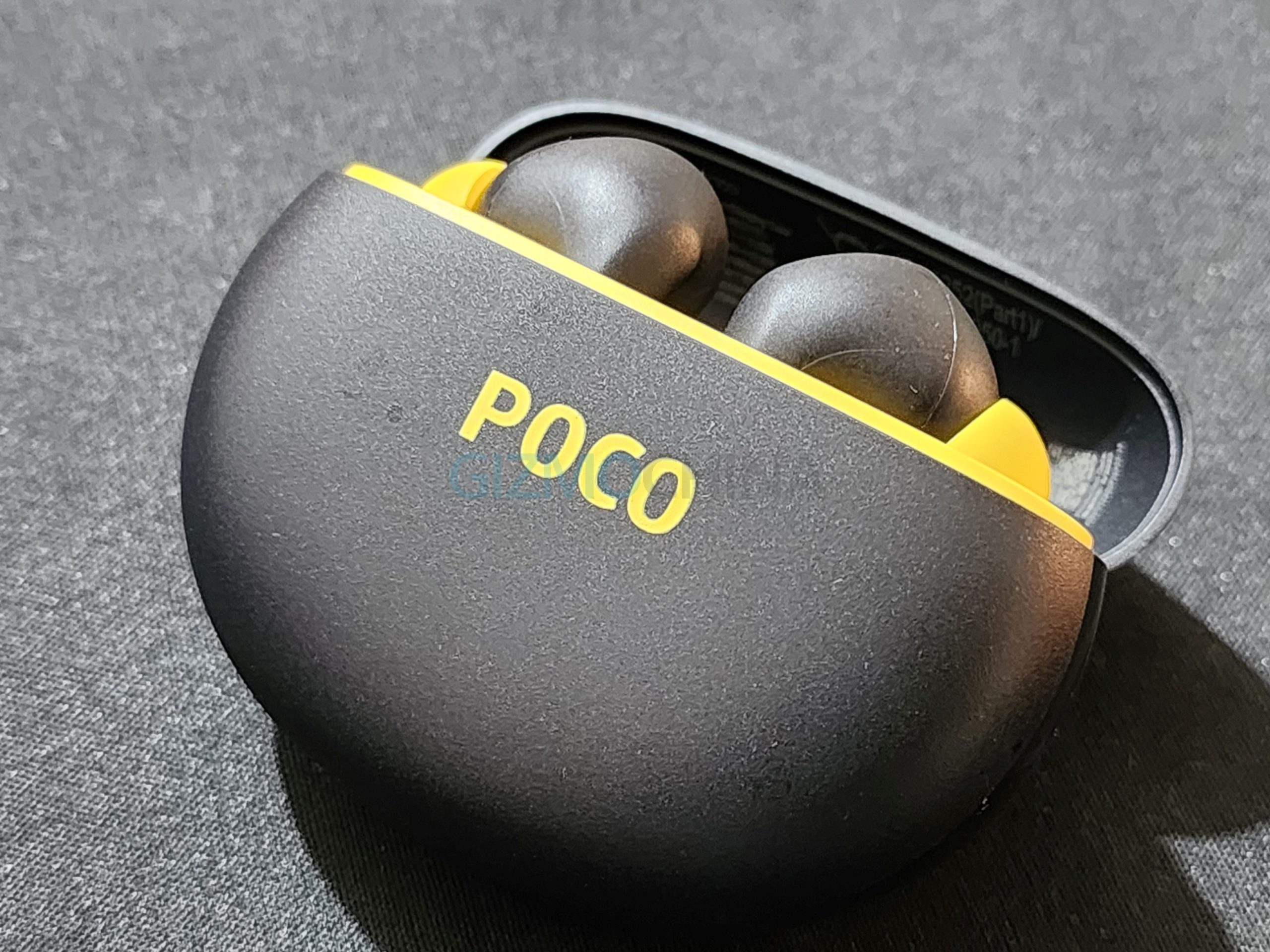
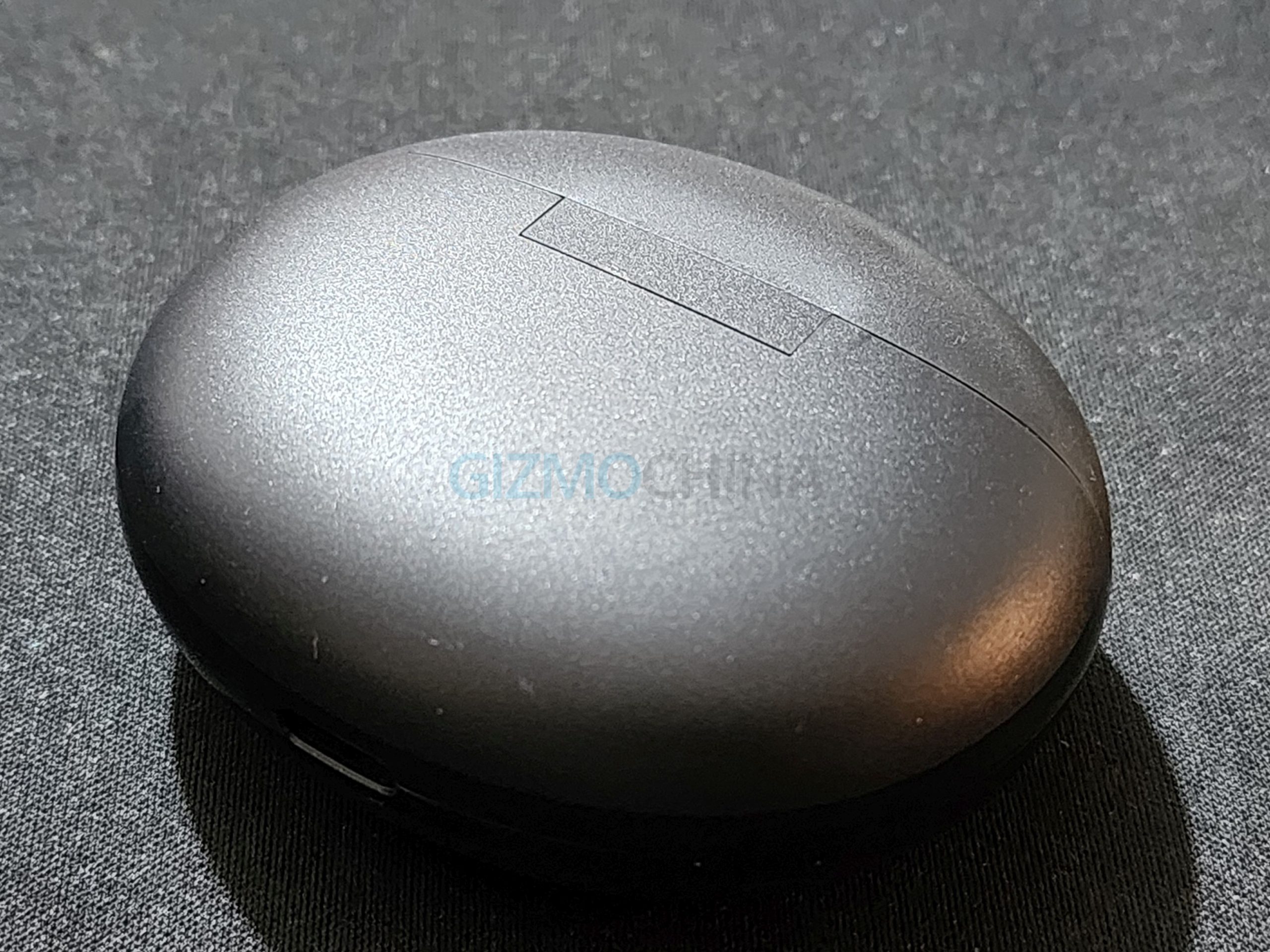
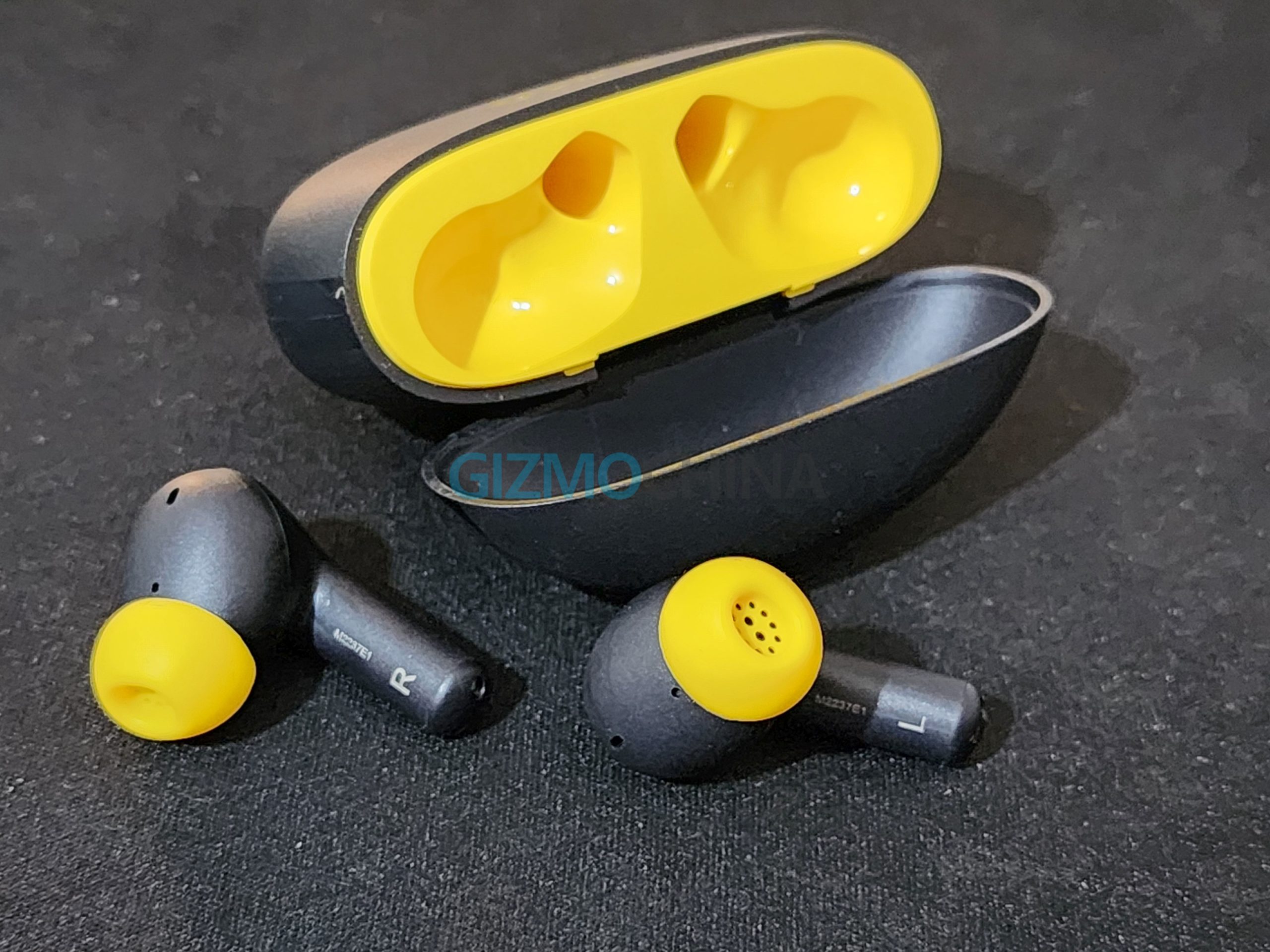
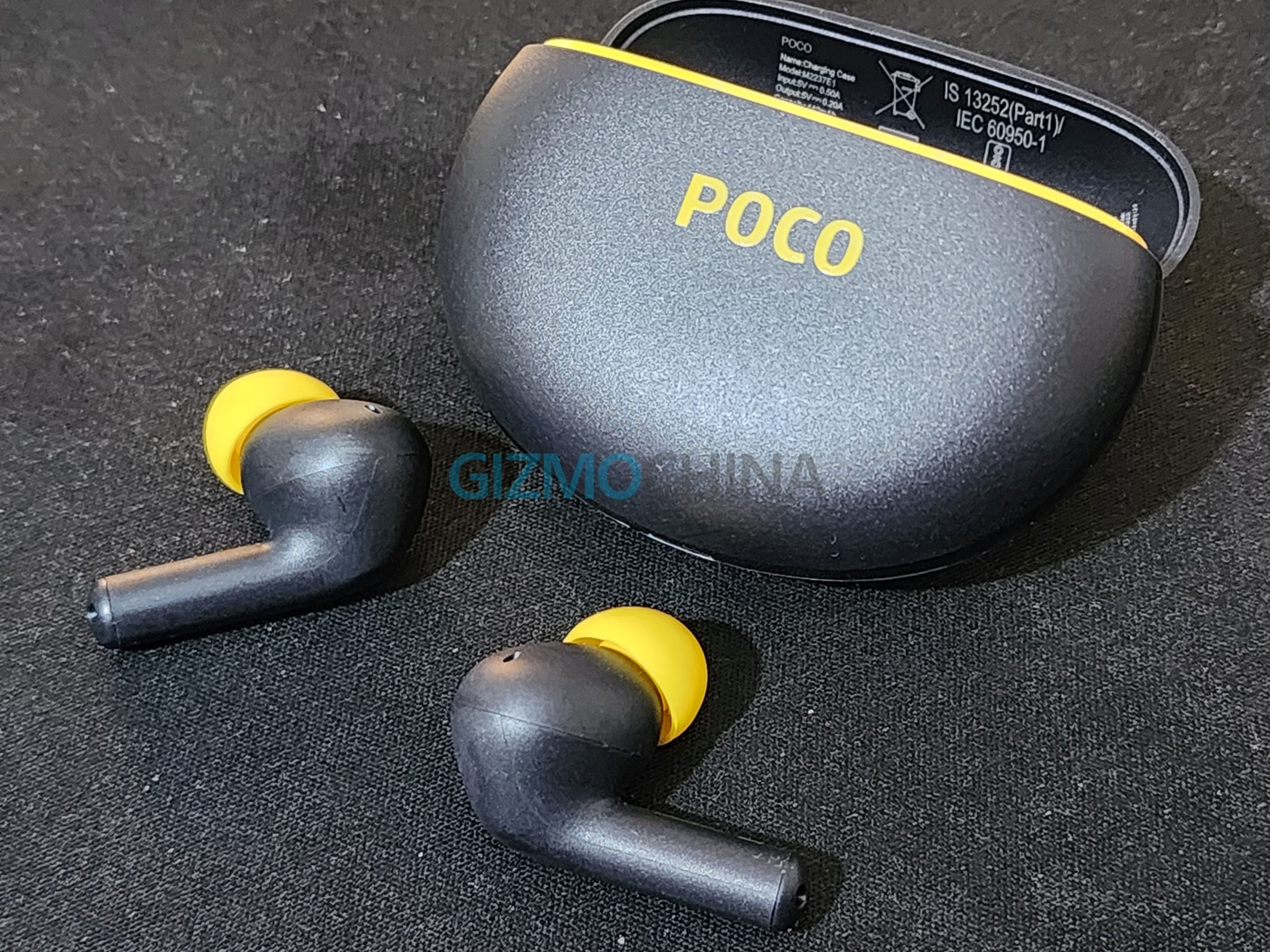
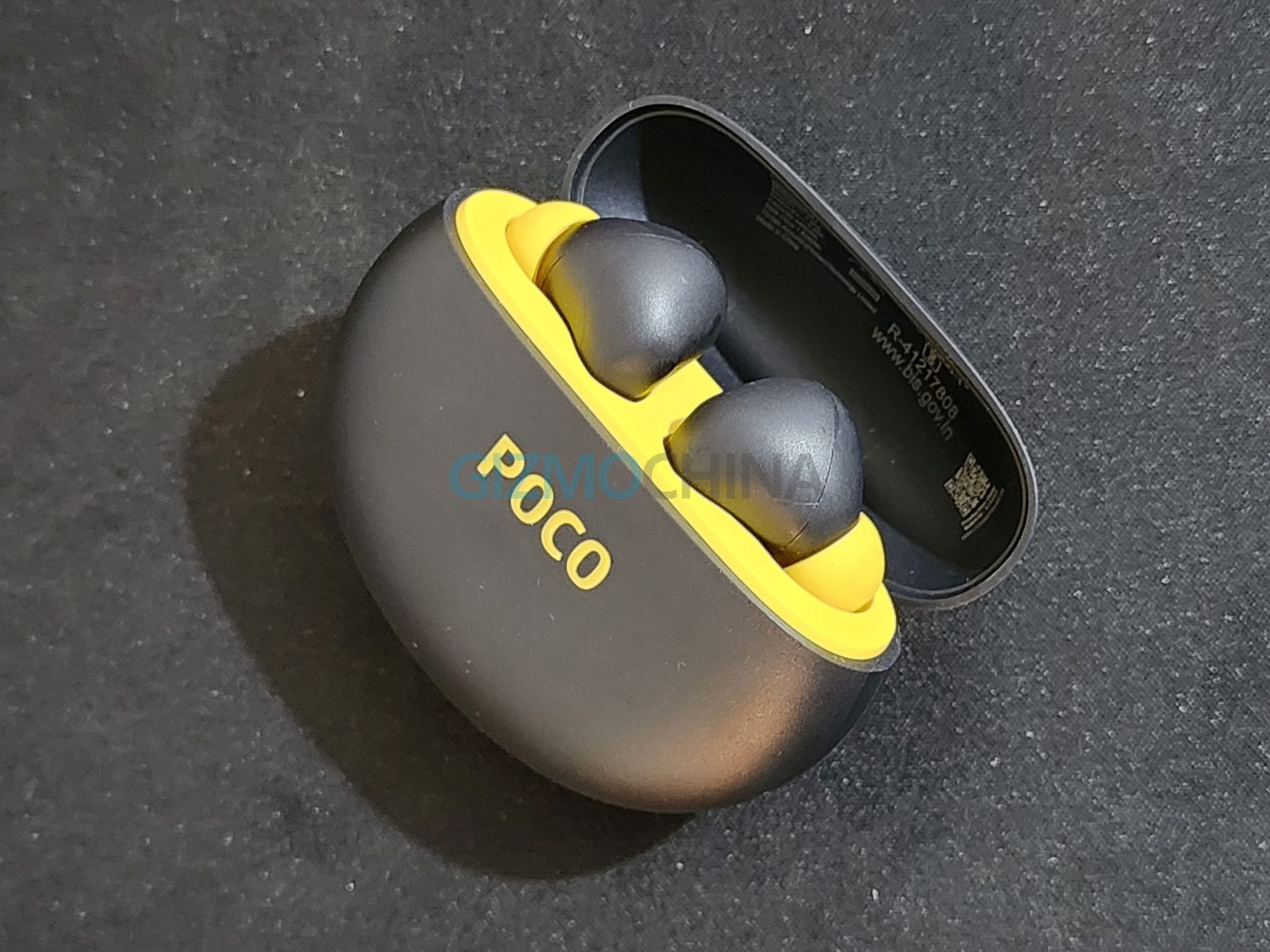
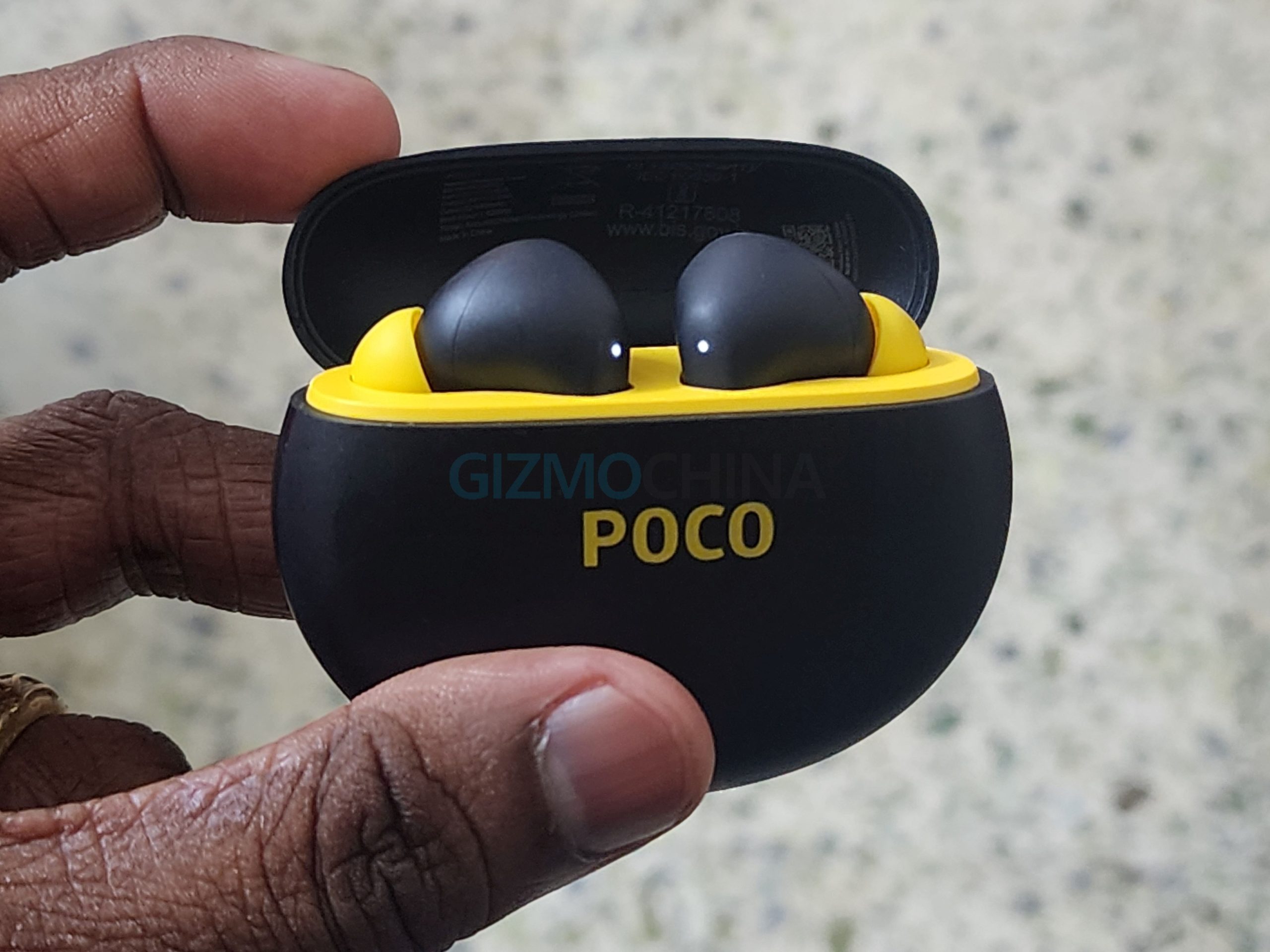
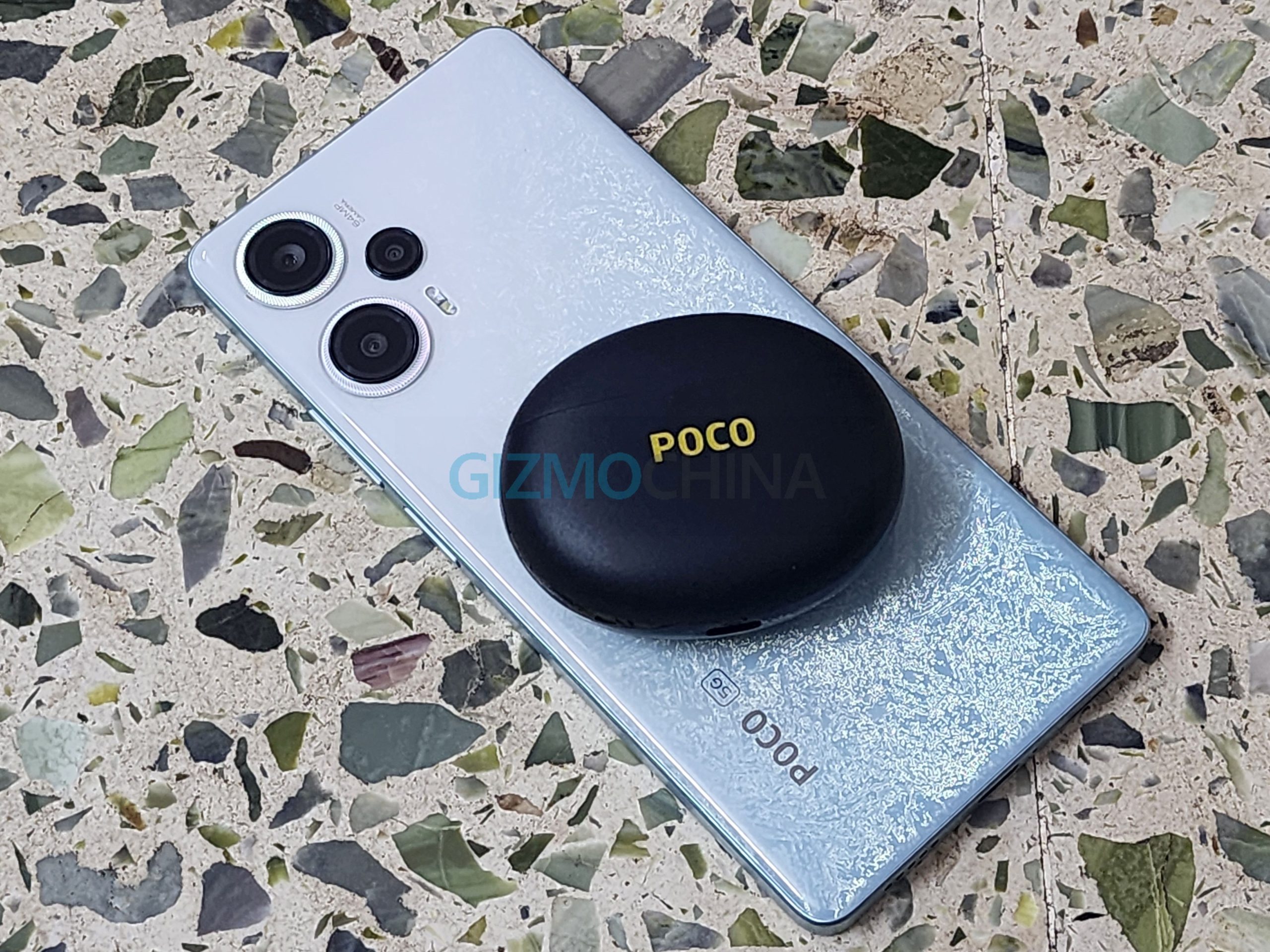
The Poco Pods are a well-designed product with a compact build. The oval-shaped charging case has a matte finish on its plastic body, with a glossy strip running around the sides. It features yellow-colored Poco branding on the front, giving it the company’s signature dual-tone color scheme. It is available in the Midnight Groover color only.
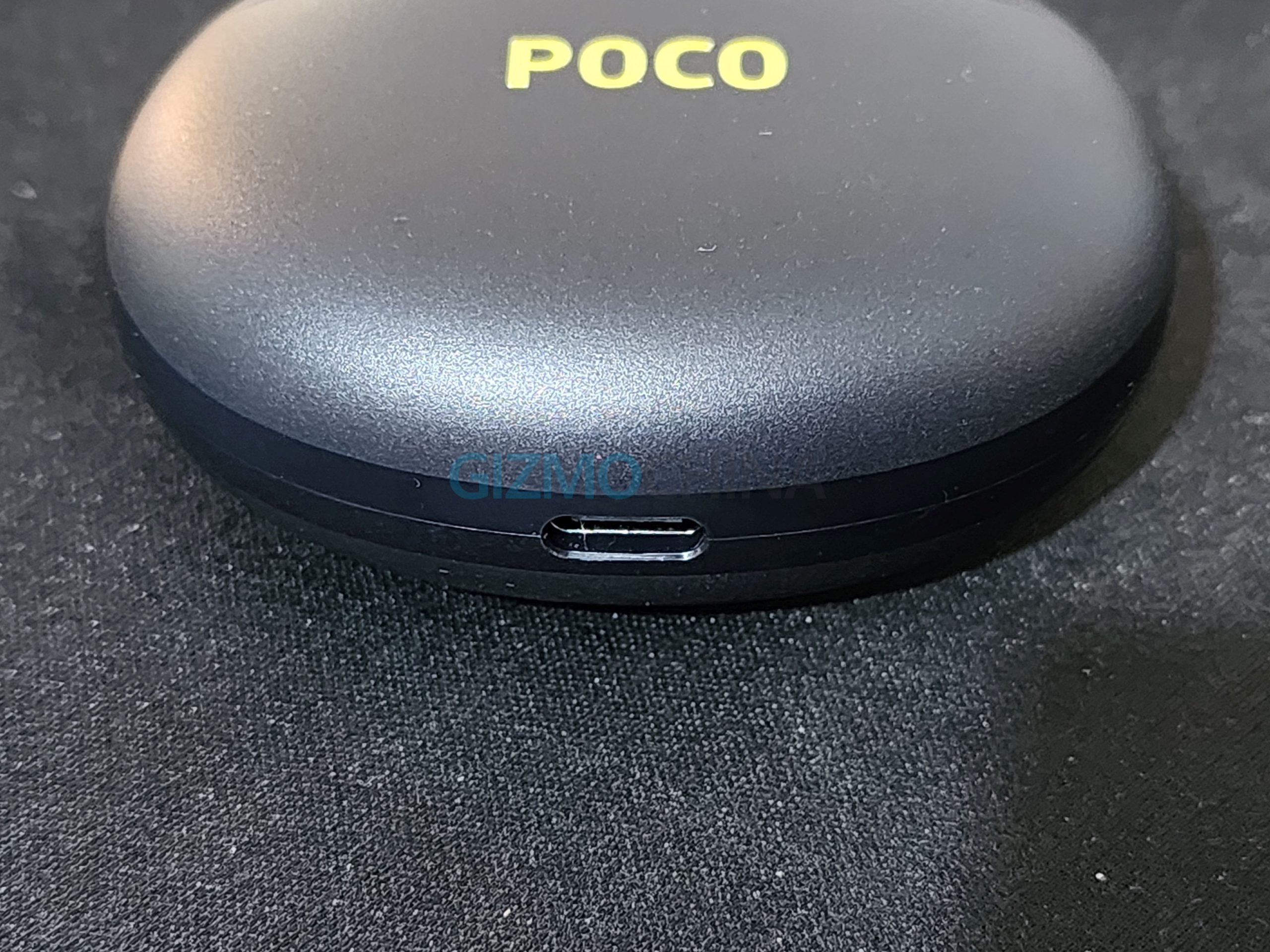
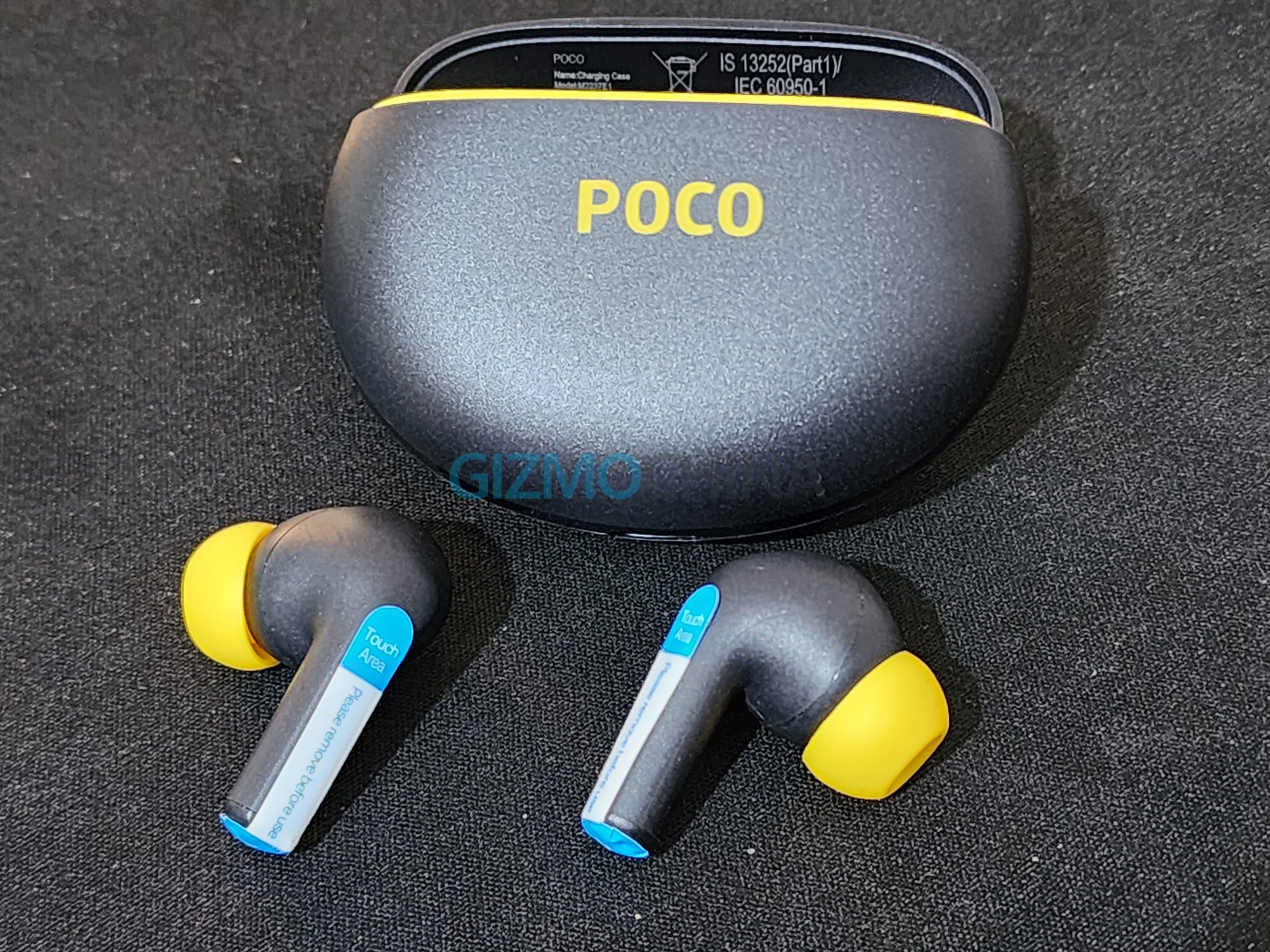
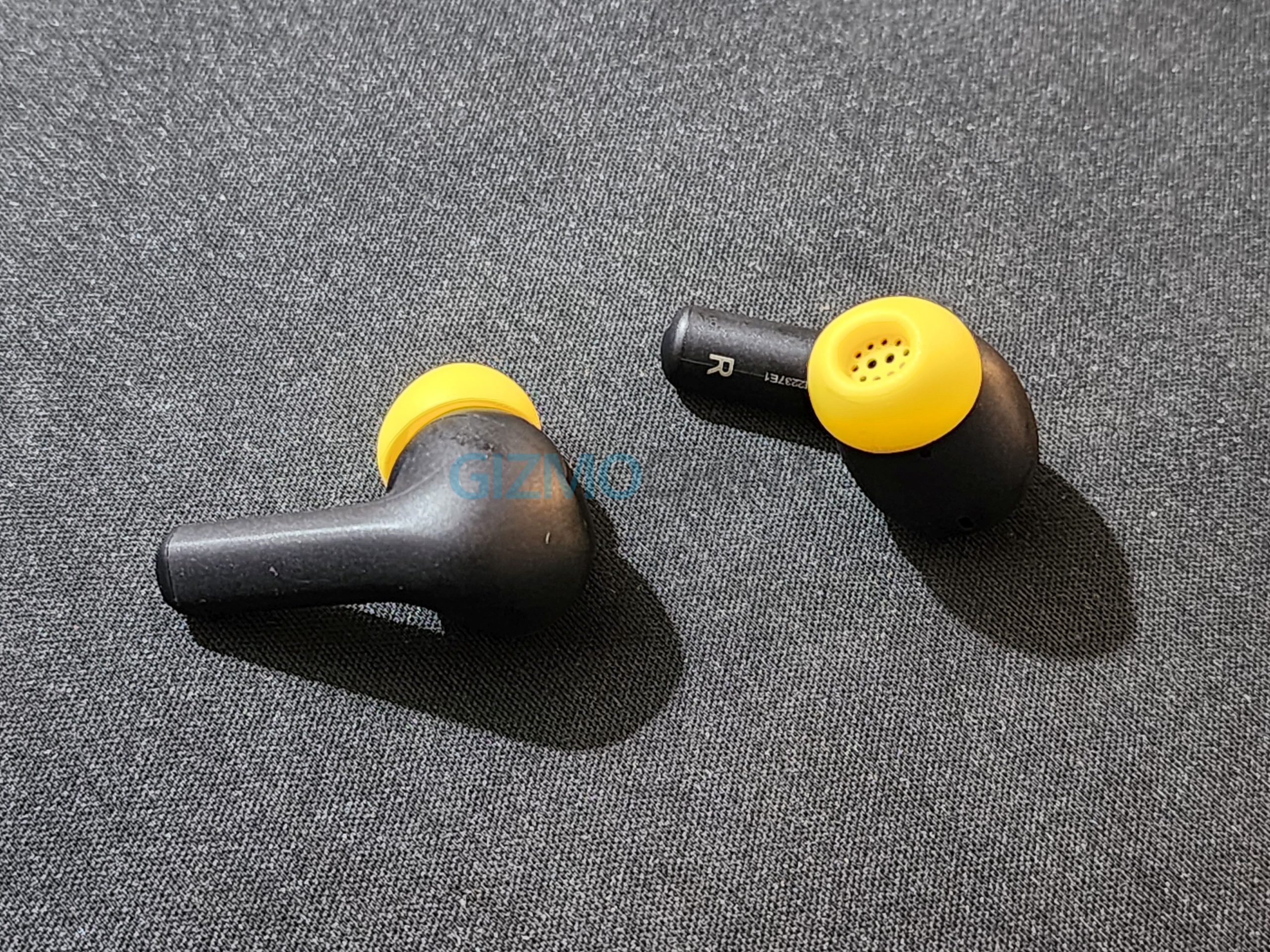
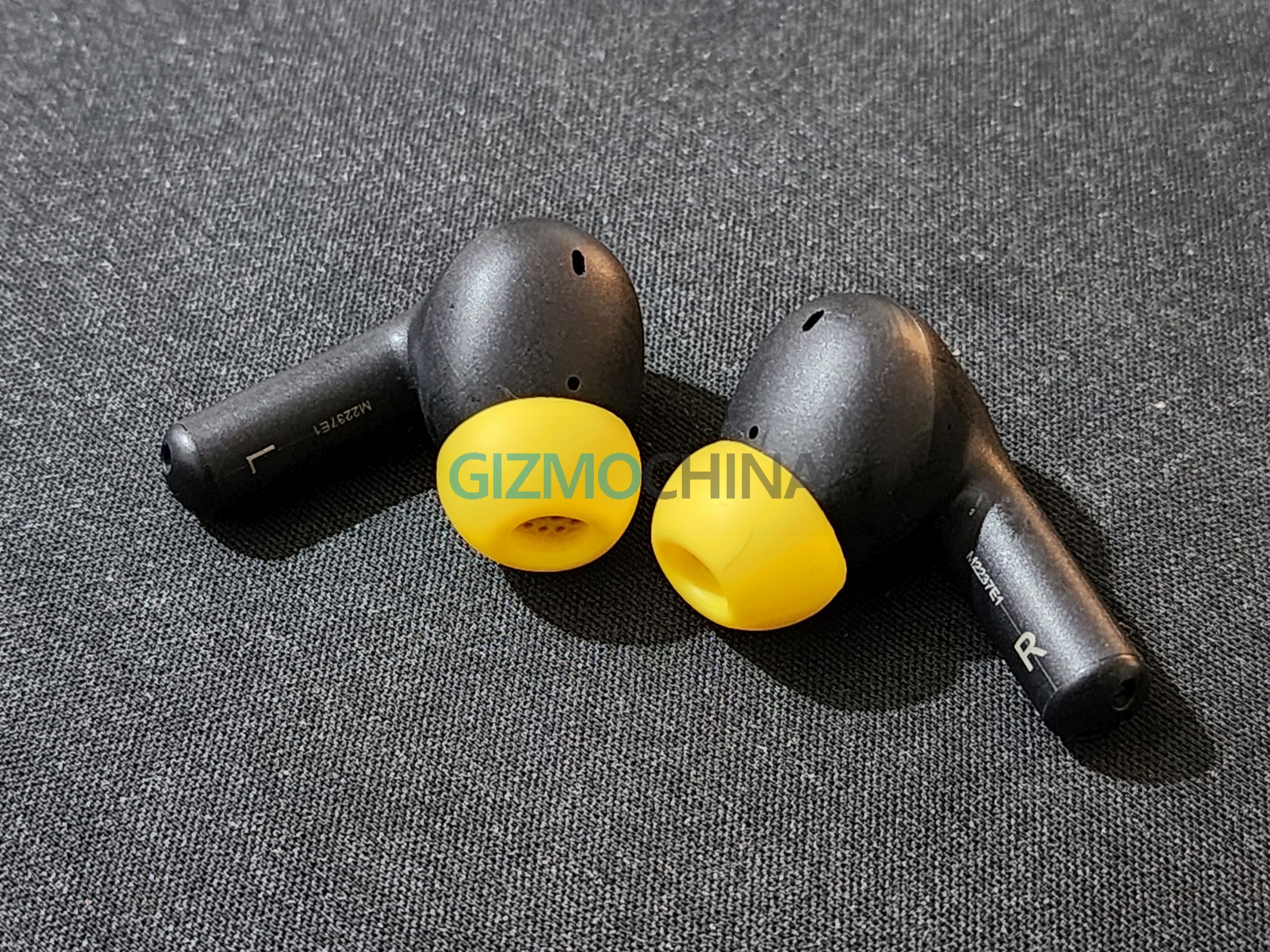
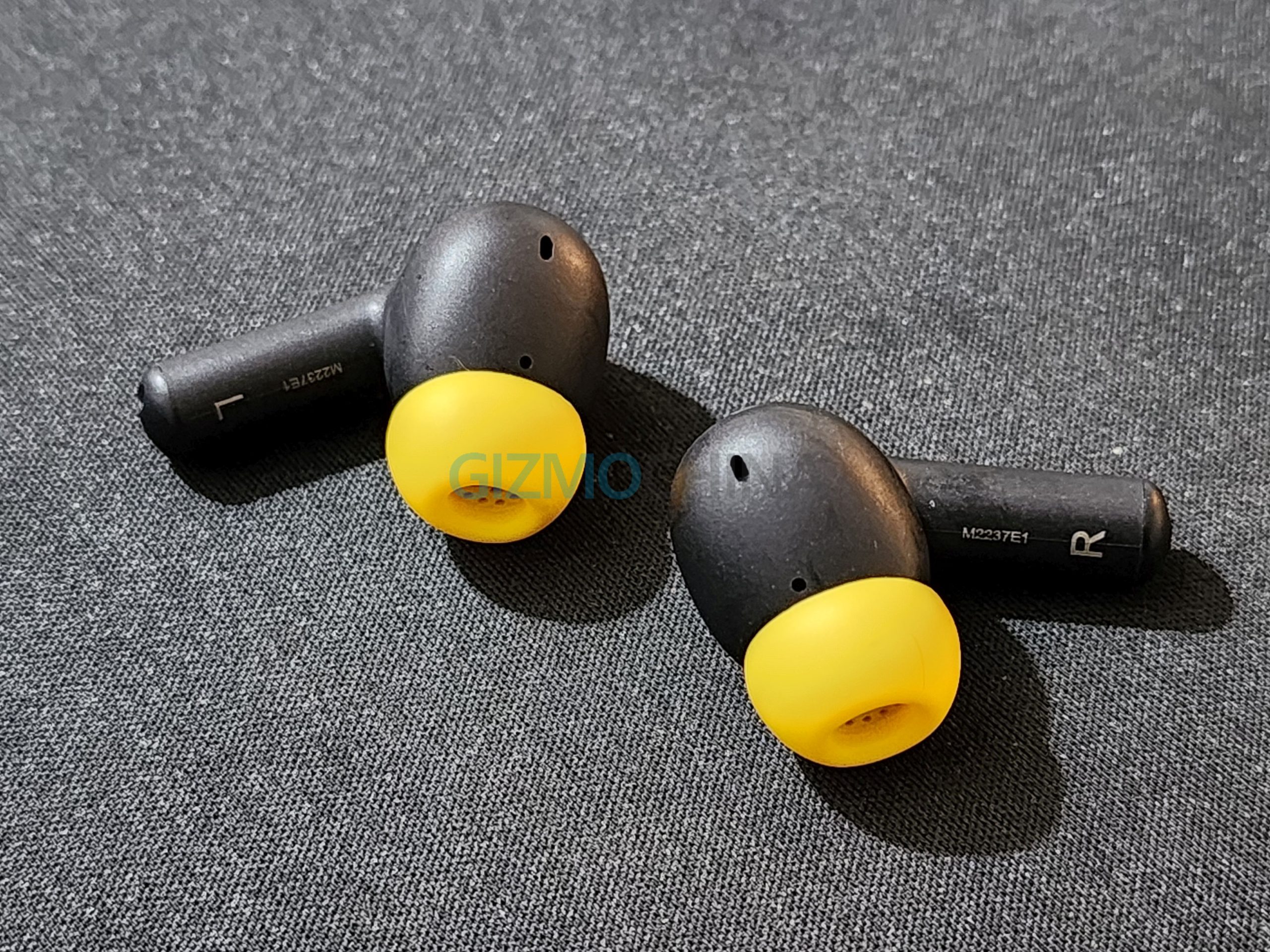
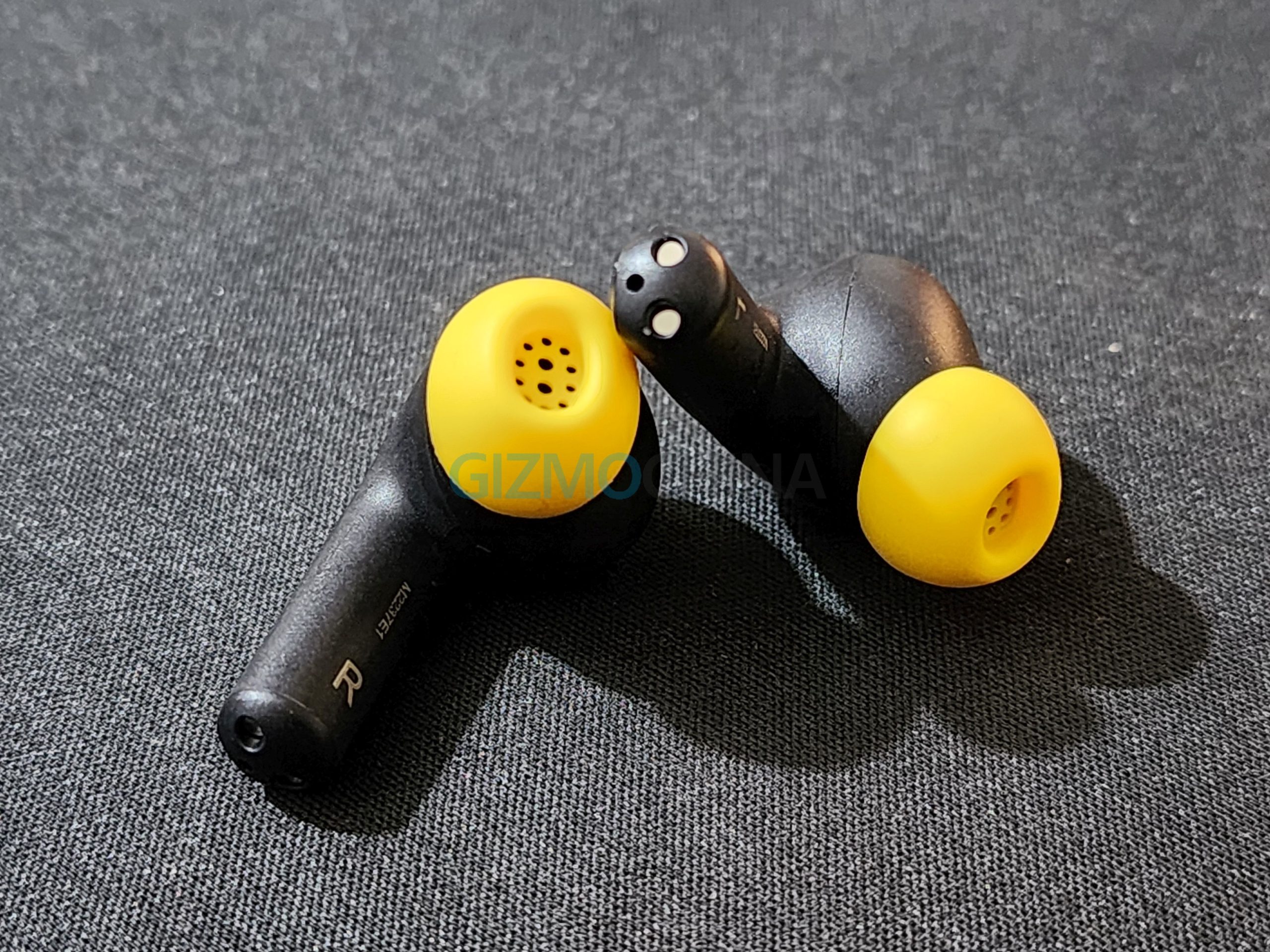
The case has a USB-C charging port and a charging indicator at the bottom. The overall build feels sturdy, but it does not have a premium feel. However, the design is good enough for budget TWS earphones. The earbuds come with medium-sized ear tips pre-installed, but additional sizes are included in the box for a customizable fit. Each earbud is black in color and has yellow eartips. The L and R markings distinguish the left and right earbuds. Each earbud also has a microphone and an LED indicator. The retail package does not include a charging cable.
The Poco Pods are featherlight, weighing just 41 grams for the charging case and 3.6 grams each for the earbuds. The in-ear design with silicone tips provides a comfortable and snug fit during physical activities such as jogging, working out, and cycling. The buds and stem are well-designed and stay securely in the ears even during physical activities. The IPX4 sweat and splashproof rating ensures durability during workouts.
Connectivity and Controls
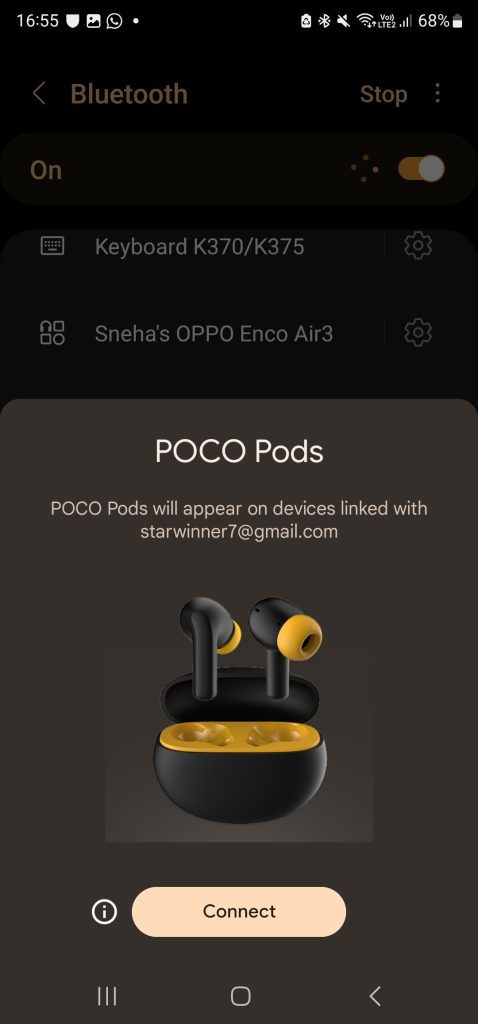
The Poco Pods offer the latest Bluetooth 5.3 connectivity along with the Google Fast Pair feature. Pairing the Pods with any Bluetooth device is a simple process. Simply enable Bluetooth on your device and open the Poco Pods case. The LED indicator (available on the bottom of the case) will blink, and a prompt will appear on your device to connect the Pods for the first time. Subsequent connections are automatic; the Pods will connect to the device as soon as Bluetooth is turned on and the case is opened. Alternatively, you can also connect the Pods by taking them out of the charging case, putting them on, and triple-tapping on the left and right ear touch areas. Then, open the Bluetooth settings on your phone and connect to the Poco Pods.
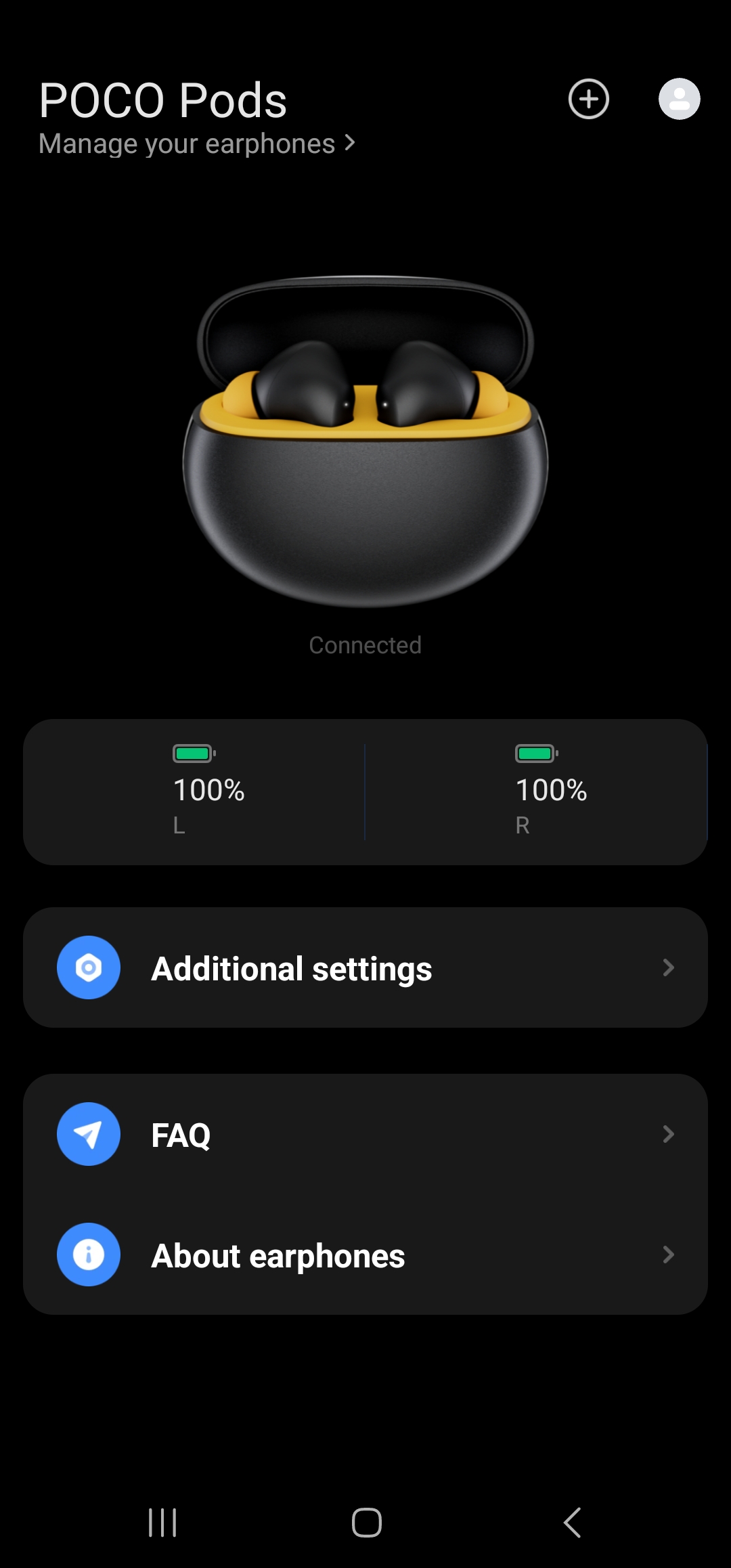
Poco Pods TWS earbuds pairingPoco Pods on XIaomi Earbuds appPoco Pods on XIaomi Earbuds app
The touch controls on the Poco Pods are intuitive and easy to access. A double-tap gesture on either earbud allows you to play/pause music or answer/hang up calls. Triple-tapping on either side of the earbuds lets you reject an incoming call or move to the next track. To go back to the previous song or increase / decrease the volume, you need to use your smartphone.
Controls
Functions
Long press on right / left on an incoming call
Reject call
Double press on right / left earbud
Play / Pause | Answer / End call
Triple press on right / left earbud
Next Song | Reject call
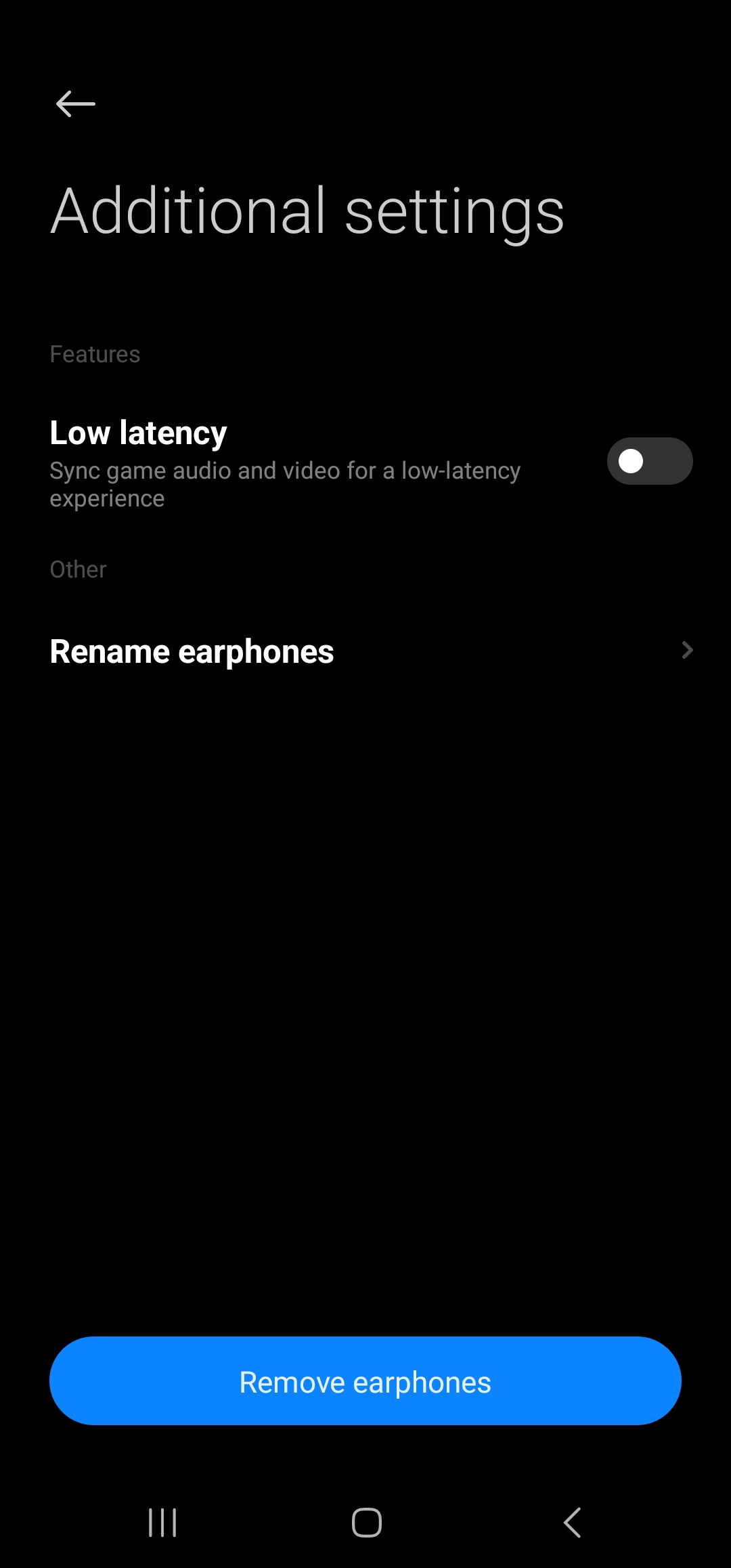
You can also press and hold both earbuds for 1.5 seconds to enter or exit gaming mode. However, it’s important to note that the Poco Pods do not come with Smart Wear detection, so the audio won’t pause when the earbuds are taken out of the ear.
While the Poco Pods do come with Xiaomi Earbuds app support on Android and iPhone, the app offers limited features. You can view the battery level and enable the low latency gaming mode. Unfortunately, there are no customizable settings in the app. The touch control gestures cannot be modified, and the lack of app support means that controls are fixed and non-customizable. Despite this limitation, the touch controls are easy to use and offer decent accuracy.
Sound Output, Call Quality and Battery Life
The Poco Pods TWS earbuds are equipped with 12mm drivers, and the audio quality is well-tuned for the price bracket, particularly for users who enjoy a thumping and bass-driven sound profile. The lower frequencies are prominently boosted, which is ideal for genres like party tracks and modern pop. However, the bass-heavy output does slightly muddle the mid-range and high-frequency sounds, causing some nuances in the mix to be lost.
While the overall sound quality is enjoyable, some elements in the mix may not be as pronounced due to the emphasis on bass. Since there is no support for an equalizer, there is no option to customize the audio output to their preference. However, this can be compensated for by using the music player’s equalizer. The Poco Pods support the common SBC audio codec, which, while having compression algorithms that may affect audio quality, allows for an affordable price point. This may result in a subtle loss of nuances in certain genres with intricate layers and arrangements, but the overall focus on delivering a thumping and impactful sound signature remains a standout feature.
Poco Pods TWS earbudsPoco Pods TWS earbudsPoco Pods TWS earbudsPoco Pods TWS earbuds with Poco F5
The call quality on the Poco Pods is generally acceptable, offering a decent experience for both indoor and outdoor use. It goes without saying that indoor calls offer a better experience than Environmental Noise Cancellation (ENC)-enabled outdoor calls. The ENC functionality helps to filter out background noise, making the user’s voice more audible and improving call quality in less-than-ideal situations such as noisy or windy conditions. However, wind noise may still impact call quality while the Poco Pods during outdoor activities like cycling or running. While the ENC feature contributes to improved call clarity, it’s not a complete substitute for active noise cancellation (ANC), which can more effectively eliminate unwanted background noise.
The Poco Pods pack a 440mAh battery in the case and a 34mAh battery in each earbud. According to the brand, with a single charge, the pods can offer up to 30 hours of combined playback time with the case and 5-6 hours of standalone playback time. In real-world usage, the battery lasted for around 4 days with combined usage and the case. Charging the case takes around 100 minutes, and a 10-minute charge for the earbuds provides around 70 to 80 minutes of playback time. The battery life is generally satisfactory for everyday use, offering a decent amount of playtime on a single charge.
Verdict
The TWS earbuds market in India is flooded with a plethora of options for earbuds priced around Rs 1200. There are many local players in the market with confusing offerings, which makes it a bit difficult to choose a reliable pair of TWS earbuds. In such a crowded market, a reliable brand like Poco has just one TWS earbuds option, offering a straightforward and trustworthy choice for consumers looking for quality audio and features at an affordable price.
Priced at Rs 1,199 (~$14), the Poco Pods is listed on Flipkart for purchase in India. It is also available for purchase through offline stores in the country.
Disclaimer: All of the opinions in this Poco Pods TWS earbuds review are mine and based on my own experiences. There has been no editorial input from Poco.
Caution: While TWS earbuds offer a convenient and immersive audio experience, it is important to exercise caution when using earphones for extended periods. Prolonged exposure to loud volumes can lead to potential hearing damage over time. We recommend adhering to safe listening practices by keeping the volume at a moderate level and taking regular breaks to allow your ears to rest. Your auditory health is paramount, so remember to prioritize responsible listening habits.
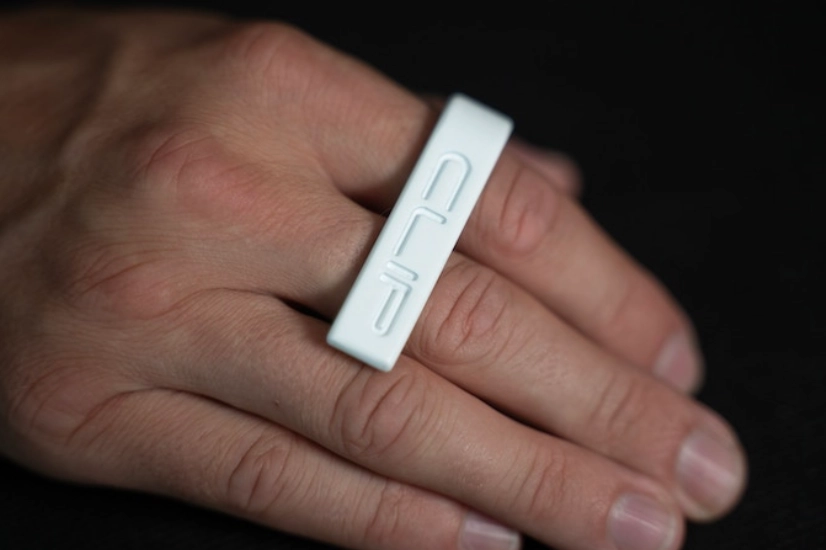
Amidst ongoing tech innovations, the computer mouse has undergone transformative changes over the years, from trackballs to lasers, aiming to enhance user experience. However, a new device called the ‘Clip Mouse’ has emerged, challenging the conventional mouse’s design and interaction pattern. This innovation aims to redefine the traditional computer mouse’s perception and functionality, presenting a significant step forward in tech evolution.
Clip Mouse specifications:
The Clip Mouse has recently debuted on Kickstarter with an inventive clamp-style design that promises a minimalist approach to computer interaction. Priced at 59 Euros (roughly 468 Chinese Yuan), backers can expect the first shipment in October, followed by a second batch in November.
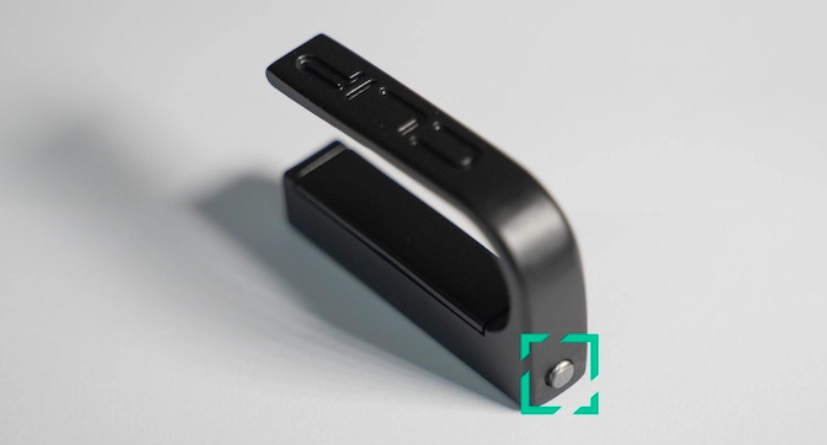
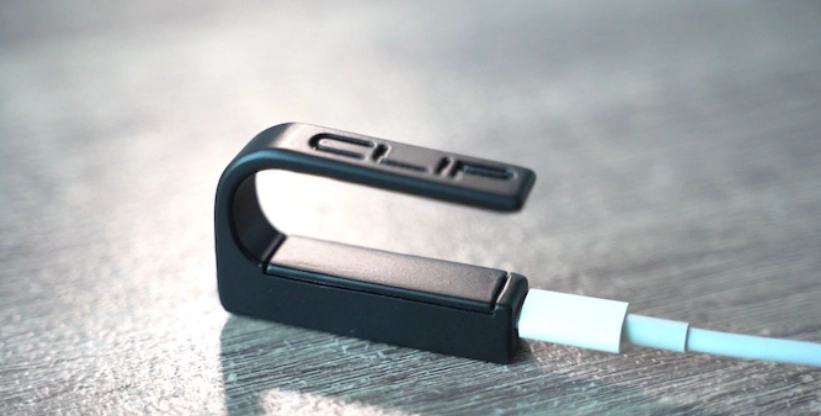
The Clip Mouse is a minimalist and user-friendly device that effortlessly attaches to the fingers, functioning as a computer mouse. It can be configured via an application. According to the company, the Clip Mouse is intended to replace the Magic Mouse by incorporating all its functions into a new, lighter, more minimalist, and compact design. It’s positioned as an ideal companion for both work and travel.
The Clip Mouse connects to Windows and Mac using Bluetooth 5.0. Unlike traditional mice, it uses a gyroscope module for horizontal movement recognition, and it has a built-in touchpad beneath the fingers for tracking gestures, directions, and pressure. It supports standard operations like left-click, right-click, scrolling, and more.
The Clip Mouse features a button placed beneath the thumb that has multiple functions. Pressing it for 3 seconds resets the cursor’s position. Additionally, while using the Clip Mouse for typing, clicking the button once disables gesture recognition for unrestricted typing; clicking it again restores cursor control.
The Clip Mouse features a built-in lithium-ion battery offering 50 hours of continuous use on one charge. It can be conveniently recharged using a USB-C port.
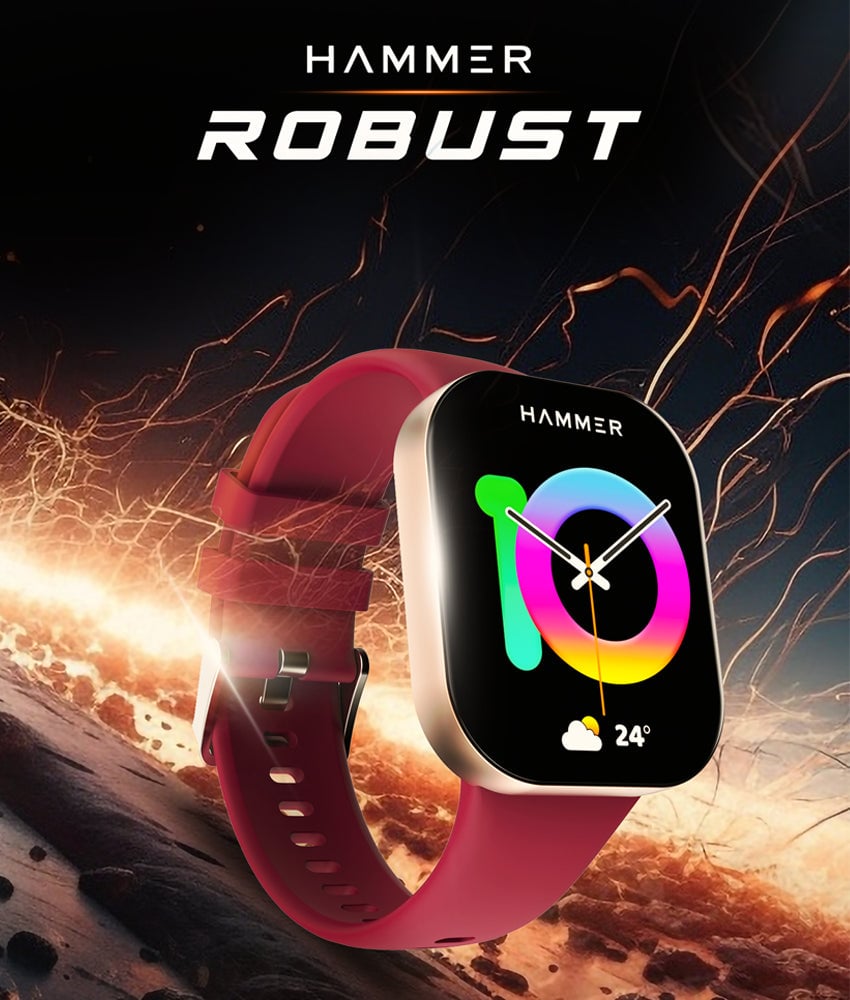
Hammer has launched the Hammer Robust smartwatch in India. The device is now up for sale on Amazon. Let’s check out the specs of this device.
Hammer Robust smartwatch specifications:
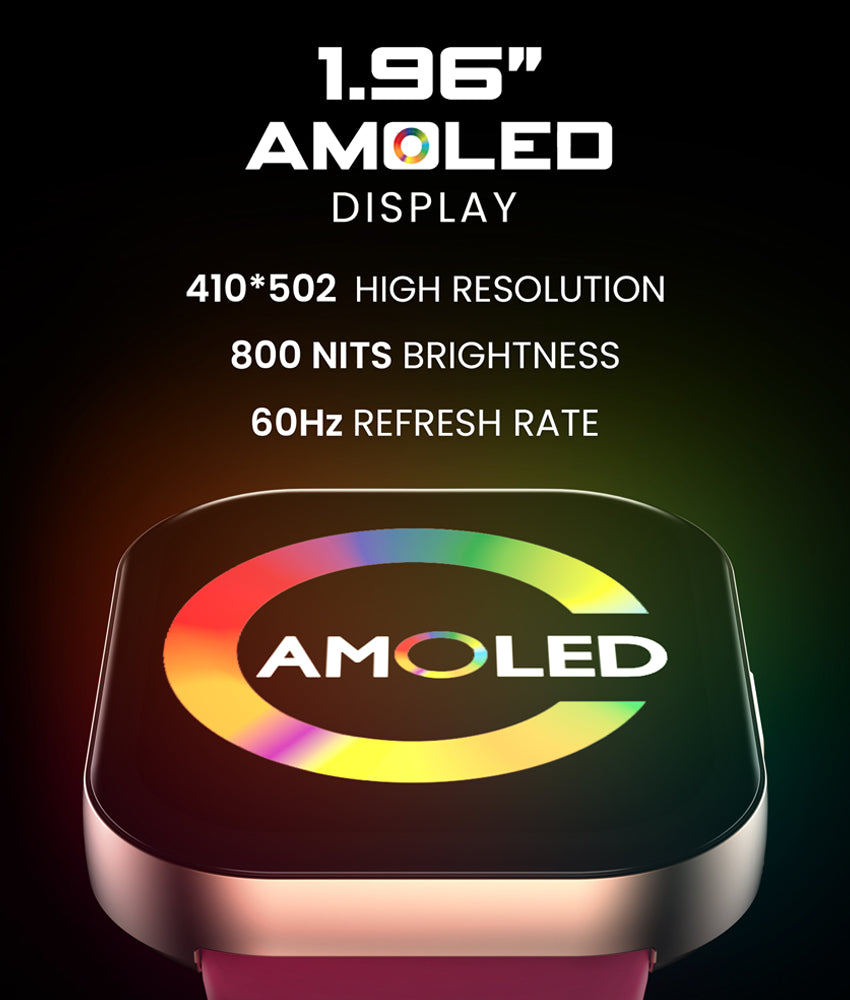
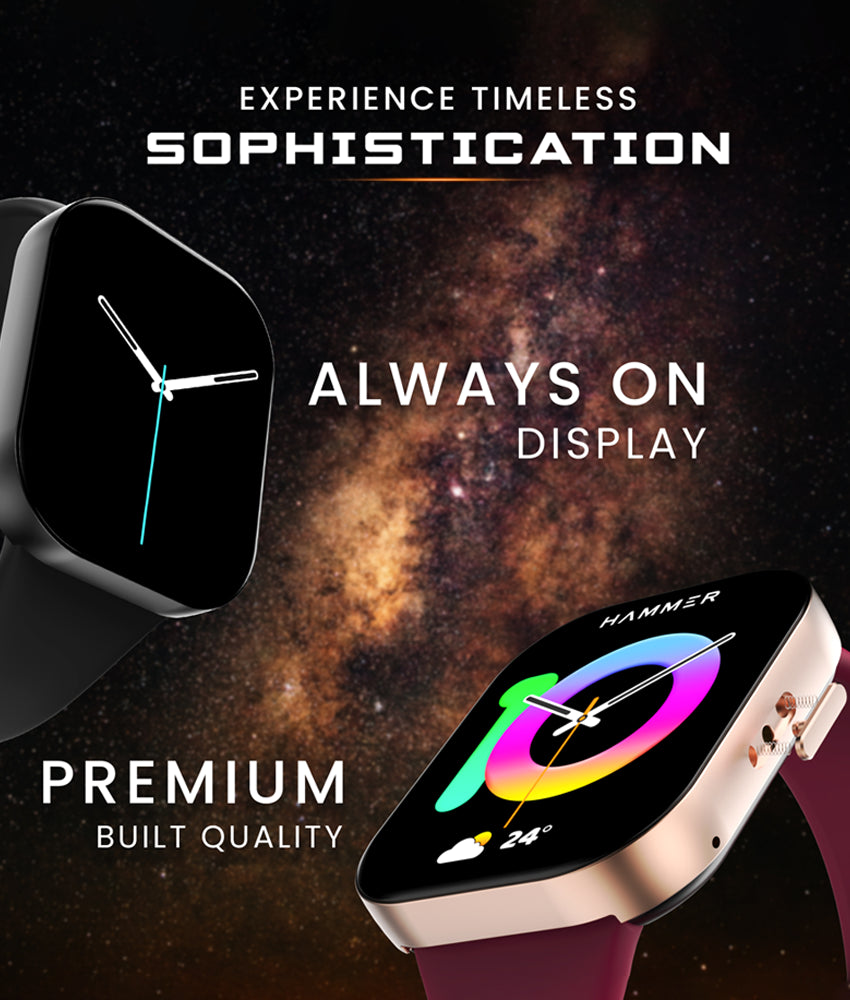
The standout feature of the Hammer Robust smartwatch is its impressive 1.96-inch AMOLEDdisplay with a resolution of 410 x 502 pixels, 60 Hz refresh rate, and bright 800 nits. It also offers the sought-after Always on Display feature for quick access to crucial information.
The Hammer Robust smartwatch features a metallic finish body that combines style and durability. Crafted from polycarbonate with a metallic touch, it offers a refined appearance and lasting use. Comfortable, skin-friendly straps enhance its appeal as a versatile accessory for daily wear.
The smartwatch features advanced Bluetooth calling capabilities, powered by Bluetooth 5.2. It includes a built-in speaker and microphone, enabling clear and uninterrupted calling. The smartwatch offers a dial pad, along with features like vibration, ringing, and volume controls. It serves as an intelligent calling device usable anytime and anywhere.
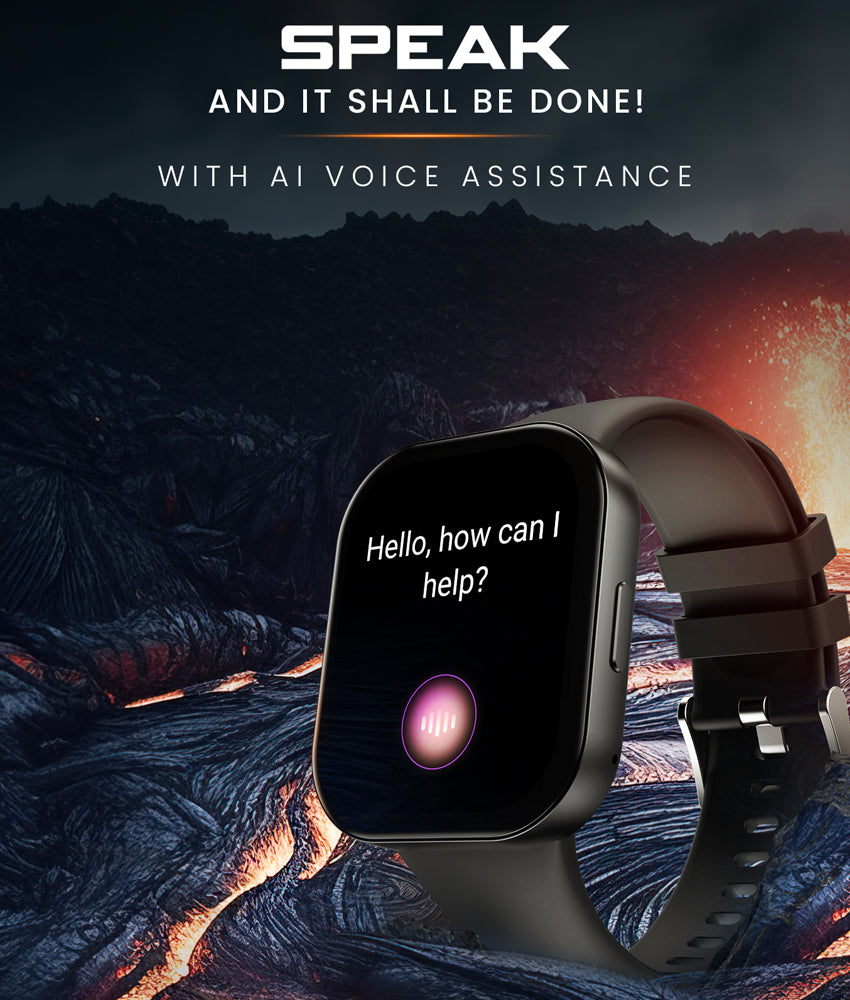
The Hammer Robust smartwatch stands out with its extensive selection of 100+ sports modes, catering to diverse fitness preferences. It offers comprehensive health monitoring, including heart rate, sleep, blood pressure, SpO2 levels, breath training, and female health tracking. The watch also features Voice Assistant, enabling convenient voice-enabled interactions.
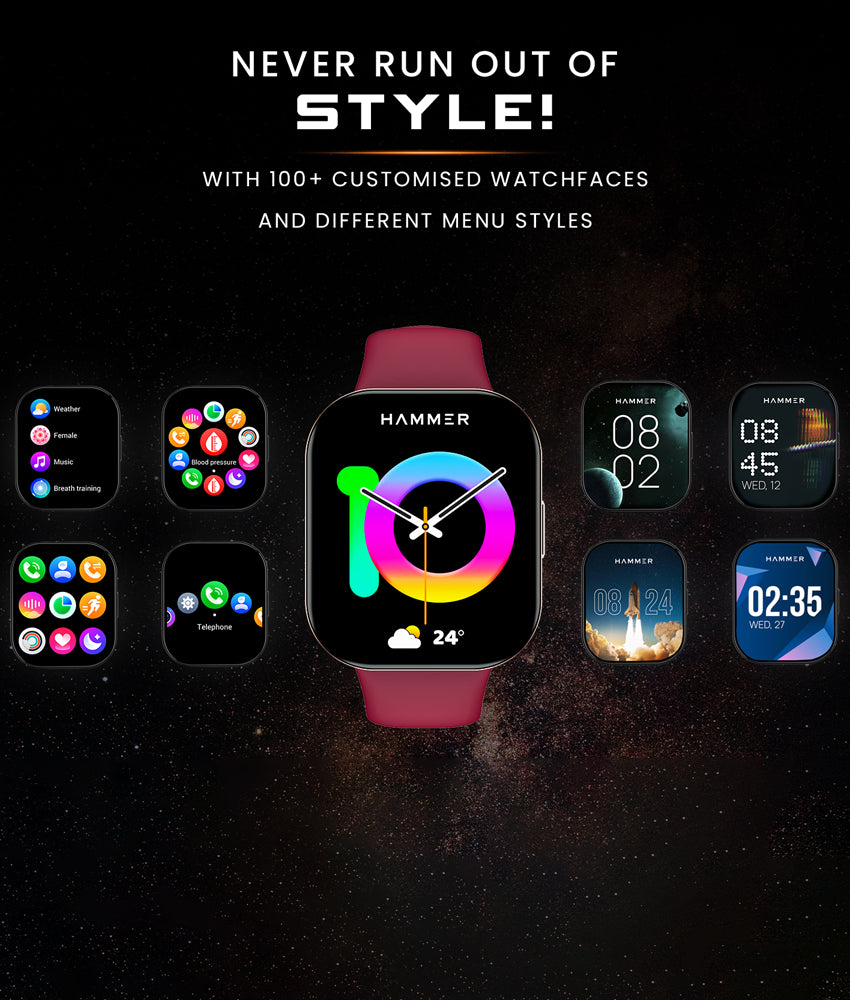
The Hammer Robust smartwatch is built to endure daily challenges, featuring an IP67 water resistance rating for protection against spills and splashes. It emphasizes personalization with over 100 customizable watch faces and diverse menu styles accessible through the Fitcloud App.
The smartwatch improves user experience through features such as sports notifications, in-app GPS, hydration reminders, activity prompts, and weather updates. It offers convenient charging with a strong magnetic pin design.
The Hammer Robust smartwatch is available for purchase on Amazon and the official Hammer website, priced at Rs. 2999.
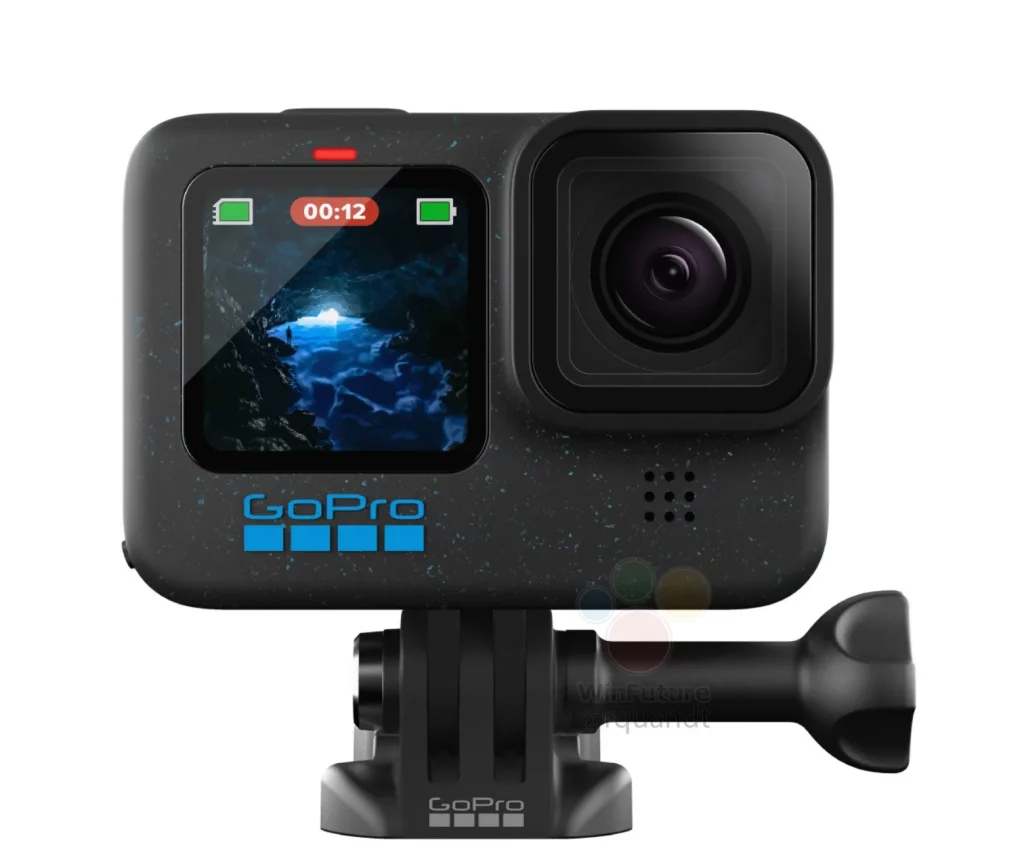
GoPro is widely popular among people who are adventure enthusiasts and also photographers. The leading action camera maker is known for its compact design, durability, and impressive image stabilization making it the ideal device to take everywhere. The brand announced the Hero 11 series in September last year which means it is due to get a successor soon. The next-generation offering will likely be called the GoPro Hero 12 Black. Ahead of the official launch, its details have surfaced online courtesy of tipster Roland Quandt.
GoPro Hero 12 Black key details leaked
The GoPro Hero 12 Black will come with minor cosmetic changes compared to its predecessor. It has the same dimensions and a compact design as the Hero 11 Black. One noticeable change between the two devices is that the body material on the upcoming offering will feature small Blue colored speckles compared to plain Black. The report adds that the action camera will retain the 2.27-inch main display on the rear and a 1.4-inch screen on the front.
As per the report, the GoPro Hero 12 Black will feature a 27MP 1/1.9-inch camera sensor just like its predecessor. Meanwhile, video screen grabs will be limited to 24.7MP. With this users will be able to shoot in 8 and 10-bit settings. The action camera will support up to 5.3K video recording at 60fps along with support for HDR. It will pack features like HyperSmooth 6.0 stabilization, Horizon Lock, HyperView, HyperSmooth AutoBoost, and more.
The GoPro Hero 12 Black will reportedly be powered by the same 1,720mAh Enduro battery but it will offer a slightly longer usage up to 70 minutes when shooting 5.3K at 60fps compared to its predecessor. Shooting FHD videos will last up to 2.5 hours.
The GoPro Hero 12 Black is tipped to be available for purchase on September 13 and it will reportedly carry a price tag of EUR 449.
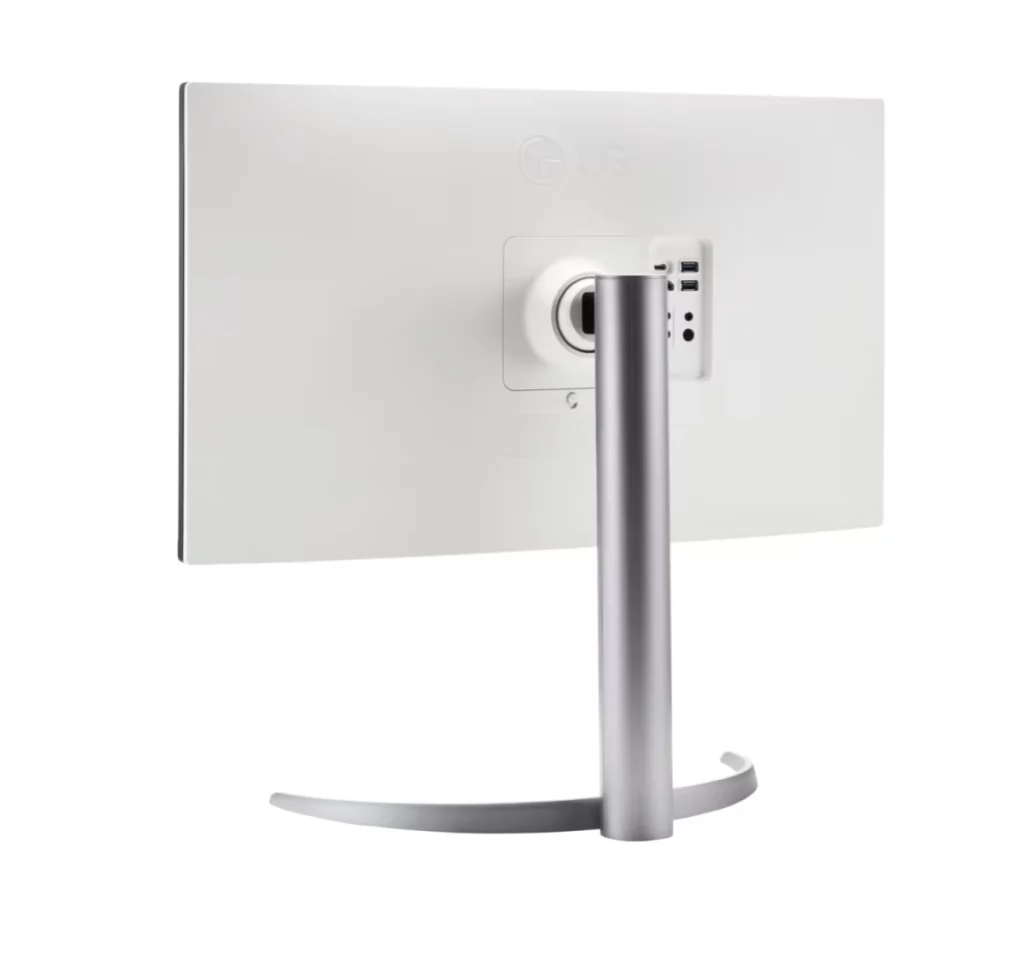
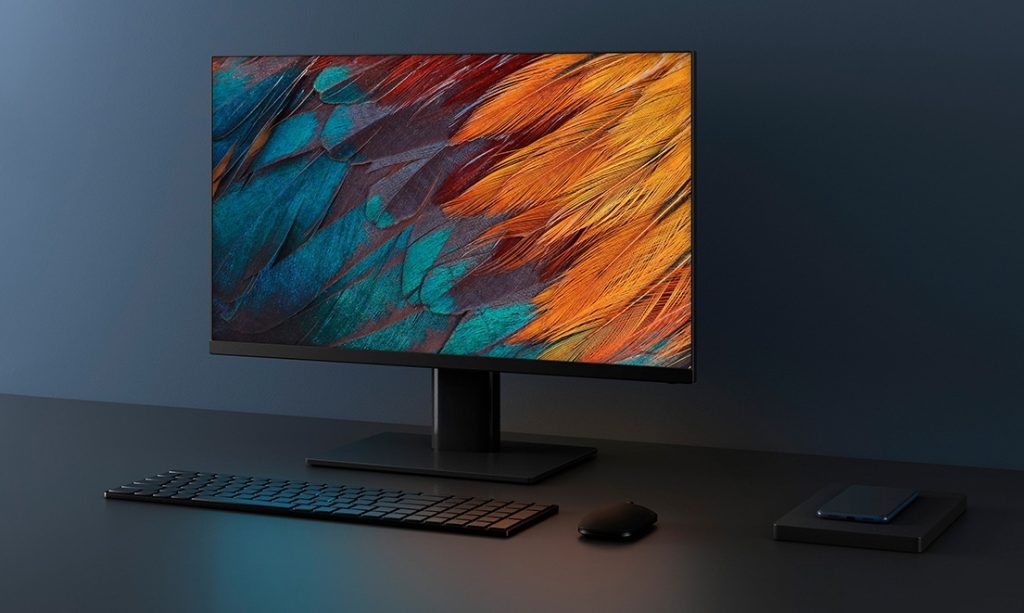
LG has introduced the 27UQ750 monitor, combining a 27-inch 4K 144Hz gaming screen with a subtle office monitor design. It caters to work and gaming needs, with features detailed on LG’s website, suggesting an upcoming launch.
LG 27UQ750 monitor key features:
The 27UQ750 monitor features a 27-inch VA panel with vibrant colors and wide viewing angles, enhanced by a 4K resolution for sharp visuals. Gamers benefit from its 144Hz refresh rate, providing smoother gameplay and a competitive advantage.
The monitor’s standout features include a 95% DCI-P3 color gamut for professional tasks, along with a 400-nit brightness and 3000:1 contrast ratio for clear visuals. Its 5ms gray-to-gray response time eliminates lag in fast-paced content. Suitable for both gaming and professional work.
The 27UQ750 features an adjustable and rotatable stand for customizable viewing angles. It also includes dual 5W speakers for satisfactory built-in sound output.
The monitor offers forward-looking connectivity with HDMI 2.1 and DP 1.4 ports, but the standout is the USB-C port. It supports data transfer and impressive bi-directional power delivery at 90W, ideal for reducing cable clutter and charging USB-C laptops.
LG’s 27UQ750 monitor blends gaming and professional features seamlessly, offering top-notch display quality, flexible connectivity, and a versatile design suitable for both office and gaming environments.
Rumors are rife about the Xiaomi 14 and the Qualcomm Snapdragon 8 Gen 3. There are multiple leaks detailing everything about both the smartphone and the chipset. A recent report is even claiming that Qualcomm Snapdragon 8 Gen 3 will debut with Xiaomi 14 series.
Qualcomm is launching the next generation of its flagship chipset in October at the Snapdragon Summit 2023. Following the event, Xiaomi will announce the new MIUI 15 based on Android 14, and will also shed some light on the Xiaomi 14 series. It will be like a soft announcement of Xiaomi’s next flagship. However, the actual Xiaomi 14 launch will take place in November, and the device will come pre-installed with stable MIUI 15.
The report seems to be corresponding to the launch timeline of both companies. Considering Apple’s new iPhone launch in September, October looks more suitable for the new chipset announcement. It will be followed by Xiaomi 14’s launch in November. Then, there will be multiple smartphone launches from Vivo, Oppo, ZTE, and other brands.
Last time, Vivo’s X90 Pro+ was the debut smartphone to launch first using the Snapdragon 8 Gen 2. It was later followed by iQOO 11 and 11 Pro, and then Xiaomi 13 Series. We hope Snapdragon 8 Gen 3 to debut first with Xiaomi 14 series.
The chipset will equip an octa-core design including a Cortex-X4 core, 5x Cortex-A720 cores, and two Cortex-A520 cores.
Xiaomi 14 Series Specifications and Features (Expected)
The Xiaomi 13’s successor seems to bundle several upgrades and enhancements in both the software and hardware segment. The smartphone appears to bundle a new 50MP 1/1.28-inch primary sensor which is a bit larger than the last year’s sensor. It will bundle along a telephoto lens with 5x optical zoom capability and an ultrawide angle lens. Further, the base model is expected to feature a 4860 mAh battery with support for 90W fast wired charging and 50W wireless charging.
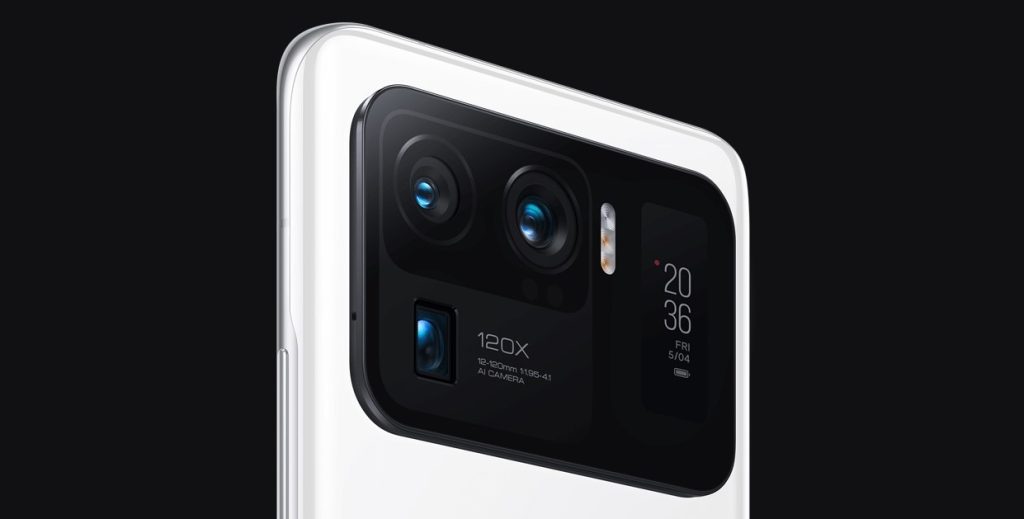
There will be a design change, and even the camera module will have a different arrangement, in comparison with the last year’s model.
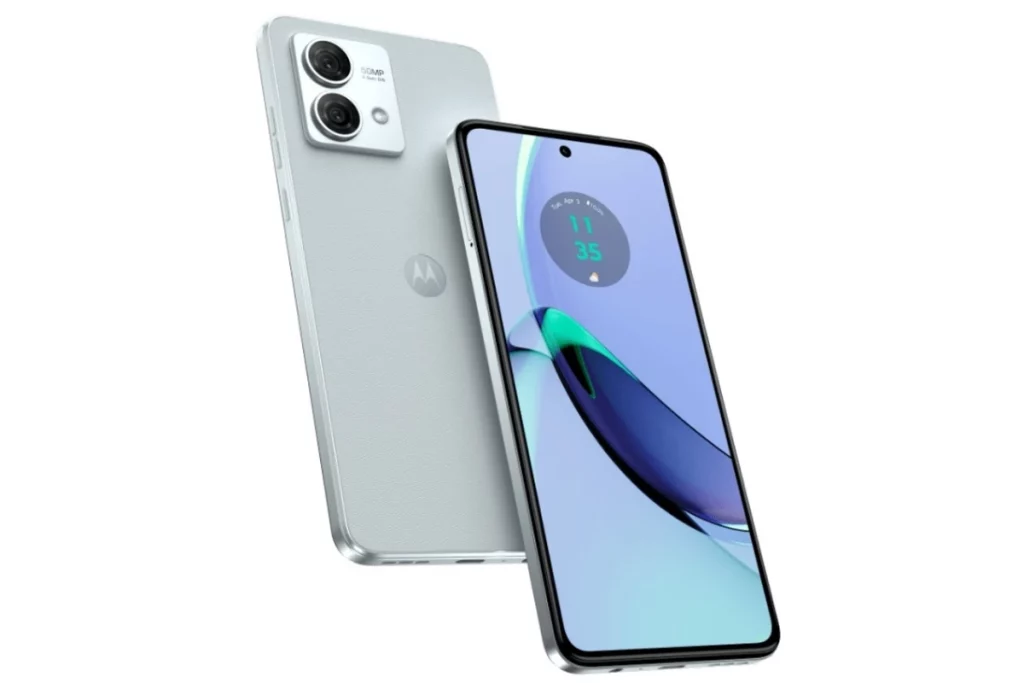
Motorola is reportedly working on two G-series devices. Recently, the Moto G54 surfaced in press renders. Now the Moto G84 5G has also appeared in leaked renders shared by tipster Evleaks. The images give us a look at the device. The upcoming offering has already bagged TDRA and FCC certifications hinting at an imminent launch of the smartphone. The Moto G84 5G is expected to arrive as the successor to the G82 that launched last year.
Moto G84 5G leaked renders
As per the leaked renders, the Moto G84 5G has a slightly boxy form factor. There is a protruding squarish camera module on the back panel along with the brand’s batwing-like logo. The power and volume rocker buttons are located on the right side whereas the SIM tray is on the left side. It’s unclear whether the power key will double up as a fingerprint scanner or if the device will feature an in-screen scanner.
On the front, the Moto G84 5G will feature a center-aligned punch-hole cutout display. The screen is surrounded by thin bezels. The smartphone has dual rear cameras along with a 50MP OIS text confirming the sensor’s presence. The bottom of the device houses a USB-C port, a 3.5mm headphone jack, and a speaker grille. The renders reveal the Moto G84 5G in Red, Black and Silver color options.
The core specifications of the Moto G84 5G remain a mystery for now. The FCC certification listing revealed that the device will pack a 5,000mAh battery unit with support for 33W fast charging.
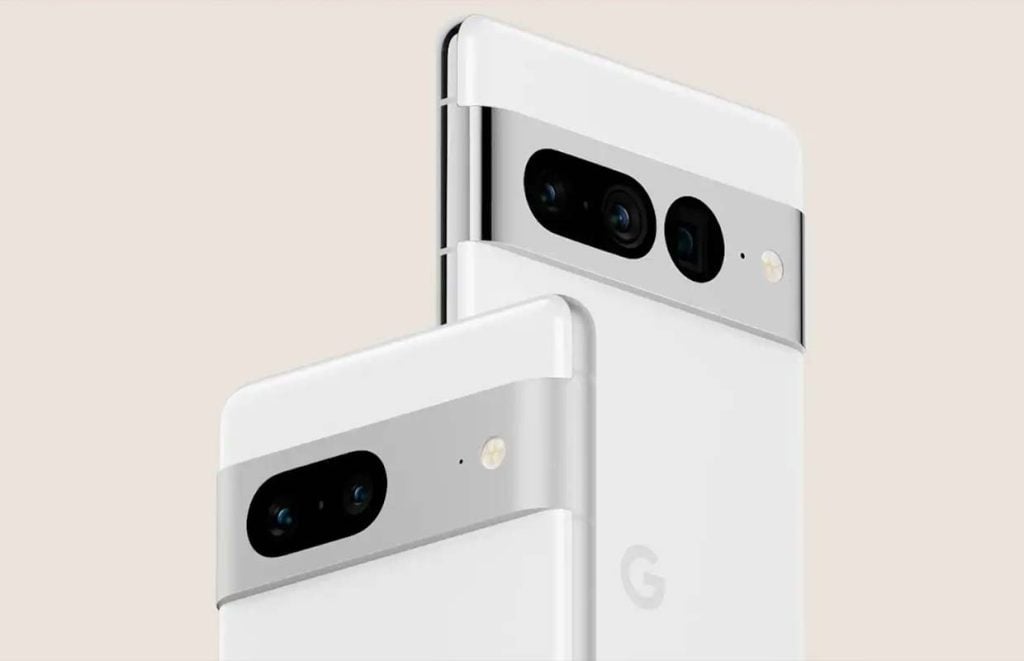
Pixel 8 Series is not so far from the official launch if we consider the recent leaks and the past launch dates. Google is set to announce the new Pixel at the Hardware Event this fall. There are talks about some major hardware changes on Google’s flagship device, but along with the hardware, there are some exciting software features that will be part of Pixel 8. Apart from the changes in the new iteration of Android, Google is also preparing to revamp the famous Google Camera app with a new User Interface.
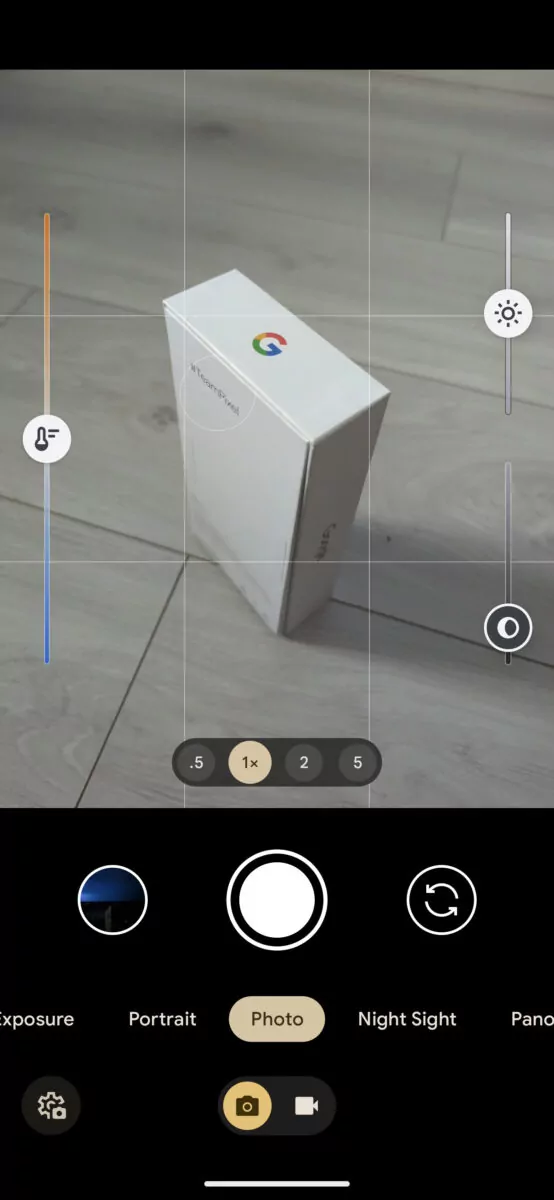
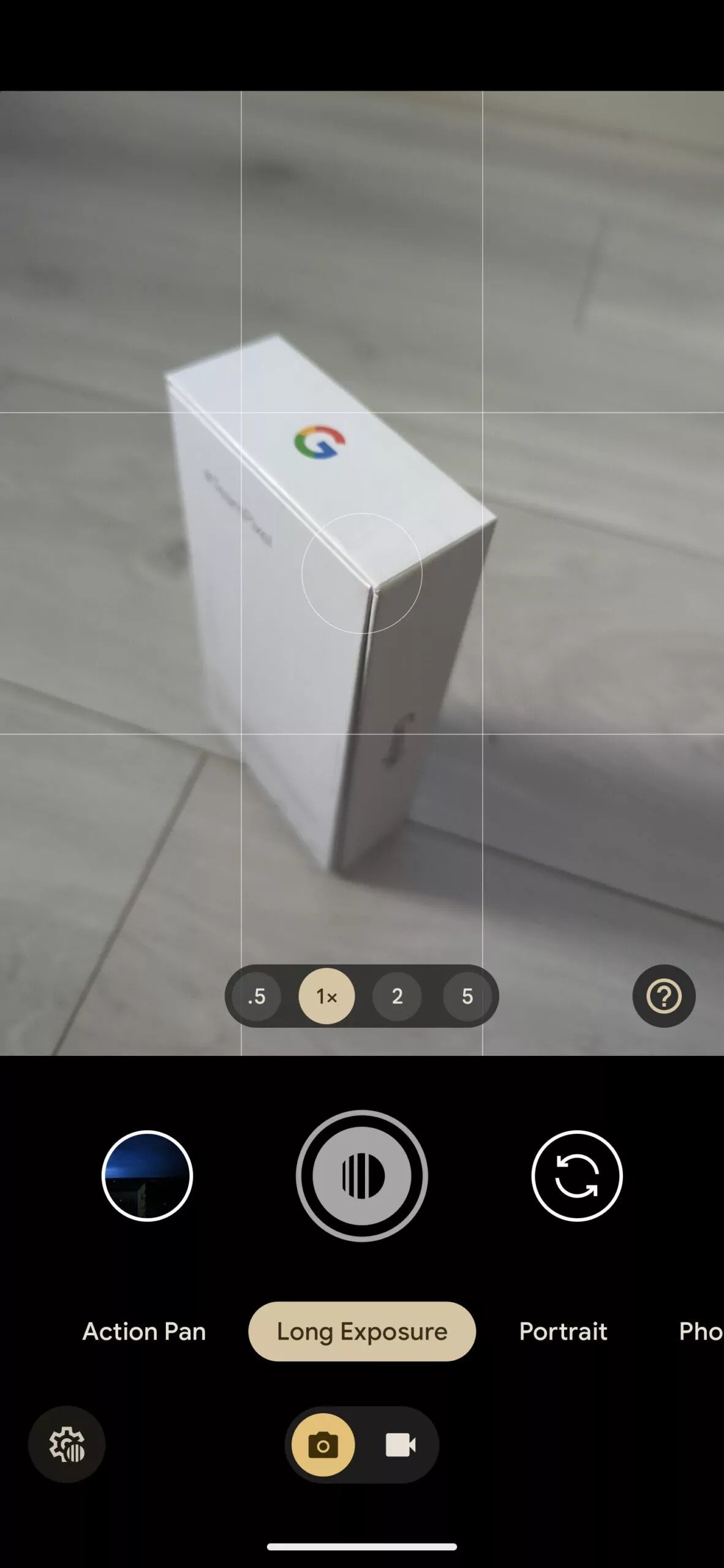
According to a report published by Android Authority, the search giant is bringing all the camera controls to the bottom of the App’s User Interface. It will make in-app features more accessible and reachable.
UI Changes in Photo mode.
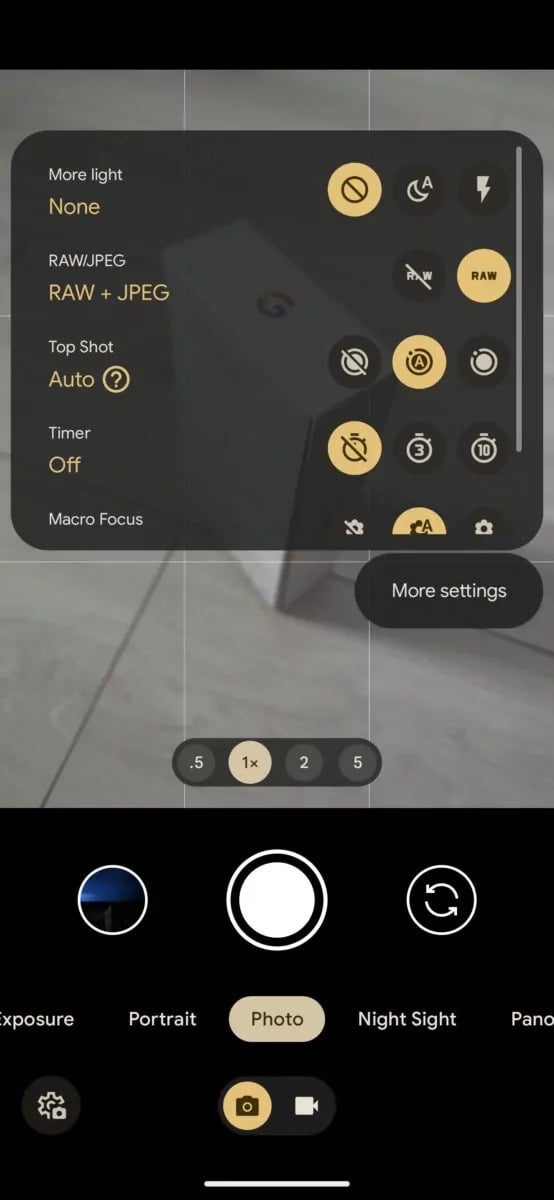
The settings button has moved from the top to the bottom-left corner, and it is also accessible via a swipe-up gesture. The Settings Panel remains unchanged for now. Further, the black bar now hosts some additional modes and features which aid in better usability with a single hand. The users can now switch between Video and Photo modes from the bottom bar by the side of the Settings icon.
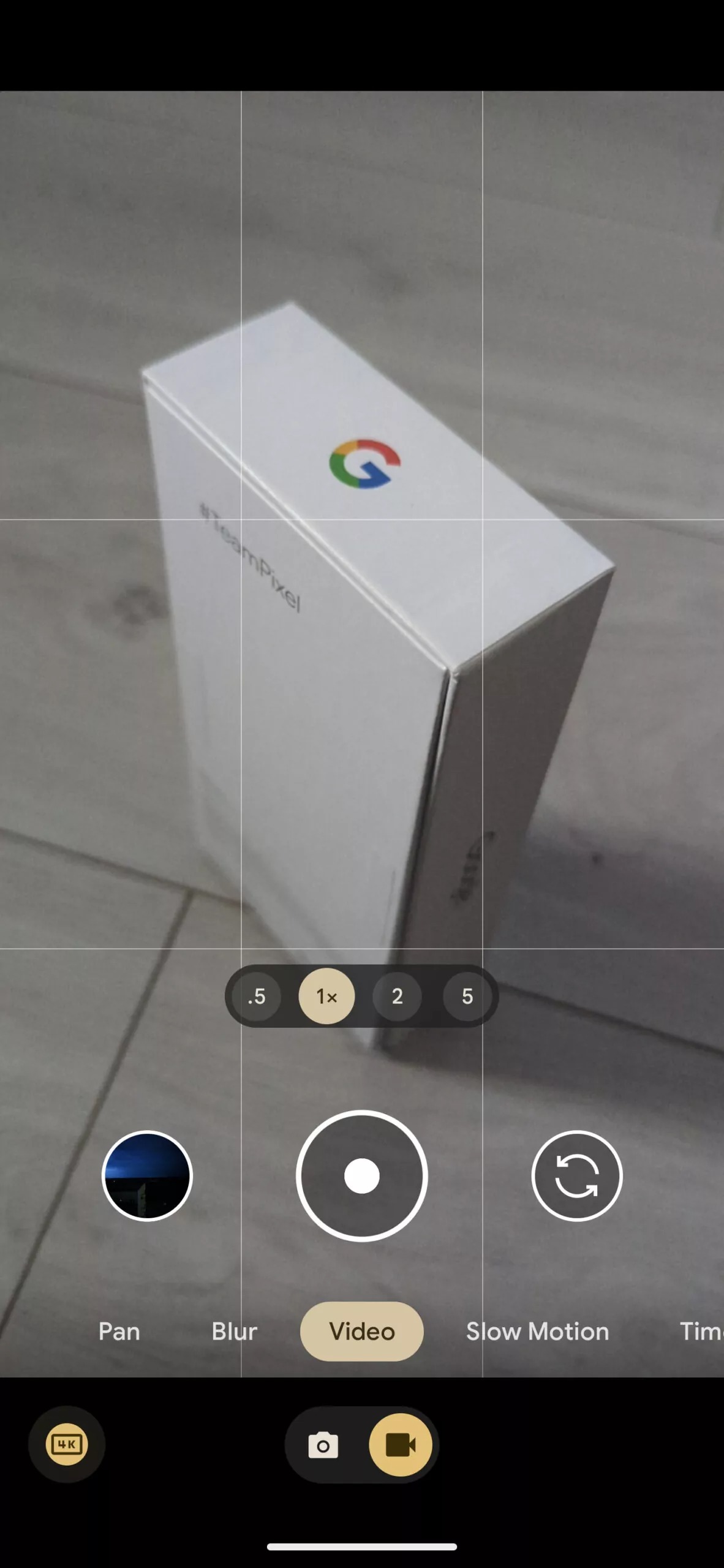
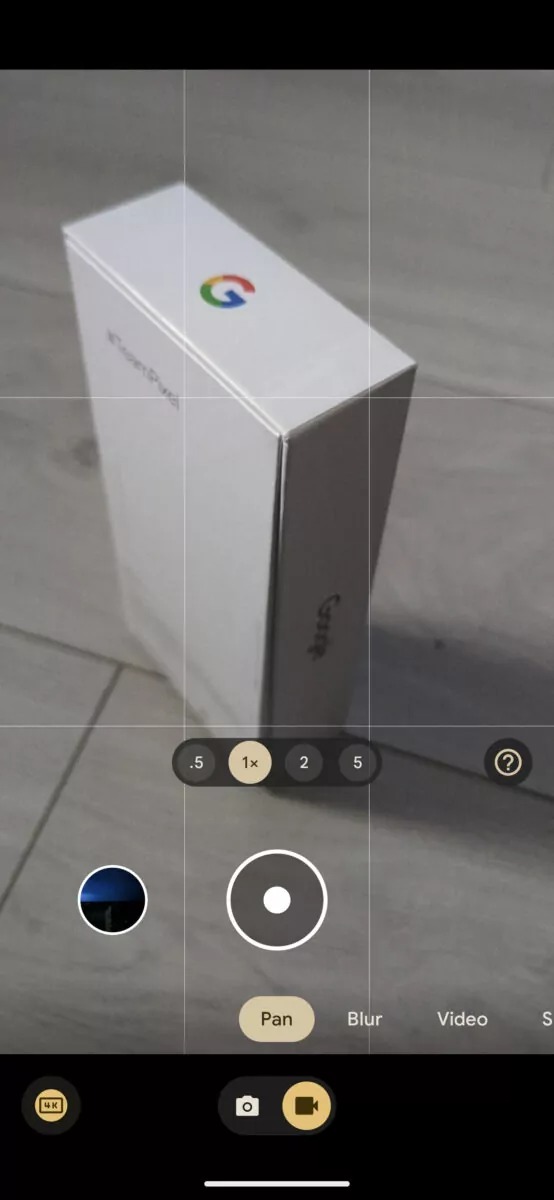
The screenshots of the new Camera further reveal a new UI featuring different modes including Action Pan, Portrait, Long Exposure, Photo, Night Sight, and Panorma. And, slight different modes like Pan, Blue, Video, Slow Motion, and Time Lapse appear for the Video Mode.
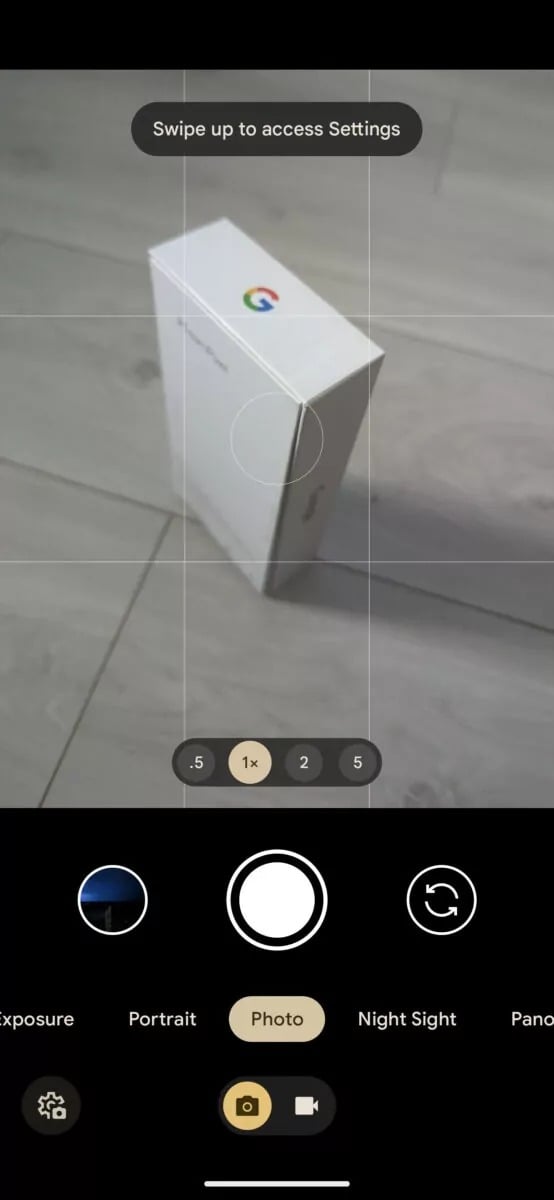
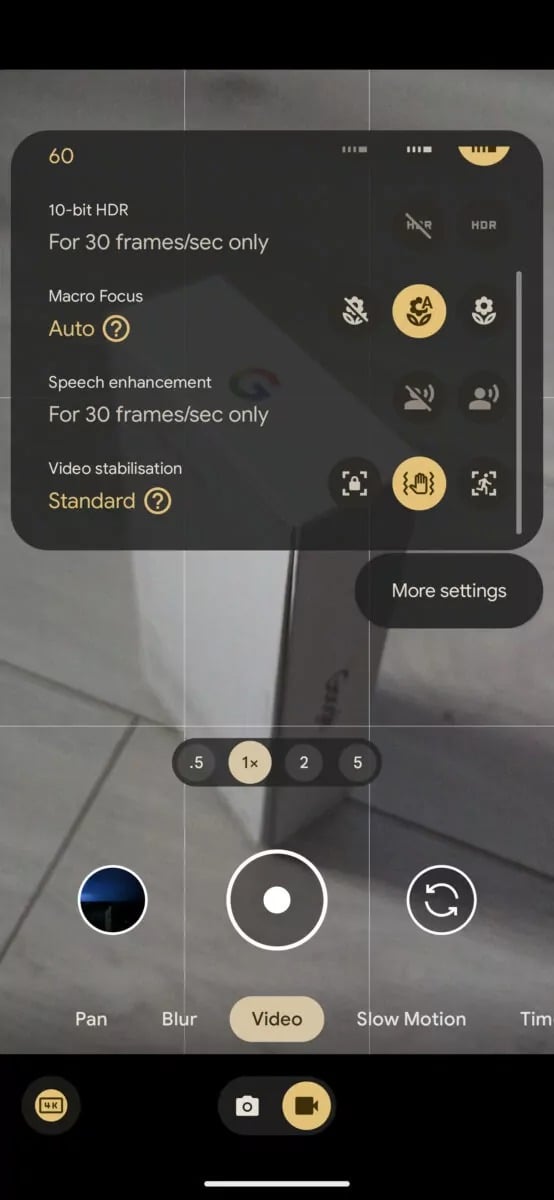
UI Changes in Video Mode.
We can also see a slight change in the placement of the camera switch button which now resides at the right side. Meanwhile, the last shot preview is on the left. The zoom switcher is present above the shutter button. However, other things remain unchanged.
The new Long Exposure and Action Pan features are not new, they were part of the Motion tab. But, the users can see separate tabs for each of the features. Even the “Cinematic Pan” stabilization mode is now “Pan.”
Other Software Features for Google Camera in Pixel 8
Along with UI tweaks, the new version is expected to bring Staggered HDR and Segmentation AWB feature. The Staggered HDR will reduce the picture-taking time due to small delays between frames. The Segmentation AWB feature will add more appropriate post-processing to the parts of the image to make it look better and more accurate.
Another addition to the feature brochure is the Adaptive Torch feature. It is set to improve low-light photography by automatically adjusting the intensity of the flash.
Pixel 8 Camera Specifications
The Google Pixel 8 series is set to bring some advancements including the new hardware. This time, Pixel 8 Pro is expected to feature a 50MP Samsung GN2 sensor, and a 64MP Sony IMX787 ultrawide sensor. However, there will be the same primary 50MP Samsung sensor and a 12MP Ultrawide IMX386 lens.
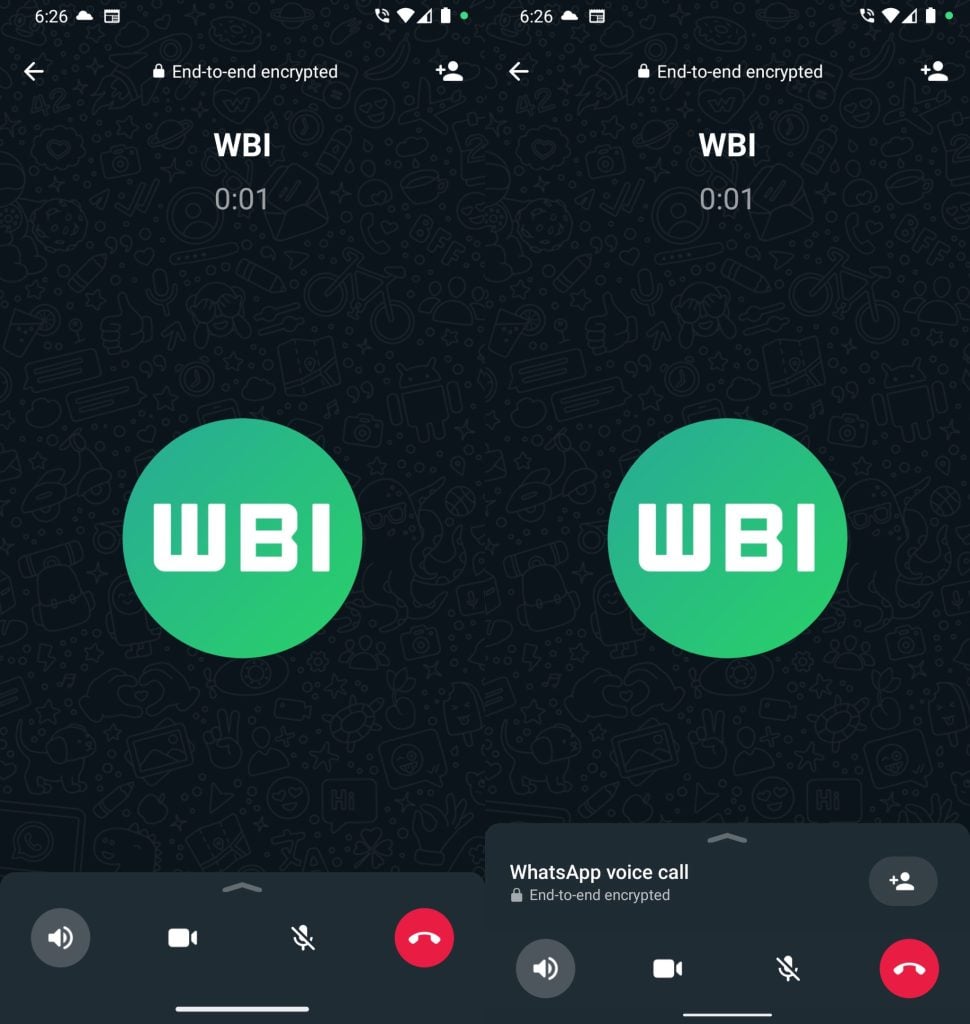
WhatsApp, the popular messaging platform, is taking steps to improve its calling experience with a new update currently being tested in the beta program. This update, labeled version 2.23.17.16, introduces significant improvements to the calling interface, making it easier for users to manage group calls and enhancing overall usability.
Easily add contacts to ongoing calls
The update introduces a new button that simplifies the addition of contacts to ongoing calls. This streamlined process replaces the previous method, which required interrupting the call to initiate a new one for additional participants. This enhancement enhances the user experience, saving time and creating smoother group conversations.
The updated calling interface in WhatsApp features a bottom modal view that highlights the call type and highlights the end-to-end encryption, underscoring the platform’s dedication to user data privacy and security. WhatsApp is also testing the scheduled group calling feature and it is expected to roll out soon.
The new calling interface is gradually rolling out to beta testers who have installed the latest WhatsApp beta for Android. The UI is expected to roll out for more users in the coming weeks.
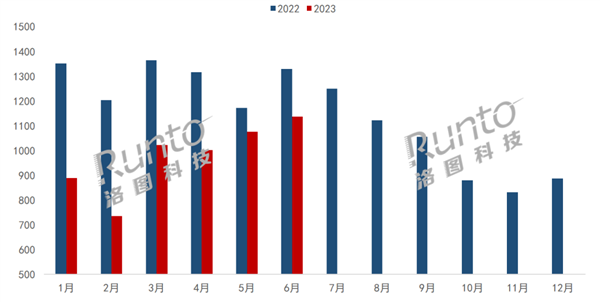
Runto Technology’s recent data reveals a significant decline in mainland China’s monitor exports for H1 2023. The data showcases a year-on-year fall of 24.2%, with the total exported units standing at 58.57 million. This decline is further exemplified by the export value, which plummeted by a hefty 32.7% compared to the prior year, settling at 49.83 billion yuan ($6.843 billion).
Asia’s Sustained Demand: Second in Line, But Still Strong
February experienced a notable decline, reaching a nearly two-year low of 7.34 million units in monitor exports. Yet, a recovery trend emerged as the year advanced, fueled by stronger economic collaboration between Eastern Europe and China. The months from March to June exhibited growth, although it didn’t reach the level of performance seen in the same period in 2022.
The North American market, which is the main destination for mainland China’s monitor exports, experienced a significant decline in H1 2023. It comprised 27% of the export volume, with a notable YoY contraction of 38%, amounting to 15.82 million units. Within this market, the United States maintained a dominant position with a 91% share, though it faced a substantial 39.4% year-on-year decline.
The Asian market ranked as the second-largest recipient, accounting for 26.2% of the global market share.
Amidst these difficulties, Western Europe accounted for 22.5% of total monitor exports, experiencing a substantial 37.9% decline from the previous year. Conversely, Eastern Europe stood out with a promising 8.3% share of exports, showing a remarkable increase of 53.1%.
Mainland China’s monitor exports face challenges and strive for recovery. However, the growing collaboration with Eastern Europe offers a potential positive aspect, bringing a glimmer of hope to an otherwise challenging situation.
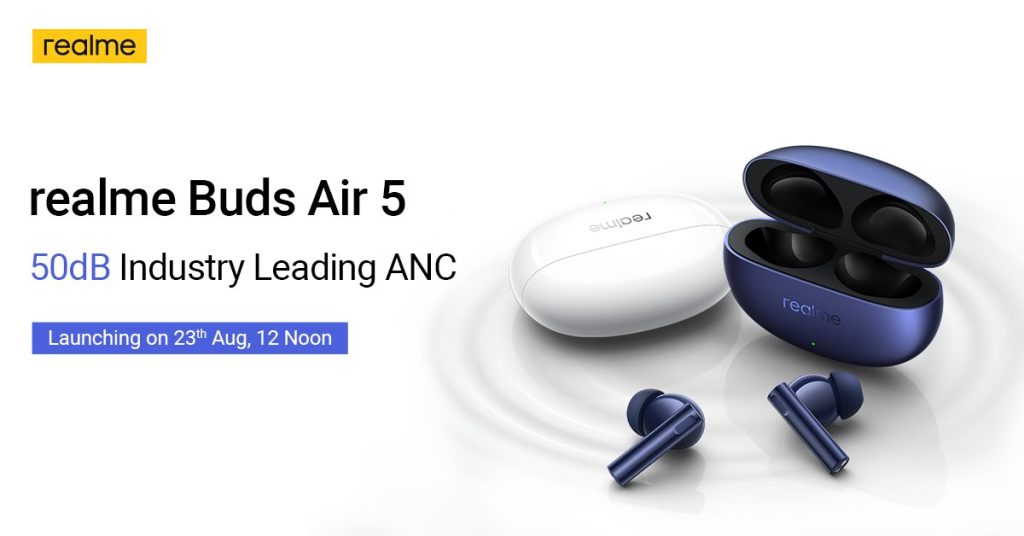
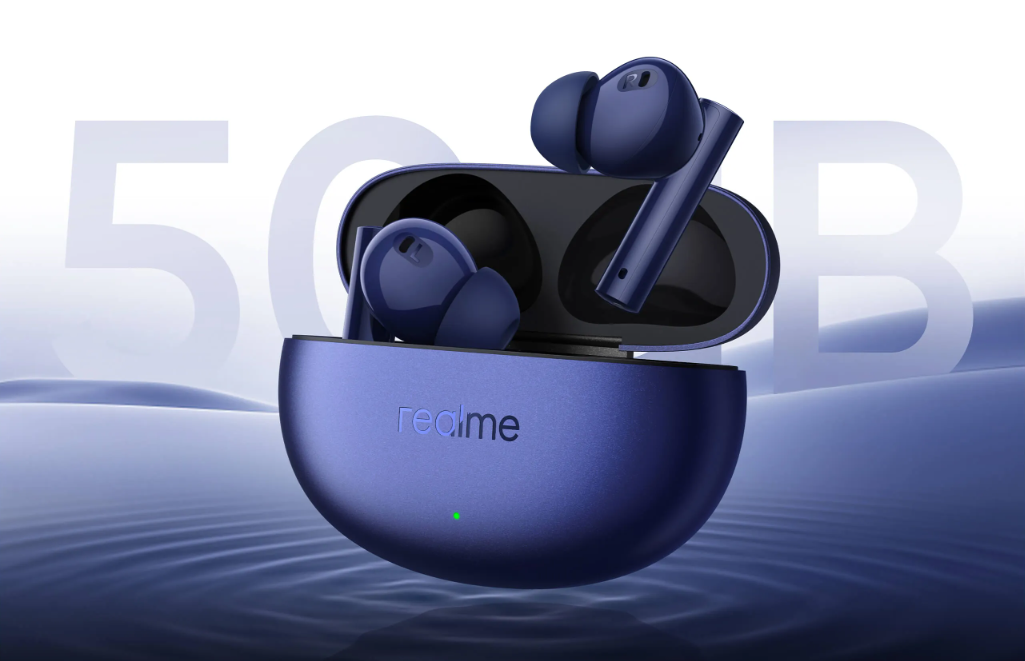
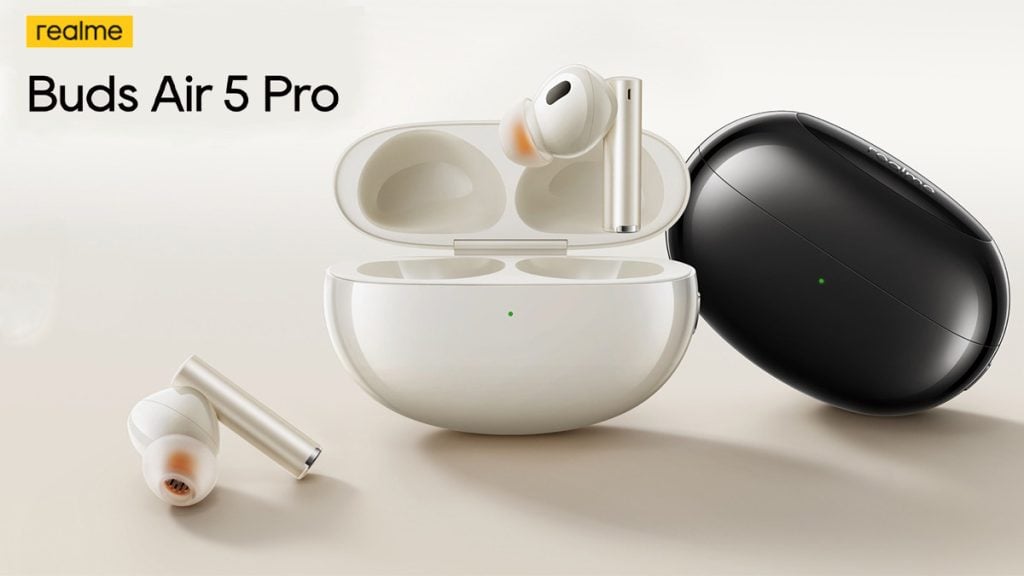
Realme will be holding a major launch event on August 23 in India, where it will launch the Realme 11 5G and 11x 5G smartphones, along with the Buds Air 5 Pro earbuds. The brand has now also confirmed that the vanilla Realme Buds Air 5 will also be launching at this event.
Realme Buds Air 5: What we know so far
The new Realme Buds Air 5 are coming with large 12.4mm sound drivers for better audio. They’ll also have strong Active Noise Cancellation that can block up to 50dB of noise. These earbuds will include 6 built-in microphones that make your calls clear by reducing background noise. In addition to that, they’ll even support Dolby Atmos for a more amazing sound experience.
Compared to that, the Buds Air 5 Pro will offer an 11mm base driver and 6mm tweeter combo. It has 50dB active noise cancellation, along with noise suppression during calls with AI technology. Moreover, these earbuds support Spatial audio and the LDAC codec.
Realme Buds Air 5 Pro offer an impressive battery life, with a total of 40 hours of usage when you combine the case and earbuds. They’re also designed to withstand a little water, making them suitable for workouts or unexpected rain. Plus, they come with Bluetooth 5.3, guaranteeing smooth and reliable connections.
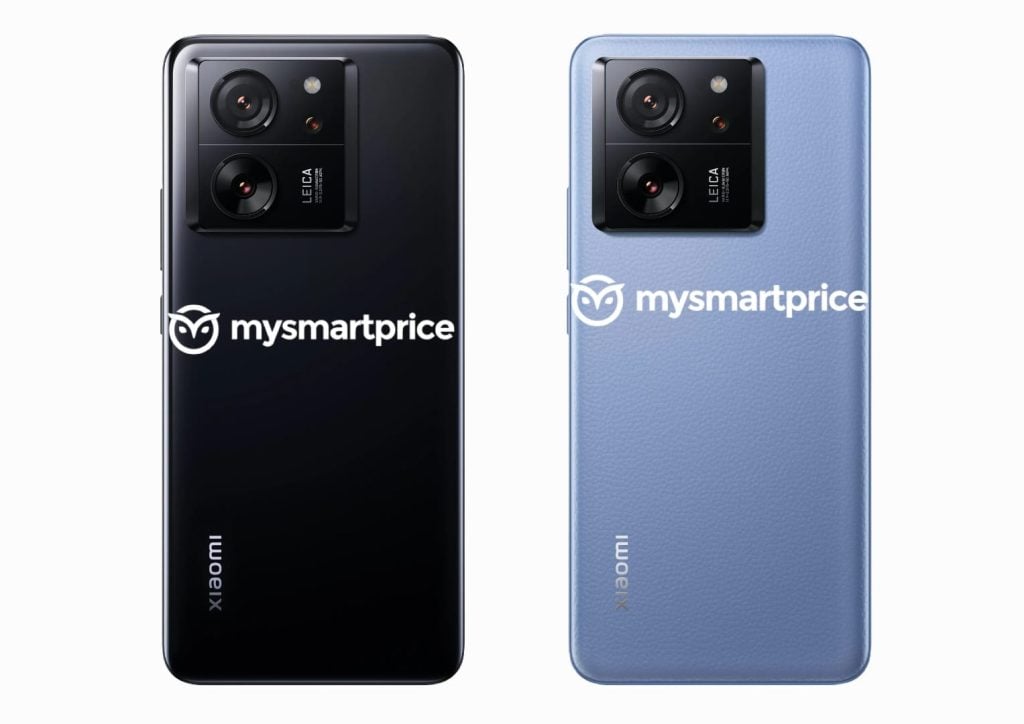
After recently launching the Xiaomi Mix 3 Fold, the Pad 6 Max, and the Realme K60 Ultra in China, the brand is rumored to launch the Xiaomi 13T and 13T Pro in the global market. The launch is expected to happen in early September, and a recent report revealed the pricing of both devices. Now, the full spec sheet of the Xiaomi 13T has also emerged online.
Xiaomi 13T Pro leaked render
Xiaomi 13T specs
As per a Dealabs report, the Xiaomi 13T will feature a 6.67-inch AMOLED screen with a sharp 1.5K resolution, offering clear visuals at 2712 x 1220 pixels with a pixel density of 446ppi. Notably, the display supports a high refresh rate of 144Hz. It has a typical brightness of 500nits, 1200nits with HBM (High Brightness Mode) and it peaks out at 2600nits.
Under the hood, the phone features a MediaTek Dimensity 8200-Ultra processor, paired with 256 GB of storage memory and 8 GB of RAM. The phone is equipped with a large 5000mAh battery and supports 120W fast charging with Xiaomi Smart HyperCharge technology.
For photography, the camera setup includes a Leica 50MP wide-angle lens with Optical Image Stabilization (OIS). The phone also offers a 50MP Leica 2x Telephoto Lens, a 12MP ultra-wide-angle lens, and a 20MP front camera. Video capabilities reach up to 4k at 30fps.
The Xiaomi 13T comes with dual SIM card slots and runs on Android 13. It offers standard connections through USB-C and supports wireless connections like Wi-Fi 7, Bluetooth 5.4, and NFC. The phone is built to last with an IP68 standard for water and dust resistance. Security features include a fingerprint reader, and it also integrates with Google Assistant for added convenience. It will be available in two sleek colors, Black and Alpine Blue.
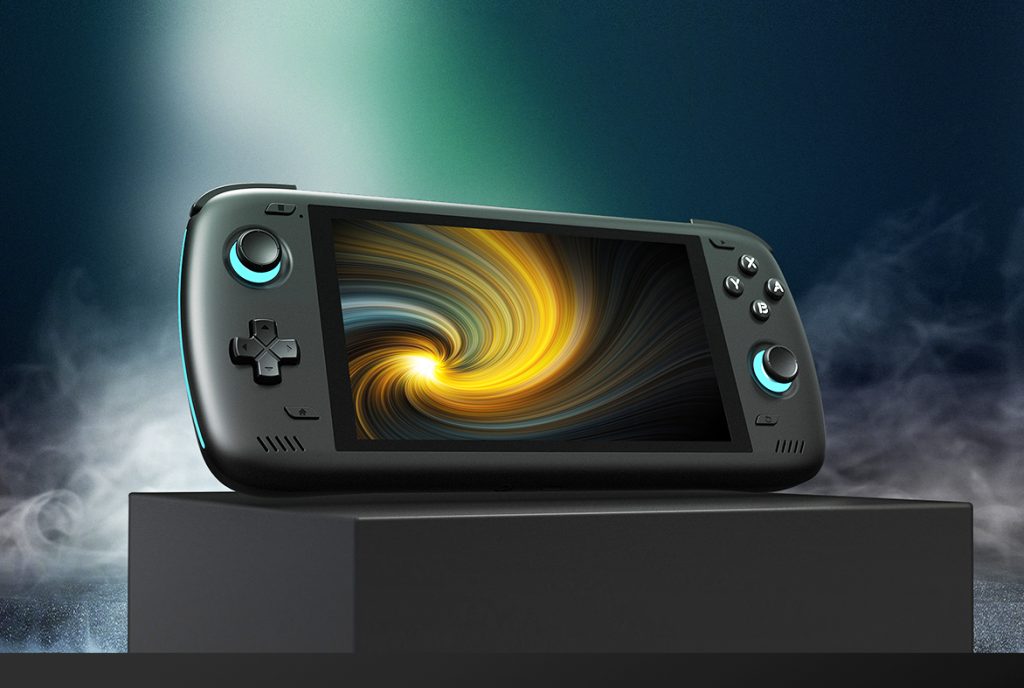
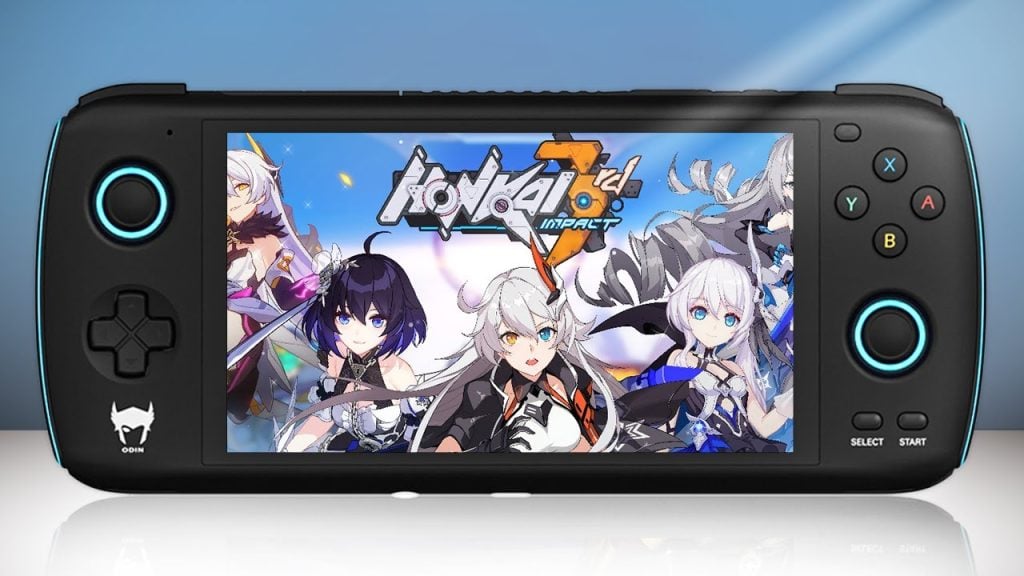
AYN Technologies has dropped the curtain on the Odin 2 gaming handheld, revealing both its release date and an array of specifications. This new device, slated to follow in the footsteps of the Snapdragon 845-powered Odin, showcases a significant upgrade, sporting the Snapdragon 8 Gen 2 chipset.
The Odin 2 doesn’t cut corners on memory and storage either as it comes with LPDDR5X RAM and UFS 4.0 flash storage. Display-wise, the Odin 2 offers a 6-inch IPS display with a crisp 1080p resolution, delivering vibrant visuals for an immersive gaming experience. The device also comes prepared for connectivity, featuring Micro HDMI and USB 3.1 Type-C ports, allowing easy connections to external displays and accessories.
In terms of design, the Odin 2 strikes a balance between portability and functionality, with dimensions measuring 225 x 98 x 17 mm and a weight of 420 g. An active cooling solution ensures the Snapdragon 8 Gen 2 and its Adreno 740 iGPU can operate efficiently without overheating.
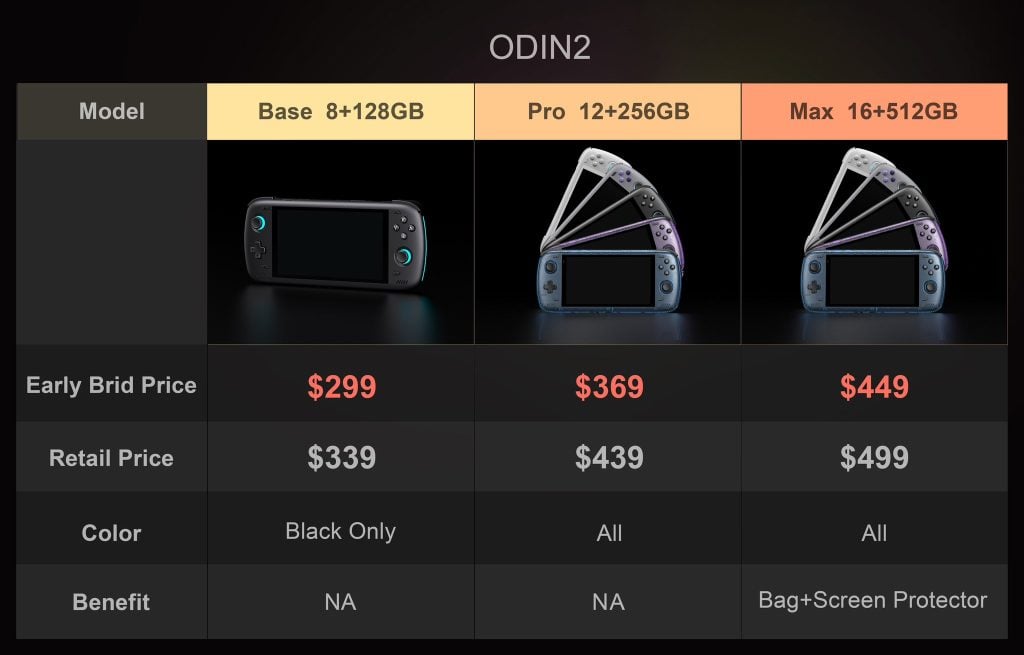
Perhaps the most appealing aspect is the pricing strategy. The Odin 2 will debut at a competitive $299, eventually settling at $339 (after the early bird period is over). This base model, available in black, includes 8 GB of RAM and 128 GB of storage. For those seeking more RAM and storage, there are two alternatives: the Odin 2 Pro, featuring 12 GB of RAM and 256 GB storage for $369 Early Bird and $439 Retail, and the Odin 2 Max, with a substantial 16 GB of RAM and 512 GB storage, available for $449 Early Bird and $499 Retail. The brand has scheduled the Odin 2’s launch on Indiegogo for August 22 at 12:00 UTC.
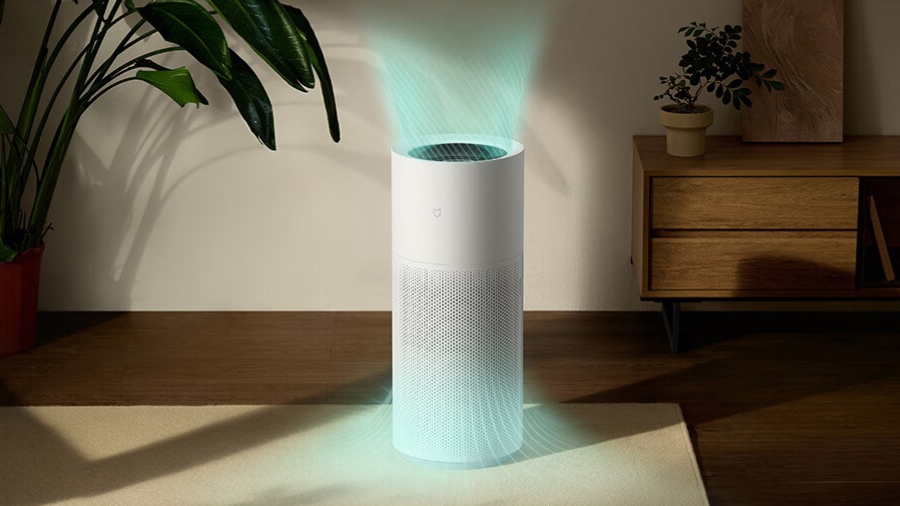
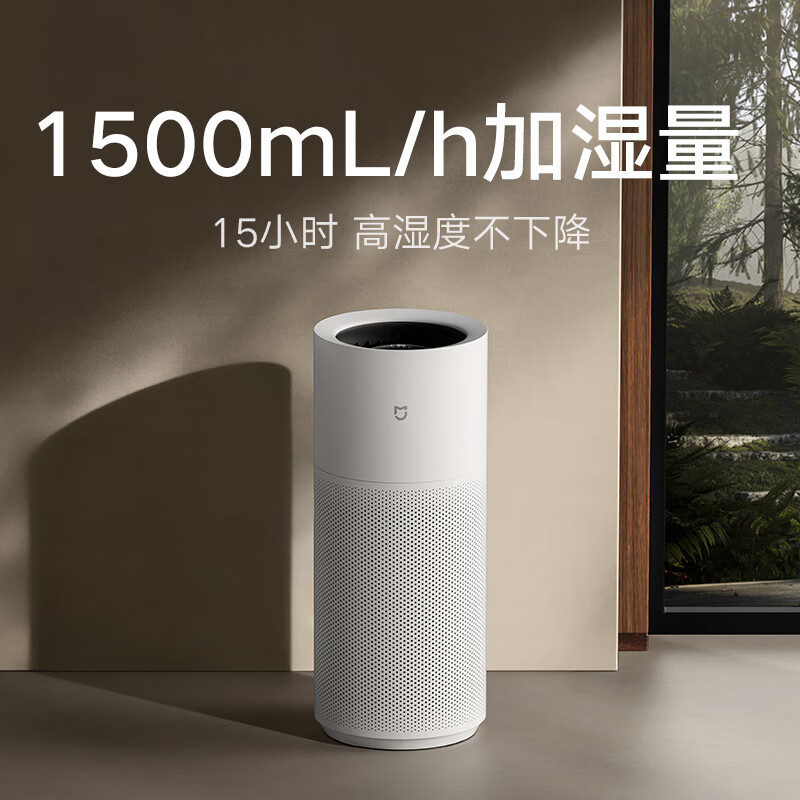
Xiaomi introduces the MiJia No-Mist Humidifier 3 Pro, the latest addition to their innovative home gadgets lineup. This cutting-edge product is now up for pre-sale at a cost of 1999 yuan ($275).
Xiaomi MiJia No-Mist Humidifier 3 Pro key features:
The humidifier features a visually captivating design with a top dome treated using distinctive UV technology. This treatment greatly enhances its hydrophobic properties, enabling water droplets to effortlessly roll off, similar to a lotus leaf’s behavior.
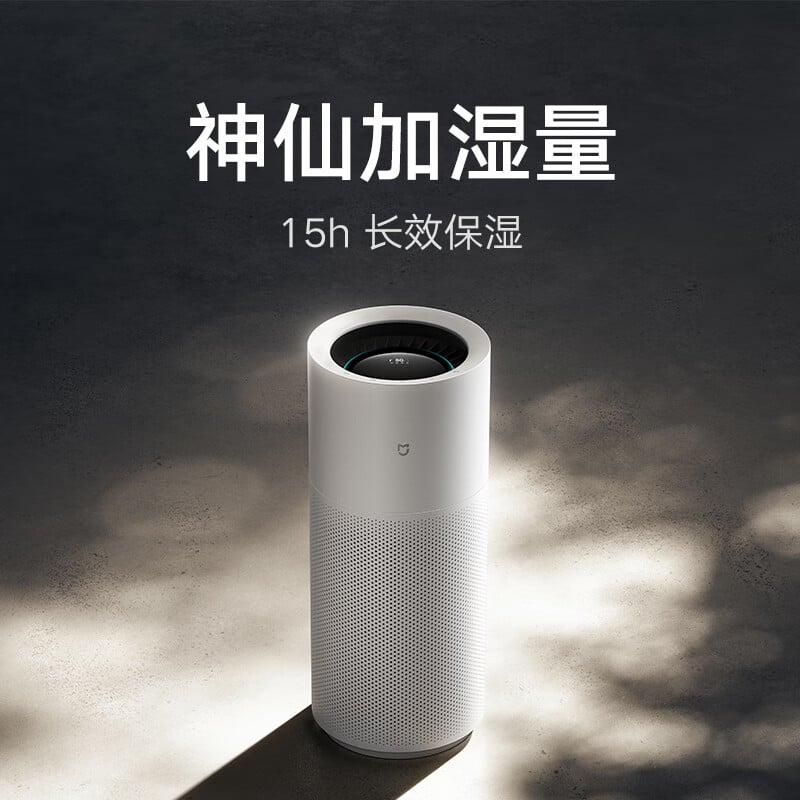
The MiJia No-Mist Humidifier 3 Pro boasts impressive performance, offering a substantial humidification rate of 1500mL/h. Supported by a generous 7L water reservoir, it provides continuous operation for up to 15 hours when fully filled, ensuring prolonged and effective humidification.
Xiaomi prioritized a non-disruptive experience in the design of the air humidifier. The outcome is an efficient and quiet device that operates at a mere 31dB(A) in sleep mode. This low noise level is achieved through deep acoustic optimization, allowing for a peaceful 400mL/h humidification output ideal for uninterrupted sleep.
Xiaomi’s MiJia No-Mist Humidifier 3 Pro goes beyond aesthetics and performance by prioritizing hygiene. It features an extensive sterilization system using electrolytic water technology. Through a simple button press, users can initiate a self-cleaning mode that generates a potent chlorine solution. This solution effectively neutralizes 99% of bacteria in the water tank, filter, and pipelines. The result is fresher, odor-free air in the living space.
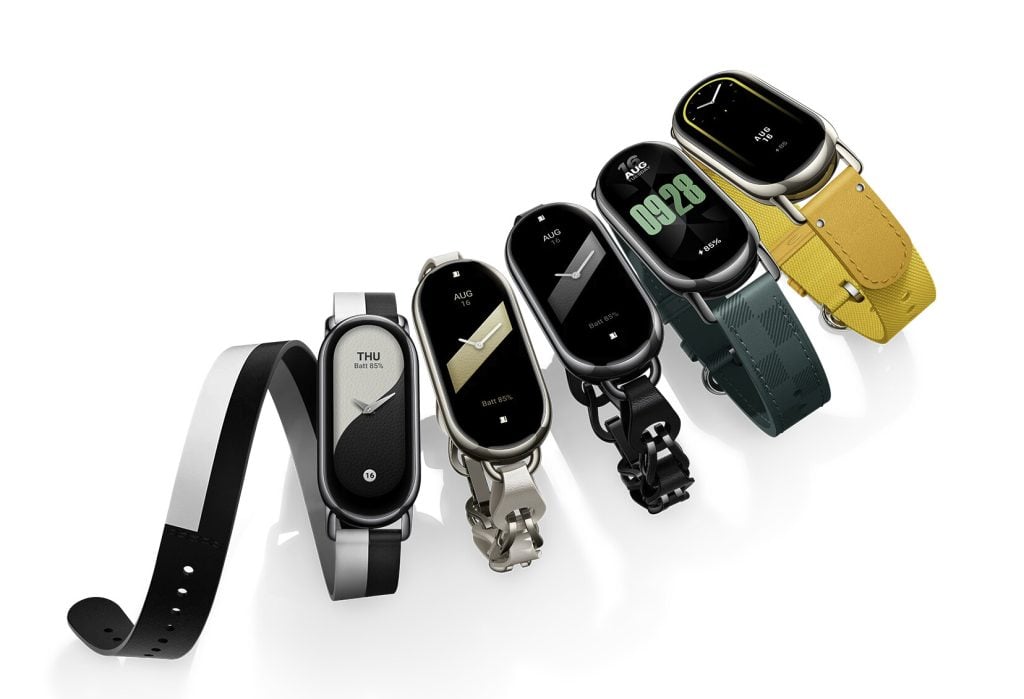
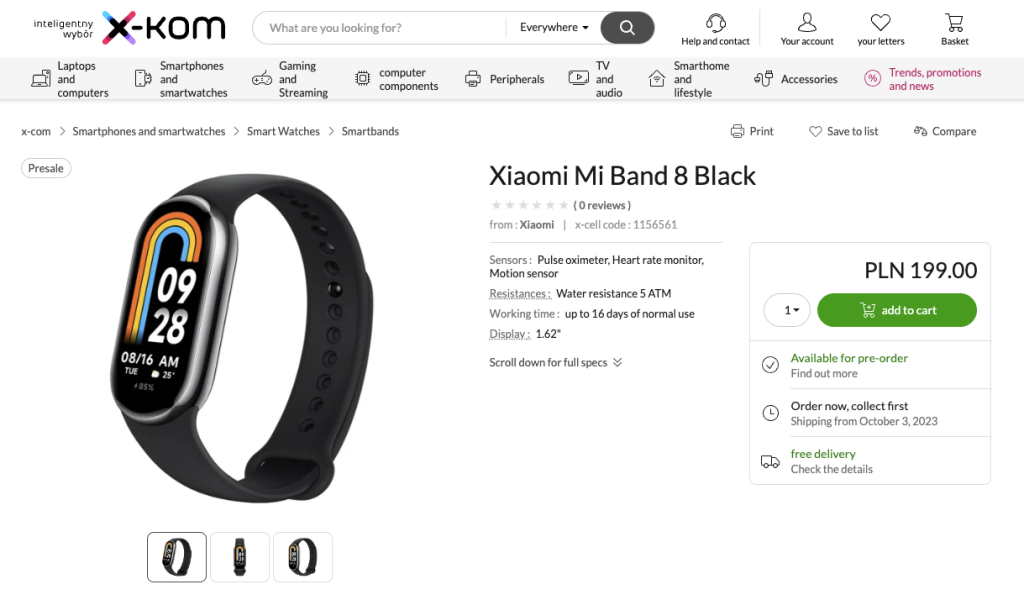
Xiaomi is about to introduce its Xiaomi Smart Band 8 to the world. This fitness tracker was first released in China and is now getting ready to launch globally. Ahead of the official announcement, a major Polish retailer has listed the device online with all the details.
According to the retail listing (now removed), the Xiaomi Smart Band 8 will be available on October 3rd. It will be priced at PLN 199, approximately equivalent to €45 or $49 after conversion. This pricing includes Poland’s tax, potentially making it accessible for less than $40 in the United States.
Xiaomi Band 8 specs
Design and Display: The Xiaomi Smart Band 8 maintains its sleek appearance with a 1.6-inch AMOLED display. It offers a bright display with an Always-On Display (AOD) mode and is water-resistant up to 50 meters, suitable for various activities, including swimming.
Customization: Unlike previous models, the Band 8 introduces versatile lugs to accommodate various strap options, such as leather, woven leather, hollow bracelet, and TPU straps. It can even be worn as a pendant with a compatible necklace accessory or attached to shoelaces.
Comprehensive Fitness Tracking: The Smart Band 8 is equipped with a heart-rate monitor, SpO2 sensor, sleep tracker, and menstrual cycle monitor for female users. It also measures stress levels and provides data on VO2 Max. Specialized modes like Interactive Boxing Mode and Running Beam Mode offer detailed insights for specific activities. With support for over 150 sports modes, it caters to a wide range of fitness enthusiasts.
Entertainment and Convenience: In addition to fitness tracking, the Band 8 includes built-in games like Sudoku and 2048 for moments of relaxation. It functions as a notification hub, delivering weather updates and other essential alerts.
Battery Efficiency: Xiaomi claims that the Band 8 can last up to 16 days on a single charge with AOD disabled, thanks to its 190mAh battery unit.
We use cookies on our website to give you the most relevant experience by remembering your preferences and repeat visits. By clicking “Accept”, you consent to the use of ALL the cookies.
This website uses cookies to improve your experience while you navigate through the website. Out of these, the cookies that are categorized as necessary are stored on your browser as they are essential for the working of basic functionalities of the website. We also use third-party cookies that help us analyze and understand how you use this website. These cookies will be stored in your browser only with your consent. You also have the option to opt-out of these cookies. But opting out of some of these cookies may affect your browsing experience.
Necessary cookies are absolutely essential for the website to function properly. This category only includes cookies that ensures basic functionalities and security features of the website. These cookies do not store any personal information.
Any cookies that may not be particularly necessary for the website to function and is used specifically to collect user personal data via analytics, ads, other embedded contents are termed as non-necessary cookies. It is mandatory to procure user consent prior to running these cookies on your website.