Advertisement

A Huawei smartphone Leaks with a Camera Island like no other, Could be the Mate 60

Huawei smartphones don’t receive the same level of attention they used to a few years ago, primarily due to a lack of 5G connectivity and Google services. However, the company has not given up on creating visually striking phones. The latest P60 series is the latest example of Huawei’s commitment to an unconventional design language and it seems the company has something even more interesting in the works. Renders of a new smartphone have surfaced online, showcasing a camera island that stands out like no other.

It might be the upcoming Huawei Mate 60

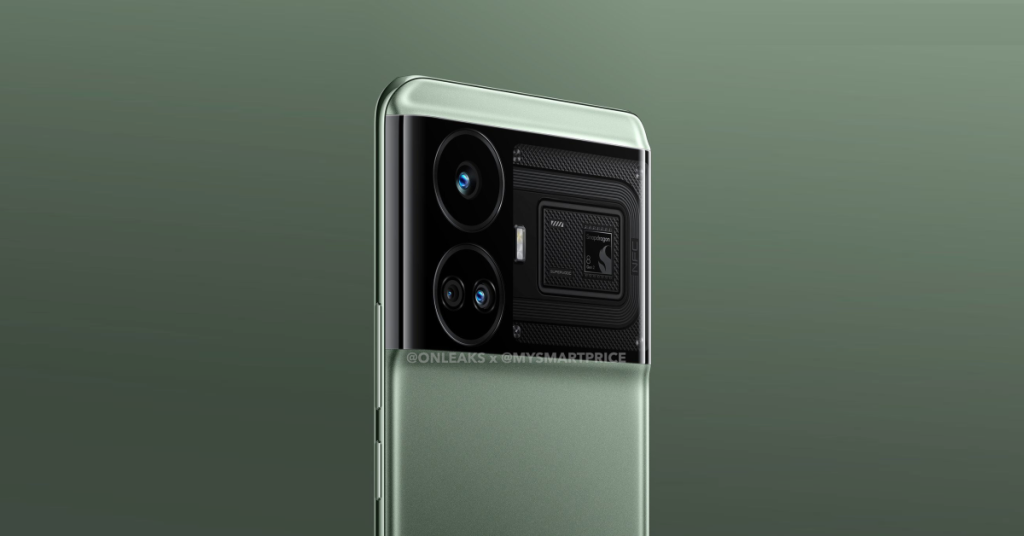
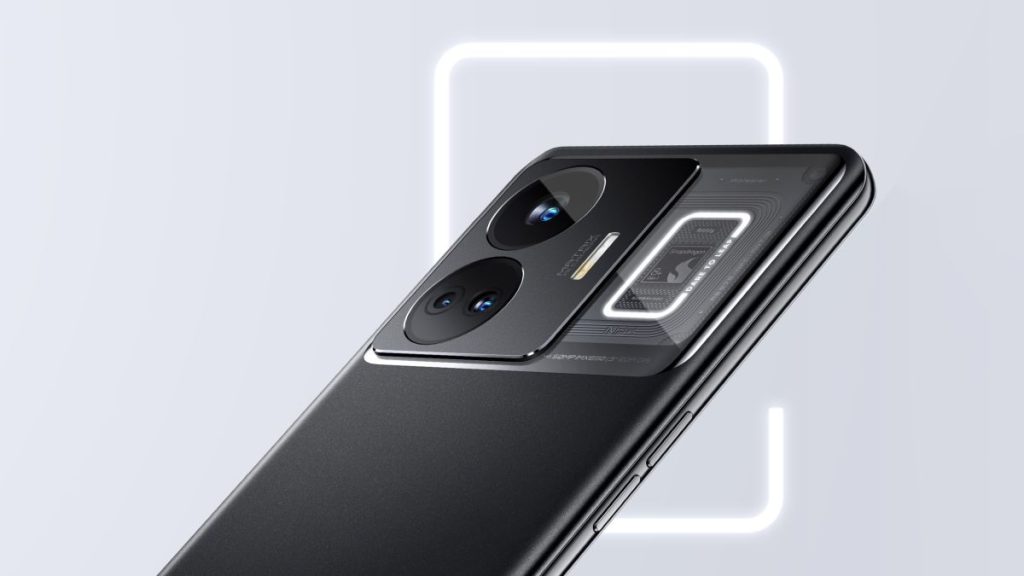
According to renders shared by a Chinese tipster and bought to light by Huawei Central, Huawei might be working on an odd-looking smartphone. As you’d see in the image, the handset has a large circular camera, which has been seen on almost every Chinese flagship launching this year. However, the camera placement on this smartphone is rather unique. It includes several openings, revealing at least four camera sensors.

Huawei Mate 60 render

The sensors present in the camera module are said to include a laser, a color temperature sensor, a periscope telephoto lens, and an ultra-wide-angle lens. Apparently, there’s also a variable aperture main camera, which was present in the Huawei P60 series. It can help with automatic scene-based switching, allowing you to capture the optimal amount of light, depending on the shooting environment.

It is being speculated that the renders belong to the upcoming Huawei Mate 60. These speculations do hold some water, as the featured sensors indicate a high-end flagship model, and the Mate series is traditionally Huawei’s platform for launching flagship devices at this time of the year. However, we recommend taking this information with a pinch of salt.

RELATED:

(Source) (Via)

Lenovo 65W Max GaN plug-in strip with up to 9 ports launched

Chinese tech giant Lenovo has launched its 65W GaN plug-in strip. The product is available for purchase on JD.com at a price of 159 yuan ($23) and will be on sale on May 31.

Lenovo 65W Max GaN plug-in strip

The Lenovo 65W GaN plug-in strip is a versatile power strip that comes with nine ports, including three 5AC ports, three 2AC ports, two Type-C ports, and one USB port. It is capable of multi-device charging simultaneously and can charge laptops, smartphones, tablets, game consoles, smart devices, and small home appliances without requiring an adapter. It supports various charging protocols such as PPS, PD3.0, and QC3.0, which makes it an excellent choice for anyone who needs to charge multiple devices at once.

The strip uses third-generation GaN material, which allows it to be more compact and efficient than traditional power strips. It has a rated power of 2500W, and the single-port power can reach up to 65W. The power strip can charge a Xiaoxin Pro 14 2023 laptop to 50% in just 40 minutes, which is a great feature for people who are always on the go.

Lenovo 65W Max GaN plug-in strip

The Lenovo 65W GaN plug-in strip is also incredibly safe to use. It has multiple safety protection certifications, including leakage protection, short circuit protection, input overcurrent protection, overheating protection, overvoltage protection, and lightning surge protection. These safety features make it a great choice for anyone who values safety and reliability.

Efficient and Versatile: Lenovo’s 65W Max GaN Plug-in Strip supports multiple charging protocols and simultaneously charges multiple devices

The cable on the Lenovo 65W GaN plug-in strip is 1.8 meters long, which provides you with more flexibility and convenience when using it during business trips or in any other setting. It is also compact and lightweight, making it easy to pack and carry with you wherever you go.

RELATED:

Samsung plans to cut memory chip production by 25%

Samsung Electronics, the South Korean technology giant, reported a staggering 95% drop in operating profit for Q1 2023 compared to the same period last year. The company has attributed this significant decline to the reduced demand for memory chips. While Samsung has not disclosed the exact extent to which it will reduce its memory module production, industry analysts predict a cut of around 25%.

Samsung

Semiconductor Analyst Minbok Wi from Daishin Securities estimates that Samsung could reduce memory chip production by 20% to 25% in the first half of 2023, compared to the same period in 2022. KB Securities, on the other hand, forecasts that Samsung will reduce NAND flash chip production by 15% and DRAM chip production by over 20%, starting in Q3 2023. Min Seong Hwang, an Analyst at Samsung Securities, believes that if inventory levels do not decrease as expected, the company may need to further reduce production.

Samsung to reduce the production of low-Cost DRAM modules, focus on DDR5

Samsung has stated that it has a sufficient inventory of memory chips to meet mid to long-term demand and is planning to reduce the production of legacy products. Although the company has not specified which memory chips will see a decrease in production, The Korea Herald reports that Samsung will focus on cutting the production of low-cost DRAM modules such as DDR3 and DDR4 due to their dwindling demand. Instead, the company will concentrate its efforts on advanced memory chips like DDR5, which are rapidly gaining popularity.

Recent market trends have not been favorable for Samsung, with the average contract price of an 8GB DDR4 RAM module falling by 19.9% last month, following an 18.1% drop in January. Although prices stabilized in February and March, they have begun to fall once again, despite Samsung’s announcement of a production cut. Market research firm TrendForce predicts a further 15% to 20% drop in prices during Q2 2023 as suppliers grapple with high inventory levels.

While the current outlook for Samsung and the chip industry appears bleak, some analysts remain optimistic, suggesting that a turnaround could be on the horizon in 2024. As the market continues to shift and advanced memory chips like DDR5 gain traction, Samsung’s decision to focus on next-generation technologies could position the company well for a recovery in the coming years.

RELATED:

(Source, Via)

Google Pixel 7, Pixel 7 Pro Available At A Massive Discounted Price In India During Flipkart Big Saving Days Sale

Google launched the Pixel 7 and 7 Pro smartphones in India in October last year. Both were available in a sole RAM and storage configuration priced at Rs 59,999 and Rs 84,999 respectively. If you’re a fan of the search giant’s flagship Pixel offerings, now might be the best time to purchase the latest-generation phones in the country. 

Google Pixel 7, 7 Pro Discounted Prices

E-commerce platform Flipkart is conducting Big Saving Days Sale starting May 4th. As a part of the curtain raiser deals till May 3rd, the Google Pixel 7 duo are up at discounted prices. Both the standard and pro variants are expected to be available at a cheaper price during the sale. This is also the first time the Google Pixel 7 series are getting a discounted price since launch. 

The Google Pixel 7 Pro is available at its lowest price to date. It is listed with a price tag of Rs 69,999 which is a massive Rs 15,000 price drop from its launch price of Rs 84,999. SBI Bank credit cardholders can avail up to Rs 1,250 instant discount on the purchase whereas there is Rs 1,000 off for Axis Bank, American Express, HDFC Bank, and ICICI Bank debit and credit card transactions. Flipkart is also throwing in an additional exchange discount of Rs 2,000 above the base value of old smartphone in exchange offer. 

On the other hand, the Pixel 7 has received a discount of Rs 10,000 making it available for Rs 49,999 instead of Rs 59,999. There is Rs 3,000 special discount when an exchange offer is availed while purchasing the device. The Pixel 7 also gets the same bank offers as the Pixel 7 Pro. 

The Pixel 7 and 7 Pro have the same design with IP68-certification, a Tensor G2 SoC, 30W wired charging and wireless charging support. The regular variant has a 6.3-inch AMOLED FHD+ display with 90Hz refresh rate whereas the Pro model features a 6.7-inch curved AMOLED screen with QHD+ resolution and a 120Hz refresh rate. There is a 50MP OIS-enabled main camera with 12MP ultra-wide angle lens on both phones. The Pixel 7 Pro also sports an additional 48MP telephoto unit. 

Related: 

Tecno Camon 20 emerges in live video ahead of lauch

Tecno, a Chinese smartphone manufacturer, launched the Camon 19 series in July 2022, and now the company is preparing to unveil the Camon 20 series, which reportedly consists of three models – the Camon 20, Camon 20 Pro, and Camon 20 Premier 5G. While the official launch date of the Camon 20 series is yet to be announced, leaked live images and a short video have surfaced online, giving us a sneak peek of the upcoming Camon 20 device.

Tecno

From the leaked images and video, it is evident that the Camon 20 has a unique camera module design, which is similar to that of the Camon 20 Premier 5G. The device’s flat frame has control buttons on the right side, and the bottom panel features a USB-C port, a speaker grille, and a 3.5mm audio jack. The device is expected to come with 8GB RAM, 256GB onboard storage, and have the model number Ck8n.

While the leaked images and video provide a glimpse of the upcoming Camon 20, there is still much we don’t know about the device’s features and specifications. However, some information on the higher-end Camon 20 Premier 5G and Camon 20 Pro models is available.

Tecno Camon 20 Pro & 20 Premier 5G specs

According to rumors, the Camon 20 Premier 5G may come equipped with a 1080p AMOLED screen, featuring a 120Hz refresh rate and an in-display fingerprint reader. It is expected to have storage options starting from 256GB, but TECNO has reportedly decided to omit the headphone jack and expandable storage slot from this model. The most talked-about aspect of the Premier 5G is its unique camera design, indicating that TECNO is prioritizing innovative smartphone aesthetics.

As a more affordable alternative to the Premier 5G, the Camon 20 Pro is rumored to feature a 6.7-inch LCD screen and MediaTek Helio G99 processor. It may also come equipped with a 32MP front camera, a dual rear camera setup featuring a 64MP primary sensor and an AI lens, and a robust 5,000mAh battery.

RELATED:

(Source: GadgetsLeo)

Vivo Y36 4G Spotted On Bluetooth SIG Ahead Of Launch

Vivo Y36 4G has bagged Bluetooth SIG certification. It has been listed on the certification website with model number V2247. The listing reveals that the device will come with Bluetooth 5.0 support. Apart from this, it does not mention any other details of the upcoming smartphone. The Vivo Y36 4G is expected to arrive as the successor to the last year’s Y35. 

Vivo Y36 4G Bluetooth SIG

The Vivo Y36 4G appeared on Geekbench benchmarking platform recently with the same V2247 model number. As per the database listing, it is tipped to be powered by a Snapdragon 680 processor coupled with 8GB RAM. It’s worth noting that an initial leak had claimed that the device would come with Helio G99 SoC. We can also expect more RAM and storage configurations of the device at launch. The Vivo Y36 4G scored 410 and 1.343 points in the benchmark platform’s single-core and multi-core test results respectively. 

As per reports, the Vivo Y36 4G is expected to come with a 6.8-inch LCD display. The upcoming offering is tipped to feature a 50MP primary camera. It will reportedly be backed by a 5,000mAh battery with support for 44W charging. There is also said to be 8GB virtual RAM and 128GB onboard storage. 

The Vivo Y36 4G is tipped to debut in India later this month. It is said to be priced between Rs 18,000 – Rs 20,000. We expect to learn more about the smartphone in the coming days.

Related: 

Microsoft to reduce unnecessary Windows 11 notifications with smart opt-out feature

Microsoft is addressing the issue of unwanted notifications in Windows 11 with a new feature called “Smart opt-out” alongside improvements to urgent notifications. Notifications from various apps and websites have become a nuisance for many users, often interrupting work or other activities. While Windows 11 already includes “Focus Assist,” a feature designed to reduce distractions by limiting notifications, Microsoft is taking further steps to enhance the user experience.

Reducing unwanted notifications: Windows 11’s smart opt-out in action

The new “Smart opt-out” feature aims to minimize notification spam by identifying apps users do not engage with regularly and suggesting the disabling of notifications from these apps. For example, if a user hasn’t interacted with Outlook notifications for a month, they will receive a notification asking whether they would like to turn off Outlook notifications. This recommendation provides users with an easy way to declutter their notifications and focus on essential alerts.

This approach, inspired by email filters that have been in use for years, should significantly improve the user experience in Windows 11 by reducing the number of unnecessary notifications. Importantly, “Smart opt-out” will not impact notifications from apps that users interact with frequently, ensuring that users still receive relevant updates.

Windows 11 urgent notifications feature

In addition to “Smart opt-out,” Microsoft is working on enhancing the handling of urgent notifications in Windows 11. Users will have more control over high-priority notifications from both first-party and third-party apps, allowing these alerts to bypass the Focus Assist (Do Not Disturb) settings. For example, an app can send a notification asking if the user would like to “Allow important notifications,” enabling high-priority alerts to come through even in Do Not Disturb mode.

As “Smart opt-out” is a minor addition to the operating system, it is expected to arrive in the production channel in the coming months via Windows 11’s new configuration updates. These changes are part of Microsoft’s ongoing efforts to enhance the user experience in Windows 11, with a focus on reducing distractions and allowing users to concentrate on their work or other tasks.

RELATED:

(Via)

Honor Focuses on Enhancing MagicOS 7.0 to Compete with iOS in OS Fluency and Ecosystem Development

When it comes to smartphones, software is just as important as hardware. Having a smooth interface, offering new features before your competitors, and getting the maximum performance from the hardware in the products you sell are all crucial. Undoubtedly, one of the most successful companies in this regard is Apple. The company has achieved a great harmony between hardware and software in all its devices and is the top choice for those who want to build an ecosystem. It seems that Honor has also decided to adopt this strategy. According to recent announcements, the company is focusing on enhancing MagicOS 7.0 to compete with iOS in terms of operating system fluency and ecosystem development. Here are the details…

Honor’s CEO Discusses the Challenges Ahead of MagicOS 7.0: Can They Compete with Apple’s Ecosystem?

Honor CEO Zhao Ming recently took part in a media exchange during the company’s first open event at their Shenzhen research and development lab. During the event, Ming revealed the company’s future plans and strategies. Ming also highlighted the company’s plans to improve upon MagicOS 7.0, with the goal of matching or surpassing the iOS experience. Honor aims to outperform Apple in terms of OS smoothness and ecosystem development, building its own core capabilities.

Although the statements of Honor’s CEO are future-oriented, they have a challenging path ahead of them. Apple’s success in software is not coincidence. The company spent decades building an ecosystem and still has areas where improvements are needed. Also one of the reasons for their success is that they develop both hardware and software in-house, freeing themselves from external dependencies. Unfortunately, this is not the case for any manufacturer except for the insufficient efforts of Samsung and Huawei.

Zhao Ming did not hesitate to express his criticisms of competitors as well. He highlighted common criticisms of Apple’s hardware, such as poor communication and battery life. Despite these issues, Apple’s premium pricing is justified by its iOS and ecosystem, which seemingly overshadow the drawbacks.

RELATED:

(source)

JioDrive VR Headset For 360-Degree IPL Viewing Experience Launched In India

Reliance Jio has launched a smartphone-based virtual reality headset in India. It is called the JioDrive and is the first VR headset from the company. The device is similar to the Google Cardboard and several smartphone-based VR headsets a few years ago. The JioDrive is said to enhance the viewing experience of the ongoing TATA IPL 2023 on JioCinema app. 

JioDrive specifications

This year TATA IPL is streaming on the JioCinema app and users can watch the matches in different angles including a bird’s eye view, stump cam view, and cable cam view. The OTT platform also offers viewing in 4K resolution. To take the viewing experience a notch further, the JioDrive VR headset will provide users with a stadium-like experience at home. Reliance says that if the VR is paired with a compatible device, viewers can get an experience as if they are watching IPL on a 100-inch virtual screen. 

The JioDrive VR headset is compatible with phones with display sizes between 4.7 and 6.7 inches. The devices must also be equipped with a gyroscope and an accelerometer and run on Android 9 and iOS 15 or above software versions. Reliance has also launched a JioImmerse app for other VR experiences (like gaming, entertainment, learning) and users need to have a 4G, 5G, or JioFiber connection to access it. 

The JioDrive VR headset features a breathable face cushion for extended and comfortable usage. There is also a three-way adjustable strap. The device has a click button at the bottom right side to easily navigate and interact in the VR. There are adjustment wheels to fine-tune the lenses and adjust the focus for a sharper image. 

The JioDrive VR headset costs Rs 1,299 and can be purchased from JioMart. It comes in Black color and is backed by a 3-month warranty. 

Related: 

Samsung Galaxy S21 series gets astrophotography mode in Expert RAW app

Samsung has just introduced a new feature on its Galaxy S21 series that is bound to excite photography enthusiasts. The company has finally enabled support for astrophotography on the Galaxy S21, S21+, and S21 Ultra through its Expert RAW app, which was first introduced on the Galaxy S22 series. With this feature, users can take stunning long-exposure shots of the night sky, stars, and constellations, and even view the location of constellations through the app.

Take long-exposure shots of the stars with Samsung’s Expert RAW app

Although the astrophotography mode was expected to arrive on the Galaxy S21 and S20 series with the One UI 5.1 update, it did not materialize. However, with the latest Expert RAW app update, Galaxy S21 users who have received the April 2023 update can now enjoy this feature. The new mode is set to arrive on other Samsung flagships, including the Galaxy S20 series and the Galaxy Z Fold devices, in the near future.

To take advantage of this feature, Galaxy S21 owners will need to download the latest version of Expert RAW from the Galaxy Store and ensure that their phone has received the latest April 2023 firmware update. However, it’s important to note that the quality of astrophotos largely depends on the clarity of the skies in the user’s region. This means that those living in cities may not get the best results.

In addition to the exciting news about the astrophotography feature on the Galaxy S21 series, there are also rumors circulating about Samsung’s plans to launch the Galaxy Z Fold 5 and Galaxy Z Flip 5 earlier than expected. According to sources, the company may unveil these devices as early as July 2023.

Furthermore, CAD renders of the Galaxy Z Flip 5 and Fold 5 have emerged online. Flip 5 will get a renewed cover display design that’s sleeker and more stylish than ever before while the Fold 5 will have a better hinge design this time. While details about the specifications and features of these upcoming devices remain scarce, Samsung fans can expect to hear more news in the coming months as we approach the rumored launch date.

RELATED:

(Via)

Realme GT Neo 3T to sell for just Rs 19,999 on Flipkart Big Savings Days Sale

The Flipkart Big Savings Days Sale 2023 is about to kick off and one of the more attractive offers during this sale is the Realme GT Neo 3T. So the device will be available for a pretty affordable price tag despite having some notable specs and features.

As per the official sales promotion, the Realme GT Neo 3T can be bought for a price tag as low as 19,999 INR (roughly 245 US Dollars) on Flipkart. The Chinese smartphone maker’s smartphone is currently listed for 23,999 on the e-commerce platform. So it appears that there will be an additional discount of 4,000 INR during this sale. Although, it is unclear if this includes bank offers or a straight discount on its official listing.

realme

Talking about the device itself, it sports a 6.62 inch AMOLED display that supports 120Hz refresh rate, HDR10+, 1,300nits of peak brightness, and Full HD+ resolution. Under the hood, the Realme GT Neo 3T is equipped with the Qualcomm Snapdragon 870 SoC, which is an older flagship grade processor. However, it is still a capable chipset for gaming and other intensive work loads. The smartphone is powered by a large 5,000mAh battery pack that supports 80W fast charging.

For optics, it features a 64 megapixel triple camera setup on the rear and a 16 megapixel selfie camera on the front. In other words, those looking to buy a new phone can look out for the upcoming Flipkart Big Savings Days Sale 2023 and the GT Neo 3T sale.

RELATED:

Twitter to introduce per-article charging for publishers, says Elon Musk

Twitter is set to introduce a new feature in May that will allow media publishers to charge users on a per-article basis. According to a tweet by Elon Musk, Twitter’s CEO, this new platform will enable publishers to offer access to their articles for a one-time fee, as opposed to purchasing a full subscription. This feature is expected to be a “win-win” for readers and publishers, with readers having the flexibility to pay for occasional articles they find interesting while publishers generate revenue from individual articles.

Twitter’s new feature will let you pay for articles you actually want to read

Credit: Slate

Details on the new feature remain sparse, including Twitter’s commission percentage on each transaction, the launch date, and the criteria that media outlets must meet to participate. However, Musk’s announcement has generated buzz in the tech industry, with many speculating on the potential impact of this new feature on the future of media publishing.

This move by Twitter follows a series of controversies surrounding the social media platform, including the restoration of former US President Donald Trump’s account, the rollout of the Twitter Blue program, and the recent elimination of the verification program. Musk has addressed these issues in various forums, including his recent appearance on Real Time with Bill Maher, where he defended his decisions and argued that he had to take drastic action to avoid Twitter’s bankruptcy after acquiring it for $44 billion.

The introduction of per-article charging is a significant development for Twitter and the media industry, as it offers an alternative revenue stream for publishers and enhances the platform’s offerings for readers.

RELATED:

Qualcomm Snapdragon 8 Gen 3 spotted on GeekBench & AnTuTu

The next generation of flagship Qualcomm Snapdragon chip has just recently surfaced on popular benchmarking platforms. This has revealed the performance of the yet to be announced processor that will power upcoming premium Android phones.

Qualcomm

As of right now, the chip making giant’s Snapdragon 8 Gen 2 powers many flagship handsets. But now, the Snapdragon 8 Gen 3 was reportedly spotted on platforms like GeekBench and AnTuTu. In the past, we had covered a report that claimed that the new Snapdragon 8 series chipset could outperformed the Apple A17 Bionic. Now, the latest leak arrives from Weibo that shows that the Snapdragon 8 Gen 3 scored 2563 points in GeekBench single core test and 7256 points in the multi core test. Meanwhile, it scored 8621 points in the GPU test.

On the other hand, its overall AnTuTu score came in at 1,712,271 with 331,292 points in CPU and 853,295 points in GPU. If the benchmark results are true, it appears that the upcoming Snapdragon 8 Gen 3 SoC has a slightly lower performance than the Apple A17 Bionic, which was spotted receiving a 3,019/7,860 points on GeekBench. Interestingly enough, on the GeekBench 6.0 platform, the Snapdragon processor scored 2,723/7,525 points.

Keep in mind that the sighting on GeekBench has yet to be confirmed since the actual listing hasn’t surfaced yet. The leak arrives from Weibo and the jump in performance appears almost too-good-to-be-true. So take this news with a pinch of salt and stick around for more updates regarding this matter.

RELATED:

(Via)

Fire-Boltt Phoenix Ultra budget smartwatch launched in India with BT Calling

Fire-Boltt has just announced a new smartwatch model in the Indian market. The latest wearable is a budget grade watch that is dubbed the Phoenix Ultra, which features a premium and elegant design. So let’s have a look.

Fire-Boltt

The new Phoenix Ultra smartwatch sports a 1.39 inch circular display that promises to offer vivid colors and 240 x 240px resolution. Looking at the device, it features an elegant design with a premium feel thanks to its steel build. Its body is also made using shock proof materials for improved durability. It features a metallic casing a crown on the right side. Notably, the Phoenix Ultra model arrives just a couple of weeks after the launch of the Rock smartwatch model that was released earlier this month.

While the smartwatch features a more stylish and formal look, it is also great fit for physically active users. The Fire-Boltt Phoenix Ultra arrives with support for more than 120 sports and workout modes. This model also arrives with support for various health sensors like a heart rate tracker, SpO2 blood oxygen sensor, and sleep cycle monitoring. The brand has promised that the Phoenix Ultra can last for up to 7 days on a single full charge, and up to 30 days on standby.

Fire-Boltt

Other notable features include, IP67 water and dust resistance, Bluetooth Calling, over 100 watch faces, music and camera control, and more. The Fire-Boltt Phoenix Ultra is available in multiple color options, which includes a Blue, Gold, Dark Grey, Rainbow, and Silver. The new smartwatch can be purchased for a special launch price of just 1,999 INR (roughly 25 US Dollars).

RELATED:

iQOO Neo 8 Pro passes 3C certification, likely to feature 120W charging

iQOO is expected to launch two new models, the iQOO Neo 8 and Neo 8 Pro, later this month in China. The iQOO Neo 8 has the model number V2301A, while the Neo 8 Pro has the model number V2302A. According to recent reports, both models are set to support 120W fast charging, with the Neo 8 Pro being certified by China’s 3C authority with a 120W charger. The devices are also expected to feature a 5,000mAh battery.

iQOO Neo 8 Pro 3C certification

iQOO Neo 8 Pro specifications (rumored)

While the Neo 8 is expected to offer high-end features, such as a powerful processor and advanced camera system, the Neo 8 Pro is rumored to take things a step further. It is said to be the first phone to feature the Dimensity 9200+ chipset, which promises improved performance and power efficiency.

According to past leaks, the Neo 8 Pro is also set to boast an impressive display, with a 6.78-inch AMOLED screen offering a 1.5K resolution and a 120Hz refresh rate. The phone is expected to feature an under-display fingerprint scanner for added security.

In terms of storage, the Neo 8 Pro is rumored to offer a massive 16 GB of LPDDR5x RAM and 512 GB of UFS 4.0 storage. The device is set to run on Android 13 OS, with a layer of OriginOS 3 on top.

On the camera front, the Neo 8 Pro is expected to feature a 16-megapixel front-facing camera and a 50-megapixel Sony IMX866V primary camera with OIS support on the back panel. The phone may also feature the Vivo V1+ or V2 ISP for enhanced photography.

With its powerful features and cutting-edge technology, the iQOO Neo 8 Pro is shaping up to be a top contender in the highly competitive smartphone market.

RELATED:

Motorola Edge 40 promo video leaks revealing key features of the smartphone

Motorola is preparing to unveil a range of new smartphones, including the upcoming Razr+ 2023 (also known as Razr 40 Ultra) for the Chinese market, and the Edge 40, set to be released globally in the near future. Last week, renders of the Motorola Edge 40 were revealed. If that wasn’t enough, the promo video of the smartphone has now surfaced online revealing its design from all angles.

According to the promo video (via tipster Evan Blass), several features have been confirmed for the upcoming Edge 40. Firstly, the black variant of the phone will have a vegan leather back. The device will also have underwater protection, indicating that it may come with an IP68 rating. The screen is designed with curves and has a punch hole at the top center for the front camera, while the back of the phone is equipped with dual cameras and a dual flash module.

Motorola

Motorola Edge 40 specs (rumored)


Expected to be unveiled soon, the Motorola Edge 40 is rumored to come with a 6.55-inch AMOLED display boasting Full HD+ resolution and a 144Hz refresh rate. It is speculated to be the first smartphone in the world to feature the Dimensity 8020 chipset, and will reportedly be available in two storage variants – 128GB and 256GB – coupled with 8GB of RAM. The phone is said to have a 4,400mAh battery, which can be rapidly charged with 68W TurboPower, as well as wirelessly at 15W.

The upcoming Edge 40 is rumored to have a 50-megapixel primary camera with optical image stabilization and a 13-megapixel ultra-wide lens at the back. On the front, it may sport a 32-megapixel camera. The device will run on the latest Android 13 operating system and will have an under-display fingerprint sensor for easy and secure access. The device is expected to be priced at around 899 euros (~$980) in the European market.

RELATED:

(Source)

MediaTek Shifts Focus to AI and Automotive Chips Amid Smartphone Slowdown

Taiwan’s leading chip design company, MediaTek, is shifting its focus to the automotive and computing industries as the smartphone market faces a supply glut and demand for consumer electronics drops due to inflation and macroeconomic uncertainty. The CEO of MediaTek, Rick Tsai, made this announcement during an earnings call, highlighting the need to allocate resources in these areas to ensure growth in the next few years.

The demand for High-Performance Chips in AI is increasing

As more automakers are integrating advanced driver-assistance systems (ADAS) and artificial intelligence (AI) technology into their vehicles, there is a growing demand for high-performance chips that can handle these complex systems. MediaTek is well-positioned to capitalize on this trend with its expertise in chip design and experience working with leading automakers.

Mediatek

In addition to the automotive industry, MediaTek is also targeting the AI computing market. Tsai mentioned that the company is confident in its ability to provide generative AI capabilities, such as those used by ChatGPT, to its customers. As AI becomes increasingly prevalent in various industries, including healthcare, finance, and logistics, there will be a growing need for powerful chips that can handle these tasks.

While the shift in focus is understandable given the current market conditions, it does raise questions about the future of the smartphone industry and MediaTek’s role in it. With smartphone sales slowing down and supply chains disrupted by the pandemic, it’s unclear how long it will take for the industry to recover. However, Tsai remains optimistic, stating that MediaTek is not reducing or increasing its workforce, but rather reallocating resources to where they are needed the most.

RELATED:

(Via)

MECHREVO Jiaolong 16 Pro Gaming Laptops Feature Ryzen 7000 Processors and RTX 4070 GPUs Starting at 7,499 yuan ($1,084)

Gaming enthusiasts who prefer AMD CPUs and APUs now have something to look forward to as the MECHREVO Jiaolong 16 Pro Dragon Range laptops have made their way into the Chinese market. These laptops have been named after a “scaled dragon”, and it is not difficult to see why, given their impressive features. The Jiaolong 16 Pro comes with a choice of either a 12-core Ryzen 9 7845HX or a 16-core Ryzen 9 7945HX, both promising clock rates of up to 5.2-5.4 GHz and processing performance that surpasses their Intel mobile rivals.

These gaming laptops have more to offer, with a choice of dedicated GPU in the form of an RTX 4060 or RTX 4070 for the 7945HX configuration and an RTX 4060 for the 7845HX configuration. The laptops are equipped with 16 GB RAM for the 7845HX model and up to 32 GB RAM for the 7945HX model, with all variants having a 1 TB SSD for storage. The LED panels on the 16-inch Dragon Range gaming laptops have a resolution of 2560×1600, offering stunning visuals.

The MECHREVO Jiaolong 16 Pro is not only a powerful device, but it is also affordably priced. The Ryzen 9 7845HX and RTX 4060 model is priced at 7,499 yuan (~US$1,084), while the Ryzen 9 7945HX laptop with 16 GB RAM and an RTX 4060 costs 7,999 yuan (US$1,157). Those who want the premium version of the Zen 4 laptops, with Ryzen 9 7945HX, 32 GB of RAM, and an RTX 4070 GPU, will have to pay up to 8,999 yuan, which is a reasonable US$1,301.

RELATED:

(Source, via)

Redmi Note 12R Pro launched with 12GB RAM, 256GB storage, Snapdragon 4 Gen 1, and more

The Redmi Note 12R Pro is the newest addition to the Note 12 family in China, which already includes multiple devices, such as the Redmi Note 12 5G, Redmi Note 12 Pro 5G, Redmi Note 12 Pro+ 5G, Redmi Note 12 Pro Speed Edition, and Redmi Note 12 Turbo. Apart from offering different color options and more memory, the Note 12R Pro offers the same specifications and design as the Note 12 5G.

Redmi Note 12R Pro specifications and features

The Redmi Note 12R Pro houses a 6.67-inch OLED screen that offers Full HD+ resolution and a 120Hz refresh rate. The device comes preloaded with the MIUI 14-based Android 13.

The Snapdragon 4 Gen 1 chipset powers the Note 12R Pro. The device comes equipped with 12 GB of LPDDR4x RAM and 256 GB of UFS 2.2 storage. It packs a 5,000mAh battery that supports 33W fast charging.

Redmi Note 12R Pro
Redmi Note 12R Pro

The Note 12R Pro has a 16-megapixel front-facing camera. On the back, the device is equipped with a 48-megapixel primary camera, a 2-megapixel macro camera, and an LED flash. For security, it has a side-facing fingerprint scanner.

The Redmi Note 12R Pro offers other features, such as dual SIM, 5G, Wi-Fi 802.11ac, Bluetooth 5.1, an IR blaster, GPS, NFC, a 3.5mm audio jack, and a USB-C port. The IP53-rated chassis of the Note 12R Pro measures 165.88 x 76.21 x 7.8mm and weighs 188 grams.

Redmi Note 12R Pro price

The Redmi Note 12R Pro comes in a single configuration, which offers 12 GB of RAM and 256 GB of storage. The device is priced at 1,999 Yuan (~$289) and comes in three shades: black, white, and gold.

RELATED:

HTC U23 Pro spotted on Geekbench with Snapdragon 7 Gen 1, 12GB RAM

HTC is reportedly working on a new upper-midrange phone. The Bluetooth SIG authority certified the said device last week. The listing revealed three model numbers: 2QC9200, 2QC9100, and 2QCB100. It is being said that these model numbers belong to the three different country variants of the same smartphone. It seems that it could be the HTC U23 Pro smartphone, which has been spotted on the Geekbench benchmarking platform.

As can be seen in the screengrab below, the forthcoming HTC U23 Pro has appeared on Geekbench 6. The Taiwanese manufacturer has launched a couple of low-end Wildfire-branded smartphones in recent months. It has also been launching Desire-series phones each year. However, the U23 Pro is the successor to the HTC U20 5G, which was announced back in June 2020.

HTC U23 Pro Geekbench listing

The Geekbench listing reveals that the HTC U23 Pro is powered by a Qualcomm chip, which is equipped with four CPU cores working a 1.80GHz, three CPU cores operating at 2.36GHz, and a single CPU core running at 2.40GHz. The source code of the listing shows that the SoC includes the Adreno 644 GPU. These CPU and GPU details are enough to confirm that the HTC U23 Pro is powered by the Snapdragon 7 Gen 1 chipset.

The Geekbench listing further shows that the HTC U23 Pro has 12 GB of RAM and Android 13 OS. In the single-core and multi-core tests of Geekbench 6, the device scored 933 and 2351 points, respectively.

HTC U20 5G
HTC U20 5G

At present, there is no information available on the other specifications of the HTC U23 Pro. It is likely that the device may arrive with a 120Hz AMOLED display, up to 256 GB of storage, top-notch cameras, and a big battery with fast charging support. In all likelihood, the U23 Pro may debut in Taiwan in June.

RELATED: