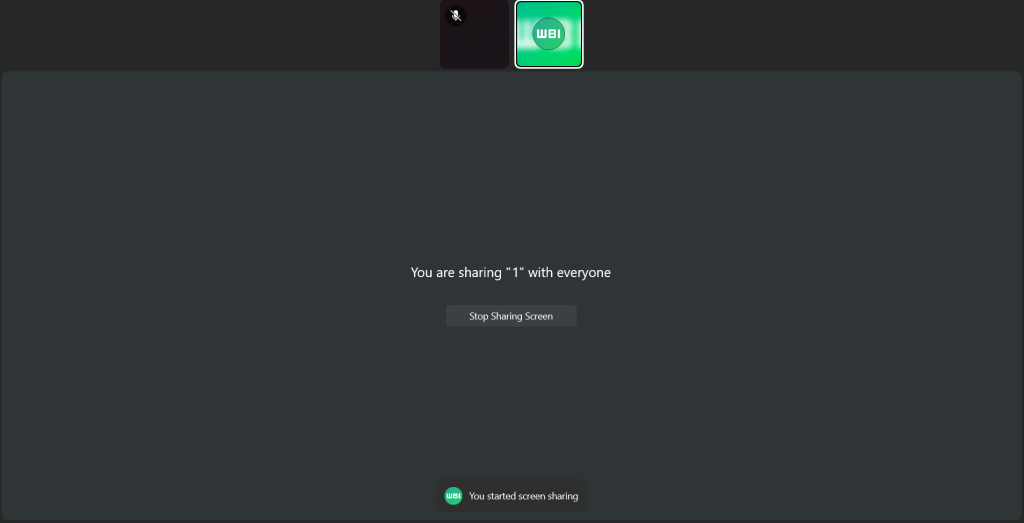
WhatsApp, the popular instant messaging platform owned by Meta (formerly Facebook), has introduced a new screen-sharing feature for video calls in its Windows beta version. The feature allows beta testers to share their screen content during video calls by selecting the designated option in the video call control panel.
Sharing Your Screen During Video Calls
Users can choose to share either a specific window or their entire screen with all participants in the video call. Moreover, participants using mobile devices can also view the shared screen content. Currently, the screen-sharing feature is available to a limited number of beta testers who have installed the latest WhatsApp beta update for Windows through the Microsoft Store. According to WABetaInfo, some stable users are also getting this update. So if you are interested to install keep an eye on the Microsoft Store.
In addition to screen-sharing, WhatsApp has added other updates to its Windows beta version. A crop tool was recently integrated into the drawing editor within the app. This tool enables users to conveniently crop images directly within the WhatsApp interface, eliminating the need to use external editing tools.
Furthermore, WhatsApp is introducing a redesigned emoji keyboard to selected beta testers on the Android platform. The new keyboard provides an improved user experience with wider visibility. Users can access a broader view of emojis by scrolling the keyboard upwards. The redesigned emoji keyboard not only offers improved scrolling functionality but also includes redesigned tabs for accessing the GIF, sticker, and avatar sections. WhatsApp is also working on a new floating action button design and is introducing a high-quality photo-sharing option in its Android beta version.
Earlier this week, the Apple stock closed at an all time peak, but it appears that not everyone has such a positive outlook. An UBS analyst have downgraded its stock over concerns of its growth.
Apple stock downgraded by UBS since its growth faces pressure
UBS analyst David Vogt recently downgraded the Cupertino based giant’s stock from Buy to Neutral. Although, he also raised the price target from 180 US Dollars to 190 US Dollars. According to the analyst, the company was downgraded due to its “given persistent softness in developed markets and data that indicates growth is likely to remain under pressure.” The news also arrives as the iPhone maker gets closer to a whopping 3 trillion US Dollar market cap.
Furthermore, the move from UBS is partly due to Apple’s valuation. The company as well as other tech giants have raised their market caps by billions and have had their stocks prices rise to new highs. Vogt added that “While a premium is justified, expansion is unlikely given growth headwinds”. The announcement of the new Vision Pro also drove the stock higher last month, but this product isn’t arriving till next year.
So, the focus once again shifts to the brand’s most important product line, the iPhone. BUt UBS has raised concerns over long term growth for the iPhone as well. Vogt believes that the iPhone sold in some of the biggest markets like the US, China, and Europe have declined by over 7.5 percent year on year. However, there are others analysts that believe that the company is arriving at a massive sales cycle for the iPhone, with the upcoming iPhone 15 lineup.
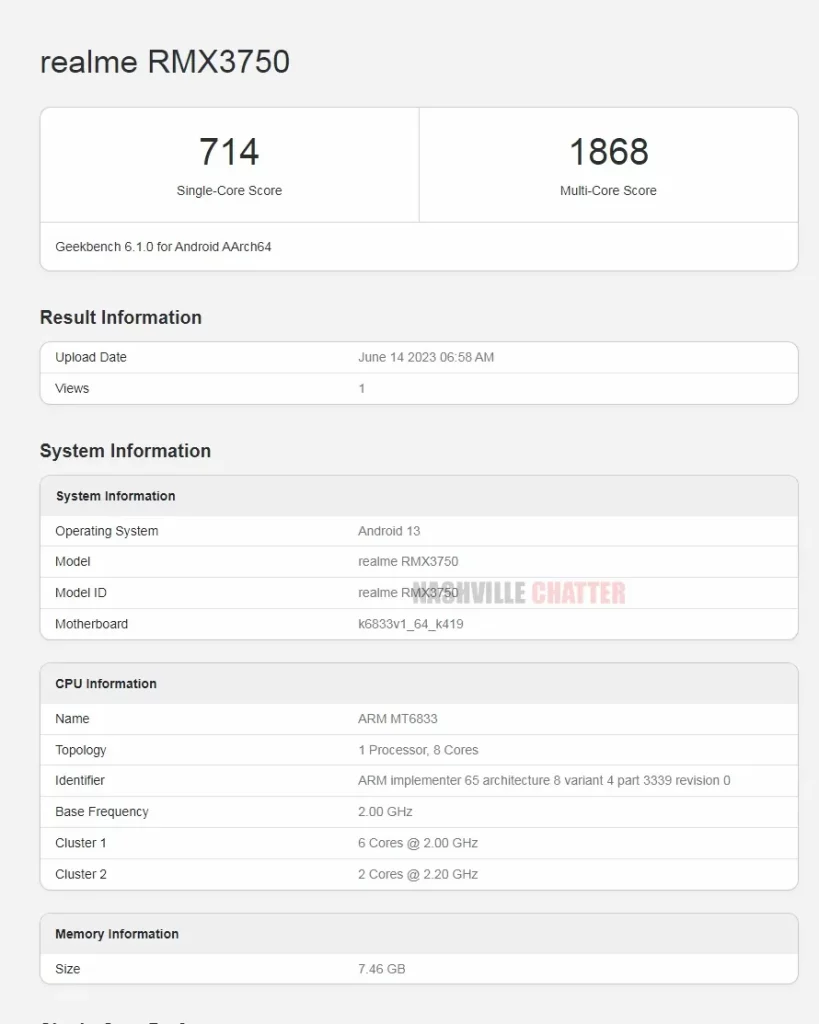
Realme is reportedly working on a new Narzo smartphone. It is expected to be a device in the Narzo 60 series. The brand had launched the Narzo 50 series last year. Now the upcoming Narzo phone has appeared on the Geekbench benchmarking platform. It is listed with model number RMX3750. Read on to know more about it below.
Realme Narzo 60 5G appears on Geekbench
The Realme Narzo 60 5G’s Geekbench database listing reveals a motherboard codenamed k6833v1_64_k419 and the CPU name as ARM MT6833. It comprises of six cores clocked at 2GHz and two cores clocked at 2.20GHz. This corresponds to the Dimensity 6020 processor. The listing reveals 8GB RAM onboard and we can expect more configurations at launch.
In the Geekbench’s single-core and multi-core tests results, the Narzo 60 5G scores 714 and 1,868 points respectively.
The report reveals that the Narzo 60 5G will be a rebadged version of the Realme 11 5G in China. Additional details of the upcoming Narzo phone remain scarce at the moment.
The Realme 11 5G has already bagged multiple certifications including 3C, TENAA, and BIS. It is expected to come with a 6.43-inch FHD+ AMOLED display and a 90Hz refresh rate. The TENAA listing revealed a flat display and a circular rear camera module. Meanwhile, as per the 3C certification, it is tipped to be backed by a 5,000mAh battery unit with support for 18W charging.
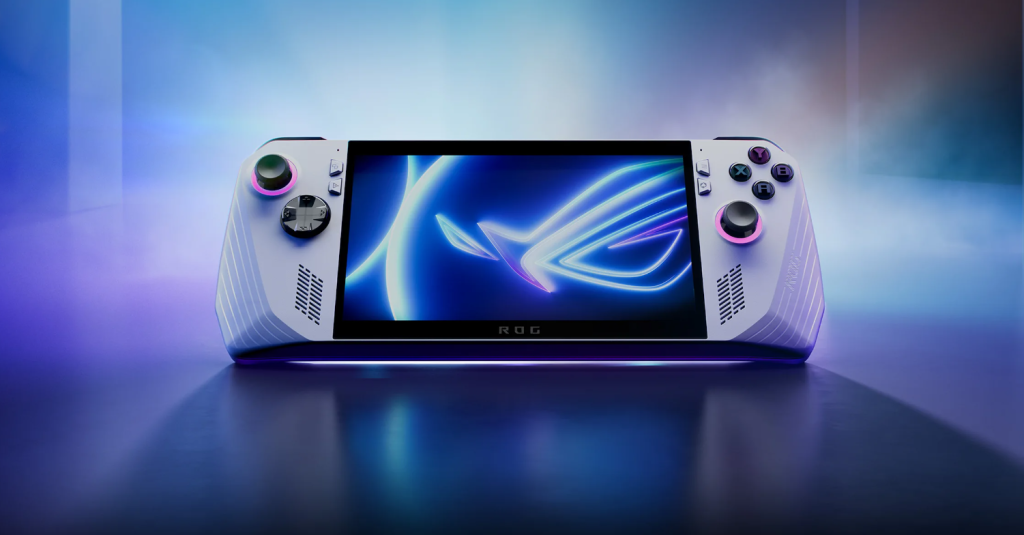
In May, Asus unveiled the ROG Ally console as a competitor to the Valve Steam Deck. With its recent firmware update, the console has garnered positive feedback from early reviewers, showcasing its impressive performance. Now, the console is officially released and available for purchase by the general public.
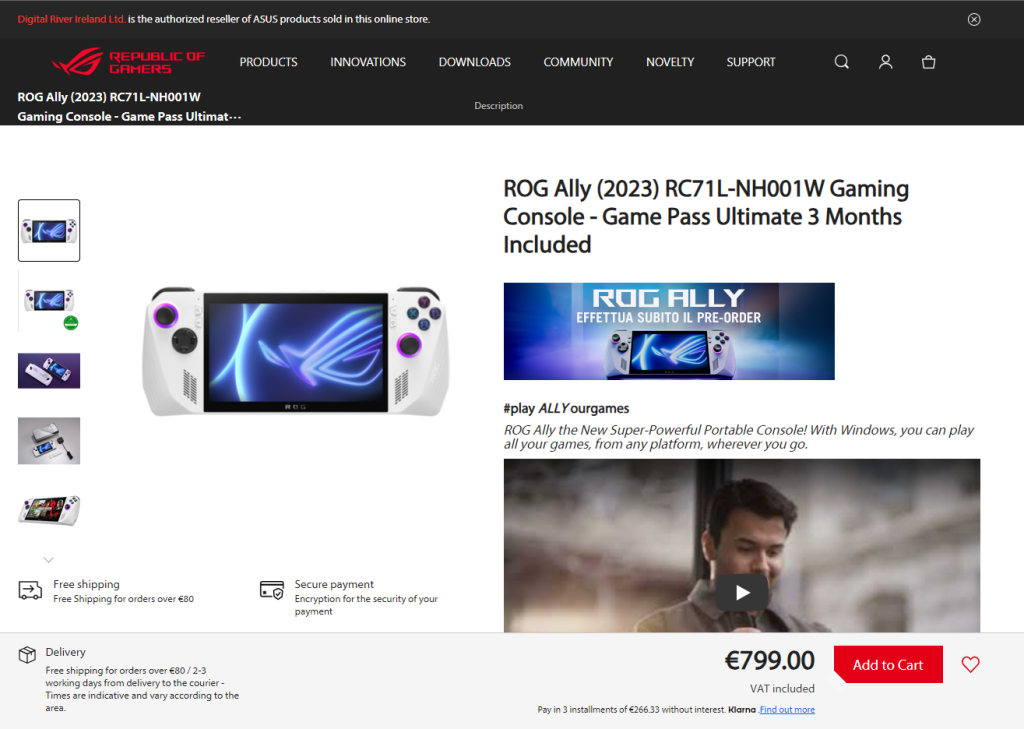
Following the commencement of pre-orders in Japan and China, the ROG Ally console has now arrived in Europe, beginning with Italy. Customers in Italy can now buy the handheld gaming device for €799 through the official ASUS website in Italy or from authorized ASUS resellers. Additionally, a special offer includes 3 months of free Xbox Game Pass Ultimate with the purchase of the console.
ASUS ROG Ally Specs
Powered by the AMD Ryzen Z1 Extreme processor and integrated with an AMD Radeon GPU, the ROG Ally delivers powerful performance. Running on the Windows 11 Home operating system, the device offers a smooth and familiar user experience.
With 16GB of LPDDR5 RAM and 512GB PCIe 4.0 NVMe M.2 internal storage, users have ample space to store their games and files. The device boasts a large 7-inch touchscreen display with a Full HD resolution of 1920 x 1080 pixels and a responsive 120Hz refresh rate. The display’s brightness of 500 nits ensures vivid visuals, while the 7ms response time minimizes motion blur.
The ASUS ROG Ally gaming device features two built-in speakers and a microphone array for an immersive audio experience. It also includes strategically placed command buttons to enhance the gaming experience and provide convenient control.
In terms of connectivity, the device supports Wi-Fi 6E (802.11ax) with triple band support, ensuring fast and stable internet connectivity. Bluetooth version 5.2 enables seamless wireless connections. Additionally, the device offers a 3.5mm audio jack, a USB Type-C port, and a microSD card reader for versatile connectivity options.
To keep users in the game for longer, the ASUS ROG Ally is equipped with a 40Wh 4S1P 4-cell Li-ion battery, supporting fast charging of up to 65W. This allows for quick and efficient charging, minimizing downtime.
Former Realme India CEO, Global VP of Realme, and President of Realme International Business Group Madhav Sheth has officially announced his departure from the company. He announced his resignation on his Twitter handle. The development follows last week’s report of him joining HONOR India although the executive has not revealed his future plans in the farewell announcement.
Madhav Sheth quits Realme
Madhav Sheth has been a part of Realme since its inception way back in 2018. He rose through the ranks as he was made the President of the company’s new international business unit in 2021 and the Global VP earlier in March this year. Sheth’s departure from Realme comes after a successful five-year stint at the company.
During his tenure, Sheth played an integral role in establishing the brand’s presence in the Indian as well as European markets. With him, the brand had many notable achievements including the fastest-growing smartphone brand in India and attaining the position of the second-largest smartphone brand in the country.
In his farewell note, Sheth said that the government of India has taken steps towards enhancing Indian exports and he is happy to be a part of it. He wants to contribute toward’s the country’s export business. However, Sheth’s future plans remain unknown. It will interesting to see if he joins HONOR India to resurrect their smartphone business in the country.
Sheth also revealed that Realme’s Founder and CEO Sky Li will now oversee the Indian market. He will continue to be a strong supporter and strategic advisor to Realme.
In the latest Pixel feature drop for June 2023, Google introduces a range of helpful tools and updates for Pixel Phone users, Pixel Watch owners, and Fitbit device enthusiasts. Let’s dive into the highlights of this update:
Pixel Phones:
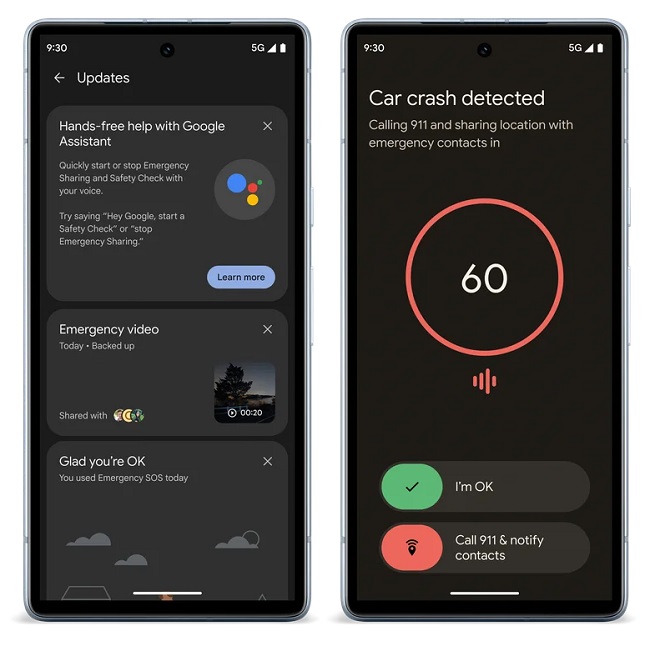
Voice-activated safety checks: Use Google Assistant on your Pixel phone to initiate emergency sharing or arrange safety checks for extra security. If you fail to respond within the specified timeframe, your emergency contacts are alerted for your wellbeing.
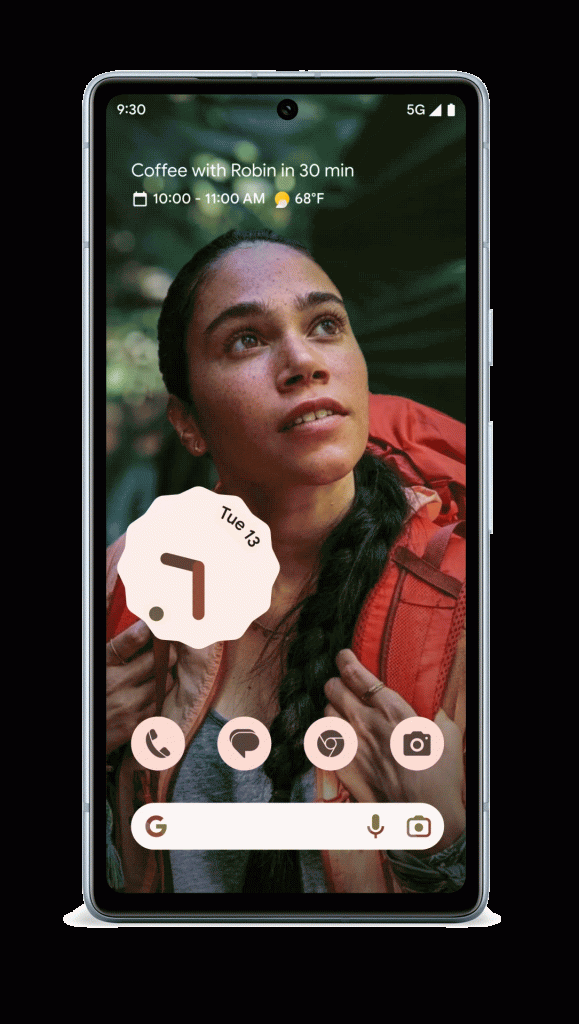
Dynamic and emoji wallpapers:Pixel 6 and newer phones offer cinematic wallpapers that bring your cherished memories to life in immersive 3D scenes. Additionally, users can create personalized live wallpapers using over 4,000 emoji patterns and colors.
Enhanced car crash detection: Pixel phones have now elevated their car crash detection technology by contacting emergency services and sharing real-time location and call status with designated emergency contacts. This feature guarantees heightened safety, ensuring you’re never alone during such unfortunate events.
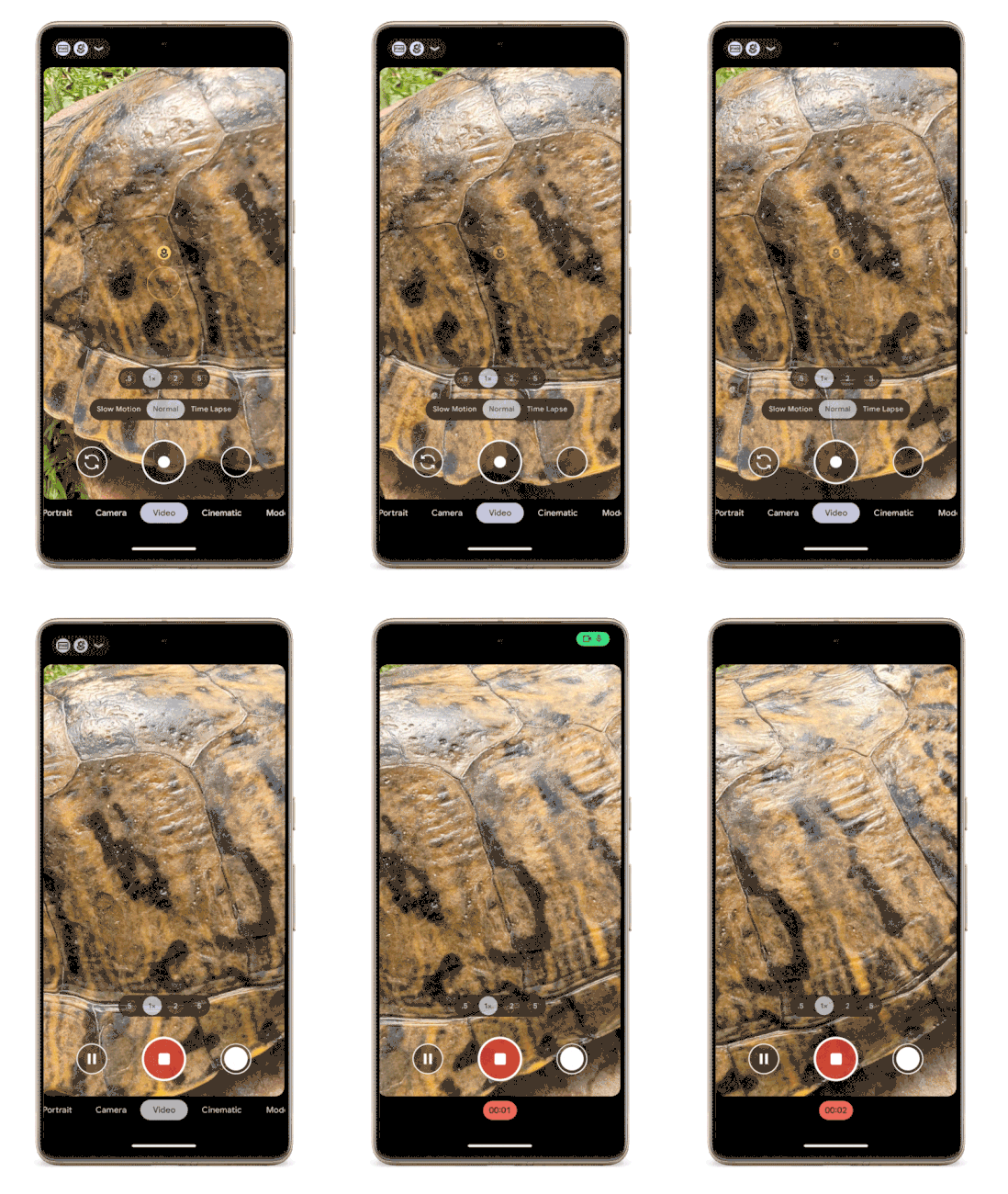
Macro Focus for video:Pixel 7 Pro owners can now capture stunning close-up videos with the Macro Focus feature, adding a new dimension to their videography.
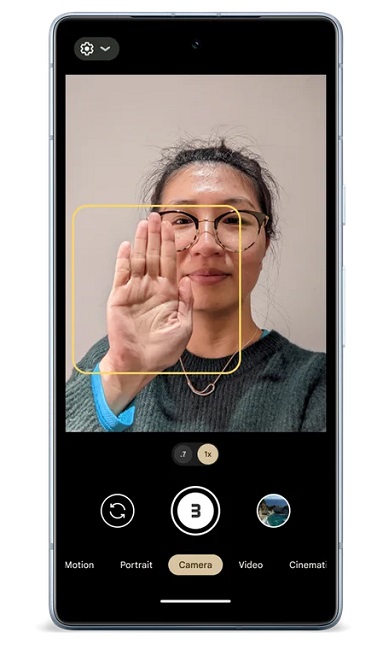
Hands-free self-timed photos: For Pixel 6 and newer phones, users can conveniently take self-timed photos by simply raising their palm to trigger the timer, making capturing perfect shots a breeze.
Adaptive Charging: Pixel phone users can now extend their battery lifespan with Adaptive Charging, which predicts charging habits and gradually charges the device to 100% one hour before unplugging, optimizing battery health.
Improved Recorder speaker labels: Google Pixel 6 and later models have also enhanced the Recorder feature to become a more effective tool for managing and organizing recordings. Now, you can directly export transcripts to Google Docs, create video clips labeled with the speaker’s name, and even search for particular speakers within the recordings. This improvement aims to streamline your recording management process, giving you more control and easier access to your audio files.
Quick access to smart home controls: Manage your smart home devices directly from the Pixel lock screen using the redesigned Google Home app home panel, ensuring effortless control and convenience.
Smarter haptics:Pixel 6a and Pixel 7a introduce adaptive haptics that intelligently adjusts vibration intensity based on different surfaces, providing a more refined and tailored user experience.
New Google Assistant voices: Google Assistant now offers two new natural-sounding voices, expanding the available options to enhance the conversational experience. These voices are available in U.S. English.
Pixel Watches:
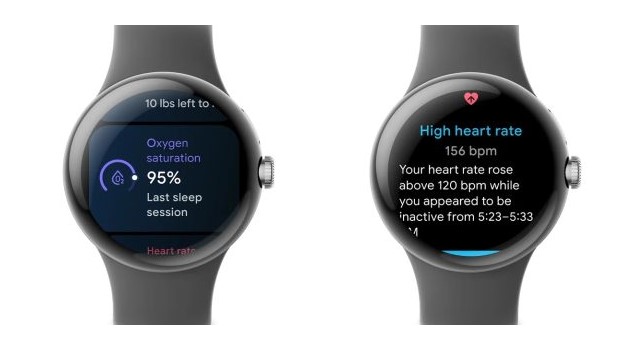
SpO2 monitoring:Pixel Watches now feature SpO2 monitoring, allowing users to track their oxygen saturation levels while sleeping and gain insights into their overall well-being and sleep quality.
Heart rate tracking: With continuous heart rate monitoring, users receive notifications for unusual readings and can assess their overall health more effectively.
Expanded language support: Google Assistant on Pixel Watches now supports additional languages, providing assistance in Italian, Portuguese, Swedish, Polish, and Spanish, enhancing accessibility for a broader audience.
Spotify integration: Users can now access Spotify directly from their Pixel Watches, enjoying seamless DJ sessions, podcasts, and their favorite music through dedicated tiles.
Auto-pause for workouts: During runs, walks, or bike exercises, workout tracking is now automatically paused and resumed, ensuring accurate and uninterrupted activity tracking.
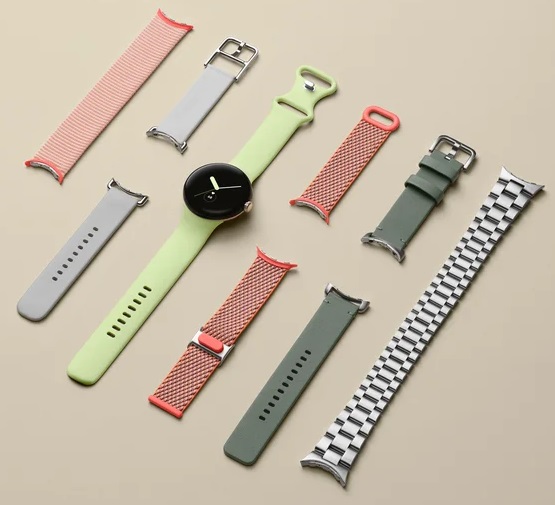
Stylish Metal Links bands: Pixel Watch owners can enhance the appearance of their device with the elegant Metal Links bands, available in Brushed Silver or Matte Black, starting from June 16 through online and Google retail stores.
Fitbit Devices:
Exercise modes: Charge 5, Luxe, and Inspire 3 now offer easy access to a comprehensive list of exercise modes, eliminating the need to open the Fitbit app for selecting specific activities.
Daily Readiness Score:Fitbit smartwatches and trackers now provide users with a quick glance at their body’s readiness for workouts, helping them make informed decisions about their exercise routines.
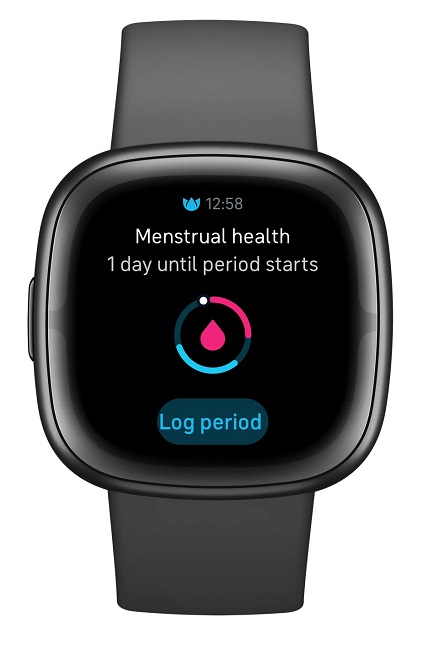
Menstrual health tracking: Sense 2 and Versa 4 now allow users to log periods, view cycle states, and edit information directly on the devices, empowering women to track and manage their menstrual health conveniently.
Multilingual notifications: Fitbit devices now support incoming notifications in various languages, including global characters and right-to-left text, ensuring a more inclusive and accessible user experience.
Clock face customization: Users can switch clock faces on Fitbit smartwatches with a simple long press on the home screen, allowing for personalized style and customization options.
New clock faces: Fitbit introduces four fresh clock face options to its app gallery, giving users even more choices to express their unique style. Additionally, a popular Charge 5 clock face is now available on Luxe and Inspire 3 devices.
Availability:
Google has officially announced that the above-mentioned updates will begin rolling out today for Pixel devices, including Pixel watches, as well as Fitbit devices. The updates will be progressively released over the next few weeks, ensuring users can enjoy the latest enhancements and features.
The use of artificial intelligence chatbots is growing rapidly. ChatGPT, developed by OpenAI, is the current market leader, with Google’s Bard not far behind. This popularity is creating new opportunities for businesses, but it is also raising concerns among regulators and governments. For example, Google has recently delayed the launch of its Bard AI chatbot in the European Union, citing privacy concerns. Here are the details…
Google Working with Regulators to Address Bard AI Concerns
Artificial intelligence use by many people to make their daily tasks easier. However, there are some risks associated with AI, such as the possibility of sensitive information being leaked. For this reason, some companies, such as Samsung andApple, have recently banned the use of generative AI bots. The European Union is aware of the risks associated with AI and has begun to regulate its use.
Google, which has developed its own AI chatbot called Bard, has delayed the launch of Bard in the European Union until it can comply with the new regulations. The Irish Data Protection Commission (DPC), which is the lead data protection authority for Google in the EU, has said that it has not received enough information from Google about how Bard will protect users’ privacy.
The DPC has raised concerns about how Bard will collect and use users’ personal data, including their names, email addresses, and IP addresses. The DPC is also concerned about how Bard will prevent users’ data from being used for unauthorized purposes, such as targeted advertising. Google has said that it is committed to protecting users’ privacy and that it is working with the DPC to address its concerns. However, the company has not yet said when Bard will be available in the EU.
This is not the first time that a major tech company has delayed the launch of an AI product in the EU due to privacy concerns. In March, ChatGPT temporarily banned in Italy after the Italian privacy regulator raised similar concerns. It is not yet known when the tension between Google and the EU will end.
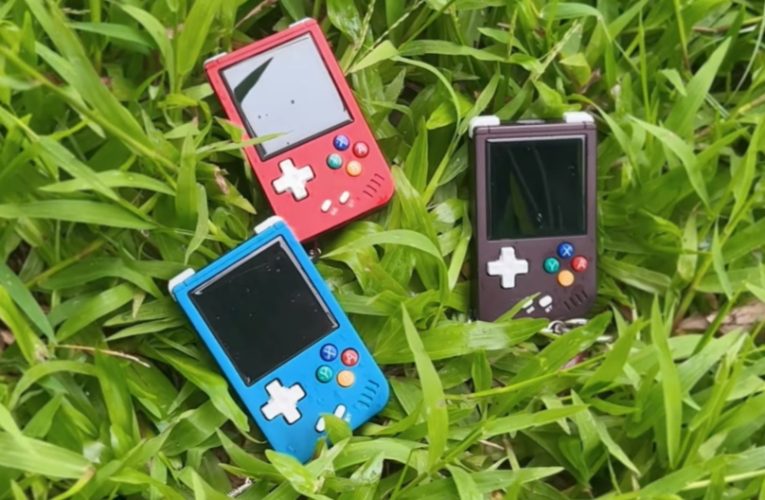
The Anbernic RG nano has finally gone on sale as the smallest ever handheld gaming console. This device is a miniature lookalike of the iconic Game Boy and comes with a number of retro games. So let’s have a look.
Anbernic RG nano is small enough to be carried on your keychain ring
With measurements of 2.8 inches x 1.7 inches x 07 inches, the new RG nano is a tiny and compact game console. Since it weighs just 153 grams, you can easily carry it around on your keychain and even toss it in your pockets or handbags. But despite its small form factor, it is still a fully functioning game console that features a D-Pad, action buttons, color display, and even shoulder buttons as well. Notably, this isn’t the first retro handheld gaming console from the company as they even launched the Anbernic RG35XX earlier this year.
The RG nano sports a tiny 1.54 inch IPS LCD panel that has a 240px resolution and is powered by a 1.2GHz ARM Cortex A7 processor. This chipset is paired with 64MB of DDR2 memory and uses a microSD card slot that supports up to 512GB of storage (the company sells only the 64GB or 128GB options). With these specs, it is clear that the console isn’t cutting edge, but for its size, it can run NES, GBA, and even PS1 era games with ease. It runs on a Linux based OS with support for emulators as well.
Other notable features include, built in speakers, a USB Type C port, and a 1,050mAh battery that can last for up to 2.5 hours. For those unaware, Anbernic had first unveiled the mini console back in May 2023, and it is currently available for purchase for a price tag of 66 US Dollars. Although, there is a 6 US Dollar company discount for those that order before June 15. Talking about its design, it is built using aluminum alloy and arrives in multiple color options, like dark purple, blue, and red.
Apple recently unveiled its highly anticipated mixed reality headset dubbed the Vision Pro. This 3,500 US Dollar headset is a first of its kind product from the company. Now, a fresh report has even revealed the suppliers behind the new gadget.
Apple Vision Pro is being build by brand’s AirPods supplier Luxshare
Apple has contracted Luxshare Precision Industry Co as one of its primary suppliers for the Vision Pro. For those unaware, this contract manufacturer is also a major supplier for the AirPods and will even produce the iPhone 15 models. Now, the Cupertino based giant has brought aboard Luxshare and six other Chinese companies to assemble its latest high end gadget, which is the new Vision Pro headset.
The other six manufacturers in the Apple supply chain includes the likes of Cowell E Holdings that is a camera module maker and Shenzhen Desay Battery Technology, which is providing the lithium batteries and power management system for this product. Notably, this move from Apple also shows the company’s shift to include more Chinese suppliers in its supply chain and its growing connection with the region despite the geopolitical situation surrounding the region.
Although, the iPhone maker’s new mixed reality headset is still primarily being supplied by its Taiwanese suppliers. This includes optical parts maker Largan Precision, Optical lens products manufacturer Genius Electronic Optical, and others. According to Ivan Lam, senior analyst at Counterpoint, “It is evident that Vision Pro’s current suppliers, similar to the structure [of companies] behind the iPhone, are among the world’s top consumer electronics component providers”.
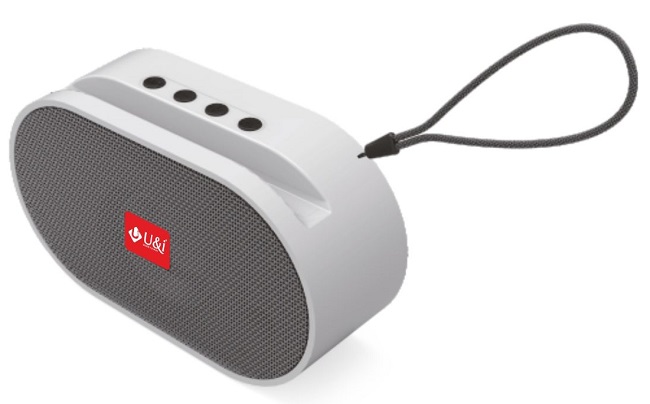
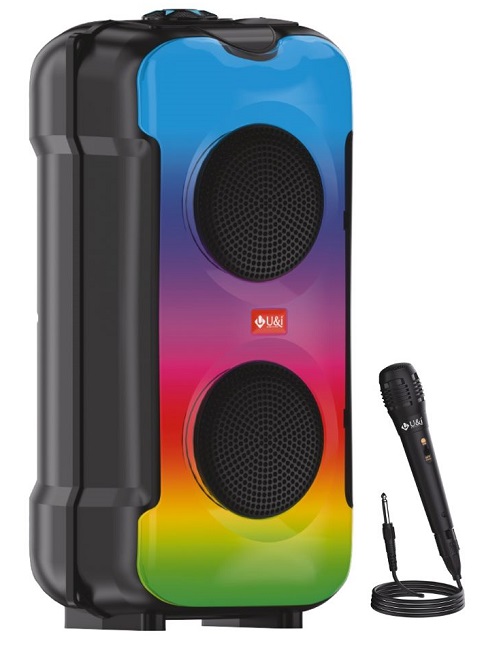
U&i has expanded its product lineup in India by introducing new speakers, following the recent launch of wired earphones and TWS earbuds. The latest offerings include the Capsule Series 5W Portable Speaker and the Delight Series 30W Party Speakers.
U&i Capsule Series speaker specs
The Capsule Series presents users with a compact and portable wireless speaker that doubles as a convenient smartphone stand. This feature makes it suitable for various activities like watching movies or engaging in video calls in different environments. The speaker allows for music streaming from smartphones or playback of favorite playlists stored on a TF Card. With its 5-watt speaker, the Capsule Series delivers clear music with rich bass and vocals.
Designed with ease of use and mobility in mind, the Capsule Series is compact and lightweight, making it effortless to carry around. It is available in appealing colors, adding a touch of style. The built-in 1200mAh battery charges rapidly and provides up to 5 hours of uninterrupted playtime. To create an immersive party ambiance, the speaker also incorporates synchronized RGB lights that sync to the rhythm of the music.
U&i Delight Series speaker specs
On the other hand, the Delight Series caters to larger gatherings and instant karaoke parties. These portable speakers are equipped with twin 15-watt speakers, amounting to a total of 30 watts, ensuring crisp vocals and deep bass for an enhanced audio experience. Users have the flexibility to stream music via Bluetooth, connect a laptop through the Aux port, or access their music collection from a TF Card. Additionally, the Delight Series supports a wired microphone, making it convenient for impromptu karaoke sessions.
For those seeking more power and volume, the Delight Series offers a TWS function, enabling the pairing of another Delight speaker. This feature further amplifies the audio output. The built-in rechargeable 2400mAh battery ensures ample power for extended entertainment. Users can conveniently recharge it using a standard micro USB adapter or a power bank.
Price & availability
Both the U&i Capsule Series and Delight Series wireless speakers have been made available for purchase in India. The Capsule Series is priced at Rs. 1,199, while the Delight Series is priced slightly higher at Rs. 2,799.
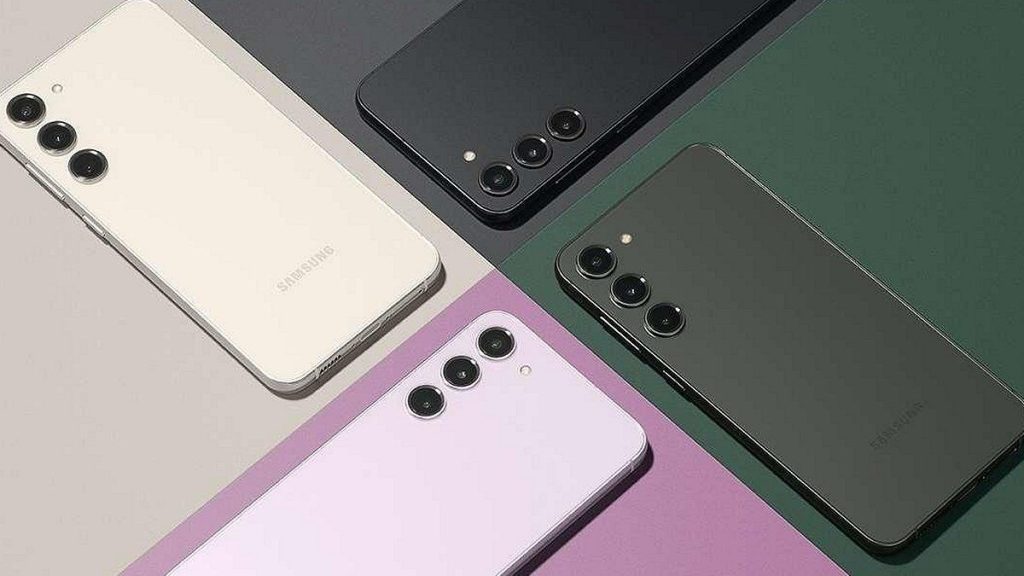
There have already been a number of rumors and reports regarding the Samsung Galaxy S23 FE, the company’s upcoming entry in its Fan Edition series of smartphones. It was initially believed that the S23 FE will not be launching this year, similar to the S22 FE from last year. However, later reports have confirmed its existence, with its launch appeared to be set for late 2023.
Samsung Galaxy S23 FE to launch sometime between July-September
But a new report has hinted that the Galaxy S23 FE will be launching in the third quarter of this year. In other words, we can expect the announcement to be held sometime between July and September 2023. If this news is true, the South Korean tech giant’s latest Fan Edition phone will be arriving a whole quarter ahead of its initial launch timeline. For those unaware, it was previously rumored that the brand will launch the Galaxy S23 FE sometime in Q4 2023.
Now, the SamMobile report claims that the device will first launch in Q3 2023, but only in select markets. Unfortunately, it is still unclear which regions will receive the device first. Although, a broader global release is expected to kick off in the fourth and final quarter of this year, or the October to December period. Keep in mind that this is still just an unconfirmed report so take this news with a pinch of salt for now.
Based on what we know so far, the Galaxy S23 FE will likely be equipped with the Exynos 2200 processor unlike the Snapdragon 8 Gen 2 on the Galaxy S23 lineup. One of the improvements in the new FE phone is expected to be the 50 megapixel primary camera on the rear, which could be the same sensor as the one found in the Galaxy S22 or Galaxy S23.
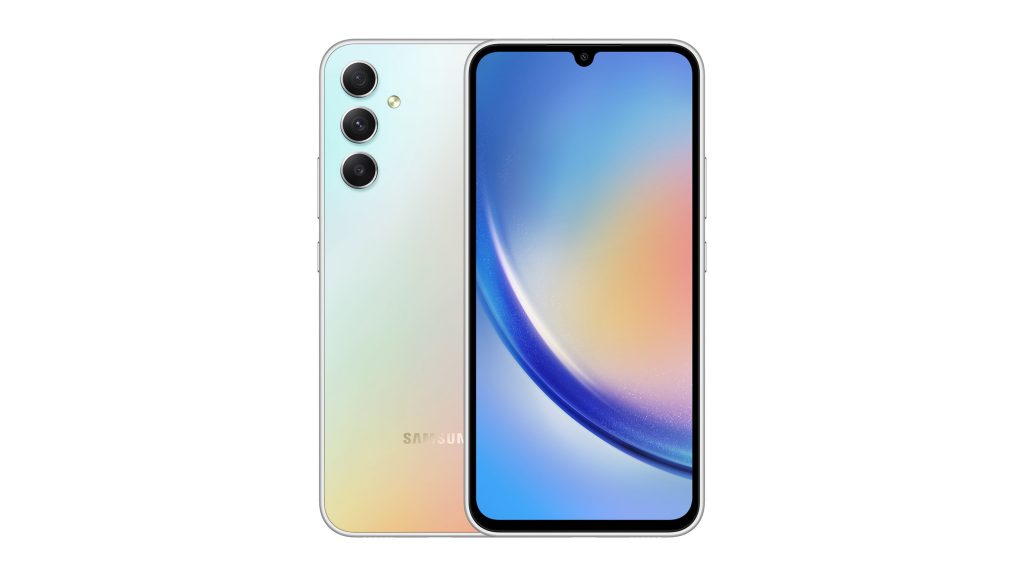
Samsung is gearing up to launch the next iteration of its premium foldable smartphones called the Galaxy Z Fold 5 and Galaxy Z Flip 5 next month. However, the company is not finished introducing mid-range devices, as evidenced by the emergence of the Indian support page for the Galaxy M34 5G.
Samsung Galaxy A34 5G
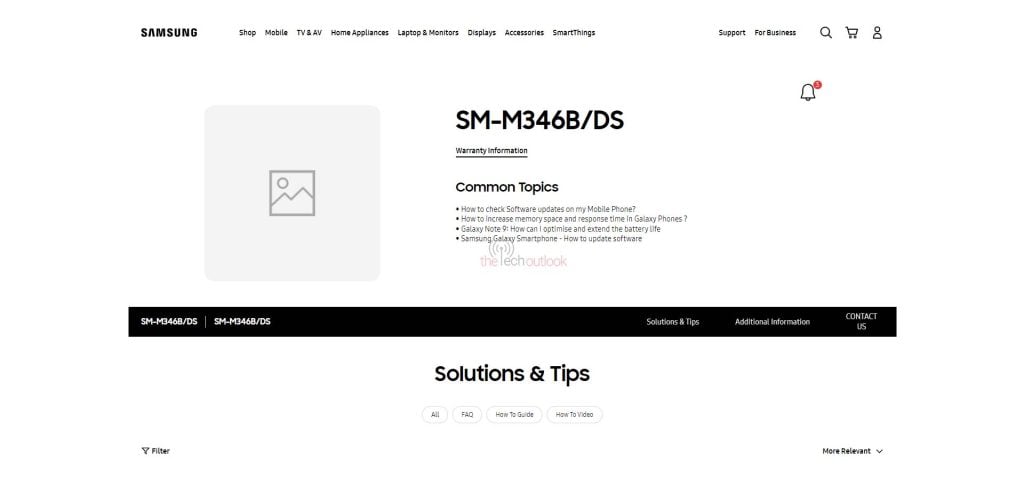
Spotted by folks at TheTechOutlook, Samsung Galaxy M34 5G has emerged on Samsung India’s support page with the model number SM-M346B/DS. The listing does not provide any details regarding the specifications, however, it all but confirms that the launch is not that far.
Besides that, the smartphone has also picked up the BIS certification, making it eligible to be sold in the Indian market. Rumors online suggest that the device will be quite similar to the already-launched Galaxy A34 5G, so let’s look at its specifications to get an idea about the upcoming Galaxy M34 5G.
Samsung Galaxy A34 5G specs
The Samsung Galaxy A34 5G boasts a 6.6-inch flat AMOLED display with a Full HD+ resolution and a smooth 120Hz refresh rate. The front camera is housed within a discreet waterdrop notch at the top of the screen. The device incorporates an optical in-display fingerprint scanner for secure unlocking and supports AI face unlock as well. Out of the box, it runs on Android 13 with the user-friendly One UI 5 interface, providing a clean and intuitive user experience.
Powering the Galaxy A34 5G is the Dimensity 1080 SoC, which, combined with 8GB of RAM and storage options of up to 256GB, ensures smooth performance and ample space for apps and files. The smartphone features a versatile triple-camera setup on the back, led by a 48MP main camera with optical image stabilization (OIS) support. It is accompanied by an 8MP ultra-wide camera and a 5MP macro sensor, offering a range of creative possibilities for photography. Additionally, the device includes a high-resolution 32MP front-facing camera for capturing detailed selfies.
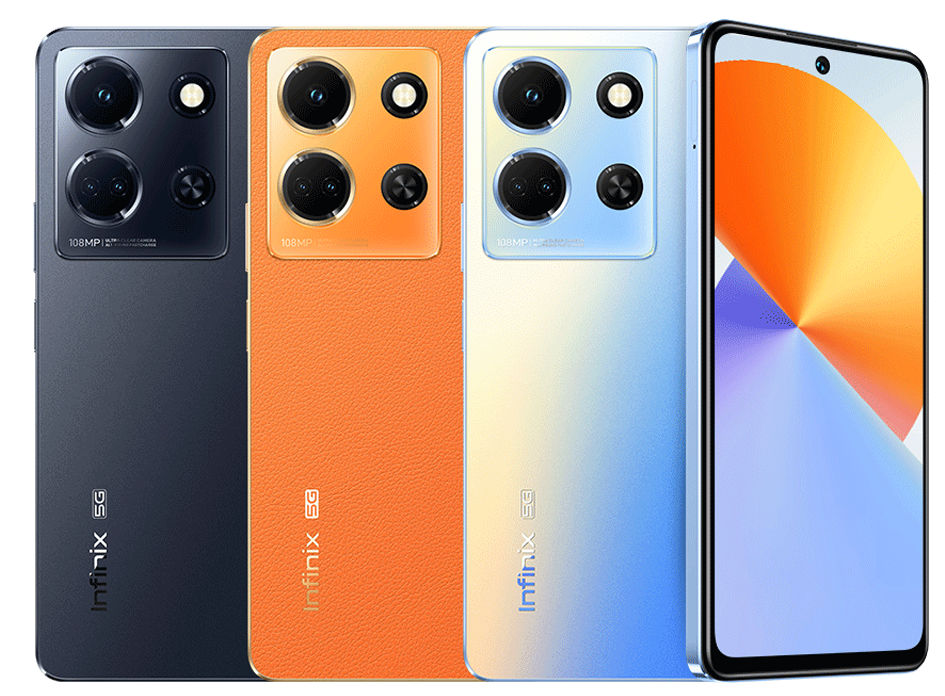
Infinix has just unveiled its latest generation of mid range smartphone in the Indian market. The new device in question is the Infinix Note 30 5G that features some notable specs despite its affordable price tag. So let’s have a look.
Infinix Note 30 launched in India with a Rs 14,999 price tag
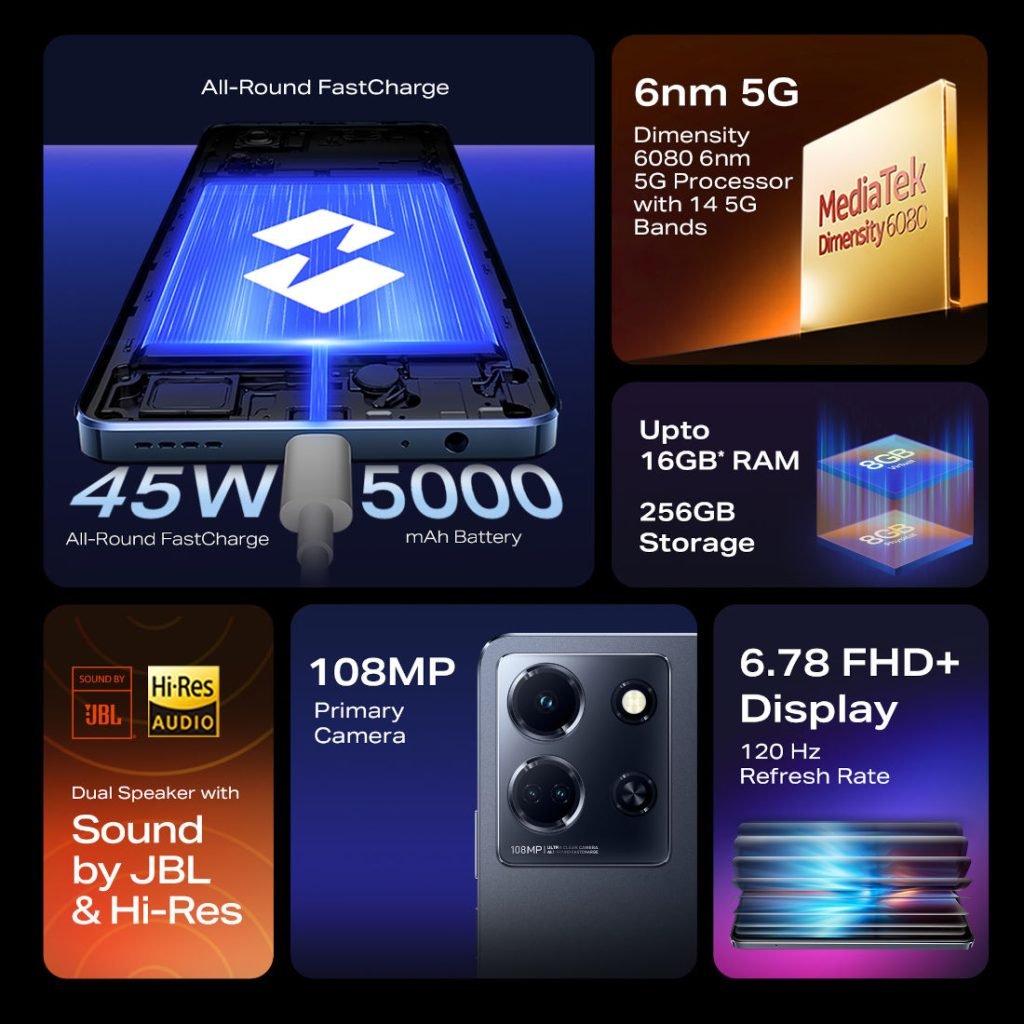
The new Note 30 model sports a tall 6.78 inch LCD panel on the front that offers Full HD+ resolution and 120Hz refresh rate. This panel also has NEG Glass Protection and supports 580 nits of peak brightness. Under the hood, the smartphone is equipped with a MediaTek Dimensity 6080 SoC (rebranded Dimensity 810) that is paired with up to 8GB of RAM and 256GB of UFS 2.2 storage. Notably, the RAM can be virtually expanded by another 8GB, while the storage can be expanded via a microSD card by up to 2TB.
On the rear, the Infinix Note 30 features a triple camera setup that consists of a 108 megapixel Samsung HM6 primary sensor, a 2 megapixel depth sensor, and an AI camera. Meanwhile, the front houses a 16 megapixel selfie shooter. The camera is undoubtedly one of the highlighting aspects of this device and offers various useful features and modes like film mode. This lets you shoot videos with added cinematic elements as well as super night mode for low light scenarios. The device is powered by a large 5,000mAh battery pack that supports 45W fast charging support.
Other notable features include, a side mounted fingerprint scanner, 3.5mm headphone jack, IP53 dust and splash resistant, Android 13 OS based XOS 13, and Dual Speakers with Sound from JBL & Hi Res. The smartphone arrives in multiple color options, namely Magic Black, Interstellar Blue and Sunset Gold. It is also available in two storage configurations. The base 4GB+128GB version is priced at 14,999 INR, while the 8GB+256GB variant that costs 15,999 INR. Infinix Note 30 will be sold via Flipkart, with the first sale starting on June 22.
Asmi Jain, a 20-year-old student from Indore, has emerged as one of the winners of Apple’s Swift challenge at the Worldwide Developers Conference (WWDC) this year. Her unique app prototype, called EyeTrack, designed to strengthen eye muscles, caught the attention of Apple CEO Tim Cook. Jain’s accomplishment is being lauded for its potential to make a profound impact on the world.
EyeTrack App: Leveraging Augmented Reality to Strengthen Eye Muscles
EyeTrack was born out of Jain’s desire to help her friend’s uncle, who had a left eye misalignment. Utilizing YouTube tutorials, as her university did not offer instruction on Apple’s Swift coding language, Jain was able to design the app. To track eye movements, she incorporated Apple’s ARKit, a software development kit for creating augmented reality experiences.
When asked about her plans to release the app on the Apple App Store, Jain mentioned that it might take some time due to her college assignments. However, she expressed her goal of seeking feedback to ensure the app’s effectiveness and user-friendliness before making it available to the public. Jain also aspires to expand EyeTrack’s capabilities to target other facial muscles, potentially serving as a therapy tool.
During his visit to India earlier this year, Cook met with the country’s innovative iOS developer community and expressed his admiration for their achievements. He commended Jain’s incredible work, recognizing her creativity and ingenuity. Apple increased the number of Swift challenge winners this year to 375, representing more than 30 countries and regions, covering diverse topics such as healthcare, sports, entertainment, and the environment.
Jain’s success exemplifies the opportunities provided by platforms like the Apple Swift challenge, fostering young talent and empowering individuals to create meaningful solutions using cutting-edge technologies. As EyeTrack progresses, it has the potential to positively impact the lives of individuals seeking to improve their eye health.
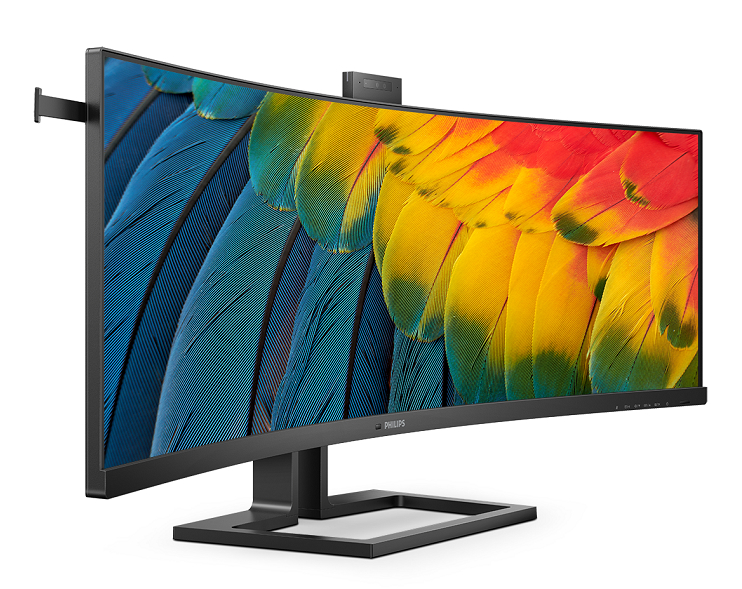
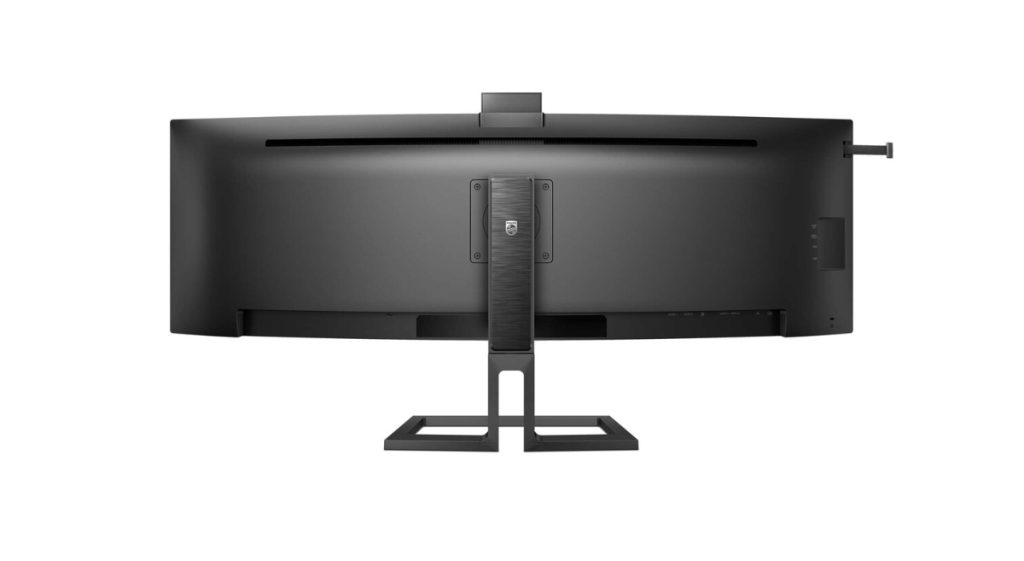
Philips recently debuted the 45-inch 45B1U6900C monitor with a Double QHD resolution (5120×1440p) aimed at productivity and content creation. Now, the brand has launched a smaller version of the monitor called the 40B1U6903CH. Let’s check out its specs and features.
Philips 40B1U6903CH specs & features
With its expansive 40-inch diagonal ultrawide display and 5120 x 2160 resolution (5K2K), the Philips 40B1U6903CH provides a detailed and immersive viewing experience. The IPS panel ensures wide viewing angles of 178°/178°, while the 1000:1 contrast ratio and 350 cd/m² brightness deliver accurate colors. The monitor’s fast 1 ms response time (GtG) minimizes motion blur, making it suitable for fast-paced content.
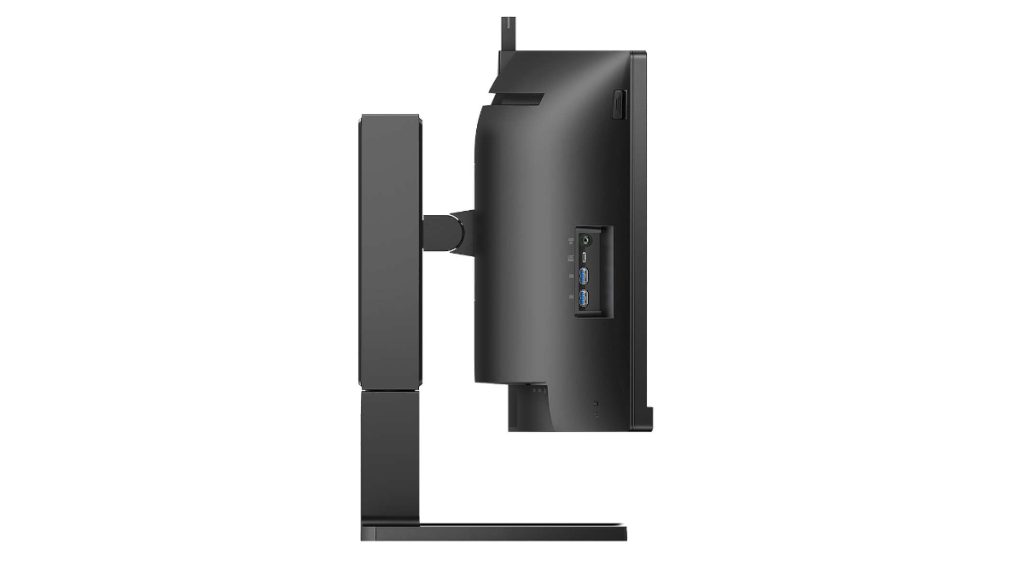
The VESA DisplayHDR 400 certification enhances visual quality, offering improved contrast and color accuracy. Furthermore, the 40B1U6903CH monitor offers extensive color space coverage, including 134% sRGB, 103% NTSC, and 98% DCI-P3. Thunderbolt 4 connectivity enables seamless connection with laptops and up to 100W of power delivery, eliminating the need for additional cables. The monitor includes multiple input options such as DisplayPort 1.4, HDMI 2.0, and USB-C with DisplayPort Alt Mode, providing versatile connectivity.
Aside from its display and connectivity features, the Philips 40B1U6903CH offers practical functionality. It includes USB ports for peripheral connections, an audio output, and built-in speakers for audio playback. The monitor is VESA mount compatible, offering flexibility in placement and efficient use of desk space.
To enhance user experience and reduce eye strain, the monitor incorporates Flicker-Free technology to minimize screen flickering and Low Blue Mode to reduce harmful blue light emissions. SmartContrast technology optimizes image contrast for improved visual clarity. MultiView support enables simultaneous display of multiple sources, while Picture-in-Picture support allows for viewing a second source in a smaller window. The KVM switch feature allows control of two computers with a single keyboard and mouse.
Pricing & availability
The Philip 40B1U6903CH will be released in the UK towards the end of this month, with a price tag of £1,499.99. For customers in the Eurozone, the monitor will be available for order at a price of €1,849.
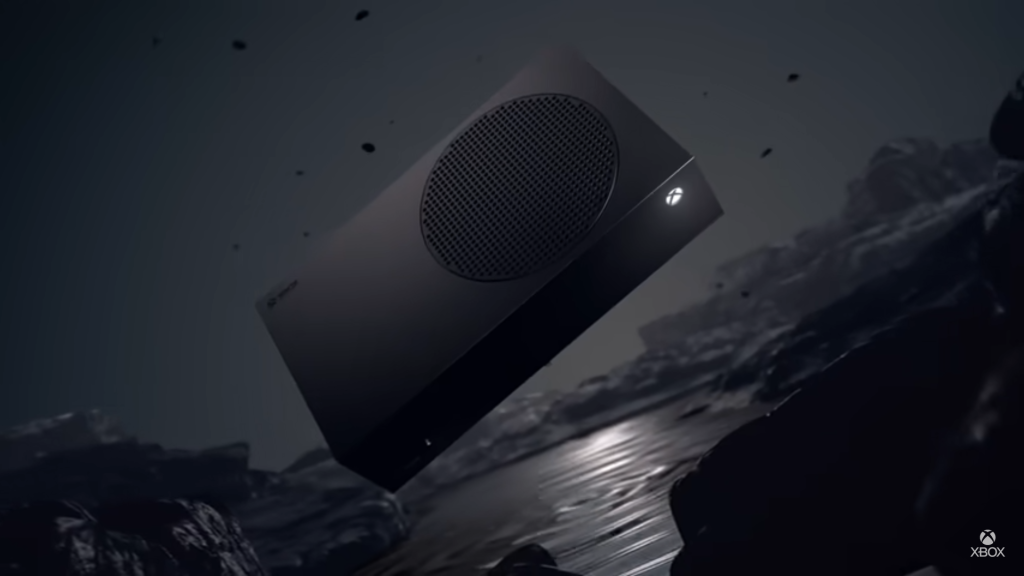
Microsoft has altered the established image of the Xbox Series S console with the launch of its all-new Carbon Black edition. Breaking away from the distinctive white colorway that has become synonymous with the Series S, this edition introduces a sleek carbon black finish that exudes a sense of sophistry and style.
Apart from the change in the finishing, the Carbon Black edition also comes with increased internal storage capacity. With a generous 1TB of storage, gamers will now have ample space to store their favorite titles, media files, and more. This doubling of storage capacity from the usual 512GB ensures that players can enjoy a vast library of games without worrying about running out of space.
Accompanying the console is a matching Xbox Wireless Controller, perfectly complementing the Carbon Black aesthetic. With its ergonomic design and advanced features, the controller offers enhanced precision and responsiveness, providing players with an immersive gaming experience.
Enthusiasts can already secure their own Xbox Series S Carbon Black edition by pre-ordering it now. However, eager gamers will have to wait until the official release day on September 1, 2023, to get their hands on this captivating console. The price for this refined edition has been set at an attractive US$349.99, making it an enticing choice for both existing Xbox fans and newcomers alike.
In addition to the Carbon Black edition, Microsoft has also unveiled the highly anticipated Starfield Constellation Edition Bbox Wireless Controller and Wireless Headset, which will also debut on September 1. This edition promises a unique design inspired by the enigmatic depths of space and is priced at an affordable US$299.99. Gaming enthusiasts can already order the new Starfield Edition Xbox Wireless Controller and Wireless Headset, both adorned with captivating designs from the cosmic realm.
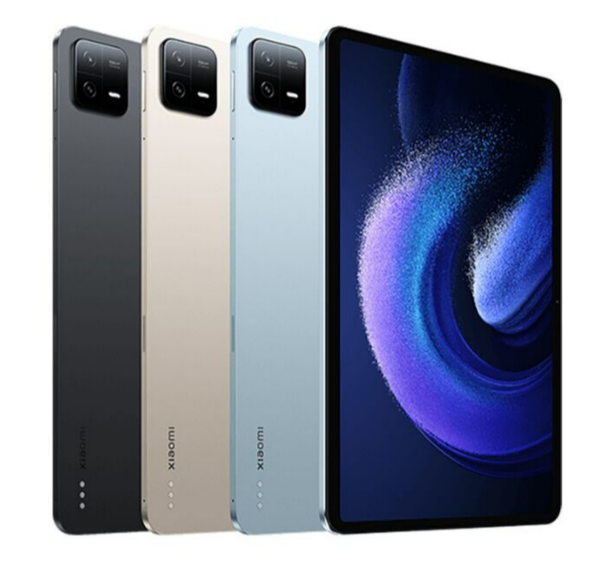
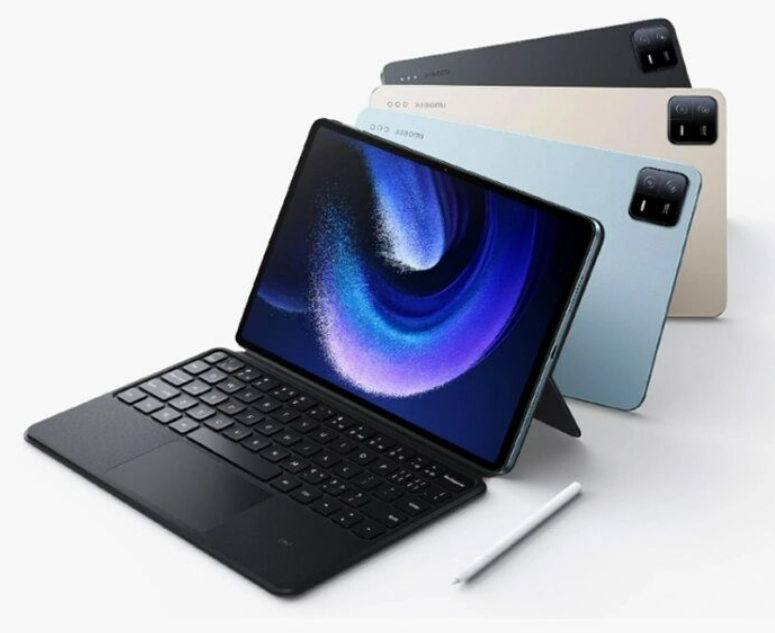
Xiaomi Pad 6 is now available at a heavily discounted price of $299 only on Giztop. The 11-inch tablet has multiple memory options in Black, Blue, and Gold variants. The above-mentioned price is applicable to the base variant.
Xiaomi Pad 6 features an 11-inch AMOLED 2.8K display that supports a 120Hz refresh rate and 240Hz touch sampling rate. It comes with a peak brightness of 500nit and supports HDR10+ and the P3 color gamut.
The tablet runs on the Snapdragon 870 Octa-core processor and has multiple memory options. 8GB/ 12GB LPDDR5 RAM and 128GB/ 256GB/ 512GB internal storage. For your video calls and face time meetings, you have a 20MP camera in the front and for capturing your videos and images you have a 50MP primary sensor and 2MP secondary sensor at the back.
The tablet runs on a massive 8840mAh battery and supports 33W rapid charging. It runs on Android 13 OS-based MIUI 14 and features Bluetooth 5.2 and a quad-speaker setup.
You can now buy the 11-inch Xiaomi Pad 6 tablet for a starting price of $299 only on Giztop.
For more information on such exciting deals and offers, check out our deals hub.
Back in October 2020, OnePlus launched the N100 smartphone in Europe, which later arrived in North America. In a few months, the device will be three years old, however, OnePlus is still solid on the software support with regular updates.
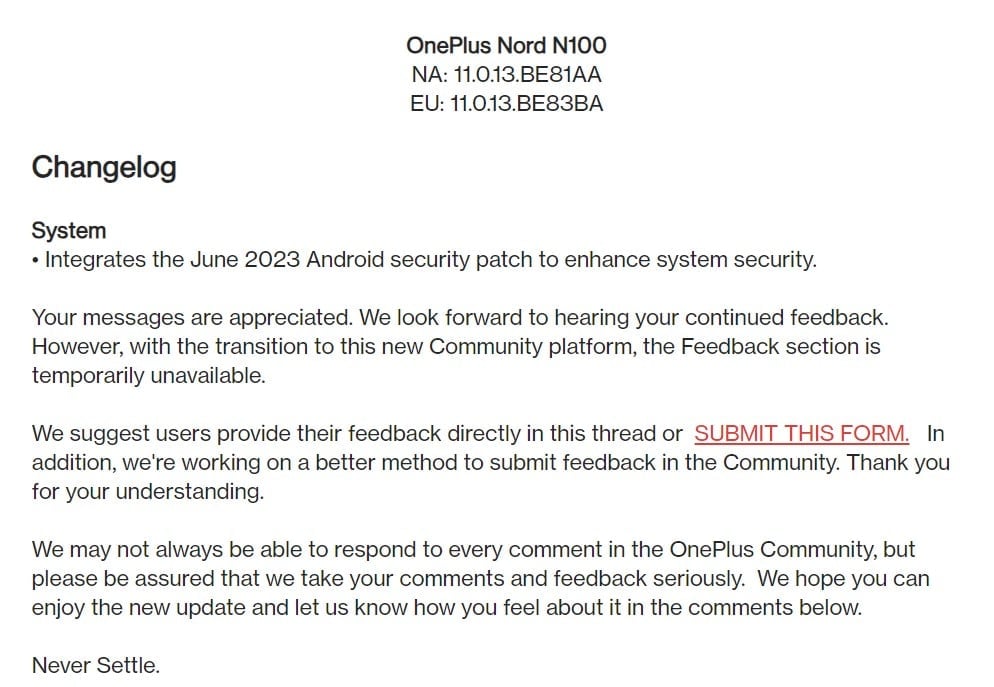
Starting from June 13th, 2023, OnePlus has commenced the rollout of the OxygenOS 11.0.13 update for the OnePlus N100 smartphone across North America and various European countries. The update will be progressively distributed to users over the next few days, ensuring all OnePlus N100 users receive it.
In North America, the firmware version for the update is designated as 11.0.13.BE81AA, while in European countries, it will be identified as 11.0.13.BE83BA. The update incorporates the Android security patch for June 2023, enhancing the device’s security and stability.
OnePlus N100 specs
The OnePlus Nord N100 is a budget-friendly smartphone that offers a decent lineup of specifications. It features a 6.52-inch display with HD+ resolution and a 60Hz refresh rate. Powering the device is a Qualcomm Snapdragon 460 chipset, accompanied by 4GB of RAM. While it comes with a single storage option of 64GB, the phone includes a MicroSD slot for expandable storage.
In terms of photography, the Nord N100 sports a triple camera setup comprising a 13MP main camera, a 2MP Bokeh lens, and a 2MP macro sensor. For selfies, it houses a 13MP front camera.
The Nord N100 packs a large 5000mAh battery and supports 18W wired fast charging, ensuring prolonged usage without frequent recharging. It runs on OxygenOS, which is OnePlus’ custom ROM based on Android 10. This marks the first time that OnePlus has made its custom ROM available on a budget phone. The device is available in the Midnight Frost color option and supports 4G connectivity only.
OpenAI, the renowned artificial intelligence research laboratory that gave the world ChatGPT, has announced a significant update to its language model API. This update includes the introduction of the highly anticipated GPT-4 model and the gpt-3.5-turbo-16k, along with several new features and reduced costs for developers. Language models such as ChatGPT employ a context window that acts as a short-term memory, enabling them to retain input or dialogue content. Increasing the context window size has become a technological race among developers. OpenAI has also been working on a 32,000-token version of GPT-4, although it has yet to be released to the public. For now, the 16,000 token version would be available. This means developers can process approximately 20 pages of text at a time, allowing for more efficient modelling and text generation.
The price of the GPT-3.5 Turbo Model has been lowered by 25%
Alongside the gpt-3.5-turbo-16k, OpenAI has implemented several other notable features. One of these is the introduction of function call functionality in the Chat Completions API. This enhancement enables developers to build chatbots that can call external tools, convert natural language into API calls, or make database queries. It simplifies tasks such as sending emails or executing commands based on user input. OpenAI has also focused on enhancing control over their models. The new gpt-3.5-turbo-0613 includes improved controllability, allowing users to shape the behavior of the language model more reliably.
In addition to these functional improvements, OpenAI has significantly reduced costs for developers. The price of the gpt-3.5-turbo model has been lowered by 25%. This means that developers can now access this model for approximately $0.0015 per 1000 tokens, making it even more affordable and accessible. Furthermore, OpenAI has reduced the price of the “text-embedding-ada-002” model, a technique that enables computers to comprehend words and concepts, by a remarkable 75%. As part of this update, OpenAI will retire some earlier versions of its models starting from September 13. However, developers can continue to utilize these models until that date.
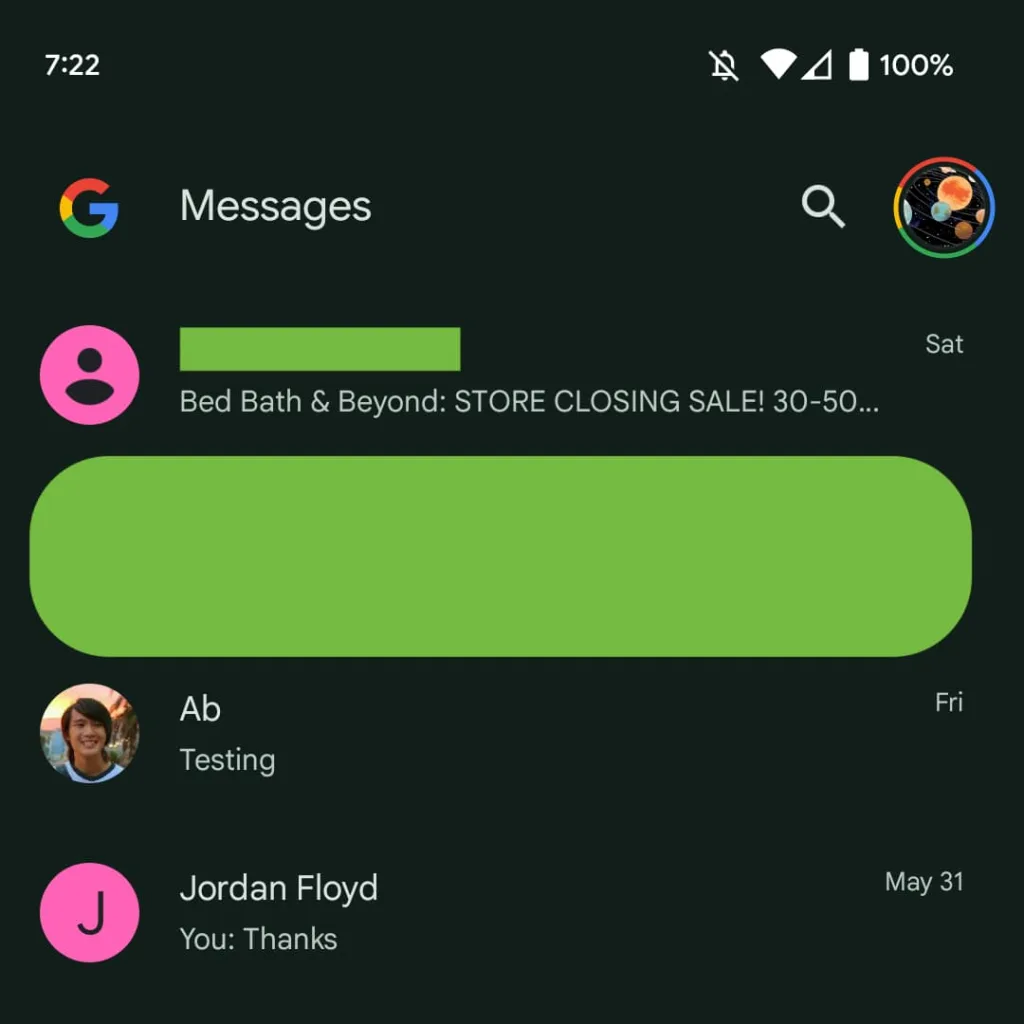
Google is giving its Messages app a fresh new look with a redesigned homescreen that incorporates key branding elements and enhances user experience. The update removes the familiar navigation drawer and replaces it with a more streamlined approach – possibly for the sake of branding or merely accessibility.
The 4-colour Google Logo takes over the Hamburger button on the Messages Homescreen
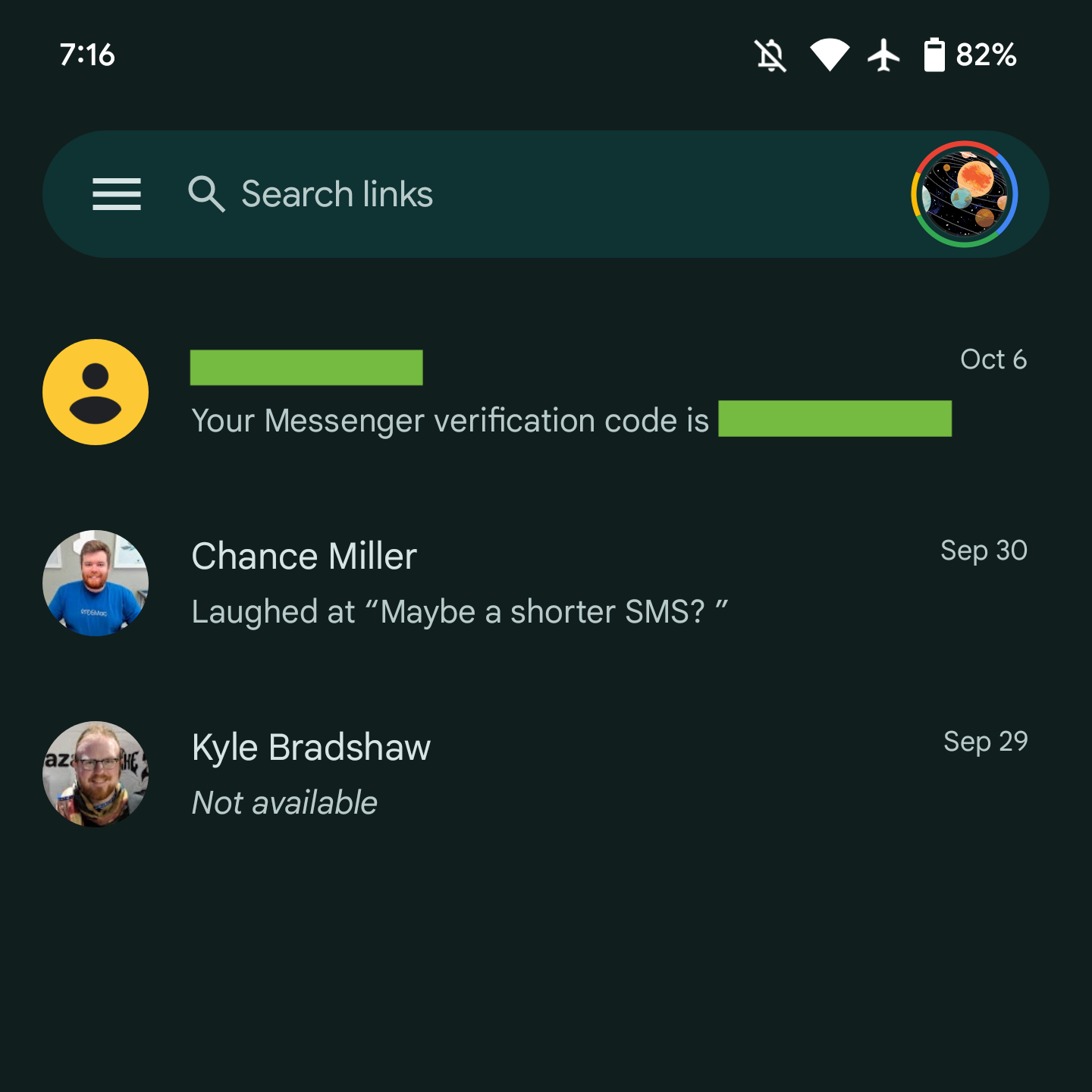
One notable change is the replacement of the full-width search bar with a simple magnifying glass icon, reducing clutter and focusing attention on the content. Positioned in the top-left corner, the iconic four-colour “G” logo of Google takes its place, followed by the word “Messages,” ensuring clear branding and easy recognition. The navigation drawer and its hamburger icon, previously used for accessing various options, have been replaced by the account menu. Options like Archived, Spam & blocked, Mark all as read, and Device pairing now reside in this menu, while Your data in Messages, Messages settings, and Help & feedback remain unchanged. The “Choose theme” feature has been relocated to the settings menu.
In terms of search functionality, Google has discarded the “Categories” section in favor of a grid layout. This new design reduces the need for excessive scrolling and offers quick access to categories such as Starred, Images, Videos, Places, Links, Unread, Known, and Unknown.
One of the most intriguing aspects of this redesign is the prominent placement of the Google logo in the top-left corner. It serves as a visual reminder of Google’s commitment to messaging services and its ongoing RCS (Rich Communication Services) campaign. AT&T became the most recent company to switch to Google Jibe’s RCS platform.
We use cookies on our website to give you the most relevant experience by remembering your preferences and repeat visits. By clicking “Accept”, you consent to the use of ALL the cookies.
This website uses cookies to improve your experience while you navigate through the website. Out of these, the cookies that are categorized as necessary are stored on your browser as they are essential for the working of basic functionalities of the website. We also use third-party cookies that help us analyze and understand how you use this website. These cookies will be stored in your browser only with your consent. You also have the option to opt-out of these cookies. But opting out of some of these cookies may affect your browsing experience.
Necessary cookies are absolutely essential for the website to function properly. This category only includes cookies that ensures basic functionalities and security features of the website. These cookies do not store any personal information.
Any cookies that may not be particularly necessary for the website to function and is used specifically to collect user personal data via analytics, ads, other embedded contents are termed as non-necessary cookies. It is mandatory to procure user consent prior to running these cookies on your website.