Advertisement

Vivo Y35+ & Y35m+ key specs revealed via various certification sites

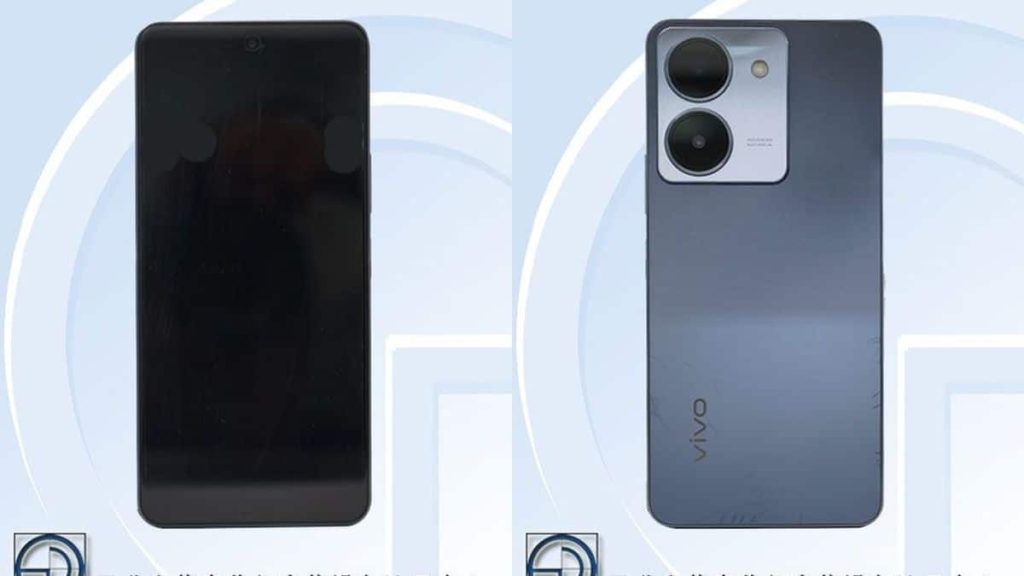
Vivo is apparently working on two new smartphone models from its popular Y series. The new devices include the new Vivo Y35+ and the Y35m+ models, which has been spotted on various certification websites that hint at their near launch. So let’s have a look.
Vivo

Vivo Y35+ & Y35m+ launch could be near after various certification sightings

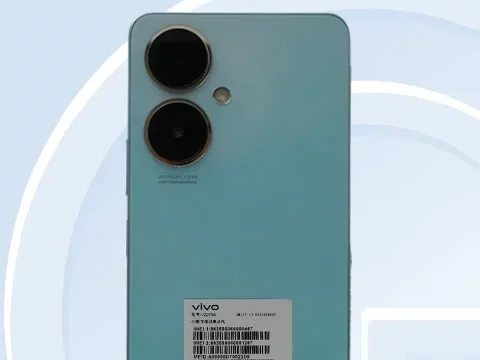
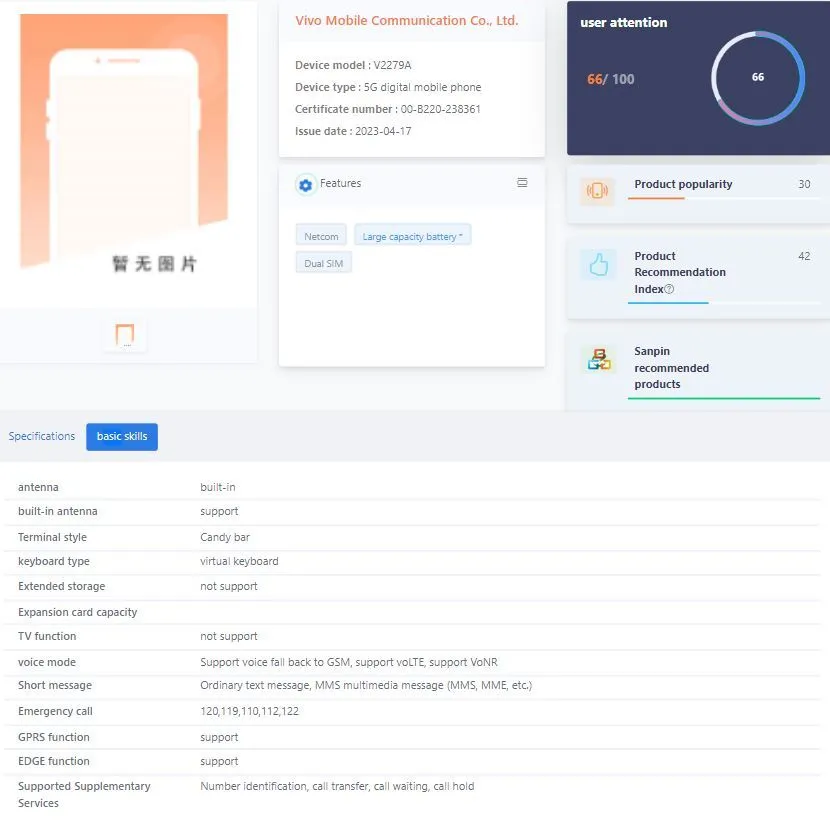
The Y35+ and the Y35m+ models were spotted on the Google Play supported device list as well as the 3C and TENAA certification websites. Looking at these listings, we can see that the new devices have been spotted carrying the V2279A model number. In other words, there are two devices carrying the same model number but with different monikers. The 3C listing revealed the battery and charging speed of this device. It will be powered by a large 5,000mAh battery pack (4,900mAh rated) and 18W fast charging support.
Vivo

Furthermore, the device will also feature a 50 megapixel primary camera on the rear, while the front houses an 8 megapixel selfie camera. Based on the certification, the upcoming smartphones will measure 8.07mm in thickness and weigh 190 grams. The TENAA listing also revealed that the V2279A model number will be a 5G enabled handset that that will feature an octa core processor with a 2.2GHz frequency. Vivo had launched the Y35m earlier this year with a Dimensity 700 SoC, so we can expect another MediaTek chip.

Vivo

This chipset will be paired with up to 16GB of RAM and 512GB of storage. It is unclear why two devices with slightly different names carry the same model number, but it likely refers to rebranding in different market. Keep in mind that this report is based on just certifications so stick around for more as we will be providing updates when additional information is available regarding this matter.

RELATED:

(Via)

Google Pixel 7a teardown reveals its internal design

Google is gearing up to launch its highly anticipated Pixel 7a mid range smartphone and its first ever foldable device, the Pixel Fold. However, ahead of the official announcement a teardown video has revealed the complete internal design of the Pixel 7a and even showcases some of its key hardware. So let’s have a look.

Google

Google Pixel 7a teardown offers us a glimpse of its internals

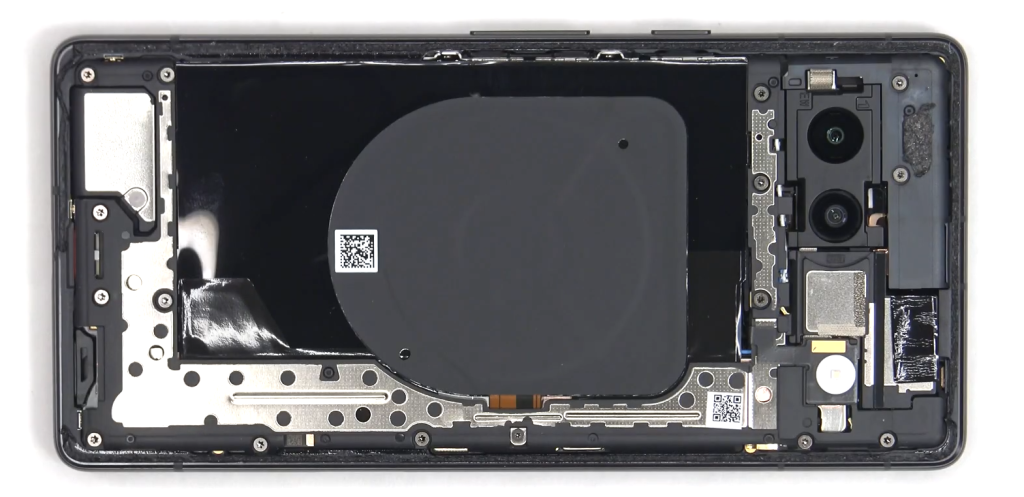
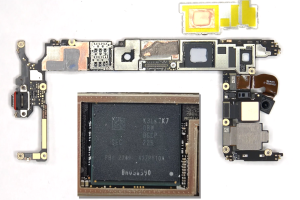
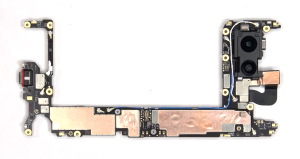
The teardown was shared by PBKreviews who uploaded a video on YouTube. This video offers us a close look at the inner workings of the Pixel 7a model ahead of its official launch on 11th May 2023. Looking at the new video, we can see the device’s plastic rear panel being removed, offering us a look at the wireless charging coil, NFC antenna, and the cameras as well. Underneath this, we can even see the 4,385mAh battery pack that powers the device.

Google

The front half of the device has a copper film to help dissipate heat inside the Pixel 7a. The front also houses a fingerprint scanner on the lower half, while the upper half houses the selfie camera and other necessary sensors like the proximity sensor. The graphite film can also be seen running all around the middle, which also serves the purpose of thermal management. On the rear, we can see dual camera setup on the upper region at the back.

Google

PBKreviews is known to tear apart devices and judges them based on the ease of their repairability. The new Google Pixel 7a got a relatively good score of 7.5 out of 10 in terms of repairability. In other words, the various components of the device, including its display, battery, and other parts, are mostly easy to repair and access. Although, the video does note that there might be some issues when replacing certain miscellaneous parts. So stay tuned for more, as we will be covering the launch event later this month. Till then, you can check out our rumor roundup for the Pixel 7a.

RELATED:

(Source, Via)

Low Battery Anxiety: How Smartphone Users in India are Coping with Battery Drain

A new report released by market research firm Counterpoint Research reveals that 72% of smartphone users in India are anxious about their phone’s battery life. The report highlights the increasing dependence of users on their smartphones and the psychological impact of low-battery anxiety.

40% of people state their phone is the first & last thing they see each day

The study showed that 65% of the respondents reported that a dead battery would affect their mood. Additionally, 72% of respondents said that they started to feel anxious after their phone’s battery fell below 20%. The report also found that 40% of respondents use their phone as the last thing before sleeping and first thing after waking up, indicating the level of attachment users have with their phones.

Low Battery

Further, the study found that 87% of respondents use their phones while charging, and about half charge their smartphones twice a day. The report also revealed that 60% of the respondents said they would change their phones for better battery life.

The study categorized the discomfort associated with low-battery anxiety into six categories: worry/anxiety, isolated from the world, helpless, fear of missing out, nervous, and unsafe. “Worry/anxiety” was the most commonly felt emotion, with 28% of respondents selecting this option.

The findings of the report suggest that smartphone users in India may benefit from improved battery life and charging infrastructure to reduce the level of anxiety associated with low battery. It also highlights the need for manufacturers to prioritize battery life in the development of new smartphones.

RELATED:

(Via)

Redmi 9 Power gets MIUI 14 Update in India with new features

In December 2020, Xiaomi launched the Redmi 9 Power smartphone in India, targeting budget-oriented customers. The device was priced at INR 12,999 (~$180) for the 6 GB RAM variant. It boasts features such as the Qualcomm Snapdragon 662 SoC, a 6.53-inch Full HD+ water drop notch display, a quad rear camera, and more.

The device was launched in the country with the Android 10 operating system pre-installed. Now, the device is receiving its second and most likely final major update. The MIUI 14 update, based on Android 12, is officially rolling out for the device with the build number V14.0.2.0.SJQINXM. The update has a file size of 640 MB. Below is the official changelog for the update.

Redmi 9 Power MIUI 14 Update Changelog

[More features and improvements]
  • Search in Settings is now more advanced. With search history and categories in results, everything looks much crisper now.
[System]
  • Updated Android Security Patch to April 2023. Increased system security.

As the changelog suggests, the latest update carries the April 2023 security patches and new features of MIUI 14. The update brings along a revamped visual design, featuring a minimalist and fluid aesthetic with ample white space as well as clean lines.

Another notable feature of MIUI 14 is super icons. These customizable icons can change their appearance based on the wallpaper or theme selected by the user. Additionally, the update offers home screen folders that highlight frequently used apps for easy access.

MIUI 14 also comes with several other features and improvements, including an advanced search in settings with search history and categories, animal widgets that display cute animals on the home screen (China-only), and a new design language that redefines personalization.

RELATED

Vivo Y78/Y78m visits Geekbench with Dimensity 930 & 12GB RAM

Vivo recently launched the Vivo Y78+ 5G smartphone in China, featuring a 50-megapixel dual camera system with OIS support, and a Snapdragon 695 chipset. The brand also plans to launch more devices in the Y78 series like the Vivo Y78 which could launch as the Vivo Y78m in China. After its recent emergence on 3C and TENAA certification databases, the device has now made an appearance on Geekbench revealing its performance as well as some key specifications.

Vivo Y78 TENAA images

Vivo Y78/ Y78m Geekbench: switching to Dimensity

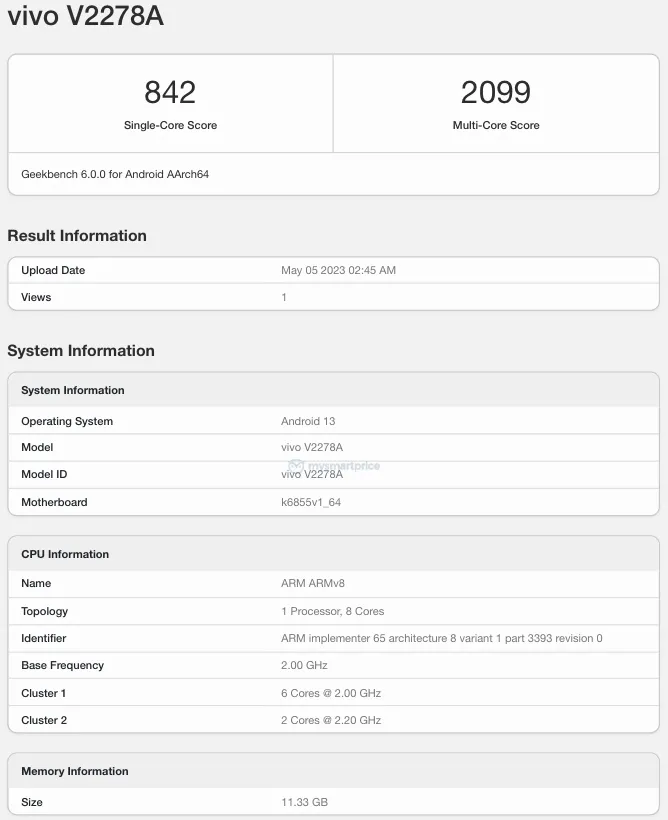
The Vivo Y78/Y78m has appeared on Geekbench with the model number V2278A. According to the listing, the device will be equipped with an octa-core system-on-chip (SoC) that boasts a maximum clock speed of 2.2GHz. Additionally, the SoC has six cores that operate at 2.0GHz, and it is identified by the codename k6855v1_64. The SoC will also be paired with a PowerVR B-Series BXM-8-256 graphics processing unit (GPU).

The upcoming Vivo Y78/ Y78m is expected to launch with a MediaTek Dimensity 930 SoC, which is already present in devices like the Moto G73 5G and Vivo Y77 5G. The SoC is likely to be rebranded as Dimensity 7020 by MediaTek, as part of the company’s efforts to rename its mobile SoC portfolio.

The model listed on Geekbench boasts 12GB of RAM, but Vivo might introduce the phone in lower RAM and storage variants as well. We can expect to see the Y78/ Y78m in 6GB/8GB RAM and 128GB/256GB storage options in different markets. In the Geekbench test, the phone scored 842 and 2099 in single-core and multi-core tests, respectively. The device will run Android 13 and come with either Funtouch OS 13 or Origin OS 3, depending on the region of launch.

RELATED:

(via MySmartPrice)

Apple vs. Google: Smartphone Repairability Rankings You Need to Know

Repairing a smartphone can be a frustrating and time-consuming experience, especially if you don’t have the right tools or experience. However, if you’re looking to repair your phone yourself, some devices are easier to fix than others. Recently, ElectronicsHub analyzed 228 smartphone repair guides on the popular repair website iFixit and found that Apple’s iPhone accounted for the largest proportion of the top ten most repairable lists.

Moto G7 has an Average Repair Time of 25 minutes

Interestingly, Google’s Pixel 7 was one of the most difficult and time-consuming phones to repair, with an average repair time of 60.3 minutes. In contrast, the Motorola Moto G7 was the easiest to fix, with the shortest average repair time of just 25 minutes.

Apple

In the list of the ten easiest smartphones to repair, Apple dominated with four devices, accounting for the most. The iPhone 11 Pro Max ranked fourth, with an average repair time of 63.2 minutes, and the iPhone 13 ranked fifth with 67.8 minutes. The eighth-ranked iPhone 14 had an average repair time of 47.7 minutes, while the iPhone 12 came in tenth with 72.2 minutes.

So why are some smartphones easier to repair than others? It often comes down to design choices made by the manufacturer. For example, smartphones with easily accessible battery compartments and modular designs are typically easier to repair. Additionally, manufacturers who use standard screws and connectors make it easier for DIY repair enthusiasts to fix their devices.

While some may argue that repairing your phone yourself can be risky, it can also be a cost-effective and environmentally friendly alternative to replacing your device altogether. However, it’s essential to do your research and make sure you have the right tools and knowledge to repair your phone safely. Ultimately, the repairability of a smartphone is an important factor to consider when choosing a new device, especially if you value the ability to fix your phone yourself.

RELATED:

(Via)

Inside OpenAI’s Bold Move to Take on Google: The High Cost of Building ChatGPT

OpenAI, the American AI research company co-founded by tech giants like Elon Musk and Peter Thiel, is known for its groundbreaking AI programs like ChatGPT and Dall-E 2. ChatGPT, a chat robot tool that can generate articles, stories, jokes, and codes, has made headlines since its launch on November 30, 2022. But what many people may not know is the high cost of building such a cutting-edge technology.

OpenAI Poached Key Employees from Google to build ChatGPT

According to recent foreign media reports, OpenAI’s losses last year doubled to reach a staggering $540 million. As the company developed ChatGPT and poached key employees from Google, the costs piled up. While the exact cost of building ChatGPT remains unclear, it is evident that it is an expensive business.

ChatGPT

However, OpenAI’s decision to take on Google is bold and strategic. Poaching talented professionals from the tech giant, including AI researcher Jacob Devlin, was a smart move, albeit a risky one. Devlin even tried to warn Google not to use ChatGPT data to train its AI chatbot Bard, as it violated OpenAI’s terms of service and resulted in Bard’s answers looking too similar to ChatGPT’s.

But why is building ChatGPT so expensive? The answer lies in the massive computational power and storage required to train the model. ChatGPT is built on GPT-3.5 architecture, a highly sophisticated language model that requires a large amount of data to train. OpenAI had to collect and process millions of documents, articles, and web pages to create a training dataset for ChatGPT. The model also required thousands of GPUs (graphics processing units) to run efficiently.

Despite the high costs, ChatGPT’s potential is immense. It is already making waves in the AI industry, with many businesses looking to leverage the technology to streamline their operations. ChatGPT’s ability to generate human-like text has broad implications for marketing, customer service, and content creation.

But the real question is, can OpenAI compete with Google and other tech giants in the AI race? OpenAI’s strategic move to take on Google suggests that it certainly thinks so. With talented professionals and cutting-edge technology like ChatGPT, OpenAI is poised to make a significant impact in the AI industry. As the technology continues to evolve, we can only expect more groundbreaking developments from OpenAI and ChatGPT. To reclaim costs, Microsoft is even planning to sell private ChatGPT to other companies, which will definitely prove to be an asset to the company.

RELATED:

(Via)

Motorola Razr+ 2023 visits Geekbench with Snapdragon 8+ Gen 1 SoC & 8GB RAM

In the upcoming weeks, Motorola is getting ready to release its latest foldable smartphone, the Motorola Razr+ 2023. This new model will be the brand’s latest addition to its flip phone lineup and will come equipped with upgraded features to rival other foldable smartphones in the highly competitive market.

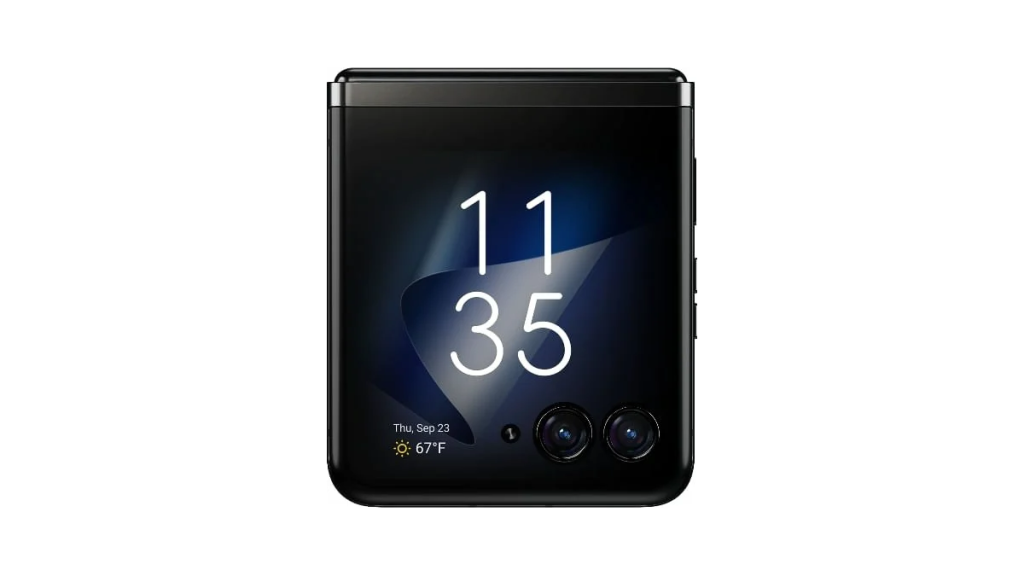
Just a few days ago, the brand released a teaser for its upcoming device, confirming that the smartphone will feature a dual-camera setup and a secondary display measuring over 3 inches. Ahead of its official launch, the smartphone has now surfaced on Geekbench.

Motorola Razr+ 2023 Geekbench

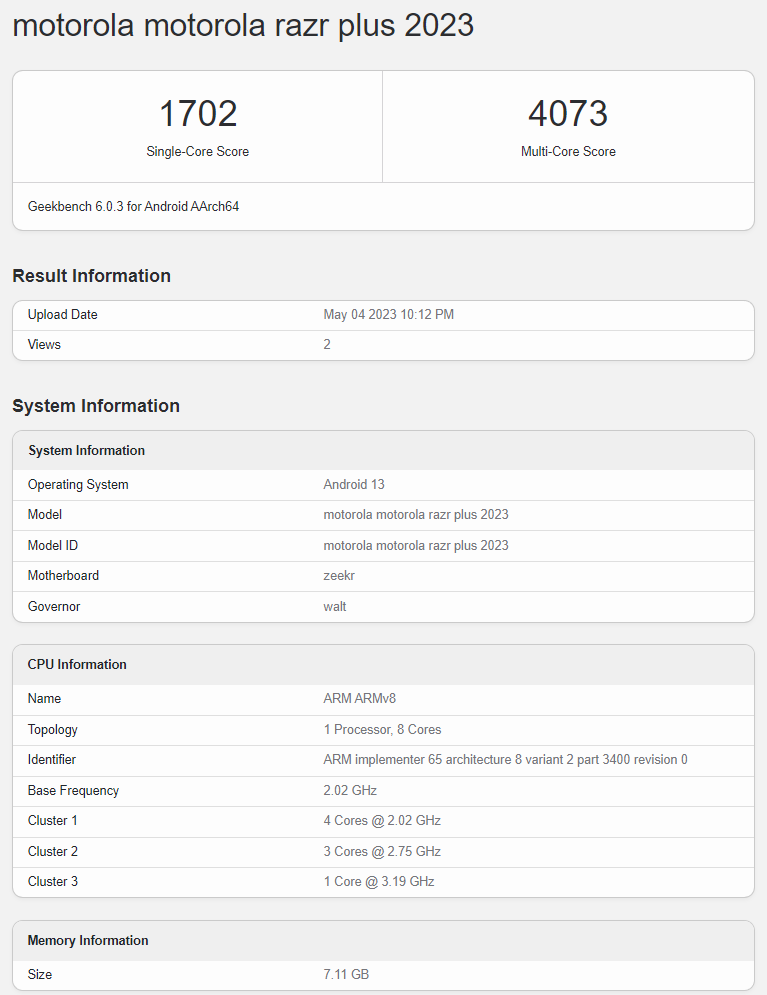
Going by the Geekbench listing, the smartphone will be equipped with a Snapdragon 8+ Gen 1 SoC clocked at 3.19GHz, along with an Adreno 730 GPU. It will also feature up to 8GB of RAM, which will provide an excellent user experience. The device will boot Android 13 OS with My UX on top, ensuring a smooth and seamless operation.

Motorola

In Geekbench tests, the Motorola Razr+ 2023 has managed to score 1702 and 4073 points in the single-core and multi-core test, respectively. The same device is also expected to debut in the global market under the name Motorola Razr 40 Ultra. According to a recent report, the handset will come with 12GB of RAM and 512GB of internal storage, making it a powerhouse of a device.

The phone will feature a 120Hz refresh rate and an AMOLED display, providing users with an immersive viewing experience. It will also feature a dual-camera setup, including a primary 12MP Sony IMX563 sensor and a wide-angle 13MP SK Hynix Hi1336 sensor. Users can expect a 32MP selfie camera, fingerprint sensor, and dual-SIM support as well.

The Motorola Razr+ 2023 is expected to be available in Barberry, Black, and Blue colour options, and will be powered by a 3,640mAh battery, offering 33W fast charging support. While the launch date of the device is yet to be revealed, the brand has started teasing its upcoming release, indicating that it could hit the market in the next few weeks.

RELATED:

(via)

Poco F5 Pro promo images leak ahead of May 9 launch, Color options revealed


Poco is preparing to introduce the Poco F5 series smartphones to the worldwide market in the near future. The launch event is scheduled for May 9 and will feature two models: the Poco F5 and the Poco F5 Pro. Prior to the launch, promotional content for the F5 Pro variant has surfaced on the internet.

Poco

The leak comes from known tipster SnoopyTech. The design of the device, as well as the key features revealed in the promo images, reveal that the device is a rebranded version of the Redmi K60. The K60 was launched back in December in China (check out our review of the Redmi K60). The device will likely be coming in black and white color options and will be powered by the last-gen flagship chipset, the Snapdragon 8+ Gen 1.

Poco F5 Pro specs

Recent leaks revealed that the Poco F5 Pro will feature a 6.67-inch AMOLED display that sports a QHD+ resolution of 3200 x 1440 pixels. It has a high 120Hz refresh rate, which promises a smooth and seamless user experience. The display is protected by Corning Gorilla Glass 5 and has an under-display fingerprint scanner for added security.

Under the hood, the Poco F5 Pro is powered by the Snapdragon 8+ Gen 1 chipset, making it a powerhouse of a device. It comes with 12GB of LPDDR5 RAM, ensuring that it can handle even the most demanding of tasks with ease. The phone packs a 5,160mAh battery, which is capable of supporting 67W wired charging and 30W wireless charging. It also offers 256GB of UFS 3.1 storage, which should be more than enough for most users.

The camera setup of the Poco F5 Pro is equally impressive, with a triple rear camera configuration that includes a 64-megapixel primary sensor with OIS, an 8-megapixel ultra-wide sensor, and a 2-megapixel sensor. The phone also features a flash to help capture clear and detailed images in low-light conditions.

Connectivity options on the Poco F5 Pro include dual SIM, 5G, WiFi 802.11ax, Bluetooth 5.3, NFC, GPS, and a USB-C port. It also comes equipped with a digital compass, a screen orientation sensor, and an acceleration (G-sensor). The device is IP53-rated, measuring 162.8 x 75 x 8.5mm and weighing around 204 grams.

RELATED:

Microsoft and AMD team up to take on Nvidia in the AI Chip Market

Microsoft is reportedly teaming up with AMD to jointly develop artificial intelligence processors. The partnership is part of Microsoft’s strategy to secure the supply of AI processor chips and explore alternatives to Nvidia’s GPU chips that currently dominate the market. The two companies are collaborating on developing an AI processor code-named “Athena,” which Microsoft is self-developing, and AMD is providing financial support.

Microsoft is working on a Chip Division with 1000 Employees

Microsoft is one of the major cloud computing service providers, and the company has invested $10 billion in OpenAI, the developer of ChatGPT. This investment has led to increased demand for AI processors, and Microsoft’s participation in the chip industry is gradually deepening. Microsoft is building a chip division with nearly 1,000 employees, and they are working on Project Athena, which has received around $2 billion in investments from Microsoft.

AI

Artificial intelligence is also a top priority for AMD. Lisa Su, AMD CEO, said, “We are very excited about our opportunity in artificial intelligence, which is also our highest strategic priority. We are in the very early days of the era of artificial intelligence computing.” Su also said that there is an opportunity for AMD to produce custom chips for its largest customer for use in AI data centers.

Although developing an alternative to Nvidia chips is a challenging task, Microsoft is prioritizing Project Athena, which involves developing a GPU chip for training and inference of AI models. The chip is already being tested internally and could be widely available as soon as next year.

RELATED:

(Via)

VP Kamala Harris Urges Tech Titans to Put Ethics First in AI Development

As part of the Biden administration’s ongoing efforts to fund AI research and hold companies accountable for their behaviour, Vice President Kamala Harris recently met with the CEOs of several tech giants. These included Alphabet (Google‘s parent company), Microsoft, OpenAI, and Anthropic. Harris discussed with them the importance of ensuring that private companies develop AI products that are safe and secure, and that they remain in compliance with current laws and regulations.

Harris used the 2016 Presidential Election as an example of Tech’s misuse

Harris noted that generative AI technologies like Bard, Bing Chat, and ChatGPT have the potential to both help and harm society. While these technologies can address some of our biggest challenges, there is also the risk that they could be used to violate human rights, create distrust, and weaken faith in democracy. Harris pointed to Russian interference during the 2016 presidential election as evidence that hostile nations will use tech to undercut democratic processes.

Kamala Harris

While generative AI has shown promise in fields like art, search, and writing, there are still concerns around accuracy, cheating, copyright violations, and job automation. Recently, IBM announced a pause on hiring for roles that could eventually be replaced with AI. As concerns around AI’s dangers continue to grow, industry leaders and experts have called for a six-month pause on experiments to address ethical issues.

To address these concerns, the National Telecommunications and Information Administration has called for public comments on potential rules for AI development. Harris’ meeting with tech CEOs sends a clear message that the government will not hesitate to take action against companies that do not act responsibly in the development of AI products. The regulation of AI has seen a strong push over the past few months, and it is only expected to be more strict over the coming months due to its rapid ongoing evolution.

RELATED:

(Via)

Google officially unveils Pixel Fold as its first foldable smartphone

After several months of leaks and rumors, search engine giant Google has now finally unveiled its latest and most innovative smartphone so far — Google Pixel Fold. This marks the first time the company officially confirmed the existence of a foldable smartphone.

The company officially revealed the Google Pixel Fold smartphone in a teaser video posted on YouTube and Twitter. It has offered a sneak peek at the device before more details are revealed next week during Google I/O.

Google Pixel Fold

The video shared by the technology giant reveals that the brand’s first foldable smartphone has a vertical hinge that opens the device for a tablet-like display, similar to the Samsung Galaxy Fold lineup.

When the phone is closed, the users can use a smaller exterior touchscreen panel on one side. In line with the recent Pixel lineup of smartphones, there’s a camera bar on the back, but it doesn’t stick out as prominently as in other models.

As per the reports, the Google Pixel Fold has a 5.8-inch display which opens up to a 7.6-inch tablet-like panel. Under the hood, the device is powered by the Google Tensor G2 processor and is reportedly touted to have the most durable hinge on a foldable.

More details about the smartphone will be revealed at the Google I/O developers conference on 10th May. As for the pricing, the device will likely cost around $1,700 and is expected to go on sale in the coming weeks.

RELATED:

Nothing Phone (1) Starts Receiving Nothing OS 1.5.4 Update Globally

The Nothing Phone (1) is a smartphone from the London-based consumer tech company, Nothing. It features a sleek and minimalist design with a transparent body. If you own one of those, you’ll be happy to know that a new software update is rolling out. The Nothing OS update 1.5.4 is currently available globally and addresses several issues while also introducing new features and improvements.

The New Update clocks in at 119 MB

The update comes in at about 119 MB and is being rolled out in stages. You can check if it’s available to you by heading to “Settings > System > System update.” Once the update is available, it’s recommended that users download and install it to enjoy the latest features and improvements.

Nothing Phone (1)

One of the most significant changes in the update is the new feedback feature, which allows users to report any issues or give suggestions to the developers. This new feature helps the developers to keep improving the OS.

The update also reduces standby power consumption by optimizing the 4G/5G network switching function. This optimization ensures that your phone uses less power while idle, which means you can enjoy longer battery life. The Bluetooth function in Quick Settings has also been optimized, making it easier to access paired devices.

The update introduces smoother QR code transactions, allowing you to scan UPI QR codes directly through the camera app and choose a payment app on your device to complete the transaction. This feature is only available in select regions.

The fingerprint pattern unlocking experience has been optimized, making it more responsive and accurate. The pop-up view animations are now smoother, providing a more seamless experience.

Other improvements include the integration of Google Safety Center and NDot Cyrillic font support for Belarusian, Bulgarian, Macedonian, Russian, Serbian, and Ukrainian.

The update also addresses several issues that have been reported by users, including freeze issues during pop-up view, improved notification display in Quick Settings, error messages during face unlock setup, and incoming call notifications that come through without delay.

In addition to the update, the Nothing Phone (1) is also in line to receive Android 14 Beta 1 in the coming weeks for those that opt in, making it one of the first Android devices (besides the Google Pixel) to receive early access to the latest Android version. Additionally, the Nothing Phone (2) is launching this summer, so fans will definitely be excited for the same.

RELATED:

(Via)

Ulefone Note 16 Pro packing Android 13 and a massive “16GB” RAM, all for under $200 announced

Chinese smartphone maker Ulefone has launched a new sleek rugged smartphone model. The model dubbed Ulefone Note 16 Pro is a budget-friendly rugged smartphone that comes with a number of features that make it a good choice for those looking for a durable device that can withstand harsh environments.

Ulefone Note 16 Pro

The device features a double-barrel rear camera that is similar in design to the Redmi Note 12 line, but with a 50MP Samsung ISOCELL JN1 main camera. This camera is capable of taking high-quality photos and videos in various lighting conditions.

The device also has a 6.52-inch HD+ display that is driven by the Unisoc T606 processor. While it may not be the most powerful processor in the market, it is capable of handling most day-to-day tasks with ease. The processor pairs with 8GB of RAM out of the box. However, what sets the Ulefone Note 16 Pro apart from other budget smartphones is its ability to re-allocate up to 8GB of its 128GB internal storage to act as additional working memory. This means that the device can perform better even when running multiple apps simultaneously.

Ulefone Note 16 Pro

The Ulefone Note 16 Pro is also equipped with a 4,400mAh battery that can last for a full day with moderate use. The device also features a 3.5mm headphone jack, which is becoming a rarity in modern smartphones, as well as a microSD card slot that allows users to expand the device’s storage up to 256GB.

Ulefone Note 16 Pro

One of the highlights of the Ulefone Note 16 Pro is its rugged design. The device has a flat-edged chassis that is built to withstand drops and shocks. It is also IP68-rated, which means that it is dustproof and waterproof up to 1.5 meters for 30 minutes. This makes it a good choice for those who work in harsh environments or enjoy outdoor activities.

Sleeekness meets ruggedness as the Ulefone Note 16 Pro gets launched starting at $139.99

The Ulefone Note 16 Pro runs on the latest Android 13 OS. This means that users can enjoy the latest features and security updates.

In terms of pricing, the Ulefone Note 16 Pro is currently listed for $139.99 on Ulefone’s website. This is an extremely cheap price considering the specs lineup.

RELATED:

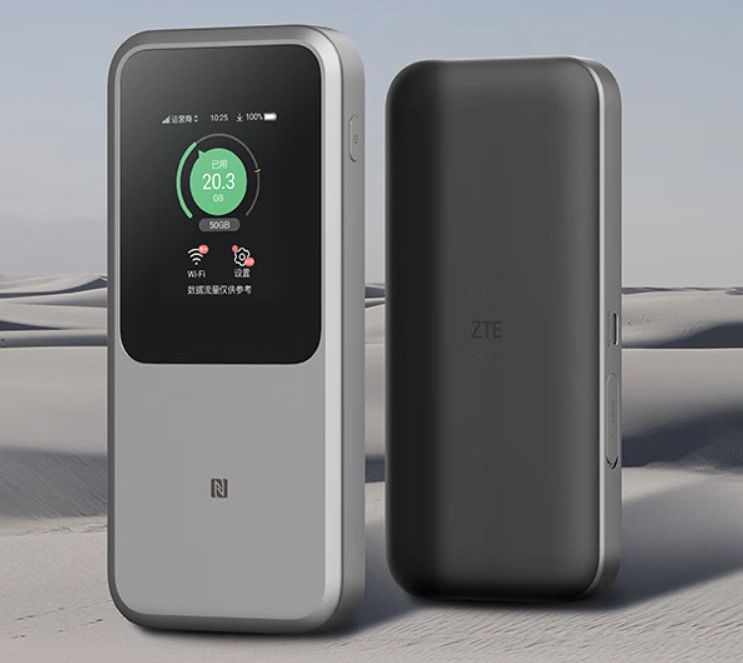
ZTE U50 Pro portable 5G Wi-Fi device powered by a Snapdragon X62 processor launched

Chinese multinational telecoms giant ZTE has launched the U50 Pro, a portable 5G Wi-Fi device with an ultra-long battery life. The device boasts impressive features, including a powerful Qualcomm Snapdragon X62 processor, support for 5G dual-mode and global roaming. The gadget is also compatible with networks in over 100 countries and regions worldwide.

ZTE U50 Pro portable 5G Wi-Fi device

The ZTE U50 Pro features 5G NR network carrier aggregation technology and low-frequency ENDC technology. These advanced technologies enable users to enjoy faster download and upload speeds, higher network capacity, and improved connectivity in low-coverage areas.

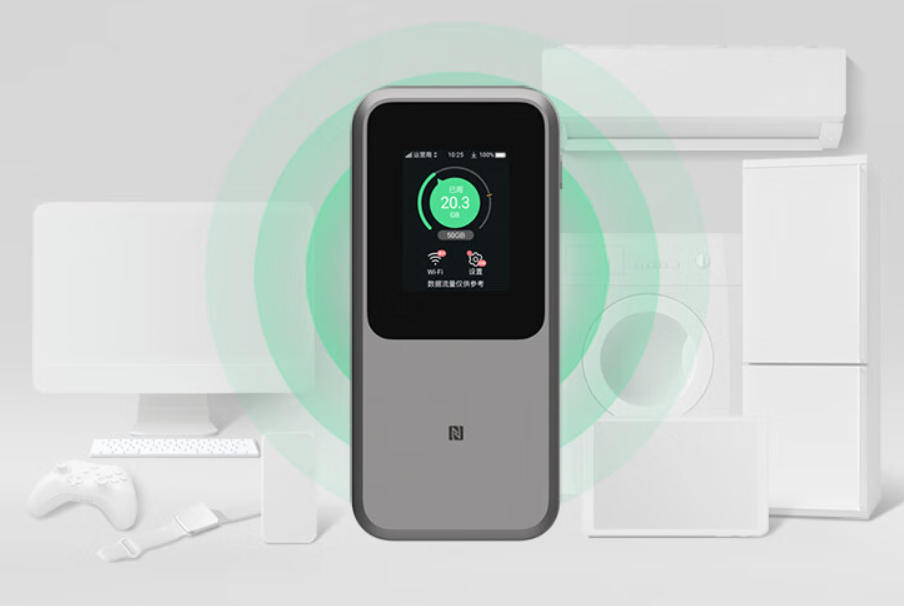
In addition to its advanced network capabilities, the U50 Pro also features the Wi-Fi 6 standard, which offers a peak rate of 3600Mbps and supports up to 64 device connections. This makes it an ideal choice for users who need to connect multiple devices to the internet simultaneously.

ZTE U50 Pro portable 5G Wi-Fi device

One of the most impressive aspects of the ZTE U50 Pro is its battery life. The device comes with a massive 10000mAh battery that provides up to 16 hours of continuous use. Moreover, it features 27W charging, which means that users can quickly recharge the device when it runs out of juice.

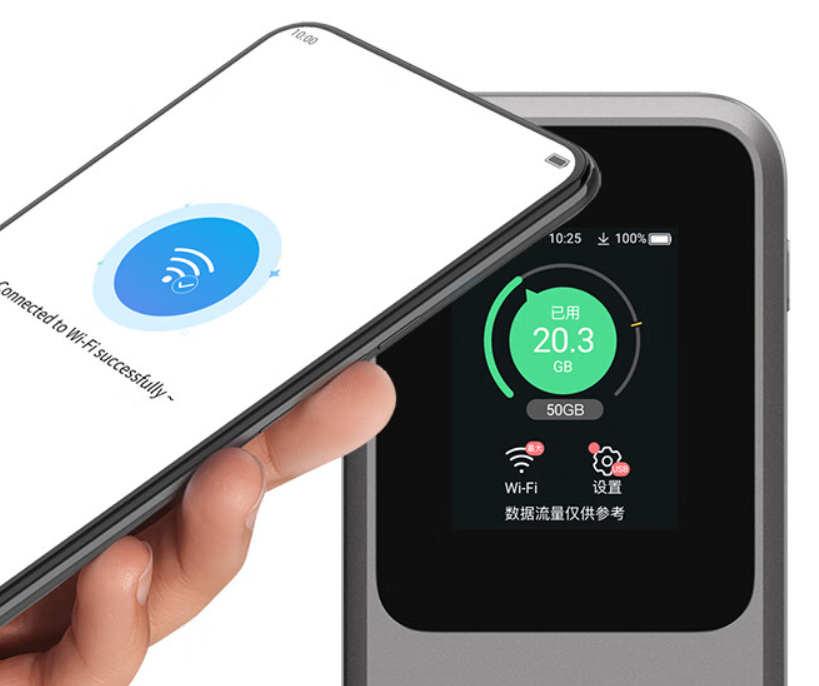
Another unique aspect of the U50 Pro is its NFC mobile phone connectivity. This feature enables users to connect their mobile phones to the device quickly and easily, without the need for complicated set-up procedures.

In addition, the ZTE U50 Pro can function as a power bank, providing up to 18W output, which makes it ideal for charging other devices on the go. The device has a compact size which makes it easy to carry around.

ZTE U50 Pro 5G Wi-Fi device doubles as a power bank with a 10,000mAh battery capacity

The ZTE U50 Pro also features a 2.4-inch touch screen that enables users to access various settings and features quickly. It is priced starting at 1699 yuan ($245.99).

RELATED:

MINISFORUM UN305 mini host with Octa-core Intel i3-N305 processor and dual network ports launched

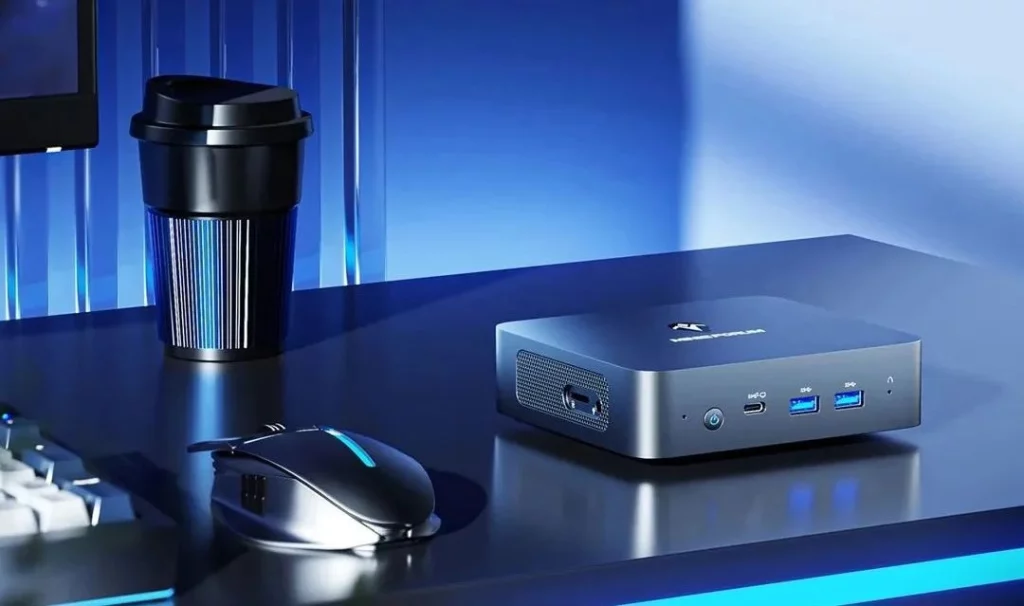
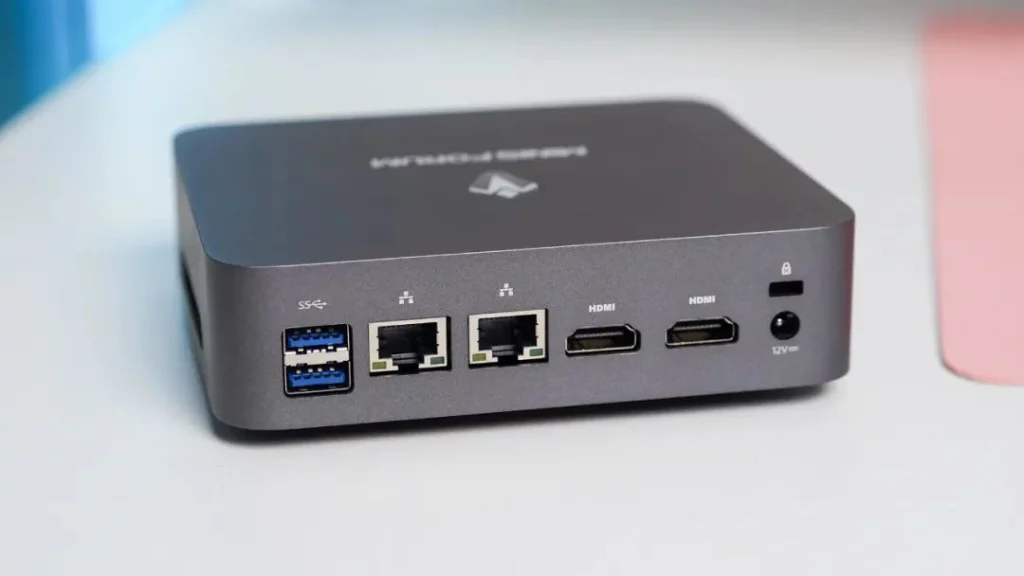
MINISFORUM has unveiled the UN305 mini host equipped with the octa-core Intel i3-N305 new generation processor. Also unveiled is the UN100 mini host with the N100 Intel processor. The new MINSIFORUM mini host adopts an all-metal body design which is not common in its lineup.

MINISFORUM UN305 mini host

The MINISFORUM UN305 has a volume of about 0.6L and is easy to carry around. The memory of the mini host uses onboard 16GB LPDDR5 4800MHz memory while the solid state drive is M.2 2280 SATA SSD. The MINISFORUM UN305 also has a 2.5-inch hard drive expansion bit and a TF card expansion bit. The new MINISFORUM mini hosts bear close semblance with the Mingfan X35G previously released.

MINISFORUM UN305 mini host

The UN305 mini host has several interfaces for seamless connectivity. It is equipped with four USB 3.2 Type-A ports and two HDMI interfaces. It also has two Gigabit Ethernet ports and one headphone headset port. There is also a full-featured USB Type-C interface that supports PD connections. The MINISFORUM UN305 and UN100 mini hosts are sold in either a barebones version or with storage. The UN100 barebones retails for 1,250 yuan ($181) while the model with 512GB of storage costs 1,450 yuan ($210).

MINISFORUM UN305 mini host features an all-metal body

The UN305 barebones version retails for 1,780 yuan ($258) while the model with 512GB of storage is sold for 1,980 yuan ($287). The new MINISFORUM mini hosts are available from JD.com and other retail platforms in China. MINISFORUM is yet to provide any details on the global availability of the new mini hosts.


RELATED:

AI in the wrong hands: Microsoft economist warns of dangers when misused by bad actors

Microsoft’s Chief Economist Michael Schwarz has issued a warning at the World Economic Forum about the potential dangers of artificial intelligence in the hands of bad actors. He emphasized that the misuse of AI could cause real destruction and that people should be more concerned about AI being exploited by bad actors rather than AI’s productivity surpassing humans.

The dark side of AI

AI dark side
Yuichiro Chino / Getty Images

Schwarz raised concerns about individuals attempting to disrupt elections and the use of AI by “spam email senders” that could cause significant damage. The disinformation brought by AI, he believes, could be even more frightening than unemployment.

While Schwarz called for AI to be regulated, he also cautioned lawmakers to wait until the technology causes “real harm” before taking action. He reminded people that destruction is much easier than construction, indicating that regulations should be carefully considered to avoid stifling innovation.

Microsoft co-founder Bill Gates has previously emphasized the importance of AI’s development, comparing it to the development of other game-changing technologies such as the internet and mobile phones.

Microsoft’s recent AI advancements show great promise with the unveiling of third-party plugin support for Bing AI and the planned sale of a secure private version of ChatGPT to businesses.

However, the warning from Microsoft’s Chief Economist Michael Schwarz underscores the need for responsible and secure AI use. As AI continues to evolve, businesses must consider the potential risks and invest in secure alternatives like ChatGPT to ensure the technology’s responsible use and overall benefits for society.

RELATED:

OnePlus Foldable to launch in August this year

Foldable smartphones have begun to attract consumer attention. According to a report, 28% of US smartphone users are likely to choose a foldable device for their next purchase. With the market broadening, no brand wants to be left in the dust. This year, we witnessed several newcomers entering this unconventional category, including Tecno. And Google is also ready to unleash the Pixel Fold on May 10. Now rumor has it that OnePlus will also join the party by launching its first foldable as early as August.

OnePlus Foldable will go against Samsung Galaxy Z Fold 5?

Max Jambor claims on Twitter that OnePlus will unveil its first foldable smartphone in August. The leaker did not share any specific date, however, the company confirmed during MWC 2023 that it indeed plans to launch a folding-screen smartphone sometime later in 2023. Samsung’s Galaxy Z Fold 5 is also expected to launch around the same time.

OnePlus foldable launch soon

“Our first foldable phone will have the signature OnePlus fast and smooth experience. It must be a flagship phone that doesn’t settle because of its folding form, in terms of industrial design, mechanical technology, and other aspects. We want to launch a device that aims to be at the pinnacle experience of today’s foldable market.” said Kinder Liu, President, and COO of OnePlus at the event.

Currently, the details about the OnePlus foldable are pretty scarce. Some rumors claim it will be a rebranded Oppo Find N2, while others say it will be an entirely new device. Our money is on the latter. It makes sense for OnePlus to enter the category with a unique device or else it won’t make much difference to the consumers.

That being said, it’s worth noting that the Oppo Find N2 is already getting positive attention, thanks to its impressive hinge and form factor. OnePlus might just take a cue or two from its design prowess.


RELATED:

(Source)

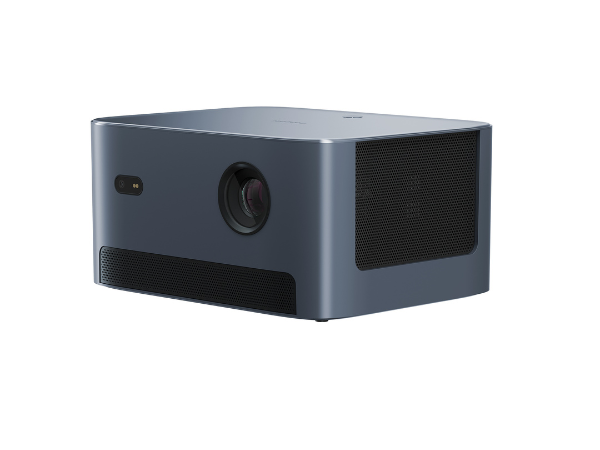
Dangbei Neo Mini Projector with up to 675 ANSI lumens of brightness and native Netflix unveiled

The Dangbei Neo mini projector has been unveiled. The Neo mini is a compact portable device with up to 675 ANSI lumens of brightness. The Dangbei Neo mini projector is now available in the US and will berth in Europe next month.

Dangbei Neo mini projector

The Dangbei Neo mini projector can be used to cast images up to 120 inches wide and offers a 1.2:1 throw ratio. The projector’s LED light source has an expected lifespan of 30,000 hours. This translates to more than 10 years of an average daily usage of 8 hours. The Neo mini projector covers 90% of the DCI-P3 color space. It supports HDR10 and HLG formats. Several features on the projector help to easily enhance the image output. These include autofocus, auto keystone correction, and smart obstacle avoidance.

The Dangbei Neo mini projector runs on Linux OS and it comes pre-installed with Prime Video, YouTube, and Netflix apps. Indeed the projector has been officially licensed by Netflix. The projector has dual-band Wi-Fi and Bluetooth 5.0 connectivity and you can cast content using the Mirrorcast app. You can also download other apps via the Google Play Store. In terms of the wired interfaces, the Dangbei Neo has HDMI ARC, USB 2.0, and S/PDIF ports.

Dangbei Neo mini projector

The Dangbei Neo mini projector has dimensions of 7.87 x 6.18 x 3.94 inches. It is equipped with two 6W speakers that provide a decent sound output enhanced with Dolby Audio. The projector weighs 1.42kg and can be easily moved around. However, the projector lacks any battery power which limits its versatility. The Dangbei Neo projector can be purchased in the US for $599.99. It will launch in Europe on May 16 and is available in black or white color options.

RELATED:

Razor Rambler 20 moped-style e-bike for adults announced

Razor has announced a new moped-styled electric scooter for adults. The Razor Rambler 20 is the latest model in the Rambler lineup and it is as sleek as it can get. The Rambler 20 combines a retro-inspired frame with large balloon tires and a padded bench seat. This combination delivers a comfortable ride always. The Rambler 20 has a Class 2 e-bike classification.

Razor Rambler 20

The Rambler 20 is a smart, versatile, and pretty maintenance-free electric bike. It has mint and chocolate coating for its frame and it can be used for daily urban commutes or occasional short intra-city movements. The Rambler 20 has functional pedals and it has a top speed of 32km/h. The scooter is equipped with a 500W motor and offers five levels of pedal assist. The five levels of pedal assist allow the rider to choose his cruising speed up to the maximum of 32km/h.

Razor Rambler 20 can hit a top speed of 32km/h and has a range of 26.7 km

The Razor Rambler 20 has a li-on battery that is capable of delivering a range of 26.7 km on a full charge. The front and rear mechanical disc brakes help to control the bike. Rider visibility is enhanced with a LED headlight and taillight for enhanced visibility. The bike also features a dashboard that displays the speed, battery life, and power level of the bike. The Rambler 20 offers greater power than the Rambler 12 and Rambler 16 both for kids and teens.

Razor Rambler 20

The Razor Rambler 20 e-bike can be purchased from Bestbuy for $999. It is available in both physical and online BestBuy stores. Razor says the Rambler 20 aims to bring adults into the Rambler fold. It offers the rider the option of either pedaling or engaging in electric pedal assist or allowing the electric motor to take charge of the ride.

RELATED:

(via)