Advertisement

ASUS ROG Ally Base Variant with AMD Z1 Processor and 256GB SSD Storage to Launch at $600

ASUS is all set to launch its gaming handheld, the ASUS ROG Ally, on May 11, and we have been learning more details about the device through various leaks ahead of its official launch. Recently, pricing details of the Extreme model were revealed, and now, pricing leaks have also surfaced for the base model of the ROG Ally with an AMD Z1 processor courtesy of SnoppyTech.

ASUS

Asus ROG Ally handheld console price

According to the leak, the base model of the ASUS ROG Ally will be priced at $599.99, which will come with 16GB of LPDDR5 RAM and 256GB of NVMe M.2 SSD storage.

The ASUS ROG Ally will come in two different SoC variants, and the base model will be powered by an AMD Ryzen Z1 processor. It is also expected to feature a 7-inch display with a 120Hz refresh rate, 1920 x 1080 pixel resolution, 16:9 aspect ratio, and 500nits peak brightness. Additionally, the device will boot the Windows 11 OS and will be compatible with popular gaming platforms such as EA apps, Epic Games, Steam, and Xbox game pass. The ASUS ROG Ally is also said to feature a dedicated microSD card slot, a USB Type-C port, and a 65W fast charging capability.

In terms of other specifications, the device is rumored to come with a side-mounted fingerprint sensor and Dolby Atmos audio support for superior sound quality. It may also come with several accessories, such as the ASUS ROG Raikiri Pro Controller, ASUS ROG Cetra Earbuds (TWS), and a Travel Case. Furthermore, the device will have a heat pipe with two-element heat sinks, a connection port for ASUS XG Mobile external GPU, shoulder buttons, and a 3.5mm audio jack. The ASUS ROG Ally is shaping up to be a powerful gaming handheld device, and with the base variant’s competitive pricing, it is sure to attract a lot of attention in the market.

RELATED:

(via)

Google Pixel 7a’s Geekbench listing confirms impressive CPU performance

With Google‘s I/O event approaching, it is expected that the Pixel 7a midrange smartphone will be unveiled. Prior to the launch, almost all details, including specifications, design, and pricing, have already been leaked. The only aspect that has yet to be confirmed is the device’s performance. However, a recent listing on Geekbench has now revealed this information.

Google Pixel 7a Geekbench listing

The performance details of the upcoming Pixel 7a smartphone have been revealed through a recent Geekbench listing. The device is powered by a Tensor G2 SoC with a peak clock speed of 2.85GHz, comprising two cores clocked at 2.35GHz and four cores clocked at 1.8GHz. It also features a Mali-G710 GPU.

In Geekbench’s single-core and multi-core tests, the Pixel 7a scored 1380 and 3071, respectively. The listed variant on Geekbench comes with 8GB of RAM, and it is likely that the phone will have a minimum storage capacity of 128GB upon its release. Additionally, the listing confirms that the Pixel 7a will come equipped with Android 13 straight out of the box.

The performance of the Pixel 7a appears to be impressive for a mid-range smartphone, indicating that the device can smoothly handle various tasks, including gaming. Let’s take a look at the other specifications of the Pixel 7a.

Google Pixel 7a specs

The highly anticipated Google Pixel 7a is set to boast a range of impressive features. It is anticipated to have a 6.1-inch FHD+ OLED display with a 90Hz refresh rate, powered by Google’s in-house Tensor G2 chipset, along with 8GB of LPDDR5 RAM and 128GB of onboard storage. The smartphone is predicted to feature a 64MP rear camera with OIS and a 12MP ultra-wide camera, as well as a 10.8MP front-facing camera.

The Pixel 7a is also expected to have a 4,400mAh battery with 20W wired and wireless charging support. With Android 13 as its operating system, the Pixel 7a is shaping up to be an outstanding mid-range option. As the May 10 launch date for the device draws closer, it is expected that more leaks will surface, so it’s worth keeping an eye out for further details.

RELATED:

(via)

Ninebot L8 Ultraman custom edition self-balancing scooter up for pre-sale in China

Ninebot, a leading brand in personal transportation devices, has announced the pre-sale of their latest product, the Ninebot L8 Ultraman Custom Edition self-balancing scooter. This special edition scooter is the result of a collaboration with the popular Ultraman franchise and is available at an introductory price of 1799 yuan($260), while its regular price is set at 1999 yuan ($289).

Ninebot-L8-Ultraman-custom-version

The Ninebot L8 Ultraman Custom Edition features a distinctive paint job inspired by the Ultraman series, as well as exclusive Ultraman-themed stickers, and transformation glasses. Additionally, the mobile app for the scooter has a unique Ultraman page, providing an enhanced user experience for fans of the franchise.

One of the highlights of the Ultraman Custom Edition is the inclusion of easter eggs that can be triggered by performing specific movements while riding the scooter. These easter eggs unlock various sound effects, further enhancing the rider’s experience.

Ninebot L8 Ultraman self-balancing scooter features:

At the core of the Ninebot L8 Ultraman Custom Edition is the Ninebot Integrated Control System 2.0, which is supported by intelligent self-learning algorithms, precise sensors covering the entire scooter, and Leansteer control technology. These features ensure a safe and stable ride with 15 levels of safety protection, making it easy to use and difficult to fall off.

The scooter is powered by a high-safety lithium battery, allowing for a maximum riding distance of approximately 12 kilometers and a top speed of 14 kilometers per hour.

The battery is protected with an innovative plastic sealing process, which ensures superior waterproofing capabilities – it can withstand being submerged in 30 centimeters of water for up to 30 minutes. Moreover, the 10.5-inch high-resilience off-road tires offer excellent grip and stability during rides.

RELATED:

Samsung rumored to launch Galaxy Z Fold 5 and Galaxy Z Flip 5 earlier than expected

Samsung is reportedly planning to launch its upcoming foldable smartphones, the Galaxy Z Fold 5 and Galaxy Z Flip 5, earlier than expected. This move is believed to be a strategic effort to beat other competitors, including Google’s Pixel Fold, to market and avoid being overshadowed by Apple’s next iPhone release.

Galaxy Z Fold 4 and Galaxy Z Flip 4

Industry analysts predict high demand for Galaxy Z Flip 5

Industry analyst Ross Young has revealed that production estimates for the Galaxy Z Flip 5 in July 2023 are twice as much as the previous model’s production in 2022. While the Galaxy Z Fold 5 wasn’t mentioned, it’s not surprising considering the Galaxy Z Flip line is more affordable, stylish, and sells in higher quantities than the Galaxy Z Fold lineup.

Samsung is doubling down on its efforts to sell more foldable smartphones in the second half of the year, as confirmed by the company in its earnings report. The report also revealed a sharp decline in Samsung’s profits, making the success of the foldable lineup more critical.

The South Korean tech giant is also considering holding the next Galaxy Unpacked event in its home country to promote its bid for World Expo 2023. Although Samsung has not yet determined the exact location for the event, the company may still opt to hold it in the United States.

The recent leak comes from a tipster, who shared details on Twitter about the Galaxy Z Fold 5’s potential specifications. This high-end foldable is expected to feature a 7.6-inch AMOLED primary display, a 6.2-inch AMOLED external screen, both with a 120Hz refresh rate, a Qualcomm Snapdragon 8 Gen 2 SoC, options for 256GB, 512GB, or 1TB of UFS 4.0 storage, a triple camera setup, and numerous design improvements.

Samsung is aggressively pursuing its foldable smartphone strategy and intends to stay ahead of the competition in the market. The Galaxy Z Fold 5 and Galaxy Z Flip 5 are expected to make a significant impact in the tech industry and pave the way for more advanced foldable devices in the future.

RELATED:

(Via)
Huawei P60 series gets HarmonyOS 3.1.0.151: Improved camera color, system stability

Huawei is rolling out a new software update, HarmonyOS 3.1.0.151, for its flagship P60 series in China. The update focuses on improving camera performance and delivering more authentic colors in captured photographs. In addition, the firmware upgrade optimizes system performance, providing users with a smoother user experience while scrolling and swiping on the screen.

Huawei P60 series

What’s fixed in this new update?

The new update also enhances the stability of the system, making it more efficient for users. The camera preview has also undergone certain optimizations, which will appear on the recent tasks screen in some situations. The improvements made to the system and camera will provide new capabilities for the Huawei P60 series.

Users had reported color degradation and casting issues in the previous version, and this new upgrade fixes those issues improving the overall picture quality of the camera.

A closer look at Huawei P60 series camera specs

Huawei’s P60 series boasts impressive camera features, with triple rear cameras that include a 48MP super-spotting main camera with F1.4-F4.0 ten steps variable physical aperture. The P60 and P60 Pro feature a 13MP ultra-wide lens, while the P60 Art has a 40MP ultra-wide lens. Additionally, the P60 has a 12MP 5x optical zoom RYYB camera with a 100x zoom range.

The P60 Pro and P60 Art also feature a 48MP super-concentrating multi-lens group telephoto module with a super large aperture of F2.1 and a three-axis sensor for stabilization. This module offers a 3.5x optical zoom range and a 100x digital zoom range, along with the ability to shoot macro through the telephoto lens.

The update is currently available in the Chinese market, and Huawei is preparing to launch the P60 series globally in May. Huawei has been committed to providing regular updates to its devices, ensuring that users receive the latest features and improvements.

RELATED:

(Via)
Noise Colorfit Ultra 3 With 1.96-inch AMOLED Display, Apple Watch-Like Design Launched In India

Noise has launched a new smartwatch in India. It is the Noise Colorfit Ultra 3 and it arrives as the successor to the last year’s Ultra 2. The latest offering packs a host of impressive specifications and features. Read on to know what it offers out of the box. 

Noise Colorfit Ultra 3 specifications and features

Right off the bat, the Noise Colorfit Ultra 3 sports an Apple Watch-like design with a fully functional rotating crown at the top right side and an additional button below. The device has a metallic finish and it comes in three strap options – metal, leather, and silicon. 

The Noise Colorfit Ultra 3 features a large 1.96-inch AMOLED display with thinner bezels and Always-on display mode. Users can wake up the device with a single tap and turn off the display by placing their hands on the screen. 

In terms of health, the Noise Colorfit Ultra 3 is equipped with a heart-rate monitor, SpO2 sensor, and a menstrual cycle tracker. It is also capable of monitoring sleep patterns and stress levels. There is breathing sessions onboard. The wearable device packs support for more than 100 sports modes along with auto-detection for a few workouts. 

The Noise Colorfit Ultra 3 comes with a built-in speaker and microphone that offers stable connectivity, a longer range, and easier pairing for Bluetooth calling. The smartwatch packs convenient features like weather alerts, stock updates, a calculator, music control, reminders, notification display, and more. The device is claimed to offer up to 7 days battery life. 

The Noise Colorfit Ultra 3 carries a price tag of Rs 4,499. It is offered in Jet Black, Teal Blue, Classic Black, Classic Tan Brown, Classic Dark Brown, Black Elite Edition, Silver Elite Edition color options. The smartwatch can be purchased from the brand’s website and Amazon starting May 2nd. 

Related: 

Microsoft to use Rust in Windows 11 kernel for enhanced efficiency and safety

Microsoft has recently announced its plans to halt feature updates for Windows 10, allowing the tech giant to concentrate its efforts on enhancing the performance and security of Windows 11 and future iterations such as “Windows 12.” During the BlueHat IL 2023 conference, David Weston, Microsoft’s Corporate Vice President of Enterprise and Operating System Security, revealed plans to rewrite the Windows 11 kernel using Rust, a programming language known for its memory safety and efficiency.

rust-windows-11

Rewriting Windows 11 kernel with Rust

The switch from C++ to Rust aims to make the kernel more concise, secure, and efficient. Microsoft has already added a significant 36,000 lines of Rust code to the kernel, which has led to the elimination of many unsafe subroutines that previously existed. The Rust language provides improved memory safety and better performance, as evidenced by the minimal performance loss after porting Office applications to Rust.

rust-windows-11

Most benchmark tests demonstrated only slight differences between the Rust and C++ kernels, with Rust outperforming the C++ kernel in certain cases. The success of this transition was further highlighted when the Win32k Graphics Device Interface (GDI) was ported to Rust and successfully passed all Windows boot tests.

Microsoft anticipates that the Rust kernel could be implemented in Windows 11 systems within the next few weeks or months, providing users with enhanced security and performance. This significant change reflects Microsoft’s commitment to developing a more secure and reliable operating system for its customers.

RELATED:

(Via)
Xiaomi Pad 6 Pro Review: Best android gaming pad but…

Xiaomi relaunched their tablet line last year. At that time, we did have great expectations for it, while the Xiaomi Pad 5 series doesn’t have any particular strengths compared to other rivals. So actually we had quite a few alternatives such as Lenovo’s Pad series, OPPO Pads and Vivo Pads, but that said, it’s still a good deal as a gaming tablet.

Where to buy

Xiaomi Pad 6 Pro is available for $399 at Giztop.

Today we got the new Xiaomi Pad 6 Pro, which is still as affordable as its predecessor while having many upgrades. I made some complaints about MIUI For Pad in my review last year, so today we will see how this Xiaomi Pad 6 Pro performs and if the system has really got better.

Design

Let’s start with the design as usual. If we put Xiaomi’s three recent Pad models and flagship phones together, we can easily find a pattern that the design of the new generation Pad is basically an enlarged version of the latest flagship phone.

By using a camera Deco similar to the phone, Xiaomi has managed to link the Pad and phone lines together.

The Camera module also looks delicate on the Pad, but I think Xiaomi could move it to the middle of the back cover, because we usually use the Pad to scan documents instead of capturing landscapes, and if the camera is in a corner position, we have to adjust our posture to scan the documents or books in front of us.

In terms of body built, Xiaomi Pad 6 Pro has a great improvement. The tablet’s back cover and frame are both made of integrated aluminum, which provides better cooling effect and makes the Pad more durable.

And of course, it looks much more premium. Its thickness and weight are pretty impressive as they got better controlled compared to its predecessor.

At the $400 price point, you’d be really hard pressed to find a better build quality than the Xiaomi Pad 6 Pro, and the only complaint I can have here is that they still haven’t removed the plastic screen bracket making the tablet look cheap.

Display & Speaker

The Xiaomi Pad 6 Pro has a higher resolution screen of up to 2.8K. And inside the same 11-inch area, images and text are sharper; colors are vivid and now more accurate.

Thanks to professional color management, you can now get an almost identical visual experience on Xiaomi’s latest tablets, phones and TVs.

But here’s also bad news if you like to watch movies or listen to music on the Xiaomi Pad 6 Pro. Compared to its predecessor, it has only half the number of speaker units, but still got 4. And my feeling is that it does sound less detailed, which I don’t know if that’s acceptable to you.

Stylus

To enhance the writing and drawing experience, the second-generation Xiaomi stylus was also released as a best partner. As Xiaomi claims, it does have significantly lower latency and better battery life, but unfortunately it’s still not good enough compared to the Apple Pencil and S Pen.

At the moment you can’t write directly on the screen with the stylus while the tablet is locked, which for me is really a big problem, so I hope Xiaomi will provide support for this feature in the future. Lighting-up the tablet and then writing is really a pointless step.

Once you unlock the Pad, the Quick Notes interaction is still strange. You can activate Quick Notes by pressing the button on the stylus, but the note interface will cover the entire screen.

If you want to make some notes while having other activities like browsing web pages or writing documents, you can only swipe up from the bottom of the screen and drag the notes app as a floating window, which is very unreasonable. Most of the time, what I need is just a little sticky note.

Performance

For a Xiaomi product, there’s no need to worry about its performance in the same price range. Powered by the Snapdragon 8+ Gen1 platform, the Xiaomi Pad 6 Pro is perhaps the best Android gaming tablet, or at least, one of the best in the following months.

From these Benchmarks we can see that compared to tablets with Snapdragon 870 and Dimensity 9000, it has an obvious lead. And more importantly, the better power efficiency of Snapdragon 8+ Gen1 brings more stable performance in games and heavy loading.

For example, in Genshin Impact, the Xiaomi Pad 6 Pro achieves an almost flat frame rate, which is even better than many Snapdragon 8 Gen 2 phones thanks to the good cooling. Except for the game loading at the very beginning, you hardly feel any lag, and the perceivable heat during the game is concentrated in a very small area in the upper right corner of the tablet, so you can get a very good gaming experience.

I believe that if Xiaomi could launch a mini pad with an 8-inch screen, it would be a better gaming device than the iPad mini, just like the Lenovo’s Y700 gaming tablet.

MIUI 14 For Pad

MIUI has got upgraded for years to Xiaomi phones, but when it comes to a tablet, the limited user base led to a different story. Unfortunately, MIUI 14 For Pad running on this Xiaomi Pad 6 Pro still requires optimization.

But, first of all, I have to say, its performance has been significantly improved, when you launch apps and switch between multiple apps, it’s much more responsive than its predecessor. But compared to MIUI on phones, its animation is still relatively laggy.

In terms of multitasking, you can now create a set of multitasking windows by swiping three fingers inward from the edge of the screen, which is more efficient than dragging out an app from the Dock. So, I pretty appreciated these enhancements.

But in terms of convenience, Xiaomi’s engineers really haven’t learned how to make better use of a big screen, and I find it hard to believe that in 2023, they still haven’t integrated the notification center and the control center together. When you swipe down from the top of the screen, you’ll be shocked to see that 2/3 of the screen is wasted. So why is that, Xiaomi?

The big folder on the homescreen is also a joke, they could have put a 3X3 folder on a big screen, but they just don’t do it. All you have is this stupid 2X2 folder and what’s even crazier is that you can directly open only three of them.

You want to swipe on the folder to see other apps? sorry, there is no such operation, you can only go to the secondary page and open the app inside. Putting the App folder on the Dock is also not allowed.

Some problems that we experienced on the Xiaomi Pad 5 still remain in the more basic interactions. If you want to go back to the home screen, you can only swipe up from the center area at the bottom of the screen, and the only function of the both sides of the interaction bar is to call out the Dock. It’s really ridiculous that we even have to complain it again in 2023.

And two years later, Xiaomi still doesn’t know how to get their tablets to correctly identify the direction and humanely swap the volume buttons according to the changes of direction.

Verdict

So this is the Xiaomi Pad 6 Pro, no one can deny that it is the best and most affordable Android gaming tablet on the market, but that’s about all it has going for it.

If you want to buy a tablet for efficient activities like study or creativity, I don’t recommend it because Xiaomi really has a lot of room for improvement in terms of software, and I doubt Xiaomi is serious about making a tablet at least until now, so we’ll keep nitpicking it until it really gets good enough.

Dimensity 9200+ breaks record! Geekbench V6 multi-core score reaches 5655 points

The highly anticipated Dimensity 9200+ processor has been making headlines recently, as it achieved a groundbreaking performance on Geekbench V6. According to a Digital Chat Station, the Dimensity 9200+ reached a single-core score of 2121 points and a multi-core score of 5655 points, surpassing all previous Android CPU performance records.

Dimensity 9200 Plus GeekBench V6

Dimensity 9200+ specifications (rumored)

This impressive result, combined with the outstanding performance of the Dimensity 9200+ on AnTuTu, has established the Dimensity 9200+ as a powerful chipset. The Dimensity 9200+ features an octa-core architecture, with a 3.35GHz Cortex-X3 super large core, three 3.0GHz A175 large cores, and four A510 small cores. It also features the immortalis-G715MC11 core for its GPU. The large core’s power of 3.0GHz is one of the reasons for the processor’s strong performance.

According to MediaTek’s official announcement, the Dimensity 9200+ will be launched on May 10th. Judging from the “strength depends on flagship+” poster, the Dimensity 9200+ has not disappointed in terms of performance. Moreover, considering MediaTek’s trend of launching “Plus” versions of its flagship processors every six months, the flagship smartphone market is about to heat up again. According to benchmark listings, the iQOO Neo 8 Pro is expected to be the first smartphone to feature the Dimensity 9200+ processor.

Other major players in the industry, such as Qualcomm, are also working on new processors. Qualcomm’s upcoming Snapdragon Gen 3 is expected to feature a new architecture and a powerful 3.7GHz prime core, which would potentially outperform the Dimensity 9200+ in terms of performance.

It will be interesting to see how these two processors compare and which one will come out on top. Nonetheless, with its impressive benchmark scores and promised performance capabilities, the Dimensity 9200+ is poised to be a major player in the high-end smartphone market.

RELATED:

(Source)

Samsung’s Latest Patent Unveils Innovative Mobile Phone with Four Unique Modes

Samsung, the South Korean tech giant, has recently been granted a patent by the World Intellectual Property Organization (WIPO) for a new mobile phone with four different modes. The patent, roughly translating to “Recommended Forms for Scroll Phones,” is an innovative solution to meet the needs of different scenarios.

The Four Modes are Designed to Suit the User’s Daily Needs

The four modes are called “Band,” “Phone,” “Phablet,” and “Tablet.” Each mode is designed to offer a unique experience to the user. For example, the “Band” mode is perfect for those who need to use their phone while on the go. In this mode, the screen will shrink to a minimum size, allowing users to use the phone with just one hand. This is ideal for situations where users need to hold the phone while walking or doing other activities.

Samsung

The second mode, “Phone,” is a regular mobile phone mode that most of us are familiar with. This mode is perfect for making phone calls, sending text messages, and other basic tasks.

The third mode, “Phablet,” is a new concept that Samsung has introduced. In this mode, the screen will stretch out on the left side, making it easier to use with both hands. This mode is ideal for those who need to use their phone for longer periods, such as when reading e-books or browsing the internet.

Patent

Finally, the fourth mode, “Tablet,” is designed for those who prefer to use their phone in a more stationary setting. In this mode, the screen will stretch out on both sides, making it easier to use with both hands. This mode is perfect for watching movies, playing games, and other similar activities.

The patent for this new mobile phone is a testament to Samsung’s commitment to innovation and meeting the needs of its customers. With this new device, users will have the flexibility to use their phone in different ways depending on their needs and preferences.

It remains to be seen when Samsung will launch this new mobile phone or if it will ever see the light of day. However, this patent is an exciting development that showcases the company’s dedication to staying ahead of the curve in the competitive world of mobile phones.

RELATED:

(Via)
Apple Employee’s $17 Million Fraud Scheme Lands Him 3-Year Prison Sentence

Apple, one of the world’s most valuable and innovative companies, has been defrauded out of over $17 million by one of its own employees. Dhirendra Prasad, a former buyer in Apple’s Global Service Supply Chain department, has been sentenced to three years in prison and ordered to repay his ill-gotten gains to the tech giant.

Prasad Used His Knowledge of Apple’s Fraud Detection Practices to Evade Arrest

According to the US Attorney’s Office for the Northern District of California, Prasad conspired with two vendors to conduct fraud against Apple by “taking kickbacks, stealing parts, inflating invoices and causing Apple to pay for items and services it never received.” Prasad used his knowledge of Apple’s fraud detection practices to avoid getting caught for years.

Apple

While Prasad was able to evade detection for a while, his schemes were eventually uncovered. He pleaded guilty to charges of conspiracy to commit mail fraud and conspiracy to defraud the United States in November of last year. Two charges of conspiracy to commit money laundering were dismissed during his sentencing.

Prasad’s sentence of three years in prison, followed by three years of supervised release, sends a clear message that defrauding companies, especially ones as prominent as Apple, will not be tolerated. The US government has already seized $5.5 million worth of assets from Prasad, and he has been ordered to pay an additional forfeiture money judgment of $8.1 million, on top of the $17.4 million he defrauded from Apple. He also must pay $1.9 million to the Internal Revenue Service for not paying taxes on the proceeds of his schemes.

The case of Dhirendra Prasad serves as a cautionary tale for other employees who may consider engaging in fraudulent behavior. Companies like Apple rely on the honesty and integrity of their employees, and any violation of that trust is taken very seriously. It is important for individuals to remember that the consequences of fraudulent behavior can be severe, and they will eventually be held accountable for their actions.

RELATED:

(Via)
This Simple GMail Scam can Cost You a Lot of Money

Scammers posing as Google employees have once again hit the internet, targeting unsuspecting users with a Gmail scam. The bait? A fake email notification, informing users they have won a prize for being the 18.25 billionth searcher on the search engine giant’s platform. The email subject line reads “Online Reward Program,” and entices users to click on a link to claim their prize.

The Link Redirects Users to a Fake Phishing Website

It’s easy to see how people can fall for the scam. After all, who doesn’t want to win a prize? But, it’s important to note that Google does not reward users for using its search engine. The link included in the email takes users to a fake phishing website that tricks them into giving out their personal data and credentials, leaving them vulnerable to identity theft and financial fraud.

gmail

This scam is not new and has been circulating for some time now. The fact that it’s still prevalent shows that cybercriminals are still able to deceive people. In a world where so much personal information is readily available online, it’s more important than ever to be vigilant about the messages we receive and the links we click on.

The scam has prompted Google to issue a warning to its users, urging them to be cautious when browsing the web and to flag anything suspicious. This is not the first time Google has had to issue such a warning, and it likely won’t be the last.

The best way to avoid falling victim to scams like this is to be skeptical of any message or email that claims you have won a prize or asks for your personal information. Always verify the authenticity of the email and the sender before clicking on any links or entering any data. Remember, if something sounds too good to be true, it probably is. Stay alert and stay safe.

RELATED:

(Via)

Google Pixel 7a Leaks Again in Unboxing Images, Reveals Unique Arctic Blue Shade

It seems like every new day brings forth a new Pixel 7a leak to light. Over the past weeks, the Canadian price for the Google Pixel 7a has been exposed to the public, not to mention the entire spec sheet of the device becoming public before launch. Now, apparently, unboxing images of the Pixel 7a have surfaced online, and they highlight two colors of the device – Arctic Blue and Carbon. It is clear that these leaked images, while potentially spoiling the surprise of the official release, have also generated excitement and anticipation among tech enthusiasts and Pixel fans.

Arctic Blue is a unique, never-seen-before shade for Google’s Pixel

The Arctic Blue colourway is particularly a point of interest since it’s a first for Google. Arctic Blue seems like a pretty apt name for the color, since the shade of blue is quite faded as compared to the traditional blue colour. The colour really reflects the semblance of arctic ice, having a shade that leans more towards white than blue. Time will tell how people respond to the new colourway. On the other hand, the Carbon coloured Pixel 7a bears a resemblance to the traditional black Pixel shades released in the past. However, the blacks are darker this time around, but it is unclear from the mediocre phone images. Also, it is hard to tell what kind of back finish the Arctic Blue pixel possesses.

Google Pixel 7a

The upcoming Google Pixel 7a is anticipated to have a 6.1-inch FHD+ OLED display with a 90Hz refresh rate, powered by Google’s in-house Tensor G2 chipset, with 8GB of LPDDR5 RAM and 128GB of onboard storage. The smartphone is predicted to feature a 64MP rear camera with OIS and a 12MP ultra-wide camera, a 10.8MP front-facing camera, and a 4,400mAh battery with 20W wired and wireless charging support. It will run Android 13 as its operating system, making it an outstanding mid-range option. As we near the May 10 launch date of the device, the number of leaks is only expected to increase, so stay tuned.

RELATED:

(Via)

TCL Introduces Advanced OLED Wearable Display with an Impressive 83% Screen-to-Body Ratio

TCL continues to expand its product family. Although many of us know the company for its smart TV models, it is one of the leading brands in panel technologies. The latest example was showcased at the China Appliance and Consumer Electronics Expo (AWE) 2023 event. The company first introduced the world’s first 57.1-inch Dual 4K Curved Gaming Display and now announced that it has successfully developed an advanced OLED wearable with an impressive 83% screen-to-body ratio and a 570% increase in mechanical strength. Here are the details…

TCL Revolutionizes Wearable Technology with Advanced OLED Display and Cutting-Edge Screen Innovations

TCL has announced the successful development of an advanced OLED wearable display. This innovation features an impressive 83% screen-to-body ratio and a 570% increase in mechanical strength, making it ideal for wearable devices. The display uses a low-temperature injection molding process to fill the Bending R area of the screen body and attach it to the surrounding middle frame. This reduces the screen’s black border area from 3.1mm to 1.65mm, achieving a screen-to-body ratio of up to 83%.

The low-temperature injection molding process not only helps minimize the screen’s black border but also boosts the screen body’s pendulum inertia by about 570%. This greatly reduces the risk of screen failure due to external impacts. Having completed mass production development, TCL Huaxing’s OLED wearable technology is poised to deliver a fresh user experience for wearable devices.

Other notable products included the world’s first 49″ LCD variable curvature display and the 17″ IGZO printed OLED folding display. The 17″ IGZO printed OLED folding display is compatible with foldable notebooks and pads, offering versatile applications, smart split-screen functionality, and multitasking capabilities. TCL Huaxing’s 49″ LCD variable curvature display, on the other hand, allows users to freely switch between curved and flat displays, providing an exciting sense of futuristic technology.

RELATED:

(source)

Bang & Olufsen launches the premium, retro-styled Beosound A5 portable speaker in China

Bang & Olufsen has launched the Beosound A5 portable speaker in China. The new speaker concept is the culmination of the collaboration between B&O and GamFratesi. The portable Beosound A5 is available in Nordic Edition and Dark Oak Version.

 Beosound A5 portable speaker

The Nordic Edition of the model comes with a silver aluminum trim with brown fabric. On the other hand, the Dark Oak Edition comes in a black aluminum trim plus a dark coffee fabric.

The new B&O Beosound A5 portable speaker adopts a retro design and a powerful sound output

The Beosound A5 portable speaker has a four-driver bi-directional setup and features the latest acoustic technologies. It is a compact speaker but quite powerful. It is equipped with RoomSense technology which adjusts the music playback to suit the room settings. This delivers the best sound fidelity every time. The compact form factor of the Beosound A5 belies its power.

 Beosound A5 portable speaker

The official launch page of Bang & Olufsen’s Beosound A5 is already active on the company’s website. It provides comprehensive details about the new portable speakers. The Beosound A5 supports Wi-Fi and Bluetooth connectivity. The speakers feature touch tuning and can be used both indoors and outdoors.

The dark oak edition is currently sold out on Amazon but the Nordic Edition has a retail price of $1,199. Both speakers have been listed on JD.com and their prices are 7,798 yuan ($1,128) and 8,598 yuan ($1,244) respectively.

 Beosound A5 portable speaker

The pretty expensive prices of Bang & Olufsen’s products is due to the cost of production, the premium materials used to manufacture its speakers, the audio quality, and the brand name it has managed to create for itself over the years. B&O frequently uses includes natural high-grade aluminum, smoked oak wood, and top-quality stainless steel to deliver premium products

RELATED:

IKEA VINDSTYRKA smart air quality sensor released for $49.99

The IKEA VINDSTYRKA smart air quality sensor has been launched in the US and selected markets. The gadget can measure humidity, temperature, and the relative level of total Volatile Organic Compounds (tVOC) in the room. The tVOC levels in the room can be increased by cooking, paint, fireplaces, cleaning products, and aerosols in the room. The IKEA VINDSTYRKA smart air quality sensor is an important gadget in the smart home ecosystem.

IKEA VINDSTYRKA smart air quality sensor

The VINDSTYRKA smart air quality sensor has a built-in display that shows information with a color-coded system. This indicates the degree of air quality (i.e. good, bad, ok, etc). You can also view the information using the IKEA DIRIGERA hub via the IKEA Home smart app. The gadget is however not compatible with the IKEA TRADFRI smart home hub. The VINDSTYRKA can be linked with other smart home devices like the SRARKVIND air purifier.

IKEA VINDSTYRKA smart air quality sensor

The smart air quality sensor comes in a compact design and has dimensions of 2 x 2.25 x 3.5 inches. It is powered via USB-C connection and a charging plug is not included in the package. The IKEA VINDSTYRKA smart air quality sensor can be purchased in the US for $49.99. It is also available in the UK and parts of Europe. The price of the gadget in Europe is €39.99 while it retails for £35 in the UK.

There are no indications at this time about the global availability of the VINDSTYRKA outside the selected markets. More details about the smart air purifier sensor can be found on the IKEA website. The product can be purchased directly via the IKEA website and from e-commerce platforms.

RELATED:

(source)

Snapdragon 8 Gen 3 tipped to feature 3.7GHz frequency boost and new architecture

Qualcomm is gearing up to launch its latest Snapdragon chipset, the Snapdragon 8 Gen 3, and it’s generating a lot of excitement in the tech industry. After the successful production of the Snapdragon 8 chips by TSMC last year, the performance and power consumption have been greatly improved, and the popular Snapdragon 8 Gen 2 has helped the series overcome its reputation in the flagship market.

Snapdragon 8 Gen 3

Higher clock speeds and advanced GPU: What to expect from Snapdragon 8 Gen 3

The next-generation Snapdragon 8 Gen 3 is now in the final stages of development, and some core OEM partners have reportedly received early engineering samples for designing end-user phones. One of the most significant changes in the Snapdragon 8 Gen 3 is its new CPU architecture.

For the first time, Qualcomm’s Snapdragon 8 Gen 3 will feature a 1+5+2 architecture, as reported by Digital Chat Station. The new design consists of one large core, five large cores, and two small cores, with the model number SM8650. This new architecture replaces one small core with a large core, significantly boosting performance compared to the 1+4+3 architecture of the Snapdragon 8 Gen 2.

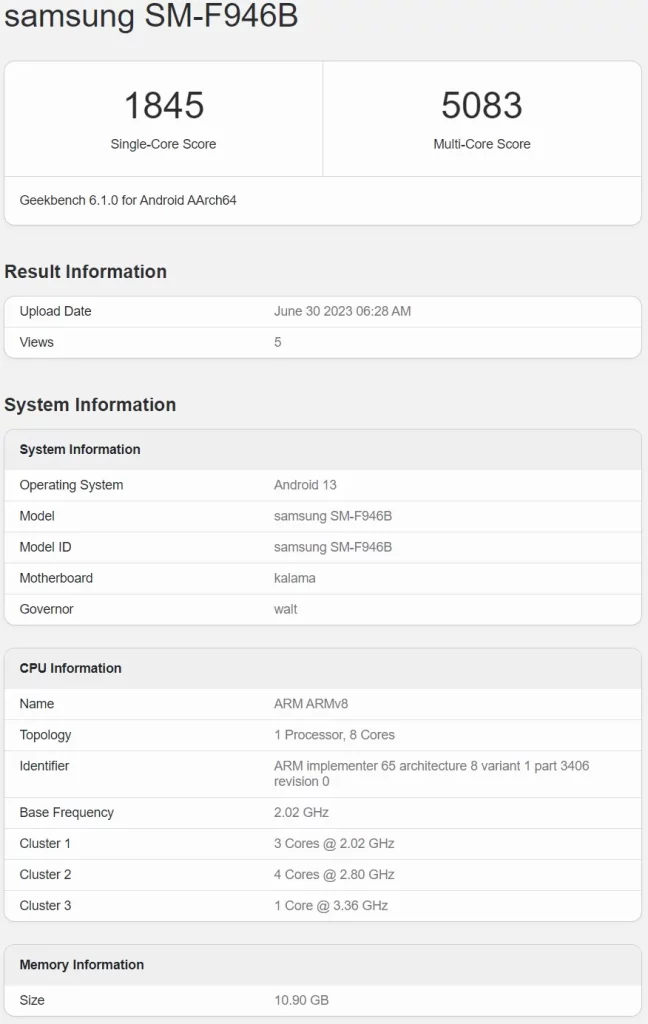
Previous reports suggest that the Snapdragon 8 Gen 3’s large core will be upgraded to the advanced Cortex-X4, boasting a maximum frequency of 3.7GHz, which is a significant improvement over the 3.36GHz of the Snapdragon 8 Gen 2. Additionally, the GPU will be upgraded to Adreno 750.

Improved performance and power efficiency with Snapdragon 8 Gen 3

It is likely that TSMC will continue to produce the Snapdragon 8 Gen 3, with the process technology being upgraded from N4 to N4P. Although it does not utilize the more advanced N3 process technology, N4P offers a 6% performance improvement compared to N4. Furthermore, N4P reduces the number of mask layers, simplifying the process and accelerating chip production cycles, making it more cost-effective and efficient than N3.

With the enhanced architecture and process technology, the Snapdragon 8 Gen 3 is expected to achieve an AnTuTu benchmark performance of around 1.5 million points, providing users with smoother and more responsive experiences, especially when running demanding applications and games.

As for which manufacturer will be the first to launch a device featuring the Snapdragon 8 Gen 3 platform, contenders include Xiaomi, OnePlus, and Vivo. MediaTek is also preparing to compete with Snapdragon flagship chips with their upcoming flagship chipset Dimensity 9200+.

RELATED:

(Source)

Zebronics Zeb-Smart Cam 105 hits India equipped with AI motion detection and night vision capabilities for Rs. 1,899 ($23)

The Zeb-Smart Cam 105 from Zebronics has been launched in India. The new smart camera features AI motion detection and night vision capabilities. It also comes with an affordable price tag.

The Zebronics Zeb-Smart Cam 105 is a comprehensive solution to home security needs. It is equipped with a full HD 1080p camera that can be used for live streaming and for taking high-resolution images. The camera notifies you whenever it detects movement in its area of coverage. The camera has a 355º horizontal and 120º vertical range of coverage. This provides a wide view of the room. The camera is further enhanced with infrared night vision with a 5 meters radius of coverage.

Zebronics Zeb-Smart Cam 105

The Zeb-Smart Cam 105 is suitable for night security coverage due to its night vision capabilities. The 24×7 Live Monitoring feature allows you to keep tabs on what is happening inside your house even when you are away. The camera can record and store feeds on the device’s storage, expandable via MicroSD up to 128GB. Cloud storage is also available as an additional option.

You can also communicate with your loved ones when using the Smart Cam 105. It is equipped with superior microphones and a two-way audio system. Furthermore, the camera can be mounted easily on the wall. The companion smartphone app is compatible with Android and iOS devices.

Zebronics Zeb-Smart Cam 105

The Zebronics Zeb-Smart Cam 105 has a launch price of Rs. 1,899 (~$23) and can be purchased from Amazon India. The original price of the surveillance camera is Rs. 4,399 (~$54). Zebronics says the Zeb-Smart Cam 105 is a comprehensive solution that provides safety and ease in today’s hectic life. It also combines affordability with quality while its versatility lends itself to various applications.

RELATED:

ColorOS 13.1 May Update Timeline out for Oppo and OnePlus phones

Oppo’s ColorOS 13 update has been rolled out to the majority of eligible smartphones, and the brand has even begun releasing an iterative update—ColorOS 13.1—to some devices. Recently, the Oppo Find X6 Pro received the new update, which includes camera and performance enhancements. Next month, the software will be made available to many more Oppo and OnePlus smartphones, as the brand has released the ColorOS 13.1 Update timeline for May.

The ColorOS 13.1 is said to be limited for phones in China and so is the new timeline. We could see on the Changelog of Find X6 Pro’s update that the software brings loads of improvements in the camera communication department but there are no new features as such. These improvements may vary from device to device.

List of devices receiving ColorOS 13.1 in May

May 4

  • OPPO Find X3

May 11

  • OnePlus 11
  • May 12
  • OnePlus 9R
  • OnePlus 8T
  • OPPO Reno9 Pro +
  • OPPO Reno8

May 15

  • OPPO Pad
  • OPPO Pad Artist Limited Edition
  • OPPO Reno6
  • OPPO Reno6 Pro

May 16

  • OPPO Reno9 Pro
  • OPPO Reno8 Pro +

May 17

  • OPPO Reno7 Pro
  • OPPO Reno8 Pro
  • OPPO Reno7 Pro League of Legends Limited Edition
  • OPPO Reno6 Pro+
  • OPPO Reno6 Pro+ Conan Limited Edition
  • OnePlus Ace 2V
  • OnePlus Ace 2

May 18

  • OnePlus Ace Pro
  • OnePlus Ace Pro Yuanshen Limited Edition
  • OPPO Reno7 SE

May 22

  • OPPO Reno5 Pro+ Artist Limited Edition
  • OPPO Reno5 Pro+

May 23

  • OPPO K10 Pro

May 24

  • OPPO Ace2 EVA Limited Edition
  • OPPO Ace2

May 25

  • OPPO Find N2 Flip
  • OPPO Find X2 Pro
  • OPPO Find X2 Pro Lamborghini Edition
  • OPPO Find X2, OPPO Reno7
  • OPPO Reno7 New Year Edition
  • OPPO Reno5 Pro, OnePlus Ace Racing Edition
  • OPPO Find X2 League of Legends S10 limited edition

May 26

  • OPPO Reno9

May 29

  • OnePlus 8
  • OnePlus 8 Pro
coloros 13 update plan May 2023

RELATED:

Redmi Note 12 Pro reportedly catches fire inside an Indian man’s pocket

A man has reportedly had his Redmi Note 12 Pro smartphone catch fire inside his shirt pocket. This is a seemingly rare event going by significant improvements OEMs had made on smartphones. However, it is coming on the heels of a rather disturbing news of an alleged Redmi Note 5 Pro explosion in India that led to the tragic demise of an 8-year-old girl.

Redmi Note 12 Pro

The Indian man named Naveen Dahiya purchased his Redmi Note 12 Pro in February 2023. The phone was inside his shirt pocket on April 11 when he noticed smoke emanating from the device. He then felt a burning sensation and discovered the phone was on fire. He was lucky enough to remove the device from his pocket before it could do any damage to his skin.

Unwanted fireworks: Xiaomi’s Redmi Note 12 Pro unit allegedly goes up in flame in India after tragic Redmi Note 5 Pro incident

It is unclear what could have triggered the fire on the Redmi Note 12 Pro since it was not being charged at the time. The phone was subsequently completely destroyed by the fire. Dahiya was not harmed as he was able to throw the phone on the ground while it was burning. He thereafter contacted Redmi customer service but got a sub-par response from them. The user insists that if he does not get a satisfactory response from Redmi, he will take legal action against the company.

It is expected that Redmi comes up with an official response to this incident amidst fears that several other units may be having a similar risk of catching fire. It will need to undertake an investigation on the issue to safeguard the safety of Redmi Note 12 Pro users.

Redmi Note 12 Pro explosion
Source- Twitter (Posts deleted)

This incident serves as a reminder to users that smartphones could become dangerous when they malfunction. Users are therefore expected to take precautions always to prevent potential fire incidents. Part of the advice is not to overcharge the smartphone or leave them in extremely hot environments.

RELATED:

(source)