Back in January 2023, we had reported on leaked images that revealed that Nintendo was planning on launching a special Legend of Zelda edition for its Switch OLED handheld console. Now, this special edition model has been officially unveiled by the company, so here are all the details.
The Japanese company that makes its own consoles and even has its own game development studios. So it arrives as no surprise that it is releasing a special edition of its popular Switch handheld console that is inspired by one of their own franchise, the Legend of Zelda. The company has revealed that a special edition Tears of the Kingdom OLED Switch model that will be available starting from 28th April 2023 for a price tag of 360 US Dollars.
With this limited edition model, one can clearly see the Legend of Zelda inspired design that teases the kingdom of Hyrule with its murals and etchings that look like intricate ornate artwork. This is featured across the Switch OLED, the Joy Cons, and even the dock. But apart from its beautiful design, this special edition is still identical to a regular Switch OLED model in terms of specifications. So you can expect to see the same 7 inch display and a 64GB of internal storage that can be expanded.
Interestingly enough, this isn’t the only Tears of Kingdom inspired product as Nintendo has also launched special edition variants for the Switch Pro Controllers and its Carrying Case as well, which will launch alongside the game on 12th May 2023. The former has a 75 US Dollar price tag while the latter costs 25 US Dollars.
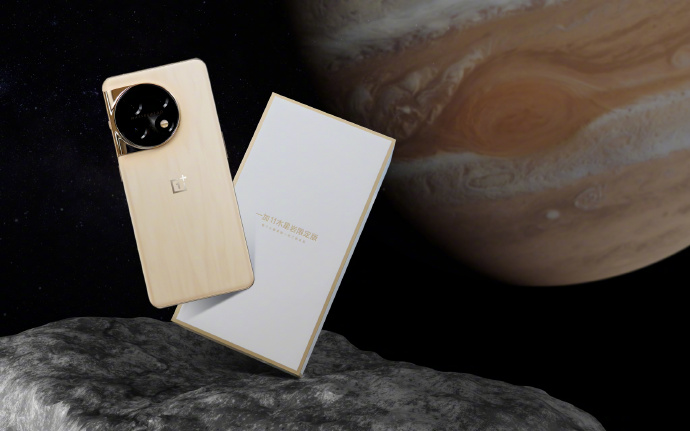
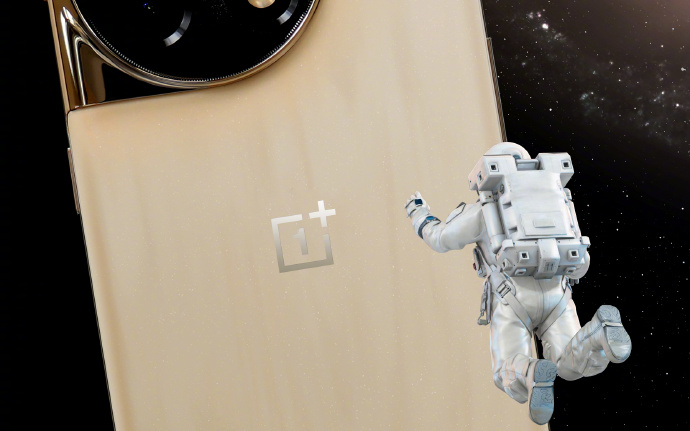
OnePlus has just launched a new special edition model for its latest flagship smartphone. The device in question is dubbed the OnePlus 11 Jupiter Rock edition and features a unique design that is inspired by our solar system’s gas giant planet.
Based on official notes, this special new variant is the first smartphone to feature as “natural texture” that is built using a volumetric microcrystalline rock material. This is a first in the smartphone industry and has never been featured before. Thanks to its special build materials, the OnePlus 11 Jupiter Rock edition seeks to offer a unique tactile experience that will have it stand out. Looking at its rear panels we can see how the design showcases these materials with the rough textured back panel that reflects the look and feel of natural rock formations.
But apart from its design, the device still featured internal specifications similar to the regular OnePlus 11 model. It is equipped with Qualcomm’s latest and greatest Snapdragon 8 Gen 2 SoC that is paired with 16GB of RAM and 512GB of internal storage. A large 5,000mAh battery pack powers the device, which supports 100W SuperVOOC charging. The rear features a 50 megapixel triple camera setup while the front houses a 16 megapixel selfie shooter.
The new OnePlus 11 Jupiter Rock Limited Edition has just been launched although its pricing is still unclear. But considering the price tag of the regular 11 starts from around 710 US Dollars. We can expect the Special Edition version to be more expensive and cost around 800 US Dollars. So stick around for updates on its pricing.
The Moto G13 made its debut in Europe in late January. Now, Motorola has brought this handset to India as scheduled. It is the company’s second most affordable smartphone to release in the country this year after Moto E13.
Despite being priced under ₹10,000 (~$120), the device arrives with a set of good features. Let’s check what it has to offer along with its availability.
Motorola Moto G13 Specifications
The Moto G13 is built around a 6.5-inch centered punch-hole display (LCD) with a resolution of 1600 x 720 pixels (HD+) and a 90Hz refresh rate. The phone features a water-repellant plastic body.
It is powered by a MediaTek Helio G85 chipset and boots Android 13. The brand guarantees an Android 14 update and three years of security updates.
The device has a triple camera system on the rear comprising a 50MP primary shooter, a 2MP macro snapper, and a 2MP depth sensor. On the front, it sports an 8MP sensor.
Despite being affordable, it also comes with Dolby Atmos-supported dual stereo speakers. There’s also a side-mounted fingerprint sensor, a 3.5mm headphone jack, and a dedicated MicroSD card slot.
The connectivity options on the handset include dual SIM, 4G, dual-band WiFi, Bluetooth 5.1, and GNSS. Finally, it draws energy from a 5,000mAh battery and carries support for 10W charging.
Motorola Moto G13 India Price and Availability
In India, the Motorola Moto G13 is priced at ₹9,499 (~$115) and ₹9,999 (~$120) for 4GB + 64GB and 4GB + 128GB memory configurations, respectively. It can be availed in either Matte Charcoal or Lavender Blue color options.
The smartphone will be available for purchase from April 5 via Flipkart and leading retail stores across the country.
Reports have revealed that the Motorola Moto G Stylus (2023) will come in 4G and 5G versions. Both models are said to have the “Geneva” codename. The 4G version has the XT2317 model number, whereas the 5G variant has the XT2315 model number. A recent report revealed a lot of information about the 4G version. Now, reputed tipster Evan Blass has released fresh renders of the G Stylus 5G (2023).
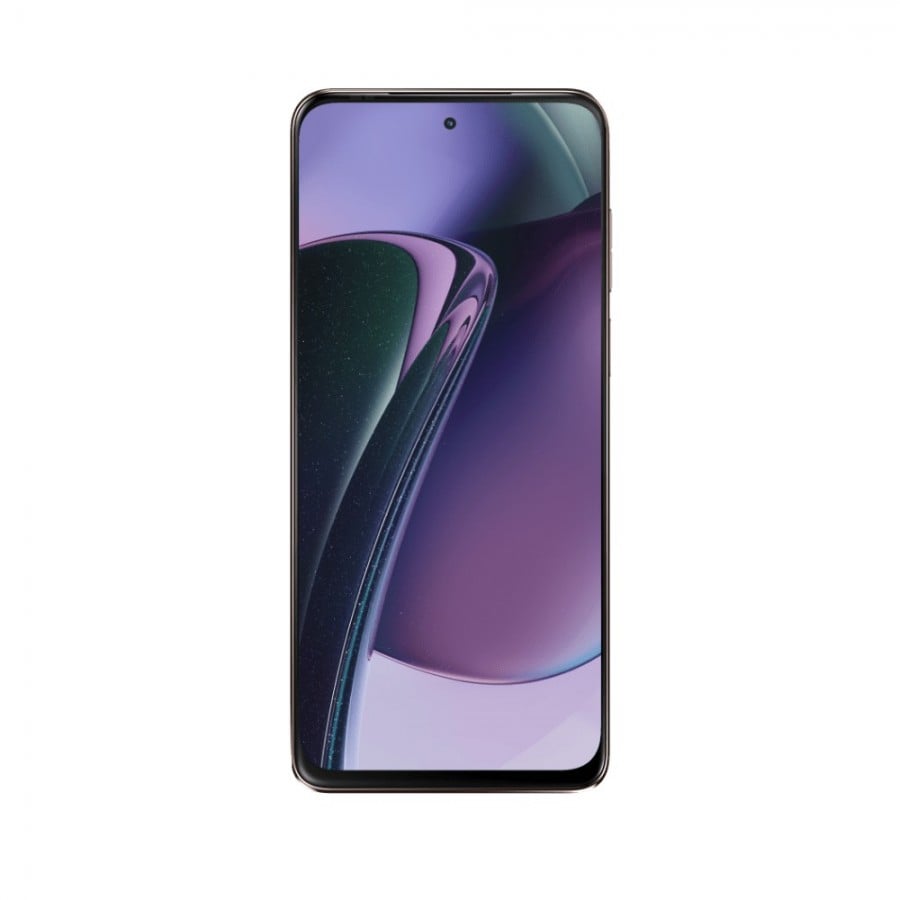
In the images below, the Moto G Stylus 5G (2023) can be seen in bronze and black colors. On the front, the device features a punch-hole screen with a noticeable chin. The back panel of the phone has a squarish camera module that houses a 50-megapixel dual-camera unit with an LED flash.
Moto G Stylus 5G (2023)Moto G Stylus 5G (2023)
The G Stylus (2023) seems to have volume buttons and a power button integrated with a fingerprint scanner on the right. Previously seen renders have shown that it has a SIM slot on the left.
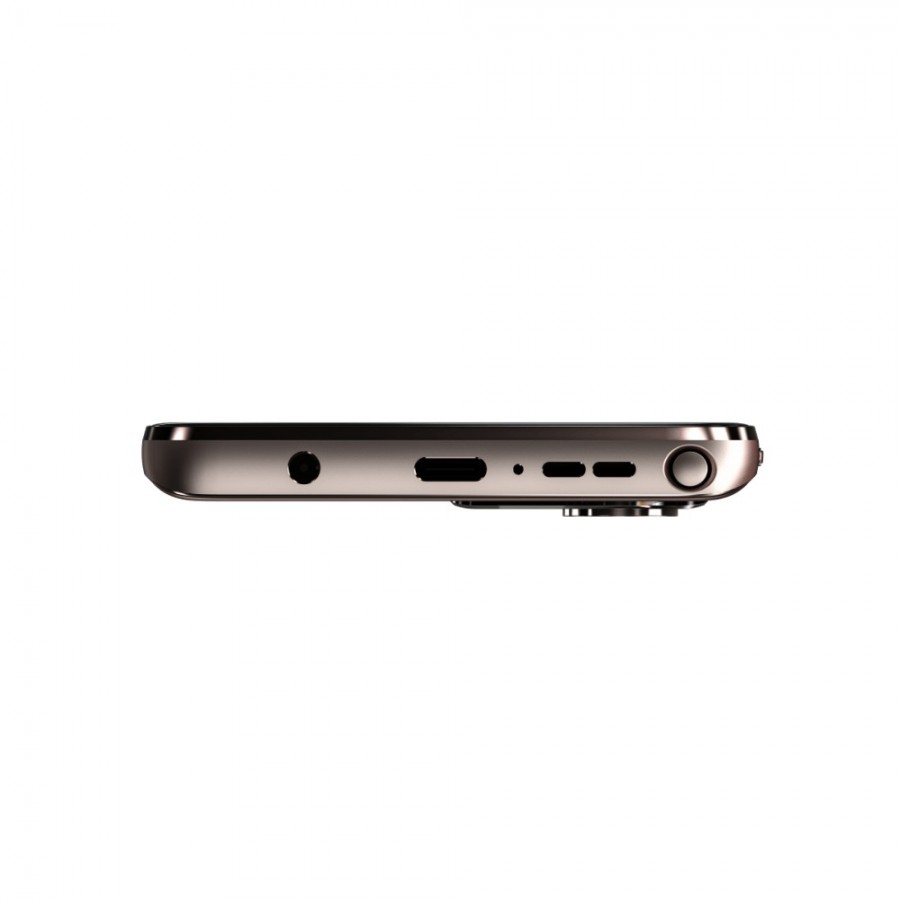
The image showing the bottom of the phone reveals that it has a stylus slot, a speaker grille, a microphone, a USB-C port, and a 3.5mm audio jack. Previous reports have revealed that the device will come equipped with a 5,000mAh battery, which may support 10W charging.
Moto G Stylus 5G (2023)Moto G Stylus 5G (2023)
The Moto G Stylus (2023) is expected to arrive with 4 GB / 6GB of RAM and offer up to 256 GB of built-in storage. The device will come preloaded with Android 13 OS. The rest of its specifications are yet to be revealed. The device will likely remain exclusive to the US market. It will arrive as a successor to the US-exclusive Motorola Moto G Stylus (2022), which debuted last year.
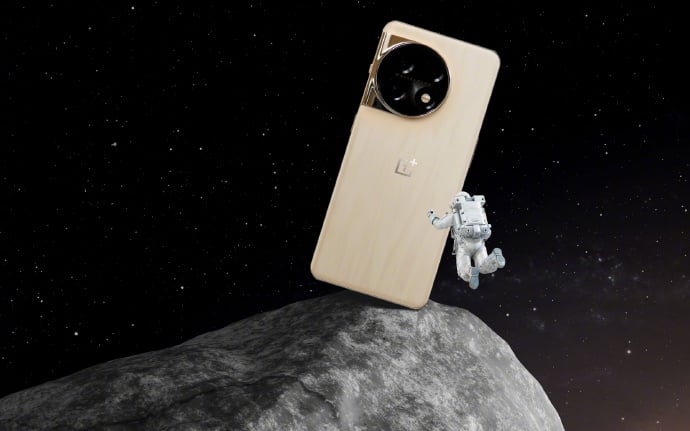
OnePlus has just released official photos of its latest smartphone, the OnePlus 11 Jupiter Rock Limited Edition, which is set to launch today in China. This special edition of the OnePlus 11 is touted to be the first smartphone with a “natural texture”, featuring a volumetric microcrystalline rock material that has never been used in the smartphone industry before.
According to OnePlus, the use of this material provides a unique tactile experience and sets it apart from other smartphones in the market. The promotional images showcase a striking design with a rough, textured back panel that mimics the look and feel of natural rock formations.
Under the hood, the OnePlus 11 Jupiter Rock Limited Edition will come with top-of-the-line specifications, including a Snapdragon 8 Gen 2 chipset, 16 GB of RAM, and 512 GB of inbuilt memory. The smartphone will also pack a 5000mAh battery with support for 100W SuperVOOC fast charging.
In terms of cameras, the OnePlus 11 Jupiter Rock Limited Edition boasts a triple camera setup with 50MP, 32MP telephoto, and 48MP ultra-wide image sensors, which is sure to please photography enthusiasts. The smartphone is also said to come with the original clip for the SIM card, adding to the premium feel of the limited edition device.
While the standard version of the OnePlus 11 with the same set of memory is priced at $710, the OnePlus 11 Jupiter Rock Limited Edition is expected to be more expensive due to its unique design and use of rare materials.
OnePlus fans are eagerly anticipating the launch of the OnePlus 11 Jupiter Rock Limited Edition, and it remains to be seen how well the smartphone will be received in the market.
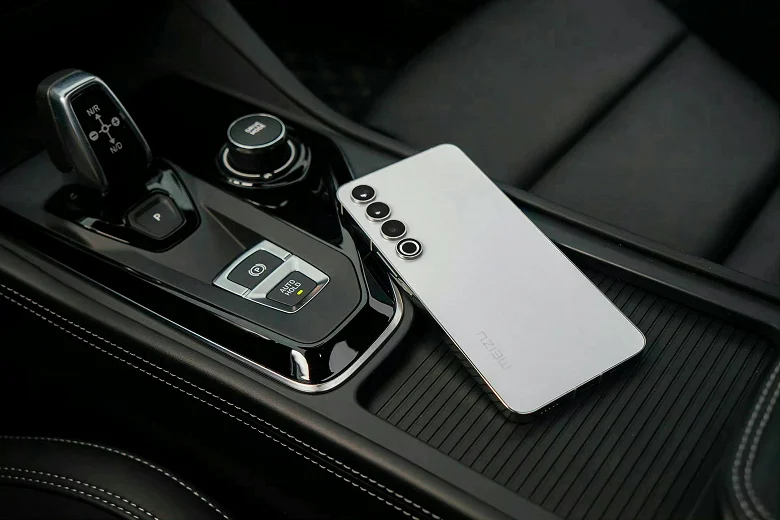
Although Meizu is not as prominent in the smartphone industry as it used to be, the company is still active and has been annually releasing its flagship phones in China. Recently, the brand was acquired by Geely in 2022, and the new owner has announced that Meizu will unveil a new lineup of high-end smartphones in 2023. As per their commitment, Meizu has organized a launch event scheduled for tomorrow to introduce their latest flagship series, the Meizu 20. Here’s how you can watch the launch.
Tomorrow (March 30) at 7:30 PM local time (GMT+8) , Meizu is scheduled to host the launch event for the Meizu 20 series in China. Those who are interested can tune in to the live stream of the event on the company’s official Weibo account.
The Meizu 20 series is anticipated to consist of two devices, specifically the Meizu 20 and Meizu 20 Pro. Both phones are expected to be equipped with a Qualcomm Snapdragon 8 Gen 2 chipset coupled with LPDDR5x RAM and UFS 4.0 storage.
Furthermore, rumors suggest that the phones will feature OLED displays with up to a 120Hz refresh rate and 10-bit HDR support. The Pro model is expected to have a larger screen and also incorporate LTPO technology.
Details about the camera specifications are limited, except for the fact that the Meizu 20 Pro is speculated to have a 1-inch Sony IMX989 sensor, which is common among other high-end Chinese flagship smartphones such as Xiaomi, Oppo, and Vivo.
Regarding the software, the phones will run on Flyme 10 based on Android 13. Lastly, the Meizu 20 Pro is expected to be equipped with a 5,000mAh battery and support 80W wired charging and 50W wireless charging. You can checkout our Meizu 20 series roundup to find out more about these upcoming smartphones.
Last year, Apple announced its buy now, pay later service called Apple Pay Later following the popularity of services like Affirm, Afterpay, and Klarna, among others in the US.
Now, the company has finally launched the Apple Pay Later service in the United States, which will allow users to split the payment into four installments over the course of six weeks.
With this new financing service, the Cupertino-based technology giant is promising a seamless and secure way to split the cost of a purchase without paying any interest on it. The user will be able to apply for Apple Pay Later loans of $50 to $1,000 for online and in-app purchases on the iPhone or iPad through Apple Pay.
Commenting about this, Jennifer Bailey, Apple’s vice president of Apple Pay and Apple Wallet, said, “Apple Pay Later was designed with our users’ financial health in mind, so it has no fees and no interest, and can be used and managed within Wallet, making it easier for consumers to make informed and responsible borrowing decisions.”
Currently, the service will be available only to randomly selected users who will get early access to a prerelease version. The company adds that it is planning to offer this feature to all eligible users in the coming months.
On March 29th, Samsung Electronics made a big announcement that baseball fans are sure to love. The tech giant has partnered with the New York Mets of Major League Baseball to bring a massive digital display to Citi Field in New York City. This screen is not only the largest in the world, but it’s also the brightest, providing the ultimate visual experience for all who attend games at the stadium.
Measuring a whopping 17,400 square feet (that’s about 1616.5 square meters), the LED screen is hard to miss. In addition to this behemoth, there’s also a smaller 6,900-square-foot (about 641 square meters) LED screen. Samsung Electronics has installed over 29,800 square feet of new LED displays at the stadium since the fall of 2022, bringing the total number of pixels to a staggering 40 million.
On March 23rd, baseball fans got a sneak peek of the new displays during the Mets’ “What’s New at Citi Field” event. With this new technology in place, fans will never miss a moment of the action, no matter where they are in the stadium. The screens are capable of showing the game in stunning 4K resolution, as well as scores, stats, and other useful information.
But it’s not just sports fans who benefit from this digital transformation. The massive display also provides advertisers with an incredible opportunity to reach a large audience. The screen is so tall that it can even be seen from the highway, giving advertisers even more exposure. By improving the overall fan experience and providing more opportunities for revenue, this partnership between Samsung Electronics and the New York Mets is a home run for everyone involved.
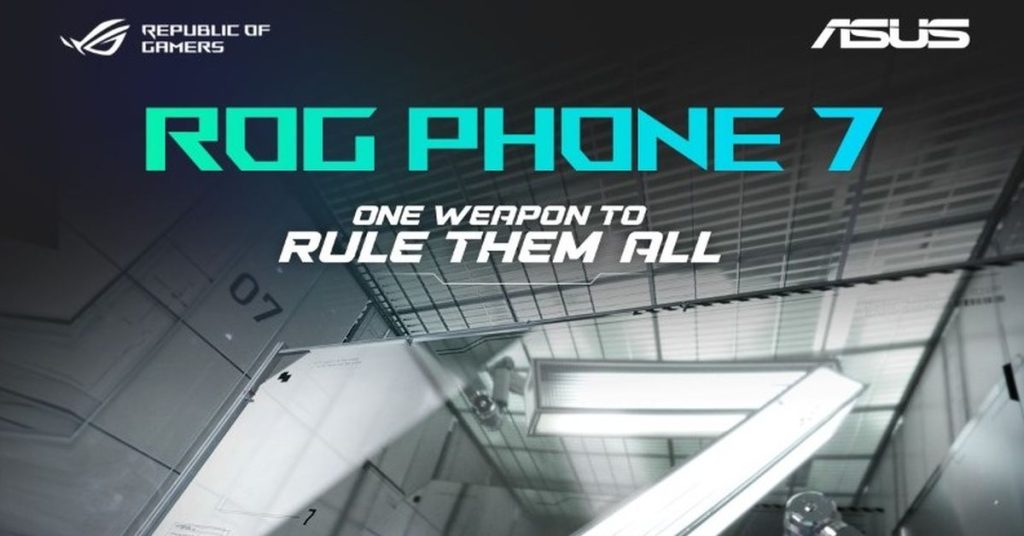
Earlier this month, two upcoming ASUS smartphones with model numbers ASUS_AI2205_A and ASUS_AI2205_B were seen in the database of the 3C certification body of China. These devices are expected to arrive on the market as the ROG Phone 7 and ROG Phone 7 Ultimate. Today, reliable tipster Digital Chat Station leaked the detailed specifications of the vanilla model.
ASUS ROG Phone 7 specifications (rumored)
According to the leak, the ASUS ROG Phone 7 will have a massive 6.78-inch E4 AMOLED display that will support a Full HD+ resolution and a refresh rate of 165Hz. It is expected to come equipped with an under-display fingerprint scanner.
ROG Phone 7 series
As it was revealed through its Geekbench appearance recently, the ROG Phone 7 will be powered by the Snapdragon 8 Gen2 processor. The leak claims that the device will have LPDDR5X RAM and UFS 4.0 like other SD8G2 flagship phones. On Geekbench, the device was spotted with 16 GB of RAM.
The ROG Phone 7 series will run on Android 13 OS and ROG UI. The vanilla model will feature a 32-megapixel front-facing camera and a 50-megapixel primary camera, a 13-megapixel ultra-wide lens, and a 5-megapixel camera. As per a recent leak, it will have a Sony IMX766 primary camera.
The ROG Phone 7 will pack a 6000mAh battery with 65W fast charging capabilities. It will come with an IP54-rated dustproof and waterproof chassis that will weigh under 240 grams. The tipster has claimed that the base model of the ROG Phone 7 could be priced at 3,999 Yuan (~$580).
For those who don’t know, ASUS is set to launch its gaming smartphone series, the ASUS ROG Phone 7, in various markets such as the US, China, Taiwan, and India on April 13. It is speculated that this time around the lineup will have only two devices, meaning there will not be a device named the ROG Phone 7 Pro.
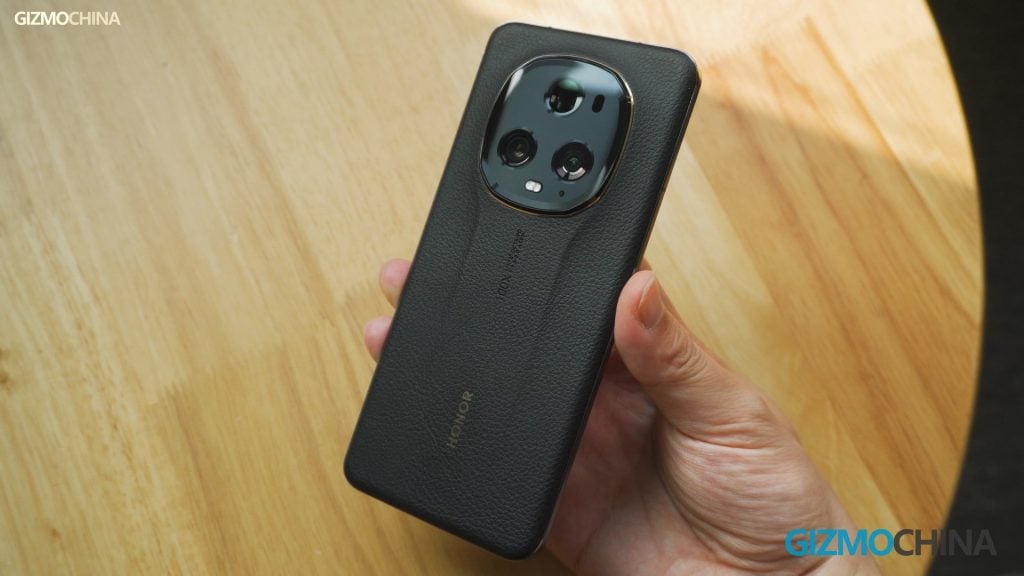
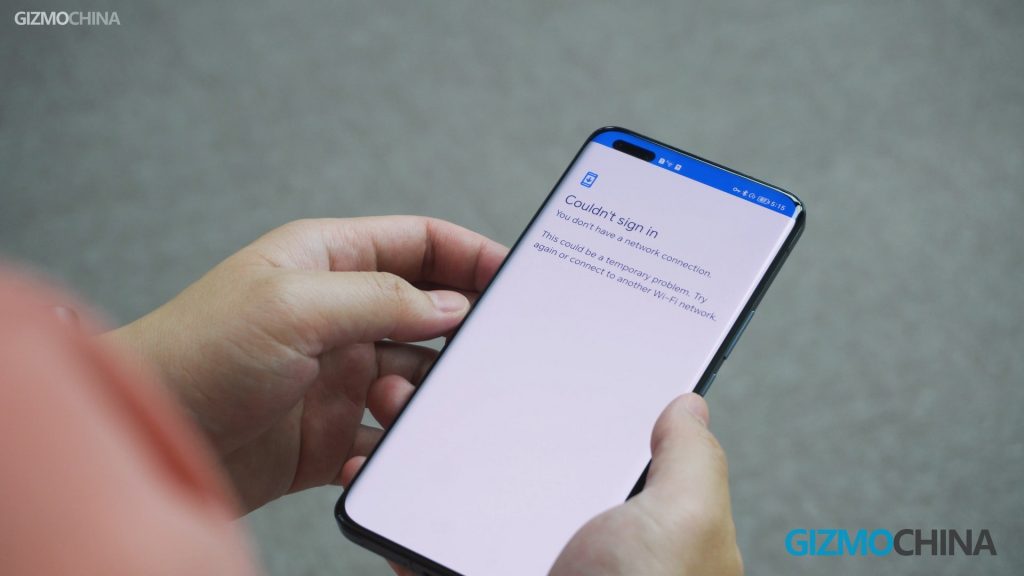
The Honor Magic 5 Ultimate, the best Honor flagship by far, is only officially available in China now. So the phone in my hand is a China variant, which means the software is slightly different from the other Honor phones you can buy outside China. There’s no Google service by far on the Honor Magic 5 Ultimate. On the other hand, it’s a device coming from an ex-Huawei brand. So apart from the Honor account, you can also log in to your Huawei ID on the phone to access Cloud features.
Except for the brand-new luxury design, the Ultimate model has nothing else different from the Magic 5 Pro (China variant). So if you are attracted by Ultimate’s premium hardware suite and impressive camera kit, the global version of Magic 5 Pro with full Google service ready is a great alternative.
Design
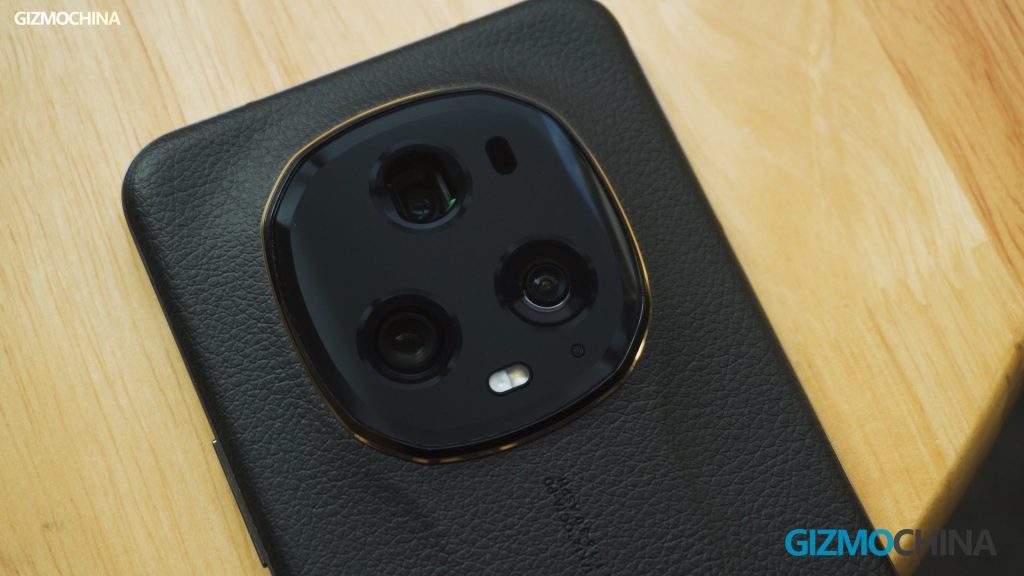
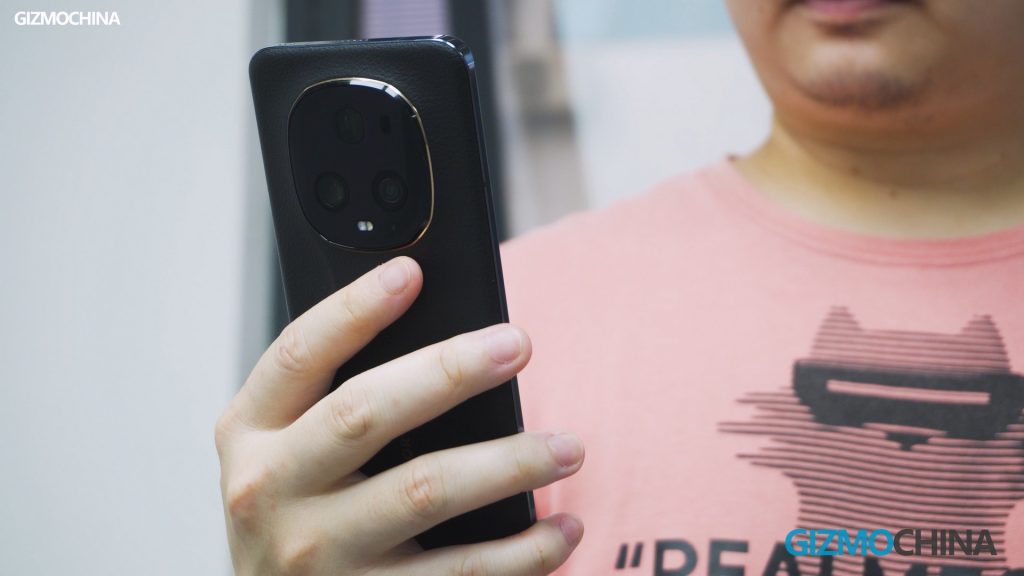
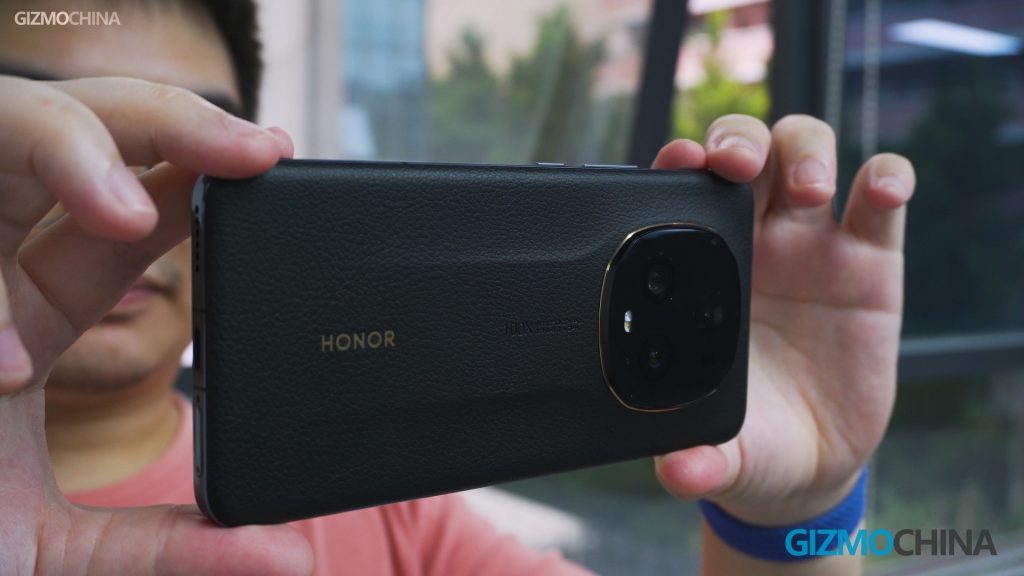
But if you are running to its unique design, then unfortunately you will only take the fact that it doesn’t work with Google. The Magic 5 Ultimate is the most stylish premium phone that I’ve ever seen this year. I quite appreciate the design details it retains on the back cover, which not just offers a stylish and recognizable design but also greatly boosts the grip.
The leather-like pattern looks impressive, retaining elegant lines and dimensionality below the camera module.
Starting with the Magic 4 Ultimate, the series’ camera module is no longer the same round design, but an octagonal curved glass design with a triple-lens structure.
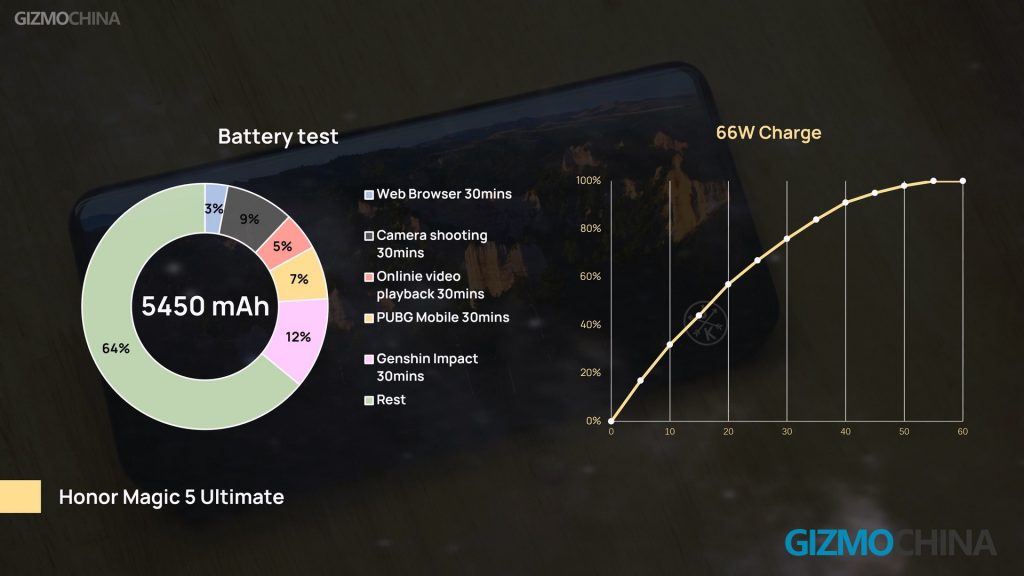
And it’s worth noting that, compared to the Magic 4 Ultimate’s weight of 242g, the 5 cut the weight down to 217g, while the body thickness also got reduced from 9mm to 8.7mm. So it’s pretty obvious that the magic 5 Ultimate is not that bulky and it feels much better than its predecessor. More surprisingly, the battery is instead not reduced by the smaller size but got enlarged to a capacity of 5450mAh.
Display
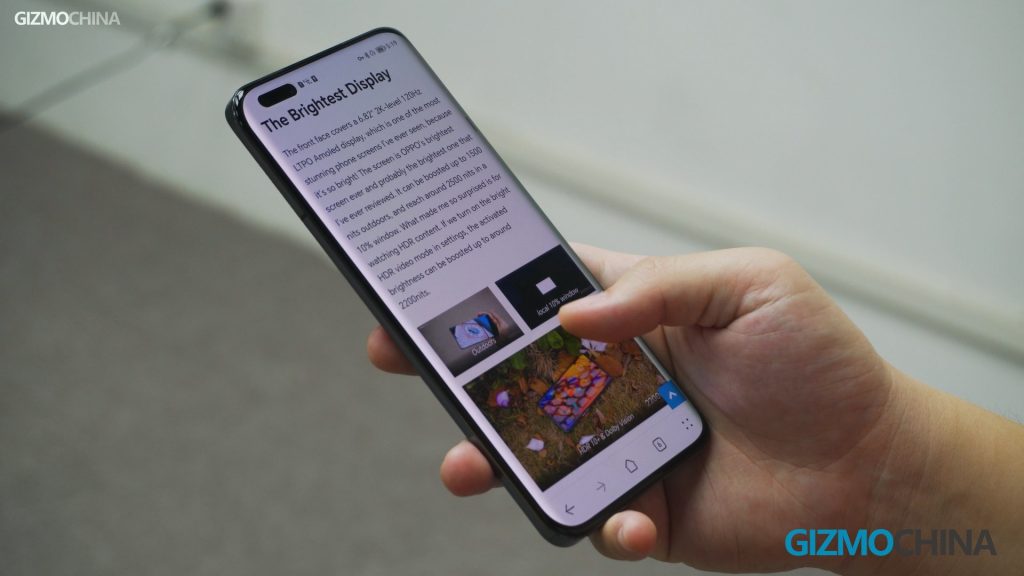
Turn it over and we can see the front face is quite stunning: A 6.81-inch LTPO OLED curved screen with super narrow bezels. The pill-shaped cutout at the top-left corner is the 12MP selfie camera and ToF 3D system for face scanning.
The edges of the display for the Magic 5 Ultimate are not that curved, so visually it’s great. No edge is too distorted and the grip is fine, but it’s not so satisfying if you add a case.
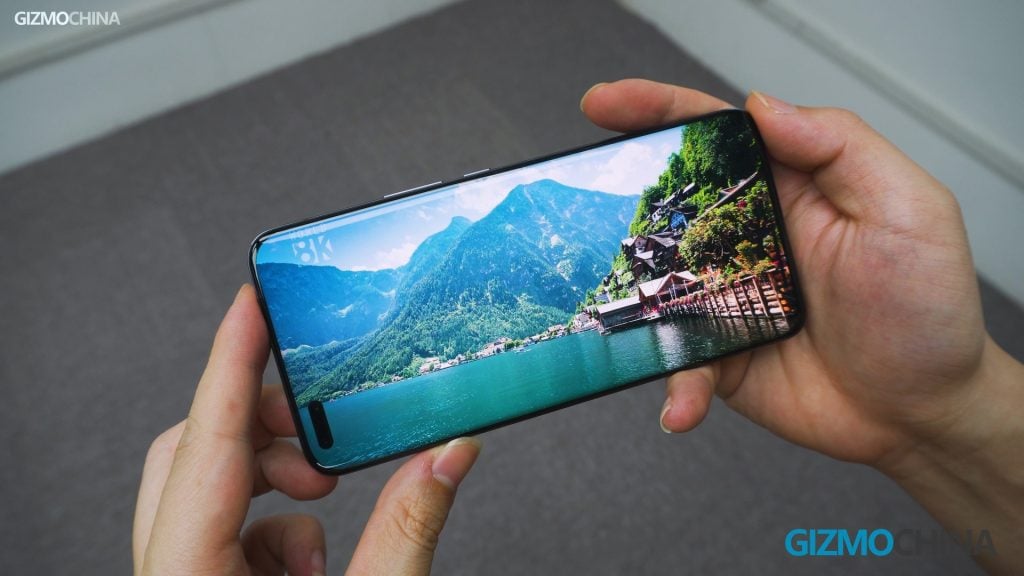
The display has a high resolution of 460ppi density, 120Hz dynamic refresh rate, a 10-bit color depth with HDR10+ support. So it looks no less than other premium phones.
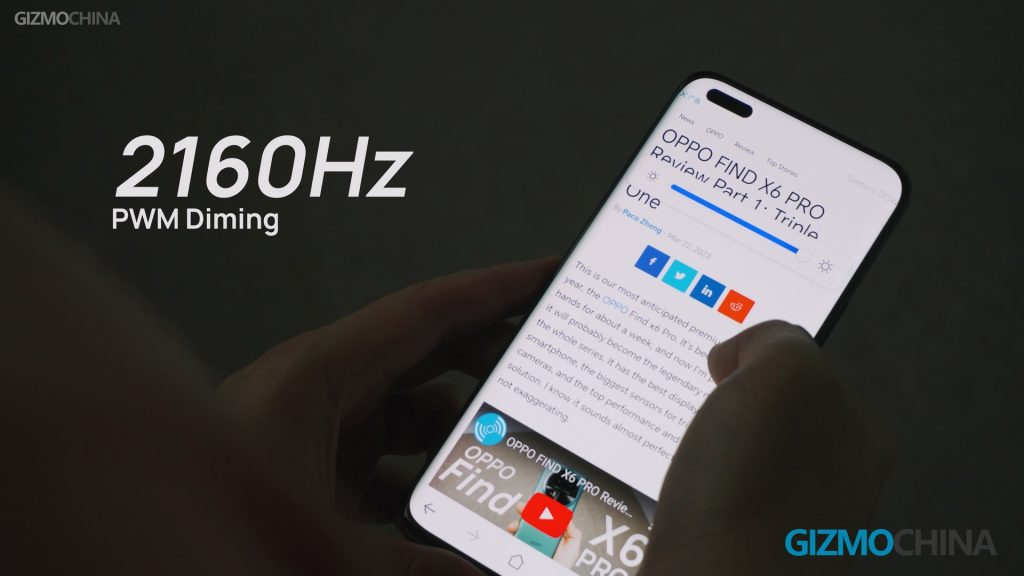
Almost all the 2023 flagship phones improved their high-frequency PWM dimming to 1920Hz or above. The Magic 5 Ultimate is no exception. And honor even boosts it up to 2160Hz. My eyes are actually sensitive to the flicker issue, so I couldn’t really stare for long at a display that didn’t fix the flicker issue. But fortunately, I didn’t suffer that under low lighting on the Magic 5 Ultimate. It seems that the PWM dimming works.
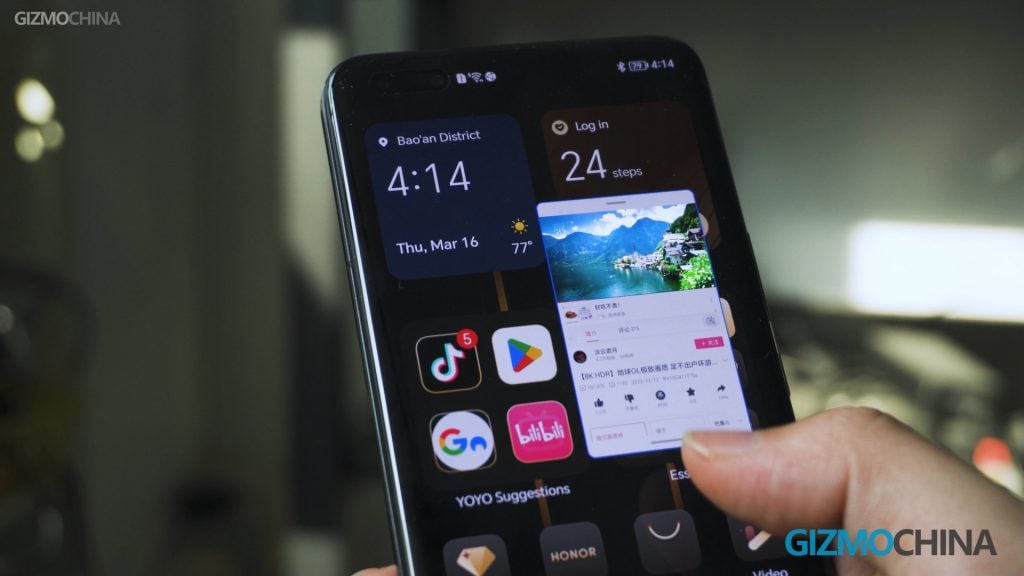
Honor has excellent HDR content management that is similar to Huawei. Even when you play the HDR content in a window mode, the phone can correctly display the high brightness and vibrant colors required for HDR separately from the rest of the display.
The manual brightness of the display is good, reaching about 750nit. The full-screen adaptive maximum brightness in strong light and for HDR both reach over 1200nits, while the figure will rise up to 1600nits with a 10% HDR window. That’s almost the best level for android.
The phone is equipped with stereo speakers. You can check out how it sounds in our review video.
Camera setups & samples
Main Cam
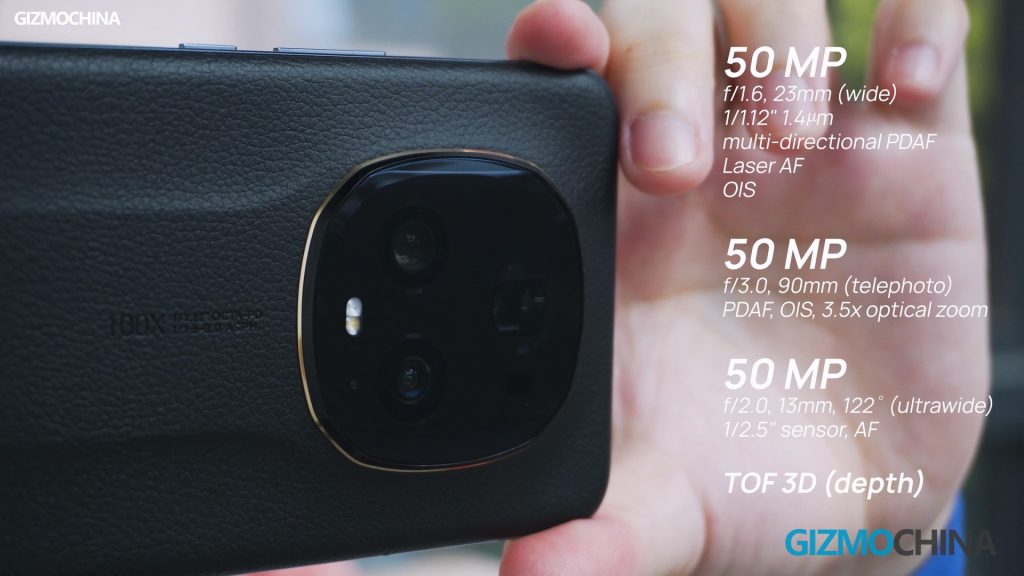
The Magic 5 Ultimate comes with a triple-lens setup. Let’s first focus on the main camera, which features a nearly 1-inch sensor. Although it’s not the largest sensor size yet, I’m quite satisfied with the photos it took from the main camera. The colors are rich, the bokeh effect is great, and there’s good detail across the brightness and shadow. The experience is so good that as long as you open the camera and press the shutter, it feels like it would definitely give you a great photo no matter when or where you are. Even in a very dark situation, it can control the dynamic range and exposure just right, and won’t feel like the night photo was taken in the daytime.
When you zoom in with the main camera, Magic 5 Ultimate also automatically switches to high-resolution mode to do the cropping. The benefit is that the sharpness will be improved to some extent. This feature will automatically activate when you zoom in to 2x, and you can clearly see the difference between the two photos. Since pixel binning is not available in high pixel mode, its exposure and dynamic range are always significantly improved in low light conditions.
1.9x1.9x2x1.9x2x
Ultra-wide lens
The physical focal length of the ultra-wide-angle camera reaches 13mm, and the field of view will be a bit wider than the wide-angle lenses of other phones. So the image-quality degradation of the corners is also a problem that needs to be solved by HONOR.
Not only is there the problem of reduced sharpness, but obviously it comes with fringing issues. And here the red flowers also show an oversaturated problem. On the other hand, the wide-angle lens has many of the same advantages as the main camera, such as excellent dynamic range and exposure control. But the poor image quality at the corners and the difficulty in framing with too wide a field of view make me rarely use it in my daily shooting.
0.6x – auto
The wide-angle camera supports autofocus, so you can also use it as a macro lens. The image quality will be much better than those 2MP macro cameras.
3.5X Telephoto lens
This 3.5x telephoto lens inherits the excellent algorithm from previous HONOR phones, and the AI to increase the image detail allows the Magic 5 Ultimate to take great-looking photos up to 10x. It far exceeds our imagination that a 3.5x optical telephoto can produce such sharp 10x photos. It’s really great, but sometimes this telephoto lens lost its temper. The picture might get exposed too much and the image could look a bit under-contrasted. When I manually lower the exposure, the AI feature for increasing sharpness disappears and the photo becomes blurry. The colors are also not as vibrant as the primary camera.
10x5x
In night mode, the 3.5X shooting is easier to have stable handheld capture.
And the night mode is also available for the 10x shooting and sometimes it worked, while sometimes it didn’t. The normal mode could even shoot better images with less noise.
auto mode -3.5xnight mode -3.5xAuto – 3.5xnight mode -3.5xmanual exposureauto exposure10x – auto5x – night mode5x – auto mode
Anyway, this telephoto camera is good all around, but not very stable. You need to put up with it when it misbehaves, and hope Honor can fix it well with the software update in the near future.
Video shooting
In terms of video, the good news is that all three lenses support 4k 30fps shooting and support switching lenses in the recording. The main camera and telephoto are even better, with the ability to switch lenses freely in 4k 60fps shooting. The bad news is that there is no 8k recording. And the 4k clips shot on the wide-angle camera are not as sharp as what we shot on the main camera.
Performance & Gaming
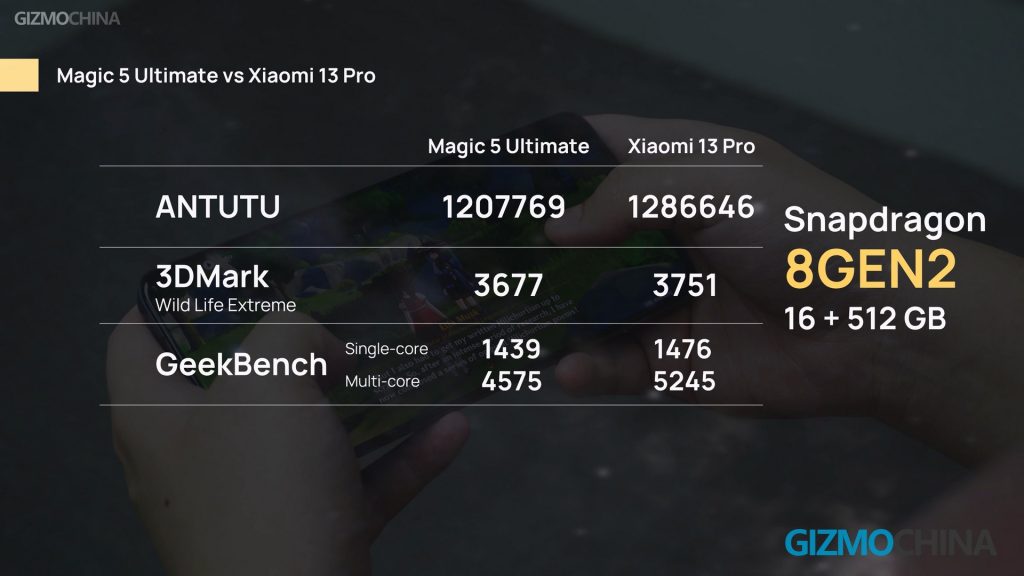
As for performance, I’m not gonna talk much about it since we’ve covered a lot about the Snapdragon 8 Gen2 chipset, which is Qualcomm’s most powerful mobile chipset launched in the past few years. Everything looks great on those phones powered by the 8Gen2. No exception for the Magic 5 Pro. And the Magic OS based on Android 13 is surprisingly smooth and responsive. So you don’t need to worry about the phone’s performance at all. For smooth gaming, the new Magic Ultimate has a unique graphics chip to enhance the framerate in games like Genshin Impact. So on the Magic 5 Pro, you could smoothly play Genshin Impact at a boosted framerate of 90fps.
Software
So one of the biggest problems of the China variant is the inability to use Google services. For app searching and installation, in addition to the Honor app store, you can still have third-party options like ApkPure and ApkMirror. But if you rely too much on Google services and cannot take it, just think carefully before buying the Magic 5 Ultimate’s China version.
Battery & Charge
Its battery life is another surprise. It’s one of the premium phones with the longest battery life we have ever reviewed. More importantly, it doesn’t get too bulky as a smartphone. It’s almost at the same level as the Samsung Galaxy S23 Ultra. The charging is not as impressive as the battery life, but it still supports 66W wired and 50W wireless charging. A full charge with the included charger took about 53 mins.
Verdict
So that’s all about the Magic 5 Ultimate. As a premium phone, its battery and display are definitely at the top of all models in the market. And the camera experience it prides itself on is still a satisfying additional value. And what we didn’t mention is that all the features are wrapped into the stylish body with IP68-rated water and dust resistance.
So that’s it. Hope you enjoy the review and the video, if you like that video, please kindly hit the ring and like buttons on YouTube, which means a lot to Gizmochina.
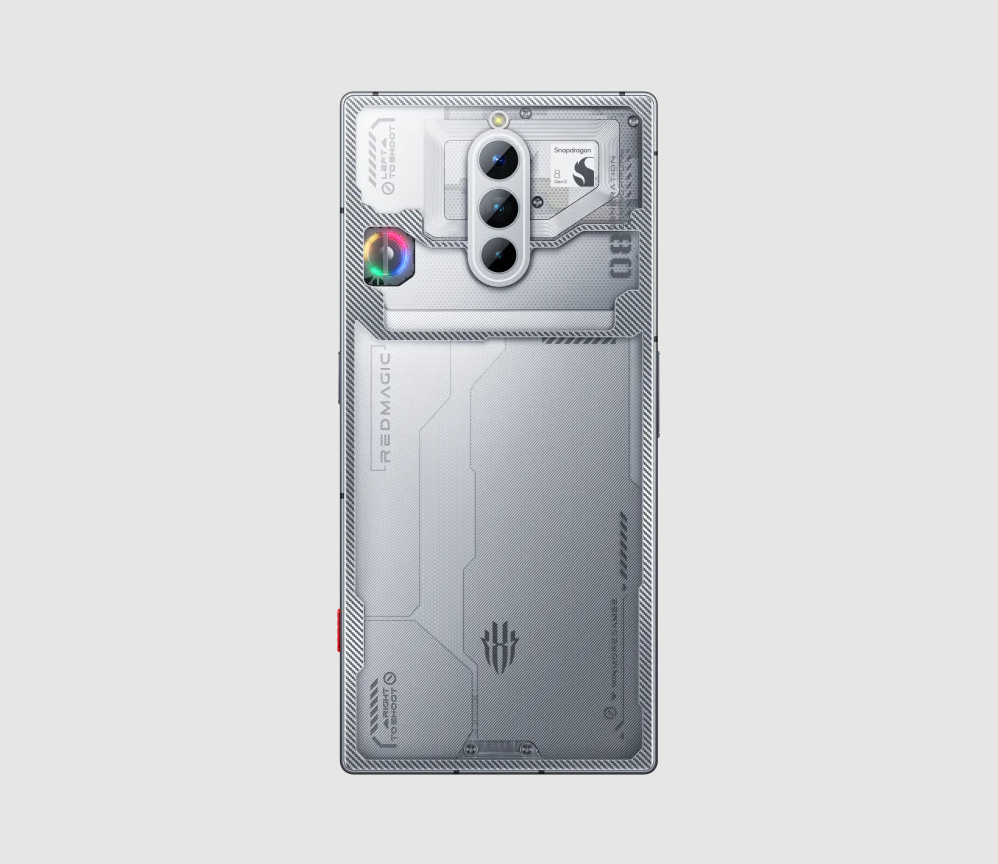
Red Magic, the manufacturer of the flagship gaming smartphone Red Magic 8 Pro, has introduced a new color option, Titanium, in the global market. Additionally, the brand has announced the global launch of a 4K monitor, a mechanical keyboard, and a gaming mouse.
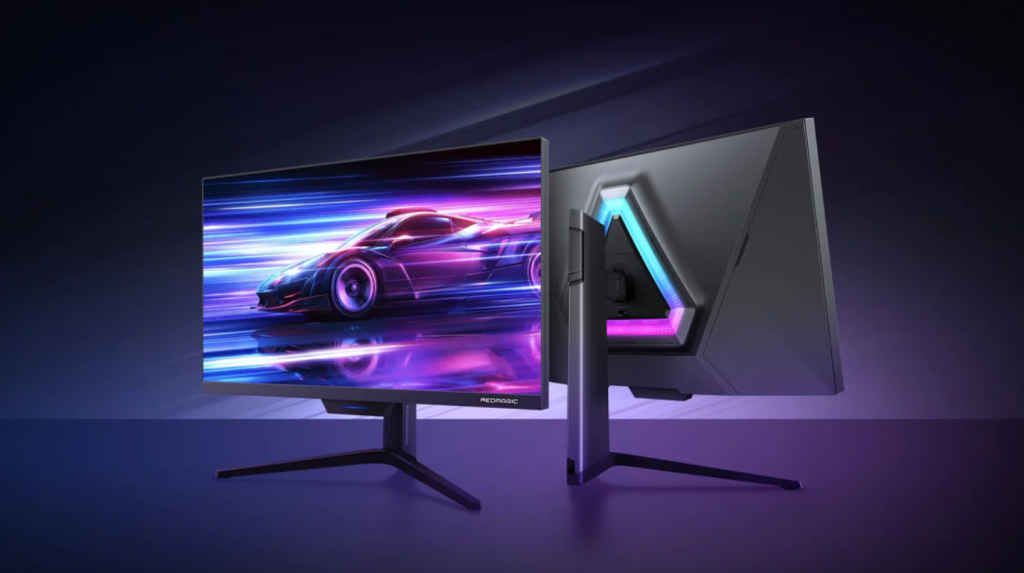
Red Magic Gaming Monitor specs
The 27-inch Mini LED panel of Red Magic’s new monitor boasts a 4K resolution of 3840 x 2160 pixels and a wide viewing angle of 178°. Its millimeter-wave wireless screen projection feature allows for wireless projection of 4K videos with minimal latency and no loss in quality.
In addition, the monitor offers HDR 1000, ΔE<1 color accuracy, and AMD Freesync Premium Pro as well as NVIDIA G-Sync. It also supports ultra-high frequency PWM dimming and is certified by TÜV Rheinland for Low Blue Light emission.
The monitor’s interface includes an HDMI 2.1 port and a USB Type-C port that supports a 90W reverse power supply. The monitor stand allows for easy height and rotation adjustments.
Red Magic Mouse
Red Magic’s gaming mouse is a wireless device that operates at 2.4GHz and has a DPI range of 50 to 26000. It features the Pixart PAW3395 sensor and a Kaihua GM 8.0 Black Mamba micro switch that has a short travel distance of only 0.3mm and an impressive lifespan of 80 million clicks.
Red Magic Keyboard
Red Magic’s gaming mechanical keyboard has suspended PBT keycaps and features TTC fast silver shaft version V2 switches. It supports wired, Bluetooth, and 2.4GHz tri-mode connectivity and uses the Gasket structure to eliminate strike resonance. The keyboard boasts RGB lighting effects, full key hot plugging, and a built-in 4000mAh battery that lasts up to 28 hours with the lights on and 200 hours with the lights off.
Moreover, the keyboard has a small 1.47-inch screen in the upper right corner that can display real-time parameters and customizable Red Magic wallpaper. The knob next to the screen allows for quick adjustments to volume and other system parameters.
The Red Magic gaming keyboard is priced at $199, while the gaming mouse costs $99. Both of these peripherals are currently on sale via Red Magic’s North Americas; website. The price of the 4K monitor is currently under wraps.
The Red Magic 8 Pro gaming smartphone was released globally in January, and last month, the brand introduced a Transparent Silver Edition exclusively in its domestic market. Now, this color variant is available in the global market as well.
The brand has named the new silver color variant “Titanium”, and it features a transparent back panel with an RGB fan exposed to function as an air cooler for the smartphone. This version is priced at US$799 and comes with 16GB of RAM and 512GB of internal storage.
Red Magic 8 Pro specs
The Red Magic 8 Pro boasts a 6.8-inch Full HD+ AMOLED display with a high refresh rate of up to 120Hz, a 960Hz touch sampling rate, PWM Dimming + DC Dimming, 93.7% screen-to-body ratio, 100% DCI-P3 color gamut, and 1300 nits peak brightness.
Beneath the surface, the Red Magic 8 Pro Transparent Silver Edition is fueled by the Qualcomm Snapdragon 8 Gen 2 chipset, matched with 12GB of LPDDR5x RAM and UFS 4.0 storage. It also comes equipped with the Redcore R2 game chip, which is responsible for managing sound, light, vibration, and touch-integrated magic control, as well as mobile light tracking.
The phone is equipped with the ICE 11.0 magic cooling system, which includes a built-in fan, full-through air duct, 3D ice-level double-pump VC liquid cooling, graphene under the screen, and up to 10 layers of heat dissipation materials.
In terms of cameras, the Red Magic 8 Pro features a triple-camera setup on the back, consisting of a 50MP Samsung S5KGN5 primary camera, an 8MP ultra-wide angle lens, and a 2MP macro lens. On the front, there is a 16MP camera under the display for selfies and video calls.
The device runs on the Android 13 operating system with RedMagic OS custom interface and is powered by a 6,000mAh battery that supports 80W wired fast charging and 65W wireless charging.
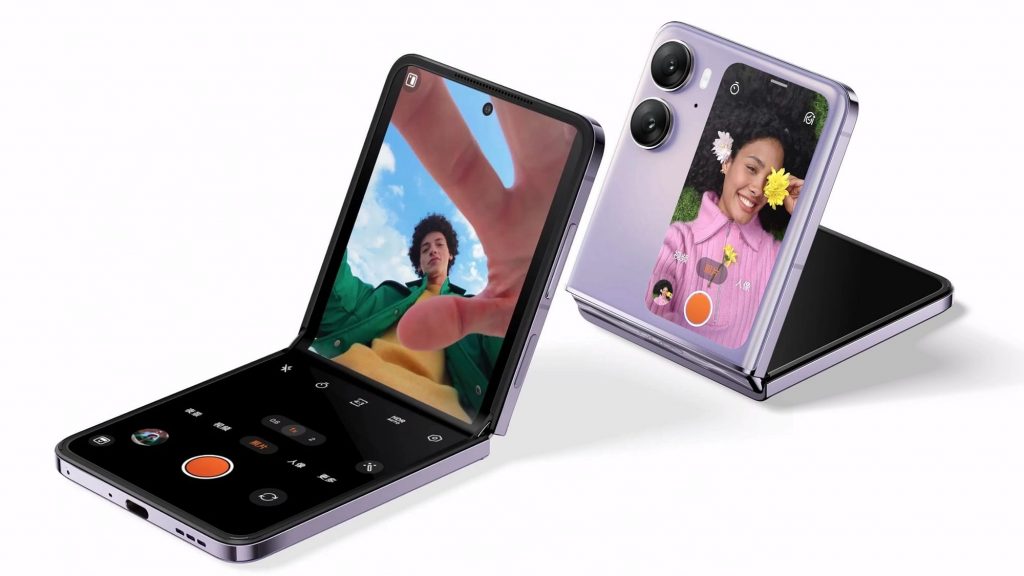
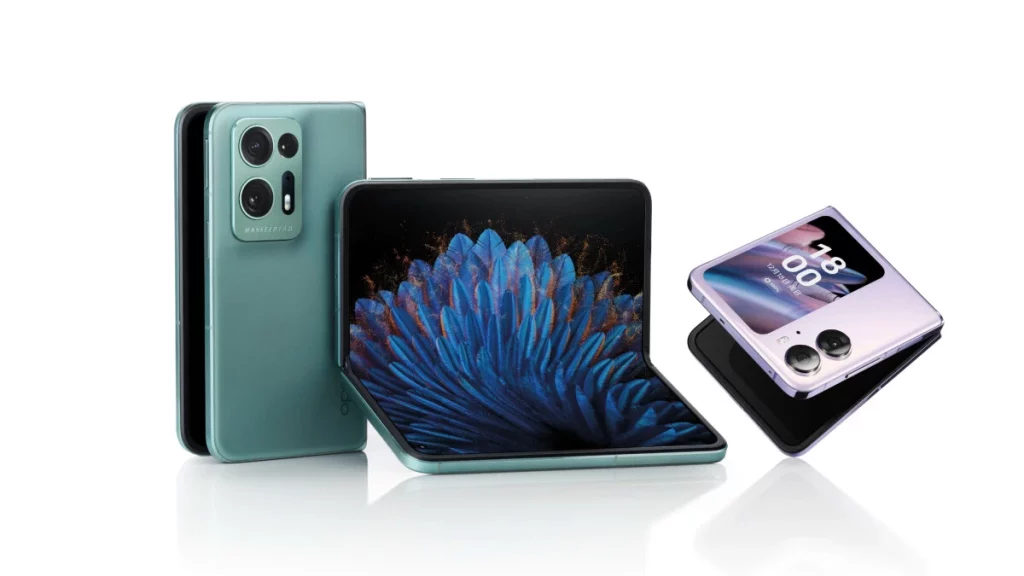
Over the years, Oppo has put major effort into improving its camera system at the flagship level to compete against the top dogs in the industry. While it might not have made it to the top when it comes to traditional flagship smartphones, the brand has managed to edge out its competition in the flip smartphone category.
OPPO Find N2 Flip
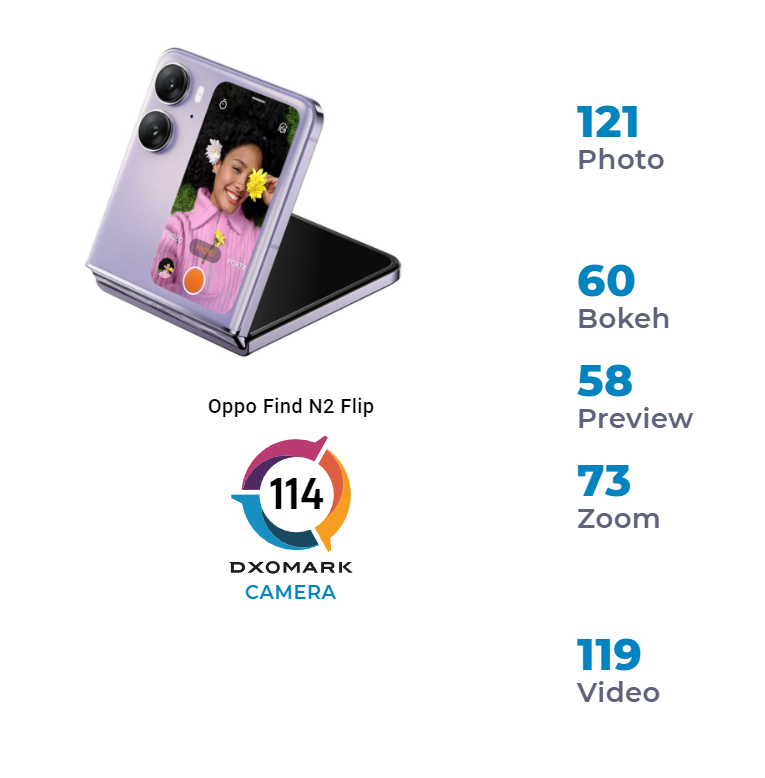
In a recent DxOMark camera test, the Oppo Find N2 Flip was found to outperform the Galaxy Z Flip 4. Although it was a close competition, with the Find N2 Flip scoring 114 points and the Galaxy Z Flip 4 scoring 112 points. The results show that the Galaxy Z Flip 4 takes slightly better pictures in normal mode, but the Oppo Find N2 Flip excels in zoom and video modes.
According to the test, the Find N2 Flip camera offers excellent photo and video exposure with a wide dynamic range, produces a decent balance between texture and noise in photos, records videos with low levels of noise, provides a reasonably wide depth of field, accurately estimates depth, and produces a pleasant blur gradient in bokeh mode. Additionally, it boasts fast autofocus in video mode.
Despite the impressive test results, the camera system still has some limitations. Shutter lag was observed, as well as exposure instabilities in indoor and low-light settings for both photos and videos. In certain conditions, there were white balance casts and inaccurate colors in photos, as well as fusion artifacts and ghosting. Additionally, videos showed strong luminance noise on moving objects, and there was a lack of detail when using the tele zoom settings. Therefore, it can be concluded that the camera system is not completely flawless.
That being said, the Oppo Find N2 Flip has secured the 69th position in the global smartphone camera rankings and the 49th position in the ultra-premium smartphone camera rankings of DxOmark.
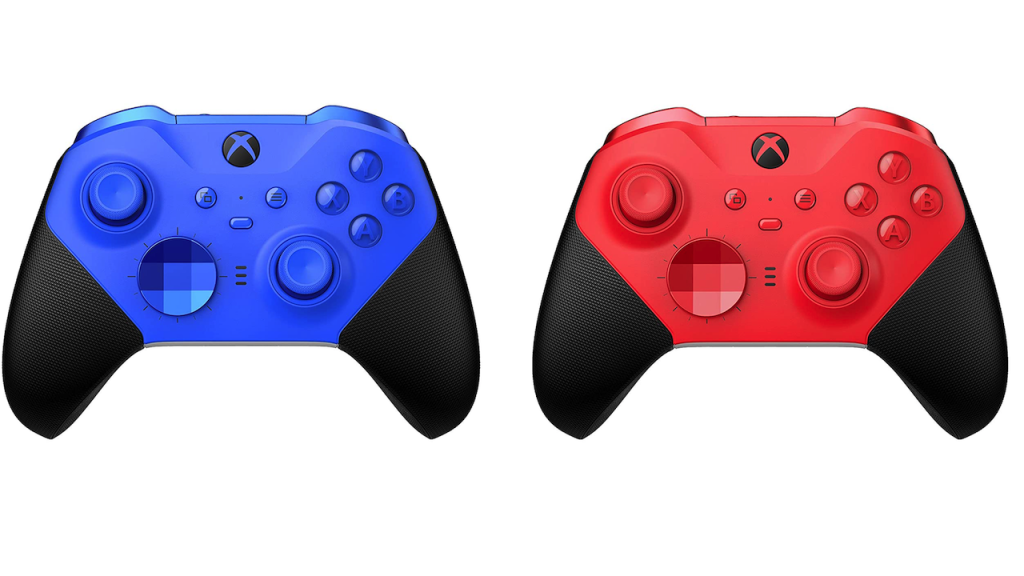
Microsoft’s Xbox Elite Series 2 Core Wireless Controller is a pretty good gaming controller over the regular model, and now the company has introduced two more color options for it — Red and Blue.
With this, the controller now comes in four colors — Black, White, Red, and Blue. It is priced at $139.99, and pre-orders for the Red and Blue models are now open.
Notably, the models are the Core version of the gamepad that the company started selling last year. This means that it doesn’t come with most of the customization kits in the original model. It includes the controller, a braided USB-C to USB-A cable, and a tool to adjust the tension of the twin analog sticks.
Apart from the change of color, the Xbox Elite Series 2 Core is still the same controller that can be used with Xbox consoles, PC, and mobile devices. There are some customization features that can be set up in the Xbox Accessories app, including the ability to switch between three custom profiles on the fly.
Coming to the battery life, the company says that it can last up to 40 hours from a full charge. It’s worth noting that this controller is missing a few extras compared to the Elite Series 2 bundles. It doesn’t include the swappable sticks, D-pad, or back-button triggers.
Lockheed Martin is taking a giant leap in lunar infrastructure by launching a spinoff company called Crescent Space. Its aim is to provide reliable communication systems for the long-term presence of humans on the Moon. The company’s first project is a satellite network called Parsec, which will connect the Moon and Earth through a constellation of small lunar satellites. The network will provide a non-stop connection between astronauts, their equipment, and people back home. Furthermore, Parsec will also help with navigation, making it an essential tool for future lunar missions.
One of the most significant benefits of Parsec is its lunar equivalent to GPS, which will provide astronauts with their precise positions and directions back to base. This technology will help keep explorers in touch with Earth and assist with spacecraft course changes. Moreover, it will be crucial for those on lunar soil, helping a rover crew to return home without driving into dangerous craters.
Lockheed Martin plans to have Crescent’s first Parsec nodes operational by 2025, with the company providing the satellites. While the startup may seem premature, with NASA‘s Artemis program not conducting a lunar flyby until late 2024 and a landing at the end of 2025, the company is well-positioned to support NASA’s Artemis Moon landings and other exploratory missions. CEO Joe Landon, formerly a Lockheed Martin Space VP, is optimistic about the future of the startup, hoping to profit from the increasing interest in lunar missions.
Lockheed Martin’s move to create Crescent Space and the launch of Parsec marks a significant advancement in lunar infrastructure. The company’s involvement in the space race is likely to benefit both private and national efforts to explore the Moon, with the technology providing reliable communication and navigation systems for lunar missions.
A recent report claimed that iQOO is planning to launch iQOO Z7x 5G by mid-April in India. It appears that the said device may land in Indonesia first before making it to the Indian market. The reason behind it is that the company has confirmed that it will launch the new iQOO Z7 series of smartphones at 4pm (local time) on April 3 in Indonesia.
The brand’s promotional poster features a blue and black iQOO Z7 series phone. The device can sport an OIS-enabled dual-camera system. The company is yet to confirm the exact names of the Z7 devices that will be unveiled on April 4 in Indonesia.
iQOO Z7 series launching on April 3 in Indonesia
In February, Indonesia’s TKDN agency gave the I2213 and I2216 models of iQOO devices the green light. The I2213 model was recently seen at Geekbench with the Snapdragon 782G chip, 12 GB of RAM, and Android 13 OS. So, it looks like the I2213 will be the global version of the iQOO Z7 5G with Snapdragon 782G, which came out in China this month. There is a possibility that the device may arrive on the global market as the IQOO Z7 Pro 5G.
On the other hand, the appearance of the I2216 at Thailand’s NBTC, Malaysia’s SIRIM, Bluetooth SIG, and Google Play Supported Devices list has revealed that it will be the global version of China’s iQOO Z7x 5G. It is speculated that the global version may not support 80W charging, which is available on the Chinese version. Otherwise, there may not be any difference between the global and Chinese editions of the Z7x.
With only a few days remaining for the launch, iQOO Indonesia is expected to release some more teasers about the upcoming Z7 series to confirm some of its key features.
A new mid-range phone from Oppo has appeared in the database of the TENAA certification platform. The model number of the device is PHF110. The TENAA listing (via. TechGoing) of the device has revealed all the major specs of the device, but there are no images available.
OPPO PHF110 specifications
The Oppo PHF110 has a 6.72-inch IPS LCD panel with a Full HD+ resolution of 1080 x 2400 pixels. The rated value of its battery 4,800mAh, which suggests that its typical value could be 5,000mAh. There is no word on the fast charging capabilities of the Oppo PHF110.
A 2.2GHz octa-core processor powers the PHF110. The exact name of the chip that powers the device is currently not known. The device is equipped with 8 GB / 12 GB of RAM.
The OPPO PHF110 will arrive with storage options like 128 GB, 256 GB, and 512 GB. There is a storage slot onboard for adding a microSD card. In all likelihood, it will come preloaded with ColorOS 13-based Android 13.
The device is equipped with a 16-megapixel front-facing camera. Its back panel has a 108-megapixel primary camera and a 2-megapixel auxiliary camera. It seems to feature a side-facing fingerprint scanner. Lastly, it measures 165.54 x 75.98 x 8.3mm and 195 grams.
The final marketing name of the Oppo PHF110 is yet to be confirmed. While the specs of the device are identical to the Realme 10 Pro, the dimensions and weight are not the same. There is a possibility that the PHF110 may break cover as an A-series phone. It is advisable to wait for further reports to know what it will be called when it releases in the Chinese market.
Microsoft is reportedly in the process of developing a modern version of Windows that promises to provide better security and faster updates. Dubbed as CorePC, the initiative aims to enable Windows to scale efficiently for various devices, while still supporting legacy apps. The platform will employ “state separation” by breaking down Windows into multiple partitions, similar to iOS and Android, to ensure faster and more reliable system reset functionality, which is vital for competing devices in the education sector. This move could also make it difficult for malware to infect the system while speeding up updates.
Microsoft plans to offer different editions of Windows that support specific features and apps for different hardware types. For example, an education-focused version could have a light footprint like ChromeOS and only run the Edge browser, web apps, Office, and emulated Android apps. On the other hand, CorePC could also offer fully-fledged versions of Windows that support all the current features and capabilities of the modern Windows 11 desktop. Furthermore, Microsoft is reportedly working on a version of CorePC to rival Apple Silicon, enhancing the operating system’s performance and capabilities when tied to specific hardware.
In addition, Microsoft intends to incorporate AI into CorePC to analyze on-screen content and provide appropriate contextual cues. This system-wide extension of AI capabilities could revolutionize the way people interact with the platform. Microsoft plans to use CorePC for the next major version of Windows, scheduled for 2024. Although the company’s alleged plans could change between now and then, the development of CorePC appears to be a promising initiative that could bring significant advancements to the Windows ecosystem.
Foldable smartphones are the latest big thing in the arena of mobile devices that can fold in half like a book, offering users a larger screen while still maintaining a compact form factor. These devices typically have flexible OLED displays that can bend without breaking, and are made possible through the use of advanced hinge and screen technologies. Foldable smartphones offer users the ability to multitask more easily, with the ability to have multiple apps open side-by-side, and can also be used for more immersive video and gaming experiences.
Vivo, a leading smartphone brand under the BBK Electronics conglomerate in China, entered the foldable phone market last April with the release of the Vivo X Fold. Its successor, the Vivo X Fold+, was launched in September with an upgraded chipset, larger battery, and faster charging capabilities. The company is reportedly working on the Vivo X Fold 2, which could be powered by the Snapdragon 8 Gen 2 SoC and support 120W wired charging. Now, there is buzz that Vivo is looking to expand its foldable line by introducing a flip phone. This follows in the footsteps of its sister company, Oppo, which released the Find N2 Flip in December 2022. According to a tweet by industry insider SnoopyTech, the Vivo X Flip has already received Google Play certification and could be unveiled soon with model number V2256A.
Given the shared ownership of BBK Electronics, there is a possibility that the Vivo X Flip could share some similarities with the Oppo Find N2 Flip. The latter features a 6.8-inch AMOLED display with a 1080 x 2520 resolution (FHD+) and a 120Hz refresh rate, powered by a MediaTek Dimensity 9000+ SoC and 8GB of RAM with 256GB of storage. The camera setup includes a 50MP primary camera, an 8MP ultra-wide camera, and a 32MP front-facing camera. The device is supported by a 4300mAh battery, which charges at 44W.
It remains to be seen whether Vivo will simply emulate Oppo’s offering or create something unique for its customers. However, given that both companies share the same parent company, it wouldn’t be surprising if there are some shared features. It’s worth noting that OnePlus, another BBK brand, has also borrowed features from Oppo in the past. With the popularity of clamshell foldables like Samsung’s Galaxy Z Flip 3 and Z Flip 4, it’s clear that consumers are drawn to the nostalgia of the classic flip phone form factor.
Spotify is a music streaming platform that allows users to access a vast library of songs, podcasts, and other audio content from around the world. The platform offers both free and paid subscription plans, allowing users to access ad-supported or ad-free content, as well as additional features such as offline listening and higher audio quality. Spotify’s personalized recommendation algorithms suggest content based on a user’s listening history and preferences, and the platform has become a popular destination for discovering new music and podcasts.
Spotify’s playlist customization just got even better with their new Niche Mixes feature. Expanding upon the mood, decades, and genre playlists introduced last year, this new feature allows users to generate personalized algorithmic mixes for virtually any mood or genre. Simply type in the activity you want to accompany and add “mix” at the end to get started. Spotify’s selection is pretty impressive, as it successfully creates playlists that are not only fitting but also offer a balance of familiar and lesser-known tracks. However, there are times when the mix may not be a precise match, like when asking for a “dubstep work mix” but receiving a workout playlist instead. Regardless, the feature is available to both free and premium users who search in English, making it a fantastic addition to Spotify’s already vast library.
Spotify uses artificial intelligence (AI) to recommend playlists to its users. The platform’s algorithms analyze users’ listening history, search behavior, and playlist creations to generate personalized playlists that fit their unique taste in music. By incorporating machine learning, Spotify can learn from users’ listening habits and continuously improve the recommendations provided. Additionally, the platform offers a Discover Weekly playlist every Monday, which is generated based on users’ previous listening and includes new songs and artists that the user may enjoy. With these AI-powered features, Spotify provides an exceptional listening experience tailored to each user’s musical preferences.
We use cookies on our website to give you the most relevant experience by remembering your preferences and repeat visits. By clicking “Accept”, you consent to the use of ALL the cookies.
This website uses cookies to improve your experience while you navigate through the website. Out of these, the cookies that are categorized as necessary are stored on your browser as they are essential for the working of basic functionalities of the website. We also use third-party cookies that help us analyze and understand how you use this website. These cookies will be stored in your browser only with your consent. You also have the option to opt-out of these cookies. But opting out of some of these cookies may affect your browsing experience.
Necessary cookies are absolutely essential for the website to function properly. This category only includes cookies that ensures basic functionalities and security features of the website. These cookies do not store any personal information.
Any cookies that may not be particularly necessary for the website to function and is used specifically to collect user personal data via analytics, ads, other embedded contents are termed as non-necessary cookies. It is mandatory to procure user consent prior to running these cookies on your website.