The Anbernic RG35XX gaming handheld, which debuted last month, is now available through the company’s website. The portable gaming device has a look that is reminiscent of the classic Game Boy. It sports a fully laminated 3.5-inch IPS screen with a 640 x 480p resolution. It has the same ARM Cortex A9-based processor and 4:3 aspect ratio as its forerunners.
The chipset has four ARM Cortex-A9 CPU cores and four separate PowerVR SGX544MP GPU cores. Anbernic also has 64 GB of microSD card storage and 256 MB of DDR3 RAM. However, if you want to add up to 512 GB of extra storage, the RG35XX contains a second microSD card reader. A relatively small 2,100 mAh battery, which Anbernic claims will last up to 5 hours between charges, powers every component.
Direct orders for the RG35XX can be placed through Anbernic, where prices start at US$55.99. Please be aware that the company sends its products from China, which means that when they get to your country, you might have to pay customs charges and taxes. At launch, Anbernic is selling the RG35XX for the same price in grey, white, and purple finishes. The trio is also offered by the firm with a second 128 GB microSD card for US$70.99.
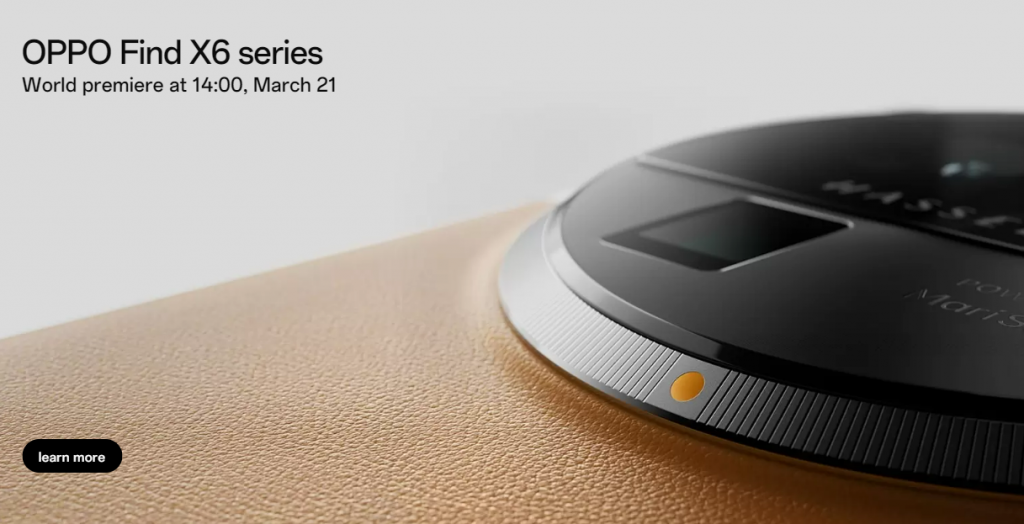
Multiple reports have claimed that the Oppo Find X6 series will debut in Q1 2023. Ahead of the expected launch, the Find X6 and X6 Pro models have appeared in the database of CMIIT certification in China. This indicates that the two phones may debut soon in the home market.
Two new Oppo devices with model codes PGFM10 and PGEM10 have been approved by the CMIIT authority. These models are expected to launch as the Find X6 and the Find X6 Pro in China.
The listings have not revealed any information on the specifications of the Find X6 and X6 Pro. Both devices are expected to appear in the databases of 3C and TENAA in the coming days. There is a possibility that the Find X6 duo may get showcased at the Mobile World Congress (MWC) 2023 tech trade event, which will be held in February in Barcelona, Spain.
Recently, the Realme GT Neo 5 appeared with full specifications in TENAA’s database. It is speculated that the Find X6 may feature the same screen and processor, that will be available on the GT Neo 5. Hence, it is expected to arrive with a 6.7-inch OLED 1.5K display and Snapdragon 8+ Gen 1 chip. The Find X6 Pro, on the other hand, will have a QHD+ OLED display with curved edges and a Snapdragon 8 Gen 2 processor.
The Find X6 Pro is said to feature three 50-megapixel cameras on the back with support for up to 120x zoom. Readers can learn more about the X6 Pro’s camera specifications in this post. Both phones are expected to feature a 32-megapixel Sony IMX709 front camera. The Find X6 is expected to feature a 50-megapixel triple camera unit.
The Find X6 may house a 4,800mAh battery with 80W charging, while the X6 Pro may pack a 5,000mAh battery with 100W charging and 50W wireless charging support. Both phones will have LPDDR5x RAM, UFS 4.0 storage, and Android 13 OS with ColorOS 13.
Audio-Technica has unveiled what it claims are the world’s first streaming headsets. The Audio-Technica ATH-M50xSTS and ATH-M50xSTS-USB are specifically designed for steaming content creators. Both models cater to the needs of live streaming and are based on the ATH-M50x professional monitor headphones. Both models will be available in the US market first.
Audio-Technica ATH-M50xSTS StreamSet™
The Audio-Technica StreamSet headsets have incorporated technology from the 20 series microphones to deliver full-spectrum audio quality output. The ATH-M50xSTS streaming headset has 45mm large-aperture drivers and delivers remarkable clarity within a wide frequency range. The output also incorporates deep bass response and both models use a cardioid condenser capsule. The capsule is located on the flexible arm and allows for better positioning even with head movement.
There are two sets of distinct earpads in the StremSet headsets. The M50x earpads deliver a quality audio output with sound isolation, as well as mesh and leatherette earpads high on comfort and breathability. The in-built microphone on the headsets can be muted quickly by flipping the boom arm into the up position. The ATH-M50xSTS has a 2m permanently attached cable with a 3.5mm headphone input and XLR microphone output.
The ATH-M50xSTS-USB has a 2m permanently attached cable with USB-A and USB-C connections. This makes it easy for the ATH-M50xSTS-USB to connect to PCs and macs. It has an A/D converter with up to 24-bit/ 96kHz sampling rate and sidetone circuitry. Volume is controlled by a dial on the earcup of the headphones.
The Audio-Technica ATH-Mr50xSTS has a price tag of $199 while the ATH-M50xSTS-USB is priced at $220. Audio-Technica has not provided details of the availability and pricing of the streaming headphones in Europe. That detail could be known in the coming days.
Realme GT Neo 5 is confirmed to launch in February. Ahead of the launch, its two battery variants, with model numbers RMX706 and RMX3708, were certified by the TENAA authority of China. However, the TENAA listings had only revealed their images. Now, both listings have been updated with all the major specifications of the phone.
The Realme GT Neo 5’s two variants pack the same specs. However, the RMX3706 model has a 2,425mAh (rated value) dual-cell battery, whereas the RMX3708 has a 2,225mAh (rated value) dual-cell battery. It appears that the former may include a 4,600mAh (typical value) dual-cell battery, while the latter may feature a 5,000mAh (typical value) dual-cell battery.
The RMX3706 variant is likely to be marketed as the Realme GT Neo 5 150W as it is expected to support 150W charging. The RMX3708 edition could be called the Realme GT Neo 5 240W as it offers 240W charging. The rest of the specifications are identical on both models.
The Realme GT Neo 5 will arrive with a 6.74-inch AMOLED screen with a centred punch-hole. It offers a Full HD+ resolution of 2772 x 1240 pixels and is likely to support a refresh rate of 144Hz. For security, it will be equipped with an under-display fingerprint sensor.
Realme GT Neo 5 RMX3708_TENAA
The GT Neo 5 will be powered by a 3.0GHz Snapdragon 8+ Gen 1, which is an underclocked variant of its regular version. The device is expected to arrive with 8 GB / 12 GB / 16 GB of RAM and 128 GB / 256 GB / 512 GB of storage. The 240W variant is also listed in a 1 TB model. It will come with a 16-megapixel front camera and a 50-megapixel + 8-megapixel + 2-megapixel triple camera unit. It is said that it has an OIS-assisted Sony IMX890 primary camera. It will come preloaded with Realme UI 4.0-based Android 13 OS.
The smartphone is expected to arrive with other features, such as a plastic frame, RGB lights, and an IR blaster. It measures 163.85 x 75.75 x 8.9mm and weighs around 199 grams.
Last month, Motorola brought the Moto Edge 30 Fusion Viva Magenta color option to the US market. The brand has now announced this special edition color option for India.
For those unaware, Viva Magenta is Pantone’s Color of the Year 2023. As Motorola has a globally exclusive partnership with Pantone in the smartphone category, it gets to use these Pantone colors for its smartphones.
A tweet from Motorola India states that the Edge 30 Fusion Viva Magenta color option will be available in India from January 12th. It costs Rs 39,999, but customers who use their Indusind bank credit card for EMI transactions will also receive a Rs 3,500 instant discount.
Motorola Edge 30 Fusion specs
The Motorola Edge 30 Fusion features a 6.55-inch centered punch-hole 10-bit curved pOLED display with a resolution of 2400 x 1080 pixels (FHD+), 144Hz refresh rate, and 360Hz touch sampling rate. The panel has a 20:9 aspect ratio, a maximum brightness of 110 nits, and a fingerprint sensor at the bottom. Additionally, HDR10+ and the entire DCI-P3 color gamut are supported by the screen.
The Qualcomm Snapdragon 888 Plus CPU is combined with LPDDR5 RAM and UFS 3.1 storage in the smartphone. Android 12 is booted with Ready For support.
A 50MP primary sensor with OIS capability, a 13MP ultra-wide sensor with autofocus for macro vision, and a 2MP depth sensor are the three cameras on the device’s rear. It sports a 32MP front camera for taking selfies and making video calls.
The device has dual SIM, USB Type-C, WiFi 6, Bluetooth 5.2, GNSS, and 5G connection (USB 3.1). Along with an IP52 rating and Corning Gorilla Glass 5 protection on the front and back, it also boasts dual stereo speakers that enable Dolby Atmos. Last but not least, the phone has a 4,400mAh battery and can charge at a maximum rate of 68W. (wired).
It was only yesterday when a detailed leak revealed the specifications and pricing of the Oppo A78 5G. And today, the Chinese company officially launched the smartphone in Malaysia. It is also expected to make its way to India on January 14. The brand-new mid-ranger from Oppo brings a large LCD display, a capable MediaTek chipset, 50MP dual cameras, and a lot more. Let’s learn more about the newly announced Oppo A78 5G.
Starting off with the design, the smartphone looks similar, if not exactly the same, as the Oppo 58 5G, which debuted in November 2022. It has a left-aligned camera module with a vertical stripe extending around half the length of the back panel. On the front, there’s a flat display with a waterdrop notch. The phone has fairly thin bezels and a comparatively thicker chin.
Now, moving to the specifications. The Oppo A78 5G has a 6.56-inch LCD display, which offers HD+ resolution and a 90Hz refresh rate. Under the hood, the handset is powered by an octa-core MediaTek Dimensity 700 chipset, paired with 8GB RAM and 128GB onboard storage. It also comes with a microSD card slot for further expansion.
The smartphone has a dual rear camera setup, headlined by a 50MP primary sensor. There’s also a 2MP depth shooter. For selfies, it gets an 8MP snapper on the front. Fueling the handset is a 5,000 mAh battery with 33W charging support.
It also includes a side-mounted fingerprint scanner, 5G connectivity, a 3.5mm headphone jack, and USB-C. The smartphone is IP54 dust and water-resistant. On the software front, it runs Android 13 with ColorOS 13 on top.
Finally, the official pricing of the Oppo A78 5G is yet to be known. The company hasn’t revealed the Malaysian sale date for the smartphone either. A recent leak revealed the device will be priced at around Rs. 19,000 ($230) for its base storage variant.
OnePlus has a new flagship and Xiaomi does too. The OnePlus 11 went official a few days ago as the only variant of the 11th series: there won’t be any Pro variant, the company already confirmed. Meanwhile, a few days before, Xiaomi came up with the new Xiaomi 13 Series and this one includes a Pro variant: the Xiaomi 13 Pro. The OnePlus 11 replaces the 11 Pro, but is it at the same level as the most advanced Xiaomi flagship? A lot of people are asking this question and we decided to answer it. We believe there is no better way to give you an answer than publishing this comparison between the main specifications of the OnePlus 11 and the Xiaomi 13 Pro. After reading it, you can let us know if you agree or not by using the comment box at the end.
The most refined design here belongs to the Xiaomi 13 Pro, even though it is not the most original one. The phone is made with a ceramic back and an aluminum frame, very premium materials (but there are also color options with a silicone polymer back, cheaper). It has a curved display with a very high screen to body ratio (close to 90 percent) and it is waterproof with the IP68 certification. Last but not least, its display is protected by Gorilla Glass Victus. The materials of the OnePlus 11 are less impressive: it comes with a glass back, but the design is more original thanks to the presence of a circular camera module. Unfortunately, it does not offer any IP certification or other certified protection against water and dust.
Display
The displays of these two phones are very close to each other in terms of quality and specifications. The Xiaomi 13 has a 6.73-inch panel with OLED technology able to show up to one billion colors with a Quad HD+ resolution of 1440 x 3200 pixels, an adaptive refresh rate from 1 to 120 Hz thanks to LTPO technology, Dolby Vision support, HDR10+ certification, a peak brightness of 1,900 nits, and an in-display fingerprint scanner. The OnePlus 11 has an AMOLED panel with a diagonal of 6.7 inches, a Quad HD+ resolution, a 120 Hz refresh rate, Dolby Vision support, HDR10+ certification, a peak brightness of 1,300 nits, and an in-display fingerprint reader. The Xiaomi 13 Pro looks to have a slightly better panel.
Specs & Software
The hardware department of the OnePlus 11 is actually better than the one found on the Xiaomi 13 Pro. Both phones are fueled by the Snapdragon 8 Gen 2 mobile platform: the new flagship Qualcomm SoC. It is a chipset built with a 4 nm production process and sporting an octa-core architecture composed of a Cortex X3 CPU running at a max frequency of 3.2 GHz, two Cortex A715 CPUs, two Cortex A710 CPUs, three Cortex A510 CPUs, and an Adreno 740 GPU. The OnePlus 11 offers a higher amount of RAM: up to 16 GB, instead of just 12 GB. The internal storage of both phones goes up to 512 GB (UFS 4.0). The handsets run Android 13 out of the box, with highly customized user interfaces on top.
Camera
The best camera phone in this comparison is undoubtedly the Xiaomi 13 Pro. It has a triple rear camera with three 50 MP sensors including a main Sony IMX989 shooter with OIS, a telephoto lens with 3.2x optical zoom, and a 50 MP ultrawide camera, as well as a 32 MP selfie snapper. With the OnePlus 11, you get a triple rear camera including a 50 MP Sony IMX890 main sensor with OIS, a 32 MP portrait lens with 2x optical zoom, an ultrawide 48 MP camera, and a 16 MP selfie shooter.
The OnePlus 11 is equipped with a bigger battery: 5000 mAh instead of 4820 mAh. But the Xiaomi 13 Pro charges quicker thanks to 120W fast charging and, unlike its rival, it supports wireless charging.
Price
You need at least $900/€844 to purchase the Xiaomi 13 Pro, while the OnePlus 11 starts from about $586/€550. The Xiaomi is superior, but the OnePlus flagship has a higher value for money. Which one would you pick?
Apple has launched a new generation of iPhone SE every two years albeit a four year-gap between the first model and the second generation. The Cupertino-based tech giant announced the iPhone SE 2022 i.e the third generation variant last year. The next-generation SE model rumoured to be called SE 4 was slated to release in 2024.
However, as per the latest development, noted Apple Analyst Ming-Chi Kuo revealed that the company has reportedly cancelled its plans to launch the iPhone SE 4. In a Medium post, Kuo stated that Apple has instructed its supply chain partners that productions and shipment plans for the 2024 iPhone SE have not been delayed but instead cancelled. This indicates that Apple is axing the SE lineup which is the most affordable in the iPhone product portfolio. Only time will tell if the company will resurrect the iPhone SE in the future because the gap between the first and second-generation SE phones was four years long.
Apple was reportedly working on its own version of baseband chips. It has been tipped to be right around the corner for years in the rumour mill. As per Kuo, the iPhone SE 4 was supposed to be the test device with the baseband chip for Apple just in case things go wrong. If everything went well, the same chip would have made its way in to iPhone 16 series in 2024. Since the iPhone SE 4 now stands at the possibility of being cancelled, it changes Apple’s plans of experimenting with its custom in-house modem chips. There are concerns about whether it will be on par with Qualcomm’s chipsets.
The American chipmaker seems to be the biggest benefitor from iPhone SE 4’s potential cancellation. Apple is a significant revenue driver source for Qualcomm. And it looks like the Cupertino-based tech giant will be sticking with the semiconductor company for the iPhone 16 series and until at least 2025.
It might still be too early for Galaxy Z Fold 5 leaks, but that’s the world we live in. According to the Vietnamese publication The Pixel, Samsung is going to introduce its 2023 foldable with some significant changes. The device could include an entirely new processor based on the 4nm process and even come with a built-in S-Pen slot, just like the Galaxy S22 Ultra.
The publication, citing sources, claims that the test version of the Samsung Galaxy Z Fold 5 runs a new processor named Qualcomm Snapdragon 985 5G. It is based on a 4nm process node. This is the first time we are hearing about this chipset, and it has not yet been officially announced by the semiconductor manufacturer.
The Pixel’s report contradicts a previous ET News report, which revealed the Z Fold 5 would be powered by the Snapdragon 8 Gen 2. More information is needed before any conclusions can be drawn.
Further, it has been reported that the smartphone will be slightly thicker (6.5mm instead of 6.3mm) and weigh a little more than its predecessor. The device will also come equipped with an S-Pen slot, which is probably the reason behind the increase in weight and thickness.
Previously, it was revealed that the Galaxy Z Fold 5 will have a triple camera unit featuring a 50-megapixel ISOCELL GN3 camera and a 12-megapixel front-facing camera. Other details about the smartphone are yet to be known.
Just like every year, Samsung may unveil the new foldable at the Galaxy Unpacked event in August. We should be learning more information about the device in the coming days. Also, the Korean company just (accidentally) confirmed the launch date of the Galaxy S23 series. Check it out!
boAt has launched a new smartwatch in India. The latest offering falls in the homegrown brand’s Wave series. It is called boAt Wave Edge. The device packs a host of features and is priced aggressively. The boAt Wave Edge competes against the likes of other smartwatches from brands like Noise, Fire Boltt, DIZO, Realme, and more in the market. Read on to know what it offers out of the box.

The boAt Wave Edge sports a square dial with a rotating digital crown on the right side similar to the Apple Watch. It comes with a 1.85-inch display bearing an HD resolution, 550 nits brightness, and a 90 percent screen-to-body ratio. The device is also IP68-certified dust and splash resistant.
On the health-centric front, the boAt Wave Edge is equipped with a heart-rate monitor, SpO2 sensor, and a sleep tracker. It also offers guided breathing sessions. The device supports more than 100 sports modes.
The boAt Wave Edge comes with a built-in speaker and a microphone for hands-free calling via Bluetooth connectivity. There is also the ability to save up to 10 contacts and a dial pad. The device features Siri and Google Assistant. The smartwatch also packs in-built games like Young Bird, 2047, and Thunder Battleship. It comes with convenient features like notifications display and updates. The wearable device is backed by a 210mAh battery unit that is claimed to offer 7 days of usage.
The boAt Wave Edge is priced at Rs 1,999 and can be purchased from the brand’s official website and Amazon. It is offered in Active Black, Beige, Deep Blue, and Sage Green colours.
Yesterday Noiselaunched the ColorFit Caliber Buzz smartwatch. Now the homegrown brand has announced a new device in the country. The latest offering is called NoiseFit Twist. It carries a budget price tag and is available under the sub-Rs 2,000 price bracket. Read on to know what the wearable device offers out of the box.
The NoiseFit Twist sports a round dial with a metallic unibody and two buttons on the right side. It is IP68-certified dust and water-resistant. The device features a 1.38-inch TFT display with 550 nits peak brightness and more than 100 customisable watch faces.
In terms of fitness, the NoiseFit Twist is equipped with a heart-rate sensor, SpO2 monitor, and a menstrual cycle tracker. It is also capable of tracking sleep patterns, stress levels, and offering breathing exercises. The wearable device packs support for 100 sports modes.
The NoiseFit Twist comes with an advanced Bluetooth calling feature with the brand’s Tru Sync technology. It is said to offer quicker pairing, better call connection, and lower power consumption. The smartwatch also packs contacts, call history, and dial pad.
The NoiseFit Twist is powered by a 7-day battery life. It offers other convenient features like a built-in calculator, notification display, quick reply, weather and stock updates, remote camera, music control, and more.
The NoiseFit Twist carries a special launch price tag of Rs 1,999. It will be available for purchase from January 12th via Amazon and the brand’s official website.
Earlier reports have indicated that the Samsung Galaxy S23 series is expected to debut on February 1, 2023. The flagship series is said to feature three models – the Galaxy S23, Galaxy S23 Plus, and Galaxy S23 Ultra. Now, a new official-looking poster has confirmed the February 1 launch date.
The launch date was revealed ahead of official confirmation on the Samsung Columbia website. Other than revealing the launch date, the poster also features the signature triple camera module found on the recent Ultra variants of the Samsung flagships.
Details about the phones have previously leaked. The official high-resolution design renders of the phones were recently leaked, revealing the four color options. The Galaxy S23 will be available in four different colors: Phantom Black, Cotton Flower, Misty Lilac, and Botanic Green are some of the colors available.
Samsung Galaxy S23 series specs
The phones are also said to be powered by a Qualcomm Snapdragon 8 Gen 2 SoC. The Galaxy S23 series will have a 12MP selfie camera across the board. All three phones will come pre-installed with Android 13 and a layer of One UI 5.0 on top.
The Galaxy S23 Ultra will have a 6.8-inch Dynamic AMOLED display. It will have a 120Hz refresh rate and a QHD+ resolution. The only phone in the lineup with a curved display is this one.
It is also claimed that the S23 Ultra’s display, at 2200 nits, is brighter than the iPhone 14 Pro series. A new 200MP main camera will also be added to the phone. The quad camera system will be completed by two 10MP telephoto cameras with 3x and 10x optical zoom and a 12MP ultrawide camera. The battery capacity of the device will be 5000mAh, and it will support 25W fast charging and at least 15W wireless charging. There won’t be a charger in the box, in case you were wondering.
The camera configuration will be shared by the Galaxy S23 Plus and Galaxy S23. On the back, they will sport a triple camera arrangement. A 50MP primary camera, a 12MP ultra-wide camera, and a 10MP telephoto camera with a 3x optical zoom are reportedly included in the phones.
The 6.1-inch screen on the S23 5G will have a Full HD+ resolution. A 120Hz refresh rate will be supported by the AMOLED panel. The top center of the screen will have a hole-punch cutout while remaining flat. Additionally, a 3900mAh battery and 25W wired fast charging as well as 15W wireless charging are believed to be supported by the gadget.
With a larger 6.6-inch panel, the Galaxy S23 Plus 5G will have the same display features. Additionally, a larger battery can fit into the larger form factor. The S23 Plus is rumored to have a 4700mAh battery. It will support both 15W wireless charging and 25W wired fast charging, just like the other two variants.
In recent times, wireless charging for phones has become common due to massive improvements in the wireless charging protocol to speed up the charging time just like wired charging. Wireless charging technology may soon be available for notebook PCs. Leading PC manufacturer Lenovo has unveiled a new wireless docking station dubbed ThinkBook Wireless Dock.
The new ThinkBook Wireless Dock is capable of providing wireless charging for standard-compliant notebooks such as the ThinkBook 13x Gen 2. The wireless docking station adopts Power-by-Contact technology, which can provide a maximum of 65W wireless charging for compatible notebooks. The charging dock also doubles as a wireless charging pad for smartphones as there is a pad on the side that will provide a maximum of 10W wireless charging for mobile phones.
At the same time, the docking station has an intelligent detection function, which can determine whether the notebook is placed properly on it. This is to ensure that the Power-by-Contact is working at the maximum power. It uses Wi-Fi 6 to ensure that the Power-by-Contact connection is at full strength.
In addition, the device also has an unlimited hub function as it is equipped with three USB Type-A ports, a USB Type-C port, and an HDMI display output port. It supports dual displays at up to 4K/60Hz. There is also the Lenovo Slim-Tip jack to provide power for the wireless dock.
At present, Lenovo has not yet announced the specific price and release date of the ThinkBook Wireless Dock. We expect the product to be available when the ThinkBook 13x Gen 2 is released.
The Xiaomi Redmi K60 and Redmi K60 Pro smartphones come with several similarities inside. A teardown video of the two Xiaomi models has highlighted the similarities and differences in their internals.
Xiaomi sold over 300,000 units of the Redmi K60 series within five minutes of its release. The teardown video by Wekihome presents a sneak peek of the K60/ K60 Pro’s internal components. The detailed disassembly video shows that the two phones have striking similarities. This implies a simplified assembly process for the two models. The Redmi K60 Pro has a larger camera sensor than the K60. The vanilla model thus has a plastic bracket around its camera to adjust its dimensions. Both models also have a similar motherboard layout.
The video reveals the two different chipsets of the K60 and K60 Pro. While the base model is equipped with the Snapdragon 8+ Gen 1 chipset while the K60 Pro has the Snapdragon 8 Gen 2. The pro model uses UFS 4.0 from Samsung and Micron’s LPDDR5X RAM. On the other hand, the K60 uses UFS 3.1 and LPDDR5 from Samsung. In terms of heat management, both models use a massive vapor chamber for cooling the chipsets. The sizes of the vapor chambers are slightly different, however.
The Redmi K60 Pro supports 120W wired fast charging and its motherboard has an extra chip for that. Both models sport the Surge P1 charging chip at the bottom. The K60 has a larger battery size than its pro sibling. The K60 also has a larger battery capacity but both models could offer similar battery performance.
The Xiaomi Redmi K60 and K60 Pro were released in December 2022. They both got a tumultuous reception in the market and the flagship K60 Pro model offers up to 12GB of RAM and 512GB of storage.
JBL has unveiled its first Bluetooth turntable featuring aptX HD wireless steaming. The JBL Spinner BT was unveiled during the ongoing CES 2023 and joins the TT350 Classic earlier released. The turntable has an all-black design with orange accents and analog output.
The JBL Spinner BT turntable is capable of streaming vinyl records to compatible wireless speakers, soundbars, and headphones with 24-bit hi-res quality. It has a built-in switchable moving magnet phono stage for use with active speakers. It can also feed into a traditional audio system with an external phono preamp.
The new JBL Bluetooth turntable has a belt drive and a vibrant orange-accented design. It also has an aluminum platter and an MDF plinth with damped feet for effective vibration modulation. Its forearm has a high-quality audio technical moving magnet cartridge. The turntable speed options are locked with a speed sensor to deliver a great pitch.
The JBL Spinner BT will enter the market officially by Q3 2023. It is priced at around $399 and will be available in multiple markets globally. In comparison, the JBL Spinner BT is significantly less expensive than the current aptX HD-equipped turntables in the market. The Cambridge Audio Alva ST is about $1,000 although it sports a similar belt design as the Spinner BT. However, there are a few other affordable competitors to the Spinner BT. Sony PS-LX310 BT and the AT-LPW50BTRW although both decks are not aptX HD-compatible.
Modern turntables are fast catching the attention of the market. These devices can take you on a voyage through the good old days of vinyl records. They are also increasingly capable of producing high-resolution audio via Bluetooth aptX HD. They bring new life to antiquated vinyl records.
OnePlus 11 is official: it is going on sale in the Chinese market and it will be launched in the global market in the first part of February. This year, the vanilla version came alone and there won’t be any Pro variant. Last year, it was the opposite: we saw the OnePlus 10 Pro, but there was no vanilla version. However, this year, the vanilla version replaces the Pro and comes with very advanced specifications. That is the reason why it is a perfect rival for its predecessor, even though it is not a Pro. So, in order to let you find the differences, we decided to publish a comparison between the main specifications of the OnePlus 11 and the OnePlus 10 Pro while waiting for the global launch of the former.
Triple 50 + 32 + 48 MP, f/1.8 + f/2.0 + f/2.2
16 MP f/2.4 front camera
Triple 48 + 8 + 50 MP, f/1.8 + f/2.4 + f/2.2
32 MP f/2.2 front camera
BATTERY
5000 mAh, fast charging 100W
5000 mAh, fast charging 80W, fast wireless charging 50W
ADDITIONAL FEATURES
5G, dual SIM
5G, dual SIM, reverse wireless charging
Design
The OnePlus 11 comes with a renewed design compared to its predecessor. There are no significant changes, but you can immediately notice that the camera module is totally different. While on the older model, the camera module has a square shape, on the new one it is circular, even though both are placed on the left part of the phone. The color options did not change: there are a green one and a black one, and even the dimensions, the weight, and the thickness are very similar. Further, they are both equipped with curved displays with a similar screen to body ratio, as well as a punch hole placed on the top left corner of the panel.
Display
The differences between the panels of the OnePlus 11 and the OnePlus 10 Pro are just marginal, so you will get more or less the same image quality and you would better focus on the other specifications. In both cases, we are talking about an AMOLED display with a diagonal of 6.7 inches, a Quad HD+ resolution of 1440 x 3216 pixels, an adaptive refresh rate from 1 to 120 Hz, Dolby Vision support, HDR10+ certification, a peak brightness of 1,300 nits, and an in-display fingerprint scanner. The only difference we can notice is the presence of the LTPO 3.0 technology on the most recent model, instead of LTPO 2.0: that means a lower energy consumption.
Specs & Software
The OnePlus 11 is fueled by an upgraded mobile platform. It packs the Snapdragon 8 Gen 2 chipset running at a max frequency of 3.19 GHz and is composed of a Cortex X3 CPU, two Cortex A715 CPUs, two Cortex A710 CPUs, three Cortex A510 CPUs, and an Adreno 740 GPU. It is the successor of the Snapdragon 8 Gen 1 found on the OnePlus 10 Pro, built at 4 nm and running at a max frequency of 3 GHz. Besides sporting a superior chipset, the 11 also comes with a higher amount of RAM: up to 16 GB, as well as faster storage thanks to the UFS 4.0 technology. Last but not least, the OnePlus 11 ships with a more recent operating system: Android 13 instead of Android 12, which means it will get longer support.
Camera
The OnePlus 11 has an improved camera setup compared to its predecessor. It is equipped with a triple Hasselblad rear camera including a 50 MP Sony IMX890 main sensor with OIS, a 32 MP telephoto lens with 2x optical zoom, and a 48 MP ultrawide shooter. The OnePlus 10 Pro has an inferior 48 MP main camera, but the ultrawide camera is better as it is a 50 MP Sony IMX766 shooter. Even the selfie snapper is better with its 16 MP resolution, while the 11th has a 16 MP selfie snapper.
These two phones come with the same battery capacity: 5000 mAh. The OnePlus 11 charges quicker thanks to 100W fast charging, but the 10 Pro is the only one in the duo with wireless charging (50W).
Price
The OnePlus 11 starts from $585/€550 in China, while the OnePlus 10 Pro begins at $509/€479. The OP 11 wins the specs comparison thanks to a better processor and main camera, but the 10 Pro remains very good thanks to its street prices, wireless charging, and a better selfie camera.
Roborock has unveiled the Roborock Dyad Pro upright vacuum cleaner. It was showcased during CES 2023 and comes with app connectivity. It also has a longer battery life and a revised dock design. The Dyad Pro brings significant performance improvements over its predecessor, the Dyad. Both the Dyad Pro and Dyad are upright, non-robotic vacuum cleaners.
Roborock has also lined up a number of robot vacuum cleaners for release later this year. The Dyad Pro comes with several improvements from the earlier Dyad model. It has a superior dock. Interestingly, the Dyad Pro’s predecessor was announced during CES 2022. The Dyad Pro features physical buttons for switching cleaning modes during its operation.
The Dyad Pro has a 43-minute battery life and 30% higher battery efficiency than the Dyad. Its redesigned body allows the Dyad Pro to efficiently clean corners and difficult spots than the Dyad. The Dyad Pro’s dock cleans and dries the rollers unlike the Dyad which only cleans the rollers.
There are still a few details lacking about the Dyad Pro at this time. The Roborock Dyad Pro will enter the US market later this month at $449.99. Its release will precede the launch of the Roborock S8, S8 Plus, and S8 Pro Ultra robot vacuum cleaners. The Dyad Pro has the same price as its predecessor and will expectedly be less expensive than the upcoming robot models. It is expected that the Roborock Dyad will subsequently be available in multiple markets. Furthermore, its affordable price and extensive functionality could spur demand for the gadget.
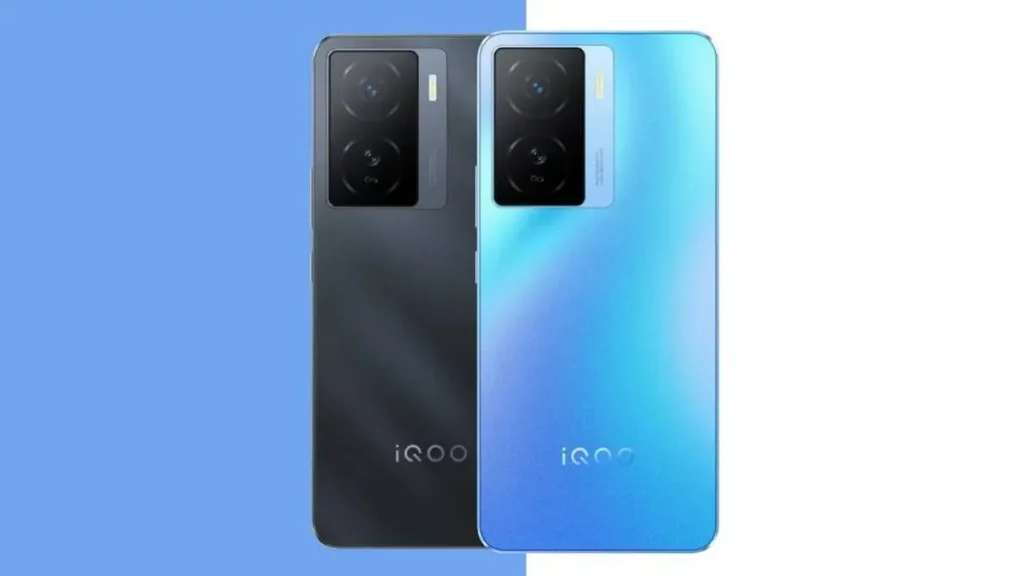
iQOO recently finished launching its premium iQOO 11 series and the mid-range iQOO Neo 7 SE in China. Now, it seems the brand has a new budget smartphone in the making. A new iQOO smartphone with model number V2230EA has been spotted on multiple Chinese certification sites, which reveal its specifications and design. Here are the details.
An unknown iQOO smartphone has appeared on China’s TENAA and 3C certification sites with model number V2230EA. The listings reveal the device will be equipped with an LCD and support 18W fast charging. This suggests the smartphone will debut as a budget-friendly offering.
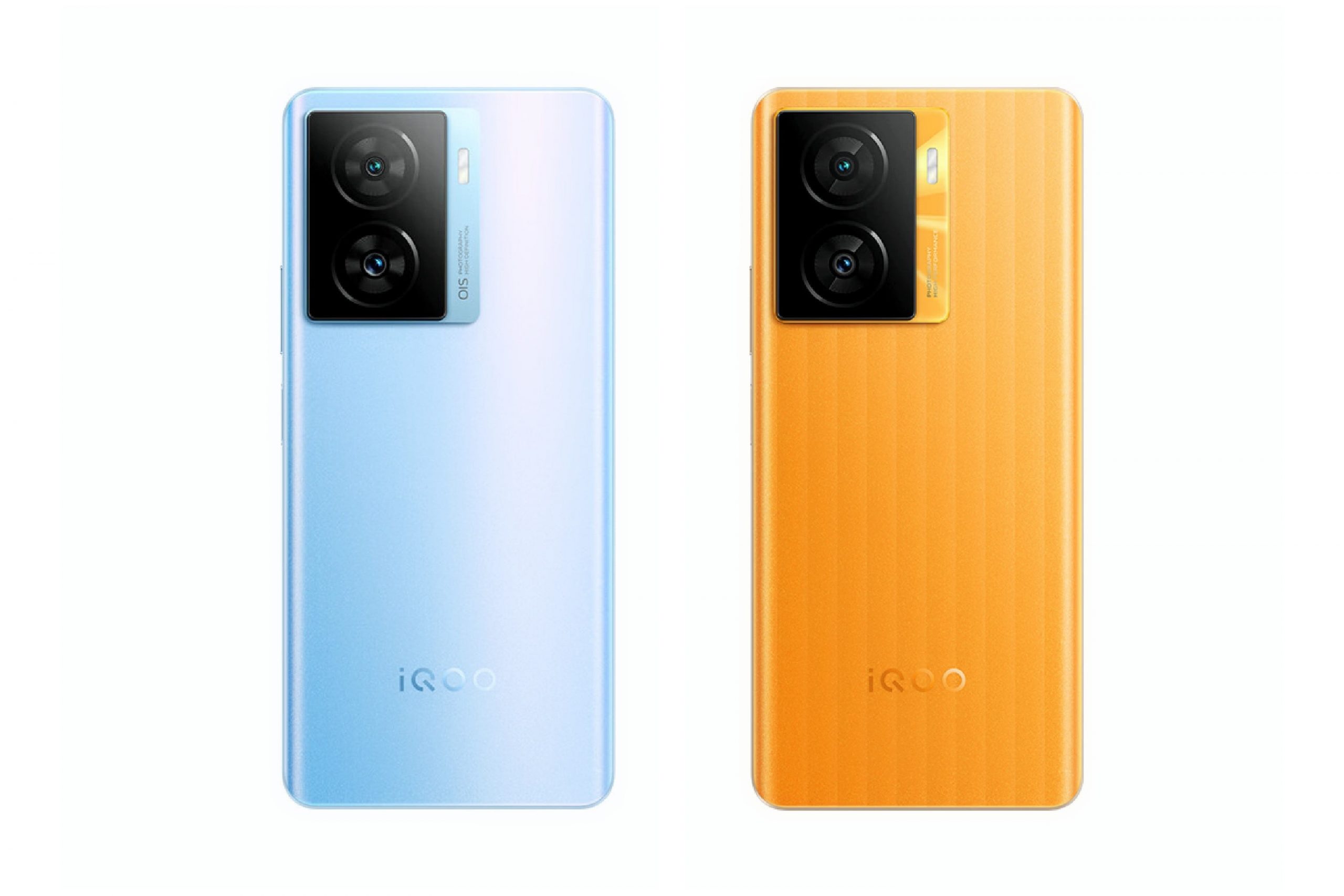
Further, TENAA has also shared live images of the smartphone, giving us a good look at its design. As can be seen in the images, the mysterious iQOO smartphone has a flat back with a large camera island that houses two lenses. The handset has a flat display with a waterdrop notch and a side-mounted fingerprint scanner.
The marketing name of the smartphone is yet to be known, however, rumors in China suggest it will be called the iQOO U6. In addition, the device is said to be priced in the range of 1000-1500 Yuan ($146- $220).
It is expected to debut as the successor to the affordable iQOO U5, which was released back in December 2021. To recall, the handset packs an LCD display with a 120Hz refresh rate. It brings a large 5000mAh battery and is powered by the Qualcomm Snapdragon 695 5G chip. There’s a 50MP main camera and 33W fast charging support.
We should be learning more details about the smartphone in the coming. The device’s marketing name is still anyone’s guess and it is probably a good idea to wait for more information before making any conclusions.
2022 was a year of change for Oppo, as the brand stepped up its software game and updated the majority of its devices at an impressive pace. The Chinese OEM is entering the new year with the same enthusiasm and plans to extend the latest ColorOS 13 update to more devices. In that light, Oppo recently shared the ColorOS 13 Global Update Timeline for Q1 2023, revealing the smartphones that will get the new update. Here are the details.
The brand will be releasing the latest Android 13-based update to a sizable number of smartphones in the first quarter of 2023. This includes the Reno 8, Reno 5, Reno 6, and a bunch of other smartphones. Oppo says the timeline is approximate and is subject to change depending on the device, country, and carriers.
Further, the company says the beta version of the software will be released to the eligible smartphone on a batch-by-batch basis and will be limited to certain markets. Now, let’s have a look at the timeline.
ColorOS 13 Global Update Timeline Q1 2023
Beta Update
From February, 2023
Oppo Reno 5 F
Oppo F19 Pro
From March, 2023
Oppo Reno 6
Oppo Reno 5
Oppo Reno 5 Marvel Edition
Oppo A55
Oppo A53s 5G
Stable Update
From January 13, 2023
Oppo Find X2 Pro (India, Indonesia)
Oppo Find X2 Pro Automobili Lamborghini (India, Indonesia)
Oppo Find X2 (India, Indonesia)
From January 14, 2023
Oppo Reno 8 (Indonesia)
Oppo F21s Pro (India)
As can be seen in the timeline, Oppo will be releasing stable and beta builds of the ColorOS 13 to several smartphones in January. The software will be rolling out in India and Indonesia. If you own the above-mentioned smartphones, keep an eye out for an OTA notification. Check out our ColorOS 13 review for all the information about the latest software.
Lenovo unveiled a raft of PCs during CES 2023. The Lenovo PC lineup includes the Legion Tower 5/5i and Legion Tower 7i. The Legion Tower 5/5i desktop computers come with AMD Zen 4 and Inter Raptor Lake processors.
The Legion Tower 5 and Tower 5i have the same case and similar internal components. However, the Tower 5i uses the Intel Raptor CPU while the Tower 5 has an AMD Ryzen 7000 processor. The casing of the Tower 5/5i/7i has an illuminated legion badge, a mesh front, ARGB fans, and a glass side panel.
Lenovo Legion Tower 7i specs sheet
The PCs can be configured with the RTX 4070 Ti, 32GB of DDR5 5600MHz memory, 2TB SATA HDD, and 1TB PCIe Gen 4 SSD. The Intel-based Tower 5i can get between Core i5 and Core i9 on an Intel B660 motherboard. There are lots of ports in both the Legion Tower 5/5i. The ports include USB 3.2 Gen 1 Type -A (4), USB 3.2 Gen 3 Type-C, Ethernet. Bluetooth 5.2 and Wi-Fi 6 are supported on the PCs.
The Lenovo Legion Tower 7i offers up to a Core i9-13900K CPU and RTX 4090. It features updated internals from its predecessor and a catchy casing. The Legion Tower 7i can be configured with either air or water cooling. Lenovo says that Tower 7i is designed for extreme performance. Connectivity options for the Tower 7i are via Bluetooth 5.2 and Wi-Fi 6.
Lenovo Legion Tower 5i Specs sheet
The Lenovo Tower 5/5i will enter the market in March 2023. The starting prices of the models are $1,299 and $1,499 for the AMD and Intel models respectively. The Lenovo Legion Tower 7i is priced at $2,999 and will be available later this month.
Lenovo Legion Tower 5 Specs sheet
The powerful CPU+GPU combination in the Tower 7i delivers up to 64GB of 4800MHz/ 5200MHz DDR5 memory. The Tower 7i has up to 4TB of storage via its mechanical hard drive and up to 6TB of PCI Gen 4 storage. The Type-C USB 3.2 ports deliver up to 20Gbps while the Gen 1 Type-A ports offer up to 10Gbps. The Lenovo Legion Tower 7i also has six audio ports with SPDIF and an Ethernet connection.
We use cookies on our website to give you the most relevant experience by remembering your preferences and repeat visits. By clicking “Accept”, you consent to the use of ALL the cookies.
This website uses cookies to improve your experience while you navigate through the website. Out of these, the cookies that are categorized as necessary are stored on your browser as they are essential for the working of basic functionalities of the website. We also use third-party cookies that help us analyze and understand how you use this website. These cookies will be stored in your browser only with your consent. You also have the option to opt-out of these cookies. But opting out of some of these cookies may affect your browsing experience.
Necessary cookies are absolutely essential for the website to function properly. This category only includes cookies that ensures basic functionalities and security features of the website. These cookies do not store any personal information.
Any cookies that may not be particularly necessary for the website to function and is used specifically to collect user personal data via analytics, ads, other embedded contents are termed as non-necessary cookies. It is mandatory to procure user consent prior to running these cookies on your website.