Advertisement

ColorOS 13 Global Update Timeline for Q1 2023 Is Here

2022 was a year of change for Oppo, as the brand stepped up its software game and updated the majority of its devices at an impressive pace. The Chinese OEM is entering the new year with the same enthusiasm and plans to extend the latest ColorOS 13 update to more devices. In that light, Oppo recently shared the ColorOS 13 Global Update Timeline for Q1 2023, revealing the smartphones that will get the new update. Here are the details.

The brand will be releasing the latest Android 13-based update to a sizable number of smartphones in the first quarter of 2023. This includes the Reno 8, Reno 5, Reno 6, and a bunch of other smartphones. Oppo says the timeline is approximate and is subject to change depending on the device, country, and carriers.

ColorOS 13 Global Update Timeline

Further, the company says the beta version of the software will be released to the eligible smartphone on a batch-by-batch basis and will be limited to certain markets. Now, let’s have a look at the timeline.

ColorOS 13 Global Update Timeline Q1 2023

Beta Update

From February, 2023

  • Oppo Reno 5 F
  • Oppo F19 Pro

From March, 2023

  • Oppo Reno 6
  • Oppo Reno 5
  • Oppo Reno 5 Marvel Edition
  • Oppo A55
  • Oppo A53s 5G

Stable Update

From January 13, 2023

  • Oppo Find X2 Pro (India, Indonesia)
  • Oppo Find X2 Pro Automobili Lamborghini (India, Indonesia)
  • Oppo Find X2 (India, Indonesia)

From January 14, 2023

  • Oppo Reno 8 (Indonesia)
  • Oppo F21s Pro (India)

As can be seen in the timeline, Oppo will be releasing stable and beta builds of the ColorOS 13 to several smartphones in January. The software will be rolling out in India and Indonesia. If you own the above-mentioned smartphones, keep an eye out for an OTA notification. Check out our ColorOS 13 review for all the information about the latest software.

RELATED:

(Source)

Lenovo Legion Tower 5, Tower 5i, and Tower 7i Desktop PCs Unveiled at CES 2023

Lenovo unveiled a raft of PCs during CES 2023. The Lenovo PC lineup includes the Legion Tower 5/5i and Legion Tower 7i. The Legion Tower 5/5i desktop computers come with AMD Zen 4 and Inter Raptor Lake processors.

The Legion Tower 5 and Tower 5i have the same case and similar internal components. However, the Tower 5i uses the Intel Raptor CPU while the Tower 5 has an AMD Ryzen 7000 processor. The casing of the Tower 5/5i/7i has an illuminated legion badge, a mesh front, ARGB fans, and a glass side panel.

Lenovo Legion Tower 7i
Lenovo Legion Tower 7i specs sheet

The PCs can be configured with the RTX 4070 Ti, 32GB of DDR5 5600MHz memory, 2TB SATA HDD, and 1TB PCIe Gen 4 SSD. The Intel-based Tower 5i can get between Core i5 and Core i9 on an Intel B660 motherboard. There are lots of ports in both the Legion Tower 5/5i. The ports include USB 3.2 Gen 1 Type -A (4), USB 3.2 Gen 3 Type-C, Ethernet. Bluetooth 5.2 and Wi-Fi 6 are supported on the PCs.

Lenovo Legion Tower 5

The Lenovo Legion Tower 7i offers up to a Core i9-13900K CPU and RTX 4090. It features updated internals from its predecessor and a catchy casing. The Legion Tower 7i can be configured with either air or water cooling. Lenovo says that Tower 7i is designed for extreme performance. Connectivity options for the Tower 7i are via Bluetooth 5.2 and Wi-Fi 6.

Lenovo Legion Tower 5i
Lenovo Legion Tower 5i Specs sheet

The Lenovo Tower 5/5i will enter the market in March 2023. The starting prices of the models are $1,299 and $1,499 for the AMD and Intel models respectively. The Lenovo Legion Tower 7i is priced at $2,999 and will be available later this month.

Lenovo Legion Tower 5
Lenovo Legion Tower 5 Specs sheet

The powerful CPU+GPU combination in the Tower 7i delivers up to 64GB of 4800MHz/ 5200MHz DDR5 memory.
The Tower 7i has up to 4TB of storage via its mechanical hard drive and up to 6TB of PCI Gen 4 storage. The Type-C USB 3.2 ports deliver up to 20Gbps while the Gen 1 Type-A ports offer up to 10Gbps. The Lenovo Legion Tower 7i also has six audio ports with SPDIF and an Ethernet connection.

RELATED:

Oppo A78 5G India Launch Date Revealed, Specs & Price Leaked as Well

Oppo is reportedly gearing up to launch a new mid-range device called the Oppo A78 5G. The handset has been making the rounds on various certification sites recently, and it is expected to debut as the successor of the Oppo A77. Unlike the A77, the A78 could also arrive in various Asian markets, including India. The Chinese company is yet to confirm any details. But a new report reveals the India launch date, specifications, as well as price of the upcoming smartphone.

An Appauls report claims the Oppo A78 5G will be launching in India on January 14. The budget-friendly smartphone will target the offline market and will be priced around Rs. 18,500 and Rs. 19,000 for its base storage variant.

OPPO-A78-5G

The publication has also shared a live image of the “About device” section of the smartphone, which reveals its key specifications. The Oppo A78 5G, bearing model number CPH2495, could flaunt a 6.6-inch LCD display. It may be powered by the MediaTek Dimensity 700 processor.

For reference, Dimensity 700 is a budget-friendly processor that is manufactured in the modern 7nm process. It has two fast ARM Cortex-A76 cores clocked at up to 2.2 GHz and six power-efficient Cortex-A55 cores at up to 2 GHz. The SoC is reported to be accompanied by 8GB RAM and 128GB onboard storage. The smartphone will also support 4GB RAM Expansion technology.

As per the report, the Oppo smartphone will have a 50MP Primary unit and a secondary 2MP unit for Depth or Macro at the back. While at the front, it will feature an 8MP snapper. It could pack a 5,000mAh battery with 33W SuperVOOC fast charging. It will run Android 13 OS with ColorOS 13 on top.

RELATED:

(Source)

Aqara Video Doorbell G4, Smart Lock U100, Presence Sensor FP2 & LED Strip T1 Announced

Aqara has previewed three new products it hopes to launch in the coming months. They are the Video Doorbell G4, Smart Lock U100, Presence Sensor FP2, and the Aqara LED Strip T1. The new devices come with some impressive features. Aqara is a smart home products manufacturer and expects a decent reception for its 2023 portfolio.

Aqara

The Aqara Video Doorbell G4 complements the Aqara indoor cameras and both combine to help users monitor their homes. The Video Doorbell G4 can be installed easily with battery or wired options. It supports HomeKit Secure Video and can stream to Amazon or Google smart displays.

The smart doorbell camera will work with Matter after the camera specification for Matter is ready. The G4 supports local, AI facial recognition and can trigger different automation. The device has 7-day free cloud storage while local storage is via a microSD card.

The Smart Lock U100 offers a secure and convenient smart lock for the home. It is Aqara’s first deadbolt lock and can be integrated into the smart home ecosystem. The U100 lock is compatible with HomeKit and supports Apple Wallet home key. You can also use fingerprints, passwords, the Aqara Home app, NFC, and mechanical keys to open the lock. The U100 smart lock supports Matter using the Aqara hub.

The Presence Sensor FP2 is based on mmWave radar technology and detects humans even when the person is sitting still. Using zone positioning, users can define different zones within the room to trigger different animations. It is also capable of multi-person detection, and fall detection. It also comes with a built-in light sensor.

The LED Strip T1 provides lighting for a raft of scenarios. The multipurpose RGB CCI light strip produces up to 16 million vibrant colors and white light. It supports HomeKit, Alexa, and Google Home compatibility, and Matter support is expected. The T1 is Zigbee-based and offers higher power efficiency. It also serves as a repeater enhancement for the Zigbee network. Aqara has not provided definite release details for the products although they could enter the market in a few months.

RELATED:

Poco X5 Pro Could Launch in India by the End of January, Specifications Leaked

Poco X4 Pro debuted back in March 2022, and we’ll have to admit it wasn’t as impressive as its predecessor, Poco X3 Pro. But we’ll also have to admit that the smartphone came with a good-looking design. It’s 2023 now, and the release of the next-generation Poco X5 Pro is imminent. While we wait for an official announcement, a new report has revealed the launch timeline as well as key specifications of the smartphone. Here are the details.

A 91Mobiles report, citing tipster Yogesh Brar, claims the Poco X5 Pro will make its grand debut in the Indian market in the last week of January. The smartphone could share the stage with the vanilla Poco X5.

Poco-X4-Pro-5G

The report says the X5 Pro will arrive as a rebranded Redmi Note 12 Pro Speed Edition, which debuted only recently in China. Tipster Kacper Skrzypek already revealed this in his recent tweet. This is not the first and clearly not the last time Poco will be doing this, so it’s not surprising.

Based on this, we can expect the Poco X5 Pro to pack a 6.67-inch FHD+ OLED display with 1080×2400 pixels resolution and up to 120Hz adaptive refresh rate. The smartphone will likely draw power from the Qualcomm Snapdragon 778G SoC, paired with up to 12GB RAM and 256GB storage. Fueled by a 5,000mAh battery, the device could support 67W fast charging.

The Poco handset could feature a 16MP front-facing snapper. While for photography, it may have a triple-rear camera setup headlined by a 108MP primary sensor. The main sensor is expected to be accompanied by an 8MP ultra-wide lens and a 2MP macro shooter.

While the specs of the device may remain the same as the Redmi Note 12 SE, it could come with a different design. We are saying this because last year’s Poco X4 Pro was also a rebranded phone, but it came with a novel design.

RELATED:

(Source)

Honor Magic 5 Lite 5G Appears On Google Play Console Listing

Honor Magic 5 Lite 5G has appeared on Google Play Console. The listing carries a model number HNRMO-Q and it was first spotted by MyFixGuide. The Honor Magic 5 Lite 5G is expected to arrive as the successor to the Magic 4 Lite that debuted in April last year. The Play Console listing reveals some key specifications of the device. Read on to know more below. 

The rendered image of the Honor Magic 5 Lite 5G on the Play Console listing reveals that it will come with a centre-aligned punch-hole cutout. The device has curved edges and thin bezels around the screen. The predecessor model featured a flat screen. There is a power and volume rocker button on the right side. The listing reveals that the smartphone will bear a display resolution of 1,080 x 2,400 pixels and 480 PPI pixel density. 

The Honor Magic 5 Lite 5G is listed with an SM6375 system-on-chip. It corresponds to the Snapdragon 695 which is found on the Magic 4 Lite but its successor will have a different version of the chip. It features six Cortex A55 cores at 1.8GHz and two Cortex A78 cores clocked at 2.2GHz. The processor will be paired with Adreno 619 GPU onboard. The Play Console listing reveals that the Magic 5 Lite will pack 8GB RAM and run on Android 12 OS out of the box. 

The rest of the details about the Honor Magic 5 Lite 5G remain minimal at the moment. We will learn more about the smartphone in the coming days. 

Related:

Noise ColorFit Caliber Buzz With Bluetooth Calling, 7 Day Battery Life Launched In India

Noise has launched a new smartwatch in India. It is dubbed the ColorFit Caliber Buzz. The latest offering carries an affordable price tag and falls under the Rs 2,000 price segment. Read on to know what the smartwatch offers out of the box. 

The Noise ColorFit Caliber Buzz features a 1.69-inch display in a square dial. It offers 550 nits peak brightness, a resolution of 240 x 280 pixels, and more than 100 customisable watch faces. The device has a button on the right side and it is IP68-certified water-resistant. 

On the fitness front, the Noise ColorFit Caliber Buzz is equipped with a heart-rate sensor, SpO2 monitor, and a menstrual cycle tracker. It is also capable of tracking sleep patterns, and stress levels, and offering breathing exercises. The wearable device comes with support for 100 sports modes.

The Noise ColorFit Caliber Buzz is equipped with a built-in mic and speaker for Bluetooth calling without the need of a smartphone. It offers a dial pad and recent logs. The smartwatch is backed by a 300mAh battery unit that is capable of lasting 7 days. It offers other convenient features like a notification display, DND mode, weather and stock updates, remote camera, music control, and more.

The Noise ColorFit Caliber Buzz is priced at Rs 1,499 and offered in Jet Black, Rose Pink, Midnight Blue, and Olive Green colorways. It can be purchased from the brand’s official website and Flipkart. 

Related:

Amazfit Pop 2 Review – Budget Watch with AMOLED Screen, Bluetooth Calling

Amazfit is quite a reliable name when it comes to smartwatches and fitness trackers. In November, the company unveiled the Amazfit Pop 2 as a low-priced smartwatch with a Bluetooth calling feature in India. It has been selling for Rs 3,999 (~$48) on Flipkart. However, at the time of writing this review, it was listed on Flipkart for Rs 3,699 (~$45). It comes in two colors, such as black and pink. Amazfit sent us the black variant for review. Continue reading ahead to know whether it’s worth purchasing.

Amazfit Pop 2: What’s in the box?

Amazfit Pop 2
Amazfit Pop 2

The Amazfit Pop 2 watch comes in a small square-shaped retail package. It packs the following items:

  • Amazfit Pop 2 smartwatch
  • Charging cable
  • User manual

Design and Display

The Amazfit Pop 2 looks premium, as its display glass has curved edges on all four sides. The silicone strap, which can be easily swapped, feels soft, is skin-friendly and comes equipped with a buckle. The aluminium frame has a glossy appeal, while the rear shell of the device has a polycarbonate shell. The top side of the watch has a microphone, its right edge has a physical button made from stainless-steel, its bottom edge is barren, and towards the underside on the left is the speaker.

The chin of the device is slightly thick as compared to other bezels. It features a 1.78-inch AMOLED display, which is bright enough to be used outside. It supports a 368 x 448 pixels resolution and 326 ppi pixel density. Because of the large display, the device may appear a bit large for people with thin wrists. The device lacks auto-brightness, which could be an important feature for some users.

Amazfit Pop 2
Amazfit Pop 2 on the wrist

So, how does it feel using the Amazfit Pop 2? It looks premium thanks to the curved-edge display and sturdy build quality. Since it weighs around 59 grams, it feels slightly heavy. I have used the Pop 2 for longer durations and even while sleeping to monitor my sleep. I did not feel any discomfort while using it for prolonged hours.

Software

The companion app for the Amazfit Pop 2 is not the usual Zepp app, but Zepp Active by LinWear Smartwatch. To those who don’t know, LinWear is an ODM that makes watches for other brands, including Dizo. The Pop 2 looks quite similar to the LinWear LA21 watch. However, it does not seem to be a rebranded version.

The Zepp Active requires users to create an account to login and then pair the Pop 2 with the phone via a QR code. The app has three tabs, such as “Home,” “Exercise,” and “Me.” The Home interface of the app shows the sync data on heart rate, sleep, and SpO2. I used the watch for nearly a month, and during this time I found that the Zepp Active app did not show any SpO2 reading even when the watch had no issue monitoring it. The Exercise tab relies on the phone’s GPS for location-based tracking, and the Me tab can be used to customize the watch. Speaking of customization, it is preloaded with four watch faces. The Zepp Active app provides users with numerous watch face options. In addition, users can also use any desired photo from the phone as a watch face. The Pop 2 is compatible with Android and iOS devices.

Zepp Active app
Zepp Active app

The physical button available on the right edge of the Pop 2 can be used to access all its features, such as health sensors, workout mode, miscellaneous features, and settings. Swiping down on the main screen gives access to quick settings, and swiping up allows users to check notifications, like messages, but there is no option to respond to them. By keeping on swiping right / left, users can access main features, such as a step counter, heart rate tracker, sleep monitor, SpO2 tracker, weather app, music control, and voice ball (voice assistant). The UI does not feel very smooth. I hope the company releases a fix for it through a software update.

The voice ball only works when paired with a smartphone. Once paired, the voice ball can be used to access Google Assistant on Android or Siri on iOS. It works fine in less noisy environments.

In Settings, users can change menu style, change watch face, adjust screen brightness, set AOD time (up to 20 minutes), set digital or analogue AOD clock, access a QR code for pairing it with a device, alter vibration intensity, change language (English or Hindi), access system info, shutdown, reset, and restart.

The Zepp Active app can be used to add more sports modes. To the Amazfit Pop 2. According to the company, it supports more than 100 work modes. While it is an IP68-rated device, there is no swimming mode on the device. It can also be used to sync new watch faces to Pop 2 and enable / disable notifications for different apps. The raise-to-wake feature, which allows users to see the data and time, without touching the watch or using the AOD feature, works fine. It can be activated through Quick Settings on the watch.

Health and Fitness

The step counter, heart rate monitor, SpO2, and sleep tracking features of the Amazfit Pop 2 work fine. The readings from these sensors are almost accurate. There is no option to sync health data to Google Fit or Strava. There is no GPS on Pop 2. Hence, it relies on the paired phone’s GPS for location-based tracking while walking, outdoor running, and outdoor cycling.

Zepp Active app
Zepp Active app

It can track deep sleep, light sleep and awake time, but it does not record REM (rapid eye movement) data. Other health and fitness features include tracking 100+ sports activities, female health, and breathing exercises for reducing stress.

Bluetooth Calling and Battery Life

The Bluetooth calling feature allows users to make and receive calls once paired with a smartwatch. However, there is no way to control call volume through the watch. When I tested the feature, the recipients didn’t notice a difference whether I was using the watch or the phone to talk. The sound output through Pop 2’s built-in speaker is good, but it becomes inaudible in noisy surroundings, which is understandable. 

On a side note, I am generally not a fan of the Bluetooth calling feature. There is no option on the watch to disable the Bluetooth calling feature. However, on my Samsung phone, I was able to disable the function through the Bluetooth settings for Pop 2. There is a Media Audio feature on Pop 2, which when activated can be used to transmit the phone’s audio through the watch’s speaker.

The Amazfit Pop 2 has a 270mAh battery, which can be charged by connecting a magnetic charging connector on its back. It took around 1.5 hours to achieve a full charge. With AOD activated, full brightness, and all-day heart tracking enabled, the Pop 2 lasts for around 4-5 days. Otherwise, the smartwatch can last for up to 10 days, as the company claims. Whether the Pop 2 is kept for charging or is generally used, it does not show the exact battery percentage. Instead, the battery percentage just increases or decreases by 10 percent.

Verdict

The Amazfit Pop 2 offers a similar experience as other smartwatches in the same price range. There is nothing significantly different about it. However, what swings in its favour are a large AMOLED screen, the Bluetooth calling feature, build quality, water resistance, and long battery life Also, it offers nearly accurate readings. Having used a few other, costlier Amazfit smartwatches, I was expecting a similar experience on the Pop 2. Nevertheless, the UI experience is not bad. All in all, it is worth recommending and is certainly something to consider in the Rs 3000 (~$36) to Rs 4,000 (~$47) price bracket.

WHERE TO BUY
Buy Amazfit Pop 2 @ Amazfit | Flipkart (India)

Disclaimer: The opinions expressed in the Amazfit Pop 2 review are solely mine based on my experience, and there has been no editorial input from Amazfit.

RELATED:

Apple mixed reality headset announcement likely delayed

Apple has long been rumored to be working on its very own mixed reality headset. However, it seems like that launch schedule for this new product has been delayed due to various reasons. So let’s have a look.

The news arrives from known analyst Ming-Chi Kuo. He had previously claimed that the mixed reality headset from the Cupertino based giant was seeing various hurdles in development. This led to delays in the announcement of the AR/VR headset. Now, Kuo has doubled down on this prediction, stating that the revealing and the release of the device will be pushed back. Apple reportedly had planned to announce its first ever headset via a dedicated event this January 2023.

Apple

However, it appears that the AR/VR headset release has been postponed to Apple’s Spring event or possibly even as late as the WWDC 2023 event where it typically unveils new software tech. Kuo also added that the mixed reality headset development is behind schedule to due issues with mechanical component drop testing and the availability of software development tools. So the mass shipments might also be delayed from the original Q2 2023 timeline to the end of this same period or to Q3 2023.

The design and finer details regarding the Apple headset is still at large, although previous reports have suggested that it will feature 15 cameras all around. It could also pack a ton of head tracking sensors, along with spatial audio support, sport dual 8K OLED displays, and pack the latest M2 chipset. This is all the information we have regarding this matter, so stick around for more updates.

RELATED:

(Source)

Samsung Galaxy A-Series Launch Event In India Set For January 18th; A14 5G, A34 5G, A54 5G Expected

Samsung has teased the launch of its Galaxy A-series smartphones in India. The event is set to take place on January 18th at 12 noon. The South Korean brand has put up a dedicated microsite of the upcoming offerings revealing its key features on its website. However, Samsung hasn’t explicitly revealed how many devices are launching as well as the name of the upcoming phones. 

We assume that Samsung could launch the Galaxy A14 5G, A34 5G, and the A54 5G at on January 18th. It remains to be seen how many devices will debut at the event.  The Galaxy A14 5G has already debuted in the US market whereas the A34 5G and A54 5G are yet to go official anywhere but have received multiple certifications and have also been spotted in leaks and rumours. 

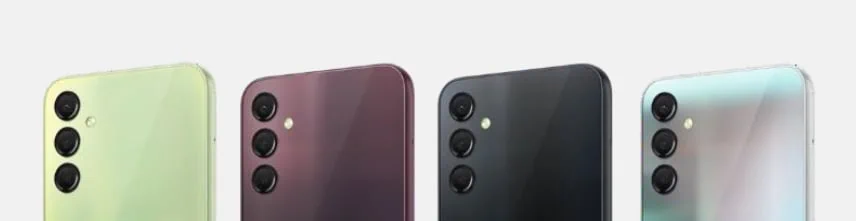
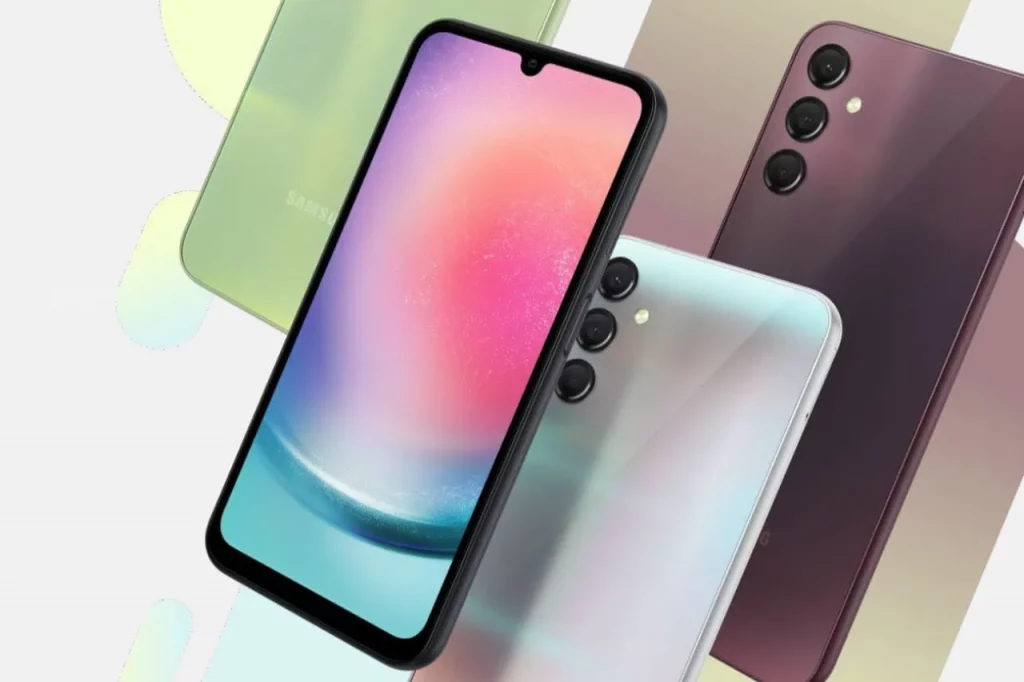
The microsite reveals that the upcoming Galaxy A-series will be available in three colours – Awesome Black, Awesome Burgundy, and Awesome Green. The Galaxy A-series device is confirmed to feature a 6.6-inch FHD+ display with a 120Hz refresh rate. This is expected on the rumoured Galaxy A34 5G or A54 5G since the Galaxy A14 5G has a 90Hz screen. One of the teasers also shows three camera rings on the back panel without any module. The Galaxy A14 5G, A34 5G, and A54 5G all have the same camera design but the microsite also reveals that the upcoming A-series offering will feature optical image stabilisation (OIS). 

One of the teasers also reveals a thick chin and a waterdrop notch which is seen on the Galaxy A14 5G and the rumoured A34 5G. Lastly, the microsite states that the upcoming Galaxy A-series phone will be powered by a 5G-compatible processor and run on OneUI. 

Related:

OnePlus Pad begins private testing in India with Codename ‘Aries’: Report

OnePlus is apparently working on a new Android tablet model. We have already covered some reports regarding the companies upcoming tablet. Now, a new report suggests that the OnePlus Pad has also entered into private testing.

It appears that the Chinese smartphone maker is following the route of other Chinese brands like Realme, Oppo, Redmi, and Xiaomi. All of these companies have their own large screened offerings, and now it appears that OnePlus also has a similar plan. We had previously reported on the brand trademarking the OnePlus Pad moniker, while also seeing a delayed launch. Another report had also claimed that it has an internal codename of Reeves.

OnePlus

Although this time around, a new report has suggested that the company has began private testing for this tablet ahead of its official announcement. But the report claims that the device has the codename of ‘Aries.’ The testing phase is reportedly being carried out in India, so it means that the Indian launch might be just around the corner. Although sources haven’t confirmed whether the tablet will be called the OnePlus Pad or OnePlus Tab.

As of right now, finer details regarding this device is still at large. So we have no idea what kind of specs and features it might launch with. Although, Oppo recently launched the Pad Air in India for under 20,000 INR with a tall 7.1 inch 2K IPS LCD panel and a large 7,100mAh battery pack. Under the hood, the tablet was also equipped with a Qualcomm Snapdragon 680 SoC. Meaning, OnePlus might also opt for such features for around a similar price tag.

RELATED:

(Source)

Honor X7a With 90Hz Display, 6,000mAh Battery Launched

Honor X7a has been quietly launched in China today. It is a budget offering with decent specifications. The smartphone was spotted in leaked renders last month. Read on to know what it offers out of the box. 

The Honor X7a features a 6.7-inch LCD display bearing an HD+ resolution and a waterdrop notch on the top. It offers a 90Hz refresh rate for smooth animations and TUV Rheinland certification for eye protection. The device has a rectangular camera module on a gradient back panel. It features a side-mounted fingerprint scanner embedded in the power button. 

On the imaging front, the Honor X7a sports quad rear cameras. The setup comprises a 50MP main sensor, an 8MP ultra-wide lens, 2MP macro unit, and a 2MP depth snapper. Up front, there is a 5MP selfie camera. 

Under the hood, the Honor X7a is equipped with a MediaTek MT6765H processor which corresponds to the Helio G37. It packs 6GB RAM and 128GB native storage expandable up to 1TB via a microSD card slot. The smartphone draws its power from a 6,000mAh battery unit with support for 22.5W fast charging. Software-wise, the device runs on Magic UI 6.1 based on Android 12 out of the box. 

Connectivity options on the Honor X7a include 4G, WiFi, Bluetooth 5.1, a USB-C port, and a 3.5mm headphone jack. 

The Honor X7a carries a price tag of RMB 799 (~$116). It is offered in Titanium Silver, Ocean Blue, and Midnight Black colours. The smartphone is available for purchase in China from the brand’s official website. 

Related:

Samsung profits fall by 70% due to weak smartphone & chip sales

Samsung profits have tanked in the fourth quarter of last year by a noticeable figure following declining demand of its and slowing sales of its memory chips. There are various reasons for this issue, so here are all the details.

The South Korean tech giant recently share his financial report that showcased that the company saw a sizeable fall of near 70 percent in Q4 2022. This is a major fall in profits compared to the same period last year. There are many reasons for the fall in profits, with low demand for semiconductors and smartphones due to global economic issues. The brand reported that it had expected an operating profit of 4.3 trillion won and a revenue of around 70 trillion won for the fourth quarter of 2022.

Samsung

However, it saw a revenue drop of approximately 9 percent year on year while its operating profits fell by 69 percent during this same time. Furthermore, the operating profits had also dropped by more than half from the third quarter, which is also when Samsung saw its first year on year profit decline in three years. This was also due to falling chip demand that led to weakening sales in the market.

Samsung added that it saw a significant drop in earnings from the memory business due to lackluster demand while also seeing weaker smartphone sales. It stated that this trend continues amid the uncertainties with the surrounding external factors that have caused a “potential global economic downturn.” The fall in sale also led to a decline in the average sales prices of the chips to lower than expected levels.

RELATED:

(Via)

HTC Vive XR Elite AR/VR headset announced for $1,099

HTC has just announced a new mixed reality headset from its Vive series. The company’s new Vive XR Elite AR/VR headset is now available for pre-orders but with a hefty price tag. So let’s have a look.

HTC

The company’s new XR Elite headset costs more than 1,000 US Dollars and was built to compete with Meta’s Quest series of headsets and the upcoming mixed reality headset that Apple is currently working on. The new XR Elite supports a number of games and software that offered HTC already offered on its previous generation VR headsets. Furthermore, the mixed reality experience aspect of this device also allows for full color passthrough video.

In other words, the Vive XR Elite is not just for gaming, but is also built for passive media and productivity tool in a relatively lighter package. the latest Vive headset weighs just 625 grams, which makes it heavier than the Meta Quest 2, but slightly lighter than the Quest Pro, which weighs 722 grams. It features mixed reality functionality with color cameras and a depth sensor for improved situational awareness. Meta had also originally planned to offer this on the Quest Pro as well.

HTC

The XR Elite features a 2K pixels per eye, a 110 degree diagonal field of view, a 90Hz refresh rate, 12GB of RAM, 128GB of internal storage, and a Qualcomm Snapdragon XR2 SoC. Notably, the headset offers a “glasses mode” that basically makes the headset even lighter. This basically lets you take off the strap and battery and replace them with a pair of plastic pieces that rest over your ears, which reduces the weight by around 240 grams. The new headset is priced at 1,099 US Dollars and offers the headset, one battery, and two motion controllers, with shipments set to begin in late February 2023.

RELATED:

Vivo X90 Series now supports Ray Tracing for a more immersive gameplay experience

Earlier today (6th January 2023), Vivo announced that it is rolling out support for next gen Ray Tracing technology for its latest flagship series, the Vivo X90, which would offer an improved gaming experience on these devices. So here are all the details.

Vivo

The Chinese smartphone maker is bringing the support for the Ray Tracing technology on a hardware flagship chip level, thanks to the X90 series featuring MediaTek Dimensity 9200 SoC and Qualcomm Snapdragon 8 Gen 2 SoC. For those unaware, Ray Tracing is basically a new lighting and shading tech for games. While games typically employed pre-rendered shadows and lighting in their games, Ray Tracing turns this process into a real time function. Meaning, a light source can dynamically affect the environment around the user.
In simpler terms, this makes games run at a higher graphical fidelity, which improves the overall immersion of the game itself since simulated light sources improves reflections, refraction, and shadow effects. Under the hood, the Vivo X90 and X90 Pro pack the Dimensitu 9200 SoC while the X90 Pro+ variant houses the Snapdragon 8 Gen 2. Both of these chipset support ray tracing tech on smartphones for certain applications.

Vivo

Meaning, the whole series will be able to offer its users an improved gaming experience. This technology is further supplemented with the inclusing of a chip level optical tracing computing tech that was self developed by the brand. It is called the FALCON graphics engine that is paired with AI algorithms to help offer immersive lighting and shadow effects.

RELATED:

Motorola X40 Review: Good, but could do better

Before the Chinese New Year, many mobile brands released their budget Snapdragon 8 Gen 2 phones. Of course, Motorola did the same. This Motorola X40 didn’t get as much attention as a few others, but it looks no worse than the others and is cheaper. So how does the X40 perform in its price range, after watching this video you’ll find out.

Design

Our X40 is made of black frosted material, which is very smooth to the touch. Plus this quad-curved screen on the front looks square but feels like a pebble. Although it feels great in your hand, it’s still recommended to wear a case if you don’t want to drop your phone. The camera module uses curved protective glass. Because normal use of the hand can not touch, this design is just because it looks good.

Stereo dual speakers, NFC, and even IP68 are all there. Especially, this Full-functioned Type-C port not only supports USB 3.2 Gen 1 but also supports video output. This USB C port puts many more expensive phones to shame.

Display

The protective glass of this screen is quad-curved. While it sounds similar to the one on the Mi 11 Ultra, the details are actually different. The upper bezel is not extremely narrow, and the upper and lower bezel curves are smaller and almost invisible. So you can just use it as a normal curved screen. Display specs are not great or bad in the same price range. The refresh rate is relatively high, which is its only advantage. So users with high screen requirements should probably consider iQOO 11 or Redmi K60.

Benchmark & Gaming

Motorola’s performance has always been outstanding. The score also shows that it is not much different from other 8 Gen 2 phones. However, through the CPU Throttling Test, we can see that it is not as stable as the 8 Gen 2 phones we have tested before. This result also appears in the more stressful games.

Genshin Impact, for example, performed relatively stable in the first half but started to have frame rate fluctuations in the second half. Overall the game performance is actually good, after all the average frame rate is not low and the lag is very little. But compared to other 8 Gen 2 phones it doesn’t seem that impressive. Of course, light gaming is not a problem. Heavy gamers may want to consider whether they can accept such a level of gaming as the X40.

Camera

Although the camera system is similar for everyone at this price point, it does not mean that everyone is on the same level. Its main camera and ultra-wide camera are not bad, there are no shortcomings. The color style is more similar to vivo. Anyway, the main camera and ultra-wide camera are not the reason why I don’t like it.

The main difference between the X40 and other 8 Gen 2 phones is the telephoto camera. Not only is there a lack of clarity, but the excessive sharpening effect makes the photos look fake. If you shoot an object with a lot of detail, such as leaves on a tree. Then the photo will be ruined by the sharpening effect. The good news is that night mode doesn’t have this problem. Since there is no OIS, your hand must be very steady or you will easily get blurry photos.

Since the ultra-wide camera is supported by autofocus, it can be used as a macro camera. It takes better photos than the kind of 2MP standalone macro camera, even the hairs on the keyboard can be seen. But the closest focus distance is only about 4CM, want to take good macro photos or quite difficult.

The X40 front camera is a great performer. Even in backlit scenes at night, it can take detailed selfies. And it supports 4k 60fps video recording specs, which makes Xiaomi 13 and iQOO 11, which are more expensive than it, ashamed of themselves. The X40’s video recording is also very impressive, with the main camera supporting 8k 30fps, the ultra-wide camera 4k 60fps, and the telephoto 1080P 60fps. clarity and stability are good, I am very satisfied with the X40’s video recording.

Battery & Charging

125w of wired charging plus 15w of wireless charging is top of the line even now, especially wireless charging, a very common feature for many commuters. At least I use it a lot. If you need a quick full charge, just plug in the power cable and wait half an hour. 4600mAh battery doesn’t sound like much, but it’s still quite durable. Personally, I feel it’s about the same as many 5000mAh phones. This year’s 8 Gen 2 has finally helped solve the problem of lack of battery life on the phone.

For a less than $500 8 Gen 2 phone, the Motorola X40 does some things really well. Such as IP68 and wireless charging. But you also have to accept some of its drawbacks, such as the rather ordinary screen quality, weaker performance compared to other 8 Gen 2 phones, and not good enough telephoto. If you’re not in a hurry to buy a phone, check out the Redmi K60 series and the Nubia Z50 review, both of which are strong competitors to the X40.

Zebronics launches Zeb-Iconic Lite smartwatch with 1.78″ AMOLED display, Bluetooth calling

The Indian electronics manufacturer Zebronics has expanded its range to smartphone accessories like truly wireless earbuds and smartwatches. Back in June 2022, the brand launched the Zebronics Drip smartwatch with Bluetooth calling.

Now, the brand has introduced another smartwatch in the market called the Zebronics Zeb-Iconic Lite. Let’s take a look at what the wearable has in store for us.

Zebronics Zeb-Iconic Lite smartwatch specs

Zebronics

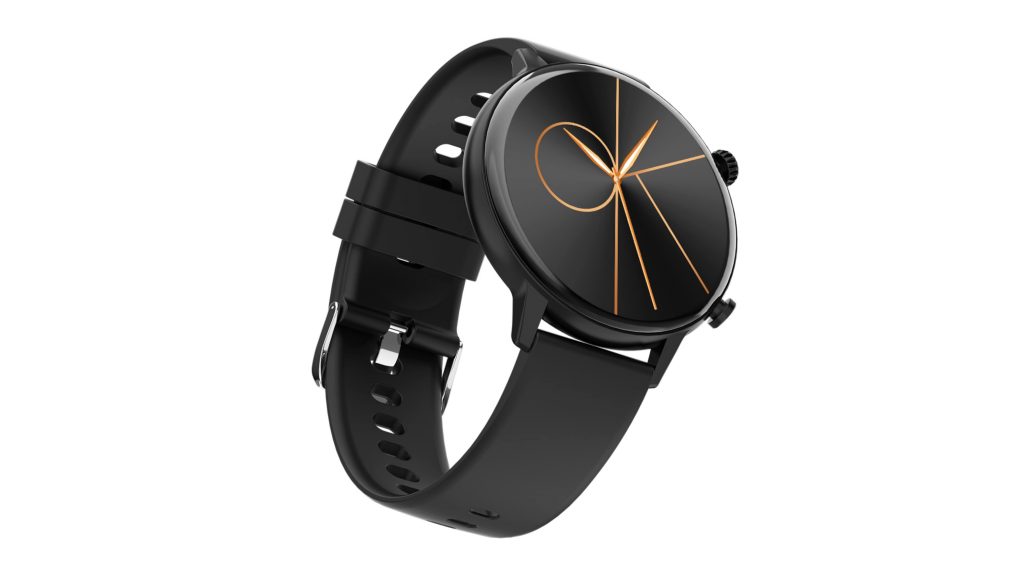
The Zeb-Iconic Lite sports a metal body and a 1.78″ AMOLED screen with a 2.5D curved screen for an excellent viewing experience in any environment. Additionally, it supports the always-on display feature. The interactive interface, which features a dual menu UI and 11 programmable watch faces in addition to 100+ on the app, is simple to use.

The watch has a built-in rechargeable battery that can last up to 5 days before needing to be recharged. The Zeb Iconic-Lite also enables Bluetooth calling and voice assistants like iOS Siri and Android Google Assistant. In addition to this, there are controls for the calculator, the camera shutter, the music, and even two built-in games.

Thanks to its 100+ built-in sports modes and IP67 waterproof rating, the Zeb-Iconic Lite is the perfect gadget for any fitness activity. The Zeb-FIT 20 application may be used on any Android or iOS smartphone to access the health monitoring capabilities of this wristwatch, which include Heart Rate, SPO2 track, BP monitoring, pedometer, calorie counter, sleep monitor, and meditative breathing.

Pricing and availability

The Zebronics Zeb-Iconic Lite smartwatch costs Rs. 2,999 and is available on Zebronics store and Amazon.in. Additionally, the silicone band is available in three colors: Gold-Blue, Silver, and Black. The watch is additionally offered in a metal version.

RELATED:

Lenovo unveils wearable-free motion capture tech called Project Chronos

The CES 2023 event brought the announcement for a number of innovative new technologies. Now, Lenovo has unveiled the new Project Chronos, which is a new motion capture system that works without a dedicated wearable device. So here are all the details.
Lenovo

The new device is a concept machine from the Chinese PC maker. As per official notes, Project Chronos is a ‘glasses free, full body movement driven experience.’ In other words, the technology does not require users to wear a dedicated headset/glasses or use motion capture enabled controllers. In a way, this makes it similar to Acer and ASUS’ new announcements for glass free 3D solutions, but the emphasis here is on motion capture rather than 3D gaming.

Project Chronos employs RGB depth cameras to replicate actions that the users make in a virtual. Following this process, the device outputs via a DisplayPort or HDMI to an external display. Lenovo did state that Project Chronos will also be compatible with HDMI, although its units lack any dedicated HDMI ports. The concept device has three DisplayPort connections along with four additional mini DisplayPorts. Chronos also houses a twin 6W speaker system and its camera can rotate by 180 degrees as well.

Lenovo

Under the hood, the Lenovo Project Chronos relies on an Intel Core i7 processor from the Raptor Lake series. Furthermore, it is also equipped with discrete GPU, up to 32GB of RAM and a 512GB of internal storage. The device runs on Windows 10 OS with an in house Chronos pre-installed. This model weighs around 3.54 kilograms with its other dimensions being 284 x 275 x 60.6mm. Unfortunately, this is still a concept device so it is unclear if the company plans on launching such a model anytime soon.

RELATED:

Redmi K60 Full Review: More worth buying than the Pro version

Since Xiaomi’s flagship phones have become more and more expensive, Redmi has taken on the mission of being the “Flagship Killer”. Their K series, in particular, is even more worthy than Xiaomi’s flagship series. And this year’s K60 looks really appealing. Come on, let’s see how much impact this $360 phone can really bring to the cell phone market in 2023.

Design

K60 is not much outstanding in design and looks rather ordinary. That’s why we purposely bought this blue vegan leather version. The vegan leather back panel has a stitched texture that looks a bit like the Vivo X Note. The vegan leather material really makes the budget phone look like a flagship, also lighter.

But it’s really confusing that this vegan leather is only available in the standard version, but not in the more expensive Pro version. From the top frame, there are IR emitters and dual speakers, but no headphone jack. The speakers are relatively loud and the volume is consistent from left to right. Even without the Harman Kardon tuning, I think it’s still great. The sound quality you can hear for yourself in the video.

Display

If I’m right, you bought the K60 for the screen, right? Indeed, this screen, like the K50, is unbeatable in its price range. And you can only get to know how good the super high resolution and straight screen are by getting it in your hand. Look at these specs, I couldn’t believe it till right now.

The difference with the K50 is that the manufacturer of the screen this time is China Star Optoelectronics Technology, not Samsung. The advantage is that the peak brightness is higher, and there is no side view color shift problem like Samsung E5 or E6 panels. The higher frequency PWM dimming also means less eye irritation. The downside is that the peak brightness is not as good as the latest Samsung E6 panel, and the screen protection glass on this K60 is no longer Corning Victus. So all in all, the K50 and K60 screens are about the same level.

Benchmark & Gaming

This time the K60 Standard Edition is no longer MediaTek’s mid-range chip, but Snapdragon’s previous generation flagship chip, Snapdragon 8+ Gen 1. I’ve laid out all its Benchmark scores, and you can see that except for Antutu, all other scores are a little lower for the K60. Sadly, this is not an error. According to the official website, the K60’s largest core frequency is a bit lower than even last year’s 8+ Gen 1 phones. Yes, that’s the reason for its low score, you can think of the K60 as having an 8+ Gen 1 Lite processor instead of the regular 8+ Gen 1.

But don’t be too sad, the good news is that the gaming performance is still strong. From the test results, the Genshin Impact performs in line with the normal 8+ Gen 1 phone performance. And because of that extra-large VC heat sink inside the K60, not only does it not overheat in games but so does in the CPU Throttling test, which is even more stable than the Xiaomi 12S Ultra. In other words, the K60’s 8+ Gen 1 looks different from other phones, but it works the same. So don’t get too hung up on the processor frequency issue, it’s still a good gaming phone.

Camera

Although Redmi says that the K60 series has an upgraded camera system this time, they are talking about the Pro version and the standard version still performs average. Let me quickly summarize its camera performance with you. The colors are rich and have high contrast in most scenes. Clarity is also good, and it doesn’t blur even when zoomed in 2x when there’s enough light. The dynamic range of both lenses will be substantially improved after the night mode is on. But with the ultra-wide angle camera at night the clarity is significantly reduced, like other budget phones.

All in all, the main camera can handle most scenes, the ultra-wide angle camera is only recommended for use during the day.

The rear camera still supports 8K 24fps for the main camera and 1080P 30fps for the ultra-wide camera. the main camera image quality is not bad, stable and clear, but the ultra-wide image quality really makes me not want to use it to record video twice. The front camera is interesting, supporting up to 1080P 60fps. Much better than the Xiaomi 13.

Battery & Charging

The battery capacity and charging power is the same as last year’s K50, both 67w and 5500mAh. Although the charging power is the same as the Xiaomi 13, the larger battery makes it take longer to fully charge.

But the big battery has its advantages. When compared to the 12S Ultra, which also uses 8+ Gen 1, the benefits of a larger battery are obvious. If you adjust the resolution to FHD+ and down the refresh rate, you get a high-performance phone that can be used for two days without charging.

Since there are more new phones released recently and I took some time off because of COVID, we didn’t have time to do K60E’s Full review. Here is a table that compares in detail the differences between it and other K series phones. In fact, considering that the price difference between K60E and K60 is not much, and Dimensity 8200 is not much improved compared to 8100, I would recommend other K series phones. And this K60, with its low enough price, I believe it will be the best-selling model in the Redmi family for a long time.

Oppo Reno 10 series Indian launch tipped for February, company reportedly skipping Reno 9 series

A couple of months ago, Oppo launched its premium Reno 9 series in the Chinese market. The smartphone is yet to make its debut in the Indian market. While some reports indicate that we might see the devices launch in Q1 2023, others indicate that it will not launch in India at all.

A new report from 91mobiles states that Oppo will skip the Reno 9 series launch in India and will directly jump to the Oppo Reno 10 series. The report cites tipster Sudhanshu Ambhore as its source, who claims that the Reno 10 series will launch in India around the first or second week of February.

Oppo Reno 9

Currently, it is unclear if these devices will be a rebranded version of the Reno 9 series or if they will be entirely new smartphones. However, considering the fact that the Reno 9 series launched on November 24, 2023, it is highly likely that India will be getting a rebranded model. On the off that these are not rebranded devices, let’s take a look at what’s known about the Reno 10 series so far.

OPPO Reno10 Pro+ specifications (expected)

The Reno10 Pro+ is claimed to have the model number PHU110, while the exact specifications are currently unclear. The device will probably include an OLED screen with a 120Hz refresh rate. A Qualcomm Snapdragon CPU or a MediaTek Dimensity 5G-capable chipset may power the phone. The device will probably boot a bespoke ColorOS skin based on Android 13 right out of the box.

There are many rumors about the phone’s cameras, including the possibility of a 50MP primary camera, an 8MP ultrawide camera, and an unidentified periscope camera. Details about the front camera are currently unknown. A 4,700mAh battery with 80W fast charging capabilities is most likely included in the phone.

RELATED: