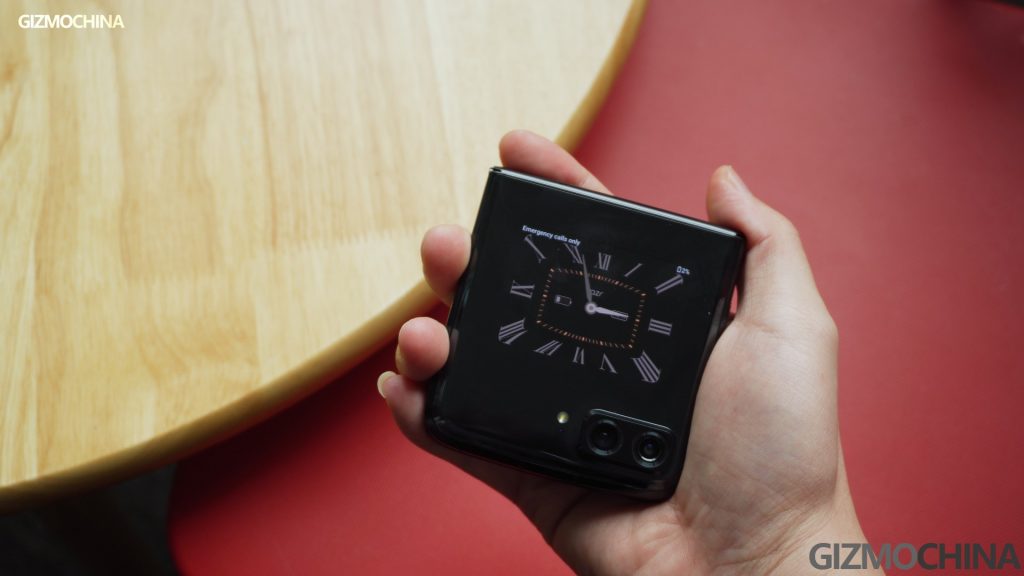
The Motorola Razr 2022 (aka Moto Razr 2022) went official in August. It made its debut as the world’s first foldable smartphone powered by a Qualcomm Snapdragon 8 Plus Gen 1 chipset.
The clamshell foldable phone was released as the most affordable foldable device to date. Despite months later, it continues to be the cheapest foldable with flagship-level features.
To make the deal even sweeter, the company has now officially slashed the price of the handset to make it a bit more affordable.
Ahead of the new year, Motorola has announced a price cut for the Moto Razr 2022. The clamshell foldable now costs ¥1,000 (~$145) cheaper.
Hence, it now starts at ¥4,999 (~$720) for the base 8GB + 128GB memory configuration. It has become the world’s first foldable smartphone to cost less than ¥5,000.
Unfortunately, this price drop appears to be China-exclusive for now. It’s not known whether there will be a similar change in the price tag for the European markets.
After Motorola Razr 2022, the Huawei Pocket S is the next affordable foldable device. However, it arrives with mid-range specs. Whereas, the Razr 2022 is basically a standard Edge flagship in a foldable form factor.
Therefore, for those not interested in the Rar 2022, the next affordable foldable options are Samsung Galaxy Z Flip 4 and Oppo Find N2 Flip. These handsets start at ¥7,499 ($1,075) and ¥7,999 ($1,147), respectively.
When tipster Kacper Skrzypek was asked whether the Xiaomi 12Tv and Xiaomi 12T Pro would be released in India, he ruled out the possibility of the 12T Pro’s India release. Talking about the Xiaomi 12T, the tipster said that “there is an Indian variant for “plato” (12T) in OTA, but there were no ROMs for a long time.”
Xiaomi 12T in theory could be launched because there is "plato_in_global" entry in Xiaomi's OTA system. There were no ROMs for that codename though, so I think plan for 12T launch in India has been abandoned. There were no plans for launch 12T Pro (no "diting_in_global" entry)
To those who are unaware, “plato” and “diting” are respective codenames for the Xiaomi 12T and 12T Pro. Since there have been no ROMs for the Indian edition of the Xiaomi 12T, it appears that it will not release in India.
The Xiaomi 12T and 12T Pro would have competed with affordable flagship phones priced around Rs 40,000 (~$483) in the Indian market. However, the company may have a different strategy to rival the affordable flagships from other brands in 2023.
A report from October claimed that the Redmi Note 12 Pro+, which debuted in China in the same month, will be rebranded as the Xiaomi 12i HyperCharge in the Indian market. Because the Redmi Note 12 Pro+, which will be available in India on January 5, is said to be identical to its Chinese counterpart, it is unclear whether the Xiaomi 12i HyperCharge will be available in India. Also, there is no word on the Xiaomi 12i.
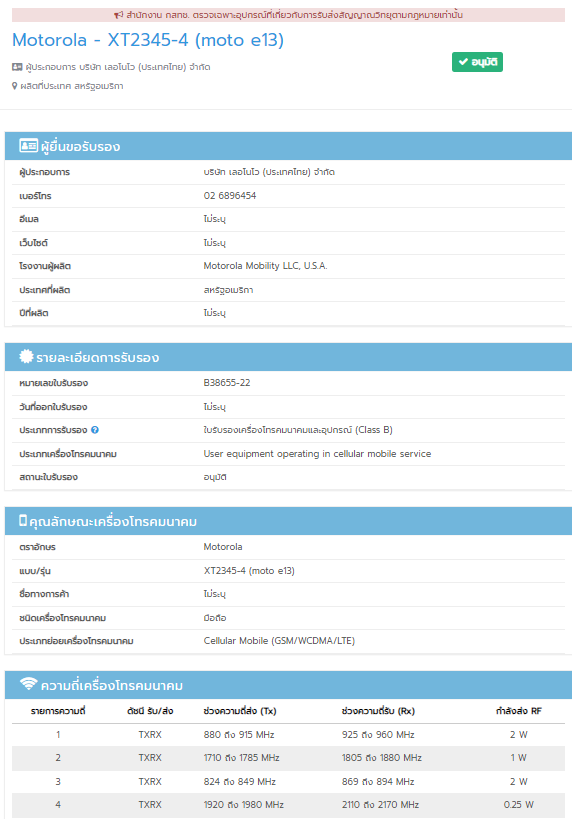
Motorola is gearing up to launch a new E-series smartphone soon. The device is called the Moto E13, and it will be a budget-range offering. The smartphone has already made appearances on Geekbench and has also had its renders leaked. Now, the device has appeared on NBTC and the Bureau of Indian Standards database confirming that it will launch in Thailand and India.
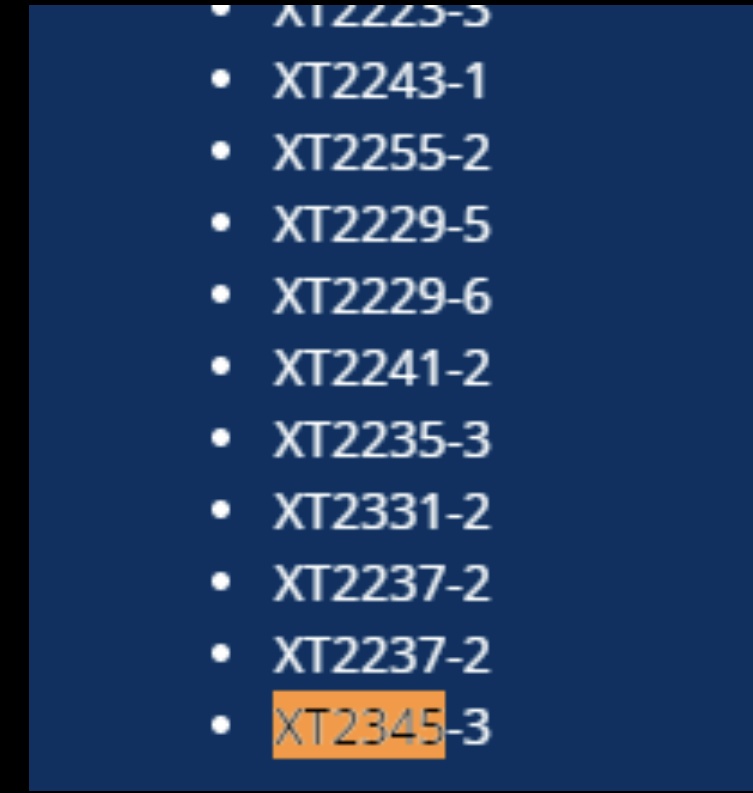
The certifications do not reveal any specifications, however, the NBTC listing does confirm that the Moto E13 has the model number XT2345-4. The Indian variant on the other hand carries model number XT2345-3.
A recently leaked image of the smartphone has revealed that it will come in a Dark Green color option. The display features a waterdrop notch and is surrounded by noticeable bezels. A squarish camera island protrudes from the back panel. It has a single camera sensor as well as an LED flash unit. The device’s left side has a SIM tray, while the right edge has a volume rocker and power buttons. The power button is expected to function as a fingerprint scanner.
Other than that, the earlier Geekbench listing has revealed that the smartphone will be powered by a Unisoc T606 processor clocked at 1.61GHz. The device will have 2GB of RAM and will ship with the Android 13 operating system. Because the RAM is less than 3GB, we assume it will be an Android Go phone. Geekbench gives the smartphone 318 points for single-core performance and 995 points for multi-core performance.
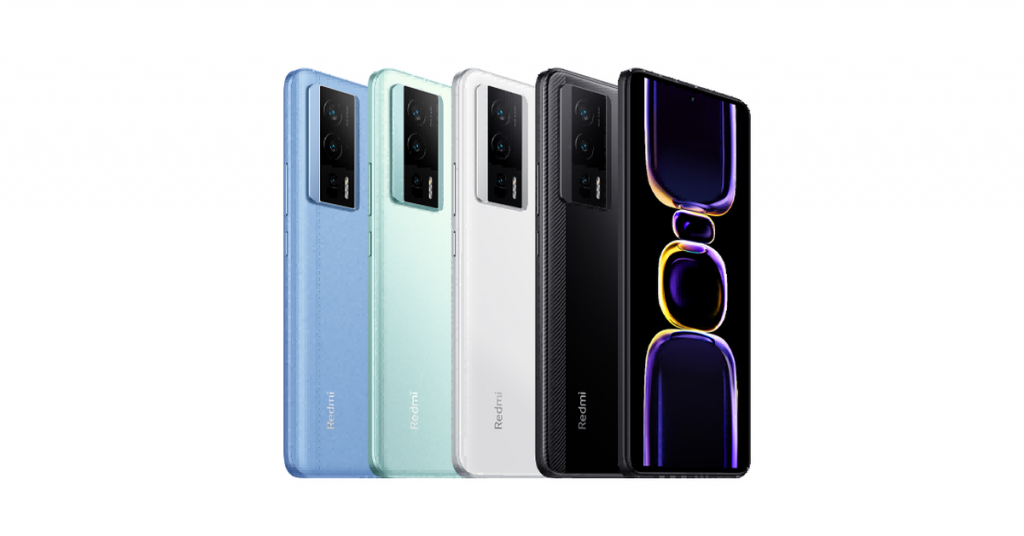
Poco will be soon launching the Poco C50 entry-level phone in India. The Poco X5 and X5 Pro will be available in multiple markets in January or February 2023. It is likely that after these products, the company may announce its F-series flagship phone. There have been reports that the Poco F5 will be a rebranded version of the Redmi K60. However, fresh information shared by tipster Kacper Skrzypek reveals that the Redmi K60 will be rebranded as the Poco F5 Pro. As far as the Poco F5 is concerned, the tipper is unsure about its identity and specifications.
The Poco F5 does not seem to be a rebranded edition of the Redmi K60e. The reason behind it is that the K60e is exclusive to the Chinese market. This year, Poco did not launch the Poco F4 Pro. Hence, there is a possibility that Poco may skip the Poco F5 in 2023. Since the new leak claims that the Poco F5 Pro is a rebranded Redmi K60, here is a look at its expected specifications.
Poco F5 Pro specifications (expected)
The Poco F5 Pro will arrive with a 6.67-inch OLED QHD+ 120Hz display, a Snapdragon 8 Plus Gen 1 chipset, up to 12 GB of LPDDR5 RAM, up to 256 GB of UFS 3.1 storage, and a 5,500mAh battery with 67W fast charging and 30W wireless charging. It will have a 64-megapixel (main) + 8-megapixel (ultra-wide) + 2-megapixel (macro) triple camera unit and a 16-megapixel front-facing camera. It will arrive with other features, such as an in-screen fingerprint scanner and MIUI 13-based Android 13 OS.
Skrzypek also shared some vital information about the Poco X5 and X5 Pro. Readers can learn more about it in the “Related” section, which is listed below.
Poco X5 and X5 Pro are expected to launch in January or February 2022 in the global market including India. There have been speculations that the Poco X5 will be a rebranded version of the Redmi Note 12 5G. New information shared by tipster Kacper Skrzypek reveals that it will be quite similar to the Note 12 5G but will pack a different chip. In addition, he also shared vital information about the Poco X5 Pro.
Poco X5
According to the tipster, the Redmi Note 12 5G, which is available in the Chinese variant, will also release in the global market with the same name. As far as the Poco X5 5G (codenamed “moonstone”) is concerned, he claimed that it shares the same ROM as the global version of the Redmi Note 12 5G. However, the X5 has a different chipset. While the Redmi model is equipped with the Snapdragon 4 Gen 1 chipset, the Poco X5 will arrive with the Snapdragon 695. He added that since both chipsets have the same Qualcomm platform, making one ROM for both SoCs is possible.
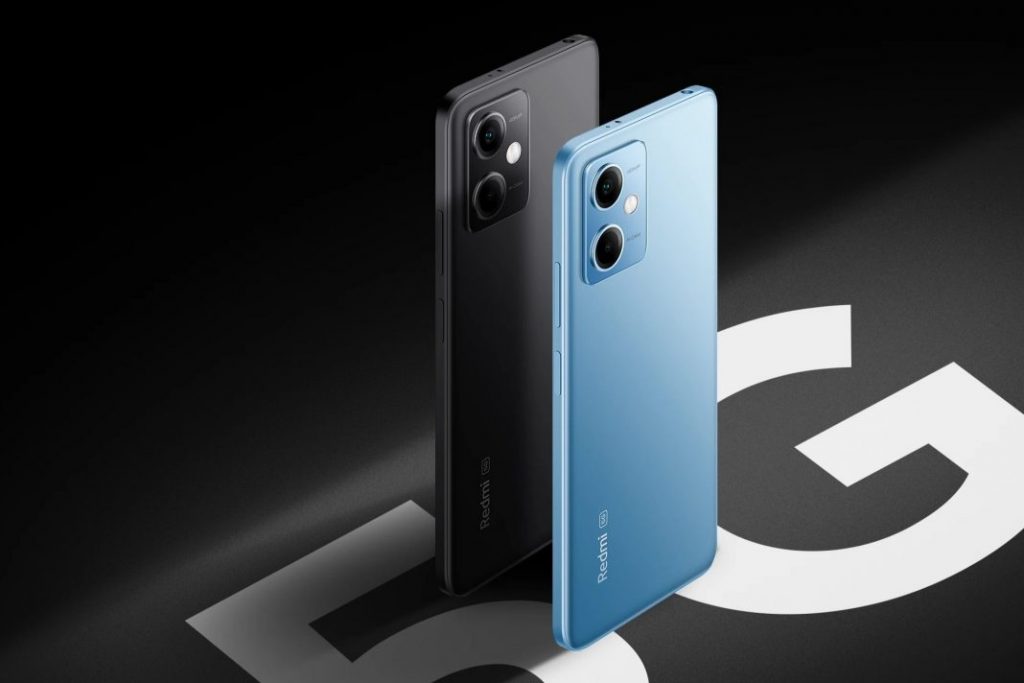
Redmi Note 12 5G
He did not mention the other specifications of the Poco X5 5G. But it appears that it may borrow the rest of its specs from the Redmi Note 12 5G. The Redmi phone has a 6.67-inch AMOLED FHD+ 120Hz display, up to 8 GB of RAM, up to 256 GB of storage, a 5,000mAh battery with 33W charging, 48-megapixel dual cameras, and an 8-megapixel front camera.
Poco X5 Pro
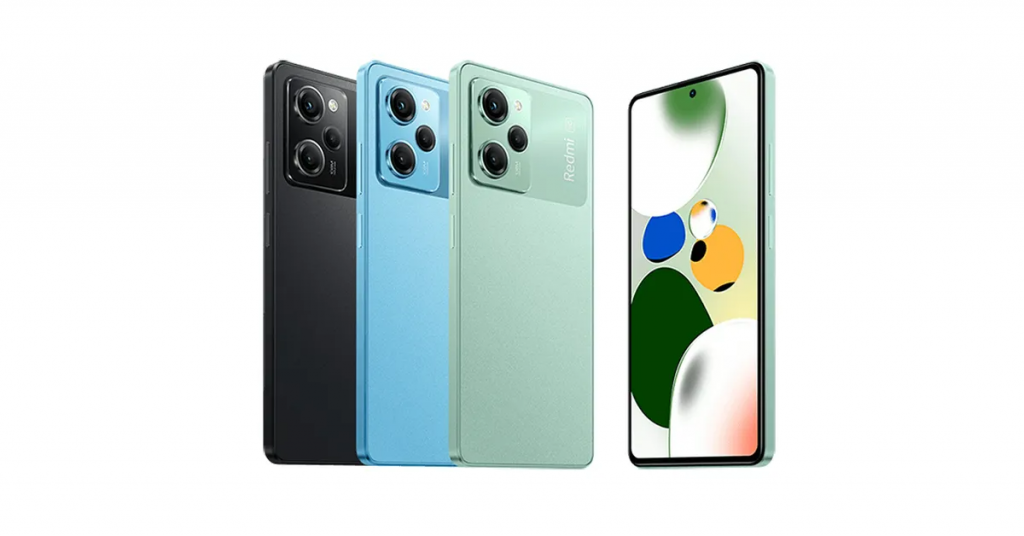
Redmi Note 12 Pro Speed Edition
Redmi recently unveiled the Redmi Note 12 Pro Speed Edition in China. According to the tipster, this device will be rebranded as the Poco X5 Pro 5G in the global market. The Redmi Note 12 Pro SE has specs, such as a 6.67-inch AMOLED FHD+ 120Hz display, Snapdragon 778Gv, up to 12 GB of RAM, up to 256 GB of storage, a 5,000mAh battery with 67W charging, 108-megapixel triple cameras, and a 16- megapixel front camera.
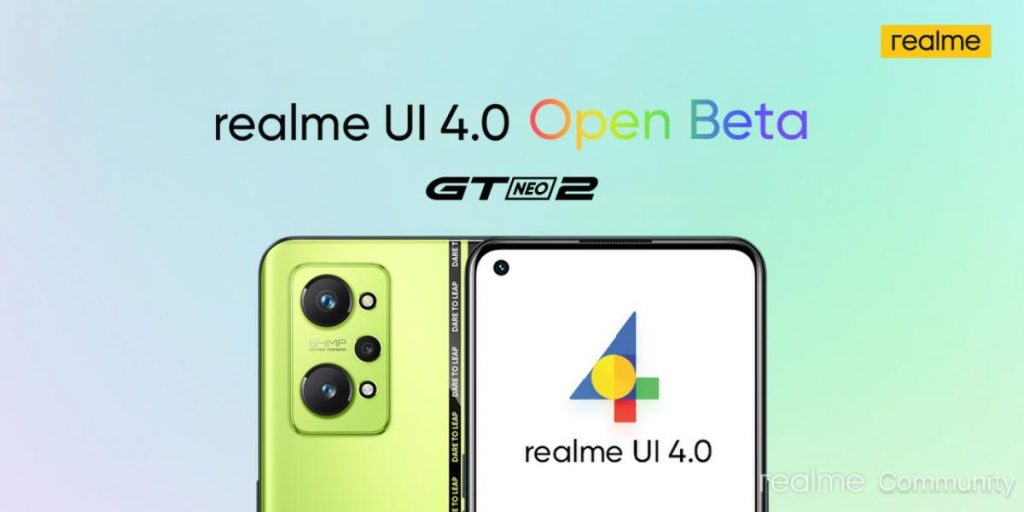
Realme has been quite active in releasing Android 13 updates to its eligible devices. Mid-rangers like the Realme 9 Pro and 9i recently got the stable Realme UI 4.0 update whereas the brand commenced the Android 13 early access program for the Realme 9 5G. Now, Realme’s 2021 flagship killer, the Realme GT Neo 2 has entered the Open Beta testing phase of Realme UI 4.0.
Users of Realme GT Neo 2 can now try out Android 13 on their devices ahead of its stable release in the coming weeks. To apply for the Beta Program, you can navigate to Settings > Software Update > Tap on the settings icon in the top right corner > Trial Version > Submit your details > Apply Now. Make sure that your device is running on the firmware version RMX3370_11.C.09/ RMX3370_11.C.10 before applying.
If your application passes the review, the OTA update should arrive in a few days. You can expect the update to include the changes listed below.
Changelog
Aquamorphic Design
Adds Aquamorphic Design theme colors for enhanced visual comfort.
Applies the Aquamorphic Design philosophy to animations to make them natural and vivid.
Adds Shadow-Reflective Clock, with shadows to simulate the orientation of the sun and moon.
Adds a Home screen world clock widget to show the time in different time zones.
Upgrades to Quantum Animation Engine 4.0, with a new behavior recognition feature, which recognizes complex gestures and provides optimized interactions.
Optimizes UI layers for a clearer and neater visual experience.
Applies real-world physics to animations to make them look more natural and intuitive.
Optimizes the widget design to make information easier and quicker to find.
Optimizes fonts for better readability.
Optimizes system icons by using the latest color scheme to make the icons easier to recognize.
Enriches and optimizes illustrations for features by incorporating multicultural and inclusive
Efficiency
Adds large folders to the Home screen. You can now open an app in an enlarged folder with just one tap and turn pages in the folder with a swipe.
Adds media playback control, and optimizes the Quick Settings experience.
Adds more markup tools for screenshot editing.
Adds support for adding widgets to the Home screen, making information display more personalized.
Optimizes Shelf. Swiping down on the Home screen will bring up the Shelf by default. You can search content online and on your device.
Security & privacy
Optimizes Private Safe. The Advanced Encryption Standard (AES) is used to encrypt all files for enhanced security of private files.
Health & Digital wellbeing
Adds Eye comfort in Kid Space to protect children’s vision.
Health & Digital wellbeing
Add Eye comfort in KidSpace to protect children’s vision
Gaming experience
Upgrades to HyperBoost GPA 4.0 to stabilize the frame rate and balance the performance and power consumption in key scenarios.
Earlier this year, Huawei launched the new Huawei MateBook 14s series of laptops in its home country China, which come powered by the latest 12th generation Intel Core series processors.
Today, the company has launched a new model in the Huawei MateBook 14s lineup, and this new one comes powered by the Intel Core i9 processor for the price of 8,499 yuan, which is about $1,218. It goes on sale later tonight, at 8:00 PM local time in China through online marketplace JD.com.
Huawei MateBook 14s 2022
The Huawei MateBook 14s features a 14.2-inch 2.5K display with a 3:2 aspect ratio, a 90Hz refresh rate, and 400 nits brightness. It also offers a 100% sRGB color gamut and supports 10-point multi-touch technology.
Under the hood, the device is powered by the Intel Core i9-12900H processor, which packs 14 cores and 20 threads, along with support for a turbo frequency of 5GHz. It packs 16GB of LPDDR4x RAM and offers two options for built-in SSD storage — 512GB and 1TB.
The laptop is equipped with a quad-speaker audio system and has a Thunderbolt 4 port, HDMI, USB-A, and a few other standard interfaces. As for the software, it supports HyperTerminal which can work with smartphones, tablets, monitors, TVs, and more. It packs a 60Wh battery and comes with a 90W GaN charger.
A few weeks back, iQOO 11 and iQOO 11 Pro flagship smartphones were announced and recently, the Pro model was made available for pre-orders in the Chinese market.
Now, the iQOO 11 Pro is officially available for purchase in China and carries a starting price of 4,999 yuan, which is about $717. The standard model had already been on sale for a couple of weeks.
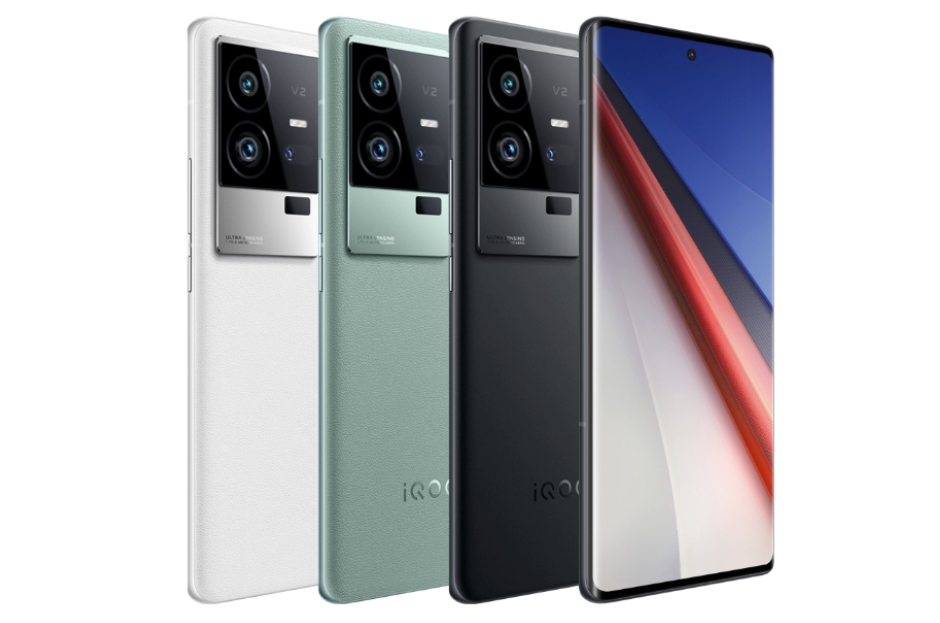
The iQOO 11 Pro starts at 4,999 yuan (~$717) for the base model with 8GB RAM and 256GB internal storage, while the 12GB RAM and 256GB internal storage model costs 5,499 yuan (~$789). The top-end model with 16GB RAM and 512GB internal storage is priced at 5,999 yuan (~$861). The smartphone in three color options — Track Edition (Grey), Isle of Man Edition (Grey), and Legend Edition (White).
Coming to the specifications, the iQOO 11 Pro features a 6.78-inch E6 AMOLED curved display, which supports a 144Hz refresh rate and has a 2K screen resolution. Under the hood, the device is powered by the Qualcomm Snapdragon 8 Gen 2 SoC, coupled with quad-channel LPDDR5x RAM and UFS 4.0 storage.
In the camera department, there’s a triple-camera setup on the back that includes a 50-megapixel primary Sony IMX866 camera sensor, a 50-megapixel ultra-wide camera with a fisheye lens, and a 13-megapixel portrait telephoto lens. On the front side, the phone has a 16-megapixel snapper for taking selfies and video calling.
The smartphone runs the Android 13 operating system out-of-the-box with the company’s OriginOS Forest custom interface on top. It is powered by a 4,700mAh battery and supports 200W fast charging, 50W wireless charging, and 10W reverse wireless charging.
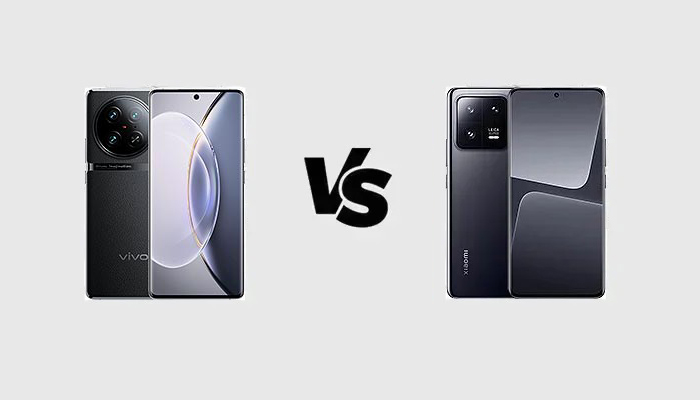
The Xiaomi 13 series is finally official, right after the Vivo X90 series. The new lineups contain the first flagships with the Snapdragon 8 Gen 2 mobile platform. We are still waiting for their launch in the global market: the Vivo series is expected to hit the global shelves next month, while there is still not any info regarding the Xiaomi one. Meanwhile, we can take a look at the specifications of the Pro variants in order to understand which one is the most interesting. Here you can find a comparison between the main specifications of the Vivo X90 Pro and the Xiaomi 13 Pro.
Vivo X90 Pro vs Xiaomi 13 Pro
Vivo X90 Pro
Xiaomi 13 Pro
DIMENSIONS AND WEIGHT
164.1 x 74.5 x 9.3 mm,
215 g
162.9 x 74.6 x 8.4 mm,
210 g
DISPLAY
6.78 inches, 1260 x 2800 pixels (Full HD+), AMOLED
The Xiaomi 13 Pro came to the market with an interesting new design. One of its color options is built with very premium materials, including a ceramic back and an aluminum frame. Further, this is the first flagship from the company with the IP68 certification: it is a waterproof and dustproof phone. It comes with a curved display at the sides, a high screen to body ratio, and a slightly more compact design compared to its rival. However, the Vivo X90 Pro remains a very beautiful phone. It is built with glass and aluminum, it has a curved screen and it is waterproof with the IP68 certification. Both phones feature an IR sensor allowing you to use them as a remote.
Display
The display of the Xiaomi 13 Pro looks better than the one found on the Vivo X90 Pro. It is an OLED display showing up to one billion colors with a diagonal of 6.73 inches, a Quad HD+ resolution of 1440 x 3200 pixels, a 120 Hz refresh rate, Dolby Vision support, HDR10+ certification, and an in-display fingerprint reader. The Vivo X90 Pro sports an AMOLED display with a diagonal of 6.78 inches, an 1.5K resolution of 1260 x 2800 pixels, one billion colors, a 120 Hz refresh rate, HDR10+ certification, and an in-display fingerprint reader. It is an inferior panel in terms of resolution, but you will hardly notice the difference: both are great displays.
Specs & Software
These two phones come with different processors, but they have similar performances because they are equipped with two processors at the same level. The Vivo X90 Pro has the Dimensity 9200 chipset built at 4 nm and sporting an octa-core architecture with a max frequency of 3.05 GHz. Alongside the chipset, there are up to 12 GB of RAM and up to 512 GB of UFS 4.0 native storage. The operating system installed is Android 13, customized by Funtouch OS on the global market and Origin OS in China. With the Xiaomi 13 Pro, you get a Snapdragon 8 Gen 2 mobile platform built at 4 nm, with an octa-core architecture and a max frequency of 3.2 GHz, paired with up to 12 GB of RAM and up to 512 GB of UFS 4.0 of native storage. Android 13 is customized by MIUI 14.
Camera
The Xiaomi 13 Pro looks to have slightly better camera hardware. The most important difference is the ultrawide shooter: a 50 MP sensor, definitely better than the one found on the Vivo X90 Pro. Even the telephoto sensor looks better as it reaches 3.2x optical zoom instead of just 2x.
The biggest battery is the one found on the Vivo X90 Pro, but only by a slight margin: 4870 mAh instead of 4820 mAh. The charging speeds are more or less the same because both phones support 120W fast charging as well as 50W wireless charging.
Price
The starting price of the Xiaomi 13 Pro in the Chinese market roughly translates to $900/€955, while the Vivo X90 Pro starts from $800/€849. However, you should consider that the base variant of the X90 Pro has an 8/256 GB memory configuration, while the Xiaomi 13 Pro has a base configuration with 8 GB of RAM and 128 GB of native storage. Which one would you pick?
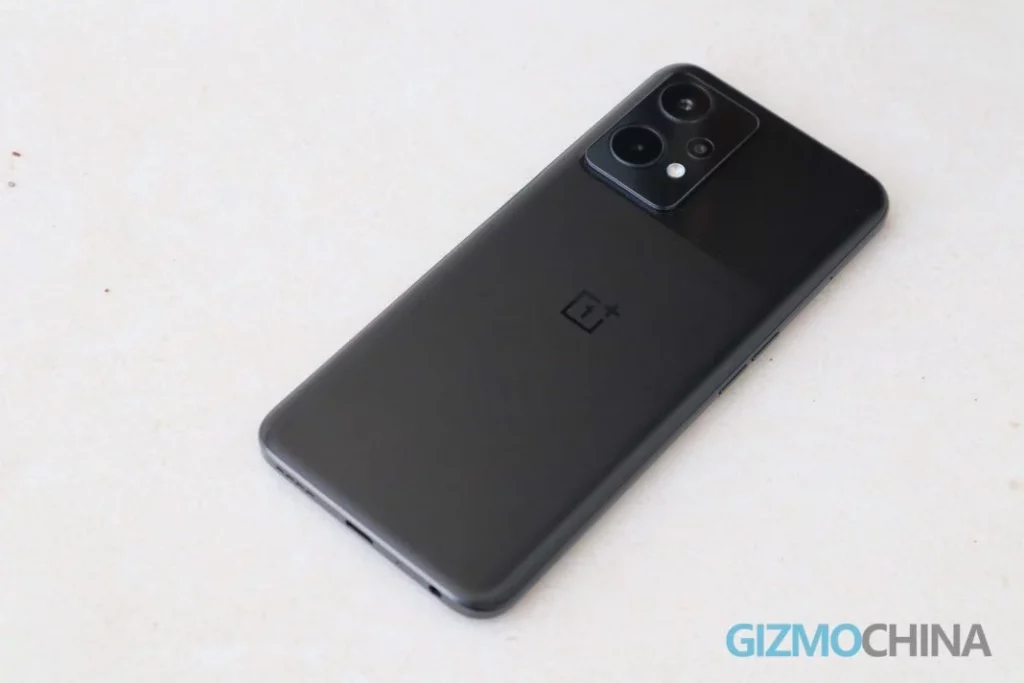
OnePlus started the OxygenOS 13 beta program for the OnePlus Nord CE 2 Lite back in November. Now, after a month of testing, the brand has initiated seeding the stable build of the Android 13-based update to the Nord series smartphone. The software brings new features as well as the December security patch. Here are all the details.
As reported by the users on the OnePlus community forums, the Nord CE 2 Lite has started receiving the stable Android 13-based OxygenOS 13 update. The update is rolling out with the firmware version C.25. The new update comes packed in nearly 4.5GB and brings the Android security patch level of December 2022.
As usual, the OxygenOS 13 release for the OnePlus Nord CE 2 Lite will be released in batches. Only a small number of users will receive the software initially. A wider rollout will begin in the coming days.
The newest version of OxygenOS includes various new features and changes, including an all-new Aquamorphic design. The fonts have also been optimized by the brand in order to improve visual comfort and readability. You may check out the detailed changelog below to find out more about the changes coming with OxygenOS 13.
Changelog
Aquamorphic Design • Adds Aquamorphic Design theme colors for enhanced visual comfort. • Adds Shadow-Reflective Clock, with shadow simulating the orientation of the sun and moon. • Adds a Home screen world clock widget to show the time in different time zones. • Upgrades to Quantum Animation Engine 4.0, with a new behavior recognition feature, which recognizes complex gestures and provides optimized interactions. • Optimizes UI layers for a clearer and neater visual experience. • Applies real-world physical motions to animations to make them look more natural and intuitive. • Optimizes the widget design to make information easier and quicker to find. • Optimizes fonts for better readability. • Optimizes system icons by using the latest color scheme to make the icons easier to recognize. • Enriches and optimizes illustrations for features by incorporating multicultural and inclusive elements.
Efficiency • Adds large folders to the Home screen. You can now open an app in an enlarged folder with just one tap and turn pages in the folder with a swipe. • Adds media playback control, and optimizes the Quick Settings experience. • Adds more markup tools for screenshot editing. • Adds support for adding widgets to the Home screen, making information display more personalized. • Adds Sidebar Toolbox. You can open floating windows inside apps for smooth operation. • Upgrades Doodle in Notes. You can now draw on graphics to take notes more efficiently. • Optimizes Shelf. Swiping down on the Home screen will bring up Shelf by default. You can search content online and on your device.
Security & Privacy • Adds an automatic pixelation feature for chat screenshots. The system can identify and automatically pixelate profile pictures and display names in a chat screenshot to protect your privacy. • Adds regular clearing of clipboard data for privacy protection. • Optimizes Private Safe. The Advanced Encryption Standard (AES) is used to encrypt all files for enhanced security of private files.
Health & Digital Wellbeing • Adds distance-from-phone, ambient light, and sitting posture reminders in Kid Space. • Adds Eye comfort in Kid Space to protect children’s vision.
Performance Optimization • Adds Dynamic Computing Engine to improve the system speed, stability, battery life, and app experience.
Gaming Experience • Upgrades to HyperBoost GPA 4.0 to stabilize the frame rate and balance the performance and power consumption in key scenarios.
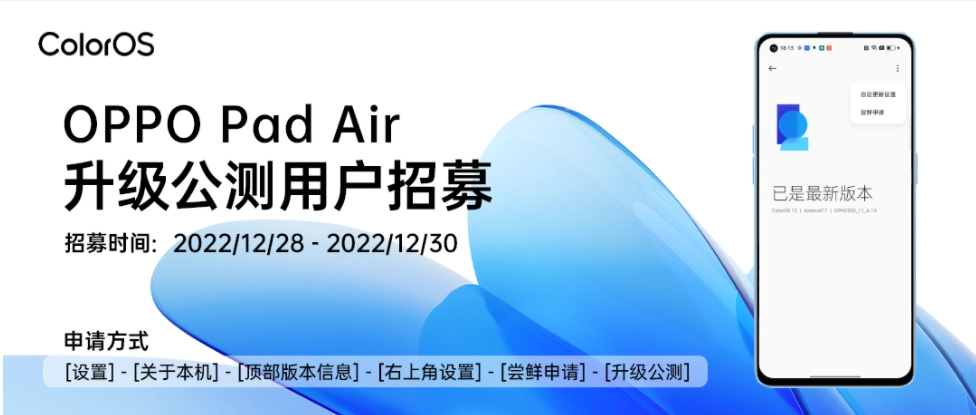
Oppo deserves appreciation for its work bringing the Android 13-based ColorOS 13 update to a large number of its phones worldwide at an impressive pace. The brand has updated a number of its smartphones and tablets this month. In the latest development, it has started recruiting public ColorOS 13 beta testers for Oppo Pad Air in China. Let’s look at the details.
Oppo Pad Air users in China can enroll in the ColorOS 13 public beta program. By applying to this program, users will get to try out all the new Android 13 features Google introduced. The beta registrations for the tablet will be live until December 30.
Enrolled users will receive the beta build of the software after the review of the applications. As usual, OPPO will be offering limited slots for the ColorOS 13 public beta program. It has been reported that the beta build has known issues that may affect day-to-day use. Many common third-party applications are incompatible with the OS.
As mentioned, the public beta recruitment is limited to the Chinese region as of now. Oppo should start a beta program for Oppo Pad Air in the global market sometime next year. We won’t know the exact date until the January update timeline is released.
To recall, the Oppo Pad Air comes with a 10.6-inch IPS LCD panel that has a 2K resolution and a standard 60Hz refresh rate. Under the hood, the device is equipped with a Qualcomm Snapdragon 680 SoC, paired with 4GB of RAM and up to 128GB of internal storage.
It is powered by a huge 7,100mAh battery, which also supports 18W fast charging. It features an 8MP rear camera, while the front houses a 5MP selfie shooter.
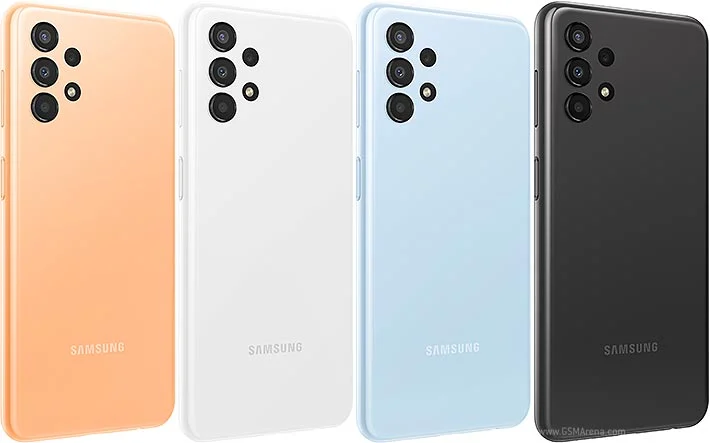
After rolling out stable One UI 5 to the Galaxy A13 Exynos version in various European countries, Samsung is now extending the update to the Helio G80 version of the smartphone. The Mediatek variant is receiving the update in Europe. Separately, the brand is also seeding the Android 13-based software to the rugged Galaxy Xcover Pro in the US and Canada. Here are the details.
Samsung Galaxy A13’s MediaTek variant is receiving the stable One UI 5 update with the firmware version A137FXXU1BVL1. The software brings the new features Samsung introduced with the latest version of One UI and also bumps the security patch level to November 2022. The update is currently rolling in the old continent, with a wider rollout projected in the coming days.
As mentioned, the Galaxy Xcover Pro is also receiving the latest software treat. The rugged smartphone is getting the One UI 5 update with the firmware number G715U1UEUFDVKA for the unlocked models in the US. Users in Canada are receiving the software with firmware version G715WVLUAEVK9.
The international units of the Galaxy Xcover Pro already received the Android 13-based last month with firmware version G715FNXXSAEVL2.
As usual, the update is being seeded in a phased manner and it is expected to reach every unit in some time. If you own the above-mentioned, you can check for the update by going to the settings and clicking on the software update menu.
In related news, Samsung is reportedly testing the One UI 5.1, the successor to One UI 5.0. It is rumored to debut on the Galaxy S23 family, which is expected to be announced at Galaxy Unpacked event on February 1.
Samsung recently launched a bunch of budget smartphones in India, including the Galaxy M04, A04, and A04e. Now, it seems the brand is planning to start the New Year 2023 by launching an affordable Galaxy F04 smartphone in the country. The handset is reported to feature a large display, a stylish design, and a long-lasting battery.
According to an IANS report, Samsung will launch a series of new smartphones in early 2023, centered on its ‘F’ series, which has been popular among young users seeking stylish devices with long battery life and powerful features at an affordable price.
The 4G Galaxy F04 is reported to arrive with a large 6.5-inch screen and dual rear camera set-up. The smartphone could get 4GB RAM that can be extended to up to 8GB with Samsung’s RAM Plus feature.
Samsung’s Galaxy F04 is expected to cost around Rs 8,000, similar to the Galaxy M04. Other details about the affordable smartphone are yet to be revealed. The phone is reported to arrive in India sometime in January, and we expect to learn the exact launch date in the coming weeks.
To recall, the Galaxy M04, which is one of the cheapest Samsung-made smartphones, features a 6.5-inch HD+ Infinity-V display. The smartphone is powered by MediaTek Helio P35 SoC, paired with 4GB of RAM and additional 4GB of virtual RAM.
For photography, it has a 13MP main + 2MP depth camera. On the front, there’s a 5MP front camera. The MO4 packs a 5000mAh battery. The handset has a lightweight design with thick bezels on the front.
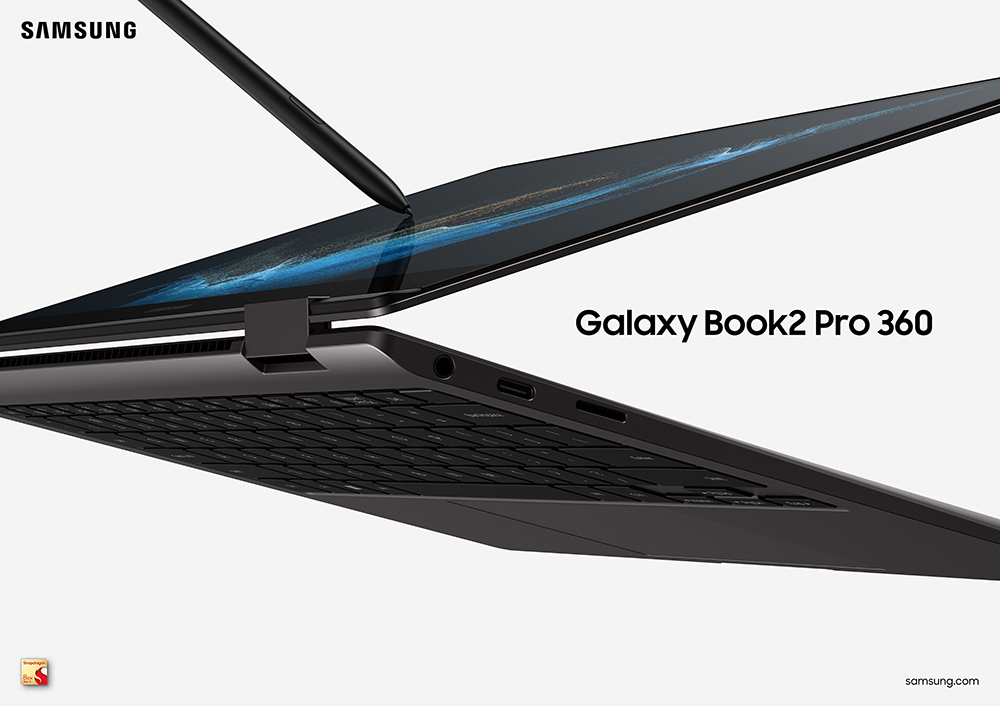
Samsung introduced the Galaxy Book2 Pro 360 earlier this year, a top-tier 2-in-1 convertible notebook with 12th Gen Intel processors. Now, the company has revealed the Snapdragon 8cx Gen 3-powered ARM version of the Galaxy Book2 Pro 360 in South Korea. The laptop is set to hit market shelves in Korea in January 2023. Let’s take a look at its design, specifications, and pricing.
Samsung Galaxy Book2 Pro 360 specs
The Samsung Galaxy Book2 Pro 360 comes with a 360-degree hinge allowing the device to be used as a laptop or tablet. The Samsung Galaxy Book2 Pro 2 360 sports a Super AMOLED display, a 33.7-centimeter touch screen, is 11.5 mm thick and weighs 1.04 kilograms.
The laptop is equipped with Qualcomm’s most recent Snapdragon 8cx Gen 3 CPU, which enhances performance and multitasking by 85% and 57%, respectively when compared to Snapdragon 8cx Gen 2.
Additionally, it makes use of the Adreno GPU, which improves graphics and provides better processing speed. Moving on to connectivity, the Samsung Galaxy Book2 Pro 2 360 uses Qualcomm’s Fast Connect 6900 system technology for a stronger connection to Wifi 6E. You can get up to 35 hours of screen time with this battery.
Price & availability
The Samsung Galaxy Book2 Pro 2 360 will be available in South Korea on January 26, 2023. In South Korea, the laptop will cost 1.89 million won, which is approximately US$1,485.
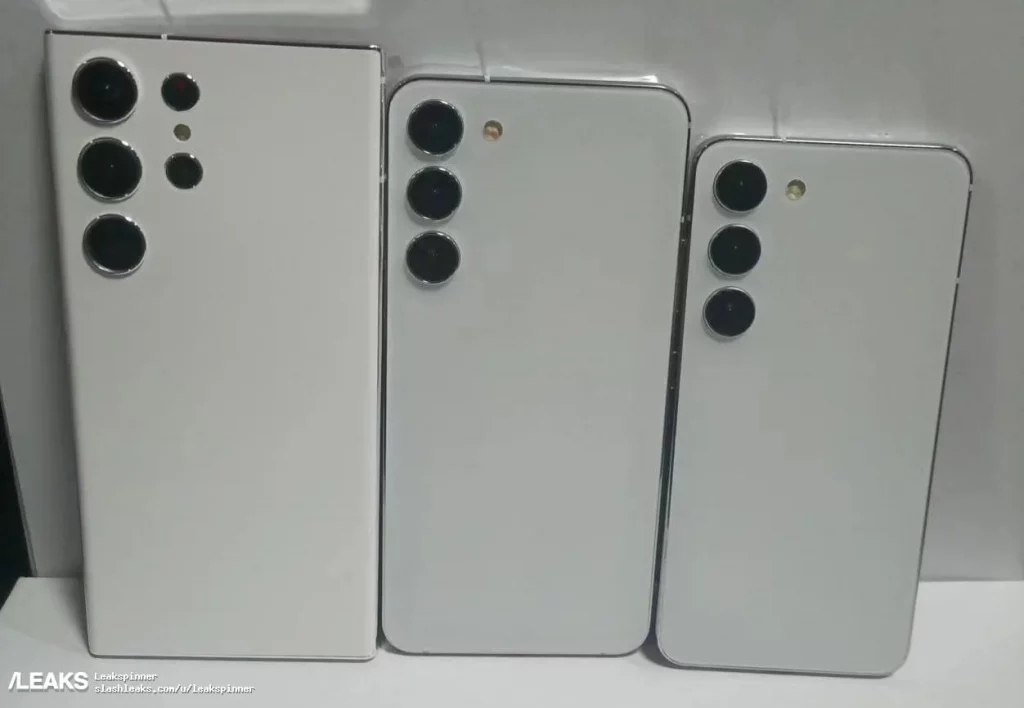
Samsung‘s 2023 flagship series, the Galaxy S23 lineup, has been in the news for quite some time now, with renders and leaks revealing its design and specifications. The rumor mill also reveals that the Korean company will announce the series in early February. While we still wait for an official word, a leaker has revealed some camera specs of Samsung’s 2024 flagship – the Galaxy S24 Ultra.
Noted leakster Ice Universe claims that the Galaxy S24 Ultra will feature a new and improved telephoto camera sensor and zoom mechanism. He specifically mentions the ultra model but the S24+ and the vanilla S24 may get the same treatment.
Further, the cat says that the main camera on the smartphone may remain the same or carry slight improvements. Samsung’s flagships, especially the Ultra models, already offer unmatched zooming performance. The Galaxy S22 Ultra currently leads the market, but the Galaxy S23 Ultra is set to take its place shortly.
As Sammobile rightly points out, LG Innotek recently showcased a new telephoto camera module that functions much like a traditional DSLR camera lens, preserving image details. It uses a folded-optic design that keeps the overall size down, resulting in a lens that covers a 4-9x range, with true optical zoom in between. It’s possible that Samsung may use the same module or a similar mechanism on the Galaxy S24 Ultra.
As mentioned, the Galaxy S23 series is rumored to launch in February. The upcoming lineup will use Qualcomm’s latest Snapdragon 8 Gen 2 chip, offering a significant uplift in performance and efficiency. The ultra model could arrive with a new 200MP primary camera.
Motorola is expected to launch a new E-series smartphone soon. The upcoming offering is the Moto E13 and earlier this month it was spotted on the Geekbench benchmarking platform. The device had also appeared in leaked renders recently. Now, an official-looking image has surfaced online giving us a better look at the smartphone. It has been shared by Twitter user SnoopyTech.
The Moto E13 is seen in a Dark Green colour option in the official-looking image. The display has a waterdrop notch and it is surrounded by bezels. The back panel has a squarish camera island which doesn’t protrude. It houses a single camera sensor and an LED flash unit. The left side of the device has a SIM tray whereas the right edge has a volume rocker and power buttons. The power key is expected to double up as a fingerprint scanner.
Apart from this, the official-looking image does not reveal any additional details about the Moto E13. As per the leaked renders, the upcoming offering is also expected to be available in a Beige colour option.
The Moto E13 is expected to be an entry-level budget offering. The smartphone’s Geekbench listing reveals that it will be powered by an ARM Unisoc T606 processor. It comprises of eight cores clocked at 1.61GHz. The device will pack 2GB RAM and run on Android 13 OS out of the box. We assume that it will be an Android Go phone since the RAM is less than 3GB. The smartphone scores 318 points in Geekbench’s single-core tests and 995 points in the multi-core test.
We expect the Moto E13 to debut in the coming weeks.
Twitter has been surrounded by a lot of negative press recently and it seems like the unfortunate run is still ongoing. A hacker has claimed to have private data on hundreds of millions of the platform’s users.
A new report has stated that the hacker has acquired sensitive information on 400 million users to be exact, which was illegally captured in 2021. The data was obtained by abusing an API vulnerability that has been fixed since its originally discovery. The hacker goes by the name ‘Ryushi’ has offered Elon Musk and Twitter to purchase this data him for a hefty price of 200,000 US Dollars. If they refuse, they would face an even heavier fine from the GDPR.
As per Ryushi on the Breached hacking forum, “Your best option to avoid paying $276 million USD in GDPR breach fines like facebook did (due to 533m users being scraped) is to buy this data exclusively… after that I will delete this thread and will not sell this data again.” To prove this, he even shared a sample data of more than 1,000 users that include a number of celebrities, which was leaked. This information contains sensitive data like email addresses, usernames, follower counts, creation dates, and some users’ phone numbers.
The hacker further added that if Twitter skips this deal, he is also open to selling this data to multiple buyers for a sum of 60,000 US Dollars for interested parties. Unfortunately, it is still unclear as to what decision Twitter will make regarding this matter or even if the leaked private data is completely accurate. So stay tuned as we will offer updates if there are any notable developments on this matter.
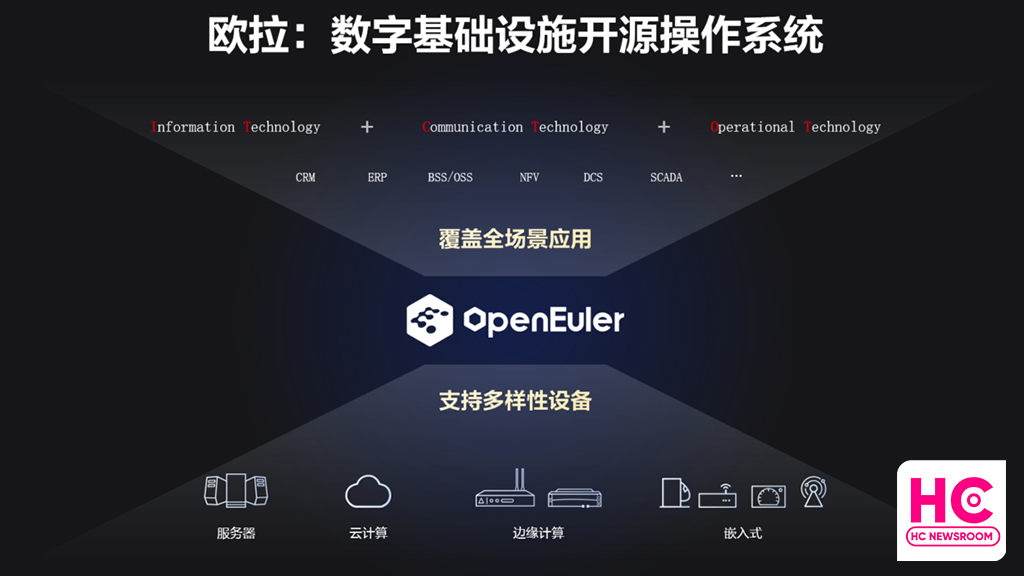
Huawei had initially announced the openEuler program back in 2019 and launched in September 2021 as an open-source operating system for enterprise applications. It is based on the Linux kernel and is intended to be used as a platform for building cloud, edge, and IoT applications. OpenEuler offers a range of features, including support for multiple architectures, containerization, and a package manager for installing and managing software. Lastly, OpenEuler OS completes 3 million server device installations. Here are the details..
Huawei’s openEuler operating system has achieved a significant milestone, completing 3 million installations in server system units. Back in Operating System Industry Summit 2022, Huawei revealed that the OpenEuler installations mark reached 2.45 million units, which is equivalent to 22% of the total server operating system market in China.
According to Huawei’s Executive Director of Huawei and director of the ICT Infrastructure Business Management Committee, by the end of December 2022, the number of enterprise members in the open-source openEuler community is expected to exceed 600.
OpenEuler has recently released version 22.09 version. It is the first innovative version after community donation, while the full code version 22.09 reached over 670 million lines and 20.12 million lines of new code. There are a total of 48000 lines of code added to the kernel so far. With the completion of 3 million installations in server system units is a proof to the success of openEuler and its growing popularity in the server operating system market. It is an exciting time for the Huawei, and the future looks bright for its operating system.
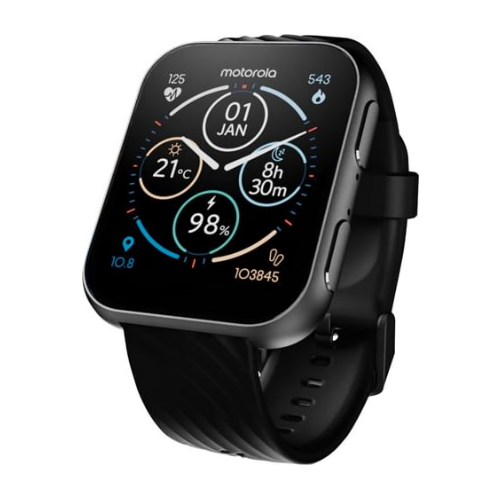
Back in the 2000s, different phone brands had different chargers for their handsets. However, this soon started to shift with the launch of the Android powered smartphones. Now, it seems like a universal charging standard will also be required for smartwatches as well, with India pushing for this change.
Just recently, the European Union had mandated that Apple will have to drop its Lightning Port and adopt the USB Type C port. For those unaware, the USB Type C has mostly become a standard for most Android smartphones and the iPhone maker was the only major brand that chose to stick to its proprietary charging technology. Although, the same cannot be said for the smartwatch market since different wearables features a dedicated charger even for varying models from the same brand.
The Indian government apparently has plans to enforce a new mandate to make USB Type C the universal charging standard for smartphones, but is even working on a similar charge for wearable devices as well. The Secretary to the Department of Consumer Affairs, Rohit Kumar Singh told PTI that the BIS might require all upcoming wearables to ship with support for a standard charging solution.
The consumer electronic products that were mentioned for a universal charging solution includes smartwatches, fitness trackers, wireless earbuds, and headphones. Unfortunately, it is still unclear what form the actual universal charging standard might take. Similarly, the timeline for this universal charging solution is also unclear as of right now. So stick around for more, as we will be providing updates when additional information is available regarding this matter.
Earlier this month, Vivo X90 (review) bagged Bureau of Indian Standards (BIS) certification. Now the device has appeared on Thailand’s NBTC certification website. It has the model number V2218. Additionally, the smartphone has also passed SIRIM certification in Malaysia. This suggests that the Vivo X90’s launch in the Asian markets is imminent. The certification websites don’t reveal any key information about the upcoming smartphone.
Vivo X90 V2218 receives NBTC & BIS Indian certification. Vivo X90 series might launch in the month of February 2023, in India.#Vivo#VivoX90pic.twitter.com/6fK26QZm6E
As per a recent rumour, the Vivo X90 series launch date poster surfaced online. It seemingly revealed that the smartphones will debut in the global market on January 31st, 2023. The brand is yet to officially announce details about the X90 series’s global availability. It also remains to be seen if Vivo will announce all three X90 models at the same event.
The Vivo X90 global variant is expected to retain the same specifications as its Chinese counterpart. The Vivo X90 features a 6.78-inch centre-aligned punch-hole AMOLED display with curved edges, 1.5K resolution, 120Hz refresh rate, HDR10+ support, and a fingerprint scanner. The smartphone has a circular camera module housing a 50MP main sensor, 12MP ultra-wide-angle lens and another 12MP third unit. There is a 32MP selfie snapper.
Internally, the Vivo X90 is powered by a Dimensity 9200 SoC. The device packs up to 12GB LPDDR5 RAM and 512GB UFS 4 onboard storage. The X90 is backed by a 4,810mAh battery with support for 120W charging.
We use cookies on our website to give you the most relevant experience by remembering your preferences and repeat visits. By clicking “Accept”, you consent to the use of ALL the cookies.
This website uses cookies to improve your experience while you navigate through the website. Out of these, the cookies that are categorized as necessary are stored on your browser as they are essential for the working of basic functionalities of the website. We also use third-party cookies that help us analyze and understand how you use this website. These cookies will be stored in your browser only with your consent. You also have the option to opt-out of these cookies. But opting out of some of these cookies may affect your browsing experience.
Necessary cookies are absolutely essential for the website to function properly. This category only includes cookies that ensures basic functionalities and security features of the website. These cookies do not store any personal information.
Any cookies that may not be particularly necessary for the website to function and is used specifically to collect user personal data via analytics, ads, other embedded contents are termed as non-necessary cookies. It is mandatory to procure user consent prior to running these cookies on your website.