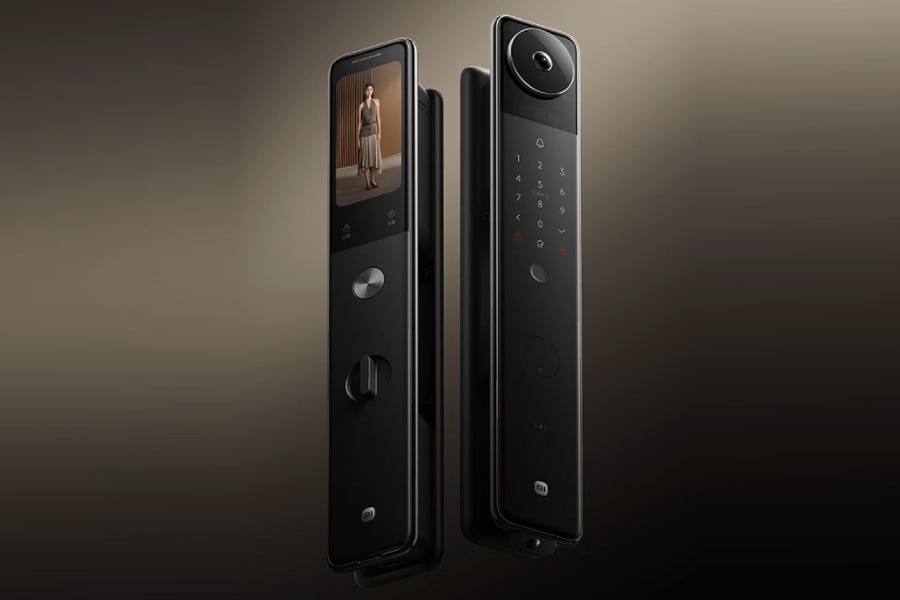
Xiaomi has opened pre-orders for the Smart Lock 5 Max in China. It is priced at 3,529 yuan (about $495), putting it well above more affordable models like the Smart Door Lock 5C, which costs less than 700 yuan.
The Smart Lock 5 Max has a bridge-style design with an AG-finished panel, a glass handle, and a floating panel surrounded by a ring light. Xiaomi says the design is made to fit into different home interiors without looking out of place.
The biggest focus is on the lock’s unlocking options. Xiaomi offers 12 methods in total, including 3D face recognition and palm vein recognition.
The 3D face recognition system supports users between 1.2 and 2 meters tall and can unlock the door in around one second. The palm vein system works from a distance of 10 to 20cm. It can be used by children over 1.1 meters tall as well as older family members who may find fingerprint sensors difficult to use. The lock also has a built-in 192-degree 2K camera with dynamic night vision.
Built-in camera and AI features
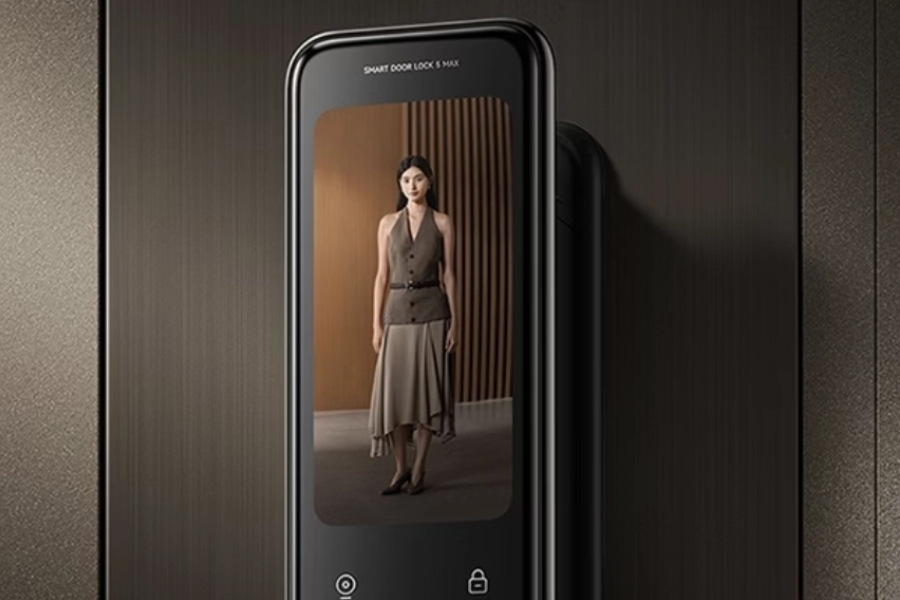
Inside, there is a 5-inch display that lets you see what’s happening outside without opening the door. Xiaomi also uses a large AI model to analyze the camera feed. It can tell whether someone is actually standing at the door or simply walking past, and can also detect when a package has been left outside.
The Smart Lock 5 Max also sends alerts if the door is left open or if someone tries to force the lock. It supports intercom features as well, allowing it to work with other devices in Xiaomi’s smart home ecosystem.
For power, the lock uses two 8,000mAh batteries, which can provide up to 11 months of normal use. When the battery level falls below 10%, the lock switches to a power-saving mode. This keeps basic unlocking functions available for another 2.5 months before you refill the batteries again.
Honor is all set to launch the Honor Magic 9 and Magic 9 Pro Max on Sept. 28. Alongside these two models, the brand is also preparing a supercharged version of the standard model called the Magic 9 Super Edition. While recent leaks have already revealed a few details about the device, a new leak from tipster Bald Panda sheds more light on what to expect.
Starting from the front, the Honor Magic 9 Super Edition will arrive with a 6.81-inch flat AMOLED panel with support for a 1.5K resolution. It is expected to come preinstalled with the Magic 11 OS-based Android 17.
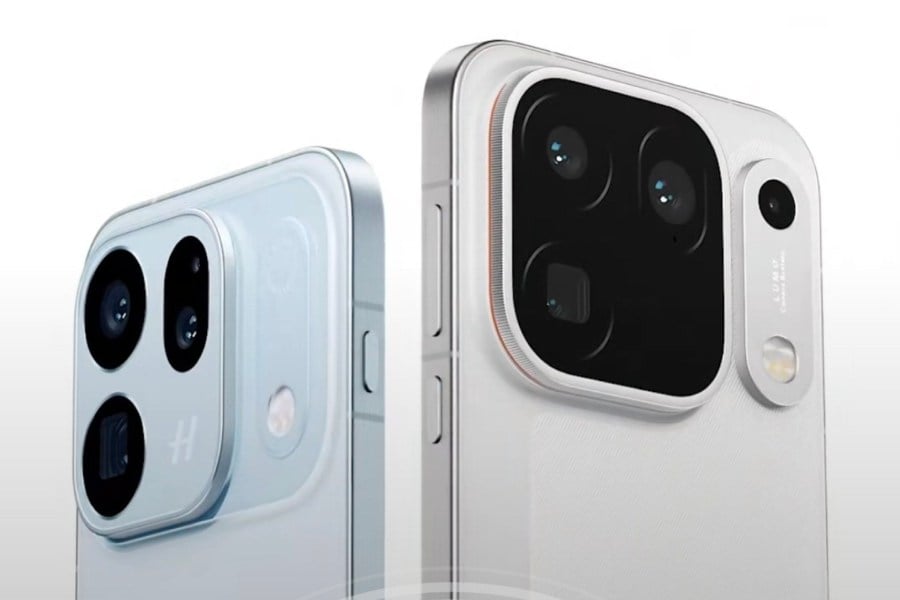
On the back, it will have a 200-megapixel primary shooter, a 12-megapixel ultra-wide lens, and a 50-megapixel telephoto sensor. However, a previous leak claimed that it has a 50-megapixel main camera. For selfies, it will have a 50-megapixel snapper on the front.
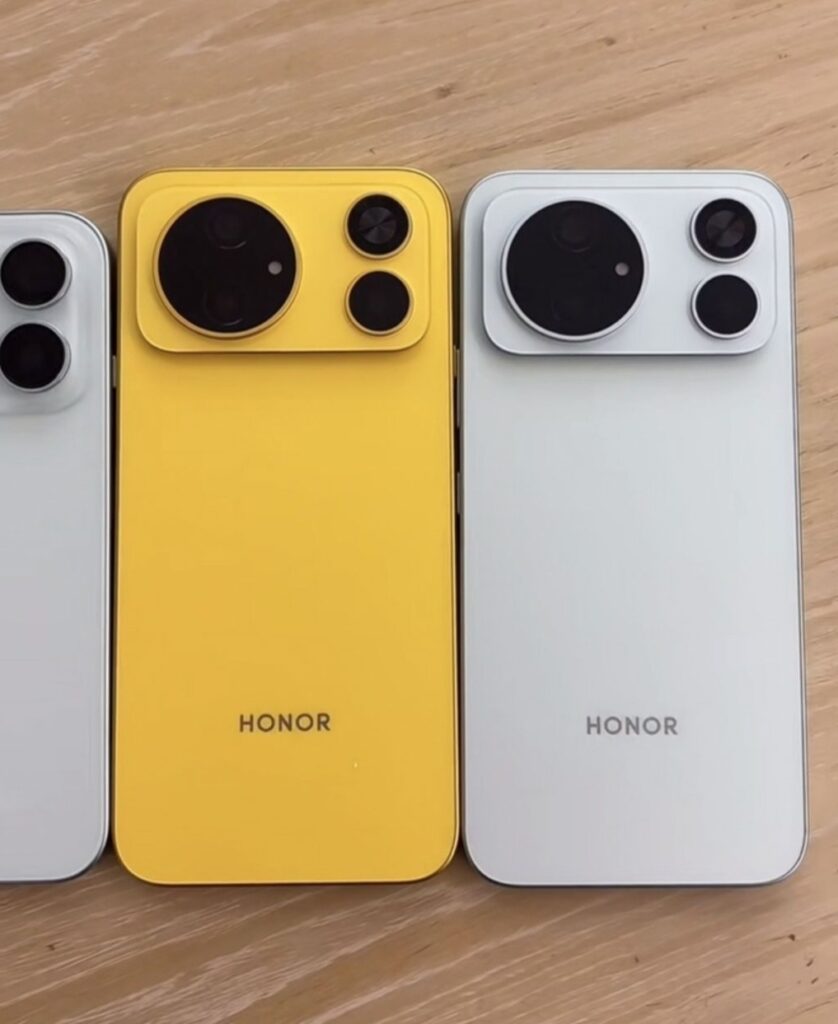
Under the hood, the Magic 9 Super Edition will feature the Snapdragon 8 Elite Gen 5 chipset and house a huge 11,000mAh battery. The device will support 80W wired and 50W wireless charging. For heat dissipation, the handset will also feature a built-in cooling fan. Shown above are some live shots of the device.
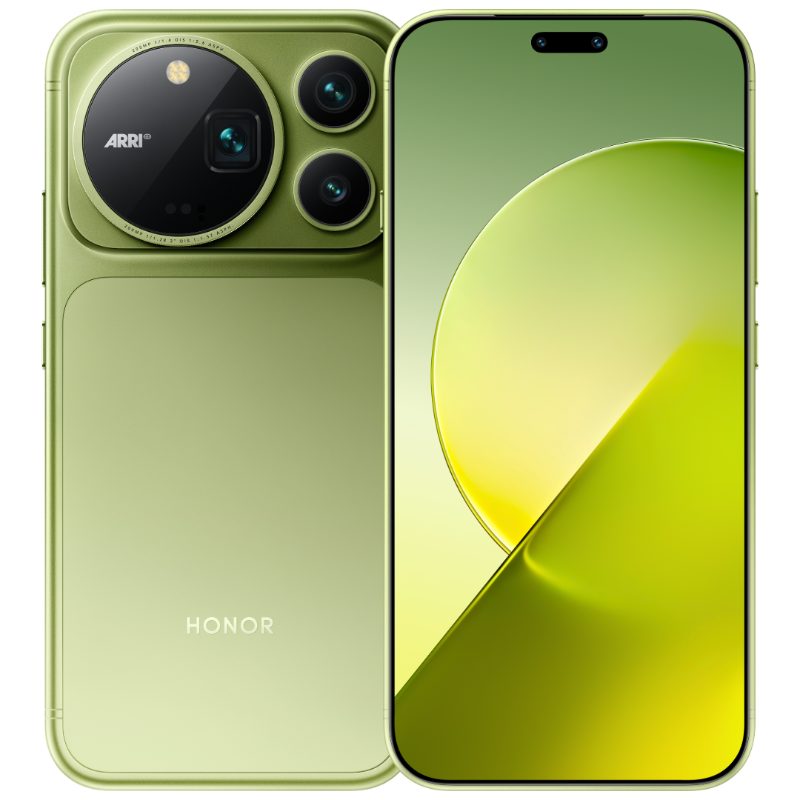
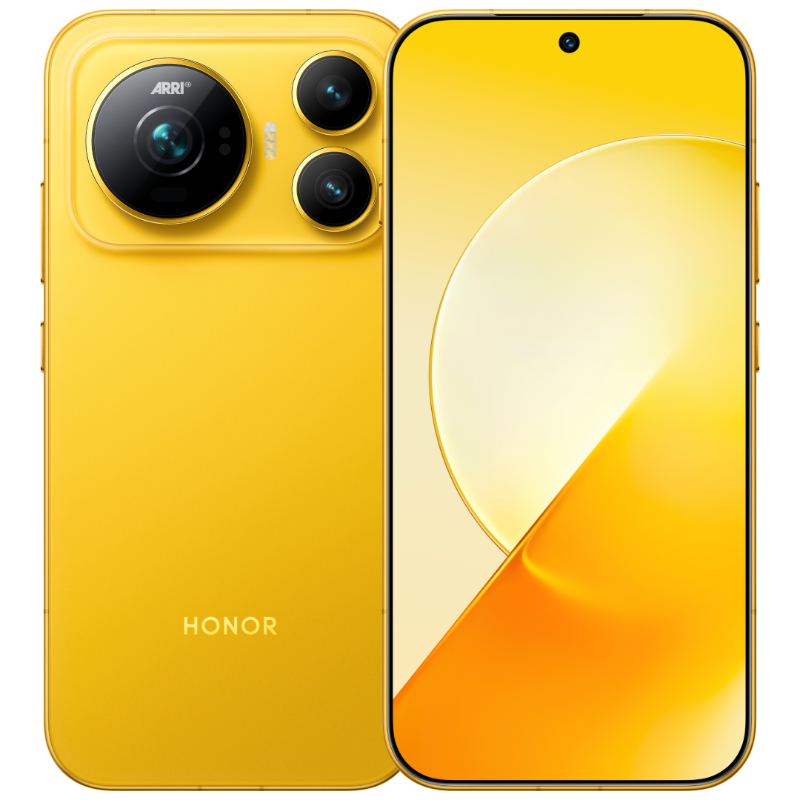
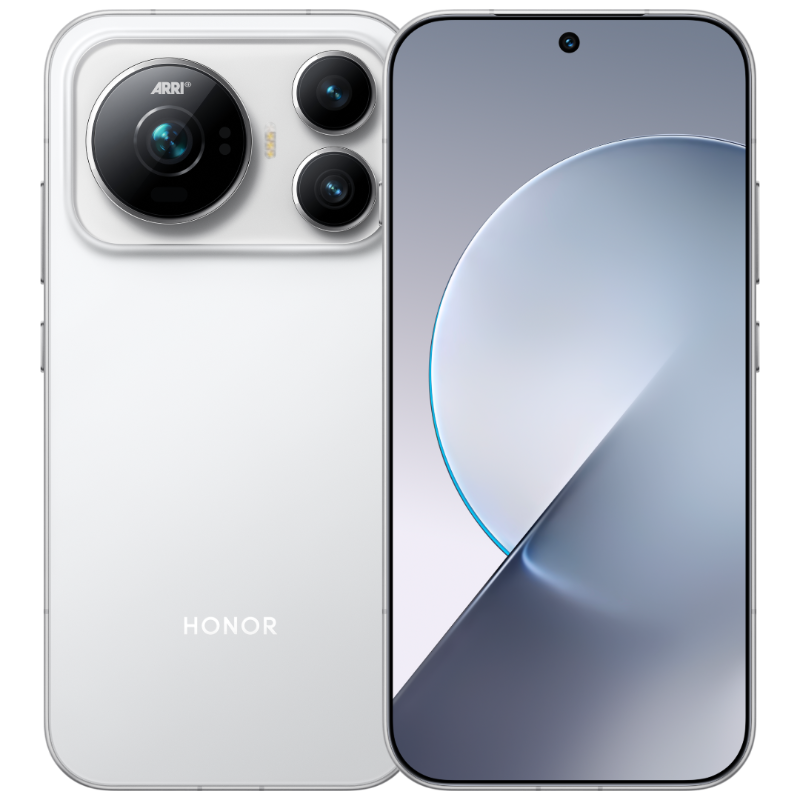
The Magic 9 Super Edition’s pre-order listing has revealed that it will arrive in shades like yellow, green, white, and black. It will be available in variants, such as 12GB+256GB, 12GB+512GB, and 16GB+512GB. Here’s a dedicated post to read about the leaked specs of the Magic 9 and Magic 9 Pro Max.
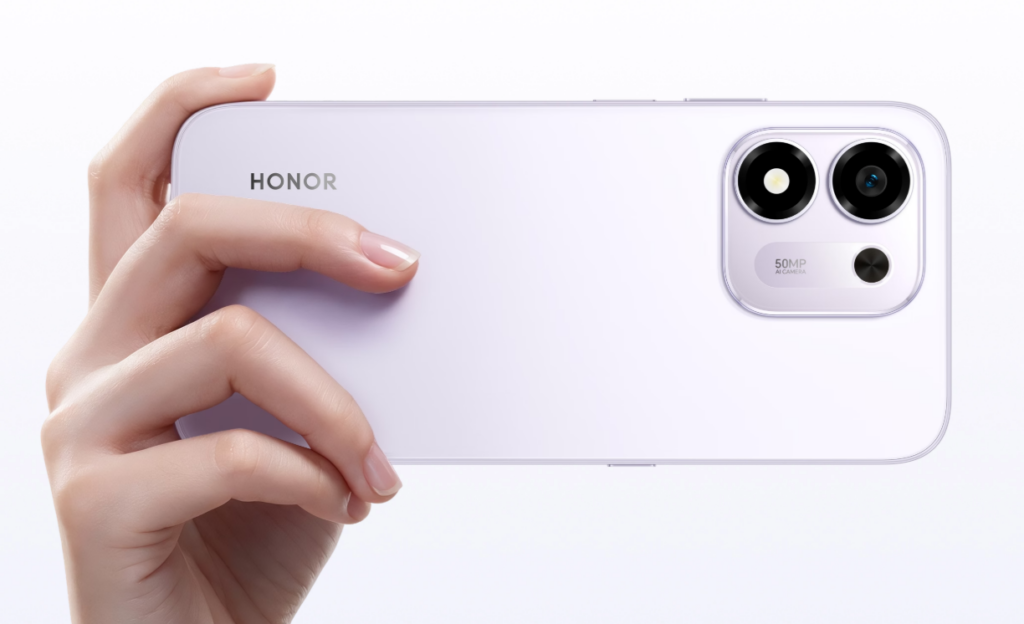
Honor has just added the Play 11 to its affordable smartphone lineup in China. The new model joins devices such as the Play 11C, Play 11T, Play 11 Plus, and Play 11 Pro. With a large 8,000mAh+ battery, Snapdragon processor and rugged build, the Play 11 is aimed at users who prioritize durability and long-lasting everyday use.
The Honor Play 11 features a 6.872-inch TFT LCD with a 1592 x 720-pixel resolution and a 120Hz refresh rate. The panel reaches up to 1,020 nits in HBM mode and includes features such as DC dimming, an eye comfort mode and a natural light-like display mode.
Under the hood, the Play 11 runs on the Snapdragon 4 Gen 4 chip, paired with up to 8GB of RAM and 256GB of storage. The device ships with Android 16-based MagicOS 10.0 and includes a dedicated AI key for features such as one-tap pop-up removal and other AI functions.
The Play 11 features a 50-megapixel rear camera with an f/1.8 aperture and a 5-megapixel front camera with an f/2.2 aperture for selfies and video calls.It carries an 8,300mAh battery, although its rated capacity is 7,900mAh. It supports 45W wired charging and wired reverse charging. Honor says the battery is designed to retain its health over a six-year period under its stated laboratory conditions. The phone also features stereo speakers with a high-volume mode that can increase output by up to 400 percent.
Connectivity options include 5G, dual nano-SIM support, Wi-Fi 5, Bluetooth 4.2, NFC and a USB Type-C port. For security, it has a side-facing fingerprint sensor.The phone also comes with a dedicated AI button on the side. It can identify and dismiss pop-up windows with a single press, helping users return to a cleaner browsing experience. The button also provides quick access to other AI features, including Honor’s Any Door, remote assistance and AI face-swap detection.
Honor Play 11
In terms of durability, the Honor Play 11 arrives with IP68, IP69 and IP69K ratings for water and dust resistance. The phone has also received SGS Gold Label five-star certification for drop resistance and compression resistance, with Honor claiming protection against drops from heights of up to 2.5 metres. The phone measures 168.3 x 78.54 x 8.30mm and weighs 216.5 grams.
Honor Play 11 price and availability
The Honor Play 11 starts at 1,399 Yuan (~$195) for the 6GB+128GB version. The 8GB+128GB model costs 1,599 Yuan (~$225), while the 8GB+256GB variant is priced at 1,899 Yuan (~$2655).
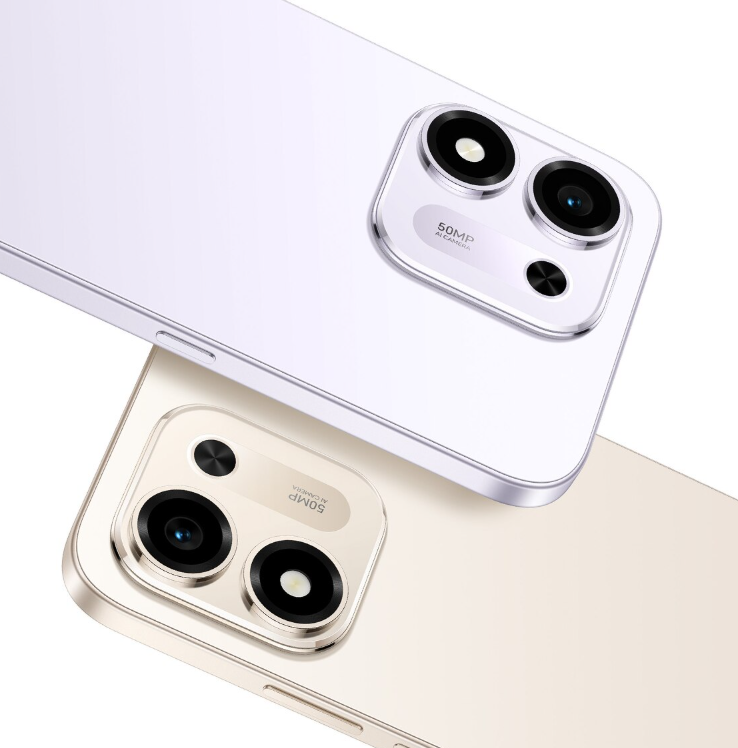
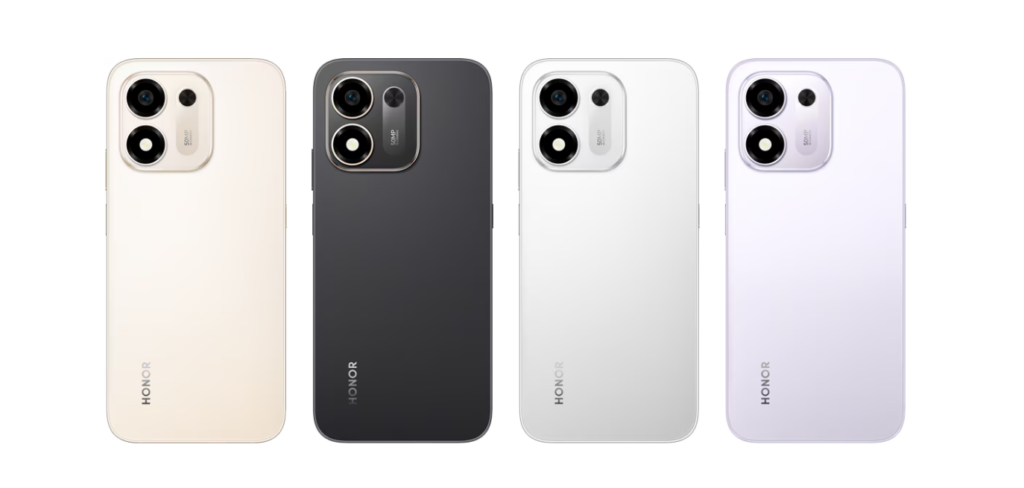
It comes in come color options, such as Desert Gold, Mist Purple, Meteor Silver and Phantom Black finishes. These are Chinese prices, and Honor has not yet announced international availability.
We already know the Honor Magic 9 series is landing in Beijing on September 28, at the same Magic Grand Ceremony where Honor confirmed the ARRI partnership and the September launch window. Now, insider Digital Chat Station has gone further and laid out what look like the near-final specs for both the Magic 9 and the Magic 9 Pro Max.
The device retains IP68/69/69K ingress protection from its predecessor, along with a rounded-corner, ultra-narrow bezel look. You also still get the dedicated AI button alongside a separate shutter button.
Flip it over, and the camera module has moved to a horizontal, large-matrix layout instead of the circular ring Honor offers with the Magic 8 Pro. The main sensor is a 200MP, 1/1.4-inch unit at f/1.9, backed by a 50MP f/2.0 ultra-wide and a 200MP periscope telephoto with a 1/1.56-inch sensor and 3.5x optical zoom at f/2.6.
Powering the phone will be the Snapdragon 8 Elite Gen 5, the same chip in the outgoing Honor Magic 8 Pro. The battery is bigger, though, coming in at 8000mAh with 80W wired and 50W wireless charging. There will also be 3D ultrasonic fingerprint unlocking under the display.
Honor Magic 9 Pro Max
The Pro Max ups the screen size to 6.8 inches with a 2868 x 1320 LTPO panel at 120Hz, and it shares the same 55MP f/2.0 square selfie camera and AI/shutter button pairing as the standard model.
The back has a 200MP, 1/1.28-inch main sensor at f/1.57, a 50MP f/2.0 ultra-wide, and a second 200MP periscope unit built around a larger 1/1.4-inch sensor at f/2.6. This pairs with the Snapdragon 8 Elite Gen 6, Qualcomm’s next flagship platform built on a 2nm node, which puts the Magic 9 Pro Max among the first phones carrying it.
It will have an 8800mAh battery that supports 100W wired and 80W wireless charging, and Honor will offer an extra 3D face recognition on top of the ultrasonic fingerprint sensor for biometrics. You will also get dual 1216 speakers for stereo output.
Besides these two, the line has the Honor Magic 9 Super Edition. Honor just recently confirmed the design and colors of all phones, which you can check here.
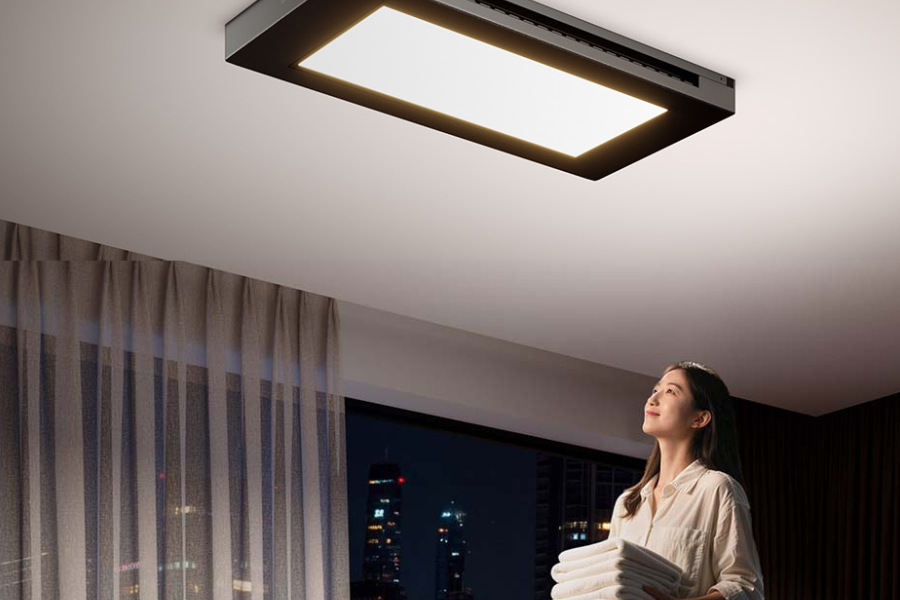
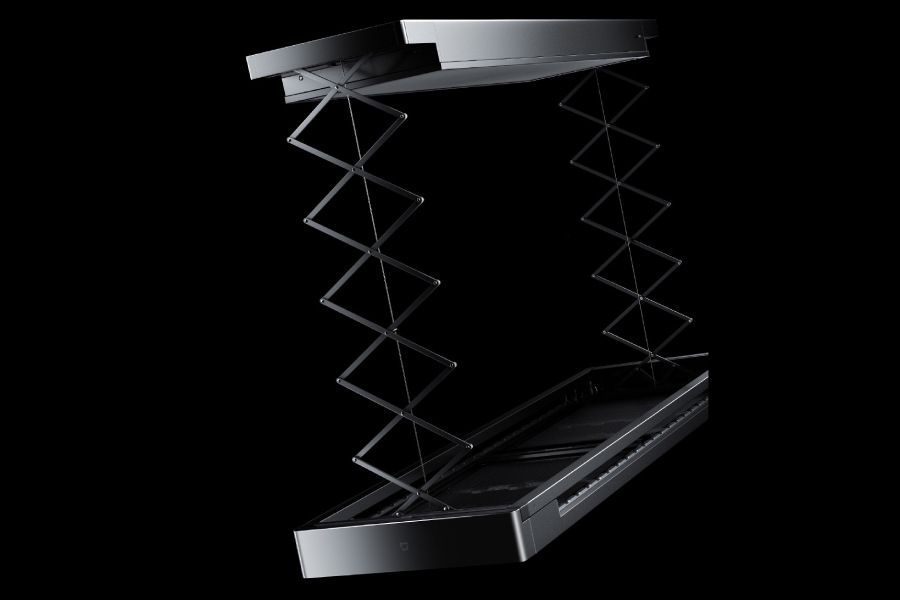
Xiaomi announced a new Mijia gadget in China today — a ceiling-mounted drying system called theMijia Smart Clothes Dryer 3 Max. The product has gone live for crowdfunding on Xiaomi Youpin at an opening price of 2399 yuan (~ $357).
The drying system is built around a flat 9cm-thick body, and Xiaomi has loaded it with enough lighting and drying hardware to justify the “Max” in the name.
The light source is a 42-inch panel along the bottom that hides the air vent from view. You get stepless control over both color temperature and brightness, running from 2700K up to 5700K, and Xiaomi rates the panel at an Ra95 color rendering index. It also meets the RG0 standard, meaning there’s no measurable blue light hazard, and the panel can sense when you’re in the room and adjust the lighting automatically.
As for drying, it has a semi-enclosed zone built around a 770mm air outlet. The outlet pushes out 1250W of hot air alongside 10W of natural airflow, and it is paired with a drying net rated at 99% antibacterial effectiveness. Add in plasma release technology, and you get what the company calls dual-effect sterilization.
Structurally, the dryer relies on a DC motor and a 2.0mm steel wire rope rated for loads up to 45kg. A 2.4m telescopic pole runs the length of the unit and splits it into five distinct zones, and Xiaomi says the whole setup can hold around 80 pieces of clothing or two quilts at a time.
You can control the lift height and timing straight from the app. There’s also a scheduling option that lets you lower the rack during the day and raise it again at night automatically.
Xiaomi hasn’t said whether the Mijia Smart Clothes Dryer 3 Max will make it beyond China, and given the pattern with its past ceiling dryers, don’t count on an international release anytime soon.
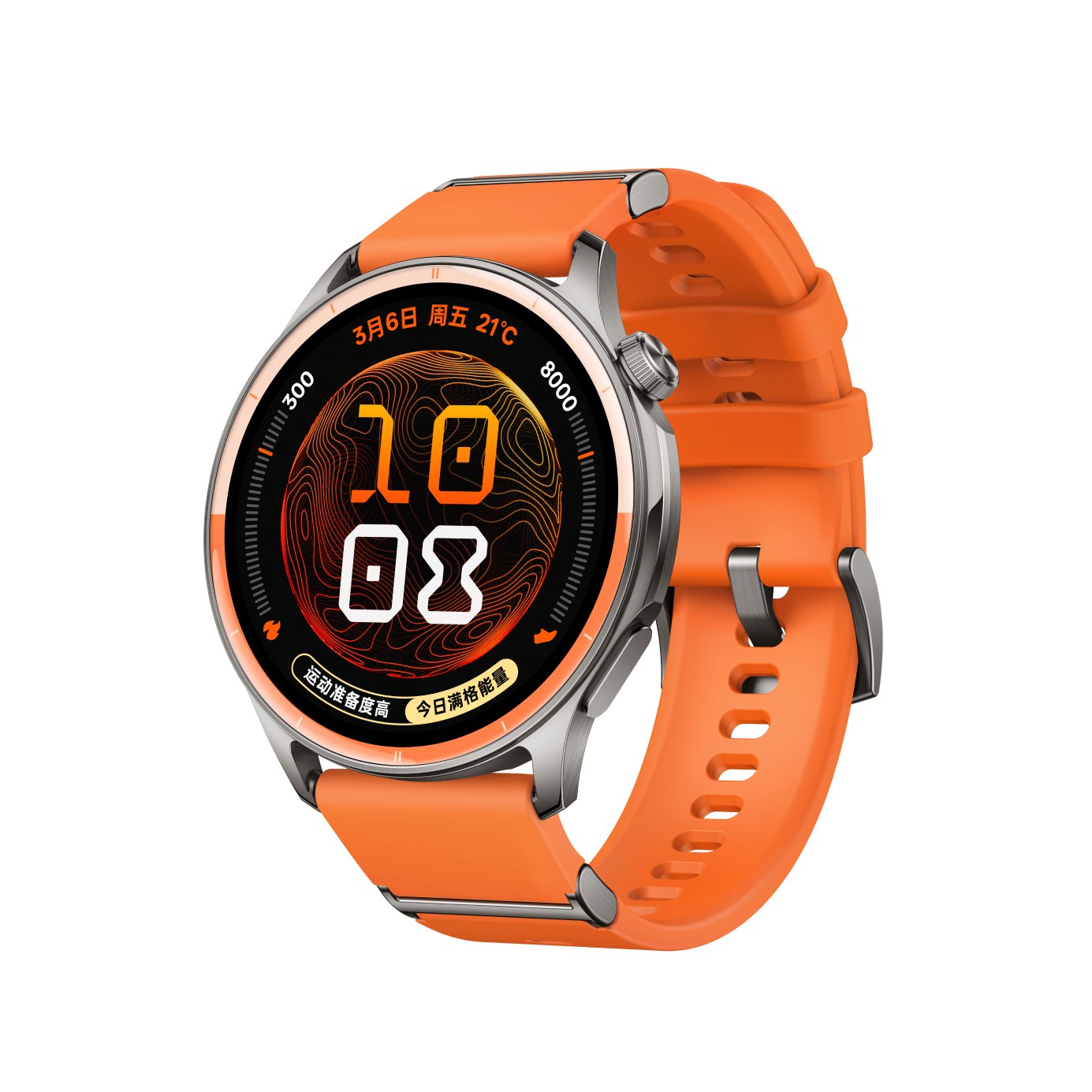
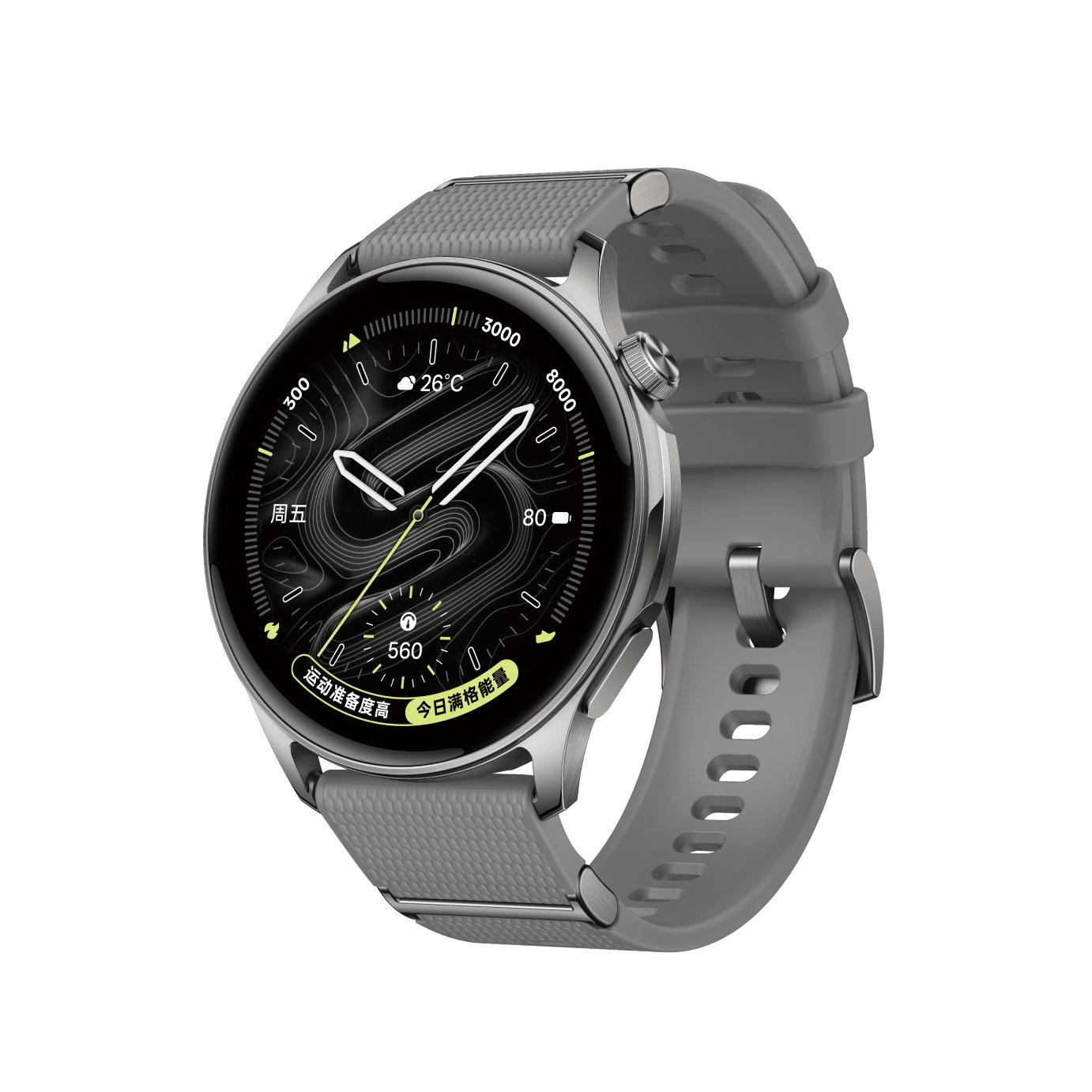
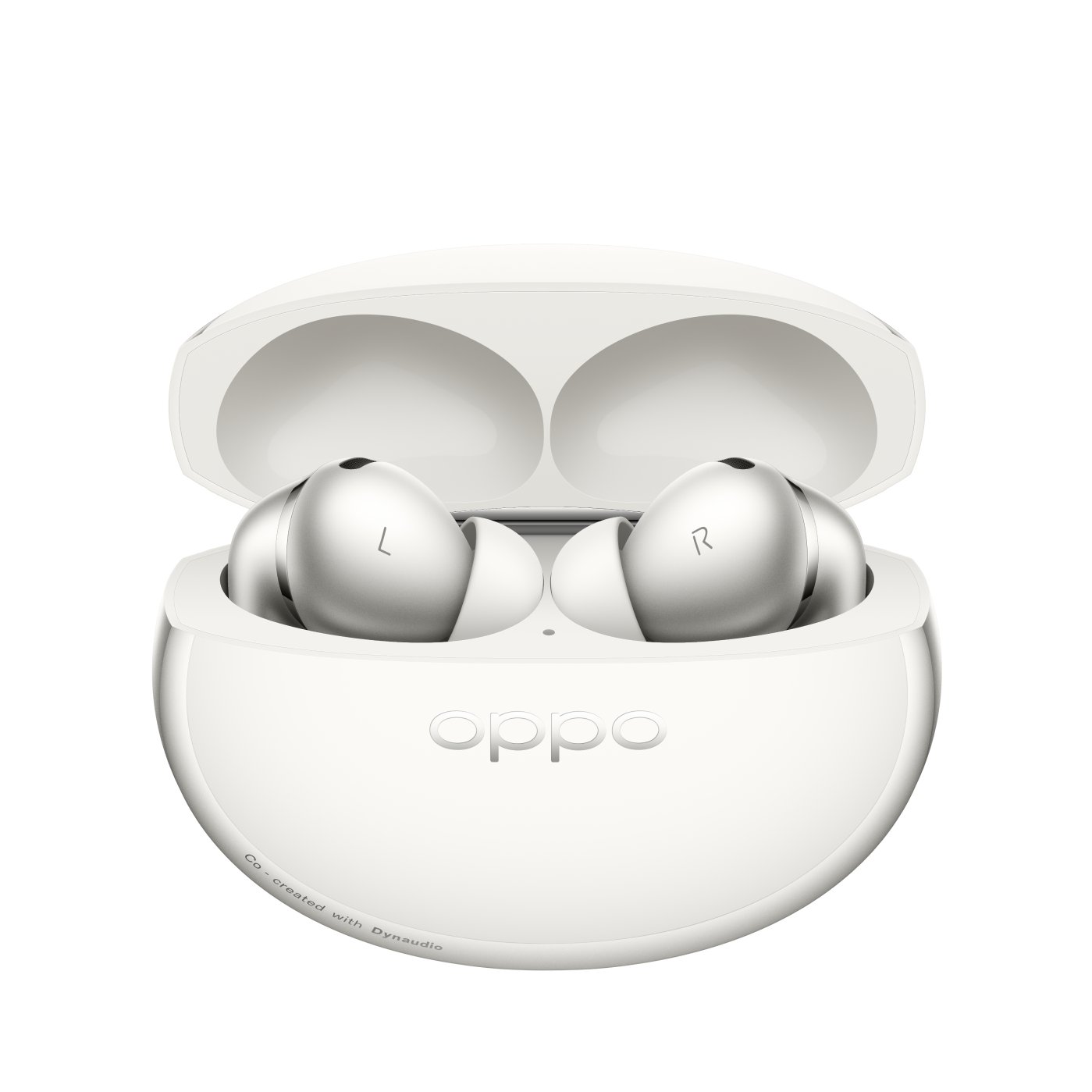
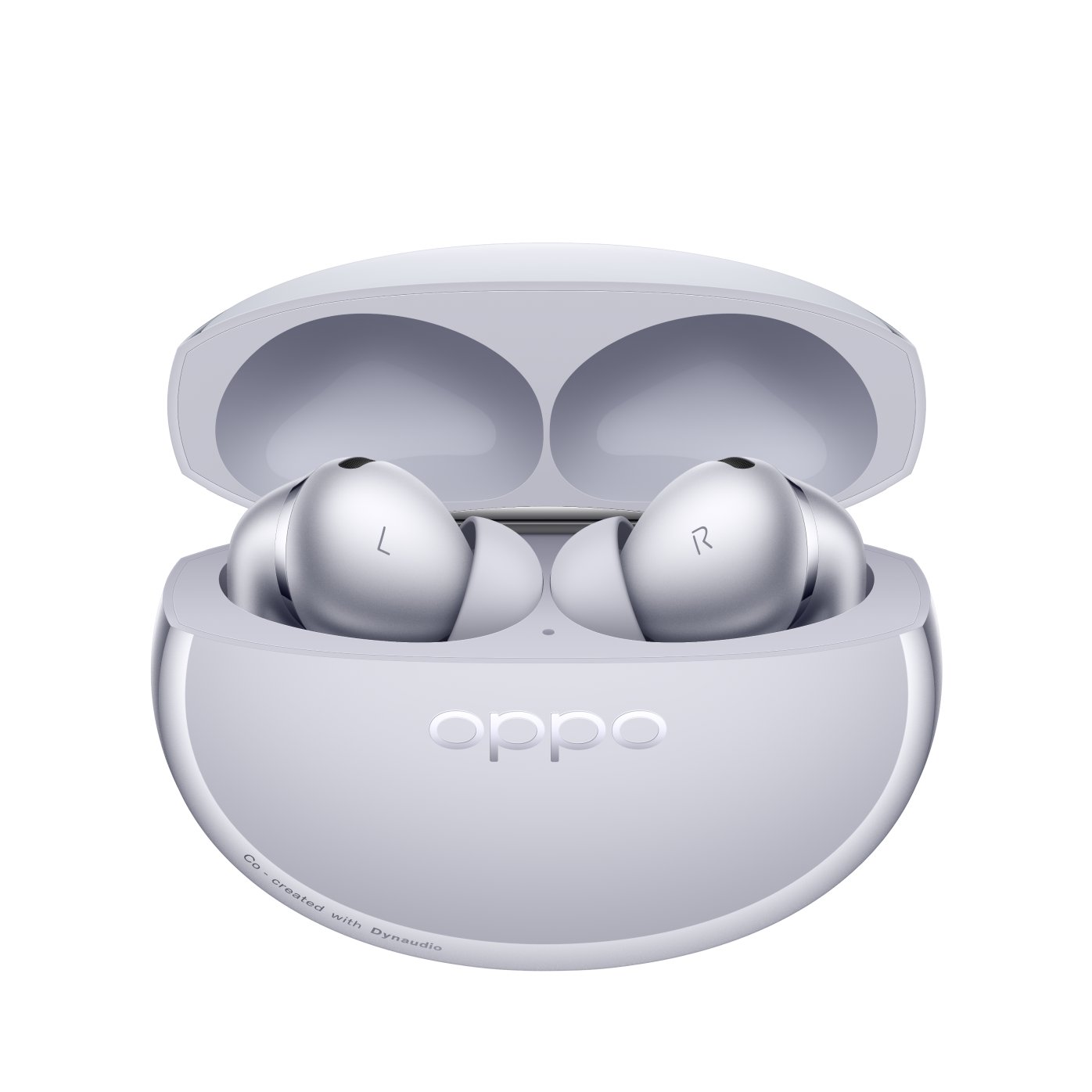
Oppo has just confirmed that the Find X10 series will be unveiled on September 22 in China. Following the announcement, the company has updated the pre-order pages for the Find X10E, Find X10, and Find X10 Pro Max with official images, configurations, and color options. The Watch S2 and Enco X4 TWS earbuds have also received updated listings, as both are expected to launch alongside the new Find X10 lineup.
Oppo Find X10 Pro Max configurations and colors
The Oppo Find X10 Pro Max will be offered in Warm Orange, Moon White, and Light Titanium. Buyers will reportedly have four memory and storage combinations to choose from, starting with 12GB of RAM and 256GB of storage. The lineup will also include 12GB+512GB, 16GB+512GB, and a top-end 16GB+1TB configuration, giving users multiple options depending on their storage requirements.
Oppo Find X10, Find X10E configurations and colors
The standard Oppo Find X10 will come in Qingcheng, which is shown in an orange finish, along with Ice Blue and Light Titanium. Its configuration lineup mirrors the Pro Max, with 12GB+256GB, 12GB+512GB, 16GB+512GB, and 16GB+1TB options. This gives the standard model the same maximum RAM and storage combination as the flagship Pro Max.
The Oppo Find X10E will have a smaller selection of configurations, with 12GB+256GB and 16GB+512GB options. It will be available in Ice Blue and Light Titanium, giving buyers two finishes to choose from.
Reports suggest that the Find X10 and Find X10 Pro Max will be powered by the Dimensity 9600M and Dimensity 9600 Pro chips, respectively. The latter is said to be a completely new 2nm chip, while the Dimensity 9600M could be a 3nm chip based on the existing Dimensity 9500 with some tweaks, but without changes to its CPU and GPU cores. There is currently no information about the chipset powering the Find X10E.
Oppo Watch S2 and Enco X4 color options
The Oppo Watch S2 will also launch alongside the Find X10 series. Its listed color options include Vibrant Orange, Misty Powder, and Mountain Shadow Gray. On the other hand, the Enco X4 are listed in Pink Gold, Soft White, and Titanium Grey.
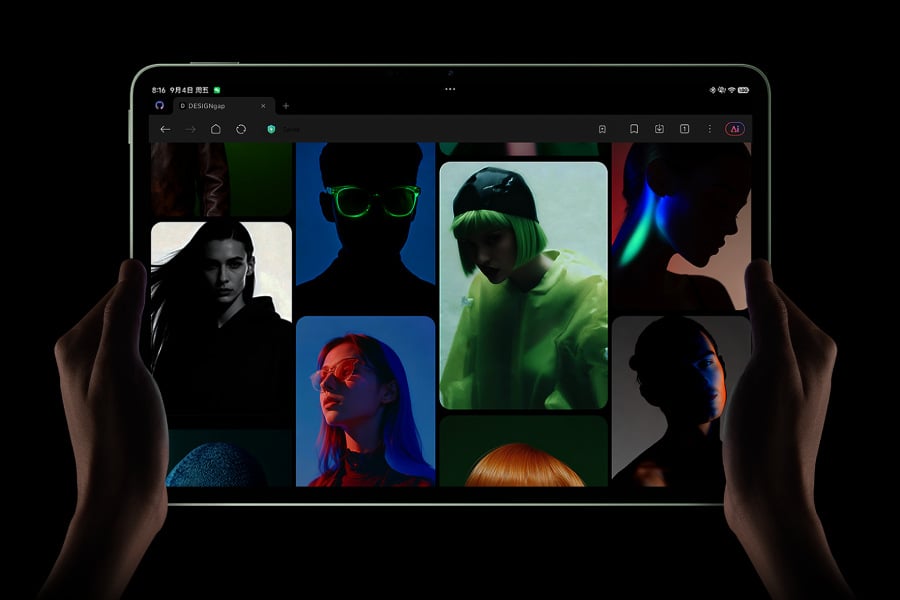
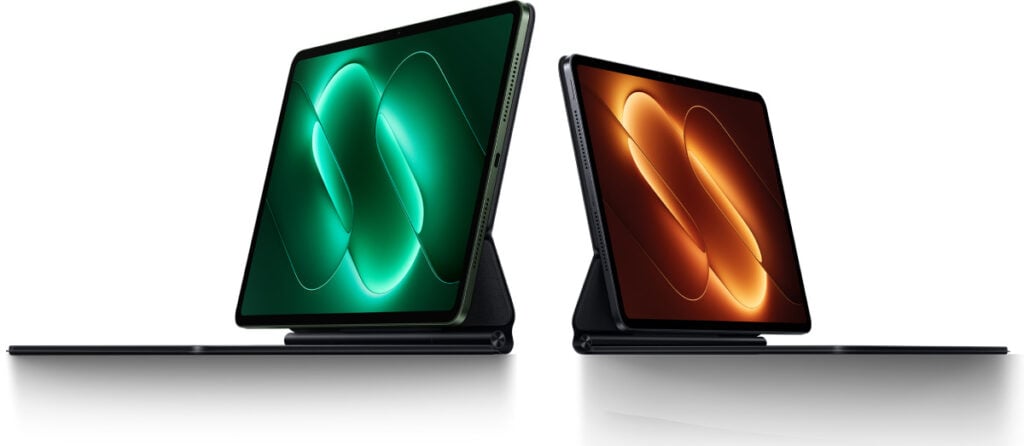
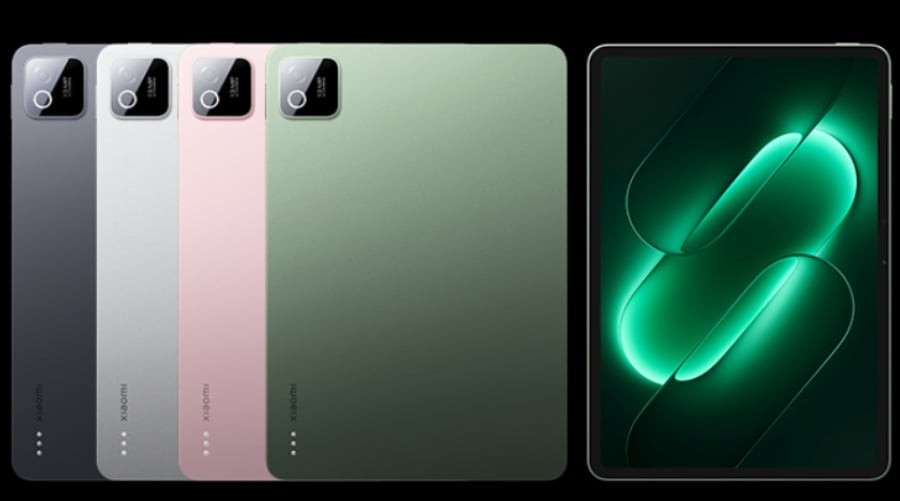
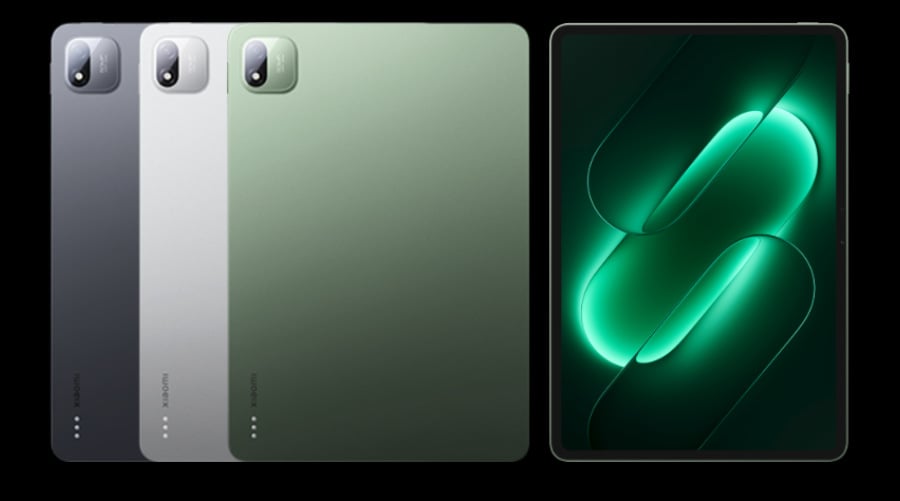
Xiaomi announced the Pad 9 Pro Max at a big launch event last week, but its smaller siblings are getting a quieter debut. The company has now launched the Xiaomi Pad 9 and Pad 9 Pro in China with large batteries, high-refresh-rate displays, and Snapdragon chips. Unlike the Pad 9 Pro Max, neither tablet uses Xiaomi’s XRING O3 chipset.
Start with what you get on both. Each tablet uses a 3.2K LCD panel (3200 x 2136) with a 3:2 aspect ratio, a 144Hz refresh rate, and 12-bit color depth with DCI-P3 coverage, HDR10, HDR Vivid, and Dolby Vision support. Xiaomi has also carried over its eye-comfort certifications on both — Circadian Friendly, Flicker-Free, and hardware-level low blue light — plus wet-touch support, so the screen still responds when your hands are damp.
Xiaomi Pad 9
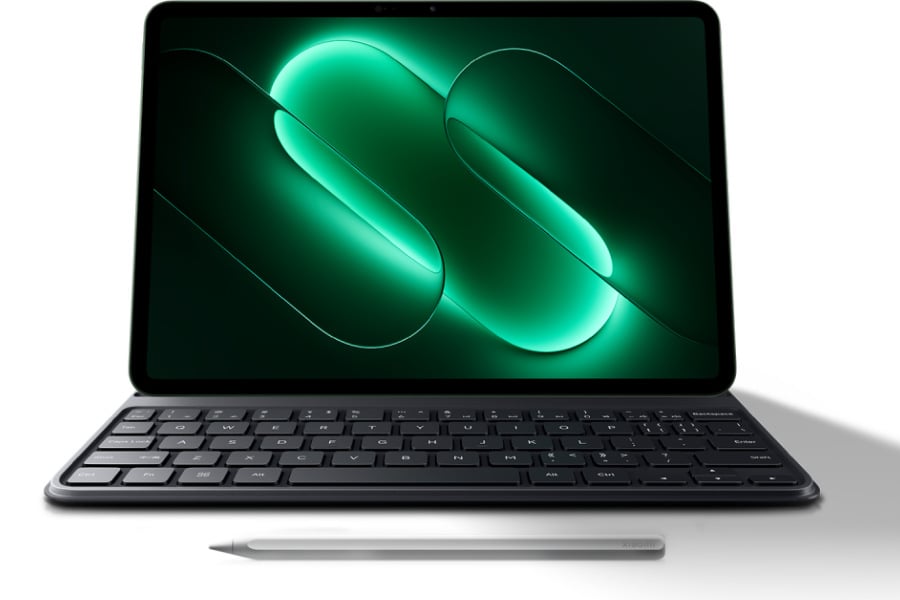
You also get the same software suite across the board: WPS for Pad handles office work, CapCut Pro is built in for video editing, and both tablets support Xiaomi’s magnetic pen and a PC-style floating keyboard for when you want to work rather than just browse.
Where the two split is size and power. The Pad 9 Pro gets a 12.5-inch display, while the standard Pad 9 has an 11.2-inch panel. Both are 12-bit LCD screens with a refresh rate of 144Hz, DCI-P3 coverage, and a 3:2 aspect ratio. The Pro’s screen also has a brighter 1000 nits peak versus 800 nits on the smaller model.
Xiaomi Pad 9 Pro
Chip-wise, the Pad 9 Pro runs the Qualcomm Snapdragon 8 Gen 5 platform, an octa-core chip built on a 3nm process and clocked up to 3.8GHz, paired with an Adreno GPU. The Pad 9 uses the Snapdragon 8s Gen 4, the same processor Xiaomi already used on the Pad 8, so the standard model isn’t a huge leap in raw performance.
Moreover, the Pad 9 Pro packs an 11,000mAh battery with 67W wired charging and 22.5W reverse charging, while the Pad 9 gets a smaller 9,720mAh cell with 45W charging support.
The Pad 9 Pro is also the heavier and thicker of the two at 580g and 5.8mm, while the Pad 9 stays notably light at 485g and 5.75mm thin, with a soft-light display option adding a few grams to both.
Xiaomi Pad 9
As for cameras, the Pad 9 Pro has a 50MP main camera capable of 4K video, along with a 32MP front camera for video calls. The Pad 9 trims this down to a 13MP main camera and an 8MP front lens, both capped at 1080p video, though it keeps most of the same shooting modes minus a few of the Pro’s extras, such as the teleprompter’s higher-res feed.
Both tablets also have keyboard and stylus support. The Pad 9 Pro tops out at 16GB of RAM with 256GB of UFS 4.1 storage, while the Pad 9’s ceiling is 12GB of RAM paired with the same 256GB UFS 4.1 option. Both start from an 8GB/128GB base configuration.
Pricing and Availability
The Xiaomi Pad 9 starts at 2,999 yuan (around $450) for the 8GB+128GB model. The 8GB+256GB version costs 3,299 yuan (around $495), while the 8GB+256GB soft-light version costs 3,499 yuan (around $525). The top-end 12GB+256GB model is priced at 3,799 yuan (around $570).
The Pad 9 comes in Silver, Spruce Green, Black, and Ice Peach Pink.
Xiaomi Pad 9Xiaomi Pad 9 Pro
The Xiaomi Pad 9 Pro starts at 3,799 yuan (around $570) for 8GB+128GB. The 8GB+256GB model costs 4,099 yuan (around $615), while the 12GB+256GB version is priced at 4,599 yuan (around $690). The 12GB+256GB soft-light version costs 4,799 yuan (around $720), and the 16GB+256GB model tops out at 4,999 yuan (around $750).
The Pad 9 Pro is available in Silver, Spruce Green, and Black.
Honor has revealed more details about its upcoming Magic 9 lineup. The company has confirmed the storage configurations and color options for the Magic 9 Pro Max, Magic 9, and Magic 9 Super Edition. All three phones are scheduled to launch on September 28 and are already listed for pre-orders, giving us a clearer idea of what each model will offer.
The Honor Magic 9 Pro Max will be available in Moss Green, Silver, and Shadow Black. Its configurations include 12GB+256GB, 12GB+512GB, 16GB+512GB, and 16GB+1TB.
As per a recent report, the Magic 9 Pro Max will house a 6.8-inch OLED panel with 0.98mm slim bezels. Dubbed Black Diamond, the display is said to deliver deeper blacks and brighter visuals, potentially making it one of the standout features of the upcoming flagship.
The phone is also expected to use the Snapdragon 8 Elite Gen 6 Pro chipset and pack an 8,800mAh battery. Its camera setup could include dual 200-megapixel ARRI cameras, a 55-megapixel square selfie camera, while biometric authentication is expected to combine 3D facial recognition with an ultrasonic fingerprint sensor. A unibody metal design is also tipped.
Honor Magic 9 variants, colors, key specs
Honor Magic 9
The Honor Magic 9 will come in Yellow Rice, Olive Green, Morning White, and Curtain Black. Storage options include 12GB+256GB, 12GB+512GB, 16GB+512GB, and 16GB+1TB.
The same report has revealed that the Magic 9 will be a compact flagship with a 6.37-inch 1.5K display with slimmer bezels than the Pro Max. It could run on the Snapdragon 8 Elite Gen 5 and feature an 8,000mAh battery. Its rear cameras are expected to include a 200-megapixel main sensor, 50-megapixel ultrawide camera, and 200-megapixel 1/1.56-inch periscope telephoto camera. An ultrasonic in-screen fingerprint sensor and unibody cold-carved glass design are also expected.
Honor Magic 9 Super Edition variants, colors, key specs
The Honor Magic 9 Super Edition will be offered in Yellow Rice, Olive Green, Morning White, and Curtain Black, with 12GB+256GB, 12GB+512GB, and 16GB+512GB configurations.
Leaks suggest a 6.8-inch 165Hz display, Snapdragon 8 Elite Gen 5, and a huge 11,000mAh battery. Its cameras could include 50-megapixel main, 12-megapixel ultrawide, and 50-megapixel telephoto sensors. Active cooling and a glass-fiber body are also expected.
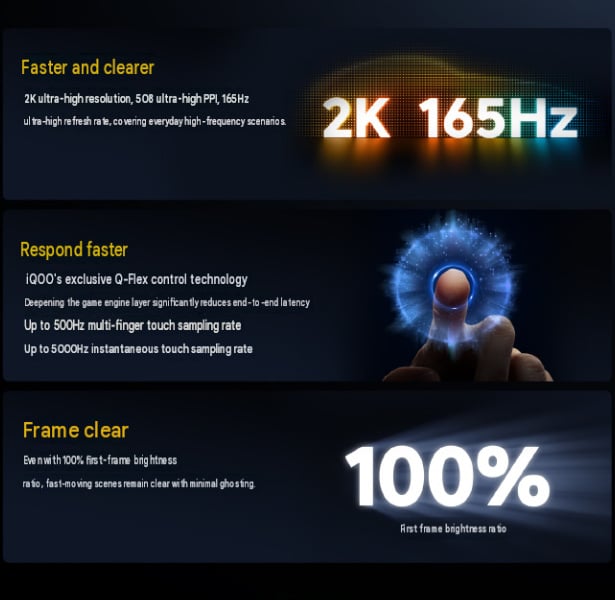
After revealing the iQOO 16’s design last week, iQOO has now officially detailed its display. At today’s Samsung Display × iQOO screen technology event, iQOO confirmed that the iQOO 16 will be the world’s first smartphone with a 2K 165Hz display. The panel uses Samsung’s new 2K LEAD 2.0 technology, which was developed jointly by the two companies.
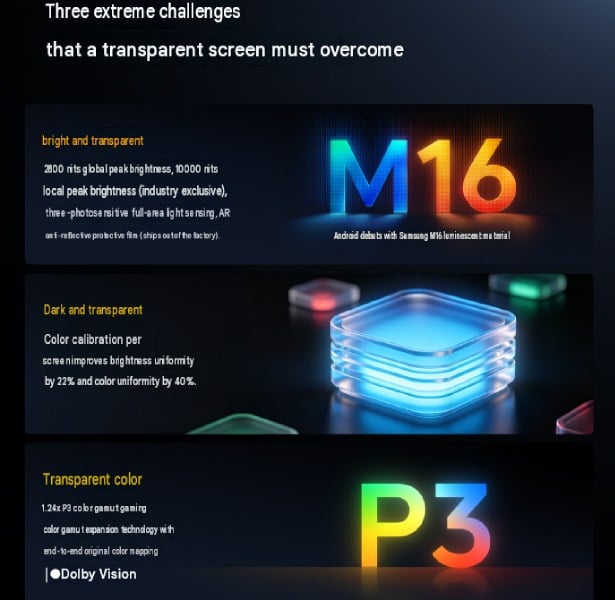
The partnership covers more than just the display. It includes Samsung’s M16 luminescent material, a custom high-refresh-rate IC designed for the panel, and a dedicated production line for iQOO’s flagship phones.
On the color side, the panel offers 1.24 times P3 gamut coverage, along with screen-by-screen calibration. iQOO says color uniformity has improved by 39.6%, while brightness uniformity is up by 22.3% compared with its previous generation.
The company is also using its own color and brightness compensation algorithm to calibrate the display at the sub-pixel level. iQOO claims the panel offers a color accuracy of ±0.001, although independent testing will give us a better idea of how that performs in real-world use. This continues the display work iQOO started with the iQOO 15’s original LEAD OLED panel.
Moreover, iQOO says the display has a 100% first-frame brightness ratio, which it claims is the highest in the industry. The phone also gets a new touch chip with 5000Hz instantaneous touch sampling and 500Hz multi-finger sampling.
For gaming, it has iQOO’s Q-flex control technology to reduce input latency between the user’s touch and the action on screen.
iQOO 16 is also the world’s first to feature a Samsung M16 panel
The M16 material is also notable because the iQOO 16 will be the first Android phone to use Samsung’s latest luminescent material. This was already reported when the display details leaked in August.
The panel supports 1,100 nits of manual peak brightness, 2,800 nits of global peak brightness, and up to 10,000 nits of local peak brightness.
Other display features include three-photosensitive full-area light sensing, an unpolarized natural light display, full-brightness DC dimming, PWM dimming up to 3300Hz, and a gaming glare protection mode.
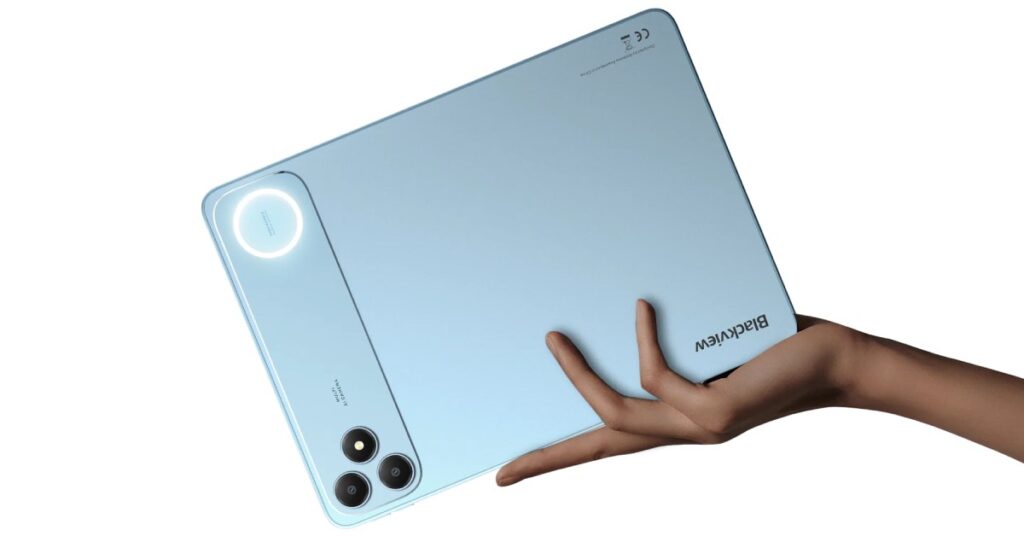
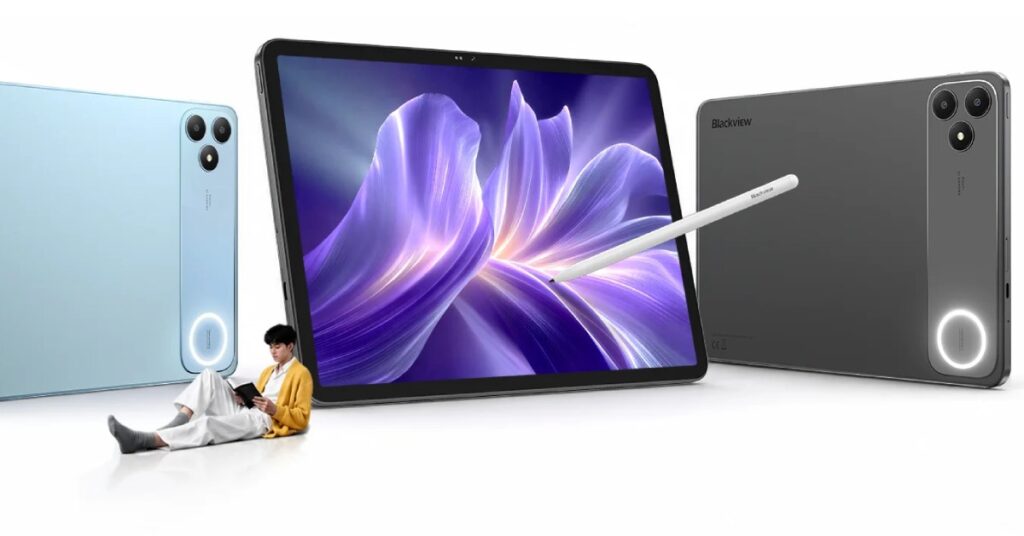
Look at the back of the Blackview Zeno 6 Pro, and you’ll notice something familiar. The rectangular camera housing sitting in the corner isn’t the round or pill-shaped module you’re used to seeing on budget tablets. It’s the same squared-off block that Apple popularized on the iPhone 17 Pro, and now it’s showing up on an 11-inch slate that costs a fraction of what a Pro-series iPhone does.
The tablet itself pairs an 11-inch, 2,300 x 1,600 display with a 120Hz refresh rate. Blackview says the screen has a 94.7% screen-to-body ratio and 255 pixels per inch, and the panel carries TÜV SÜD low-blue-light certification alongside reading, dark, and night-light modes. You also get Widevine L1 certification, so streaming apps that support it can push video up to 1080p.
Inside, you get a Snapdragon 4 Gen 2 built on a 4nm process, paired with either 8GB or 12GB of LPDDR4X RAM and 256GB of UFS 2.2 storage. The latter is expandable up to 2TB via microSD card.
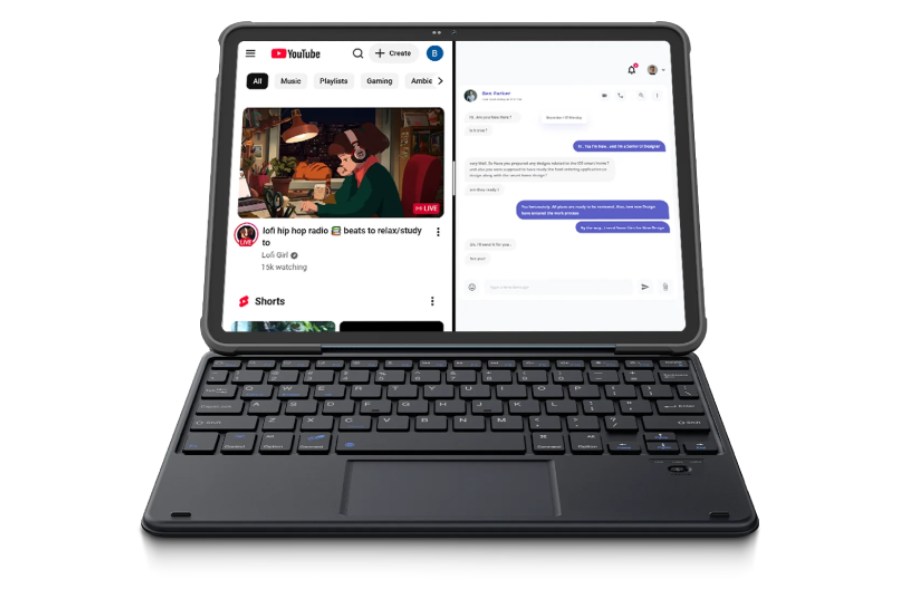
As for productivity, the Zeno 6 Pro has Split Screen 2.0 and PC Mode 3.0 that let you run floating windows and a desktop-style taskbar, and a four-finger swipe switches between that and the standard interface.
The in-box content includes a wireless keyboard along with a wireless mouse, stylus, protective case, screen protector, wired earphones, an 18W adapter, and a USB-C cable.
On the camera front, you’re looking at a 13MP rear sensor with 1080p video and an 8MP front camera, backed by a built-in light for low-light shots and video calls.
The tablet runs DokeOS_P 5.0 on top of Android 16, with Wi-Fi 5, Bluetooth 5.0, dual-SIM support, and LTE. Navigation support is broad, covering GPS, GLONASS, Galileo, BeiDou, NavIC, and QZSS.
Physically, the Zeno 6 Pro measures 246.4 x 177.3 x 8.4mm, weighs 513 grams, and is available in Interstellar Black and Glacier Blue. Audio comes from dual 2W BOX speakers with Smart-PA. Keeping lights on is an 8,300mAh battery with 18W fast charging.
Oppo has been confirming pieces of the Find X10 story in stages over the past few weeks — camera hardware, display specs, and now, finally, what the phones actually look like. The company put out official images early this morning, and the series will come in four colors: Moon White, Warm Orange, Ice Blue, and Light Titanium.
Oppo has also set September 22 as the global debut date for the Find X10 series. The series is already open for pre-reservations in China.
The listing page it cites confirms three models in the lineup: the standard Find X10, the Find X10 Pro Max, and the Find X10 E. Tagging along for the launch are the Watch S2 and Enco X4.
Oppo Find X10 series: What we know
Most of what’s inside the Find X10 series is already public before these phones land. On the camera front, the standard Find X10 packs two 200-megapixel sensors — a primary shooter and a telephoto — while the Pro Max steps up to three 200-megapixel cameras covering the same triple-lens spread. Both models share the Hasselblad Ultra-Clear Original Camera setup, built around a second-generation Danxia color restoration lens that pulls in light and color data across 24 sampling channels.
The display side got its own round of confirmations too. Oppo worked with Tianma on a new OLED panel called Tiangong Screen 2.0 that cuts blue light exposure while improving low-brightness performance.
On the Find X10, the panel sits behind bezels measuring just 0.99mm on all four sides — the thinnest Oppo has managed on a Find series phone, down from 1.45mm on the Find X8 and 1.15mm on the Find X9. It will have an 8,000mAh battery, and Oppo says the cell is rated to hold up over five years of regular use.
The Find X10 runs a MediaTek MT6993 chip — four cores at 2.70GHz, three at 3.50GHz, and a prime core up to 4.21GHz, paired with a Mali-G1-Ultra MC12 GPU — which lines up with the Dimensity 9500.
The Find X10 Pro Max has MT6995, MediaTek’s first 2nm chip, widely expected to launch as the Dimensity 9600 Pro. Both listings show 16GB of RAM and Android 17, though the software on these units is still pre-release, so final benchmark numbers should shift by launch.
The Find X10 E is the one piece Oppo hasn’t detailed yet. It’s confirmed as part of the three-model lineup alongside the standard Find X10 and Pro Max, but its chipset, along with the rest of its specs, remains unannounced.
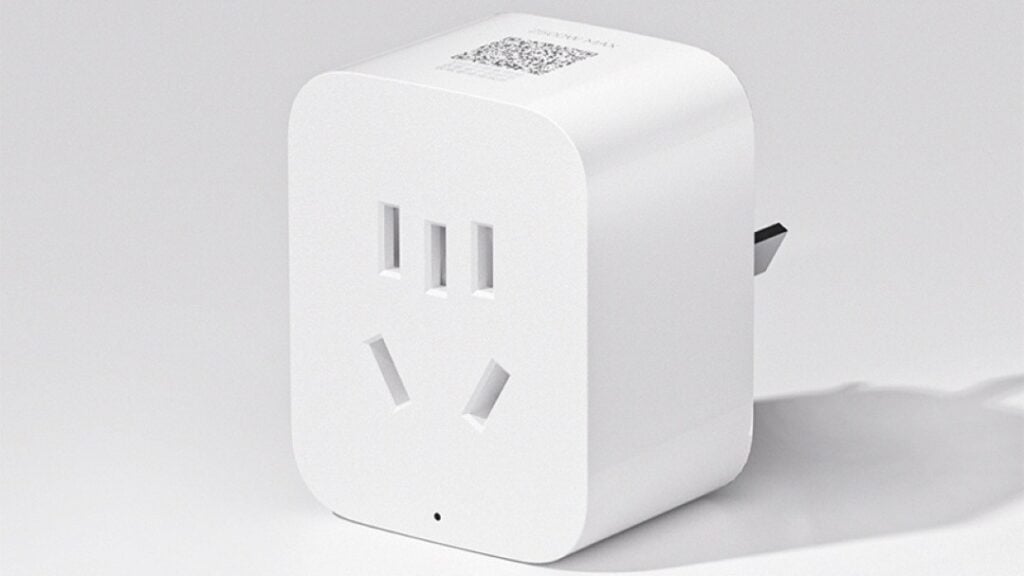
Xiaomi has opened crowdfunding for a new smart plug that makes it easy to turn regular appliances into smart ones.
The Xiaomi Smart Socket 4 is listed on Xiaomi Youpin for 49 yuan (around $7), with the campaign running until September 16 at 09:59:59. The regular price will be 59 yuan. It’s a compact plug aimed at people who simply want remote control and energy tracking for older devices around the house.
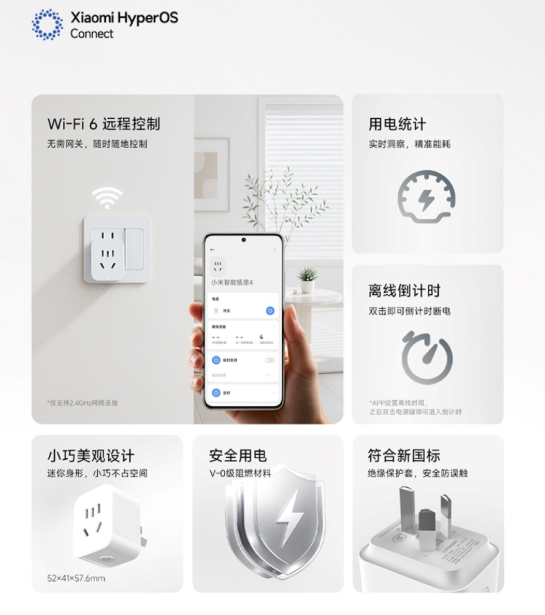
It connects straight over Wi-Fi 6 (2.4 GHz only), so you don’t need a separate gateway. Combined MU-MIMO and OFDMA tech should keep things stable even when you’ve got a bunch of devices online at once, commands don’t have to sit in a queue. Basically, you can make ordinary appliances respond through your phone instead of walking over to flip a switch.
The socket works with Xiaomi’s HyperOS Smart Connect system and shows up in the Mi Home app. From there you can control it alongside your other devices and set up custom automation scenes that match your daily routine. It also has a high-precision metering chip that gives you clear charts for power use, so you can check daily, weekly, or monthly stats whenever you want.
Timer and countdown functions run locally on the plug itself. That means scheduled tasks keep working even if the internet drops, and power cuts off automatically when the time is up. You can also set the physical button so a double-press starts a countdown and shuts everything off without opening the app.
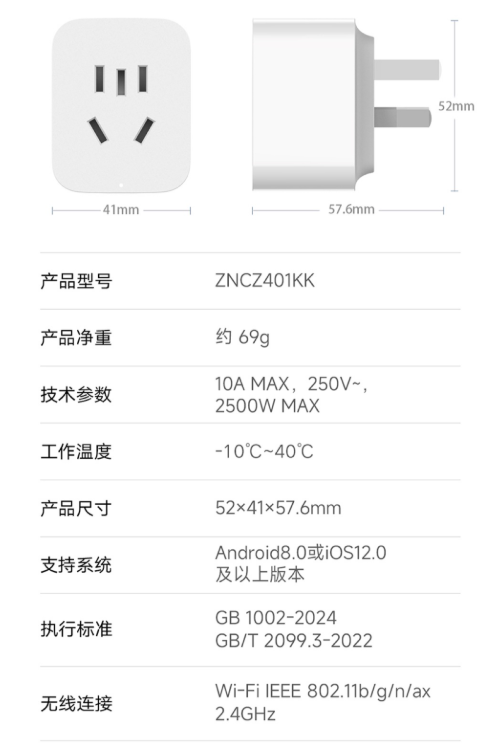
A few practical upgrades stand out: the body is smaller (52 × 41 × 57.6 mm), so it blocks fewer neighboring outlets on a power strip. It uses the updated Chinese national standard plugs with insulated sleeves for better safety. There’s also protection against overheating, surges, over-current/overload, plus charging safeguards and a child lock. In the app you can set power limits anywhere from 100 W to 2500 W.
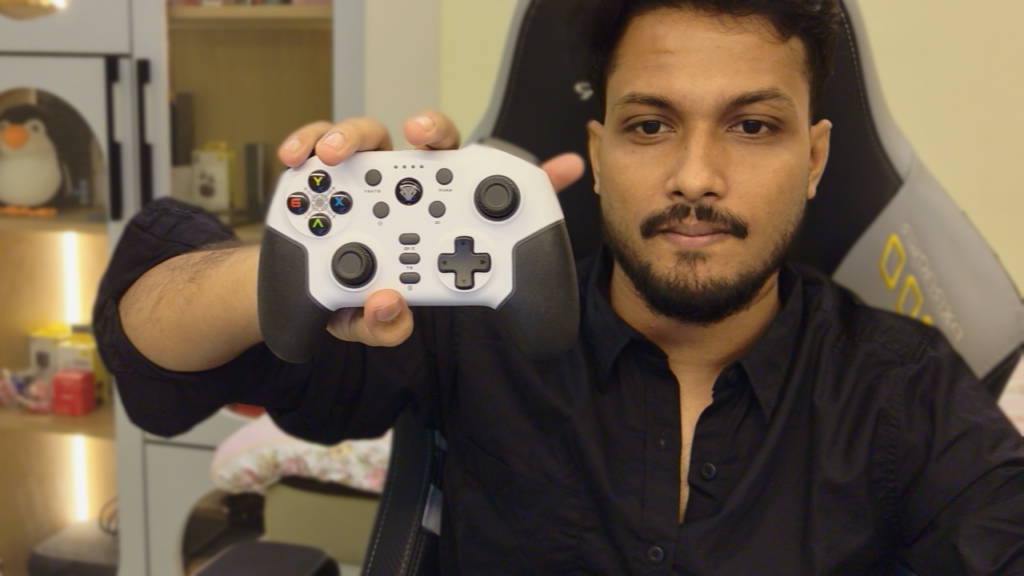
I’ve been using Obsbot cameras for quite a while now. Recently, I reviewed their Tiny 3 series, which I absolutely loved for its smooth, robotic tracking, so when Obsbot sent over the new Meet Flip as a review unit, I was eager to see how it fit into their lineup.
I’ve been using this camera for over two weeks now as my primary webcam for work in my home office. Unlike the complex gimbals of the Tiny line, the Meet Flip takes a much simpler approach.
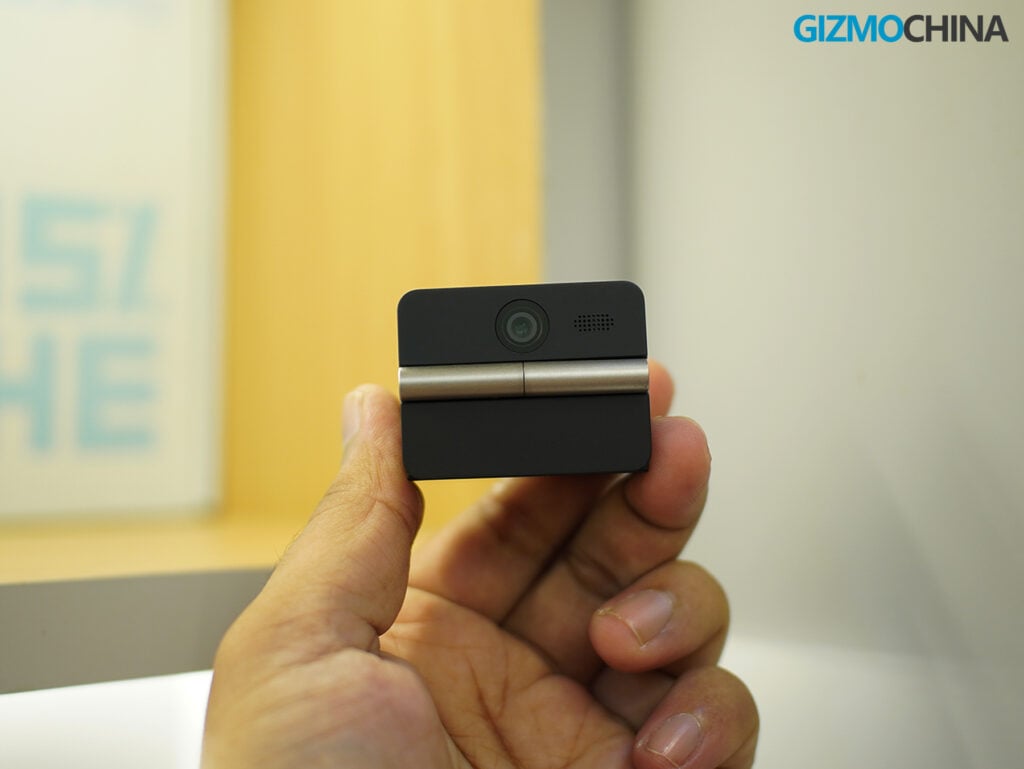
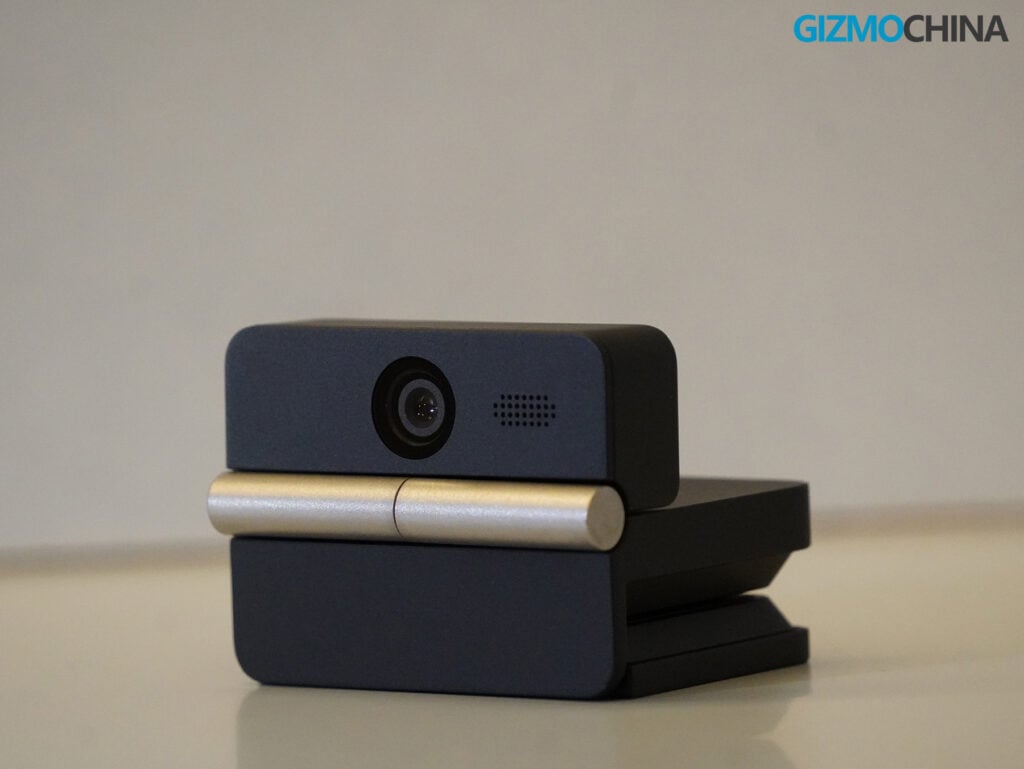
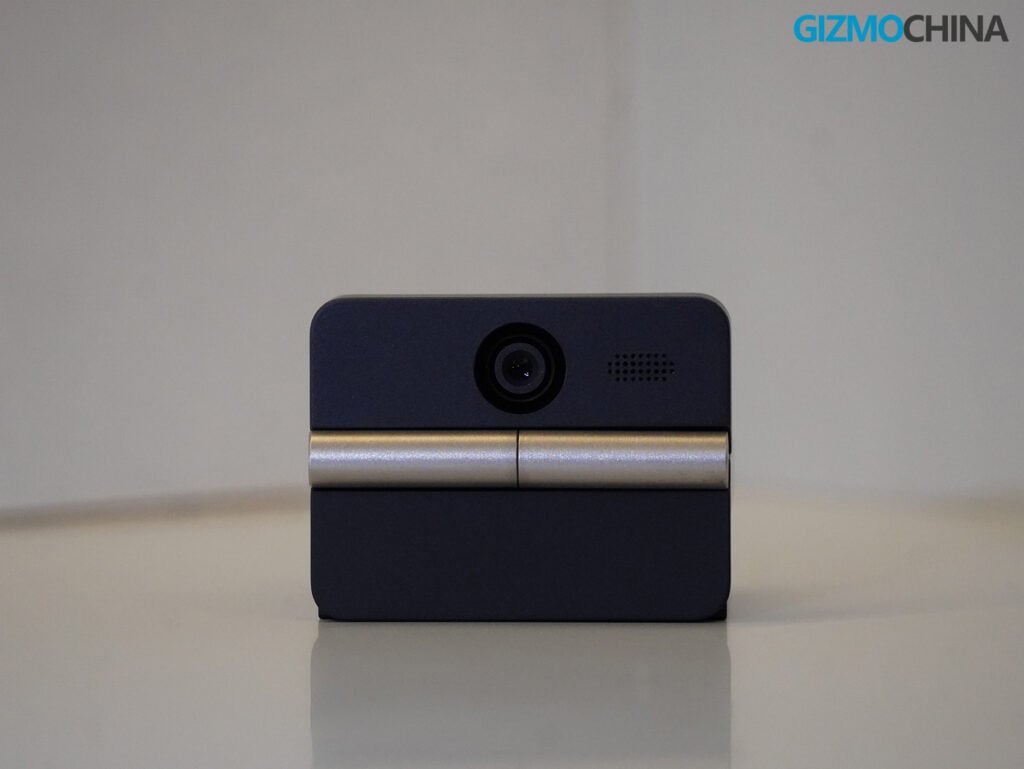
The Meet Flip is a 4K webcam that prioritizes portability and privacy. Its defining feature is right in the name: a hinge that lets you fold the camera lens inward when you aren’t using it. It’s a simple mechanical solution to a modern problem. When the camera is folded, it goes to sleep, and the lens is physically covered.
Here is a realistic look at what it does well, where it falls short, and whether it’s worth adding to your setup.
Design and Build Quality
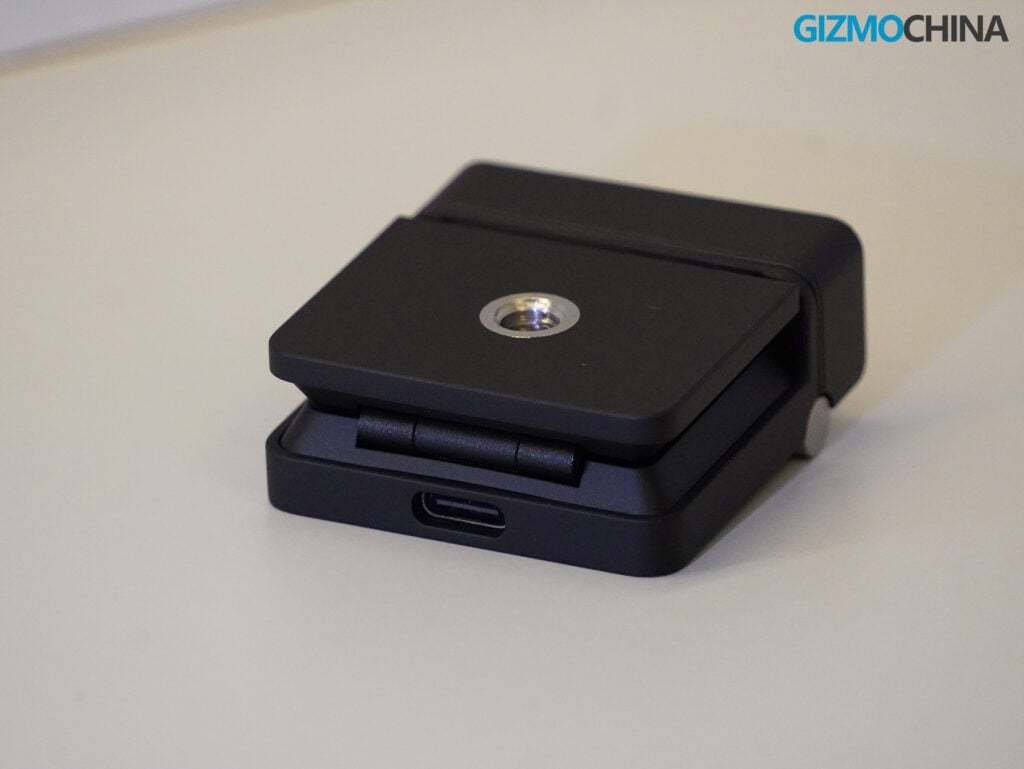
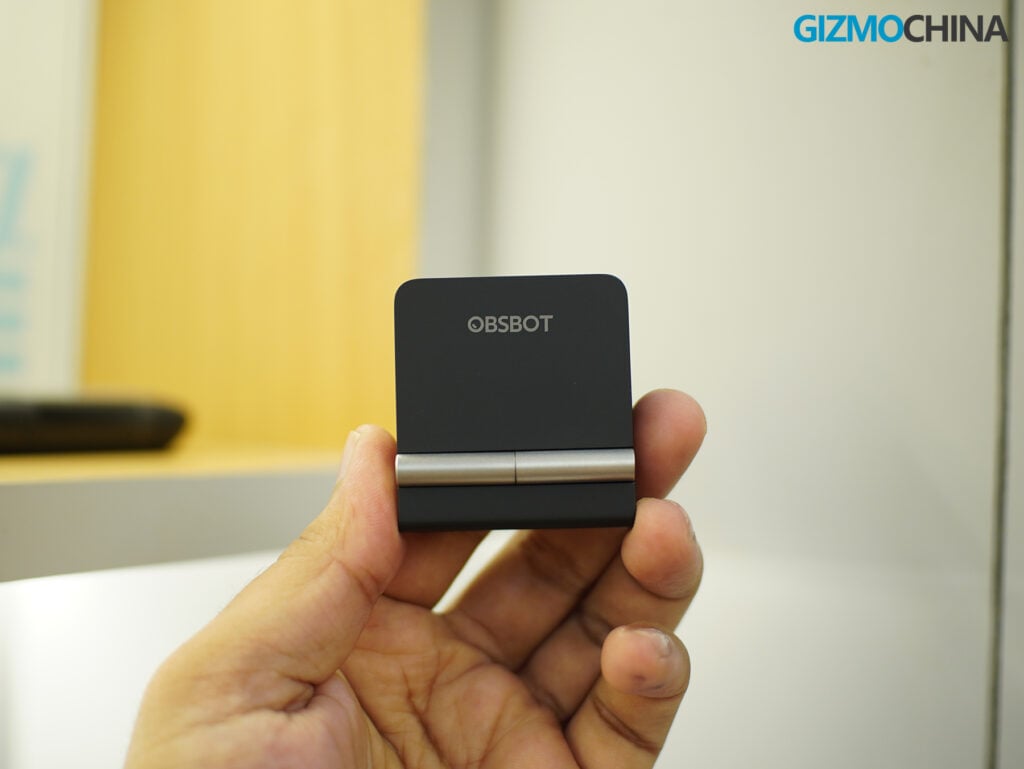
The first thing you notice about the Meet Flip is its size. It weighs just 37.7 grams, and when folded, it measures roughly 1.6 x 1.8 x 0.7 inches. It is remarkably compact, taking up almost no room on a desk or in a laptop bag if you do need to pack it away. You don’t need a special carrying case; the folding design naturally protects the lens from scratches and dust.
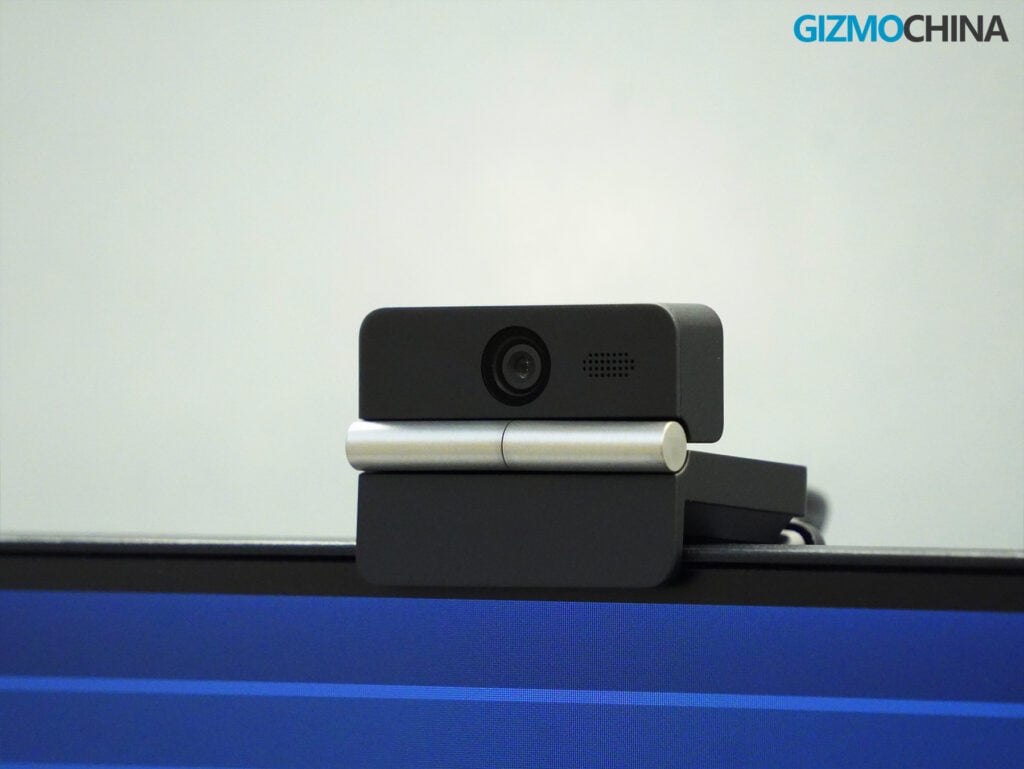
Visually, it’s a very subtle device. It has a matte black finish, a silver hinge in the middle, and a small status light around the lens to let you know when it’s active. It doesn’t draw attention to itself, which I appreciate for a device meant to sit in a professional environment.
The folding mechanism is easily my favorite part of the design. Many webcams come with flimsy plastic privacy sliders that are easy to forget, or magnetic caps that eventually get lost. The Meet Flip makes privacy the default state of storing the device. You open it to turn it on, and you close it to turn it off. It offers a simple, physical reassurance that your camera isn’t watching you when the meeting is over.
Mounting and Setup
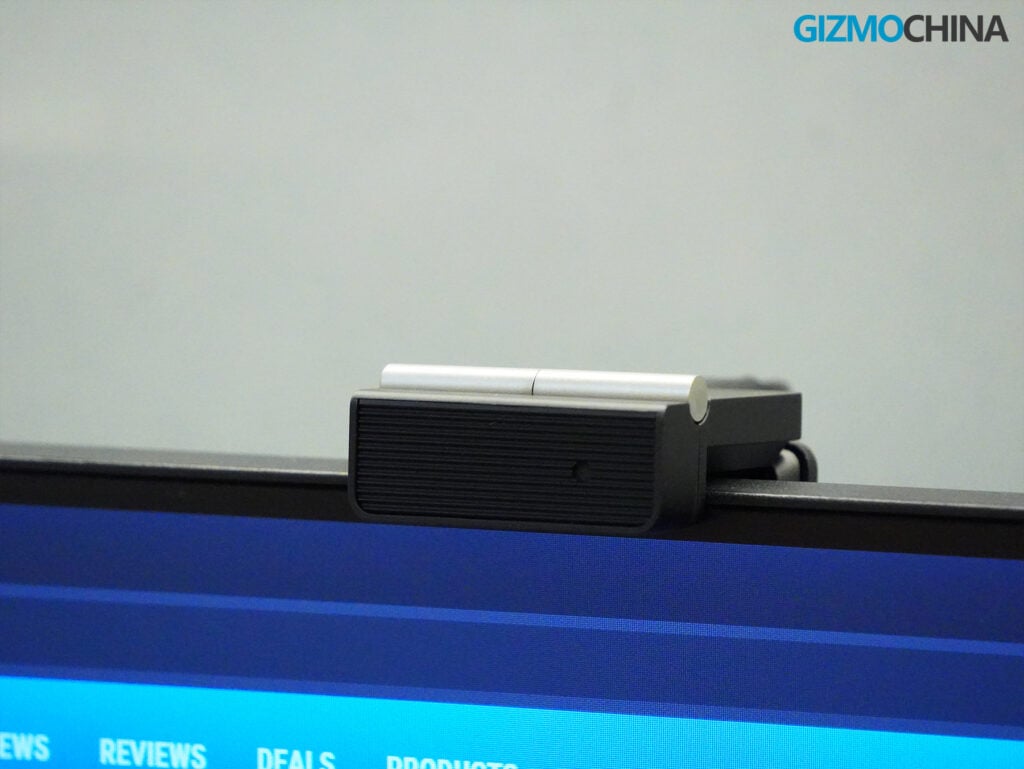
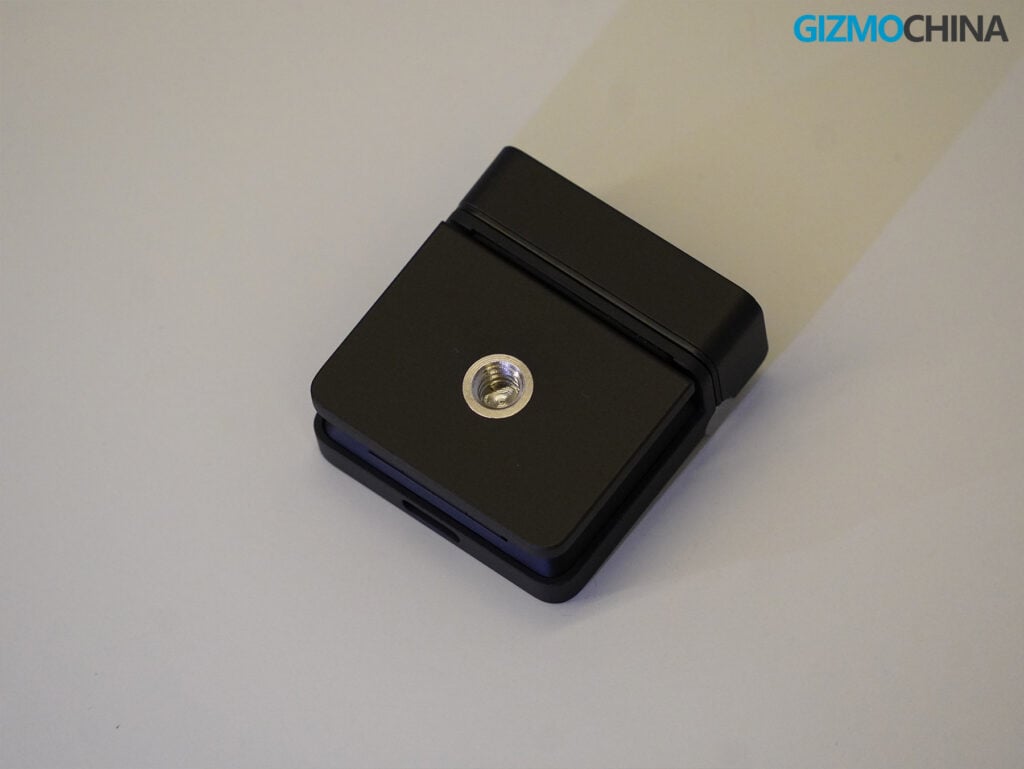
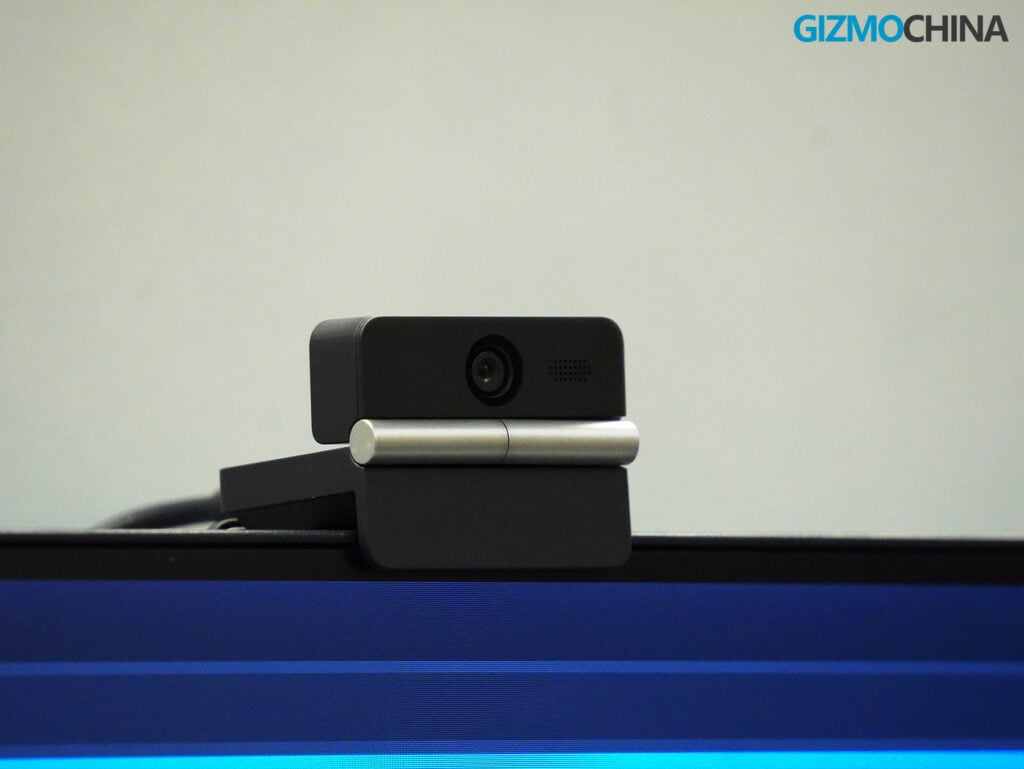
The bottom half of the folded device acts as the mount. It has a rubberized interior that rests securely on most laptop screens and standard desktop monitors. There is also a standard 1/4-inch tripod thread on the bottom, which is a helpful addition if you prefer to mount your webcam on a desk stand for a better angle.
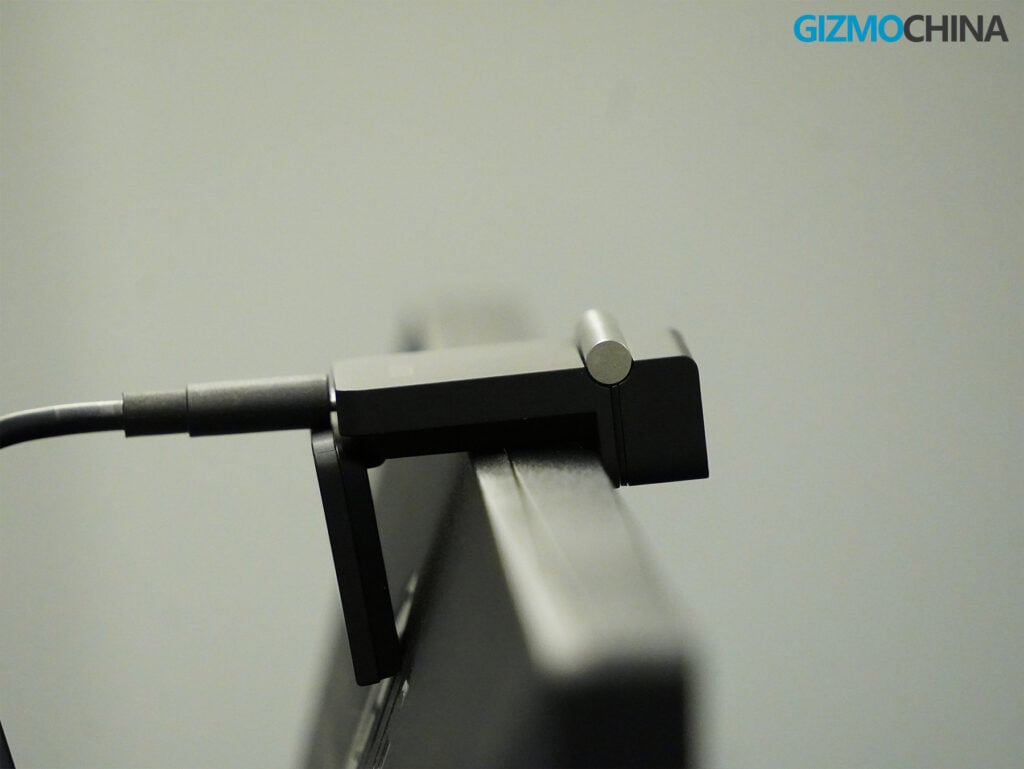
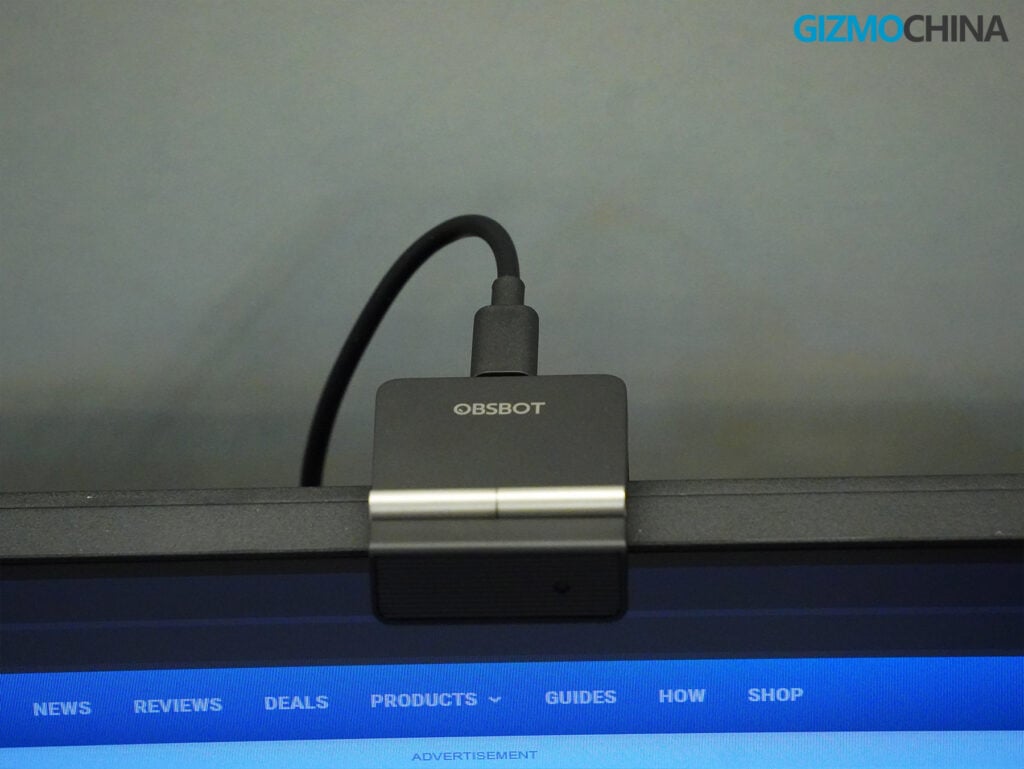
However, the mount isn’t perfect. Because of how the hinge operates and where the USB-C port is located on the back of the camera, the mount only opens to a 90-degree angle. Obsbot says that it supports screens up to 20.5mm thick. If you use an older, thicker monitor or a heavily curved display, the Meet Flip might struggle to sit securely. That said, since most of us use at least a modern laptop or a standard flat monitor these days, it really isn’t much of an issue for the average setup.
What it might lack in hinge flexibility, it makes up for with versatile mounting options. The camera’s design and magnetic base allow you to easily switch between standard landscape shooting, portrait shooting (perfect for mobile-centric formats like TikTok or Reels), and even upside-down shooting, with the software automatically adjusting the image orientation to match.
Another minor issue is the included cable. Obsbot includes a USB-C to USB-C cable (along with a USB-A adapter), but the cable itself is quite stiff. Because the cable opening is straight behind the camera, the stiff wire extends directly from the back, requiring more clearance behind your monitor.
Since the camera is so light, this rigid cable can sometimes pull the camera out of place if you bump the wire on your desk. Including a lightweight paracord cable here would have been the best choice, and an L-shaped connector would have been a great option as well to help manage the rear clearance and keep things tidy.
Video Quality
Inside the Meet Flip is a 1/2-inch Sony CMOS sensor that shoots in either 4K at 30 frames per second or 1080p at 60 frames per second. It also features a fairly wide f/1.8 aperture.
For a webcam in this price range, the image quality is very good. In a well-lit room, the 4K image is sharp and detailed. Out of the box, Obsbot’s default color profile looks really natural and punchy as well, which generally looks nice on skin tones and keeps you from looking washed out by harsh monitor light.
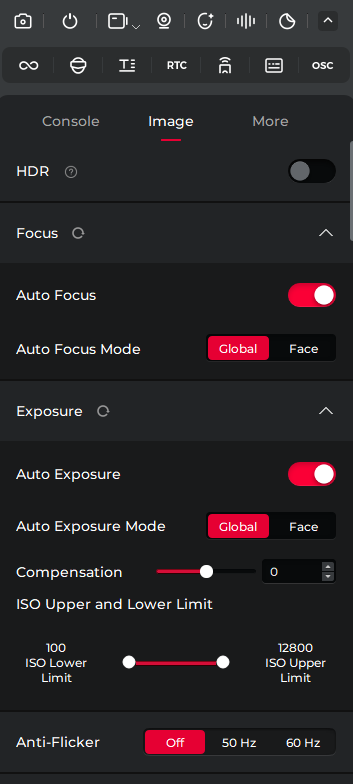
It handles lower light situations reasonably well, too. If you are working in a dimly lit home office with only your screen illuminating your face, the f/1.8 aperture and HDR support help keep the image really usable. You will notice some grain and softness in the darker areas of the room, but it is still a noticeable improvement over the standard 720p or 1080p cameras built into most laptops.
Wide (HDR On)Medium (HDR On)Narrow (HDR On)Wide (No HDR)Medium (No HDR)Narrow (No HDR)
The autofocus is handled by a Phase-Detection Auto Focus (PDAF) system, and it works reliably. If you need to hold a document or a product up to the camera, it focuses on the object quickly and shifts back to your face as soon as you lower it. Just remember to keep your hand near the object so the camera knows where to pull focus.
Low Light PerformanceObject Focus
The field of view is also a major plus. The wide angle is excellent, easily accommodating multiple people in the frame if needed. Given how incredibly lightweight the camera is, this flexibility is a huge bonus. It works perfectly whether you’re taking a solo call at your desk or want to showcase a bit more of your background.
Software Features
You can use the Meet Flip right out of the box without installing any software. It works as a standard plug-and-play webcam with Windows and macOS, and it connects easily to Zoom, Teams, OBS, and even the Nintendo Switch 2.
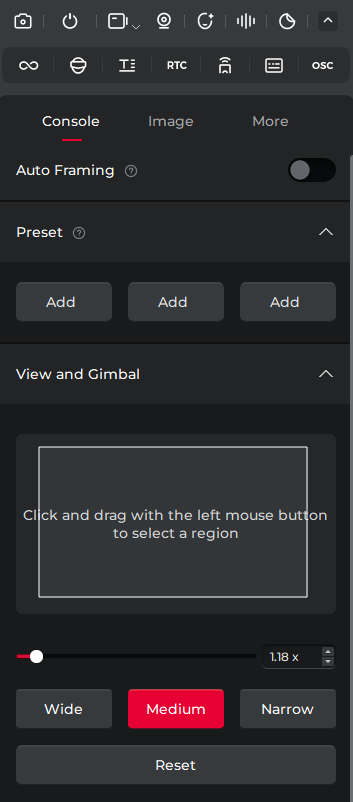
But if you want to adjust the settings, you’ll need to download the Obsbot Center app. Webcam software can sometimes be clunky, but Obsbot’s app is really clean and easy to navigate.
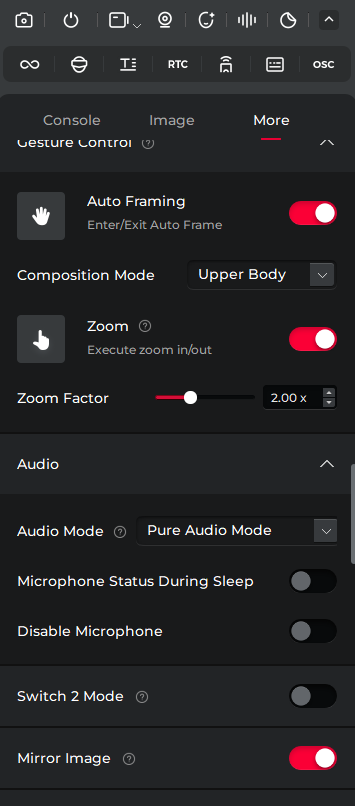
Because the Meet Flip is a stationary camera, its tracking features are entirely digital. The AI Auto Framing feature crops into the 4K image and digitally pans to keep you centered in the frame. It works smoothly and is helpful if you tend to shift around in your chair during long calls. Because it crops the image, you do lose a bit of resolution, but starting from a 4K image means the final result still looks clear on a standard video call.
The software also includes gesture controls, allowing you to hold up your hand to turn the tracking on or off, or make an L shape to zoom.
There are a few extra tools in the app, like a built-in teleprompter that lets you read a script over your screen, and a loop recording feature that lets you play a short video of yourself on repeat. You can also play around with Avatar and Overlay features to further customize your video feed, along with background blur and background replacement options if you want to swap out your real-world environment for an image.
Obsbot also includes a feature called AI Magic Notes for transcribing meetings. You get 120 minutes for free before it requires a subscription.
Audio Performance
The Meet Flip uses a dual-microphone system (one omnidirectional and one directional). Through the software, you can choose between four different audio modes depending on your environment: Directional mode (which focuses specifically on sound coming from directly in front of the camera), Omnidirectional mode (which picks up sound from all around, great if you have multiple people in the room), Pure Audio mode (which keeps the original voice and surrounding sounds), and Smart Omni mode (which balances picking up room audio while intelligently filtering out unwanted background hums). For my room, I prefer the Smart Omni mode, as it provides the most natural balance for my setup.
The built-in noise reduction does a decent job of filtering out steady background sounds, like a fan or the hum of an air conditioner. For everyday use, like joining a morning team meeting or taking a quick call from your desk, the microphones are perfectly adequate. Your voice will come through clearly enough for people to understand you.
However, it still sounds like a webcam microphone. Because the device is so small and sits a couple of feet away from your mouth, the audio lacks the depth and clarity of a dedicated microphone. If you are recording a podcast, doing voiceover work, or presenting to a large audience, you will still want to use a separate USB microphone or a good headset.
The Verdict
The Obsbot Meet Flip is a well-designed device that solves a few practical problems for remote workers. It doesn’t overcomplicate things; it just provides a good image in a very compact package.
If you mostly use a laptop and are happy with its built-in camera, you probably don’t need to spend $119 on this. But if you frequently work from an external monitor with your laptop closed, or if you just want a reliable, unobtrusive camera for your home office that guarantees your privacy when the workday is over, the Meet Flip is a solid option.
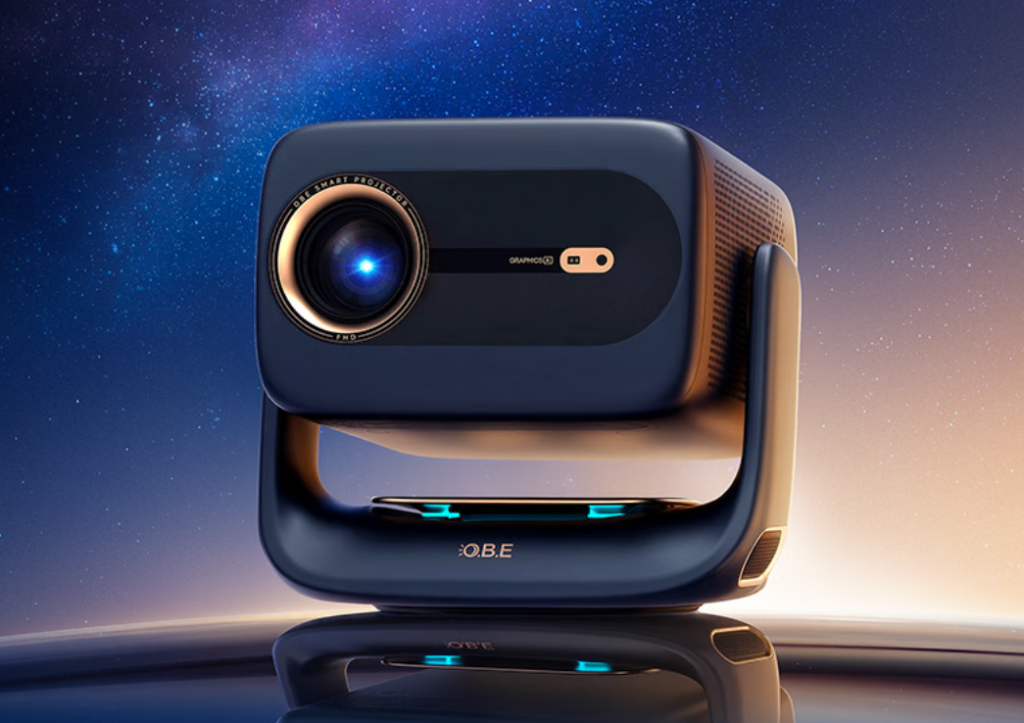
OBE has released a new home projector in China, the R3 Ultra Max. It is now listed on JD.com for 3,999 yuan ($596). Rather than focusing solely on pushing resolution limits, the company has built this 1080p model around physical flexibility and integrated audio, attempting to solve common setup issues for standard living rooms.
The R3 Ultra Max features an integrated Z-shaped gimbal with 120-degree vertical tilt and 360-degree horizontal rotation. It supports ceiling projection, while the base-mounted speakers maintain their orientation regardless of the projection angle.
For the display itself, the projector includes a native 1080p LCD panel with 4K input support, 1,800 CVIA lumens of brightness, and a 40,000:1 dynamic contrast ratio. It uses a 5-inch TCL CSOT panel, supports 40 to 150-inch projection sizes, and has a 1.2:1 throw ratio. OBE also rates operating noise at below 26dB.
For audio, the R3 Ultra Max features a 2.1-channel speaker system with two 10W mid/high-frequency drivers and a dedicated 25W subwoofer. It comes with a large 1,070cc acoustic chamber and delivers bass frequencies as low as 43Hz. The setup is designed to offer fuller sound and stronger bass compared to the standard built-in speakers found on most projectors.
Internally, the projector runs on a MediaTek MT9681 processor, 4GB of RAM, and 64GB of storage. The port selection is standard for current-generation displays, featuring two HDMI 2.1 ports (one supporting eARC for external soundbars), a USB-A 3.0 port, and a 3.5mm audio jack. OBE says an input latency of 3ms, which makes it a viable option for casual gaming. Wireless connectivity includes dual-band Wi-Fi 6 and Bluetooth 5.2.
On the software side, it runs OBE’s Super AI OS 2.0. The interface includes standard wireless casting protocols like AirPlay and Miracast, and integrates Tencent’s Hunyuan large language model for voice searches and basic queries. To handle the actual screen calibration, the projector uses a ToF sensor and a CMOS camera to automate keystone correction, focus, screen alignment, and obstacle avoidance.
For more daily updates, please visit our News Section.
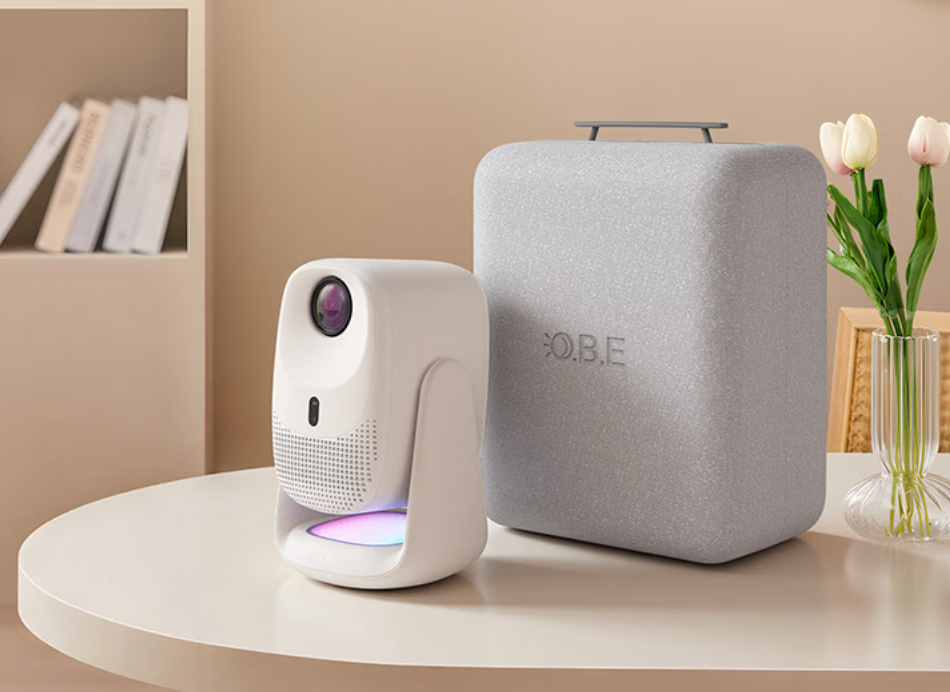
OBE has announced the C5 Pro, a new 1080p projector launching in China that focuses on flexible placement and automated setup. The projector will be available starting September 24th with an introductory price of 1,099 yuan ($164), before shifting to its standard retail price of 1,499 yuan ($223).
The C5 Pro is built around an LCD display system and OBE’s fully enclosed optical engine. The company worked with TCL CSOT to develop a new metal BM high-transmittance panel for the device, which it says improves light transmittance by 20%.
🔌 You’ll NeedIt throws a 40-120 inch image, so a proper projector screen makes the picture noticeably sharper than a bare wall. Check projector screen price on Amazon →
The projector outputs a native 1920 x 1080 resolution with a rated brightness of 600 CVIA lumens and a 3000:1 contrast ratio. It supports HDR content and 4K decoding, and with a 1.2:1 throw ratio, it is designed to project screens ranging from 40 to 120 inches.
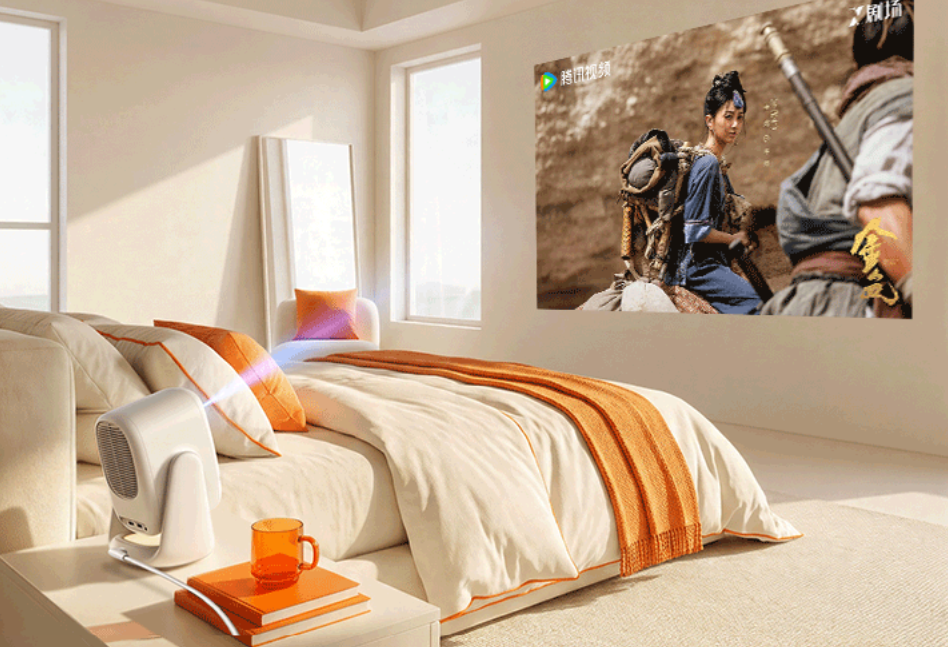
From a hardware perspective, the C5 Pro features an integrated U-shaped gimbal stand that allows you to easily adjust the projector to different angles. The flexible design also makes it possible to point the projector directly at the ceiling for a more relaxed viewing setup.
OBE pairs the gimbal with Scheimpflug full-screen clarity technology, which helps maintain consistent sharpness across the entire image, including the edges, when projecting from an angle.
Setup is handled by a dual-module sensor system that pairs a Time-of-Flight (ToF) sensor with a full-color camera. This enables standard smart projector features like automatic keystone correction, autofocus, obstacle avoidance, and wall color adaptation.
Inside, the C5 Pro runs on an MT9-series processor alongside 1GB of RAM and 32GB of internal storage. Connectivity includes dual-band Wi-Fi 6, Bluetooth 5.3, an HDMI 2.0 port, and a USB 2.0 port. There is also a dedicated low-latency game mode for connected consoles.
For audio, the OBE C5 Pro features a single 10W speaker, while the gimbal base comes with a touch-controlled night light that can sync with the sound to create dynamic lighting effects. On the software side, the projector runs OBE OS, which offers an ad-free experience during both startup and screen casting.
In related news, Aurzen has recently launched the ZIP Pro tri-fold pocket projector with 1080p resolution and up to 2.5 hours of battery life. Dangbei has also launched the RX10 1080p laser projector with 1,200 CVIA lumens of brightness, a rotating gimbal, and power bank support.
For more daily updates, please visit our News Section.
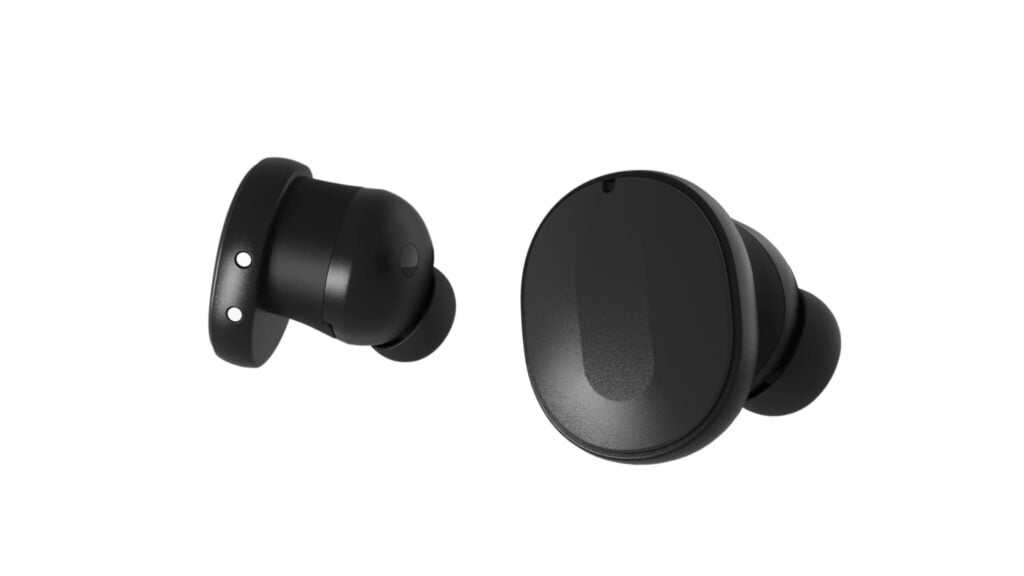
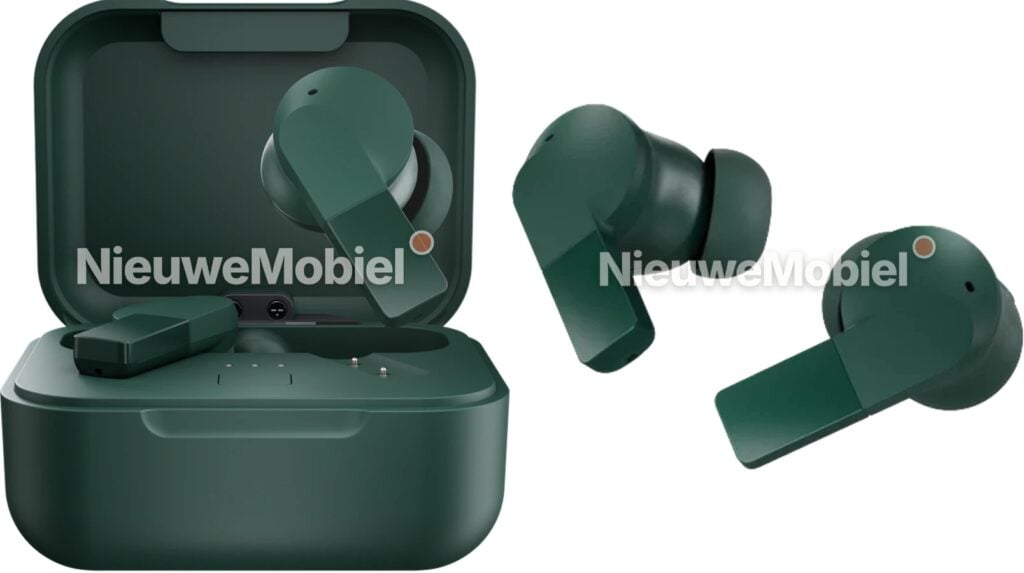
Fairphone is working on a new version of its repair-friendly wireless earbuds, and some early photos just gave us the first real look at what’s coming.
Leaked images of the Fairbuds 2 have surfaced, showing a refreshed pair of true wireless earbuds from the sustainability-focused Dutch company. Fairphone released the original Fairbuds back in April 2024 as one of the first truly modular TWS options out there. The follow-up is now lined up for a fourth-quarter 2026 launch (sometime between October and December), and the new shots show it in green and black.
The biggest visual shift is the addition of stems. The first-gen Fairbuds went with a more rounded, stemless design, while the Fairbuds 2 switch to a more conventional stem-style look. The charging case also appears noticeably thicker than before. That extra bulk has people wondering whether Fairphone packed in a bigger battery than the 500 mAh one in the original case, though we still don’t have official numbers.
Exact specs and pricing haven’t been shared yet. What is clear is that Fairphone is sticking to its usual priorities: longevity and repairability. The original Fairbuds stood out because you could replace seven different parts yourself, including the batteries in each earbud and the case, the silicone rings, tips, and even the outer shell of the case, all with just a Phillips screwdriver and a simple prying tool.
The company has said the new model will stay modular, but it hasn’t spelled out exactly which parts will be swappable this time. Given Fairphone’s whole approach, it’s a pretty safe bet that easy battery and part replacement will still be a big part of the pitch.
The original Fairbuds came with titanium-coated 11 mm drivers, active noise cancellation (plus wind-noise reduction), six microphones, Bluetooth 5.3 with multipoint, IP54 water and sweat resistance, and up to 26 hours of total playtime with the case. They also scored really well for repairability, including a rare top mark from iFixit. The Fairbuds 2 should build on that foundation while polishing the design so it appeals to more people.
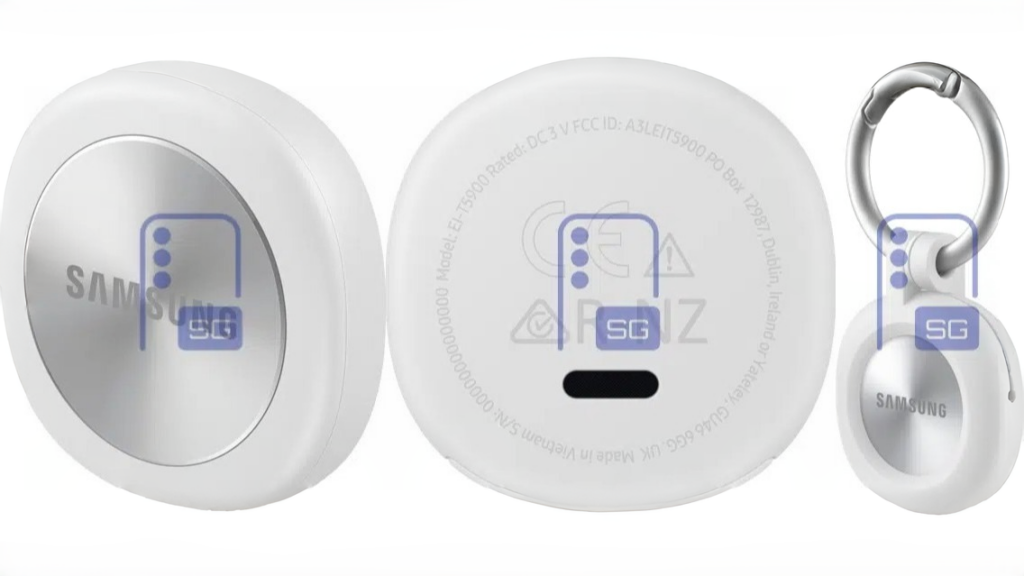
Fresh high-quality renders of the Galaxy SmartTag 3 just dropped, giving us the best preview yet of Samsung’s upcoming Bluetooth tracker. The images confirm a pretty limited color selection ahead of what looks like a near-term launch.
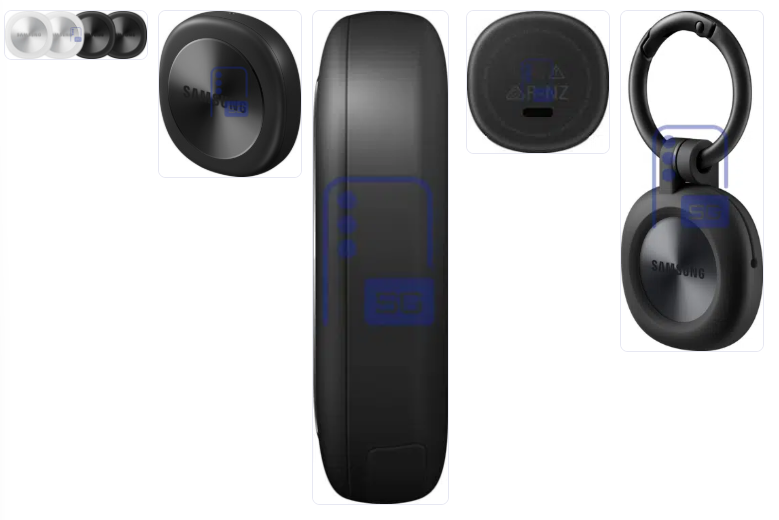
The SmartTag 3 switches to a compact squircle shape, same vibe as the latest Galaxy Watches and One UI icons. It’s a clear step away from the pill-shaped SmartTag 2. The white version has a light outer frame around a central circular section with a subtle brushed metallic look, separated by a slightly raised border. The black one keeps the same shape but goes fully dark. Both have the Samsung logo right on the central button.
One noticeable change: there’s no built-in cutout or loop for a keyring, carabiner, or strap like the previous models had. Looks like you’ll need an official case or accessory if you want to attach it to something. Reports say Samsung is working on a few options, bumper, silicone, and leather cases, plus a pet-collar mount. On the back you’ll find the usual regulatory marking.
Leaked store listings point to just two colors so far: black (EI-T5900BBEGUS) and white (EI-T5900BWEGUS). Pricing seems to be staying the same as before, $29.99 for a single unit and $99.99 for a four-pack in the US. European pricing has been a bit all over the place in different reports, but it’s still in the same ballpark.
On the tech side, FCC filings confirm Bluetooth Low Energy and Ultra-Wideband for more precise short-range tracking. It’s reportedly around 30 x 30 mm and under 10 mm thick. Expect it to work with Samsung’s Find network, keep the central physical button (handy for finding your phone or triggering Modes & Routines), and offer solid water and dust resistance, probably IP67 or something close. Battery life should stay competitive thanks to the replaceable cell, just like the SmartTag 2.
For Galaxy users, the redesign leans hard into a cleaner look and better ecosystem consistency. The missing attachment point might mean an extra accessory purchase for a lot of people, though. As always with leaks, final specs, availability, and packaging details will only be locked in once Samsung makes it official.
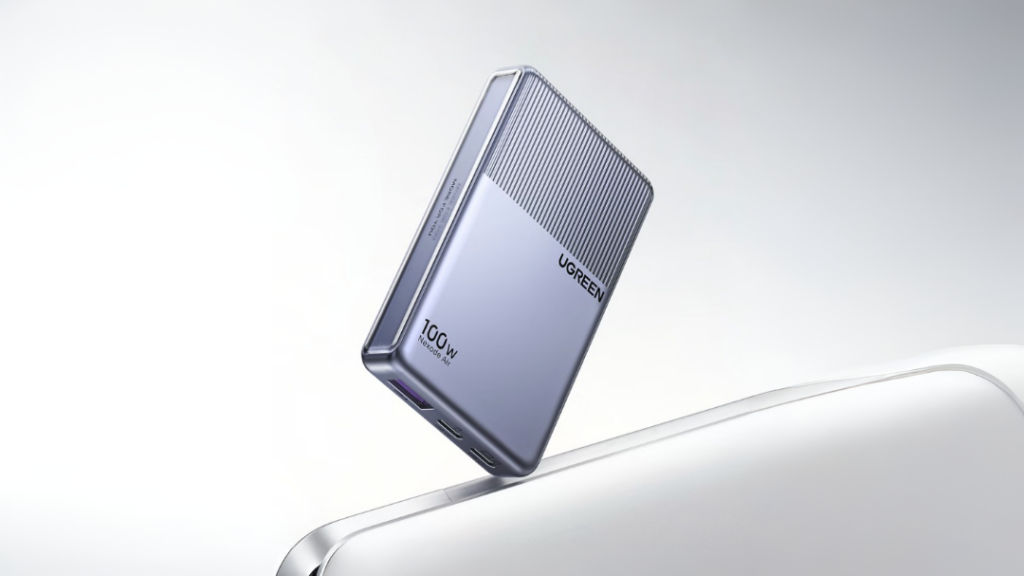
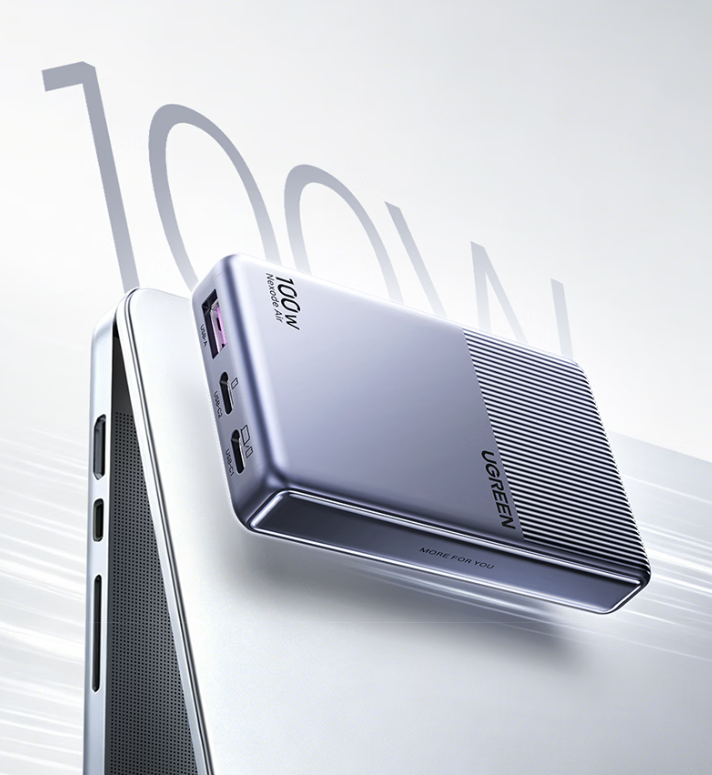
Ugreen’s slim charger lineup has now made its way to the UK. The company’s 100W card-style charger, first launched in China as the Mini Ice GaN charger, is now available in the UK as the Nexode Air Slim 100W. It comes with foldable UK-standard plugs and costs £59.99.
The charger has two USB-C ports and one USB-A port packed into its thin, card-shaped body. Either USB-C port can deliver up to 100W on its own, which is enough for most laptops. The USB-A port supports up to 22.5W. When charging two or three devices at the same time, the first device you connect still gets between 60W and 80W, depending on the setup.
Under the hood
Ugreen is using a new GaN (Gallium Nitride) chip inside the charger and claims it can reach 93% conversion efficiency. Higher efficiency means less energy is wasted as heat, helping the charger stay cooler and allowing Ugreen to keep the body thin.
The foldable plugs are another useful part of the design. UK plugs can take up quite a bit of space, but the Nexode Air Slim 100W’s prongs fold into the charger when they’re not in use. This makes it easier to slip into a laptop sleeve, backpack, or small pocket without the plugs getting caught on other things.
The flat design can also be useful in tight spaces. Unlike a typical bulky charger, the card-shaped body can sit closer to the wall when you’re charging behind furniture or in another cramped spot.
Ugreen has also included the usual safety protections, including safeguards against overvoltage, overcurrent, overheating, and short circuits.
At £59.99, the Nexode Air Slim 100W is priced close to Ugreen’s Nexode Pro 100W charger, which launched in the UK last month. The Nexode Pro has a four-port design and a color display, while the Air Slim focuses on keeping the charger as thin as possible.
Earlier this month, Motorola confirmed that the Edge 70 Neo is coming to India, but the company has yet to reveal its full specifications. The Edge 70 Neo has now shown up on Geekbench, and the listing fills in some of the gaps left by earlier design leaks.
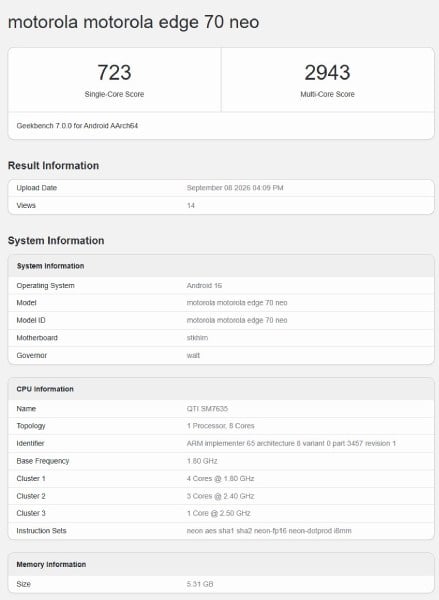
The Motorola Edge 70 Neo scored 723 points in the single-core test and 2,943 points in the multi-core test. The listing identifies the chipset as the QTI SM7635, which translates to Qualcomm Snapdragon 7s Gen 3 in marketing name.
The chipset uses an octa-core CPU setup with four cores clocked at 1.80GHz, three at 2.40GHz, and a prime core reaching 2.50GHz. Graphics and video duties are handled by the Adreno 810 GPU.
The Geekbench listing also shows the phone running on 6GB of RAM and Android 16 OS. The test was performed using Geekbench 7.0.0 on Android AArch64, although final retail performance can vary slightly.
Motorola Edge 70 Neo has the same chip as the Edge 70 Plus
Interestingly, the Edge 70 Neo features the same chipset as the Motorola Edge 70 Plus in its global version. So it could be that the Edge 70 Neo is a rebranded version of the Edge 70 Plus for the Indian market. And this isn’t new for Motorola. It has used a similar technique for some of its past Edge-series phones.
If you want a sense of what this chip actually delivers day-to-day, the Snapdragon 7s Gen 3’s benchmark scores give you a good baseline, since it’s the same silicon showing up here. It’s a mid-range chip built for smooth everyday use rather than flagship-tier gaming, so you shouldn’t expect it to compete with pricier silicon on raw power.
Motorola has not yet revealed the Edge 70 Neo’s display, battery, or camera specifications. If the phone is indeed based on the Edge 70 Plus, more details could become clear once Motorola officially announces its India launch.
Vivo confirmed the standard X500’s camera hardware through a Weibo teaser from earlier this month, and now tipster Panda is Bald has gone hands-on with the phone itself. The image reveals several details that Vivo has yet to officially announce, including the chipset, memory, storage, and battery.
The X500 is powered by a Dimensity 9600M running at 4.21GHz across its eight cores. The base configuration comes with 12GB of RAM and 512GB of storage. Vivo also supports virtual memory expansion of up to 24GB and storage expansion of up to 50GB through compression.
What’s notable here is that this is the first mention or on-device confirmation of Dimensity 9600M. The chip is likely based on Dimensity 9500, which was previously rumored to be rebranded for some 2026 flagship.
There’s one more chip
As for the cameras, the X500 uses the same main sensor as the X300 Pro: a Blueprint-branded Sony LYTIA-828 measuring 1/1.28-inch. Vivo says this is the largest main camera sensor it has used on a standard X-series model. The camera also gets Zeiss gimbal-level stabilization with a CIPA 5.5 rating.
The telephoto camera comes from the X500 Pro instead. It uses the Sony LYTIA-610 sensor found in the Pro’s APO telephoto setup, also with a CIPA 5.5 stabilization rating. It can record 4K video at 120fps for slow-motion footage.
Vivo could also offer the standard X500 with dedicated teleconverter support. The compact accessory is designed to extend its telephoto capabilities. Meanwhile, the image processing will be handled by Vivo’s Blueprint V3+ imaging chip.
Keeping the lights on is a 7,500mAh battery, as confirmed in the spec sheet.
Vivo will reveal the X500’s price and availability at the official launch on September 21 at 7 PM. The X500 series will be introduced alongside several other products.
For more daily updates, please visit our News Section.
We use cookies on our website to give you the most relevant experience by remembering your preferences and repeat visits. By clicking “Accept”, you consent to the use of ALL the cookies.
This website uses cookies to improve your experience while you navigate through the website. Out of these, the cookies that are categorized as necessary are stored on your browser as they are essential for the working of basic functionalities of the website. We also use third-party cookies that help us analyze and understand how you use this website. These cookies will be stored in your browser only with your consent. You also have the option to opt-out of these cookies. But opting out of some of these cookies may affect your browsing experience.
Necessary cookies are absolutely essential for the website to function properly. This category only includes cookies that ensures basic functionalities and security features of the website. These cookies do not store any personal information.
Any cookies that may not be particularly necessary for the website to function and is used specifically to collect user personal data via analytics, ads, other embedded contents are termed as non-necessary cookies. It is mandatory to procure user consent prior to running these cookies on your website.