Since Twitter was acquired by Elon Musk, there has been a number of changes in the company as well as its operations. Now, the latest update brings new additions to its Twitter Blue paid subscription to make it more attractive to its userbase.
For those unaware, the Blue service is basically what offers you the Blue checkmark and verifies your profile. Large businesses and corporations would receive a Gold checkmark to differentiate them from regular users. With the Blue subscription, users could also skip advertisements as well on the microblogging platform. But with the latest update, the perks will also grow to include “prioritized rankings in conversations.”
This means that your replies will be ranked higher and be made more visible in tweets. Furthermore, the company is also letting users now upload up to 60 minute long videos as well. Both of these features don’t arrive as a surprise since they were already promised by Elon Musk last month when he stated that Blue subscribers that pay 8 US Dollars each month will get “priority in replies, mentions & search” alongside being able to post hour long videos.
As per official notes from Twitter support, the priority rankings will also “help lower the visibility of scams, spam, and bots.” Although, it is still unclear if the Blue subscribers will be on the top of the list on every tweet replies. The new video upload is also only being offered to web users. In other words, the 10 minute rule for video uploads still applies to iOS and Android useres on mobile devices.
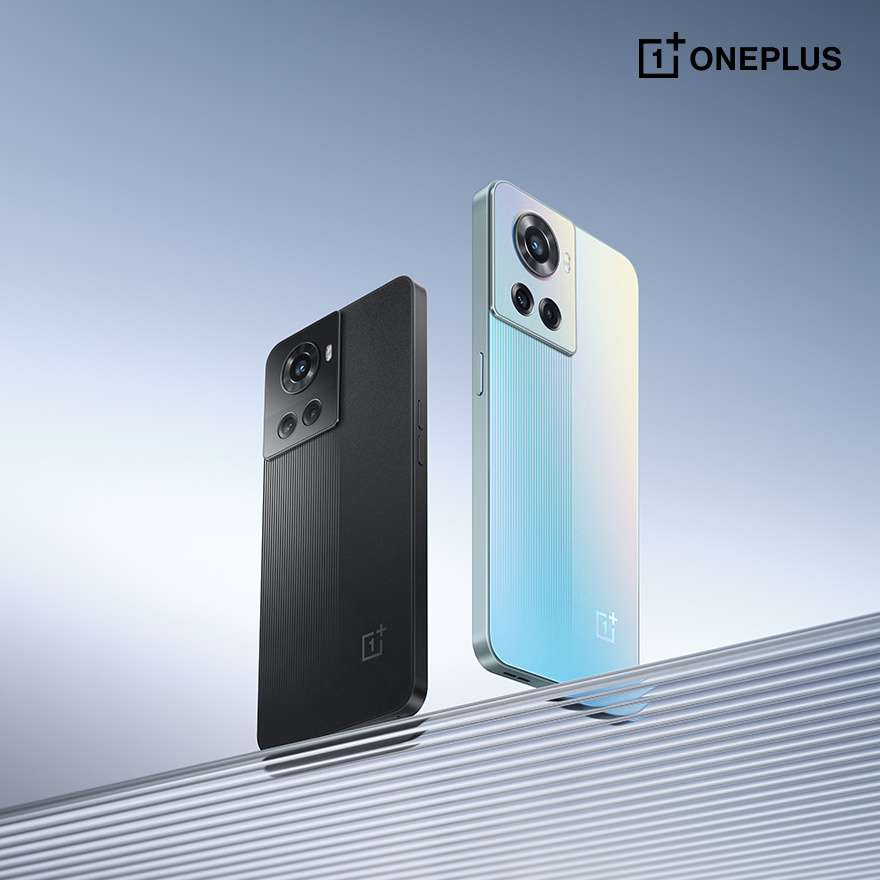
OnePlus confirmed today that it will unveil the OnePlus 11 on Jan.4 in China. The Chinese manufacturer is also working on the OnePlus Ace 2, which is likely to get rebranded as the OnePlus 11R in the global market. Today, tipster Digital Chat Station shared the key specifications of the Ace 2.
According to the source, the OnePlus Ace 2 will have a curved-edge display with a punch-hole in the centre. It appears to sport an OLED panel that offers a 1.5K resolution.
OnePlus Ace
Under the hood, the OnePlus Ace 2 features the Snapdragon 8 Plus Gen 1 chipset and a 5,000mAh battery, which will support 100W fast charging. For photography, it will have a 50-megapixel primary camera.
The leak has no information on the OnePlus Ace 2’s launch timeframe. While the OnePlus 11 is set to launch on Jan. 4, the Ace 2 may arrive in the market at a later date. The device is likely to be rebranded as the OnePlus 11R in the global market.
Other reports say that the device will have a 6.67-inch AMOLED screen with a refresh rate of 120Hz. For selfies, it will have a 16-megapixel front camera and a 50-megapixel (Sony IMX890) + 8-megapixel (ultra-wide) + 2-megapixel triple camera unit. The Ace 2 is likely to offer up to 16 GB of RAM and up to 256 GB of storage. It may draw power from a 5,000mAh battery. It is likely to come preloaded with Android 13 OS and ColorOS 13 in the Chinese market. For security, the Ace 2 will feature an under-display fingerprint scanner.
On the Chinese market, the OnePlus Ace 2 is expected to compete with the Realme GT Neo 4, iQOO Neo 7 Racing Edition, and Redmi K60 Pro.
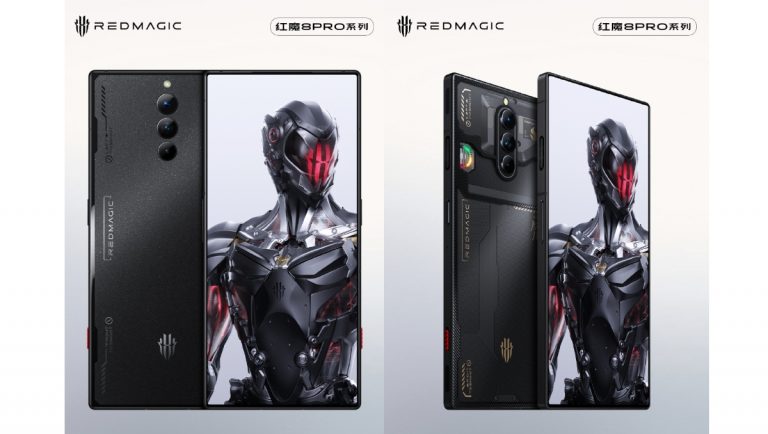
Red Magic has just launched its newest flagship series in the Chinese market. The new smartphone lineup includes the new Red Magic 8 Pro and 8 Pro+, which feature top notch specs and features. So let’s have a look.
Design
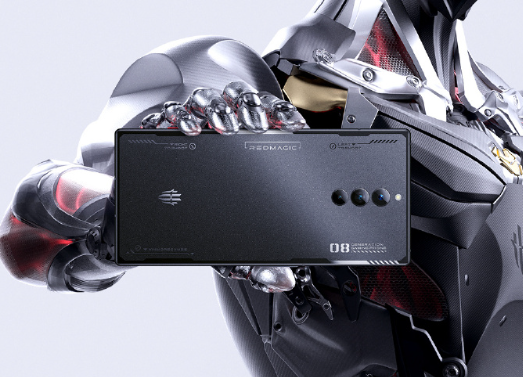
The Chinese smartphone maker has just launched the two new smartphone models, with both of them featuring a gaming inspired design. Since both phones house some powerful and capable specs, it features a robust thermal management mechanism, which also consists of a physical cooling fan. On the rear, the devices feature a vertically stacked triple camera setup and the company’s branding and logo. The two variants will also come in a special transparent version as well that has the same overall layout and dimensions but with a transparent back panel.
As per official claims, the Red Magic 8 Pro series features the largest volume of VC cooling ever from the company’s history, with a 2068mm³ total size. This enables us to get a clear view at some of the key internal specs of the device, including its processor. Furthermore, you can even see the dedicated cooling fan that is also RGB enabled to add to its gaming aesthetic. Meanwhile, the front on both models is an all screen body since the selfie camera is housed underneath the display panel. Being built around gaming, the phones also feature the industry’s fastest 520Hz game shoulder keys and even offer 3.5mm headphone jacks.
Specifications
The Red Magic 8 Pro series features mostly similar features under the hood. Both of them are equipped with Qualcomm’s latest and greatest Snapdragon 8 Gen 2 SoC that is paired with up to 12GB of RAM and up to 256GB of internal storage on the 8 Pro and up to 16GB of RAM and up to 1TB of internal storage on the top end model. The two devices sport a tall 6.8 inch OLED display that offer 2480 x 1116 pixel resolution and a high 120Hz refresh rate. The display also has a high 97.3 percent screen to body ratio as well.
The devices also come with an ultra linear dual stereo speakers that will support Snapdragon sound, 96kHz lossless audio, and 48ms low latency. One of the aspects that differentiate the two models is the battery pack and charging rates. For optics, the two phones will feature a triple camera setup on the rear, which consists of a 50 megapixel primary sensor, an 8 megapixel ultra wide angle lens, and a megapixel macro sensor. The front houses an 16 megapixel selfie shooter that is housed under the display.
The Red Magic 8 Pro is powered by a large 6,000mAh battery pack that supports 80W fast charging and the company also claims can offer a long 47 hours of battery life. On the other hand, the Red Magic 8 Pro+ variant features a smaller 5,000mAh battery pack but its charging rate is more than doubled with a 165W fast charging. The brand claims that users can charge from 0 percent to 100 percent in just 14 minutes on the 8 Pro+ model. The new flagship phones will run on Android 13 OS based Red Magic OS 6.0 custom skin out of the box.
Pricing & Availability
The Red Magic 8 Pro series is available in multiple configurations so here’s all of the available options:
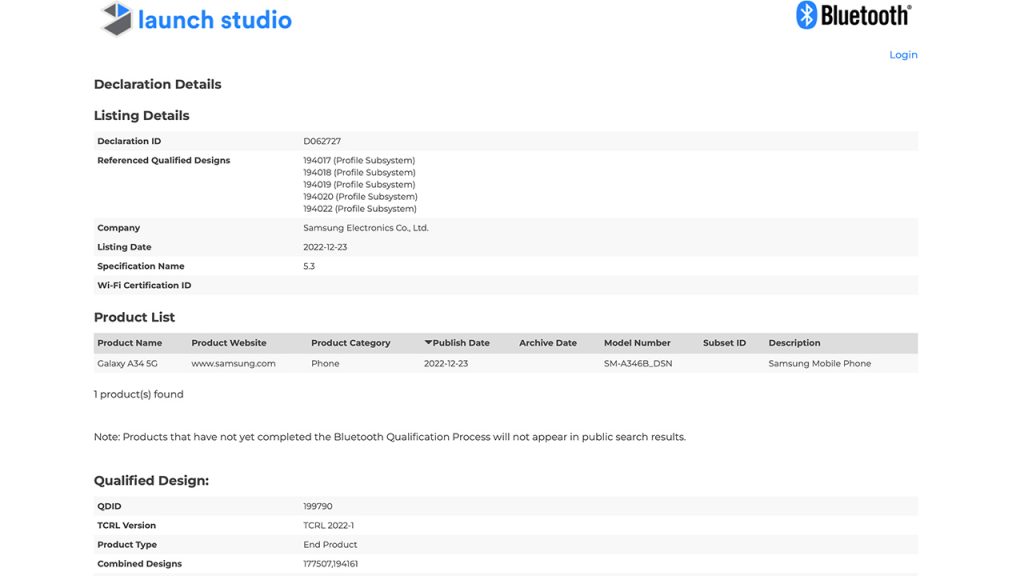
Samsung is rumored to be working on several new devices in its Galaxy line, and the Samsung Galaxy A34 5G is one of them. This smartphone has recently been spotted on the Bluetooth SIG certification site with the model number SM-A346B_DSN, which suggests its launching soon.
The Samsung Galaxy A34 5G is expected to be a mid-range smartphone with a range of impressive features. It is rumored to be powered by the Exynos 1280 SoC, which is a mid-range processor that should provide smooth and efficient performance. The device is also expected to have a 5000mAh battery, which should provide all-day battery life, and a 48MP main camera, which should allow for high-resolution photos and videos.
In addition to its processor and camera, the Galaxy A34 5G is also expected to have an octa-core processor, Mali G71 MP2 GPU, and 6GB of RAM, which should allow for fast and smooth multitasking. The device is likely to have a 6.4-inch Super AMOLED display with a 60Hz refresh rate. It is rumored to run Android 13 with One UI 5.0 on top and support 15W charging.
The Samsung Galaxy A34 5G is also expected to have a quad-camera setup on the back, including a 48MP f/1.8 wide angle lens, an 8MP f/2.2 ultra wide lens, a 5MP f/2.4 macro lens, and a 2MP f/2.4 depth sensor. This should allow for a wide range of photography options and allow users to capture detailed and clear images in a variety of lighting conditions.
Overall, the Samsung Galaxy A34 5G is shaping up to be a formidable mid-range smartphone with a range of impressive features. While it is not yet clear when it will be officially launched, its appearance on the Bluetooth SIG certification site suggests that it may be soon. Stay tuned for more updates on this exciting new device from Samsung.
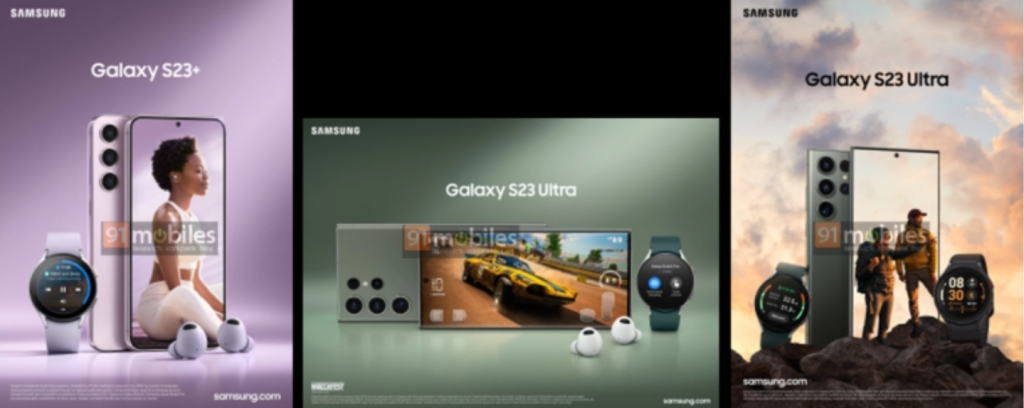
The upcoming Samsung Galaxy S23 smartphone series is something on which Samsung has been working. The Samsung Galaxy S23, Galaxy S23+, and Galaxy S23 Ultra will be included in the lineup. For a very long time, there have been leaks and rumours about the devices on the internet. Whatever the case, the Galaxy S23+ and Galaxy S23 Ultra’s promotional photos have now suddenly appeared online. We get a quick glimpse of the smartphone and its colour option from the leaked images.
Image Credit – 91Mobiles
There have been strong rumours on the internet which tell us that the series will be officially unveiled on February 1st, 2023. This looks legit as every year the flagship lineup by Samsung is launched at the around same timeline. Now, the promotional images of Galaxy S23+ and Galaxy S23 Ultra are out now. However, there are no images of the Galaxy S23, the vanilla variant in the series. The images reveal the S23+ device in the pink colour variant and the high-end S23 Ultra in the green colour variant.
Coming down to the design, the Galaxy S23 Ultra has got the same design as its predecessor. There are literally no major changes in the design and look as compared to the previous year’s Galaxy S22 Ultra. As for the Galaxy S23+, the camera bump is now made similar to the top model with different ring cutouts for different camera sensors. The device from the front looks very identical compared to its predecessor. So that was it for the recently leaked promotional images of the Galaxy S23+ and S23 Ultra.
As we come closer to the official release of smartphones, we may hear some official news on the device’s features and specifications. The device’s launch date may be formally announced by the brand in January. We can also anticipate some teasers around the same time.
Samsung has started rolling out the latest One UI 5.0 update to the Galaxy F and Galaxy M series of smartphones. The company has rolled out the Android 13 OS update with One UI 5.0 on top to as many as six M-series phones.
The company has confirmed through a press release that the One UI 5.0 update is available for Galaxy M53, Galaxy M52 5G, Galaxy M33, Galaxy M32 5G, Galaxy M32 and Galaxy M13 5G smartphones.
Samsung One UI 5
The One UI 5.0 adds several new features to enhance the user experience. Users can now upload photos and videos to the lock screen to edit, improve, and personalize it. Users can also combine many widgets into a single widget to free up space on the home screen. The menu options have been redesigned to make it easier to reach the ringtone volume and vibration levels.
Additionally, the upgrade includes up to 16 pre-set color themes based on the wallpaper. Users can quickly and simply remove unwanted people, objects, shadows, and reflections from images with the Object Eraser tool. Old images get sharper thanks to Photo Remaster, which raises the standard of the original picture. Samsung said that only select Galaxy M series devices will support Object Eraser and Photo Remaster.
For multitasking, One UI 5.0 offers pop-up or split-screen modes through the Split Screen View feature. With only a single swipe motion, users can open several windows, as well as from the recent applications list and apps edge.
A fast glance at the status of several smartphone security features, such as apps that have access to the camera, microphone, and location settings, is provided through the new Security and Privacy Dashboard. The dashboard also offers suggestions for improving smartphone security.
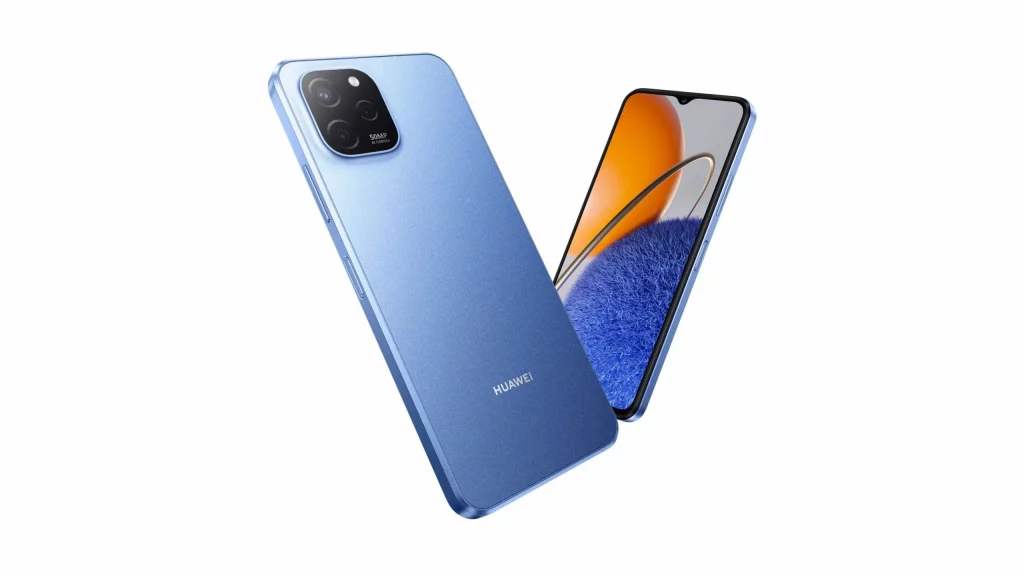
Earlier this month, Huawei launched its new smartphone under the Enjoy lineup, dubbed Huawei Enjoy 50z. Now, the smartphone is officially available for purchase in the company’s home market China.
The Huawei Enjoy 50z with 128GB internal storage is priced at 1,199 yuan (~$172), while the model with 256GB of internal storage costs 1,399 yuan (~$201). It comes in three color options — Green, Blue, and Black.
Huawei Enjoy 50z
The smartphone is a rebranded model of the Huawei Nova Y61. It features a 6.52-inch LCD HD+ display with a screen resolution of 1600 x 720 pixels and has a dewdrop notch at the top of the screen.
Under the hood, the device is powered by an unnamed octa-core processor, which is coupled with 6GB of RAM and offers two options for internal storage — 128GB and 256GB. Interestingly, it doesn’t come with a fingerprint sensor but has a 3.5mm headphone jack.
In the camera department, the phone has a triple-camera setup on the back, consisting of a 50-megapixel wide-angle lens, a 2-megapixel macro sensor, and a 2-megapixel depth sensor. On the front side, there’s a 5-megapixel snapper for taking selfies and video calling.
As for the software, the Huawei Enjoy 50z is running the company’s own HarmonyOS 2 operating system out-of-the-box, which is an older version as the company has already released HarmonyOS 3, and it is not yet known if the device will get an update. It is powered by a 5,000mAh battery and supports 22.5W fast charging.
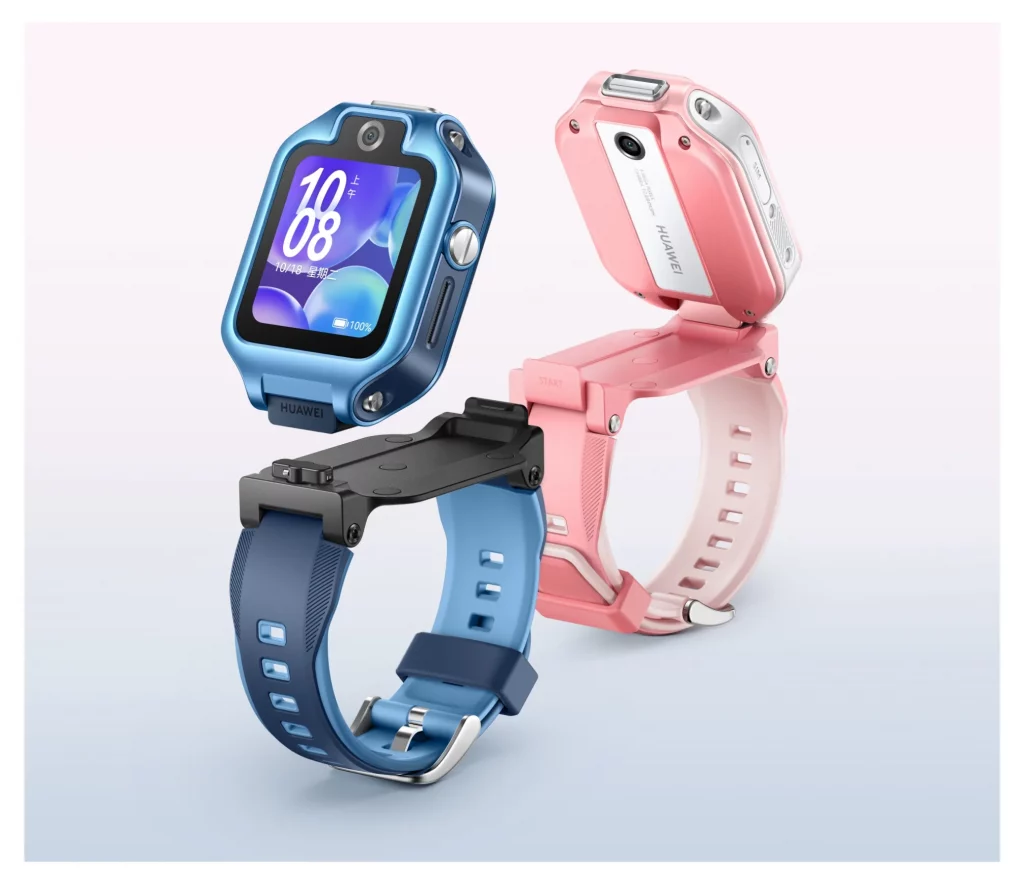
Huawei released its Huawei Kids Watch 5X family of smartwatches just a few weeks ago. The smartwatch was intended for children, as suggested by its name. The number of kids using smartwatches has significantly increased, and as a result, many brands have begun releasing smartwatches designed specifically for kids. The recently launched Huawei Kids Watch 5X series is one of them, and it includes a number of features geared at children as well as support for appropriate parental controls. The series has officially gone live for sale in the country.
Starting today, Chinese consumers can buy the Huawei Kids Watch 5X series. Users who are interested in purchasing the smartwatch can either place an order through one of the official online partners’ stores or just visit the nearest retailer in person. An initial price of CNY 1598 (about $229) applies to the Kinds Watch 5X right now. On the other hand, the Huawei Kids Watch 5X Pro will be available for CNY 1998 (about $286) in the country. Night Black, Polar Purple, Interstellar Blue, and Nebula are the four colour options for the watch currently offered.
The Huawei Kids Watch 5X Pro’s ability to enter the do-not-disturb mode when the black-and-white segment code screen is active is one of its unique features. This is perfect for educational settings because it enables students to concentrate on their work uninterrupted. Children may easily take pictures with friends or use the camera to check up on word translations thanks to the watch’s removable design. A mechanism for end-to-end security monitoring is also a part of the Children’s Watch 5X series, which aids in preserving data confidentiality and privacy.
A couple of weeks back, OnePlus confirmed that the company will launch its flagship smartphone, the OnePlus 11, globally at a launch event on 7th February, which will be hosted in India.
Now, the OPPO-backed company has revealed that the next-generation smartphone’s official launch in China will take place about a month earlier than the global launch.
The OnePlus 11 smartphone is now all set to go official in the Chinese market on 4th January. The teaser released by the brand claims that the phone will be the leader in future performance in the market.
The device was recently spotted on TENAA, revealing full specifications. As per the listing, the OnePlus 11 features a 6.7-inch AMOLED display offering s a Quad HD+ screen resolution of 3216 x 1440 pixels, a 120Hz refresh rate, 10-bit colors, and an under-screen fingerprint scanner.
Under the hood, the device will come powered by the Qualcomm Snapdragon 8 Gen 2 processor, coupled with 12GB or 16GB of RAM and 256GB or 512GB of internal storage.
In the camera department, there’s a 50MP primary sensor, a 48MP ultra-wide lens, and a 32MP telephoto sensor. On the front side, the phone has a 16MP snapper for taking selfies and video calling.
The smartphone will be running the latest Android 13 operating system out-of-the-box with the company’s own ColorOS 13 on top for the Chinese version, while the global version will have the OxygenOS custom interface. The device is powered by a 5,000mAh battery with support for 100W fast charging.
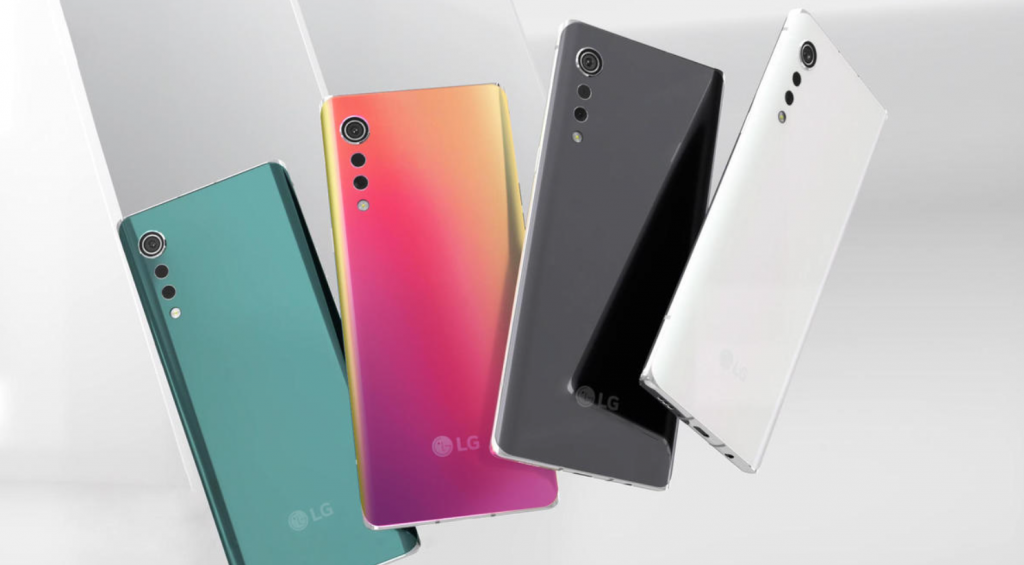
Unquestionably, LG was one of the most innovative smartphone manufacturers. Their products, such as the LG Velvet and LG Wings, introduced some truly ground-breaking innovations to the market. But the company was compelled to exit the smartphone business because it was unable to make enough profit margins. As one of the oldest tech giants in the industry, this announcement came as a huge shock because nobody had really expected their abrupt exit from the market.
Anyway, many people who had actually bought the LG devices just a few days before the headline were concerned if the brand support for software and after-sales services will be there or not. Well, in response to this, LG clarified that all the devices will get proper after-sales services and OTA updates will be provided to the devices until they’re marked EOL (End-of-life) for the updates. Keeping up with its promise, the brand has confirmed that LG Velvet will receive the Android 13 update in Q1 of 2023.
The LG Velvet and other LG smartphones are still in widespread use by numerous people. Anyhow, according to a recent post on its support forums, LG will release Android 13 for the LG Velvet in the first quarter of 2023. The software update plan specifies that LG will deliver Android security updates for the LG Wing, LG Q61, LG Q92 5G, and LG Q52 5G in the upcoming quarter, but it does not specify when the LG Wing would receive its Android 13 update.
You will need to wait a little longer to get the most recent updates if you live anywhere other than South Korea, where this software release schedule only applies. We expect LG to release the Android 13 upgrade for the LG Velvet in further markets in the second quarter based on the rollout schedule for this year. Users may have to wait a long time for the Android 13 update because the LG Wing only recently received the Android 12 update.
In any case, Android 13 is at least being made available to LG Wings customers. Although the delayed rollout schedule may have left some customers dissatisfied, what could be better than getting updates from a discontinued brand in the smartphone market? Better late than never, I guess. As of right now, there is no official confirmation of the LG Wings smartphone receiving Android 13.
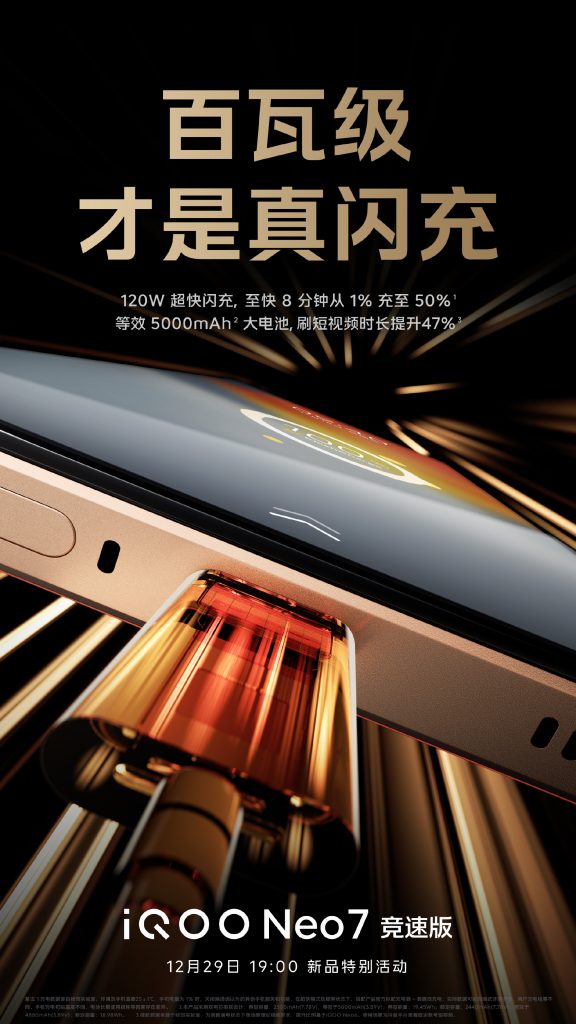
On Dec. 29, iQOO will unveil the iQOO Neo 7 Racing Edition flagship phone in China. The brand confirmed last week that it will arrive with the Snapdragon 8 Plus Gen 1 chipset. A new Weibo post released by the brand today has revealed the battery size and charging capabilities of the phone.
The poster confirms that the iQOO Neo 7 Racing Edition packs a 5000mAh battery. The 120W fast charger that will accompany the device will power it from 0 to 50 percent in just 8 minutes. The bottom view of the phone reveals a SIM slot, a microphone, a USB-C port, and a speaker grille. It does not seem to feature a 3.5mm audio jack.
The iQOO Neo 7 Racing Edition is the iQOO phone with the V2232 model number, which has been certified by Chinese platforms like TENAA and 3C. The certification listings of the Neo 7 Racing Edition revealed that it has a 6.78-inch AMOLED display that offers a Full HD+ resolution of 1080 x 2400 pixels and a refresh rate of 120Hz.
The SD8G2-powered device will arrive with 8 GB / 12 GB / 16 GB of RAM and 128 GB / 256 GB / 512 GB of internal storage. It will come preloaded with the OriginOS 3-based Android 13 OS.
On the front, the iQOO Neo 7 Racing Edition will feature a 16-megapixel selfie camera. The back panel of the device will have a 50-megapixel + 8-megapixel + 2-megapixel triple camera unit. It will arrive with other features, such as an IR blaster and an under-display fingerprint scanner.
The Racing Edition model is the third Neo 7-series phone from iQOO. Earlier this month, the company released the iQOO Neo 7 SE with Dimensity 8200 onboard and last month, it unveiled the Dimensity 9000 Plus-powered iQOO Neo 7.
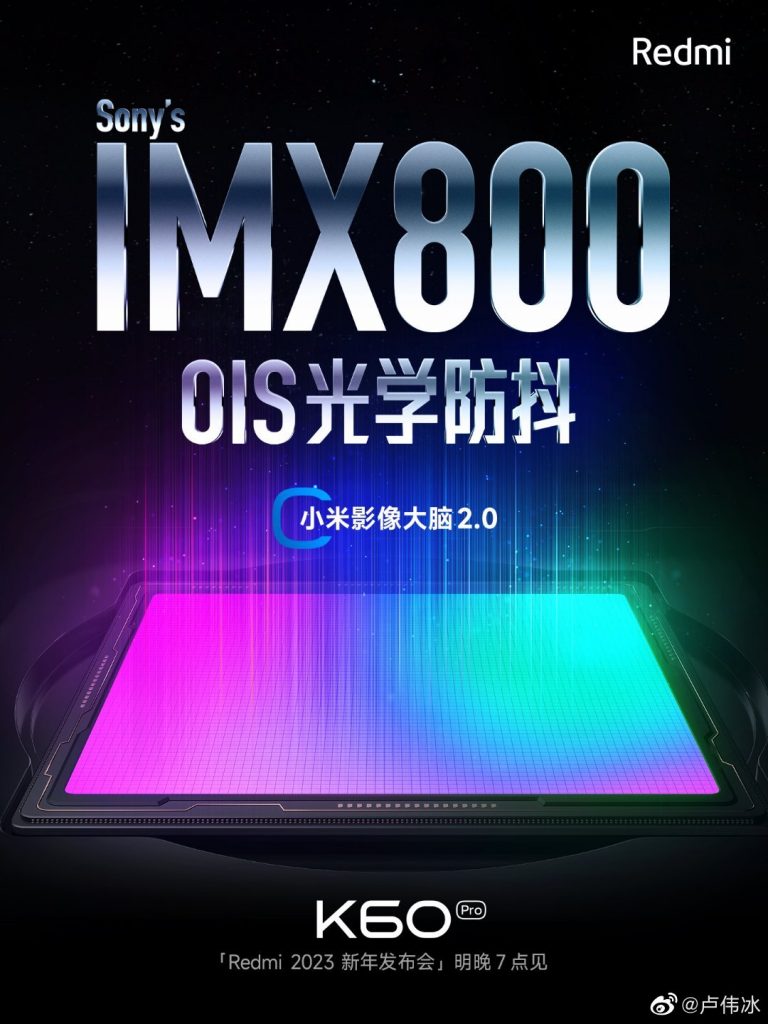
Redmi is all set to unveil the Redmi K60 series on Dec. 27 in China. Ahead of the launch, the company has been confirming the primary camera of the Redmi K60 Pro.
As can be seen in the poster, the Redmi K60 Pro is equipped with a Sony IMX800 primary camera, which comes with OIS support. It is the same camera sensor that is available on the Xiaomi 13.
Redmi K60 Pro camera
The company confirmed that the Redmi K60 Pro is also equipped with Xiaomi Imaging Brain 2.0, which assists in various optimizations such as optics, color, information processing flow, and scene optimization. It also helps accelerate the process of starting the camera, focusing, snapshots, and image previewing. At present, there is no word on the auxiliary cameras or the selfie camera of the Redmi K60 Pro.
The Redmi K60 Pro is confirmed to feature an OLED panel that supports a Quad HD+ resolution, a 120Hz refresh rate., 12-bit colors, 526 ppi pixel density, and up to 1400 nits of brightness. It will come preloaded with the MIUI 14-based Android 13 OS. The device is likely to feature an under-display fingerprint scanner.
The Snapdragon 8 Gen 2 mobile platform will be present under the hood of the Redmi K60 Pro. It will be coupled with 16 GB of LPDDR5x RAM and 512 GB of UFS 4.0 storage. The flagship phone may pack a 5,000mAh battery, supporting 67W wired charging and 30W wireless charging.
The Redmi K60 Pro will be accompanied by the Redmi K60e and K60. These devices are said to come equipped with the Dimensity 8200 and Snapdragon 8 Plus Gen 1 chipsets, respectively. The K60 Pro is expected to get rebranded as the POCO F5 5G in the global market a few weeks later.
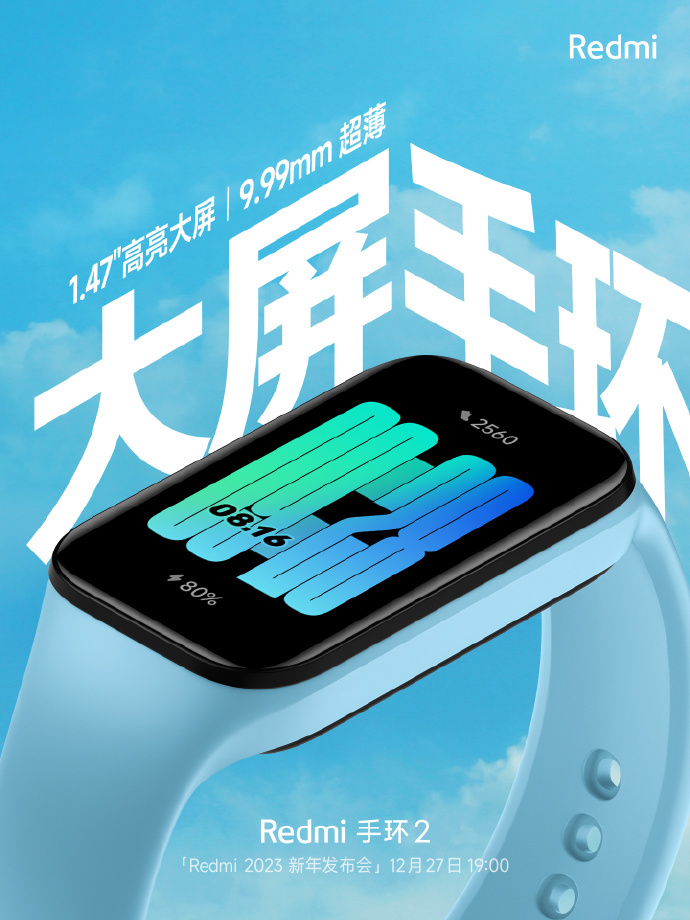
Redmi Band 2 will debut in China at a launch event scheduled on December 27. The wearable will share the stage with a bunch of other products, such as the new Redmi K60 series, Redmi Note 12 Pro Speed Edition, Redmi Watch 3, and Redmi Buds 4 Lite. Now, just days ahead of the keynote, the brand has revealed the display and some other details of the upcoming band.
Redmi Band 2 will debut as the successor of the original Redmi Bands. The wearable will arrive with a revamped design and new features. Recent teasers from the brand reveal the smart band will have a 1.47-inch large screen with a display area 79% larger than the previous generation model. It will be 9.99mm thick.
As mentioned, the brand will also unveil the new Redmi Watch 3 and Buds 4 Lite on the same day. The Watch 3 will have a square dial with a control button located on the right side. The brand teased the smartwatch with a green strap but there might be other color options as well.
To recall, the original Redmi Band was launched back in 2020. It packs a 1.08-inch TFT color display screen and comes with a 24-hour heart rate monitoring system along with multiple exercise modes. It packs a battery that can last up to 14 days and can be easily charged using direct USB charging. It supports sleep monitoring and sedentary reminders as well.
The first-gen band was launched at a price of 99 yuan. As a result of the worsening economic situation and supply chain issues, its successor is likely to have a higher price tag. In any case, we’ll have to wait for the launch to learn more about the pricing and other specs.
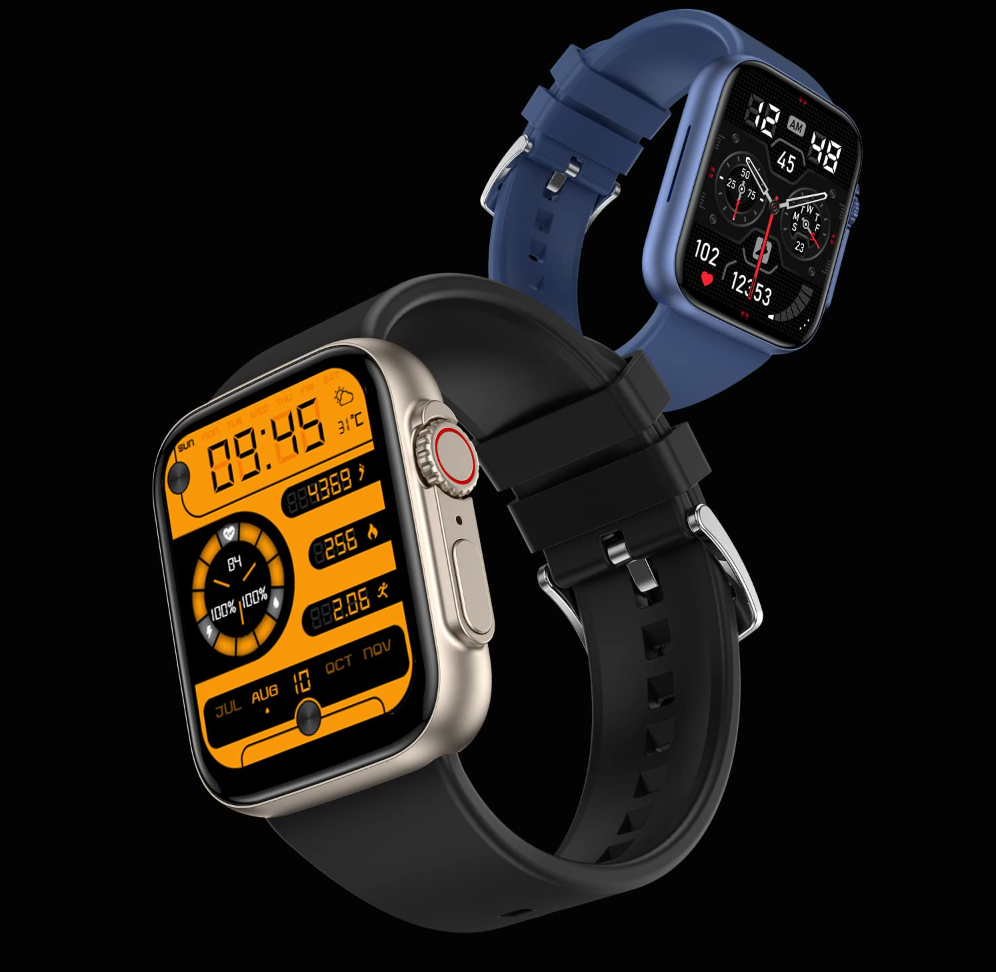
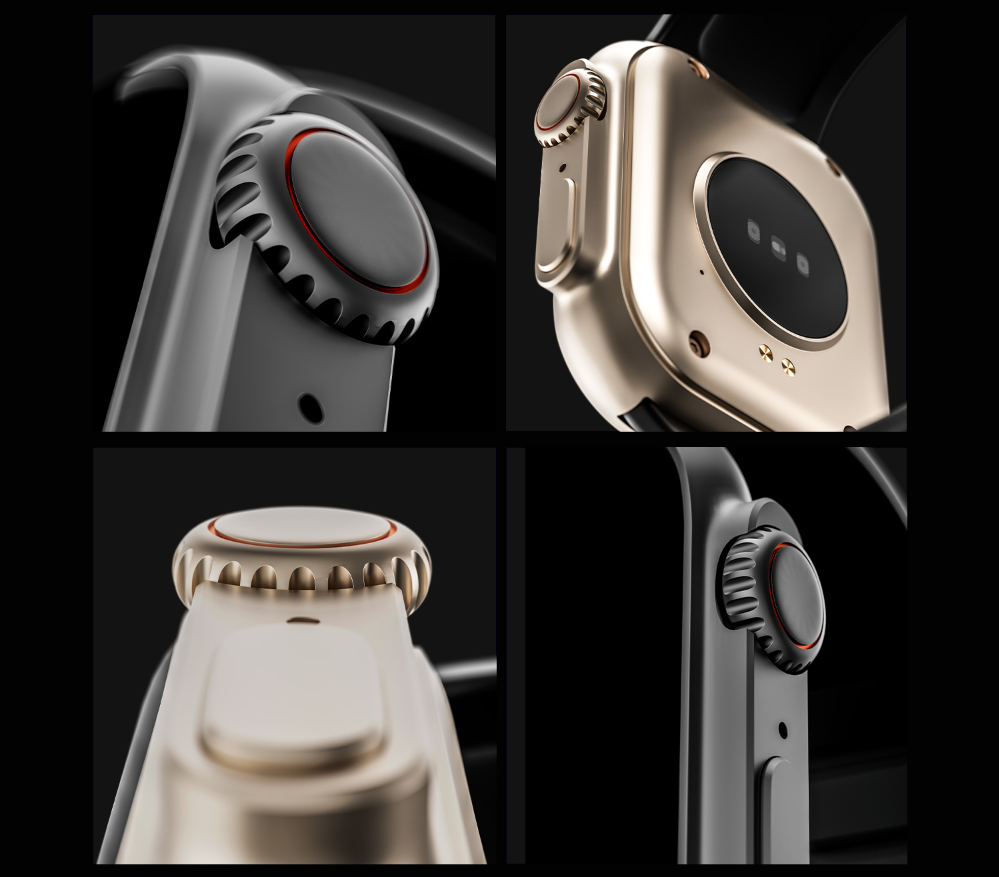
Fire Boltt, the Indian AIoT brand has launched its latest smartwatch Fire Boltt Gladiator. The smart wearable which features a 1.96-inch display panel and provides up to 7 days of battery life is a spitting image of the Apple Watch Ultra.
According to Fire Boltt, its upcoming smartwatch has a functional crown. The gadget has 123 sports modes, a heart rate monitor, and a blood oxygen monitoring sensor. The smart wearable is also scratch resistant and has an IP67 rating.
The Fire Boltt Gladiator costs Rs 2499 in India. The smartwatch will be available for sale on Amazon starting at 12 pm on December 30.
Fire Boltt Gladiator: Specs
The Fire Boltt Gladiator has a 1.96-inch HD display with a peak brightness of 600 nits and an ultra-narrow frame design. With an IP67 rating, the Fire Boltt Gladiator smartwatch is water resistant. The company asserts that the smartwatch is dust and crack-resistant. The smart wearable features Bluetooth calling and is equipped with a speaker and a microphone. The smartwatch comes is pre-loaded with contacts and dialer apps which makes it highly user-friendly.
The gadget is further equipped with 123 sports modes featuring 5 GPS-assisted modes including GPS running, GPS walking, GPS cycling, GPS on foot, and GPS trail. A heart rate monitor that supports 24 X 7 heart rate monitoring is also included. The wearable also features women’s health monitoring and sleep monitoring. Additionally, it incorporates a sensor for blood oxygenation that enables continuous SpO2 monitoring.
The Fire Boltt Gladiator has a battery life of up to 7 days and a standby time of roughly 20 days. With Bluetooth calling, it has a two-day battery life and supports quick charging. It can last up to 24 hours, according to the company, after only 10 minutes of charge. The smartwatch features 8 different menu designs. It also has a rotating function crown which should allow users to navigate easily throughout the UI.
The Fire Boltt Gladiator will be available in four different colors: black, blue, gold, and black gold. Additional features include a calculator app, a weather app, and an alarm app. Regular functions like a camera shutter and water reminders are also supported.
A Chinese woman in Ningde, Fujian Province has claimed that her iPhone 12 Pro fell from the 26th floor of a building and was not totaled. The woman says the smartphone slipped from her pocket while spreading her quilt on the balcony of the 26th floor of an apartment complex. The incident occurred on December 18 and leaves a lot of people stunned by the miraculous story.
The Fujian incident joins a growing collection of remarkable stories relating to the iPhone. Previously, iPhones found inside the toilet, inside a river, and even falling from an airplane have seemingly remained intact. The latest incident feeds into the profile of the iPhone brand as very rugged and durable.
According to the report, the falling iPhone 12 Pro was inserted into a platform made of foam on the 2nd floor of the building. The woman requested help and a staff member climbed to the second floor to retrieve the phone. The screen of the device was not damaged, which is impressive, if true. However, there are not a few netizens who have criticized the veracity of the woman’s claims.
The iPhone 12 Pro comes with some protection against damage when it falls. It has a super-ceramic panel and a matte textured glass back panel. It also comes with a stainless-steel frame which is of excellent quality.
These properties however do not absolutely insulate the smartphone from damage after falling from the 26th floor. The alleged story could well be the culmination of a string of coincidences. The coincidence resulted in the smartphone falling from 26 floors and being inserted on a platform made of foam insulation.
Kimos has launched an Indiegogo crowdfunding campaign for a truly revolutionary product. The Kimos self-heating thermos is claimed to be the world’s first thermos with self-heating capability. These devices provide heating within a few minutes after pressing a button. The Kimos Thermos boils water in under three minutes.
According to Dvir Amir, founder of Kimos, the idea for the self-heating thermos came from a desire to drink hot beverages on the go and an observed gap in the market. The Kimos is a culmination of three years of hard work in developing the self-heating thermos. It has a leak-proof design and it is a perfect item for outdoor activities, travel, and a whole lot of scenarios.
The Kimos is a fast and convenient way to heat beverages anytime and anywhere. The heating takes about 3 minutes to boil and retention lasts up to 4 hours. The Kimos has a fast-charging capability via USB and consists of durable materials. It has a stainless-steel lining, a rubberized exterior, and a dustproof/ waterproof power button.
The Kimos comes with a patented safety mechanism that prevents it from functioning in the absence of liquid inside the thermos. A LED indicator shows the remaining number of boils are based on the battery’s status. The company says that the fast-charging time of the thermos is a key differentiating factor from the market. It also prevents spills and overburning. It is small, lightweight, and comes in handy when outdoors and you need to have a hot beverage.
The Kimos features heat insulation that gives you a comfortable grip and is available in three colors – red, orange, and black. The Indiegogo campaign retail price for the Kimos starts at $89 but the original pricing starts from $130.
Several reports have claimed that the Samsung Galaxy S22 Fan Edition does not exist. However, a fresh leak reveals that the Galaxy S22 FE does exist. It appears that the device may come equipped with a MediaTek chip.
A tweet released by a leaker reveals that the Galaxy S22 FE and Galaxy Buds 2 will be coming soon. Another known leaker, Dohyun Kim, has confirmed the arrival of these devices, but he also said that the Galaxy S22 FE won’t be coming.
Speculations are rife that Samsung’s next Galaxy Unpacked event will be held on Feb. 1 to announce the Galaxy S23 series. According to another tipper (RGcloudS), Samsung will announce some products, like the Galaxy S22 FE and Galaxy Tab S8 FE, in the second part of Unpacked event. We believe that these devices may get a soft launch a couple of weeks after the Galaxy S23 series goes official.
The tipster claimed that the Galaxy S2 FE would arrive instead of the Galaxy A74. To those who are unaware, the company is already said to be working on a couple of new A-series phones, such as the Galaxy A14, A24, A34, and A54. However, there is no news on the existence of the A74, which suggests that it may have been cancelled.
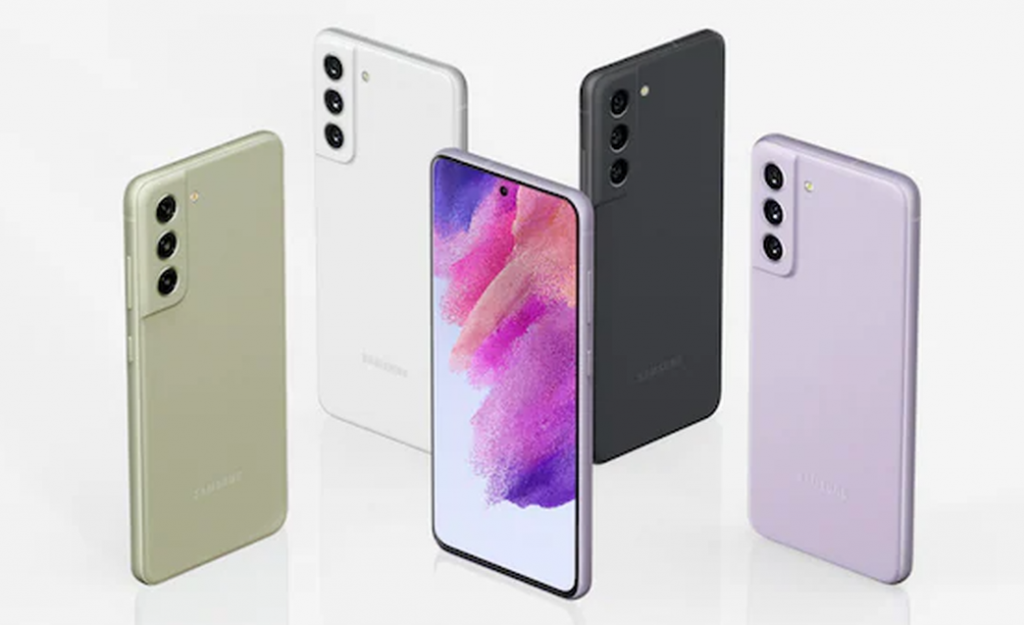
Samsung Galaxy S21 FE
The leak states that the Galaxy S22 FE will launch instead of the Galaxy A74. It may arrive with the Exynos 2300 chipset and the Samsung ISOCEL HM6 108-megapixel primary camera. The S22 FE is expected to cost the same as the Galaxy A73, which was announced for $499 earlier this year.
The Galaxy Tab S8 FE is also expected to feature the same Exynos 2300 chipset. The leak further revealed that the second Unpacked event, which will be held in Q3 2023, will see the arrival of the Galaxy Tab S9 series.
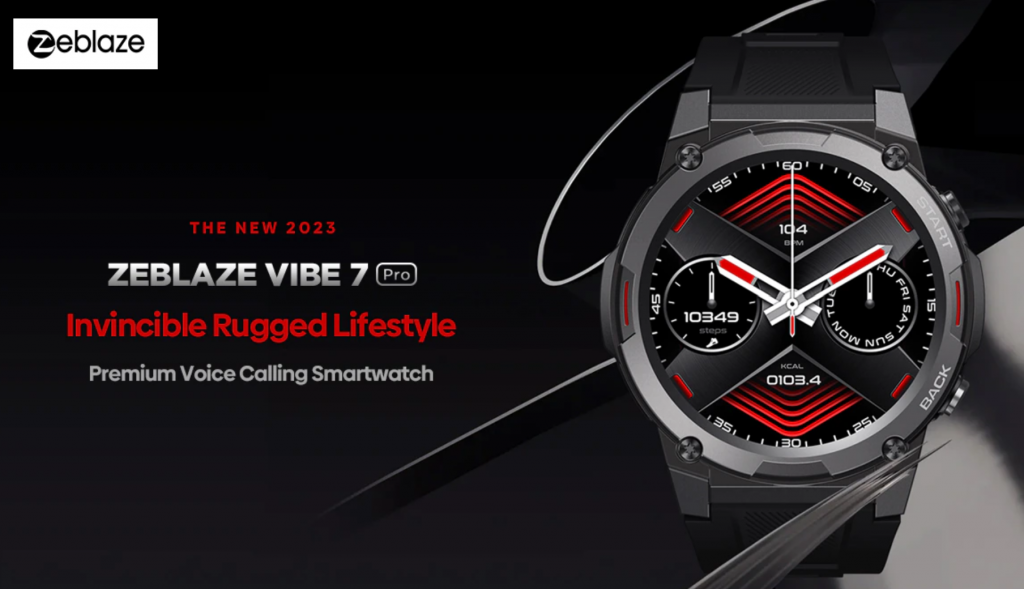
Zeblaze Vibe 7 Pro smartwatch with 30 days of battery life and a large AMOLED screen has been announced. The new Vibe 7 Pro smartwatch comes with a range of health and fitness features and it also supports Bluetooth calling. Zeblaze is promoting the Vibe 7 Pro as suited for an invincible rugged lifestyle.
The Vibe 7 Pro smartwatch has a display resolution of 466 x 466 pixels and up to 1,000 nits of brightness. Some of the health features in the new Zeblaze smart wearable are heart rate, blood oxygen, Pulse Ox, and sleep monitoring. The smartwatch has the Realtek 876E chip and the display supports Always-on modes. It also has a water-resistant rating of 3 ATM (30m) and IP69K.
The Vibe 7 Pro allows you to log exercises from a comprehensive list of sports modes. The connectivity of the device to your smartphone is via Bluetooth 5.1 and it enables receiving or making calls. The connection of the smartwatch to the app also allows you to receive notifications on the watch. The voice calling features include one touch to connect, a dial pad, recent calls, contact, and call rejection.
The Zeblaze Vibe 7 Pro has a voice assistant and the capability to locate your phone when misplaced. You can also receive weather forecasts via the smartwatch. Equipped with a 400mAh polymer battery, the Vibe 7 Pro can last on standby for 30 days. However, the normal use of the smartwatch yields up to 14 days of battery life. It fully recharges in 1.5 hours and comes with a silicone strap.
The Zeblaze Vibe 7 Pro will be available in black or silver color variants with a zinc alloy casing. It will be available globally via AliExpress and shipped from China for $199.98. The smart wearable will arrive in the US by mid-January 2023. Shipping charges and delivery times vary across the global market.
A few days back, boAt launched the boAt Wave Electra smartwatch featuring a large 1.91-inch display and the Bluetooth Calling feature. The smartwatch is now available to purchase online. So let’s check out its pricing, and specifications of the device.
boAt Wave Electra price in India, availability
The recently released boAt Wave Electra smartwatch will be offered nationwide for an introductory price of Rs 1,799 on boAt-lifestyle.com and Amazon.
boAt Wave Electra specs
The boAt Wave Electra has a square dial with a 1.81-inch HD display with 550 nits maximum brightness. It is splash-proof, sweat-proof, and has IP68 certification. The gadget is made of a high-quality aluminum alloy.
Health-related functions such as a heart rate monitor, SpO2 sensor, and sleep tracker are included with the boAt Wave Electra. A daily activity tracker, breathing exercises, and water alerts are also included. More than 100 sports modes are supported by the wearable.
For hands-free calling, the boAt Wave Electra is outfitted with a built-in speaker, microphone, and Bluetooth. On the gadget, users can save up to 50 contacts, and there is a dial pad for quicker access. Siri and Google Assistant are available on the gadget. 2048 and Whack-A-Mole are two more built-in games.
Other useful functions include weather updates, find my phone, music and camera control, etc. The boAt Wave Electra is advertised as having a battery life of 7 days on a single charge and 2 days while using Bluetooth.
Infinix Zero Ultra and Zero 20 were announced last week in India. Starting today, both smartphones are available for purchase through Flipkart. Here is all the information on the price and specifications of both phones.
Infinix Zero Ultra, Zero 20 price in India
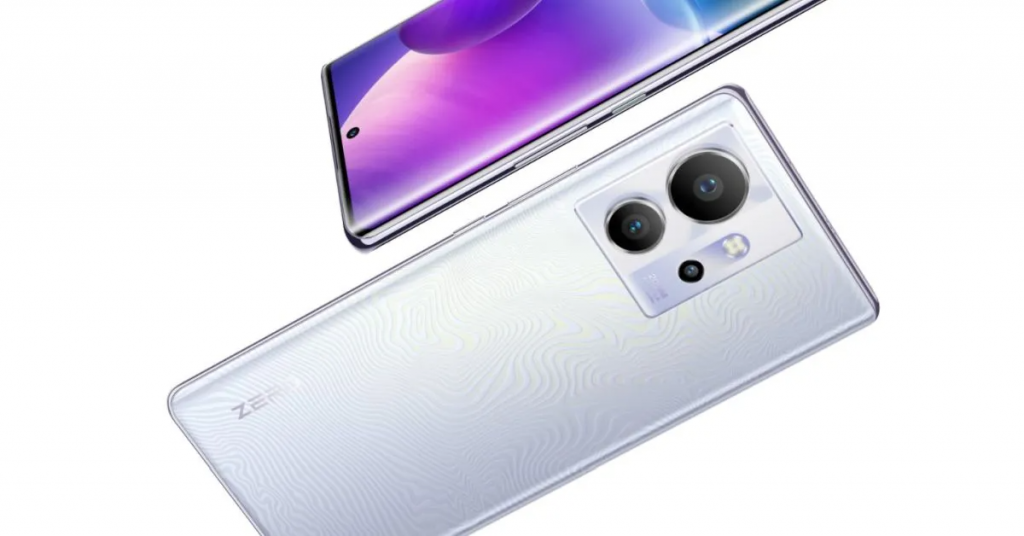
Infinix Zero Ultra
The Infinix Zero Ultra 5G is priced at Rs 29,999 (~$363). It comes in a sole 8 GB + 256 GB storage. It is available in colors like Coslight Silver and Genesis Noir.
The Zero 20 is priced at Rs 15,999 (~$194). The 4G LTE phone comes in single edition that offers 8 GB of RAM and 128 GB of storage. It can be bought in Space Gray, Glitter Gold, and Green Fantasy.
Infinix Zero Ultra, Zero 20 specifications and features
Infinix Zero 20
The Infinix Zero Ultra has a 6.8-inch AMOLED FHD+ 120Hz display with curved edges. The Dimensity 920-powered comes with LPDDR4x RAM and UFS 2.2 storage. It has a 4,500mAh battery with 180W charging support. It is fitted with a 32-megapixel front camera and a 200-megapixel (main, with OIS) + 13-megapixel (ultra-wide) + 2-megapixel triple camera unit. For security, it has an under-display fingerprint scanner.
The Infinix Zero 20 has a 6.7-inch AMOLED FHD+ 90Hz display. The Helio 99 chip powers the phone with LPDDR4x RAM and UFS 2.2 storage. It has a 4,500mAh battery with 45W charging support. For selfies, it has an autofocus-enabled 60-megapixel front camera with OIS support. A 108-megapixel (main) + 13-megapixel (ultra-wide) + 2-megapixel triple camera system is located on its back. It has a side-facing fingerprint scanner. Both phones come preinstalled with Android 12 OS, which is overlaid with Infinix’s XOS UI.
We use cookies on our website to give you the most relevant experience by remembering your preferences and repeat visits. By clicking “Accept”, you consent to the use of ALL the cookies.
This website uses cookies to improve your experience while you navigate through the website. Out of these, the cookies that are categorized as necessary are stored on your browser as they are essential for the working of basic functionalities of the website. We also use third-party cookies that help us analyze and understand how you use this website. These cookies will be stored in your browser only with your consent. You also have the option to opt-out of these cookies. But opting out of some of these cookies may affect your browsing experience.
Necessary cookies are absolutely essential for the website to function properly. This category only includes cookies that ensures basic functionalities and security features of the website. These cookies do not store any personal information.
Any cookies that may not be particularly necessary for the website to function and is used specifically to collect user personal data via analytics, ads, other embedded contents are termed as non-necessary cookies. It is mandatory to procure user consent prior to running these cookies on your website.