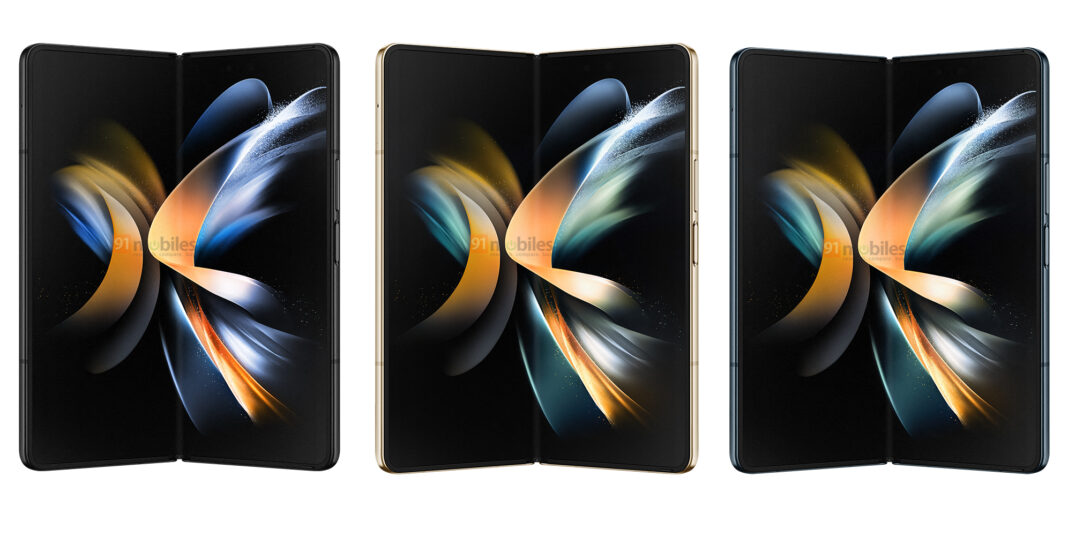
Samsung is gearing up to launch its latest generation of highly anticipated foldable smartphones soon. But prior to any official announcement, the Galaxy Z Fold 4 model has been spotted in a leaked video teaser.
For those unaware, the South Korean tech giant is planning on unveiling the Galaxy Z Fold 4 and Galaxy Z Flip 4 during the Galaxy Unpacked event on August 10. However, ahead of this conference, a new teaser of the upcoming Galaxy event was leaked. The teaser included a video, which was shared by tipster ChunV. Looking at this video, we can see flex display feature of the new Galaxy Z Fold 4 smartphone.
Despite teasing the higher end foldable model, the leaked video does not reveal the entire design of the Z Fold 4. Although, from a design perspective, it is expected to be similar to the last generation Galaxy Z Fold 3, which also had a vertical hinge. Talking more about the upcoming smartphone, the Galaxy Z Fold 4 will sport a large 7.6 inch primary display that has a FHD+ resolution, AMOLED panel, and a 120Hz refresh rate. Meanwhile, the external panel will be a slimmer 6.2 inch panel that has an HD+ resolution.
The from camera is also expected to be housed under the display and is believed to have a 16 megapixel resolution. On the other hand, the rear will feature a triple camera setup, consisting of a 50 megapixel primary sensor, 12 megapixel ultra wide angle lens, and a 12 megapixel telephoto shooter. Under the hood, the Qualcomm Snapdragon 8+ Gen 1 SoC will power the device, which will likely be paired with 12GB of RAM and up to 512GB of internal storage.
Motorola is all set to launch the Moto Razr 2022 in China on August 2. The smartphone will be the latest addition to the company’s foldable segment. Motorola hasn’t detailed the Moto Razr 2022 specs yet, but today it announced through a Weibo post that the smartphone will be powered by the latest Snapdragon 8+ Gen1 processor. The company has been teasing the foldable for a while now, we already know that it will pack a dual rear camera setup.
Motorola today announced through a Weibo post that the upcoming Moto Razr 2022 will be the world’s first foldable smartphone powered by the snapdragon 8+ Gen1 SoC. Motorola didn’t divulge anything else about the upcoming smartphone, but the previous teasers have suggested that it will have a dual rear camera set up and will run MYUI 4.0 OS out of the box.
The Moto Razr 2022 is rumored to have a 6.7-inch P-OLED FHD+ foldable screen that offers a 120Hz refresh rate. It will likely have a 3-inch cover display on the back which can also be used to play games.
As far as the cameras are concerned, the device may come with a 50-megapixel (main) + 13-megapixel (ultra-wide) dual-camera setup. On the front, it could house a 32-megapixel camera for selfies.
The Moto Razr 2022 is expected to be fueled by a 2,800mAh battery. It may come with up to 12 GB of LPDDR5 RAM, and 512 GB of UFS 3.1 storage.
The Motorola Razr 2022 may be priced at EUR 1,149 (roughly $ 1,173) in the European market. The smartphone is said to come in Quartz Black and Tranquil Blue color options. As mentioned, it will be launched on August 2 alongside the Moto X30 Pro.
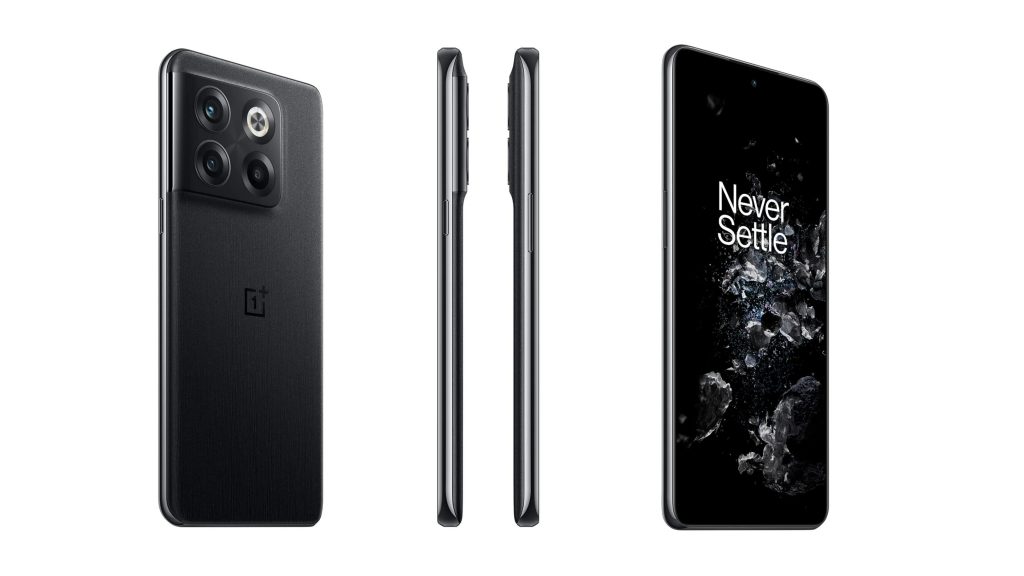
OnePlus is all set to launch the OnePlus 10T on August 3. The handset also goes by OnePlus Ace Pro in China. Earlier today, the device’s specs leaked via its TENAA listing. Just a few hours later, the smartphone’s specifications have leaked again, in addition to more renders. The new leak talks about the India variant, while the previous leak was of the Chinese version.
The new Oneplus 10T leak comes from PriceBaba. The details mentioned in the report corroborate with the TENAA leak. It’s not surprising as the phone is the same across all regions, except for software and memory configurations.
The OnePlus Ace Pro, the Chinese version of the OnePlus 10T will be available in a 16GB + 512GB memory configuration. This won’t be the case for the OnePlus 10T in India, as per the new leak.
The device will be sold in 8GB + 128GB and 12GB + 256GB variants in the country. It will reportedly start at ₹49,999 and will be available in two colors: Jade Green and Moonstone Black.
Coming to the specs, the OnePlus 10T will sport a 6.7-inch FHD+ (2412 x 1080 pixels) AMOLED display with a 10-bit color depth. The screen will have support for up to a 120Hz refresh rate, sRGB color gamut, and HDR10+.
The smartphone will be powered by a Qualcomm Snapdragon 8 Plus Gen 1 SoC. It will boot OxygenOS 12.1 based on Android 12 though the Android 13-based OxygenOS 13 will be announced alongside it.
The handset will house a triple camera system on its rear. The setup will consist of an OIS-assisted 50MP Sony IMX766 primary sensor, an 8MP ultra-wide unit, and a 2MP macro snapper. On the front, its centered punch-hole will nest a 16MP shooter.
The phone will lack both an alert slider and Hasselblad optimizations. Finally, it will be backed by a 4,800mAh battery with support for 150W fast wired charging support.
Realme held an AIoT launch event in India today to announce multiple products. It unveiled the Realme Pad X 5G, Buds Air 3 Neo, Buds Wireless 2S, a Flat Monitor, and the Realme Watch 3. Here is all the information on the specifications, features, and price of the Watch 3.
Realme Watch 3 specifications and features
The Realme Watch 3 has a large-sized display that measures 1.8 inches. The screen offers a resolution of 240 x 286 pixels. The square-shaped display has curved edges, and it offers 500 nits of max brightness. The company claims that it has a screen-to-body ratio of 67.5 percent, which is 35% higher than the Realme Watch 2. There are over 100 unique watch faces onboard, which can be applied to the screen through the Realme Link app.
Realme Watch 3
The curved rear shell of the Watch 3 is made from plastic, and it is equipped with a metallic frame, which gives it a premium appeal. The smartwatch comes with a skin-friendly silicone strap that weighs only 14 grams. The Watch 3 is an IP68-rated, waterproof and dustproof device.
The Watch 3 can track 110+ sports modes, such as outdoor/indoor walking, outdoor/indoor running, cricket, football, basketball, badminton, yoga, strength training, elliptical, outdoor/indoor cycling, mountaineering, trail running, skateboarding, and more. The device can be used for heart rate tracking, SpO2 monitoring, stress monitoring, and sleep quality monitoring. It also offers water-drinking reminders and stand-up alerts.
The Realme Watch 3 supports Bluetooth 5.3 connectivity and offers Bluetooth calling via a paired smartphone. For a clearer voice call experience, the Watch 3 comes equipped with a high-sensitive microphone, a built-in smart PA (power amplifier) that enhances the audio quality, and a dual-mode Bluetooth chip in order to make Bluetooth connecting and calling more stable.
It has a 340mAh battery, which can last for up to 7 days with typical use. The company claims that it takes 2.25 hours to fully charge the Watch 3.
Realme Watch 3 price in India
The Realme Watch 3 is priced at Rs 3,499. It will be available for purchase for the first time at 12 pm (local time) on Aug. 2. Early-bird buyers can get it for Rs 2,999. The smartwatch will be sold through Flipkart, Realme India’s website, and retail stores. It can be purchased in Grey and Black colors
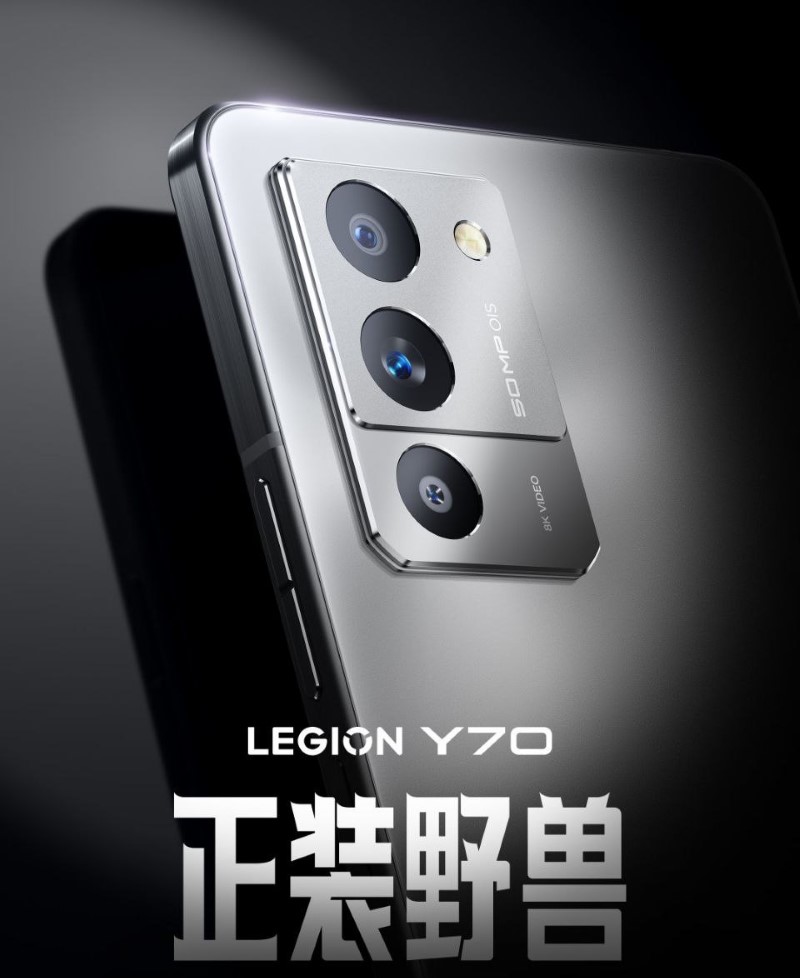
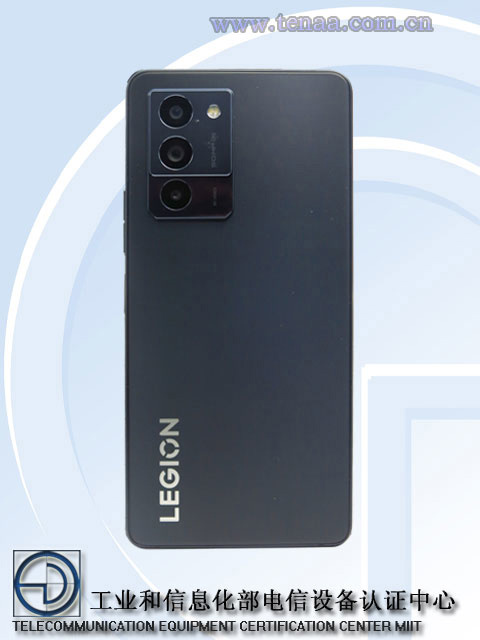
Lenovo has officially announced the new Legion Y70 smartphone today, the company has also confirmed that the new Legion handset will be launched in August. The device is expected to have a thinner and lighter design and the company claims it will offer powerful performance. Lenovo Legion Y70 has already been listed on Geekbench and CMIIT certification sites.
Lenovo took to Weibo to announce the latest Lenovo Legion Y70. The company shared a poster revealing the rear camera module of the smartphone and also confirmed that it will debut sometime in August. The poster suggests that the smartphone will have a triple rear camera setup fitted on a rectangular island. The poster also reveals that the smartphone will have a 50-megapixel main camera with OIS.
As mentioned, the device has already been spotted on Geekbench and the CMIIT website which revealed all of its major specifications. Lenovo Legion Y70 will likely be equipped with a 6.67-inch OLED screen offering a resolution of 2400 × 1080.
In terms of optics, the device will have a rear 50-megapixel triple camera setup and could support 8K video recording. It may be fueled by a 4880mAh battery supporting 68W fast charging. The device is expected to have a side-mounted fingerprint scanner. The smartphone will be 7.99mm thick and weigh 205g. It is said to be available in two color options- grey and silver.
The processor of the device is uncertain because CMIIT shows that the phone uses a 3.0GHz Snapdragon 8 Gen1 chip, but the Geekbench 5 running score indicates it is a 3.2GHz Snapdragon 8+ Gen1 Soc. It will likely be powered by the Snapdragon 8+ Gen1 chip paired with up to 16GB RAM and 512GB storage.
After teasing for days, Realme has finally launched the Realme Pad X in India. It is the brand’s third tablet in the country after the original Realme Pad and the Realme Pad Mini.
The Realme Pad X is the company’s most advanced tablet to date. It was first released in China in late May. The device is not only powered by a better chipset but also offers optional 5G connectivity.
Let’s take a look at its specs along with its pricing and availability in India.
Realme Pad X Specifications
The Realme Pad X is built around an 11-inch LCD screen with a resolution of 2000 x 1200 pixels and 16.7 million colors. The panel has a 450 nits peak brightness level and 84.6% screen-to-body ratio. It has support for DC Dimming and a TÜV Rheinland-certified hardware-level blue light filter.
The tablet’s display also carries support for stylus input. The official ‘Realme Pencil’ stylus accessory offers 4096 levels of pressure sensitivity, a 240Hz sampling rate, and charges magnetically on the side of the device. There’s also an official ‘Realme Smart Keyboard’ accessory, which has a 1.3mm key travel.
The Realme Pad X is powered by a Qualcomm Snapdragon 695 SoC. It boots Realme UI 3.0 for Pad based on Android 12. It comes with features like PC Connect, Limelight (Apple Center Stage knockoff), and split-view to name a few.
Other features include a 13MP rear camera, an 8MP front-facing camera, Dolby Atmos-supported quad speakers, a MicroSD card slot, and a USB Type-C port.
Last but not least, the tablet is backed by an 8,340mAh battery with support for 33W fast charging.
Realme Pad X Price and Availability in India
The Realme Pad X will retail at the following price tags in India.
4GB + 64GB (WiFi-only) – ₹19,999 ($251)
4GB + 64GB (WiFi + 5G) – ₹25,999 ($326)
6GB + 128GB (WiFi + 5G) – ₹27,999 ($351)
It can be availed in either Glacier Blue or Glowing Grey color options. The first sale is scheduled for at 12 PM on August 1 via Realme.com, Flipkart, and retail stores across the country. All three variants will be sold at a discount of ₹2,000 during the initial store.
The official accessories will be sold at the following price tags.
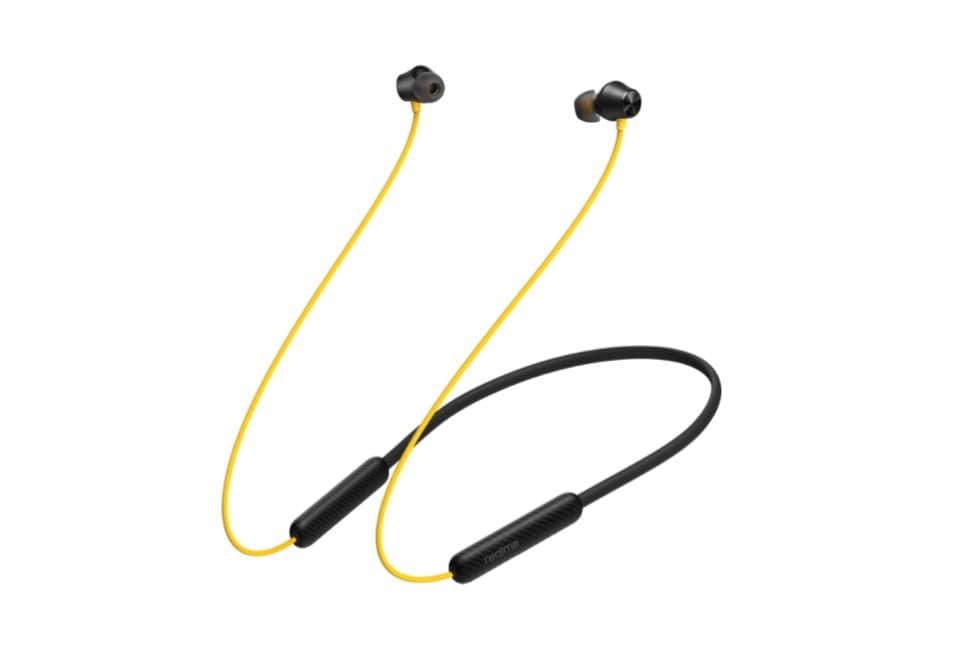
Realme has just hosted its AIOT Launch event for the Indian market. During this conference, the company launched a number of new products ranging from a tablet, smartwatch, and even a monitor. The announcements also included two new hearable devices as well, so let’s have a look at the Buds Air 3 Neo TWS earbuds and the Buds Wireless 2S neckband earphones.
Realme Buds Air 3 Neo
Similar to the original Buds Air 3, the new Neo variant also features a stem design. Although, unlike its predecessor, the Buds Air 2 Neo, it does not offer ANC (Active Noise Cancellation). Rather, it offers Dolby Atmos powered 3D sound and an improved battery life of 30 hours compared to the last gen’s 28 hour battery life. The new truly wireless earbuds also houses 10mm drivers and support IPX5 rating for splash resistance.
While it doesn’t feature ANC, it does offer ENC (Environmental Noise Cancellation) as well as a dedicated gaming mode that lowers the latency down to 88ms for gamers. Other features include, touch gesture controls, Bluetooth 5.2, and a USB Type C port. The buds can last for up to 7 hours on a single full charge and each of them weigh just 4 grams. Notably, this model was first launched in China earlier this month and is finally making its way to the Indian market.
Realme Buds Wireless 2S
As the name suggests, the Buds Wireless 2S neckband earphones is the successor to the popular Buds Wireless 2. It features a neckband style band and its design overall is quite similar to its predecessor. The new wireless earphones also offers AI ENC (Environmental Noise Cancellation) for calls and houses 11.2 dynamic bass drivers.
The Chinese smartphone maker claims that the new hearable can offer up to 24 hours of battery life, with just 20 minutes of charging offering an additional 7 hours of audio playback. Other features include, a low latency 88ms gaming mode, dual connection support for fast switching, Bluetooth 5.3, and more.
Pricing & Availability
The Buds Air 3 Neo is available in two color options in India, namely a White and Blue color options. Meanwhile, the Buds Wireless 2S is also offered in two color variant, including Blue and Yellow. The Buds Air 3 Neo TWS earbuds arrives with a price tag of 1,999 INR and will be offered for just 1,699 INR as an introductory offer. On the other hand, the Buds Wireless 2S has a price tag of 1,499 INR, and its introductory offer will bring the cost down to just 1,299 INR.
The Buds Air 3 Neo will go on sale in the region starting from 27th July 2022 on Flipkart, Realme.com, and other partner stores. The Buds Wireless 2S will be available for purchase on both Amazon and Flipkart starting from 26th July 2022, and you can also buy it from the official website as well as partnered retail stores.
A few days ago, Honor unveiled a few new products at a launch event, including the new Honor Smart Screen 3i and the premium Honor Smart Screen 3 series Smart TVs.
Now, the Honor Smart Screen 3i models are officially available for purchase in the Chinese market, with a starting price of 1,999 yuan (~$295).
There are three modes based on the size of the screen — 55-inch, 65-inch, and 75-inch, costing 1,999 yuan (~$295), 2,699 yuan (~$399), and 3,999 yuan (~$591), respectively. For the initial sales, they will be available at a discounted rate of 1,699 yuan (~$251), 2,399 yuan (~$355), and 3,599 yuan (~$532) respectively.
The devices come with a display that offers a 16:9 aspect ratio, DC Dimming, 200-300 nits brightness, and a 93 percent DCI-P3 color gamut. Under the hood, it is powered by a quad-core processor with a Cortex-A53 CPU along with Mali-G52 MC1 GPU.
It packs 2GB of RAM and 16GB of internal storage. The device also features two USB 2.0 ports and two HDMI 2.0 ports. It runs the company’s own Magic UI 4.0 and has support for Kids Mode that features exclusive children’s resources and allows parents or guardians to control the usage time. There’s also an Elder Mode with a clearer interface and larger fonts to make it easier for the elders to operate.
Realme Flat Monitor Full HD has just been launched in India as the company’s first monitor. It has debuted alongside a bunch of Realme products including Realme Pad X, Watch 3, and Buds 3 Neo. The Realme monitor comes with a flat 60.5 cm (23.8-inch) Full HD screen and has a sleek appearance with its three-sided, bezel-less display. The monitor offers a fluid and lag-free display with up to 75Hz refresh rate and 8ms response time. Let’s take a look at its pricing and specifications.
Realme Flat Monitor Full HD Price in India, Availability
Realme Flat Monitor Full HD Price in India is set at Rs. 12,999(~$163). The monitor will go for sale via Flipkart and its sale date will be announced by Realme soon.
Realme Flat Monitor Full HD Specifications
Realme’s first monitor- Realme Flat Monitor Full HD features a 23.8-inch LED display with a three-sided, bezel-less panel and a relatively thicker chin. The overall appearance of the monitor is pretty sleek and modern. It could be an ideal choice for a workspace environment.
It offers a refresh rate of up to 75Hz and has a response time of 8ms. Realme has packed some impressive tech in this thin monitor, it comes with an Anti-glare display and offers up to 16.7 million colors. The Realme monitor has a VA panel and offers a resolution of 1920 x 1080 pixels. It features an LED Backlit Backlight and 250 nits max brightness.
Realme Flat Monitor Full HD comes with a “multi-port interface”, as it has 4 ports, including VGA, DC – and USB type-C, which also doubles as a DisplayPort. It also has an HDMI 1.4 Port. It does not have a webcam and 3.5mm audio jack. The monitor comes with a 3-year domestic warranty.
After Qualcomm and Amazon, MediaTek has also announced today that it will get into a strategic partnership with Intel to manufacture chips using Intel Foundry Services (IFS). By adding a new foundry partner with significant capacity in the United States and Europe, MediaTek plans to build a more balanced, resilient supply chain.
The majority of MediaTek’s foundry services are currently provided by TSMC, but the company is also trying to diversify its supply chain by increasing production capacity in both the US and Europe. With facilities in both locations, Intel‘s IFS is an ideal choice, and the company expects long-term cooperation that may involve a variety of technologies and applications.
“As one of the world’s leading fabless chip designers powering more than 2 billion devices a year, MediaTek is a terrific partner for IFS as we enter our next phase of growth,” said IFS President Randhir Thakur. “We have the right combination of advanced process technology and geographically diverse capacity to help MediaTek deliver the next billion connected devices across a range of applications.”
MediaTek intends to develop a number of processors for a variety of smart edge devices using Intel manufacturing methods. The IFS platform spans production-proven three-dimensional FinFET transistors to next-generation breakthroughs with technologies optimized for high performance, low power, and always-on connectivity.
NS Tsai, corporate senior vice president of Platform Technology & Manufacturing Operations at MediaTek, said, “MediaTek has long adopted a multi-sourcing strategy. We have an existing 5G data card business partnership with Intel, and now extend our relationship to manufacturing smart edge devices through Intel Foundry Services. With its commitment to major capacity expansions, IFS provides value to MediaTek as we seek to create a more diversified supply chain. We look forward to building a long-term partnership to serve the fast-growing demand for our products from customers across the globe.”
Apple enabled “reader” apps earlier this year, allowing customers to check in and pay for a subscription over external connections from sources other than the App Store. Netflix is adding a feature to its iOS app that directs users to its website when they wish to sign up for a new membership.
According to 9to5Mac, the Netflix app now uses the new iOS API for reader apps, which redirects users to an external website before completing a subscription. The exact date that Netflix began making this option available to iPhone and iPad users is uncertain, but according to reports, the deployment is now allegedly global.
When you click the subscribe button, the notification “you’re about to leave the app and travel to an external website” displays. The app explicitly states that all subscriptions should be managed on Netflix’s platform and that Apple is no longer in charge of the transaction.
After selecting Continue, you can enter your personal data, choose a payment method, and register for a Netflix plan on the Netflix website. This indicates that after the first year, Netflix is exempt from paying the recurring subscription cost of 15% levied for each subscription obtained through an iOS app.
This commission is lower than the typical 30% commission. It’s crucial to understand that Apple defines reading programs as those that offer digital material as their major features, such as periodicals, newspapers, books, radio, music, or videos.
Despite this adjustment, Netflix has long since given up on in-app subscriptions. In a 2018 update to the iOS app, the option to subscribe to Netflix directly through the provider’s official iPhone and iPad applications was removed. It should come as no surprise that Apple tried to prevent Netflix from requiring iOS customers to sign up for a Netflix plan through Safari.
Apple has finally let numerous app categories provide alternative subscription methods outside the App Store without having to pay a commission to the company, thanks to prior antitrust investigations. In a number of countries, including the Netherlands and South Korea, Apple has recently been forced to permit third-party payment methods in App Store apps.
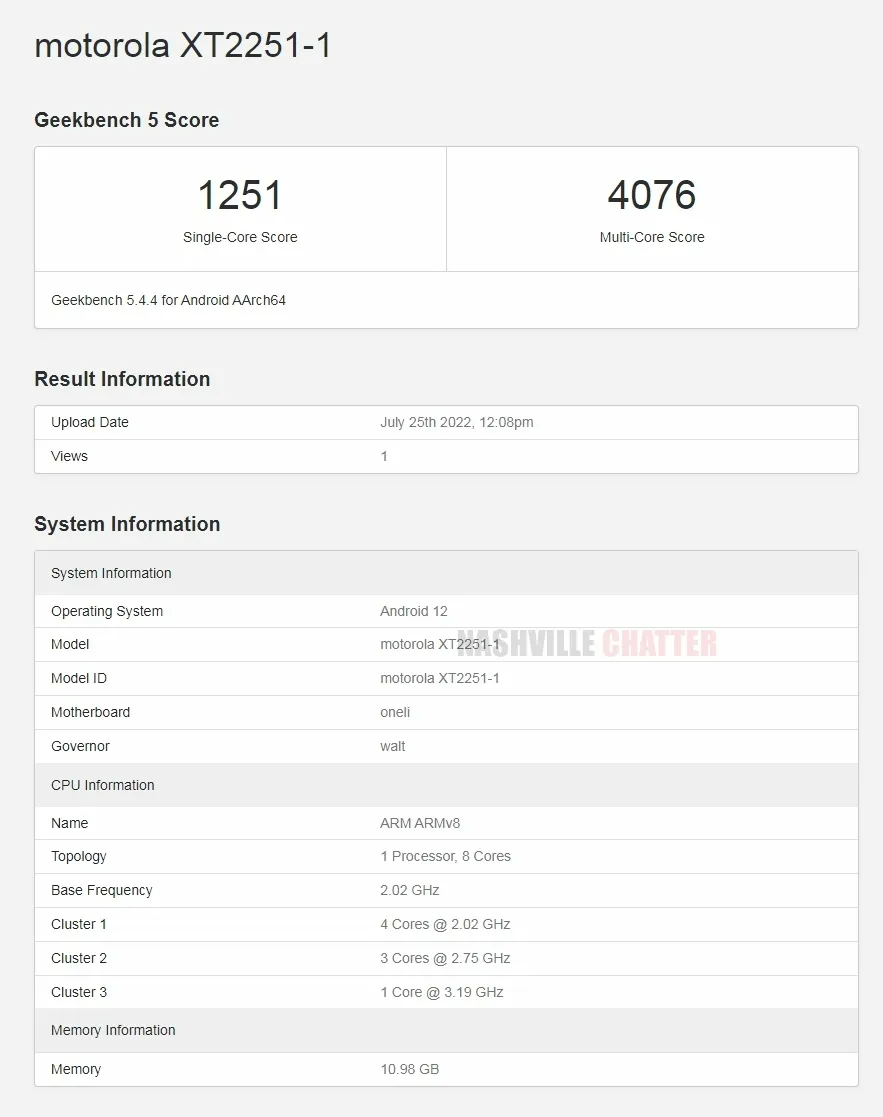
Yesterday, two Motorola phones with model numbers XT2241-1 and XT2251-1 appeared in the database of the Geekbench benchmarking site. The former is the Snapdragon 8+ Gen 1 powered Moto X30 Pro flagship phone. On the other hand, the XT2251-1 seems to be the Moto Razr 2022 clamshell phone, which is scheduled to debut with the X30 Pro on Aug. 2 in China.
The XT2251-1 device has been previously spotted on certification platforms like Wi-Fi Alliance, China’s MIIT, and 3C. The 3C listing revealed that it may ship with a 33W charger, which suggests that it could be a mid-range device. However, now that it has been spotted with the Snapdragon 8 Plus Gen 1 chip on Geekbench (via), it appears that it could be the Motorola Razr 2022.
The Geekbench listing of the Motorola XT2251 reveals that it is equipped with the Snapdragon 8+ Gen 1 chip, 12 GB of RAM, and Android 12 OS. It scored 1251 points in the single-core test of the Geekbench 5 and 4076 points in the multi-core test. While the XT2251-1 seems to be the Razr 2022, it is advisable to wait for further reports to know its identity.
Moto Razr 2022 specifications (rumored)
The Moto Razr 2022 has a 6.7-inch P-OLED FHD+ foldable screen that offers a 120Hz refresh rate. It will have a 3-inch cover display on the back. For photography, it will come with a 32-megapixel main camera and a 50-megapixel (main) + 13-megapixel (ultra-wide) dual-camera setup.
The Razr 2022 may pack a 2,800mAh battery. It will feature the SD8+G1 chip, up to 12 GB of LPDDR5 RAM, and 512 GB of UFS 3.1 storage.
Huawei has already confirmed that the company will be hosting a product launch conference in China on 27th July where the brand will launch its new Huawei MatePad Pro 11-inch tablet along with a few other products.
While some of the details related to the upcoming tablet have already been revealed through the official teasers and leaks, the device has now passed through a certification process in China, revealing its key specifications.
The Huawei MatePad Pro 11-inch has been spotted as it passed through the TAF certification, which reveals that the tablet carrying model number GOT-AL09 will be equipped with an OLED display that has a punch-hole cutout for the front-facing camera. This is an upgrade considering that the previous model featured an LCD panel.
It has also been revealed that the device will feature a triple-camera setup on the back, and the tablet will be running the latest HarmonyOS 3.0 operating system, which is developed in-house by Huawei for its own devices.
As for the connectivity, there’s support for Wi-Fi and 4G LTE, and similar to other Huawei devices, there’s no 5G support because of the sanctions imposed by the United States. It is powered by an 8,200mAh battery, but the charging speed is not yet known.
The teaser image fo the upcoming Huawei MatePad Pro 11-inch shared by the company a few days ago, indicates that the tablet will have a new design featuring a circular camera cutout on the back, similar to the design of the Mate 40 series smartphones.
A couple of days ago, Nubia announced its latest flagship smartphone in its home market China, dubbed Nubia Z40S Pro. The phone is an upgraded version of the Z40 Pro smartphone launched in February this year.
Now, just days after the official announcement, the Nubia Z40S Pro is available for purchase in the Chinese market. The pricing starts at 3,399 yuan for the base model and goes up to 6,699 yuan for the top-end model.
The 8GB + 128GB model is priced at 3,399 yuan while the 8GB + 256GB model costs 3,699 yuan (~$548). The 12GB + 256GB costs 3,999 yuan (~$592) and the 12GB + 512GB model is priced at 4,499 yuan (~$666).
On the other hand, the 120W fast charging support model with 12GB RAM and 256GB storage costs 4,299 yuan (~$637), and the 18GB + 1TB model is priced at 6,699 yuan (~$992). There’s also Spirit Cage Limited Edition having 12GB RAM and 256GB internal storage that costs 4,699 yuan (~$695).
The Nubia Z40S Pro features a 6.67-inch OLED display with a Full HD+ resolution, a 144Hz refresh rate, a 480Hz touch sampling rate, a maximum brightness of 1,000 nits. The device is powered by the Qualcomm Snapdragon 8+ Gen 1 chipset and packs LPDDR5 RAM along with UFS 3.1 internal storage. For heat dissipation, it has a 3062mm2 vapor chamber unit.
In the camera department, the phone has a custom-made 35mm, 64-megapixel Sony IMX787 main camera with an f/1.6 aperture and OIS support. It is coupled with a 50-megapixel ultra-wide lens and an 8-megapixel periscope telephoto camera. On the front side, the device features a 16-megapixel snapper for taking selfies and video calling.
The smartphone runs the Android 12 operating system out-of-the-box with the company’s own MyOS 12 custom interface on top. The device is powered by a 5,000mAh battery and supports 80W fast charging. There’s another model which packs a 4,600mAh battery and features 120W fast charging.
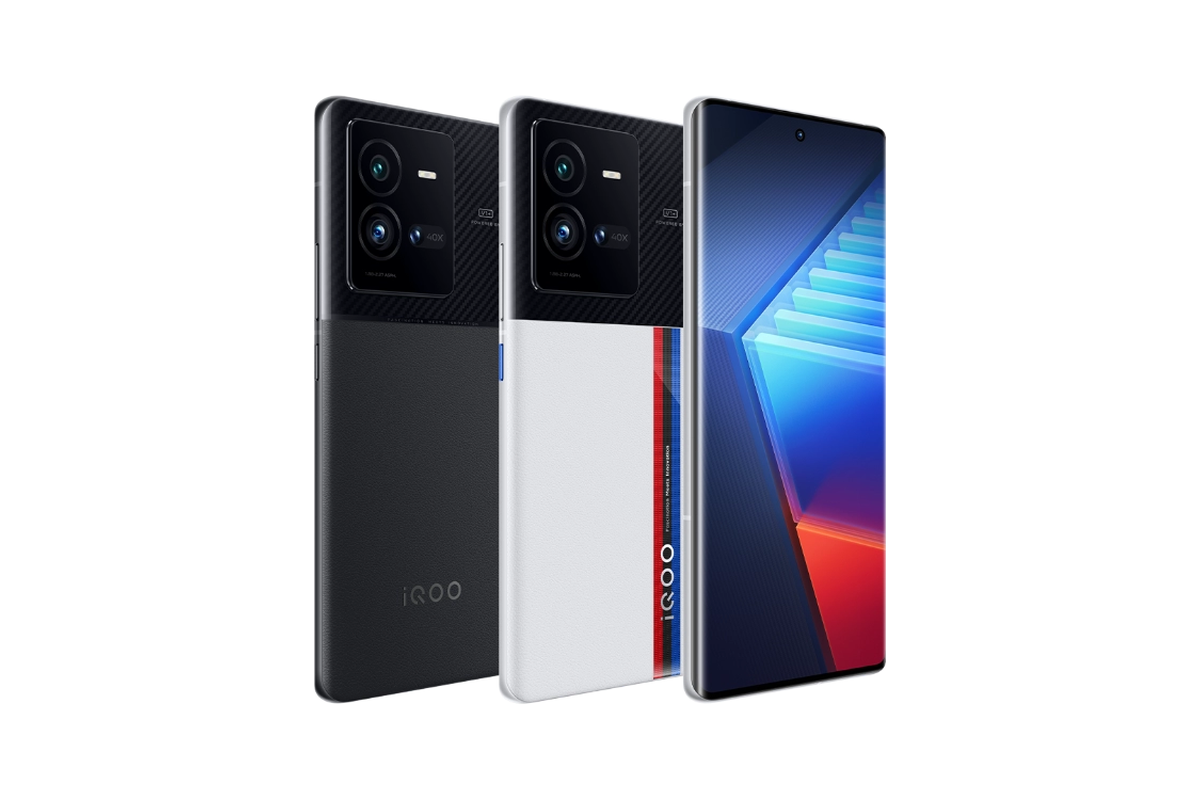
The iQOO 10 and iQOO 10 Pro were made official in China the previous week. Starting from today, both phones are available for purchase in the home market. Here’s a look at the specifications and prices of the iQOO 10 and 10 Pro on its first sale date.
iQOO 10, iQOO 10 Pro price
The iQOO 10 comes in four variants, such as 8 GB RAM + 128 GB storage, 8 GB RAM + 256 GB storage, 12 GB RAM + 256 GB storage, and 12 GB RAM + 512 GB storage. These variants are priced at 3,699 Yuan (~$548), 3,999 Yuan (~$592), 4,299 Yuan (~$637), and 4,699 Yuan (~$696). It comes in shades like Track Version (black), Legendary Edition (white), and Engine (orange).
iQOO 10
The iQOO 10 Pro is available in three options, such as 8 GB RAM + 256 GB storage, 12 GB RAM + 256 GB storage, and 12 GB RAM + 512 Gb storage. They are priced at 4,999 Yuan (~$740), 5,499 Yuan (~$815), and 5,999 Yuan (~$888), respectively. The 10 Pro can be bought in Track Version (black) and Legendary Edition (white) colors.
iQOO 10, iQOO 10 Pro specifications
The iQOO 10 and 10 Pro feature a 6.78-inch AMOLED display. The former has a flat screen that offers a Full HD+ resolution, up to a 120Hz refresh rate and an optical in-screen fingerprint scanner. The latter has curved edges, support for 1Hz–120Hz refresh rate through LTPO 3.0 technology, Quad HD+ resolution, and an ultra-sonic in-display fingerprint sensor. Both devices run on Android 12 OS with OriginOS Ocean UI on top.
iQOO 10 Pro
The Snapdragon 8+ Gen 1 chipset, LPPDR5 RAM, and UFS 3.1 storage are present under the hood of the iQOO 10 duo. The vanilla has a 4,700mAh battery that supports 120W fast charging, whereas the Pro gets a 4,550mAh battery with 200W fast charging, 50W wireless charging, and 10W reverse wireless charging.
The iQOO 10 duo has a 16-megapixel front camera. The rear camera setup of the iQOO 10 has a 50-megapixel with OIS support, a 13-megapixel ultra-wide camera, and a 13-megapixel telephoto snapper. On the other hand, the iQOO 10 Pro has a 50-megapixel main camera with gimbal OIS, a 50-megapixel ultra-wide camera with a 150-degree FOV, and a 14.6-megapixel telephoto lens. Both phones feature the Vivo V1+ chip for imaging processing and for boosting frame rates while playing games. The other features of the iQOO 10 series include dual SIM, 5G, Wi-Fi 802.11ax, Bluetooth 5.3, stereo speakers, NFC, and a USB-C port.
The iQOO 10 (Chinese edition) and iQOO 10 Pro (Chinese edition) are both listed on Giztop for buyers outside China.
OnePlus recently confirmed that it will be announcing the OnePlus Ace Pro on Aug. 3 in China. Reports have claimed that it will be the very same device that is being released with the OnePlus 10T moniker in other markets. However, some reports have said that the Ace Pro may feature better cameras. Ahead of the launch, the OnePlus Ace Pro with model number PGP110 has surfaced in the database of China’s TENAA certification site. As usual, the TENAA listing (via) has revealed all the key specifications of the device.
OnePlus Ace Pro specifications (rumored)
The OnePlus Ace Pro has 163 x 75.4 x 8.75mm dimensions, and it weighs 203.5 grams. The official renders and the TENAA listing confirms that the Ace Pro has a 6.7-inch flat AMOLED display with a centrally positioned punch-hole. It carries support for a Full HD+ resolution of 1080 x 2400 pixels and is equipped with an in-display fingerprint scanner. It is expected to carry support for a 120Hz refresh rate.
OnePlus Ace Pro
The Ace Pro has a 16-megapixel selfie snapper. The square-shaped camera module available on its rear panel is headlined by a 50-megapixel camera, which is likely to carry support for OIS. It is assisted by an 8-megapixel ultra-wide camera and a 2-megapixel macro snapper. It is expected to come preloaded with Android 12 OS with a layer of ColorOS 12.1 on top.
OnePlus Ace Pro
The Snapdragon 8+ Gen 1 chipset will power the OnePlus Ace Pro. The TENAA listing states that it will come with 8 GB / 12 GB / 16 GB of RAM and multiple storage choices such as 128 GB / 256 GB / 512 GB storage. The exact size of the Ace Pro’s battery is not mentioned in the listing. It only states that it has a dual-cell battery with 2,330mAh as the size of one of its cells. Rumors have claimed that it may house a 4,800mAh battery, which may carry support for 150W fast charging.
The TENAA listing clearly reveals that the OnePlus Ace Pro and the OnePlus 10T are the same phones with different names. There is no word on the price of the Ace Pro. On the other hand, the 10T is rumored to start at Rs 49,999 (~$627) in India.
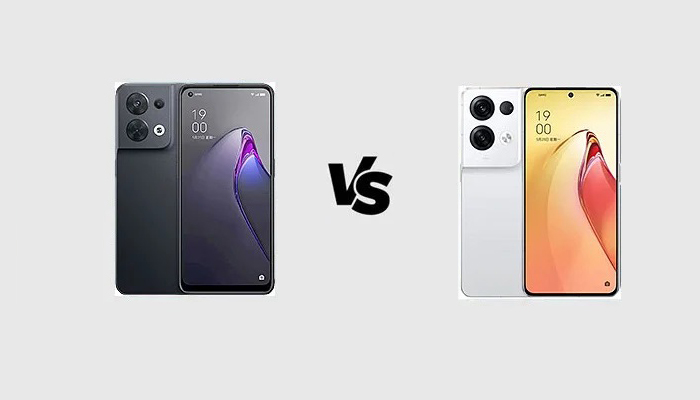
Two months after the official release in China, the Reno8 Series went official in the global market too. The global journey of the new lineup begins from the Indian market, which is the biggest one alongside China. While in Cina the series is composed of three variants, only two variants debuted in the global market: the OPPO Reno8 and the OPPO Reno8 Pro. The former is the same device as the one seen in China, while the latter is a rebrand of the Chinese Pro Plus variant. Instead, the Pro variant for China with Snapdragon 7 Gen 1 did not hit the global shelves for unknown reasons. A lot of people are wondering what are the differences between the vanilla version and the Pro one in the global market. Here is a comparison between the specifications of the OPPO Reno8 Global and the OPPO Reno8 Pro Global.
OPPO Reno8 Global vs OPPO Reno8 Pro Global
OPPO Reno8 Global
OPPO Reno8 Pro Global
DIMENSIONS AND WEIGHT
160.6 x 73.4 x 7.7 mm,
179 g
161.2 x 74.2 x 7.3 mm,
183 g
DISPLAY
6.43 inches, 1080 x 2400 pixels (Full HD+), AMOLED
Triple 50 + 2 + 2 MP, f/1.8 + f/2.4 + f/2.4
32 MP f/2.4 front camera
Triple 50 + 8 + 2 MP, f/1.8 + f/2.2 + f/2.4
32 MP f/2.4 front camera
BATTERY
4500 mAh, fast charging 80W
5000 mAh, Fast Charging 80W
ADDITIONAL FEATURES
5G, dual SIM
5G, dual SIM
Design
Even though the OPPO Reno8 Pro is the most expensive one and is built with premium material, at first glance, the vanilla OPPO Reno8 looks more beautiful. It has a smaller camera module, more compact dimensions, and a very interesting gradient color option. However, if you dig deeper, you will find out that the OPPO Reno8 Pro looks very premium. It is built with a glass back (protected by Corning’s Gorilla Glass 5) and an aluminum frame, and it comes with a higher screen to body ratio compared to the vanilla version, but its dimensions are bigger, so it is a harder device to use with one hand or to keep in a pocket. Both the phones come with Gorilla Glass 5 protection for the front glass, they come with flat borders just like the latest iPhones, and they have no audio jack.
Display
The most advanced display belongs to the OPPO Reno8 Pro Global, even though its panel is not at the same level as the OPPO Find X5 Pro. The Pro variant comes with an AMOLED display sporting a diagonal of 6.7 inches and Gorilla Glass 5 protection. The screen is able to show up to one billion colors with a Full HD+ resolution of 1080 x 2412 pixels, a 120 Hz refresh rate, the HDR10+ certification, and up to 950 nits of brightness. The vanilla version has a smaller 6.4-inch display with a lower 90 Hz refresh rate, a lower 800 nits peak brightness, and it is not able to show one billion colors but it stops at 16 million. The phones are equipped with in-display fingerprint scanners, but the Pro variant is the only one equipped with stereo speakers.
Specs & Software
An important advantage of the OPPO Reno8 Pro Global is definitely the hardware department, thanks to its superior chipset. It is fueled by the Dimensity 8100 Max mobile platform by MediaTek built at 5 nm and sporting an octa-core architecture. It is composed of four Cortex A78 CPUs running at a max frequency of 2.85 GHz, four Cortex A55 CPUs running at 2 GHz, and a Mali G610 MC6 GPU. The SoC is paired with up to 12 GB of RAM and 256 GB of UFS 3.1 internal storage. The vanilla OPPO Reno8 has an inferior Mediatek Dimensity 1300 chipset built at 6 nm with an octa-core architecture composed of one Cortex A78 CPU running at a max frequency of 3 GHz, three Cortex A78 CPUs running at 2.6 GHz, four Cortex A55 CPUs running at 2 GHz, and a Mali G77 MC9 GPU. These handsets run Android 12 out of the box, customized by ColorOS 12.1.
Camera
The cameras of these devices are exactly the same, but the OPPO Reno8 Pro Global is able to provide higher camera performance thanks to the presence of the MariSilicon X NPU, the same proprietary NPU found on the OPPO Find X5 and the OPPO Find X5 Pro, improving the photo and video quality with low light conditions. For the rest, they are the same: they sport a triple rear camera with a 50 MP Sony IMX766 main sensor, an 8 MP ultrawide lens, and a 2 MP macro camera, as well as a 32 MP selfie shooter recording videos with a 1080p resolution.
The batteries of these two devices are the same, with a dual-cell structure and a capacity of 4500 mAh, as well as the 80W fast charging technology that brings these batteries from 0 to 100 percent of charge in just 28 minutes. Expect a similar battery life, but the Pro variant may last more in a few scenarios due to its more efficient chipset.
Price
The price of the OPPO Reno8 Pro in the Indian market roughly translates into €567 or $567, while the vanilla version is priced at €480 or $480 at the actual change. So the Pro variant offers a few advantages: a better display, superior camera performance, better hardware, and stereo speakers. Which one would you pick?
OPPO Reno8 Global vs OPPO Reno8 Pro Global: PRO and CONS
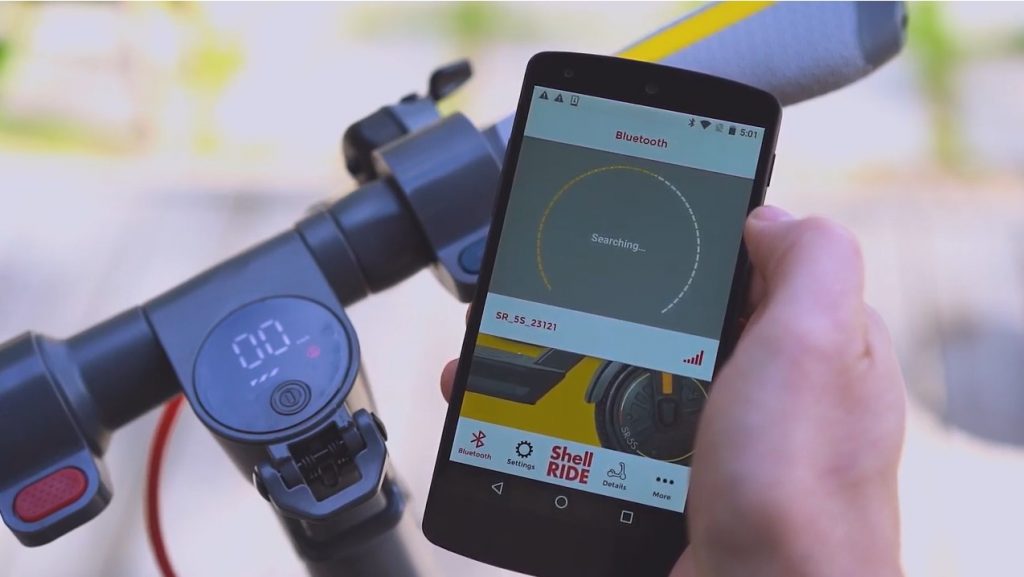
Global energy giant Shell licensed an e-solutions company to use its brand name in 2021. The Shell Ride brand was licensed to Lotus International. The company has now unveiled some electric scooters and e-bikes. Lotus does not manufacture the electric scooter models but oversees their distribution and marketing.
An unboxing video of the Shell Ride SR-5S e-scooter outlines the specs of the new electric two-wheeler. It has a range of about 32km (20 miles) and a top speed of 24km/h (15mph). The SR-5S retails for $549.99. Other products from the Shell Ride stable include the SR-3B e-bike, the SR-4S, and SR-6S e-scooters.
The SR-4S is a smaller and less powerful model while the SR-6S has a removable battery pack. The SR-4S and SR-6S are priced at $499.99 and 799.99 respectively. The Shell Ride e-bikes will be priced between $1,200 and $1,400 and the delivery dates for these models are yet to be stated.
It is not clear the actual company that manufactures the Shell Ride e-scooters and e-bikes but some of their designs have close similarities with some established products. The Shell moniker and logo are also being deployed in other consumer electronics. These include power banks, and lead acid battery chargers.
Although it is most probable that Shell itself does not have any stake in these businesses, it is pursuing a greener future. Dutch courts have fixed a 2030 deadline for the energy giant to cut by half its carbon emissions.
Earlier this year, Samsung launched the highly anticipated Galaxy S22 series of smartphones that debuted with Samsung’s in-house Exynos 2200 chipsets in select regions. The chips feature AMD GPUs and were hyped up quite a bit ahead of launch. However, when the devices finally hit the market, the Exynos 2200 failed to meet the performance expectations of customers.
Currently, Samsung manufactures its Exynos chips to utilize in its own smartphones as well as to sell the chips to other smartphone manufacturers like Google and Xiaomi. However, recent reports have revealed that the company will soon be taking the Apple approach and designing chips exclusively for its own smartphones.
The revamped chips are expected to be ready around 2025. To allegedly help with these efforts, Samsung has appointed ex-Apple employee Kim Woo-pyeong as the director of the recently established Packaging Solution Center which is in the Device Solution America (DSA) headquarters. Kim Woo-pyeong has worked at Texas Instruments and Qualcomm before moving to Apple in 2014 and working there for 9 years.
The report by Business Korea does not specifically mention that Kim will work on the Exynos mobile chipset, however, the report does mention packaging technologies, which are employed by chip makers to overcome SoC integration challenges.
Samsung said last month that it had begun producing chips based on a 3-nanometer (nm) manufacturing node using the Gate-All-Around (GAA) transistor architecture.
The company revealed today at a Korean event that it has begun shipping the first 3nm chip made using Gate All Around technology at the V1 line (EUV only) at Hwaseong Campus.
With the belief that “we will move forward with innovative technology to become the best in the world,” Samsung Electronics’ Foundry Division seeks to increase the competitiveness of its business through mass production of the 3-nano GAA process and pre-emptive foundry technology.
According to Samsung, around 100 people attended the occasion, including Samsung Electronics CEO Kye Kyung-hyeon, Minister of Trade, Industry, and Energy Changyang Lee, suppliers, fabless, and executives and workers who engaged in 3nm GAA R&D and mass production.
According to Samsung, the Pyeongtaek Campus would eventually see the addition of 3-nano GAA chip fabrication. While Samsung’s top rival in the semiconductor business, TSMC, is expected to begin its 3nm chip production around Q4 2022.
Going by a report from last year, AMD and Qualcomm might be among the first customers of Samsung’s new cutting-edge process. The report also mentioned that Nvidia might also be among the first brands to adopt the 3nm node from Samsung, however, the company’s recent overbooking issues have left a big question mark on this possibility.
We use cookies on our website to give you the most relevant experience by remembering your preferences and repeat visits. By clicking “Accept”, you consent to the use of ALL the cookies.
This website uses cookies to improve your experience while you navigate through the website. Out of these, the cookies that are categorized as necessary are stored on your browser as they are essential for the working of basic functionalities of the website. We also use third-party cookies that help us analyze and understand how you use this website. These cookies will be stored in your browser only with your consent. You also have the option to opt-out of these cookies. But opting out of some of these cookies may affect your browsing experience.
Necessary cookies are absolutely essential for the website to function properly. This category only includes cookies that ensures basic functionalities and security features of the website. These cookies do not store any personal information.
Any cookies that may not be particularly necessary for the website to function and is used specifically to collect user personal data via analytics, ads, other embedded contents are termed as non-necessary cookies. It is mandatory to procure user consent prior to running these cookies on your website.