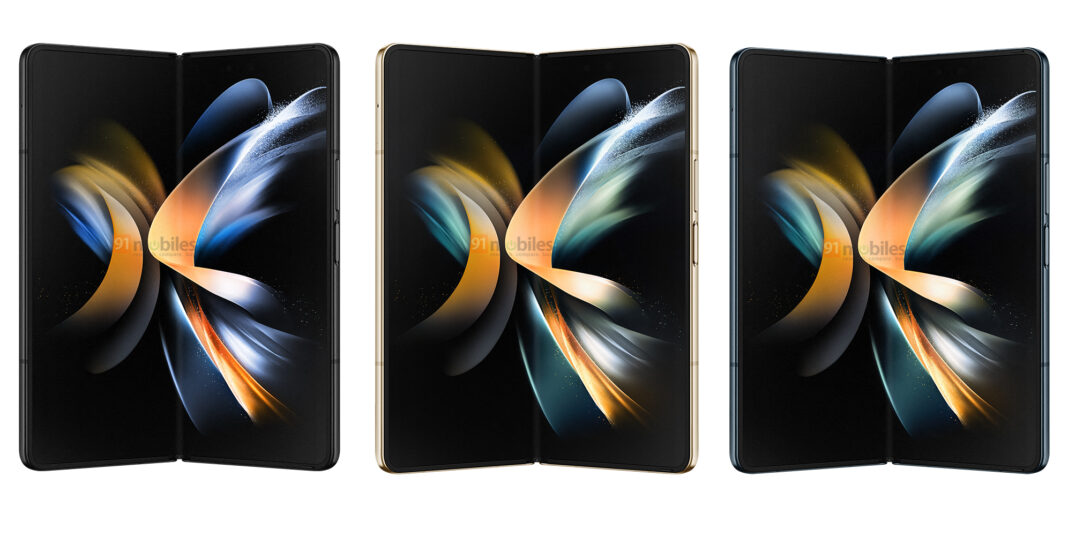
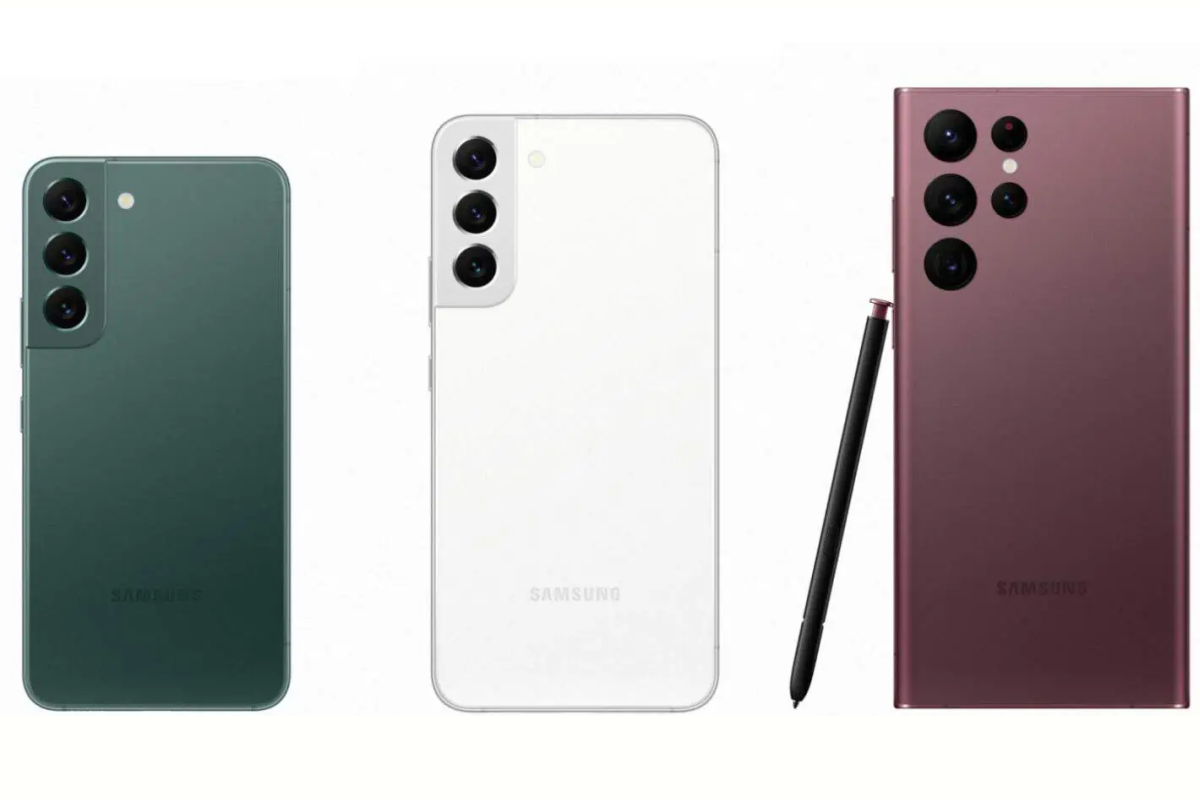
Just a few weeks out from its upcoming Galaxy Unpacked event, Samsung has disclosed that “almost 10 million foldable devices” had been shipped globally. Dr. TM Roh, the company’s chief of Mobile Experience (MX) Business, stated in a post on the Samsung Newsroom that this is a 300 percent increase from 2020 and that he anticipates the “fast-paced growth” to continue. The Flip, which resembles a clamshell, was chosen by the majority of its foldable customers—apparently 70% of them. That comes as no surprise at all given that Samsung already acknowledged that the Flip 3 led to a greater number of brand switches than its flagship models.
Notably, the 10 million units Dr. Roh claims Samsung shipped last year is a significant increase over the prior shipment figures IDC released. According to report released in February by the International Data Corporation, 7.1 million foldable phones will be shipped globally in 2021, including both flip and fold form factors. Regardless of the actual number, Samsung’s MX division had an increase in income last year, largely as a result of the successful launch of its foldables and most recent Galaxy S handsets.
Additionally, D. Roh provided an update on the performance of Samsung’s smartphones in addition to confirming that the company will unveil its upcoming Flip and Fold models at its upcoming Unpacked presentation. He added that Samsung made improvements to future products to improve user experience.
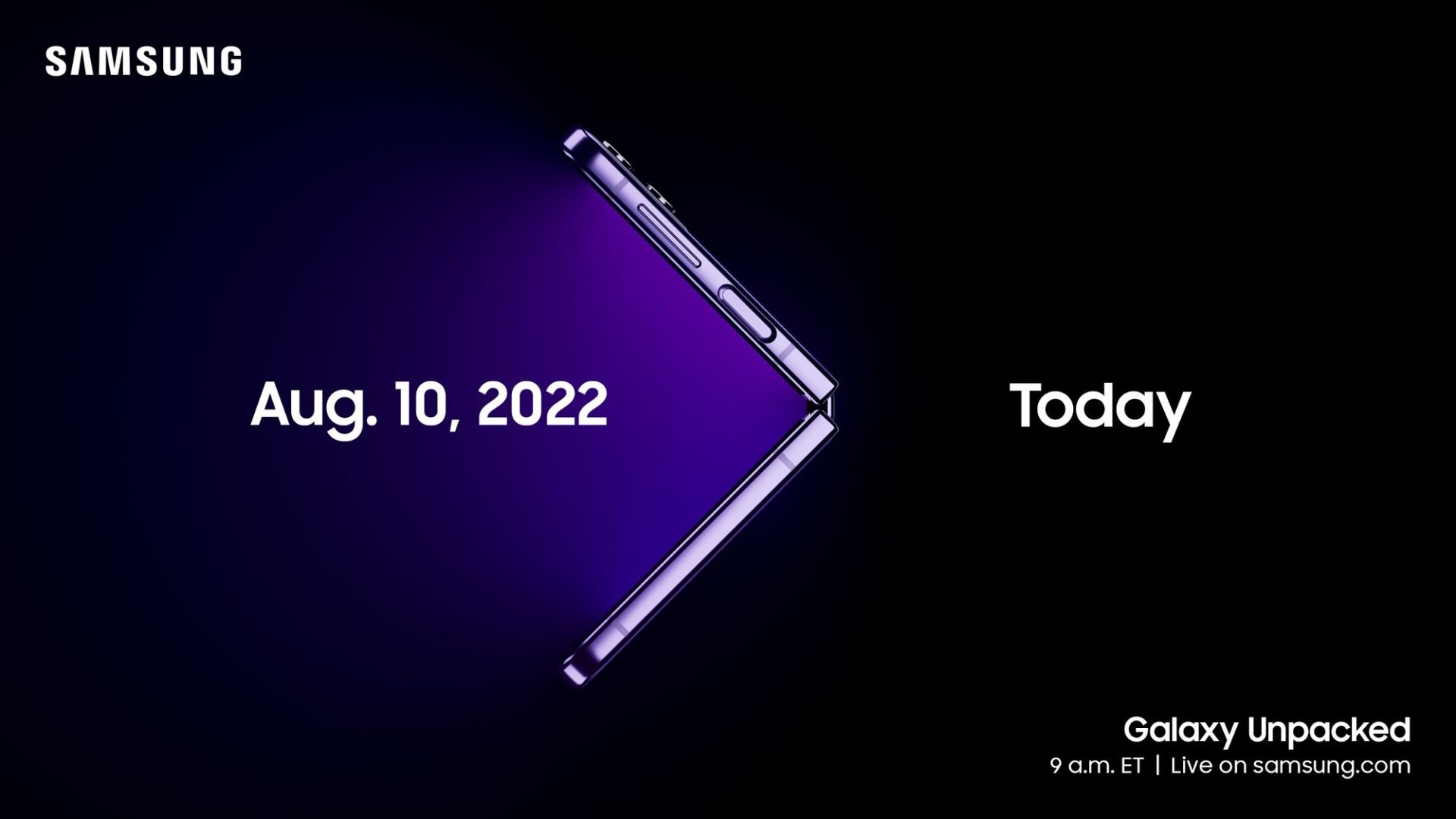
Samsung will host the Galaxy Unpacked event on August 10 at 09:00 AM EST to launch Galaxy Z Fold 4 and Flip 4. The newest Qualcomm Snapdragon 8+ Gen 1 engine, up to 16GB of LPDDR5 RAM, and 1TB of UFS 3.1 storage will power the future foldable smartphones. The company is likely to launch Samsung Galaxy Watch Series 5 alongside the aforementioned devices.
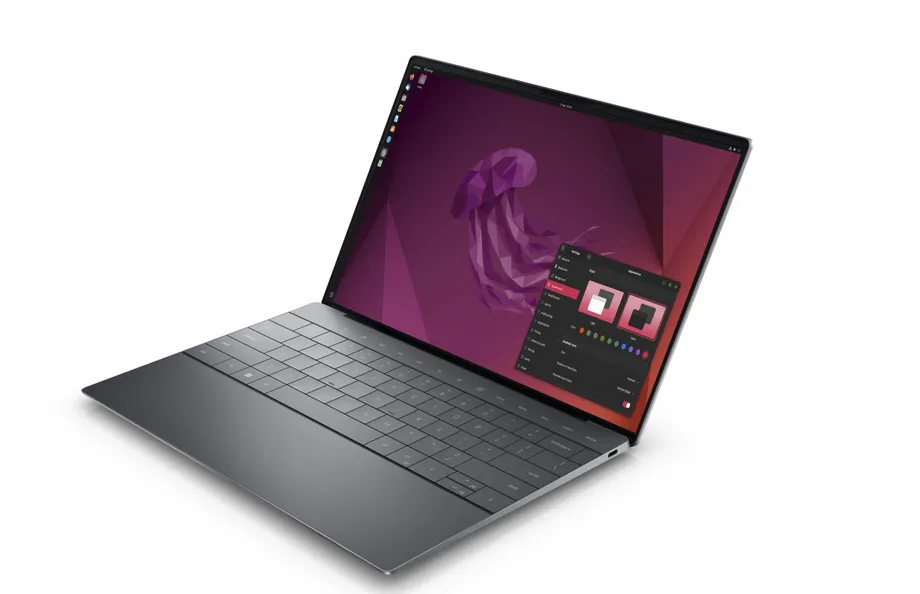
The Dell XPS 13 Plus is the first OEM PC certified for Ubuntu 22.04 Long-Term Support, according to an announcement from Dell and Canonical. This comes ten years after Project Sputnik introduced a groundbreaking mix of Linux preloaded on a commercial notebook (LTS). This makes it a simple process to have a PC that simply functions without having to worry about whether or not each component is prepared to work with Linux.
The laptop already had Linux-equipped Developer Edition units that started at $1,289.00, but they still come pre-installed with the 20.04 LTS operating system. The end of normal support for this version is set for 2027, and the end of life is set for 2032, so long-term support releases do exactly what they say on the tin. As each component of certified devices is verified in a lab to ensure compatibility, your device will have the correct drivers loaded to ensure that all of its functions operate as intended.
That certainly applies to laptops that come pre-installed with Linux on Developer Edition models, but it also holds true if you’re upgrading an older computer that was pre-installed with Windows 11. Barton George, a marketing executive at Dell, was one of the persons in charge of Project Sputnik. He said that the Developer Edition label was added on purpose, to prevent users from inadvertently purchasing a Linux laptop to save a few dollars and experiencing an unexpected experience, in an interview with Forbes in 2019. It seems unlikely that the authorized list will remain this small indefinitely given that Dell already offers Ubuntu on a variety of other devices.
There were many improvements included in the Ubuntu 22.04 LTS package, which was launched on April 21 this year. These include improved Bluetooth audio device support, new touchpad gestures, and improved battery management.
There are several ways, according to Dell, to configure your XPS 13 Plus and its “capacitive touch function row” with a hardware-optimized version of 22.04. A new XPS 13 Plus laptop may be ordered and is expected to ship starting in August. If not, you can run a fresh install and be ready to go if you’re in a rush (and you should be). The final option is to postpone the upgrade process until Ubuntu 22.04.1 is released on August 4 so you may do as little work as possible. This will turn on the upgrade path for all LTS users.
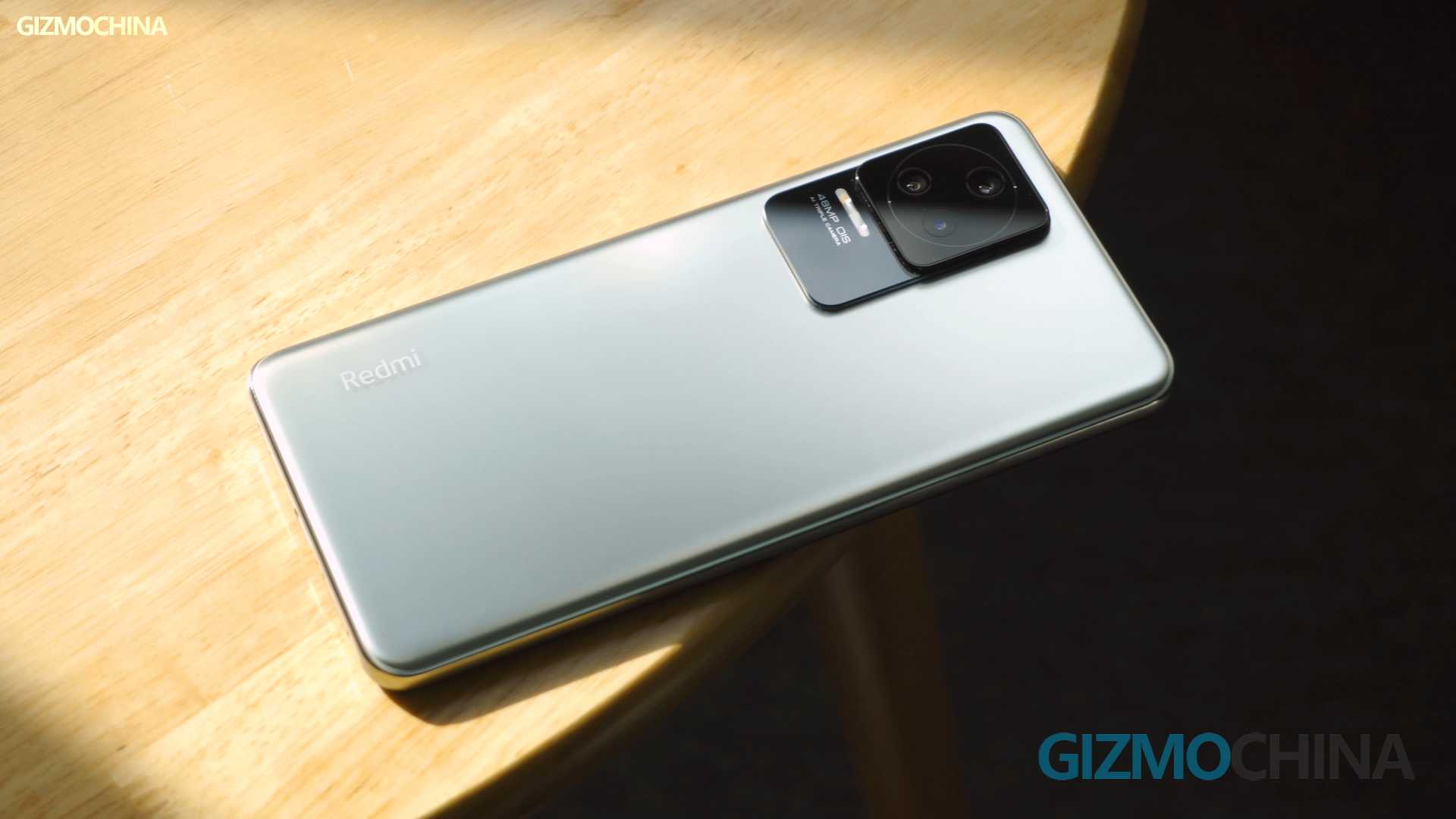
Redmi is still not finished with its K50 series and rumors about the next-gen K60 series have already started to surface online. The company will likely not launch the K60 series this year, however, a popular Chinese tipster has revealed some interesting details regarding the upcoming series. The Redmi K60 series is said to launch in two chipset variants just like the Xiaomi 12S Pro.
Noted tipster Digital Chat Station has revealed some key details about the Redmi’s K60 Series (Via ITHome). As per the tipster, the series will adopt the Dimensity/Snapdragon dual platform strategy and will be launched in two chipset variants. The tipster claims that both the chipsets will be based on TSMC’s 4nm process. This means it will likely come equipped with Qualcomm’s top-notch Snapdragon 8+ Gen1 Soc and MediaTek’s Dimensity 9000+ Soc.
Redmi K50
The tipster also claims that the K60 series will sport a flexible 2K screen with a center-punched hole for the selfie camera. It is also said to have a 50MP main camera sensor which is rumored to be a modified version of the Sony IMX766 sensor. The series may also feature an under-display fingerprint sensor and some impressive fast charging tech.
As of now, the Redmi K60 series is just a rumor and the details about it are pretty short. As mentioned, Redmi is still not done with the K50 series. The company is said to be working on two smartphones, dubbed Redmi K50S and Redmi K50S Pro and they are expected to launch in August. The two devices are rumored to be equipped with Snapdragon 8+ Gen1 Soc. The K50S Pro is tipped to launch as Xiaomi’s first 200-megapixel camera phone.
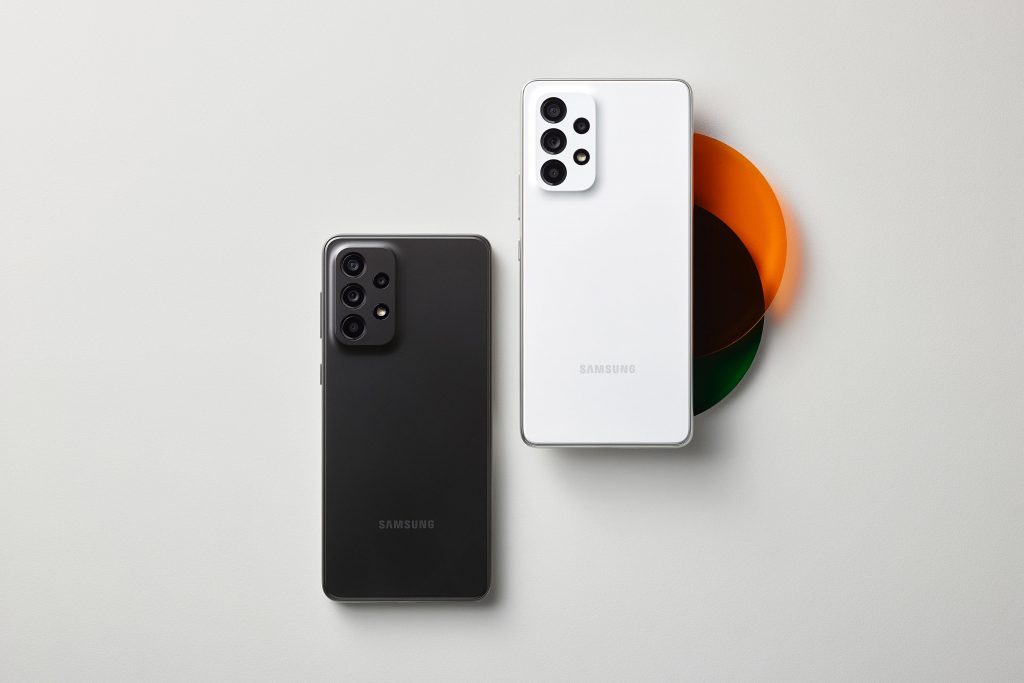
For a while, Samsung has been using a quad-camera setup on most of its Galaxy A series smartphones. According to a new report from South Korea, this may change starting next year. The report details the rear camera system of the three upcoming Galaxy A lineup handsets.
Samsung Galaxy A33 And Galaxy A53
A report by The Elec says that Samsung will drop depth cameras from three of its Galaxy A series phones in 2023. These devices are nothing but Galaxy A24, Galaxy A34, and Galaxy A54.
The aforementioned smartphones are tipped to come with a triple camera setup consisting of a wide-angle camera, ultra-wide camera, and a macro camera. All of them are said to come with a 50MP main sensor and a 5MP macro snapper.
Interestingly, the Galaxy A54 is said to carry a 5MP ultrawide unit instead of an 8MP ultra-wide as Galaxy A34 and Galaxy A24. This is likely a typo since we don’t expect the company to use an inferior camera sensor on a more expensive model.
The report says that the South Korean electronics giant is collectively readying over 60 million units of these smartphones for next year. The Galaxy A34 is expected to release in March, followed by Galaxy A54 in April.
Market research firm TrendForce says that consumers have little use for depth-sensing cameras. Hence, Samsung is planning to drop depth cameras as it also helps in reducing costs.
It is said that the demand for a quad-camera system is forecasted to drop as companies will do away with the depth cameras on their handsets. Most phones are expected to carry a triple camera setup in the future.
Transferring your full chat history from iPhone to Android, or vice versa was perhaps one of the most often requested WhatsApp capabilities. Well, no more asking as it has officially arrived at last. Up until recently, this functionality was exclusively accessible in beta; it has since been made public. Your account information, profile picture, one-on-one, and group chats, chat history, media, and settings will all be transferred. This ensures that all your data stays intact and nothing gets left out when a data transfer is made.
A new way to keep the chats that mean the most 📱📲 Today, you’ll have the ability to transfer your entire chat history from Android to iOS and vice versa. Now you have the freedom to switch to and from your preferred devices.
You need an iPhone running iOS 15.5 or later and an Android smartphone with at least Android 5.0, according to the WhatsApp FAQ. Additionally, your Android device must have WhatsApp version 2.22.7.74 or higher installed, and your iOS device must have WhatsApp version 2.22.10.70 or higher installed. You’ll need an iPhone that is either brand-new or has undergone a factory reset, as well as an Android phone with the Move to iOS software downloaded. Finally, you must use the same phone number on your new iOS device, have both devices linked to the same Wi-Fi network, and have a power source.
There are more steps involved, which you can view on the previously cited FAQ page. In general, though, take your time, follow the instructions, and your data should eventually be transferred to your new iPhone. Due to WhatsApp’s inability to detect what kind of data is being migrated, the information exchanged remains secure and confidential. You can return to your Android phone and remove the data after performing one last check of your information on the iOS device. Until it is removed, the data will stay on the Android smartphone. The only items you won’t be able to transfer, as a final little restriction, are your call history and display name, both of which are minimal costs to be able to transfer an account.
In terms of competition, Motorola Frontier will include a 200MP camera sensor, according to sources. Motorola may be the first smartphone maker to put a 200MP camera sensor on a device, but the Korean tech giant won’t fall behind in the contest for the highest smartphone megapixel count. A recent development is that the 200MP camera sensor will also be included in the Samsung Galaxy S23 Ultra, according to renowned Samsung leaker Ice Universe.
The Moto flagship phone has a 200MP sensor (HP1) and you're looking at a 4 in 1 photo, 50MP. The Galaxy S23 Ultra will also use 200MP, but the relevant sensor has not been announced. pic.twitter.com/Fc8JzCppKp
According to the leaker, Samsung has yet to unveil the 200MP camera sensor that will be used on the Galaxy S23 Ultra. This means that, while the Motorola Frontier and the Samsung Galaxy S23 Ultra will have the exact camera resolution, they may not have the same camera performance due to differing sensors. In addition to the Motorola Frontier, the Xiaomi 12T Pro is believed to have a 200MP camera configuration.
For those who don’t know, the Motorola Frontier has a 200MP Samsung ISOCELL HP1 sensor. The Samsung ISOCELL HP3 is a new 200MP camera sensor that the company has unveiled. The ISOCELL HP3’s camera module area is decreased by 20% thanks to its 12 percent smaller pixels.
According to reports, the Qualcomm Snapdragon 8 Gen 2 CPU, which is anticipated to be unveiled in November, will power the Samsung Galaxy S23 series. In addition to that, the Samsung Galaxy S23 series devices could have 40MP front-facing cameras.
It would be interesting to watch how the future 200MP camera smartphones, including the Moto Edge 30 Ultra (Frontier), Xiaomi 12T, and Samsung Galaxy S23 Ultra, will compete with one another. The Samsung Galaxy S22 Ultra, the most recent Ultra variant, also won a lot of accolades for its photography capabilities. If Samsung’s new Galaxy S23 Ultra can outperform its predecessor, it would be a sight to behold.
Google has launched the latest Pixel Buds Pro in India. The TWS earbuds have been launched alongside the new Pixel 6a. If you recall, Pixel Buds Pro was unveiled back in May at the Google IO 2022. They are the search giant’s most premium earbuds so far and are expected to compete with AirPods and Galaxy Buds of the world. The new Pixel Buds come with active noise cancellation (ANC), up to 31 hours of battery life, fast charging, and much more. Let’s delve deeper into the details.
Pixel Buds Pro Price in India, Availability
Google Pixel Buds Pro price in India has been set at Rs 19,990 (roughly $250) and they will be available in 4 color options- Coral, Lemongrass, Fog, and Charcoal. The sale of earbuds will begin on July 28 and they can be purchased online via Flipkart.
Pixel Buds Pro Specification
The Google Pixel Buds Pro sport a lightweight in-ear design. The earbuds are equipped with 11mm drivers powered and feature active noise cancellation. The Pixel Buds Pro have a feature called silent seal which is claimed to adapt to the user’s ear and further enhance the noise cancelation. Further, the earbuds come with a 6-core audio chip that runs Google-developed algorithms.
Google Pixel Buds Pro
The hearables also have a transparency mode which lets users hear ambient sound. The Pixel Buds come with a solid battery but it’s not the best we’ve seen. They can last up to 11 hours with ANC turned off and up to 7 hours with ANC on. The total playback time with the case is claimed to be up to 31 hours.
The earbuds come with IPX4 water-resistant build. While the case is rated IPX2 water-resistant. The earphones support USB Type-C as well as Qi wireless charging. Moreover, they carry support for multipoint connectivity that allows pairing with multiple devices.
Google Pixel Buds Pro
Interestingly, Google Pixel Buds Pro only have Bluetooth v5.0 connectivity which is kind of outdated when you see that even $25 earphones are featuring Bluetooth v5.2.
With all these impressive features, Pixel Buds Pro will give a tough fight to even the best wireless earbuds out there. What are your thoughts about the new Pixel Buds? Let us know in the comments!
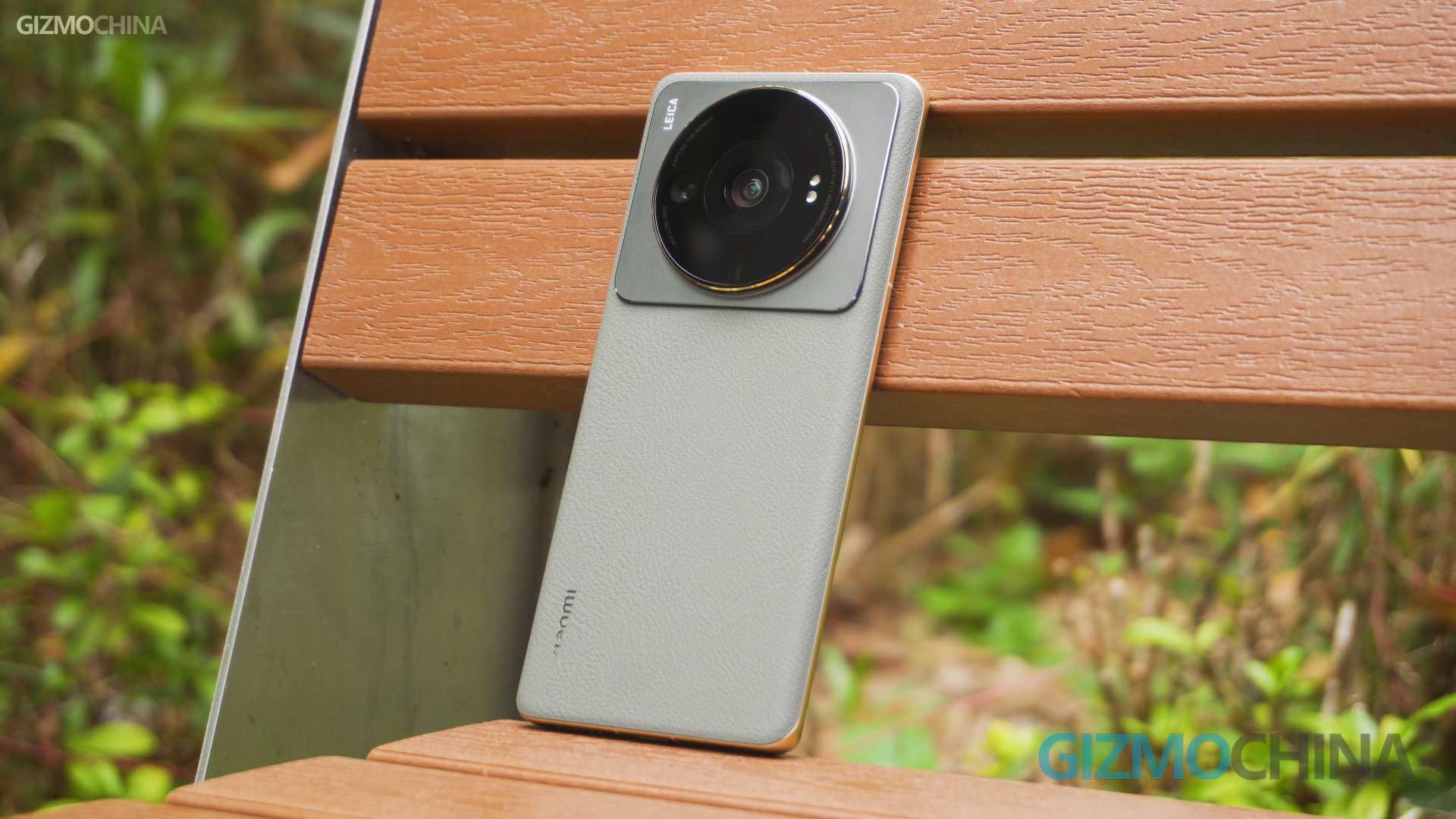
A couple of weeks ago, Xiaomi launched its latest flagship smartphone under the Xiaomi 12 lineup in its home country China, dubbed as Xiaomi 12S Ultra. The phone also marks a collaboration between Xiaomi and Leica.
The Xiaomi 12S Ultra smartphone has been available for purchase in the Chinese market, but there wasn’t any information about its global availability until now. Now, Lei Jun, CEO of Xiaomi, has shed more light on its availability.
Lei Jun has taken to Weibo and confirmed that the Xiaomi 12S Ultra will only be sold in the Chinese market and won’t be available for purchase outside of China. However, he added that the next-generation models coming from next year should be sold globally.
The Xiaomi 12S Ultra features a 6.73-inch LTPO 2.0 AMOLED display that has a 2K resolution, 120Hz refresh rate, 1500 nits of peak brightness, and 521ppi pixel density. It is powered by the Qualcomm Snapdragon 8+ Gen 1 processor with up to 12GB LPDDR5 RAM and up to 512GB UFS 3.1 storage.
It features a Leica Summicron lens system on the back. The triple-camera setup consists of a 50-megapixel Sony IMX989 primary sensor, a 48-megapixel ultra-wide-angle lens, and a 48-megapixel telephoto lens. On the front side, the phone comes with a 32-megapixel snapper for taking selfies and video calling.
The phone runs the Android 12 operating system out-of-the-box with the company’s own MIUI 13 custom interface on top. It is powered by a 4,860mAh battery that supports 67W fast wired charging, 50W wireless fast charging, and 10W reverse charging.
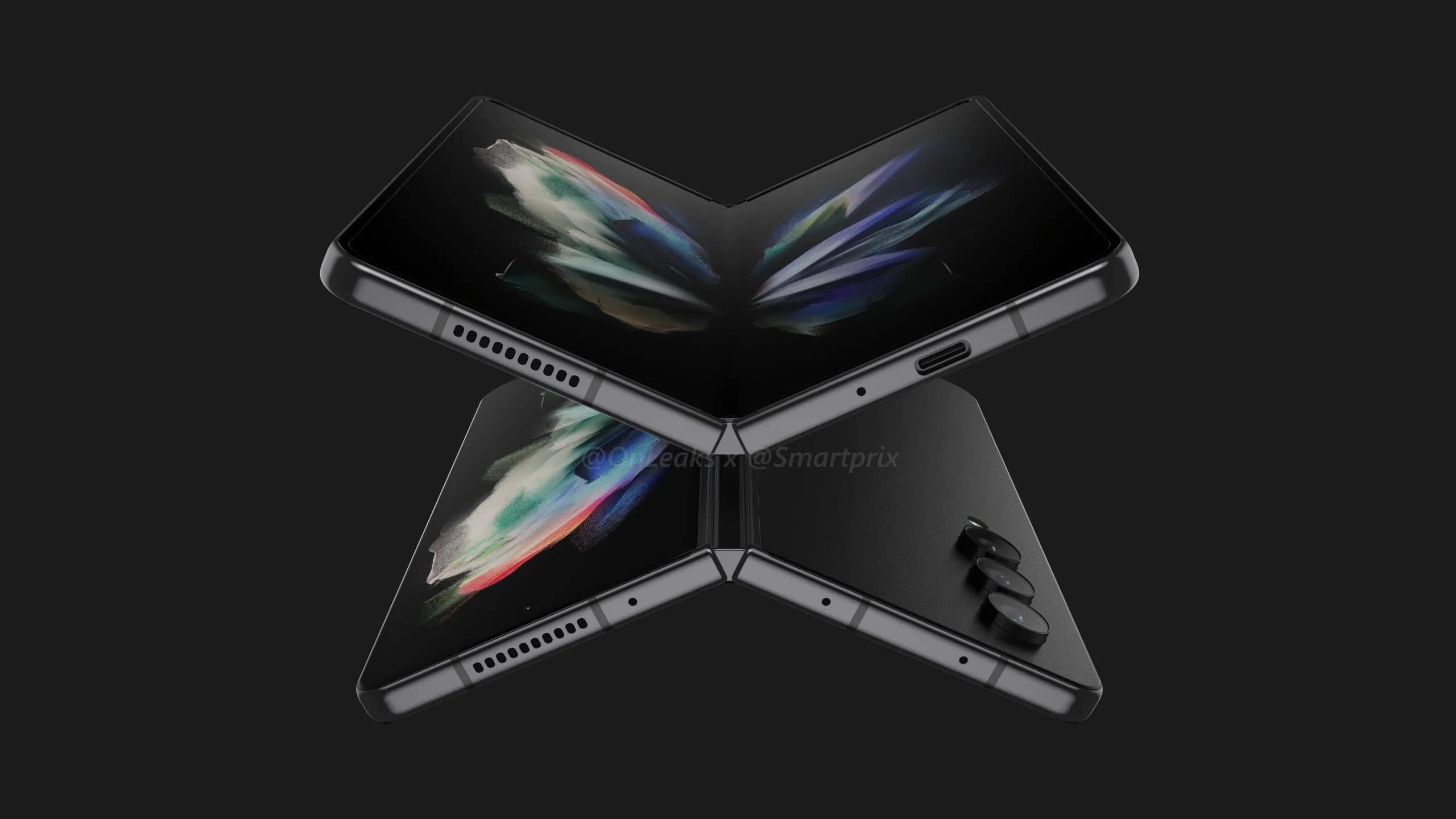
Samsung officially confirmed that its next-generation foldable smartphones, dubbed Galaxy Z Fold 4 and Galaxy Z Flip 4, will be announced at its upcoming Galaxy Unpacked event, which is scheduled to take place on 10th August.
With a couple of more weeks to go for the official launch, the South Korean giant has started taking reservations for the pre-order of both these smartphones.
Samsung Galaxy Z Fold 4 render by OnLeaks / Smartprix
You can enroll for the reservation of a pre-order just by providing your name and email address. This allows you to be among the first to have the ability to pre-order the upcoming foldable smartphones when it becomes available next month.
The company is also offering credits up to $200 for those who decide to reserve a unit for the pre-order, which should open up soon after the devices have been announced. Here’s the breakdown of credits offered by the company.
$200 credit towards Galaxy phone, watch, and buds bundle
$100 credit to use on Samsung.com towards eligible products when reserving a phone
$50 credit to use on Samsung.com towards eligible products when reserving a watch
$30 credit to use on Samsung.com towards eligible products when reserving earbuds
When enrolled in the reservation program, you will have to actually pre-order the smartphone when it opens up to redeem your credit. The pre-order of the phone can be done through the official Samsung website or the Shop Samsung mobile app.
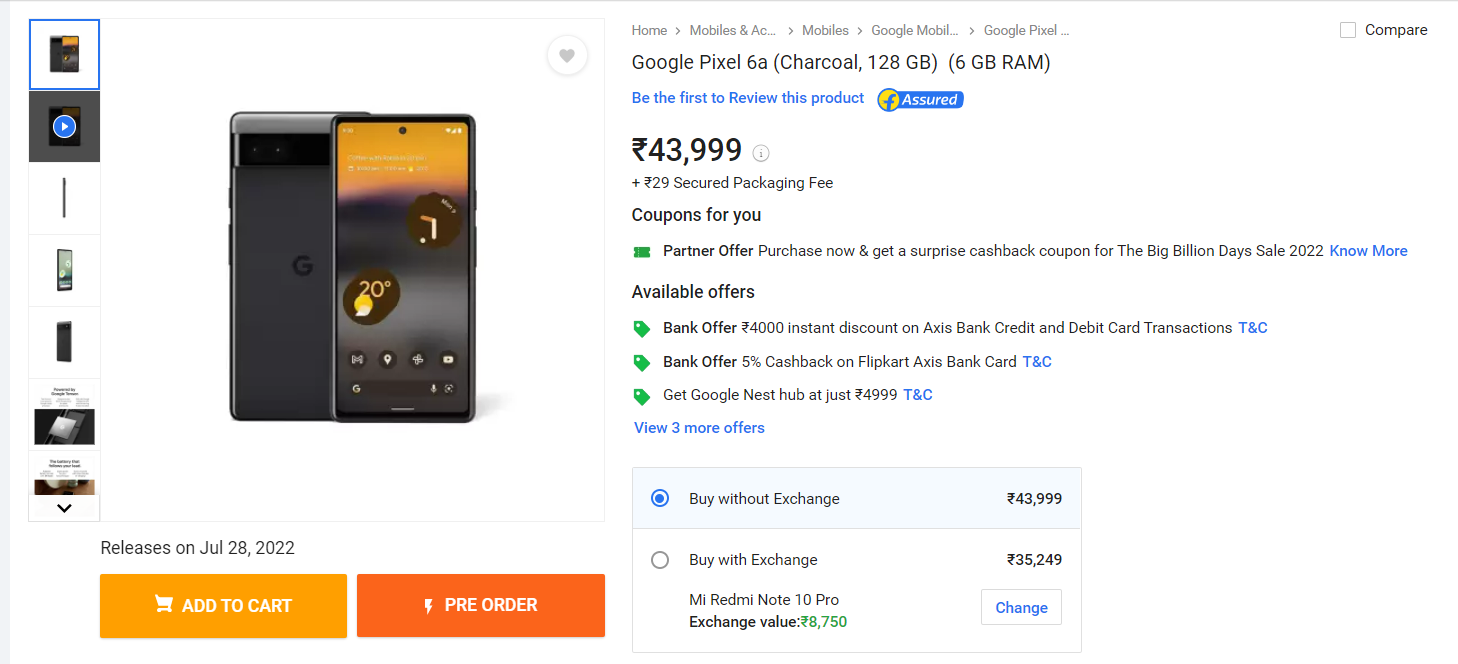
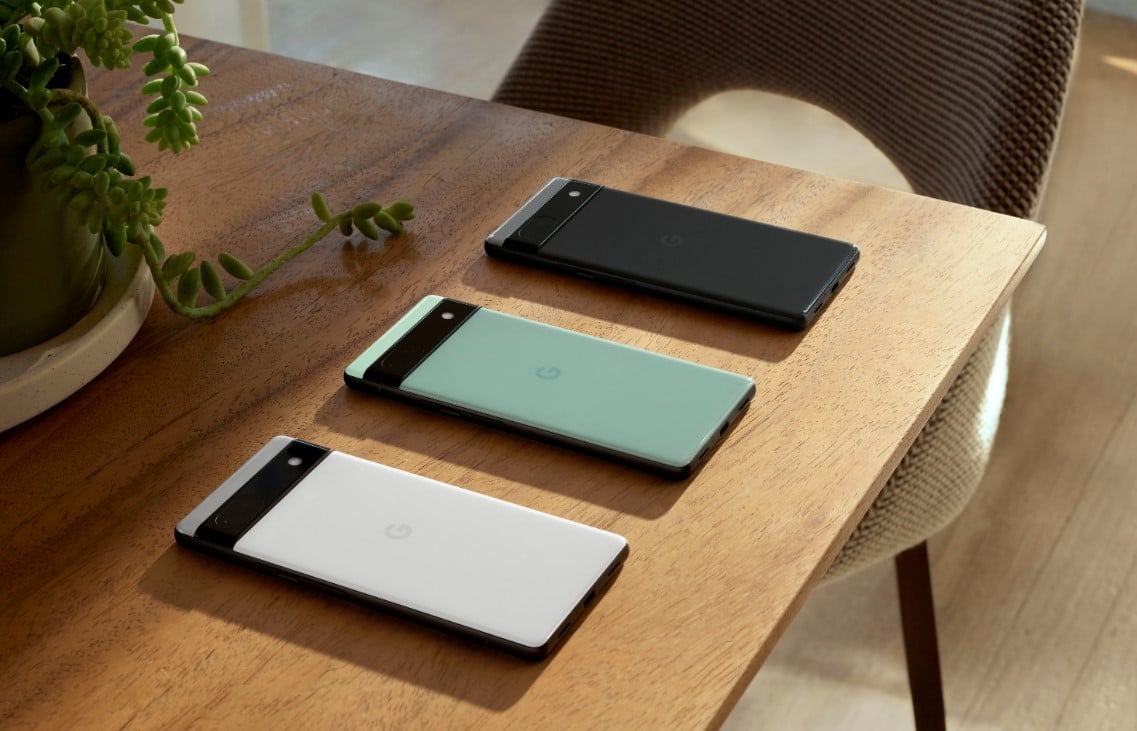
Google has silently unveiled the Google Pixel 6a in India. To recall, the company’s mid-range offering was announced at the I/O 2022 event, which was held in May this year. Since then, it has been available in markets like the US, the UK, Canada, Australia, Ireland, Germany, France, Italy, Spain, Singapore, Taiwan, and Japan. Now, it has finally landed in India without any fanfare.
Google Pixel 6a price in India
The Pixel 6a is now listed on Flipkart in India with a price tag of Rs 43,999 (~$550). Axis Bank cardholders can get it for Rs 39,999 (~$499) after a Rs 4,000 ($499) discount during the pre-booking period. In the US, the Pixel 6a was launched with a price tag of $449.
Google offers a Rs 6,000 (~$75) exchange bonus for any Pixel device and some select smartphones. For other phones, there is an exchange bonus of Rs 2,000 (~$25).
In addition, devices like Nest Hub Gen 2 or Pixel Buds A series or Fitbit Inspire 2 with the Pixel 6a will be available at a discounted price of Rs 4,499 for customers who purchase the Pixel 6a.
The first sale of the Pixel 6a will be carried out on July 28 on Flipkart. It can be bought in Chalk and Charcoal colors. The Pixel Buds Pro, which is Google’s premium TWS earbuds, have arrived in India with a price tag of Rs 19,990 (~$249). It will also go on sale from July 28 through the same retailer site.
Google Pixel 6a specifications and features
Google Pixel 6a
The Google Pixel 6a is an IP67-rated smartphone with a 6.1-inch OLED FHD+ display with Gorilla Glass 3 protection. The Tensor chip, which powers the Pixel 6a, is the same SoC present under the hood of the Pixel 6 and Pixel 6 Pro flagship devices. The 6a runs on a stock version of Android 12 OS.
The device comes with 8 GB of LPDDR4x RAM, 128 GB of UFS 3.1 storage, and a 4,410mAh battery with 18W charging. Placed on its front is an 8-megapixel selfie camera, and its back panel has a 12.2-megapixel (main) + 12-megapixel (ultra-wide) dual-camera setup. It also features an under-display fingerprint scanner. However, it lacks a microSD card slot and a 3.5mm audio jack.
Xiaomi has achieved tremendous success in the Asian country since it officially entered the market roughly eight years ago. In 2019, the company announced that it had sold 100 million smartphones in five years. At the Redmi 50i launch event, the company announced that it has shipped 200 million smartphones to India to date.
This is a new milestone for the Chinese tech giant and interestingly, it took just about 3 years to sell over 100 million phones as against 5 years for the first 100 million shipments in the South Asian country.
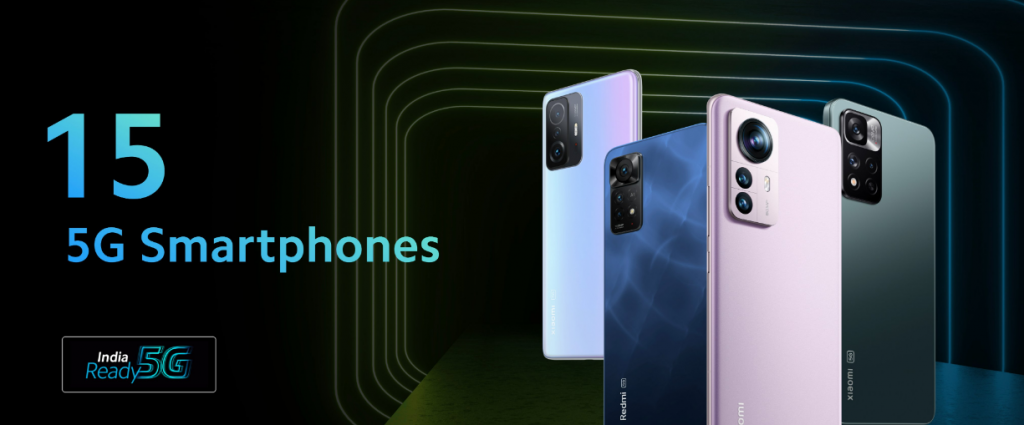
Xiaomi also disclosed that 15 5G smartphones have been released under its name within the last year. Although 5G connectivity is yet to roll out in India, the release of the 5G smartphones in the Indian market is a dress rehearsal toward the full rollout of 5G connectivity. The release of 5G phones may have contributed to the increased sales of the Mi phones.
2⃣0⃣0⃣ Million Strong 💪
📢 #Xiaomi India has shipped 200 million smartphones. All your love has sent us over the moon. ❤️
— Redmi India | Redmi K50i (@RedmiIndia) July 20, 2022
We won’t need to look beyond the pricing and build quality of Xiaomi phones to see why the company has continued to achieve success in India where it has ranked as the number 1 smartphone vendor for the past five quarters.
Xiaomi India recently announced a leadership reshuffle that saw the company’s chief operating officer Muralikrishnan B promoted to president effective from August 1, 2022. It is expected that this reshuffle will result in increased sales volume.
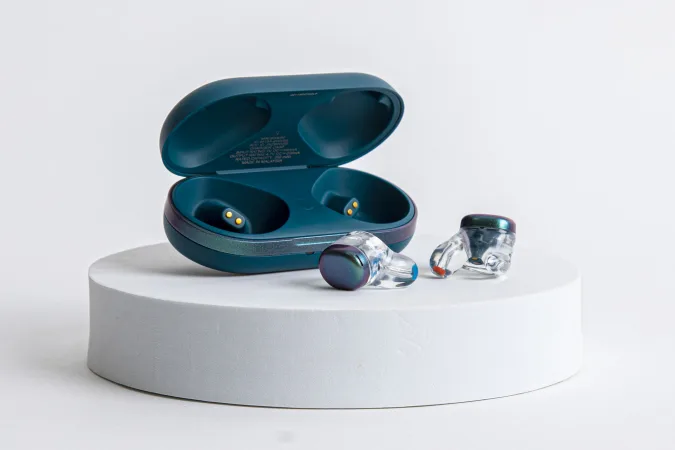
Audio accessories brand Ultimate Ears has unveiled its UE Drops earbuds which are custom-made to fit as in-ear monitors. The UE Drops is a custom-fit model with a FitKit preceding the delivery of the earbuds. The earbuds are priced at $449 and are available in the US via the Ultimate Ears website.
The FitKit will be shipped to the buyer once an order for the UE Drops is made. This includes the technology and information to guide you through the process of getting your in-ear measurement (the earprint). It will guide you to take impressions of your ear with the aid of an app.
Logitech-owned Ultimate Ear says the custom-made earbuds are molded on the basis of the earprint measurement from the kit. The molding of the earbuds is via a warming process while an attachment is what is plugged in. The pair of UE Drops earbuds can be delivered within 4 weeks after the company receives the FitKit. The UE Drops bear some similarities with the UE Fits from 2020. The UE Fits are TWS earbuds with fancy technology that mold the tips to fit into your ears.
Sound is supplied in the UE Drops by 9.2mm drivers and the company says the sound output is of great quality. The earbuds provide passive noise isolation due to their in-ear design, but Active Noise Cancellation (ANC) is absent. A transparency mode is also available and allows the user to feel the surroundings.
The earbuds are water- and sweat-resistant and have a number of nice features. In-ear detection and wireless charging are also featured on the UE Drops. The earbuds can deliver up to 8 hours of activity on a single charge plus 14 additional hours using the charging case. The device can be fully charged within 40 minutes, while the UE Drops app provides lots of information and options on the device. The earbuds are compatible with both Android and iOS devices.
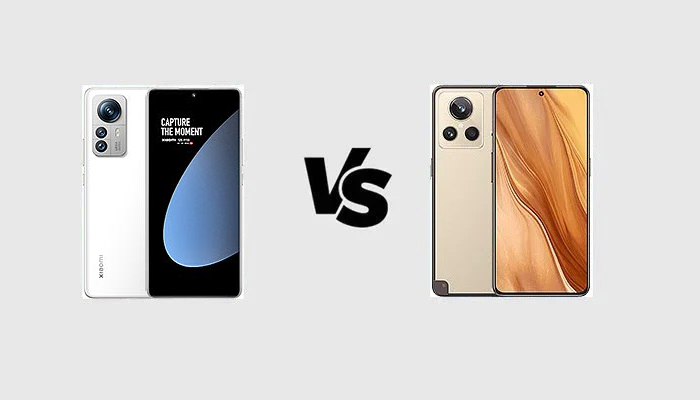
Both Realme and Xiaomi launched their new flagships for the second half of the year. The former came up with the Realme GT 2 Master Explorer Edition, while the latter launched a series with three phones: the Xiaomi 12S, the Xiaomi 12S Pro, and the Xiaomi 12S Ultra. Among these three devices, the Xiaomi 12S Pro is the closest one to the Realme flagship killer, for both its specifications and its quality price ratio. These two devices are not only among the best handsets in terms of performance but also among the best in terms of value for money. This is a comparison between the main specifications of the Xiaomi 12S Pro and the Realme GT 2 Master Explorer Edition.
Xiaomi 12S Pro Pro vs Realme GT 2 Master Explorer Edition
Xiaomi 12S Pro
Realme GT 2 Master Explorer Edition
DIMENSIONS AND WEIGHT
163.6 x 74.6 x 8.2 mm,
203 g
161.3 x 74.3 x 8.2 mm,
195 g
DISPLAY
6.73 inches, 1440 x 3200 pixels (Quad HD+), AMOLED
Triple 50 + 50 + 50 MP, f/1.9 + f/1.9 + f/2.2
32 MP f/2.5 front camera
Triple 50 + 50 + 2 MP, f/1.9 + f/2.2 + f/2.4
16 MP f/2.5 front camera
BATTERY
4600 mAh, fast charging 120W, fast wireless charging 50W
5000 mAh, Fast Charging 100W
ADDITIONAL FEATURES
5G, dual SIM, reverse wireless charging
5G, dual SIM
Design
If we talk about the design, the Realme GT 2 Master Explorer Edition is undoubtedly the most interesting one. Its aesthetics remind of a travel trunk, and it is not a case that the main color variant is called Travel Trunk. The phone comes with a metal frame and a leather back, it has an incredibly high screen to body ratio and very elegant and modern flat borders. The Xiaomi 12S Pro comes in various color variants made of different materials: you can choose a classic color option with a glass back and an aluminum frame, or a color option with a leather back. The front glass is protected by Gorilla Glass Victus and this is an important added value when it comes to the build quality. None of these phones offers protection against water and dust, so do not expect an IP certification.
Display
The AMOLED displays of these two phones are both excellent, but the one found on the Xiaomi 12S Pro is better. It has a panel with a diagonal of 6.73 inches able to show up to one billion colors. It comes with a Quad HD+ resolution of 1440 x 3200 pixels, an adaptive refresh rate from 1 to 120 Hz, the HDR10+ certification, Dolby Vision support, a peak brightness of up to 1500 nits, and an in-display fingerprint reader. The Realme GT 2 Master Explorer Edition has a 6.7-inch AMOLED panel showing up to one billion colors with a 120 Hz refresh rate and the HDR10+ certification. It has a lower Full HD+ resolution of 1080 x 2400 pixels and it includes an in-display fingerprint reader. Both the phones feature stereo speakers, on the Xiaomi one they are tuned by Harman Kardon, but none of them has a 3.5 mm audio jack.
Specs & Software
The Xiaomi 12S Pro and the Realme GT 2 Master Explorer Edition are powered by the brand new Snapdragon 8+ Gen 1 mobile platform: the best processor ever released by Qualcomm for a mobile device. It is a chipset built with a 4 nm production process and with an octa-core architecture composed of a Cortex X2 CPU running at a max frequency of 3.19 GHz, three Cortex A710 CPUs running at 2.75 GHz, four Cortex A510 running at 1.8 GHz, and an Adreno 730 GPU. The highest-end memory configuration of the Xiaomi 12S Pro includes 12 GB of LPDDR5 RAM and 256 GB of UFS 3.1 native storage, while the Realme GT 2 Master Explorer Edition offers up to 12 GB of LPDDR5 RAM and 256 GB of UFS 3.1 internal storage. The phones run Android 12 with highly customized user interfaces on top and they will get at least three major Android updates.
Camera
On the paper, the most advanced cameras belong to the Xiaomi 12S Pro. On the rear side, it has a main camera with a 50 MP resolution and OIS support, a 50 MP ultrawide sensor, and a 50 MP telephoto lens with 2x optical zoom, while on the front, there is a 32 MP selfie snapper. The Realme GT 2 Master Explorer Edition sports a 50 MP main sensor with OIS and a 50 MP ultrawide camera as well, but it replaces the telephoto lens with a 3 MP microscope camera and the selfie cam with an inferior 16 MP sensor.
The Realme GT 2 Master Explorer Edition has a bigger 5000 mAh battery and it should provide a longer battery life in most of the scenarios. The Xiaomi 12S Pro has a smaller 4600 mAh, but it features a faster charging technology with a power of 120W. Further, unlike its rival, it features 50W wireless charging and reverse wireless charging.
Price
The starting price of the Xiaomi 12S Pro in China roughly translates into €670 or $670, while the Realme GT 2 Master Explorer Edition starts from €560 or $560 in the Chinese market. These phones are still not available outside China. The Xiaomi 12S Pro wins the comparison due to its better cameras, display, and charging technologies, but the Realme is more affordable and it comes with a bigger battery.
Xiaomi 12S Pro vs Realme GT 2 Master Explorer Edition: PRO and CONS
Last week, Nothing launched the Nothing Phone (1) in the global markets. The device received its first update earlier today fixing some of its rough edges. Now, the company has released another update for the device that comes with more optimization and improvements. So, let’s take a look.
The latest Nothing OS update has the firmware version 1.1.0 and brings the July 2022 Android security patch along with several changes and fixes that you can check out below.
Nothing OS 1.1.0 changelog
New features
Introduced experimental Tesla control feature.
Introduced experimental NFT Gallery widget.
We heard your feedback on the Beta Launcher – the Search Bar on the home screen is now optional.
Camera improvements
Glyph fill light is now available in Portrait Mode.
Improved clarity and reduced noise when taking photos in low-light environments.
Improved dynamic range when taking photos in low-light environments.
Improved photo clarity when using the ultra-wide camera.
Improved color consistency across the main and ultra-wide sensors.
Bug fixes & Performance optimizations
Updated Android security patch to July 2022.
Fixed a lock screen bug that would sometimes hide the fingerprint icon.
Improved the reliability of the Glyph Interface.
Battery life optimizations when device is on standby.
Improved Face Unlock performance.
General bug fixes.
Like the previous update, the 1.1.0 update is also arriving via OTA in badges. If you have yet to receive the OTA notification, you can check for the update manually by navigating to Settings > System > System updates.
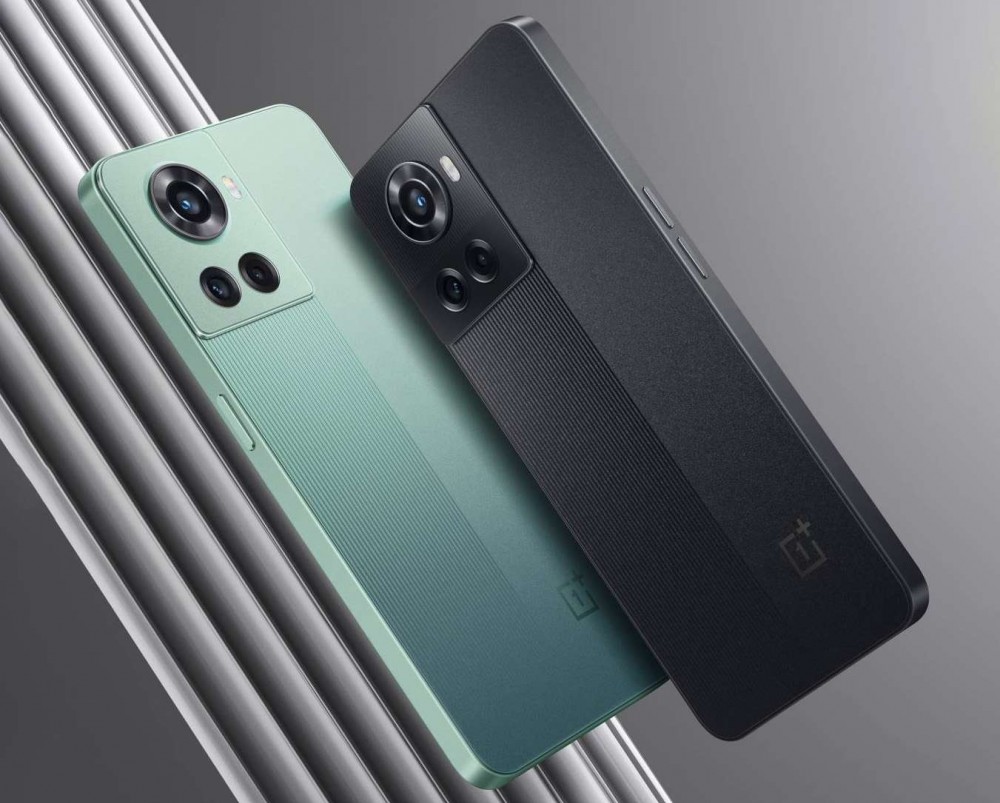
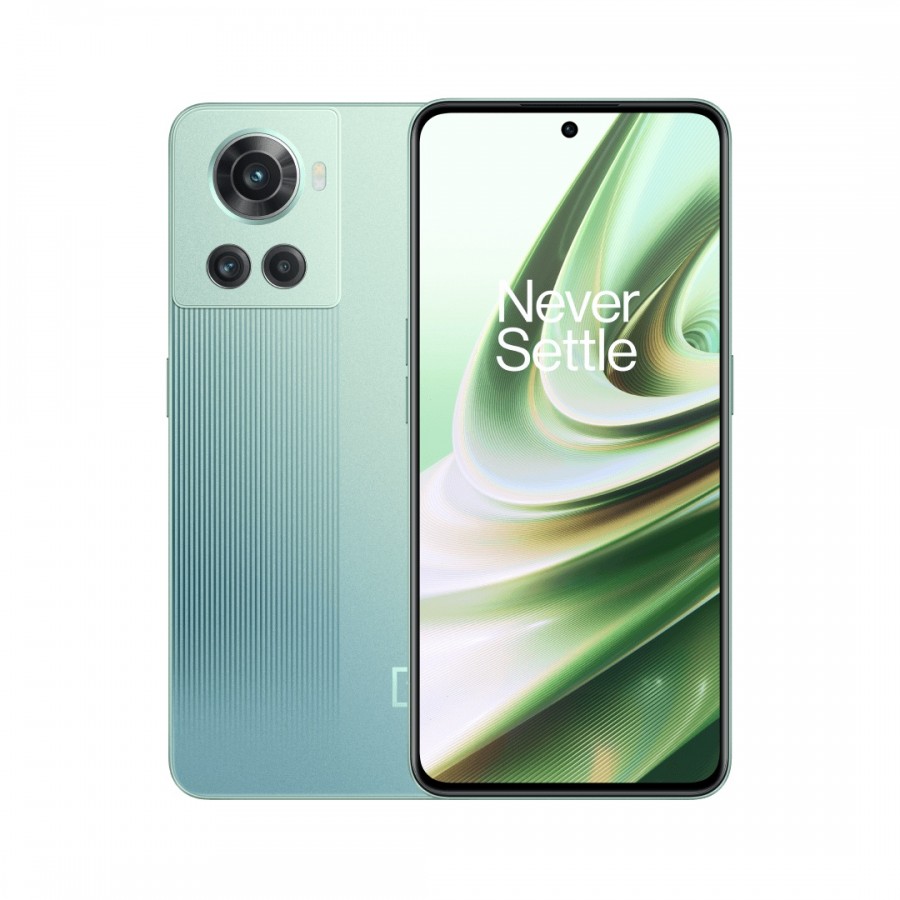
Earlier today, OnePlus announced that it will debut the OnePlus 10T on August 3rd for the global market. The device will also launch in India on the same day. But if you are in the market for a mid-ranger OnePlus device rather than a flagship one, this might be the best time to get your hands on the OnePlus 10R.
On the Amazon Prime day 2022 sale, which is scheduled to take place between July 23th and July 24th, the OnePlus 10R will be at its lowest price in India yet. The listing reveals that the 8GB + 128GB variant of the device will be sold for as low as ₹30,249. Whereas, the 12GB + 256GB model and the 12GB + 256GB 150W fast charging model will be sold at as low as ₹34,249 and ₹35,249 respectively.
For those unaware, the OnePlus 10R usually has a starting price of ₹38,999, while the 12GB + 256GB and 12GB + 256GB 150W fast charging models retail for ₹42,999 and ₹43,999. Amazon is offering a Rs 4,000 discount coupon (that users need to manually select on the product page) and additional Rs 4,000 exchange bonus. This brings down the price to Rs 30,999. Additionally, there’s up to Rs 750 instant discount via SBI Credit card. All of these offers combined will bring down the price of the device to those mentioned above.
OnePlus 10R specs
The OnePlus 10R comes with a 6.7-inch AMOLED display offering a Full HD+ resolution, 120Hz refresh rate, and HDR0+ support.
Under the hood, the device has a MediaTek Dimensity 8100 Max chipset paired with up to 12GB of LPDDR5 RAM and up to 256GB of UFS 3.1 internal storage. The device runs on Android 12 OS-based OxygenOS 12.1 custom skin out of the box. It is offered in two battery options – a 4,500mAh battery with 150W fast charging and a 5,000mAh battery with 80W fast charging.
Coming to optics, the smartphone has a triple camera setup on the back made up of a 50MP primary sensor, an 8MP ultra-wide lens, and a 2MP macro camera. The front-facing camera is a 16MP lens.
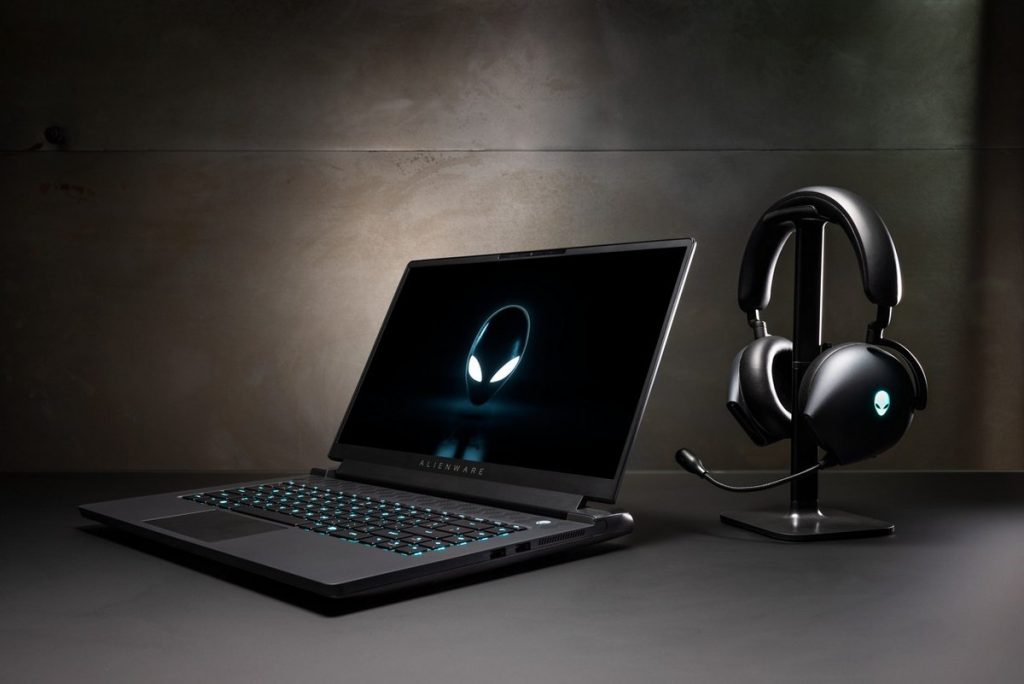
US PC-maker Dell has added the Alienware m17 and x17 models to its lineup of gaming laptops. The models are enhanced versions of the Alienware m17 R5 and x17 R2 laptops. They have 17-inch screens with a high refresh rate of 480Hz. Also available is the AMD Advantage Edition of the Alienware m17 R5.
The Alienware m17 and x17 are highlighted by their 480Hz display refresh rates. It offers an exciting application in gaming settings and only a few models are close to 480Hz. Asus recently announced the first desktop monitor to support a 500Hz refresh rate. Both the m17 and x17 support full HD resolution and offer a compelling gaming experience for the gaming enthusiast. They also have a 3ms response time to go with the high refresh rate.
The Alienware m17 and x17 models have powerful CPUs and GPUs, with extended features like Advanced Optimus for higher frame rates. The setting is optimal for older games as well as modern games. The new gaming laptops could also catch the fancy of a wide variety of the gaming public. The AMD Advantage Alienware m17 R5 has both an AMD CPU and GPU. The laptop can be configured to improve its performance and take advantage of Smart Access Memory, AMD Smart Access Graphics, and more.
The new Alienware laptops are sold for between $1,599 and $2,249. However, the new Alienware m17 and x17 with 480Hz refresh rates are far more expensive than the standard models.
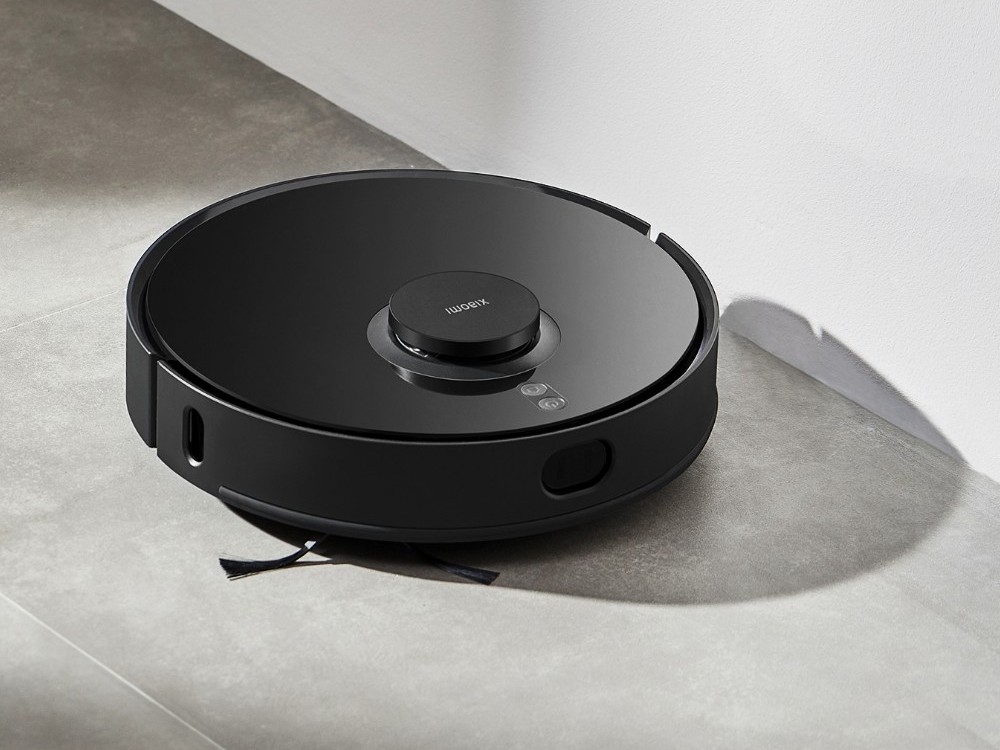
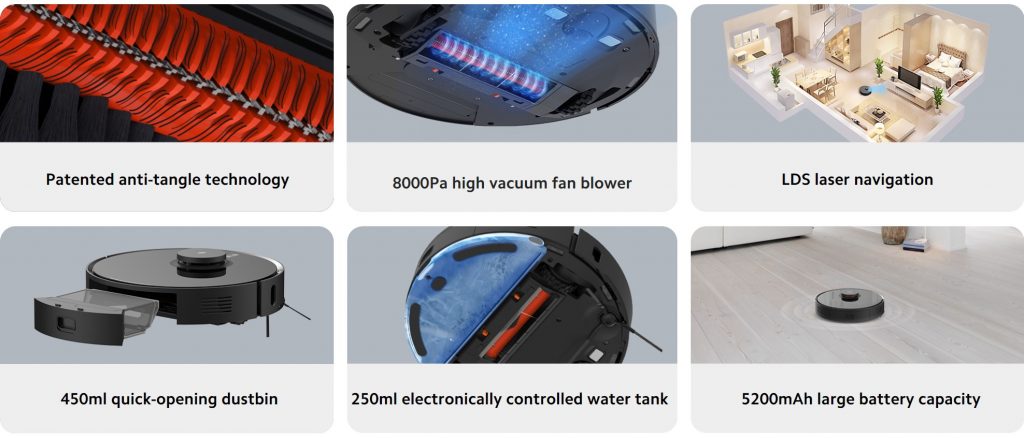
Tech giant Xiaomi has announced the S10T robot vacuum cleaner with an 8kPa suction. The announcement was done in China and there are no details yet on its pricing and actual release date. The new Xiaomi robot vacuum cleaner has multiple cleaning modes, and powerful suction and mopping capability. The device also comes with Xiaomi’s anti-tangle technology that prevents particles from clogging it. The new robot vacuum cleaner is capable of cleaning 180 square meters of space using an LDS laser for its navigation.
The S10T offers mopping services with three water volume settings to suit individual choices. Its 5,200mAh battery allows it to clean up to 180 sq. meters on a single charge. Its 450ml dustbin and 250ml water tank help to fast-track the cleaning and mopping process. The robot is capable of overcoming obstacles up to 2cm tall.
It accurately maps the cleaning area and navigates using the LDS laser navigation. The map can be used to direct the robot to specific areas and its quad-core chip implements the SLAM algorithm for efficient operations.
The Xiaomi S10T robot vacuum cleaner can be remotely controlled via the Mi Home or Xiaomi Home app. With the app, you can schedule cleaning tasks for a future date and set no-go zones. We expect the release date, price, and availability details of the S10T to be released soon.
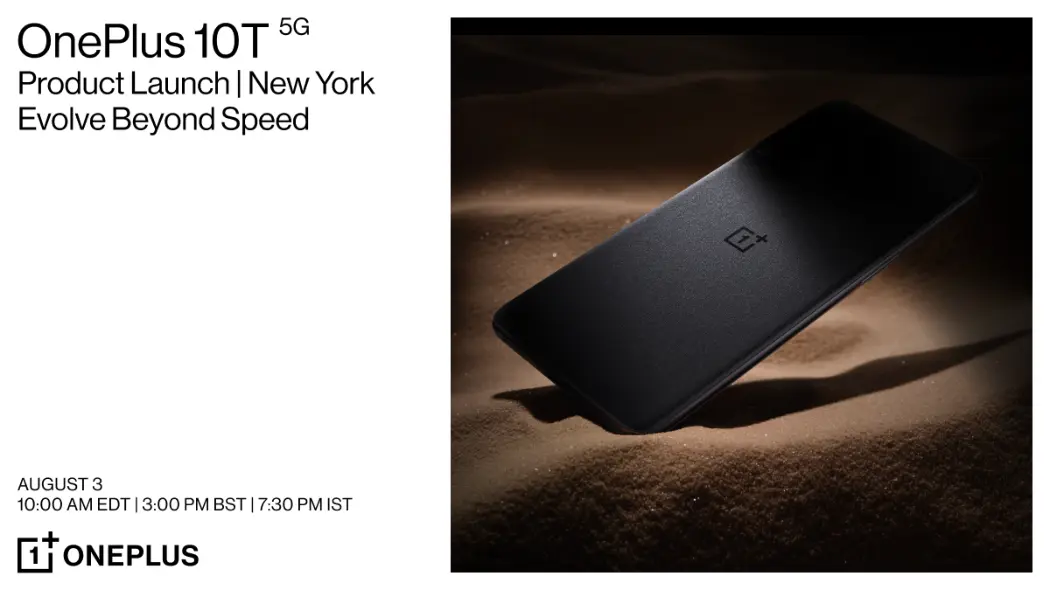
Earlier today, OnePlus dropped an official teaser of its upcoming smartphone, the OnePlus 10T. Now, the company’s co-founder and CEO Pete Lau has confirmed the global launch date of the device.
Pete made the official announcement with a OnePlus community forum post that states the device will be launching on August 3rd. Unlike the launch events of recent, the company will host an in-person event this time that will take place in Gotham Hall, New York City.
The post also confirmed that the device will debut with the Snapdragon 8+ Gen 1 chipset, and will be among the first devices from the brand to be upgraded to OxgenOS 13 when the operating system launches. Other than that, the brand promises that people who purchase a ticket for the offline event will get top-tier merchandise along with the OnePlus Nord Buds.
OnePlus 10T specs (expected)
The leaks so far indicate that the OnePlus 10T will have a 6.7-inch curved E4 AMOLED display featuring a Full HD+ resolution, 120Hz display, and LTPO technology.
It is confirmed to carry the latest Snapdragon 8+ Gen 1 chipset manufactured on TSMC’s 4nm node. The smartphone is rumored to debut with up to 16GB of LPDDR5 RAM and 512GB of UFS 3.1 internal storage. It will likely house a 4,800mAh battery unit paired with OPPO’s 150W SuperVOOC fast charging technology.
As for optics, we can expect the smartphone to have a triple camera setup consisting of a 50-megapixel main camera with OIS, a 16-megapixel ultrawide lens, and a 2-megapixel macro camera. On the front, the device will likely feature a 32-megapixel selfie snapper.
More information will likely be confirmed as we move closer to the official launch, so stay tuned.
Ahead of its launch next month, it has been revealed that the Oppo Watch 3 will be the first smartwatch with the Snapdragon W5 Gen 1 chip. The Snapdragon W5 and W5+ wearable chips were announced recently. Oppo’s executive, Franco Li is credited to have disclosed that the vanilla version of the chipset will be used on the OPPO Watch 3.
OPPO Watch 2 leaked image
The Watch 3 series will include more than one model and we expect at least one of the models to have the new Snapdragon wearable chip. Qualcomm claims that the new chipsets come with improved performance and extended battery life. These claims can truly be tested when the components are present in actual products. It is however expected that the chipmaker’s claims are patently correct. A previous rumor has stated that the Watch 3 series will have three models. All three models will have a high screen-to-body ratio and square displays. The color options for the models were also rumored to be silver, dark gray, black, and light gold.
Mobvoi’s TicWatch flagships will be the first models to be powered by the Snapdragon W5+ Gen 1 chipset. The next TicWatch is expected to be released this fall and it is rumored to be named the TicWatch 4 Pro. Mobvoi’s CEO provided the information that the TicWatch model will debut the W5+ wearable chip.
It is not clear at this time whether the Oppo Watch 3 will be released globally. A global release will certainly add to the options available to consumers across the globe. More details about the Watch 3 will trickle in as we inch closer to its launch.
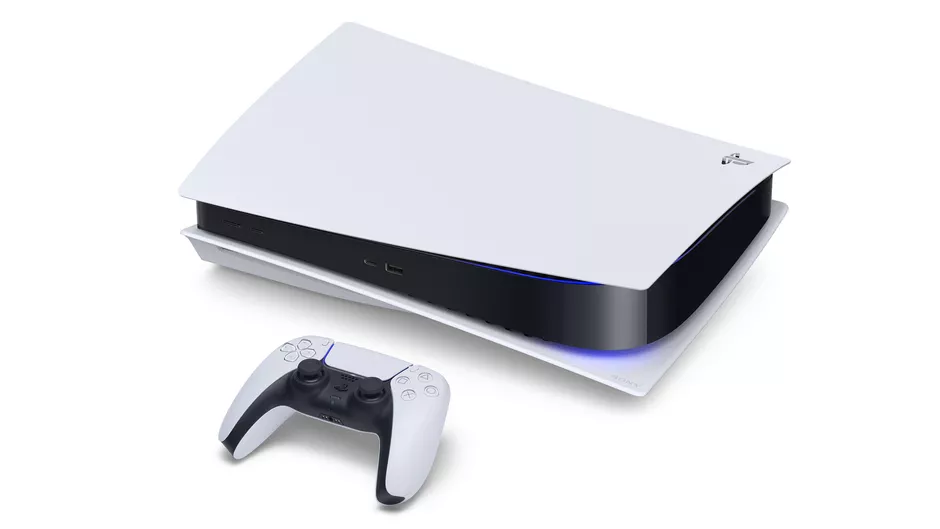
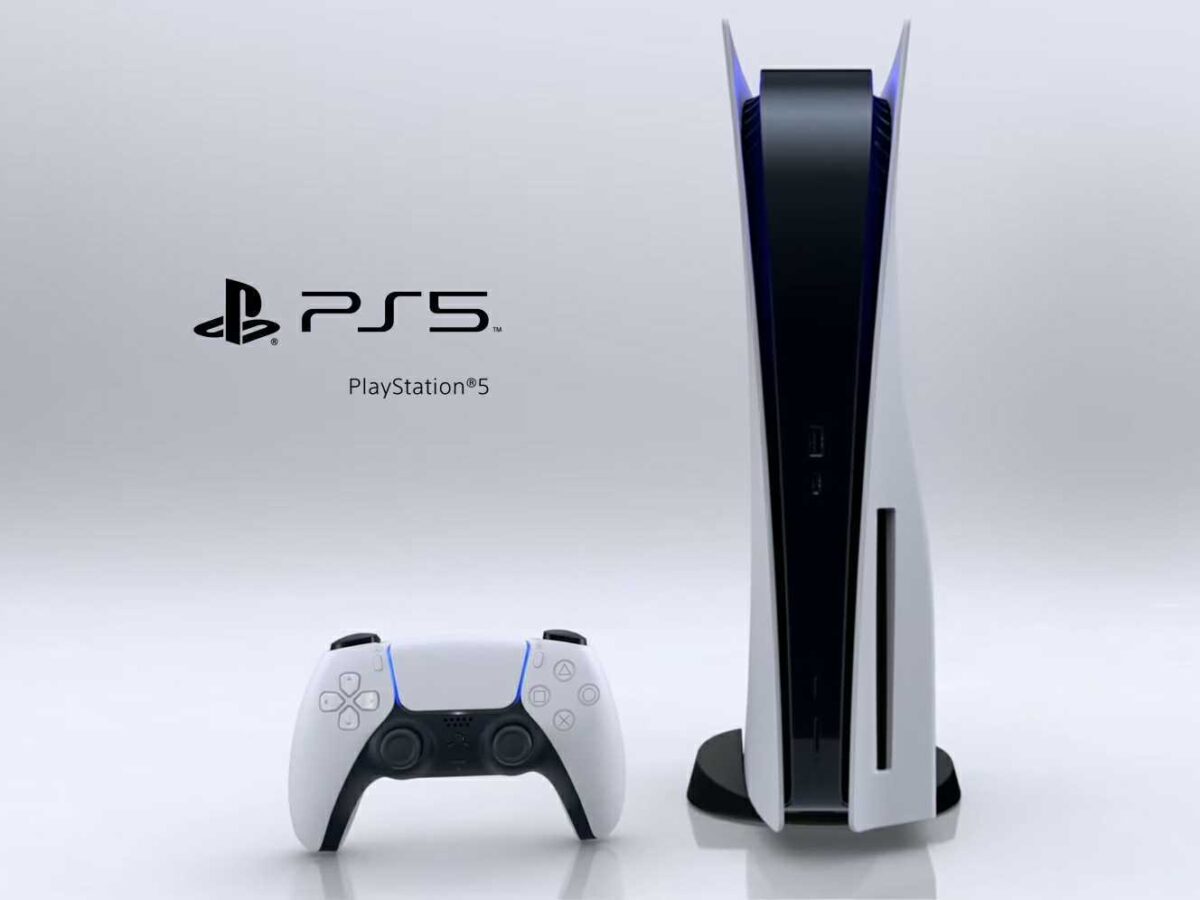
Sony launched the PlayStation 5 back in November 2022, however, the availability of the console has remained an issue since then due to the global chip shortage. Adding to the stock issues, scalpers have been buying out the available stock in the market and selling them at eye-watering markups.
However, Indian customers looking to get their hands on the console at MSRP will soon be getting a chance to do so. According to reports, the July restock of the PlayStation 5 is scheduled for July 23rd at 12 PM IST. This means that customers will be able to pre-order the PS5 Digital Edition for Rs. 39,999. However, It seems that the Blu-ray edition will not be available in the next restock.
PS5 Digital Edition will be available to pre-order via online retailers like ShopAtSC, Flipkart, Amazon, Croma, Vijay Sales, Reliance Digital, and Games The Shop. Since the stock will likely be limited, we advise our users to set reminders and log onto these websites a few minutes before the pre-order window opens.
Since the last restock, the PlayStation 5 availability has improved in India. So, there’s a chance that customers can get their hands on the console from local retailers.
In related news, Sony might soon debut its official Playstation 5 faceplates in India. So, PlayStation owners in India looking to pimp their consoles in colors like black, pink, purple, maroon, or even blue will soon get a chance to do so.
We use cookies on our website to give you the most relevant experience by remembering your preferences and repeat visits. By clicking “Accept”, you consent to the use of ALL the cookies.
This website uses cookies to improve your experience while you navigate through the website. Out of these, the cookies that are categorized as necessary are stored on your browser as they are essential for the working of basic functionalities of the website. We also use third-party cookies that help us analyze and understand how you use this website. These cookies will be stored in your browser only with your consent. You also have the option to opt-out of these cookies. But opting out of some of these cookies may affect your browsing experience.
Necessary cookies are absolutely essential for the website to function properly. This category only includes cookies that ensures basic functionalities and security features of the website. These cookies do not store any personal information.
Any cookies that may not be particularly necessary for the website to function and is used specifically to collect user personal data via analytics, ads, other embedded contents are termed as non-necessary cookies. It is mandatory to procure user consent prior to running these cookies on your website.

 Notably, the 10 million units Dr. Roh claims Samsung shipped last year is a significant increase over the prior shipment figures IDC released. According to report released in February by the International Data Corporation, 7.1 million foldable phones will be shipped globally in 2021, including both flip and fold form factors. Regardless of the actual number, Samsung’s MX division had an increase in income last year, largely as a result of the successful launch of its foldables and most recent Galaxy S handsets.