Xiaomi RedmiBook Pro 2022 Ryzen Edition has been launched in China. The laptops have launched alongside the Redmi Note 11T series, Redmi Buds 4 and 4 Pro, and Xiaomi Mi Band 7. As the name suggests, the RedmiBook Pro 2022 is equipped with the latest 6th generation AMD Ryzen processors.
The RedmiBook Pro 2022 is offered in two screen sizes and packs the same specifications as the 12th generation Intel Core options apart from a different processor.
RedmiBook Pro 2022 Ryzen Edition specifications and features
The RedmiBook Pro 2022 series comes with a 14-inch display, 2.5K resolution, and 120Hz refresh rate. The 15-inch variant features a 3.5K resolution and a 90Hz refresh rate. Both laptops sport a series-6 aviation aluminium metal body.
Under the hood, the RedmiBook Pro 2022 is available in two processor choices i.e. one with AMD Ryzen R5 6600H and Ryzen R7 6800H. The 15-inch variant also comes with an optional RTX 2050 GPU onboard. Both laptops pack 16GB RAM and 512GB storage. The machines are also equipped with three heat pipes and dual fans for heat dissipation.
Connectivity options on the RedmiBook Pro 2022 include Thunderbolt 4, USB-C, USB-A, and HDMI 2.0.
RedmiBook Pro 2022 Ryzen Edition pricing and availability
The RedmiBook Pro 2022 14-inch variant with Ryzen 5 is priced at Yuan 4,499 whereas the Ryzen 7 option costs Yuan 5,099. The 15-inch model with the same processors are priced at Yuan 4,699 and Yuan 5,299 respectively. The Ryzen 5 and Ryzen 7 with GPU carry a price tag of Yuan 5,899 and Yuan 6,499 respectively.
Earlier today, Xiaomi held a launch event for its new Redmi Note 11T Pro series smartphones. The brand also introduced the Xiaomi Band 7 at this launch event, so let’s take a look at what the new generation of Mi Band has to offer.
Xiaomi Band 7 specs & features
Xiaomi has launched the Band 7 in two variants dubbed the Band 7 and the Band 7 NFC. The smart wearable comes with a 1.62-inch AMOLED display with a 192 x 490-pixel resolution, 326 PPI pixel density, and 500nits of peak brightness. The device has an Always-On display feature and also features dynamic Mars wallpaper like the one available on MIUI 13. Design-wise, the smart band is similar to the Mi band 6 and weighs just 13.5 grams.
The Band 7 comes with the Xiao AI assistant and features 120 sports modes including four professional sports modes with activity tracking, data analysis, and more for all-around guidance.
Coming to health-related features, the smart band offers all-day blood oxygen monitoring and alerts the wearer if the blood-oxygen levels go below 90%. Other than that, the device comes with a heart rate tracker, and sleep tracker capable of providing data like sleep breathing quality, REM, and nap time quality. It also offers stress monitoring, Female health tracking, and PAI (Personal Activity Intelligence).
The Band 7 comes with a large 180mAh battery capable of up to 15 hours of use on a single charge. The smart band is claimed to last around 9 days with heavy usage. It uses a magnetic charger like its predecessors.
Price and Availability
The Xiaomi Band 7 NFC variant has a price tag of 299 Yuan ($45) while the non-NFC Band 7 is priced at 249 Yuan ($37). The smart band is up for pre-order in China and will go on its first sale on May 31.
Redmi Buds 4 and Buds 4 Pro have launched in China today. Alongside, Xiaomi has also announced the Redmi Note 11T series smartphones, RedmiBook Pro 2022 Ryzen Edition, and Xiaomi Mi Band 7. The Redmi Buds 4 and 4 Pro are affordable offerings with the latter more premium among the two devices. The TWS earphones compete against the likes of the OnePlus Buds Z2, Realme Buds, and more in the market.
Redmi Buds 4 and Buds 4 Pro specifications and features
The Redmi Buds 4 and 4 Pro come with an in-ear design with the latter featuring a stem. Users can control various functions by tapping on either earbud. Both TWS earphones are IP54 certified dust and waterproof.
The Redmi Buds 4 and 4 Pro are equipped with a 10mm dynamic driver and offers 35dB noise cancellation with AI intelligent adjustment. The Pro variant features HiFi sound quality and virtual stereo sound. It also offers noise cancellation up to 43dB and is also said to be resistant against the wind noise. Both TWS earphones come with dual transparency mode. The Redmi Buds 4 Pro features 59ms low latency mode. Both the regular and Pro models come with support for Bluetooth 5.2 connectivity.
The Redmi Buds 4 and Buds 4 Pro are backed by 30 and 36 hours of total battery life with the charging case. The earbuds can be instantly connected to devices once the storage case is opened.
Redmi Buds 4 and Buds 4 Pro pricing and availability
The Redmi Buds 4 is priced at Yuan 199 whereas the Buds 4 Pro costs Yuan 369. Both TWS earphones are up for pre-orders and will go on sale from May 30th in China. The regular variant is available in White and Light Blue colours whereas the Pro model is offered in Polar Night and Mirror Lake White colours.
Redmi has just held a new launch conference for the highly anticipated Note 11T series of smartphones. This includes the Note 11T Pro and Note 11T Pro+ model. So let’s have a look at their specifications, features, and pricing.
Design & Display
The two new smartphones feature the same design. On the rear, both handsets carry a rectangular camera module on the top left corner of the rear panel that houses three image sensors. Redmi has also placed a focus on cooling with the Note 11T series since they pack a powerful chipset. Thus, it houses VC liquid cooling technology to help keep thermals in check during intensive tasks like gaming. Apart from this, the brand even showed a video of the Note 11T Pro series undergoing various physical stress tests. This included drop tests, scratch tests, bend tests, and much more.
The Note 11T Pro+ sports a 6.6 inch IPS LCD panel that has LTPS technology, Full HD+ resolution, 20.5:9 screen aspect ratio, 144Hz refresh rate, DC dimming, and has an A+ rating from DisplayMate. Meanwhile, the Note 11T Pro features an identically sized 6.6 inch IPS LCD panel that also supports 144Hz refresh rate and has an A+ rating from DisplayMate as well as other similar specifications.
Specifications
The Chinese smartphone maker’s Note 11T Pro+ is touted to be a high end smartphone. Under the hood, it is equipped with a MediaTek Dimensity 8100 5G chipset, which is based on the 4nm process node from TSMC. This chipset is paired with LPDDR5 RAM and UFS internal storage. A 4,400mAh battery pack powers the device, which supports a whopping 120W fast charging thanks to its Surge P1 chip. With just 19 minutes of charging, the handset can be charged from 0 to 100 percent. Other features include Dolby Atmos and Hi Res Audio certification for its stereo speakers, Bluetooth 5.3, 3.5mm headphone jack, infrared sensors, WiFi 6, and even NFC 3.0 support.
Arriving at the base Pro model, the Note 11T Pro is equipped with the newly announced MediaTek Dimensity 8100 SoC. Interestingly, the device houses a larger 5,080mAh battery pack that supports a slower but still capable 67W fast charging. This model also comes with many of the same features as the higher end variant, including 3.5mm headphone jack, WiFi 6, and others. So basically, the two models are the same phone, with the primary difference being storage configurations, battery size and fast charging rates.
Camera
Talking about the cameras, the Note 11T Pro+ will feature a triple camera setup on the rear. This module consists of a 64 megapixel Samsung ISOCELL GW1 primary sensor that features a 1/1.72 sensor size to let more light in and a 1.6μm pixel size. The primary sensor is paired with an 8 megapixel ultra wide angle lens and another 2 megapixel macro shooter. The Note 11T Pro also features the same image sensor setup.
Pricing & Availability
The Redmi Note 11T Pro+ will be available in three color options, namely Black, Blue, and Silver. On the other hand, the Note 11T Pro arrives in just the Silver and Blue color variants. Furthermore, it will also be released in multiple color options as well, so lets take a look at their pricing:
Note 11T Pro
6GB + 128GB – 1,799 Yuan (roughly 270 US Dollars)
8GB + 128GB – 1,899 Yuan (roughly 285 Dollars)
8GB + 256GB – 2,099 Yuan (roughly 315 US Dollars)
Note 11T Pro+
8GB + 128GB – 1,999 Yuan (roughly 300 US Dollars)
8GB + 256GB – 2,199 Yuan (roughly 330 US Dollars)
8GB + 512GB – 2,399 Yuan (roughly 360 US Dollars)
Note 11T Astro Boy Limited Edition
8GB + 256GB – 2,499 Yuan (roughly 375 US Dollars)
Notably, the company is offering the base 6GB model of the Note 11T Pro for just 1,699 Yuan (roughly 255 US Dollars) as an introductory offer. Both the base Pro and Pro+ model will go on sale in China starting from 31st of May 2022. Meanwhile, the Astro Boy Limited Edition will go on sale on 18th June 2022.
Yesterday (May 23), OPPO held a launch event in China to announce the Reno 8, Reno 8 Pro, and Reno 8 Pro smartphones. Reports have claimed that the Reno 8 series will be released in other markets, including India. A new report by PassionateGeekzhas tipped Reno 8 Pro’s storage and color variants for India.
According to the report, the OPPO Reno 8 Pro will be available in two variants in India. Its base model will have 8 GB of RAM and 256 GB storage, and the higher variant will offer 12 GB of RAM and 256 GB storage. It will be available for purchase in colors like Glazed Black, Glazed White, and Glazed Green.
OPPO Reno 8 Pro
The OPPO Reno 8 lineup for China includes three models: the Reno 8, the Reno 8 Pro, and the Reno 8 Pro+. These models are powered by the Dimensity 1300, Snapdragon 7 Gen 1, and Dimensity 8100, respectively. The report further claims that the company will not launch the Reno 8 Pro+ in India.
In fact, China’s Reno 8 Pro and Reno 8 Pro+ may be rebranded as the Reno 8 Pro and Reno 8 in the country. Hence, the Reno 8 may debut as India’s first phone powered by the Snapdragon 7 Gen 1 chipset. The report also says that the Reno 8 lineup will come out in India by the middle of June.
The Reno 8 Pro India variant may come with a 6.7-inch AMOLED FHD+ 120Hz display and a D8100 chip, whereas the Reno 8 India variant may arrive with a 6.62-inch AMOLED FHD+ 120Hz screen and an SDG71 SoC. Both phones have a 32-megapixel front camera and 50-megapixel (main) + 8-megapixel (ultrawide) + 2-megapixel (macro) triple rear cameras. Both models have a 4,500mAh battery that supports 80W charging. There is no word on the Reno 8’s variants and color options for the Indian market.
Earlier this month, Samsung unveiled the Galaxy Tab S6 Lite 2022 Edition. The tablet is an improved version of the Galaxy Tab S6 Lite that debuted back in 2020. So far, the tablet has been confirmed for Italy and other European regions and is expected to also debut in India soon.
Now, the Galaxy Tab S6 Lite 2022 has appeared on Samsung India’s support page with model number SM-P613, hinting at an imminent launch. So let’s check out the specs and features of the mid-range tablet from Samsung.
The Galaxy Tab S6 Lite 2022 has a 10.4-inch TFT LCD screen with a resolution of 2000 x 1200 pixels. This is the same as its predecessor, however, the tablet comes with a major change under the hood.
This time around the mid-range tablet has been graced with the 8 nm-based Qualcomm Snapdragon 720G chipset instead of the Exynos 9611 chipset. It is likely to come with 4GB of RAM and 64GB/128GB of internal storage with storage expansion enabled by a MicroSD card slot. The device will feature a large 7,040mAh battery with 15W fast charging and will run Android 12-based One UI 4.0 out of the box.
Other than that, the tablet has support for an S Pen stylus and features powerful AKG-tuned dual-speakers with Dolby Atmos providing an improved audio output. For optics, the slate has a modest 8-megapixel rear camera and a 5-megapixel snapper on the front for selfies and video calls. The tablet has a starting price of €399 in Europe, so it is expected to cost below ₹30,000 in the Indian market.
While we had reported on rumors Apple planning on finally shifting some of its product line to support USB Type C port, it appears that the next gen AirPods Pro 2 will not be one of them and will retain the dated Lightning port.
In a series of new tweets, known analyst Ming Chi-Kuo stated that the brand will not include a USB C port on its highly anticipated second generation AirPods Pro. Kuo had previously stated that the Cupertino based giant will be moving a number of its products like the AirPods Pro to USB Type C format. However, the upcoming model won’t be making the shift as of yet. In other words, future iterations of Apple’s hearable products might be the first to move away from the Lightning port.
As of right now, the company is believed to be testing USB C ports for its iPhone 15 lineup. Apart from smartphones, it is also planning on eventually shifting its MagSafe charger, Mac keyboards and mouse to the USB standards. All of these currently have the Lightning port. The analyst added that “I predict the charging case of AirPods Pro 2 will still support Lightning, not USB C.” As of right now, the entire AirPods lineup, including the top end AirPods Max, feature the Lightning port.
For those unaware, the AirPods Pro 2 will be the first successor to the popular AirPods Pro that the iPhone maker had launched back in 2019. It is rumored to get rid of the stem design, in favor of an all ear design similar to the Beats Fit Pro. The earbuds will also apparently offer various health related features as well as a new an improved charging case and enhanced audio quality.
While iPhones are typically seen as one of the more secure smartphones in the market by many consumers, it appears that the Apple device is still quite prone to hacking. This is apparently true especially when they are turned off.
According to a research report from Technical University of Darmstadt, the iPhones are the most vulnerable to hackers when they are switched off. The primary reason for this is due to how it handles its various wireless networking technologies. When an iPhone is switched off, most wireless chips, like Bluetooth, NFC (Near Field Communications), and UWB (Ultra Wideband) are still running up to 24 hours. Although, this is not some bug and does serve a crucial purpose as well.
The Cupertino based giant offers the Find My network function on their products, which helps in locating Apple owners’ products when they are lost or possibly even stolen. This also lets you still have access to items like credit cards, student passes, and digital keys as well. But unfortunately, this feature is a double edged sword since these wireless chips have direct access to the secure elements. In other words, it could be potentially exploited by hackers to install malware on the iPhones even when the iOS system is not running.
These wireless chips remain active in a Low Power Mode (LPM). However, this LPM support is implemented on a hardware level. So, this can not be simply fixed via an OTA software update. The researchers conducted a security analysis of LPM features introduced with iOS 15 and found that Bluetooth LPM firmware can be modified to run malware on the iPhone. This enables hackers to have system level access to track someone’s location or run new features on their phone. Fortunately for many, this mostly affects jailbroken iPhones. Although, the security hole might still be used as spyware to target people.
Apple is gearing up to launch its iPhone 14 series of smartphones later this year. However, it seems that the next generation of iPhones will be costlier than its predecessor, the iPhone 13 series.
According to an ETNews report, the Cupertino based giant may plan on raising the prices for the upcoming iPhone lineup due to a change in one of its components. Apparently, the new iPhone 14 will have an improved front facing camera, however, this new selfie shooter will reportedly be 3x more expensive than the ones used on the iPhone 13. In other words, it won’t be surprising if we see a rise in the price tag of the iPhone 14 family.
Notably, this would also mark the first time that Apple has installed a South Korean sourced product for its selfie camera, since the brand is planning to source these components from LG Innotek. For those unaware, a supplier from China and Japan’s Sharp have been the main suppliers of front facing camera parts. These sensors usually cost a third of the rear facing camera module. But with its latest iPhone 14 series, it seems that the company is planning to bring about major changes to the front facing camera.
Through this new change, the selfie shooter on new iPhones will feature advanced functions like autofocus. Although, the only downside is the rise in overall cost of the handset. As of right now, this is still just an unconfirmed report, so take this news with a pinch of salt for now and stick around for more updates regarding this matter.
Earlier today at Computex 2022, the ASUS ROG Swift 500Hz gaming monitor was unveiled during Nvidia‘s presentation. So let’s take a look at what the new ROG monitor has in store for gamers.
As the name implies, the ROG Swift 500Hz is the first display to achieve a 500Hz refresh rate. It does so by using an E-TN panel (Esports TN) that is claimed to be 60% more responsive than a regular TN LCD panel. The display itself measures 24.1-inch in size and offers an FHD resolution (1920 x 1080).
The monitor also offers NVIDIA G-SYNC and comes with an improved mode for esports called “Esports Vibrance.” The Esports Vibrance mode allows for more light to pass through the LCD crystals, making the colors appear more vivid.
Other than the core features, the monitor also supports the NVIDIA Reflex Analyzer, which provides latency-related stats with just a few clicks. Nvidia has also tuned the monitor to provide optimal performance in current major E-sports FPS titles like CS:GO, Valorant, Overwatch, and Rainbow Six Siege.
The latest 500Hz monitor might now be everyone’s cup of tea with its 1080p resolution and 24.1-inch display size, however, the brand has made this monitor with E-sports enthusiasts and professionals in mind. So the monitor is likely to come with a hefty price tag whenever ASUS decides to make it available on the market.
Realme had just recently announced the Narzo 50 5G series of smartphones for the Indian market. And now, the base variant of the lineup is finally available for purchase in the region. So let’s have a look at the price and offers for the smartphone.
Talking about the smartphone first, it sports a 6.6 inch LCD panel that has a Full HD+ resolution and a 90Hz refresh rate. Under the hood, the device is equipped with a Mediatek Dimensity 810 SoC that is paired with LPDDR4X RAM and UFS 2.1 internal storage. The smartphone runs on Android 12 OS based Realme UI 3.0 out of the box. For memory, it houses up to 6GB of RAM and up to 128GB of storage.A large 5,000mAh battery pack powers the device, which supports 33W fast charging.
Other features include a side mounted fingerprint scanner for security, 5G connectivity, dual band WiFi, Bluetooth, GPS, 3.5mm headphone jack, and USB Type C port. The device measures 8.1mm in thickness and weighs 190 grams. It also has a Hi Res audio and stereo speakers as well. On the back, the Narzo 50 5G features a dual camera setup with a 48 megapixel primary sensor coupled with a 2 megapixel B&W portrait lens. Meanwhile, the front has an 8 megapixel selfie shooter.
The Realme Narzo 50 5G starts from 15,999 INR (roughly 206 US Dollars) for its base 4GB + 64GB configuration. The 4GB + 128GB variant costs 16,999 INR (roughly 219 US Dollars) and the top end 6GB + 128GB version has a price tag of 17,999 INR (roughly 232 US Dollars). The first sale has just begun earlier today (24th May 2022) and the device is listed on Amazon, Realme website, and certain retail stores. Notably, the company is also offering a 2,000 INR discount via HDFC bank credit and debit card.
Honor will be announcing the Honor 70 series of smartphones on May 30 in China. The official renders of the Honor 70 surfaced last week. Now, the renders of the Honor 70 Pro have appeared on the Chinese retailer site JD.com.
Honor 70 Pro renders
The Honor 70 images revealed that it features a flat display. However, the Honor 70 Pro renders show that it is fitted with a quad-curved screen. Instead of the round-shaped camera rings available on the vanilla model, the Pro model features a pair of hexagonal units. The Honor 70 Pro is equipped with triple rear cameras and an LED flash.
Speaking of cameras, the Honor 70 Pro is expected to feature a 54-megapixel Sony IMX800 primary camera. While the exact screen size of the device is not known, it is expected to carry support for an FHD+ resolution and a 120Hz refresh rate.
Honor 70 Pro
The smartphone will be powered by the Dimensity 8000 chipset. It is expected to arrive with support for 100W fast charging. The details about its other cameras and battery size are yet to be revealed.
Honor 70 likely to come with Snapdragon 778G Plus
The OPPO Reno 8 Pro went official yesterday as the world’s first smartphone powered by the Snapdragon 7 Gen 1 chipset. Several reports have claimed that the same chip will power the Honor 70. However, reliable source Teme claims that it will be equipped with the Snapdragon 778G Plus chipset. To recall, the Honor 60 and Honor 60 Pro were launched with Snapdragon 778G and 778G+ chipsets, respectively, in China last year.
As far as the Honor 70 Pro+ is concerned, it is expected to feature the Dimensity 9000 chipset. The appearance of the 70 Pro+ could be identical to that of the Honor 70 Pro.
In March, Realme unveiled the Realme GT Neo 3 in 80W and 150W charging variants in China. The Chinese manufacturer made the Realme GT Neo 3 150W in two configurations. Realme will be holding a launch event on May 26 in China. The event will also see the arrival of the Realme Pad X 5G and Power Bank 3 Pro Naruto Edition. It appears that the same event will see the arrival of the GT Neo 3’s 512 GB storage edition.
Today, the company confirmed that the 12 GB RAM + 512 GB storage variant of the Realme GT Neo 3 will be announced on May 26. The price of the new variant will be confirmed at the launch event.
Currently, the GT Neo 3 150W is available in two configurations: 8 GB RAM + 256 GB storage and 12 GB RAM + 256 GB storage. These models are priced at 2,599 Yuan (~$390) and 2,799 Yuan (~$420), respectively. The upcoming 12+256GB model could cost as much as $2,999 Yuan ($450). It appears that the new variant will be aimed towards the upcoming 618 (June 18) shopping festival in China. The GT Neo 3 150W comes in Le Mans, Hurricane Black, and Silverstone.
Redmi will be launching the Note 11T series of smartphones in China today. The Note 11T Pro+ will be arriving as the company’s first Note branded smartphone with 512 GB of storage. The device is also equipped with key features such as Dimensity 8100 and 120W fast charging. Hence, it appears that the 512 GB variant of the GT Neo 3 will rival the Note 11T Pro+.
The GT Neo 3 offers key features such as a 6.7-inch 120Hz AMOLED display, LPDDR5 RAM, UFS 3.1 storage, and a 4,500mAh battery. It has 50-megapixel triple rear cameras and a 16-megapixel front camera.
Realme has confirmed to launch the Realme Pad X in China on May 26. It will be the brand’s first tablet in its home country. Last week, the company officially disclosed the design of the product. At the same time, it has been also teasing some of the features for the past few days. The latest teasers reveal the specs of the display, battery, and more.
According to Relame’s Xu Chi Chase, the Realme Pad X will house an 8,340mAh battery. The device will carry support for 33W fast charging.
The executive also claims that one can use the tablet without charging for a week. We all know that it’s not possible to get that good endurance unless the usage is very minimal.
Further, another teaser discloses that the front camera on the Realme Pad X will have Apple’s Center Stage-like feature. For the unaware, this feature keeps the subject in the center during video calls.
The exec says that Realme’s implementation will be comparable to the Center Stage found on Apple iPads. It is worth noting that Realme is not the first Android OEM to introduce this feature as Samsung had already debuted it on the Galaxy Tab S8 series earlier this year.
Coming to the most important part, the Realme Pad will flaunt an 11-inch display with a 2K resolution. The LCD panel will have a sunlight mode and a TÜV Rheinland-certified hardware-level blue light filter.
Last but not least, the device will arrive with Dolby Atmos-supported quad speakers and a MicroSD card slot.
Realme is yet to reveal the chipset powering the tablet. Maybe, it will announce the chip tomorrow.
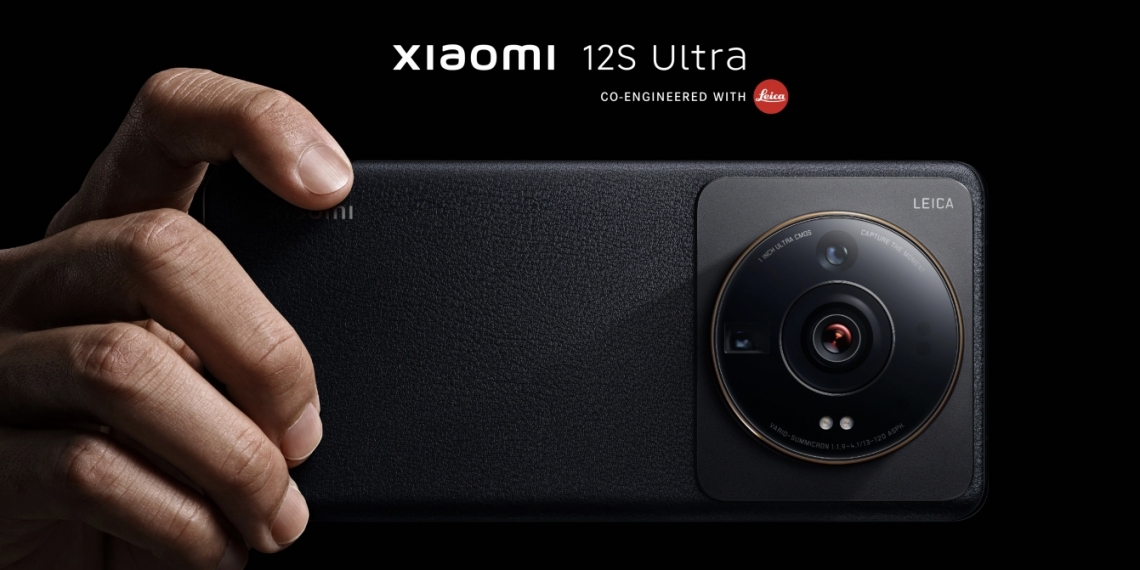
Xiaomi debuted the Mi 11 Ultra at the end of March 2021. It has been over a year but the company is yet to release its successor. Anyway, the firm has confirmed to launch a flagship smartphone sporting a camera system powered by Leica in July. This device is rumored to go official as Xiaomi 12 Ultra.
Ahead of this phone’s launch, the year-old Xiaomi Mi 11 Ultra is being offered by China’s JD (Jingdong) at an insanely low price tag. The retailer is providing a whopping 42% discount on the 12GB + 256GB variant.
The Mi 11 Ultra with 12GB RAM and 256GB storage was introduced at ¥6,499 ($975). But now, for a limited time, it can be purchased at only ¥3,799 ($570) in China. The promotion is part of JD’s 618 sale.
It is worth noting that customers cannot buy the phone right away. They have to pre-order it before May 31 to get the offer.
During the 618 sale, the price of the Xiaomi Mi 11 Ultra (12GB + 256GB) will drop to ¥4,099. On top of that, JD Plus members who had pre-ordered the handset will receive a ¥300 discount coupon. Hence, for those customers, the smartphone’s effect price will come down to ¥3,799.
Additionally, while pre-ordering the device, customers can deposit ¥100 yuan to get the original 67W charger. They can even deposit another ¥99 for the original wireless charging stand which costs ¥499.
This is probably the best deal on Xiaomi Mi 11 Ultra so far. The last best deal was offered directly by Xiaomi in late March 2022.
Back in early April, Oppo started the Android 12-based ColorOS 12 beta testing for Oppo F19, F19s, A74, and A95. Almost two months later, these smartphones are now being blessed with the stable update.
Following the schedule shared for May, Oppo has begun to push ColorOS 12 stable update for the aforementioned handsets. In fact, the devices got access to the update a day earlier.
The phones were supposed to receive the Android 12 stable update on May 24 (today). However, Oppo had begun seeding the OTA software update yesterday (May 23) itself.
For the unaware, the Oppo F19 and Oppo F19s were released exclusively in India. The same smartphones go by the name of Oppo A74 and Oppo A95 in Indonesia.
Hence, the latter two phones are also receiving the update together since they are basically the same devices. According to the officialannouncementposts on the Oppo community, the update arrives with firmware version C.09 for all four handsets.
Users need to navigate to Settings > Software Updates to download and install the update. The OTA software builds for these smartphones are being pushed in batches. Therefore, some users may get them earlier, while others may have to wait.
Along with the Huawei MateBook 16s and MateBook D16 laptops and the new MateBook SE monitor, the Chinese company also launched two other laptop models in its home country — Huawei MateBook 14 2022 and Huawei MateBook D14 2022.
Coming to the specifications, as the name indicates, the Huawei MateBook 14 2022 comes with a 14-inch touchscreen display that offers a screen resolution of 2160 x 1440 pixels along with a 3:2 aspect ratio, 300 nits brightness, and 1500:1 contrast ratio.
Under the hood, the device is powered by the Intel 12th generation Core i7-1260P processor or the Intel Core i5-1240P. Like the 16-inch models, this one also features an Intel Iris Xe graphics processor and is not a dedicated one.
As for the memory department, the laptop packs 16GB of LPDDR4x RAM and 512GB of NVMe storage. The device is powered by a 56Wh battery and supports 65W charging.
The Huawei MateBook 14 2022 is priced at 6,099 yuan for the Core i5-powered model, while the Core i7-powered model costs 6,999 yuan.
On the other hand, the Huawei MateBook D14 2022 features a 14-inch display with a 1920 x 1080 pixels Full HD display with a 16:9 aspect ratio, 300 nits brightness, and a 1000:1 contrast ratio, along with 100% sRGB coverage.
Apart from the display, everything else remains the same as the MateBook 14, including the choice of processors, RAM, storage, battery, and the in-box charger.
The Huawei MateBook D14 is priced at 5,299 yuan (~$795) for the Intel Core i5-1240P processor, while the Intel Core i7-1260P processor model costs 5,999 yuan (~$900).
Huawei has launched a few new laptops in the Chinese market in two different screen sizes of 16-inch and 14-inch. The company has launched two laptops each for both these screen sizes in China.
As the name indicates, the laptop comes with a 16-inch touchscreen IPS LCD display that offers a 2520 x 1680 pixels screen resolution, a 3:2 aspect, 300 nits of brightness, and 1500:1 contrast along with support for 100% sRGB color gamut.
Under the hood, the device is powered by the 12th generation Intel Core H series processors, ranging from Core i5-12500H to Core i9-12900H. There’s no dedicated GPU, but the graphics are handled by the Intel Iris Xe graphics processor.
Coming to the memory, the laptop model packs 16GB of LPDDR4x RAM and offers two options in terms of internal memory — 512GB or 1TB NVMe PCI. It is powered by an 84Wh battery and comes with a 135W charging in the box.
The Huawei MateBook 16s is priced at 6,999 yuan (~$1,050) for the Core i5-powered model, while the Core i7-powered model costs 7,999 yuan (~$1,200). The top-end model powered by the Core i9 processor is priced at 9,999 yuan (~$1,500).
On the other hand, the Huawei MateBook D16 features a 16-inch display but offers a 1920 x 1200 pixels screen resolution, 300 nits maximum brightness, 100% sRGB coverage, and a contrast ratio of 1200:1.
The device is powered by the Intel Core i5-12500H or the Intel Core i7-12700H processors, along with the Intel Iris Xe graphics. As for the memory, there’s 16GB of LPDDR4x RAM and 512GB of NVMe PCIe storage. It is powered by a 60Wh battery and comes with a 65W charger in the retail box.
The Huawei MateBook D16 is priced at 5,699 (~$855) for the Core i5 model and while the Core i7 model costs 6,699 yuan (~$1,005). This model is now available for pre-order in the Chinese market and will go on sale from 6th June.
Redmi will be announcing the Redmi Note 11T series of smartphones today. The topmost variant in the lineup is called the Redmi Note 11T Pro+. The TENAA listing of the device revealed that it will be arriving with the largest built-in storage ever seen on a Redmi Note series phone. Today, the company confirmed that it will be arriving with a native storage of 512 GB.
The Redmi Note series of smartphones has been available with 256 GB of storage. However, the Note 11T Pro+ will be the company’s first smartphone to offer 512 GB of internal storage. The TENAA certification of the device revealed that it will be available in two options, such as 8 GB RAM + 128 GB storage and 8 GB RAM + 512 GB storage.
Past reports have revealed that the device will be equipped with a 6.6-inch LCD LTPS panel that offers a Full HD+ resolution and a 144Hz refresh rate. It will be powered by the Dimensity 8100 chipset.
The Note 11T Pro+ is expected to pack a 5,000mAh battery. Redmi has already confirmed that it will carry support for a 120W fast charger. It will be equipped with a Surge P1 chip for power management. For photography, it will be equipped with a 64-megapixel main camera.
The Note 11T Pro+ will offer other features such as JBL dual stereo speakers, Bluetooth 5.3 connectivity, an IR blaster, NFC, a 3.5mm audio jack, and a side-facing fingerprint scanner. The device will come preinstalled with the Android 12 OS and MIUI 13.
The Redmi Note 11T Pro is also expected to arrive with the Dimensity 8100 chipset. It may only differ in departments like battery size, fast charging speeds, and cameras as compared to the Pro+. The Note 11T is likely to feature the Dimensity 1300 chip.
Stuffcool has released its latest accessory to the Indian market. It is the Stuffcool Neo 45W dual USB-C port charger that supports PD and PPS charging. The Stuffcool Neo offers a total output of 45W and is a great choice to charge two smartphones simultaneously. The Stuffcool Neo 45 is available from Stuffcool’s website and retail outlets in India for an introductory price of Rs. 2,499 (~$32). The price of the Neo 45 will revert to Rs. 3,299 (~$43) after the offer period.
The Stuffcool Neo 45 unveiling in India comes on the heels of the Ultimus 115W 3-port charger by Stuffcool. The Ultimus 115W supports QC, PD, and PPS charging. The Stuffcool Neo 45 charger offers up to 25W PPS charging for its top USB-C port. The top port’s charging speed is enough to quickly charge the latest flagship devices from Samsung to Google. The bottom USB-C port can deliver 20W PD charging in combination with the top port. It can charge most devices to full capacity within half an hour.
The Stuffcool Neo 45 comes with an Auto Detect IC for optimal power delivery to the device being charged. It is BIS approved and will be compatible with the conventional and prevalent wall sockets in the subcontinent. Safety-wise, the Neo 45 has five layers of sophisticated safety protocol to guarantee the security of the connected device. The dual-port charger comes in white color and a 6-month warranty is available at purchase.
We use cookies on our website to give you the most relevant experience by remembering your preferences and repeat visits. By clicking “Accept”, you consent to the use of ALL the cookies.
This website uses cookies to improve your experience while you navigate through the website. Out of these, the cookies that are categorized as necessary are stored on your browser as they are essential for the working of basic functionalities of the website. We also use third-party cookies that help us analyze and understand how you use this website. These cookies will be stored in your browser only with your consent. You also have the option to opt-out of these cookies. But opting out of some of these cookies may affect your browsing experience.
Necessary cookies are absolutely essential for the website to function properly. This category only includes cookies that ensures basic functionalities and security features of the website. These cookies do not store any personal information.
Any cookies that may not be particularly necessary for the website to function and is used specifically to collect user personal data via analytics, ads, other embedded contents are termed as non-necessary cookies. It is mandatory to procure user consent prior to running these cookies on your website.