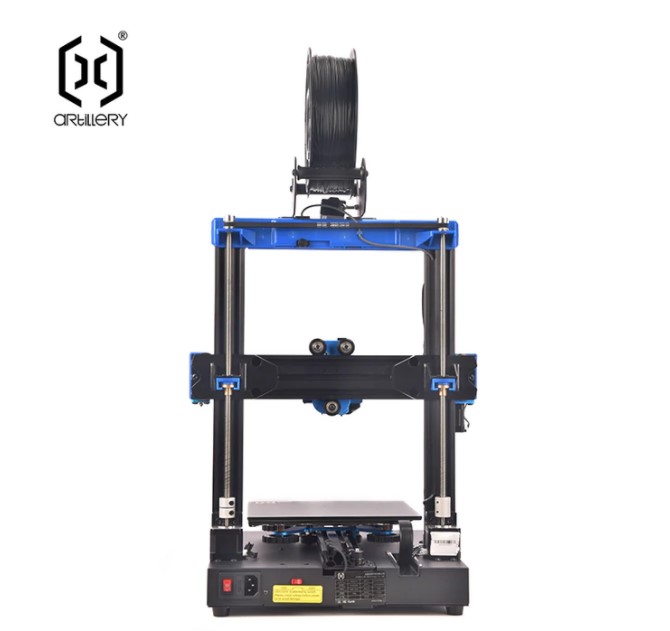
If you are interested in 3D printing and are looking for a quality 3D printer then check out these deals on Artillery 3D printers on Hekka.com.Please note that these deals will end on 31 March 2022.
The Chinese smartphone manufacturer Huawei recently teased an upcoming smartphone which is said to be the Huawei Nova 9 SE. Just hours after the official tease, the detailed spec sheet of the smartphone has surfaced along with its renders.
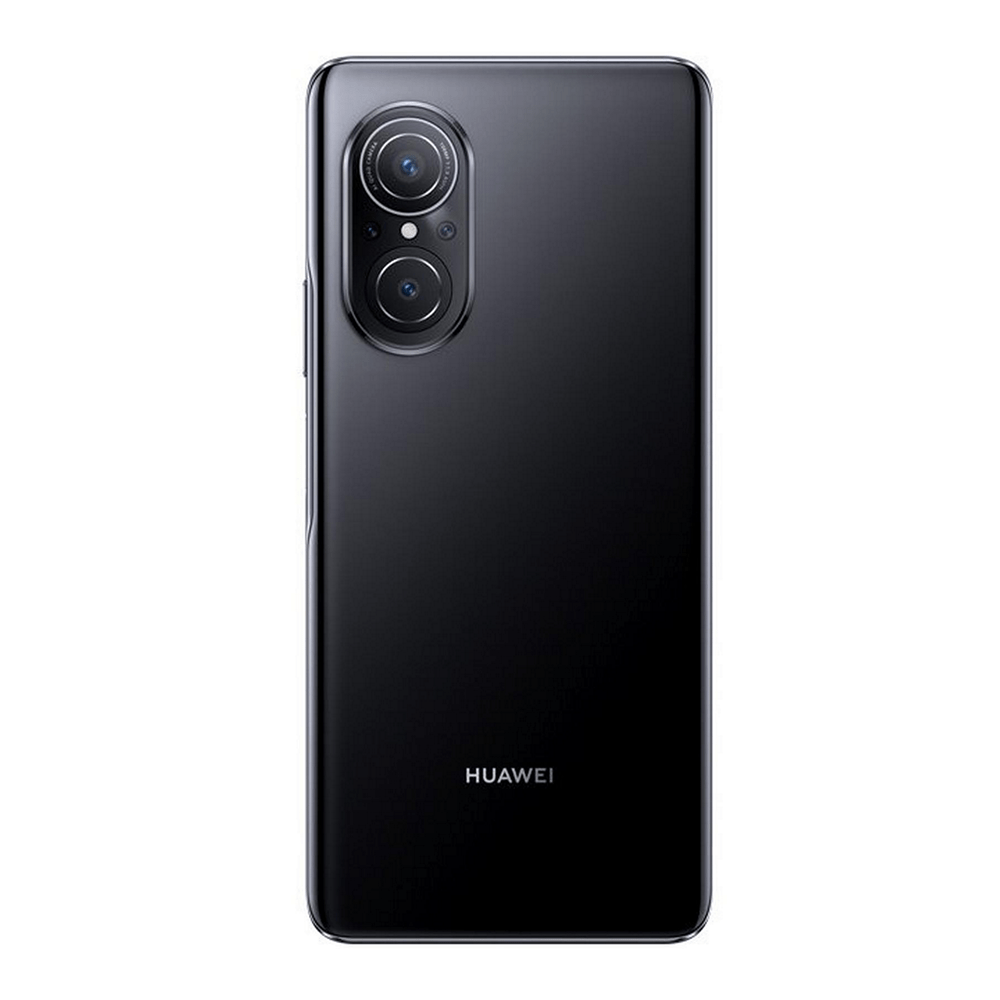
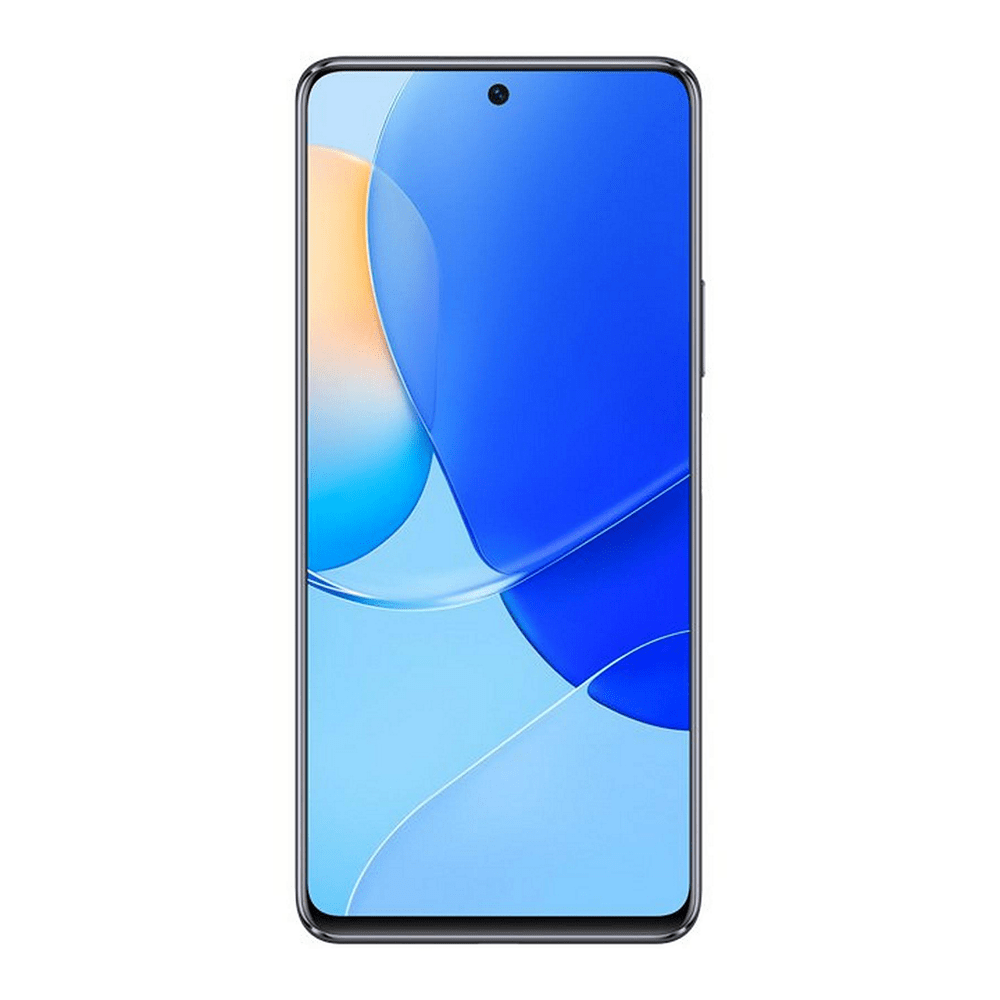
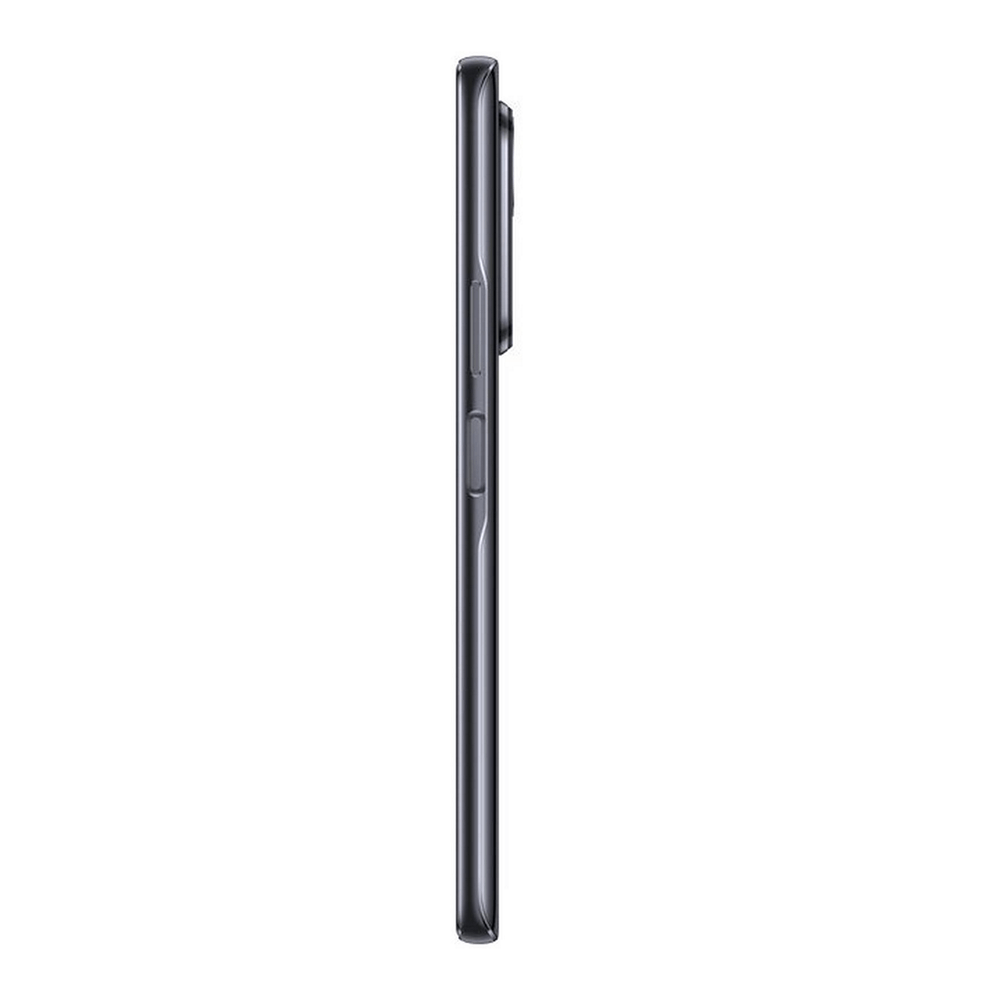
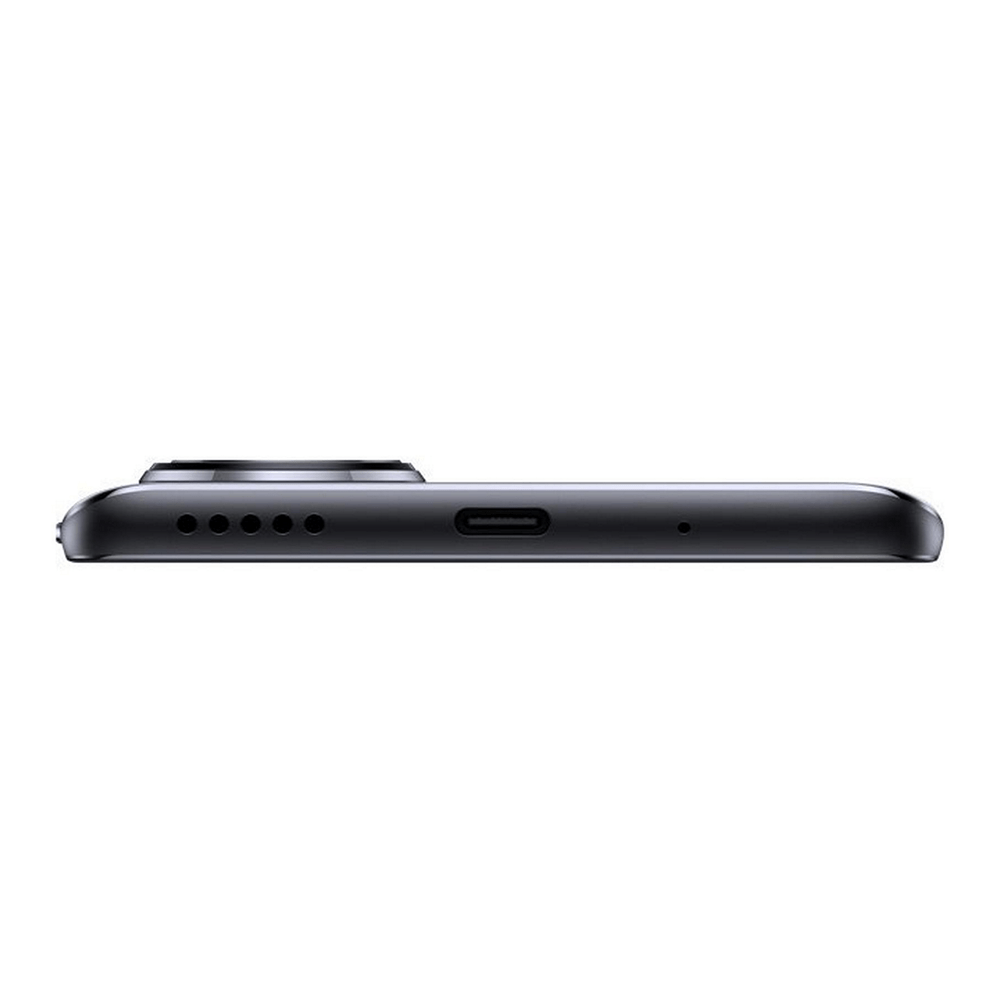
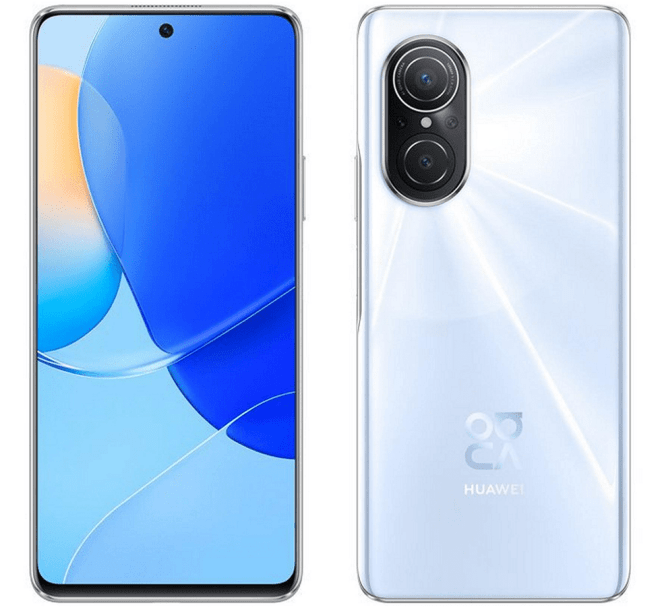
The German publication Winfuture has released the renders of the upcoming Huawei 9 SE showcasing its looks and design.
HUAWEI Nova 9 SE renders
1 of 4
Image via Winfuture
Image via Winfuture
Image via Winfuture
Image via Winfuture
The device features a design that is quite similar to the Huawei Nova 9 which was released back in October 2021. However, one of the key differences can be spotted in the camera module which does not feature three lenses in the lower circular enclosure. This time around, Huawei has also placed the LED flash between the two big camera lenses.
Coming to its specs, the code name “Julian” (JLN-Lxx) smartphone will come with a 6.78-inch LCD panel with a resolution of 2388×1080 pixels. The screen will have a center punch-hole cutout for the selfie camera and will come with thin bezzles and a narrow chin.
For photography, the Huawei Nova 9 SE is said to feature a quad-camera setup with an impressive 108-megapixel camera which will be the first triple-digit megapixel camera on a Huawei smartphone. The smartphone is also said to get an 8-megapixel ultrawide sensor and a couple of 2-megapixel sensors which could be for depth effects and macro shots. On the front, the device is said to come with a 16-megapixel selfie snapper.
Under the hood, the device is rumored to have a Qualcomm Snapdragon 665 octa-core SoC which means it won’t offer 5G support. The SoC is paired with 8GB RAM and 128GB storage. The Huawei Nova 9 SE will come with a 4000mAh battery with 66W fast charging support. Other than that, it will feature NFC support, a side-mounted fingerprint scanner for security, and will run the EMUI 12 in on the Global version and HarmonyOS in China.
The Taiwanese electronic manufacturer HTC which used to be a prominent figure in the premium smartphone industry is planning on a comeback. According to a recent statement made by HTC’s general manager for the Asia-Pacific region, HTC plans to launch a new high-end smartphone in April. The device is also going to feature metaverse functionalities.
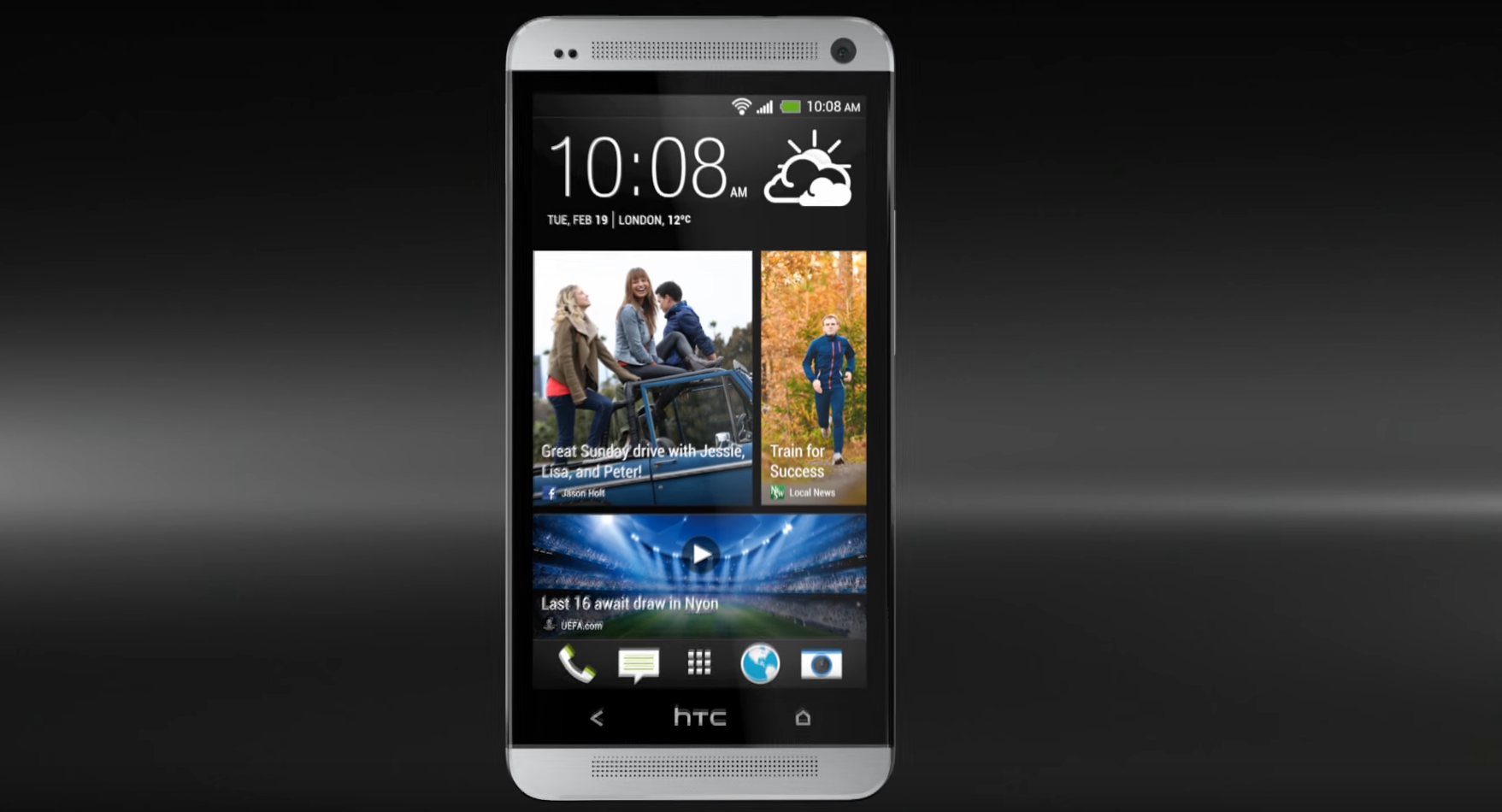
HTC One M7
For those who are unaware HTC had limited itself to serving only a few markets with low-end smartphones since the last four years when it sold its majority of smartphone development department to Google. So this would be its first high-end smartphone in years.
According to Charles Huang, who manages the Asian markets for HTC, The company plans to integrate certain metaverse features in its new smartphone which is being introduced with the aim to appeal to customers who would want to use it for VR and AR applications.
Huang again denied an exit of HTC from the smartphone market But did not shed any further light on the specifications of this new device. According to HTC co-founder and now CEO Cher Wang, HTC plans to continue investing in the virtual reality product market on a large scale. At the present according to wang, the company has been focused on the B2B sector as the company is seeking to open up the enterprise market with meetings, conferences, and shopping solutions.
It is still unclear whether this new smartphone by HTC will truly be a high-end device or if it will be launched in the global market as well. But one thing is clear that HTC’s new smartphone will be accompanied by metaverse functionalities.
Xiaomi has been rolling out MIUI 13 update for eligible devices ever since it announced the latest iteration of its mobile software. The company has now started delivering the stable release to four of its flagship smartphones from 2020. These handsets are Mi 10 Pro, Mi 10, Redmi K30 Pro, and Redmi K30S Ultra.
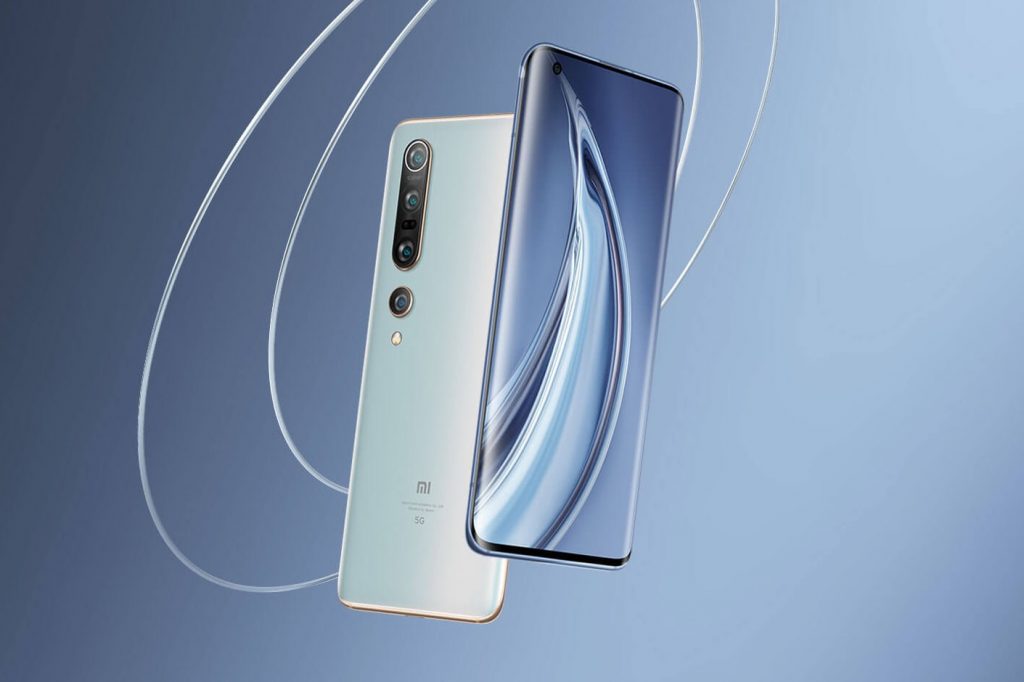
Xiaomi Mi 10 Pro
Chinese tech giant Xiaomi has begun to roll out MIUI 13 stable update for the following smartphones in its home country China. Apart from bringing the fresh version of MIUI, the new system update for these phones also arrives with Android 12.
The aforementioned software builds are being pushed in batches. Hence, they will take some time to reach every unit. Also, we expect Xiaomi to extend the availability of this update to other regional variants of these handsets in the coming days.
For the unaware, the Mi 10 and the Mi 10 Pro are known by their original names outside mainland China. Whereas, the Redmi K30 Pro goes by the name of POCO F2 Pro. Finally, there’s not an international version of the Redmi K30S Ultra.
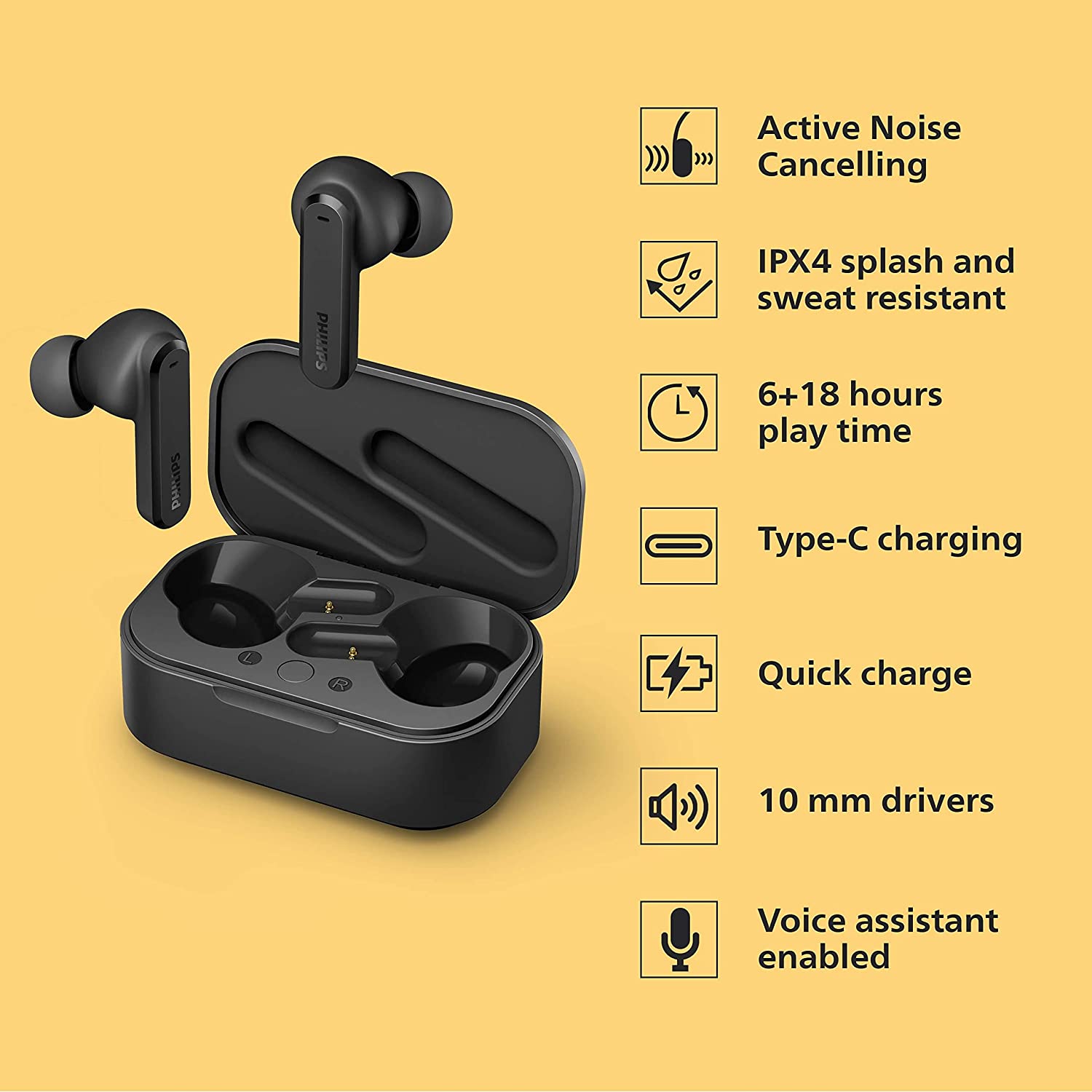
Philips ANC True Wireless Headphones from TPV Technology have been launched in India with a price tag of Rs. 7,099. The Philips ANC TWS earbuds with model number TAT4506BK come with some decent features like active noise cancellation, IPX4-rated splash resistance, 24-hour media playback, and an affordable price to boot.
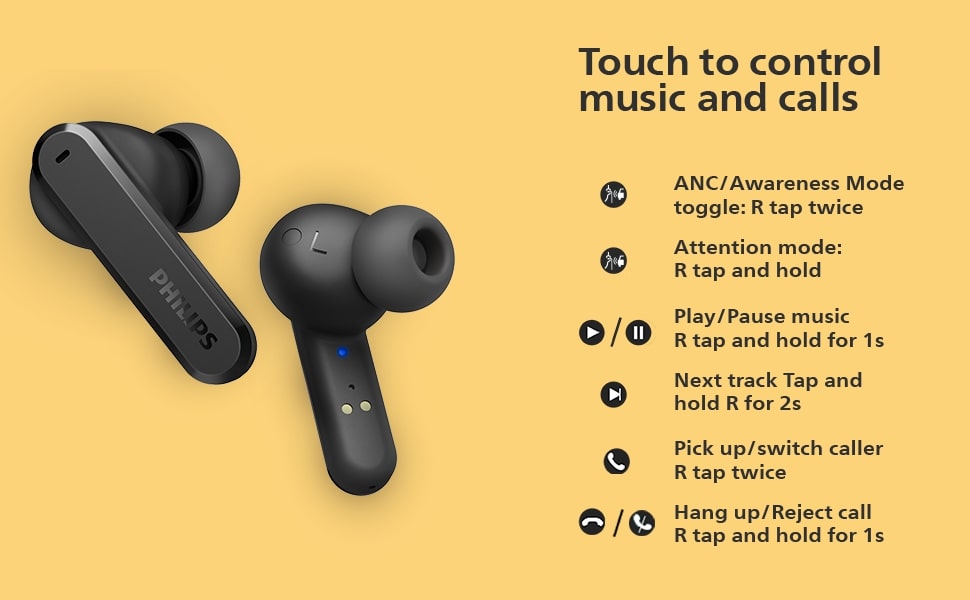
The new Philips ANC TWS earbuds sport an in-ear design, 11mm speaker drivers with a battery that can offer 6 hours of activity, scaled up to 24 hours with the aid of the charging case. The charging case is compatible with the USB-C charging and the USB-C cable is part of the package. The Philips TAT4506BK ANC TWS earbuds support Bluetooth 5.0 connectivity, have touch controls, and there is also an Awareness Mode. The touch controls enable the user to seamlessly navigate through playlists, answer calls, and activate the voice assistant.
The range of the Bluetooth 5.0 is about 10 meters, while the battery could be fully charged within two hours. The Philips ANC TWS headphones are available in most of the leading online and offline retail outlets in India including Amazon.in. It comes in a single color variant – black.
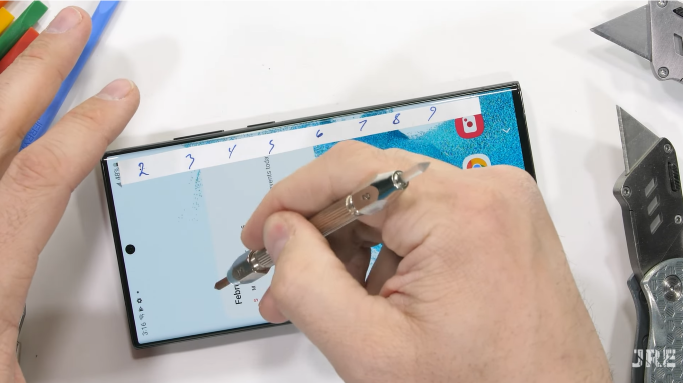
A YouTube video detailing how the Samsung Galaxy S22 Ultra survived a rigorous scratch and bend test has surfaced. The success of the Galaxy S22 Ultra is further accentuated by the fact that it does not come with a factory-fitted screen protector. The JerryRigEverything test involves a razor blade, hardness picks, and heat application via a lighter.
The YouTube video showed that when the Galaxy S22 Ultra was put through the scratch test, its Gorilla Victus+ glass showed scratches at Mohs hardness level 6 upwards. The metal frame is prone to scratches by a stainless steel blade. The buttons and the S Pen’s end are also subject to scratches via a blade. However, the Phantom Black matte back cover did not show any signs of razor activity. The camera lenses and their protective rings around the camera are prone to razor activity.
As per the heat aspect of the test, after charring slightly a part of the screen pixels with a lighter, the fingerprint reader is still able to function and it is not affected by the slight heat and scratches on the detection area. The Samsung Galaxy S22 Ultra also showed a sturdy build by holding firm when bending pressure was applied to it. It did not show any sign of buckling or bending under hard pressure. Not all phones were able to survive this durability test, hence the success of the Galaxy S22 Ultra may be due to its rugged design.
ASUS India has just announced a new ROG (Republic of Gamers) esports tournament. Its an online event for the popular competitive first person shooter, Valorant, and will be exclusively for women.
According to the brand, the move is an effort to encourage and empower female gamers in India. Furthermore, the finals of the tournament is set to be held on 10th March 2022. This all-women esports tournament announcement arrives just days prior to the International Women’s Day. For those interested, the registrations for the tournament are beginning today (2nd March 2022). Notably, this ROG tournament is the first of its kind and has been trending under the #WomenInEsports tag.
This online event is called the All-Women ROG Showdown series tournament for Valorant. With this event, the Taiwanese tech giant hopes to boost the growing gender diversity in the world of esports. So as of right now, it is actively encouraging women’s professional teams across Southeast Asia for the competition. It is a three day event with qualifications beginning on 7th and 8th, with the semi finals being held on 9th. A number of teams have entered the tournament already, with members hailing from India, Singapore, the Philippines, and Vietnam.
The prize pool of this tournament is 75,000 INR (990 US Dollars), with the winning team taking 50,000 INR (660 US Dollars) while the runner up take 25,000 INR (330 US Dollars). The registration portal is live till 6th March 2022. So, if you’re planning on entering, keep in mind that your team needs a minimum of 5 players. A team can even have a maximum of 2 substitute players.
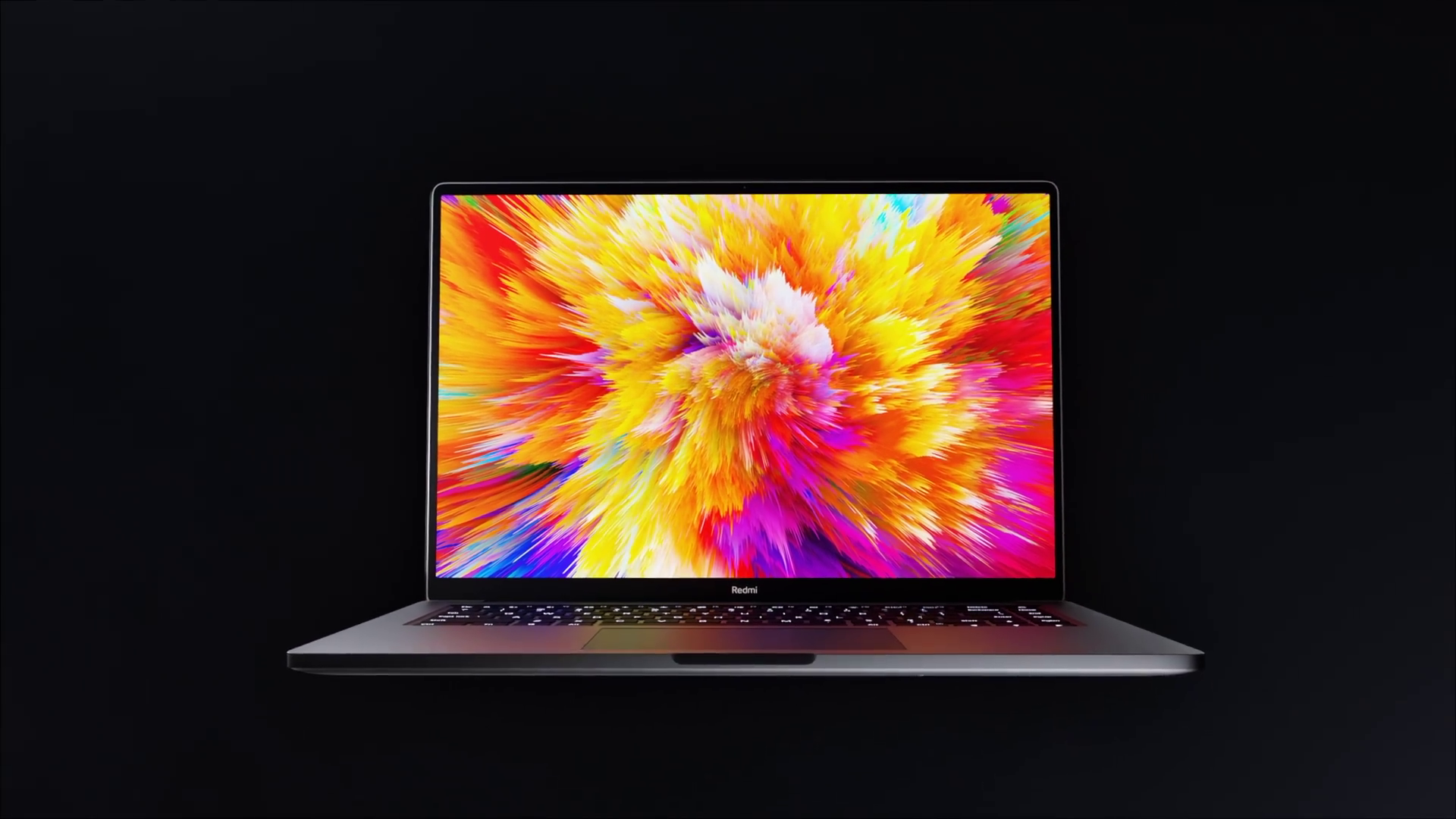
Last year, Redmi launched their first notebook lineup in India and China dubbed the Redmi Book series. And now, a recent report has revealed that there are new laptops on their way which might launch soon.
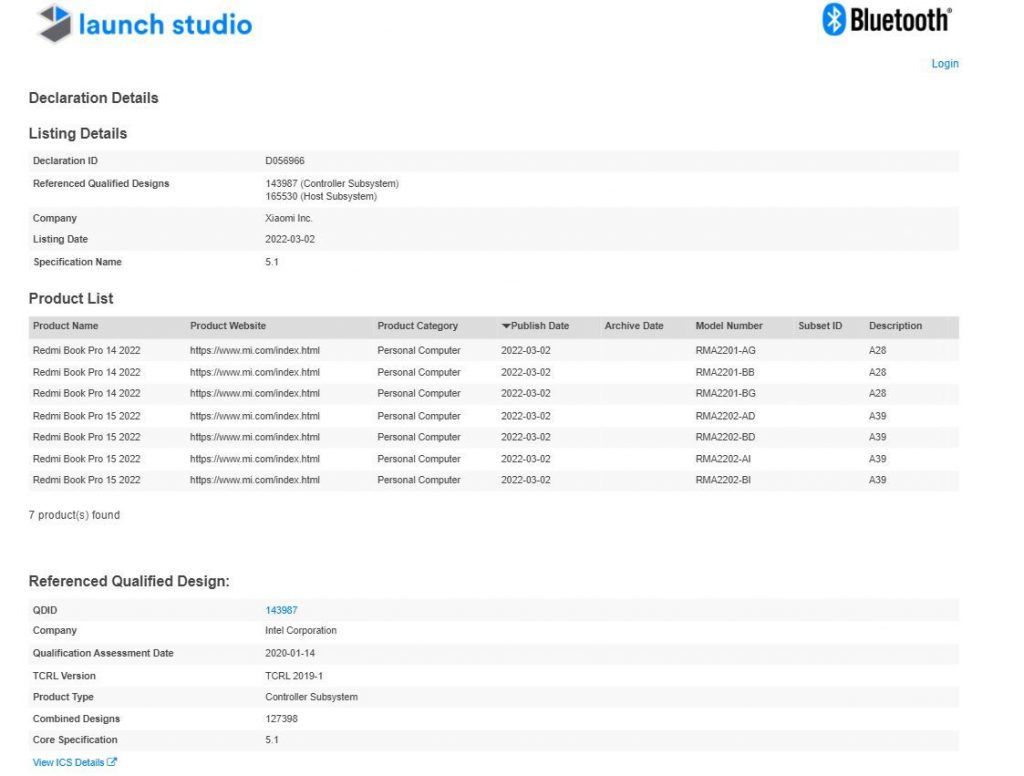
According to a MySmartPrice report, the Redmi Book Pro 14 2022 and Redmi Book Pro 15 2022 laptops have been spotted on the Bluetooth SIG certification page which hints at an imminent launch. So let’s take a look at what the listings have revealed.
The Bluetooth SIG database shows that the upcoming Redmi Book Pro 14 2022 will be available in three variants with model numbers RMA2201-AG, RMA2201-BB, and RMA2201-BG.
The Redmi Book Pro 15 2022 will come in four variants carrying RMA2202-AD, RMA2202-BD, RMA2202-AI, and RMA2202-BI model numbers. All the upcoming Redmi Book devices listed in the database will feature Bluetooth 5.1 wireless connectivity and are expected to be powered by Intel chipsets as the listing mentions the “Intel Corporation” name on the database.
The Mention of Microsoft Corporation is also mentioned on the listing indicating that these laptops will feature Microsoft’s Windows operating system. Other than that, the Redmi Book Pro 14 2022 is expected to feature a 14-inch display and the Pro 15 2022 is likely to come with a larger 15.6-inch screen.
To give you an idea of what to expect from the upcoming Redmi Book 2022 laptops, we can take a look at the specs of the current-gen RedmiBook 15 Pro.
The device comes powered with an Intel Core i5 11300H with integrated Integrated Iris Xe GPU. It offers 8GB DDR4 3200Mhz RAM and 512GB M.2 PCIe SSD storage. It has a 15-inch FHD LCD display and is powered by 46Whr with bundled 65W barrel-pin adapter. For connectivity and accessibility, you get 2xUSB-A 3.2, 1xUSB-A 2.0, RJ45 Ethernet Port, HDMI out, SD card reader, Bluetooth 5.0, Wi-Fi 5.0. It weighs around 1.8 kg and is priced at Rs. 49,999 ($660).
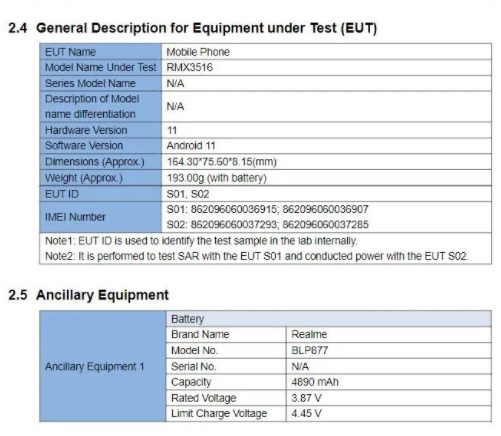
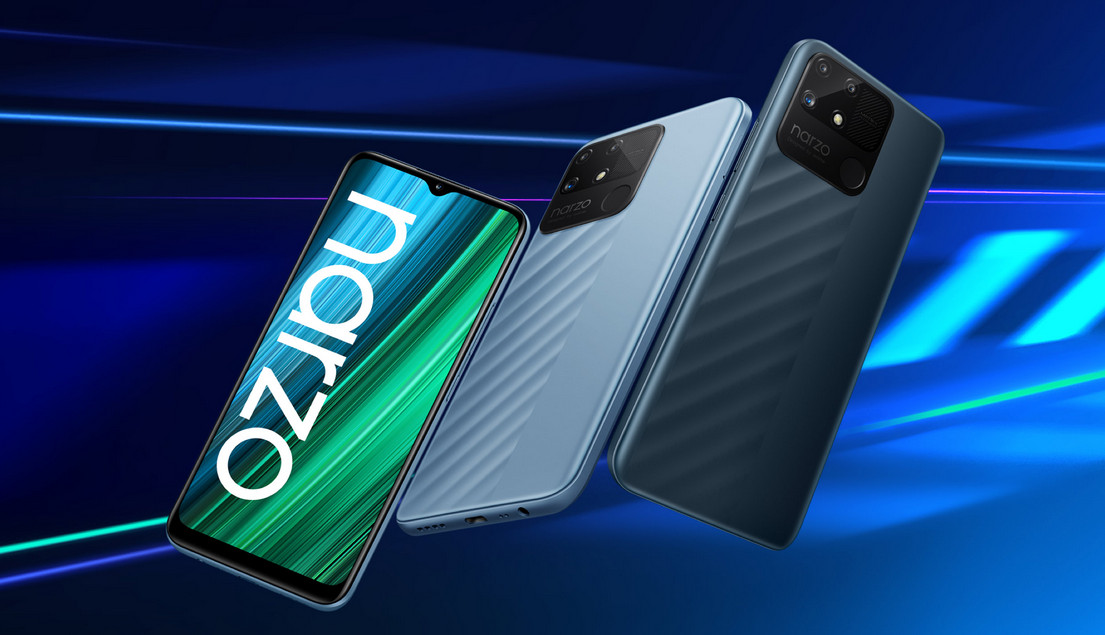
Realme has already taken wraps off the Narzo 50 series in India. Currently, the series comprises the Narzo 50, Narzo 50A, and Narzo 50i. Now, the next smartphone to join the lineup is said to be the Realme Narzo 50A Prime. In a new development, the Narzo 50A Prime has appeared on a few certification sites confirming its key details.
The Realme Narzo 50A Prime has the model number RMX3516 and has bagged FCC and Indonesia Telecom certification. The FCC listing confirms that the smartphone packs a 4,890mAh battery, which will be probably marketed as 5,000mAh. The device will boot on Android 11 OS and is expected to have the Realme UI 2.0 on the top. The device has a side-facing fingerprint scanner.
Apart from this, the smartphone was previously spotted on another certification confirming a 9V and 2A charging speed. This translates to 18W fast charging support. Other than this, the phone’s rest of the specs are yet to be revealed.
Realme Narzo 50A Specifications
The Realme Narzo 50A is the company’s recent Narzo 50 phone. It comes with a 6.5-inch water-drop notch display with an HD+ resolution. It has an 8MP selfie camera housed in the front notch. The device has a triple camera system at the rear with a 50MP main lens, a 2MP portrait lens, and a 2MP macro sensor.
It is powered by the MediaTek Helio G85 SoC paired with 4GB of RAM and up to 128GB of internal storage. It packs a 6,000mAh battery and has 18W fast charging support. The smartphone has a rear-mounted fingerprint scanner for security and has boots on Android 11 OS.
Yesterday, we reported on the ColorOS 12 March 2022 update plan for China. Today, we are back with the global plan. Let’s take a look at the OPPO smartphones that will be receiving beta and stable builds of Android 12 this month in international markets.
According to the official Twitter account of ColorOS, only 3 smartphones will be added to the Android 12-based ColorOS 12 beta program in the month of March. At the same time, 10 handsets will get access to the stable release in multiple regions.
Having said that, let’s take a look at the schedule.
ColorOS 12 Global Beta Update Timeline March 2022
From March 15
OPPO A53s 5G
India
From March 16
OPPO Reno4 Z 5G
Thailand
Philippines
From March 29
OPPO Reno7 Pro 5G
India
ColorOS 12 Global Stable Update Timeline March 2022
From March 24
OPPO Reno4 Pro 5G
Thailand
From March 29
OPPO Reno5 Lite
Kazakhstan
OPPO Reno4 Lite
Kazakhstan
OPPO Reno5 F
Indonesia
OPPO Reno4 F
Indonesia
OPPO F19 Pro
India
OPPO F17 Pro
India
OPPO A94
UAE
OPPO A93
UAE
From March 31
OPPO Reno4 Pro
India
Indonesia
OPPO Reno4
Indonesia
As always, we will be posting new stories whenever OPPO rolls out ColorOS 12 beta as well as stable builds based on Android 12 for the aforementioned devices. So stay tuned to know when your phone gets the latest software.
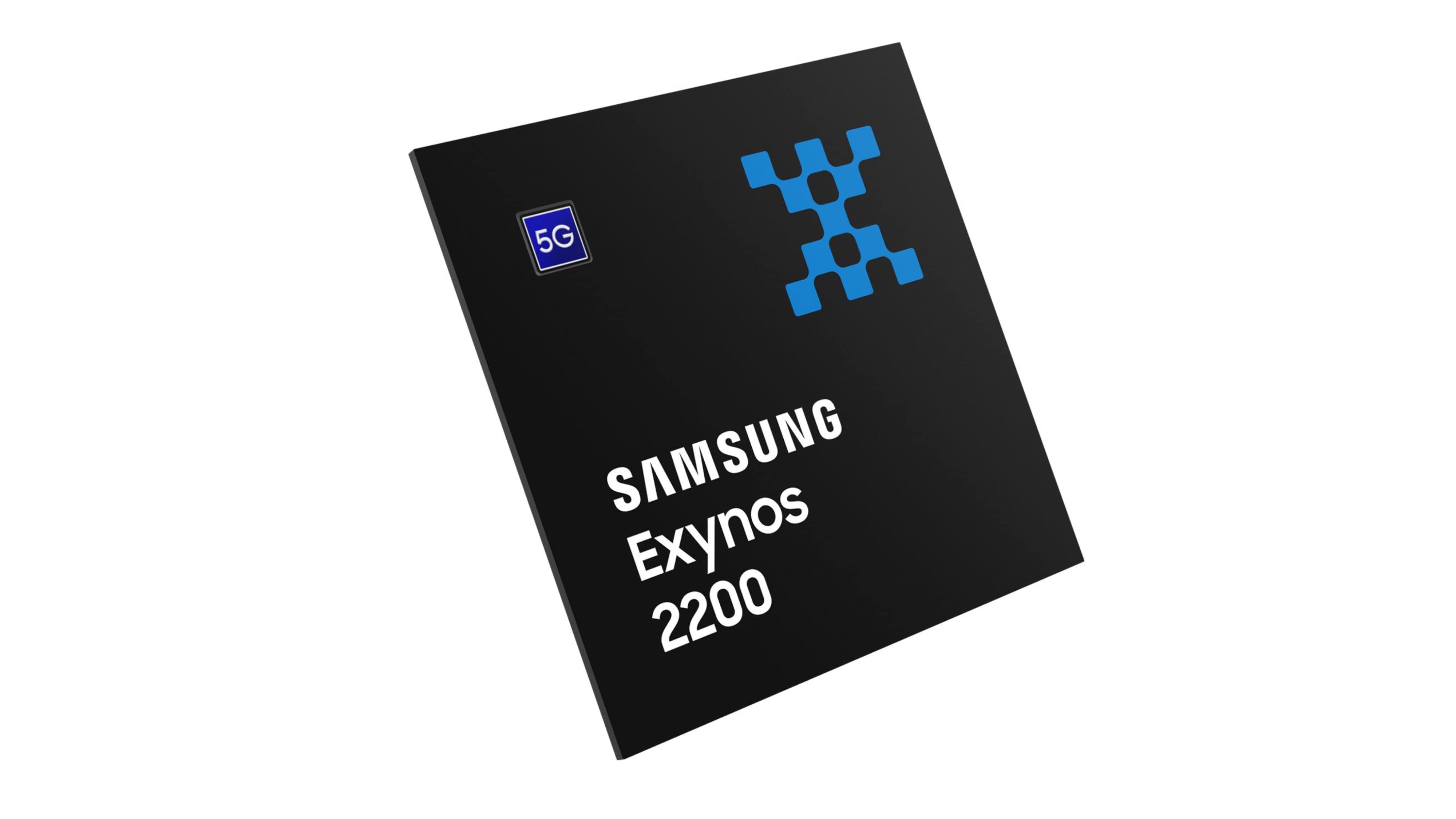
Samsung has apparently been losing its market share in the mobile processor market. Its Exynos series of chipsets have fallen in popularity, as MediaTek continues to dominate the market.
Exynos 2200
According to a Counterpoint Research report, the South Korean tech giant’s Exynos processors fell to the fifth position, with a meager market share of just 4 percent. This arrives as the company is in the middle of reshuffling its smartphone portfolio strategy to include sourcing from both in house and third party Chinese ODMs. In the meantime, Qualcomm and MediaTek have taken large chunks of the mobile AP (application processor) market, with the latter seeing great success in Samsung’s own smartphone lineup in the mid range segment for both 4G and 5G models.
At the moment, the Taiwanese chipmaker leads the market with a 34 percent global share. On the other hand, Exynos only had a 4 percent global and 2 percent share in 2 percent. Just earlier today (2nd March 2022), we had reported on MediaTek becoming the number 1 chipmaker in the US beating Qualcomm in the market. Meanwhile, Apple saw a slight decline of 1 percent in 2021 owing to the chip shortage issue, while Unisoc managed to snatch a notable 11 percent of the global SoC market share.
Lastly, Huawei continues to bear the impacts of the US sanctions on its supply chain, as its HiSilicon unit’s market share fell to just 1 percent last year. But as of right now, the Exynos’ decline in the segment can be due to the rising popularity of MediaTek chipset across every price point.
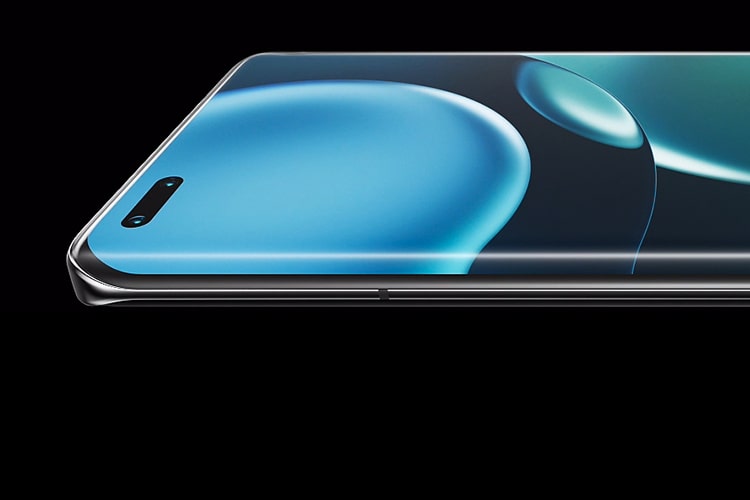
The HONOR Magic4 series was unveiled this Monday. The latest flagship smartphone lineup from the former sub-brand of Huawei includes two models, namely HONOR Magic4 and HONOR Magic4 Pro. Like most premium phones in the market, they also flaunt high refresh rate OLED displays with LTPO tech. However, unlike the rest, their panel suppliers are different.
HONOR Magic4 Pro
According to Ross Young, CEO of DSCC (Display Supply Chain Consultants), the LTPO displays on the HONOR Magic4 series are supplied by BOE and Visionox. For the unaware, all the other smartphones in the market with an LTPO screen get their panels from Samsung Display.
This means the HONOR Magic4 and the HONOR Magic4 Pro are the world’s first smartphones featuring LTPO displays from suppliers other than Samsung Display. Additionally, these panels are HDR10+ as well as IMAX Enhanced-certified (China only) and support 1920Hz PWM dimming.
As far as specs are concerned, the 10-bit 120Hz curved screens on the duo measure the same 6.81-inch and can go as low as 10Hz. However, their resolutions, aspect ratio, and screen-to-body ratio are different.
The panel on the vanilla model has a resolution of 1224 x 2664 pixels, a 19.59:9 aspect ratio, and a 94.2% screen-to-body ratio. On the other hand, these numbers are 1312 × 2848 pixels, 19.54:9, and 93.5% on the pro variant.
The changes in the specifications are likely due to the different cutouts for the front-facing cameras. The Magic4 has a centered punch-hole for its single camera, while the Magic4 Pro sports a pill-shaped hole on the top left side for its dual cameras.
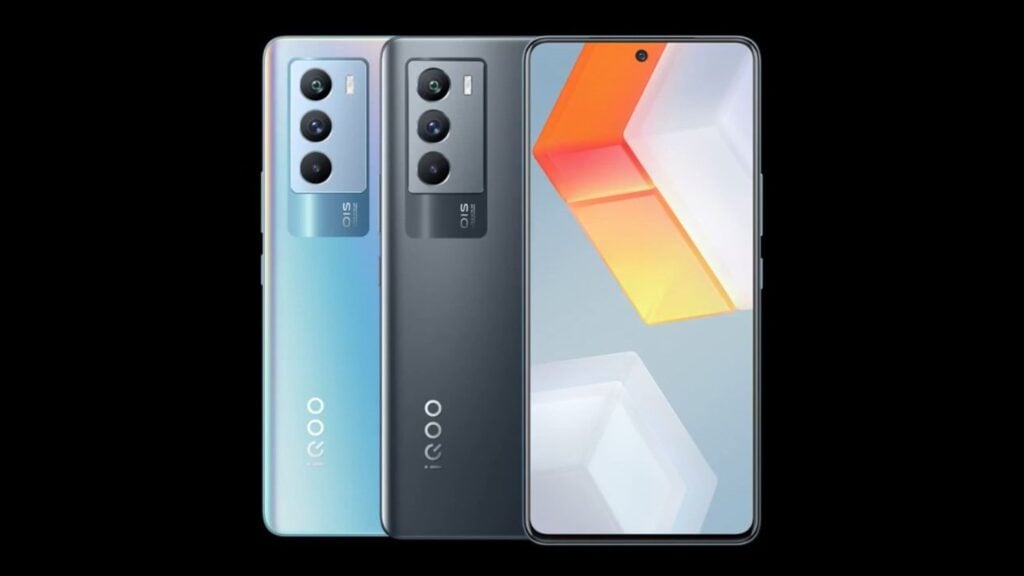
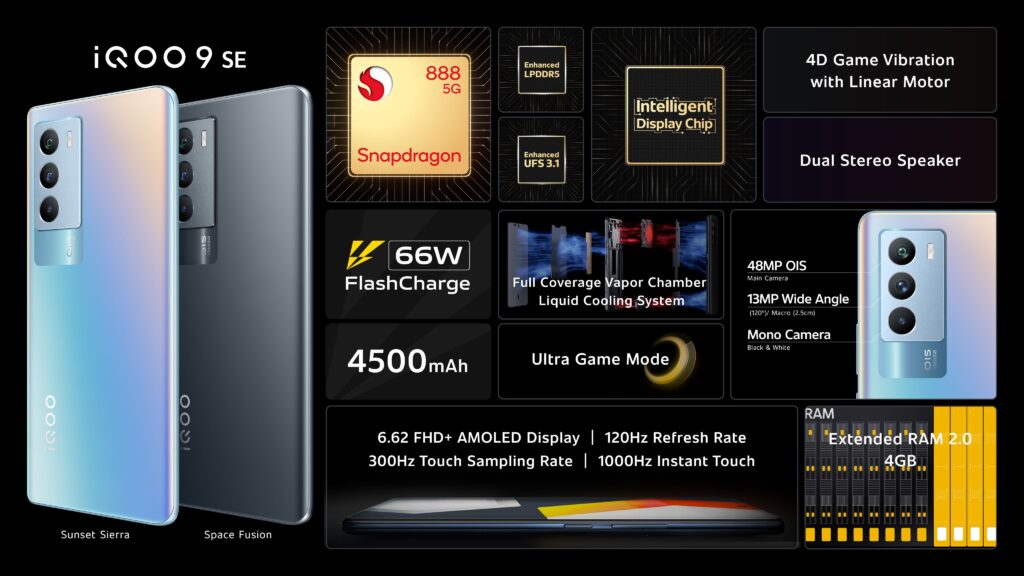
Last week, iQOO debuted their iQOO 9 series of smartphones in India. The iQOO 9 and iQOO 9 Pro have already gone on sale earlier today, and now, the brand has finally made the most affordable IQOO 9 SE available for pre-order.
The smartphone is available for pre-order exclusively on the Amazon India website and according to the e-commerce website’s listing, will be available for purchase starting March 8. The iQOO 9 SE comes in two memory configurations– 8GB + 128GB and 12GB + 256GB, which are priced at Rs 33,990 and Rs 37,990 respectively. The device also comes with some exciting offers like a flat Rs 3,000 discount with ICICI Credit Cards and customers can also get up to Rs. 20,000 off with exchange.
iQOO 9 SE Specifications
iQOO 9 SE is a rebranded iQOO Neo5S that launched in December in China. It features a 6.62-inch Full HD+ AMOLED display with a 120Hz refresh rate, 300Hz touch sampling rate, 1300nits peak brightness, and HDR10+ certification. It has a punch hole in the top center for the selfie camera and offers an in-display fingerprint scanner.
Under the hood, the smartphone packs an octa-core Qualcomm Snapdragon 888 processor paired with an Adreno 660 GPU. It is available with up to 12GB LPDDR5 RAM, and up to 256GB of UFS 3.1 storage. To keep the thermals down, it arrives with graphene sheet and liquid cooling technology.
For photography and videography, it uses a 48MP (Sony IMX598 with OIS) + 13MP (ultra-wide, macro) + 2MP (monochrome) triple camera setup on the rear. There’s also a 16MP shooter for selfies and video calls.
The handset lacks a 3.5mm headphone jack but comes with dual stereo speakers and a linear vibration motor. Connectivity options include dual SIM, 5G, WiFi 6, Bluetooth 5.2, GNSS, and USB Type-C.
Last but not least, the device boots Android 12-based Funtouch OS 12 and gets its juice from a dual-cell 4,500mAh with support for 66W fast charging.
The Mobile World Congress (MWC) 2022 event kicked off on February 28 and we’ve already seen multiple phones on the first day itself. Despite that, we still have a long list of phones scheduled to be launched in the month of March. Just like every month, we’re back with our list of the upcoming smartphones, and this month, we’ll see smartphone launches from brands like Apple, Samsung, Xiaomi, Huawei, OnePlus, and others. Additionally, Nothing is also expected to launch its first smartphone this month.
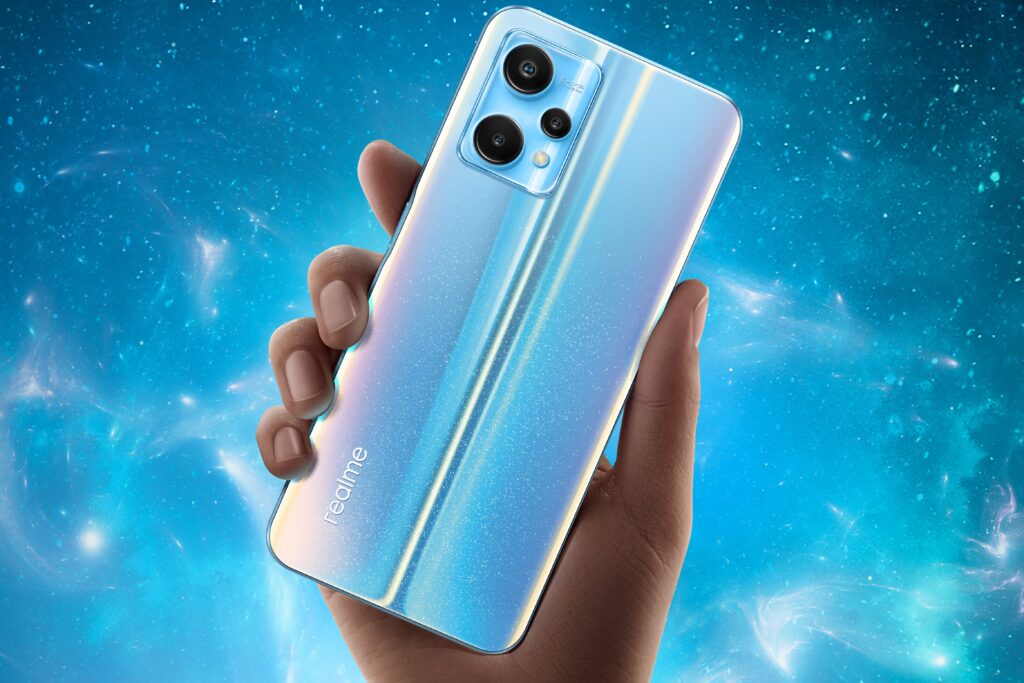
1. Realme V25
Realme has scheduled to launch the Realme V25 smartphone on March 3 in China. The device is said to be a rebranded OnePlus phone. It is also touted to be a tweaked version of the Realme 9 Pro 5G. Recently, the phone passed Geekbench and its specs were teased by the company.
The Realme V25 will come with a design that will be similar to the upcoming OnePlus Nord CE 2 Lite and the Realme 9 Pro 5G. It is expected to come with a triple camera system at the rear with two sensors placed vertically one after another and the third lens offset. It could have a 64MP + 2MP + 2MP setup at the rear.
The smartphone will come powered by the Snapdragon 695 SoC paired with up to 12GB of RAM and 256GB of internal storage. It will pack a 5,000mAh battery with 33W fast charging support.
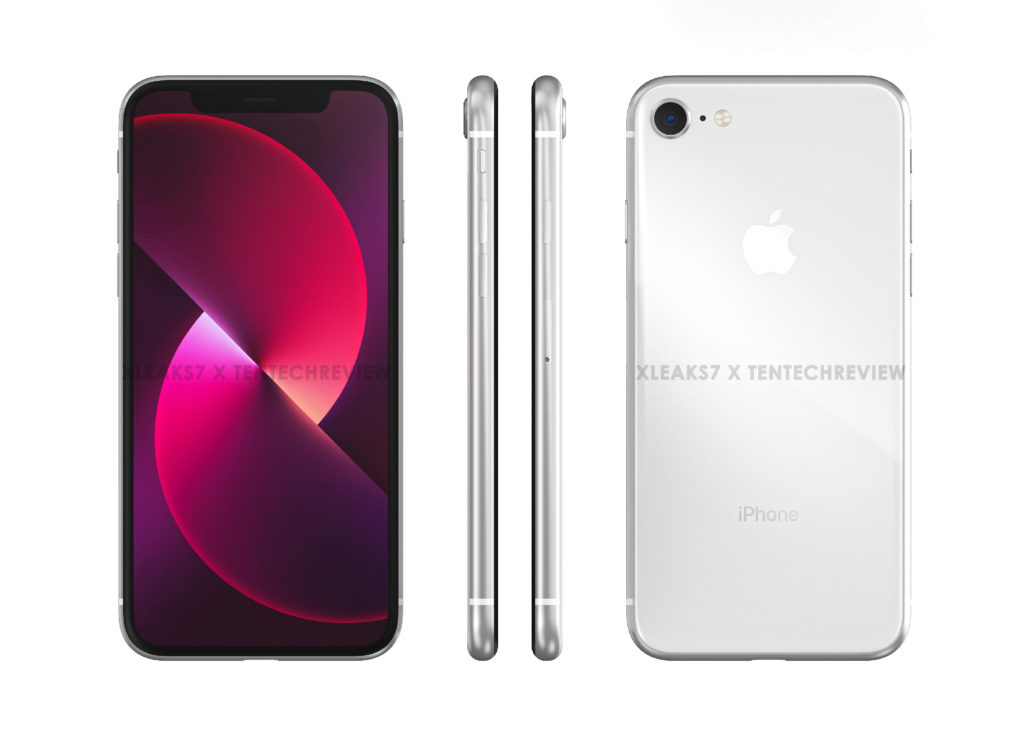
2. Apple iPhone SE 3 5G
Apple has set a launch on March 8 and the company is expected to launch the Apple iPhone SE 3 at the event. As per a report, the iPhone SE 3 will come at an attractive price of $300.
Image via TenTechReview
The iPhone SE 3 is expected to carry forward the same iPhone SE 2 design but bring a notch display, 5G support, and better battery life. Although the specs for the smartphone are scarce, it is likely to come powered by the latest A15 Bionic chipset. To those unaware, this is the same chipset seen in the iPhone 13 lineup.
3. Redmi Note 11 Pro Series
After launching the vanilla Note 11 series, Redmi will officially bring the Note 11 Pro series into the Indian market on March 9. The series is expected to comprise the Note 11 Pro 4G and Note 11 Pro+ 5G. The former model is expected to come around Rs. 16,999(~$224) price tag, while the latter device could cost Rs. 21,999(~$290) in India.
Redmi Note 11 Pro+ 5G
The duo will come with a 6.67-inch AMOLED display with an FHD+ resolution and 120Hz refresh rate. The Note 11 Pro 4G is expected to come with a 108MP + 8MP + 2MP + 2MP quad-camera system, whereas, the Note 11 Pro+ 5G will have a 108MP + 8MP + 2MP triple camera system.
The Note 11 Pro 4G will be powered by the MediaTek Helio G96 SoC, while the Note 11 Pro+ 5G will get a Snapdragon 695 SoC in its sleeve. The series will pack a 5,000mAh battery with 67W fast charging support.
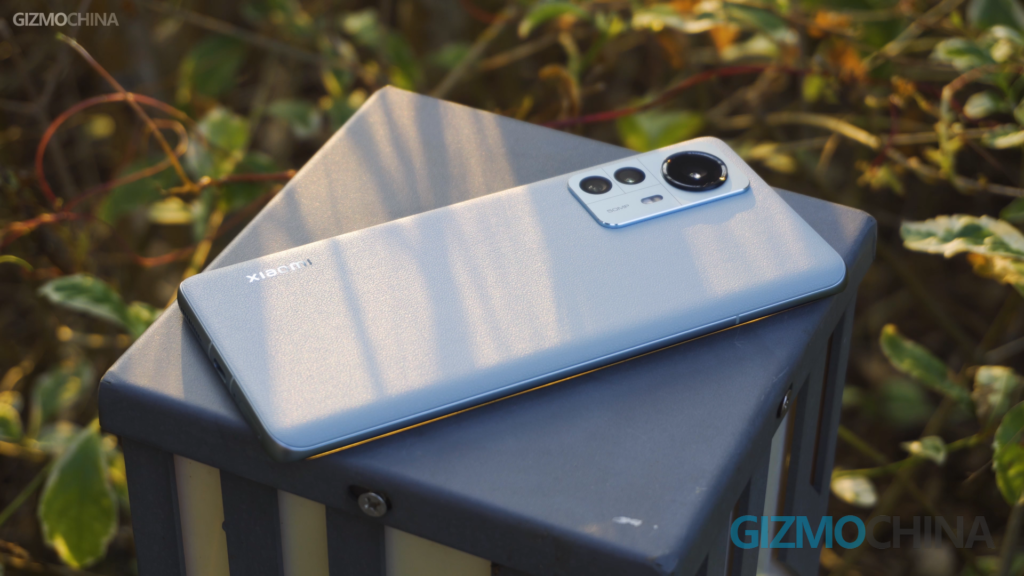
4. Xiaomi 12 Series
An official-looking poster of the Xiaomi 12 series revealed that the series will make its global debut on March 15 in the European market. It’s currently unclear if all three phones will launch or only a few select models.
The Xiaomi 12, 12X, and 12 Pro have an OLED screen and 50MP cameras. The Xiaomi 12 and 12 Pro are powered by the Snapdragon 8 Gen 1 flagship SoC, while the Xiaomi 12X packs a Snapdragon 870 chipset. All three have a big battery and the Pro has a 120W wired and 50W wireless charging support.
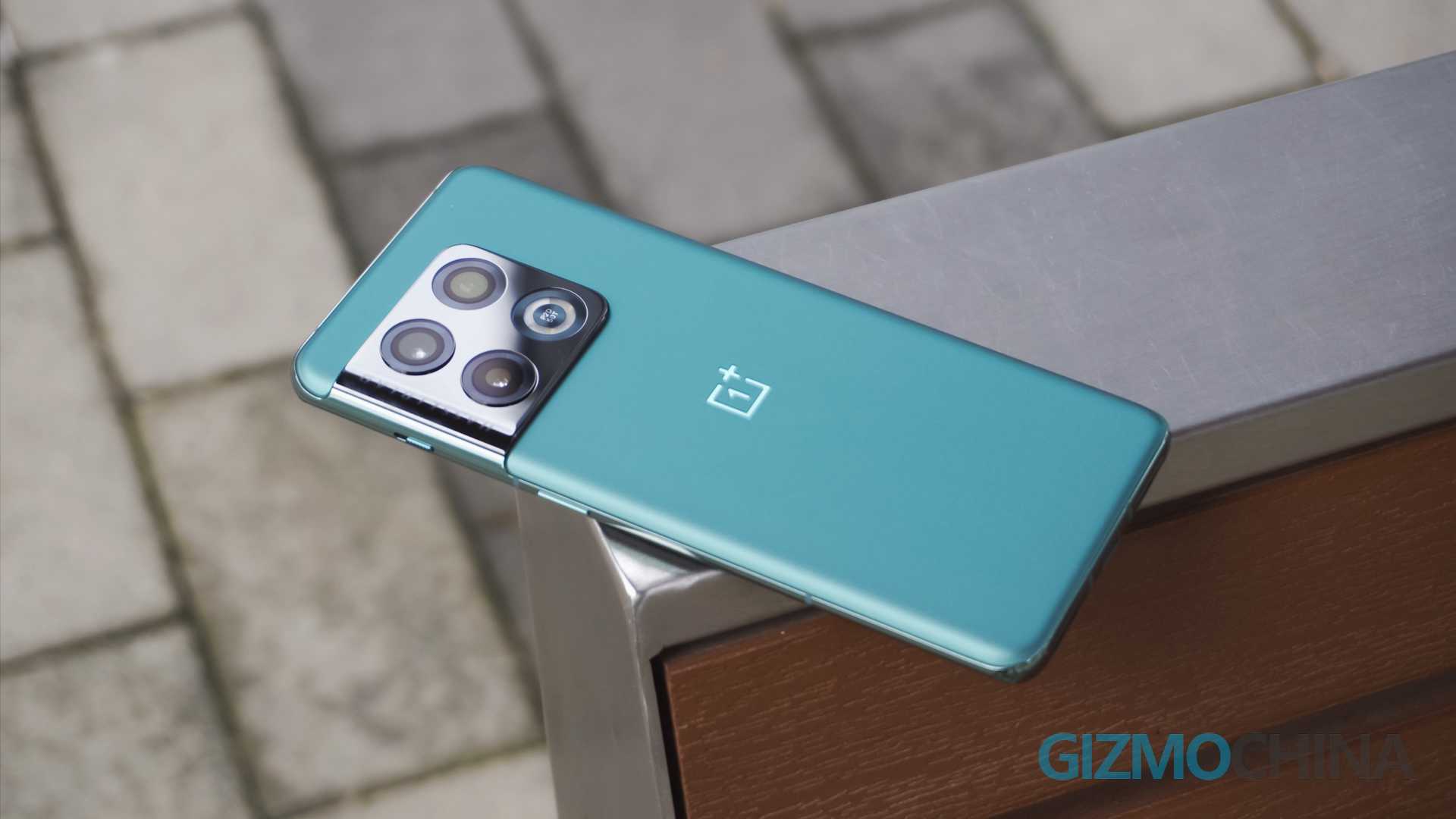
5. OnePlus 10 Pro
OnePlus is expected to launch its flagship OnePlus 10 Pro in the Indian market this month. Unfortunately, the exact launch date is yet to be revealed but is it said to arrive during Holi, so expect a launch around March 15 or March 16.
The OnePlus 10 Pro comes with a new design with a 6.7-inch 2K LTPO 2.0 AMOLED display. It has a variable refresh rate of 1Hz to 120Hz. The smartphone sports a 48MP + 50MP + 8MP triple camera system and a single 32MP selfie camera.
It is powered by the powerful Snapdragon 8 Gen 1 SoC paired with LPDDR5 RAM and UFS 3.1 internal storage. It packs a 5,000mAh battery and has 80W wired and 50W wireless fast charging support.
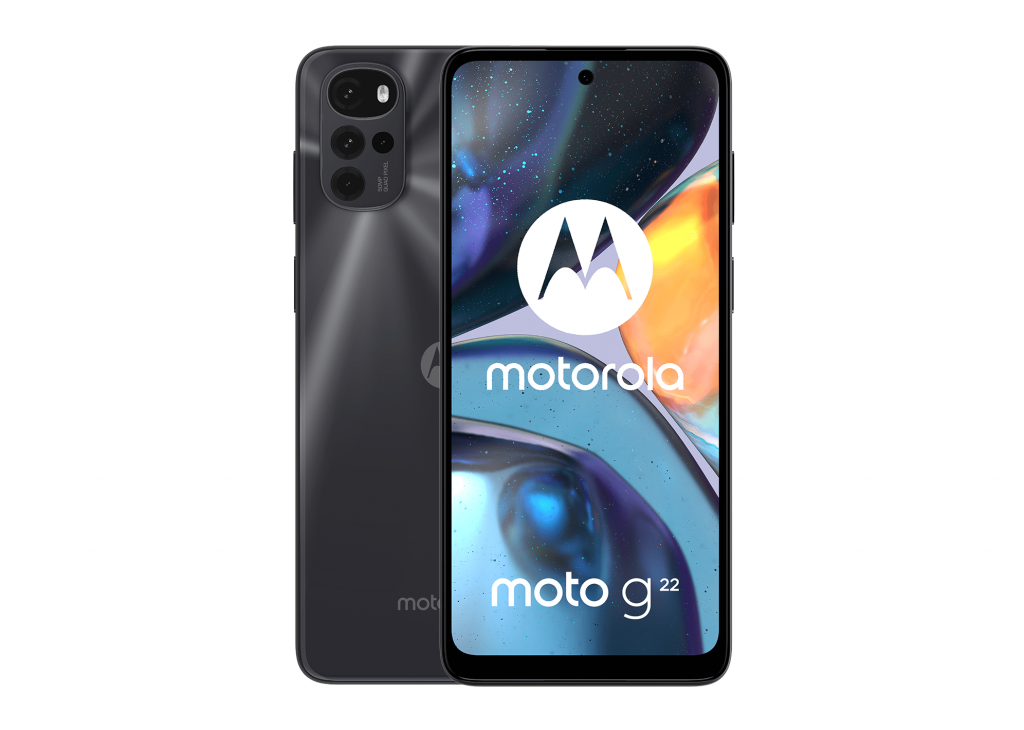
6. Moto G22
Motorola’s Moto G22 has been a part of many leaks lately. In fact, even its official-looking renders were surfaced on the Internet. This hints at a launch as early as March. The smartphone is expected to arrive in different markets including Europe and India.
Motorola Moto G22
The Moto G22 will come with a 6.53-inch punch-hole OLED display with an HD+(720 x 1600 pixels) resolution. It will feature a 90Hz refresh rate and have a thin-bezel design. The device will come equipped with a 50MP + 8MP + 2MP + 2MP quad-rear camera setup housed in a unique camera module.
It is expected to come with the MediaTek Helio G37 SoC paired with 4GB of RAM and 64GB of internal storage. It will pack a 5,000mAh battery and run on Android 12 OS.
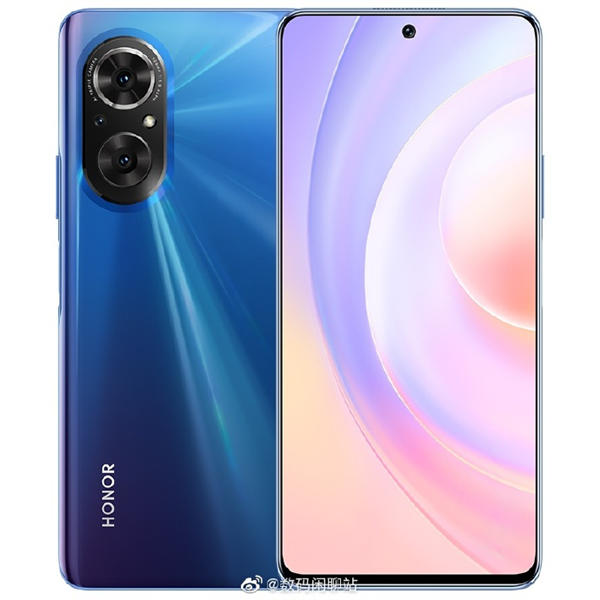
7. Huawei Nova 9 SE
Huawei’s Nova 9 SE is expected to launch this month in the global market. The smartphone is teased to come with ultra-narrow bezels and an improved design.
The smartphone is said to be a rebranded Honor 50 SE. That being said, we can expect a 6.78-inch 120Hz punch-hole screen with super-thin bezels. It could come with a mid-range MediaTek chipset and have support for 66W fast charging technology.
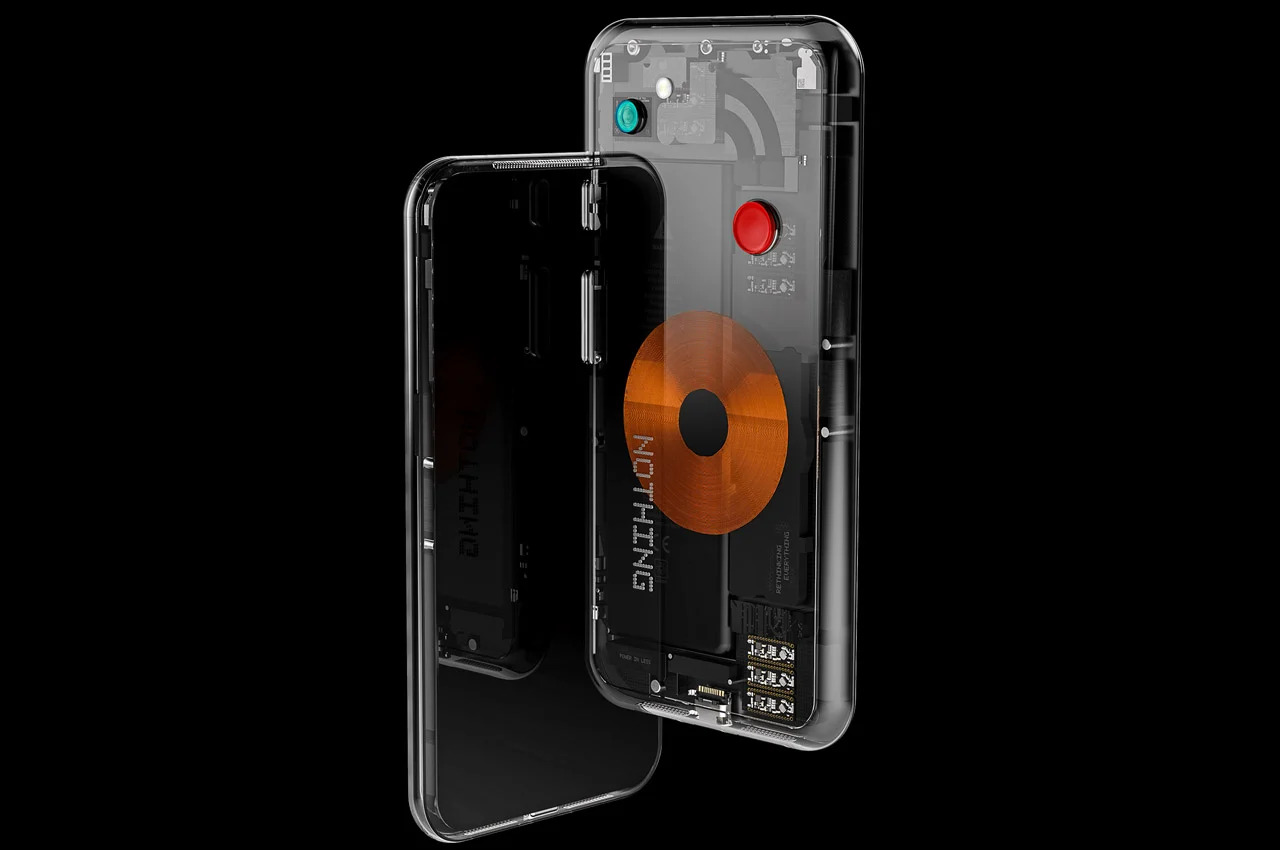
8. Nothing Smartphone
One of the exciting launches this month will be the Nothing smartphone. Nothing is expected to launch its first smartphone by the end of March. The company will bring the new phone in partnership with Qualcomm, so we can expect a Snapdragon chipset inside the device.
Interestingly, the Nothing smartphone will be like its TWS buds, meaning that it will come with a transparent housing. A few concept images of the phone revealed a rear-mounted fingerprint scanner. The smartphone is expected to run on the Android operating system.
The A13 4G will come with an IPS LCD screen and have Exynos 850 SoC. The A33 5G will come with a 6.4-inch FHD+ AMOLED panel and pack the Exynos 1200 SoC. It may as well debut with Dimensity 720 SoC for some markets.
On the other hand, the M23 5G is expected to come with an AMOLED panel and 50MP cameras. It could have the new Hynix sensor with Optical Image Stabilization(OIS) support. The device is rumored to have Snapdragon 750G inside and run on Android 12 OS. The M33 5G will come with the Exynos 1200 SoC and have a 6.5-inch FHD+ AMOLED panel. It is expected to come with a 64MP quad-camera system and may house a mammoth 6,000mAh battery.
Samsung is also expected to launch the Galaxy F23 in the Indian market. It will come with a 6.4-inch 120Hz AMOLED panel and have the Snapdragon 765G SoC. It is expected to feature 48MP cameras and have a 5,000mAh battery. It could arrive under Rs. 20,000(~$265) in India.
10. Vivo T1 Pro
Vivo has already launched the Vivo T1 5G in India. Now, the company is expected to bring the Vivo T1 Pro 5G in the country. Some reports reveal that the phone may debut in April this year, however, the smartphone could arrive by the end of March.
The Vivo T1 Pro 5G’s specs are unknown at the moment but it is expected to offer great specs at an affordable price. Just like the T1 5G, the T1 Pro 5G will also be an online exclusive smartphone. We can expect the device to bring a better display over the T1, an upgraded chipset, and a faster-charging speed.
11. Micromax In 2, In 2C
Micromax is expected to launch new smartphones this month. The company may launch the In 2 and In 2C by late March. The Micromax In 2 is rumored to come with a 6.5-inch IPS LCD display with a 90Hz refresh rate and an FHD+ resolution. It is expected to come with a 48MP triple camera system and an 8MP selfie snapper. It could come with a big 5,000mAh battery with 18W fast charging support.
On the other hand, the In 2C was spotted in leaks and it has the UNISOC T610 SoC. It will be an entry-level smartphone and is likely to come under Rs. 10,000(~$133) in India.
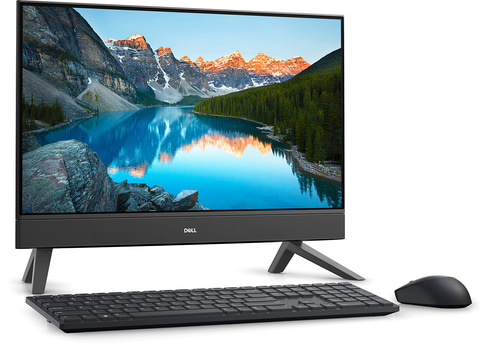
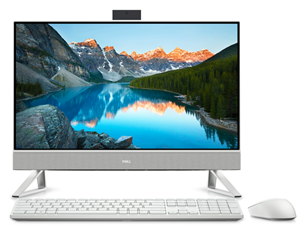
Dell has released a new Inspiron 24 all-in-one PC, equipped with an upgraded version of the AMD Ryzen 5000U processor.
The desktop comes with extremely narrow bezels on three sides, with the fourth side, the bottom, packing the speaker. A 23.8-inch LCD display with an FHD resolution is featured, with a 99% sRGB color gamut coverage, and support for ComfortView Plus (blue light reduction).
Under the hood, you either get the 15W TDP Ryzen 5 5625U (6 cores/12 threads) or the Ryzen 3 5425U (4 cores/8 threads). The CPU is assisted by 8GB of DDR4 3200MHz RAM and 512GB of NVMe SSD for storage.
Color options are Shadow Gray and Pearl White and there’s even a pop-up camera present. In terms of interfaces, the Dell Inspiron 24 comes with 4 USB ports, HDMI in/out, SD card slot, and more.
That aside, Dell in 2021 ranked third in terms of traditional PC shipments and closed the year with 18.6% of the market share, recording a total of almost 60,000 shipments.
The realme V25 is scheduled to launch tomorrow (March 3) in China. Ahead of that, the brand has been teasing the features of this smartphone for the last few days. Today’s teaser reveals the maximum RAM that will be offered on the phone.
A few days back, Realme confirmed that the upcoming Realme V25 will max at 12GB RAM and 256GB storage. Now, the latest teaser by the company says that users will have an option to expand the RAM up to 19GB via DRE (Dynamic RAM Expansion).
Almost all smartphones from different OEMs now offer virtual RAM feature. Hence, it is not surprising to learn that the forthcoming Realme V25 will also have support for it.
According to the fresh teaser poster, customers of the 12GB RAM model will be able to add 7GB more to the RAM. Hence, the total amount of RAM can reach up to 19GB.
According to previous reports, the Realme V25 will arrive with a 6.58-inch FHD+ 120Hz display (LCD), Qualcomm Snapdragon 695 SoC, Realme UI 3.0 based on Android 12, 64MP + 2MP + 2MP triple camera setup, 16MP selfie camera, 5,000mAh battery, and 33W fast charging.
Finally, apart from the 12GB +256GB memory configuration, the device will be also available in 6GB/8GB RAM and 128GB storage variants.
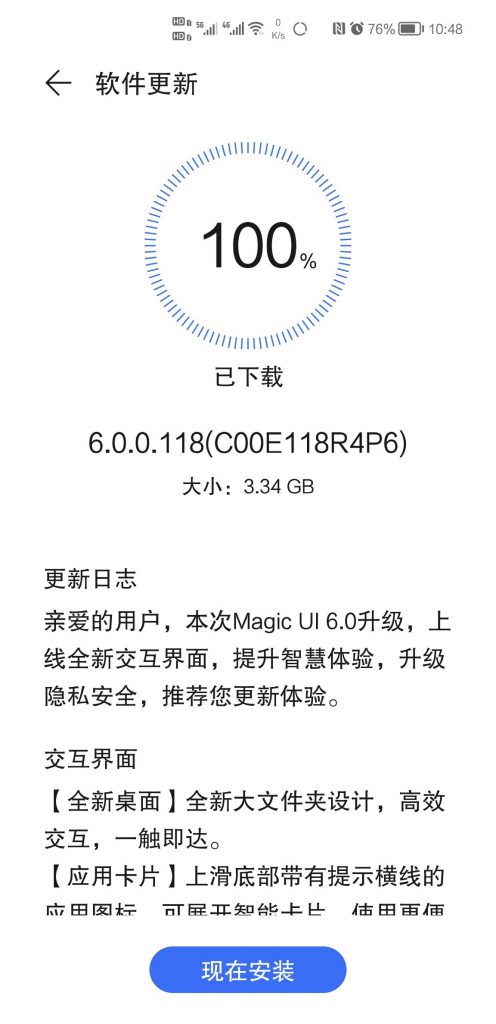
The HONOR Magic3 Pro has begun to receive the Magic UI 6.0 update in China with version number 6.0.0.118 (C00E118R4P6), bringing along a number of new features and UI changes.
Sized 3.34 GB, the release is most likely a public beta but will be rolled out widely soon when it’s found to be bug-free (via IT Home).
The official changelog mentions improvements to the home screen, automatic dark mode switching, one-click translation, and the fuzzy location feature, among a boatload of other features. Some of these have been given in the snippet from the complete changelog below.
User-Interface
New desktop: New large folder design, efficient interaction, one touch.
App Card: Swipe up on the app icon with a horizontal line at the bottom to expand the smart card, which is more convenient to use.
Dark Mode: The “Sunrise and Sunset” mode is launched in the dark mode, and the dark mode automatically switches after it is turned on.
Negative screen: The negative screen has been changed from “Smart Assistant・Today” to “Glory Negative Screen”. Welcome to experience the new design of the Honor Negative Screen.
Privacy & Security
Fuzzy Location: Provide a fuzzy location for apps that don’t need a precise location.
Clipboard: If the content copied from the clipboard is not pasted beyond the default time of the system, it will be automatically cleared to protect your information security.
Minimization of permissions: Manage permissions by classification, optimize the permission management interface, realize the minimum permissions for third-party applications to access personal data, and protect your personal information.
Enhanced mobile phone recovery: In the case of a lost mobile phone, forced shutdown of the mobile phone is prohibited in the lock screen mode. You can use the Find Device function to use SMS to enable mobile data, remotely lock the SIM card, and hide caller contact information.
As already stated, the Magic UI 6.0 update is currently limited to China and there is no indication yet of when it will be making its way to the global variant of the HONOR Magic3 Pro.
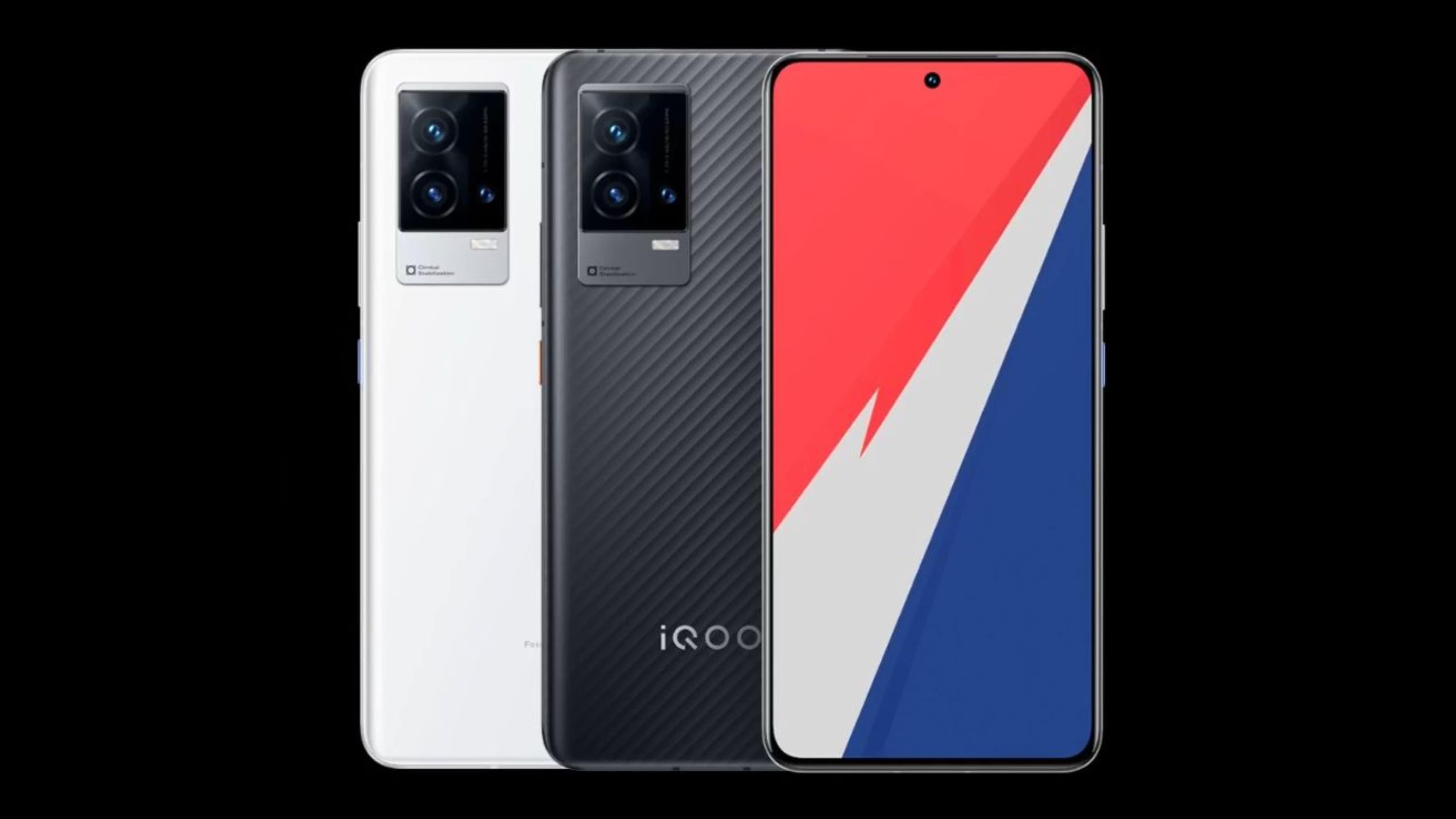
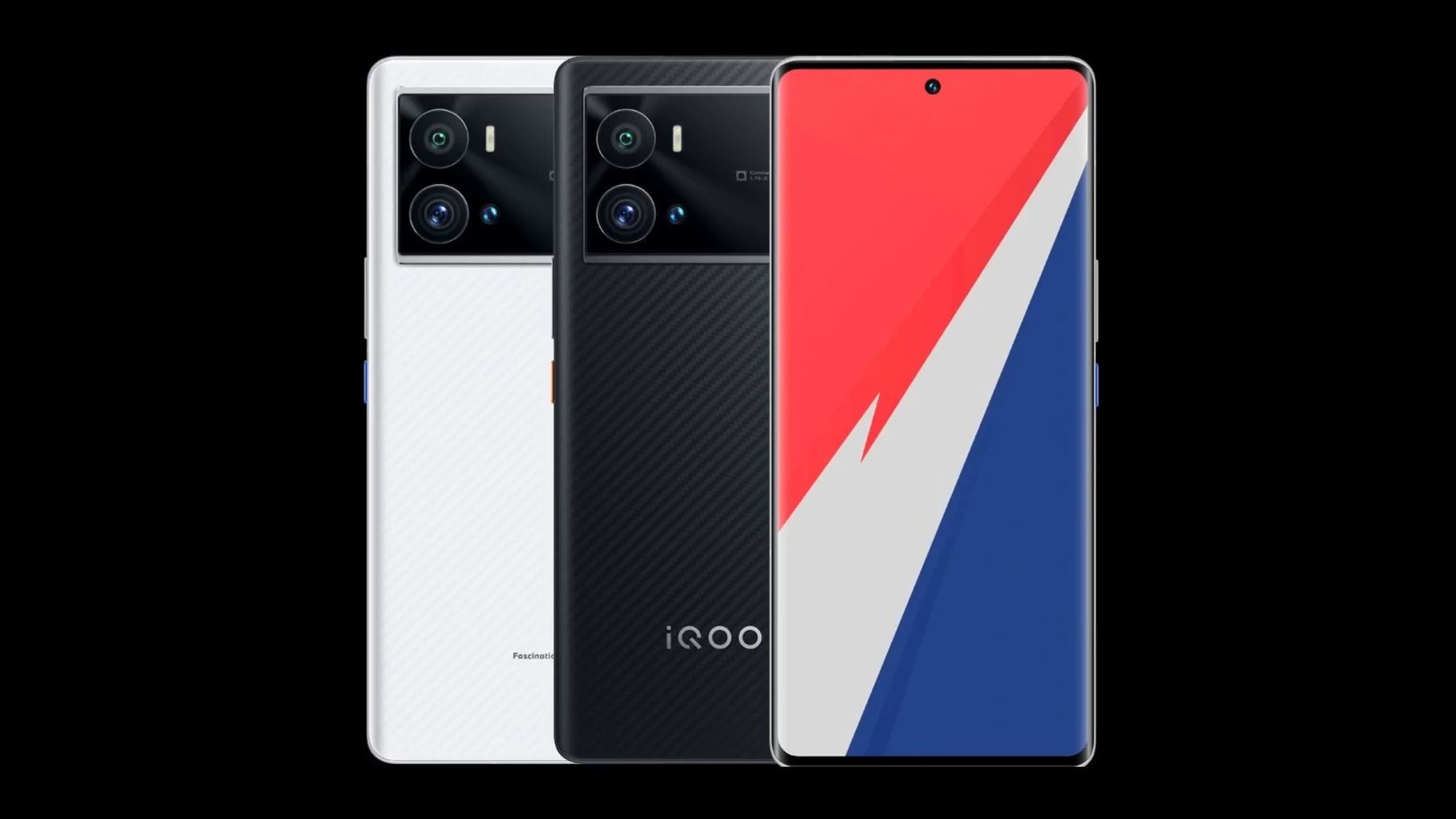
Just a couple of days ago, the iQOO 9 series had been launched in India, which comprised of the base and Pro models. Now, the company has officially began the first open sale for the iQOO 9 and 9 Pro.
Talking about the smartphones first, both the vanilla and higher end version arrive in two storage configurations, namely 8GB + 128GB and 12GB + 256GB. The Chinese smartphone brand’s iQOO 9 is powered by Qualcomm’ Snapdragon 888 SoC, while the Pro version features Snapdragon 8 Gen 1 chipset. Both models feature LPDDR5 memory and UFS 3.1 storage and run on Android 12 based FunTouch OS 12. The base variant sports a 6.56 inch FHD+ AMOLED display with 120Hz and HDR10+ support.
These features are also reflected in the Pro model’s screen, but, it has a larger 6.7 inch curved panel with 1500nits peak brightness and QHD+ resolution. For photography, the iQOO 9 features a 48 megapixel triple camera setup, with a 13 megapixel portrait and another 13 megapixel ultra wide angle lens. Similarly, the iQOO 9 Pro also offers three sensors on the back, but with a 50 megapixel primary and 50 megapixel ultra wide angle lens that is paired with a 16 megapixel portrait sensor.
The 8GB version of the iQOO 9 is priced at 42,990 INR ($567), while the 12GB model is available for 46,990 INR ($620). The company has also partnered up with ICICI Bank to offer a discount worth 4,000 INR ($53) with ICICI’s credit card transactions. For the Pro mode, the company is offering a discount worth 6,000 INR ($80). The 8GB model on 9 Pro is available for 64,990 INR ($858). The 12GB version costs 69,990 INR ($924).
Huawei’s rotating chairman Guo Ping yesterday during MWC 2022 talked about the company’s plans to continue its globalization strategy and increase strategic investment in underlying technologies. Through the investment, Huawei hopes to enhance its mid- and long-term competitiveness while ensuring sustainable development of the ICT industry.
“We will not withdraw from the global market. For customers who choose us, Huawei will go all out to help them achieve business success,” he stated.
The chairman added that Huawei will adhere to “globalization” and will significantly increase its strategic investment in its pivotal technologies along with working on architecture and software. This, he said, will gradually be reflected in the competitiveness of the company’s products.
The investment also aims to help other companies get closer to or even exceed the Shannon limit, which is the theoretical maximum transfer rate for error-free transmission over a channel.
On the software end, Huawei is building AI-centric full-stack software and a new software ecosystem to meet the sharply rising demand for computing power brought about by the explosive growth of AI.
MWC 2022 is being held in Barcelona, Spain and will last until March 3rd. Huawei’s booth is located in Hall 1H50, Fira Gran Via.
MediaTek has just announced that it has become the leading chip supplier for Android smartphones in the US. This announcement arrives along with the company’s plans for the future of its 5G chips.
This marks a major shift as Qualcomm, an American chipmaker, has been the dominant supplier for semiconductors in the smartphone market. According to an IDC report (Via PCMag), the fourth quarter of last year saw the Taiwanese company acquire a market share of 51 percent in the US for Android smartphone chips. The report adds that the company’s stellar performance can be attributed to its strong sales in smartphones that can cost under 400 US Dollars. This segment was previously dominated by Qualcomm.
On the other hand, MediaTek also announced that it has received millimeter wave certification “with a major US operator” (rumored to be Verizon) and will soon offer mid range millimeter wave smartphones in the US by the second half of this year. Notably, Verizon only offers millimeter wave for its 5G smartphones. So, the company’s new 5G chips would enable best selling mid range devices to also be included into Verizon’s list.
Furthermore, the company has also recently announced the Dimensity 8000 and Dimensity 8100 series of processors that target the mid range segment, as opposed to the Dimensity 9000, which is for premium phones. So, it remains to be seen if its new chips helps increase its market share and widen the gap between MediaTek and Qualcomm.
We use cookies on our website to give you the most relevant experience by remembering your preferences and repeat visits. By clicking “Accept”, you consent to the use of ALL the cookies.
This website uses cookies to improve your experience while you navigate through the website. Out of these, the cookies that are categorized as necessary are stored on your browser as they are essential for the working of basic functionalities of the website. We also use third-party cookies that help us analyze and understand how you use this website. These cookies will be stored in your browser only with your consent. You also have the option to opt-out of these cookies. But opting out of some of these cookies may affect your browsing experience.
Necessary cookies are absolutely essential for the website to function properly. This category only includes cookies that ensures basic functionalities and security features of the website. These cookies do not store any personal information.
Any cookies that may not be particularly necessary for the website to function and is used specifically to collect user personal data via analytics, ads, other embedded contents are termed as non-necessary cookies. It is mandatory to procure user consent prior to running these cookies on your website.