Last month, the Realme GT Neo3 was launched in China carrying the world’s first 150W fast charging capability. The device was recently teased for the Indian market, and now, Realme India CEO Madhav Sheth has confirmed the Indian launch date of the device.
In the recent episode of AskMadhav, the CEO revealed that the device will debut in India on April 29th. Madhav also confirmed that the Indian variant of the device will also feature the super fast 150W charging solution. Other than that, Madhav has also revealed that the Realme Pad 5G is in the works, and the company will reveal more details about it soon. This is the first time we’re hearing about a 5G variant of the Realme Pad, so we do not have any details on it as of yet.
Realme GT Neo3 Specifications
The Realme GT Neo3 has already launched in China so we already know all its specs and features. The smartphone sports a 6.7-inch OLED display with a Full-HD+ resolution. It has a 120Hz refresh rate and a 360Hz touch sampling rate. It has a 94.2% screen-to-body ratio and a maximum brightness of 1000 nits.
It is powered by the new 5nm MediaTek Dimensity 8100 SoC paired with up to 12GB of RAM and 256GB of internal storage. It comes in two variants – a 4,500mAh battery + 150W UltraDart variant and a 5,000mAh + 80W UltraDart variant. The device has a triple camera system with 50MP IMX 766 main lens with OIS support, an 8MP ultra-wide lens, and a 2MP macro shooter. Upfront, it has a 16MP selfie snapper.
The device has an in-display fingerprint scanner for security and boots on Android 12 OS based on Realme UI. It has VC liquid cooling under the roof and has GT Mode 3.0.
Realme will be launching its Realme Q5 series in China this Wednesday, April 20th at 2 pm CST (GMT+8). Realme is expected to announce 3 models from the Realme Q5 series at the scheduled launch event which are respectively the Realme Q5 Pro, Realme Q5, and Realme Q5i.
Leading up to the launch, many specifications and features of the Realme Q5 series have surfaced online via leaks and rumours. Therefore, we have compiled this list below with all the details that we know about the Realme Q5 family so far.
Realme Q5 Pro Specs
The Realme Q5 Pro is the most premium device in the Realme Q5 family. The device will be sporting a flagship Qualcomm Snapdragon 870 chipset under the hood, and a hefty 5000mAh battery to boot, paired with 80W SuperVOOC fast wired charging for the fastest hardware experience in a mid-range phone.
The Realme Q5 Pro is to be equipped with a 6.62-inch FHD+ flat AMOLED screen that can refresh up to 120Hz, and an under-display fingerprint scanner for biometric authentication.
In the camera department, the Realme Q5 Pro features a triple rear camera setup that features a 50MP main sensor + 8MP ultrawide + 2MP macro sensor. On the front, it is provided with a 16MP sensor for clear selfies.
The device is said to be available in 8GB/12GB RAM options with 128GB/256GB of storage. It will be available in three colourways which are Black, Blue and a special Realme x Vans Yellow and White checkerboard design.
Realme Q5 Pro Yellow Checkboard Design in collaboration with Vans
Realme Q5 Specs
As for the standard Realme Q5, the device will sport a more modest mid-range Snapdragon 695 chipset, with an equally as large 4890mAh with slower 65W SuperVOOC fast wired charging instead.
The screen of the Realme Q5 is a 6.58-inch LCD panel with a Full HD+ resolution. The model opts for a side fingerprint scanner instead, and still retains the 3.5mm headphone jack in 2022. Software-wise, the device will be running on Realme UI 3.0 based on Android 12 out of the box.
For the cameras, the device is sporting a triple rear camera setup with a 50MP main shooter, with two 2MP macro and depth sensors.
The device is to be available in 6GB/8GB/12GB RAM variants, with 128GB or 256GB storage onboard. The only colour option of the Realme Q5 we have seen so far is the glossy silver option, but Realme is expected to reveal more colour options at the launch event.
Realme Q5 in Silver. Source: TENAA
Realme Q5i Specs
The Realme Q5i is the affordable entry-level model in the family. It is equipped with a MediaTek Dimensity 810 chipset, with a large 5000mAh battery. It features a less-exciting dual rear camera setup with a 12MP main sensor and 2MP secondary sensor and an 8MP selfie camera at the front.
It sports a 6.58-inch FHD+ display and includes a side-mounted fingerprint sensor for biometrics.
The device is rumoured to feature 4GB/6GB RAM equipped with 64GB/128GB of storage for users. Colour options wise, only a purplish Twilight Blue colour option was confirmed via TENAA.
Realme Q5i in Blue
The device runs Realme UI 3.0 based on Android 12 out of the box.
Realme Q5 Series Pricing
No leaks have revealed the pricing of the Realme Q5 series. But it is expected that the series to be priced similarly to last year’s Realme Q3 series.
The Realme Q5i is expected to launch for 1099 RMB(around 173 USD) for the base model with 64GB of storage. The Realme Q5 is expected to launch for 1399 RMB(around 220 USD) for the base 128GB variant and the Realme Q5 Pro is expected to launch for 1699 RMB(around 267 USD) for the base 128GB model.
The Realme Q5 series is to be announced on April 20th at 2 PM (GMT +8) in China, so stay tuned as we will be covering the launch.
Micromax has already launched the In Note 2 and In 2b budget smartphones in India, and now, it is readying for the other In 2-series phones. Apart from the already launched devices, the series is also expected to comprise the In 2 and In 2c. The tipster Abhishek Yadav has now revealed the launch timeline of the latter.
The Micromax In 2c is tipped to launch by the end of April or early May 2022 in the Indian market. The device should arrive in the budget segment and will be powered by a UNISOC chipset.
Exclusive : Micromax IN 2C launching later this month or in early May, 2022.#Micromax#IN#MicromaxIN
The smartphone was spotted on Geekbench previously. As per the listing, the smartphone has 347 points in the single-core department and 1127 points in the multi-core department. It has the UNISOC T610 octa-core chipset with all eight cores clocked at 1.82GHz. The phone has 4GB of RAM and Android 11 OS out of the box.
In addition to this, the device made it to the list of Google Play-supported devices. While that listing didn’t reveal any explicit details, we still got to know that the launch is in the pipeline. Now, that the phone’s tipped release is just a few weeks away, we expect the company to start the marketing campaign for the phone via several teasers.
Micromax IN 2B
The Micromax In 2c is expected to come under sub-Rs. 10,000(~$131) price range in the country. We could see it getting released in several colors like the sibling In 2b.
AMD’s upcoming release of its Ryzen 7000 series of desktop CPUs is one of the most highly anticipated announcements by PC and tech enthusiasts alike. This is because the Ryzen 7000 series of CPUs will be the first lineup of Ryzen CPUs to run AMD’s latest AM5 platform, as opposed to the Ryzen 1000 to 5000 series CPUs that were running on AMD’s older AM4 platform.
As we are inching nearer close to the launch of Ryzen 7000, more leaks and rumours have started to surface online about Ryzen 7000 and a recent leak this week shows concerning details of the SoC lineup as it shows off the high voltage draw of a supposed member from the Ryzen 7000 lineup.
The leak comes from Twitter user @9550pro, as the tweet shares a screenshot of an off-screen BIOS menu screen which shows off the motherboard and Vcore voltage draw of the chipset.
Source: Twitter
Starting from the motherboard, it is examined that the motherboard is a member of the MAG family of motherboards that are exclusive to MSI. Next is the B650 moniker, which means that the CPU is running on an AMD AM5-based motherboard. And since the AM5 platform was designed specifically for the Zen-4 based Ryzen 7000 CPUs to replace the AM4 platform, it is apparent to see why this could be a member of the upcoming Ryzen 7000 series lineup of desktop CPUs.
Moving onto the next detail, VCore. The image shared also details of the VCore voltage draw of the CPU which is at 1.532 V, which is quite concerning for an AMD CPU, as normally the average voltage draw of AMD CPUs is at 1.3-1.4V voltages.
In simpler terms, higher voltage draw leads to higher power draw, which leads to lower power efficiency, and higher temperatures and leaves the CPU more prone to thermal throttling.
Despite the concerns, the above statements only hold true if the finalised retail version of the Ryzen 7000 series is presented with the high voltage draw. The shared photo may be a Ryzen 7000 early test sample or engineering sample running in AMD’s research and development team to optimise its power efficiency and performance before its planned launch date in 2H 2022.
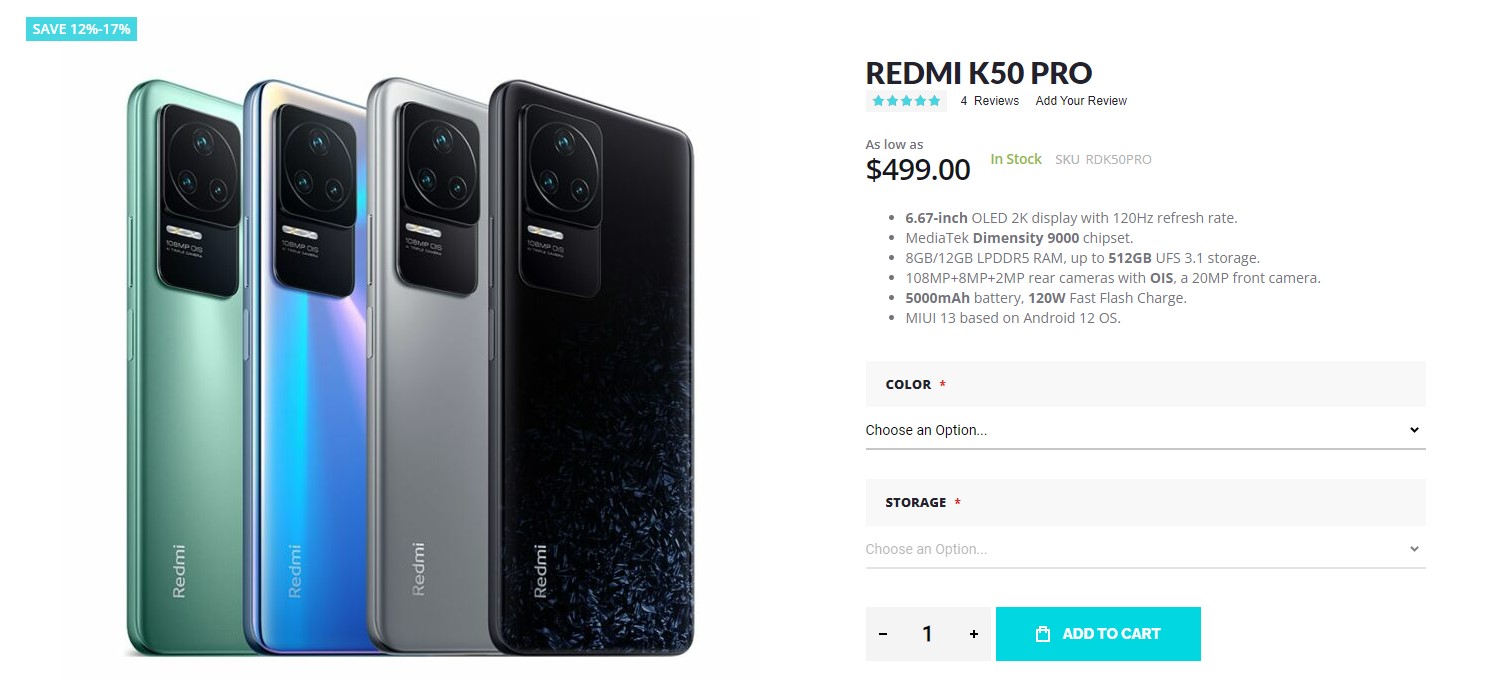
Redmi K50 Pro which generally retails for $599 is now available at a heavily discounted price of $499 only at Giztop. Please note that this is a limited-time offer.
Redmi K50 Pro features a 6.67” OLED 2K display with a 120Hz refresh rate. Powered by the MediaTek Dimensity 9000 chipsetit comes with 8GB /12GB LPDDR5 RAM option and 128GB /256GB/ 512GB internal storage options.
Redmi K50 Pro features a triple rear camera setup with a 108MP main camera and 8MP + 2MP secondary sensors. For your selfies, you have a 20MP sensor in the front. Fueled by a 5000mAh battery it supports a 120W fast flash charge and runs on Android 12 OS-based MIUI 13.
Available in four exciting colors viz. Green, Silver, Black, and Blue, you can now get $100 OFF on Redmi K50 Pro. Thus you can buy the smartphone at a starting price of $499 only. Please note that this price is applicable to the base variant only.
For more information on such exciting deals and offers check out our deals hub.
In 2020, Segway-Ninebot announced the Ninebot Gokart Pro Lamborghini edition and one of the major highlight was the car sound simulation feature which the Gokart e-scooter came with thanks to an embedded speaker. While this feature has not been directly included on other scooters from the company, Segway has now deviced a way for users who may want their scooters to simulate car sound to do so.
The company has unveiled a speaker accessory attachment for its electric scooters and it wil make them simulate the sound of different kinds of ICE engines. The speaker is aptly named Ninebot Engine Speaker and it features support for Bluetooth connectivity and a strap that lets users attach it firmly to their scooter.
Specifically, the strap is design to enable mounting the speaker on the Segway / Ninebot electric scooters, as well as the GoKarts, electric bikes, and even on the popular self-balancing Segway e-scooters. The speaker packs a decent 2,200mAh battery that is said to be capable of delivering up to 23 hours of playback. The speaker charges via a USB-C port and also features IP55 dust and water resistance.
Connectivity to a Segway Ninebot vehicle is seamless and when connected, the scooter offers different engine modes namely: single-cylinder, twin-cylinder, V8, and V12. The speaker is designed to sync with the scooter’s accelerator pedal/handle such that when the user revs the machine, there is synchronous revving sound from the scooter.
The Ninebot Engine speaker carries a price tag of $149.99 and is available on Segway’s website.
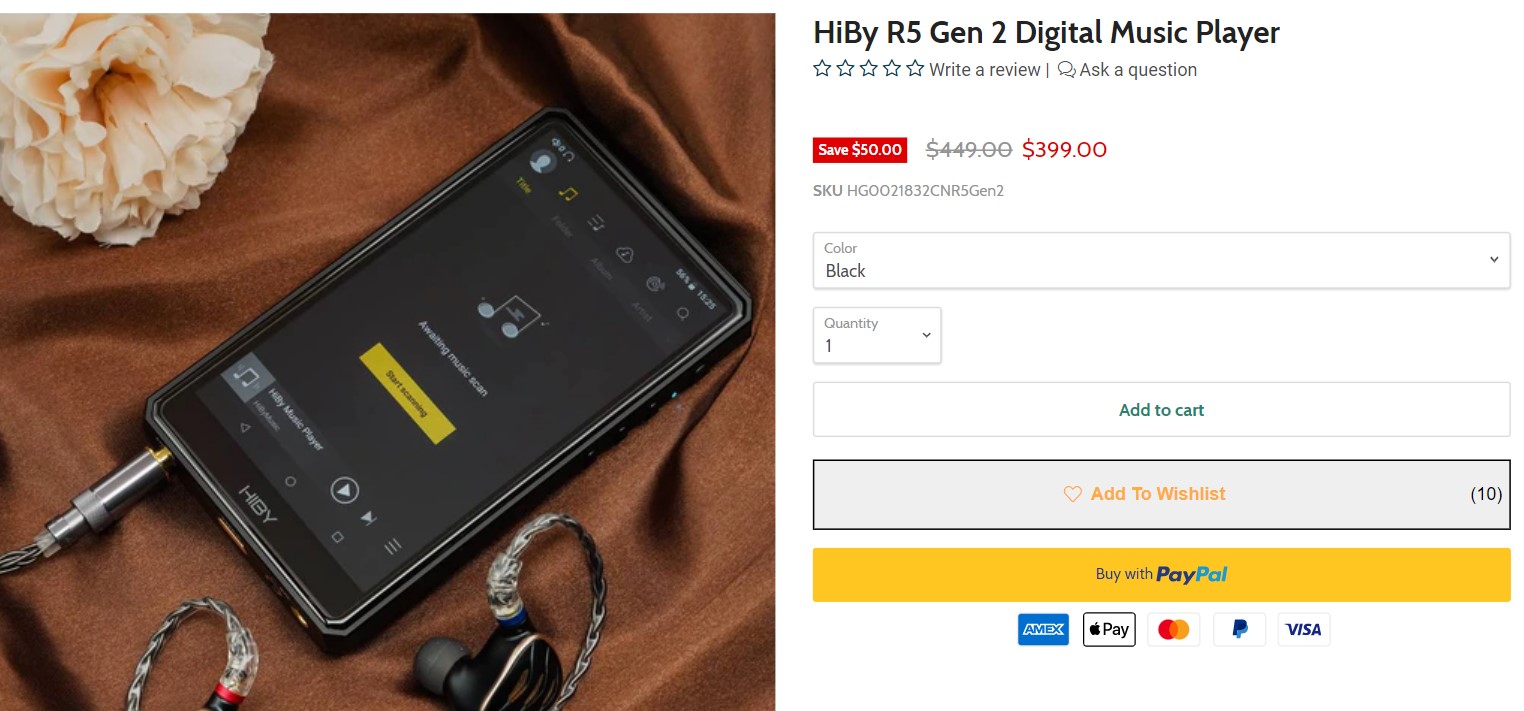
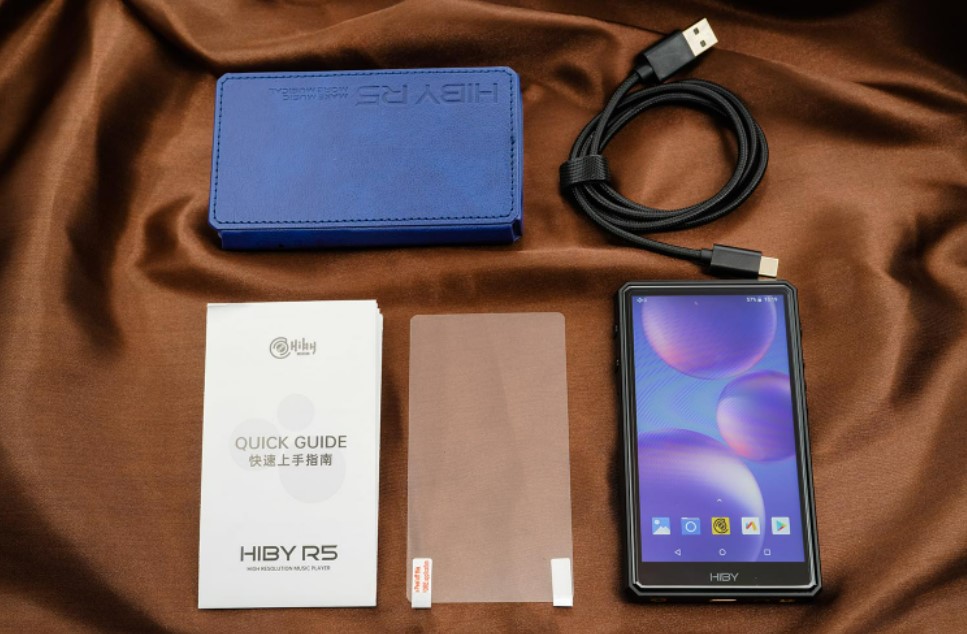
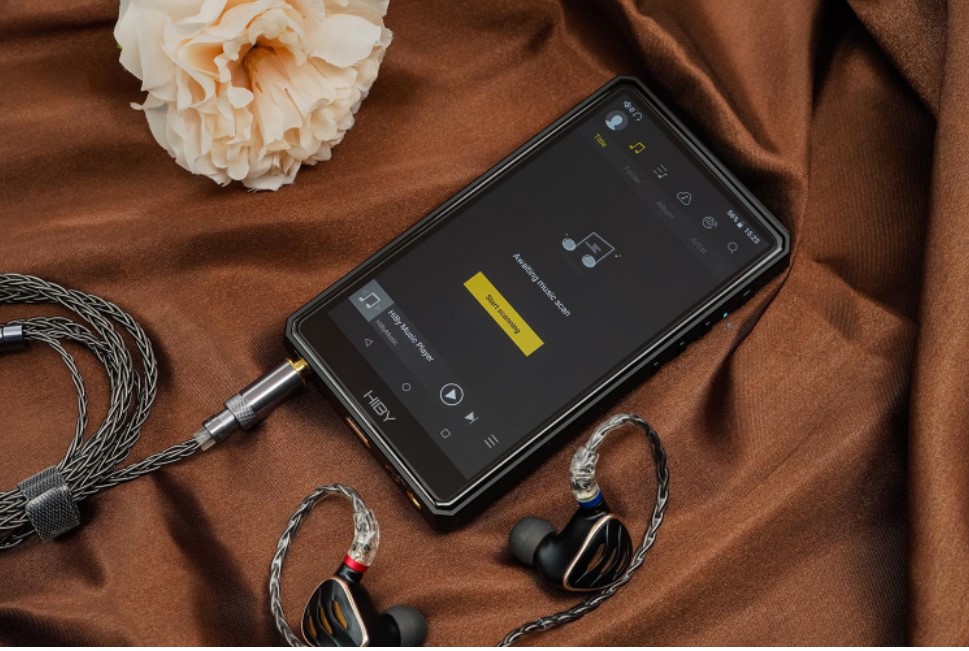
HiBy R5 Gen 2 the latest portable digital music player from HiBy is now available for a discounted price of $399 only on hifigo.com The R5 Gen 2 is a redesigned and upgraded player from the R5 series. It has kept all the best parts of both the original R5 and R5 Saber and added some much-awaited upgrades to make the R5 Gen 2 a great mid-fi level digital audio player.
HiBy R5 Gen 2 digital audio player features a 4.7” display and supports 1280x720p resolution. Thus you get HD quality bright, crisp and sharp images on the player which is a visible upgrade as compared to the other players in this series.
It comes with a brand new Dual DAC Chipset from ESS Sabre Technologies, with a state-of-the-art amplification circuit. This 32-Bit DAC chipset is capable of delivering exceptional performance with ultra-low THN distortion and high SNR ratings. In this upgraded version, you have got a class A headphone amplification which makes the sounds cleaner and more controlled than any other headphone amplification technology. The device supports true high-resolution 32-Bit/768kHz PCM and native DSD25 and even features a full 16x MQA decoding. Thus R5 Gen 2 gives you top-quality Hi-Res audio decoding in a compact form factor.
Adding to the previous generations’ 3.5mm single-ended and 4.4mm balanced headphone output ports, the R5 Gen 2 brings you an additional 2.5mm balanced headphone jack. This means you have 3 headphone jacks viz. 3.5mm SE, 4.4mm Bal, and 2.5mm Bal.
Finally, with a massive 4500mAh battery, you get up to 8.5 hours of class A amplification and up to 35 hours of standard audio mode. This means you get 8.5 hours of pure pleasure listening to hi-res music and can enjoy your music non-stop for days, on standard mode.
Three headphone outputs, 3.5mm SE, 2.5mm Bal, 4.4mm Bal
4.7” 720P display
Premium ES9219C Dual DAC Chipset
Native DSD256 and PCM 32-Bit/768kHz decoding
4500mAh battery – 8.5 hrs of class A amplification
You can now buy HiBy R5 Gen 2 Digital Music Playerfor a discounted price of $399 only at hifigo.com. Additional shipping charges may be applicable depending on your country and shipping address. Please note that this is a limited-time offer.
For more information on such exciting deals and offers check out our deals hub.
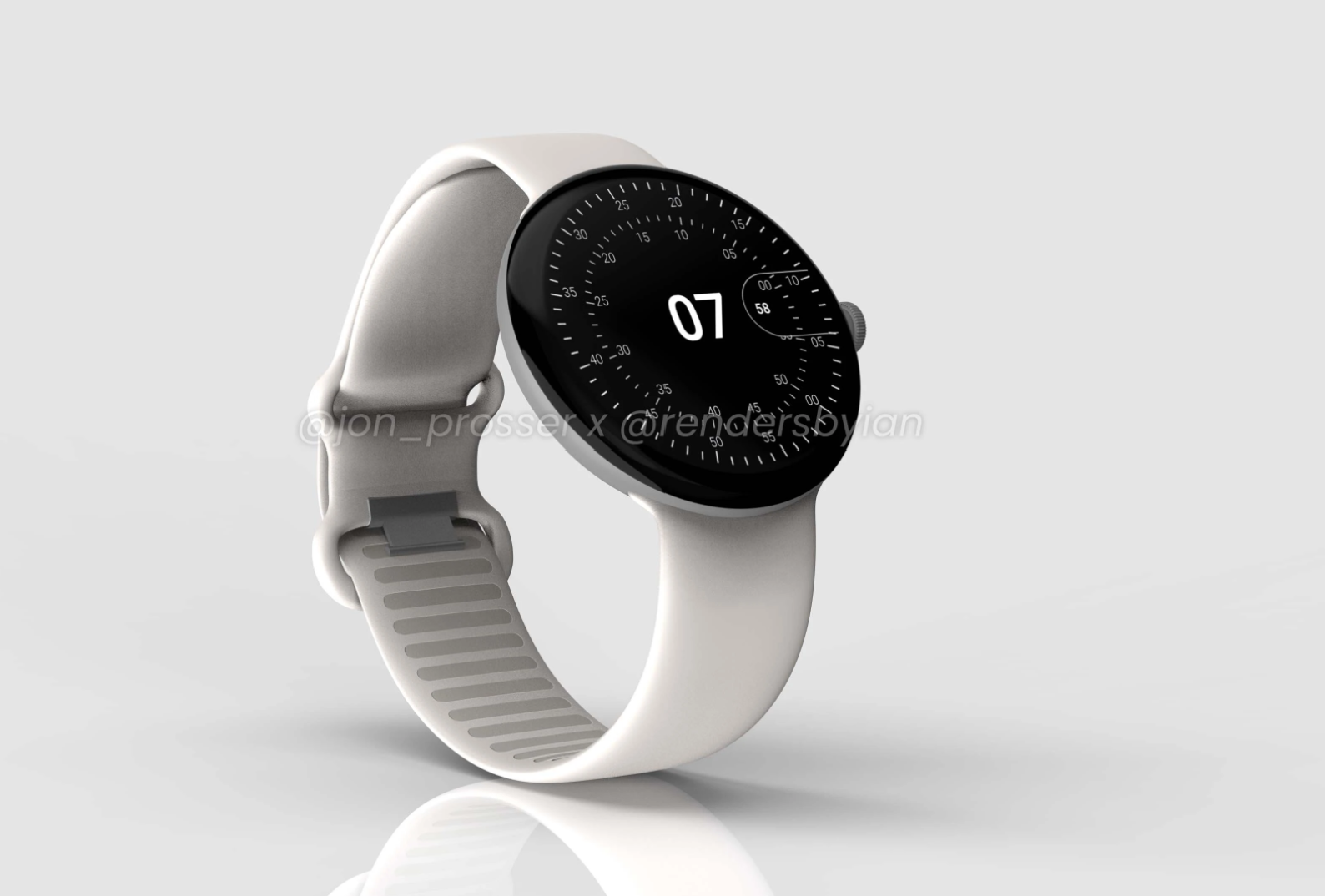
Tipster Evan Blass has hinted that the Google Pixel Watch that runs on Wear OS 3.1 could be launched soon. The smart wearable device has been a subject of speculation and uncertainty for quite some time and the tipster is further fueling this with the new lead.
Blass says that the Pixel Rohan’s launch is imminent, although there are no specific dates 2022 seems to be it. The codename Rohan has long been associated with the first-ever Google smartwatch. However, it does not necessarily imply that the device will bear the Rohan moniker when it is eventually released. Google could adopt a more catchy marketing name for a device primed to rival the big hitters in the field like Apple and Samsung.
The Pixel Watch will run on the latest version of the Wear OS, which is version 3.1. However, Wear OS 3.1 may just introduce a few improvements in capabilities and aesthetics above version 3.0. The new operating system should provide some head start for the rookie smartwatch, It remains to be seen the manner of improvements the Google Pixel Rohan will deliver above current leading models like the Apple Watch. There were rumored launch dates of May 11, July, and October 2022, adding to the uncertainty around the smartwatch. The May date coincides with the 2022 I/O Conference and could be a credible date for the launch.
While much of the information and specs of the Pixel smartwatch are speculative, the device may come with a circular design and offer high-end ECG monitoring. This will be in addition to the basic sensors that have propped smartwatches as important health and fitness devices. It is also rumored to offer up to 32GB of internal storage to bring it at par with the frontrunners in the market. The processor of the device is also expected to be high-end but no inkling yet on it. There are no indications also of the price of the new device.
Huawei launched the brand’s first-ever Electric Vehicle under its AITO sub-brand back in China in 2021. Called the AITO M5, the EV was seen as a bold business strategy for Huawei to expand its expertise into the automobile industry.
With decent sales of shipment figures for the AITO M5 EV, it seems that it is in Huawei’s best interest to keep developing electric vehicles in the market. Apparently, Huawei thinks so as well, as a recent listing on China’s MIIT Database(via IT Home), shows that Huawei has already planned ahead for its next generation of electric vehicles as recently got certified to proceed with the operation.
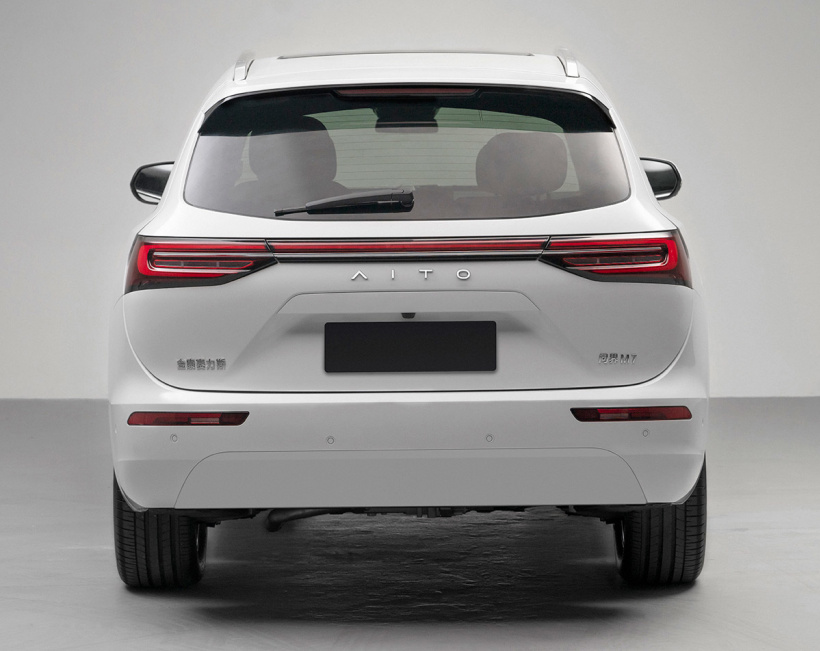
Huawei AITO M7 – FrontHuawei AITO M7 – Back
The listing does not show off the name of the product, but if examined closely, one of the photos contains a blurry wording that seems to resemble “AITO M7” signifying that this listing is the next Huawei electric vehicle to be launched under the AITO sub-brand.
From the listing, the Huawei AITO M7 EV is detailed to be a mid-large sized 6-seater hybrid electric SUV, slightly larger than its AITO M5 predecessor. Judging from the outside looks, the AITO M7 adopts a similar design as its older sibling, the AITO M5. It features the same enormous air ventilation grill at the frontal bumper, a sleek and straight roofline, aerodynamic translucent headlights, chrome coloured trims across the body, etc.
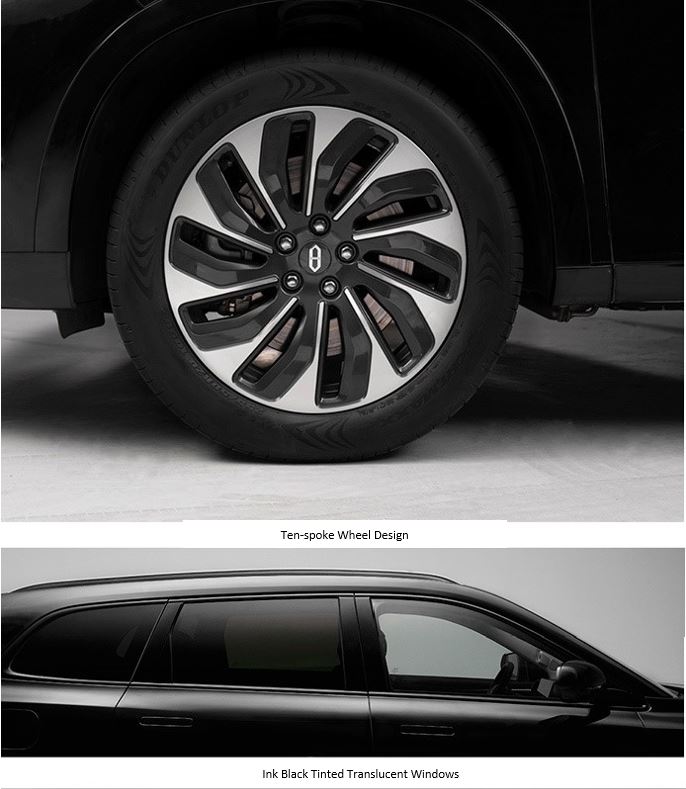
The EV is also listed to come in five-spoke and ten-spoke wheel options, with optional upgrades such as chrome greyish translucent tinted windows, or ink-black translucent tinted windows. One minor design change of the AITO M7 though is that it seems to lack the “Huawei Zhixuan” logo on the EV present on the AITO M5. However, the pictures uploaded to the listing did not show off pictures of the automobile from all angles, but there may be a possibility that Huawei had just decided to relocate the logo elsewhere on the car.
In terms of dimensions, the Huawei AITO M7 weighs in at 2340kg, and has a length, width and height of 5020×1945×1775mm.
For the engine powering the AITO M7, the electric hybrid automobile will be utilising a 1.5T range extender + motor combo. The rated power/peak power of the electric drive motor is listed to be 72kW/200kW, the maximum net engine power is listed to be 90kW, and the fuel consumption given by China’s MIIT is 1.05L/100km.
Since the AITO M5 only started delivering in March of 2022, it is expected that the AITO M7 will be announced later in the year so as to not cannibalise sales of the AITO M5.
Vivo is expected to launch its flagship Vivo X80 series soon, and if we go by the leaks, the launch could take place as early as this month. While Vivo on the Internet appears to shush about the release date, a poster of the X80 series was spotted at offline stores in China.
The Vivo X80 teaser poster is already live in China. The smartphone’s rear design can be seen on the poster. The phone’s much-rumoured ZEISS branded quad-camera system is also visible. This time around, the camera island on the phone is circular as opposed to the predecessor’s vertically positioned rectangular camera island.
In addition to the cameras, the poster confirms the presence of Vivo V1+ ISP on the phone. This is probably the improved version of the V1 chip that we saw in last year’s Vivo X70. Moreover, the phone’s 4nm Snapdragon 8 Gen 1 SoC has also been confirmed by the poster. As per leaks, this chip will be powered by the X80 Pro+.
The series will also include X80 and X80 Pro, which will have the Dimensity 8100 and Dimensity 9000 SoCs, respectively. The X80 and X80 Pro are expected to come with a 6.78-inch E5 AMOLED display, while the X80 Pro+ is said to feature a 6.78-inch LTPO 2.0 AMOLED panel. The X80 and X80 Pro+ will have QHD+ resolution, whereas, the vanilla X80 will get an FHD+ screen. All models will have a high 120Hz refresh rate.
The camera setup on the vanilla X80 will have a 50MP + 12MP + 12MP triple camera system, while the X80 Pro and X80 Pro+ are expected to come with a 50MP + 48MP + 50MP + 50MP quad-camera array.
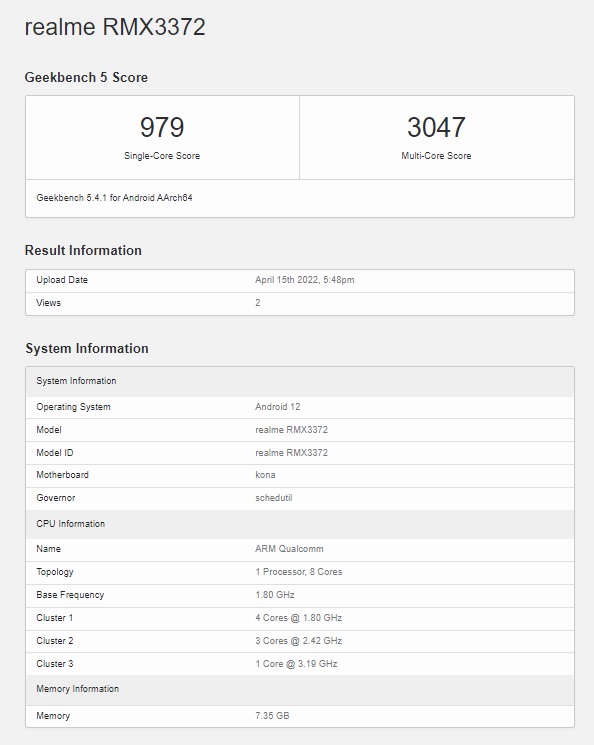
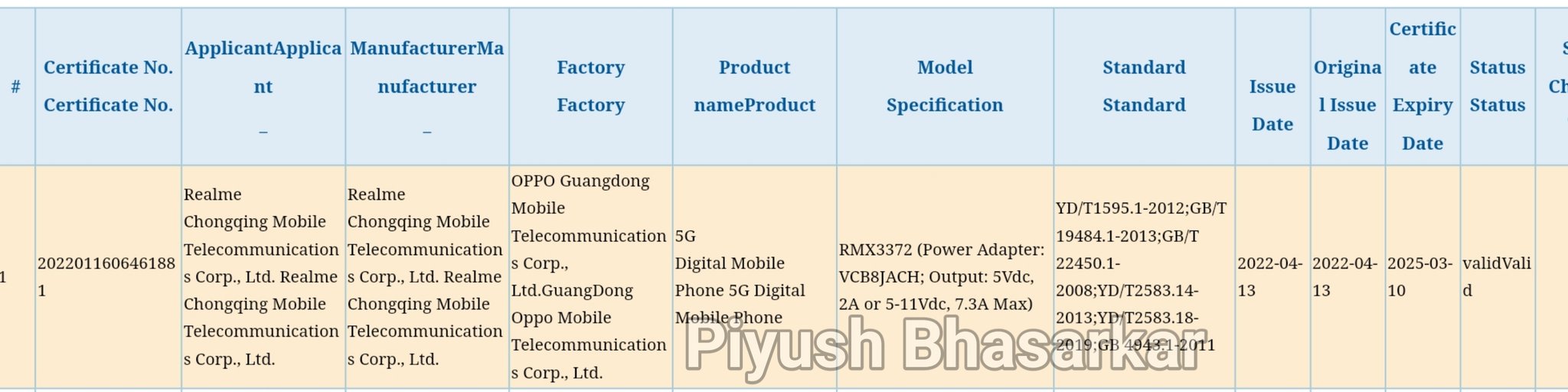
After the release of the Realme GT Neo 3, now the brand is working on the upcoming Realme GT Neo 3T smartphone. It will be a toned-down version of the Neo 3 and a successor to the last year’s GT Neo 2T. In the newest development of the phone, it has arrived on China’s 3C and Geekbench certification websites.
The Realme GT Neo 3T carries the model number RMX3372 on both certifications. The device has impressive scores on the Geekbench version 5. It has 979 points in the single-core department and 3047 points in the multi-core department.
It is powered by the Qualcomm Snapdragon 870 SoC which is clocked at a based frequency of 1.80GHz and a peak frequency of 3.19GHz. The device has 8GB of RAM and runs on the Android 12 version.
In addition to this, from the 3C certification(viaPiyush Bhasarkar), we get to learn that the phone has 11V and 7.3A charging support, which translates to an 80W fast charging speed. This is an improvement over the predecessor GT Neo 2T’s 65W fast charging speed.
Apart from this, the phone passed TENAA certification earlier this month. It has a 6.62-inch AMOLED display with a 120Hz refresh rate and Full-HD+ resolution. It features a 16MP Sony IMX471 selfie snapper and a triple rear camera system. It has a 64MP OmniVision OV64B main lens, an 8MP Sony IMX355 ultra-wide lens, and a 2MP tertiary unit.
The phone will arrive in 6GB/8GB/12GB LPDDR5 RAM + 128GB/256GB/512GB UFS 3.1 storage variants. It will pack a 5,000mAh battery and have a dual-speaker setup. As for security, it is expected to have an under-display fingerprint scanner.
Motorola has slowly been updating more and more of its eligible devices to the latest Android 12-based OS. Earlier this week, the Moto G200 5G was treated with the Android 12 update, and now, the company has started releasing the Android 12 update for the Moto G50.
To clarify, the device receiving this update is the Snapdragon 480-powered Moto G50 and not the Moto G50 5G which comes with the Dimensity 700 SoC. According to an XDAdevelopers report, the update arrives with the build number S1RF32.27-25 and is currently available for the XT2137-1-DS model in the UK. As of yet, the update has not made its way to other regions, but it’s only a matter of time before it does.
Although Motorola’s software update page says that the Android 12 update for the Moto G50 is not live yet, the stable build is already available through the company’s Rescue and Smart Assistant Tool. So UK users can expect the Android 12-based MY UX build to arrive soon to their devices via OTA. Users can also grab the latest update right now using the Rescue tool and flash it manually using a PC. But if you are not well versed in flashing operating systems on Androids, then we won’t recommend you go the manual way.
The Android 12-based My UX update will bring new features like the Material You theming engine, a revamped notification panel, a privacy dashboard, camera and mic “in use” indicators, and more. You can also check out the complete list of Motorola devices eligible for Android 12 by clicking on this link.
India is rapidly making progress in its plans to phase out internal combustion engine (ICE) vehicles in the country. A few initiatives have seen the development of electric conversion kits that will transform ICE vehicles into electric-powered models. The outlook for the conversion kits is expected to grow and Hero Splendor is keying into the process. The Hero Splendor Electric GoGo A1 conversion kit has now added the ARAI certification to its previous regulatory endorsements.
GoGo A1 is the manufacturer of the Hero Splendor and with the kit, it is offering owners the option of converting their bike to an electric model. The full kit with a battery pack costs Rs. 95,000 (~$1,245) and Rs. 35,000 (~$459) without the battery. The company says the battery can deliver a range of 151km on a full charge. The kit had previously received RTO approval in addition to the ARAI approval it just got.
The kit contains a 2 kW electric motor, mounted on the rear wheel hub fed by a 2.8 kWh battery pack, with a regenerative braking system. A DC-DC converter, new accelerator wiring, a key switch with controller box, and a new swingarm are also included.
The conversion will be carried out at GoGo A1’s installation workshops in 36 RTO locations in India. Customers will be able to get insurance for the converted motorbike after some documentation at the local RTO. A converted bike is issued a new green numberplate although the registration number will remain unchanged.
The outlook on this new Gogo A1 initiative is a plus to the government’s effort to significantly reduce tailpipe emissions and a growing number of Indians embracing electric vehicles. The battery pack remains a very expensive component of the conversion. It brings again to focus the challenges Indian EV manufacturers face in ensuring affordability and durability. Recent weeks have seen several electric scooter fire incidents. Most of these fires relate to overheating of the battery packs partly due to summer in the subcontinent.
Vivo officially entered the foldable phones market by launching the amazing Vivo X Fold. It is a stunning device coming with impressive hardware specifications and very advanced cameras. But are its specifications enough to beat each and every foldable phone in the market? There is no better way to understand it than by comparing it with the other top-tier foldable phones out there. That is the reason why we published a comparison between the specifications of the Vivo X Fold, the OPPO Find N, and the Samsung Galaxy Z Fold3. We hope it will help you to decide which foldable is the best for your needs.
Vivo X Fold vs OPPO Find N vs Samsung Galaxy Z Fold3
Vivo X Fold
OPPO Find N
Samsung Galaxy Z Fold 3
THICKNESS
14.6 mm when folded, 6.3 mm when unfolded
15.9 mm when folded, 8 mm when unfolded
14.4 mm when folded, 6.4 mm when unfolded
DISPLAY
Main display: 8.03 inches, 1916 x 2160p (Quad HD+), Foldable LTPO AMOLED
External display: 6.53 inches Full HD+ (1080 x 2520p), AMOLED
7.1 inches, 1792 x 1920p (Quad HD+), Foldable LTPO AMOLED
External display: 5.49 inches, AMOLED, 988 x 1972 pixels (HD+)
The most interesting design and form factor are the ones of the OPPO Find N. Despite being a foldable phone, it is able to become extremely compact because it comes with smaller displays. Further, the 18:9 form factor for the external display makes it very beautiful. Last but not least, it has the best hinge ever seen on a foldable phone: a hinge that is able to hide the cease in the middle of the foldable panel like no other device does. On the other hand, the Samsung Galaxy Z Fold3 becomes very interesting because it is the only waterproof foldable phone, thanks to the IPX8 certification.
Display
The Vivo X Fold has the widest internal display with a diagonal of 8.03 inches, while the OPPO Find N has the smallest one with 7.1 inches. The Samsung Galaxy Z Fold3 sits in the middle with a 7.6-inch panel. In terms of image quality, these three displays are very similar. They all come with a 2K resolution, HDR certification, refresh rates up to 120 Hz, and very high brightness. When it comes to the external displays, the Vivo X Fold is more convincing on the paper, but the OPPO Find N has the most compact one with a diagonal of just 5.49 inches.
Specs & Software
The Vivo X Fold is the most advanced device of the trio when it comes to the hardware department, thanks to the presence of a Snapdragon 8 Gen 1 mobile platform paired with 12 GB of RAM and up to 512 GB of UFS 3.1 internal storage. Both the OPPO Find N and Samsung Galaxy Z Fold 3 are fueled by a weaker Snapdragon 888, but they still offer 12 GB of RAM. The Vivo X Fold is also the only one with Android 12 out of the box, but the OPPO Find N has more advanced features to take advantage of the foldable form factor.
Camera
If you are looking for the most advanced camera, then you should opt for the Vivo X Fold without thinking twice. It is equipped with a quad camera including a 50 MP main sensor with OIS, an 8 MP periscope camera with 5x optical zoom, a 12 MP telephoto sensor with 2x optical zoom, and a 48 MP ultrawide lens, all with Carl Zeiss optics. Right after, we got the OPPO Find N with a triple camera including a 50 MP main sensor with OIS, a 13 MP telephoto camera, and a 16 MP ultrawide lens.
The Vivo X Fold is equipped with a bigger battery, but the OPPO Find N might last more in a lot of scenarios because of its smaller displays. The Vivo X Fold also comes with faster charging technology: 66W wired charging and 50W wireless charging.
Price
You need about €1300/$1405 to purchase the Vivo X Fold in China, the OPPO Find N costs €1070/$1157, and the Samsung Galaxy Z Fold 3 starts from €1650/$1784. If we consider the specs sheets, the Vivo X Fold is the best. But the OPPO Find N has a more interesting and useful form factor. Which one would you pick?
Vivo X Fold vs OPPO Find N vs Samsung Galaxy Z Fold3: PRO and CONS
Earlier this week, OnePlus confirmed that it will be launching the OnePlus 10R in India on April 28th. Along with the 10R, the company will also debut the OnePlus Nord CE 2 Lite 5G smartphone, which will be positioned below the recently launched Nord CE 2 5G.
Ahead of the launch, the company has dropped a teaser revealing the design of the OnePlus Nord CE 2 Lite 5G device.
Designwise, the Nord CE 2 Lite 5G looks a lot like the recently launched Realme 9 Pro from the BBK Electronics-owned Realme. The device appears to feature the power button on the right side with a fingerprint scanner inbuilt, while on the right side, it will likely house the volume rocker keys. The camera island is also identical to the Realme 9 Pro with a triple camera setup consisting of two big and one small lens with a flash module placed below the smaller lens.
Additionally, the smartphone’s microsite has also gone live on Amazon India revealing that the blue color featured in the teaser is called Blue Tide and the smartphone will come with a 5000mAh battery with 33W fast charging support.
OnePlus Nord CE 2 Lite specifications (rumored)
The Nord CE 2 Lite 5G will arrive with a 6.58-inch LCD FHD+ display that supports a 120Hz refresh rate. It will feature a 16-megapixel front camera and a 64-megapixel (main) + 2-megapixel (macro) + 2-megapixel (depth) triple camera unit. The Snapdragon 695 powered device will come with 6 GB / 8 GB of RAM and 128 GB of native storage. It will house a 5,000mAh battery that supports 33W fast charging. The Nord CE 2 Lite 5G will boot Android 11-based OxygenOS 11 out of the box and will lack the iconic alert slider.
Flagship smartphone cameras are reaching a saturation point whereby it is difficult to compare one photo that was either taken from the OnePlus 10 Pro or taken from the Xiaomi 12 Pro because objectively photos taken on both phones still look stunning with all the details captured and minimal noise. This same rhetoric can be applied to the iPhone 13 Pro, the Samsung Galaxy S22 Ultra, and the Oppo Find X5 Pro as well.
Therefore in 2022, smartphone manufacturers have moved on to offering more camera versatility and creativity options for their users, like Apple providing Photographic Styles on its iPhone 13 series, Google providing Astrophotography Mode on its Pixels, and Vivo providing ZEISS Style Portraits on their latest X series devices.
Xiaomi may be the next manufacturer looking to step up their camera creativity options as recently in China(via ITHome), the Beijing-based Xiaomi Software Corporation has been awarded the patent for its automatic “night sky star trails time-lapse photography” camera software technology.
Image for Illustration Purposes only. Credit: Yuri Beletsky
Xiaomi’s patent details the camera software algorithm behind the star trails time-lapse photography mode. First, when the user enables the “Star Trails” mode on the camera application, the camera will automatically be focusing on the night sky, and determine the most suitable settings such as the ISO, white balance and white balance for the scene.
The camera then needs to stay in the same position throughout the timelapse to take photos of the starry night sky between each consecutive time interval of the stars’ movement in the night. The algorithm then stores these photos to interpret the data and colour science behind each one. Using the interpreted data, the algorithm then compiles all the photos together and processes the images into a short-form video that shows the time-lapse journey of the star trails being formed on the screen.
For illustration purposes only.
Alternatively, users can also use the algorithm for other types of moving star trails videos such as infinitely looping star trails, or a photo output of the swirling star trails in the night sky.
Since the patent has been recently approved and gone public, we expect Xiaomi to soon feature this “Star Trails” mode in its next camera-focused flagship, which could be the Xiaomi 12 Ultra, which is rumoured to launch soon next month in China with a Leica branded camera, and with Qualcomm’s unannounced Snapdragon 8 Gen 1+.
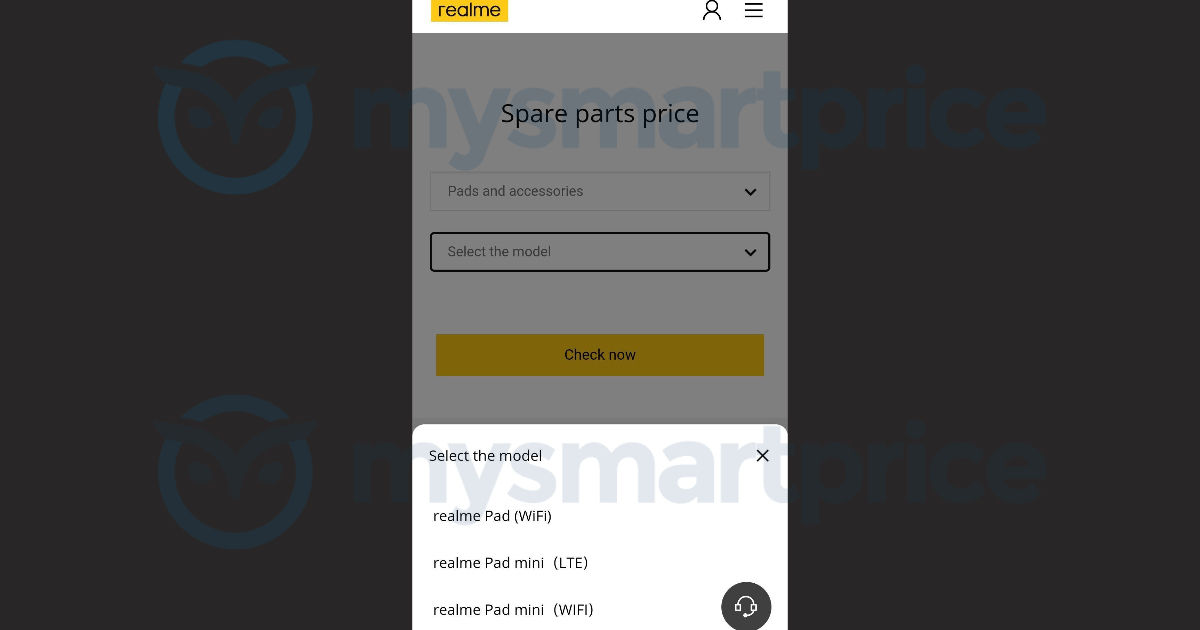
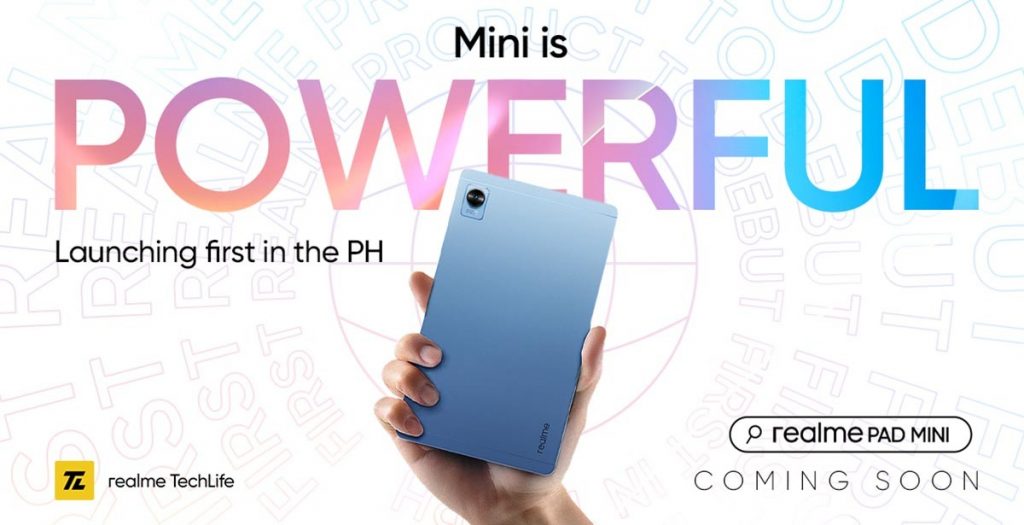
Earlier this month, Realme launched the Realme Pad mini in the Philippines. The Pad mini is their second tablet in the market after the initial debut of the Realme Pad last year. The brand has yet to announce the release date of the new Realme Pad mini in markets outside the Philippines, however, a recent listing on the Realme India website suggests that the tablet is coming soon to the sub-continent.
According to a MySmartPrice report, tipster Sudhansdhu Ambhore has informed that the tablet will soon launch in India. The device has been spotted on the spare parts page of the company’s Indian website. The listing reveals that both the WiFi-only and LTE variants will debut in the country.
Realme Pad Mini
Currently, there is no word on an official launch date or estimated pricing of the device, but considering that the Pad mini is a watered-down version of the Realme Pad which debut at Rs 15,999 in India, we can expect the Pad mini to come with an affordable price tag.
Realme Pad mini specs and features
The Pad mini comes with an 8.7-inch LCD display with a resolution of 1340 x 800 pixels. The display has trimmed down bezels at the side edges, while the top and bottom edges are quite prominent to make for easy handling when using the tablet in landscape mode.
Powering the tablet is the entry-level Unisoc T616 with an octa-core processor bundled with a Mali-G57 MP1 GPU. The processor is paired with 3GB/4GB RAM while there are two storage options 32GB and 64GB.
For optics, the Pad mini packs a single 8 MP f/2.0 camera at the rear, housed in a rectangular module. At the front, there is a 5MP selfie camera with an f/2.2 aperture. There is no LED flash. The slate also crams a 6,400 mAh battery under the hood with support for 18W fast charging and reverse charging via a USB-C port. The tablet ships with an 18W charger inside the retail box.
For connectivity, the Realme Pad mini comes with Bluetooth 5.0 and Wi-Fi 802.11 a/b/g/n/ac support. The tablet also comes with a 3.5 mm audio jack.
Last month, global smartphone giant Apple launched the iPhone 12 and iPhone 12 Pro under the refurbished program. The brand is selling these refurbished models for a discount of around 15 percent compared to the brand’s new models. Now, Samsung has also introduced its last-gen flagship lineup under the certified refurbished initiative.
The brand has opened pre-orders for refurbished Galaxy S21, S21+, and S21 Ultra devices through its “Re-Newed” online store. Open sales of these devices are slated to commence on April 22 through Samsung. Carriers and retailers will start selling these devices starting April 28.
These refurbished devices are restored to “like-new” condition using official parts and by installing a brand new battery in them. Additionally, Samsung also offers a one-year warranty on these devices.
Compared to the retail prices of new Galaxy S21 series devices, the refurbished Galaxy S21 has been discounted by $124, the Galaxy S21+ by $149, and the Galaxy S21 Ultra by $200. Samsung’s Re-Newed site has listed the Galaxy S21 with a $675 price tag, while the refurbished Galaxy S21+ and the Galaxy S21 Ultra cost $850 and $1000, respectively. But that’s not all, as pre-ordering any of these three S21 series refurbished devices before April 22 will net customers a $100 credit which they can use for purchases made on Samsung.com.
What makes this deal viable is the fact that Samsung has promised four years of software support and five years of security updates on these devices. This means that the 2021 Galaxy S21 lineup is eligible for Android 14 or 15 updates. Security patches, on the other hand, will keep these devices protected till 2026.
At the start of 2022, AMD revealed its brand new Zen 3+ based Ryzen 6000 Mobile Series of CPUs for the laptop market at CES 2022. Lenovo, Asus, Dell and HP are amongst the well-known manufacturers expected to incorporate AMD’s latest and greatest Ryzen 6000 Mobile chips for their upcoming laptop lineups in 2022.
As of April 2022, the availability of these Ryzen 6000 laptops is still scarce as you are still unable to purchase such a device today. However, it seems that Lenovo may be the first laptop manufacturer to bring Ryzen 6000 laptops available to the market with their Lenovo ThinkPad T14s Gen 3 (14”, AMD).
ThinkPad T14s Gen 3
Lenovo recently listed the landing page of the Lenovo ThinkPad T14s Gen 3 (14”, AMD) on its official website detailing the specifications, configurations and highlighting features of the device. Conventionally, when Lenovo lists a product on its official website, this spells out that the device is coming very soon to the market, as the landing page will be updated with a price tag in the upcoming weeks.
Moving onto the device specifications, the ThinkPad T14s Gen 3 is a lightweight business powerhouse featuring up to 32GB LPDDR5 6400MHz Dual Channel Memory, 2TB PCIe Gen 4 SSD storage, and AMD Ryzen 6000 processors up until the Ryzen 7 PRO 6850U.
The ThinkPad T14s Gen 3 features the largest integrated graphics performance boost in a ThinkPad to date, as the GPU present on the device is the AMD Radeon 680M based on AMD’s best performing RDNA2 architecture. AMD claims that the new integrated graphics can deliver GPU performance that outperforms or performs on par with dedicated graphic cards like the Nvidia MX450 card still found on many laptops today.
Source: AMD
The next highlight is the screen on the ThinkPad T14s. The ThinkPad T14s Gen 3 now features a 14-inch 16:10 display giving users more screen to work with, and the screen can be configured up to a 90Hz 2.8K resolution 400-nit OLED display that covers 100% of the DCI-P3 colour gamut for the business professionals out there who are creative in their free time.
Coming to connectivity, the ThinkPad T14s Gen 3 supports WiFi 6E with optional support for 4G LTE and sub-6 5G via eSIM for those business users who are always on the go. Powering the device is a 57Wh battery which can last the laptop an entire day with a just single 2-hour charge on Lenovo’s 65W Rapid Charge technology. For the ports, the laptop is equipped with one USB-C 4.0 Gen 3 port, one USB-C 3.2 Gen 2 port, two USB-A 3.2 Gen 1 ports, one HDMI 2.0b port and a 3.5mm headphone jack.
The Lenovo ThinkPad T-series generally slots in at a lower price tag than its P-series, Z-series, X1 series siblings, so it is expected that Lenovo would continue its same lineup pricing strategy in 2022. If true, then the Lenovo ThinkPad T14s Gen 3 (14”, AMD) may be the best ThinkPad one can buy in 2022 with its high price-to-performance ratio, high power efficiency and amazing 16:10 OLED display.
TSMC, the semiconductor manufacturing giant behind Apple Silicon and MediaTek’s flagship Dimensity chipsets of 2022, has recently announced that the chip supplier will be commencing mass volume production of its 3nm processors from the second half of 2022 (H2 2022) onwards.
According to a report from Digitimes, the CEO of TSMC, Mr CC Wei, in an earnings press briefing today confirmed that the company will be starting the mass production of its processors based on the 3nm node process(N2) in the second half of this year as planned, and its 2-nanometer process(N2) semiconductors are expected to go into mass production in 2025.
In the briefing, Mr Wei reiterated that with TSMC’s latest N3 process, the company is confident that the new node will be able to meet up with consumer requests and demands by providing higher power efficiency and support for higher computing performance than its predecessors. Mr Wei also added that the company had received many interests and engagements for its N3 technology and the company is expecting more new tape-outs for N3 for the first year as compared with N5(5nm) and N7(7nm).
Sources in the industry have also got the news that once N3 goes into mass production, 30,000 and 35,000 N3 chip wafers are expected to be manufactured monthly from TSMC to its clients.
Since the chip wafers will be going into mass production very soon, it is also expected to see devices equipped with chipsets manufactured on TSMC’s N3 process soon in H2 2022. The great news is that according to Digitimes is that Apple may be the first brand to feature TSMC’s latest technology. This is because Apple is said to launch a new iPad this year equipped with Apple Silicon that will be built on TSMC’s N3 process in H2 2022.
Apple iPad Pro 2021
However, we may not see widespread adoption of TSMC N3 technology yet in 2022, as TSMC plans to ramp up production of its N3 wafers in 2023 instead. TSMC N3 could be featured in the rumoured Apple A17 Bionic chips on the iPhone 15 series, as well as the Qualcomm Snapdragon 8 Gen 3 chips and the MediaTek Dimensity 9200 chips for the Android flagship market in 2024.
We use cookies on our website to give you the most relevant experience by remembering your preferences and repeat visits. By clicking “Accept”, you consent to the use of ALL the cookies.
This website uses cookies to improve your experience while you navigate through the website. Out of these, the cookies that are categorized as necessary are stored on your browser as they are essential for the working of basic functionalities of the website. We also use third-party cookies that help us analyze and understand how you use this website. These cookies will be stored in your browser only with your consent. You also have the option to opt-out of these cookies. But opting out of some of these cookies may affect your browsing experience.
Necessary cookies are absolutely essential for the website to function properly. This category only includes cookies that ensures basic functionalities and security features of the website. These cookies do not store any personal information.
Any cookies that may not be particularly necessary for the website to function and is used specifically to collect user personal data via analytics, ads, other embedded contents are termed as non-necessary cookies. It is mandatory to procure user consent prior to running these cookies on your website.