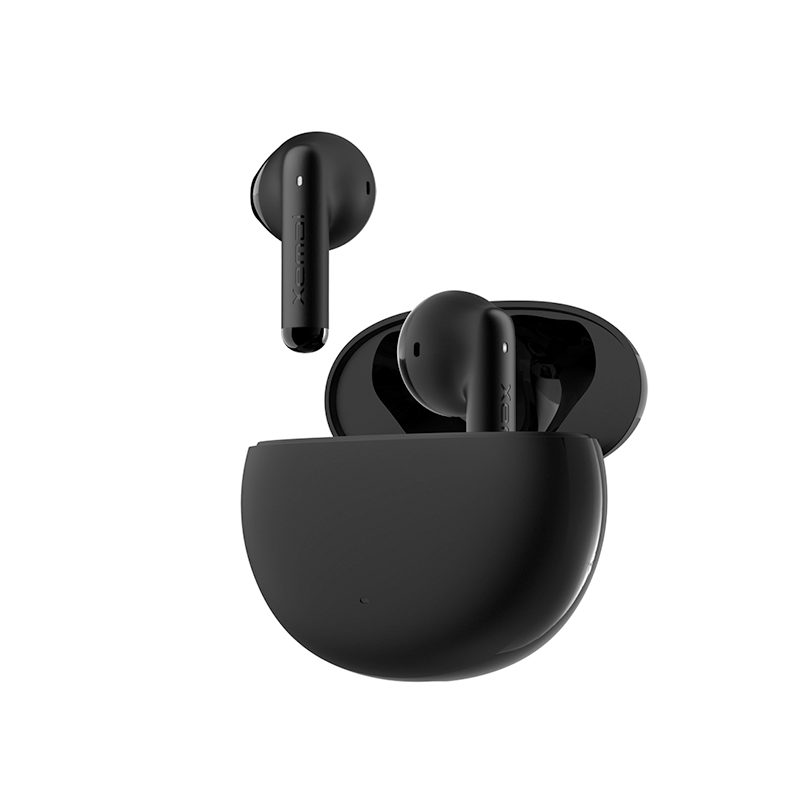
Edifier recently released the Edifier X2 true wireless stereo earbuds with some pretty compelling specifications for the price, starting with a promised battery life of up to 7 hours without the charging case.
The Edifier X2 TWS earbuds feature an ergonomic design tailored to fit perfectly in your ears while maintaining a stylish look. Each of the earbuds weighs just 3.5g so you can virtually forget that you’re even wearing them.
But it’s not just the design alone that’s the highlight as Edifier has also given plenty of attention to the audio output of the earbuds. 13mm dynamic drivers have been used to output powerful sound, which the company promises will provide a “wide sound field and balanced listening feeling.” This is combined with other tech like optimized call noise reduction, reduce environmental noise interference, and enhanced human voice to improve sound clarity.
In terms of battery life, the Edifier X2 can output continuously for around 7 hours without the charging case. And with the case, the battery life can be stretched to a decent 21 hours. Each of the earbuds is packed with 37mAh batteries while the charging case holds a 350mAh one.
The Edifier X2 TWS earbuds support the Bluetooth 5.1 standard and protocols like HFP, A2DP, and AVRCP. The audio codec support seems to be limited to SBC.
If you are looking to purchase them, then head over to this Giztop link where the earbuds are in stock for $31.99. Black and white color options are available.
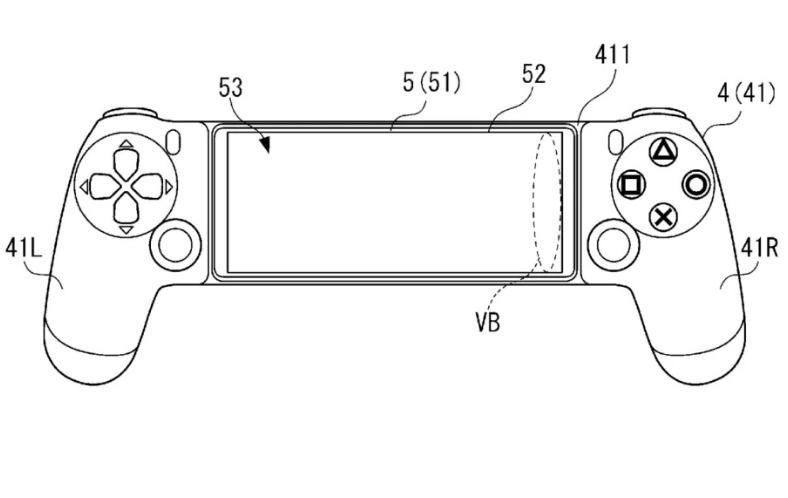
It appears that Sony is reigniting its efforts towards smartphone gaming. The company patent has revealed that the brand could be working on a PlayStation like controller that connects to your smartphone.
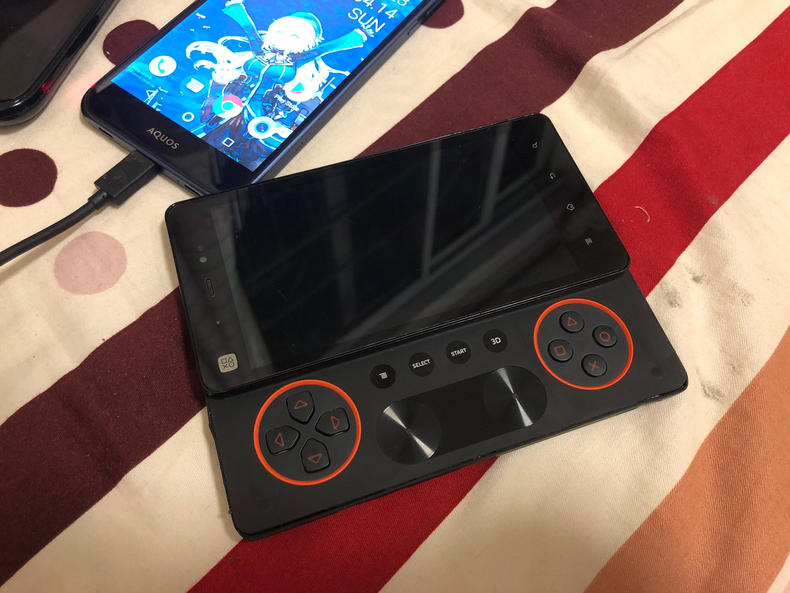
For those unaware, this wouldn’t be the first time the Japanese tech giant attempted at making gaming even more portable. Back in 2011, the company had made Sony Ericsson Xperia Play phone, which was a slider handset that featured a joypad and buttons that were similar to the controller of its popular gaming consoles. While the concept was quite innovative and ahead of its time, the technology at the time was rather limiting. Playing intensive 3D games at the time was impossible with the hardware at hand, although, this issue isn’t as limiting anymore.
Now, gaming smartphones are quite popular in the smartphone market, which offer top notch specs and features that can play intensive multiplayer titles like PUBG, which have a large map size as well. Furthermore, the company recently patented a new PlayStation like controller that is meant exclusively for smartphones. Looking at the images from this patent, we can see the iconic buttons, pads, and triggers that makes it a full fledged controller.
Unreleased Xperia Play 2
However, we have no way of knowing if it supports DualSense’s vibration motors as well. Just last year we had reported on the company’s unreleased Xperia Play 2 being spotted online. If this product is true, it would likely mean one of two things, either that the company is working on an accessory that fits with any smartphone for added gaming controls, or its an Xperia Play device that would offer game streaming (PS Now) along with smartphone functionality as well.
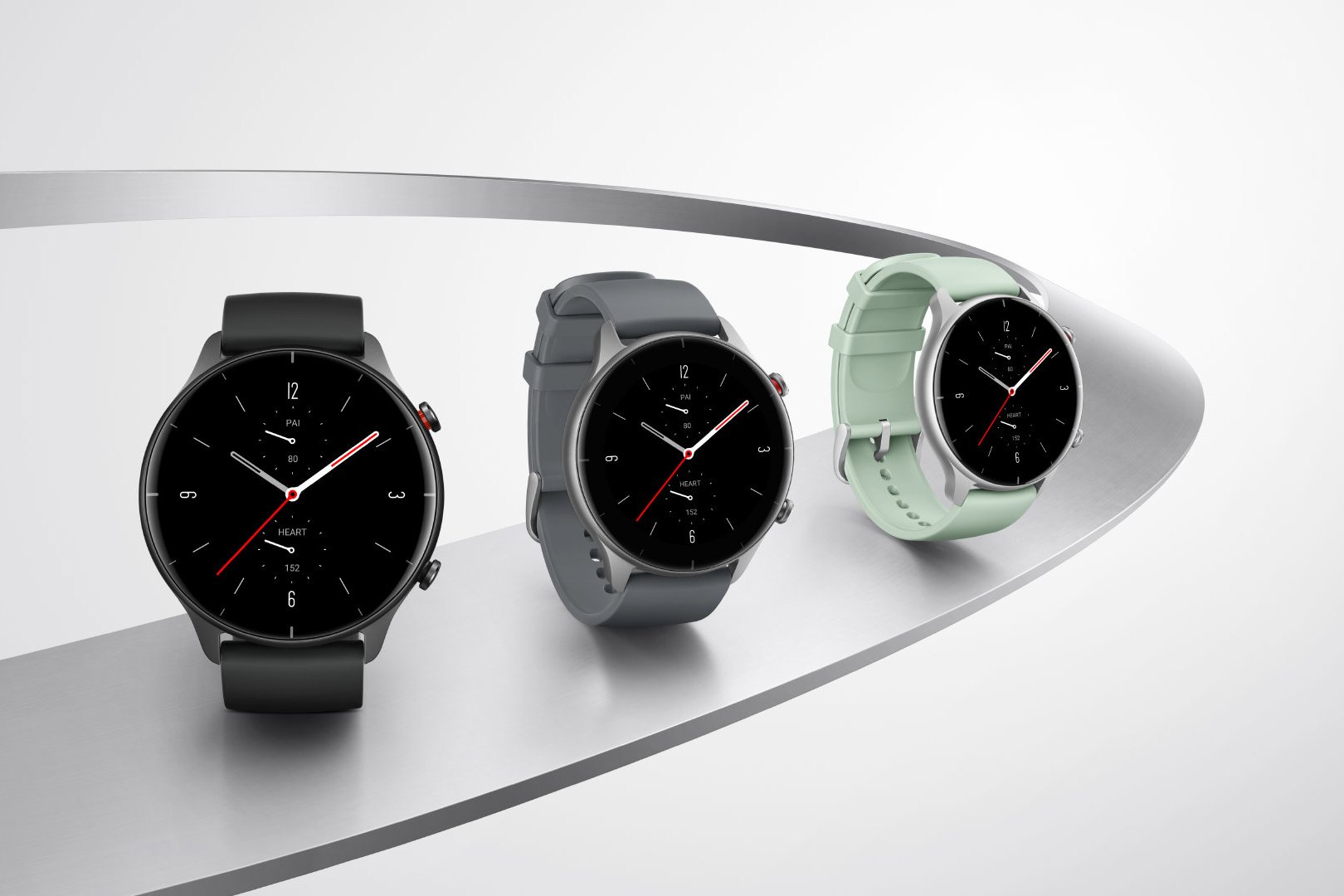
Amazfit, the company known for making wearable devices, has become the world’s third-largest smartwatch maker in the third quarter of this year, overtaking Chinese giant Huawei, reports Counterpoint Research’s Global Smartwatch Model Tracker.
The report claims that Amazfit has managed to ship around 9.9 million units of its smartwatches in Q3 2021, which is representing an increase of 89 percent over the same period in the previous year. It now has a 5.8% global smartwatch market share.
Amazfit GTR 2e
Another highlight of the brand in the report is its increasing presence in the overseas market. The company’s sales from the overseas market accounted for 61.8 percent of its global shipments. In Germany, its sales increased 150 percent year-on-year while in Turkey, the brand’s shipments increased by 324 percent YoY.
It has seen a good response in the European market from regions like Italy, Spain, and Germany. A few products from the brand performed quite well in the market, including the GTR 2e, GTS 2e, and T-Rex Pro.
Further, the company also benefited from partnerships with Spartan, ESOK Rally in Turkey, All-Russian Zavidovu SUP Challenge, Israeli Beach Volleyball Championship, and Cruce Teques in Mexico.
Apple has retained its top position in the smartwatch market in Q3 with a 21.8% share but its market share fell by 10 percent YoY. South Korean tech giant Samsung grabs the second spot with record-high shipments of Galaxy Watch4 and Galaxy Watch4 Classic, helping the brand increase its market share from 9.9% to 14.4%.
The Redmi Note 11T 5G has launched in India today as the successor to the Redmi Note 10T 5G, which debuted earlier this year as the first 5G-enabled Redmi Note series phone. As compared to the predecessor, the Note 11T 5G comes with improvements in departments like display, processor, cameras, and charging capabilities.
Redmi Note 11T 5G specifications and features
The Redmi Note 11T 5G has a 6.6-inch IPS LCD punch-hole screen that offers a Full HD+ resolution, a 90Hz adaptive refresh rate, a 240Hz touch sampling rate, and Gorilla Glass protection. The smartphone offers a 16-megapixel camera for selfies and video calls. The Note 11T 5G’s rear camera module has a 50-megapixel main camera and an 8-megapixel ultrawide lens with a 119-degree FOV. Xiaomi is not offering those rubbish 2-megapixel depth/macro cameras on the Note 11T 5G.
The Note 11T has Dimensity 810 smartphones, which also powers the likes of Realme 8s 5G and Lava AGNI 5G in India. The device ships with 4 GB / 6 GB / 8 GB of LPDDR4x RAM and 64 GB / 128 GB of UFS 2.2 storage. It comes pre-installed with MIUI 12.5 and Android 11. For a smoother experience, while launching apps, the device comes with support for up to 3 GB of extended RAM.
Redmi Note 11T 5G
The Note 11T has a 5,000mAh battery that supports 33W fast charging (in-box charger) through USB-C. For audiophiles, it offers dual stereo speakers and a 3.5mm audio jack. The other features that are packed inside the Note 11T include dual SIM support,5G, Wi-Fi 6, Bluetooth 5.1, GPS, IR blaster, X-axis linear motor, and a side-facing fingerprint scanner.
The Redmi Note 11T 5G is already available in China with the Redmi Note 11 5G moniker. A rebranded version of the same device is available in global markets with the POCO M4 Pro 5G moniker. While the POCO phone has the same specs, it offers a refreshed rear design.
Redmi Note 11T 5G price in India
Here is the pricing of the different variants of the Redmi Note 11T 5G in India:
4GB RAM + 64GB storage – Rs 16,999 (~$226)
6GB RAM + 128GB storage – Rs 17,999 (~$239)
8GB RAM + 128GB storage – Rs 19,999 (~$266)
Color variants: Matte Black, Stardust White and Aquamarine Blue
With the introductory discount of Rs 1,000 and additional Rs 1,000 discount with ICICI Bank credit cards and EMI, these variants of the Redmi Note 11T 5G can be bought for Rs 14,999 (~$200), Rs 15,999 (~$213), and Rs 17,999 (~$239), respectively. Buyers can also avail no-cost EMI offer for up to 9 months while purchasing the Note 11T 5G. The first sale of the phone is scheduled to take place on Dec. 2 in India. It will be available for purchase through Amazon India and Xiaomi India’s website.
Realme is prepping up the Realme 9 series for India. The lineup is likely to comprise of four models such as Realme 9, Realme 9i, Realme 9 Pro, and Realme 9 Pro+. Ahead of the expected early 2022 launch, the Realme 9 Pro Plus has bagged BIS certification in India.
In October, a Realme phone with RMX3393 was spotted at the IMEI database and the Eurasian Economic Commission (EEC). Now, what appears to be a variant of the same phone with model number RMX3392 has appeared in the database of the Bureau of Indian Standards (BIS). According to popular tipster Mukul Sharma, the RMX3392 is expected to break cover in India as the Realme 9 Pro.
Probably, the RMX3392 model number belongs to the Indian variant of the Realme 9 Pro+. The BIS certification has no information on the specs of the device. It is speculated that the Realme phone with RMX3491 model number will debut in the market with the Realme 9i moniker.
A recent report claimed that Realme 9i’s global launch will be held in January 2022. As far as India is concerned, the company may hold two launch events for announcing the Realme 9i, Realme 9, Realme 9 Pro, and Realme 9 Pro+. The first one is likely to be held by the end of January. The other event is likely to be held in February.
Hopefully, the rumor mill will spill more information on the Realme 9 series of smartphones in the coming days. In related news, Realme is also planning to launch the Realme GT 2 Pro in multiple markets like China and India. It is expected to come with top-notch specs like a 6.51-inch AMOLED FHD+ 120Hz display, Snapdragon 8 Gen 1, OIS-enabled 50-megapixel triple cameras, and a 5,000mA battery with 125W fast charging.
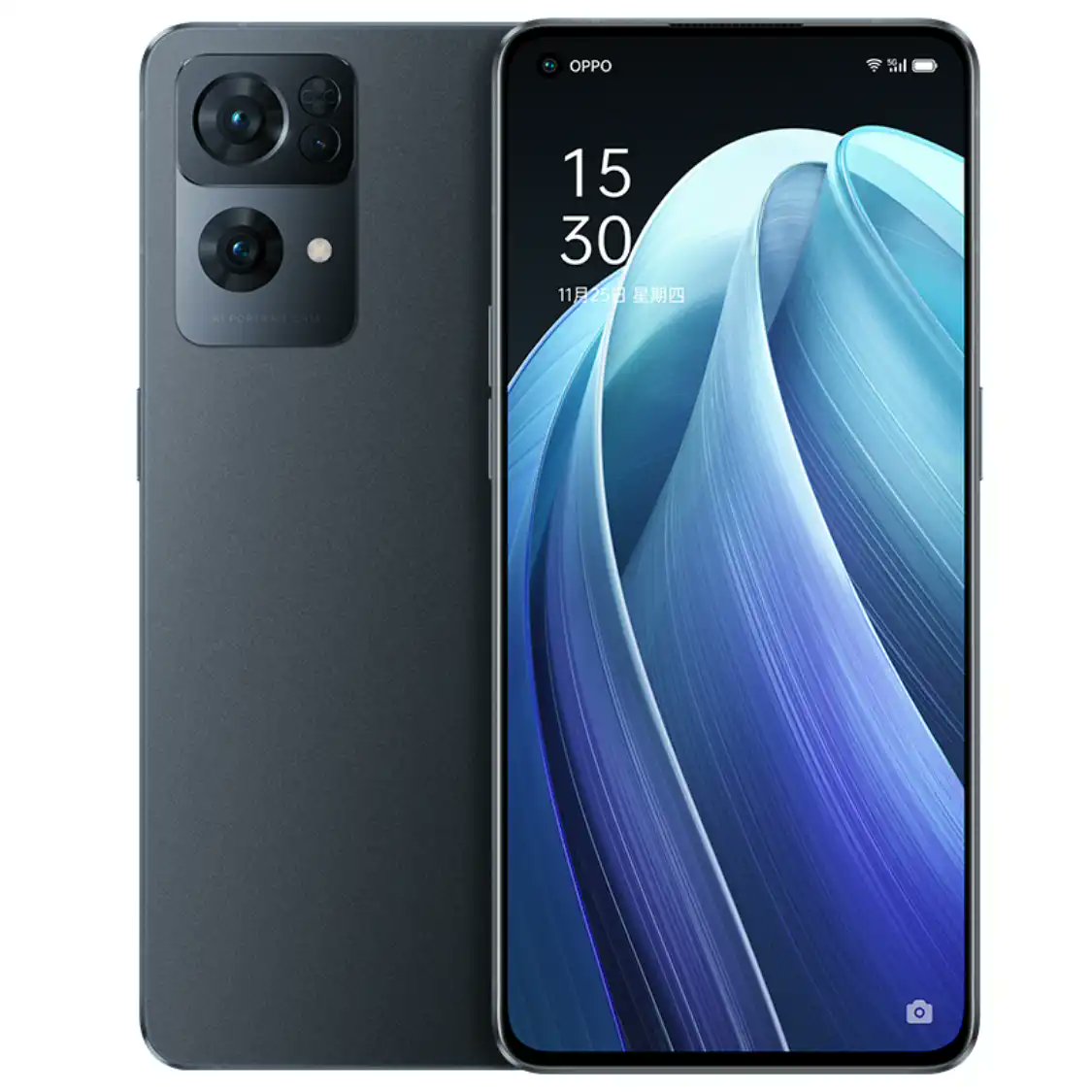
Last week, China-based manufacturer OPPO took the wraps off its latest Reno7 series smartphones. The company has launched three models in the series in its home market — OPPO Reno7, Reno7 Pro, and Reno SE.
It has already been reported that the company is expected to launch the OPPO Reno7 and Reno7 Pro smartphones in the Indian market sometime in January. Now, ahead of the launch in India, the pricing details of the devices have leaked online.
OPPO Reno7 Pro
A report coming from 91Mobilesclaims that the OPPO Reno7 will be priced between ₹28,000 and ₹31,000 while the Pro model will carry a price tag of ₹41,000 to ₹43,000. It seems that the OPPO Reno7 SE won’t get launched in India.
pAlong with the Reno7 series phones in the Indian market, the Chinese company is also expected to launch new TWS earbuds but nothing much is known about it at this point in time. The OPPO Watch Free is also expected to go official in India at the same time.
The OPPO Reno7 features a 6.43-inch Full HD+ 90Hz AMOLED display and is powered by the Qualcomm Snapdragon 778G chipset, coupled with up to 12GB RAM LPDDR4X RAM, and 256GB of UFS 3.1 internal storage.
It has a triple-camera setup on the back, consisting of a 64-megapixel primary sensor, an 8-megapixel wide-angle lens, and a 2-megapixel macro sensor. On the front side, the device is equipped with a 32-megapixel snapper. The phone runs Android 11-based ColorOS 12 and is powered by a 4,500mAh battery with 60W fast charging support.
On the other hand, the OPPO Reno7 Pro features a 6.55-inch Full HD+ 90Hz AMOLED display and is powered by the Mediatek Dimensity 1200-Max chipset. It comes packed with up to 12GB LPDDR4x RAM and 256GB of UFS 3.1 internal storage.
As for the photography department, the phone has a triple-camera that boasts a 50-megapixel Sony IMX766 sensor, an 8-megapixel ultra-wide lens, and a 2-megapixel macro lens. On the front side, this one too has a 32-megapixel Sony IMX709 snapper. The phone runs Android 11-based ColorOS and is powered by a 4,500mAh battery with 65W charging.
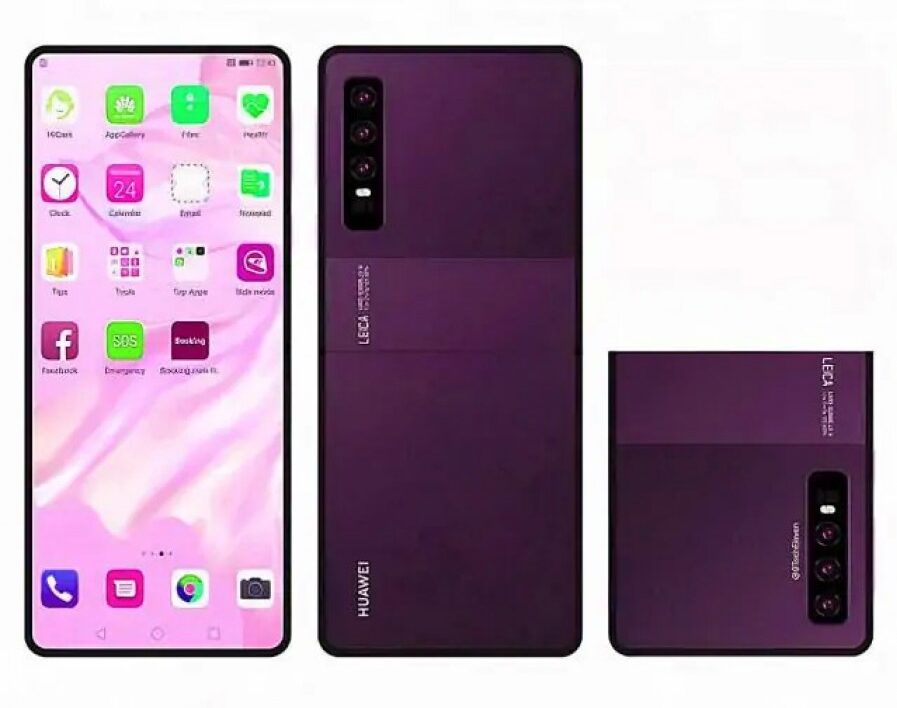
Huawei was among the first companies to launch a foldable smartphone in the market when it debuted two such devices in the market — Huawei Mate X and Mate Xs. This year, in February, the company launched the Mate X2 smartphone with an inward folding design, similar to the Samsung Galaxy Z Fold series.
Now, the company is working on another foldable smartphone which is supposedly featuring a clamshell design, similar to the Samsung Galaxy Z Flip lineup. But this time, the company is charging the hinge design for the smartphone.
As per the report coming from Weibo, Huawei will be using a next-generation hinge from Zhaoli Technology which is being developed for quite some time now. The company has said that a smartphone manufacturer will be using this new hinge and it seems that Huawei is the only brand that makes sense for this development.
The new hinge is said to be less complicated when compared to the ones already used by Huawei. But the hinge is also more reliable than the ones used in the past and the added bonus is that because of fewer parts, it is also less expensive.
Some reports indicate that the upcoming clamshell foldable smartphone could be named Huawei Mate V but the name has not been confirmed yet. It is expected to get launched soon and could come powered by the Kirin 9000 chipset. Just like recent Huawei phones, it is likely to be a 4G-only model because of the US-imposed sanctions on the company.
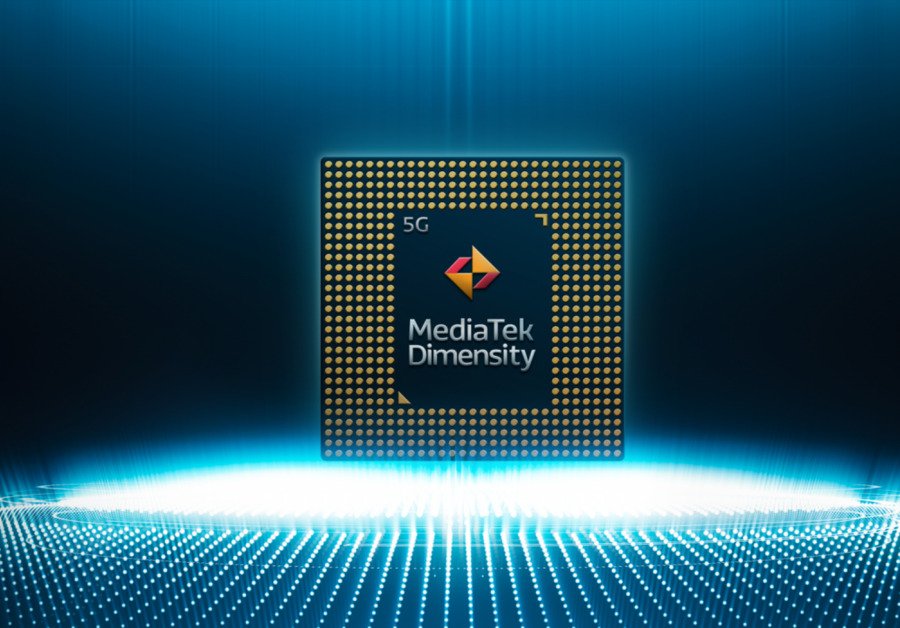
MediaTek is expected to soon announce the Dimensity 7000 chipset. It is said to be a toned-down version of the Dimensity 9000 SoC that was announced recently. Reliable tipster Digital Chat Station had recently shared the specs of the CPU and GPU information on the Dimensity 7000. Now, he has shared some new details of the SoC.
It is speculated that the upcoming Dimensity 7000 will be a 5nm chipset. The octa-core chip is expected to arrive with four Cortex-A78 CPU cores working at 2.75GHz and four Cortex-A55 CPU cores ticking at 2.0GHz. For graphics, it may arrive with Mali-G510 MC6 GPU. A recent report had suggested that the Dimensity 7000 powered phones may support up to 75W fast charging.
The Dimensity 7000 is said to be MediaTek’s next best chip after the Dimensity 9000. Today, the tipster claimed that D7000 can handle Full HD+ resolution with up to 168Hz refresh rate or Quad HD+ resolution with up to 120Hz resolution. The SoC is also expected to carry support for LPDDR5 RAM and UFS 3.1 storage.
As far as performance is concerned, the tipster claimed that the Dimensity 7000’s benchmarking score on GFX ES 3.0 is similar to the Snapdragon 870. He added that the AnTuTu score of the Dimensity 7000 is even better. There is no word on the launch date of the SoC. While the Dimensity 9000 has been already announced, MediaTek will be holding a dedicated unveiling event for it on Dec. 16 in China. Probably, the company may unleash the Dimensity 7000 SoC through the same event.
As we are about to enter December, OPPO has revealed its ColorOS 12 update plan for the upcoming month in China. A total of 11 devices will get access to open beta builds, while 8 handsets will be upgraded to the stable channel.
OPPO is the only major smartphone brand to release monthly OS upgrade schedules for its devices. The latest timeline announced by the company for its home country details the handsets that will be updated to Android 12-based ColorOS 12 beta and stable in the month of December 2021.
According to the latest schedule, select handsets from 2021 and 2020 will receive open beta (public beta) builds. Whereas, last year’s flagship OPPO Find X2 series and this year’s OPPO Reno6 series will get the stable update.
ColorOS 12 Update Plan December 2021 China
Open Beta
December 1
OPPO Reno5 Pro+ Artist Limited Edition 5G
OPPO Reno5 Pro+ 5G
OPPO Reno5 5G
December 10
OPPO Reno5 Pro 5G
December 15
OPPO A95 5G
December 23
OnePlus 9R 5G
December 28
OPPO ACE2 EVA Limited Edtion
OPPO ACE2
OPPO A93 5G
December 29
OPPO Reno5 K 5G
OPPO K9 5G
Stable
December 20
OPPO Find X2 Pro Automobili Lamborghini Edition
OPPO Find X2 Pro
OPPO Find X2 League of Legends S10 Limited Edition
OPPO started improving its OS upgrade delivery beginning with ColorOS 7. It got much better with ColorOS 11. Now, with ColorOS 12, the company is setting the bar high.
As usual, this update timeline is subject to change depending on various factors.
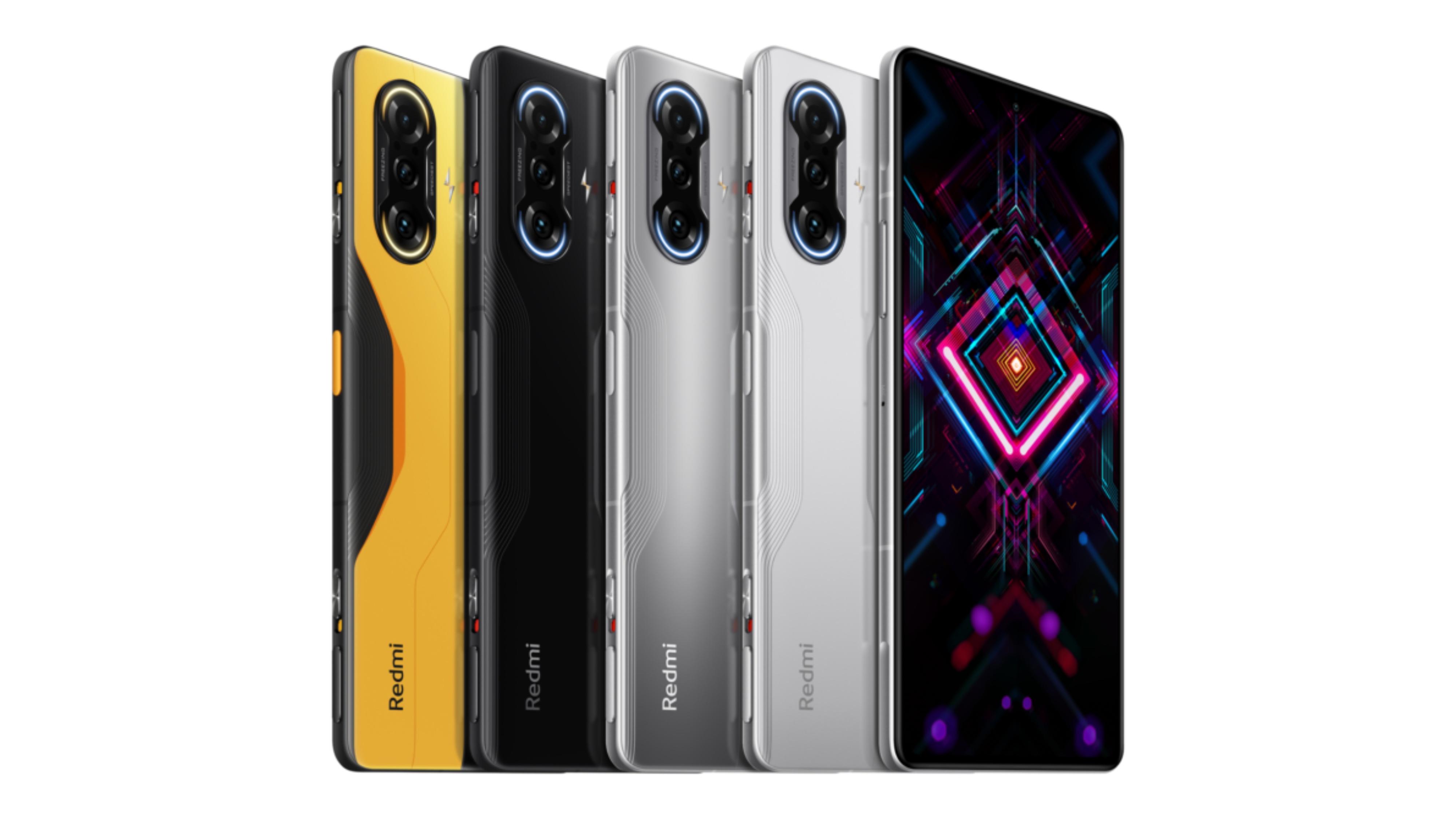
Earlier this month, a Chinese tipster claimed that the Redmi K50 series will come with four different chipsets such as Snapdragon 870, Snapdragon 8 Gen 1, Dimensity 7000, and Dimensity 9000. Now, reliable tipster, Digital Chat Station has also tipped on the SoCs that will power some of the Redmi K50 phones.
According to the tipster, the Redmi K50 models will come preinstalled with the latest MIUI 13. Past reports have claimed that even the Xiaomi 12 and Xiaomi 12X that are expected to launch in December will arrive with MIUI 13 preinstalled. However, it is unclear whether these devices will get MIUI 13 based on Android 12 or Android 11.
The tipster has reiterated that the Redmi K50 models will feature the Dimensity 7000 and Dimensity 9000 chipsets. He added that the performance of these chipsets is not as fast as that of the Snapdragon 870 and Snapdragon 8 Gen 1 SoCs.
Redmi K40 Gaming
MediaTek had recently announced the Dimensity 9000 as the world’s first SoC built with TSMC’s 4nm processing technology. The Dimensity 7000 is yet to go official.
It is speculated that Xiaomi devices codenamed Matisse (L10 shortened model number) and Rubens (L11A shortened model number) may debut in the Chinese market as the Redmi K50 series gaming smartphones. It is believed that the Matisse model will be powered by the Dimensity 9000 SoC. This phone is speculated to carry POCO branding in other markets. This device is speculated to feature specs like a 120Hz or 144Hz OLED screen, an in-display fingerprint scanner, a 64-megapixel + 13-mgeapixel + 8-megapixel + 2-megapixel quad-camera unit. It is speculated that there is another variant of this phone with a 108-megapixel primary camera. This phone may launch in the Chinese market as the Redmi K50 Gaming or K50 Gaming Pro and it may arrive as the POCO F4 GT in other markets.
On the other hand, the Xiaomi Rubens debuted as the Redmi K50 Gaming Standard Edition. It is likely to feature the Dimensity 7000 and a triple camera unit led by a 64-megapixel camera.
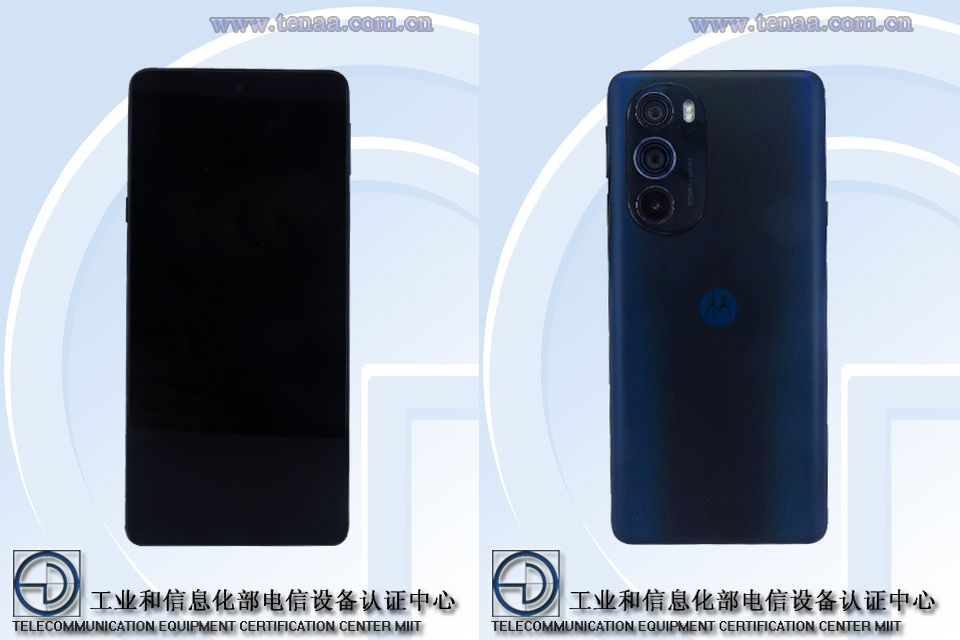
Motorola will be announcing dual flagship phones in December in China. Both phones with model numbers XT2175-2 and XT2201-2 have appeared in the database of the TENAA and 3C certification sites of China with all the major specs and images. These phones are said to be powered by the Snapdragon 888 Plus and Snapdragon 8 Gen 1 SoC, which is expected to go official tomorrow. A Weibo post from Chen Jin, who is Lenovo China’s General Manager for the mobile division has revealed the name of the XT2201 model.
The X2175 model has already launched in global markets with the Moto G200 moniker. Some reports have claimed that this model may debut in the market with the Moto Edge S30 moniker. The first teaser released by the brand had revealed that its Snapdragon 8 Gen 1 powered flagship will carry Moto Edge X branding. As can be seen in the below-shown screengrab, Chen Jin has is using a new phone named the Moto Edge X30 to compose Weibo posts.
Jin’s Weibo posts state that the new phone has Gorilla Glass panels on both sides and a new processor that offers powerful performance. He also mentioned that the phone will arrive with a bunch of new features. In the comments section of the post, Jin mentioned that it will be the first device to offer My UI 3.0 experience.
It can be said based on recent reports that the Moto Edge X30 could be coming with a 6.67-inch OLED panel that produces a Full HD+ resolution and a 144Hz refresh rate. It may feature a 60-megapixel front camera and its rear camera setup may include a pair of 50-megapixel cameras and a 2-megapixel snapper.
Moto Edge X30’s TENAA iamges
The device may ship with up to 16 GB of RAM and up to 512 GB of storage in China. It may house a 5,000mAh battery with 68W fast charging support. This device is likely to debut with the Motorola Edge 30 Ultra name in the global markets.
Honor is all set to launch its new Honor 60 series smartphones in its home country China tomorrow, i.e. 1st December. While several details related to the upcoming phones have surfaced online, the full specs of the devices have now leaked online.
A new report coming from 91Mobiles reveals the full specifications of the upcoming Honor 60 and Honor 60 Pro smartphones, just hours before the official launch of the devices in the Chinese market.
It is being claimed that the Honor 60 features a 6.67-inch FHD+ OLED panel, offering a pixel density of 395ppi and possibly a 120Hz refresh rate. Under the hood, the device is powered by the Qualcomm Snapdragon 778G chipset, coupled with up to 12GB RAM and 256GB of internal storage.
The phone has a triple-camera setup on the back, consisting of a 108-megapixel main sensor paired with an f/1.9 aperture lens, an 8-megapixel f/2.0 ultrawide camera, and a 2-megapixel f/2.4 depth sensor. It is rumored to have a 50-megapixel front-facing snapper.
In a recent teaser video, the company has confirmed that the phone will have support for camera gestures, including support for high-fiving to capture images, waving, and making a fist, among others, giving users a more convenient option for capturing photos.
The phone is running the Android 11 operating system out-of-the-box with the company’s own MagicUI 5.0 on top. The device is powered by a 4,800mAh battery and supports 66W fast charging. It measures 161.4×73.3×7.98mm and weighs 179 grams. The smartphone will come in three colors — Bright Black, Starry Sky Blue, and Jade Green.
Details about the Honor 60 Pro still remain under the wraps but the device is expected to have a similar display as the standard model and the same 108MP primary camera sensor on the back panel. To more about this, we will have to wait for Honor to officially launch these new smartphones tomorrow in China.
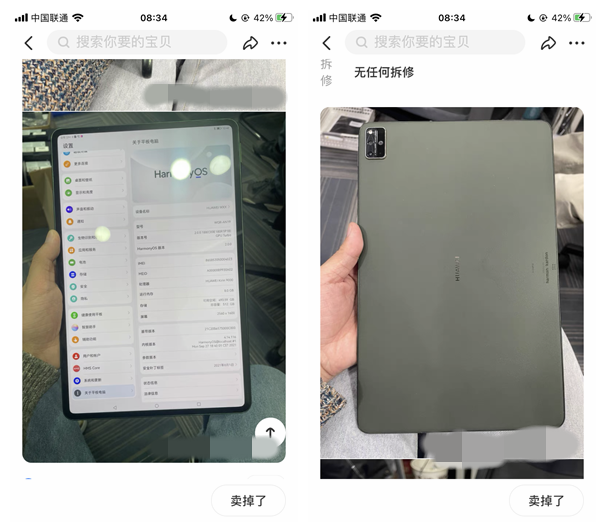
Earlier this year, Chinese giant Huawei launched its new tablet device in the market, dubbed as Huawei MatePad Pro 12.6. Now, an engineering version of the device has been spotted online which was used for testing, hinting at a higher refresh rate.
The Huawei MatePad Pro 12.6 launched so far features a 12.6-inch display with a 60Hz refresh rate. Now, the engineering model with a 120Hz refresh rate has appeared online which the company was using for internal testing.
It is being reported that the company was working on a 120Hz refresh rate display for the tablet but couldn’t offer it when the device got launched because of supply chain issues. Currently, it’s not confirmed if the company plans to launch this 120Hz screen model in the market or not.
It is powered by the Kirin 9000 series chipset. The Wi-Fi version comes with the Kirin 9000E while the 5G version is powered by the Kirin 9000 chipset. It packs up to 512GB of internal storage and there’s support for storage expansion via Huawei’s NM card slot.
The device features a 12.6-inch OLED display with a resolution of 2560 x 1600 pixels and 5.6mm slim bezels that give it a 90 percent screen-to-body ratio. It has a 1,000,000:1 contrast ratio, DCI-P3 color gamut, and a Delta E color accuracy rating of less than 0.5.
It comes with eight speakers tuned by Harman Kardon and with Histen 7.0 sound effects. It is also equipped with four microphones designed to pick up your voice from several meters away and also cancel background noise when having a video call or recording. The tablet is powered by a 10,050mAh battery that supports 40W fast wired charging, 27W wireless fast charging, and 10W reverse wireless charging.
This year Xiaomi launched a new series of phones focused on design. The first model from the series is called Xiaomi Civi and it is definitely one of the most beautiful phones ever released. But the company clearly took inspiration from the latest OPPO devices in order to realize that astonishing finish for the glass back. Talking about OPPO, it just came up with another beautiful phone: the OPPO Reno7 5G, sporting a different design from its predecessor and very original design elements. Here is a comparison between two of the most beautiful phones in the whole market: the Xiaomi CIVI and the OPPO Reno7 5G
Triple 64 + 8 + 2 MP, f/1.7 + f/2.2 + f/2.4
32 MP f/2.4 front camera
Triple 64 + 8 + 2 MP, f/1.8 + f/2.2 + f/2.4
32 MP front camera
BATTERY
4500 mAh, fast charging 60W
4500 mAh, fast charging 55W
ADDITIONAL FEATURES
Dual SIM slot, 5G
Dual SIM slot, 5G
Design
Both these phones come with a stunning design: which one to choose? It is mostly a matter of taste. The finish is similar: an opaque but brilliant glass back with a great microcrystalline finish changing color depending on the light angle. The OPPO Reno7 is more compact, while the Xiaomi Civi is bigger but also thinner and lighter. With a thickness of just 7 mm and a weight of 166 grams, the Xiaomi Civi is one of the thinnest and most lightweight phones of 2021. On the other hand, the OPPO Reno7 5G sports an amazing LED ring around the camera which can light up when you receive notifications. If you are nostalgic and you miss the notification LED, you will love it.
Display
One of the most important advantages of the Xiaomi Civi over the OPPO Reno7 is the presence of a superior display. First of all, the Xiaomi Civi has a wider panel, with a diagonal of 6.55 inches (against just 6.43 inches). It is an OLED display that shows up to one billion colors, it supports Dolby Vision, the HDR10+, and a refresh rate of 120 Hz. The OPPO Reno7 5G can only show 16M colors and it has a lower 90 Hz refresh rate. Further, it lacks Dolby Vision, so the image quality on streaming platforms will surely be inferior. Both the phones feature an in-display fingerprint reader, but the Xiaomi Civi is the only one with stereo speakers.
Hardware/Software
There are no significant differences between the hardware components of these two handsets, but there is one. Xiaomi Civi and OPPO Reno7 5G are powered by the Snapdragon 778G mobile platform running at a max frequency of 2.4 GHz and paired with up to 12 GB of RAM and up to 256 GB of native storage. The OPPO Reno7 5G has a slower UFS 2.1 storage, while the Xiaomi Civi has a faster UFS 2.2. native storage. Both the phones are based on Android 11, but the OPPO Reno7 5G runs ColorOS 12 out of the box with all the new features of the recently announced customization, while you do not get the MIUI 13 with the Xiaomi Civi.
Camera
The camera departments of the OPPO Reno7 5G and the Xiaomi Civi are almost the same: the phones pack a 64 MP main camera, an 8 MP ultrawide sensor, a 2 MP macro camera, and a 32 MP selfie snapper. On the paper, the only noticeable difference between these handsets is the focal aperture: it is brighter on the OPPO Reno7 with f/1.7, which means it may be better in low light conditions.
Battery
The battery capacity of these devices is the same: 4500 mAh. But the OPPO Reno7 should be able to provide a longer battery life because its display is more efficient. The OPPO Reno7 5G also features a faster technology to charge the battery, but the difference between the twos is just 5W: the Reno7 5G has 60W fast charging, while the Xiaomi Civi has 55W.
OPPO Reno7 5G vs Xiaomi CIVI: Price
The starting price of the Xiaomi Civi roughly translates into €380/$430 at the actual change, while the OPPO Reno7 5G starts from €360/$405. Overall, these phones are not very different, if we exclude the design. The Xiaomi Civi actually comes with a better display and stereo speakers: this is very important for multimedia lovers. The OPPO Reno7 5G offers that interesting LED light on the back, but for the rest, it is very similar to the Xiaomi Civi but with an inferior display and mono speaker. Which one would you pick?
BBK subsidiary Realme has officially confirmed the existence of the Realme GT 2 Pro. The company’s CEO Sky Li recently confirmed via a tweet that the company was working towards unveiling the smartphone which sits on the high-end segment of the market.
GT 2 Pro – that’s how we are going to name our first and most premium flagship phone. Always feel great to deliver something new and exciting to users worldwide. #realmeGT2Propic.twitter.com/ngX5VI409S
The CEO calls the GT 2 Pro the brand’s first and most premium flagship phone. It is expected to start at over $800 (~Rs. 59,500). The device is expected to pack a host of premium features that will justify the price tag.
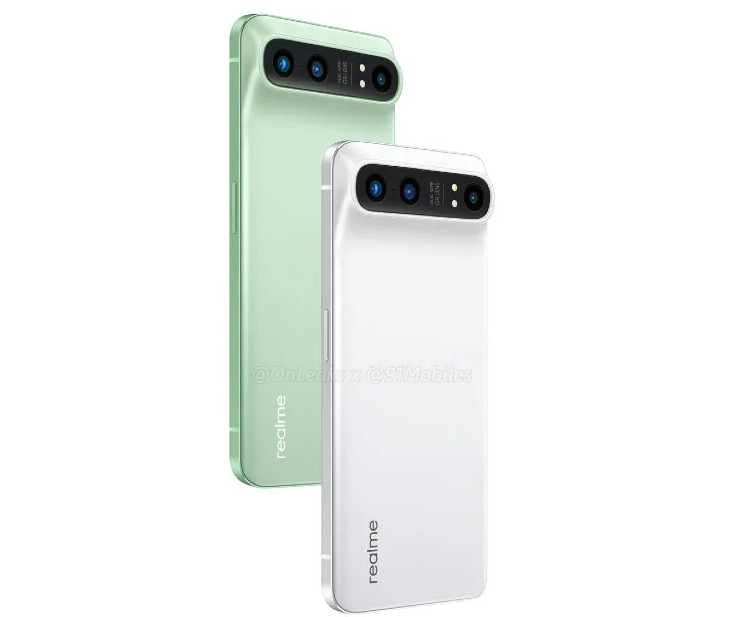
In a related development, renders of the Realme GT 2 Pro have also appeared online thanks to leakster @OnLeaks. The renders reveal the GT2 Pro will indeed be a sleek, premium device. The device is shown to have a horizontal module at the rear having a slight elevation like a hump.
The rear camera setup includes dual 50 MP sensors and an 8MP camera setup. The device is also expected to have a GR lens that should deliver the best shooting performance by reducing ghosting, multi-coating on all surfaces, and providing resistance against backlighting. The device is also expected to feature a 32MP front camera and a 5000mAh battery with 125W UltraDart charging.
The Realme GT 2 Pro is expected to pack a 6.8-inch 120Hz WQHD+ OLED display. The device was listed recently on AnTuTu showing it will be powered by a Snapdragon 8 Gen 1 (SM8450) processor backed by 12GB of LPDDR5 RAM, 256GB UFS 2.1 storage, 120Hz refresh rate screen, and Android 12.
We don’t expect Realme to unveil the premium flagship smartphone before 2022.
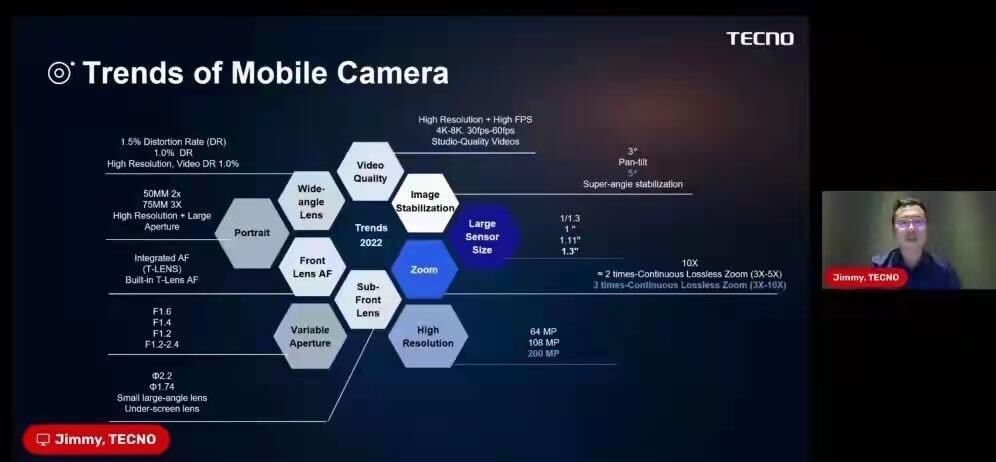
Earlier today, the China-based company TECNO unveiled some of its latest innovations and achievements in imaging technologies. These announcements occurred at the “Global Mobile Camera Trends 2022: Innovation talk” webinar hosted by the technology research firm Counterpoint.
With advances in dark complexion imaging aimed at users across key markets in Africa, India, and other regions, TECNO discussed recent achievements and breakthroughs regarding light sensitivity, image and video stabilization, zoom, and high-resolution – powered by technologies such as RGBW and G+P, Sensor-Shift and telescopic lenses. TECNO has promised some of these new technologies will be available in their 2022 product lineup. According to TECNO, these technologies will revolutionize a phone’s photographic capabilities and allow users to take studio-quality photos and videos without any professional skills.
So what are these breakthrough technologies TECNO talked about?
According to Jimmy Hsu, Senior Product Manager of image technology, TECNO has made significant progress in light sensitivity through a self-developed RGBW sub-pixel rendering algorithm that increases the light captured by the CMOS sensor by 60%. He added that Light intake would be further enhanced by 30% thanks to the G+P (glass + plastic) lens technology, resulting in an overall 200% increase and bringing a revolutionary low-light imaging experience to consumers.
TECNO also plans to release its Sensor-Shift technology in 2022, making it the first mobile phone brand with Android to do so. Sensor-Shift is an image stabilization technology that uses sensor movements instead of lens movements to compensate for vibrations. He also said that the control accuracy of TECNO’s Sensor-Shift will reach 350% of the current level with further algorithm optimization in the future.
The company is also working on a concept phone with a telescopic lens geared to launch in 2022. The lens provides advantages such as lossless zoom and a larger aperture. The company added that the “compressed back focal length (BFL) design with motorized stretchable lenses will significantly reduce the thickness of the phone, integrating consumer’ demands for simple appearance and high performance.”
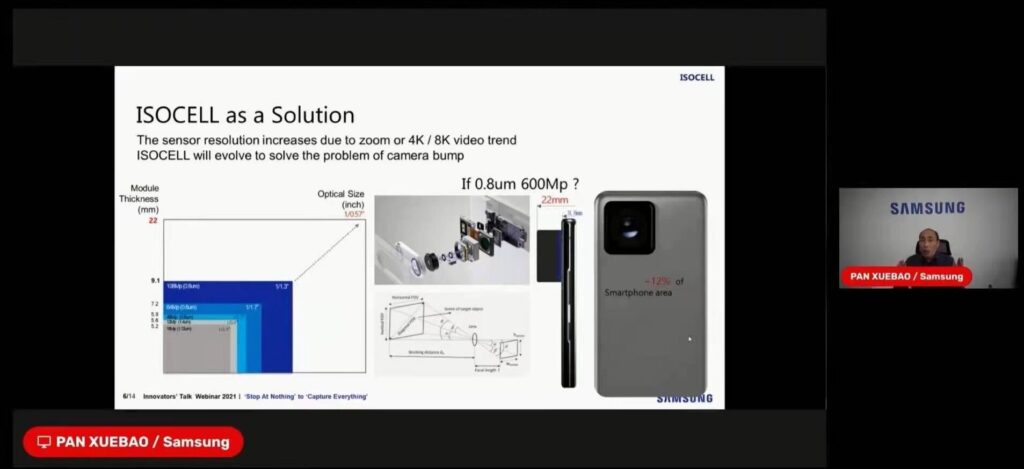
Apart from TECNO, DXOMARK and Samsung also participated in the webinar with Samsung’s VP and Head of R&D, Pan Xuebaoshowing stating that through their Tetra and Nona technologies, Samsung is close to the point where smartphone brands can now deliver DSLR-grade photography in the hands of customers. Speed is also prioritized with ISOCELL bringing faster autofocus capabilities as well as a solution to the ever-increasing camera bump problem.
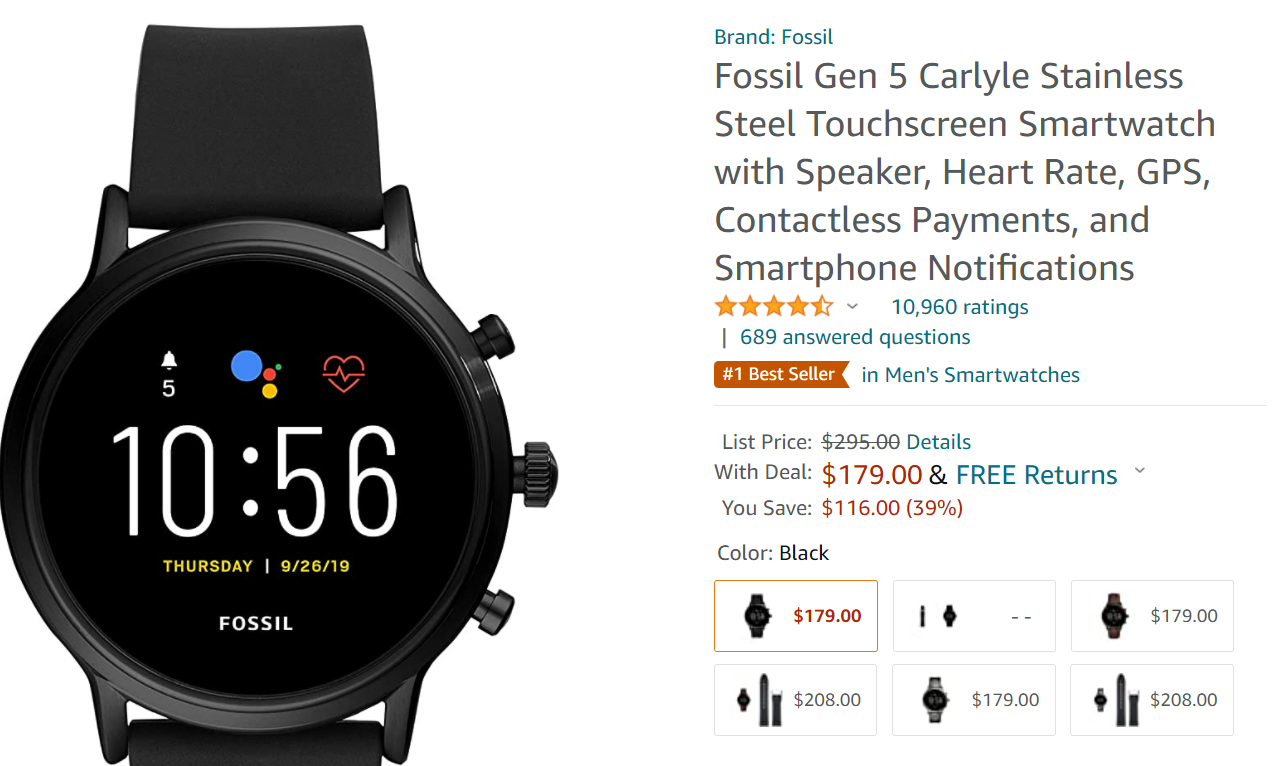
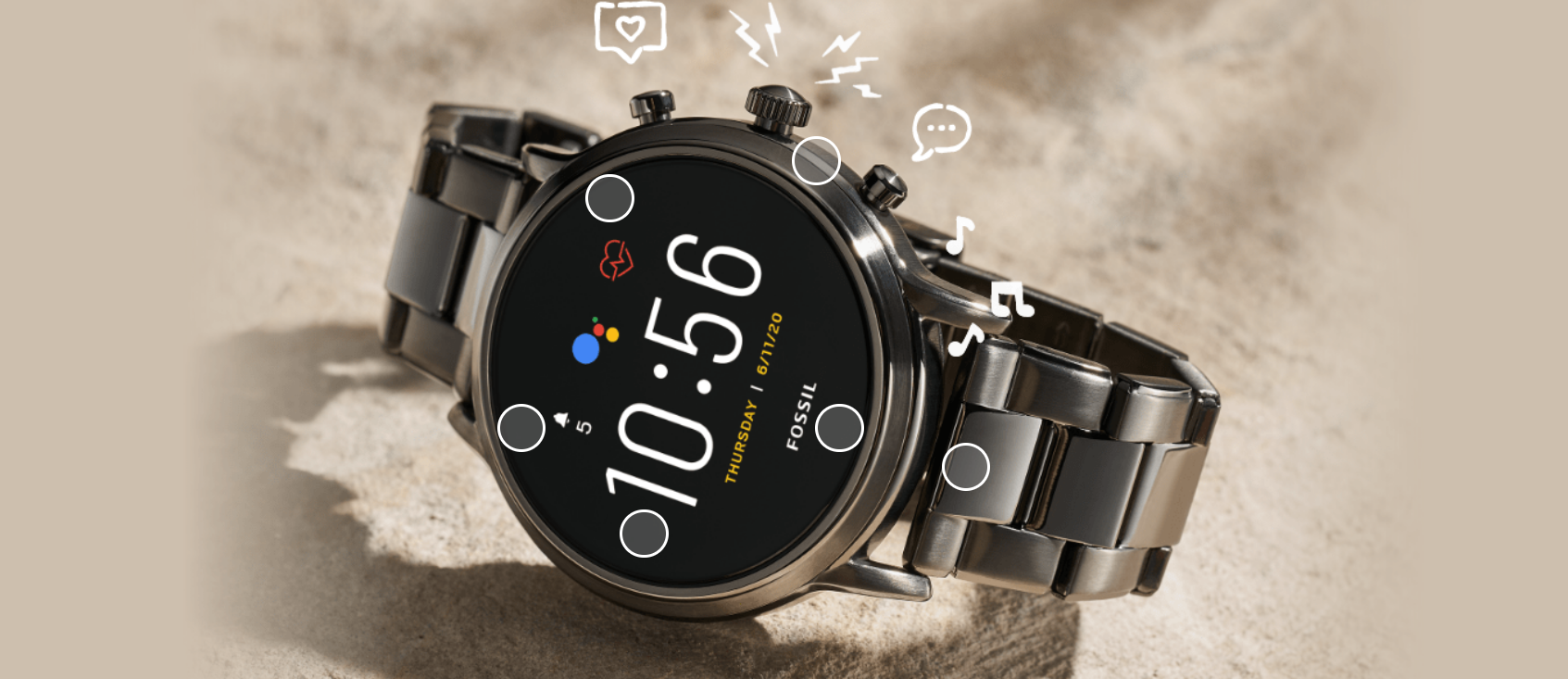
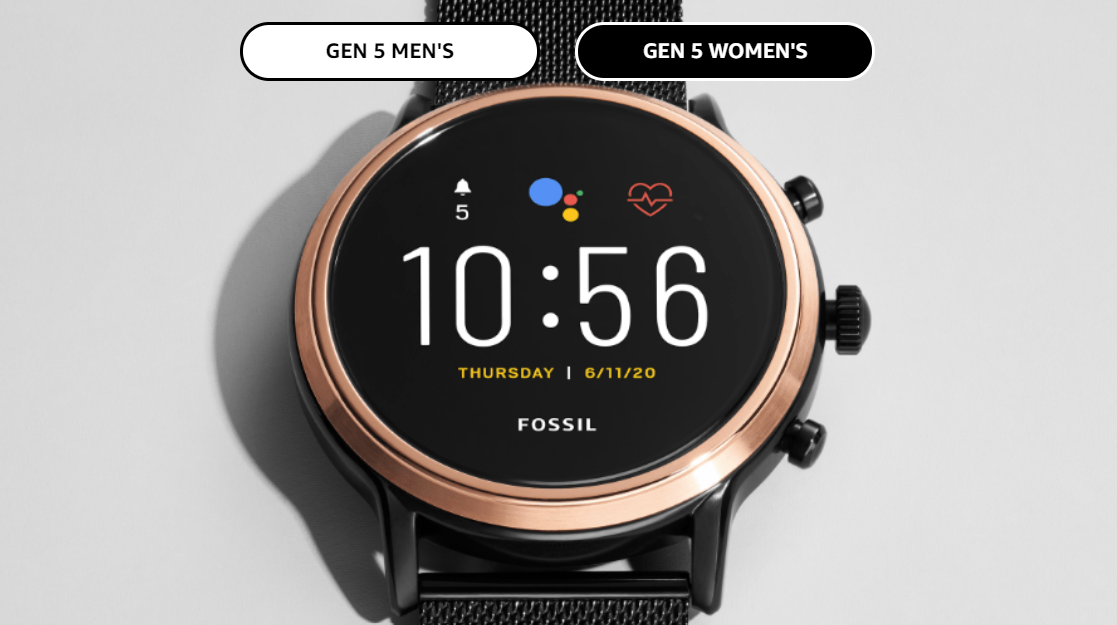
Fossil Gen 5 Smartwatch which generally retails for $265 is now available at a discounted price of $179only at Amazon US. This is a limited-time offer.
For a limited time, you can buy Fossil Gen 5 for a discounted price of $179 only at Amazon US. Please note that at this price this is a value for money deal. So grab the smartwatch asap.
For more information on such exciting deals and offers check out ourdeals hub.
You can also find the best Black Friday Dealshere.
* Please Note: When you buy something using the links in our articles, we may earn a small commission at no cost to you.
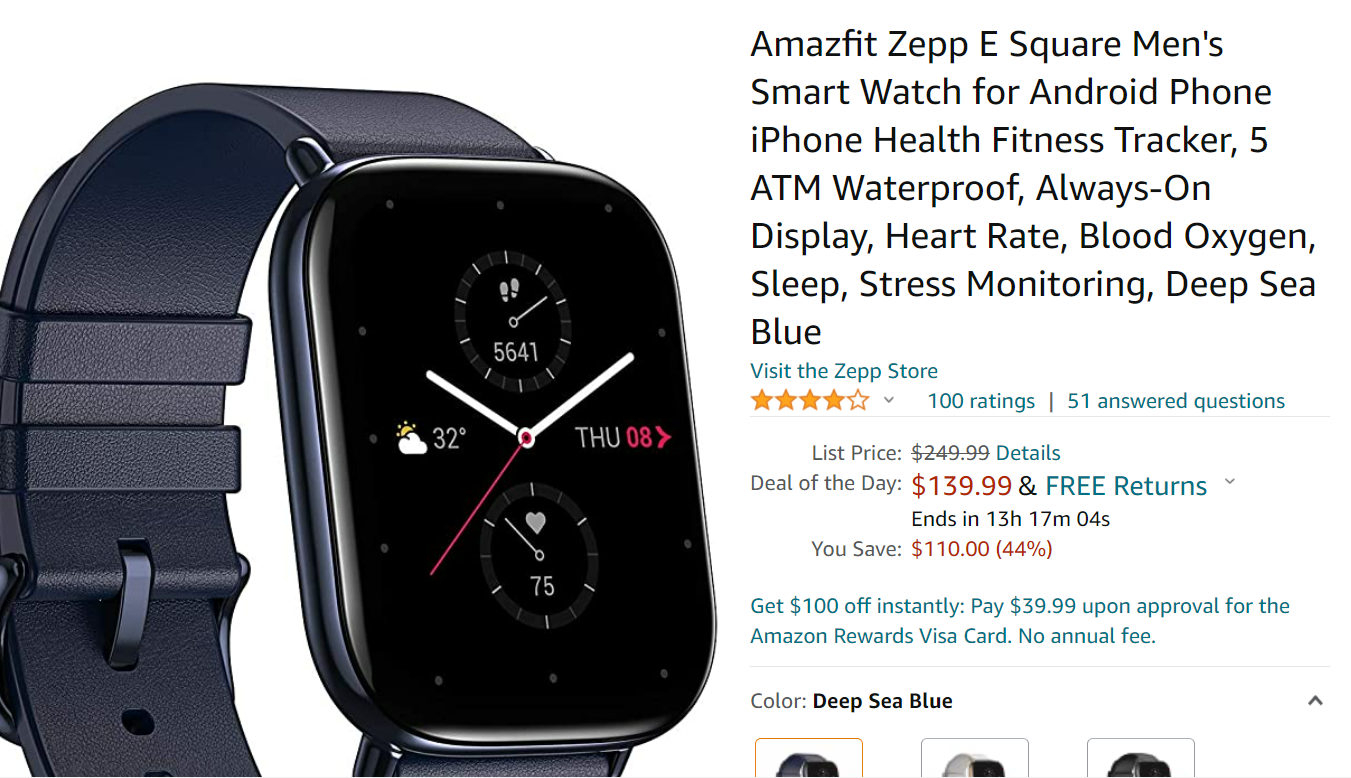
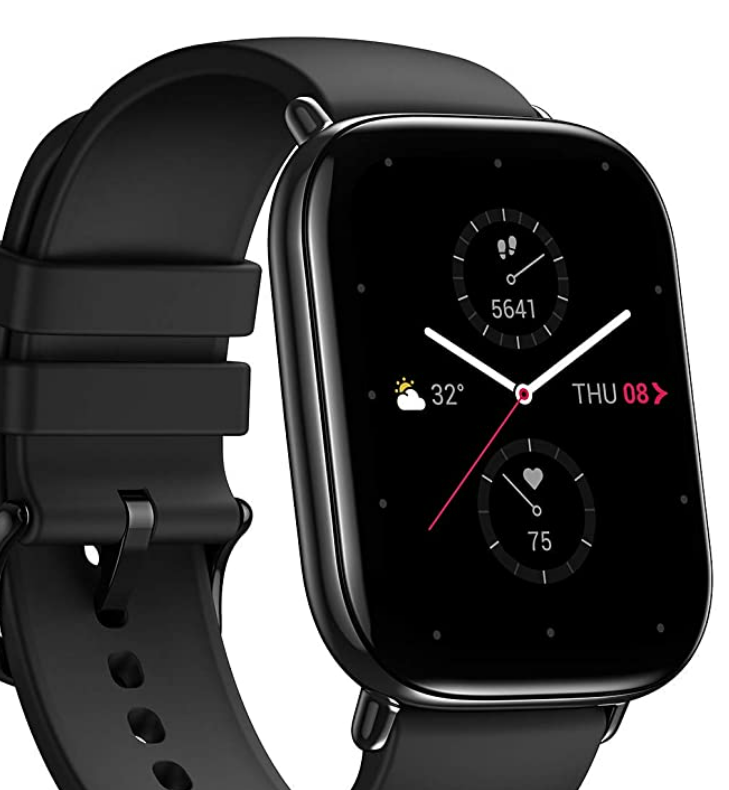
Amazon US is giving a whopping $110 discount on the Amazfit Zepp E smartwatch. The watch which retails at $250 is now available at a heavily discounted price of $139.99 only. This deal ends in 13 hours.
Generally retailing for $250, for the next 13 hours you can get Amazfit Zepp E for $139.99 only at Amazon US. This deal is applicable on Blue, Grey, Black, and Night black color variants.
For more information on such exciting deals and offers check out ourdeals hub.
You can also find the best Black Friday Dealshere.
* Please Note: When you buy something using the links in our articles, we may earn a small commission at no cost to you.
Smartphone usage patterns are evolving day-by-day, apart from calling and texting, it has become a daily driver for commuting and enjoying entertainment. Evolving from the usual smartphones, rugged smartphones are becoming popular due to their varied usage. Such technological innovation requires a lot of precisive techniques and manufacturing technologies. In the video you can see how the Ulefoen Armor 14 is produced:
Smartphone manufacturing is a complex process, and it becomes even more complicated upon scaling. The process includes plenty of planning, effort, and packaging. The video details each and every aspect of the Ulefone Power Armor 14 production.
Ulefone Power Armor 14 Production
As in the video, the manufacturing process starts with cleaned and dust-free environments to keep contaminations off the radar. The assembly lines are an effective way to produce items in bulk as it enables efficiency and accuracy in manufacturing. Each small component on the smartphone plays a pivotal role, and with the same precision, these components are soldered on the board.
Going through a complex process, the smartphone is put under the lens of rigorous testing. Both the hardware and the software are tested to offer a bug-free experience to users.
Ulefone Power Armor 14 comes with a massive 1000mAh battery supporting 18W fast charging. It features a large 6.52-inch display, a 20MP triple rear camera, a 16MP front camera, and a powerful octa-core processor with a 2.3Ghz frequency. The powerful smartphone is protected with IP68/IP69K rating. Know more about the device by heading to the official website. The device is on the Black Friday Holiday sale at a great discount.
Paytm on Monday launched its first-ever stand-alone transit card called the Paytm Transit Card for metro travels, bus and rail rides in India. The card empowers the “OneNation, One Card” aim by offering a single card for all types of transit expenses.
According to Paytm, the Paytm Transit Card eliminates the need of having multiple physical cards for various travel mediums. With the Paytm Transit card, a person can take care of all the travel expenses including Metro and Bus rides, Parking expenses, food or fuel, and online shopping expenses. The card will be directly linked to the Paytm Payments Bank and wallet for easier transactions and top-ups.
As of now, the transit card is currently available in Hyderabad Metro Rail and its application process has started. Paytm has also partnered with Ahmedabad Metro and Delhi Airport Express Line. The application process for transit cards is completely digital and once processed you will receive the physical card at your doorstep.
The transit card can now be purchased in Hyderabad and it can be used by simply displaying the Automatic Fare Collection. Once it is scanned, the amount in the card will be debited and the journey will begin. Similarly, the card can also be used as a wallet for other daily expenses like food and petrol.
We use cookies on our website to give you the most relevant experience by remembering your preferences and repeat visits. By clicking “Accept”, you consent to the use of ALL the cookies.
This website uses cookies to improve your experience while you navigate through the website. Out of these, the cookies that are categorized as necessary are stored on your browser as they are essential for the working of basic functionalities of the website. We also use third-party cookies that help us analyze and understand how you use this website. These cookies will be stored in your browser only with your consent. You also have the option to opt-out of these cookies. But opting out of some of these cookies may affect your browsing experience.
Necessary cookies are absolutely essential for the website to function properly. This category only includes cookies that ensures basic functionalities and security features of the website. These cookies do not store any personal information.
Any cookies that may not be particularly necessary for the website to function and is used specifically to collect user personal data via analytics, ads, other embedded contents are termed as non-necessary cookies. It is mandatory to procure user consent prior to running these cookies on your website.






 Apart from TECNO, DXOMARK and Samsung also participated in the webinar with Samsung’s VP and Head of R&D, Pan Xuebaoshowing stating that through their Tetra and Nona technologies, Samsung is close to the point where smartphone brands can now deliver DSLR-grade photography in the hands of customers. Speed is also prioritized with ISOCELL bringing faster autofocus capabilities as well as a solution to the ever-increasing camera bump problem.