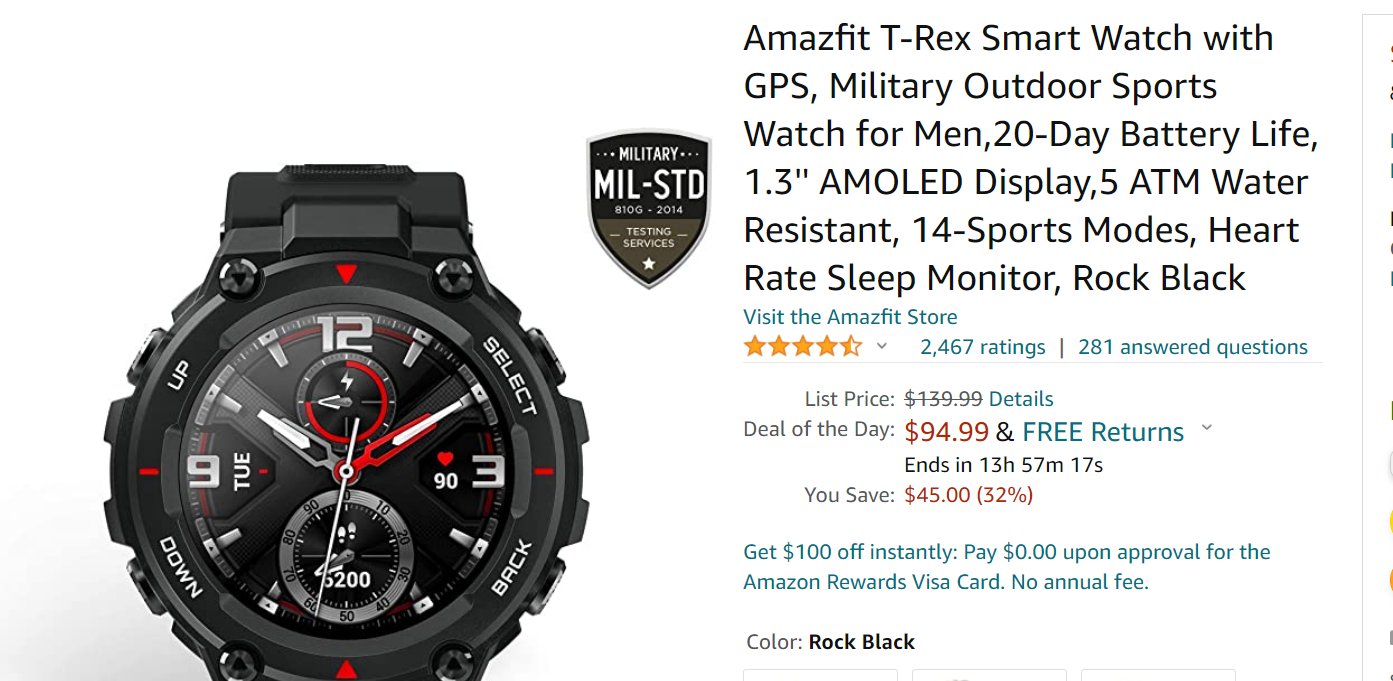
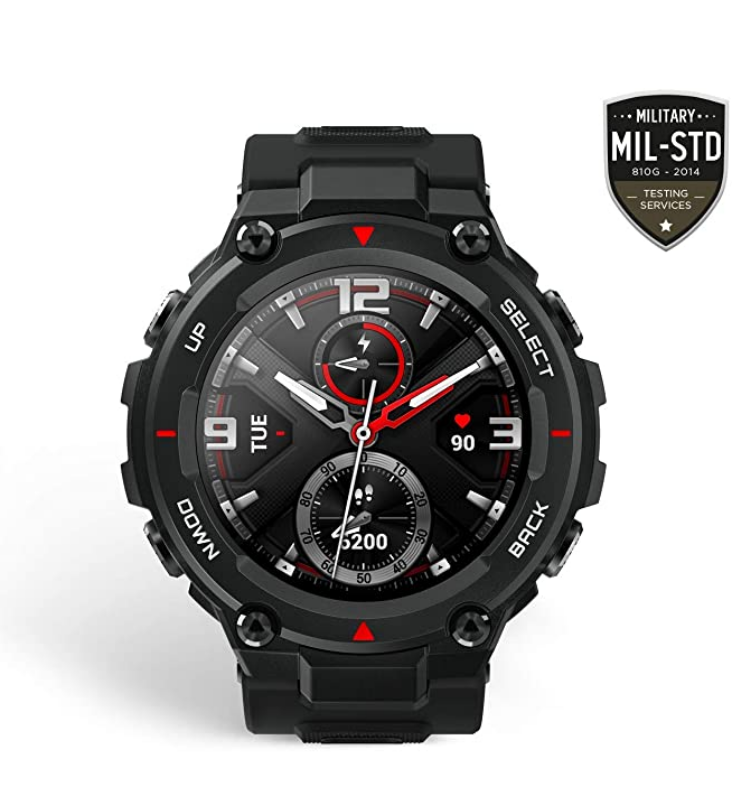
Amazfit T-Rex Smartwatch embodies the perfect combination of rugged design and technology. It features a 1.3-inch AMOLED screen with an “always-on display” function and 360×360 resolution. The smartwatch is 50m water-resistant. This means you can dive into a swimming pool or swim in the open seas without worrying about damaging the smartwatch. Moreover, the multiple sports mode function gives 14 different activity tracking options, making the watch suitable for almost everyone. Run, Walk, Swim, Climb, Cycle, etc are some of the modes available along with daily activity tracking.
However, the highlight of Amazfit T-Rex lies in its 12 Military Grade certifications which makes it perfect for harsh environments. The smartwatch can withstand extreme heat and cold, is resistant to corrosion, moisture resistance, and has a durable body. It comes with a heat resistance of 70℃, resistance to severe cold of minus 40℃, has passed 240-hour damp heat test, and 96-hour acid-alkali test.
Powered by a 390mAh battery the smartwatch offers up to 20 days of battery life on a single charge. And equipped with Huami’s self-developed BioTracker™ PPG Bio-Tracking Optical Sensor, the smartwatch gives high-precision heart rate monitoring 24 hours a day.
Under the Cyber Monday Deal, you can now get Amazfit T-REX for 494.99 only at Amazon US. This deal ends in 13 hours. So grab the smartwatch before the deal expires.
For more information on such exciting deals and offers check out ourdeals hub.
You can also find the best Black Friday Dealshere.
* Please Note: When you buy something using the links in our articles, we may earn a small commission at no cost to you.
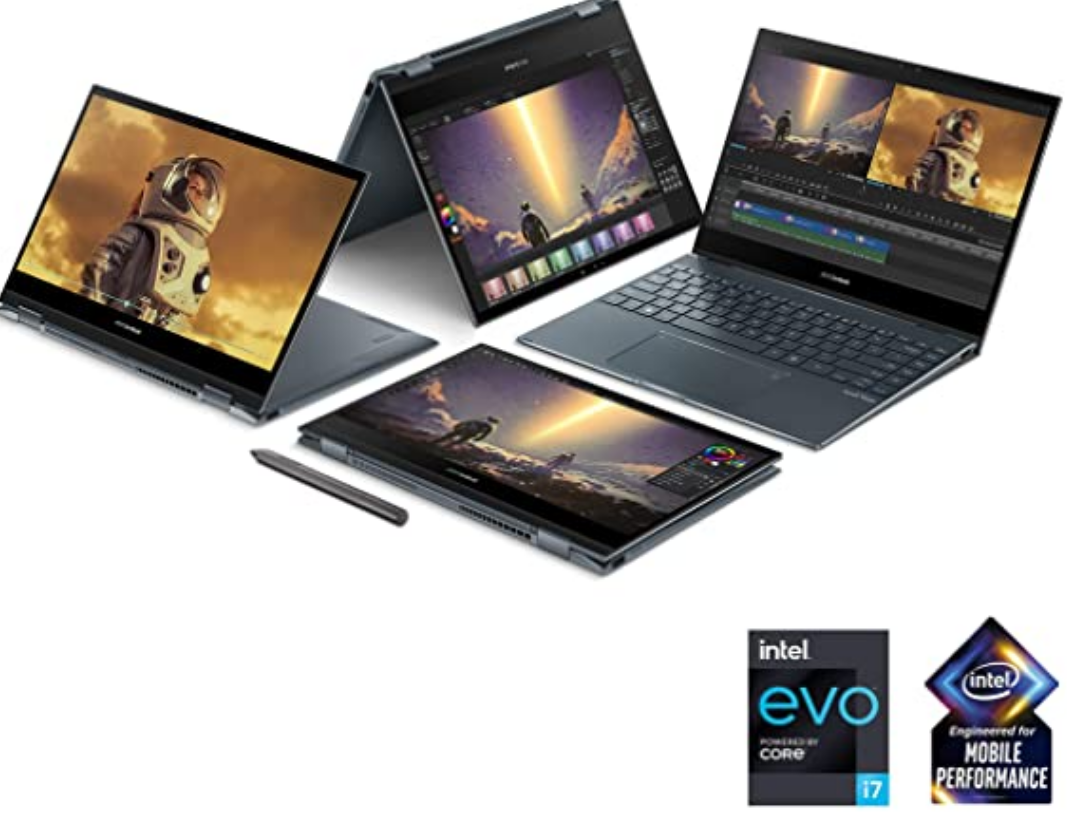
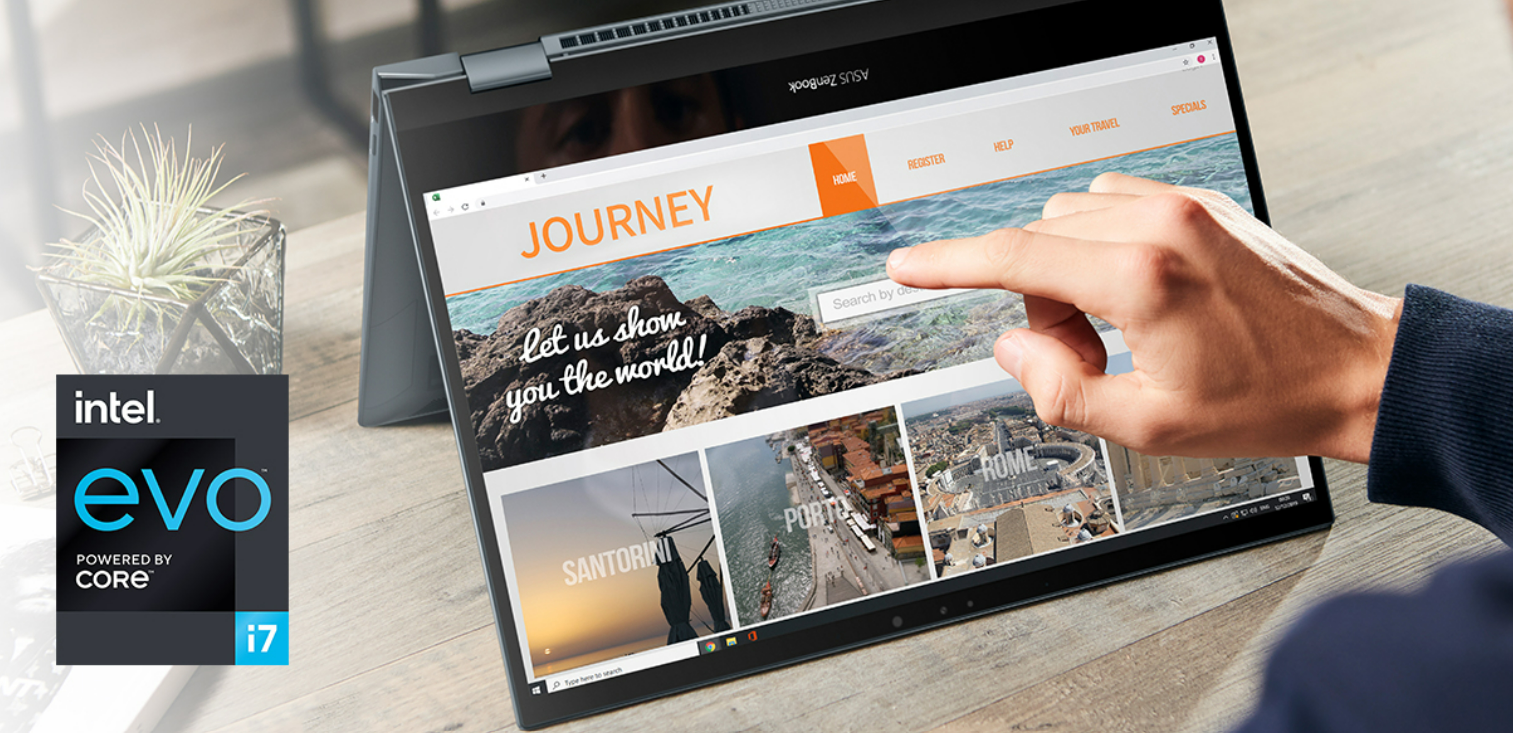
Amazon US is giving $199 OFF on Asus ZenBook Flip 13 OLED. The convertible laptop which generally retails for $1209 is now available at a discounted price of $1009.99only. This Cyber Monday deal ends in 15 hours.
360 degree Ergo Lift Hinge – holds the display securely at any angle
Battery: 67Wh – 14hrs on a single charge and 49% in 60mins
Asus Stylus Pen – 4096 pressure level support
Edge to edge ergonomic keyboard with Asus Numberpad2.0
Windows 10 pro
Color: Pine Grey
Generally retailing for $1209, you can now buy Asus ZenBook Flip 13 OLED at a discounted price of $1009.99 only at Amazon US. Please note that this deal ends in 15 hours. So grab your discounted ZenBook before the deal expires.
For more information on such exciting deals and offers check out ourdeals hub.
You can also find the best Black Friday Dealshere.
* Please Note: When you buy something using the links in our articles, we may earn a small commission at no cost to you.
Twitter co-founder and chief executive officer Jack Dorsey on November 29 stepped down from his position. The company’s board has unanimously appointed the company’s chief technology officer Parag Agrawal as his successor.
The resignation of Dorsey, who has been heading Twitter as its chief executive officer since 2015, comes into effect immediately. However, he will remain a board member until his term expires in 2022 to help enable a smooth transition for the newly appointed CEO, Parag Agrawal.
The former CEO stated in an e-mail to Twitter that “This was my own decision and I own it. it was a tough one for me, of course. I love this service, the company, and all of you so much. I’m really sad, yet really happy. There aren’t many that get to this level. Ans there arent many founders that choose their company over their own ego. I know we’ll prove this was the right move.”
He further stated “I’ve decided to leave Twitter because I believe the company is ready to move on from its founders. My trust in Parag as Twitter’s CEO is deep. His work over the past 10 years has been transformational. I’m deeply grateful for his skill, heart, and soul. It’s his time to lead,”.
So who is Parag Agrawal, the newly appointed CEO of Twitter?
Parag Agrawal is an Indian-American who has been with Twitter for more than a decade and has served as the Chief Technology Officer (CTO) since October 2017. As CTO, he has been responsible for the company’s technical strategy, leading work to improve development velocity while advancing the state of Machine Learning across the company. Before being appointed CTO, Parag had risen to be Twitter’s first Distinguished Engineer due to his revenue and consumer engineering work, including his impact on the re-acceleration of audience growth in 2016 and 2017. Before joining Twitter, Parag worked for renowned companies like Microsoft, Yahoo, and AT&T Labs. Parag holds a Ph.D. in Computer Science from Stanford University and a Bachelor’s Degree in Computer Science and Engineering from the Indian Institute of Technology, Bombay.
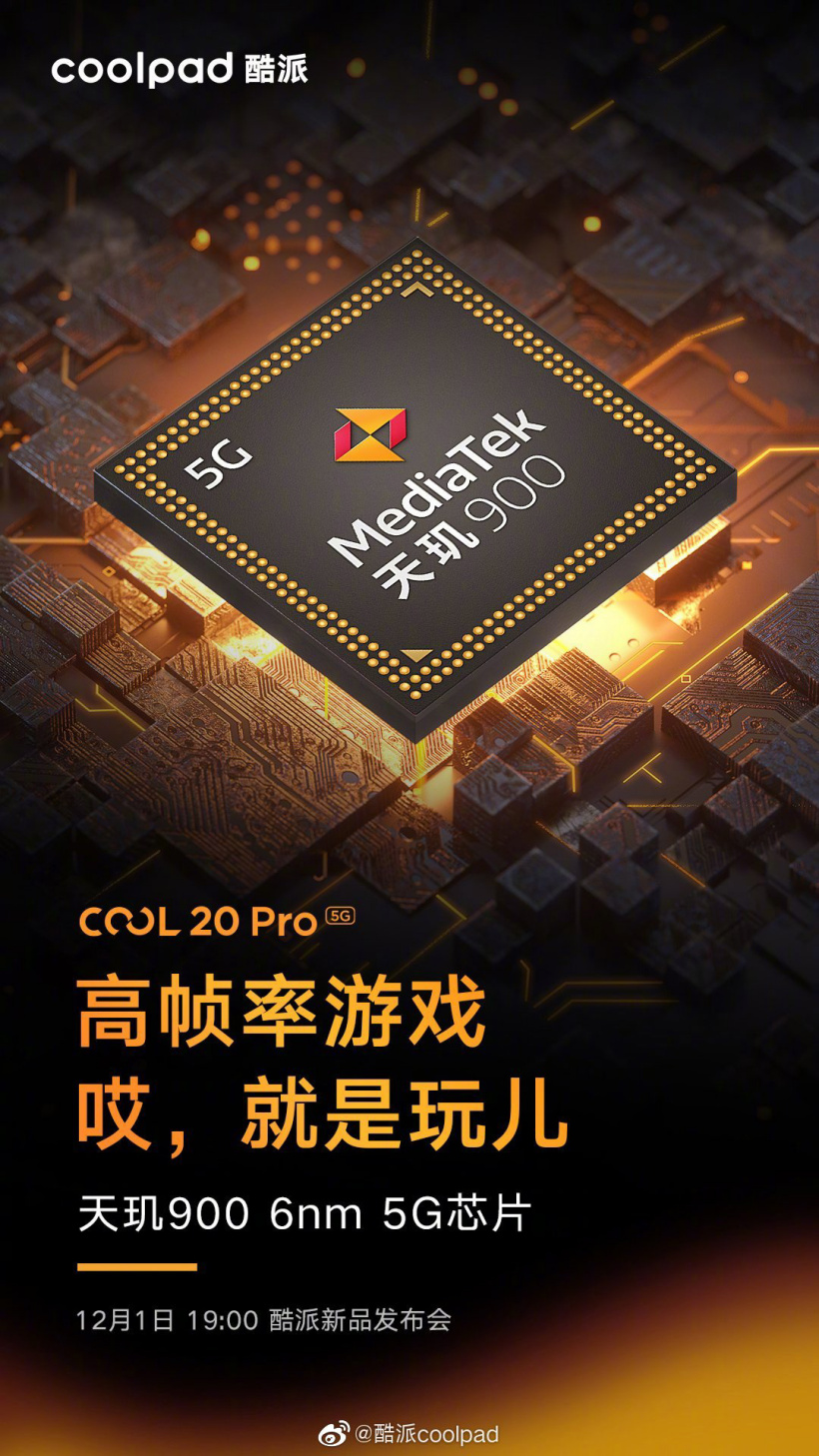
Chinese smartphone maker Coolpad is expected to release the COOL 20 Pro smartphone on December 1. The company had earlier released a teaser poster which gave us a look at the design of the sleek smartphone. The company has now released yet another teaser poster which confirms the device will be powered by the MediaTek Dimensity 900 5G chipset.
MediaTek first unveiled the Dimensity 900 5G SoC in May this year. The chip is built using 6nm process technology and it can deliver a smooth and silky high frame rate gaming experience. The chipset had earlier been spotted when a device believed to be the COOL 20 Pro appeared on GeekBench and also received TENAA certification.
The Cool 20 Pro had earlier been tipped to pack a 50-megapixel AI triple camera and use the ArcSoft image algorithm. The earlier renders also show the device will be available in three color variants – black, white, and blue. In addition, the COOL 20 Pro will use the AG glass back shell, which is delicate and tough and won’t collect fingerprints or smudge.
The earlier teasers also show the COOL 20 Pro will be equipped with symmetrical dual speakers and support dual 5G and WiFi 6 networks. It will also have support for a 120Hz refresh rate with the ability to automatically switch between refresh rates intelligently in order to conserve the battery power.
The TENAA listing shows the Cool 20 Pro will pack a 6.58-inch FHD+ resolution LCD screen with a waterdrop notch. The device is also revealed to pack a 4400mAh battery while also retaining the 3.5mm headphone jack.
Xiaomi has released many noise-canceling earbuds over the past year, such as the Air 2 Pro, Flipbuds Pro, and Redmi AirDots 3 Pro. We have also done their review videos, and they all have more or less some shortcomings. And will today’s protagonist, Xiaomi Buds 3 Pro, be able to wash away its shame and make up for its shortcomings to become Xiaomi’s most perfect earbuds?
Xiaomi Buds 3 Pro Review: Design & Fit
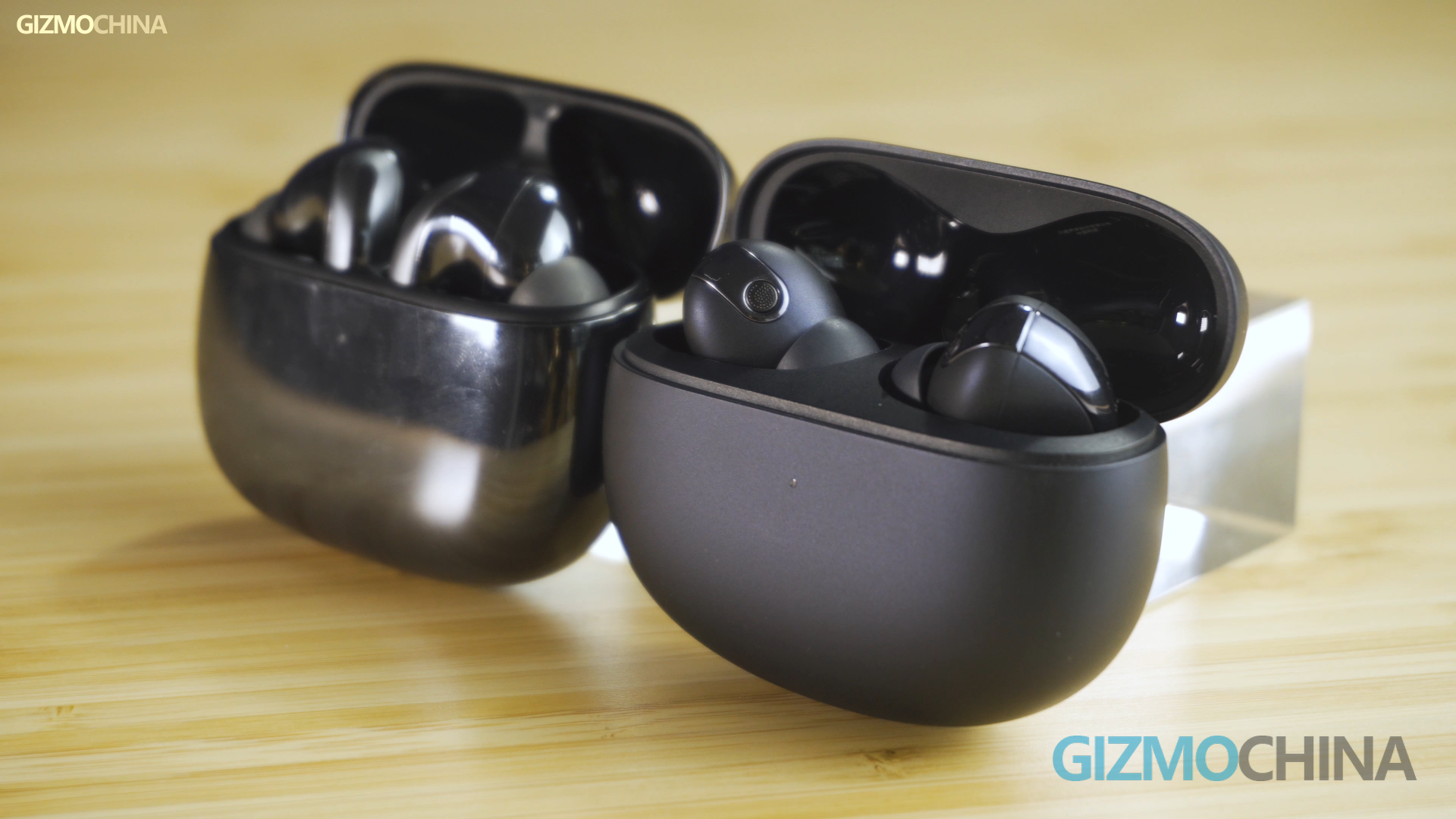
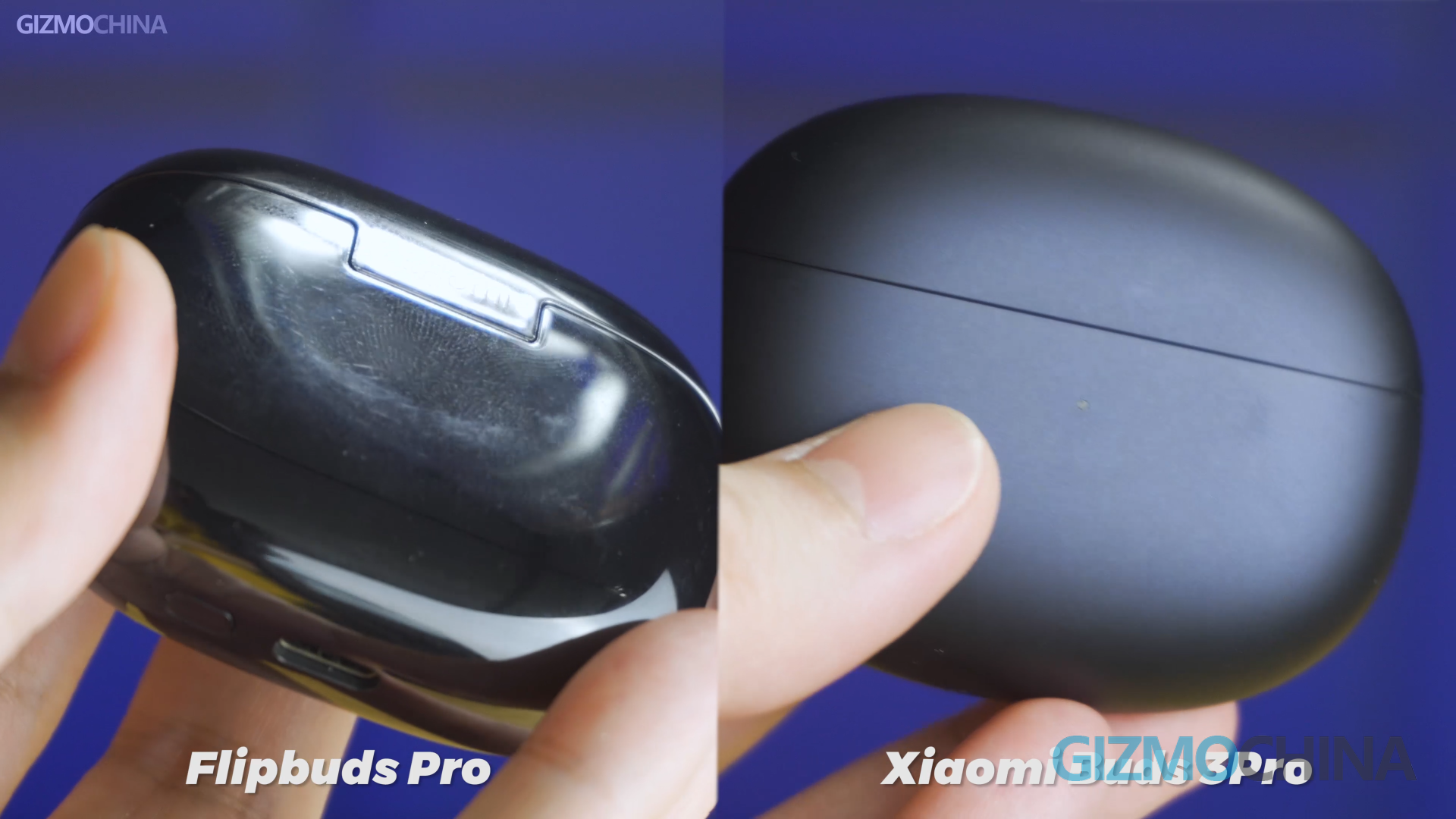
Xiaomi Buds 3 Pro vs Flipbuds Pro
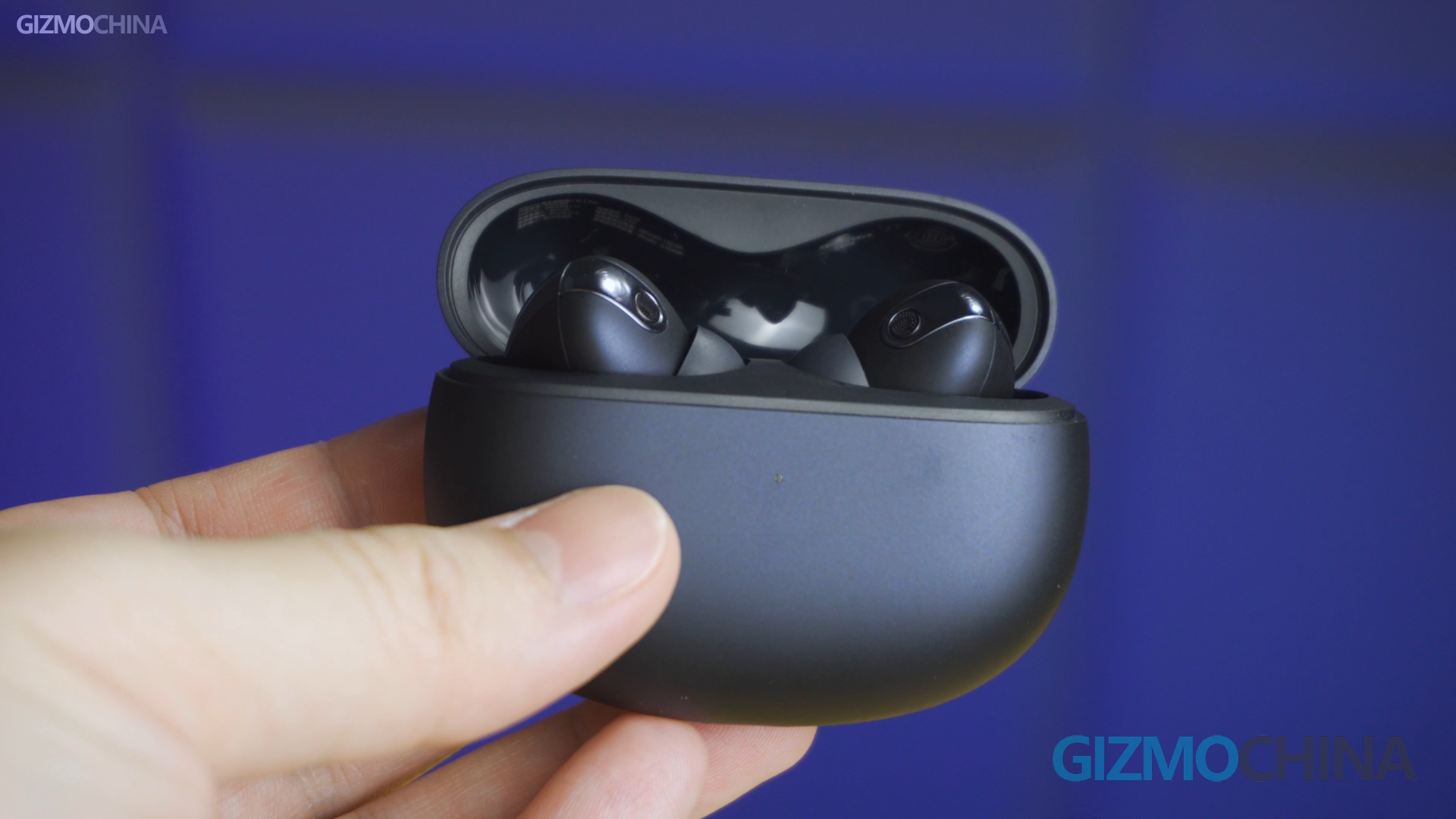
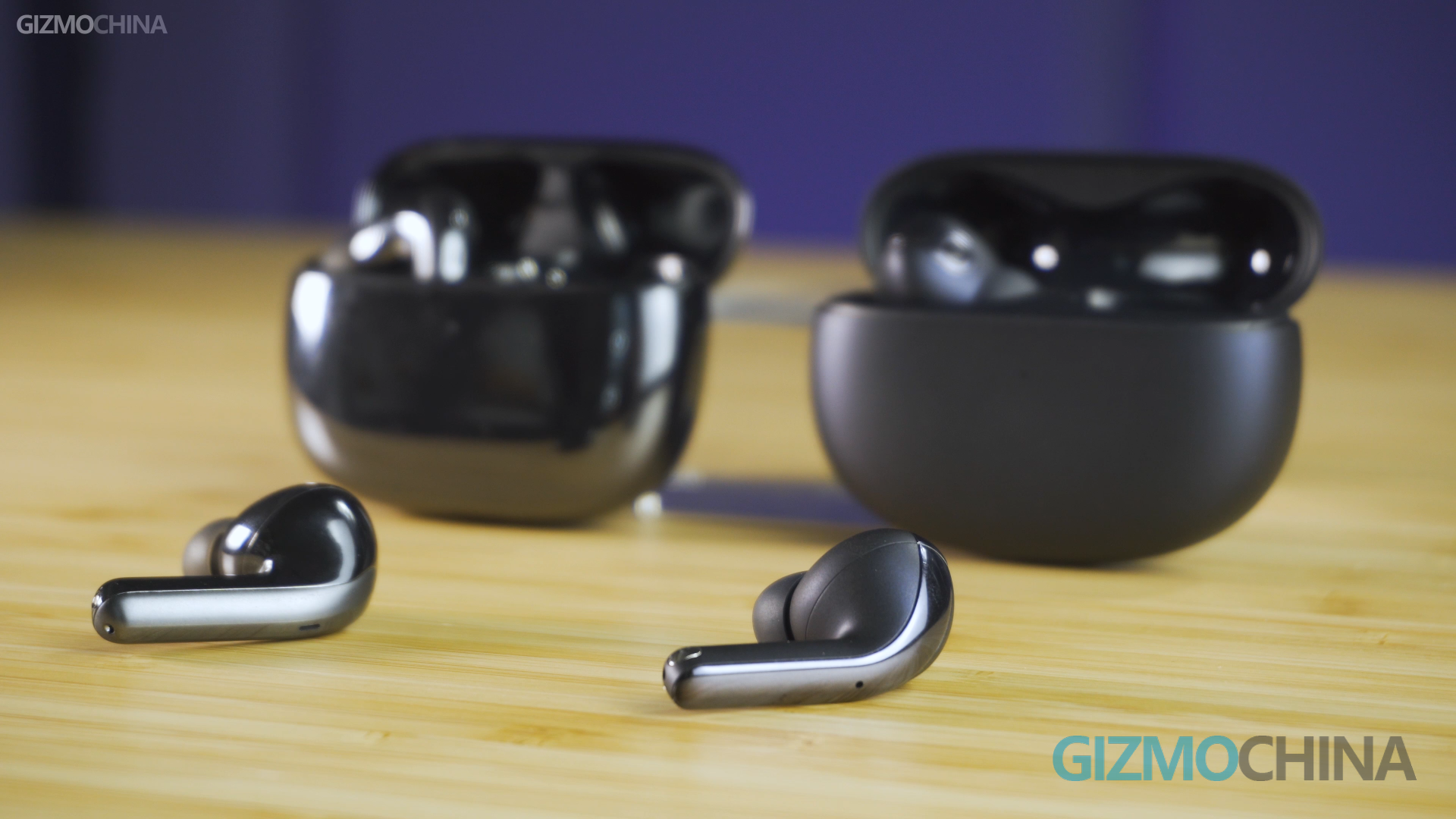
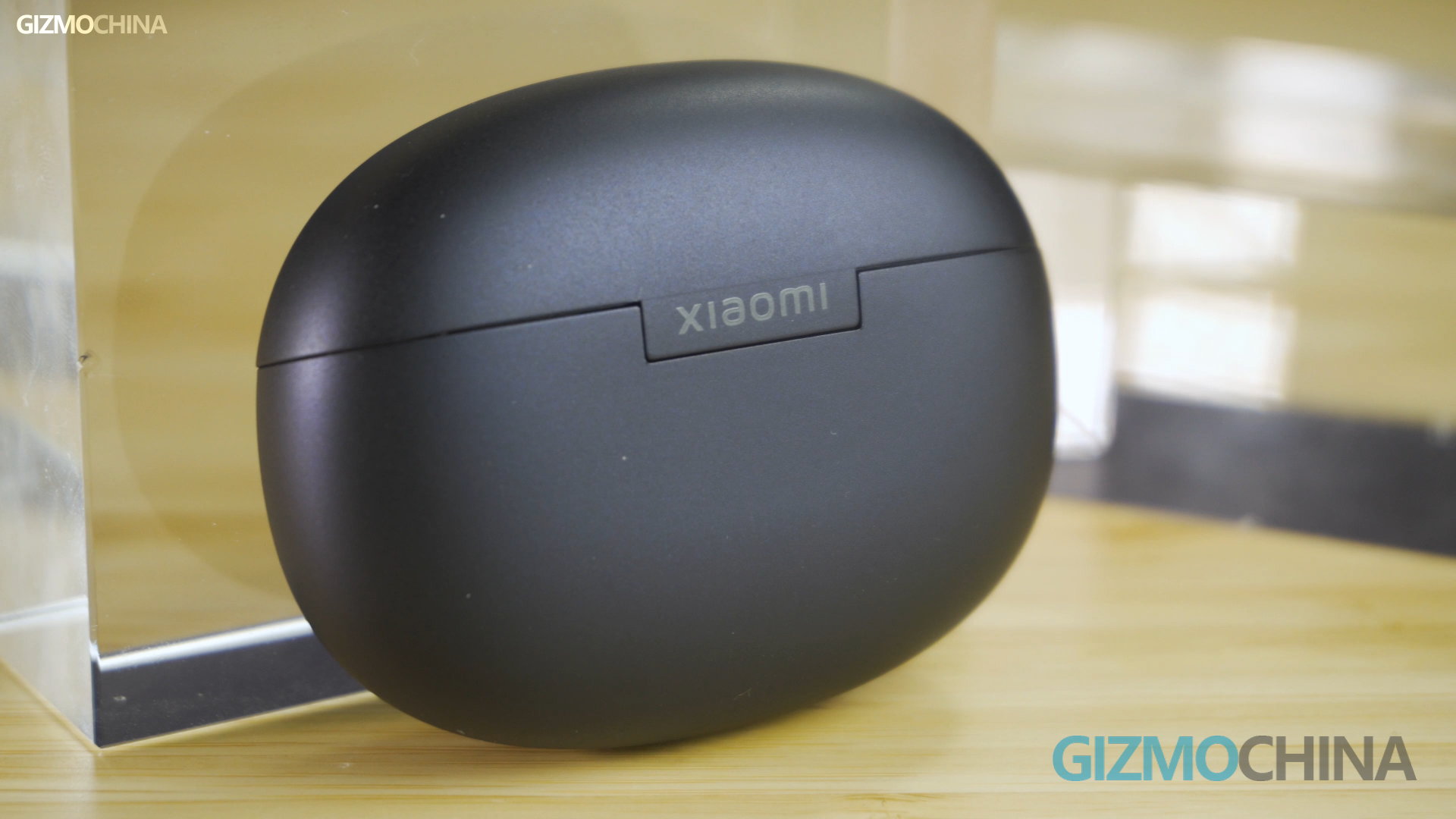
Based on Xiaomi’s pricing, the Xiaomi Buds 3 Pro is not as well-positioned as the Flipbuds Pro. The Flipbuds Pro looks more premium with its glossy piano finish. But it doesn’t mean that the Buds 3 Pro lags behind the Flipbuds Pro in terms of design. The Buds 3 Pro Case is smaller than the Flipbuds Pro while still keeping the wireless charging feature. The usual problem of the glossy surface being easily scratched also makes the frosted surface of the Buds 3 Pro more advantageous in long-term use. When stained with fingerprints, the Flipbuds Pro looks and feels more unpleasant. So if the Flipbuds Pro is all about beauty at the expense of actual usage experience, the Buds 3 Pro is a balance of beauty and practicality. I really like the design of the Xiaomi Buds 3 Pro this time, thumbs up.
The Buds 3 Pro is designed with more attention to detail than the Flipbuds Pro, and this attention can be seen when you open the lid. buds 3 Pro can pick up the earbuds and put them on directly, while the Flipbuds Pro requires the earbuds to be rotated one more turn before they can be placed in the ear. There is a small bump on the Buds 3 Pro earbud stem that allows you to feel which area you can press when you press to operate.
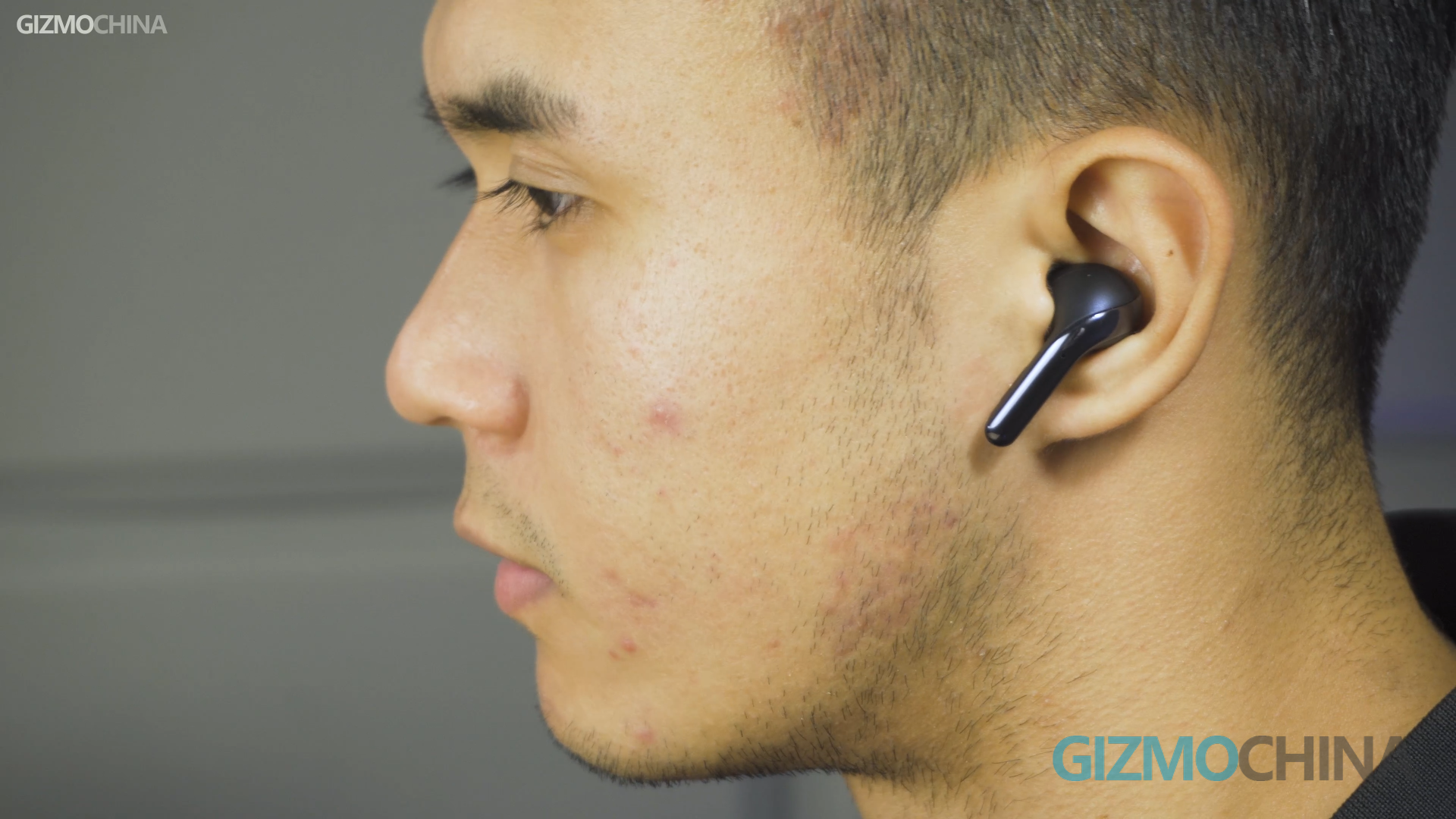
The Buds 3 Pro is also smaller than the Flipbuds Pro, and the earbud bar has been slimmed down. The problem of the earbuds being too big and causing the ears to be squeezed uncomfortably, as mentioned in our Flipbuds Pro review video, has also been completely solved with the Buds 3 Pro. The weight of the Buds 3 Pro is also lighter. I’m happy to say that the comfort problem that has plagued Xiaomi’s earbuds for three generations has finally been solved with the Buds 3 Pro. The comfort of the Buds 3 Pro is now top notch.
Xiaomi Buds 3 Pro Review: Sound Quality & Noise Cancelation
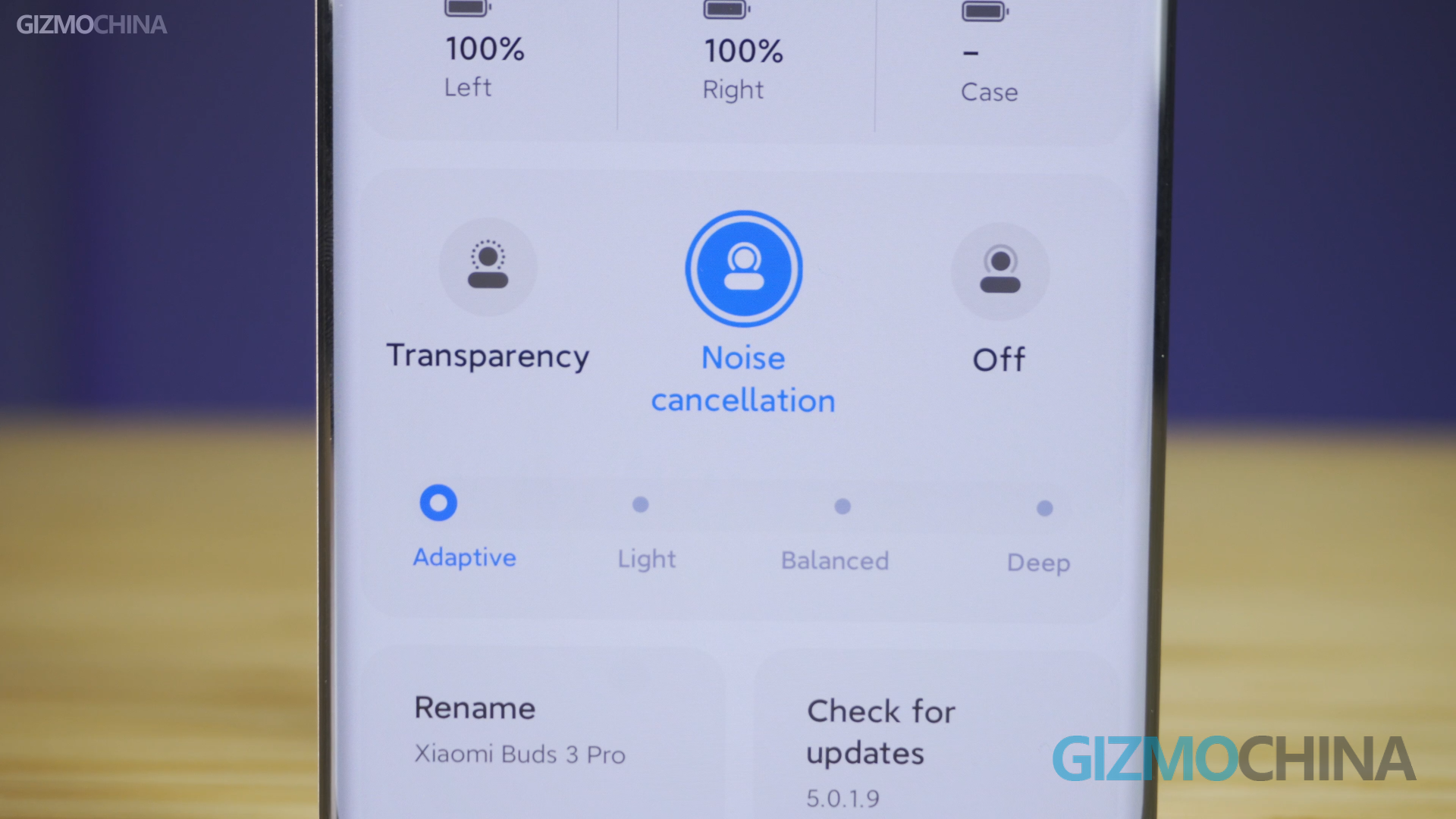
The Xiaomi Buds 3 Pro’s noise cancellation level is not quite the same as the Flipbuds Pro: excellent overall, but weak on windy days. It’s the same issue with wind noise resistance described in the Redmi AirDots 3 Pro review video. The wind noise immunity algorithm focuses on mitigating the effects of wind on noise cancellation by turning off the front-feed microphone, so when the wind blows, you’ll feel the noise cancellation suddenly become weaker. Of course, the Xiaomi Buds 3 Pro will still be better than the Redmi AirDots 3 Pro in terms of noise cancellation even with the front-feed microphone turned off, so don’t worry about that. From my personal point of view, the Buds 3 Pro is much better than the Flipbuds Pro when it comes to windy conditions where the front-feed microphone is not even turned off and your ears are buzzing.
The Xiaomi Buds 3 Pro’s sound quality is excellent with the LHDC 4.0 protocol. The three frequencies are very well balanced and vocals and instruments are not mixed together. Compared to the Flipbuds Pro, which has more low frequencies, there are fewer unique, but more balanced. And these earbuds are the kind of earbuds that can restore any music very well. This is actually very rare, as each flagship earbud has its own tuning tendencies. buds 3 Pro’s balanced performance even has a hint of HIFI headphones. However, LHDC 4.0 is currently only supported by the Xiaomi Civi, so other phones can only use the AAC Bluetooth protocol for now.
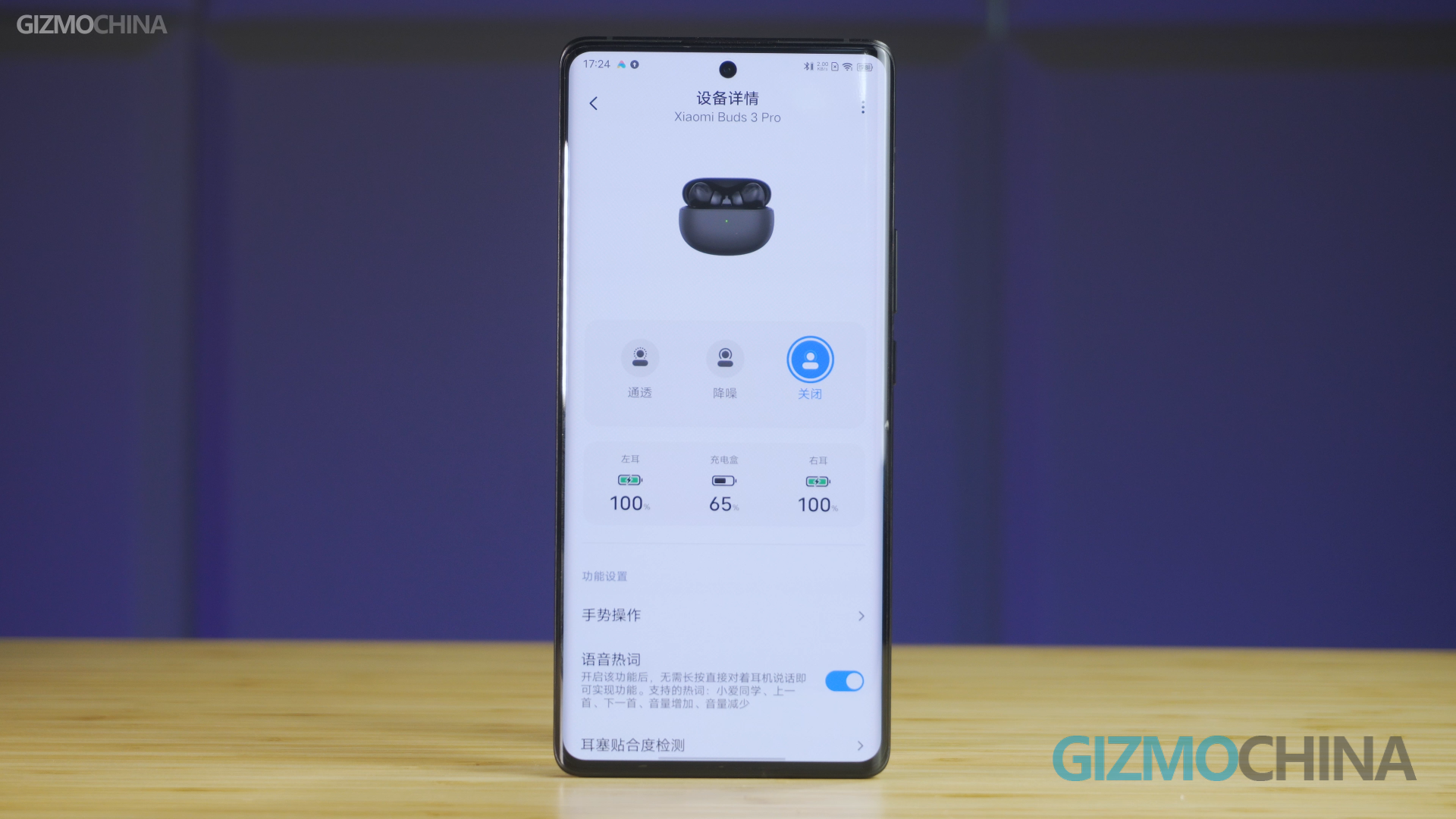
The Buds 3 Pro also has a lot of new features this time around. We won’t go into the features that are also available on Flipbuds Pro like Ear tip fit test and Missing earphone alert, but I’ll introduce you to some brand-new features that are available on Buds 3 Pro for the first time. Noise Cancelation Mode adds the Adaptive option for the first time to adjust the intensity of noise reduction. There is also the Track head movement function. It can simulate the effect of the sound source position on the volume of the sound channel. This function is the Android version of Dynamic head tracking, but after opening the sound quality is more degraded, I do not recommend opening it in the daily listening time. There are also a lot of options for customizing Gestures. You can say that Xiaomi has added all the features that are available on the earbuds to Buds 3 Pro for you. We’ve also tested the compatibility with other phones for you. With Mi AI installed, the Buds 3 Pro works fine with all the features except Missing earphone alert and Track head movement. The only problem is the same as before, the Chinese only Mi AI will be very painful for people who don’t know Chinese.
Xiaomi Buds 3 Pro Review: Battery Life
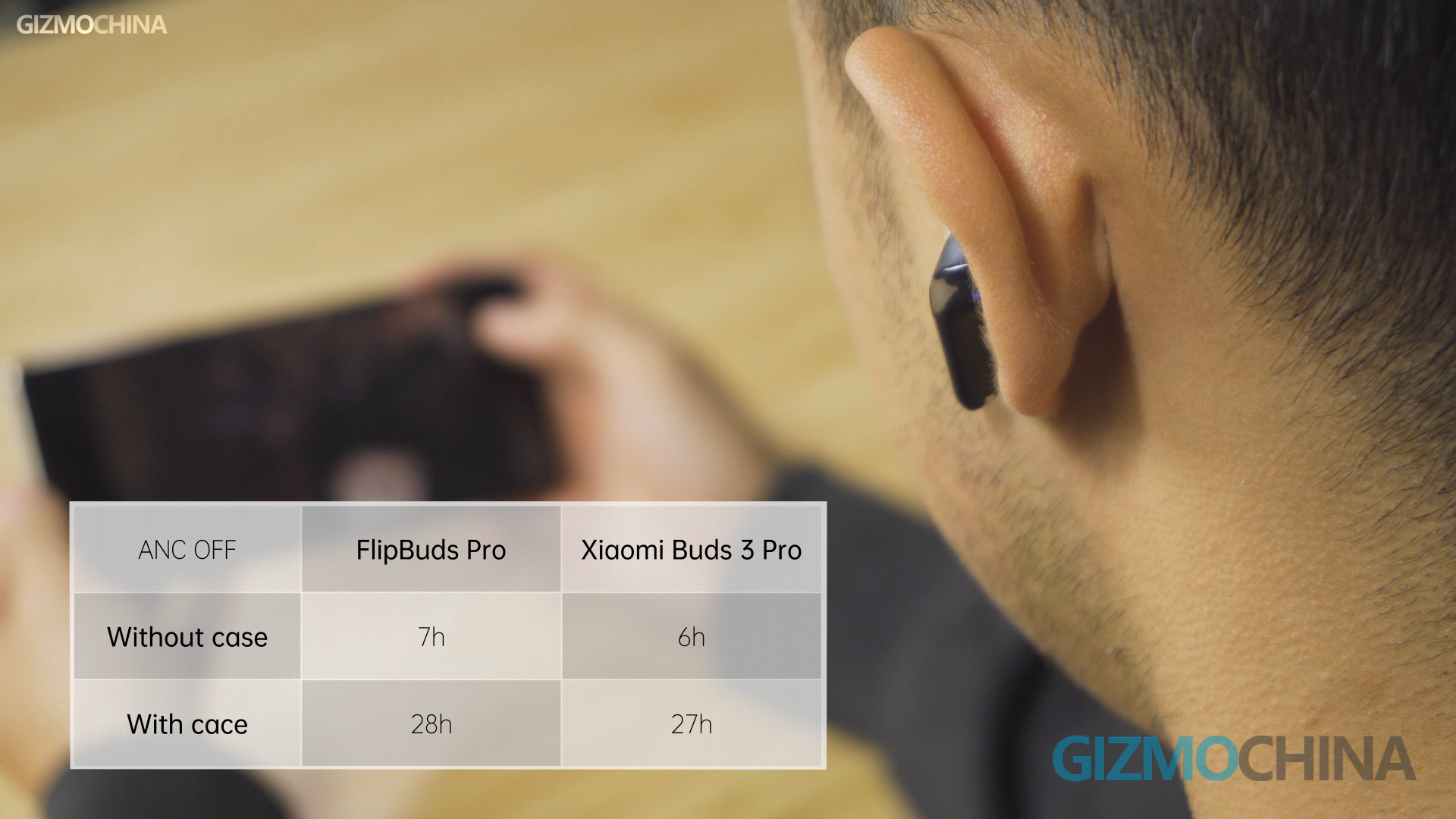
Maybe because it’s lighter and smaller, the Buds 3 Pro’s battery life is shorter. The earbuds and earbud case last about an hour shorter than the Flipbuds Pro. However, it should not be a problem to finish watching a full movie.
Xiaomi Buds 3 Pro Review: Verdict
As you might expect, it seems that the Buds 3 Pro completely beats the Flipbuds Pro. smaller, lighter and more durable design, decent noise cancellation and sound quality, more comprehensive features and a top-notch wearing experience, and most importantly, it’s cheaper.
All of these make the Buds 3 Pro the best choice among Xiaomi earbuds to buy. If you are a Xiaomi phone user who needs an earbud, buying it is definitely the best choice.
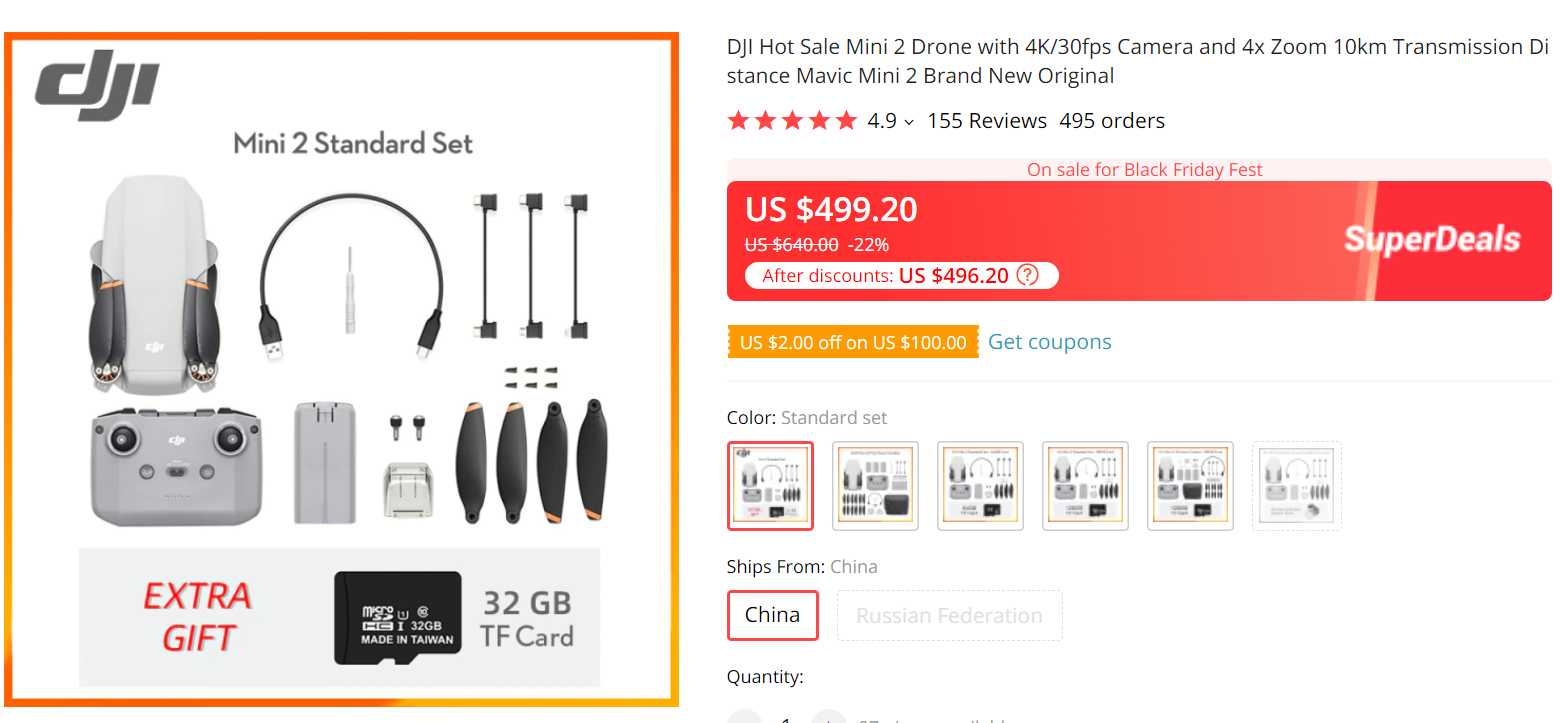
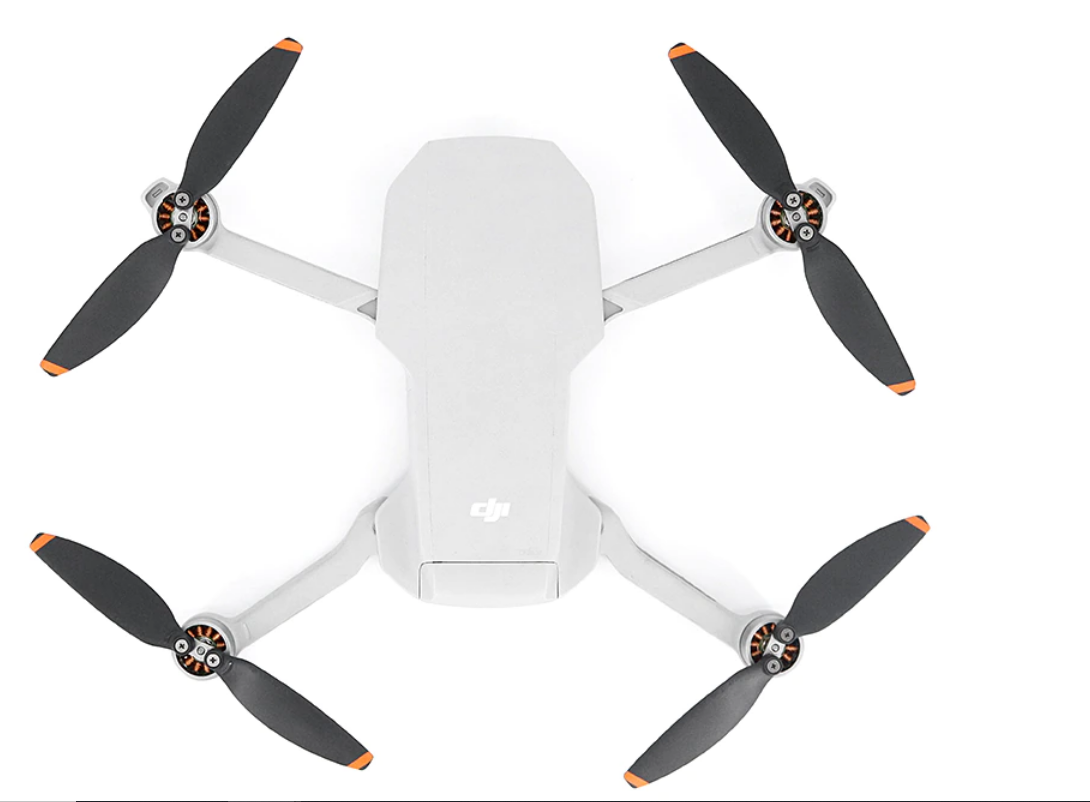
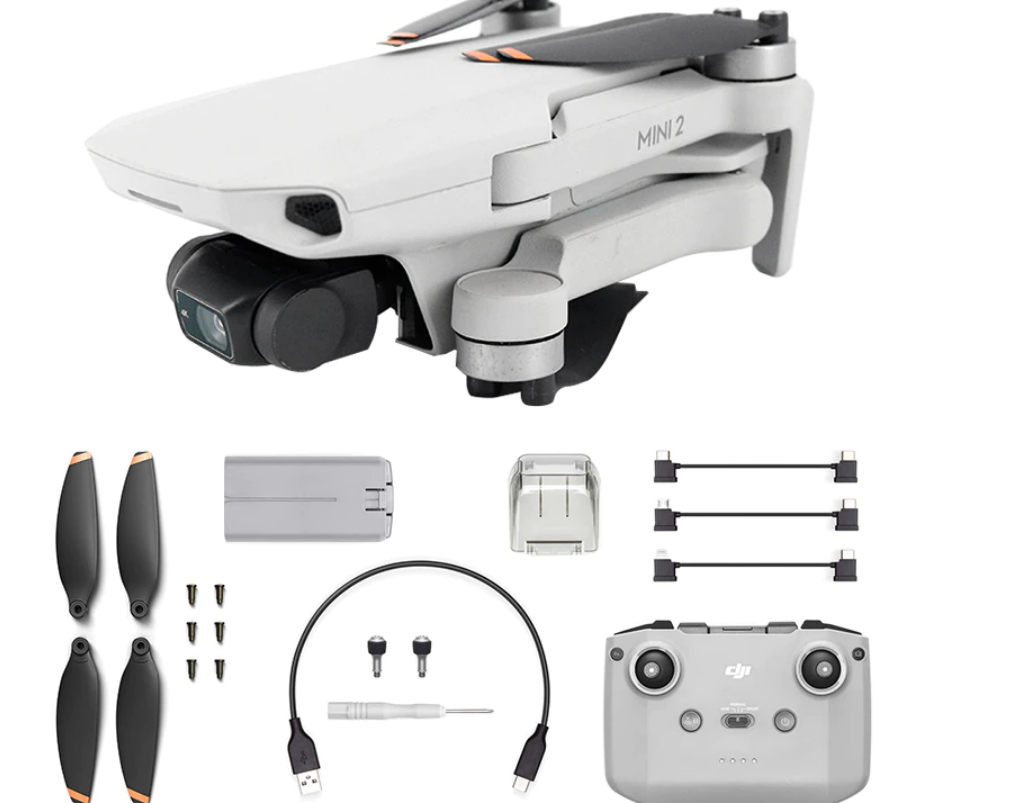
DJI Mini 2 Drone which generally retails for $520 is now available at a discounted price of $496.20 only at the Cyber Monday Sale at AliExpress. This deal ends in a few hours.
Generally retailing for around $520, you can now buy DJI Mini 2 Drone at a discounted price of $496.20. Please note that this deal ends in a few hours.
Please note that the above price is region-specific and the final price may vary according to your shipping region, warehouse, and regional taxes.
For more information on such exciting deals and offers check out ourdeals hub.
You can also find the best Black Friday Dealshere.
* Please Note: When you buy something using the links in our articles, we may earn a small commission at no cost to you.
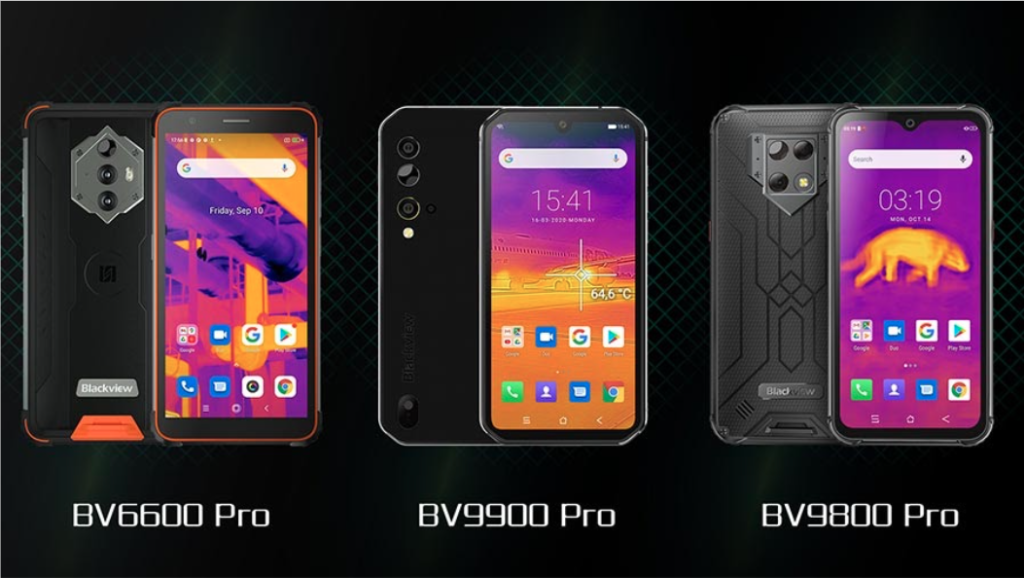
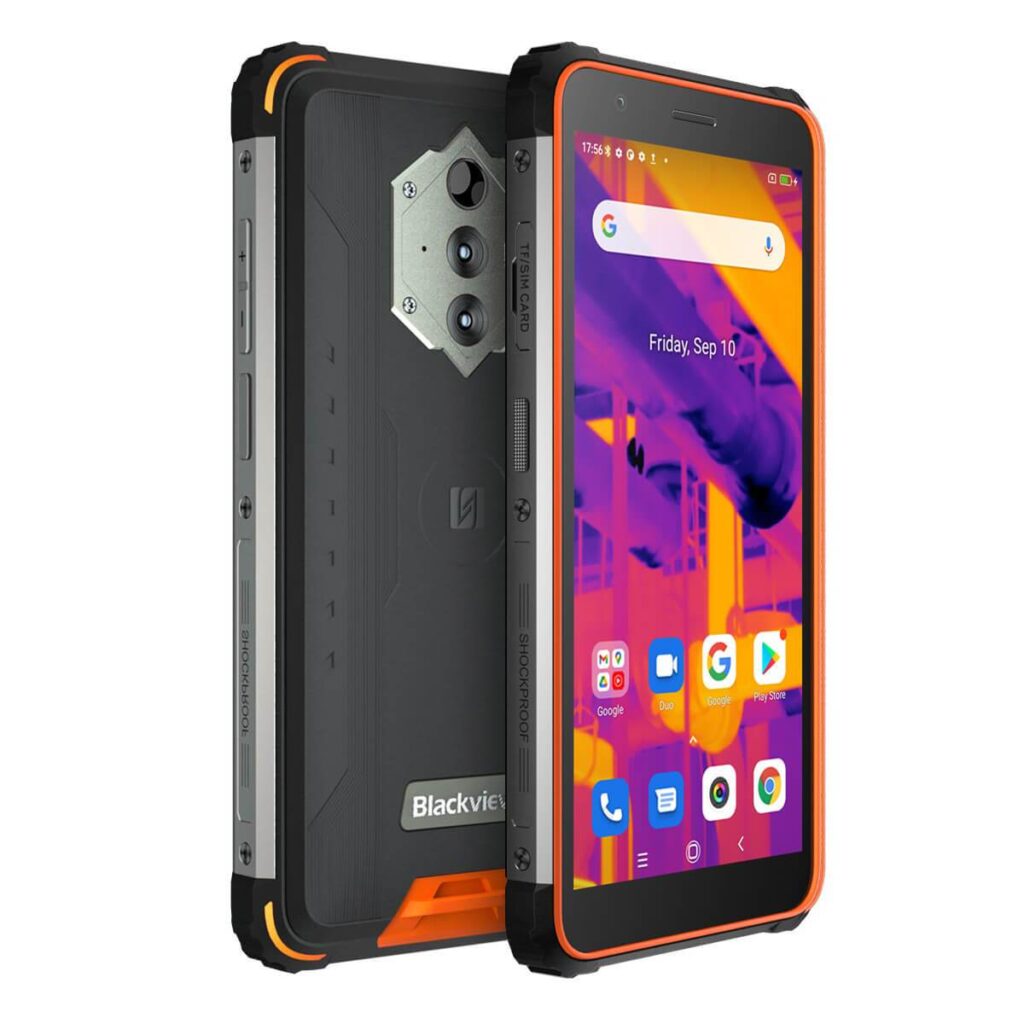
The Chinese smartphone maker, Blackview has slashed the prices of three of its rugged smartphone models that feature a thermal camera.
The Blackview BV9900 Pro, which usually retails for $549.99, is now available for a mere $399.99! The BV9800 Pro has received a similar discount bringing its price down from $500 to $369.99. And their latest budget-oriented offering in the rugged thermal smartphone segment, the BV6600 Pro, which retails for $400, is now available at $249.99. These special prices can be availed on multiple platforms, including the official Blackview store and Aliexpress.
But which of these smartphones is best suited for your needs? Before we answer that, we would like you to note that all these rugged devices are IP68 & IP69K & MIL-STD-810G certified, which means that they are waterproof, impact-resistant, and adapted to extreme conditions. They can be put into a variety of high-demanding environments that the average smartphone simply can’t bear.
Blackview BV9900 Pro
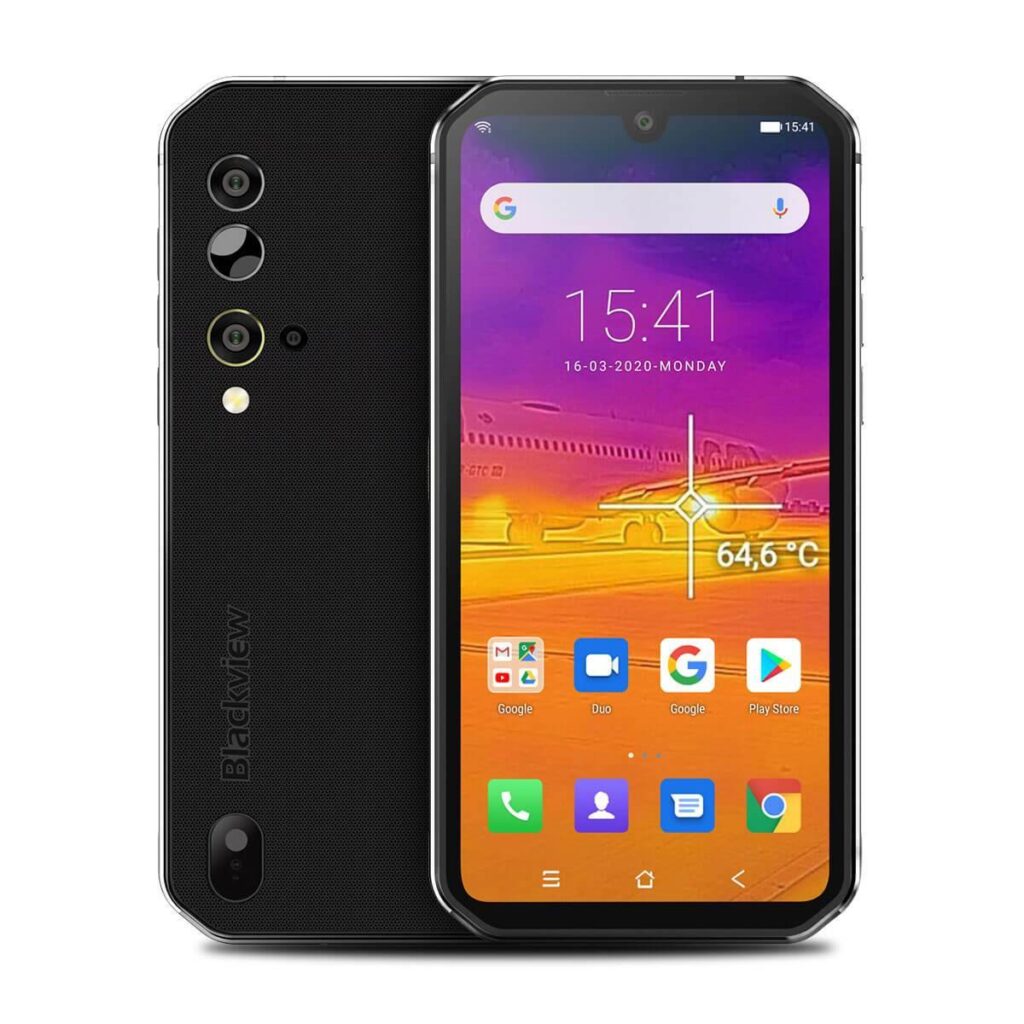
The BV9900 Pro features a minimalistic look with a quad-camera setup on the back. The phone is especially thin when compared to other smartphones in the rugged segment and weighs 237g. It comes with a 5.84-inch FHD+ IPS display with Corning Gorilla Glass 5, providing a 2280 x 1080 pixels resolution, and features a waterdrop notch.
Under the hood, the BV9900 Pro is powered by a MediaTek Helio P90 processor, coupled with 8GB of RAM and 128GB of UFS 2.1 memory, expandable via a micro-sd card. The phone runs on Android 10 OS and is powered by a 4380mAh battery which supports 18W wired and 10W wireless charging.
When it comes to photography, the device features a 48MP Sony IMX582 Exmor RS as its primary sensor, a 5MP depth camera, and a 2MP macro lens. The fourth lens present on the rear of this device is a FLIT Lepton 5MP Thermal imaging camera. The rugged phone also houses a 16MP Samsung ISOCELL sensor as a selfie snapper.
The phone also hosts a plethora of useful features like a dedicated heart rate sensor on the rear, IceMode that enables it to work in freezing temperatures as low as -30℃, barometer, GPS, GLONASS, Bridou, and Galileo. The device also offers NFC, Bluetooth 5.0, dual-band WiFi Global LTE bands.
Blackview BV9800 Pro
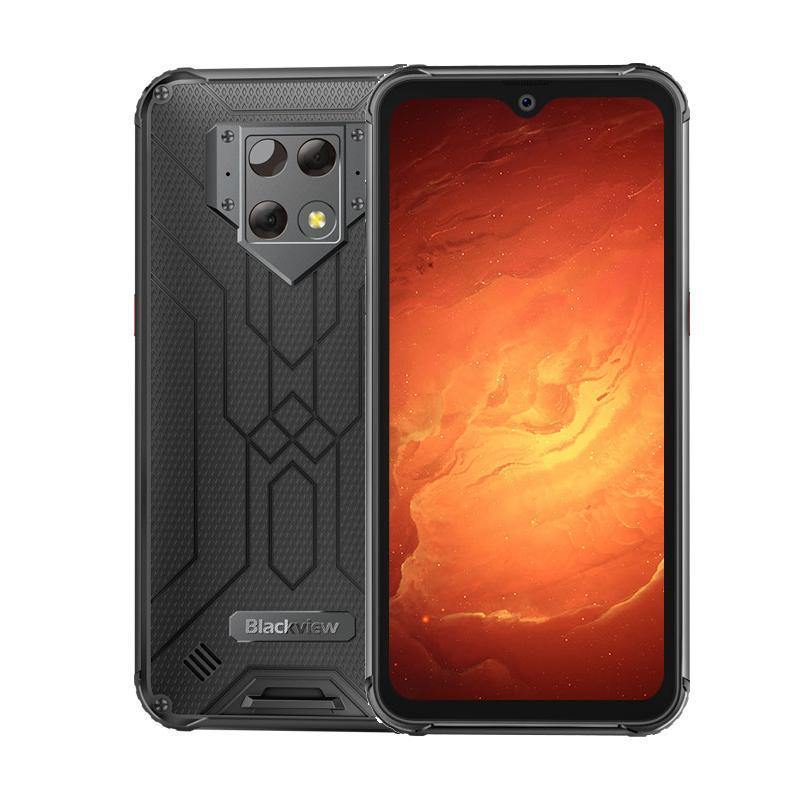
Released in 2019, the BV9800 Pro is the first thermal imaging rugged phone from Blackview. The device styles a rugged and robust design with a Metal rear camera module and metal side frames, making it 14.8mm thick. The back is made of double-shot molding TPU with aesthetically pleasing engraved lines. The device comes with a 6.3-inch FHD+ IPS display with Corning Gorilla Glass 5, providing a 2340 x 1080 pixels resolution, and features a waterdrop notch.
In the photography department, the device features a 48MP Sony IMX586 Exmor RS as its primary sensor, a 5MP depth camera, and a FLIT Lepton 5MP Thermal imaging camera. The rugged phone also houses a 16MP OmniVision PureCel sensor as a selfie snapper.
The Blackview BV9800 Pro is powered by a MediaTek Helio P70 processor, coupled with 6GB of RAM and 128GB of storage, which can be expanded via a micro-sd card. The phone runs on Android 9 OS and is powered by a big 6580mAh battery capable of wireless charging.
Other features included in the phone are a barometer, GPS, GLONASS, Bridou, and Galileo. The device also offers NFC, Bluetooth 5.0, dual-band WiFi Global LTE bands, and dual 4G VoLTE.
Blackview BV6600 Pro
The BV6600 Pro is the most affordable rugged smartphone featuring a thermal imaging camera. The device features the same design profile as the rugged BV9800 Pro. It has nano-injection molding aluminum alloy side frames fixed with screws on each side. The top and bottom ends are covered with silica gel & PC that seamlessly extends to the textured back where on the upper side locates a uniquely hexagon-shaped camera metal module, and on the lower side is a lanyard hook providing convenience for climbing activities.
The display is a 5.7-inch HD+ panel with 1440×720 resolution. Under the hood, the device houses a MediaTek Helio P35, coupled with less storage, 4G RAM 64GB ROM, and is powered by a massive 8580mAh battery. For the camera set, it has a Samsung 16MP rear camera featuring PortraitColor mode, Mono mode, Beauty mode. The second lens present on the rear is the FLIT Lepton 5MP Thermal imaging camera. On the front, the device features an 8MP Sony selfie snapper.
Other features included in the phone are a barometer, GPS, GLONASS, Bridou, and Galileo. The device also offers NFC, Bluetooth 5.0, dual-band WiFi Global LTE bands, and dual 4G VoLTE.
Which model should you buy?
For most people in the market for a rugged thermal camera smartphone, the Blackview 9800 Pro offers a good balance of features and price at $369.99.
But if you want a minimalist design rugged thermal camera smartphone with the smoothest operation and multi-task capabilities that feature some useful extras, consider the BV9900 Pro at $399.99.
Budget-bound customers who have set their hearts on a thermal imaging phone may opt for the $249.99 Blackview BV6600 Pro. In addition to being budget-oriented, the device hosts the largest battery and the latest system of the three.
Black Friday discounts continue through to Cyber Monday, where we find some of the best deals on electronics. If you missed out on getting a good deal on your favorite laptop or wearable, it’s worth checking out the new deals today.
While deals on MacBooks are still very hard to come by, high-end laptops from brands like Asus and Lenovo are getting solid $100-$200 discounts today, making them a steal in their price segment. If you were looking for a new laptop or AIO (All-in-One desktop), then today is probably the last chance this year to grab an excellent deal on one. Other categories like smartwatches, earbuds, smartphones are also heavily discounted today.
So here are some of the Best Cyber Monday deals on Amazon US.
Lenovo’s Motorola brand is expected to launch the Motorola Edge S30 in China soon. The Edge S30 is expected to bear the same design and specifications as the Moto G200 that was launched for the global market recently. In other words, it will launch as the Chinese variant of the Moto G200.
Motorola Edge S30 will hsare design and features with the Moto G200 (Pictured)
Lenovo’s product manager had earlier revealed that the company will launch two flagship phones soon and one of them will feature an LCD screen. Popular blogger Digital Chat Station has now disclosed that the Edge S30 will come with a 6.78-inch LCD screen having a superb refresh rate of 144Hz.
Apart from the high refresh rate that is tailored to allow for seamless and smooth gameplay of titles with high frame rates, the device will also pack a Snapdragon 888 Plus processor just like the global version. This potentially makes the Edge S30 one of the few LCD display-packing flagships in the market.
In addition, the Motorola Edge S30 will cram a built-in 4700mAh battery and will have support for 33W fast charging. Furthermore, it will pack a 108MP main camera. The phone has a thickness of 8.8mm and weighs just 202g.
Apart from the Edge S30, Motorola is also expected to announce the Edge X30 at the same time. The device will emerge as the first Qualcomm Snapdragon 8 Gen1 chip-powered Motorola phone. The chipset is built using Samsung’s 4nm process technology and offer several improvements in performance and power management.
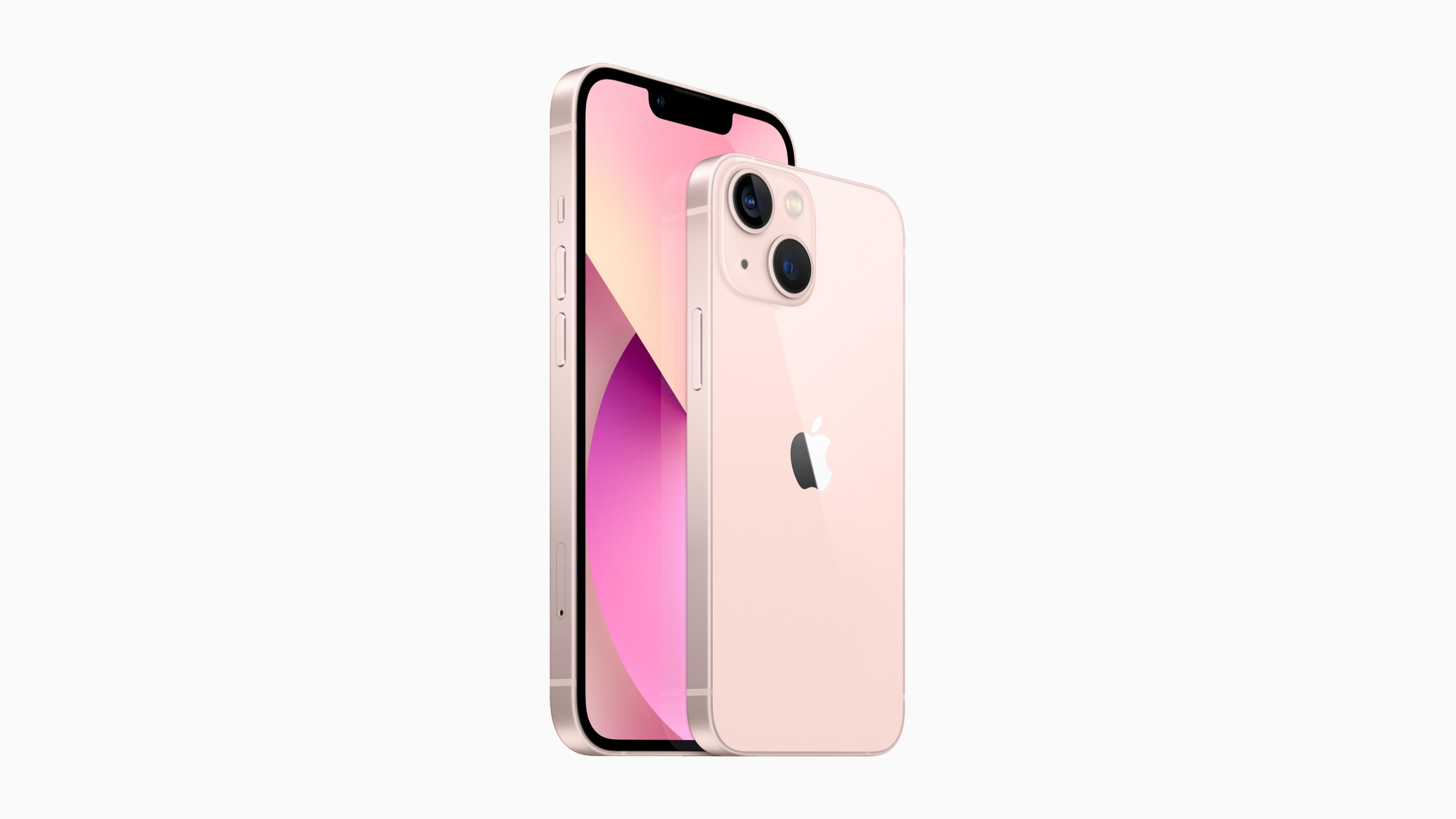
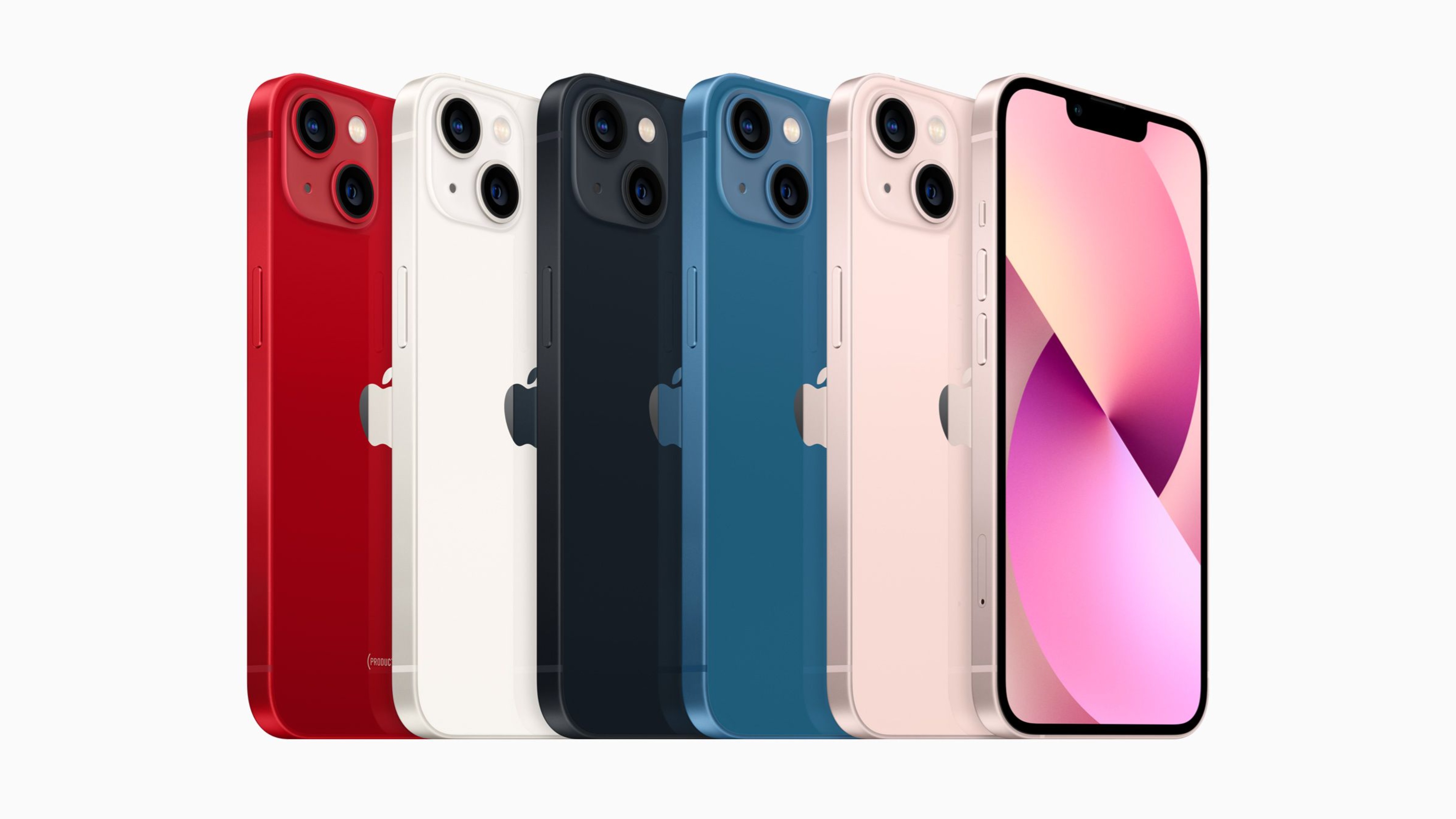
Authorities at an Indian airport have just seized thousands of Apple iPhone 13 series smartphones. These devices combined were worth over 5 million US Dollars and were caught in the Mumbai Airport.
The DRI (Department of Revenue Intelligence) conducted an investigation that led to over 3,600 units of the Cupertino based giant’s latest iPhones being seized at the airport. The iPhone 13 units were being shipping in from Hong Kong and were being imported into India as ‘memory cards.’ This attempt to ship the large number of iPhones under a false tag was likely to avoid the custom duties that are levied on smartphones in the country.
According to statement from the DRI “After developing precise intelligence, officers of DRI inspected two consignments on Friday. These consignments had arrived from Hong Kong, at the Air Cargo Complex (ACC), Chhatrapati Shivaji International Airport, Mumbai. In the import documents, the goods were declared as ‘memory cards’. Physical examination, however, revealed that the consignments actually contained a total of 3,646 iPhone 13 mobile phones.” The total value of these iPhones was found to be around 42.86 crore INR (roughly around 5.7 million US Dollars).
Notably, the bust even found 12 units of the newly announced Google Pixel 6 Pro model as well, which was not officially launched in the Indian market. Other products included the Apple Watch wearable as well. These iPhones were seized as they violated the Customs laws and resultant evasion of duty and also on the grounds of potentially impacting the growth of the domestic industry, which was impacted by the the Coronavirus pandemic last year and is still in the process of recovery.
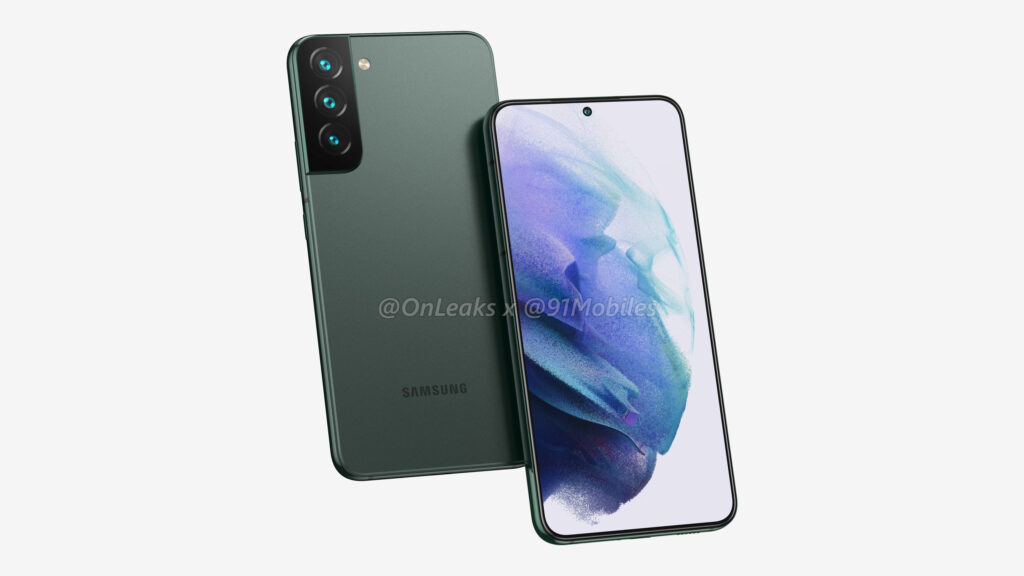
Samsung is expected to launch the Samsung Galaxy S22 series in the first quarter of next year, with the lineup comprised of the Galaxy S22 Ultra, S22+, and S22. While it was already known that the S22 Ultra would be packing a 108MP primary camera, an industry insider has now tipped the camera specifications of the S22+ and S22 as well.
Ice Universe has shared that both the Galaxy S22 and Galaxy S22+ will share identical camera hardware for both the front and back shooters, just like this year’s S21 series.
Both phones will feature a 50MP primary camera with a 1/1.57″ sensor size and f/1.8 aperture. Number two is a 10MP telephoto lens with f/2.4 aperture and 1/3.94″ sensor size with support for 3x optical zoom. The last is a 12MP ultrawide angle camera with a 1/2.55″ sensor size and f/2.2 aperture.
Upfront, the Galaxy S22 and S22+ seem to retain the same 10MP selfie shooter found on their predecessors with a pixel size of 1.22µm, sensor size of 1/3.24″, and an aperture of f/2.2.
Samsung Galaxy S22+ render by 91mobiles/OnLeaks
The tipster has also confirmed the screen sizes of both the models once again stating that the Samsung Galaxy S22 will have a screen size of 6.06-inches while the S22+ will feature a larger 6.55-inch screen. Both models are more compact than this year’s offerings. For comparison, the S21+ has a screen size of 6.7-inches while the S21’s screen is sized at 6.2-inches.
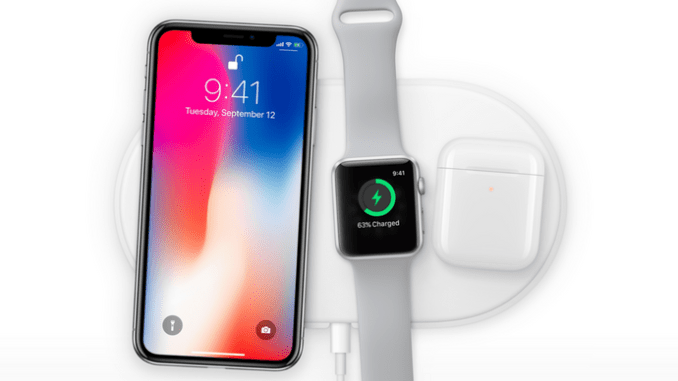
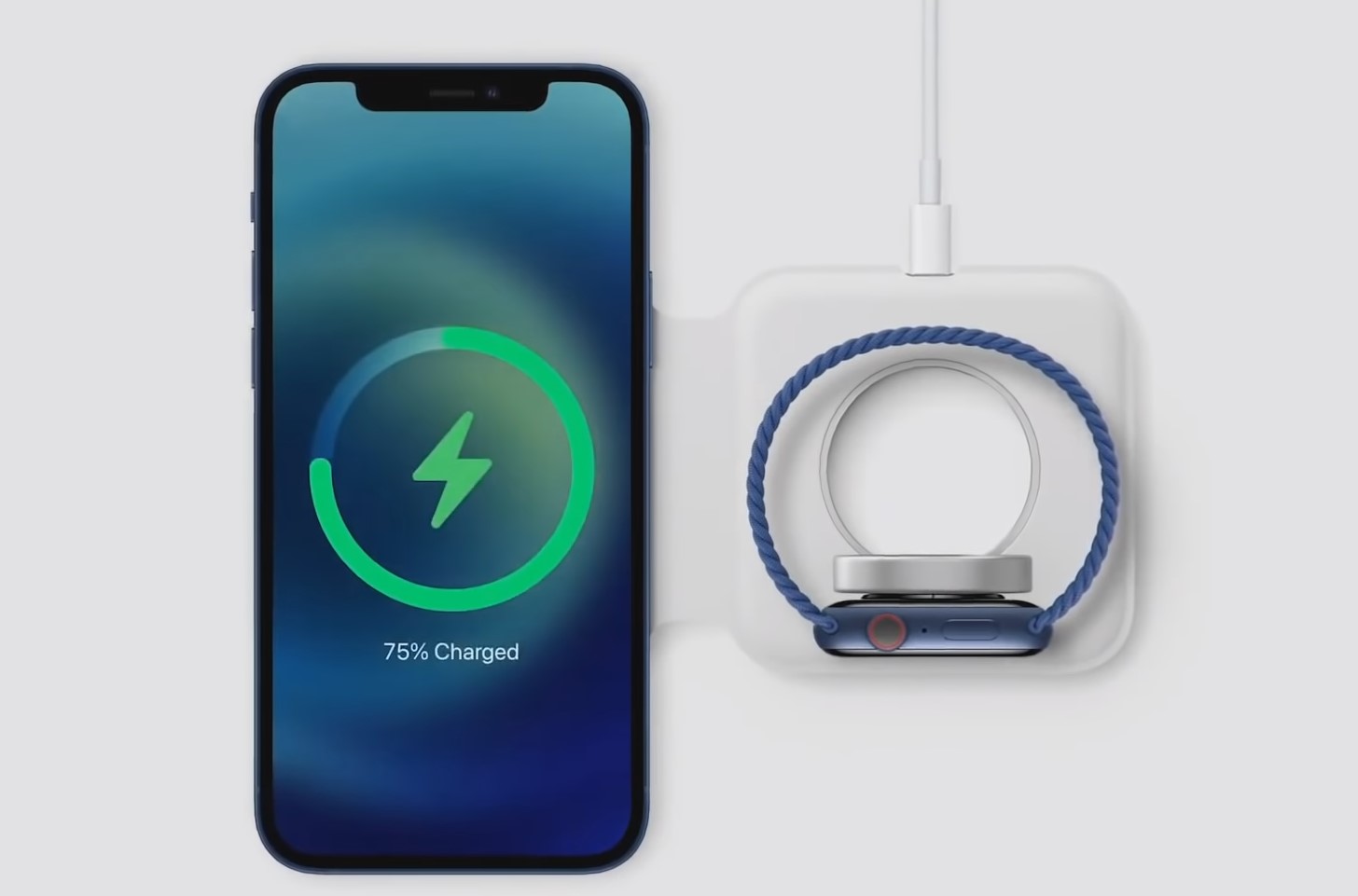
Apple might be raising its efforts into its wireless charging technology. The company is reportedly working on a new multi device wireless charging system of the future.
According to Forbes, Bloomberg’s Mark Gurman revealed some interesting information about the company’s future wireless charging technology on its Power On newsletter. Apparently, the Cupertino based giant is working to bring a future where chargers that do more than just one device. As of right now, the brand sells the MagSafe Duo wireless charger that charges both the iPhone and Apple Watch/AirPods at the same time.
But as per Gurman, the iPhone maker is working on a successor to the AirPower, which was cancelled back in 2019. In the Power On newsletter, Gurman also stated that “there’s a reason why it planned to launch the device in the first place in 2017.” In other words, the company has yet to give up on its plans with wireless charging technology. He further added that Apple is looking for both short and long distance wireless charging, which is quite a bit more advanced that its current induction charging based offerings.
Gurman believes that the company is imagining a “future where all of Apple’s major devices can charge each other. Imagine an iPad charging an iPhone and then that iPhone charging AirPods or an Apple Watch.” Furthermore, with the European Union cracking down on electronic waste and pressuring the brand to conform to the industry’s universal standards, the company’s Lightning connectors might soon be replaced in favor of the USB-C. But to avoid this, the company could launch devices that only support wireless charging from its next gen multi device chargers. In other words, there might soon be a time where a portless iPhone launches, with the retail box only having a smartphone since the earphones and charging brick are already out.
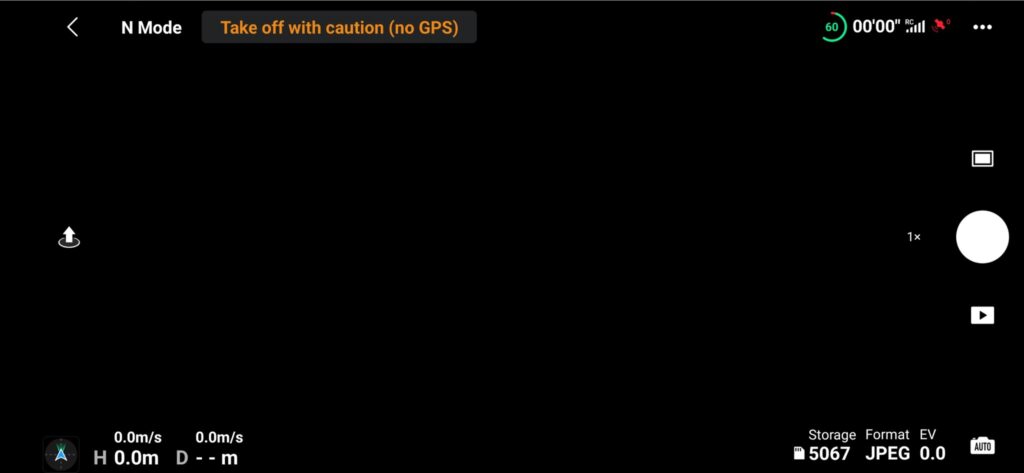
A compatibility issue or a bug is preventing DJI apps from performing as intended on the Google Pixel 6 series, leading to some DJI devices becoming virtually unusable.
Pixel 6 and Pixel 6 Pro owners have reported that the latest versions of the DJI Fly and Mimo apps currently suffer from an issue that prevents live previews from displaying at all. Instead, all the users get to see is a black screen. The controls and other elements are still visible and work as intended but the live image fails to show up completely.
For DJI drones, the issue is a dealbreaker considering Pixel 6 owners are left with no way to see from the POV of the drone and thus control it accordingly. Framing a shot or marking a target becomes impossible too. Action 2 or Pocket 2 owners, on the other hand, are a little better off in this regard as the issue is only an inconvenience that makes it harder to get the best possible shot.
Android Police has confirmed that the DJI Fly app works just fine on Pixel 4 XL running Android 12. Therefore, it isn’t difficult to establish that the issue is indeed an incompatibility problem affecting the Pixel 6 series, likely due to the new Tensor chip.
However, there are also some complaints suggesting that the issue may also affect the Galaxy S21, although it could be possible that something else is at play in this case.
Regardless, in view of the ever-increasing complaints on DJI’s public forum, moderators have confirmed that it’s a known issue and that DJI is working to fix the issue. Also suggested was to use devices other than the Pixel 6 series in the meantime.
Volvo is looking to create a new and more interactive way to offer users information while driving their cars. The company is working on a new technology, which could turn the car’s windshield into an AR display.
The Swedish automobile giant has just announced a partnership with an Israel based start up, Spectralics. Together, the two companies will be working on a new technology that will offer people a heads up display (HUD) for a windshield. For those unaware, a HUD is a feature that is seen in military aircrafts like fighter jets in which crucial details like speed, altitude and other crucial information is displayed in front of the pilot. Previously, we had reported on Huawei announcing an AR HUD tech that would turn car windshield’s into a smart screen. And now, it seems that Volvo is also working on a similar system as well.
Spectralics is developing what it calls a multi layered thin combiner (MLTC) film that can embed in the windshield of a car. This would enable the vehicle to turn the whole window or windshield into a large augmented reality based display. As stated above, this HUD display could help offer users a number of crucial information, like pointing out potential hazards or offering details regarding the vehicle’s immediate vicinity.
Huawei AR HUD
According to Volvo, the wide field of view offered by the HUD can display “can instill a sense of distance as virtual objects are superimposed onto the real world environment for a safe and immersive experience.” While this technology does sound quite interesting, it is still in early stages of development. Although, since Huawei is already working on this technology and now an established car brand like Volvo is developing this technology as well, it won’t be a surprise if more automakers take note of this system.
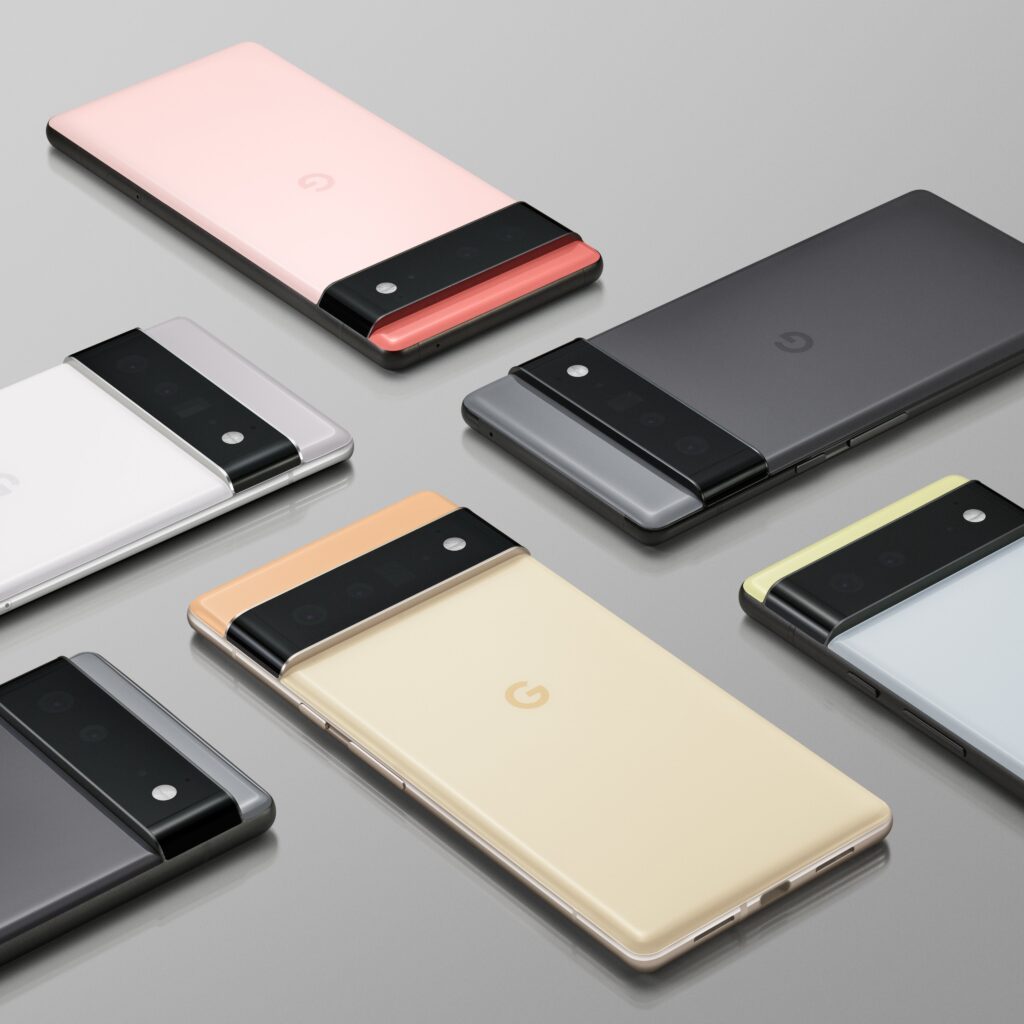
Several Pixel 6 and Pixel 6 Pro owners have complained that they’re unable to charge their devices through older or third-party chargers – a major bummer considering that the phone’s box doesn’t include a charger. To recall, companies started giving a miss to chargers citing environmental concerns and that most users already have chargers lying around in their homes. But the issue, if widespread, really beats the purpose of not shipping a charger in the box.
Complainants say that the Pixel 6 doesn’t throw any prompts upon getting connected to a charger and acts almost as if it’s not plugged in at all. Others were a bit better off and stated that while their device does charge with a third-party charger, the charging time is ridiculously slow.
But the charging woes aren’t limited to chargers alone, as some have even reported that the Pixel 6 only charges with the USB Type-C cable that comes in the box. Other cables again lead to no response from the phone at all.
It is worth mentioning here that OEMs typically have self-developed proprietary charging technologies that are usually not inter-compatible. For example, a OnePlus Warp Charger will likely be charging the Pixel 6 at very low speeds or may not work at all. Therefore, it is advisable to use chargers from the same brand as the phone.
However, judging from complaints, the charging system on the Pixel 6 seems to be rather strict when compared to other OEMs, and seemingly rejects third-party chargers and cables completely.
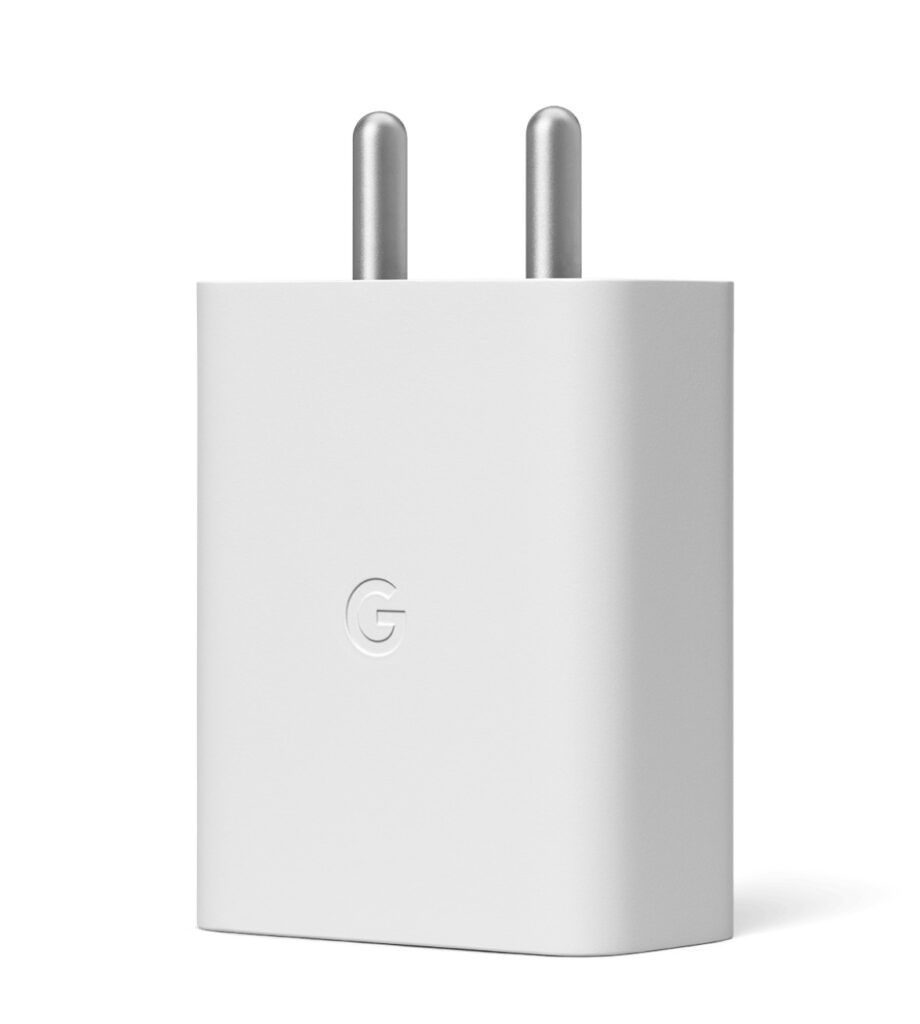
Google’s official 30W charging brick
Still, some users were able to find workarounds for this and we have listed them below:
Turn off ‘Developer options’: Honestly, this one is rather odd. A couple of users reported that their Pixel 6/6 Pro started charging the moment Developer options were toggled. While the reason behind it working is unknown at the moment, trying it out wouldn’t hurt.
Turn off Adaptive Charging: One user also reported that turning off Adaptive Charging made their Pixel 6 go into slow charging mode when connected. It wasn’t charging at all earlier. The same can be tried out through Settings > Battery > Adaptive Battery > Adaptive Charging.
Use official Google charging accessories: If nothing else works, then the last resort would be to purchase the official $30 30W charging brick and stick to using the stock USB cable.
Back in October, Reliance Jio had launched the JioPhone Next smartphone in India. Now, the company is apparently working on two more consumer electronic products, namely a new tablet and a Smart TV.
According to a 91Mobilesreport, tipster Mukul Sharma has revealed that the Indian telecom giant is working on a new Jio tablet and Jio TV that will launch next year. Apart from these two products, the company was also recently rumored to be working on a laptop as well. While the leakster shared that a tablet and TV is in the works, he did not reveal any finer details regarding these products. So unfortunately, we have no idea about the specifications that the tablet and TV will ship with.
Although, we can expect the tablet to run on PragatiOS out of the box. For those unaware, is is the company’s proprietary OS that was built in partnership with Google for the JioPhone Next. The tablet should offer a larger display and could likely be powered by an entry level Qualcomm chipset owing to the Indian brand’s partnership with the American chipmaker. Furthermore, the tablet in question would also likely be priced aggressively similar to its other products.
Talking about the Jio TV, the company might be working on a new smart TV that could likely arrive with support for OTT apps. Notably, the company may also bundle the set up box that it offers with Jio Fiber broadband with the TV. This product could even launch in multiple size options as well. The move from the company would also marks its attempts at diversifying its product ecosystem.
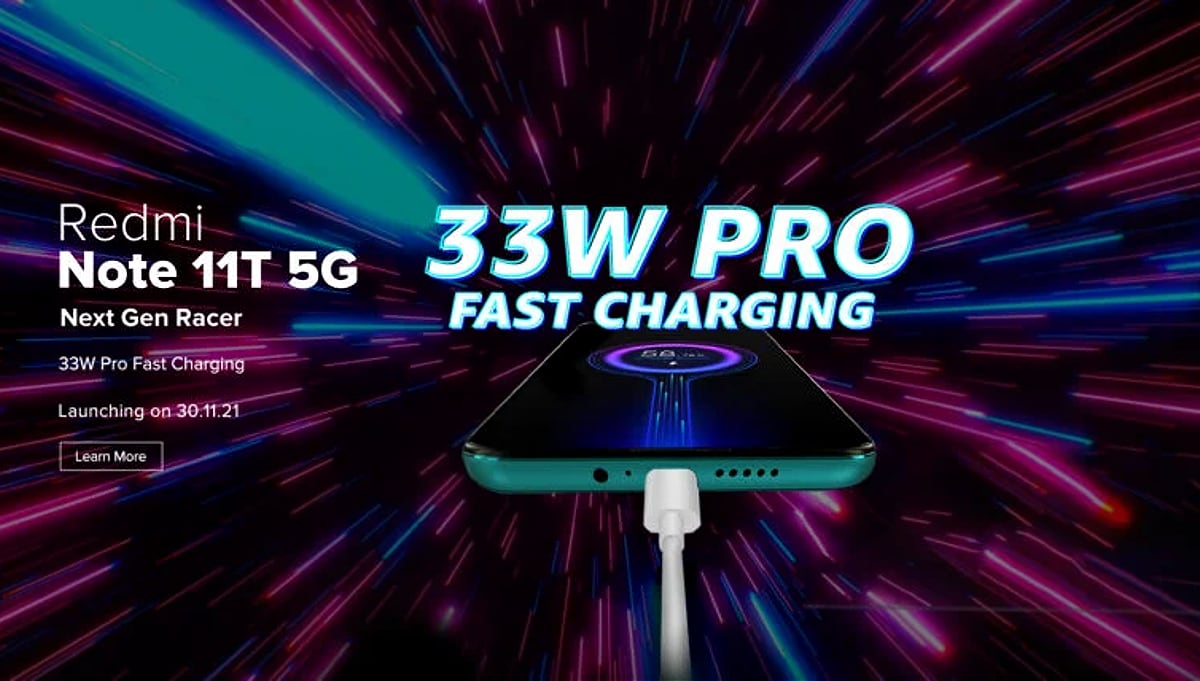
Xiaomi’s sub-brand Redmi will announce the Redmi Note 11T 5G in India at 11:50 AM IST on Nov. 30 in India. It will be the second 5G-enabled Note series phone from the brand for India after the Redmi Note 10T 5G that debuted back in July this year. The Note 10T 5G was a rebranded version of the version of China’s Redmi Note 10 5G. Reports have revealed that the upcoming Note 11T 5G will be a rebadged edition of the Redmi Note 11 5G, which debuted in China in October.
Redmi Note 11T launch event livestream
The Redmi Note 11T launch event will be live-streamed through YouTube. Here is the link to the live stream:
Here’s a look at what to expect on the specifications, features, and pricing of the Redmi Note 11T 5G:
Design & Display
The Redmi Note 11T 5G is expected to look identical to the Chinese Redmi Note 11 5G. It may feature a centrally aligned punch-hole display with a slightly thick chin on the front. It is expected to feature a polycarbonate back featuring a triple camera unit at the upper-left corner. The thickness of the device could be around 8.8mm and it weighs around 195 grams.
Redmi Note 11 5G
The Note 11T is likely to feature a 6.6-inch FHD+ LCD panel. It is expected to offer an adaptive refresh rate of up to 90Hz, a 240Hz touch sampling rate, and a 1500:1 contrast ratio. The Note 11T is expected to feature a side-facing fingerprint scanner.
Cameras
The Redmi Note 10T featured a 48-megapixel (main) + 2-megapixel (depth) + 2-megapixel (macro) triple camera unit and an 8-megapixel front camera. The successor model is expected to feature a dual-camera setup featuring a 50-megapixel primary camera and an 8-megapixel ultrawide lens with a 119-degree FOV. In addition, it is likely to feature an upgraded selfie camera of 16-megapixel.
Performance
The Dimensity 810 chipset is expected to power the Redmi Note 11T 5G with LPDDR4x RAM and UFS 2.2 storage. The Realme 8s 5G and Lava AGNI 5G are the only other Dimensity 810 powered phones available in India. These phones carry a starting price of Rs 17,999 (~$240) and Rs 19,999 (~$266) in the country.
The Note 11T 5G device is expected to arrive with up to 8 GB of RAM and 128 GB of storage. The company has confirmed that the Note 11T will come with a virtual RAM feature. It is unclear whether the handset features a microSD card.
The device will come preinstalled with Android 11, which will be overlaid with MIUI 12.5 UI. The handset will be backed by a 5,000mAh battery that will carry support for 33W rapid charging.
Variants and price
Reports have claimed the Redmi Note 11T 5G will be arriving in India in three variant such as 6 GB RAM + 64 GB storage, 6 GB RAM + 128 GB storage, and 8 GB RAM + 128 GB storage. The official pricing of these phones is under the wraps. It is speculated that the topmost variant of the Note 11T 5G may carry a sub Rs 20,000 pricing in the country.
In China, the 6 GB RAM + 128 GB storage and 8 GB RAM + 128 GB storage editions of the Redmi Note 11 5G are priced at 1,299 Yuan (~Rs 15,290; ~$203) and 1,499 Yuan (~Rs 17,640; ~$235). Like the Note 11, the 11T aimed for the Indian market is expected to come in colours like black, blue, and green. The Note 11T will be available for purchase through Xiaomi India’s official website and Amazon India.
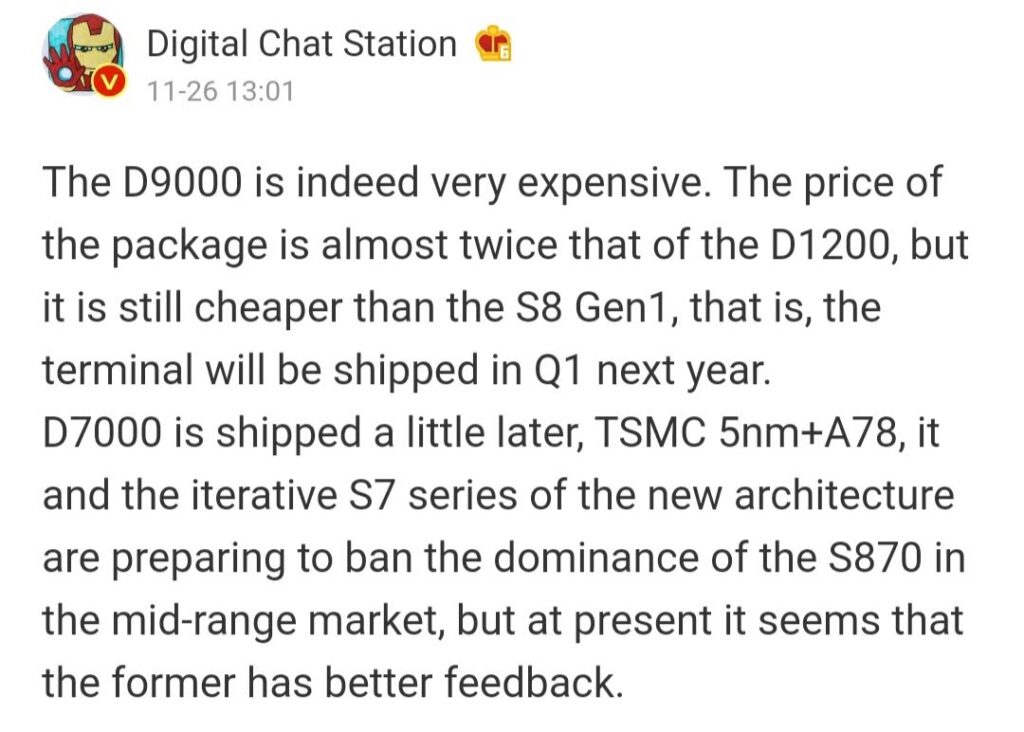
The MediaTek Dimensity 9000 chip will cost nearly twice its predecessor – the MediaTek Dimensity 1200 – and devices equipped with it will hence likely be pricier than usual. However, it will still be cheaper than Qualcomm’s upcoming Snapdragon 8 Gen1 processor, expected to be announced this week during Tech Summit.
The info comes from industry insider Digital Chat Station who has also revealed that the Dimensity 9000 will begin shipping from Q1 2022. It will be joined by the Dimensity 7000 upper-mid-range chip not long after, which is expected to put an end to the dominance of the Snapdragon 870 chip in the market.
The Dimensity 9000 chip will be MediaTek’s new flagship when it goes live and will be superseding the Dimensity 1200 from this year. It will be built on the 4nm fabrication process, which should improve performance while also being more power-efficient. The new sub-6GHz 5G chipset is the first in the smartphone world to use a Cortex-X2 core clocked at up to 3.05Ghz and is the world’s-first smartphone chip to include Bluetooth 5.3.
There’s a 1+3+4 setup for the cores, with a single Cortex-X2 “ultra core” joined by a cluster of 3X Cortex-A710 “super cores” clocked at up to 2.85Ghz. The two are complemented by a cluster of 4 efficiency Cortex A510 cores clocked at 1.8Ghz. The chipset supports LPDDR5x RAM speeds of up to 7500Mbps and has 14MB of cache.
The Dimensity 9000 is expected to arrive on the market in February and the upcoming Redmi K50 series may be one of the first to feature it.
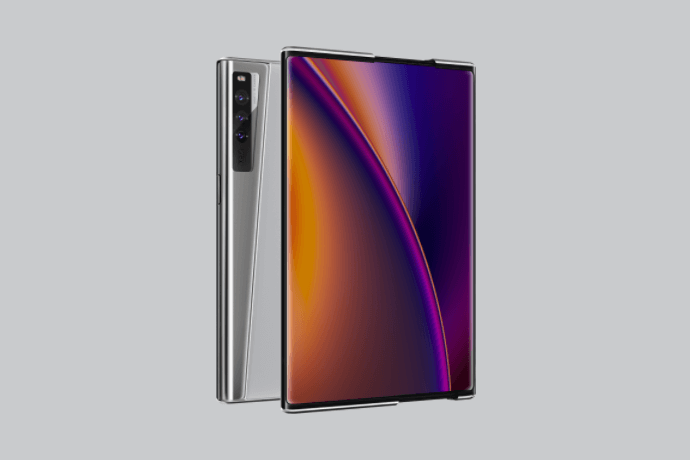
It seems like the foldable smartphone market might be seeing increasing competition soon as Oppo and Huawei are rumored to be working on new foldable handsets. Now, a new report has suggested that Oppo’s upcoming foldable device will apparently be a part of the Find N series.
OPPO X 2021 Concept Smartphone
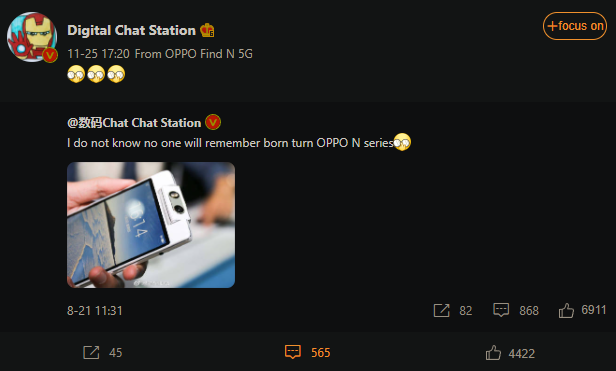
According to known tipster @数码闲聊站 on Weibo (a Chinese microblogging website), the smartphone brand is working on a new N series device. For those unaware, during the early days of the company, the Chinese OEM launched the OPPO N1, which arrived with an innovative design. It featured a camera module that could flip over from the rear to the front. In other words, its primary camera acted as the selfie shooter as well.
Just recently, we had reported on another leak from the tipster that revealed certain display and camera specs of Oppo’s upcoming foldable smartphone. And now, it is claimed that the device will be a premium grade model under the Find N series. As per the previous leak, the foldable handset’s cover screen will be slightly curved at the edges, with a 60Hz refresh rate and a center punch hole cutout. On the other hand, the inner display will support up to a 120Hz refresh rate and will sport a punch hole at the top left corner.
Under the hood, a Qualcomm Snapdragon 888 SoC will reportedly power this handset. For photography, the tipster had stated that the phone will feature a 50MP Sony IMX766 primary sensor, paired with a 16MP Sony IMX481, and a 13MP Samsung ISOCELL S5K3M5 sensor on the rear. On the front, the device will apparently house a 32 megapixel selfie camera. Unfortunately, this is still an unconfirmed report so take it with a pinch of salt for now.
Yesterday, Lu Weibing, President of Xiaomi Group China and General Manager of the Redmi brand, took to Weibo to hype up Redmi products coming in 2022. The question posed was rather straightforward, seeking netizens’ word on the product they’re looking forward to the most.
The replies to the post mostly revolved around the upcoming Redmi K50 series and netizens expect the flagship to start at just 1,999 Yuan or around $313 – a reasonable guess considering that Redmi has maintained that price for the Redmi K20, Redmi K30 5G, and the Redmi K40.
Lu Weibing has been hyping up the upcoming series for a while now, recently posting another similar question on Weibo about whether the Redmi K50 series needs an SE model. Mi Fans had responded to it saying that it’s unnecessary as the lineup will already be offering 4 models.
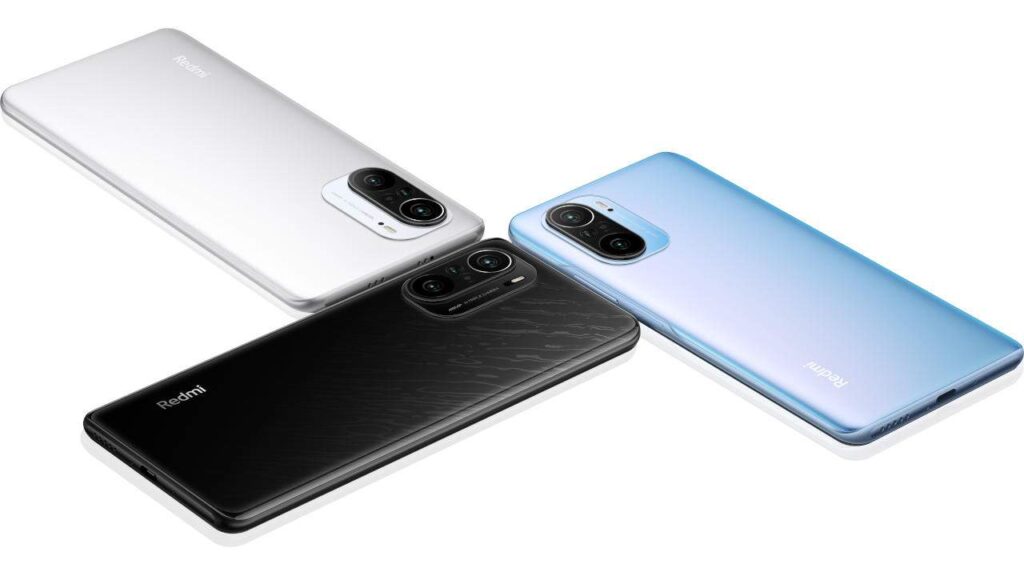
Redmi K40 series
As for the Redmi K50 devices themselves, the series will be offering four high-end chipset options, namely the Snapdragon 8 Gen1, MediaTek 9000, MediaTek 7000, and the Snapdragon 870. Other known specs include 108-megapixel primary camera, X-axis haptics motor, and JBL dual stereo speakers.
The lineup will likely be comprised of Redmi K50, K50 Pro, K50 Pro+, and K50 Gaming Edition and will be debuting in early 2022.
We use cookies on our website to give you the most relevant experience by remembering your preferences and repeat visits. By clicking “Accept”, you consent to the use of ALL the cookies.
This website uses cookies to improve your experience while you navigate through the website. Out of these, the cookies that are categorized as necessary are stored on your browser as they are essential for the working of basic functionalities of the website. We also use third-party cookies that help us analyze and understand how you use this website. These cookies will be stored in your browser only with your consent. You also have the option to opt-out of these cookies. But opting out of some of these cookies may affect your browsing experience.
Necessary cookies are absolutely essential for the website to function properly. This category only includes cookies that ensures basic functionalities and security features of the website. These cookies do not store any personal information.
Any cookies that may not be particularly necessary for the website to function and is used specifically to collect user personal data via analytics, ads, other embedded contents are termed as non-necessary cookies. It is mandatory to procure user consent prior to running these cookies on your website.