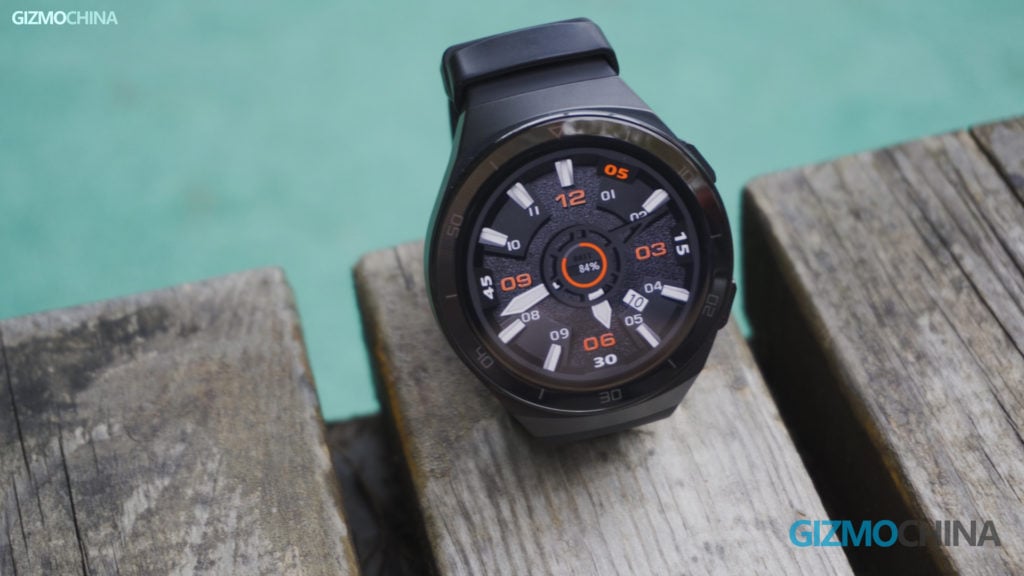
Huawei announced the support for third-party applications on its smartwatch at the end of February 2021. The HUAWEI Watch GT2 Pro was the first wearable from the company to get this feature. Now, months later, the less expensive HUAWEI Watch GT2 and the HUAWEI Watch GT2e are now finally getting this feature via the latest firmware builds.
HUAWEI Watch GT2e
Huawei is rolling out new firmware builds for the HUAWEI Watch GT2 and HUAWEI Watch GT2e units. These new software builds bring support for third-party applications.
But unfortunately, the fresh firmware builds are only available for testers, reports ITHome.
The software builds that enable third-party app support are as listed below.
Apart from adding support for third-party applications, the above-mentioned firmware builds also add an ability to check heart-related data directly on the smartwatch itself.
The latest software builds for the HUAWEI Watch2 and HUAWEI Watch GT2e should make their way to the stable channel once the beta testers don’t find any major bugs. They should be also available in international markets later.
Having said that, though third-party app support sounds big, there are only a few applications to try out.
vivo today announced its upcoming ‘OriginOS Ocean’ with a new teaser video showing its launch date being displayed on a billboard on New York’s Times Square. Not only that, but the company has also announced that internal beta recruitment for the same will be commencing today itself.
The teaser video doesn’t really give us an insight into what to expect with the upcoming version of the Android skin other than showing its launch date, which has been set to December 9th (11:00 am GMT), and revealing its brand new name – OriginOS Ocean.
As for the internal beta testing program, recruitment will commence from 9:00 am GMT today and registration can be done from the official vivo community. Do keep in mind that the internal testing will likely be limited to Chinese users only, so global users will likely have to wait a while before they can check the update out.
vivo is also expected to release an official closed beta list once the launch event takes place, but leaksters have already tipped that the vivo X70 and X60 series will be eligible for it along with a handful of S series models.
The current version of OriginOS lived true to its name and was easily one of the most radical UI designs in the Android world, bringing along a unique home screen design full of animated widgets and app icons, and the like.
The 2022 Tesla Model Y is gearing up to see a major upgrade. The company is gearing up to receive an improvement in interface, with the inclusion if an AMD Ryzen chips for a better and faster touchscreen.
Model Y
The new chip would basically enable the car to offer better user experience while other upgrades include a lithium ion auxiliary battery and laminated glass. As of right now, the electric vehicle making giant is gearing up for the launch of the latest iteration of the Model Y, which should be available globally in the coming months. Furthermore, customers in China have already started receiving new upgraded Performance models, so these can also be expected to ship in other regions as well.
At the moment, the wait time for a Performance variant in China has reached a full year. Now, one of the Chinese owners shared an image on Twitter, which revealed that their new Performance variant is powered by an AMD Ryzen chip over the Intel Atom, which had previously powered the MCU (media control unit) on older EV models. Looking at the tweet, the person stated that the company’s Gigafactory in China is installing the latset AMD Ryzen series chips on the latest Model Y Performance.
Similarly, another customer also took to Twitter to share that their latest Model Y also features an AMD Ryzen chip, front and rear laminated glass, 16V lithium ion battery, and a 78.4 kWh LG NCMA battery as well. Reportedly, this chip is the same one that is also shipped with the Model S and Model X. Although, it is paired with 8GB of RAM rather than 16GB since the Model Y only has a singly display to operate.
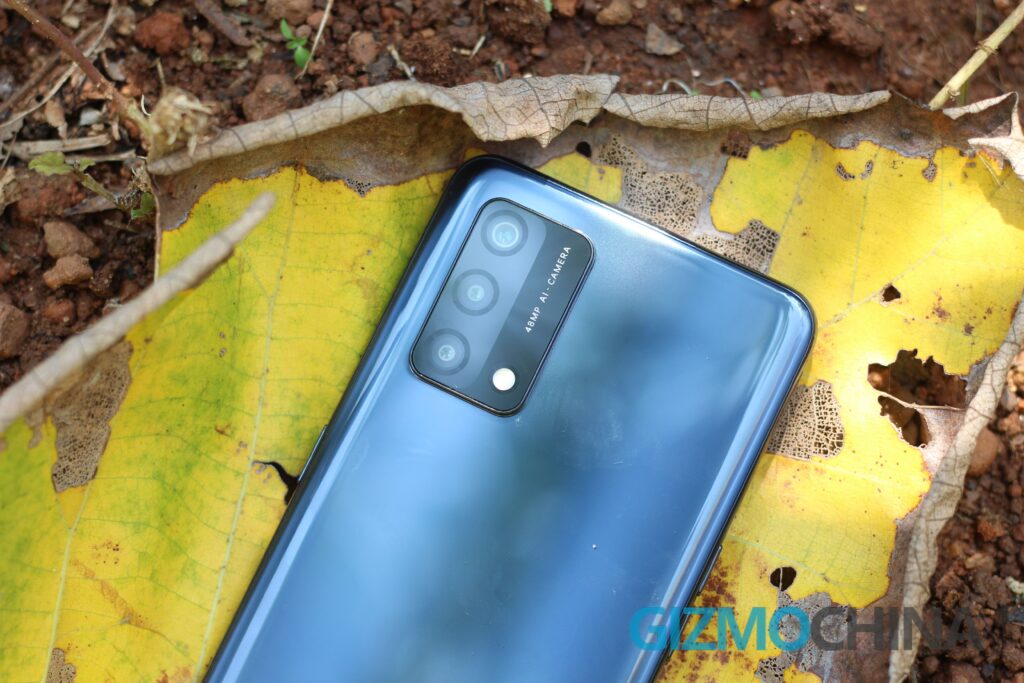
The OPPO F21 series was reported to launch in the second half of 2021 ahead of Diwali festive season. Unfortunately, that never happened. Global semiconductor shortage could be the possible reason for this. Now, months later, a new report says that the next devices in the OPPO F series will release in Q1 2022.
OPPO F19
According to industry sources of 91Mobiles, the OPPO F21 series will launch at the end of Q1 2022 in India. In other words, the lineup will make its debut in March 2022.
The sources say that the phones will look better than the recently unveiled OPPO Reno7 series. Further, the series is expected to include two models priced between ₹20,000 and ₹30,000 in India.
The current-gen OPPO F19 lineup launched in March 2021. OPPO only released two models first, namely OPPO F19 Pro and OPPO F19 Pro+. These devices were later followed by the vanilla OPPO F19 in April.
Only the Pro+ variant is 5G enabled, while the Pro and standard versions are limited to 4G connectivity. The regular model also got a special edition in the form of OPPO F19s before Diwali. However, it didn’t bring any feature upgrades.
Although the sources don’t say anything, we think that both the models in the upcoming OPPO F21 lineup should arrive with 5G connectivity, given the market trend.
What are your expectations of the OPPO F21 series? Share with us in the comment section below.
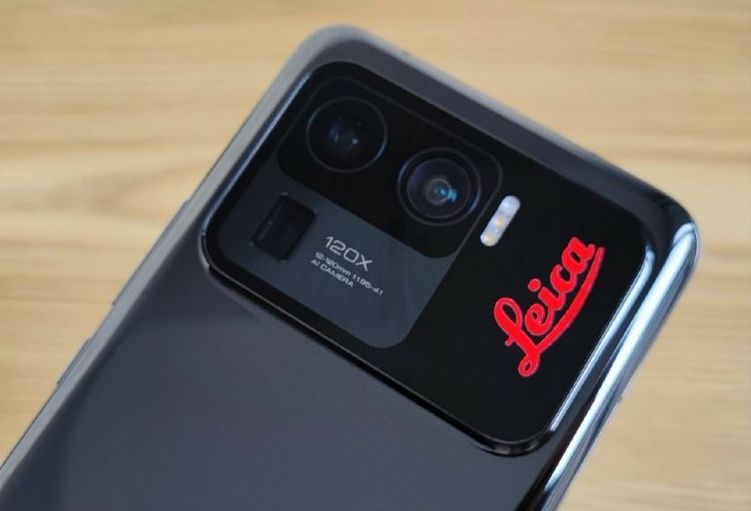
A new leakster has revealed that Xiaomi is currently testing its next gen flagship smartphone with its upcoming MIUI 13 custom skin. Apparently, the Xiaomi 12 performed well with the OS, which is also set to be officially announced alongside the premium grade handset.
MIUI 13
According to tipster @数码闲聊站 on Weibo (a Chinese microblogging website), the company has tested the MIUI 13 on the Xiaomi 12. These testings have resulted in positive internal feedback as well. For those unaware, the upcoming flagship series of smartphones are set to launch next month, along with the latest iteration of MIUI that is based on Android 12 OS. Although, it is worth noting that the Xiaomi 12 series will likely launch with the MIUI 12.5 version based on Android 11, before receiving an update to MIUI 13 later on.
Talking about the smartphone, the Xiaomi 12 from the Chinese tech giant will be its latest high end offering that features curved display and a punch hole selfie camera on the front. Furthermore, the rear is expected to house a 50 megapixel primary camera along with an ultra wide angle lens and a macro sensor as well. Under the hood, a battery that should be around or over 4,500mAh is expected to power the handset.
Notably, the Xiaomi 12 will be one of the first batch of next gen smartphones that feature Qualcomm’s Snapdragon 8 Gen1 processors. This is a 4nm based chip manufactured by Samsung and arrives with an Adreno 730 GPU as well. Recently, we had even reported on the brand launching the flagship by the end of December. Additionally, the 12X model and Redmi K50 are expected to launch with MIUI 13 that is based on Android 11 as these models feature the “Snapdragon 870+” SoC.
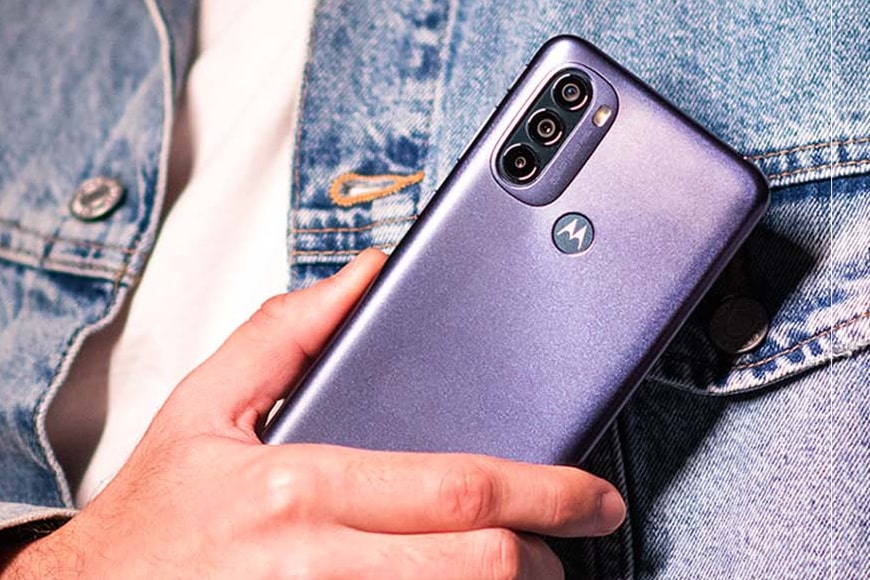
Motorola has officially launched the Moto G31 in India as scheduled. The device succeeds the Moto G30 from earlier this year. The new model does not bring any notable improvements other than the OLED display. It was initially unveiled alongside four other smartphones a few days back.
Motorola Moto G31 Specifications and Features
The Moto G31 features a water-repellant polycarbonate body like other budget smartphones from Lenovo-owned Motorola. The handset flaunts a 6.4-inch OLED display with a resolution of 2400 x 1080 pixels, 409 PPI, and a 60Hz refresh rate. The panel has an 88.8% screen-to-body ratio, a 20:9 aspect ratio, and a centered punch hole.
The phone comes powered by a MediaTek Helio G85 SoC paired with 4GB/6GB RAM and 64GB/128GB storage. The storage can be further expanded up to 1TB via a MicroSD card.
The device runs Android 11 with Lenovo ThinkShield for Mobile security. It is eligible for a single Android update and two years of security updates.
As far as optics are concerned, the handset houses a triple camera setup on the rear comprising of a 50MP primary sensor, an 8MP ultra-wide unit, and a 2MP macro shooter. For selfies and video calls, it uses a 13MP snapper.
On the connectivity front, the phone supports dual-SIM, 4G, dual-band WiFi, Bluetooth 5.0, GNSS (GPS, A-GPS, LTEPP, SUPL, GLONASS, GALILEO), NFC, 3.5mm headphone jack, and USB Type-C port.
Unfortunately, it only has a single bottom-firing speaker powered by Dolby Atmos but features dual microphones, a dedicated Google Assistant key, and all the essential sensors like a side-mounted fingerprint sensor, accelerometer, proximity sensor, gyroscope, ambient light sensor, compass, and SAR sensor.
The smartphone is backed by a 5,000mAh battery with support for 10W charging. Lastly, it measures 161.89 x 73.87 x 8.55mm in dimension, weighs 181g, and arrives in two colors (Mineral Grey, Baby Blue).
Motorola Moto G31 Price and Availability in India
The Motorola Moto G31 will retail at the following price tags in India.
4GB + 64GB – ₹12,999 ($173)
6GB + 128GB – ₹14,999 ($200)
It will go on sale for the first time at 12 PM on December 6 via Flipkart.
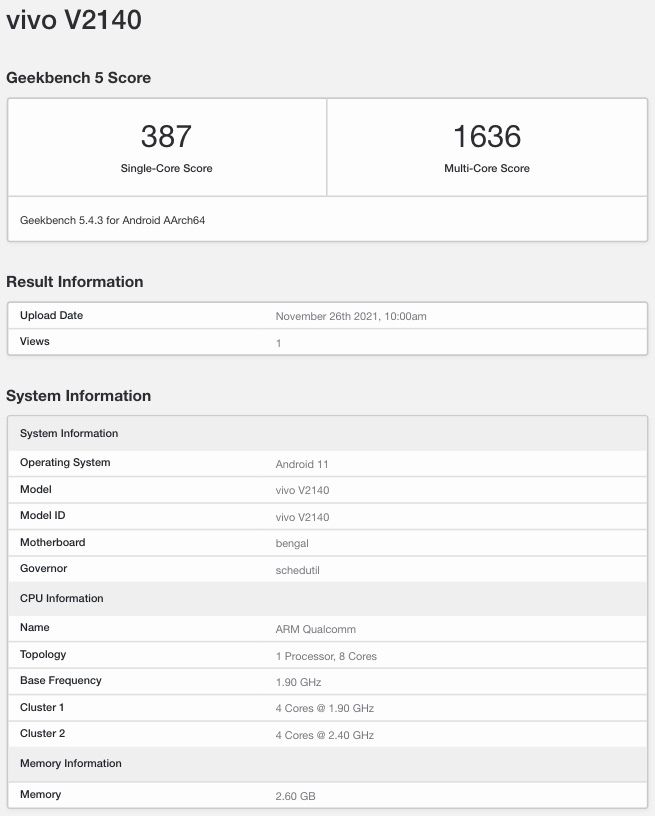
Vivo is reportedly working on a new smartphone called the Vivo Y21e. The alleged phone has appeared on the Geekbench benchmarking site with some of its key specs. It reveals that it may debut as the world’s first phone powered by the Snapdragon 680 SoC.
A Vivo phone with model number V2140 was had appeared in the database of Geekbench. The IMEI database of the V2140 reveals that it may debut in the market with the Vivo Y21e moniker.
The Geekbench listing states that the V2140 is powered by a Qualcomm chip, which is codenamed as ‘Bengal.’ The same codename has been used by the U.S. based chip maker for some of its mid-range SoCs. The listing reveals has the chipset is equipped with four CPU cores working at 1.90GHz and the other four CPU cores clocking at 2.40GHz. The source code of the listing shows that the SoC includes the Adreno 610 GPU. These clues show that the Vivo Y21e could be powered by the Snapdragon 680, which was announced earlier this month.
Coming back to the Vivo Y21e’s Geekbench listing, it further reveals that the device has 3 GB of RAM. The device is seen running on Android 11. If the device is heading to the Chinese market, it will come with OriginOS UI and if it is heading to global markets, it will arrive with FunTouchOS UI.
Nothing else is known on the specs of the Vivo Y21e. As far as the Snapdragon 680https SoC is concerned, it features Spectra 346 triple ISPs that can process image data of three cameras simultaneously. The SoC can handle up to 90Hz Full HD+ displays. Its other features include QC3 fast charging support, optimized gaming experience, and Snapdragon X11 LTE modem.
Honor has confirmed that the company will be launching its next-generation Honor 60 series smartphones at a launch event on 1st December. Ahead of the official launch, almost everything related to the phones has been leaked.
Now, just a couple of days ahead of the official announcement, the China-based brand has shared a new teaser video that showcases the phone’s camera module design and reveals some key features of the device.
The video teaser reveals that the Honor 60 series will have an AI Super-Sensing camera lens on the front side which will have support for camera gestures. You will be able to take pictures by high-fiving the front camera. It also appears that flipping the palm changes the front camera to the rear camera.
There will be support for some additional gesture-based controls, including waving and making a fist, among others, giving you a more convenient option for capturing photos.
The teaser also shows the smartphone in all its glory, showcasing the four-side curved display on the device with narrow bezels and a punch-hole cutout for the front-facing camera right at the top-center position.
It carries forward the ring design for the camera module that we saw in the Honor 50 series but this time, the company has doubled down with two ring designs for the camera. The teaser shows the “Starry Night” color option of the smartphone.
As for the specifications, based on the leaks so far, the Honor 60 and 60 Pro will come with an AMOLED display with Full HD+ screen resolution and 120Hz refresh rate. The phones are likely to come powered by the Qualcomm Snapdragon 778G Plus chipset.
For photography, the devices are expected to arrive with a 50-megapixel selfie camera and a 108-megapixel main camera on the back. Running Android operating system with a custom UI, both phones will come with support for 66W fast charging.
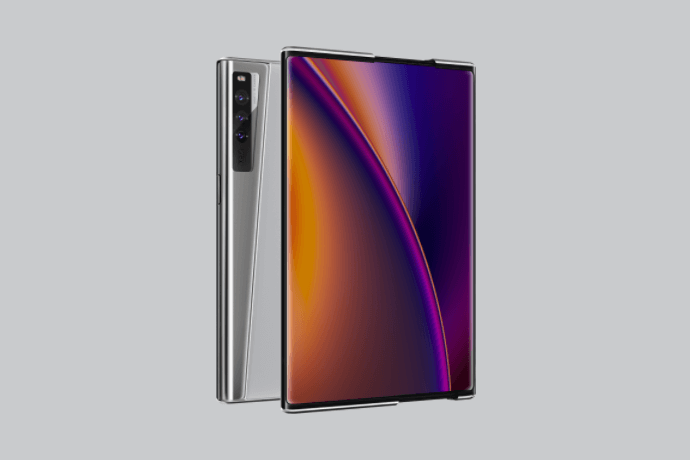
OPPO is long-rumored to launch a foldable smartphone. A report from a few days back revealed that this phone will make its debut in December. Now, a tipster sheds some details on the handset’s displays and cameras.
According to Digital Chat Station, the first-ever foldable smartphone from OPPO will feature an inward folding design. It is said to unfold into a tablet like the Galaxy Z Fold3 and HUAWEI Mate X2.
The leaker says that the cover screen will be slightly curved at the edges. It will have a 60Hz refresh rate and a centered punch hole.
On the other hand, the inner folding canvas will support up to a 120Hz refresh rate and will sport a punch hole at the top left corner. The same source had previously revealed the primary 7.8-inch to 8-inch display to be of LTPO-type. At that time, the leakster also said that the device will boot ColorOS based on Android 11 and will be powered by a Qualcomm snapdragon 888 SoC.
Further, the tipster’s new Weibo post from earlier today says that the handset will have a side-mounted fingerprint sensor. His post also reads that the phone’s rear camera module will resemble that of the OPPO Reno6 series.
The leaker discloses that the handset will house a triple rear camera consisting of a 50MP Sony IMX766 primary sensor, a 16MP Sony IMX481 tertiary sensor, and a 13MP Samsung ISOCELL S5K3M5 tertiary sensor. Lastly, the device will come with a 32MP selfie camera but it’s not known whether this sensor will reside outside or inside.
We expect to learn more about the upcoming OPPO foldable smartphone in the coming days ahead of its official launch.
China Post Communications Equipment Co. Ltd., which produces and distributes telecommunications equipment and products, is gearing up to launch a new series of smartphones in its home country.
The company has today confirmed through its official Weibo account that the Hi Nova 9 series smartphones will be launched on 2nd December. The teaser poster shared by the firm shows the tagline “explore the unseen together” but has not revealed much.
China Post Communication Equipment Co. Ltd. has opened a Weibo account in August this year but had not posted anything for a long time. That changed when the account became active earlier this year and teased content like “Hi, Future, “Hi, World,” and “Hi Dream,” forming “Future World Dream,” whatever that means.
Now, it has been confirmed that the company is all set to launch the Hi Nova 9 series smartphones in the country which is likely to have two models — Hi Nova 9 and the Hi Nova 9 Pro, made by Huawei.
If the leaked images are to be believed, then the upcoming Hi Nova 9 series looks very similar to the Huawei Nova 9 series phones launched by the Chinese giant. The front panel has a screen with a punch-hole cutout for housing two camera sensors in the top-left corner and the device has a frosted glass cover.
The camera module on the back panel is also similar to what we’ve seen. Not just the design, but the color of the smartphone in the leaked image is the same as what Huawei is offering for the Nova 9. However, on the back panel, instead of the Huawei branding, it reads “Hi Nova,” indicating the phone to be a rebranded model.
While the company has not yet revealed more details related to these upcoming smartphones, we expect them to be similar to the Huawei Nova 9 lineup in terms of specifications and color options. To know more about the phones, including the pricing and availability details, we will have to wait for a few more days for the official launch.
MediaTek has recently announced the Dimensity 9000 chipset, and it will be holding a dedicated event for it on Dec. 16 in China. The Taiwanese company is expected to reveal some more information on the D9000 chip on the said date. Recent reports have revealed that the company is also working on another chip called the Dimensity 7000. Today, reliable tipster Digital Chat Station shared the key details of the SoC.
The Dimensity 9000 is the world’s first 4nm chip. Recent reports have revealed that the upcoming Dimensity 7000 will be built with TSMC’s 5nm processing technology. New information reveals that the octa-core chip will include four Cortex-A78 cores working at 2.75GHz and four Cortex-A55 cores clocking at 2.0GHz.
The Dimensity 7000 will include Mali-G510 MC6 graphics. It is speculated that the SoC will rival Qualcomm’s Snapdragon 870 mobile platform. Recently, the same tipster had recently claimed that the Dimensity 7000 will come with support for 75W fast charging.
The above-mentioned rumored specs indicates that the Dimensity 7000 will be placed between the Dimensity 1200 SoC and the Dimensity 9000 chip. A recent Weibo post by Redmi General Manager Lu Weibing suggested that Redmi could be one of the first brands to launch a Dimensity 7000 SoC powered phone.
The testing phase of the Dimensity 7000 has reportedly started. Hence, it is speculated that the SoC may go official in December 2021 or January 2022. The first phones powered by the D7000 may break cover by Q1 2022.
At the end of August, vivo officially confirmed to enter the tablet category in the first half of 2022. As we are only a month away from the new year, details about the company’s slate have started emerging. The first-ever leak regarding the product gives away the information regarding its chipset.
Further, the leakster says that more OEMs will enter the tablet market in 2022. Hence, customers will have an option to choose from a wide variety of products. He hints at the launch of e-ink tablets, small-size gaming tablets, large-screen OLED flagship tablets, and more.
Unfortunately, we don’t have any further information regarding the vivo tablet. Anyway, it could feature an 8,040mAh battery in accordance with a TÜV Rheinland certification from June. According to a trademark filing from the same month, the product may go official as vivo Pad.
Having said that, we expect to learn more about the alleged vivo Pad in the coming days via leaks, certifications, and official teasers.
Pixel 6 is the latest smartphone offering from Google that blends AI and machine learning with powerful hardware to bring an optimal user experience. Unlike the previous Pixel smartphones, the Search giant added an all-new Tensor SoC to uplift the performance and efficiency while offering a splendid experience. Google Pixel 6 is faring quite well against the other flagship smartphones in the market.
So we have compiled the Pixel 6 performance benchmarks to give you an overview of the smartphone’s prowess over other smartphones.
Performance benchmarks help to estimate the smartphone’s performance in normal usage and also rank the phone in performance order. The presence of the first-ever custom SoC from Google further excites us to check its actual performance.
The new Tensor SoC is purely designed to offer the blend of powerful AI and Machine learning aspects on a mobile chipset. Apart from the performance, the new SoC offers powerful GPU performance. It is built of ARM cores, while Google worked on its TPU and ISP aspects. There are hardly any official details on Google’s input in the chip i.e. the TPU and ISP. But benchmarks can give us an overview of the SoC’s capabilities.
Pixel 6 3DMark GPU benchmark
Pixel 6 GPU outperforms all the flagship SoCs including the Snapdragon 888. According to a Reddit user, the Pixel 6 scored 6666 points on 3DMark’s Wild Life Test.
Meanwhile, the Snapdragon 888 scored 5599 and the Exynos 21000 attained a score of 5668.
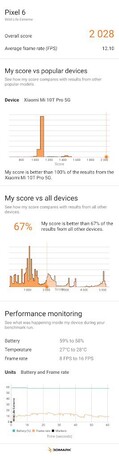
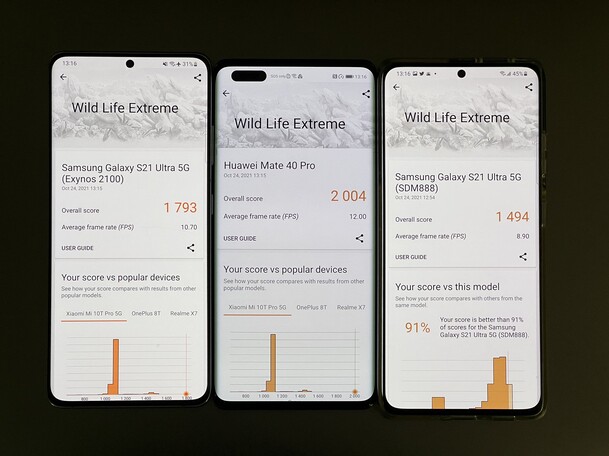
In 3DMark’s Wild Life Extreme test, the Google Tensor SoC scores 2028 while Snapdragon 888 and the Exynos 2100 stand at 1494 and 1793, respectively.
However, the performance across these benchmark apps confirms Google’s efforts are in a positive direction. It scores the highest average frame per second of 12.10.
Pixel 6 Pro AnTuTu
In AnTuTu benchmark, the Pixel 6 Pro attains 177890 points in CPU, 287342 in GPU, 99684 in MEM, and 144852 in UX with a total score of 709,768 points. Meanwhile, the Red Magic 6 with Snapdragon 888 with a dedicated cooling system scored a total of 858734.
Pixel 6 Pro Geekbench
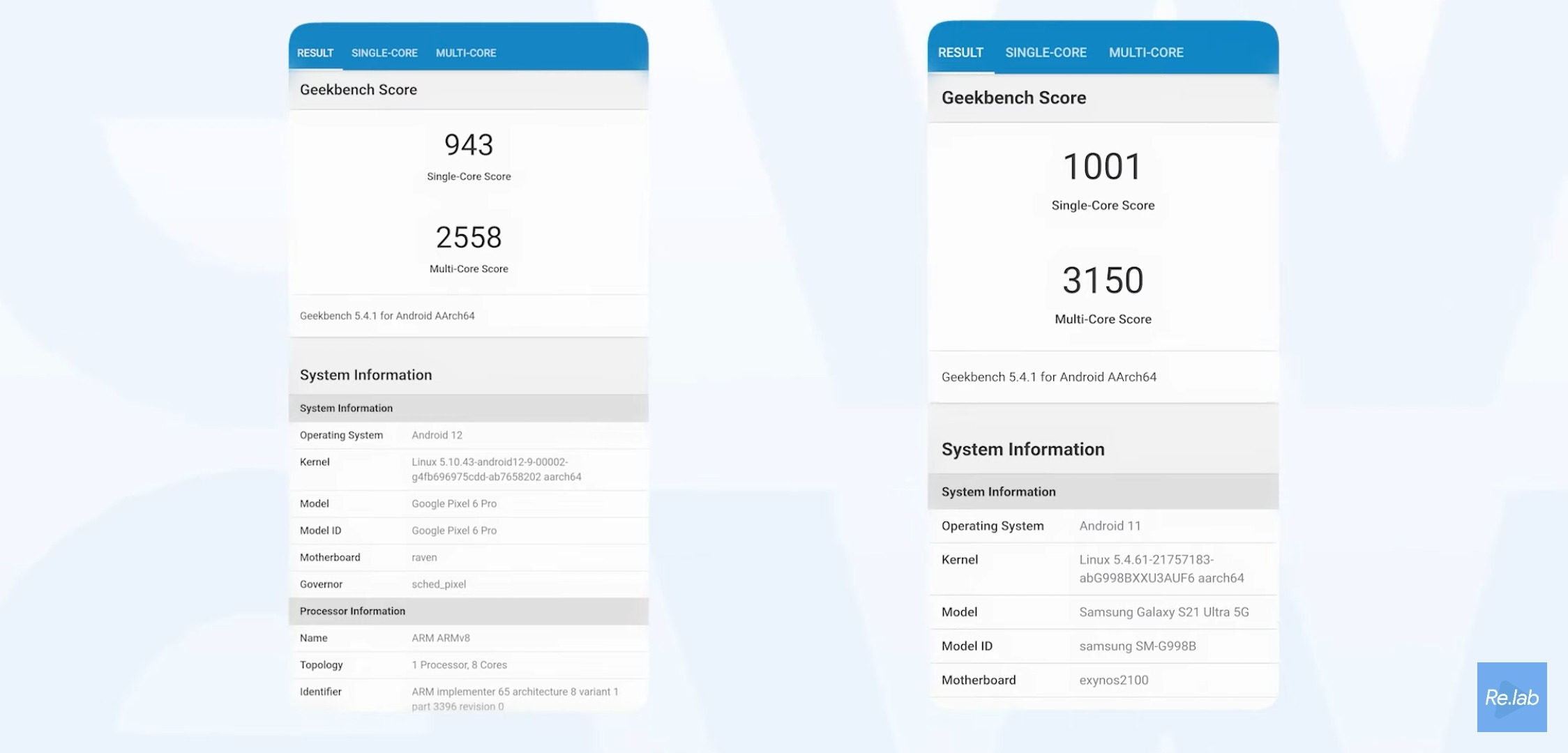
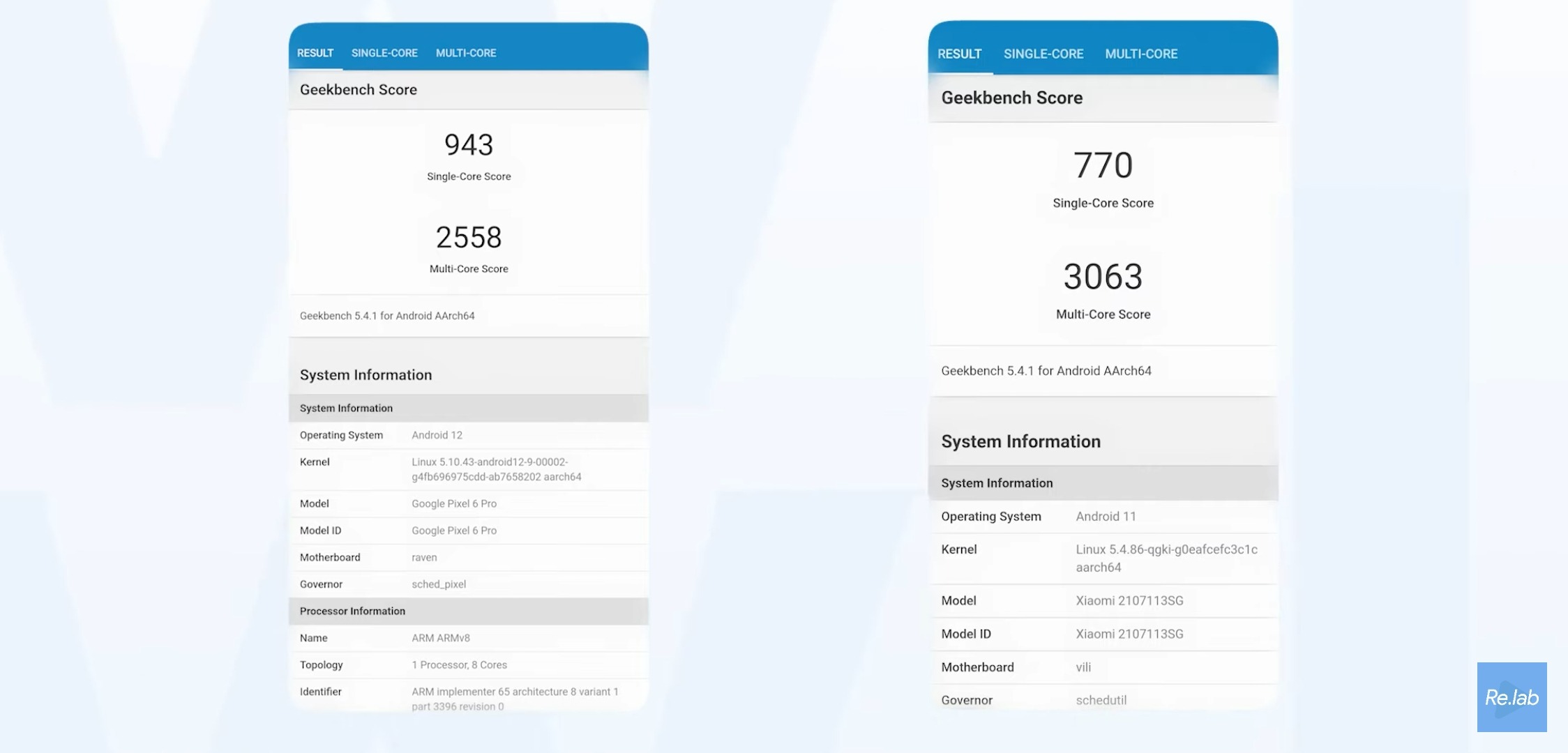
Google Tensor SoC performs on par with the Exynos 2100 running on Galaxy S21 Ultra 5G. Pixel 6 scores 943 in single-core and 2558 in the multi-core test. On the other hand, the Galaxy S21 Ultra 5G scores 1001 points in single-core and 3150 in the multi-core test. However, the Snapdragon 888-based Mi 11T Pro performance scores only 770 points in single-core and 2063 in multi-core tests.
1 of 2
Pixel 6 Genshin Impact Test
Genshin Impact test provides real-world performance indicators for the SoCs. Pixel 6 Pro encasing the Tensor SOC scored as low as 30fps, and the average was at 32fps with 43.5°C. While gaming with fan, the fps jumps to 50 immediately. Tensor’s underwhelming performance brings it to the sub-premium chipset level.
On the other hand, the Snapdragon 888 averages at 42fps.
Pixel 6 GeekBench ML
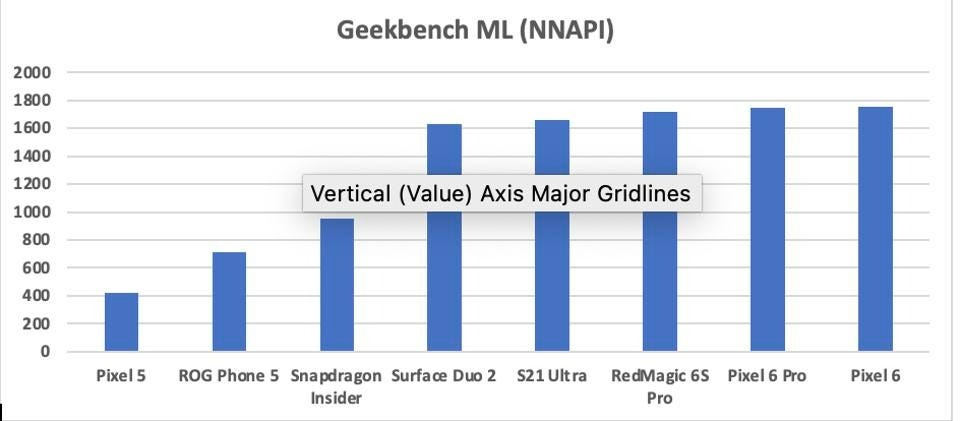
Based upon the test of both the CPU and GPU, the Pixel 6 scored 1700+ points which is better than Red Magic 6S Pro and S21 Ultra standing scoring below 1700. Google Tensor looks to be a massive improvement, with the fastest NNAPI performance across the competition.
PC Mark Android
In another benchmark test the Pixel 6 series seems to underperform than the snapdragon 888 based Galaxy S21 Ultra, RedMagic 6S Pro, and Snapdragon Insider Phone. We can see a performance difference of up to 37% with Snapdragon flagship SoC.
Conclusion
Pixel 6 seems to be a major performance upgrade over its predecessor. In terms of efficiency and performance, the Google Tensor SoC outperforms Snapdragon 888 in some aspects like AI, but improvement can be made for an overall better output in all the fields.
A recent report revealed that the Realme 9 series will be coming in February in India. The lineup is expected to include four models such as Realme 9, Realme 9i, Realme 9 Pro, and Realme 9 Max / Pro+. A fresh report by ThePixel.vn has revealed the key details of the Realme 9i.
The report claims that it has learned through its source that the Realme 9i will debut globally in January 2022. The Vietnam-based publication claimed that the handset will be coming to Vietnam in Q1 2022.
The Realme 9i will be replacing the Realme 8i that debuted in September 2021. The Realme 8i has a 6.6-inch IPS LCD panel with a punch-hole design that offers a Full HD+ resolution and a 120Hz refresh rate. It runs on Realme UI 2.0 based Android 11.
Realme 8i in Space Black and Space Purple
The Realme 8i is driven by the Helio G96 chipset and 4 GB / 6 GB / 8 GB of RAM. The device comes with 64 GB / 128 GB of UFS 2.1 storage. For additional storage, it has a dedicated storage slot.
The 8i has a 16-megapixel camera for capturing selfies. The rear shell of the phone features a 50-megapixel primary camera, a 2-megapixel depth sensor, and a 2-megapixel macro shooter. The device is backed by a 5,000mAh battery that supports 18W fast charging.
The publication shared some specs of the Realme 9i. It mentioned that the device may come with a 6.5-inch IPS LCD FHD+ display, Helio G90T, 8 GB of RAM, 128 GB of storage, a 5,000mAh battery, a 32-megapixel front camera, and a 64-megapixel + 8-megapixel + 2-megapixel + 2-megapixel quad-camera unit. Since these specs appear incorrect, it is advised to wait for newer reports to confirm the Realme 9i specs.
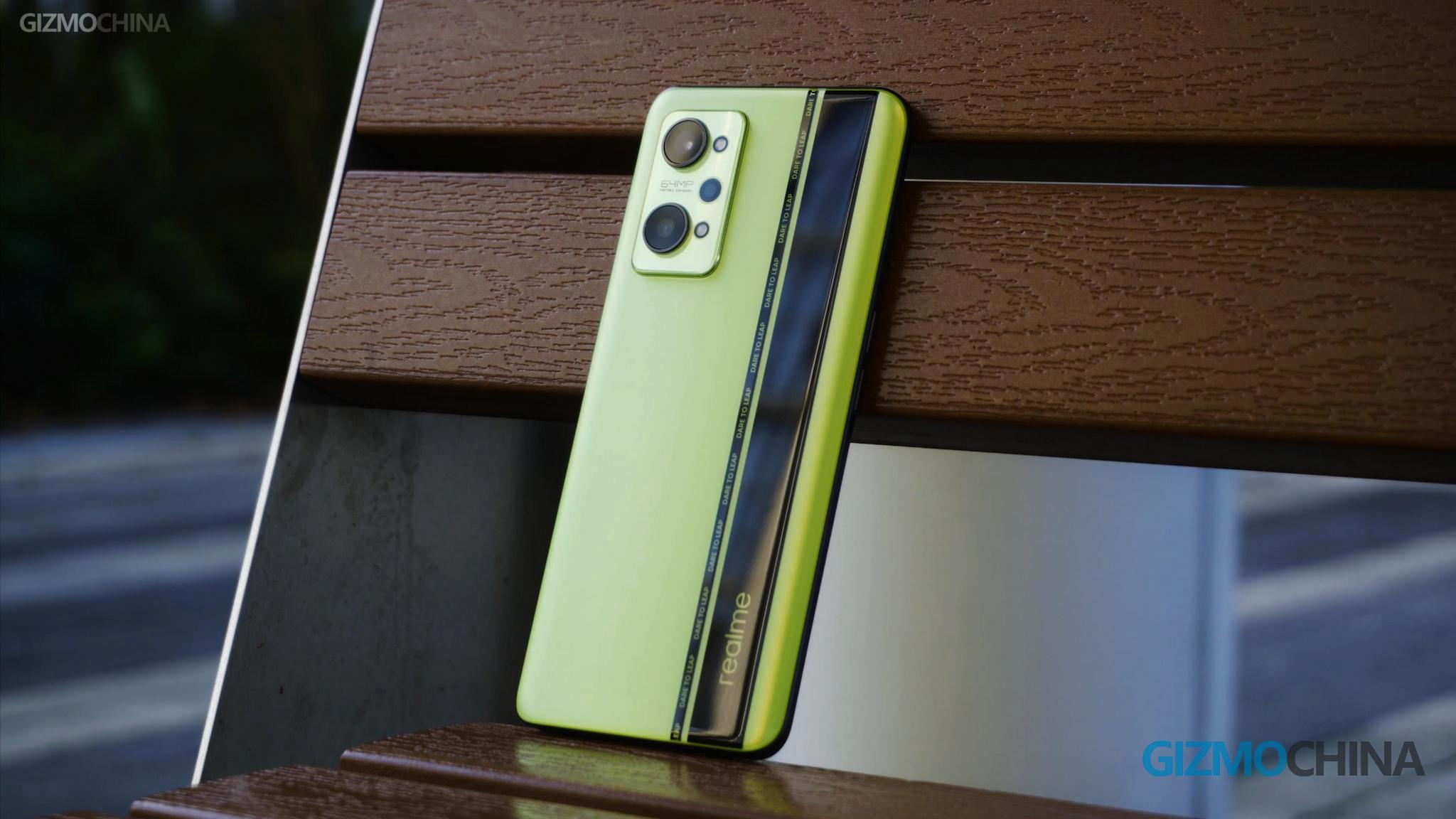
After launching the Realme GT Neo in March this year, the China-based company launched the Realme GT Neo2. Now, a new GT-series phone from the brand is doing the rounds, dubbed as the Realme GT 2 Pro.
Now, a new report from 91Mobiles claims that the smartphone will be officially launched in India sometime in the first quarter of 2022. However, there’s no specific timeline related to the phone’s launch in the Indian market.
Realme GT Neo2
The development comes as the moniker “Realme GT 2 Pro’ was spotted in the source code of the brand’s official website. Earlier, the device was also listed on the official website. It was also recently spotted on the IMEI database with model number RMX3301.
Previously, it was reported that the upcoming Realme GT 2 Pro smartphone could get launched early next year with a price tag of around 4,000 yuan (approximately $625). It is also said that the brand could also launch a Limited Edition or Special Edition model of the same, which could be priced around 5,000 yuan (~$781).
A variant of the RMX3300 recently appeared on the AnTuTu benchmark, packing 12GB of RAM and 256GB of internal storage. It scored 237,710 points in the CPU test and 447,926 in the GPU test. It scored 167,082 in the memory test and 172,497 in the UX test. These scores come down to an outstanding score of 1,025,215 on AnTuTu.
The smartphone is expected to feature a 6.51-inch Full-HD+ Super AMOLED display with a 120Hz refresh rate, punch-hole cutout, and an in-display fingerprint sensor. It could come powered by the Qualcomm Snapdragon 888 or the Snapdragon 8 Gen1 SoC.
In the camera department, the phone will feature a triple-camera setup on the back consisting of a 108-megapixel primary sensor, an 8-megapixel wide-angle lens, and a 5-megapixel tertiary camera. On the front side, there will be a 32-megapixel snapper for taking selfies and video calling.
The Realme GT 2 Pro is expected to run the latest Android 12 operating system out-of-the-box with the Realme UI 3 on top. It will be powered by a 5,000mAh battery and come with support for 65W fast charging technology.
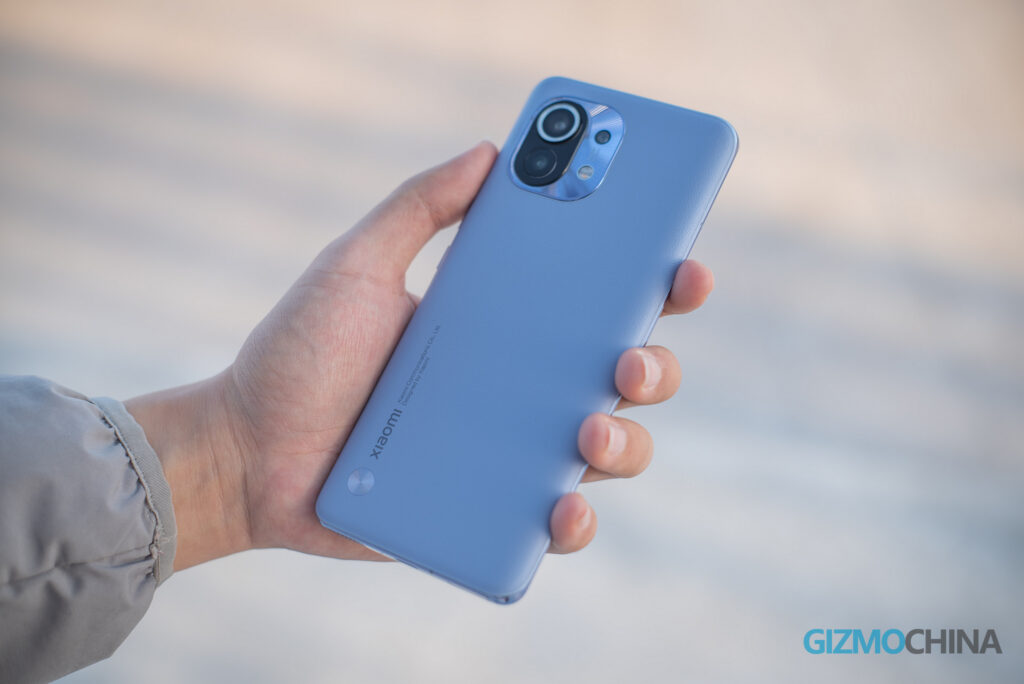
Xiaomi is expected to debut its next generation of premium smartphones starting in December. These new devices were anticipated to run Android 12. But it looks like some of them will be left out. However, they will boot the yet-to-be-announced MIUI 13.
Xiaomi Mi 11
According to reports by Xiaomiui, the alleged Xiaomi 12X and Redmi K50 will ship with Android 11 instead of Android 12. Anyway, though they will come with a year-old Android version, they will be still released with the upcoming MIUI 13.
The source suggests that the chipset, which will power the handsets, is the reason for an older version of Android. These devices codenamed Pschye and Poussin are said to feature a Qualcomm SM8250-based silicon. The exact name of the chip is rumored to be Snapdragon 870+.
Since all the previous SM8250-based phones came out with Android 11, Xiaomi appears to be doing the same with these forthcoming handsets. By doing so, the company will not have to develop an additional version of Android for these smartphones after Android 12.
Having said that, the reason stated here is merely an assumption. However, the phones will most likely launch with MIUI 13 based on Android 11 as their software builds are already in the testing phase.
As far as other details are concerned, the Xiaomi 12X (Psyche) is expected to be the long-rumored mini smartphone with a 6.28-inch display and a 50MP Samsung ISOCELL GN5 primary camera. On the other hand, the Redmi K50 (Poussin) will be similar to the Redmi K40 with a 48MP Sony IMX582 main camera.
Qualcomm is all set to launch its next-generation flagship smartphone chipset in a couple of days at its Tech Summit. This time, the company is also changing the naming scheme and the chipset will be called Snapdragon 8 Gen1 instead of Snapdragon 898.
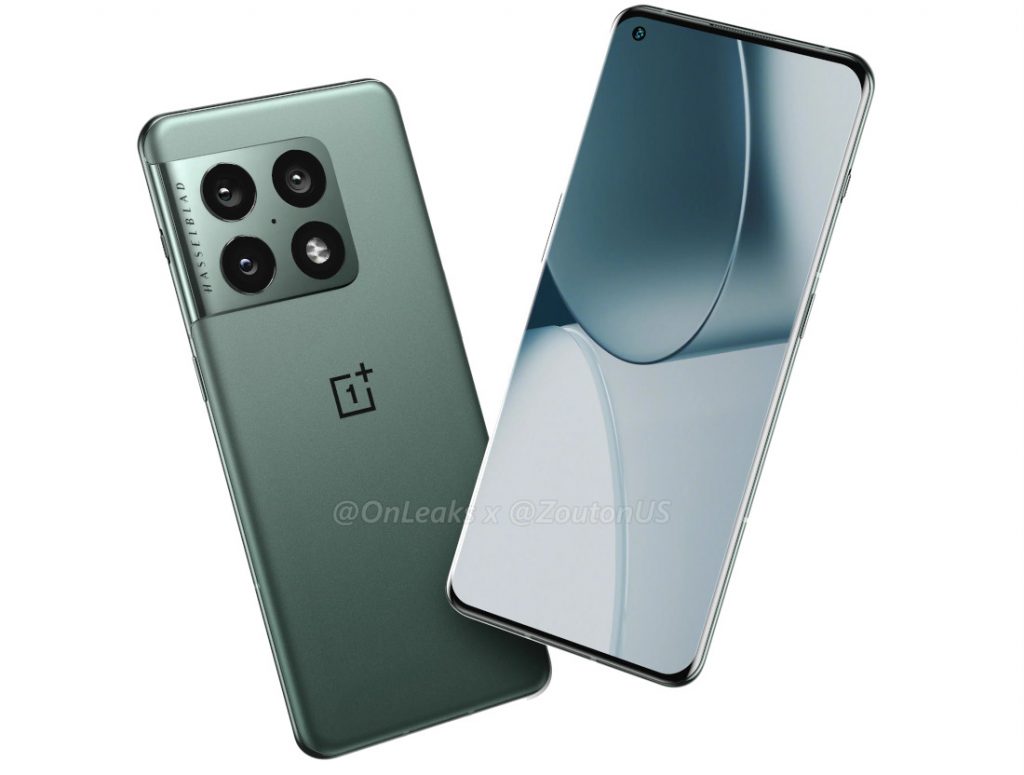
Now, as per the latest report, the OnePlus 10 Pro will be among the first smartphones to come powered by this new flagship chipset. With this news, the Chinese company joins the list of Xiaomi and Motorola which are already reported to be the first to launch a device powered by the Snapdragon 8 Gen1 SoC.
Unlike its predecessors, the OnePlus 10 series phones will be launched in January, at least in the Chinese market. In this scenario, it will be among the first smartphones to come powered by the upcoming Qualcomm flagship chipset.
However, the global launch of the OnePlus 10 series smartphones is set to take place in March or April, in line with the previous launches. Not just the chipset, key specifications of the device have already been leaked online.
As per the reports, the phone will feature a 6.7-inch curved Quad HD+ AMOLED display with a 120Hz refresh rate and a single punch-hole on the left side of the screen. It is expected to pack 8GB or 12GB of LPDDR5 RAM and 128GB or 256GB of UFS 3.1 internal storage, with support for a microSD card slot for expanding the capacity.
In the camera department, the OnePlus 10 Pro will feature a Hasselblad-branded triple-camera setup on the back consisting of a 48-megapixel wide sensor, a 50-megapixel ultra-wide-angle lens, and an 8-megapixel telephoto lens.
On the front side, the device will have a 32-megapixel front-facing snapper which is an upgrade compared to the usual 16-megapixel snapper. It is said to be running the latest Android 12 operating system with OxygenOS 12 and comes powered by a 5,000Amh battery with support for 125W fast charging.
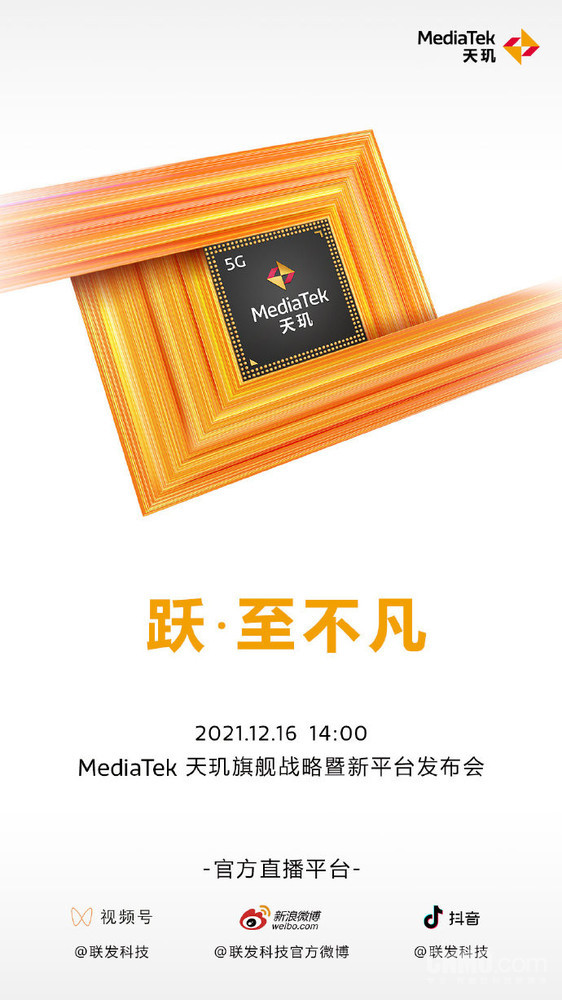
Earlier this month, MediaTek unveiled the Dimensity 9000 chipset. Now, the company has confirmed that it will be holding a press event on Dec. 16 in China. Since the chipset has been already unveiled, it is unlikely that some new details may get confirmed through the upcoming event. Probably, the names of the first Dimensity 9000 powered may get confirmed.
The Dimensity 9000 is the world’s first chipset to be manufacturer through TSMC’s 4nm process. It includes a single ARM Cortex X2 prime performance core that clocks at 3.05GHz, three Cortex-A710 cores that work at 2.85GHz, and four Cortex-A510 efficiency cores that ticks at 1.8GHz. The SoC includes a 10-core ARM Mali-G710 GPU.
The D9000 is equipped with a fifth-generation six-core APU for AI processing. It can support displays that support FHD+ resolution along with a 180Hz refresh rate. It comes with support for LPDDR5x RAM. The 18-bit ISP can shoot 4K HDR videos with three cameras simultaneously. Devices powered with D9000 can support a massive 320-megapixel camera.
The Dimensity 9000 supports connectivity options such as sub-6GHz 5G networks, Wi-Fi 6E, and Bluetooth 5.3. According to MediaTek Vice President of Corporate Marketing, Finbarr Moynihan that the Dimensity 9000 can deliver performance similar to the Apple A15 Bionic in multi-core benchmark tests. The first phones powered by the Dimensity 9000 chip is expected to launch in Q1 2022.
Qualcomm’s Snapdragon 8 Gen 1 will most likely be the name of the premium mobile chip from the company since it announced a new naming template for its chips. Ahead of the November 30 official announcement of the name changes to the Qualcomm Snapdragon lineup and the unveiling of its new chips, rumors on the debut devices remain rife. It is alleged that three upcoming premium ZTE smartphones will be powered by the new Snapdragon 8 Gen 1 chipset.
Xiaomi and Motorola have been some of the other OEMs that have been mentioned to deploy the new chipset in their models. The high-end Snapdragon 8 Gen 1 is rumored to be used by ZTE’s upcoming gaming-oriented smartphone lineup – the nubia Red Magic 7 and Red Magic 7 Pro, as well as the Nubia Z40. While the source of the leak is not fully specified, we cannot confirm at this time, other key details relating to these models are rumored to be powered by the Snapdragon 8 Gen 1 chip.
An official announcement from Qualcomm itself or from the smartphone maker itself will clarify all the doubts and uncertainty regarding the debut of the Qualcomm Snapdragon 8 Gen 1 chipset. It is also unclear when these models will hit the market and their pricing details. The November 30 Qualcomm event will illuminate some of these details at least.
With the Tesla Gigafacotry Berlin, the brand is setting up its first manufacturing facility in Europe and is also touted to be the company’s most advanced, sustainable and efficient facility so far. Now, it seems to be all set to start production of cars.
As per the new report from German media outlet Automobilwoche, the Berlin Gigafactory only requires the final operating permit from the environmental department and after that arrives, the company will be able to start manufacturing in the country.
The company is expected to start production in the Berlin Gigafactory next month, i.e. in December 2021, and by the end of the first half of 2022, it is expected to produce around 30,000 cars in this new factory.
It is being said that the company was set to start production of its cars in June this year but was postponed because Tesla didn’t receive the necessary EIA certificate in time. Now, the company is expected to get the required clearences within a few days.
If the reports are to be believed, then the Tesla Berlin Gigafactory has completed the production of around five Model Y cars but not on the production line. It is expected to start the production from January at a rate of around 1,000 cars per week and then will gradually increase the production rate.
Apart from this car production factory, the US-based electric car maker is also gearing up to build a large battery production plant at the same location in Glenheide near Berlin. But before that, the Tesla Gigafacotry for car production will operate at full capacity.
We use cookies on our website to give you the most relevant experience by remembering your preferences and repeat visits. By clicking “Accept”, you consent to the use of ALL the cookies.
This website uses cookies to improve your experience while you navigate through the website. Out of these, the cookies that are categorized as necessary are stored on your browser as they are essential for the working of basic functionalities of the website. We also use third-party cookies that help us analyze and understand how you use this website. These cookies will be stored in your browser only with your consent. You also have the option to opt-out of these cookies. But opting out of some of these cookies may affect your browsing experience.
Necessary cookies are absolutely essential for the website to function properly. This category only includes cookies that ensures basic functionalities and security features of the website. These cookies do not store any personal information.
Any cookies that may not be particularly necessary for the website to function and is used specifically to collect user personal data via analytics, ads, other embedded contents are termed as non-necessary cookies. It is mandatory to procure user consent prior to running these cookies on your website.