Advertisement

Motorola Edge 30 Ultra (Rogue) render reveals new gradient blue color option

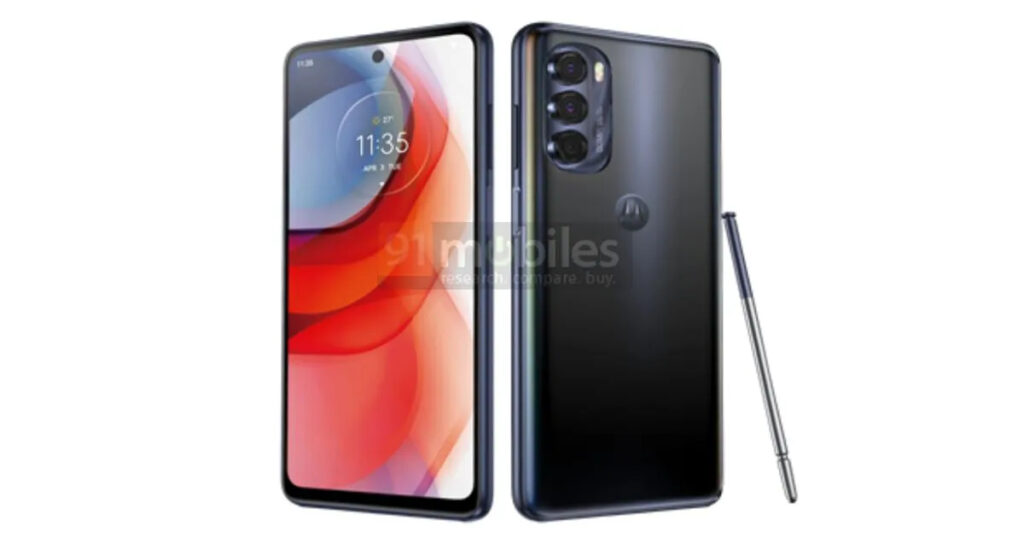
New renders of the rumored Motorola flagship, the Motorola Edge 30 Ultra, have surfaced, showing the phone in a gradient blue color. Previously, leaks have revealed the code name ‘Rogue,’ the model number XT2201, and a black color variant of the upcoming Edge 30 Ultra.
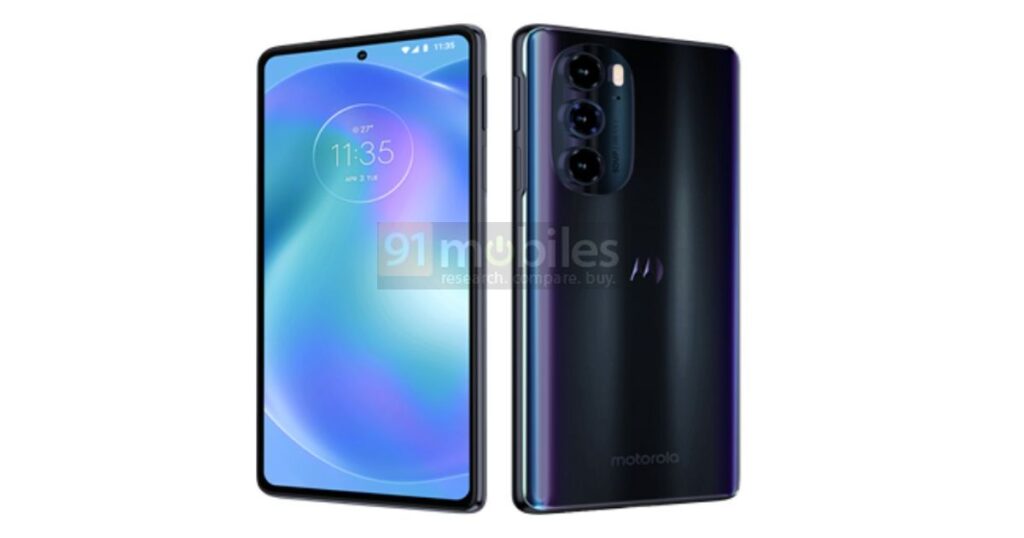
Moto Edge 30 Ultra render
Image: 91mobiles

The new leaks provided by 91mobiles show the render of the upcoming smartphone in a gradient blue color finish. This confirms that the Edge 30 Ultra will at least have two color variants. The leaks have also claimed that two Motorola smartphones other than Rogue (Motorola Edge 30 Ultra) will hit the market in the upcoming year code-named Milan (Moto G Stylus 2022) and Austin.

From its looks, the Motorola Edge 30 Ultra might come with a metal body coated with glass. The display is surrounded by slim bezels and features a hole-punch at the center for the selfie camera. The volume control and power buttons appear to be present on the right side, and a single button on the left side could be a dedicated Google Assistant button. The device carries a rounded camera module to house a triple camera setup, an LED flash, and a microphone on the rear. The fingerprint scanner is likely to be located under the display or embedded in the Moto logo on the back. The Type C port, primary microphone, and speaker grille will be located at the bottom of the frame.

The upcoming Moto Edge 30 Ultra is rumored to sport a 6.6-inch OLED display with a 144Hz refresh rate and HDR10+. The camera setup on the device is speculated to be a 50-megapixel (OmniVision OV50A) as the primary lens, a 50-megapixel (Samsung JN150) ultrawide lens, and a 2-megapixel (OmniVision OV20B1B) depth sensor. On the front, the phone is rumored to feature a 60MP selfie snapper.

Other features of the Moto Edge 30 Ultra might include a Qualcomm Snapdragon 898 chipset paired with 8GB/12GB LPDDR5x RAM and 128GB or 256GB UFS 3.1 storage options. The smartphone will be powered by a 5,000mAh battery and is expected to have fast charging support. The device will be equipped with stereo speakers, IP52 rating, 5G, 4G LTE, Wi-Fi 6, NFC, Bluetooth 5.2, and GPS.
RELATED:


Chinese display maker BOE may overtake LG as OLED supplier to Apple by 2023

Chinese display manufacturer BOE is in the process of ramping up its production to meet the demand for flexible smartphone OLED panels by Apple.

This will be done by converting three of its existing factories, namely B7, B11, and B12 into OLED suppliers for Apple, analyst firm UBI Research has claimed (via The Elec). Because of this, BOE will likely overtake LG display by 2023 to bag the second spot in the list of companies supplying OLED panels for iPhones.

BOE’s flexible OLED panel production capacity will be hitting 144,000 substrates per month by the fourth quarter of next year, up from the present capacity of 96,000. This is level with Samsung Display’s current capacity of 140,000 substrates per month.

As for LG Display, its capacity stands at 30,000 substrates per month but the company plans on expanding it to 45,000 substrates per month for flexible OLED panels and 15,000 for rigid OLED panels.

BOE was also converting B7, B11 and B12 from their current low-temperature polycrystalline silicon (LTPS) thin-film transistors (TFT) setup to low-temperature polycrystalline oxide (LTPO) TFT.

The display manufacturer currently relies on B7 and B11 factories to manufacture OLED for Apple, both of which are located in Sichuan province in China. B7 handled the front-end process while B11 the back-end for the iPhone 12. And for the iPhone 13, B11 is handling both the front and back-end processes.

BOE will be able to supply 15 million units of OLED panels to Apple for iPhone 12 and 3 million units for iPhone 13 this year, Choong Hoon Yi, CEO of UBI Research has said. All in all, it will account for 10% of the total OLED panels used by Apple on the iPhone this year.

For 2022, Apple is expected to ship 240 million units of the iPhone. Samsung will accordingly aim for 150 million units, LG Display for 70 million, and BOE for 50 million units. BOE will thus be able to overtake LG only by 2023.

RELATED:

Nike and Dyson are the latest brands to enter the Metaverse

With Facebook becoming Meta, the company also seeks to build the metaverse, which would be an “internet platform that will be more immersive.” Now, more brands are seemingly joining the virtual realm, with Nike and Dyson being the latest to join in.

Nike

Earlier this week, Nike unveiled its virtual world that is modeled after its headquarters on a popular video game called Roblox. This marks one of the first major brands joining the metaverse. The new digital space is dubbed “NIKELAND” and will let players have their avatars’ be outfitted with special Nike products. NIKELAND is currently free for anyone to visit on Roblox and even offers certain games like “Tag”, “The Floor Is Lava” and “Dodgeball” on the platform.

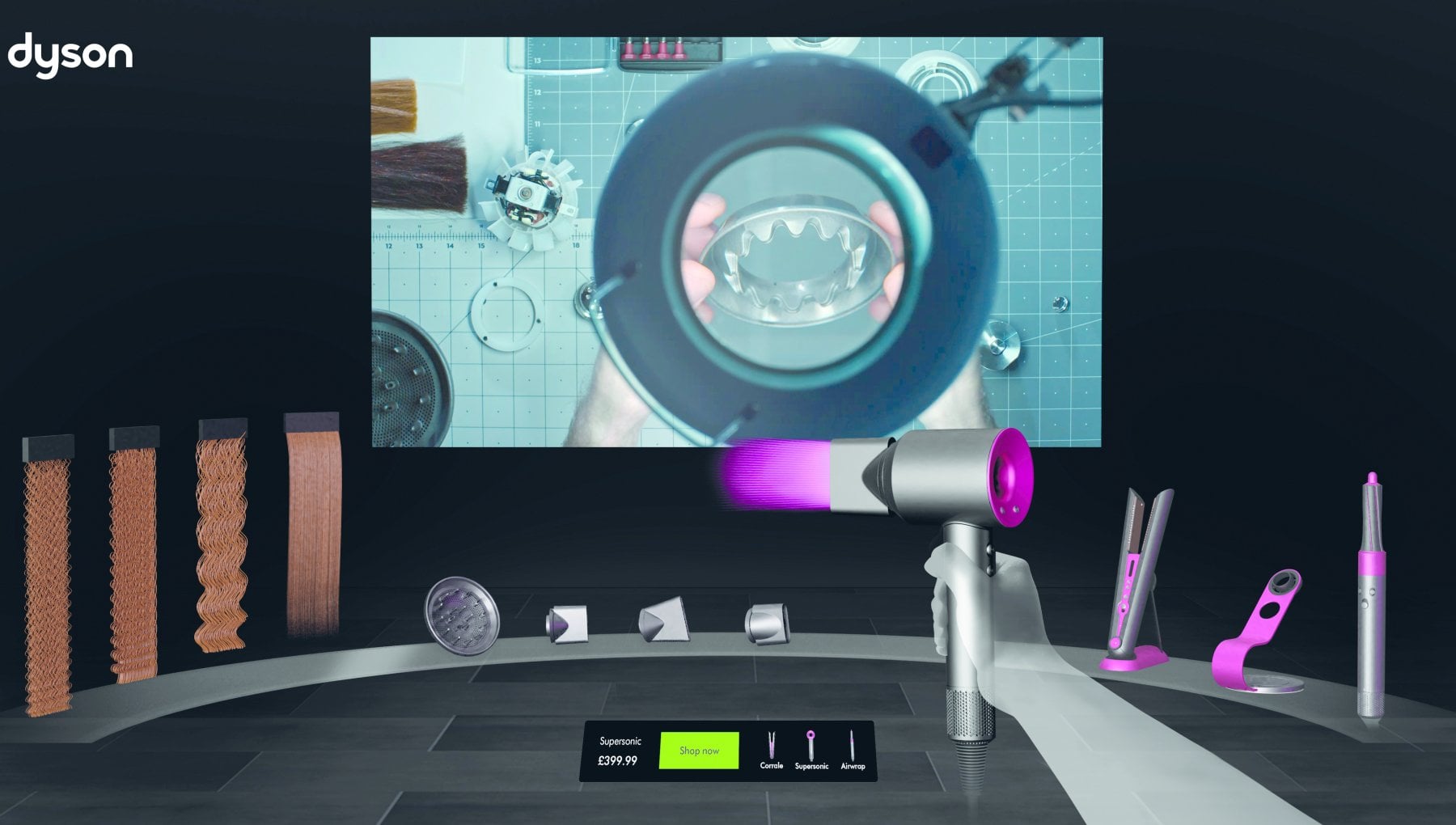
Similarly, Dyson a known luxury home appliance maker has also entered the metaverse with a virtual world of its own. The company has built the Dyson Demo VR, which features visualization and simulation technology that is also used by its engineer’s. This technology helps in testing, prototype, and develop new products and software for the UK based company. In the virtual platform, customers can now test the brand’s hairdryers, straighteners and stylers from their homes.

Nike

Notably, the two firms are one of the first to enter the metaverse. In other words, we can soon expect more major brands to soon follow suit and embrace VR as well. Previously, we had also reported on Microsoft announcing its Mesh, which it stated was the next step in the evolution of Microsoft Teams. So it appears we’re all moving towards a more interactive and immersive VR world soon.

RELATED:


Moto G Stylus 2022 possible design leaked through renders, launch imminent?

Motorola is one of the few companies that still offer a pure stock-like Android experience on their smartphone offerings. The company has been on a launch spree of late, recently announcing five G series phones at once, and is now gearing up to launch a new ‘Milan’ phone. This one is being touted to launch as Moto G Stylus 2022.

The Moto G Stylus 2022 carries model number XT2211DL and will likely be a 5G-ready device, just like its predecessor Motorola Moto G Stylus 5G launched in June this year. The phone will be rather unique as there are very few phones on the market that come with a stylus pen, with the most popular being Samsung’s Note series. The stylus will be complemented by Motorola’s Moto Note app optimized for stylus usage.

moto-g-stylus-2022-render-design-feat
Image: 91mobiles

The design leak by 91mobiles further reveals that the phone features a punch-hole camera setup upfront and has gone for a side-mounted fingerprint sensor. At the back, you get Motorola’s familiar ‘M’ logo which has been placed in a round indentation for some reason. It can easily be mistaken as a rear-mounted fingerprint scanner, but the tech is something that has nearly gone extinct.

The back also houses a triple camera array alongside an LED flash. Text etched onto the module seems to say that the primary sensor has a resolution of 50-megapixels. 91mobiles believes that the rear will be made of polycarbonate. Other than this, the rest of the specifications of the phone are still in the dark.

Chances are that the Moto G Stylus 2022 may be launched with the Moto Edge 30 Ultra next year. The latter will likely be Motorola’s next flagship and will supersede Motorola Edge 20 Pro released in August this year.

RELATED:

India PC market sees record high shipments in Q3 2021 despite chip shortage: IDC

The PC market of India has retained its growth momentum in the third quarter of this year, despite the ongoing chip shortage. The region was an impressive 30 percent year on year growth in the category that includes desktops, notebooks, and even workstations.

India

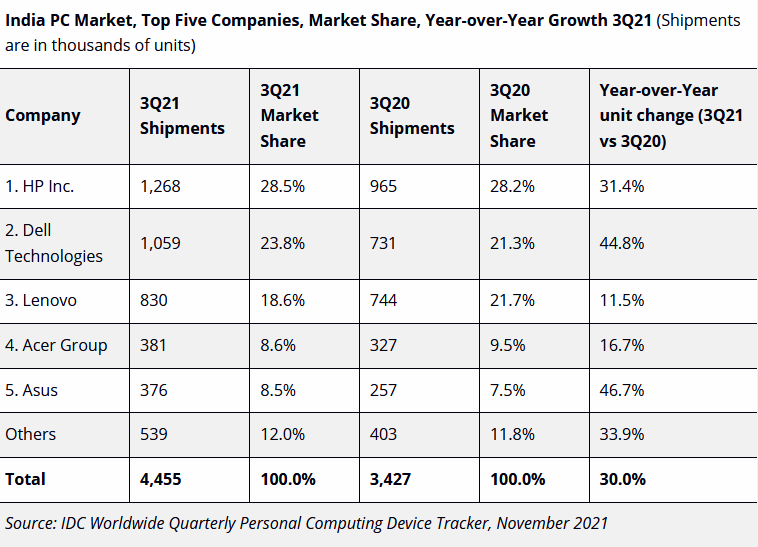
According to an IDC report, PC shipments in India hit 4.5 million units, which marked the country’s biggest ever shipments in a single quarter. Notably, the 4.5 million shipment figures is higher than the entire yearly shipments from back in 2019. This was the year before the pandemic, after which, PC shipments exploded all across the globe. With the record high sales, many brand reported some of their biggest quarterly performance for PCs.

In the category, notebook PCs still dominated the segment, with a massive 80 percent share. During the third quarter, enterprise and consumer demand helped boost the Notebook category over 3 million units for the first time. Similarly, even the desktop category saw a positive trend with a 30.5 percent year on year growth in Q3 2021. Bharath Shenoy, IDC’s Senior Market Analyst for PC Devices stated that “Despite the better allocations to a few segments, the demand-supply gap continues to be a challenge as enterprises and SMBs continue to order in big volume.”

India

During this time, HP continued to lead in the overall PC category with a sizeable 28.5 percent market share in the market. Meanwhile, Dell arrived a close second with a 23.8 percent market share, overtaking Lenovo that had an 18.6 percent market share in the third quarter. Acer and ASUS rounded up the group with fourth and fifth spots in the market respectively.

RELATED:


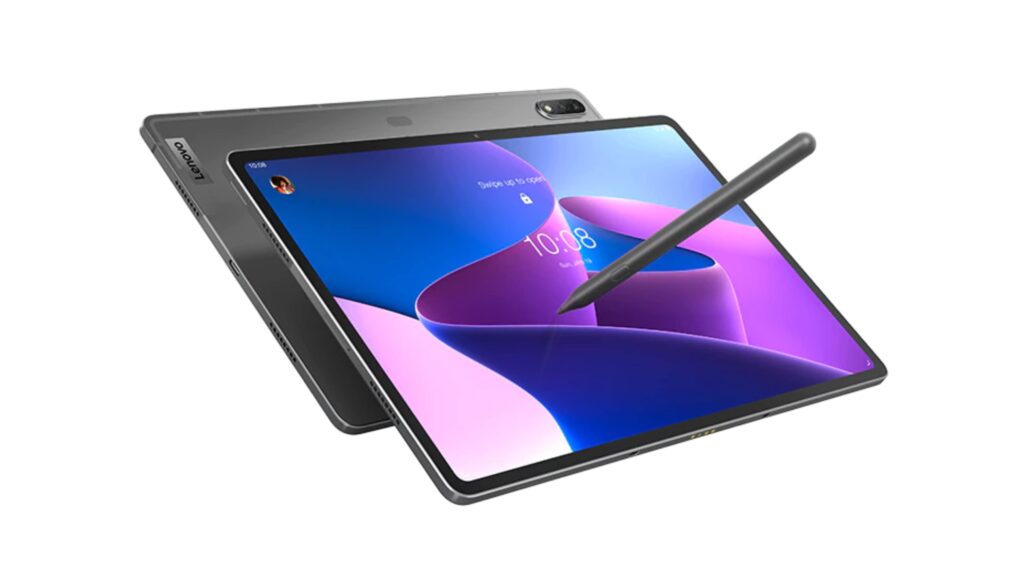
Google offers special developer discount on Lenovo Tab P12 Pro to try Android 12L

Google recently announced Android 12L for large screen devices like tablets and foldables. Currently, the developer preview for this version of Android is only available via emulator. However, the search giant has confirmed that there will be beta builds for Pixels and Lenovo Tab P12 Pro starting in December. Ahead of that, Google is offering a special developer discount on the said Lenovo tablet so that more developers might show interest in trying out the new software.

Lenovo Tab P12 Pro Featured A
Lenovo Tab P12 Pro

According to a report by 9to5Google, Google is offering a discount on Lenovo Tab P12 Pro (WiFi-only variant) in select markets. By using the promo code  ADSLENOVOP12, customers can avail a 10% off on the premium Android tablet on Lenovo’s official website.

This special developer discount is only applicable in the following regions.

  • USA
  • Canada
  • Korea
  • United Kingdom
  • Ireland
  • Germany
  • Austria
  • Switzerland
  • France
  • Spain
  • Portugal
  • Italy
  • Netherlands
  • Belgium
  • Norway
  • Denmark
  • Sweden
  • Finland

The promo will be valid until February 28. For those unaware, the Android 12L Beta program ends in February. Therefore, the discount lasts until that month only.

It is worth noting that though the tablet was announced in September as a rebranded Lenovo Xiaoxin Pad Pro 2021, it is yet to go on sale in some of the above-mentioned markets. Anyway, the promo code will work as soon as the device hits the shelves.

Even if you are not a developer, you can still use the promo code to snag the Lenovo Tab P12 Pro at a lower price. Some of the highlights of this device include a 12.6-inch 2K 120Hz AMOLED display, Qualcomm Snapdragon 870, LPDDR5 RAM, UFS 3.1 storage, quad speakers, stylus support, 10,200mAh battery, and more.


RELATED:


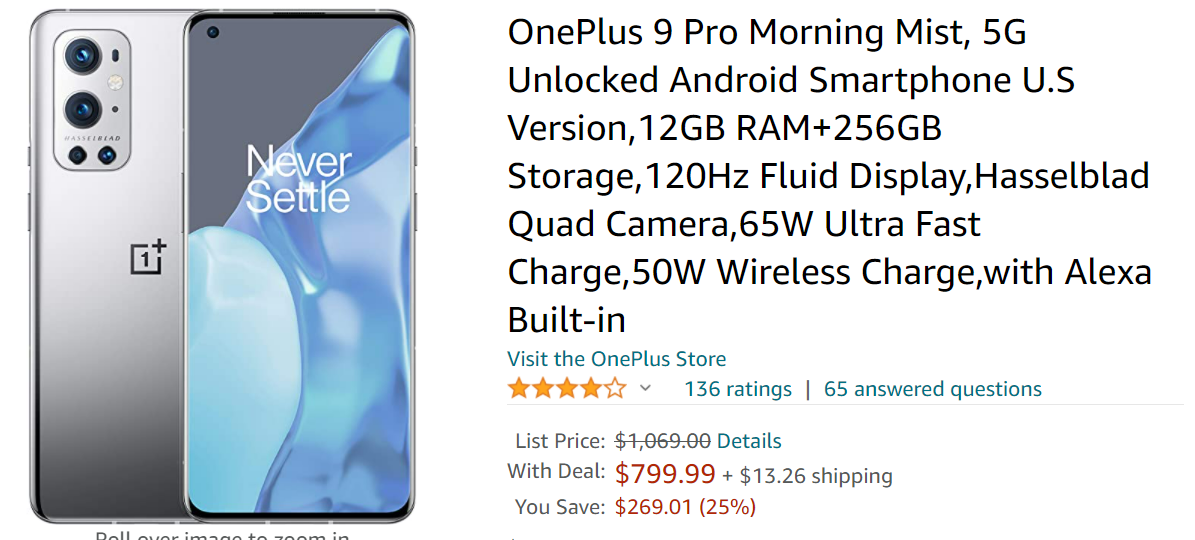
Early Black Friday Deal: OnePlus 9 Pro 256GB down to its lowest on Amazon US

OnePlus 9 Pro 5G which generally retails for $900 is now available for a discounted price of $799 on Amazon US.

WHERE TO BUY
OnePlus 9 Pro 5G at $799 @Amazon US

OnePlus 9 Pro

OnePlus 9 Pro is powered by a Qualcomm Snapdragon 888 5G octa-core processor and comes with 8GB / 12GB RAM and 128GB / 256GB internal storage. The smartphone features a 6.7 inches LTPO Fluid2 AMOLED capacitive touchscreen with a screen resolution of 1440 x 3216 pixels and is protected by Corning Gorilla Glass 5.

oneplus 9 pro

The smartphone is fueled by a 4500mAh battery and supports 65W fast charging and 50W fast wireless charging. It packs a quad-camera set up with a 48MP main camera and 8MP + 50MP + 2MP secondary cameras which feature the unique Hasselblad color calibration that blends together the technological excellence of OnePlus and the excellent legacy of Hasselblad.
 

OnePlus 9 Pro

OnePlus 9 Pro is now available for all global customers at Amazon US for $799 only. This price is applicable to the 12GB + 256GB Morning mist and Pine Green color variants. So grab your OnePlus 9 Pro asap while the stock lasts.  


For more information on such exciting deals and offers check out our deals hub.

* Please Note: When you buy something using the links in our articles, we may earn a small commission at no cost to you.

Honor to launch a new smartphone on Nov 22, might be the Honor 60 series

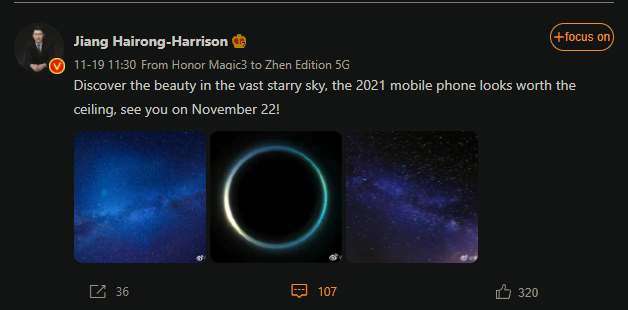
Honor is gearing up for the launch of a new product. The company’s CMO, Jiang Hairong (Harrison) has revealed that the company will be launching a new smartphone on November 22.

Honor

The senior official shared the news of his official Weibo account, a Chinese microblogging website. In the social media post, the executive teased the smartphone with a series of images that showcased the night sky filled with stars. The upcoming device is likely the Honor 60 series. This is in line with our previous report of the company planning on launching the Honor 60 series near the end of this year.

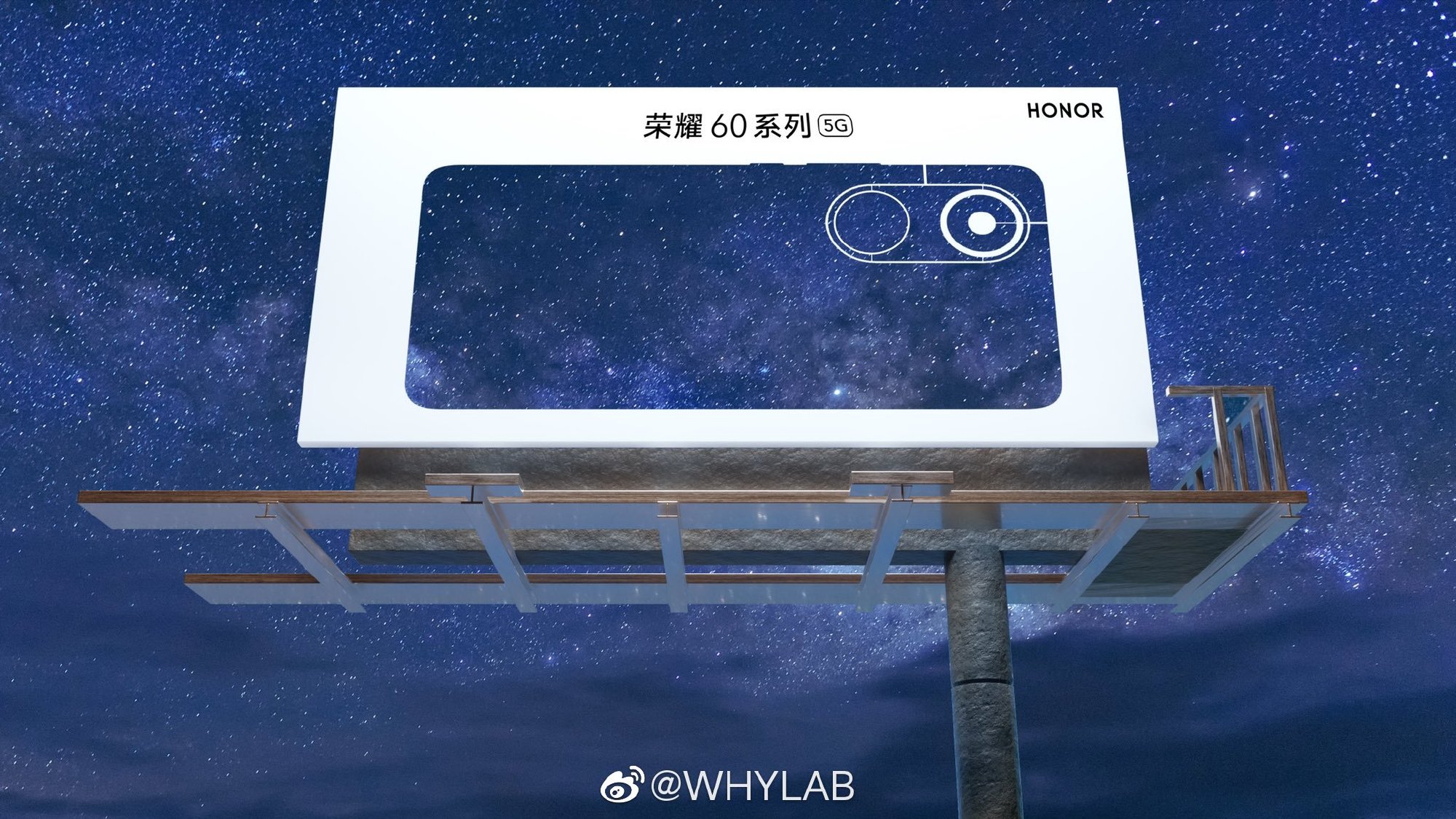
The leak we had reported on even shared a teaser image that depicted the outline of the smartphone and the same starry background. So, the Weibo post from Harrison basically confirms the announcement of the Honor 60 series on November 22. Unfortunately, the official did not reveal any finer details regarding this device. Although, the earlier report stated that the company will be working on three models, namely, a base, a Pro, and an SE variant.

Honor 60 series

Furthermore, the tipster also added that the vanilla version and the Pro model will arrive with 66W fast charging. On the other hand, the SE will only support up to 40W fast charging. Keep in mind, the Chinese smartphone maker has yet to officially announce the 60 series as of right now. So stay tuned for more updates.

RELATED:


YouTube dislikes count gets resurrected through a browser extension

The decision to hide dislikes count on videos is perhaps one of the most controversial moves by YouTube to date. Just a little browsing around and you’ll know that those that are against the move vastly outnumber those in favor of it. After all, dislikes count was a great way to tell if a piece of content was trustworthy or just another clickbaity video.

YouTube says that the removal has been done in the interest of creators to protect them from harassment and coordinated attacks.

Regardless, an innovative programmer has attempted to restore the function on YouTube by creating a browser extension for the same. It uses a YouTube API to generate the dislike count. The only catch here is that the API will be removing the dislikes property on December 13 or so, following which the extension will cease to work the way it currently does.

return youtube dislike count extension

However, the developer has got another trick up their sleeve. The extension will begin to rely on its own userbase after it can no longer depend on YouTube’s API, using them as a sample. While this is quite innovative, there are concerns about the unofficial count being skewed by some.

This again is being looked into by the developer. One way to mitigate it could be by comparing downvotes of extension users to the cache of real downvotes and factoring them in. Of course, for this to be accurate, there would have to be a large userbase – something that we’ll surely see grow with time.

The extension named ‘Return Youtube Dislike’ by Dmitry Selivanov can be availed through its official site. It’s only available for Chrome and Firefox as of now, but the dev has said that it will also be coming to mobile soon. Do note that it is in the alpha stage currently and may therefore be buggy.

RELATED:

ColorOS 12 Open Beta goes live for OPPO Reno6 Pro 5G series in China, India

In late October, OPPO ran an Android 12-based ColorOS 12 Closed Beta program for the OPPO Reno6 series in China. A month later, the company has started recruiting Open Beta testers for two models in the lineup, namely OPPO Reno6 Pro and OPPO Reno6 Pro+.

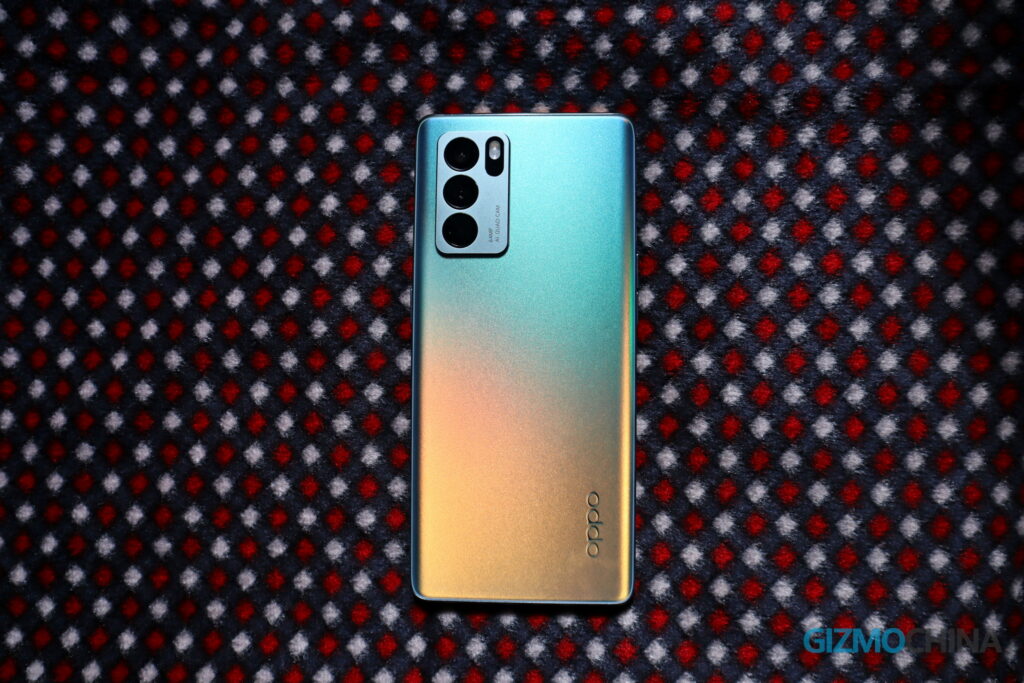
OPPO Reno 6 Pro 5G Review 12
OPPO Reno6 Pro 5G

According to official announcement posts on OPPO Community, the brand has opened ColorOS 12 Open Beta registrations for the following OPPO Reno6 series models in China and India.

In China, the recruitment for the Reno6 Pro will last until 3 PM on November 22. But unfortunately, we don’t have details for India as the announcement post was not live as of writing this article. On the other hand, the registrations for the China-exclusive Reno6 Pro+ have already ended at 4 PM on November 18.

That said, in order to enroll, users have to navigate to Settings > Software Update > Gear Icon > Apply for Beta Version > Update Beta Version and follow the on-screen instructions. In its home country, OPPO also allows applicants to fill a questionnaire to increase the chance of getting selected.

Selected applicants will receive the Android 12-based ColorOS 12 beta build via OTA. The company recommends users back up their data before upgrading to the beta software from the stable channel. As far as ColorOS 12 stable update is concerned, it will be rolled out once there are no major issues in the software.

Lastly, since the Reno series is eligible for two Android updates, the OPPO Reno6 Pro 5G and the OPPO Reno6 Pro+ 5G will be also receiving Android 13 in the future.


RELATED:


Xpeng G9 SUV launched with XPILOT 4.0 ADAS, offers 200km range in just 5 minutes of charge

Xpeng Motors has just launched its new G9 Flagship Smart SUV. The company had teased the electric vehicle earlier this month and had now officially unveiled the car, which features its XPILOT 4.0 ADAS (Advanced Driver Assistance System).

Xpeng

The G9 SUV was announced earlier today (19th November 2021) during the ongoing Auto Guangzhou 2021 event and feature the Chinese EV maker’s cutting edge software architecture and hardware platform. Notably, the G9 is the fourth production model from the brand and boasts various international safety and environmental standards as well. Although, one of its highlighting features is the XPILOT 4.0 ADAS. It is also the first production model from the brand to feature this system.

For those unaware, XPILOT 4.0 is a full scenario driver assistance system, which is the step towards a fully autonomous driving. According to He Xiaopeng, CEO and Chairman of Xpeng, “Our G9 flagship smart SUV represents a new level of sophistication with a global perspective, and is an essential part of our exploration of smarter, safer, greener and sustainable mobility.” It is built with C-NCAP and E-NCAP 5-star safety design standards and has a reusability rate of over 85 percent and recyclable rate of over 95%.

Xpeng

Looking at its design, the G9 SUV features a “minimalist, superior and pioneering styling,” with its front profile featuring the recognizable XPENG X Robot Face. The company has also integrated two LiDAR sensor directly into the headlights, which works with the driver assistance technology. In other words, the car cleverly combines cutting edge technology with its elegant design. Other notable aspects include rear slant A pillars, short front overhand, long rear overhang, 21 inch wheels, and an overall luxurious build on the inside as well.

The G9 will be China’s first model to feature a Gigabit Ethernet communications architecture, which would boost its support for advanced driver assistance, smart cockpit, and firmware OTA upgrades. Through this, the automaker claims that the G9 will be able to receive FOTA (firmware over the air) updates in just 30 minutes. The car runs the brand’s X-EEA 3.0 architecture, which is a proprietary EV platform that enables the G9 to perform “self diagnostics and greatly improving vehicle safety.”

Xpeng

Lastly, the G9 SUV boasts the next gen XPower 3.0 powertrain system, which is China;s first 800V high voltage mass production SiC platform. This enables the EV to charge up to 200 km in range in just 5 minutes, with its maximum energy efficiency being over 95 percent. Unfortunately, the brand still refrained from revealing the entire specifications of the car, like range estimates, pricing, and more. Although, more information is expected to be revealed soon as the company is apparently looking at a Q3 2022 launch.

RELATED:


OPPO grabs top spot even as Indonesian phone market sees 6% YoY decline in Q3 2021

Smartphone sales in Indonesia saw a 6% decline in Q3 2021 owing to the rise in COVID-19 infections in the country. The global semiconductor shortage was also a major contributor.

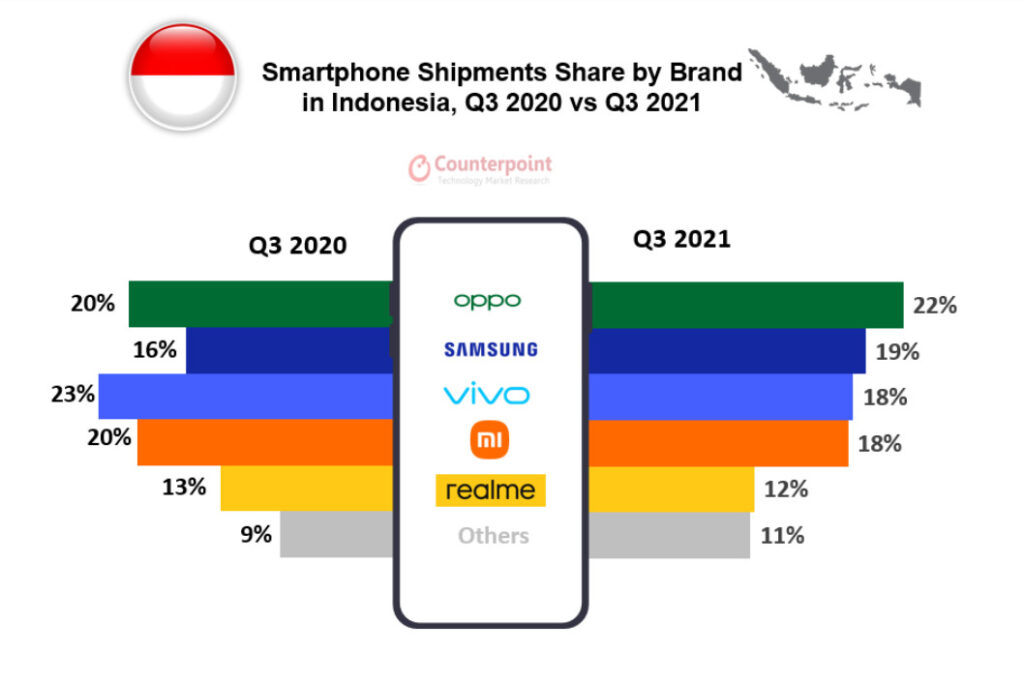
It appears that smartphone sales have a lot to do with the amount of components OEMs are able to secure for themselves. As such, OPPO, which was the least affected by component shortage during the period, has grabbed the top spot with a 22% share (via Counterpoint Research).

Samsung ranks second thanks to its performance improvement driven by new launches. Steady recovery from production issues related to COVID-19 lockdowns in Vietnam played a role as well. The South Korean company is followed by vivo, Xiaomi, and realme.

indonesia smartphone shipments sales 2021
Source: Counterpoint Research Monthly Indonesia Channel Share Tracker

The third spot in terms of smartphone shipments during Q3 2021 is held by vivo with a share of 18% – a decline from the top spot during the same period last year.

Xiaomi’s ranking saw a drop as well in Q3 2021 compared to both Q3 2020 as well as Q2 2021 due to component shortages. The scarcity led the brand to increase prices on four models – Redmi 9A, Redmi 9C, POCO M3 Pro 5G, and Redmi Note 10 5G – in mid-October.

Consumer demand did show signs of recovery towards the end of Q3 2021 though, thanks to the reduction in daily COVID infections, and economic activities returning to normal as a result. However, the chip shortage is here to stay for another year or so and will continue to be a huge growth limiter in the smartphone industry.

Apart from this, 5G smartphones saw a huge rise in sales with shipments jumping from 7% in Q2 2021 to 14% in Q3 2021. The figures will be increasing further well into Q4 2021 and beyond. Multiple operators like XL Axiata, Telkomsel, and Indosat are either testing 5G prior to launch or have already launched commercial 5G. This also acted as a boost in 5G smartphone shipments.

Moving on to online sales, the online proportion of total shipments did not change much during the first two months of Q3. However, shopping festivals like 9.9 did give a boost to the channel in September. All in all, online shipments made up 16% of the total shipments in Q3 2021, and the figure is expected to rise to over 20% towards the end of the year.

RELATED:

Telegram launches Sponsored Messages – a tool for promoting channels and bots

Chat app Telegram is getting a new Sponsored Messages feature that will allow anyone to promote their own channel or bot. Sponsored messages will be displayed in public channels with at least a thousand subscribers and will be limited to 160 characters. They will be based solely on the topic of the public channels they’re shown in.

Telegram

Telegram further emphasized the privacy bits as always, stating that no user data is mined or analyzed to display ads, and every user viewing a particular channel on Telegram sees the same sponsored messages. No ads will be shown in chats either and sponsored messages will not appear in your chat list, private chats, or groups.

Telegram hopes that the tool will help eliminate the need for posting ads on channels in the form of regular messages, in favor of the more user-friendly and less chaotic sponsored messages.

telegram sponsored messages

It is worth mentioning though that the sponsored messages feature is still under testing and is thus not available to everyone.

“Once they are fully launched and allow Telegram to cover its basic costs (such as equipment and data centers that are used by channel admins to deliver their content to our hundreds of millions of users), we plan to start sharing ad revenue with the admins of the channels where Sponsored Messages are displayed – because it is fair,” Telegram said in a statement.

The messaging service went on to compare itself with WhatsApp, emphasizing that the latter shares user data with advertisers, even though they don’t show ads themselves. WhatsApp lacks a channels function, and therefore, if you use Telegram the way you use WhatsApp, you will never be seeing ads.

RELATED:

Google officially confirms that Pixel 6 series doesn’t feature 30W charging

Previously, we had reported on the Google Pixel 6 series seemingly has an overrated charging capability. Now, the company has officially confirmed that its latest flagship series does not feature 30W fast charging.

Google Pixel 6

According to an official blogpost, the search engine giant confirmed that its Pixel 6 and Pixel 6 pro does not feature 30W charging solution, despite it offering a separate 30W fast charger. For those unaware, the Pixel 6 series does not arrive with a charger in the box, but the company does sells a 30W fast charger. This, in turn, led many reviewers to believe that the latest premium grade handsets feature 30W charging as well.

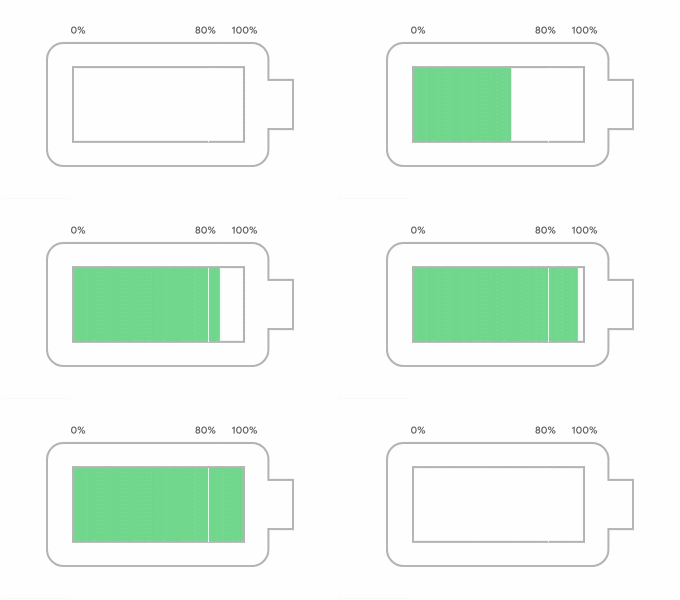
However, Google confirmed that the Pixel 6 supports just 21W charging while Pixel 6 Pro supports only 23W charging. In the blogpost, the company added that “The charge rate at any moment is based on factors such as battery cell and system design, temperature, system usage, and state of charge.” Although, when the phone’s battery drops low, the Pixel 6 series can draw their peak 21W and 23W power from the charging brick to charge up to 50 percent in just 30 minutes.

Google

Post half an hour, the charging rates drops to a slower pace to reach 80 percent. For the final 20 percent, the phone’s charging rates are reduced gradually even further to “help minimize degradation to preserve the lifespan of your battery.” Notably, this is in line with our previous report that covered the overrated charging capabilities.

RELATED:


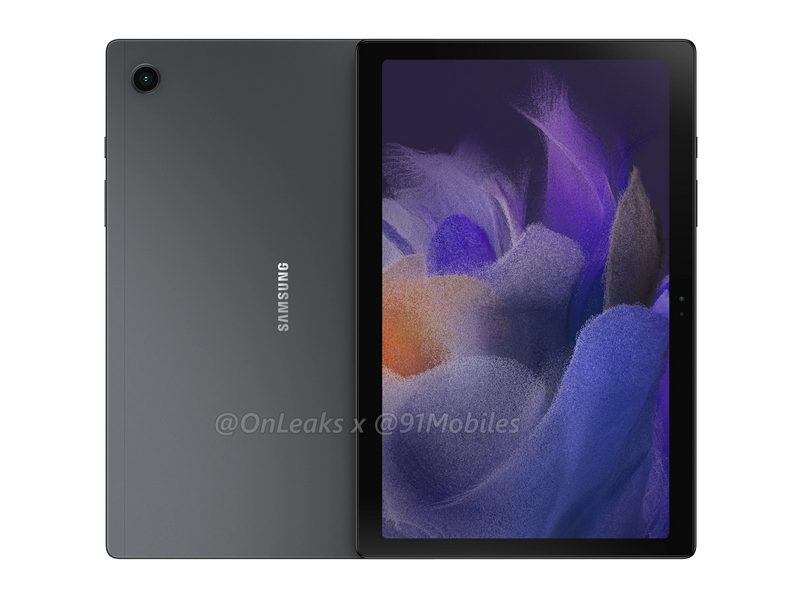
Samsung Galaxy Tab A8 2021 appears on WiFi Alliance ahead of launch

The Galaxy Tab A8 2021 is an upcoming entry-level tablet by Samsung. We have been hearing about this device for the past few weeks. Ahead of its imminent launch, the slate now gets certified by yet another agency.

Samsung Galaxy Tab A8 2021
Samsung Galaxy Tab A8 2021 | Source: @OnLeaks via 91Mobiles

The forthcoming Samsung Galaxy Tab 8 2021 has been certified by WiFi Alliance. The model that has appeared on the certification bureau is the LTE variant with model number SM-X205.

The listing does not say much about the tablet, except for a few little things. First and foremost, it will be officially marketed as ‘Samsung Galaxy Tab A8’ without the 2021 moniker. Secondly, the device will support dual-band WiFi (2.4GHz, 5.0GHz). Lastly, it will run Android 11.

According to previous reports, the slate will feature a metal body design measuring 246.7 x 161.8 x 6.9mm in dimensions. The chassis will include a USB Type-C port, a 3.5mm headphone jack, and quad speakers.

On the front, the tablet will sport a 10.4-inch FHD+ TFT LCD panel and a 5MP camera. Whereas, the rear side will house an 8MP primary camera and Samsung branding.

As per TÜV Rheinland, the device will be backed by a 7,040mAh battery with support for 7.8W charging. As far as the performance is concerned, Geekbench has revealed that it will feature UNISOC T618 SoC.
Last but not least, the Samsung Galaxy Tab A8 2021 will be available in silver, gray, and gold color options when it goes official in the near future.


RELATED:


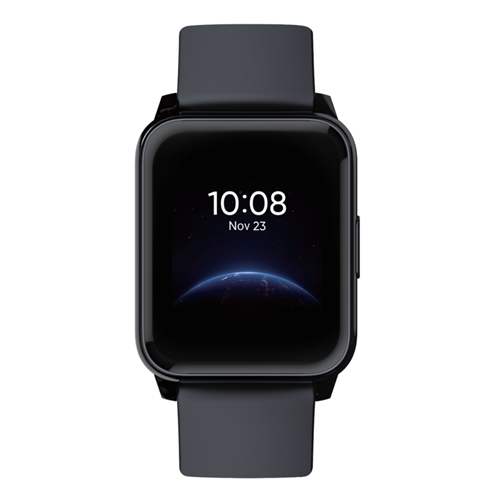
Realme Watch 2 tipped to soon get Gold color option in the Indian market

A few months ago, Realme launched its new wearable device named Realme Watch 2 in the Indian market. At the time, it was announced only in a single Black color but now the company is set to introduce another color option in India — Gold.

As per the new report from 91Mobiles, citing tipster Mukul Sharma, Realme will soon be launching a special Gold-colored option for the Realme Watch 2 in India. While the exact launch date is not yet known, it will be unveiled by the end of this year.

Realme Watch 2

Coming to the specifications, the Realme Watch 2 features a 1.4-inch touchscreen IPS LCD display with a screen resolution of 320 × 320 pixels. The display also has up to 600 nits of brightness. It arrives with more than a hundred cool watch faces which users can choose from, including new live watch faces.

It has support for more than 90 sports modes which is an astronomic upgrade from 14 on the previous model. It includes modes for activities like outdoor walking, basketball, yoga, indoor walking, outdoor running, indoor running, dynamic cycling, Hiking, cricket, rowing, strength training, and an elliptical machine.

Other features on the device include sleep and stress tracking, heart rate, and SpO2 monitoring. It also has support for Smart AIoT control, allowing users to control several Realme smart devices and appliances right from the smartwatch.

The device is powered by a 315mAh battery, which is an upgrade from a 160mAh on the first-generation Realme Watch. It is claimed to offer up to 12 days of usage from a single charge depending on the usage.

RELATED: 

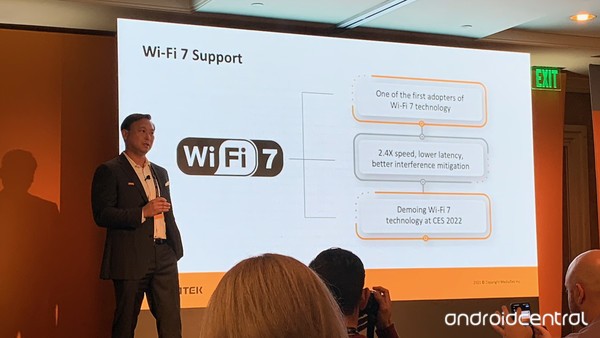
MediaTek to showcase Wi-Fi 7 at CES 2022, offers 2.4x faster speeds over Wi-Fi 6

While the current standard in the industry is Wi-Fi 6E, it seems that companies are working on future generations that will offer even faster speeds. Now, MediaTek is gearing up to showcase its Wi-Fi 7 network during the CES 2022 event.

The upcoming next gen standard of Wi-Fi would arrive with various improvements over the last generation, with James Chen, MediaTek’s Associate VP of Product Marketing, stating that the Wi-Fi 7 would be 2.4 times faster than Wi-Fi 6 and 6E standards that are currently available. Apart from just an increase in speeds, the new standard is also claimed to offer much lower latency. This would be especially useful in fields like gaming, with fast paced multiplayer titles requiring milliseconds to be as low as possible.

MediaTek
Image Via AndroidCentral

Furthermore, Chen added that Wi-Fi 7 would “play nice” with your neighbor’s Wi-Fi 7 network as well. To put things simply, it would use new technology to reduce interference from signals outside of your home. Chen did note that while the Taiwanese chipmaking giant will demo the new technology at CES 2022, it is still “very early in the Wi-Fi 7 standardization process.” The official refrained from offering any finer details, although, he did say that we might see a Q2 2022 launch. In other words, we can expect an official release sometime in 2023.

RELATED:


MediaTek could soon start making chips for Windows-powered computers

Just a couple of weeks ahead of the Qualcomm Tech Summit, MediaTek kicked off its Executive Summit in California and is set to make a series of announcements at the same event throughout the week.

MediaTek is known for making smartphone chips and is now claimed to be the market leader with around 40 percent of the market share. But now, the company is looking to make chips for powering Windows PCs.

MediaTek

Companies are planning to move from x86 to ARM chips and it’s clear that MediaTek doesn’t want to miss out on this opportunity. The Taiwanese company is expected to launch its ARM-based chips for Windows-powered computers in a few years.

The company already has a presence in the computer category as it is offering chips for low-end or entry-level Chromebooks. But to establish itself in the Windows PCs market, MediaTek will have to determine what is it that the company can offer.

Apart from these, the Taiwanese company is also building 5G modems for Intel-powered PCs and has entered into a partnership with the company in 2019.

While it seems that it’s inevitable that MediaTek will start offering chips for Windows-powered computers but do note that the development is still quite early stage and we expect the company to make some kind of announcement related to this at the ongoing Executive Summit event.

Qualcomm has already announced its plans of launching new chips for computers in the year 2023, which are designed by Nuvia, a startup founded by former Apple executives working on A-series chips that have been acquired by Qualcomm. With these new chips, the company aims to take on Apple’s M-series chipsets.

RELATED: 

MediaTek announces new Filogic 130 series chips: will bring Wi-Fi 6 & Bluetooth 5.2 to IoT devices

MediaTek just announced new Filogic 130 and Filogic 130A system-on-chips (SoCs) for IoT devices, which integrate microprocessor (MCU), AI engine, Wi-Fi 6 and Bluetooth 5.2 subsystems, and a power management unit (PMU) into a single chip.

The Filogic 130A also integrates an audio digital signal processor to allow device manufacturers to easily add voice assistants and other services into their products.

Mediatek logo

Both processors integrate an ARM Cortex-M33 microcontroller, supported by embedded RAM and external flash and an integrated front-end module (iFEM). The Filogic 130A also gets an integrated HiFi4 DSP on top for more accurate far-field voice processing, trigger word support, and always-on microphone capability.

Advanced Wi-Fi and Bluetooth coexistence is supported by both chips to ensure that connectivity remains reliable even when Wi-Fi is used with multiple Bluetooth devices. All the current Wi-Fi standards are supported namely Wi-Fi 6 and dual-band 2.4GHz and 5GHz, along with advanced Wi-Fi features such as target wake time (TWT), MU-MIMO, MU-OFDMA, quality of service (QoS), and WPA3 Wi-Fi security.

Alan Hsu, MediaTek Corporate Vice President & General Manager, believes that advanced connectivity technologies like Wi-Fi 6 and Bluetooth 5.2 will become a must-have for smart home devices, thanks to the ever-increasing rise in the need for AI processing power and energy efficiency. MediaTek’s Filogic 130 and Filogic 130A chips, he believes, meet these requirements perfectly.

After all, the MediaTek Filogic 130 and Filogic 130A chips are designed to maximize power efficiency in the smallest and lowest-power form factor. Security has also been prioritized with support for a variety of interfaces including general-purpose IOs such as SPI, I2C, I2S, IR input, UART, AUXADC, PWM.

RELATED:

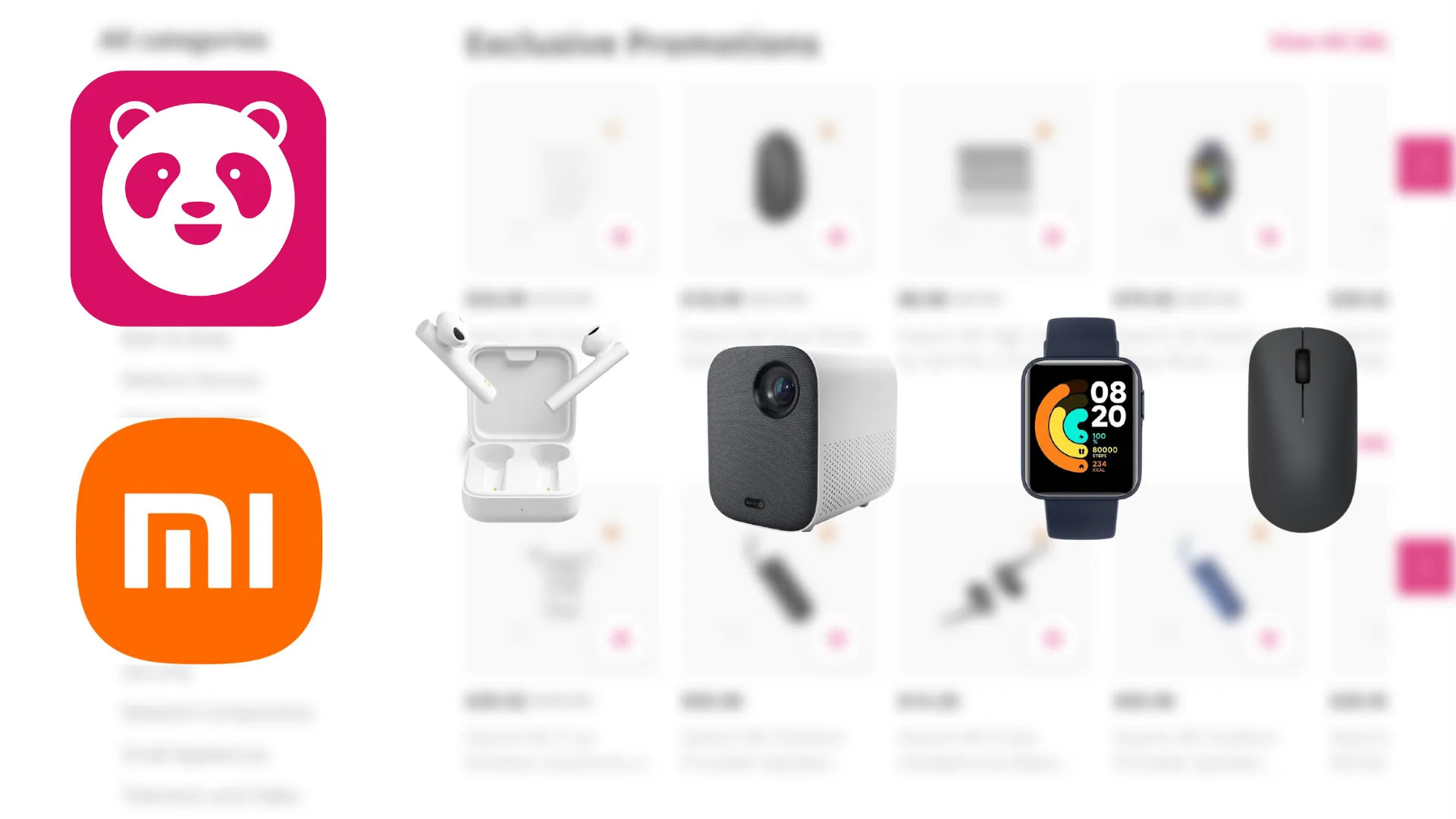
Xiaomi products will now be available for on-demand delivery via foodpanda in Singapore & Thailand

Xiaomi has just entered into a strategic partnership that will have it sell its products through on-demand delivery service, foodpanda. Now, hundreds of electronic products from the company will be available for purchase on the foodpanda shops in Singapore and Thailand.

For those unaware, foodpanda is currently Asia’s largest food and grocery delivery network outside of China. The brand has now entered into a partnership with the Chinese tech giant and will offer a vast variety of consumer electronic products and appliances for on-demand deliveries in its shops in Singapore and Thailand. Furthermore, the foodpanda application will also be pre loaded in new smartphone from Xiaomi in 10 markets within Asia.

Xiaomi

Notably, this marks Xiaomi’s first quick commerce partnership in Asia outside of China. So, you can now purchase hundreds of products like smart devices, audio, mobile accessories, household appliances, and more, which will all be delivered to your doorstep within just 30 minutes. Interestingly, the partnership also marks foodpanda’s move in diversifying and expanding to the non grocery category that will seek to fulfill every need of its customers.

The partnership arrives as more customers in both regions have shift their spending habits to the mobile platforms. foodpanda recorded a whopping 18 fold rise in orders for computers and mobile devices this year, compared to 2020. Additionally, the delivery service has even partnered up with 1,000 electronics stores across Asia in 2021 alone to offer more than 289,000 products from local brands to major tech giants like Huawei, Logitech, Asus, TP Link, Remax, Philips, and more.

Xiaomi Logo Branding 2021


According to Abhishek Sahay, Senior Director of New Verticals at foodpanda, “On demand deliveries are increasingly an essential part of people’s everyday lives. Beyond traditional e commerce, brands are now already looking for the next phase of growth — with quick-commerce, foodpanda shops provides a new way for retailers to deliver their products to customers almost instantly, whenever they need it. We’re proud to be Xiaomi’s first quick commerce partner in Asia, helping them connect more instantaneously with their customers in the region.”

RELATED: