Advertisement

Xiaomi 12 Ultra tipped to feature larger zoom camera and ultrasonic fingerprint sensor

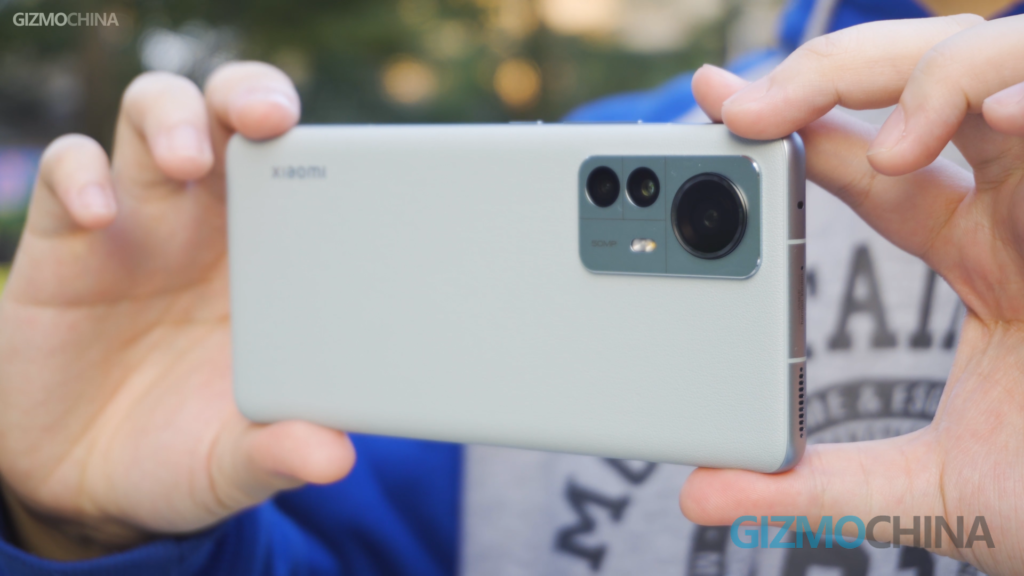
We have been hearing more about the Xiaomi 12 series lately. Recently, a leaker revealed the rear camera setup of the Xiaomi 12 Ultra. A few days later, yet another tipster now discloses a bit more information about one of these cameras. At the same time. He also spills the beans on the type of fingerprint sensor that will be used in this phone.

Xiaomi Mi 11 Ultra

According to a leakster who goes by the name of 熊猫很禿然 (Panda is Bald) on Weibo, the upcoming Xiaomi 12 Ultra will feature a larger zoom camera. He says that the handset will come equipped with a 1/1.5” periscope camera with 5x optical zoom. For comparison, the Mi 11 Ultra’s 48MP 5x periscope measures 1/2.0” in size.

Previously, Digital Chat Station revealed that the Xiaomi 12 Ultra will not come with a 200MP camera as earlier reports suggested. Instead, the phone will arrive with three 50MP sensors. Panda is Bald also corroborates the same.

As one of these 50MP sensors is now said to sport a 5x periscope lens, the other two must be paired with wide-angle and ultra-wide-angle lenses respectively.

Additionally, the tipster also says that the Xiaomi 12 Ultra will house an ultrasonic fingerprint sensor underneath its display. If this is true, then it will be the first Xiaomi smartphone with such an implementation. 

That’s because, so far, Xiaomi has only used optical in-screen fingerprint sensors for its handsets. However, it is worth noting that the Mi 5s from 2016 had an ultrasonic fingerprint sensor but on the chin instead of underneath the display.

That said, we expect to learn more about the Xiaomi 12 Ultra in the coming days ahead of its official launch.


RELATED:


Poco executive discusses the future of the company: Poco smartwatches and earbuds upcoming?

Poco is easily one of the fastest-growing smartphone ‘sub brands’ around and has seen huge success since its very first device itself that launched back in 2018 – the Poco F1. Fast forward to three years later and the brand has gone independent from Xiaomi and is seeking to expand into other products, starting with ecosystem products.

Poco ecosystem products

In an interview with Android Authority, Poco revealed that it’s expanding into ecosystem products in 2022. This doesn’t come as a surprise though considering almost every smartphone brand now has its own ecosystem of sorts. It, after all, allows for a more seamless experience while also building brand loyalty.

“We always think smartphone plus IoT is a key strategy for us,” Poco Global head Kevin Qiu said.

Poco’s head of product marketing, Angus Ng added saying that while “nothing is actually off-limits,” it’s starting small at first. “Coming out with ecosystem products, I think we still need to stay close to our brand philosophy and product philosophy. So we need to somehow play it more on the safer end, to begin with (sic).”

This suggests that audio products, followed by wearables and power banks could be the first products towards building a Poco ecosystem.

An ecosystem typically includes tablets as well. This market is something that Poco isn’t planning on entering anytime soon though considering high competition:

“On the tablet side, yeah tablets have been huge in the industry in the last year and a half because of the pandemic. But it’s because it’s been huge and kinda crowded, (that) it’s even harder for us to enter from that perspective.”

Poco software

Moving on to what Poco does best – smartphones – the company’s next offering will likely be the Poco M4 Pro. The device has been touted as being a rebranded Redmi Note 11 by many. Poco is known for simply slapping their own logo atop devices that were originally Xiaomi and reselling them, but that is said to change now.

The company is looking to further differentiate itself from Xiaomi and Redmi in terms of software. Sure, you do get a Poco launcher, but that has mostly been it. Qiu now says that further customizations and aesthetics for the software to bring it more in line with Poco’s hardware designs are being considered.

And as for the dilemma of software updates, Qiu had the following to say:

“As of right now we’re actually still discussing and talking to the MIUI team about being a part of that plan. As of right now, I can’t confirm anything about three plus four [three years of OS updates and 4 years of security patches – ed], we’re still staying with two plus three right now for all of our devices.”

Poco Snapdragon 888 phones

Last but not least was the question of why Poco chose to stick to Snapdragon 870 and has not released any device with the latest Snapdragon 888 chip:

“After internal testing with a lot of our R&D and product managers, we found out that (the Snapdragon) 865 from last year was an amazing chipset. In terms of performance, stability, and cooling in general. And 870 was able to keep all of those great attributes and become even better. When some of the first flagship Android devices pushed out 888, the major concern was overheating and power consumption.”

RELATED:

Here’s the leaked images of the upcoming Intel ARC Alchemist GPUs

The images of the upcoming Intel graphics card from its ARC Alcehmist series have just been leaked. This offers us a look at the design of both the new high end and entry level graphics card.

Intel

The images were shared by Moore’s Law is Dead who has also shared other key details about the upcoming Team Blue GPUs in the past. In the YouTube video, we can see what appears to be the live images of the new ARC Alchemist series of GPUs (high end model in particular). Notably, Moore’s Law is Dead had previously also shared the renders of the graphics card back in October. And now, the live images reveal that the GPU’s design is in line with the renders we had reported on.

Reportedly, these images showcase the finalized design for the high end ARC Alchemist GPU’s shroud design. Furthermore, MLID added that the GPU could feature up to 32 Xe Cores while also sharing renders of the upcoming entry level Alchemist GPU with 8 Xe Cores. Looking at the high end variant first, we can see that the GPU features a dual fan design that is similar to the renders we had previously covered. The shroud features a silver color scheme and have two 9 blade fans that also have the Intel branding. The power connectors is now housed on the side of the card and is the 8+6 pin configuration that has a maximum power draw rating of 300W.

Intel

On the other hand, the entry level GPU from Intel will feature a single fan but with a shroud that has a similar silver color scheme as well. It sports a compact design with a dual slot form factor and would likely arrive with a single 6 pin connector. This card will be placed in the entry level and would compete with Nvidia‘s lower priced GTX 16 series. However, due to supply constraints and scalping, the prices of these lower end cards have also sky rocketed. So, the chipmaker has a great opportunity within the current market. Although, we will have to wait for an official launch to know for sure.

RELATED:


Huawei Watch Fit with 1.64-inch AMOLED display, SpO2 monitor launched in India

Huawei launched the Huawei Watch Fit in India today, ahead of Diwali. The smartwatch made its global debut a few months back and was recently teased by Amazon India. It comes with several cool features such as a large 1.64-inch AMOLED display, SpO2 monitor, in-built GPS, 97 sports mode, and more.

The Huawei Watch Fit is currently listed on Amazon for Rs. 14,990. It’s exclusive to that store. Multiple color options are available to pick from namely Pomelo Red, Distilled Blue, Sakura Pink, and Graphite Black. Its introductory offer includes a Huawei Mini speaker for free with the purchase of the watch.

The Huawei Watch Fit features a 1.64-inch Vivid AMOLED display, offering a 280×456 resolution. It comes with 300 different dials for customization to the heart’s content.

HUAWEI WATCH FIT

The watch has support for 97 sports modes which includes the new jump rope mode. It also comes with features like animated workouts, automatic identification of swimming styles, SWOLF score, and many more. As for the battery life, the company is claiming that it can last up to 10 days.

Further, the device has 24/7 heart rate monitoring, 24/7 blood oxygen monitoring, sleep tracking, menstrual tracking, stress monitoring, and of course, SpO2 tracking to measure blood oxygen levels. It also supports call notifications, application alerts, music playback control, NFC payment, and can also control compatible smart home appliances.

RELATED:

ASUS working on a Surface Pro-like laptop that docks with an eGPU for gaming: Leak

ASUS is apparently planning on launching a new notebook that will be the successor to the ROG Flow X13. A recent leak revealed the design of this upcoming notebook, which bears resemblance to the Surface Pro laptops from Microsoft.

The leak was shared by known tipster Evan Blass (@evleaks), with the images showcasing a thin and light laptop that appears to be similar to the new Surface Pro 8 in terms of design. This laptop in question will reportedly be called the ROG Flow Z13. For those unaware, the ROG Flow X13 was a convertible laptop that could be connected to an external eGPU (external GPU) from the Taiwanese PC maker.

This external GPU is called the XG Mobile that could boost the gaming performance of the thin and light convertible notebook. Apart from just gaming, the eGPU also acted as a USB dock that offered a number of port. In other words, the ultrabook could technically be turned into a full fledged gaming rig with the right peripherals. So, it won’t be far fetched to assume that the upcoming ROG Flow Z13 could also support the same.

ASUS

At the moment, finer details regarding this laptop is still unknown. We only have a leaked image to go on for now, so take this report with a pinch of salt. But with CES 2022 being an upcoming major event, we could expect this device to be showcased in the conference, which is set to be held in January 2022.

RELATED:


Meizu mblu’s first smartphone in 3+ years may launch soon

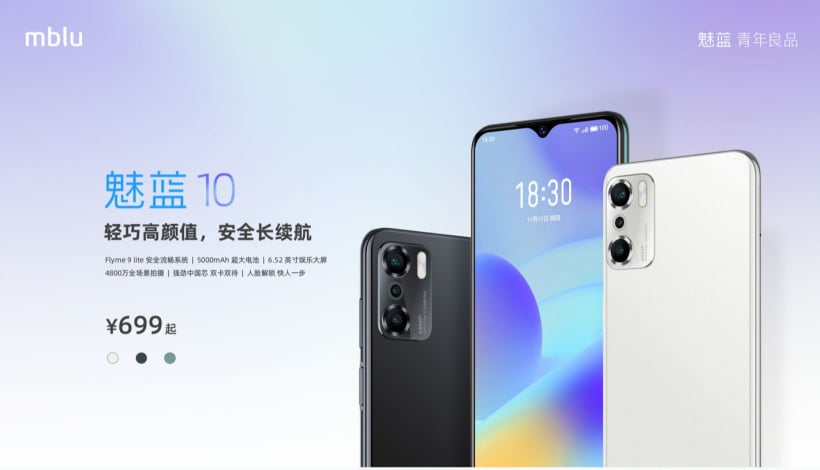
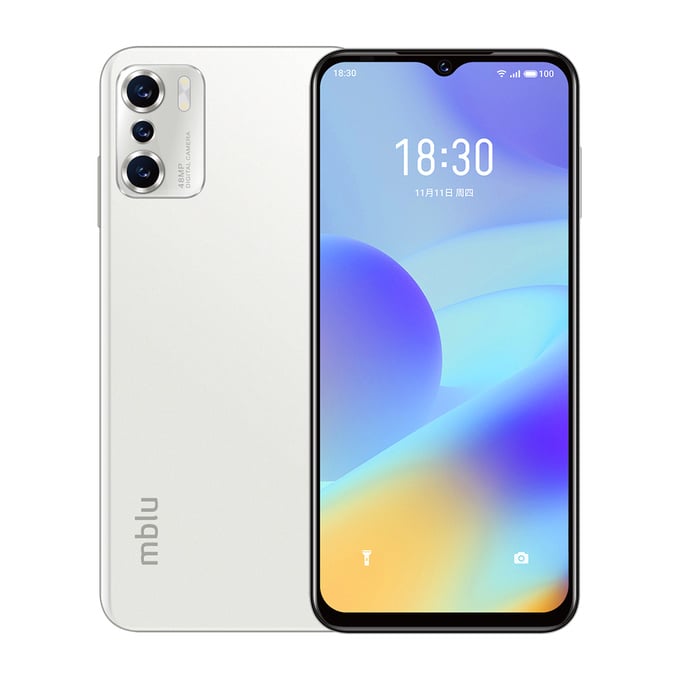
Back in September, Meizu brought back its ‘mblu’ (Blue Charm) brand from the dead. Soon after its revival, Mblu announced its own sub-brand called ‘lifeme’ for lifestyle products. A few days later, mblu Blus TWS earphones made their debut. Now, more than a month later, Mblu’s first smartphone in three years called mblu 10 makes its appearance on the web.

Meizu mblu 10 Suning
Meizu mblu 10

According to a report by ITHome, an upcoming Mblu-branded smartphone called mblu 10 briefly emerged on the eCommerce platform Suning. The device’s promotional banner was spotted by netizens on Suning’s Meizu store.

The image shows a phone with a Meizu 18-like rear design but with a dewdrop notch on the front. From the low-quality picture, we can see that the handset will arrive in at least three colors, namely black, white, and green.

Unfortunately, we cannot tell for sure whether the device will have a triple or a dual-camera setup from the pixelated image. Though it appears to have three cameras, we cannot rule out the possibility of the middle one being a random AI branding or something else. 

That’s because the recently launched Redmi Note 11 also looks like it has quad-cameras from the distance. However, in reality, it only has a dual-camera system.

Meizu M6T
Meizu mblu 6T (aka Meizu M6T)

As of now, we know nothing about the Meizu mblu 10. But we expect to learn more about this phone before its official launch in the coming days.

The Meizu mblu 10 will succeed the Meizu mblu 6T (aka Meizu M6T) from 2018.


RELATED:


Get Redmi Buds 3 Lite for $19.90 at Giztop

Redmi Buds 3 Lite is now available for $19.90 only at Giztop.

WHERE TO BUY
Redmi Buds 3 Lite at $19.90 @Giztop

Redmi Buds 3 Lite

Redmi Buds 3 Lite features an in-ear design and comes with 6mm Hi-Fi drivers that bring you an excellent audio experience. These latest budget earbuds from Redmi, come with Electronic Noise cancellation, the latest Bluetooth v5.2, and a special low latency mode for gaming. 

Redmi Buds 3 Lite

Supporting multi-functional touch control, Redmi Buds 3 Lite is IP54 certified water and dustproof and gives you up to 5 hours of continuous playback on a single charge and 18 hours with the charging case. 


Redmi Buds 3 Lite

Launched just a couple of days back, you can now buy Redmi Buds 3 Lite for $19.90 only at Giztop. Please note that this is a limited-time offer. So place your order asap. 


For more information on such exciting deals and offers check out our deals hub.

Meizu mblu Blus+ TWS earbuds with Active Noise Cancellation to launch on November 3

In September this year, Meizu’s mBlu sub-brand made a comeback after it was shut down for about 1269 days. One of the first products coming from this new brand was mBlu Blus true wireless earbuds.

Today, the company has officially confirmed thorugh a teaser poster that an upgraded version of the same in China, dubbed as Meizu mBlu Blus+ will be officially launched in its home country China on 3rd November.

Meizu mBlu Blus+ TWS Earphones Teaser

Previously, it was confirmed by the brand that the product will be available in the “Azure” color scheme but nothing much has been revealed yet. It will be interesting to see how the Plus variant will be different from the standard model available now.

The recently launched Meizu mBlu Blus comes with 12mm drivers and connects via Bluetooth 5.2, along with support for quick pairing with Meizu smartphones. These IPX4-rated earbuds also come with support for touch gestures controls.

There’s also Active Noise Cancellation for up to 30dB. The TWS earphones come powered by a 43mAh battery each, whereas the charging case includes a 520mAh battery. The company claims that it offers up to 30 hours of usage without ANC and with ANC enabled, the battery life reduces to about 25 hours.

RELATED: 

Xiaomi Pad 5 launched in Bangladesh with WQHD+ 11″ display, India launch still awaited

Xiaomi Pad 5 has now gone live in Bangladesh in two storage variants. The 6GB RAM + 128GB storage is priced at BDT 30,999 (~$359) while the 6GB + 256GB will cost you BDT 33,999 (~$394). It will be available across a multitude Mi Authorized Stores across the country.

The slate made its debut in China earlier this year following which it made its way to Europe. There, it was completely sold out within minutes. It was then released in Indonesia.

The Xiaomi Pad 5 features a large 11-inch LCD screen with a WQHD+ resolution (2560×1600), a smooth refresh rate of 120Hz, a PPI of up to 275, and a contrast ratio of 1500:1. It is powered by the flagship Snapdragon 860 processor.

The tablet packs a single 13MP camera with an LED flash at the rear. For selfies, there is a single 8MP camera at the front which also supports face unlock. A quad-speaker setup has been implemented for audio needs.

Xiaomi Mi Pad 5 with Snapdragon 860 launched in Japan for ¥43,780(~$384)

All of its components are supplied juice via an 8720mAh battery with 22.5W charging support. The tablet runs a custom MIUI version based on Android 11 that has been optimized specifically for tablet devices. The OS brings features such as custom input methods, split screens, small windows, parallel windows, and other functions.

There is still no sign of an Indian release yet. Some have speculated that it’s launched in Bangladesh because it doesn’t have to compete with Apple’s iPad there considering the lack of official Apple dealership in the country. But in India, the story is different, although Xiaomi may launch the tablet in the country in the coming weeks.

RELATED:

Redmi Watch 2 is now available at Giztop for $79

Redmi Watch 2, the successor to the original Redmi watch is now available for $79 only at Giztop. 

WHERE TO BUY
Redmi Watch 2 at $79 @Giztop

Redmi Watch 2

Redmi Watch 2 features a 1.6 inch AMOLED display with 320 X 360p resolution and 63.7% screen-to-body ratio. Featuring ultra-thin bezels, the smartwatch comes with 100 plus watch face and supports the always-on-display function.

Redmi Watch 2

Redmi Watch 2 is a one-stop health management device as it comes with a 24 X 7 Heart rate monitor, a SpO2 blood oxygen monitor, stress monitor, sleep tracker, menstrual cycle tracker, breath exercises, and more than 100 sports modes with auto-detection function. (Auto-detection works only for some specific sports)

Redmi Watch 2

Powered by a 225mAh battery the smartwatch gives you 12 days of battery life on normal mode and 7 days on heavy usage. The watch is 5ATM waterproof and supports GPS, Beidou, GLONASS, and Galileo navigation systems. 

Available in three colors viz: White, Blue, and Black, Redmi Watch 2 which was launched just a couple of days back, is now available for sale at Giztop for $79 only. This is a limited-time offer. So place your order asap. 


For more information on such exciting deals and offers check out our deals hub.

XPeng EV sales jump by 233% in October 2021, selling over 10,000 cars

XPeng has just revealed its sales report for the month of October 2021. The company has seen sizeable growth in sales with its total sales crossing 10,000 EV units in just one month alone.

Xpeng

According to the known Chinese electric vehicle maker, it completed 10,138 deliveries of its electric vehicles in October 2021, which marked a whopping 233 percent year on year. Out of the 10,000 units, 6,044 of these were the P7 model that also saw a massive 187 percent surge in shipments year on year. Notably, this also marked the second month in which the company broke past the 10,000 unit mark despite the ongoing global chip shortage that has affected the automobile market.

In October, XPeng shipped 6,044 P7 smart sports sedans along with 3,657 G3, and G3i smart SUVs as well. On the other hand, the P5 smart family sedans that was launched in September 2021 has also managed to ship 437 units in October, showcasing its demand. As of the end of last month, the automobile maker managed to ship 66,542 electric vehicles, which also translates to an impressive 289 percent year on year rise in deliveries. Out of this figure, the P7 model is the most dominant again, representing about 45,271 units of the total deliveries.

Xpeng

All of this is made possible from the company’s efforts in “supercharging facilities to address increasing customer demand.” For those unaware, XPeng is a leading smart EV brand from China and has also been referred to as a Chinese Tesla rival in the past. It even its support infrastructure spread all across a number of Chinese cities. Furthermore, these figures also highlight the robust growth for the company and the rising consumer demand it is facing. So XPeng could very well be on its way to dethrone Tesla sometime in the future.

RELATED:


Xiaomi Fast LCD Monitor 24.5-inch 240Hz launched at ¥1,599 ($250)

Last year, Xiaomi launched a 24.5-inch monitor with a 144Hz refresh rate in China with model number XMMNT245HF. An updated version (XMMNT245HF1) of this product with a 165Hz refresh rate and NVIDIA G-SYNC support made its debut in June 2021. Just a few months later, the Chinese tech giant has now announced yet another new monitor in the series with a 240Hz refresh rate and AMD FreeSync Premium support. The latest one is officially called Xiaomi Fast LCD Monitor 24.5-inch 240Hz (XMMNT245HF2).

Xiaomi Fast LCD Monitor 24.5-inch 240Hz A

Xiaomi Fast LCD Monitor 24.5-inch 240Hz Specifications and Features

The latest monitor from Xiaomi sports a 24.5-inch LCD panel with a resolution of 1920 x 1080 pixels, 16.7 million colors, a 240Hz refresh rate, and a 178° viewing angle. The screen has a brightness of 400 nits, a 1000:1 contrast ratio, a 16:9 aspect ratio, a 1ms GTG response time.

The canvas supports AMD FreeSync Premium, VESA DisplayHDR 400, and DC dimming. It covers 95% of the DCI-P3 color gamut and has a color accuracy of ΔE<1. The display is also certified by TÜV Rheinland and SGS for low blue light emission.

Xiaomi Fast LCD Monitor 24.5-inch 240Hz B

As far as ports are concerned, the monitor comes with 1 x DP 1.2, 2 x HDMI 2.1, 1 x 3.5mm headphone jack, and DC in. Further, it can be tilted forward and backward, moved up and down, roasted vertically, rotated left and right, and wall-mounted.

The product comes with minimal bezels, an air vent for heat dissipation, a magnetic cover to hide ports, and a hole for cable management. Last but not least, it ships with a base, a stand, a power adapter, a DP cable, and 4 x wall studs.

Xiaomi Fast LCD Monitor 24.5-inch 240Hz C

Xiaomi Fast LCD Monitor 24.5-inch 240Hz Price and Availability

The new 24.5-inch 240Hz monitor from Xiaomi is currently listed on XiaomiYoupin with a price tag of ¥1,599 ($250) and a 3-year warranty. Interested customers can pre-order this product right away in the company’s home country.

At present, it’s not known whether this monitor will make its way to international markets.


RELATED:


Huawei may take on Apple & Samsung smart trackers with its own “S-Tag”

Recently, major smartphone brands like Samsung and Apple had launched their smart tags in the market. And now, it appears that Huawei is also working on its own Bluetooth trackers as well to compete with its rivals.

Huawei

According to a LetsGoDigital report, the Chinese tech giant has trademarked a new “S-Tag” moniker. This trademark was filed with the European Union Intellectual Property Office (EUIPO). The description of the trademark is quite and doesn’t offer any clear indication as to what the product actually is, but the name more or less confirms that it is a Bluetooth smart tracker.

For those unaware, a smart tag is basically a small electronic products that users can attach/keep with other objects, like a wallet, backpack, and more, to help find them in case they are lost. These smart tag Bluetooth trackers usually use Bluetooth Low Energy (BLE) and ultra wideband (UWB) technology to precisely pin point the tagged object’s location.

Huawei
Samsung Galaxy SmartTag+

Previously, we had also reported on other Chinese brands like Xiaomi and OnePlus working on their own iterations of the Bluetooth tracking device. So, it arrives as no surprise that Huawei might also launch its own smart tag as well. Unfortunately, finer details regarding this product is also unknown at the moment and the available information is quite vague, but we can expect to hear more about this in arriving weeks. At the very least, we do know that this product will be launching in Europe, so stay tuned for more updates.

RELATED:


Apple co-founder Steve Wozniak feels iPhone 13 series isn’t any different from previous models

Apple co-founder Steve Wozniak seems rather unimpressed with the latest iPhone saying he finds it to be virtually indistinguishable from its previous models.

“I got the new iPhone; I can’t tell the difference really,” He said. “The software that’s in it applies to older iPhones, I presume.”

Wozniak isn’t wrong if the looks alone of the iPhone 13 are to go by. The phone is nearly indistinguishable from the iPhone 12, with the only giveaway being its smaller notch. The camera module has grown a bit in size too but that’s something that can’t be easily spotted.

steve wozniak
Image: REUTERS/Stephen Lam

The most notable upgrade when it comes to specifications is the new 120Hz panel – making the iPhone 13 Pro/Pro Max the very first iPhone to feature a high refresh rate display. This is paired with upgraded cameras and processor as well, but it’s still not enough to really tempt an upgrade for someone who already owns an iPhone 12.

Oddly, Wozniak implied that he has continued to stick to an iPhone 8 – a phone from 2017 with just a 4.7-inch display (via Yahoo Finance). This he says feels the same as the iPhone 7 as well as iPhone 6 to him.

“I’d rather wait and watch that one. I’m happy with my iPhone 8 — which is the same as the iPhone 7, which is the same as the iPhone 6, to me.”

Wozniak had made similar comments back in 2017 when the iPhone X hit the market saying that he would not be purchasing the device on the first day of its release. However, he did praise the Apple Watch and called it his favorite piece of technology. He also voiced his dream of a foldable iPhone.

Apple iPhone 13 Pro

Nonetheless, if you are one of those who share the same opinion as the Apple co-founder regarding the iPhone 13, then the upcoming iPhone 14 may excite you. The phone has been touted to come with a re-design – a notchless front in favor of a punch-hole selfie shooter, titanium build, and rear cameras that stay flush into the back.

RELATED:

Infinix Note 11 lineup, INBook X1 laptop India launch timeframe confirmed

In October, Infinix announced the Note 11 series of smartphones for global markets. Last month, the Chinese manufacturer also announced the INBook X1 laptop. Infinix India has confirmed that the Note 11 lineup and the INBook X1 notebook will debut in India in December.

The Note 11 lineup will be priced between Rs 10,000 (~$133) and Rs 15,000 (~$200) in India. The company will be also releasing the Note 11 Free Fire limited edition model in the country. The Note 11 series has two phones such as the Note 11 and Note 11 Pro. It is yet to be confirmed whether both models will be released together next month.

Infinix Note 11 Pro
Infinix Note 11 Pro

The Infinix Note 11 Pro has a 6.95-inch IPS LCD FHD+ 120Hz refresh rate display. It is powered by the Helio G96 chipset, 8 Gb of LPDDR4x RAM, 128 GB of UFS 2.2 storage, and a 5,000mAh battery that supports 33W fast charging. It runs on Android 11, which is flavored with XOS 10. It has a 64-megapixel main camera, a 13-megapixel telephoto snapper, and a 2-megapixel bokeh lens on its back. It has a front camera of 16-megapixel.

The vanilla Note 11 has a 50-megapixel + 2-megapixel dual-camera system. It has a 5,000mAh battery that supports 33W fast charging. The other details of the Note 11 are under wraps.

Infinix INBook X1
Infinix INBook X1

The Infinix INBook X1 is a metal-bodied laptop, which will be available in India in colors such as Noble Red, Starfull Grey, and Aurora Green. It is expected to arrive in Intel Core i3, i5, and i7 variants and is expected to carry support for fast charging through USB-C port. It appears to be the same device that was announced in the Philippines. The device is expected to carry an aggressive price tag.

RELATED:

Royole FlexPai 3 render leaked, full design revealed with pop up selfie camera

While Samsung was one of the first brands to launch a foldable smartphone in the market, it wasn’t the first one to actually release a device with a foldable display. Royole takes that claim with its FlexPai lineup of foldable handsets, and now, we have have information on its upcoming third iteration of this series.

A known tipster Evan Blass (@evleaks) shared a new image that was a leaked render of the upcoming FlexPai 3. In other words, the successor of the FlexPai 2 has just been revealed. Looking at the image, it appears that the Chinese smartphone maker has made major changes in design for the next generation of foldable handset. The device now features a dedicated rear mounted camera module and even feature a pop up selfie camera as well, opposed to the single vertically stacked camera module on the side of the display that acted as both the selfie and rear shooter.

Royole

Although, the rear camera module now only includes two sensors, which is a downgrade from last gen’s four image sensors. Furthermore, it appears that the device will be an outward folding device, similar to its predecessor, as we can also observe a square shaped area that is bent inward in the other half of the rear panel. This would likely help in accommodating the camera module’s bump when in the folded state.

As of right now, finer details regarding the smartphone is still unavailable. However, the Royole FlexPai 3 was also recently spotted on TENAA (Via XDADevelopers) that revealed some key information. The foldable phone will apparently feature a 7.2 inch display and will be powered by a 3,360mAh battery pack. Unfortunately, that is all the information we have to go on for now.

RELATED:


Huawei Watch with blood pressure tracking likely to launch in November

Hypertension (high blood pressure) can lead to serious health consequences such as heart disease and stroke. Most smartwatches come with health tracking features like blood oxygen content monitor and heart-rate tracker. It is speculated future smartwatches will also allow users to measure blood pressure. It appears that Huawei could be the first brand to launch a smartwatch with such a feature.

Recently, a Chinese tipster with a Weibo account named Changan Digital King claimed that Huawei will be announcing a new smartwatch in November. It appears that this smartwatch may come equipped with a blood pressure tracker.

huawei-watch-gt-2-pro
Huawei Watch GT 2 Pro

Last month, the Food and Drug Administration of Guangdong Province rolled out the list of approved devices. The list included a Huawei smartwatch with support for medical-grade ECG (electrocardiogram) and blood pressure tracker.

In May 2021, Huawei’s president for the consumer business smartphone category, He Gang said that the company’s first smartwatch that supports blood pressure detection had passed the medical device registration test. At that time, it was reported that it will be debuting in the second half of the year in China.

A report from September revealed that Huawei had registered the Huawei Watch D moniker with the EUIPO authority. It is speculated that this device may arrive with support for blood oxygen tracking. Now that November month has started, it is likely that the company may soon tease its first smartwatch with a blood pressure tracker in China. Its launch event could see the arrival of other products like notebooks, FreeBuds Lipstick TWS, and more.

RELATED:

Nokia T20 tablet debuts in India at ₹15,499 ($207)

Last week, Flipkart teased the arrival of the Nokia T20 tablet in India. Just a few days later, the product has now finally made its debut in the country. For those unaware, this device is the first-ever tablet from HMD Global. It is a budget offering with longer software support than most of its competitors.

Nokia T20 Tablet Featured A
Nokia T20

Nokia T20 Price and Availability in India

The Nokia T20 tablet is already up for sale in a single Deep Ocean color option on the company’s official website. It comes in both WiFi-only and LTE variants. It will be also available via Flipkart very soon.

The device retails at the following price tags in the country.

  • 3GB + 32GB (WiFi-only) – ₹15,499 ($207)
  • 4GB + 64GB (LTE) – ₹16,499 ($220)

Nokia T20 Specifications and Features

The Nokia T20 features a metal unibody design measuring 247.6 x 157.5 x 7.8mm in dimensions. The WiFi-only version weighs 465g, while the LTE model is slightly heavier at 470g.

The product flaunts a 10.4-inch LCD panel with a resolution of 2000 x 1200 pixels, 400 nits brightness, and SGS Low blue light certification. It is powered by a UNISOC T610 SoC coupled with 3GB/4GB RAM and 32GB/64GB storage.

The storage on the device can be further expanded through a MicroSD card (512GB). It runs Android 11 with Kids Space, three years of guaranteed security updates, and up to fours years on the enterprise model.

The tablet has an 8MP rear camera and a 5MP front-facing camera. It features dual stereo speakers, dual microphones with support for Nokia OZO Audio, a 3.5mm headphone jack, USB, and a Type-C port.

As far as connectivity is concerned, the product supports dual-band WiFi, GPS/A-GPS (LTE variant), and Bluetooth 5.0. Unfortunately, the device not only has a biometric sensor but also an ambient light sensor. It only comes with an accelerometer.

Last but not least, the product is backed by an 8,200mAh battery with support for 15W USB PD fast charging. However, it ships with a 10W charger.


RELATED:


Apple ranked 4th in China smartphone market in September, with sales jumping over 40%

A new report from CINNO Research has just revealed the rankings for the top 5 smartphone brands for the month of September 2021. In this month, Apple achieved the fourth spot with its sales seeing a sizeable growth both month on month and year on year.

Apple

As per the report, the top 4 smartphone brands include OPPO at the top, with Vivo arriving second and Honor coming in third. On the other hand, Apple came fourth and Xiaomi took the fifth spot. Although, while the rankings showcase the total number of units sold by each brand, but the sales growth paints a different picture. Every other Chinese brands saw a decline month on month while their year on year performance saw a rise.

However, Apple, on the other hand, had strong growth both over the previous month and last year, with its monthly growth being 32.5 percent and annual sales surging by a significant 43.6 percent as well. In other words, the Cupertino based giant saw the highest growth in terms of sales in the Chinese market, with its overall sales reaching 3.7 million units in September alone.

Apple iPhone 13 All Colors Featured

Meanwhile, Oppo shipped around 4.6 million units, while Vivo sold 4.2 million units. Honor took the third spot with 3.8 million units being sold, which means that Apple almost took the third spot. Xiaomi rounded up the list with 3.2 million units being shipped in this month. The CINNO Research added that the primary reason for the explosive growth of the brand is due to the recent launch of its iPhone 13 series along with festive sales in China.

RELATED:


Google Tensor has quite a lot in common with Samsung Exynos, Pixel 6 code reveals

Google has heavily marketed the Tensor as being an in-house chipset but new information has now surfaced showing that the processor isn’t as original as indicated.

Andrei Frumusanu of Anandtech has revealed code showing that Google Tensor shares a lot in common with Samsung’s Exynos chipset (via Notebookcheck). The Tensor has been found to be a mid-point between the Exynos 2100 chip and the upcoming Exynos 2200. Multiple references to the Exynos 9845 (S5E9845) have also been spotted in Google’s own kernel code. In comparison, the Exynos 2100 is internally referred to as the Exynos 9840 (S5E9840).

From code alone, it’s quite obvious that Google’s Tensor is more of a heavily-customized Samsung Exynos than being a completely unique chip built from scratch.

Still, benchmarks have indicated that Google has actually put plenty of stuff of their own in the chipset. A recent benchmark comparing various flagship processors showed that the GPU found on the Tensor is the most powerful in the Android world.

While CPU and machine learning benchmarks haven’t been as satisfying, the Google Pixel 6 and 6 Pro have aced speed tests, even outperforming other Android flagships in some cases.

In conclusion, Google Tensor may have a strong relationship with Samsung’s Exynos, but its real-world performance has proven that it’s nothing to be concerned about. It would have been a lot cooler though if Google had been more honest.

RELATED: