Advertisement

China accounts for half of all Electric Vehicle sold in August: Report

During the month of August, electric vehicle sales reached 506,000 units. A new report shared the figure and found that our of the half a million figure, more than 50 percent of all sales for electric vehicles were in China.

China
Tesla Model 3

According to TheElec, the report arrives from EV Volumes who added that the overall figure is likely higher than 510,000 units when including the nations who’s data was unavailable. This also marked total sales doubling over the same month from a year ago. Notably, out of this total figure, 260,000 units or more than half of the EV sales in August were made in China. In Germany, around 52,000 units of EVs were sold, while the US market saw around 44,000 units being sold.

Similarly, France accounted for 17,000 units and Norway saw 14,000 EV units sold. In South Korea, electric vehicle sales reached 9,600 units, which marked a sizeable 172 percent growth year on year. EV Volumes further added that the launch of the Tesla Model Y and Hyundai Ioniq 5 boosted sales in August, while electric trucks from Hyundai and Kia were also quite popular.

Tesla
Tesla Model Y

In terms of total units sold, the Tesla Model 3 was the most popular electric car, which sold around 282,000 units across the globe during this month. The Wuling Hongguang Mini EV was the second most popular EV that sold 245,000 units, followed by Tesla Model Y with 180,000 units sold. The model 3 was popular in Europe, while the Wuling Hongguang Mini EV was popular in China. EV Volumes projects total sales of electric vehicles to hit 6.41 million unit this year.

RELATED:


iQOO may become independent brand in 2022, Vivo’s first T-series phones expected in November

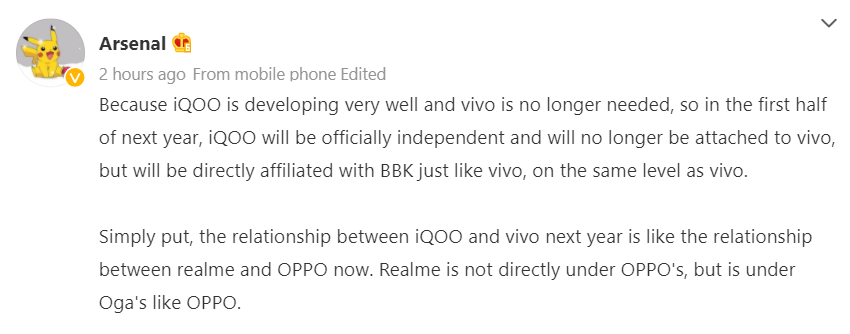
iQOO launched its first smartphone named iQOO with Snapdragon 855 back in March 2019. The Vivo sub-brand mainly focuses on releasing performance-driven smartphones across different price points. Fresh information shared by a Chinese tipster reveals that iQOO will become an independent brand in the first half of 2022.

The tipster claimed that the iQOO will be no longer attached to its parent brand Vivo in H1 2021. Hence, iQOO will be directly affiliated with China-based BBK Electronics like Vivo and OPPO. She added that in the coming year, the relationship between iQOO and Vivo will be similar to Realme and OPPO, which exist as separate brands.

Vivo phones available in China come preinstalled with OriginOS UI-based Android OS, whereas the iQOO phones are shipped with a modified version of the OriginOS UI for iQOO. Probably, the iQOO UI coming on iQOO phones next year will offer a different experience than the OriginOS UI available Vivo phones in China.

The tipster revealed through other Weibo posts that the iQOO is gearing to launch the iQOO Z5x and a Neo branded phone with Snapdragon 888 SoC in October in China. She also shared some information on Vivo’s upcoming smartphones.

Vivo’s T-series phones to launch in November

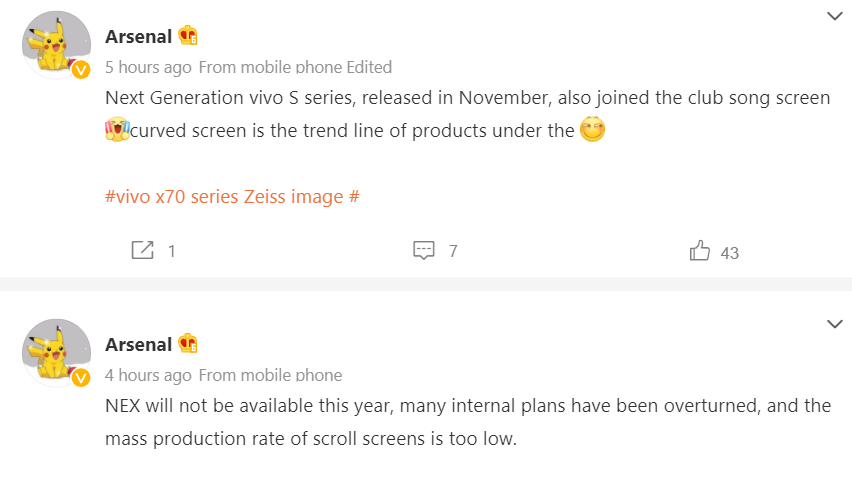
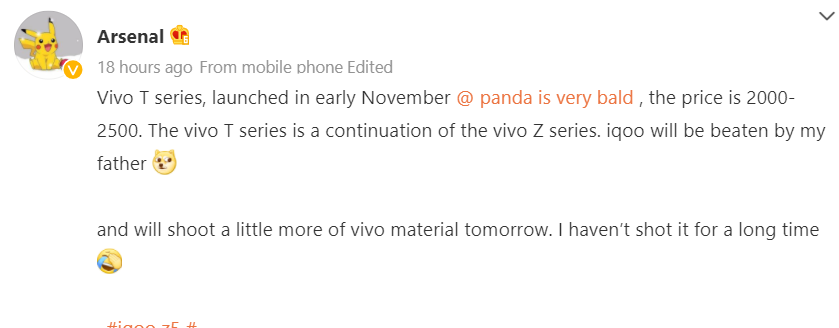
According to the tipster, Vivo’s first T-series phones priced around 2,000 Yuan (~$309) to 2,500 Yuan (~$387) will be launching in early November. The T-lineup will be a continuation of Vivo’s Z-series. In addition, November will also see the arrival of the next-generation S-series phones. The leaker also mentioned that Vivo will not be launching the NEX branded flagship as many internal plans of the company have been overturned.

RELATED:

India in talks with Taiwan for Chip Plant, could raise tensions with China

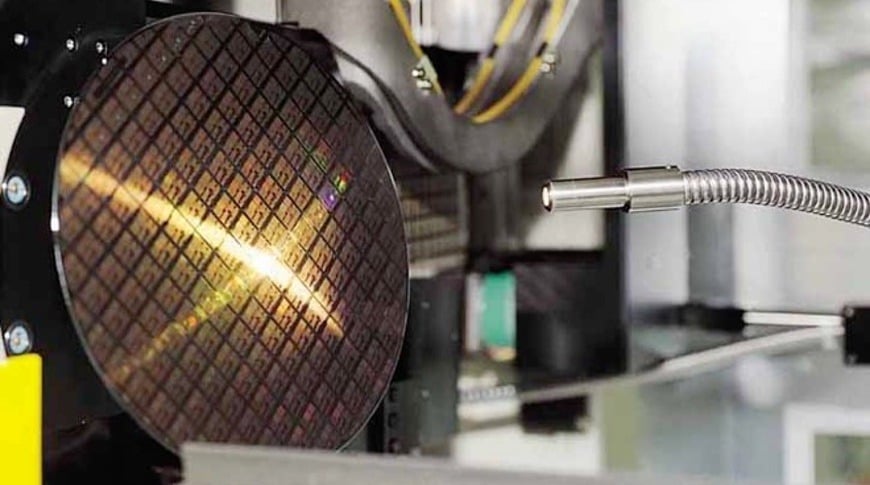
India is in talks with Taiwan over a deal regarding chip production. The new discussions would have both countries enter into a semiconductor manufacturing agreement, bringing a new chip plant to India.

India

According to a Bloomberg report, the talks are related to chip plant and new trade deal between both nations. However, this move might spark new frictions with China. As per sources close to the matter, the officials from New Delhi and Taipei have met in recent weeks to discuss a possible agreement that would bring a chip plant to India. This chip manufacturing site would have an estimated worth of 7.5 billion US Dollars and would supply the nation with various components related to 5G to even electric cars.

As of right now, India is also surveying potential locations that can provide this site with sufficient water, land, and manpower. Furthermore, the country also seeks to provide financial support of 50 percent of the capital expenditure from 2023. This would also includes other benefits like tax breaks and other incentives as well. Notably, the officials from Taipei also wanted fast progress on a bilateral investment agreement that would include lowered tariffs for various products that are used to make semiconductors.

India

Unfortunately, the Office of Trade Negotiations in Taiwan declined to comment on the matter while India’s trade ministry has yet to provide a comment regarding this matter. The report added that Taiwan has long sought a trade deal with India, however, official in New Delhi have been reluctant due to rise of new frictions with China caused by this move. For those unaware, China considers the island nation as its territory.

RELATED:


Redmi 9A Sport, Redmi 9i Sport launched in India

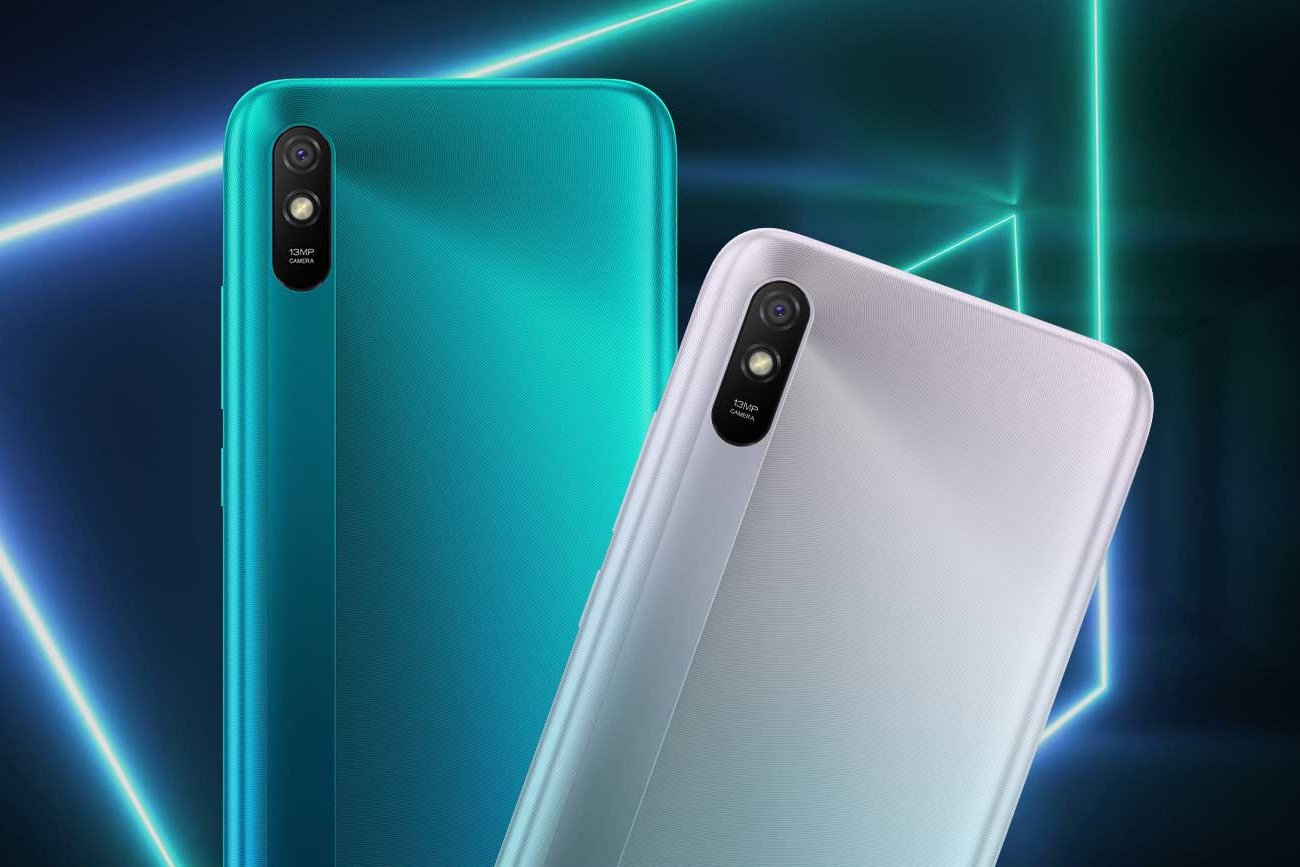
After debuting the Redmi 9 Activ in India last week, Xiaomi has now launched two more budget Redmi smartphones. These devices are called Redmi 9A Sport and Redmi 9i Sport. They are exactly the same phones as the original Redmi 9A and Redmi 9i. The only difference is colors.

Redmi 9A Sport Featured A
Redmi 9A Sport

The newly unveiled Redmi 9A Sport and Redmi 9i Sport do not bring anything new, except for slightly tweaked colors. In fact, the base hues remain the same and the only differences are shades as well as names.

In simpler words, the Redmi 9A Sport and Redmi 9i Sport still come in black, green, and blue colors. But these hues are now called Carbon Black, Coral Green, and Metallic Blue instead of Midnight Black, Nature Green, and Sea Blue. This is purely because the shades of these colors are slightly different.

Further, the phones still arrive in identical memory configurations, unlike the Redmi 9 Activ. They even cost the same. They retail for the following price tags.

Redmi 9A Sport Price

  • 2GB + 32GB – ₹6,999
  • 3GB + 32GB – ₹7,999

Redmi 9i Sport Price

  • 4GB + 64GB – ₹8,799
  • 4GB + 128GB – ₹9,299
Redmi 9i Sport Featured A
Redmi 9i Sport

These two Xiaomi handsets are already up for sale on Mi.com. We are not sure if they will be sold via other channels in the future.


RELATED:


Samsung Mobile Head visited US twice to secure more chips: Report

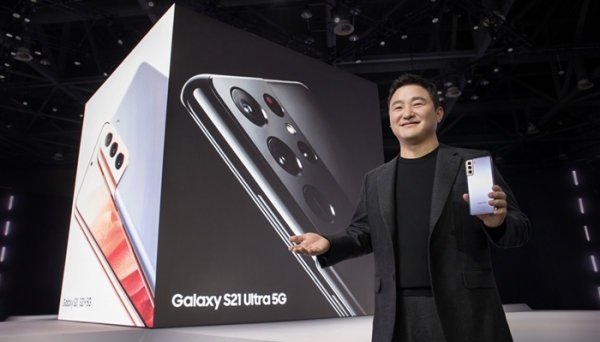
The Samsung Mobile division’s President and Head TH Roh has apparently made two visits to the US within this year. The executive made the trips to secure more chipsets/mobile application processors that is required for smartphone production.

Samsung

According to TheElec, Roh met with major component makers in the US to secure a more chips and asked major partners to supply the South Korean tech giant. However, the official was reportedly denied, as per sources close to the matter. The first trip was made back in March while the last one was in July. The source further added that the President of Samsung Mobile division visited a global application processor maker in July and asked for more chips, but was refused outright.

The component maker had told the President that they wished to increase overall supply as well, but couldn’t increase the supply to Samsung along as of right now. Notably, Roh was also accompanied by the Vice President who remained in the US and returned to South Korea after staying for about three months. A company spokesperson stated that their trip was not without any results and they did result in the brand being able to secure some volume.

Samsung

Although, the failure to secure more chips is indicative of the ongoing global shortage of semiconductors that has affected various industries across the globe. This includes the consumer electronics and even the automobile industry. At the moment, smartphone production has been negatively affected due to supply constraints in the third quarter of this year, which is also expected to continue in the fourth quarter as well.

RELATED:


Realme GT Neo2’s 100,000 units sold in first sale

Last week, Realme announce the Realme GT Neo2 with Snapdragon 870 chip in China. As scheduled, it was made available for purchase for the first time in the home market on Sept. 27. Today, the company took to its Weibo handle to reveal that many customers in China purchase the smartphone in its first sale.

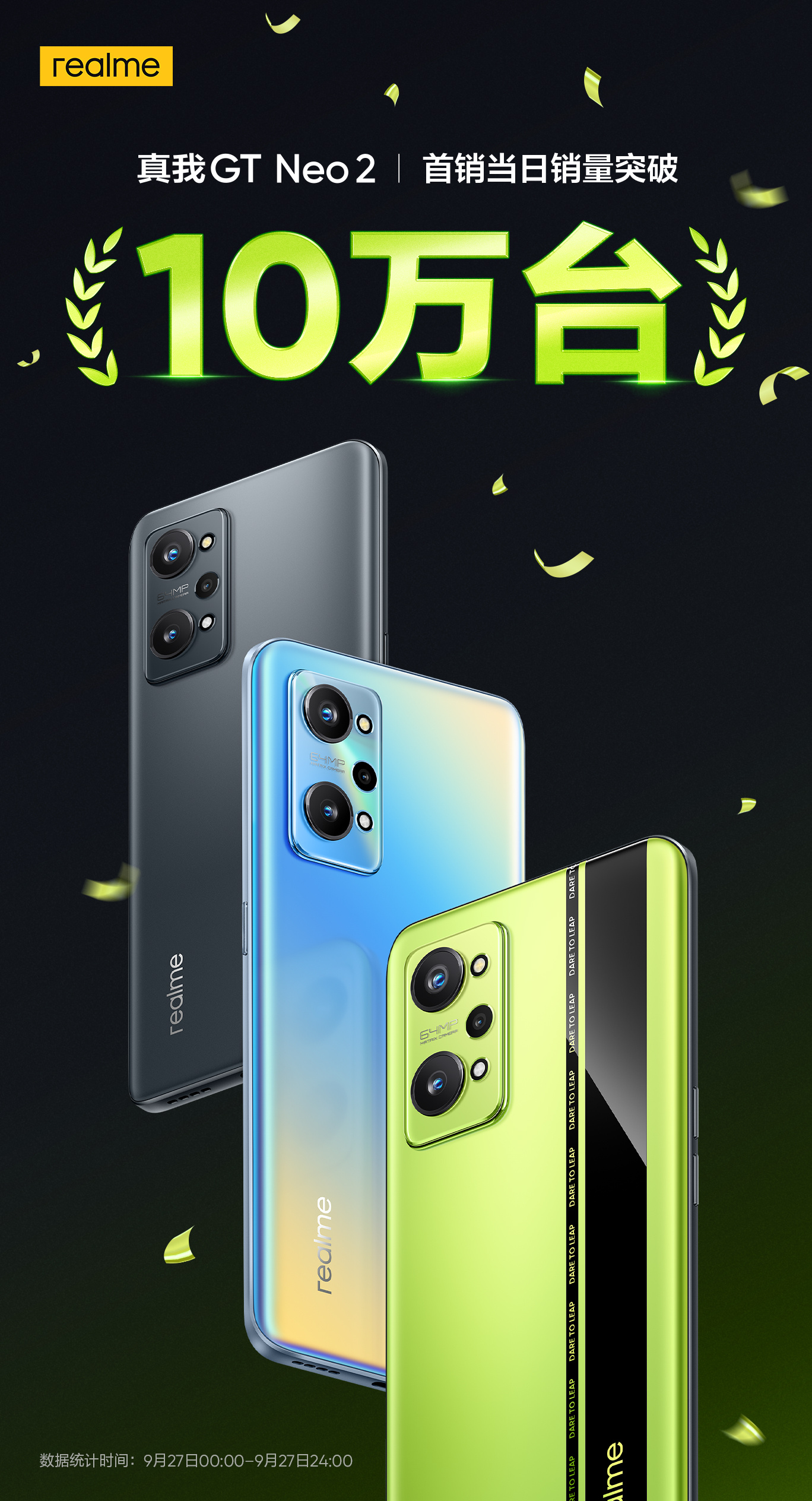
The GT Neo2 went on sale for the first time through Realme China’s online store, JD.com, Huantai Mall, Tmall, and Suning at 10:00 AM (local time) on Sept. 27. The poster released by the brand today reveals that its 100,000 units were sold in the first sale. Such is the popularity of this device.

Realme GT NEo2 10000 units sold

The Realme GT Neo2 is available in three models such as 8 GB RAM + 128 GB storage, 8 GB RAM + 256 GB storage, and 12 GB RAM + 256 GB storage in China. They are priced at 2,499 Yuan (~$387), 2,699 Yuan (~$418), and 2,999 Yuan (~$464), respectively. It comes in three colors such as Shadow Black, Black Mint, and Blue.

Realme GT Neo2 specifications

The Realme GT Neo2 has a 6.62-inch AMOLED FHD+ 120Hz display.  It is powered by Snapdragon 870 chipset, up to 12 GB of LPDDDR5 RAM, and a 5,000mAh battery that supports 65W fast charging. The handset comes with up to 256 GB of UFS 3.1 storage.

The handset possesses a 16-megapixel camera for selfies. It has rear camera setup has a 64-megapixel primary camera, an 8-megapixel ultrawide lens, and a 2-megapixel macro camera.

The Neo2 will be launching in India in October.

RELATED:

Apple iPhone 13 Pro Max sports custom Sony sensors for its rear cameras: Report

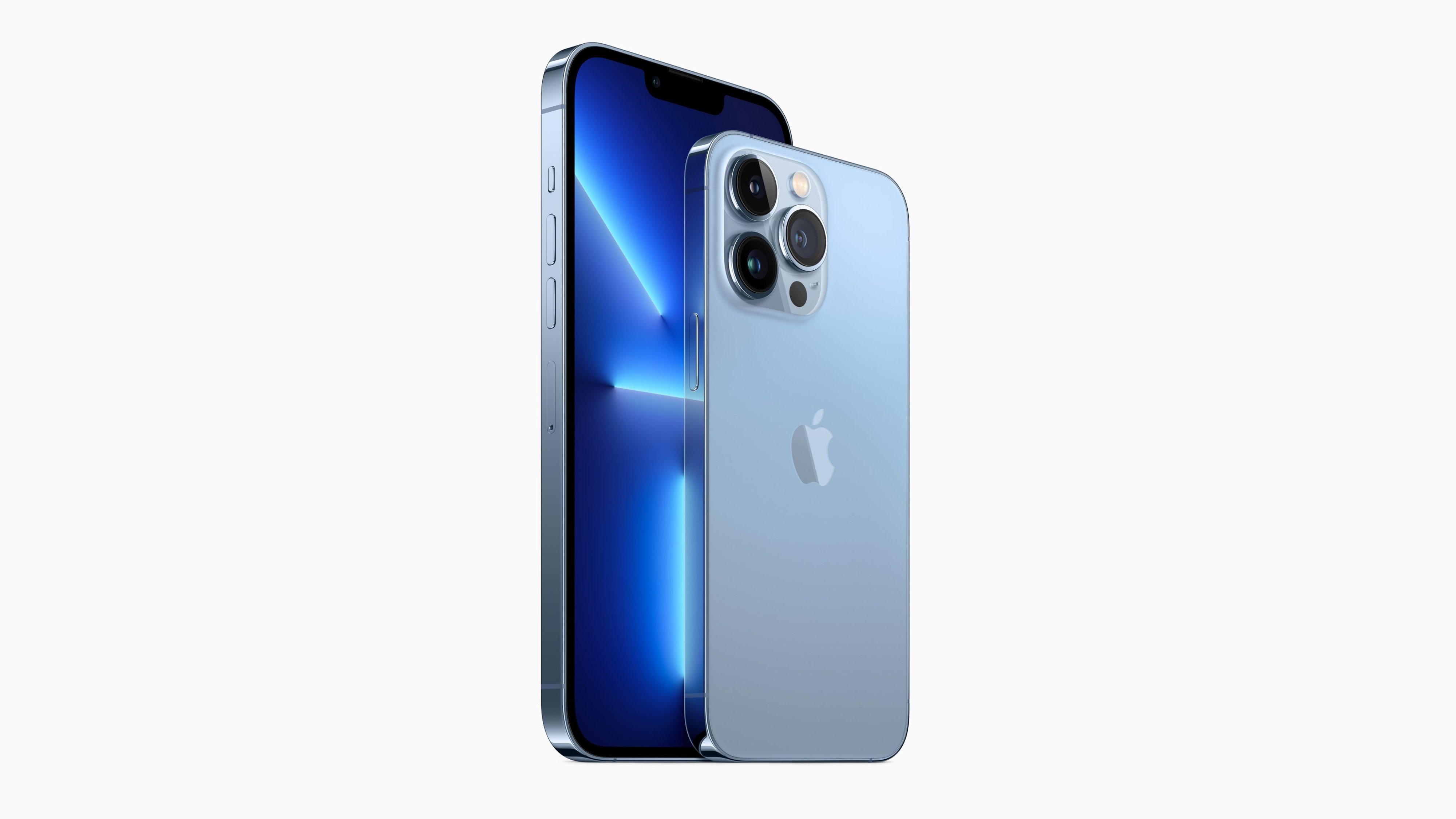
While Apple refrains from revealing finer technical details regarding its iPhones, interesting aspect regarding the parts used in its smartphones are usually revealed soon after they are launched. Now, a new report of its newly launched iPhone 13 Pro Max has revealed notable information regarding its cameras.

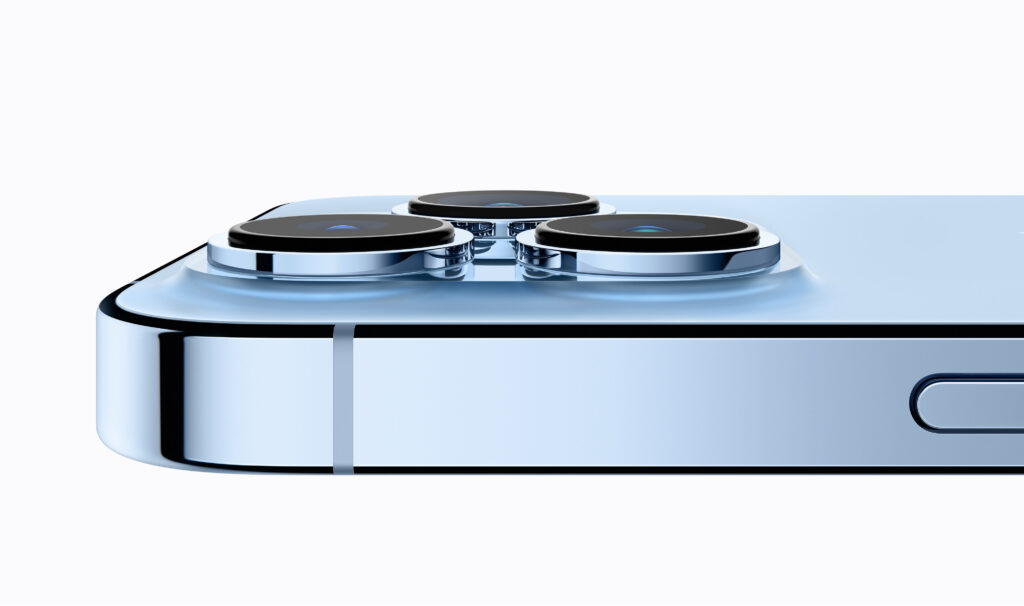
According to a Weibo blogger (a Chinese microblogging website), the Cupertino based giant uses a custom Sony image sensor for its triple camera setup on the rear. All three of the rear cameras are from the Sony IMX7 series, although, its ToF and front facing camera are the same as the iPhone 12 Pro Max. The primary 12 megapixel camera is an IMX703 sensor with 26mm focal length, F/1.5 aperture and 1.9 μm pixel size, which is larger than its predecessor.

Apple iPhone 13 Pro iPhone 13 Pro Max Featured

Notably, there is now a sensor shift OIS and a 7P (seven element) lens in the front now. Its ultra wide angle lens is a Sony IMX772 sensor with a 12 megapixel resolution, a 13mm focal length and an F/1.8 aperture of its 6P lens. A major upgrade over last year’s ultra wide angle lens is the inclusion of autofocus on this image sensor. Lastly, the telephoto lens is an IMX713 sensor with 77mm focal length for 3x optical zoom. Furthermore, the 6P lens with OIS has a slower F/2.8 aperture.

RELATED:


Samsung Galaxy F42 5G price in India leaked ahead of launch

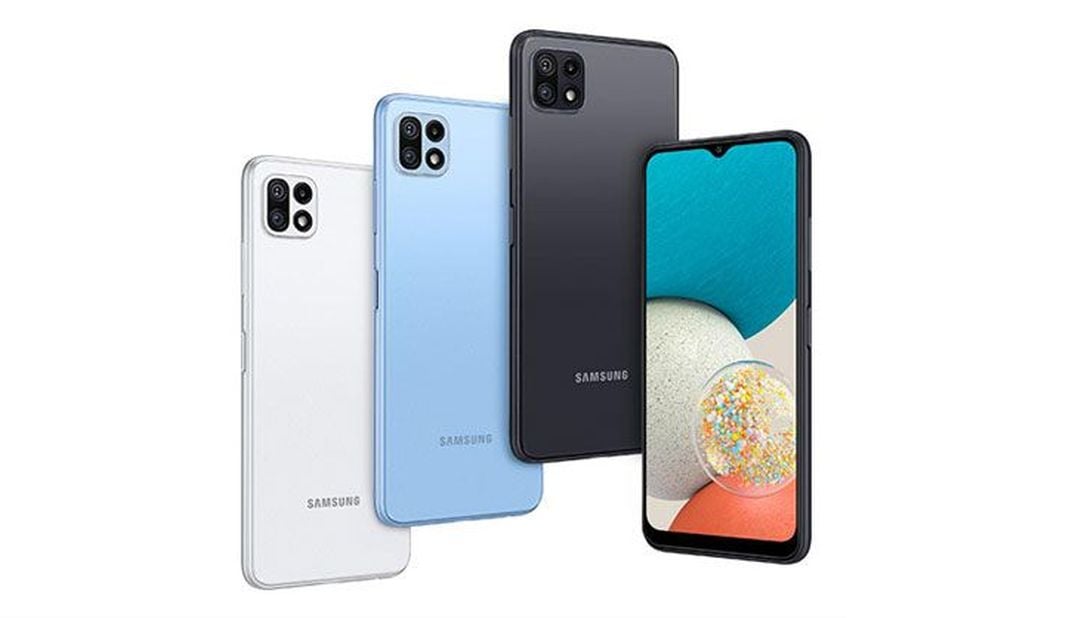
Samsung is all set to launch the Galaxy F42 5G in India tomorrow (September 29). Ahead of that, the smartphone’s price in the country has leaked. Let’s take a look at how much it will cost in the region.

Samsung-Galaxy-Wide5
Samsung Galaxy Wide5

According to the retail sources of 91Mobiles, the upcoming Galaxy F42 5G will be available in 6GB + 128G and 8GB + 128GB storage configurations. These variants will retail at the following price tags across offline stores.

Galaxy F42 5G Offline Price Leak

  • 6GB + 128GB – ₹20,999
  • 8GB + 128GB – ₹22,999

Since phones are usually costlier offline, the Galaxy F42 5G could be cheaper than the above-listed price tags online. That being said, as we are only a few hours from the launch, we don’t have to wait much longer to know the exact price of the handset.

The forthcoming Samsung Galaxy F42 5G for India is expected to be a rebranded Galaxy Wide5. Hence, it is said to come with features like a 6.6-inch FHD+ LCD panel with a 90Hz refresh rate, a MediaTek Dimensity 700 chipset, 64MP (wide) + 5MP (ultra-wide) + 2MP (depth) triple rear camera setup, 8MP front-facing camera, a side-mounted fingerprint sensor, One UI Core 3.x based on Android 11, 5,000mAh battery, and 15W fast charging.


RELATED:


Sony tops smartphone image sensor shipments in H1 2021, Samsung follows

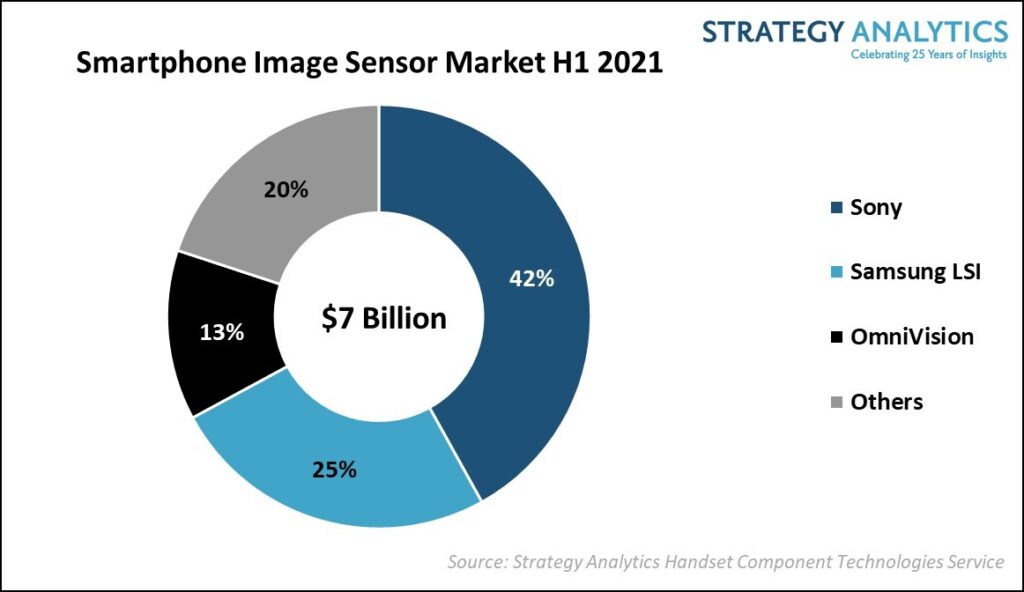
The global smartphone image sensor market bagged a total revenue of $7 billion in the first half of 2021, as per the Strategy Analytics Handset Component Technologies service report titled “Smartphone Image Sensor Market Share Q2 2021: Sony Captures 41 Percent Share”.

The report (via: Business Wire) reveals that the image sensor market managed to record revenue growth of more than 10 percent year-over-year in the first half of 2021.

Smartphone_Image_Sensor_Market_1st_Half_2021
Source: Strategy Analytics, Inc.

But it was Sony Semiconductor that managed to rank #1 and took the spot in the smartphone image sensor shipments in H1 2021 with an impressive revenue share of 42 percent. This was followed by Samsung System LSI and OmniVision Technologies.

According to the analysis, the top three vendors accounted for about 80% of revenue in the global smartphone image sensor market in H1 2021.

Jeffrey Mathews, Senior Analyst at Strategy Analytics says, “The image sensor vendors witnessed an accelerated momentum from smartphone OEMs, who actively adopted high-resolution CIS and low-pixel CIS products for multicamera applications, to secure inventory and cater to pent-up demand. Sony, Samsung, and OmniVision supplied key high-resolution CIS products to leading smartphone OEMs in H1 2021.”

Sony-IMX661-CMOS-Image-Sensor
Sony IMX661 CMOS image sensor

Further, the introduction of new high-resolution and large format CIS products from the major vendors are expected to boost the revenue opportunities in the market, as per Stephen Entwistle, Vice President of the Strategic Technologies Practice at Strategy Analytics.

However, he added that the supply fluctuations of various high-pixel and low-pixel CIS products continue to challenge the shipments growth prospects of the smartphone image sensor market in 2021 and beyond.

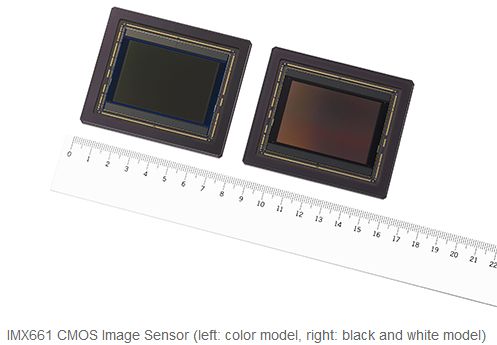
A previous report revealed that Sony led the CMOS Image Sensor market share in 2020, but Samsung is narrowing the gap. The latter recently launched a 200MP ISOCELL HP1 sensor – a reflection of the company’s design policy of pushing the boundaries of existing technologies. The OEM also recently revealed plans to launch a 576MP camera sensor in four years. Sony has been busy as well though and recently unveiled its CMOS IMX661 image sensor with a 127.68MP pixel count.

RELATED:

WhatsApp Pay could soon start offering cashback rewards in India

WhatsApp is one of the world’s largest instant messaging platforms but the Facebook-owned platform doesn’t have a good monetization model, despite having billions of monthly active users globally.

However, the company has been bringing several new features that have the potential to become a revenue stream for the application. One of them is WhatsApp Pay which was officially launched in India last year after being stuck for a couple of years because of regulatory issues with the Indian government.

WhatsApp

Despite WhatsApp being the most used mobile application in India, the payment service built into the app didn’t take off. Now, to encourage more people to use its payment service, the company is reportedly considering offering cashback rewards.

As per the report, the company could be offering a one-time cashback reward of ₹10 (~$0.14) which will be crediting into the account with 48 hours. Also, it could be available only to those who are transacting through WhatsApp Pay for the first time.

The reward suggested for using the payment service is quite low when compared to what other players in the Indian market offered during their initial launch. But there’s a possibility that the reward amount could get increased.

In India, the WhatsApp Pay feature is based on the Unified Payments Interface (UPI) standard — the same system that is used by other payment apps such as Walmart’s PhonePe, Google’s Google Pay, and PayTM, among others.

Do note that the feature is currently under work so whenever the company decides to release it for the users, it could get changed to something else. It’s just speculation from our side, but we expect the feature to get released in the coming weeks or months.

RELATED: 

Upcoming OPPO PFVM10 has Dimensity 700, reveals Geekbench

The mysterious OPPO phone with the PFVM10 model number was approved by the TENAA authority of China earlier this month. The listing revealed the entire specifications and images of the device, but its final marketing name remains a mystery. The PFVM10 smartphone has now emerged in the database of the Geekbench benchmarking site (via). The listing suggests that the company could be internally testing the performance of the device before its official announcement.

OPPO PFVM10 Geekbench listing

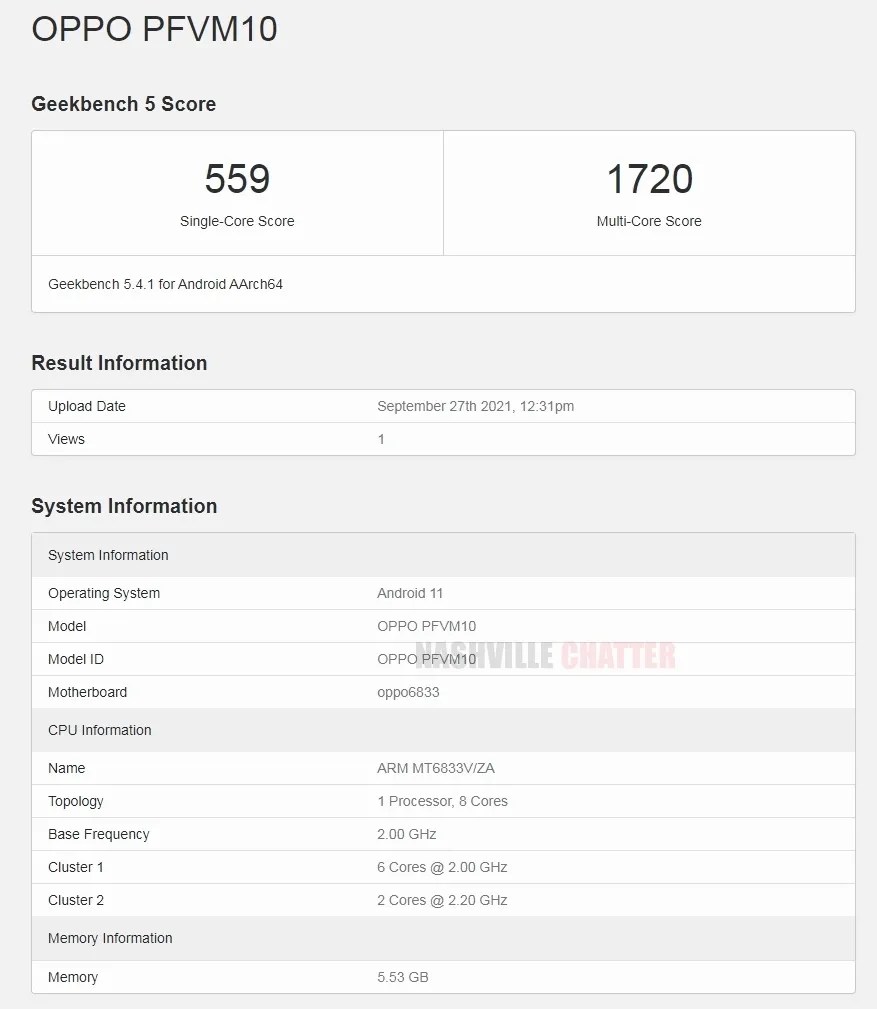
The Geekbench listing reveals that the OPPO PFVM10 will be powered by the MediaTek Dimensity 700 SoC. The chipset is mentioned with its MT6833 model number on the benchmarking site.

OPPO PVM10
OPPO PVM1

The handset is equipped with 6 GB of RAM, and it boots to Android 11 OS. It scored 559 and 1720 points in the single-core and multi-core tests of Geekbench.

OPPO PFVM10 specifications

The TENAA listing of the OPPO PFVM10 has revealed that it has a 6.52-inch teardrop notch display that offers an HD+ resolution of 720 x 1600 pixels. The handset houses a 4,980mAh rated battery, which may come with support for at least 18W fast charging.

The PFVM10 will come with 4 GB / 6 GB of RAM and 128 GB of storage. It will come preloaded with Android 11 OS and ColorOS UI. It has a front camera of 8-megapixel and a 13-megapixel dual-camera system. The handset will also offer a side-facing fingerprint reader and a microSD card slot.

RELATED:

iPhone 13 Pro teardown by iFixit reveals details about Face ID changes & more

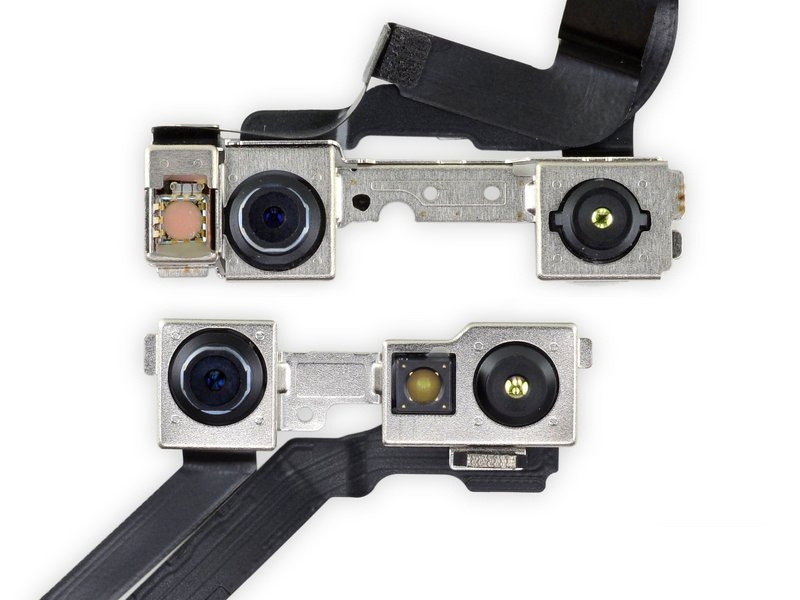
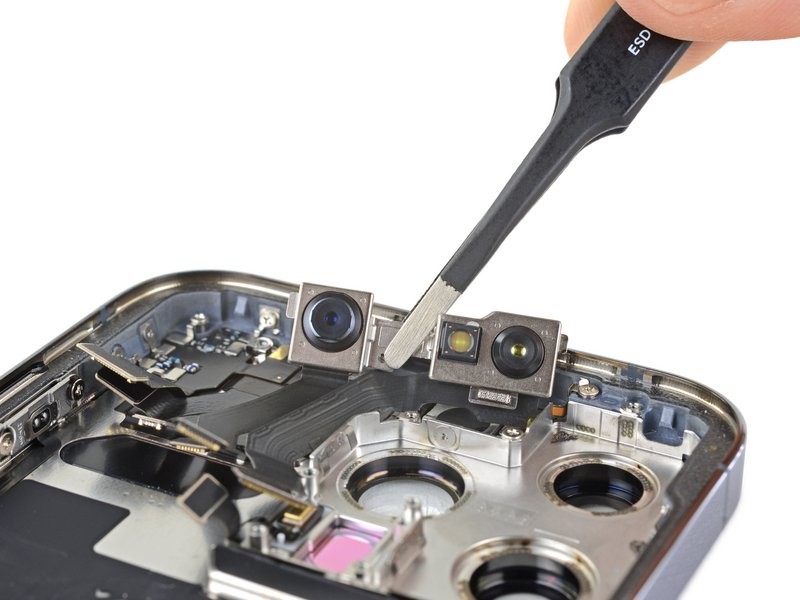
A teardown by iFixit has revealed that the size reduction of the notch across the entire Apple iPhone 13 lineup has been made possible thanks to a new Face ID array that combines the flood illuminator and dot protector into a single module. This is accompanied by the transfer of the earpiece speaker from the notch to the top bezel.

The folks at iFixit had shared these details following a live stream of the in-depth iPhone 13 Pro teardown process on Friday. They also gave the phone a repairability rating of just 5/10, which is down from the 6/10 for the iPhone 12 Pro last year.

iFixit teardown iPhone 13 Pro front camera
Image: iFixit

Further, iFixit explained that the dot projector in the front-facing camera has “moved from the edge to the center of the module this year.” The flood illuminator has been integrated into this new module, thus moved from its previous position in the display. iFixit also confirmed that a display replacement would break Face ID.

“Face ID works even when we disconnected the front sensor assembly. However, any display replacement knocks out Face ID. We tried transferring the sensors from the old display and porting over the Face ID hardware, but no dice. It looks like the display is serial-locked to the phone.”

iphone-13-pro-camera-teardown
Image: iFixit

Apple might also be using a new touch-integrated OLED panel this year in the iPhone 13 Pro, the teardown revealed. The tech basically combines the OLED and touch layers of a display, which reduces cost, thickness, and the materials required.

One particularly annoying change you might have to put up with if you ever decide to take matters into your own hands and attempt an iPhone repair yourself is that the top speaker’s standoff screws are trapped under the logic board. This means that you’ll have to remove the board to swap the speaker. This change has been due to the moving of the earpiece speaker to the top bezel.

iphone-13-pro-camera-featured

All in all, these changes are exactly what has led to the drop in the repairability rating. This, combined with the following red marks against the iPhone 13’s repairability:

  1. No easy way to replace the rear glass. Broken glasses are still a common occurrence despite the improvements in durability over the years.
  2. Software component pairing that needlessly complicates the repair process and reduces the credibility of third-party repairs.

If interested in the complete iFixit iPhone 13 Pro teardown, just head over to this link.

RELATED:

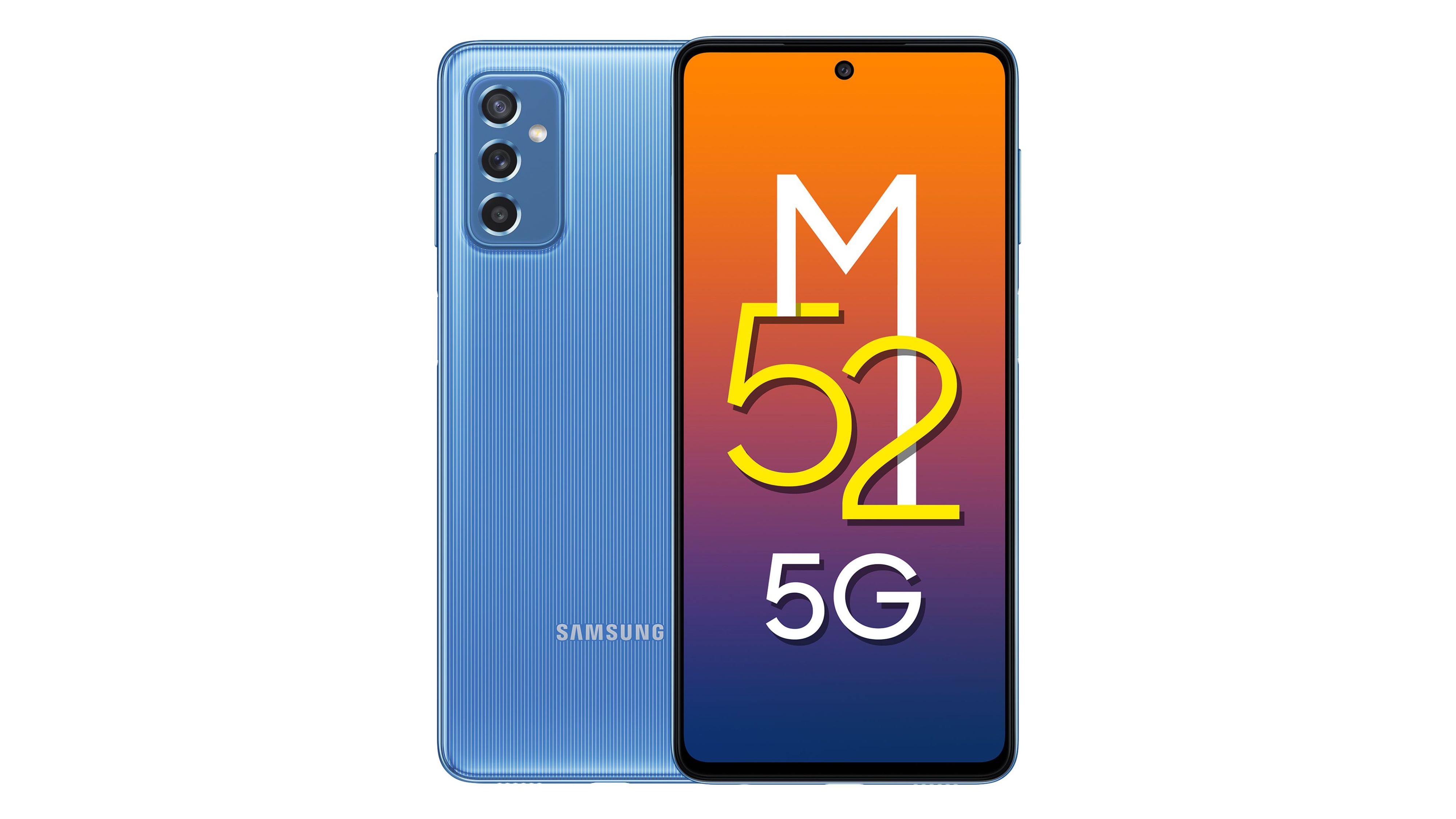
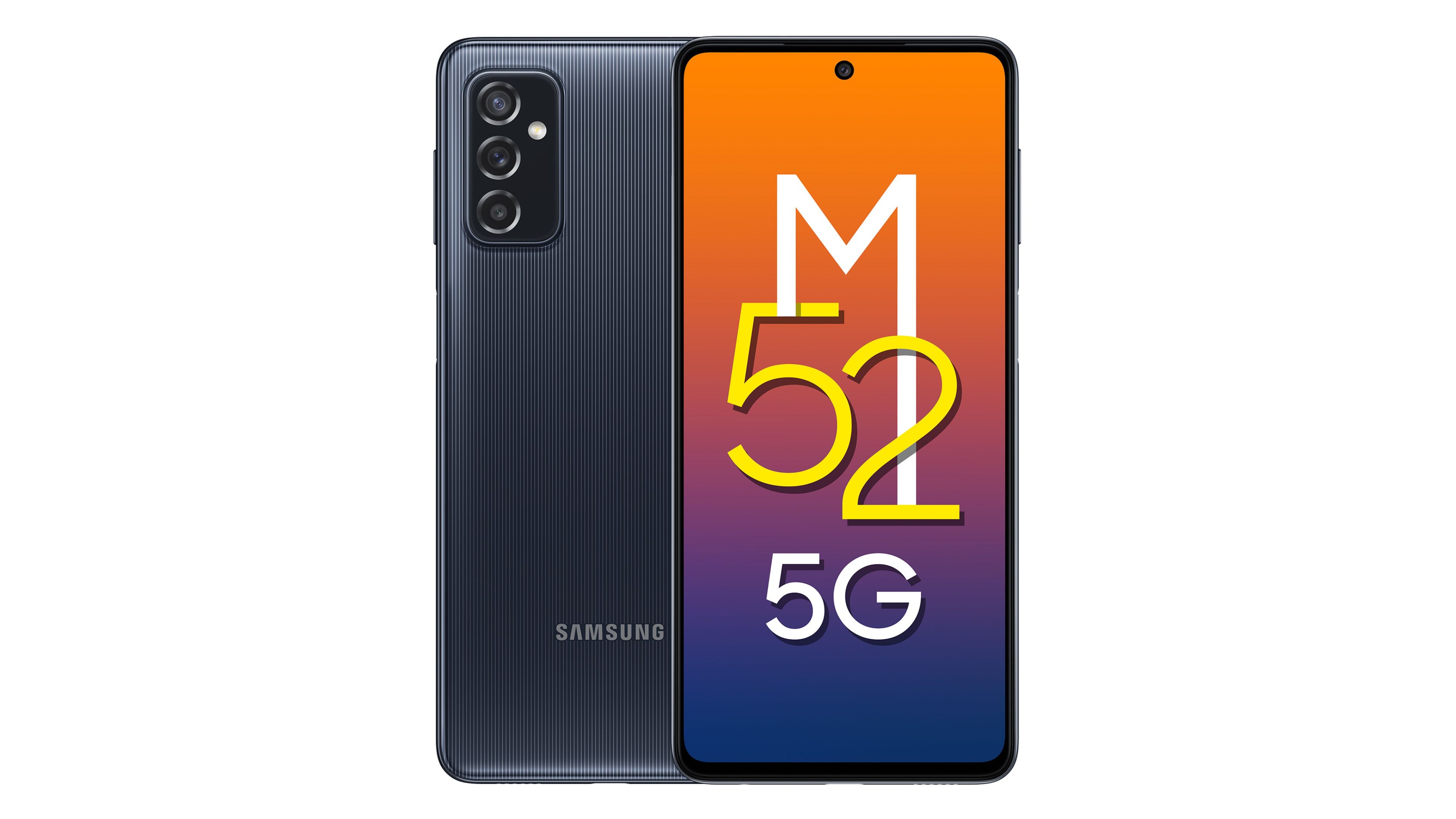
Samsung Galaxy M52 5G launched in India with Snapdragon 778G, 120Hz AMOLED display, and more

Last week, Samsung quietly unveiled the Galaxy M52 5G in Poland. Today, as scheduled, the company has launched the smartphone in India. The successor of Galaxy M51 brings big upgrades and it is almost on par with the expensive Galaxy A52s 5G with certain shortcomings.

Samsung Galaxy M52 5G Icy Blue Featured A

Samsung Galaxy M52 5G Price and Availability in India

The Samsung Galaxy M52 5G in Icy Blue and Blazing Black color options will retail for the following price tags in India.

  • 6GB + 128GB – ₹29,999 ($405)
  • 8GB + 128GB – ₹31,999 ($432)

For a limited time, during the Amazon Great Indian Festival sale, the device will be sold at discounted price tags of ₹26,999 ($364) and ₹28,999 ($391).

The Galaxy M52 5G will be available via Amazon India, Samsung.com, leading online portals, and select retail stores from October 3.

Samsung Galaxy M52 5G Specifications and Features

The Galaxy M52 5G features a plastic build like any other Galaxy M series phone. The rear panel has pinstripes just like on the Galaxy F62, which is also known as Galaxy M62 in some markets.

The handset flaunts a 6.7-inch sAMOLED+ Infinity-O display with a resolution of 1080 x 2400 pixels (FHD+), 16 million colors, a 120Hz refresh rate, and a centered punch-hole. The screen is protected by a layer of Corning Gorilla Glass 5.

The device is powered by a Qualcomm Snapdragon 778G chipset paired with 6GB/8GB RAM and 128GB internal storage. If needed, the storage can be expanded via a MicroSD card.

Samsung Galaxy M52 5G Blazing Black Featured A

Further, the phone sports a triple camera setup on the back consisting of a 64MP primary sensor, a 12MP ultra-wide unit, and a 5MP macro snapper. Whereas, on the front, it has a 32MP shooter for selfies and video calls.

On the connectivity front, the handset supports dual-SIM, 5G (11 bands), dual-band WiFi, Bluetooth 5.0, GNSS, NFC, and a USB Type-C port. Unfortunately, despite being a budget smartphone, it lacks a 3.5mm headphone jack. However, it does come with a side-mounted fingerprint sensor.

As far as software is concerned, it runs One UI Core 3.1 based on Android 11 with Knox security. It draws power from a 5,000mAh, which can be charged at a maximum rate of 25W, however, Samsung only bundles a 15W charger in the box.

Last but not least, the Galaxy M52 5G measures 7.4mm in thickness, weighs 173, and features all the essential sensors like an accelerometer, ambient light sensor, gyroscope, compass, and proximity sensor.


RELATED:


Xiaomi Mi Notebook Pro X 14 goes on sale in China for 7,499 yuan ($1,162)

Xiaomi’s new laptop — Mi Notebook Pro X 14 is now officially available for purchase in the company’s home market of China. It is priced at 7,999 yuan and but is currently on sale at a discounted price of 7,499 yuan, approximately $1,162.

The laptop is said to be using mobile phone-grade manufacturing technology and is made up of 6-series aviation-grade aluminum alloy and the product uses CNC integrated carving technology. It weighs around 1.6 kilograms and measures 16.5mm thick.

Xiaomi Mi Notebook Pro X 14

As for the specifications, the device features a 14-inch display with a 2.5K (2560 x 1600 pixels) screen resolution that supports a 120Hz refresh rate and offers a 16:10 aspect ratio, 221ppi pixel density, and 100% sRGB color gamut.

Under the hood, it is powered by the 11th generation Intel Core i7-11370H processor, coupled with NVIDIA GeForce RTX 3050 graphics processor. The laptop comes packed with up to 16GB LPDDR4x 4266MHz high-frequency dual-channel RAM and 512GB PCIe high-speed storage. There’s a Thunderbolt 4 port, two USB-C ports, and a 3.5mm audio jack.

The laptop also comes with a fingerprint sensor integrated into the power button for added security measures. In the software department, the device comes pre-installed with the Windows 10 operating system and is likely to soon get updated to the latest Windows 11.

It also supports the MIUI+ feature that bridges the gap between a Xiaomi smartphone and a Windows PC. The device also supports Wi-Fi 6 and Bluetooth in terms of connectivity options and comes with a 130W power adapter.

RELATED: 

Huami Amazfit GTR 3 and GTS 3 series wearable devices launching on October 12

Huami has today confirmed that it will be hosting Amazfit 2021 Global Annual New Product Launch Conference on 12th October where the company will be launching the Amazfit GTR 3 and Amazfit GTS 3 series wearable devices.

As the name itself indicates, the devices will be launched as the successor of the Amazfit GTR 2 series and GTS 2 series smartwatches that were launched last year.

Huami Amazfit GTR 3 and GTS 3 Launch Event

While the company has not revealed what the upcoming wearable products pack in terms of features and specifications, some details are already known because of leaks. The GTR 3 was recently spotted on Brazilian regulator Anatel’s database with model number A2035, showcasing the same circular body as its predecessor and two buttons on the right side.

Like many other smartwatches, this one too will come with support for heart rate monitoring and blood oxygen sensor. It remains to be seen if the company upgrades the heart rate sensor to include blood pressure measurement.

It is also being claimed that the Amazfit GTR 3 is water-resistant up to 5ATM and is powered by a 440mAh battery, which should be enough to make the device run for about two weeks on a single charge.

To know more about these upcoming smart wearable products from Amazfit, including features, specifications, pricing, and availability, we will have to wait for the official launch event which is scheduled to take place in a couple of weeks.

RELATED: 

POCO C31 key specifications, design revealed

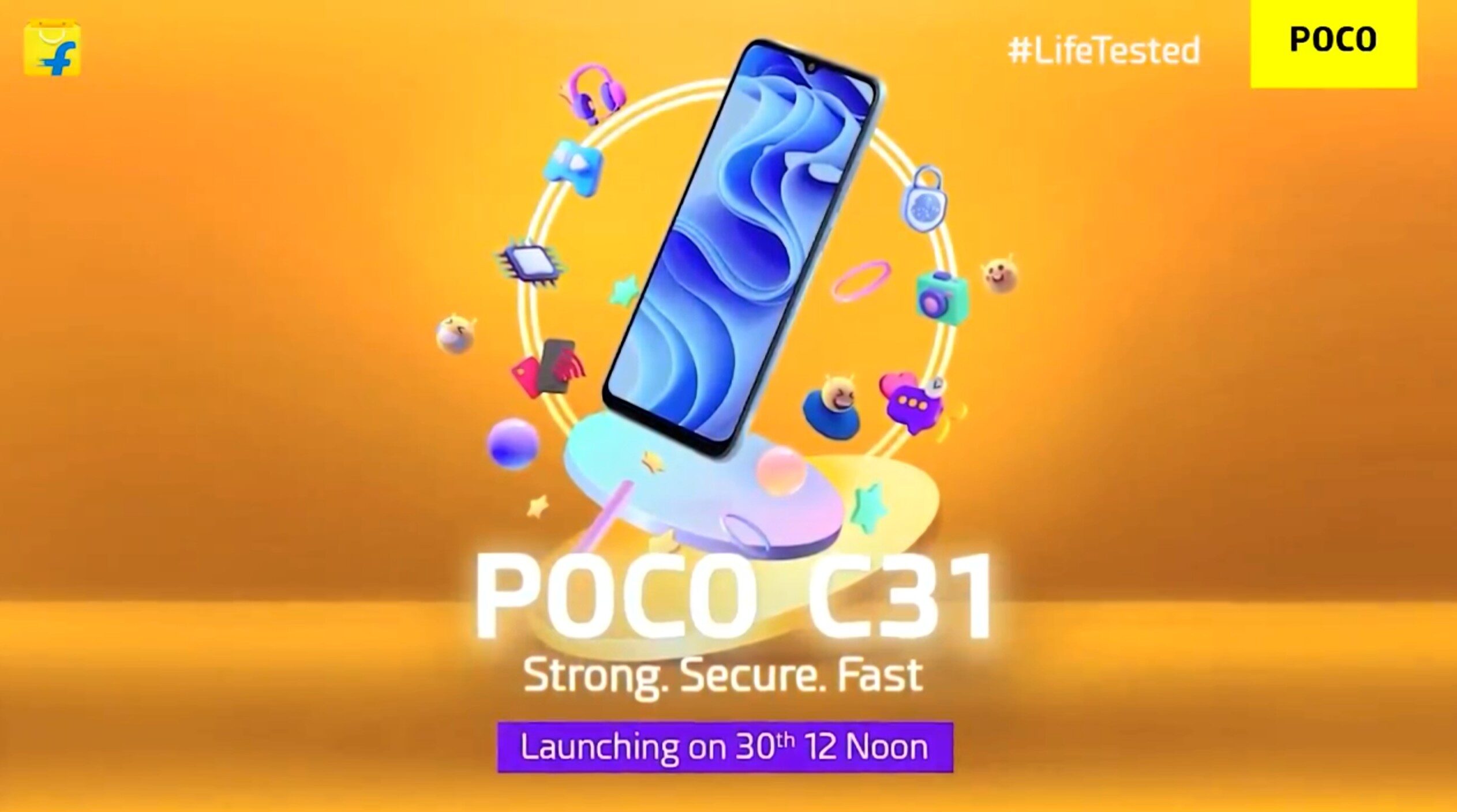
POCO will be announcing the POCO C31 smartphone on Sept. 30 in India. As the name goes, it will be arriving as an updated version of the POCO C3. The landing page of the C31 available has now been updated with its key features.

The POCO C31 will be arriving with a teardrop notch display with a slightly thick chin. The handset will be driven by the Helio G35 chipset and 4 GB of RAM.

The handset will be backed by offering a long battery life. Some of the other features that will be available on the device include reinforced corners, a fingerprint scanner, and face unlock. Its other details are under the wraps.

POCO C31 featured

It appears that the POCO C31 may borrow most of its specs from the POCO C3. The C3 lacked a fingerprint scanner, but the C31 will come equipped with it. In addition, it may come with slight improvements in the design.

POCO C3 specifications

The POCO C3 has a 6.53-inch IPS LCD HD+ display, a 5-megapixel front camera, and a 13-megapixel (main) + 2-megapixel (macro) + 2-megapixel (depth) triple camera unit. The MIUI 10 based Android 10 OS comes preinstalled on the device.

The C3 features the Helio G35 chip, up to 4 GB of RAM, and 64 GB of storage. It is backed by a 5,000mAh battery that supports 10W charging.

RELATED:

Vivo Y15s 2020 moniker spotted at SIRIM

In August, a Vivo phone with model number V2120 was spotted at the Geekbench benchmarking site. The same model has appeared at the Malaysian SIRIM certification site to reveal that it may debut in the market with the Vivo Y15s 2020 moniker.

The V2120 was previously seen with the Vivo Y15s moniker at the IMEI database. However, the SIRIM listing suggests that it could be called Vivo Y15s 2020 when it arrives in the market. Unfortunately, no new information on the specs of the device is available yet.

The Vivo Y15s 2020’s Geekbench listing had revealed that it could be arriving with the Helio P35 or G35 chipset and 2 GB of RAM. This indicates that the device may run on Go edition of the Android 11 OS.

The handset has also been spotted at China’s CQC certification. It revealed that it may carry support for 10W charging. It has also received approval from the FCC certification. With a couple of certifications under the belt, it seems that it may take only a few weeks for the smartphone to go official. Hopefully, newer reports will reveal more information about the smartphone.

In related, Vivo is also working on the Vivo V23 series of smartphones. Earlier today, the Vivo V23e handset was spotted at the Bluetooth certification site. This indicates that the V23e may go official in October or November.

RELATED:

Vivo V23e receives Bluetooth certification, launch seems near

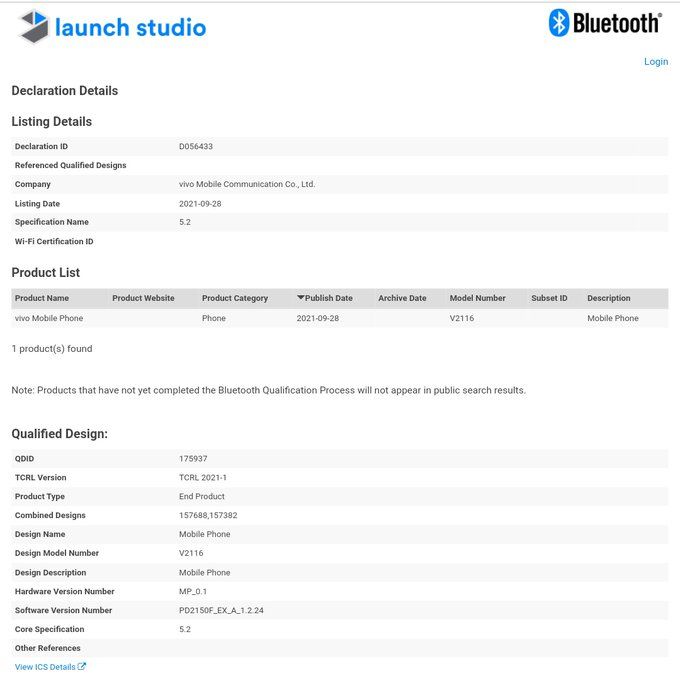
Back in July, a Vivo phone with model number V2116 was spotted at the IMEI database with the Vivo V23e name. The listing suggested that the Chinese manufacturer will be announcing it in the coming months as the successor to the Vivo V21e that debuted earlier this year. Today, the V23e appeared in the database of the Bluetooth SIG authority. The listing suggests that it may go official as early as next month.

Before appearing at Bluetooth SIG, the V23e has also been spotted at other certification sites like Indonesia’s TKDN and Europe’s EEC. The Bluetooth SIG listing only reveals that the smartphone will come with support for Bluetooth 5.2.

Vivo V23e Bluetooth SIG

The latest version of Bluetooth 5.2 suggests that it could be equipped with a powerful chip. The Vivo V21e had arrived with Snapdragon 720G. Probably, the V23e could be featuring a more powerful Snapdragon 7-series chip. The existence of the V23e also indicates that the arrival of other Vivo V23 series of smartphones may not be far away.

The Vivo V21e is available in 4G and 5G versions with some differing specs in India. As far as the V23e is concerned, the company may release it only in a 5G version.

Vivo V21e and V21e 5G specifications

The Vivo V21e has a 6.44-inch AMOLED FHD+ display. It has a front camera of 44-megapixel, and its rear panel is fitted with a 64-megapixel (main) + 8-megapixel (ultrawide) + 2-megapixel (macro) triple camera unit.

The Android 11 OS with FunTouch OS 11.1 comes preinstalled on the V21e. The Snapdragon 720G powered phone has 8 GB of RAM and 128 GB of storage. It is backed a 4,000mAh battery that supports 33W fast charging. It also features an in-display fingerprint scanner.

The V21e 5G has a Dimensity 700 chip and a 4,000mAh battery, which supports 44W fast charging. It has a 32-megapixel front camera and a 64-megapixel + 8-megapixel dual-camera system. It features a 6.44-inch AMOLED FHD+ display with an in-screen fingerprint scanner.

(via)

RELATED:

Apple launches a Limited Edition Beats Studio3 Wireless Headphones

Apple-owned Beats has launched a new A-Cold-Wall Beats Studio3 Wireless headphone with a pure ANC and is presented by Samuel Ross. This product packs the iconic Beats Studio3 Wireless headphone silhouette with a slate color palette covering both the headphones and ear cushions.

apple-beats-headphones

The Beats Studio3 headphones have already been listed on Apple online store but are still tagged as “Coming Soon”. Unlike the Beats Studio Buds, the Beats Studio3 Wireless uses Apple’s own W1 chip for seamless setup and pairing with Apple devices and offers an unbelievable 22 hours of battery juice with Pure ANC on. It is also possible to power up these headphones for 10 minutes and get 3 hours of runtime in return, thanks to the Fast Fuel technology.

Some of the highlights of the new offering by Apple are the Pure Active Noise Cancelling, real-time audio calibration that ensures a premium listening experience, Apple W1 chip for Class 1 Wireless Bluetooth connectivity, and battery efficiency. Pure ANC-off for low-power mode provides up to 40 hours of battery life. Take calls, control music, and activate Siri with multifunction on-ear controls. And most importantly, soft over-ear cushions for extended comfort and added noise isolation.

This limited Studio3 Wireless will cost $349.95 and can be brought here.

Related:

[embedyt] https://www.youtube.com/watch?v=ax9sOYxbhPs[/embedyt]

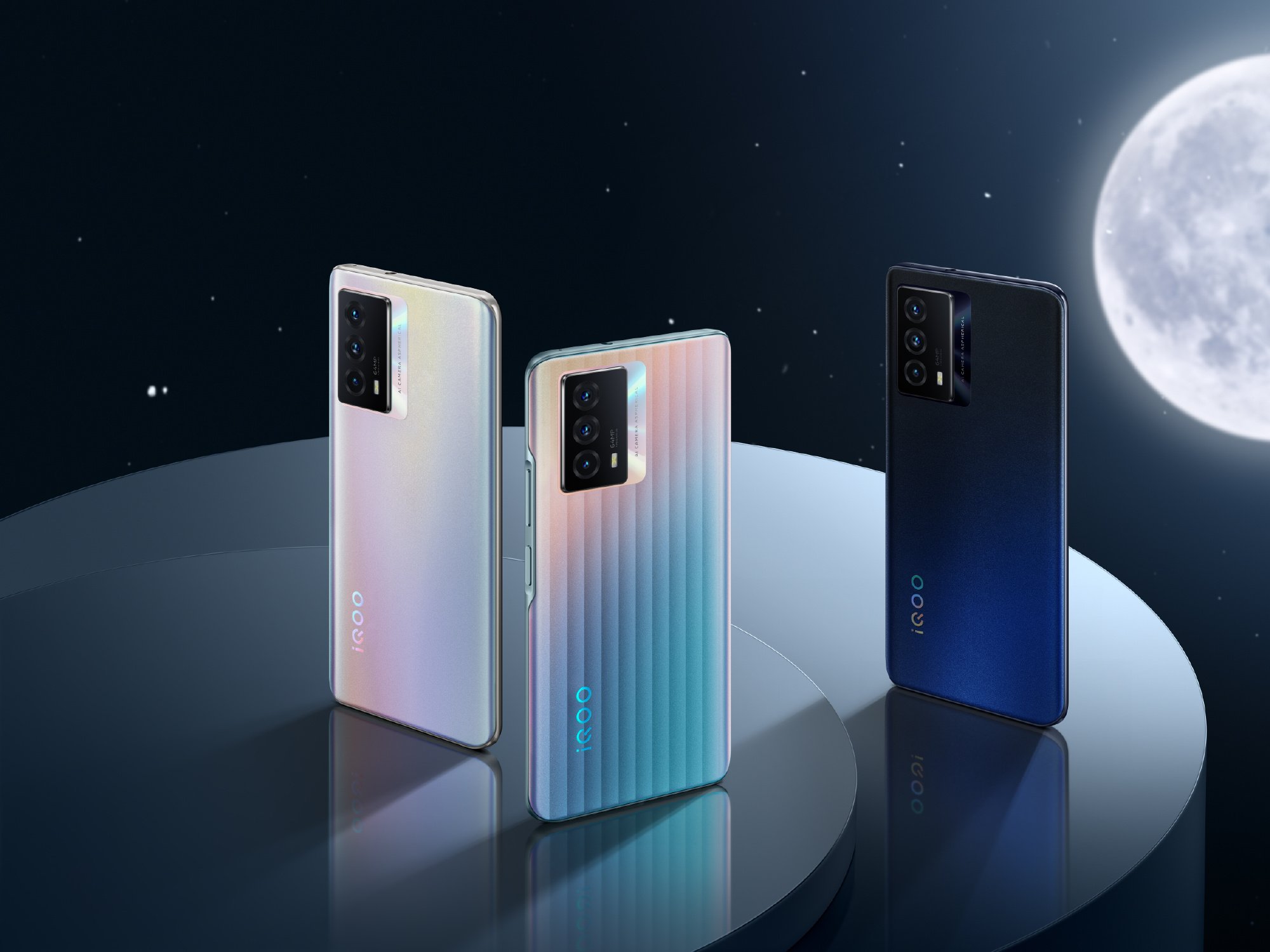
iQOO Z5 5G smartphone goes on sale in China; price starts at 1,799 yuan ($279)

Last week, iQOO, Vivo’s sub-brand for premium smartphones had announced its latest smartphone in the Chinese market — iQOO Z5. Today, the device official goes on sale in the country for a starting price of 1,799 yuan (~$279).

The 8GB RAM and 128GB storage model is priced at 1,899 yuan but will be available for a discounted price of 1,799 yuan. Another model that packs 8GB RAM and 256GB internal storage costs 2,099 yuan (~$325).

The top-end model in the Z5 lineup, which comes packed with 12GB RAM and 256GB storage is priced at 2,299 yuan (~$356). The phone comes in three color options — Blue Origin, Twilight Dawn, and Dream Space.

iQOO Z5 5G Smartphone

The iQOO Z5 5G features a 6.67-inch IPS LCD display that offers a 20:9 aspect ratio, a 1080 x 2400 pixels Full HD+ screen resolution, up to 120Hz of refresh rate, a 240Hz touch sampling rate, and a 1500:1 contrast ratio.

It also supports HDR10 and P3 color gamut and offers a screen-to-body ratio of 91.36 percent. Under the hood, it is powered by the Qualcomm Snapdragon 778G chipset with up to 12GB RAM and 256GB storage. It has a flagship-level VC liquid-cooling system that offers a total heat dissipation area of 28837mm2.

Coming to the camera department, the device comes with a 64-megapixel primary camera having f/1.79 aperture, coupled with an 8-megapixel ultra-wide lens and a 2-megapixel macro camera. On the front side, the device features a 16-megapixel snapper for taking selfies and video calling.

The smartphone is running the Android 11 operating system out-of-the-box with OriginOS 1.0 for iQOO. It is powered by a 5,000mAh battery that carries support for 44W fast charging. The company claims that it can gain 50 percent battery power by charging the device for only 26 minutes.

RELATED: