Last year, Xiaomi announced the Xiaomi Mi 10T and Mi 10T Pro affordable flagship phones in October, and both phones were made available for purchase in October. It appears that the company could be now gearing up to launch the Mi 11T series. The reason behind it is that the Mi 11T Pro has been certified by Thailand’s National Broadcasting and Telecommunications Commission (NBTC) today.
The NBTC listing confirms that the Xiaomi phone with model number 2107113SG will be heading to Thailand with the Xiaomi Mi 11T Pro moniker. This model number belongs to the global variant of the device. The listing does not reveal any of the major specs of the phone but confirms that it carries support for 5G connectivity.
#Xiaomi Mi 11T Pro 5G receives NBTC certification.
Rumors have it that the Mi 11T Pro will be sporting an OLED panel with a punch-hole design that offers a refresh rate of 120Hz. The flagship phone will come equipped with the Snapdragon 888 mobile platform.
The Mi 11T Pro may house a 5,000mAh battery that supports 120W rapid charging. It will come preinstalled with MIUI based Android 11 OS and it will carry support for NFC connectivity.
The Mi 10T Pro sported a 108-megapixel triple camera system. Hence, it is likely that the successor model may come equipped with an enhanced 108-megapixel triple camera unit.
The Mi 11T is likely to sport the same OLED 120Hz screen and it may feature the Dimensity 1200 chip. Its rear camera setup may feature a 64-megapixel primary snapper. This phone may get rebranded as a Redmi device in China.
Earlier this month, we reported that two new Meizu phones have been certified by TENAA. The appearance of the two phones came as a surprise since Meizu’s recently-adopted strategy is to release only two flagship phones in a year. Now that may be changing this year according to a new leak.
Meizu 18
News from China courtesy of the Weibo leaker, Bald Panda, has revealed that Meizu has another flagship coming, one that will be more powerful than the Meizu 18 series which launched earlier this year. We want to believe that one of the two recently-certified devices is this new flagship.
Since the source says the new flagship will be more powerful, we can expect the phone to be powered by the Snapdragon 888 Plus processor which manufacturers are using for their second-half flagship phones.
We do not yet know what the new Meizu phone will be called however we do have a few guesses. Meizu may decide to go with Meizu 18s or Meizu 18T if this is a slight refresh to the Meizu 18 from earlier this year. It may also decide to go with a different name entirely. More details about the phone should surface in the weeks leading up to its launch.
The second of the two devices may be a more affordable version with a Snapdragon 870 or Dimensity 1200 processor.
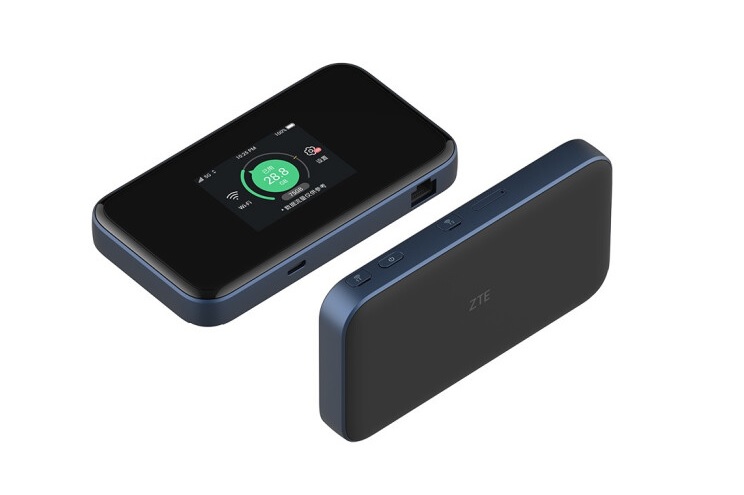
ZTE has a new portable Wi-Fi router that packs some pretty interesting features. The router which has a 5G SIM slot also has a touch display that allows the user to operate the device instead of via a WebUI interface on your phone or computer or the companion app.
Called the ZTE Portable Router MU5001, the router has a dual-color design. The top and back are black while the frame is metallic blue. It is also pretty thick, which is not surprising considering it has a gigabit Ethernet port on one side and also packs a 4500mAh battery. Despite its size, it will still easily fit into your pocket.
The SIM tray is at the top, and just like most smartphones today, you will need a SIM ejector tool to be able to access it. The top is also where the power button and two slots for external antennas are placed.
The ZTE Portable Router MU5001 is an AX1800 router with support for both NSA and SA 5G networks as well as 4G networks. It has a Snapdragon X55 modem under its hood with a peak download speed of up to 3.8Gbps.
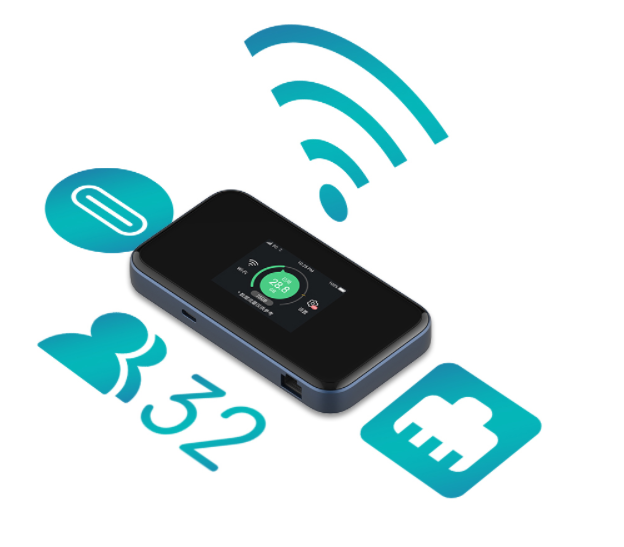
ZTE says a maximum of 32 users can be connected to the router via the three interfaces i.e. Wi-Fi, ethernet, and the USB-C port combined. Thanks to the 2.4-inch touchscreen, you don’t need to log in to the WebUI or launch the ZTElink app to check details such as network strength, connected devices, battery level, and data consumed.
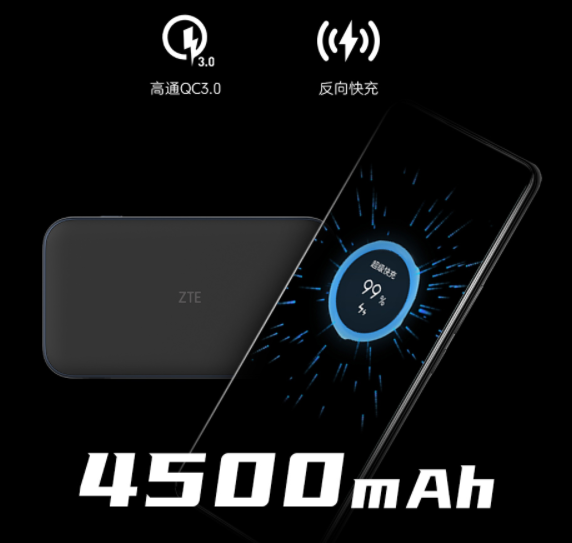
The 4500mAh battery will last up to 8 hours on a single charge. The portable router also has support for Quick Charge 3.0 fast charging – a full charge will take 150 minutes. Users can also use the ZTE Portable Router MU5001 to charge their phones as it has support for 10W reverse charging.
Interested buyers can pick up the ZTE Portable Router MU5001 on JD.com where it sells for ¥2499 (~$384).
The Mi TV 5X is one of the products that Xiaomi will announce in India on Thursday at its Smarter Living 2022 event. Ahead of its release, the official Mi TV India social media channels have been teasing features of the smart TV. The latest is about its speakers.
Apart from having great picture quality, a TV should also have great speakers, which explains Xiaomi’s latest teaser that reveals that the Mi TV 5X will pack 40W stereo speakers.
Powerful, class-leading sound with 40W stereo speakers are sure to leave you mesmerized🤗 Close your eyes 👀 and be transported. Sound has never sounded this powerfully good 😉#MiTV5X#SmarterLiving2022pic.twitter.com/V3ICrZm6Q1
Xiaomi revealed earlier that the TV will have Dolby Atmos, so the new TV should provide a premium audio experience when watching movies, documentaries, and your favorite TV show.
A Xiaomi official also tweeted that the speakers are also “the biggest ever on any Mi TV”. While that isn’t true as the Mi TV 6 Extreme Edition boasts 100W speakers, the Mi TV 5X’ speakers are sure bigger than the 30W speakers inside the Mi QLED TV 75, its most expensive TV available in India
So far, we know the Mi TV 5X will have a tri-bezel-less design, a 4K display, Dolby Atmos, and run Android TV out of the box. We do not know how much it will cost considering TVs are now a lot more expensive in India. The Mi TV 4X 55 launched for ₹34,999 (~$471) in November 2019 and now sells for ₹44,999 (~$605).
Our exclusive report from last week revealed that Xiaomi will be holding a global launch for the Xiaomi Mi 11T series on Sept. 23. The company is expected to replace last year’s Mi 10T and Mi 10T Pro smartphones with the Xiaomi Mi 11T and Mi 11T Pro, respectively. A Chinese tipster has shared the key specifications of the Mi 11T duo to reveal what to expect from it. The new information just reiterates what has appeared in the recent leaks.
According to the tipster, the Xiaomi Mi 11T will be sporting a 120Hz display and it will be powered by the Dimensity 1200 chipset. Its rear camera setup will be led by a 64-megapixel camera. The Mi 11T Pro will feature a 120Hz OLED panel and it will be driven by the Snapdragon 888 SoC. It may house a 5,000mAh battery that supports 120W rapid charging. Probably, the vanilla model will be also flaunting an OLED panel. To recollect, the Mi 10T and Mi 10T Pro phones from last year featured a 144Hz LCD screen.
Xiaomi Mi 10T Pro
Last year, Xiaomi rebranded the Mi 10T as the Redmi K30S in China. Probably, the Mi 11T may hit the Chinese market with Redmi K40S or some other name. It is unclear whether a rebadged version of the Mi 11T Pro will be made available in China.
The other details of the Mi 11T duo are under wraps. Now that it is speculated to launch in September, the rumor mill is likely to spill more information on the Mi 11T and 11T Pro in the coming weeks.
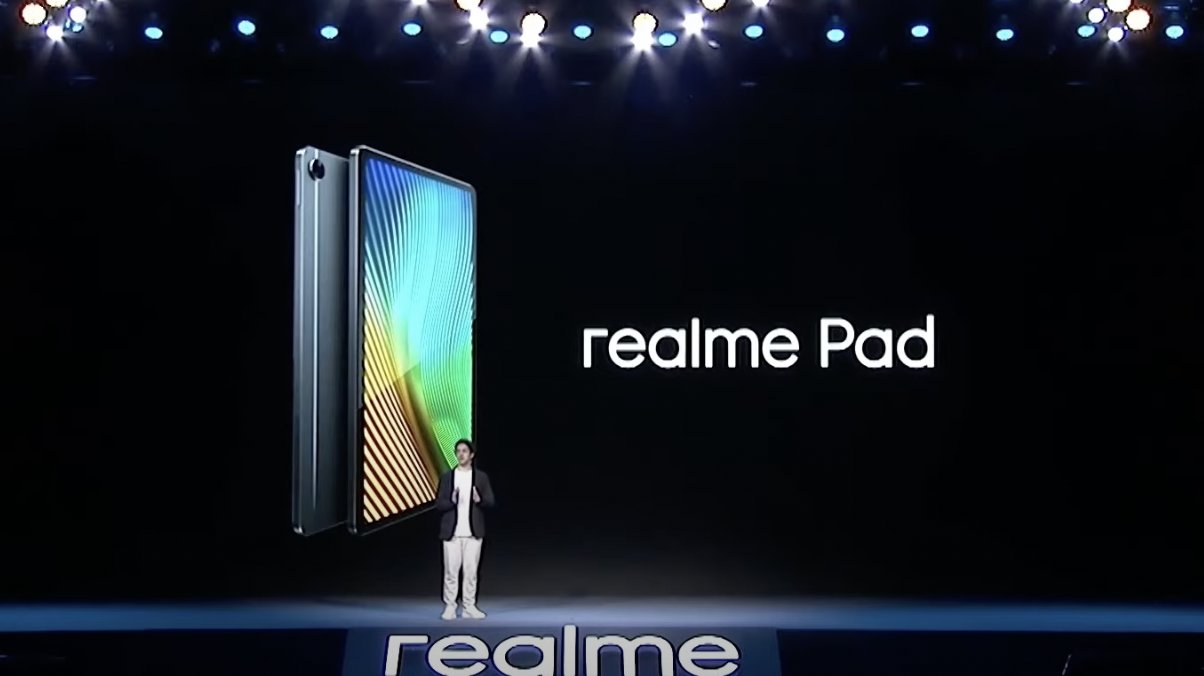
Recently, Realme gave a look at the Realme Pad while announcing the Realme GT series of smartphones and Realm Book notebooks in India. The company confirmed that the tablet will come equipped with an AMOLED panel. Previous reports have revealed some of its other details such as battery size and camera configurations. A Chinese tipster has now shared the key specifications of the Realme Pad.
According to the tipster, the Realme Pad will be sporting a 10.4-inch AMOLED panel and it will be powered by a 7,100mAh battery. It will be equipped with a single camera on the back. For audiophiles, Realme’s first tablet will come equipped with quad speakers. As previous reports have revealed, the device measures 246 x 156 x 6.8mm.
Past reports have claimed that its rear side will feature an 8-megapixel camera with autofocus, whereas its front will be fitted with a fixed focus 8-megapixel camera. The table may come with 6 GB of RAM and 64 GB of storage.
The rumor mill is yet to reveal the processor of the Realme Pad. Hence, it is unclear whether the device will carry support for 5G connectivity. It is speculated that the tablet will be available in Wi-Fi only and Wi-Fi + LTE variants. It is likely the Realme Pad may carry support for a stylus. The leaked renders of the device have revealed that it may come in at least two colors like grey and gold. Probably, the company may take off the covers from its first tablet in the coming month.
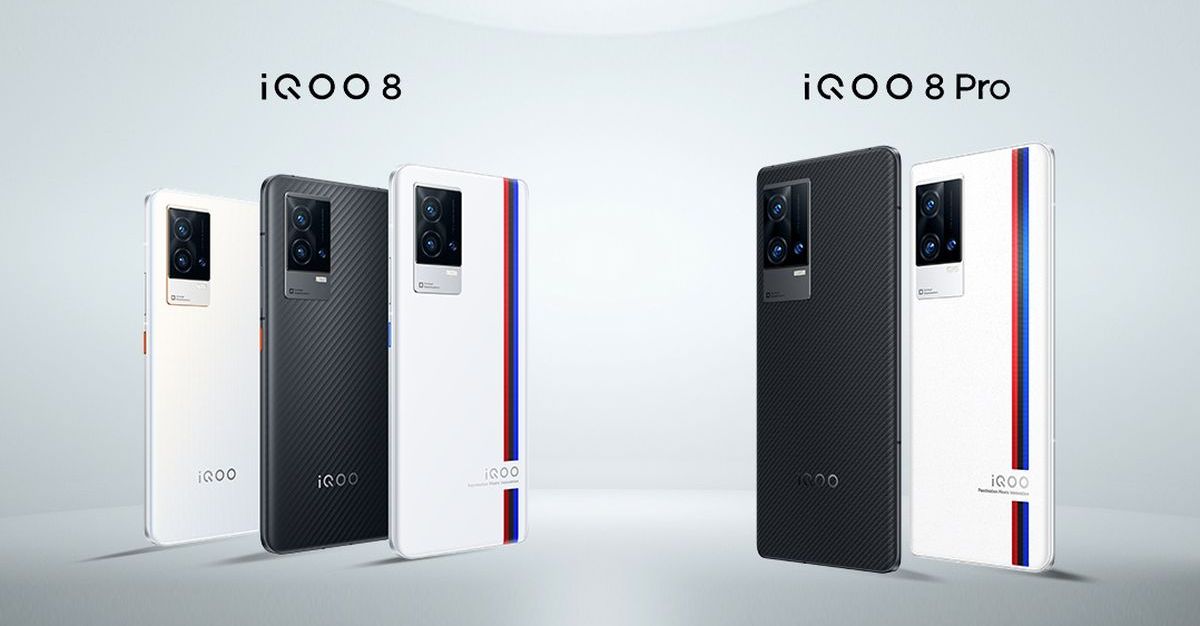
Earlier this month, iQOO unveiled the iQOO 8 and iQOO 8 Pro flagship phones in China. Before the launch event, an iQOO phone with model number I2019 was spotted at the IMEI database. At that time, it was speculated that it could be an Indian variant of the iQOO 8. Now, an Indian tipster has claimed that the company will be launching the iQOO 8 as early as next month in India.
According to the tipster, the iQOO 8 will be debuting in India in September. He expects the phone to go official by the middle of the month. The tweet does not clearly mention whether the iQOO 8 Pro will also break alongside the iQOO 8.
iQOO 8 and iQOO 8 Pro
iQOO 8 and iQOO 8 Pro specifications
The iQOO 8 has a 6.56-inch AMOLED FHD+ 120Hz flat screen, whereas the Pro model gets a 6.78-inch AMOLED QHD+ 120Hz LTPO display with curved edges. While the former is powered by the Snapdragon 888 SoC, the latter gets the more powerful Snapdragon 888 Plus mobile platform. The iQOO 8 series ship with up to 12 GB of LPDDR5 RAM and up to 512 GB of UFS 3.1 storage.
The iQOO 8 and 8 Pro features a 16-megapixel front camera. The vanilla model has a 50-megapixel (main) + 13-megapixel (telephoto) + 13-megapixel (ultrawide) triple camera unit, whereas the Pro variant has a 50-megapixel (main with gaming stabilization) + 16-megapixel (telephoto) + 48-megapixel (ultrawide) triple camera unit. The iQOO 8 has a 4,350mAh battery that supports 120W charging, whereas the iQOO 8 Pro houses a 4,500mAh battery with 120W charging, 50W wireless charging, and 10W reverse wireless charging.
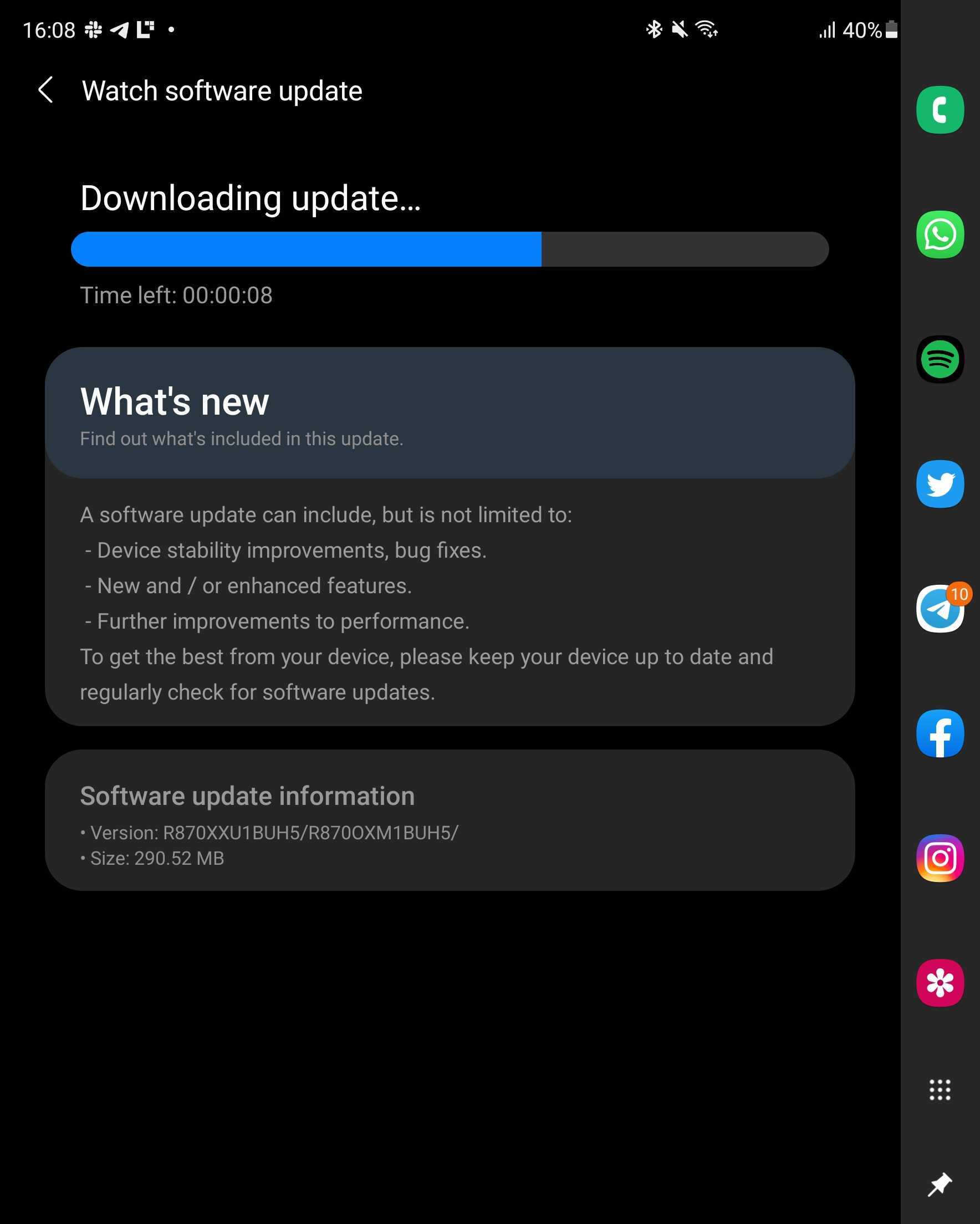
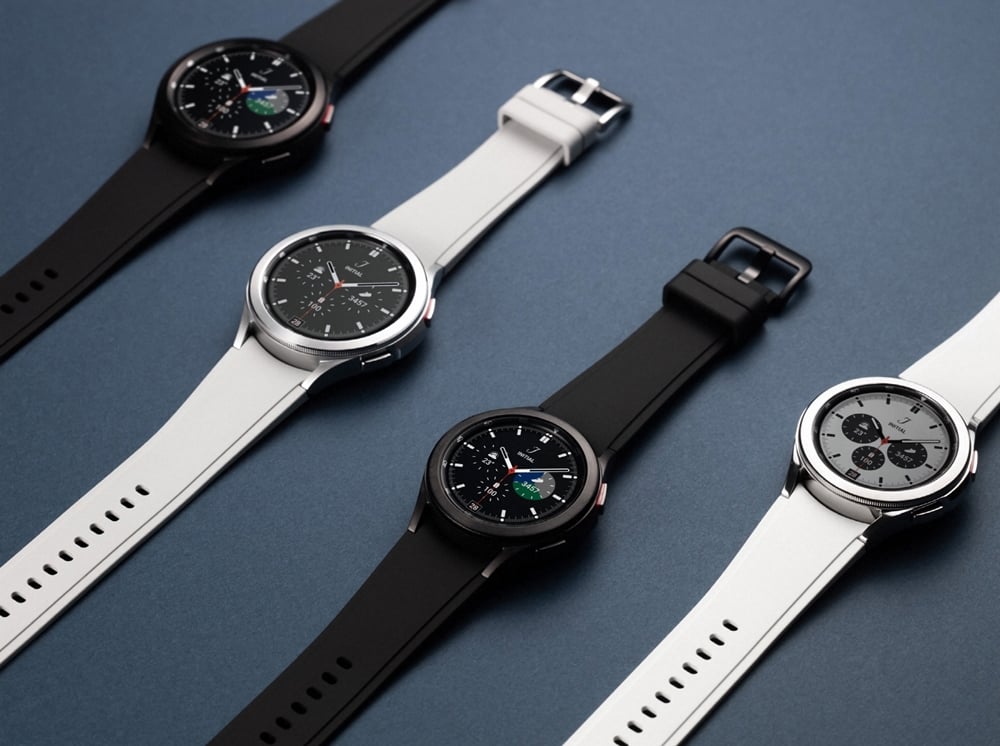
Earlier this month, Samsung launched the Galaxy Watch 4 series including the Watch 4 and Watch 4 Classic in the global markets. The new smartwatches are yet to be shipped and ahead of it, Samsung seems to have already pushed a firmware update for these watches.
According to the update log, the firmware version is R8xxXXU1BUH5 and it has a size of 290.52MB. The update will enhance the watch’s stability. It includes bug fixes, enhancements to current functions, and an overall improvement in performance.
Given that the software upgrade rolled out immediately after the launch, it appears that Samsung is committed to the support of the new smartwatches.
The Samsung Galaxy Watch 4 comes in two dials – 40mm and 44mm. On the other hand, the Galaxy Watch 4 Classic has bigger sizes – 42mm and 46mm. The Watch 4 has a 1.19-inch AMOLED display and runs on OneUI Watch 3(based on WearOS 3). It has a display resolution of 396 x 396 pixels. The Watch 4 Classic sports a 1.36-inch panel with 450 x 450 pixels and run on the same OneUI Watch 3 UI.
The series is powered by the in-house 5nm Exynos W920 SoC paired with 1.5GB of RAM and 16GB of onboard storage. The smartwatches come with a Bioactive sensor which has multiple monitoring modes like blood oxygen saturation, electrocardiogram, heart rate monitor, electric heart rate sensor, and bioelectrical impedance analysis sensor. The duo can work for up to 40 hours on a single charge.
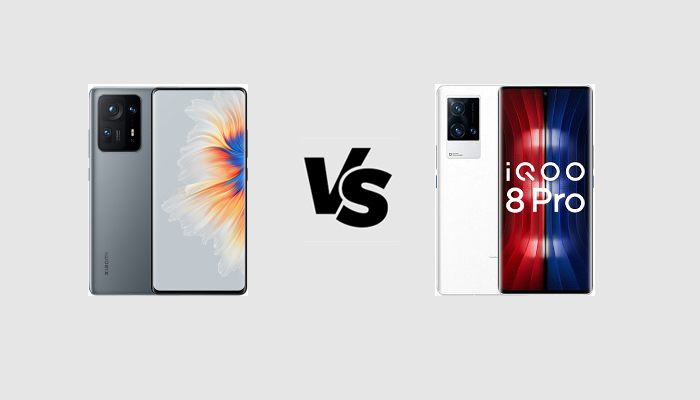
Qualcomm released the powerful Snapdragon 888+ mobile platform and the main smartphone manufacturers started releasing their phones with the new flagship SoC. The Xiaomi Mi Mix 4 is one of them, alongside the iQOO 8 Pro by Vivo’s sub-brand. These phones are both excellent flagships for gamers and even for those who search for good displays and camera performance. But which one offers the most in their respective price ranges? This is a comparison between the main specifications of the Xiaomi Mi Mix 4 and the iQOO 8 Pro.
Triple 108 + 8 + 13 MP, f/1.9 + f/4.1 + f/2.2
20 MP front camera
Triple 50 + 16 + 48 MP
16 MP f/2.4 front camera
BATTERY
4500 mAh, fast charging 120W, fast wireless charging 50W
4500 mAh, fast charging 120W and fast wireless charging 50W
ADDITIONAL FEATURES
Dual SIM slot, 5G, IP53 certification, under-display camera
Dual SIM slot, 5G, reverse wireless charging
Design
The most stunning design belongs to the Xiaomi Mi Mix 4 for two main reasons. The first is the presence of a camera placed under the display, so the screen is not interrupted by any notch or punch hole. Further, the Xiaomi Mi Mix 4 is built with an elegant and sturdy ceramic back. Even when it comes to the build quality, the Xiaomi Mi Mix 4 is one step forward. Its front glass is protected by the Gorilla Glass Victus protection by Corning and the phone is splash proof and dust resistant thanks to the IP53 certification. The Xiaomi Mi Mix 4 also supports the UWB technology which can be used to control other gadgets.
Display
Both these handsets are equipped with awesome displays, but the iQOO 8 Pro is the most impressive, despite it does not have an under-screen camera. The iQOO 8 Pro has an AMOLED panel with a high Quad HD+ resolution of 1440 x 3200 pixels, as well as the LTPO technology which enables an adaptive refresh rate from 1 to 120 Hz. The device also sports the HDR10+ certification and the Dolby Vision support, as well as a wider 6.78-inch diagonal. The Xiaomi Mi Mix 4 has an amazing display with 10-bit color depth, a 120 Hz refresh rate, HDR10+, and Dolby Vision, but its resolution is Full HD+. Both are curved displays including an in-display fingerprint reader and both the phones come with stereo speakers.
Specs & Software
With these phones, you can get exactly the same hardware configuration. It consists of a Snapdragon 888+ mobile platform which is currently the best released by Qualcomm, up to 12 GB of LPDDR5 RAM and up to 512 GB of UFS 3.1 native storage. Unfortunately, the internal storage is not expandable with a micro SD. The phones support 5G connectivity in all its spectrums and they run Android 11 out of the box customized by MIUI 12.5 Enhanced Edition and OriginOS, respectively.
Camera
The camera setup found on the iQOO 8 Pro is slightly more impressive in more photography scenarios. It has a 50 MP main sensor with gimbal stabilization, a 16 MP telephoto sensor with OIS, and a great 48 MP ultrawide camera. The Xiaomi Mi Mix 4 is better if we talk about zoom, due to its periscope sensor offering 5x optical zoom. But the ultrawide camera is inferior with its 13 MP resolution.
Xiaomi Mi Mix 4 and iQOO 8 Pro have exactly the same battery capacity: 4500 mAh. Even the fast charging technology comes with the same power: 120W. It is the same for wireless charging, with a power of 50W. The iQOO 8 Pro offers reverse wireless charging as well, with a power of 10W. Since these phones offer a similar battery life and they are not bad as battery phones, we recommend you to focus on other aspects while choosing between these devices.
Price
The starting price tag of the Xiaomi Mi Mix 4 in China is €660/$772, just like the base variant of the iQOO 8 Pro. But note that the base variant of the Xiaomi Mi Mix 4 has 128 GB of internal storage, while the iQOO 8 Pro starts from 128 GB. At the end of the day, both these phones are amazing and which one to buy depends on your personal needs. The Mi Mix 4 has a more impressive design, while the iQOO 8 Pro has more interesting cameras and a great LTPO display. Which one would you pick?
August has been filled with lots of announcements and product launches. There is no break yet as we enter into the third week of the month, which as the weeks before it, is equally packed with events. Here is what’s coming next week:
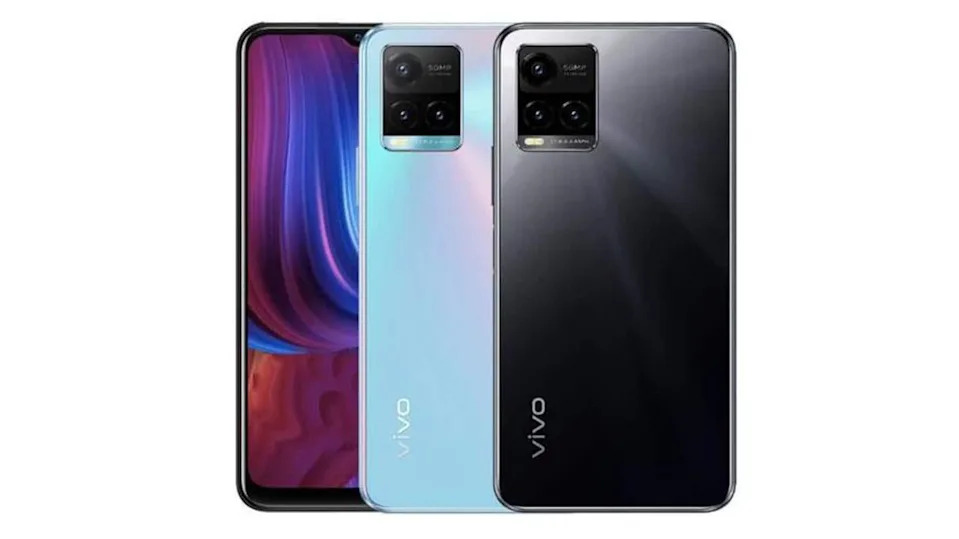
Vivo Y33s – August 23
Vivo will kick off the week with the launch of the Vivo Y33s on Monday, August 23. The mid-range 4G smartphone will be announced via Amazon India and will be powered by MediaTek’s Helio G80 processor. It will also have a 50MP primary rear camera and will pack a 5000mAh battery capacity.
UMIDIGI A11 Pro Max – August 23
UMIDIGI also has a mid-range smartphone launching on Monday, August 23. The A11 Pro Max will have the same Helio G80 chipset as the Vivi Y33s and also 8GB of RAM and 128GB of onboard storage. You also get a massive 5150mAh battery. UMIDIGI will make the phone available to buyers via AliExpress.
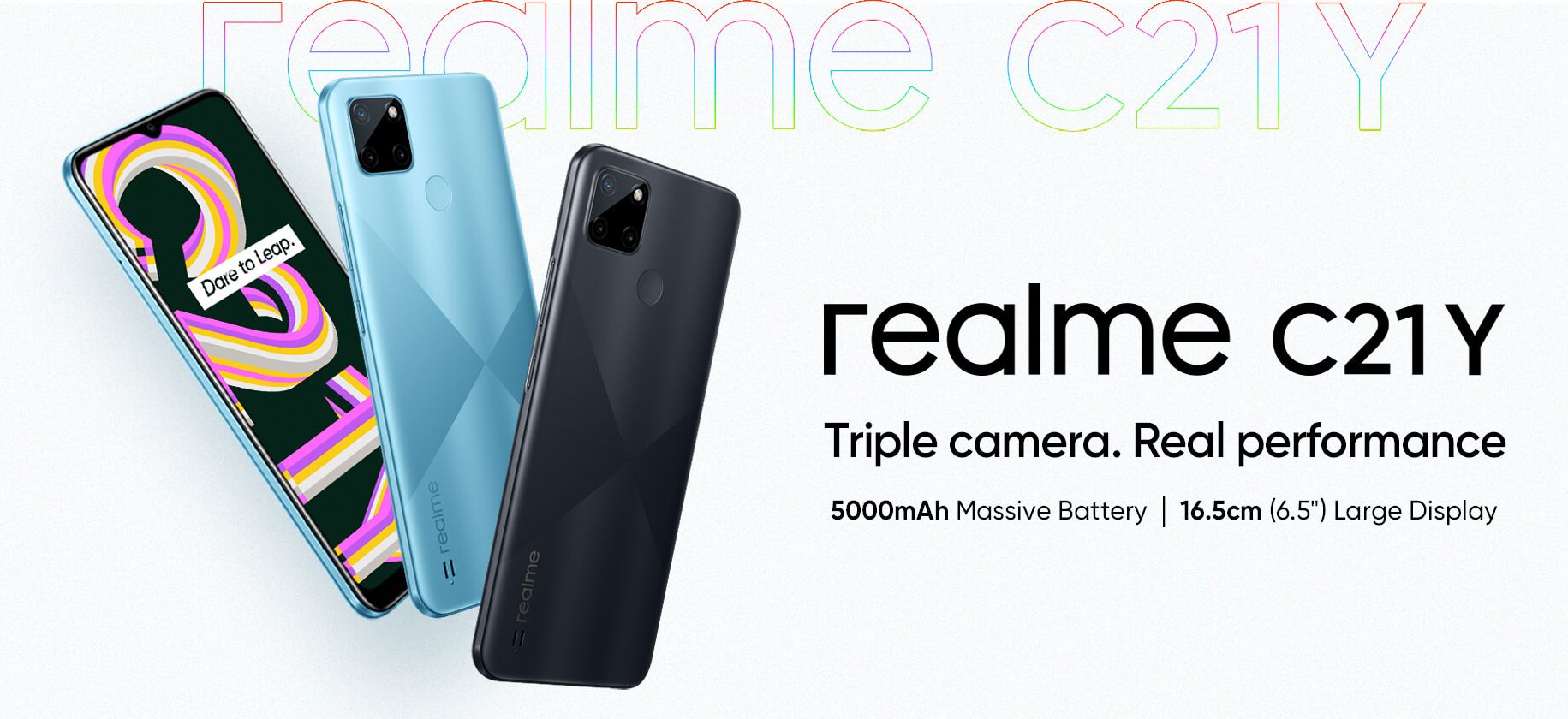
Realme C21Y
realme C21Y – August 23
Realme has announced that its entry-level smartphone, the realme C21Y, will also launch on August 23. The phone will have a UNISOC processor and a 5000mAh battery.
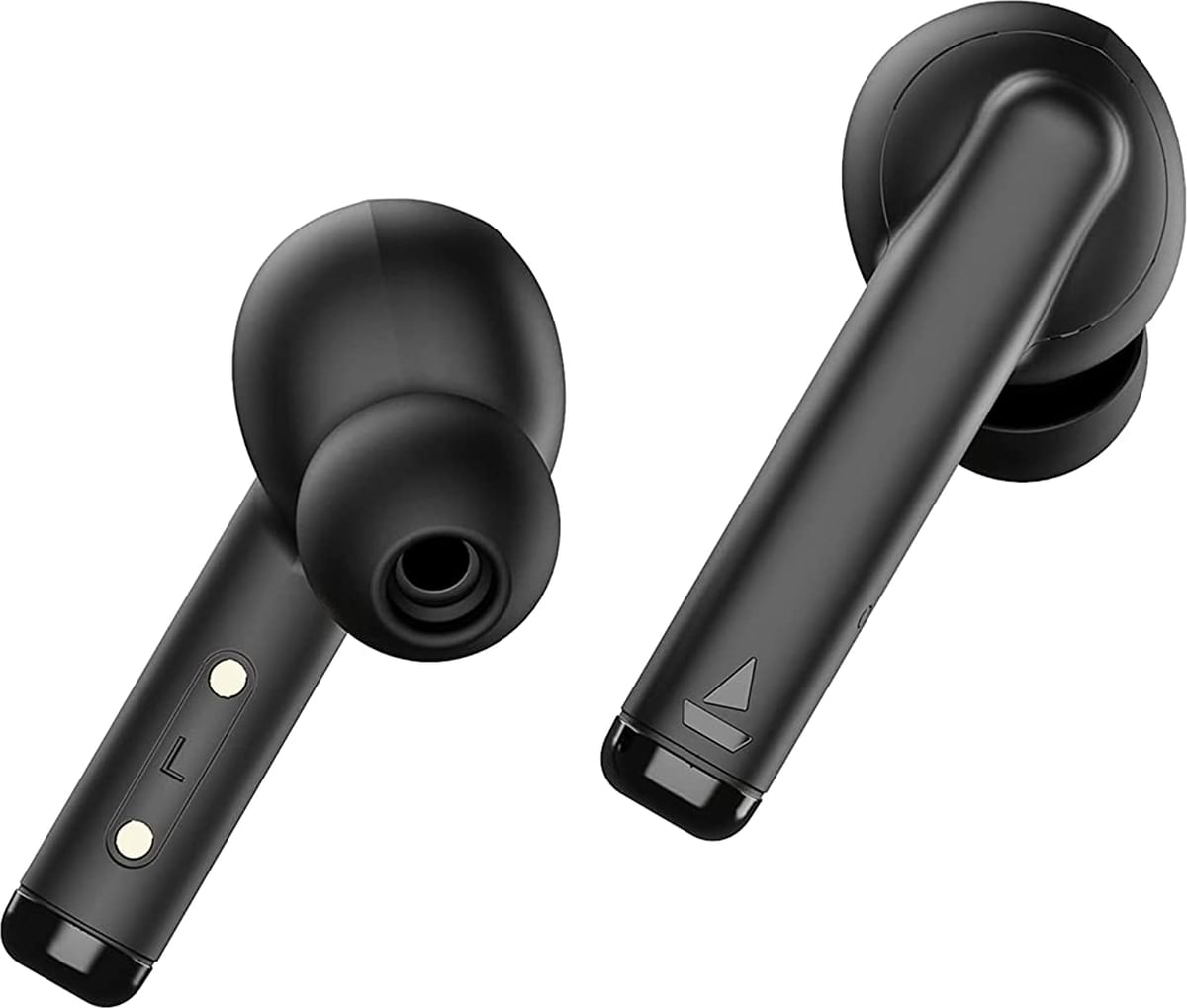
boAt Airdopes 452 – August 24
boAt, India’s leading earphones brand, will announce a new pair of earbuds on Tuesday, August 24. The Airdopes 452 as it will be called will have ultra-low latency and support for 3D spatial audio. The manufacturer has also revealed it will be selling the new earbuds for ₹1299 (~$17).
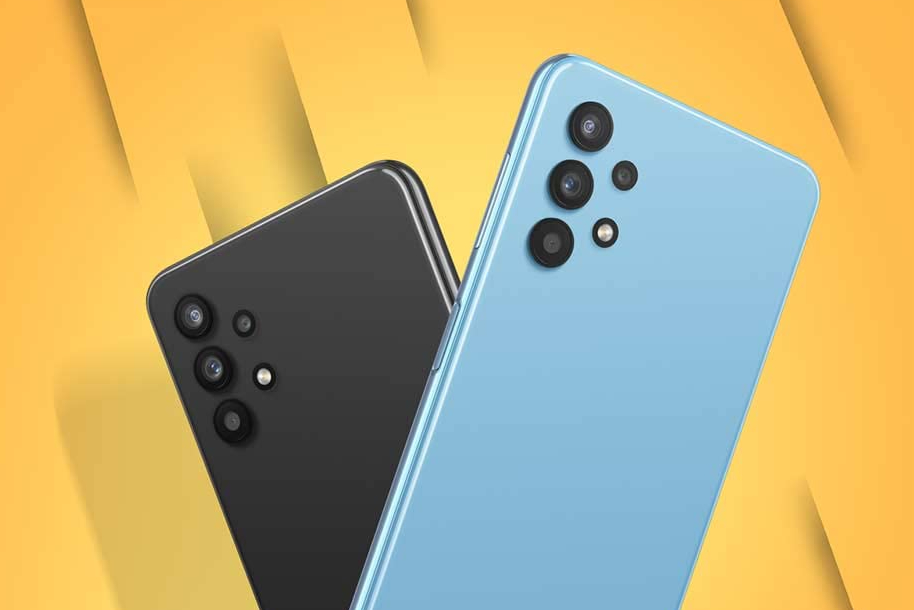
Galaxy M32 5G – August 25
Samsung’s Galaxy M-series will be adding a new member on August 25. The Galaxy M32 5G will have a Dimenisty 720 processor under its hood, a 5000mAh battery capacity, and a 48MP quad-camera setup on its back.
Last year, Google decided to move its production line to northern Vietnam from China. But now, it seems that the company will be manufacturing its upcoming smartphone in China due to COVID-19 regulations.
According to a report from Nikkei, the governments around Asia have started tightening their border controls due to the recent COVID-19 outbreak. As a result of stricter regulations, Google will have to continue its production line in China.
The report suggests that the Pixel 5 was supposed to be manufactured in Vietnam, but the plan couldn’t succeed due to travel restrictions and “limited engineering resources” in Vietnam. So, the upcoming Pixel 6 and 6 Pro’s would be manufactured in Shenzen, China.
Well, Google is not the only company stuck in China. As per the report, Apple was also planning to move the small chunk of the production line of MacBook and iPad to Vietnam has also been affected. So, the Cupertino giant also now has to continue its production line in China.
Pixel 6 and 6 Pro Features and Specifications
Earlier this month, Google gave us a first look at the Pixel 6 and 6 Pro. The upcoming Pixel smartphones will be coming protruding camera bar and entered punch hole camera on the front. Both the smartphones will be available in three different colours with a dual-tone finish.
Google’s upcoming Tensor chipset will power the Pixel 6 and 6 Pro. The vanilla Pixel will come with two cameras at the back, while the Pro model will have three cameras, including a telephoto lens with 4x optical zoom. The upcoming Pixel lineup will be running Android 12 with MaterialYou design.
The Pixel 6 and 6 Pro are expected to release later this year in the fall.
A few weeks ago, Honor announced the Magic3 series of smartphones. However, the three flagship phones which are already available for purchase in China are not the only devices Honor has planned to launch to launch this year. The manufacturer is also expected to announce its first foldable smartphone which will launch as the Magic Fold. While we await its release, more details regarding its design have surfaced.
Most of the details about the Magic Fold have come from the leaker that goes by @RODENT950 on Twitter, and this new one is no different. In a tweet posted earlier today, he shared images that give us a glimpse at what the device will look like.
From the images, we can deduce that the Magic Fold will look a lot like the Honor 50 Pro. It will have a pill-shaped punch hole on its flat cover display which has a speaker grille in the frame above it while the rear will have the same pulley-like camera housing with four cameras. The Honor Fold will also copy the Huawei Mate X2’s design by not having a camera in the inner display.
The Honor Magic Fold will have a cover display that is 6.5 inches in size while the inner display will measure 8 inches. It is also expected to come with a Snapdragon 888 Plus processor.
The leaker adds that the Magic Fold will arrive in the fourth quarter of the year.
Earlier this week, Microsoft released the insider build of Windows 11 for everyone. There are a lot of interesting features in the new update. So here are 11 new features on Windows 11 that are worth checking out, and these features make the upcoming Windows update worth looking forward to.
Expected Release Date of Windows 11
Microsoft is testing out Windows 11 and ironing out the bugs before the new iteration of Windows hits the market. Windows 11 is scheduled to release later this year during the holidays. The Windows 11 powered PCs are expected to release starting January 2022.
1A new Mac inspired interface
Source: Microsoft
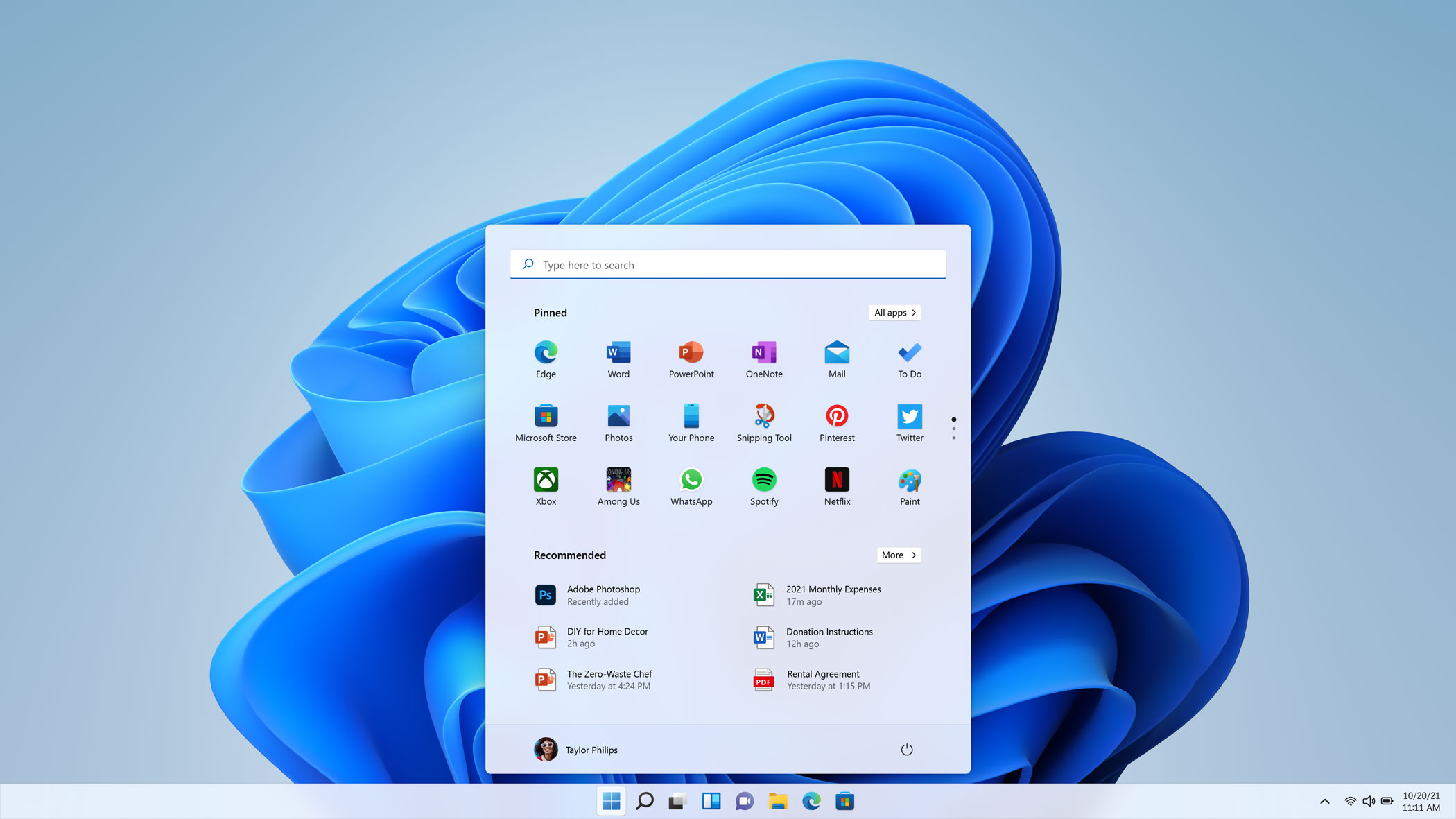
Windows 11 brings a clean and modern interface with rounded corners and pastel shades. The biggest change you’ll notice will be the new position of the Taskbar with a revamped Start Menu. The UI is more polished and offers more functionality over the previous iterations of Windows.
2Universal Media Control
With Windows 11, you can control all the media playback on your PC from the Action Center. Everything shows up on the Action Center no matter what you’re playing. You can play a random YouTube video, your favorite song on Spotify, or a video saved on your PC, and all of them will be shown in the Action Center.
3New Microsoft Store
Source: Microsoft
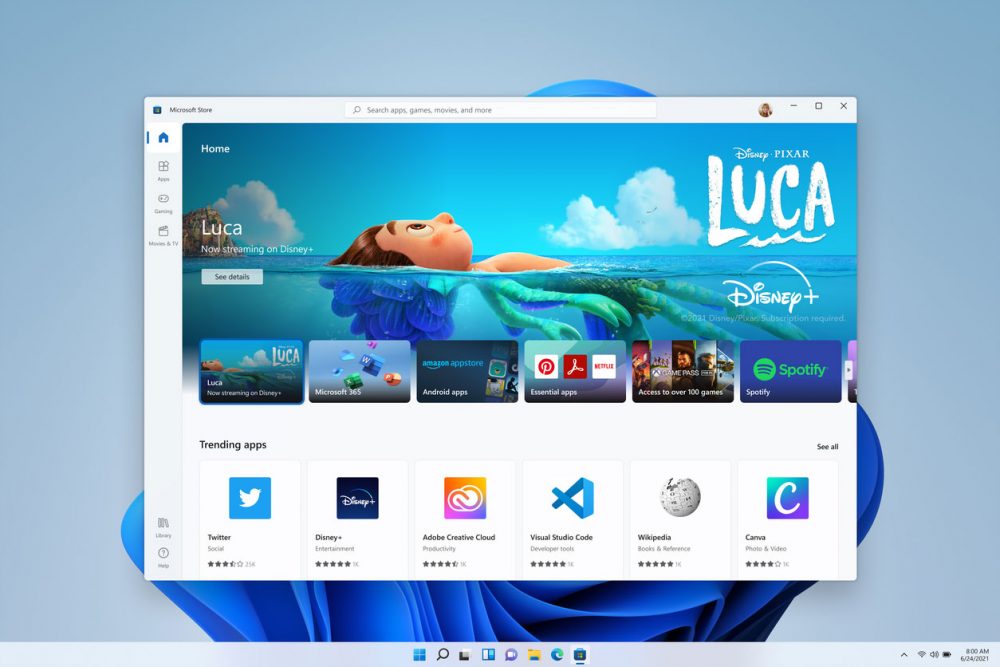
Windows 11 comes with a new Microsoft Store. The new Microsoft Store is built from scratch, and now it supports apps built on different platforms, including Win32, .NET, UWP, Xamarin, Electron, React Native, Java, and Progressive Web Apps. It now also offers themes and extensions for the Microsoft Edge browser. The Windows 11 Microsoft Store also comes with a new and sleek user interface for easy navigation.
4Android Apps Support and Amazon App Store
Yes, Windows can now run Android apps, and that too natively. Further, you can sideload the apps you want to run on your PC. The Android apps would be supported by both Intel and AMD processors. The Windows 11 will also come with an Amazon-powered App Store for Android apps so that you won’t have to sideload APK every time.
5Widgets
The new Windows 11 comes with widgets, and it’s very similar to what we’ve seen in the macOS Monterey. Now, you can check out the weather, news, stock prices, scores in the widgets section. You can also customize the widgets section and give it a personal touch.
6Auto HDR and Dynamic Refresh Rate for Gaming
Source: Microsoft
With Windows 11, Microsoft announced the Auto HDR feature on the new platform. Auto HDR will elevate the viewing experience while you are playing games. Further, Windows 11 also comes with support for dynamic refresh rate, so if you’ve got a display with a high refresh rate, then you’re in for a smooth viewing experience.
7Redesigned File Explorer
Windows 11 comes with a new, modern-looking, redesigned File Explorer. It comes with new modern icons, a context menu, and a new command bar at the top. The new design focuses on functionality and how easy it can make file management.
8Faster Windows Updates
During the announcement, Microsoft promised that Windows 11 would offer a much faster and smoother update process. The Windows 11 comes with support for background installation mechanism, making updates faster than before. Moreover, the new updates will be 40% smaller than before, saving us data and time.
9Redesigned User Interface
Source: Microsoft
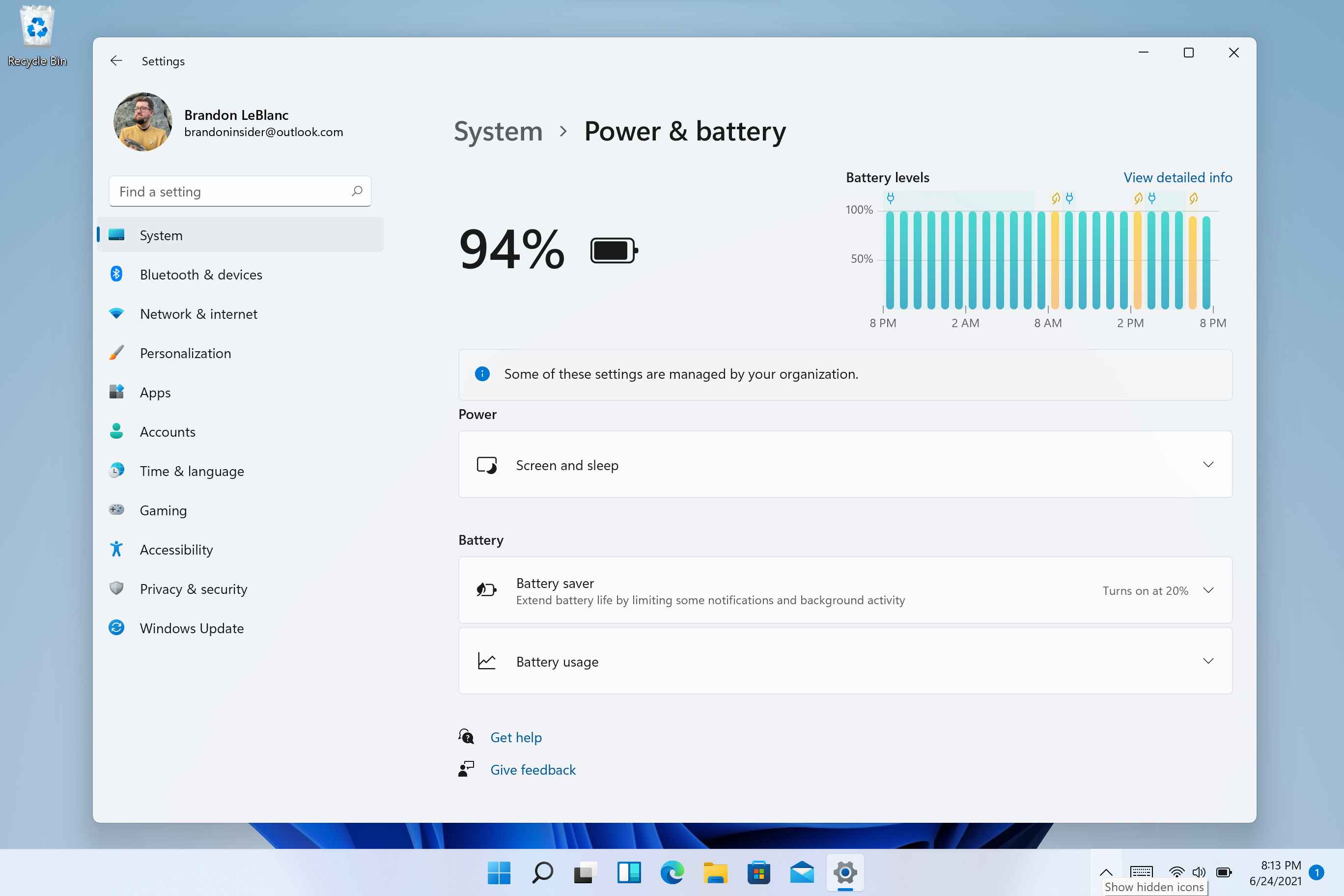
Windows has gone through a major redesign. Windows 11 brings a lot of new elements across the platform. The Start Menu is now more functional, and Action Center is following a more mobile-UI approach. The Settings have been revamped, too, with menus and sub-menus and a static pane. The edges are more rounded than before, giving Windows 11 a modern look.
10Integrated Microsoft Teams
After a year of work-from-home, Microsoft has decided to integrate the Teams app into Windows 11. Teams would be integrated directly into the Taskbar for easier access. Also, Microsoft Teams is getting a redesign with the arrival of Windows 11.
11Improved Virtual Desktop Support
Windows 11 makes creating and accessing Virtual Desktop easier, something like the macOS. Now, you can access the virtual desktops created by clicking the Desktops icon on the Taskbar. You can rename or reorder the desktops on your PC. Moreover, you can also set different wallpapers on different desktops.
These features make the upcoming update very interesting, and you need to check them out if you’re installing Windows 11 on your PC. You can either update your PC to Windows 11 insider build or clean install the ISO file of the preview build.
Do let us know in the comments below which feature are you most excited about.
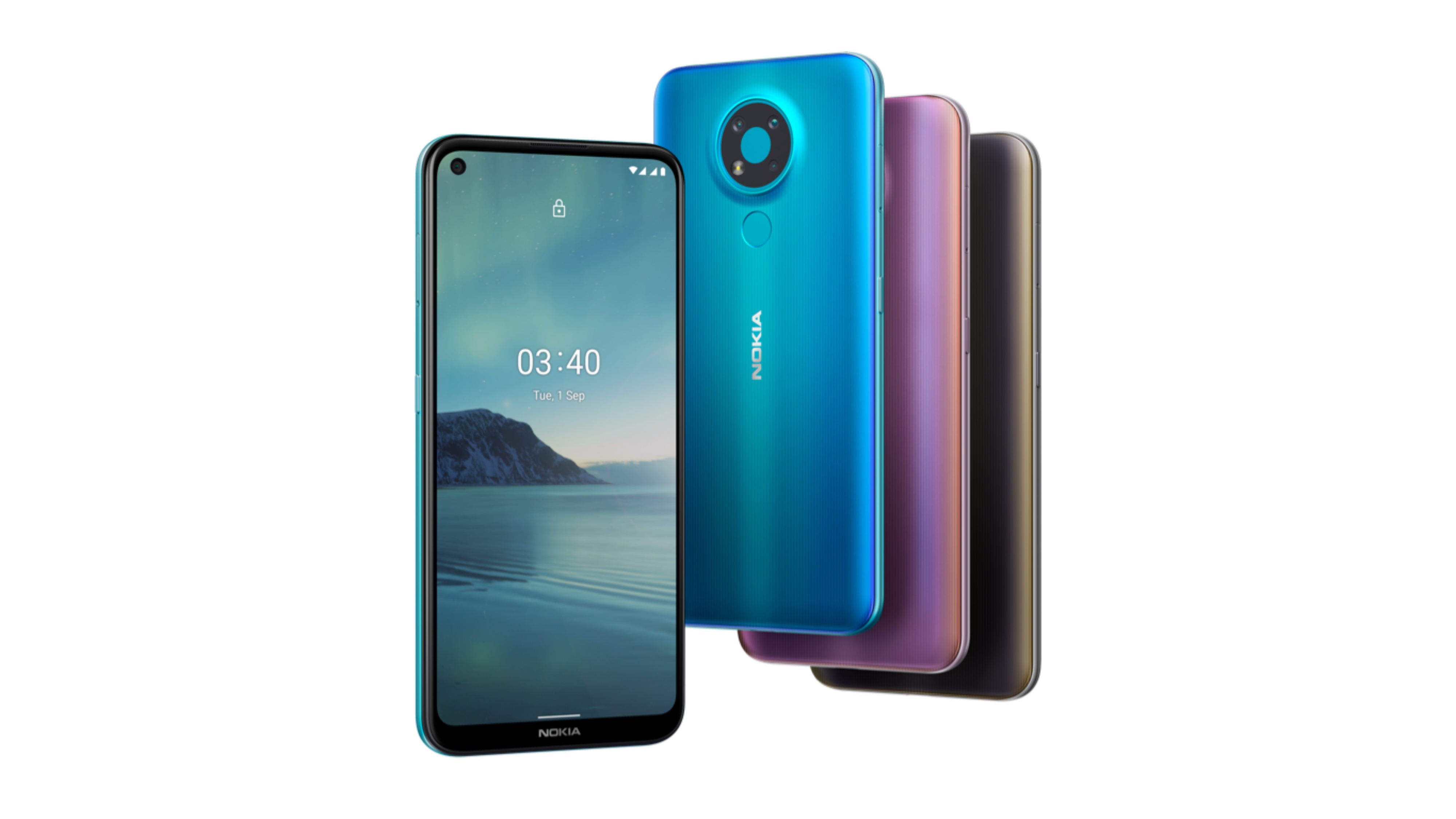
Google is expected to release Android 12 stable in a few days from now. However, HMD Global, just like other Android OEMs, is yet to update its handsets to Android 11. That said, the Finnish company has now started rolling out the last year’s Android 11 to its Nokia 3.4 budget smartphone.
Nokia 3.4
According to the official announcement post on Nokia Phones Community (via Nokia Power User), HMD Global has begun to seed the Android 11 update for the Nokia 3.4.
The update is currently live in the following regions as part of wave 1.
Australia
Austria (A1 AT, T-Mobile AT)
Bahrain
Belgium
Cambodia
Denmark
Egypt
Estonia
Finland
France
Germany
Hong Kong
Iceland
India
Iran
Iraq
Jordan
Laos
Latvia
Lebanon
Lithuania
Luxembourg
Macau
Malaysia
Nepal
Netherlands
Norway
Oman
Philippines
Portugal
Qatar
Saudi Arabia
Spain
Sri Lanka
Sweden
Switzerland
Thailand
UAE
Vietnam
The announcement post says that 50% of the users in the above-listed countries should receive the update by today (August 21). Whereas, 100% of the users will get it by tomorrow (August 22) itself.
The update will be shortly rolled out in other regions in the coming days. The company has confirmed to publish a similar announcement post to notify users. Anyway, users can periodically head over to ‘Settings’ to check whether their unit has received the latest system update.
The Nokia 3.4 was unveiled almost a year earlier in September 2020. The handset debuted with Android 10. Hence, Android 11 is its first-ever major software update. As of now, it’s not known whether HMD Global will update this device to Android 12.
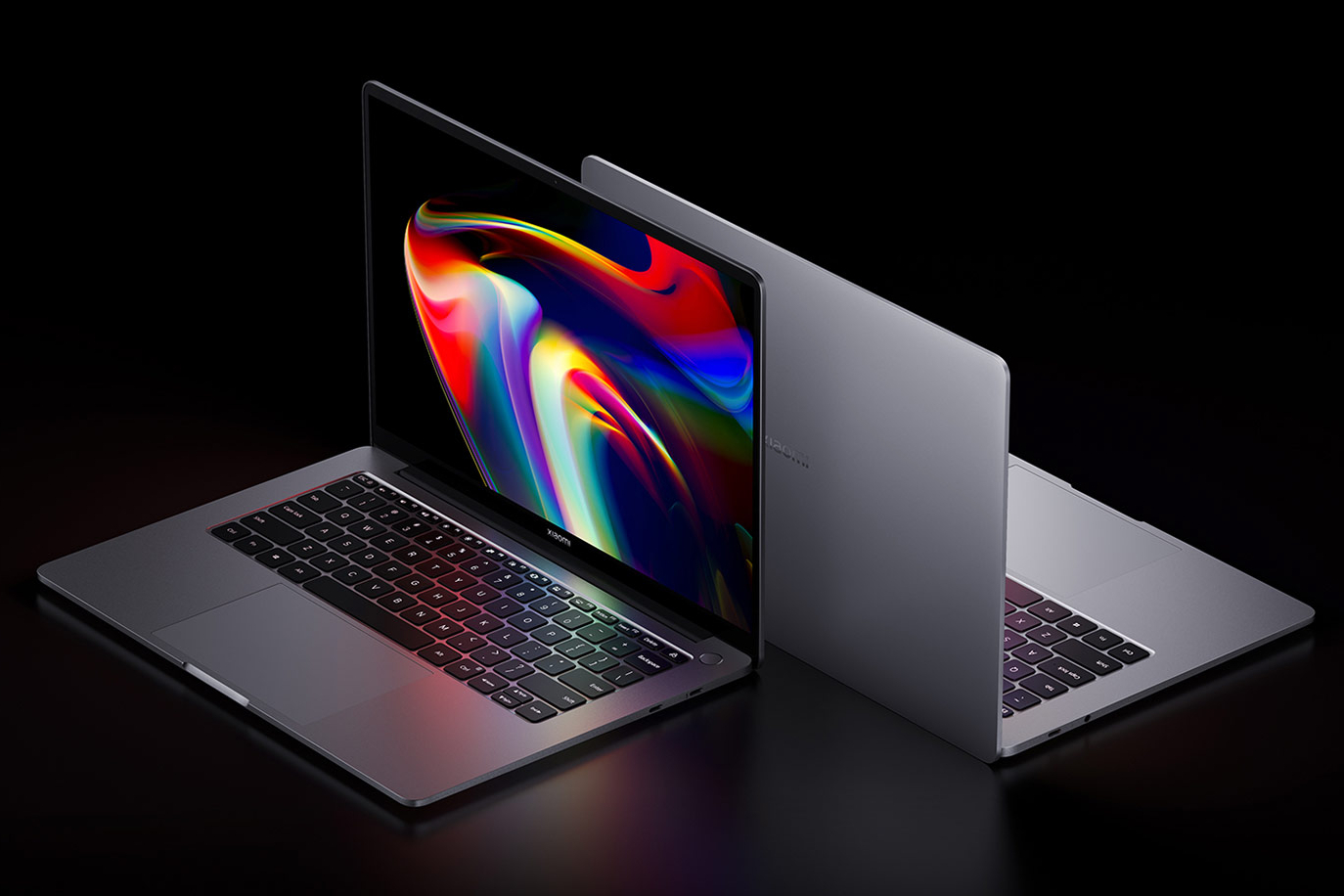
Earlier this year, Xiaomi launched the Mi Notebook Pro 2021 in China. Similarly, the company’s sub-brand Redmi released RedmiBook Pro 2021 in its home country. Months later, these laptops have been nowupdated with new processors, and the company is calling them ‘Enhanced Edition’.
Xiaomi Mi Notebook Pro 14 2021 Enhanced Edition
The newly launched Xiaomi Mi Notebook Pro 2021 Enhanced Edition and RedmiBook Pro 2021 Enhanced Edition feature the exact same set of specifications as the original models. They also come in two different sizes (14-inch, 15.6-inch), just like the older variants.
The only difference between the standard and the ‘Enhanced Edition’ is processors. Apart from that, the new versions even cost the same.
Talking about the dissimilarity, the Enhanced Edition models come with Intel Core i5-11320H and Core i7- 11390H processors instead of Intel Core i5-11300H and Core i7-11370H chipsets present inside the standard variants.
The new Xiaomi laptops will retail for the following price tags in China.
Xiaomi Mi Notebook Pro 14 2021 Enhanced Edition
i5-11320H, 16GB + 512GB – ¥5,299 ($815)
i5-11320H, 16GB + 512GB, MX450 – ¥5,999 ($923)
i7-11390H, 16GB + 512GB, MX450 – ¥6,999 ($1,076)
Xiaomi Mi Notebook Pro 15 2021 Enhanced Edition
i5-11320H, 16GB + 512GB – ¥6,499 ($1,000)
i5-11320H, 16GB + 512GB, MX450 – ¥6,999 ($1,077)
i7-11390H, 16GB + 512GB, MX450 – ¥7,999 ($1,230)
RedmiBook Pro 14 2021 Enhanced Edition
i5-11320H, 16GB + 512GB – ¥4,699 ($723)
i5-11320H, 16GB + 512GB, MX450 – ¥5,299 ($815)
i7-11390H, 16GB + 512GB, MX450 – ¥5,999 ($923)
RedmiBook Pro 15 2021 Enhanced Edition
i5-11320H, 16GB + 512GB – ¥4,999 ($769)
i5-11320H, 16GB + 512GB, MX450 – ¥5,499 ($846)
i7-11390H, 16GB + 512GB, MX450 – ¥6,299 ($969)
All the above-listed laptop models are already up for pre-order in China. Unfortunately, we don’t think they will be released in other regions.
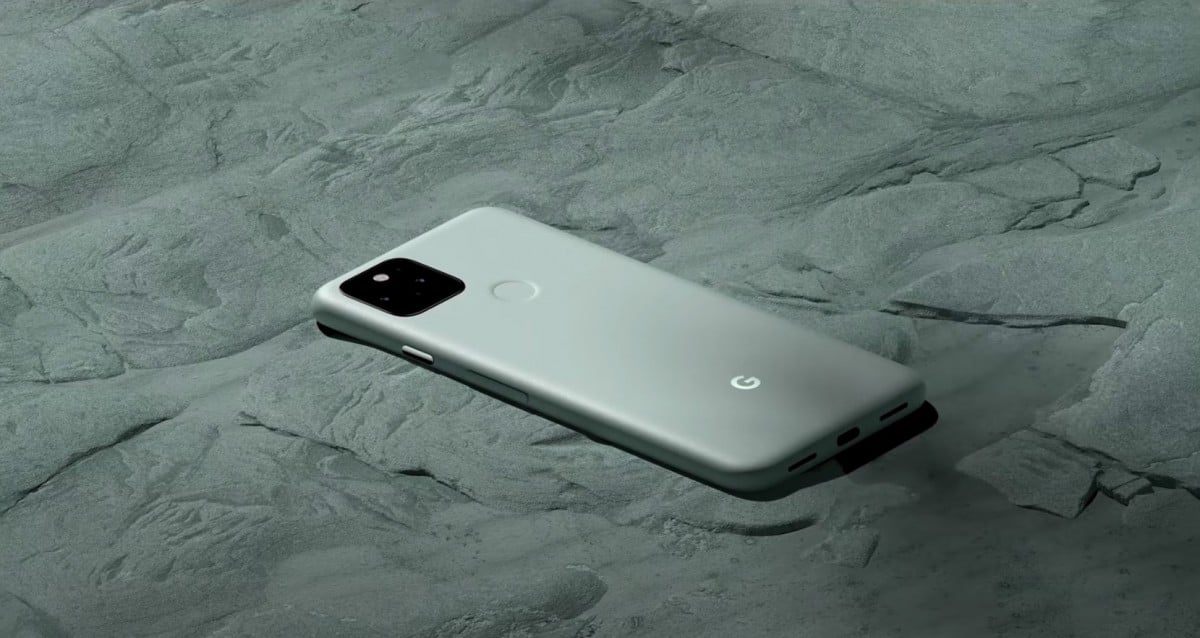
Earlier this week, Google launched the Pixel 5a 5G exclusively for two markets, namely the US and Japan. A few days from that, the company has now confirmed that it has discontinued the last year’s Pixel 5 and Pixel 4a 5G in its home market.
Google Pixel 5
According to a report by The Verge, a Google spokesperson has revealed that the search giant has discontinued the Pixel 5 and the Pixel 4a 5G in the US. The phones will be sold out in the coming weeks, however, they could be available through some partners while supplies last.
On the other hand, the firm did not say anything about the Pixel 4a. This suggests the device will be on sale alongside the newly unveiled Pixel 5a 5G.
The discontinuation of the Pixel 5 and the Pixel 4a 5G makes sense. Because the latest Pixel 5a 5G is identical to these handsets. The only major thing the new model lacks is wireless charging.
Google Pixel 4a 5G
Having said that, Google is also set to launch the Pixel 6 series powered by an in-house chipset called Tensor this fall. The lineup has been confirmed to include two models, namely Pixel 6 and Pixel 6 Pro. Apart from bringing a revamped design and new silicon, they will be also debuting multiple huge camera sensors.
Unfortunately, just like the Pixel 5a 5G, the availability of the Pixel 6 series is said to be limited to select regions. Hence, customers may have to wait a bit longer for the launch of Pixel smartphones in their countries. The last widely available Pixel phones were the Pixel 3A and the Pixel 3A XL.
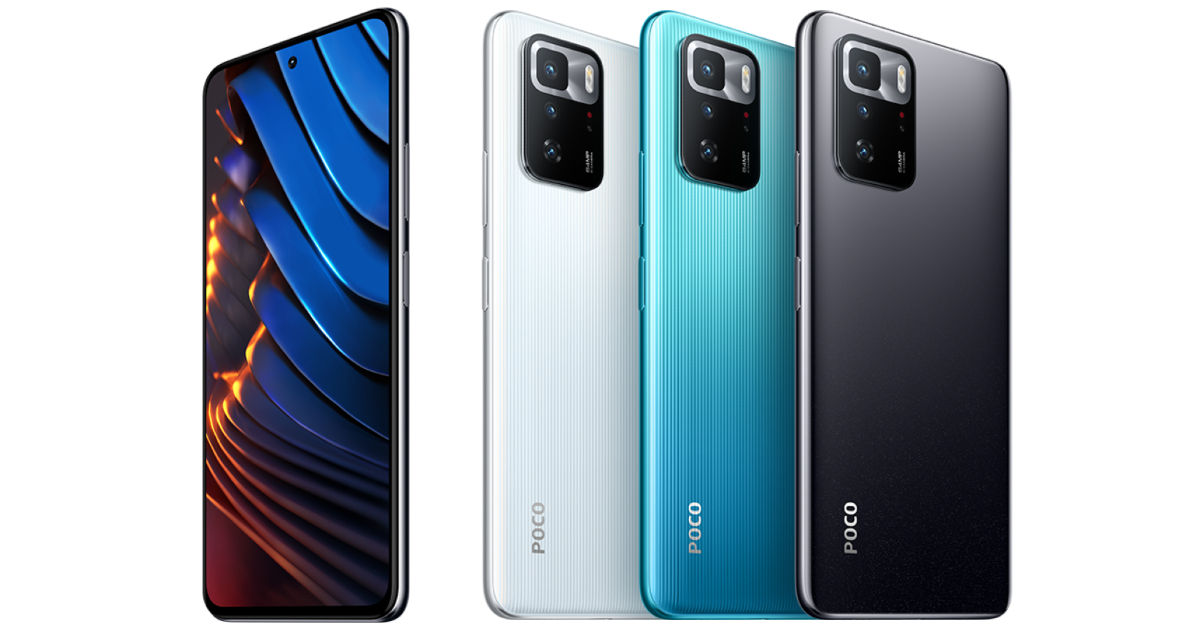
After launching the Poco X3 GT in few markets last month, the device has now reached the Indonesian market. Some of the major highlights of the smartphone are Dimensity 1100 SoC, 120Hz display, and triple rear cameras.
The Poco X3 GT is priced at 4,399,000 Rupiah(~$304) for the 8GB RAM + 128GB storage variant and 4,799,000 Rupiah(~$332) for the 8GB RAM + 256GB storage variant. It comes in Wave Blue, Cloud White, and Stargaze Black color variants.
It can be purchased from Poco’s official website and other authorized retail stores in the region.
Poco X3 GT Specifications
The smartphone comes with a 6.6-inch punch-hole LCD display with a Full-HD+ resolution. The panel has a 120Hz refresh rate and supports the DCI-P3 color gamut. It has a Corning Gorilla Glass Victus protection.
Upfront, it boasts a single 16MP selfie camera. It has a triple rear camera system at the rear placed in a vertical alignment. It camera island has a 64MP primary lens, an 8MP ultra-wide lens, and lastly a 2MP macro sensor. It is powered by the MediaTek Dimensity 1100 SoC paired with 8GB of RAM and up to 256GB of UFS 3.1 internal storage.
It houses a 5,000mAh battery with 67W fast charging support. It has LiquidCool Technology 2.0 which helps to maintain the temperature while doing extended gaming sessions. The smartphone has a side-mounted fingerprint scanner and runs on MIUI 12.5 based on Android 11 OS.
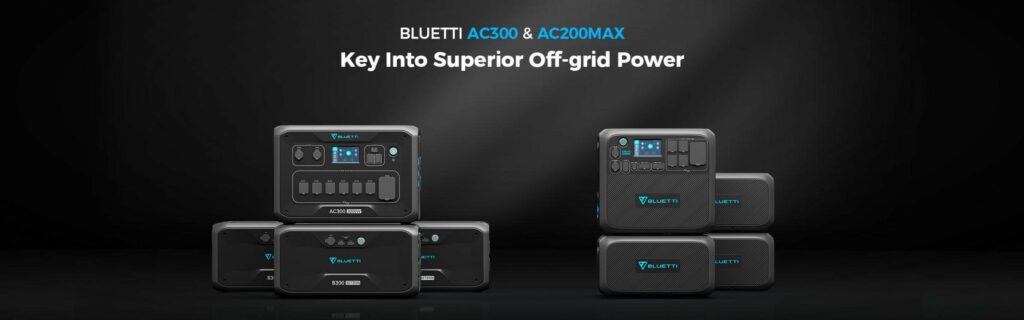
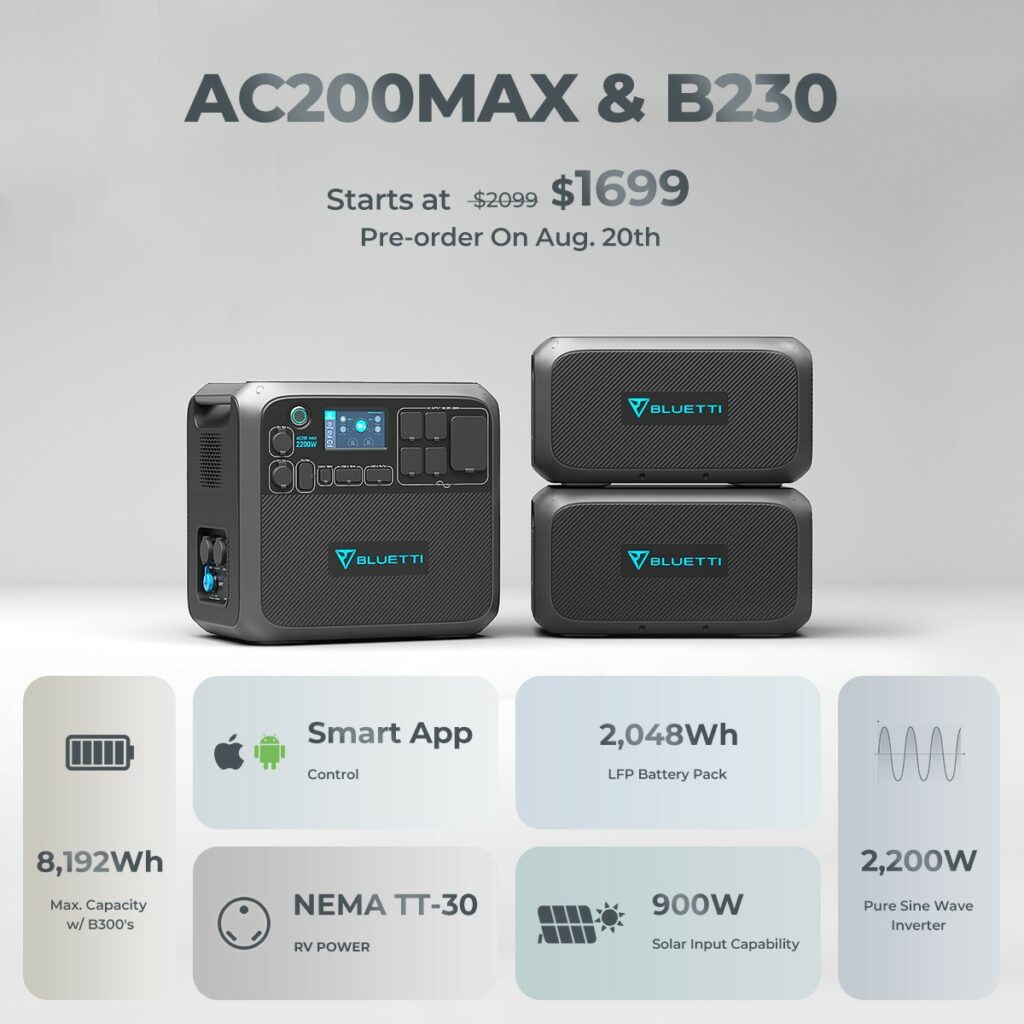
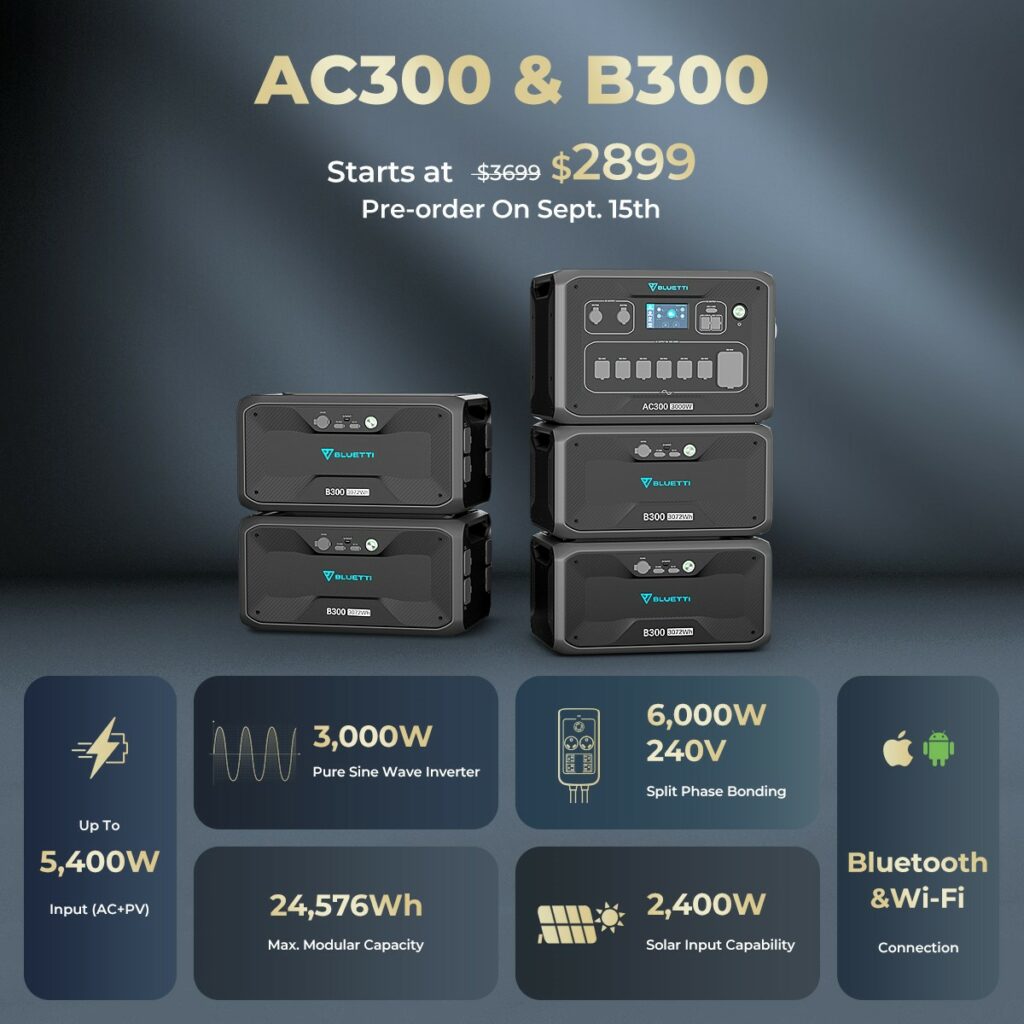
For years, Bluetti has been offering one of the best power solutions for home and outdoor activities. The company has now expanded its product portfolio by adding 4 more new members. To be precise, the new products include the all-new AC200 MAX, the one-of-a-kind AC300, and the industry-first battery modules: the 2048Wh B230 and the 3072Wh B300.
The AC200 MAX and B230 battery modules are now available for sale, while the AC300 and B300 will be available a month later on September 15th.
Products and the Specifications
The AC200 MAX Power Station & B230 Battery Module
The popular AC200P has been loved by many for its performance. Bluetti, this time around has made significant improvements and the AC200 MAX is in a sense total upgrade of the AC200P. As for the power it can hold, the MAX is able to hold up to two B230’s or B300 battery modules, connecting of which can boost the total capacity to an amazing 8192Wh! As icing on the cake, it supports 900 watts of solar input, a 28% increase over its predecessor.
Keeping the RV enthusiasts in consideration, the AC200 MAX has a specially designed built-in 30A NEMA TT-30 outlet. Additionally, the power solution supports Bluetooth connectivity and can be controlled wirelessly with the new Bluetti Smartphone App available for both iOS & Android.
Bluetti mentions the AC300 as a raw-power beast. It is entirely modular with the main unit housing the 3000-watt pure sine wave inverter. Needless to say, the power the AC300 can hold is immense. To put in numbers, each AC300 when paired with four 3072Wh B300 battery modules it’ll be able to deliver a tremendous 12,228Wh of capacity!
Making things more interesting, Bluetti with its Fusion Box Pro will let us pair two AC300’s together, boosting the entire system up to 240V, 6000W. Yes, a fully stacked system will deliver 24,576Wh of capacity, that’s enough potential energy to power a home for nearly a week! Amazing to say the least.
Now you might be thinking of what about solar input? Indeed, the AC300 supports 2400W solar input, while the fully stacked version allows for 10,400W.
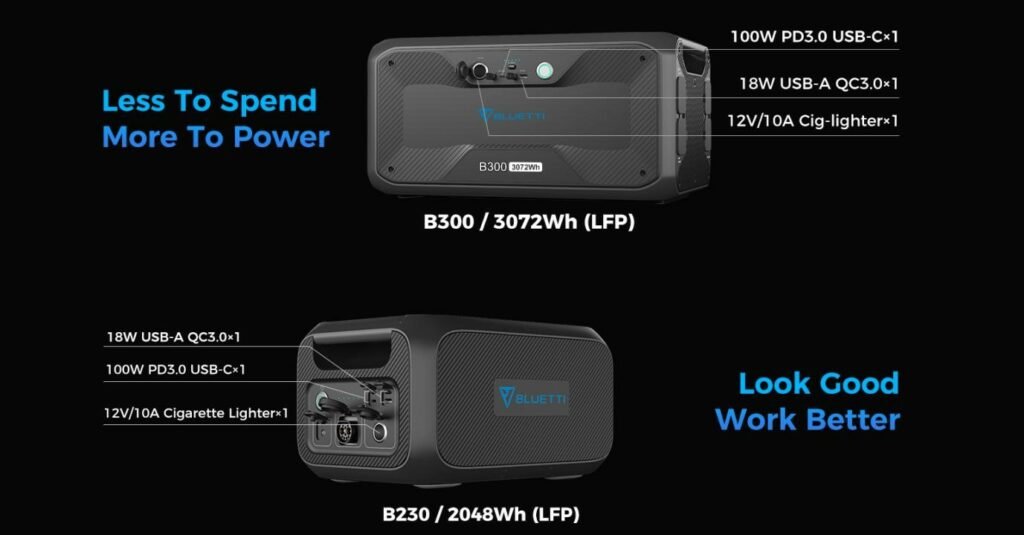
As per Bluetti the B230 and B300 are “industry-first” innovations happening in modular power products. The peculiarity of the product is that both the B230 and B300 can be charged and discharged as a standalone power module and both feature various DC outlets, including a 100W USB-C, a 12V/10A car output, and some USB-A ports.
Additionally, both battery modules are able to soak up 500W of AC power via an AC to DC adapter. Not to mention the B300 even has its own 200W (MPPT-ready) solar inlet just in case you find your power storage running low the next time you and your friends are out camping off-grid.
Last but not the least, Bluetti also provides DC charging Enhancer referred to as DC Enhancer or Little Magic Box. The Box acts as an enhancement tool for the DC inlets (the DC7909 port for adapter) on the Bluetti units.
The built-in MPPT charge controller with voltage regulator circuits enables the Little Magic Box to ramp up the existing Bluetti products in a variety of additional charging ways. For instance, with the help of our new DC Enhancer, you can now increase the overall capacity of previous Bluetti models like the EB150 and EB240 by connecting the latest Bluetti battery modules or lead-acid batteries. Alternatively, you can even charge it via the 12V/24V cigarette lighter port in your car.
As you may be well aware of the latest products are beast. But that doesn’t make the previous generations worthless. Still, you can have a great deal on previous models as Bluetti is offering a great discount now. To name some;
AC200P is now at $1599 ($400 off)
EB240 for $1399 ($500 off)
EB55 for only $449 ($100 off)
So, don’t forget to consider Bluetti products if you’re out in the market hunting for a reliable Power System.
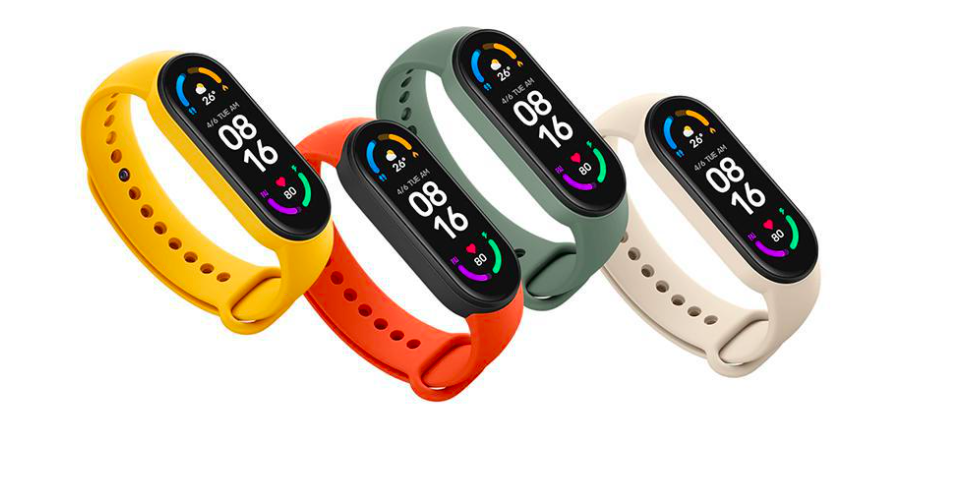
Xiaomi may be preparing for the European rollout of the Mi Band 6 NFC, going by details officially provided by the company that the device has been certified in Italy. The Mi Band 6 series was released back in March 2021 in China, and no foreign market has had the NFC version since then.
The two models in the Mi Band 6 series differ only in terms of NFC connectivity. The Mi Band series has often seen a staggered release of the higher model. This was the case with the Mi Smart Band 4 NFC which took about a year for it to be unveiled globally, after the release of the non-NFC version.
The Italian certification most probably indicates that the Mi Band 6 NFC will soon be found in European markets. It may well start with Italy, going by the certification announcement, but would obviously shift to other countries in the region.
The Xiaomi Mi Band 6 NFC is an elegant smart wearable device with an array of impressive features including various sensors for monitoring vital statistics. It is also possible that the Mi Band 6 NFC will support greater functionality than the Mi Smart Band 4 NFC, which also had support for Mastercard bank cards.
As per pricing, it is still unclear what the price of the Mi Band 6 NFC would be. However, it is expected to be higher than that of the Mi Band 6, which is sold for $44 on Amazon. We expect the Xiaomi Mi Band 6 NFC to be pricier than the $44 tag for the non-NFC version of the smart wearable.
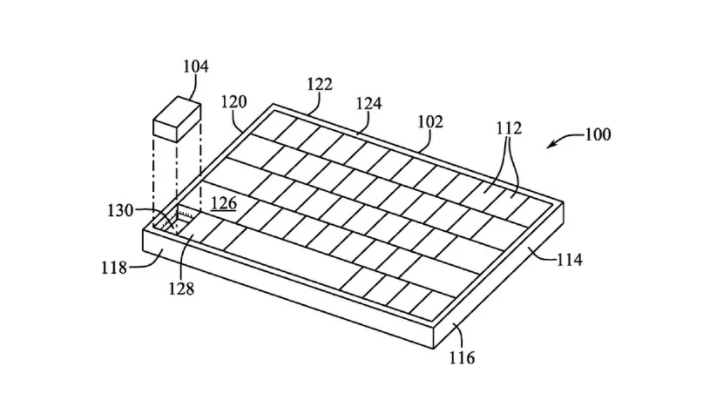
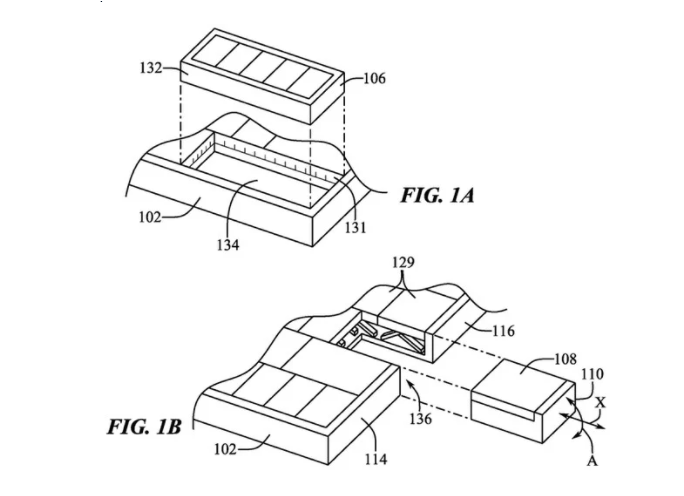
A new patent filed with the US Patent and Trademark Office indicates that Apple is developing a removable key that will be part of the accessories of future MacBooks. It could serve as a precision mouse for swift navigation of the display. Aptly termed the Deployable Key Mouse, the patent filing details a description of what the key will look like and its possible performance in a MacBook.
The standard-looking scissor system keyboard of the MacBook will be retained in the new design, but in addition, it features a removable key that is hidden from view. Embedded in the key will be a position sensor that can be used as a pointing device to provide a comfortable, portable, and precise pointer input for the PC.
The new tech device will be a boon for precision tasks like graphic design, computer-assisted design, and modeling, as well as editing documents. These tasks are better served with a hand-held mouse than the conventional trackpad. However, the patent Deployable Key Mouse will serve the purpose of the mouse without adding a piece of visible luggage to the MacBook.
According to the patent document, the new key will be battery-powered and will be located towards the edge of the keyboard in a seemingly hidden area. There are no further indications of whether the key can accomplish several other tasks, although the patent filing does not directly indicate that the product will become a reality. It may just be evidence of future plans which may be modified or totally thrown away before it goes to production. Obviously, whatever the case, the concept of a deployable key for future MacBooks will suit the desires of a segment of Apple customers, especially professionals who desire precision in their tasks.
We use cookies on our website to give you the most relevant experience by remembering your preferences and repeat visits. By clicking “Accept”, you consent to the use of ALL the cookies.
This website uses cookies to improve your experience while you navigate through the website. Out of these, the cookies that are categorized as necessary are stored on your browser as they are essential for the working of basic functionalities of the website. We also use third-party cookies that help us analyze and understand how you use this website. These cookies will be stored in your browser only with your consent. You also have the option to opt-out of these cookies. But opting out of some of these cookies may affect your browsing experience.
Necessary cookies are absolutely essential for the website to function properly. This category only includes cookies that ensures basic functionalities and security features of the website. These cookies do not store any personal information.
Any cookies that may not be particularly necessary for the website to function and is used specifically to collect user personal data via analytics, ads, other embedded contents are termed as non-necessary cookies. It is mandatory to procure user consent prior to running these cookies on your website.