Google released Android Gingerbread in December 2010. Although the support for it ended years ago, there are still some devices out there running this primitive version of Android, which is currently over 10 and a half years old. According to the new announcement, these ancient devices along with others running even older versions of Android will become more useless by the end of September.
As per a report by 9to5Google, Google has sent an email to users with devices running Android 2.3.7 Gingerbread and low. The email states that the search giant is ending support for Google account sign-in on these older versions of Android on September 26.
From September 27, users will be seeing a “username or password error” while performing the following actions.
Sign in to your account.
Remove your account from your device and re-add it.
Create an account on the device
Perform a factory reset of your device and try to sign in.
Change your password either on the device or on a different device, which then signs you out everywhere else, and when you try to sign in again.
The company says that this measure is to help users in protecting their account’s security.
As a result, users with the following versions of Android will not be able to access Google apps like Gmail, YouTube, Maps, and others from September 27.
Android 1.0
Android 1.1
Android 1.5 Cupcake
Android 1.6 Donut
Android 2.0 Eclair
Android 2.2 Froyo
Android 2.3 Gingerbread
Google recommends users update to a newer version of Android (3.0+) if there’s an option. Else, they can continue using some Google services via the phone’s web browser.
Huawei unveiled the HUAWEI P50 series on Friday. Despite being premium smartphones with high-end chips like Qualcomm Snapdragon 888 and HiSilicon Kirin 9000, they lack 5G support due to the US ban. Unsurprisingly, like other flagship phones in the market, they also don’t ship with a charger. Hence, the company has launched a new power adapter called HUAWEI 66W SuperCharge GaN Multi-port Charger.
1 of 2
HUAWEI 66W SuperCharge GaN Multi-port Charger Specifications and Features
As the name suggests, the new HUAWEI-branded charger uses GaN (Gallium Nitride) instead of silicon. Hence, it is not only smaller in size but also powerful. That’s not all, it also comes with three USB ports.
The three ports on the charger can output power at the following rates.
USB Type-A 1 (Orange)
Protocol
HUAWEI SuperCharge
Charging Rates
11V 6A (66W)
10V 4A (40W)
5V 3A (15W)
USB Type-A 2 (Purple)
Charging Rates
10V 2.25A (22.5W)
5V 4A (20W)
5V 2A (10W)
USB Type-C (Orange)
Protocols
USB PD (Power Delivery) 3.0
USB PPS (Programmable Power Supply)
SCP (HUAWEI SuperCharge)
FCP (HiSilicon Fast Charging)
Charging Rate
20V 3.25A (65W)
Thanks to multiple ports as well as support for various charging rates/protocols, this power adapter can be used to charge a wide variety of devices. Like most chargers, it also has 8 layers of protection for short-circuit, over-current, and under-voltage to name a few.
Last but not least, the new HUAWEI charger bears model number P0003, comes in a single white color option, measures 31 x 31 x 62mm in dimensions, weighs 110g, and ships without any USB cable.
HUAWEI 66W SuperCharge GaN Multi-port Charger Price and Availability
The HUAWEI 66W SuperCharge GaN Multi-port Charger is priced at ¥399 ($62) in China. However, for a limited time, it is being sold at ¥379 ($59).
There’s no official word on its availability in global markets as of now.
Samsung is expected to announce the Galaxy Watch4 series at the next Galaxy Unpacked event, which is scheduled for August 11. We have been hearing about these smartwatches since January. Six months later, we finally get to see one of the models in real life.
Samsung Galaxy Watch4 Classic | Source: 91Mobiles
We have seen the Galaxy Watch4 series in renders. But this is the first time we are seeing it in flesh, courtesy of live images shared by a source of 91Mobiles. According to the publication, the smartwatches showed in the image are Samsung Galaxy Watch4 Classic.
The picture shows the watch in two colors – Black and Silver. These are the exact same colors that were tipped earlier. As per the image, the watch will have a physical rotating bezel and two buttons on the right side. Unfortunately, the picture does not say much about the Wear OS 3 UI.
According to previous reports, the Samsung Galaxy Watch4 Classic will arrive in three sizes (42mm, 44mm, 46mm). It will be powered by an Exynos W920 chipset paired with 1.5GB RAM and 16GB storage.
The main highlight of this wearable will be the new unified Wear OS, which is co-developed by Google, Samsung, and Fitbit. The upcoming Samsung Galaxy Watch 4 series will decide the fate of Wear OS smartwatches.
OnePlus is rolling out a new system update for the OnePlus 9R in India. The new software update arrives almost two months after the last one. It comes with build number OxygenOS 11.2.4.4 and is being rolled out in batches.
OnePlus 9R
According to the official announcement post on OnePlus Community, the OxygenOS 11.2.4.4 update for the OnePlus 9R bumps up the security patch level to July 2021 when it’s almost August. It also brings an updated GMS package (June 2021).
The latest software build comes with a new screenshot feature for AOD (Always-on Display). That’s not all, the update also adds the Bitmoji AOD option.
It optimizes overheating control management of third-party apps as well as experience of ‘Quick Reply’ in some scenarios. Last but not least, it also fixes some known issues.
As usual, the new OxygenOS update is being seeded out in batches. Therefore, some users might receive it later other others.
OnePlus 9R OxygenOS 11.2.4.4 Official Changelog
System
Optimized the overheating control management of third-party apps
Optimized the experience of Quick Reply in some scenarios
Updated Android security patch to 2021.07
Updated GMS package to 2021.06
Fixed known issue
Ambient Display
Newly added the screenshot feature for AOD
Newly added Bitmoji AOD, co-designed with Snapchat, which will liven up the ambient display with your personal Bitmoji avatar. Your avatar will update throughout the day based on your activity and things happening around you ( Path: Settings – Customization – Clock on ambient display – Bitmoji )
POCO X3 launched in India in the second half of 2020. The device debuted with MIUI 12 based on Android 10. It is yet to receive the MIUI 12.5 update. Ahead of that, Xiaomi is rolling out Android 11 for this handset.
POCO X3 NFC
The POCO X3 sold in India is different from the POCO X3 NFC sold elsewhere. The latter received the Android 11 update in early March. This means the Indian variant is getting the very same update almost five months later.
The Android 11 update for the POCO X3 in India arrives with build number V12.0.2.0.RJGINXM. It is currently being pushed in batches. Hence, the software build is labeled ‘Stable Beta’ and may take some time to reach every unit.
That said, we also expect the phone to get MIUI 12.5 update in the coming weeks. Further, it should be also updated to MIUI 13 in the future. Additionally, it might also get an update to Android 12.
The POCO X3 was one of the most powerful smartphones in its price segment when it was launched. It was followed by POCO X3 Pro earlier this year. This handset is slightly costlier but even more powerful. Unlike the vanilla model, the Pro model was released with Android 11 and also got MIUI 12.5 update recently.
Infinix constantly provides innovative solutions to consumer yearnings and builds products that match and even exceed customer expectations. The company has announced its latest addition to the X1 series of HD Android smart TVs. It is the Infinix X1 40-inch FHD Android Smart TV priced at Rs. 19,999 ($269). The smart TV will be available to the Indian market from August 6 via Flipkart.
The latest Infinix X1 Android Smart TV is a smaller but more immersive version of the previous HD and FHD models in the X1 series. These models include the 32-inch HD model, and the 43-inch FHD Android Smart TV debuted in India last December. The new 40-inch FHD Android Smart TV offers vivid picture quality, a high screen-to-body ratio, and the Infinix EPIC 2.0 Picture Engine for overall picture enhancement.
The new Android Smart TV features HDR10 functionality, and this is seen in the crisp and bright pictures at the highest nit level. The smart TV offers a blue light reduction for a more humane viewing experience on the eyes. Infinix’s Eye Care technology guarantees eye safety while using the TV. Rich surround sound is gotten via the 24W speakers with Dolby Audio active.
As per other specifications, the Infinix X1 FHD Android Smart TV has a quad-core MediaTek 6683 processor with Mali470 MP3 GPU and offers 1GB/8GB of RAM and internal memory, respectively. The latest Infinix X1 smart TV runs on Android version 9.0, with built-in applications like Chromecast, Google Assistant, and a wide array of apps that can be downloaded from the Google Play Store. There are also Wi-Fi and Bluetooth 5.0 connectivity support, as well as a Bluetooth remote. The TV has three HDMI ports, USB 2.0 (two ports), Ethernet, Mini AV, Optical Outport, and AV ports, thus offering various input options.
Huawei launched its flagship next-gen MatePad series tablets last month. The series is made up of the MatePad Pro 10, MatePad Pro 11 and MatePad Pro 12.6. The 12.6-inch version is the top-most version and is available in a single 8GB RAM option slapped with 128GB storage and 256GB storage respectively.
Huawei has now launched a new storage version with a whopping 512GB storage. This is an option fnas who crave for more storage space on their MatePads will find appealing. The new variant is available in both the WiFi and 5G versions. The WiFi version will retail for 7,699 yuan (~) while the 5G version is priced at 8,999 yuan. The two options will be bundled with the second-gen Huawei M-Pencil and exclusive smart magnetic keyboard. It is already available in China via Jingdong (JD.com).
As a reminder, the MatePad Pro 12.6 sports a 12.6-inch OLED display with a resolution of 2560 x 1600 pixels and a 5.6mm slim bezels that give it a 90% screen-to-body ratio. The screen has a 1,000,000:1 contrast ratio, DCI-P3 color gamut, and a Delta E color accuracy rating of less than 0.5. This is also the first tablet in the world to receive a TÜV Rheinland Full Care Display 2.0 certification.
It is powered by the Kirin 9000 series chipset of which the Wi-Fi version comes with the Kirin 9000E while the 5G version packs a Kirin 9000 chipset. There is support for storage expansion via Huawei’s proprietary NM card slot.
The slate also comes with eight speakers tuned by Harman Kardon and with Histen 7.0 sound effects. It is also equipped with four microphones designed to pick up your voice from several meters away and also cancel background noise when having a video call or recording. Under the hood, it crams a mammoth 10050mAh battery that will provide up to 14 hours of playback. The device supports 40W fast wired charging, 27W wireless fast charging, and 10W reverse wireless charging.
Samsung has scheduled its next Galaxy Unpacked event for August 11. The South Korean tech giant is expected to unveil the Galaxy Z Fold3, Galaxy Z Flip3, Galaxy Watch4, Galaxy Watch4 Active, and Galaxy Buds2 at this launch conference. Ahead of that, we have been learning more about these products every other day, The latest leak exposes the official Galaxy Z Flip3 cases.
As per an exclusive leak by 91Mobiles, Samsung will be releasing unique cases for the Galaxy Z Flip3. They will be available in a leather finish, silicone + strap, and silicone (clear) + ring. As far as colors are concerned, the renders show them in blue, purple, and yellow.
That being said, what’s so special about these cases? As you can see from the renders, the variants with a strap and a ring can be used to attach the phone to a bag, belt loop, and more. In a nutshell, with these two cases, users don’t require a pocket to carry the handset.
Lastly, the renders confirm the presence of a dual-camera setup, a larger cover display, and a punch-hole selfie camera.
Huawei is seemingly aiming at a bright outlook for the second half of 2021 with an array of innovative devices for several segments of the demographic space. The company has launched a new Kids learning smart screen which is the first smart display for children. The Huawei Kids Learning Smart Screen is priced at CNY 2,999 ($464) and can be ordered from Huawei’s online store for a discounted price.
Huawei’s learning smart screen for children has several applications and educational resources. These include remote homework tutoring, words lookup, textbooks, and teaching classes. Other features are Education Center, parent management, vision protection, and smart learning solutions.
The new Huawei learning smart screen is powered by Huawei’s homegrown HarmonyOS 2 operating system. The device ecosystem of the new HarmonyOS 2 is fast expanding, and Huawei will hope to reap bountifully from its growth. The children’s smart screen has a 10.4-inch IPS display, a 13MP rear camera, an 8MP front camera, and a screen-to-body ratio of 82%. There are two variants of the learning smart screen: a 4GB of RAM/ 64GB internal memory variant and a 128GB internal storage model with 4GB of RAM. The internal storage in both variants of the children’s smart screen does not support expansion. The battery capacity of the device is 10995mAh, with 22.5W fast charging support. The Kids Smart Screen also supports Bluetooth 5.0 and Wi-Fi connectivity.
The new Huawei Kids Learning Smart Screen comes with several learning resources preinstalled. The smart screen has several microphones and speakers for a decent audio output. The various applications provide educational content for children excitingly and interactively. Global pricing and availability details are not yet known for the new Huawei children smart screen.
The seemingly low internal storage of the device (64GB/128GB) and the absence of any plan to scale it up, could affect the versatility of the device.
This week has seen a bag of mixed fortunes for global 5G pacesetter and Chinese tech powerhouse Huawei. It has seen its market share in the industry decline substantially after the turbulent year 2020. However, the week has also seen the company rebounding with the launch of a series of innovative tech devices launched.
The main highlight of Huawei’s products launch on July 29 was the P50 Pro smartphone and other flagship offerings from the P50 Series. There were also several other devices, some breaking new grounds in innovation, that were unveiled during the extended product’s launch of the Chinese powerhouse. The company has launched a new multi-device wireless charger, and it will be available from September 2021 at CNY 799 ($120).
The new Huawei multi-device wireless charger outputs 15W power and could charge three devices simultaneously. The device also has smart functionality that can enable it to offer faster wired multiple charging solutions for several devices. Huawei has yet to put out greater details of the features of the device since its launch date is fixed for September.
Already, the field is getting populated by various fast wireless charging and wired charging solutions including Apple’s Magsafe, Xiaomi’s HyperCharge, and Realme’s MagDart Xiaomi also launched a multi-coil wireless charging pad. The turf of wireless charging is still an area of fluid development, and multiple device wireless charging adds further complexities to the scenario. The new multi-device wireless charger from Huawei could provide some answers to the doubts and challenges relating to multiple wireless charging.
As we move closer to the scheduled September launch date, Huawei will hope to have generated substantial attention for the device to be released with a bang. We also expect more teasers from Huawei on the new device, which joins its current 50W-capable fast-charging device. Global availability and pricing details should also be known in the coming weeks.
Earlier, we reported that Xiaomi is preparing to launch a new color of the Redmi Note 10S in the market. Today, Xiaomi Malaysia has officially announced the Note 10S in the new Starlight Purple shade.
The new color has broadened the already available color portfolio of Onyx Gray, Ocean Blue, and Pebble White colors. The Redmi Note 10S Starlight Purple is priced at RM899(~$212) and will go on sale starting August 3.
The Starlight Purple boasts a sparkling-like design at the rear. Although it looks alluring and differs significantly from the other colors, the internal specs remain unchanged.
The smartphone has a 6.43-inch punch-hole display with a Full-HD+ resolution. It has a Corning Gorilla Glass 3 protection and a pixel density of 409 PPI. It has a 20:9 aspect ratio and 450 nits of brightness.
Upfront, it has a 13-megapixel selfie shooter placed at the top center. It has a quad-camera system at the rear with a 64-megapixel primary lens, an 8-megapixel ultra-wide-angle lens, a 2-megapixel macro sensor, and lastly a 2-megapixel depth sensor.
It is powered by the MediaTek Helio G95 chipset paired with 8GB of RAM and 128GB of internal storage. The device has a microSD card slot for additional storage. It packs a 5,000mAh battery with 33W fast charging support. The device has IP53 certification and runs on MIUI 12.5 based on Android 11 OS. As for security, it has a side-mounted fingerprint scanner and support for Face unlock.
Motorola renewed its most advanced lineup of smartphones by launching a new trio of models: Motorola Edge 20, Motorola Edge 20 Pro, and Motorola Edge 20 Lite. The phones belong to different price segments: the vanilla version is an upper-midrange device, the Pro is a flagship, and the Lite variant is a mid-ranger. But besides the hardware department, are there other difference which is worth knowing before considering the purchase of one of these three phones? This comparison between their specifications will clear your ideas in regards.
Motorola Edge 20 vs Motorola Edge 20 Pro vs Motorola Edge 20 Lite
Motorola Edge 20
Motorola Edge 20 Pro
Motorola Edge 20 Lite
DIMENSIONS AND WEIGHT
163 x 76 x 7 mm, 163 grams
163 x 76 x 8 mm, 185 grams
165.9 x 76 x 8.3 mm, 185 grams
DISPLAY
6.7 inches, 1080 x 2400p (Full HD+), OLED
PROCESSOR
Qualcomm Snapdragon 778G, octa-core 2.4 GHz
Qualcomm Snapdragon 870, octa-core 3.2 GHz
MediaTek Dimensity 720, octa-core 2 GHz
MEMORY
8 GB RAM, 128 GB – 8 GB RAM, 256 GB
12 GB RAM, 256 GB
8 GB RAM, 128 GB – micro SD slot
SOFTWARE
Android 11
Android 11
Android 11
CONNECTIVITY
Wi-Fi 802.11 a/b/g/n/ac/6e, Bluetooth 5.2, GPS
Wi-Fi 802.11 a/b/g/n/ac/6e, Bluetooth 5.1, GPS
Wi-Fi 802.11 a/b/g/n/ac, Bluetooth 5.0, GPS
CAMERA
Triple 108 + 8 + 16 MP, f/1.9 + f/2.4 + f/2.2
32 MP f/2.3 front camera
Triple 108 + 8 + 16 MP, f/1.9 + f/3.4 + f/2.2
32 MP f/2.3 front camera
Quad 108 + 8 + 2 MP, f/1.9 + f/2.2 + f/2.4
32 MP f/2.3 front camera
BATTERY
4000 mAh, fast charging 30W
4500 mAh, fast charging 30W
5000 mAh, fast charging 30W
ADDITIONAL FEATURES
Dual SIM slot, 5G
Dual SIM slot, 5G
Dual SIM slot, 5G
Design
The most beautiful design belongs to the Motorola Edge 20 Pro. It comes in color options made of different materials: there is a version with a glass back and a version with an eco leather back. With the Motorola Edge 20, you get an aluminum frame, but the rear side is made of plastic, while the Motorola Edge 20 Lite is entirely made of polycarbonate, so it is less attractive. All the phones have a water repellent coating but there are different kinds of protections for the glasses. The Pro variant has Gorilla Glass 5 for the display, the Edge has Gorilla Glass 3, and the Edge 20 Lite does not seem to have strong protection for the front glass, so a screen protector is recommended.
Display
Motorola Edge 20 and 20 Pro have the same high-end OLED display which is able to show up to one billion colors, supports a 144 Hz refresh rate, and the HDR10+ certification improving the image quality. There is only one single difference between this panel and the one found on the Edge 20 Lite: the refresh rate. The Lite variant has a lower 90 Hz refresh rate. All the phones feature an in-display fingerprint reader for authentication.
Hardware/Software
The Motorola Edge 20 Pro is a flagship phone as it is powered by the Snapdragon 870 mobile platform: not the best by Qualcomm, but close to it. The SoC is paired with 12 GB of RAM and 256 GB of native storage. The original Edge 20 has an upper-midrange Snapdragon 778G and two memory configurations available: 8/128 GB and 12/256 GB, while the Edge 20 Lite has a midrange-class Dimensity 720 5G paired with 8 GB of RAM and 128 GB of internal storage. All of them run Android 11 out of the box.
Camera
If you need a real camera phone, go either for the Motorola Edge 20 or the 20 Pro. They have the same main rear camera that is a 108 MP sensor, as well as a 16 MP front camera. Only one sensor is different: the one that provides the optical zoom feature. While the standard version has an 8 MP telephoto sensor with 3x optical zoom, the Pro version has an 8 MP periscope camera with 5x optical zoom. Unfortunately, no optical zoom on the Lite variant which includes a 108 MP main camera, an 8 MP ultrawide sensor, and a 2 MP macro camera.
Battery
The Motorola Edge 20 Lite wins the battery comparison as it features a bigger 5000 mAh battery providing a longer battery life on a single charge. The Motorola Edge 20 is pretty disappointing with just 4000 mAh, but it is one of the thinnest phones in the market. The Pro variant sits in the middle with 4500 mAh.
Motorola Edge 20 vs Motorola Edge 20 Pro vs Motorola Edge 20 Lite: Price
Motorola Edge 20 is priced at €500/$593, the Edge 20 Pro sells for €700/$830, and the Edge 20 Lite will be available with a listing price of €350/$415. These are the prices for Europe, but they vary depending on the region.
OPPO is known for its charging solutions. The company has been providing fast charging capabilities on its smartphones for a very long time. However, it debuted fast wireless charging only in early 2020. Now, more than a year later, the company still only sells two fast wireless chargers. This may change soon as the firm patents a design for yet another wireless charger.
Just like those design patents, the newly found patent by OyPirce also showcases a magnetic wireless charger. However, this design is relatively slimmer and even looks better.
The charging plate is circular in shape but the overall product is teardrop-shaped with a USB Type-C port and an LED indicator. Unfortunately, the design patent does not reveal anything else. Hence, the power output of this charger is a mystery.
For the uninitiated, realme has scheduled an event called ‘realme Magnetic Innovation Event’ for August 3. The brand is expected to announce ‘MagDart’, a magnetic wireless charging solution like Apple MagSafe for multiple product categories.
Since realme’s existing Dart and SuperDart charging solutions are nothing but rebranded OPPO VOOC and SuperVOOC, we expect the same for the upcoming MagDart. In other words, the recently patented OPPO magnetic wireless chargers are likely based on the same solution
Indian tech manufacturer Portronics has launched the Kronos Beta smartwatch in the market. The Portronics Kronos Beta comes in a round dial and has over 100 watch faces. It offers 24×7 heart rate monitoring and supports multiple sports modes.
The Portronics Kronos Beta Smartwatch is priced at ₹3,999(~$54) and comes in three colors – Black, Grey, and Rose Pink. It is already on sale on Portronics’ official website and Amazon India portal.
Portronics Kronos Beta Specs and Features
The smartwatch comes in a circular form factor with a round dial holding a 1.28-inch TFT display. The watch has a protruded border keeping the display intact. It comes with over 100 watch faces to choose from the pre-saved designs. It also has custom watch face support, wherein users can choose an image as their watch face.
It has 10 Active Sports modes including outdoor walk, indoor walk, outdoor run, indoor run, outdoor cycle, hiking, elliptical, stair stepper, stationary bike, and rowing machine. It also has a continuous heart rate monitoring feature and a 240mAh battery. The battery is claimed to last for up to 7 days on a full charge.
One of its highlighting features is the in-built memory. It has 512MB of storage where up to 300 songs can be stored. The smartwatch is IP68 water and dust resistant which makes it splash and dust friendly.
Rumors have it that Xiaomi is preparing for its next flagship smartphone dubbed Xiaomi Mi 12. Earlier, we learned that the phone will board a flagship Snapdragon chipset and may come with superior cameras. Now, a new leak suggests that the device could launch with a faster LPDDR5X RAM.
Recently, the JEDEC announced the new LPDDR5X RAM with a maximum data rate of 8,533 Mbps. This is way higher than the 6,400 Mbps data rate in the predecessor. While the current Snapdragon chipsets only support the vanilla LPDDR4 or LPDDR5 RAMs, the upcoming Snapdragon chips are slated to even support X-series RAMs.
Taking it into consideration, Xiaomi is said to be the first phone maker to equip an X-series RAM with the implementation of LPDDR5X RAM in its upcoming phones. Reportedly, the upcoming Xiaomi Mi 12 will come powered by the LPDDR5X RAM paired with a flagship Snapdragon chipset.
Previous rumors suggest that the Mi 12 will come with a Snapdragon 895 SoC. But, now, it is said that the Mi 12 will be powered by Qualcomm Snapdragon 898 chipset. For those who are unaware, the Snapdragon 898 will be a successor to the current Snapdragon 888 and will be based on a 4nm process.
This means that the upcoming Xiaomi Mi 12 will feature faster RAM, more power, and better 5G connectivity. Additionally, the Mi 12 was recently touted to support a whopping 200W fast charging technology. The phone is also tipped to boast a 200MP primary camera alongside other lenses.
These specs seem quite enticing. But, this is just the initial stage of rumors about the smartphone. As we approach the launch later this year, we’re expecting to see some interesting features coming in the smartphone.
Huawei, Thursday, launched its flagship P50 Pro alongside the P50 and some other high-end products. The Huawei P50 Pro features some excellent functions including a powerful camera setup.
Now, the P50 Pro’s camera has been put through the paces at DxOMark, a camera review and test platform. The review reflects the impressive performance of the camera setup of the Huawei P50 Pro.
The DxOMark camera review for the P50 Pro revealed that the device had a stellar performance for all its camera sensors. Indeed the overall DxOMark’s score showed that the P50 Pro is the current leader in smartphones’ cameras with a score of 144. The 13MP front-facing camera had a combined score of 106, which is also at the top of the category. The selfie camera”s picture quality was also very good, with low noise, substantial detail preservation, and effective video stabilization.
The 50MP primary sensor as well as the 40MP monochrome module of the P50 Pro also are capable of a great picture and video quality. The Huawei P50 Pro also has a 64MP periscope camera for zoomed shots, which is obviously a leader in the category with low noise, detail preservation, and wide dynamic range.
The DxOMark score reflects an overall great camera setup for the device. The night time photos showed that the P50 Pro will be highly sought-after. The videos from the camera of the Huawei P50 Pro also exhibited excellent exposure, dynamic range, and a stable autofocus performance.
Earlier this week, OPPO revealed a bunch of new developments in its Flash charging technology at the OPPO Flash Charge Open Day. As charging solutions are reaching insane levels of power output, the focus is slowly shifting from sheer speed to safety and wider use case scenarios. At the event, the company revealed its progress in developing charging solutions for smartphones as well as other products.
Here are the key takeaways from the OPPO Flash Charge Open Day event.
1. Five-Fold Safety Protection System
OPPO explains how it uses a five-fold protection system to ensure its charging technology remains safe even at high levels of charging output.
The brand says that its Flash Charging tech employs five different safety measures, which include:
A new Fuse with lower Impedance OPPO has incorporated a new fuse in its Flash Charging system which features lower impedance. The fuse will blow in case of abnormal electricity supply to the battery while bringing notable improvements in the efficiency and safety of the charging system as compared to its previous generation.
Efficient Gallium Nitride (GaN) Switches OPPO’s Flash Charging technology uses GaN switches (to manage the flow of electricity), replacing the usual MOSFET switches. This change brings in two major benefits,
in space as well as safety. One GaN switch can replace two series MOSFET switches, so it saves space. Further, thanks to GaN’s lower impedance and the ability to resist higher voltages, it improves the overall charging efficiency while being reliable and safe.
Internal series bi-cell design OPPO’s latest Flash Charging technology relies on a new internal series bi-cell design. Essentially, two battery cells are placed inside one battery casing, separated by special molecular material. These battery cells operate independently while allowing voltage to be doubled within a smaller space than the previous series bi-cell battery design.
Battery Safety Detection Chip The new Battery Safety Detection chip works with OPPO’s AI algorithm to detect significant problems within the battery. It can also remove potentially false warnings and can accurately warn users if the battery has some serious issues.
Composite Current Collector OPPO’s Flash Charging technology uses a new battery that replaces the traditional aluminum anode with a special composite current collector. This composite collector is extremely malleable and significantly reduces the chances of a short circuit in case of external damage.
According to OPPO’s internal tests, the new battery passes puncture and collision tests with a 100% success rate.
Flash charging is known for its fast charging output, but the latest version of this technology is smarter than before. This change brings a better balance between charging speed and battery life. The brand has finally managed to monitor battery conditions in real-time which allows it to adjust the charging power based on the requirement of the device.
Smarter Charging
For example, if you are charging your device overnight, the Flash Charging technology will switch to ‘relax mode’, wherein it will slowly charge the phone over the course of the night to extend the battery life. OPPO says that while ensuring 65W SuperVOOC, this technology can help retain 80% of the battery’s capacity even after 1500 charging cycles.
It can also work in the opposite use case scenario. Suppose you want to head out urgently, this Smart Charging system can speed up the charging output by up to 20%, reducing the time taken to charge a 4500mAh battery from 36 minutes to just 30 minutes.
Further, if you are charging the phone while using it, this same technology will ensure that the phone doesn’t overheat, optimizing the balance between charging temperature and charging speed in real-time.
3. Extreme Charging Technology for Safe Charging in Freezing Situations
Lithium-ion batteries don’t like extremely cold environments. But OPPO’s flash charging technology aims to enable fast charging even in such extreme conditions by allowing the battery to generate its own heat.
[Video Demo] OPPO Flash Charge Ultra-low Temperature Charging TestEven if the temperature is as low as -20°C, OPPO’s Flash Charging tech employs a smart algorithm to let the battery generate its own heat, increasing its temperature from below zero to over 10°C in just 10-20 seconds. Once the battery reaches this temperature, it can charge normally.
4. OPPO announces The Flash Initiative – Brings VOOC to new products
It’s been seven years since OPPO debuted its Flash Charging technology in the market. Now, the brand is looking to expand its super-fast charging technology to new categories. In this regard, it has launched a new project, The Flash Initiative wherein it will bring its VOOC charging technology to categories like automobiles, and public spaces, through patent licensing. This will allow other manufacturers to use OPPO’s Flash Charging technology in their own products in the future.
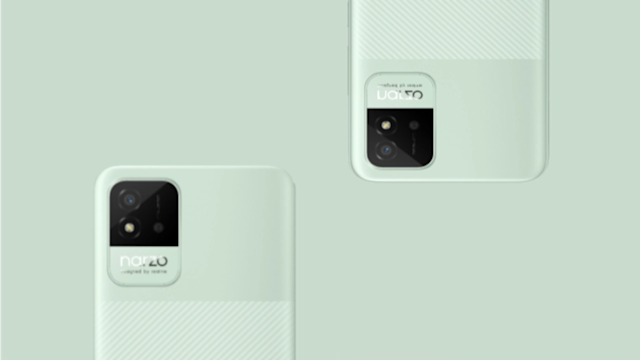
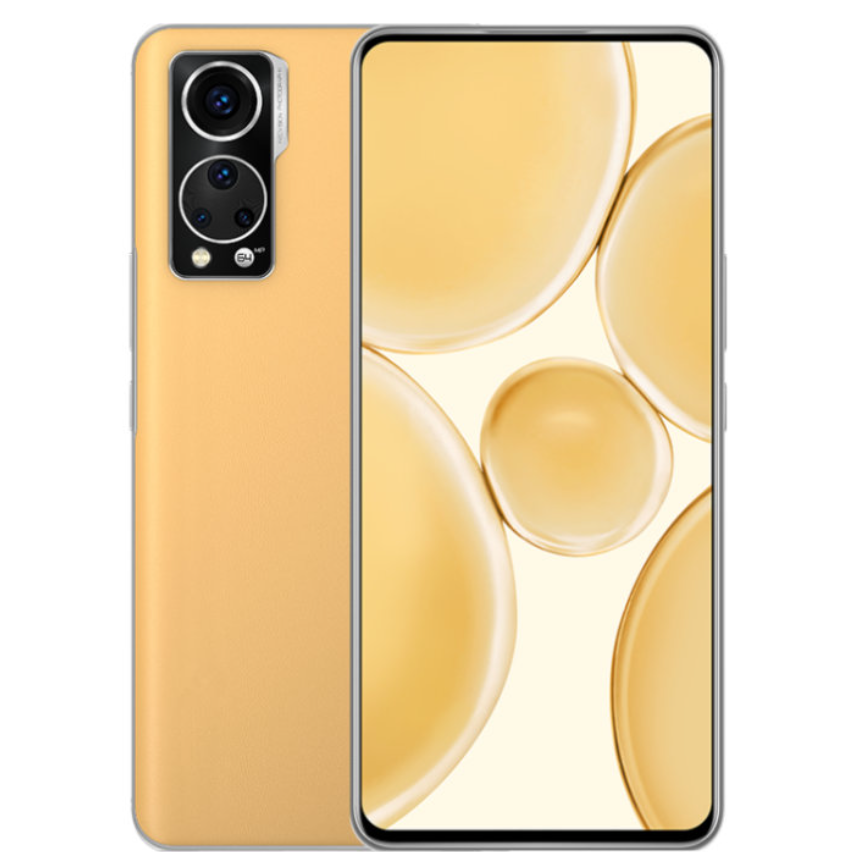
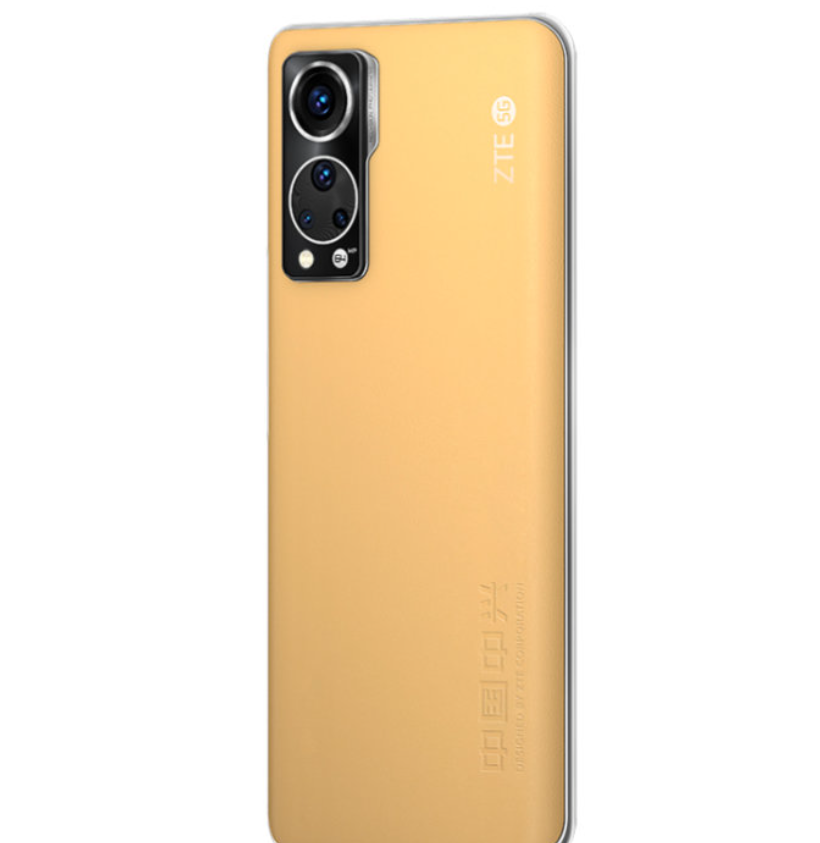
OUKITEL K15 Plus is one of the best smartphones in its price segment. This latest addition from OUKITEL is aptly marketed as a ‘Power Bank with Display’, as it features a massive 10000mAh battery that gives you a standby time of 774 hours. The smartphone gives you up to 68 hours of call and 54 hours of playtime with one single charge. This means you may have to charge your smartphone only once in every 3 to 4 days. Moreover, with a reverse charging function, the smartphone can be literally used as a power bank to charge other phones.
OUKITEL K15 Plus features a large 6.52-inch punch-hole display and comes with a 720 X 1600p resolution and a 20:9 aspect ratio. The scratch-resistant full view display gives you an immersive experience while watching movies and videos. The smartphone sports a classic rubber textured back and a smooth-edged body, encased in a beautiful metal frame. Moreover, even though it carries a 10000mAh battery, it is lightweight and easy to handle compared to other phones in the same segment.
The smartphone features a triple rear camera setup with a 13MP sensor for the main camera and a 5MP AI-powered sensor for your selfies. Powered by the MediaTek 6761 Quad-core processor, the smartphone comes with 3GB RAM and 32GB ROM, expandable up to 256GB. Other interesting features include Facial ID and Fingerprint sensor, 3.5mm earphone jack, NFC, and multiple navigation systems like GPS and GLONASS, etc.
Generally retailing for $188, you can now buy OUKITEL K15 Plus at a discounted price of $120.99 only at AliExpress. Please note that this is a limited-time offer. So place your order asap.
For more information on such exciting deals and offers check out ourdeals hub.
* Please Note: When you buy something using the links in our articles, we may earn a small commission at no cost to you.
Amazfit Stratos Smartwatch embodies the perfect combination of design and technology. Its simple yet graceful design is reflected through the 1.34-inch reflective color display and delicate markers surrounded by a hand-polished ceramic bezel.
The smartwatch is 50m water-resistant. This means you can dive into a swimming pool or swim in the open seas without worrying about damaging the smartwatch. Moreover, the multiple sports mode function gives more than 16 different activity tracking options, making the watch suitable for almost everyone. Run, Walk, Swimming, Triathlon, Trail Run, Climb, Soccer, Tennis, etc are some of the modes available along with daily activity tracking.
However, the highlight of Amazfit Stratos is its VO2max Fitness Level Analysis. This premium function gives you important physiological information which is generally used by professional athletes. With this function, you can take your training to the next level and get professional and tailored guidance for your fitness and athletic goals.
The smartwatch comes with 5-day battery life on normal mode and a 35-hour battery life on a continuous sports mode. Additionally, the onboard music function lets you leave your phone behind as you can simply store your favorite music on the smartwatch and then enjoy it via Bluetooth headphones.
Amazfit Stratos Smartwatch is the winner of the RedDot Design Award 2018 and the Good Design Award 2018. Generally retailing for $100, you can now buy this smartwatch for $68.33 only. This is a limited-time offer. So place your order asap.
For more information on such exciting deals and offers check out ourdeals hub.
* Please Note: When you buy something using the links in our articles, we may earn a small commission at no cost to you.
Earlier this year, the OnePlus 9 series had been launched as the company’s 2021 flagship lineup. While the company has been known to launch a T series model as well later in the year, a tipster had suggested that there might not be a OnePlus 9T this year. So, we might have to wait for the next gen 10 series that would launch in 2022.
But according to a LetsGoDigitalreport, graphic designer Jermaine Smit, aka ConceptCreator, didn’t wish to wait and released his own concept of the OnePlus 10 Pro. Smit also uploaded his concept render on his YouTube channel. As per his concept, the high end model will be equipped with a 6.7 inch AMOLED display with 3216x1440px resolution with 120Hz high refresh rate. Keep in mind, this is just a concept and is not the actual specs of the device.
Notably, the concept model even appears to sport an under display camera. Furthermore, we can observe a curved edge display from the sides where the alert slider can also be seen. As per Jermaine, the OnePlus 10 Pro concept arrives with a stylish faux leather finish as well. On the rear, a large circular camera module can be observed with two primary images sensors, with one likely being a wide angle main camera, while the other is the ultra wide angle lens.
Smit’s 10 Pro concept sports a 108 megapixel camera sensor paired with a powerful xenon flash. Interestingly, the ring module was also appears to be inspired by the Hasselblad 500c analog camera from 1957. ConceptCreator also imagines the new flagship with a Bionic Lens. While OnePlus is not known for being a class leader in smartphone photography, its three year contract with Hasselblad is an indicator of its increasing focus in camera performance.
We use cookies on our website to give you the most relevant experience by remembering your preferences and repeat visits. By clicking “Accept”, you consent to the use of ALL the cookies.
This website uses cookies to improve your experience while you navigate through the website. Out of these, the cookies that are categorized as necessary are stored on your browser as they are essential for the working of basic functionalities of the website. We also use third-party cookies that help us analyze and understand how you use this website. These cookies will be stored in your browser only with your consent. You also have the option to opt-out of these cookies. But opting out of some of these cookies may affect your browsing experience.
Necessary cookies are absolutely essential for the website to function properly. This category only includes cookies that ensures basic functionalities and security features of the website. These cookies do not store any personal information.
Any cookies that may not be particularly necessary for the website to function and is used specifically to collect user personal data via analytics, ads, other embedded contents are termed as non-necessary cookies. It is mandatory to procure user consent prior to running these cookies on your website.