Earlier today (26th July 2021), Huawei officially announced that it would be launching the new Smart Screen V 75 Super on 29th July 2021. This would be the company’s first TV to sport Mini LED display and will also support Harmony OS 2.0.
The Chinese tech giant shared this news on its official Weibo account, revealing the launch date. According to Yu Chengdong, CEO of Consumer BG at Huawei, the new Smart Screen V 75 Super will feature 46,080 SuperMini LEDs. This will enable it to offer more realistic images with accurate details along with the ability to fine tune as well. For sound, the upcoming TV will offer a 20 unit Dewar theater level sound field.
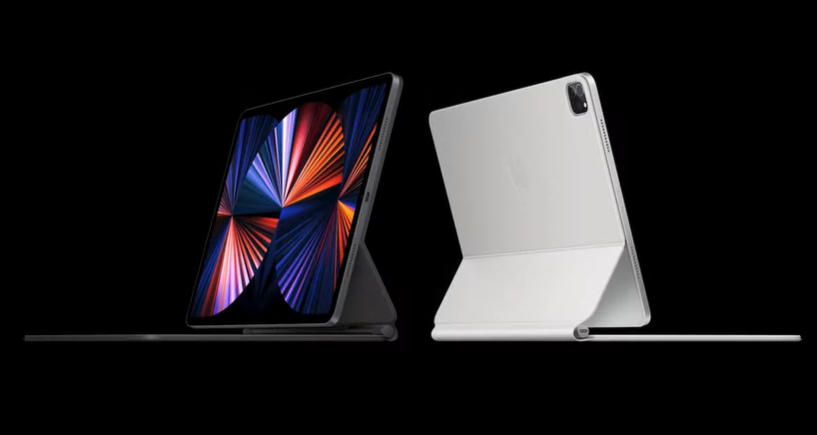
Unfortunately, the company has only announce the launch date as of right now and finer details regarding this TV is still unknown. Although, this marks a major shift in the market with various brands commercializing on Mini LED display technology. Even the 12.9 inch iPad Pro that launched earlier this year featured this display panel and it is expected that Apple will also launch a MacBook with Mini LED as well. For those unaware, Mini LED brings various improvements and benefits over conventional LCD panels.
This includes offering higher brightness, with a wider color gamut and higher contrasts. Furthermore, it also consumes lesser power among other benefits. Notably, the July 29 launch date is the same day in which the brand will be launching its latest flagship series, the Huawei P50 lineup. So stay tuned for more updates.
Apple might just be planning on bringing Face ID system to the Mac. Known Bloomberg journalist Mark Gurman believes that Face ID will be available in Macs within a “couple of years.”
Gurman shared this news on the latest edition of his Power On newsletter. In this, he stated that the Cupertino based giant’s goal is to have all of its products eventually support Face ID. In other words, even low end iPhone models like the iPhone SE and iPad Air that currently feature Touch ID will soon arrive with facial recognition technology in the near future. Gurman added that Touch ID is still a key factor in its low end products since it is a cheaper alternative than Face ID.
However, this might be changing in a few years. He added that “I expect all iPhones and iPads to transition to Face ID,” also stating that “Eventually, a camera embedded in the screen would help differentiate Apple’s pricier devices by eliminating the notch at the top. The facial recognition sensor gives Apple two central features: security and augmented reality.” In other words, the company might also be removing the notch on the iPhones during this shift.
The notchless iPhone could debut as early as 2023. Notably, Gurman had also previously reported that Apple’s recently launched redesigned iMacs were initially slated to feature Dace ID. But unfortunately, its implementation was delayed. Apparently, the primary reason for the delay was due to the Mac laptops screens, which are significantly thinner than the ones found in iPhones and iPads. This would make it harder for the brand to fit in key components like depth sensors for Face ID.
Earlier today (26th July 2021), Redmi had teaser the arrival of a new variant of its K40 Game Enhanced Edition smartphone. The teaser arrived with an “Operation Inverse Scale” title and now, a listing on an e-commerce platform has revealed that its an upcoming new color option for the device.
Unfortunately, the company has not directly revealed the design or color scheme of the new color variant. Although, looking at the teaser, we can assume it will have red as its primary color with shades of dark gray or black. The helmet of the figure in the teaser also hints at a red LED lights that is housed on the top and bottom of the rear camera module.
Furthermore, the device was also found listed on popular Chinese e-commerce website, JD.com, in which it was revealed that the smartphone will arrive in a single memory configuration, namely 12GB of RAM and 256GB of internal storage. Notably, the Chinese smartphone maker’s K40 Game Enhanced Edition Inverse Scale color will also be priced at 2,699 Yuan (roughly 416 US Dollars), which is about 200 Yuan (roughly 31 US Dollars) higher than the regular version. At the moment, the device is available for pre bookings.
Earlier this month, two Motorola phones with model numbers XT2143-1 and XT2153-1 were spotted at the TENAA certification site in China. These listings belong to the upcoming Motorola Edge 20 and Edge 20 Pro smartphones. Today, the company confirmed that it will be unleashing the Edge 20 series of phones at 7:30 PM (local time) on Aug. 5 in China.
The TENAA listing of both phones and leaked information shared by reliable tipster Evan Blass had revealed that the Edge 20 and Edge 20 Pro will be equipped with a 108-megapixel primary camera. The official poster also hints that the Edge 20 series will sport a 108-megapixel camera.
The Edge 20v and Edge 20 Pro smartphones are expected to arrive with a 6.67-inch FHD+ OLED panel with a 120Hz refresh rate. For selfies, the Edge 20 may come with a 32-megapixel front camera whereas its rear shell may possess a 16-megapixel selfie snapper.
The Edge 20’s rear camera setup may include a 108-megapixel primary camera, a 16-megapixel ultrawide lens, an 8-megapixel telephoto camera with 5x optical zoom. The Edge 20 Pro may feature the same camera setup, but its telephoto lens may support 3x optical zoom.
The Snapdragon 778G is likely to power the Edge 20, while the Edge 20 Pro may come with Snapdragon 870 chip. Both phones may come with up to 12 GB of RAM and up to 512 GB of storage. These devices will come preinstalled with Android 11 OS.
The Edge 20 may house a 4,000mAh battery, whereas the Edge 20 Pro. Both phones are expected to arrive with other common features like an in-screen fingerprint scanner, fast charging, and a Google Assistant button.
Earlier this year, Micromax launched its new IN series of smartphones, debuting the IN 1 smartphone in March. Now, the company is gearing up to launch its successor in the Indian market and has already scheduled an event for the same on 30th July.
Now, just days ahead of the launch event from India’s homegrown firm, a smartphone with codename E7446 has surfaced on benchmarking platform Geekbench, which is believed to be the upcoming Micromax IN 2 or IN Note 2.
As per the Geekbench listing, the smartphone is powered by MediaTek Helio G95 chipset clocked at 2GHz and packs 4GB of RAM. We expect the device to have a couple of more memory variants when it gets launched.
It also reveals that the device will be running the Android 11 operating system out-of-the-box, likely with the brand’s own custom user interface on top. The listing shows a single-core score of 500 and a multi-core score of 1,546 on Geekbench.
A recent leak revealed that the Micromax IN 2 will come powered by Unisoc T610 SoC, so the phone which appeared on Geekbench could be the IN Note 2. To know for sure, we will have to wait for the official launch event in a couple of days.
If the leaks are to be believed, then the upcoming IN 2 smartphone from Micromax will feature a 6.5-inch HD+ LCD display and a waterdrop notch and have a dual-camera setup on the back consisting of a 13-megapixel primary sensor and a 2-megapixel secondary lens. On the front, it will feature an 8-megapixel snapper for taking selfies.
The device is said to be powered by a 5,000mAh battery with 10W charging support. The Micromax IN 1B was introduced with a starting price of ₹6,999 (~$94) and we expect its successor to launch in the Indian market with similar pricing.
A few days ago, OnePlus officially launched its latest Nord series mid-range smartphone in the Indian market, dubbed OnePlus Nord 2 5G. As the name indicates, the phone is a successor to the OnePlus Nord that debuted last year.
Today, the company has started selling the device in India through the online marketplace Amazon and OnePlus.in for the Amazon Prime subscribers and OnePlus Red Club members.
The 6GB RAM + 128GB storage model is priced at ₹27,999 (~$376) while the 8GB RAM + 128GB storage variant costs ₹29,999 (~$403). The 12GB RAM model with 256GB of internal storage is priced at ₹34,999 (~$470). Currently, the device comes in two color options — Blue Haze and Gray Sierra. The third color option — Green Woods, which has a leather-like back finish, will go on sale in India from next month.
Coming to the specifications, the OnePlus Nord 2 5G smartphone features a 6.43-inch Fluid AMOLED Full HD+ display offering 2400 x 1080 pixels screen resolution, a 90Hz refresh rate, and a 20:9 aspect ratio.
Under the hood, the device is powered by a MediaTek Dimensity 1200-AI chipset, coupled with up to 12GB LPDDR4x RAM and 256GB of UFS 3.1 internal storage. It doesn’t come with a microSD card slot, meaning there’s no way to expand the phone’s storage capacity.
In the camera department, there’s a triple-camera setup on the back consisting of a 50-megapixel Sony IMX766 primary sensor with f/1.88 aperture, an 8-megapixel ultra-wide lens, and a 2-megapixel monochrome sensor. On the front side, it features a 32-megapixel Sony IMX615 snapper for taking selfies and video calling.
Connectivity options on the device include 5G, Wi-Fi 6, Bluetooth v5.2, NFC, and USB Type-C port. The phone also comes with an in-display fingerprint sensor for added security. It runs the Android 11 operating system with the company’s own OxygenOS 11.3 custom interface which is based on OPPO’s ColorOS 11.3 after both the companies merged their codebase. The device is powered by a 4,500mAh battery that supports 65W Warp Charge.
iQOO, the sub-brand of Vivo that makes premium smartphones, launched the iQOO 7 5G smartphone in the Indian market back in April. At the time, the device was announced in two color options — Solid Ice Blue and Storm Black.
A few days ago, the company has announced a third color option in the market — Monster Orange. Now, this new iQOO 7 5G in Monster Orange color is available for purchase in India through Amazon and iQOO.com for a price of ₹31,990 (~$430) that offers 8GB RAM and 128GB internal storage variant.
As a part of Amazon’s Prime Day launch offers, the company is providing flat ₹2,000 off with Amazon coupons as well as a 6-month screen replacement. Customers with HDFC Credit or Debit Card can also get a 10 percent instant discount.
The specifications of the smartphone remain the same. It features a 6.62-inch Full HD+ AMOLED display that offers 2400 x 1080 pixels screen resolution, a 120Hz refresh rate, 20:9 aspect ratio, HDR10+ support, up to 1,300 nits brightness, and MEMC.
Underneath, the device comes powered by the Qualcomm Snapdragon 870 octa-core processor. Although it comes with a maximum memory of 12GB, this Monster Orange color variant offers only a single model which packs 8GB RAM and 128GB of internal storage. The phone also supports a liquid cooling system and 6000mm² graphite board that reduces the temperature by up to 11 percent.
As for the photography needs, there’s a 48-megapixel Sony IMX598 primary camera sensor, coupled with a 13-megapixel ultra-wide-angle lens, and a 2-megapixel monochrome depth sensor. On the front side, it features a 16-megapixel camera sensor, allowing users to take selfies and make video calls.
There’s an in-display fingerprint sensor for added security and the phone also comes with 4D Game Vibration 3.0 for improving the gaming experience. It is running the Android 11 operating system out-of-the-box with Funtouch OS 11.1 custom user interface. The phone is powered by a 4,400mAh battery and supports 66W fast charging technology.
Android flagship smartphones have been focusing on fast charging technology for the past few years and the technology has advanced so much that some brands are now set to offer more than 100W fast charging support on their premium phones.
Technology giant Apple, despite being one of the leading smartphone makers, has been lacking when it comes to offering new technologies and trendy features on its devices. It was the late entrant in supporting 5G connectivity on its device and still lacks way behind other major smartphone makers when it comes to fast charging technology.
Apple iPhone 13 Pro Render
However, it seems that the Cupertino-based tech giant plans to increase the charging speed for the coming iPhone lineup. As per the report coming from MyDrivers, the iPhone 13 lineup could have support for 25W fast charging.
While 25W fast charging is still no match compared to the 65W fast charging support offered by several Android smartphone manufacturers, it is better than the 20W charging that the current iPhone 12 series offers.
If the reports are to be believed, then the upcoming Apple iPhone 13 series will come powered by the new Apple A15 Bionic processor with six-core design. This time, the company is expected to offer a 1TB storage model as well, doubling the storage space in the top-end option which currently maxes out at 512GB.
The phones are expected to come with more advanced displays, improved cameras, and a smaller notch compared to the current model. We previously reported about two new color options for the upcoming phones — Sunset Gold and Rose Gold. We expect to know more about the phones in the coming weeks and months as the launch date nears.
Samsung has released a video advert for the Galaxy Chromebook Go, and while the title of the video doesn’t say, it is specifically for the LTE version. We noticed that the ad reveals one important detail, actually a feature the standard WI-Fi model doesn’t have.
At the 0:40 second mark of the video, we see the boy interact with the display via touch input which means the device has a touchscreen. This feature is not available on the Wi-Fi version and comes as a surprise as the official spec page doesn’t mention a touchscreen is available on select models.
With the addition of a touchscreen, the LTE version of the Galaxy Chromebook Go may cost significantly more. The notebook is also expected to be available with 8GB of RAM and in 64GB and 128GB storage options. With these specs, the highest-specced variant of the Galaxy Chromebook Go will definitely cross the $400 mark. If you decide to pick up a USI stylus, then you may be spending as much as $450.
The Galaxy Chromebook Go has a 14-inch 1366 x 768 TFT display. It is powered by an Intel Celeron N4500 processor and packs a 42.3Wh battery that should provide up to 12 hours of usage on a single charge. It has Wi-Fi 6, Bluetooth 5.1, and a nano-SIM slot for the LTE version. There are two USB-C ports, a single USB A (3.2) port, and a mic/headphone combo jack. Samsung ships it with a 45W USB-C power brick.
We still don’t know when the LTE version will be available but once it is available for purchase, we will be sure to let you know.
After Realme, even Xiaomi decided to launch a “GT” phone. We are talking about the POCO F3 GT, which is actually a gaming-centric phone and flagship killer offering amazing specifications at a modest price. Is the GT solution by Xiaomi able to compete with the Realme GT which is actually the first GT phone ever? It surely belongs to the same segment, but which are the differences between their specifications and which one is better? This comparison between POCO F3 GT and Realme GT will try to let you find the answers to these questions.
Xiaomi POCO F3 GT vs Realme GT
Xiaomi POCO F3 GT
Realme GT
DIMENSIONS AND WEIGHT
161.9 x 76.9 x 8.3 mm, 205 g
158.5 x 73.3 x 8.4 mm, 186 g
DISPLAY
6.67 inches, 1080 x 2400p (Full HD+), OLED
6.43 inches, 1080 x 2400p (Full HD+), Super AMOLED
Triple 64 + 8 + 2 MP, f/1.7 + f/2.2 + f/2.4
16 MP front camera
Triple 64 + 8 + 2 MP, f/1.8 + f/2.3 + f/2.4
16 MP f/2.5 front camera
BATTERY
5065 mAh, fast charging 67W
4500 mAh, fast charging 65W
ADDITIONAL FEATURES
Dual SIM slot, 5G
Dual SIM slot, 5G
Design
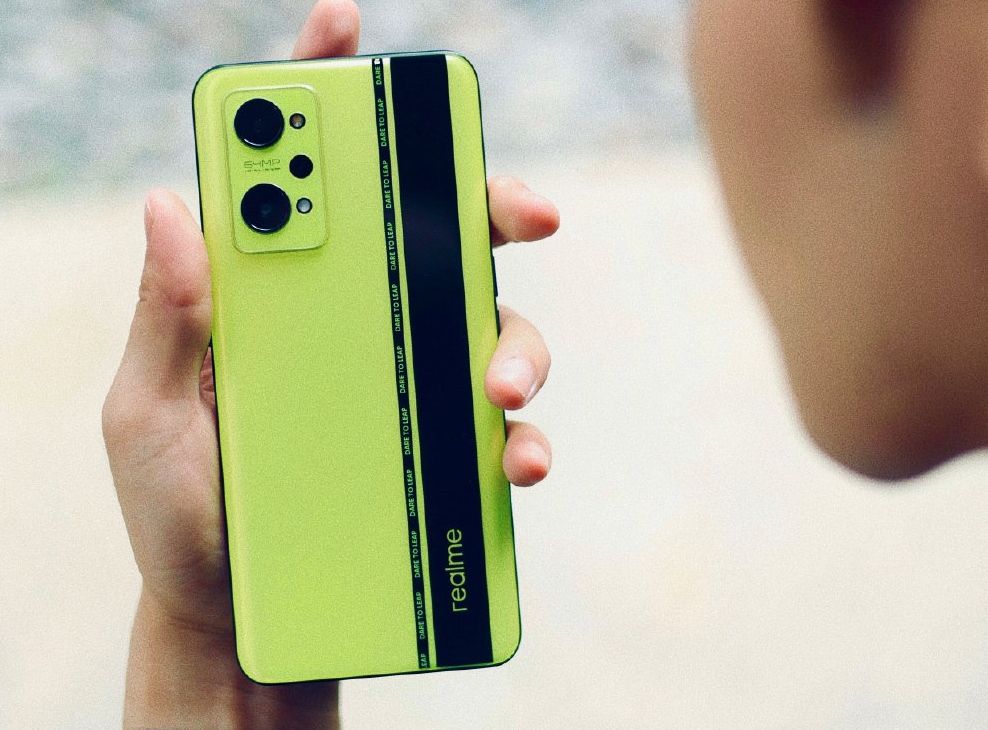
If we consider the Racing Yellow color variant of the Realme GT, it is undoubtedly a more attractive phone when it comes to aesthetics. It has a leather rear cover with a glass stripe on the left making it very suggestive and original: it reminds me of a sports car and that is where the GT moniker comes from. Further, the Realme GT is a more compact phone because it packs a smaller battery and it comes with a smaller display. The phone also comes in more affordable color options sporting a glass back just like the POCO F3 GT. On the other hand, POCO F3 GT offers physical maglev triggers which will please gamers a lot.
Display
Are you looking for the most advanced display? If so, go for the POCO F3 GT without thinking twice. It has an AMOLED display that is able to show up to one billion colors, unlike the Realme GT. Further, it has the HDR10+ certification improving the quality on streaming platforms. Despite the POCO F3 GT has a superior display, Realme GT is all but disappointing. The phone has an AMOLED display as well, with a 120 Hz refresh rate. But unfortunately, it has an inferior color accuracy. On the other hand, it has an in-display fingerprint reader, while the fingerprint scanner is side-mounted on the POCO F3 GT.
Specs & Software
The best hardware department belongs to the Realme GT: it is fueled by the Snapdragon 888 mobile platform paired with up to 12 GB of RAM and up to 256 GB of internal UFS 3.1 storage. With the POCO F3 GT, you get an inferior but still amazing MediaTek Dimensity 1200 chipset, as well as a max of 8 GB of RAM. So, not only the SoC is inferior, but you also get a lower quantity of RAM: there is no doubt about the fact that Realme GT is more powerful. The phones run Android 11 out of the box.
Camera
These phones are flagship killers but not camera phones. Their camera setups are very similar and they are midrange-class. POCO F3 GT and Realme GT are equipped with a 64 MP main camera, an 8 MP ultrawide sensor, and a 2 MP macro camera, as well as a 16 MP front camera. The photo quality is more or less at the same level. If you need a camera phone, you’d better focus on something else because these phones are not what you are looking for.
An important advantage of the POCO F3 GT over the Realme GT is the battery. The phone packs a bigger 5065 mAh battery, while the Realme GT has just 4500 mAh. This should allow the POCO F3 GT to last more on a single charge, even though we had no chance to test the battery life as it just went official. The POCO F3 GT supports 67W fast charging, while its rival has 65W fast charging, but it charges faster because its battery is smaller. None of these devices support wireless charging.
Price
The Realme GT carries a €399/$470 starting price tag in the global market. The POCO F3 GT is not sold globally and it launched just in India with a starting price of about €310/$365 at the actual change. Overall, the Realme GT offers a superior hardware department and a better design, but the POCO F3 GT has a bigger battery, a better display, and a physical trigger which are very useful for gamers. Which one would you pick?
The OnePlus Nord 2 and the POCO F3 GT both launched last week, and for a lot of folks who plan to pick up a premium mid-range smartphone, both devices will definitely be on their shortlist.
The two phones offer a lot at a reasonable price such as AMOLED displays, high refresh rates, powerful processors, and super fast charging. However, there are significant differences that will sway buyers to one side or serve as dealbreakers. For this week’s poll, we want to know which of these two devices you prefer.
Is it the OnePlus Nord 2 or the gaming-centric POCO F3 GT? Please take the poll and let us know which device you prefer. Also, drop a comment telling us what you think about the two phones.
In-flight engine failure can occur due to several factors, and it becomes an emergency as the pilots struggle to bring the aircraft safely to land. With such an increased workload for the pilots, committing errors could be heightened, and this may prove fatal.
With the raft of autonomous driving and flying applications currently in the tech space, Garmin International has announced its Smart Glide flight safety tool to help pilots effectively respond to emergencies resulting from an engine failure.
The Garmin Smart Glide will be available from August 2021 on the GTN Xi series navigators. It will be available as a software upgrade for free but the Smart Glide activation button sells for $129.
The Garmin Smart Glide will reduce the pilot’s emergency workload by automatically engaging the autopilot and steering the aircraft toward the nearest airport.
In the event of an engine failure, the pilot is faced with several decisions and precise calculations to ensure the safety of the passengers and crew. These tasks include putting the aircraft on the correct glide angle, setting the autopilot, trying to restart the engine, looking for the nearest airport, and sending off a Mayday message, while also keeping a calm mien.
The Garmin Smart Glide works with other navigational technologies to seamlessly and efficiently take over some of the emergency tasks both automatically and manually.
The device uses all the necessary details to set the correct glide angle and speed while also interfacing with Flight Control and providing important details to the pilot. In the situation where there is no airport within range, the Smart Glide notifies the pilot and continues searching. It also helps the pilot to switch the transponder to transmit the 7700 emergency code quickly.
The Garmin Smart Glide tool is just one of the fast-expanding array of autonomous flight tools from the stable of Garmin.
There is an increasing pursuit by smartphone manufacturers to extend battery life and provide quick wired or wireless charging solutions. The approach has seen some innovative solutions from OEMs like Apple’s Magsafe Power Pack, which the US company has already announced. Realme is also known to have gotten a patent for a similar upcoming device called the MagDart.
A recent patent filing has shown that Chinese brand OPPO may be considering wireless charging pads for its devices. The full details and technical architecture of the product are not known fully. However, it is speculated that the Wireless Charging Pads could charge multiple devices simultaneously. This could offer challenges on its own, as we have seen with wireless chargers that do not generally pack enough bite than several ultra-fast wired charging solutions prevalent in the market.
Therefore, having a device charging multiple smartphones wirelessly at the same time could be unduly long. Apple’s MagSafe Power Pack can only offer 15W charging when operating wirelessly, much lower than Qi chargers.
On the whole, wireless charging solutions for smartphones can be suboptimal and slower than a wired charging system. The Qi wireless charging solution, already prevalent in the market, also encountered some serious problems. Qi chargers are prone to power loss during transfer due to improper or inadequate alignment.
Even though not much is known about the patents, the concept of multiple wireless charging of your devices looks exciting and could be attractive when it is eventually unveiled. Not much can be said about timelines for the actualization of the OPPO patents.
We remain in the realm of speculation on the possible release of multiple wireless charging devices. OPPO hasn’t made any statements yet concerning its plans for the wireless charging pads.
The July 2021 security update for the Samsung Galaxy A80 has begun to roll out a few days ago. The July 2021 update for the Galaxy A80 is ongoing simultaneously in several European markets and aims to provide a more robust security architecture for the device.
Samsung began the July 2021 security update for its Galaxy devices (smartphones and tablets) at the beginning of the month. The Galaxy S10 series was the first to get the update, including the July 2021 security patch. The latest updates are meant to fix several privacy and security-related vulnerabilities in the Galaxy lineup of smartphones and tablets.
The Firmware version of the A80 July 2021 Security Update is A805FXXS6DUG3. The Firmware can be installed on the Samsung device via an update or manually downloaded and installed. Galaxy A80 owners should navigate to Software Update from their settings app, download and install the update on their devices.
The Firmware for the July 2021 security updates can also be directly downloaded from Samsung’s website and installed on the device.
The Samsung Galaxy A80 already has two OS upgrades since its launch in 2019. The Galaxy A80 came with Android 9 Pie, which was upgraded to Android 10 in 2020 and Android 11 this year. It is unlikely that the A80 will have any further OS upgrade, as we await the stable version of the latest Google Android 12 operating system.
While the July 2021 security update for the Galaxy A80 has been confirmed in most parts of Europe, it is expected that the process is ongoing in other markets globally. The updates and the Security Patch will further enhance the overall security of the Galaxy A80 devices.
ZTE has an event scheduled for July 27 and it is for the launch of the Axon 30 5G smartphone. It turns out the smartphone is not the only product it will unveil on that day. The Chinese manufacturer will also announce two new TWS earbuds – the ZTE Buds and LiveBuds Pro.
The ZTE Buds and ZTE LiveBuds Pro will join the LiveBuds announced last year and the LiveBuds SE announced in April, bringing the total number of ZTE’s TWS earbuds to four.
According to a Weibo post by ZTE, the LiveBuds Pro has six-microphone (three on each earbud) noise reduction and a small form factor, while the ZTE Buds has long battery life. The attached image also gives us a good look at the design of the two pairs of earbuds.
Both earbuds will be available in white but their designs are different. The ZTE Buds has an open-fit design with long stems. Its carrying case is also taller but narrower. The LiveBuds Pro has a closed design with silicone tips that provide passive noise cancellation. There are also LEDs on the earbuds and the carrying case.
While both earbuds will definitely cost more than the LiveBuds and LiveBuds SE, we still expect them to be affordable.
OPPO will be announcing the OPPO Watch 2 smartwatch on July 27 in China. Ahead of the launch, reputed tipster Evan Blass has shared leaked images of the Watch 2 to reveal its design.
The images show that the OPPO Watch 2 will carry support for calling like the predecessor OPPO Watch from last year. Probably, the Watch 2 will come with e-SIM support in China. There was no e-SIM support on the global version of the OPPO Watch. Hence, it is unclear whether its successor will have calling support for the global markets.
Another image shows Watch 2 displaying map directions. This indicates that the smartwatch will feature a built-in GPS like its previous generation. The images also show that the Watch 2 sports a curvy display. The Chinese manufacturer is yet to share the specifications of the Watch 2.
Past reports have revealed that the OPPO Watch 2 will be driven by the Snapdragon Wear 4100 chip and Apollo 4s. It is expected to offer other features like LTE support, stress detection, a new OPPO Relax app, ColorOS, and RTOS for extended battery life.
The Watch 2 is expected to arrive in 42mm and 46mm sizes, and it is likely to arrive in multiple colors such as Mine Shaft, Gold Sand, Water Leaf, and Matisse. The company is also rumored to be working on another smartwatch named OPPO Watch Free. Unfortunately, the rumor mill is yet to reveal any details of this device.
In January, Samsung unveiled the Galaxy S21, Galaxy S21+, and Galaxy S21 Ultra. It is speculated that the S22 lineup will be made official at the beginning of the coming year. A fresh leak has revealed the model numbers of the S22 series of smartphones.
According to Sammobile, the tentative names of the S22 models are Galaxy S22, Galaxy S22+, and Galaxy S22 Ultra. These devices are likely to carry model numbers such as SM-S901x, SM-906x, and SM-S908x.
To recollect, the S21 series had model numbers such as SM-G991x, SM-G996x, and SM-G998x. The South Korean company has been using SM-G900x for its S-series of flagship phones since the Galaxy S5 back in 2014. As can be seen, the South Korean company has seemingly decided to use S instead of G in the model numbers of S22 models.
Samsung Galaxy S22 Ultra concept render by LetsGoDigital
It was reported last month that the Galaxy S22 may feature a 6.06-inch or 6.1-inch display, the Galaxy S22 may feature a 6.55-inch or 6.66-inch screen, and the Galaxy S22 Ultra may come with a 6.8-inch or 6.81-inch display. The S22 and S22+ may feature a plastic rear, which indicates that the S22 Ultra could be coming with a glass back.
Samsung may reintroduce vapor chamber cooling for the S22 lineup. The next S-series flagships are also expected to arrive with 65W fast charging support. The S22 Ultra may come with a 200-megapixel penta-lens camera system with Olympus branding. It is speculated that the S22’s triple camera setup may include a 50-megapixel primary camera, a 12-megapixel ultrawide snapper, and a 12-megapixel telephoto lens with 3x optical zoom.
Samsung is reportedly testing an Exynos chip with AMD GPU. Probably, the S22 series could be the first Samsung phones to feature the new AMD-powered Exynos SoC. As far as launch is concerned, the South Korean company may unleash the S22 lineup in January 2022.
It was reported in the previous week that Honor is gearing up to launch a new tablet called the Honor Tab V7 Pro. At the same time, a leaked image of a press release that was shared by a Chinese tipster revealed that the tablet will be powered by the upcoming MediaTek Dimensity 1300T. The title of the PR read that the Dimensity 1300T powered Honor tablet will offer a flagship experience. According to MyDrivers, the Taiwanese chip maker has confirmed that it was a fake image.
While the Honor V7 Pro tablet is expected to debut on Aug. 12, it is unclear which chipset will be present under its hood. Nothing much is known about the tablet yet. The teaser video released by Honor revealed that the Honor Tab V7 Pro an oval-shaped camera module and blue colored leather back. The design of the Tab V7 Pro suggests that it could be a high-end tablet.
Honor Tablet V6
Honor has already confirmed that it will be launching the Honor Magic 3 series of flagship phones on Aug. 12. It will be powered by the Snapdragon 888+ chipset. The tipster also claimed that apart from the Magic 3 and Tab V7 (Pro), the company will also announce the Honor X20.
The tipster claimed that the tablet will carry support for 1200p resolution and a 90Hz refresh rate. As far as the Honor X20 is concerned, it is expected to cost 2,000 Yuan more than the Honor X20 SE, which debuted with a starting price of 1,799 Yuan. Unfortunately, there is no information on the specs of the X20.
Reports have claimed that there will be four Magic3 models such as Magic3, Magic3 Pro, Magic3 Pro+, and Magic3 SE. A reliable tipster recently claimed that the Magic3 SE will be like the Mate 40, whereas the Snapdragon 888+ SoC powered Magic3 will be like the Mate 40 Pro.
Earlier this month, Honor launched the EarBuds 2 SE in China with features like ANC and up to 32 hours of battery life. Initially, the company launched two standard color variants of the earbuds, the Magic Night Black and Iceland White color. Now, Honor has launched a custom model of the Honor EarBuds 2 SE where buyers can get printed their choice of customized sports icon on the bud’s charging case.
Those who are willing to give their Honor EarBuds 2 some sporty feel can head to the Honor Mall app and can choose between 13 types of custom sports icons. These icons include popular sports games such as weightlifting, judo, table tennis, karate, fencing, shooting, beach volleyball, equestrian, and others.
This is quite similar to what Apple is offering with its engraving feature. For those who are unaware, Apple also offers personalization options where buyers can choose between emojis or custom text to get it printed on the bud’s charging case.
Interestingly, both Apple and Honor are offering custom personalization for free of cost. Getting back to Honor, the Honor EarBuds 2 SE is priced at CNY 469(~$73), and even after engraving the custom sports icon, it can be picked up for the same price.
Regarding its specs, the EarBuds 2 SE comes with an Apple AirPods Pro-like design with a slightly elongated stem. Its major highlight is the Active Noise Cancellation which offers an undisturbed music listening experience. It has touch controls and a battery that can last for up to 32 hours. It also supports fast charging where 10 minutes of charging can offer up to 4 hours of music listening.
Oppo has silently launched the all-new A93s 5G smartphone in China. The Oppo A93s 5G comes in the entry-level segment and offers specs like a 90Hz display, 48MP triple cameras, and a 5,000mAh battery.
The Oppo A93s 5G comes in the sole 8GB RAM and 256GB storage variant priced at CNY 1999(~$308). It has three color variants – White peach soda, Summer Night Galaxy, and Early Summer Guanghai(Chinese translated names). The device will go on sale later this month on July 30 across China.
Oppo A93s 5G Specifications
The smartphone features a similar design to the Oppo A93 5G which launched earlier this year. It sports a 6.5-inch punch-hole display with a Full-HD+(1080 x 2400 pixels) resolution. It has a 90Hz high refresh rate and supports the DCI-P3 color gamut. The screen has 600 nits of peak brightness.
As for cameras, the smartphone has an 8-megapixel single camera at the front placed at the top left corner. It has a triple camera system at the rear with a 48-megapixel primary lens, a 2-megapixel portrait camera, and a 2-megapixel macro sensor.
It comes powered by the MediaTek Dimensity 700 chipset paired with 8GB of RAM and 256GB of onboard storage. Oppo has offered a microSD card slot for additional storage. It packs a 5,000mAh battery with 18W fast charging support.
The smartphone has a five-fold three-dimensional heat dissipation system for maintaining the cool while playing heavy games. It has a side-facing fingerprint scanner and supports face unlock for added security. It runs on ColorOS 11.1 based on Android 11 out of the box.
We use cookies on our website to give you the most relevant experience by remembering your preferences and repeat visits. By clicking “Accept”, you consent to the use of ALL the cookies.
This website uses cookies to improve your experience while you navigate through the website. Out of these, the cookies that are categorized as necessary are stored on your browser as they are essential for the working of basic functionalities of the website. We also use third-party cookies that help us analyze and understand how you use this website. These cookies will be stored in your browser only with your consent. You also have the option to opt-out of these cookies. But opting out of some of these cookies may affect your browsing experience.
Necessary cookies are absolutely essential for the website to function properly. This category only includes cookies that ensures basic functionalities and security features of the website. These cookies do not store any personal information.
Any cookies that may not be particularly necessary for the website to function and is used specifically to collect user personal data via analytics, ads, other embedded contents are termed as non-necessary cookies. It is mandatory to procure user consent prior to running these cookies on your website.