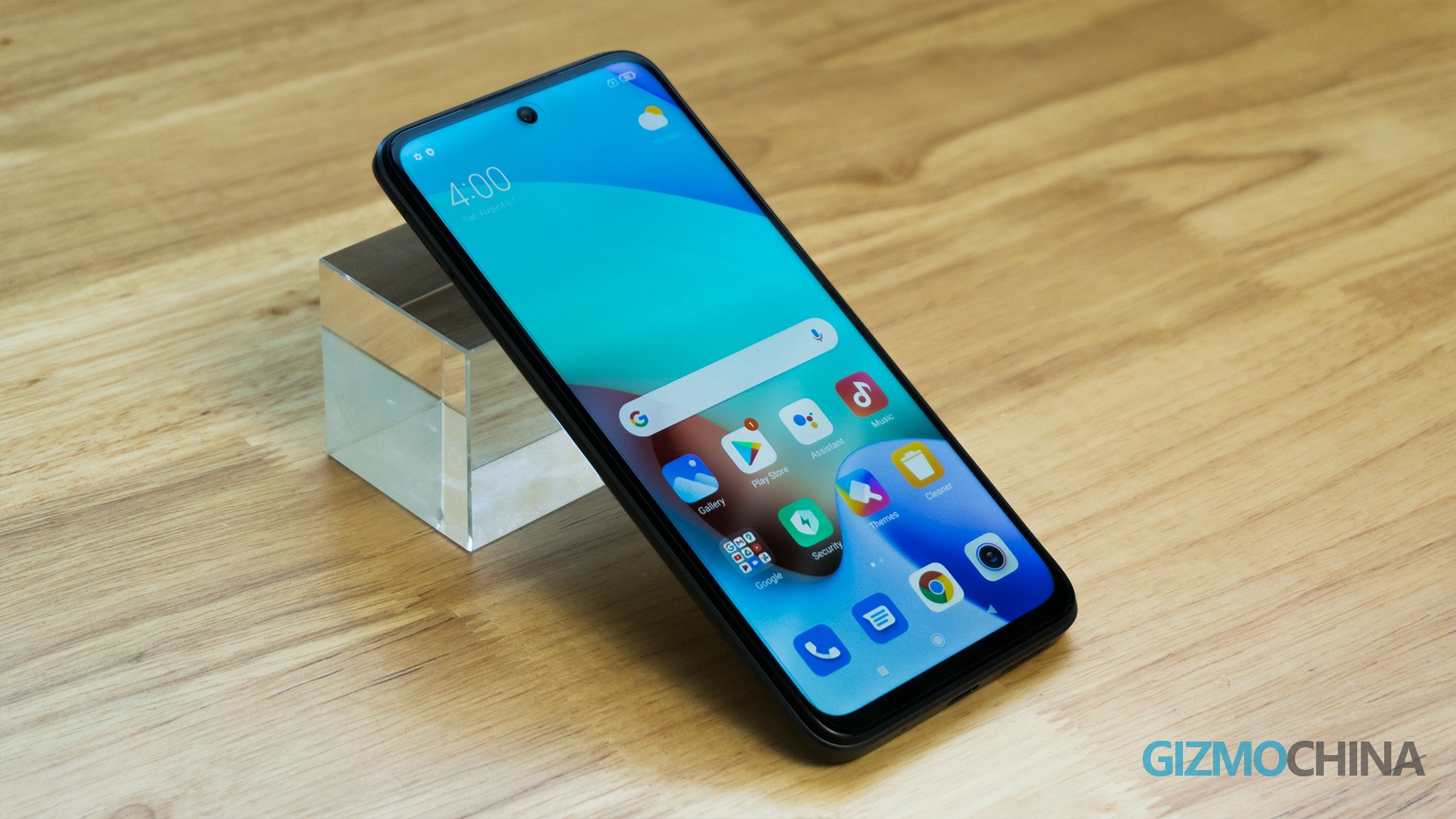
Xiaomi unveiled MIUI 12.5 Enhanced Edition at the Xiaomi MIX 4 launch event. Within one and a half months, the company has finished the rollout of this software to the first batch of eligible devices in China. Hence, it has now announced its plans for the second batch.
According to the official announcement post on Xiaomi Community China, a total of 7 smartphones are part of the second batch to receive the MIUI 12.5 Enhanced Edition update. Almost all of these handsets are Redmi Note models, except for one.
MIUI 12.5 Enhanced Edition Second Batch Devices
Redmi Note 8
Redmi Note 9 4G
Redmi Note 9 5G
Redmi Note 10 5G
Xiaomi Mi 10 Youth Edition
Redmi Note 9 Pro 5G
Redmi Note 10 Pro 5G
The above-listed phones are scheduled to start receiving ‘Stable Beta’ builds from October 8. If it all goes well, the rollout for all users could happen by the end of next month itself.
Having said that, the firm does say that the update rollout plan may change due to various factors. But at the end of the day, the handsets mentioned above should get the latest version of MIUI sooner or later.
On the other hand, all other smartphone brands are set to release a new version of their mobile software based on Android 12. However, Xiaomi is yet to announce anything regarding it.
OnePlus is reportedly working on the OnePlus 9 RT smartphone, which is said to be an enhanced version of the OnePlus 9R that debuted earlier this year. The handset is expected to arrive in markets like India and China in October. Last month, the alleged Indian variant of the OnePlus 9 RT with MT2111 was spotted in the database of the Bureau of Indian Standards (BIS). Now, a OnePlus phone with a similar model number has bagged 3C certification in China.
The 3C certification of the OnePlus MT2110 reveals that it is a 5G phone, which may ship with a 65W fast charger. The original leak of the OnePlus 9 RT by Android Central had claimed that it will support 65W charging like the OnePlus 9R.
OnePlus 9 RT specifications
The OnePlus 9 RT leaks have revealed that it will be sporting a 6.55-inch Fluid AMOLED display that offers a 120Hz refresh rate and an in-screen fingerprint sensor. It will possess a front-facing camera of 16-megapixel.
The handset may feature a 50-megapixel (Sony IMX766) quad-camera unit. It may draw power from a 4,500mAh battery. It is expected to debut as the company’s first phone with OxygenOS 12 based Android OS. It will be fuelled by the Snapdragon 870 mobile platform.
The OnePlus 9 RT may offer users up to 12 GB of LPDDR4x RAM and up to 256 GB of UFS 3.1 storage. It is speculated that the OnePlus 9 RT will be announced on Oct. 15. At present, there is no information available on the pricing of the device. OnePlus is expected to announce the OnePlus Buds Z2 TWS earbuds alongside the OnePlus 9 RT in October.
Xiaomi-backed Redmi has announced that the brand’s Redmi G 2021 gaming laptop will be officially launched on 22nd September. Ahead of the launch, the Chinese company has shared a teaser poster on social media.
The latest teasers for the Redmi G 2021 gamebook shared by the company reveals that the device will come powered by the AMD Ryzen 7 5800H processor and RTX 3060 dedicated graphics processor, justifying the tag of a gaming laptop.
The company also reveals that the RTX 3060 GPU-equipped laptop can achieve 130W full power consumption, and adds that the actual performance is worth looking forward to.
The AMD Ryzen 7 5800H processor is manufactured based on the Zen3 architecture. The upcoming Redmi G 2021 is said to have support for ray tracking feature which uses the software and hardware algorithms of the graphics card to improve the scattering effect and opacity of objects, thereby bringing more realistic visual effects.
When announcing the launch date for the upcoming laptop, the company had said that its mission is to “popularize high-end products” and added that the forthcoming gaming laptop will offer “invincible high-performance” for better gameplay.
The lineup of this gaming laptop started last year with the Redmi G. It comes in three variants where the base and mid variants are powered by 10th Gen Intel Core i5 H-series processors, while the top model features an i7 chip. Further, the base model has an NVIDIA GTX 1650 GPU, whereas the latter comes packed with GTX 1650 Ti.
As the official launch date is still about a week away, we expect the company to keep sharing more information about the Redmi G 2021 with teaser posters.
It’s been some time since reports about the launch of AirPods 3 true wireless earphones started surfacing online. After several Apple events announcing new products, the AirPods 3 still remains unannounced.
In the latest development, it is claimed that the Apple AirPods 3 have already entered production and the suppliers have also started shipping the product to Apple. It adds that the initial shipments were low.
Apple AirPods 3 Render
The low initial shipments of the third-generation of Apple AirPods TWS earbuds explain why the product wasn’t made official at the iPhone 13 series launch event. Given that Apple has now enough shipments, the company is now expected to officially launch the AirPods 3 earphones by the end of this year.
In that case, we expect the next-generation AirPods to get announced at the launch event next month. While Apple has not yet confirmed this, but the technology giant is speculated to host a new launch event next month which will be focusing on new Mac devices powered by the M1X chipset. We expect the second-generation of AirPods Pro to also get launched along with the third-generation of AirPods.
An image of the upcoming AirPods 3 has already leaked online, revealing the earphones’ design. The earbuds will come with a short stem and a sensor, as well as a microphone on the front. The image showcases the earbuds in the standard White color shade.
It is also expected to come powered by a new chipset and is said to support Apple Music Lossless Audio. Additionally, the earbuds are expected to come with good battery life performance compared to the AirPods 2.
In August, Xiaomi held a global launch event in Europe. Since then, it has been available through Chinese retailer sites like AliExpress. Now, the smartphone is finally available for purchase through regional sites of Mi.com in Europe.
Redmi 10 price in Europe
The Redmi 10 has arrived in Europe in two options such as 4 GB RAM + 64 GB storage and 6 GB RAM and 4 GB RAM + 128 GB storage. In Italy, both variants are priced at €199.90 (~$236) and €299.90 (~$353), respectively. In Spain and Germany, both models cost €179.90 (~$212) and €199.90 (~$236), respectively.
It comes in colors like Carbon Grey, Pebble White, and Sea Blue. The sales of the Redmi 10 will commence on Sept. 16 in Europe.
Redmi 10 specifications
The Redmi 10 has a 6.5-inch LCD panel that offers a Full HD resolution and a 90Hz refresh rate. The Helio G88 chipset powers the device with LPDDR4x RAM and eMMC 5.1 storage. It has a dedicated microSD card slot. The handset runs on MIUI 12.5 based Android 11 OS.
It has a front camera of 8-megapixel, and its rear camera setup has a 50-megapixel main camera, an 8-megapixel ultrawide lens, a 2-megapixel depth sensor, and a 2-megapixel macro camera. It has a 5,000mAh battery that supports 10W charging.
The Redmi 10 is slightly different from the Redmi 10 Prime, which debuted in India recently. The only major difference between the two devices is that the Prime model has a larger 6,000mAh battery.
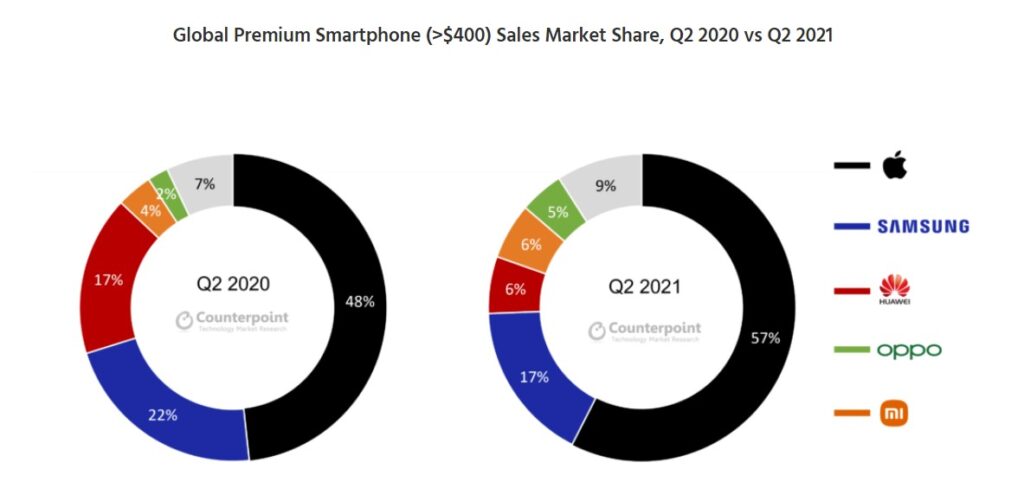
According to the latest report from Counterpoint Research’s Market Pulse service, Apple continues to rule the premium segment with over 50% market share in all major smartphone markets in Q2 2021. Brands like OnePlus, Xiaomi, and Oppo have captured a big share of the market too but behind all this, there’s a big contribution of Huawei‘s controversy that eventually led to its decline.
Source: Counterpoint Research Monthly Market Pulse
What used to be a 17% market share in Q2 2020 is now at 6% globally for Huawei. This decline gave enough room for Apple and Samsung to expand in the segment. While Apple managed to be resilient in component procurement and do well, Samsung was terribly hit by production disruption in Vietnam due to the Covid crisis. However, aggressively priced Samsung Galaxy Z Flip3 and Z Fold3 are helping Samsung take back what they lost in the last couple of months at a quick pace.
Source: Counterpoint Research Monthly Market Pulse
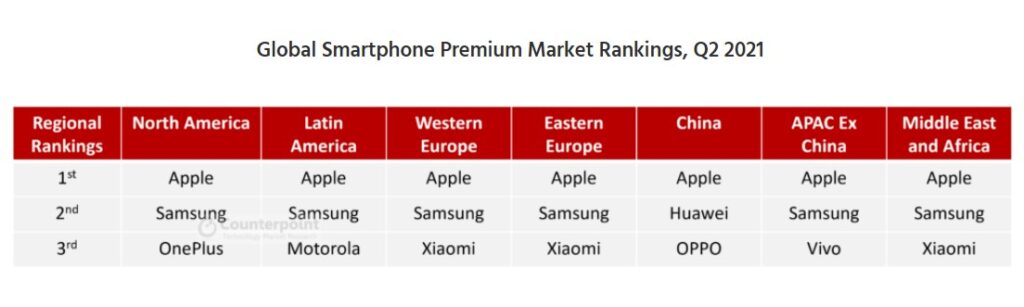
Well, Apple wasn’t the only brand to benefit from the gap that Huawei left in the premium segment, brands like Xiaomi and OPPO have had their fair share of gains too. Both the brands are investing and marketing heavily in the premium segment in Europe and China. Oppo with its Reno and Find series and Xiaomi driving the sales with the Mi 11 series. In fact, Xiaomi has managed to occupy the third spot in multiple markets, with a major chunk in Europe. As for OnePlus, it got a big room after LG‘s exit from the smartphone market and has clinched the third spot in North America.
Honor alongside other Chinese brands will join the segment with its Magic series in China and outside to gain some share in the premium segment, which may further reduce Huawei’s market share.
Despite this decline, Huawei continues to have a presence in the top 3 brands in Q2 2021 in the premium segment globally. With the increasing penetration rate of 5G devices, Huawei will have more chances of growing further, but the downside is the limited outreach the company has.
The premium segment has been opened up and a lot of new entrants are competing against some big names. After the global chipset shortage is resolved, we may see brands ramping up their sales numbers.
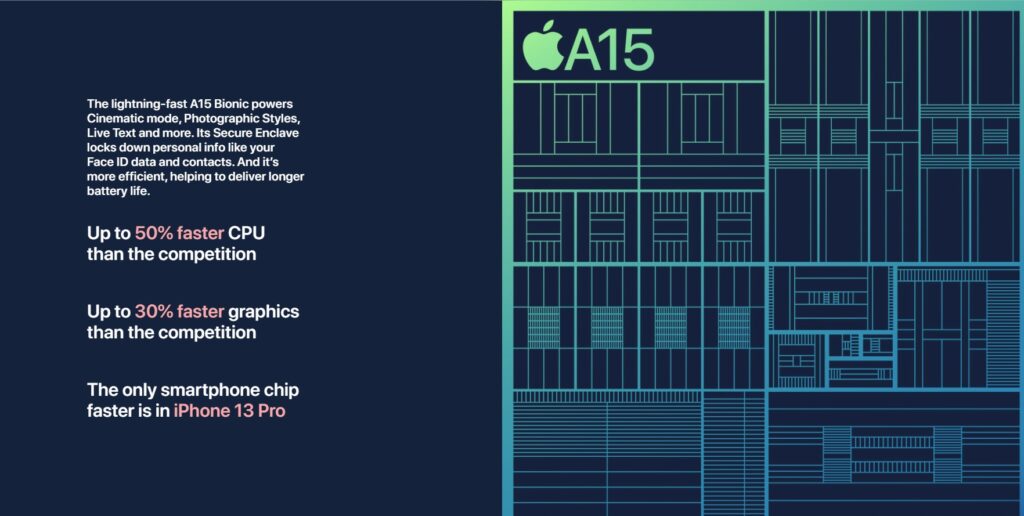
There’s not a shadow of a doubt that Apple draws all the attention from the globe when it comes to its launches. iPhone 13 lineup powered by A15 bionic has been revealed, which is expected to top the charts in terms of performance. Even though it may seem at first that since A15 is mutual to all models, so the performance will be somewhat similar, it doesn’t exactly work like that here. Apple has very clearly highlighted that the only chipset more powerful than the one in iPhone 13 is in iPhone 13 Pro.
Source: Apple
Apple says the new A15 Bionic chipset has two high-performance cores and four cores for energy efficiency. While the CPU appears to be the same across all models, what makes iPhone 13 Pro more powerful is the GPU. The one powering the iPhone 13 mini and iPhone 13 features four cores, and as Apple says, “Up to 30% faster graphics
than the competition”. Whereas on the iPhone 13 Pro and iPhone 13 Pro Max, the GPU features an additional core that takes the total to five cores, for which Apple says, “delivers up to 50% faster graphics performance than any other smartphone chip”.
As highlighted by 9to5Mac, the addition of ProRes codec support explains why GPU used in Pro models is more powerful. Apple has mentioned that the A15 Bionic includes new video encoders and decoders that are capable of shooting and editing video in ProRes. This makes it important to have a strong GPU.
Apple says, “With 5-nanometer technology, A15 Bionic — the fastest chip in a smartphone — features a new 5-core GPU in the Pro lineup that brings the fastest graphics performance in any smartphone, up to 50 percent faster than the leading competition, ideal for video apps, high-performance gaming, and the slate of new camera features.”
This, according to 9to5Mac, could also be a result of “chip binning” where manufacturers strike-off chips that don’t meet a particular aim and sell them as a lower-spec version.
We will have a better understanding once the new iPhones begin to ship. Pre-order for iPhone 13 goes live this Friday.
On Sept. 23, iQOO will be taking off covers from the iQOO Z5 handset. Yesterday, the Chinese brand confirmed that it will be powered by the Snapdragon 778G chipset, LPPDR5 RAM, and UFS 3.1 storage. Today, it took to Weibo to share some more features of the iQOO Z5.
iQOO revealed that the Z5’s display will support a high refresh rate of 120Hz. It will also offer a 240Hz touch sampling rate, DCI-P3 color gamut, and HDR10. The company has also teased the front design of the Z5. it will be sporting a centrally positioned punch-hole and slim bezels. However, its bottom bezel will be slightly thick. The TUV Rheinland certification will help in cutting down the harmful blue light emitted by the screen. It is yet to be confirmed whether it features an LCD or OLED screen.
Apart from delivering an exceptional visual experience, the Z5 will also offer an immersive audio experience as it will come equipped with dual stereo speakers, which will carry support for Hi-Res Audio and Hi-Res Audio Wireless.
Reports have revealed that the iQOO Z5 will house a front camera of 16-megapixel, and its rear-facing triple camera unit will be led by a 64-megapixel camera. It may come equipped with a side-facing fingerprint scanner.
The iQOO Z5 may house a 5,000mAh battery, which will carry support for 44W rapid charging. It may ship with the iQOO UI-based Android 11 operating system. The handset may ship with 8 GB of RAM and 128 GB / 256 GB of native storage.
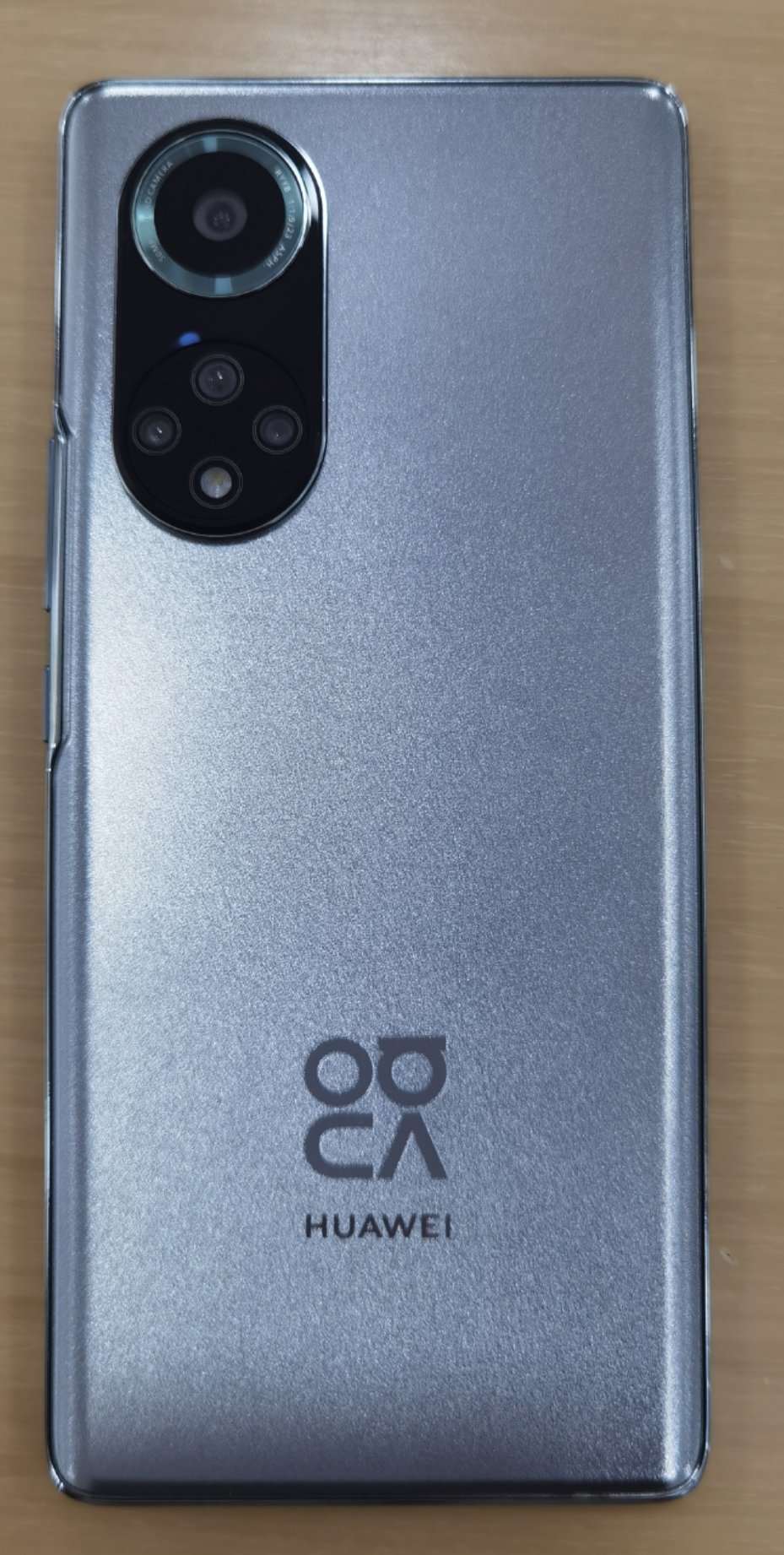
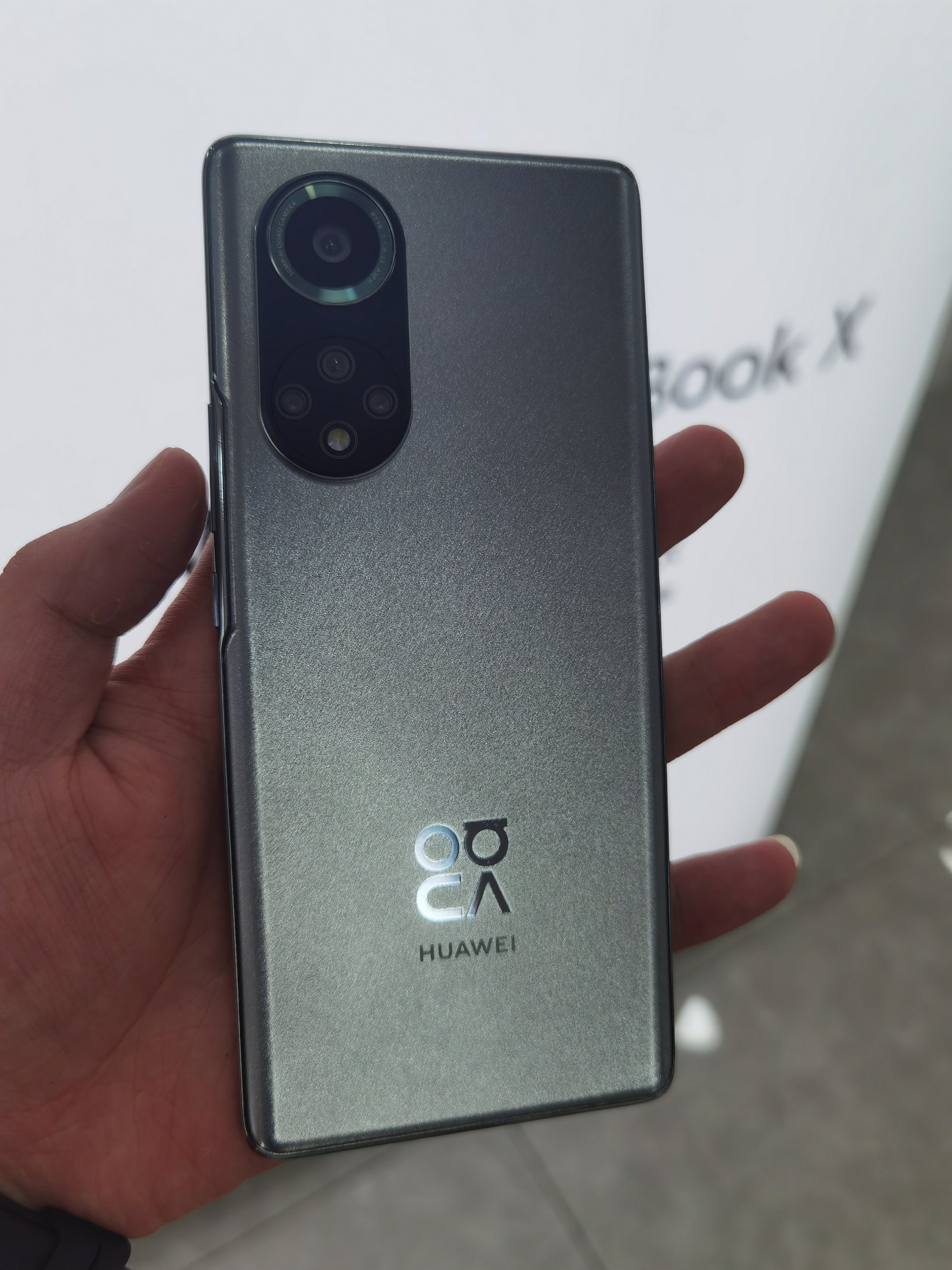
Huawei is all set to announce the Nova 9 series of smartphones on Sept. 23 in China. The company is likely to announce two models such as the Nova 9 and Nova 9 Pro. Ahead of the launch, live shots of the Nova 9 handset have appeared on Weibo.
The live shots only showcase the rear design of the Nova 9. A closer look at the topmost lens reveals that the handset is equipped with a 50-megapixel primary snapper. The second camera ring houses the other three lenses and an LED flash. The leaked photos match with the TENAA images of the RTE-AL00 Huawei phone.
1 of 2
Nova 9 leaked image-
Nova 9 leaked image-
Reports have claimed that the RTE-AL00 will be debuting as the Nova 9. Its 3C certification revealed that it is a 4G LTE phone, which may ship with a 66W fast charger. On the other hand, the 3C certified Huawei phone with NAM-AL00 is expected to debut as the Nova 9 Pro. This 4G LTE handset is likely to ship with a 100W charger. Both models are expected to run on HamonyOS 2.1.
According to the tipster who shared the above images, the Nova 9’s display will feature a centrally positioned punch-hole. On the other hand, the Nov a9 Pro’s design will be similar to the Honor 50 Pro. Hence, it is likely to feature a pill-shaped cutout and an oval-shaped module for its quad-camera unit. It is expected to arrive in four colors.
feature a 6.57-inch OLED display, a 32-megapixel front camera, a 4,300mA battery, and 4G version of the Snapdragon 778G chip. On the other hand, the Nova 9 Pro will feature a 6.72-inch OLED FHD+ display, 32-megapixel dual selfie cameras, a 4,000mAh battery, and Snapdragon 778G 4G chip. Both models will offer 50-megapixel (RYYB lens) + 8-megapixel (ultrawide) + 2-megapixel (macro) + 2-megapixel (depth) quad-camera unit.
With the launch of the Apple iPhone 13 series smartphones, the US-based technology giant has dropped the pricing of the iPhone 11 models while the iPhone 12 Pro and iPhone XR models have been discontinued.
But there’s yet another change that hasn’t been officially announced by the company. It’s being reported that Apple has silently discontinued the 256GB variant of the iPhone SE. Until now, the device was available in 64GB, 128GB, and 256GB storage models but now the Apple Store only shows two options — 64GB and 128GB.
The pricing of the device still remains the same as earlier. The 64GB model of the iPhone SE costs $399 while the 128GB model is priced at $449. The 256GB storage model which seems to have been discontinued was available for $549.
It seems that the move could be related to the upcoming successor of the iPhone SE lineup as the company is ramping down production and shift focus to the iPhone SE third-generation models, which are expected to launch next year.
As per the reports, the upcoming iPhone SE 3 will be the cheapest 5G smartphone from Apple. It is said to have the same design as the iPhone XR but with some changes to the camera module. The device is expected to have a single camera sensor along with an LED flash. Internally, it could be powered by the A14 Bionic SoC which powers iPhone 12.
With the newly announced iPhone 13 series, Apple has removed the 64GB storage option and now the entry-level configuration starts at 128GB storage. This also means that the top-end model now packs 1TB storage and the pricing goes up to $1,599.
Last week, Vivo unveiled the Vivo X70 series of smartphones such as the Vivo X70, X70 Pro, and X70 Pro+. The Chinese manufacturer is also expected to release the X70 lineup in India by the last week of this month. Now, tipster Yogesh Brar has collaborated with MySmartPriceto reveal the launch date of the X70 series for India. At the same time, a report by Money Control has claimed that the country will not be receiving all three X70 series handsets.
According to the tipster, the X70 series will be announced on Sept. 30 in India. This indicates that the company may soon start teasing the X70 lineup in India through its social platforms. The tipster added that India will be treated with only two X70 series models.
Money Controlreported that Vivo will be skipping the vanilla Vivo X70 in India. In other words, the country will be receiving only the Vivo X70 Pro and X70 Pro+. Previous reports have claimed that the X70 Pro could be priced at Rs 49,990 (~$680) and the Pro+ may cost Rs 69,990 (~$952).
Vivo X70 Pro, X70 Pro+ specifications
The Vivo X70 Pro has a 6.56-inch FHD+ 120Hz display, whereas the Vivo X70 Pro+ houses a 6.78-inch QHD+ 120Hz display. Both handsets feature a curved edge AMOLED panel with an in-screen fingerprint scanner. The X70 Pro may arrive in India with the Dimensity 1200 chipset, whereas the Pro+ will feature the Snapdragon 888 Plus chip. These handsets may come with up to 12 GB of RAM and up to 256 GB of storage.
The X70 Pro duo may feature a front camera of 32-megapixel. The X70 Pro may come with a 50-megapixel (Sony IMX766V) + 12-megapixel (portrait) + 12-megapixel (ultrawide) + 8-megapixe (telephoto) quad-camera unit, whereas the X70 Pro+ may house a 50-megapixel (Samsung GN1) + 48-megapixel (Sony IMX598, ultrawide) + 12-megapixel (portrait) + 8-megapixel (telephoto) quad-camera unit.
The X70 Pro may draw power from a 4,450mAh battery and it may support 44W fast charging, while the X70 Pro+ may come with a 4,500mAh battery that supports 55W fast charging.
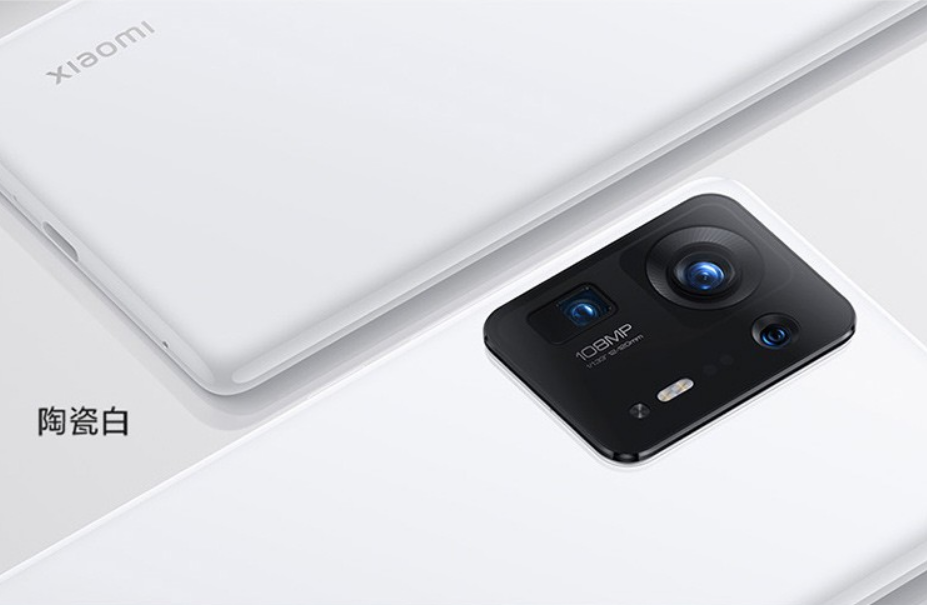
Xiaomi had announced its MIX 4 smartphone last month as the brand’s first smartphone to come with in-display camera sensor. At the time of launch, the company had announced the phone in three colors — Ceramic White, Ceramic Gray, and Ceramic Black.
Today, the Xiaomi MIX 4 Ceramic White variant goes on sale in China. Except for the phone’s color, everything else remains the same in the device. The device has been quite popular in China as the first day sale exceeded 300 million in just a minute.
The base model of the MIX 4 with 8GB RAM and 128GB internal storage costs 4,999 yuan (~$777) while the 8GB RAM and 256GB internal storage model is priced at 5,299 yuan (~$824). The 12GB RAM with 256GB storage is priced at 5,799 yuan (~$901) while the top-end variant with 12GB RAM and 512GB internal storage costs 6,299 yuan (~$979).
The Xoaomi MIX 4 features a 6.67-inch AMOLED 3D curved display with HDR10+ and Dolby Vision. The screen is a 10-bit TrueColor panel with a 500,000:1 contrast ratio and is protected by a layer of Gorilla Glass Victus.
Under the hood, the device is powered by the Qualcomm Snapdragon 888 Plus chipset, paired with up to 12GB of RAM and 512GB of internal storage. It is equipped with a cooling technology that has a surface area of 11588mm². It includes a 4584mm² graphene sheet, a 1232mm² graphene heat spreader, a second 5070mm² graphite sheet, and a 702mm² graphite sheet in between the wireless charging coil and the ceramic back.
Coming to the camera department, there’s a 20-megapixel camera sensor underneath the display, which the company is called camera under-panel. On the back, there are three cameras, including a 108-megapixel HMX f/1.9 main camera with 7P lens and OIS, an 8-megapixel 50x periscope camera with OIS that offers 5x optical zoom, and a 13-megapixel f/2.2 free-form ultra-wide-angle camera.
The smartphone is running the MIUI custom interface on top of the Android 11 operating system. It is powered by a 4,500mAh battery with support for 120W fast charging and 50W wireless charging. For wired fast charging, boost mode charges the phone in just 15 minutes while normal mode takes 21 minutes.
It was revealed last month that OPPO is working on a new phone called the OPPO F19s. At the beginning of this month, an OPPO phone with model number CPH2233 was spotted at the Bluetooth SIG certification with the OPPO F19s moniker. Now, a fresh leak by MySmartPricehas revealed the key specifications of the handset
OPPO F19s specifications
According to the publication, the OPPO F19s will be equipped with a 6.43-inch AMOLED panel with a punch-hole panel that will offer a 20:9 aspect ratio and a Full HD+ resolution. It has a Sony IMX471 16-megapixel front-facing camera.
OPPO F19
The rear camera of the phone features a 48-megapixel main camera and a pair of 2-megapixel sensors, which could be used for adding depth effects and macro shots. It will be backed by a 5,000mAh battery that supports 33W fast charging.
There is no word on the processor of the OPPO F19s. Probably, it will feature the same Snapdragon 662 SoC that fuels the existing OPPO F19. The F19s will ship with 6 GB of RAM and will carry support for up to 5 GB of virtual RAM. The handset will run on ColorOS 11.1 based Android 11, which will bring a new feature called Low Battery SMS. It will send out an SMS with the current location to a pre-set contact.
The F19s will be sporting the so-called “OPPO Glow Design,” which may be similar to the anti-glare and sparkling design offered by Reno 6 lineup’s reno Glow design. The F19s will measure 7.95mm in thickness and weigh 175 grams. The handset may debut at some point in the coming month.
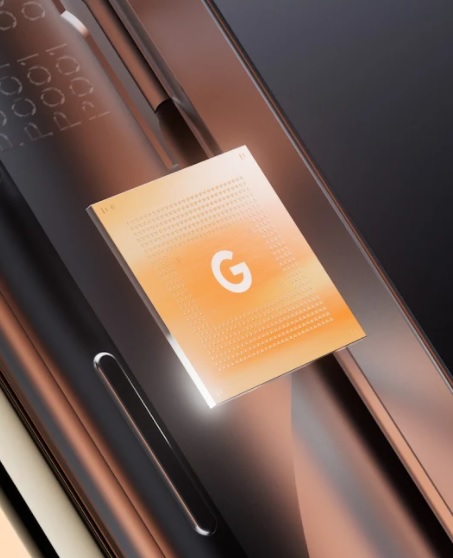
The excitement and the anticipation for the Pixel 6 series are pretty high, and rightly so. Google is going with a new design for the flagships which will also feature the first Google’s own mobile chipset called Google Tensor. There have been lots of details about the processor with a recent one revealing the CPU and GPU details. Fresh info has now surfaced and it paints a different picture about how powerful the chipset really is.
The folks at XDA-Developers have been able to get details of the Tensor chipset from an unnamed source who has a real Pixel 6 Pro in his hands. The source was able to confirm that the Tensor processor does have a 2+2+4 CPU core arrangement. He also confirmed that the frequencies are correct.
The interesting bit, which is the exact CPU parts, was discovered in a system file and they reveal a major difference in the CPU cores from what was reported earlier. The CPU cores are said to be 2x Arm Cortex-X1 cores clocked at 2.802GHz, 2x Cortex-A76 cores clocked at 2.53GHz, and 4x Cortex-A55 cores clocked at 1.80GHz. The earlier report had stated that it has the newer 2x Cortex-A78 cores!
It is surprising that the Tensor chip is using Arm’s older performance cores but the XDA Developers report says that the info was cross-checked against other devices to confirm that they had not misinterpreted the details they got.
Other details confirmed for the Pixel 6 Pro are 12GB of RAM, 128GB of UFS storage, an AV1 decoder that is hardware-accelerated by the Google Tensor chip. It also supports aptX and aptX HD Bluetooth audio codecs as well as Sony’s LDAC codec.
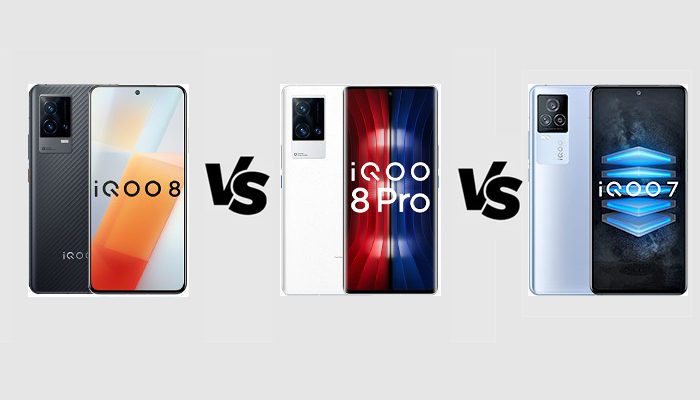
Vivo’s sub-brand iQOO is currently the best flagship killer smartphone brand alongside Xiaomi and Realme. This year, it released a huge number of flagship killers you can currently find in several price ranges. We decided to write this comparison in order to compare the specifications of the most powerful and advanced models released by the manufacturer in 2021. The best ones in terms of hardware department and overall specifications are the iQOO 7, the iQOO 8, and the iQOO 8 Pro: this comparison will tell you the differences between them and which one is the best deal.
Triple 50 + 13 + 13 MP, f/1.8 + f/2.2 + f/2.2
16 MP f/2.5 front camera
Triple 50 + 16 + 48 MP, f/1.8 + f/2.2 + f/2.2
16 MP f/2.4 front camera
Quad 48 + 13 + 13 MP, f/1.8 + f/2.5 + f/2.2
16 MP f/2.0 front camera
BATTERY
4350 mAh, fast charging 120W
4500 mAh, fast charging 120W
4000 mAh, fast charging 120W
ADDITIONAL FEATURES
Dual SIM slot, 5G
Dual SIM slot, 5G
Dual SIM slot, 5G
Design
The iQOO 8 Pro is one step forward if we talk about the design. It is the only one with a curved display at the edges making the design more elegant. Further, it comes in that outstanding white color variant with BMW M Motorsport branding and a leather back which is definitely unique and catchy. But you should not underestimate the Legend color variant of the iQOO 7 which may seem even more original. However, the iQOO 7 lacks a curved screen, just like the vanilla iQOO 8.
Display
The iQOO 8 Pro has a superior display as well as one of the best AMOLED panels in the whole smartphone market. It is the first phone equipped with the Samsung E5 AMOLED display coming with the LTPO technology enabling an adaptive refresh rate from 1 to 120 Hz. The panel has a Quad HD+ resolution with 1440 x 3200 pixels, the HDR10+ certification, and Dolby Vision, as well as a very high 1500 nit peak brightness. Last but not least, it has a very wide display with a diagonal of 6.78 inches and a fast ultrasonic in-display fingerprint reader. With iQOO 7 and iQOO 8, you get midrange AMOLED panels with Full HD+ resolutions, HDR10, and 120 Hz.
Hardware/Software
iQOO 8 Pro is superior even when it comes to the hardware, even though the difference is not big. The handset features a Snapdragon 888+ mobile platform, a slight upgrade of the Snapdragon 888 found on the iQOO 7 and the iQOO 8. All the phones feature up to 12 GB of RAM, but only the iQOO 8 Pro reaches 512 GB of internal storage in the most expensive memory configuration. The handsets run Android 11 out of the box customized by OriginOS.
Camera
The iQOO 8 Pro is the most advanced camera phone: it sports a triple camera with a 50 MP main sensor including gimbal OIS, a 16 MP telephoto sensor with OIS, and a great 48 MP ultrawide camera. You get a 50 MP main camera with the iQOO 8 too, but the secondary sensors are inferior: there is a 13 MP telephoto camera and a 13 MP ultrawide camera. The secondary sensors of the iQOO 7 are the same as the iQOO 8, but the main camera is an inferior 48 MP snapper.
Battery
The iQOO 8 Pro has the biggest battery with a capacity of 4500 mAh, but it is not always able to provide a longer battery life than iQOO 8 because its display has higher energy consumption. The iQOO 7 has a way smaller 4000 mAh battery we do not recommend if you are looking for great battery life. All the phones support 120W fast charging.
Vivo iQOO 8 vs Vivo iQOO 8 Pro vs Vivo iQOO 7: Price
iQOO 7 costs €480/$567 in China, iQOO 8 starts from €500/$591, and iQOO 8 Pro starts from €660/$780. The iQOO 8 Pro is a superior device in every aspect, but you can find the best street prices for the iQOO 7 which is able to offer the highest value for money. The iQOO 8 sits in the middle: good quality price ratio but less than iQOO 7, and great specifications but inferior to the iQOO 8 Pro.
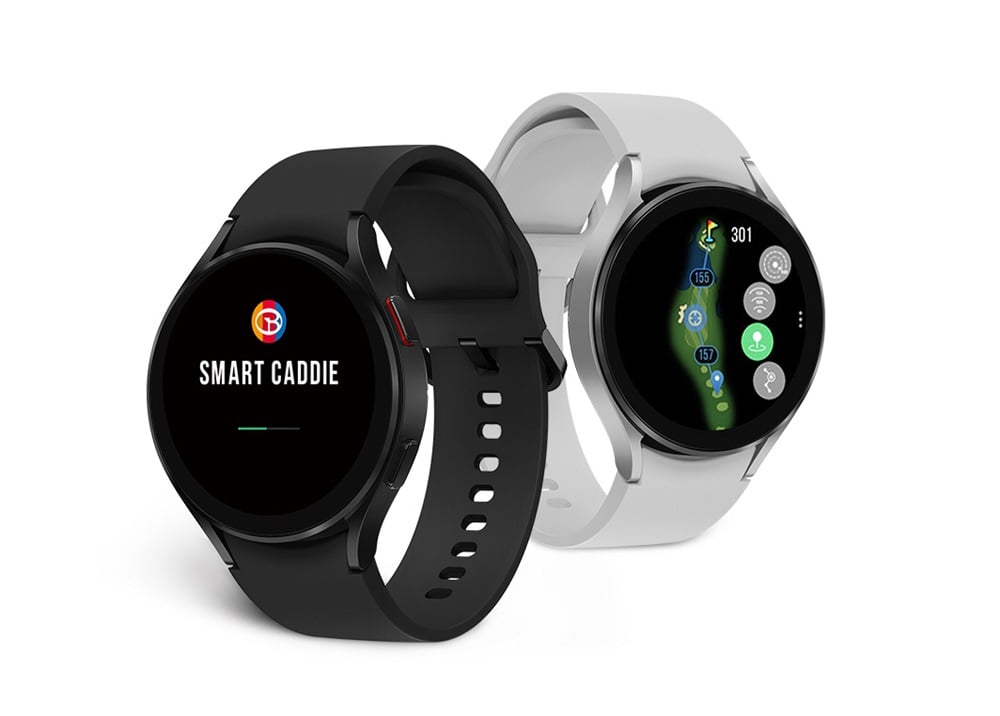
Golf lovers in Korea now have an additional buddy to help them play the game better. It is the Samsung Galaxy Watch 4 Golf Edition priced at 299,000 won ($255). The limited variant of the Galaxy Watch 4 comes with the Smart Caddie app which offers information and data on 40,000 golf courses around the world. The data include distance and shot history which will certainly help golf players to become better using the app.
Samsung Galaxy Watch 4 Golf Edition
The Samsung Galaxy Watch 4 Golf Edition now joins the original Galaxy Watch and the Watch Active 2 that had golf-centric applications. The data available via the Smart Caddie app also include green undulation information, automatic hole information recognition, satellite maps, and other features that will assist users to be better while on the course.
The Samsung Galaxy Watch 4 Golf Edition comes in two variants – a 40mm silver model and the 44mm black model. The 40mm model of the Samsung Galaxy Watch 4 Golf Edition is priced at 299,000 won ($255), while the bigger 44mm model is priced at 329,000 won ($281). Samsung is leaving potential fans of the Galaxy Watch 4 Golf Edition in the dark, as there is no mention yet on the global availability of the device.
Apart from the Smart Caddie app, there is not much difference between the Golf edition variant and the standard Galaxy Watch 4, and both run on the WatchOS 3 and feature similar sensors and functions.
The Fairphone 4 5G smartphone has been the subject of growing speculation and leaks lately. We already knew that Fairphone is indeed working on a new offering and some of its key features have also been leaked, although there is still much still unknown about the device.
The design philosophy of Fairphone smartphones is embodied in their high rating in the reparability scale while they are also mainly made from sustainability-compliant materials. Their affordability is also another driving force for attention for the product.
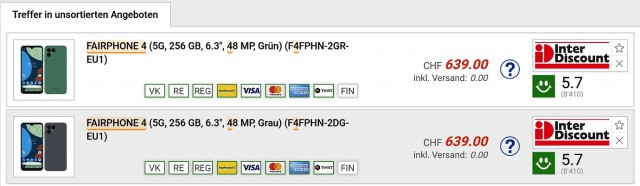
While the date of release of the device is still under wraps, a tipster has indicated that the smartphone was spotted in a Swiss retailer’s listing, further fuelling rumors that we might be just days away from the unveiling of the device. The tipster indicated the news via his Twitter handle @L4yzRw. The tipster also stated that the listing on the Swiss online retailer’s website also contained pricing details together with some images of the yet-to-be-released Fairphone 4 5G.
The leak also aligns with previous renders released a few days back. As per the Swiss online retailer’s listing of the device, the Fairphone 4 5G has a 6.3-inch display and a waterdrop notch cutout for the front-facing camera. Details of the actual chipset powering the device were not provided also it was listed as a 5G-capable device. The renders also confirmed the presence of a 48MP main sensor for the triple rear camera setup. A previous render had indicated that there was the possibility of a fourth camera in the rear system, but this is not indicated on the current images and details from the Swiss retailer via the tipster.
The presence of two variants of the Fairphone 4 5G smartphone was also seemingly confirmed by the latest details, as both models will have 6GB of RAM together with 128GB and 256GB of internal storage respectively. Two variants are also shown for the device – Green and Grey. The 256GB model is priced at 590 Euros ($697), with the base model expected to be priced lower than the higher model.
No official confirmation or denial has been registered by Fairphone at this time, and it’s unclear whether the listing of the Fairphone 4 5G is still sustained on the Swiss retailer’s website at this time.
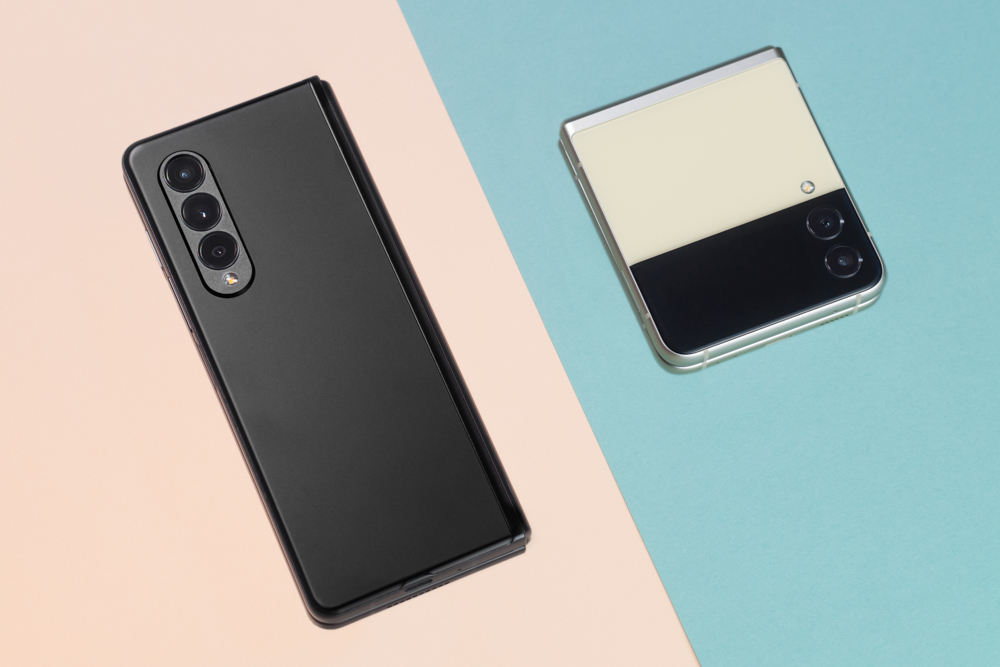
The recently launched Galaxy Z Flip3 and Galaxy Z Fold3 are the best foldable smartphones to date. They are expected to make the foldable category mainstream. It is evident from the initial sales numbers. According to a report by DSCC, this niche category of phones will explode in the coming quarters.
Image Source: Samsung
According to DSCC (Display Supply Chain Consultants), a record 819K foldable smartphones were sold in Q2 2021. The numbers were up by 147% QoQ and 0.8% YoY. The research firm predicts massive growth in the remaining two quarters of this year.
The newly published report by DSCC says that the sales of foldable smartphones will increment by 215% QoQ and 480% YoY to 2.6M units. The growth figures will stand at 46% QoQ, 450% YoY, and 3.8 million units in Q4 2021.
The firm’s updated estimation comes from the launch of Galaxy Z Flip3 and Galaxy Z Fold3 with features like water resistance, stylus support, UPC (Under Panel Camera), and more. As per the report, Samsung reportedly spent a whopping $2 billion for marketing and promotions of these phones to create awareness regarding foldables among consumers.
Samsung Galaxy Z Fold3 and Galaxy Z Flip3 | Source: Samsung
The new estimated figures also account for upcoming foldable smartphones from OEMs like Google, HONOR, HUAWEI, OPPO, vivo, and Xiaomi in Q4 2021 and Q1 2022. The numbers also take account of cost reduction in the production of foldable panels and UTG (Ultra Thin Glass).
DSCC now predicts the shipments of foldable smartphones to increase 232% in 2021 to 7.5 million units. In 2022, these numbers will be 112% and 15.9 million units, followed by 51 million units in shipments in 2026.
The firm anticipates Samsung to hold a lion share of 85% in the foldable smartphone category in 2021, followed by HUAWEI with a 10% share. Further, the Galaxy Z Flip3 will be the best-selling foldable smartphone of 2021.
Lastly, Samsung Display’s market share in the foldable display market is projected to increase from 83.5% in 2020 to 83.9% in 2021. The panel shipments will surge from 3.2 million units in 2020 to 10.4 million units in 2021.
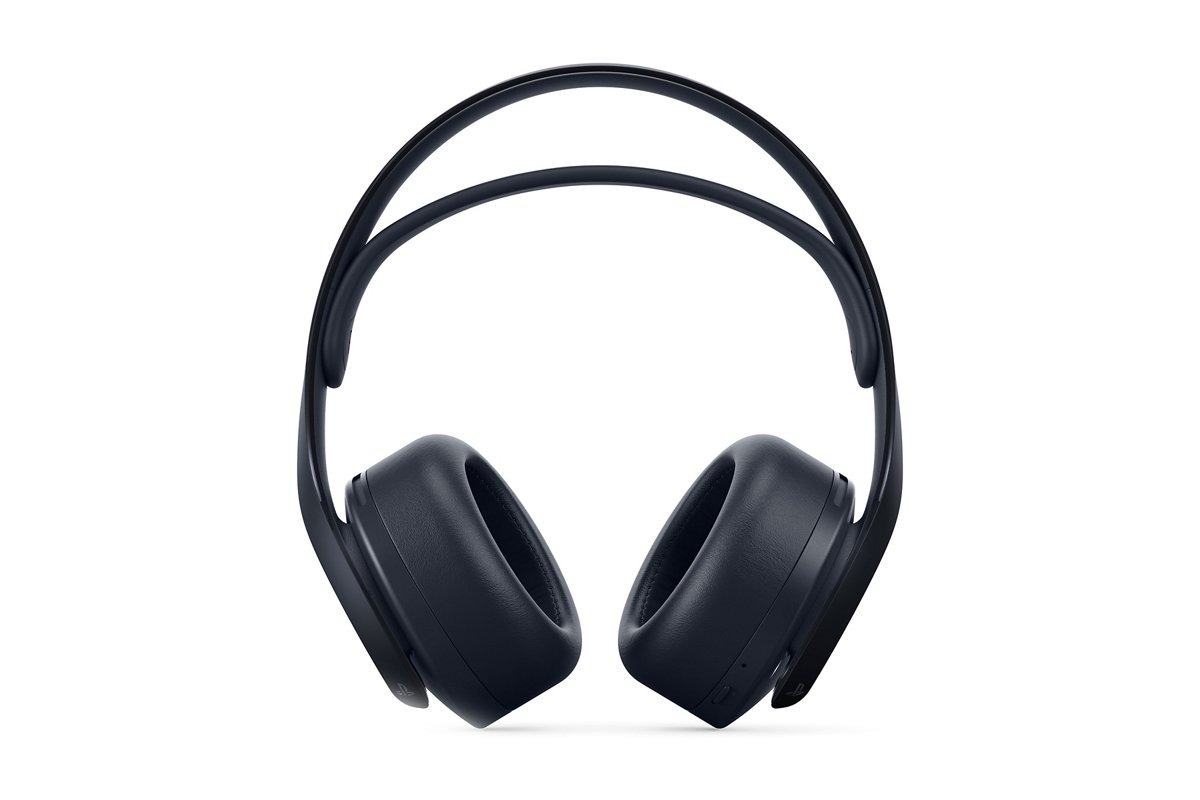
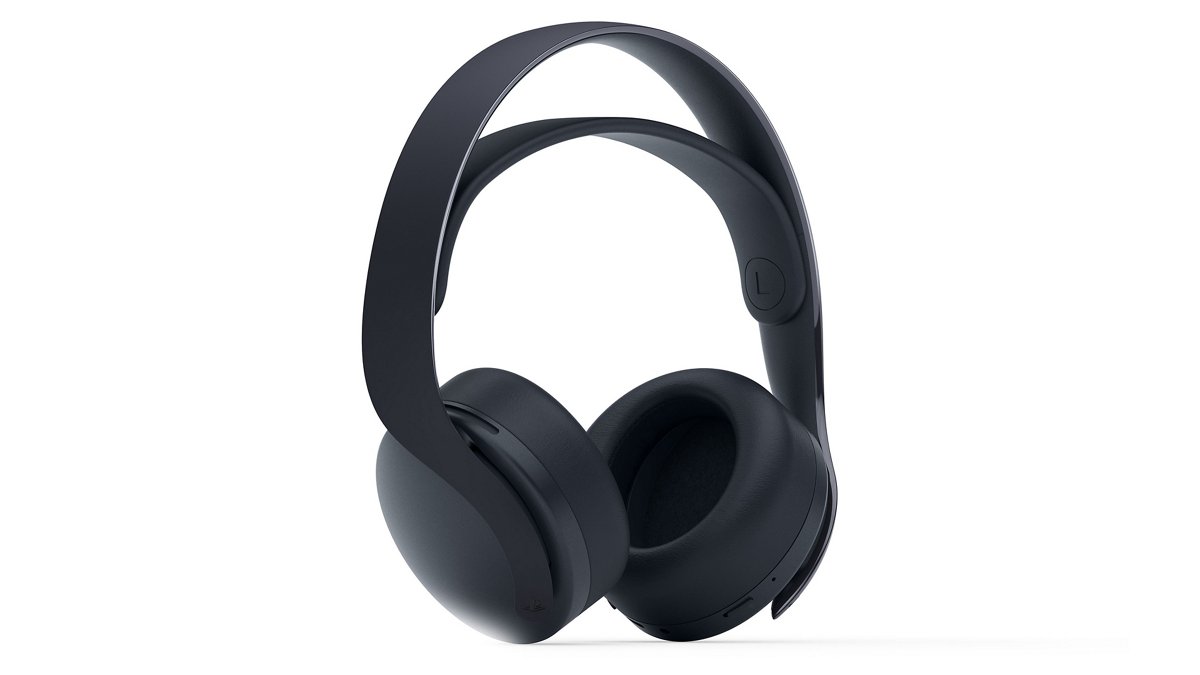
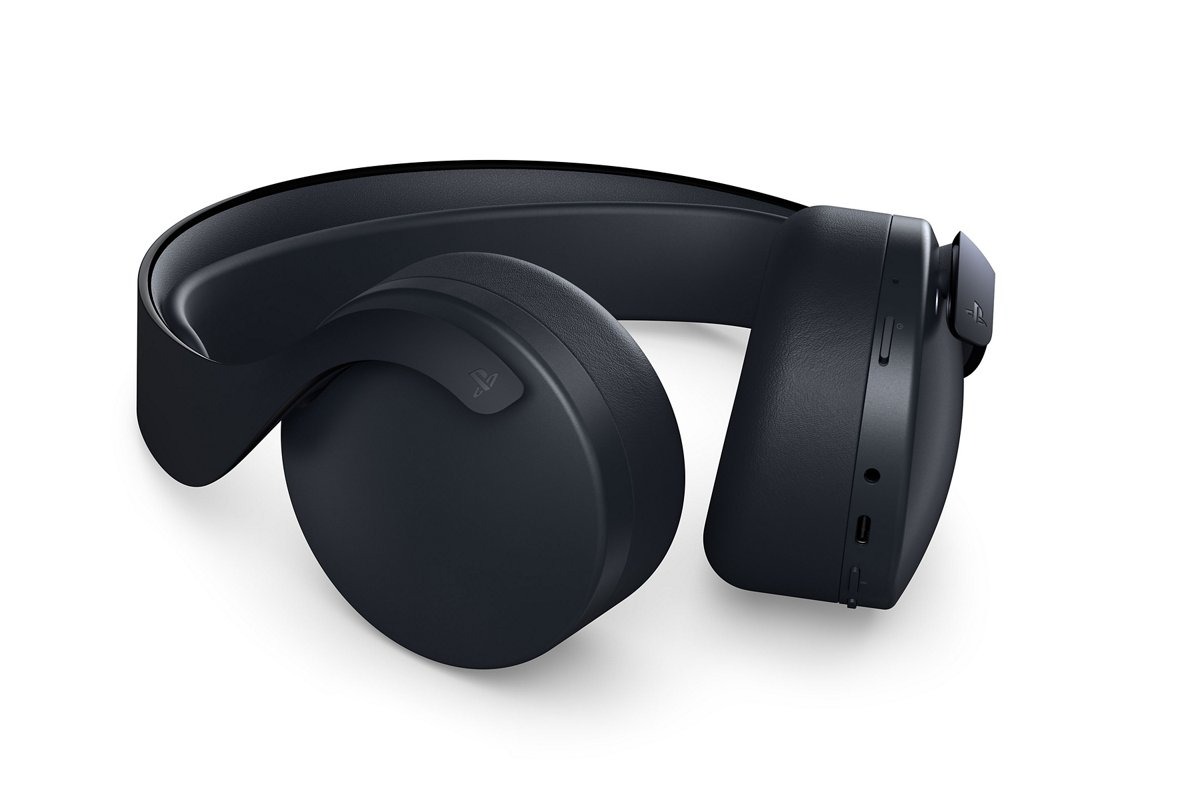
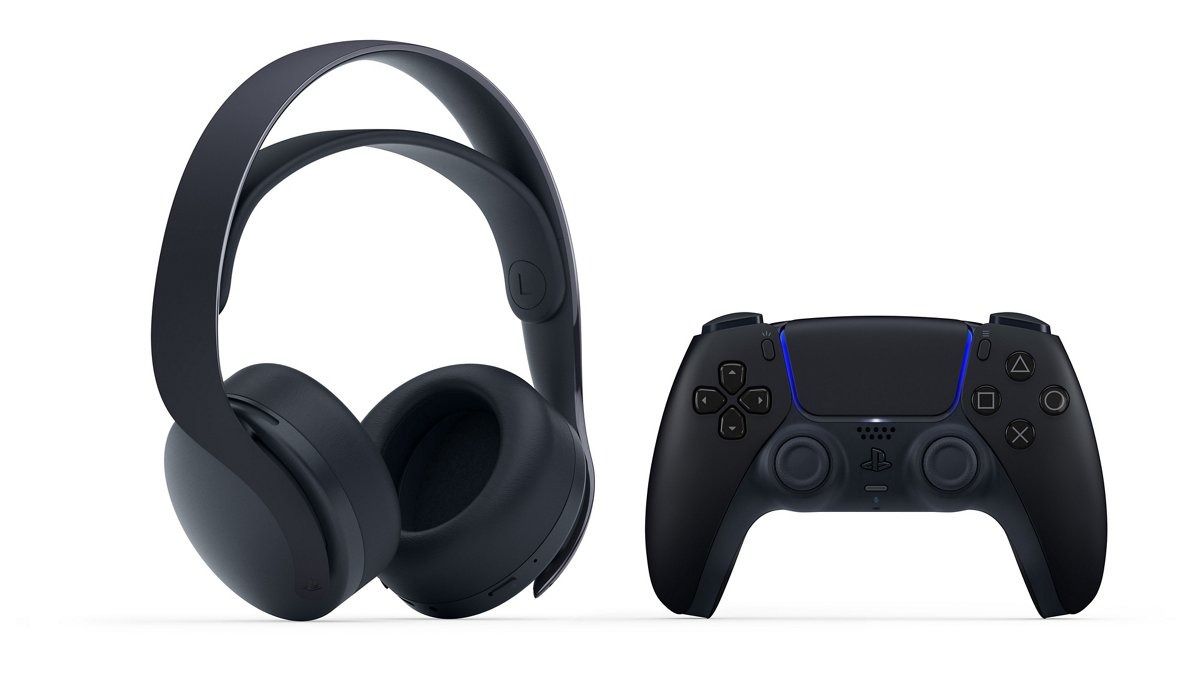
The PlayStation 5 has a bunch of accessories, one of which is the Pulse 3D Wireless Headset. Originally available in the same white color as the PS5, Sony has unveiled a Midnight Black variant so you can match it with your Midnight Black DualSense controller.
The new colorway has two shades of black according to Sony. It will cost $99 when it becomes available for purchase next month at authorized retailers. The headset allows players to fully experience the 3D Audio feature of the PlayStation 5 including the Tempest 3D AudioTech.
The Pulse 3D Wireless Headset has two hidden microphones and easy access controls on one of the cups. It has a 12-hour battery life and works with both the PS5 and PS4 as well as compatible Windows and macOS computers using the included adaptor. It also has an audio jack, so you can use it in wired mode.
1 of 5
New Equalizer Control
Sony has also revealed that it will be adding a new equalizer control feature for the headset when it rolls out its second major update for the PlayStation 5. Users will be able to choose from Standard, Bass Boost, or Shooter presets but can also create their own presets. They will be able to save up to three different settings for quick access. These presets can also be adjusted through the Control Center without the need to exit a game.
ASUS on Wednesday held an event for the launch of new Lingyao laptops in China. The Taiwanese giant launched the ASUS Lingyao Pro 14 and Lingyao Pro 16 laptops with high-end specs like 4K OLED displays, up to Ryzen 9 processors, and RTX 3050 Ti GPU.
The ASUS Lingyao Pro 14 starts at CNY 6,999(~$1,088) for the Ryzen 7 model and CNY 7,699(~$1,197) for the Ryzen 9 model. On the other hand, the ASUS Lingyao 16 costs CNY 8,999(~$1,399) for the Ryzen 9 model.
The laptops feature 14-inch and 16-inch screens respectively. Both laptops have 4K OLED panels with HDR and 100% DCI-P3 color gamut support. The Lingyao 14 has a 90Hz screen, whereas, the Lingyao 16 gets a 120Hz refresh rate display. The laptops have aluminum alloy built with matte paint on the exteriors.
The Lingyao Pro 14 is powered by the Ryzen 7 5800H or Ryzen 9 5900HX and has 16GB of RAM and 512GB of SSD storage. The laptop comes with 4GB of RTX 3050 GPU that supports 2048 Cuda cores. It has a keyboard with Numpad and features a standard trackpad.
The Lingyao Pro 16 packs a Ryzen 9 5900HX and has 4GB of RTX 3050 Ti GPU. It has 16GB of RAM and 512GB of SSD storage. It has the same keyboard and trackpad as the Lingyao Pro 14. The duo comes with a cooling system and has a 63Wh battery in the Lingyao Pro 14 and a 54Wh battery in the Lingyao Pro 16.
We use cookies on our website to give you the most relevant experience by remembering your preferences and repeat visits. By clicking “Accept”, you consent to the use of ALL the cookies.
This website uses cookies to improve your experience while you navigate through the website. Out of these, the cookies that are categorized as necessary are stored on your browser as they are essential for the working of basic functionalities of the website. We also use third-party cookies that help us analyze and understand how you use this website. These cookies will be stored in your browser only with your consent. You also have the option to opt-out of these cookies. But opting out of some of these cookies may affect your browsing experience.
Necessary cookies are absolutely essential for the website to function properly. This category only includes cookies that ensures basic functionalities and security features of the website. These cookies do not store any personal information.
Any cookies that may not be particularly necessary for the website to function and is used specifically to collect user personal data via analytics, ads, other embedded contents are termed as non-necessary cookies. It is mandatory to procure user consent prior to running these cookies on your website.