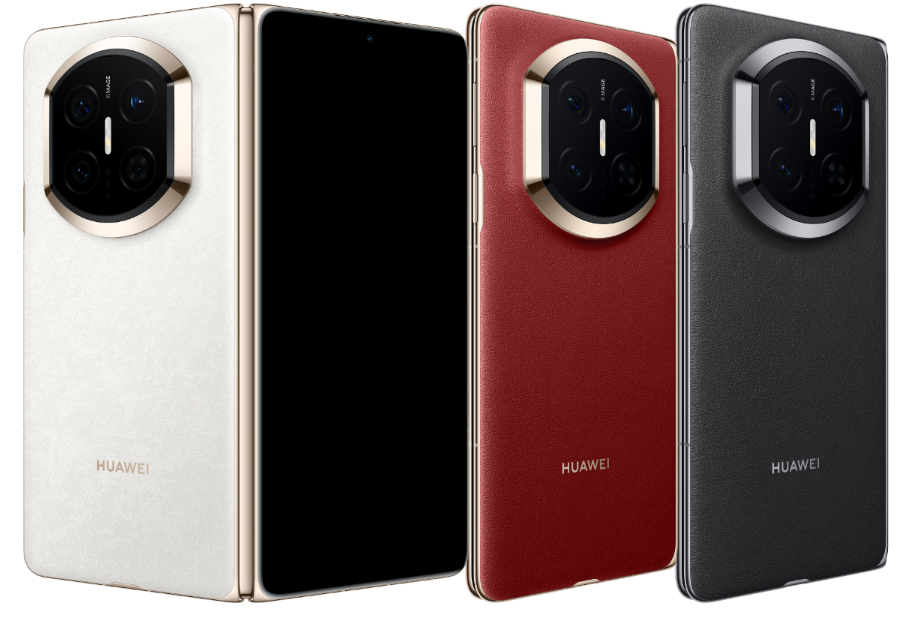
Huawei’s Pura X, the world’s first wide-folding smartphone, is proving to be a hit in China. Since its launch on March this year, the phone has shipped more than 700,000 units, according to industry insiders (via ITHome). Nearly 100,000 activations were recorded in its first week alone, underlining the strong demand for Huawei’s unique foldable design.
The Pura X introduces a new approach to foldables with its wide 16:10 aspect ratio, aimed at making reading, split-screen use, and media consumption more natural than on taller folding devices. It also stands as the first phone to fully ship with HarmonyOS 5, bringing Huawei’s latest AI features and an upgraded assistant. Prices start at 7,499 yuan (about $1,037), positioning it in the premium segment but still competitive compared to rivals like the $2,000 Galaxy Z Fold 7.
Huawei currently commands about 75% of China’s foldable phone market, giving it a comfortable lead over competitors like Samsung, Oppo, or Vivo. The Pura X’s early momentum only strengthens that position. At the same time, Huawei is broadening its foldable lineup. The company has just launched the Mate XTs — the world’s second mass-produced tri-fold phone — alongside a new MatePad Mini. The first Mate XT model shipped close to 500,000 units in the first half of 2025 alone.
Looking ahead, industry insiders suggest Huawei has more in the pipeline. Plans reportedly include a double-folding Mate X7, and even a next-generation Pura X with a new display slated for 2026.
By combining HarmonyOS, unique form factors, and a steady release schedule, Huawei is reinforcing its dominance in foldables. The Pura X’s strong performance suggests the appetite for new designs is real — and Huawei intends to stay at the front of the race.
Samsung has officially unveiled its Galaxy Tab S11 lineup, bringing two premium tablets that pack high end hardware, super slim design, and tall, vibrant displays. From the latest MediaTek flagship chipset to Galaxy AI functionality, the Galaxy Tab S11 and Galaxy Tab S11 Ultra are the best tablets from the brand.
Samsung Galaxy Tab S11 Ultra
The Galaxy Tab S11 Ultra arrives as Samsung’s latest and greatest tablet. You’re getting flagship level specs and features, all of which are packed in a super slim and premium 5.1mm body (weighs around 695 grams). This makes it even thinner than Apple iPad. On the front, the Galaxy Tab S11 Ultra sports a huge 14.6-inch Dynamic AMOLED 2X display with a 2960 x 1848 resolution, 1600 nits of peak brightness, 5.2mm bezels, and a 120Hz refresh rate.
Under the hood, it is equipped with MediaTek’s most powerful chipset, the Dimensity 9400+. The high end processor is coupled with up to 16GB of RAM and 1TB of internal storage. Users can even expand the storage by up to 2TB via a microSD card slot. A massive 11,600mAh battery pack powers this model, which supports 45W wired fast charging. The Dimensity 9400+ has a faster NPU that powers Galaxy AI and various AI powered tools.
Samsung Galaxy Tab S11 and Galaxy Tab S11 Ultra
This includes Drawing Assist and Writing Assist for productivity tasks along with other popular features like Circle to Search. One can even use this model as a PC thanks to Samsung DeX. Samsung offers a dual camera setup on the rear with a 13MP main and an 8MP ultra wide angle lens. Meanwhile, the front houses a 12MP shooter for selfies and video calls. Other notable features include WiFi 7, Bluetooth 5.4, and both 5G and WiFi only variants.
Samsung Galaxy Tab S11
The base Galaxy Tab S11 is similar to the Galaxy Tab S11 Ultra in more ways than one. You’re getting the same Android 16 OS based One UI 8 custom skin with all of the new AI tools. It is also powered by the Dimensity 9400+ chip. However, the standard model gets a shorter 11-inch Dynamic AMOLED 2X panel with a 2560 x 1600 resolution, 1600 nits of peak brightness, and a 120Hz refresh rate.
The Aluminum Armor frame returns, as well as an IP68 rating for water and dust resistance. However, there are a couple of downgrades like a lacking ultra wide camera, a thicker 5.5mm chassis, WiFi 6E, and a smaller 8,400mAh cell. Other similar features include the new S Pen, quad speakers, and a microSD card slot for storage expansion.
Pricing and Availability
Samsung announced both the Galaxy Tab S11 and Galaxy Tab S11 Ultra in two color options, namely Silver and Gray. Both models are available for purchase in select models, with pre-reservations in India going live as well. So here are the pricing details:
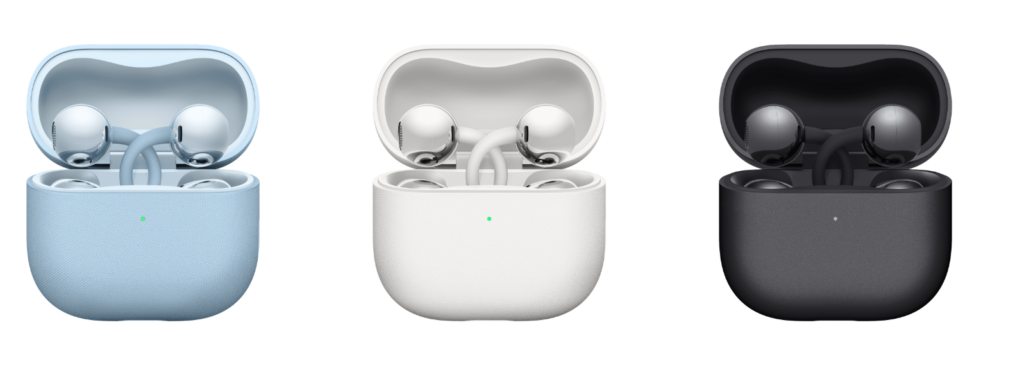
Huawei has officially launched the FreeBuds 7i in China, priced at 599 yuan ($84). The new earbuds are available in Pearl White, Deep Space Grey, and Sakura Pink. The company has positioned the FreeBuds 7i as a mid-range TWS option that delivers improved noise cancellation, better call clarity, and support for immersive spatial audio.
Huawei FreeBuds 7i Specifications
The earbuds feature Huawei’s updated Smart Dynamic Noise Cancellation 4.0. The system uses three microphones along with a large 8mm² air duct chamber to absorb and counter external noise. Huawei claims an average full-band noise reduction depth of 28dB. The ANC system has a latency reduction of up to 50% and can adapt to changing environments in under 0.5 seconds.
Huawei has also focused on improving call quality. The FreeBuds 7i adds a bone-conduction microphone alongside the traditional mic array. The AI call noise cancellation system suppresses up to 90dB of background noise and reduces wind interference, ensuring clearer voice pickup even in noisy settings.
The earbuds come with 11mm quad-magnet dynamic drivers that deliver clear vocals and detailed audio output. They feature a 10-band EQ along with several audio presets, allowing users to fine-tune the listening experience. The earbuds also support spatial audio with head-tracking, creating a 360-degree surround effect, while on-device processing ensures compatibility across various video platforms and devices.
The 7i supports voice controls through Huawei’s Xiaoyi assistant for calls, music, and alarms. It also features gesture controls like nodding to answer or shaking to reject calls, while touch inputs let users adjust volume, switch ANC modes, and manage playback directly from the earbuds.
The FreeBuds 7i support Bluetooth 5.4 and audio codecs such as SBC, AAC, LDAC, and L2HC 2.0. There is no support for LHDC or aptX. Huawei enables pop-up pairing for devices running EMUI 10.1 and later, along with multi-device connectivity on HarmonyOS 3.0 and above.
In terms of battery life, the earbuds offer up to 8 hours of playback without ANC and 5 hours with ANC turned on. When used with the charging case, the total playback time extends to 35 hours without ANC or 20 hours with it. It also supports fast charging, delivering up to 4 hours of use from just a 10-minute top-up.
Each earbud weighs approximately 5.4 grams, while the charging case weighs 36.5 grams. The earbuds are also IP54-rated for resistance against dust and light splashes.
Alongside the earbuds, Huawei also introduced the Mate XTs, a tri-fold phone, and the MatePad Mini, a compact tablet packed with big features.
For more daily updates, please visit ourNews Section.
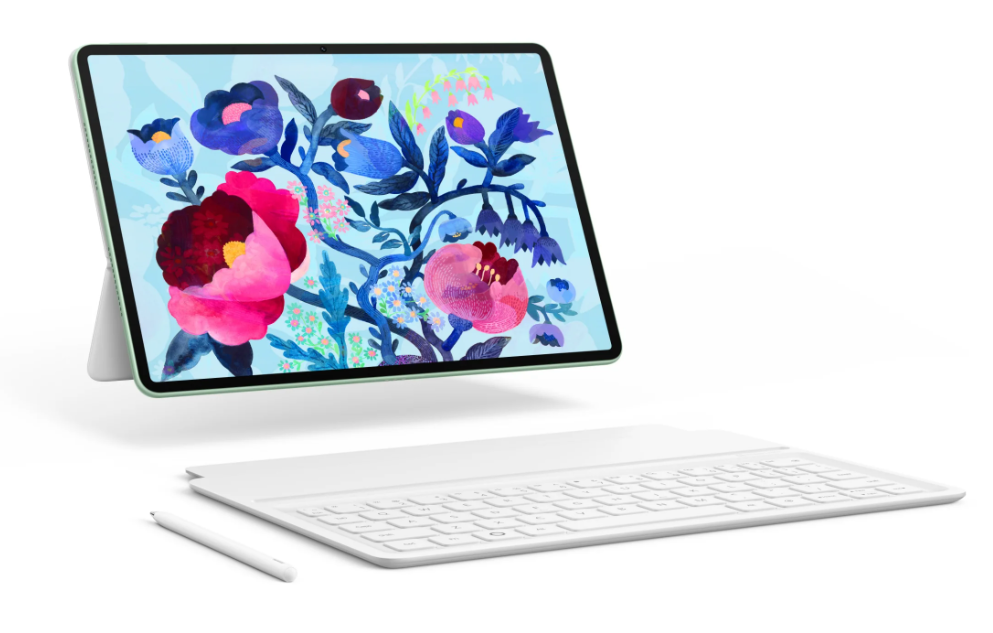
Huawei has officially launched the MatePad Mini, its latest compact tablet, alongside the Mate XTs tri-fold. The tablet features an 8.8-inch display, weighs just 255 grams, and measures 5.1mm thick. It’s also Huawei’s first real push into a “mini tablet” lineup that competes directly with the iPad mini.
The MatePad Mini runs on HarmonyOS 5.1, Huawei’s latest operating system, and supports both cellular calls and data. It also comes with two-way Beidou satellite messaging, giving users a backup communication option when regular networks aren’t available.
Huawei MatePad Mini Specifications
Huawei is placing a strong emphasis on the display, and for good reason. The tablet uses a flexible OLED full-screen panel with an ultra-narrow 2.99mm bezel, delivering a 92 percent screen-to-body ratio. Its 16:10 aspect ratio makes it versatile for reading, streaming, and productivity.
Brightness peaks at 1,800 nits, and for avid readers, Huawei is offering a Soft Light Edition, which reduces 99 percent of ambient light interference, making it easier on the eyes.
The MatePad Mini also supports the Huawei M-Pencil Pro. When paired with the Soft Light Edition, it delivers a paper-like writing and drawing experience. Apps such as Huawei Notes and Huawei Reader make it easy to take notes during study sessions or meetings, while Huawei’s in-house app, Born to Draw, helps beginners create digital art.
Huawei’s AI assistant adds smarter features too, like recognizing conversations and highlighting Q&A on the screen, effectively turning the tablet into a portable encyclopedia.
For video calls and online meetings, the MatePad Mini includes a 32MP front camera that supports RAW-quality portraits and beautification tools. Powering everything is a 6,400mAh battery with 66W SuperCharge support, and Huawei is bringing its smartphone-style low-battery emergency mode to a tablet for the first time.
Price and Availability
The Huawei MatePad Mini starts at 3,999 yuan (around $499), with pre-sales beginning September 4th and official sales on September 12th. The Soft Light Edition is priced at 3,299 yuan (around $599) and will be available starting September 25th.
Huawei is also releasing a Collector’s Edition in October for 5,999 yuan, which includes the M-Pencil Pro stylus and a leather case.
For more daily updates, please visit our News Section.
Huawei has just launched the Mate XTs, the world’s second mass-produced tri-fold phone. Following last year’s Mate XT, the new model upgrades performance with the Kirin 9020 processor and lowers the starting price by 2,000 yuan, coming in at 17,999 yuan (around $2,500).
It’s still expensive, but this time it feels less like a proof of concept and more like a refined device overall.
A familiar design with smarter details
The Mate XTs doesn’t radically change its look. Huawei has kept the same three-panel folding structure, which unfolds into a 10.2-inch tablet-sized display. It does come in new color options like White and Hibiscus Purple.
Most of the refinements are under the hood. Huawei has tweaked the hinge for a better folding experience and it is the first time in years that Huawei openly mentioned its chip at the launch event for the first time in four years.
The tri-fold is powered by the Kirin 9020 chip, the same SoC as the Pura 80 Pro+ and Pura 80 Ultra. Huawei claims a 36% performance improvement from its predecessor, and it is paired with 16GB of RAM and up to 1TB of storage.
The Mate XTs also benefit from Huawei’s own XMage imaging platform. The setup retains the 50MP main and 12MP periscope camera, but there are upgrades where they count. The wide-angle camera jumps from 13 megapixels to a 40-megapixel RYYB sensor, and all three cameras now use Huawei’s RYYB pixel arrangement, which means better sensitivity and improved low-light performance.
Huawei has also brought in features from its Pura 80 series, including ultra-clear panoramas, personalized color cards, AI-assisted composition, and enhanced color science.
More than a phone, less than a PC
The Mate XTs is also trying hard to be more than just a foldable phone with a big screen. Thanks to Huawei’s HarmonyOS ecosystem, it now supports PC-level productivity apps like WPS Office, Wondershare Drawing, and Wind Financial Terminal, alongside advanced multitasking with flexible multi-window layouts.
Huawei is also leaning heavily on accessories. The new M-Pen 3 stylus turns the tri-fold display into a productivity canvas. It supports global annotation, handwriting-to-text conversion, and a clever “split-screen excerpting” feature that lets you drag snippets of text between apps without clunky copy-paste. For business users, the stylus doubles as a remote control for presentations, complete with page-flipping and laser pointer functions.
Pricing and Availability
At 17,999 yuan, the Mate XTs is still far from cheap. But compared to its predecessor’s 19,999 yuan price tag, the cut is meaningful. It shows Huawei wants to push the tri-fold beyond early adopters and into a wider market.
Here’s the full price breakdown:
16GB+256GB: 17,999 CNY (~Rs 2,22,120 | ~$2,520)
16GB+512GB: 19,999 CNY (~Rs 2,46,800 | ~$2,810)
16GB+1TB: 21,999 CNY (~Rs 2,71,480 | ~$3,090)
Colors: Purple | White | Red | Black
The first Mate XT sold over 500,000 units, so there’s clearly demand for such a product. And Huawei seems to be addressing the demand with a more refined foldable inside and outside.
50MP main (variable aperture f/1.4–f/4.0, OIS) + 12MP ultra-wide (f/2.2) + 12MP periscope telephoto (OIS, 5.5x optical zoom, 50x digital zoom) + multi-spectral channel camera
Biometrics
Side fingerprint sensor
Connectivity
Dual SIM, Wi-Fi 6, NFC, Bluetooth 5.2, UWB, IR blaster, satellite communication, USB-C (3.1 Gen1)
Stylus Support
M-Pen 3
Weight
298 grams
What it means for foldables
For now, Huawei is the only company mass-producing tri-folds. Samsung and others have teased prototypes, but none are on shelves. That gives Huawei a massive head start, particularly in China, where it already dominates the foldable market with around 70 percent share.
But competition is coming. Samsung’s own tri-fold is rumored to be near launch, and other brands won’t be far behind. Huawei needs to keep proving that the tri-fold format isn’t just about showing off engineering skills; it’s about creating real value in productivity, creativity, and daily use.
For more daily updates, please visit ourNews Section.
TCL has officially launched the Nxtpaper 11 Gen 2, a new budget Android tablet targeting students, commuters, or anyone who wants a lightweight device. Let’s check out its key specs and pricing details.
TCL Nxtpaper 11 Gen 2 Specifications
The Nxtpaper 11 Gen 2 features an 11-inch FHD+ Nxtpaper 4.0 display that filters 61% more blue light compared to standard LCD panels. It comes with reduced glare and delivers a softer, paper-like viewing experience suitable for reading and everyday use.
It sports a dedicated Nxtpaper button that allows users to switch between Ink Paper, Color Paper, and standard display modes. The screen reaches a peak brightness of 500 nits in sunlight. However, it only supports a refresh rate of up to 60Hz.
Under the hood, the tablet is powered by a MediaTek MT8786 octa-core processor, paired with 8GB of RAM and an additional 8GB of virtual RAM expansion. It includes 128GB of internal storage, expandable up to 1TB via microSD.
The Nxtpaper 11 Gen 2 runs Android 15 out of the box, bringing the latest security, personalization, and multitasking features. TCL has added its suite of AI-powered tools, including Smart Voice Memo for transcriptions and mind maps, Writing Assist for email or essay drafting, and real-time video subtitles. The tablet also supports Google’s Circle to Search for quick visual lookups and includes a Smart Translator that works with text, images, and voice inputs.
Coming to the optics, the tablet features a 5MP front camera that supports clear video calls. On the back, it sports an 8MP camera with autofocus and an LED flash. Both cameras are capable of recording 1080p videos at 30fps.
TCL equips the Nxtpaper 11 Gen 2 with an 8000mAh battery that can last up to 19.9 hours during 720p video playback, according to internal tests. The tablet supports 18W PD fast charging over USB-C and can even reverse charge other devices, functioning as a backup power bank. In standby mode, TCL claims the device can last up to 59 days.
The tablet features a slim 7.3mm metal body, weighs 500g, and carries an IP54 rating for dust and splash resistance. It includes dual speakers and dual microphones for better audio during media playback and calls. The device supports the T-Pen for low-latency handwriting with a paper-like feel. For connectivity, it includes USB-C 2.0, Wi-Fi 5, and Bluetooth 5.0, but it lacks a 3.5mm headphone jack.
Pricing and Availability
The TCL Nxtpaper 11 Gen 2 is now available on Amazon in two configurations. The base WiFi model with 6GB RAM and 64GB storage, bundled with a flip case and T-Pen, is priced at $269.99. The higher-end variant with 8GB RAM and 128GB storage, also including the same accessories, is priced at $299.99.
The most affordable model from Samsung‘s flagship Galaxy S25 series has just been announced. Samsung has just unveiled the Galaxy S25 FE as the latest Fan Edition device, bringing high end features, long software support, Galaxy AI, and much more. So let’s check it out.
Galaxy S25 FE: Flagship Features at a Lower Price?
The South Korean tech giant unveiled the new Galaxy S25 FE with a tall 6.7-inch AMOLED display with an FHD+ resolution, a 120Hz refresh rate, up to 1900 nits of peak brightness, and Corning Gorilla Glass Victus+ for protection. Powered by the Exynos 2400 processor, the Galaxy S25 FE aims to strike a balance between premium performance and accessible pricing. The chip is paired with 8GB of RAM and up to 512GB of internal storage.
Samsung upgrades the Galaxy S25 FE with a larger 4,900mAh battery pack with 45W wired fast charging and 15W wireless charging (reverse wireless charging supported), compared to the 4,700mAh cell and 25W wired charging speeds on the Galaxy S24 FE. All of this is packed in a slim 7.4mm body that weighs just 190 grams. You get a premium glass back and an enhanced Armor Aluminum frame. The body is also dustproof and water resistant up to 1 meters for 30 minutes, thanks to an IP68 rating.
Samsung Galaxy S25 FE
This model debuted with the Android 16 OS based One UI 8 custom skin out of the box, and Samsung brings flagship grade software support with 7 years of Android OS upgrades and 7 years of security patches. The Galaxy AI is also returning, along with support for useful AI tools like Gemini Live, Now Bar, Circle to Search, Generative Edit, and much more.
Unfortunately, the camera setup is also getting an incremental upgrade with only the selfie shooter getting bumped from a 10MP shooter on the last gen model to a 12MP selfie camera. Meanwhile, the rear still features a 50MP (Main, f/1.8) + 12MP (Ultrawide, f/2.2) + 8MP (Telephoto, 3x Zoom, f/2.4). Other notable features include Bluetooth 5.4, WiFi 6E, NFC, and USB Type-C 3.2 Gen 1.
Pricing and Availability
Samsung’s new Galaxy S25 FE was just announced in four color options, namely Icyblue, Jetblack, Navy, and White colors. It has a starting price tag of 649 US Dollars (649 GBP, 749 EUR) for the 128GB model, which is 150 US Dollars lower than the standard Galaxy S25’s base price. The 256GB option costs 709 US Dollars, while Europe is getting a 512GB model that costs 929 Euros. The device is available in select markets starting today (4th Septmeber 2025) with six months of Google AI Pro.
For more daily updates, please visit our News Section.
Software support is a key aspect for smartphones, and Xiaomi has done a good job so far. It’s been a reliable brand when it comes to software updates. However, the update policy has been decent until last year when it started promising longer software support for many premium as well as mid-range smartphones.
Last year, Xiaomi upgraded its update policy to offer four major Android updates to high-end phones and tablets. Several mid-range models were also fortunate to receive the same treatment. Here, we’ve prepared a list of Xiaomi devices that will receive four major OS updates. Review it below to find out if yours is eligible for longer software support.
Xiaomi devices eligible for four major Android updates
Xiaomi 15
Xiaomi 15 Ultra
Xiaomi 14
Xiaomi 14 Pro
Xiaomi 14 Ultra
Xiaomi 14T
Xiaomi 14T Pro
Xiaomi Mix Flip
Xiaomi Pad 7
Xiaomi Pad 7 Pro
Poco F7
Poco F7 Pro
Poco F7 Ultra
Redmi Note 14 4G
If your Xiaomi phone or tablet is on the list, you can expect a total of four major OS updates. For example, if it launched with Android 15, it should receive OS updates all the way up to Android 19.
Surprisingly, the sub-$200 Redmi Note 14 4G is also on the list. However, its siblings with higher price tags, such as Redmi Note 14 Pro and Note 14 Pro+, don’t get the same treatment.
Xiaomi has made excellent improvements to its update policy, particularly for newer models. It’s good to see mid-range phones like Redmi Note 14 (4G) and Poco F7 getting the flagship treatment in terms of longer software support. Hopefully, more mid-range and cheaper models will benefit from this impressive update policy.
With the improved update policy, Xiaomi matches OnePlus and Vivo, but it’s still behind many of its peers. For instance, Oppo and Motorola offer up to five major Android updates, while Realme offers up to six. Samsung and Google promise up to seven major OS updates. Xiaomi will, hopefully, bridge the gap by making regular improvements to its update policy.
The brand is currently busy with HyperOS 3 release, which was unveiled a few days back. All the devices on the aforementioned list are eligible for this major upgrade. Many of them are also eligible for the HyperOS 3 beta program, which is already live for select models. Head over to this article to learn more about HyperOS 3, including the latest changes and beta rollout timeline.
JBL has updated its Tune headphone series with four new models. The JBL Tune 780NC and Tune 680NC now bring Adaptive Noise Cancelling, Ambient Aware mode, and JBL Spatial Sound to the lineup. The JBL Tune 730BT and Tune 530BT focus on everyday listening with Pure Bass sound at a lower price. All four models come with updated designs, new color options, and a choice between on-ear and over-ear styles.
JBL Tune 780NC and 680NC
The JBL Tune 780NC is an over-ear model with 40mm drivers and support for JBL Pure Bass and Spatial Sound. The JBL Tune 680NC is an on-ear model with 32mm drivers and the same sound features. Both models include Adaptive Noise Cancelling with Smart Ambient mode, Personi-Fi 3.0 for custom sound profiles, and two beamforming microphones for clearer calls.
JBL Tune 780NCJBL Tune 680NC
Battery life lasts up to 76 hours, or up to 50 hours with ANC on. A quick five-minute charge provides an extra five hours of playback. Connectivity includes Bluetooth 6.0 with LE Audio and multi-point connection, along with Fast Pair by Google and Swift Pair by Microsoft. Both come in Black, White, Blue, and Beige, with new metallic hinges and embossed JBL logo details.
JBL Tune 730BT and 530BT
The JBL Tune 730BT is an over-ear model with 40mm drivers. The JBL Tune 530BT is an on-ear model with 33mm drivers. Both use JBL Pure Bass sound but do not include ANC or Spatial Sound.
JBL Tune 730BTJBL Tune 530BT
Battery life is up to 76 hours, with an additional five hours available from a five-minute charge. They also feature Bluetooth 6.0 with LE Audio, multi-point connection, Fast Pair, Swift Pair, and two beamforming microphones for calls. The 730BT is available in Black, White, Blue, and Beige, while the 530BT adds a Lavender option.
Availability and Pricing
The JBL Tune 730BT and 530BT will be available in October 2025, priced at €79.99 and €49.99. The JBL Tune 780NC and 680NC will follow in November 2025, priced at €129.99 and €99.99. Alongside these headphones, JBL has also launched the Boombox 4 and the PartyBox 720 speakers, which will be available to buy later this month.
Sony is bringing wired audio with its latest hearables. While truly wireless earbuds are all the rage right now, Sony’s new IER-EX15C returns to the old reliable wired connection. It is a pair of classic wired earphones, so here’s everything you need to know.
Sony’s IER-EX15C Earphones Launched in India
Over the years, the 3.5mm audio jack has gone nearly extinct. But every smartphone still has a USB Type-C port, which is what the Sony IER-EX15C earphones feature. So you’re getting a reliable wired connection with these in-ear earphones. Thanks to its plug and play nature, the hassle of charging every now and then and pairing is also eliminated. It houses a 5mm dynamic drivers, which promises deep bass and clear vocals.
Sony IER-EX15C Wired USB-C Earphones
Like the wired earphones of the past, the Sony IER-EX15C brings a remote control that let’s users manage song playback, volume adjustment, mute the microphone, and answer calls. For added convenience, the Sony wired earphones features a tangle resistant cable. Other notable features include three different silicon eartips, cable adjuster, and light and compact design.
Sony’s new wired earphones arrive in four matte color options, namely white, black, blue, and pink. The IER-EX15C model is currently available for purchase from the brand’s official website, Sony Centers, leading e-retailers like Amazon India, and popular electronics stores. It has an official price tag of 2,490 INR, but it is currently selling for an introductory price tag of 1,990 INR. In related news, Sony just unveiled the Inzone H9 II, which is its latest flagship gaming headphones that borrows premium WH-1000XM6 drivers.
Tecno recently unveiled the Spark Slim and Pova Slim as the company’s sleekest smartphones ever. Today, the brand introduced the Pova Slim 5G in India as the world’s slimmest curved-display 5G smartphone. The major highlight of this phone is that it measures only 5.95mm and weighs just 156 grams. Here’s a look at the specifications, features, and price of the device.
Tecno Pova Slim 5G specifications and features
Tecno Pova Slim 5G
The Pova Slim 5G features a 6.78-inch AMOLED display with a resolution of 1224 x 2720 pixels, a 144Hz refresh rate, and a peak brightness of 4500 nits. For photography, the phone is equipped with a 50-megapixel primary rear camera and a 13-megapixel selfie camera.
The MediaTek Dimensity 6400-powered smartphone comes with 8GB of RAM and 128GB of internal storage. There is no microSD card slot for storage expansion. It runs on HiOS 15-based Android 15.
Despite packing an ultra-thin body, the device houses a 5160mAh battery that supports 45W wired fast charging and 10W reverse wired charging. When it comes to durability, the Pova Slim’s screen features a layer of Corning Gorilla Glass 7i. For dust and water resistance, the device carries an IP64 rating.
Pova Slim 5G focuses on the company’s 3B philosphy
Additionally, Pova Slim 5G continues the brand’s 3B philosophy – Best Signal, Best Design, Best AI – a framework that ensures reliable connectivity, stylish durability, and intelligent features tailored for Indian users.
Tecno Pova Slim 5G price in India, availability
In India, the Tecno Pova Slim 5G has arrived with a price tag of Rs 19,999 (~$226) for the sole 8GB+128GB version. It will be available for purchase starting Sept. 8 via Flipkart, Amazon, and offline stores in colors like Cool Black, Sky Blue, and Slim White.
For more daily updates, please visit our News Section.
Xiaomi has officially launched the Redmi 15C, its latest budget smartphone. This model arrives in bright new color options, a sleek design, a tall display, and a massive battery for long endurance. So here’s everything you need to know.
Redmi 15C: What does it offer?
The Chinese tech giant’s new entry level phone arrives with a tall 6.9-inch LCD panel that has an HD+ resolution, 120Hz refresh rate, and 810 nits of peak brightness. Under the hood, the Redmi 15C is equipped with the MediaTek Helio G81 Ultra, which supports 4G networking. The chip is coupled with 4GB, 6GB, or 8GB of RAM and 128GB or 256GB of internal storage that can even be expanded by up to 1TB via a microSD card slot.
Redmi 15C
For photography, the rear has a 50MP dual camera setup, while the front houses an 8MP selfie shooter. One of the highlights is undoubtedly a massive 6,000mAh battery pack, which supports 33W wired fast charging. Other notable features include a side mounted fingerprint scanner, an IP64 rating for water and dust resistance, a 3.5mm audio jack, FM radio, Bluetooth 5.4, and dual band WiFi support.
Out of the box, this model runs on the Android 15 OS based HyperOS 2.0 custom skin. The Redmi 15C has been unveiled in multiple bright color options, namely Moonlight Blue, Midnight Black, Mint Green, and Twilight Orange. Xiaomi has announced the Redmi 15C globally with a starting price tag of 119 US Dollars, but pricing will vary depending on the region.
For more daily updates, please visit our News Section.
In July, Oppo introduced the Reno 14 series globally with models such as the Reno 14F, Reno 14, and Reno 14 Pro. At that time, there were rumours about the Reno 14 FS 5G, but it did not launch alongside the rest. The device has now silently gone official in Europe, specifically in Luxembourg, adding to Oppo’s mid-range 5G lineup.
Oppo Reno 14 FS 5G specifications
Oppo Reno 14 FS 5G
The Oppo Reno 14 FS 5G features a 6.57-inch AMOLED flexible screen with a resolution of 2372 x 1080 pixels, a refresh rate of up to 120Hz, and reaches up to 1400 nits brightness in high-brightness mode. It is protected by AGC Dragontrail DT-STAR D+ glass. For security, it is equipped with an in-display optical fingerprint scanner, and the device runs on ColorOS 15.0 based on Android 15.
For imaging, the phone carries a triple rear camera setup, comprising a 50-megapixel Sony IMX882 sensor with OIS, an 8-megapixel ultra-wide camera, and a 2-megapixel macro sensor. On the front, it has a 32-megapixel autofocus-enabled camera, designed for selfies and video calls.
Under the hood, the Reno 14 FS 5G is powered by the Qualcomm Snapdragon 6 Gen 1 chipset, paired with 8GB of LPDDR4X RAM and 256GB of UFS 3.1 storage. The device is backed by a 6,000mAh battery, supporting 45W SUPERVOOC fast charging, along with compatibility for 33W SUPERVOOC, 15W VOOC, PPS, PD, and QC standards.
Other specifications include NFC support, Bluetooth 5.1, Wi-Fi, USB-C connectivity, dual SIM with Nano-SIM + eSIM, and stereo speakers. The device weighs 180 grams and measures 158.12 x 74.97 x 7.74/7.78mm depending on the color, weighs 180 grams, and offers IP64-rated dust and water resistance. This device is nothing but a rebranded version of the Reno 14F 5G, which seems to be limited to the Southeast Asian markets.
Oppo Reno 14 FS 5G priceandavailability
The Oppo Reno 14 FS 5G has been listed on Oppo’s regional website for Luxembourg. It will be available in Opal Blue and Luminous Green colors with an 8GB+256GB configuration. However, pricing details have not been confirmed yet.
For more daily updates, please visit our News Section.
Samsung has ended software support for the Galaxy Note 20 series — this means no OS updates and security patches. Released in 2020, these were the last Galaxy Note models. Now, five years later, Samsung has ended software support for them.
The Galaxy Note 20 series, which includes the Note 20, Note 20 5G, Note 20 Ultra, and Note 20 Ultra 5G, was listed under a biannual software update cycle before reaching the end of its life — meaning they were receiving only two software updates a year. While they are unlikely to receive any software updates going forward, if there’s a major security problem affecting these models, users can expect a fix via an update.
The Galaxy Note is now a history
Samsung released the Galaxy Note 20 and Note 20 Ultra in August 2020, both featuring Android 10 out of the box. At that time, we weren’t expecting them to be the last Galaxy Note models. However, the brand passed on some Galaxy Note traits, like S Pen and some design principles, to the Ultra models in the Galaxy S series.
In the last five years, Samsung has released three major Android upgrades to the Galaxy Note 20 models, as promised. These devices received monthly security patches for a long period before they were moved to a quarterly update cycle, and later to a biannual update cycle.
Every month, Samsung updates the security scope page that tells us how frequently a Galaxy device will receive security updates. Last month, the Galaxy Note 20 models were listed in the biannual category, but they are now nowhere to be found on the list, meaning they will no longer receive security updates.
If you own a Galaxy Note 20 or Note 20 Ultra, you’ll remain stuck on Android 13 and the security patch your device currently has. You are already missing out on plenty of excellent features and upgrades from Samsung and Google that were packed into major One UI builds in recent years.
While you can continue to use your Galaxy Note 20, it will no longer receive security fixes via updates. That means it won’t be safe, especially if your device stores critical data.
If you’re looking for upgrade options, there are plenty. You can upgrade to a Galaxy S25 model (S25 Ultra review) or the Galaxy Z Fold 7. Both devices pack excellent hardware and offer seven years of Android updates and security patches.
The Oppo A6 Pro 5G is officially confirmed to launch on Sept. 9 in China. The company has already released a teaser highlighting the phone’s display, but no specifications have been disclosed so far. However, ahead of its debut, a China Telecom listing has surfaced online, offering a full look at the device’s design and detailed specifications.
Oppo A6 Pro 5G specifications (rumored)
Oppo A6 Pro 5G
According to the listing, the Oppo A6 Pro 5G (model number PLN110) will arrive with a 6.57-inch AMOLED display delivering an FHD+ resolution of 1080 x 2376 pixels. It is powered by the MediaTek Dimensity 7300 (MT6878) chipset, paired with options of 8 GB, 12 GB, or 16 GB of RAM and storage choices of 256 GB and 512 GB. The device does not support expandable storage.
For photography, the phone is expected to feature a dual rear camera setup, led by a 50-megapixel primary sensor and supported by a 2-megapixel secondary sensor. On the front, there is a 16-megapixel selfie camera housed within the display.
One of the highlights of the Oppo A6 Pro 5G is its 7,000mAh battery. Likely, it will arrive with support for 80W charging. The phone will run Android 15 out of the box, skinned with Oppo’s ColorOS 15.
Other features include NFC support, dual SIM slots, Bluetooth, Wi-Fi, USB-C, and an in-screen fingerprint sensor. In terms of design, the handset will measure 158.16 x 74.99 x 7.96 mm and weigh 190 grams. It has a plastic build and is likely to carry an IP68/69 rating as per reports. iI will be available in shades like Gold, Black, and Cyan.
For more daily updates, please visit our News Section.
Nubia recently confirmed that the Red Magic 11 will be announced in October in China. Apart from the gaming-focused phone, the brand is also expected to be working on the Z80 Ultra, which will be a photography-focused offering. Its arrival seems to be close at hand as the device has received approval from the MIIT certification platform in China. Additionally, tipster Smart Pikachu has shared key details about the device’s specifications.
Nubia Z80 Ultra CMIIT certified
Nubia Z80 Ultra (NX741J) MIIT certified
As can be seen above, an upcoming Nubia phone bearing the model number NX741J has been approved by China’s MIIT authority. It is speculated that this device could be called the Nubia Z80 Ultra when it hits the market.
Nubia Z80 Ultra key specifications (rumored)
Nubia Z80 Ultra key specifications
According to tipster Smart Pikachu, the upcoming Z80 Ultra will feature a customized upgraded periscope telephoto camera alongside a “photographer’s edition” primary camera. It will be equipped with a new-generation full-screen display, which will probably have an under-display selfie camera like its predecessor.
It is also expected to house a very large battery of around 7,000mAh capacity. While the other specs of the device remain a mystery, it is expected to feature the Snapdragon 8 Elite Gen 5 SoC.
To recall, the Nubia Z70 Ultra was unveiled in November 2024. With CMIIT certification already done, it appears that the Z80 Ultra may launch as early as next month (October) in China.
In related news, the Nubia Red Magic 11 is set for an October launch. It will arrive with seven key improvements: first-ever IP68 water resistance, an upgraded active fan cooling system, the powerful Snapdragon 8 Elite Gen 5, a larger 8,000mAh battery, a new gaming-focused touch control chip, a true full-screen display with an under-display camera, and a refreshed cyberpunk-inspired design with 3D micro-engraving and RGB lighting.
For more daily updates, please visit our News Section.
Anker has launched a new addition to its Nano lineup in the US: the Nano Charger (70W, 3 Ports). Small in size but big on output, the charger promises to handle everything from smartphones to laptops without weighing down your bag. For anyone tired of carrying multiple bulky bricks, this little adapter could be a solid all-in-one option.
The new charger, also known as model A121A, first appeared in China as the Nano SafeCharge Ultra before making its way stateside. It packs two USB-C ports and one USB-A, with up to 70W from a single USB-C port — enough to bring a 2024 MacBook Pro 14 to 50 percent in about 35 minutes. Using both USB-C ports splits the power (60W + 5W), while pairing USB-C with the USB-A gives 45W and 22.5W – a perfect combination to power an iPhone and the latest Galaxy S Ultra at the same time. With all three ports active, the first USB-C still delivers 45W, and the other two drop to 7.5W each.
It’s a clever split that makes sense for charging a phone or a more power-hungry laptop, along with smaller accessories like earphones that typically need less than 5W.
The charger is 41 percent smaller than Apple’s 70W adapter, coming in at 2.1 x 1.7 x 1.2 inches (53 x 43 x 30 mm) and weighing just 4.2 oz (120 g). It also has a glossy finish, a metal frame, foldable pins, and a design that stays stable in wall sockets. Anker’s ActiveShield 4.0 safety system constantly monitors temperature, so overheating shouldn’t be a concern even during heavy use.
The Anker Nano Charger is available now on Amazon US for $49.99, bundled with a 4.9 ft USB-C to USB-C cable. For the moment, it’s only offered in black, but white, pink, and green versions are expected to follow. Anker hasn’t confirmed release plans for Europe or other markets yet, though a wider rollout is likely later this year.
Several reports have claimed that OnePlus is preparing two flagship devices for the Chinese market, namely the OnePlus 15 and the Ace 6. Today, a new update has surfaced from reliable tipster Digital Chat Station. In addition to suggesting that both models will arrive in October, he has also revealed some insight into their positioning and hardware focus.
OnePlus 15 and Ace 6: What to expect?
According to the leak, the OnePlus 15 will be introduced as a “performance Ultra” model. Like how some brands define an “imaging Ultra,” this strategy will focus on maximizing performance-oriented aspects such as processing power, heat dissipation, and touch responsiveness. The aim is to push these features to the limit and appeal to users who value raw speed and stability.
On the other hand, the Ace 6 is said to be designed as a fully equipped variant within the mid-range segment. Its overall experience is expected to match that of Pro-level competitors, giving it a strong presence in its category. Interestingly, when asked about its battery, Digital Chat Station hinted that it would be larger than 7000mAh, though he did not disclose an exact figure.
While the October launch appears limited to China, the global schedule can be estimated from past patterns. The OnePlus 15 may debut internationally in January 2026, aligning with the previous generation’s timeline. As for the Ace 6, it could arrive globally in a modified form under the name OnePlus 15R.
OnePlus 15 AI-generated render
Recently, the OnePlus 15’s Chinese edition was spotted on Geekbench with specs like the Snapdragon 8 Elite Gen 5, 16GB of RAM, and Android 15. Its global version was recently spotted at TUV certification, hinting support for 120W fast charging.
Apart from these phones, the company is also said to be working on its first Turbo-branded phones for China. The affordable performance-focused phone is expected to launch before the end of this year.
For more daily updates, please visit our News Section.
Xiaomi, Honor, Vivo, and Oppo are all expected to launch their standard and Pro flagship smartphones in China in the coming weeks, with Xiaomi anticipated to announce its lineup by the end of this month. When it comes to their next-generation Ultra models, these are likely to debut in the first half of 2026. Ahead of their launch, well-known tipster Digital Chat Station has shared information about the primary camera configurations of these high-end Ultra devices.
Primary cameras across Ultra models
Primary cameras across upcomingn Ultra models from Xiaomi, Honor, Vivo and Oppo
According to the leak, the Xiaomi 16 Ultra will feature a 50-megapixel OmniVision OV50X main camera. The Honor Magic 8 Ultra is tipped to use a 50-megapixel OmniVision OV50R sensor as its primary shooter. Both the Vivo X300 Ultra and Oppo Find X9 Ultra are expected to feature a 200-megapixel Sony IMX09E primary sensor, which may be marketed under the Lytia LYT-990 name.
Xiaomi 16 Ultra, Honor Magic 8 Ultra, Oppo Find X9 Ultra, Vivo X300 Ultra camera rumors
Xiaomi 15 Ultra
Recent reports suggest that the Xiaomi 16 Ultra may adopt a triple camera design with a 50-megapixel 1-inch customized main lens, a 200-megapixel periscope telephoto supporting 3x to 5x continuous optical zoom, and a 50-megapixel Sony LYT-600 ultra-wide sensor.
Meanwhile, the Honor Magic 8 Ultra is expected to feature a large 50-megapixel 1/0.98-inch OV LOFIC sensor with a 200-megapixel Samsung HP9 periscope lens capable of 4.3x to 7x optical zoom. The setup is also expected to include an ultra-wide lens.
The Vivo X300 Ultra is said to use a customized 200-megapixel Sony LYT-990 35mm sensor. The main snapper is expected to be accompanied by a 200-megapixel Samsung HPB periscope telephoto camera and an ultra-wide lens.
On the other hand, the Oppo Find X9 Ultra could offer the most versatile package with a quad-camera arrangement: a 200-megapixel Sony LYT-900 customized sensor, a 50-megapixel ultra-wide freeform lens, another 200-megapixel periscope, and an additional 50-megapixel periscope that supports up to 200x digital zoom.
For more daily updates, please visit our News Section.
OnePlus has shared the OxygenOS FAQ for August 2025, addressing user issues, feature limits, and update details.
Some users noticed that the font size of the Google dialer pad has become larger. This is caused by the latest Google Dialer update. The problem can be fixed by uninstalling the dialer updates through App info. OnePlus warns that this step will delete contacts and other data.
For the Private Safe feature, the system can only handle up to 999 photos or videos in a single batch. Adding more than that may cause the process to freeze. To move large amounts of content, users are advised to split the files into smaller batches.
A separate issue with a black shadow appearing in the center of the screen comes from a WhatsApp compatibility bug. Restarting the phone can temporarily fix the problem, and a software patch is planned for future updates.
The V100P01 update began rolling out on August 13 and was released to all supported devices by August 31. This version added new Private Safe options, including the ability to set custom covers for albums and videos, and the option to sort files by chronological order.
When asked about OxygenOS 16, OnePlus said there is no release timeline or device list available yet.
The FAQ also covered BeaconLink, the company’s short-range calling feature. It does not currently support Bluetooth accessories like headphones, watches, tablets, or cars. Calls can still be made while connected, but the audio will only come through the phone’s receiver.
Users can still receive and make SIM card calls while using BeaconLink. A SIM call will disconnect any ongoing BeaconLink call. To call friends with BeaconLink, users must enable the feature, search for nearby contacts, and tap the call button. Incoming calls are limited to contacts unless the setting is changed to allow calls from everyone.
For more daily updates, please visit our News Section.
We use cookies on our website to give you the most relevant experience by remembering your preferences and repeat visits. By clicking “Accept”, you consent to the use of ALL the cookies.
This website uses cookies to improve your experience while you navigate through the website. Out of these, the cookies that are categorized as necessary are stored on your browser as they are essential for the working of basic functionalities of the website. We also use third-party cookies that help us analyze and understand how you use this website. These cookies will be stored in your browser only with your consent. You also have the option to opt-out of these cookies. But opting out of some of these cookies may affect your browsing experience.
Necessary cookies are absolutely essential for the website to function properly. This category only includes cookies that ensures basic functionalities and security features of the website. These cookies do not store any personal information.
Any cookies that may not be particularly necessary for the website to function and is used specifically to collect user personal data via analytics, ads, other embedded contents are termed as non-necessary cookies. It is mandatory to procure user consent prior to running these cookies on your website.