The Google Pixel 4 has only just launched, and we’re already getting new Google Camera ports with added features that previously weren’t available. While the phone itself is getting quite a bit of negative reception, the cameras are still an absolute highlight and remain as what carries the device against other competitors. A big part of this is in the extra features.
One such feature that people really love is the new Astrophotography shooting mode, which is great for picking up stars and other cosmic activity. Well, a modified version of Google Camera 7.2 has brought Super Res Zoom and the Astrophotography mode to older Pixel smartphones.
Enable Focus options in Night Sight (along with “infinity” – may be same as far)
Modded lib for Learned Depth in Portrait Mode (Pixel 2)
Enable Super Res Zoom while zoomed or in Night Sight (no zoom required) – this is like Pixel 3 stock
Enable auto timer (photobooth), it’s in the selfie camera in the Timer options
Enable synthetic fill flash for Pixel 2 and enable SFF in Camera mode for 3a
If you own a Pixel 1 or Pixel 2, you may want to consider giving this mod a try. While the Pixel 3 will get lots of the features ported down from the Pixel 4, the Pixel 1 and 2 might not get quite as much love from Google this time around. If you do own an older Pixel smartphone, you can check out cstark27’s thread here to download the modified Google Camera 7.2 APK.
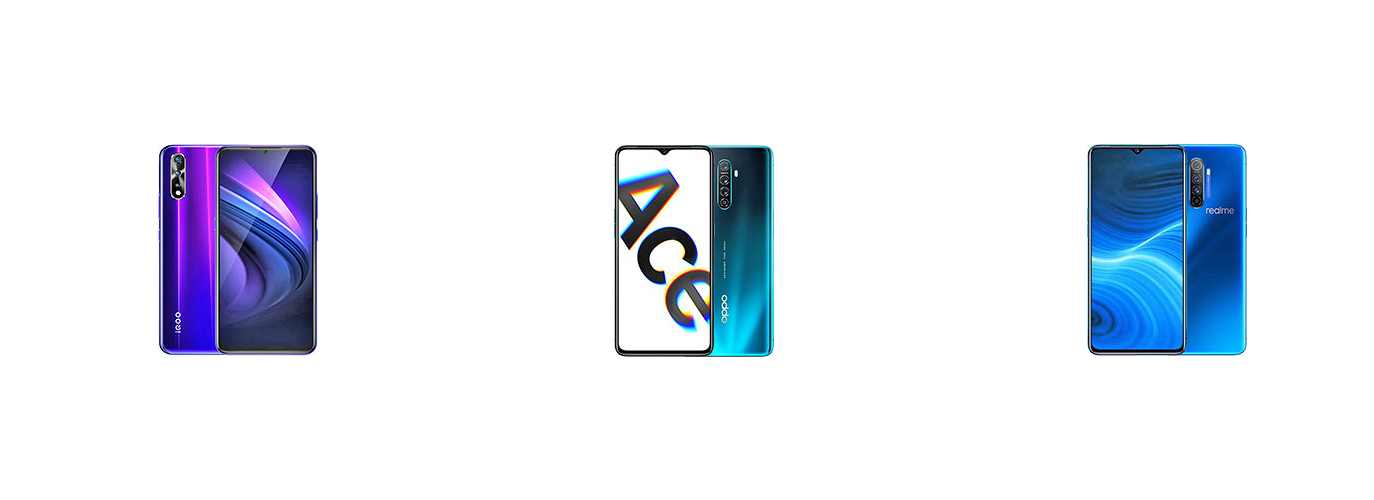
Vivo released a new affordable flagship: its name is iQOO Neo 855 and it is an upgraded version of the existing iQOO Neo with a better chipset. It just hitten the Chinese market, so we think it is time to compare it with other affordable flagships that hitten the shelves in this period. At a slightly higher price, you can currently grab a unit of the Oppo Reno Ace or the Realme X2 Pro. But is it worth spending a bit more for these Oppo devices or you’d better go for the new Vivo’s flagship? This comparison will clear all your ideas about the matter.
Vivo iQOO Neo 855 vs Oppo Reno Ace vs Oppo Realme X2 Pro
Vivo iQOO Neo 855
Oppo Realme X2 Pro
Oppo Reno Ace
DIMENSIONS AND WEIGHT
159.5 x 75.2 x 8.1 mm, 198.5 g
161 x 75.7 x 8.7 mm, 199 grams
161 x 75.7 x 8.7 mm, 200 g
DISPLAY
6.39 inches, 1080 x 2340p (Full HD+), Super AMOLED
Quad 64 + 13 + 8 + 2 MP, f/1.8, f/2.5, f/2.2 and f/2.4
16 MP f/2.0 front camera
Quad 48 + 12 + 8 + 2 MP, f/1.7, f/2.4, f/2.2 and f/2.4
16 MP f/2.0 front camera
BATTERY
4500 mAh, fast charging 22.5W
4000 mAh, fast charging 50W with SuperVOOC Flash Charge
4000 mAh, fast charging 65W
ADDITIONAL FEATURES
Dual SIM slot
Dual SIM slot
Dual SIM slot
Design
Unlike other smartphones from Oppo and Vivo, these ones are not focused on innovative designs. All of them come with a standard waterdrop display, just like most of the mid-rangers. And they come with back glass and a metal frame, so they have premium materials. I personally prefer the Oppo Reno Ace, but it is just a matter of taste. It has more attractive colors and I do not like so much the position of the Realme logo on the X2 Pro. Some may like the Vivo iQOO Neo 855 more due to the fact that it has a triple camera instead of a quad camera, making the rear design cleaner.
Display
Realme X2 Pro and Oppo Reno Ace have the most advanced display since, unlike the Vivo iQOO Neo 855, they both support a 90 Hz refresh rate as well as full DCI-P3 coverage. Between Realme X2 Pro and Oppo Reno Ace, the former wins because it comes with the support to the HDR10+ technology making the overall quality higher. Further, it has a higher peak brightness with up to 1000 nits. Note that both Oppo Reno Ace and Realme X2 Pro boast stereo speakers, so they even provide a better audio experience.
Hardware/Software
All of these devices are perfect phones for gaming and advanced users since they are equipped with flagship-class chipsets. Vivo iQOO Neo has a Snapdragon 855 SoC as well as an advanced cooling system and gaming-centric features able to enhance the GPU and CPU performance. Realme X2 Pro and Oppo Reno Ace sport an even better SoC, the best one by Qualcomm. We are talking about the Snapdragon 855+ offering up to 15 percent higher graphics performance and a higher clock frequency. Both come with up to 12 GB of RAM and up to 256 GB of internal storage, but you cannot expand it. And both come with Color OS based on Android 9 Pie. Oppo Reno Ace and Realme X2 Pro have more or less the same performance level.
Camera
Vivo iQOO Neo 855 and Realme X2 Pro lack a flagship-class camera department. Despite Realme X2 Pro has a 64 MP main sensor, it is still a midrange camera phone. The best one is definitely the Oppo Reno Ace with its 48 MP main sensor supporting OIS and a very bright focal aperture. The phone even features 2x optical zoom and an ultrawide lens, as well as a monochromatic 2 MP sensor. Vivo iQOO Neo 855 is inferior with its 12 MP triple camera, you should go for the Reno Ace without thinking twice.
Battery
Vivo iQOO Neo 855 has the biggest battery and, with its 4500 mAh capacity, it should last more. We are still not sure of it since we did not test it as it debuted today, but it will likely provide a longer battery life most of the time. However, its charging technology is much slower if compared with its rivals. With a 65W power, Oppo Reno Ace has one of the fastest charging technologies out there. Even Realme X2 Pro is fast to fully charge: it takes just 35 minutes, but it has a 50W power. You can fully charge the Oppo Reno Ace in just 30 minutes, so there is no challenge. We believe there will be only marginal differences between the battery life of the Oppo Reno Ace and the Realme X2 Pro.
Price
Vivo iQOO Neo 855 just debuted in China: it will be available starting from October 31 and pre-orders already started. Its base price is just €255/$282, while the Realme X2 Pro will debut in the global market in November with a €399/$422 starting price. Last but not least, Oppo Reno Ace starts from €380/$421 in the Chinese market. Due to its better camera, high performance and faster charging technology, Oppo Reno Ace should be the most suitable device for most of the users, but do not forget that Realme X2 Pro has a higher peak brightness and a better display quality.
Android 10 was released last month featuring several upgrades such as dark mode smart reply, overhauled permissions, and much more. Apart from features, Android 10 has seen a speedy start in terms of adoption, as verified by a recent Android distribution chart. The performance of the updates is now significantly better than last year, thanks to Project Treble.
While talking about the Android distribution numbers, Google also confirmed 10 OEMs that have committed to upgrading some of its devices to Android 10 by the end of this year. Google seemed happy with the Android update progress across different OEMs.
Many manufacturers such as ASUS, LG, Motorola, OPPO, Realme, Samsung, Sharp, Sony, Transsion, and Vivo have committed to updating some of their devices to Android 10 by the end of the year.
The 10 OEMs who might be updating their devices to Android 10 include ASUS, LG, Motorola, OPPO, Realme, Samsung, Sharp, Sony, Transsion, and Vivo. Do note that these OEMs are apart from Essential and Xiaomi, which have already updated some of their devices. OnePlus even launched the OnePlus 7T series with Android 10 out of the box, making them one of the first to do so. Technically, Huawei Mate 30 Pro was the first phone to launch with Android 10, but it is shadowed by its unknown global release date due to the US ban.
Talking about Android 10 updates on existing phones – the Essential Phone, and Redmi K20 series received it on the same day as Pixels. Moreover, the Redmi K20 have even received MIUI 11 stable update. Also, a considerable number of devices have received Android 10 beta updates like the OnePlus 6 series, Galaxy S10 series, Galaxy Note 10 series, Mi Mix 3, Mi Mix 2S, and many more.
The OEMs were able to update their devices faster than ever because of Project Treble and beta programs introduced with Android Pie. Google expects this to get better year by year in the hope of eliminating stagnation and fragmentation from the Android ecosystem.
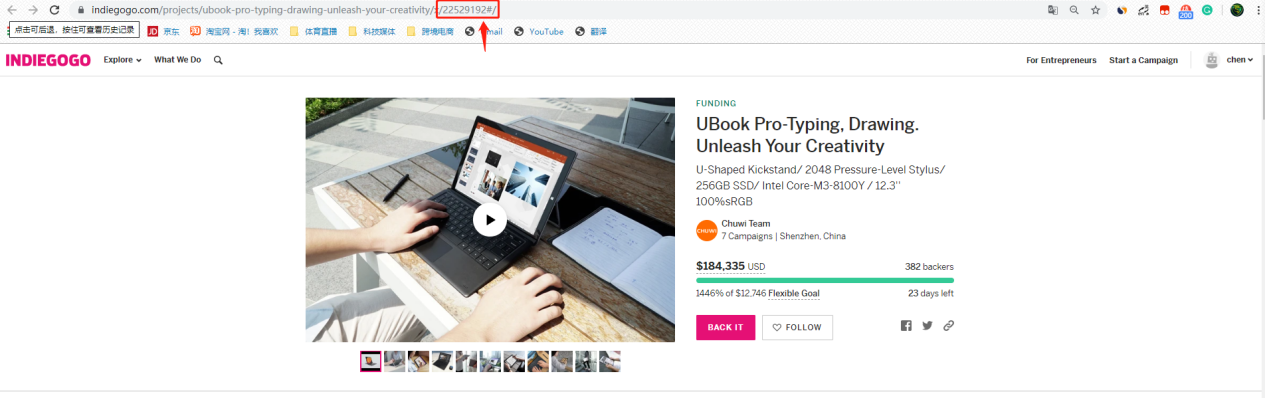
There are 2 more weeks for the Chuwi UBook Pro campaign on Indiegogo to come to an end and the Chinese manufacturer is holding a huge competition that could win you a free trip to China! All you have to do is share your unique Indigogo campaign link to participate. When the activity ends, Chuwi will pick 5 lucky users from all the participants. The one that will have the most referrals among those five will be the winner. Also, users who did not win but participated in the activity and successfully introduced to purchase the product can get a $30 coupon from Chuwi mall. Below, you can see how to participate in the activity.
Click on the official link and enter the UBook Pro Indiegogo page from the official website. Copy link with serial Numbers which is your unique identification number as shown in the photo above.
Copy the link anywhere you have a large number of users, such as a Facebook discussion group, a Linkedin discussion group, a Reddit question, a personal blog, or some tech BBS. Anyone clicking on your link and placing an order counts as a successful referral to a buyer.
The content should be interesting. For example, the Surface pro7 is the strongest challenger at only $499 UBook Pro.
Share your links to the right places and you’ll have a better chance of winning the prize.
One week after the end of the project, Chuwi will announce the winning users on Indiegogo and Facebook. The trip to China will be arranged within 6 months after the completion of the project, and the destination city is Shenzhen. The lucky winner will visit Chuwi’s company and factory, enjoy the Chinese scenery and delicious food.
The tablet market has a growing demand for stylus support and even Apple bowed to this need by introducing Apple Pencil. This is because a stylus is useful for many professions like designers, office workers and even students and leads to more efficient productivity. The industry leaders, Apple and Microsoft, both offer stylus support in many models and the trend is expected to expand even more in the years to come.
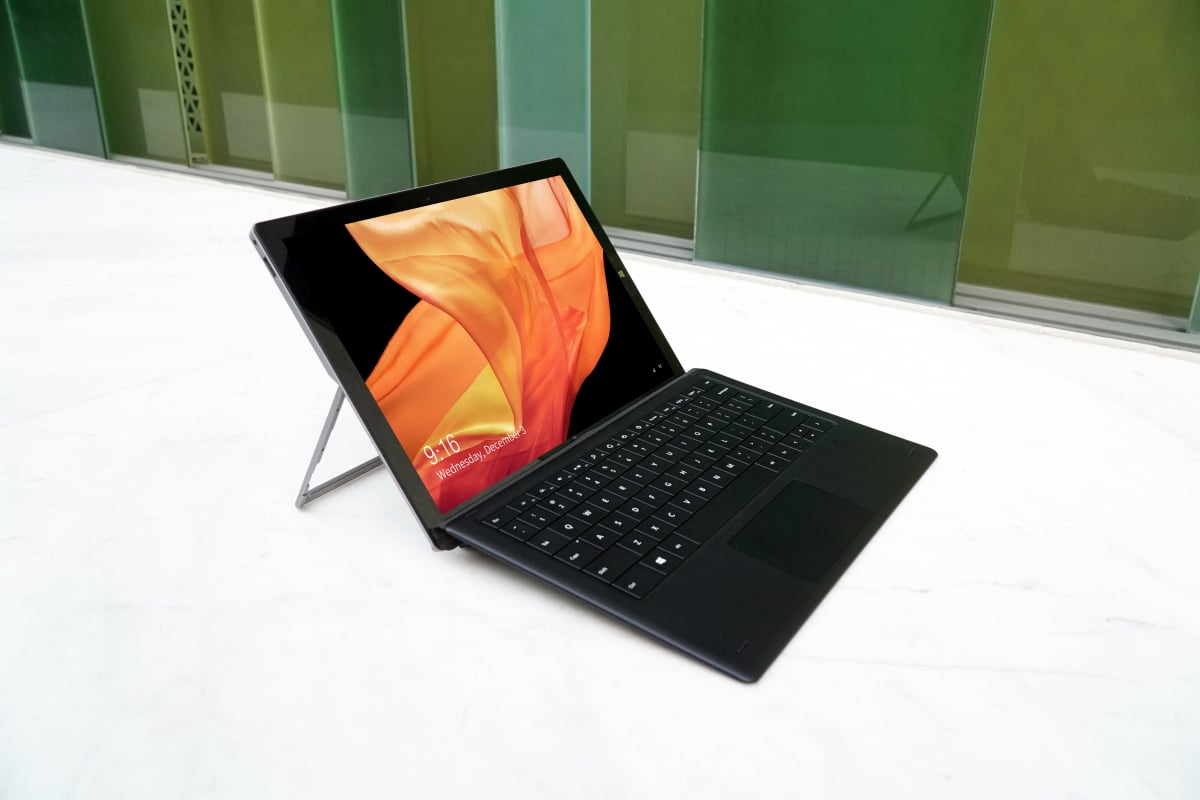
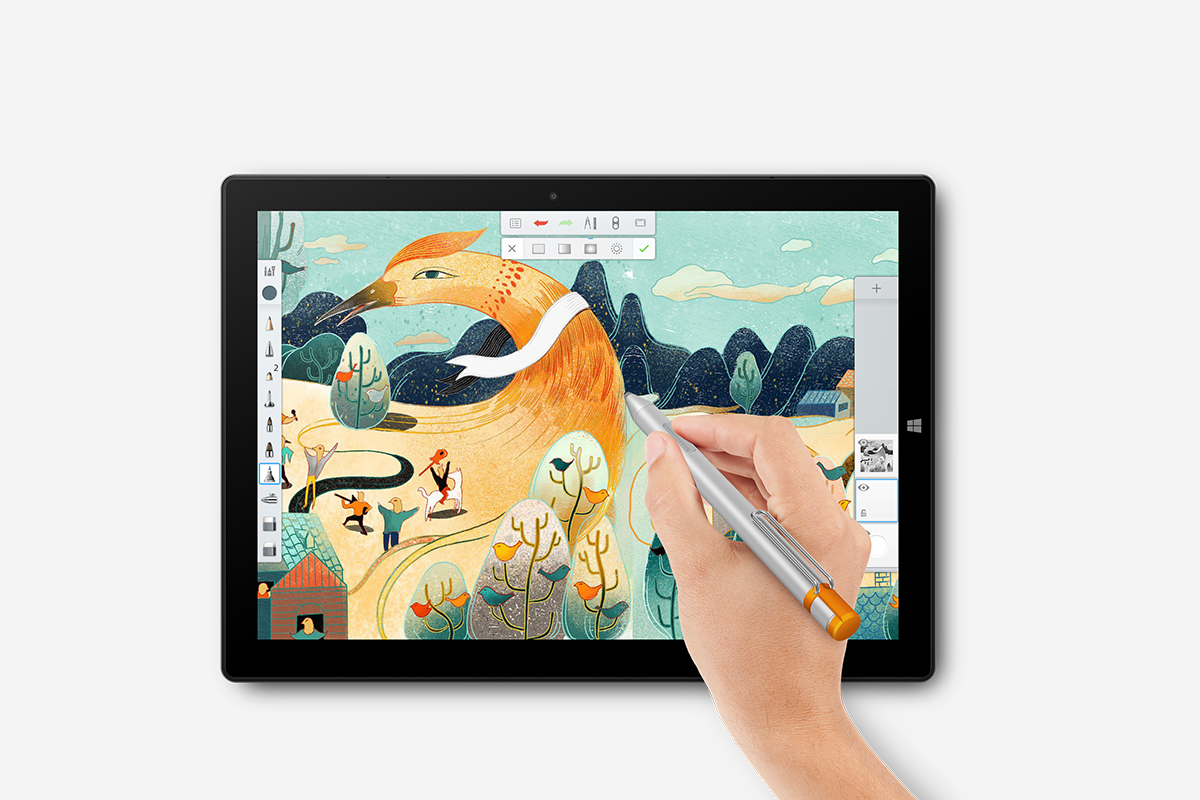
The same goes for the UBook Pro, Chuwi’s new 2in1 tablet that is currently on crowdfunding stage on Indiegogo. UBook Pro comes with a new generation of stylus HiPen H5, which is upgraded from the original 2048 pressure levels to the incredible 4096 levels.
Functional performance
According to the information we have right now, the stylus has a 2mm pencil tip and the writing experience is delicate. Significantly improved over the previous version, the new stylus has the ability to recognize pressure level more accurately. At the same time, the company claims that the battery in the stylus is greatly improved and can last up to 3 months on a single charge.
Creative Expression
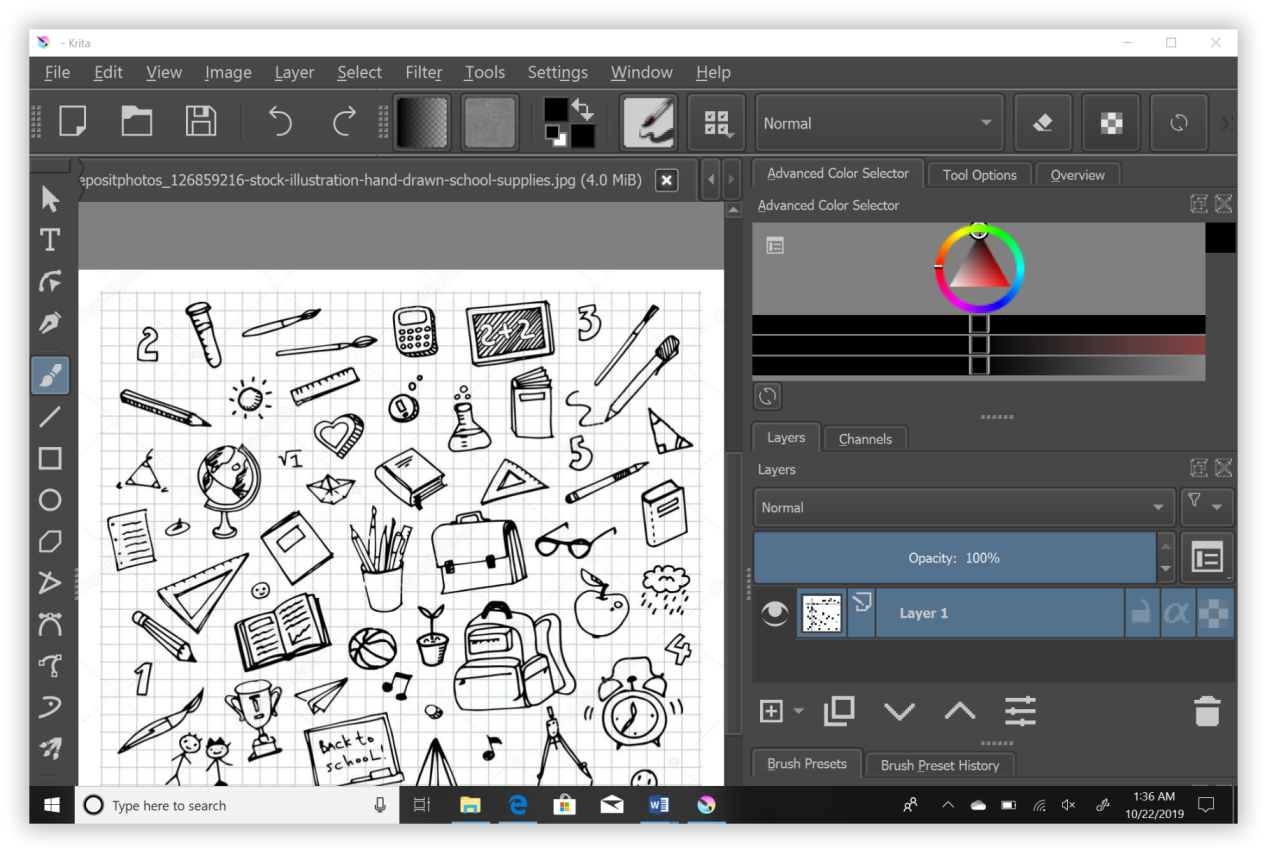
When combined with the 12.3″ FHD display, the HiPen H5 is very efficient for painting and creative arts. The precise input and low latency make it easy to finish a prototype design or a creative painting. The high pressure sensitivity helps in restoring the creator’s idea more accurately.
Capturing inspiration anywhere
Besides drawing, you can use the stylus to take notes wherever you are. This is even easier now thanks to the improved portability of the UBook Pro as you can carry it everywhere you go without feeling it is a burden. Quickly record the fleeting inspiration when working outdoors or traveling.
Efficient note
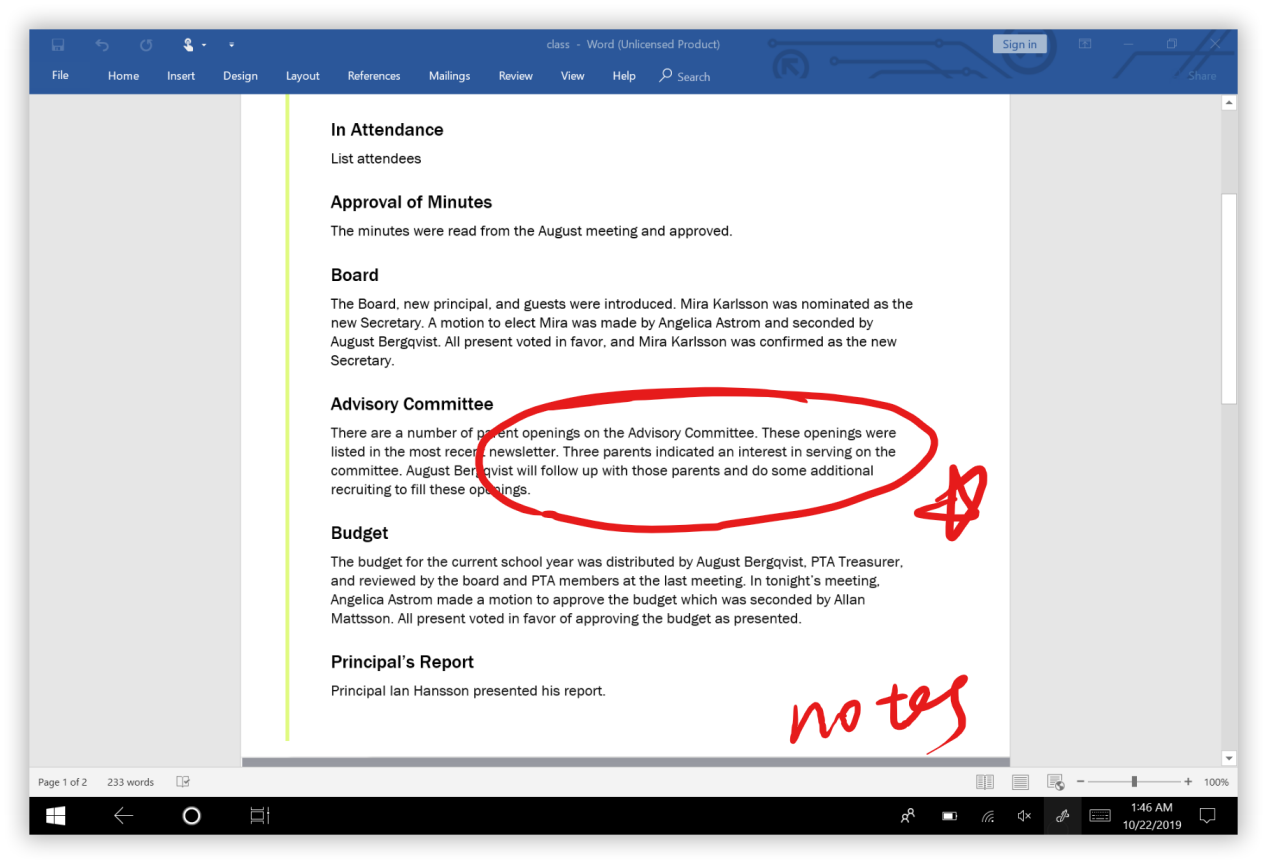
Taking notes on a tablet isn’t the best experience in the world. Usually, budget devices come with high-latency styluses that destroy user experience. Writing with the HiPen H5 feels almost as natural as a natural pen and it’s very convenient for students and office workers. Of course, you can annotate PDF slides, write down ideas while browsing documents or even capture screenshots.
As you can see, the HiPen H5 stylus is a great addition to the UBook Pro and expands usage scenarios, making productivity and creation more efficient. Of course, half the job is done by the great hardware configuration of the tablet as, besides the 12.3″ display, it comes with an Intel m3 8100Y CPU backed by 8GB/256GB memory combo, full-featured type-c interface, etc.
As mentioned in the beginning, UBook Pro is currently in the process of crowdfunding on Indiegogo. Purchasing the stylus and keyboard package means bigger overall discount. To learn more about it, visit the product page.
Xiaomi recently launched its new Mi Band 4, featuring several new advancements over its predecessor. In a recent update, the affordable fitness band received a new update with the auto-screen off timeout feature and several other changes. However, to make these features more relevant to Mi Band 4, Xiaomi has started rolling out an update for the Mi Fit App.
The latest app update is now rolling out via Play Store with the custom vibration ability to quickly find the lost device and the customizability for auto-screen off timeout. A few weeks ago, the company rolled out the auto-screen off feature but was missing on the customizability. The latest Mi Band update will allow the users to customize the timeout, after which the device’s screen will go off.
The new Mi Band update also brings support for Jiangsu Card Nantong on Xiaomi Band 3 NFC, Xiaomi Mi Band 4 NFC, and Amazfit Cor 2. Several other performance tweaks are part of the latest App update. The update will gradually roll out via Play Store for all smartphones.
To recall, the Mi Band update also optimized the device with improved swim tracking with a few new custom watch faces with Anime and game characters.
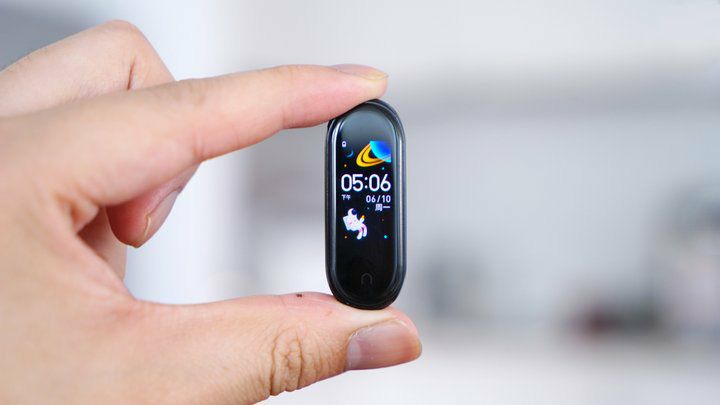
The Xiaomi Mi Band 4 comes with a 0.95-inch AMOLED (240 x 120 pixels) display and 2.5D scratch-resistant glass. It features a 125 mAh battery, which can last up for 20 days. The built-in microphone enables voice commands and also offers support for touch inputs. It can easily track different activities like cycling, swimming, exercise, running, and walking. The inbuilt Bluetooth 5.0 BLE enables secure connectivity with other devices
It is a 5ATM water-resistant device and comes with a heart rate sensor for efficient monitoring. The Mi Band 4 is available in two different variants – non-NFC and NFC for $24 and $32, respectively.
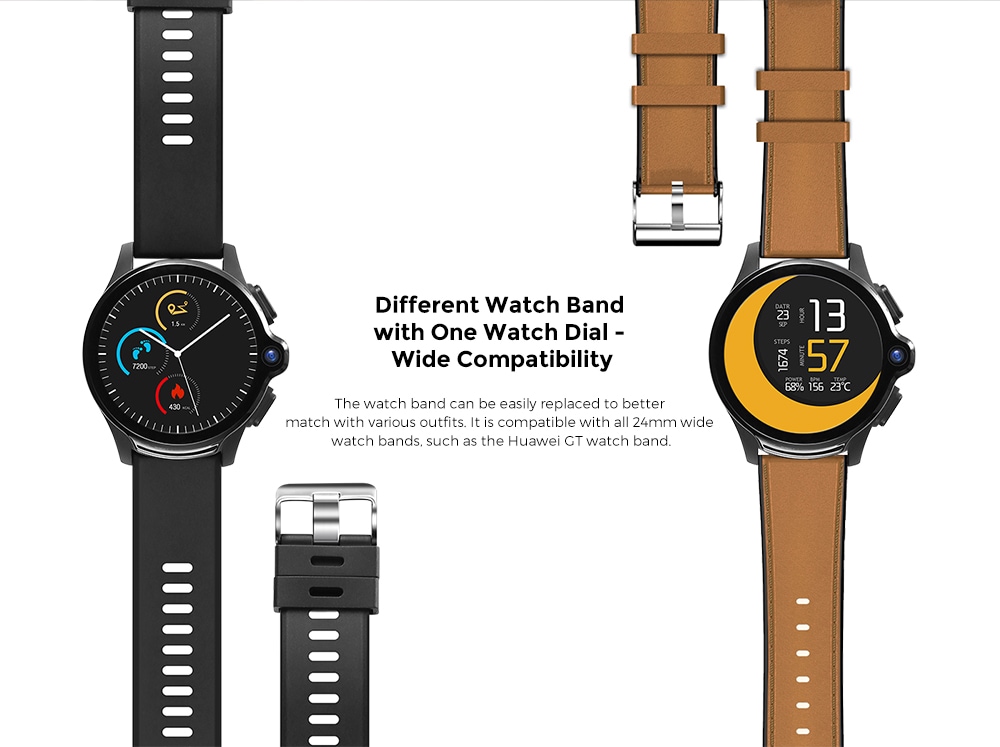
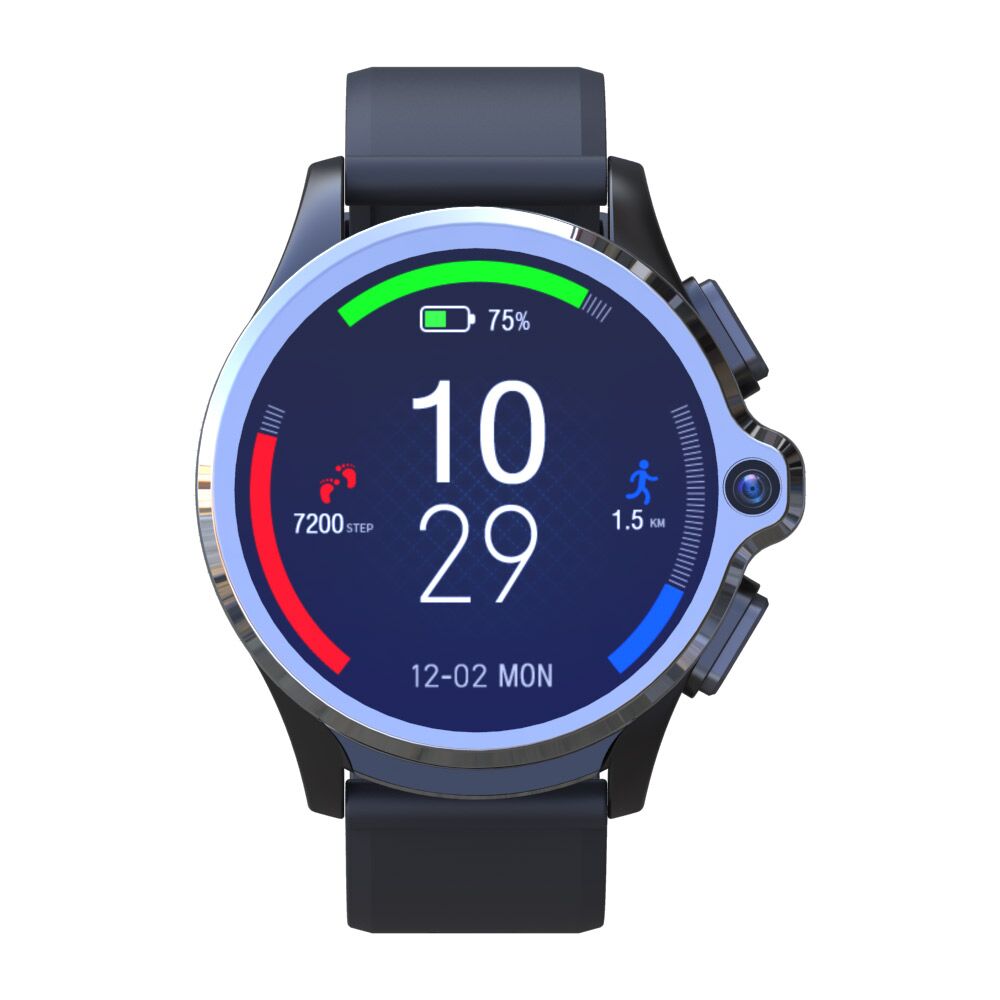
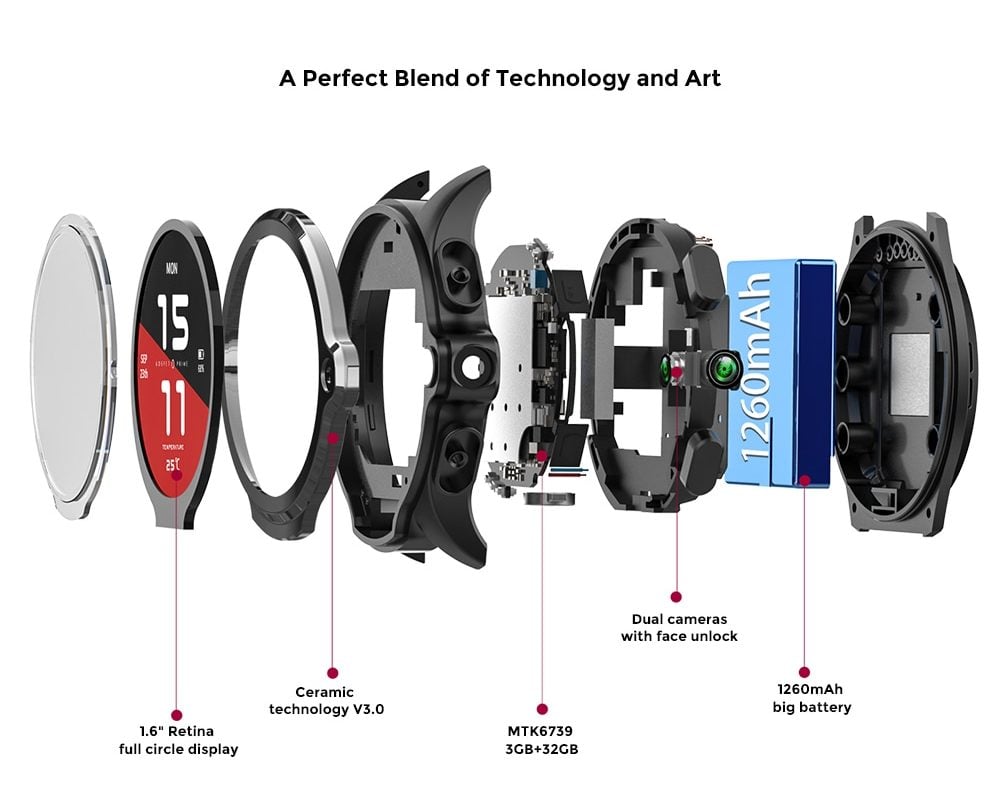
The biggest disadvantage of smartwatches is their battery performance. Hardware just isn’t power-friendly enough to cope with the small battery found in most watches so most models need to be recharged every day. Xiaomi’s Amazfit GTR has a long battery life but its functions are nothing to talk home about. So, I chose to try the new smartwatch from KOSPET, Prime, as they claim it has the largest battery capacity in an Android watch (1260mAh), Face ID function, a big 1.6″ display, and an All-in-One dual camera. All these features are unique in a smartwatch, according to the company. The 1260 mAh battery found inside the watch is almost 40% more than the second in place.
During my battery life tests, I managed to get more than 6 hours while running using the GPS which is the most intensive function for the battery. Also, I achieved 8 hours of phone calls before the battery died. On the other hand, I got about 55 hours on a full charge when continually wearing the watch connected to my smartphone and having heart rate monitoring and sleep monitoring on, message reminders enabled and carrying out light daily exercise (a few laps in the swimming pool). According to the company, a user can achieve up to 7 days of battery life when using just the basic functions of the phone (basic display effect and reminders).
1.6″ Super Retina Display
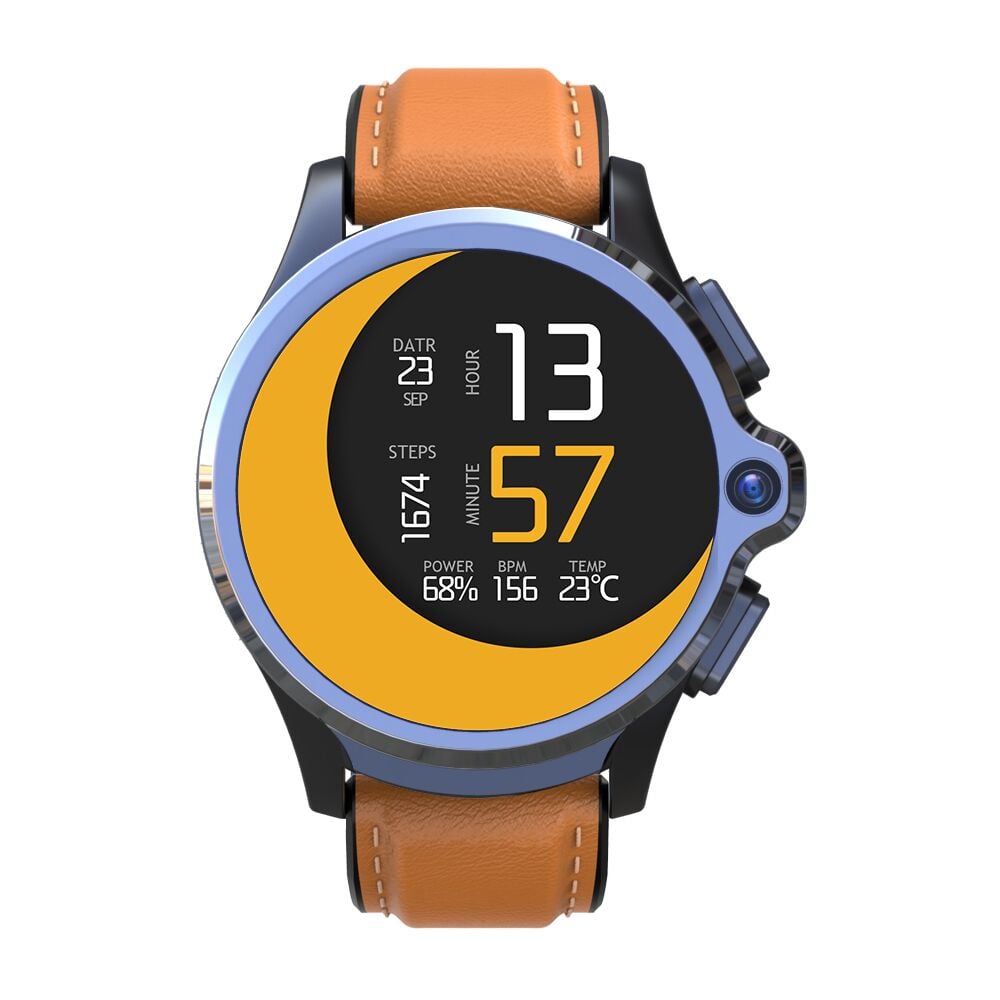
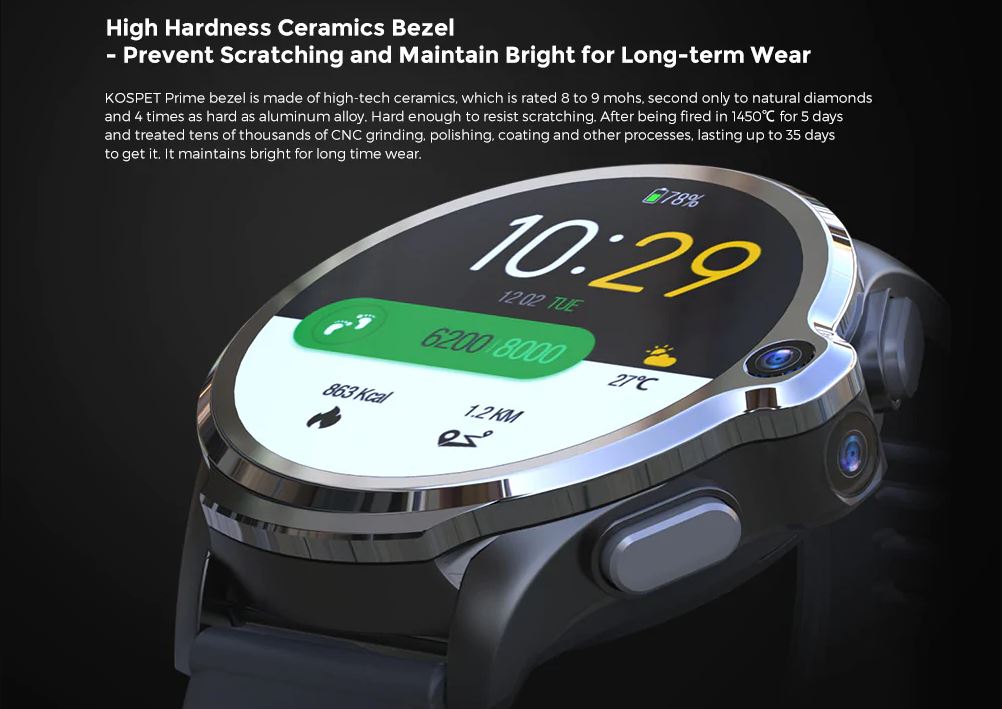
KOSPET adopts a 3rd-gen ceramic material for the watch’s case and both texture and color make the watch appear high-end. The display is big at 1.6″ and it’s a circular IPS panel unique in the market while the bezels are very thin resulting in a 13% larger display when compared with other smartwatches with the same dial diameter.
The selected size is in the middle of small 1.3″ displays and 2″ big displays. The former are difficult to operate as accidental touches occur all the time while the latter are too big and bulky. Also, the IPS panel ensures that you can see the content at any angle while the 400×400 resolution results in a 354 ppi density that makes everything look crisp.
World’s 1st smartwatch with Face ID
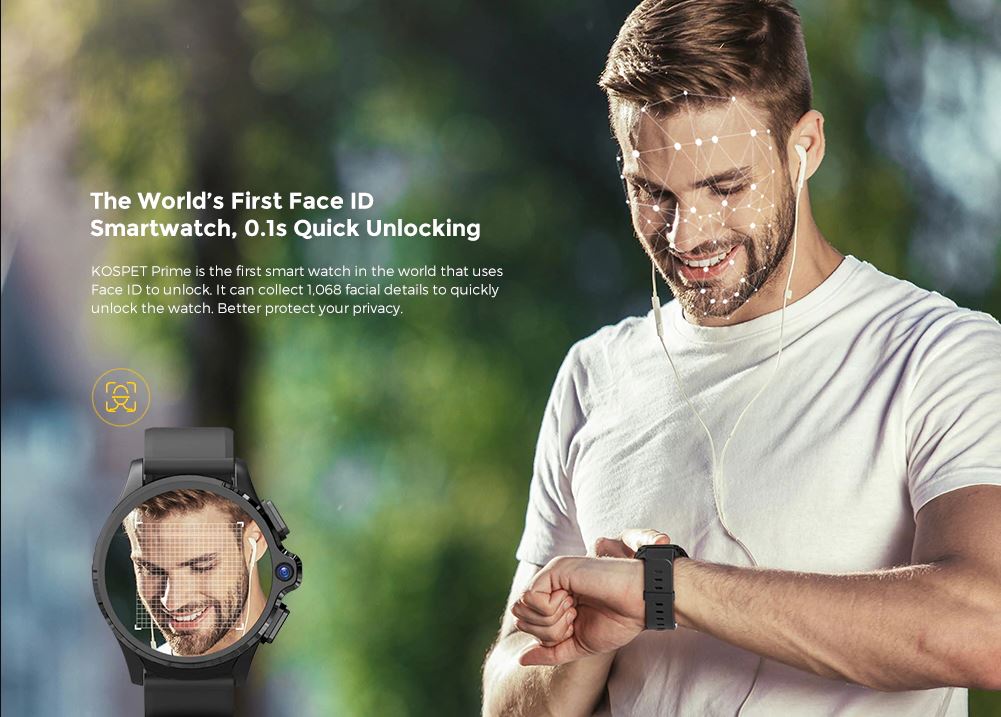
In order for a smartwatch to support face unlock, it must be equipped with a camera module and the Prime is. Other smartwatches come equipped with a camera but there’s no face unlock available. Thus, KOSPET Prime is the 1st of its kind to have that feature and the unlock takes place when you lift your hand towards your face. The performance of the feature was adequate, with only a few hiccups showing up every now and then. Overall, it was useful and offers added security and privacy.
World’s 1st all-in-one Dual Camera
As mentioned above, the KOSPET Prime comes with a 2MP front-facing camera and an 8MP side camera. The camera is positioned in a small raised part on just 4mm higher than the case and looks like a button, combining practicability with design. It is pretty useful, especially when running or have your smartphone away and want to answer or make a video call. The photo quality isn’t exceptional though but that’s not something you’d expect from a smartwatch, is it?
Multiple Sports Modes and Comprehensive Health Management
With software and hardware improving year over year, sports function in smartwatches has evolved from just running or walking to supporting multiple sports. Prime supports nine sports including indoor/outdoor walking (running), outdoor cycling, basketball, football, etc. I haven’t managed to test all modes so I can’t say for sure how good they are. In addition, the device comes with GPS built-in supporting 3 satellite systems. This results in faster and more accurate location lock.
What’s more, KOSPET Prime also comes with motion monitoring to correct bad postures during workout and improve the results you get from exercise.
Conclusion
This is the first smartwatch I’ve used in a long time and it was both strange and familiar to me. I needed some time to get used to the interface and operation but at the same time it was familiar as it practically is an Android smartphone on your wrist. KOSPET has more to offer than its latest flagship, like the KOSPET Hope, the world’s 1st ceramic Android Watch with 3GB/32GB memory, Brave, the 1st PI68 4G smartwatch, the Optimus Series that sports dual 4G, and KOSPET Vision.
This year has been an excellent one for Asus so far. Their laptop lines have been doing quite well, and the ROG Phone 2 has broke straight into the market with huge success, making a pretty big impact with lasting effects. So, it’s really not all that surprising that Asus is the number one Taiwanese brand of 2019 according to MOEA.
For those not aware, The Ministry of Economic Affairs (or MOEA for short) is the ministry of the Republic of China (Taiwan) responsible for formulating policy and laws for industry and trade, foreign direct investment, energy, minerals, measurement standards, intellectual property, state-owned enterprises.
Top-10 Taiwan-based global brands by value, 2019 (US$m)
Brand
Company
Brand value
Y/Y
Asus
Asustek
1,549
(4.32%)
Trend Micro
Trend Micro
1,532
2.47%
Want-Want
Want Want China Holdings
937
4.46%
CTBC
CTBC Financial Holding
604
0.17%
Advantech
Advantech
556
11.20%
Giant
Giant Manufacturing
481
7.13%
Cathay Financial Holdings
Cathay Financial Holdings
446
(3.25%)
Acer
Acer
428
5.42%
85 Daily Cafe
Gourmet Master
405
(3.11%)
MediaTek
MediaTek
379
6.76%
Other notable companies on the list include Acer over at number 8 posting some pretty decent growth this year, as well as MediaTek managing to eke their way into the list. Although they’re both doing decently well, they’re not even close to Asus, who sits at the top with a pretty comfortable looking lead.
The most recent devices out of the Asus stable are the Zenfone 6 and Asus ROG Phone 2, which have both been receiving pretty great reviews. Whether they’ll be able to keep up this momentum next year remains to be seen, though we’re optimistic they’ll do just fine.
After the U.S. ban on Huawei that came into effect back in May 2019, companies like ARM were scrambling to find out whether they could continue to supply technology to the telecommunications giant. Now, after months of review, ARM confirms that Huawei’s chip-making subsidiary, Hisilicon, is cleared to use its ARM v8-A as well as V9 architectures since they are of UK-origin.
The Kirin 990 will probably be the FIRST integrated 5G chipset to hit the market
“ARM’s v8 and v9 are UK-origin technologies,” an ARM spokeswoman told Reuters via email on Friday. “ARM can provide support to HiSilicon for the ARM v8-A architecture, as well as the next generation of that architecture, following a comprehensive review of both architectures, which have been determined to be of UK origin.”
While ARM is a British multinational company, it had revealed a few months back that some of its technologies were of ‘US-origin’. This news came as a big blow to the company as it relies heavily on ARM’s CPU and GPU designs for its Kirin SoC lineup that powers its smartphones. However, after months of careful analysis, ARM has finally determined that it can continue its business with Huawei. What’s also interesting is the fact that ARM’s v9 architecture is also confirmed to be of UK-origin which means Huawei’s next generation Kirin processors are cleared to use this tech.
This news comes right before Huawei’s second temporary extension from the ban comes to an end. The reprieve was only till November after which U.S. companies will have to stop supplying technology to Huawei, even for maintaining existing products.
Despite the U.S. ban in effect, Huawei is still making good progess in the market. Its Q3 2019 revenue grew by 27%. The company is also expected to ship nearly 270 million smartphones by the end of this year. It has already crossed over 200 million shipments so far into the year.
Xiaomi seems to have gone ballistic with the rollout of its latest MIUI 11 Stable update to various models. The update has so far started hitting the Mi 6, Mi 9, Mi Mix 3, Mi Mix 2s, Mi 8 SE, Mix 2 and even the Redmi K20 and Redmi 7, among others. Now, users of the Mi CC9 have reported that their models have started receiving OTA updates for the MIUI 11.3.1.0 stable version. The update package comes with a large 728MB size and so it is advised that updating should be done over a WiFi connection. We couldn’t verify from the changelog (in Chinese) if this new update is based on Android 9 or 10. However, considering the premium midrange rating of the Mi CC9, we want to believe it is Android 10-based.
MIUI 11 brings a whole lot of new features to the table. The new features include new icons for the UI which is a traditional feature of successive MIUI versions. The update also brings smoother animations, Ultra Power Saving Mode as well as Kids Mode which provides a safe digital environment for kids by running only apps whitelisted by their parent or guardian. MIUI 11 equally tracks the owner’s smartphone usage time in order to help avoid spending too much time. Other features include earthquake alerts, the ability to cast to an external display with the added feature of continuous casting even when the display is turned off to save battery.
As a reminder, the Mi CC9 was first announced in July this year alongside the Mi CC9e, Mi CC9 Meizu custom edition. The device was later launched as the Mi 9 Lite outside China and so we expect a swift update for the global version. The phone packs a 6.39-inch AMOLED display with a 91% screen ratio. Powering the model is a Snapdragon 710 chipset. The Mi CC9 utilises an under-display fingerprint sensor. It equally packs NFC, infrared remote control and Hi-Res HD audio.
Earlier today, Xiaomi announced that there’s been a bit of restructuring within the company. There aren’t all that many changes, but the ones that are here are pretty big changes. So, let’s take a closer look at the new changes within Xiaomi Corp.
First of all, Lin Bin has been appointed as the vice chairman of Xiaomi and will continue to serve as the executive director and president of the company, responsible for managing the company’s mobile phone R&D department. He’s been doing a pretty great job so far, so it’s nice to hear that he’s still around in the company.
In other news, Koh Tuck Lye has resigned as a non-executive Director and a member of the audit committee of Xiaomi. Mr. Koh Tuck Lye tendered his resignation in order to focus on investment and management matters of Shunwei Capital. Mr. Koh has confirmed that he has no disagreement with the Board and there were no problems in respect of his resignation.
Meanwhile, Chew Shou Zi has been appointed as an executive Director and will continue to hold the positions of Senior Vice President and Chief Financial Officer of Xiaomi. Mr. Chew is a director of various members of the Group. Mr. Chew is also a director of Kingsoft Cloud Holdings Limited, a subsidiary of Kingsoft Corporation Limited, a company whose shares are listed on the Stock Exchange (stock code: 3888).
Finally, Liu Qin has been appointed as a member of the audit committee within Xiaomi, and will continue to serve as a non-executive director. Liu Qin has been a director of YY Inc. since June 2008, and a director of Xunlei Limited since September 2005. According to Xiaomi, all these changes will take effect on October 25, 2019.
The Mona Lisa is getting a fresh lease of life with the help of Virtual Reality, five centuries after the iconic portrait came to life. This is part of a new initiative by the Louvre, in association with HTC, which struggled with the iconic painting’s popularity this year. With the upcoming Leonardo exhibition right around the corner, the experts are busy fine-tuning the 3D viewing angles that protrude beyond the shatterproof glass enclosure.
The idea behind the experience is to educate people about the Mona Lisa and its history so that its value can be better appreciated. With the help of VR, people that are unable to be present physically can also get the same experience right from the living room. HTC has set up a special viewing room inside the museum with 11 Vive Cosmos headsets for people to soak in the VR experience.
According to a statement issued by Dominique de Font-Réaulx, the Director of Interpretation and Culture Programming at the Louvre, “This is our first attempt at using VR to educate and entertain the guests visiting the museum”. Commenting on the VR experience, Dominique added, “She is seated face-to-face with the audience in the manner of having a conversation”.
The experience includes many of da Vinci’s original designs, including the wing-flapping glider that he had sketched. Dominique added that the two curators who were assigned the task spent countless hours researching important materials for the narration. They are also responsible for highlighting the visual details on and around Mona Lisa, including the gentle waves on her velvet dress, to the clay tiles from 16th Century Florence.
The digital experience is part of an experiment to broaden the Louvre’s appeal with the younger generation. The French Government is leaving no stone unturned to promote the country’s artistic heritage with Virtual Reality and other alternatives. Franck Riester, the French Minister of Culture, unveiled a plan to set up a thousand ‘micro-follies’ or digital museums around the country within the next three years, back in September. The locations include places frequented by people such as libraries, cinemas, hair salons, and social centers.
The most dramatic portion of Mona Lisa: Beyond the Glass, perhaps is the 3D model of the woman. The VR artists used infrared, X-Ray and refractive data collected from the Louvre to deduce what she might have looked like. The team at Emissive VR studio did not just infer her physical features, but also recreated her clothes, which folded and creased at the right places with her every twist and turn.
According to Emissive’s Art Director, Emmanual Gorinstein, “The landscape behind Mona Lisa was not created to feel realistic. It is based on da Vinci’s imagination and geographical knowledge of the region, which adds to its charm”. The tour concludes with Mona Lisa’s 3D portrait in her iconic pose, placed in front of the newly recreated background. HTC Vive Arts have volunteered its services for the Louvre’s Mona Lisa VR project.
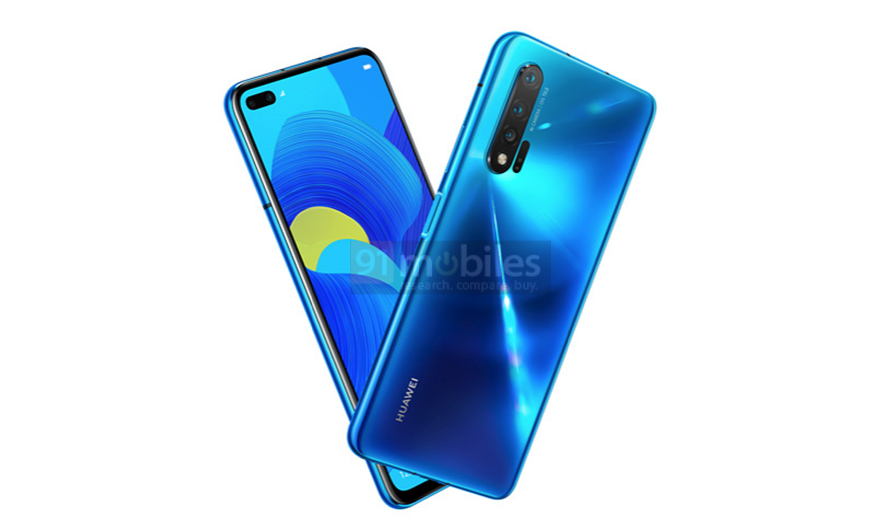
Huawei is reportedly working on the launch two new smartphones. Past reports have revealed plenty of information on the Honor V30 5G that has a model number of OXF-AN00. A report that was published earlier today that not only the Honor V30 5G has been approved by the China’s TENAA telecom authority, the Nova 6 5G with WLZ-AN00 has also been approved by the same body. It appears that the arrival of Huawei Nova 6 5G phone is drawing near as a leaked render revealing its front and rear design has surfaced.
The leaked render revealed by 91mobiles shows the Huawei Nova 6 5G smartphone with glass panels on front and rear sides. The gradient rear of the phone has a vertical camera system that includes three camera sensors followed by an LED flash. Alongside it is another module that could be a 3D ToF sensor or laser autofocus. The right edge of the phone seems to feature a volume rocker and a power key.
The frontside of the Huawei Nova 6 5G is fitted with a notch-less display. The top-left corner of the screen has an elliptical punch-hole display that includes two front-facing cameras. It seems to be featuring a side-mounted fingerprint scanner. The chin of the device appears a bit thick.
There is no information available on the specifications of the Huawei Nova 6 5G smartphone. The handset is expected to arrive in 4G and 5G variants. It is speculated that Nova 5G could be arriving by December this year. Hopefully, more details of the smartphone could be revealed through its TENAA appearance in the coming days.
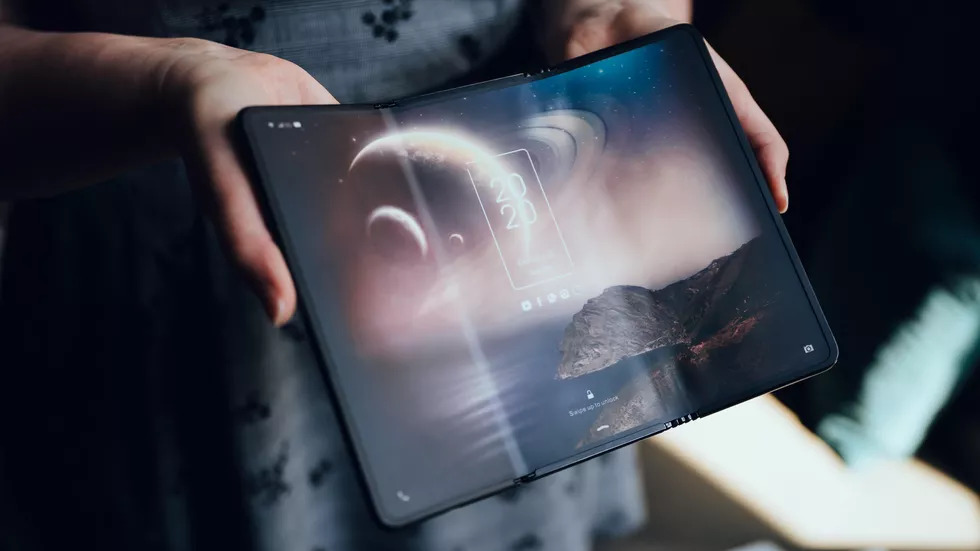
Foldables are the new craze in town, and we already have commercial foldable devices from the world’s top two smartphone makers: Samsung and Huawei. While Samsung’s Galaxy Fold went on sale back in September in multiple markets, the Huawei Mate X foldable will go on sale in China on November 15. In fact, earlier today, even TCL showed off an impressive foldable phone with a triple-folding design.
TCL triple foldable phone concept
While we are all impressed with the flexible display on these foldables that transform them from a tiny smartphone to a large screen tablet, Meizu’s ex-VP, Li Nan, thinks these displays are better suited for smartwatches. He backs his statement saying that a flexible screen will allow smartwatches to increase their screen real estate without sacrificing on durability since the bend range is limited.
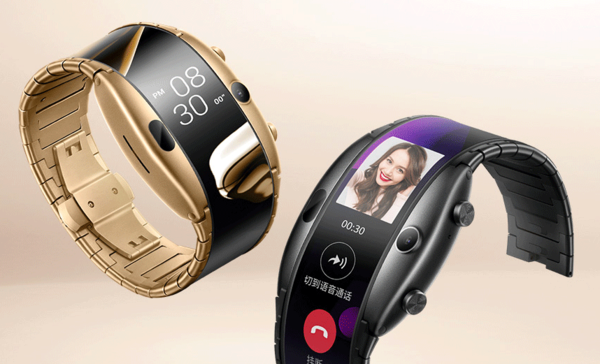
Notably, flexible screens have been used in smartwatches before, and the Nubia Alpha is the best example of this design. The company has used a 4-inch 192×960 foldable display on its smartwatch shaped phone that allows it to wrap around a user’s wrist.
Nubia Alpha
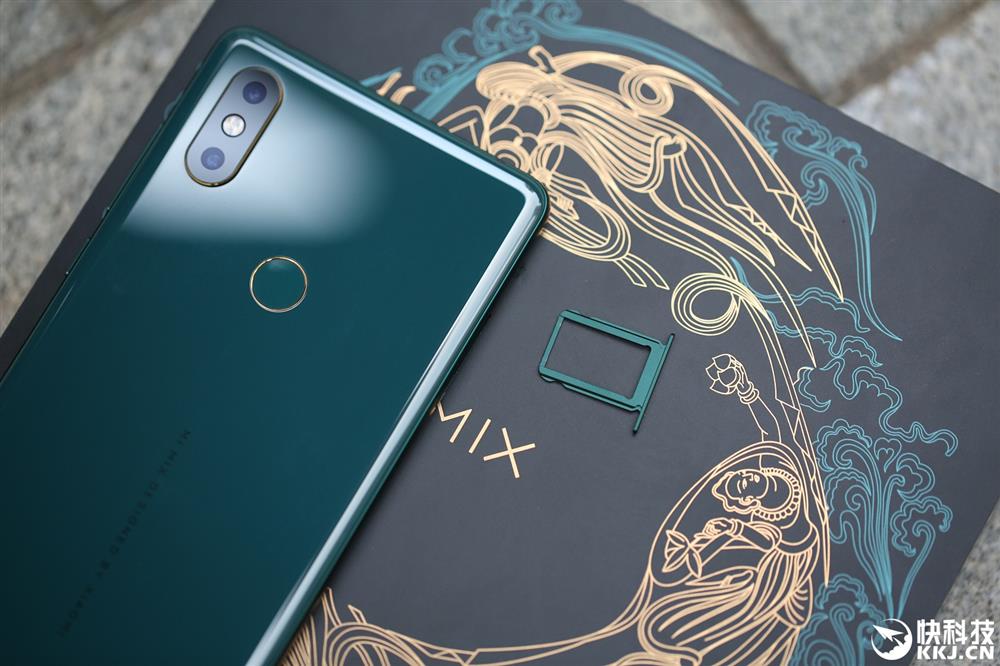
Irrespective of Li Nan’s opinion, foldable smartphones will continue to pop-up in the market in the next few years. Xiaomi, OPPO, and other brands have already confirmed that they are working on a foldable phone. The Xiaomi’s Mi Mix Alpha is just a glimpse of our smartphone future with the help of flexible screens.
So what do you think? Should companies focus more on smartphone concepts like Nubia Alpha that stay on your wrist?
In the past few weeks, Xiaomi has been busy rolling out both beta and stable builds of MIUI 11 to its devices. Today, the company has rolled out another beta MIUI 11 update for the Mi Mix 2S, but this time, it’s based on the new Android 10 OS. Also, the MIUI 11 9.10.25 beta build brings the latest October security patch to the device.
Given that this is a beta build, Xiaomi recommends backing up your data before upgrading the Mi Mix 2S to the new version. Note that this particular beta version ( MIUI 11 9.10.25 ) could be buggy since it updates the device from Android 9 Pie to the latest Android 10 OS. The update log also mentions that there could be third-party compatibility issues. So, some apps may not function properly in this beta build.
The new MIUI 11 update to the Mi Mix 2S comes right after Xiaomi updated the Mi Mix 3 model with a new beta release based on Android 10. Interestingly, the Xiaomi Mi 6 updated to a stable MIUI 11 release a couple of days back, but it was based on the old Android 9 Pie version.
MIUI 11 brings a host of new features to Xiaomi and Redmi devices like new sound effects and alarms, Mi Go travel suite, dark mode, and ambient display. If you want to know everything about the MIUI 11 OS, click here.
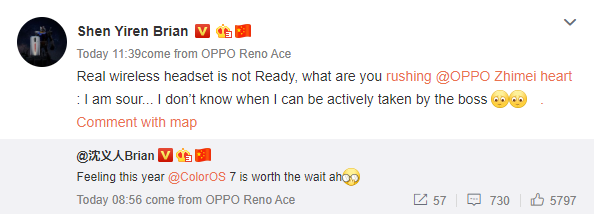
OPPO has had a busy year so far, releasing two Reno generations within six months, along with a bunch of other smartphones and accessories. The company’s VP, Brian Shen, never shies away from teasing new models, and today, he revealed that OPPO is also working on a true wireless headset.
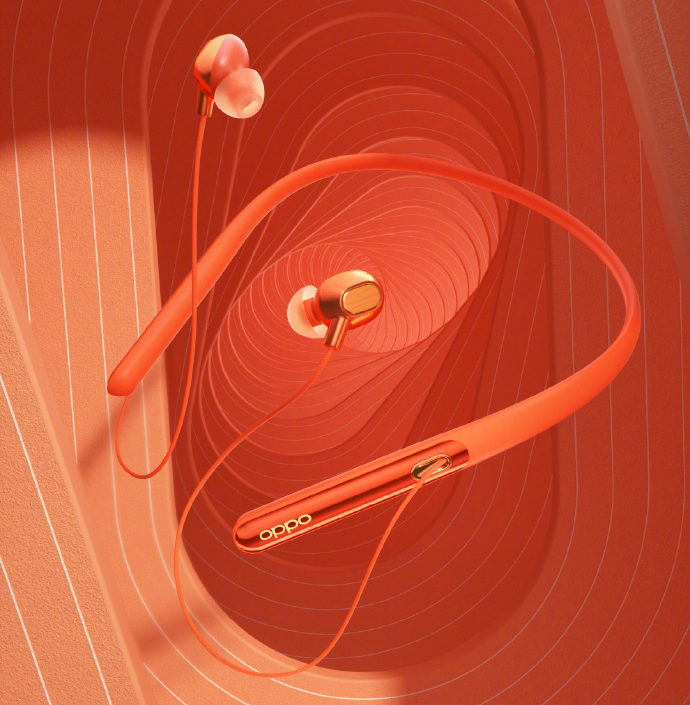
Oppo announced the Enco Q1 neckband headphones last month
OPPO has been involved in the audio business for a while, and the company’s high-end headphones have received rave reviews for its excellent quality output. It recently released the OPPO Enco Q1 noise-canceling wireless neckband headphones in China for under $100. Now, it looks like we’ll see yet another headphone from the company, a true wireless earbuds.
TWS is a growing accessory segment, and almost all major smartphone makers, including Xiaomi, Meizu, Huawei, and Vivo, have at least one TWS headphone model. So it’s no surprise that OPPO is looking to grab a share of this market. However, given OPPO’s history with headphones, it could focus on the premium segment of the earbuds industry with its upcoming TWS headset.
Apart from this, Brian Shen also revealed that he is looking forward to ColorOS 7. The company had announced the ColorOS 6 version back in November 2018, so a new update to the OS is due very soon. Note that the ColorOS 6 only started appearing on smartphones after March 2019, so even if the new version is announced this year, don’t expect it on your smartphones anytime soon.
OPPO’s ColorOS has often been criticized for bloatware and heavy customizations. But things could change with the ColorOS 7 release. Realme’s CEO, Madhav Sheth, recently revealed that Realme would get an exclusive version of ColorOS 7, which will be very close to stock Android experience.
We don’t know what kind of features to expect from the new ColorOS 7 version, but we should hear more about it very soon.
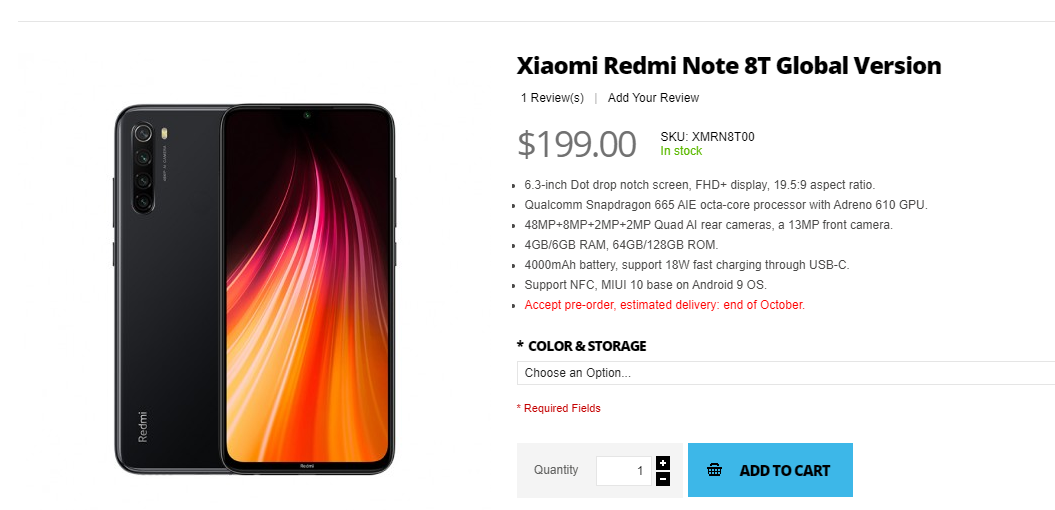
While we wait for the official launch of the rumored Redmi Note 8T, Giztop has already listed the phone up for pre-order on its website. What’s even more interesting is that the phone is said to ship from next week itself.
Giztop has listed the Redmi Note 8T Global version for $199. However, the official price tag at launch should be slightly lower than this. Note that there’s only one storage variant listed on the website, featuring 4GB of RAM and 64GB of ROM in gray color.
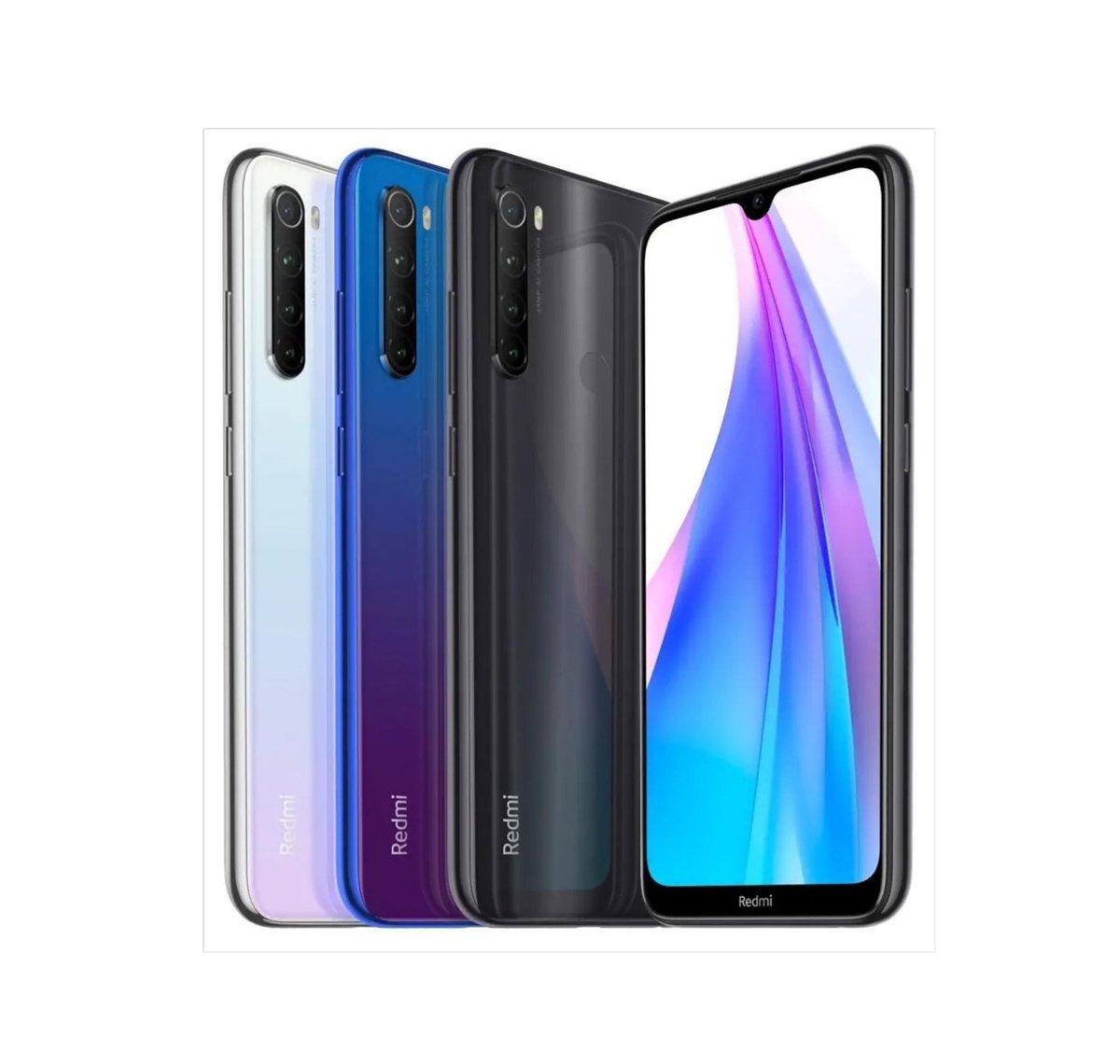
The phone is identical to the regular Redmi Note 8 version, featuring quad-cameras, a fingerprint sensor at the back, and a waterdrop display upfront. So the big difference between the ‘Redmi Note 8T’ and the regular ‘Note 8’ will be the added support for NFC. Internationally, people use NFC on a wider scale than in countries like India. So the new device should be targeted at the global markets.
Redmi Note 8T front render
Apart from this, the 8T will have the same specifications as the regular version, which includes Snapdragon 665 octa-core processor, a 6.3-inch dot-notch FHD+ display, a 48MP+8MP+2MP+2MP quad-camera setup at the back, and a 4000mAh battery. Note that the Giztop listing shows that the phone will come preloaded with MIUI 10 based on Android 9.
Given that Giztop has already listed the phone up for sale, we expect a soft launch of the Redmi Note 8T very soon.
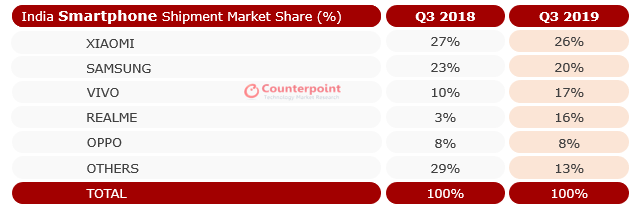
Counterpoint Research has recently published its report about the Indian smartphone market in the Q3 of 2019. While all other market segments are observing a slowdown, smartphone sales broke previous shipment records with combined sales reaching 49 million units. The report highlights that the growth can be accredited to new launches, heavy discounts on existing models during the pre-Diwali sale.
Unsurprisingly, Xiaomi was the company that sold highest number of units in the last quarter. It accounted 26% of overall sales which dropped from 27%, in comparison to last year. However, the total number of units sold surged 7% YoY it’s best selling devices are the Redmi 7A, Redmi Note 7s and Redmi Note 7 Pro.
The number two spot was secured by Samsung whose YoY shipments declined by 4% but grew 3% in comparison to the preceding quarter. Best selling devices from the company include Galaxy A2 Core and newly refreshed A series and M series handsets including A30s, M30s, A10s, A50s and M10s.
Redmi Note 7 Pro
The third, fourth and fifth spot is held by Vivo, Realme and Oppo, respectively. All of which have a common country of origin and parent, the BBK elecrtronics which is based in China. While Vivo grew from 10% to 17%, Realme gained signinificant share and it accounted for 16% of the total sales which was just 3% in the same time period last year. Oppo despite having a steady growth maintained a 8% market share.
itel which is yet another Chinese OEM grew 40% YoY which was mainly driven by strong offline penetration. It is the most selling offline smartphone brand under the price bracket of Rs 5000 (US$ 70). It’s sister companies, Infinix and Techno which are subsidiaries of Transsion group was ranked the number sixth highest selling smartphone OEM in the country for Q3 fo 2019.
While OnePlus and Apple are both hidden under the unbrella of others category in this list, the former which is also a subsidiary of BBK electronics became the number one selling premium smartphone maker. On the other, Apple also made its entry to the top ten brands whose sales were mainly driven by iPhone XR that has received a considerable price cut and the newly launched iPhone 11 which has been well received globally.
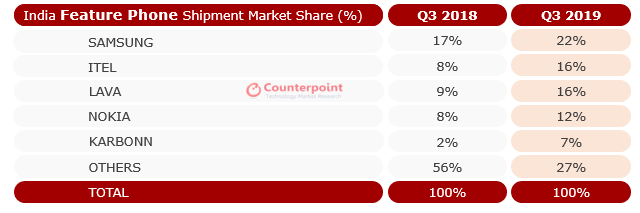
The same report also shed light on the sales figures of feature phones whose sales have gone down 37% on YoY comparison. The top five leaders in this segment are Samsung, itel, Lava, Nokia and Karbonn respectively.
According to Counterpoint, the sharp decline in this segment was hugely contributed by the slowdown in new shipments from Reliance Jio as the company has been focusing clearing the older inventory of this handset.
Chinese tech titan, Huawei has been claimed to be working on electric cars similar to what the American automotive company, Tesla makes. However, in a recent interview with CNMO, Huawei’s rotating chairman, Xu Zhijun confirmed that the company will not be getting into the business of building automobiles. Instead, Huawei will channelise its resource to develop new technologies which will help existing car manufacturers to build smart cars.
It was also revealed that the company did plan to build an electric car until as recent as October 2018. But the company observed that the market is already laden with capable automotive makers across the globe that could build refined products with the technological solutions that Huawei currently offers or the ones that are currently under development.
In the month of May this year, Huawei had showcased a smart car solution which stands atop five main aspects which are as follows:
An intelligent network that will help smart cars to connect to the cloud, which can help them locate nearby vehicles, pedestrians or any obstacles on the road.
A refined driving experience.
A sophisticated cockpit i.e the layout of an automobile’s interior.
Credible provider of electrical solutions including components such as motors and EESD (Electrical Energy Storage Devices)/ Batteries.
Provide a series of cloud services to help car companies to come up with new innovation and pay for travel services.
All the elements laid out above will essentially allow any car manufacturer to develop and build highly advanced automobiles via Huawei’s off the shelf intellectual property and technologies.
Tesla Model X (smart electric car)
The senior Huawei official also said that the company will utilise its 5G expertise to develop mm-wave and laser radar using optoelectronic technology to solve the cost and performance problems faced by existing solution providers. This technology will ultimately help in building true driverless vehicles, similar to what Tesla is currently aiming for.
It is clear that Huawei does not want to enter a market, which as previously mentioned, is already crowded and could only reward marginalised profits. Instead, it is carving a completely new industry which also falls in line with its existing role that is of a B2B supplier.
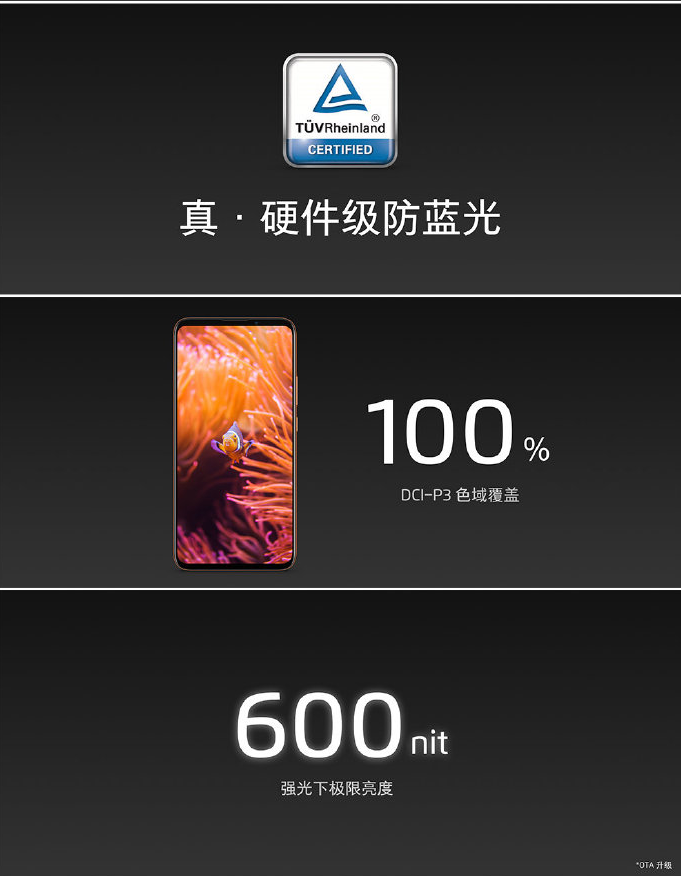
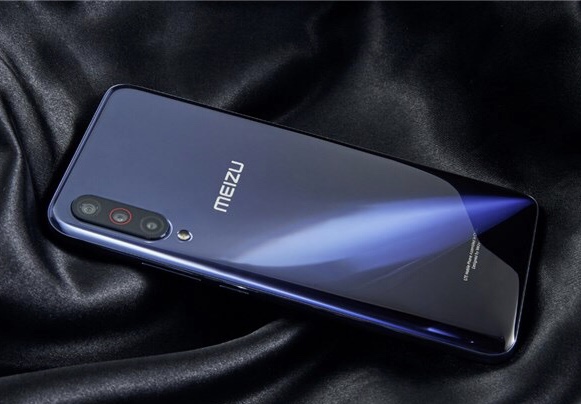
On the 23rd of October, Meizu launched it latest flagship smartphone, dubbed the Meizu 16T, it is one of the most affordable Snapdragon 855 powered handsets in the market. At the launch event, Meizu officials were observed boasting off that the display on their latest offering is low blue light certified by TÜV Rheinland.
Meizu 16T marketing material reveals TUV Rheinland certification
Soon after the event was over, the company landed itself in trouble as TÜV Rheinland AG released a statement saying that the phone wasn’t tested or certified by their organization. For reference purposes, displays certified by TÜV have reduced blue light and are flicker-free to protect eyes and preserve the vision of the users and allow them to change body position without compromising visual image quality.
Obviously, such a mistake could lead to bad consumer reception for any newly launched product, therefore, Meizu was quick enough to release a response statement. According to which, Meizu 16T’s AMOLED display is jointly customized with Samsung who holds the TÜV Rheinland Eye Comfort Certification (ID: 14190721437).
Meizu further clarified that the TÜV Rheinland logo was actually meant to highlight just the display certification and not the entire handset which was the root cause of the misunderstanding. The statement also includes an apology to the certification provider and potential consumers of Meizu.
Meizu 16T
Following Meizu’s narrative, TUV Rheinland acknowledged the apology of the Chinese corporation and a senior official replied with the following statement:
I am very pleased to see that Meizu Technology is responsible for this event and appreciates the rigorous and realistic attitude of Meizu Technology in product promotion.
To wrap things up, the whole matter has now been sorted between two parties and Meizu, without any hurdles, can proceed with the sales of its latest flagship.
We use cookies on our website to give you the most relevant experience by remembering your preferences and repeat visits. By clicking “Accept”, you consent to the use of ALL the cookies.
This website uses cookies to improve your experience while you navigate through the website. Out of these, the cookies that are categorized as necessary are stored on your browser as they are essential for the working of basic functionalities of the website. We also use third-party cookies that help us analyze and understand how you use this website. These cookies will be stored in your browser only with your consent. You also have the option to opt-out of these cookies. But opting out of some of these cookies may affect your browsing experience.
Necessary cookies are absolutely essential for the website to function properly. This category only includes cookies that ensures basic functionalities and security features of the website. These cookies do not store any personal information.
Any cookies that may not be particularly necessary for the website to function and is used specifically to collect user personal data via analytics, ads, other embedded contents are termed as non-necessary cookies. It is mandatory to procure user consent prior to running these cookies on your website.








 Unsurprisingly,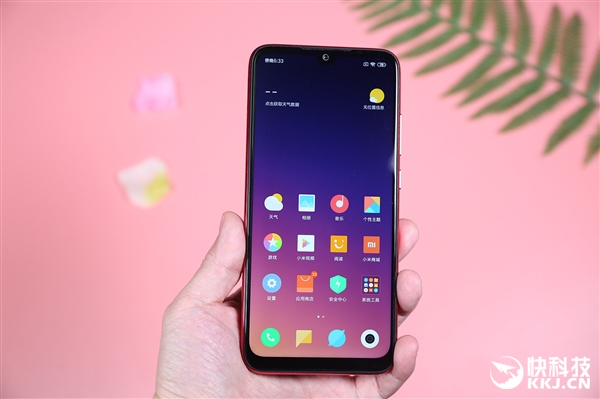
 The same report also shed light on the sales figures of feature phones whose sales have gone down 37% on YoY comparison. The top five leaders in this segment are Samsung, itel,
  It was also revealed that the company did plan to build an electric car until as recent as October 2018. But the company observed that the market is already laden with capable automotive makers across the globe that could build refined products with the technological solutions that Huawei currently offers or the ones that are currently under development.