Advertisement

ASUS ZenFone 6 teaser hints notch-less design

In February, ASUS had confirmed that it will be announcing its ZenFone 6 series of smartphones on May 16. The ZenFone 6 series is expected to include successors for ZenFone 5 Lite, ZenFone 5 and ZenFone 5Z. It is speculated that the alleged ZenFone 6Z phone will be arriving with triple rear-facing cameras and in-screen fingerprint reader. However, there have been various speculations about the front design of the phone such as punch-hole screen and waterdrop-style display. A new teaser released by the Taiwanese company suggests that the successor of the ZenFone 5Z will be equipped with a notch-less display design.

Last year, the ZenFone 5 and ZenFone 5Z phones that were introduced at the Mobile World Congress (MWC) in February 2018 had arrived with displays with wider notch like the Apple iPhone X. The ZenFone 5 was mid-range device whereas the ZenFone 5Z was a flagship phone. Hence, there is a possibility that the ZenFone 6 and ZenFone 6Z may arrive with identical display design.

The below shown teaser hints that both phones may feature notch-less displays. It remains to be seen whether these smartphones are equipped with pop-up selfie cameras. The teaser actually shows the outline of the front design of the phone and it shows a presence of an earpiece at the center of the top edge of the device which also hints that it could be featuring a waterdrop-style notch display. The teaser also states that the launch event will begin at 8PM (CEST) on May 16.

Last year, the ZenFone 5Z that had arrived with an affordable pricing was a good rival for the OnePlus 6 phone. The OnePlus 7 Pro with notch-less display and pop-up selfie camera will go official on May 14. It appears that the purported ZenFone 6Z with similar design could be a worthy rival for the OnePlus 7 Pro.

ASUS ZenFone 6 live photo
Purported ASUS ZenFone 6 live photo

There is no information available on the rumored ZenFone 6 mid-range phone. However, the key specs of the ZenFone 5Z’s successor have appeared in the recent past. The rumored ZenFone 6Z has a model number of ASUS_I01WD and its display carries support for full HD+ resolution of 1080 x 2340 pixels. The Snapdragon 855 mobile platform powers the phone along with 6 GB of RAM. It includes an inbuilt storage of 128 GB and it runs on Android 9 Pie OS. On AnTuTu benchmarks, it has scored 363,172 and it has also appeared on Geekbench.

Do you think that the purported ZenFone 6Z will be a good rival for the OnePlus 7 / 7 Pro? Share us your views by posting your comments below.

Leaked OnePlus 7 Pro renders reveal first blue OnePlus phone

The leaks keep pouring in for one of the most anticipated devices launching this month – the OnePlus 7 Pro. We have seen early camera reviews, official camera samples, and confirmation of certain features. Now we get to see press renders of the upcoming flagship in a color that’s a first for the manufacturer.

Thanks to WinFuture.de, we now know the OnePlus 7 Pro will come in (at least) two color variants – classic black and a new Nebula Blue color. The latter is the more attractive one, though I would have preferred if it didn’t shift to black at the top. It is a cool color and might be the variant to go out of stock first.

[envira-gallery id=”251217″]

Coming to the design, the OnePlus 7 Pro looks stunning. There is no notch – rectangular or waterdrop. The front is nearly all screen with really thin bezels including the chin. Even if you do not like curved displays, you can’t deny this is OnePlus’s most gorgeous device.

That panel is 6.67-inches in size with a 3120 x 1440 resolution! It also has a refresh rate of up to 90Hz. Even from the renders, we can tell OnePlus really spent a lot of time getting the display right.

On the rear of the device lies a triple camera setup arranged vertically. Although all three sensors share the same housing, the first two sensors are further separated. There is an LED flash below the setup and the OnePlus logo. The primary camera is a 48MP f/1.6 sensor with OIS and EIS and it is paired with a 16MP ultra-wide angle lens and an 8MP 3x zoom lens.

[envira-gallery id=”251215″]

The back is covered in glass and it curves to meet the frame at the sides. Images of the sides show us the phone has a camera bump. We are not sure if the sensors are covered with scratch-resistant glass but we advise you to put a protective case on the device when you get one.

The OnePlus 7 Pro has the alert slider on the right along with the power button while the volume rocker sits on the left side of the frame. There will be a fingerprint scanner under the display which explains why you can’t see one on the device. The phone will also have a 16MP pop-up selfie camera.

READ MORE: OnePlus Bullets Wireless 2 and Warp Charge 30 Car Charger leaked

Samsung Galaxy A10, A20 and A30 get price cuts in India

Samsung is vigorously marketing the Galaxy A-series models in different markets, apparently in a bid to reclaim its dominance of the midrange segment. The Galaxy A10, Galax A20 and Galaxy A30, three of its budget/mid-range models have now got price cuts in India.Galaxy A50, Galaxy A30, Galaxy A10

The new price cut sees the price of the Galaxy A10 plummet from INR8,490 ($122) to INR7,990 ($115). The A20’s price also drops to INR11,490 ($165) from INR12,490 ($180), and the A30 to INR15,490 ($223) from INR16,990 ($245). The three models are presently available at these new prices on Samsung India’s online store.

Read Also: Samsung Galaxy A20e vs Honor 8A Pro vs Nokia 4.2: Specs Comparison

Samsung announced the Galaxy A30 and A10 alongside the A50 in India in February, just days after the flagship Galaxy S10 series was unveiled. The Galaxy A20 surfaced in March. Both the Galaxy A20 and A10 are powered by Exynos 7884 SoC but the A10 comes with 2GB RAM whereas the A20 ships with 3GB RAM. On the other hand, the Galaxy A30 packs an Exynos 7904 SoC under the hood, paired with just 4GB RAM. There is a 3GB RAM variant, though, but that one isn’t available in India, at least not yet.

(source 1, 2, 3)

MediaTek’s gross margin climbs above 40% thanks to latest product offerings

MediaTek has revealed its net profit fell 16.2% consecutively to a four-quarter low of NT$3.42 billion (US$110,5 million) in Q1 2019, but its gross margin climbed 2.3pp on year and 1.8pp on quarter to 40.7%. The company also disclosed that a favourable product mix is largely responsible for the improved gross margin.Mediatek Helio P70

The chipmaker announced that consolidated revenues for the first quarter of 2019 stood at NT$52.72 billion, down 13.4% sequentially but up 6.2% when compared to that of last year. The company’s operating profit of NT$3.17 billion was also down 17.7% quarter-on-quarter but up 64.3% year-on-year. According to the firm’s CEO Rick Tsai, mobile SoCs including chip solutions for cell phones and tablets represented 30-35% of MediaTek’s incomes in the quarter. He also disclosed that the company’s mobile SoC shipments are expected to register a twofold digit successive increment in the second quarter, fueled by offers of MediaTek’s chip solutions for IoT, power management IC and ASIC items. The Helio P70 chips will also see more shipments in Q2. Also, phones powered by the new MediaTek Helio P90 will also hit in the second quarter.

Read Also: MediaTek 7nm 5G chipset in works, will be a step ahead than Helio P90

In addition, MediaTek hopes to post incomes of between NT$59.6 billion and NT$64.8 billion in the second quarter of 2019, up 13-21% successively, with gross margin extending from 39% to 42%. Tsai says the company is likewise on track to reveal its 5G SoC series before the end of 2019 and prepared its mmWave solutions in 2020.

(source)

MIUI 10 9.5.1 brings improved persistent lockscreen, Child Mode and other advancements

Xiaomi is keen on improving the MIUI 10 with latest features. They continuously keep evolving new features to enrich the overall experience of their own MIUI operating system built over Android. Xiaomi announced the new MIUI 10 9.5.1 Developer build with many new features and enhancements. It is available for Xiaomi Mi 9 and some other devices as of now.

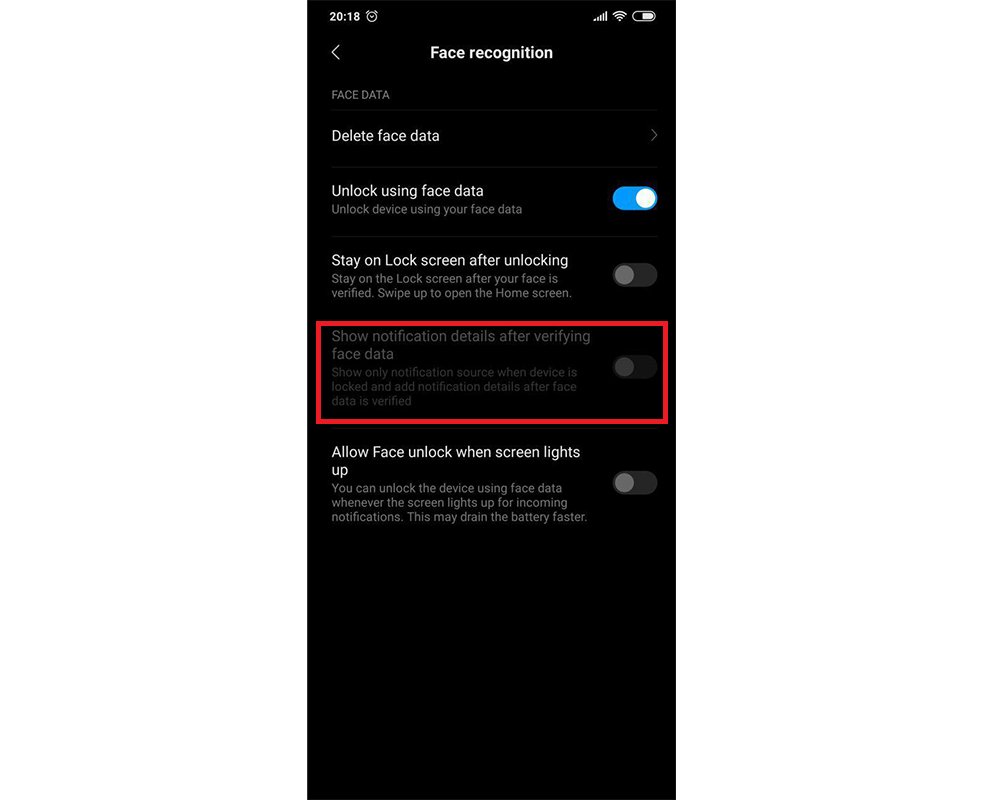
Xiaomi improved persistent lockscreen feature with an ability to show notifications details after verifying the face data. Until now, it was limited to either show full information or wrap the whole content. The new modification will allow the users to get notification details quickly.

Lockscreen clock customization settings surfaced with the latest build of MIUI. Users can easily customize the clock orientation among centered, left aligned and vertical positions. It brings design changes to the clock UI.

Features like Home screen swipe gestures and Kid space are also coming soon to the MIUI. Folks over at XDA developers forked the latest build and found additional information about these upcoming changes. Under gesture controls, users would be able to perform different activities like expanding the notification bar, opening an app or turning off the display.

Child Mode is making a comeback on MIUI after a long time, reveals a patch of extracted code. The users or parents can select the child profile to limit the apps’ usage. There might be some new modifications in the upcoming so-called Kid space aka Child mode for sure.

It is quite challenging to predict the changes that will appear with the MIUI 10. We need to wait for the global build as currently, the MIUI 10 version 9.5.1 developer build is limited in China.

(source)

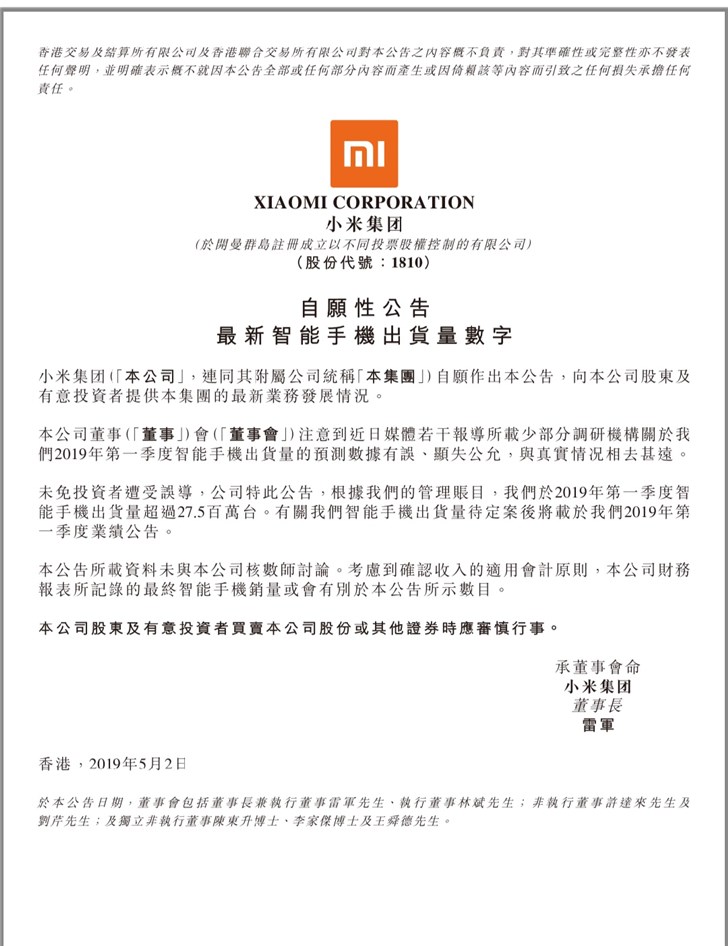
Official: Xiaomi reports 27.5 million smartphone shipments in Q1 2019 and opposes data by market research firms

Xiaomi published official figures of total smartphone shipments in Q1 2019. Defying the recent reports from a market research firm, Xiaomi said the smartphone shipments exceeded 27.5 million units.

Xiaomi group noticed a significant cleft in the statistics from third-party research firms. To avoid any backlash from the investors and promoters, Xiaomi board of directors decided to clarify the stance. The company published a notice defining the actual shipment numbers for the first quarter of 2019. According to Xiaomi’s official management accounts, the company shipped significantly more smartphones than cited by third-party reports.

Xiaomi cautioned the investors who hold the company’s shares or other securities in believing the third party reports. Before the actual Q1 2019 financial report, Xiaomi voluntarily published the total shipments to rescue the company’s portfolio from any negative impact.

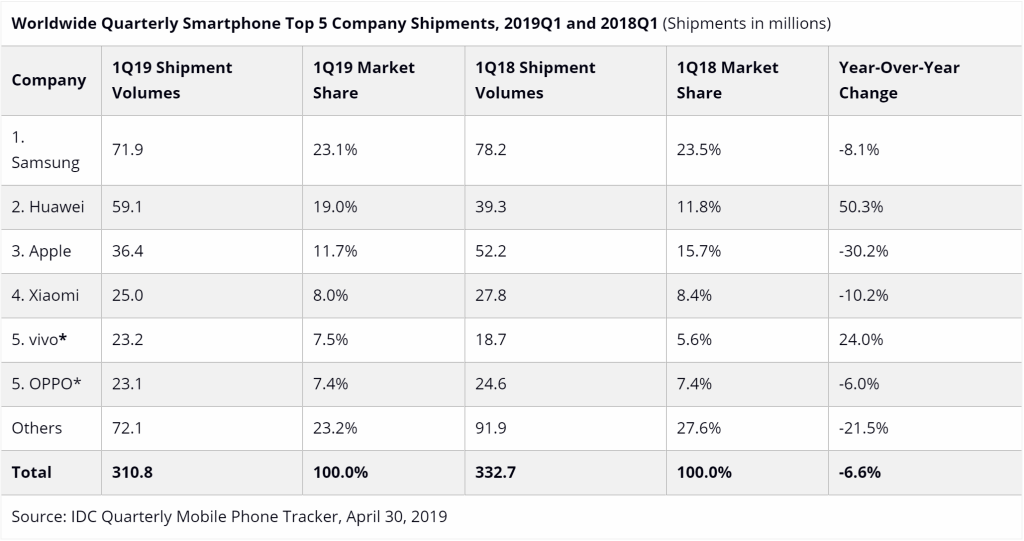
IDC and a few other data aggregating agencies estimated 25 million Xiaomi smartphone shipments in the first quarter of 2019. There’s a huge difference between the actual shipments and the numbers perceived by IDC. According to the IDC report, Xiaomi witnessed a 10% dip on YoY basis with shipments declining from 27.8 million to 25 million units in Q1 2019. The Chinese electronics maker now owns 8% smartphone market share globally.

Xiaomi closed the top five list with 28.6 million shipments in Q4 2018. At that time, Xiaomi market share grew by 2.4%, and overall share improved to 7.6%. Whereas, Xiaomi is the market leader in India with a 28.9% share. It shipped over 142.3 million smartphones last year in the country.

(via)

Realme 3 Pro’s first update brings 960fps Super slow-motion recording

The Realme 3 Pro is getting its first update and it brings a new feature to the camera app. The phone which was available for the first time on April 29 is getting its first OTA update. Those who have ordered it but haven’t received it yet will be happy to find an update waiting for them when they set up their device.

Realme 3 Pro

The OTA update brings the 960fps Super slow-motion recording feature to the phone. When the device launched, Realme revealed the feature will be available via an OTA update and now it has kept to its word. There is no info on the duration of the videos one can record in this mode.

The update which is 182MB in size also improves the stability of the camera and the clarity and quality of videos. Other than camera upgrades, there isn’t any other new feature. It doesn’t even update the security patch to April’s.

The Realme 3 Pro will be available for purchase tomorrow at 12 noon on Flipkart. The phone starts at INR 13,999 for the 4GB RAM + 64GB version, jumps to INR 15,999 for the 6GB + 64GB variant and then INR 16,999 for the 6GB RAM + 128GB version.

The Realme 3 Pro has a 6.3-inch Dewdrop Full-Screen display with a 2340 x 1080 resolution and Gorilla Glass 5 protection. It is powered by the Snapdragon 710 processor. On its back is a Sony IMX519 16MP f/1.7 camera paired with a 5MP secondary camera. The camera app boasts features such as Nightscape mode, Ultra HD mode, Chroma Boost, Portrait Mode, and an expert mode. It can also record 4K and time-lapse videos and has EIS. The notch in the display is home to a 25MP sensor with support for Face Unlock.

READ MORE: Realme X arriving with notch-less display and pop-up selfie camera

Realme 2 Pro gets massive price cut across offline and online stores in India

For the Realme 2 Pro, it’s been a price slash spree since the device, which was released in September last year, got a successor. Even before the Realme 3 Pro was unveiled, the Realme 2 Pro had gotten a number of price slashes. The price reduction continues as Realme has announced a fresh price cut for the device across brick and mortar stores in India. While this new price cut seems to be permanent, the device currently has an even cheaper price tag on online platforms Flipkart and Realme’s official store. The price cut, in this case, is temporary and is in celebration of its 1 year anniversary. The 4GB+64GB version of the Realme 2 Pro is offered for INR 10,990 and this offer is open until May 4.

Realme 2 Pro
Realme 2 Pro

As for the price on brick and mortar stores across India, the 4GB + 64GB model is now INR 11,490 (previously INR 11,990), the 6GB + 64GB model is INR 12,990 (was INR 13,990) and the elusive 8GB + 128GB starts at INR 14,990 (was INR 15,990).

Read Also: Realme 2 Pro now allows Bootloader unlocking

As a reminder, the Realme 2 Pro features a 6.3-inch IPS LCD waterdrop display with Full HD+ resolution of 2340 x 1080 pixels along with an aspect ratio of 19.5:9. The full-screen display offers a screen-to-body ratio of 90.8 percent and has a layer of Corning Gorilla Glass on top. The phone is equipped with a glass rear built with 15-year lamination technology. Under the hood, it is powered by Snapdragon 660 SoC that comes with its own AI Engine. There is a dual camera setup comprising a pair of Sony IMX398 16-megapixel with f/1.7 aperture. While at the front side of the phone, there’s an f/2.0 aperture 16-megapixel selfie shooter. The device packs a rear-mounted fingerprint scanner also comes with dual-SIM support, 4G VoLTE, Wi-Fi 802.11ac, Bluetooth, GPS, USB OTG, micro USB, and 3.5mm audio jack. It is loaded with ColorOS 5.2-flavoured Android 8.1 Oreo OS out-of-the-box and is powered by a 3,500mAh battery.

(source 1, 2, via)

OPPO F11 Pro Marvel’s Avengers Limited Edition sold out in 1 hour

OPPO’s F11 Pro has a Marvel’s Avengers Limited Edition that not only comes with special accessories but has a special paint job. The phone went on sale today on Amazon India and is already sold out according to OPPO.

The OPPO F11 Pro Marvel’s Avengers limited Edition is priced at INR 27,990 (~$404), INR 3,000 (~$43) more than the standard edition but you also get double the storage. We don’t know how many units were available for purchase but OPPO says the device sold out in just one hour.

If you still want to get a unit, you can sign up to be notified for the next flash sale on Amazon India or grab a unit at offline stores on Saturday, May 4.

Other than the extra storage, eye-catching paint job, and the Avengers memorabilia you get, the F11 Pro Marvel’s Avengers Limited Edition has the same specs as the standard variant. It has a 6.53-inch FHD+ display, an Helio P70 processor, and a 16MP pop-up selfie camera. Its primary rear camera is a 48MP sensor and it is paired with a 5MP depth sensor.

READ MORE: OPPO Reno 10x Zoom Edition reservations begin ahead of May 10 release date

The F11 Pro has a 4000mAh battery, VOOC 3.0 fast charging, a rear-mounted fingerprint scanner and runs Android 9 Pie. It also has dual SIM support with a hybrid SIM slot which lets you swap one SIM for a memory card.

(Source, Via)

South Korea’s carriers already have up to 260,000 5G customers!

South Korea’s Ministry of Science and ICT has shared the key data of the new 5G technology adoption in the country. The data showed that 260,000 subscribers have joined the 5G network provided by the three carriers operating in the country.

South Korea’s swift move to make 5G infrastructure and gadgets commercially available has been met with some challenges for early adopters, who have grumbled about conflicting administration and issues with the nation’s first 5G cell phone: Samsung‘s Galaxy S10 5G. However, carriers have moved rapidly to tackle those early concerns, if not completely resolve them. They have offered forceful advancements to bait new clients to the fast remote technology. The government agency disclosed that a significant number of the underlying grievances raised by buyers were being attended to. The ICT ministry also acknowledged that with more individuals utilizing the framework, different issues are expected to become exposed that will require fixing.

It is apparent that initial 5G rollout doesn’t necessarily guarantee success as there has to be enough base stations and devices to satisfy a large population. This is the scalability challenges facing U.S. carriers with over 328 million residents to serve. South Korea’s population estimated at 51.3 million is less than one-sixth that of the United States and the land mass they occupy is 99 times smaller.

Despite challenges, South Korea’s 5G rollout is gradually taking shape. As of this current week, South Korean carriers reportedly have more than 54,200 5G base stations across the country, a 7% expansion from the week prior. They have focused on quickly and straightforwardly extending their system inclusion with online maps. For now, the nation has concentrated on significant urban communities and other highly populated areas, yet the system buildouts are relied upon to spread further throughout the next two years.

Read Also: Galaxy S10 5G explodes in South Korea, Samsung claims not their fault

In a related development, Swiss carrier Swisscom recently announced plans to commence partial 5G services, which would make Switzerland the first European country to roll out 5G services. The country is half the size of South Korea and has one-sixth of Korea’s population to cover. That is to her advantage.

(source)

OPPO Reno update adds new gesture support

OPPO has ushered in a new ColorOS 6 update for the new Reno flagship. The update with version number PCCM00-11-A.16 adds new full-screen gesture controls to the device. OPPO reno

The various gesture controls include swiping from both sides of the display to carry out specific tasks. Swiping from the left or right side of the screen inward takes you to the previous app. When you swipe upwards from the bottom of the screen, it takes you to the home screen. While to open up recent apps, you swipe upwards from the bottom and then pause at the middle.

Read Also: Oppo Reno 10X Zoom Edition teardown showcases camera implementation

The Gesture navigation method is an alternative to the use of virtual buttons that have been implemented on Android phones for a while now but continues to get improvements, including the latest Andriod 9.0 Pie. The Reno runs on ColorOS 6.0 based on Android 9.0 Pie and already has some gesture control features but the update seems to bring some added gestures. Gesture buttons bring ease to phone operation when you get a good grasp of all the supported gestures. It also allows for one-handed operation easier.

(source)

Top 5 Inexpensive Vacuum Cleaners that Meet your Expectations [Coupons]

In today’s fast-paced world, vacuum cleaners play a vital role when it comes to keeping your surrounding clean and tidy all the time. If you are looking for an inexpensive vacuum cleaner that suits your fancy, you’ve come to the right place.

PUPPYOO T10 Home Cordless Vacuum Cleaner

Housed in a sturdy frame that’s made using PC-ABS material, the PUPPYOO T10 can effectively resist accidental scratches and is highly durable. It is designed to clean carpets and all types of other floors without burning a hole in your pocket.
The white color version of the PUPPYOO T10 is currently up for grabs bearing a $249.99 price tag on Gearbest. You can visit this link to place your order and check out more details about this feature-laden cordless vacuum cleaner.

 

Dreame V9 Cordless Handheld Vacuum Cleaner from Xiaomi Youpin

Capable of delivering a pressure of 20000Pa, the Dreame V9 can quickly suck up dust, hair and other impurities. It adopts the cyclone separation technology that makes the suction more durable and ensures the air duct is not blocked.

The highly-efficient Dreame V9 would normally set you back $358.99 on both online as well as offline stores but you can now buy it for just $307.76 from Banggood. This is a noteworthy 14 percent reduction in the device’s original asking price.

You can head straight to this link in order to avail this discount and check out more details about the Dreame V9 Cordless Handheld Vacuum Cleaner.


Xiaomi Roidmi F8 Smart Cordless Vacuum Cleaner

The Roidmi F8 is backed by a 100,000-rpm digital motor, which rotates at a speed of 1,100 liters per minute when the gear is increased. It can generate an impressive suction of 18,500 Pa. Moreover, it produces a low noise of 75dB, making it more convenient to use a vacuum cleaner.

This stylish, yet powerful vacuum cleaner from Xiaomi usually retails for $451.99, but you can now buy it for a reduced price of only $267.99 from GeekBuying.  On top of that, you can extend this 41 percent discount by applying coupon code DLLMYKEY.

The coupon helps you save $108 more. In other words, you can bring the already lowered asking price of the Roidmi F8 further down to just $251.99 simply by applying the aforesaid coupon during the checkout process.

You can visit this link to grab the discount. Note that the promo was on the verge of wrapping up at the time of writing and the coupon will be valid for all EU warehouses.


Dibea C17 Cordless Handheld Vacuum Cleaner

Equipped with two extra rotary cleaning head, the Dibea C17 can efficiently clean under beds, kickstands, wall edges, and other hard-to-reach places. Moreover, it comes with two-speed control and carbon fiber rolling brush and has a 2-in-1 handheld rod that offers two style vacuums in one.

This portable 2-in-1 household sweeper has gone up for sale carrying an $83.20 price sticker on GearVita. You can visit this link to check out more details about the Dibea C17 vacuum cleaner and place your order without wasting time.


PUPPYOO T10 Pro Wireless Vacuum Cleaner

The T10 Pro is an irresistible wireless vacuum cleaner that comes with 0.4L capacity dust container and is backed by a robust 2500mAh battery. It uses a 250W brushless motor and can generate a suction power of 65W.

The T10 Pro is available for $228.42 on both online as well as offline stores, but cost-conscious buyers can now purchase it for only $215.99 from Gearbest. If this 5 percent discount doesn’t impress you much, you can use coupon code GB-APPTPRO and save $6 more.

PUPPYOO T10 Pro Handheld Wireless Vacuum Cleaner Removal Mites Brush - White

The above-mentioned coupon helps you bring the original asking price of the PUPPYOO T10 Pro Wireless Vacuum Cleaner down to only $209.99 before you place your order.  You can visit this link to avail this discount, which will be valid for the white color version of the device.

With only a hundred pieces remaining, this promo is slated to end in just seven days.

Leaked Pixel 3a and Pixel 3a XL marketing materials reveal more details

More details of the Pixel 3a duo have surfaced again. This time they include marketing materials and more renders.

Pixel 3a marketing material

Starting with the marketing materials, one of the images confirms the name of the device and teases features such as an extraordinary camera, a fast-charging battery that provides 7 hours of use from 15 minutes of charging, and the Google Assistant. Another one reveals the Pixel 3a duo will have the Pixel 3‘s Night Sight camera mode for better and brighter low-light images without the need for flash. There is also Portrait Mode, Motion Auto Focus and unlimited Google Photos storage.

The Pixel 3a will also get 3 years of security and OS updates. Since the phone will launch with Android Pie out of the box, three years of OS updates means it should get Android Q, Android R, Android S, and if we are lucky, Android T which will be released a few months after the device is 3 years old.

[envira-gallery id=”251134″]

The Pixel 3a will also have the Titan M security chip to keep your phone and data safe. Those who purchase the devices will also be able to easily move their data and files from their old phone to the new one using the Quick Switch Adapter. Another feature revealed is the built-in call screening feature baked into the Google Assistant. This feature is exclusive to the US and Canada only and only supports English.

The official renders show the Pixel 3a (and 3a XL) in the three colors it will be available in. There is Clearly White which has an orange power button, Purple-ish whose power button is lemon green, and Quite Black which we wish swapped its same-colored power button for a red one. Although the phones have 18:9 displays, their bezels are far from thin. All three color variants have black front bezels and a two-color finish on the back. Do note that the back isn’t glass like the Pixel 3 duo.

[envira-gallery id=”251135″]

READ MORE: Google and Huawei agrees to pay up to $400 to the owners of faulty Nexus 6P

TSMC says most of the 7nm clients will transition to 6nm node

Taiwan Semiconductor Manufacturing Company (TSMC), the largest contract chipset manufacturer, has revealed in its earnings conference call that the company is expecting that most of its 7nm “N7” process customers/clients will shift to 6nm “N6” process.

It further adds that the upcoming 6nm “N6” node uses the same design rules as the N7 node, which makes it a lot easier for customers to transition to the newer and denser node. If this prediction of the company comes true, then N6 could be on the path towards becoming another widely-utilized, long-serving process node for the company.

Announced last month, the new 6nm process provides a significant enhancement of its industry-leading 7nm technology and offers customers a highly competitive performance-to-cost advantage as well as fast time-to-market with migration from N7-based designs.

The technology will leverage the capabilities of extreme ultraviolet (EUV) lithography gained from the N7+ technology. TSMC had recently unveiled its N7+ process which involves the incorporation of EUV on TSMC’s 7nm. The process will be used on Hisilicon Kirin 985 and is said to have entered risk production.

As per the company, the new 6nm process delivers 18% higher logic density over the 7nm process. The engineering resources needed to push this new process out to customers are also very limited, thus it will be a cost-effective upgrade. The benefits range from improvement in AI, consumer applications, networking, 5G infrastructure, GPU, and high-performance computing.

Read More: TSMC has reportedly started working on a new 5nm infrastructure for the Apple A14 chipset

TSMC’s partners have adopted both N7 and N7+ processes and the company is expecting the two technologies to contribute over 25 percent of its wafer revenue in 2019. Meanwhile, TSMC projects that most of its customers who use N7 today will migrate to N6 and then to N5 skipping the N7+.

(Via)

Foxconn eyes display supplies for future iPhones with investments in MicroLEDs

Taiwanese tech giant Foxconn is expanding its interest in MicroLED display technology in a bid to win orders from Apple for future iPhones, as indicated by a report from the Chinese-language Economic Daily News (via DigiTimes).Apple Logo

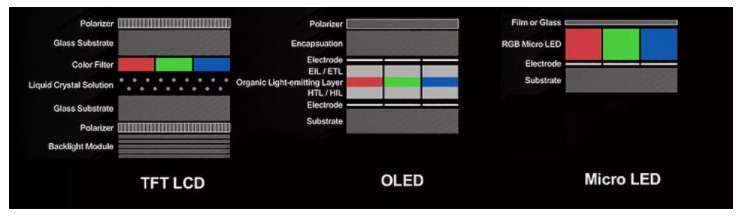
MicroLED is generally viewed as Apple’s next stage after OLED, which it right now utilizes for the Apple Watch and iPhone XS. MicroLED displays have a significant number of similar preferences that OLED displays have over LCDs, including improved shading exactness, improved complexity proportion, quicker reaction times, and genuine blacks – given both have self-lit pixels.

Nevertheless, MicroLED displays are more slender, more brilliant, and more vitality proficient than OLED panels. MicroLED displays likewise have inorganic gallium nitride-based LEDs, which have a more drawn out life expectancy than the natural compound utilized in OLED panels and should make them increasingly impervious to burn-in issues.

Apple’s enthusiasm for MicroLED was first detailed in 2014 when it procured MicroLED display manufacturing firm LuxVue. The next year it was found that the iPhone creator had likewise opened a cryptic lab in Taoyuan, Taiwan to explore display advances like OLED and MicroLED for future gadgets.

In 2017, the organization allegedly downsized its endeavours at that aspect, conceivably changing to an office closer to home: Apple is rumoured to have a hidden assembling plant in Santa Clara, California, where it is planning and delivering display tests utilizing MicroLED innovation.

Taiwan Semiconductor Manufacturing Company (TSMC) is believed to offer help for creating littler structure factor applications, which could incorporate future Apple Watch models and AR wearables. Apple has likewise purportedly had fundamental talks with Taiwan-based organization PlayNitride over collaboration in the MicroLED market.

Read Also: Apple sales significantly dropped amid weakened global smartphone shipments

It will probably be a couple of years before MicroLED displays show up in Apple gadgets – maybe one year for the Apple Watch and two to four years for the iPhone – once MicroLED panels can be mass-produced in a reliable way. Whenever that opportunity arrives, Apple will probably outsource the mass production of the panels and Foxconn is plainly intending to get up probably a portion of the business if the present report is anything to go by.

(via)

Oppo Reno 5G is the first 5G smartphone to be available in Europe

Today, Oppo’s Vice President Shen Yiren announced on Weibo that the companys’s recently launched Oppo Reno 5G edition has become the first commercially available 5G compatible smartphone in Europe.

Oppo, which is one of the first 5G commercial partners of Swisscom, took the lead in releasing the Oppo Reno 5G edition smartphone in Zurich, Switzerland. Thanks to this, Oppo managed to become the first company to officially launch a commercial 5G smartphone in European market.

OPPO Reno 10x Zoom

Further, for the Chinese market, the company has also announced the establishment of a “5G Experience Center” with China Unicom. In the field 5G network speed test, the performance of the smartphone is powerful, achieving a peak download rate of more than 1.5Gbps , and stable at around 1.4Gbps download rate.

The Reno 5G is based on the flagship Oppo Reno 10X Zoom Edition. As for the pricing, the Oppo Reno 5G has a slightly higher pricing than other Reno series models, costing €900. It will be available for purchase from this month itself.

The smartphone features a 6.6-inch AMOLED notch-less display that produces Full HD+ resolution of 2340 x 1080 pixels and 19.5:9 aspect ratio. It offers a screen-to-body ratio of 93.1 percent and the display is protected by Gorilla Glass 6.

The shark-fin module includes a 16-megapixel selfie camera and an LED flash. The phone comes fitted with a triple camera setup that includes an OIS enabled 48-megapixel Sony IMX586 sensor with f/1.7 aperture, a 13-megapixel periscope telephoto lens with 5x optical zoom and an OIS assisted 8-megapixel super wide-angle lens with f/2.2 aperture.

Read More: Oppo Reno 10X Zoom Edition teardown showcases it’s internals and camera implementation

Under the good, the Qualcomm Snapdragon 855 mobile platform fuels the smartphone and is packed with a 4,065mAh battery that carries support for VOOC 3.0 flash charging. It also comes equipped with a PC-grade liquid cooling technology.

Apple sales significantly dropped amid weakened global smartphone shipments

Apple is already going through a rough patch from the past few months due to a decline in overall shipments. Unlike other major OEMs, the Cupertino giant is hardest hit with the weakened global smartphone demand, cites Canalys report. The smartphone shipments globally fell by 6.8 percent coming down from 336.8 million shipments to 212 million Q1 2019.

Apple saw the worst decline this year with sales dampening by 23.2 percent. It is the steepest drop with shipments going down from 52.2 million units in Q1 2018 to 40.2 Million in Q1 2019, resulting in a 15.5% overall share. Apple saw the highest loss of 30% among all the top six brands this quarter. Ben Stanton, an analyst at Canalys, termed it as “the largest single-quarter decline in the history of the iPhone.”  

idc smartphone

Apple smartphone sales significantly dropped in the United States and China this year. Xiaomi, Oppo, Samsung, and Apple all saw a massive decrease in its shipments on a Year-on-Year basis. Xiaomi saw a 10.2% decline while the Oppo remained at fifth position with a 6% drop. Despite the Galaxy S10‘s strong demand, Samsung struggled to surpass the last quarter sales by 10%.

The smartphone shipments crippled due to multiple reasons – increasing average selling price, higher quality devices, longer replacement periods, etc. The decline in Apple’s shipments can be attributed to some additional reasons like more lengthy replacement time and heftier pricing. However, Apple is now focusing on services to bring in more revenue.

The Chinese smartphone makers – Huawei and Vivo are the only OEMs witnessing considerable gains in terms of both market share and shipments. Huawei is now aiming to become the largest smartphone manufacturer, by fending off Samsung from the top spot. Although, it would not be easy as Samsung is looking to infuse new Galaxy A series devices, Galaxy Fold, and several other mid-range products in the market.

source | via

OnePlus 7, 7 Pro full specifications leaked well ahead of launch

OnePlus will be launching the OnePlus 7 and OnePlus 7 Pro smartphones on May 14. A recent report had revealed the key specs of both smartphones. Well ahead of the upcoming OnePlus launch event, a new leak has now spilled the entire specifications of the OnePlus 7 and 7 Pro smartphones.

OnePlus 7 Specifications (Rumored)

The new leak reveals that the OnePlus 7 smartphone will be measuring 157.7 x 74.8 x 8.1mm and it will be housing a 6.2-inch AMOLED display. The waterdrop notched screen will be offering 60 Hz refresh and it will carry support for full HD+ resolution. It will come equipped with an in-screen fingerprint reader.

The Snapdragon 855 SoC will be fueling the smartphone along with 6 GB of RAM. The smartphone will be running on OxygenOS based Android 9 Pie OS. The handset will be backed by a 4,150mAh battery that will carry support for 30W Warp Charge through USB-C. It will be featuring a dual camera setup that include a 48-megapixel primary sensor. The configuration of the secondary sensor and the front-facing camera of the OnePlus 7 were not revealed in this leak.

OnePlus 7 and OnePlus 7 Pro renders

OnePlus 7 Pro Specifications (Rumored)

The OnePlus 7 Pro measures 162.6 x 76 x 8.8mm and it is fitted with a massive and notch-less AMOLED display of 6.64 inches. It offers 90 Hz refresh rate and quad HD+ resolution. Recent reports have revealed that the OnePlus 7 Pro’s display will be curved towards its left and right edges. It will be also featuring an in-display fingerprint scanner.

The Snapdragon 855 SoC will be also powering the OnePlus 7 Pro handset. The leak claims that the phone will feature 10 GB of RAM. However, the handset has already appeared on Geekbench with 12 GB of RAM. The Pro model is also expected to be available in 8 GB RAM option. The new leak has further revealed that it will be featuring a 4,000mAh battery that will be equipped with support for 30W Warp Charge through USB-C.

For capturing selfies, the OnePlus 7 Pro will be coming with a pop-up selfie camera. It will be the company’s first smartphone to feature a triple camera setup. The leak states that it will have a 48-megapixel primary sensor that will be coupled with a telephoto lens and an ultra wide-angle lens. The configurations of the front camera and the other sensors of the triple rear cameras were not mentioned in the leak.

The aforementioned specs sheet leak of the OP7 and OP7Pro could be just based on the rumors surrounding these phones. It is advisable to wait for further leaks to know the exact specs of the OnePlus 7 series.

(source|via)

Razer Toaster will become reality in the next few years, confirms Liang Tan

Razer is becoming the first company to turn its April Fools’ Joke into reality. The company known for gaming smartphones will lend some time to create a Toaster. At 2016 April Fools’ eve, Razer joked about Project Breadwinner aimed to bring “Razer Toaster” – a gaming grade kitchen appliance. The CEO reportedly challenged the users to get 1 million likes on the “Give us Razer Toaster” page, and then Razer would make the Toaster.

To successfully reach the goal, interested users started Facebook Group which further accelerated the Razer Toaster movement. Surprisingly, users did the best and finally reached 1 million likes on the given page. Now working on his words, Tan confirmed the development of the Razer Toaster in the next few years.

While addressing the fans via Facebook, Liang Tan said, “Alright – I didn’t think these guys were going to make it – but they did. It was to hit 1M likes and with each Razer Toaster tattoo being equivalent to 100K likes each….and they now have 12 Razer Toaster tattoos. Well….what can I say. I’ve just officially liked their page – and I’m going to put together my team of designers and engineers. It will take a few years – but I’ll be sure to share the progress – and make it a community affair”.

Tan misjudged the Razer fans’ potential, and now he has to fulfill his promise. It too early to get pricing, features and specification details of Razer Toaster. Users need to wait for some more time, before the actual product details surface.

How many of you are looking forward to Razer Toaster? Share your views via the comments form below.

(source)

Google reportedly forms three separate design teams for future phone designs

Google unveiled the Google Pixel 3 series last year with Snapdragon 845 and well-optimized software. It hosts an impressive camera, a 6.3-inch display, and improved battery life than its predecessor. Despite enhanced specifications, its design is not well received by most of the users. The huge notch is a significant drawback on Pixel 3 XL causing various problems while using the device.

Fewer sales of Pixel 3 XL than the Pixel 2 series reportedly drove Google to think something out of the box. To avoid Pixel 3 XL like design backlash again, Max J from Samsung News reports that the company formed few teams to design for upcoming phones.

The newly formed three teams will independently design future phones. Each of these teams will have no communication with one another, and Google will prefer the best design for production. Google can freely choose the best design out of all the available options.

The new approach will be used while designing the upcoming Pixel 4 and 4 XL. Meanwhile, the Pixel 3a and Pixel 3a XL are expected to follow Google’s primitive design strategy. The search giant formed the new approach after revealing the Q1 2019’s financial reports, mainly due to the weak demand of Pixel 3 devices.

You should take it as a pinch of salt as Google officially confirms nothing about the new design strategy.

Along with the design, Google also needs to invest in its distribution network. Google is underperforming in terms of availability of Pixel devices, it is available in 12 countries and that too from their online retail store. To excel in the hardware market, Google needs a revamped distribution strategy.

Google is working on affordable Pixel 3a series –  Pixel 3a and Pixel 3a XL. Both the devices are expected to carry Snapdragon mid-level chipsets with much RAM. According to rumors, the Pixel 3a series launch will take place on May 8th in India.

(via)