Reports from China indicate that the country’s Ministry of Human Resources and Social Security had on April 1 issued a notice of the official recognition of thirteen (13) new occupations. The new occupations include Artificial intelligence engineering and technical personnel, Internet of Things engineering and technical personnel, Internet of Things installation and debugging staff, big data engineering and technical personnel, cloud computing engineering technician, Digital manager, building information model technician, e-sportsman, e-sports operator, drone driver, agricultural manager, industrial robot system operator, industrial robot system operator.
The new occupations are said to be the first batch of new occupations released since the promulgation of the 2015 National Occupational Classification. Notably, most of them are related to emerging technologies, such as artificial intelligence, cloud computing, Internet of Things, industrial robots, drones, etc. There are also long-established occupations that are just now getting official recognition by the government such as e-sportsmen and e-sports operators. Esports (short for electronic sports) is a form of competition using video games. Most commonly, e-sports takes the form of organized, multiplayer video game competitions, particularly between professional players, individually or as teams.
China’s Ministry of Human Resources and Social Affairs pointed out that in recent years, e-sports have emerged as a huge industry with several international competitions annually. thus, the professionalization of e-sports operators and e-sportsmen was imperative. According to China’s Occupation Skill Testing Authority (OSTA), prospective professional gamers, also known as e-sports players, will participate in gaming competitions, work as training partners, provide data analysis for the industry, and design new games. Professional gaming operators’ (e-Sports operators) job description includes marketing new and existing game titles.
The Samsung Galaxy A9 (2018) launched as the first phone with four cameras on its rear. Only a few quad camera phones have been released after it such as the Galaxy S10+ 5G and the Huawei P30 Pro. A new leak has revealed Motorola may be joining the trend soon as 3D renders and a 360° video of an unknown model have just been released on the web.
The source of these CAD renders and video is OnLeaks and he has partnered with CashKaro.com this time around. The Motorola phone has four sensors on its back arranged in two rows and two columns. All four cameras are placed on a raised plate which also has a Motorola logo. A dual LED flash sits beside the setup.
Not much is known about the configuration of the cameras but we know the primary camera is a 48MP sensor as it is engraved beside the setup. We won’t be surprised if one of the remaining three is an ultra-wide angle sensor while another has a telephoto lens for optical zoom.
[envira-gallery id=”244763″]
The back of the phone is curved but doesn’t seem to be glass as it has a brushed metal appearance. There is no fingerprint scanner under the Motorola logo as the source says the phone has one under the display.
The front of the Motorola quad-camera phone is not as interesting. It has a waterdrop notch at the top but that doesn’t mean the bezels around the 6.2-inch AMOLED panel is devoid of bezels. The power button and volume rocker are on the right and the bottom of the phone is home to a 3.5mm audio jack and a USB type-C port. Surprisingly, there is no speaker grille at the bottom but there is one at the top.
The phone’s dimensions have also been provided. It will measure 158.7 x 75 x 8.8 millimeters. There is no info on its weight.
OLED panels have a lot of advantages. They have better color accuracy and contrasts (including better blacks) and are thinner and brighter than traditional LCD panels. So, it’s no surprise that smartphone manufacturers are shifting to OLED panels for their smartphones. Even the mid-range ones (like Mi 9 SE / Galaxy J6 Plus) have started getting this relatively expensive display panels. But there’s one disadvantage associated with OLED displays and it pertains to the way the panel handles low levels of brightness.
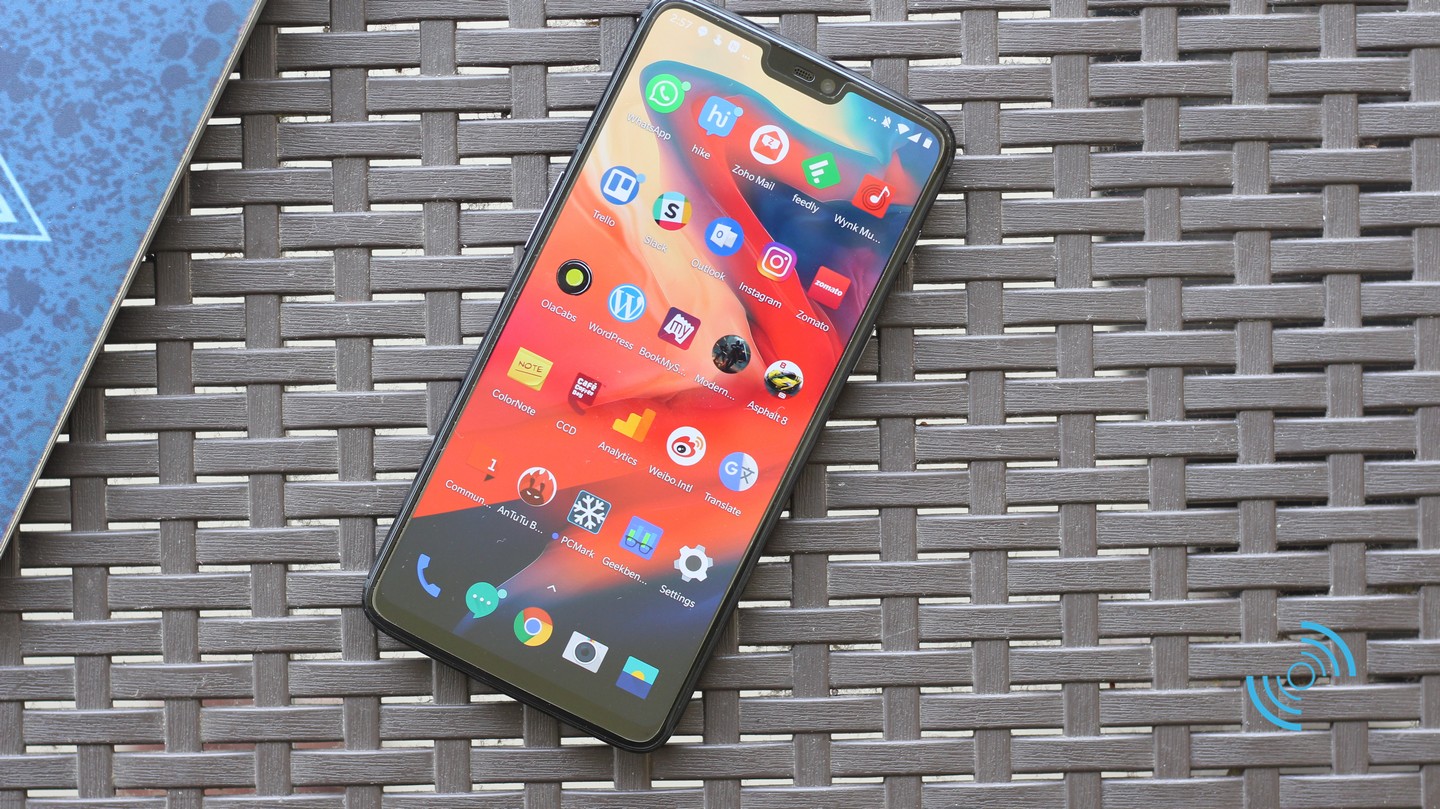
OnePlus 6 comes with an AMOLED screen
Most OLED panels use a technique called Pulse Width Modulation (PWM) for dimming its brightness. This is different from DC dimming, which has been used by LCD panels to control its brightness levels. Most users won’t be able to differentiate between PWM dimming vs DC dimming, however, there’s a very small section of the population who are affected by the former technique. As OLEDs trickle down to mid-rangers and sometimes even budget smartphones, its user base is growing quickly. With a significant increase in AMOLED consumption in the past few years, you would often end up seeing comments like this on the internet.
In order to understand DC dimming, we need to first learn about PWM dimming and how it can make some users uncomfortable.
How does PWM Dimming work?
PWM stands for Pulse Width Modulation. As the name suggests, in this technique, you vary the width of the light pulse to control the brightness of the display panel. Simply put, you play with the amount of time the screen stays on or off. When you lower the brightness, the screen stays off longer than it stays on, which is perceived as lower brightness.
After reading that, you must be wondering — Wait a second, the screen goes off when the brightness is low? I have never noticed that!
That’s because the frequency of pulses is very high (usually over 200Hz), so the human eye won’t be able to notice individual pulses. Instead, the human eye averages out the amount of light from these pulses. So, it’s the ratio of the panel’s on and off state that decides the perceived brightness.
This following diagram shows how PWM dimming works.
Source: OLED-info
At 100% brightness, you can see that the light is always on. When you lower the brightness to 50%, the panel alternates between on and off at equal intervals. However, when you further lower the brightness, the screen stays off for a longer time than it stays on. So, at extremely low levels of brightness, there’s a considerable flicker effect.
What’s so bad about PWM Dimming and its flickering?
Usually, even at low brightness levels, the average human eye won’t be able to see the flickering from PWM dimming. But that doesn’t mean it won’t affect you in any way. Some people are more sensitive to this flicker. And in these people, PWM dimming can lead to eye strain, headaches, and migraines if exposed for long periods of time. This is especially true when the ambient lighting is low.
What is DC Dimming?
DC dimming essentially controls the brightness by varying the power supplied to the circuit. Since Power = Voltage x Current, increasing or decreasing either of these inputs will vary the power supplied to the display panel, and thereby its brightness.
Sounds pretty simple right? So why aren’t manufacturers using DC dimming in your AMOLED smartphone?
Well, smartphone manufacturers have been using DC dimming on LCDs for years, but it was only recently that they started to add it on AMOLED smartphones. This is because DC dimming has a big drawback. At low levels of brightness, the colors often come out skewed on OLED panels. In OLED panels, a change in voltage could change the emitted colors. So, at lower levels of voltage, the perceived quality of the smartphone display could go down significantly.
So what is the solution?
Smartphone manufacturers have become increasingly aware of the possible health issues associated with PWM dimming. However, considering how only a selective group of people are actually affected by PWM flickering and the drawback associated with DC dimming on AMOLED panels, recent smartphone manufacturers are opting to provide it as an add on feature. OnePlus has already confirmed that it’s testing DC dimming on its smartphones. The feature could be added via a future update. In fact, Chinese smartphone companies seem to be all in for this feature. Xiaomi, Vivo, OPPO, and even Meizu have come forward and confirmed DC dimming on its existing or upcoming smartphones.
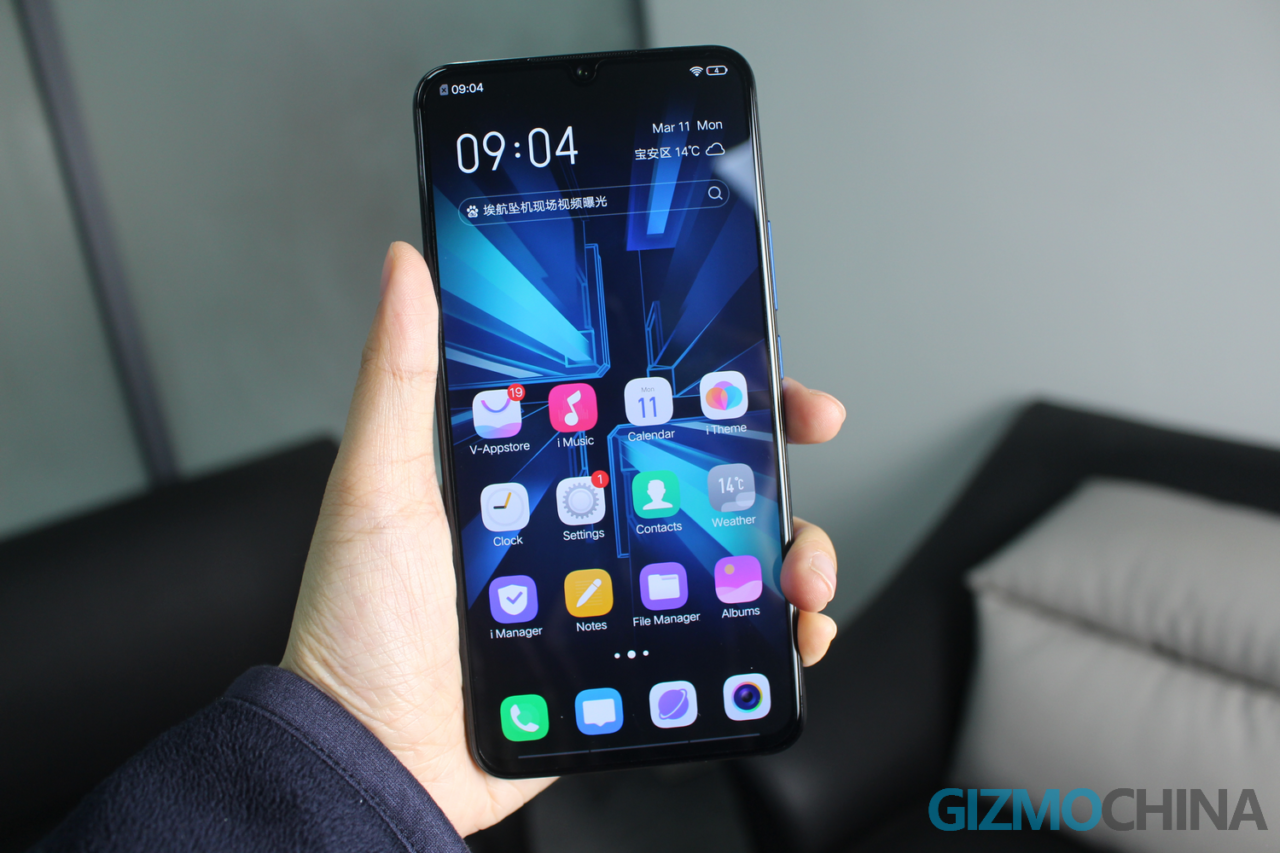
Vivo iQOO comes with an AMOLED panel and will feature DC Dimming via an update
Despite the fact that PWM dimming can cause discomfort in some users, most people won’t feel the difference. So, it’s very important to know that your sensitivity to the flicker effect decides how it will affect you.
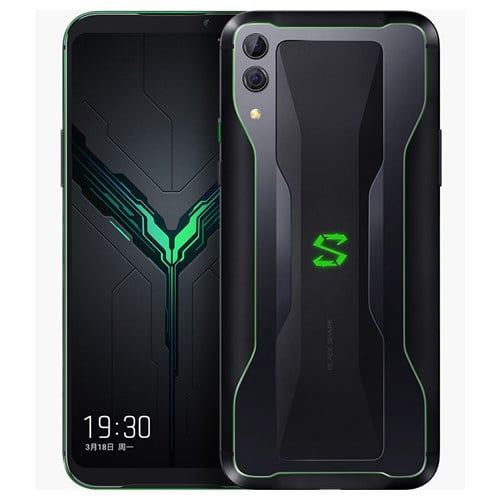
Xiaomi Black Shark 2 comes with DC Diming
Therefore, if you are having an eye strain or headache from being hooked on your smartphone screen for far too long, don’t blame PWM dimming just yet. Try to build good smartphone habits, which includes setting your display brightness to comfortable levels (instead of at 100% at all times) and keeping a decent distance between you and your smartphone screen.
Yesterday, Realme slashed the price of the Realme U1. It appears there was a reason behind the price cut. Today, the manufacturer has announced a new variant which has 3GB of RAM and 64GB of storage.
The new variant is priced at ₹10,999 (~$160) which is the old price the 3+32GB variant sold for before yesterday’s price cut. This means there is just a ₹1000 price difference between all three models. The 3+32GB version now sells for ₹9,999 (~$146) while the 4+64GB version is now ₹11,999 (~$175), down from its original price of ₹13,499 (~$197).
Deleting picture perfect memories or struggling to download movies, your smartphone's storage can sometimes be a hassle. Say hello to the new 3+64GB variant of #realmeU1 that gives you extra space.
The new 3+64GB variant will be available for purchase on April 10 at 12 noon (IST) on Amazon India and the online Realme store.
The Realme U1 has a 6.3-inch FHD+ display with a teardrop notch at the top that houses the 25MP selfie camera. It is powered by MediaTek’s Helio P70 chipset, an octa-core chipset clocked at 2.1GHz with a Mali-G72 GPU. There is support for storage expansion (256GB max.) via a dedicated MicroSD card slot.
The constantly rising price of flagship phones and the need of the average user for a performing phone with high-end specification resulted in the birth of a new segment: upper-midrange devices. The Xiaomi Mi 9 SE is a perfect symbol of this new category of phones: it is almost a flagship, but it comes with a mid-end price. Among the most recent devices in this segment, there is also Samsung Galaxy A70 and Vivo V15 and they are surely among the best devices for quality-price ratio alongside the Xiaomi Mi 9 SE. In this comparison between their specifications, we will try to let you understand which one mostly fits your needs and which has the highest value for money.
Samsung Galaxy A70 vs Xiaomi Mi 9 SE vs Vivo V15
Samsung Galaxy A70
Xiaomi Mi 9 SE
Vivo V15
DIMENSIONS AND WEIGHT
164.2 x 76.7 x 7.9 mm
147.5 x 70.5 x 7.5 mm, 155 grams
161.2 x 75.9 x 8.5 mm, 189 grams
DISPLAY
6.7 inches, 1080 x 2340p (Full HD+), 385 ppi, Super AMOLED
5.97 inches, 1080 x 2340p (Full HD+), 432 ppi, Super AMOLED
Triple 32 + 8 + 5 MP f/1.7 and f/2.2 and f/2.2
32 MP f/2.0 front camera
Triple 48 + 13 + 8 MP f/1.8, f/2.4 and f/2.4
20 MP f/2.0 front camera
Triple 24 + 8 + 5 MP f/1.8, f/2.2 and f/2.4
32 MP f/2.0 front camera
BATTERY
4500 mAh, fast charging 25W
3070 mAh, fast charging 18W
4000 mAh, Fast Charging
ADDITIONAL FEATURES
Dual SIM slot
Dual SIM slot
Hybrid Dual SIM slot
Design
Vivo was one of the most important innovators in 2018 when it came to minimizing the bezels around the displays. The Chinese company came up with the first smartphone sporting a pop-up selfie camera with a motorized mechanism which allowed the display to get close to 100 percent of screen-to-body ratio without the need of a notch. And that is exactly the same form factor of the Vivo V15 which wins this design comparison, with its pop-up selfie camera and very narrow bezels. But I also like the Xiaomi Mi 9 SE due to its stunning glass back and its magic gradient colors. Samsung Galaxy A70 is not so attractive, but it has other advantages that you will discover below.
Display
With their amazing Super AMOLED panels, Xiaomi Mi 9 SE and Samsung Galaxy A70 are the winners of the display comparison. I personally prefer the former because it is HDR-compliant, so it comes with pretty nice color reproduction. But note that this is a compact display, so if you want a productivity phone you would better go for the Samsung Galaxy A70 and its huge 6.7-inch display. Note that it has a 20:9 aspect ratio, so its display is taller than its rivals. Vivo V15 has a big display as well with its 19.5:9 aspect ratio and a 6.53-inch diagonal, but its classic IPS panel makes me choose the Galaxy A70.
Specs & Software
Xiaomi Mi 9 SE is one of the most impressive midrange phones when it comes to performances. It is equipped with the best midrange chipset you can expect: the Snapdragon 712 by Qualcomm with a clock frequency of 2.3 GHz. Just to give you an idea, it is more or less at the same level as the Snapdragon 821 which was the best Qualcomm’s chipset in 2016. Samsung Galaxy A70 takes the second place with its octa-core Snapdragon 670 chipset paired with up to 8 GB of RAM, while Vivo V15 has a not so impressive Helio P70 by MediaTek which still does it job supported by 6 GB of RAM.
Camera
These phones come with a particular focus on cameras. Xiaomi Mi 9 SE is the most impressive one with a 48 MP main sensor, a 13 MP ultrawide lens and even a third telephoto lens. But Samsung Galaxy A70 is all but disappointing: even this device comes with a triple camera, but with lower resolutions. When it comes to selfies, both Samsung Galaxy A70 and Vivo V15 look more promising thanks to its 32 MP snapper.
Battery
With one of the biggest battery in the whole midrange segment (4500 mAh), Samsung Galaxy A70 is undoubtedly the device which can last more on a single charge in most of the scenarios. Vivo V15 remains a good battery phone thanks to its 4000 mAh unit, while Xiaomi Mi 9 SE is a bit disappointing with just 3070 mAh, it lasts just one day with moderate use.
Price
We will officially know the price of the Samsung Galaxy A70 on the global market on April 10, while Xiaomi Mi 9 SE and Vivo V15 cost about €300/$335 and €310/$350 respectively, in China. With the actual info, Samsung Galaxy A70 is the device I would personally go for because of its bigger battery, good cameras overall, wide display and pretty good performances.
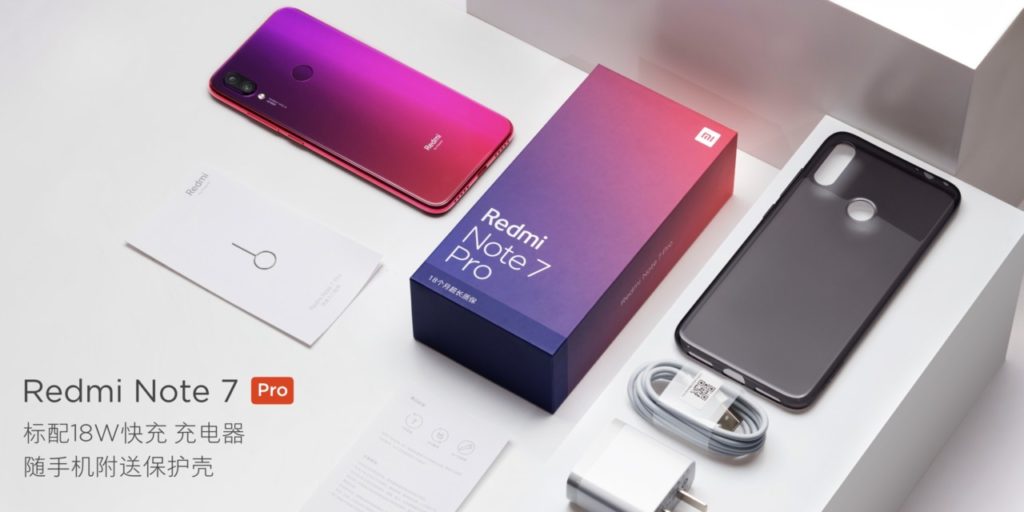
Xiaomi’s latest midrange models, the Redmi Note 7 and Note 7 Pro are already available in India via Mi.com and Mi Home. The availability of the mid-range models will soon be expanded as Xiaomi has hinted that the models will be available via one of India’s largest online store Flipkart.
Xiaomi India’s CEO Manu Jain disclosed this in a tweet earlier today. The sale was scheduled to commence at 12 noon today but the Flipkart page still lists the models as “Coming soon”. We expect the sales to commence soon but don’t get our hopes high. There may still be a shortage of available stock for now.
The Redmi Note 7 Pro is expected to be hit by stock shortage the more since it offers way improved specs over the Redmi Note 7 and so will get more patronage. The Redmi Note 7 and Note 7 Pro both feature a 6.3-inch IPS LCD display with waterdrop notch that delivers full HD+ resolution and 19.5:9 aspect ratio. The Redmi Note 7 Pro is powered by a more powerful Snapdragon 675 SoC as against a Snapdragon 660 chip on the Note 7. The Note 7 Pro differs from the Note 7 mainly in the aspect of the rear camera configuration. Dual cameras on both but the Note 7 Pro uses a 48MP Sony IMX586 primary sensor with a 5MP depth sensor. The Note 7 uses a 48MP Samsung GM1 sensor + 5MP depth sensor. The two models pack a 4000mAh battery with support for 18W fast charging using the USB-C port. They equally run on MIUI 10 based on Android 9 Pie.
Xiaomi is one of the few manufacturers with its own in-house semiconductor business. The wholly-owned Songguo Electronics is best known for its Surge S1 chip which powers the Mi 5C. Latest reports say Xiaomi has restructured the business and has even formed another company too.
According to an internal memo, the restructuring has led to some of the teams splitting up to set up a new company called Nanjing Big Fish Semiconductor. Xiaomi is said to have a 25% stake in the new company while the teams that formed the business own 75%. Nanjing will focus on research and development of AI and IoT chips and solutions while Songguo will continue to develop mobile phone SoC chips and AI chips.
Plenty of details of the Snapdragon 710 version of the Oppo Reno have appeared in the recent weeks. The handset will be unveiled on April 10 along with its Snapdragon 855 version. The SD855 edition of the phone will carry support for 10x hybrid zoom. Reliable Indian tipster Ishan Agarwal has claimed that the official name of the variant support 10x hybrid zoom will be Oppo Reno 10x Zoom. The tipster has also shared key specs of the phone.
According to the tipster, the Oppo Reno 10x zoom will be measuring 162 x 77.2 x 9.3mm and it will be weighing 215 grams. The handset is equipped with an OLED display. The tipster has not shared exact size of its screen. The smartphone will be offering a screen-to-body ratio of 93.1 percent.
The Snapdragon 855 mobile platform will be fueling the OPPO Reno 10x Zoom along with 8 GB of RAM. It includes an internal storage of 256 GB. The Android 9 Pie OS on the device will be customized with ColorOS 6.0 UI. The tipster has not shared any information on the other specs of the phone. He has claimed that he will be soon sharing camera specs of the OPPO Reno 10x Zoom.
Based on the recent reports it can be said that the phone will be featuring Sony IMX586 48-megapixel primary sensor in its triple camera setup. It will include a 13-megapixel ultra wide-angle lens and an 8-megapixel periscope lens. For shooting selfies, it may feature a 16-megapixel camera LED flash placed inside a triangle-shaped pop-up camera module.
The smartphone will feature a 4,065mAh battery that will carry support for VOOC 3.0 fast charging. It will be featuring an in-display fingerprint reader and it will also be equipped with copper tube liquid cooling. The pricing of the phone is currently under the wraps. A separate leak has revealed that the OPPO Reno with Snapdragon 855 will be priced around ~$605 to ~$645 in Vietnam.
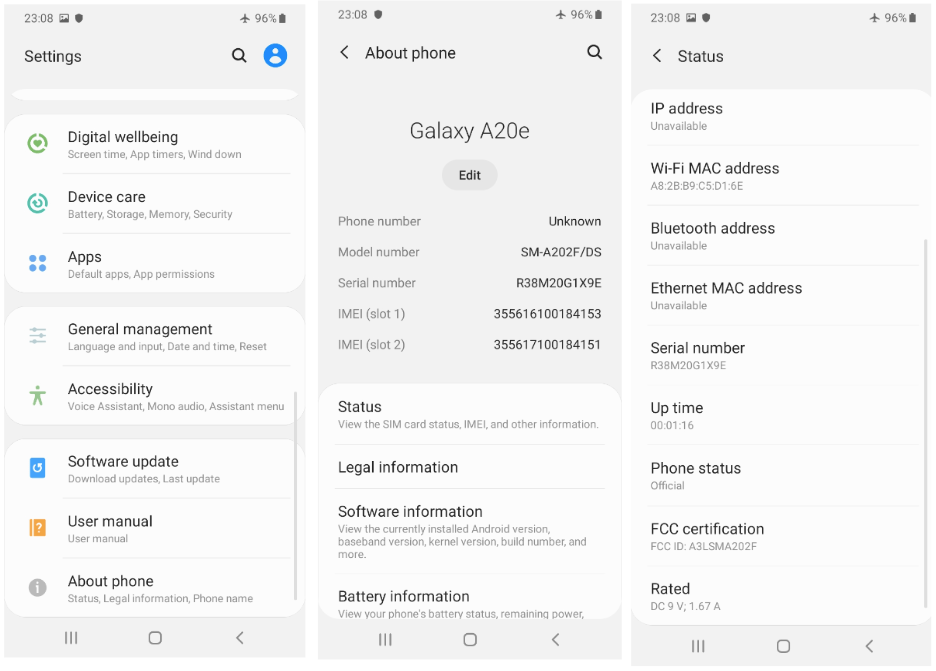
Samsung will be announcing new Galaxy A-series phones on April 10. Recent reports have revealed that the Galaxy A20e could be one of the smartphones that may get announced on the coming Sunday. The Galaxy A20e has recently received approval from Wi-F Alliance and Bluetooth SIG certification bodies. The smartphone has also bagged approval from Federal Communications Commission (FCC) in the U.S.
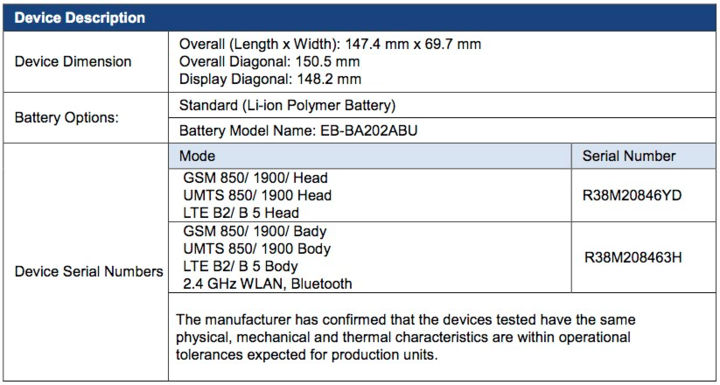
The FCC filings of the Samsung Galaxy A20e that has a model number of SM-A202F has revealed that it measures 147.4 x 69.7mm. The display of the phone diagonally measures 148.2mm. Hence, the phone will be arriving with a 5.84-inch display. The South Korean company had announced the Galaxy A20 in the previous month in Russia. The Galaxy A20e seems to be an inferior version of the A20 phone that features a 6.4-inch display.
The FCC documents have also revealed that the phone is packed with an EB-BA202ABU battery. The exact size of the battery is not known yet. However, previous reports have claimed that it will be featuring a 3,000mAh battery. Also, it will be bundled with EP-TA200 charger that will deliver 15W rapid charging.
The Galaxy A20e carries support for Wi-Fi 802.11 b/g/n. This indicates that the phone will include either Exynos 7884 or Exynos 7870 SoC. The renders of the phone that have leaked in the past have revealed that it will be arriving with a waterdrop-style notched display. The rear shell of the phone features a fingerprint scanner and a vertically dual camera setup at its top-left corner. The case renders of the Galaxy A20e that had appeared last week had revealed that its appearance won’t be different from the Galaxy A20 smartphone.
Samsung Galaxy A20 Specifications
The Galaxy A20 features a 6.4-inch Super AMOLED display with Infinity-V shaped notched design. The Exynos 7884 SoC powers the smartphone along with 3 GB of RAM. It comes with a native storage of 32GB. For additional storage, the smartphone is equipped with a microSD card slot.
The back panel of the phone features a 13-megapixel + 5-megapixel dual camera module. For capturing selfies, it is fitted with an 8-megapixel front camera. The smartphone is packed with a 4,000mAh battery. The One UI based Android 9 Pie comes preinstalled on the device. In Russia, the smartphone carries a price tag of RUB 12,990 (~$199).
Huawei P30 and P30 Pro surfaced in Malaysia featuring an advanced camera, high-end specs, and premium design. The Huawei P30 is available in 8GB RAM+128GB storage variant for RM2699 (~$661). Whereas, its elder sibling, Huawei P30 Pro is available in two different storage versions: 8GB RAM+ 256 GB storage for RM3,799 ($931) and 8GB RAM + 512GB storage version for RM4,399 ($1,078).
Interested users can pre-order P30 series via its online store, and shipments will commence from April 6. Huawei P30, P30 Pro is available in three different color options of Breathing Crystal, Aurora, and Black. Besides the new P30 series, Huawei also unveiled Huawei Watch GT as well as the Huawei Matebook 13 in Malaysia. The Matebook is available with Intel i5 processor for RM 3999 (~$980) whereas the version running Intel i7 processor will cost RM4399 (~$1078).
Huawei P30 & P30 Pro Specs
Additionally, Huawei P30 and P30 Pro carry high-end specs, intuitive UI and elegant design. Both are powered with a Kirin 980 octa-core processor, 8GB RAM, in-screen fingerprint sensor and Android 9 Pie based EMUI 9.1.
Huawei P30 Pro features a 6.47-inch Full HD+ curved OLED display with the resolution of 2340 x 1080 pixels, while the P30 hosts a 6.1-inch non-curved display.
The P30 Pro has four camera sensors on the back panel – a 20MP f/2.2 ultra wide angle lens, a 40MP f/1.6 wide-angle lens, an 8MP f/3.4 5X telephoto, and a ToF depth-sensing camera. For selfies, it comes with a 32MP sensor with AI HDR+. On the other hand, a triple rear camera sensor is present on P30, missing out on ToF sensor.
“Last year, the Huawei P20 series started a revolution in static photos and managed to retain the number one spot on the DxOMark leaderboard for a year. Today, the Huawei P30 series will play a vital role in changing consumer’s expectations towards smartphone photography,” says Matthew Ng, deputy country manager, Consumer Business Group, Huawei Malaysia.
Huawei P30 with 6GB RAM+128GB internal storage and P30 Pro with 8GB+128GB won’t be coming to Malaysia, confirms Luke AU, GTM director, Consumer Business Group. Users can head to Huawei Malaysia’s official website to pre-order it before April 6.
Oppo has already confirmed that it will be launching the all-new Oppo Reno smartphone series on 10th April. While there are five different models of the Reno series, the company is expected to launch Oppo Reno standard edition and high-end edition on 10th April.
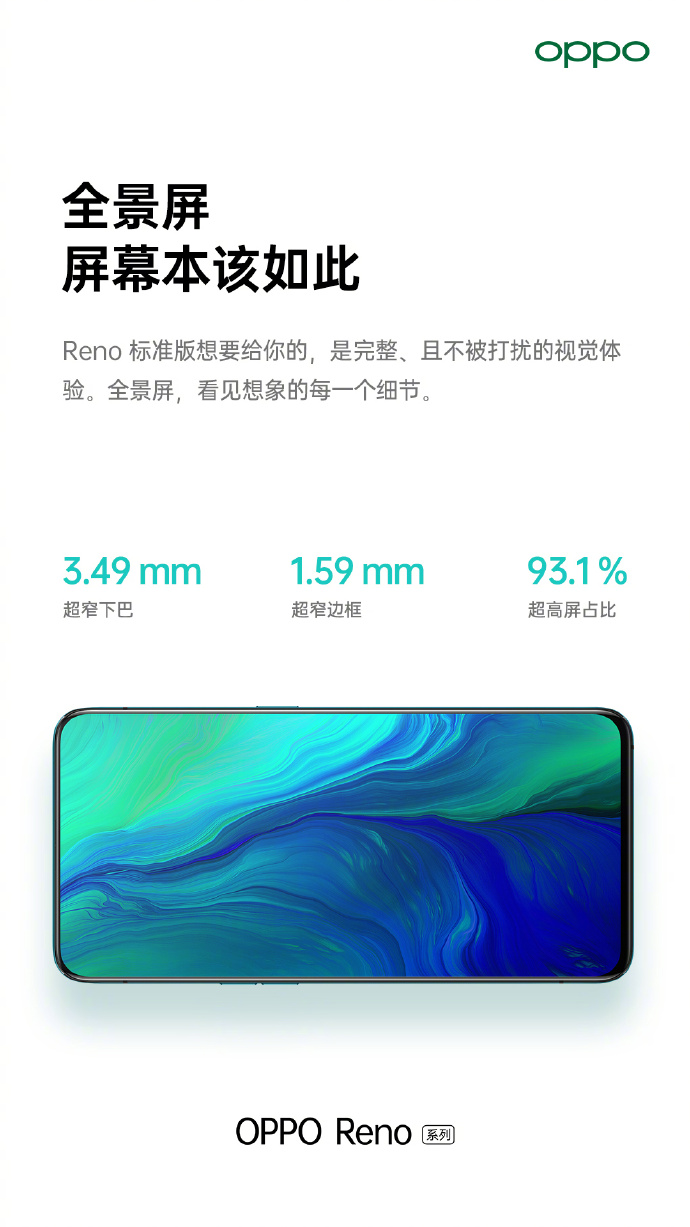
Now, ahead of the phone’s launch next week, the company has confirmed that the Oppo Reno will offer 93.1 percent screen-to-body ratio. The higher screen-to-body ratio will enable users to have an immersive multimedia experience.
The revelation of the phone’s STB ratio comes after the company’s executive shared the camera sample of the Oppo Reno Standard Edition smartphone on Weibo, which showcases the impressive camera performance of the device.
While the standard variant of Reno is expected to have a dual camera setup with Sony’s 48 MP camera sensor, the top-end model will come with a triple camera setup which includes a periscope zoom lens with support for up to 10x zoom.
Last month, a trademark application filed by the company revealed that three will be five variants of the upcoming Oppo Reno lineup — Reno Pro, Reno Plus, Reno Zoom, Reno Lite, and Reno Youth. The phones are also expected to be equipped with Breeno — an AI-based voice assistant from Oppo.
The high-end model of the Reno series will come equipped with Snapdragon 855 octa-core chipset and is expected to have a triple rear camera setup and the same pop-up front-facing snapper. It is also expected to have SuperVOOC 3.0 fast charging support.
To know more about what the devices offer as well as their pricing and availability details, we’ll have to wait for the official launch event, which is scheduled to take place on 10th April in China. Stay tuned!
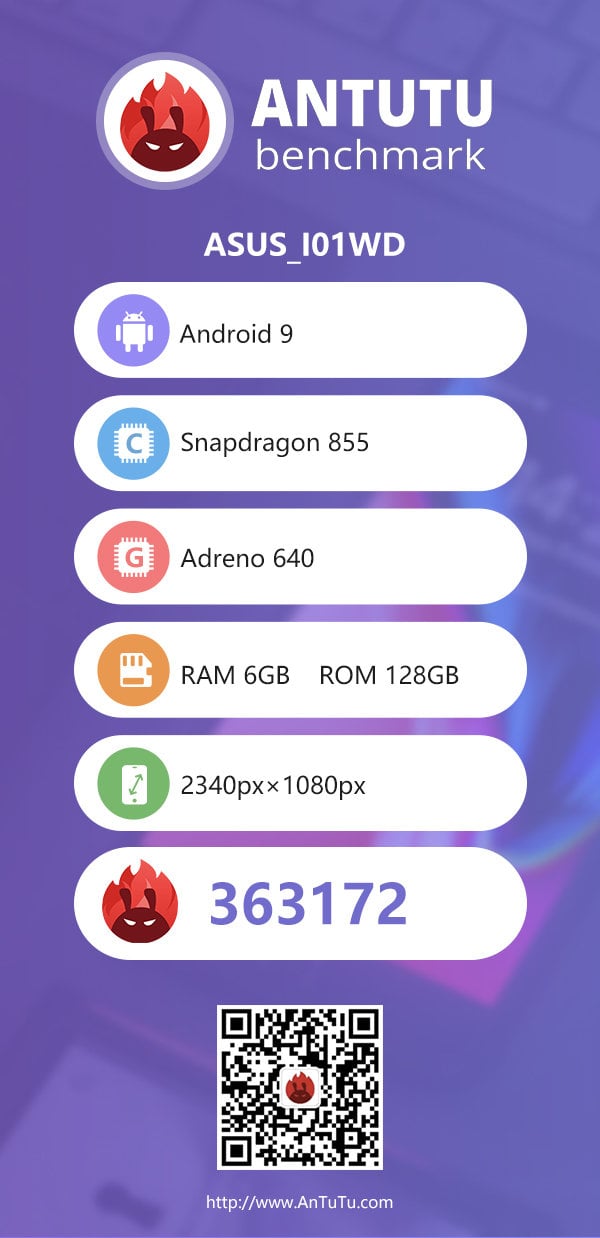
ASUS will be debuting the ZenFone 6 lineup on May 16. Last year’s ZenFone 5 series had included ZenFone 5 Lite, ZenFone 5 and ZenFone 5Z smartphones. Hence, the ZenFone 6 series may feature ZenFone 6 Lite, ZenFone 6 and ZenFone 6Z smartphones. Rumors have it that the ASUS_I01WD may debut as ZenFone 6Z. The same model number has been approved by Wi-Fi Alliance and National Communications Commission (NCC) in Taiwan. The same model had appeared yesterday on Geekbench. Today, the same model has appeared on AnTuTu benchmarks with key specifications and 363K+ score.
The purported ZenFone 6Z has scored an average benchmarking score of 363,172 on AnTuTu. According to the AnTuTu listing, the Snapdragon 855 mobile platform drives the ZenFone 6Z phone along with 6 GB of RAM. The display of the smartphone carries support for full HD+ resolution of 2340 x 1080 pixels. The handset runs on Android 9 Pie OS. As far as performance of the phone is concerned, the average benchmarking scores suggests that it will be on par with other SD855 powered smartphones.
According to AnTuTu, the ASUS_I01WD smartphone will be coming in 64 GB and 128 GB storage options. It has further claimed that the biggest feature of the smartphone will be presence of a 48-megapixel camera sensor on its rear. Previous leaks have revealed that the rumored ZenFone 6Z will be equipped with a triple camera setup. The chin of the device may feature a front-facing fingerprint reader.
There is a mystery looming around the display design of the ZenFone 6Z. Multiple images of ZenFone 6 prototypes that have appeared in the past few months have suggested that it may come equipped with a punch-hole display. The ZenFone 5Z had featured a wider notched display. It may so happen that the phone will arrive with a waterdrop-style notch.
Apple is moving a step ahead to start production of the latest iPhones in India. According to a new report, Foxconn will begin manufacturing the latest iPhones in Chennai on a trial basis. In India, this won’t be the only Apple’s manufacturing facility, Wistron already produces the old iPhone models like 6S, SE in its Bangalore plant.
The new initiative from Foxconn will help reduce the higher prices on Apple products. Both the company and consumers would benefit from production in India. It would result in avoiding 20% import duties, and 30 percent of local sourcing will further allow the company to open more offline stores in the country.
After the launch of iPhone X, the Apple devices sales plunged in India, despite its remarkable specifications. The only reason cited by sources for such a decline is its higher pricing which could not be justified in the developing country. The declining sales and trade tensions between the US and China are some reasons behind Foxconn’s move towards India.
“Seen from Cupertino the India market looks minuscule so Apple’s strategy has been myopic,” said Neil Shah, research director at Counterpoint Research. “They haven’t capitalised on the ground potential — India will cross half-billion smartphone users this year.”
It is a step ahead towards reaping the benefits of such a big market. Along with cost reduction, some more budget options can also be expected with the introduction of Foxconn’s manufacturing unit in India. It is a win-win situation for both, Apple and consumers. The timely expansion will help the Cupertino giant to safeguard itself from political tensions between the US and China. “Apple no longer wants to keep all its eggs in one basket,” said Shah.
Foxconn will start with the initial investment of $300 million in the iPhone production line, and expected to multiply in the future. All investment will come under the “Make in India” campaign.
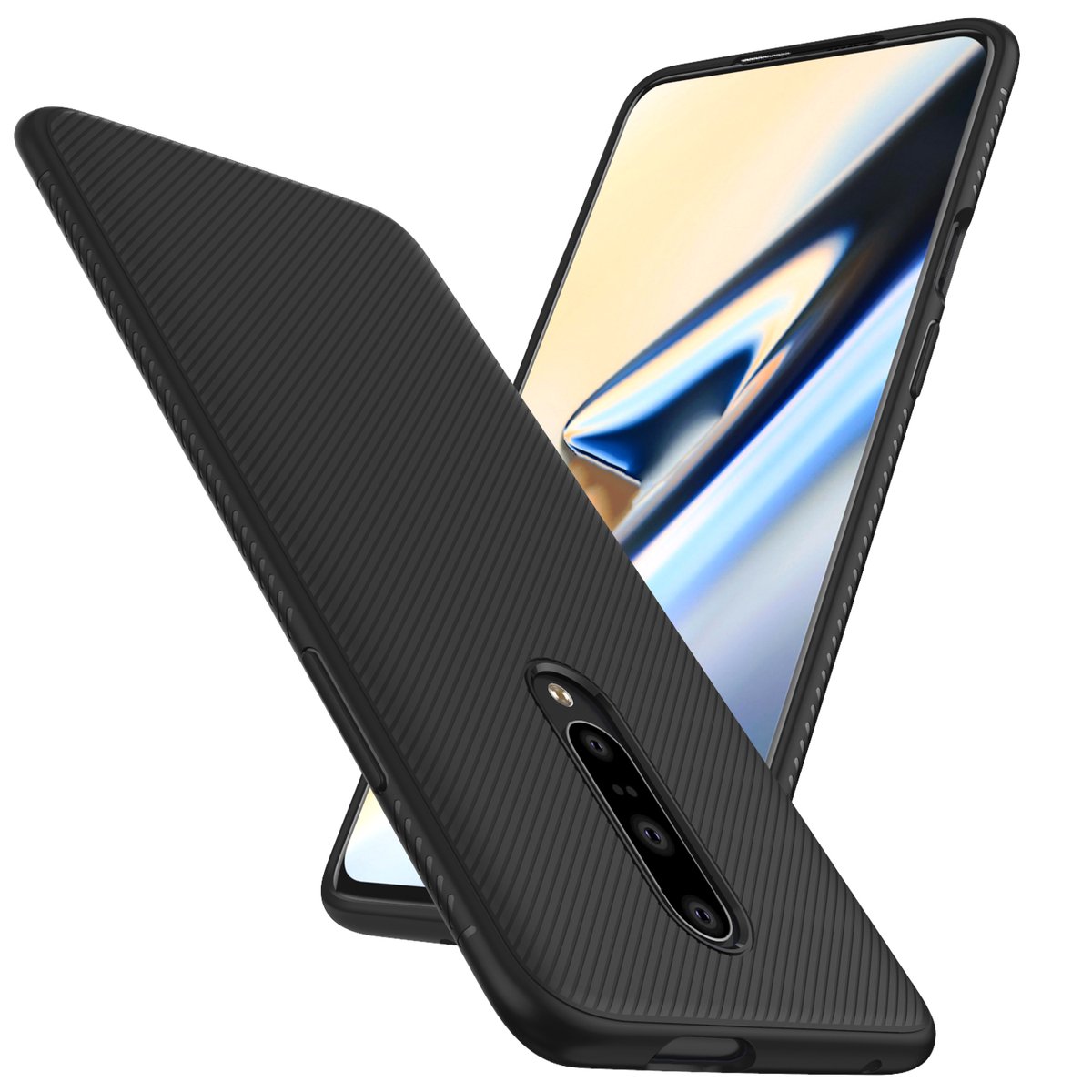
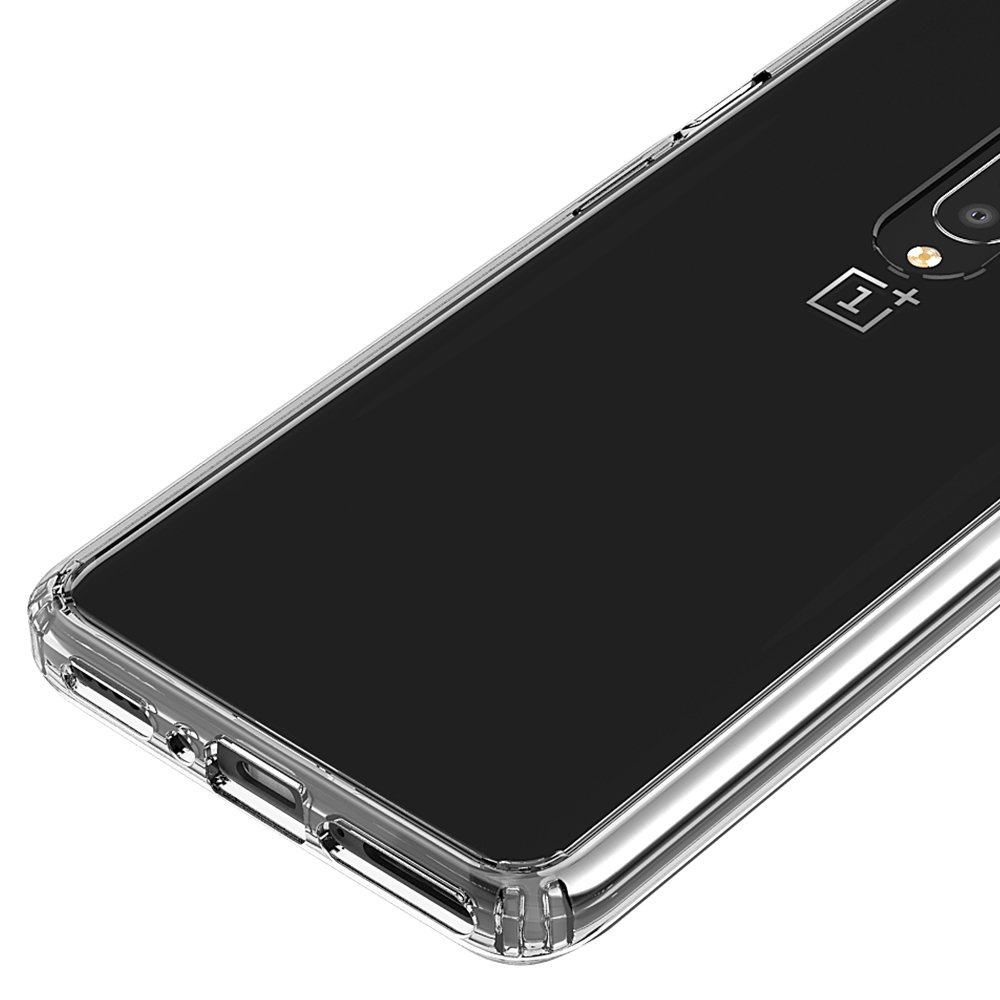
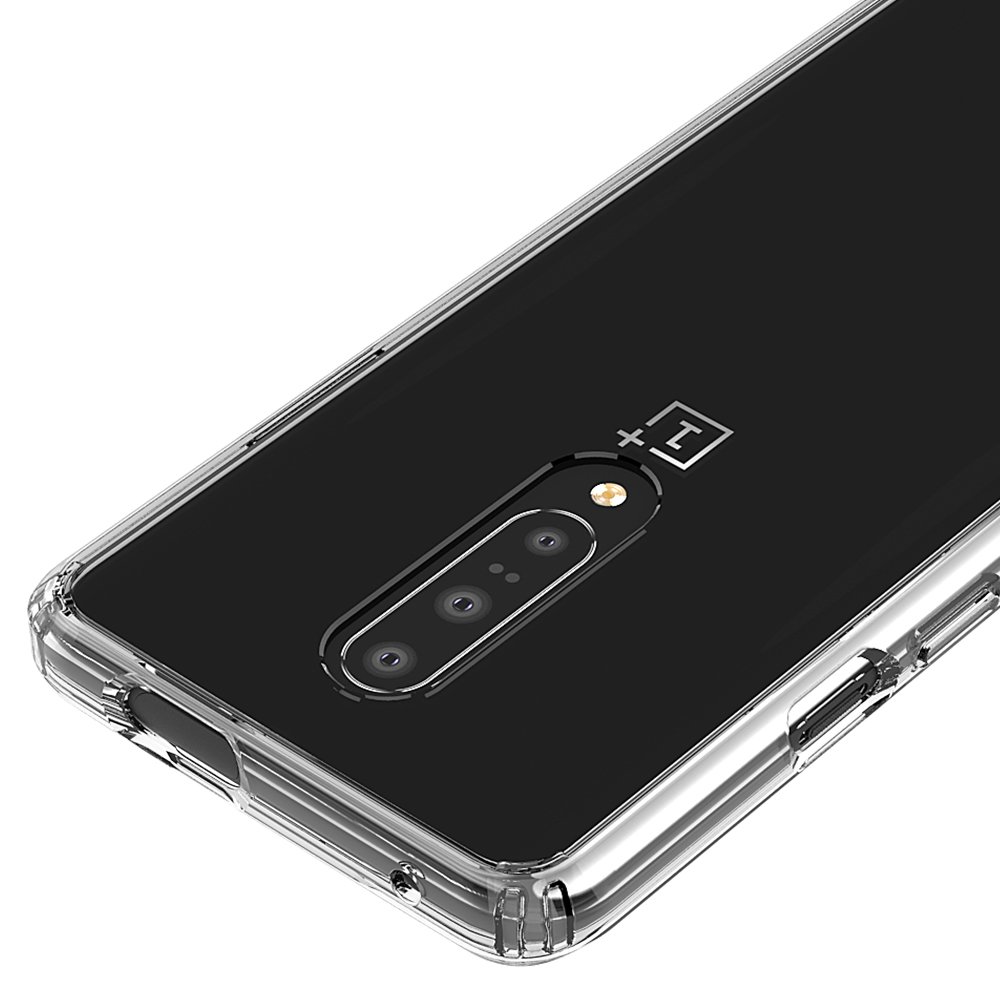
The OnePlus 7 smartphone is expected to debut in this quarter. Its arrival could be close at hand as multiple case renders have appeared its appearance. Fresh case renders of the phone have surfaced once again today to reveal its design from angles.
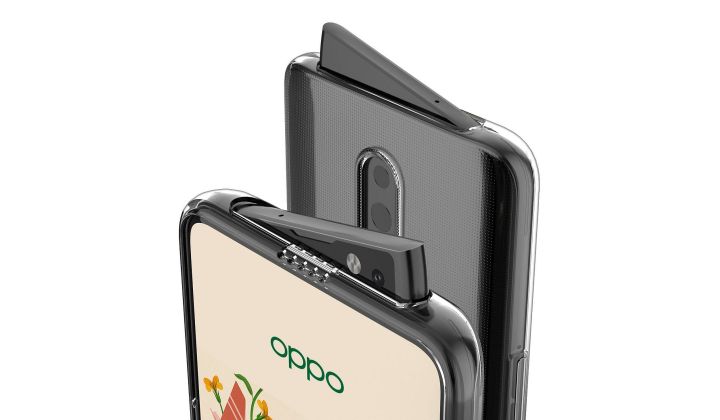
OnePlus 7 case renders reveal that it will be sporting a notch-less display which indicates it will be offering a high screen-to-body ratio than all the predecessor models. The top edge of the phone has a big cutout for the pop-out selfie shooter and a microphone cutout can be seen on the same edge. A leaked hands-on image of the phone that had surfaced in the previous image had also revealed the presence of a pop-up front-facing camera.
The left side of the smartphone features a volume rocker. The OnePlus 6 and OnePlus 6T smartphones have ejectable SIM card slot on their left edge. However, the SIM card tray seems to be missing from the left side of the OnePlus 7. On the right side of the phone is an alert slide and a power key.
The USB-C port is placed on the center of the bottom edge of the OnePlus 7. On its right are cutouts for microphone and a loudspeaker. The left side of the USB-C is a wider cutout which seems to belong to the SIM card slot.
Moving to the backside of the phone reveals its vertical triple camera setup. The two small dots between the second and third camera lenses could be for laser autofocus. The camera module is followed by an LED flash and the logo of the company.
OnePlus 7 specifications are currently under the wraps. Like other Android flagship phones, the OnePlus 7 will be also fueled by the Snapdragon 855 mobile platform. Rumors have it that it may come with a 6.5-inch screen. Its AMOLED display is likely to feature the latest edition of in-display fingerprint reader.
OnePlus has been increasing the price of its smartphones with each generation. The OnePlus 6T arrived with a starting price of $549. Probably, the base model of the OnePlus 7 could be priced at $569. The smartphone is expected to release in color options such as Black Yellow, Black Purple and Cyan Grey.
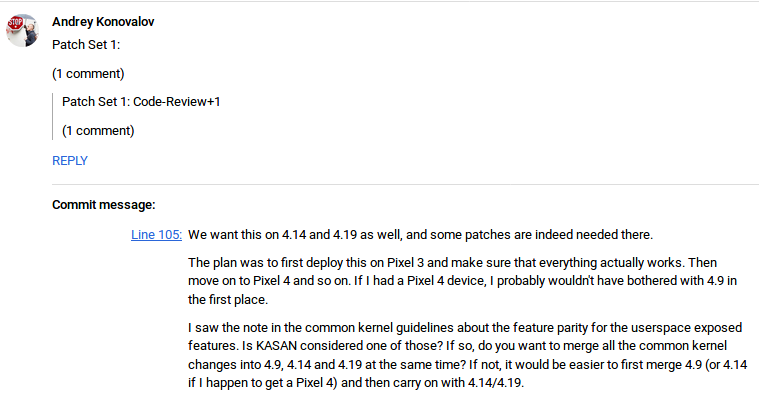
Pixel 3a and Pixel 3a XL are currently making rounds on the web via different leaks and rumors. Surprisingly, another guest from Pixel lineup – Pixel 4 made its first appearance via Android Open Source Project. A Comment made by Google Developer confirms the Pixel 4 existence and reveals it could be in some developers hands.
It’s too early for Pixel 4 leaks as Google generally launches the new Pixel series in the September-October time. Moreover, the conversation showers some light on the Linux Kernel code being manipulated to fix an issue with Google’s KASAN memory detection tool.
“The plan was to first deploy this on Pixel 3 and make sure that everything actually works,” the Google developer wrote. “Then move on to Pixel 4 and so on. If I had a Pixel 4 device, I probably wouldn’t have bothered with 4.9 in the first place.” However, irrespective of the name and its development information, no other device-specific details have surfaced.
In February, patent documents reveal a mysterious device – some believed it to be the Pixel 4 with dual tone back, a single rear camera, and a fingerprint scanner. It matched the design dynamics of the Pixel 3 and Pixel 3 XL devices without any display notch. Another leak depicts Pixel 4 carrying quad camera set up along with a hole in its display.
Many smartphone manufacturers have been trying to make a foldable smartphone since the past couple of years and finally, the year of 2019 is the year where the foldable smartphones are making their debuts.
While Samsung and Huawei have already launched their first foldable smartphone in the form of Galaxy Fold and Mate X, other smartphone manufacturers are also working on launching their own foldable smartphone.
Among those smartphone makers is Motorola, which is reportedly planning to launch Motorola RAZR (2019) — the company’s first foldable smartphone this year. As per the reports, it is designed in a way that the phone opens and closes vertically.
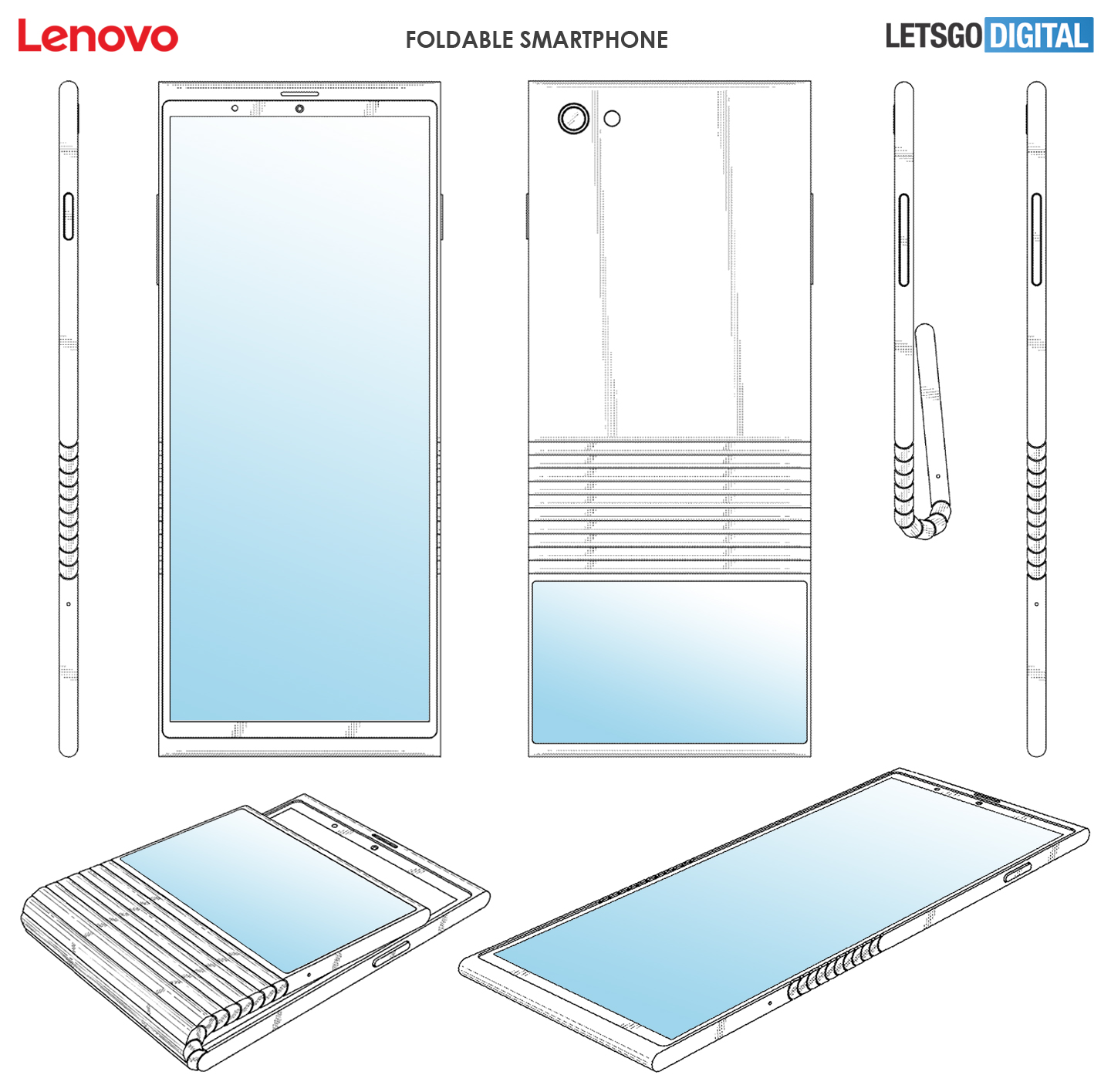
Now, Motorola’s parent company Lenovo is working on another foldable smartphone design, which the company has not patented. The patent shows a foldable clamshell smartphone with some similarities to the Motorola RAZR patent.
It has a flexible hinge that allows the user to fold the device in a couple of different ways. With a second screen on the bottom rear of the phone, this screen can be folded over to cover a small part of the main flexible screen. The phone can be folded again making the device more pocketable, protecting much of the display and revealing a small part of the top of the flexible screen. The front-facing camera will be placed in the top-bezel along with the earpiece. The primary camera setup will be placed on the phone’s back panel.
Apart from Lenovo and Motorola, other smartphone manufacturers, including Xiaomi, Oppo, and TCL have already confirmed that they will be launching their own foldable smartphones later this year.
Later this month, Samsung Galaxy Fold will be available for purchase for a price tag of $1,980 while the Huawei Mate X will go on sale later this summer, carrying a price tag of around $2,600.
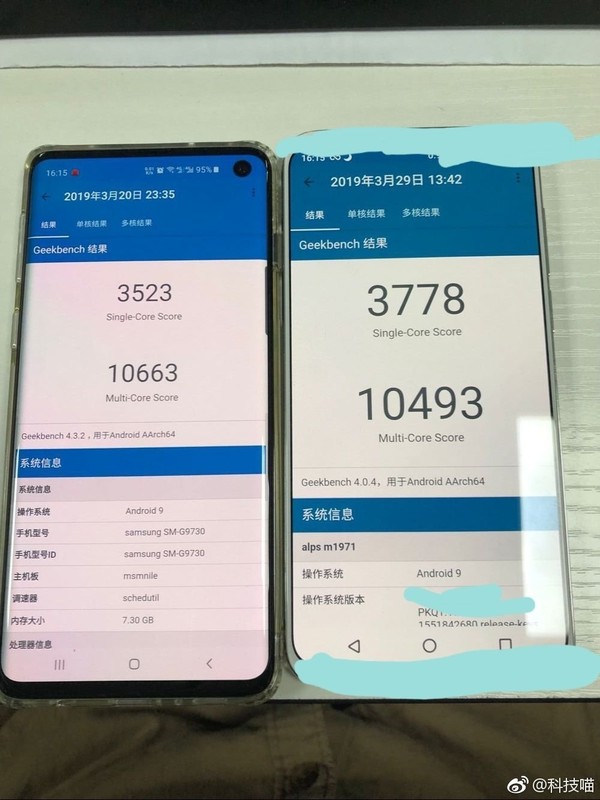
Couple of leaked images of the upcoming Meizu 16s have surfaced on Weibo. There is an image that compares the screen size of the Meizu 16s with the Samsung Galaxy S10 smartphone. Another shows the rear design of the phone.
The Meizu 16s image that compares it with Galaxy S10. The S10 features a punch-hole display of 6.1 inches whereas the Meizu 16s houses a 6.2-inch display. Despite featuring a larger screen, the Meizu 16s offers a slightly smaller form factor. The handset will be offering higher screen-to-body ratio than the Meizu 16th. Also, it continues to feature a symmetrical design like Meizu 16th.
The Snapdragon 855 and 6 GB of RAM powers the Galaxy S10 and Meizu 16s. The Geekbench listing of both phones show that the performance of the Meizu 16s is on far with Galaxy S10. The S10 is equipped with an ultra-sonic fingerprint reader. The Meizu 16s will be featuring an optical in-display fingerprint sensor.
The image shown below shows a Meizu phone with a dual camera setup located on the top-left corner. Previous leaks have revealed that the Meizu 16s will be having a placement for the dual rear cameras. The image shows that the handset is equipped with a carbon fiber-like textured diagonal lines on the glass rear. None of the previously leaked photos of the phone have shown such a design. There is a possibility that it may not be the Meizu 16s, but the forthcoming Meizu 16T gaming smartphone. Its advisable to wait for further reports to confirm on the design of the Meizu 16T.
Meizu 16s Specifications
The AnTuTu listing of the Meizu 16s has revealed that its 6.2-inch AMOLED display offers full HD+ resolution of 2232 x 1080 pixels. The Snapdragon 855 powered phone may come in a single variant featuring 6 GB of RAM and 128 GB of storage. The latest version of Flyme 7 will be overlaid on the Android 9 Pie OS.
The 3,600mAh battery of the Meizu 16s will be carry support for 24W fast charging. The dual camera module of the phone will include OIS enabled 48-megapixel Sony IMX586 lens as primary sensor. For capturing selfies, it will be coming with a 20-megapixel selfie shooter. The smartphone may release in the Chinese market with a price tag of 3,198 Yuan (~$476).
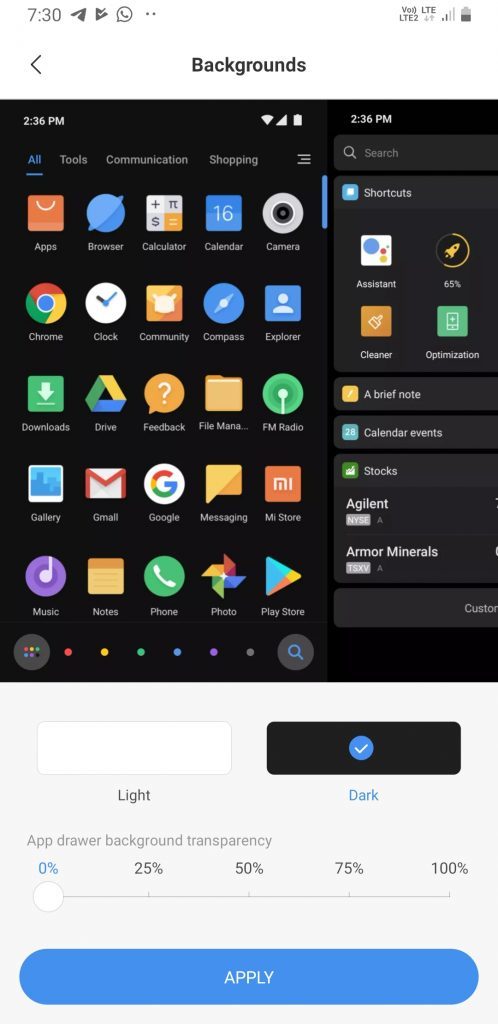
The Poco Launcher is receiving some new features with the latest app update. There are notable improvements along with the addition of a new dark mode. Unlike the Mi Home launcher, the Poco launcher follows the minimalist approach making it lighter as well as useful at the same time.
Poco Launcher 2.6.5.7 brings dark mode and can be enabled by heading into the Launcher Settings. It does not carry system-wide dark mode as it only applies to the app drawer and launcher settings panel. The new update also brings some usual bug fixes, sharper app icons, responsive user interface and the ability to add the custom apps to vault.
Double tap to lock the device feature is now refined and works efficiently on all compatible devices. Some other changes are also present as according to the changelog below.
Poco Launcher 2.6.5.7 changelog:
Fix the bug of icon pack with white background.
Dark mode! Yay!
You can add custom apps to App vault shortcuts now.
Double tapping the screen to lock device works on all compatible models now.
Icons got crisper and prettier!
We fixed the bugs that slowed down the UI. Now it’s more responsive.
We fixed multiple minor bugs as well.
Nowadays, every app developer is integrating Dark Mode to save battery on devices carrying AMOLED display and to protect eyes from the regular smartphone usage. Google is leading the way with dark mode availability across its apps and utilities like Google Help Center, Google Discover Feed, Google News, Google Maps, Google Play Games, YouTube, Android Messages, Gboard, Pixel Launcher and now coming on stable Google Chrome very soon.
Thanks to Xiaomi as they are also working on deep system-wide integration of dark mode in MIUI 10. Interested users can update the Poco Launcher app to get hands on the new useful features.
On March 4, Realme had launched the Realme 3 smartphone and its first sale was carried out on March 12. Realme had confirmed that it had sold 210,000 units of the phone through its first sale. Realme had once again carried out the sale of the smartphone yesterday. The company has confirmed through a tweet that it has sold more than 500,000 units of the Realme in a short span of three weeks. The sales of the phone are being carried out through its official online store and Flipkart.
Realme 3 Specifications
The Realme 3 had arrived as the successor of the Realme 2 phone from last year. The Realme 3 features a waterdrop-style notched IPS LCD screen of 6.2 inches. It carries support for HD+ resolution of 720 x 1520 pixels. It offers an aspect ratio of 19:9. The ColorOS 6 based Android 9 Pie OS runs on the device.
The MediaTek Helio P70 powers the 3 GB RAM + 32 GB storage and 4 GB RAM + 64 GB storage editions of the Realme 3. It is equipped with a microSD card slot for additional storage. The 13-megapixel + 2-megapixel dual camera and a selfie camera of 13-megapixel are available on the device for photography. Its backed by a big battery of 4,230mAh capacity. The 32 GB and 64 GB Realme 3 editions are respectively priced at Rs. 8,999 (~$131) and Rs. 10,999 (~$160).
Realme 3 Pro Coming Soon
During the launch event of the Realme 3, the company had confirmed that it will be announcing the Realme 3 Pro smartphone in April. It will be arriving to rival with the Xiaomi Redmi Note 7 Pro in India. The specifications of the Realme 3 Pro are still under the wraps. Some rumors have claimed that it will be featuring a 48-megapixel rear camera. Also, it is likely to carry support for VOOC fast charging technology.
Realme is expected to confirm on the Realme 3 Pro launch date in the next few days. However, some rumors are claiming that the smartphone may get announced on April 27. It is also speculated that the base model of the phone could be priced at Rs. 12,999 (~$189).
With the usage of OLED panels increasing in smartphones, DC dimming control has been gaining a lot of attention because of being a more effective way of controlling the light output of an LED fixture. Recently, Oppo showcased the DC Dimming feature which will be present in the company’s upcoming ‘Reno’ lineup.
Now, Chinese smartphone maker OnePlus has said that it will soon roll out DC Dimming feature which will be available for users who are willing to test the feature early. It is expected to be available in the lab or in the developer preview version. The company has reportedly completed testing the DC dimming feature with its engineering demo.
The DC Dimming technology uses a DC voltage between 0 and 10 to control the light output of the LED fixture. As the voltage goes up or down, the corresponding 0-10V dimmable driver matches the light output of the fixture to increase or decrease up to a certain percentage.
Basically, DC dimming is a feature that automatically adjusts and dims the brightness of the phone’s display according to the ambient environment. It is one of the simplest and most popular dynamic lighting controls used in offices, retail spaces, and homes but the feature is just gaining traction in smartphones.
The feature is already available in Xiaomi Black Shark 2 gaming smartphone. The Xiaomi Mi 9 has already received the support for this feature in a new MIUI 10 beta update. Companies like Meizu, Oppo, and Vivo’s IQOO have already confirmed that their new phones will support this DC Dimming feature.
We use cookies on our website to give you the most relevant experience by remembering your preferences and repeat visits. By clicking “Accept”, you consent to the use of ALL the cookies.
This website uses cookies to improve your experience while you navigate through the website. Out of these, the cookies that are categorized as necessary are stored on your browser as they are essential for the working of basic functionalities of the website. We also use third-party cookies that help us analyze and understand how you use this website. These cookies will be stored in your browser only with your consent. You also have the option to opt-out of these cookies. But opting out of some of these cookies may affect your browsing experience.
Necessary cookies are absolutely essential for the website to function properly. This category only includes cookies that ensures basic functionalities and security features of the website. These cookies do not store any personal information.
Any cookies that may not be particularly necessary for the website to function and is used specifically to collect user personal data via analytics, ads, other embedded contents are termed as non-necessary cookies. It is mandatory to procure user consent prior to running these cookies on your website.