Advertisement

OnePlus 6 DxOMark Score Is Out: Pretty Impressive

If you are among those yearning for DXOMark’s review of the OnePlus 6 camera, here you have it. OnePlus 6 DxOMark Score indeed confirms the device’s company’s main goal of designing smartphones that would balance high-end quality with a lower price than other phones in its class. The OnePlus 6 doesn’t disappoint in its design as it packs a premium build combined with a flagship specs configuration including a Snapdragon 845 chipset. The DXOMark rating indeed shows the device is an affordable powerhouse.oneplus 6
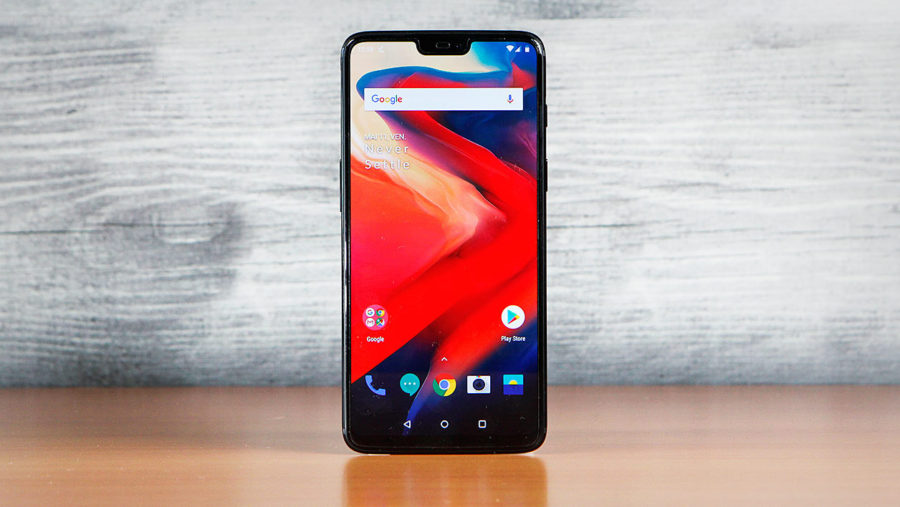
Worthy of note is that the OnePlus 6 performed better than the Galaxy Note 8 and iPhone 8 Plus but is behind the iPhone X by just a single point. You’ll better understand how impressive the score is when the OP6 price is compared with that of the iPhone 8 Plus or Galaxy Note 8. The OnePlus 6 starts at around €520.OnePlus 6 DXOMark score
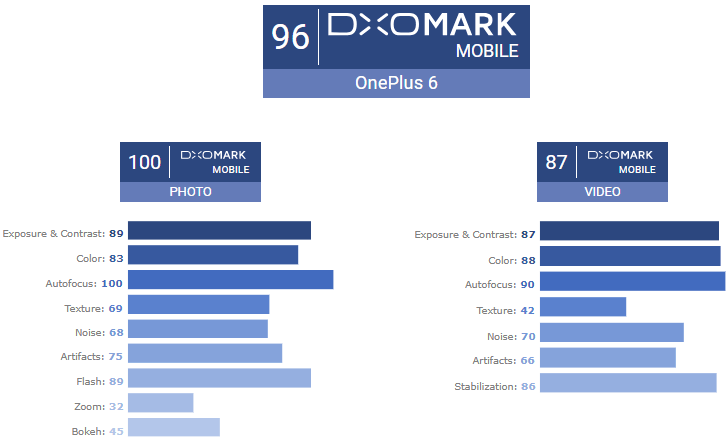
The OnePlus 6 polls an awesome 100 points in the photography aspect which covers tests on areas such as autofocus, color, and exposure. The device also maintains a well-balanced approach to detail retention and noise levels. DXOMark notes that the OP6 dual lens bokeh and zoom performance was lower than devices with a dedicated telephoto lens. The OnePlus 6 may have performed far better than its ranking if not for the rather lower 87 points for video. The video camera has a fast autofocus too but also efficient stabilization and low noise levels. However, it’s not without its faults – it oversharpened the image and worse, it didn’t do it consistently with the sharpness varying between frames.

Read Also: OnePlus 7 Could be One of the First Phones to Support 5G Connectivity

The full camera review can be found on DXOMark’ website (source link). You can as well check out our complete OnePlus 6 review including the camera.

(source)
This is the Xiaomi Mi Max 3 in all its glory (HD images)

Xiaomi will take the wraps off the Mi Max 3 on Thursday, July 19. The Mi Max series is known for its large displays and this year’s version is no different. However, the switch to an 18:9 aspect ratio means the Mi Max 3 will have a smaller footprint even though it has a larger display.

Ahead of the release tomorrow, new photos of the device have leaked online and they are the sharpest we have seen so far, therefore providing the highest level of detail. One of the images also shows the “About Phone” section of the device which gives us the chance to confirm some of its specs.

[envira-gallery id=”201774″]

The Mi Max 3 in the photos is the gold variant and it has white front bezels. The bezels have been significantly shrunk and it makes the phone easier to hold. The bottom bezel is bare and the top is home to three holes and the earpiece. While two of those holes are housing the sensors (proximity and light) and the front camera, the third hole is most likely home to a front flash, a first for the series.

The back of the device is equally interesting. The phone has the same U-shaped antenna lines as the Mi Max 2 and a fingerprint placed in the middle. Where it differs is in the number and position of cameras. The Mi Max 3 will come with dual cameras – 12MP + 5MP arranged vertically and sharing a single housing with the LED flash.

A sticker on the rear of the device also shows that the phone will have support for dual SIM cards. However, you will have to choose between using two SIM cards or a single SIM card and a MicroSD card.

READ MORE: Xiaomi Mi A2 Lite goes on sale ahead of its official launch

MediaTek Helio A22 Quad-Core 12nm SoC launched for mid-market devices

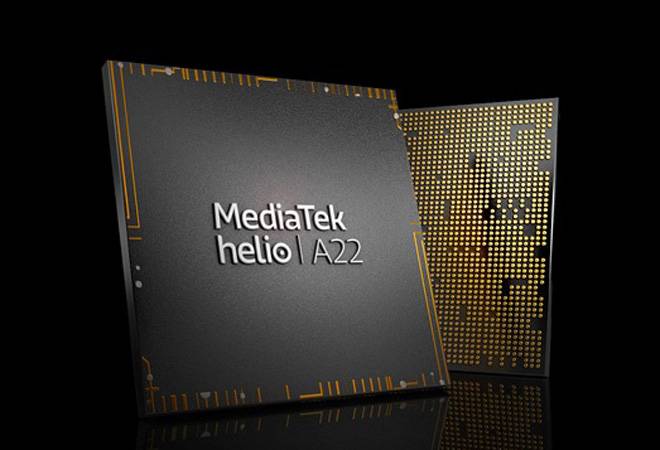
Following the success of its P-series and S-series chipsets, Taiwanese semiconductor company MediaTek has launched yet another chipset series — Helio A series, which is aimed at “mid-market”. The first chipset in the series is Helio A22 which looks like a cheaper counterpart of the previously launched Helio P22 SoC.

The MediaTek Helio A22 is an entry-level SoC which comes with a simple quad-core A53 design. It seems like the Helio A22 a successor of the MT6738/MT6739. It is also clear that the company is planning to phase out the MTxxxx product numbers and replace it with X/P/A series, making its SoC lot clearer about which market and performance segments it’s meant to fit.

MediaTek Helio A22

As said, it has Quad-Core ARM Cortex-A53 CPUs with MediaTek CorePilot and flexible LPDDR3/LPDDR4x memory controller. It will be paired with Imagination PowerVR GE8320 GPU, a single cluster GPU design that was released last year. It supports HD+ screen with 1600 x 720 pixels resolution and 20:9 aspect ratio as well as 13MP + 8MP dual camera setup or a single 21MP sensor.

Manufactured using TSMC‘s 12nm process, the company claims that the CPU performance is up to 30 percent faster and GPU up to an incredible 72 percent faster than the direct alternative, which should be the Qualcomm‘s Snapdragon 425 SoC.

It also comes with a few AI-based enhancements such as Face ID (or Face Unlock) and smart photo albums. There’s also MediaTek NeuroPilot support, which allows developers and device makers to have the best possible AI-ecosystem, with support for common AI frameworks and full compliance with Android Neural Networks API.

For cellular networking, the Helio A22 will support LTE Category 7 downloads and Category 13 uploads, allowing for download rates upwards of 300Mbps and upload rates of 150Mbps. It is a dual-SIM product and supports VoLTE on both networks. As for the Bluetooth, it supports Bluetooth 5.0. MediaTek will be offering a cheaper version of the A22 SoC with LTE Category 4 support that doesn’t require carrier aggregation.

Read More: MediaTek posts impressive Q2 2018 report as revenue explodes in June

The first smartphone running on MediaTek’s Helio A22 chipset has already been launched. Xioami’s Redmi 6A is powered by Helio A22 SoC, which is currently retailing in China for 699 Yuan, which roughly converts to $106. More entry-level smartphones powered by this chipset are expected to launch this year and next year.

OnePlus 5 / 5T get new OxygenOS Open Betas with Google Lens support

A new update for OnePlus 5 and 5T has been rolled out in the Open Beta program. We are talking about the Open Beta 14 for the first device and the Open Beta 12 for the newest one. They are not big updates but they are still important as they improve the camera quality by trying to fix an annoying issue, and they also bring a new exciting feature.

Starting from the improvements, the update aims at reducing the oil painting effect which has been at the center of complaints in the last period. After this update, photos on the OnePlus 5 and 5T should be clearer in every scenario. Further, the update brings the Google Lens mode to both the handsets. It is possible to download the update either through the stock OTA manager or the Oxygen Updater application.


RELATED: OnePlus applies for trademark for “Warp Charge”, may be replacement for Dash Charge


Obviously, you can get it only if you adhered to the Open Beta program and it is not a stable and final build. Several betas are being pushed on the OnePlus 5 and 5T in the past few weeks. Among the most important ones, there is the one which recently brought the support to Project Treble which allows for faster updates by dividing the operating system into a core framework and company’s customizations.

(Via)

Hi-res render of Galaxy Note 9 surfaces: yellow stylus, blue phone

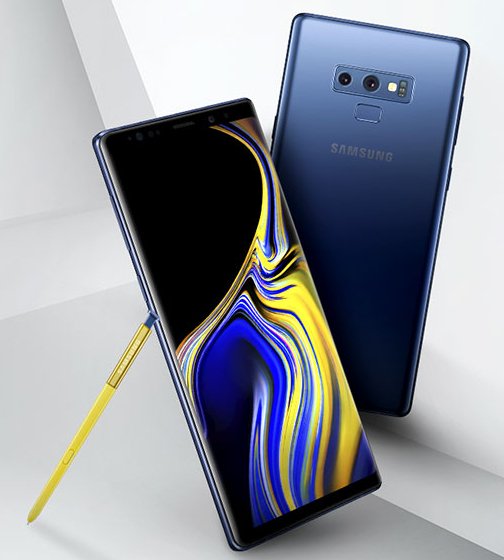
A new render of the Samsung Galaxy Note 9 has been leaked online. Posted on Twitter by Evan Blass, the photo shows the rear and front of the device as well as the new S Pen.

One of the biggest changes coming to the Galaxy Note series is the stylus officially referred to as the S Pen. Not only is the one in the image having a different color from the phone itself, it will also have Bluetooth LE and a bunch of new features. The S Pen is also reported to charge within the phone itself.

Galaxy Note 9 Hi-res render

In terms of design, not much seems to have changed from last year’s Galaxy Note8 but that isn’t to say there are no differences. The first major difference is the position of the fingerprint scanner which is now right under the cameras instead of to the right. This makes it easier to reach.

The dual cameras are also of different sizes. As shown in the image, the sensor on the right is significantly bigger than the one on the left. To the right of the camera sensors is a LED flash and blood pressure sensor.

READ MORE: Samsung Galaxy S10, Note 10 and Galaxy A phones to feature an ultrasonic fingerprint scanner

Sony confirms new product launch at IFA 2018, likely Xperia XZ3 and XZ3 Compact

IFA is one of the most important tech-related events of the year and many of the major smartphone brands take part in this event to announce some of their most important products. Sony usually takes advantage of the conference in Berlin to unveil new flagships from the XZ series, and it seems that the same will happen at IFA 2018. The Japanese company has already started sending invites for the upcoming event and it has confirmed that it will hold a press conference in which a new product will be unveiled. The conference will take place on August 30 at 1 PM CET (IFA 2018 will last from August 30 to September 5).

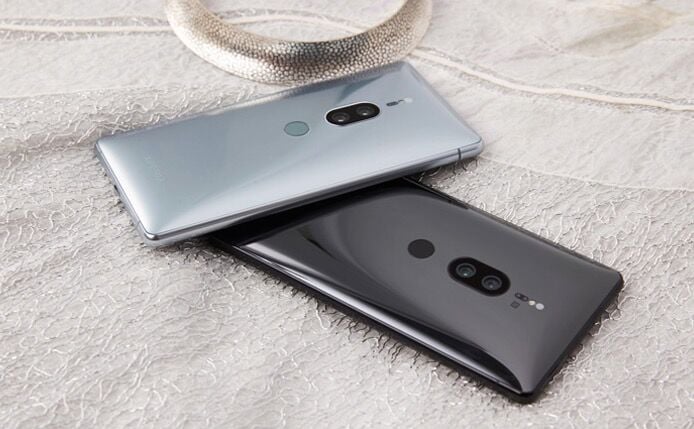
sony xperia xz2 premium

The most reliable hypotheses obviously suggest that the new Sony Xperia XZ3 line-up will be the leading star of the press conference. Last year, the company announced the XZ2 series at IFA, composed of the standard variant and the XZ2 Compact. This year we may see Sony Xperia XZ3 and XZ3 Compact. Until now, no official info has surfaced about this line-up, but we have several leaks suggesting some of its most important specs. The flagship has already been spotted on Geekbench with the model number H8526.


RELATED: Sony Xperia XZ3 Will Sport 4 Cameras According To Leaked Photo


If the leak is to be believed, the phone will be powered by the new Snapdragon 855 chipset by Qualcomm, that is the best mobile chipset from Qualcomm (yet to hit the market). According to Geekbench, the device has 8 GB of RAM. With such hardware, the XZ3 would be the best smartphone in the market in terms of performance, at least on the paper. The handset has also registered impressive scores: 3033 points in single core performance and 10992 points in multi core. From what rumors suggest, it might be the first phone with the 5G connectivity, despite the first 5G-powered devices are expected in 2019.

(Via)

Vivo keeps improving NEX’s in-display fingerprint reader with a new update

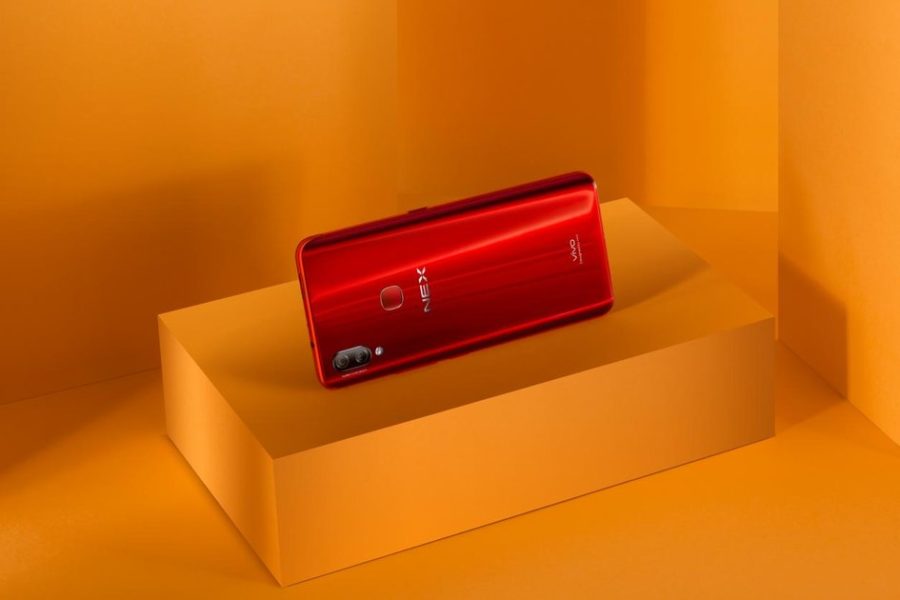
Vivo NEX belongs to the third series of mobile phones by Vivo sporting a comfortable and futuristic in-display fingerprint reader. However, in-display fingerprint readers based on the chip released by Synaptics in late 2017 are not as fast and accurate as the traditional optical fingerprint readers. But do not worry: Vivo is continuously working on improving the performance of its in-screen fingerprint reader. After a first update released days ago, a new update is seeding on the latest flagship. According to reports, it has a size of 301.07 MB and it includes improvements for the in-display fingerprint reader of the Vivo NEX S and A.

An official changelog has been released alongside the update and it mentions optimizations to fingerprint recognition logic to improve fingerprint recognition efficiency. The update brings the number of version of Funtouch OS (Vivo’s own Android fork) to 1.16.5 and the improvements to the fingerprint scanner are not the only ones present in the changelog. System performance and stability have been improved as well, so you should get a smoother and more stable experience while using your device. Further, there are optimizations to the compatibility of the operating system with third-party apps, as well as improvements to the Bluetooth compatibility and stability while the phone is connected to a car.


RELATED: Vivo V1732BA and VivoV1732BT hit TENAA with single rear camera and notched displays


Jovi virtual assistant based on AI has been updated too. In detail, the wake-up system and the AI scene recognition have been improved, as well as the processing of portrait light effects. Further, there are optimizations to the beauty mode, internet performance, and network adaptability. And this is not the only update released since the phone was launched: the previous one brought Funtouch OS to v1.15.7 with a size of 95.23 MB.

(via)

HydrogenOS 5.1.11 brings a bunch of improvements to the OnePlus 6

OnePlus devices sold in China come with HydrogenOS instead of OxygenOS. It doesn’t have Google apps and services bundled with it, but most times new features available on HydrogenOS always make their way to OxygenOS. A new update is available for the OnePlus 6 and it brings a ton of improvements OxygenOS users may want to look forward to.

oneplus 6

The new update has version number 5.1.11 and is about 1.8GB in size. It also brings July’s security patch. Below are some of the improvements:

System

  • Fixed issues with accidental touches triggering gestures.
  • General bug fixes and improvements.
  • Added sleep standby optimization.

Camera

  • Improved image quality.
  • Added beauty mode for selfie portraits.

Wireless and networks

  • Optimized stability for Wi-Fi connection.
  • Optimized gaming experience in dual 4G networks.
  • Fixed stability issues with Bluetooth connection for cars.

READ MOREOnePlus applies for a trademark for “Warp Charge”, may be replacement for Dash Charge

We expect the OnePlus 6 running OxygenOS to get an update in the near future that brings some if not all of these improvements.

(Source)

Stunning Meizu 16 first camera sample shared by Meizu’s CEO

Meizu‘s CEO Huang Zhang has been the major source of details concerning the upcoming Meizu 16 flagship. The CEO shares details of the device almost every week on Meizu’s forum but suddenly ceased doing that last week. While fans were left wondering why the lull, Huang Zhang has returned with more details for the flagship 16. This time around he shares some photos captured while he and his family were on vacation. You guessed right, the photos were captured using the Meizu 16 camera.Meizu 16

This happens to be the second time the CEO is sharing sample photo suspected to be of the Meizu 16. At the beginning of July, a sample photo was shared by Mr Zhang but it turned out the photo wasn’t captured using the 16. However, Mr Zhang again shared another photo today which he confirmed was shot using the flagship device. The EXIF data of the photo confirms it was shot using the Meizu 16. The indoor sample photo looks pretty impressive with a high level of accuracy in colour reproduction and the clarity is vivid.Meizu 16

Read Also: Meizu CEO reveals the Meizu 16 will launch on August 26, tips 8GB+128GB version also coming

Meizu is yet to reveal when the device will be officially unveiled but the CEO had hinted earlier that the device will be launched on August 16. That is yet to get an official confirmation via poster or launch invitation. Whenever the device arrives, we expect a Snapdragon 845 chipset onboard among others. The Meizu 16 series is also expected to include the Meizu 16, Meizu 16 Plus, and Meizu X8.

(source)

Vivo V1732BA and VivoV1732BT hit TENAA with single rear camera and notched displays

Two new Vivo phones with model numbers V1732BA and V1732BT have been seen on TENAA. Both phones share almost identical specs that put them in the mid-range category.

The Vivo V1732BA and V1732BT have 6.22-inch 1520 x 720 displays. That resolution translates into a 19:9 aspect ratio which means both phones have a notch.

They are both powered by a 2.0GHz octa-core processor paired with 3GB of RAM. Where they differ is in the amount of built-in storage. The Vivo V1732BA has 64GB of storage while the Vivo V1732BT has 32GB of storage space. You will be able to add extra storage to both models.

[envira-gallery id=”201717″]

On the rear, there is a single camera on both phones. TENAA says it is a 13MP sensor while a 5MP sensor sits in front. They also have a 3180mAh battery and run Android 8.1 Oreo.

With respect to design, the Vivo V1732BA and the Vivo V1732BT have metal bodies with visible U-shaped antenna lines at the top and bottom. None of them packs a fingerprint scanner which isn’t surprising anymore. Vivo and its sister company, OPPO, have released a couple of phones this year without a fingerprint scanner. However, they all have face unlock which is what we expect for these two as well.

READ MORE: Vivo NEX S is a very resistant phone (including pop-up camera) according to the first endurance test

OPPO Find X pure white leaked photos appear; Could it be in works?

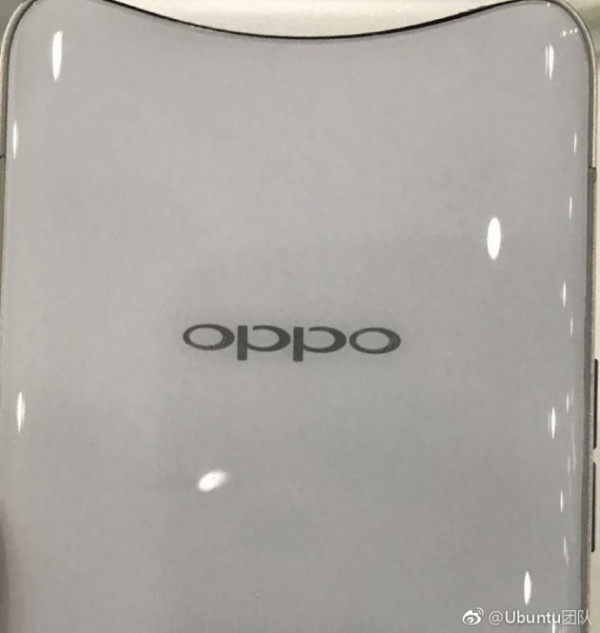
OPPO has recently introduced the OPPO Find X smartphone in two color variants such as Bordeaux Red and Glacier Blue. Two photos of the Pure White version of the Find X have surfaced online. OPPO is yet to confirm on the existence of the white variant for Find X.

Oppo Find X pure white

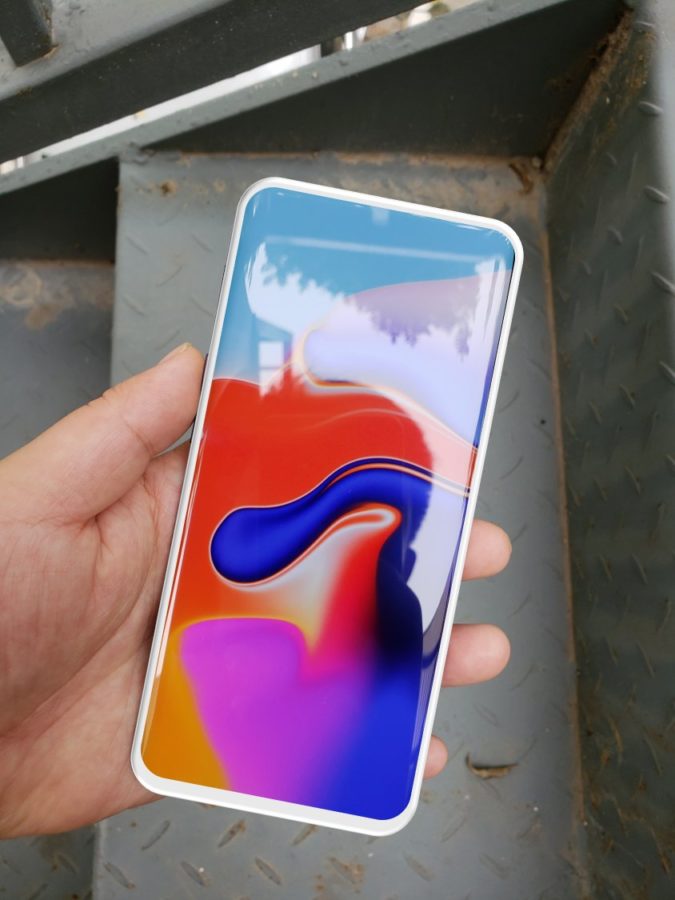
Shown above is a partial view of the glassy back panel of an OPPO phone. The curved design on the rear resembles with the back panel of the Find X. Another leakster has shared a frontal shot of what appears a white edition of the smartphone. An attractive wallpaper is also present on the display.

Chinese manufacturers including OPPO are known for introducing new color variants for their smartphones. Releasing new color options allow smartphone companies to maintain the popularity of the smartphone. Vivo had launched the Vivo X21 smartphone in color options like Diamond Black, Ruby Red and Aurora White options. However, it is now only that the company has launched Night Purple edition for X21.

The OnePlus 6 flagship phone was unveiled in May. A couple of new Snapdragon 845 powered flagship phones such as Vivo NEX and Oppo Find X were launched after OP6. OnePlus introduced Red edition of OnePlus 6 in markets like China and India probably to maintain its popularity. Hence, there is a possibility that the Find X may come in a new color option few weeks later.

The 128 GB and 256 GB variants of the Find X that features 8 GB of RAM are available in China with respective price tags of 4,999 Yuan (~$747) and 5,999 Yuan (~$896) . In India, the Chinese manufacturer is selling the smartphone with a price tag of Rs. 59,990 (~$876). India will be also receiving the premium Find X Lamborghini Edition soon which is available in China in the coming month with 9,999 Yuan (~$1,495) pricing.

Read More:

Even though the Find X was unveiled in Paris, France in the previous month, it is yet to be available for buying in European markets. An OPPO spokesperson has recently confirmed that the Find X will be releasing soon in the U.K. Also, it is also expected to release in other markets such as Spain, France and the Netherlands.

Would you be interested in a white version of the Find X smartphone? Share us your views by posting your comments below.

(source 1, 2)

Huawei GPU Turbo update release schedule confirmed for 14 smartphones

Huawei has now officially confirmed that the name of the 14 Huawei smartphones that will be receiving the GPU Turbo technology update. The company has also revealed on the approximate time period on when these devices will be receiving the GPU Turbo update.

In August, Huawei will be bringing the GPU Turbo technology update to users of Mate 10, Mate 10 Pro, Mate RS, P20 and P20 Pro. Owners of these smartphones from markets like Europe, Russia, Asia Pacific, Middle East and Africa will be able to take advantage of the update.

In September, the GPU Turbo update will be coming to users of Mate 10 Lite, Nova 2i, P Smart and Y9 2018 in all markets. Owners of P20 Lite in regions like Europe, Asia Pacific, Middle East and Africa will be also receiving the update in the same month.

In November, the Mate 9, Mate 9 Pro, P10 and P10 Plus will be updated with GPU Turbo. The update will made available to users of these smartphones in all regions.

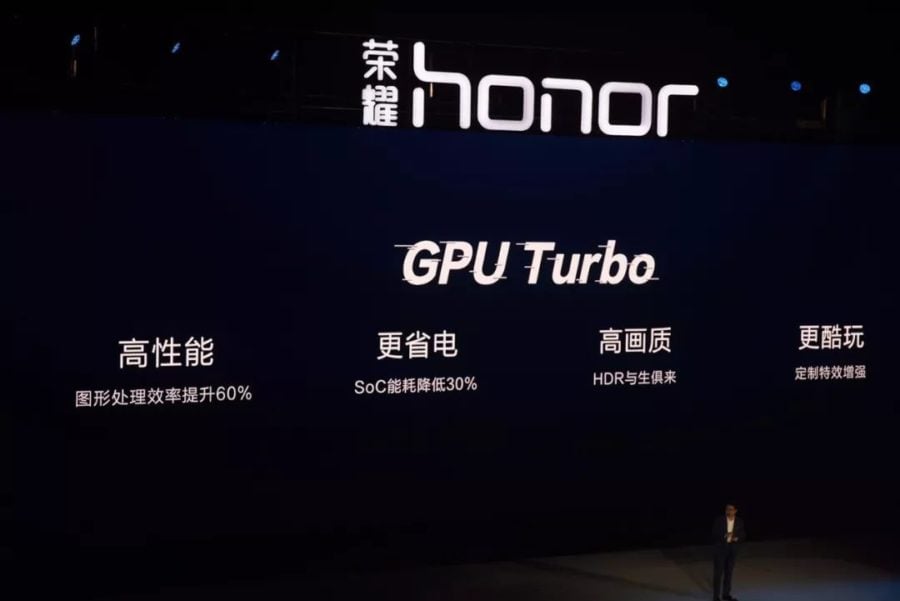
Honor GPU Turbo

Read More: Huawei Nova 3 and Nova 3i to debut on July 26

GPU Turbo technology was unveiled on the day when Huawei had announced Honor Play and Honor 9i smartphones in June. It is a hardware-software technology for accelerating the performance of the GPU of a smartphone. Huawei claims that the GPU Turbo technology can enhance the performance of GPU by 60 percent and at the same time it reduces its power consumption by 30 percent. It can also improve the performance AR, VR and EMUI user experience. A recent report has revealed that the Huawei MediaPad M5 is the first tablet from the company to receive GPU Turbo technology. The tablet is expected to receive the vital update in this month.

The above list does not include Honor phones. However, a recent report had revealed that some of the Honor branded smartphones will be also updated with GPU Turbo. Honor 10, Honor 9 Lite, Honor V10 and Honor 7X users located in Europe, Russia, Asia Pacific, India and Middle East will be treated with GPU Turbo update.

Some of the recently unveiled Honor phones that come with GPU Turbo technology are Honor Play and Honor 10 GT. Huawei also plans to launch a GPU Turbo optimized gaming smartphone later this year.

Xiaomi confirms two Android One smartphone launch on July 24, Mi A2 and A2 Lite expected

Last week, Xiaomi sent out media invites for the global launch event that the company scheduled on 24th July in Madrid, Spain. Yesterday, Xiaomi teased the launch of Mi A2 smartphone that is the successor of Mi A1.

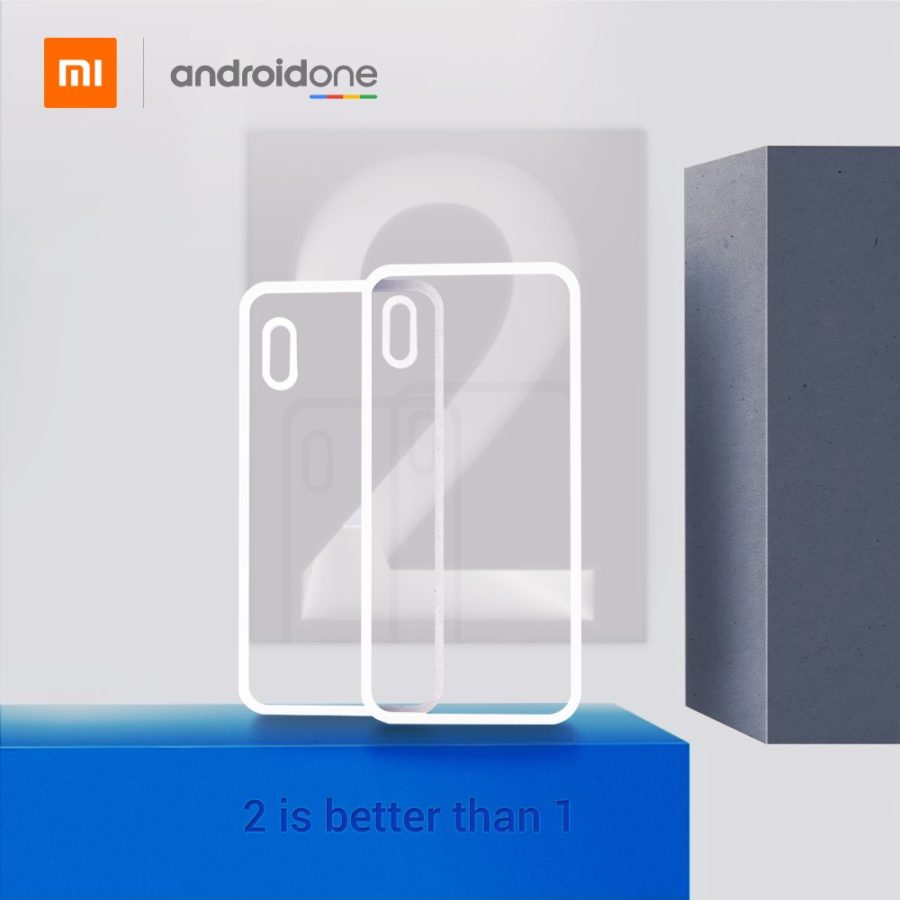
Now, Xiaomi has confirmed that the company will be launching two Android One smartphones at Spain launch event. While the company has not revealed the name, the two smartphones in question are the Mi A2 and Mi A2 Lite. Teasing these two devices, Xiaomi tweeted “We are giving you ALL not 1 but 2 smartphones on July 24th! Any guesses?”

Xiaomi Mi A2 / A2 Lite Launch Teaser

Ahead of the official launch on 24th July, the Xiaomi Mi A2 Lite has already been listed on AliExpress and is available for purchase at $190 for 3GB RAM model and $210 for the 4GB RAM variant.

According to the previous leaks, the Mi A2 is expected to feature a 5.99-inch full-screen display with Full HD+ resolution of 2160 x 1080 pixels. It is said to be powered by Qualcomm’s Snapdragon 660 processor and is expected to come in multiple variants based on the memory configuaration, including 4GB RAM + 32GB storage, 4GB RAM + 64GB storage, 4GB RAM + 128GB storage, and 6GB RAM + 128GB internal storage.

The device also comes with a dual camera setup on the back, boasting a 12MP + 20MP sensors. On the front side, reports indicate that it will feature a 20MP snapper. The Mi A2 lacks the 3.5mm headphone jack and will be fuelled by a a 3,010mAh battery with Quick Charge 3.0 fast charging support.

On the other hand, the Mi A2 Lite variant is expected to have 5.84-inch noteched display and will be powered by Snapdragon 625 SoC. In terms of photography, it is said to feature 12MP + 5MP sensors on the back and a 5MP front-facing camera.

Read More: Xiaomi’s flagship smartphone Mi 8 no longer has stocking issues: flash sales are longer now

Being a part of Android One, both device will be running on stock Android 8.1 Oreo operating system out of the box. To know the official pricing and availability details, we’ll have to wait for the official launch of the Mi A2 models which is scheduled to launch in China on 19th July.

(Source)

Xiaomi resumes Mi A1 Android 8.1 update, includes July’s security patch

Xiaomi has resumed the roll-out of Android 8.1 Oreo for the Mi A1. The update first began rolling out a few weeks ago but had a bug that wiped away users’ SMS. This caused the update to be suspended.

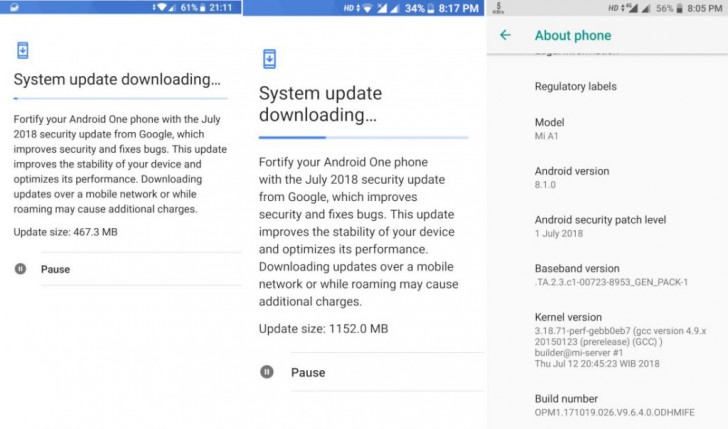
Mi A1 Android 8.1 Oreo update

The new update not only brings Android 8.1 Oreo but also comes with July’s security patch, unlike the first one that came with June’s security patch. The update comes in two sizes – 467.3MB for those who didn’t get the first update and 1152MB for those who received the first update with the SMS bug.

The update will roll out over the next few days to all users. So far, there has been no report of any bugs, so you can go ahead and install when you receive it.

READ MORE: Xiaomi Redmi Note 5 arrives in South Korea through leading carriers

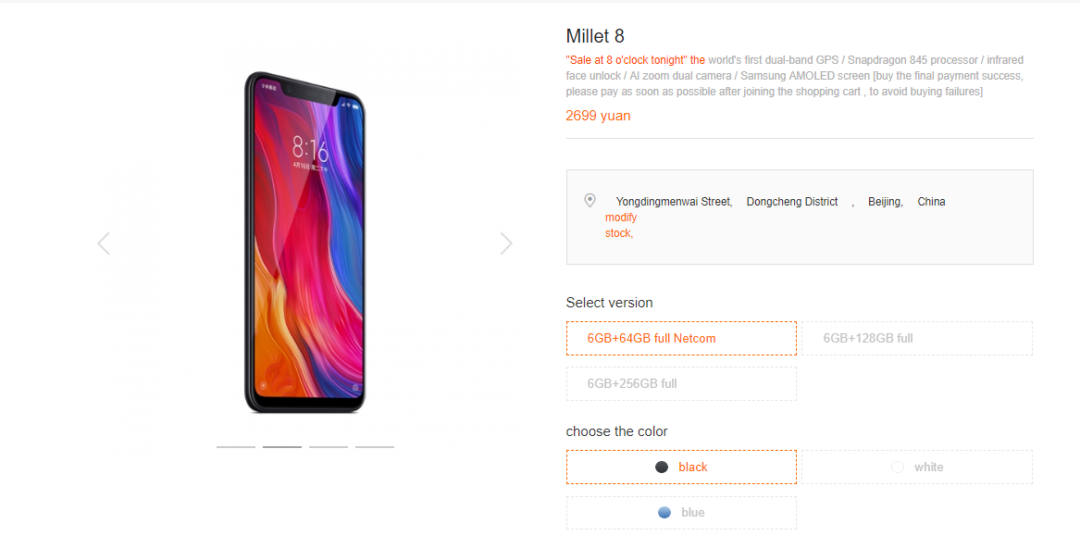
Xiaomi Mi 8 no longer has stocking issues: flash sales are longer now

Xiaomi has always employed the use of flash sales for most of its new devices. The reason for this is usually due to its limited stock. The same method is being used for its latest flagship, the Mi 8. However, things seem to have improved since it went on sale over a month ago.

Earlier today, Xiaomi kicked off another flash sale for the Mi 8 but it was out of stock about 2 hours later. Unlike before where buyers had to wait for days before the next flash sale, Xiaomi has announced that the next flash sale will be later tonight – 8 o’clock local time to be specific.

The short interval between both flash sales must mean supply has improved. So if you didn’t get to grab a unit this morning, you should look forward to the next sale tonight.

Mi 8 Flash Sale

The Xiaomi Mi 8 succeeds the Mi 6 from last year. Rather than calling it the Mi 7, Xiaomi decided to go with Mi 8 since this year also marks its 8th year anniversary.

The Mi 8 has a 6.21-inch AMOLED display with a 2248 x 1080 resolution and an 18.7:9 aspect ratio. It is powered by a Snapdragon 845 processor, has 6GB of RAM and 64GB/128GB/256GB of storage.

READ MORE: Xiaomi Mi Max 3 teaser video reveals front design and battery prowess

Vivo Y71i with 6-inch FullView display and 2GB RAM launched in India

A couple of months ago, Vivo had silently launched Vivo Y71 in India, adding another device to the company’s list of Y-series smartphones. Now, the Chinese firm has launched Vivo Y71i, a cheaper model of the Y71 which comes with waterdowned specifications.

Vivo Y71i

Just like the standard model, the Vivo Y71i also comes with a 6-inch FullView HD+ display bearing a screen resolution of 1,440 x 720 pixels and 18:9 aspect ratio. Under the hood, the device is powered by Qualcomm Snapdragon 425 octa-core processor.

In terms of memory, the smartphone packs 2GB RAM and 16GB of internal storage. There’s also a microSD card slot, which enables users to further expand the phone’s storage capacity. There’s an 8-megapixel rear camera and a 5-megapixel front-facing snapper for taking selfies and video calling.

Connectivity options on the device include Dual SIM, 4G LTE, Wi-Fi 802.11 b/g/n, Bluetooth, and GPS. The smartphone is running Android 8.1 Oreo operating system out of the box with the company’s own FunTouch OS 4.0 custom interface on top.

The smartphone has ditched the fingerprint sensor and is relying on the Face Unlock feature for security which the company calls Face Access. The device is fuelled by a 3,360mAh battery, which should be enough to last an entire day of usage.

Read More: Vivo NEX with pop-up front camera to go on pre-order in India from July 19

The Vivo Y71i will soon be available for purchase in India through various brick-and-mortar stores across the country. The smartphone is priced at Rs. 8,990, which roughly converts to $131. For comparision, the Vivo Y71 was launched in India for Rs. 10,990, roughly $169.

Vivo NEX going on pre-order in India from July 19

Vivo NEX S is slowly making its way to new countries in the Asian market. Now, the launch date in India has been revealed. According to the official online store of the company and Amazon India, the handset will be officially up for pre-orders starting from July 19. On Amazon India, there is also a sweet promotion to grab it. If you claim an e-gift card by July 17 and pre-order the handset in the period between July 19 and July 25, you can get INR 5,000 off, no cost EMI for 12 months at max, a free screen replacement in case it cracks and even a data offer from the known Indian carrier Jio.

Instead, if you order Vivo NEX S from the official store, you will get up to INR 3,500 in free accessories. Unfortunately, the Chinese company still did not disclose the price tag of the handset once it will go on sale. According to the latest reports, the price will start from INR 48,990 which roughly translates into $715 or €610. The device is expected to be priced higher than in China. While we wait for July 19, it is worth reminding you of the main specs of this phone.


RELATED: Vivo NEX S is a very resistant phone (including pop-up camera) according to the first endurance test


The Vivo NEX S sports a design with a glass backplate and an aluminum frame. It has a borderless display with an on-screen fingerprint reader and a size of 6.59 inches, showing images at a Full HD+ resolution of 1080 x 2316 pixels. On the hardware side, it boasts an octa-core Snapdragon 845 chipset by Qualcomm with a max clock frequency of 2.8 GHz, 8 GB of RAM and 128 or 256 GB of internal storage not expandable. Its main camera setup is composed of two sensors with 12 and 5 MP resolutions, f/1.8 and f/2.4 apertures. The front snapper is a motorized pop-up selfie camera with an 8 MP resolution and a f/2.0 aperture.

(via)

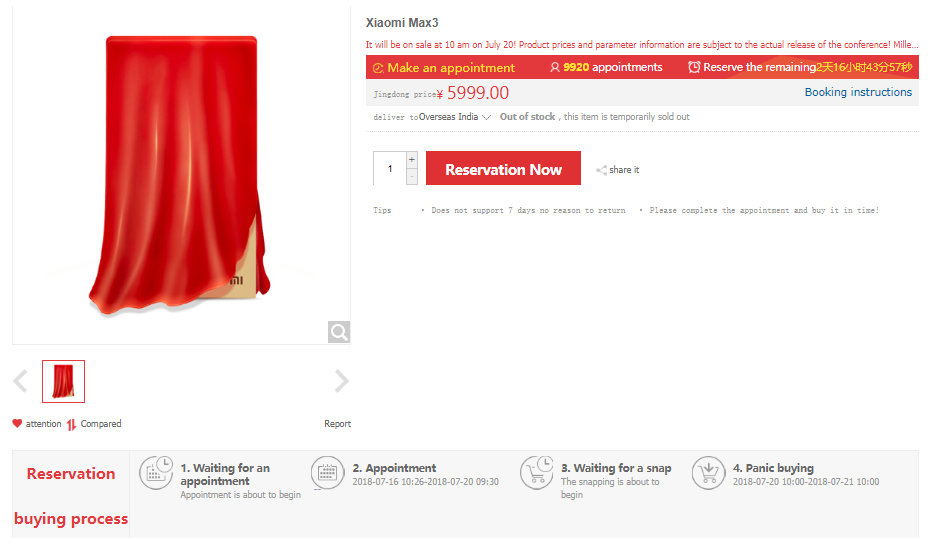
Xiaomi Mi Max 3 appears with key specs on JD, release date revealed

Xiaomi Mi Max 3 that is slated to debut on July 19 is now listed on Jingdong Mall. The retailer site from China has not revealed the pricing of the phone, but it is now receiving its reservations. The listing also contains some of the key specs of the smartphone.

According to the listing of Mi Max 3 on JD, the last date to reserve it is July 19. It will begin the sales of the smartphone from July 20. The listing has revealed some information on its display, battery and processor.

iaomi Mi Max 3 JD Listing

In the recent teasers of Mi Max 3 too, the company has been mainly highlighting its large-sized display and battery. There is no official information yet on the processor that will be powering the upcoming Xiaomi phablet.


Some rumors have claimed that the Snapdragon 710 SoC will be present under the hood of the device. The appearance of Mi Max 3 on TENAA and some of its recently spotted leaked images have revealed that it will be powered by an octa-core processor that works at 1.8 GHz. Hence, it is speculated to arrive with Snapdragon 636 chipset that allows the Redmi 5 Pro phone that was released in India in February this year. The appearance of Mi Max 3 on Jingdong Mall has revealed that it features Snapdragon 636 SoC.

Also Read: Xiaomi Mi Max 3 video teaser reveals it real skin

Few hours ago, Xiaomi CEO Lei Jun had shared the official renders of the upcoming Mi Max 3 smartphone. The handset is expected to arrive in colors like Black, Gold and Blue. Through Weibo post that had carried the renders of the smartphone, Jun confirmed that the phablet is equipped with an 18:9 aspect ratio screen that produces Full HD+ resolution. He also mentioned that the smartphone is packed with a mammoth battery.

As far as other specs are concerned, the Mi Max 3 is expected to feature the same 12-megapixel + 5-megapixel dual rear camera system that is available on the Redmi Note 5 Pro. For snapping selfies, it will be arriving with a front-facing camera of 8-megapixel. The handset is expected to arrive in RAM variants such as 3 GB, 4 GB and 6 GB and storage models like 32 GB, 64 GB and 128 GB.

(source)

Giveaway – Win a BlitzWolf Wireless Fast Charger

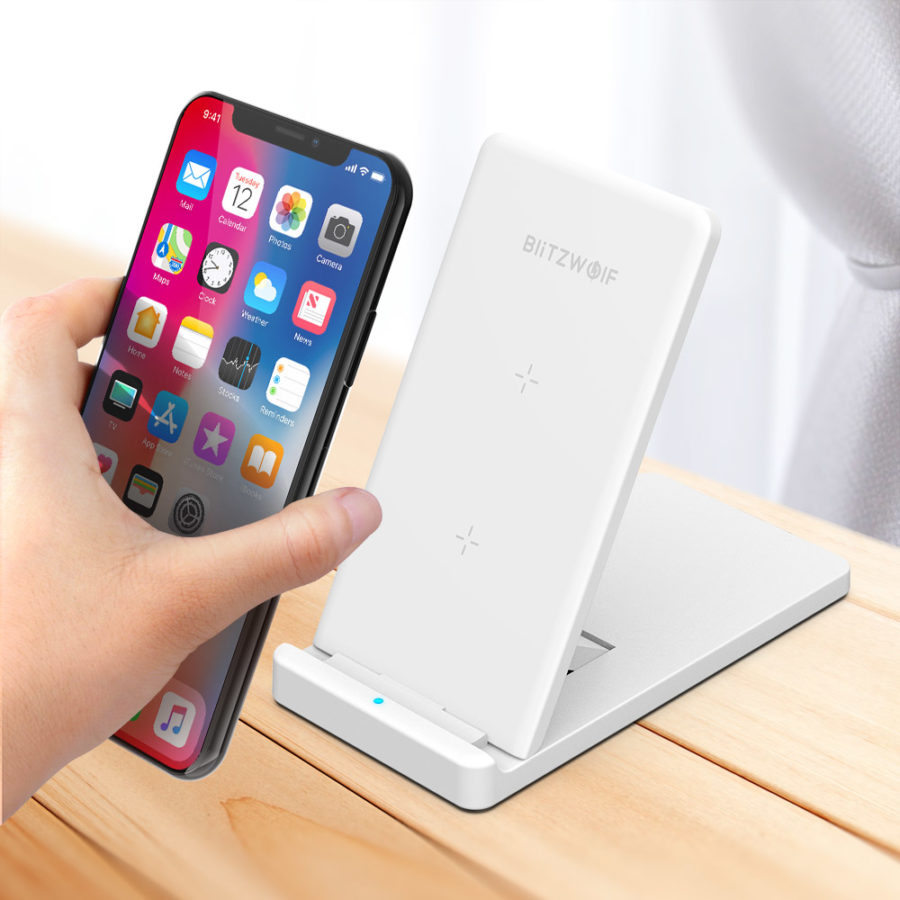
Gizmochina along with Banggood is conducting 1 unit BlitzWolf BW-FWC2 Wireless Fast Charger as giveaway gift to a lucky reader. Like always, you just have to follow the steps mentioned on the Gleam widget to get a chance to win this amazing gift.

BlitzWolf BW-FWC2 Wireless Fast Charger Features:
Compatible Qi Standard:
Biltzwolf BW-FWC2 is compatible with any Qi-enabled device and supports wireless inductive charging. Charge your device by simply placing it on the charger.

Support 5W/7.5W/10W Wireless Charging:
Automatically matches the charging mode required by the device. A Quick charge enable charger is required to enable support for 7.5W and 10W charging.

How to entry this giveaway? Just follow these steps via Gleam widget:

  1. Visit BlitzWolf BW-FWC2 Wireless Fast Charger on Banggood;
  2. Share this giveaway contest on Facebook, Twitter and Reddit;
  3. Download Banggood App: Banggood App;

Terms & Conditions:

1. The giveaway is an international giveaway.
2. We are not responsible for lost shipments.
3. We are not responsible for any duties, import taxes that you may incur.
4. We reserve all rights to make any changes to this giveaway.
5. The prize will be shipped in a month when the giveaway end.

Just follow the steps mentioned in the Gleam widget to participate in the giveaway.

Once again, good luck.

Giveaway – Win BlitzWolf Wireless Fast Charger

Meizu 16 with Snapdragon 845 SoC scores 291,866 in benchmark test

After announcing the Meizu 15 series smartphone, the company started working on its successor — Meizu 16 series. Recently, Meizu CEO revealed that the Meizu 16 will be launched on 26th August and is expected to be available right after the launch.

Now, ahead of the phone’s official launch next month, the benchmark score of Meizu 16 has been leaked online. The leaked image reveals that the phone scored 291,866 in a benchmark test. However, we were not able to verify the authenticity of this.

Meizu 16 AnTuTu Benchmark

The benchmark score of Meizu 16 as claimed by the leaked image is higher than the score of flagship smartphones from other Chinese manufacturers. For comparision, Xiaomi’s Black Shark Gaming Smartphone scored 289,959; the Vivo NEX scored 284,227; the OnePlus 6’s score stands at 282,275; and the score of Xiaomi Mi 8 is 273,221.

Meizu is expected to launch two smartphone in its Meizu 16 series and even though both device will have narrow bezels and high screen-to-body ratio, the smartphones will not feature a notched display as is the trend nowadays.

Under the hood, both Meizu 16 and 16 Plus will be powered by Qualcomm‘s Snapdragon 845 octa-core processor, clocked at a maximum frequency of 2.8GHz. This is the same chipset that powers most of the flagship smartphone launched this year.

The company’s CEO has also revealed that there’ll be an 8GB RAM + 128GB internal storage model, which is likely to be the high-end variant of the Meizu 16. The smartphone is also confirmed to come with an under-display fingerprint sensor.

It will also come with dual rear camera setup and support for wireless charing. However, there’ll be another model named Meizu X8 which will be powered by Snapdragon 710 processor and won’t feature the in-display fingerprint sensor.

Read More: Design Schematics of Two New Meizu Phones Make The Round Online

Recently, Meizu CEO Jack Wong had said that the most powerful version of the upcoming flagship smartphones will not cost more than 4000 Yuan, which roughly translates to $514 while the Meizu X8 is said to cost between 1,500-2,000 Yuan ($226-300). We’ll know for sure next month when the devices get launched.