Advertisement

Noise Air Buds Pro 6 Launched with 49dB ANC, LHDC, 43h playtime & 12.4mm drivers

Indian audio brand Noise has unveiled its latest TWS offering — the Noise Air Buds Pro 6, a feature-packed addition to its growing lineup of affordable wireless earbuds. As the direct successor to the Air Buds 6 launched earlier this year, the new Pro 6 version significantly raises the bar in terms of audio quality, smart features, and noise control, all while staying within the budget segment.

Noise Air Buds Pro 6

Noise Air Buds Pro 6 Specifications

At the heart of the Air Buds Pro 6 are 12.4mm Titanium + PEEK drivers, delivering punchy bass, rich mids, and improved durability. The inclusion of Hybrid Active Noise Cancellation (ANC) that suppresses up to 49dB of ambient sound marks a significant improvement over the 32dB ANC in the previous model, making these ideal for noisy environments like public transport or bustling streets.

In terms of sound fidelity, the Air Buds Pro 6 goes a step further with support for LHDC codec, enabling 24-bit/96kHz high-resolution audio at up to 990 kbps—nearly three times higher than traditional SBC codecs. This translates into richer, more detailed sound with better depth and spatial awareness. The addition of spatial audio enhances the immersive quality, especially while gaming or watching movies.

Call quality has also been improved thanks to a Quad Mic Environmental Noise Cancellation (ENC) setup, which filters out background noise to ensure voice clarity during calls. Like the Air Buds 6, the new model is also expected to support customizable settings via the Noise BudsLink app, enabling users to adjust EQ levels, remap touch controls, switch between ANC modes, and use voice prompts such as “Hey headphones, ANC on” for hands-free operation.

Design-wise, the earbuds feature a sleek metalised paint finish and an in-ear style that’s complemented by IPX5 water resistance, making them suitable for both workouts and rainy day commutes. They also support Low Latency Mode (50ms) for gamers, Dual Device Pairing, Hyper Sync, Google Fast Pair, and In-Ear Detection for auto-play/pause functionality.

Battery performance sees a boost as well. The earbuds offer up to 7 hours of playback on a single charge and up to 43 hours with the case—bringing the total to an impressive 50 hours. Thanks to InstaCharge, just 10 minutes of charging delivers up to 150 minutes of playtime, making them a great option for quick power-ups before heading out.

Please Note: When you buy something using the links in our articles, we may earn a small commission at no cost to you.

Pricing and Availability

The Noise Air Buds Pro 6 comes in stylish colors like Slate Black, Nimbus Grey, Petal Pink, and the newly introduced Slate Grey. Priced at Rs. 3,499 ($41), it is now available for pre-order on the Noise website ahead of its official sale on April 9 via Noise and Amazon.in.

For more daily updates, please visit our News Section.

Stay ahead in tech! Join our Telegram community and sign up for our daily newsletter of top stories! 💡

(Via)

Xiaomi QLED TV X Pro Indian launch set for April 10; Key features teased

Xiaomi is launching its QLED TV X Pro Series in India on April 10. This new TV range is designed for users who want a premium entertainment experience at home. Xiaomi has already teased a bunch of features that will be onboard these TVs.

The TVs come with MagiQ of Colors technology, which gives bright, lifelike colors and clear detail so that every scene looks just like the creators intended. The Cinematic Clarity feature improves resolution for sharp visuals, even during fast-moving scenes.

For sound, the TVs offer MagiQ Tailored to your Ears, which adjusts audio based on what you’re watching. This works with Hear the Difference, which adds strong bass and clear sound for a theater-like feel.

Gamers get Game Booster Mode, which improves refresh rates for smooth, lag-free play. The TVs also support Limitless Entertainment, offering large internal storage to stream shows, watch movies, or store games without running out of space.

These TVs run on Google’s smart TV system. The content-first interface gives personalized suggestions, and users can control the TV using voice commands with “OK Google.”

Xiaomi hasn’t announced the exact price or full specs yet, but the X Pro Series is aimed at people looking for high-end features. The TVs will be available for purchase on mi.com, Flipkart, and offline retail stores. Pricing and other details will be announced next week.

For more daily updates, please visit our News Section.

Tech enthusiast? Get the latest news first! Follow our Telegram channel and subscribe to our free newsletter for your daily tech fix!

(Source)

Snapdragon 8s Gen 4 vs Snapdragon 8s Gen 3: What’s Actually Different?

Qualcomm’s latest upper-midrange silicon, the Snapdragon 8s Gen 4, is here, and it sits just under the newly introduced “Elite” tier in the company’s freshly layered mobile chip hierarchy. 

As expected, the Gen 4 chip doesn’t feature Qualcomm’s in-house Oryon CPU cores. That distinction is currently reserved for the Snapdragon 8 Elite. Instead, the 8s Gen 4 continues to rely on standard ARM designs, much like its predecessor, the Snapdragon 8s Gen 3.

But branding aside, the 8s Gen 4 does bring several platform-level changes that are worth noting. Here’s how it stacks up against the 8s Gen 3. 

1. CPU and GPU

The 8s Gen 4 sticks with TMSC’s 4nm node and ARM’s Cortex-CPU and Adreno GPU just like the Gen 3. But there are notable changes under the hood.

The new chip features an octa-core setup led by a Cortex-X4 prime core clocked at 3.2GHz. It’s backed by seven Cortex-A720 cores—three running at 3.0GHz, two at 2.80GHz, and two at 2.02GHz. In contrast, the 8s Gen 3 has a Cortex-X4 at 3.0GHz, four Cortex-A720 cores at 2.8GHz, and three Cortex-A520 cores at 2.0GHz.

As you can notice, the Cortex-A520 cores that handled efficiency in previous generations are nowhere to be found. They are replaced by a full lineup of A720 cores. Paired with a higher-clocked prime core, this delivers 31% better CPU performance than its predecessor while using 39% less power. 

On the GPU side, both generations use Adreno, but Qualcomm hasn’t revealed version numbers yet. But it’s a big upgrade as the Adreno GPU here has sliced architecture like the one that debuted on 8 Elite. As a result, Qualcomm is claiming it can deliver a 49% graphical performance boost over the 8s Gen 3 GPU.  

You also get support for 8 Elite’s gaming features like Game Super Resolution 2.0 for 4k upscaling and global illumination for hardware-accelerated ray tracing. Gen 3 also has ray tracing but the Frame Motion Engine 2.0 can only double the frame rate from 60fps to 120fps. 

2. AI and On-Device Intelligence

Qualcomm has also made some notables changes in NPU on 8s Gen 4. To say the least, its Qualcomm AI Engine is said to improve AI performance by 44%. It has 2x larger shared memory pool that speeds up the user’s interaction with LLMs or LVMs.

It also introduces a dual-core Sensing Hub with always-sensing camera support, which powers use cases like face unlock and QR scanning — similar to the 8s Gen 3.

However, Gen 4’s ISP can now segment up to 250 layers in real-time, a big jump from 12 layers on Gen 3. This could have practical benefits in photo editing, object recognition, and live video processing.

3. Camera and Imaging

The Snapdragon 8s Gen 4 retains the Triple 18-bit Cognitive ISP from its predecessor. But it now supports photo capture up to 320MP versus 200MP ceiling on Gen 3. 

It also doubles 1080p slow-motion recording from 240fps to 480fps and adds a few AI-heavy camera features—like Night Vision 2.0 and real-time sky/skin tone correction for photos and videos.

4. Connectivity

This is one area where Gen 3 retains an edge on paper. It uses the Snapdragon X70 modem with up to 6.5Gbps peak download speeds, while the Gen 4’s integrated 5G modem tops out at 4.2Gbps. The Gen 3 also supports mmWave configurations like 8-carrier aggregation and 2×2 MIMO, making it technically more versatile for high-band 5G use.

Wi-Fi is tied — both chips support Wi-Fi 7 at 5.8Gbps via Qualcomm’s FastConnect system. However, Gen 4 uses Bluetooth 6.0 while Gen 3 still runs on Bluetooth 5.4. The bump to Bluetooth 6.0 may bring better audio stability and lower power usage, though real-world benefits remain to be seen.

5. Audio, Display, and Storage

Both platforms support Snapdragon Sound and spatial audio, including aptX Adaptive and Lossless. But Gen 4 also includes Qualcomm XPAN for broader audio coverage using Wi-Fi. 

There are no significant changes in terms of display. Both platforms support WQHD+ displays at 144Hz and external displays up to 4K 60Hz. Storage remains UFS 4.0, and memory is LPDDR5x clocked at 4800MHz.

6. Bottom Line

The Snapdragon 8s Gen 4 feels like a targeted refinement of its predecessor rather than a generational leap. Its value lies in its more capable AI processing, incremental gaming enhancements, and slightly upgraded connectivity. 

But it’s not all forward progress. The chip trades off-peak modem performance compared to the 8s Gen 3, which could matter for users focused on raw network speeds. Still, the 8s Gen 4 is a strong contender for premium Android phones that want advanced features without chasing benchmarks.

7. Qualcomm Snapdragon 8s Gen 4 vs 8s Gen 3

Snapdragon 8s Gen 4Snapdragon 8s Gen 3
Architecture4nm, TSMC4nm, TSMC
Core configuration– 1x Cortex-X4 Prime @ 3.2GHz
– 3x Cortex-A720 @ 3.0GHz
– 2x Cortex-A720 @ 2.80GHz
– 2x Cortex-A720 @ 2.02GHz
– 1x Cortex-X4 Prime @ 3.0GHz
– 4x Cortex-A720 @ 2.8GHz
– 3x Cortex-A520 @ 2.0GHz
GPUAdreno 825Adreno 735
NPUQualcomm Hexagon AI EngineQualcomm Hexagon AI Engine
Memory typeLPDDR5XLPDDR5X
Modem– Snapdragon X75 5G modem
– Up to 4.2 Gbps Peak Download
– Up to 3.5 Gbps Peak Upload
– Qualcomm X70 5G
– Up to 6.5 Gbps Peak Download
– Up to 3.5 Gbps Peak Upload
Connectivity– Wi-Fi 7
– Bluetooth 6.0
– UWB
– Wi-Fi 7
– Bluetooth 5.4
ISPSpectra 18-bit Triple AI ISPSpectra 18-bit Triple Cognitive ISP

Tech enthusiast? Get the latest news first! Follow our Telegram channel and subscribe to our free newsletter for your daily tech fix!

For more daily updates, please visit our News Section.

Motorola Razr 60, Razr 60 Ultra renders reveal complete design designs and color options

Motorola has been working on its next foldable lineup, the Razr 60 series, for a while. In the latest news, renders of the Razr 60 and Razr 60 Ultra have surfaced online, giving us a peek at their designs and vibrant colors.

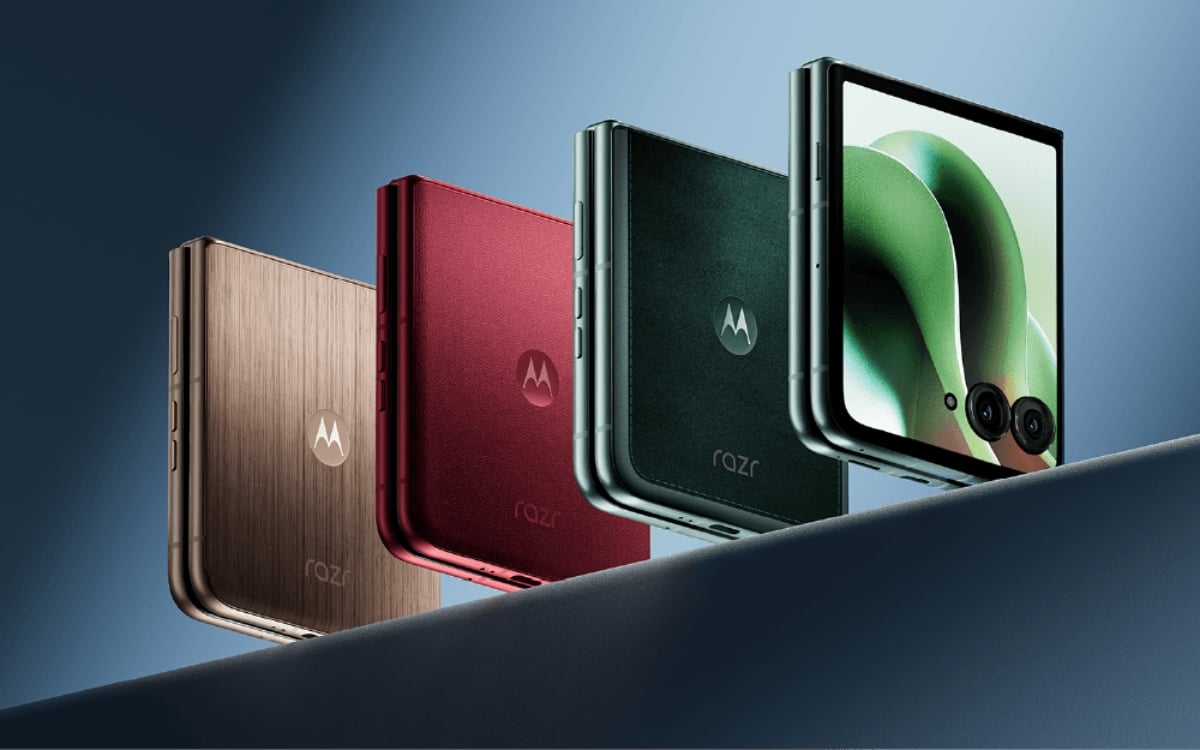
Motorola Razr 60 Ultra leaked promo material showcasing color options

Fresh off TENAA certification listing and leaked promo materials confirm the Snapdragon 8 Elite chipset for the ultra model. Overall, these two clamshell contenders are shaping up for a 2025 launch—likely as the Razr 2025 and Razr+ 2025 in the US.

From cutout on the cover screen to the rounded sides—overall design remains similar

The Razr 60 Ultra sports a familiar yet refined look, with its 6.9-inch AMOLED foldable screen and a cover display wrapping around dual cameras, echoing its predecessor’s style. New renders reveal it from all angles, highlighting a volume rocker and power key (doubling as a fingerprint scanner) on the right, plus a mysterious left-side button—possibly for Moto AI or a customizable shortcut. It’s decked out in bold hues like Dark Green, Red, and Mocha, with up to 18GB RAM, 1TB storage (and a 2TB option), and a beefy 4,500mAh battery.

The vanilla Razr 60, meanwhile, opts for a smaller cover screen (like last year), and comes in Blue, Mint Green, and White options. It’s powered by the mid-range Dimensity 7400X, still packing 18GB RAM and 1TB storage, with the same 4,500 mAh battery, up from 4200 mAh of the Razr 50.

While the Ultra model flexes flagship specifications, the Razr 60 balances performance and design. Motorola’s keeping the launch date under wraps, but these leaks—showing off colors and complete design—suggest an announcement could be imminent, possibly aligning with past June unveilings. For foldable fans, the Razr 60 duo promises power, style, and a touch of mystery with that new button.

Tech enthusiast? Get the latest news first! Follow our Telegram channel and subscribe to our free newsletter for your daily tech fix!

For more daily updates, please visit our News Section.

(Source)

Galaxy A55 finally joins One UI 7.0 beta as Samsung’s first mid-range tester

Samsung has officially welcomed the Galaxy A55 into the One UI 7.0 Beta Program, marking it as the first mid-range Galaxy phone to taste Android 15 and One UI 7.0. The South Korean giant initially promised to roll out the beta update for this mid-range within March. While it failed to keep that promise, it’s good to see the update is indeed rolling out within a couple of days of the deadline. Not to mention, this update brings a fresh UI and new features to A55 users eager to test the waters.

Samsung Galaxy A55
Samsung Galaxy A55

The program’s debut is live in South Korea

In South Korea, Galaxy A55 owners can now sign up to beta-test One UI 7.0. To jump in, users need the Samsung Members app—log in with the same Samsung Account tied to the phone, tap the One UI 7.0 Beta Program banner on the app’s homepage, and enroll.

Once registered, head to Settings > Software Update > Download and Install to grab the update. It’s a straightforward process promising a sleek design overhaul and functionality boosts, though exact feature highlights remain under wraps for now.

South Korea leads the charge, but rumors suggest the beta could hit markets like India, the UK, and the US within days, broadening the testing pool. Samsung’s move to include a mid-ranger like the A55—typically a flagship perk—signals a shift toward inclusivity. After a shaky start with a delayed March promise, this beta drop is a win for A55 fans craving the latest software. Expect more regions to light up soon as Samsung fine-tunes One UI 7.0 for its mid-range offering.

The flagship models have already received the One UI 7.0 beta and most of them are expected to receive the long-awaited stable version within April. Let’s see if Samsung keeps up with the expectations regarding the stable rollouts for the flagships. Let’s see if Samsung meets expectations for the stable rollouts of its flagships.

Tech enthusiast? Get the latest news first! Follow our Telegram channel and subscribe to our free newsletter for your daily tech fix!

For more daily updates, please visit our News Section.

Lumio Vision 9 with MiniLED and Vision 7 QLED Smart TVs teased: Dolby Vision & Dolby Atmos Confirmed

Circuit House Technologies announced that they are working on the new Lumio smart TVs that are set to launch in India soon. But ahead of its release, the brand has shared teasers that reveal some of the key features and specs of the Vision 9 and Vision 7 QLED TVs. So let’s check it out.

Lumio Vision 9 & Vision 9 Teased Ahead of Launch

While the company placed an emphasis on overall performance and smoothness of these smart TVs, the display is another highlight of the Vision 9. This is the more expensive option between the two and features a Blue MiniLED backlight. This technology allows for improved picture quality, improved brightness, better contrast, and deeper blacks.

Lumio Vision 9 and Vision 7
Lumio Vision 9 and Vision 7 display tech

The screen has a peak brightness of 900 nits and uses Premium QLED tech with a dedicated quantum dot layer for enhanced color accuracy. The screen has 115 percent DCI P3 color gamut and Local Dimming support. Meanwhile, the Vision 7 skips the Mini LED tech but it still features a Blue LED backlight and can achieve 400 nits of peak brightness. It also arrives with the QLED display tech, quantum dot layer, and a 110 percent DCI P3 color gamut.

Lumio Vision 9 and Vision 7 Audio Setup
Act III: Sound

Both models feature HDR for enhanced contrast and colors along with Dolby Vision. Lumio also placed an emphasis on the audio system on these TV, with a quad 30W speaker setup that includes two full range drivers and two tweeters. The brand claims that the sound cavity is also 150 percent larger than the average smart TVs. The duo supports 24 bit audio processing with a sampling rate of 88.2KHz for better audio quality overall.

Lumio Vision 9 and Vision 7
The dedicated Music and Sports section

Other notable features include eARC (Enhanced Audio Return Channel) support, HDMI, and Bluetooth Out. Apart from Dolby Vision, the Lumio Vision 9 and Vision 7 arrives with Dolby Atmos and DGS audio. Lumio’s upcoming smart TVs run on an optimized Google TV and a proprietary TLDR feature. This is a user interface designed by the company to offer a simplified content discovery page. Along with this, the Vision series also place an emphasis on two major interests for many, which is Music and Sport.

For more daily updates, please visit our News Section.

Tech enthusiast? Get the latest news first! Follow our Telegram channel and subscribe to our free newsletter for your daily tech fix! ⚡

Xiaomi 15 Ultra or OnePlus 13: Which Should You Buy?

Xiaomi 15 Ultra and OnePlus 13 represent the pinnacle of Android innovation in 2025, each pushing boundaries in performance, design, and camera technology. With both brands aiming to dominate the ultra-premium segment, choosing between them isn’t just about specs, it’s about which device delivers better real-world value. This comparison breaks down the key differences to help you decide which flagship truly stands out.

1. Design and Display

Xiaomi 15 Ultra

Both the Xiaomi 15 Ultra and OnePlus 13 embrace premium materials, offering glass and eco-leather back options along with aluminum frames. The OnePlus 13 has a slightly slimmer build, making it easier to handle, while the Xiaomi 15 Ultra has a bolder, more substantial presence. In terms of water and dust resistance, the OnePlus 13 goes a step further with IP69 certification compared to Xiaomi’s IP68, making it more resilient in extreme environments.

When it comes to the display, both phones offer top-tier AMOLED panels with LTPO technology, 120Hz refresh rates, and support for Dolby Vision and HDR formats. However, the OnePlus 13 edges out with a slightly larger 6.82-inch screen and a record-breaking 4500 nits peak brightness, making it one of the brightest displays on any smartphone today. Xiaomi, on the other hand, delivers incredible sharpness with its 522 ppi pixel density and rich 68B color rendering.

The OnePlus 13 wins in this round due to its superior display brightness and more rugged build with IP69, making it better suited for outdoor use and harsh conditions.

Please Note: When you buy something using the links in our articles, we may earn a small commission at no cost to you.

2. Specifications 

OnePlus 13
OnePlus 13

Under the hood, both phones are powered by the cutting-edge Snapdragon 8 Gen 3 Elite chipset with identical CPU and GPU configurations, ensuring unmatched performance. They both run Android 15 and promise four major Android upgrades, with Xiaomi using HyperOS and OnePlus offering either OxygenOS or ColorOS depending on the region. While the Xiaomi 15 Ultra uses faster UFS 4.1 storage, OnePlus 13 isn’t far behind with UFS 4.0.

Battery life sees a practical tie, as both pack 6000 mAh batteries (global Xiaomi has a 5410 mAh unit). However, OnePlus has a speed advantage, offering 100W wired charging that can fully charge the device in just 36 minutes, whereas Xiaomi tops out at 90W. Conversely, Xiaomi boasts a more powerful 80W wireless charging system compared to OnePlus’s 50W.

OnePlus 13 slightly edges ahead in real-world usability thanks to quicker wired charging and lighter build, but Xiaomi’s superior wireless charging may appeal to users who prefer going cordless.

3. Camera

Xiaomi 15 Ultra
Xiaomi 15 Ultra

Xiaomi 15 Ultra sets itself apart with a formidable quad-camera setup, headlined by a massive 1.0″-type 50MP main sensor and a unique combination of two telephoto lenses, including a 200MP periscope lens offering up to 4.3x optical zoom. It also has Leica lenses, TOF 3D depth sensor, and professional video features like Dolby Vision recording at 4K/60fps, and a filter ring holder for DSLR-style shooting.

The OnePlus 13 counters with a triple 50MP camera setup, including a periscope telephoto and ultra-wide lens, along with Hasselblad color tuning. While it performs excellently and supports 8K video, the lack of a depth sensor and lower zoom range makes it less versatile than Xiaomi in creative shooting situations.

Xiaomi 15 Ultra clearly wins the camera category, offering unmatched hardware versatility and advanced features that appeal to both photography enthusiasts and videographers.

4. Pricing

Pricing is where these two devices diverge significantly. The Xiaomi 15 Ultra is priced around $1,485, while the OnePlus 13 comes in at a much more wallet-friendly $929 in the U.S. market. This $550+ difference is substantial, especially considering that both phones offer top-tier performance, similar build quality, and comparable displays.

Xiaomi justifies its price with a superior camera system, enhanced audio experience, and higher-end wireless charging. However, OnePlus gives users the same flagship chip, excellent build, and a premium display at a considerably lower cost, making it a more value-oriented choice.

Unless you’re a photography power user, the OnePlus 13 is the smarter pick for most buyers. It offers almost 90% of what Xiaomi provides at a significantly lower price.


5. Conclusion

OnePlus 13
OnePlus 13

Both phones push boundaries, but they bring unique innovations to the table. Xiaomi 15 Ultra introduces a professional-grade camera with Leica optics, a modular filter mount, and two-way satellite communication—a feature rarely seen in mainstream phones. It also includes advanced audio enhancements like Qualcomm XPAN for audiophiles.

The OnePlus 13, on the other hand, debuts “Circle to Search” with Google, has an IP69 rating for hardcore durability, and boasts the brightest screen ever on a phone at 4500 nits. It also includes a 24GB RAM variant, making it one of the most powerful multitasking phones on the market.

Xiaomi offers more unique hardware innovation, especially for camera lovers and outdoor communication needs. However, OnePlus impresses with meaningful quality-of-life features and ruggedness at a lower cost, making it better suited for the daily user.

Read More:

Infinix Note 50s 5G design, color options revealed – one of them smells amazing!

The Infinix Note 50x 5G has just gone on sale in India, and the brand has started teasing the arrival of a new Note 50 series phone. Today, the brand released an official confirmation that it will soon unveil the Note 50s 5G+. Shown below are the three color options of the device.

Infinix Note 50s 5G+ color options

Infinix Note 50s Pro+ 5G
Infinix Note 50s 5G+

The Infinix Note 50s 5G will come in metallic finish options, such as Titanium Grey and Ruby Red. The Marine Drift Blue edition is an interesting variant, as it not only features a vegan leather back but is also equipped with microencapsulation technology, which allows the back panel to emit a long-lasting fragrance.

Advertised as “Energizing Scent-Tech,” the Marine Drift Blue variant can emit a multi-layered fragrance composed of vibrant top notes of marine and lemon, elegant middle notes of lily of the valley, and sophisticated base notes of amber and vetiver. So, it not only looks good — it smells great too.

Infinix is yet to reveal the technical details of the Note 50s 5G+. However, it looks like it will be positioned higher than the Note 50x 5G, which debuted with a price tag of Rs 11,499.

For more daily updates, please visit our News Section.

Stay ahead in tech! Join our Telegram community and sign up for our daily newsletter of top stories!

Motorola Edge 60 Pro, Edge 60 Visits China’s TENAA: Design, Specs, & More Revealed

Motorola recently unveiled the Edge 60 Fusion, while the base Edge 60 was just spotted in a fresh leak earlier today (4th April 2025). But we finally have more official details after the Edge 60 Pro and Edge 60 got certified on a Chinese certification platform.

Motorola Edge 60 Pro, Edge 60 Full Specs Revealed

The two smartphones were spotted on China’s TENAA database carrying the XT2505-4 model number (Edge 60) and XT2507-5 (Edge 60 Pro). The TENAA certification typically lists the images of the devices as well as most of their key specifications. So ahead of the launch, we have more concrete information about both these devices. The Edge 60 just surfaced in a leak that revealed its color options and design, and this listing confirms the Blue color option.

Motorola Edge 60 Pro

Meanwhile, the Edge 60 Pro can be seen with a similar design but in a Gray variant. Looking at the TENAA database, both models sport a 6.67-inch curved OLED display with a 1.5K resolution and an in display fingerprint scanner. The Edge 60 is equipped with an unknown octa core processor with a 2.5GHz clock speed, while the Edge 60 Pro features the MediaTek Dimensity 8350 SoC (with a 3.35GHz clock speed). The former arrives with 6GB, 8GB, 12GB, and 16 GB of RAM, while the latter offers 8GB, 12GB, and 16GB configurations.

For storage, the Edge 60 is available in 128GB, 256GB, 512GB, and 1TB options and the Edge 60 Pro offers the same four memory capacity. A sizeable 5,500mAh battery pack powers the base model, which is expected to offer 68W wired fast charging. On the other hand, the more premium Pro model packs a larger 6,000mAh cell with a faster 90W wired fast charging support. For optics, the rear has a 50MP + 10MP + 50MP triple camera setup with 3x optical zoom on the Edge 60, with the front packing a 50MP selfie shooter.

Motorola Edge 60
Motorola Edge 60

The Edge 60 Pro has a 32MP front facing camera with the rear featuring a 50MP + 13MP and a third sensor that could be a telephoto shooter with 3x optical zoom. This could be a telephoto or periscope telephoto camera. Motorola’s Edge 60 will launch with a 7.95mm body and weighs 180.4 grams, but the Edge 60 Pro has a slimmer 7.25mm profile that weighs 188 grams. One notable aspect that was revealed on the TENAA listing was an unknown button on the Edge 60 Pro. This could be a dedicated camera button or might serve a function related to AI features.

For more daily updates, please visit our News Section.

Don’t miss a thing! Join our Telegram community for instant updates and grab our free daily newsletter for the best tech stories!

Nothing Phone (3a) Pro vs. Samsung Galaxy A36: Which One is Worth Your Money?

Choosing between the Nothing Phone (3a) Pro and the Samsung Galaxy A36 is no easy task. Both offer impressive mid-range specs, but they cater to different priorities. Nothing focuses on innovation with its Glyph interface and high-end display, while Samsung delivers long-term software support and durability. 

With similar pricing, the decision comes down to design, performance, camera versatility, and unique features. This comparison breaks down their key differences, helping you decide which phone best suits your needs. Whether you value nocutting-edge aesthetics or a reliable long-term investment, let’s see which one comes out on top.

1. Design and Display

Nothing Phone 3a Pro
Nothing Phone (3a) Pro

Both phones offer sleek aesthetics, but their design philosophies differ significantly. The Nothing Phone (3a) Pro sticks with its transparent rear design and the signature Glyph interface, a standout in a sea of similar slabs. The three LED light strips not only serve as notification alerts but also function as a fill light for the camera and add a futuristic touch. On the other hand, the Galaxy A36 has a more premium yet conventional look with Gorilla Glass Victus+ on both sides, a slimmer profile, and higher ingress protection (IP67 vs IP64), making it better suited for durability.

In terms of display, the 3a Pro brings a larger AMOLED panel with 1B colors, HDR10+, and an impressive 3000 nits peak brightness. While the A36’s Super AMOLED display is also sharp and responsive with 1200 nits HBM and 1900 nits peak, the 3a Pro wins for sheer brightness and HDR capability.

The Nothing Phone (3a) Pro takes the edge for innovation and display quality. The Glyph lighting and ultra-bright HDR screen give it a unique and functional flair missing from the Galaxy A36.

Please Note: When you buy something using the links in our articles, we may earn a small commission at no cost to you.

2. Specifications 

Galaxy A36
Galaxy A36

Under the hood, the Nothing Phone (3a) Pro is powered by the Snapdragon 7s Gen 3, while the Galaxy A36 runs on the Snapdragon 6 Gen 3. Both are built on the 4nm process, but the 7s Gen 3 has more efficient CPU cores and better GPU clock speed, giving it an edge in multitasking and gaming. RAM and storage options are generous on both, but Nothing offers a higher base RAM at 8GB, while Samsung starts at 6GB. Both phones lack expandable storage.

Battery capacity is equal at 5000 mAh, but charging speeds slightly differ. The 3a Pro charges at 50W and reaches 50% in 19 minutes, while the A36 charges at 45W, hitting 66% in 30 minutes. The difference in real-world charging is minimal, but Nothing pulls ahead in both peak charging wattage and faster 0–50% times.

In terms of raw performance and charging speed, the Nothing Phone (3a) Pro has the advantage. Its faster chip and better base memory configuration make it a more capable daily performer, especially for multitaskers or casual gamers.

3. Camera

Nothing Phone 3a Pro
Nothing Phone (3a) Pro

The Nothing Phone (3a) Pro sports a versatile triple camera setup with dual 50MP sensors (main and telephoto) and an 8MP ultrawide, delivering optical zoom, OIS on both key lenses and high-resolution video capture. Samsung’s A36 features a decent 50MP main sensor with OIS, an 8MP ultrawide, and a 5MP macro lens. While it performs well in standard scenarios, it lacks the telephoto versatility and dual stabilization found in the 3a Pro.

Selfie-wise, the 3a Pro features a 50MP front shooter capable of 4K video, compared to a 12MP sensor on the A36. While Samsung’s front camera supports 10-bit HDR, Nothing’s higher resolution is more impactful for sharpness and detail.

The Nothing Phone (3a) Pro clearly offers a more versatile and higher-end camera experience. The inclusion of a stabilized telephoto lens and a superior selfie camera makes it a better pick for photography enthusiasts or social media creators.

4. Pricing

The Galaxy A36 is the more affordable option at approximately $369.99, compared to the Nothing Phone (3a) Pro’s approximately $449. Both phones offer strong value, but Samsung’s promise of six major Android upgrades makes it a compelling choice for long-term users. In contrast, Nothing guarantees only three major updates, which may feel limiting for those planning to keep their device for many years.

While the price difference is around $80, the extra cost of the Nothing Phone (3a) Pro brings better performance, a more premium display, and a superior camera setup. However, Samsung provides better software longevity and slightly faster mid-range charging speeds.

The Galaxy A36 wins on affordability and long-term support, making it a great option for budget-conscious buyers. But if you’re after better hardware, display brightness, and camera features, the Nothing Phone (3a) Pro justifies its higher price.


5. Conclusion

Galaxy A36
Galaxy A36

The standout feature of the Nothing Phone (3a) Pro is undoubtedly the Glyph Interface, which isn’t just for show, it functions as a notification alert system and a camera fill light. It also supports 26 addressable lighting zones, adding flair and utility. Additionally, the phone supports Ultra HDR visuals and a high-end selfie shooter.

The Galaxy A36, meanwhile, emphasizes software longevity. With 6 Android version upgrades, it easily outpaces Nothing’s 3-year promise. It also includes Gorilla Glass Victus+ protection on both sides, something rarely seen in mid-range phones, offering superior durability.

Both phones support the Circle to Search feature and offer stereo speakers, Wi-Fi 6, Bluetooth 5.4, and under-display fingerprint sensors. There’s no headphone jack or SD card slot on either, keeping them aligned with modern trends.

If you’re into standout features and want something visually unique with better hardware, the Nothing Phone (3a) Pro is more exciting. But for a long-lasting, reliable experience, Samsung’s extended software support and robust build are hard to ignore.

Read More:

Motorola Edge 60 full design, color, & specs leaked

Motorola just debuted the Edge 60 Fusion as the first Dimensity 7400 powered smartphone earlier this week. Now, details regarding the upcoming base Edge 60 model have surfaced online. A fresh leak has revealed various information like its colors, design, and much more. So let’s check it out.

Motorola Edge 60 Leaked: Colors, Design, & Specs

Motorola Edge 60
Motorola Edge 60 in Green

The company’s new Edge 60 model surfaced in a fresh leak that shared details of the device along with official looking render (Via YTECHB). This revealed the full design of the smartphone along with its color options. Motorola isn’t bringing any major redesigns over its predecessors and will launch in at least two color options, namely Blue and Green. It seems that both variants will have vegan leather for the rear panel.

The back has a raised square shaped camera module that houses a triple camera setup and an LED flash. The report claims that the main camera is a Sony LYTIA sensor that offers OIS (Optical Image Stabilization) support, and even a super zoom feature. Other notable design features that we can observe are Dolby Atmos, SIM tray, USB Type-C, a speaker grill, and a curved display on the front with a center aligned punch hole cutout for the selfie camera.

Motorola Edge 60
Blue Variant

Motorola is expected to offer an IP rating for water and dust resistance. Based on recent reports, the Motorola Edge 60 Fusion may launch for 380 Euros for the 8GB + 256GB variant. It is arriving as the direct successor to the Edge 50 model and could launch in India around the second half of this year.

For more daily updates, please visit our News Section.

Tech enthusiast? Get the latest news first! Follow our Telegram channel and subscribe to our free newsletter for your daily tech fix! ⚡

Ambrane Stylo N20 & N10 launched: Portable Power Banks with Bright New Colors & Up to 20,000mAh capacity

Ambrane, the popular accessories maker, has just announced a pair of new power banks in the Indian market. These are the new Ambrane Stylo N20 and Stylo N10 models, which are portable power banks with stylish designs that come in multiple colors. So let’s check it out.

Ambrane Stylo Series Power Bank: What does it offer?

Ambrane Stylo N20 Power Bank

The company’s latest Stylo N20 and Stylo N10 are quite similar in many aspects except their battery capacities. So both models bring a rubberized finish, portable form factor, and a loop holder for added convenience. The new power banks feature the brand’s BoostedSpeed technology that offers up to 22.5W wired fast charging from the USB Type A and Type C ports. Notably, the Type C cable also doubles as the loop holder, so you don’t have to get a dedicated cable for these power banks.

Ambrane packs a massive 20,000mAh battery on the Stylo N20, while the Stylo N10 houses a 10,000mAh cell. The duo can power various gadgets like tablets, smartphones, and other devices. The company built them with air travel-compliant design, making it a great partner for frequent travellers. Other notable features include Safe Charge Tech, 414 grams weight (234 grams on the N10), dual ports, and Smart LED indicators.

Ambrane Stylo N10 Power Bank

The Ambrane Stylo N10 was just announced for 999 INR price tag, while the Stylo N20 arrives for 1,599 INR. Both power banks come with a 6 month warranty and four bright colors options. This includes Black, Purple, Saffron, and Green. Customers can purchase the Stylo power banks from the brand’s official website, Amazon India, retail stores, and quick commerce platform Blinkit. This launch also arrives after the brand unveiled the Ambrane MiniCharge 20, which is another compact power bank with a 20,000mAh capacity last month.

Please Note: When you buy something using the links in our articles, we may earn a small commission at no cost to you.

For more daily updates, please visit our News Section.

Don’t miss a thing! Join our Telegram community for instant updates and grab our free daily newsletter for the best tech stories!

Xiaomi Mix Flip 2 launching in China soon with 67W fast charging: Spotted on 3C

Xiaomi is working on a new foldable flip phone that could be arriving in China soon. The Xiaomi Mix Flip 2 just visited a major Chinese certification, which confirmed one of its key specifications. So here’s everything we know so far.

Xiaomi Mix Flip 2 spotted on 3C

Xiaomi Mix Flip
Xiaomi Mix Flip

The Chinese tech giant’s next gen flip phone recently surfaced on the 3C database carrying the model numbers 2505APX7BC and 2505APX7BG. The former is the Chinese variant, while the latter is expected to be the global version of the Mix Flip 2. While this certification didn’t reveal many details regarding the upcoming foldable, it did list the Mix Flip 2 with the MDY-15-EQ power brick. This model supports up to 67W wired fast charging.

Back in February, Xiaomi’s new flagship flip phone had a bunch of its key specs leaked. A tipster claimed that the Mix Flip 2 is equipped with the Snapdragon 8 Elite SoC. The company is also rumored to bring refinements to the cover display as well. Some of the biggest upgrades include the IPX8 rating for water resistance, a sizeable 5,050mAh battery pack, and even 50W wireless fast charging support.

Xiaomi Mix Flip 2

For photography, the Mix Flip 2 is expected to sport a dual camera setup on the rear. This consists of a 50P main camera with OIS support and a 50MP ultra wide angle lens. Other notable features include a tall 6.85-inch LTPO foldable OLED panel with a 1.5K resolution and a 120Hz refresh rate, NFC support, a slim 7.6mm body, and a side mounted fingerprint scanner for security. Xiaomi has yet to confirm the launch of the Mix Flip 2, but it is expected to debut sometime in the second quarter of 2025.

For more daily updates, please visit our News Section.

Tech enthusiast? Get the latest news first! Follow our Telegram channel and subscribe to our free newsletter for your daily tech fix! ⚡

(Via)

The 5 best cases for Samsung Galaxy S24 FE

Samsung’s Galaxy S24 FE may be a more affordable version of its flagship siblings, but that doesn’t mean it should skimp on protection. Every phone deserves a great case. One that protects, complements your style and doesn’t make you feel like you’re lugging around extra bulk.

However, with so many options on the market, picking the right one can be quite overwhelming. To make things easier, we’ve rounded up six cases tailored for different needs, so you can find the best fit without the guesswork.

Spigen Liquid Air

For those who favor a subtle look, the Spigen Liquid Air could be your best bet. It’s an ultra-thin ultra-thin case with a near-seamless profile that preserves the sleek design of Galaxy S24 FE without adding unnecessary heft.

Best Samsung Galaxy S24 FE cases

The Liquid Air uses a soft, flexible TPU material with a lightly textured finish that enhances grip. Even if you’re prone to accidental drops, the case’s shock-absorbing design can cushion minor impacts while keeping your phone’s original aesthetics in full display. Its minimal design also means wireless charging works as intended. 

  • Colors: Matte Black, Abyss Green
  • Materials: TPU 
  • Wireless Charging: Yes
  • Durability: Military-grade drop protection via Air Cushion Technology
  • Extras: Raised edges for screen and camera protection

Please Note: When you buy something using the links in our articles, we may earn a small commission at no cost to you.

OtterBox Commuter Series

If your daily routine involves a mix of indoor work and on-the-go adventures, the OtterBox Commuter Series is built with you in mind. Known for its reputation in mobile protection, OtterBox Commuter Series provides robust defense without turning your device into a bulky brick. 

Best Samsung Galaxy S24 FE cases

The case boasts a two-piece design—a slim, hard outer shell coupled with a flexible inner liner—that’s engineered to absorb shocks from accidental drops. The case also has raised bezels on the front to keep the screen safe when the phone is laid face down. Despite its rugged construction, the design remains streamlined enough to slip comfortably into pockets and bags.

Moreover, OtterBox’s attention to detail means that every button, port, and feature remains easily accessible and it has textured sides for a secure grip.

  • Colors: Black, Denver Dusk Purple
  • Materials: Hard polycarbonate outer shell paired with a flexible TPU inner liner
  • Wireless Charging: Yes
  • Durability: 3X as many drops as military standard (MIL-STD-810G)
  • Extras: Camera bump and screen lip for protection

Please Note: When you buy something using the links in our articles, we may earn a small commission at no cost to you.

Samsung Official Wallet Case

For users who trust the original manufacturer’s approach, the Samsung Official Wallet Case is a great choice. Unlike many third-party options that try to emulate a premium feel, this case is designed and engineered by Samsung to perfectly complement the Galaxy S24 FE.

Standout Samsung Galaxy S24 FE cases

The wallet case offers more than just protection—it’s a versatile accessory. It has integrated card slots let you carry essential IDs and credit cards, while there is a built-in S-View window that lets you peek to notifications, time, or call information without needing to open the case. 

The wallet design may not suit everyone’s taste, especially if you prefer a bare look. But the convenience and quality of an official accessory mean you can count on a case that’s purpose-built for your device.

  • Colors: Black, Blue, Mint, White
  • Materials: Synthetic leather-like exterior and a flexible TPU inner shell
  • Wireless Charging: Yes
  • Durability: Good for everyday protection
  • Extras: Includes integrated card slots and an S-View window

Please Note: When you buy something using the links in our articles, we may earn a small commission at no cost to you.

Urban Armor Pathfinder

Urban Armor’s Pathfinder is a line of rugged and slim protective cases designed for action and adventure. The case features a lightweight armor shell, an impact resistant frame and a hex pattern core for enhanced drop and shock protection. In fact, the company claims the case is rated for 18 feet drop protection.

Standout Samsung Galaxy S24 FE cases

The Pathfinder series cases are tested for military-drop test standards, while the front has a raised screen surrounding it to protect the display from drops and impact. You will also find oversized buttons which makes it easier to access. 

The case also has a built-in magnetic module for secure attachment to magnetic accessories. Which also means, it supports wireless charging. There’s also a point for you to attach a lanyard. 

  • Colors: Ash
  • Materials: TPU
  • Wireless Charging: Yes
  • Durability: 18 ft. Drop Protection, Protective Screen Surround
  • Extras: Built-in Magnetic Module and Lanyard Anchor Point

Please Note: When you buy something using the links in our articles, we may earn a small commission at no cost to you.

 Spigen Ultra Hybrid MagFit

If you’re looking to retain the elegant design of your Galaxy S24 FE while enjoying the benefits of MagSafe accessories, the Spigen Ultra Hybrid MagFit case is one to consider. This clear case showcases your phone’s design while still providing a protective barrier. 

What’s particularly appealing about the Ultra Hybrid MagFit is its MagSafe compatibility. Spigen has incorporated a magnetic ring into the design which allows for easy attachment of various accessories. From wireless chargers to car mounts. 

It also has raised edges to help protect the screen and camera without compromising the case’s slim profile. 

While clear cases sometimes have a tendency to yellow over time, Spigen claims the case is infused with blue resion for long-lasting clarity. It could be a great pick if you want to maintain the original look of your Galaxy S24 FE while taking advantage of modern accessory ecosystems.

  • Colors: White
  • Materials: PC, TPU
  • Wireless Charging: Yes
  • Durability: Military-grade drop protection via Air Cushion Technology
  • Extras: Magsafe accessory compatible

Please Note: When you buy something using the links in our articles, we may earn a small commission at no cost to you.

For more daily updates, please visit our News Section.

Tech enthusiast? Get the latest news first! Follow our Telegram channel and subscribe to our free newsletter for your daily tech fix! ⚡

Samsung Galaxy S25 Edge to be unveiled on May 13, claims new report

Last month, a report claimed that the Samsung Galaxy S25 Edge would be unveiled on April 15. However, a new update from South Korean publication ET News suggested the launch was postponed to a later date between May and June. Now, a fresh report from SamMobile claims that, according to their internal sources, Samsung is preparing to officially introduce the Galaxy S25 Edge next month. Additionally, another source has shared an image, revealing the leaked specifications of the device.

Galaxy S25 Edge launch date delayed by over a month

According to the new report, the Samsung Galaxy S25 Edge will now launch on May 13, marking a delay of nearly one month from its originally rumoured schedule. The reason for the change remains unclear. Samsung is said to be opting for an online-only presentation, which may vary by region, rather than hosting a full-scale global launch event.

Samsung Galaxy S25 Edge specifications, price (rumoured)

Samsung Galaxy S25 Edge specs leak

As per the image shared by tipster CID, the Galaxy S25 Edge is expected to feature a 6.6-inch 2K AMOLED display with a 120Hz refresh rate and an in-screen fingerprint sensor. At just 5.84mm thick and weighing 162 grams, it is said to be among Samsung’s slimmest devices yet, housed within a titanium alloy frame and offering IP68 dust and water resistance.

In terms of optics, it may sport a 200-megapixel main sensor with OIS, paired with a 12-megapixel ultra-wide camera, and a 10-megapixel front-facing camera for selfies. The phone is also expected to run Android 15 with One UI 7 and could benefit from 7 years of Android OS upgrades and security updates, matching Samsung’s commitment for its flagship S25 series.
Under the hood, the device could be powered by the Snapdragon 8 Elite for Galaxy chipset, along with 12GB RAM and up to 512GB storage. A 3,900mAh battery with 25W wired fast charging is expected to back the phone.

Two storage options may be offered—12GB+256GB and 12GB+512GB—in Titanium Silver, Titanium Jetblack, and Titanium Icyblue. Pricing in Europe may start at 1,249 euros, and Samsung is reportedly planning to manufacture up to 3 million units of the S25 Edge.

For more daily updates, please visit our News Section.

Stay ahead in tech! Join our Telegram community and sign up for our daily newsletter of top stories!

(source)

Poco C71 for Rs 6,499 offers 120Hz display, 32MP camera, 5,200mAh battery, and more

Poco has introduced the Poco C71, a budget 4G smartphone with flagship-grade features like a 120Hz display, Android 15, a 32MP camera, and a long-lasting 5,200mAh battery—all packed into a sleek design. Priced from just Rs 6,499, it aims to offer a complete experience for users seeking style, performance, and value. Read on to know the full specifications, features, pricing, and availability details.

Poco C71 specifications and features

Poco C71

The Poco C71 sports a large 6.88-inch LCD display with HD+ resolution, a 120Hz refresh rate, and 450 nits peak brightness. Designed with usability in mind, the screen supports wet touch input and includes TÜV Rheinland triple eye protection for reduced eye strain. With a flat-edge design, premium golden-ring camera detailing, and an IP52 rating, the handset stands at 8.26mm thick and weighs 193 grams, balancing durability and comfort.

The smartphone houses a dual rear camera setup featuring a 32-megapixel main sensor, while the front camera is rated at 8-megapixel. It ships with Android 15 right out of the box and comes with a clean, bloat-free interface. Poco also promises two major Android OS updates and four years of regular security patches, which is notable in this price range.

Under the hood, the device runs on the Unisoc T7250 processor and is available in 4GB or 6GB LPDDR4x RAM configurations, with support for an additional 6GB of virtual RAM. Internal storage options go up to 128GB using eMMC 5.1, and the 5,200mAh battery supports 15W fast charging.

Additional features include a side-mounted fingerprint sensor, FM radio, USB-C port, dual-band Wi-Fi, and a 3.5mm headphone jack, rounding out a solid list of essentials.

Poco C71 price in India, availability

In India, the Poco C71 will be offered in two variants—4GB + 64GB priced at Rs 6,499, and 6GB + 128GB for Rs 7,499. Buyers can choose from Gold, Blue, and Black color options. Airtel users can get it for as low as Rs 5,999 as part of a limited-time offer. Sales go live on Flipkart from April 8 at 12 PM.

For more daily updates, please visit our News Section.

Stay ahead in tech! Join our Telegram community and sign up for our daily newsletter of top stories!

itel King Signal launched in India, offers stronger connectivity in weak zones, triple SIM support

itel has introduced its latest feature phone, the King Signal, designed to address network reliability in areas with weak coverage. The phone incorporates silver-plated signal enhancement technology, which is claimed to offer up to 510 percent longer call duration and 62 percent faster connectivity in low-signal environments. This makes it an appealing option for users in remote regions or challenging network zones.

itel King Signal specifications and features

itel King Signal
itel King Signal

The King Signal comes with a 2-inch display and is powered by a 1500mAh battery that supports up to 33 days of standby time. The phone includes Type-C charging for added convenience and durability features like a Kevlar-textured finish and extreme temperature resistance from -40°C to 70°C.

It supports triple SIM slots, allowing users to manage multiple networks at once. Additional features include a VGA rear camera, 32GB expandable memory, wireless FM with recording, King Voice, vibration mode, torch, music and video playback, and auto call recording with anonymous mode. The phone also supports up to 2,000 contacts with icons and stores 500 messages.

itel King Signal price in India, availability

The itel King Signal is priced at Rs. 1,399 and is available in three color variants—Army Green, Black, and Purple Red. It is backed by a 13-month warranty and includes a free replacement guarantee within the first 111 days from purchase.

On the launch, itel India CEO Arijeet Talapatra shared that the phone was created to solve call drop issues in areas with poor network strength. He highlighted that the brand’s self-developed signal enhancement technology ensures more reliable communication for users who rely on their phones in difficult conditions.

For more daily updates, please visit our News Section.

Stay ahead in tech! Join our Telegram community and sign up for our daily newsletter of top stories!

Honor Launches Play 60 and 60m With Dimensity 6300 and 6000mAh Battery

Honor has officially launched the Play 60 and Play 60m smartphones in China, successors to last year’s Play 50 series. Both devices feature identical hardware but differ in color options and pricing.

Honor Play 60 & Play 60m features

Honor Play 60

The Play 60 and 60m are powered by MediaTek’s Dimensity 6300 chipset with an octa-core CPU (2×A76 at 2.4GHz + 6×A55 at 2.0GHz) and ARM G57 MC2 GPU. They run MagicOS 9.0 based on Android 15. Both phones sport a 6.61-inch TFT LCD display with a resolution of 1604 × 720 pixels, 1010 nits peak brightness, and support for 10-point multitouch. Eye protection and natural light viewing modes are included.

Honor Play 60m

Camera specifications are identical across both models. The rear setup features a 13MP main camera (f/1.8) with 10x digital zoom and 1080p video recording. The front houses a 5MP camera (f/2.2), also capable of 1080p recording. Photography features include night mode, dual-view video, HDR, time-lapse, and smile capture.

Both phones come in 6GB+128GB, 8GB+256GB, and 12GB+256GB variants. The battery capacity is 6000mAh, supporting 5V/3A wired charging and smart charging modes. Both are rated IP64 for dust and water resistance.

Connectivity includes dual SIM support, 5G compatibility across China’s major carriers, Wi-Fi 5 (2.4GHz/5GHz), Bluetooth 5.3, GPS (with AGPS, GLONASS, Beidou, Galileo), USB Type-C, OTG, and a 3.5mm headphone jack. Security features include face unlock, app lock, AI face-change detection, privacy assistance, and payment protection. Additional tools include e-book mode, device clone, app clone, and knuckle gestures.

Pricing & availability

The Honor Play 60 is priced at 1,199 Yuan for 6/128GB and 1,399 Yuan for 8/256GB, and is available in Ink Rock Black, Jade Dragon Snow, and Xiaoshan Qing. The Play 60m is priced at 1,699 Yuan (6/128GB), 2,199 Yuan (8/256GB), and 2,599 Yuan (12/256GB), and is available in Ink Rock Black, Jade Dragon Snow, and Morning Glow Gold.

(Source 1, 2)

Casio Launches Full-Metal G-Shock GMCB2100D Series in the US

Casio released two new all-metal G-Shock watches in the US, the GMCB2100D-1A and GMCB2100D-2A. They’re both $800. These watches are based on the original 1983 G-Shock, with the same octagonal bezel, but they have updated features.

G-SHOCK GMCB2100

Both watches have a stainless steel case, bezel, band, and a one-touch clasp. They’re built to be tough, with a resin buffer inside to handle shocks, even though they’re metal. The bezel is made in several steps, with a specific finish on top and a shiny finish on the sides.

They measure 51.3 × 46.3 × 12.4 mm and weigh 171 grams. They’re water-resistant to 200 meters, shock-resistant, and have a screw-down crown that fits the bezel’s shape. These watches use solar power with Casio’s Tough Solar system, and the battery lasts up to 18 months in power-saving mode. They connect to phones via Bluetooth and the CASIO WATCHES app, which lets you automatically set the time, see the time in 300 cities, and find your phone.

They have a 1-second stopwatch with a 24-hour limit, a countdown timer from 1 minute to 24 hours, and a daily alarm. The LED backlight makes it easy to see in the dark. The calendar is programmed through 2099. The hands glow in the dark, and the watches show two time zones. The display has three hands and smaller dials for mode, battery level, day, and the second time zone.

In related news, Casio has introduced the G-Shock Move GMDB300SC series in the US, priced at $120 and available in turquoise, coral orange, and white. These watches are designed for durability and fitness tracking, featuring an octagonal resin case (46.4 × 43.8 × 12 mm, 41g) made from plant-based materials.

For more daily updates, please visit our News Section.

Tech enthusiast? Get the latest news first! Follow our Telegram channel and subscribe to our free newsletter for your daily tech fix!

(Source, via)

The Best Robot Vacuum & Mop Combos of 2025

In 2025, robot vacuum cleaners have entered their final form — or at least it feels that way. What used to be a novelty tech gadget that quietly bumped into walls has evolved into a fleet of powerful, AI-driven machines that vacuum, mop, self-empty, and even wash their own mop pads.

This year’s top-tier models are basically home-cleaning robots that let you forget about vacuuming altogether. If you’re in the U.S. and shopping at the premium end of the spectrum, these are the best robot vacuum and mop combos that truly stand out.

1. Ecovacs Deebot X8 Pro Omni

Ecovacs-Deebot-X8-Pro-Omni

Ecovacs has long played in the premium space, but the Deebot X8 Pro Omni takes things to another level. This bot doesn’t just clean floors; it deep scrubs them with a roller mop that rinses itself mid-clean — something flat pads simply can’t do.

The Omni base station is a beast: it empties dust, refills water, adds detergent, washes the mop with hot water, and dries it with warm air. It’s truly autonomous. Combine that with 18,000 Pa suction and slick dToF LiDAR + AIVI 3D navigation, and you’ve got a robot that rarely needs human attention. The catch? It’s $1,299 and the base station is huge.

2. Roborock Saros 10R

Roborock-Saros-10R

The Roborock Saros 10R is what happens when you throw everything — AI, dual cameras, ridiculous suction — into an ultra-slim robot. At just over 3 inches tall, it glides under furniture where many bots can’t reach. Its StarSight 2.0 system ditches the LiDAR turret for dual front and rear cameras that scan your home with near surgical precision.

It maps in 3D, lifts its own components to avoid rugs, and can even send you photos of obstacles. Suction clocks in at 20,000 Pa, which is absurdly strong. At $1,599, it’s also the most expensive bot on this list, but the tech more than backs it up.

3. Narwal Freo Z Ultra

Narwal-Freo-Z-Ultra

Narwal’s Freo Z Ultra (check out our review) feels a bit like a robot butler. Armed with dual RGB cameras and AI processors, it navigates with confidence and dodges messes like socks, pet bowls, and cables in real time.

Its spinning mop pads apply decent pressure (1.2kg at 180 RPM) and the dock keeps them clean and dry with hot water and warm air. Suction is lower at 12,000 Pa, but it’s still solid. It’s also the only bot here with live pet monitoring features. At $1,499, it’s futuristic — both in design and ambition — but sometimes takes inefficient routes.

4. DreameTech X50 Ultra

DreameTech-X50-Ultra

The Dreame X50 Ultra feels like a flagship killer. It matches top players like Roborock in specs — 20,000 Pa suction, dual mop pads with edge-reach, LiDAR + AI-powered obstacle avoidance — but often comes in a few hundred dollars cheaper.

The MopExtend system cleans near walls better than most round robots, and its dual brushroll design handles pet hair like a champ. The retractable LiDAR sensor is clever, allowing it to squeeze under lower furniture. Priced around $1,299 (and often less), the X50 Ultra is arguably the best bang-for-buck premium vacuum-mop combo of the year.

5. Eufy X10 Pro Omni

Eufy-RoboVac-X10-Pro-Omni

Anker-owned Eufy might not have the prestige of Roborock or Ecovacs, but the X10 Pro Omni earns its spot by delivering near-flagship performance for under $900. It cleans with 8,000 Pa suction and dual pentagon-shaped mop pads that spin at 180 RPM.

Its AI.See 2.0 system, backed by dual cameras and night vision LED, recognizes over 100 obstacle types. It even has a compact dock that auto-empties and hot-dries the mop. It’s not the strongest, nor the smartest, but at this price, it’s hard to beat — especially if you want a smart, capable robot without a four-figure bill.

For more daily updates, please visit our News Section.

Stay ahead in tech! Join our Telegram community and sign up for our daily newsletter of top stories! 💡