Advertisement

Redmi Buds 6 Earphones with Superior Sound and Long Battery Life, available on GeekWills

The Redmi Buds 6 TWS Earphones are designed to provide a high-quality audio experience with comfort and durability. Featuring a 12.4mm large dynamic driver, these earbuds deliver rich and powerful sound, making them an excellent choice for music lovers who want to enjoy every beat and note. You can get these earphones for $43.99 at GeekWills.They are available in White, Green and Black color options. 

High-Quality Design and Comfort

Redmi Buds 6 comes with a half-in-ear design, which ensures a snug and comfortable fit. Whether you are using them for extended listening sessions or during exercise, these earbuds will stay secure and comfortable without causing discomfort. The high-quality ABS material also adds durability, ensuring the earbuds are built to last.

Immersive Sound with Customization

At the heart of the Redmi Buds 6 is its 12.4mm dynamic driver, supported by a 5.5mm micro-piezoelectric ceramic unit. This combination ensures an immersive listening experience with clear highs, deep bass, and a balanced sound profile. For even more personalized sound, the earbuds feature SoundID-customized sound effects and adaptive hearing optimization. Additionally, spatial audio provides a sense of depth and space, making your music feel more lifelike.

Advanced Noise Cancellation

One of the standout features of the Redmi Buds 6 is the support for up to 49dB active noise cancellation (ANC), which helps block out unwanted background noise. Whether you are in a crowded environment or commuting, the ANC feature ensures that you can enjoy your music without disturbances. The earbuds also offer three transparency modes, allowing you to stay aware of your surroundings when needed. With dual microphone AI call anti-wind noise, you can enjoy crystal-clear phone calls even in windy conditions.

Bluetooth 5.4 and Long Battery Life

With Bluetooth 5.4 connectivity, the Redmi Buds 6 offers a stable and fast connection. This makes it perfect for gaming, ensuring low latency and smooth performance. The earbuds also support Xiaomi Hyper Connect and smart dual-device connections, making it easier to switch between devices seamlessly.

Battery life is another strong point of the Redmi Buds 6. The earbuds can deliver up to 10 hours of continuous music playback on a single charge. With the charging case, this extends to an impressive 42 hours of total playback. A quick 10-minute charge can provide up to 4 hours of playback for those in a hurry.

Key Specs:

  • Material: ABS
  • Bluetooth Version: 5.4
  • Audio Decoding: SBC, AAC
  • Driver Type: 12.4mm large dynamic driver
  • Active Noise Cancellation (ANC): Up to 49dB
  • Battery Life: Up to 10 hours on a single charge, 42 hours with the charging case
  • Fast Charging: 4 hours of playback with just 10 minutes of charging
  • Water Resistance: Anti-wind noise (up to 9m/s)
  • Sound Effects: SoundID customized sound, adaptive hearing optimization, spatial audio

iPhone 16 Pro Max falls short against Chinese competitors in DxOMark camera test

Recent evaluations by DxOMark have revealed some surprising results for the iPhone 16 Pro Max when compared to its Chinese competitors, including the vivo X100 Pro, Xiaomi 14 Ultra, and Huawei Pura 70 Ultra. While Apple has long been a leader in smartphone photography, the latest tests show that Chinese smartphone makers have achieved significant strides, especially in areas like telephoto and ultrawide shots.

Chinese smartphone makers have started catching up

When comparing telephoto capabilities, DxOMark noted that the Chinese counterparts captured more detail, especially in long-range shots. Devices like the Xiaomi 14 Ultra (review) and vivo X100 Pro excelled in preserving skin tones and reducing noise. In contrast, images from the iPhone 16 Pro Max showed more noise and softer details.

For instance, a cityscape shot using the main camera showed that the Xiaomi 14 Ultra delivered the clearest and most detailed image. The vivo X100 Pro followed closely, outperforming the iPhone 16 Pro Max in terms of detail retention.

The difference became even more pronounced with the zoomed shots. The vivo X100 Pro maintained the highest level of detail, while the iPhone lagged, placing last. Despite this, none of the tested phones displayed significant noise or artifacts in the test.

DxOMark also shared a graph plotting detail retention in zoomed shots using telephoto lenses. The Huawei Pura 70 Ultra led at lower zoom levels, while the vivo and Xiaomi models outperformed the iPhone 16 Pro Max at higher zooms. This is attributed to the iPhone’s low-resolution (12MP) 5x periscope telephoto. Beyond 5x zoom, the phone starts cropping into the sensor causing a rapid loss of detail. On the other hand, vivo and Xiaomi’s 50MP telephoto sensors maintain sharpness and clarity even at extended zoom ranges.

iPhone 16 Pro Max’s ultrawide lacks detail and suffers from noise

When it comes to ultrawide shots, the iPhone 16 Pro Max was again outperformed. Its images showed softer details and more noticeable noise, especially when compared to the sharper results from Huawei and vivo devices. While the Xiaomi 14 Ultra’s ultrawide images were somewhat oversaturated, they still retained more detail than those from the iPhone.

The findings point to a broader trend: Chinese smartphone makers have made significant progress in image processing, challenging the dominance of established players like Apple. Despite the iPhone 16 Pro Max’s powerful hardware, it appears that software optimizations and better sensor resolutions are helping Android flagships take the lead in certain scenarios.

(Source)

Oppo Reno 13 Pro rumored to feature Dimensity 9300 and top-tier specs

Oppo will launch the highly anticipated flagship Find X8 series on October 24 in China. Meanwhile, a recent leak from Digital Chat Station reveals the core specifications of another upcoming Oppo smartphone, the Reno 13 Pro. As per the tipster this midrange device is also expected to be feature-rich.

Oppo Reno 13 Pro DCS leak

High-end specs with smart cost-cutting on build quality

The tipster reports that a prototype device, likely the upcoming Oppo Reno 13 Pro, is equipped with MediaTek’s Dimensity 9300 chip and features impressive dust and water resistance, a 50MP telephoto lens, and wireless charging support. While Digital Chat Station did not confirm this as the Reno 13 Pro, the comment section suggests it is the anticipated device from Oppo.

DCS also hinted that the upcoming Oppo Reno 13 Pro is unlikely to feature a metal frame, aiming to differentiate between flagship and mid-range models. He also revealed that the device will support magnetic wireless charging via a specialized magnetic protective case.

As far as the other specs are concerned we don’t have many details yet. But previously the tipster revealed that the Reno 13 series will feature substantial battery capacities, with the Reno 13 housing a 5,600mAh battery and the Reno 13 Pro packing a larger 5,900mAh battery.

Oppo is heavily emphasizing magnetic features in its upcoming Find X8 series, which will include a range of magnetic accessories to create a comprehensive ecosystem. Li Jie has highlighted wireless charging and magnetic design as key trends in accessory development.

An Oppo executive last month showcased these accessories on Weibo, which are compatible with both Oppo devices and iPhones, enhancing versatility for users with multiple devices.

The accessories will support 50W wireless charging, a feature Oppo aims to include in all future high-end phones, including the Find N foldable series. Oppo sees wireless charging as crucial due to the growing adoption of EVs in China, where many vehicles include wireless charging docks. Even older cars are being retrofitted with wireless charging, making Oppo’s magnetic accessories highly convenient for such setups.

Xiaomi launches Mijia Smart Blender P1 with 35,000 rpm, 13-layer noise reduction, HyperOS & more

Xiaomi has launched its latest kitchen appliance in the Mijia lineup called the Smart Quiet Blender P1. The blender is now up for pre-orders on JD.com for 699 Yuan ($98). Let’s check out its key specs.

Xiaomi Mijia Smart Quiet Blender P1

Xiaomi Mijia Smart Quiet Blender P1 Specifications:

The Mijia Smart Quiet Blender P1 features an advanced variable frequency brushless motor, capable of reaching up to 35,000 RPM with 500W blending power and 1000W heating power. The motor has been developed with in-house algorithms to ensure efficient nutrient extraction by adjusting speed and intensity in real time according to the type and hardness of ingredients.

The blender has a 1.5L cold drink capacity and a 1.0L hot drink capacity, catering to both individual use and family needs. It comes with a ceramic non-stick coating on the chamber that ensures easy cleaning, maintaining the appliance’s appearance and performance over time. The blending mechanism includes a 4-rib, 3D turbulence system and a 6-blade, dual-layer cutter for thorough blending.

The Mijia Smart Quiet Blender P1 features a 13-layer noise filtration system, reducing sound to 37dB(A) for quiet operation. It includes smart scheduling, a four-hour warming function, and a high-temperature wash that ensures 99.99% antibacterial efficacy. For added safety, the blender has a six-layer protection system with motor overheat protection, an anti-spill lid, and a dry-burn safeguard.

The smart blender integrates Xiaomi HyperOS Connect, enabling remote control via the Mijia App, which supports scheduling, temperature adjustments, and access to over 50 cloud recipes. It offers versatile functions, including fine-grinding and adjustable textures, suitable for purees, jams, and sauces. The blender can also blend dry beans, making it ideal for homemade soy milk.

Xiaomi also recently launched two new Mijia products: the Mijia No-Fog Humidifier 3, featuring 800mL/h humidification and a smart display, and the Mijia Foldable Food Warming Board, which uses graphene heating technology for a quick 10-second warm-up.

Huawei Watch GT 5 launched in India with AMOLED display, advanced health tracking & more

Huawei has expanded its smartwatch lineup in India with the introduction of the Watch GT 5. The Watch GT 5 was first launched globally in September and made its way to China later that month. Let’s check out its key specs.

Huawei Watch GT 5

Huawei Watch GT 5 Specifications

The Watch GT 5 comes in two models based on size; the 46mm model features a 1.43-inch AMOLED display with a resolution of 466×466 pixels and a PPI of 326. The smaller 41mm version boasts a 1.32-inch AMOLED display, sharing the same resolution but with a higher PPI of 352 for sharper images.

The 46mm variant measures 45.8mm x 45.8mm x 10.7mm and weighs 48 grams without the strap, while the 41mm variant is slightly smaller and lighter, measuring 41.3mm x 41.3mm x 9.5mm and weighing 35 grams.

Both models are equipped with a comprehensive set of sensors including an accelerometer, gyroscope, magnetometer, optical heart rate sensor, barometer, temperature sensor, and ambient light sensor. They are compatible with Android 9.0 and later, as well as iOS 13.0 and above, and support Bluetooth 5.2 connectivity.

The Huawei Watch GT 5 serves as a health and fitness coach, offering over 100 sports modes, including Pro options like Golf, Diving, and Trail Running. It features the Huawei Sunflower Positioning System for improved tracking and Activity Ring 2.0 to encourage activity.

The watch also features Huawei’s TruSense technology which monitors 60 health and fitness metrics. Additionally, it comes with the Celia keyboard for quick messaging, an optimized interface, screenshot capability, and access to apps via the Huawei AppGallery.

The devices are engineered for endurance, promising up to 14 days of battery life on the 46mm model and up to 7 days on the 41mm model under optimal usage conditions. They are built to withstand diverse environments, with a water and dust resistance rating of 5 ATM and IP69K, making them suitable for various outdoor activities.

Pricing and Availability

The Huawei Watch GT 5 features a starting price of Rs. 15,999 for the 41mm model and Rs. 16,999 for the 46mm model. It comes in Black, Blue, or White for the 41mm with options of fluoroelastomer or leather straps, while the 46mm model sports Black or Blue colors with fluoroelastomer or fabric and silicone straps.

It also includes a luxurious 41mm Gold variant with a stainless steel strap, priced at Rs. 21,999. It’s available for pre-order on Flipkart, with sales beginning on October 20th, and customers can use bank and coupon offers to bring the price down to Rs. 15,499.

(Via)

Galaxy Z Fold 6 (Special Edition) surfaces with refreshed design in new leak

Samsung is working on a new version of its latest book-style foldable, called the Galaxy Z Fold 6 (Special Edition). The phone was previously rumored to come with a much slimmer form factor than the original Galaxy Z Fold 6. Now tipster Evan Blass has shared renders of the device revealing the camera island and side frame design.

Galaxy-Z-Fold-6-Special-Edition-camera
Galaxy Z Fold 6 (Special Edition) camera island

A rectangular camera island paired with a slim form factor

According to the renders, the Z Fold 6 (Special Edition) will feature a rectangular camera island, a shift from the pill-shaped design seen on the standard model. If these renders are accurate, the camera island’s protrusion has also increased, which aligns with the phone becoming thinner overall. Additionally, there are speculations of upgraded camera hardware—something users have been eagerly anticipating since the Galaxy Z Fold 4 in 2022

Moving on, the side frame render suggests a slimmer form factor compared to the standard Galaxy Z Fold 6. It features a textured finish that should enhance grip, along with a rose gold color option. Aside from these differences, the button placements and antenna lines remain consistent with the regular model.

Tipster Ice Universe recently mentioned that the display crease on the Z Fold 6 (Special Edition) will be less visible compared to the standard Z Fold 6. This is a much-needed improvement, as previous generations have seen little advancement in this area.

However, it’s important to note that these renders are based on leaked information, so readers should take them with a pinch of salt.

Galaxy Z Fold 6 (Special Edition) could come with a less visible crease

According to a previous leak, the phone will measure at 10mm when folded and 4.9mm when unfolded, down from 12.1mm and 5.6mm of the Z Fold 6 respectively. In terms of size, the phone could pack an 8″ inner display (up from 7.6″) and a 6.5″ outer display (up from 6.3″).

Samsung India has listed the phone on it’s official website with 12GB RAM and 256GB/512GB/1TB storage options. The listing also highlights an ‘Ultra-light, Thin Design,’ suggesting a slim form factor for the device. While the company is yet to reveal the pricing details, the listing hints at an imminent launch.

According to a previous report, the phone is already up for pre-order in South Korea and shipping could begin on October 25.

(Source 1, 2)

Honor X5b and X5b Plus launches as budget phone with 4GB of RAM

Without much fanfare, Honor has unveiled two new budget smartphones – the Honor X5b and X5b Plus – targeting the Middle Eastern market. As you can guess by names, the two phones have much in common, despite some dissimilarities. Let’s get into the details here. 

Honor X5b / X5b Plus Specifications

The display on both phones is a 6.56-inch TFT LCD panel with a waterdrop notch and a standard 720 x 1612 pixel resolution.

Honor X5b Plus specifications price
Honor X5b Plus

Both phones feature a dual camera system on the rear. The standard X5b utilizes a 13MP primary sensor, while the X5b Plus boasts a more impressive 50MP main shooter with an f/1.8 aperture. Both models share a secondary 0.8MP sensor and a 5MP front-facing camera for selfies.

Under the hood, the X5b series packs a MediaTek Helio G36 chipset. It’s a budget SoC that should fare well for regular usages like social media scrolling and browsing. But don’t expect it to perform steadily for tasks like heavy gaming. On the software front, it operates on the latest Android 14 with Honor’s proprietary MagicOS 8.0 on top. 

Honor X5b specifications price
Honor X5b

The key differentiator between them is in terms of storage capacity. The standard X5b boasts 4GB of RAM paired with 64GB of internal storage, while the X5b Plus ups the storage to 128GB, but the memory stays the same at 4GB.

Connectivity is limited to the LTE network, reflecting the budget-oriented nature of the series. Both phones come equipped with a sizeable 5,200mAh battery, promising ample power for daily use.

Price and Availability

Color options appear limited, with the X5b series available in Flowing Blue and Flowing Black. Pricing falls within the expected range for entry-level devices. The standard X5b starts at OMR 29.9 (approximately $78 USD), while the X5b Plus retails for SAR 399 (approximately $106 USD).

(Source)

Realme’s latest budget phone delivers 90fps gaming all the way to 0% battery

As scheduled, Realme has officially launched the P1 Speed in India. True to its name, performance is the main focus of the phone. It is powered by the Dimensity 7300 Energy processor which Realme claims exceeds the AnTuTu score of 750,000. Let’s break down the price and specs to see if the “Speed Edition” lives up to the hype.

Realme P1 Speed Specifications

Realme P1 Speed is built around a 6.67-inch FHD+ 2.8D micro-curved OLED panel with a smooth 120Hz refresh rate. The display also boasts a 92.5% screen-to-body ratio and up to 2000 nits of peak brightness.  

Alongside Dimensity 7300, the device is powered by up to 12GB of LPDDR4x RAM and 256GB of UFS 3.1 storage. There’s also support for virtual RAM, but note that the virtual RAM uses storage space as false memory, which may impact overall performance.  

Realme P1 Speed Launch Specs Price

Nevertheless, Realme touts the P1 Speed Edition as a gaming phone with features like a TUV-SUD certification for lag-free mobile gaming, a dedicated GT Mode, and a large 6050 mm2 stainless steel vapor cooling chamber to manage heat during intense gaming sessions. According to Realme, the phone can consistently deliver a 90 fps gaming experience until the battery reaches 0%.

Additionally, the phone boasts an IP65 rating for water and dust resistance, a plus for those who are accident-prone or live in unpredictable weather conditions.  

Powering the phone is a 5000mAh battery, which should offer decent battery life for most users. Realme throws in 45W fast charging to keep you topped up quickly.  

The camera system on the P1 Speed Edition is a bit basic. You get a 50MP primary sensor with an unspecified 2MP secondary lens. The front-facing camera for selfies and video calls is a 16MP shooter.

For connectivity, you get the usual suspects — 5G, 4G LTE, Wi-Fi 6, Bluetooth v5.4, GPS, and a USB Type-C port.

Price and Availability

The Realme P1 Speed comes in two configurations: 8GB RAM with 128GB storage priced at Rs 17,999 (around $215), and a 12GB RAM with 256GB storage option for Rs 20,999 (around $250). There’s also a limited-time launch discount of Rs 2,000, which brings the starting price down to Rs 15,999 (around $190).

The phone will be available in Brushed Blue and Textured Titanium colorways, and you can snag one through the Realme website starting October 20th.

Huawei Mate 70 may launch dual OS options, one with Android support

We’ve all been watching Huawei’s HarmonyOS NEXT unfold. The homegrown operating system ditches Google’s Android framework and its vast app library. While that might be alright for China with its robust native app scene, the global market heavily relies on those familiar Android apps.

Here’s where things get interesting. A new rumor now suggests that Huawei may consider a dual-OS strategy for its upcoming phones. 

Huawei Mate 70 series with dual-OS?

According to tech leaker RuiPlaysDigital, the Mate 70 series could launch with a “dual-frame” software setup. 

One framework would be for HarmonyOS NEXT, Huawei’s homegrown operating system, while the other would support Android apps. This makes perfect sense if Huawei wants to cater to both domestic and international audiences.

HarmonyOS NEXT offers a familiar experience for Chinese users accustomed to the company’s EMUI skin on top of Android. It might even offer faster and smoother performance compared to Android apps, as it was developed by Huawei itself from the ground up.

For the global audience, though, Google app support is a must. With the ongoing US trade restrictions, Huawei hasn’t been able to pre-install Google Mobile Services (GMS) on its phones, hindering access to popular apps like Gmail, YouTube, and the Play Store. 

An Android-compatible Mate 70 would allow users to sideload these apps. So folks wary of switching to a new OS can stick with what they know, while those comfortable with HarmonyOS NEXT can enjoy its benefits. 

However, it’s important to note that this is still a rumor, so we should wait for official confirmation from Huawei. 

Huawei has an event scheduled for the official debut of HarmonyOS NEXT on October 22 in China. The company may outline its plans for a dual-OS approach at the event if such plans exist. We will keep you updated on any developments.

(Source)

Vivo X200 series pre-orders see 200% growth for Pro models

Vivo‘s latest flagship lineup, the X200 series, is off to a strong start. The company announced today that pre-orders for the series surpassed expectations, reaching a total volume 150% higher than the previous generation X series on the first day. 

Even more impressive, the Pro variants, including both the X200 Pro and the X200 Pro mini, saw a whopping 200% increase in pre-orders compared to their predecessors.

These figures suggest a strong early showing for the X200 lineup, which debuted yesterday in China. These are the world’s first phones with MediaTek Dimensity 9400 processor.

Pricing for the X200 series starts at 4,299 yuan for the standard version. The Pro variants begin at 4,699 yuan.

Vivo X200 series specifications

The standard X200 sports a large 6.67-inch 10-bit OLED LTPS display with a curved design, Zeiss Natural Color support, and a peak brightness of 4,500 nits. 

It boasts a triple rear camera system featuring a 50MP Sony IMX921 main sensor, a 50MP telephoto lens, and a 50MP ultra-wide shooter. Powering the phone is a hefty 5,800mAh battery with support for 90W wired charging.

The Pro models take things a step further. They utilize an LTPO panel with a variable refresh rate reaching up to 120Hz for smoother visuals. The bezels are slimmer at 1.63mm, and the Pro mini offers a more compact 6.31-inch flat display.

vivo x200 pro hands on 11

For photography enthusiasts, the Pro versions boast a new 50MP Sony LYT-818 main sensor alongside a 50MP ultra-wide lens. The key differentiator is in terms of the telephoto camera — the Pro gets a mighty 200MP Zeiss APO sensor, while the Pro mini sticks with a 50MP option. Both Pro models benefit from Vivo’s V3+ imaging chip, enabling features like 4K HDR Cinematic Portrait video and 10-bit Log recording at 60fps.

Keeping the lights on, the X200 Pro and Pro mini pack 6,000mAh and 5,800mAh batteries respectively, both supporting 90W wired charging.

Software-wise, the X200 series runs on Vivo’s latest Origin OS 5, which introduces AI features like a visual lookup tool and a “Dynamic Island”-esque element called Origin Island.

Vivo X200 Pro Mini vs. X200 Pro vs. X200: Why is the X200 Pro Mini so popular?

The launch of the Vivo X200 series has generated significant buzz, particularly with the introduction of the Vivo X200 Pro Mini, which has quickly become a favorite among users thanks to its compact design and top-notch specs. This comparison delves into the specifications and features of the Vivo X200, Vivo X200 Pro, and Vivo X200 Pro Mini, highlighting what sets the Pro Mini apart from its counterparts.

With a focus on performance, camera capabilities, and design, we explore the reasons behind the X200 Pro Mini’s growing popularity. As Vivo prepares for a potential global release of the X200 series, it’s essential to understand how these models stack up against each other and why the Pro Mini has captured the attention of consumers.

Vivo X200 vs. Vivo X200 Pro Mini vs. Vivo X200 Pro

1. Vivo X200 vs. X200 Pro Pro Mini vs. X200 Pro

SpecificationVivo X200Vivo X200 Pro MiniVivo X200 Pro
ProcessorMediaTek Dimensity 9400MediaTek Dimensity 9400MediaTek Dimensity 9400
Display6.67-inch OLED, 2800×1260, 120Hz, 10-bit, 4500 nits peak brightness6.31-inch OLED, 2460×1126, 120Hz, 10-bit, LTPO, 4500 nits peak brightness6.78-inch OLED, 2800×1260, 120Hz, 10-bit, LTPO, 4500 nits peak brightness
Rear Cameras50MP (IMX921, f/1.56), 50MP (IMX882, f/2.0, OIS, 2x zoom), 50MP (IMX882, f/1.95, 3x – 100x zoom, OIS)50MP (LYT-818, f/1.8, OIS), 50MP (IMX882, f/1.57, OIS, 2x zoom), 50MP (IMX882, f/2.5, 3x – 100x zoom, OIS))50MP (LYT-818, f/1.8, OIS, 5x zoom), 50MP (IMX882, f/1.57, OIS), 200MP (GSP-H9, f/3.4, 3.7x – 100x zoom, OIS)
Front Camera32MP (SSKKD1)32MP (SSKKD1)32MP (SSKKD1)
Battery5800mAh, 90W wired charging5700mAh, 90W wired charging, 30W wireless charging6000mAh, 90W wired charging, 50W wireless charging
Dimensions160.27 x 74.81 x 7.99 mm, 202g150.83 x 71.76 x 8.15 mm, 187g162.36 x 75.95 x 8.49 mm, 228g
MaterialGlass + Fiber backGlass backGlass + Fiber back
Build QualityIP68/IP69, V2 imaging chipIP68/IP69, V2 imaging chipIP68/IP69, V3+ imaging chip
Connectivity and Other FeaturesDual SIM, NFC, USB 2.0, Bluetooth 5.3, x-axis linear motorDual SIM, NFC, USB 2.0, Bluetooth 5.3, x-axis linear motorDual SIM, NFC, USB 3.2 Gen 1, Bluetooth 5.3, x-axis linear motor, Satellite connectivity
Storage Options12GB+256GB, 12GB+512GB, 16GB+512GB, 16GB+1TB12GB+256GB, 16GB+512GB, 16GB+1TB12GB+256GB, 16GB+512GB, 16GB+1TB, 16GB+1TB (Satellite Edition)
PriceFrom 4,299 Yuan (~$605)From 4,699 Yuan (~$660)From 5,299 Yuan (~$745)
Available ColoursBlack, White, Blue, TitaniumBlack, White, Green, PinkBlack, White, Blue, Titanium

2. Why the Vivo X200 Pro Mini is popular?

The Vivo X200 Pro mini has gained popularity for several reasons. First, its compact design and lightweight build make it easy to handle and carry. The teasers released prior to its launch indicated that Vivo has aimed it to attract users looking to switch from an iPhone. The Pro Mini’s dimensions closely mirror those of the recent iPhone 16 Pro, which features a 6.31-inch screen and measures 149.6 x 71.5 x 8.3 mm. In comparison, the X200 Pro Mini, with its similarly sized screen, measures 150.8 x 71.8 x 8.2 mm.

Second, the combination of flagship specifications, such as the powerful Dimensity 9400 processor and robust camera capabilities, allows users to enjoy a premium smartphone experience similar to the X200 Pro at a nominal price of 4,099 Yuan.

Additionally, the inclusion of a flat screen (X200 and X200 Pro have micro-quad-curved screen), wireless charging features, other “Pro” level specs, and competitive pricing further enhances its appeal to consumers seeking value in their smartphone choices.

3. Who would prefer Vivo X200 and X200 Pro?

The Vivo X200 is well-suited for budget-conscious consumers who are looking for a compelling mix of features at a competitive price, making it an attractive option for users seeking good value without breaking the bank. Its versatile camera system, featuring a strong 50-megapixel primary sensor along with additional lenses, appeals to casual photographers who enjoy capturing moments but do not require advanced photography features. Additionally, the X200 is ideal for entertainment and gaming enthusiasts due to its high-resolution OLED display and robust battery life, making it suitable for streaming videos, playing games, and everyday multitasking. Overall, the Vivo X200 caters to everyday users in need of a reliable smartphone for daily activities, social media, and communication.

On the other hand, the Vivo X200 Pro targets photography enthusiasts who prioritize high-quality images, thanks to its advanced camera system that boasts up to 200-megapixel resolution and optical image stabilization (OIS). Tech-savvy users will appreciate the powerful MediaTek Dimensity 9400 processor and premium features, such as enhanced V3 image chip capabilities, which elevate the overall photography experience. The X200 Pro also attracts premium smartphone seekers looking for high-end specifications and premium materials, as well as power users who run demanding applications, multitask frequently, or engage in resource-intensive activities.

4. Will the Vivo X200 Pro Mini launch globally?

Vivo is expected to release the X200 series in the global market, catering to international consumers eager for innovative smartphone technology. However, there is no clarity on whether the Vivo X200 Pro mini will be released overseas, leaving potential buyers in suspense about its availability outside of China.

Oppo Find X8 Pro’s Camera control button: key functions here

The Oppo Find X8 series is set to launch on October 24, and among its new features, the Find X8 Pro introduces a unique camera control button. This addition brings a functionality similar to the Capture button on the iPhone 16 series, but it has its own distinct advantages. While early images showed a glimpse of the button, there was limited information about its actual features—until now.

Find-X8-Pro-camera-button-underwater-camera-usage

Recently, a company official provided insights into how the new pressure-sensitive button works and what it offers for the user experience.

Key functions of Find X8 Pro’s Camera control button:

Quick camera launch:

With a simple double-tap on the button, users can instantly launch the camera app. Although Android devices usually have a shortcut to the camera on the lock screen, accessing it often involves pressing the power button or double-tapping the display first. The new button streamlines this process, making it quicker and more intuitive.

Zoom control:

Swiping on the button allows users to adjust the zoom level easily. This feature is particularly useful for those who frequently use the camera with one hand, as it makes zooming in or out much more manageable, especially when the phone is held in landscape mode.

Enhanced underwater camera usage:

Another benefit of the camera control button is for underwater photography. The Find X8 Pro, being a flagship device in 2024, comes with an IP69 rating for dust and water resistance, enabling users to capture photos or videos underwater up to a certain depth. Normally, touch controls don’t work well in wet conditions, but this physical button ensures that users can still operate the camera effortlessly even when submerged.

The thoughtful placement of the button on the bottom left of the device makes it easily accessible, whether the user is holding the phone horizontally or in portrait mode.

The Oppo Find X8 series consists of three models: Find X8, Find X8 Pro, and Find X8 Ultra. The first two models are set to be unveiled this month, both powered by the new Dimensity 9400 chipset and running on Android 15-based ColorOS 15. Meanwhile, the Find X8 Ultra is expected to launch in Q1 2025, featuring the high-performance Snapdragon 8 Elite chip.

(Source)

Samsung Galaxy Ring pre-orders begin in India: 5 key features and a complimentary gift revealed

Samsung has commenced the pre-reservations for its highly anticipated Galaxy Ring in India. This innovative wearable device, designed to fit comfortably like a traditional ring, is packed with cutting-edge Galaxy AI features and sensors to provide a unique and differentiated experience. Here’s a look at the pre-reservation details for those looking forward to purchasing it.

Samsung Galaxy Ring
Samsung Galaxy Ring

1. Samsung Galaxy Ring: How to pre-reserve it?

Customers can pre-reserve their Galaxy Ring by paying a token amount of Rs 1,999 on Samsung.com, select retail stores, Amazon.in, and Flipkart.com. Those who pre-reserve during this period will receive a complimentary Wireless Charger Duo worth Rs 4,999 upon purchase, Read on to know the five key features of the Galaxy Ring.

2. Size and weight

The Galaxy Ring equipped with a titanium finish will be available in 9 different sizes, from size 5 to size 13, ensuring a perfect fit for everyone. Despite its advanced features, it remains incredibly lightweight at just 2.3 grams for size 5, with a narrow 7.0 mm width, providing ultimate comfort for both day and night wear.

3. Durability

Built for durability, the Galaxy Ring features a titanium finish and has an IP68 rating for water and dust resistance. It is also rated 10ATM, capable of withstanding water depths of up to 100 meters, ensuring reliable performance in all conditions.

4. Battery life

The ring offers an impressive battery life, providing up to 7 days of usage on a single charge. This makes it ideal for users with busy lifestyles who require long-lasting endurance without frequent recharging.

5. Health AI

Powered by Samsung’s innovative “Health AI,” the Galaxy Ring delivers personalized health experiences. It tracks users’ energy levels, sleep stages, activity, heart rate, and stress levels, providing personalized coaching and insights to simplify health tracking.

6. Galaxy ecosystem integration and additional features

The Galaxy Ring seamlessly integrates with other devices in the Galaxy ecosystem, enhancing the connected experience for users. It offers 24/7 health tracking in synergy with Galaxy smartwatches, gesture controls, and Smart Find for added convenience and functionality.

Snapdragon 8 Gen 4 shipments projected to increase by 50% this year

Qualcomm‘s upcoming high-end mobile processor, the Snapdragon 8 Gen 4 (or Snapdragon 8 Elite), is expected to see a significant boost in shipments this holiday season, according to analyst Ming-Chi Kuo.

Kuo, a well-respected figure in the tech industry, forecasts a 50% year-over-year increase for Snapdragon 8 Gen 4. The shipments are expected to reach approximately 9 million units in the second half of 2024 compared to the previous generation, the Snapdragon 8 Gen 3.

Qualcomm will see an increase in Snapdragon 8 Gen 4 shipment

Several factors will contribute to the surge, according to Kuo. Firstly, the SD8G4 enjoys a longer sales window compared to its predecessor. Additionally, Kuo suggests increased demand from major smartphone manufacturers such as Samsung.

But perhaps the most significant driver could be the evolving Chinese smartphone market. According to Kuo, the recent Golden Week holiday sales witnessed a dominant performance by Chinese brands, capturing an estimated 80% market share with a 20% year-over-year shipment growth – a stark contrast to flat iPhone sales. The trend is expected to continue through the fourth quarter.

snapdragon-4s-gen-2-vs-snapdragon-4-gen-2-3

Moreover, Kuo also claims the market share of high-end smartphones (priced above 4,000 RMB) in China will increase from 25-30% in 2023 to 30-35% in 2024. 

Overall, the Chinese smartphone market shipments are expected to reach 280 million units in 2024, a 3% YoY increase, with continued growth projected for 2025.

Kuo believes the positive outlook extends beyond the immediate future. He suggests Qualcomm’s stock price has already accounted for the potential downside of Apple developing its own 5G chips. 

Looking ahead, the company stands to benefit from factors like the growth of AI-powered smartphones and PCs, alongside potential price hikes for SoCs due to the adoption of TSMC’s advanced N3P manufacturing process.

While the immediate future appears bright for Qualcomm’s Snapdragon 8 Gen 4, the long-term market dynamics remain to be seen. Only time will tell if these trends translate into sustained success for the chipmaker.

(Source)

Realme GT 7 Pro may house a massive 6,500mAh battery

According to reports, Realme is working on two new flagship phones for the Chinese market. The GT Neo 7, arriving in December, will be a performance-focused sub-flagship phone, while the GT 7 Pro, expected to launch by early November, will be an all-rounder flagship phone offering an excellent photography experience along with top-notch specs. A new leak, courtesy of tipster Digital Chat Station, that surfaced today, has revealed the massive battery capacity of the GT 7 Pro.

Realme GT 7 Pro battery size tipped

Previous leaks have suggested that the Realme GT 7 Pro will feature the largest battery ever seen on a Realme smartphone. The new leak reveals that the GT 7 Pro will house a huge 6,500mAh battery and support 120W fast charging.

Soon after DCS released the above Weibo post, Realme President for China, Xu Qi Chase, released a poll to know users’ preferences for battery and charging combinations. As can be seen, there is an “All,”  which hints that the device may indeed pack a 6,500mAh battery with 120W charging support.

DCS also revealed that the Realme GT7 Pro’s Samsung custom display not only delivers excellent color performance but also features a global DC dimming eye protection solution and cutting-edge eye protection technology, surpassing the iPhone 16 Pro Max. It is said to support a global peak brightness of 2,000 nits.

The screen is said to sport a micro-quad-curved design and support a 1.5K resolution. In addition to the Samsung custom display, it is said to feature an ultrasonic in-screen fingerprint sensor.

Under the hood, the GT 7 Pro will feature the Snapdragon 8 Elite chipset. According to reports, it will feature a 32-megapixel front camera, and a 50-megapixel (LYT-700) + 8-megapixel (ultra-wide) + 50-megapixel (LYT-600, 3x periscope) triple camera unit on the back. It is expected to run on Android 15 and Realme UI 5.

Is the Vivo X200 Pro Worth the Upgrade? Here’s What’s New!

The Vivo X200 Pro, newly launched in China, brings significant enhancements over the Vivo X100 Pro, making it an exciting upgrade. Vivo’s commitment to pushing boundaries is evident in the new features and hardware improvements, solidifying the X200 Pro as a flagship smartphone contender. Below, we’ll explore the upgrades that make the X200 Pro a worthy successor.

Vivo X200 Series

1. Display

Vivo X100 Pro and X200 Pro both feature 6.78-inch LTPO AMOLED displays with 8T technology for variable refresh rates, allowing precise adjustments. However, the X200 Pro surpasses with a peak brightness of 4500 nits, compared to the X100 Pro’s 3000 nits, and offers a broader refresh rate range of 0.1-120Hz, while the X100 Pro ranges from 1-120Hz. Additionally, the X200 Pro includes Dolby Vision support, a feature absent on the X100 Pro.

2. Processor and Performance

The X200 Pro is powered by the latest Dimensity 9400 SoC, an upgrade from the X100 Pro’s Dimensity 9300. The newer chipset is built on a 3nm process, promising better performance and efficiency. Vivo has also upgraded the GPU to Immortalis-G925, delivering superior graphics performance, making the X200 Pro better suited for resource-intensive applications and games. Notably, this chipset is the first mobile processor to surpass 3,000,000 in the AnTuTu benchmark.

3. Camera

The Vivo X200 Pro series camera system includes a triple rear setup with Zeiss optics and Vivo’s V3+ imaging chip, shared with the X100 Ultra. The main camera is a Sony LYT-818 1/1.28-inch sensor with an f/1.57 lens.

Despite being smaller than the X100 Pro’s 1-inch sensor, Vivo claims it rivals larger sensors in photo quality and surpasses them in video capture. The major upgrade is the 200MP Zeiss APO telephoto lens, also from the X100 Ultra, featuring 85mm (3.7x) optical zoom with a bright f/2.67 aperture. Additionally, the setup includes a 50MP ultrawide lens and a 32MP autofocus selfie camera.

4. Battery and Charging

The Vivo X200 Pro features a large 6000mAh battery, enabled by third-generation Silico Anode technology, with 90W wired and 30W wireless charging. While the X100 Pro has a 5400mAh battery with faster 100W wired and 50W wireless charging, the X200 Pro’s larger capacity supports extended usage. Additionally, the X200 Pro is designed for durability, operating in temperatures as low as -20°C.

5. Software and Additional Features

The Vivo X200 Pro comes with OriginOS 5 based on Android 15, whereas the X100 Pro runs Funtouch OS 14 on Android 14, upgradeable to Android 15. The X200 Pro also features Beidou satellite communication, enhancing connectivity in remote areas, unlike the X100 Pro.

The X200 Pro also features the BlueLM AI large model, which enables offline use of tools like Image Stylization and Document Summarization by downloading a local algorithm package. It also supports image generation, text recognition, and instant translation. Additionally, the “Circle to Search” function lets users circle any item on the screen to search for information, activated by holding two fingers on the display for a few seconds.

Vivo and MediaTek have also introduced kilometer-level network-less communication technology, enabling long-distance, point-to-point Bluetooth communication in areas without cellular networks. This includes SOS text broadcasting, voice and text intercom, and map location sharing, effectively turning the phone into a walkie-talkie for localized communication with other Vivo devices.

6. Design and Build Quality

While both models feature premium materials, the X200 Pro introduces new color options, including “Sapphire Blue,” which mimics ocean waves under light, adding an aesthetic element to its design. Additionally, the X200 Pro is rated IP69 and IP68, whereas the X100 Pro has only an IP68 rating, offering extra protection against dust and water exposure.

7. Conclusion

With its enhanced display, powerful processor, expanded storage options, and upgraded camera system, the Vivo X200 Pro offers a substantial leap forward. For users of the X100 Pro considering an upgrade, or for those new to the Vivo X series, the X200 Pro sets a new standard in performance, imaging, and connectivity. We’ve already had the chance to get hands-on with this stunning smartphone. Take a look here.

Huawei Nova 13, Nova 13 Pro official images out ahead of October 22 launch, Harmony OS Next arrival confirmed

Huawei has confirmed that it will unveil the Nova 13 series of smartphones on Oct. 22 in China. The new edition of Harmony OS, dubbed Harmony OS Next, will also debut alongside the Nova 13 series. The company will likely confirm the release schedule of the new software for various products, including phones, tablets, smart screens, and smart home products. Ahead of the launch event, the Nova 13 and Nova 13 Pro have been listed on Huawei’s Vmall for reservations. The official listings have revealed the design of both smartphones.

Huawei Nova 13 series design revealed

The official listings show that the Nova 13 and Nova 13 Pro will be available in four shades, such as Loddon Green, Feather Sand White, Feather Sand Purple, and Star Black. The Nova 13 will be available in 256 GB and 512 GB storage options, whereas the Pro model will come in three choices, such as 256 GB, 512 GB, and 1 TB.

Huawei Nova 13 and Huawei Nova 13 Pro

Huawei is yet to confirm the specifications of the Nova 13 and Nova 13 Pro. However, the brand has confirmed both devices will support Beiduo satellite messaging.

As per a recent report, the Nova 13 and 13 Pro may come equipped with the Kirin 9010 chipset and 12 GB of RAM. The standard model may feature a 60-megapixel front camera and a 50-megapixel (main) + 8-megapixel (telephoto) dual-camera setup on the back.

On other hand, the Nova 13 Pro is likely to feature a 60-megapixel + 8-megapixel dual selfie camera setup. On the back, it is expected to feature a 50-megapixel RYYB primary camera, a 12-megapixel ultra-wide lens, and an 8-megapixel telephoto camera.

While the battery capacities of the Nova 13 and 13 Pro are not known, but devices are said to support 100W charging. For security, the Nova 13 duo will have an under-display fingerprint sensor.

Oppo Pad 3 Pro Genshin Impact test shows impressive results

We are just days away from the launch of the Oppo Pad 3 Pro, scheduled for October 24.

The latest leak from tipster Digital Chat Station, the gaming test of the Pad 3 Pro, finally suggests the completion of the development. The Genshin Impact gameplay test on the upcoming tablet reveals some amazing results – the device offers an average frame rate of 59.53fps while running the game at a high 2.1K resolution.

Pad 3 Pro managed to sustain Genshin Impact in 120fps

In addition to that, the tablet also supports 120fps gameplay in Genshin Impact, where it offers an average frame rate of 119.25fps. According to the tipster, this is achieved by using frame interpolation technology.

While the tipster didn’t share much about Oppo‘s implementation of the feature, it generally uses a separate chipset to draw frames between the ones generated from the main GPU and offers a smoother motion.
.
What’s more surprising, is the stable performance of the Pad 3 Pro. Other than some occasional stutters, it maintained the max frame rate throughout the 30-minute testing in 60fps and 120fps testing. The tablet consumed about 10.5W of power throughout the gaming session, which isn’t too much either.

Oppo-Pad-3-Pro

However, heat dissipation is also a very important factor when it comes to sustained performance, and we have no data about it for this test. Just by changing the cooling situation, you can totally change the sustained performance of a device. For instance, the Nubia Redmagic 9S Pro (with a fan) scored over 59fps on this game on a previous test, whereas the Xiaomi 14 Pro only managed to score about 38fps despite running on the same chip. As we don’t know the environmental temperature in which the Pad 3 Pro was tested, we should take the results with a pinch of salt.

That said, the test also confirms the use of the Snapdragon 8 Gen 3 chip, which is based on a stable and efficient 4nm process.

The Pad 3 Pro comes with a design similar to its predecessor and packs a 12.1″ 3K IPS LCD display and a 9510mAh battery, which supports 67W charging, and up to 16GB RAM and 512GB storage options. Significant in context, the Genshin Impact test was performed on the 16GB version of the tablet.

(Source)

Poco C75 leak reveals budget phone with flashy colors and familiar specs

The Poco C75, a budget phone from Xiaomi‘s sub-brand, has been keeping a low profile until now. After FCC certification hinted at an imminent launch, the phone has now surfaced in renders in some flashy color options. Let’s get into the details here.

Poco C75 renders and specifications

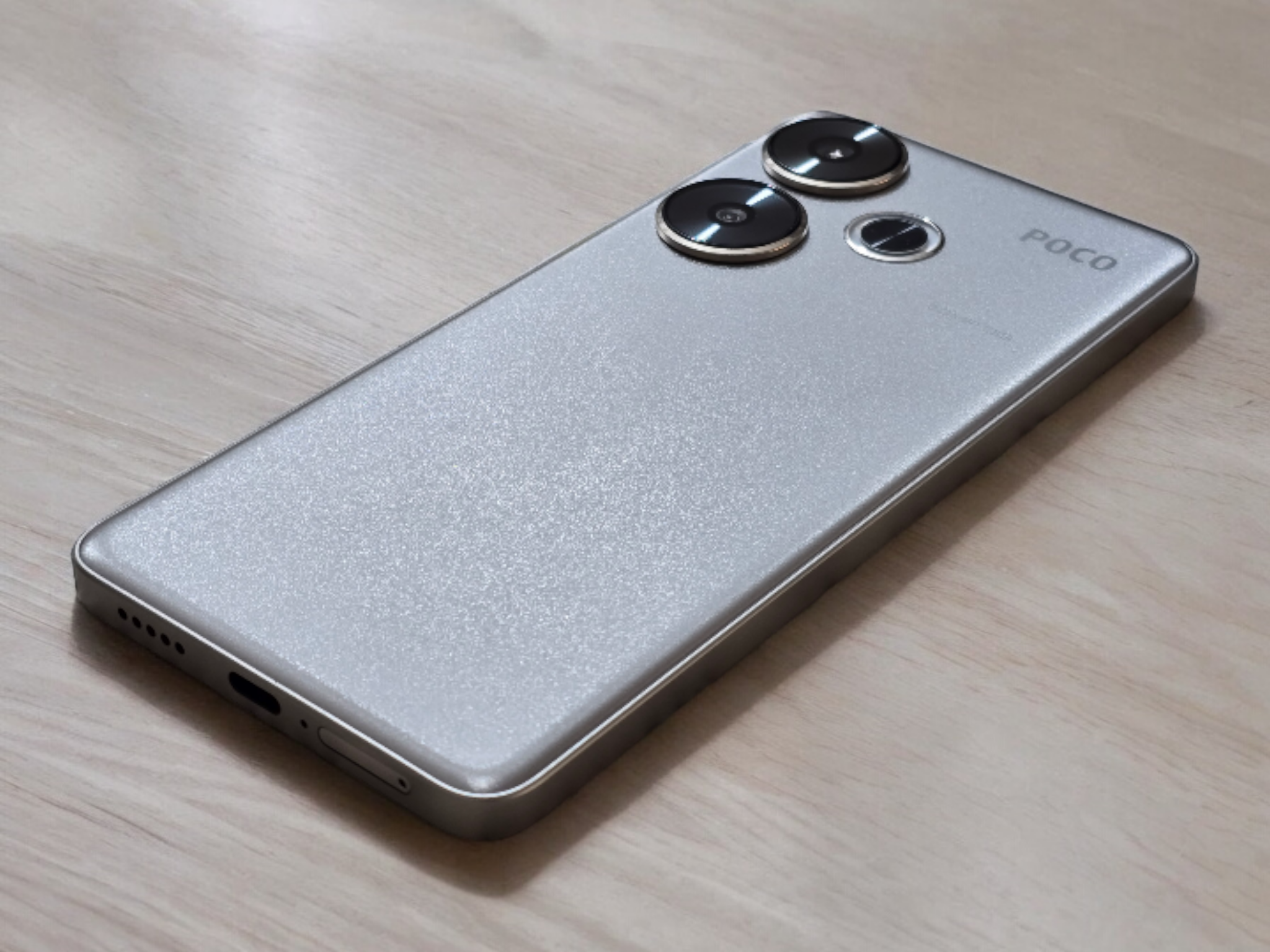
The renders show the C75 in three distinct colors — black, gold, and green. Each option features a dual-tone finish. And while the black has a more subdued look, the green and gold stand out with a marble-like finish on the lower half.

The camera deco is round with four cutouts. One holds the 50MP main camera, another has a 0.08MP auxiliary lens, and a third houses the LED flash. The last cutout is just there for decorative purposes. 

The front is home to a 6.88-inch HD+ LCD touchscreen with 120Hz refresh rate and noticeable bezels. The u-shaped notch houses a 13MP selfie camera. 

Moreover, the phone is expected to pack a MediaTek Helio G85 processor, which is a common choice for budget devices. This will likely be paired with up to 8GB of RAM and up to 256GB of storage.

Rounding out the leaked specs, the C75 is expected to have a side-mounted fingerprint sensor embedded in the power button, NFC for contactless payments, and a 3.5mm headphone jack, a feature increasingly disappearing from newer phones. 

The battery capacity is said to be 5,160mAh, which should offer decent battery life for a budget device, and will support 18W wired charging.

Compared to its predecessor, the Poco C65, the C75 seems to offer a slightly larger display with a higher refresh rate, a bump in the front-facing camera resolution, and a marginally bigger battery. However, the device uses the same SoC as last year’s model

Oppo Find X8, Find X8 Pro official renders leaked, all color variants, design finally revealed

Oppo will hold a launch event on October 24 to unveil multiple devices, including the Find X8, Find X8 Pro, Oppo Pad 3 Pro, Enco X3 TWS earbuds, and a new variant of the Oppo Watch X. The Chinese manufacturer has been teasing the design and key features of the Dimensity 9400-powered OPPO Find X8 series for the past few days. Still, none of the official images have revealed the design completely. A couple of hours ago, renowned leaker Evan Blass leaked the official renders of the Find X8 and Find X8 Pro, resolving the design mystery of these phones.

Oppo Find X8, Find X8 Pro design revealed

The Oppo Find X8 images reveal that it will be available in four shades: black, white, blue, and pink. On the other hand, the Find X8 Pro images confirm that it will be released in shades like black, white, and blue.

According to reports, the OPPO Find X8 is a smaller device with a 6.6-inch display, whereas the Pro variant has a 6.78-inch screen. While the displays appear flat, they actually have a micro-quad-curved design. As can be seen, both seem to have equal-sized ultra-thin bezels.

The Find X8’s edges look flat, whereas the Pro version’s edges have slight curvature. Both smartphones have an alert slider on the left spine, whereas the right side features a volume rocker and a power button. The Pro version has an additional Quick Capture button, which is said to be a capacitive button equipped with a linear motor. It is expected to function similarly to the Camera Control button available on the iPhone 16 series.

The top edge of the OPPO Find X8 and OPPO Find X8 Pro have multiple holes. These could be for the speaker, secondary microphone, and an IR blaster. The bottom side of both phones features a SIM slot, a USB-C port, a microphone, and a speaker.

Moving on to the back, both phones have a massive round camera module with a Hasselblad logo positioned at the centre. The Find X8 has a triple camera setup, whereas the Pro model is equipped with four cameras, out of which two are periscope telephoto lenses. An LED flash is placed outside at the upper-left corner on both smartphones.

(source 1, 2)