Advertisement

RedMagic 12 Pro+ vs Galaxy S26 Ultra: Is Samsung Worth $300 More?

RedMagic 12 Pro+ and Samsung Galaxy S26 Ultra target different kinds of premium smartphone users. One prioritizes gaming performance, active cooling, and fast charging, while the other focuses on versatile photography, productivity, and long-term software support. Both command flagship prices, but their contrasting strengths make this comparison particularly interesting for buyers deciding between a dedicated gaming powerhouse and a feature-packed all-rounder.

Side-by-side comparison of the RedMagic 12 Pro+ and Samsung Galaxy S26 Ultra smartphones.

1. Major Features:

CategoryRedMagic 12 Pro+Samsung Galaxy S26 UltraWinner
Design and BuildGorilla Glass 7i, aluminum frameGorilla Armor 2, Victus 2 glass, Armor Aluminum 2Samsung — premium protection and refined design
Water and Dust ResistanceIP68/IP69IP68RedMagic — higher-rated dust and water protection
Display6.85-inch AMOLED, 185Hz6.9-inch Dynamic LTPO AMOLED 2X, 120HzRedMagic — smoother gaming refresh rate
Display Resolution1216 × 2688 pixels1440 × 3120 pixelsSamsung — sharper visuals
Peak Brightness5,000 nits2,600 nitsRedMagic — higher claimed peak brightness
Special Display FeaturesPressure-sensitive gaming zonesPrivacy Display, anti-reflective coatingSamsung — better everyday display features
ProcessorSnapdragon 8 Elite Extreme Gen 6Snapdragon 8 Elite Gen 5RedMagic — newer-generation chipset
GPUAdreno 850Adreno 840RedMagic — newer graphics hardware
RAM12GB/16GB12GB/16GBRedMagic — up to 16GB RAM at lower cost
Storage256GB/512GB/1TB, UFS 4.1 Pro256GB/512GB/1TB, UFS 4.xRedMagic — faster specified storage standard
Operating SystemAndroid 17, RedMagic OS 12Android 16, One UI 9, upgradeable to Android 17Samsung — more established software ecosystem
Software UpdatesNot specifiedSeven major Android OS upgradesSamsung — longer-term software support
CoolingBuilt-in cooling fanInternal vapor-chamber coolingRedMagic — active cooling for sustained gaming
Main Camera50MP with OIS200MP with OISSamsung — higher-resolution main camera
Ultrawide Camera50MP with autofocus50MP with autofocusSamsung — more versatile overall camera system
Telephoto CamerasNo dedicated telephoto camera10MP 3x and 50MP 5x optical zoomSamsung — dedicated optical zoom
Rear Video RecordingUp to 8K at 30fpsUp to 8K at 30fps, 4K at 120fpsSamsung — more advanced 4K recording options
Selfie Camera16MP under-display12MP with autofocusSamsung — autofocus and 4K video recording
Battery8,400mAh5,000mAhRedMagic — substantially larger battery
Wired Charging120W60WRedMagic — faster wired charging
Wireless Charging80W25W Qi2.2RedMagic — higher charging speed
Reverse Charging22.5W wired4.5W wirelessRedMagic — faster reverse charging
ConnectivityWi-Fi 7, Bluetooth 6.0, NFC, IR blasterWi-Fi 7, Bluetooth 6.0, NFC, UWBSamsung — UWB and broader ecosystem integration
SIM SupportDual Nano-SIMVaries by region; Nano-SIM and eSIM optionsSamsung — eSIM support in compatible versions
Productivity FeaturesGaming controls and DisplayPortS Pen, Samsung DeX, Wireless DeXSamsung — stronger productivity tools
AudioStereo speakers, Dolby Atmos, Hi-Res audioStereo speakers, high-bitrate audio supportRedMagic — specified Hi-Res audio features
Price/ValuePriced around $1,000 / ₹1,00,000Priced around $1,300 / ₹1,40,000RedMagic — lower price with gaming-focused hardware
Disclaimer: Specs are based on available data. Actual performance may vary. Verify details from official sources before buying.

2. Design and Display

Build and Feel

The RedMagic 12 Pro+ combines Gorilla Glass 7i protection with an aviation-grade aluminum frame and a built-in cooling fan designed for sustained gaming sessions. Its pressure-sensitive shoulder zones add console-like controls, making it particularly appealing to competitive mobile gamers. IP68/IP69 protection also provides substantial resistance against dust and water, although the fan’s separate IPX8 rating deserves clarification.

The Samsung Galaxy S26 Ultra uses Gorilla Armor 2 on the front, Gorilla Glass Victus 2 on the back, and Armor Aluminum 2 for its frame. It adds an integrated S Pen, giving professionals and note-takers a practical advantage. Its more understated design suits business and everyday use, while the RedMagic’s gaming-focused hardware feels more purpose-built.

Display Quality

The RedMagic features a 6.85-inch AMOLED display with a 185Hz refresh rate and a peak brightness of 5,000 nits. Its high refresh rate and pressure-sensitive controls are particularly attractive for fast-paced games.

Samsung counters with a 6.9-inch Dynamic LTPO AMOLED 2X panel, a sharper 1440p resolution, a 120Hz adaptive refresh rate, and a peak brightness of 2,600 nits. The anti-reflective coating and Privacy Display improve everyday usability.

Verdict

The RedMagic wins for gaming fluidity, while Samsung offers sharper visuals, an anti-reflective screen, and more practical productivity features for everyday use.

3. Specifications Including Battery

Performance

The RedMagic 12 Pro+ runs on Qualcomm’s Snapdragon 8 Elite Extreme Gen 6, paired with an Adreno 850 GPU and up to 16GB of RAM. Its built-in cooling fan helps manage sustained workloads, potentially reducing thermal throttling during extended gaming sessions. UFS 4.1 Pro storage further supports responsive loading and data access.

The Galaxy S26 Ultra uses the Snapdragon 8 Elite Gen 5 with an Adreno 840 GPU. Although its processor belongs to a different generation, Samsung balances performance with productivity features, including Samsung DeX and wireless desktop support. Its commitment to seven major Android OS upgrades also makes it a stronger long-term investment for users who keep their phones for years.

Battery and Charging

The RedMagic packs an 8,400mAh silicon-carbon battery, backed by 120W wired charging, 80W wireless charging, and 22.5W reverse wired charging. Its substantially larger battery is a major advantage for extended gaming, streaming, and travel.

Samsung’s 5,000mAh battery supports 60W wired charging, 25W Qi2.2 wireless charging, and 4.5W reverse wireless charging. It offers a more conventional flagship charging experience, but its smaller capacity and slower charging rates make the RedMagic more appealing to heavy users.

Verdict

The RedMagic wins on gaming-oriented performance hardware, battery capacity, and charging speed. Samsung remains the better choice for extended software support and productivity.

4. Camera

Main and Secondary Lenses

The RedMagic 12 Pro+ features a 50MP main camera with optical image stabilization and a 50MP autofocus ultrawide camera. It can record 8K video at 30fps and 4K video at up to 60fps. However, its dual-camera setup and auxiliary lens offer less versatility than a dedicated multi-camera flagship system.

Samsung equips the Galaxy S26 Ultra with a 200MP main camera, a 50MP ultrawide camera, and two telephoto cameras offering 3x and 5x optical zoom. Optical stabilization across the main and telephoto systems, along with advanced autofocus and video features, makes it better suited to varied photography. Samsung’s dedicated zoom lenses provide a clear practical advantage for portraits, distant subjects, and travel photography.

Selfie Camera

The RedMagic uses a 16MP under-display selfie camera, preserving an uninterrupted screen for gaming and video consumption. However, placing the camera beneath the display can compromise image clarity compared with conventional camera designs.

Samsung’s 12MP selfie camera includes dual-pixel autofocus and supports 4K video recording at 60fps. Its conventional placement prioritizes image quality and reliable focus for video calls, selfies, and content creation. Although the RedMagic’s invisible camera is aesthetically appealing, Samsung offers the more versatile front-facing camera experience.

Verdict

The Galaxy S26 Ultra is the clear camera winner, offering dedicated optical zoom, a higher-resolution main sensor, more versatile video recording, and a stronger selfie camera setup.

5. Pricing

The RedMagic 12 Pro+ is priced around $1,000 (₹1,00,000), positioning it as a premium gaming smartphone with hardware focused on sustained performance. Its large battery, active cooling system, high-refresh-rate display, and fast charging give buyers substantial gaming-oriented features without reaching the higher price of Samsung’s flagship.

The Samsung Galaxy S26 Ultra is priced around $1,300 (₹1,40,000), placing it firmly in the ultra-premium category. Its higher cost reflects a more comprehensive feature set, including a sophisticated camera system, S Pen support, a high-resolution display, and extended software support. The difference is substantial, particularly for buyers who prioritize gaming performance over photography and productivity.

Is the price justified?

The RedMagic offers excellent hardware value for gamers who want sustained performance, extensive battery life, and exceptionally fast charging. Samsung’s premium is easier to justify for users who regularly use its cameras, productivity tools, and long-term software support. For general users, the Galaxy S26 Ultra provides a more balanced experience, but the RedMagic delivers more gaming-focused hardware per dollar.

Check price →
Where to buy
Samsung Galaxy S26 Ultra
Latest price on Amazon

Verdict

The RedMagic 12 Pro+ wins on gaming-focused value, while the Galaxy S26 Ultra justifies its higher price through camera versatility, productivity features, and longer software support.

Disclaimer:
Prices are approximate and may vary based on country, region, launch timing, and applicable taxes. Always check whether the listed price is for a China unit or a global/international variant when purchasing.

6. Conclusion

The RedMagic 12 Pro+ distinguishes itself with a built-in cooling fan, 185Hz AMOLED display, pressure-sensitive gaming zones, and an 8,400mAh battery. Its 120W wired and 80W wireless charging further reinforce its gaming-first identity. These features make it particularly attractive to players who spend long sessions on demanding mobile games and want fewer charging interruptions.

The Galaxy S26 Ultra takes a broader approach with its 200MP main camera, dedicated 3x and 5x optical zoom cameras, integrated S Pen, Privacy Display, Samsung DeX, and seven major Android OS upgrades. It is better equipped for photography, professional tasks, content creation, and everyday versatility. While its battery and charging specifications fall behind RedMagic’s, its more comprehensive feature set makes it the stronger choice for users who expect one device to handle nearly everything.

Verdict

The Samsung Galaxy S26 Ultra is the overall winner for most buyers because of its superior camera versatility, productivity features, and long-term software support. However, the RedMagic 12 Pro+ is the better choice for dedicated gamers, delivering a larger battery, faster charging, active cooling, and a smoother high-refresh-rate display at a lower price.

Disclaimer: Prices, specifications, and availability may vary by region and retailer. Recommendations in this article are based on editorial opinion, feature-based value, and market positioning at the time of writing. Readers are advised to do their own research before making a purchase.

Read More:

iQOO Pad Pro debuts with Snapdragon 8 Elite Gen 5, 0.94 CFM cooling fan, 9020mAh battery

iQOO has unveiled a new 8.8-inch tablet called the Pad Pro, and they’re calling it a “pocket e-sports behemoth.” In simpler terms, it packs flagship-level gaming hardware into a device that feels closer to a big phone than a regular tablet.

iQOO Pad Pro 8.8"

Inside, you’ve got a dual-chip setup: Qualcomm’s Snapdragon 8 Elite Gen 5 plus iQOO’s own Q3 gaming chip. The Q3 works with their QNSS super-rendering engine to give you 2K super-resolution, full-scene ray tracing, and lossless super-frame in supported games. Memory is LPDDR5X Ultra + UFS 4.1 across the board.

They also threw in some very specific gaming tools. There’s an FPS dark-area enhancement filter that makes enemy outlines and materials clearer in dark corners, ultra-sensitive zone touch with edge anti-mistouch and multi-finger jitter fixes, and a gyroscope that can sample up to 500 Hz.

iQOO Pad Pro dual-path cooling system

Cooling is taken seriously here. It uses an Ultra-level Ice Dome quad-layer system with a 30 × 30 × 3.5 mm active fan that pushes up to 0.94 CFM, bidirectional intakes, dual vapor chambers, and a big slab of high-conductivity graphite. Total heat-dissipation area is over 23,000 mm². Official testing claims it holds an average of 60.2 fps in large open-world games running at ultra-high graphics and 60 fps.

Shop now →
Where to buy
Snapdragon 8 Elite tablet
Browse the range on Amazon

Physically it’s the same compact package as the Pad Ultra: 8.8-inch 165 Hz AMOLED (1440 × 2304, 16:10, 8,000,000:1 contrast), 9,020 mAh battery with 66 W charging, just 5.74 mm thick and 298 g. You also get symmetrical dual speakers, Wi-Fi 7, Bluetooth 5.4, USB 3.2 Gen2, and face unlock. Cameras are a straightforward 13 MP rear (4K video) and 8 MP front.

Pricing and availability

It launched this evening, October 28, in China. Prices are as follows:

8GB + 256GB: 4,299 yuan (~$645)

12GB + 256GB: 4,699 yuan (~$705)

16GB + 256GB: 5,099 yuan (~$765)

12GB + 512GB: 5,399 yuan (~$810)

16GB + 512GB: 5,799 yuan (~$870)

Right now it’s China-only.

(Source: iQOO)

Read more

For daily updates, please visit our News Section.

Stay ahead in tech! Join our Telegram community and sign up for our daily newsletter of top stories.

Infinix launches GT 50 Pro in India with 6,500mAh battery, 144Hz AMOLED & active liquid cooling

Infinix has launched the GT 50 Pro in India, six months after the device was initially introduced to the global market. The smartphone is designed specifically for mobile gaming. It focuses on physical controls, thermal management, and accessory integration rather than conventional smartphone features.

Infinix GT 50 Pro

Infinix GT 50 Pro Specifications

The device is powered by the MediaTek Dimensity 8400 Ultimate, a 4nm processor with a peak clock speed of 3.25GHz. In India, it is available in a single configuration with 12GB of LPDDR5X RAM and 256GB of UFS 4.1 storage.

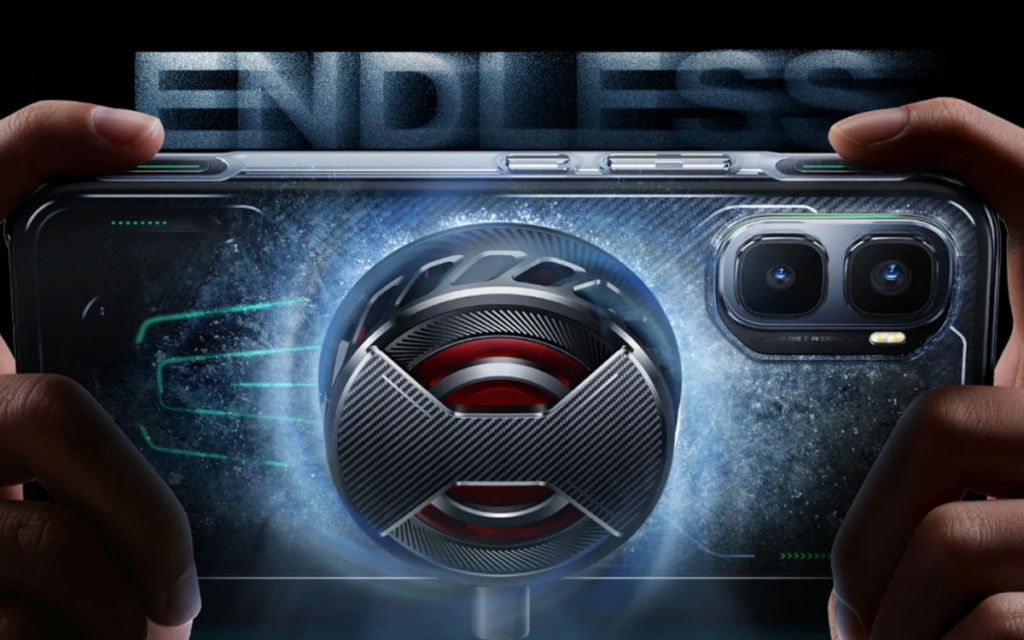
To manage internal temperatures during use, Infinix has integrated a micro-pump liquid cooling system. This mechanism uses a ceramic heat pump to circulate liquid coolant across a 6437mm² diaphragm, moving heat away from the processor and other components.

Infinix GT 50 Pro

For controls, the phone includes mechanical shoulder buttons that Infinix refers to as Open-Cut Pressure-Sense GT Triggers. These dual-stage buttons can detect light, heavy, and sliding presses, allowing users to map up to four specific inputs per trigger for gaming. The device also includes a dedicated N1 network chip, which is intended to reduce latency and maintain signal stability during online multiplayer sessions.

Check price →
Where to buy
Infinix GT 50 Pro
Latest price on Amazon

The front of the phone has a 6.78-inch 1.5K AMOLED display with a 144Hz variable refresh rate. It is protected by Corning Gorilla Glass 7i and utilizes 2304Hz PWM dimming to reduce screen flicker. The device operates on a 6,500mAh battery. Charging options include 45W wired charging, 30W wireless charging, and 10W reverse wired charging for powering smaller accessories.

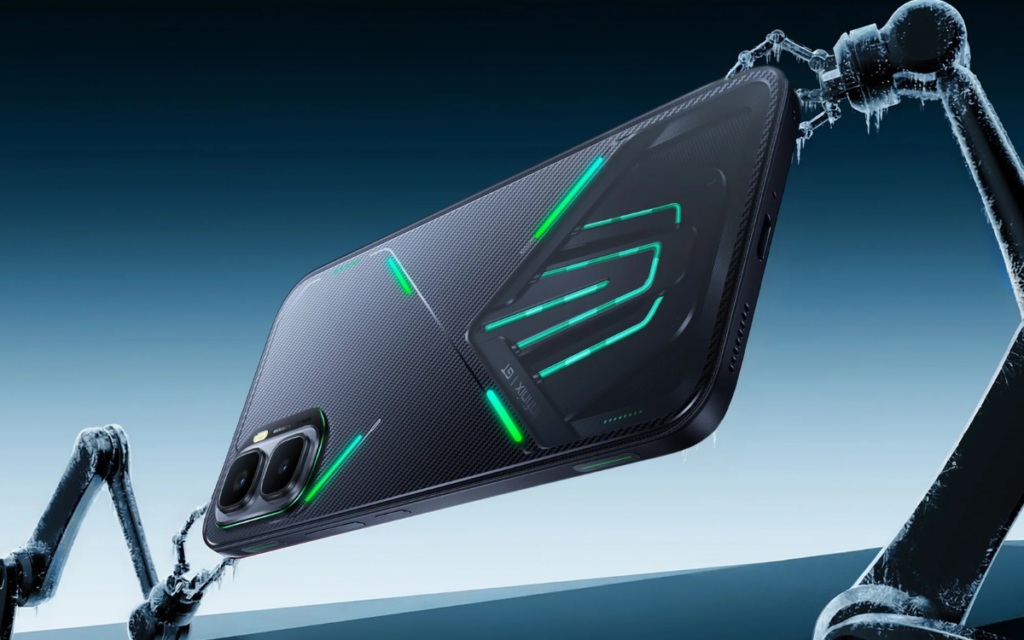
Infinix GT 50 Pro smartphone held by robotic arms against a blue gradient background.

The camera system consists of a 50MP primary sensor with OIS, an 8MP ultrawide lens, and a 13MP front-facing camera. The GT 50 Pro runs on Android 16 with the company’s XOS 16 interface. Infinix has stated it will provide three years of Android operating system updates and five years of security patches.

Pricing and Availability

The Infinix GT 50 Pro is available for pre-order now for Rs. 69,999 through Flipkart and the Infinix India website in Black Abyss and Red Blaze, with regular sales starting on October 30.

Infinix GT 50 Pro

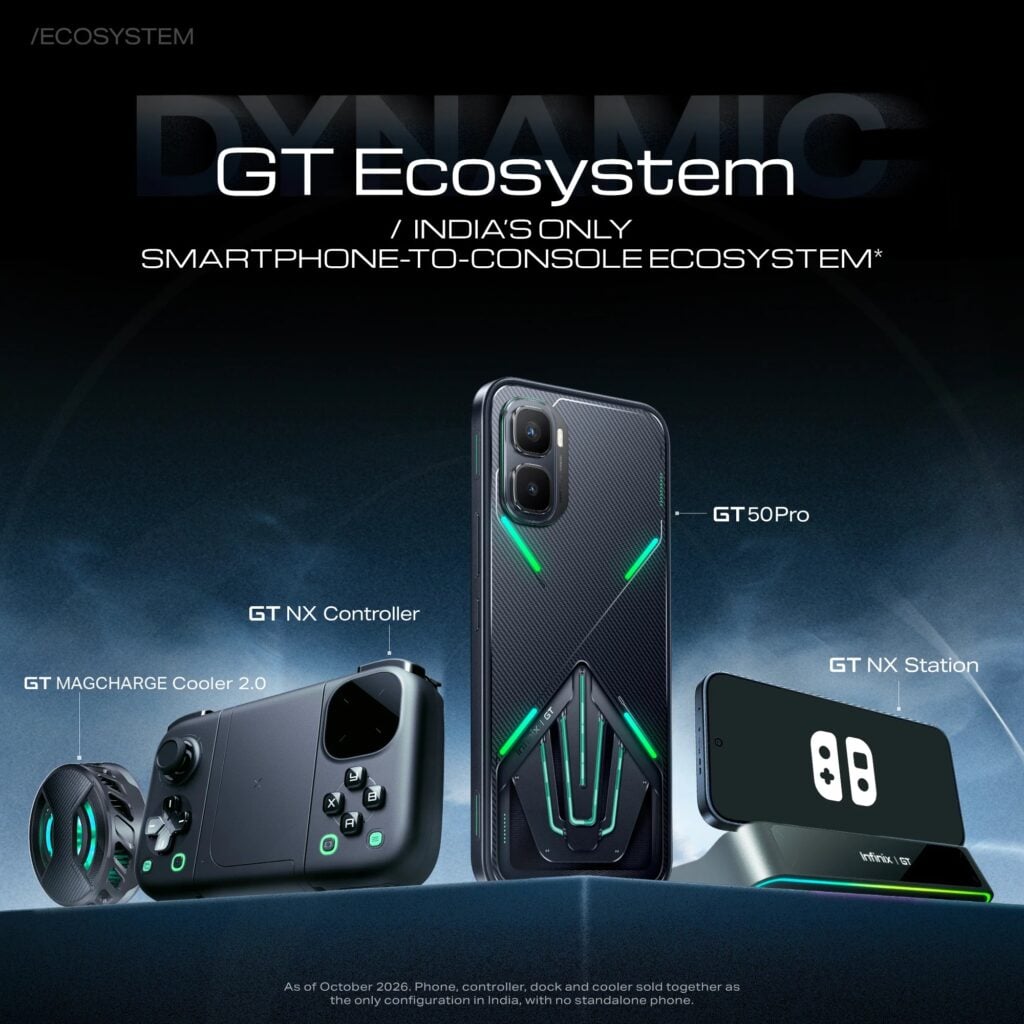
Infinix is bundling the phone with a set of gaming accessories valued at Rs. 24,999. The included box comes with a TV dock, a physical controller, a cooling fan that supports bypass charging, and a MagSafe-compatible case.

For more daily updates, please visit our News Section.

Stay ahead in tech! Join our Telegram community and sign up for our daily newsletter of top stories!

(Infinix)

iQOO Neo 12 is finally here with 185Hz 2K display and a 9,000mAh battery

iQOO today announced the iQOO Neo 12 in China with a higher refresh rate, bigger battery, and a newer Snapdragon chip than last year’s Neo 11. It also adds an active cooling fan, but these upgrades come with a considerably higher starting price than last year’s Neo 11.

iQOO Neo 12 Launch Specs Price

Performance

The Neo 12 runs on Qualcomm’s Snapdragon 8 Elite Gen 5 and uses iQOO’s new Q3 chip for handling gaming more efficiently. iQOO claims the new processor delivers a 20% CPU performance improvement, while the Q3 chip brings 60% more performance and 40% better energy efficiency than its predecessor.

On the gaming side, iQOO says more than 50 games run natively at 185fps, as we reported when the launch date was announced. The phone also supports 2K 185fps output with super resolution and frame interpolation running together, plus full-scene ray tracing. 

iQOO Neo 12 Chip

The phone also uses the same touch chip as the iQOO 16, with instant sampling rates of up to 5,000Hz and multi-finger sampling of up to 500Hz. These rates are available only in supported games, though. Memory options include 12GB or 16GB of LPDDR5X Ultra RAM, paired with UFS 4.1 storage.

The higher performance comes with a new cooling system. The Neo 12 has a 17 × 17mm active cooling fan that can move up to 9,770 cm³ of air per minute, with three speed settings. It works alongside an 8.2K 3D vapor chamber, which iQOO says improves heat dissipation by 15% compared with the Neo 11. The phone carries IP68 and IP69 ratings, while iQOO also rates the fan-cooled design at IPX8 and IPX9.

iQOO Neo 12 has bigger battery and faster display

The Neo 12 has a 9,000mAh battery, up from 7,500mAh in its predecessor. The battery uses fifth-generation silicon anode technology, which iQOO claims has 33% more silicon than the previous model. The phone retains 100W charging and supports bypass charging. 

The camera setup hasn’t changed much in terms of resolution. The Neo 12 has a 50MP Sony IMX921 main camera with a 1/1.56-inch sensor, an f/1.88 aperture, and optical image stabilization, alongside an 8MP ultrawide camera. The Neo 11 also had a 50MP main camera with the same sensor size and aperture, although it used the Sony LYT-700V. You get a 16MP camera for selfies, while rear video recording goes up to 8K. There is no telephoto camera.

The display is another major upgrade. The Neo 12 has a 6.83-inch AMOLED panel with a 3200 × 1440 resolution and a refresh rate of up to 185Hz, compared with 144Hz on the Neo 11. It has a listed pixel density of 514ppi and full-screen peak brightness of 2,200 nits, with a manual maximum of 1,000 nits in professional mode.

Shop now →
Where to buy
iQOO phones
Browse the range on Amazon

iQOO says the new panel delivers 22% higher full-screen peak brightness, 27% lower power consumption, and 18% better luminous efficiency than the Neo 11. 

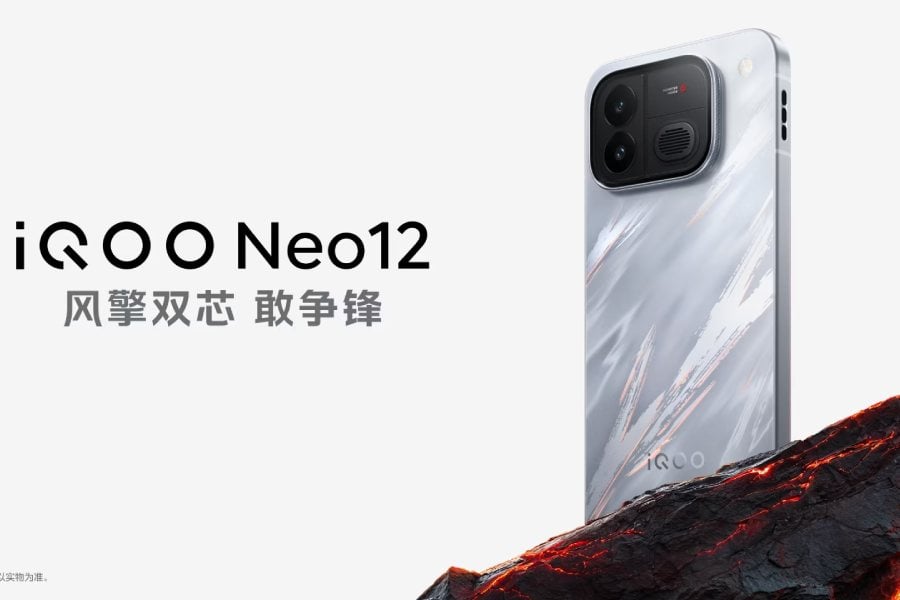
iQOO Neo 12 Colors

There’s a separate display driver chip that handles 2K output at 185Hz. iQOO claims it consumes 30% less power than the chip on the Neo 11.

The Neo 12 comes in Swift Shadow Black, Frostblade Blue, and a silver-white Contender finish developed with the China Academy of Art. The black and blue versions measure 8.5mm thick and weigh 225g and 226g, respectively, while the Contender version is 8.67mm thick and weighs 229g. All three measure 163.42 × 75.89mm.

Check price →
Where to buy
100W USB-C charger
Latest price on Amazon

On the software side, the phone runs OriginOS 7 based on Android 17. Other features include Wi-Fi 7, Bluetooth 5.4, NFC, an infrared blaster, and an ultrasonic fingerprint sensor. There is no microSD card slot, and the USB-C port supports digital headphones only.

Price and Availability 

The iQOO Neo 12 is available in five configurations in China, starting at CNY 4,399 (~$659.72) for the 12GB + 256GB model. The 16GB + 256GB version costs CNY 4,799 (~$719.74), while the 12GB + 512GB and 16GB + 512GB models are priced at CNY 5,099 (~$764.74) and CNY 5,499 (~$824.76), respectively. The top-end 16GB + 1TB version costs CNY 6,499 (~$974.79).

By comparison, the Neo 12’s starting price is CNY 1,800 (~$269.93) higher than the Neo 11’s CNY 2,599 (~$389.75), an increase of roughly 69%. The top configuration also costs more than the CNY 5,999 (~$899.68) starting price of the iQOO 16 in China. iQOO hasn’t announced plans to bring the Neo 12 to other markets yet, and the Neo 11 never launched in India, so its international availability remains uncertain.

For daily updates, please visit our News Section.

Stay ahead in tech! Join our Telegram community and sign up for our daily newsletter of top stories.

Teardown offers a closeup of what’s breaking iPhone Duo’s inner display

Apple‘s first foldable iPhone is facing reports of inner display cracking, with affected units showing damage in at the same spot along the hinge. Now, a closer look inside the iPhone Duo suggests that a tiny hinge component could be responsible for at least some of these failures.

iPhone Duo's hinge is breaking the inner display

In his latest teardown, YouTuber Zack Nelson from JerryRigEverything took apart the iPhone Duo to investigate what might be causing the damage. After removing the inner display, he identified a particular hinge component directly behind the area where the screens have been breaking. He nicknamed it the “Pixel Pincher 9000” and suggested that it could be pressing against the display from behind.

The exact failure mechanism remains unconfirmed, but he suspects that a screw could be coming loose or a guiding component could be breaking off, allowing part of the hinge to poke into the back of the flexible display. Even a small protrusion could potentially damage the delicate panel as the phone is folded and unfolded.

A closeup of the hinge component that could be pressing against the display from behind.

The video host also demonstrated a separate problem: dust and sand can enter the hinge and accumulate behind the display. However, he believes this is different from the issue affecting brand-new iPhone Duo units. Dust particles could puncture the display at various locations, whereas the reported failures consistently occur around the same hinge component.

The distinction matters because it suggests that simply keeping the phone away from dusty environments may not prevent the specific cracking issue affecting some units.

Apple has acknowledged the display problem and advised affected customers to contact AppleCare for a replacement. However, the company has not explained what is causing the failures.

For now, JerryRigEverything’s teardown provides a plausible explanation rather than definitive proof. Confirming the suspected hinge defect would require examining affected devices and establishing exactly how the component interacts with the display during normal use.

(Source: JerryRigEverything)

Read more

For daily updates, please visit our News Section.

Stay ahead in tech! Join our Telegram community and sign up for our daily newsletter of top stories.

OnePlus has updated these devices to Android 17

OnePlus 15T smartphone running Android 17

OnePlus has begun rolling out Android 17 update to its devices earlier than it promised — but it doesn’t come with the legacy OxygenOS skin. Instead, the Android 17 update for OnePlus phones brings Oppo’s ColorOS 17 software skin as a part of major restructuring to its software strategy, which was announced a few months back.

The first phase of the rollout was scheduled to go live from October 29, but OnePlus began the rollout a week earlier on October 22. The OnePlus 15 and OnePlus Pad 4 are a part of this phase. Surprisingly, the update was released for more devices ahead of the schedule. So, we’ve prepared a list of OnePlus devices getting the Android 17-based ColorOS 17 update.

List of OnePlus devices getting the Android 17 update

  • OnePlus 15
  • OnePlus 15R
  • OnePlus 13
  • OnePlus 13s
  • OnePlus 13R
  • OnePlus Pad 4

OnePlus usually rolls out updates in batches, and so the availability depends on your region. You can navigate to Settings > System & Updates > Software update to manually check for the latest updates, if you haven’t received an update notification yet.

You can also try the Release Candidate Program to get updates early. For this, go to Settings > System & Updates > Software update > Beta Program and tap the “update now” button.

The Android 17 update with ColorOS 17 skin will gradually roll out to more OnePlus flagships in November, and a couple of mid-range phones. The company aims to release the update to all the devices by the first quarter of 2027. You can check the complete rollout schedule on this page.

We’ll update this page regularly to ensure the information are up-to-date. You can visit the page later for the latest updates. Or, join our Telegram channel to receive alerts as soon as we publish new stories.

Huawei Enjoy 100 launches with Kirin 8000S and 6,100mAh battery

Huawei launched the Huawei Enjoy 100 this afternoon, and it is the most affordable phone in the new Enjoy 100 lineup. It arrived at the same event as the Huawei Enjoy 100 Pro Max and the Huawei Enjoy 100 Pro

The Enjoy 100 has a 6.56-inch LCD screen, 1612 x 720 pixels resolution, and 1,150 nits of peak brightness. And even though it’s an LCD panel, you get an Always-On Display feature for checking the time and notifications without waking the phone, although don’t expect it to be as efficient as one on an OLED screen.

Huawei Enjoy 100 colors

Under the hood, the phone runs on the Kirin 8000S chip and HarmonyOS 7. You also get Huawei’s Ark Engine support for optimizing system resources, and Huawei claims the phone can even handle large desktop operations efficiently. 

There are other software features too, such as the phone recognizing potentially fake voices during calls and displaying a warning when it detects one. It can also analyze webpage content and flag suspicious activity, even when scammers switch between websites. These tools could be useful for people who regularly receive suspicious calls or links.

Check price →
Where to buy
40W fast charger
Latest price on Amazon

For cameras, the Enjoy 100 has a 13MP rear camera with an f/1.8 aperture and an 8MP front camera. It packs a 6,100mAh battery with support for 40W Turbo fast charging.

Huawei Enjoy 100 Launch Specs Price

The phone weighs around 204g, making it slightly heavier than the Enjoy 100 Pro. Connectivity options include Wi-Fi 7, 5A network support, and Star Flash.

Huawei Enjoy 100 price and availability

The Huawei Enjoy 100 goes on sale in China on October 31, with the 128GB model priced at 1,399 yuan (about $207) and the 256GB model at 1,699 yuan (about $252). You can choose between three colors: Glacier White, Sunset Orange, and Midnight Black.

For daily updates, please visit our News Section.

Stay ahead in tech! Join our Telegram community and sign up for our daily newsletter of top stories.

Huawei unveils Enjoy 100 Pro with Kirin 8020A, 6,100mAh battery, and HarmonyOS 7

Huawei launched the Enjoy 100 Pro in China at its Double Eleven New Product Launch Event today. The phone runs on the new Kirin 8020A chip and ships with HarmonyOS 7. 

The Enjoy 100 Pro has a 6.7-inch OLED display with 1080p resolution. The front is protected by Kunlun glass and uses what it calls a Xuanjia body for the frame. The phone weighs 192g despite packing a 6,100mAh battery.

Huawei Enjoy 100 Pro Design

The company claims the construction makes the phone 10 times more drop-resistant than before. It has also passed dual five-star drop resistance certification.

Huawei Enjoy 100 Pro Specifications 

Inside, the phone uses Huawei’s new Kirin 8020A chip, which Huawei claims offers a 53% performance improvement over the Enjoy 90 Plus. 

The Kirin 8020A works with HarmonyOS 7 and Huawei’s Ark Engine. According to the company, the software manages tasks across apps to keep the phone responsive when switching between things like videos, shopping apps, and chats. HarmonyOS 7 follows HarmonyOS 6, which Huawei introduced in October 2025.

Kirin 8020A

For photography, the Enjoy 100 Pro has a 50MP RYYB main camera with an f/1.8 aperture on the back and a 32MP front camera. The 6,100mAh battery supports 40W wired charging.

Huawei has also added a few features for calls and connected devices. The Enjoy 100 Pro supports 5G, with AI-assisted network connectivity intended to help it connect faster and maintain a signal in places such as basements where reception can be weak.

The phone also includes Star Search, which lets users locate compatible devices such as headphones, tablets, PCs, and watches from the phone.

Huawei Enjoy 100 Pro price and availability

The Huawei Enjoy 100 Pro will go on sale in China on October 31. The phone is available in three storage configurations:

  • 128GB: 1,799 yuan (about $267)
  • 256GB: 2,199 yuan (about $326)
  • 512GB: 2,699 yuan (about $400)
Huawei Enjoy 100 Pro Launch Specs Price

You can choose the device in four colors: Peacock Blue, Feather Purple, Feather White, and Midnight Black.

For daily updates, please visit our News Section.

Stay ahead in tech! Join our Telegram community and sign up for our daily newsletter of top stories.

OnePlus 16 vs Galaxy S26: Bigger Battery or Smarter Flagship?

OnePlus 16 and Samsung Galaxy S26 appeal to different kinds of flagship buyers. OnePlus focuses on high-end hardware, gaming, battery endurance and charging speed, while Samsung prioritizes a compact design, refined everyday usability and long-term software support. At similar prices, neither phone is automatically the better choice. The real difference lies in whether you value maximum hardware capabilities or a more convenient, balanced smartphone experience.

OnePlus 16 vs Samsung Galaxy S26

1. Major Features:

CategoryOnePlus 16Samsung Galaxy S26Winner
Design and BuildGlass front, aluminum frame, glass or composite backGorilla Glass Victus 2, Armor Aluminum 2 frameSamsung — More compact and easier to handle
DurabilityIP68/IP69K protectionIP68 protectionOnePlus — Higher-rated water-jet protection
Display6.78-inch LTPO AMOLED, 185Hz6.3-inch Dynamic AMOLED 2X, 120HzOnePlus — Larger screen and higher refresh rate
Display BrightnessUp to 2,000 nits HBMUp to 2,600 nits peakSamsung — Higher claimed peak brightness
Resolution1272 × 2772 pixels1080 × 2340 pixelsOnePlus — Higher resolution and pixel density
ProcessorSnapdragon 8 Elite Extreme Gen 6Snapdragon 8 Elite Gen 5 or Exynos 2600OnePlus — Newer Snapdragon generation
RAM12GB or 16GB12GBOnePlus — Higher maximum memory
Storage256GB, 512GB or 1TB128GB, 256GB or 512GBOnePlus — Higher maximum storage
SoftwareAndroid 17, OxygenOS 17 listedAndroid 16, One UI 9 listedSamsung — Longer stated OS upgrade commitment
Rear Main Camera200MP with OIS50MP with OISOnePlus — Higher-resolution main sensor
Telephoto Camera50MP, 3x optical zoom, OIS10MP, 3x optical zoom, OISOnePlus — Higher-resolution telephoto sensor
Ultrawide Camera50MP, 116-degree field of view12MP, 120-degree field of viewOnePlus — Higher sensor resolution
Selfie Camera50MP ultrawide with autofocus12MP with dual-pixel autofocusOnePlus — Higher resolution and wider framing
Video RecordingUp to 8K at 30fps; 4K at 120fpsUp to 8K at 30fps; 4K at 60fpsOnePlus — Higher maximum 4K frame rate
Battery9,000mAh4,300mAhOnePlus — Much larger battery capacity
Wired Charging100W25WOnePlus — Faster wired charging
Wireless Charging50W15WOnePlus — Faster wireless charging
Reverse ChargingWireless and 5W wired4.5W wirelessOnePlus — More charging options
ConnectivityWi-Fi 7, Bluetooth 6.0, USB-C 3.2Wi-Fi 7, Bluetooth 5.4, USB-C 3.2 with DisplayPort 1.2OnePlus — Newer Bluetooth version
Additional FeaturesInfrared port, bypass chargingSamsung DeX, Wireless DeXSamsung — Desktop productivity features
Price and ValuePriced around $900 / ₹86,000Priced around $900 / ₹88,000OnePlus — More hardware for a similar price
Disclaimer: Specs are based on available data. Actual performance may vary. Verify details from official sources before buying.

2. Design and Display

Build and Feel

The OnePlus 16 combines a glass front, an aluminum frame and a choice of glass or glass-fiber reinforced plastic for the rear panel. Its IP68/IP69K protection provides an advantage for users concerned about dust, water and demanding outdoor conditions. Samsung’s Galaxy S26 pairs Gorilla Glass Victus 2 with an Armor Aluminum 2 frame and IP68 protection. Its compact design makes one-handed operation and everyday handling more convenient. Both feel premium, but Samsung’s smaller form factor is more practical for users who dislike bulky phones, whereas OnePlus suits buyers who prefer a larger device for entertainment and gaming.

Display Quality

The OnePlus 16 features a 6.78-inch LTPO AMOLED display with a 185Hz refresh rate, Dolby Vision and HDR10+ support. Its expansive screen and exceptionally high refresh rate benefit gaming and fast-moving content. Samsung’s 6.3-inch Dynamic AMOLED 2X panel supports an adaptive 120Hz refresh rate and a claimed peak brightness of 2,600 nits. Samsung’s screen is more compact and emphasizes outdoor visibility, while OnePlus delivers smoother motion and a more immersive viewing experience. The better choice depends on whether screen size and gaming fluidity matter more than convenience.

Verdict

OnePlus wins on display size, refresh rate and water-resistance ratings. Samsung is the more comfortable everyday choice for compact-phone users who value easy handling.

3. Specifications Including Battery

Performance

The OnePlus 16 uses the Snapdragon 8 Elite Extreme Gen 6 chipset, with up to 16GB RAM and UFS 4.1 storage. Its newer processor and generous memory options make it attractive for demanding games, multitasking and intensive workloads.

The Galaxy S26 uses the Snapdragon 8 Elite Gen 5 in selected markets and the Exynos 2600 in others. Both configurations deliver flagship-class performance, while Samsung’s seven-generation OS upgrade commitment gives it a clear advantage for long-term ownership.

Battery and Charging

OnePlus takes a substantial lead with its 9,000mAh silicon-carbon battery, 100W wired charging and 50W wireless charging. Reverse wireless charging and bypass charging add useful flexibility for gamers and frequent travelers.

Samsung’s 4,300mAh battery supports 25W wired charging, 15W wireless charging and 4.5W reverse wireless charging. It is sufficient for many everyday routines, but OnePlus is better suited to heavy use and fewer charging interruptions.

Verdict

OnePlus wins on performance potential, battery endurance and charging versatility. Samsung counters with longer software support, making it attractive to buyers who keep their phones for years.

4. Camera

Main and Secondary Lenses

The OnePlus 16 features a 200MP main camera with optical image stabilization, a 50MP telephoto camera with 3x optical zoom and a 50MP ultrawide lens. Its high-resolution hardware offers greater flexibility for cropping, detailed scenes and wide-angle photography.

Samsung’s Galaxy S26 combines a 50MP stabilized main camera with a 10MP telephoto lens offering 3x optical zoom and a 12MP ultrawide camera. It also supports 8K video recording at 30fps, alongside 10-bit HDR and HDR10+ features. OnePlus offers more ambitious camera hardware, but Samsung’s image processing can be valuable for consistent everyday results.

Selfie Camera

The OnePlus 16 uses a 50MP ultrawide front camera with autofocus and 4K video recording at up to 60fps. Its wider field of view is useful for group selfies, travel photos and video calls.

The Galaxy S26 features a 12MP front camera with dual-pixel autofocus and HDR10+ video support. It also records 4K video at 60fps. Although OnePlus offers higher resolution, Samsung remains well equipped for selfies and social content. Actual image quality will depend on processing, lighting and skin-tone reproduction, not megapixels alone.

Verdict

OnePlus wins on camera hardware versatility and selfie resolution. Samsung remains a credible alternative for everyday photography, where processing and consistency matter as much as specifications.

5. Pricing

The OnePlus 16 is priced around $900 (₹86,000), while the Samsung Galaxy S26 is priced around $900 (₹88,000). These approximate figures put both phones in a similar flagship price bracket, although the actual cost depends on storage configuration, regional availability and retailer offers. OnePlus offers more aggressive hardware for the money, particularly in battery capacity, charging speed and camera resolution. Samsung’s pricing reflects its compact flagship design, software ecosystem and extended update commitment. Buyers in India should also verify local availability before purchasing the OnePlus 16, as its Chinese launch does not guarantee an official Indian release at the same price.

Is the price justified?

At similar prices, OnePlus is more compelling for buyers who prioritize battery life, gaming and hardware specifications. Its charging system and large battery offer practical advantages for demanding users. Samsung is easier to justify for those who prefer a compact phone, dependable everyday photography and seven major Android OS upgrades. Neither offers universal value for every buyer, but Samsung’s balanced experience may prove more useful to people who do not need extreme specifications.

Check price →
Where to buy
Samsung Galaxy S26
Latest price on Amazon

Verdict

OnePlus delivers more hardware for the money, while Samsung offers stronger value for compact-phone users who prioritize software longevity and everyday convenience.

6. Conclusion

The OnePlus 16 stands out with its 185Hz display, 9,000mAh battery, 100W wired charging, 50W wireless charging and 200MP main camera. These features make it particularly appealing to gamers, heavy users and people who regularly record content. The Galaxy S26 takes a different approach with its compact design, adaptive 120Hz display, Samsung DeX desktop functionality and seven major OS upgrades. Its smaller form factor is easier to manage, and its software support makes it a sensible long-term purchase. 

The camera comparison also deserves nuance: OnePlus offers more impressive sensor specifications, but those figures alone cannot establish which phone takes better photographs. Ultimately, the OnePlus 16 prioritizes hardware capability, while Samsung focuses on a more balanced flagship experience.

Verdict

Choose the OnePlus 16 for battery endurance, charging speed, gaming and camera hardware. Choose the Samsung Galaxy S26 for compact handling, everyday practicality and long-term software support. Neither is universally better; the right choice depends on your priorities.

Disclaimer: Prices, specifications, and availability may vary by region and retailer. Recommendations in this article are based on editorial opinion, feature-based value, and market positioning at the time of writing. Readers are advised to do their own research before making a purchase.

Read More:

Samsung fined over $15M for throttling Galaxy flagships it claimed had “ultimate” gaming power

A hand holding the Samsung Galaxy S22 Ultra

We keep hearing about cases where brands try to inflate benchmark numbers to hype the device’s performance. But what has happened with Samsung is completely different. The South Korean giant has found limiting game performance on several flagships against its claim of delivering the ultimate gaming performance, and has been ordered to pay 20.1 billion won (~$15.1 million) by the Korean Fair Trade Commission (KFTC).

The lawsuit revolves around the Galaxy S22 series, Galaxy S21 series, and Galaxy Tab S8 series. According to KFTC, Samsung has engaged in deceptive marketing practices for selling these devices. Precisely, the South Korean tech giant claimed that the devices deliver “the ultimate mobile gaming experience,” but in reality, the software had a Game Optimization Service (GOS) that throttles the performance.

The GOS service on Galaxy devices automatically throttles CPU and GPU performances on the aforementioned devices when playing demanding games. As a result, gamers didn’t get the “ultimate mobile gaming experience” promised by the brand.

Following widespread consumer backlash, Samsung quickly released an update in March 2022, allowing users to completely disable GOS.

According to Seoul Economic Daily, Samsung emphasizes that “no court has found that consumers suffered harm because of the advertising.” The company argued that GOS is a safety feature and that it ensures stable gameplay during long gaming sessions.

Of course, Samsung will fight back as it believes it has done nothing wrong, especially since the GOS update was pushed quickly after the device release. Considering the scale of operations, $15 million isn’t a hefty sum for Samsung, but it’s impressive to see a incorrect performance claim dragging a company to court. Other smartphone brands should also take important notes out of this case.

For daily updates, please visit our News Section.

Stay ahead in tech! Join our Telegram community and sign up for our daily newsletter of top stories.

source/via: South Korea’s FTC, GSMArena

Huawei Pura 90 Plus launches with Kirin 9025, quad-curved screen and 5,700mAh battery

Huawei has launched the Pura 90 Plus in China. The company opened pre-orders and showed the phone’s first teaser last week, and today it confirmed the full specifications. The Pura 90 Plus is the only model in the Pura 90 family with a curved frame, and it is the first phone to use the Kirin 9025 chip.

The phone comes in four colors: Obsidian Black, Snow White, Sunset Purple, and Dawn Gold. The body goes back to a curved metal frame, which Huawei says gives the phone more texture and a better grip. The other Pura 90 models all have flat edges, as you can see in the Pura 90 Pro and Pro Max launch.

Sunset purple Huawei Pura 90 Plus smartphone showing the rear camera module and gradient finish.

The front has a 6.8-inch quad-curved display with a resolution of 2848 x 1276 pixels. And since it’s an LTPO panel, it supports an adaptive refresh rate of 1Hz to 120Hz, along with 1440Hz PWM dimming and a 300Hz touch sampling rate.

Huawei Pura 90 Plus specifications

Powering the Huawei Pura 90 Plus is the new Kirin 9025 chip. Huawei claims its combined hardware, software, chipset, and cloud optimizations improve overall performance by 19%.

The phone runs HarmonyOS 7 and supports Huawei’s Super Storage feature. According to the company, it can free up to 110GB of storage on the 1TB model.

On the back, the Pura 90 Plus has a 50MP main camera built around a 1-inch sensor. It supports a variable aperture ranging from f/1.6 to f/4.0 and optical image stabilization (OIS).

The purple Huawei Pura 90 Plus smartphone shows its unique triangular rear camera module.

The camera system also includes a 48MP macro telephoto camera with an f/2.1 aperture and OIS, a 40MP ultra-wide camera with an f/2.2 aperture, and a 1.5MP multispectral red maple color camera.

Check price →
Where to buy
100W USB-C charger
Latest price on Amazon

On the software side, you get features like XMAGE Smart Shooting, XMAGE Style, AI Pose Recommendation, AI Assisted Composition, Ultra HD Panorama, AI Ultra HD Enhancement, Super Night Scene, and Space Chasing. These tools cover different shooting situations, from portraits and landscapes to low-light photography.

The Pura 90 Plus packs a 5,700mAh battery with support for 100W wired charging and 80W wireless charging. It also supports two-way BeiDou satellite messaging and Huawei’s advertised 5A speeds.

Huawei Pura 90 Plus Price and Availability

The Pura 90 Plus comes in three configurations in China:

  • 12GB + 256GB: 5,499 yuan (about $815)
  • 12GB + 512GB: 5,999 yuan (about $889)
  • 16GB + 1TB: 6,999 yuan (about $1,037)
Four Huawei Pura 90 Plus smartphones displayed in different colors against a white background.

Sales start at 10:08 on October 31. Huawei is also running a Double 11 Renewal Season offer from October 28 to November 30. It takes up to 300 yuan (about $44) off, so the renewal price starts at 5,199 yuan (about $770).

Read more

For daily updates, please visit our News Section.

Stay ahead in tech! Join our Telegram community and sign up for our daily newsletter of top stories.

Huawei FreeClip 2 dual-color is official: Louder drivers, NPU AI, and colors that refuse to blend in

Huawei hosted its Double Eleven all-scenario launch event in China today and unveiled a slate of new devices, including the Pura 90 Plus, the Enjoy 100 series, and a fresh dual-color take on its open-ear earbuds. Alongside those phones, the company brought out the Huawei FreeClip 2 in three trendy dual-color finishes. In this post, we take a closer look at the FreeClip 2 dual-color edition, which keeps the familiar Cloud-feel C-bridge design and packs the same NPU-powered audio chip as the standard model.

Huawei FreeClip 2 specifications and features

Huawei FreeClip 2

The FreeClip 2 dual-color edition sticks with Huawei’s open-ear C-bridge layout. It pairs skin-friendly liquid silicone with memory metal for a fit Huawei says is 25% softer than the first FreeClip.

Each bud weighs about 5.1g and supports automatic left-right recognition, so either bud can go in either ear. The earbuds themselves carry an IP57 dust and water rating.

Huawei FreeClip 2

Inside, Huawei’s third-generation self-developed audio chip with an NPU AI processor delivers what the company calls a 10x jump in computing power over the original FreeClip. Sound comes from a 10.8mm open dual-diaphragm dual-engine driver, which Huawei claims doubles both loudness and low-frequency power versus the first FreeClip.

The buds support L2HC audio coding, adaptive volume, adaptive voice enhancement, and spatial audio with head-tracking latency cut by 40%. The Harmony AI ear assistant covers Xiaoyi wake-up, smart announcements, head-gesture controls, and translation, while NearLink precise find on the case helps if you misplace the box.

Battery life is rated at up to 9 hours of music on a single charge and up to 38 hours with the 537mAh case. Each bud packs a 60mAh cell, and Huawei says a 10-minute charge adds about three more hours of listening.

Huawei FreeClip 2 price and availability

The dual-color FreeClip 2 lands in Red/Yellow, Blue/Yellow, and Red/Blue combinations. It ships with a yellow charging case and three matching accessory rings you can swap for a custom look.

Check price →
Where to buy
Huawei FreeClip 2
Latest price on Amazon

It is priced at CNY 1,299 (~$195), and a limited-time CNY 50 cut brings the early buy-in to CNY 1,249 (~$187). Sales kicked off today in China through Huawei’s Vmall store and authorized retailers.

Specs match the standard FreeClip 2. The flashy dual-tone finishes and rings are the real change here.

Read more

For daily updates, please visit our News Section.

Stay ahead in tech! Join our Telegram community and sign up for our daily newsletter of top stories.

Huawei Enjoy 100 Pro Max launches with 8,800mAh battery, Kirin 8020, and 8,000-nit display

Huawei hosted its Double Eleven all-scenario launch event in China today and unveiled a slew of new devices, including the Pura 90 Plus and the Enjoy 100 series. The new Enjoy lineup spans the standard Enjoy 100, the Enjoy 100 Pro, and the range-topping Pro Max model. In this post, we take a closer look at the Huawei Enjoy 100 Pro Max, which pairs a huge 8,800mAh battery with up to a Kirin 8020 chip.

Huawei Enjoy 100 Pro Max specifications and features

Huawei Enjoy 100 Pro Max

The Huawei Enjoy 100 Pro Max features a 6.84-inch ultra-bright eye-care display. Huawei says the panel reaches 8,000 nits of peak brightness at 1% APL and 1,000 nits at 20% APL, so it should stay readable outdoors. Under the hood, the 512GB model gets the Kirin 8020 chip, while the 128GB and 256GB versions run on the Kirin 8020A.

Huawei Enjoy 100 Pro Max

The phone ships with HarmonyOS 7 out of the box. Huawei claims its tight integration of software, hardware, chip, and cloud lifts overall performance by 62%. The company also says the Ark Engine speeds up app launches by 25%, improves page smoothness by 25%, and loads content 37% faster. Its Ultra Space Storage tech frees up to 51GB on the 512GB model and up to 22GB on the 256GB model.

Huawei Enjoy 100 Pro Max

Battery life is the star of the show. The phone packs an 8,800mAh Whale battery backed by Huawei’s Super Energy Gathering Pump and system-wide power-saving tech, and the company rates it for up to 49 hours of continuous calling. Connectivity covers 5A communication, dual-band GPS with tri-band BeiDou, two-way BeiDou satellite messaging, and Wi-Fi 7. Huawei is also pushing safety features hard, with AI deepfake face detection, AI call anti-fraud protection, and family anti-fraud tools on board.

Huawei Enjoy 100 Pro Max price and availability

The Huawei Enjoy 100 Pro Max comes in Obsidian Black, Quicksand Gold, Azure Sea, and Snow White colors. The 128GB model costs CNY 1,999 (~$300), the 256GB variant sells for CNY 2,399 (~$360), and the top 512GB version goes for CNY 2,899 (~$435). Pre-orders are already live in China through Huawei’s Vmall store and other authorized retailers. Huawei hasn’t said whether the phone will reach global markets.

Would you pick the Enjoy 100 Pro Max for its massive battery, or would you spend more on the Pura 90 Plus?

Read more

For daily updates, please visit our News Section.

Stay ahead in tech! Join our Telegram community and sign up for our daily newsletter of top stories.

Xiaomi launches Smart 4G Camera 3 with 3K recording and 360° rotation

Xiaomi has announced the Smart 4G Camera 3 in China, and it’s listed on Xiaomi Youpin for crowdfunding. Unlike a typical home security camera, it doesn’t need a Wi-Fi connection to work, thanks to a built-in SIM card with free mobile data.

The camera comes with SIM cards from China Telecom and China Unicom. Xiaomi says there are no top-ups or hidden data charges, so you can set it up in places without a nearby router, such as a garage, shop, or spare room, and still check the live feed remotely.

White Xiaomi Smart 4G Camera 3 standing in front of a large blue 4G logo.

There is one limitation, though. The free data only works through the Xiaomi Home app and cannot be used on other devices. This is the same as the Xiaomi Smart Outdoor Camera 4 4G, which also comes with a built-in SIM and free data for video streaming.

Xiaomi Smart 4G Camera 3 Specifications

The Smart 4G Camera 3 records at 2880 x 1620 resolution via a 5MP lens with an f/1.6 aperture. It also has a high-sensitivity sensor for capturing color footage in very low light, and when there is almost no ambient light, multiple 940nm infrared fill lights help the camera capture footage at night.

Its dual-motor pan-tilt system lets the camera rotate 360° horizontally and tilt 109° vertically for expansive coverage. Xiaomi has also included five AI detection functions for monitoring activity around the home, including situations involving children and pets.

Infographic showing the Xiaomi Smart 4G Camera 3 security features and installation options.

The camera supports real-time two-way voice calls, allowing you to speak to someone on the other end, along with all-day ultra-low-power recording and time-lapse photography.

You can connect the camera with other smart home devices through Xiaomi HyperConnect. And since you can view the feed remotely from several devices, including your phone, you can check in whenever you want. If you’d rather stay on Wi-Fi, Xiaomi’s Smart Camera 4 is an option, with 4K video and Wi-Fi 6, but it has no cellular connection.

Xiaomi Smart 4G Camera 3 Price and Availability

The Xiaomi Smart 4G Camera 3 carries a retail price of 269 yuan (around $38) in China. It goes on crowdfunding starting on November 4, where you can grab it for 199 yuan (around $28).

Read more

For daily updates, please visit our News Section.

Stay ahead in tech! Join our Telegram community and sign up for our daily newsletter of top stories.

Motorola Signature 27 India launch set for November as official microsite goes live

Motorola has put up a dedicated product page for the Motorola Signature 27 on its India website, a clear sign that the flagship’s local launch is close. The company already confirmed its India plans at India Mobile Congress earlier this month, and the new microsite now invites buyers to register for updates, with Motorola saying more is “coming this November.”

The page does not list a price or launch date yet. There is no buy or pre-order button either. Instead, an “A higher standard is coming” email sign-up form points to a November window.

What the Motorola Signature 27 India microsite confirms

Motorola Signature 27 India launch in November

The page bills the Signature 27 as Motorola’s fastest Android phone, unveiled at the Qualcomm Tech Summit with an elite-level camera system. It runs on Qualcomm’s Snapdragon 8 Elite Extreme Gen 6, which the company says speeds up AI, camera processing, connectivity, and gaming. To keep that chip cool, the phone uses diamond-infused thermal gel and a new 3D vapor chamber. Motorola’s global announcement calls this setup ArcticMesh and adds liquid metal and copper mesh to the mix, with a vapor chamber 40% larger than before.

Motorola has put up a dedicated product page for the Motorola Signature 27 on its India website, a clear sign that the flagship's local launch is close. The company already confirmed its India plans at India Mobile Congress earlier this month, and the new microsite now invites buyers to register for updates, with Motorola saying more is "coming this November." The page does not list a price or launch date yet. There is no buy or pre-order button either. Instead, an "A higher standard is coming" email sign-up form points to a November window. What the Motorola Signature 27 India microsite confirms The page bills the Signature 27 as Motorola's fastest Android phone, unveiled at the Qualcomm Tech Summit with an elite-level camera system. It runs on Qualcomm's Snapdragon 8 Elite Extreme Gen 6, which the company says speeds up AI, camera processing, connectivity, and gaming. To keep that chip cool, the phone uses diamond-infused thermal gel and a new 3D vapor chamber. Motorola's global announcement calls this setup ArcticMesh and adds liquid metal and copper mesh to the mix, with a vapor chamber 40% larger than before. On the camera front, the page highlights a 200MP periscope telephoto camera with Super Zoom Pro reaching up to 100x using generative AI. It pairs with a 50MP Sony LYTIA main sensor built for low light and stage shows. Motorola also teases Audio by B&O, making this its first phone tuned by Bang & Olufsen, with sound modes for music, movies, gaming, and podcasts. The phone mixes aerospace-grade aluminum and glass-ceramic, with a Tactical Weave finish and a brushed textile-inspired option. Globally, these arrive as Pantone Coal Smoke and Pantone Capulet Olive. Motorola has also promised seven years of OS upgrades. For context, the original Motorola Signature launched in India at Rs 59,999 (~$630) in January. With a true flagship chip this time, the Signature 27 could sit above it, but Motorola has not shared any pricing yet. Would you pick the Signature 27 over the usual flagship names if Motorola gets the price right?
Motorola Signature 27

On the camera front, the page highlights a 200MP periscope telephoto camera with Super Zoom Pro reaching up to 100x using generative AI. It pairs with a 50MP Sony LYTIA main sensor built for low light and stage shows. Motorola also teases Audio by B&O, making this its first phone tuned by Bang & Olufsen, with sound modes for music, movies, gaming, and podcasts.

Motorola Signature 27

The phone mixes aerospace-grade aluminum and glass-ceramic, with a Tactical Weave finish and a brushed textile-inspired option. Globally, these arrive as Pantone Coal Smoke and Pantone Capulet Olive. Motorola has also promised seven years of OS upgrades.

For context, the original Motorola Signature launched in India at Rs 59,999 (~$630) in January. With a true flagship chip this time, the Signature 27 could sit above it, but Motorola has not shared any pricing yet.

Would you pick the Signature 27 over the usual flagship names if Motorola gets the price right?

For daily updates, please visit our News Section.

Stay ahead in tech! Join our Telegram community and sign up for our daily newsletter of top stories.

LG’s massive 115-inch QNED evo Mini LED TV launches in India for Rs 14,99,990 (~$15,760)

LG has launched its 115-inch QNED evo AI Mini LED TV in India as the biggest screen in its 2026 QNED evo lineup. The LG 115QNED90BL pairs a giant 4K Mini LED panel with the company’s latest AI processing. It carries a price tag of Rs 14,99,990 (~$15,760), putting it firmly in luxury home theater territory.

LG 115-inch QNED evo specifications and features

LG 115-inch QNED evo TV

The LG 115QNED90BL features a 115-inch (292 cm) 4K QNED Mini LED panel with a 120Hz native refresh rate. Precision Dimming Ultra controls thousands of local dimming zones for deeper blacks and sharper contrast, while Dynamic QNED Color Pro handles color with Intertek-certified 100% color volume. HDR support covers Dolby Vision, HDR10, and HLG.

Running the show is the Alpha 8 AI Processor 4K Gen3, which LG says draws on its OLED experience. It powers AI Super Upscaling, AI Picture Pro, and Dynamic Tone Mapping Pro to keep content sharp on such a large canvas. Audio comes from a 40W 2.2-channel speaker system with Dolby Atmos, and AI Sound Pro adds a virtual 11.1.2-channel effect.

LG 115-inch QNED evo TV

Gamers get VRR up to 165Hz, AMD FreeSync Premium, ALLM, and Motion Booster, which pushes refresh rates up to 330Hz at Full HD. The TV runs webOS 26 with Sports Portal, Sports Alert, AI Concierge, Voice ID, and Multi-AI support for Google Gemini and Microsoft Copilot, all secured by LG Shield, a CES 2026 Innovation Award honoree. You also get four 4K 120Hz HDMI ports with eARC, Wi-Fi 5, and Bluetooth 5.3, and the TV weighs about 93.3 kg without the stand.

LG 115-inch QNED evo price and availability

The LG 115QNED90BL is priced at Rs 14,99,990 (~$15,760) in India, against an MRP of Rs 18,99,990 (~$19,960). It is available now via the LG India website. LG first showed the 115-inch model when it unveiled its 2026 QNED evo lineup in April, and it now tops the 2026 LG AI TV range in India.

Check price →
Where to buy
LG 115QNED90BL
Latest price on Amazon

Read more

For daily updates, please visit our News Section.

Stay ahead in tech! Join our Telegram community and sign up for our daily newsletter of top stories.

Sony LYTIA 720 50MP sensor launches with 100dB dynamic range and 4K 60fps HDR video

Sony has announced a new mobile camera sensor designed to improve smartphone photography and video recording. The latest addition to its LYTIA lineup focuses on image quality across challenging lighting conditions. It also introduces improvements aimed at making high-resolution video capture more practical.

Sony LYTIA 720 specifications and features

Sony LYT-720

The Sony LYTIA 720 is a stacked CMOS image sensor with approximately 50 effective megapixels and a 1/1.56-inch optical format. It uses 1.0μm pixels and a Quad Bayer color filter. Designed primarily for smartphone main cameras, the sensor inherits imaging technologies from Sony’s higher-end LYTIA products.

Low-light photography is a key focus of the new sensor. Its Ultra High Conversion Gain (UHCG) circuitry improves charge-to-voltage conversion efficiency, helping suppress image noise in dark environments. Sony claims the LYTIA 720 reduces random noise by approximately 50% compared with the LYTIA 700, its previous sensor of the same size. This should help cameras capture brighter images without a corresponding increase in visible grain.

The sensor also supports a dynamic range of up to 100dB through Hybrid Frame-HDR technology. This approach combines Dual Conversion Gain-HDR data with short-exposure frames to preserve details in shadows and bright areas. For video recording, the LYTIA 720 supports 4K at 60fps with HDR and all-pixel autofocus, while its optimized conversion circuitry helps reduce power consumption. It can also record 4K video at up to 120fps without HDR and capture 50-megapixel images at 30fps.

Sony LYTIA 720 availability

Sony has not announced which smartphones will feature the LYT-720 or when the first commercial devices will arrive. According to Sony’s official announcement, mass-production shipments are scheduled to begin in early November 2026.

The upcoming sensor follows other recent developments in Sony’s mobile imaging portfolio, including the LYTIA L910 and LYTIA 610.

Read more

For daily updates, please visit our News Section.

Stay ahead in tech! Join our Telegram community and sign up for our daily newsletter of top stories.

Can a projector replace your TV in 2026? Best options to buy

A projector can give you a much bigger screen than most TVs without taking up a huge amount of space in your living room. It also makes movie nights feel a little more like going to the cinema. But can you actually use one as your main TV in 2026?

The answer is yes, but there are a few things you must be prepared for. You see, newer laser projectors get plenty bright, support 4K gaming at 120Hz, and come with Google TV or another built-in smart platform. The catch is that a projector still works differently from a TV, and it has different needs to set it up right. 

Xgimi Horizon 30 Series

Daylight can wash out the picture, getting the placement right takes some planning, and a good model can cost as much as a large television. You might also need to spend extra on a screen or soundbar, as projectors aren’t known for having the best audio. 

So if you’re thinking about making the switch, here’s what you should know and which new projectors are worth a look. 

What you give up when you replace your TV

No guessing here: the biggest problem of any projector is daylight. A TV produces its own light, so it can keep the picture visible even when sunlight comes through the windows. A projector sends light onto a wall or screen, and some of it gets lost when the room is bright. Even the more powerful models look better with the curtains drawn.

You can get around some of this with an ultra-short-throw projector and an ambient light rejecting screen. These screens help preserve contrast in a brighter room, but they also add to the cost. If you plan to watch TV during the day, it’s worth factoring in the price of a screen before buying a projector.

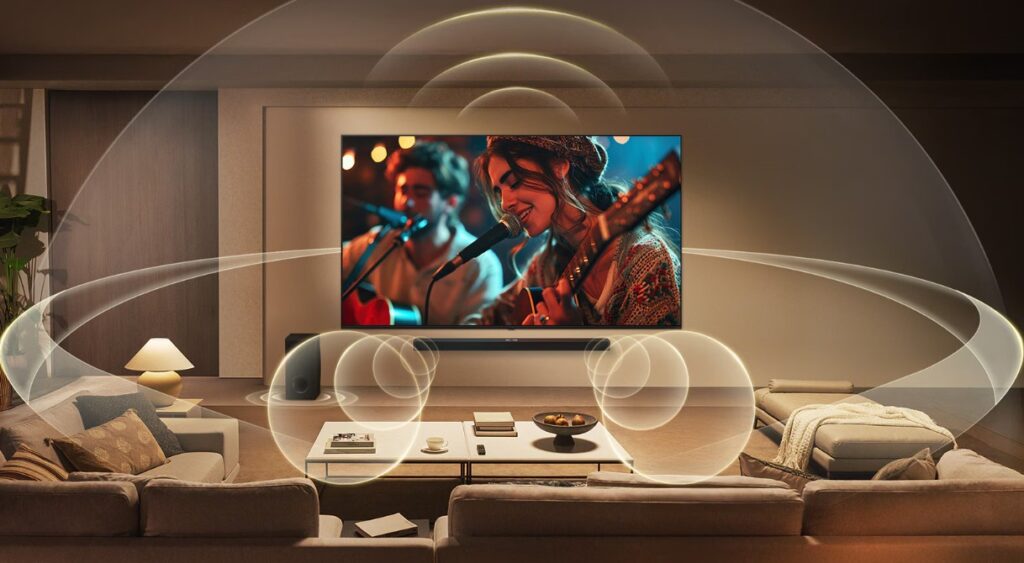
Sound is another thing to consider. Some projectors have surprisingly good built-in speakers, especially the larger models, but they don’t all sound as full as a TV paired with a decent soundbar. 

There’s also the question of live TV. Most smart projectors don’t have a built-in TV tuner, so if you rely on cable or an antenna, you’ll probably need a separate set-top box. Streaming apps are usually much easier to deal with.

1. How to choose a projector

There are plenty of specifications to look through, but you don’t need to understand every one of them to find a good projector. Start with brightness, how far the projector needs to sit from the wall, and what you plan to watch. And that’s probably enough. 

To talk about brightness, look for ANSI or ISO lumen values, as they use standardized measurements. There are other brightness ratings too, but they aren’t always directly comparable. 

As a rough guide, something rated at around 3,000 lumens or more gives you more flexibility in a partly lit living room. Models rated at just 300 or 400 lumens are better suited to dark rooms.

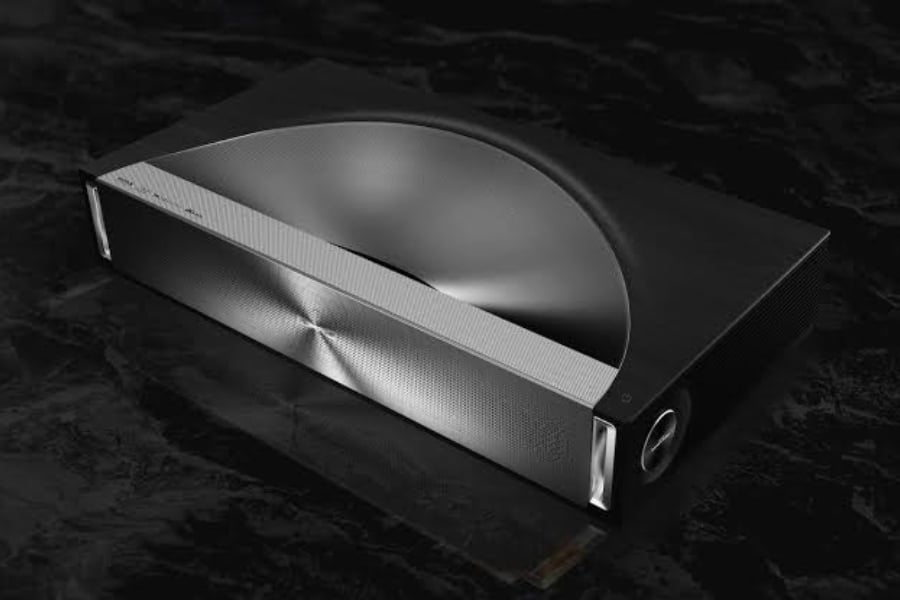
Next, think about where you’ll put the projector. A traditional long-throw model should always sit several feet away from the wall, usually on a shelf, table, or ceiling mount. An ultra-short-throw (UST) projector can sit closer to the wall and send the image upward. If you want something that feels more like a TV, UST models are usually the easiest place to start.

For example, the XGIMI MIRA 4K can project a 100-inch image from around 19.3cm away. That means you don’t need to run a projector across the room or find a place to mount it behind your sofa.

And if you’re a gamer, you should check the refresh rate and input lag. A 4K projector with 120Hz support can make games feel smoother, while features such as variable refresh rate (VRR) help reduce screen tearing. Finally, check the smart platform. Google TV, Samsung Tizen, and Roku don’t all have the same apps, so make sure yours supports the services you use.

2. Best long-throw projector

Xgimi Horizon 30 Series

XGIMI announced three new models in its Horizon 30 lineup this month: the Horizon 30 Pro, Horizon 30 Max, and Horizon 30 Ultra Max. All three use RGB triple-laser light sources, support 4K at 120Hz, and run Google TV.

The main difference is brightness. The Horizon 30 Pro is rated at 4,800 ISO lumens, the Max reaches 5,300 ISO lumens, and the Ultra Max goes up to 6,000 ISO lumens. Their rated native contrast ratios also increase across the range, from 8,000:1 on the Pro to 9,000:1 on the Max and 10,000:1 on the Ultra Max.

XGIMI says the new models deliver up to 15% more brightness, seven times the native contrast, and double the refresh rate compared with the Horizon 20 series, according to Android Authority. Those are manufacturer claims, so real-world performance will still depend on the room and screen.

There’s plenty here for gaming, too. The projectors support VRR, ALLM, and AMD FreeSync, while XGIMI claims input lag as low as 1.9ms at 4K and 120Hz. Optical zoom and lens shift should also make it easier to get the picture into the right position without moving the projector every time.

The Ultra Max is the brightest option, but it also costs the most. US prices are $2,499 for the Pro, $2,999 for the Max, and $3,499 for the Ultra Max. Preorders run through October 31, with regular sales scheduled to begin on November 1.

These are still long-throw projectors, so you’ll need enough room to place one at the right distance from the wall. XGIMI is including a floor stand or ceiling mount, two pairs of 3D glasses, and a discount on its Ascend screen with preorders. You can find the full specifications in our earlier coverage of the Horizon 30 series.

There’s also a cheaper option if you happen to be in China. The XGIMI RS30 Pro High Brightness Edition costs 7,299 yuan, or around $1,092. It offers 4,500 CVIA lumens and 4K at 120Hz, but it’s currently a China-only model.

3. Best ultra-short-throw projector for movies

Hisense PX4 Pro

If you don’t want a projector sitting behind your sofa, the Hisense PX4 Pro is worth a look. It went on sale in the US in September for $3,999.99 and is available through Hisense, Amazon, and Best Buy.

The PX4 Pro uses an RGB triple-laser light source rated at 3,500 ANSI lumens. It can project an image between 80 and 200 inches, and supports Dolby Vision and IMAX Enhanced. Hisense has also included speakers tuned by Devialet with Dolby Atmos support, so you may not need to buy a separate sound system right away.

Gaming is another part of the package. Hisense says the PX4 Pro is the first ultra-short-throw laser projector to receive AMD FreeSync Premium certification. It also has two HDMI 2.1 ports with VRR and ALLM, making it possible to connect a console and a streaming device.

As with other UST models, the PX4 Pro sits close to the wall instead of taking up space behind the viewer. That’s convenient if you’re replacing a TV in a smaller living room, although you’ll still need to make room for the projector itself.

Its 3,500-lumen rating is lower than the brightest Horizon 30 models, so don’t expect it to solve every daylight problem. A good screen and some control over the room’s lighting will still help.

If you have a larger room and prefer a traditional long-throw setup, Hisense also sells the XR10. It reaches 6,000 ANSI lumens and can project an image up to 300 inches, making it a better fit for people with plenty of space.

4. Best ultra-short-throw projector for 4K gaming

Xgimi Aura 3 Max and Aura 3 Pro

The XGIMI Aura 3 Max and Aura 3 Pro are another pair of UST projectors worth considering, especially if gaming is high on your list. XGIMI describes them as the first ultra-short-throw projectors to support 4K at 120Hz.

The Aura 3 Max is rated at 5,700 ISO lumens, while the Aura 3 Pro reaches 4,100 ISO lumens. Both can produce a 120-inch picture from around eight inches away from the wall, with a maximum image size of 200 inches.

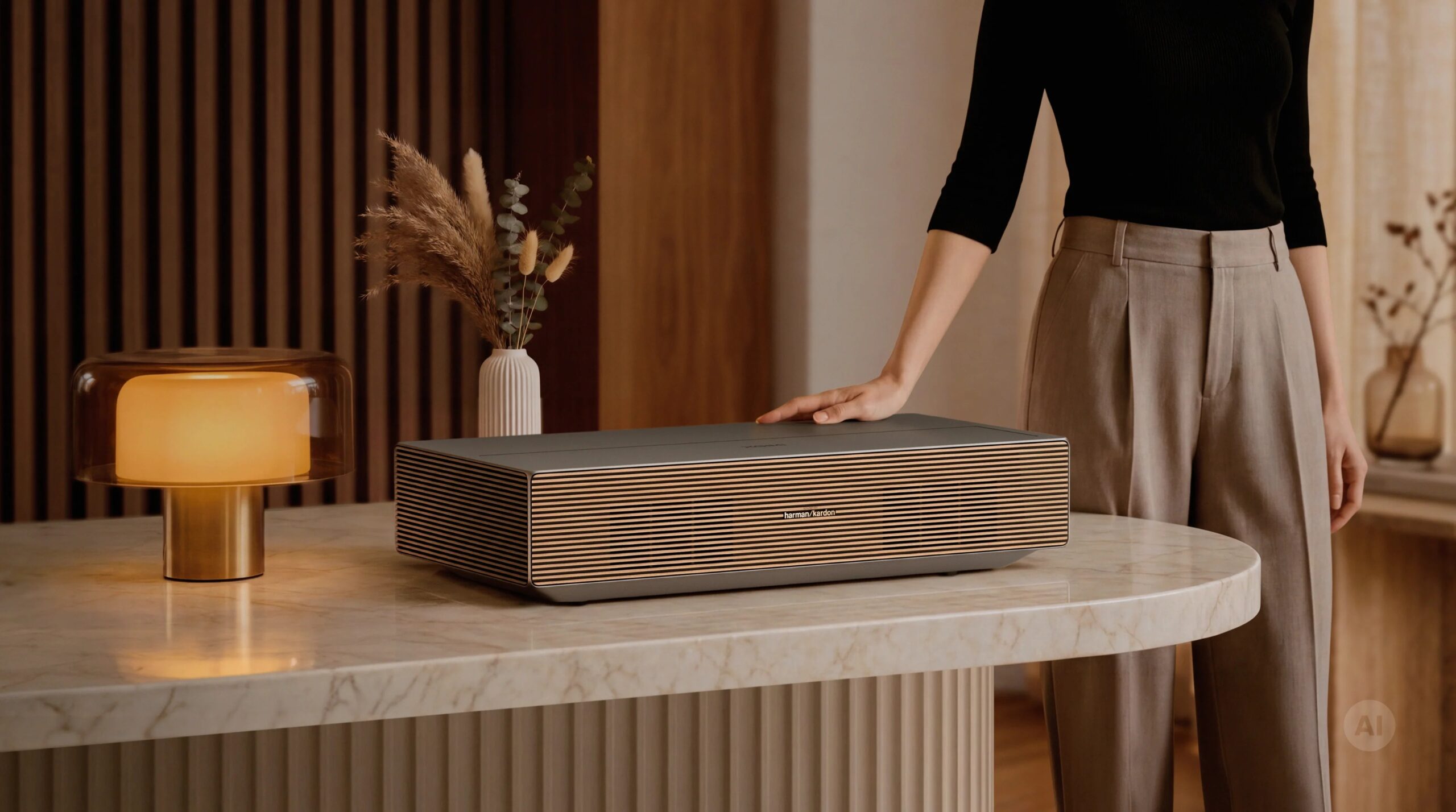
They also come with Google TV, Dolby Vision, HDR10+, and IMAX Enhanced support. Audio comes from an 80W Harman Kardon system with Dolby Atmos, and XGIMI includes two pairs of 3D glasses.

The big question is the price. The Aura 3 Max and Pro are being offered through Kickstarter for $2,399 and $2,199, respectively. A $50 deposit gets you an additional $200 discount on either model. XGIMI lists retail prices of $4,999 for the Max and $3,999 for the Pro, according to Notebookcheck.

Those early prices look considerably better, but there’s a catch: these are crowdfunding offers, and a confirmed shipping date hasn’t been announced. You’ll need to be comfortable paying upfront and waiting for delivery. If you’d rather buy something already available, the Hisense PX4 Pro is a more straightforward option.

5. Best budget pick

Acer-HD1500-projector

You don’t need to spend thousands of dollars to try a projector, although cheaper models come with some obvious trade-offs. The Acer HD1500 is one example. Acer announced it at €149 for the EMEA market, with a Q3 2026 release planned under the AOpen QP30t name.

Check price →
Where to buy
Hisense PX4 Pro
Latest price on Amazon

It uses an LCD panel with native 1080p resolution and an LED light source. Brightness is rated at just 350 ANSI lumens, so this is one for a dark room rather than a living room where the curtains stay open. Netflix and YouTube are built in, which saves you from having to connect a separate streaming stick.

The 1.29:1 throw ratio lets it project a 70-inch image from two meters away. Acer has also included a swivel stand, allowing the projector to rotate 360 degrees and tilt 180 degrees. That should make it easier to point the image at a wall or even the ceiling. 

At this price, the HD1500 makes more sense as a second screen for a bedroom or occasional movie nights. Its brightness and 1080p resolution aren’t ideal if you want to replace the main TV in your living room, but it could be a cheap way to see whether projector life suits you.

6. Best portable pick

Samsung Freestyle Plus 2026

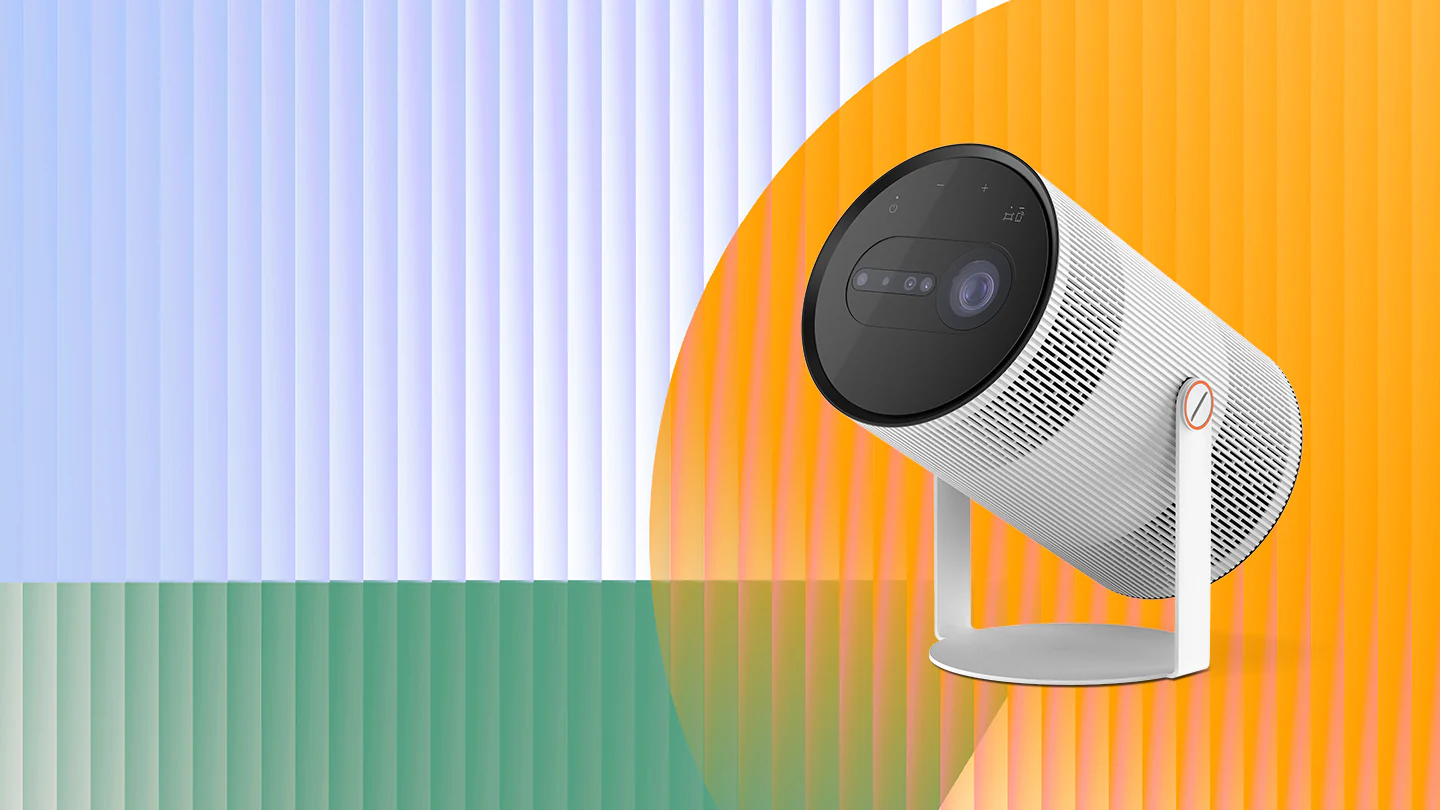
The Samsung Freestyle+ launched in the US in July at $1,199.99. It’s a portable DLP projector with Full HD resolution, up to 430 ANSI lumens, and a maximum image size of 100 inches. It runs Tizen with Samsung’s TV apps and Gaming Hub, supports AirPlay 2, and has a built-in 360-degree speaker, so it works fine without any extra gear.

The small size makes it convenient to move between rooms or take on a trip. You don’t need to build a permanent setup around it, either. But at nearly $1,200, it’s difficult to recommend as a full TV replacement when brighter 4K projectors are available.

The Freestyle+ makes more sense if you want something portable for a bedroom, occasional movie nights, or travel. If you want a similar kind of flexibility but would rather try another brand, the XGIMI Z6X Pro 2026 is another portable option, with a tri-color laser light source and a built-in gimbal.

7. So, should you replace your TV with a projector?

You can, if you have a room you can darken, a wall or screen big enough, and a budget of about $2,500 or more for a 4K model you’ll be happy with every day. If you mostly watch in the evening, play games, or watch movies, a projector like the Horizon 30 Pro or the PX4 Pro gives you a much bigger picture than a TV at the same price.

We’d still recommend choosing a TV if your living room gets a lot of daylight, if you watch live TV through a tuner, or if you’d rather not think about screens and placement. A TV is still easier to set up and easier to live with. For plenty of people, a projector works best as a second screen for movie nights, not a full replacement.

For daily updates, please visit our News Section.

Stay ahead in tech! Join our Telegram community and sign up for our daily newsletter of top stories.

OnePlus 16 vs iPhone 17: The $900 Flagship Battle Is Closer Than You Think

OnePlus 16 and iPhone 17 approach the premium smartphone experience from different directions. OnePlus focuses on powerful hardware, extensive camera versatility and exceptional battery capacity, while Apple prioritizes a polished software experience, reliable photography and long-term ecosystem integration. With both phones priced around $900, the decision comes down to whether you value cutting-edge specifications and endurance or Apple’s refined everyday experience.

OnePlus 16 vs iPhone 17

Major Features:

CategoryOnePlus 16iPhone 17Winner & Reason
BuildCrystal Shield Glass, aluminum frame, glass or glass-fiber-reinforced plastic backCeramic Shield 2, aluminum frame, glass backApple – Ceramic Shield 2 protection
Water ResistanceIP68/IP69KIP68OnePlus – Higher ingress protection
Display6.78-inch LTPO AMOLED, 185Hz6.3-inch LTPO Super Retina XDR OLED, 120HzOnePlus – Larger screen and higher refresh rate
Display ProtectionCrystal Shield GlassCeramic Shield 2, anti-reflective coatingApple – Anti-reflective coating
ProcessorSnapdragon 8 Elite Extreme Gen 6 (2nm)Apple A19 (3nm)Qualcomm – Powerful flagship platform with advanced graphics
Operating SystemAndroid 17, OxygenOS 17iOS 26, upgradable to iOS 27.2Apple – Tight hardware-software integration
RAM12GB/16GB8GBOnePlus – Higher memory capacity
Storage256GB/512GB/1TB, UFS 4.1256GB/512GB, NVMeOnePlus – More storage options
Rear Camera200MP main, 50MP 3x telephoto, 50MP ultrawide48MP main, 48MP ultrawideOnePlus – Dedicated optical zoom camera
Optical Zoom3x optical zoomNo dedicated telephoto cameraOnePlus – Greater zoom versatility
Video RecordingUp to 8K at 30fps, 4K at 120fps, Dolby VisionUp to 4K at 60fps, Dolby Vision HDROnePlus – Higher resolution and frame-rate options
Selfie Camera50MP ultrawide with autofocus18MP multi-aspect with autofocusOnePlus – Higher resolution and ultrawide framing
Battery9,000mAh silicon-carbon3,692mAh Li-IonOnePlus – Significantly greater capacity
Wired Charging100W50% in 20 minutes advertisedOnePlus – Higher rated charging power
Wireless Charging50W25W MagSafe/Qi2OnePlus – Faster wireless charging
Reverse ChargingWireless and 5W wired4.5W wiredOnePlus – Supports wireless reverse charging
ConnectivityWi-Fi 7, Bluetooth 6.0, USB-C 3.2, infrared portWi-Fi 7, Bluetooth 6.0, USB-C 2.0, UWBOnePlus – Faster USB data interface and infrared
SecurityUltrasonic in-display fingerprint sensorFace IDTie – Different biometric approaches
Satellite FeaturesNot specifiedEmergency SOS, Messages and Find My via satelliteApple – Satellite communication features
Price/ValuePriced around $900 / ₹86,000Priced around $900 / ₹83,000OnePlus – More hardware features at a similar price
Disclaimer: Specs are based on available data. Actual performance may vary. Verify details from official sources before buying.
  1. Camera performance: Megapixel counts, lens configurations and supported recording resolutions describe hardware capabilities, not final image quality. Low-light performance, dynamic range, colour accuracy, autofocus, stabilization and processing can change the results. The iPhone 17 may have an advantage in video consistency and computational photography, while the OnePlus 16 offers greater optical zoom versatility.
  2. Display: The OnePlus 16’s 185Hz refresh rate offers smoother motion on supported content, but the iPhone 17’s anti-reflective coating and peak brightness may improve visibility in certain environments.
  3. Battery: The OnePlus 16’s larger battery and faster charging ratings suggest an endurance and charging advantage, but actual battery life depends on display settings, network conditions, workload and software efficiency.
  4. Value: The OnePlus 16 offers more hardware features, whereas the iPhone 17 may appeal more to buyers who prioritize software integration, video capture and Apple’s ecosystem. Actual value depends on individual needs and available retail pricing.

1. Design and Display

Build and Feel

The OnePlus 16 combines Crystal Shield Glass with an aluminum frame, offering a premium finish alongside IP68/IP69K protection against dust and water. Its choice of glass or glass-fiber-reinforced plastic back also gives buyers different material options. The iPhone 17 pairs Ceramic Shield 2 with an aluminum frame and glass back, creating a clean, understated design. Its IP68 rating supports immersion in deeper water under specified conditions, although OnePlus offers stronger protection against high-pressure water jets. Both phones deliver durable construction, but Apple’s simpler material configuration feels more consistent across its lineup. OnePlus is the more rugged choice on paper, particularly for users who frequently encounter demanding environments.

Display Quality

The OnePlus 16 features a 6.78-inch LTPO AMOLED display with a 185Hz refresh rate, Dolby Vision, HDR10+ and HDR Vivid support. Its exceptionally high refresh rate promises smoother scrolling and more responsive gaming. The iPhone 17 counters with a 6.3-inch LTPO Super Retina XDR OLED panel, a 120Hz refresh rate, Dolby Vision and an anti-reflective coating. Apple also features higher peak brightness, which benefits outdoor viewing. Both screens offer sharp visuals, but OnePlus prioritizes fluidity and immersion, while the iPhone delivers a more compact viewing experience.

Verdict

OnePlus wins for display size and refresh rate, while Apple offers excellent brightness and anti-reflective treatment. The OnePlus 16 suits gamers and media enthusiasts better.

2. Specifications Including Battery

Performance

The OnePlus 16 is powered by Qualcomm’s Snapdragon 8 Elite Extreme Gen 6 chipset, paired with up to 16GB of RAM and UFS 4.1 storage. Its flagship processor, powerful Adreno 850 GPU and generous memory configurations position it for demanding games, multitasking and intensive applications. The iPhone 17 uses Apple’s A19 chip with a five-core GPU and 8GB of RAM. Its hardware and iOS optimization deliver responsive everyday performance, efficient app handling and strong gaming capabilities. OnePlus offers greater memory flexibility and a more expansive multitasking configuration, while Apple benefits from tight hardware-software integration. Both should handle demanding workloads comfortably, although their real-world sustained performance depends on thermal management and software optimization.

Battery and Charging

The OnePlus 16 packs a substantial 9,000mAh silicon-carbon battery, giving it a considerable capacity advantage over the iPhone 17’s 3,692mAh battery. It supports 100W wired charging, 50W wireless charging, reverse wireless charging and bypass charging, making it particularly versatile for heavy users. Apple’s charging system supports 25W MagSafe/Qi2 wireless charging and wired charging reaches 50% in 20 minutes under suitable conditions. The iPhone also supports reverse wired charging at up to 4.5W. OnePlus is the more compelling option for extended gaming, travel and intensive daily use, while Apple’s smaller battery benefits from efficient software and hardware integration.

Verdict

The OnePlus 16 wins through its larger battery, faster charging and greater flexibility. The iPhone 17 remains capable, but heavy users will appreciate OnePlus’s endurance advantage.

3. Camera

Main and Secondary Lenses

The OnePlus 16 features a 200MP primary camera with optical image stabilization, a 50MP telephoto camera with 3x optical zoom and a 50MP ultrawide camera. This combination offers greater flexibility for portraits, distant subjects and expansive landscapes. Its video capabilities extend to 8K recording at 30fps and 4K at up to 120fps, alongside Dolby Vision support. The iPhone 17 uses a 48MP main camera with sensor-shift stabilization and a 48MP ultrawide camera, but lacks a dedicated telephoto lens. It supports 4K Dolby Vision recording at up to 60fps. OnePlus offers more hardware versatility, particularly for zoom photography, while Apple’s streamlined camera system remains attractive for consistent point-and-shoot photography and video creation. Actual image quality will depend on processing, lighting and camera tuning rather than megapixel counts alone.

Selfie Camera

The OnePlus 16 includes a 50MP autofocus ultrawide selfie camera capable of recording 4K video at 60fps. Its wider perspective is useful for group selfies, travel photography and video calls where framing flexibility matters. The iPhone 17 features an 18MP multi-aspect front camera with autofocus and a dedicated depth sensor for Face ID. It supports 4K video at up to 60fps, Dolby Vision HDR and spatial audio recording. Apple’s front camera emphasizes flexible framing, secure facial recognition and polished video capture, while OnePlus offers higher resolution and ultrawide framing. Both are well equipped for creators, although Apple’s integrated video features may appeal more to users who regularly record social content.

Verdict

OnePlus wins on camera versatility, dedicated optical zoom and front-camera resolution. The iPhone 17 remains a strong choice for dependable photography, polished video and Face ID integration.

4. Pricing

The OnePlus 16 is priced around $900 (₹86,000), while the iPhone 17 is priced around $900 (₹83,000). This places both devices in a similar premium category, although the iPhone has a slight price advantage in the stated estimates. OnePlus counters with a more extensive hardware package, including a dedicated telephoto camera, a higher-refresh-rate display, a larger battery, and faster charging. The iPhone 17 delivers Apple’s A19 processor, a refined iOS experience, and a strong camera system without requiring buyers to spend more on a Pro model. Regional pricing, storage configurations and retail offers can affect the final cost, so the exact purchase price deserves attention before choosing either device.

Is the price justified?

At these prices, the OnePlus 16 offers more hardware for buyers who prioritize battery life, charging speed, gaming and camera flexibility. The iPhone 17 justifies its cost through its software integration, compact design, Face ID and Apple ecosystem. Neither is an obvious bargain, but OnePlus delivers a broader set of headline specifications for similar money. Apple makes more sense for users already invested in its ecosystem.

Verdict

The OnePlus 16 offers better hardware value at comparable prices, while the iPhone 17 remains worthwhile for buyers who prioritize iOS and Apple’s connected ecosystem.

Check price →
Where to buy
iPhone 17
Latest price on Amazon

5. Conclusion

The OnePlus 16 stands out with its 185Hz AMOLED display, 9,000mAh silicon-carbon battery, 100W wired charging and triple-camera setup featuring a 3x optical telephoto lens. Its IP68/IP69K protection and extensive connectivity options further strengthen its appeal as a feature-packed flagship. 

The iPhone 17 counters with Apple’s A19 processor, Ceramic Shield 2, an anti-reflective display coating, Face ID and satellite-based Emergency SOS, Messages and Find My features. Its multi-aspect selfie camera and Dolby Vision video recording also make it a capable device for content creation. 

The two phones cater to different priorities: OnePlus emphasizes hardware flexibility and endurance, while Apple focuses on a cohesive user experience. For buyers who want maximum capability without moving to a more expensive Pro-tier iPhone, the OnePlus 16 makes a particularly strong case.

Verdict

iPhone 17 offers a compelling balance of performance, camera quality, display technology and software optimization, while the OnePlus 16 pushes hardware capabilities further with a 185Hz display, a 9,000mAh battery, 100W charging and a dedicated telephoto camera. The iPhone is a strong all-rounder, but OnePlus delivers greater hardware versatility. The better choice ultimately depends on whether refined everyday performance or advanced hardware features take priority. 


FAQs:

1. Which phone is better to buy, OnePlus 16 or iPhone 17?

The OnePlus 16 suits buyers seeking advanced hardware, while the iPhone 17 offers a refined, well-integrated smartphone experience.

2. Which phone takes better photos, OnePlus 16 or iPhone 17?

The OnePlus 16 offers greater zoom versatility, while the iPhone 17 is a strong choice for consistent photography and video.

3. Is the OnePlus 16 faster than the iPhone 17?

Both deliver flagship-level performance, but real-world speed depends on the workload, software optimization and sustained performance.

4. Which phone has better battery life, OnePlus 16 or iPhone 17?

The OnePlus 16 has a substantial battery capacity advantage and faster charging, making it better equipped for intensive use.

5. Which phone offers better value for money?

The OnePlus 16 offers more hardware features, while the iPhone 17 may provide better value for buyers prioritizing Apple’s ecosystem and software experience.

Disclaimer: Prices, specifications, and availability may vary by region and retailer. Recommendations in this article are based on editorial opinion, feature-based value, and market positioning at the time of writing. Readers are advised to do their own research before making a purchase.

Read More:
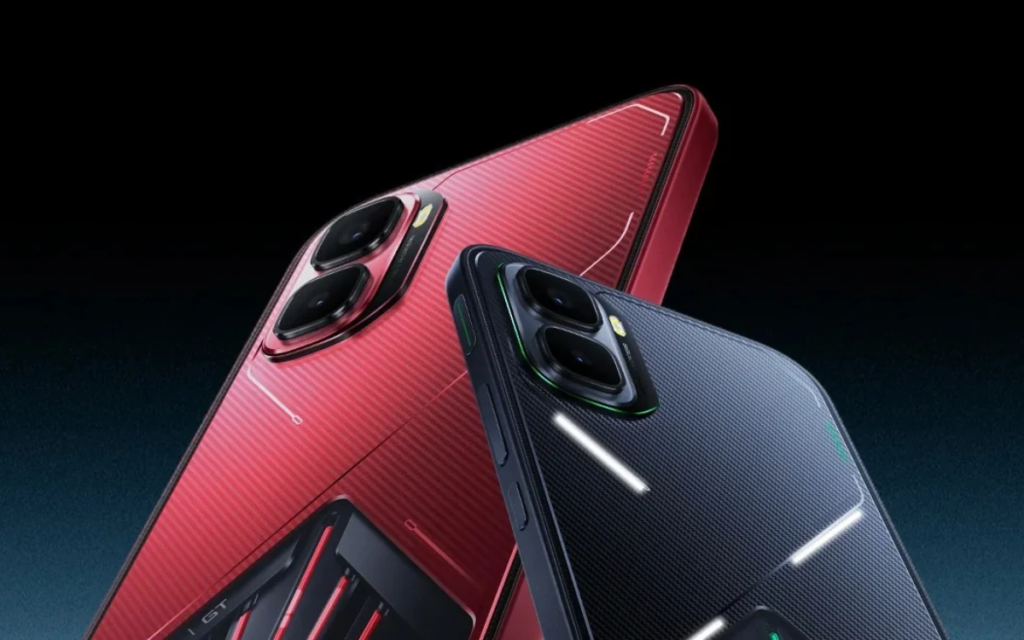
CMF Buds 2 with 48dB ANC are down to $29 on Amazon, offers excellent value

Nothing’s CMF Buds 2 are $29 on Amazon right now. They usually sell for $49, so you save a good $20. Amazon is the seller, and all three colours get the same price: Dark Grey, Light Green and Light Orange.

CMF Buds 2 Green

The deal officially ends on November 2.

Check price →
Where to buy
CMF Buds 2 Deal
Latest price on Amazon

At $29 you’re paying budget-earbud money for noise cancelling that holds up on a bus or in an open office. Most earbuds at this price either skip ANC or make it an afterthought.

Our editor, Joel, also uses these earbuds personally and notes that at this price, they are of excellent value.

What you get

  • 48dB hybrid ANC with an adaptive mode that adjusts to the noise around you
  • 11 mm driver with Dirac tuning and an Ultra Bass setting
  • Battery: up to 13.5 hours per charge and 55 hours with the case. Ten minutes of charging gives you 7.5 hours.
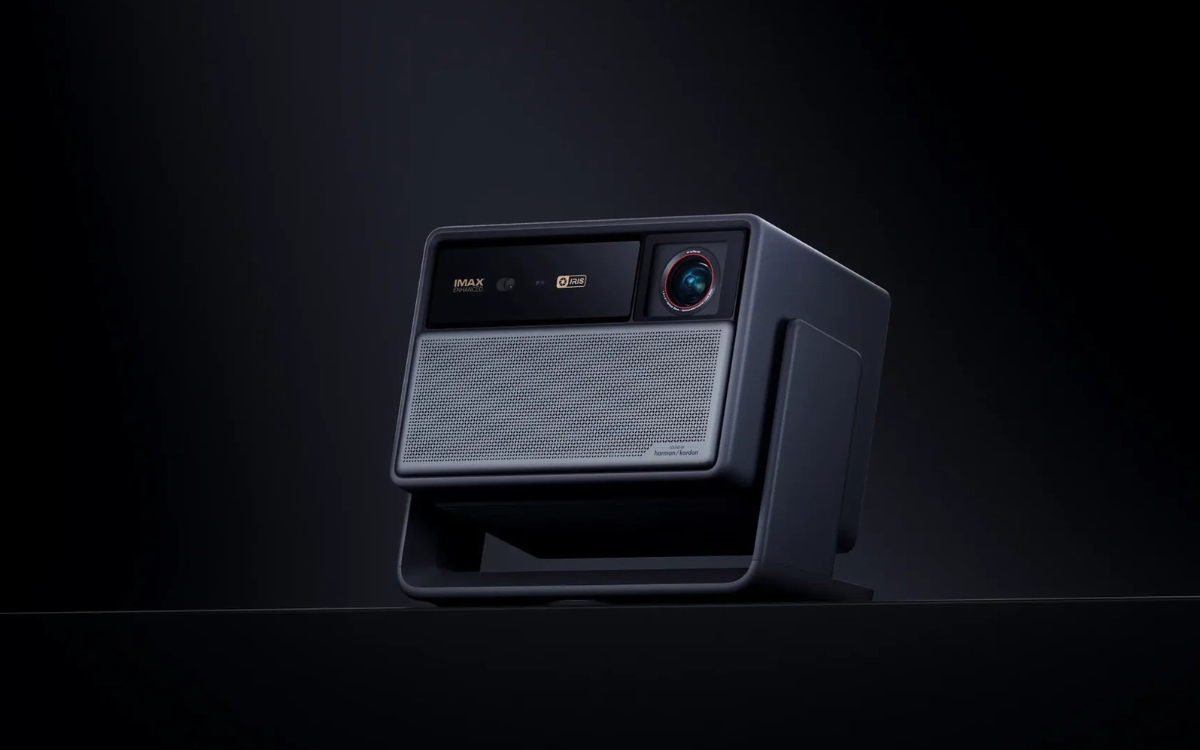
  • Six mics for calls, plus wind noise reduction
  • IP55 dust and water resistance, so sweat and rain are fine
  • Bluetooth 5.4, in-ear detection and spatial audio
  • Nothing X app for EQ, ANC levels, and a low-lag mode for games

Should you buy them?

If you want ANC earbuds and don’t want to spend much, yes. The battery life is the standout. Most people will charge the case once a week, maybe less.

They aren’t the cheapest they’ve ever been. They dropped to about $24.50 for Prime Day. But that sale is long over, and $29 is the next best price we’ve seen. With the holidays coming, they’re also an easy gift.

What you give up: theres no wireless charging and no LDAC. If those matter to you you’ll need to spend more.

The cheaper Buds 2a aren’t worth it

Amazon also has the CMF Buds 2a for $24.65. That’s only about $4 less, and you get a weaker 42 dB ANC, a lesser IP rating, and less battery. For four dollars, get the Buds 2.

Check the CMF Buds 2a on Amazon

Prices checked on October 28, 2026. Amazon prices can change at any time.

Read more

For daily updates, please visit our News Section.

Stay ahead in tech! Join our Telegram community and sign up for our daily newsletter of top stories.